Decree strips parties of legal status and assets, as opposition leader calls on Guineans to resist
By AFP and The Associated Press
Published On 8 Mar 20268 Mar 2026
Share
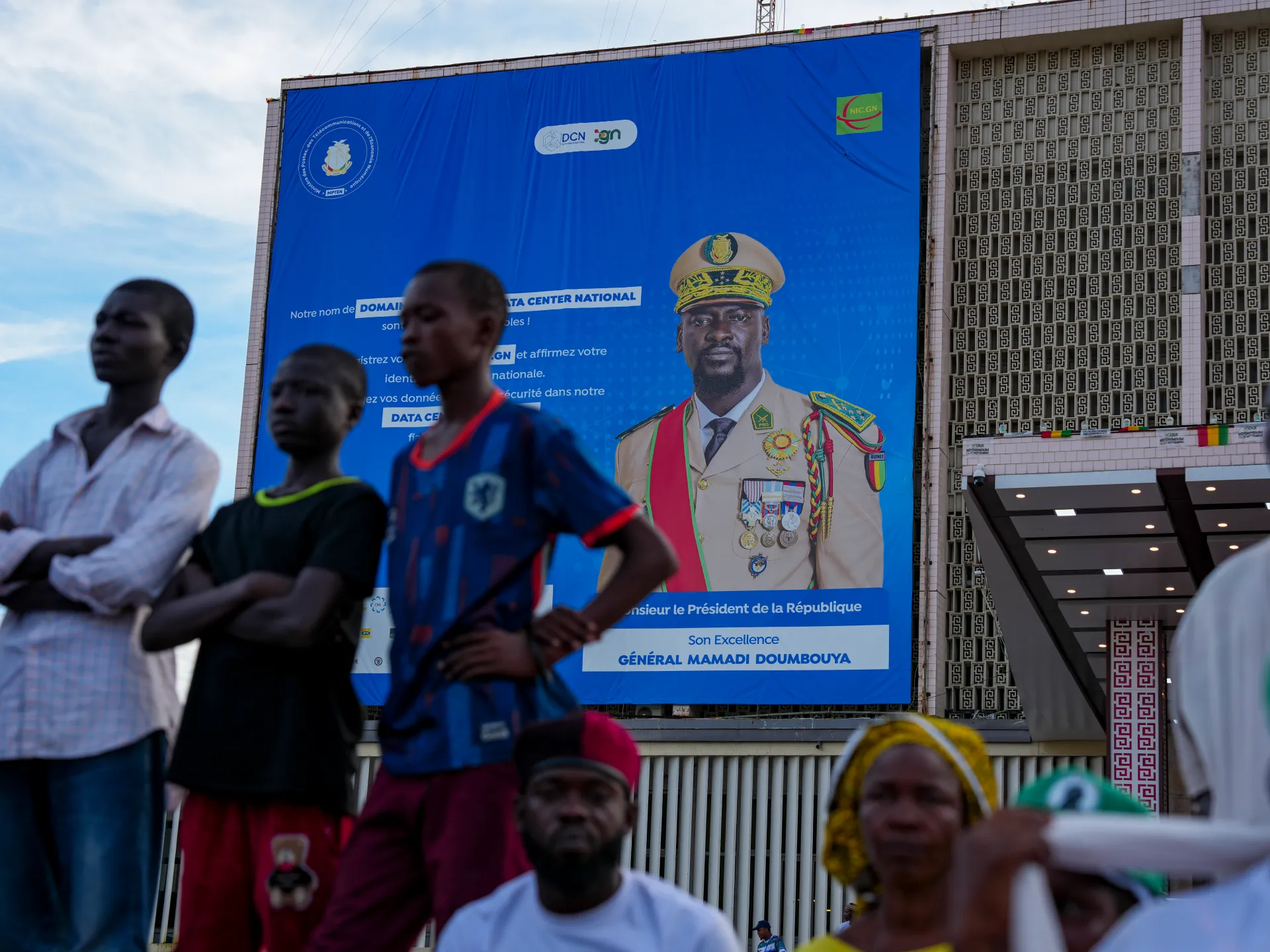
Guinea’s government has dissolved 40 political parties, including the country’s three main opposition groups, in a move critics say marks the final step towards a one-party state under President Mamady Doumbouya.
The Ministry of Territorial Administration and Decentralisation issued the decree late on Friday, citing the parties’ failure to meet their legal obligations.
Recommended Stories
list of 2 itemsend of list
Beyond stripping them of their legal status, the order froze their assets and banned the use of their names, logos and emblems, with a government-appointed curator assigned to oversee the transfer of their holdings.
The three most prominent parties dissolved are the Union of Democratic Forces of Guinea (UFDG), the Rally of the Guinean People (RPG) – the party of ousted former President Alpha Condé – and the Union of Republican Forces (UFR).
All three had already been suspended last August, weeks before a constitutional referendum that cleared the way for Doumbouya to stand in December’s presidential election.
UFDG leader Cellou Dalein Diallo, speaking from exile, accused Doumbouya of dismantling democratic life to entrench his grip on power. In a video posted to Facebook on Sunday, he said the dissolution was part of a deliberate drive to build a “party-state” and urged supporters to “rise as one” against a government that had lasted “far too long”.
He said that dialogue and legal routes had been exhausted, while his party’s communications coordinator went further, describing the decree as “the final act of a true political farce” aimed at cementing single-party rule.
Ibrahima Diallo, a leader in the pro-democracy National Front for the Defence of the Constitution, said the move had “formalised a dictatorship” and warned that Guinea was sinking into “profound uncertainty”.
The crackdown is the latest in a sustained campaign against dissent under Doumbouya, who seized power in a 2021 coup before winning a presidential election in December, a vote from which all major opposition figures were barred.
Since taking power, his government has shut down media outlets, banned protests and arrested or driven into exile scores of opposition figures and civil society activists.
Several relatives of prominent dissidents have also been abducted, and two well-known pro-democracy activists have been missing since July 2024.
Wave of coups
A wave of coups has brought military leaders to power in Africa, across a belt stretching from the Atlantic through the Sahel region to the Red Sea since 2020, while an attempted coup in Benin failed in late 2025.
The development has led to what analysts have described as a “coup belt“.
Madagascar’s and Guinea-Bissau’s armies most recently removed civilian leaders in their respective countries from power in late 2025, underscoring growing discontent with elected governments.
Although often carried out with popular backing, the military takeovers have also seen civil liberties clawed back.
A 2025 study found that while military takeovers have declined globally, the risk of coups in Africa remains comparatively high.
Walt Disney Co. and Pixar’s “Hoppers” took the box office crown this weekend in an encouraging sign for the company’s original animated films.
The film generated $46 million in ticket sales in the U.S. and Canada, marking the highest domestic opening for an original animated movie since 2017’s “Coco,” according to studio estimates. The global box office total for “Hoppers” was $88 million.
The zany movie features a young environmental advocate who “hops” her consciousness into a robotic beaver and bands together with other woodland creatures to stop a planned freeway expansion through a glade.
The film is directed by Daniel Chong, who created the Cartoon Network animated series “We Bare Bears.”
The muscular debut for “Hoppers,” as well as the strong performance from Sony Pictures Animation’s “Goat” last month, has been a positive sign for audience interest in original animated films.
Since the pandemic, theatrical returns for animated sequels have far surpassed that of original films. Disney’s “Zootopia 2,” for instance, has now grossed more than $1.8 billion in global box office revenue, with more than $426 million domestically. Disney and Pixar’s 2024 hit “Inside Out 2” also crossed more than $1.6 billion globally.
By contrast, Disney and Pixar’s 2025 original film “Elio” brought in about $154 million in worldwide box office revenue.
Original films are vital to Pixar’s future, as the Emeryville-based studio built its reputation on its string of nearly uninterrupted original blockbuster hits, including 1995’s “Toy Story” and 2004’s “The Incredibles.”
Paramount Pictures and Spyglass Media Group’s “Scream 7” came in second at the box office with $17.3 million in its second weekend in theaters. Warner Bros. Pictures’ “The Bride!,” Sony’s “Goat” and Warner Bros.’ “Wuthering Heights” rounded out the top five at the box office, according to data from Comscore.
With several strong releases, as well as popular holdover films from 2025 that continue to bring in revenue, the first few months at the box office have been a notable improvement over last year’s dismal first quarter.
Domestic box office revenue so far is up more than 12% compared to the same time period in 2025, according to Comscore.
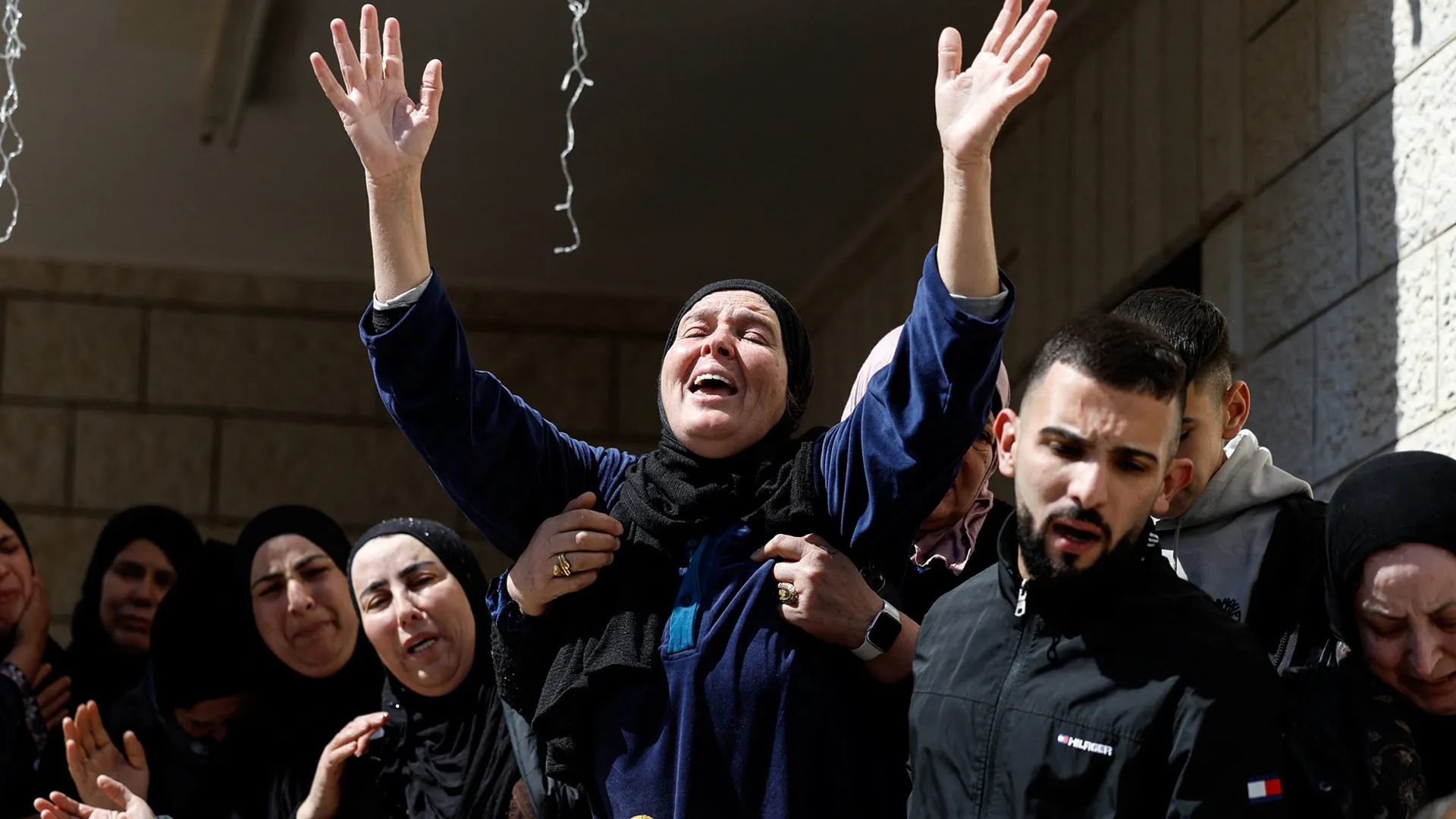
Several Palestinians were killed after armed Israeli settlers attacked the village of Abu Falah in the occupied West Bank. Witnesses say the settlers carried out the attack under the protection of Israeli forces.
Weekly insights and analysis on the latest developments in military technology, strategy, and foreign policy.
Over the last seven days, we have watched a joint air campaign unlike what we have ever seen before. New capabilities and evolved threats have made headlines as the world watched much of the Middle East become a free-fire zone. At the same time, many questions surrounding how long the war will take and its true scope and goals grow louder. These calls for clarity are becoming more pronounced globally, as well, as the Strait of Hormuz is experiencing a heart attack of sorts, with energy shipments stopped on the strategic waterway’s northern edge.
While missile and drone launches have decreased significantly, these weapons continue to score major hits. Beyond U.S. military-related sites in Gulf Arab states, Iran continues to pummel energy production infrastructure. There are real concerns about the ability to defend against these attacks over the long term as interceptor stocks dwindle.
The London insurance market is willing and able to cover vessels looking to transit the Strait of Hormuz, according to Gallagher https://t.co/rUogubsv6g
All this is occurring while Iran is experiencing a power vacuum the likes of which it has never experienced. As the U.S. and Israel ramp up strikes across the country during the transition from standoff to direct attacks, what will come of Iran’s fractured government remains a total unknown. Fears are growing that the default control of Iran could fall to its most well-armed and fanatical arm, the Islamic Revolutionary Guard Corps (IRGC), a top possibility we laid out in our feature published before the strikes commenced.
So much has happened in one week, and we were right there providing rolling coverage and breakouts nearly around the clock. Now, once again, we look at the present. Here’s what’s going on as we flow through day eight of the war.
LATEST UPDATES
We have concluded our rolling coverage in this piece.
UPDATE: 4:29 PM EST-
Check out our feature on the major alarm bells that should be ringing after Iran successfully targeted multiple missile defense radars in the region.
Iranian Attacks On Critical Missile Defense Radars Are A Wake-Up Call
Iran’s successful targeting of prized missile defense radars in the Middle East highlights global vulnerabilities.
More video has emerged from the dignified transfer of the remains of six soldiers killed in Kuwait on March 1.
U.S. President Donald J. Trump and First Lady Melania Trump attended the dignified transfer at Dover Air Force Base of the 6 U.S. Army soldiers killed during an Iranian strike on their operations center. 🇺🇸Capt. Cody Khork 🇺🇸Sgt. 1st Class Noah Tietjens 🇺🇸Sgt. 1st Class Nicole… pic.twitter.com/akSQntnUnM
Ali Larijani, Iran’s de facto wartime leader in the wake of the death of Supreme Leader Ali Khamenei, issued a direct threat against Trump via X.
We will relentlessly avenge the blood of our of our Leader and our people. Trump must pay and will pay. #Trumpmustpay
— Ali Larijani | علی لاریجانی (@alilarijani_ir) March 7, 2026
Meanwhile, in Iraq, pro-Iranian members of parliament are shouting the long-familiar phrases “America is the Great Satan” and “Death to America.”
Members of parliament from the pro-Iranian factions in the Iraqi parliament are shouting “America is the Great Satan” and “Death to America” https://t.co/78WrtfLsvK
Given the ambiguity of the situation, the Kurds say they are not rushing into Iran.
“Certainly, we are staying neutral as Iraqi Kurds b/c there’s no clarity for us on US policy,” a KRG official said. “Our assessment is there can’t be regime change w/o boots on the ground and that the US is not sending [them].” @BarakRavid, @MarcACaputohttps://t.co/kKj6GWOCHs
To counter Iranian drone and missile fire, a U.S. Counter Rocket, Artillery and Mortar (C-RAM) system was activated near the American embassy in Baghdad.
A Counter Rocket, Artillery, and Mortar (C-RAM) system was activated a short time ago in the area of the American embassy in Baghdad, Iraq, due to reported drone and missile fire. pic.twitter.com/f2VOtE1ZbU
U.S. IndoPacific Command took to X to dispute some claims about the recent sinking of the Iranian frigate IRIS Dena by a USN fast attack submarine.
🚫 Iran claims IRIS Dena was unarmed – FALSE ✅ Law of Armed Conflict authorized the use of force to target and destroy valid military targets – TRUE ✅ U.S. forces planned for and Sri Lanka provided life-saving support to survivors in accordance with the Law of Armed Conflict -… pic.twitter.com/DdY5RNFUYf
— U.S. Indo-Pacific Command (@INDOPACOM) March 7, 2026
The IDF said it is continuing to strike Iranian ballistic missile production sites.
🎯 STRUCK: 2 main ballistic missile production sites in Parchin and Shahrud.
Over the past week, hundreds of IAF fighter jets struck the Iranian regime’s production industries, which are used for the development and production of missiles and weapons.
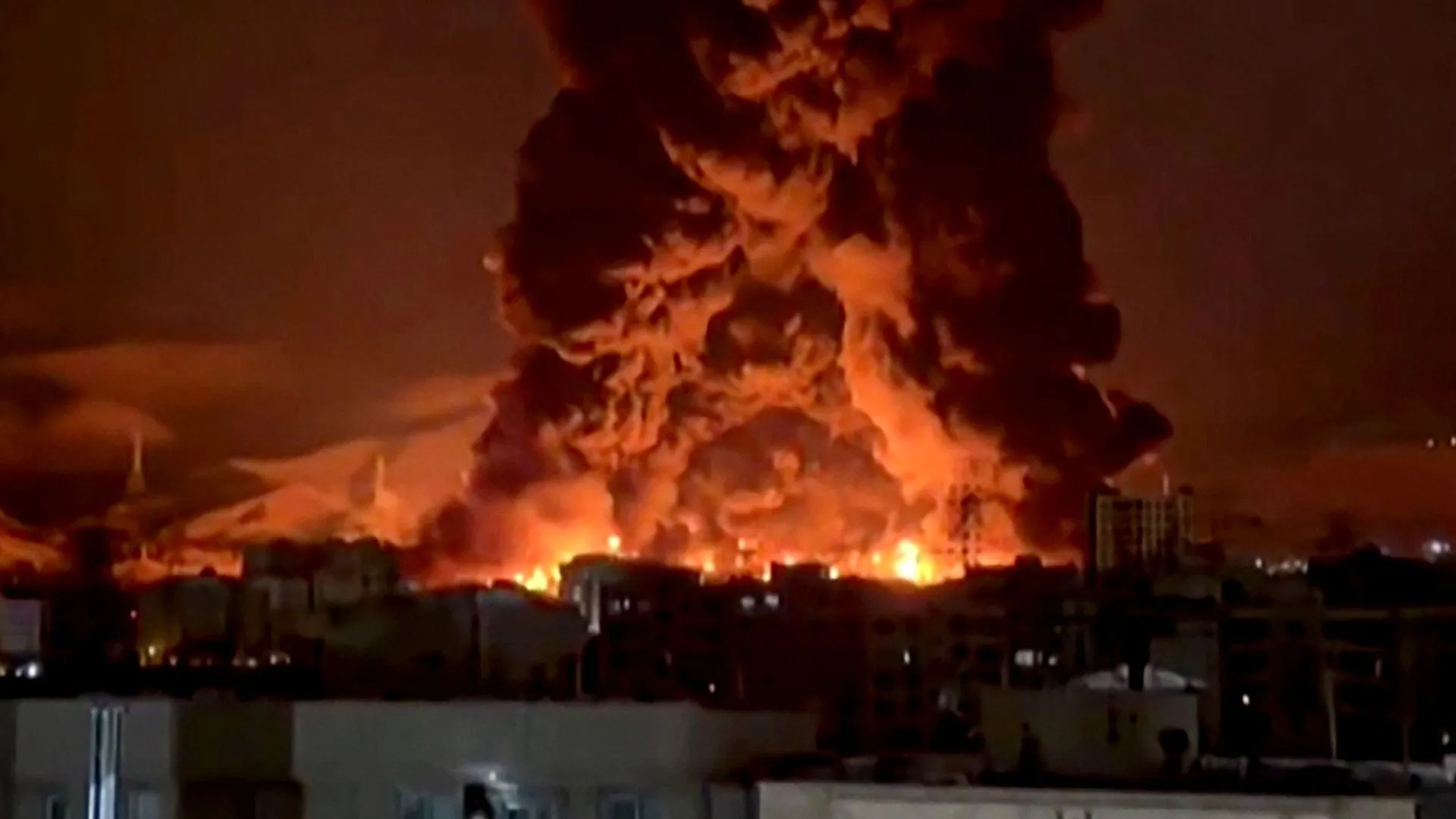
The IDF launched strikes Saturday evening on Iran’s national oil facilities in Tehran for the first time since the start of the war, targeting dozens of fuel storage tanks, YNET News reported, citing Israeli officials.
“The attack was carried out under directives from the political leadership and with IDF support, marking a significant escalation in Israel’s campaign against Iranian regime infrastructure,” the outlet explained.
An Israeli security official says recent strikes targeted fuel tanks used by Iran’s regime, adding pressure on the government is increasing and it may soon struggle to provide citizens with basic necessities. “We have not said the last word,” the official said. – N12 https://t.co/5yX69pUMl2
The Israel Defense Forces says it’s demolished a majority of Iran’s ballistic-missile launchers, causing the number of missiles targeting Israel and other countries in the region to fall throughout the week, Bloomberg News reported.
More than 60% of such launchers have been “neutralized and destroyed,” Eyal Zamir, chief of the general staff of the IDF, said in a televised statement on Thursday. Zamir did not say how many had been struck, but the IDF had cited the number as 300 earlier that day.
Israeli assessments say Iran now has about 100 operational missile launchers remaining out of roughly 420 before the war.
Around 150 launchers were destroyed, while another 150 were struck and buried in underground sites, leaving them currently unusable. pic.twitter.com/LnYpNdGIm0
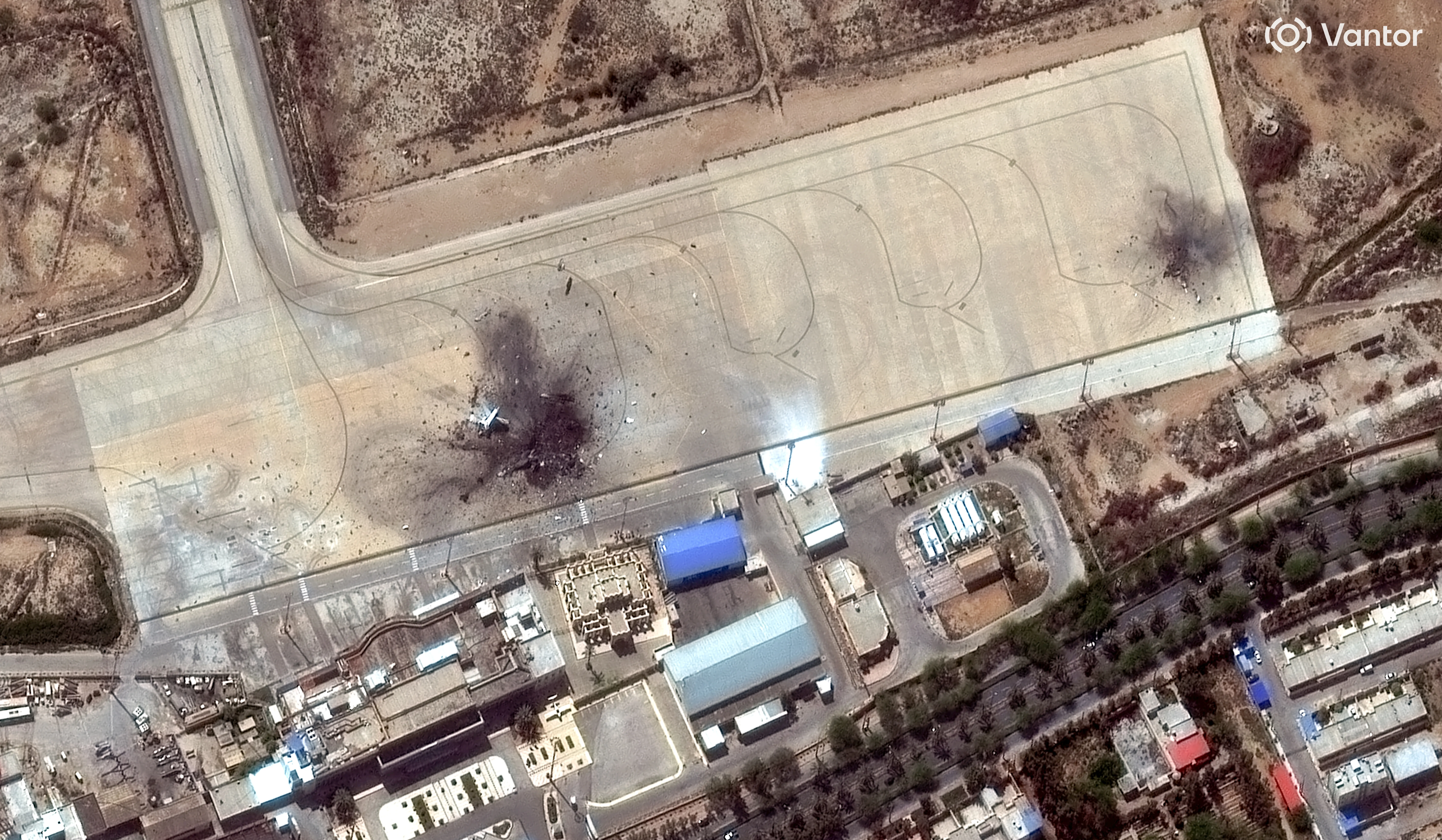
We are getting new satellite images of bomb damage in Iran from Vantor. The images show the airport and port in the city of Bushehr, which sits along the northeastern shore of the Persian Gulf. We also get a shot of the tunnel entrances at the underground facility in Natanz and what looks like a vehicle destroyed nearby, possibly a short-range air defense system.
The entrance to the naval base doesn’t look to inviting anymore:
We are also getting a satellite view of the destruction at Tehran International from the IAF’s strikes there last night:
Satellite imagery shows that at least 17 aircraft, most of which appear to be passenger planes, were destroyed in last night’s US and Israeli attacks on Mehrabad International Airport.
Another drone strike on a highrise tower in Dubai:
UPDATE: 1:20 PM EST—
Israel is now clarifying its attack on Iran’s international airport, stating they targeted aircraft used by the IRGC for weapons transfers to proxies. These aircraft are well known and include some of the country’s last airworthy 747s.
STRUCK: 16 IRGC Quds Force aircraft used to transfer weapons to Hezbollah.
The IAF conducted a wave of precise strikes in Tehran, targeting military infrastructure at Mehrabad Airport, a central hub used by the IRGC to arm and fund its terror proxies across the Middle East.… pic.twitter.com/ZbZJMvikI6
South Korea is rushing deliveries of SAMs to the UAE as the interceptor crunch deepens:
South Korea announced that it will send around 30 ballistic missile interceptors to the UAE via C-17 right tomorrow. It would appear that they brought ROKAF’s reserves. Among the 10 batteries under contract, currently, two M-SAM-II batteries are operating in the UAE. The… pic.twitter.com/WIA3bQE0oo
The scarcity of interceptors continues to raise alarms amongst allies around the globe:
Bloomberg: “Several European Union states warned at a closed-door meeting in Brussels this week that there is a shortage of interceptors across the world, according to people familiar with the matter.”https://t.co/UNB27op4nb
Another round of B-2 strikes appears to be on the way. It will be interesting to see if they recover in Diego Garcia this time instead of the United States:
Emirati fighters are seen prowling over the Gulf Of Oman in search of Iranian drones to kill.
Emirati Vipers and Mirages on counter-UAS patrols in vicinity of Fujairah Port and the surrounding oil infrastructure. These are also flown much farther out for forward intercepts. pic.twitter.com/6DQuvimTTO
More indications that the Kurds are going to go into Iran, but just how shallow those movements would be isn’t clear.
BREAKING: The Secretary-General of Khabat, a Kurdish organization based in Iraq, tells Al Jazeera that Kurdish fighters in Iraq will “likely” stage a ground operation in Iran, confirming communication with the US
The Iranian drone attack on Dubai’s international airport may have been targeting the air traffic control tower. It is possible that this radar is tied into the military’s air defense architecture, but even if it is not, it would be another blow to the economy of the country as it would impact air travel.
An unconfirmed report states that the US warned the Iranian warship Dena to abandon ship multiple times before the Los Angeles class fast attack submarine sunk it via torpedo. This is supposedly coming from one of the sailors aboard that survived.
An Iranian sailor who was killed when the warship Dena was struck by the US near Sri Lanka had called his father shortly beforehand, saying American forces had issued two warnings for the crew to abandon the vessel, a source close to the family told Iran International.
— Iran International English (@IranIntl_En) March 7, 2026
UPDATE 12:25 PM EST—
Iran is going after the heart of Saudi oil production.
Saudi Arabia says it intercepted and destroyed 16 drones heading toward the Shaybah oil field, one of the kingdom’s largest energy sites producing about 1 million barrels per day. The defense ministry did not say where the drones came from.https://t.co/MuYLumDuPY
There are additional indications that America’s involvement in this conflict will be longer than some anticipated:
A joint letter from the Commanding General and Command Chief of the Air National Guard have published a letter to their subordinates indicating that their continued support will be necessary in the weeks ahead.
Israel also says the chief of the Israeli Air Force (IAF) just flew a combat mission over Iran.
There are reports of additional US wounded from Epic Fury, but CENTCOM tells us that the tally still stands at six troops killed and 10 seriously wounded. This could be due to a delay in information or just erroneous reports, and we will keep you posted.
What appears to be a HIMARS launcher firing a rocket (likely PrSM ballistic missile, the first of which was used operationally in this war) from the beach in Bahrain. It hasn’t been clear where the United States is firing these weapons from, but it would appear that, assuming this video is authentic, Bahrain is one of those locales. It is just 125 miles from Bahrain to Iran, so PrSM would be able to reach nearly two hundred miles into Iran from this distance.
Footage confirms a U.S. M142 High Mobility Artillery Rocket System (HIMARS) launching a Precision Strike Missile (PrSM) toward Iran from Bahrain. pic.twitter.com/aQBubFQEYS
Israel says it destroyed Iran’s central hub of its air defense efforts:
⭕️The IDF dismantled the air defense situation room of the IRGC Air Force, responsible for the aerial situational assessment and to defend Iran’s airspace.
Additionally, the Israeli Air Force struck air defense systems, a site used to manufacture & launch ballistic missiles,… pic.twitter.com/DYNKhz03e3
B-1B bombers are now operating out of RAF Fairford in the United Kingdom. This comes after the U.K. government denied US access to Fairford and Diego Garcia. We should expect bombers in Diego Garcia soon. These will likely include B-2 and possibly B-52s. Forward deploying the bombers will drastically increase sortie rates and put less stress on aerial refueling assets.
USAF B-1B Lancer heavy bomber landing in Britain, following a mission that saw it take off from the U.S. and strike Iran. pic.twitter.com/idujAR9eeY
Yesterday, a total of 4x B-1B “Lancer” bombers departed the USA heading towards Europe. 1 airframe, which used the callsign “PIKE72” (86-0120 #AE6BFA) went to RAF Fairford, while the other 3 aircraft… pic.twitter.com/XMFgf2mwFv
While Iranian launches have decreased, they certainly are far from stopping. Just overnight alone, Iran launched nearly 140 weapons at the UAE alone.
Iran fired 16 ballistic missiles and 121 drones at UAE overnight. Fifteen of the missiles were shot down, one fell into the sea. All drones intercepted except two: MoD
One drone slipped through and hit Dubai’s international airport.
Multiple MQ-9s have been lost over Iran in the conflict so far, but they have been extremely effective in taking out all types of Iranian targets, from missile launchers to drones to fighter aircraft to vessels. As we noted in our previous update, they are also far more expendable and less risky to deploy deep in Iran than crewed alternatives. But as we have explored in depth, air supremacy over Iran has not been achieved and won’t for some time.
Another US MQ-9 Reaper UCAV was shot down by IRGC Aerospace Force air defense over Hormozgan province. Some sources write that this is an Israeli Hermes-900, but this is clearly US MQ-9 with Hellfire missiles pic.twitter.com/7nvOEEoGUz
Iran’s new leadership has stated that the country will stop attacking its neighbors if they do not participate in attacks on Iran. Iranian officials have also made clear that they see the basic act of hosting U.S. bases as contributing to the current campaign. The drones and missiles have continued to be launched at Arab Gulf states, regardless.
This is a misinterpretation, btw, which the President’s office corrected.
#Iran’s President has issued a new video message: The idea of Iran surrendering unconditionally is a dream they will take to their graves… Interim Leadership Council decided yesterday to end strikes on neighboring countries unless Iran is attacked from those territories. pic.twitter.com/TPyMSVPLWz
Some in the Iranian parliament are not pleased with even indicating the country may cease its retaliation efforts aimed at Arab countries across the Persian Gulf:
Iranian parliament member is furious about the remarks made by Iran’s president, Pezeshkian, today.
Iranian MP says: “Mr. Pezeshkian’s weak, unprofessional, and publicly unacceptable televised address has made it the definitive duty of the Presidium and members of the Assembly… https://t.co/D1tF98QV4D
U.S. intel agencies warned prior to Operation Epic Fury that favorable regime change in Iran is unlikely to occur regardless of the military operation used to achieve it, according to The Washington Post.
NEW: A classified report by the National Intelligence Council, representing the collective wisdom of America’s 18 intelligence agencies, found that even a large-scale assault on Iran would be unlikely to oust its entrenched military and clerical establishment 🧵
The lack of preparedness by the Uited Kingdom in responding to the conflict is becoming an issue back home and internationally.
EXC: The US first asked about the use of UK bases to attack Iran on February 11, SIXTEEN days before the first missiles flew. The first warship HMS Dragon will not sail until next week, by which point at least 26 days will have passed https://t.co/tXRyQ2Gq5A
Jordan was “fucking furious,” a former minister with friends in Amman says. “The Emiratis, Kuwaitis, and even the Canadians are all asking, ‘What the fuck are you doing? Whose side are you on?’” The Emiratis pointed out that Britain was failing to help protect the 240,000 British… https://t.co/648pMme7C8
The United Kingdom is moving ahead with its deployment of Wildcat helicopters to Cyprus to help in the counter-drone mission after a successful attack on the RAF’s base there that originated in Lebanon.
The RAF has also shared imagery of Typhoon fighters operating in Qatar to help defend against drone attacks.
Four RAF Typhoon aircraft have deployed from RAF Coningsby to Qatar, strengthening the UK’s air presence in the Middle East.
Operating alongside 12 Squadron and the Qatari Typhoon squadron, the aircraft will support Bahraini and Emirati air defence. pic.twitter.com/3rzhN7UMB0
A stunning image of the destroyed AN/TYP-2 anti-ballistic missile radar, one of a number of prized radars that have been struck by Iranian weapons. We have a major story coming on this and its implications today. This is a scenario we have been warning about for years. Stay tuned.
Photos have now confirmed the destruction of a AN/TPY-2 Forward Based X-band Transportable Radar operated by the U.S. Army, following an Iranian drone attack earlier this week targeting Muwaffaq Salti Air Base in Jordan. The AN/TPY-2 is the primary ground-based air surveillance… pic.twitter.com/54QyQCxNVW
Another commercial vessel appears to have been attacked in the Persian Gulf:
Israel is back to fighting on two fronts, with major operations in Lebanon ongoing since Hezbollah broke the ceasefire in retaliation for Israel’s air campaign against Iran.
Local sources tell me that the IDF have reportedly conducted an air assault near the village of Al-Nabi Shayth in Lebanon’s Beqaa Valley.
Reports state that China is working with Iran to get safe passage of oil tankers through the Strait. China has a high degree of dependence on energy resources from the Middle East.
China in talks with Iran to allow safe oil and gas passage through Hormuz, sources say https://t.co/hJ1KsNsQ68
— Sal Mercogliano (WGOW Shipping) 🚢⚓🐪🚒🏴☠️ (@mercoglianos) March 6, 2026
Trump again lauded the achievements of the air war so far, highlighting how the country’s conventional fighting capabilities have been ‘wiped out.’
🚨 JUST IN — PRESIDENT TRUMP ON IRAN: “Their army is gone. Their navy is gone. Their communications are gone. Their leaders are gone. Two sets of their leaders are gone. They’re down to their third set. Their Air Force is wiped out entirely. Think of it.”
Iran’s attack on the CIA’s station in Saudi Arabia appears to have put it completely out of action:
Airstrikes overnight pummeled Iran, including its largest airport:
Massive cloud of smoke rising over the port city of Bushehr in southern Iran following American/Israeli airstrikes on Saturday afternoon. pic.twitter.com/Cf0AGhGtuy
— Status-6 (War & Military News) (@Archer83Able) March 7, 2026
Jesy Nelson revealed back in January that her twins had been diagnosed with SMACredit: Instagram/JesynelsonOcean Jade and Story Monroe were born prematurely at just 31 weeksCredit: Instagram/@jesynelsonJesy shared a video of her daughter’s ‘ballerina’ leg exercises amid their SMA diagnosisCredit: Instagram
It is a genetic condition that weakens the muscles by damaging motor nerve cells in the spinal cord.
It leads to progressive muscle wasting, and if untreated, the life expectancy of a baby with SMA Type 1 is just two years.
Jesy and her ex-fiancee Zion Foster have been told it is unlikely the girls will ever walk, and may face serious breathing and swallowing difficulties.
The brave mum-of-two has been keeping her fans updated on the twins condition on social media.
Jesy, 34, has now shared a sweet clip of the twins doing their “ballerina” exercises to keep their legs mobile.
Speaking to one of the twins in the video, she said: “Are you gonna show them how you move your legs? Your a little ballerina, come on.
“Good girl. Little ballerina, yes you are.”
Progressive resistance training (PRT) with a little resistance band has the potential to increase strength and increase motor function in children and young adults with SMA, according to the National Institute of Health.
Jesy panned the camera up to her daughter’s face and she seemed super chilled as she bent and unbent her leg.
The tot was spotted with her feeding tube in her nose as it helps to clear their chests.
The former Little Mix singer recently released a fly-on-the-wall Amazon Prime documentary.
The series, which climbed to number one in Amazon’s viewing charts, follows her shock departure from Little Mix in 2020 and her journey tomotherhoodwith hernow ex-boyfriend Zion.
Since revealing her twins’ diagnosis, Jesy is now campaigning for the NHS to expand the standard heel prick test to screen for SMA1.
She says the test, which costs around £1, could have “saved their legs” by giving them access to treatment sooner.
If the twins had been tested and treated in time, there was a chance they would have avoided disability.
Former Little Mix star Jesy is campaigning for the NHS to include SMA1 testing in the standard baby heel prick testCredit: Shutterstock Editorial
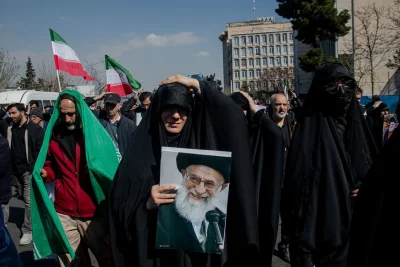
1 of 2 | Iranians carry national flags and portraits of Iran’s Late Leader, Ayatollah Ali Khamenei, as they participate in a rally to condemn the U.S.-Israeli military campaign after Friday prayer ceremonies outside Imam Khomeini Grand Mosque in Tehran, Iran. Photo by Hossein Esmaeil/UPI | License Photo
March 8 (UPI) — Members of the Iranian body charged with selecting the country’s new supreme leader said a candidate has been chosen, but no name has been revealed.
Mohsen Heydari, a member of the selection body, told Iran’s state-run ISNA news agency that a decision has been made on the successor to supreme leader Ali Khamenei, who was killed in joint U.S.-Israeli air strikes Feb. 28.
“The most suitable candidate, approved by the majority of the Assembly of Experts, has been determined,” Heydari said.
Mohammad Mehdi Mirbagheri, another member of the assembly, confirmed Heydari’s statement to the state-run Fars news agency.
Israeli forces have pledged to target Khamenei’s successor, as well as anyone involved in appointing a new supreme leader.
Israeli Defense Minister Israel Katz revealed Sunday that Abu-al-Qasem Baba’iyan, who was appointed last week as the new head of the supreme leader’s military bureau, has been killed.
An Iranian missile strike injured five people Sunday in central Israel. One person was reported killed in an Iranian strike in Dubai on Saturday. Sunday morning strikes were also reported in Kuwait, Bahrain, Saudi Arabia and Qatar.
The strikes came just one day after Iranian President Masoud Pezeshkian issued a pre-recorded statement apologizing to neighboring countries targeted in Iranian strikes, and pledged to suspend such attacks, unless attacks on Iran originated from those locations.
Meanwhile, two Israeli soldiers were killed Sunday morning in Lebanon, marking the country’s first fatalities in its campaign against Iran-aligned Hezbollah.
Lebanese health minister Rakan Nasreddine said at least 394 people have been killed in the country since Israeli strikes began last week.
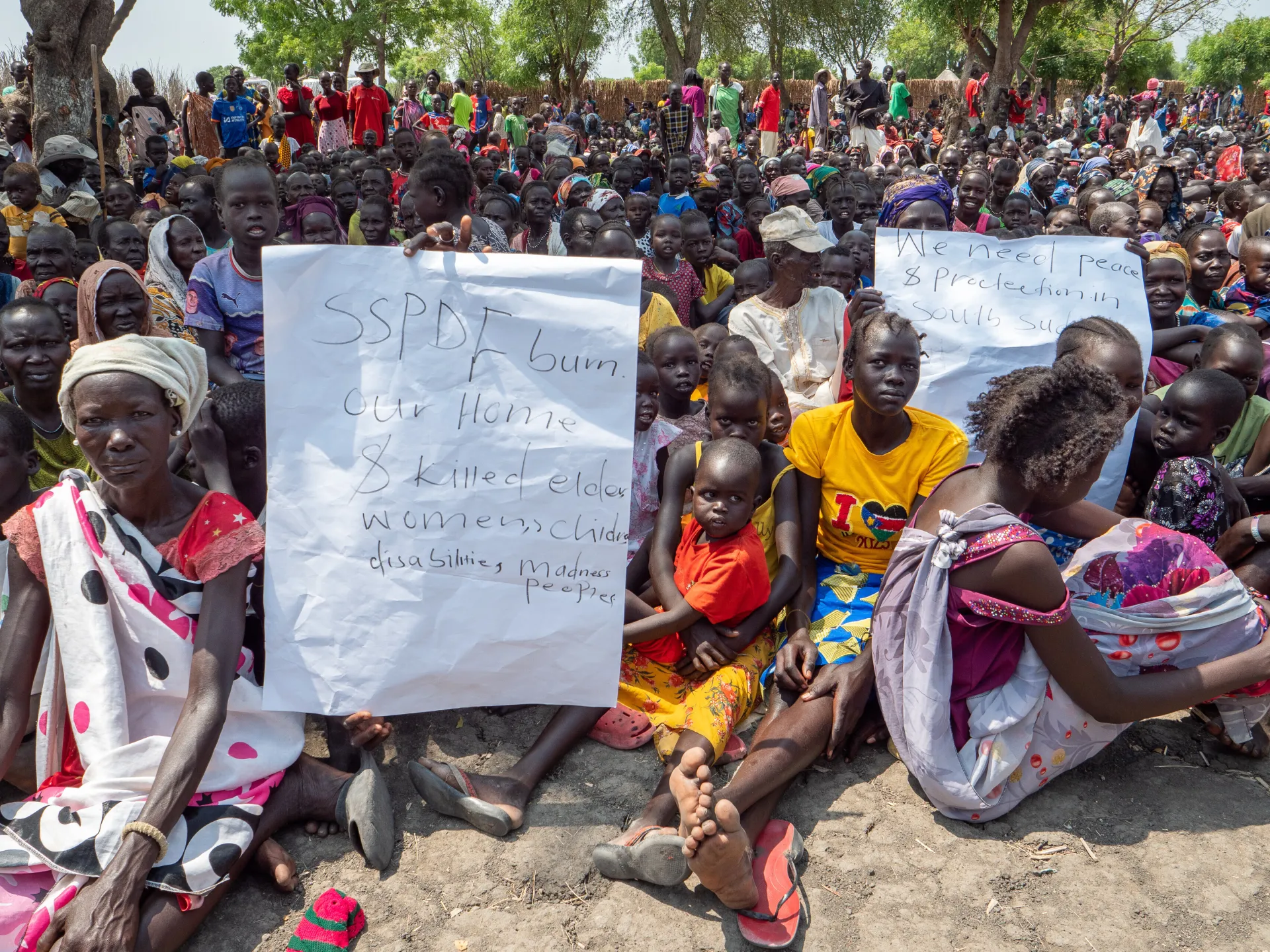
Thousands of civilians have fled an opposition stronghold in eastern South Sudan after the army ordered evacuations to clear the way for a military offensive, the latest sign that the country’s fragile peace is unravelling, as fears of a return to all-out civil war haunt the world’s youngest nation.
The town of Akobo, near the Ethiopian border, was almost completely emptied by Sunday after the South Sudan People’s Defense Forces issued an ultimatum on Friday demanding that civilians, aid workers and United Nations peacekeepers leave ahead of a planned assault.
Recommended Stories
list of 2 itemsend of list
“The town is now almost empty,” said Nhial Lew, a local humanitarian official. “Women, children and the elderly have left and crossed into Ethiopia.” By Sunday evening, he could hear the conflict closing in. “We are hearing the sound of machine guns approaching,” he told the Associated Press news agency.
The army’s deadline was set to expire Monday afternoon.
The order extends a government counteroffensive, launched in January and dubbed Operation Enduring Peace, that has already displaced more than 280,000 people across Jonglei state since December, when opposition forces began seizing government positions.
The UN’s Commission on Human Rights in South Sudan warned of a possible “return to full-scale war” if the country’s leadership didn’t take the challenges it faces more seriously.
“Preventing further mass atrocity crimes, institutional collapse, and the destruction of South Sudan’s fragile transition requires urgent coordinated national, regional and international re-engagement,” the report said.
Akobo, which had been considered a relatively safe haven and sheltered more than 82,000 displaced people, is one of the last remaining strongholds of the Sudan People’s Liberation Movement-in-Opposition, or SPLM-IO, the armed movement loyal to South Sudan’s detained former vice president, Riek Machar.
Two UN flights evacuated most humanitarian staff on Sunday, though the International Committee of the Red Cross had not yet pulled its personnel from a surgical unit it runs at the local hospital, where wounded patients were still being treated.
“We are worried for our patients,” said Dual Diew, the county health director. “We tried to make a plan to take them to a safer location, but we don’t have enough fuel.”
The offensive comes amid a wider breakdown of the 2018 peace agreement that ended a civil war between forces loyal to President Salva Kiir and those backing Machar, a conflict that killed an estimated 400,000 people and forced millions from their homes.
Machar has been under house arrest in the capital, Juba, since March 2025, facing charges of treason and murder that his supporters say are politically motivated.
His detention coincided with a sharp rise in armed opposition activity, and a UN inquiry has since found that South Sudan’s leaders have been “systematically dismantling” the accord.
Conflicts have taken place across the country among groups associated with the two factions, said Jan Pospisil, a South Sudan researcher who spoke to Al Jazeera.
Dozens killed in the north
On Sunday, at least 169 people were killed, among them 90 civilians, including women and children, when armed men stormed a village in Abiemnom county in the country’s north.
The local administrator blamed the attack on elements of the White Army, a militia historically allied to Machar, alongside SPLM-IO-affiliated forces. The group denied any involvement. More than 1,000 people sought shelter at a UN base in the area.
“Such violence places civilians at grave risk and must stop immediately,” said Anita Kiki Gbeho of the UN mission in South Sudan.
Aid organisations operating in the conflict zone have also been targeted, with Doctors Without Borders, known by its French initials, MSF, saying on Monday that 26 of its staff remain unaccounted for, a month after a government air strike destroyed its hospital in the town of Lankien and a separate facility in Pieri was looted.
Staff who had been reached described “destruction, violence and extreme hardships”. It was the 10th attack on an MSF facility in 12 months.
“Medical workers must never be targets,” said Yashovardhan, the charity’s head of mission in South Sudan, who uses only one name.
Pospisil said the crisis had exposed the fragility of Kiir’s hold on power.
“The state is literally falling apart,” Pospisil said, referring to the convergence of conflict in the country and the elderly state of the president, whose condition has raised questions.
Pospisil added that the outcome of Machar’s ongoing trial would likely shape what comes next.
Harry Styles flew to the US to be in the audience for Saturday Night Live, where he will perform and host the show this weekendCredit: BackGridHarry released Kiss All The Time. Disco, Occasionally on Friday and has sold 125,000 copies in the UK in the first two daysCredit: PA
The massive figure means he has already eclipsed the first week sales of his last album Harry’s House, which sold 113k copies in seven days in 2022.
It’s likely to be the third fastest selling British album of the last decade and the biggest since Adele’s 30 which shifted 261k in its first week in 2021.
Over on the singles chart, he looks set to occupy all three top spots with American Girls currently in the lead at No1, followed by former chart topper Aperture at No2 and Ready, Steady, Go! at No3.
And the figures globally are massive too, as Harry scored the biggest album debut of 2026 on Spotify worldwide with 63million streams on Friday.
The killer news comes after former One Direction star Harry smashed his One Night Only performance in Manchester’s Co-op Live on Friday night.
Fans who didn’t manage to get their hands on the £20 tickets, which were sold in a ballot, can now watch the show back on Netflix after it premiered on there last night.
Following the gig, Harry flew to the US to be in the audience for Saturday Night Live, where he will perform and host the show this weekend.
Chatting with Ryan Gosling, who was in the hot seat, Harry, who previously hosted and sang during an episode in 2019, said: “It’s been awhile, so I wanted to watch, get a feel for it.”
Insiders said the stripped back set, which saw Harry performing his new album from start to finish, will be ramped up for his upcoming 12 Wembley Stadium shows.
A source said: “Harry is celebrating this new era with an incredible stage set up.
“His team are building an epic set for the Wembley residency. Because he’s not moving around, they can really go to town.
“There will be enormous big screens and likely fireworks at the end of the shows.
“Harry gave his fans a taste of what is to come from the shows during the Brit Awards when he did an amazing choreographed routine as he sang Aperture.
“These shows are going down in history.”
I was lucky enough to be in Manchester’s Co-op Live to see Harry in action on Friday night and can confirm this album sounds incredible live.
His decision to lock away camera phones was masterful, as I could see the 20,000-odd fans properly connecting with his music – rather than watching him through an iPhone screen.
I think Harry should keep the ban in place when it comes to his Wembley shows, which kick off on June 12.
Enjoying music in the moment is the best feeling in the world — and Harry has reminded everyone, myself included, of that.
The About Damn Time singer headlined the Houston Livestock Show and Rodeo’s Black Heritage Night six years after her performance there was cancelled because of Covid.
Lizzo headlined the Houston Livestock Show and Rodeo’s Black Heritage NightCredit: Houston Livestock Show and RodeoLizzo entered the ring to the sounds of the Texas Southern University Ocean of Soul marching band playing Chamillionaire’s 2005 hit RidinCredit: Houston Livestock Show and RodeoLizzo whisked punters through her hits including Truth Hurts and Good As HellCredit: Houston Livestock Show and Rodeo
And she made up for lost time and entered the ring to the sounds of the Texas Southern University Ocean of Soul marching band playing Chamillionaire’s 2005 hit Ridin.
During her set, Lizzo whisked punters through her hits including Truth Hurts and Good As Hell and gave fans a thrill as she pulled out her flute to play the melody of Houston native, American rapper Mike Jones’s song Still Tippin’.
Speaking after her set, Lizzo said: “You have no idea how much this night means to me.
“This night will forever change my life.”
I’m a massive fan of Lizzo’s and last saw her on stage at Glastonbury back in 2023.
Just last week she performed a near sell-out show at the London Palladium and now I can reveal she’s back in the studio.
Lola Young is showing no signs of slowing downCredit: GettyLola has been getting to work with James Blake with the pair recording after a chance meeting last yearCredit: Getty
Insiders tell me Lola has been getting to work with James Blake with the pair recording after a chance meeting last year.
A source said: “James and Lola have been in the studio working on a few songs and hopefully at least one of the tracks will end up on her next album.”
After being forced to cancel her tour last year to focus on her health, Lola has also announced she will play Manchester, Birmingham, Glasgow and London in June.
And when she performed at the Formula 1 Australian Grand Prix in Melbourne over the weekend she dressed up like a chequered flag.
Rita Ora performed at the Formula 1 Australian Grand Prix in Melbourne over the weekendCredit: Shutterstock Editorial
Rita teamed her black and white jacket with a pair of tiny black pants and stockings for her performance, which saw her singing some of her biggest hits – including her 2012 breakout song Hot Right Now.
Over the weekend, Basement Jaxx also performed a headline set at the race – which was won by British racing driver George Russell – with DJ Duke Dumont putting on the final show last night with an epic turn on the decks.
BOY GEORGE is to appear on Eurovision – but will be representing San Marino instead of the United Kingdom.
The Culture Club legend will feature on the tune Superstar, performed by Italian singer Senhit, who has qualified for the tiny nation.
Boy George is to appear on Eurovision – but will be representing San Marino instead of the United KingdomCredit: Getty
He didn’t appear at the regional selection event on Friday night, in which Senhit won her place, but I’m told he does intend to be on stage in Vienna at the contest in May.
She previously represented San Marino in 2021 with the track Adrenalina, which had another famous feature, as American rapper Flo Rida joined her on stage.
Despite the special guest that year she finished 22 out of 26, so Boy George will be hoping to improve on that.
But given the UK came 19th last that year, perhaps George has the right idea singing for somebody else.
LADY GAGA has hinted she will marry fiancé Michael Polansky any day now.
Gaga, whose tour ends in the US on April 13, sent a note into pal Bruno Mars’s iHeartRadio livestream.
She said: “Me and my fiancé have been travelling all year, but we’re getting married soon. We were hoping you could choose a special song for us.”
TRAITOR ALAN SAYS TOO MUCH
ALAN CARR has called his upcoming comedy tour, Have I Said Too Much, and I can confirm he has.
But it’s bloody hilarious. During a small gig at the Soho Theatre in London on Saturday night, he took pops at his Celebrity Traitors co-stars – and had the crowd in stitches.
Alan said: “Wasn’t I good in The Traitors? Was I good or were the other celebrities just s**t?
“They were thick as mince and as stupid. When I laughed in their face and said: ‘I’m a faithful,’ I went home and packed.
“What more could I have done? I could have come down in that cloak with the severed head of CLAUDIA WINKLEMAN and they still would have gone: ‘I think it’s JOE MARLER.’”
Alan added: “Do you think I killed Paloma Faith first? No – I killed Clare Balding. We shoved her in the coffin but could not get the lid down because of that quiff.”
DR CALL FOR MUSO PETE
HE went from playing foul-mouthed Malcolm Tucker in The Thick Of It to becoming Doctor Who, and then trying his hand at music.
And after his second album, Sweet Illusions, was released last year, I’m told Peter Capaldi is already lining up his third record.
Doctor Who legend Peter Capaldi is already lining up his third recordCredit: BBC
Peter worked with Blow Monkeys frontman Dr. Robert for album two and now they’re teaming up again, following the end of Peter’s debut run of headline shows.
A source said: “Peter finished his final show at the 100 Club in London last night, and the plan is to get back into a studio and lay down some new tracks.
“He has been blown away by the response to his first ever live shows with his band, and he already has a host of tracks for a new record.
“More than anything he finds making music fun.
“Peter doesn’t need to get to the top of the charts for this all to be a success for him.
“He would never have even recorded one track if it wasn’t for his friend Dr. Robert urging him to remember his student days as a punk and write some new songs.
“He trusts Dr. Robert and can’t wait to get to work with him again.”
Peter’s first foray into music was when he was at art college and he was the lead singer and guitarist in a punk rock band called the Dreamboys.
His biggest music moment so far came last year when Franz Ferdinand frontman Alex Kapranos pulled Peter up on stage at Glastonbury to perform Take Me Out with them.
The week in bizness
TODAY: Ryan Gosling will be on the red carpet in London’s Leicester Square for the premiere of sci-fi comedy Project Hail Mary.
WEDNESDAY: Fundraising gig Trans Mission: A Solidarity Concert will take place at London’s Wembley Arena with appearances from Sugababes, Sophie Ellis-Bextor and Olly Alexander.
FRIDAY: The three-day Country To Country Festival will kick off simultaneously in Belfast, Glasgow and London with performances from Keith Urban, Zach Top and Brooks & Dunn.
SUNDAY: The tuxedos and fancy frocks will be out in force for the Oscars in Los Angeles, where Sinners is up for a record 16 awards.
1 of 3 | Large police resources are in place at the U.S. embassy in Oslo, Norway, Sunday, after an explosion was reported at the site. No injuries were reported. Photo by Javad Parsa/EPA
March 8 (UPI) — Norwegian police are investigating whether an early morning explosion that caused minor damage to the U.S. embassy in Oslo was linked to terrorism.
Oslo police said the explosion occurred about 1 a.m. local time at the embassy’s public entrance, causing minor damage but no injuries.
Police said they are working closely with the embassy to determine the cause of the explosion, and who was behind it.
Frode Larsen, head of the joint investigation and intelligence unit, told a news conference it is “natural to view this in the context of the current security situation, and that it is a targeted attack against the American embassy. But we have not locked ourselves into just that one hypothesis.”
Larsen said police are investigating whether the blast was linked to terrorism, but other possibilities are also being probed.
Police conducted a search of the surrounding area, but did not locate any further explosive devices.
Iran’s IRGC had earlier said they targeted radar systems in locations including Al-Kharj, home to Prince Sultan base.
Published On 8 Mar 20268 Mar 2026
Share
At least two people have been killed after a projectile fell on a residential location in Saudi Arabia‘s Al-Kharj city, Saudi authorities reported, as Iranian counterattacks on Gulf nations hosting US military assets entered a second week.
The Saudi civil defence said in a post on X on Sunday, without mentioning Iran, that an unspecified “military projectile” had hit a residential area in Al-Kharj, killing two foreign nationals – one Indian and one Bangladeshi – and injuring 12 people.
Recommended Stories
list of 3 itemsend of list
Iran’s Islamic Revolutionary Guard Corps (IRGC) had said earlier that it had targeted radar systems in locations including Al-Kharj governorate, which is home to the Prince Sultan airbase used by United States forces, and has come under repeated attack over the past week in the US and Israeli war against Iran.
Reporting from Doha, Al Jazeera’s Laura Khan said the projectile had landed on a residential site belonging to a maintenance and cleaning company.
“This is getting very volatile and dangerous for people across the Gulf,” she said. “It’s really important to emphasise that over 200 nationalities live and work across the Gulf nations. Many of these could be labourers.”
On Sunday, the Saudi Defence Ministry reported intercepting 15 drones, including an attempted attack in the diplomatic quarter of the capital Riyadh.
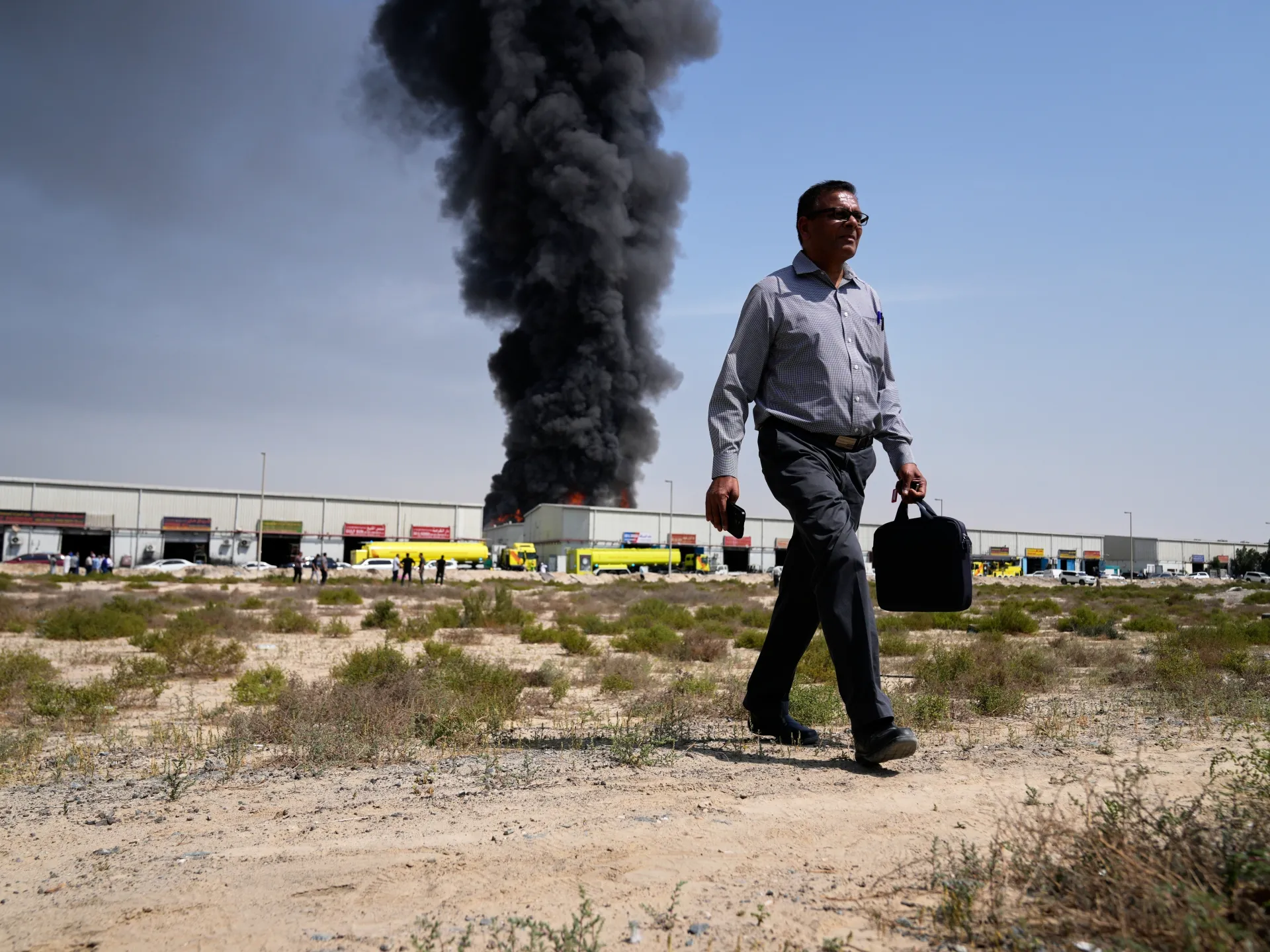
Kuwait, meanwhile, said an attack hit fuel tanks at its international airport, and Bahrain reported a water desalination plant had been damaged.
Sunday’s attacks came after Israeli warplanes hit five oil facilities around the Iranian capital, killing several people, according to a state oil executive, and blanketing the city in acrid smoke.
A spokesperson for the IRGC said Iran would retaliate if US-Israel attacks on its energy infrastructure did not let up.
“If you can tolerate oil at more than $200 per barrel, continue this game,” said the spokesperson.
As the war extended into its ninth day, the IRGC said it had enough supplies to continue drone and missile attacks across the Middle East for up to six months.
Ahmed Aboul Gheit, secretary-general of the Arab League, said Iran’s attacks on several member states were “reckless”, urging Tehran to reverse what he called a “massive strategic mistake”.
Iran’s Health Ministry said Sunday that at least 1,200 civilians had been killed and around 10,000 wounded since the US and Israel launched their war on Iran on February 28.
LIZ Hurley has barely aged a day in 27 years – and strutted out in a gown from 1999 to prove it.
The star gave fans a blast from the past during her latest trip to India for an event, bringing out a plunging black dress with a thigh high split.
Sign up for the Showbiz newsletter
Thank you!
Liz still looks incredible as she brought back one of her favourite dresses from nearly 30 years agoCredit: InstagramLiz wore the outfit to the Met Gala back in 1999 – which celebrated Rock StyleCredit: Getty
Initially worn to the 1999 Met Gala in New York City, which celebrated ‘Rock Style’ that year, Elizabeth’s dating look was given a pop of colour with a bejeweled red and pink embellishment across the stomach, resembling a bursting firework.
She wrote alongside the comparison pic: “Viva Versace! For this weekend’s adventure in India, I dug into my archives and unearthed one of my favourite pieces, which I last wore to the Met Gala in 1999 😳
“27 years may have passed, but some loves never fade.”
The look got the seal of approval from Donatella Versace, who commented emojis of a kissing face, a bang, and stars.
Boyfriend Billy Ray Cyrus also approved, posting a string of hearts to her.
Her son, Damian Hurley, commented: “Hell yeaaaaaa ❤️”
While other fans also praised her incredible look and how after 27 years, she still knows how to show off her style.
“Elizabeth Jane time stopped for you still as gorgeous as always” wrote one.
“GORGEOUS!!!!!! And timeless! 🔥” noted another.
While a third wrote: “that’s insane… you look incredible 🙌”
Elizabeth is never one to shy away from a killer look and a jetset lifestyle, and has vowed to not stop taking bikini pictures anytime soon.
Last year, she credited stretching as the secret to taking flattering pics.
“If in doubt, arms up or lie down ♥️ (and remember your sun block),” she joked.
Kicking off the year in style, Liz posed with a gun slipped into her bikini bottoms as she rung in 2026 at a wild party with her boyfriend Billy Ray Cyrus.
The star made sure to show off the thigh high split as she left the Gala in 1999Credit: GettyBoyfriend Billy Cyrus was among those approving of the lookCredit: InstagramElizabeth rarely misses an opportunity to show off her glam styleCredit: Getty
Balendra Shah (C), former mayor of Kathmandu, appears poised to become Nepal’s next prime minister after his party scored a landslide victory in national elections. Photo by Narendra Shrestha/EPA
March 8 (UPI) — Former rapper Balendra Shah appears poised to be Nepal’s next prime minister, after his party won the general election by a landslide.
Shah’s Rastriya Swatantra Party, or RSP, captured 117 out of the 165 directly-voted seats in the Federal Parliament of Nepal and is currently leading in eight more contested seats. Final results, including seats appointed by proportional representation, are expected to be announced in the coming days.
Shah, 35, transitioned from a rapper to a politician in 2022, when he was elected mayor of Kathmandu.
The former musician became a figurehead of the September 2025 movement that saw young people take to the streets to protest Nepalese Prime Minister Sharma KP Oli’s law banning social media use. The protests expanded into criticism of government corruption and the country’s political system as a whole.
A government crackdown on the protests resulted in the deaths of 19 protesters, and led to public unrest resulting in 70 deaths and the resignation of Oli’s government.
Shah’s party has pledged to create 1.2 million jobs, reduce forced migration, raise the per capital income from $1,447 to $3,000 and provide social safety nets including health insurance.
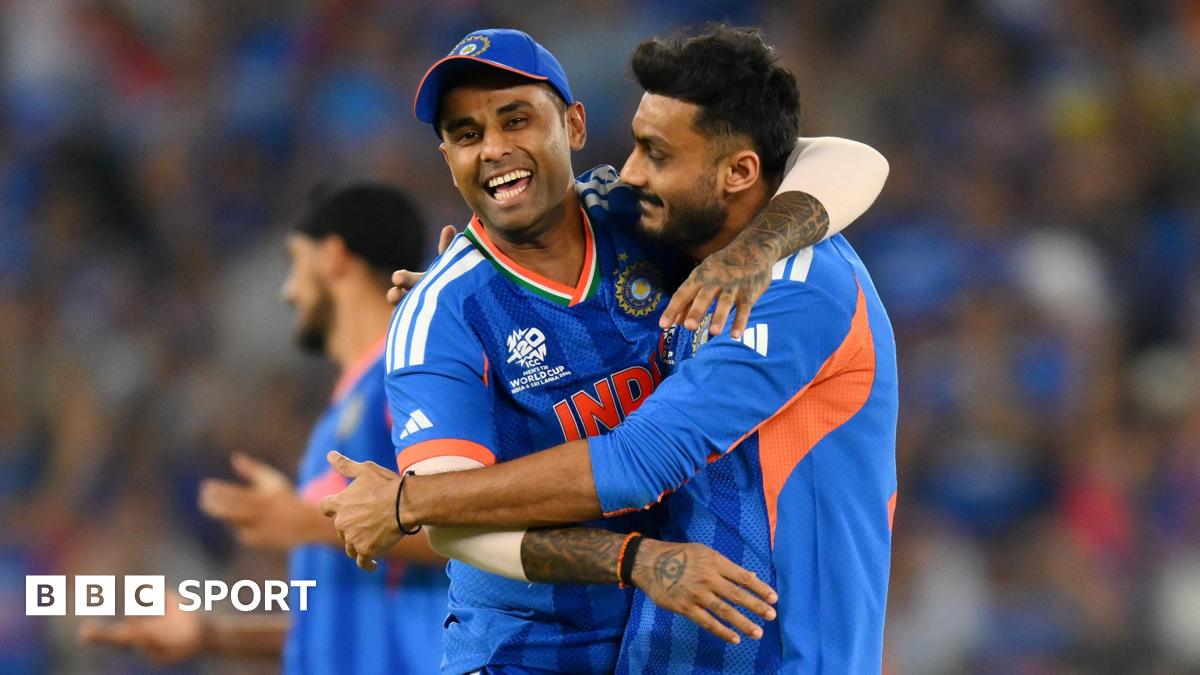
For two overs, it appeared things could have been just like 2023 when India were far too tentative on, quite literally, cricket’s biggest stage.
There were five dot balls in the first over, bowled by seamer Matt Henry, and only five runs in the second, off Glenn Phillips’ part-time spin.
But Samson and Abhishek took 15 from Jacob Duffy’s first over and 24 from the next bowled by Lockie Ferguson as the innings, and the crowd, roared into life.
Even with that slow start, Abhishek and Samson took 92 runs from the best powerplay ever seen at a World Cup. In comparison, the Black Caps were 52-3 after their first six overs – a crucial difference.
Abhishek had only made one score over 15 in this tournament but flogged the ball to all parts. Samson was again supreme, backing up his 97 not out against West Indies and 89 against England with another innings that mixed flair with a classical technique.
Together he and Abhishek hit 12 of the innings’ 18 sixes, which took India’s tournament total to 106 – 30 more than any other team here and a record for a T20 World Cup.
When left-hander Kishan followed in raising his bat it was the first time the top three had reached fifty in a men’s T20 World Cup. They had 203 runs after 15.1 overs and Dube’s late burst – after a run of 28 runs in 24 balls – ensured India charged beyond a par score.
They took all the momentum, a batting paradise capitalised upon. Afterwards the chase was a slow coronation.
India were beaten by South Africa in the Super 8s stage but have responded brilliantly with three scores in excess of 250. This was a night of glory for a new generation, after the T20 retirement of superstars Virat Kohli, Rohit Sharma and Ravindra Jadeja.
At the Basement, a haunted escape room experience in Sylmar, patrons attempt to evade a deranged serial killer by solving puzzles.
Now the actors, who work as game masters and perform as distressed abductees at the venue, will be frightening their guests while under union protection.
This week, the Basement’s union voted unanimously to ratify its first working contract, making it the first and only escape room to have a union and operate under a collective bargaining agreement. The group is recognized as part of the Actors’ Equity Assn., which represents more than 51,000 actors and managers in live entertainment.
Jenna Wagner, an actor at the Basement, said the new contract, bargained by a dozen employees including herself, will “improve general unit morale.” It addresses higher wages and greater safety provisions as well as scheduling and media protections.
The Basement’s workers are the first escape room actors to successfully unionize.
(THE BASEMENT: A Live Escape Room Experience and Elwood Walker)
“It’s, of course, setting a precedent. A lot of people don’t see working at an escape room as something worthy of being recognized. Sometimes when you say, ‘I’m an actor at an escape room.’ People just say ‘Oh, OK,’” Wagner said. “It feels very validating [to unionize like this] because we are actors. We are performing every day.”
The Basement’s union was formed two years ago. Management, led by founder and chief executive Kayden Ressel, voluntarily recognized its workers’ efforts to join Actors’ Equity. Ressel said he used to work as a scare actor at haunted attractions so he understood where his employees were coming from.
“Their values seemed to be in alignment with what I really wanted my business to be in the first place. So, we were excited” about the union efforts, Ressel said. He’s hoping the finalized contract “will raise the bar” for other escape rooms.
The Sylmar attraction first opened in 2014 and employs 15 people. Across 3,000 square feet, it offers four interactive room choices where groups get to decide between escaping different areas of the haunted house. Live actors are involved in three of the four experiences. (The Basement is one of the few escape rooms to hire actors.) Two other Basement locations can be found in Las Vegas and Kansas City, Mo.
Ressel said he’s considering offering a discount of 10% to 20% for customers who belong to unions.
The Basement’s workers are the first escape room actors to successfully unionize.
(THE BASEMENT: A Live Escape Room Experience and Elwood Walker)
Noah Nelson, a professor at the California Institute of the Arts and founder of immersive arts publication No Proscenium, said Actors’ Equity’s recognition of the Basement’s workers is a step in the right direction as the union welcomes more nontraditional units.
“There’s something to be said about the value of live entertainment being recognized. It goes beyond the venues that people would traditionally associate with that whether that is a regional theater, a Broadway house or a concert venue,” Nelson said. “There is an industry here that stretches beyond just the big houses, and at the end of the day, I view the signs of organizing in these spaces as nothing but a good sign for the overall health of the industry.”
Stefanie Frey, the director of organizing and mobilization at Actors’ Equity, said in a statement that the union views “escape rooms and similar immersive entertainment experiences as another live stage.” She also said the union expects “others in this growing community will seek out our union for representation.”
Actress Brooke Shields, the president of Actors’ Equity, said, “Negotiating a first contract is always a challenge, and in this case, we had no other unionized escape rooms to use for a model.”
“These workers stuck together through a long process, and seeing what they’ve achieved, I’m sure they agree it was worth it,” she said in a statement. “They have made history for a swiftly growing sector of our industry.”
March 8 (UPI) — The New York Police Department said two people were arrested in connection with a pair of “suspicious devices” ignited during an anti-Islam protest outside Gracie Mansion.
Police Commissioner Jessica Tisch said the devices appeared to be jars wrapped in black tape containing nuts, bolts and screws. Each device had a hobby fuse.
“We do not yet know whether the devices were functional improvised explosive devices or hoax devices, because we don’t yet know if there was energetic material contained in them,” NBC News quoted Tisch as telling reporters.
The FBI’s New York field office is also investigating.
“During a rally earlier this afternoon, two suspicious items were recovered from the property of Gracie Mansion,” the office said on social media. “The FBI New York’s Joint Terrorism Task Force and the New York City Police Department quickly responded and are actively investigating this matter.”
The devices, which were taken by the bomb squad for further analysis, were allegedly ignited by counterprotesters at an anti-Islam rally organized by right-wing influencer Jake Lang outside Gracie Mansion, Mayor Zohran Mamdani’s official residence.
Lang’s rally, dubbed “Stop the Islamic Takeover of New York City, Stop New York City Public Muslim Prayer,” attracted about 20 participants Saturday, while the counterprotest, “Run the Nazis out of New York City, Stand Against Hate,” featured up to 125 people.
An 18-year-old man accused of throwing the devices was detained alongside a 19-year-old man who handed one of the devices to the first suspect. Both men are from Pennsylvania. No charges have yet been filed.
Tisch said a protester from Lang’s group was arrested for allegedly discharging pepper spray at counterprotesters and three others were arrested on charges involving disorderly conduct and obstructing traffic.
Lang’s protest was organized amid Ramadan, a Muslim holy month. Mamdani, who was inside Gracie Mansion at the time of the demonstrations, is New York’s first Muslim mayor.
KERRY Katona wants to “up and leave to Spain” with boyfriend Paolo Margaglione after a receiving a telling sign.
The 45-year-old revealed her plans to relocate to the warmer climate last month with her and Paolo’s blended families.
Sign up for the Showbiz newsletter
Thank you!
Kerry Katona wants to “up and move to Spain” with her boyfriend PaoloCredit: GettyShe wants to move their blended families to the sunny climateCredit: Instagram
But now she’s admitted that the move could be happening sooner than expected because her youngest daughter Dylan Jorge’s school is closing down.
Writing in her column for New! magazine, she said: “I recently got a message announcing they are shutting DJ’s school down in July. Molly, Lilly and Heidi all went to that school, so I am truly gutted.
“Now we’re running around trying to get her into a different school, but they favour pupils who already have siblings who attend, so DJ’s been put on a waiting list.
“I’m in touch with another school but we keep missing each other, so I’m wondering if this is a sign to up and leave to Spain and start fresh…”
Kerry is mum to children, Molly, 24, Lilly-Sue, 22, Heidi, 18, Max, 17 and 11-year-old Dylan-Jorge.
Meanwhile, Paolo is dad to two daughters, Milani and Nola.
The couple revealed their future plans last month and admitted they were considering moving overseas.
During a joint interview with OK! magazine, he said: “Hopefully somewhere hot and sunny. The idea is, at some point, to potentially move away from the UK.
“It’s something I wanted to do and something Kerry’s wanted, too,” as Kerry expressed: “We do have a plan.”
The pair fell in love while filming for Celebs Go Dating last year, despite Kerry having reservations about the 12-year age gap.
Kerry revealed her youngest daughter DJ’s school is closing downCredit: Instagram
He met Kerry’s daughter Heidi on the show as well as her best pal Danielle Brown, with both of them giving him a thumbs up.
Since filming wrapped, Kerry and Paolo have gone from strength to strength and are now living together.
They’re all set to return for Celebs Go Dating’s upcoming series, which will star Coleen Nolan, Gabby Allen and Lucinda Light.
The loved-up pair will sit down with dating experts, Paul C Brunson, Anna Williamson and Dr Tara Suwinyattichaiporn to discuss their whirlwind romance.
In an exclusive for The Sun earlier this year, Kerry opened up on the sexual chemistry she shares with her other half.
She gushed: “Oh, it’s f****** unbelievable. Honestly, even now I get stuck with words!
“I was adamant I wasn’t interested in meeting anybody. I was not f****** interested in anybody. Honest to God,
“I was, “I’m doing it on my own era,” and now when I’m not with him, I actually ache.”
She added: “Whether this works out or not, how I feel right now, I can’t deny these feelings. It’s electric.
“I’ve never felt that. I’ve never felt giddiness and my hands shake, it really excites me.”
The loved-up pair revealed their plans to relocate last monthCredit: Instagram/kerrykatona7
Bahrain has said an Iranian drone attack caused material damage to a water desalination plant in the country, marking the first time a Gulf nation has reported targeting any such facility during the eight days of the war between Iran and the US and Israel.
The attack on Sunday comes a day after Iranian Foreign Minister Abbas Araghchi said a freshwater desalination plant on Qeshm Island in southern Iran was attacked by the United States.
Recommended Stories
list of 3 itemsend of list
“Water supply in 30 villages has been impacted. Attacking Iran’s infrastructure is a dangerous move with grave consequences. The US set this precedent, not Iran,” he said on X on Saturday.
While Tehran has not yet commented on the Bahrain attack, it has raised questions about the vulnerability of the Gulf countries, which depend on desalination plants for the majority of their water supply.
How important are water desalination plants to the Gulf region? Can water security in the Gulf be guaranteed amid a widening of military targets to include energy and other civilian sites?
What are desalination plants?
A desalination plant primarily converts seawater into water suitable for drinking purposes as well as for irrigation and industrial use.
The process of desalination involves removing salt, algae and other pollutants from seawater using a thermal process or membrane-based technologies.
According to the US Department of Energy, desalination systems “heat water so that it evaporates into steam, leaving behind impurities, and then condenses back into a liquid for human use”.
Meanwhile, membrane-based desalination involves “a class of technologies in which saline water passes through a semipermeable material that allows water through but holds back dissolved solids like salts”.
Reverse osmosis is the most popular membrane technology. Most countries in the Gulf Cooperation Council (GCC) use reverse osmosis since it is an energy-efficient technique.
Why are desalination plants important to the Gulf?
Water is scarce in the Gulf region due to the arid climate and irregular rainfall. Countries in the Gulf also have very limited natural freshwater resources. Groundwater, together with desalinated water, accounts for about 90 percent of the region’s main water resources, according to a 2020 report by the Gulf Research Center.
But in recent years, as groundwater has also begun to deteriorate as a result of climate change, Gulf countries have begun relying heavily on energy-intensive seawater desalination to meet their water needs.
More than 400 desalination plants are located on the Arabian Gulf shores stretching from the United Arab Emirates (UAE) to Kuwait, providing water to one of the most water-scarce regions in the world.
According to a 2023 research paper published by the Arab Center Washington DC, GCC member states account for about 60 percent of global water desalination capacity, producing almost 40 percent of the total desalinated water in the world.
About 42 percent of the UAE’s drinking water comes from desalination plants, while that figure is 90 percent in Kuwait, 86 percent in Oman, and 70 percent in Saudi Arabia. Saudi Arabia also produces more desalinated water than any other country.
Desalination has also played a crucial role in enabling economic development in the region, according to Naser Alsayed, an environmental researcher specialising in the Gulf states.
He noted that after the discovery of oil in the late 1930s, Gulf states had very limited natural freshwater resources and could not meet the demands created by population growth and expanding economic activity.
“Desalination plants were therefore introduced,” he told Al Jazeera, adding that the importance of desalinated water in supporting the Gulf’s development is often overlooked.
“As a result, targeting or disrupting desalination facilities would place much of the region’s economic stability and growth at significant risk,” he said.
“Secondly, desalination is the main source of freshwater for most GCC states, especially smaller and highly water-scarce countries such as Bahrain, Kuwait and Qatar. Because this water is primarily used for human consumption, desalination carries a strong humanitarian dimension and is essential for sustaining daily life in the region, making any disruption to these facilities particularly significant for the population,” he added.
Iran also uses desalination plants, which have been installed in coastal areas such as Qeshm Island in the Gulf. But Iran also has many rivers and dams and is not as heavily reliant on desalination plants as other countries in the Gulf region.
If a desalination plant is attacked, what is the impact?
The Gulf’s heavy reliance on desalination plants has made it vulnerable during times of conflict.
During the 1990-1991 Gulf War, Iraqi forces intentionally destroyed most of Kuwait’s desalination capacity, and the damage to its water supply was severe.
Raha Hakimdavar, a hydrologist, told Al Jazeera that in the long-term, attacking these plants can also impact domestic food production, which mostly uses groundwater.
“However, the pressures from competing needs can divert this water away from domestic production. This can be especially challenging because the region is also highly food import dependent and is facing potential food security challenges due to the compromising of the Strait of Hormuz,” said Hakimdavar, who is a Senior Advisor to the Deans at Georgetown University in Qatar and the Earth Commons.
A 2010 CIA report (PDF) also warned that while “national dependence on desalinated water varies substantially among Persian Gulf countries, disruption of desalination facilities in most of the Arab countries could have more consequences than the loss of any industry or commodity.”
According to Alsayed, the impact of a plant being attacked in the region, however, depends on the local scenario.
“For Saudi Arabia, which is the least dependent on desalination and has significant geographic space, facilities on the Red Sea provide resilience. The UAE has 45 days of water storage aligned with its 2036 water security strategy, so contingency plans are in place to manage potential disruptions,” he said.
“The effects are likely to be felt more acutely in smaller states that are highly dependent on desalination like Qatar, Bahrain, and Kuwait, which have minimal strategic reservoirs,” he noted.
“The most significant impact, in my view, is psychological,” Alsayed said. “Water is essential to human life, and the perception of risk can cause fear and panic, which is particularly challenging in the current environment in the region and where authorities are working to maintain calm.”
How can water security be guaranteed?
As attacks on Gulf countries continue, with energy and civilian infrastructure being targeted, Alsayed highlighted that it is important for GCC countries to view water security as a regional issue rather than an independent concern for each member state.
“The countries need to coordinate more closely and work together. The GCC has a strong platform to prepare for water challenges, but has not fully utilised it,” he said.
Alsayed noted that the GCC Unified Water Strategy 2035 called for all member states to have a national integrated energy and water plan by 2020, but this has not yet been achieved.
“Whether through unified desalination grids, shared regional strategic water reserves, or diversifying water resource goals, this is the way to usher a new era to strengthen Gulf water security,” he said.
Hakimdavar, the hydrologist, said there is no replacement for desalination in the GCC in the near-term.
But she added that the GCC countries can rely on strategic water storage reservoirs – many countries maintain large water reserves that can supply cities for several days or longer.
“Countries can also diversify water supply systems, and also invest in smaller, more distributed desalination plants powered by renewable energy to reduce reliance on a few very large facilities,” she added.
Tehran, Iran – Senior religious leaders have signalled that Iran’s government may soon announce a new leader as hardliners and sidelined reformists deliberate their futures amid the quickly escalating United States-Israeli war on Iran.
Mohammad Mehdi Mirbagheri – a top figure in the 88-member Assembly of Experts, which will appoint the new supreme leader after Ayatollah Ali Khamenei was killed in Tehran on February 28 – said the choice had to be made with care so it would be indisputable internally.
Recommended Stories
list of 4 itemsend of list
“An almost decisive opinion has been reached. A significant majority has been formed, but at the same time, some obstacles have to be removed, which we hope will happen soon,” the head of the Qom Academy of Islamic Sciences said in a video released on Sunday by the Fars news agency, which is affiliated with the Islamic Revolutionary Guard Corps (IRGC).
The top ultraconservative Muslim leader representing the holy Shia city of Mashhad in the Assembly of Experts, Ahmad Alamolhoda, said on Sunday that the leader has been chosen and the secretariat of the Assembly of Experts must soon announce the result.
Abbas Kaabi, a senior member of the Guardian Council, said on Friday that the powerful 12-member constitutional body was not given any names to consider for the next supreme leader by Khamenei during his lifetime, only attributes.
“He said: Among all attributes, the financial piety of the supreme leader is of primary importance because, given the important powers and responsibilities of leadership, if financial deviation occurs, it will spread to all other matters,” Kaabi was quoted as saying by the IRGC-affiliated Mehr news agency.
The religious leader also quoted Khamenei as pointing to “a rooted belief in the fundamentals of the [1979] Islamic revolution, having insight and knowledge of enemies and sedition, and especially being anti-arrogance and having faith and resistance in confronting America and the Zionist regime” as being among other top attributes for a future leader.
Mojtaba Khamenei, the second son of the late supreme leader, is believed to be a frontrunner for the position as he enjoys wide backing from powerful commanders in the IRGC who have been launching missiles and drones across the region over the past week.
US President Donald Trump, who has said he wants to play a role in determining the future leadership of Iran, has objected to the younger Khamenei’s ascension.
The Israeli army has said it will try to assassinate Iran’s remaining leaders and has bombed their offices and gathering spots in Tehran, Qom and other cities. Israel and the US have repeatedly expressed their interest in changing the government of Iran.
Israeli media reported on Saturday that Asghar Hejazi, a senior religious leader who was Khamenei’s acting chief of staff, was killed in a series of overnight air strikes targeting an underground compound in downtown Tehran used by the supreme leader and other officials. Iran has not commented.
Reformists weigh in as Pezeshkian creates row
President Masoud Pezeshkian came under fire after he released a video from an undisclosed location on Saturday and apologised to regional neighbours who have been fighting off Iranian missiles and drones.
The armed forces leading the military attacks, including the Khatam al-Anbiya Headquarters of the IRGC and interim leadership council member and chief justice of the Supreme Court, Gholam-Hossein Mohseni-Ejei, quickly released statements to emphasise that the strikes would continue, with Iran as well as the US and Israel, saying they are ready for months of war if necessary.
The row prompted more hardliners, including religious leaders, lawmakers and IRGC-affiliated media, to call on the Assembly of Experts to move quickly to announce the next supreme leader. Ayatollah Hossein Nouri-Hamedani said the process should be expedited to “disappoint the enemy and preserve the unity and solidarity of the nation”.
The disagreement has broken out after reformist factions within the establishment have been pushed aside by hardliners in recent years while the conservatives also have lost favour among an increasingly disillusioned public.
Mohammad Khatami, a reformist religious leader who was president from 1997 to 2005, released a statement to mourn Khamenei last week but also signalled that he sees a future for a reformed Islamic Republic.
The establishment is in need of “reforming approaches and practices objected to by the people”, he said without naming any examples.
“Our path is the path of freedom, independence, people-centrism and fair living, and that is a difficult path to tread and requires wisdom and tolerance,” he said.
Khatami and the Reformist Front of Iran also released general calls for reform after thousands of people were killed during nationwide protests in January.
The Iranian government said “terrorists” backed by the US and Israel were responsible for the killings, but the United Nations and international humanitarian organisations blamed state forces for a lethal crackdown against peaceful protesters.
The leaders of the Reformist Front were arrested or summoned by Iranian intelligence and judicial authorities last month for what the establishment called an attempt to “disrupt the country’s political and social order” and working “for the benefit” of Israel and the US during the antigovernment protests.
Most have since been released on bail, but some remain incarcerated as do many of the tens of thousands of people believed to have been arrested during and in the aftermath of the protests.
Hassan Rouhani, the moderate religious leader who was president from 2013 to 2021 and who rejected being part of a reported power grab last month, has remained publicly silent during the deliberations over the next supreme leader.
Former President Mahmoud Ahmadinejad, another influential figure, survived an assassination attempt last week, according to Iranian media.
Fuel reserves and oil refineries in Tehran were bombed by the Israeli military overnight into Sunday, leaving thick plumes of smoke enveloping the sprawling city of 10 million people during the day as oil residue fell as part of a heavy rain.
FANS have been left shocked to discover that a stunning influencer is actually the daughter of a Hollywood star.
The online personality regularly posts lifestyle videos with her dedicated fan base, but would you guess who her A-list dad is?
Sign up for the Showbiz newsletter
Thank you!
TikTok star Shayla Gibson boasts over 7 million likes on the app, but would you guess who her famous dad is?Credit: TikTok/@moneyshayyyThe stunner appears to be carving out her own career onlineCredit: TikTok/@moneyshayyyThe star often shares videos with her actor fatherCredit: TikTok/@moneyshayyy
Shayla Gibson boasts over 7 million likes on her TikTok page and over 130k followers.
From ‘Day In The Life’ videos to health and nutrition clips, the star appears to be carving out a career for herself on social media.
And Shayla is even the inspiration behind one of TikTok’s most famous sound.
A clip of Tyrese exclaiming, “Oh, my Shayla”, in reference to his daughter became one of social media’s most used sounds when it surfaced in 2017 during Tyrese’s custody battle with ex-wife Norma Mitchell.
The clip – initially an emotional video by Tyrese – continues to be one of TikTok’s most popular sound bites.
Poking fun at the viral sensation, Shayla’s TikTok bio reads: “Yes I’m Shayla”.
Tyrese often appears in Shayla’s videos, with the pair clearly boasting a close father-daughter relationship.
He is most famous for appearing in the Fast and Furious franchise as Roman Pearce.
According to IMBD, Tyrese is working on a number of new projects to be released in the coming years.
Following his split from ex-wife Norma, Tyrese married Samantha Lee in 2017, but split just three years later.
The couple, who are parents to daughter Soraya, announced their split via Instagram in a joint statement.
They said at the time that they were to remain “best of friends” and were “deeply grateful” to be married for the last few years.
The actor has continued to appear in action films over recent years, and is currently working on several projects.
Shayla’s dad, Tyrese Gibson, is known for starring in movies such as Fast and FuriousCredit: AlamyTyrese is also known for his R&B music careerCredit: GettyYoung Shayla with her famous dadCredit: Alamy
South Korean President Lee Jae Myung (C) speaks during a Cabinet meeting at the presidential office Cheong Wa Dae in Seoul, South Korea, 10 February 2026. Photo by YONHAP / EPA
March 6 (Asia Today) — South Korean President Lee Jae-myung’s approval rating rose to 65%, matching its highest level since he took office, according to a new national poll released Thursday.
A survey conducted by Korea Gallup from Monday through Wednesday among 1,001 adults nationwide found 65% of respondents approved of Lee’s job performance, up 1 percentage point from the previous week. Negative evaluations fell 1 point to 25%.
The poll shows Lee’s approval rating has increased steadily in recent weeks, rising from 63% in mid-February to 64% in late February and reaching 65% in the latest survey.
The figure matches the peak level recorded in early July shortly after Lee’s administration began, marking a return to the highest level in about eight months.
Regionally, approval exceeded 60% in most parts of the country, except in the conservative strongholds of Daegu and North Gyeongsang Province, where support stood at 49%, and Busan, Ulsan and South Gyeongsang Province, where it reached 58%.
Support was strongest in Gwangju and South Jeolla Province, where Lee recorded a 94% approval rating.
Across age groups, approval ratings exceeded 50% among all generations. Support was highest among voters in their 40s at 79% and those in their 50s at 77%. Among centrist voters, approval reached 70%.
Respondents who evaluated Lee positively most frequently cited economic and livelihood policies at 18%, followed by real estate policy at 16% and foreign policy at 11%.
Among those with negative views, the most common reasons included dissatisfaction with real estate and economic policies at 13%, concerns about changes to laws at 8% and criticism of authoritarian leadership at 7%.