News Desk

Gonadorelin: Molecular Signaling, Temporal Dynamics, and Expanding Research Horizons

Gonadorelin, a decapeptide identical in sequence to gonadotropin-releasing hormone, is believed to occupy a foundational position in endocrine signaling research. Since its structural elucidation in the twentieth century, the peptide has served as a conceptual bridge between neurochemical signaling and systemic hormonal coordination within the research model.

Contemporary scientific discourse increasingly frames Gonadorelin not merely as a reproductive regulator, but as a finely tuned molecular signal whose rhythmic release, receptor interactions, and downstream cascades offer insight into broader principles of cellular communication, feedback regulation, and temporal encoding. This article explores Gonadorelin through a research-oriented lens, supporting  its molecular characteristics, signaling properties, hypothesized systemic roles, and emerging investigative domains. The discussion relies on established scientific knowledge while maintaining speculative language appropriate to ongoing inquiry.

Molecular Identity and Structural Considerations

Gonadorelin is a linear decapeptide composed of ten amino acids arranged in a highly conserved sequence across vertebrate species. This conservation has long intrigued researchers, as it suggests evolutionary pressure to preserve both structure and function. From a biochemical perspective, the peptide’s relatively small size belies its extensive signaling reach within the research model.

At the molecular level, Gonadorelin may be viewed as an archetypal neuropeptide, synthesized as part of a larger precursor molecule and subsequently processed into its active form. Its tertiary simplicity allows it to interact with a specific G protein-coupled receptor, commonly referred to as the gonadotropin-releasing hormone receptor. Research indicates that subtle alterations in amino acid composition or terminal modifications may significantly alter receptor affinity, signaling bias, and degradation kinetics. These observations have fueled interest in Gonadorelin analogs as experimental tools for probing receptor dynamics and intracellular signaling selectivity.

Receptor Interaction and Intracellular Signaling Cascades

The interaction between Gonadorelin and its receptor represents a classic model for ligand-receptor specificity in mammalian endocrine research. Upon binding, the receptor undergoes conformational changes that may activate multiple intracellular pathways, including phospholipase C signaling, calcium mobilization, and protein kinase activation. Rather than functioning as a simple on-off switch, Gonadorelin signaling appears to encode information through frequency and amplitude modulation.

Research suggests that pulsatile exposure to Gonadorelin might generate distinct intracellular responses compared to continuous exposure, even when total peptide availability remains constant. This phenomenon has positioned Gonadorelin as a central example in studies of temporal signaling, where timing itself becomes a biologically meaningful variable. Investigations purport that this temporal encoding may influence gene transcription patterns, receptor recycling, and cellular sensitivity over time.

Temporal Dynamics and Rhythmic Signaling

One of the most compelling research properties of Gonadorelin lies in its rhythmic release pattern. Unlike many signaling molecules that operate through steady concentrations, Gonadorelin appears to function optimally through discrete pulses. Scientific inquiry has long theorized that this pulsatility allows the mammalian model to maintain responsiveness while avoiding receptor desensitization.

From a systems biology perspective, Gonadorelin may serve as a model for understanding how oscillatory signals regulate complex physiological networks. Computational analyses and laboratory-based research models have explored how variations in pulse frequency, duration, and interval might translate into differential downstream signaling outcomes. These explorations extend beyond reproductive endocrinology, offering conceptual frameworks potentially relevant to circadian biology, metabolic regulation, and adaptive feedback systems as they prove relevant to mammalian models.

Genetic Regulation and Transcriptional Influence Research

Beyond immediate signaling cascades, Gonadorelin is thought to potentially exert a longer-term interaction with or modulation of gene expression. Research indicates that activation of its receptor may alter transcriptional programs associated with cellular differentiation, hormone synthesis, and receptor expression itself. This layered regulatory architecture suggests that Gonadorelin signaling may participate in both rapid and delayed regulatory loops within the research model.

Epigenetic considerations have also entered the conversation. Some investigations hypothesize that repeated Gonadorelin signaling might influence chromatin accessibility or transcription factor recruitment in target cells. While these concepts remain under active exploration, they underscore the peptide’s potential relevance to developmental biology and long-term cellular adaptation.

Possible Role in Neuroendocrine Integration Research

Gonadorelin seems to occupy a unique intersection between neural signaling and endocrine output. Synthesized within specialized neurons, the peptide appears to translate neural inputs into hormonal coordination. This positioning has encouraged researchers to use Gonadorelin as a proxy for studying neuroendocrine integration more broadly.

Research models have examined how external stimuli such as environmental cues, stress signals, and metabolic states might modulate Gonadorelin synthesis and release. These lines of inquiry suggest that the peptide may function as an integrative node, aligning internal physiological states with external conditions. Such hypotheses elevate Gonadorelin from a single-pathway regulator to a dynamic mediator of cell-wide coherence.

Investigative Implications in Endocrine Research Models

Within laboratory settings, Gonadorelin has been widely referenced as a molecule suited for evaluationg receptor responsiveness, signaling fidelity, and feedback regulation. Its well-characterized sequence and receptor interaction profile make it an ideal benchmark for experimental design. Researchers often employ Gonadorelin to calibrate assays measuring gonadotropin synthesis, second messenger generation, or transcriptional responses.

Beyond traditional endocrine studies, Gonadorelin has found relevance in comparative signaling research. By examining how different cell types respond to identical Gonadorelin stimuli, investigators gain insight into cell-specific signaling architectures and receptor coupling strategies. These approaches may inform broader theories of cellular specialization within multicellular models.

Emerging Hypotheses Beyond Reproductive Signaling

While historically associated with reproductive axis regulation, Gonadorelin has increasingly been discussed in the context of broader biological roles. Some research indicates that its receptor may be expressed in tissues not classically associated with gonadotropin regulation. This observation has led to hypotheses that Gonadorelin signaling might support processes such as cellular proliferation, differentiation, or metabolic coordination in context-dependent ways.

In systems-level analyses, Gonadorelin has been theorized to contribute to network stability by participating in feedback loops that extend beyond a single hormonal axis. These speculative models propose that the peptide’s rhythmic signaling might synchronize multiple physiological subsystems, thereby supporting cellular homeostasis under changing conditions.

Conclusion

Gonadorelin remains one of the most intellectually rich peptides in contemporary biological research. Far from being limited to a narrow endocrine function, the peptide embodies key principles of molecular signaling, temporal regulation, and systems integration within the mammalian model. Its conserved structure, rhythmic signaling properties, and multifaceted intracellular impacts continue to inspire investigation across disciplines ranging from neuroendocrinology to computational biology. Researchers interested in further studying this compound are encouraged to visit Core Peptides.

References

[i] Stamatiades, G. A., & Kaiser, U. B. (2017). Gonadotropin regulation by pulsatile GnRH: Signaling and transcriptional control.Endocrinology, 158(11), 3369–3380.
 https://doi.org/10.1210/en.2017-00425

[ii] Navarro, V. M., & Tena-Sempere, M. (2012). New insights into the control of pulsatile GnRH release.Frontiers in Endocrinology, 3, 48. https://doi.org/10.3389/fendo.2012.00048

[iii] Whitlock, K. E., & Schlarb, J. E. (2019). Is gonadotropin-releasing hormone neurons dispensable for reproductive neuroendocrine function?Journal of Neuroendocrinology, 31(1), e12696. https://doi.org/10.1111/jne.12696

[iv] Flanagan, C. A., & Manilall, J. D. (2017). Gonadotropin-releasing hormone receptors: Structure, ligand binding and intracellular signaling.Frontiers in Endocrinology, 8, 274. https://doi.org/10.3389/fendo.2017.00274

[v] Ohlsson, B. (2016). Gonadotropin-Releasing Hormone and its physiological and pathophysiological roles in relation to the structure and function of the gastrointestinal tract.European Surgical Research, 57(1-2), 22–33. https://doi.org/10.1159/000445717

Source link

Aubrey Plaza’s ‘Kevin’ imagines what happens to pets after a breakup

The co-creators of the new Prime Video series “Kevin” tried to make the show “as personal as possible,” says Joe Wengert, explaining that he and Aubrey Plaza looked back to the end of their relationship nearly two decades ago for inspiration. Then, Wengert says, they focused on “the emotional story and investing in the inner lives” of the main characters. (Plaza’s production partner, Dan Murphy, was a third co-creator.)

And, Plaza adds, they strived to give the show a real “groundedness” in its specific New York neighborhood — Astoria, Queens, where she and Wengert lived together — while also “infusing some of my film nerdiness and love of New York films.” There’s even a rooftop scene that’s a homage to Al Pacino’s first leading film role, in “The Panic in Needle Park.”

OK, so all of that’s totally true, but “Kevin” is mostly a silly, raunchy animated series with a star-studded comedy cast about talking animals and their escapades in a life generally free of human owners.

The show opens with a couple, Dan (Mike Mitchell) and Dana (Plaza), breaking up and their cat, Kevin (Jason Schwartzman), deciding he’s done with both humans and will find his own way in the world.

“Joe and I were talking and realized we both weirdly wanted to do a cat comedy, and he had this idea and I loved it,” Plaza says, explaining that when they broke up, Kevin and another cat, Howard, passively went with Wengert. (Howard died relatively young, but, spoiler alert, Plaza says a cat named Howard will make an appearance as a tribute.)

“Joe was then doing a lot of comedy about being a single guy with cats.”

Wengert, who serves as showrunner, says the breakup was “a significant moment in my life” and he wanted to explore that, but a sad man going off to reconnect with his friends was not as funny as this concept. “The idea of this just made us laugh,” he says.

The real Kevin was a homebody, not a cat who looked longingly out the window, Wengert says, adding that he always felt bad for Kevin: “You could have been with Aubrey Plaza but you’re stuck with me in my studio apartment.”

In the series, Kevin soon lands at an animal rescue where he falls in with Cupcake (Whoopi Goldberg), a self-declared feral cat with a kinky and rebellious side; Armando (John Waters), an aristocratic cat with a haughty attitude; Judy (Aparna Nancherla), a cat with gross eye infections who is way more upbeat and hopeful about the world than she should be; and a shrill and bossy dog named Brandi (Amy Sedaris), who runs the human Seth (Gil Ozeri) — ostensibly the operator of the shelter.

A cartoon man takes a photo with a camera of a group of cats and dogs standing against a storefront window.

After his owners break up, Kevin decides to stay at an animal shelter, where he makes friends with a rag-tag group of cats, dogs and other animals.

(Courtesy of Prime)

“This idea of fending for yourself and trusting your instincts is part of checking off boxes to show you have lived a quote unquote real life,” says Schwartzman, briefly growing philosophical about what intrigued him about playing a neurotic cat.

The cats encounter plenty of other animals on their adventures, from a drunk spider to a deer that gets hit by a car and curses out the driver. “That made me laugh out loud,” says Plaza, who also voices numerous animals, including the spider and a pitbull love interest for Cupcake. “I’ve always wanted a love story with Whoopi Goldberg,” she adds.

(Wengert voices a parrot named Paco, among others, and says there’s talk of adding a tortoise.)

One secondary character is a horse named Patti Lupony, who, naturally, is voiced by Patti LuPone. She’s part of a stacked guest star roster that includes Addison Rae, Cary Elwes, Charles Melton, Nicole Byer, Jim O’Heir, Maria Bamford, Quinta Brunson and Tig Notaro. Many of the actors, including Schwartzman, Waters, LuPone and O’Heir, are Plaza’s friends.

“I like to do things that people don’t expect me to be in, and this is definitely one of them,” says Waters, adding that “Armando is not a real fan of humans, and as a human, I’m not a real fan of cats.”

Still, Waters, who prefers dogs, says he was easily able to get into Armando’s skin. “I’m a Method actor, so I was crawling around the floor,” he jokes, before adding, “If I was a cat, I would probably act like Armando.”

For what it’s worth, Schwartzman also owns dogs, though he’s quick to point out that growing up in Los Angeles, he volunteered at a cat shelter, and these days Plaza actually owns a dog, too. But as anyone who has seen her in “Parks and Recreation” or other roles would surmise, Plaza says, “I have cat-like tendencies and relate more to cats.”

Plaza and Wengert also incorporated the actors’ sensibilities and personalities.

“We would change things on the fly based on the actor’s input,” Wengert says.

Plaza says that Waters is known for being provocative and loves reading tabloids but that he asked to tone down Armando’s snide put-downs of celebrities. “I felt ill at ease about them,” Waters says. “I’ve gotten away with my career for 50 years because I’m not mean. My specialty is praising things other people hate, not the other way around.”

Wengert says the change “forced us to dig deeper and find something more unique in the character, so I’m happy that he asked us to make the change.”

(He adds that he expected Goldberg to object more “because we gave her so many outrageous lines” but she rarely did, except “to pitch something that was even funnier that worked better.”)

Plaza knew Kevin’s neuroses fit Schwartzman but also that he could bring his own touches while improvising. “He’s really funny about his own body,” she says. “We were hanging out once and he just said, ‘Feel this, my leg is really heavy.’ So we put that in for Kevin.”

Schwartzman says, seemingly seriously, “Wow, I don’t have a memory of that exact moment, but it is true that my leg does feel heavy.” And he adds that his friendship with Plaza enabled him to feel comfortable throwing out ideas during recording, adding that the improvising and tweaking went both ways, with the writers constantly adding new ideas. “It was a collaboration and an evolution,” he says.

The writers room is stacked with people who, like Plaza and Wengert, hail from the Upright Citizens Brigade improv world. (Wengert, who also imported writers he’d worked with on Netflix’s “Big Mouth,” was running the UCB school when they met.) “Our sense of humor is very aligned,” Plaza says.

While Plaza loves how “freeing” animation is — “your imagination can run totally wild” — she says that even though it’s out of character for her, she’d play the “bad cop” in the writers room. Wengert says one day she brought Schwartzman in and he and the writers pitched some wild ideas that made them say, “What the f— is going on.”

“We’re just building the world, so you need some rules, otherwise all the inanimate objects can start talking,” Plaza says. “When things started getting too crazy, I’d say, ‘Let’s rein it in.’”

The example Wengert gives is that they can briefly have a talking pizza slice (it is New York, after all) but they don’t want it to become close friends with Kevin in a major plotline.

But if they get to produce a second season — the scripts are already written — Plaza says the leash will get looser “and it will get more insane.”

Source link

Venezuela in talks with Siemens, GE over power crisis

Avilio Troconiz (C), regional president of the Primero Justicia party in Zulia, speaks at a press conference in front of the Las Tarabas electrical substation in Maracaibo, Zulia state, Venezuela, on March 26. The party denounced the the electricity crisis, which has worsened in recent months. Photo by Henry Chirinos/EPA

April 20 (UPI) — Venezuela’s interim president, Delcy Rodríguez, said her government is talking with two major companies to address the country’s power crisis, citing recent diplomatic engagement with the United States.

“Thanks to that diplomatic dialogue, I can say we are now in direct contact with Siemens and General Electric to resolve the electricity problem in Zulia state,” Rodríguez said Sunday during a public event broadcast by state television.

She said the government decided to “open a new chapter in national political life” and in Venezuela’s international relations following a Jan. 3 U>S> military operation that captured President Nicolás Maduro and his wife, Cilia Flores.

Analysts say Zulia, a key oil-producing region in western Venezuela, is critical to the country’s hydrocarbons industry. Persistent electricity shortages have limited efforts to boost crude production, making restoration of the power system a strategic priority for economic recovery.

Situated at the western edge of the national grid, Zulia is the last region to receive electricity transmitted from the south. Failures in the transmission network often leave it disconnected. The system in the region operates at less than 40% of installed capacity.

According to local outlet El Tequeño, both companies conducted technical missions in March to assess Venezuela’s electrical infrastructure and present rehabilitation proposals.

The inspections included hydroelectric facilities in the Bajo Caroní complex in Bolívar state, following a February visit to Caracas by U.S. Energy Secretary Chris Wright.

Rodríguez made the remarks at the launch of a 13-day pilgrimage she called to demand the full lifting of economic sanctions imposed on Venezuela.

“Enough sanctions against the noble Venezuelan people,” she said, addressing the governments of the United States and Europe, according to Globovisión. She added that economic freedom is a sovereign right, not a concession from foreign powers.

The mobilizations began in Zulia, Amazonas and Táchira states and were led by Rodríguez, National Assembly President Jorge Rodríguez and ruling party leader Diosdado Cabello.

International sanctions have worsened Venezuela’s electricity crisis by limiting access to financing and technology needed to maintain and upgrade infrastructure.

A partial easing of U.S. sanctions on the oil and mining sectors has opened the door to talks with companies such as Siemens and General Electric to address those gaps.

Source link

Iran expands limited internet access but restrictions remain for most | US-Israel war on Iran News

Tehran, Iran – Iranian authorities have been slowly expanding a list of individuals and entities deemed eligible to have limited internet access. However, the action serves only to illustrate that most of the population of more than 90 million people remains disconnected during the war with the United States and Israel.

The government imposed a near-total internet shutdown across Iran within hours of the first bombs falling in downtown Tehran on February 28. The move has seen internet connectivity reduced to about 2 percent of pre-war levels at most, according to monitors.

Recommended Stories

list of 3 itemsend of list

A limited intranet functions to keep some local services and apps alive, but people are highly frustrated, and the economy has suffered billions of dollars in lost revenue as a result of more than 1,200 hours of the digital blackout. One business, however, is thriving: the black market for internet connections.

This week, tens of thousands of people and organisations selected by the state based on their positions and professions signed up or received text message invitations to connect through a service called Internet Pro.

That is the name selected for a limited and metered internet connection through which thousands of sites and most global messaging services are blocked but some applications, app stores and Google services function.

The service is being sold in the form of 50-gigabyte data packages by three top state-linked telecommunications companies. State authorities can also issue limited internet protocols (IPs) for global connectivity to designated office spaces of approved companies and businesses.

Applicants need to provide full identification and professional or referral documents. Business owners and traders introduced to the Ministry of Information and Communications Technology and other authorities through their guilds and chambers of commerce were among the first to be connected this month.

Doctors, university professors, researchers and academics in various fields were nominated by the Ministry of Science this week. Freelancers were told to sign up through a webpage set up by the state-linked Iranian ICT Guild.

This is a separate service from that enjoyed by holders of “white SIM cards”, which offer less restricted connections and are reserved for officials, state-linked entities and individuals, journalists and some civilian supporters of the establishment perceived to be helping “get the message out” on behalf of the government.

A tiered system in action

For years, Iranian authorities have stressed that they are against a tiered internet system, which in effect renders connectivity a privilege, not a fundamental right in an age of rapid digital advancement.

But with such a system now in action and expanding, some state media are now framing it as a necessity despite harsh criticism regarding such an idea from the population over the years.

The state-linked ISNA news agency this week branded Internet Pro an “expert option providing a stable connection for professional activities”. The outlet encouraged potential applicants to contact the three telecommunications companies to see if they are eligible.

No such tiered system was implemented at a significant scale around the short-lived internet blackout imposed during the 12-day war with Israel in June or the 20-day near-total shutdown in January during deadly nationwide protests.

But the extended and unprecedented internet shutdown now in place sees eligible people and businesses giving in and electing to sign up.

Not all are convinced, however. Many are reported to have taken to state-run online platforms and news sites with demands for the full restoration of the internet.

On the local technology-focused site Zoomit, which can be reached through the intranet, thousands of people have recounted experiences of lost jobs and disrupted lives as a result of the shutdown.

“I’m a cybersecurity and network expert. Our servers and systems have not received security updates for about two months, and we’ve lost all our integration with open-sourced communities,” one user wrote. “This has significantly increased risks and stopped development, it’s unclear if my team will have its contract renewed this year in these economic conditions.”

Iranians circumventing the filternet through virtual private networks (VPNs) and other methods have also rejected the tiered system.

Aliasghar Honarmand, the editor in chief of an online privacy news website and an online medical news and research service, wrote on X that he has ignored multiple offers for Internet Pro over recent days.

“Access to the free internet is a fundamental and basic right for all people,” he wrote, adding that giving it to elites based on state classifications leads to normalising severe internet disruptions, creating an illusion of free connectivity, undermining social cohesion, violating personal privacy and propagating a black market.

Getting around the gatekeepers

Since the start of the war, Iranians going online from inside and outside the country have observed a battle between developers working on behalf of the state to deepen internet restrictions and those trying to skirt them.

This week, a circumvention method known as SNI (server name indication) Spoofing became popular after an unidentified user reported that he managed to establish a secure connection and published a guide.

The method tricked internet censors into thinking the users were visiting a permitted site or service when they were accessing blocked content. However, the authorities quickly moved to block gateways allowing the method to work, resulting in its demise within days.

Two experts who spoke with Al Jazeera said authorities are now deploying a heavily restrictive and centralised internet architecture through something called a national NAT (network address translation): a single country-scale gateway that all internet traffic must pass through.

This allows the authorities to reroute and bundle connectivity across Iran through a central operator with the aim of achieving higher levels of control and monitoring and an improved capacity to combat circumvention efforts.

But the method is hardware-intensive and costly, can lead to degraded or lagging connections and could potentially act as a single point of failure for saboteurs to exploit, the experts said.

One young resident of Tehran who has used Internet Pro issued for her university professor mother told Al Jazeera that most platforms considered essential by many people, such as Telegram, WhatsApp and Instagram, remain blocked on the service. ChatGPT was also blocked, but China’s DeepSeek was available on the service, she added.

“This is ridiculous and stupid because all groups of society, for whatever reason, need and deserve the internet. This move excludes most people who have no links to get them connected, including the elderly, and serves to keep the internet out for longer,” she said.

Source link

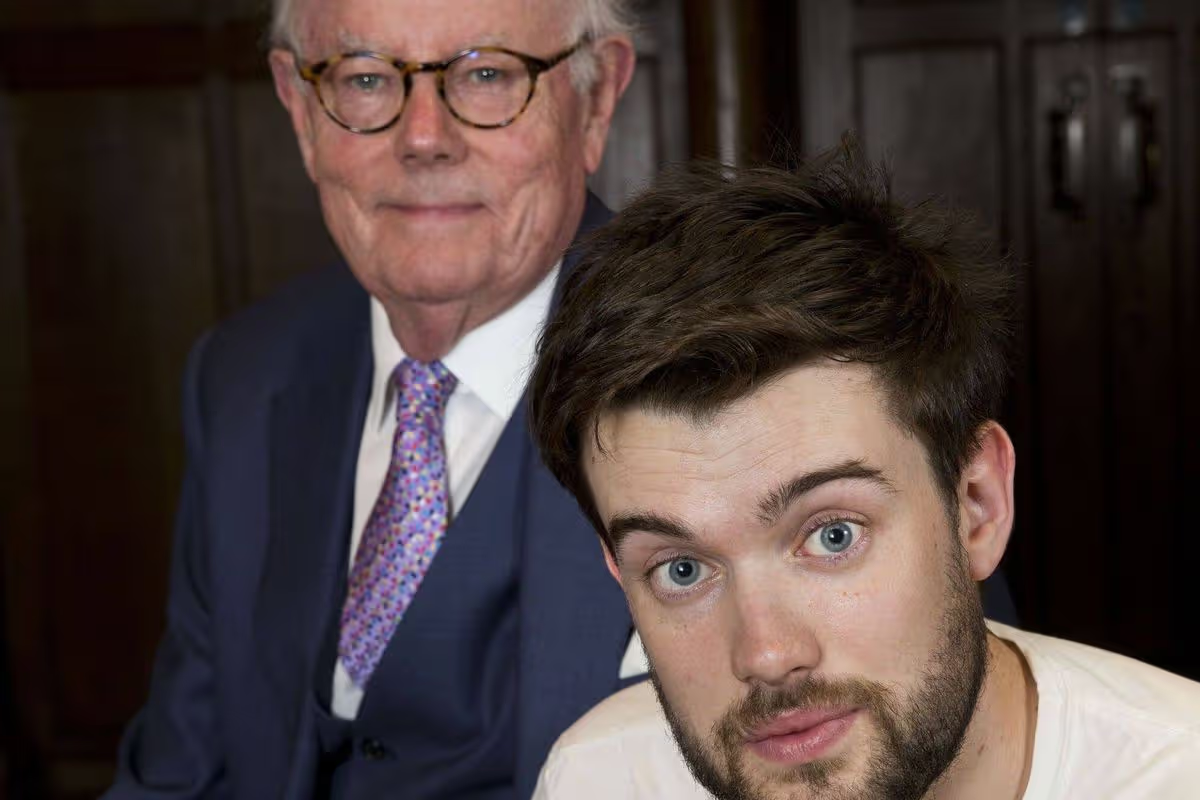
Jack Whitehall’s dad ‘absolutely mortified’ to discover he’s related to ITV legend

Jack Whitehall revealed his father’s true reaction to discovering a surprising connection to an ITV legend after spotting him at a funeral

Jack Whitehall has revealed his father, Michael Whitehall, was left “mortified” to discover their connection to antiques expert David Dickinson. Uncovered in an awkward circumstance – Jack recalled spotting the former Bargain Hunt at a family funeral.

Appearing on Alan Carr’s Life’s A Beach, the 37-year-old said of the surprising link: “You know I’m related to David Dickinson? This is my bizarre fact… not by blood, but he’s married to a cousin of my mum’s.

“We found this out because we went to a funeral and David Dickinson was stood on the other side of the grave,” he continued.

When quizzed about whether David’s famously bronzed complexion is as striking in person as it appears on television, Jack quipped that “he was glowing”.

He described the antiques expert as “more impressive up close,” before revealing how his father took the news of their family tie.

“My dad was absolutely mortified,” he recalled. “He was like, ‘We will never speak of this again’. And obviously, I now want to get it out there as much as I can, far and wide.”

David, 84, has been married to Lorne Lesley since 1968. The couple are understood to have first crossed paths in Manchester, and their romance blossomed from there.

They went on to welcome two children together, while he also adopted her son and daughter from an earlier relationship, Robert and Katrina.

Previously discussing their relationship, the Dickinson’s Real Deal star told The Mirror: “Lorne lets me think I’m the master of my own home. Any woman who knows what she’s doing lets her man think he’s in charge – but we know we’re not really.”

He also sang his wife’s praises, adding: “Lorne is half African and half Welsh and hails from Tiger Bay, just like Shirley Bassey.

“She’s very glamorous – a lovely, striking lady – and she has more talent in her little finger than I have in my whole body.

“When I met Lorne, I was working in the textile industry but ready for a change of career. As I got to know her better, we decided I should become her manager. Together we travelled the world, and it was during this time that my interest in antiques began to flourish,” he added.

Meanwhile, Jack married Roxy Horner his partner of six years at Euridge Manor, a 17th-century estate in the Cotswolds, last weekend.

The stunning venue, sprawled across 450 acres, boasts a boating lake, an orangery, a helicopter pad, a pergola draped in wisteria and a ballroom.

Reportedly costing £250,000, the couple’s ceremony was attended by a host of celebrity guests, including James Corden, Jamie Redknapp and Andrew ‘Freddie’ Flintoff.

Source link

Mother, 6 children die in Pennsylvania house explosion

A mother and her six children, ranging from 3- to 11-years-old, died in a fire in Clinton County, Pa., when their home exploded. File Photo by Bonnie Cash/UPI | License Photo

April 20 (UPI) — A mother and her six children, ranging from 3- to 11-years-old, died in a fire in Clinton County, Pa., when their home exploded.

On Sunday at about 8:42 a.m. EST., emergency response units from nearby Centre and Lycoming counties were alerted to a fire on Long Run Road in Lamar Township. The home of 34-year-old Sarah B. Stolzfus and her children was fully engulfed in flames when first responders arrived on the scene.

State police said the cause of the explosion is under investigation.

Stolzfus and her children, four boys ages 11, 10, 4 and 3, and two daughters, ages 8 and 6, were pronounced dead at the scene.

A propane leak inside the home is a potential cause for the explosion, state police said. There were propane tanks outside of the home that did not explode, nor were they involved in the fire.

Children race to push colored eggs across the grass during the annual Easter Egg Roll event on the South Lawn of the White House in Washington on April 21, 2025. Easter this year takes place on April 5. Photo by Samuel Corum/UPI | License Photo

Source link

‘Israel never talked me into the war with Iran,’ Trump says | US-Israel war on Iran News

Donald Trump has denied being dragged into war with Iran by Israel, as the United States president faces increasing criticism over the conflict, including from segments of his own base.

“Israel never talked me into the war with Iran, the results of Oct. 7th, added to my lifelong opinion that IRAN CAN NEVER HAVE A NUCLEAR WEAPON, did,” Trump wrote in a social media post on Monday.

Recommended Stories

list of 3 itemsend of list

There is no public evidence linking Iran directly to Hamas’s October 7, 2023 attack against Israel. Trump’s own intelligence chief Tulsi Gabbard also testified to Congress in March that Iran is not building a nuclear weapon.

For eight months prior to the war, Trump had been saying repeatedly that the June 2025 US strikes on Iranian facilities “obliterated” the country’s nuclear programme.

Many of Trump’s critics have argued that Iran did not pose an imminent threat to the US, and that the war only advances the interests of Israel at the expense of the safety and prosperity of Americans.

Iran responded to the joint US-Israeli strikes – which killed the country’s Supreme Leader Ali Khamenei, other top officials and hundreds of civilians on February 28 – by blocking the Strait of Hormuz, sending oil prices soaring.

In the US, energy costs have skyrocketed, fuelling inflation. The price of one gallon (3.8 liters) of petrol has remained over $4 – up from less than $3 before the war, more than a week after the truce between Washington and Tehran came into effect.

A recent poll by NBC News suggested that two-thirds of Americans disapprove of Trump’s handling of the war.

With dissatisfaction growing, many of the president’s critics have pointed to Israel as the real power behind the war – portraying Trump as a weak leader following Israeli Prime Minister Benjamin Netanyahu.

“He entered a war – got pulled into it by Bibi Netanyahu, let’s be clear about that – entered a war that the American people do not want,” Kamala Harris, Trump’s 2024 Democratic opponent, said last week.

Harris served as vice president in the Joe Biden administration, which provided diplomatic and military support for Israel’s genocidal war on Gaza for more than two years.

During the 2024 campaign, Trump presented himself as the “peace” candidate, promising to end wars that were started under the Biden administration.

Trump’s National Security Strategy, released last year, also said that Washington would pivot its foreign policy and military resources from the Middle East to the Western Hemisphere.

But Netanyahu, who has visited Trump in the US six times in one year, has continued to push for a hardline against Iran. The most vocal supporters of the war in Washington have also been Israel’s closest allies.

On Monday, Trump renewed his attacks on the mainstream media for its coverage of the war with Iran.

“I watch and read the FAKE NEWS Pundits and Polls in total disbelief. 90% of what they say are lies and made-up stories, and the polls are rigged, much as the 2020 Presidential Election was rigged,” the US president wrote.

He also touted his policies in Venezuela, where the country has remained stable and become more friendly to Washington after US forces abducted President Nicolas Maduro in January.

In Iran, however, the US-Israeli strikes led to the closure of Hormuz and sustained Iranian attacks across the region for nearly six weeks.

The conflict is now paused, and further talks between US and Iranian officials could take place in Pakistan this week. But both sides have threatened to renew the fighting if a deal is not reached.

“Just like the results in Venezuela, which the media doesn’t like talking about, the results in Iran will be amazing – And if Iran’s new leaders (Regime Change!) are smart, Iran can have a great and prosperous future!” Trump wrote.

Source link

Joe Lycett reveals hospital dash with 16 month old son as he gives rare insight into fatherhood

JOE Lycett has revealed he had to rush his 16-month-old son to hospital in a rare parenthood admission.

The comedian keeps his personal life notoriously private and shocked fans in 2024 when he revealed he had become a father, welcoming the little one with his long-term girlfriend.

Joe Lycett has revealed his 16-month-old son was rushed to hospital recently in a health scare Credit: YouTube/ Whats My Age Again Podcast
The comedian shares the little one with his partner Denise, with the couple keeping their family fiercely life private Credit: Instagram

Joe’s girlfriend, whom he refers to as ‘Denise’ to keep her real name private, remains out of the limelight, with their relationship very under the radar.

But appearing on Katherine Ryan’s What’s My Age Again Podcast, Joe spoke about his experience with fatherhood and detailed a recent health scare with the youngster.

Choosing not to share his name, Joe jokingly nicknamed his little one “the punisher”.

He explained: “The punisher was poorly recently, we had to go into hospital and whatever.”

Bikini snap

Katie Price shows off huge tattoos as she strips off to barely-there bikinis


FAN’S FURY

Ryan Thomas hits back after he’s accused of ‘being rude’ to ‘old lady’ fan

” I got a real sense of, ‘I would take any pain that you have, a thousand times over. I would bulldozer through a nursery to save you. I would do whatever it takes,” explained Joe of the unwavering love he has for the baby boy.

He later referenced the hospital incident again, confirming that the youngster had to be assessed in A&E.

Talking about how the family had a parking debacle during the hospital trip, he explained: “So, the punisher was ill. I drove to A&E, Birmingham children’s hospital.

“Parked up, took a picture of the Ringo number but didn’t do it straight away, like, ‘Oh, I’ll just wait while my son was unwell’, I thought, ‘I’ll do it in there’.

“So, he was being assessed and I was paying for parking whilst he was being assessed, so I had one eye on him and one eye on this,” said Joe, who continued to explain that he ended up getting a parking ticket for not doing so in time.

Joe also gave an insight into family life and his decision to become a parent as he said: “I always said I didn’t think I’d have kids but if one happened then I’d have a really good go at it.

“But then, I think, being in a stable, loving relationship, suddenly I was like, ‘Oh it would be fun to have a go at this’.

“Once we started talking about it, it became an inevitability.”

The comedian then touched on his decision to keep his family life, including his relationship, out of the public eye.

There are no family snaps on his social media, with his son and partner not featured anywhere online in connection to Joe.

Explaining the reason behind this, Joe said: “For the punisher, it’s up to him if he wants to do that later and be in the public eye.

“Because there is an inherit risk in being in the public eye, being known, having your face known and all of that.

“And if I end up doing something appalling he can change his surname and no one knows who he is, essentially.

“And then with Denise she just has a job where she works with vulnerable people.

“So if people know that I’m with her then it might affect her work. And also she has no desire to be in it – it’s weird to do what we do. “

In the rare admission, Joe detailed family life and how it has changed him as a person Credit: YouTube/ Whats My Age Again Podcast
Despite Joe’s outgoing nature and tendency to pull wild stunts, he explained that when it comes to family, he wants them to remain out of the limelight Credit: Rex

Source link

Bulgaria’s former President Radev wins election: All you need to know | Elections News

Bulgaria’s eighth parliamentary election in five years has concluded with former president Rumen Radev’s Progressive Bulgaria party emerging as the clear winner. Radev will be the next prime minister.

While pollsters predicted a win for Radev ahead of the election, they did not necessarily expect it to be such a large one.

Recommended Stories

list of 3 itemsend of list

With 98.3 percent of ballots tallied on Monday, official figures show Radev’s party taking 44.7 percent of the vote, and likely to secure roughly 130 of the 240 seats in parliament. The centre-left party has come in far ahead of rivals, raising hopes among voters for a more stable government after years of fragile coalitions and repeated votes.

However, questions remain over what Radev’s foreign policy will entail and what his election means for Bulgaria’s position within the European Union and NATO.

Here is what you need to know:

Who is Rumen Radev?

The 62-year-old served as Bulgaria’s president for nearly a decade before stepping down in January this year to launch his bid to become prime minister.

The former air force commander has positioned himself as an outsider, saying he wants to rid the country of its “oligarchic governance model”, amid widespread frustration with corruption and political turmoil that has gripped the country of 6.6 million people.

In 2025, Radev supported anti-corruption protests that brought down the conservative-backed government of former Prime Minister Rosen Zhelyazkov. He urged voters to turn out in large numbers to counter vote-buying.

At a pre-election rally on Wednesday last week, he pledged to “remove the corrupt, oligarchic model of governance from political power”.

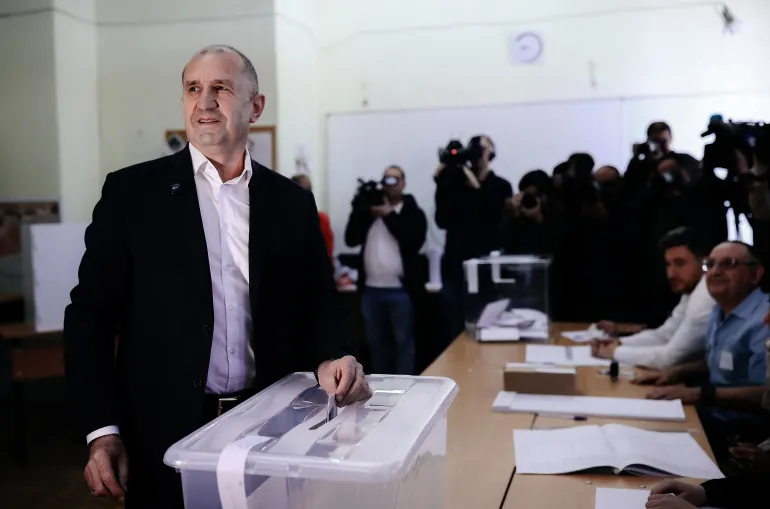
epa12899730 Rumen Radev, leader of the Progressive Bulgaria (PB) coalition, casts his ballot during the parliamentary elections in Sofia, Bulgaria, 19 April 2026. Approximately 6.6 million voters are heading to the polls to elect 240 members of the National Assembly in an attempt to establish a stable coalition government following a period of prolonged political deadlock in the Balkan nation. EPA/BORISLAV TROSHEV
Rumen Radev, leader of the Progressive Bulgaria (PB) coalition, casts his ballot during the parliamentary elections in Sofia, Bulgaria [Borislav Troshev/EPA]

Radev’s stance on foreign policy has drawn attention in Europe, however.

Although he publicly condemned Russia’s 2022 invasion of Ukraine, he has also opposed providing military support to Ukraine and called, instead, for renewed, “practical relations with Russia based on mutual respect and equal treatment”.

Radev objected to a 10-year defence pact concluded between Bulgaria and Ukraine in March.

He has also called for the resumption of Russian imports to Europe, despite EU sanctions on Russian oil and a decision at the end of last year to cease all energy imports from Russia by 2027.

All this has led to critics labelling him “pro-Russian”. Radev, however, says he is merely taking a pragmatic approach.

“We are the only member state of the European Union that is both Slavic and Eastern Orthodox,” he said in an interview with Bulgarian journalist Martin Karbovski.

“We can be ‌a very important ⁠link in this whole mechanism … to restore relations with Russia,” he added.

Following the election, Russia congratulated Radev, welcoming his victory.

“Of course, we are impressed by the statements made by Mr Radev, who won the election, and by some other European leaders regarding their willingness to resolve problems through pragmatic dialogue,” said Kremlin spokesman Dmitry Peskov on Monday.

On Europe, some label Radev a eurosceptic, as he has criticised aspects of EU policy, including reliance on renewable energy and Bulgaria’s adoption of the euro.

At his campaign rally on Wednesday last week, he said: “The coalition-makers introduced the euro in Bulgaria without asking you. And now, when you pay your bills, always remember which politicians promised you that you would be in the ‘club of the rich’.”

Following his victory, he told reporters: “A strong Bulgaria and a strong Europe need critical thinking and pragmatism. Europe has fallen victim to its own ambition to be a moral leader in a world with new rules.”

Nevertheless, Radev has signalled his willingness to cooperate with pro-European parties on issues like judicial reform and has stated that Bulgaria will “continue on its European path”.

Following his win, European Commission President Ursula von der Leyen said: “Bulgaria is a proud member of the European family and plays an important role in tackling our common challenges.”

How significant is this result?

Since 2021, Bulgaria has been through multiple governments, many brought down by protests or parliamentary disagreements.

The election result places Radev’s party, with 44 percent of the vote, well ahead of the centre-right GERB party of former Prime Minister Boyko Borissov, which secured 13.4 percent of the vote, and the reformist PP-DB coalition, with 12.7 percent.

The margin between the parties is wider than pollsters predicted. On Friday last week, according to Bulgaria’s Alpha Research, Radev’s Progressive Bulgaria was projected to win, but with only 34.2 percent of the vote, followed by Borissov’s GERB-UDF with 19.5 percent. This led observers to predict that a coalition government would be necessary.

Despite securing a clear majority, however, Radev has yet to rule out creating a coalition with a smaller party to form a government.

“We are ready to consider different options so that Bulgaria can have a regular and stable government,” he told reporters on Sunday.

This latest election was called after former PM Zhelyazkov announced in December that his cabinet would resign, amid a looming no-confidence vote.

The election campaign centred heavily on cost-of-living pressures, corruption, and other economic concerns, with many voters expressing frustration at the lack of credible political alternatives.

What will Radev’s role as prime minister be?

Although Radev is best known for holding the title of president, that is a largely ceremonial role in Bulgaria’s political system.

The president serves as head of state, representing national unity and playing a role in foreign policy; executive power lies primarily with the prime minister and his cabinet.

The prime minister appoints his cabinet ministers, sets the government agenda, and is the key representative of Bulgaria in international affairs, including within organisations like the European Union and NATO.

The prime minister remains in office unless he chooses to resign or is removed in a no-confidence motion.

Source link

Carrier Tracker As of April 20, 2026

Here’s TWZ’s weekly carrier tracker monitoring America’s flattop fleet, including deployed Carrier Strike Groups (CSG) and Amphibious Ready Groups (ARG), using publicly available open-source information.

The Gerald R. Ford CSG transited the Suez Canal southbound on April 16, the Associated Press reported on Friday, once again entering the Red Sea and U.S. Central Command (CENTCOM) area of responsibility (AOR). The second CSG in the region, led by USS Abraham Lincoln, is operating in the northern Arabian Sea, enforcing the naval blockade of Iranian ports and coastal areas. The George H.W. Bush CSG is reportedly transiting around the Horn of Africa en route to the Middle East, according to USNI News, but TWZ has been unable to independently confirm via open sources. Following the arrival of USS George H.W. Bush, the U.S. will have three carriers positioned in the Middle East should the ceasefire fail and combat operations resume.

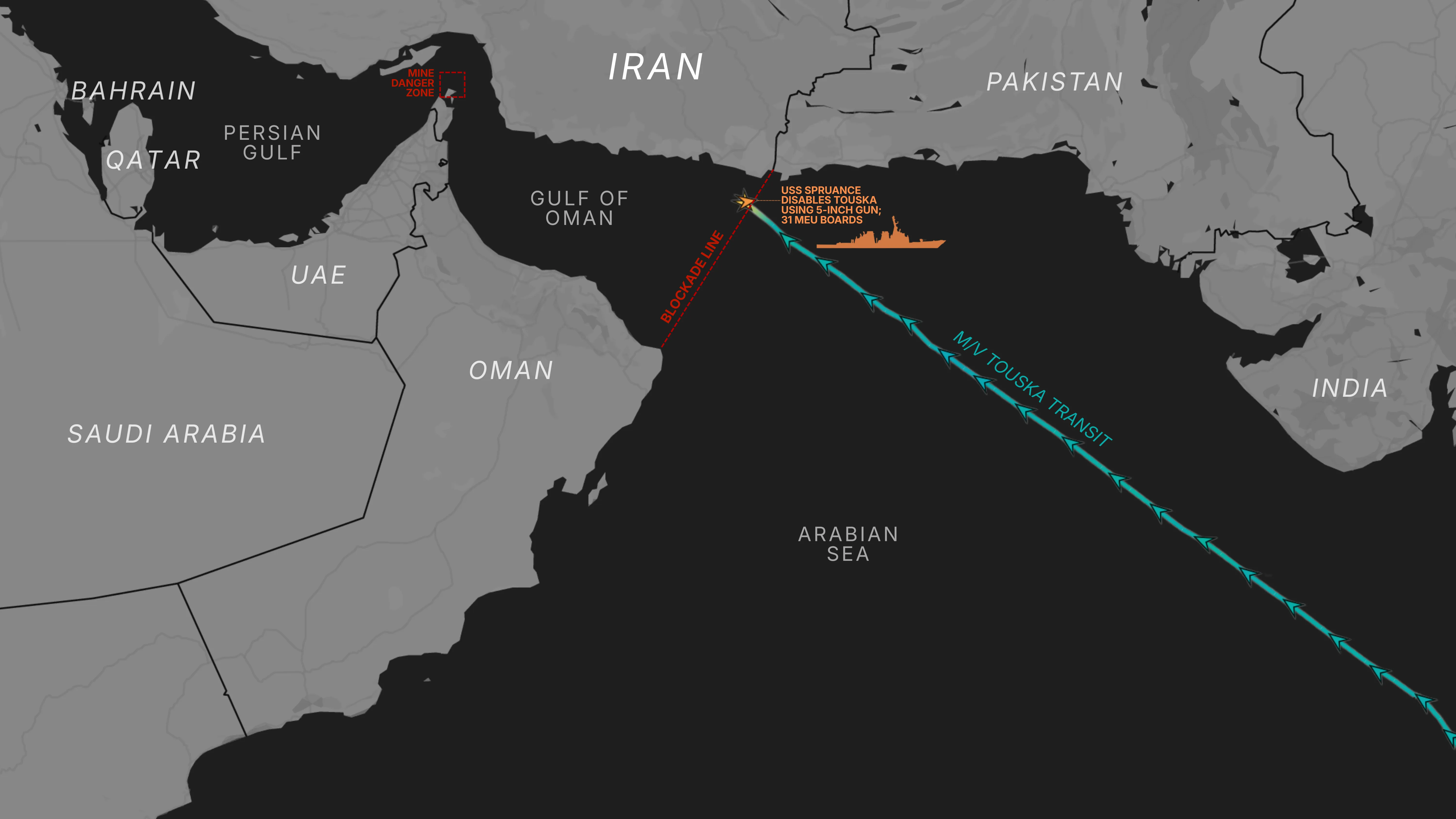
The Tripoli ARG is also supporting blockade measures, with the embarked 31st Marine Expeditionary Unit (MEU) boarding and seizing Iranian-flagged M/V Touska on April 19 after USS Spruance fired multiple 5-inch rounds, targeting the engine room and disabling the vessel’s propulsion. “American forces issued multiple warnings and informed the Iranian-flagged vessel it was in violation of the U.S. blockade. After Touska’s crew failed to comply with repeated warnings over a six-hour period, Spruance directed the vessel to evacuate its engine room.” The second ARG-MEU tasked to CENTCOM, the Boxer ARG-11th MEU, is currently transiting through U.S. Indo-Pacific Command at an undisclosed location.

At a press conference on Thursday, Chairman of the Joint Chiefs General Dan Caine and CENTCOM Commander Admiral Brad Cooper provided a detailed briefing on the opening hours of the blockade, which TWZ covered here, and shared unclassified slides of ship positions before and after implementation. Below is an animation visualizing the first 48 hours of the U.S. blockade, and confirmed Navy ships operating in the Arabian Sea and Indian Ocean at the time.

“Since the blockade’s commencement, U.S. forces have directed 25 commercial vessels to turn around or return to an Iranian port,” CENTCOM said in the release. “In addition to this blockade, the joint force, through operations and activities in other areas of responsibility, like the Pacific Area of Responsibility, under the command of Admiral Paparo, will actively pursue any Iranian-flagged vessel or any vessel attempting to provide material support to Iran,” Gen. Caine added.

Back stateside, the Theodore Roosevelt CSG departed San Diego on April 15, according to local ship spotters. A U.S. 3rd Fleet spokesperson told TWZ the CSG is underway conducting routine operations and integrated training in the 3rd Fleet AOR and “remains ready to respond to crisis or contingency at any time.” Elements of the group were recently outfitted with a new Raytheon Coyote counter-UAS 8-cell launcher, which could be tested during upcoming training periods.

Note: Positions are general approximations. Non-deployed LHA/LHD amphibious warships are not shown.

Contact the author: ian.ellis-jones@teamrecurrent.io

Source link

Punk in the Park festival’s founder donated to Trump. The fans revolted

Cameron Collins was sick of Joe Biden.

The owner of concert promoter Brew Ha Ha Productions describes himself as a libertarian-leaning conservative who built his career in San Juan Capistrano. He’d kept his personal politics out of his popular SoCal events, like the ska fest OC Super Show and the nationally touring Punk in the Park fest, a staple for bands like Bad Religion and Pennywise.

On May 30, 2024, Collins felt dismayed that Biden had pursued reelection. In a fit of anger, he donated $225 to Donald Trump’s campaign.

“It was just an impulsive thing,” Collins said in an interview. “Biden had said he was going to run again. I was like, nope. He’d said he wasn’t. It was more about that than anything. I don’t post anything political or talk about anything politically. I’ve never donated to anything like that before.”

That donation proved fateful. After a small punk label discovered and decried Collins’ donation, the scene turned on him. Influential bands pulled out of his festivals or said they wouldn’t return.

On Feb. 27, Collins canceled every Punk in the Park date for 2026.

“The current climate surrounding the events has created challenges that make it impossible for us to move forward,” the organizers wrote on Instagram.

It’s no surprise that an underground music scene would loathe a Trump-donating promoter. Amid the Iran war, raids by U.S. Immigration and Customs Enforcement, and the Epstein files, many Americans want Trump supporters gone from their lives, some viewing any form of support for him as an attack on their and others’ safety and dignity.

Yet until this donation, Collins was a respected promoter whose events sustained hundreds of acts, including progressive bands. Some artists who relied on Collins’ festivals — even if they hate his politics — said the backlash will hurt their livelihoods too.

“It was the worst money I ever spent,” Collins said. “It was not worth this.”

On a March afternoon after canceling his tours, Collins spoke to The Times on a Zoom from his home in Texas. He wore a thick gray beard and the chunky glasses of an aging rocker. His home office was plastered in concert posters from his decades of shows, which include Punk in Drublic (a long-running collaboration with his friends in the left-leaning band NOFX), Silverado Showdown in Orange County and SoCal rock radio station KLOS’ Sabroso Festival.

He expressed bewilderment over the fan revolt that turned him from a scene mogul who gave to pediatric cancer research charities to a villain with a gutted festival business.

“I feel like my reputation with every artist I ever worked with was that they would say, ‘The guy’s got integrity. He treats everyone right. He fights for this scene,’ ” Collins said. “I’m wondering what is happening right now that this has become so polarizing.”

Asked what Trump policies he supported, Collins sighed and said, “A vote for a candidate is not an endorsement of everything they stand for. I am very antiwar. There were promises that Trump made — no more foreign wars, supporting Ukraine by ending that war, lowering prices on gas and on groceries. Dinner table topics.”

Those goals are significantly at odds with the president’s track record. Did Trump deliver on Collins’ donation?

“The way that this whole fiasco has gone down — no one would have voted for that,” he said.

Punk has long struggled with a reactionary streak. British bands in the ‘70s wore swastika armbands for shock value. The Sex Pistols’ Johnny Rotten and the Ramones’ Johnny Ramone turned rightward, and Orange County’s hardcore scene has had neo-Nazi extremists. Gen X punk fans who consider themselves anti-establishment might see online leftists as imposing on their ability to have consequence-free political speech.

Yet the vitality of today’s punk scene is driven by young, racially and sexuality-diverse fans who believe they are in grave danger from Trump’s policies.

Last year, Brandon Lewis, the founder of the Columbus, Ohio-based label Punkerton Records, was poking around on the donor database Open Secrets. He was curious how his scene was donating, and he’d attended Brew Ha Ha events like the Ohio punk festival Camp Anarchy. He checked where Collins put his money and was appalled that it went to Trump.

“We refuse to support, defend, or stay silent about someone who gave money to a man actively destroying everything we care about, deporting our friends and families, erasing the existence of our trans community, stripping away civil liberties, civil rights, and workers’ rights, while dismantling the Constitution itself,” Lewis wrote from Punkerton’s Instagram.

“I’m a combat veteran, and this administration is just pushing everything I believe in about freedom out the window,” Lewis told The Times. “When I would listen to Trump’s rhetoric about ICE — I’ve got friends who are undocumented. Supporting that in a financial way, supporting someone saying my trans friends don’t exist, and to do so coming from a music scene that to me is accepting and kind and certainly not ripping families apart, I couldn’t in good conscience let that go.”

Other bands in the scene, like Dillinger Four, found more donations — around $100 or $200 each — from Collins going to the Trump-supporting political action committees WinRed and Never Surrender and the Trump National Committee. Collins’ support ran deeper than a one-off gesture.

Left-leaning fans demanded that bands drop off Collins’ festival bills.

Dropkick Murphys, a rough-and-ready enemy of Trumpism in punk, had played Collins’ past events. When word of his donations spread, the band came out swinging.

“Punk Rock and Donald Trump just don’t belong together,” they wrote in an Instagram post . “So, upon finding out that Brew Ha Ha promotions donated to the Trump campaign, we will not be playing any more Punk in the Park shows.”

Some acts, like old-guard punks the Adicts and ska group the Aquabats, canceled sets at Collins’ events. Other bands, like Dead Kennedys, said they opposed his beliefs but fulfilled their contracts.

“Dead Kennedys have always stood firmly against authoritarianism, racism, and fascism. That has not changed,” the group wroteon social media. “After these scheduled appearances, we will not be participating in future Punk In the Park events.”

Collins said he understood why bands jumped ship. “There was so much pressure building,” he said. “The bands are a business. You have to say, at what level is the pay worth the headache?”

Yet he insisted that “anyone that pulled off did not pull out because they were standing for something, but were being pummeled to the ground by everyone that said they’d better do it or else. I don’t want those bands to go through that.”

Many fans say that Collins is seeing the predictable consequences of supporting a politician the scene despises.

Others struggled with what to do in response. Monique Powell, the singer for the Orange County ska band Save Ferris, describes herself as a “queer anarchist anti-Netanyahu Jewish child of a North African immigrant,” and far from a Trump sympathizer. Yet Save Ferris played Collins’ OC Super Show event in spite of the protests and bands pulling out.

She said that, while she opposes MAGA, she “wasn’t willing to disappoint fans and put hundreds of people out of work just because someone had a view I didn’t agree with.”

She said Collins “has been an important part of creating and nurturing this scene. He gave a lot of people work. From onstage, I see all the vendors, the stage crew, all providing jobs for people of all backgrounds. He’s given a place for fans to come together, even if they don’t all believe the same stuff.”

Save Ferris was a breakout act in the ‘90s and is now a working-class band on the ska and punk festival circuit. “I see the midsized, hometown venues that the bands of my ilk play — they’re being bought out or dying,” Powell said. “I’m not about to start getting out pitchforks for someone who did something that’s nothing compared to the effects of larger companies.”

Take, for example, Beverly Hills-based concert giant Live Nation, which was in the news last week after a federal jury in New York ruled against it in an antitrust case. Live Nation’s chief executive, Michael Rapino, has donated to Democrats Kamala Harris, Sens. Jacky Rosen of Nevada, Lisa Blunt Rochester of Delaware and Adam Schiff of California, and the music biz-friendly Texas Republican John Cornyn. Live Nation’s PAC has given to Republican Sens. Marsha Blackburn of Tennessee and Ohio Rep. Jim Jordan, alongside several Democrats. Billionaire Philip Anschutz, whose namesake firm AEG is the parent company of Coachella promoter Goldenvoice, has donated millions to Republican politicians, PACs and party organizations for decades — exponentially more than Collins ever did.

It’s fair for to wonder why music fans who hold the line on supporting a Trump donor like Collins might attend those other shows. Lewis said he struggles with that contradiction too but said it hurt worse coming from a punk promoter.

“Donating to Trump is antithesis of what punk means. Hating people for their sexuality or skin color is not punk in the least bit. People clearly expected better from a punk rock festival,” he said.

“I think Live Nation should be broken in half,” Lewis added. “But it’s no knock on someone who wants to see Social Distortion at a Live Nation venue; they need escape as well. I’m just not going to pretend Live Nation is a beacon for good things.”

Those punk communities are pushing back beyond Collins’ events. The SoCal gothic-cumbia DJ collective Los Goths pulled out of the Orange County festival Los Darks after learning its organizers, Peachtree Entertainment, produced the MAGA-champion Kid Rock’s controversial Rock the Country festival. The Los Angeles crust-punk event C.Y. Fest was scrapped after its organizer, Ignacio “Nacho Corrupted” Rodriguera was accused of sexual misconduct (he called the claims “false allegations and misinformation,” but stepped back from the festival).

Collins’ company produces events outside the punk scene, focused on craft beer and other music genres. He recently revamped his upcoming Me Gusta festival into Sublime Fest after the rap group Cypress Hill pulled out. (Last year, Sublime played at the Trump National Doral golf course for the Saudi-backed LIV Golf tour.)

Collins is not sure how he’ll find his way back into the punk scene or if the fans will want him there again.

“I still go out into the audience because I just want to see, is it real? Do people hate me?” he said. “We have bands up there like the Casualties, who are flying [anti-ICE] flags. People are like, ‘You’re a fascist,’ but I’m paying a band to go on my stage to say whatever they want, and then signing a check and going, ‘Thanks for doing it.’ ”

In America‘s current political climate, left-leaning punk fans may not have patience for Trump sympathizers. Having heterodox beliefs is one thing; financially supporting the president is another. Collins is a free market guy, and the punk market has spoken.

Yet huge companies that donate to Trump and his allies are consolidating the industry. It’s harder for progressive punks who want the scene to reflect their values.

“I feel like we created a sustainable, realistic scene that can keep going for years, and bands can earn the money that they need to anchor those tours,” Collins said. His donation caused this avoidable backlash, but “if you take away festivals that are their anchors, like we have been for so many of these artists over the years, how do they tour? This is what the bands are telling me, that ‘we’re the ones getting killed here.’ ”




Source link

ALA releases list of ‘Top 11 Most Challenged Books List of 2025’

April 20 (UPI) — The American Library Association released its list of the “Top 11 Most Challenged Books List of 2025,” including titles by John Green and Sarah J. Maas.
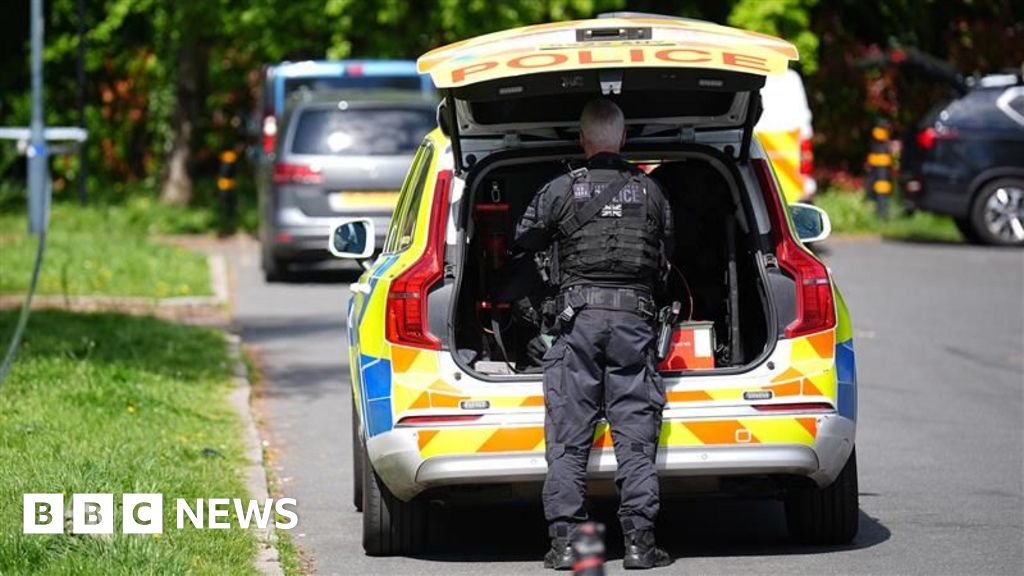
The list, part of the 2026 State of America’s Libraries Report, is based on data from the ALA’s Office for Intellectual Freedom, which tracked 4,235 unique titles challenged across 2025. The number was the second-highest ever documented by the ALA, after 4,240 books were challenged in 2023.

The 2025 challenges included 713 attempts to censor library materials and services through access restrictions, including 487 books.

The most challenged book of 2025 was Sold by Patricia McCormick, followed by The Perks of Being a Wallflower by Stephen Chbosky, Gender Queer: A Memoir by Maia Kobabe, and Empire of Storms by Sarah J. Maas.

There was a tie for fifth place between Last Night at the Telegraph Club by Malinda Lo and Tricks by Ellen Hopkins.

The seventh book on the list was A Court of Thorns and Roses by Sarah J. Maas, followed by a four-way tie between A Clockwork Orange by Anthony Burgess, Identical by Ellen Hopkins, Looking for Alaska by John Green and Storm and Fury by Jennifer L. Armentrout.

The challenged titles of 2025 included 1,671 representing the lived experience of LGBTQ people and people of color — about 40% of the total challenges.

The report was released to coincide with National Library Week

“Libraries exist to make space for every story and every lived experience,” ALA President Sam Helmick said in a news release. “As we celebrate National Library Week, we reaffirm that libraries are places for knowledge, for access, and for all.”

The ALA said less than 3% of the challenges came from individual parents, with 92 percent of the challenges coming from government officials and political pressure groups.

“In 2025, book bans were not sparked by concerned parents, and they were not the result of local grassroots efforts,” said Sarah Lamdan, executive director of ALA’s Office for Intellectual Freedom. “They were part of a well-funded, politically-driven campaign to suppress the stories and lived experiences of LGBTQIA+ and BIPOC individuals and communities.”

A total 5,668 books were banned from American libraries in 2025, and 920 others were censored through access restrictions.

Children race to push colored eggs across the grass during the annual Easter Egg Roll event on the South Lawn of the White House in Washington on April 21, 2025. Easter this year takes place on April 5. Photo by Samuel Corum/UPI | License Photo

Source link

Powerful states are trying to sabotage decarbonisation of shipping | Climate Crisis

The global fallout of the closure of the Strait of Hormuz may create the impression that the world cannot function without fossil fuels. Nothing could be further from the truth. Every single industry can and must decarbonise.

For global shipping, this process would be relatively easy because technological solutions exist and a single United Nations agency can set legally binding rules for all ships. The first steps have already been made.

In 2025, member states of the International Maritime Organization (IMO) agreed on a policy mechanism to cut shipping emissions: the Net-Zero Framework (NZF). But they opted to postpone a decision on formal adoption of this landmark agreement.

This delay is emblematic of obstructive tactics used by countries opposing climate action.

The IMO Framework – the world’s first global carbon price on any international polluter – took years of compromises and watering-down. As it stands, it is the lowest possible bar Pacific Island states like the one I represent can accept. We cannot give in another inch.

While I join the First Conference on Transitioning Away from Fossil Fuels in Santa Marta, Colombia, next week, delegates will gather again at the IMO in London to decide whether to uphold their unanimous commitment to phase out fossil fuels in a just and equitable way.

The delegates of Vanuatu who travel to London have a mandate to push for the adoption of the NZF this year.

Should anyone reopen the framework to water it down, our position is clear: We will revert to our original Pacific demand for a universal levy on emissions of $150 per tonne of carbon dioxide.

Last year my country abstained from the vote on the NZF agreement. We reached that decision because the mechanism is not nearly ambitious enough. Even so, it is a starting point we can work with.

But since then, the tide has shifted dramatically.

After the delay in adoption, a small group of countries is now suggesting further weakening the ambition in the framework to meet the demands of particularly influential states whose current policy positions are not aligned with climate ambition. This strategy is problematic as reducing our collective actions to align with those that want no climate action at all is incompatible with our people’s continued survival.

The world’s poorest countries, and the planet, simply cannot afford anything less than what is already on the table.

The framework, as it is, gives the world and the industry some chance of meeting the climate obligations that IMO countries committed to in 2023, namely reaching net-zero emissions by 2050 in a just and equitable way.

The NZF introduces penalty fees – eg emission pricing for noncompliance with the regulation. This provides the regulation with a “stick” to ensure ships comply or else they must pay.

The penalties also represent revenues, up to $10bn to $12bn a year, to both incentivise industry transition and enable a fair transition for all. This fund is a lifeline for developing – and especially least developed – states to be able to afford clean maritime energy upgrades and compensate for the rising trade costs because of this transition.

Some claim that revenues raised by the NZF will blow out transport costs. This is preposterous.

The penalties charged through this framework come down to less than $1.50 per year for every living human being – although the biggest polluters should pay this cost. If the richest 10 percent of the world’s population foots this bill, it adds up to less than $15 per person. That’s a few coffees a year, which the world’s richest can easily spare.

Losing both financial penalties for noncompliance and financial support for countries like mine in the name of a political compromise with rich oil-producing states is a bad deal. Not just for all climate-vulnerable states but also for the industry that demands and deserves clarity.

If anything, we need more action and more ambition in the framework.

For years, Pacific states have pushed for the IMO regulation to be in the form of a universal levy on emissions, by pricing all emissions. We managed to get the majority of IMO member states on board, including the European Union, South Korea and Japan, as well as important Global South states, such as Panama and Liberia. However, the US has been very effective in exerting its influence in this area, which is resulting in shifts to some positions to the detriment of us all.

Our position was always backed by the best available scientific evidence.

A levy on all shipping emissions is the best way to send an unambiguous signal to the industry: Invest in the future now! The revenues, up to 10 times more than those from the NZF, serve as both a bigger stick for polluters and a bigger carrot for first movers and cash-poor countries.

This is not a handout: Hitting net zero by 2050 is not possible if our countries cannot invest in clean ships.

The bridge we have built in the form of the NZF through years of compromise and evidence is still standing. Let us cross it together by adopting it as agreed without any further dilution.

Pacific states stand ready to fight for what science and justice demand, and we call on our partners to stand with us.

The views expressed in this article are the author’s own and do not necessarily reflect Al Jazeera’s editorial stance.

Source link

David Haye begged me to ‘bring girlfriends’ for group sex & threw me on bed, says ex who backs him in ‘ugly bird’ row

HE has long been known for his enthusiasm for so-called throuples.

Now David Haye‘s ex has spoken of the day he asked her to “bring your girlfriends” to his hotel room, where he was waiting in his boxer shorts.

Model Zoe Gregory, 51, has now opened up about her time with the boxer David Haye Credit: John Chapple – The Sun
The former heavyweight boxer, 45, has been accused of “sexism” by furious viewers after a controversial rant in front of his campmates Credit: AFP

Model Zoe Gregory says the I’m A Celeb star seemed fascinated by her unconventional romance with Playboy boss Hugh Hefner, with whom she shared a bed along with six other women.

She met heavyweight boxing champion Haye after he fought a bout at Hef’s notorious mansion in LA in 2003.

In an exclusive interview Zoe, 51, revealed: “He asked me what group sex is like and I said, ‘It works.’

“He seemed fascinated and very curious. He probably thought, OK I’ll have to give that a try one day. After I gave him my number, he asked me to visit him and he said: ‘Bring your girlfriends to the hotel too.’

REASON REVEALED?

I’m A Celeb fans ‘work out’ why David Haye is ‘bullying’ Adam Thomas


GC THROWS SHADE

I’m A Celeb’s Gemma takes swipe at David after ‘bullying’ co-star Adam

“He was on a high after the boxing match and he probably thought, they all want to smash me. I was in awe of him so it didn’t put me off. He’s a smooth operator. I don’t remember exactly what he said, but he was charming and persuasive.

“He was very complimentary when I turned up to the hotel but I knew he just wanted to get in my pants.

“When I reached his hotel, I thought we would chill by the pool, but he said, ‘No come to the room, I’m still getting ready.’

“He opened the door in his boxer shorts and I wasn’t expecting that, but I wasn’t mad either. He literally grabbed me out the doorway and threw me on the bed so that was that.”

Zoe opened-up about her time with the boxer after he was slammed for his “sexist” comments while competing on the all-star version of I’m A Celeb in South Africa.

Referring to his long-term girlfriend Sian Osborne as having the personality of “a proper ugly bird,” he went on to claim that most good-looking women are “idiots” and that less attractive girls work harder on their personalities to win attention.

Singers Ashley Roberts and Sinitta were left shaking their heads while Corrie actress Beverley Callard later complained: “I’ve never heard anything so sexist in my life.”

Fashion model Sian, 33, defended him, saying in an exclusive interview: “I consider it a compliment.

“A big one. I’m fluent in David by now and my family find it hilarious.”

Miami-based Zoe, who cheated on Hefner with Haye, also backs him.

She explains: “I totally agree with him because everyone judges a book by its cover. People will look at me, blonde hair and big tits, and assume that I’m a bimbo.

“That’s because most blondes are bimbos, unfortunately. Blondes are very ditzy and that’s why they get that label. I’ve found myself saying the same things as David.

“Being around the girls at the Mansion, the ugly ones were always overcompensating with their personality. They would feel, I’m not that great looking so I’m going to have to do cartwheels to compete with the favourites.

Former Playboy bunny has backed Haye’s ‘ugly bird’ argument Credit: Alamy
David was involved in a rumoured throuple with singer Una Healy and model Sian Osborne Credit: Not known, clear with picture desk

“When I go the gym, I see girls wearing next to nothing and they don’t have a body to be wearing that – or a face. They don’t even look like they work out but sometimes people go that extra mile to overcompensate, to fit in.

“I feel bad saying it, but it’s true. It’s the way society is and social media has made it even worse. You are always going to have girls that get bent out of shape by comments like David’s and they are usually the fat ugly ones.

“David has met enough women to be an authority on this. If this is his opinion based on all the women he’s met, I can’t say he’s wrong.

“But he is in a corner with the public and he’s got to take a beating. Everything he says, people are watching and listening and they will use it against him to make out he’s a bad person. But he’s really not a bad person.

“He’s an opinionated person and he’s got a right to his own opinion. David is known for talking his mind and having a crazy sex life and being open about it.

“I can’t fault him for being like that.”

Mum-of-one Zoe moved from London to Los Angeles in her early 20s to work as a model and erotic B movie actress. She was accompanied by her husband, DJ Chris Paul and their young son, who is now in his 30s.

But once offered the chance to live with Hefner at his £150m LA mansion – having met the magazine boss at one of his notorious parties – she decided the opportunity was too good to turn down.

HE’S SEXIST RELIC

By Julie Bindel

SOMETIMES a sexist is easy to spot.

Take the boxer David Haye who, while on I’m a Celebrity South Africa, described his girlfriend Sian Osborne as having “the personality of a proper ugly bird”.

His deeply offensive remarks, which also included saying “pretty girls’ ugly friends have got to work a bit harder”, go to show that he’s not only misogynistic, but stupid as well.

The deeply old-fashioned myth that women who are not conventionally attractive develop better personalities to compensate does nothing to explain why men lacking in looks do not do the same.

Haye genuinely disrespects women and I just hope no women will ever be fooled into thinking him a catch.

Men: don’t be like Haye. Never underestimate a woman.

She lived with Hef, who was then in his 70s and relying heavily on Viagra to perform in bed, from 2001 to 2004.

But still married to her first husband, she always living with Hef as a job rather than a romantic relationship and she walked out following a series of rows with his number one girlfriend Holly Madison.

In 2024, she published a memoir called From Britain to Bunny in which she detailed her “hot 15 minutes” with Haye, which she described as “crazy and electric.”

Looking back on that day, she recalls: “David did seem fascinated by Hef. He asked me lots of intimate questions about him.

“He said, ‘So you’ve got to sleep with him?’ I said, ‘Yes, but it’s more of a job for me.’

“He said, ‘That’s weird.’ Then he asked, ‘Can Hef still get it up?’ I said, ‘Yes, of course.’

“I told him what went on in the bedroom – the orgies and Hef’s harem of women – and he seemed impressed by that. He was very complimentary towards me – he told me I have both beauty and brains.”

Zoe, who now works in promotions, last bumped into Haye at a restaurant in Miami two years ago just before her book was released. He was with girlfriend Sian, who has allowed him to spend time with Saturdays’ singer Una Healy and DJ Mica Jova – relationships that have been described as ‘throuples.’

Zoe continued: “David and Sian were over for a boxing event and it turned out we had a mutual friend, a photographer.

“David was surprised to see me. He was like, ‘Oh!’ It was a bit awkward because I wasn’t sure if Sian knew about our history.

“David said, ‘You look really well.’ I said ‘Yes, you too.’ It was a flirty moment and it was funny. And I swear David looked exactly the same as I remembered him. He’s aged very well.

“I got to meet Sian and she’s lovely, sweet girl. When I first met her, she didn’t say much and wasn’t very outgoing. She just sat there.

“I introduced myself and was doing extra to make her feel comfortable and after a few minutes, she warmed up. I kept the conversation away from him because I didn’t know what she knew and the book hadn’t come out yet.

“I wouldn’t say, ‘Oh by the way I f****d your boyfriend.’ I would never have a conversation like that. I do think David has got used to women throwing themselves at him.

I told him, ‘You need to go for an older woman that doesn’t get intimidated by you and can put you in your place.’

“Because otherwise he is just going to walk all over a girl, because it’s his way or the highway. He’s got his cake and he’s eating it – and I love him for that.”

Zoe claims to have cheated on Hefner (seen together) with Haye Credit: AFP
David Haye says his girlfriend Sian Osborne has an ‘ugly bird’ personality Credit: Shutterstock Editorial

Source link

Iran claims drone strikes on U.S. Navy, peace talks hang in balance

The 965-foot-long Iranian container ship Touska, seen here in 2017 after it ran aground off Hong Kong’s main island, remained in the custody of the U.S. Navy on Monday after it was boarded and seized by U.S. Marines. File photo by Jerome Favre/EPA

April 20 (UPI) — Iran said that it carried out drone strikes on Monday against U.S. military vessels blockading its ports after the U.S. Navy attacked an Iranian-flagged container ship in the Gulf of Oman.

The state-run Tasnim News Agency said the Iranian military “launched drone strikes toward several U.S. military vessels in the area” in retaliation for the boarding and seizure of the Touska on Sunday night while it was en route to Iran from China.

“We caution that the Armed Forces of the Islamic Republic of Iran will soon respond to and retaliate for this act of piracy and armed aggression by the US military,” Khatam al-Anbia Central Headquarters, the Iranian military’s central command, said in a statement

Khatam al-Anbia Central Headquarters said the Iranian Armed Forces had held off from delivering “a decisive response” to “blatant aggression by U.S. terrorist commandos” due to concerns for the safety of family members of the ship’s crew who were on board the Touska.

“Iran’s operational action was delayed in order to protect their lives and security, which were in constant danger,” the statement added.

The U.S. military did not immediately comment on Iran’s claim it conducted drone strikes.

However, U.S. Central Command posted video of the guided-missile destroyer USS Spruance warning the Touska to “vacate your engine room” because it was about to open fire and, some time later, night-vision footage of helicopter-borne U.S. Marines from USS Tripoli conducting an amphibious assault operation to take over the vessel.

CENTCOM said the Spruance intercepted Touska as it was steaming toward the Iranian port of Bandar Abbas, issuing multiple warnings over a six hour period that it was in violation of the U.S. blockade. When it refused to stop, the Spruance fired several rounds from its 5-inch gun hitting the engine room and disabling the vessel.

U.S. Marines from the 31st Marine Expeditionary Unit later boarded the vessel and took control of the vessel, which remains in U.S. custody.

CENTCOM said U.S. forces had ordered 25 commercial vessels to turn back, or return to an Iranian port, in the week since the United States implemented its blockade of Iranian ports on April 13.

However, Sunday was the first time that the U.S. military is known to have opened fire on merchant shipping since the war started Feb. 28.

The escalation came after a rollercoaster weekend that began with Tehran declaring that the Strait of Hormuz was fully open to all commercial shipping for the remainder of the 14-day cease-fire currently in place, which is due to expire on Wednesday.

The move was welcomed by the United States, but the administration of U.S. President Trump made it clear its blockade would remain in place. That prompted Tehran to accuse the United States of violating the cease-fire and by Saturday it declared the strait closed again and at least one tanker was fired on by two Iranian gunboats as it attempted to enter the sea lane.

The developments have cast doubt over peace talks, which are due to resume in Islamabad, Pakistan, later Monday or first thing Tuesday.

Trump said in a post on his Truth Social platform that U.S. negotiators would arrive in the Pakistani capital on Monday night, with the White House later confirming that Vice President JD Vance would again head up the U.S. delegation, picking up from where he left off from in an initial round of talks on April 11 that failed to produce a breakthrough.

Tehran said Monday it had not yet decided whether it would attend.

“As of now, while I am speaking to you, we do not have a plan for the next round of negotiations, and no decision has been taken in this regard,” Foreign Ministry spokesperson Esmaeil Baqaei said at a press conference in Tehran.

Referencing the ongoing U.S. blockade and seizure of the container ship, Baqaei accused the United States of actions that “are in no way indicative of seriousness in pursuing a diplomatic process.”

However, the comments do not mean Iran will not show in Islamabad.

The Iranian side only confirmed participation in the first round of negotiations at the last minute.

Global oil prices, which fell sharply on Friday after Iran said the Hormuz Strait was open, rose again over the weekend but were holding steady in late morning trade in London where Brent crude for June delivery contract was changing hands at $95.24 a barrel and West Texas Intermediate for May delivery was changing hands at $88.89 a barrel.

Secretary of Health and Human Services Robert F. Kennedy, Jr. speaks during a House Appropriations Subcommittee on Labor, Health and Human Services, Education, and Related Agencies hearing on the budget for the Department of Health and Human Services in the Rayburn House Office Building near the U.S. Capitol on Thursday. Photo by Bonnie Cash/UPI | License Photo


Source link

What we know about the US capture of Iranian vessel near Hormuz | US-Israel war on Iran

NewsFeed

US forces have released video appearing to show the capture of an Iranian-flagged ship near the Strait of Hormuz, which President Donald Trump says was attempting to breach its naval blockade. Iran has condemned the operation as ‘maritime piracy,’ warned of retaliation, and cast doubt on new talks with the US. Here’s what we know.

Source link

Bob Spitz proves Rolling Stones are rock’s greatest band in biography

By early 1963, the Station Hotel in London had become an epicenter of the burgeoning British blues scene. On a blustery, snowy night that February, the Rolling Stones’ classic early lineup took the stage for one of the first times, dazzling the audience with ferocious renditions of blues standards like Muddy Waters’ “I Want to Be Loved” and Jimmy Reed’s “Bright Lights, Big City.”

Multi-instrumentalist Brian Jones, the band’s founder and leader, synchronized guitars with Keith Richards, who favored a distinctive slashing and stinging style. Drummer Charlie Watts, the group’s newest member, a jazz aficionado and an accomplished percussionist, propelled the music forward with a rock-solid beat.

Anchoring the rhythm section with him was bassist Bill Wyman, who was recruited more for his spare VOX AC30 amp that the guitarists could plug into than for his musical skills. The stoic bassist proved a strong and innovative player. Together, he and Watts would go on to form one of rock’s most decorated rhythm sections.

Ian Stewart’s energetic boogie-woogie piano style rounded out the sound. Months later, manager Andrew Loog Oldham kicked him out of the band for being “ugly,” although Stewart continued to record, tour and serve as the band’s road manager until his death in 1985.

The Rolling Stones rehearse on a stage under lights in 1964

This April 8, 1964, file photo shows the Rolling Stones during a rehearsal. The members, from left, are Brian Jones, guitar; Bill Wyman, bass; Charlie Watts, drums; Mick Jagger, vocals; and Keith Richards, guitar.

(Associated Press)

Fronting the group was Mick Jagger. Channeling the music like a crazed shaman, Jagger shimmied and sashayed, owning the stage like few lead singers have before or since. By the end of the night, the Stones had the crowd in a frenzy. Although only 30 people had made it to the gig because of the treacherous weather conditions, the hotel’s booker had seen enough: He offered the Stones a regular gig.

“The Rolling Stones had caught fire. The music they were playing and the way they played it struck a chord with a young crowd starved for something different, something their own… It was soul-stirring, loud and uncompromising,” writes Bob Spitz in “The Rolling Stones: The Biography,” his magisterial work that charts the 60-year journey of “the greatest rock and roll band in the world.”

Spitz, the author of strong biographies on the Beatles and Led Zeppelin, as well as Ronald Reagan and Julia Child, captures the drama, trauma and betrayals that have kept the Stones in the public’s consciousness for more than six decades. It’s all here: The Stones’ evolution from a blues cover band to artistic rival of the Beatles; the musical peaks — “Aftermath,” “Let It Bleed” and “Exile on Main Street” as well as misfires like “Dirty Work”; Keith’s descent into a debilitating heroin addiction that nearly destroyed him and the band; the death of the ‘60s at the ill-fated Altamont free concert; Marianne Faithfull, Anita Pallenberg, Bianca Jagger, Jerry Hall and other lovers, partners and muses; the breakups, makeups and crackups; and perhaps most important, the unbreakable bond between Jagger and Richards at the center of it all.

Although Spitz unearths little new information, he excels at presenting the Stones in glorious Technicolor. Spitz homes in on the telling details and anecdotes that give the band’s story a deep richness and poignancy.

Take “Satisfaction,” the Stones’ 1965 classic and first U.S. chart topper. The oft-told story is that Richards woke up in the middle of the night, grabbed the guitar that was next to his bed, and recorded the iconic riff and the phrase “I can’t get no … satisfaction” on a cassette recorder in his Clearwater, Fla., hotel room before falling back asleep. But as Spitz notes, the song initially went nowhere in the studio. That is until Stewart purchased a fuzz box for Richards a few days later, which gave the tune a raunchier sound that perfectly matched Jagger’s lyrics of frustration and alienation. A classic was born.

Piercing the Stones mythology

Spitz’s deep reporting often pierces the mythology surrounding the band. Contrary to the popular belief of many fans, for instance, Jones bears much of the responsibility for the rift with his bandmates and his tragic demise.

The most musically adventurous member of the group — he plays sitar on “Paint It Black” and dulcimer on “Lady Jane” — Jones wasn’t a songwriter. That stoked his jealousies and insecurities, along with frontman Jagger stealing the spotlight from him. A monster of a man, Jones impregnated multiple teenage girls and physically and emotionally abused several women, including Pallenberg. Perhaps that’s why she left him for Richards. Over time, Jones made fewer contributions in the studio and onstage, becoming a catatonic drug casualty. The Stones fired Jones in June 1969 but would have been justified doing so a couple years earlier. He drowned in his pool less than a month later.

Author Bob Spitz

Author Bob Spitz

(Elena Seibert)

Similarly, Stones lore has long romanticized the making of “Exile on Main Street” in the stifling, dingy basement of Richards’ rented Villa Nellcôte in the South of France, where the Stones had decamped to avoid British taxes. In this telling, Richards, deep in the throes of heroin addiction, somehow managed to come up with one indelible riff after another built around his signature open G tuning — taught to him by Ry Cooder — leading the band to create one of the best albums in rock history. That’s not entirely accurate, according to Spitz.

Yes, Richards came up with the licks for “Rocks Off,” “Happy” and “Tumbling Dice.” But it’s equally true that a strung-out Richards missed myriad recording sessions, invited dealers, hangers-on and other distractions to Nellcôte, and repeatedly failed to turn up to write with Jagger. Far from completing the album in the druggy haze of a French basement, the band spent six months on overdubs at Sunset Sound in Los Angeles, where Jagger contributed many of his vocals.

Beatles vs. Stones

One of the more interesting themes Spitz develops is the symbiotic relationship between the Beatles and Stones, with the Fab Four mostly overshadowing them — until they didn’t.

John Lennon and Paul McCartney wrote “I Wanna Be Your Man” and gave it to the Stones, whose 1963 rendition, with Jones on slide guitar, became the group’s first UK Top 20 hit. The Lennon-McCartney songwriting partnership inspired Jagger and Richards to begin penning their own songs. In early 1964, the Beatles came to the U.S. for the first time, making television history with their appearance on “The Ed Sullivan Show” and playing Carnegie Hall. A few months later, the Stones kicked off their inaugural American tour at the Swing Auditorium in San Bernardino. In 1967, the Beatles released “Sgt. Pepper’s Lonely Hearts Club Band,” a psychedelic masterpiece. The Stones responded with “Their Satanic Majesties Request,” a psychedelic mess.

The Rolling Stones: The Biography cover

The Rolling Stones: The Biography cover

As the Beatles began to splinter, Spitz writes, the Stones sharpened their focus. The band released “Beggars Banquet” in late 1968 and “Let It Bleed” the following year, albums every bit as innovative and visionary as “The White Album” and “Abbey Road.” For the first time, the two groups stood as equals.

When the Beatles broke up in 1970, the Stones kept rolling. With Jones replaced by virtuoso guitarist Mick Taylor — whose fluid, melodic style served as a tasty foil to Richards — they produced what many consider their finest works, “Sticky Fingers” and “Exile on Main Street.” More impressively, the band, with Taylor’s successor, Ronnie Wood, has continued to dazzle audiences with incendiary live shows, touring as recently as 2024 behind the late-career triumph “Hackney Diamonds.” The Beatles, by contrast, retired from the road in 1966 and devoted their energies to the studio.

Hundreds of books have been written about the Rolling Stones, but few sparkle quite like Spitz’s. For anyone who loves or even likes the Stones, it’s indispensable.

Like most of the band’s biographers, Spitz gives short shrift to the post-“Exile” period after 1972. He curtly dismisses 2005’s strong “A Bigger Bang” and 2016’s “Blue & Lonesome,” a back-to-basics album of blues covers, as “adequate endeavors that signaled a band living on borrowed time.” That critique is both off target and under-developed. Spitz ignores the band’s legendary live album, “Brussels Affair,” recorded in 1973, or why the band waited decades before officially releasing it.

These are small quibbles. Spitz has written a book worthy of its 704-page length; another 50 or so pages covering the later years would have made it even stronger. To quote the Rolling Stones: “I know it’s only rock ‘n roll, but I like it, like it, yes, I do.”

Marc Ballon, a former Times, Forbes and Inc. Magazine reporter, teaches an advanced writing class at USC. He lives in Fullerton.

Source link

A match made in opposition: Venezuela’s Machado courts Spain’s right wing | News

Madrid, Spain – Venezuela’s opposition leader Maria Corina Machado is aligned with Spain’s main right-wing party on its economic visions, but they are divided by social issues such as abortion, analysts say.

On a visit to Spain this weekend, Machado chose to snub an invitation to meet Socialist Prime Minister Pedro Sanchez and the left-wing coalition government officials.

Recommended Stories

list of 2 itemsend of list

The Nobel Peace Prize winner said she had chosen not to meet Sanchez because he was hosting a summit of left-wing leaders from Latin America in Barcelona.

“What has transpired in the past few hours at the meeting held in Barcelona with various political leaders from different countries is proof that such a meeting was not advisable,” Machado told a meeting in Madrid on Saturday.

Instead, she held a series of meetings with leaders from the opposition conservative People’s Party (PP) and the far-right Vox party.

Machado received a rapturous welcome from Alberto Nunez Feijoo, the PP party leader and Venezuelan emigres in Madrid, on Friday.

On Saturday, the Venezuelan opposition leader met Isabel Diaz Ayuso, the populist conservative Madrid regional leader, one of Sanchez’s fiercest critics and a possible rival to Feijoo.

Ayuso presented Madrid’s gold medal to Machado, while Madrid’s Mayor Jose Luis Martinez-Almeida – also of the PP – handed her the keys to the city before a rally with Venezuelan supporters.

Machado also met Santiago Abascal, the leader of Vox, in the Spanish capital.

Feijoo praised how Machado had championed freedom even at the cost of going into hiding in Venezuela away from her family.

“Spain knows well the value of freedom; it cost us dearly to obtain it. The generations of our parents and grandparents know what it is to live without freedom. That is why we cannot look the other way,” Feijoo said.

What divides Venezuela and Spain’s opposition?

Despite the cordial welcome, there are significant differences between Machado and Feijoo, commentators said.

A liberal conservative, who has said she is an admirer of Margaret Thatcher, Machado has been dubbed Venezuela’s “Iron Lady”.

She moved from the right politically to the centre-ground during the 2024 presidential campaign to attract voters in the middle ground.

As a conservative, Machado heads a Venezuelan opposition that is split and which also contains more liberal factions.

In contrast, Feijoo heads a well-organised conservative political party, which has only recently suffered divisions after the formation of the hard-right Vox party in 2013, analysts said.

Carlos Malamud, an expert on Latin America at the Real Elcano Institute, a think tank in Madrid, said the structure of both opposition groups was different.

“Machado is the leader of a small, disorganised opposition, while Feijoo is the head of the PP, which is a well-organised national political party,” he told Al Jazeera.

Malamud said Machado did not demonstrate the traits of a would-be Venezuelan president by refusing to see Sanchez.

“If Machado wants to be the president of Venezuela next year, she needs to be prepared to meet the head of the Spanish government, whoever that may be,” he explained.

“Perhaps the Venezuelan opposition sees the Spanish Socialist Party as being allied to (former Spanish prime minister) Jose Rodriguez Zapatero.”

Zapatero has played a controversial role in acting as a mediator between Spain and the government of former Venezuelan President Nicolas Maduro, who was abducted by the United States in January.

Maduro faces charges of narcoterrorism, conspiracy to commit narcoterrorism, drug trafficking, money laundering and corruption, which he denies.

Machado ‘more conservative’ on social issues

Malamud said one factor which unites Machado and Feijoo is that they came from political systems which suffered from polarisation.

“Venezuelan politics is the same as Cuban politics, or like Spanish. They all suffer from the same degree of polarisation,” he added.

Ana Ayuso, an investigator in Latin American affairs at the Barcelona Centre for International Affairs, said Machado shared the liberal economic theories of Feijoo, but they differed on social issues.

“She is in favour of freedom of trade and a small state, so she is quite liberal on economic affairs like Feijoo,” Ayuso told Al Jazeera.

“She is also closer to Isabel Diaz Ayuso in terms of economics, in terms of free trade and the participation of the state.”

“However, she is more conservative when it comes to social issues. Machado is against abortion, and religious affairs are important to her. She is close to the [Roman] Catholic Church. Feijoo supports the right to abortion.”

In an interview in 2024 with Spanish newspaper El Pais, Machado said she was against abortion but in favour of changing the law in Venezuela to allow abortion in cases of rape.

At present, the law in Venezuela allows abortion only when there is a risk to the life of the mother or child. Otherwise, it is illegal and can carry a jail sentence of up to two years.

“Machado does not have any similarities with Vox. Venezuela does not have a problem with immigration. Emigration is the problem,” added Ayuso.

She said the Venezuelan opposition leader had initially been a staunch supporter of US President Donald Trump, but he had shunned her in support of Delcy Rodriguez, the acting Venezuelan president.

Machado was now closer to Marco Rubio, the US secretary of state, who supported her cause within the MAGA movement, she added.

Source link

Russia claims Ukraine-linked bomb plot foiled, German woman arrested | Russia-Ukraine war News

Russia’s FSB accused the woman, found with a bomb in her backpack, of taking part in a plot hatched by Ukraine.

Russian authorities say they have thwarted a Ukraine-linked bomb plot against security services and arrested a German woman found with a makeshift bomb in her backpack.

Russia’s FSB security agency said the unnamed woman was detained on Monday in the southern city of Pyatigorsk.

Recommended Stories

list of 3 itemsend of list

In a statement cited by Russia’s state-run TASS news agency, the FSB said it had “prevented a terrorist attack planned by the Kyiv regime against a law enforcement facility in the Stavropol region, involving a German citizen born in 1969”.

It said the woman had been recruited by a citizen from a Central Asian country, who was working on orders from Ukraine. That man was found and arrested near the targeted site.

According to the FSB, the device contained an explosive charge equivalent to 1.5kg (3 pounds) of TNT and was intended to be detonated remotely. The agency said the blast was ultimately prevented by electronic jamming.

Video of the purported arrest published by Russia’s state RIA Novosti news agency showed armed Russian security agents approach the woman as she was face down in a car park.

Another video showed masked plainclothes agents pulling a man into a station, followed by a controlled explosion of the backpack.

Russia’s previous allegations

Russia has arrested dozens of people throughout the four-year war, mostly its own citizens, on allegations of working for Ukraine to carry out sabotage attacks.

Russia has previously accused Ukraine of working with Islamic fundamentalists to carry out attacks inside Russia, without providing evidence.

Officials initially alleged that the perpetrators of a 2024 massacre at a concert hall on the outskirts of Moscow that killed 150 people were ISIL (ISIS) members in coordination with Ukraine.

ISIL claimed responsibility for that attack, making no reference of any Ukrainian involvement, for which no evidence was presented by Moscow and which Kyiv denies.

Source link

Chloe Ferry slammed by fans and animal charity after boyfriend gifts her controversial and ‘cruel’ dog breed

CHLOE Ferry has been criticised by fans and animal charity Peta after her boyfriend surprised her with a new French bulldog puppy.

The Geordie Shore star’s dog Ivy died in October leaving her devastated. In a bid to cheer Chloe up, her boyfriend Alex Swinney bought her a pup she’s named Olive.

Chloe Ferry has come under fire for getting a French Bulldog Credit: Instagram/@chloegshore1
Her boyfriend Alex gifted her the pup to help her move on from the death of late dog, Ivy Credit: Instagram/@chloegshore1

Seeing her other dog Narla playing with the new addition immediately brightened Chloe’s mood and she told fans: “After losing my baby Ivy I wasn’t sure I was ready but my boyfriend SURPRISED me with this little one.

“I can’t tell you how happy I am to finally see Narla with her spark back again, just seeing her play has fulfilled my heart so much.

“From grieving to growing she accepted her new sister right away meet baby OLIVE.”

While many fans heaped praise on her property developer partner for the gift and complimented the cute pup, others, including charity Peta, made their reservations known.

CHLOE’S CONFESSION

Sobbing Chloe Ferry says ‘I’m used to being f**ked over’ on Netflix show


CHLOE’S PAIN

Chloe Ferry reveals heartbreaking reason she signed up for Netflix’s Inside

The animal charity commented: “Your boyfriend needs to rethink this. French bulldogs struggle to just breathe, let alone live a happy and healthy life.

“Buying one neglects the tens of thousands of homeless dogs in shelters just waiting to be adopted [broken heart emoji] Tell him to adopt next time.”

Others echoed the sentiment, with one writing: “Puppies are cute, but so, so sad to see people buying breeds with breathing impairments who will never be able to fully enjoy what it means to be a dog. Please stop buying and promoting breathing impaired breeds

“Blue is one of the worst choices when it comes to health issues…”

Another said: “Frenchies can barely breathe, and buying one keeps it going. Shelters are full [broken heart emoji] Adopt next time.”

A third wrote: “If you buy a Frenchie you are asking for heartache. The breeds are not meant to mix and that causes defects. It’s sad but true. Its unfortunate they have become the ultimate chav accessory. Poor babies.”

Olive with Chloe’s other dog Narla Credit: Instagram/@chloegshore1

French Bulldogs are renowned for having breathing difficulties due to the way they’re bred to have flat faces.

They have greater chance of contracting a variety of health conditions and, according to Peta, brachycephalic dogs (flattened faces) have, on average, 40 per cent shorter lifespans than other dogs.

They also struggle to give birth due to the large shape of their heads and narrow hips.

Meanwhile, when Ivy died, Chloe told her followers that the pooch “couldn’t stop being sick” prior to its passing.

She wrote: “Pftt, losing a pet is so hard, it’s just like a human and it [the emotion] comes in waves when you least expect it.

“One day you’re alright the next you’re not.

“Today I’ve just tried to get on with jobs, my house has been a mess, so I’ve tried to clean it.

“It has actually made us feel a little bit better but then you sit and overthink everything, and think could I have done more.

“What makes it worse for me, my other dog Narla, she doesn’t understand.

“I had Ivy first so Ivy was always independent, she didn’t need Narla, but Narla came second and needs Ivy.”

Source link

Lee holds summit with Indian PM Modi on economic ties, supply chains

South Korean President Lee Jae Myung (R) and Indian Prime Minister Narendra Modi enter a room for their summit held at the Hyderabad House in New Delhi on Monday. Photo by Yonhap

President Lee Jae Myung held summit talks with Indian Prime Minister Narendra Modi on Monday, focusing on deepening economic ties and strengthening the countries’ strategic partnership amid the war in the Middle East.

The two leaders were earlier expected to discuss ways to bolster cooperation in artificial intelligence, defense, and the shipping and shipbuilding industries, while expanding the scope of bilateral manufacturing cooperation beyond electronics and vehicles.

They also likely discussed enhancing coordination on global supply chains and energy security as their countries, both heavily reliant on imported energy, grapple with the fallout from the war between the United States and Iran.

In an interview with The Times of India published earlier in the day, Lee stressed the need for South Korea and India to work together to ensure safe passage through the Strait of Hormuz, a critical route for oil and natural gas, and make joint efforts to stabilize global supply chains.

It marked their third in-person meeting since Lee took office in June 2025.

Ahead of the summit, Lee paid tribute at Raj Ghat, a memorial dedicated to Mahatma Gandhi, and planted a commemorative tree with Modi at Hyderabad House.

Copyright (c) Yonhap News Agency prohibits its content from being redistributed or reprinted without consent, and forbids the content from being learned and used by artificial intelligence systems.

Source link