The stars of “The Devil Wears Prada 2” thrilled us with their bold fashion choices at the film’s world premiere in New York City on Monday night, the most recent stop in a press tour that began at the end of March. Meryl Streep, Anne Hathaway and Emily Blunt brought their A game, embracing method dressing without going overboard. Even Miranda Priestly would be proud.
While the film dons Prada’s name, Schiaparelli was among the go-to designers for the promo tour. From custom numbers to archival pieces, cast members, new and old, impressed in gowns that deserved center spreads in Runway. And there were no florals in sight.
Anne Hathaway attends “The Devil Wears Prada 2” world premiere in New York.
(Evan Agostini / Invision / AP)
During the film’s New York City premiere, Hathaway wore a devilish satin red gown. Designed by Nicolas Ghesquière for Louis Vuitton, Hathaway’s tea-length dress was paired with dazzling jewels from Bulgari.
Lady Gaga attends “The Devil Wears Prada 2” world premiere at Lincoln Center’s David Geffen Hall in New York.
(Evan Agostini / Invision / AP)
Styled by sisters Chloe and Chenelle Delgadillo, Lady Gaga donned a black Saint Laurent gown from the fashion house’s fall 2016 collection. But Gaga really turned heads with her sparkling 7-carat earrings designed by Tiffany & Co.
Gaga has a cameo in the film, which director David Frankel told Vanity Fair was the “the worst-kept secret in showbiz.” The entertainer also wrote and recorded “Runway” with rapper Doechii for the sequel’s soundtrack.
Meryl Streep attends “The Devil Wears Prada 2” premiere on Monday.
(Evan Agostini / Invision / AP)
Streep paired her statement sunglasses with a Givenchy by Sarah Burton caped dress at the film’s New York City premiere. The sweeping red dress included elegant black gloves that matched her Stuart Weitzman heels.
Emily Blunt attends “The Devil Wears Prada 2” world premiere in New York.
(Evan Agostini / Invision / AP)
Emily Blunt wore a dress from the Schiaparelli spring 2026 line. The dress’ structured bodice gave way into tulle skirt, with the fabric’s warm tone contrasting Blunt’s dark red lip. The bustier was covered in 25,000 silk thread feathers, which required roughly 4,000 hours of work.
Simone Ashley attends “The Devil Wears Prada 2” world premiere at David Geffen Hall in New York.
(Evan Agostini / Invision / AP)
“Bridgerton” star Simone Ashley made her “Devil Wears Prada” debut in a vintage high-low Prada dress. Styled by Rebecca Corbin-Murray, she paired the chartreuse dress with marching diamonds. Ashley plays Amari Mari, Miranda’s first assistant in the film.
Meryl Streep promotes “The Devil Wears Prada 2” in Seoul.
(Ahn Young-joon / AP)
Streep wore a custom Prada power suit and David Yurman jewels while promoting the film in Seoul.
Anne Hathaway on the red carpet to promote “The Devil Wears Prada 2” in Seoul.
(Ahn Young-joon / AP)
During the film’s premiere in Seoul, Hathaway donned a red leather Balenciaga number. Dressed by stylist Erin Walsh, the oversize jacket contrasted with her pencil skirt, and the look was tied together with Hathaway’s sleek ponytail.
Meryl Streep attends the “The Devil Wears Prada 2” premiere at Anahuacalli Museum in Mexico City.
(Angel Delgado / Getty Images for Disney)
During the press tour’s kickoff in Mexico City, Streep — styled by Micaela Erlanger — donned a long, belted navy blue Schiaparelli dress.
Anne Hathaway promotes “The Devil Wears Prada 2” on “The Late Show With Stephen Colbert.”
(Scott Kowalchyk / CBS)
For an appearance on “The Late Show With Stephen Colbert,” Hathaway wore vintage Versace.
April 22 (UPI) — Federal prosecutors Tuesday evening announced an 11-count indictment against the Southern Poverty Law Center, accusing the non-profit of defrauding donors by using their money to pay informants within hate groups they were monitoring.
Acting Attorney General Todd Blanche announced the indictment from a Montgomery, Ala., grand jury during a press conference, alleging that between 2014 and 2023, the SPLC paid more than $3 million to informants in hate groups the organization had vowed to dismantle.
“As the indictment described, the SPLC was not dismantling these groups, but it was instead manufacturing the extremism it purports to oppose by paying sources to stoke racial hatred,” he said, alongside FBI Director Kash Patel.
The indictment, which was returned by an Alabama grand jury just minutes before the press conference, details payments to informants in groups such as the neo-Nazi National Alliance and the Ku Klux Klan, but does not detail extensive evidence that the money was “used to fund the leaders and organizers of racist groups.”
Federal prosecutors allege that the SPLC obtained money via donations by making “‘materially false representations and omissions about” what the money would be used for and utilized bank accounts linked to “fictitious entities” to covertly pay their field sources.
One SPLC informant is described in the court document as a member of the online leadership chat group behind the 2017 Unite The Right protest in Charlottesville, Va., where one person was killed when a car rammed counterprotesters.
This informant was paid more than $270,000 between 2015 and 2023, according to the indictment, which alleges that they attended the Unite the Right event “at the direction of the SPLC,” made “racist postings under the supervision of the SPLC and helped coordinate transportation to the event for several attendees.
Another SPLC informant described by federal prosecutors as being affiliated with the neo-Nazi National Alliance organization stole 25 boxes of documents from the headquarters of a violent extremist group, copied the materials for the SPLC and returned the originals. The court document alleges that the SPLC paid the informant more than $1 million between 2014 and 2023.
Blanche told reporters during the press conference that the informants were paid via pre-paid cards with funds from donors that were moved from bank accounts that the SPLC created for five fictitious organizations in order to shield the source of the funds.
“They attempted to hide their criminal activity from our financial banking network,” Patel said.
“They set up shell companies and entities around America so that the financial system that we rely on as everyday Americans were deceived into believing that money is not coming from the Southern Poverty Law Center in the perpetration of this scheme and fraud but rather fictitious entities they stood up to perpetuate this ongoing fraud.”
The indictment charges the SPLC with six counts of wire fraud, four counts of bank fraud and one count of conspiracy to commit money laundering.
Ahead of the press conference, SPLC CEO Bryan Fair announced in a video statement that the organization and its employees were the target of a federal investigation focused on its use of informants, though they had yet to know all the details.
He defended the SPLC’s use of informants as necessary to protect themselves and the public after decades of being “engaged in unprecedented litigation to dismantle the Klan and other hate groups.”
Information the SPLC gained from the informants was frequently shared with local and federal law enforcement, including the FBI, he said, adding that they did not broadly share their use of informants to protect their identities.
“While we no longer work with paid informants, we continue to take their safety seriously. These individuals risked their lives to infiltrate and inform on the activities of our nation’s most radical and violent extremist groups,” he said, vowing to fight the allegations.
“We will not be intimidated into silence or contrition, and we will not abandon our mission or the communities we serve.”
The SPLC has long faced criticism from some Republicans and conservatives, who say the prominent anti-hate nonprofit has drifted from its mission of fighting extremism and White supremacy by labeling several right-wing organizations as hate groups.
In October, Patel announced that the FBI severed ties with the SPLC, accusing it of having “long abandoned civil rights work and turned into a partisan smear machine.”
Democrats, SPLC supporters and critics of the Trump administration lambasted the indictment as politically motivated, with the American Civil Liberties Union calling it “another example of the Trump administration’s extreme attempts to silence its critics.”
“Let’s be clear about what’s happening here. This administration is using the full weight of federal prosecution to target an organization whose mission is rooting out violent extremism,” Sen. Cory Booker, D-N.J., said online.
“This is part and parcel of Trump’s assault on free speech, on nonprofits and on anyone who dares to disagree with him.”
House Majority Leader Hakeem Jeffries, D-N.Y., called the indictment “baseless and illegitimate.”
“These partisan hacks who continue to weaponize the criminal justice system against perceived opponents will never intimidate us,” he said.
President Trump said the US would extend the ceasefire until Iran presents a proposal and talks are concluded, but a naval blockade of its ports continues.
Published On 22 Apr 202622 Apr 2026
President Donald Trump said the United States is extending the ceasefire until Tehran submits its latest proposal with conditions for ending the war, and until negotiations conclude, keeping diplomacy open while maintaining pressure on Iran.
However, Trump said the US naval blockade on Iran would remain. Iran has insisted that the blockade represents a violation of the ceasefire, and has said it will not negotiate under the “shadow of threats” or while the blockade remains in place, underscoring the fragile and uncertain path to talks.
Meanwhile, violence continues across the region, with Israeli settlers killing two people, including a child, in the occupied West Bank, and Israeli strikes in southern Lebanon wounding civilians and damaging homes despite a 10-day ceasefire.
In Iran
The Islamic Revolutionary Guard Corps (IRGC) said oil production across the Middle East could be targeted if attacks were launched from Gulf neighbours’ territory.
The US is continuing its naval blockade of Iranian ports despite the truce, a move Iran says undermines the ceasefire.
An adviser to Iran’s parliamentary speaker said the ceasefire extension could be a “ploy to buy time” for potential military escalation.
Foreign Minister Abbas Araghchi described the US naval blockade as an “act of war” and a violation of the truce.
War diplomacy
Tehran open to diplomacy: Reporting from Tehran, Al Jazeera’s Almigdad Alruhaid said there was no official response to Trump’s ceasefire extension, but officials signalled openness to talks. The US blockade of the Strait of Hormuz is seen as a violation of the truce, with commanders saying forces are fully prepared to respond to any escalation.
US sanctions widened: The US imposed new sanctions linked to Iran’s weapons programmes, while the European Union is moving to expand its own measures.
Talks planned in Washington, DC: The US is set to host ambassador-level negotiations between Israel and Lebanon, as Lebanese Prime Minister Nawaf Salam pushes for a full Israeli withdrawal from the country’s territory as Beirut’s main objective.
In the Gulf
Trump said a potential currency swap with the United Arab Emirates is “under consideration”, adding Washington would support the Gulf ally if needed, after reports the idea was raised with US officials amid concerns the war could strain the UAE’s economy.
In the US
The US president said he was extending a ceasefire with Iran to give more time for negotiations, but would maintain the naval blockade of Iranian ports.
Reporting from the White House, Al Jazeera’s Alan Fisher said Trump has shifted between conciliatory and hardline rhetoric, linking the blockade of the Strait of Hormuz to forcing Iran to negotiate, while warning of military action if negotiations fail.
The mixed messaging has unsettled markets, but some analysts argue the strategy shows calculated pressure and a willingness to wait for Iran’s response.
In Israel
Israeli Prime Minister Benjamin Netanyahu said the country has been strengthened by its campaigns against Iran and its allies, claiming joint efforts with the US weakened Tehran’s capabilities and boosted Israel’s regional position, opening the door to new alliances.
In Lebanon
Prime Minister Salam said on Tuesday that Lebanon needed $587m to address the conflict’s ongoing humanitarian fallout amid a fragile ceasefire between Israel and Hezbollah.
Tensions remain high as Israel and Hezbollah accuse each other of breaching the truce. Israel said rockets were fired at its troops in southern Lebanon and that it responded with strikes, while Hezbollah said its attacks were retaliation for Israeli shelling and ongoing strikes on Lebanese areas.
Oil and global economy
Shipping through the Strait of Hormuz remains severely limited, raising concerns over global oil flows.
Fans of The Other Bennet Sister looking for their next period drama fix should watch the BBC’s gripping sequel to Pride and Prejudice available on iPlayer
The show was first broadcast in 2013(Image: BBC/Origin)
The Other Bennet Sister has made a significant impression on period drama fans but as they complete the first and only season, they’re desperately searching for another Jane Austen tale.
Within the same universe Austen crafted, they can opt to watch Death Comes to Pemberley, a narrative that begins exactly where Pride and Prejudice concluded.
Much like the 2026 series, The Other Bennet Sister, this 2013 standalone series is also a follow-on from Jane Austen’s Pride and Prejudice, penned by a different author.
It’s adapted from P.D. James’s 2011 novel, which employs the same characters and style of the original 1813 work.
Over three episodes, it pursues a murder mystery angle, featuring the characters that Austen devotees recognise and adore but in a somewhat different setting.
The Guardian said its production was “respectful” of Austen’s iconic work while managing to “stand out” and be its own “very different” entity.
Though it also shares similarities with the Pride and Prejudice adaptation, as Chatsworth House in Derbyshire served as the exterior location for Pemberley. This was the identical setting used for the estate in the 2005 film.
A viewer headed to IMDB to post their assessment of Death Comes to Pemberley, stating: “If you are like me and enjoy your Pride and Prejudice and a good murder plot, then you would love this series!”
They continued: “Elisabeth in particular is just like I would have imagined; she is the same spirited, outspoken person we know and love, while Darcy is more brooding, quiet and responsible (while I may have chosen other actors in terms of appearance, I think they portray the characters very well as reactions).”
A PopMatters critic also weighed in, writing: “Death Comes to Pemberley, a sequel to Jane Austen’s Pride and Prejudice by P.D. James, is a worthy addition to Austen’s original, and the BBC adaptation makes that case wonderfully.”
Set in 1803, the drama kicks off six years after the wedding of Mr Darcy and Elizabeth Bennet, when a mysterious disappearance unsettles the entire community. Wickham and Denny quarrel before departing in a horse and carriage, and shortly afterwards, two gunshots ring out.
Upon being informed of the incident and the two men’s disappearance, Darcy dispatches a search party. They find Wickham frantically clutching Denny’s lifeless body, setting in motion the tale of how this devastating death came about.
Naturally, venturing into Austen’s world carries considerable weight, as the cherished author’s work is regarded as sacred by legions of devoted fans.
As a result, the series has faced its fair share of criticism over its depiction of certain Austen characters which have since been reimagined by other writers.
One critical IMDB reviewer wrote: “When you use well-known and loved characters from something as famous as Pride and Prejudice, they should at least stay faithful to their original characters. Which it does, mostly, but the portrayal of Elizabeth Bennett was just really off.”
Anna Maxwell Martin takes on the role of Elizabeth, alongside Matthew Rhys as Fitzwilliam Darcy, Jenna Coleman as Lydia Wickham and Matthew Goode as George Wickham.
For those seeking their next Austen-inspired drama, this compact three-episode series makes for an ideal binge-watch; Death Comes to Pemberley is currently available to stream on BBC iPlayer.
An AI-generated image illustrates rising consumer debt and credit card borrowing in South Korea. Graphic by Asia Today and translated by UPI
April 21 (Asia Today) — Credit card loans and cash advances in South Korea surged more than 50% in March, signaling growing financial strain among households and raising concerns about rising credit risk in the card industry.
According to data from the Credit Finance Association, card loan usage at nine major credit card companies rose to 11.44 trillion won ($8.4 billion) in March from 7.42 trillion won ($5.4 billion) in February, an increase of about 54%.
Outstanding card loan balances reached 42.99 trillion won ($31.5 billion), up slightly from the previous month and marking a third straight month of increases.
The sharp rise reflects growing demand for short-term, high-interest borrowing as households face persistent inflation and a slowing economy, while tighter bank lending standards push lower-credit borrowers toward credit cards as a last resort.
Industry officials warned the trend could signal deteriorating asset quality, as card loans typically carry higher default risks.
Delinquencies are already rising. Data from the Bank of Korea showed the delinquency rate on credit card loans at commercial banks reached 4.1% at the end of January, the highest level since May 2005.
Loans overdue for more than six months – widely considered difficult to recover – also surged, rising 84% last year to 470.8 billion won ($345 million).
While higher loan volumes can boost interest income, industry officials said the increasing share of low-credit borrowers and longer delinquency periods could weigh on profitability due to higher provisions for bad loans.
Among card issuers, Samsung Card recorded the largest loan volume in March at 2.22 trillion won ($1.6 billion), while Hyundai Card posted the biggest monthly increase.
Cash advance usage also climbed sharply, rising 56% month-over-month to 12.48 trillion won ($9.1 billion), with outstanding balances increasing 4.5% to 6.29 trillion won ($4.6 billion).
A credit card industry official said the combined rise in new borrowing and outstanding balances could become a burden if delinquency rates continue to worsen.
Weekly insights and analysis on the latest developments in military technology, strategy, and foreign policy.
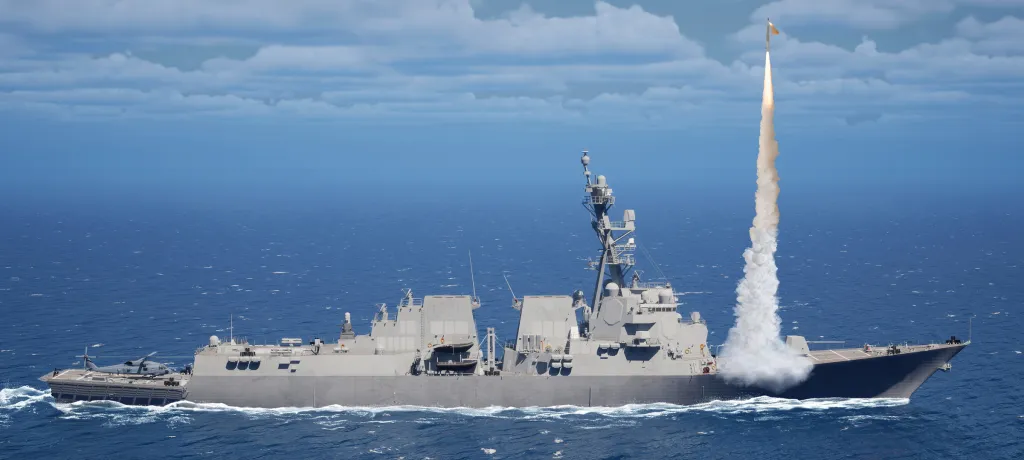
The U.S. Navy has handed Lockheed Martin a formal contract to integrate the Patriot PAC-3 Missile Segment Enhancement (MSE) surface-to-air missile with the Aegis Combat System. The Navy’s main Aegis-equipped ships today are its Arleigh Burke class destroyers. The service is also seeking just over $1.73 billion to order its first-ever tranche of PAC-3 MSEs, 405 in total, as part of its proposed budget for the 2027 Fiscal Year.
A rendering of an Arleigh Burke class destroyer firing a PAC-3 MSE missile. Lockheed Martin
Lockheed Martin announced it had received the PAC-3 MSE/Aegis integration contract, said to be a multi-million dollar deal, earlier today, around the Navy League’s annual Sea Air Space exposition, at which TWZ is in attendance. The Navy has separately shared more details about its PAC-3 MSE acquisition plans as part of the full rollout of the Pentagon’s budget request for Fiscal Year 2027, which also occurred today.
Per the Navy’s Fiscal Year 2027 budget request, the service sees PAC-3 MSE integration with Aegis as providing an additional means of intercepting “a wide range of threats, including tactical ballistic missiles, air-breathing threats, cruise missiles, and unmanned aerial systems.” As mentioned, Arleigh Burke class destroyers make up the vast majority of American warships equipped with the Aegis Combat System today. There are also a steadily shrinking number of Ticonderoga class cruisers with this combat system.
PAC-3 MSE has been in full-scale production since 2018. Pairing it with Aegis “has been in the works, I probably think, close to 10 years,” Chandra Marshall, Vice President and General Manager of the Multi-Domain Combat Solutions business unit within Lockheed Martin’s Rotary and Mission Systems division, told our Jamie Hunter on the floor of Sea Air Space. She added that the goal now is for the Navy to achieve initial operational capability (IOC) with this combination in approximately 18 months, or by the end of 2027 if the clock starts now.
A briefing slide offering a general overview of the PAC-3 MSE missile, as well as its improvements over the previous PAC-3 CRI surface-to-air interceptor. Lockheed Martin An overview of the improvements found on the PAC-3 MSE variant over its predecessors, including a “New LE [lethality enhancer].” Lockheed Martin
“So, there’s two pieces of it. So the PAC-3 missile, there’s a small update to it to be able to communicate with S-band radar. So, currently it communicates with X-band [radars]. So, now with this update, it will be able to communicate both with S and X-band,” Marshall explained. “And then we have to integrate PAC-3 as a missile type with the Aegis Combat System.”
“We have a very open architecture [with Aegis], so the way that we componentize everything, we feel like it’s a very short putt for the Aegis integration of the PAC-3 missile,” she added. “So, it’ll just be another missile in the inventory for the Navy to be able to diversify based on the threat.”
You can read more about the Aegis Combat System and how it has evolved to adopt a modular, open architecture approach, specifically to make it easier to add new capabilities and functionality, in this previous TWZ feature. Lockheed Martin has already demonstrated the ability of a modular and scalable version of the system, called the Virtualized Aegis Weapon System, to fire a PAC-3 MSE from a containerized Mk 41-based launcher on land.
Aegis: Capable. Proven. Deployed.
No changes to the Mk 41 VLS – another Lockheed Martin product – are planned or required as part of the PAC-3 MSE integration. Work has been ongoing on adapting the interceptors into launch canisters, allowing them to slot right into existing Mk 41 cells. At just over 17 feet long, PAC-3 MSE should fit in shorter so-called tactical length versions of the Mk 41, as well as one with longer strike-length cells.
A graphic showing existing missiles compatible with tactical and strike-length versions of the Mk 41 VLS. Lockheed Martin A graphic showing various missiles already compatible with the tactical and strike-length versions of the Mk 41. Lockheed Martin
Lockheed Martin has said in the past that each canister will contain a single PAC-3 MSE missile. At around 11 inches wide, the PAC-3 MSE is just over half the maximum diameter available in a Mk 41 cell. This raises the question of whether future canisters could be designed to hold multiple interceptors, which would give ships valuable additional magazine depth.
From a capability standpoint, PAC-3 MSE is generally discussed in comparison to SM-2 surface-to-air missiles in the Navy’s arsenal today. In terms of missiles that can be fired via the Mk 41, SM-2 is a middle-tier anti-air capability that sits between shorter-range RIM-162 Evolved Sea Sparrow Missiles (ESSM; which can also be quad-packed into a single cell) and upper-tier SM-6s and SM-3s. The SM-6 is a multi-purpose weapon that can also be employed against targets on land and at sea. SM-3s, of which there are multiple variants in service today, are specifically designed as anti-ballistic missile interceptors.
“A lot of places the Navy has said ‘I got red or yellow challenges that I can’t deal with.’ This missile does a really good job at that. When you marry them all together, it is very complimentary to SM-6,” Chris Mang, Vice President of Strategy & Business Development at Lockheed Martin’s Missiles and Fire Control, told TWZ at last year’s Sea Air Space conference. “You’d always want a layered defense, right? I’ll pick the longest shot I can get, but then at a certain point, MSE really starts to outperform in certain envelopes.”
An SM-6 seen at the moment of launch. USN
For the Navy, PAC-3 MSE also presents important logistics, cost, and supply chain benefits. The latest conflict with Iran has only underscored now long-standing concerns about U.S. munition expenditure rates, especially when it comes to anti-air interceptors. A large-scale, high-end fight with a near-peer adversary like China would put much more pressure on munition stockpiles and the U.S. industrial base working to restock them. As such, it would be a boon for the Navy to have an additional stream of interceptors to arm its warships.
As noted, the Navy is already moving to buy hundreds of what documents currently refer to as the “PAC-3 MSE / Navy” missile, as well as launch canisters. The service’s Fiscal Year 2027 budget request puts the unit cost for each missile at $4.05 million. The canister adds another $200,000 to the price tag. The Army’s Fiscal Year 2027 proposed budget says the unit cost for standard PAC-3 MSEs has risen now to $5.3 million. The exact reasons for the cost discrepancy between the Army and Navy versions are unclear.
A PAC-3 MSE missile seen being fired from a ground-based launcher. US military A Patriot launcher fires a newer PAC-3-series missile during a test. DoD
“Both quantities and unit cost are estimates based on U.S. Army contract pricing. Both quantities and unit cost will adjust based on award of DoN CLINs [Department of Navy Contract Line Item Numbers] on ARMY contract in execution and final cost of the Navy components (radio, canister, etc),” per the Navy’s latest budget request.
At $4.05 million, the Navy’s PAC-3 MSEs will be slightly cheaper per missile than the Block IA version of the SM-6. The service’s latest budget request puts the unit cost of the latter missiles at $4.348 million. The cost of a current-generation Block IIICU variant of the SM-2 is unclear, given that they have often been procured as upgrades of existing Block IIICs rather than new-production missiles. Historically, the average price point for an SM-3 Block IIIC has been around $3.6 million.
“By leveraging the high-volume Army PAC-3 MSE production contract, the Navy achieves significant cost avoidance through economies of scale, as unit price decreases with larger quantities,” the Navy’s latest budget documents also note.
Lockheed Martin announced in January that it had reached an agreement with the U.S. government to ramp up annual PAC-3 MSE production, for domestic and foreign customers, from 600 to 2,000 missiles. Last week, the company received a contract to help further accelerate production of these missiles. This could all help drive down the unit cost of the missiles going forward, as well as speed up their delivery.
Lockheed Martin Receives Contract to Accelerate PAC-3® MSE Production
It is worth pointing out here that PAC-3 MSE’s performance in the Middle East, as well as in Ukraine in recent years, has also prompted a significant increase in demand from the U.S. Army, as well as foreign Patriot operators. The overall Patriot user base is also expanding.
Adding the Navy to the mix will add to that demand, even with the production ramp-up, and could add to already growing concerns about production backlogs now. Integrating PAC-3 with Aegis and the Mk 41 VLS could also spur additional interest from other navies globally that have ships with that combat system and/or launchers.
Reutersreported just last week that U.S. officials had informed allies and partners in Europe that deliveries of unspecified munitions could now be delayed due to American needs in relation to the war with Iran. When it comes to PAC-3 MSE, the budget documents the Army released today, at least, do not appear to show any changes to the delivery schedule for foreign customers.
🇺🇸 Is the US re-sequencing scheduled PAC-3 MSE deliveries away from FMS customers to the US Army’s inventory?
The J-books say no. In fact, FMS customers are scheduled to receive the majority of production.
In an emotional statement, I’m A Celebrity… South Africa star Adam Thomas admitted he struggled in camp due to his health and clashes with David Haye and Jimmy Bullard
Adam Thomas clashed with Jimmy Bullard in a trial (Image: ITV/Shutterstock)
A friend of I’m a Celebrity… South Africa star Adam Thomas has spoken out after seeing the actor’s confrontational side on the show. The 37-year-old has faced a number of challenging moments in the all-stars series – and not just in the Bushtucker trials.
During the heated exchange, the actor criticised Jimmy for his decision to pull out and called him a “p***k”, while the sportsman branded his reaction “pathetic”.
The tension came after the Waterloo Road actor confronted David Haye over his behaviour in previous days. The boxer had been accused of “bullying” Adam by some viewers, following a series of remarks.
As tensions escalated, David branded his co-star “useless” and questioned his “mental strength” to complete challenges, despite Adam telling campmates he was unwell.
The actor eventually confronted David in a heated exchange, telling him to “shut up” before the boxer apologised.
Reflecting on the fallout, Ashley Roberts, who also appeared in the series, described the atmosphere as “tough” during a discussion on Heart Radio Breakfast.
The show’s host Jason King went on to say that seeing Adam in a more serious way on screen suggested he had been pushed to his limits.
“I know Adam very, very well and he is the loveliest, most cheerful, smiley, happy guy. If you’ve broken Adam, David, you’ve done something wrong,” he shared.
Ashley chimed in: “It was nice for him to stand up for himself. It starts as lad banter, but we could tell it was going too far.
“And then finally Adam was like, ‘I’ve just had enough’ and we were like, ‘Go on Adam!’ It was tough in there at times, it was tough in general just being in there, let alone having to deal with all of that.”
David was voted out of camp on Monday night. In his exit interview with hosts Ant and Dec, he said there was “no bad blood” between him and Adam and claimed it was banter.
“I won the world heavyweight championship against a seven-foot Russian giant,” he shared.
“So when a grown man tells me that a fun TV show – where we’re being paid handsomely every single day – is the hardest thing he’s ever been through, it’s just not a frequency I recognise. I was actually on my best behaviour in there, honestly.
“I’ve spoken to Adam, I’ve said my piece, and some of what’s still to air will speak for itself. I’ll leave it there.”
In a statement shared on Instagram on Sunday evening, Adam said the boxer “broke me” in camp and “pushed me to my limits”, adding: “I’ve told David this and he’s apologised – that’s that. I’ve moved on now, I’m not one to hold a grudge.”
Football’s governing body puts more tickets on sale but has introduced new premium-priced tiers that angered some fans.
Published On 22 Apr 202622 Apr 2026
The International Federation of Association Football (FIFA) is putting more World Cup tickets on sale after angering some fans by adding new, more expensive categories.
FIFA announced on Tuesday that it would make more tickets available at 11am EDT (15:00 GMT) on Wednesday for all 104 games in Categories 1, 2 and 3, in addition to the new “front category” pricing it added this month.
Recommended Stories
list of 3 itemsend of list
The new category led to online complaints from fans, who said they had thought that the better seats in the categories they had bought tickets for were withheld, and they had been assigned less favourable locations.
FIFA in December put tickets on sale at prices ranging from $140 for Category 3 in the first round to $8,680 for the final, then raised prices to as much as $10,990 when sales reopened on April 1.
FIFA did not respond to an April 9 request for comment about the new ticket categories it added.
Also on Tuesday, The Athletic reported that ticket sales are lagging for the US opener against Paraguay on June 12 at Inglewood, California. It said a document distributed to local organisers, dated April 10, said that 40,934 tickets had been bought for the US-Paraguay game, and 50,661 were bought for the Iran-New Zealand contest on April 15.
FIFA projects the capacity at the Los Angeles SoFi Stadium, where the US-Paraguay and Iran-New Zealand games will be held, to be about 69,650, noting that it may change.
FIFA’s December sale priced US-Paraguay tickets at $1,120, $1,940 and $2,735, and Iran-New Zealand seats at $140, $380 and $450.
Production on Season 5 of “The Secret Lives of Mormon Wives” will resume after filming was halted weeks ago amid a domestic violence investigation involving star Taylor Frankie Paul, The Times has learned.
Filming on the Hulu reality series paused in mid-March after the Draper City Police Department in Utah launched an investigation that involved Paul and her ex-boyfriend Dakota Mortensen and stemmed from an alleged incident in February. It was later revealed that Paul was under investigation for an alleged third domestic violence incident involving her and Mortensen in 2024, which was being led by police in West Jordan, Utah. The Salt Lake County district attorney’s office announced last week it would not be filing charges against Paul.
It has not been disclosed when cameras will pick back up or whether Paul or Mortensen will return to the series. In addition to Paul, the main cast includes Whitney Leavitt, Mayci Neeley. Jessie Draper, Jen Affleck, Mayci Neeley and Miranda McWhorter.
Paul was previously arrested in 2023 for another incident with Mortensen, which was partially documented on Season 1 of “Mormon Wives.”
“Here come the ugly parts of what healing actually looks like,” Paul wrote in a lengthy post Sunday on Instagram. “If you know me you know I’ll admit my parts, flaws, and faults. I’m well aware thats apart of it. We’ll get there. This public atrocity that I not only lived through once but twice now, on even a bigger scale was ultimately the cost to my freedom. I wouldn’t wish this upon my worst enemy or even the ones who publicized it. I cried on my knees in pain while also saying THANK YOU 🙏🏼”
When the investigation tied to the alleged February incident was made public, a video from the events involving the 2023 incident — showing Paul throwing barstools at Mortensen while her young daughter was present — was leaked to TMZ. It quickly led to ABC pulling Paul’s season-headlining “The Bachelorette” just three days before its March 22 premiere.
WASHINGTON, April 22 (UPI) — The Supreme Court will hear arguments Wednesday whether immigration officers can place permanent residents charged with a crime on parole if they leave and then re-enter the country.
In immigration, parole is a temporary, discretionary permission granted by the Department of Homeland Security that allows a person to enter or remain in the United States, even though they are not formally admitted.
Parole does not cancel a person’s green card, but essentially gives the Department of Homeland Security time to decide whether the person should be admitted or deported based on how the issue is resolved.
The court is poised to hear oral arguments in Blanche vs. Lau, which would determine when immigration officers can demote a permanent resident’s status to parole, a temporary status that can be revoked and result in deportation.
Lau is Chinese immigrant Muk Lau, a permanent resident with a green card. Blanche is Todd Blanche, the acting U.S. attorney general and named defendant in the case.
Typically, permanent residents are allowed to leave and re-enter the United States as they wish, with a few exceptions. If these immigrants have committed certain kinds of crimes, for example, officers can have them placed on parole when they return to the country after going abroad.
The case stems from an event on June 15, 2012, when 69-year-old Lau, who had gained permanent residency five years earlier, landed in a New York-area airport after traveling to China.
He presented his green card and passport to border control. His entry triggered an FBI match because a month earlier, Lau was charged with third-degree trademark counterfeiting for selling nearly $300,000 of fake designer shorts.
“I was arrested at a warehouse that contained some merchandise I had stored there,” Lau told the Customs and Border Protection agent, according to court documents. “I went to the warehouse to retrieve the merchandise because I had not paid rent, and when I got there, the cops were there and arrested me.”
The agent declared Lau inadmissible as a returning permanent resident due to the crime exception, and decided to let him in on parole, instead. A year later, Lau pled guilty to the counterfeiting, and in 2014, the Department of Homeland Security began deportation proceedings against him.
At the time, the Customs and Border Patrol agent did not know whether Lau was guilty — just that he had been charged with a crime. The crux of Lau’s case is whether the CBP agent needed “clear and convincing” evidence of a crime when placing him on parole or whether just charges were enough without such evidence.
Immigrant advocates argue the agent erred.
“Mr. Lau was absolutely, unequivocally, at that time, admissible,” said Jonathan Weinberg, who worked on the American Immigration Lawyers Association’s brief to the court. “He just was. He hadn’t been convicted of a crime. There was nothing else that would render him inadmissible.”
After an immigration judge and the Board of Immigration Appeals sided with the government, Lau appealed to the U.S. 2nd Circuit Court of Appeals. The appellate court, agreeing with Weinberg’s reasoning, granted Lau’s petition in March 2025.
The Federation for American Immigration Reform, a nonprofit advocating for lower immigration rates, also submitted a brief to the court. It argued that the border patrol officer did the right thing by paroling Lau into the country, and that the clear and convincing standard was too high.
“If you’re going to say that the officer in an airport is supposed to have all this information, you’re assigning that individual with an impossible task,” FAIR spokesman Ira Mehlman said. “You have thousands of people coming through the airports every day, and these are decisions that have to be made on the spot.”
Mehlman also said that the decision “shouldn’t be a problem” for green-card holders without any criminal history.
“When you come to the United States as a non-citizen, you are here on a conditional basis,” Mehlman said. “Even if you’re a green card holder, you’re subject to removal if you violate the terms of your presence here in the United States.”
There are nearly 13 million legal permanent residents in the United States. Legal immigrants, including green card holders, commit crimes at lower rates than natural-born citizens, according to research by the Migration Policy Institute. However, Weinberg said the ultimate decision would impact all legal permanent residents, including those who have not been convicted of any crime.
“If the government can admit Lau on parole, then the government can basically admit any returning green card holder on parole if it chooses to,” Weinberg said.
Lau’s case joins several immigration-related issues, including birthright citizenship and temporary protected status, which have made their way to the Supreme Court this spring.
“The immigrant advocacy community is, I think, fighting an uphill battle,” Weinberg said. “But that doesn’t mean you don’t give it your best shot.”
Weekly insights and analysis on the latest developments in military technology, strategy, and foreign policy.
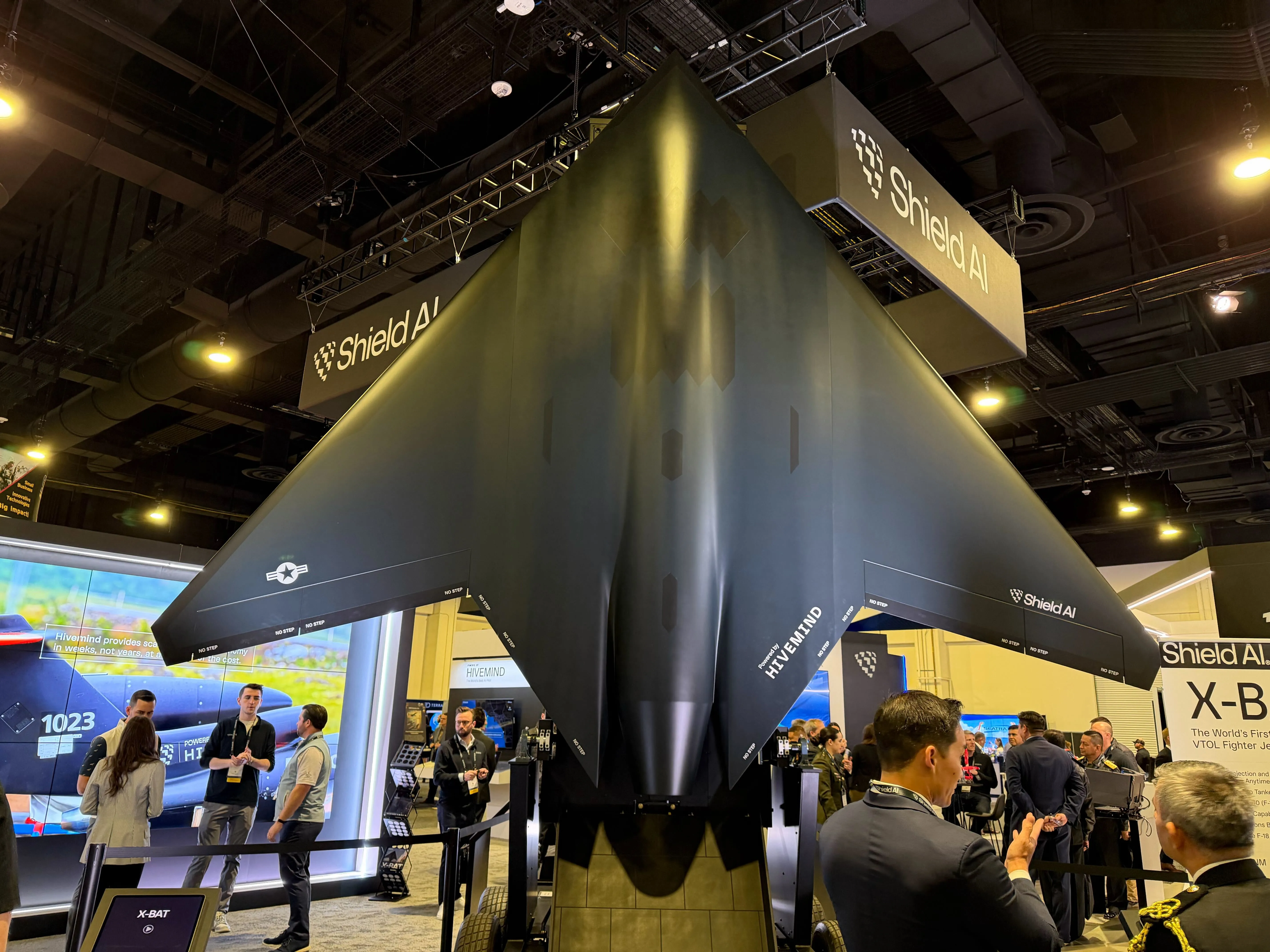
Shield AI and General Electric have revealed more details about X-BAT, the jet-powered autonomous stealth ‘fighter’ drone designed to take off vertically and land the same way, tail first, after completing its mission. With the extremely ambitious aircraft concept planned to start vertical takeoff and landing (VTOL) testing before the end of this year, the companies have also shown off a roughly half-size model that includes significant design changes.
The new details came when officials — J.J. Cummings and Armor Harris from Shield AI, and Steve Russell from GE’s Edison Works — spoke with reporters, including The War Zone, at the Sea-Air-Space 2026 exposition near Washington, D.C.
Make sure to get up to speed on everything we previously knew about X-BAT in our exclusive feature from when the aircraft was unveiled, linked here, as well as its forthcoming flight testing here.
A major redesign
When we discussed the X-BAT in our in-depth coverage of the program in the past, the drone had a ‘cranked kite’ planform, which has now given way to a straight leading edge with a more dramatic sweep as part of a distinctive arrowhead-shaped profile. We saw the same on the Boeing X-45C Phantom Ray UCAV prototype, and it has since been adopted by the Chinese GJ-11 Sharp Sword, among others. This new configuration looks better optimized for higher-speed flight.
According to X-BAT’s chief designer, Armor Harris, “We’ve taken an iterative approach to development and made improvements to the design based on test data.”
A scale model of the X-BAT on display at the Sea-Air-Space 2026 exposition near Washington, D.C, this week. Jamie HunterThe original planform design featured a cranked-kite like arrangement. Shield AI
Raiding the past to realize the future
Of all the new details we received about X-BAT, where the jet’s critical thrust vectoring capability will come from is perhaps the most intriguing. GE says that the engine nozzle is the Axisymmetric Vectoring Exhaust Nozzle (AVEN), which comes from a specialized thrust-vectoring F-16 that was tested out of Edwards Air Force Base, California, back in the 1990s. The AVEN nozzle — taken direct from the warehouse, “Indiana Jones-style,” according to the officials — will be used for the initial testing.
F-16 MATV Axisymmetric vectoring in the early 1990’s.
Multirole platform: including tanker
Officials confirmed that the X-BAT can be operated as a tanker, making use of its two external hardpoints. Both of these are plumbed to the internal fuel tanks, so they can support ‘buddy’ refueling pods, which trail a hose and drogue.
The companies stress that aerial refueling tanker is “definitely not a primary mission,” but this option does reflect the multirole nature of the platform. Meanwhile, drone tankers are a growing area of interest for different U.S. military services, with efforts currently spearheaded by Boeing’s MQ-25 Stingray, although, since it is larger than the X-BAT, this would also offer much greater internal capacity.
For expeditionary operations, in particular, drone tankers are seen as a viable solution, although by no means the only one. X-BAT acting as a launch tanker could be especially of interest for tactical jets that require long runways. This would allow them to takeoff in short distances with heavy weapons loads and get fuel immediately from the X-BAT tanker before heading on their missions. X-BAT tankers could also act as unpredictable refueling platforms that are forward deployed for enroute combat aircraft, launching from virtually anywhere to refuel jets making their way from longer distances to their target areas. These are just some of the less traditional theoretical ways a tanker-configured X-BAT could be used.
Interestingly, based on the current concept of operations, Shield AI sees less interest in having the X-BAT take on fuel while airborne itself, although there is a “holding place” for a refueling probe in the nose, if required.
Overall, and beyond tanking, the X-BAT’s multirole capability implies “significant air-to-ground capability, maritime strike capability, and electronic warfare capability,” Shield AI says.
GE F110 engine
Last year, TWZ broke the news that General Electric was working with Shield AI on the powerplant side of the X-BAT, specifically its F110 turbofan, the same as used in many F-16s and F-15s. The choice of the F110 was driven by size and thrust requirements, including the demanding VTOL cycle that’s at the heart of the X-BAT concept.
As well as offering what Shield AI describes as the best power-to-weight ratio in its class, the F110 was selected for its fuel economy. The engine is also widely available. With roughly 3,400 in the world, several “certified pre-owned engines” have been obtained for the program, as well as new-build ones.
While the partnership between Shield AI and General Electric was announced relatively recently, they have been working together for longer, with “tremendous progress on adapting the F110 engine” made in the last six to 12 months, according to officials.
Payload and range
According to Shield AI, X-BAT is around twice the size of all the other CCAs that are on the market today, which allows it to have a pair of payload bays that are roughly the same size as those found on the F-35. This means that any store that fits in an F-35 can theoretically also be accommodated internally in an X-BAT. These presently include 2,000-pound-class weapons.
At the same time, the X-BAT “goes twice as far” as an F-35, meaning double the combat radius. The drone’s manufacturers give a combat radius figure of 1,000 nautical miles. In the past, Shield AI told TWZ that the drone would also have a maximum range of 2,000 nautical miles and a service ceiling of around 50,000 feet.
Of course, the aircraft’s weight is a major factor in providing range. Company officials say they are “not really doing anything super-novel on the design of the air vehicle” in terms of weight reduction. However, with no landing gear and no auxiliary power unit (X-BAT uses an external lithium-ion battery pack to start the engine), and with other items moved from the air vehicle to the trailer-based launch recovery vehicle, all of this helps make the drone lighter.
Jamie Hunter
VTOL flight profile
For vertical takeoff, the F110 engine is put into afterburner to get the required thrust-to-weight ratio needed for takeoff, although the aircraft returns to land on military power (without afterburner).
Various modifications are needed to the F110 for use in a vertical takeoff application: as a tail-sitting aircraft, the X-BAT spends a lot of its time in this attitude. As such, the engine has been exposed to significant subscale and full-scale testing at GE facilities. Shield AI says it plans to build the prototype aircraft at a facility in Frisco, Texas, this summer.
An F110 engine from an F-16 jet in max power during a test at Hill Air Force Base, Utah. U.S. Air Force photo by Alex R. Lloyd
Interestingly, one important part of the tests so far has been to explore just how far the F110 can be throttled back for the delicate VTOL and transition phases. Previously, the limits were set by the cabin pressurization requirements of crewed aircraft: essentially, how much fan speed was needed to generate enough bleed air to pressurize the cabin for the pilot. Since the X-BAT is uncrewed, the F110 can be throttled back farther and operate in different regimes.
Thrust-vectoring nozzle
While the aforementioned AVEN nozzle will be used for the initial testing, the companies are meanwhile working on redesigning and updating the design and building more nozzles. The control system and software are also completely different from those used on the original AVEN and are tweaked to work with today’s F110.
“It actually has worked really well,” Steve Russell says of the nozzle. “We’ve done testing where we’ve reversed it, we’ve integrated it, we’ve run the control system … you put all those things together and put it into such a cool platform that’s really going to present a unique dilemma for our potential adversaries.”
So far, testing has shown that the rigors of VTOL actually result in less fatigue and vibration compared to a typical F-16 profile.
A mockup of the X-BAT in its original configuration. Shield AI
The current nozzle doesn’t have low-observable (LO) attributes, but that is something that will be introduced after prototype testing. There is also the possibility of the X-BAT vectoring its nozzle in forward flight to increase its agility. The companies stress that this capability will depend on customer requirements, but the nozzle will be fully vectorable across the flight regime.
The focus for now is more about actuation and integration of the F110 with the Shield AI airframe and flight control system. A key factor is mitigating against exhaust gas ingestion and ensuring the engine is fed with clean air during the transition phases of flight. However, this is not something the developers are overly concerned about, and the F110 is also judged particularly stall-resistant.
Air intakes and blast deflector
Shield AI’s air intake system is specifically engineered to handle these demanding phases of flight and includes an auxiliary inlet on the back of the aircraft. This is concealed beneath a panel when the aircraft is not in VTOL mode.
Just as important is the engine exhaust, especially when it comes to mitigating the risk of foreign object damage (FOD) and kicking up debris that could damage other assets on the ground during VTOL operations. This would be especially critical on the tight confines of a ship’s flight deck.
The air intake system under test. Shield AI
For the launch, a blast deflector built into the X-BAT’s custom trailer is designed to direct the exhaust plume away rather than recirculating it back to the engine. The fact that the aircraft is suspended relatively high in the air for takeoff means that the issue of rocks and other debris being kicked-up at the aircraft is reduced. The deflector also channels the blast in a known direction.
For the landing phase, the aircraft’s approach profile helps avoid FOD and exhaust gas ingestion. Instead of coming straight down to land, the X-BAT approaches the launch-recovery trailer from the side, makes contact with it, and then powers up into a latch that secures it. The aircraft also leans slightly into the incoming airstream to help ensure the intake is always being fed with cleaner air.
A close-up of the blast deflector for X-BAT. Jamie Hunter
Open system architectures
With open system architectures baked into the design, it should also be easier to upgrade the X-BAT than previous aircraft, meaning it is getting “a lot closer to plug and play.” Shield AI talks about swapping in and swapping out different radiofrequency and infrared sensors for upgrades or potentially for different missions.
The companies remain generally tight-lipped about the electronic warfare (EW) packages that will be installed in the X-BAT. They did say that the EW gear will be unique to this aircraft and that they were able to leverage a lot of the sixth-generation systems that have been developed for the NGAD programs, in both their Air Force and Navy iterations.
Testing pathway
Looking in more detail at what comes next for the program, Shield AI and General Electric confirm that the first stage of testing is already underway, using the adapted F110 on GE test stands. Step two will see the propulsion system integrated into the prototype aircraft. It will then be run horizontally and then vertically, while still attached to the launch-recovery trailer.
An earlier mock-up of the cranked-kite X-BAT on its launch trailer. One of Shield AI’s V-BAT drones is also seen at left. Shield AI
The next step will involve a very large crane, which will hold the aircraft vertically, with engine tests being run while the X-BAT is tethered for safety. This phase will see the propulsion system tested in proximity to the ground, in proximity to the launch and recovery trailer, and under different inlet conditions.
The final step will see the tether taken off, allowing the X-BAT to perform free flights. The aircraft will take off from the launch and recovery trailer, go up, come around, and reattach to it, all in vertical mode. If things go well, company officials say, this milestone will be targeted before the end of 2026.
In the process, Shield AI and General Electric are realistic about the possibility of mishaps in what is really groundbreaking technology. Company officials describe a “hardware-rich approach to test,” which means building several prototype test aircraft that will be pushed to the limit. They “fully expect to lose one in testing,” since the program is stressing the delivery of capability to the operators as quickly as possible. In this respect, zero failures mean the program is going too slow, the officials say.
Market prognosis
Shield AI and General Electric confirm that there is “tremendous interest internationally” in the X-BAT, across all regions.
Their business case rests on the X-BAT providing “fifth and sixth-gen type capabilities” at a price point much cheaper than an equivalent crewed combat jet. Part of the cost equation also relates to the VTOL flight mode, which means operators can “delete a lot of the lifecycle cost associated with having a conventional air force.” With no conventional airbase required, there is no need for expensive airbase defenses or hardened aircraft shelters. The concept of operations involves a much-reduced need for tanker support, since the X-BAT can be forward stationed and has a large combat radius. Of course, there is also no conventional pilot-training pipeline. Shield AI and General Electric officials describe the resulting air power employment, in life-cycle terms, as costing around a tenth that of an equivalent fifth or sixth-gen type.
Earlier concept artwork showing three X-BATs, with the original planform, launching with external weapons fitted. Shield AI
Compared to those fifth/sixth-gen platforms, the lower cost of the X-BAT means that it doesn’t have to be as survivable. Shield AI and General Electric talk about the aim of having an aircraft that is “just survivable enough that you can do the mission.” Meanwhile, it should avoid the “exponential costs for incremental return” that are inevitable in other, more exquisite platforms. Instead, the companies are looking at the possibility of an operator buying 10 to 20 X-BATs for the price of something like a B-21. The Air Force previously specified an average unit cost of roughly $550 million for the B-21.
With this in mind, Shield AI is sizing a factory that will be able to produce 150 X-BATs annually, with employees working single shifts.
Clearly, the ambition of creating a vertical takeoff and landing ‘autonomous fighter’ that is capable of countering an adversary’s air defenses at a fraction of the price of a crewed platform is incredibly bold. Some would even call it outright far-fetched. Yet the comparisons to Space-X and how they disrupted the space access market by doing something many thought would not work — also a VTOL solution — also can’t be denied.
With testing of the X-BAT and its F110-based propulsion system now well underway, and first flights planned before the end of the year, we are getting closer to seeing whether this radical vision can actually be realized.
Kylie Jenner is being sued by a former housekeeper who claims she was harassed and discriminated against while working for the makeup mogul.
Angelica Hernandez Vasquez filed a lawsuit against Kylie Jenner Inc., Tri Star Services and La Maison Family Services on Friday alleging that she was subjected to “severe and pervasive harassment” throughout her employment.
According to court documents obtained by The Times, Vasquez worked for the reality TV star from September 2024 to August 2025, and from her first day on staff at Jenner’s Hidden Hills residence, she was treated with “hostility and exclusion” by the head housekeeper, identified only as Patsy, and another supervisor, identified as Elsi.
Vasquez, who states that she is a Salvadoran woman and practicing Catholic, claims she was routinely assigned the more unsavory tasks involved in housekeeping and excluded from the housekeeping team. According to the suit, she was humiliated by fellow staff members and belittled due to her race, country of origin, religion and immigration status.
The former housekeeper for Jenner further claims that she was mocked for her accent and degraded. She claims that supervisors snapped their fingers while shouting at her, demanded to inspect her phone, made statements including “Catholics are horrible people,” and forced her to perform other staff members’ duties.
According to the court documents, Vasquez reported the mistreatment after Thanksgiving 2024, and in response, the harassment escalated. She also alleges that her scheduled hours were reduced. When Vasquez complained again in March 2025, she claims that a supervisor threw hangers at her feet and threatened her.
Although the “Keeping Up With the Kardashians” star was not personally accused of bullying behavior in the filing, Vasquez alleges that the defendants failed to pay her in full, paid her late, failed to pay overtime wages, and failed to reimburse business expenses, among other claims.
Vazquez is seeking damages “in the form of unpaid wages, meal and rest period premium pay, unreimbursed business expenses, unpaid sick leave, and all other compensation unlawfully withheld.”
Representatives for Jenner have not yet responded to The Times’ request for comment.
In a social media post, President Trump announced an extension of the ceasefire in the war on Iran, but with the US blockade still in place. Al Jazeera’s Alan Fisher says there are signs of movement as Trump shifts towards discussing a ‘unified proposal’.
Weekly insights and analysis on the latest developments in military technology, strategy, and foreign policy.
A U.S. warship striking another vessel with its deck gun is very rare occurrence in modern times. When the Arleigh Burke class guided missile destroyer USS Spruanceopened fire on the Iranian cargo shipTouska on April 19th with its 5-inch MK 45 gun, it marked the first time in almost four decades something like that had happened. In fact, the prior incident took place almost exactly 38 years ago to the day in the same general vicinity against the same enemy.
“From what we are tracking, the last known irrefutable instance of a Navy ship firing its deck gun at another ship was on April 18, 1988 during Operation Praying Mantis,” a U.S. Navy official told us, referring to a duel between the U.S. and Iranian navies in the Persian Gulf.
That’s when the Belknap class guided missile cruiser USS Wainwright, Knox class destroyer escort USS Bagley and the Oliver Hazard Perry classguided missile frigate USS Simpson all fired upon the Iranian Karman class fast attack ship IRIS Joshan.
Aerial view of the Iranian frigate IS Alvand burning after being attacked by aircraft of Carrier Air Wing 11 from USS Enterprise. (USN)
In addition to launching anti-ship missiles at the Iranian ship, the Wainwright and Bagley engaged the Joshan with 5-inch deck guns while the Simpson used its 3-incher, the official noted. The three ships belonged to what was then known as Surface Action Group (SAG) Charlie.
Praying Mantis was part of the much larger Operation Ernest Will, which began in 1987 when Iraqi and Iranian forces increased attacks on merchant ships in the Persian Gulf during latter stages of the Iran-Iraq War.
Ernest Will involved reflagging Kuwaiti oil tankers under the American banner, allowing them to be escorted by U.S. Navy ships. In July, 1987, during the first such escort, one of those ships struck a mine, setting off a chain reaction of events that led to Praying Mantis. That operation was in response to the Oliver Hazard Perry class guided missile frigate USS Samuel B. Roberts striking an Iranian mine.
USS Samuel B. Roberts underway after the ship struck an Iranian mine on April 14, 1988. (USN)
The mine’s detonation against the Roberts “blew an immense hole in the ship’s hull,” according to a Navy history of the incident. “Ten Sailors from Samuel B. Roberts sustained severe injuries. Four were seriously burned. Commander Paul X. Rinn was hurt as well. The ship should have sunk, but thanks to an extraordinary damage control effort by all hands of an extremely well-trained crew, Samuel B. Roberts was kept afloat.”
A view of damage to the hull of USS Samuel B. Roberts while in dry dock in Bahrain. The damage was sustained when the ship struck a mine while on patrol in the Persian Gulf on April 14, 1988 (USN)
“The U.S. response was fierce,” the Navy history continued. “Operation Praying Mantis was the largest of five major U.S. Navy surface actions since World War II. It was the first, and so far only, time the U.S. Navy has exchanged surface-to-surface missile fire with an enemy, and it resulted in the largest warship sunk by the U.S. Navy since WWII.”
At 10:48 a.m. local time, “an approaching Iranian frigate, Joshan, was identified,” according to Defense Media Network. “The Joshan ignored three warnings issued from the Wainwright, and launched a Harpoon missile that narrowly missed the cruiser.”
The vessels in the U.S. Navy’s surface action group returned fire with SM-1 and Harpoon missiles, heavily damaging the Joshan. The burning frigate was then sunk with gunfire.
The Joshan wasn’t the only Iranian asset hit that day.
“In the one-day operation, the U.S. Navy destroyed two Iranian surveillance platforms, sank two of their ships, and severely damaged another,” according to a Navy history of the event.
A view of an Iranian oil platform after being strafed by US forces. Marines raided the platform to gather intelligence data and military equipment used by Iranians. The platform was later destroyed by gunfire from US destroyers in retaliation for the Iranian mining of the guided missile frigate USS Samuel B. Roberts in the Persian Gulf (USN)
Praying Mantis helped change the course of events.
While the Spruance attack on the Touska is the Navy’s first use of a deck gun on another ship since then, there are more differences than similarities between these engagements.
The Touska is an unarmed civilian cargo vessel that tried to evade the Navy’s blockade on Iranian ports. While the Spruance’s gun blew a hole in Touska’s engine room, the ship didn’t sink, but was instead boarded and seized. The vast majority of Iran’s navy has been destroyed during Epic Fury, leaving an array of small attack craft, but nothing the size of the Joshan still afloat.
You can see video of the Touska being hit with a 5-inch gun below:
US Navy seizes an Iran-flagged ship near the Strait of Hormuz
Here is a file video of a Arleigh Burke class destroyer firing its 5-inch gun:
5-inch 62-caliber Mk 45 Naval Gun Live Fire – Arleigh Burke-class Destroyer
The Touska encounter didn’t seem to have the same effect on Iran as Praying Mantis. If anything, as we previously noted, for at least certain factions within the fragmented Iranian power structure, it hardened the resolve not to enter a second round of negotiations to end the war. Though Trump has extended the deadline for a ceasefire, Iran has yet to indicate it will return to the bargaining table.
Iran, calling the Touska incident an act of piracy, has demanded the return of the ship and its crew and has threatened retaliation. However that has yet to happen.
Regardless, now we know the last time the U.S. Navy has used one of its main deck guns against another ship in anger was 38 years ago.
KERRY Katona has revealed she’s experiencing speech difficulties after she was rushed to hospital over stroke fears.
TheAtomic Kitten singer said she was with her partner Paolo Margaglione and her daughter Heidi who noticed that her mum’s face didn’t ‘appear right’.
Sign up for the Showbiz newsletter
Thank you!
Kerry Katona has shared a new health update after her recent hospital dashCredit: GettyThe TV personality said she’s suffering with aftereffects following the ordealCredit: Instagram / @kerryboutique.co.uk
Kerry, 45, was in London at the time of the incident, watching her eldest daughter Molly in a new play, when she fell unwell midway through the performance.
Although it was later ruled out as a stroke and most likely a result of stress, the mother-of-five said she’s still dealing with aftereffects.
Writing in her New column, she said: “I know I’m talking differently and I know my face looks different after my suspected stroke, but it’s actually loads better.
Kerry admitted that the terrifying ordeal had sent her anxiety through the roof.
She continued: “I’ve just got to try and not think about it, because I’m the worst hypochondriac in the world.
“It’s awful for my family, I think they’re all fed up and sick of me at this point.
“I have severe health anxiety, so when I start reading all the comments and I start learning all these new things that could be wrong, it makes me truly panic.”
Kerry opened up about the hospital dash earlier this month.
She told the Mirror: “I went to the toilet and noticed my face wasn’t right.
“And Heidi was like, ‘Mum, what’s wrong with your face?’ I started panicking. I discreetly left, went to my hotel and asked to see a doctor. I told the staff, ‘Something’s not right.’”
The mum-of-five was subsequently rushed to hospital in an ambulance.
“I got there, and they said, ‘We’re treating this as a stroke,’ so they blue-lit me in an ambulance from St Thomas’ to King’s College Hospital,” explains Kerry.
“They were shining lights in my eyes while my face and speech were getting worse.
“An hour ago I was watching our Molly in a play and now I’m being treated for a stroke. What the actual f**k? It just shows how quickly things can change.”
She said she felt ‘really scared’ and feared the worst but a stroke was later ruled out after a CT scan.
The Celebs Go Dating star revealed that her health scare was down to ‘delayed stress’ that can affect a person after they’ve ‘found peace’.
Following the incident, Kerry jetted off on holiday to Spain with her family to celebrate Dylan-Jorge’s 12th birthday but said she would see follow-up care when back in the country.
Kerry has Molly, 24, and Lilly-Sue, 23, with ex Brian McFadden; Heidi, 19, and Max, 17, with ex Mark Croft; and daughter Dylan-Jorge (known as DJ), 12, with late-husband George Kay.
Kerry exclusively told The Sun how things have been looking up for her ever since coupling up with new beau Paolo – 12 years her junior.
“Paolo is just a complete one-off,” she said.
“I’ve never met a human being like him. It actually makes me anxious, because I keep thinking it’s just too good to be true. I get emotional talking about him.
“I am so lucky I found him. I feel loved and wanted. I’ve never felt like that. I don’t think I’ve ever really truly been in proper love until I met Paolo. I don’t think I realised how starved I was of affection.
“I wasn’t even looking for a boyfriend or to get married again – I couldn’t think of anything worse. I wanted a pay cheque, exposure and a therapist [from the show]. Then I met him and thought, ‘You’re different.’”
Kerry said it was ruled out as a stroke but was likely the result of stressCredit: PA
Argentine President Javier Milei sang and lit a ceremonial torch at Israel’s 78th Independence Day celebrations. Milei has doubled down on relations with Israel at a time when other leaders are distancing themselves.
Several private equity firms and Hollywood power players, including United Talent Agency and longtime agent Patrick Whitesell, have expressed interest in buying parts of Casey Wasserman’s music and sports management firm after it abruptly went up for sale.
Providence Equity Partners holds the majority stake. The private equity firm has discussed selling the entire company or carving off Wasserman’s minority interest. Providence also has considered selling the bulk of the firm and staying on as a minority investor, one of the sources said. Another scenario could involve separating, then selling the individual business units that make up the Team.
Wasserman and Providence’s company boasts an enviable roster of music artists, including Kendrick Lamar, Coldplay and Ed Sheeran. Its sports marketing practice is viewed as particularly lucrative and has potential to grow in value as big dollars flow into sports that draw large crowds.
Wasserman, who declined to comment, has a veto right over any sale of the company that he has spent a quarter of a century building.
UTA, which also declined to comment, is among the most aggressive suitors, the sources said. The Team’s sports marketing and music representation divisions would dramatically boost the Beverly Hills agency’s profile and client roster.
The sales process is expected to stretch into summer, the knowledgeable people said. The auction could become complicated particularly if Providence decides to unwind the business.
For example, UTA could not buy the entire company because of the Brillstein television unit. The agency is bound by an agreement with the Writers Guild of America that prevents it from owning television production.
Investment bank Moelis & Company is managing the sale. A representative of the firm declined comment.
Wasserman also is the chairman of LA28, the nonprofit group that will be staging the Summer Olympics in Los Angeles in two years.
Following revelations of Wasserman’s 2003 emails with Maxwell, several musicians and athletes — led by pop artist Chappell Roan and soccer star Abby Wambach — said that, to stay true to their values, they would leave the agency then known as Wasserman.
Wasserman apologized to his staff for “past personal mistakes” and said he would sell the agency.
Wasserman, a prolific Clinton fundraiser whose legendary grandfather, Hollywood titan Lew Wasserman, helped the Democrat win the 1992 presidential election, was joined on Epstein’s jet by his then-wife, Laura, actor Kevin Spacey, Epstein, Maxwell — who was convicted of sexual abuse in 2021 — and others, including security agents.
China’s Foreign Ministry spokesperson Mao Ning speaks during a press conference at the Ministry of Foreign Affairs in Beijing, China, 13 January 2026. Photo by WU HAO / EPA
April 21 (Asia Today) — China has denied entry to South Korea’s intelligence chief and signaled reluctance to improve bilateral relations, amid growing tensions over Seoul’s perceived stance on Taiwan, according to diplomatic sources.
A South Korean delegation led by lawmaker Cho Jung-sik of the Democratic Party of Korea recently visited Beijing and returned Sunday after holding talks on political issues and bilateral relations. The delegation had initially planned to include National Intelligence Service Director Lee Jong-seok.
However, Chinese authorities reportedly refused Lee’s visit, citing remarks in which he suggested that engagement with Taiwan could be used as leverage to encourage China’s cooperation in improving inter-Korean relations.
According to a diplomatic source in Beijing, China reacted strongly to the comments and demanded an explanation through diplomatic channels. The delegation was subsequently restructured to include deputy officials and retired military officers instead of Lee.
Although the visit proceeded, its outcomes were limited. Chinese officials maintained protocol by assigning a vice foreign minister to host the delegation, but expectations for substantive progress were low, sources said.
Beijing is believed to be increasingly dissatisfied with what it views as South Korea’s ambiguous position – publicly supporting the “One China” principle while maintaining a level of engagement with Taiwan.
Tensions have also been fueled by a recent dispute over how Taiwan is officially referenced, in which South Korea appeared to adjust its position following objections from Taipei. Chinese officials reportedly viewed the move as inconsistent and unfavorable.
The strained atmosphere has cast doubt on the possibility of a visit to South Korea this year by Chinese Foreign Minister Wang Yi, which Seoul has sought as part of efforts to stabilize ties.
Analysts say the situation highlights the need for South Korea to carefully manage relations with China while balancing broader regional dynamics.
Volkswagen Group announced plans to equip new cars for China with AI “agents” starting in the second half of this year. This strategy aims to help Volkswagen compete with fast-growing Chinese automakers in areas like electrification and digital features.
At an event in Beijing, the company revealed that its vehicles will utilize a China-specific electronic architecture to offer “onboard AI agents,” allowing for intuitive, human-like interaction while ensuring personal data protection. These AI agents can perform complex tasks, such as finding top-rated restaurants, making reservations, driving to the location, and organizing parking.
Volkswagen is shifting its image in China, aiming to be seen as a leader in electric and intelligent vehicles rather than just a traditional manufacturer. The company plans to introduce over 20 new electrified vehicles, totaling 50 new models by 2030, as part of its “largest ever electric mobility offensive. “
CEO Oliver Blume emphasized that their initiatives signal Volkswagen’s return to the market. The collaboration with Horizon Robotics aims to make this AI technology accessible across the mass market.
Beverley Callard cried in a new video posted this evening as she explained how I’m A Celebrity was the start of her struggles, which eventually led to her being diagnosed with breast cancer
22:42, 21 Apr 2026Updated 22:46, 21 Apr 2026
Beverley Callard cried as she told fans about her jungle experience
Beverley Callard broke down in tears as she said her I’m A Celebrity exit was the start of her cancer battle.
The Coronation Street star was forced to quit I’m A Celebrity days before the final on medical grounds. She departed the show after falling ill, with bosses telling her she had to leave for her health.
However, now Beverley has spoken out and explained how she lost consciousness whilst on the show, admitting “I didn’t know then that I had cancer” as she reflected on her time on the show.
Speaking after her exit aired on the ITV show, she said: “I just watched my exit on I’m A Celeb and it made me cry all over again. Of course, I didn’t know then that I had cancer but I just knew that it was the last couple of days there that I hadn’t felt very well.
“What happened was, I went into the Bush Telegraph and apparently, I lost consciousness for a little while. I just wasn’t feeling myself. They took me to a medical hut and they were amazing; they really looked after me and they said you can’t go back.”
She added: “And I said ‘don’t say that, don’t send me home, I’ll be fine. I wanted to succeed and make it through to the end but that was the start of everything. It’s made me really emotional but I will beat this. I will beat it.”
Announcing her exit to her campmates tonight, Beverley explained how she was told she had to leave. She gathered them around and cried as she said: “Hi guys, I’ve just got something to tell you all.
“I didn’t feel very well this morning… and the medics have advised I can’t return to camp. I’ve got to go home. I don’t want to go. I’m absolutely gutted. I wanted to finish.”
She said she “had a funny turn and they’ve said I can’t come back in and I’ve got to go out. I don’t want to go. I’m gutted I wanted to finish. I wanted to prove older women could do it.”
Scarlett then told her: “Your health is more important,” with Adam adding: “Look how far you have come. I’m so proud of you.” Craig said of her exit: “She gave a really good account of herself and can leave with her head held high.”
Since announcing her diagnosis in February, Beverley has been keeping fans updated on her health and recovery.