Filming a broadcast television show can leave even the most seasoned actors feeling like they’ve lost sense of time. But by afternoon on a recent weekday, Josh Charles actually looks like he teleported to the past as he collapses into a seat inside his production trailer in upstate New York.
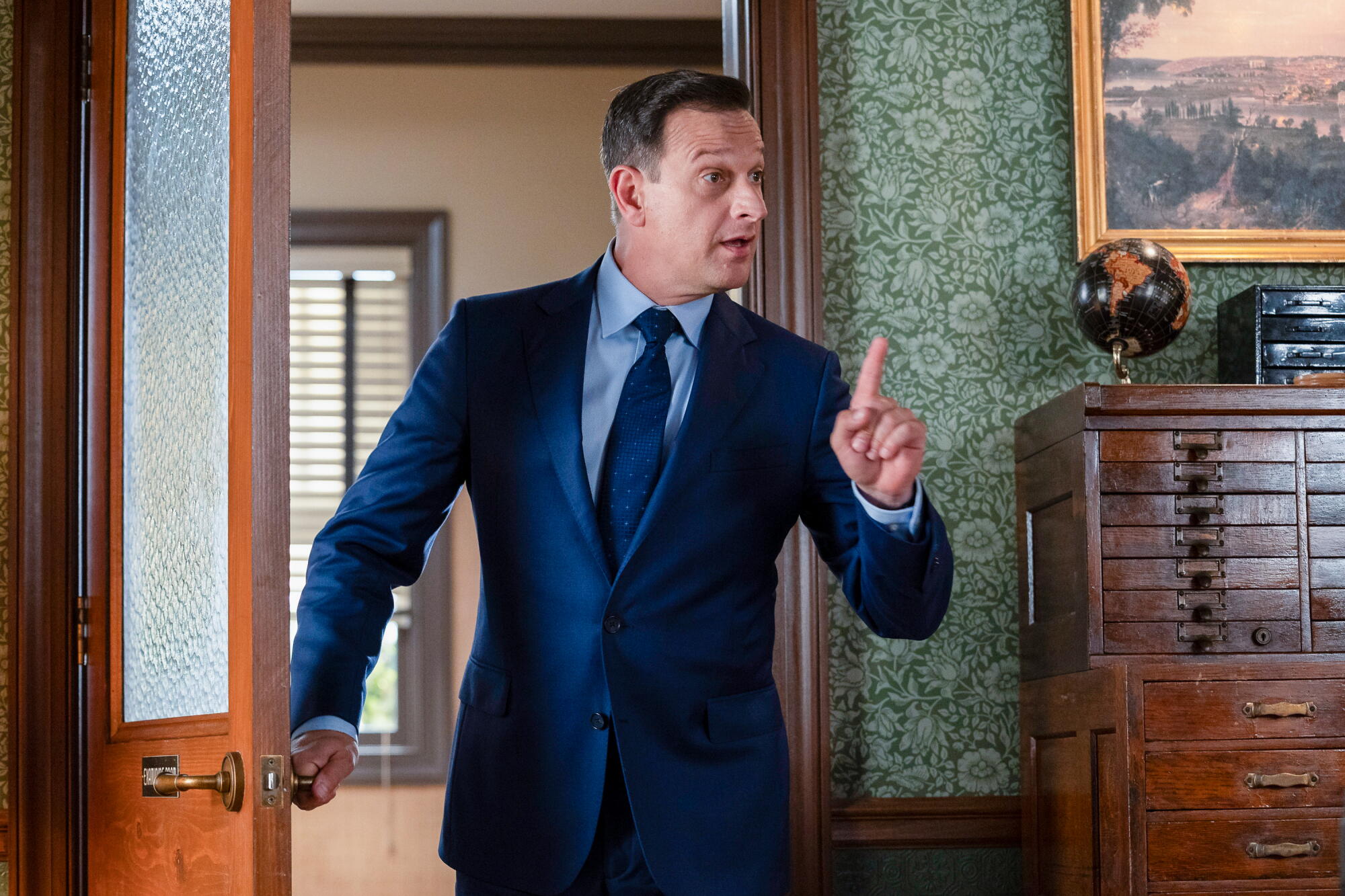
He’s in the throes of filming Season 2 of “Best Medicine,” the Fox dramedy he headlines that’s set in a small fishing village in Maine, and the reason he’s shed his character’s usual suit and tie for gaitered trousers and a navy coat with red facings eventually reveals itself: Port Wenn, the show’s fictional town, is putting on a Revolutionary War reenactment. And if you’re familiar with Martin Best, the curmudgeonly doctor with an almost permanently furrowed brow portrayed by Charles, the character’s willingness to don such a getup likely took some coaxing.
That’s the fun of it all for Charles.
He’s been a working actor since childhood — making his debut at 15 in John Waters’ cult classic “Hairspray,” followed soon after by his turn as Knox Overstreet in “Dead Poets Society” — and a fixture in TV and film ever since.
While best known for dramatic roles like high-powered lawyer Will Gardner in “The Good Wife,” Charles easily pivots to comedy — like the time he memorably played the triple-collared, snobby camp ringleader in “Wet Hot American Summer: First Day of Camp.” Now, “Best Medicine” lets Charles leans into the push and pull of the comedy and drama within his tightly wound alter ego.
Josh Charles as Martin Best in Fox’s “Best Medicine.”
(Francisco Roman / Fox)
Created by Liz Tuccillo (“How to Be Single,” “Sex and the City”), the series follows a brilliant but cranky heart surgeon who, after developing a crippling blood phobia spurred by a traumatic medical case, abandons his thriving career in Boston to become a general practitioner in the town where he spent summers as a child. Martin Best is a doc whose bedside manner could use some TLC, but he came to town hoping he can still practice medicine — that is, if the townspeople would actually do as he says.
“I have been really wanting to do more comedy lately and looking — especially if I was going to call a place home for a particular period of time, like you do in a television show — for something that was a little more lighter air than I had been networking in of late,” says Charles, whose recent credits include dystopian drama “The Handmaid’s Tale” and spy thriller “The Veil.”
The series is based on the beloved British dramedy “Doc Martin,” which starred Martin Clunes as a doctor with a similar storyline, that aired between 2004 and 2022. Tuccillo says Charles brought an elegance and depth to the fish-out-of-water dynamic his character navigates in the quirky town.
“He never hits a false note,” she says in a separate video call. “I knew the material would be in great hands in that he would always elevate it just by his artistry and being. I knew he was going to be able to play the gruffness, but any time that you’re doing a show, there is a question mark on so many things. To be honest, we were like, ‘But is he going to be super funny? Is he going to want to do pratfalls? Is he going to be game for the comedy part of it?’ When we started working, it was clear he was game for all the shenanigans … he likes to laugh. So I try to devise things that I think will amuse him.”
A special advance preview of the Season 2 premiere aired Sunday, but the show will move into its regular time slot Tuesday. Here are edited excerpts from the conversation with Charles.
Josh Charles poses for photos on the “Best Medicine” set in upstate New York. He says he was drawn to the Fox dramedy because it was “a little more lighter air” than the other work he had done recently.
(Ebru Yildiz / For The Times)
“Best Medicine” hit Netflix after its first season aired. Building an audience outside the traditional linear viewing has become such a key component of television today. How do you feel about it?
One of my dad’s best friends told me, “I’m watching the show on Netflix!” He’s like, “I just can’t watch shows with commercials anymore” — as people are programmed now. That is the new shift. You go into these platforms for periods of time, build your audience in a different way and hopefully keep growing that audience. [Television] keeps evolving and growing in a way that I don’t fully understand, but I do know that it’s a different world right now. Netflix has a great reach, and it’s great that we’re on there and that people are discovering it. And apparently we did very well.
Season 2 opens with Martin on probation and under review by the medical board. What is Martin in for this season?
When it starts off, he’s really in it. Eden [Martin’s ex-girlfriend played by Eliza Coupe] is now back in the picture. She’s coming from Boston every weekend, and she’s rubbed a lot of people in town the wrong way. And the progress that Martin made, we see him maybe take a few steps back in the way that he interacts with people. He’s with her and I think there’s feelings there, but I think their relationship feels very — I don’t know, it’s interesting. It doesn’t have the fire. But she doesn’t make him feel bad about himself. She respects him, and I think those things are important. And he’s around in this town where nobody’s listening to him half the time. People are just always mad at him about something, and she’s not. She puts him a little bit on a pedestal, and I think he really needs that.
All that presents an obstacle for the show’s slow burn: Martin and Louisa (Abigail Spencer). There’s been some discourse about the art of the slow burn and how the pacing has changed in an era of short episode orders and unpredictable renewals. You have experience in this department with “The Good Wife.”
Liz and I have talked about it a little bit. You don’t want to muck bait it and drag it out for the sake of dragging it out. I think they’ve done a good job of putting the obstacles in a way that still feels organic and genuine and not yet a reach. In the British show, things accelerated so much faster. They only made eight [episodes] a year. We want to also have it feel like it’s plausible. It is really fun to have Eliza Coupe here. It’s fun to play scenes with her and [see] the different side that brought out in Martin. That is the challenge because I don’t think we’re as interested in doing it quite that fast [as the British show]. I have faith in them that we’ll land it in a good way.
Ellen Soraya Nikbakht as a peculiar patient and Josh Charles as Martin Best in the Season 2 premiere of “Best Medicine.”
(Danielle Mathias / Fox)
You’ve played in comedy and drama in your career. It’s fun to watch you straddle both sides with this character. How has it been finding the rhythm or tone with him?
A lot of the comedy I’ve done, I’ve done some stuff that’s more silly and kind of over the top. I love playing the fool. What’s really fun [here], to me, are the circumstances they put Martin in where things are blowing up in front of him and he’s just trying to deal. I’ve enjoyed doing a lot of the physical comedy on the show.
I [also] found it really interesting to have a character who doesn’t want to be around people, but he actually does. He just doesn’t really know how to do it, and he’s never really had any kind of practice at it in his life. And he’s gone through a lot of trauma in his life. He’s a really specific kind of workaholic. For him to grow up with what he did, and losing his sister really young in his life — I did research on that and what that does to people and how that can sort of frame your life. I imagine he went to private school, maybe a boarding school, then he goes on the track of going to college and medical school — we know how hard that is, the kind of hours they put in; then to be really successful at it, you put everything you have into your work. There’s this other side of his life that is completely empty. This town kind of just softens off the edges of him a little bit and helps him become a little more authentic version of who he was maybe meant to be. That gives me some place to build off of and to go with the character, other than it feeling kind of just very one-note.
Matthew Goode, left, as Finn Polmar and Josh Charles as Will Gardner in a scene from Season 5 of “The Good Wife.”
(CBS)
This series marks your return to broadcast television after leaving “The Good Wife” in its fifth season. You’ve done TV since then, of course. But a big reason you left broadcast was because of the grind of a 20-plus episode season. With “Best Medicine,” you’re the lead and the second season will have 14 episodes. Does that feel like the sweet spot?
If “The Good Wife” was “The Good Fight,” I would have done that until the wheels come off. I would have never wanted to leave that because I would have had a life. I could have been able to go do a play, travel with my family, see my kids. At the time of “The Good Wife,” I didn’t have kids, but we were about to get married and wanted to have children. I was only going to do 18 [episodes] at most with this show, if they wanted it. And then I asked them this year, “Well, we’re just at 14. What was the decision [there]?” And I’m happy about it. They also agree. This just feels like where the show wants to live creatively. You work really hard for four or five months, and then you get to go explore other projects and travel and live your life.
Your departure from “The Good Wife,” with your character Will Gardner dying, felt like an out–of–body viewing experience as it happened. The fact that it was kept under wraps —
I can’t believe we did it, honestly. There was one journalist who obviously had a source somewhere and did find out. Part of being able to keep that silent until the moment was an agreement that they would come to set and be there as long as it was [kept secret]. I remember like when the episode aired, I was in the editing bay with the editors in L.A. [for an episode I directed]. I’m seeing things come in and I was like, “Oh my God!” I thought it was going to get ruined for people on the West Coast. These days, you know how they make something, how much this cost, how they did this scene … we used to be surprised by things. To be able to truly shock people you know like in an Orson Welles-style “War of the Worlds” way. I felt like in our own sort of network TV way, this was the equivalent of that. We really got to narratively pack a punch. That season was one of the great treats of my career. I just felt the writing on that show that season was at another level.
Madrid boss Jose Mourinho accuses officials of bias after his side’s 2-1 derby defeat by Atletico Madrid.
Published On 22 Sep 202622 Sep 2026
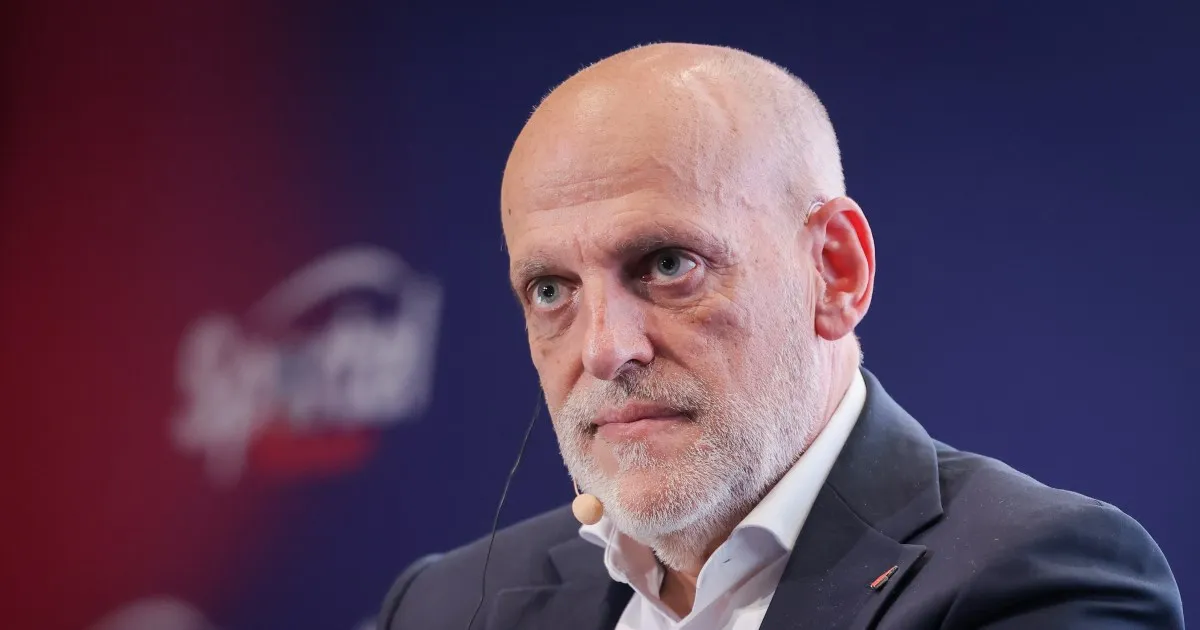
La Liga President Javier Tebas has hit out at what he calls accusations of a refereeing “conspiracy” by Real Madrid after their derby loss to Atletico Madrid.
Real Madrid coach Jose Mourinho brought two printed screenshots of what he thought were red-card tackles committed by Atletico players to his post-match news conference after Sunday’s 2-1 defeat.
Tebas responded to a pro-Real article on social media with a lengthy riposte on Tuesday to allegations of a “conspiracy” against the 15-time European champions.
“Here they go again, the mouthpieces and the regime’s television, building the same old narrative – the permanent conspiracy,” said Tebas, who has often been at odds with Real Madrid and the club’s outspoken president, Florentino Perez.
“This article goes further. It claims that referees harm ‘the business that feeds them’.
“What exactly is it asking for? Refereeing based on revenue, viewership or the badge? What a way to understand equality in the competition.
“Real Madrid are crucial to La Liga. But claiming that ‘La Liga is worth nothing’ without them reveals the disdain for the other clubs, their fans and their history. The competition belongs to no one.”
Madrid have made a stuttering start to the season and already sit six points behind reigning champions and early leaders Barcelona in the La Liga table.
“Claiming that referees are directed against Real Madrid is living in another galaxy,” Tebas added.
“That narrative serves as an excuse to cover up other shortcomings that are plain to see in these first matches of the season.
“It’s more comfortable to point to a conspiracy than to explain what’s happening on the pitch.”
Mourinho returned for a second spell in charge at the Santiago Bernabeu in the close season, tasked with ending a two-year spell without a major trophy.
After the heated capital derby on Sunday, Mourinho was furious that Atletico defender Cristian Romero was not sent off for a stamp on Jude Bellingham and also complained about a challenge by Lee Kang-in on Federico Valverde before the visitors were themselves reduced to 10 men five minutes after half-time.
Valverde finished the match but was later diagnosed with “severe trauma to his left ankle”, the club said in a statement. The midfielder will undergo further tests, it added.
“We could skip the press conference because the story of the match is right here,” Mourinho said, holding up the images in what was the start of a near five-minute rant.
“Those were two clear red cards. The difficulties we’ve faced since the sending-off: 11 against 10. Well, we can imagine what 50 minutes of 11 against nine would have been like if justice had been done.”
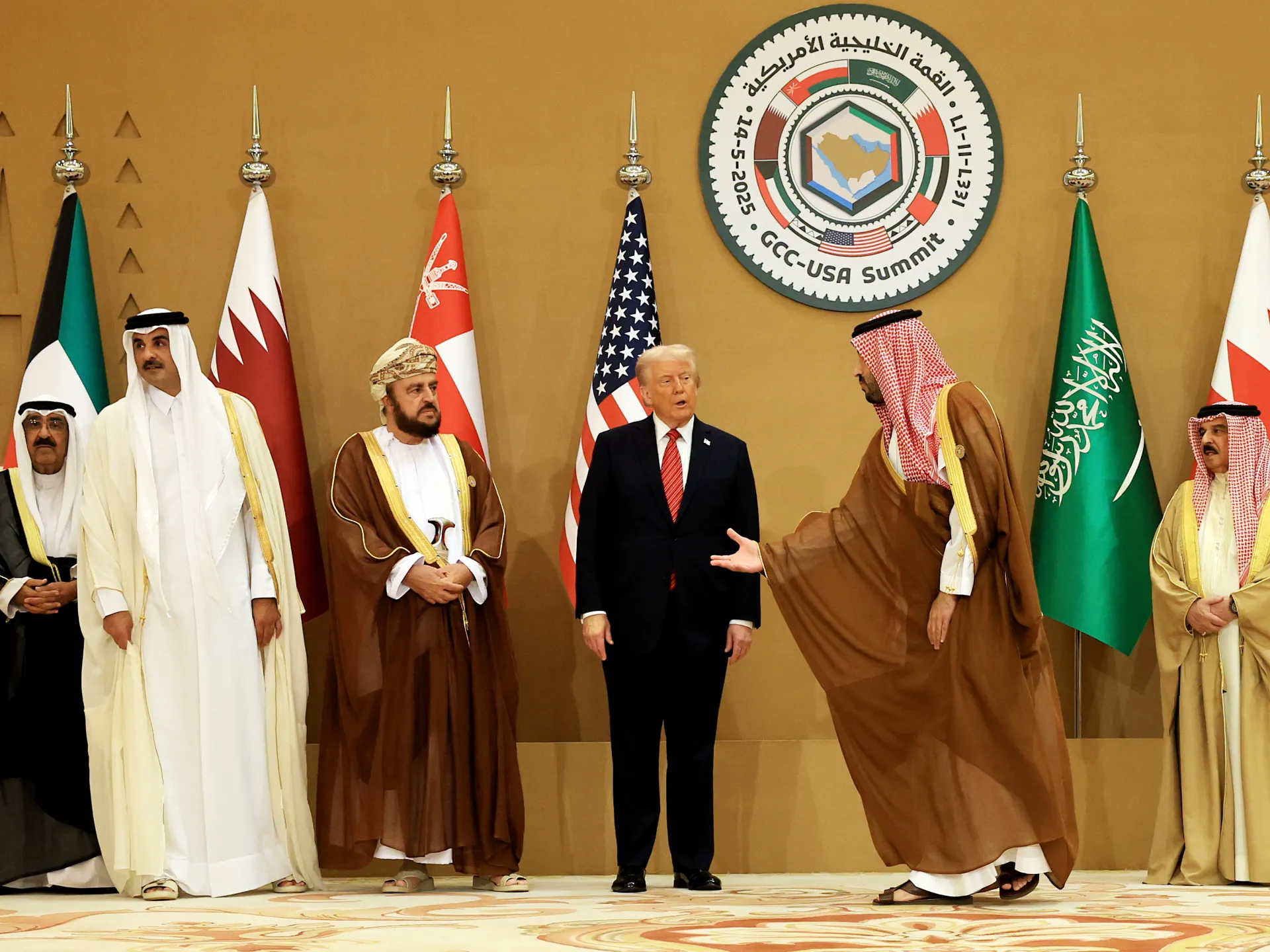
Leaders of the six Gulf Cooperation Council (GCC) states are set to meet United States President Donald Trump in New York on Tuesday, as the US-Israel war on Iran nears seven months.
The meeting, to be held on the sidelines of the United Nations General Assembly (UNGA), brings together countries that have borne much of the fallout from a war they did not start.
Recommended Stories
list of 4 itemsend of list
Since the war began on February 28, Iran has repeatedly struck US bases across the Middle East as well as airports, energy facilities and hotels. The war has particularly hit the Gulf nations hard, as their oil and gas exports – the mainstay of their economies – have been disrupted, causing a global energy crisis.
A June memorandum of understanding (MoU) briefly raised hopes of an end to the war, but it collapsed last month amid disputes over navigation through the Strait of Hormuz, which remains effectively closed.
These talks come as Trump says he faces a “big decision” on the war, and as Iran’s president and foreign minister are also in New York for the UNGA.
So what is on the table and what might come out of the talks? Here is all you need to know:
What do we know about the GCC-Trump meeting?
Trump is set to meet the leaders from Bahrain, Kuwait, Oman, Qatar, Saudi Arabia and the United Arab Emirates, which form the GCC, on the sidelines of the UNGA.
Trump told US media outlet Axios on Thursday that he wanted to meet the GCC leaders as he faced a “big decision” on the war and wanted to speak with them directly.
Experts say there are two interconnected issues – the US-Israel war on Iran and the conflict between Houthi rebels and the Saudi-backed government forces in Yemen.
What do the GCC countries want from the meeting?
Broadly, experts say, the GCC nations share a common goal for the meeting.
The GCC has “shared positions on the main principles of regional security and de-escalation”, Luciano Zaccara, a researcher with the New Ground Research think tank in Doha, Qatar, told Al Jazeera.
“With Trump recently threatening to ‘wipe out’ Iran, I expect the six GCC states, or at least most of them, to convey to the US president their grave concerns about the likely consequences of another round of intense US military strikes on Iran,” Giorgio Cafiero, CEO of Gulf State Analytics, told Al Jazeera.
“They will probably seek to underscore their own vulnerabilities to a renewed cycle of all-out fighting between the United States and Iran,” he said, adding that they will try to persuade Trump into making certain concessions to Tehran.
Cafiero said they will look to develop an arrangement that builds on the MoU and which “offers the most viable path toward winding down the crisis”.
Chief among their common concerns is freedom of navigation through the Strait of Hormuz and the Red Sea, according to Ahmed Helal, managing director for the Gulf region at The Asia Group.
‘Divergent’ goals
Despite common goals, the Gulf states have still experienced “divergent” outcomes from the war and will also look to persuade Trump to address their particular predicaments, Helal said.
The UAE, he explained, has been able to keep exporting oil by pipeline to its port of Fujairah, which bypasses the Strait of Hormuz, although not at the volumes it would like.
But fellow GCC member Qatar, whose gas exports depend on the strait, has seen its LNG shipments severely curtailed and wants to avoid any renewed escalation that could see its energy infrastructure targeted again, Helal said.
Speaking at an event in New York, US, on Sunday, Qatar’s Prime Minister Sheikh Mohammed bin Abdulrahman bin Jassim Al Thani described the economic fallout from the US-Israel war on Iran as an “earthquake”.
Saudi Arabia has another problem, as it is now under “enormous pressure” as the Houthis gain ground in Yemen, and has been “intensifying their lobbying” for US strikes on the group, he said.
What does Trump want from the meeting?
Predicting what the US president plans has been difficult since the outbreak of the US-Israel war on Iran, experts say.
“It could be possible that the US is expecting a more direct GCC engagement against Iran in exchange for a direct US intervention to stop the Houthi attacks against Saudi Arabia, but without the GCC leaving the main role in defending themselves”, Zaccara told Al Jazeera.
“Regarding Iran, Trump has not ruled out another major military escalation. At the same time, the administration seems to be open to exploring diplomatic options,” he said, adding there are rumours of a possible indirect US-Iran meeting on the sidelines before Iranian President Masoud Pezeshkian’s speech on Wednesday.
Helal said the administration’s focus is domestic, with the midterm elections weeks away and Trump’s approval ratings at a record low; there is “immense pressure” to lower petrol prices.
While Trump has threatened further military action, he remains politically sensitive to an “escalatory ladder” that could spike oil prices, Helal said.
The talks are unlikely to produce a breakthrough, he added, with the best-case scenario an agreement to return to negotiations potentially brokered by Qatar or Pakistan.
A few years ago, I received a call I’ll never forget. Jeanette Epps, an astronaut aboard the International Space Station, Zoomed into my living room from 250 miles above Earth. During our conversation, she told me that one of the reasons she chose her career was a television show my father created in 1966.
She wasn’t alone. I’ve heard versions of that same story from countless people over the years. Engineers. Scientists. Astronauts. People who saw possibility on a television screen before they ever saw it in the real world.
They credit “Star Trek” for showing them a future they wanted to help build. That’s an extraordinary thing for a television series to accomplish. It didn’t just entertain millions of people. It gave many of them a direction.
And I don’t think that was because of the ships, the gadgets or the aliens. It was because, underneath all of it, was a profoundly human belief that we are capable of becoming something better.
There was a time when science fiction made a bet on humanity. A bet that humanity was worth rooting for. We need storytellers willing to make that bet again.
I don’t think we have an innovation problem. We have an inspiration problem.
We talk a lot about what we’re leaving the next generation. The debt. The climate. The geopolitical mess. But there’s another inheritance we don’t talk about enough: what we show them is possible.
Today, many visions of the future are dominated by collapse, dystopia and fear. Those stories can have value. But conflict doesn’t always have to come from destruction. It can come from discovery. Two minds encountering an idea neither had considered. A crew facing the unknown with curiosity instead of fear. That kind of conflict doesn’t leave you feeling like the world is ending. It leaves you feeling like it’s just beginning.
Most storytelling holds a mirror up to who we are. Our flaws, our failures, our contradictions. But there is another kind. Stories built around characters a step or two ahead of where humanity is. Not perfect. But people who have learned how to cooperate, how to lead, how to stay curious and how to put something larger than themselves first. Characters you don’t just recognize. Characters you want to become one day.
That distinction changes what a story asks of you. And what you walk away believing is possible.
This year, “Star Trek” celebrates its 60th anniversary.
That’s not a milestone you reach by accident. Franchises built on spectacle fade. Ones built on something people actually needed tend to stick around.
The engineers who built Silicon Valley, the astronauts who went to space, the scientists pushing the edges of medicine and artificial intelligence — many of them trace a line back to this show. That wasn’t the plan. Nobody set out to build an innovation pipeline out of a television series. But that’s exactly what happened. When you give people a future worth believing in, they go build it — or sometimes they get inspired to imagine other hopeful destinations and lead us toward them. That’s not nostalgia. That’s a model.
One thing my dad understood that I think gets overlooked: “Star Trek” wasn’t going out into the galaxy to find aliens that looked different. It was going out to find aliens that thought different.
Diversity of perspective is how a species grows. My father gave that idea a name: IDIC. Infinite Diversity from Infinite Combinations. It didn’t mean you had to abandon your own point of view. It meant staying open to someone else’s. Because that’s how you grow. That idea has never been more relevant. And it has never been more achievable.
For the first time in history, a creator anywhere in the world can tell a story that reaches everyone, and now it can come from anywhere. The future belongs to everyone. The stories that shape it should too.
That astronaut who called me from space didn’t just watch a television show. She saw a future worth dedicating her life to.
Every generation needed something to build toward before they ever picked up a tool. A vision. A direction. A story that made the future feel worth the work. And right now, we’re not building enough of that.
We need stories that don’t just entertain us, but also become our compass. We need the kind of storytelling that doesn’t ask what could go wrong, but asks what could go right.
Rod Roddenberry, founder of the Roddenberry Foundation and son of “Star Trek” creator Gene Roddenberry and actor Majel Barrett Roddenberry, is an executive producer on current “Star Trek” television shows.
Insights
L.A. Times Insights delivers AI-generated analysis on Voices content to offer all points of view. Insights does not appear on any news articles.
Perspectives
The following AI-generated content is powered by Perplexity. The Los Angeles Times editorial staff does not create or edit the content.
Ideas expressed in the piece
The article argues that optimistic science fiction can do more than entertain: it can give audiences a constructive vision of the future and inspire people to pursue careers in science, engineering and space exploration. “Star Trek” is presented as an example of storytelling that made human progress feel attainable.
It contends that contemporary culture is overly saturated with collapse, dystopia and fear. Although such stories can be useful, the article suggests that narratives centered on discovery, cooperation and curiosity can encourage audiences to imagine what might go right rather than merely anticipate disaster.
The piece maintains that aspirational characters—people who have learned to cooperate, remain curious and serve purposes larger than themselves—can function as moral examples. In this view, fiction should not only reflect present flaws but also depict people and societies worth becoming.
It further argues that “Star Trek’s” emphasis on cultural and intellectual diversity remains especially relevant. The franchise’s principle of “Infinite Diversity in Infinite Combinations” is presented as a model for learning through different perspectives, while the series’ enduring influence is cited as evidence that hopeful stories can shape real-world ambitions.[1][2]
Different views on the topic
A contrasting perspective holds that dystopian and cautionary science fiction serves an essential purpose by exposing the consequences of reckless behavior, political failure and technological overreach. Recent commentary argues that many influential works were intended as warnings or satire, not as blueprints for an attractive future.[3]
Feminist dystopian fiction offers another counterpoint: bleak speculative narratives can make systemic problems—including misogyny, violence against women, gender inequality and threats to reproductive rights—more visible. From this perspective, darkness is not simply pessimism; it can be a way to represent harms that already exist and demand attention.[4]
Critics also caution that “Star Trek’s” hopeful vision can obscure tensions within its own world. The franchise combines ideals of cooperation and equality with armed exploration, alien conflict and interventionist politics, making it both an image of peaceful progress and a vehicle for examining militarism and political failure.[2]
Consequently, the strongest science fiction may not choose between hope and warning. Utopian stories can provide direction, while dystopian stories can identify dangers and test whether an envisioned future genuinely addresses exclusion, power and conflict. Treating either mode as sufficient on its own risks producing either inspiration without scrutiny or criticism without a constructive destination.[3][4]
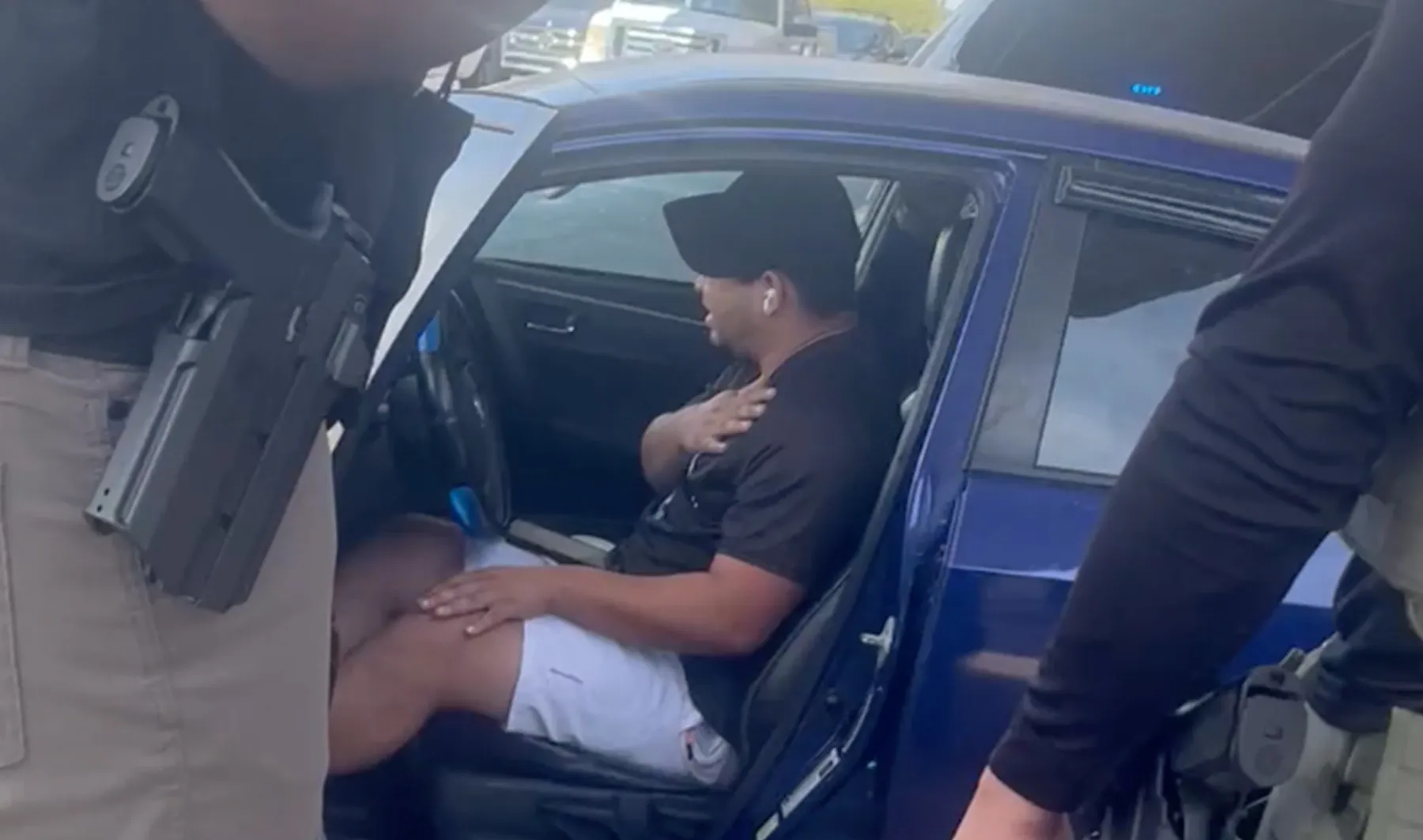
A Venezuelan man who was shot by an ICE agent in Texas on Sunday says he is in a detention centre with a bullet still lodged in his back, after being released from hospital back into ICE custody.
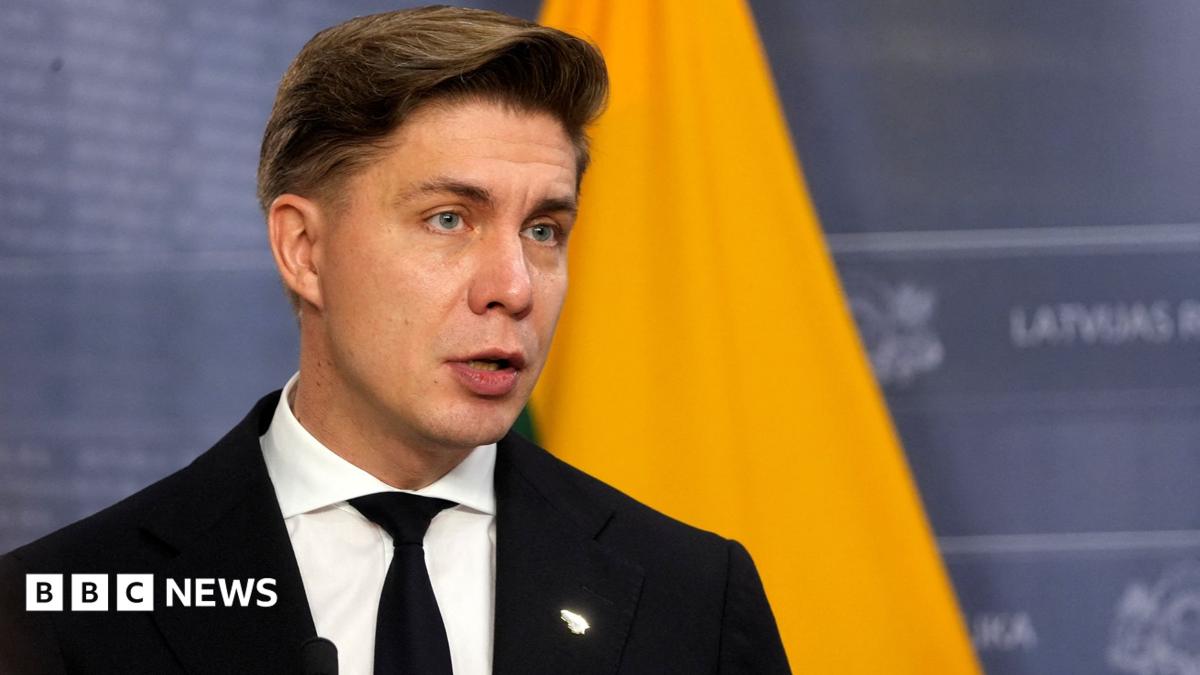
Germany – a fellow Nato ally – pledged to permanently station a combat-ready brigade in Lithuania in 2023 as a response to the changing security situation in Europe.
It is expected to be operational by 2027 and to number about 5,000 soldiers and civilian employees, though it has failed to recruit enough personnel voluntarily and is now turning to compulsory assignments to fill some positions.
The majority of troops will be based in Rūdninkai, near the Suwałki Gap – a line that borders Lithuania and Poland and also links Belarus with Russia’s Kaliningrad.
Nato said that as of December last year it had more than 5,000 troops stationed in Lithuania.
The origins of last week’s drone incident over Lithuania have not been confirmed, however Defence Minister Robertas Kaunas told Newshour that it had come from the direction of Belarus.
UK Defence Secretary Wes Streeting said: “Thanks to the swift and professional actions of Lithuanian and Italian forces, Nato once again demonstrated our readiness to protect our airspace.
“We stand united, around the clock, in defence of every inch of Nato territory.”
Moscow did not comment on the incident.
Military drone incursions have become increasingly common across Europe since the beginning of Russia’s full-scale of invasion of Ukraine.
Residents in Lithuania’s capital Vilnius were also forced to take shelter in May after a drone alert was triggered, briefly grounding flights and rail travel.
Nato jets have scrambled multiple times to shoot down stray Ukrainian drones that have crossed into fellow Baltic countriesEstonia and Latvia this year.
Ukraine has blamed the stray drones on Russian electronic warfare, technology designed to change the flight paths of Ukrainian drones.
Lithuania, Estonia and Latvia all joined Nato in 2004, becoming signatories to the Article 5 provision that states “an armed attack against one Nato member shall be considered an attack against all members”.
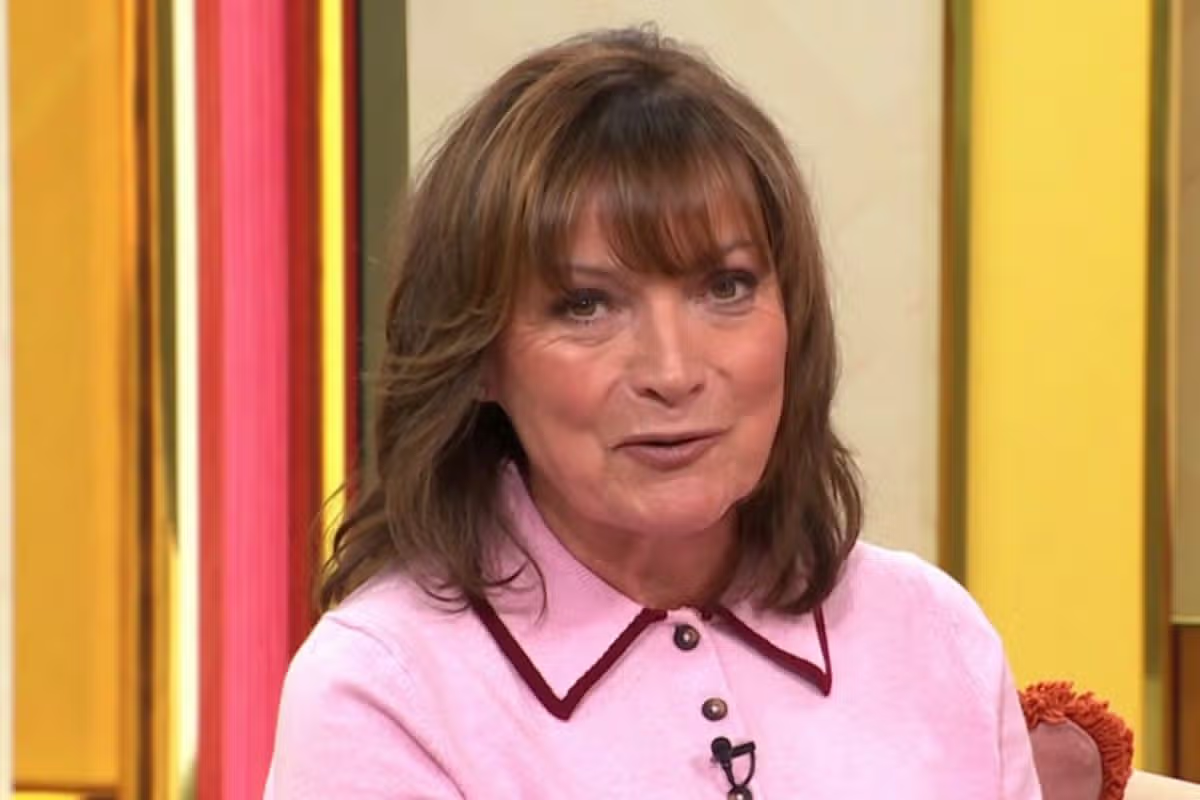
Lorraine Kelly sent a sweet message to her mum, Anne Kelly, on Tuesday’s episode of the show
Lorraine Kelly sent a sweet message to her mum, Anne Kelly, on Tuesday’s episode of the show (Image: ITV)
Lorraine Kelly revealed her mum had suffered a ‘bad fall’ on Tuesday’s episode of Lorraine.
During the latest installment, Lorraine, 66, marked her mum Anne Kelly’s 85th birthday with a sweet message live on air before sharing a sad update regarding her mother.
Lorraine said: “Happy birthday to my wee mum. Happy birthday. There we are” to which a photo of Lorraine and Anne appeared on screen before a picture of Lorraine, Anne and her brother Graham was also shown.
In a sad update, Lorraine added: “Sadly, she’s back in hospital. She had a bad fall. She’s in Hairmyres Hospital. So thanks to everybody that’s looking after her, saw her at the weekend, of course. But yeah, God bless her. I hope she has a good day.”
Lorraine continued: “Mum, have a great day. Have a great day as much as you can. Happy birthday!”
Taking to Instagram, Lorraine also shared a post for her mother, writing: “Happy 85th birthday to my mum. Sadly celebrating in hospital today after a bad fall resulted in broken arm.
“Saw her at weekend and she’s getting well looked after. Hopefully back home with us soon #birthday #mum.”
Responding in the comments, one person said: “Happy birthday to your mum, hope she gets well soon” with a heart emoji.
Another account wrote: “Happy birthday hope you’re better soon xx” while another follower added: “Happy Birthday wishes to your lovely mum. Hope she has a good recovery.”
A different show watcher put: “Happy birthday/speedy recovery” while another fan added: “Happy birthday to your gorgeous mum. It’s my birthday tomorrow xx.”
Earlier this year, Lorraine announced the death of her dad. The Scottish broadcaster took to Instagram at the time to share the devastating news with her online followers.
Lorraine’s father, John, worked as a TV service engineer and was known for his passion for science and astronomy, which the TV presenter had inherited from him.
Sharing a snap of herself and her late dad, the ITV star said: “Very sad news. My dad has died. I am mourning the man who bought me a telescope when I was five years old, who watched the moon landings with me and taught me to always be curious and interested in everything. He was in poor health but it has still been a shock.
“Any of you who have experienced a similar loss will know how my brother Graham and I are feeling. Our priority is taking care of my mum and the family would very much appreciate privacy at this distressing time. We will miss you dad.”
Lorraine continues on weekdays at 9:30am on ITV and ITVX
A gold mine collapse in northern Sudan has killed at least 10 people and injured 21, according to survivors, bringing renewed attention to the dangers facing workers in one of the country’s most important and least regulated industries.
The collapse took place on Sunday at the Awny mining area near Sudan’s border with Egypt. Miners told the AFP news agency they had recovered 10 bodies and pulled 21 injured workers from the site, while the search continued for people believed to be trapped beneath the rubble. It is unclear how many people are trapped in the collapsed mine.
The disaster comes just days after another deadly accident at a gold mine in West Kordofan State. A collapse at the al-Zaraa mine near en-Nahud, a town in central Sudan, left at least 82 people dead.
Sudan is one of Africa’s top gold producers, recording 70 tonnes of production last year, according to the Sudanese government.
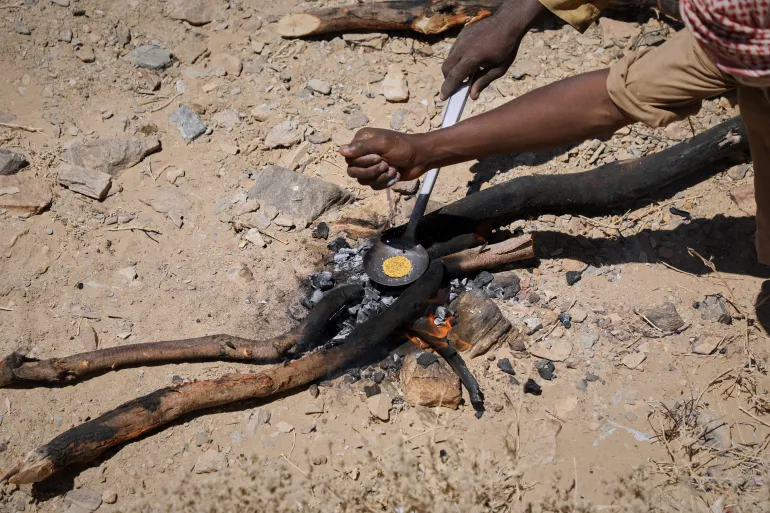
Miners heat processed gold concentrate over an open fire at an artisanal mining site in Dalago Mahas, Sudan’s Northern State, Friday, May 8, 2026 [Mohaned Bilal/AP Photo]
Since fighting broke out in April 2023 between Sudan’s army and the paramilitary Rapid Support Forces (RSF), businesses have been devastated, agriculture has been disrupted, millions of people have been displaced, and Sudan’s formal economy has weakened. In that environment, gold has remained one of the country’s most valuable sources of income.
In July 2025, it was reported by local agencies that Sudan’s gold production rose sharply despite the ongoing conflict, reaching 64 tonnes in 2024, 53 percent higher than the 41.8 tonnes recorded in 2022, and generating $1.57bn in legal export revenues.
However, the gold trade has also become a point of international scrutiny. Most of the gold exports end up in the UAE. In March 2025, Sudan went to the International Court of Justice (ICJ), accusing the UAE of supporting and funding the RSF using gold. The UAE has denied accusations that it supplies weapons to the RSF.
Sudan’s gold deposits are spread across the country, with the majority in the northeast. Port Sudan, the country’s main port, is home to most of the deposits and has been largely controlled by the Sudanese Army since the war began. However, areas controlled by the RSF are also populated by gold deposits.
At the moment, “much of Sudan’s gold is taken out of the country through smuggling or illicit networks instead of passing through government channels that could directly contribute to public revenue,” said Joseph Tucker, senior analyst on the Horn of Africa at the International Crisis Group.
But amid that diplomatic battle and the accusations surrounding gold, the mining deaths in northern Sudan have also raised larger questions over how the country manages the sector, analysts say.
“This disaster is yet another example of the deadly hazards facing those working in Sudan’s gold mines,” Tucker told Al Jazeera. “Most of these (gold mines) are informal, artisanal mines in remote areas that are unregulated and lack modern mining technology, adequate infrastructure, and specialised safety equipment.”
This year, Sudanese Prime Minister Kamil Idris met with the minister of minerals and spoke on the policies for regulating traditional mining and the management and control of various mineral markets. According to French-based Sudanese media, Sudanese authorities called for swift action to address the environmental damage and public health hazards caused by mining activities across the country.
Yet, despite the dangers, Tucker said the state of the Sudanese economy made gold mining appear lucrative to many Sudanese.
During the war, the Sudanese currency’s value has crashed. Before the outbreak of fighting in 2023, about 570 Sudanese pounds could buy a US dollar. By April 2026, the currency had slid to a sixth of that value: It cost 3,500 pounds or more to afford a dollar. That has led to sharp food inflation and a surge in the costs of transport and fuel.
According to estimates by the United Nations Development Programme, Sudan lost $6.4bn of its gross domestic product (GDP) in 2023 alone: That’s a quarter of the country’s $26bn GDP that year. In August, the UN agency reported that 90 percent of the agrarian nation’s farmers had seen yields drop over the previous year.
That economic crisis, Tucker said, “fuels the demand for gold and willingness of miners to work in poor conditions” – even if it proves deadly.
Sri Lanka were bowled out for 69 runs, 10 less than Mandhana’s belligerent match-winning innings as India retained gold.
Published On 22 Sep 202622 Sep 2026
Smriti Mandhana’s whirlwind innings of 79 runs helped India crush Sri Lanka by 147 runs and win a second consecutive women’s cricket gold at the Asian Games.
India smashed 216-3 off their 20 overs, the highest women’s total in Asian Games history, with 18 fours and 13 sixes in the final on Tuesday.
Richa Ghosh and Bharti Fulmali plundered 25 off the final over from the hapless Mithali Ayodhya, who did not help her cause by conceding eight wides.
Sri Lanka were never in the hunt, and captain Chamari Athapaththu’s 29 was their only innings of note as they were skittled for 69 in 15.4 overs and had to settle for silver.
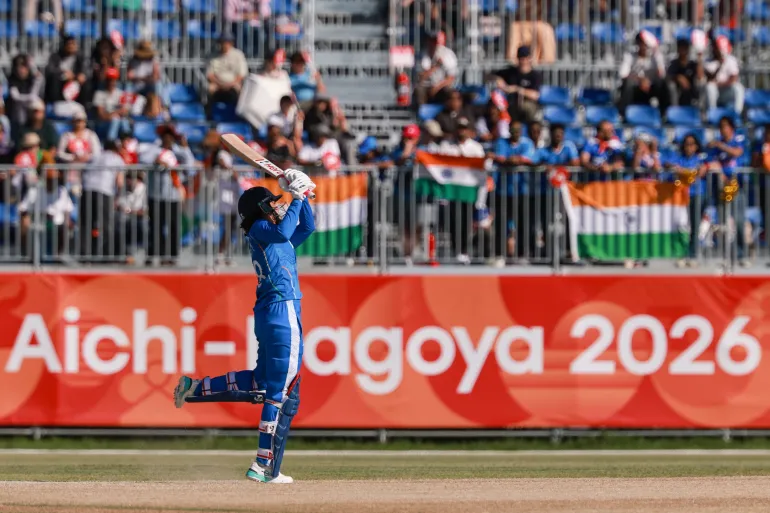
Opening batter Mandhana hit seven sixes and five fours in a 45-ball knock that sent the ball to all parts of the Korogi Athletic Park ground in Nagoya.
Smriti Mandhana hits a six [David Gray/AFP]
After India captain Harmanpreet Kaur won the toss and opted to bat, Shafali Verma, who made an unbeaten century in the semifinal, and Mandhana put on a blistering opening partnership.
The pair had raced to 99 in the 10th over when Verma had a rush of blood, playing a needless reverse sweep which she top-edged to Kawya Kavindi at point to fall for 48 off 29 balls.
Mandhana, the greatest run-scorer in women’s T20 cricket history, had reached her fifty earlier in the over and sailed on in style, clubbing anything loose to the boundary.
Harmanpreet joined her, and the pair took the score to 141 before the captain holed out to long-off for 19.
Mandhana, looking to accelerate further in the latter overs, skied an attempted six and was out in the 17th over with the score on 163.
Ghosh clattered 49 off 22 balls with three sixes and six fours to take India past 200 in the final over.
Mandhana scored 79 off 45 balls [Mark Baker/AP]
Earlier, some late-order hitting by Pakistan captain Fatima Sana set up a 31-run win over Bangladesh in the bronze medal match.
Sana came in with her side rocking at 67-5 in the 12th over but plundered 45 off 30 balls, including three fours and three sixes, and was out off the last ball of the 20 overs after seeing Pakistan to 145-8.
Her 67-run partnership with Aliya Riaz (25) for the sixth wicket proved the turning point, and Bangladesh could only muster 114-7 in reply.
Indian players celebrate after winning [Mark Baker/AP]
ZAYN Malik has shared rare snaps of the daughter he shares with Gigi Hadid as the youngster turned six over the weekend.
Taking to social media to give fans a glimpse inside Khai’s special day, the former One Direction star posted pictures from the celebrations, although his ex Gigi couldn’t be seen.
Zayn shared some rare snaps from daughter Khai’s sixth birthday celebrationsCredit: InstagramZayn lit the candles on Khai’s towering birthday cakeCredit: Instagram
The 33-year-old wrote: “Khai’s 6th birthday this weekend!! Big thank you to everyone who made it extra special.
“@americandream – Nickelodeon Universe & Hasbro Arcade. The girls had the BEST time! And… @thelondonbaker the cake is epic, as always. Thank you!”
Sign up for the Showbiz newsletter
Thank you!
Zayn and Gigi’s only child could be seen surrounded by friends as she blew out the candles on a towering birthday cake.
Other snaps showed Khai playing arcade games and celebrating beside mountains of colourful balloons.
Khai blew out the candles on a towering birthday cake surrounded by friendsCredit: InstagramThe youngster enjoyed a fun-filled day at Nickelodeon UniverseCredit: InstagramKhai was treated to an epic birthday cake as she turned sixCredit: InstagramZayn and Gigi pictured together in 2016 before their splitCredit: Getty
Police arrest suspect in shooting near high school as injured are rushed to local hospitals for treatment.
Published On 22 Sep 202622 Sep 2026
An armed man has opened fire near a high school in western Turkiye, wounding eight people, including students, authorities said.
The injured were rushed to hospitals after the shooting early on Tuesday near a vocational and technical high school in the Turgutlu district in the western Manisa province, the governor’s office said in a statement on X.
Recommended Stories
list of 3 itemsend of list
Police arrested the suspect after he attempted to flee the scene.
“A report was received regarding gunfire in the vicinity of the Inci Uzmez Vocational and Technical Anatolian High School in our Turgutlu district at 07:59,” the governor’s office said.
The motive for the attack was under investigation, it added.
“After the incident, the suspect believed to have fired the weapon was caught by security forces and taken into custody,” the statement read.
Several images of the suspect were posted online, showing him walking near the school holding a gun.
Security camera image of an armed man near a school in Turgutlu, west of the resort city of Izmir, Turkiye [Handout/DHA via AFP]
The attack comes months after two school shootings in Turkiye.
In April, 16 people, mostly students, were wounded when a former student opened fire at a high school in the Sanliurfa province. The attacker later killed himself.
The following day, a 14-year-old killed nine people, including students and teachers, and wounded 13 others in an attack at his school in the Kahramanmaras province. The assailant was killed by police.
Overnight missile and drone attacks hit several Ukrainian regions as world leaders gather in New York for the UN General Assembly.
Published On 22 Sep 202622 Sep 2026
Russian forces have launched widespread attacks targeting industrial sites and critical energy infrastructure across several regions of Ukraine, killing at least three people and knocking out power to nearly 100,000 residents, Ukrainian officials said.
The strikes overnight hit industrial facilities simultaneously in the Dnipropetrovsk region, including Dnipro, Pavlohrad and Kryvyi Rih, the hometown of President Volodymyr Zelenskyy, regional Governor Oleksandr Hanzha said on Telegram on Tuesday.
Recommended Stories
list of 3 itemsend of list
Three people were killed and six others were wounded in Dnipro, where missiles, drones and artillery heavily damaged business and warehouse premises, Hanzha said.
Ukraine’s air force said Moscow’s overnight barrage involved 212 drones, four cruise missiles, and an unspecified number of Oniks antiship and ballistic missiles.
The strikes also damaged energy infrastructure. An attack on a power facility left nearly 100,000 consumers without electricity in the northern region of Chernihiv, while in the Poltava region, Governor Vitalii Diakivnych said a “massive” Russian attack hit an industrial enterprise and a critical infrastructure facility.
The Russian Ministry of Defence confirmed its forces carried out major strikes, stating it hit industrial and military facilities, the fuel and energy sector, port infrastructure and sea vessels operating for the Ukrainian military.
Meanwhile, Ukrainian drones targeted Russia’s Samara region along the Volga River, killing one person and injuring four, according to the local governor. The region hosts critically important facilities, including oil refineries.
The Russian Defence Ministry said its air defence units intercepted and destroyed 297 Ukrainian drones across various regions overnight.
Diplomatic push in New York
The attacks come as Zelenskyy arrived in New York for the United Nations General Assembly (UNGA), where talks on ending the war are set to be high on the agenda as nearly 130 heads of state gather.
The Ukrainian president wrote on X that a “drone deal” was ready to be signed to bolster air defence and secure funding for the war effort.
“Of course, Ukraine’s number one priority is bringing peace closer and protecting the lives of our people,” Zelenskyy posted. “There are concrete security proposals and de-escalation measures that could bring the end of the war closer. We are working to strengthen air defence and ensure sufficient financing for Ukraine.”
He said, “Around 20 meetings are planned, including with the US president, European leaders, US senators and members of the House of Representatives, heads of international organisations, leading American companies and think tanks.”
Zelenskyy met French President Emmanuel Macron on Monday and is likely to meet US President Donald Trump on Tuesday.
Earlier, Macron also met Trump, after which he said the two countries agreed to work together to secure a moratorium on strikes targeting energy networks and civilian infrastructure in Ukraine. Both Zelenskyy and Russian Foreign Minister Sergey Lavrov are set to address the UNGA later this week.
French President Emmanuel Macron, left, with his Ukrainian counterpart, Volodymyr Zelenskyy, on the sidelines of the UNGA in New York, US, September 21, 2026 [Ludovic Marin/AFP]
Two housemates were then forced to say their goodbyes on Friday night (September 18), with fake contestant Tays leaving alongside bartender Millie. But viewers have also been watching romances bloom between Chelsey and Lynx, as well as Omar and Rhianna.
However, this won’t be Rhianna’s first love story to play out on screen. She previously dated Made in Chelsea star Freddy Knatchbull and appeared in several episodes of the show alongside him.
In her first scene on the Channel 4 series, the 21-year-old revealed that she doesn’t use the name she was given at birth. The Russian star actually chose her current name at just six years old, after her mother became a British citizen.
“I’m Russian but I’ve lived everywhere,” she explained to Freddy’s friends. When asked what her real name is, Rhianna shared: “I changed my name too, when I was like six. Because my mum became a British citizen.”
She went on to reveal her potential choices: “As a six-year-old, she’s asking me ‘Oh, change your name if you want.’ And I was like ‘Okay.’ Gave her three options: Zendaya, Rihanna like the singer, or Kylie Jenner.”
Try ITVX Premium free for a week
This article contains affiliate links, we will receive a commission on any sales we generate from it. Learn more
ITVX Premium offers exclusive ad-free content that can be streamed on-demand and on the go, with everything from Hollywood blockbusters to bingeable British box sets.
An annual plan costs £59.99 – equal to £4.99 per month – after a seven-day free trial.
The Big Brother star didn’t reveal her birth name on the show. But she touched on her unusual upbringing, during which her mother hired a full-time bodyguard to stop her being a “wild child”.
Reflecting on her teenage years, Rhianna said: “I would meet people for the first time and they’d be like ‘Rhianna, by the way, there’s someone following you.’ Can you imagine trying to meet guys and then a bodyguard is with you?”
The so-called stay-at-home daughter is now hoping to win over the nation and take home the Big Brother crown. Living with strangers will also be a new experience for her. “I’ve never done that before,” she admitted before starting the show.
“I’ve never stayed in a hostel, gone to summer camp or boarding. I’ve never been in a situation where I have to stay the night with complete strangers and that is really exciting for me. I get to meet people that I most likely wouldn’t have met in my day-to-day life.”
Big Brother continues on ITV2 and ITVX tonight at 9pm
Some graduates are paying thousands just to look employed. And parents are spending up to $50,000 on career coaches. Why is the entry level job market so broken? Al Jazeera’s Yasmeen ElTahan explains.
The annual general debate of the United Nations General Assembly (UNGA) starts on Tuesday morning in New York amid dire circumstances. Besides traffic gridlock and overpriced hotel rates, cavalcades of motorcades and successive dignitaries delivering calibrated speeches, this session will hear Secretary-General Antonio Guterres’s last speech on the state of the UN.
Guterres headed the UN for 10 years, and during that time, he repeatedly failed to defend it when it came under attack. He passes on his post at the top of a world organisation on the verge of financial collapse and more marginalised than ever before.
Paradoxically, Guterres has the United States, the host government of the UN, and its mercurial president, Donald Trump, to thank for this dismal state of affairs.
Earlier this year, the Trump administration withdrew from dozens of UN agencies and organs and, in an extraordinary move, ceased all payments of its dues to the regular and peacekeeping budgets of the UN. But these drastic policy decisions did not spring out of nowhere. Trump’s unhappiness with the UN is multifaceted, and his decision to stop fulfilling Washington’s legally binding financial obligation may well be the logical culmination of decades-long US policy.
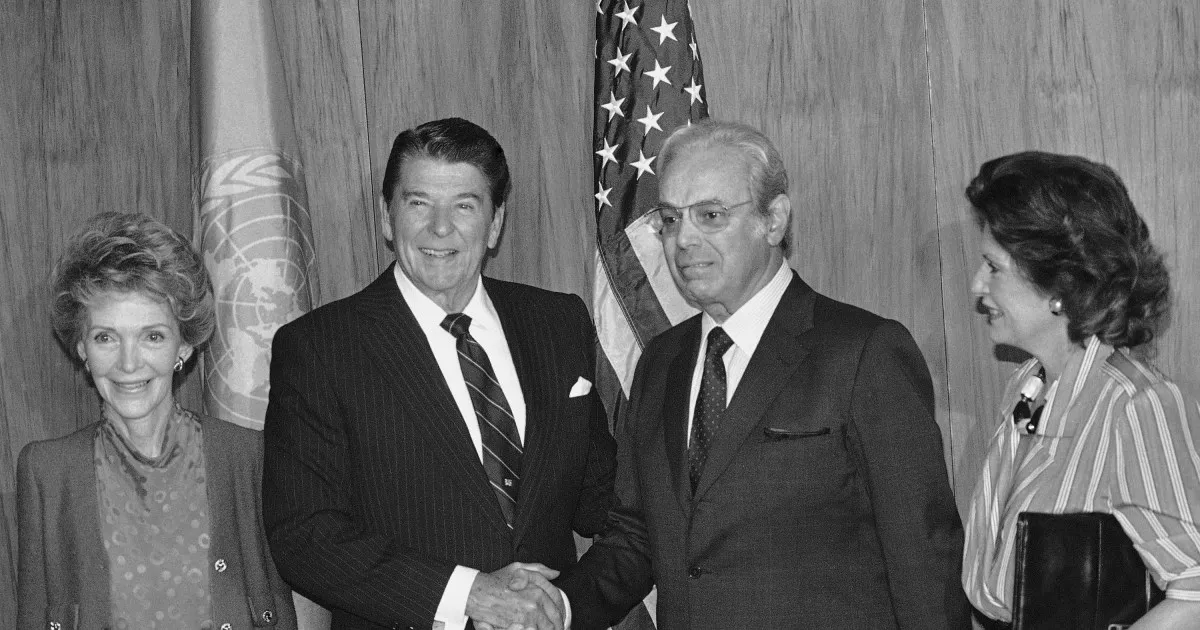
In the mid-1980s, the Reagan administration accused the UN of being a third-world, anti-US forum. To compel the organisation to better serve its interests and under the guise of the ubiquitous need for reform, which all secretaries-general fell for, the US started to withhold a share of its assessed contribution, which accounted for a quarter of the regular budget and a third of the peacekeeping budget back then.
By 1987, the US relaxed its payment withholding policy, but the precedent was set. Washington continued to use the threat of withholding payment to maintain its grip on an organisation it viewed and continues to view as a vehicle serving its national interests rather than a multilateral agent serving the whole of humanity.
Ever since the Reagan years, the US has kept the UN on a short financial leash, and to this day, has been deliberately accruing arrears. It currently owes an estimated $4.2bn – that is equivalent to 120 percent of the regular UN budget for 2026.
Trump has readily embraced this policy of financial blackmail. His administration has slow-walked mandatory payments, although earlier this month it paid $827m towards its outstanding dues so it could preserve its voting rights in the UNGA.
The president’s ambivalent view of the UN may be rooted in a lesser-known detail. In 2001, Trump, then a real estate developer, lobbied then Secretary-General Kofi Annan to be awarded the billion-dollar renovation project of the UN headquarters, but he did not get his way. That was probably not forgotten.
But just like during the Reagan years, there is another major factor driving Trump’s assault on the UN: US congressional politics. As Israel faced growing backlash at the UN for its genocide in Gaza, pressure from the Israeli lobby in Washington mounted. The Iron Dome diplomatic cover the US provided to Israel in the UN Security Council (UNSC) was no longer sufficient.
By 2025, two years into the genocidal campaign, Guterres’s tepid and overdue criticisms of Israeli policies, critical UNGA resolutions and scathing reports by special rapporteurs of the Human Rights Council – including Francesca Albanese, whom Washington placed under sanctions in violation of its host country obligations – became too much for Trump, Secretary of State Marco Rubio and the US Congress.
In the 1980s, Washington deemed the UN a third-world anti-US forum; today, it is deemed anti-Israel and anti-Semitic. The US’s blind and unconditional support for Israel has brought it growing isolation at the UN, as has its decision to launch a war of aggression against Iran.
Against the backdrop of these developments, the selection of the next secretary-general is dominating the behind-the-scenes agenda. Guterres’s lacklustre tenure at the helm of an organisation on the verge of financial bankruptcy and political demise will soon be forgotten. But what should be remembered is that his appeasement policy vis-a-vis Washington since the first Trump administration has evidently failed.
The new secretary-general will inherit the modus vivendi under which all secretaries-general since Javier Perez de Cuellar have had to operate — chronic cash flow problems due to US arrears.
That should motivate the new UN leadership to consider an overhaul of how the UN budget is put together and how member states’ contributions are allocated. Leaving the power of the purse in Washington’s hands is a self-inflicted perpetual wound that could prove lethal for the organisation.
Another fundamental question is whether the UN would be better off had its headquarters not been in the US. For too long, Washington has seen the UN either as a vector of its national interests or in adversarial terms. It has even used its position as a host to exclude world leaders it has viewed as hostile or undesirable, such as PLO Chairman Yasser Arafat and today Palestinian President Mahmoud Abbas.
Evidently, those are decisions only the UNGA can take. But a secretary-general with foresight and political backbone ought to provide views and leadership on those seminal questions to save the organisation from further marginalisation and possible demise.
The views expressed in this article are the author’s own and do not necessarily reflect Al Jazeera’s editorial stance.
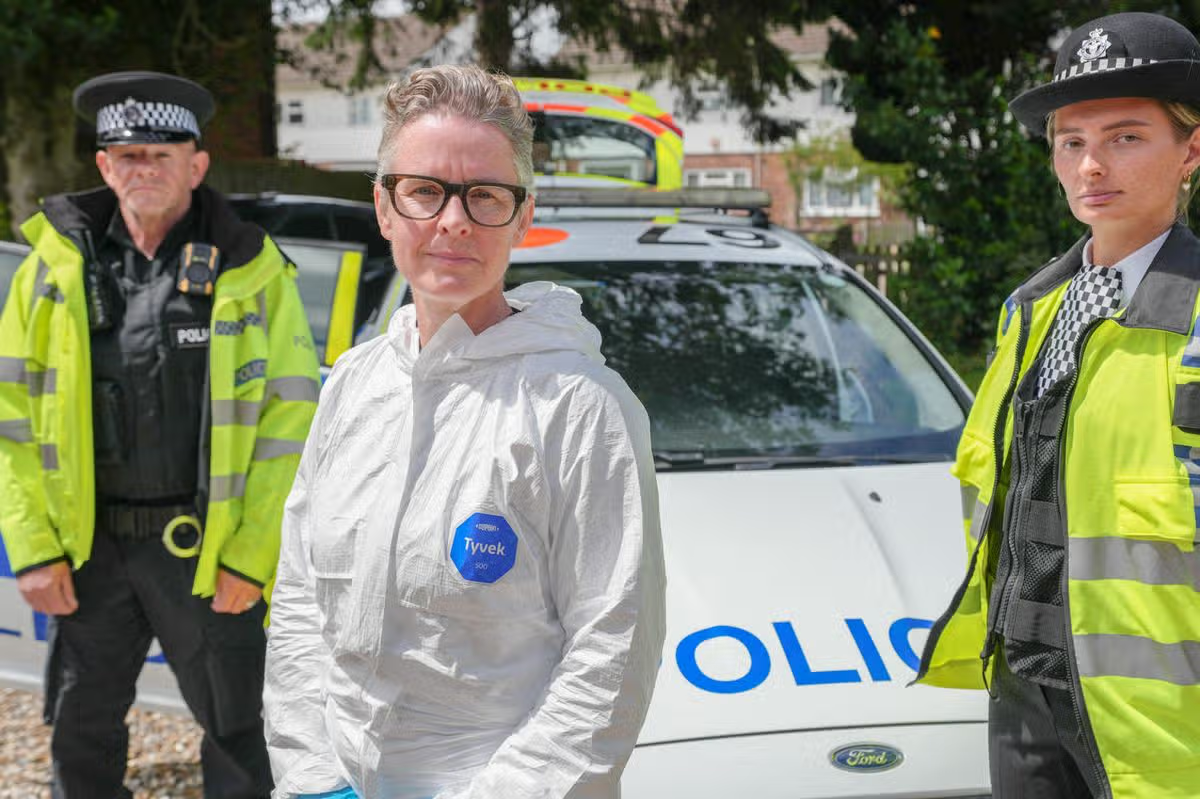
The series is hosted by BBC Silent Witness expert Jo Millington
Forensic Scientist Jo Millington will be at the heart of a brand new series (Image: True Crime)
True crime fans do not want to miss a brand new chilling documentary series, plunging viewers into the heart of a crime, and it’s coming sooner than you think.
UK Forensic Breakthroughs is a brand new release, dropping today (September 22) on the True Crime channel. Spanning across 10 episodes, each instalment will focus on its own murder case where scientific breakthroughs and microscopic evidence secured justice for grieving families.
From the murder of a Witney local, whose investigation was the first time in the UK fibre mapping technique was used, and the conviction of a serial arsonist in Cornwall, forensic scientist Jo Millington will give exclusive access to the experts behind the investigations.
Jo Millington has been a forensic scientist for over 30 years, even working behind the scenes on BBC’s Silent Witness. An official synopsis teases: “A rare in-depth dive into the unseen world of forensic science – from ballistics and fibre analysis to forensic ecology and fire investigation. Firsthand testimony from detectives and leading forensic experts directly involved in the cases.
“Ten real UK murder cases where scientific breakthroughs and microscopic evidence secured justice for grieving family, friends and all those impacted by the crime.”
Premiering at 10pm tonight on the True Crime channel, the series will show how forensic science continues to shape major criminal investigations across the UK.
Speaking exclusively to Reach ahead of the show’s new launch, Jo Millington said UK Forensic Breakthroughs stands out from other crime shows, adding: “The first difference is that it puts forensic science at the heart of the show, which normally sits on the periphery in the shadow.
“Over a 10 part series, we’re using the programme to kind of assure a spotlight on forensic science. And more importantly, the scientists that do forensic science, every single day.”
Giving unprecedented access into the world of a forensic scientist, dubbed the “unsung heroes of investigations”, tonight’s episode will explore the story of Edwin Hiles who was found murdered in his own home, but a pioneering fibre mapping technique was used to link one suspect to the crime.
With episodes released weekly, one particular instalment viewers do not want to miss is episode 8 where teams take a deep dive into the world of forensic archaeology and forensic anthropology.
Jo added: “The teamwork that was involved in recovering Natalia Doherty’s body from a clandestine burial site is one of the most painstaking tasks that I have encountered in forensic science.
“Every layer of soil, every root system, and every fragment of evidence had the potential to reveal how her grave had been created, when it was dug and whether it had been disturbed over time.
“Caroline Sims’ archaeology team worked centimetre by centimetre – to record the grave’s construction, the position of the remains and to methodically recover every item from within it.
“Their meticulous approach ensured that the burial itself became evidence, allowing detectives to understand not only where Natalia had been hidden, but how her body had been concealed for so many years.”
TRUE CRIME is available on Sky, Virgin Media, Freeview, Freesat and Freely as well as for streaming via TRUE CRIME UK (FAST), accessible on platforms including Prime Video, Rakuten TV, Pluto TV, Plex, LG Channels, Samsung TV Plus, ITVX and 5.
UK Forensic Breakthroughs premiers tonight at 9pm on True Crime
When the shooting starts, Sara tells her children to lie flat on the ground; the bullets, she said, can go straight through her family’s tent.
Sara, who asked that her real name not be used, has been arbitrarily detained for nearly a decade in Roj camp in Syria’s far northeast, which holds more than 2,300 children and mothers, many of whom are held on the basis of alleged family or other associations with ISIL.
Recommended Stories
list of 4 itemsend of list
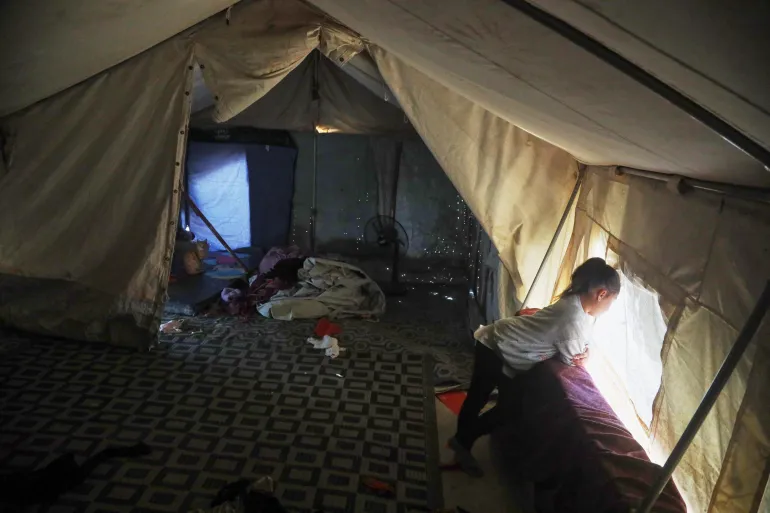
Her children have grown up behind guarded fences topped with barbed wire and tangled with rubbish that often blocks the view of the barren, windswept landscape beyond.
United Nations experts and human rights groups describe open-ended detention in camps such as Roj as a breach of international law.
In recent months, women in the camp told Al Jazeera that the situation has steadily escalated: gunfire at night, stones thrown by guards and a boy left with a serious head injury.
Complaints to the administration, they say, bring promises but little else. “Every cry for help results in another wave of aggression,” one mother said.
Al Jazeera cannot independently verify their accounts, but they match reports by UN investigators and NGOs.
On September 8, the UN Independent Commission of Inquiry on Syria told the body’s Human Rights Council that conditions in Roj had worsened over the past year, with regular night raids, extortion and violence by camp security.
It described the camp as the world’s largest site of mass arbitrary detention of women and children on security grounds.
A young girl looks out from a tent in a section of Roj Camp in eastern Syria [File: Baderkhan Ahmad/AP Photo]
Who really controls the camp?
The violence comes amid sweeping change in the region.
On August 25, the Kurdish-led Syrian Democratic Forces (SDF), once a key US ally in the fight against ISIL, announced it would dissolve as an independent military force under an agreement with Syria’s central government in Damascus.
After a government offensive in January, the SDF lost much of the territory under its control and agreed to merge with the national army.
Its commander, Mazloum Abdi, has since been appointed a presidential adviser.
Roj, which the SDF had controlled until last month, is now the Syrian state’s responsibility.
But inside the camp, detainees said the transition has been anything but smooth.
One woman described to Al Jazeera a divided security presence, with those who accepted integration with the government on one side and holdouts who refused or were rejected on the other, and tensions between them that play out over the heads of the women and children.
In an open letter published on Monday, 11 mothers in Roj wrote that many of the same guards remain.
“While individuals’ [affiliations] may have changed,” one woman told Al Jazeera, “the people themselves remain the same”.
A woman and a child stand in Roj camp [File: Baderkhan Ahmad/AP Photo]
No legal basis for detention
Children from more than 50 countries remain stranded in Syria.
None has been given an individual legal process to determine why they are held, or for how long.
Fionnuala Ni Aolain, who served as UN special rapporteur on counter-terrorism and human rights from 2017 to 2023 and now sits on its inquiry commission, visited the camp in 2023.
Upwards of 70,000 people were once detained in al-Hol, another larger camp in the northeast holding the families of alleged ISIL fighters. In 2023, more than 52,000 people – mostly Syrians and Iraqis – were held in al-Hol and Roj, including an estimated 12,000 foreign nationals.
She found that conditions met “the threshold for torture under international law”. The violence women and children face now, she told Al Jazeera, is worse.
“It is utterly unacceptable that women and children who have never been convicted of any crimes, who have never been subject to any legal process, are being detained in this way,” she said.
There is no legal basis for their arbitrary detention, she said, adding that the remedy is release.
In January, order at al-Hol collapsed in chaos. The fate of thousands who had been held there remains unknown.
An SDF patrol at the al-Hol camp in northeastern Syria in February 2025 [File: Nils Adler/Al Jazeera]
Beatrice Eriksson, a spokesperson for the Swedish branch of the rights organisation Repatriate the Children, which has been in contact with hundreds of mothers in the camps since 2019, told Al Jazeera that boys have been taken from their mothers as young as 12 or 13 and initially held in so-called rehabilitation centres.
Some have since been transferred to Iraq, she said, where they were detained in a makeshift prison for adult alleged ISIL fighters. The whereabouts of others remain unknown.
Eriksson argues that integrating former SDF-controlled forces and administrative structures into the Syrian government could provide an opportunity for change.
She said responsibility for the families has shifted from a non-state group to an internationally recognised government with which most of their home countries have diplomatic relations.
However, some detainees told Al Jazeera that they feel trapped. Governments tell them to reach out to an embassy, but their detention makes that impossible.
Ni Aolain said the responsibility does not just lie with the Syrian government, which is “doing its best to manage the massive post-conflict needs of the population as a whole”.
Instead, she said part of the blame clearly lies with foreign governments, “who have remained persistently stony-faced and unwilling to accept responsibility for their nationals”.
“It is not consistent with solidarity and support for a transitional state, and it’s an abdication of both their human rights and their security responsibilities to Syria”, she said.
For the women and children in Roj camp, the current situation is not sustainable.
“We want the next steps to begin where we’ll see an end to the suffering of our children,” one woman told Al Jazeera, “even if that means going to prison back home.”
At the time of publication, Syria’s Ministry of Foreign Affairs and Expatriates had not responded to Al Jazeera’s request for comment on the reports of violence at Roj as well as the government’s plans for the camp and its detainees.
The camp administration also did not respond to Al Jazeera’s request for comment.
Prof Aidan Fowler, national director of patient safety at NHS England, said the expansion of Martha’s Rule would give families and NHS staff “a critical new lifeline” to help improve care and save more lives.
Staff can themselves ask for a review from a different team if they are concerned the appropriate action is not being taken.
During the eight-month pilot at the seven trusts, 69 calls were made to dedicated Martha’s Rule phone numbers, including some calls relating to acute deterioration following an urgent clinical review. In some cases, it led to a patient having immediate surgery or being transferred to intensive care.
Prof Fowler said: “Early testing has shown that Martha’s Rule can work well in busy A&Es and builds on the evidence from our adult and children’s wards, where thousands of calls have been made by patients, families and staff to date, with many leading to changes in treatment and potentially life-saving interventions.”
Health minister Baroness Merron said the initiative was part of “wider efforts to put patient safety at the heart of the NHS.”
Actor Jason Watkins, whose two-and-a-half-year-old daughter Maude died from sepsis in 2011, praised the rollout, saying Martha’s rule “is making a difference on the wards”.
“It enables a parent to have a voice and if there is an issue, that is addressed,” he told BBC Breakfast, and urged parents: “if you’re at all worried when you go into A&E, ask for a second opinion.”
Watkins said the rollout of Martha’s law could benefit medical professionals too, explaining: “Those extremely dedicated medical practitioners, nurses, doctors and consultants, it gives them a pause and a thought ‘am I doing everything I can to assess this child accurately?'”.
Patients and their families can check with their local hospital or NHS trust where Martha’s Rule is available by visiting the trust’s website or asking hospital staff.
Scotland is beginning to use Martha’s Rule and Northern Ireland is considering using it, while Wales has a similar scheme called Call4Concern.
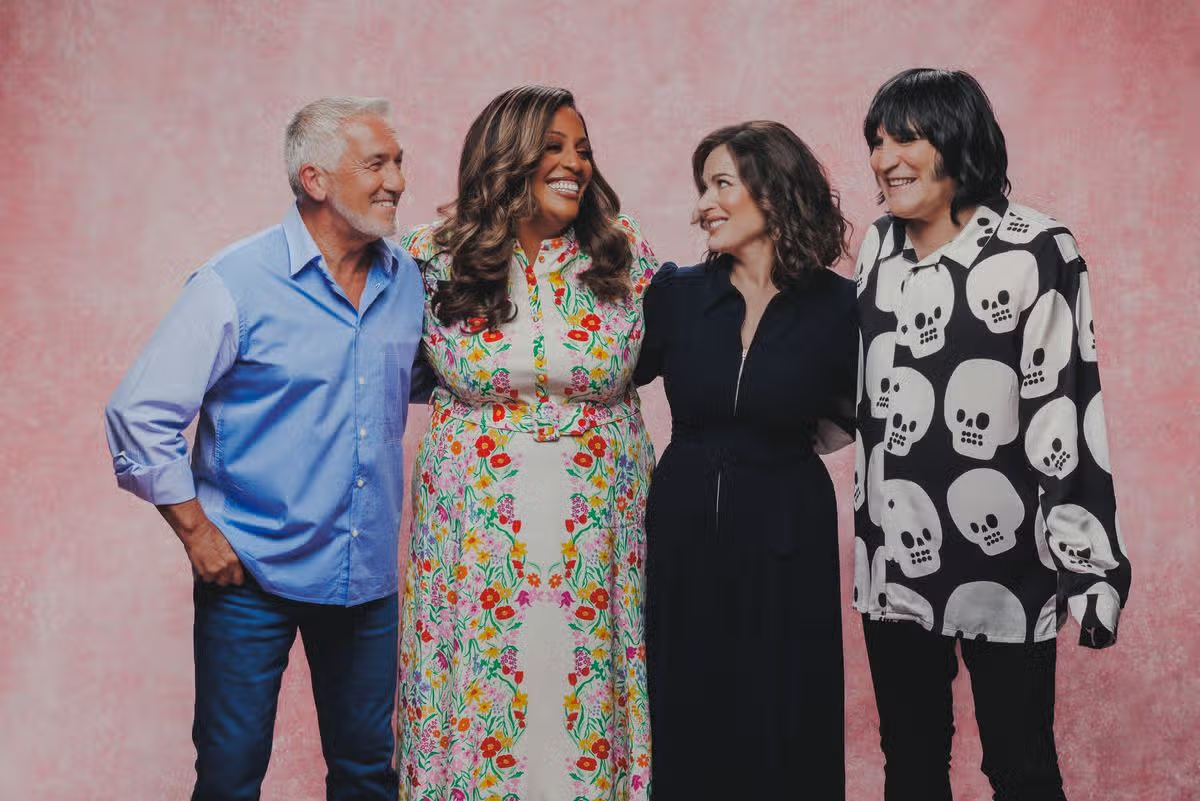
The Great British Bake Off returns to Channel 4 this week, with Nigella Lawson making her debut as the new judge replacing Prue Leith
Nigella Lawson has joined the Channel 4 show
Paul Hollywood has shared his thoughts on the latest addition to the Channel 4 show following Prue Leith’s exit. Earlier this year, the 86-year-old announced it was the ‘right time’ to leave The Great British Bake Off after nine years.
However, in her place, viewers will welcome Nigella Lawson to the tent as the 66-year-old will be judging this year’s contestants alongside Paul. Sharing his thoughts on the newcomer, Paul told Radio Times how each person he’s worked alongside has varied from one another.
He remarked that Mary Berry was different from Prue and Prue was different to Nigella before adding ‘Nigella is different to Mary’. Admitting how each of them brought their ‘own character’ to the programme, he highlighted that Nigella is a ‘very warm’ person, especially to the contestants taking part in the competition, reports the Express.
However, Paul commented that he’s the ‘constant’ as he remains the ‘constructively critical’ judge. Although people are welcoming a new face to the tent, presenters Alison Hammond and Noel Fielding are returning as hosts once again.
Channel 4 viewers were treated to a glimpse of Nigella in the iconic tent during a brief teaser clip revealing the show’s return date.
She walked towards the camera in a purple jumpsuit before playfully pretending to tuck into the lens as though it was a sweet treat. When it was announced that Nigella was joining the Channel 4 show, she had nothing but excitement.
Nigella commented: “I’m uncharacteristically rather lost for words right now! Of course, it’s daunting to be following in the footsteps of Prue Leith and Mary Berry before her, great dames both, but I’m also bubbling with excitement.
“The Great British Bake Off is more than a television programme, it’s a National Treasure – and it’s a huge honour to be entrusted with it.
“I’m just thrilled to be joining the team and all the new bakers to come. I wish the marvellous Prue all the best, and am giddily grateful for the opportunity!”
Meanwhile, Dame Prue Leith added: “I’m thrilled that Nigella is to experience brilliant Bake Off. She’s sassy, fun, and she knows her onions — and her croissants, cake and crumble.”
As Ian Katz, Chief Content Officer at Channel 4 added: “We’re incredibly excited about the marriage of two great British icons: Bake Off and Nigella.
“With Nigella joining the tent, Love Productions have created the dream team of British telly. Nigella brings an incomparable combination of warmth, expertise and sophistication to the tent, and this summer’s series will be as mouthwatering a prospect as her chocolate Guinness cake.”
The Great British Bake Off is set to air on Channel 4 on Tuesday, September 22 at 8pm
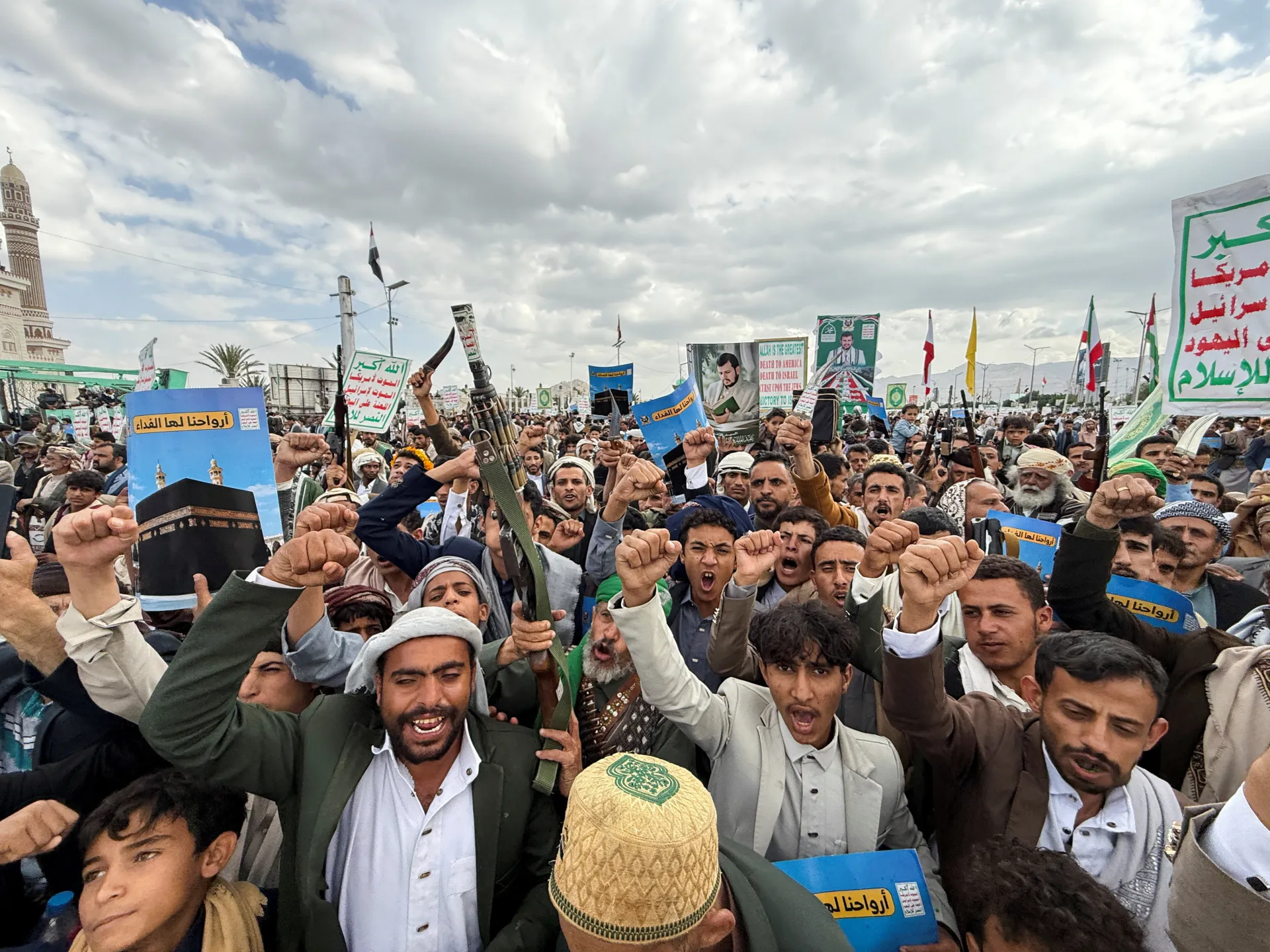
Ministers demand an end to maritime shipping attacks and urge Iran to stop arming the Yemeni group.
Published On 22 Sep 202622 Sep 2026
The foreign ministers of the Group of Seven (G7) nations have condemned what they called “unacceptable continued strikes” by Yemen’s Houthis against Saudi Arabia.
The ministers issued the statement on Monday following an informal meeting on the sidelines of the United Nations General Assembly in New York.
Recommended Stories
list of 3 itemsend of list
“We condemn in the strongest terms the unacceptable continued strikes carried out by the Houthis in Yemen and against the Kingdom of Saudi Arabia,” the ministers of the UK, Canada, France, Germany, Italy, Japan and the United States said in the statement.
The ministers urged the Houthis “to immediately cease all military actions, all threats and attacks against civilian shipping, and to return to the political process in good faith”.
They also called on Iran to stop arming and supporting the group, saying Tehran is in violation of past UN Security Council resolutions. They added that Iran’s backing of the Houthis constituted a dangerous pattern of escalation that risked undermining international trade and creating global instability.
The latest escalation in the Arab region’s most impoverished nation follows a period of relative calm that had largely held since the UN-brokered ceasefire in 2022 between the Iran-aligned group and the Saudi-backed Yemeni government.
Iran must “end its arming of and support” for the Houthis in Yemen, the foreign ministers of G7 nations have said in a joint statement.
The G7 also condemned “in the strongest terms” Houthi attacks on Saudi Arabia, adding that the recent escalation in fighting against Saudi-backed forces in Yemen represented a threat to regional and global energy security.
Thousands of refugees have fled Yemen in recent days after the Iran-backed group seized territory along the country’s Red Sea coastline, including near the Bab al-Mandab Strait, a critical shipping route for global trade.
The statement comes ahead of the annual UN General Assembly in New York, where senior Iranian officials are due to speak.
“We call on the Houthis to immediately cease all military actions, all threats and attacks against civilian shipping, and to return to the political process in good faith,” said the foreign ministers of the UK, Canada, France, Germany, Italy, Japan and the United States.
It went on: “Their reprehensible actions constitute a dangerous pattern of escalation that risks further exacerbating the conflict, undermining international trade and creating global economic instability.”
“Looking forward, we will continue to support the legitimate Government of Yemen and reaffirm our strong commitment to the unity, sovereignty, independence, and territorial integrity of Yemen,” the ministers said.
Their statement was issued following a meeting on the sidelines of the UN General Assembly.
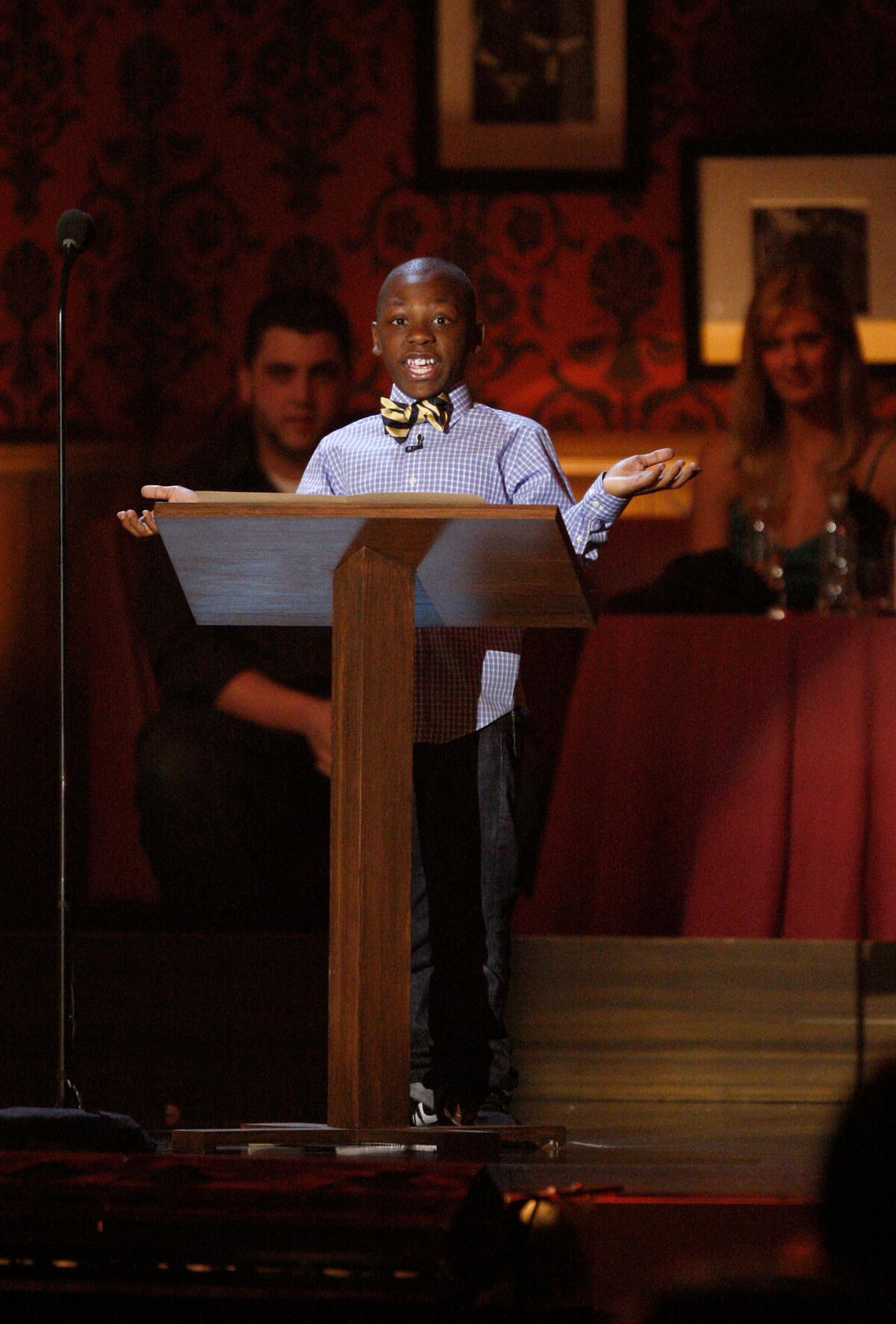
Former child star Bobb’e J. Thompson, who acted in “That’s So Raven” and “30 Rock,” has been sentenced to more than two years in federal prison.
Thompson was arrested last fall after police said he was driving 104 mph — more than 30 mph over the speed limit — in Cerro Gordo County, Iowa. A news release issued by U.S. attorney’s office of the Northern District of Iowa said an officer stopped the vehicle and spotted Thompson and the passenger switching seats. The officer reported that, when he approached the car, there was a smell of marijuana coming from the vehicle.
Officers searched the vehicle and, according to the news release, found a backpack holding bags of dispensary-bought marijuana and a .40-caliber handgun that was fully loaded with a 15-round magazine. Police said the gun had been reported stolen from a car in Kansas City, Mo.
Actor Bobb’e J. Thompson speaks at Spike TV’s 2009 Guys Choice Awards at Sony Studios in Culver City.
(Kevin Winter / Getty Images)
The “Role Models” and “Tyler Perry’s House of Payne” actor was also convicted of battery and assault in 2020. Then in 2022 he was convicted of possession of a firearm, which was prohibited because he was a felon.
In April, Thompson pleaded guilty to possession of a firearm, and last week he was sentenced by an Iowa district judge to more than two years in prison.
Thompson’s “That’s So Raven” co-star Kyle Massey told TMZ on Monday that he loved his former co-star no matter what.
“Free Bobb’e J., man, that’s my brother,” he said. “We love you, we support you, we got your back, whatever you need, man, we’re gonna take care of you. It just always sucks to see one of your friends or someone that you love go through something hard like that. So we’re just gonna be rooting for him no matter what.
“Keep your head up, we’re here and we love you,” he added. “We love you so much, bro. No matter what.”













![France's President Emmanuel Macron meets with Ukraine's President Volodymyr Zelenskyy on the sidelines of the United Nations General Assembly in New York City on September 21, 2026 [Ludovic Marin/AFP]](https://i0.wp.com/www.aljazeera.com/wp-content/uploads/2026/09/AFP__20260922__C8XY4MU__v1__HighRes__UsFranceUkrainePoliticsDiplomacy-1790058813.jpg?w=640&ssl=1)