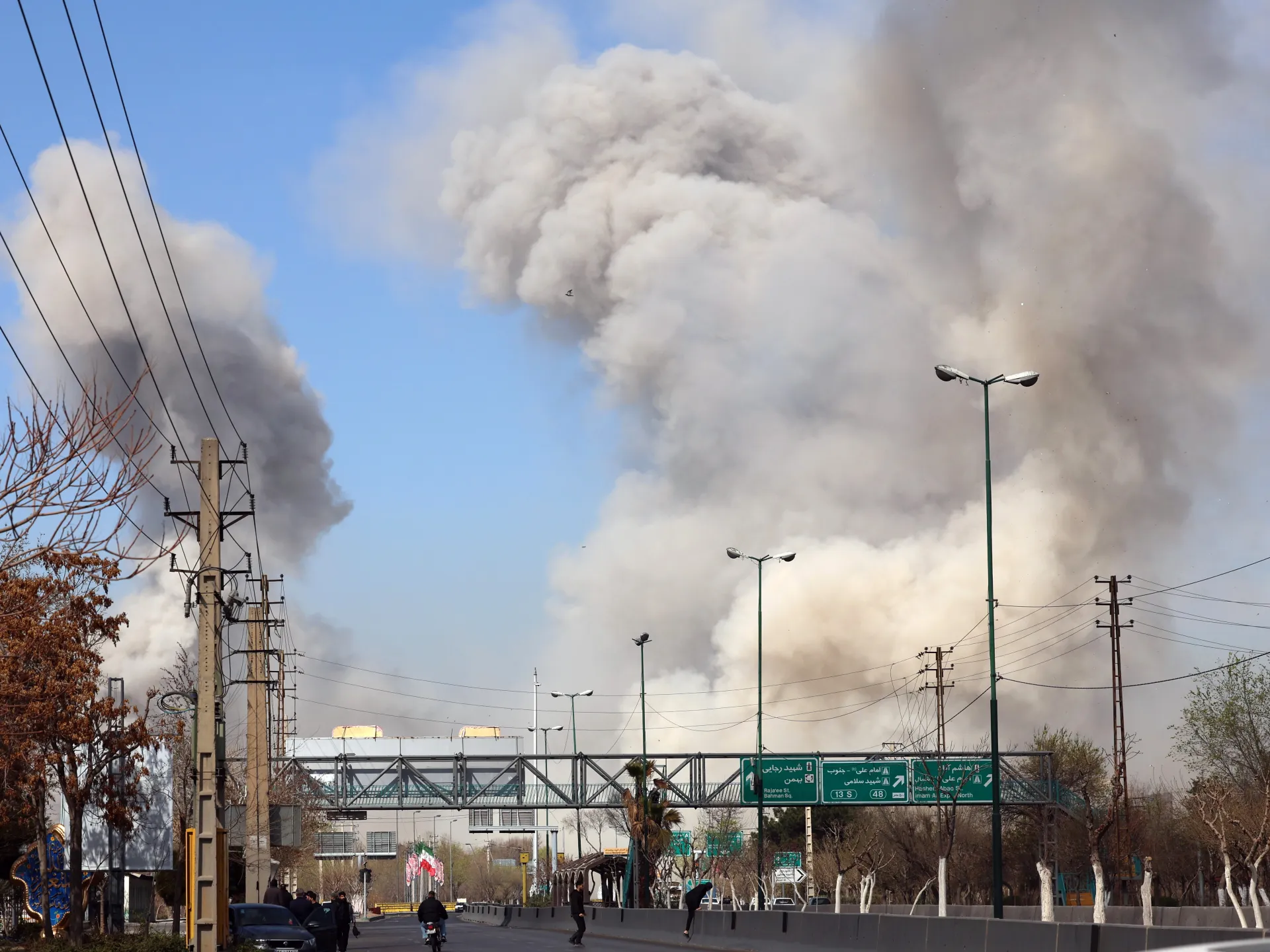
The escalation of the Iran conflict forced Danish container shipping giant Maersk to halt two key trade routes linking markets in the Middle East with Europe and Asia. File Photo by Jerry Lampen/EPA-EFE
March 6 (UPI) — Global shipping giant Maersk announced Friday it was temporarily halting two key routes linking the Middle East and Gulf region with the Far East and destinations in Europe as a precautionary step due to what it described as “the escalating” Iran conflict.
The company said in a news advisory that following an assessment of the risks to shipping in the Gulf region and an operational review, it had taken the decision “as a precautionary measure to ensure the safety of our personnel and vessels while minimizing operational disruption across our wider network.”
“For the ME11 [Middle East-Europe] and FM1 [Middle East-Far East] final eastbound voyage, we are finalizing the timing and vessel details and will update you as soon as this information is confirmed,” it added.
Maersk also said that it was suspending shuttle services within the Gulf region until further notice and that its ME1 service connecting the Middle East with Northern Europe would temporarily bypass Dubai in both directions and only stop in Oman before going straight on to India on the eastbound leg and Morocco on the return leg.
The suspensions ensure Maersk’s vessels stay clear of the Strait of Hormuz amid threats by Tehran to “set fire” to anything that tries to pass in or out of the Persian Gulf.
Markets see the Danish company as a bellwether of global trade, with the move adding to escalating supply chain disruptions due to the conflict engulfing the region following strikes launched against Iran by the United States and Israel at the weekend.
Shipping via the Strait of Hormuz, through which 20% of the world’s oil and gas is shipped out from Iraq, Saudi Arabia, Kuwait, Bahrain, the United Arab Emirates and Qatar to the rest of world, is effectively at a total stop.
At least 147 container ships are stranded on the wrong side of the strait, taking refuge in the Persian Gulf.
Security fears have prompted major shipping lines, including Switzerland’s MSC and France’s CMA CGM, to ditch plans to resume using the Suez Canal route and continue diverting the long way round via the tip of southern Africa. MSC has temporarily halted all bookings for the Middle East.
The disruption has thrown schedules, caused congestion at ports and sent freight rates for everything higher.
Shares in Maersk were trading 0.6% higher on the NASDAQ Copenhagen Exchange on Friday afternoon at $2,637 a share.
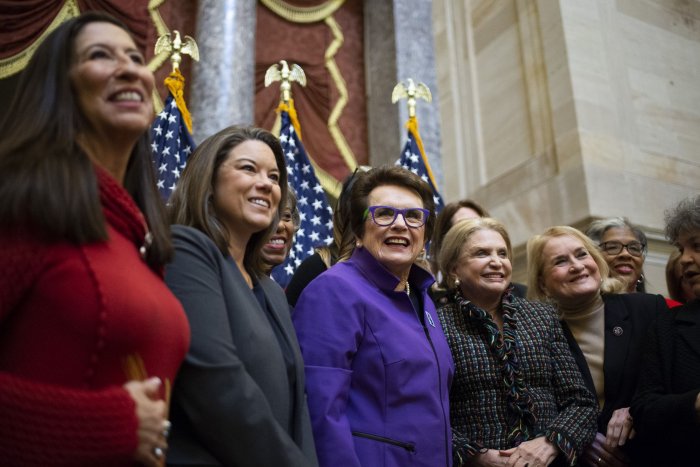
Founder of the Women’s Tennis Association and tennis great Billie Jean King (C) smiles with representatives after speaking during an annual Women’s History Month event in celebration of the 50th anniversary of Title IX in Statuary Hall at the U.S .Capitol in Washington on March 9, 2022. Women’s History Month is celebrated every March. Photo by Bonnie Cash/UPI | License Photo
Iran state TV presenter has threatened women’s national team for not singing anthem at opening AFC Cup match.
Published On 6 Mar 20266 Mar 2026
Share
The global representative organisation for professional footballers, FIFPRO, has urged governing bodies responsible for the 2026 Women’s Asian Football Confederation Cup to protect the Iran national team after they were labelled “wartime traitors” by an Iranian state television presenter.
Both FIFA, world football’s governing body, and the AFC have been called upon to “undertake all necessary steps to ensure the safety of Iran’s Women’s National Team players”.
Recommended Stories
list of 4 itemsend of list
The Iran women’s national football team players did not sing their national anthem before their Asian Cup opener against South Korea in Australia earlier this week.
Islamic Republic of Iran Broadcasting presenter Mohammad Reza Shahbazi said in a video that the players showed a lack of patriotism and their actions amounted to the “pinnacle of dishonour” in footage circulating widely on social media.
“Let me just say one thing: traitors during wartime must be dealt with more severely,” Shahbazi said.
“Anyone who takes a step against the country under war conditions must be dealt with more severely. Like this matter of our women’s football team not singing the national anthem … these people must be dealt with more severely.”
In a statement released on the social media platform X, FIFPRO released a strong and lengthy statement outlining its concerns.
“In addition to the dangerous situation the players would face if they return to Iran following the tournament, FIFPRO Asia/Oceania is deeply concerned by reports that Iranian state television has publicly attacked the members of the team for remaining silent during the national anthem before their opening match,” the statement read.
“Footage circulating online shows Mohammad Reza Shahbazi, a state TV presenter, calling for them to face the ‘stigma of dishonour and betrayal’.
“These statements significantly heighten concerns for the players’ safety should they return to Iran after the tournament.
“FIFPRO Asia/Oceania has once again written to the AFC and FIFA, calling on them to uphold their human rights obligations under the UN Guiding Principles on Business and Human Rights and FIFA’s Human Rights Policy and protect the players.
“We call on the AFC and FIFA to urgently engage with the Iranian Football Association, the Australian Government and all other relevant authorities to ensure that every effort is made to protect the safety of the players.”
The Iranian players stood in silence when Iran’s anthem was played at the Gold Coast ahead of their 3-0 opening loss to South Korea on Monday, though they sang and saluted before a 4-0 defeat by hosts Australia three days later.
The Reuters news agency has contacted both the Asian Football Confederation, the Iranian football federation and the team at the Asian Cup for comment.
Ahead of their game against Australia, Iran forward Sara Didar fought back tears and spoke about the war, while coach Marziyeh Jafari said her players were doing their best to focus on the tournament despite concern for their families back home.
Iran face the Philippines on Sunday in their final group match.
Four hours before Sienna Spiro is due to launch her first U.S. headlining tour, the 20-year-old singer and songwriter from London sits upstairs in the Troubadour’s empty balcony, peering down as several crew members wheel a grand piano onstage.
“The fact that I’m 11-and-a-half hours from home and that this room is gonna be filled with people that have never met me and that I’ve never seen before — that’s just crazy,” she says. “I’m kind of scared.”
The song that brought Spiro to West Hollywood this past Tuesday is “Die on This Hill,” a showstopping pop-soul ballad about staying in a toxic relationship — “I’ll take my pride, stand here for you,” she sings, “I’m not blind, just seeing it through” — that’s been streamed more than 300 million times on YouTube and Spotify since it came out in October. Built around tolling piano chords and Spiro’s titanic vocal, the song hit No. 9 in the U.K. and broke into the Top 20 of Billboard’s Hot 100; last month, Spiro — whose famous admirers include SZA, Mark Ronson and Alex Warren — was nominated for the Critics’ Choice prize at England’s annual BRIT Awards.
With its unabashed emotion and its throwback feel, “Die on This Hill” can be heard as the latest in a long line of melodramatic ballads by young Brits such as Amy Winehouse, Duffy, Lewis Capaldi and Olivia Dean, the last of whom was just named best new artist at the Grammys. Yet Spiro’s voice stands out: Rich and pulpy, with a crack she knows how to deploy for maximum heartbreak, it might be the most impressive instrument to come out of England since Adele emerged nearly two decades ago.
“Sienna is a true artist with the voice of a generation,” says Sam Smith, one more English singer (and former best new artist winner) with a flair for ugly-cry theatrics. Late last year, Smith, who identifies as nonbinary, invited Spiro to join them onstage in New York for a performance of Smith’s song “Lay Me Down.” Spiro, Smith recalls, “blew the room away” — one reason they brought her out again Wednesday night at San Francisco’s Castro Theatre, this time to sing “Die on This Hill” together.
Says Smith of the younger artist: “The world is at her feet.”
At the Troubadour, where she’ll follow Tuesday’s sold-out concert with an encore appearance Friday night, Spiro describes singing as a life calling. “I’ve known what I wanted to do since — honestly, since I’ve been a conscious human being,” she says. Dressed in a black-and-white-striped turtleneck, she has her legs folded beneath her on a wooden bench; her dark hair hangs loose around her face, yet to be styled into the ’60s-inspired do she’ll wear come showtime.
“I always felt a bit invisible,” she adds, whether at school with friends or at home as a middle child. “Not in a victimized way. But I always struggled with that existentialism. Music is the only thing that’s made me feel real.”
Are we to believe that one of pop’s bright new stars was once … kind of a bummer?
“In my own way, yeah,” she says with a laugh. “It’s OK. It happened. Character building.”
Spiro grew up privileged in London, one of four children of Glenn Spiro, a prominent jeweler who counts Jay-Z as a client and pal. Her dad turned her onto Frank Sinatra and Nina Simone and the Italian film “Profumo di donna” when she was little; by age 10 she’d written her first song (“Lady in the Mirror,” it was called) and played her first gig (at a pub not far from Heathrow Airport).
At 16 she enrolled at East London Arts and Music, a performing arts academy she describes as “the up-and-coming version” of London’s prestigious BRIT School, whose alumni include Adele and Winehouse. Her academic career didn’t last long, though: On her first day of classes she posted a TikTok of herself covering Finneas’ song “Break My Heart Again” that triggered a wave of interest from various record-industry types; soon she dropped out and began regularly traveling to Los Angeles to work on music.
Today Spiro says she has a “love-hate relationship” with the town where she estimates she spends half her time. “I’m very English, and I think something about English people is our honesty — you don’t really have to guess what people are saying. What was shocking to me when I came here was that people didn’t say what they meant.
“I was very, very lonely, and it was hard to make music when you feel that,” she adds. “I make sad music, but it’s hard to be a teenager and be away from your family and your friends and be in a place where you kind of have to play pretend being an adult.”
Did suffering among the two-faced liars of L.A. ever lead her to question her commitment to music?
“No. It just made me question how I was doing it. And not everyone’s a two-faced liar. There are some good ones out there.”
Was she ever at risk of becoming a two-faced liar herself?
“Oh, I’m too English for that,” she says. “If I did that, I’d get a slap.”
Sienna Spiro performs this week at the Troubadour in West Hollywood.
(Ariana Drehsler / For The Times)
Spiro started releasing singles in 2024 and quickly signed a deal with Capitol Records; last year she opened for Teddy Swims on the road and turned heads with “You Stole the Show,” a luxuriously gloomy slow jam with echoes of Adele’s “Skyfall.”
For “Die on This Hill,” which she wrote with Michael Pollack and Omer Fedi (both of whom went on to produce the song with Blake Slatkin), Spiro wanted to capture the feeling of “when you go above and beyond just to feel something reciprocated back from someone,” she says. But if the writing came quickly, the recording didn’t: Spiro jokes that she cut “900 different versions” of the song, including one she says sounded like Silk Sonic and another that sounded like Lauryn Hill.
“I was desperate for something up-tempo,” she says, given that virtually everything she’d dropped so far had been a ballad. Yet Fedi pushed her to cut the tune live with just her on vocals and Pollack on piano. They did four takes, according to the producer, one of which forms the basis of the record that eventually came out.
“Very old-school, very human,” Fedi says of the process. “Maybe I’m corny but with Sienna, less is really more. Her voice is so special, so big and upfront, that you just want to put a giant flashlight on it and let it shine.”
In early January, Spiro gave a bravura performance of “Die on This Hill” on Jimmy Fallon’s late-night show; one clip on TikTok has been viewed more than 70 million times. For that appearance, she wore a retro mini dress printed with an old photo of Johnny Carson behind his desk; for a recent performance in the BBC’s Live Lounge, she wore a different dress showing the faces of the four Beatles.
On stage at the Troubadour, her dress features images of the Chateau Marmont and the Capitol Records tower — a bit of setup, she says, for her next single, “The Visitor,” which is due March 13. Spiro has been slowly assembling her debut album for the past two years, but with headlining concerts to play, she’s reaching back for some of her oldies from 2024.
Some, not all.
“To be real with you, some of my early stuff wasn’t the most authentic,” she says as her drummer starts thwacking a snare during sound check . “I was trying to be someone else because I really wasn’t comfortable with myself.”
Can she point to an example?
“‘Back to Blonde,’” she says, referring to a vaguely Lana Del Rey-ish number about a woman who dyes her hair after killing a no-good lover. “I put it out for all the wrong reasons. It was a mistake — an inauthentic move that I regret making.”
What were the wrong reasons?
“It’s a long story, and it’s not very interesting. I didn’t do it because I loved the song — that’s what I’ll say. But at the end of the day it’s my name and I have to stand by it.”
Which is why she’s taking her time on the LP. Some artists her age don’t care much about the album format but Spiro is a true believer. Among her faves: Sinatra’s “In the Wee Small Hours,” Stevie Wonder’s “Songs in the Key of Life,” Adele’s “21” — “a perfect album,” she says — and Billie Eilish’s “Hit Me Hard and Soft.”
“I love an album where you don’t ever question why a song’s on there,” she says. “Where everything feels intentional.”
She doesn’t want to divulge too much about the work in progress. “The problem with me is I have a huge mouth and I give everything away,” she says, which — hey, great.
“No, I know it is for you,” she adds with a laugh. “But not for me, because then when I actually want to do the big reveal, I’ve got nothing because I’ve said it all.”
She will allow one detail: “It won’t be 12 ballads, I’ll tell you that.” She looks toward the ceiling, jiggling her head slightly, as though she’s doing some mental math regarding the track list.
“I mean, there’s a lot of ballads,” she says. “I just love a ballad — I can’t help it.”
March 6 (UPI) — Counter-terrorism police in London arrested four Iranian men early Friday on suspicion of conducting surveillance for Iranian intelligence of individuals and locations linked to the Jewish community in the capital.
The suspects, one Iranian and three dual British-Iranian nationals aged between 22 and 55, were detained shortly after 1 a.m. local time in raids on addresses in north London and Watford, just north of the city, under the National Security Act, Metropolitan Police said in a news release.
Searches of at least three addresses in the north London borough of Barnet were still underway, said the Met.
Six other suspects, all males aged between 20 and 49, were arrested at one of the locations raided in London on suspicion of assisting an offender and assaulting police.
“Today’s arrests are part of a long-running investigation and part of our ongoing work to disrupt malign activity where we suspect it,” said Commander Helen Flanagan, Head of Counter Terrorism Policing for London.
“We understand the public may be concerned, in particular the Jewish community, and as always, I would ask them to remain vigilant and if they see or hear anything that concerns them, then to contact us,” she added.
The arrests come as the latest development in a long history of covert activity by the Iranian regime on British soil, mostly targeting dissidents, exiled Iranian news organizations providing independent coverage to people inside Iran and the Iranian diaspora, and groups opposing the regime.
“Iran is the biggest state sponsor of terrorism globally and sadly, that is in effect in our own society as well,” British Deputy Prime Minister David Lammy told ITV television on Friday morning.
“Our intelligence services and counter-terrorism police have thwarted lots of action over the last few years,” he added.
On Saturday, in his announcement that Britain was joining the U.S-Israeli offensive against Iran in a “defensive” role, Prime Minister Keir Starmer condemned Iranian aggression against Britain’s Middle East allies, saying the United Kingdom had long been a target.
“Even in the United Kingdom, the Iranian regime poses a direct threat to dissidents and to the Jewish community. Over the last year alone, they have backed more than 20 potentially lethal attacks on U.K. soil.”
In May, three Iranian men were charged over allegedly conducting surveillance and reconnaissance of U.K.-based journalists working for the Iran International news outlet to enable “serious violence” to be committed against them.
Mostafa Sepahvand, 39, Farhad Javadi Manesh, 44, and Shapoor Qalehali Khani Noori, 55, of London, are accused of “engaging in conduct likely to assist a foreign intelligence service” under the National Security Act.
A plea hearing is scheduled for Sept. 26 and a provisional trial date set for Oct. 5.
Iran International, a Persian-language satellite TV channel and multilingual digital news operation established in 2017, puts out highly critical coverage of the Iranian government which has banned it as a terrorist organization.
British media and U.S. academics have previously reported links between Iran International and backers at the most senior level in Saudi Arabia, which Iran International denies.
Founder of the Women’s Tennis Association and tennis great Billie Jean King (C) smiles with representatives after speaking during an annual Women’s History Month event in celebration of the 50th anniversary of Title IX in Statuary Hall at the U.S .Capitol in Washington on March 9, 2022. Women’s History Month is celebrated every March. Photo by Bonnie Cash/UPI | License Photo
Drone video showed the Al-Aqsa Mosque compound in occupied East Jerusalem empty at the start of the third Friday in Ramadan, after Israeli authorities restricted access to holy sites.
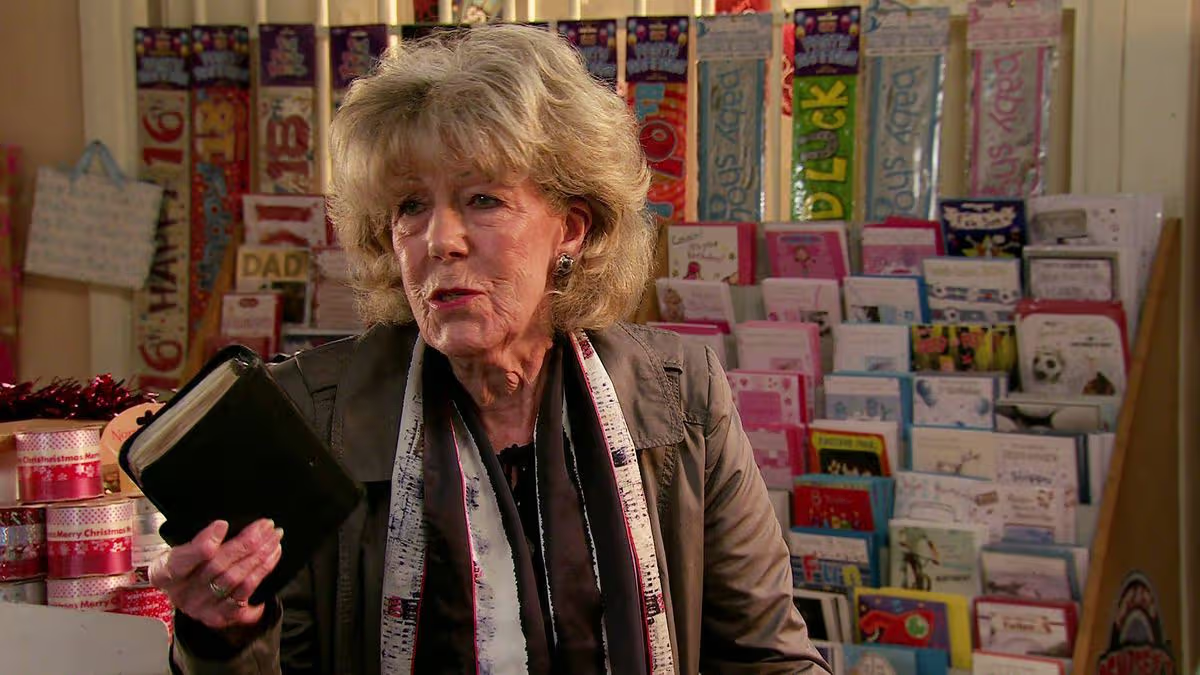
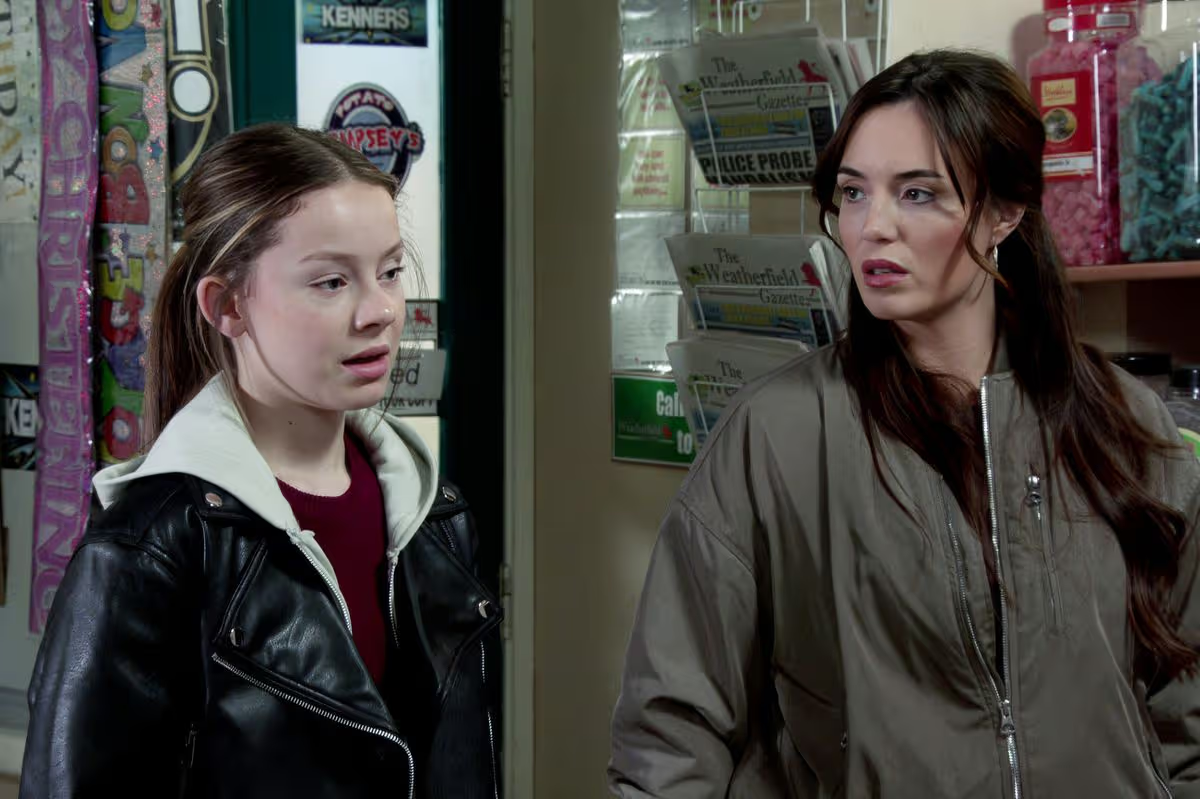
Audrey made her debut on the cobbles back in 1979, where she was introduced as the mum of Gail Platt (Helen Worth).
The character has been involved in several huge storylines over the years, including her tumultuous love life, family drama, and mental health struggles. Audrey notably escaped serial killer Richard Hillman (Brian Capron), and was in a relationship with reformed con-man Lewis Archer (Nigel Havers), as well as battling with depression and alcoholism.
Audrey also got married to Alf Roberts (Bryan Mosley) in 1985, before his tragic death in 1999. Similar to her character, actor Sue has also been through her fair share of heartbreak, following the death of her co-star husband Mark Eden.
Mark was best known for his role as villain Alan Bradley in Corrie – a role he played from 1986 to 1989. Alan’s storyline began when he visited Weatherfield to reconcile with his long-lost daughter, Jenny (Sally Ann Matthews), following the death of her mother and his ex-wife Pat.
Alan soon moved in with Jenny and her foster mother, Rita Tanner (Barbara Knox), who he eventually fell in love with. However, the romantic bliss didn’t last very long.
Alan notably defrauded Rita by forging her signature to mortgage her house for his business, Weatherfield Security Systems. He was also abusive, and cheated on Rita with Gloria Todd (Sue Jenkins). The character’s villainous streak came to an end when he was fatally hit by a Blackpool tram while chasing Rita back in 1989.
Away from the cobbles, actor Sue claimed to have experienced love at first sight after meeting co-star Mark at a fashion party in 1983. The couple were married from 1993 until Mark’s death in 2021 at the age of 92. The actor had been living with Alzheimer’s disease “for some time”.
Tributes quickly flooded in for the beloved star, following his death. John Whiston, the former managing director of continuing drama and head of ITV Studios in the north, previously said in a statement: “We are all hugely saddened to hear of the death of Mark Eden.
“The character he played, Alan Bradley, made a real impact in the three years he was in the show, embarking on a reign of terror and clashing with just about every other character in Coronation Street. He was a consummate actor and played the role of psychotic villain to a tee, making the character both chilling and credible.
“The show owes Mark a great deal as he set the template for all the great villains to come, from Hillman to [Pat] Phelan to our latest baddie, Geoff Metcalfe. It’s a fantastic dramatic legacy. Our thoughts go out to Sue and their family and friends at this sad time.”
Audrey hasn’t been seen on screen in recent months, sparking serious concern from fans. The ITV soap offered an update on the beloved character last week.
During a recent episode (February 26), Audrey’s granddaughter, Sarah (Tina O’Brien), spoke to her mum on the phone, confirming that Audrey was on holiday. Fans will surely be devastated by the update, as they hope to see Audrey back in the salon soon.
Emmerdale airs weekday nights at 8pm on ITV1 and STV, and Coronation Street airs weekday nights at 8.30pm on ITV1 and STV as part of ITV’s new soap power hour scheduling pattern for Coronation Street and Emmerdale
For the latest showbiz, TV, movie and streaming news, go to the new Everything Gossip website
The United States used Precision Strike Missiles (PrSMs) for the first time during its ongoing war with Iran, US Central Command (CENTCOM) said on Wednesday.
The war entered its seventh day on Friday, with attacks continuing across Iran and other countries in the Middle East.
CENTCOM stated in an X post that PrSMs provide an “unrivaled deep strike capability”.
“I just could not be prouder of our men and women in uniform leveraging innovation to create dilemmas for the enemy,” the post quoted Admiral Brad Cooper, head of CENTCOM.
It is unclear where these PrSMs were launched from, or which specific targets they hit in Iran.
So what is the PrSM, and why is it significant that it has been used by the US for the first time?
What are Precision Strike Missiles?
PrSMs are described as long-range precision strike missiles by their developer, the Maryland, US-headquartered defence firm Lockheed Martin, which delivered the first PrSMs to the US Army in December 2023.
PrSMs can hit targets ranging from 60km (37 miles) to more than 499km (310 miles) away, according to Lockheed Martin.
The company’s website adds that PrSMs are compatible with the MLRS M270 and HIMARS family of launchers, both also developed by Lockheed and used by both the United Kingdom and US armies.
MLRS stands for multiple-launch rocket systems, used to launch missiles. The UK sent a number to Ukraine in 2022. HIMARS stands for High Mobility Artillery Rocket System. In 2022, the US sent a number to Ukraine, as well.
M-142 HIMARS is a high-tech, lightweight rocket launcher that is wheel-mounted, giving it more agility and manoeuvrability on the battlefield. Each unit can carry six GPS-guided rockets, or larger missiles like Army Tactical Missile Systems (ATACMs) and PrSMs, which can be reloaded in about a minute with only a small crew.
Lockheed Martin adds that PrSMs can be rapidly developed. “We are ready to produce and deliver to meet the US Army’s accelerated timeline for this long-range precision fires priority,” the website says.
PrSMs feature “open systems architecture”, which means that it is easier to plug in new components, upgrade parts, or work with equipment from other companies. Similarly, they are “modular and easily adaptable”, enabling components to be switched around.
They also feature “IM energetic payload”, or Insensitive Munitions energetic payload, which makes explosions safer, the producer says. This means the warhead is made from explosives that are less likely to blow up accidentally if hit by fire, shrapnel or by accident, but still explode properly when triggered as intended.
What is different about the PrSMs?
PrSMs will ultimately replace the ATACMs currently being fired from the HIMARS launchers, significantly increasing their range from 300km (186 miles) to more than 499km (310 miles), without changing the vehicle carrying the missile.
PrSMs also offer double the “missile load” of ATACMs. While a HIMARS launcher is able to carry one ATACMS missile in its pod, it can carry two PrSMs per pod.
Does the PrSM give the US a strategic advantage?
CENTCOM confirmed that PrSMs have been used in the US and Israel’s attacks on Iran, codenamed Operation Epic Fury and launched on February 28.
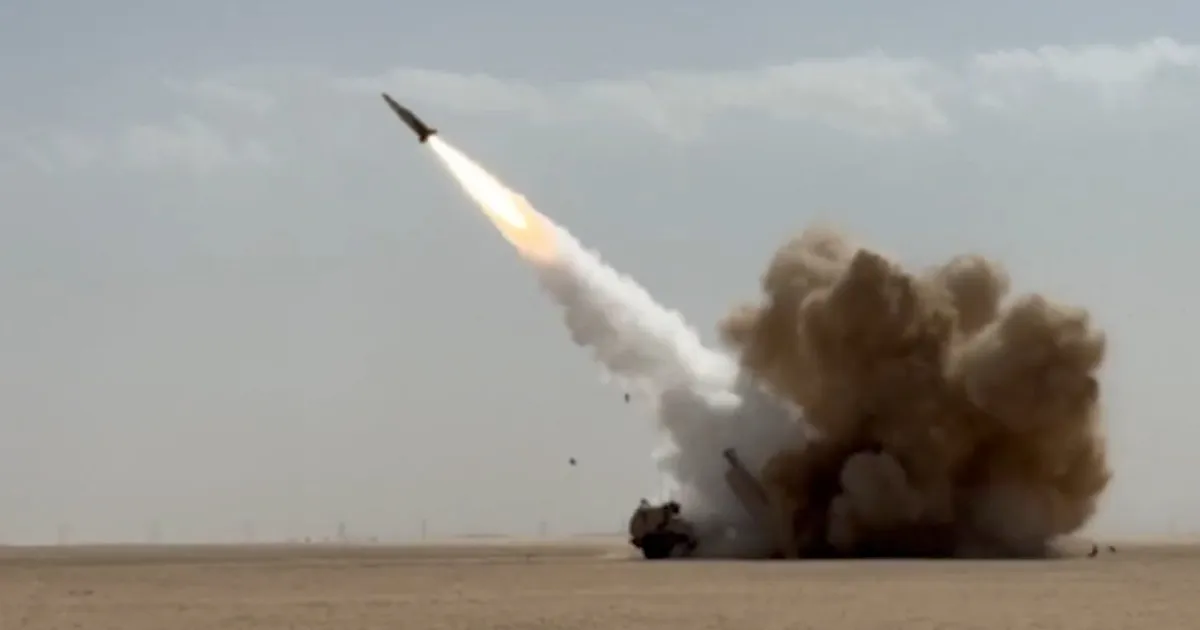
CENTCOM posted a video of the PrSMs being launched from M142 High Mobility Artillery Rocket Systems in an open desert terrain.
PrSMs do give the US military a boost for its pre-existing long-range capabilities.
Gulf countries such as Kuwait, Saudi Arabia, Bahrain, Qatar, the United Arab Emirates and Oman, specifically the Musandam Peninsula, which have military bases hosting US assets and troops, have at least some territory within 400km (250 miles) of Iran.
The US is using PrSMs in conjunction with other long-range missiles such as Low-Cost Unmanned Combat Attack System (LUCAS) one-way drones, MQ-9 Reaper drones, ATACMs and Tomahawk Cruise Missiles.
The range for LUCAS one-way drones is about 800km (500 miles), while the range for ATACMs is about 300km (186 miles) and the range for Tomahawk cruise missiles is about 1,600km (1,000 miles).
Why is the introduction of the PrSM significant?
The range of this missile is significant as it is likely that it would not have been permitted under the Intermediate-Range Nuclear Forces (INF) Treaty with Russia, which the Trump administration withdrew the US from in 2019. This is because it can exceed the maximum 500km (310-mile) range the treaty imposed on certain land-launched missiles.
The treaty was signed in 1987 by US and Soviet Union leaders Ronald Reagan and Mikhail Gorbachev. It sought to eliminate the presence of land-based nuclear missiles and medium-range arsenals between 500km and 5,500km (310 and 3500 miles) from Europe.
The US suspension of the treaty allowed Washington to resume development of its own medium-range, land-based arsenal.
Following the US suspension, Russia invited the US to reciprocate in a unilateral moratorium on the deployment of ground-launched intermediate-range missiles instead. While Washington initially rejected the offer, in 2022, it said it would be willing to discuss this.
In August last year, the Russian Ministry of Foreign Affairs announced Russia’s withdrawal from this moratorium, however, saying the US had “made significant progress” and “openly declared plans to deploy US ground-launched INF-range missiles in various regions”. INF stands for intermediate-range nuclear forces.
The statement added that such actions by Western countries posed a “direct threat” to Moscow’s security.
Kyiv, Ukraine – As Washington’s Middle Eastern allies use US-made Patriot air defence systems to shoot down Iranian missiles and drones, Ukraine is about to face a dire shortage of ammunition for them.
And Russian President Vladimir Putin is sure to exploit the shortage of pricey guided missiles the truck-mounted Patriots launch at machinegun speed to down his pride and joy, Russia’s ballistic missiles that he once declared were “indestructible”, experts have told Al Jazeera.
Recommended Stories
list of 4 itemsend of list
The Patriots were developed in the 1970s to down Soviet missiles whose modifications Russia still rains on Ukraine.
The supply of Patriots to Ukraine began in 2023 and was initially limited to several batteries stationed in the capital, Kyiv. The location of the systems was constantly changed to protect them from Russian attacks.
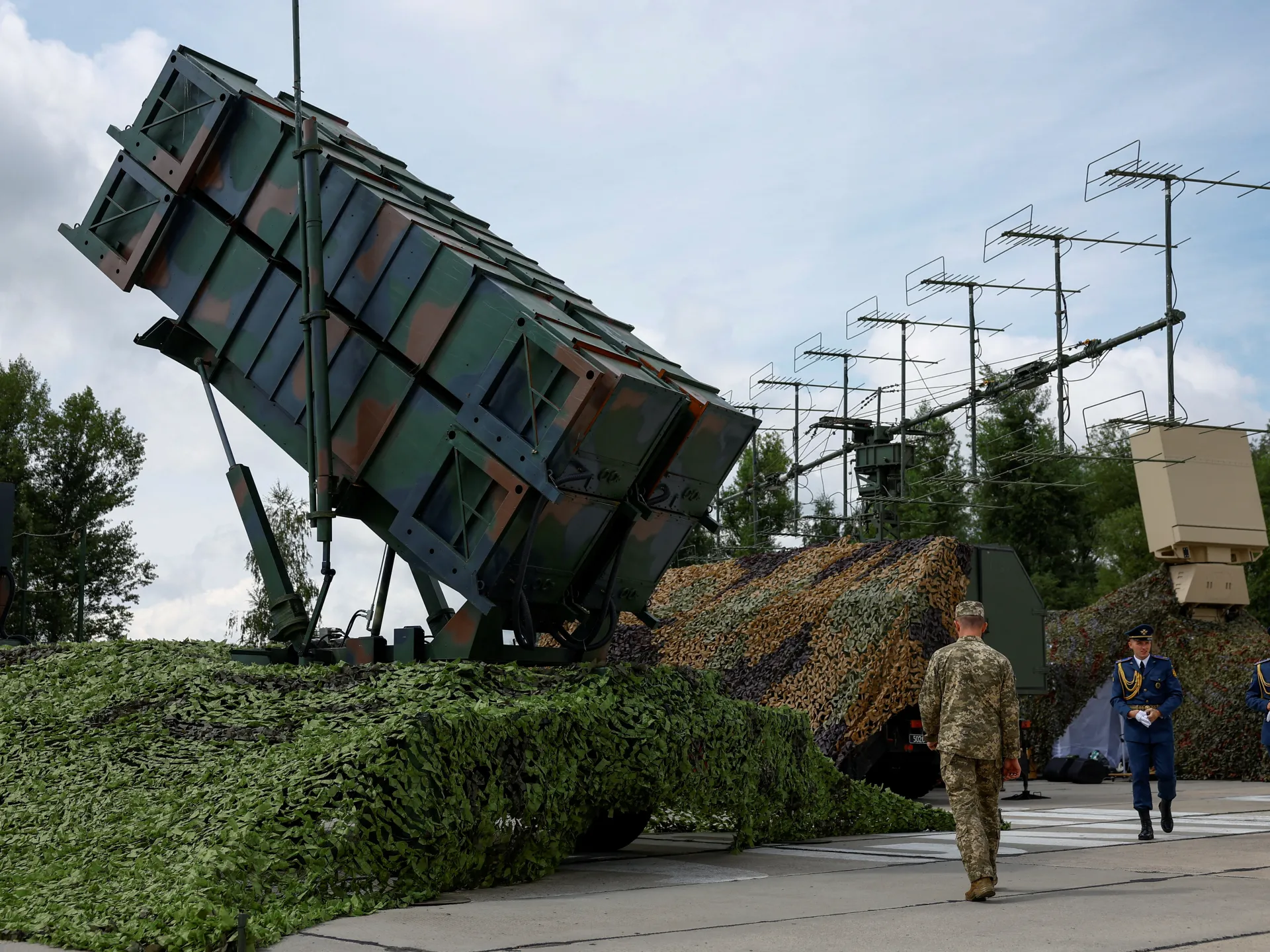
The Patriots utilise advanced radars to detect targets flying at supersonic speeds and launch their guided missiles with the sound that resembles super-fast electronic beats – up to 32 missiles per minute.
But the noise – along with thunderous shockwaves that follow split-second, sun-bright explosions – made Ukrainians feel safe during harrowing, hours-long Russian assaults that have targeted civilian areas and involve hundreds of drones and dozens of missiles.
Within weeks after their deployment, the Patriots intercepted Russia’s Kinzhal (Dagger) intercontinental ballistic missiles that are launched by supersonic fighter jets and fly in the Earth’s stratosphere.
The interceptions disproved Putin’s earlier claims that the Kinzhals made any Western air defence systems “useless”.
The safety, however, came with a hefty price tag – each Patriot guided missile costs several million dollars, and their manufacturing never exceeded more than 900 units a year.
‘Tomorrow’s problem’
Some 800 guided missiles have been used to repel Iranian aerial attacks within just three days after Tehran began raining its missiles and drones on almost a dozen nations, Ukrainian President Volodymyr Zelenskyy said on Thursday.
“Ukraine has never had this many missiles to repel attacks,” Zelenskyy said, reiterating his readiness to dispatch Ukrainian experts and drone interceptors to help Gulf nations counter the attacks.
The shortage of guided missiles is, however, not immediate and may occur in several weeks.
“This is not today’s problem, this is tomorrow’s problem,” Volodymyr Fesenko, head of the Kyiv-based Center for Applied Political Studies (Penta) think tank, told Al Jazeera.
But the problem may become catastrophic.
In recent days, Moscow stopped attacking Ukraine with drones and missiles – a sign of amassing them for massive raids in the near future, Fesenko said.
“Russia’s most obvious actions would be to bleed Ukraine’s stock of Patriot missiles dry to inflict maximal damage on us through massive missile attacks,” he said.
Kyiv already faces a less critical problem with the shortage of missiles for Western-supplied F-16 fighter jets that proved effective in downing Russian missiles.
“The problem is less critical, but also vital for us,” Fesenko said.
Ukraine has experienced a shortage of Patriot missiles before.
Last summer, when the US and Israel struck Iranian nuclear sites, the Pentagon stopped the Patriot missiles’ supply as it was “auditing” its own stocks.
The suspension of Patriot interceptors and HIMARS multiple rocket launchers left Ukrainian civilian infrastructure, including thermal power stations and transport hubs, more vulnerable to Russian attacks.
Russia’s tactics of indiscriminate aerial strikes have been tried and tested over the past four years.
Moscow starts an air raid with drones and decoy drones to make Ukrainian air defence units use as many Patriot missiles as possible.
It then launches several more waves of attack drones and ballistic and cruise missiles.
As to upcoming attacks, “the question is that this time, it won’t be energy infrastructure, but whatever other targets the Kremlin will want to choose”, Kyiv-based analyst Igar Tyshkevych told Al Jazeera.
He referred to devastating attacks on energy and central heating facilities that left millions of Ukrainians without power and heat this winter, triggering health problems and deaths from hypothermia.
Russia already targets sites unprotected by Patriots: Military expert
Meanwhile, Israel and the European nations that pledged to transfer their stock of Patriot missiles to Ukraine are reluctant to do so now.
“Considering the general instability, I don’t think that many nations will open up their stock and pass it on to us,” Tyshkevich said.
Since the supplies of Patriots began, the US-Russian technological battle has kept raging on, according to the former deputy head of Ukraine’s general staff of armed forces, who for decades specialised in air defence.
“There is a confrontation in engineering,” Lieutenant-General Ihor Romanenko told Al Jazeera.
“Russians change something, Americans together with our experts change something else, because remaining on the old [technological] level means losing the battle before it begins.”
Russian engineers “modified software making the [Iskander-M] missiles able to manoeuvre mid-air, and the modernisation largely complicated the operation of the few Patriot systems that we have to destroy them,” Romanenko said.
The Patriots, however, have not become a Ukraine-wide aegis against the Russian strikes.
Ukraine has fewer than a dozen batteries, while Kyiv said it needed at least 25.
Russians “already know that we have but a few Patriot batteries against their ballistic missiles, so they were hitting the sites that had not been covered by the Patriots, or where they had not been deployed,” Romanenko said.
Luckily, Ukraine has an alternative.
A handful of French-Italian SAMP/T systems with solid-fuel anti-aircraft missiles have been deployed to Ukraine since 2023 and showed the advantages of their radars and “engagement logic” with high-speed targets.
While a Patriot battery requires up to 90 support servicemen and takes half an hour to deploy, SAMP/Ts require about a dozen.
But their ability to down modified Russian missiles will have to be battle-tested, Romanenko said.
Meanwhile, Ukraine’s increasingly daring drone and missile strikes deep inside Russia destroy or damage their arm depots and plants producing drones and missiles.
In recent weeks, they hit the Admiral Essen, a Russian frigate capable of launching Kalibr cruise missiles from the Black Sea, nine air defence systems in Russia-occupied Donetsk and Crimea, and Russia’s only plant that produces fibre-optic cable for drones.
One of the best action blockbusters of the past few years has just been added to Netflix just in time for an adrenaline-fuelled weekend viewing
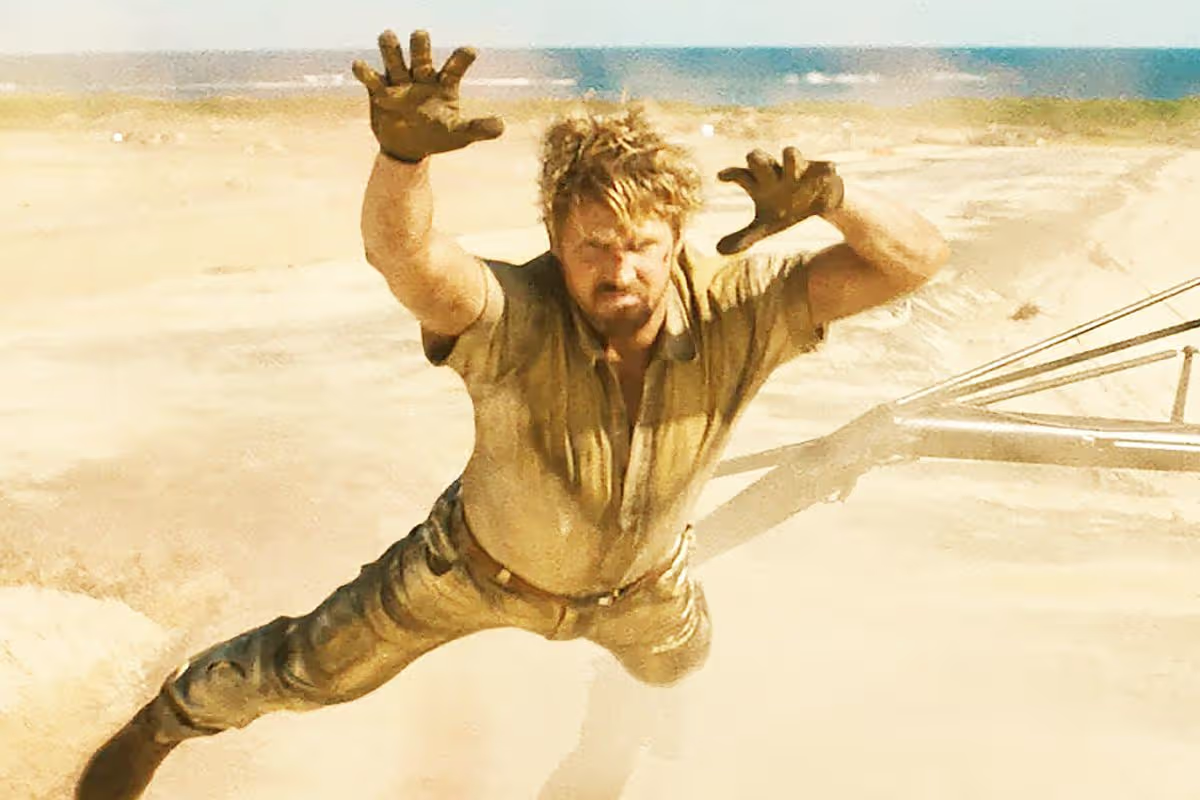
‘Phenomenal’ action film called ‘pure adrenaline’ now on Netflix(Image: UNIVERSAL PICTURES)
Netflix has just added an exhilarating action film starring two of Hollywood’s greatest stars that you won’t want to miss.
Both leads are featuring in some of the most highly anticipated films of 2026, while the director is one of the most prominent action filmmakers in recent years.
The Fall Guy stars Ryan Gosling as stunt performer Colt Seavers, who reluctantly agrees to a comeback after a life-threatening injury when his ex-girlfriend Jody Moreno (played by Emily Blunt) lands her first gig as the director of a major studio film.
However, the pair soon find themselves wrapped up in a complex conspiracy when the movie’s lead actor, Tom Ryder (Aaron Taylor-Johnson), goes missing.
When Colt is covertly hired to go after the people the producers suspect are responsible for his disappearance, he leaps at the chance to win back his ex by saving her debut. But he quickly realises he’s in over his head.
Both megastars are poised to rule the box office over the coming months. Gosling is about to return to the big screen for the bombastic space opera Project Hail Mary, while Blunt is also tackling extraterrestrial threats in Steven Spielberg’s new sci-fi thriller Disclosure Day.
She is also returning to one of her most iconic roles in The Devil Wears Prada 2, along with Meryl Streep and Anne Hathaway. With The Fall Guy available to stream on Netflix, now is the perfect time to revisit one of their best films ahead of their must-see cinematic experiences.
Fans have been raving about the film since its release, and it received an impressive 82 percent Rotten Tomatoes score from critics, with 84 percent from audiences.
One five-star review from an RT user gushed: “A truly phenomenal film! It’s fun, but locks in when seriousness is needed. I love it so much!”
Someone else described it as “Pure adrenaline popcorn perfection that delivers unfiltered chaos candy!”
The stellar reviews continued on IMDb, where one viewer called The Fall Guy “Pure entertainment” and said: “While watching this movie, I found myself smiling nearly the entire time. If you are looking for pure, unfettered fun (in the form of romcom action of course), then this is the movie for you.
“The plot was fun, the acting was solid, the situations that the characters found themselves in were hysterical, the action was on point, the cinematography was nice, and the romance was entertaining.”
And a final fan wrote: “The Fall Guy is insanely fun, with incredibly cool action scenes, romantically charming elements, and a captivating world of stuntmen.
Get Netflix free with Sky for Bridgerton Season 4
This article contains affiliate links, we will receive a commission on any sales we generate from it. Learn more
‘Dearest gentle reader’, as the fourth season of Bridgerton follows second son Benedict love story, there’s a way to watch this fairytale-like season for less.
Sky is giving away a free Netflix subscription with its new Sky Stream TV bundles, including the £15 Essential TV plan. This lets customers watch live and on-demand TV content without a satellite dish or aerial and includes the new season of Bridgerton.
“It’s full-on entertainment, especially for film enthusiasts, with meticulously crafted action sequences in both real and fake movies that look fantastic, grand, and impressively complete.
“Both Ryan Gosling and Emily Blunt have impeccable chemistry, and the portrayal of the stuntman profession is sharp. The film cleverly satirizes the Hollywood industry with excellence.
“Watching this movie in theaters is an absolutely delightful experience. Director David Leitch nails every aspect of the film, truly delivering on the action-packed excitement.”
The Fall Guy is available to stream on Netflix.
For the latest showbiz, TV, movie and streaming news, go to the new **Everything Gossip** website.
Nigeria’s Bola Tinubu was elected on promises to tackle the nation’s widespread violence and address two of its root causes: Poverty and corruption. But with the country going to the polls next year, has he delivered on his “Renewed Hope” agenda?
Mehdi Hasan goes head-to-head with Daniel Bwala, Tinubu’s once staunch critic-turned-Special Adviser on Media and Policy Communications, on the administration’s record in office and where he stands on his past accusations against his current boss.
Joining the discussion are: Ayisha Osori – Director, Open Society Foundations Ideas/Workshop Lab Aanu Adeoye – Journalist, Financial Times Tunde Doherty – UK chairman, All Progressives Congress
Supporters of the United States and Israeli military campaign against Iran argue that weakening Tehran by degrading its missile capabilities, crippling its navy and reducing its ability to project power through regional allies will make the Middle East safer. But this strategy rests on an assumption that a weaker Iran would produce a more stable region. In reality, destabilising one of the Middle East’s largest and most strategically important states could unleash forces far more dangerous than the status quo.
According to briefings provided to congressional staff in Washington, DC, there was no intelligence suggesting Iran was planning to attack the US. Yet military escalation continues in the belief that weakening Iran will ultimately serve US interests. If that assumption proves wrong, the consequences could be severe not only for the region but also for American strategic interests.
The first danger is internal fragmentation. Iran’s population is ethnically diverse. While Persians form the majority, the country is also home to large Azeri, Kurdish, Arab and Baloch communities, among others. Several of these groups already have histories of political tension or insurgency, including Kurdish militant activity in the northwest and a long-running Baloch insurgency in the southeast.
A strong central state has largely kept these fault lines contained. But if Iran’s governing structures weaken significantly, those tensions could intensify. The result could resemble the fragmentation seen in other Middle Eastern states after external military pressure or regime collapse.
Recent history offers sobering examples. In Iraq, the dismantling of state institutions after the 2003 US invasion created the conditions for years of sectarian violence and ultimately the rise of ISIL (ISIS). Libya’s state collapse in 2011 left the country divided between rival governments and armed militias, a crisis that persists more than a decade later. Syria’s civil war produced one of the worst humanitarian catastrophes of the century while turning large swaths of territory into battlegrounds for militias and extremist groups. At the height of the conflict, ISIS was able to seize and govern territory across eastern Syria, declaring a so-called caliphate that controlled millions of people.
Iran’s collapse would produce an even more dangerous scenario. Its population is far larger than Iraq, Libya or Syria, and its territory borders multiple conflict-prone regions. The emergence of armed factions, ethnic militias or insurgent groups inside Iran could quickly transform the country into another arena of prolonged instability.
Such instability would not remain local. Iran sits at the heart of the Gulf, one of the world’s most strategically important energy corridors. Roughly a fifth of global oil supplies pass through the Strait of Hormuz along Iran’s southern coastline. Armed factions, rival militias or uncontrolled naval forces operating along Iran’s coast could disrupt shipping lanes, attack tankers or try to block access to the strait, turning a regional crisis into a global energy shock. That would have consequences far beyond the Middle East. Higher energy prices would ripple through global economies, affecting everything from transportation costs to inflation. American policymakers often view energy instability as a regional problem, but in reality, it quickly becomes a global one.
The strategic consequences would extend further. Iran currently serves as a central node in a network of regional alliances and proxy groups that includes Hezbollah in Lebanon, various militia groups in Iraq and the Houthis in Yemen. These actors operate within a framework influenced, to varying degrees, by Tehran. If the Iranian state weakens dramatically, that structure could fragment. Some groups might operate independently, others might compete for influence, and still others could radicalise further without central coordination. The result would be a far more unpredictable security environment across the Middle East, which would make diplomatic engagement more difficult and military conflicts harder to contain.
Another risk lies in leadership uncertainty. Some policymakers assume that weakening the current Iranian leadership will produce a more moderate political order. But regime change rarely follows a predictable script.
Iran’s political system contains multiple competing factions, including conservative clerical networks, reformist politicians and powerful elements within the security establishment such as the Islamic Revolutionary Guard Corps (IRGC). Iran’s leadership transition is less about a single successor than about the balance of power between clerical institutions, elected offices and the security apparatus. If the existing leadership were weakened or removed during wartime conditions, that balance could quickly unravel. The IRGC, which already commands vast military and economic resources, could try to consolidate authority, potentially pushing Iran towards a more overtly militarised political order. In such an environment, more radical actors, particularly those who view compromise with the US as impossible, could gain influence.
There is also little evidence that sustained military strikes will generate pro-American sentiment among the Iranian population. History suggests that external pressure often strengthens nationalist sentiment rather than weakening it. The 2003 invasion of Iraq, for example, did not produce pro-American attitudes but instead fuelled resentment and insurgency. Similarly, repeated Israeli military campaigns in Lebanon have tended to strengthen support for Hezbollah rather than weaken it.
Beyond the Middle East itself, instability in Iran could also trigger significant migration flows. Iran already hosts millions of refugees from neighbouring countries, particularly Afghanistan. If internal conflict were to erupt inside Iran, even a small share of Iran’s population of more than 90 million people seeking refuge abroad could produce migration flows far larger than those seen during recent Middle Eastern crises.
Many of those migrants would likely move towards Turkiye and eventually Europe, placing additional pressure on governments already grappling with migration crises. While this may appear distant from American shores, the political consequences for US allies in Europe would inevitably affect transatlantic relations and Western cohesion.
Taken together, these risks illustrate a broader strategic problem. Weakening Iran may appear attractive to the US from a narrow military perspective, but destabilising a large regional power rarely produces orderly outcomes.
The United States has confronted similar dynamics before. The collapse of state authority in Iraq after 2003 did not eliminate threats in the region; it produced new ones. Libya’s fragmentation after 2011 created an enduring security vacuum. Syria’s civil war turned into a multisided conflict that reshaped the politics of the entire region.
For Washington, the question should be whether the long-term consequences of destabilising Iran would ultimately make the region and the world more dangerous. If recent history offers any guidance, destabilising Iran may ultimately create the very threats Washington hopes to eliminate.
The views expressed in this article are the author’s own and do not necessarily reflect Al Jazeera’s editorial stance.
Fans of Emmerdale and Coronation Street were not impressed to hear yet again the soaps had been cancelled by ITV in favour of sports coverage, leading to a plea to bosses
10:26, 06 Mar 2026Updated 10:27, 06 Mar 2026
Fans of the soaps have once again been dealt a blow, as there’s no Emmerdale or Coronation Street on Friday(Image: ITV)
Fans of the soaps have once again been dealt a blow, as there’s no Emmerdale or Coronation Street on Friday on ITVX or ITV1.
The soaps have once again been shelved by ITV in favour of sports coverage. It’s sparked fury amongst soap fans who had been promised five days a week of the soaps from January.
Not only that, but most weeks the ‘missing episodes’ never end up being replaced, leaving fans annoyed. This time, it’s the rugby coverage again, while soon it will no doubt be more football that takes the shows off air.
Time and time again viewers have pleaded with bosses to make a change so that fans do not miss out. A suggestion was that the episodes could still drop on ITVX, or sports could be moved elsewhere given ITV as a number of channels.
Ensure our latest headlines always appear at the top of your Google Search by making us a Preferred Source.Click here to activateor add us as your Preferred Source in your Google search settings.
Taking to social media, fans called out the move once more annoyed that another Friday would see both soaps dropped in favour of sports. A fan said: “What again !! This is happening way too often.”
Another agreed: “Why can’t rugby go on ITV3?” as a third said: “Exactly! Or they could at least still put the Corrie episode on ITVX.” Another fan said: “This really annoys me when this happens.”
A fan then asked: “When will the missing episodes of Corrie and Emmerdale due to sport on Friday be shown?” The answer is never, as the filming of the episodes would have been planned around the ‘cancellations’, while in future there will no doubt be episodes airing on different days.
It’s happened quite often since January, with fans having fumed about it before this week too. A fan said: “Why can’t the footy and rugby be put on another channel, we always miss out , so unfair!!!”
A fan added: “Never mind the loyal supporters of soaps so just take them off for sport.” Another fan commented: “They’re at it again taking Corrie off two nights this week and not making the time up Why oh why do they that? ITV has four channels plus ITVX so why not put football on one of their other channels and leave Corrie alone?” Other fans disagreed with the comments, suggesting it wasn’t a big deal, but soap fans would beg to differ!
Foreign Minister Cho Hyun attends a National Assembly session in Seoul on Friday. Cho said that Ukraine assured him that captured North Korean soldiers would not be sent to Russia. Photo by Yonhap
Foreign Minister Cho Hyun said Friday that Ukraine has assured him that two North Korean soldiers captured while fighting alongside Russia will not be repatriated to Moscow.
Cho made the remarks during a parliamentary session, responding to a lawmaker’s question regarding the captives who remain in Ukrainian custody since they were captured during combat on Russia’s side in the front-line Kursk region in January last year.
Earlier this month, Rep. Yu Yong-weon of the main opposition People Power Party said after visiting Ukraine that Russia had included the two soldiers on its list of prisoners it demanded be released in a prisoner-of-war (POW) exchange.
“I have received confirmation from my Ukrainian counterpart that the soldiers will not be repatriated (to Russia),” Cho said. “There is no need to worry about the possibility of them being sent back to North Korea or Russia.”
Asked to confirm whether the soldiers were on the POW exchange list, Cho avoided giving a straight answer, indicating that Ukraine would not share such details with Seoul.
Cho stressed that disclosing any details about the soldiers could jeopardize their safety, adding that the foreign ministry is making every effort to ensure their safety and bring them to South Korea in accordance with the Constitution.
Through media interviews, the soldiers have expressed their intention to come to South Korea rather than being sent back to the North.
Yu has called for sending a presidential envoy to Ukraine to discuss their defection, saying their repatriation to Pyongyang cannot be ruled out.
Copyright (c) Yonhap News Agency prohibits its content from being redistributed or reprinted without consent, and forbids the content from being learned and used by artificial intelligence systems.
The saga of “A Court of Thorns and Roses” will continue.
Author Sarah J. Maas announced on Alex Cooper’s “Call Her Daddy” podcast Wednesday that two new books will be released in the hugely popular romantasy series, ending a five-year drought since the fifth installment, “A Court of Silver Flames.” The sixth book will be published on Oct. 27, 2026, and the seventh on Jan. 12, 2027.
“It took me a while to find the right story and to be in the right headspace. And then, like what poured out of me was this and it poured out very quickly,” the author told Cooper. “The story that was finally ready to come out of me was big. Really, really big.”
Maas first teased the sixth book on Instagram in July, with the caption “First drafts DONE” on a video that drew nearly a million likes.
Maas did not share details about the book titles, cover art or whose point of view the stories will follow, but did mention that the character’s perspective was “one of the surprising things” for her while writing.
On Instagram, Maas thanked her fans for their patience, passion and “never letting the world fade.”
“I know how long you’ve waited. I know how much these characters mean to you. And I also know these stories deserve more than speed and deadlines. They deserve my best self. They deserve the right moment,” Maas wrote. “I’m so honored by the way you guys have always embraced Prythian as your own. I truly hope it feels like coming home for you like it did for me.”
The first installment of the “A Court of Thorns and Roses” series was released in 2015, but the franchise gained popularity on BookTok — a TikTok subcommunity dedicated to literature — during the COVID-19 pandemic. The books follow Feyre Archeron in the faerie lands of Prythian and her love story with the High Lord of the Night Court, Rhysand.
Maas has sold more than 70 million English copies between her interconnected “Throne of Glass,” “A Court of Thorns and Roses” and “Crescent City” series, according to her website. Maas is a major player in the romantasy — a portmanteau of romance and fantasy — genre, which has soared in popularity on TikTok.
“This is going to sound silly, and you probably won’t believe me, but just talking about things like legacy is beyond for me,” Maas told Cooper. “I’m still very much that girl in middle school or high school sneaking off to watch anime or drool over Legolas and getting to go play in these worlds in my head and do the thing that makes me come alive every day, that’s incredible.”
Presidential Chief of Staff Kang Hoon-sik speaks during a briefing at Cheong Wa Dae in central Seoul on Friday. The presidential office said South Korea will receive more than 6 million barrels of crude oil from the UAE. Photo by Yonhap
South Korea will receive more than 6 million barrels of crude oil from the United Arab Emirates (UAE), Cheong Wa Dae said Friday, amid concerns over energy prices due to the escalating conflict in the Middle East.
Kang Hoon-sik, the presidential chief of staff, announced the plan to purchase crude oil from the Gulf state in a briefing as the U.S.-Israeli attack on Iran and Tehran’s retaliatory strikes in the region have sparked fears of an energy crisis.
“At the instructions of President Lee Jae Myung, we have made consultations over measures to introduce crude oil and as a result, an emergency introduction of more than 6 million barrels has been confirmed,” he said, noting the move is expected to help stabilize oil prices.
Kang stressed the need for the emergency measure, noting that 70 percent of crude oil supplied to South Korea passes through the Strait of Hormuz, which has effectively been shut down due to the conflict.
Two South Korean oil tankers will be sent to a UAE port that does not require passage through the strait to receive 4 million barrels of crude oil, he said, adding the UAE pledged to provide 2 million barrels from a joint reserve stored in South Korea.
The total amount is equivalent to more than two times the supply used by South Korea a day, he said.
Meanwhile, Kang said a passenger flight carrying South Korean nationals has left Dubai and is scheduled to arrive at Incheon International Airport, just west of Seoul, at 7:30 p.m. Friday, following talks with the UAE on measures for their safe return.
Commercial flights from Abu Dhabi are expected to resume Saturday, while a chartered Korean Air flight will also be dispatched, he said, noting that he held talks with Khaldoon Khalifa Al Mubarak, chairman of Abu Dhabi’s Executive Affairs Authority.
“Currently, 18,000 South Koreans are in 14 Middle East nations, and some 4,900 of them are short-term travelers,” he said. “Among the short-term travelers, 3,500 of them are currently staying in the UAE and Qatar, and waiting to return home.”
“We will continue consultations with the UAE to bring all of our citizens back home as soon as possible.”
Copyright (c) Yonhap News Agency prohibits its content from being redistributed or reprinted without consent, and forbids the content from being learned and used by artificial intelligence systems.
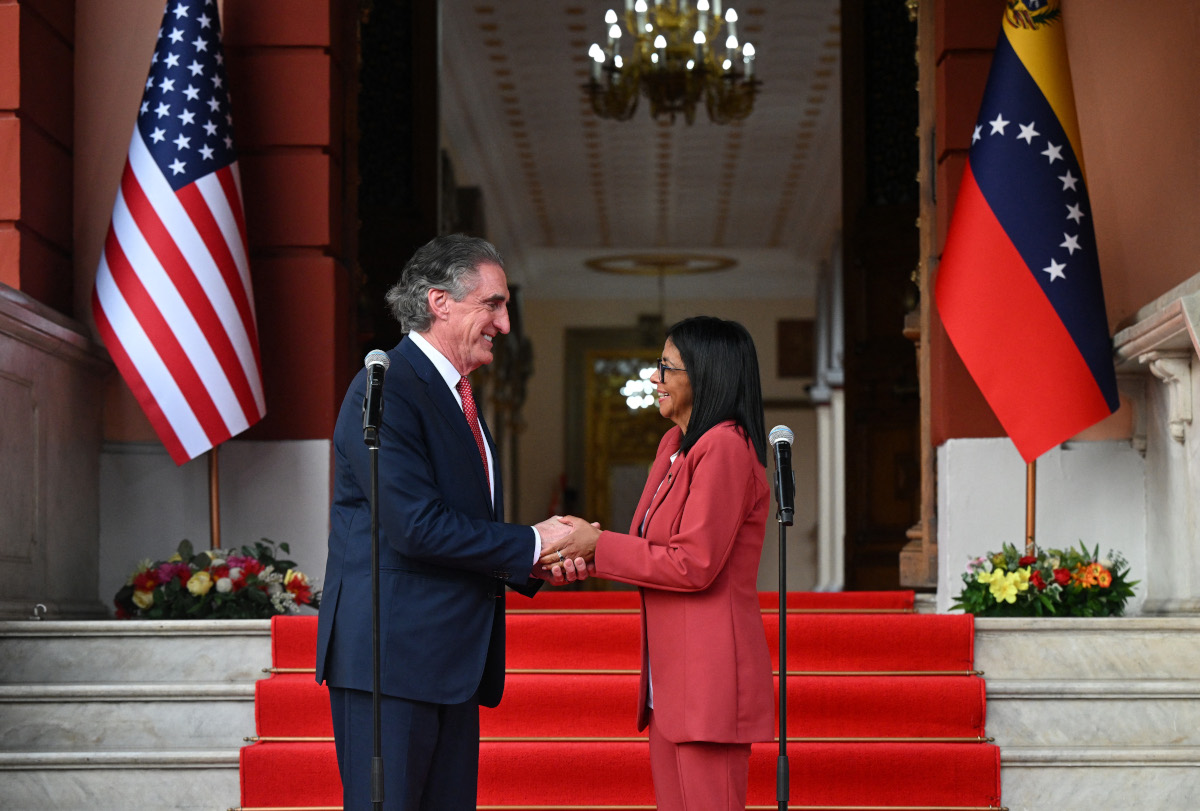
Rodríguez and Burgum gave a joint press conference in Miraflores Palace. (AFP)
Caracas, March 5, 2026 (venezuelanalysis.com) – Venezuelan Acting President Delcy Rodríguez met Wednesday with US Interior Secretary Doug Burgum at the Miraflores Presidential Palace in Caracas to discuss a bilateral agenda focused on energy and mining.
Senior officials from both countries also attended a closed-door meeting, including US Chargé d’Affaires Laura Dogu and Venezuelan Interior Minister Diosdado Cabello. Rodríguez and Burgum later gave a joint press conference.
“We welcomed Burgum to address important aspects related to metallic, non-metallic, strategic and non-strategic minerals,” the acting president told reporters. “We want the Venezuelan people to see the advantage of having good relations with the world and with the United States.”
Rodríguez said that her economic team will soon present a proposal to the National Assembly to “expand” Venezuela’s Mining Law, urging lawmakers to reform it “swiftly” in order to showcase “investment and development opportunities in the mining sector” to both domestic and international business groups.
Venezuela’s current mining legislation was approved in 1999. Rodríguez noted that the government intends to replicate the “win-win formula” of the recent hydrocarbon reform approved on January 29, which introduced wide-reaching benefits for foreign capital in the oil sector.
Under the overhauled legislation, private operators get expanded control over operations, with limited parliamentary oversight and a reduced tax burden.
Rodríguez also thanked US President Donald Trump for a social media post praising the Venezuelan acting president for “doing a great job.” The Venezuelan leader highlighted the US government’s “kind disposition” to work on a “mutually beneficial” cooperation agenda.
For his part, Burgum said that Venezuela is “an extraordinarily rich nation” in oil, gas, and critical minerals, adding that the opportunities for collaboration between the two countries “have no limits.” He serves as chair of the US National Energy Dominance Council as well.
According to the senior White House official, who holds the natural resources portfolio, the potential cooperation could deliver something “truly remarkable” for both the Venezuelan and American people. Burgum’s delegation included representatives from over 20 US and Canadian mining companies, some of them with a past presence in Venezuela.
“These companies are ready to begin,” he said. “I know that [Acting President] Rodríguez, like President Trump, wants to cut bureaucratic red tape so this capital investment can start flowing.”
Among the companies represented in the visit were US firms Peabody Energy—the world’s largest private coal company—Hartree Partners, Orion CMC, Paulson & Co., and Caterpillar Inc., along with Canada’s Lundin Mining Corp and Singapore-based commodities trader Trafigura.
Canadian miner Gold Reserve also announced plans to return to the Caribbean nation and disclosed a 30-day US Treasury license to negotiate with Caracas.
According to Axios, US officials additionally negotiated a multimillion-dollar agreement with Venezuela’s state mining company Minerven to sell up to one metric ton of gold to the US market, currently valued at roughly $165 million.
The deal would require Minerven to supply between 650 and 1,000 kilograms of doré gold bars—a crude alloy of gold and silver with 50 to 90 percent purity—to Trafigura, which would transport the metal to US refineries. The transaction details were not disclosed, including whether Trafigura will deposit payment in US-run accounts in an arrangement similar to the one the Trump administration has imposed for Venezuelan oil exports.
Burgum is the fourth senior US official to visit Venezuela since the January 3 US military strikes and kidnapping of President Nicolás Maduro and his wife, National Assembly deputy Cilia Flores.
Earlier visits included US Southern Command chief Francis Donovan, CIA Director John Ratcliffe, and US Energy Secretary Chris Wright.
Venezuela possesses vast unexplored and proven mineral reserves, including significant gold, iron, bauxite, diamonds, nickel, and copper deposits. Coltan reserves have likewise been touted in recent years.
According to the International Center for Productive Investment (CIIP)—an agency attached to the Venezuelan vice presidency—the country holds the eighth-largest iron reserves in the world, estimated at 14.7 billion metric tons, as well as more than 321 million tons of bauxite, the raw material used to produce aluminum.
Regarding gold, the CIIP estimates that Venezuela may hold between 2,200 and 8,000 metric tons, which would place the country among the largest gold reserves globally.
Analysts have also highlighted the possibility of finding rare earth deposits in the South American country. The 17 elements have diverse applications in cutting-edge technology and advanced weapons systems. Washington is currently highly dependent on rare earth imports from China.
By my count, Philip Glass has written 28 operas, the same number as Verdi. The count is iffy because Glass pushes the boundaries between what we tend to call opera and the fuzzier idea of music theater. His first, “Einstein on the Beach” in 1976 — a collaboration between the composer and the late, innovative theater maker Robert Wilson — is a non-narrative effusion of imagery, movement, music and text, each a brilliantly independent entity that somehow excites a hard-to-pin-down purpose.
His latest (and probably his last, Glass turns 90 this year) is “Circus Days and Nights” — a touching and thrilling opera for a circus and staged at a circus in Mälmo, Sweden, in 2021 — caps a wondrous 45 years of operatic advancement. You would have to go back to Handel’s 42 operas, Mozart’s 22 or Verdi’s oeuvre for operatic equivalence.
Glass’ subject matter varies widely in epochs and ethoses, from ancient Egypt to Walt Disney’s Hollywood. Taken as a whole, these 28 operas reveal how we got to be who we are historically, artistically, spiritually, politically and fancifully, often including more than one of those categories, as in his third opera, “Akhnaten,” which Los Angeles Opera has now remounted at the Dorothy Chandler Pavilion. The instantly recognizable musical style has remained, over the years, consistently abstract and refreshing. It doesn’t tell you how to think, how to feel, even how to understand. It simply grabs your attention; you do the interpreting.
Still, America knows little of Glass’ operatic enormity. The early “portrait” operas — “Einstein,” “Satyagraha” (about Gandhi) and “Akhnaten” (the 14th century BC Egyptian pharaoh) — appear in repertory here and there (meaning mostly in Europe) as do a trio of operas based on Jean Cocteau films. The rest remain little mounted, while several but not all have been recorded. The Metropolitan Opera, for instance, commissioned “The Voyage” in 1992 to celebrate the 500th anniversary of Columbus’ arrival in the Americas, but the epic opera is nowhere to be found in our semisesquicentennial year. It is sadly no longer even thinkable that “Appomattox,” Glass’ revelatory reminder of an America that once honored goodwill negotiation over political self-interest, return to the Kennedy Center, where its final version had its premiere 11 years ago.
L.A. Opera has been better than most American companies in its attention to Glass. It has excellently presented the three portrait operas on its main stage, beginning with “Einstein” in the final and most brilliant revival of the original Wilson staging. The “Satyagraha” and “Akhnaten” revivals have been the designed-to-dazzle inventions of quirky director Phelim McDermott, a co-founder of Impossible, an eccentric British theater company. When new in the last decade, they felt the most arresting productions of these operas since Achim Freyer’s in Stuttgart, Germany, in the early 1980s. Almost every performance at the Dorothy Chandler Pavilion has sold out.
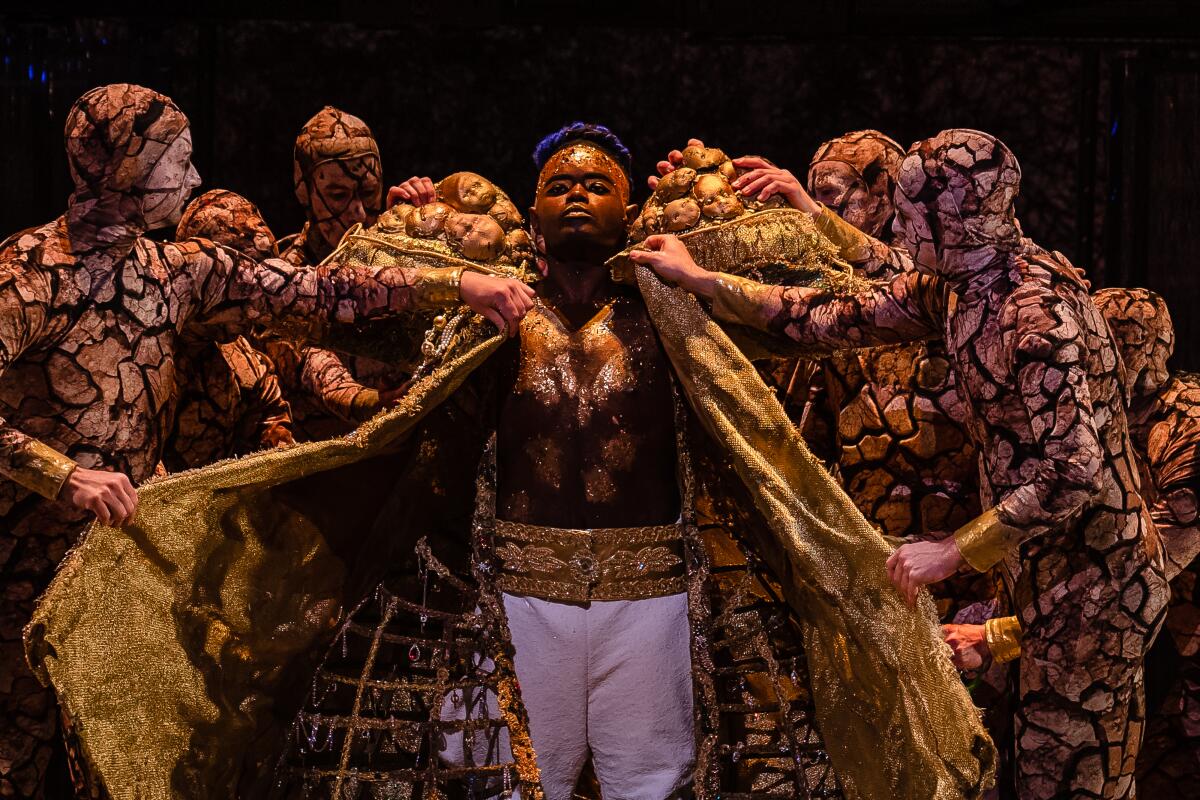
John Holiday as the titular ruler in Philip Glass’ “Akhnaten” at the Dorothy Chandler Pavilion.
(Ariana Drehsler / For The Times)
McDermott’s “Akhnaten” got the most attention thanks to breathtaking jugglers and lavish costumes, along with a touch of full-frontal novelty as Akhnaten gets clothed in his kitschy, glittery getup for his inauguration. Glass had chosen the pharaoh because he is thought to have been the first monotheistic ruler.
Akhnaten is revealed in episodes of his life that are not fleshed out but presented as ritual, including the ravishing love duet with his wife, Nefertiti. The revolutionary pharoah builds a great city and reduces spiritual chaos by focusing on a single-minded form of worship. He looks androgenous in portraits, which led Glass to create the role for countertenor.
The sung texts are in ancient languages, and there are no projected song titles. Instead, a narrator gives a somewhat notion of what’s what in the language of the audience, as is Akhnaten’s great aria, a hymn to Aten (god of the sun).
Ultimately, the pharaoh’s prescient spiritual optimism comes in conflict with the all-powerful establishment priests, who kill Akhnaten and Nefertiti. The opera ends with Akhnaten’s son, presumably Tutankhamun, restoring polytheism, and then, once the staging jumps millennia into the future, it’s rediscovered by modern-day tourists. The currency couldn’t be missed Saturday, the Shia cleric and Iran’s supreme leader Ali Khamenei having just been assassinated along with his wife at the start of America’s and Israel’s Iran war.
Sun-Ly Pierce as Nefertiti and John Holiday as Akhnaten in Philip Glass’ “Akhnaten” at the Dorothy Chandler Pavilion.
(Ariana Drehsler / For The Times)
In the opera, it so happens, the ghosts of Akhnaten, his wife and mother, have the last word in a glorious trio.
When first performed at L.A. Opera a decade ago, the lavish production, co-produced with English National Opera, helped recover a neglected opera. In the meantime, “Akhnaten” has gone practically mainstream. The Metropolitan Opera, which also mounted McDermott’s production, released it on CD and DVD, winning a Grammy for best opera recording.
Since then, the choreographer Lucinda Childs, veteran of “Einstein on the Beach,” has staged a stunningly chic “Akhnaten” in Nice, France, that is available on YouTube. Last year, director Barrie Kosky created a sensation with his staging at Komische Oper Berlin, which starred American countertenor John Holiday.
Holiday happens to be the Akhnaten in the L.A. Opera revival, and he is magnificent. McDermott had built his production around the gracefully emotive Anthony Roth Costanzo, slight and luminous in voice and build and game for nudity. If Costanzo’s disarming enthusiasm for the role has been significant in mainstreaming “Akhnaten,” Holiday, who is a very different presence, may be the next step.
Although he can be a popularly gregarious crossover performer, here he suggests a ruler of profound, unflappable dignity, rather than vulnerability. His hymn to Aten is an exercise in majesty, an ode not just to the sun but to the expanses in which our solar system circulates.
In general, the singers class up the production. Sun-Ly Pierce as Nefertiti and So Young Park as Queen Tye add allure. The large cast of smaller roles and chorus is excellent. Zachary James returns as both Amenhotep III, Akhnaten’s father, and the engaging narrator who occasionally threatens to get carried away. McDermott had perfectly employed James as the droll animatronic Disneyland Lincoln in his animation-friendly, slightly goofy production of “Perfect American” in Madrid, where the opera premiered. Here McDermott’s inspired staging demonstrated that Glass’ forgiving personal portrait of Walt Disney makes it the quintessential Hollywood opera that no one dares bring to squeamish Hollywood.
Zachary James as Amenhotep III in Philip Glass’ “Akhnaten” at the Dorothy Chandler Pavilion.
(Ariana Drehsler / For The Times)
Hollywood, however, is hardly squeamish when it comes to synchronized jugglers. For McDermott, they suggest somber ritual and were, in fact, known in Akhnaten’s Egypt. For the audience, they are a thrill a minute. For Glass, they may take on deeper meaning now that the circus is where he landed 26 operas later.
As for Finnish conductor Dalia Stasevska, making her L.A. opera debut, she keenly keeps score and bounding balls together with cinematic flair. Glass removed violins from the orchestra to achieve a dark, primordial orchestral sound along with pounding percussion. Stasevska finds light, color and action. She conducts for the moment. Picturesque wind instruments suddenly burst forth as if a flock of birds were flying over the pyramids. Solo brass can sound momentous. The percussion pounds like nobody’s business, opening the score up to all the implied emotion and glitter on an over-stuffed stage.
Childs’ exalted use of dance and Kosky’s dazzling theatrical imagination may have moved us into a sleeker, more sophisticated and paradisal Glassian realm, but the sheer passion McDermott and Stasevska bring continues its own attraction.
In the meantime, McDermott has worked with Glass on a theatrical show, “The Tao of Glass,” that has been seen in New York and will run throughout much of the summer in London. In a better world of Glass, it would be running alongside “Akhnaten” at the Ahmanson. But the Labèque sisters will be at Walt Disney Concert Hall at the end of the month with a two-piano program based on Glass’ operatic Cocteau trilogy. Also check out L.A. Opera’s several excellent podcasts on “Ahkhnaten” — the company has quietly become a leader in the medium.
‘Akhnaten’
Where: Dorothy Chandler Pavilion, 135 Grand Ave., L.A.
When: Through March 22
Tickets: $33.50-$415
Running time: About 3 hours, 40 minutes, with 2 intermissions.
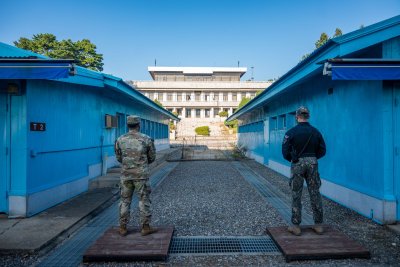
SEOUL, March 6 (UPI) — South Korea’s Unification Ministry called Friday for pursuing a declaration formally ending the Korean War, describing it as a step toward restarting dialogue with North Korea and easing tensions on the Korean Peninsula.
The ministry outlined the proposal in a policy report presented to the National Assembly’s foreign affairs and unification committee and shared with reporters, as part of President Lee Jae Myung’s broader effort to stabilize inter-Korean relations after years of heightened tensions.
Seoul “will promote a ‘peace declaration’ reflecting the political will to end the Korean War and initiate discussions on establishing a peace regime, including the signing of a peace treaty,” the report said.
North and South Korea remain technically at war because the 1950-53 Korean War ended with an armistice rather than a peace agreement.
The ministry said the declaration could serve as an initial step toward transforming the armistice system into a lasting peace framework and helping institutionalize what it described as a policy of “peaceful coexistence” between the two Koreas.
The report comes amid mixed signals from North Korea following its recent Workers’ Party congress, where leader Kim Jong Un said there was “no reason” Pyongyang could not improve relations with the United States if Washington abandons what he called its hostile policy.
Kim maintained his dismissive stance toward South Korea, however, calling it “the most hostile entity.” The Lee administration has pursued a series of confidence-building steps aimed at lowering tensions — efforts Kim described as “a clumsy deceptive farce.”
Lee has said South Korea aims to act as a “pacemaker” for renewed diplomacy between Washington and Pyongyang, working with regional partners to create conditions for dialogue between the United States and North Korea.
The ministry’s report noted that U.S. President Donald Trump has expressed willingness to address the unresolved wartime status of the Korean Peninsula and said Washington has reaffirmed its openness to talks with Pyongyang without preconditions.
Seoul said it will also seek the appointment of a U.S. special envoy for North Korea and expand coordination with neighboring countries to encourage the North to return to negotiations.
Despite those efforts, tensions could rise again soon.
South Korea and the United States are scheduled to begin their large-scale springtime military exercise, Freedom Shield, on Monday. Pyongyang routinely condemns the allies’ joint drills as rehearsals for an invasion, and the report noted that North Korea may respond with statements or military provocations.
Lebanon’s Hezbollah group urges Israelis to evacuate border areas as Israel continues to bomb the country.
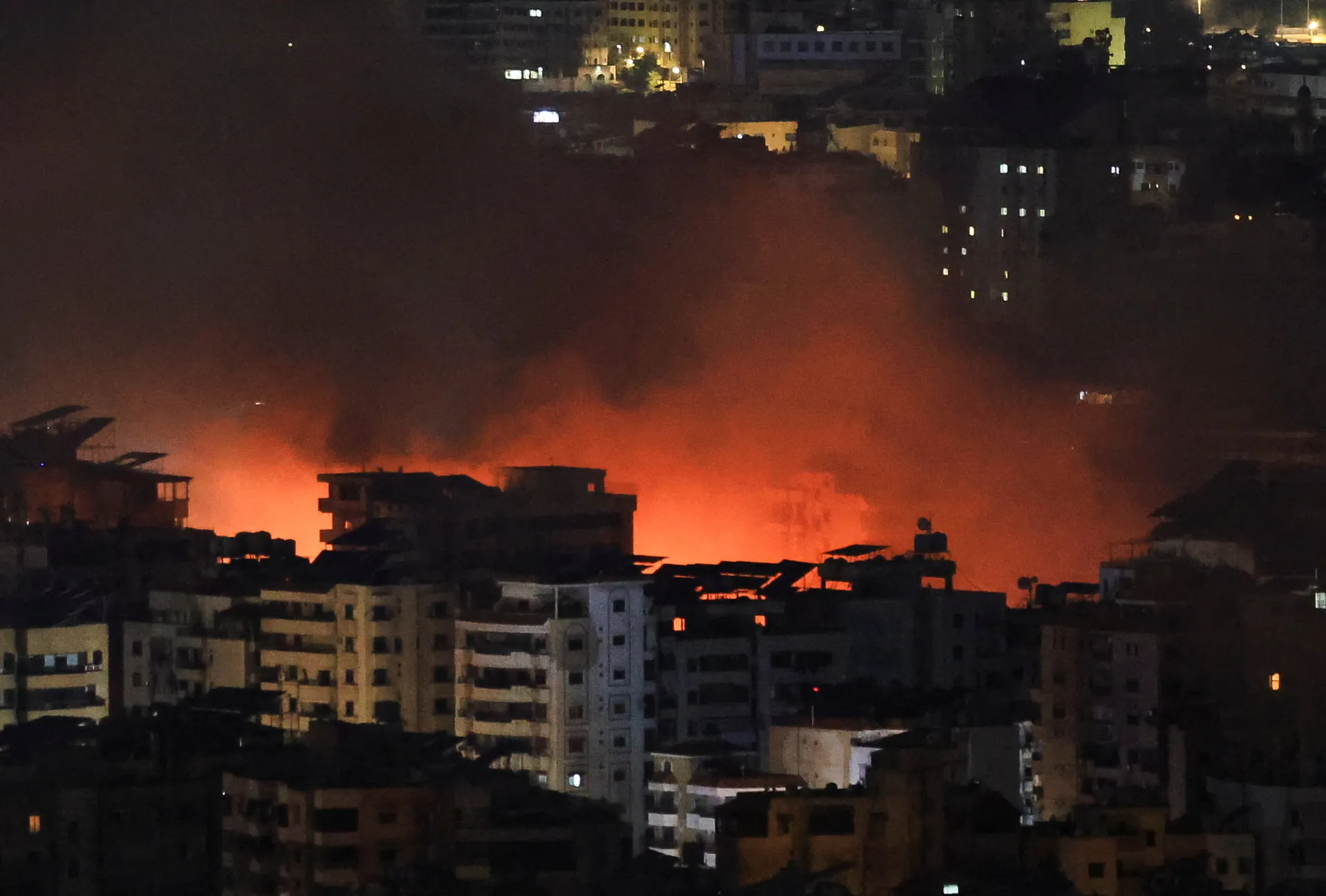
The death toll from Israeli attacks on Lebanon this week has risen to at least 123 people, the Lebanese Ministry of Public Health says, as a new wave of strikes pounded the country and Hezbollah warned Israeli residents to evacuate towns within 5km (3 miles) of their northern border, in one of the fiercest fronts in the wider United States-Israel war on Iran.
“The toll from the Israeli aggression on Monday … increased to 123 martyrs and 683 wounded,” a ministry statement said on Thursday.
Recommended Stories
list of 4 itemsend of list
Lebanese state media said early on Friday that Israel had launched air strikes on several towns in southern Lebanon.
“Enemy warplanes launched nighttime strikes on the towns of Srifa, Aita al-Shaab, Touline, as-Sawana and Majdal Selem,” the official National News Agency (NNA) reported.
Another strike hit the eastern Lebanese town of Douris at dawn, the NNA said.
Hezbollah’s message to evacuate the border areas came less than a day after Israel threatened residents that they should leave Beirut’s southern suburbs, prompting a huge exodus from a swath of the capital’s densely populated area known as Dahiyeh, where some half a million people live.
The Israeli army said it has conducted 26 rounds of attacks in Dahiyeh. It claims to have hit various infrastructure used by Hezbollah, including the headquarters of the group’s Executive Council and a warehouse with drones.
“Your military’s aggression against Lebanese sovereignty and safe citizens, the destruction of civilian infrastructure and the expulsion campaign it is carrying out will not go unchallenged,” Hezbollah said.
Hezbollah claimed responsibility for a wave of attacks early on Friday on Israeli ground forces, including those who have entered Lebanon’s territory in recent days.
In a statement on Telegram, Hezbollah said its fighters had attacked Israeli forces in several areas, including Maroun al-Ras and Kfar Kila, within Lebanese territory.
Hezbollah also attacked Israel’s Yoav military camp in the occupied Golan Heights and a navy base in Israel’s Haifa port, the statement said.
There were no immediate reports of casualties.
Israel has said it will not evacuate its border towns and has sent more soldiers into Lebanon, claiming it was a defensive measure meant to protect its citizens who live nearby.
In contrast, tens of thousands of people in Lebanon have fled their homes after threats from Israel, with a mass exodus from Beirut’s southern suburbs leaving the area “almost empty”, the NNA said.
Hundreds of displaced families were left to seek shelter on a Beirut beach, where they waited despondently – many for the second time, after evacuating during a 2024 war between Israel and Hezbollah.
‘We are not animals’
Zeina Khodr, reporting from Beirut, said the humanitarian crisis is growing rapidly, as people seeking shelter can be seen “on the side of the roads on almost every corner”.
“There aren’t enough schools to shelter the hundreds of thousands of people who were forced to flee their homes after Israel’s forced displacement threat for Beirut’s southern suburbs yesterday,” she said.
“People are telling us: ‘We are not animals; we are human beings, our children are cold.’”
She noted that the Lebanese government has opened a number of shelters and told people to head to the north of the country.
Khodr added: “But many do not have any means of transport. It’s not just Lebanese who live in Beirut’s southern suburbs, but also Syrian refugees and Palestinian refugees.”
Lebanon was pulled into the war in the Middle East on Monday, as Hezbollah opened fire, prompting Israeli air strikes focused on Beirut’s southern suburbs and on southern and eastern Lebanon.
The war has rekindled fighting between Israel and Iran-allied Hezbollah fighters, and Israel launched a series of air raids late on Thursday into Friday in the southern suburbs of Beirut and other areas.
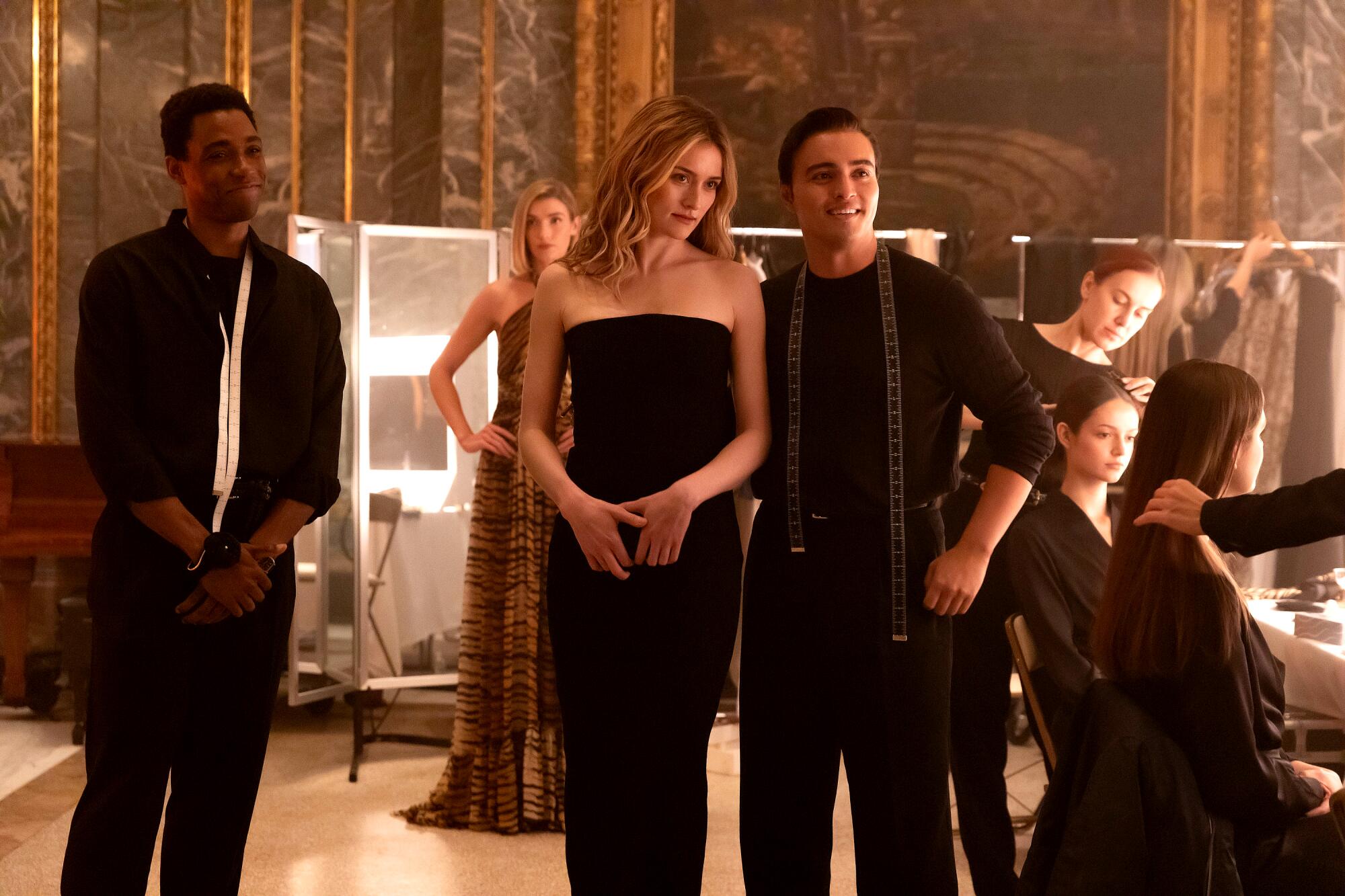
As a child in Newark, N.J., Narciso Rodriguez was often transported back to Cuba by the stories from his family and their friends. He walked the halls of El Encanto, a Havana department store and fashion mecca on the island — one that drew in celebrity clientele and featured haute-couture designs and fragrances from the far-flung fashion capitals of Paris and Milan.
“I don’t know that they could have afforded any of those things when they were in Cuba,” he tells De Los. “But they certainly filled my imagination with beautiful stories and laid the foundation for my work.”
It was the women in his life — the “amazing, powerful, loud, colorful dynamos,” as he describes them — who inspired him to pursue a career in fashion.
“Their stories, their lives, their power, their curves, it all influenced me,” he says. “They’re the reason I wanted to create things.”
Over the last three decades, the renowned designer has earned a reputation for sleek, flattering lines and effortless shapes, most famously seen on the career-launching dress he designed for his friend Carolyn Bessette-Kennedy to wear on her wedding day. The bias-cut silk slip has remained a source of inspiration for generations of brides since, and has been making waves again thanks to the FX series “Love Story: John F. Kennedy Jr. and Carolyn Bessette.”
Omari K. Chancellor as Gordon Henderson, from left, Sarah Pidgeon as Carolyn Bessette, Tonatiuh as Narciso Rodriguez in FX’s “Love Story: John F. Kennedy Jr. & Carolyn Bessette”
(Eric Liebowitz / FX)
“Love Story” will follow the couple’s wedding in the latest episode, out March 5. (Rodriguez is portrayed by Tonatiuh on the show.)
After designing Bessette-Kennedy’s dress, Rodriguez launched his own label and a fragrance line, and has continued to create designs that are woven into the fabric of American history — Michelle Obama wore his dress on election night in 2008.
De Los spoke with Rodriguez about his career, upbringing and memories of designing Bessette-Kennedy’s dress.
You’ve spoken about how inspired you were by the women in your life growing up. Are there any “fashion icons” from your family or neighborhood that you could point to from your childhood?
You know, I’m so lucky because I was raised in a very Cuban household in a very culturally rich community in Newark. I mean, it was Italian, Spanish, Cuban, Puerto Rican, Black. It was everything. But I always think back to when I was very, very young, there was a kind of matriarch here in the neighborhood. Her name was Concha and she was kind of this lightning rod. My dad’s sister was married to her son, so when my parents came to the U.S., she gave them a place to stay. She would teach all of the young women how to cook and gave everyone a place to stay until they got on their feet. She was larger than life, she was like “Auntie Mame.” She had these great ‘60s beehive wigs in amazing wig boxes, she made these beautiful Chanel suits for herself, and had all these gold bangles, great lipstick and stilettos. When she came into the room, she just radiated power, joy and style. I always think of her as being my first signpost on the road.
They were all beautiful, you know? My aunts and my mom were the most beautiful, glamorous women. None of them were wearing designer clothes, but they took great pride and great care in how they looked, and that really made an impression on me.
How did that impression translate into a concrete passion? How did you go about actually pursuing a career in fashion?
I loved architecture. I loved building things, so I was always drawing, sketching and sculpting. Then I would see my mom take a piece of fabric and the way she could take something flat and shapeless and turn it into a garment was fascinating. By the time I was 13, I was doing fashion illustration, and I got a job in a tailor shop. Later, I enrolled myself in Saturday courses at Parsons [School of Design], and I kind of had to hide it from my parents at first. I felt like I couldn’t be a fashion designer, you know, because of the whole “macho” idea, but I just kept going. I was lucky that I was someone who always knew what they wanted to do, and that Parsons recognized I had talent for it at a young age.
I was exposed to really great people there, too. Donna Karan was a critic, Calvin Klein was a critic, Oscar de la Renta too. I got to do projects with all of them, and then I was hired after school by Donna Karan while she was still at Anne Klein. It was an amazing experience, and then I got poached by Calvin Klein, which was a very different experience.
How so?
It was incredible, but just very different. Whereas Anne Klein was this melting pot of creativity, Calvin was much more image-driven and precision-driven. He brought in great talents to collaborate with, so on any given day, you’d be working with the most amazing photographers, stylists and art directors. It was a really great finishing school as a young person.
You arrived at Calvin Klein during a period of reinvention for the brand. This was in the era of Kate Moss, and the famous “Marky Mark” print ads. We see a version of it in “Love Story,” but what was it like to actually be there?
When I got there, I think around 1989, it hadn’t really started to change yet. And I thought, “Wow, I made a really big mistake. This is not my aesthetic, not my thing.” But it changed very quickly, and it was very exciting. [Calvin] worked very hard. He was very focused, and he appreciated that I could keep up. Like everybody, there was a rough initiation period, but afterward, he gave me the opportunity to work on some tailored pieces that sold really well at retail, so I was rewarded with more opportunities.
But it was the ‘90s, and it was New York, and it was brilliant. It felt like the whole city was reinventing itself, and Calvin was a leader in that. All the best photographers, the most brilliant artists were there. Jacky Marshall, Zack Carr, Carolyn — the talent was endless. I was really fortunate to experience it and build friendships that were lifelong.
I’m curious if you remember your first impressions of Carolyn. How did you two connect?
We were quite friendly immediately, and then we became the best of friends. We lived in the same building, so the rest was history. You know, she’s an incredible person, and she had great style. She was bigger than life.
Carolyn has been regarded as a fashion icon, and especially now, everyone is trying to re–create her look. There was something more subtle and interesting going on than just “minimalist” fashion, so how would you describe what made her style so special?
Carolyn was so authentic in so many ways, and I think that she was very pragmatic about her choices. She had a great eye. She knew what worked for her, and she knew how to present herself. She never wanted to be uncomfortable. She was very connected to herself. I think so many people have this relationship to fashion and what they think they should look like based on the ideas they see in a magazine or being sold to you by the industry, and Carolyn never fell into that trap.
I have this conversation often with young designers, with people, with journalists. Today, everything that we see is inauthentic. Celebrities are paid to wear designer clothes. They’re styled by a stylist, and nothing is innate. That is the opposite of Carolyn. She was 100% real.
Narciso Rodriguez in 1997.
(Paolo Roversi)
We have to talk about her wedding dress. If you’re a bride, it’s impossible to look for inspiration without coming across her dress. What was it like to have a friend ask you to create something for such a special, important moment?
You know, until my children were born, Carolyn was the love of my life. We were very close, and she asked me, as you said, to make the dress that she would marry the love of her life in. It was very personal for me. It wasn’t a press event, it was a conversation between two people who were very close. I knew what looked good on her, she knew what looked good on her. I knew that she would never want to be bogged down with trains and lace. It wouldn’t be her.
What was the actual design process like?
It was an effortless collaboration. She came to fittings in Paris, we pulled the neckline down a bit lower, and the dress was born. I added the gloves, the veil and the shoe. It was just magical, and exactly the way it should be. It really made her the focus. You know, she was the one who pointed that out to me about my work. She always said, “You create a frame for a woman’s beauty and personality to shine through.” I’ve always thought that was a really beautiful thing that she gave me, because it’s true. I never want my work to be what you see first. I think the success of that dress is that you see her and her happiness and the purity of it all.
Everything about the wedding, including the dress, had to be kept a secret. Was it a challenge to make sure that no one knew what you were working on?
I was working in Paris, and I got approval from the owner of [Cerruti]. He was discreet about it. I worked with one pattern maker. I had a fit model who was lovely. Nobody knew who it was for. They always asked. But because I was working in Paris, they didn’t really connect me to her. I was also quite cautious when the dress was in work, I remember I had become quite friendly with Azzedine Alaïa. I asked, “Can I take this dress over to you and have you check it out to see what I’m doing?” I went over and he looked at the prototype, and said, “Why don’t you move this seam over the bum by a centimeter. I think it’ll be more flattering.” And I did, because he was the master, and he tortured me to know who it was for, but I never told him. Later, when it was all over the press, he would call and pretend he was a fancy lady looking for a wedding dress for her daughter. [Laughs] He tricked me a few times into believing some of his gags, but he was an amazing person.
It was just a magical time in all of our lives. And then I flew to America with the dress and went to the wedding, and it was that simple. You know, I’ve heard all these amazing stories about how the dress didn’t fit, and I had to sew her into it, and that she was hours late because of it, and none of this is true. But I love that people have made up all these stories.
Maybe the dress on her seems so effortless that people want to invent a way to complicate it.
[Laughs] I really have heard so many crazy stories, but when you look at the pictures, it certainly doesn’t look like it didn’t fit. That’s for sure.
As you mentioned, the dress was all over the press later. How did that moment impact your career?
Well, I went from Paris to my best friend’s wedding, and then I flew home to New York to do a pit stop at my apartment. When I arrived, there was a huge crowd outside the building with news trucks. I kind of walked through the crowd and into the building, and I said to the doorman, “What’s all that about?” And he looked at me, and he said, “They’re here to see you.”
Oh, wow.
It was a very big, kind of scary, unexpected change in my life. I remember going up to my apartment and trying to navigate that when Anna Wintour’s office called and said, “Anna would like for you to come to the Princess [Diana] benefit in Washington.” And I said I couldn’t go, I needed to be back in Paris, I didn’t even have a white shirt. And they said, “It’s Princess Di and Anna Wintour. You’re going. We’ll send you a shirt.” So I went, and I met Princess Diana, and it was really strange to be at such a big event and have so many eyes on me, because I didn’t expect that, and everyone was curious. I remember they were shady journalists trying to sit next to me and get information about where [John and Carolyn] went on their honeymoon. Life changed dramatically, but it brought great attention to the work that I was doing in Paris, and I was able to then go off and start my own business and do my own thing.
I’m sure you had an understanding through Carolyn about what it felt like to be hounded or followed by photographers and press, but did that firsthand experience in New York give you another layer of understanding for what she was going through?
It’s so funny because society today will do anything for that. But it was a very different time, and she was a very private person. I was a very private person. It’s very invasive, and I was kind of stuck in the middle, because while I needed to promote my work and my shows, and sort of be in the press, it wasn’t something that I was very comfortable with. I mean, I love doing the work more than I like the things attached to it. It can be debilitating, and it was difficult for me, but I adjusted, because I could hide behind my work, but as a private citizen, it was more difficult for her.
Narciso Rodriguez.
(Sølve Sundsbø)
You’ve been a part of fashion history on numerous occasions. Michelle Obama frequently wore your designs, but most famously, on election night in 2008, and then during her final appearance as first lady. How does it feel to have been a part of those moments?
It’s hard to put into words. You know, you spend so much time in it, and you have these amazing moments, like designing a dress that became legendary for brides, or getting to dress the first lady, and it wasn’t until COVID that I took a step back. I think about my mother and father coming here to give their son a chance to live out his dreams. And to have been able to sit with my friends on election night and watch her appear in my dress on such a historic moment — the first African American elected president of the United States — words fail. [Michelle Obama] is such an incredible human being who I admire so much, and to have been a part of that night, I feel so lucky.
I don’t talk about my work with my children, but the other day, when they were on the bus headed to school, they told one of their friends, “My dad went to the Obama White House.” They were proud of me. My parents’ dreams came true, and now I get to share that with my children. It’s very special.
It’s really powerful to hear you frame it that way — that these moments mean so much because of your experience being the child of immigrants. How does it feel to be in the midst of a revival right now?
It makes me want to create more. It means a lot to me that people remember these pieces, and that they’re still part of the conversation. But it also means a really great deal to me because I think it’s an important story to tell today. I think it’s important that young people hear that this kind of thing can happen to the children of immigrants, especially as I’m watching all of the horrible things happening to immigrants now.
I could never do what my parents did. When I think about it now, my parents were so much more successful than I could ever be, because they left behind their home for a cold climate, in a place where they couldn’t speak the language, and they really struggled for a long time before I was born. And now, the idea that we’re trying to take that opportunity away from people? It just blows my mind.
My parents faced so many hardships, their life wasn’t easy, but I can’t imagine if they had been put through what immigrants are put through today. I am the “American Dream,” right? I got the chance I got to do the work that I love and succeed because of them. I want that for everyone. I want that to be the world we live in.
Delegates attend the opening session of the Fourth Session of China’s 14th National People’s Congress at the Great Hall of the People in Beijing on March 5, 2026, as China sets its 2026 GDP growth target at 4.5% to 5%. Graphic by Asia Today and translated by UPI
March 5 (Asia Today) — China has lowered its economic growth target to between 4.5% and 5% for 2026, marking the lowest level in about 35 years as the country grapples with deflation, weak domestic demand and mounting external pressures.
Chinese Premier Li Qiang announced the target Wednesday in a government work report at the opening of the Fourth Session of the 14th National People’s Congress in Beijing.
The new range represents a modest reduction from the government’s previous goal of growth of “around 5%,” which had been maintained for the past three years. The change signals that Chinese leaders acknowledge mounting economic challenges.
One of the biggest concerns is the prolonged downturn in the country’s real estate sector, which analysts estimate accounts for roughly a quarter of China’s gross domestic product. The continued slump has contributed to weakening consumer spending.
Youth unemployment, U.S. tariffs and technology restrictions and broader global uncertainty have also weighed on the outlook, making even the lower end of the target difficult to achieve.
Despite the slowdown, Beijing signaled plans to support the economy through fiscal stimulus. Authorities plan to issue 1.3 trillion yuan in ultra-long-term special government bonds to finance major infrastructure projects and consumption subsidies.
The government also plans to issue an additional 300 billion yuan in special bonds to strengthen the capital base of state-owned commercial banks.
China’s defense budget will rise 7% this year to 1.9096 trillion yuan, slightly lower than the 7.2% increases recorded annually over the past three years.
The continued growth in military spending underscores Beijing’s commitment to modernizing its armed forces ahead of the centennial of the People’s Liberation Army in 2027.
Li also outlined long-term goals tied to the country’s upcoming 15th Five-Year Plan for 2026-2030, saying China aims to maintain steady economic expansion and double per capita GDP by 2035 compared with 2020 levels.
The premier said China will increase research and development spending by more than 7% annually during the plan period.
In foreign policy remarks, Li said China “firmly opposes hegemony and power politics,” a phrase widely interpreted as criticism of the United States.
However, the tone of the criticism was relatively restrained. Observers in Beijing say the cautious language may reflect efforts to ensure a smooth visit later this month by U.S. President Donald Trump for talks with Chinese President Xi Jinping.