News Desk

SXSW 2026: 15 Latin music acts we’re excited to see

Here’s a hot take: South by Southwest is a Latin music festival.

When the De Los team headed to Austin, Texas, in 2024 to cover the event for the first time, approximately 60 acts that fell under the expansive Latin music genre umbrella had been invited to perform. Two years later, that number has more than doubled, with more than 150 Latin music acts featured at the iconic festival, now in its 40th year.

“Latin music has seen incredible growth at SXSW in recent years, reflecting its rise across the global music industry,” said Evelyn Gómez Rivera, associate programmer for Latin music. “2026 is shaping up to be our biggest year for the genre in over a decade, with several major labels showcasing their newest and most exciting Latin talent here.”

Ahead of the festival, which kicks off Thursday, the De Los team has assembled a list of acts that have caught our attention. And before you blow up our inboxes asking why the big acts (Fuerza Regida and Junior H are also slated to perform) weren’t included, keep in mind that what makes SXSW unique is that it’s a chance for attendees to see the next big thing before they blow up. In that spirit of discovery, our list is made up of acts you might not have heard of.

Big Soto

“Terminé siendo rapero cuando quería ser doctor,” Gustavo Rafael Guerrero Soto, better known as Big Soto, confesses in his pandemic-era collaborative session with Argentine mega-producer Bizarrap. It’s safe to say that he made the right career move. The 29-year-old from Venezuela (he now lives in Mexico) is signed to Rimas Entertainment and has been at the forefront of the Latin trap movement. — Fidel Martinez

Mariangela

Mexican-born singer Mariangela started off as a tender pop darling when she first uploaded covers to her YouTube channel in 2019, drawing inspiration from indie-pop singers like Carla Morrison and Mazzy Star’s Hope Sandoval before releasing her alt-pop debut album “Sensible” under Sony Music Latin in 2024. Now the Texas-based artist is taking her musical stylings in a new direction, drawing from her Monterrey roots with the release of her latest “Cuando Una Mujer,” a cumbia norteña about fierce female empowerment. — Andrea Flores

Esty

First-generation Dominican American singer Esty doesn’t like to be boxed in. From one track to the next, she’ll shift from a mix of dembow and alternative rock to bachata and pop, as seen in her recent single “V3n3n0,” from her upcoming album, “Domi Star.” — Cat Cardenas

Marilina Bertoldi

De Los contributor Ernesto Lechner is 100% responsible for this entry — he included the avant-garde alt rocker from Buenos Aires in his 2025 list of indie artists who deserved to win a Latin Grammy, calling her “the resident hurricane of Argentine rock, blessed with a corrosive sense of the absurd, a knack for pop-punk melodies, and attitude to spare.” How could you not want to see that? — FM

Ruido Selecto

Hailing from Medellín, Colombia, Ruido Selecto drives forward the Caribbean rhythms of cumbia, salsa, electronic dub and Afro-diasporic styles that have been traditionally transmitted through Picós, hand-painted sound systems popular throughout the country’s coast. His hybrid mixes also include elements of sonideros, most audible in tracks like “Lo Que Esconde.” I’m fascinated by his attention to detail in his project “Los 14 Cañonazos Bailables,” where he created experimental and contemporary tropical mixes using archives from Discos Fuentes, a Cartagena record label largely responsible for disseminating 1960s Caribbean sound across the coast of Colombia. — AF

Delilah

The Mexican American singer got her start in mariachi, eventually learning piano, guitar, violin and vihuela. At just 17 years old, her impressive vocals and ability to mix traditional and contemporary Mexican music have already gotten the attention of artists like Becky G and Iván Cornejo. — CC

Danny Felix

Among the biggest feathers in Danny Felix’s hat is being the producer behind the “Soy el Diablo (Remix),” a Natanael Cano track that also doubled as Bad Bunny’s first venture into the world of música mexicana. The Phoenix-based multihyphenate (in addition to producing, he is also a multiinstrumentalist and singer) has played a major role in shaping the current sound of corridos tumbados and will be repping the subgenre in Austin. — FM

60 Juno

Originating from Merced, Calif., this Central Valley post-punk band radiates a hazy, dreamlike sound, so much that one of their most popular tracks is titled “zzz.” While 60 Juno initially began as a solo project led by Jericho Tejeda in his bedroom during the pandemic, it has now expanded to include three additional members from Whittier, Calif. There’s a bit of everything in this band, mellowed surf-rock wading into punk territory that can be heard in songs like the upbeat “Enjoy the Sunset” and their most popular, hypnotic track to date, “J Song.” — AF

RIA

Before she stepped into the spotlight, Ria was writing songs for other artists. Now, she’s combining her knack for emotional lyricism with her soulful voice, recently opening for Tito Double P in Mexico, and breaking out with her recent single, “Pagana.” — CC

Sebaxxss

Sebaxxss is the on-tour DJ for Feid, the pop reggaeton singer and fellow Colombian. I’m interested to see how his set translates into a smaller, more intimate venue. — FM

Diles que no me maten

Diles que no me maten is an experimental, psychedelic rock band from Mexico City named after the famous short story by Mexican author Juan Rulfo about a man who pleads for his life after being captured for killing his neighbor decades earlier. If listeners didn’t know any better, they would think this band started in the late 1980s during the rise of homegrown rock, with its untouched vocals in songs like “Outro.” Tracks like “El Circo” sound like a gentle birth, while “(Radio Sonora Edit)” presents itself as a ghostly acoustic jazz ballad. — AF

Eydrey

Since competing on Netflix’s Latin music competition show, “La Firma,” in 2023, Eydrey has landed a record deal and released a steady stream of R&B, Mexican and reggaeton-infused tracks. Her borderland upbringing in El Paso has also shaped her Spanglish lyrics. — CC

Lena Dardelet

Hailing from Cabarete, Dominican Republic — the same beach resort town is home to the Bachata Academy, the only bachata school in the world — Lena Dardelet fuses pop with various Caribbean genres, including— yep, you guessed it — bachata. — FM

Mosmo

Signed with Rimas Entertainment, Hermosillo singer Mosmo is bringing his own crooning element to the corrido world. The rising singer first came into the spotlight in 2022 on Netflix’s “La Firma,” a competition looking to find the next Latin urban music star. Mosmo’s raw, drawled vocals can be heard in the romantic bélico “Modo B” and the agonizing “Terapia” that implores a past lover for their return. Mosmo also incorporates elements of trap and reggaeton in songs like “Dimensiones,” as well as pop in the bilingual track “Siempre Tú.” — AF

Selines

Inspired by artists like Natalia Lafourcade, singer-songwriter Selines’ guitar-based songs draw on the traditions of boleros, classical music and jazz, bringing a warm nostalgia and romance to her sound. — CC

Source link

Iran envoy says Tehran will keep Strait of Hormuz open | US-Israel war on Iran

NewsFeed

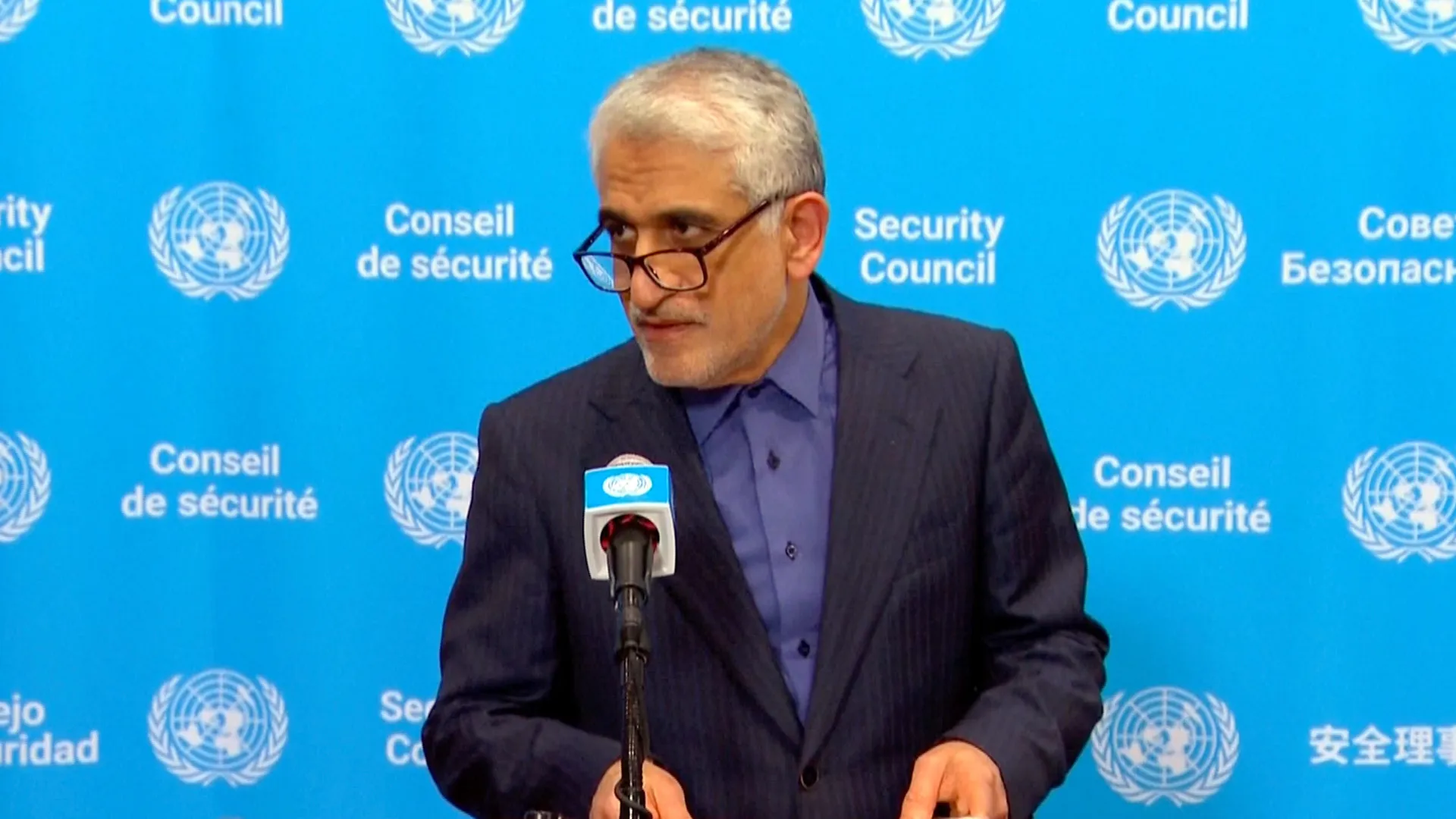
Iran’s UN ambassador Amir Saeid Iravani said Tehran will not close the Strait of Hormuz and remains committed to freedom of navigation. His remarks came after Supreme Leader Mojtaba Khamenei said the waterway would remain closed to pressure Iran’s enemies. 

Source link

UN fact-finding mission warns of continued human rights abuses in Venezuela | Human Rights News

A United Nations fact-finding mission has concluded that “there are no indicators of structural reforms or change” to improve the human rights situation in Venezuela, despite the removal of its leader in January.

On Thursday, a member of the fact-finding mission, Maria Eloisa Quintero, delivered remarks (PDF) to the UN Human Rights Council questioning whether Venezuela’s leadership would face accountability for its record of human rights abuses.

Recommended Stories

list of 3 itemsend of list

She also pointed to ongoing abuses under the government of interim President Delcy Rodriguez, who was sworn into office on January 5.

“Civic and democratic space remains severely restricted. Civil society organizations, the few remaining independent media outlets, and political actors continue to face attacks, harassment or intimidation,” Quintero wrote in her statement.

“The prospects for full guarantees necessary for free and democratic elections remain remote.”

All told, the fact-finding mission found that at least 87 people have been detained since January.

Fourteen of them were journalists who were temporarily taken into custody while covering Rodriguez’s inauguration, and another 27 were reportedly arrested for celebrating the fall of Rodriguez’s predecessor, Nicolas Maduro.

The fact-finding mission revealed that at least 15 of the recent arrests involved children.

A violation of international law

Its report was one of the first international assessments of human rights under Rodriguez’s nascent presidency.

She took office after the United States launched a military operation in the early morning hours of January 3 to abduct Venezuela’s then-President Maduro. Previously, Rodriguez had served as Maduro’s vice president.

Maduro and his wife Cilia Flores currently remain imprisoned in New York, where they face charges of drug trafficking and weapons possession.

The US has backed Rodriguez’s ascent to the presidency. Both her government and that of US President Donald Trump have said there is no immediate plan to hold a new election in Venezuela, citing the need for stability.

Quintero emphasised that it was the view of the fact-finding mission that the US operation “violated international law”, echoing the legal consensus.

“While the Mission has reasonable grounds to believe that Nicolas Maduro is responsible for crimes against humanity committed against the civilian population, this does not justify an unlawful military intervention,” Quintero wrote.

Her remarks also pointed out that, while Maduro may be gone, the rest of his government remains.

That government has faced repeated accusations that it perpetrated violence against members of Venezuela’s political opposition and others deemed critical of the country’s socialist leadership.

“The legal instruments that have long served as a basis for political persecution remain fully in force,” Quintero said.

“State institutions that played a key role in the repression — and which have been identified in previous Mission reports — have not been reviewed or reformed.”

Human rights groups have collected thousands of reports of arbitrary detention, as well as torture and extrajudicial killings, under Maduro, who served as president from 2013 until January.

Members of Venezuela’s opposition have also called for the removal of the existing government, which they say fraudulently claimed victory in the 2024 presidential race, despite vote tallies indicating otherwise.

Limits to ‘positive’ steps

At first, Quintero said the fact-finding mission found that developments under Rodriguez “initially appeared encouraging”.

She pointed to “positive” steps like the release of political prisoners and passage of an amnesty law that would lift criminal penalties for dissidents facing certain criminal charges.

But the benefits of those steps, she said, were mitigated by irregularities. The amnesty law was narrow in scope — only addressing certain accusations, made within a specific time range — and the bill never received a full, public reading.

Meanwhile, the government has claimed to release more political prisoners than has actually been verified by local human rights groups.

Quintero added that the fact-finding mission also found that 30 officials from Venezuela’s Scientific, Criminal and Forensic Investigations Corps (CICPC) — part of the national police agency — were detained for failing to produce false evidence about the US’s attack on January 3.

Their family members, she indicated, also faced government retaliation. The fact-finding mission called for more changes to be made to address the continued human rights abuses.

“A far deeper and more enduring transformation is required so that the population can trust that the long years of repression and violence have truly come to an end,” Quintero wrote.

Instead, she warned that the existing “machinery” of repression is simply “mutating” to adapt to the new reality in Venezuela, post-Maduro.

Source link

BBC drops first look at ‘violent’ thriller by Baby Reindeer creator

Baby Reindeer creator Richard Gadd is back for his first drama since the multi-award winning Netflix series.

BBC is set to release an “intense” drama that explores “brotherhood, violence and the fragility of male relationships”.

In 2024, Netflix subscribers went mad for Richard Gadd ’s gripping drama Baby Reindeer revolving around a comedian dealing with his obsessive female stalker.

Now, two years on, Richard Gadd is back for the first time since the Netflix hit’s release with the BBC revealing details for its upcoming drama Half Man.

Filming for the original six-part drama wrapped up last year in and around Glasgow with the series set to launch in April on BBC One and BBC iPlayer in the UK and on HBO Max in the US.

Gadd will star in Half Man alongside BAFTA winning actor Jamie Bell, famed for All of Us Strangers and Rocket Man, with the pair portraying Ruben and Niall, respectively.

The official synopsis reads: “Niall and Ruben are brothers. Not related in blood but the closest you can get. One, fierce and loyal. The other, meek and mild-mannered. Inseparable youth.

“Brought into each other’s lives through death and circumstance, all they have is each other…

“But when Ruben turns up at Niall’s wedding three decades later, everything seems different.

“He is on edge. Shifty. Not acting like himself. And soon, an explosion of violence takes place which catapults us back through their lives, from the eighties to the present day.”

Half Man, which has been created and written by Gadd, will follow Ruben and Niall throughout the past 30 years of their lives, exploring “brotherhood, violence and the intense fragility of male relationships”.

For the latest showbiz, TV, movie and streaming news, go to the new **Everything Gossip** website.

The synopsis concludes: “After all, when things fall apart… it is sometimes the closest relationships which break the hardest.”

Gadd and Bell aren’t the only familiar faces starring in Half Man either with an abundance of other familiar faces joining the cast.

These include SAS Rogue Heroes actor Stuart Campbell, Rivals’ Charlie De Melo, The Nevers star Amy Manson, Outlander actor Tim Downie and T2 Trainspotting’s Scot Greenan, to name just a few.

Half Man will debut in April on BBC One and BBC iPlayer.

Source link

Ex-rapper Balendra Shah sweeps to power in Nepal landslide election victory | Elections News

Rastriya Swatantra Party, founded just four years ago, set to dominate new parliament with near two-thirds majority.

A political party led by a rapper-turned-politician has won a sweeping parliamentary majority in Nepal, official results show, capping one of the most dramatic elections in the country’s recent history.

The Rastriya Swatantra Party of Balendra Shah, a 35-year-old former civil engineer and hip-hop artist known simply as “Balen”, secured 182 seats in the 275-member lower house of parliament, the Election Commission said on Thursday, with 125 won directly and a further 57 through proportional representation.

Recommended Stories

list of 2 itemsend of list

The Nepali Congress party finished in second place, with 38 seats. The Marxist party of veteran four-time Prime Minister Khadga Prasad Sharma Oli, whose government was ousted in a youth-led uprising last year, won just 25 seats.

Shah himself defeated the 74-year-old Oli in his own constituency.

Oli, who had dominated Nepali politics for years, congratulated his rival on X, wishing him a “smooth and successful” term.

The September 2025 protests that reshaped the country’s political landscape were initially set off by a government ban on social media, but rapidly swelled into a mass movement against corruption and economic stagnation, leaving at least 77 people dead.

Shah, whose music had long targeted those same grievances, emerged as a figurehead of the unrest, his song Nepal Haseko, or Nepal Smiling, accumulating more than 10 million YouTube views during the turmoil.

His path to likely prime minister, from engineer to rapper to Kathmandu’s first independent mayor in 2022, reflects a generational shift in a country where more than 40 percent of the nearly 30 million population is under 35, yet whose established party leadership has long remained in its 70s.

Shah said his victory was a signal of refusal to take “the easy way out” and a reckoning with the “problems and betrayals that have affected the country.”

The RSP, founded the same year as his mayoral win, ran a highly organised campaign backed by diaspora funding, particularly from Nepali communities in the United States.

Nepalese journalist Pranaya Rana described Shah to Al Jazeera as embodying “the outsider spirit that many young Nepalis are looking for to shake up the status quo.”

India’s Prime Minister Narendra Modi called the vote a “proud moment” in Nepal’s democratic journey, pledging close cooperation with the incoming government.

Under Nepal’s constitutional process, parties must now submit names to fill proportionally allocated seats before parliament is formally summoned by the president. A new prime minister, who will need the support of at least half of all members, is not expected to be confirmed for several days.

Source link

KC-135 Tanker Crashes In Iraq During Operation Epic Fury Sortie

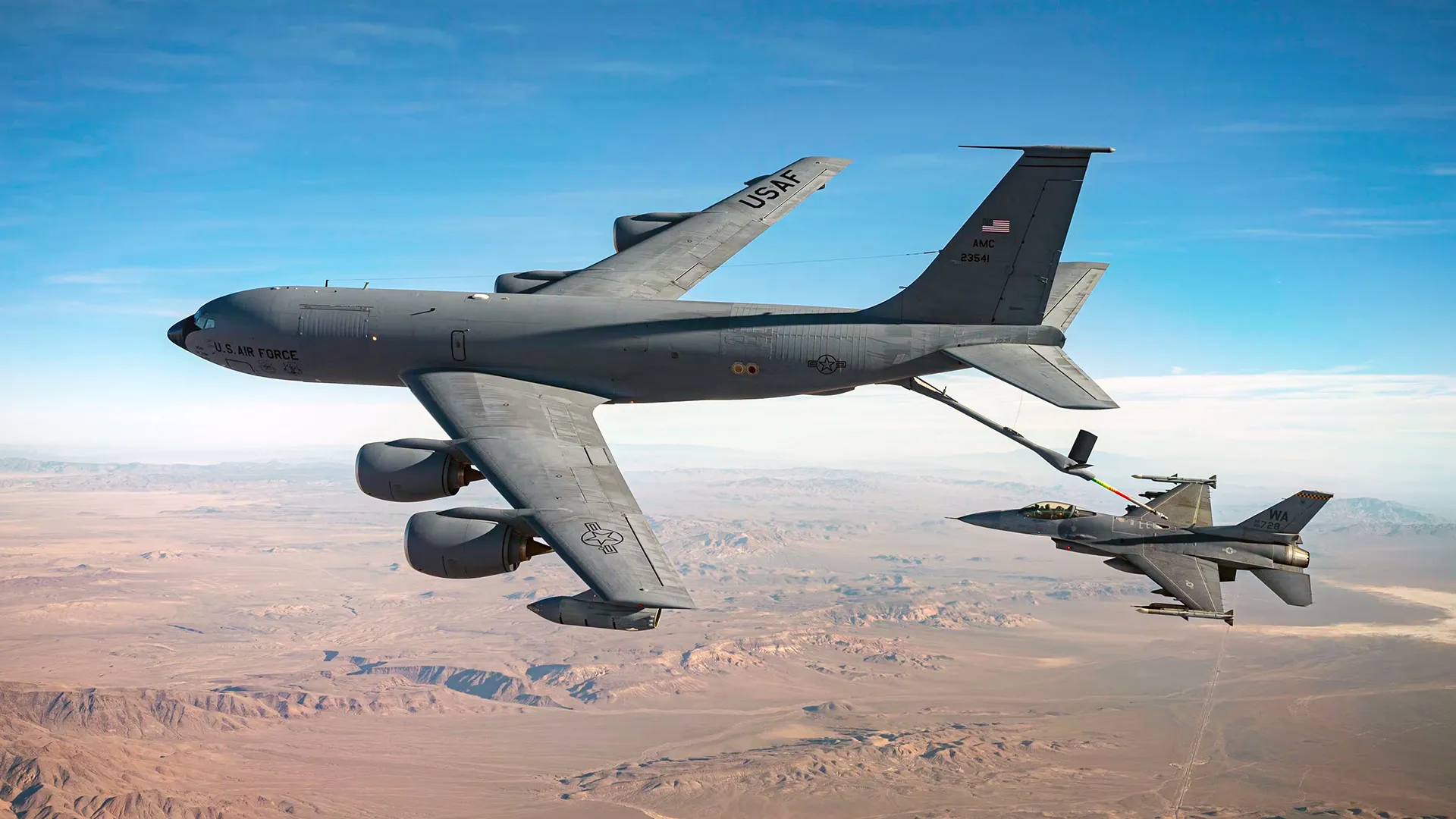
A KC-135 Stratotanker that was taking part in Operation Epic Fury has crashed in Iraq, U.S. Central Command announced.

“U.S. Central Command is aware of the loss of a U.S. KC-135 refueling aircraft,” the command stated Thursday afternoon in a media release. “The incident occurred in friendly airspace during Operation Epic Fury, and rescue efforts are ongoing. Two aircraft were involved in the incident. One of the aircraft went down in western Iraq, and the second landed safely.”

“This was not due to hostile fire or friendly fire,” the CENTCOM statement added. “More information will be made available as the situation develops. We ask for continued patience to gather additional details and provide clarity for the families of service members.”

U.S. Central Command is aware of the loss of a U.S. KC-135 refueling aircraft. The incident occurred in friendly airspace during Operation Epic Fury, and rescue efforts are ongoing. Two aircraft were involved in the incident. One of the aircraft went down in western Iraq, and the…

— U.S. Central Command (@CENTCOM) March 12, 2026

Three American crewed aircraft are known to have been lost during Operation Epic Fury prior to today’s KC-135 loss. These were F-15Es that were shot down in a bizarre friendly fire incident.

This is a developing story. We will update this post with new information as soon as we get it.

UPDATE: 6:15 PM EDT –

The Times of Israel has reported that the second aircraft involved was another KC-135. That outlet also says that the KC-135 in question was one that landed at Israel’s Ben Gurion Airport earlier in the day after declaring an in-flight emergency. Online flight tracking data shows that tanker is a KC-135RT variant, one of a small subset of KC-135Rs that are themselves capable of being refueled in flight. This, in turn, allows them to make use of tanker support themselves to remain on station longer or to conduct longer-distance missions. You can read more about these “receiver-tankers” in this past TWZ feature.

The second tanker involved in the incident landed at Ben Gurion Airport earlier this evening. The aircraft had sent a “squawk code” of 7700, an international emergency signal, according to flight tracking data.

— Emanuel (Mannie) Fabian (@manniefabian) March 12, 2026

The loss of a KC-135 today appears to be the first time one of these tankers has crashed in support of combat operations since May 3, 2013, when one went down over Northern Kyrgyztan, killing all three crew aboard. That aircraft had been supporting operations over Afghanistan.

This is the first loss of a KC-135 in support of combat operations since 3 May 2013 when KC-135 63-8877 of the 22nd ARW suffered a structural failure and crashed over Northern Kyrgyzstan after supporting operations in Afghanistan killing all 3 crew members. https://t.co/sn7G8itmwP

— TheIntelFrog (@TheIntelFrog) March 12, 2026

UPDATE: 7:09 PM EST –

Reuters also reports that the second aircraft was a KC-135 and added that the jet that crashed had six service members on board.

An official says the other aircraft, which is safe, was a KC-135. There were six service members onboard the aircraft which crashed. https://t.co/0AYR1TSjUu

— Idrees Ali (@idreesali114) March 12, 2026

Contact the author: howard@thewarzone.com

Howard is a Senior Staff Writer for The War Zone, and a former Senior Managing Editor for Military Times. Prior to this, he covered military affairs for the Tampa Bay Times as a Senior Writer. Howard’s work has appeared in various publications including Yahoo News, RealClearDefense, and Air Force Times.


Joseph has been a member of The War Zone team since early 2017. Prior to that, he was an Associate Editor at War Is Boring, and his byline has appeared in other publications, including Small Arms Review, Small Arms Defense Journal, Reuters, We Are the Mighty, and Task & Purpose.


Source link

The Apprentice’s Lord Sugar calls out ‘nasty move’ as candidate admits ‘regret’

Tensions rose in The Apprentice as a candidate shared a decision he would “regret for the rest of my life”.

BBC The Apprentice said goodbye to yet another candidate this week but not before Lord Sugar addressed someone’s “slimey” actions.

In week seven of the hit BBC business show, the remaining candidates took on virtual reality fitness where they were tasked with building demos and brands before chasing investment.

Unfortunately, when it came to the boardroom, it was game over for Team Eclipse, headed up by project manager Lawrence Rosenberg who scored an investment four times lower than Team Alpha.

The drama really began in the boardroom when it came to Lawrence choosing who he would be bringing back with him.

He first decided to pick Rajan Gill for his “lack of contributions” before sharing the controversial reason for his second choice of Levi Hague.

Lawrence said: “With respect Lord Sugar, I think you have made it quite clear about your mind on Levi so I will need to bring back Levi as well.”

Prior to his decision, Lord Sugar had questioned Levi what he had achieved in the past seven weeks of the process but despite his own reservations, The Apprentice legend wasn’t happy with this “naughty”, tactic.

“This is not how this process is supposed to work, you’re supposed to bring people back in who you think did not contribute to this task.”

Lord Sugar described it as a “nasty move” with Lawrence apologetically saying that “I’ll regret it for the rest of my life”.

The Apprentice legend said he was going to be “fair” to Levi though and keep him for another week, putting him forward as next week’s project manager with the candidate laughing “happy days”.

Despite this business between Lawrence and Levi, it was actually Rajan’s turn to be fired for his lack of contributions to the task.

This didn’t stop Lord Sugar from giving Lawrence one last telling off though as he warned: “You were this close to getting out of here.”

The drama wasn’t quite over yet though as when the saved pair went back to the house, Lawrence admitted to the rest of the group that he was “beyond embarassed”, having made a “weak decision”.

Levi wasn’t going to let him off the hook just yet though as he simply stated to the remaining candidates: “Don’t ever use me as a scapegoat in there, don’t ever do that to me.”

The Apprentice continues every Thursday at 9pm on BBC One.

For the latest showbiz, TV, movie and streaming news, go to the new **Everything Gossip** website.

Source link

Retired U.S. Air Force major general missing in New Mexico for 2 weeks

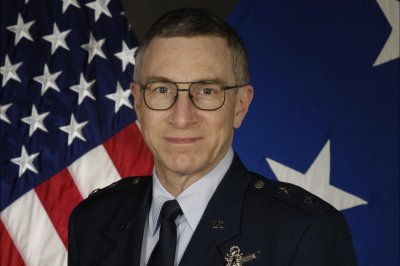
Retired U.S. Air Force Maj. Gen. Neil McCasland has been missing since February 27. File Photo courtesy of the FBI

March 12 (UPI) — Law enforcement officials in New Mexico said they’ve been searching for a 68-year-old retired U.S. Air Force major general who was reported missing last month.

William “Neil” McCasland was last seen at his Albuquerque home Feb. 27, the Bernalillo County Sheriff’s Office said in a post on Facebook. The department issued a silver alert searching for the man, saying it wasn’t clear what kind of clothing he was wearing nor what direction he might have traveled.

“Due to his medical issues law enforcement is concerned for his safety,” the sheriff’s office said.

The FBI’s Albuquerque field office said it was unusual for McCasland to be out of touch from his family for this length of time. The FBI said it believes he left his home on foot and doesn’t expect foul play.

“We are, however, utilizing all possible resources including advanced technologies, and still considering all possible scenarios as we follow up on leads towards locating Neil,” the FBI said in a Facebook post on March 6.

The sheriff’s office said it had searched McCasland’s neighborhood, speaking to more than 600 homeowners in the area.

Source link

Hugo Chávez: Truth as a Form of Struggle

Chávez never shied away from self-criticism and taking responsibility for his actions. (Archive)

In these times when it is once again fashionable to accuse Commander Chávez of mistakes, whether real or imagined. As we mark 13 years since his untimely death on March 5, 2013, I would like to highlight the value of truth in his political actions. Truth was manifest in the responsibility he assumed for his actions; the consistency between his words and deeds; the acknowledgment of his own mistakes, when it is easier for most people to point out the mistakes of others; and his sincere efforts to correct them. To the above, I would add that when he had to make tactical and strategic shifts in the course initially set, Chávez always had the political honesty to explain in detail why he was doing so, and he courageously took responsibility for them before the people.

There are countless examples which can be found in many of his speeches. I will mention just a few. Beginning with the day of his introduction to the Venezuelan people, February 4, 1992: “Unfortunately, for now, the objectives we set for ourselves were not achieved in the capital city, that is, we here in Caracas did not manage to control power… And I, before the country and before you, take responsibility…” Then in the streets and in the 1998 election campaign: “Let’s go to the Constituent Assembly,” and on February 2, 1999, in what would be his first act of government, he signed the decree calling for the constituent process, and we went to the Constituent Assembly.

In April 2002, he surrendered to the coup leaders, without thinking about saving his own “skin”: “I am an imprisoned president; you decide what to do with me.” After his release, with a cross in his hand, he stated that “it was necessary for all sectors of the country to make a greater effort, with all the goodwill we can muster, to be able to live together in peace, accepting the rules of the game.”

In 2005, he called for the Bolivarian Revolution to take on a socialist character. In the 2006 election campaign, he said, “Let’s go for socialism!” and explained in detail why this strategic shift was necessary. He outlined the characteristics of our socialism, 21st-century Bolivarian socialism, which, as he insisted until his last public words, had to be “essentially democratic” or it would not be socialism at all.

In the elections of December 6, 2006, Commander Chávez obtained the highest number of votes and was re-elected. In December 2007, while awaiting the results of the referendum on constitutional reform and hearing reports of a close count, he called a meeting of the party leadership in Miraflores. I said to him at that meeting: “President, let’s wait for the final count, and if we lost, we lost, but if we won, we won.” He replied with a sharp look: “I don’t want a victory like that, let’s go out and acknowledge defeat now.” And that’s what he did.

In September 2010, we won a majority in the National Assembly. Without a doubt, it was a resounding political victory. But Chávez identified a warning sign: in quantitative terms, the difference in votes between Chavismo and the opposition was minimal. Once again, he assumed political responsibility. In January 2011, he published the “Strategic Lines of Political Action,” a deeply self-critical document.

Late May 2011, he told me: “Elías, I feel like something is wrong with me.” June 2011, after undergoing the necessary tests, on national television: “Cancer cells have been detected in my body.” Easter Week 2012, during a mass in Barinas, broadcast live: “We must be aware that I have an illness that limits my life… Christ, give me your cross.”

On the night of December 8, 2012, in a public address, he raised the possibility of not continuing among us and explained in detail the constitutional procedures that would have to be followed if he were to be permanently incapacitated. That day, once again, he decided to tell us the truth, no matter how hard it was:

Some colleagues told me it wasn’t necessary, or have said in recent hours that it wasn’t necessary to say this. In truth, I could have said almost everything I said tonight from Havana… But I believe that the most important thing, what my soul, my heart, and my conscience tell me, the most important thing… has been this, Nicolás. The most important thing.

“The most important thing”: telling the truth, explaining the reality to the people, the decision he had made, and the steps that needed to be taken.

But that political honesty was not just an individual value. It was the political conviction that the people formed a collective wisdom, a conscious body that knew how to understand and draw its own conclusions about situations. That is why he was so careful to keep them informed at all times.

I once heard him say: “There are those who say that you shouldn’t speak plainly to the people, because then the adversary will seize on that truth and manipulate it against you.” That, Chávez said, is to think that the people are mentally eunuchs. The people understand, more often than not, more than some leaders. For Chávez, speaking the truth was always a decisive show of trust and respect for the people.

And “most importantly,” it was also to make clear for posterity his conviction about the democratic path of the revolution he had led:

In all circumstances, we must guarantee the progress of the Bolivarian Revolution, the victorious progress of this revolution, building the new democracy that is here mandated by the people in the Constituent Assembly; building the Venezuelan path to socialism, with broad participation and ample freedom, which are being demonstrated once again in this gubernatorial election campaign, with candidates here and candidates there. Freedom, complete freedom.

With the power of truth, the truth of his project and his life, Chávez managed to accumulate immense political strength based on the moral autoritas he gained by never peddling falsehoods or shirking his responsibilities, much less in defeat or when he made mistakes. That same moral authority comes not only from consistency between words and deeds, but also from trying to act despite difficult circumstances as well as from recognizing and explaining when and why it is not possible to achieve a certain goal. I stand by that way of doing politics. With Chávez forever!

The views expressed in this article are the author’s own and do not necessarily reflect those of the Venezuelanalysis editorial staff.

Translated by Venezuelanalysis.

Source: CEDES

Source link

Amber Davies breaks silence with sharp statement amid ‘feud’ with Legally Blonde co-star

Amber Davies has broken her silence on an alleged feud with her Legally Blonde co-star Hannah Lowther amid rumours of ‘backstage tension’

Amber Davies has broken her silence on her alleged feud with her Legally Blonde co-star Hannah Lowther. The former Love Island star has been forced to pull out of her starring role as Elle Woods.

Giving an update to fans about her ill health, she wrote on Instagram earlier today: “Ok update: after talking to my DR, being on antibiotics and trying to recover whilst doing shows is getting me and my health NOWHERE. Been working on this lingering illness for a month now so I’ll be off again from my beautiful Elle Woods.

“This is the last thing I want but there’s no other way. I fear if I keep “pushing through” I will be battling with this for longer than I need to be. I can’t wait to be back on stage and feel like me again!!!”

However, there have been rumours about a feud between Amber and her co-star Hannah Lowther. Hannah found fame on TikTok in the pandemic and is a successful musical theatre star.

Insiders have said to the Daily Mail that “tension” had developed backstage after audiences seemed to be preferring Hannah’s portrayal of Elle over Amber’s. A source said: “When Hannah goes on, the energy is completely different.

“She gives it ten times more energy than Amber ever has, and just has that sparkle that Amber lacks. Everyone backstage is professional, but it would be fair to say the atmosphere between the two girls can be a bit tense at times.”

Now, Amber has appeared to address the feud head on. Taking to Instagram to comment on Hannah taking on the role, she also shared a personal message to Hannah, writing: “An extra special appreciate message to @hannahlowther who has given me all the grace and space to be poorly and recover. The show is in safe hands ALWAYS.”

Amber previously spoke out to defend herself, given her hectic schedule in the recent months. She added: “Also I keep having to remind myself I went from Gatsby, to a last min Strictly, then to Elle so my body’s evidently fighting for its life.

“I also keep reminding myself that it’s ok to be poorly, we are human. Just a reminder there’s absolutely never a right time to be poorly in a musical theatre schedule so you must, for your own sanity, go with the flow!”

At the time of writing, Hannah has not responded to the post but confirmed she would be playing Elle this evening.

Like this s tory? F or more of the latest showbiz news and gossip, follow Mirror Celebs on TikTok , Snapchat , Instagram , Twitter , Facebook , YouTube and Threads .


Source link

Moon project delays among barrage of challenges for NASA

March 12 (UPI) — The recent, new delay in NASA’s moon landing program represents the latest in a string of technical, budgetary, workforce and public perception challenges that plague the space agency, a UPI analysis shows.

When flight officials pulled the Artemis II Space Launch System and Orion spacecraft off the launch pad at Kennedy Space Center on Feb. 25 after a recurrence of helium flow problems and pushed the launch back to April at the earliest, it served as another reminder of the space agency’s current assortment of formidable problems.

Those issues include a moon program whose timeline keeps slipping; recurring technical failures and cost overruns with its flagship SLS rocket; a commercial lander — SpaceX’s Starship — that has yet to demonstrate reliability; the effective grounding of the Vulcan Centaur rocket made by United Launch Alliance; the departures of thousands of NASA workers and turnover in its top leadership positions.

The agency announced March 3 it had identified the latest problem with Artemis II as a faulty helium seal in the SLS upper stage, and that it is repairing the assembly, as well as making other fixes to the spacecraft.

But meanwhile, the lag time since the last crewed U.S. spaceflight has now stretched to three full years. This lengthy drought has prompted outside analysts and NASA officials to worry about how public support for the space program is being affected.

“When missions occur every few years, it is easy for people to lose interest,” said Burt Dicht, a leader of the National Space Society, who added he backs a newly announced NASA effort to increase the frequency of launches.

The latest delay has prompted a fresh look at some of the major challenges facing the space agency’s moon effort, as well as more general problems.

Headwinds with partners, personnel issues

One of the more pressing issues with the Artemis program is its dependence on SpaceX’s Starship Human Landing System, or HLS, as the initial human lander that will put the first U.S. astronauts on the lunar surface.

Elon Musk’s company signed a contract with NASA in 2021 to provide the lander, but struggled in 2025 to perfect the mammoth Starship V3 rocket necessary for a key element of the HLS mission, according to a report issued by NASA’s Aerospace Safety Advisory Panel and released last month.

The Starship V3 incorporates upgraded Raptor engines to provide it with the required performance for low-Earth orbit flight and on-orbit operations, and its development is deemed crucial for transferring fuel to an orbiting tanker.

How it performs will “ultimately determine the number of refueling missions required for the HLS mission,” which is now pegged at roughly 12 fueling flights, the report’s authors wrote.

“The development and test progress necessary for a version of Starship that has not yet flown in time to support a human lunar landing mission within the next few years appears daunting and, to the panel, probably not achievable,” they wrote.

SpaceX announced Feb. 26 that the first Starship V3 had left its build site at Boca Chica, Texas, and had begun prelaunch testing.

In 2023, NASA selected Blue Origin, owned by Amazon founder Jeff Bezos, to develop a second human landing system to compete with the HLS. Its Blue Moon Mark 2, to be launched aboard a New Glenn rocket, is to be tested twice and then carry a crew to the moon in late 2028.

New critical report

But NASA’s Office of Inspector General, in a report issued Tuesday, looked at both programs to carry astronauts to the moon and advised that the agency faces significant technical and programmatic risks that threaten mission timelines and crew safety.

The report said NASA is not fully adhering to “test like you fly” principles, particularly for uncrewed demonstration missions, and has not yet ensured that SpaceX’s Starship lander will meet manual control requirements for astronauts.

The inspector general also noted gaps in hazard‑mitigation planning and insufficient testing of critical systems, especially given the complexity of both SpaceX’s and Blue Origin’s lander architectures.

The report also warned that NASA the capability to rescue astronauts in the event of a life‑threatening emergency during lunar surface operations, echoing limitations from the Apollo era.

And it concluded that SpaceX and Blue Origin face technical challenges likely to cause additional delays, with SpaceX’s schedule slipping beyond its earlier 2027 target and even the revised 2028 goal remaining uncertain.

The report recommends stronger risk‑management practices, more realistic scheduling and more rigorous testing to ensure crew safety and mission success.

Meanwhile, NASA’s larger operations also could be affected by problems encountered in the new Vulcan Centaur rockets made by United Launch Alliance.

Vulcan launches halted

The U.S. Space Force last week temporarily halted all national security launches using the rocket after the same booster malfunction occurred twice, according to comments made by Col. Eric Zarybnisky at a meeting last month in Colorado.

The Vulcan Centaur program was established by ULA to reduce costs and eliminate reliance on the current workhorse Atlas V Russian-supplied RD-180 engine and is primarily meant to meet U.S. military needs.

But the program benefits NASA as well, giving it greater flexibility and transport capability for launching of payloads, the space agency said.

NASA also continues to struggle with an exodus of workers, including thousands of crucial senior staff, which some analysts believe is impacting its moon and Mars exploration goals due to a loss of expertise.

Nearly 4,000 agency employees last year chose to accept “deferred resignations” as part of the Trump administration’s efforts to slash the federal workforce — a move that reduced NASA’s employee roster by more than 20% to some 14,000, NASA spokesperson Cheryl Warner told NPR in June.

Still, even amid all of those issues, the agency was able to dodge the biggest potential bullet of them all — a proposed 24% reduction in its budget issued by the White House, which would have been the biggest cut in agency history.

That threat all but evaporated when Congress agreed on a $24.4 billion NASA spending bill in January, representing a mere 1.7% budget reduction.

The NASA administrator’s job itself remained unfilled throughout 2025, as President Donald Trump withdrew his nomination of Isaacman. Trump ultimately changed course, and Isaacman was confirmed by the Senate on Dec. 17.

Major changes for the Artemis program

Of all the difficulties faced by NASA, the technical problems and cost overruns of the Artemis program itself have emerged as perhaps the most high-profile.

The Feb. 25 postponement was the second recent delay for Artemis II, which is to send four astronauts on a “slingshot” fly-by around the moon. Last month, NASA pushed back the launch to March after engineers discovered what they called a significant hydrogen leak during a wet dress rehearsal.

NASA said Thursday it plans to roll the Artemis II Space Launch System rocket and Orion capsule back out to the launchpad next week, aiming for a launch in April.

The rollout wis to begin March 19, with an eye at launching as early as the evening of April 1, NASA officials said during a press briefing.

The original target date for landing astronauts on the moon — 55 years after the United States first did it — was 2024. When that was announced in 2019, many observers thought the target date was too optimistic.

The effort’s total cost after NASA recently added nine new elements now exceeds $20 billion, the Government Accountability Office reported last summer. Three of those elements have racked up a total of $7 billion in cost overruns.

NASA has made efforts to get a handle on the overruns through its Moon to Mars Program Office, the GAO said, but warned that each new delay to mission dates can create a cascading effect of increased costs across multiple programs that function independently of each other.

Clear warnings

And in its report from last month, the NASA safety panel sounded clear warnings about the “ambitious timeline” for developing the Human Landing System, given its “intricate operational design” and :complex concept of operations,” as well as other serious safety concerns surrounding the Artemis program.

Taken together, the issues posed a “high safety risk,” the panel concluded, which “casts doubt on the current Artemis III timeline and the feasibility of the Artemis III mission goals.”

In the wake of the latest issues, Isaacman announced a major revamp of Artemis under which the expected moon landing was pushed back from Artemis III in 2027 to Artemis IV in 2028.

“We have to rebuild core competencies,” he told reporters Feb. 27, blaming the repeated delays on too-infrequent launch schedules (known as the “launch cadence”), which he said causes “muscle memory” to “atrophy.”

“This is just not the right pathway forward,” he asserted, while revealing that a moon landing with Artemis III in 2027 has been deemed too ambitious and will instead now be attempted with Artemis IV in 2028.

Artemis III will instead now serve as a mission to perform tests on connecting with lunar landers in low-Earth orbit, as well as to test equipment that will go on Artemis IV.

Meanwhile, to bump up the launch cadence to once every 10 months rather than every three years, Isaacman announced a standardization of the SLS rocket fleet to “essentially near ‘Block-1’ configuration.”

The idea, he said, is to reduce the complexity of the massive rocket and to “accelerate manufacturing, pull in the hardware and increase launch rate, which obviously has a direct safety consideration to it, as well. You get into a good rhythm launching with greater frequency, you get that muscle memory.”

To do that, he added, “we need to rebuild and strengthen the workforce here at NASA. … We have to rebuild core competencies. The ability to turn around our launch pads and launch with frequency greater than every three years is imperative,” he said, pointing to the histories of the Mercury, Gemini, Apollo and Space Shuttle programs, when “the average launch cadence was closer to three months.”

The decision to simplify and standardize the SLS starting with Artemis IV also means the agency will no longer need to use the $1.5 billion Mobile Launcher 2 at Kennedy Space Center, which is still under construction and has faced its own cost overruns and delays.

Experts’ reactions

Experts who have been closely following the development of Artemis expressed a range of opinions about whether the latest moves are the right ones for the moon program and the U.S. space program generally.

Kenny Evans, a fellow in science, technology and innovation policy at Rice University’s Baker Institute for Public Policy in Houston, told UPI the glitches and the resulting negative perceptions of the program are indeed tied to the drawn-out launch cadence.

“The extended periods between SLS launches have given NASA fewer chances to test out hardware — and less cover for when things go wrong,” he said. “That has long been a valid criticism of the SLS program and a source of bad press — for example, the fueling issues in prior wet dress rehearsals.

“Working out kinks, as visible and expensive as they are, should be seen as net positives rather than programmatic failures,” he said.

“Frankly I’m relieved to see the timeline revamp,” Evans added. “The Artemis schedule Isaacman inherited had absolutely no chance of meeting its prior targets, and I’ve been impressed by his willingness to address the hard truths about the program.

“In terms of safety, making Artemis III a system test will provide NASA a much needed opportunity to remove as much risk as possible before attempting a lunar landing for Artemis IV,” he said while noting he is “particularly enthusiastic” about the NASA leader’s stated commitment to strengthening its workforce, “especially in light of cuts to agency staff.”

Meanwhile, the National Space Society’s Dicht, said his interactions with students, engineers, long-time space advocates and the public have shown him there is “real enthusiasm for progress in the space program,” but that new momentum is needed.

“I believe NASA Administrator Isaacman’s proposals to improve launch cadence, strengthen the workforce and standardize the SLS are positive steps that can help stabilize the Artemis program and move it toward a sustained return to the moon,” Dicht said.

“Whether it is SLS or any other rocket, these are extraordinarily complex machines,” he said. “Increasing the cadence of launches and ensuring the workforce is well-trained and consistently engaged helps build the operational experience, or ‘muscle memory,’ that improves reliability and the likelihood of mission success.”

While there is steady and palpable excitement over humankind’s first return to the moon since 1972 among committed enthusiasts, “there remains a segment of the public, including some social media influencers, who interpret technical issues as a sign that the program is failing,” he said.

“When missions occur every few years it is easy for people to lose interest,” Dicht said. “If the program can move toward a more regular rhythm, possibly two flights per year, it will attract attention and reinforce the sense that progress is being made.”

Similar to Apollo 9

Spaceflight historian and science author Amy Shira Teitel, creator of The Vintage Space YouTube channel, said the revamp “doesn’t particularly surprise me,” noting the decision to change Artemis III’s moon landing mission into a test flight is reminiscent of Apollo 9 in March 1969.

In that mission, a three-astronaut crew carried out vital tests while in low-Earth orbit to prepare for the historic Apollo 11 moon landing four months later.

“The plan to land Artemis III while still not having the lander ready or even chosen, from what I could tell, seemed like trouble waiting to happen, so the idea of going back to Apollo 9 and testing the hardware/mission in Earth orbit seems both safe and like it should have been the first step before going to the moon,” she told UPI in emailed comments.

The author of Breaking the Chains of Gravity: The Story of Spaceflight before NASA has questioned the overall purpose, cost and broader implications of the moon-to-Mars effort, contending it lacks a compelling justification other than “going for the sake of going” while the highly successful and popular International Space Station is scheduled to be scrapped in 2030.

All of the Artemis changes, Teitel said, are “emphasizing how hard it is, and how insane it is to be looking at canceling the ISS without a replacement and just focusing on the moon-to-Mars pipeline without any kind of long-term infrastructure or planning.

“And the endless issues with SLS — why are we adding more launches?” she asked. “We know this system is flawed. It feels like retrofitting a mission into the hardware to justify the … launch cost.”

NASA’s Space Launch System rocket emerges on Saturday morning from the Vehicle Assembly Building to start its journey to Launch Complex 39B at the Kennedy Space Center in Florida. Photo by Joe Marino/UPI | License Photo

Source link

Advocates push for major probe as US boat strikes in Latin America kill 157 | Donald Trump News

Washington, DC – In September, the United States began launching dozens of deadly military strikes against alleged drug-smuggling boats in the Caribbean Sea and eastern Pacific.

Nearly half a year later, remarkably little is known about the strikes. The identities of the nearly 157 people killed have not been released. Any purported evidence against them has not been made public.

Recommended Stories

list of 3 itemsend of list

But a group of United Nations and international law experts are hoping to change that on Friday, when they testify at the Inter-American Commission on Human Rights (IACHR).

The international hearing will be the first of its kind since the strikes began on September 2, and rights advocates hope it can help lead to accountability as individual legal cases related to the strikes proceed.

Steven Watt, a senior staff lawyer with the American Civil Liberties Union’s human rights programme, said the goal of the hearing will be threefold.

“Our ask will be to conduct a fact-finding investigation into what’s going on,” Watt said.

The second aim, he continued, would be “to assert or to arrive at a conclusion that there is no armed conflict here”, in what would be a rebuke to US President Donald Trump’s previous claims.

Finally, Watt said, he hopes the proceedings will yield long-sought transparency from the Trump administration on “whether or not they have a legal justification for these boat strikes”.

“We don’t think there are any,” Watt added.

‘We don’t know the names’

The experts set to testify at Friday’s hearing said the IACHR has a unique mandate to uncover the truth behind the US strikes.

The commission, based in Guatemala City, Guatemala, is an independent investigative body within the Organization of American States, of which the US was a founding member in 1948.

While the Trump administration has claimed it has a right to carry out the deadly attacks as part of a wider military offensive against so-called “narco-terrorists”, rights groups have decried the campaign as a series of extrajudicial killings.

They argue that Trump’s deadly tactics deny those targeted of anything that approaches due process.

Legal experts have also dismissed Trump’s claims that suspects in drug-related crimes are equivalent to “unlawful combatants” in an “armed conflict”.

Few details have emerged from the air strikes. Several families have come forward, however, to informally identify the dead as their loved ones.

Victims are said to include 26-year-old Chad Joseph and 41-year-old Rishi Samaroo, who were sailing home to Trinidad and Tobago when they were killed in October, according to relatives.

A complaint filed against the US government said both men travelled often between the islands and Venezuela, where Joseph found work as a farmer and fisherman, and Samaroo laboured on a farm.

The family of Colombian national Alejandro Carranza, 42, have also said he was killed in September when the US military attacked his fishing boat off the country’s coast.

The US has yet to confirm the victims’ identities, and only two survivors have ever been rescued in the 45 reported strikes.

A clearer picture of what happened will be a significant step towards accountability, according to experts like Watt.

“[The IACHR] is uniquely positioned to identify who all these persons are,” Watt said. “We just know the numbers from the United States. We don’t know the names or the backgrounds of these people.”

The IACHR has launched a range of human rights investigations in recent decades, including probes into the 2014 mass kidnapping of 43 students in Iguala, Mexico, and a series of murders in Colombia from 1988 to 1991 dubbed the Massacre of Trujillo.

The commission has also examined US policies, including extrajudicial detentions at Guantanamo Bay, Cuba, during its so-called “global war on terror”.

The IACHR has the power to seek resolutions to human rights complaints or refer them for litigation before the Inter-American Court of Human Rights.

Just last week, the court ordered Peru to pay reparations to the family of a woman who died during a government-led forced sterilisation campaign in the 1990s.

The Carranza family has filed its own complaint to the IACHR, and the families of Joseph and Samaroo have also lodged a lawsuit against the US in a federal court in Massachusetts.

Angelo Guisado, a senior staff lawyer at the Center for Constitutional Rights (CCR), said a fuller accounting of the US actions is needed to prevent future abuses. He is among the experts testifying on Friday.

“You can’t normalise assassinating fishermen off the coast of South America,” Guisado told Al Jazeera. “That’s just sadistic and an abomination to the rules-based order that we’ve created.”

“So we hope that the commission can do some investigation.”

A war against ‘narco-terrorists’?

One of Guisado’s goals for Friday’s hearing will be to unpack the Trump administration’s argument that the attacks are necessary from a national security standpoint.

Even before the US strikes began, the Trump administration began framing the Latin American drug trade as an existential threat to the US.

As part of that re-framing, the administration borrowed messaging from its “global war on terror”, taking the unorthodox approach of labelling several cartels “foreign terrorist organisations”.

Speaking last week at a meeting of Latin American leaders, White House security adviser Stephen Miller maintained there is no “criminal justice solution” to drug cartels.

Instead, he affirmed that the US would use “hard power, military power, lethal force, to protect and defend the American homeland”, even if that meant carrying out deadly operations throughout the Western Hemisphere.

Guisado, however, noted that the administration has admitted that the targeted boats were largely carrying cocaine, not the highly addictive fentanyl responsible for the majority of US drug overdoses.

He explained that the administration has done little to prove its claims that drug traffickers are part of a coordinated effort to destabilise the US.

Such hyperbolic language, Guisado added, could be used as a smokescreen to conceal illegal actions.

“When you invoke national security interest, it seems as if scrutiny and any legitimate analysis or condemnation gets pushed to one side in favour of an ersatz martial law,” Guisado said.

“The idea that you could just proclaim anyone a narcoterrorist and do whatever you want with them is just so repugnant to our system of fairness, justice and law.”

Watt, meanwhile, said he hopes the IACHR will draw a clear “line in the sand”, separating drug crimes from what is conventionally considered an armed conflict.

He also would like to see the IACHR clearly outline the US’s human rights obligations.

“But even if there was an armed conflict — of which there isn’t — the laws of war would prohibit the type of conduct that the United States is engaging in here,” Watt explained.

“It would be an extrajudicial killing. It would be a war crime.”

Transparency or accountability

Friday’s hearing will only be an initial step towards accountability, and critics question how effective the IACHR will ultimately be.

The US has regularly shrugged off human rights probes at international forums, and it is not party to entities like the International Criminal Court in The Hague, raising barriers to the pursuit of justice.

Despite being a member of the OAS, the US has also not ratified the American Convention on Human Rights, one of the organisation’s founding documents.

It is, therefore, unclear how binding any IACHR decisions could be, although Watt argued that it is “longstanding jurisprudence of the commission that the declaration imposes obligations on non-ratifying member states”.

Still, legal experts said Friday’s hearing may yield clarity on the Trump administration’s legal argument for the boat strikes.

The IACHR has said US government representatives are set to appear at the hearing.

To date, the US Department of Justice has not released the Office of Legal Counsel’s official reasoning for the boat strikes, considered the foundational legal document for the military actions.

A separate memorandum from that office addressed the US abduction of Venezuelan President Nicolas Maduro on January 3, which it framed as a drug enforcement action.

That memo touched on the boat strikes, but it only served to raise further questions about Trump’s rationale.

“This will be an opportunity for the United States to put its case before the commission,” Watt said.

“But of course, it depends on US cooperation,” he continued. “They’re going down there, but it’ll be interesting to see what they actually say”.

Source link

Universal to keep its movies in theaters for at least five weekends

Universal Pictures will now keep its new films in theaters for at least five weekends, a reversal from the studio’s previous policy of at least 17 days that was set during the pandemic.

The change takes place immediately, the studio said Thursday. That means it will apply to its newest film, the Colleen Hoover romance “Reminders of Him,” which is out in theaters this weekend. Other upcoming films include Christopher Nolan’s “The Odyssey,” which will be released in July.

“Our windowing strategy has always been designed to evolve with the marketplace, but we firmly believe in the primacy of theatrical exclusivity and working closely with our exhibition partners to support a healthy, sustainable theatrical ecosystem,” Donna Langley, chair of NBCUniversal Entertainment, said in an email to the New York Times, which first reported the news.

Focus Features, Universal Pictures’ specialty film arm, will keep its existing theatrical exclusivity policies, which vary on a case-by-case basis. Chloé Zhao’s “Hamnet,” for instance, was in theaters for 99 days, while 2024’s “Nosferatu” played for 58 days. The minimum is 17 days.

The amount of time films are available exclusively in theaters — known as “windowing” in industry jargon — has become a contentious topic of conversation in Hollywood.

That debate ramped up during the pandemic, when some studios shortened theatrical exclusivity periods in order to move films to release for video on demand or streaming.

Prior to the pandemic, those windows could be as long as 90 days. Now, the average is around 30 days.

Theater owners have argued that shorter windows cut into box office profits and train audiences to wait to watch a movie at home. Distributors have countered that a one-size-fits-all approach doesn’t necessarily work for smaller or mid-budget films, which may find a bigger audience via at-home viewing.

At last year’s CinemaCon trade conference, top theater lobbyist Michael O’Leary called on distributors to establish a minimum 45-day window, arguing there needed to be a “clear, consistent starting point” to set moviegoers’ expectations and affirm commitment to theatrical exclusivity.

The debate has become even more fierce as box office profits still have not recovered from the pandemic. Last year, theatrical revenue in the U.S. and Canada totaled about $8.87 billion, just 1.5% above 2024’s disappointing $8.74-billion tally.

Source link

ICC prosecutor clears U.S. in sanctions against Venezuela case

The International Criminal Court in The Hague, the Netherlands, has cleared the United States of crimes against humanity against Venezuela for sanctions. File Photo by Robin Utrecht/EPA

March 12 (UPI) — The International Criminal Court Office of the Prosecutor announced Thursday that the United States did not commit crimes against humanity with its sanctions against Venezuela.

The investigation, called Venezuela II by the court, was referred to the court by Venezuela’s government in 2020, alleging that sanctions against the country had caused suffering and hardship.

The referral from now-deposed President Nicolas Maduro alleges the suffering of Venezuelans from “the application of unlawful coercive measures adopted unilaterally by the government of the United States of America against Venezuela, at least since the year 2014.”

Venezuela alleged that “murder, extermination, deportation, persecution and other inhumane acts constituting crimes against humanity” were committed, the OTP said.

The ICC prosecutor determined that the “evidential requirements of causation and intent are not met.”

The evidence “must provide a reasonable basis to believe that sanctions by the United States of America led to murder, displacement or other alleged crimes,” the OTP said.

The decision is unrelated to the January 2026 events in Venezuela, the prosecutor noted.

In January, the United States invaded Venezuela, arrested Maduro and his wife and took them to Manhattan, where they await trial on drug trafficking charges.

The ICC prosecutor said it is still investigating “Venezuela I,” a case that doesn’t involve the United States.

Supporters of ousted Venezuela’s President Nicolas Maduro carry his portrait during a rally outside the National Assembly in Caracas, Venezuela, on January 5, 2026. Photo by Jonathan Lanza/UPI | License Photo

Source link

How will the war on Iran impact the US economy? | US-Israel war on Iran News

New York City, United States – Rising prices on the back of US-Israel strikes on Iran are adding to the economic pressure facing US consumers despite efforts by US President Donald Trump to paint the war as a success.

On Wednesday, Trump declared, “We won – in the first hour it was over.”

Recommended Stories

list of 4 itemsend of list

Trump’s declaration comes even as the Strait of Hormuz remains closed, cutting off oil from the Gulf amid warnings from Iran, which continues to strike ships, that oil could reach $200 per barrel.

Oil prices spiked above $100 per barrel on Sunday and again today.

The magnitude of the economic pressure on consumers will depend on how long the war lasts and, crucially, how soon shipping traffic can return to the Gulf.

“If it drags on and especially if it remains at this intensity, prices will be higher, and more volatile for consumers,” said Rachel Ziemba, an adjunct senior fellow at the think tank Center for a New American Security.

“If it ends quickly, and it’s a credible and stable end, then we could see prices fairly quickly normalising”.

If the war lasts more than a few weeks, however, observers say the US economy is more likely to see deepening impacts, like 1970s-style “stagflation” or a recession.

When might we see a recession?

On Thursday, the International Energy Agency said in a report that “the war in the Middle East is creating the largest supply disruption in the history of the global oil market.”

According to Sam Ori, who directs the Energy Policy Institute at the University of Chicago, in the past, when oil prices have reached 4 percent to 5 percent of gross domestic product and stayed elevated, “that’s always triggered a recession.”

The US will not hit that threshold as quickly as it would have in the 1970s, when its economy was more deeply dependent on foreign oil, Ori said, but added he expected a recession if prices remained about $140 a barrel for most of the year.

Alternatively, “the indefinite closure of the Strait of Hormuz would so vastly exceed that number, it would not take a year,” he said.

Ori, who used to run an oil shock war game for US officials, said he would have been “laughed out of the room” if he had proposed a scenario where the strait was closed for six months, because many analysts see it as “too big to fail”.

Ori says that assessment is still likely, but recent developments “are chipping away at that level of certainty”.

The Gulf, which separates the Arabian Peninsula and Iran, provides more than one-fifth of the world’s oil supply via tanker ships through the Strait of Hormuz.

The severity of that threat to the global economy is the “strongest indicator that this is going to get resolved pretty fast, because it’s impossible to fathom what would happen if it didn’t”, Ori said.

He added that the conflict has now entered a phase in which it may be moving out of US control, especially as some countries have turned off the oil wells as they run out of storage.

While those events have now been baked into oil prices, the things that he is on the lookout for include “successful mining of the strait, some kind of structural blockage, or a battlespace development that binds the US into a longer, drawn out conflict”, outcomes that could signal a total loss of the strait for an unknown amount of time and create the “conditions for a complete meltdown”.

Higher prices

The war is already driving petrol prices up for US consumers.

Patrick DeHaan, who leads petroleum analysis for the app GasBuddy, said that the national average as of Wednesday is now $3.59 per gallon ($0.95 per litre) – up 65 cents since February.

The highest increases are near the coasts, where US petrol, diesel and jet fuel supplies are more easily diverted to meet global demand, according to DeHaan.

An end to the conflict could lower petrol prices within weeks, DeHaan said, but “every week that this goes on, we could see another 25 to 40 cent increase”.

Robert Rogowsky, an adjunct professor at Georgetown University’s School of Foreign Service, said lower-income people in particular, “will pay the price for this inflationary burst”.

As the war continues, it will also nudge up prices for consumer goods.

Peter Sand, chief analyst for freight intelligence platform Xeneta, said the backup at the Strait of Hormuz is already causing congestion at ports worldwide.

In the short term, consumers should not feel much of a pinch, Sand said. But if the conflict lasts for a month, some goods will be delayed, “and of course, the price tag on those goods also goes up.”

The war also means that the Red Sea, mostly closed in 2025 due to Houthi attacks, will likely stay closed throughout 2026, Sand said. It was expected to reopen, which could have lowered consumer prices.

Oil and oil byproducts from the Gulf are also used directly in consumer goods, like plastics, pharmaceuticals and fertilisers. Shortages now may mean higher prices later.

Fertilisers from the Gulf, for example, are needed soon for spring planting. Delays could affect crops next year.

A shortage of helium from the Gulf could also impact semiconductor manufacturing, delaying car manufacturing and other industries, Ziemba said.

The spectre of 1970’s-style ‘stagflation’

Higher consumer prices could increase the risk of “stagflation”, when stagnant economic growth occurs alongside high unemployment and high inflation.

That is how the US economy responded to the oil price shocks of the 1970s.

Severin Borenstein, faculty director of the Energy Institute at the University of California, Berkeley’s Haas School of Business, said, “There’s certainly concern about stagflation again.”

That combination of high inflation plus high unemployment, Borenstein said, “is just really tough for the Fed to deal with”.

“They can either juice the economy or slow it down, and the two problems call for opposite solutions”, Borenstein said.

The Fed can lower interest rates to prompt spending and hiring, which can make inflation worse, or it can raise interest rates to lower inflation, which can slow hiring.

Ziemba said higher oil prices likely point to “inflation remaining stickier, which means it’s harder for the Fed to cut interest rates.”

As a result, “mortgage rates and other long-term interest rates might be stuck at their current levels,” Ziemba said. Mortgage rates, which were at 5.99 percent on February 27, are up to 6.29 percent as of March 12.

Even if the war ends tomorrow, it may already be accelerating longer-term shifts.

Rogowsky called US attacks on Iran “an injection of adrenaline” into a realignment already under way, as middle powers seek to reduce their reliance on the US.

That realignment “will affect our terms of trade, which will have a distinct impact on our economy”, Rogowsky said.

Logistics consultant David Coffey said for some businesses, the war is expediting conversations about risk. “They may have been assuming ‘Yes, there’s risk in the Middle East,’ but they may not have been assuming that this would kick off”, Coffee said.

Making supply chains more secure could raise costs for consumers, he said.

Military spending and the US budget

Meanwhile, Heidi Peltier, a senior researcher at Brown University’s Costs of War Project, said war also means long-term expenses around debt payments and veterans’ healthcare.

“We have spent at least $1 trillion in interest on the Iraq and Afghanistan wars – and rising, because it’s not like we’ve paid off any of that principal”, Peltier said.

Military spending, she said, also tends to create fewer jobs than government investment in education or healthcare. “If we’re spending money on this, what are we not spending money on?” Peltier asked.

Source link

Katie Price’s fuming sister brands her ‘a pain in the a**e’ and says she ruined her YEAR by marrying Lee Andrews

KATIE Price’s furious sister Sophie has revealed her true thoughts on the glamour model’s whirlwind marriage to Lee Andrews – admitting she was left shocked over the nuptials.

The mum-of-five married Lee in Dubai just ten days after meeting him, leaving her friends and family back home blindsided.

Katie Price’s sister has revealed the star ‘ruined my year’ with her shock wedding to Lee Andrews – which left her family blindsidedCredit: @KatiePriceYoutube/Backgrid
Katie married Lee in January just ten days after meeting him in a Dubai ceremony, shocking family and fans back homeCredit: wesleeeandrews/instagram
We revealed earlier this year how Sophie and Katie’s mum Amy were concerned for the star over Lee’s intentionsCredit: Instagram

Following the nuptials, we revealed how Katie’s family were worried for the star and concerned Lee was a ‘conman’ .

It came after he was unmasked as fantasist businessman who faked celebrity links using AI-generated photos.

Katie and Sophie even pulled the plug on their weekly podcast, The Katie Price Show, as the eponymous star admitted her family were ‘angry’.

But now, they have made up and returned to the show with a comeback episode – during which Sophie revealed her true thoughts on the situation.

KATIE’S FEAR

Katie Price warns ‘Harvey will die of a heart attack’ as she begs for fat jabs


family woes

Katie Price admits hospitalised mum cried and ‘was traumatised’ after marriage

Opening the show – which is their first since late January – Katie revealed that her year so far has been ‘fantastic’.

While Sophie said her has been ‘s**t’ due to her sister’s antics.

She began: “I’m not going to lie, this year for me has not been great.

“Mine has been a really f***ing s**t start to the year.”

Katie replied: “But you have had s*** as well. Do you know what I mean?”

“Yeah, caused by you,” said Sophie.

She added: “You, this year, you, this year have been a pain in the a**.

“No, it’s not funny. Mum has been horrendous, is she talking to you yet?”

Katie confirmed that she is talking to her mum, who is currently in hospital.

As they spoke about their mum Amy, Sophie added that Katie had “traumatised” the whole family with her shock romance.

The pair then moved on to other news throughout the episode as Sophie said she “didn’t want to hear it” when it came to conversation surrounding Lee.

Katie and her sister took almost two months away from recording their podcast following the wedding, with the former admitting she didn’t blame her family for being ‘angry’Credit: Instagram
And in the new episode, Sophie described her sister as a ‘pain in the a**’
The former glamour model returned home earlier this month after spending several weeks in DubaiCredit: wesleeandrews/Instagram

Source link

How oil is at the center of the US-Israel war with Iran | News

As oil prices rise, the US, Israel and Iran seem ready to keep fighting no matter the costs.

The price of oil has soared over $100 a barrel globally as a result of the US-Israeli war on Iran. Iran has effectively shut down shipping lanes in the Strait of Hormuz, while Israel has attacked critical Iranian oil depots. Despite public pressure and outrage, all parties seem prepared to continue the war. What will it mean for the global economy and the people caught in the crossfire?

Listen to more about the Strait of Hormuz here.

In this episode: 

  • Zein Basravi (@virtualzein), Al Jazeera Senior Correspondent

Episode credits:

This episode was produced by Chloe K. Li, with Sarí el-Khalili, Catherine Nouhan, Tuleen Barakat, Spencer Cline and our host, Malika Bilal. It was edited by Alexandra Locke.

Our sound designer is Alex Roldan.  Our video editors are Hisham Abu Salah and Mohannad al-Melhem. Alexandra Locke is The Take’s executive producer.

Special thanks to Sheila H.

Connect with us:

@AJEPodcasts on X, Instagram, Facebook, and YouTube


Source link

Iranian F-14 Tomcats Meet Their Doom In Israeli Airstrikes

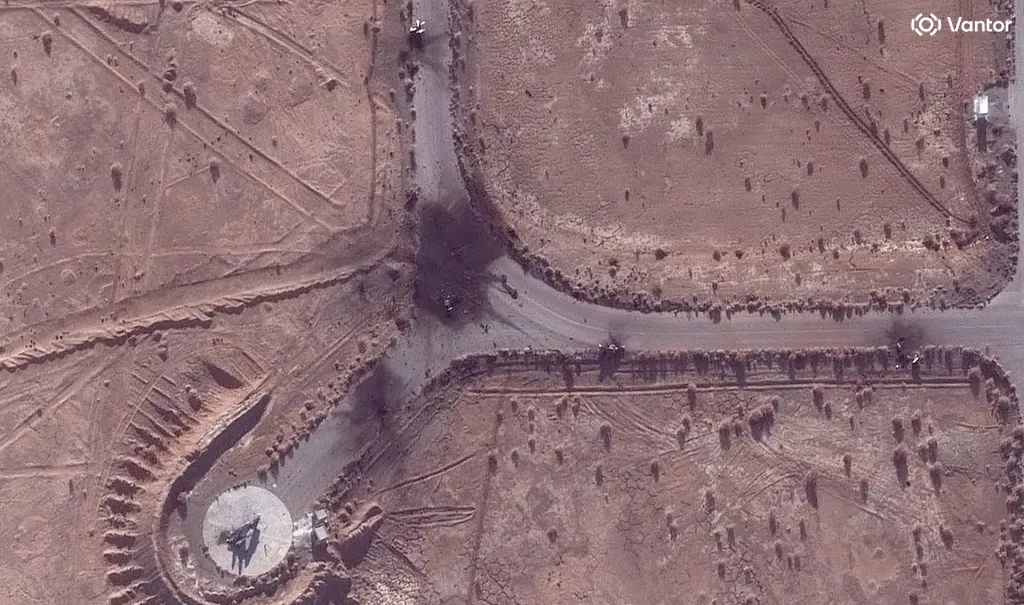
Satellite imagery from Vantor shows at least two, and more likely three, swing-wing F-14 Tomcat fighters, as well as at least 10 other aircraft destroyed on the ground following strikes on an Iranian airbase in Isfahan. Iran’s Tomcats, the only ones left in service anywhere after the U.S. Navy retired the type back in 2006, have been a hot topic of interest for decades now. The fleet’s fate may now be sealed for good as U.S. and Israeli strikes continue to pummel Iran’s Air Force, along with the rest of the country’s military and security forces.

Vantor has provided an image of Iran’s 8th Tactical Air Base in Isfahan taken on March 9, following strikes, as well as one from February 22 for comparison. The Israel Defense Forces (IDF) said explicitly on March 8 that it had targeted F-14s at Isfahan, the home base for Iran’s Tomcat fleet, but no imagery of those strikes looks to have been released. IDF videos of Iranian F-14s being struck that have been circulating online recently all look to be old.

A satellie image taken on March 9, 2026, showing F-14s and other aircraft targeted in strikes on the 8th Tactical Air Base in Isfahan. Satellite image ©2026 Vantor

The Vantor image from February 22 shows five F-14s. One is seen on what looks to be an alert pad, with another on a taxiway nearby. Two more are seen sitting outside a pair of aircraft hangars, while another is seen next to a separate set of hangars. The March 9 image shows the Tomcat on the pad and the lone example by the shelters to have been hit. There is also a huge scorch mark where the F-14 had been previously seen on the taxiway, pointing to its total destruction, though it is hard to tell for certain from the remaining wreckage. The other two jets appear to have been moved in the intervening weeks, and their status is unclear.

A satellite image of the 8th Tactical Air Base in Isfahan taken on March 9, 2026. F-14s can be seen destroyed on the pad at the bottom left and outside a pair of hangars toward the upper right-hand corner. A large scorch mark is also seen on the tarmac at the bottom left, where a Tomcat had been seen previously. Other aircraft are also seen destroyed along the taxiways. Satellite image ©2026 Vantor
Another satellite image of the 8th Tactical Air Base taken on February 22, 2026. Additional F-14s are seen outside the hangars at the upper left, which are not seen in the March 9 image. Satellite image ©2026 Vantor

The post-strike image also shows at least 10 other aircraft destroyed along various taxiways. Vantor has assessed these to be members of the Iranian Air Force’s fleet of Chinese-made F-7 fighters. F-7 is the nomenclature for export variants of the Chengdu J-7, itself derived from the Soviet MiG-21 Fishbed.

Vantor also shared imagery of a row of four hardened aircraft shelters at Isfahan, three of which have a single hole in the top following the strikes. A structure next to the shelters, which had already been damaged prior to the current conflict, has now been flattened, as well.

Another satellite image from March 9 showing hardened aircraft shelters struck at the 8th Tactical Air Base. Satellite image ©2026 Vantor
An image of the same area of the 8th Tactical Air Base taken on February 22. Satellite image ©2026 Vantor

Whether or not any of the F-14s that were struck at Isfahan were operational at the time is unknown. Estimates of how many Iranian Tomcats are even still airworthy have ranged widely in recent years, from just a handful to maybe as many as 25. As noted earlier, the 8th Tactical Air Base is the main station for Iran’s F-14s, though examples have also been positioned to provide quick reaction alert (QRA) coverage for Tehran in the past.

A total of 79 F-14As were delivered to Iran before the fall of the Shah in 1979. Iran’s air arm and the U.S. Navy are the only ones to have ever operated the Tomcat, and Iran has been the only one still flying them since 2006. While the current regime in Tehran has been able to keep a small portion of its original F-14 fleet flyable, sustaining the jets has been an immense challenge requiring the cannibalization of airframes.

A stock picture of one of Iran’s remaining F-14s taken in 2013. Iranian quasi-state media

The capabilities of the remaining jets can only have steadily degraded, as TWZ has written in the past:

“In particular, the F-14’s once-state-of-the-art AN/AWG-9 fire control radar has suffered from low serviceability, with the Tomcat fleet effectively being divided between those with fully functioning radars and those with more diminished capabilities. The current status of any surviving AIM-54 Phoenix and AIM-7 Sparrow air-to-air missiles is also a matter of debate, and Iranian programs to introduce alternative weaponry for the F-14 have had only very mixed results, as you can read more about here.

The total number of F-14s in Iran, flyable or not, had already been reduced to some degree during the 12 Day War with Israel last year. Strike footage the IDF released during that conflict showed at least five Tomcats being struck. Satellite imagery had confirmed that at least two of those jets had been sitting idle for some time beforehand, as well.

The Israeli Air Force has conducted additional precision strikes targeting IRIAF F-14s, continuing its focused effort to systematically degrade Iran’s remaining air combat capabilities. pic.twitter.com/vT6JJ4D1x7

— GMI (@Global_Mil_Info) June 21, 2025

תקיפת זוג מטוסי F 14 בשדה תעופה בטהראן | את”צ


The overall intensity of the current U.S.-Israeli air campaign against Iran has been far greater than what was seen during the 12 Day War last year. The Iranian Air Force does not appear to have mustered any kind of major response, even in the first few days of what the U.S. military has dubbed Operation Epic Fury and that the Israelis are calling Operation Roaring Lion. Qatari F-15 fighters shot down two Iranian swing-wing Su-24 Fencer combat jets attempting to carry out a strike mission on Al Udeid Air Base on March 2. An Israeli F-35I Adir also shot down a Yak-130 armed jet trainer over Iran on March 4.

Other airbases across Iran beyond Isfahan have also been targeted in U.S. and Israeli strikes. Satellite imagery has previously confirmed the loss of one Il-76 cargo plane, two C-130 airlifters, and two swing-wing Su-22 Fitter combat jets in Shiraz.

U.S. Central Command has also previously released video footage in the past showing strikes targeting Su-22s at Shiraz, as well as some of Iran’s remaining U.S.-made F-5s at Qasem Soleimani International Airport (formerly Ahvaz International Airport) in Khuzestan.

Geolocation of destruction of F-27s and F-5s:
31.33563, 48.76275
Ahvaz International Airport, Khuzestan Province, Iran

Google Earth imagery taken 11/19/2025 for reference (F-5s not present). Aircraft were in current placement on 2/28/26. Runway was seen cratered by 3/05/26. https://t.co/XRMx7NZxWH pic.twitter.com/iZGnxPp4mO

— Evergreen Intel (@vcdgf555) March 6, 2026

Overall, Iran’s already dilapidated air arm looks to be even more severely degraded now, and seems likely doomed, at least in its present guise. U.S. officials have said that neutralizing the Iranian government’s ability to project military power beyond its borders is a core objective of the current campaign.

When it comes to the F-14s, regardless of whether any of them were still operational to any real degree when the current conflict erupted, the story of the country’s Tomcats looks to be increasingly approaching a definitive end.

Contact the author: joe@twz.com

Joseph has been a member of The War Zone team since early 2017. Prior to that, he was an Associate Editor at War Is Boring, and his byline has appeared in other publications, including Small Arms Review, Small Arms Defense Journal, Reuters, We Are the Mighty, and Task & Purpose.


Source link

Rep. Jim Clyburn, 85, to seek re-election

1 of 5 | Rep. James E. Clyburn, D-S.C., speaks at the 2024 Democratic National Convention in Chicago. Clyburn, 85, announced Thursday that he will run for re-election. File Photo by Tannen Maury/UPI | License Photo

March 12 (UPI) — Rep. Jim Clyburn, D-S.C., announced Thursday that he will run for his 18th term in the House of Representatives.

Clyburn, 85, said he is going to run a “very vigorous campaign.”

“Today I’m going to answer a question that’s always asked: What is there unfinished or what more do you need to do? Well, it’s in the preamble of our Constitution: We exist in pursuit of a more perfect union,” he said. “And I’m here today to say I do believe that I am very well-equipped — and healthy enough — to move into the next term, trying to do the things that are necessary to continue that pursuit of perfection.”

About his age, Clyburn said, “If I were not up to it, I would not do it. But in response to some extensive surveys, some intense consultations with my three daughters, they finally got to a unanimous opinion that I should be here today and make this announcement.”

Clyburn, who has served in the House for more than 30 years, was the No. 3 Democrat in the chamber until he stepped down as Democratic whip in 2023. He then became assistant Democratic leader to House Democratic leader Hakeem Jeffries, D-N.Y.

Reps. Nancy Pelosi, D-Calif., and Steny Hoyer, D-Md., recently announced their retirements from the House, leaving Clyburn as the only one left of that leadership trio from 2007-2023.

Clyburn joined the House in 1992 as the first Black congressman from South Carolina since Reconstruction.

Clyburn endorsed then-presidential candidate Joe Biden just before the South Carolina primary, which helped him win the state and boost his candidacy after struggling in other early primaries.

Antjuan Seawright, Clyburn’s longtime adviser, said he is still needed in Congress to “help shape the direction and future of our country.”

Seawright added that the party needs “a little hip-hop and R & B, Old Testament and the New Testament.”

South Carolina’s primary will be June 9.

President Donald Trump speaks to the members of the media on the South Lawn of the White House before boarding the Marine One helicopter to Hebron, Ky., on Wednesday. Photo by Yuri Gripas/UPI | License Photo

Source link

U.S. Navy Won’t Be Ready To Escort Tankers Through Hormuz For Weeks

The U.S. Navy is not yet ready to escort oil tankers through the Strait of Hormuz, but it will happen. This is the synopsis provided by U.S. Energy Secretary Chris Wright in an interview with CNBC. The development comes as Iran continues to pummel international shipping in and around the critical channel, which the new Iranian supreme leader, Mojtaba Khamenei, vows to keep closed.

“It’ll happen relatively soon, but it can’t happen now,” Wright said, of the planned naval escort mission. “We’re simply not ready. All of our military assets right now are focused on destroying Iran’s offensive capabilities and the manufacturing industry that supplies their offensive capabilities.” Wright added that the Navy should be able to escort tankers through the strait by the end of this month.

BREAKING: Iran’s Supreme Leader Mojtaba Khamenei:

We will not forgo avenging the blood of the martyrs.

The Strait of Hormuz should still remain closed.

— Clash Report (@clashreport) March 12, 2026

Khamenei, it appears, is also resolute in his plan to keep the strait closed to all maritime traffic, reportedly having turned down approaches from several countries that were seeking an end to the attacks.

🚨 Lebanese Al-Akhbar newspaper, which is associated with Hezbollah: Official sources from Turkey, Egypt, India, and Pakistan approached Tehran demanding to stop the attacks in the Strait of Hormuz, but were met with a firm response stating that “security will be for everyone or…

— Raylan Givens (@JewishWarrior13) March 12, 2026

U.S. President Donald Trump said on March 3 that “the United States Navy will begin escorting tankers through the Strait of Hormuz, as soon as possible.”

Putting a date of the end of this month on the escort mission is certain to trouble markets that are already feeling the pressure of the conflict. At the very least, this is an indicator that the war or its hostile aftermath will continue for weeks to come.

Equally pessimistically, there have been reports from analysts suggesting that fully reopening the strait may require some kind of ground operation to seize the Iranian coastline adjacent to it.

“Strategic priorities, like opening the Strait of Hormuz and securing what remains of Iran’s nuclear stockpile, will likely require some ground troops if no diplomatic options are pursued,” Brian Katulis, a senior fellow at the Middle East Institute, told The Wall Street Journal. “What we are looking at is potentially a very messy situation.”

Even without boots on the ground, which now seems like a remote prospect, running a tanker-escort mission, which would involve convoys protected by warships and accompanied by mine-clearing assets, is fraught with difficulty. Military unwillingness to take on missions of this kind is an issue we have explored in the past at TWZ.

The warships involved in any such endeavor would also be at extreme risk, especially from Iranian ground-mobile anti-ship missiles, which are relatively small and can be easily disguised in utility trucks. Eliminating that threat is one potential driver for a ground operation along the coast of the strait.

The U.S. military has made extensive efforts in recent days to remove the Iranian minelaying capability, but, according to the U.K. Defense Secretary, there are now increasing signs that Iran may have started mining the strait.

While tanker traffic through the strait remains at a standstill, Iran continues its campaign against commercial tankers elsewhere in the region, with another two vessels set ablaze earlier today in Iraqi waters. Iraq reportedly halted all operations at its oil ports after the attack.

The Ambrey maritime security firm told us that a Malta-flagged crude oil tanker and another merchant vessel were targeted in an attack in Al Basrah Anchorage, Iraq. One fatality was reported. At least 38 individuals were rescued from both vessels according to the Iraq Port Authority, with further search and rescue operations ongoing as of this morning.

Video footage of the incident shows a vessel engulfed in fire with a large plume of smoke rising from the area of impact. Fire can also be seen in the water as a result of the oil spill.

Unverified reports state that the two tankers were struck by uncrewed surface vehicles (USVs).

Iraq’s State Organization for Marketing of Oil identified the two vessels as crude oil tanker Safesea Vishnu and the combined chemical and oil tanker Zefyros. While the Zefyros is Malta-flagged, the Safesea Vishnu is owned by a U.S. company but was sailing under the Marshall Islands flag. A dramatic video has appeared that is said to show the moment of the explosion that targeted the Safesea Vishnu.

The moment of the attack on the oil tanker Safesea Vishnu by an Iranian explosive boat tonight in the Persian Gulf near Iraq.

One crew member was killed. The tanker is owned by a U.S. company and was sailing under the Marshall Islands flag. pic.twitter.com/Xy2JKRoZt2

— Special Kherson Cat 🐈🇺🇦 (@bayraktar_1love) March 12, 2026

In a statement, the IRGC said that it considered the Safesea Vishnu as an asset of the U.S. military and claims that it was struck after ignoring repeated warnings and alerts from the IRGC Navy.

Iran’s IRGC says it struck a US-owned vessel ‘Safe Sia,’ a vessel considered as an asset of the US army, early this morning in the northern Persian Gulf.

The vessel ignoed repeated warnings and alerts from the IRGC Navy. pic.twitter.com/tkJDO5VUf1

— Arya Yadeghaar (@AryJeay) March 12, 2026

Ambrey also reports that a container vessel was struck by an unknown projectile 38 nautical miles north-northeast of Jebel Ali, United Arab Emirates. The strike was reported to have caused a small fire on board the vessel, and the crew was reported to be safe.

Another vessel, the Japanese-flagged container ship One Majesty, was reportedly also damaged while anchored in the Persian Gulf. The damage was only discovered later, around 60 miles from the Strait of Hormuz. There were no reports of casualties.

A Japanese-flagged container ship, One Majesty, was damaged while anchored in the Persian Gulf.

The crew felt a shock near the stern and later discovered damage while the ship was about 60 miles (96 km) southwest of the Strait of Hormuz.

All crew members are safe and the…

— Clash Report (@clashreport) March 12, 2026

The vessel seen burning in the video below, from the perspective of crew members who evacuated on a liferaft, is the Thai-flagged cargo vessel, Mayuree Naree Bangkok, which was attacked near the Strait of Hormuz yesterday.

The continued attacks on energy infrastructure and shipping by Iran, and concerns over the intensifying conflict in the Middle East, have seen oil prices spike.

The international benchmark Brent crude is back above $100 per barrel.

NEW: Iran war is “creating the largest supply disruption in the history of the global oil market,” International Energy Agency says. https://t.co/bCKgzI6Mi8

— NBC News (@NBCNews) March 12, 2026

In an effort to reduce concerns over global oil supplies, the International Energy Agency (IEA) has ordered the largest release of government reserves in its history.

Meanwhile, the government of Denmark is calling upon its citizens to reduce their consumption of fossil fuels.

Denmark’s Energy Minister urged people to reduce fuel use amid the oil shock from the Iran war, saying:

“Please, please, please — if you do not need to drive, do not do so.”

Source: CNBC pic.twitter.com/gvCQbWSfnY

— Clash Report (@clashreport) March 12, 2026

In a post on his Truth Social site, President Trump said he remained committed to ensuring Iran cannot develop nuclear weapons, despite the impact on the global oil trade.

“The United States is the largest Oil Producer in the World, by far, so when oil prices go up, we make a lot of money. BUT, of far greater interest and importance to me, as President, is stoping [sic] an evil Empire, Iran, from having Nuclear Weapons, and destroying the Middle East and, indeed, the World.”

Trump:

The United States is the largest Oil Producer in the World, by far, so when oil prices go up, we make a lot of money.

BUT, of far greater interest and importance to me, as President, is stoping an evil Empire, Iran, from having Nuclear Weapons, and destroying the Middle… pic.twitter.com/lp6As74W7h

— Clash Report (@clashreport) March 12, 2026

The day-to-day running of the conflict also comes with a high cost to the U.S. government. According to Reuters, officials from the Donald administration estimated during a congressional briefing this week that the first six days of the war on Iran had cost the United States at least $11.3 billion.

Officials from President Donald Trump’s administration estimated during a congressional briefing this week that the first six days of the war on Iran had cost the United States at least $11.3 billion, a source familiar with the matter said on Wednesday. @ReutersZengerle

— Idrees Ali (@idreesali114) March 11, 2026

The Israeli Air Force (IAF) has struck a nuclear site in Iran, the Israel Defense Forces (IDF) announced today. The targeting of the Taleghan compound was part of a larger wave of strikes conducted over the past few days, the IDF said. Taleghan is part of the Parchin military complex, located around 20 miles southeast of Tehran.

The development comes after we reported on evidence of some kind of airstrike against the Taleghan compound, including the possibility that the hardened facility was hit by 30,000-pound GBU-57/B Massive Ordnance Penetrator (MOP) bunker buster bombs. You can read that analysis, based on satellite imagery, here.

The Israeli military said that IDF intelligence had determined that Iran had been using the Taleghan compound to develop weapons and conduct experiments as part of Amad, an Iranian scientific project aimed at developing nuclear weapons.

🎯STRUCK: The ‘Taleghan’ compound, a site used by the Iranian regime to advance nuclear weapons capabilities.

The compound was used to develop advanced explosives and conduct sensitive experiments as part of the covert ‘AMAD’ project in the 2000s.

— Israel Defense Forces (@IDF) March 12, 2026

According to a statement from the Israeli military:

“During Operation Rising Lion, the IDF has operated systematically against knowledge centers and infrastructure related to the Iranian nuclear weapon program in order to eliminate the emerging existential threat to the State of Israel. Despite the significant damage inflicted on the program, the Iranian regime has continued efforts to advance and develop the capabilities required for the development of a nuclear weapon.”

The IDF added that it had recently identified that Iran has taken steps to rehabilitate the compound after it was struck in October 2024.

The IDF says it recently struck an Iranian nuclear facility where the regime advanced “critical capabilities in the development of nuclear weapons.”

The site in Tehran, identified by the military as the Taleghan compound, was hit as part of waves of strikes carried out in the… pic.twitter.com/4bYQLAv3CJ

— Emanuel (Mannie) Fabian (@manniefabian) March 12, 2026

Israel announced last week that it had struck Minzadehei, another nuclear site in Iran where it said scientists were covertly developing a key component for nuclear weapons.

“The strike is a part of the series of operations carried out throughout Operation Rising Lion aimed at further damaging the Iranian terrorist regime’s nuclear aspirations.”

Other recent targets of the IDF include Abu Dharr Mohammadi, described as the operations commander responsible for the Islamic Revolutionary Guard Corps’ (IRGC) missile unit within Hezbollah.

A member of Iran’s Islamic Revolutionary Guard Corps who was operating as a commander in Hezbollah’s missile unit was killed in an Israeli airstrike in Lebanon this week, the IDF announces.

Abu Dharr Mohammadi, who the military says was a “central figure in the military… pic.twitter.com/StV45w6qIZ

— Emanuel (Mannie) Fabian (@manniefabian) March 12, 2026

“Earlier this week (Tuesday), the IDF struck and eliminated the terrorist Abu Dharr Mohammadi … Mohammadi was a central figure in the military coordination between Hezbollah and the Iranian terror regime, while coordinating and connecting between Hezbollah and Iranian senior officials,” the IDF said.

“Mohammadi was a key figure in Hezbollah’s military force build-up as it related to missiles, focusing on rehabilitating the program following Operation Northern Arrows,” the IDF added.

For its part, Hezbollah continues to hit back against Israel.

According to the Israeli military, Hezbollah militants launched around 200 rockets and approximately 20 drones yesterday evening from Lebanon toward Israel. After reportedly detecting signs of an unusual buildup, the IDF said it carried out a preemptive strike to disrupt the firing and thwart terrorists.

⭕️ ~70 terror targets were struck including terrorist infrastructure, weapons storage facilities, central headquarters, key terrorists, and an IRGC Air Force HQ in Beirut. pic.twitter.com/T8VBtiQmup

— Israel Defense Forces (@IDF) March 12, 2026

The IDF acknowledges that it was a mistake not to update the public ahead of Hezbollah’s large rocket and drone attack on northern Israel last night, especially once Israel’s assessments of the planned barrage were leaked on social media and published by international media.

The… https://t.co/Ec9PX06xjK

— Emanuel (Mannie) Fabian (@manniefabian) March 12, 2026

The U.S. military has also continued airstrikes on Iran, with a recent video released by Central Command (CENTCOM) showing the destruction of a C-130 Hercules transport and a P-3F Orion maritime patrol aircraft (both of which were supplied to Iran before the 1979 Islamic Revolution) and an Ilyushin Il-76 Candid airlifter.

The Iranian regime is losing air capability day by day. U.S. forces aren’t just defending against Iranian threats, we are methodically dismantling them. pic.twitter.com/CrJj2nFtHB

— U.S. Central Command (@CENTCOM) March 12, 2026

Of these aircraft, the Islamic Republic of Iran Air Force (IRIAF) P-3F was especially notable, since it was reportedly the last of the type that was still airworthy in Iranian service.

IRIAF P-3F 5-8704 from 71 ASW squadron is no more.

Iran’s five P-3Fs that started the war had unique camo patterns for ID, as well as you can partially make out the 5-___4 of the tail, which in of itself is a giveaway to the airframe’s ID. https://t.co/1pPpdgJS9w pic.twitter.com/SvMBibwWdI

— Evergreen Intel (@vcdgf555) March 12, 2026

Following attacks on Mehrabad and Bandar Abbas Air Bases, the runways at both have now been blocked by parked buses and helicopters, according to satellite imagery. The reason for this is unclear, but it is possible that it has been driven by concerns about a potential aerial assault on either of these locations. Alternatively, the aircraft and vehicles may have been arranged as decoys. The same thing has been seen in the war in Ukraine, as well as in Venezuela, earlier this year.

🛰️ Satellite images show runways at Tehran’s Mehrabad and Bandar Abbas airports blocked with parked buses and helicopters.

The measure appears intended to prevent further strikes or aircraft use by making the runway unusable. pic.twitter.com/s5KcmcOw3G

— Clash Report (@clashreport) March 12, 2026

U.S. airstrikes against Iranian missile systems have also continued. The CENTCOM video below is noteworthy since it shows (around the 0:07 mark) the destruction of a ballistic missile apparently in the process of being erected from its launch vehicle.

A U.S. strike overnight on three bases associated with the Iranian-backed Ansar Allah al-Awfiya militia reportedly killed dozens of militiamen. The bases near al-Qaim, al-Anbar, were used to fire projectiles at U.S. interests in Jordan. The following video purports to show the results of the attack on al-Qaim.

ما فعله الحشد بالعراقيين من قتل و ذبح يرتد عليه اليوم

تم دفن عناصر وقادة الحشد اليوم تحت مقراتهم في القائم غربي العراق pic.twitter.com/dK2rvCAJkG

— عمر مدنيه (@Omar_Madaniah) March 12, 2026

Footage has also emerged that apparently shows a U.S. military Low-Cost Uncrewed Combat Attack System (LUCAS) kamikaze drone headed toward a militia target in Iraq. Based on the Iranian Shahed-136, these weapons were used in combat for the first time in the opening salvos of Operation Epic Fury and repeatedly since.

Overnight attacks on Iraq also struck Erbil, home to an Italian military detachment in the country. According to reports, this has led to the temporary evacuation of the Italian presence from the base.

An Italian military base in Erbil, northern Iraq, was hit overnight by an airstrike, Italian defense officials said Thursday. No injuries were reported.

The strike was first thought to be a missile but was later identified as a drone that destroyed a military vehicle.

Source:…

— Clash Report (@clashreport) March 12, 2026

NEW — 🇮🇹🇮🇶🇮🇷🇺🇸 Italy announces the “temporary” withdrawal of its forces from a military base in Iraq following attacks in the area.

— UK Report (@UK_REPT) March 12, 2026

Mojtaba Khamenei has vowed to continue attacks on U.S. bases in the region, calling for American forces to leave them immediately, or face further strikes.

BREAKING: Iran’s Supreme Leader Mojtaba Khamenei:

All US bases should immediately be closed in the region, and those bases will be attacked.

— Clash Report (@clashreport) March 12, 2026

While we have regularly seen Iranian ballistic missiles target Israel with cluster warheads, we now also have a view of how the separate munitions disperse, as seen from the vantage point of the cockpit of an IAF fighter jet.

In the United Arab Emirates, authorities have reportedly arrested a British tourist after they allegedly filmed missiles hitting Dubai. The 60-year-old Londoner faces two years in prison after being charged with a cybercrime, The Daily Mail reports.

He is reportedly one of 20 people to have been charged over videos and social media posts relating to recent Iranian missile strikes on the UAE. 

British tourist, 60, ‘who filmed Iranian missiles’ in Dubai is facing two years in prison after being charged with cybercrime offence https://t.co/rtFMqtOiwt

— Daily Mail (@DailyMail) March 12, 2026

The on-off deal to get Ukrainian-made counter-drone technology into U.S. hands has apparently taken another turn.

Taking to X, Ukrainian Prime Minister Volodymyr Zelensky wrote that he had hoped to “sign a big drone production deal with the United States, but we needed the approval from the White House.”

The deal, covering “different kinds of drones and air defense,” has not been signed yet, Zelensky added.

“I hope that maybe [our] American friends will be closer to this decision now, especially after such challenges as we see in the Middle East,” the Ukrainian leader wrote.

We wanted to sign a big drone production deal with the United States, but we needed the approval from the White House. It was about different kinds of drones and air defense. They operate as one system and can defend against hundreds or thousands of Iranian “shaheds“ and… pic.twitter.com/KZX7MLcCZG

— Volodymyr Zelenskyy / Володимир Зеленський (@ZelenskyyUa) March 12, 2026

A fire broke out aboard the aircraft carrier USS Gerald R. Ford.

“On March 12, USS Gerald R. Ford (CVN 78) experienced a fire that originated in the ship’s main laundry spaces,” Naval Forces Central Command said in a statement on X. “The cause of the fire was not combat-related and is contained. There is no damage to the ship’s propulsion plant, and the aircraft carrier remains fully operational. Two Sailors are currently receiving medical treatment for non-life-threatening injuries and are in stable condition. Additional information will be provided when available.”

On March 12, USS Gerald R. Ford (CVN 78) experienced a fire that originated in the ship’s main laundry spaces. The cause of the fire was not combat-related and is contained.

There is no damage to the ship’s propulsion plant, and the aircraft carrier remains fully operational.…

— U.S. Naval Forces Central Command/U.S. 5th Fleet (@US5thFleet) March 12, 2026

Earlier today, a U.S. official told USNI News that the initial fire had been extinguished, but the crew was still working to control the damage.

The United Arab Emirates is now using UH-60 Black Hawk series helicopters for counter-drone work, as seen in this video, which captures an engagement over Dubai.

UAE’s UH-60 Black Hawk helicopter intercepts an Iranian Shahed/Geran-type long-range strike drone over Dubai.

Burj Khalifa seen in the background. pic.twitter.com/c81YnAoRFU

— Status-6 (War & Military News) (@Archer83Able) March 12, 2026

According to a report from Reuters, citing U.S. intelligence officials, most of the Iranian leadership remains intact, and the regime is not currently at risk of collapse, despite the U.S.-Israeli campaign against it.

U.S. intelligence indicates that Iran’s leadership is still largely intact and is not at risk of collapse any time soon after nearly two weeks of relentless U.S. and Israeli bombardment, according to three ​sources familiar with the matter. @ErinBanco @JonathanLanday

— Idrees Ali (@idreesali114) March 11, 2026

Certainly, as far as public statements are concerned, the remaining elements of the Iranian leadership remain steadfast in their refusal to give up the fight.

Iranian Parliament Speaker Ghalibaf:

Any aggression against soil of Iranian islands will shatter all restraint.

We will abandon all restraint and make the Persian Gulf run with the blood of invaders.

The blood of American soldiers is Trump’s personal responsibility. pic.twitter.com/hx2Hebt7s8

— Clash Report (@clashreport) March 12, 2026

Contact the author: thomas@thewarzone.com

Thomas is a defense writer and editor with over 20 years of experience covering military aerospace topics and conflicts. He’s written a number of books, edited many more, and has contributed to many of the world’s leading aviation publications. Before joining The War Zone in 2020, he was the editor of AirForces Monthly.


Source link

Forgotten Charlie Dimmock TV shows that fans rated higher than Ground Force

Gardening expert Charlie Dimmock has presented numerous TV shows beyond Ground Force and Garden Rescue and fans rated them highly

Fans of gardening expert Charlie Dimmock could be excused for not exploring much beyond Ground Force and Garden Rescue.

With over 150 episodes of Garden Rescue available to watch and 97 instalments of the ’90s favourite Ground Force, there’s no shortage of content. However, throughout her career, she’s created numerous other gardening programmes that slipped beneath most people’s notice.

One such programme is Charlie’s Garden Army, which aired in 1999 and 2000 across 12 episodes. The series featured Charlie alongside volunteer teams transforming derelate wasteland into beautiful public gardens.

She subsequently secured a presenting position on 2002’s The Joy of Gardening and 2001’s Charlie’s Gardening Neighbours, reports the Express.

In 2005, Charlie featured at the Hampton Court Palace Flower Show as a television presenter, and she’s also participated in coverage of the Chelsea Flower Show throughout the years.

Judging purely by IMDb ratings, though, several programmes actually surpass Ground Force in terms of viewer scores.

Ground Force’s typical rating stands at 7.2 stars out of 10 – but it’s eclipsed by Garden Rescue at 7.9 stars, and the Great British Garden Revival with an identical rating.

Charlie inadvertently fell into a television career whilst employed at a garden centre, and during the ’90s, she maintained that she “wasn’t famous” and didn’t perceive herself as a TV personality.

Reflecting on her television work in a 1999 interview with The Guardian, Charlie remarked: “In some ways, the television stuff isn’t unsatisfying, it’s very interesting.

“But the other day, I was at work [at the garden centre], the first time I’d been there properly for three or four weeks, and I thought, ‘God, this is nice!’

“‘You see people you know, regular customers, and there’s no hassle. You fall out of bed, go to work, potter around. It’s all right, really.'”

Garden Rescue is on BBC One and BBC iPlayer

For the latest showbiz, TV, movie and streaming news, go to the new **Everything Gossip** website.

Source link