Month: June 2026

Mona Khalil, Lebanon’s turtle advocate, dies after Israeli attack | Environment News

Khalil spent more than two decades protecting the nests of endangered turtle species in southern Lebanon.

Lebanese marine ecologist Mona Khalil, who was severely wounded after an Israeli strike hit her home near Tyre last week, has died, according to local reports.

Khalil, 77, succumbed to her wounds on Friday, the same day Israel escalated air attacks on southern Lebanon, killing at least 50 people and injuring dozens despite the risk posed to a fragile peace deal between Iran and the United States.

Recommended Stories

list of 4 itemsend of list

“It is with deep sadness that we mourn the passing of Mona Khalil today,” environmental group Live Love Tyre said in a Facebook statement on Friday.

“She will be remembered through an incredible legacy. Through it all, Mona chose to stay and care for the turtles of Live Love Tyre. Her life was selfless and impactful.”

A life of impact

Khalil was born in Lagos, Nigeria, in 1949. She spent several years abroad before moving to southern Lebanon.

A fleeting encounter with a turtle which had emerged from the ocean to lay its eggs on al-Mansouri beach near Tyre in 1999 propelled her on a lifelong journey devoted to animals.

She went on to dedicate decades to protecting the nesting sites of endangered loggerhead and green sea turtles on Lebanon’s southern coast.

Both species are highly threatened by coastal development, plastic pollution, fishing nets, and light pollution and are at risk of becoming extinct in the eastern Mediterranean.

In 2000, Khalil helped establish the Orange House, an eco-tourism project situated at al-Mansouri beach. She also helped document marine life in southern Lebanon and advocated for wildlife and against the pollution of Lebanon’s coastline.

“You have left us yet you remain within us – we, your children,” journalist and volunteer Fadia Joumaa, who worked closely with Khalil, said in a tribute shared on Facebook.

Khalil’s death “is a loss for all of Lebanon… not just for us. A loss for the life you guarded so faithfully,” she said.

Source link

Tom Parker’s pregnant widow Kelsey reveals struggle ahead of first anniversary of stillborn baby’s death

TOM Parker’s pregnant widow Kelsey has revealed her emotional struggle ahead of the first anniversary of her stillborn baby’s death.

Kelsey, 36, tragically lost her son Phoenix in June 2025 after he was born sleeping.

Tom Parker’s pregnant widow Kelsey has revealed her struggle ahead of the first anniversary of her stillborn baby’s death Credit: Instagram/being_kelsey
The podcast host, 36, lost Phoenix in June 2025 Credit: YouTube

Kelsey has two children with The Wanted singer Tom, who died in 2022 aged 33, – Aurelia, six, and Bodhi, four – but had been expecting her third child with new partner Will Lindsay.

In May, she announced she is pregnant with her rainbow baby but she explained she is now set to tackle a bittersweet weekend.

Amid her pregnancy joy, it will be the one-year anniversary of Phoenix’s passing and in a candid Instagram upload, she admitted she “deeply misses my little boy and wish things had been different”.

Kelsey uploaded a selfie showing her in the sunshine, wearing a white vest top and sunglasses with a gold chain.

bump’s day out

Kelsey Parker shows off growing baby bump in first public appearance


MUM’S PAIN

Kelsey Parker opens up about the moment ‘she knew’ son would be stillborn

She is now pregnant with her rainbow baby Credit: being_kelsey/Instagram
Kelsey, seen with partner Will Lindsay, revealed she ‘deeply misses my little boy and wish things had been different’ Credit: being_kelsey/Instagram

In a frank message posted alongside it she put: “I’ve been really quiet on here the last couple of days.

“Truthfully, I’ve been working a lot, trying to keep busy and just processing the fact that Sunday is a big day.

“It’s Phoenix’s first anniversary and it’s Father’s Day too.

“Grief is a strange thing. Some days you can keep going and stay busy, and other days it all catches up with you.

She shares two children with The Wanted singer Tom Parker Credit: Social media – Refer to source
Tom sadly passed in 2022 and Kelsey told how the upcoming Father’s Day would be emotional for the family Credit: Getty

“I’m learning that both things can exist at once. I can feel excited about this next chapter of life, be grateful for everything I have, and still deeply miss my little boy and wish things had been different”.

Giving advice to her followers, Kelsey added: “If you’re navigating grief, anniversaries or simply carrying something heavy right now, please know you’re not alone.

“As always… stop waiting, start living. But also, give yourself permission to feel it all”.

Recently, the brave mum appeared on ITV daytime series Good Morning Britain to reveal her home was “treated like a crime scene” after Phoenix arrived into the world.

Kelsey’s spouse Tom died in 2022, aged 33, following a brain tumour battle.

She previously admitted that that grieving Phoenix was “harder than grieving Tom” as she spoke on the Mum’s The Word podcast.

She shared: “It was so hard. I think with Phoenix, it was harder than it was with Tom.

“I think because they [her kids] were so much younger, it’s like I could just be like, ‘daddy wasn’t coming back.’ 

“And you know, when I said about the angels taking daddy, ‘we won’t see daddy again’, it was like they accepted that and we sort of moved on. 

“And now as time’s gone on, they asked me more questions about their dad and stuff, but that initial I suppose with Bod as well. He was 18 months old. It wasn’t a question that he even thought.”

At the time of Tom’s death, Aurelia was around three, and Kelsey’s co-host Georgia pointed out: “They were almost ages where they didn’t understand. 

“So you almost didn’t have to explain it too much. You obviously have to explain it, but it’s very different to having a child that completely understands, knows what death is”.

Source link

Are airports heaven or hell? Sun’s travel team reveal pre-flight bugbears, ONLY duty free bargains & how to get freebies

AIRPORT terminals – love them or hate them, you’ll find yourself killing time in one before your next holiday.

According to a study by YouGov in 2023, the average Brit spends as much as £20 before a flight, with common items being perfumes, alcohol and food gifts.

Our favourite (and worst) ways to waste time at the airport revealed Credit: Alamy
The Sun’s Head of Travel, Lisa Minot (left), with her family, at the only part of the airport she enjoys – the bar

Yet while some people enjoy a perusal of the aisles, others are more reluctant to.

While bargains can be found at Duty Free, you’ll find your cup of coffee or morning breakfast a lot more expensive than outside the airport – making your holiday more expensive before you even get on the plane.

The discussion of enjoying the airport terminal has divided even the Sun Travel team.

Here we share our biggest bugbears, best ways to spend a few hours at the airport, the freebies you can bag while there and the handful of duty-free items that are actually worth buying.

Lisa Minot, Head of Travel

As per usual, I am late. Airport security is a nightmare. Endless lines of stressed passengers are corralled into a hot, suffocating pen, awaiting the conveyor belts of doom.

I roll my eyes as my perfectly acceptable hand luggage is sent down the reject lane – and I stand fuming, knowing there’s nothing wrong with it.  After another ten minutes and a ‘random check’, I am finally free to enter departures.

I am hot, bothered and hating life. So what could possibly be worse?

The winding ‘hell-no brick road’ through the World of Duty Free with its cloying perfume sprays, overpriced make-up and endless rows of ‘designer’ sunglasses.

Travellers slow to a snail’s pace as the brightly-coloured displays tempt them. And as I try to accelerate through the dawdlers, I get a full-on spray of aftershave in the face as the sales staff accost yet another unlucky victim.

Round and round we go. Past overpriced beauty brands I’ve never heard of – and will never be able to justify the price. Past rows of Union Jack tat and extortionate Fortnum and Mason biscuits.

Rounding another corner, there’s yet more retail hell – overpriced sweets and costume jewellery you know will probably disintegrate before you’ve settled into your airplane seat.

Finally, after what feels like an eternity, I’m spat out into the departure lounge. Except more retail hell awaits.

No, I don’t want a pair of overpriced shoes. I don’t need a ‘just in case’ shawl or a tech gadget promising to ‘transform’ my flight. I just want to sit down.

It’s bad enough I’m stuck in this soulless cavern, but the endless assault on my wallet is exhausting.

If I have forgotten something, God forbid, I’d much rather buy it at my destination. At least there it might have some meaning.

Instead, there is only one place I am heading. The airport pub.

The lone sanctuary in the chaos. The one place where I can enjoy a cheeky albeit overpriced drink.

And as I finally sink into a chair to do a spot of people watching, the rage fades.

It might be twice the price of my local, but I’m jetting off… and this is my little slice of airport heaven.

BEST FREE ITEMS AT AIRPORTS

We’ve rounded up some of the best free items at airports, in you’re the type of person who likes to get there early…

Grab a ‘free suncream’ at the airport

Before you travel, get the Recycle at Boots app and find five empty health or beauty items that can’t go in your kerbside recycling collection, like electric toothbrush heads or toothpaste tubes.

Take a quick snap of them and upload them to the app. Once they’ve been added, you can bag them up and drop them in the collection point at your nearest participating Boots, before scanning the QR code on the side of the box for a voucher to claim £5 worth of Advantage Card points when you spend £10. 

If you store up your points until you get through airport security, you can spend them on suncream at Boots airside.

I got a bottle of Soltan at Stansted for £6.05, so you’ll need more points than you get in one recycling transaction, but there’s nothing to stop you doing it several times and getting lots of points on your card, ready to spend at the airport.

Local drop-off prices or free

Residents who live near Stansted Airport can pay a reduced charge at the express set down at the terminal of either 50p or £1 for up to 15 minutes, depending on whether they live within five miles or 10 miles.

There are similar schemes at other regional airports like Edinburgh and Manchester, which means that if you live near an airport or have family and friends who do, you might be able to avoid paying for airport parking. 

If you want to eat something a bit more substantial before your flight, it’s often the case that chains like Pizza Express exclude their airport branches from popular deals and discounts.

Free glossy magazines

Did you know that many airports have free magazine stands?

They can often be found in the corridors when you are travelling to your gate, or even after you have gone through the gate agent and are waiting to board.

They vary depending on which ones they have so you can’t always be fussy.

On a recent flight, we’ve managed to pick up Wallpaper* magazine, as well as Escapism, Condé Nast Traveller and Stylist.

Kids eat free

Certain large airports like Heathrow operate a kids-eat-free policy at some of their restaurants during the school holidays.

So if an adult chooses an item from the main menu, your kids can eat for free.

Restaurants that have previously taken part at Heathrow include Giraffe, Wild Olive and The Grove.

Let the kids run wild in soft play

Plenty of UK airports have soft play areas and games zones in their terminals so kids can burn off some energy before boarding.

While some of them are pretty basic, some at airports like Heathrow are good enough that you’d pay a few quid for entry into the outside world.

We’ve rounded up all the UK airports with soft play areas and kids’ zones.

There are only a handful of real bargains to be found at Airport Duty Free Credit: Getty
The Sun’s Deputy Travel Editor Kara Godfrey enjoying a spot of duty-free airport shopping

Deputy Travel Editor, Kara Godfrey

‘We don’t need to be so early to the airport, Kara,’ my friends often moan at me when I turn up three hours early for a flight to Spain.

They, however, are wrong – the beauty of a holiday starts at the airport.

In fact, it’s one of the most exciting bits of my trip, especially when travelling through some of our London airports, which, dare I say it, are some of the finest in Europe.

There is something to be said for being stuck within the walls of a terminal where there is nothing else to do but explore the shops – you can’t go back through security, and you can’t go to your gate.

If it’s an early morning flight, I embrace my overpriced Pret coffee, often chased by a just as expensive cheese turnover to keep me going.

I’ll check the time for my gate to be revealed (often at least 1hr30, with how early I arrive), and that’s when the fun starts.

I peruse Waterstones, picking up a new book that I forgot to pack myself but will inevitably never read, opting to pass out as soon as I get on the plane.

There’s the swimsuit I also forgot to pack that I must pick up from Accesorize, before being tempted into some new earrings, where I shall return from the trip with just one of them.

And I’ve been burnt before by inedible economy meals, so my trip to Boots is a must, picking up the same Meal Deal as always – Elderflower and Mint CBD drink, Korean Fried Chicken Rice Bowl and a Big Bag of Hula Hoops.

All of that, and I still have time to perhaps try some of the designer beauty products I can only dream of affording, but will happily smear samples on my wrists and neck.

How people hate the airport experience is beyond me – I simply say you aren’t doing it right.

I will never be that person you see frantically running through the airport, face frazzled as they barely make their flight.

For I, with my coffee, book and earrings to join me, settle in with another hour to kill while calmly waiting to board.

Who needs spa treatments when you have an airport terminal to peruse?

Our anonymous flight attendant blogger reveals which items you should never buy at airports and how you can find the best bargains before your flights.

The worst offender for this is chocolate – no matter which airport you’re in, you’ll be ripped off for it.

And the worst thing is, it’s not even good chocolate – it’s run-of-the-mill, ordinary stuff that you can find in shops everywhere.

It’s also often in novelty-sized bars or massive tubs that are both far too big and cost an absolute fortune.

It’s such a false economy, and I don’t understand why no one’s figured that out yet.

Perfume is generally the same – you can find the bottles for the same price online.

That’s not to say there aren’t bargains to be found if you know where to look.

Avoid the stuff that’s in the centre of the duty-free shop, and instead look at the shelves until you find the discounts or clearance sections.

They don’t always exist, but a lot of airports have them, often hidden on a small shelf that’s not immediately noticeable.

That’s where your bargains can be found.

The only other item I would say is worth buying at the airport is local booze, if you want to bring something back as a gift or souvenir.

The best places for that, in my opinion, are South Africa and South America, where you can get their local drinks for great prices at the airport – meaning you don’t have to buy it then carry it for the rest of your holiday.

Source link

Angels can’t hold on to seven-run lead, lose to A’s in the 10th

Pinch-hitter Jonah Heim launched a tying homer with two outs in the ninth and the Athletics surrendered 11 straight runs before rallying from seven down to defeat the Angels 12-11 in 10 innings Friday night.

Zack Gelof started the comeback with an RBI single in the sixth, and the A’s got two-run homers from Jacob Wilson in the seventh, Max Muncy in the eighth and Heim in the ninth to tie it 11-11.

Nick Kurtz walked with the bases loaded in the bottom of the 10th to force home the winning run. It was the largest comeback win for the A’s (38-38) this season.

Gelof extended his hitting streak to 23 games — the longest active run in the majors.

Denzer Guzman, Jose Siri, Zach Neto, Logan O’Hoppe and Nolan Schanuel all went deep for the Angels (30-47), matching their season high for homers in a game.

Tyler Soderstrom hit a one-out double in the ninth before Heim connected for his second career-tying pinch-hit homer. The first came earlier this month in a 15-14 loss to Milwaukee in Las Vegas.

Henry Bolte drew a leadoff walk from Kirby Yates (0-3) in the 10th. Following a double steal, Muncy flied out and Gelof was hit by a pitch to load the bases. Samy Natera Jr. entered and walked Kurtz on five pitches, scoring automatic runner Lawrence Butler.

A’s starter Jeffrey Springs gave up six runs on four hits and four walks in 3 2/3 innings. Elvis Alvarado (3-1) pitched two scoreless innings to earn the win.

José Soriano struck out six in five innings. He permitted six hits, four runs and four walks.

Up next: RHP J.T. Ginn (5-3, 2.91 ERA) pitches Saturday for the A’s in the third game of the four-game series. The Angels had not announced their starter.

Source link

‘We tasted the horrors of war’: Stories of refugees who returned home | Refugees News

Approximately 1.3 million Syrians returned from abroad in 2025, nearly three times the figure recorded the previous year, while a further two million internally displaced Syrians went back home, cutting the global Syrian refugee population from 6 million to 4.9 million.

On December 8, 2024, the al-Assad dynasty, which lasted 54 years, was removed from power by a rebel offensive.

The 14-year-long war led to one of the world’s largest migration crises, with some 6.8 million Syrians, about a third of the population, fleeing the country at the war’s peak in 2021, seeking refuge wherever they could find it.

More than half of these refugees, about 3.74 million, settled in neighbouring Turkiye, while 840,000 found refuge in Lebanon and 672,000 in Jordan.

Hiam told Al Jazeera she returned to Syria with her family after more than a decade of living in a host country. “The reason that pushed us to return was the high cost of living we were facing in the host country. We stayed there for 12 years, and it was a great hardship for us as refugees.”

We returned to Syria, thank God, but in the beginning it was difficult because we didn’t find homes or anything. Syria now is completely different from when we left. The return was very difficult at first – the scene was very hard for me.

“But thank God, I became stronger. The first period was very difficult, and at the beginning, it was hard to cope,” Hiam explained.

CILVEGOZU, TURKEY - DECEMBER 13: Syrian families living in Turkey walk towards the Cilvegozu border gate to cross into Syria after after Syrian rebels ousted President Bashar al-Assad on December 13, 2024 in Cilvegozu, Turkey. The fall of the Assad regime last week has prompted many Syrians in neighboring Turkey to try to reenter their home country. Turkey hosts a population of more than 3 million Syrian refugees, according to UNHCR statistics. (Photo by Burak Kara/Getty Images)
Syrian families living in Turkiye walk towards the Cilvegozu border gate to cross into Syria, after Syrian rebels ousted President Bashar al-Assad on December 13, 2024, in Cilvegozu, Turkiye [Burak Kara/Getty Images]

According to UNHCR data, some 556,00 Syrians returned from neighbouring Turkiye, 465,000 from Lebanon and 256,000 from Jordan.

More than seven in 10 returnees have reported improvements in security and freedom of movement in Syria, according to the UNHCR. Almost three-quarters of Syrian refugees abroad have also said they would eventually like to return home.

Returns in 2026 reached 549,800 by mid-May, driven by deteriorating conditions in Lebanon.

INTERACTIVE-Refugee returns to Syria in 2025-1781797262

Source link

Beyond the beach: Spain pushes offbeat regions as tourist numbers nudge 100m | Spain

Spain is redoubling its efforts to push its tourist appeal beyond the familiar “sun and sand and coast” model as it prepares for another record-breaking year in which the number of foreign visitors could reach 100 million for the first time, the country’s tourism minister has said.

Speaking to the Guardian, Jordi Hereu rejected suggestions that Spain was now saturated with tourists but said it had become clear that the “old formulas no longer work”, especially amid growing concerns about overtourism and the effects of the climate emergency.

Hereu, the minister of industry and tourism, said the steady growth in tourist numbers – which could be further boosted this summer by uncertainty over Middle Eastern destinations after the US and Israel’s war on Iran – could be managed sustainably and responsibly.

Last year, the number of foreign tourists rose by 3.2% to 96.8 million, while the value of their spending grew by 6.8% to hit €134bn (£116bn). Figures from the first quarter of this year show tourist numbers up by 3.4% and revenue up by 6.7%.

People visit the windmills in Mota del Cuervo, Cuenca province, Castilla-La Mancha, made famous by Miguel de Cervantes in Don Quixote. Photograph: Maria Galan/Alamy

“With that growth, we could reach 100 million,” Hereu said. “But I’d like to point out that that doesn’t worry us or obsess us … [We favour] what I call calm growth – in other words, growth that can be easily managed. And this year, despite what’s happening and the demand diversion effect, I think that in general, for the moment, our forecast is for moderate growth.”

While tourism has long been a pillar of the Spanish economy, making up more than 12% of its GDP, its rapid and unchecked growth in many parts of the country over recent years has triggered protests and a furious backlash. Overtourism, not least the proliferation of tourist flats, has changed the face of entire neighbourhoods and cities, priced locals out of the housing market and increased pressure on public services and natural resources.

Asked if the current rates of tourism were sustainable, Hereu said: “Yes, if we do our homework, and no if we don’t do anything.” The minister, a former mayor of Barcelona, praised his successor in that role, Jaume Collboni, a fellow socialist, for pushing ahead with a decision to ban tourist flats in the Catalan capital by 2028, but he said Spain’s highly decentralised nature made it hard for the central government to drive local change. He also contrasted the different approaches of leftwing and rightwing administrations.

People demonstrate against high rental rates in Barcelona in November 2024. Photograph: Bloomberg/Getty

“I think there are places in Spain that are now seeing the effects of not regulating anything,” he said. “But I also want to be very clear, because this is also influenced by political stripes. The left is more in favour of regulating tourism than the right, because the right holds the view that we should allow freedom because the market will self-regulate, which isn’t true, and in many places it’s clear that it isn’t self-regulating.”

Hereu said that while he believed anti-tourism feeling was “very much a minority thing” in Spain, it was becoming increasingly clear that a new approach was needed and that local and regional authorities needed to properly limit, regulate and tax their tourist offerings.

graphic for Spanish tourism rates

“What I do believe is that in some places there’s a demand for better tourism in the sense of a better model,” he said. “But the culture I see throughout Spain is a culture of a country that knows how to welcome people. Our key principle is that we’re in favour of transforming the model to keep ahead and that we’re working humbly to transform that model because the old formulas no longer work.”

Although he defended traditional beach tourism, which still makes up 37% of all visits, and said Spain had to be open to “all sectors” of the market, he noted that people were now seeking experiences beyond their sun loungers.

“It’s very interesting to see in the qualitative surveys that people who come basically because ‘hey, I’m here to relax, sun and beach, etc,’ also start asking for add-ons – like ‘beach plus’,” Hereu said. “I think this is also a good trend, because what we need is to add value.”

The minister said Spain’s socialist-led coalition government was committed to the socially, economically and environmentally sustainable principles set out in its 2030 tourism strategy.

“One is decentralising destinations over time and we’re also working towards deseasonalisation,” he said. “The third, very clear principle is the diversification of our offering away from all those decades of sun and sand and coast, which is where the [Spanish tourist industry] was born, and which is still the dominant offering.”

People eat outside in Plaza Mayor in Villanueva de los Infantes, Castilla-La Mancha. Photograph: Maria Galan/Alamy

Although Spain has been pushing the summery charms of its eastern and southern coasts for decades, Hereu argues that the key to sustainable tourism lies in making it less seasonal, less beach-fixated and more geographically and culturally diverse.

The country’s current advertising campaign, called Think You Know Spain? Think Again, swerves sun-kissed costas to focus instead on images of churches, paradores, orange groves, folk festivals, food, wine, lakes, green spaces, handicrafts and brown bears. It even features rain.

“You don’t see any coastal beaches; instead, it’s inland Spain and the green Spain of the north,” he said. “So, it’s about decentralising and discovering other realities. And what’s happening? Low and mid season are growing much more than high season, and the inland, green Spain is growing much more than the majority segment.”

Spain’s reliance on tourism was laid bare during the Covid pandemic. In 2020, international visitor numbers dropped by 77% to just 18.9 million. That led the government to invest €3.4bn of EU next generation funds in a plan to modernise and transform the sector.

A brown bear in Somiedo natural park in the Cantabrian mountains in Asturias. Photograph: Lucas Vallecillos/Alamy

According to Hereu, that investment has allowed less visited areas of Spain – such as Castilla-La Mancha, Castilla y León, Extremadura, Galicia, Asturias, Cantabria, the Basque Country and Navarre – to develop their tourist markets.

“There’s a lot of potential there, and that’s where we need growth to happen,” he said. “Because, for example, on the Mediterranean coast, especially now, in the high season, there are limits.”

Jordi Hereu, Spain’s industry and tourism minister. Photograph: David Lopez Villalta

The minister believes that diversifying and decentralising the tourist industry can help Spain tackle depopulation by ensuring that young people don’t have to leave their home towns in search of work elsewhere. Lengthening the season would also help to provide more stable employment, he added.

“Before it was June, July, August and, at most, September,” he said. “But now people open in April, May or June, and we have more stability. October is also very important now, and the truth is, in some cases chains tell me they’re open almost all year round. This also gives us more job stability, and it’s obvious that salaries also have to increase, right? You have to attract people to the sector and retain them. And that’s good news because it also brings social stability and a redistribution of profits.”

The spring festival of the Bando de la Huerta in Murcia, which is held annually on the first Tuesday after Easter. Photograph: Europa Press/Getty

Hereu said the government was also seeking to help the industry adapt to the effects of the climate emergency, which are becoming ever more evident in Spain in the form of droughts, heatwaves, forest fires, floods and rising sea levels. He said renewable energy, efficient water use and good waste management could all help mitigate the consequences of the crisis.

It was now abundantly clear, he added, that sticking to the old model would be a mistake. “We’d have the opposite of what we have now – we’d be growing the number of tourists rather than the spending value,” he said. “And 1781961576 we are growing more in value than in number.”

Source link

Multi-million pound waterfront park in bustling UK town opens this weekend

A NEW multi-million-pound waterfront park is set to open today – and it’s three times larger than London’s Trafalgar Square.

Visitors will be able to walk across a 55-metre bridge from the High Street to the revamped riverside.

The massive space is three times larger than London’s Trafalgar Square Credit: GRAHAM BROWN @ CHAPMAN BROWN PHOTOGRAPHY
The amphitheatre features sweeping views of the River Tees Credit: GRAHAM BROWN @ CHAPMAN BROWN PHOTOGRAPHY

Stockton-on-Tees‘ Waterfront Urban Park is set to be unveiled today (June 20), as part of the council’s vision to regenerate the struggling town centre.

The £23million project will bring a “dynamic space for events, leisure and community life” to the area, where residents will be able to enjoy three separate play areas, event spaces and even a skate spot.

The focal feature of the park is a 21,000sq ft amphitheatre designed for live events, which connects the upper and lower sections of the park via 402 granite steps.

Ten-metre play towers, an oval lawn and facilities that can accommodate pop-up food and drink vendors are also key landmarks in the area.

DEEP DIVE

We’ve travelled all over Britain and found its best beaches – here are our faves


THE MAGIC TOUCH

Inside Disneyland’s Club 33 loved by celebs that demands £20k joining fee

The site features more than 17,000 plants which border the park and play spaces Credit: Stuart Boulton
Children are able to play in three separate play areas which also features climbing nets and trampolines Credit: Unknown

The history of the town centre has also been integrated into the space, with text, poetry and illustrations featuring Stockton’s heritage carved onto floor and wall surfaces.

Activities for children include a toddler trail, swings, climbing nets, trampolines and “exhilarating” slides connecting the amphitheatre to the riverside.

The waterfront space features sweeping views of the River Tees, and more than 17,000 plants have been installed from over 224 species.

The entire project, completed by contractors Esh Construction, cost more than £41million, which included the demolition Castlegate Shopping Centre and the Swallow Hotel.

Building began in December 2024, and now the opening will take place as part of Armed Forces Celebration Day.

Councillor Paul Rowling, the deputy leader and cabinet member for resources and regeneration, said: “Stockton Waterfront urban park is going to have a transformational effect on the borough, the wider Tees Valley and beyond.

“The Waterfront Park is set to be a catalyst for further investment and drive our ambitions for the future. This is only the beginning of that journey.”

The project has been named “one of the most ambitious regeneration projects in Europe” in a bid to help revitalise the deprived market town.

Source link

Hypersonic Tracking and the Future of Strategic Stability

For decades, satellites have provided critical data for military activities in active and non-active combat zones. One of the most significant integration of space-based technologies emerged in missile defense systems during the Cold War. Satellite constellations provided critical data on the launch sites and trajectories of ballistic missiles. The US Defense Support Program (DSP) was the first program to launch satellite constellations to detect heat signatures of Soviet ICBMs with infrared sensors. The Soviet Union launched the first generation of early warning systems under OKO satellite constellations against US missile threats. These systems of satellite constellations allowed both the US and the USSR to maintain a close watch over each other’s strategic capabilities and allowed for much needed early warning that upheld mutual deterrence between the two powers.

Fast forward to the current era, today’s missile defense systems have shown a very limited success rate against hypersonic missiles. The tracking and interception capabilities of current missile defense systems have remained effectively limited due to speed, maneuverability, and depressed flight of hypersonic missiles. Traditional missile defense systems have been outmaneuvered by hypersonic missiles, which increases the threat level due to their capability to reach and hit targets with a high success rate. Modern hypersonic missiles can still be detected with infrared sensing during their boost phase, but Hypersonic Glide Vehicles (HGVs) are extremely difficult to track and intercept primarily due to their maneuverability. The radar-evading capabilities of HGVs affect the strategic calculus by shrinking detection and reaction time duration during crises and conflicts.

As a remedy, the US has introduced the Hypersonic and Ballistic Tracking Space Sensors (HBTSS) to counter the threat of HGVs and Hypersonic Cruise Missiles (HCMs). The HBTSS will be a major component of the US Golden Dome missile defense project. It is a layered network of command-and-control systems, interceptors, and space-based sensors to build an advanced layer of missile defense system. What makes HBTSS different from traditional missile defense systems is the satellite constellation, which provides real-time tracking data of missiles. Traditional defense systems like Space Based Infrared System (SBIR) could detect the launch of missiles, but HBTSS can detect, track, and possibly predict the target of the missile.

Because HGVs present a unique challenge due to low flight path and maneuverability and often operate under the coverage of conventional radars, which make it difficult for traditional defense systems to detect. HBTSS relies on space-based sensors, which can detect and track continuously from space. Theoretically, it can be called a space-based missile defense system reflecting the growing strategic importance of space in the military domain. It relies on an interconnected satellite network that can work as a kill web across the globe against the threat of hypersonic missiles.

HBTSS is an emerging strategic shift as it starts a new era of space weaponization with a layer of satellites for enhanced detection and tracking. A reliable space-based tracking system bolsters a state’s capabilities to deal with the threat of hypersonic missiles with improved early warning and missile tracking systems, and reduces the threat of surprise attacks from an adversary. Although missile forces hold great impact on deterrence stability, the induction of HTBSS will question the effectiveness of missiles during crises and conflicts if a more advance missile defense system is introduced. This will provide a wider view from space with more accuracy and precision, and increase the vulnerability of missile forces of states.

Because ground-based nuclear forces are considered vulnerable, many countries have developed second-strike capabilities, particularly at sea, to preserve deterrence even after absorbing an initial attack. But the development of HBTSS undermines the survivability of a state’s missile forces with an enhanced detection and tracking system. Even though the United States and Russia continue to maintain certain crisis management and risk reduction mechanisms, including hotlines and military deconfliction channels, the suspension of New START has weakened the broader framework of strategic stability. While in conflict-prone regions like South Asia, India and Pakistan possess a more limited and less institutionalized set of confidence-building measures (CBMs), making crisis management in South Asia particularly challenging due to emerging technologies.

The peaceful use of outer space depends on the intent and actions of major powers. Sometimes measures taken for self-defense can also prompt a proportionate reaction in the form of countermeasures. The strategic impact of HBTSS on the missile forces may lead to more advance, fast, and lethal missiles for survivability. The development of HBTSS will not end the arms race, it will intensify the arms race with countermeasures.

Source link

Band gobsmacked as noughties rock legend is spotted dancing alone to Rolling Stones covers in random bar

A LITTLE-known band were left totally gobsmacked after a rock legend turned up in the audience at one of their shows.

The Rolling Stones cover band were playing to a small crowd in a bar when the iconic musician revealed himself as a fan, dancing alone in the bar.

The music legend enjoyed a night out in his hometown of Franklin, Tennessee Credit: tiktok/@jennyteator
The frontman forewent his trademark red cap and goatee for a striking white-bearded look Credit: tiktok/@jennyteator

The mystery figure was none other than Noughties nu-metal megastar Fred Durst, frontman of Limp Bizkit.

Fellow punters couldn’t believe their eyes and quickly pulled out their phones to capture the surreal moment as the Rollin’ singer rocked out to their set.

Musician Jenny Teator, who was singing on stage shared the clip on TikTok, writing: “This was unexpected. Get it, Fredddd!! We had so much fun at @GRAYSonMAIN.”

The unlikely scene unfolded at Grays on Main, a bustling music venue and dining room in downtown Franklin, Tennessee – the town Fred now calls home.

rock of ages

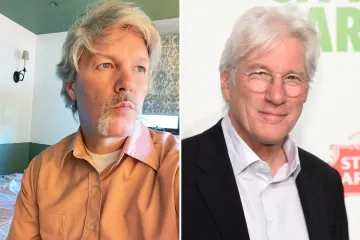
Can YOU tell who this 90s rock icon is? Fans say he looks like Richard Gere!


doped up

Shaggy 2 Dope fails as he tries to dropkick Limp Bizkit’s Fred Durst on stage

The Limp Bizkit star danced alone to Rolling Stones classics at the small-town venue Credit: tiktok/@jennyteator
Fred during Limp Bizkit’s chart-topping Noughties heyday. Credit: Redferns

The star looked almost unrecognisable with a full white beard, although he still sported the signature baseball cap fans will remember from the band’s heyday.

Other diners appeared oblivious to the famous face in their midst, continuing with their meals unaware they were in the company of rock royalty.

One viewer commented: “The people sitting there eating, completely unbothered that Fred Durst is getting down right beside them, is killllling me!”

Fred and Limp Bizkit were one of the biggest bands of the late Nineties and early Noughties, with hits including Break Stuff, My Way and Rollin’.

Limp Bizkit still perform more than 25 years after the band’s breakthrough success Credit: Getty
Fred during a recent Limp Bizkit performance at Gunnersbury Park. Credit: Getty

Their album Chocolate Starfish and the Hot Dog Flavoured Water debuted at number one on the Billboard 200 and sold over one million copies in its first week.

The singer was also linked to a string of high-profile romances, including rumoured relationships with pop stars Christina Aguilera, Britney Spears and Avril Lavigne. He has been married four times and has two children.

Despite stepping out of the spotlight in recent years, Fred, now 55, continues to record and perform with Limp Bizkit.

Limp Bizkit’s last official UK tour was last year, with the band appearing at the Reading and Leeds festivals.

Besides continuing to tour and perform with the band, Fred has made his mark as a film director with movies like The Education of Charlie Banks and The Longshots.

He also directed the film The Franatic in 2019 which starred John Travolta.


Source link

Urgent alert to people travelling with Wegovy or Mounjaro as jabs could be ‘unsafe’

Simple mistakes could not only invalidate travel insurance but also leave the medication ineffective or even ‘unsafe’

A warning has been issued to thousands of people who will be travelling abroad on weight loss treatments this summer as mistakes could mean they are not only ineffective but could be “unsafe” to use. Millions of people currently use the jabs to help weight loss but there are strict rules around their use.

A survey by ZAVA found an estimated 337,000 people will holiday on Mounjaro or Wegovy this summer however if it is not carried and stored correctly it can be left “ineffective”. Experts at the firm have now provided three tips for travelling with Mounjaro and Wegovy, alongside the most important things to know before heading off.

You could be invalidating your travel insurance

When taking out travel insurance, you often need to declare any pre-existing conditions during an online application or by calling your insurer directly. Failing to declare the use of weight loss treatment could render your policy invalid, leaving you unable to make a claim should something go wrong, which could result in a bill worth thousands of pounds.

You should also check import restrictions to any country you are travelling to and verify if the medication can be brought into the country and how much you’re allowed to carry for personal use. Make sure to also take evidence of your prescription with you, whether it be in paper or digital form, and that your treatment is in its original packaging.

Insurers like Admiral don’t typically cover GLP-1 injections bought from an unofficial programme, if a medical professional isn’t monitoring them or hasn’t been declared. It is strongly advisable to follow up with a direct call to your insurer to confirm everything is properly documented. When in doubt, contact your insurer and your GP before travelling.

Storing jabs in hold luggage could freeze your medication

Putting injection weight loss treatments in with checked luggage can be a huge risk. The compartments where checked baggage is stored undergo huge changes in temperature and pressure that may alter the effectiveness of, or even damage, your medication. It can get very cold and may freeze and unfreeze the liquid in the pen, making the injections unsafe to take. Make sure to take a carry-on bag with you to store your medication in.

Essential liquid medicines are allowed through security, even if they are over 100ml; security often advises keeping medicines separate in your bag where possible, informing the Security Officer and bringing supporting documentation if possible. After this step, make sure that your medication stays in its original packaging. If you have any specific queries about carry-on luggage and medication, contact your airline provider.

Not having access to a fridge could damage your medication

Both Mounjaro and Wegovy must be stored by following the guidelines outlined in the patient information leaflets. The medication may be kept in a refrigerator at 2°C to 8°C or stored at room temperature, provided it does not exceed 30°C, for a maximum of 28-30 days.

Any pens exposed to temperatures above 30°C, or left unrefrigerated for more than 28 days for Wegovy and 30 days for Mounjaro, should be discarded immediately, as it could be unsafe to take. Patients travelling with weight loss injections are advised to contact their accommodation in advance to confirm refrigerator access and to verify that the appliance maintains an appropriate temperature, as this can vary between units. As the jabs are administered once weekly, most patients will use each pen within the 30-day unrefrigerated window, unless travel is extended or a dose is missed.

Source link

‘I avoided all-inclusives like the plague until I discovered this ridiculous resort’

All-inclusive holidays are common across the Mediterranean, Mexico and the Caribbean, but the concept has evolved over the decades — and, as I found, is still changing…

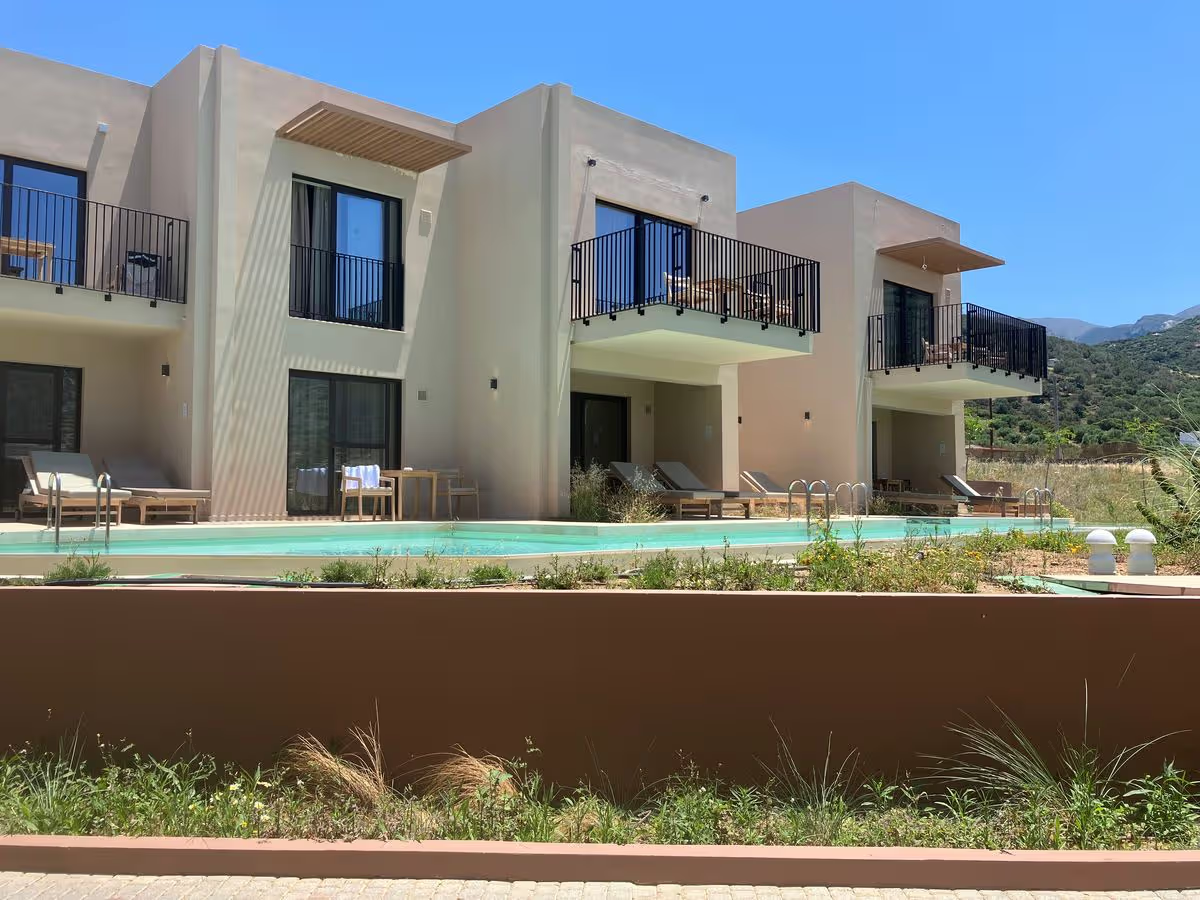
Views from the Ella Rocrita Resort Crete

For the past 15 years, if anyone ever even hinted at holidaying at an all-inclusive resort across the Mediterranean, I would shudder. Just the thought would evoke visions of a package holiday, full of Brits seeking the same cheap thrills for which they crave over here.

Don’t get me wrong – I’m not a snob. I’m the son of a travel agent, whose most popular getaways were these trips to the likes of Spain, Portugal and Greece. Brits love them.

But I’ve just come back from Greece. And from an all-inclusive resort. And, yes, I’ll eat humble pie – my view was misjudged. My trip to Ella Rocrita Resort Crete was glorious. It was a slice of luxury in a little-known corner of Crete, where tourists can enjoy the fascinating traditions, culture and nature the island has quietly boasted for decades.

Many Brits were there too. But this holiday, an all-inclusive, offered that bit of sun we here fondly miss, as well as a glimpse of Cretan life. Our boat trip to the ancient island of Spinalonga and excursion to Toplou Monastery will remain happy memories for many years.

Ella Rocrita Resort Crete is the fourth Ella Resort, having opened in April in the wake of successes on the likes of Corfu. These luxury all-inclusive complexes are essentially sprawling villages, and the newest is complete with five restaurants, several other bars with live entertainment and two large outdoor pools. Many of the 350-odd rooms and suites have quaint plunge pools, shared by only around half a dozen.

The brand, founded in 2021 but properly bursting onto the scene in 2023, has created these eco‑chic resorts in a bid to transform the identity of the all-inclusive, presumably from the image I had in my mind.

Rocrita, near the little fishing village of Mochlos, caters to families just as much as it does to couples. There’s an on-site crèche, kids club, babysitting service and a ninja pool — the latter just as appealing for youngsters as it is for big kids at heart, like myself.

I like to immerse myself in the culture of a new place, so I was a little reticent about staying at an all-inclusive. Excursions are available, though, and I was pleasantly surprised by how much culture I could absorb in the area. The stunning, lesser-known coastal spot in the northeast of the Greek island is tempting for travellers who want a true holiday experience without the hustle and bustle of tourist towns.

Every morning at Mochlos, I found myself instinctively looking up at the majestic peaks that surrounded us. Whether I was walking to breakfast, relaxing by the pool, or gazing back at the resort from the boat, the mountains were always there, providing an awe-inspiring backdrop to every moment of my stay at Ella Rocrita Resort. Even now, when I close my eyes, I can still picture them rising above me, as striking and unforgettable as ever.

Culture

On one particularly memorable day I visited Toplou Monastery. Founded in the 14th century, it is still functioning. The monks there make wine and were happy to treat us to a splendid wine-tasting session.

Travel west along the coast, hop on a little boat and spend a short while on Spinalonga. This island, maintained as a fortress for centuries under Venetian rule, became a leper colony in the early 20th century. It has been uninhabited since 1962 and is now the second-most-visited tourist site in Crete.

But those who enjoy activities closer to home can hit the private beach and make a splash with the wide variety of watersports. Yoga and pilates sessions are held most mornings on the lawn, play padel – the new racquet sport taking Europe by storm – and even enjoy a massage or facial in the wellness centre.

Food

This resort was ridiculous in the very best way possible. The days seemed to blur into one. I rarely knew what day it was, my screen time plummeted, and the food was so good it left me in a constant state of bliss. If you’re looking to immerse yourself in Greek culture, Ella Rocrita Resort’s culinary offering is a fantastic place to start, with five exceptional restaurants showcasing a variety of flavours and experiences.

I like to try the local cuisine and one of the eateries, Smigo, offers just that. Diners are encouraged to have meze, a selection of small dishes served as appetisers. These include grilled octopus, stuffed zucchini flowers, delicious fresh salads, oysters and wholesome bread boards.

At the Viola restaurant, dedicated chefs prepare Italian dishes, including a gorgeous prawn pasta creation. Carūma Fusion Restaurant offers South American and Cretan fusion cuisine, exotic cocktails, and an intimate setting for a dinner of tropical tastes. My crispy salmon with a fried rice dish was a gorgeous meal, but other diners enjoyed vegetarian delights at all the restaurants. The salads are light but wholesome and feature beautiful tomatoes and cucumbers.

Entertainment

The brand’s approach to entertainment has a way of drawing everyone in. It is understated, and not the happy-clappy fanfare I had feared as I prepared for the all-inclusive venture. Smooth jazz-inspired singers set the tone in the late bars, but the poolside watering hole boasts a DJ desperate to lure guests up to dance.

But it wasn’t an in-your-face theatre of performers, begging families up to stages to dance to unpalatable cheesy tunes. Instead, there are quiet spots across the whole of the resort where couples can relax and simply enjoy cocktails. The choice of which, by the way, is impressive; from a strong and oaky Manhattan to the resort specials, like the smooth Amber Spark (rum-based but with ginger tones).

There’s plenty for the children too, including sweet performances at the little amphitheatre and entertainment provided at the kids’ club. The arcade, complete with pool tables, is popular with youngsters and competitive adults alike.

Newly opened resort

At the end of the day — whether that means an early night or finally calling it quits after dancing until the bar closes at 1am — you retreat to one of the resort’s newly renovated rooms. Fresh, contemporary and infused with a relaxed Mediterranean aesthetic, the accommodation provides a comfortable sanctuary, with many rooms offering beautiful views across the pool or out towards the sea.

That sense of ease extends throughout the resort. From the soft, sun-washed colour palette and calming interiors to the intuitive layout that seamlessly connects rooms, restaurants and communal spaces, everything has been designed with relaxation in mind. It’s the kind of place where you quickly settle in, never feel lost, and can focus entirely on enjoying your holiday.

Book it

Rooms at Ella Rocrita start from approx. £184 per night, depending on season.

Source link

Football gossip: Wharton, Diomande, Charles, Olise, Adams, Nwaiwu, Greenwood, Brandt

Tottenham are the latest club interested in Adam Wharton, Liverpool are yet to agree a deal for Yan Diomande, and Fulham fail with their opening bid for Chibuike Nwaiwu.

Tottenham are ready to test the water with a bid for Crystal Palace‘s 22-year-old England midfielder Adam Wharton. (Teamtalk), external

RB Leipzig have turned down an offer of £87m from Liverpool for 19-year-old Ivory Coast winger Yan Diomande as they want £113m. (Liverpool Echo), external

Fulham have had a £17m bid rejected by Turkish club Trabzonspor for 22-year-old Nigeria defender Chibuike Nwaiwu. (Fotomac – in Turkish), external

Bayern Munich want to give 24-year-old France winger Michael Olise a lucrative new contract in order amid interest from Real Madrid and Liverpool. (Mirror), external

Tottenham are not planning to make a move for 24-year-old Marseille striker Mason Greenwood, while Roma are currently short of the asking price. (Mail), external

Everton, Tottenham and newly promoted Ipswich are looking to sign 22-year-old Cameroon forward Karl Etta Eyong from Levante this summer. (Teamtalk), external

Celtic turned down a £25m bid from Nottingham Forest in January for 22-year-old Belgium midfielder Arne Engels but are open to offers, with Crystal Palace and Borussia Dortmund also interested. (Football Insider), external

Leeds are interested in signing Southampton’s Northern Ireland midfielder Shea Charles, who is valued at more than £20m, this summer. (Mail), external

Leeds are also looking at a move for Germany forward Julian Brandt, 30, who is a free agent this summer after leaving Borussia Dortmund. (Yorkshire Evening Post), external

Wolves are keen on bringing Scotland striker Che Adams, 29, back from Torino this summer. (Tuttomercato – in Italian), external

Source link

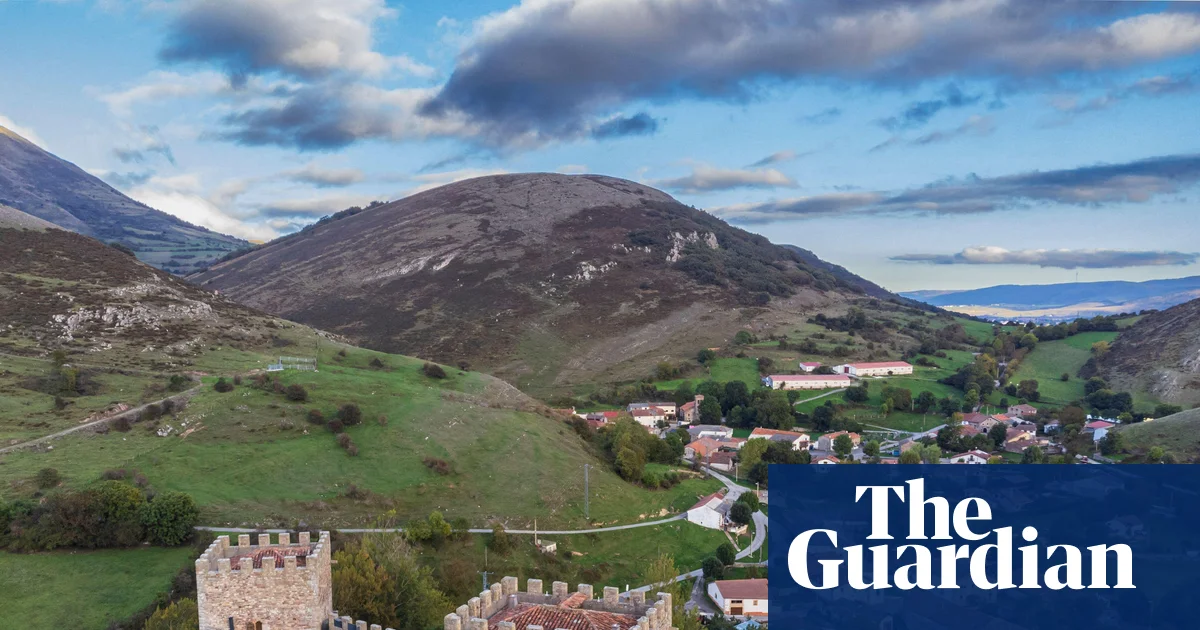
Salerno: the charming and affordable gateway to Italy’s Amalfi coast | Amalfi coast holidays

The ferry from Salerno to Amalfi town was set to take about 35 minutes, and we were debating whether to risk the windswept top deck, fearful our packed lunches might fly into the Tyrrhenian Sea. (My father and I were taking a pragmatic approach on our Italian holiday, opting for light midday meals to save space for the primo and secondo courses at dinner, and ample lemony desserts.)

As our ferry sped across glittering water, we admired the views as the Amalfi coast unfolded, incandescent with charm. But we could also see the crawling traffic on the narrow roads that cling to the cliffs. That could have been us, up there in one of those toy-sized rental cars, squeezed between a tourist coach and a fed-up local leaning on their horn. Thankfully, we were on a boat instead, sea breeze in hair and coffee in hand.

Illustration: Guardian Graphics

The Amalfi coast has a reputation that draws tourists from all over the world. It seems everybody wants to see this string of sorbet-coloured towns, to wander the narrow streets where houses climb the hills like stacked blocks, and to sip limoncello while gazing out across the impossibly bright, blue waters. But as eager as I had been to experience these famous graces, the idea of white-knuckling it on hairpin turns in a Fiat 500, inches from certain ruin, didn’t seem like my idea of fun. That’s when an Italian friend gave me some priceless advice: stay in Salerno – it’s a nice town with good restaurants, and you can do all your excursions via public transport from there.

Salerno is tucked just under the Sorrentine peninsula and about half an hour south of Naples on the fast train. It’s an ideal base for jumping on trains to inland attractions such as Pompeii and Paestum, but also for catching ferries to every destination along the Amalfi coast, as well as Capri and Sicily. What’s more, Salerno is a more affordable base than the honeypot towns of Positano or Ravello, where accommodation and restaurant prices are around double what you’d pay here.

Ornately decorated streets in Vietri Sul Mare. Photograph: Sean Pavone/Getty Images

Originally a Roman colony, Salerno was reshaped by the Normans in the 11th century. It’s a pleasant and relaxed town to wander, its wide and luxurious promenade dotted with palm trees, benches and street performers. What it lacks in Amalfi glamour, it makes up for with a more authentic tableau of local Italian life. (After a day of eating overpriced ice-cream from hollowed-out Amalfi lemons, we found Salerno’s lack of performance refreshing.)

Dad and I got a holiday rental on the edge of the historic centre, near Salerno Cathedral, which houses the relics of Saint Matthew. We wandered in one morning and were surprised to find that although the duomo is on the modest side, the crypt is a real showstopper, with intricate marble details from top to bottom. The town is also home to the Schola Medica Salernitana, which dates back to the 9th century and was the pre-eminent source of medical knowledge in its heyday, before closing in 1811. Today, the adjacent Garden of Minerva botanical terrace is the city’s most picturesque attraction. Its organising principle is the four humours of man (the Ancient Greeks theorised that our temperament and health are dictated by a balance of blood, phlegm, black bile and yellow bile). That’s certainly something to think about while wandering the gardens, where the plants are labelled according to which “mood” they affect.

But Salerno is all about the food for me, most notably the glistening, black squid ink pasta dish I ate at La Botte Pazza and still salivate over months later. The menu, scribbled on a tiled wall, described the dish simply as spaghetti mare. The wine came out of taps in the wall, and the buzzy atmosphere only got louder as the evening progressed. The bonhomie was all the more welcome after spending the day wandering among the ghosts of Pompeii (40 minutes up the coast by train), which was buried in ash when Mount Vesuvius erupted nearly 2,000 years ago.

Ihe intricate marble detail of the crypt at Salerno Cathedral. Photograph: Francis Canker/Getty Images

Another worthwhile rail excursion is to Vietri sul Mare – the first town in the string of pearls that make up the Amalfi coast, and the only one that can be reached by train. We hopped on an eight-minute service out of Salerno for a wander through the town famous for its colourful ceramics, but also because I wanted to swim – Salerno’s seafront has a nice promenade, but beach lovers are left wanting.

You can swim in Amalfi town too, but the beach in this more famous spot was already getting busy when we visited in late March. As much as I enjoyed Amalfi, I felt relieved to be there early in the season – its narrow streets weren’t built for crowds.

Vietri sul Mare is sleepy in comparison, and I was thrilled to find a peaceful stretch of sand, where I changed quickly under the arches before running in for a bracing dip in the turquoise water.

For Dad, who takes a dim view of anyone who goes in the sea in March, Paestum was more of a highlight. After speeding south for about half an hour, the train dropped us off in the middle of nowhere, by a gravel road that promised a 10-minute walk to the ruins of the once-great Greek city. We were in our element now – at Paestum, visitors can wander about freely as the approximately 27-hectare (66 acre) site unfolds, with the occasional noticeboard sharing a story of what used to be here, but mostly leaving it to your imagination.

Paestum’s crown jewels are the three temples looming large and golden in the landscape; they are about 2,500 years old yet very well preserved. Dad was pleased to find a working model of Archimedes’ screw, an ancient hydraulic tool for elevating water, while I was tickled by the Tomb of the Diver, with its fresco of a gentleman diving into a pool, starkers.

The 2,500-year-old Temple of Athena at Paestum. Photograph: Nick Brundle/Getty Images

Osteria Canali gave us our last meal in Salerno, and again we had the pleasure of being surrounded by local people in an inviting neighbourhood taverna. The regional menu was rich with aubergine and mozzarella, and then came the main course of baccalà – a piece of white fish with figs, wrapped in paper and simmering in its own juices. More creamy Amalfi lemon desserts to finish, of course, and we figured we should try the limoncello as well – when south of Rome, right? But as much as I like a citrus tang, this was finally too much lemon for me.

Choosing Salerno as our base opened up a different side of the Amalfi coast, allowing us to come and go by boat and train without the stress of traffic jams and impossible parking situations. We only missed a train once, but another came along half an hour later, and while we waited there was nothing to worry about except where to go for ice-cream.

Intercity trains run from Naples Central to Salerno and take about 35 minutes (€9.50). Regional trains from Salerno central take about 40 minutes to Pompeii (€2.80); 30 minutes to Paestum (€3.40); and eight minutes to Vietri sul Mare (€1.40). Timetables at trenitalia.com. Several ferry companies run year-round services from Salerno to the towns along the Amalfi coast. The Travelmar passenger ferry sails direct to Amalfi town from Salerno’s Concordia terminal (35 minutes, €26 return). Plan your journey with FerryHopper

Source link

South Korea seeks to turn defense exports into growth engine

1 of 3 | Government officials, lawmakers, researchers and defense industry executives attend a seminar marking the 20th anniversary of South Korea’s Defense Acquisition Program Administration in Seoul on Friday. Photo by Asia Today

June 19 (Asia Today) — South Korea is seeking to transform its defense industry into a national growth engine by integrating military procurement, weapons exports, advanced technology and industrial policy, government and industry officials said Friday.

Officials at a public-private seminar in Seoul rejected the long-standing argument that growing foreign orders could divert production capacity from the South Korean military and delay domestic weapons deliveries.

Instead, they said an analysis of about 2,000 South Korean defense companies found that exports increased factory utilization, encouraged investment in research and production facilities and eventually reduced manufacturing costs.

The findings were presented at a seminar titled “A New Leap Forward in Acquisition and the Defense Industry,” held at the Fairmont Ambassador Seoul in the city’s Yeouido financial district.

The Defense Acquisition Program Administration organized the event as it marked the 20th anniversary of its establishment.

Participants included lawmakers, officials from the defense, industry, science and small-business ministries, defense company executives and academic researchers.

They called for an end to treating military procurement and defense exports as separate policy areas.

Lee Yong-cheol, minister of the Defense Acquisition Program Administration, said South Korea’s annual defense exports had grown from about $250 million when the agency was established to $15.4 billion last year.

“Defense exports are no longer merely a supplement to domestic military procurement,” Lee said. “They have become a central growth engine driving the Republic of Korea as a whole.”

Lee said South Korea also needed to move beyond selling individual weapons.

He proposed combining weapons with energy systems, infrastructure, maintenance, repair and overhaul services and other forms of industrial cooperation.

“The era of selling weapons as stand-alone products is over,” Lee said. “We will transform the K-defense paradigm through cross-industry package cooperation.”

Lawmakers from South Korea’s governing and opposition parties pledged bipartisan legislative support for faster procurement and stronger financing for small and midsized defense companies.

They said a system that can take about 15 years to plan, develop and deploy a weapon is not suitable for an era in which artificial intelligence, drones and robotic systems evolve rapidly.

Participants also cited research indicating that financial instability among smaller suppliers, rather than export production, was a more important cause of delivery delays.

They called for expanded government-backed financing to prevent small manufacturers in the defense supply chain from being overwhelmed by debt and working-capital shortages.

Study links exports to stronger domestic production

South Korea’s defense industry has long debated whether large export contracts weaken or strengthen the country’s own military procurement.

Critics have warned that foreign orders could occupy production lines and delay the delivery of weapons to South Korean forces.

Supporters have argued that exports create economies of scale, preserve production capacity and lower the price paid by the South Korean military.

Research presented at Friday’s seminar supported the second view.

A team led by researchers from Myongji University analyzed data from about 2,000 South Korean defense-related companies.

The analysis found that increasing exports produced an immediate rise in factory utilization. Higher utilization was then associated with greater investment in research, development and production facilities.

Researchers said the benefits became more evident about three years after an export increase.

The analysis identified improvements in operating profit, lower production costs and greater independence in critical technologies after that period.

Repeated production also allowed factory workers and engineers to improve their skills and reduce defects, a process commonly described as a learning effect.

At the same time, producing weapons in larger quantities spread fixed development and manufacturing expenses across more units.

Researchers said those effects increased the competitiveness of South Korean products in foreign markets while potentially lowering the cost of weapons purchased by the South Korean military.

Industry experts cited South Korea’s large exports of K2 tanks and K9 self-propelled howitzers to Poland as an example.

They said the contracts increased domestic production, helped reduce unit costs and accelerated work on upgraded models.

Kim Myung-keun, an executive at Hyundai Rotem, said the company achieved economies of scale after receiving Poland’s large K2 tank order.

“Mass production lowered costs, reduced the acquisition cost for our own military and accelerated the development of upgraded models,” Kim said.

Yoon Byung-jo, an executive at SNT Motiv, said repeated production generated through large export orders also strengthened technical capabilities on factory floors.

“The learning effect accumulated by technicians during repeated production is the most powerful tool for reducing defects in critical components and increasing technological independence and localization,” Yoon said.

Lee Jung-hyun, a Myongji University professor involved in the study, said the analysis did not identify export volume as the principal cause of delayed deliveries.

“The real causes of delivery delays were companies’ debt ratios and financial soundness,” Lee said. “Exports instead improved operating profits and technological capabilities after a time lag of about three years.”

Lee said the government should strengthen the financial stability of smaller defense companies rather than restrict exports.

Officials seek to shorten 15-year procurement cycle

Government officials said South Korea’s traditional weapons acquisition process is too slow to keep pace with civilian advances in AI, drones, robots and human-machine teaming systems.

Weapons programs can take about 15 years from initial planning through development and operational deployment.

Officials said that schedule risks delivering technology that has already become outdated by the time it reaches military units.

Won Jong-dae, an assistant defense minister, said the existing system had become a national security obstacle.

“In the age of AI and drones, an acquisition process that takes 15 years is an impediment to security,” Won said.

He said the government would seek legislation tentatively called the Advanced Defense Capabilities Projects Act to shorten the process from initial requirements planning through deployment.

Kim Seong-su, a senior research and development official at the Science and Technology Ministry, said innovation in the civilian sector was advancing more quickly than military technology.

Kim called for an adaptive research and development system that would allow mature commercial technologies to be introduced into the military without passing through the full conventional development process.

The acquisition agency said it plans to expand rapid-introduction programs, particularly for drones and AI-related technologies.

The programs would allow the military to test and deploy promising civilian products more quickly while making adjustments based on operational experience.

Jeong Hwan, chief executive of infrared sensor manufacturer i3system, said smaller companies with advanced commercial technologies often cannot withstand the military’s complicated testing requirements and lengthy acquisition schedule.

He urged the government to make rapid acquisition programs more flexible and accessible to technology companies.

Financial support sought for smaller suppliers

Officials said South Korea must also strengthen small and midsized companies that produce components and materials for major weapons manufacturers.

Park Yong-soon, a senior official at the Ministry of SMEs and Startups, said the research presented Friday showed that financial weakness was a major source of supply-chain disruption.

Park said the government would shift policy toward stronger financial support for vulnerable suppliers and seek to increase the share of domestic defense revenue generated by small companies.

Smaller companies currently account for about 18% of South Korean defense industry sales. The government aims to raise the proportion to 25%.

Officials said those businesses can face severe cash-flow pressures because defense contracts require lengthy development, testing and certification before companies receive full payment.

The problem can become more serious when a small supplier must expand production rapidly to meet a major overseas order.

Park said the government must ensure that otherwise competitive companies do not collapse because they cannot obtain sufficient operating capital.

Park Dong-il, a senior official at the Industry Ministry, also warned that South Korea’s export portfolio remained concentrated in ground weapons.

More than 60% of the country’s defense exports come from land-based systems, he said.

Park said the government would work to diversify the industry into aerospace, next-generation satellites and advanced naval vessels while strengthening the domestic manufacturing and component ecosystem.

South Korea plans national security export packages

The acquisition agency said future export efforts would go beyond individual tanks, aircraft or artillery systems.

The government plans to package defense products with energy projects, transportation and industrial infrastructure, information and communications technology, maintenance services and technology transfers.

Officials described the approach as exporting an integrated security platform rather than a single weapon.

They cited Poland as a model.

South Korean arms agreements with Warsaw have included not only K2 tanks, K9 howitzers and other weapon systems but also plans for local production, technology cooperation, training and long-term maintenance.

An industry official said future transactions could involve building a partner country’s broader security and industrial system.

“The business will no longer be about exporting one tank,” the official said. “It will become a platform business that exports an entire national security system.”

Such packages can help importing countries create domestic jobs, develop supply chains and maintain weapons locally.

They can also give South Korean companies access to long-term revenue from training, spare parts, upgrades and depot-level maintenance after the initial sale.

The approach, however, requires coordination among several ministries because infrastructure, export financing and industrial cooperation extend beyond the authority of the acquisition agency.

Kim Il-dong, deputy minister of the Defense Acquisition Program Administration, said procurement and exports should be viewed as two sides of the same coin.

Kim said the acquisition agency could not achieve South Korea’s defense industry goals on its own.

He called for coordinated action by the defense, science, industry and small-business ministries to develop the sector as a strategic national industry.

Seoul targets 5% share of global defense market

The Defense Acquisition Program Administration said it aims to increase South Korea’s share of the global defense market to at least 5% and establish the country as one of the world’s four largest defense exporters.

Officials said South Korea’s defense industry had already approached the global top five based on its 2025 export performance.

Future growth will depend on moving beyond the country’s current strength in tanks, armored vehicles and artillery, they said.

The government plans to support companies working in AI, space systems, drones, advanced ships and autonomous and human-machine teaming technologies.

It also wants to foster globally competitive defense startups and companies capable of reaching valuations of more than $1 billion.

Officials and industry representatives said South Korea’s defense sector had completed an initial period of quantitative growth and now needed to focus on technology, productivity and supply-chain resilience.

“The past 20 years were a period of quantitative growth in which K-defense built weapons capabilities from the ground up,” seminar participants said. “The next 20 years should be remembered as an era of qualitative growth centered on AI, space, drones and unmanned systems.”

They said military procurement and the defense industry should no longer be treated as separate areas.

Instead, both should be viewed as parts of a single strategic industry supporting South Korea’s security, technological development and economic growth.

— Reported by Asia Today; translated by UPI

© Asia Today. Unauthorized reproduction or redistribution prohibited.

Original Korean report: https://www.asiatoday.co.kr/kn/view.php?key=20260619010006831

Source link

Vanessa Feltz calls for end to ‘sordid’ reality TV with emotional confession

Vanessa Feltz has addressed some of her struggles in the early 2000s and argued that while people were very excited by the introduction of reality TV, vetting is now too ‘sketchy’

Vanessa Feltz has called for an end to “sordid” reality TV shows which she said gave her some of her lowest moments in her career.

The broadcaster, 64, shared her thoughts on how the format has changed over the past two decades, while reflecting on some incidents involving reality stars. According to Vanessa, vetting processes on some shows were “sketchy at best.”

In an article for You, the journalist said reality shows often recruit “individuals desperate for exposure” from social media – with women often asked whether they are looking for love, and men asked whether they are hoping to have some fun. Describing the reality genre as “sordid,” Vanessa said things have significantly changed since the early 2000s.

At the time, the idea of having “real people, doing real things, in real time” on TV seemed “revolutionary”, she argued, as demonstrated by the success of Big Brother. “We wanted ‘ordinary’ people scratching their armpits, pairing socks, quarrelling, vying, lying, picking their toenails and getting their rocks off,” Vanessa, who famously broke down and told Big Brother to “f*** off” during the first-ever Celebrity Big Brother in 2001, wrote.

Back then, mental health wasn’t given the same importance it has now, Vanessa said, meaning that many people – including herself – didn’t realise that reality TV posed any risk to participants. But she wrote: “When I said I’d had enough and please could I pack my case and go – we weren’t being paid, we were doing it free for Comic Relief – Big Brother replied: ‘If you leave, Vanessa, you’ll be the most hated woman in Britain.'”

She said that after being evicted, she “shook uncontrollably” and was “disorientated, trembling” until she was able to reunite with her daughters, which made her “remember how it felt to be myself.” She said: “A quarter of a century later people still ask, what the beep happened? I tell them, when you are on a reality TV show it isn’t a game.

Opening up on her experience of filming Celebrity Fit Club in 2004, Vanessa said she was “so scared” of letting her team down that she “stopped all food and water on Friday mornings” and after the weigh-in on Saturday afternoon, contestants “were all shaky and faint with hunger.”

She said that after drinking a glass of water and eating a couple of Ryvita crackers, they would go back on the scales and find they had already gained back the weight presenter Dale Winton had announced they had lost. “It was hell,” Vanessa reflected.

Giving the example of reality star Sinitta, who appeared on her Channel 5 show Vanessa on June 1 and said she needed therapy after I’m A Celebrity…South Africa due to the amount of trolling she faced, the broadcaster said reality TV is capably of leaving people damaged.

Vanessa’s reflection comes after her Channel 5 daytime chat show was cancelled only a year after its debut. According to reports, the presenter was blindsided and left furious by the news. The chat show sees Vanessa talk to guests and people at home who had called in to share their experiences of whichever topic was on the agenda.

But this week, a 5 spokesperson confirmed to the Mirror that the show would be coming off air, saying: “Due to afternoon scheduling changes, ‘Vanessa’ will be rested from July 17th. We thank Vanessa and her team at ITN for 18 months of warm, witty, wise and searingly honest shows. Vanessa remains a valued member of the 5 family and we are discussing future projects together.”

Following the cancellation, a source told the Mail that Vanessa was blindsided when she was told that the show had been axed. They said: “Vanessa was brought into a meeting after her show came off air this week. She had no idea what the meeting was about and certainly didn’t expect to be told it was not being renewed. She feels so blindsided but also let down by bosses.”

The cancellation is thought to be linked to low ratings for the programme, as well as an inability to get the scam callers under control. The source said that producers “tried their best to crack down” on the pranks, but it couldn’t be done.

Like this story? For more of the latest showbiz news and gossip, follow Mirror Celebs on TikTok, Snapchat, Instagram, Twitter, Facebook, YouTube and Threads.


Source link

U.S. Open: Wyndham Clark sets scoring records at Shinnecock Hills

The USGA set up a different golf course at Shinnecock Hills to keep it playable in strong wind. And when the wind subsided late Thursday afternoon, Wyndham Clark looked like he was playing in a different U.S. Open.

Clark seized on a more gentle course — slightly calmer and still soft with receptive greens — by pulling away late to reach six-under-par through 16 holes.

He left in darkness with a four-shot lead over seven players, one of them Oklahoma junior Ryder Cowan, another the surprisingly resurgent Dustin Johnson.

Rory McIlroy thought he had made a fine effort with a 69 in gusts that topped 30 mph in the middle of the day, when the scoring average was well above 74. The afternoon started tough until the wind kept subsiding, and players began taking aim at flags. The afternoon wave was playing at least a stroke easier than the early starters who faced relentless wind.

“Everything was kind of clicking,” said Clark, who came into the U.S. Open playing as well as anyone. “We were definitely fortunate with the wind laying down. Overall a good round.”

Shinnecock was still a brute of a test, but the red numbers on the white scoreboard were an unfamiliar site for this course. When play was suspended by darkness, 17 players were under par.

Xander Schauffele strikes the ball as he hits the tee shot on the ninth hole during the second round of the U.S. Open.

Xander Schauffele hits his tee shot on the ninth hole during the second round of the U.S. Open at Shinnecock Hills Golf Club on Friday.

(George Walker IV / Associated Press)

The lowest opening round in the previous five U.S. Opens at Shinnecock is 66, last done by three players in 2004.

Cowan birdied his last hole for a 68 to join former Sooner Max McGreevy and former Oklahoma State player Sam Stevens, the only one of that trio who faced the harsh wind of the morning wave.

Johnson, in his final year of being exempt from the U.S. Open he won at Oakmont in 2016, ran off four straight birdies and was tied with Clark after 13 holes. But Johnson failed to get up-and-down for birdie on the easy par-five fifth, where Clark made eagle. And then Johnson three-putted from short range for double bogey on the sixth to fall four shots behind.

Scottie Scheffler, who needs the U.S. Open to complete the career Grand Slam, battled all day and relied heavily on his short game to salvage a 72. It was his 10th consecutive U.S. Open round without breaking par, but at the time it left him only four shots out of the lead.

Clark, who won the U.S. Open in Los Angeles three years ago, changed the look of the leaderboard. He was to return Friday morning to complete the round, then head out for the second round in wind expected to be not as strong.

One key to his round might have happened some five hours before he even showed up.

Thirty minutes after the round began, play was stopped because of fog so dense it was difficult to see the fairway and the green on the par-three 11th. The two-hour delay pushed back tee times.

The forecast was for the strongest wind of the week during the brightest part of Thursday.

“I would say when I got my tee times on Tuesday, I was like, ‘Oh, could be a tough draw,’” Clark said. “That two-hour fog delay was very helpful, and it was really nice it laid down. So it definitely helped those last six, seven holes we played.”

His golf wasn’t too shabby, either. Clark started on No. 10 and opened with two quick birdies. He went out in 32 to get his name atop the leaderboard. And after missing an eight-foot birdie putt on No. 1 and failing to save par from a bunker on the long par-three second, he took off.

He hit wedge to five feet on No. 3 for birdie, made a 20-foot birdie putt on the next and then from 207 yards with some wind at his back, he hit his second on the par-five fifth to within three feet for eagle.

When Johnson faltered, Clark had plenty of breathing room — and a quick turnaround.

The wind was so strong and the conditions so severe that it took Scheffler’s group nearly three hours to complete nine holes. There was a question the round could have finished even without the fog delay.

Only 27 out of the 77 players from the afternoon wave — Jason Day withdrew because of a back injury — finished the first round.

Dustin Johnson throws his head back and puts his arms out to the side after missing a putt on the sixth hole at the U.S. Open

Dustin Johnson reacts after missing a putt on the sixth hole during the second round of the U.S. Open at Shinnecock Hills Golf Club on Friday.

(Gerald Herbert / Associated Press)

Johnson was joined by three other U.S. Open champions — Matt Fitzpatrick (2022), Gary Woodland (2019) and Jon Rahm (2021) — at two under, with all still having holes to play.

Rahm, who had a chance in the final hour at the PGA Championship, was bogey-free and reached two under by making a 60-foot birdie putt on the par-three 17th hole.

Stevens overcame a double bogey to start his round — a hole that took him over two hours to play because of the fog — and strung together six birdies for his 68.

“The greens haven’t been too firm, the fairways haven’t been too firm, so I’ve really felt like it’s pretty scorable,” said Stevens, who had only his second sub-70 round in his fourth U.S. Open. “Obviously, it’s difficult, but overall it’s an awesome place. I think the setup is great right now.”

For half of the opening round, the USGA appeared to have the ideal test. Coming off two Opens at Shinnecock when the course got out of control, it slowed greens to 10 1/2 on the Stimpmeter — rare for any major, much less the U.S. Open — and keep plenty of water on the putting surfaces.

It was all because of the wind, which did not disappoint. The sustained wind approached 25 mph, and gusts were even stronger. And if that wasn’t enough, it shifted directions in the middle of the day.

“It was tough around here without wind, and then it was blowing pretty hard — really hard,” Keegan Bradley said after a 70. “The USGA did a great job setting the course up because if the greens were any faster or firmer, we might not be playing right now.”

But they played, it became more ideal with each passing hour late in the afternoon.

Source link

Ex-diplomats allege North Korean UNESCO official has intelligence ties

Former Japanese Prime Minister Yasuo Fukuda (2-L) speaks during the 2024 Jeju Forum for peace and prosperity at a convention center on the country’s southern Jeju Island, South Korea. Photo by YONHAP / EPA

June 19 (Asia Today) — Former North Korean diplomats have alleged that a North Korean education specialist affiliated with UNESCO and being considered as a speaker at an international forum in South Korea may be connected to Pyongyang’s intelligence apparatus.

Jang Kwang-chol is under consideration to participate by video in a session titled “UNESCO and the Future of Education: Challenges and Prospects” at the 21st Jeju Forum for Peace and Prosperity, according to forum organizers.

The forum, jointly hosted by South Korea’s Foreign Ministry, the Jeju provincial government and other organizations, is scheduled to take place from Wednesday through June 26 at Haevichi Hotel & Resort Jeju and Jeju Stone Park.

The former diplomats’ allegations regarding Jang could not be independently verified. Neither UNESCO nor the North Korean government was quoted as responding to the claims.

Several former North Korean diplomats said Pyongyang selects Foreign Ministry officials for assignments at United Nations agencies to secure international assistance, collect information about foreign governments and South Korea and earn foreign currency.

They alleged that officials selected for such work sometimes receive fabricated or altered professional backgrounds tailored to the agency where they will serve.

Before deployment, the officials may formally transfer their affiliation to an intelligence organization such as North Korea’s Reconnaissance General Bureau, the former diplomats claimed. Such an arrangement, they said, allows the officials to operate with greater independence than ordinary North Korean diplomats.

UNESCO materials identify Jang as an education specialist who earned a doctorate in education from Kim Hyong Jik University of Education and previously worked for North Korea’s Education Ministry.

The former diplomats alleged that at least part of that professional background could serve as a cover for intelligence-gathering duties.

Ko Young-hwan, a former first secretary at the North Korean Embassy in the Republic of Congo, told Asia Today that North Korea has frequently dispatched what it calls international civil servants to U.N. organizations.

“When they were sent abroad in the past, their affiliations were transferred to organizations under the Workers’ Party, such as the United Front Department or the External Information Investigation Department, also known as Office 35,” Ko said.

“After those organizations were consolidated, I understand that their affiliations were transferred to the Reconnaissance General Bureau.”

Ko, who later headed South Korea’s National Institute for Unification Education, said he believed Jang could fall into that category.

North Korea created the Reconnaissance General Bureau in 2009 by combining intelligence and operational units that had previously been divided among the Workers’ Party and the military.

South Korean authorities have described the bureau as North Korea’s principal organization for overseas intelligence collection, cyber operations and clandestine activities.

Former North Korean diplomats also said officials assigned to international organizations operate with fewer restrictions than diplomats posted to embassies.

Ko recalled an official who worked at UNESCO headquarters in Paris while he was serving in the North Korean Foreign Ministry.

“He attended a weekly self-criticism session at the embassy only once a week and did not have to report unless something unusual occurred,” Ko said.

Ryu Hyun-woo, a former acting North Korean ambassador to Kuwait, said such officials can operate independently under special circumstances.

“They are diplomats who act alone in exceptional situations,” Ryu said. “I understand that they receive separate, specialized training before being dispatched.”

The Jeju Forum’s organizers said education innovation is one of this year’s major themes and that Jang is being considered because he is a UNESCO-affiliated official suited to the education session.

The organizers have not publicly suggested that his proposed participation is connected to intelligence activity.

Some observers, however, have interpreted the invitation as a possible attempt to reopen communication with North Korea amid strained inter-Korean relations.

The outreach comes after the Jeju provincial government provided North Korea with about 160 million won ($116,000) worth of agricultural and medical supplies, including hallabong citrus seedlings, chemicals used to combat pine wilt disease and kidney dialysis equipment.

The provincial government’s North Korea assistance program has also drawn scrutiny following reports that Jeju Gov. Oh Young-hun had contact with Ri Ho-nam, a former counselor at the North Korean Embassy in Beijing who has been identified by South Korean sources as an operative involved in inter-Korean affairs.

No evidence was presented in the article showing that Jang had engaged in espionage or other illegal activity in connection with the Jeju Forum.

— Reported by Asia Today; translated by UPI

© Asia Today. Unauthorized reproduction or redistribution prohibited.

Original Korean report: https://www.asiatoday.co.kr/kn/view.php?key=20260619010006871

Source link

World Cup 2026: Paraguay’s Miguel Almiron sent off for covering mouth while speaking to opponent

Paraguay’s Miguel Almiron became the first player to be shown a red card for covering his mouth while speaking to an opponent during his side’s World Cup group match against Turkey in San Francisco.

Almiron, 32, obscured his mouth with his hand while speaking to Turkey’s Mert Muldur, who immediately informed an official standing next to him.

Following a check by the video assistant referee (VAR), referee Ivan Barton from El Salvador announced to the crowd that he was sending off the former Newcastle United winger.

The incident occurred just before half-time with Paraguay leading 1-0.

Commentating for BBC Radio 5 Live, former Republic of Ireland striker Clinton Morrison said: “If you know the rules, you shouldn’t do it. You’ve got to credit the referee and the VAR for making that decision.

“Not everyone would agree with it, but if those are the rules, you’ve got to stick by the rules.”

Source link

Ashley Cain’s axed BBC documentary is still on iPlayer after channel bosses admits vetting failure

ASHLEY Cain’s axed BBC documentary is still available to watch on iPlayer.

The reality TV star, 35, came under fire this week after historic tweets were exposed, in which the reality star allegedly made degrading comments about women.

Ashley Cain looking out of a car window.
Ashley Cain’s BBC doc has been axed Credit: BBC/True North

The second series of Ashley Cain: Into The Danger Zone, which was filmed earlier this year, will not air on the BBC – yet the first series remains on the channel’s catch-up service.

It’s after the BBC acknowledged that its vetting process had “clearly failed”.

The Twitter posts made in 2011 and 2013 are said to have referenced extreme sex acts and appeared to make light of consent.

He reportedly used offensive, sexualised and aggressive language about women.

VETTING FAILURE

Ashley Cain’s show axed by BBC after ‘unacceptable’ posts about women


STAR PROBE

BBC launching investigation into Ashley Cain ‘failings’ after his show is axed

Despite this, series one of Ashley Cain: Into the Danger Zone aired in April 2025.

It followed his journey to the world’s most dangerous places, interviewing young men who live on the fringes of society.

Filming for a second series took place earlier this year however, it will no longer air following The Guardian‘s report accusing Ashley of writing derogatory terms in 2014 and 2015 including “sl**s”, “b***hes” and “psychos”.

The newspaper also revealed Ashley was secretly sacked from a BBC job last year for being “drunk on set”.

After the success of his documentary, he was picked to host, Sin City: The Real Las Vegas.

Ashley was flown out to Nevada to film the show but concerns were raised about his conduct.

Appearing to be drunk during filming of the show, the production was suspended and Ashley was ultimately dropped from the project and replaced by another presenter.

Despite this, the incident went largely ignored as Ashley returned to filming with the BBC earlier this year for the second series of his Into The Danger Zone series.

A BBC spokesperson told The Sun:  “The posts by Ashley Cain, albeit from many years ago, are completely unacceptable.”

“The BBC has clear requirements around vetting and social media checks, which are undertaken by the production company.

“In this instance, the process clearly failed and we are investigating why.

“We are continuing to strengthen our processes to ensure everyone working for, and on behalf of, the BBC meets our values and standards.

“We have no plans to broadcast the new series of ‘Into the Danger Zone’, and no future projects with Ashley Cain.”

Source link

After algae clean-up effort, Reflecting Pool’s painted blue bottom is peeling

U.S. National Park Service employees are pictured using a vacuum pump to clean algae off the bottom of the newly repainted Lincoln Memorial Reflecting Pool on the National Mall in Washington, D.C., on Wednesday, which on Friday started peeling and floating to the top of the pool. Photo by Bonnie Cash/UPI | License Photo

June 19 (UPI) — After cleaning algae from the Lincoln Memorial’s Reflecting Pool weeks after its $15 million renovation, the Interior Department now has to deal with blue paint applied to its bottom peeling off.

President Donald Trump‘s renovation of the national monument was meant to clear the water and prevent algae, and included painting the bottom of the pool “American Flag Blue” in the effort to improve it’s look.

The Reflecting Pool has for decades been known for some algae and unclear water, though it was designed to reflect the Washington Monument and sky rather than appear similar to other fountains and water features at monuments that have filtration systems that prevent water from being still enough to reflect their surroundings.

The pool’s new paint job was meant as an upgrade ahead of celebrations for the 250th birthday of the United States of America but after it was refilled following the paint job, green sludge started appearing on the water’s surface — and on Friday, chunks of paint could be seen floating to its top, as well.

The Interior Department on Friday told The Washington Post that it is treating the pool with hydrogen peroxide and a “high-tech nanobubble ozone technology” to prevent algae growth.

Swimming pool experts told The Post that it is possible the resurfacing was improperly installed, or that there could be water seeping under the repainted surface that is causing it to peel.

In posts on X on Wednesday, as the department started treating the water to reduce algae blooms, officials reported that some parts of the pool had seen clearer water as a result.

“The nanobubbler technology and vacuuming have been incredibly effective,” the Interior Department said in one post, “making the water crystal clear with the American Flag Blue coating shining brightly on the bottom of the pool.”

The cost to repaint the pool, along with other enhancements the administration has made, cost more than $14.65 million for the main contract on the work, with another $1.74 million paid to a separate company for the nano bubble technology that is expected to kill algae in the pool, ABC News reported.

According to a lawsuit filed by The Cultural Landscape Foundation, a thorough review of the renovation plans before the administration started work may have identified “potential problems — like algae and exfoliating paint — and, perhaps, suggest solutions.”

“Instead, the Park Service granted themselves a ‘streamlined review,’ which they admitted was done under pressure from ‘White House leadership,'” the TCLF’s CEO Charles Birnbaum told The Post.

President Donald Trump presents a Medal of Honor to Tom Ripley on behalf of his father, John W. Ripley, during a Medal of Honor award ceremony in the East Room of the White House on Thursday. Photo by Aaron Schwartz/UPI | License Photo

Source link