This is the question on everyone’s mind of “The Bachelorette’s” producers, ABC, Hulu and the Disney legal team.
On Thursday, ABC announced that the heavily promoted new season of “The Bachelorette,” scheduled to premiere Sunday, would not be moving forward “at this time.” Why not? Well, the Bachelorette in question, “The Secret Lives of Mormon Wives” star Taylor Frankie Paul, was the subject of a second domestic assault investigation as a damning video from her first, in which she pleaded guilty to aggravated assault, made the rounds courtesy of TMZ. Filming for Season 5 of “Mormon Wives,” which Paul executive produces, was also abruptly halted.
The disturbing video is hard to watch. Not so much because Paul puts on-again, off-again partner Dakota Mortensen into a headlock and then pelts him with metal bar stools — sadly, this is a scene that would not be out of place on many reality shows — but because a small child is in the room. After one of the stools bounces toward the camera, Paul’s then-5-year-old daughter Indy begins crying and Mortensen later says “help your child.” Even as the child cries “Mommy,” Paul continues on her rampage. When Mortensen belatedly attempts to help Indy, Paul screams at him to “get away from my child.”
And while “Bachelorette” producers and Disney lawyers may not have seen the video, which was introduced in the 2023 court case, the police report makes it clear that Indy was injured during the incident, noting a “goose egg” on the child’s head. Paul was charged with aggravated assault, child abuse and domestic violence in the presence of a child. Paul, who said she had been drinking before the incident, pleaded guilty to one count of aggravated assault, a third-degree felony. The other charges were dismissed and Paul, who was put on probation, submitted a plea of abeyance. In August 2026, a court will review the assault charge and, if Paul complies with the terms of her probation, could lessen it to a misdemeanor.
Should a new criminal charge be made after the current investigation, all bets are off.
So was it the emergence of the video or the possibility of a felony conviction that caused ABC to put this season of “The Bachelorette” on ice? Does the reason matter?
ABC knew that Paul had been charged in a domestic violence incident that led to the injury of her child and somehow thought she would make an excellent Bachelorette anyway.
What were they thinking?
“The Bachelorette” Season 22 billboard starring Taylor Frankie Paul is seen on Thursday — the day her season was axed.
(HIGHFIVE / Bauer-Griffin / GC Images via Getty Images)
They were thinking that audiences like messy “authenticity,” and it doesn’t get any more authentically messy than 31-year-old Paul, who climbed to social media fame by founding MomTok, a TikTok community of married Mormon women dancing, joking and pushing against the traditions and restrictions of their faith. Pretty and profane, funny and frank, Paul amassed a large following. After Paul discussed the “soft swinging” she and her husband engaged in with other Mormon couples, the group went viral and led to the creation of “The Secret Lives of Mormon Wives,” the first episode of which was titled “The First Book of Taylor.”
Chronicling the fallout from the “soft-swinging” scandal, the first season built on Paul’s frank discussions of her chaotic life; it was Hulu’s most-watched unscripted season premiere of 2024. The subsequent three seasons, in which the MomTokers deal with the pressures of fame, their romantic relationships and all manner of internal “Mean Girls” drama, have continued to grow the show’s audience even as ratings for “The Bachelor” franchise flagged.
To the algorithm, or a numbers cruncher, the hopes that Paul could bring some of the “Mormon Wives” magic to “The Bachelorette” might make sense.
Except Paul isn’t magic; she waves her red flags high and proud, and the good folks at ABC, Hulu and Disney charged at them with the oblivious desperation of so many trapped, maddened bulls. (It usually does not end well for the bulls either.)
The “soft swinging” led to her divorce from first husband, Tate Paul, with whom she has two children, including Indy. As chronicled on “Mormon Wives,” she began her turbulent relationship with Mortensen, with whom she shares a young son, Ever. Her 2023 arrest was a storyline — she called it one of the rock bottoms of her life, though in a recently resurfaced TikTok video, she brags about throwing things and being arrested — and in Season 4 she was found in bed with Mortensen, with whom she had allegedly broken up, on the morning she was supposed to fly to L.A. to film “The Bachelorette.” (She caught a later flight.) The season finale ended with the possibility that Paul might be pregnant.
Reality cross-pollination has become so increasingly popular — ABC’s “Dancing With the Stars” couldn’t live without it, and Peacock’s hit show “The Traitors” is built on it — that there seems to be little thought given to the apples-versus-oranges fact that not every reality show is the same. “Bachelorette” producers not only ignored the misgivings voiced by their own fans, many of whom did not think Paul would be approaching the show as a truly single woman searching for love, they reportedly extended her many freedoms denied other participants, including unmonitored use of her phone during filming.
They clearly wanted the ratings miracle that Paul’s unvarnished wildness had lent “Mormon Wives.”
Casting for maximum drama is a driving force in many reality shows. Even if one accepts that perfectly reasonable people are happy to live in a bubble with strangers for months in hopes of achieving love, fame or a cash prize, someone inevitably is cast to bring the crazy, er, conversation-sparking personality. And like all of television, reality is facing splintered and waning audiences so the decibel level of that conversation-sparking is often dialed way up.
Hence the ascendancy of Taylor Frankie Paul, queen of MomTok and “Mormon Wives,” a woman known for her lack of filter and habit of putting it all out there. For the purposes of our entertainment.
There is, of course, no point in mentioning the many past, and often show-derailing, scandals of the genre — the suicides, the racism, the sexual assault, homophobia, bullying, pedophilia, infidelity and just general ghastliness that has arisen from the popularity of people sharing their “real” lives. Audiences connect with these shows, the messier the better.
But, as it turns out, some messes are too big to leverage even for forgiving eyeballs of reality fans.
“The Bachelor” franchise should have known better. It’s been around for almost a quarter-century and has suffered its fair share of scandals during those years. But drafting a woman who was convicted of assault in an incident that harmed her own child, well, “The Bachelorette” knew it was playing with fire.
Clearly they hoped she would rekindle the dying embers of the show.
Experts have urged holidaymakers to make this check before jetting off
12:57, 21 Mar 2026Updated 12:57, 21 Mar 2026
If you fail to check this before your holiday, your travel insurance could be invalidated(Image: Getty)
Brits planning a getaway have been warned to check one crucial detail beforehand or risk potentially losing hundreds or even thousands of pounds. Neglecting to do so could leave your travel insurance worthless, meaning you’d be left out of pocket should anything go wrong.
The team at Travel Health Pro stressed that travellers must always keep abreast of guidance regarding their destination from the Foreign, Commonwealth and Development Office (FCDO). You should “keep checking” during the “days and weeks leading up to your trip” to ensure you don’t miss anything.
This guidance will inform you whether there are any present dangers associated with your chosen location. These could stem from severe weather conditions, criminal activity, political instability, conflict, or terrorism threats.
Occasionally, the advice may be severe enough to recommend not travelling altogether, whilst in other instances it might suggest steering clear of particular regions or remaining vigilant about certain circumstances. Travel Health Pro stated: “Planning to travel abroad?
“Before you book your trip, check Foreign, Commonwealth and Development Office (FCDO) foreign travel advice for information on safety and security at your destination. Remember to keep checking FCDO advice in the days or weeks leading up to your trip too, as circumstances can change very quickly.” The guidance elaborated on the meaning of these warnings: “If the FCDO think the risk of travel is unacceptably high, they will formally advise British people against ‘all but essential travel’ or ‘all travel’ to a particular country or region.
“The ‘warnings and insurance’ section of each FCDO country advice page lists all the areas (if appropriate) to which this applies. You can also receive FCDO email alerts about specific countries by signing up through a link on the FCDO country page for your destination.”
Neglecting to carry out this verification and venturing to a high-risk destination could result in your insurance policy becoming void. This could mean you’re left out of pocket for hundreds or even thousands of pounds if something goes wrong and your trip is cancelled or cut short.
Travel Health Pro warned: “Remember – your foreign travel insurance could be invalidated if you travel against FCDO advice. If you travel, remember to check FCDO travel advice regularly, as situations can change quickly.”
Nations with an FCDO warning currently active
At the time of publication, numerous countries are currently subject to an FCDO travel warning. These include:
Afghanistan
Belarus
Burkina Faso
Haiti
Iran
Iraq
Israel
Mali
Niger
Russia
South Sudan
Syria
Ukraine
Yemen
The complete list of foreign travel advice for countries can be viewed online here.
Certain types of snacks can make your flight experience very uncomfortable.
Nicola Roy Multimedia content creator
12:06, 21 Mar 2026
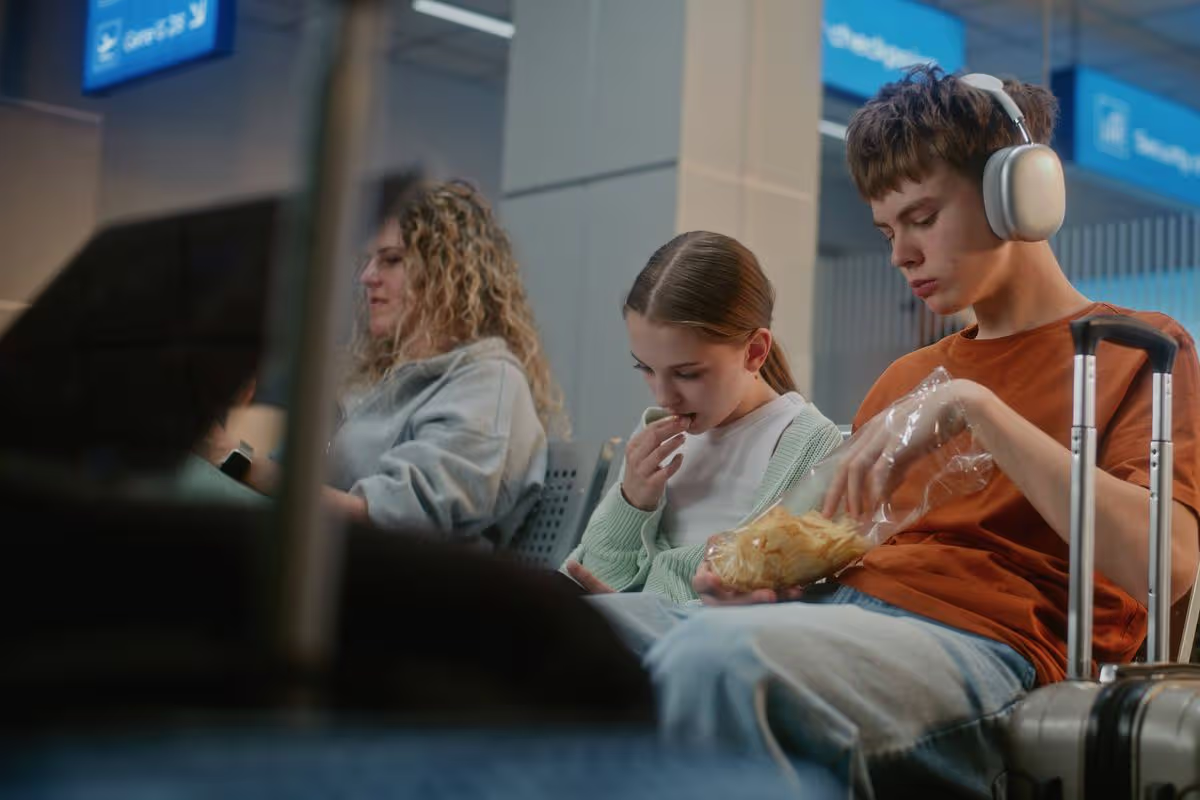
Many plane travellers will grab a snack at the airport before boarding (Image: EvgeniyShkolenko via Getty Images)
Anyone planning to jet off this Easter or beyond is being advised to steer clear of a very common airport snack before boarding. Plane food isn’t everyone’s cup of tea, and it’s not always on offer during shorter flights, so grabbing something beforehand is vital.
However, travel experts at Ski Vertigo have warned that one particular type of food can make lengthy flights feel even more drawn-out, causing a lot of discomfort. They say the main culprit is the “grab-and-go” salty snack many travellers purchase at the gate, such as pretzels, crisps or salted nuts, as it can leave passengers feeling bloated, thirsty and uncomfortable once the cabin doors shut. Aircraft cabins are extremely dry, which can worsen dehydration.
Low humidity at cruising altitude can leave you feeling dried out, which is why water is frequently the best option in the air. But salty snacks can make matters worse, since foods packed with sodium can prompt the body to retain fluid, contributing to puffiness and swelling – especially in the feet and ankles during longer journeys.
That “tight shoes” sensation is typical after remaining still for hours, but what you eat can influence how uncomfortable it becomes. NHS guidance related to swelling often highlights reducing salt intake as part of managing fluid retention.
Alex Dyer, Head of customer success at Ski Vertigo, said: “People buy a salty snack because it’s quick and it feels harmless, but on a flight it can leave you chasing water and feeling heavy. If you already get puffy ankles or feel rough when you fly, it is worth skipping it.”
Airports also promote last-minute purchases, and salty snacks are dotted everywhere near the checkouts. A packet eaten just before boarding is more likely to take effect when you’re buckled into your seat with limited opportunity to move about, especially if the seatbelt sign is illuminated, reports the Express.
Experts say the key thing is to drink water before and throughout the flight, and reduce caffeine and alcohol where possible, as dehydration can make travel feel more difficult.
For passengers wanting something to snack on, the experts recommend opting for choices that aren’t as salty, like a banana or a cereal bar. Checking the label can be useful, because many ‘snack size’ products are still packed with salt.
The professionals added that the aim is not to ban treats, but to steer clear of the type that makes the cabin feel more uncomfortable, adding: “If you want the easiest flight, skip the salty snack before take-off, choose a sealed drink, and you will usually feel better by the time you land.”
Storm Therese is battering the Canary Islands with heavy rain, 100km/h winds and significant snowfall, with over 40 flights cancelled and schools closed across the islands
Samantha Bartlett Assistant Editor, Social News
10:41, 21 Mar 2026
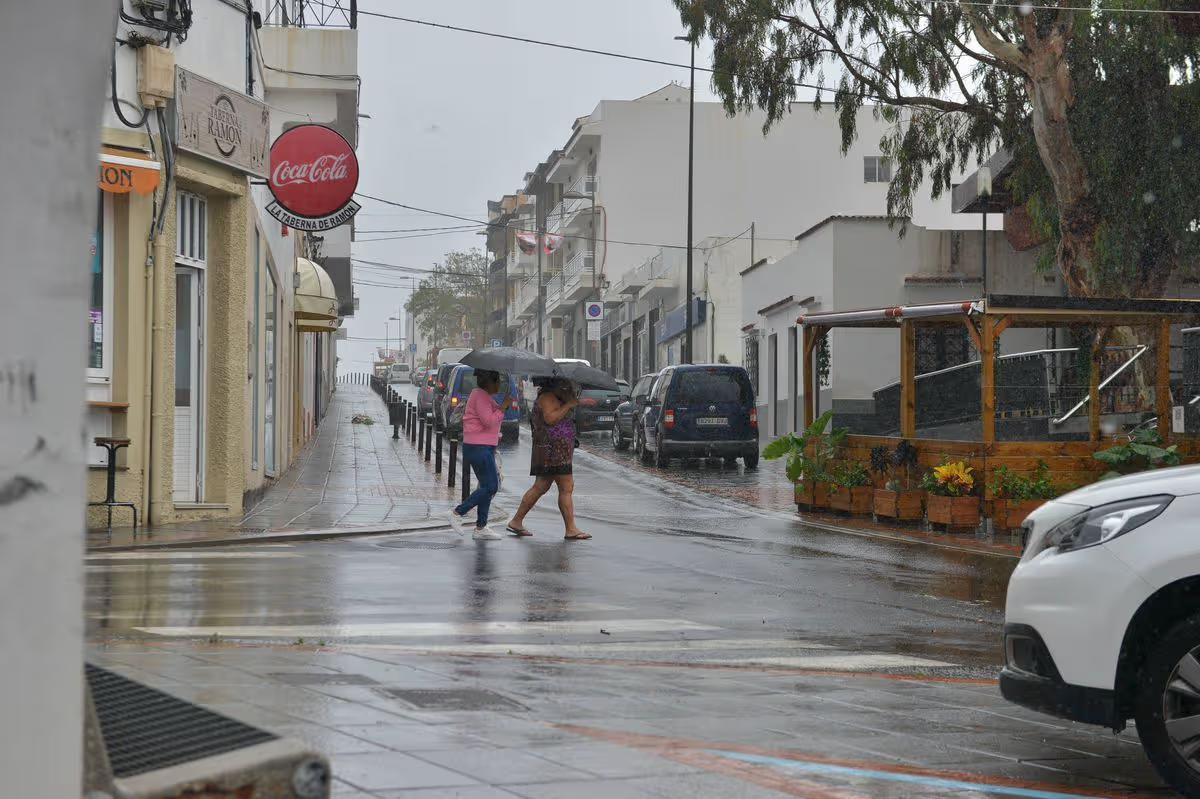
Storm Therese is currently battering the Canary Islands (stock image)(Image: Europa Press News, Europa Press via Getty Images)
Storm Therese is currently wreaking havoc on the Canary Islands, particularly Tenerife and La Palma, with an unusual mix of heavy rain, 100 km/h (62 mph) winds, and significant snowfall at high altitudes. Authorities have declared a full-scale emergency in Tenerife, labelling it as one of the most severe storms to batter the archipelago in over a decade.
Spain‘s meteorological agency, AEMET, has issued several alerts that will remain active throughout the weekend. Orange (high risk) warnings have been dispatched for northern Tenerife and parts of La Palma due to wind gusts reaching 90–100 km/h and heavy rainfall. Concurrently, yellow warnings are in place across all seven islands for rain, thunderstorms, and choppy seas with waves reaching up to 6 metres (20 feet).
Unusually for this time of year, significant snowfall has also blanketed Mount Teide and surrounding peaks above 1,800–2,000 metres.
Content cannot be displayed without consent
The storm has led to widespread cancellations and safety closures across the islands. Over 40 flights were cancelled or rerouted by Friday, March 20, primarily at Tenerife North and South airports. Travellers are advised to check their flight status via Flightradar24 or their airline.
Schools and universities in Tenerife, Gran Canaria, and several other islands were shut on Thursday and Friday, whilst key roads, including access to Teide National Park and the TF-445 to Punta de Teno, are closed due to ice and snow.
Major international events such as the Tenerife Bluetrail 2026 race have been cancelled or postponed.
Providing an update on the weather situation on Friday (March 20), one Tenerife resident known as @theknightstrider1 on TikTok took to the platform to share details with his 115,000 followers.
The car hire and bar owner, who is based in Playa de las Américas, was heard saying: “A little weather update for you then, it’s raining… it’s pretty grim and it’s gone really overcast as well.
“The rain showers are on and off, we haven’t really had any rain until now. It was okay this morning, but yeah it is raining. The current temperature’s around 18 degrees, not too cold but the umbrella’s are out, people are sheltering and it’s really not that nice.”
Content cannot be displayed without consent
He added: “Bear in mind, you might get caught in the rain, have a brolly with you. Maybe some of the rain macs as well if you’ve got any, if not buy some because it’s on and off.”
One person wrote: “Weather’s been awful the last three days, can’t wait to go home.”
Whilst another added: “Arrive tomorrow, packed a brolly.”
A third chimed in: “This makes me so happy as someone who was going to go this week and changed to last week! Phew.”
Whilst a fourth asked: “Why is it every time it’s sunny in the UK it rains in Tenerife?”
Another resident of the Canary Islands also posted a weather update on TikTok from Santa Cruz de Tenerife, captioning the clip, ‘Rain, wind and choppy ocean. Flights cancelled and diverted. Flooding in El Médano and roads closed. The storms Theresa and Samuel are hitting Canary Islands.’
He then said in the video: “Here if your weather update from Tenerife South on Friday March 20th, 2026. The two storms – Theresa and Samuel – are hitting the Canary Islands with force.
“As you can see here, we have quite a lot of waves here in the Troya area of Las Americas. The storms have caused quite a few incidents on the island, we have had 11 flights cancelled yesterday, 10 flights have been cancelled during the day today.
“We have had quite a few flights deviated to other airports as well and we have had ferries that have been cancelled because of the conditions out on the see.”
He explained the temperature was currently hovering around 19 degrees and there had been some rain which was “coming and going” along with overcast skies.
Are flights from the UK to Tenerife being cancelled?
Yes, flights from the UK to Tenerife are currently experiencing cancellations and significant disruptions due to severe weather from Storm Therese.
As of Saturday, 21 March 2026, authorities in Tenerife have declared an island-wide emergency due to extreme conditions including heavy rain, strong winds, and rare snowfall over high ground.
Over 36 flights were cancelled earlier this week, with further disruptions reported today. While many cancellations involve inter-island services, several international flights have been diverted or cancelled due to poor visibility and high winds.
Currently, the most affected airport is Tenerife North (TFN), which has seen the greatest impact, though Tenerife South (TFS) – where most UK flights land –is also experiencing delays and some rerouted services.
Conditions are expected to remain hazardous through Saturday, with a gradual improvement predicted for Sunday, 22 March.
Major airlines serving the UK to Tenerife route, such as Ryanair, easyJet, Jet2, and TUI, are urging passengers to check their flight status before heading to the airport
If your flight is cancelled, contact your airline immediately to discuss rebooking or refund options.
British holiday firms are reporting a boom in bookings up to 235% compared to this time last year, as the Iran war forces people to cancel far-flung destinations and look closer to home instead
10:30, 21 Mar 2026Updated 12:51, 21 Mar 2026
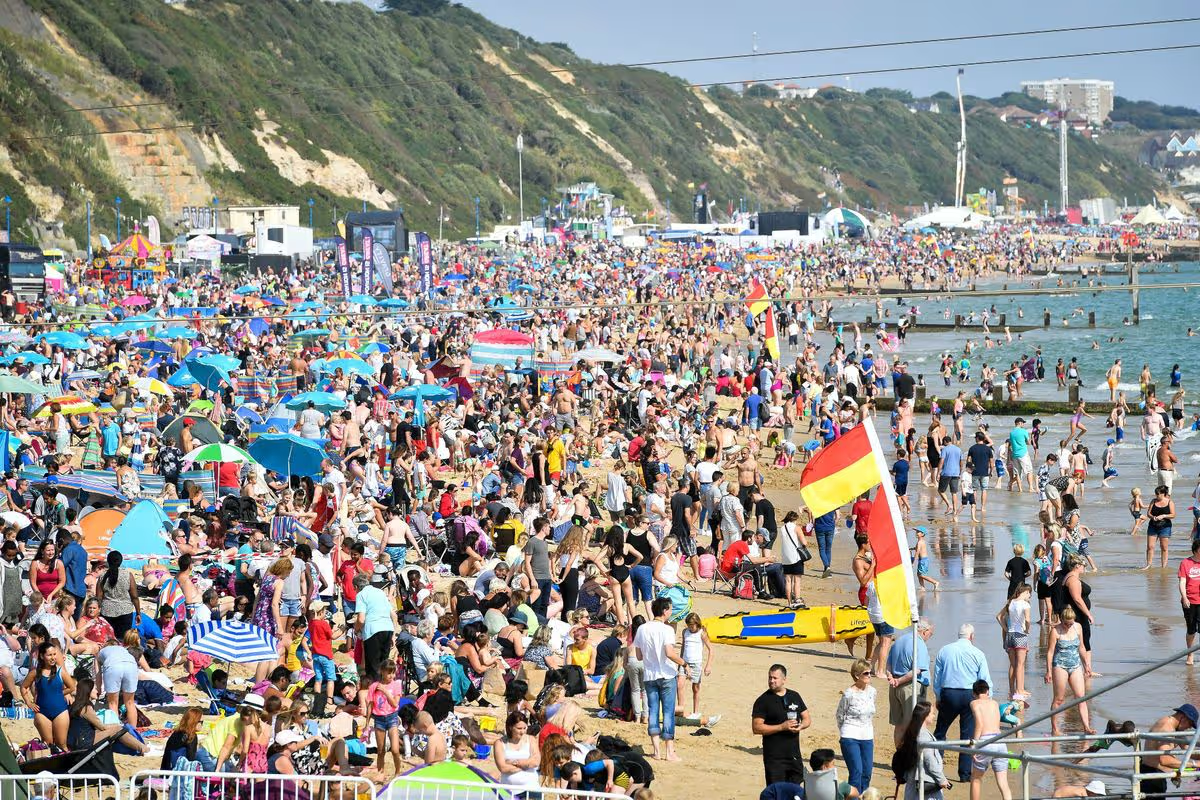
The Great British seaside holiday is undergoing a revival thanks to the Iran war(Image: PA)
Brits are looking again at holidays closer to home this summer as fears grow that the Iran war could ground flights and spike plane ticket prices by up to 50%.
Contingency plans being drawn up would see holidaymakers hit by airlines ‘rationing’ their operations, including a reduced schedule, higher prices and cancellation of less profitable routes.
It comes as other destinations beloved by British tourists have ended up Iran’s crosshairs.
Cyprus, Turkey and Abu Dhabi are some of the destinations thrown into doubt this year thanks to the Middle East crisis – but holidaymakers are already making ‘staycation’ bookings instead for the likes of Norfolk, Pembrokeshire and the Isle of Wight as they eye up a safer, more certain getaway.
David Land, who works at the University Technical College in Durham, was forced to cancel upcoming stays in Dubai and the Maldives for his wife Barbara’s birthday – and has lined up “sunny Cornwall” as an alternative.
“I’m a bit of a foodie, so I quite like the idea of seeing how many restaurants I can go to, in terms of Paul Ainsworth’s, Rick Stein’s”, he said, aiming to spend four or five days “at least” in the Land of Saints.
David and his wife, who are both in their 70s and tied the knot in 1979, went on one of their first holidays together on the beaches of Northumberland – and he’s also considering a return there this year.
“I would say the majority of our holidays have been abroad, in Europe, the Middle East, the Indian Ocean – but we’ve been saying ‘Why can’t go on a holiday more in the UK’?”, he told the Mirror. “Apart from the need to pack appropriate clothing, it’s a lovely place to go – as long as the people doing it don’t try to rip us off, as happened a bit around Covid.”
‘We’re not going to listen to Donald Trump’
Asked why he hasn’t chosen to simply reschedule his existing foreign holidays, he said: “We’re not going to listen to Donald Trump when he says the war’s going to be over in ‘three or four weeks’. There’s no confidence that we would be able to go back, not until the war stops, and even then we’d have to know that it’s not going to start again.”
Businesses across the UK tourism industry are already reporting a boom in bookings not seen since the pandemic, with Google searches for ‘best staycations’ up 40% since Trump launched his bombardment of Iran.
Business is booming, say British travel firms
Samantha Evans, founder of Humphreys of Henley, said her luxury travel firm has experienced the “busiest start to the year on record”, with the “safe and deeply enriching” surrounds of the English countryside attracting both domestic guests and those from further afield, particularly the United States.
She told the Mirror: “Luxury hotels are reporting an increase in domestic demand over the next three months. British guests are choosing to stay closer to home, but still want exceptional, experience-led travel – so they’re trading airports for the countryside rather than cancelling plans altogether.”
Rental agency Habitat Escapes told the Mirror that their bookings are up 235% this week compared to the same date last year, with the majority for Silverlake Estate in Dorset and the remainder for Lower Mill Estate in the Cotswolds.
And industry expert Emily Keogh, a former judge for The Hotel Magazine Awards, said there was renewed interest in “spontaneous countryside escapes and coastal getaways that can be booked at relatively short notice” because of the new difficulties in international travel.
Others believe this is part of a movement back towards British holidays that began well before the Middle East crisis, as Matthew Price, CEO of travel firm Awaze, said: “This trend of staying closer to home is part of a broader pattern of behaviour we’ve seen in the UK for a number of years, where holidaymakers are choosing staycations over going abroad. From coastal to countryside getaways, the quality and variety on offer in the UK means a domestic break can feel just as exciting as going overseas.
He revealed bookings were up 26% for Cottages.com, alongside a 10% rise in summer bookings for Hoseasons. While the South West remains a popular destination, regions like the North West and Southern Scotland are seeing “the strongest year-on-year growth for the peak summer period”, Mr Price said.
And the Great British holiday may benefit too from rising jet fuel prices, which experts have warned could push up the cost of plane tickets very soon.
Jet fuel shortages threaten cancellations and price hikes
European jet fuel prices reached an all-time high of $1,698 per tonne this week – more than double the $830 per tonne before the air strikes on Iran – and the closure of the Strait of Hormuz is sending alarm bells ringing among airline bosses.
While European airlines have stressed that they are currently operating with normal levels of fuel, Scandinavia’s SAS became the first this week to admit it had introduced a “temporary price adjustment” in response to the soaring prices, with more expected to follow.
Experts now predict a potential 30% to 50% hike in plane tickets for European summer holidays if the fuel crisis drags on, potentially costing an extra £600 for a family of four heading to the Canary Islands, Greece or Morocco.
Long-haul flights would see even steeper price increases, with a family trip to Australia going up by an eye-watering £2,400.
James Noel-Beswick, head of commodities at market intelligence firm Sparta Commodities, told the BBC: “I think we’re weeks away from maybe flight cancellations or delays due to lack of jet fuel, rather than months.”
An end to the age of cheap foreign holidays is likely to help tip the balance back in favour of domestic holidays when it comes to cost, as ‘staycations’ have long been criticised for poor value for money – especially when it comes to accommodation.
You can expect to pay at least £500 for five nights in a budget holiday let near St Ives – but in Malaga, the equivalent would set you back just £350.
Air travel chaos threatens holiday favourites
British holidaymakers preparing to head to Spain on their Easter getaways have meanwhile been warned to expect chaos at airports, with a national baggage handler strike threatening to cause missed connections and delayed boarding.
And there’s mounting uncertainty around Turkey, where three Iranian missiles have been intercepted since the beginning of the conflict, and popular Brit destination Cyprus, which saw the RAF base on the island’s southern coast come under drone attack.
Foreign Office chiefs currently advise anyone travelling to either country to be aware of the risks of ‘regional escalation’.
The Citizens Advice Bureau say holidaymakers who are unsure over a trip they have booked in the months ahead should get in touch with their travel provider – but don’t cancel before speaking to them, as you may lose your right to a refund.
Top 10 destinations for British summer holidays:
The top 10 UK destinations for summer staycations, based on consumer research of 2,000 UK adults by Sykes Holiday Cottages:
IT’S Monday morning, pouring with rain and I’m lugging a wooden sledge up to the top of a steep hill.
This is where I will meet the delivery driver who’s dropping off my shopping for the week.
Sign up for the Travel newsletter
Thank you!
The stunning seafront at Clovelly in DevonCredit: Rolf E. StaerkClovelly is famed for its cobbled streets and the fact it doesn’t have any vehicular accessCredit: chrisdorney
Welcome to the life of a Clovellian — the name given to the residents of Clovelly in Devon, one of the country’s prettiest villages.
Once owned by the Queen of England, Clovelly dates back to the Domesday Book and is famed for its cobbled streets and the fact it doesn’t have any vehicular access.
For the 250 residents who live here, life is full of minor inconveniences but the trade-off is living somewhere quiet and safe with the community spirit of a bygone age — plus incredible views of the Atlantic.
Residents have to be approved by John Rous, the current owner and a direct descendant of Christine Hamlyn who inherited the estate in 1884.
The cottages in Clovelly are let to long-term residents only, so there aren’t any Airbnbs or second homes.
When we saw a house advertised on RightMove, we expressed our interest and met with the Estate Manager, who showed us around and explained the complexities of living there.
Then it was time for an audience with Mr Rous to see whether we would fit in and if we understood the ethos of Clovelly.
We succeeded, and were soon immersed in village life.
The harbour, at the bottom of the village, is generally where visitors gravitate and it’s a wonderful place for wild swimming as well as a hotspot for marine life.
I regularly see dolphins from my kitchen window and have to stop and pinch myself.
There are two pubs here, The New Inn and The Red Lion, and both are hubs for tourists and villagers alike.
I’ve even taken on one of the shops in the visitor centre’s car park where I’ll be teaching yoga, Pilates and providing a treatment space for massage and other therapies.
Because of the village’s layout, emergency services can’t access it, so if someone needs medical assistance they are either carried or walked to an ambulance.
In the event of a fire, crews need to come on foot or rely on specialist equipment to navigate their way from the top of the village.
It’s the reason why there isn’t any gas in the village. Instead, many of the cottages are heated by Aga Rayburn range cookers, which also heat up the water.
A delivery being done the old wayCredit: Unknown
Most days, we forage on the beach for wood for our log burners, which has saved us a fortune.
So it goes without saying that you have to be physically strong to live in Clovelly — pulling your sledge up and down the hill is tough going — and especially on moving-in day.
Until 1983, donkeys were used to haul heavy loads up the cobbled streets but, although you will often see them being walked around the village, their days of service are now over.
Luckily, online supermarket deliveries are a thing of modern convenience and Amy’s Pantry — a converted van full of groceries, fruit, vegetables, meat and dairy products — arrives each Wednesday.
Since moving to Clovelly, I am fitter than I’ve ever been and average 15,000 steps a day, although it is strange living somewhere where we are the subject of so much attention.
Our home is one of the most photographed cottages in the village, and in the busy summer months we are greeted by crowds of gawping tourists taking photos every time we open our front door.
When our son Zak recently visited from university, he couldn’t get over the fact we were a tourist attraction.
Generally, people are lovely and intrigued about what it’s like to live there.
However, we have had to buy a private sign for our gate because tourists kept coming into our garden.
There are regular festivals throughout the year, including the Seaweed Festival, Lifeboat Day and the Lobster & Crab Festival.
The Christmas light switch-on is a big event, too, with as many as 5,000 visitors coming to the village to enjoy the fireworks.
It’s the most incredible place and, despite the inconveniences, I couldn’t imagine living anywhere else now.
GO: CLOVELLY
STAYING THERE: The Red Lion in Clovelly has rooms from £180 on a B&B basis.
A review will also be allowed at the end of a point if a player feels his opponent may be guilty of hindrance.
Daniil Medvedev used the review system against Jack Draper in Indian Wells last week, after the British player briefly stretched his arms out wide during a rally to signal his belief that a Medvedev forehand was long.
Umpire Aurelie Tourte watched a replay on her tablet and ruled Draper was guilty of hindrance – of making either an action or a noise to disturb an opponent – and awarded the Russian the point.
Draper admitted it was a difficult situation for the umpire, but thought Medvedev had “played the rules quite well” and did not believe his gesture had been enough to distract him.
The US Open has been using video reviews since 2023, and the Australian Open since 2025.
It is becoming more common on the women’s WTA Tour and by next season the men’s ATP Tour will have video reviews in place at all of its events.
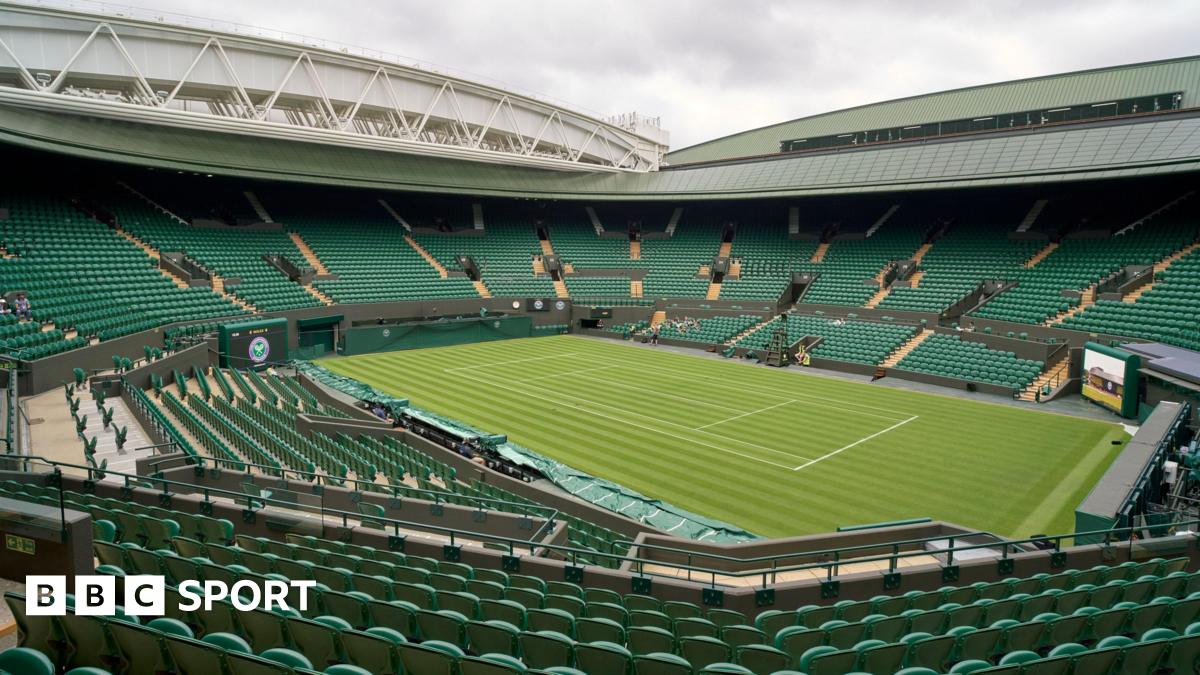
Another change at Wimbledon this year will be the addition of visual indicators on scoreboards to complement the audio calls produced by ELC.
Spectators have sometimes been unsure whether a ball was in or out – and at the Australian Open this year, the net posts flashed red to give the crowd a visual cue whenever a ball was out.
With exactly 100 days to go until the start of The Championships, the AELTC has also announced that capacity at the qualifying competition in Roehampton will increase from 3,500 to 4,000 each day.
Owalai, Uganda – Martha Apolot navigates a dusty path through fields of cassava and millet under the searing hot sun. She carries a hoe on one shoulder, the blade carefully balanced, and over the other, her eight-year-old son, Aaron.
Every day, the 21-year-old mother takes Aaron to the fields where she works.
“Aaron is so weak, so I have to carry him from the house and lay him somewhere so I can work,” Martha says quietly, holding Aaron on her lap as she sits on the bare earth inside their tiny, single-room hut in Owalai, a rural hamlet in eastern Uganda.
They return home when it’s time to feed Aaron or when he has soiled himself, not when the tilling is done.
Aaron has an undiagnosed disability. He cannot walk, talk, eat solid foods or hold up his head without support. The back of his head is balding from lying down and prone to sores. He needs constant care, but Martha has no one else to look after him while she works.
Martha was 13 when a man lured her from her schoolyard and raped her. She did not know the man and never saw him again, she says. Her memories of that day are traumatic, and she goes quiet, breathing deeply and looking skyward.
Her pregnancy created an immediate rift within her family.
“My dad did not want me to come home, but my mother pleaded with my father to [let me] stay,” she explains after a long pause.
The seventh of eight children, Martha ran away, spending months at friends’ homes. Eventually, her older brother Paul, with whom she is close, tracked her down and told her their parents had accepted the situation and she could return home.
Aaron’s birth was long and complicated. After 15 hours of labour, doctors at the hospital in the city of Soroti admitted the teenager for an emergency caesarean section
Martha remembers the love she felt when she first saw her baby. “I felt so good, receiving my child. He was so handsome,” she recalls.
But Aaron was placed on oxygen shortly after birth. When he was taken away, she thought he had died. As he spent the first week of his life on oxygen, doctors warned Martha of future complications.
Who: Real Madrid vs Atletico Madrid What: La Liga Where: Santiago Bernabeau, Madrid, Spain When: Sunday, March 22 at 9pm (20:00 GMT) How to follow: We’ll have all the build-up on Al Jazeera Sport from 17:00 GMT in advance of our live text commentary stream.
Madrid host rivals Atletico on Sunday at the Santiago Bernabeu, aiming to stay in touch with champions Barcelona, who currently hold a four-point lead.
Recommended Stories
list of 4 itemsend of list
Los Blancos will be seven points off the summit if Barcelona beat Rayo Vallecano earlier on Sunday.
Alvaro Arbeloa’s Madrid side dispatched Manchester City in the Champions League last 16 with two victories after entering the tie as underdogs, and it could be a turning point for a season hobbled by inconsistency.
Before the win over City, Madrid had faltered with back-to-back league defeats to Osasuna and Getafe.
Madrid will be seeking some vengeance for the 5-2 drubbing Atletico dealt them in their first league meeting at Metropolitano Stadium in September and will be hoping that Atletico’s main focus is on cup competitions – their main chances of silverware this season.
A top-four spot is virtually guaranteed for Atletico, who sit third in La Liga – 13 points clear of fifth place Real Betis.
Atletico – who will play Real Sociedad in the Copa del Rey final – are also into the last eight of the Champions League after overcoming Tottenham Hotspur.
Last up for Madrid
Real Madrid’s Vinicius Jr scored twice as the Spanish side eased into the Champions League quarterfinals, beating 10-man Manchester City 2-1 at Etihad Stadium to complete a 5-1 aggregate victory.
Vinicius put the visitors ahead from the penalty spot in the 22nd minute, after the VAR judged Bernardo Silva to have handled his shot on the line, a decision that also reduced City to 10 men and made an already daunting task seemingly impossible.
Pep Guardiola’s City were not waving the white flag, however, and Erling Haaland levelled in the 41st minute when he tapped in a pass from Jeremy Doku from close range.
City’s Doku and Rayan Ait-Nouri, and Real Madrid’s Federico Valverde and Vinicius had second-half goals chalked off before Vinicius completed his brace with the last kick of the game from the edge of the 6-yard box in the 93rd minute.
Vinicius’s goals were an answer to the Premier League team’s fans mocking him with a banner last season, referring to Rodri beating the Brazilian to the Ballon d’Or.
“Football is good for that, it always gives you another chance,” said Vinicius.
Vinicius Junior celebrates scoring the opening goal against City on Wednesday [Paul Ellis/AFP]
Arbeloa basks in ‘happiness and joy’ of win
Madrid march into the quarterfinals to face Barcelona after defeating City.
“It was a really tough tie against a team like this who have such talent,” Arbeloa after the game. “There’s happiness, there’s joy because of the performance and this continues.”
Asked about beating Guardiola, Arbeloa deflected praise to his players.
“I wouldn’t dare to say I can beat Pep Guardiola in terms of a tactical way, he’s an elite coach, he’s won thousands of trophies in his career, and what we’ve won is a tie,” he said. “I believe [the players] deserve the recognition for the work they put in.”
Last up for Atletico
Atletico Madrid held off Tottenham’s bid for an epic Champions League escape as they reached the quarterfinals despite a 3-2 defeat in the last-16 second leg on Wednesday.
Diego Simeone’s side trailed three times in north London but they did just enough to go through 7-5 on aggregate.
Randal Kolo Muani put Tottenham ahead in the first half before Julian Alvarez levelled immediately after the break.
Xavi Simons netted to give spirited Tottenham a glimmer of hope, but David Hancko’s equaliser extinguished any chance of an incredible comeback.
Simons’ stoppage-time penalty came too late for Tottenham to complete their mission impossible.
Alvarez scores against Spurs [David Klein/Reuters]
Numbers speak for themselves, says Simeone
Atletico Madrid coach Diego Simeone said the “numbers speak for themselves” after guiding his side into the Champions League quarterfinals for the eighth time in 13 seasons.
“Sometimes you don’t need to say anything, the numbers speak for themselves,” Simeone told reporters.
“It’s a moment to be happy as a club, as a team, with the joy of our fans, who will celebrate this step towards the quarterfinals.
“When you get here, the road will be tough, as in previous situations where we reached the final.”
Head-to-head
Real Madrid and Atletico have locked horns on 242 occasions, with Real Madrid winning 124 matches, Atletico winning 60, and 58 games ending as draws.
Atletico thrashed Madrid 5-2 when the clubs last met in La Liga in September 2025.
Indeed, Atletico are unbeaten in their last six league games against Madrid, with four of those games finishing in draws, and they have only lost one of their last eight games in La Liga against their rivals.
Their last encounter in any competition was a Spanish Super Cup semifinal in January, which Madrid won 2-1 courtesy of goals from Federico Valverde and Rodrygo.
Real Madrid’s team news
Kylian Mbappe made his return from a knee injury as a substitute in the second leg against City and is set to start up front alongside Vinicius Jr.
Madrid’s biggest absence may be goalkeeper Thibault Courtois, who will be out for about six weeks after picking up a muscle injury against City in midweek. Andriy Lunin is set to deputise for the big Belgian in goal.
Eder Militao, Dani Ceballos, and Rodrygo have also been ruled out with injuries. However, Alvaro Carreras, Ferland Mendy, David Alaba and Raul Asencio could all be available after recovering from their issues.
Jude Bellingham is back in full training after recovering from a hamstring injury and may make the bench.
Pablo Barrios and Rodrigo Mendoza are unavailable due to injuries, and goalkeeper Jan Oblak is a major doubt due to a hip problem, with Juan Musso likely to start between the sticks.
Defender Marc Pubill is also a doubt as rib pain caused him to miss out on the midweek game against Spurs, as well as a call-up to the Spanish national team for the upcoming international break.
Alison graced the Strictly dance floor in 2014, paired with Aljaz Skorjanec, with the duo placing 10th overall. She has now owned up to “breaking wind” during the competition.
The 51-year-old recounted a particular incident from the show whilst appearing alongside Gavin and Stacey star Ruth Jones, Buffy the Vampire Slayer’s Sarah Michelle Gellar, comedian Richard Ayoade and Ready or Not 2’s Kathryn Newton on The Jonathan Ross Show, broadcasting tonight (Saturday).
She recalled performing to Robin Williams’ Friend Like Me during week seven of the competition, hoisting Aljaz off the ground at one stage, before confessing: “Oh, it was awful. At the time he couldn’t lift me so we thought don’t worry I’ll lift you, I can do it,” reports Birmingham Live.
“There is a moment where he does a cartwheel and I had to kind of pick him up and then help him over. He goes into this cartwheel and I pick him up and I break wind. I look at him and I go, ‘Let’s never talk about this again.’
“I didn’t realise that he’s quite a heavy guy – it literally took the wind out of me.” Alison has previously spoken about her experience on Strictly, and her bond with her former dance partner, Aljaz.
Amid several scandals Strictly has faced in recent years, including Graziano Di Prima and Giovanni Pernice being dropped from the professional line-up, Alison said: “I had Aljaz Skorjanec and he was absolutely incredible and as you know going back into Strictly.
“He was so amazing to me and gentle as well and kind. I’ve never experienced anything bad really.”
Elsewhere on The Jonathan Ross Show, Alison speaks about her new programme, Your Song.
She explains: “Your Song is exactly that. It’s your song that you feel emotionally attached to – it got you through a rough time at school or you know, it reminds you of someone who has passed on. A song that really means something to you.
“People come from around the country and perform it on a stage. People go on stage who have never sung before and they sing a song to a random audience. It’s just one of the most beautiful shows ever.”
The Jonathan Ross Show airs tonight from 10pm on ITV1 and ITVX.
IF you’re dreaming of white sands and turquoise tides but don’t want to overspend, it’s time to break out of your comfort zone.
While the likes of stunning Mykonos and Ibiza may have you hiding from your bank account, there are a handful of affordable luxury gems that are waiting just a short flight away. Here, the Sun’s travel team reveals the bargain buys – including resorts that offer a five-star feel without the excessive price tag.
One resort in Albania is yet to become popular among Brits and reaches 34°C in the summerCredit: Getty
We’ve found lesser-known options that are often quieter than their overcrowded neighbours.
From volcanic Greek islands with moon-like landscapes, to unspoiled Adriatic villages where a beer costs less than £2, these are the best-kept secrets of the Mediterranean and beyond.
Whether you want to trek across Tunisian beaches on a camel or sip cocktails at an Albanian beach club, these are the top under-the-radar resorts for 2026 – where you can bag an escape for as little as £75pp.
Milos, Greece
If you love the look of the Greek Islands but want to dodge the eye-watering prices of Mykonos or Santorini, Milos is the island for you.
This volcanic gem sits in the Aegean Sea and offers some of the most surreal landscapes in Europe, all whilst maintaining that laid-back Greek holiday atmosphere.
Flights to Milos (via a quick connection in Athens) take around 4 hours in total.
Return flights start at £119. You can book the whole flight – with connections included – on Skyscanner to save you the hassle of planning.
Or you can also hop on a ferry over from mainland Greece, with flights from London to Athens starting at just £26.37 each way with budget airline Ryanair.
Visit the island during the peak summer months of July and August, and you’ll find temperatures sitting at a glorious 30C.
Although Milos is a lesser-visited island, it’s famed for its coastline – specifically Sarakiniko Beach.
Sarakiniko Beach in Milos is so strikingly white you’d be forgiven for thinking you’re looking at the ArcticCredit: Alamy
Here, bone-white volcanic rock looks more like the surface of the moon than a typical beach, making it one of the island’s most Instagrammable spots.
For something more secluded, head to the fishing village of Firopotamos, where tiny syrmata (brightly-coloured boat garages) sit on the water’s edge.
You can spend your days swimming in sapphire-blue rock pools or snorkelling the sea caves of Kleftiko, an old pirate hideout only accessible by boat.
Plus, going out to eat in Milos is a dream for those on a budget compared to those visiting its more famous neighbours.
You can pick up massive, authentic gyros from a local taverna for as little as €5 (£4.30), or sit back with a cold local beer for around €3.50 (£3.02).
While Milos feels exclusive and high-end, it remains surprisingly affordable – so you can experience that Mamma Mia lifestyle without the celebrity price tag.
Lastminute.com offers a 4-night stay in the beautiful, bright white Tsakanos Home, including breakfast (and return flights from London Stansted) from £303pp.
The Greek island of Milos is dotted with colourful syrmata boathouses overlooking calm watersCredit: Alamy
Ischia, Italy
Want Positano without the price tag? Consider visiting Ischia, known as the Green Island of Italy.
Spend days strolling past pastel-coloured traditional houses and through blooming botanical gardens, or hop on boat trips to explore hidden coves.
Temperatures average 26C in July and August, and sit comfortably in the early 20’s during the shoulder seasons.
The easiest way to get to Ischia is to fly to Naples (starting at £14.99 each way with Ryanair) and then hop on the ultra-fast hydrofoil ferry.
Once you arrive, there’s endless amounts of unique history to explore and coastline to wander.
This volcanic island even has its own hot springs that bubble up at the island’s longest and most popular beach, Maronti Beach.
Ischia in Italy is made up of narrow streets with pastel-coloured buildingsCredit: AlamyIschia is one of the most unique places to visit in Italy, with hot springs and an underwater cityCredit: Alamy
And if that’s not unique enough, there’s plenty more interesting beaches to choose from.
Cartaromana Beach has its own real-life Atlantis in the form of a sunken city called Aenaria made up of Roman ruins.
And for a historical afternoon out, head to the medieval Aragonese Castle to see the old prisons and stone bridges that overlook a vast blue bay.
It’s famously hard to find a bad meal in Italy, and the island of Ischia is no exception.
A portion of arancini can cost you as little as €3 (£2.59), and you can find local beers from €4 (£3.45).
Plus there are plenty of affordable package holiday options available to this underrated island.
First Choice offers a 7-night stay with breakfast at the Costa Citara Hotel, including return flights from Birmingham, from £483pp.
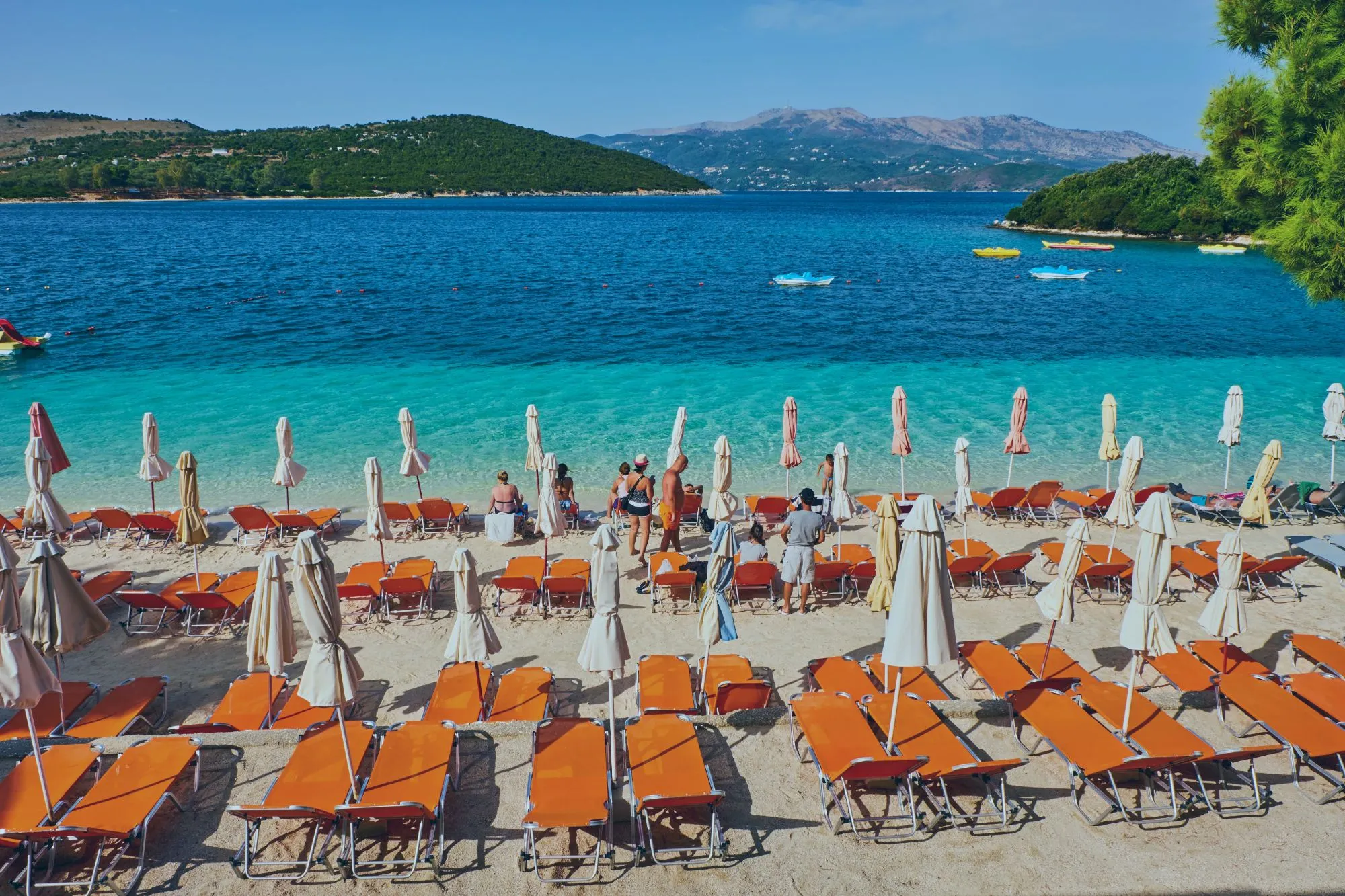
Ksamil, Albania
Albania is the recent breakout star of budget holiday destinations, but many Brits still haven’t caught on to this unspoiled coastal village.
Ksamil is a resort in southern Albania that offers a real slice of Mediterranean paradise set on the idyllic Ionian Sea.
Just three hours’ flight from the UK, Ksamil sees 300 days of sunshine per year, and temperatures peak at a scorching 34C in the summer months.
With its near-luminous blue waters and rocky coves covered in lush greenery, Ksamil could easily be mistaken for a luxurious Greek island resort.
One of the resort’s best beaches is Plazhi Ksamil, a popular choice for its picturesque wooden jetty where boats wait to taxi you off to the remote Ksamil islands.
But if you truly want somewhere remote and undisturbed, take the coastal walk down to Pulebardha Beach.
Pulebardha Beach is a secluded spot in the Albanian resort of KsamilCredit: AlamyBeaches in Ksamil can often be calmer than the popular resorts of Himara and capital TiranaCredit: Alamy
If you don’t mind pebbles instead of sand, this is one of the most beautiful beaches in the area.
In Ksamil, sitting down to a cocktail at a beachside bar can feel like experiencing a high-end Mykonos resort for a fraction of the price.
Cocktails here can cost you as little as 350 LEK (around £3.16), and beers as little as 180 LEK (£1.62).
Poda Beach Bar has a posh beach club feel, with day beds, a wooden sea swing, as well as live music and DJs taking over a stretch of white sand.
The village’s top eateries include grill houses such as Restaurant Grill & Pizza Palma, as well as top seafood spot The Mussel House.
The latter offers some of the freshest local shellfish in the area, with thousands of raving 5-star reviews online.
One of the restaurant’s most popular dishes, sautéed mussels, will cost you just 550 LEK (£4.96).
And as for accommodation, you’re spoilt for choice when it comes to affordable options.
You can book a three-night self-catering stay in a sea view villa, including return flights from London Luton, for as little as £75pp on Lastminute.com.
Ulcinj, Montenegro
Think the Med is getting too expensive? Montenegro is here to prove you wrong.
Montenegro’s dramatic coastline blends impressive mountains with warm turquoise waters, plus your pick of near-endless sandy coves to explore.
Montenegro is a lesser-visited Meditterranean country for BritsCredit: Alamy
And whilst the crowds head to the busy Bay of Kotor, savvy travellers are heading south to Ulcinj.
Ulcinj is an ultra-affordable Mediterranean destination, and it doesn’t compromise on the beautiful nature, either.
Flights to Podgorica, the nearest airport, average just 2 hours and 50 minutes from London – and can cost as little as £18 each way with Wizz Air.
Ulcinj is also one of the country’s oldest residential areas, so there are plenty of historical sites to visit, such as the ancient Ulcinj Castle and the charming narrow streets of the Old Town.
The best time to visit Ulcinj is between May and September, with July being the hottest month with temperatures reaching 31C.
And if you’re simply looking to laze on a lounger and soak up the sunshine, head to Long Beach.
As the name suggests, this shoreline stretches for miles – eight miles, to be exact.
The ancient Ulcinj Castle overlooks the vast Adriatic SeaCredit: Getty
This beach has soft sands and shallow, sapphire waters, perfect for paddling with children if taking a family holiday.
Alternatively, Small Beach is tucked in a crescent-shaped cove, overlooked by the impressive Ulcinj Castle.
And other than sightseeing and sunbathing, Ulcinj has plenty of other unique things to do.
Head to the Ulcinj Salina, a giant nature park, to spot wild flamingos for free, or visit Lake Skadar (the largest in the Balkans) to rent a kayak.
Local staple foods include priganice, which are doughnut-like fritters eaten at breakfast, and baklava, a sweet pastry often enjoyed with coffee.
These delights cost as little as €1-2 from markets and cafes. Plus, when they’re paired with a cappuccino, which averages a cost of just €1.97 in Montenegro, how can you say no?
And when it comes to booking your trip, holiday packages to Ulcinj are very affordable.
Loveholidays offer a 7-night stay with breakfast at the swanky Hotel Continental Ulcinj (which includes return flights from London Stansted) from just £299 per person.
Djerba Island, Tunisia
Sun-drenched Djerba is a palm tree-lined island off the coast of Tunisia, where Mediterranean and North African influences meet to make postcard-perfect seaside villages.
Flights from London to Djerba average three and a half hours, ideal for those who want that far-flung holiday feel without the long flight.
Djerba is the largest island in North Africa, and is part of TunisiaCredit: GettyHoumt Souk in Djerba is worth visiting for its bustling markets, street art and mosaicsCredit: Getty
Visit the island in its warmest months, July and August, and you can enjoy temperatures that reach up to 33C.
Here you can stroll through whitewashed fishing villages, colourful markets and neighbourhoods decorated with mosaics and street art.
Or simply laze under straw umbrellas on the shores of Sidi Mahrez beach, taking the occasional dip in its turquoise waters.
And if you want to enjoy Djerba’s beautiful beaches by trekking across their white sands via camel, you can do that here.
For a more lively day out, head to Houmt Souk (known as the market neighbourhood) for colourful souks backed by an impressive fortress.
Or head to the north-eastern coast of the island to try out water sports like parasailing and kite-surfing.
Local food is both affordable and delicious, and you can grab local delicacies like couscous from markets for around 10.20 DT (£2.60) per meal.
Plus, the average beer in Tunisia will cost you only 5 DT (£1.28) and a cappuccino will set you back just 2.63 DT (67p).
Tunisia is renowned for its affordable all-inclusive hotels, and the resorts on Djerba Island are no exception.
TUI offer week-long, all-inclusive stays at the four-star Palm Beach Djerba (including return flights from London Luton) from just £395pp.
Camel rides are available along the beaches of Djerba, TunisiaCredit: AFPBeaches within Portugal’s Costa Vicentina Natural Park often have unique landscapesCredit: Getty
Aljezur, Portugal
For a taste of the “wild side” of the Algarve that remains distant from the major tourist spots, look no further than Aljezur.
Tucked away in the Costa Vicentina Natural Park on Portugal’s rugged west coast, this market town is worlds away from the high-rise resorts of the south.
Flights to Faro from the UK take around 2 hours and 50 minutes, and can cost as little as £14.99 each way with Ryanair.
From there, it’s a scenic 75-minute drive into a landscape of jagged cliffs and desert-like sands.
Summer temperatures here peak at 28C in July, whilst the south coast can feel sweltering, Aljezur enjoys a cooling Atlantic breeze.
Aljezur is the capital of Portugal’s surf scene, centred around the stunning Arrifana Beach, a crescent of soft sands sheltered by dramatic black cliffs.
Another beautiful beach option is Monte Clérigo, which has a coastal village vibe with colourful houses perched right above the shore.
Amoreira Beach, on the other hand, features a unique river mouth that’s calm and ideal for paddling with kids.
Despite its trendy surfing reputation, Aljezur is surprisingly wallet-friendly.
The quiet market town of Aljezur in the Algarve feels worlds away from busy AlbufeiraCredit: Alamy
You can grab a hearty Prato do Dia (plate of the day) featuring fresh grilled seafood for around €10 (£8.62) at a traditional tasca.
A local beer will cost you about €2.50 (£2.16), and a coffee from a local cafe can be found for just €1.20 (£1.03).
Between the castle ruins, dramatic cliffs and endless amount of hidden beaches, Aljezur offers a taste of Portugal‘s beautifully rugged coastline for a fraction of what you’d pay elsewhere in the Algarve.
Expedia offer a 7-night stay including breakfast at the aptly-named Utopia from just £403pp.
WHEN you think of heading on a beach holiday, Sopot is probably not a destination that springs to mind.
However, the coastal town on the Eastern European Riviera has white sand beaches and an enormous luxury hotel right on the promenade with rooms from £89.
Sign up for the Travel newsletter
Thank you!
The resort town of Sopot at is a forgotten beach spotCredit: AlamyBut in the summertime can be a great place for sunbathingCredit: Alamy
Running along the Baltic Sea in northern Poland, Sopot has over 500m of coastline.
It’s most popular with holidaymakers is Sopot Beach – although visitors have said it’s not the warmest for swimming.
But in peak summer, it can be busy and popular for sunbathing and there is.
One visitor to Sopot Beach said: “A must see in Poland! Who would have known Poland had such a beautiful beach?
“This should be well known. The whitest, softest sand.”
Another added: “The water was cold but it was amazingly sunny and kid loved the sand play and the park right beside it.”
Next to the beach is Sopot Pier which is the longest wooden pier in Europe and goes on for over 500 metres.
It has views of both the Baltic Sea and the Polish coastline, and cots just £2.10 to enter.
Along the front are cafesm restaurants and even chippies like Centrala Rybna.
The magnificently grand Sofitel Grand Sopot Hotel sits right on the promenade too.
First built in 1923, it was designed for affluent guests, but nowadays, visitors can stay there from £89 according to Kayak.
Along with 126 rooms and huge restaurant, it has a just-as-grand spa and wellness centre, along with a private beach.
When it comes to exploring the heart of Sopot, one of the liveliest streets is Monte Cassino Street, which is home to lots of shops, bars and restaurants.
There’s the Crooked House, which looks like something out of a creepy fairytale, as well as the towering Sopot Lighthouse.
While in Sopot, you can pick up a beer for 16zł (£3.33) and the average price for a meal is 45zł (£9.36).
The easiest way for Brits to get to Sopot is to fly directly to Gdansk which in March can be done for as little as £13 with Wizz Air.
The flight takes just two hours and 15 minutes from London Luton – and then it’s a 20-minute drive to Sopot.
The Sofitel Grand Sopot Hotel was initially designed to welcome affluent visitorsCredit: AlamySopot has a long sandy beach and the longest pier of its kind in the worldCredit: Alamy
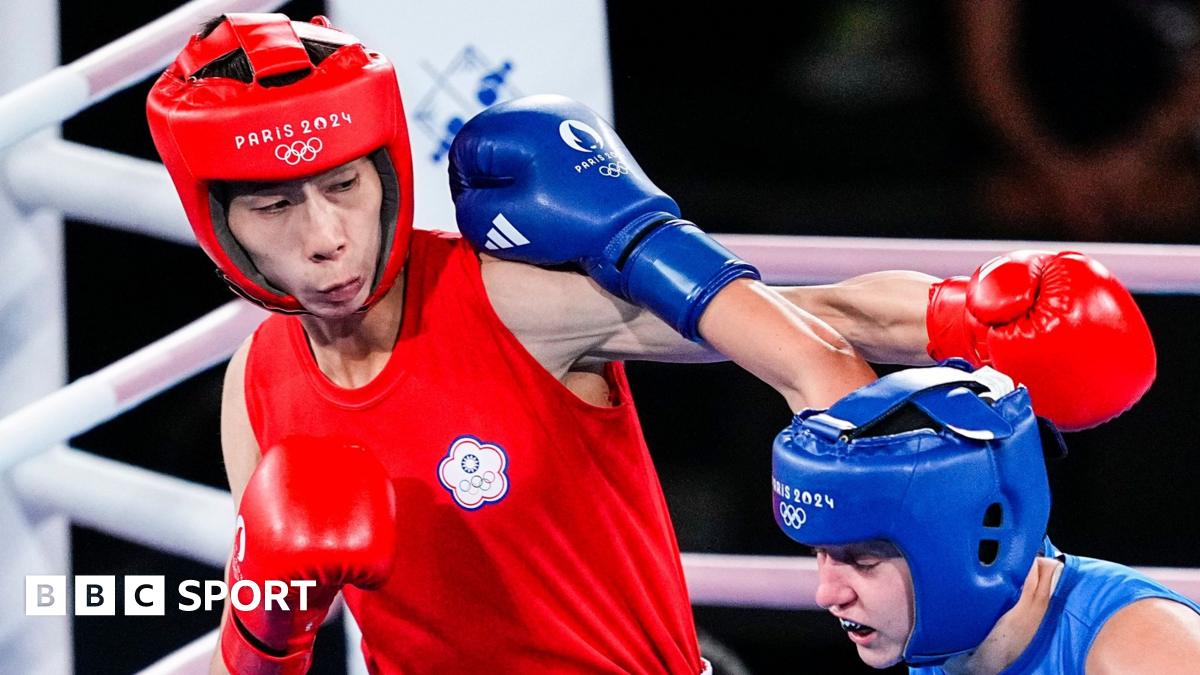
World Boxing said that an appeal process initiated by the Chinese Taipei Boxing Association (CTBA) on behalf of Lin, and conducted in line with its mandatory sex testing, had been completed.
The test is used to detect a specific gene which World Boxing said “reveals the presence of the Y chromosome that is an indicator of male biological sex”.
World Boxing’s policy includes an appeal process so boxers that screen positive for the SRY gene can lodge an appeal and provide supporting evidence.
The body said following an initial test in 2025, the CTBA began the appeal process and submitted a series of medical documents.
“The World Boxing Medical Committee considered and evaluated the medical documentation presented and determined that the boxer was deemed to be female and eligible to compete in the female category,” it said.
Tom Dielen, secretary general of World Boxing, added: “We recognise that this has been a difficult period for the boxer and the CTBA, and appreciate the way they have approached the appeal process and their acknowledgement of World Boxing’s requirement to ensure that its eligibility policy, which is designed to deliver safety and sporting integrity, has been correctly implemented and followed.”
The CTBA said in a statement: “This is a tremendous relief for Lin Yu-ting.
“We are pleased that World Boxing’s independent medical experts thoroughly reviewed all evidence and confirmed that she has been female since birth, meeting the requirements, with no competitive advantage, and ensuring her rightful place in the women’s category.
“We recognise World Boxing’s responsibility to uphold safety and fairness in competition, and we appreciate the professional and rigorous manner in which this matter was handled.”
Algeria’s Khelif said earlier this year she would also be willing to take World Boxing’s new sex test, if it would allow her to defend her title at the 2028 Olympic Games in Los Angeles.
The CTBA added: “Lin Yu-ting’s return marks a significant moment for both her career and the broader sporting community, reinforcing the principles of fairness, transparency and athlete welfare in international boxing.”
Lin has now been registered to take part in the upcoming Asian Boxing Championships, which take place in Mongolia from 29 March to 10 April.
1 of 3 | Kim Hyung-nam, a preliminary Seoul mayoral candidate from the Democratic Party, speaks during an interview with Asia Today in Seoul. Photo by Asia Today
March 20 (Asia Today) — Kim Hyung-nam, a Seoul mayoral hopeful from the ruling Democratic Party, said Friday he would freeze rent increases and expand public rental housing if elected, framing housing insecurity as the city’s most urgent problem.
Kim, a former secretary-general of the Military Human Rights Center, told Asia Today he would seek to separate the sales market from the rental market to help stabilize housing costs in Seoul. He said he would pursue a temporary 0% cap on rent increases during his term.
Born in 1989, Kim described himself as a younger candidate but said he does not support a separate youth platform. He said problems facing younger residents should be treated as issues affecting all generations, arguing that unresolved housing and economic pressures on people in their 20s and 30s will eventually weigh on broader society.
At the center of his housing agenda is a proposal for the Seoul city government to buy villas and multifamily homes and secure 100,000 public rental units. Kim said public authorities must take the lead in the rental market to reduce housing instability and curb rent burdens.
He also criticized redevelopment policies around university districts, saying they failed to reflect steady demand for small rental units and helped drive up monthly rents by reducing supply.
On broader regional policy, Kim said Seoul’s high housing costs are worsening overcrowding in the capital region. He said people should move to other regions because of opportunity, not because they are priced out of Seoul. For that reason, he called proposals to absorb parts of Gyeonggi Province into Seoul a step backward rather than a fundamental solution.
Kim also pointed to his decade of activism on military human rights issues as evidence of his administrative ability, saying his experience in budget oversight and policy advocacy prepared him to move from criticism and proposals to planning and execution.
He said his broader political goal is to make Seoul a city where people can live without being pushed to the edge by housing and living costs, and pledged to protect what he called “citizens’ tomorrow.”
Japan sources more than 90 percent of its crude oil imports from the Middle East and is heavily dependent on exports transiting the key waterway.
Published On 21 Mar 202621 Mar 2026
Iran says Japanese ships will be allowed to transit the Strait of Hormuz, in the latest sign that Tehran has started pursuing a selective blockade of the strategic waterway.
“We have not closed the strait. In our opinion, the strait is open. It is closed only to ships belonging to our enemies, countries that attack us. For other countries, ships can pass through the strait ,” Iranian Foreign Minister Abbas Araghchi told Japan’s Kyodo News late on Friday.
Recommended Stories
list of 4 itemsend of list
“We are talking to them to find a way to pass safely. We are ready to provide them with safe passage. All they need to do is contact us to discuss how this route will be,” Araghchi said, according to an English transcript of the interview shared on his Telegram account.
Japan sources more than 90 percent of its crude oil imports from the Middle East and is heavily dependent on exports transiting the strait, but the waterway has been de facto closed since the United States and Israel attacked Iran on February 28.
Iran’s Islamic Revolutionary Guard Corps (IRGC) warned in the early days of the war that its forces would set “ablaze” any ships trying to transit the waterway, bringing marine traffic to a near standstill.
Over the past week, however, Iran has toned down the rhetoric to say the strait is only closed to Tehran’s enemies.
Japan may soon join the small cohort of countries – mainly China, India, and Pakistan – whose vessels have been allowed to transit the waterway in recent days, with approval from Iranian authorities.
Lloyd’s List, a shipping and maritime information service, separately reported that 10 ships have transited the strait by sailing close to Iran’s coastline – a route that is emerging as a “safe corridor” for shipping.
The latest ship, a Greek bulk carrier, transited on Friday by passing close to Iran’s Larak island , Lloyd’s said, while broadcasting the message “Cargo Food for Iran”.
While ships have been transiting on a case-by-case basis, Lloyd’s List reported that the IRGC is developing a more coordinated vetting and registration system.
As the war on Iran hits three weeks, a handful of countries – among them US allies – have already started lobbying Tehran to reopen the strait or allow their ships safe passage.
Japan, France, Germany, Italy, the Netherlands, and the United Kingdom earlier this week issued a joint statement expressing their “readiness to contribute to appropriate efforts to ensure safe passage through the Strait”.
Iraq, Malaysia, China, India and Pakistan have all reportedly held direct talks with Tehran to discuss the matter, according to Lloyd’s.
Araghchi’s remarks to Kyodo follow a call with Japanese Foreign Minister Toshimitsu Motegi on Tuesday, during which Tokyo expressed concern about the large number of Japanese vessels currently stranded in the Gulf, according to a Japanese readout of the call.
Fans are already adding the ‘haunting’ series to their watchlists
Long Bright River: Official trailer
Fans of true crime say that they are already ‘hooked’ on the idea of Netflix’s upcoming series as it unveils plans for an adaptation based on a ‘haunting’ bestseller.
The series, The God of the Woods will be based on the New York Times bestselling novel of the same name, written by Liz Moore. It is the same writer behind the book Long Bright River, which was also turned into a series that hit screens last year and starred Amanda Seyfried in the leading role.
Author Moore will also serve as a co-showrunner according to Deadline, alongside Liz Hannah who has previously worked on The Girl From Plainville and Mindhunter. This time around, it has been confirmed that Stranger Things star Maya Hawke has been cast in the starring role.
She will play Judy Luptack, a smart and quietly determined investigator assigned to unravel the disappearance of a young girl from a summer camp in upstate New York. While the show will be a work of fiction, those who are obsessed with true crime have already admitted they can’t wait for the show to release. Unfortunately, there’s currently no confirmed release date.
The official synopsis describes the show as “a multi-generational drama series set in the Adirondacks, exploring the Van Laar family’s dark secrets, class tensions, and the mysteries surrounding the disappearance of 13-year-old Barbara Van Laar from her family’s summer camp – in the wake of an earlier family tragedy that may be related.”
It continues: “As the past and present collide, the Van Laars’ wealth and influence unravel, revealing the damaging consequences of privilege and the abuse of power.”
While this looks set to be the Robin Buckley actress’ next major role for TV, fans will also be able to see her in romantic comedies Wishful Thinking and One Night Only as well as the Hunger Games prequel Sunrise on the Reaping. All of which are all currently scheduled for 2026 releases.
Fans are already highly anticipating the series and claiming this casting news as ‘perfect’. One responded to the news on social media saying: “That sounds like a perfect role for Maya Hawke. She really shines in those layered, introspective characters.
“A quiet but determined investigator in a mystery like this? Yeah, this could be something special. Definitely adding The God of the Woods to my watchlist already!”
Another added: “Read The God of the Woods last year and loved how layered and haunting it is. Maya Hawke feels like perfect casting for Judy Luptackquiet. Intensity is her specialty. Netflix, you’re cooking!”
Someone else replied: “The book-to-Netflix pipeline is undefeated right now. Liz Moore wrote one of the best thrillers in years, perfect choice for adaptation.”
While one person commented: “Maya Hawke in a thriller about a missing girl from summer camp?? This is literally made for my true crime obsessed brain, I’m already hooked.”
Stranger Things is streaming on Netflix now. The God of the Woods will be streaming on Netflix soon.
Planning your summer holiday but want to avoid crowded tourist hotspots? These three stunning European destinations offer beautiful beaches and coastal charm without the crowds.
La Gomera has some gorgeous beaches(Image: Getty)
Spring has finally sprung, meaning summer is just round the corner. Britain is fortunate to have countless stunning countries within easy reach, and if you’re pondering where to head this year, you’re in for a treat.
One of the most frustrating aspects of arranging a holiday is deciding on a destination – and with hordes of tourists flocking to all the popular spots, finding somewhere peaceful and relaxing can prove even more challenging.
If you’re after coastal beauty without thousands of holidaymakers crowding the beaches with towels and parasols, these are the three European locations you need to consider, reports the Express.
In contrast to Tenerife or Lanzarote, this stunning island remains relatively undiscovered and experiences fewer crowds during peak season than the British favourites.
Laura Evans-Fisk from eurochange commented: “It’s the perfect tranquil, peaceful alternative to the more popular islands. You could stay here for a restful few days or make a day trip from Tenerife by hopping on the ferry.
“La Gomera is also a great spot for hikers and nature lovers, home to the lush UNESCO-listed Garajonay National Park.
“Its beaches are much more secluded than the ones you’ll find on the other islands, and you’ll encounter no large-scale resorts or nightlife.”
“Like other islands in the region, La Gomera benefits from pleasant temperatures throughout the year too. And, its low light pollution means it’s an excellent spot for stargazing.”
Renowned for its breathtaking turquoise waters and pristine sand beaches, this stretch of Albania is known as the “Albanian Riviera”. It’s becoming increasingly popular with holidaymakers, yet sections of it remain largely undiscovered.
Laura explained: “Ksamil, an area often coined the ‘Maldives of Europe’, is one of the most beautiful and popular beaches, with white sands and strikingly clear waters.
“For a more relaxed vibe, visit Porto Palermo – this stunning bay has a small peninsula connecting it to the mainland, and an impressive 19th-century castle, Ali Pasha.”
The Algarve is frequently packed with tourists, but further north in Alentejo there’s a far more laid-back atmosphere. With its picturesque coastal landscapes and gorgeous beaches it provides the ideal summer getaway.
Laura commented: “Further North than the Algarve, this coastline surrounds the city of Lisbon, making charming towns like Cascais, Estoril and Azenhas do Mar perfect day excursions from the capital.”
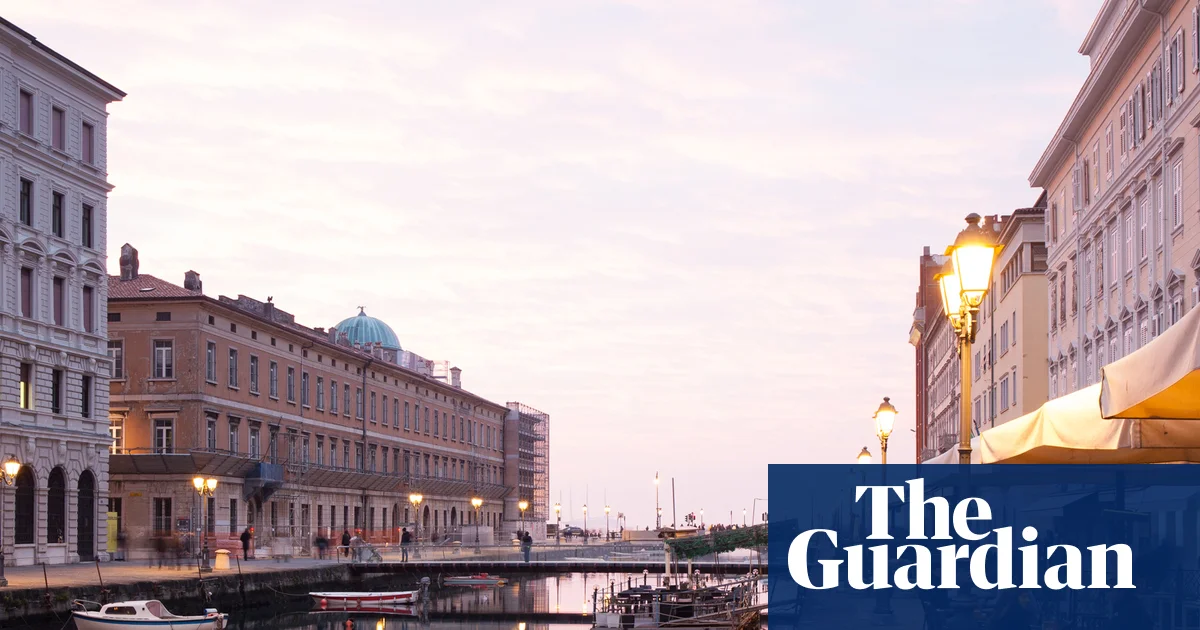
Many years ago, I swapped languages with a young woman from Trieste. It was during one of our half-English, half-Italian practice hours that she introduced the idea of Trieste, on a map, as possessing the shape of a stomach. She described her city (which is also a province) as being suspended: pressed by the sea on one side, enveloped by Slovenia and the Karst hills on the other, with a short oesophagus attaching it to the body of Italy. She also suggested I read la Conscienza di Zeno – Zeno’s Conscience –Italo Svevo’s devilishly funny hymn to procrastination, self-delusion and walking around in search of a suitable cafe, and warned me about the ruffian wind.
It would be almost two decades before I finally visited Trieste, bringing with me enough anticipation to tempt disappointment (unfounded) and the itinerary of a food writer. I carried the image of a stomach too, fitting in so many ways for this remarkable food city, not least for making its geography vivid, which in turn explains so much about its history. Once a coastal fishing village, colonised by the Romans, raided by the Venetians, entrusted to the Habsburg monarchy in Vienna (for four centuries, which included a prolonged heyday), appended to the newly united Kingdom of Italy, fought over, briefly independent, handed back to Italy in 1954, from which point it developed into what is today one of the most outward looking and dynamic cities in Italy. Trieste, it seems, has digested and assimilated, meaning its complex history is reflected in the architecture, dialect, music, literature, sports, civic nature and multifaceted food culture: surely one of the most intriguing and rewarding in Italy.
True to Austro-Hungarian traditions: La pasticceria Pirona.Lunch is served at Clai.
Take the coffee culture, for example, the foundations of which were laid in 1719 when Charles VI declared Trieste a free port (and in effect the port of Vienna) and a customs-free zone. One of the goods that arrived was coffee beans, in particular from Ethiopia and Yemen, which in turn saw the creation of aromatic roasting and processing facilities – and the emergence of cafes themselves, many of them designed in the spirit of a Viennese Kaffeehaus. Later, when the railway connected Vienna with Trieste in 1850, these same cafes and pastry shops would serve the cosmopolitan population of a culturally magnetic city that many wanted to be part of. Several of the historic cafes still thrive, their literary connections intact – Svevo, Saba (Trieste poet in excelsis) Joyce, Mann, Rilke – comforting customers with coffee, strudel and no sense of rush, alongside them the economic and social powerhouse that is the Illy brand and a welcome wave of speciality coffee. The port of Trieste still handles 50% of beans entering Italy: it was and remains a city that tastes of salt and smells of coffee.
Buffet Clai, Trieste.
Another wonderful habit that robustly survives is femo un rebechin, which comes from the verb ribeccare, a typical espressione Triestina meaning to take another peck or bite: that is, to have a snack. The seaport had a burgeoning workforce whose need for a substantial mid-morning snack was met by boisterous and functional “buffets”serving il bollito misto: boiled pork served with potatoes, kraut, mustard and – a totem of Trieste – freshly grated horseradish; or stuffed in a bread roll, alongside soups, stews, goulash, cheeses and cured meats. Heaven! Buffets still punctuate the city and the habit of rebechin is like water, filling every gap and need, be that a prosciutto roll and a beer at 10am, or a glass of Friulian, Slovenian, Croatian or Austrian wine and tasty things on toast at 6.30pm. Trieste has a polyglot profusion of bars, bakeries, takeaways and restaurant-trattoria, some of which focus on the fish caught daily in the gulf, many on dishes whose roots trace back to middle European traditions, others on the superb produce that arrives from the mountainous region of Carnia, the larger Friuli Venezia-Giulia region, Slovenia … the world – Trieste is, after all, a gateway. After dinner, a chance to wander, to find another cafe, or the water’s edge, to look beyond the stomach, and out to sea.
Caffe Stella Polare, Trieste: ‘Literary ghosts contribute to the place’s popularity’.
A cherry wood bar, with white panels and a black granite top, runs the entire length of this old coffee shop. First opened in 1865, the cafe was designed, then redesigned, in the spirit of a Viennese kaffeehaus and decorated with gilded mirrors and Viennese stucco – some of which remains, with a line of tables and curveback chairs arranged opposite the bar. There is also an internal tea room for reading, meeting and gazing in the spirit of past patrons such as the writers Italo Svevo, Umberto Saba, James Joyce and Franz Kafka, whose literary ghosts contribute to the place’s popularity – as does its location on the corner between Via Dante and Piazza Sant’Antonio. I found the service best when standing at the busy, efficient bar, and their gocciato, an espresso with a generous drop of creamy foamed milk, an ideal way to start the day. Via Dante Alighieri, 14
For the smell of coffee and bread the address is Via Giusto Muratti 4d. Originally from Belgrade, Pedja Kostic spent three decades in Boston before opening the contemporary bakery Pagna, in 2022. Previously an Austro-Hungarian warehouse, the lofty space is now divided by a deep counter, the larger back section accommodating the mill, lab and ovens where the long-fermented breads are baked, the front section filled with tables for breakfast pastries, bread with honey or quince jam, filled focaccia, or cheese and wine in the early evening (the wine list is impressive, and largely natural). Pagna is also the place for speciality coffee, with blends from local roasters, such as Bianca Maria Maschio’s Bianca Tosta, and international roasters, including Drop in Stockholm. Via Giusto Muratti, 4/D
Antica trattoria Menarosti Established in 1903, Menarosti has been run by the Benussi family since 1974. The room, with its lace-edged white cloths, white chairs and white-cream tiles, has something of an elegant conservatory about it, while the paintings, ornaments and drinks cabinets give the space an idiosyncratic parlour-feel, but one in which everything has a purpose: of comfort and practised hospitality. The menu is a paean to the daily catch from the gulf of Trieste and the well-established habits of a great, unfussy kitchen. The menu changes daily but often includes granzievola (spider crab) cooked, shredded and returned to its fluted shell, a warm salad of molluschi, steamed mantis shrimps, a delicate three-fish risotto alla marinara, spaghetti with vongole lupino, gnocchi with cuttlefish ragù, a lightly battered fritto misto of calamari and anchovies, baked fish of the day, apple strudel, honey and amaretti semifreddo. There is an excellent wine list and a large selection of grappa. Via del Toro, 12
Da Pepi: ‘The oldest, and best known of the buffets in Trieste.’
The caldaia – the huge pan in which the various cuts of pork are boiled – takes pride of place on the counter at Pepi, the oldest and best known of the buffets in Trieste. When I asked a friend from Trieste if it was more popular with locals or tourists he looked annoyed, telling me Pepi, like all buffets, are a public service for anyone who is hungry. Established by Pepi Klajnsic in 1887, the buffet was originally known as Pepi S’Ciavo, for his nickname, Pepi the Slovenian, and has passed through various hands (of family and staff) since, each age leaving its mark on the wood-panelled decor. Pepi does a swift trade in takeaways, most commonly a roll stuffed with whatever cut of pork is desired – ribs, loin, ham, sausage, snout, tongue – plus a smear of mustard or a good amount of fresh horseradish. Cheese or hard boiled eggs are an alternative. The same cuts can be enjoyed sitting at one of the tile-topped tables: the ultimate pork platter, along with sauerkraut, potatoes, mustard (mixed with a dash of beer), and freshly grated cren (horseradish), or jota, bean and sauerkraut soup. Savings Bank Street, 3
L’Approdo The excellent and always bustling L’ Approdo, not far from the covered market, highlights another function of the buffet counter. That is the things on bread or toast – baccala mantecato (whipped saltcod), liptauer (an Austrian-style cheese and herb spread), sweet and sour sardines, the fried meatball and dough balls – in short a great number of tasty things with which to “Femo un rebechin” – have a snack – with a glass of wine at any hour you please, either at one of the tables, or standing outside. Via Carducci, 34
Get rare regional products at SET – an acronym for Sapori Eccellenti del Territorio.
If the weather allows, it is a good idea to get a table outside SET deli, and to order the orologio di formaggio. This tasting plate of cheeses could well include pastorut, a full-fat, soft, blue-veined cheese; pecorino with pear; goat’s cheese; or a compact and creamy mountain cheese called frant, with either a glass of Brežanka (an aromatic white originating from the Breg area) or a beer from a Dimont brewery, in the Carnia Valley. SET is an acronym for Sapori Eccellenti del Territorio, and the counter and shelves are filled with exactly that, with particular attention to traditional products at risk of disappearing in the Friuli Venezia Giulia region; look out for ricotta (which arrives daily from the Carnia valley), speck, horseradish, kraut, pesto with lard and herbs called varhackara, and cheese and potato cake, helpfully vacuum-packed, called frico. Via di Cavana, 13A
La pasticceria Pirona: ‘A cake and pastry shop from another time.’ Pirona, Trieste, Italy.
Not far from the magnificent ship-like covered market on largo Barriera Vecchia, La pasticceria Pirona is a cake and pastry shop from another time. Founded by Alberto Pirona in 1900, the shop has changed hands several times, but the art deco front with gold lettering on black lacquer and the cherry-wood fittings remain as they were when James Joyce (who lived a few doors down) called by for a bun. The cakes, pastries, sweets and preserves also remain true to Austro-Hungarian traditions: expect exceptional presnitz (a stuffed pastry ring filled with dried fruit, nuts and spices), an enriched Easter bread called pinza triestina, putizza (a ring of rolled, paper-thin dough layered with nuts and spices), apple or cherry strudel, Sachertorte, marzipan and – to bring home – finger biscuits embossed with the name Pirona. Via Largo Barriera Vecchia, 12
Caffe degli Specchi – designed by architect Antonio Buttazzoni, and a coffee house since 1839, this popular cafe has caught the attention of the Accidentally Wes Anderson brigade. Piazza Unità d’Italia, 7
Illy have several branches in Trieste (Illy CEO Riccardo is also the mayor) but the flagship cafe is on the seafront on via Gioacchino Rossini, 2 while the shop Incantalia (which also sells coffee accessories and food) is on via Luigi Einaudi, 2/A
La Bomboniera is a typical Austro-Hungarian patisserie dating back to 1836, in art nouveau style. Bring back a presnitz, a sturdy pastry ring filled with dried fruit. via Trenta Ottobre 3
La Bomboniera patisserie: go for the preznitz.
Antica Trattoria Saban – a trattoria whose menu celebrates the multicultural nature of Triestini cuisine – goulash sauverkataut, goose, pancakes … Via E. Comici 2
Ditta Emilio Cesca Casalinghi is a fabulous, ordinary, great-value houseware shop full of practical kitchen utensils. Grab yourself a cake tin, a horseradish grater and coffee cups. via Roma 10
VUD – for the most beautiful wooden bread and cheese boards. Via Diaz 15/a
Mercato Coperto, the historic Covered fruit and vegetable market – it looks like a steam ship from outside. Shop for a root of horseradish at via Giosuè Carducci, 36
La Bottiglia Volante – a relaxed wine bar (including, but not exclusively, natural wine). via Paganini 2c
Villanovich – another great speciality store with products from the mountains, paprika, and jars of horseradish and mustard. Via delle Torri, 1b
Salumeria Villanovich: regional products galore.
Melograno – for a good selection of gluten-free and vegan dishes, especially the pizza and cakes. Via di Cavana, 14
How to order coffee
For an espresso, ask for un nero, or un nero in b, if you want it served in a glass (bicchiere) rather than a cup. A decaffeinated espresso is un deca, or un deca in b. If you want a macchiato (an espresso with a little foamy milk), order un capo, or un capo in b, or a un capo deca, or un capo deca in b if you want decaf. If you do happen to order a macchiato, you will most likely receive an espresso with cold milk on the side. Meanwhile, what is considered cappuccino throughout Italy is practically nonexistent in Trieste, except in the ersatz form of caffe latte (which comes without foam) which is also known as latte macchiato. More typical, reliable and well-proportioned is a gocciato, an espresso with a generous drop of creamy, foamed milk.
Travelling to Trieste – and what to do when you’re not eating
Ryanair flies direct to Trieste daily from Stansted from £32 return in April (two hours and five minutes). Lufthansa flies from Heathrow via Frankfurt, from £184 return (shortest flight time four hours and 15 minutes). Train travel from London via Paris and Turin takes at least 14 hours 44 minutes, from £430 return. Or there are overnight ferries from Harwich to Hook of Holland (Stena Line, from £246 each way for car and two passengers), Hull to Rotterdam (poferries.com, from £454) or Newcastle to Amsterdam (DFDS, from £581), then a drive of about 14 hours.
Where to stay
In an 18th-century building five minutes from Piazza Unita d’Italia, hotel L’Albero Nascosto has spacious, art-filled rooms and one-bed apartments from £166 in April, including an excellent breakfast. Near Trieste’s ‘Grand Canal’, Residenza le 6A, is an elegant B&B with six doubles from €80 and a Vespa guests can borrow. (James Joyce lived nearby for more than a decade from 1904: check out his statue on the Ponte Rosso.)
The stunning centre of city life is Piazza Unità d’Italia, Europe’s largest sea-facing square, with neoclassical palazzi on three sides and the fourth open to the Adriatic. The stone jetty to its right is Molo Audace: looking like a low pier – but with no railings or amusements – it’s where Triestini go for sea breezes, sunsets or to hang with friends on summer nights.
The square links two Triestes: to your right the Borgo Teresiano, the commercial quarter built under the Habsburgs, looking like a slice of MittelEuropa; to your left the older town of seafarers and fishers. Once-dodgy Via di Cavana is today pedestrianised and busy with pavement cafes and little restaurants.
The Revoltella Museum art gallery (€4.50, closed Tuesdays) is a short walk from Piazza Unità. I love its 20th-century works by Giorgio Morandi, postwar abstract pioneer Alberto Burri and Georgio de Chirico.
Barcoleta: boats sail past the Vittoria Lighthouse. Photograph: Stefano Rellandini/AFP/Getty Images
The world’s biggest sailing regatta comes to Trieste every October. The Barcolana sees the Gulf of Trieste filled with 2,500 sailing boats – a spectacle to watch from Piazza Unità or San Giusto Hill.
At VUD, on Via Daz by the sea, architect turned carpenter Filippo Mastinu makes sensuous chopping boards, toys and furniture in ash, acacia and oak. Up the street at Carta Straccia Lab, Alessandra Cuttone and Francesca Tonsi have been making quirky toys and decorations from papier mache since 2016. And round the corner at L’Angolo del Cuoio, shoppers can watch leather experts Anna Alberi and partner Valerio Saini making gorgeous belts, wallets and bags. On a parallel street is Knulp, a bookshop/cafe that has become a cultural hub, hosting painting and photography exhibitions and live music.
Things to do
You may have spotted the icing-sugar turrets of Miramare Castle (€12, grounds free) from the train. This was built for Austrian archduke Ferdinand Maximilian and his wife, Charlotte of Belgium, in 1854 and boasts a shocking pink throne room, impressive imperial kitchens and, in the grounds, a mini castle and the duke’s own bathing hut on the rocky shore.
A unique tram, built in 1902, links Trieste’s Piazza Oberdan to the town of Opicina, 330 metres above in the karst hinterland. Closed for years, it reopened to great fanfare in February 2025. (It is closed now but should reopen later in 2026.) Get off at Francesco I d’Austria Obelisk for great views and access to the 5km Strada Napoleonica walking trail to Prosecco (yes, where the wine came from, though most is now made in the hills near Treviso), with panoramic views over the Gulf of Trieste.
Grotta Gigante (guided tour €15), once the world’s largest visitable cave, is close by, with stalagmites that look like piles of plates. On a hot day it’s a welcome 11C inside.
Excursions run by Trieste Green include a farm-to-table tour with half-Australian, half-Triestina Alice – food you gather and cook varies by season, but May is good for wild asparagus. Another tour features a day with shepherd Antonič, walking in the hills, watching the milking and tasting his pecorino cheese.
Michael Conlan began his professional boxing career with great fanfare and an ambition to become a multi-weight champion, but despite going close, he was unable to replicate his success as an amateur.
The 34-year-old called time on his career following Friday’s defeat to Kevin Walsh in Belfast when his last roll of the dice to get back into title contention unravelled.
A polarising figure, Conlan could sell out arenas and outdoor venues to the tune of 12,000, while eliciting the ire of others in his home town.
What could not be disputed was he talent inside the ring, with his silky switch-hitting skills bringing his from the streets of west Belfast to the top of the amateur game and within a whisker as a pro.
“I didn’t think I lost tonight but it was too close for my liking and no matter how I would lose, no matter if it’s a robbery, I said that would be my time,” Conlan told reporters in his dressing room after his defeat to Walsh.
“It’s all very raw at the minute and how I’m answering questions is all emotion.
“How light I feel at the minute is probably relief. I’ve had so much pressure on my, so many expectations, even my own.
“I’ve not achieved what I wanted to but I said when I came back into it [in 2025] it would be if I achieve it, then great but if I don’t then so be it. This is the so be it situation and now I can spend time with my family.”
Having followed his brothers into the boxing gym as a seven year old, Conlan would blossom into one of, if not the best Irish male amateurs.
Collecting Antrim, Ulster and Irish titles as a junior, his first major international senior competition came at 2010 Commonwealth Games in Delhi, where, as a 17-year-old, he came unstuck against Australia’s Jason Moloney.
It was just the beginning as the following year, he won the first of five Irish Elite titles which earned him a place on the team for the World Championships in Baku, reaching the quarter-finals which earned a place at the 2012 Olympic Games in London.
There, he made the big breakthrough, reaching the semi-finals where he lost to Cuba’s Robeisy Ramirez but returned with a bronze medal to great acclaim.
Coupang interim CEO Harold Rogers takes part in an overnight to dawn delivery shift in Seongnam, South Korea. Courtesy of Coupang
March 20 (Asia Today) — Coupang interim CEO Harold Rogers joined an overnight to dawn delivery shift in Seongnam, south of Seoul, after accepting a lawmaker’s request at a National Assembly hearing to experience the job firsthand. Rogers worked from 8:30 p.m. Wednesday to 6:30 a.m. Thursday, taking part in the full process from loading to delivery, according to Coupang and local media reports.
The overnight shift followed a proposal made by Democratic Party lawmaker Yeom Tae-young during a parliamentary hearing in December, which Rogers agreed to at the time. Coupang said the experience was intended to deepen management’s understanding of field operations and strengthen trust by following through on that commitment.
Rogers and Yeom began at Coupang Logistics’ delivery camp in Yatap, where they completed safety training and helped load packages. They then rode with a directly employed Coupang delivery driver, known as a “Coupang Friend,” and delivered orders to apartments, villas and detached homes across Jungwon-gu.
Coupang said it would use the experience to accelerate workplace improvements and strengthen safety management by reflecting feedback from the field. Rogers said he was proud of all Coupang workers, including delivery staff, and pledged to continue building what he described as safe and advanced working conditions.
Separately, Coupang Fulfillment Services said it will begin holding job fairs Monday in Suwon, Daegu and other locations to recruit logistics workers as Rocket Fresh expands. The company said the events will use a one-stop hiring format covering consultation through interviews.
BBC Sport contacted all WSL clubs about how they use these rules to shape their maternity provision.
Manchester United highlighted “a culture change” where players have all they need to “make an informed choice” about whether they wish to wait until their career is over before considering having children.
They said the measures they have established on top of the regulations, including personalised plans for areas such as nutrition, psycho-social and wellbeing, physiotherapy and sleep help “break down barriers” for expectant mothers.
For her part, Bizet Donnum praised United for their support, explaining she has also been given “so much freedom” to spend time with her husband, who plays and lives in Toulouse, France.
The pelvic floor physio however, did catch her by surprise.
“I didn’t have a clue about pelvic floor!” Bizet Donnum said. “But then when I got pregnant, the doctor at Manchester United introduced me and [the physio] has been game-changing for me.”
Arsenal and West Ham pointed out how they have built on the rules to offer bespoke support for pregnant players – including Sweden international Amanda Ilestedt at the former and Katrina Gorry among others at the latter – while Tottenham and Brighton spoke of how their maternity policy adheres to WSL, Fifa and FifPro guidance.
As for Bizet Donnum, alongside her joy at becoming a mother this year, she is also counting down the days until able to play football again.
“I am so excited to come back,” she said. “It’s hard when I’m watching the games and wishing I played.
“But then it’s one season I am missing. After my career, will I look back and think: ‘Damn, I didn’t play that season’ or will I just be happy that I’ve had a kid?”
BUFFY the Vampire Slayer star Nicholas Brendon has died of “natural causes” aged 54.
The actor was known for playing Buffy’s much-loved companion Xander Harris on the hit 90s show and for later appearing in Criminal Minds.
Sign up for the Showbiz newsletter
Thank you!
Nicholas Brendon in the TV series: Buffy the Vampire SlayerCredit: AlamyNicholas Brendon attends the 2012 Chicago Comic and Entertainment ExpoCredit: Getty
His family released a heartbreaking tribute after his death on Friday.
They told The Hollywood Reporter: “We are heartbroken to share the passing of our brother and son, Nicholas Brendon.
“He passed in his sleep of natural causes. Most people know Nicky for his work as an actor and for the characters he brought to life over the years.”
They added: “While it’s no secret that Nicholas had struggles in the past, he was on medications and treatment to manage his diagnosis and he was optimistic about the future at the time of his passing.”
Nicholas played Xander for seven years and was in all but one of the show’s 144 episodes.
His character was beloved amongst Buffy fans and known for his sarcastic humour and fierce loyalty.
Following the success of Buffy the Vampire Slayer he had a recurring part as Kevin Lynch in Criminal Minds from 2007 – 2014.
He initially pursued a career in acting in order to help manage his stutter which made him fearful of meeting strangers.
Most read in Entertainment
Alongside acting he enjoyed painting and photography and sold his own original work.
Nicholas landed his break-out role as Xander at age 25 after he was fired from his job.
After the show finished he announced at a fan convention that he would be entering rehab for alcoholism in 2004.
He married actress Tressa DiFiglia in 2001 before they split in 2006.
Nicholas married Moonda Tee in 2014 one week after he proposed but the couple separated five months later.
The actor had multiple arrests and struggled with depression and alcoholism.
In 2015 the actor was arrested for strangling his girlfriend in Saratoga Springs, New York. Nicholas was charged with felony, third-degree robbery, criminal mischief and obstruction of breathing.
He pleaded guilty to the charges and agreed to start rehabilitation again but he was arrested again in 2017 and 2021.
The cast of Buffy the Vampire SlayerCredit: AlamyNicholas Brendon attends the 31st annual Outfest Los Angeles LGBT film festivalCredit: GettyNicholas Brendon poses for a portrait session at the 2012 Chicago Comic and Entertainment ExpoCredit: Getty