US President Donald Trump says that the first meeting of his newly created ‘Board of Peace’ will take place on Thursday.
Published On 15 Feb 202615 Feb 2026
Share
At least 11 Palestinians have been killed in the Gaza Strip in the latest Israeli attacks that continue in violation of the “ceasefire”, hospital sources have said.
Israeli forces targeted tents sheltering people in the Jabalia refugee camp in northern Gaza on Sunday, killing at least five Palestinians, hospital sources told Al Jazeera.
Recommended Stories
list of 3 itemsend of list
At least five others were killed in Israeli attacks west of Khan Younis in the south of the Strip, according to hospital sources.
Separately, Sami al-Dahdouh, a commander of the armed wing of Palestinian Islamic Jihad (PIJ), was killed in an Israeli attack in the Tal al-Hawa neighbourhood east of Gaza City.
Hamas spokesperson Hazem Qassem condemned the Israeli attacks as a “new massacre” and a “criminal escalation”.
He said they were a “clear attempt to impose a bloody reality on the ground and send a message that all efforts and bodies concerned with establishing calm in Gaza are meaningless, and that the occupation is continuing its aggression despite all parties speaking of the necessity of adhering to the ceasefire agreement”.
Israeli attacks have killed more than 600 Palestinians and wounded more than 1,600 others since the United States- and Qatar-mediated “ceasefire” between Israel and Hamas came into effect on 10 October, part of US President Donald Trump’s plan to end Israel’s two-year genocidal war against Palestinians in Gaza.
Israel has violated the “ceasefire” at least 1,620 times from October 10, 2025 to February 10, 2026, the Government Media Office in Gaza reports. Israel also accuses Hamas of violating the agreement. It says four soldiers have been killed.
Mourners react during the funeral of Palestinians killed in an overnight Israeli strike, according to medics, at Nasser Hospital in Khan Younis in the southern Gaza Strip, February 15, 2026 [Ramadan Abed/Reuters]
Board of Peace
The latest attacks come as Trump announced that the first meeting of his newly created “Board of Peace” will take place on Thursday in Washington, DC.
Trump wrote in a post on Truth Social on Sunday that members have pledged more than $5bn towards rebuilding war-shattered Gaza, and committed “thousands of personnel to the International Stabilization Force and Local Police to maintain Security and Peace for Gazans.”
The US has asked countries to pay $1bn to join the Board of Peace, suggesting five countries may have already pledged to do so.
“There are reports that the United Arab Emirates has been the first to step forward with this billion-dollar pledge. There are also reports that Kuwait may be coming on board. That leaves three other countries, ostensibly, that have not been made public yet,” Al Jazeera’s Rosiland Jordan said.
It was not clear how many of the board’s 20 members would be in attendance at the meeting.
Initially envisaged as a mechanism for ending the Gaza war, Trump’s board has taken shape with his ambition for a much broader mandate of resolving conflicts around the world, in what appears to be a US attempt to bypass the United Nations.
Several key US allies have declined to join the board.
Trump also said in the post that “Hamas must uphold its commitment to Full and Immediate Demilitarization”.
Hamas’s Qassem called on the Board of Peace to pressure Israel to stop violating the ceasefire and “compel it to implement what was agreed upon without delay or manipulation”.
It looks as though BBC viewers will be saying farewell to one beloved character on Call the Midwife.
Sister Monica Joan has been diagnosed with chronic kidney failure(Image: BBC)
Emotions were at an all-time high on Sunday night as BBC viewers learnt the fate of Sister Monica Joan (Judy Parfitt).
Recently, Call the Midwife viewers learnt that the beloved character had kidney failure, as Dr. Patrick Turner (Stephen McGann) noted that additional tests would provide further information.
Tragically, those results were revealed during the latest instalment of the show.
As Dr Turner, Sister Julienne (Jenny Agutter) and Nurse Phyllis Crane (Linda Bassett) sat down to go over the results, Dr Turner said: “I was hoping it was something that could be treated, but chronic kidney disease is just-“
Cutting in, Sister Julienne commented: “Something that takes old people gently, but kindly.”
As Dr Turner emphasised that regardless of the matter, the disease still ‘takes’ people, Nurse Phyllis questioned how long Sister Monica Joan had been ill with the disease.
He replied: “I suspect not long.”
When asked how long she has left to live, he confessed: “The same, unless we can persuade her to accept what treatment there is, she’ll progress to end-stage renal failure fairly quickly.”
Although all seemed heartbroken by the severity of her illness, nurse Phyllis replied: “Till that day comes, we’ll just have to love her as we always have, but a bit more carefully.”
It wasn’t long before people took to X to share their thoughts on the imminent death of Sister Monica Joan as one person said: “Are they actually going to kill of sister Monica Joan? Just end Call The Midwife there!”
Someone else commented: “No, Sister Monica Joan is immortal…she can’t die.” While another added: “SISTER MONICA JOAN. Sobbing.”
Another viewer wrote: “Absolutely devastated hearing the news that Sister Monica Joan has kidney failure and may not have long left, if we lose her, it will be like losing a much-loved family member. I’d be completely heartbroken.”
For the latest showbiz, TV, movie and streaming news, go to the newEverything Gossipwebsite‘.
One person shared: “Don’t you dare let anything happen to Sister Monica Joan.” While another said: “#callthemidwife Oh no, surely it can’t be the demise,of Sister Monica Joan? On the other hand could it be the end on Nonnatus? What a fantastic drama this is @CallTheMidwife1 #SundayMood.”
Sister Monica Joan has been part of the beloved period drama since it began back in 2012. However, as the show marks its 15th series, it’s been reported that the final will see birth, a wedding and a funeral.
Call the Midwife continues Sundays on BBC One from 8pm
The world’s best basketball players are in the Los Angeles area this weekend for NBA All-Star weekend. It is first time the annual midseason festival is being held at the Intuit Dome in Inglewood, the recently-opened home of the Clippers. Festivities started Friday and included the celebrity all-star game, during which one team of celebrities was coached by NBA star Giannis Antetokounmpo and the other was coached by actor Anthony Anderson. Team Giannis got the win 65-58, led by an MVP performance from “How to Get Away with Murder” star Rome Flynn. The dunk contest, three-point contest and skills challenge were showcased on Saturday. This year’s dunk contest participants included Carter Bryant of the Spurs, Jaxson Hayes of the Lakers, Keshad Johnson of the Heat and Jase Richardson of the Magic. The three-point contest featured eight players, including five All-Stars. The Trail Blazers’ Damian Lillard, who isn’t playing this season while recovering from a torn Achilles, managed to win the three-point contest.
Fans cheer are illuminated by Intuit Dome lights as they cheer during all-star festivities Saturday.
(Ronaldo Bolanos/Los Angeles Times)
1
2
3
1.The Spurs’ Carter Bryant moves the ball between his legs in midair before dunking during the all-star dunk contest on Saturday.(Allen J. Schaben/Los Angeles Times)2.Dodgers star Mookie Betts is welcomed to the court during the celebrity all-star game by the Clippers cheerleaders at the Kia Forum in Inglewood on Friday.(Allen J. Schaben/Los Angeles Times)3.Celebrity Keegan-Michael Key laughs with teammates during the all-star celebrity game at the Kia Forum in Inglewood on Friday.(Allen J. Schaben/Los Angeles Times)
Team Vince Carter celebrates as Philadelphia 76ers guard VJ Edgecombe wins the Rising Stars game most valuable player honors Friday at the Intuit Dome.
(Ronaldo Bolanos/Los Angeles Times)
Smoke fills and lights are deployed during the NBA All-Star events Saturday at the Intuit Dome in Inglewood.
(Allen J. Schaben/Los Angeles Times)
1
2
3
1.Magic guard Jase Richardson completes a reverse dunk during NBA All-Star dunk contest Saturday at the Intuit Dome.(Ronaldo Bolanos/Los Angeles Times)2.Pelicans guard Jeremiah Fears (0) rises up for a lay up while being guarded by Wizards guard Kyshawn George (18) during the final of the NBA rising stars game at Intuit Dome on Friday.(Ronaldo Bolanos/Los Angeles Times)3.Lakers forward Jaxson Hayes throws up peace signs as he introduced before the NBA all-star dunk contest Saturday at the Intuit Dome.(Ronaldo Bolanos/Los Angeles Times)
The Trail Blazers’ Damian Lillard competes in the NBA All-Star three point contest on Saturday at the Intuit Dome.
(Allen J. Schaben/Los Angeles Times)
Actor Rome Flynn holds up a trophy and smiles after winning NBA All-Star celebrity game MVP honors at the Kia Forum Friday.
As Trumpism forces both major US parties to wonder what they stand for, experts weigh in on November election prospects.
The Republican Party currently controls the White House and both houses of Congress in the United States. But will that change in November?
Among Republican voters, US President Donald Trump is still wildly popular, despite criticism over uneven economic conditions and brutal anti-immigration tactics. And within the Democratic Party establishment, there is no sign of a desire to shift towards a more progressive, less centrist platform – even as left-leaning Democratic Socialists make gains.
Host Steve Clemons asks Republican strategist John Feehery and Amy Dacey, former chair of the Democratic National Committee, about Trumpism and the election prospects of both parties.
German Galushchenko was detained by Ukraine’s anti-corruption bureau while trying to leave the country.
Published On 15 Feb 202615 Feb 2026
Share
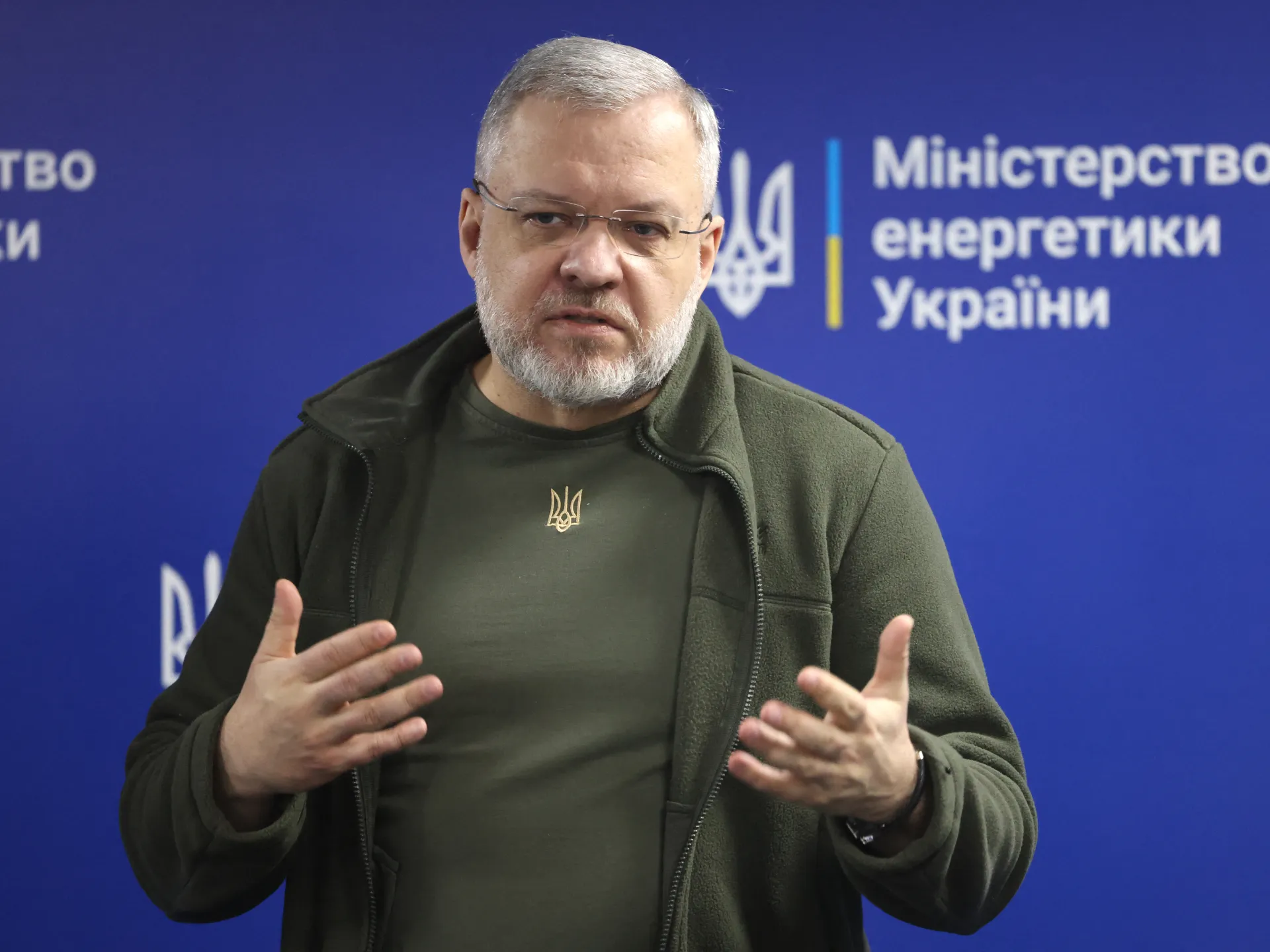
Ukraine’s National Anti-Corruption Bureau (NABU) says it has arrested the country’s former energy minister, German Galushchenko, who resigned in November amid a massive corruption scandal, as he tried to cross Ukraine’s border.
“Today, while crossing the state border, NABU detectives have detained the former Minister of Energy as part of the ‘Midas’ case,” the NABU said in a statement.
Recommended Stories
list of 4 itemsend of list
It did not name Galushchenko in its statement, but he served as the country’s energy minister last year and resigned in November.
“Initial investigative proceedings are ongoing, carried out in accordance with the requirements of the law and court sanctions. Details to follow,” the NABU added.
Galushchenko was one of several ministers who resigned in 2025 as the NABU unveiled an alleged money-laundering conspiracy in the country’s energy sector that investigators believe was orchestrated by an ally of President Volodymyr Zelenskyy.
According to Ukraine’s Specialised Anti-Corruption Prosecutor’s Office (SAPO), the alleged $100m scheme was orchestrated by businessman Timur Mindich.
SAPO’s investigators say Galushchenko helped Mindich manage illicit financial flows in the energy sector, while contractors working with Energoatom were forced to pay bribes of 10 to 15 percent to avoid losing contracts or facing payment delays.
Ukraine’s previous two energy ministers had resigned amid the fallout from the scandal, which also claimed the job of Zelenskyy’s chief of staff.
The two ministers and the chief of staff have all denied wrongdoing.
Battling corruption is a key priority in Ukraine’s reform effort as it eyes membership in the European Union, which requires the country to shake off a decades-old scourge of graft.
Disney has struck a multiyear deal with the United Kingdom’s leading entertainment aggregator, Sky.
The agreement announced Wednesday will fully incorporate Disney+ streaming content into Sky’s platform. Disney+ Standard with Ads will be included in eligible Sky TV packages starting next month. The deal also introduces a new linear movie channel for Sky’s paid-TV network called Disney Cinema.
It’s the first time U.K. subscribers will have access to Disney+, HBO Max, Netflix and Hayu (a reality TV streaming service) all in one subscription under the Sky brand. The subscription costs around £24 a month (roughly $33).
“We’ve grown Disney+ in the U.K. into our largest market across Europe over the past six years, and Sky is the perfect partner for our next wave of growth in the U.K. and Ireland,” said Karl Holmes, Disney+ general manager. “This agreement gives millions of Sky customers a simple, seamless way to enjoy all the great stories that Disney+ offers, and opens up a substantial new audience for content creators and advertisers.”
As part of Disney’s move to expand its reach in the U.K., Sky customers will be able to access the studio’s classic films like “Lilo & Stitch,” Marvel movies and well-loved TV shows like “Grey’s Anatomy” and “The Simpsons.”
The partnership is the latest in Disney’s effort to further globalize its streaming service. The company previously reached deals with Germany’s ZDF, Spain’s Atresmedia and Saudi media conglomerate MBC Group and UAE firm Anghami, so its content will be available in countries across the Middle East.
Disney+ isn’t the only streamer attempting to expand its global reach. In recent months, Netflix inked a deal with French broadcaster TF1, which will launch this summer. HBO Max also planted a flag in Germany and Italy — a move previously blocked by Sky.
In his first five years as California’s lieutenant governor, Gavin Newsom made more than $4 million from his wineries, restaurants, hotels and other hospitality businesses.
And that’s on top of his government salary, which is $142,577 a year.
The former mayor of San Francisco is the first candidate in the 2018 race for governor to release his state and federal tax returns. He filed jointly with his wife, the actress and filmmaker Jennifer Siebel Newsom. On Monday, Newsom allowed reporters to review — but not photocopy — six years of the couple’s returns, from 2010 to 2015, at the San Francisco offices of his campaign consultants, SCN Strategies.
Newsom, the early front-runner in the June 2018 primary, cites his business expertise as a key credential in his campaign for governor. With the help of the wealthy Getty family, he opened a San Francisco wine store in 1992, expanding it over the last 25 years into a network of nearly two dozen businesses known as PlumpJack Group. They include Napa Valley wineries, hotels in Lake Tahoe and Palm Springs, and bars and restaurants in San Francisco.
Here’s what you should know about the tax documents:
The Newsoms reported an average of $1.4 million in income from 2010 to 2015
The Newsoms’ tax returns provided a window into a complex web of the family’s financial interests throughout California. The couple’s lowest adjusted gross income since 2011 was $1.37 million in 2013.
The Newsoms’ average income and tax bills in the years 2010-2015 were:
Adjusted gross income: $1.4 million.
Federal tax rate: 26.4%.
Rate of charitable giving compared to income: 6.8%.
Federal taxes paid: $384,687.
State taxes paid: $139,146.
PlumpJack Group was founded by Lt. Gov. Gavin Newsom as PlumpJack Wine in 1992. Newsom is still a partner in the company, which has expanded to include restaurants, bars and resorts in addition to three wineries and two wine shops, including this store in San Francisco. (Phil Willon/Los Angeles Times)
(Phil Willon/Los Angeles Times)
2015 was a good year for the Newsoms
The couple, who now live in Marin County, reported an adjusted gross income of $1,720,383 in 2015, the highest amount they earned in the past six years. The Newsoms’ total tax bill came to $753,866, with $568,333 going to the Internal Revenue Service and $185,533 to the California treasury. They donated $62,973 to charity, including a $1,000 contribution to the Bay Area Discovery Museum.
The Newsoms’ biggest income source came from Airelle Wines Inc., which runs Napa wineries, at roughly $790,000.
They made hundreds of thousands of dollars selling silver bars — and donated more than $100,000 to charities each year
The tax returns show the Newsoms made hundreds of thousands of dollars trading silver bars during Newsom’s tenure as lieutenant governor. In 2011 alone, they turned a profit of $499,452 on the sale of silver bars.
Newsom’s 2013 book, “Citizenville,” appeared to be a moderate money-maker. From 2011 to 2015, Newsom reported a total of $370,325 in income as an author and by working in media. A spokesman for the lieutenant governor said he was unsure if some of that total included money Newsom was paid for his former talk show on Current TV, “The Gavin Newsom Show,” which aired in 2012 and 2013.
The Newsoms reported an average of $102,212 in charitable donations each year — nearly 7 percent of their income. But apart from clothing and toy donations to the Salvation Army and Goodwill, it was unclear which charities received money from the couple. Because the Newsoms hold interests in a wide network of partnerships, corporations and trusts, and most of their charitable donations were channeled through them, it is unclear which organizations received the money. A spokesman for Newsom’s political campaign said some of the charities the couple donated money to included the Law Center to Prevent Gun Violence, Best Buddies and Planned Parenthood LA.
Newsom owns a Tesla, and received tax credit for it
Over the years, the Newsoms have received a few tax breaks for their rapidly growing, environmentally conscious family.
Newsom received a $7,500 “Alternative Motor Vehicle Credit” on his 2012 taxes after buying a Tesla Model S.
He received a $500 tax credit in 2012 for installing energy-efficient doors, windows and insulation.
In 2010, the Newsoms’ daughter Montana was their only dependent. Then came their son Hunter in 2011. Daughter Brooklynn arrived in 2013. The Newsoms’ fourth child, Dutch, will make his grand entrance on the 2016 return.
Releasing his taxes ratchets up the pressure on his rivals to do the same
Newsom’s release of his tax returns puts pressure on his rivals to make theirs public too. The move could be a sign that the lieutenant governor is banking on revelations that he thinks could be useful to his campaign, such as information detailing Antonio Villaraigosa’s income sources in the years since he left office as mayor of Los Angeles.
Villaraigosa and Newsom’s other chief rival, state Treasurer John Chiang, have agreed to make public their tax returns, but have not yet specified when they will do so. Another candidate, Delaine Eastin, a former superintendent of public instruction, has also vowed to release her tax returns.
A spokesman for the leading Republican in the race, venture capitalist John Cox, said it was too early to say whether he would make his tax returns public.
Foreign minister says regional powers have been ‘far more effective’ than European countries.
Published On 15 Feb 202615 Feb 2026
Share
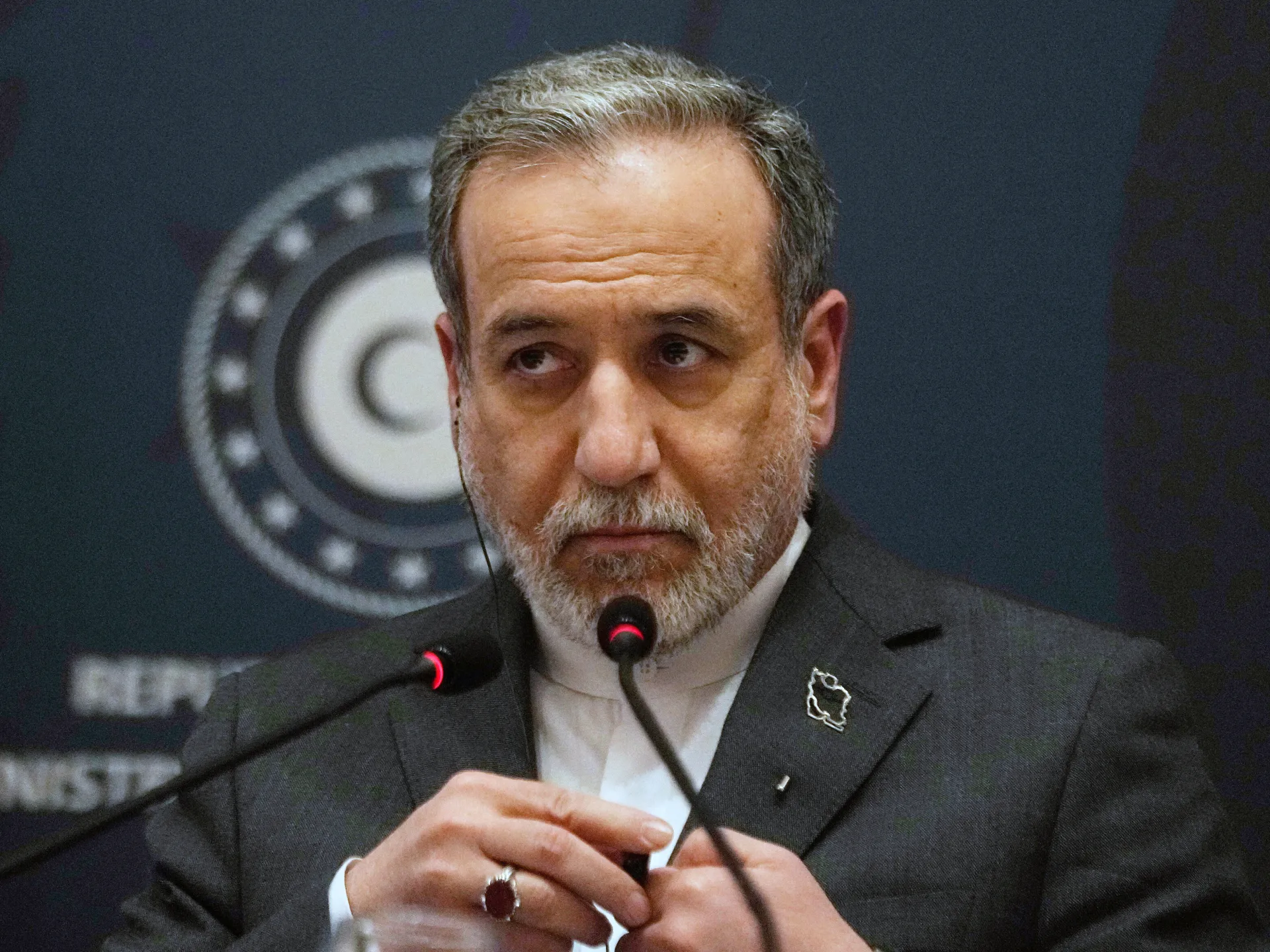
Iranian Foreign Minister Abbas Araghchi has derided the Munich Security Conference as a “circus”, accusing European powers of “paralysis and irrelevance” in efforts to revive nuclear negotiations with the United States.
Iranian officials were not invited to the annual security meeting in the German city.
Recommended Stories
list of 3 itemsend of list
“Sad to see the usually serious Munich Security Conference turned into the ‘Munich Circus’ when it comes to Iran,” Araghchi wrote on X on Sunday.
“The paralysis and irrelevance of the EU/E3 is displayed in the dynamics surrounding the current talks over Iran’s nuclear program. … Once a key interlocutor, Europe is now nowhere to be seen. Instead, our friends in the region [the Gulf] are far more effective and helpful than an empty-handed and peripheral E3.”
The E3 – which included France, the United Kingdom and Germany – were key players in the previous round of nuclear negotiations between world powers and Iran. That process culminated in 2015 with the Joint Comprehensive Plan of Action, a landmark agreement aimed at limiting the scope of Iran’s nuclear programme in exchange for sanctions relief.
The US under the first administration of President Donald Trump withdrew from the deal in 2018 and ramped up sanctions on Iran. Since then, the process has largely stalled. Still, the E3 maintained a role as a go-between with Tehran and Washington.
But since negotiations resumed last year, Gulf countries, such as Oman and Qatar, have taken the lead in facilitating talks between the US and Iran.
Araghchi made the remarks before leaving Tehran to lead a diplomatic and technical delegation to Geneva for a new round of nuclear talks with the US. The talks follow last week’s indirect negotiations in Oman, which is mediating the process, Iran’s Foreign Ministry said in a statement.
During his visit, Araghchi is expected to meet his Swiss and Omani counterparts, as well as the head of the International Atomic Energy Agency, Rafael Grossi, and other international officials.
Abas Aslani, a senior research fellow at the Center for Middle East Strategic Studies, said Araghchi’s comments “indicate a policy shift from the Iranian side that the E3 mechanism … is no longer a valid channel for resolution”.
“This nuclear mediation has moved from Europe to the region, and now the heavy lifting in diplomacy is done by regional players,” he said.
On Tuesday, Oman is to host talks between the US and Iran in Geneva after previous indirect negotiations in Muscat on February 6. Those talks were attended by US envoy Steve Witkoff and Trump’s son-in-law and adviser Jared Kushner.
US and Iranian officials previously held several rounds of talks in the Omani capital to discuss Iran’s nuclear programme last year. But that process was halted as Israel launched a 12-day war with Iran in June, which the US briefly joined by bombing three Iranian nuclear facilities.
The new rounds of negotiations come as tensions in the region remain high, with Trump moving more US military assets to the Middle East. On Friday, the US president said he was sending a second aircraft carrier to the region while openly talking about a change in Iran’s government.
Despite the new push for diplomacy, the two sides have maintained their positions. Iran has shown flexibility in discussing its nuclear programme, but the US wants to widen the talks to include Iran’s ballistic missiles and its support for regional armed groups – two issues that Tehran says are nonnegotiable.
Matt Weston and Tabby Stoecker make history as they claim gold in the mixed team skeleton at the 2026 Winter Olympics. Weston becomes the first Team GB athlete to win two gold medals in a single Winter Olympics.
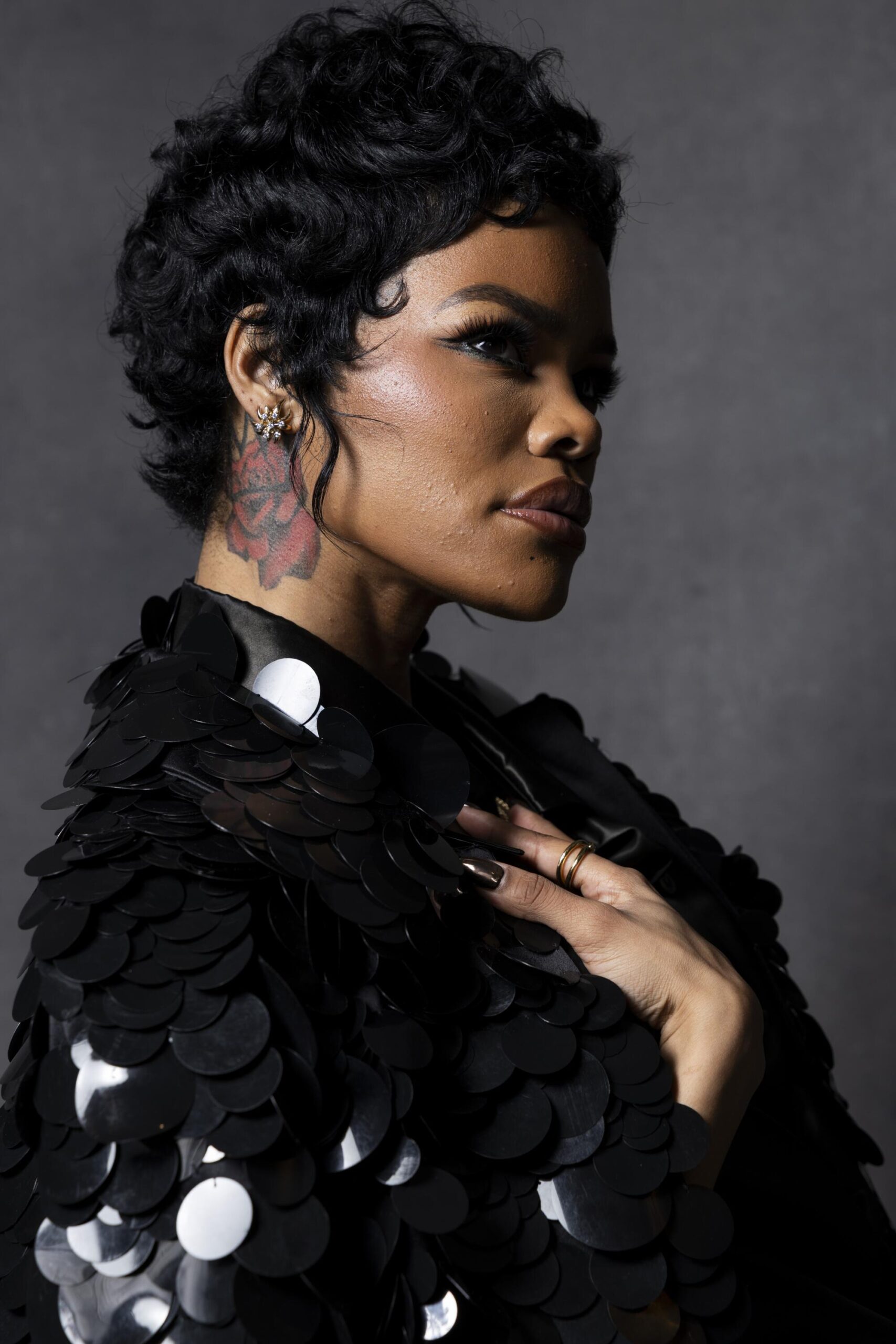
In this episode of The Envelope video podcast, Teyana Taylor describes the “slingshot” of success that’s come with “One Battle After Another” and shares her insights as to why fictional revolutionary Perfidia Beverly Hills does what she does in the film.
Kelvin Washington: Hello, everyone, and welcome back to The Envelope. Kelvin Washington, Yvonne Villarreal, we have Mark Olsen as well. Hopefully you all have been great since the last time I saw you. Everybody been good?
Mark Olsen: Of course.
Washington: Well, I tell you what, there’s a list of folks who’ve been very good because they’ve been nominated for an Oscar. And obviously, you kind of get the usual suspects, if you will. And then you get some surprises out there. Some folks you go, “Whoa!” So I want to start with you. Either of you can jump in on this. Is there someone that maybe surprised you, a film or something that you were just excited about or maybe someone said, “Them again?” or “That film again?”
Olsen: I think it was very exciting that “Sinners” got the most nominations of any film ever with 16 nominations. It was nominated in every category that it was eligible for. To see a movie that has had commercial success and felt like a cultural moment now being recognized somewhere like the Academy Awards, it’s just exciting to see that all coming together and rolling along for that film, regardless of how it turns out at the show.
Villarreal: I was very excited to see Rose Byrne get acknowledged for “If I Had Legs I’d Kick You.” Because I was worried about that movie losing steam after all the raves it got at Sundance [in 2025] and it’s a smaller movie. I wasn’t sure, “Are people going to remember it?” But I just think she’s so great in that film.
I was sort of surprised that Chase Infiniti didn’t get nominated.
Olsen: Because of the nature of the movie, the whole lead/supporting business was tough, and also it being her first movie, it’s a little harder to get that nomination — especially in lead actress, faced with, say, Kate Hudson, someone who’s been in the business for a long time, is much beloved in the industry, has obviously family historical ties to Hollywood. It’s interesting to see even in the nominations this sort of alchemy of like, “a little of this, a little bit of that” as far as who the academy was choosing to recognize.
Washington: You know, I go back to something you said, Mark, when you go to “Sinners.” You mentioned the blockbuster feel of it, getting people’s butts to the theaters, spending money. And also kind of original. We’ve had vampire movies before, but, you know, you get the “Transformer 12’s” and “Expendable 32’s.” I think a lot of folks were excited to see something original that also had commercial success as well.
Another film that had a bunch of success is “One Battle After Another.” You had a chance to speak with a star from that film, who’s been a star in her own right musically, but now into the film world, with Teyana Taylor.
Olsen: That’s right. It’s so exciting. She’s nominated for best supporting actress. This is a long movie, it’s over two and a half hours long. She more or less exits the picture about 30 minutes in. So I think it says something about the strength of her performance that her character kind of hovers over the rest of that movie. You feel her in the movie, even though she’s actually not onscreen. So at the Oscar nominees luncheon recently, we had a chance to sit down with Teyana and she was just so vibrant, so full of energy, really has a great attitude about this moment for herself. I mean, she just recently won a Golden Globe, she hosted “Saturday Night Live.” So much is like happening for her, seemingly right now and she’s just got this real like, taking it all in, very open to it [attitude]. It was really an exciting conversation.
Washington: A culmination of all her hard work. Here is Mark’s conversation with Teyana Taylor.
Teyana Taylor.
(Ian Spanier / For The Times)
Mark Olsen: You were just at the Super Bowl. About a week before that, you were a nominee at the Grammys. About a week before that you hosted “Saturday Night Live.” About a week before that you won a Golden Globe. And you’re here today as an Academy Award nominee. I’m sure I’m leaving some things out. I would say what’s the last year been like for you, but I feel like, what’s the last month or two been like for you? It feels like the rocket ship has really taken off.
Teyana Taylor: Yeah, it’s really taken off. I’m so blessed and I’m so honored and I’m filled with so much gratitude to just see so many prayers get answered all at once, where I’m also OK with one at a time. But it’s all happening, you know? And I’m just beyond blessed. And like we were talking about earlier, just how much fun I’m having with it. I’m really having a good time and I’m taking it all in because life is short and life is so fragile. So I just try and take time to enjoy life and enjoy my blessings and enjoy just being alive and well.
Olsen: Has there been a moment that felt the most surreal, like a “What is happening to me right now” moment?
Taylor: Honestly, all of it, because it reminds me of a slingshot, you know what I’m saying? It’s just like, here’s the way, here’s the way, here’s the way, here’s the way, here’s the work, here’s the prayers, here’s the tears, just here, here, here, here, here. And then whoosh — whatever the ball hit, it knocked down everything at once. And that’s what this feels like. It feels really good because literally everything is happening at the same time. So it’s not like only one moment or only two moments that’s making me feel this way. It’s everything. The small wins, the big wins, the medium wins. Every single win and every single blessing is a big deal to me. You know what I’m saying? Even my Ls. I’m not gonna win everything and I’m not gonna get everything, and some things are not even meant for me. But even those are blessings. It’s preparation for something that is in store for me and something that is meant for me, because all of this is already written. What’s for you is for you and will be for you, because that’s just what’s written. So I have that mindset.
Olsen: You’ve been doing this since you were a teenager, at first as a choreographer and a dancer, a singer, an actor, you’re going to direct your first feature soon. What keeps you moving through all of this, through these different disciplines and pursuits?
Taylor: My babies. My support system. My village. My community. I love to make my people proud. I love to make my peers proud, my family. I just love to make everybody proud and that’s what keeps me going. Even right now, I’m also in culinary school. So it’s just juggling that, but taking out the little moments to just be quiet and cook and feed my people. So it’s a push. It’s understanding it’s a marathon and that it’s not a sprint. It’s a part of the faith walk. And I think that’s what keeps me going, to wake up and feel so blessed, how could I ever complain? How could I ever be like, “Oh, this is too much”? It is everything I’ve ever asked for. I’m never going to complain about answered prayers. What pushes me is just the reassurance from my support system, the reassurance from Father God himself, the reassurance for my babies. They keep me going. That’s who I do it for. I want to create generational wealth. So them babies are my reason. They are my why.
Olsen: To start asking you about “One Battle After Another,” your character, Perfidia Beverly Hills, she’s inspired a lot of conversation and some controversy. For you, was there something about that character that you felt you hadn’t seen on screen before?
Taylor: Yes. Perfidia is complex and she is also misunderstood. This is a woman who has been in survival mode, who has been fetishized, who has been ignored, not seen. We’re seeing this woman deal with that, where in movies we’re used to seeing us women have to be in capes all day and you see this woman rip this cape away and it’s just unapologetically herself — even in her weakness. And even like you said, with the controversy of her sexuality, I think her sexuality is her armor. It is also her power. She’ll give somebody what they want to get what she wants. And literally in the movie, she’s made selfish decisions. But if you think about her spirit and mentally and emotionally as a woman, it felt good to see a woman actually be selfish and put her[self] first, which we never really get to do because we have to be super this, super this, super this. Super mom, super wife, super woman, super chef; everything is always with a super in front of it. And you see this woman not really caring about what people think. Nobody can quiet her. And in this space of, “OK, you’re too loud, quiet down; you stand too tall, have a seat,” Perfidia is all of the things that they can’t make her do. She’s like, “I’m gonna stand tall, I’m gonna use my voice, I’m gonna use whatever I need to use to get what I want.” And she makes decisions that we don’t agree with, but I think one thing we all can agree on is that she’s a badass. And I can always respect anybody that’s unapologetically themselves.
Another thing that I feel like the controversy is proof of is how much of a nonfactor postpartum depression is. Half of the mistakes we see Perfidia make is her dealing with postpartum depression. You see the moment where they say, “Perfida, she’s a runner. She comes from a long line of revolutionaries.” That in itself is a pressure on her to feel like she gotta keep that going. The revolution is instilled in her. It’s a part of her identity. So imagine getting pregnant and you’re feeling like, “Oh, my God, does this slow down the revolution? Am I gonna play house with a person that’s ignoring me?” Nobody is really taking the time to think about what’s happening in her mind. We can’t control how a person handles postpartum depression. We hear her, through the door, cry, and then we see Bob put his ear to the door — and instead of him walking in, he walked away. And then what was the result of that? Her walking away. Even if it had to be walking away from Baby Willa, it’s something that she felt like she needed to do, and that’s what postpartum make you do sometime. And every mother handles postpartrum depression differently. But I think that’s what I love about her character, because you get to see a harsh reality that I know is hard to take in. But when you watch it a few times you understand exactly what’s happening. … I think that’s what makes the letter at the end so important. Because you hear the pain, you hear the hurt, you hear the regret, you hear the accountability, “Do you have love? Are you happy? Will you try and change the world like we did? We failed, but maybe you will not.”
And that’s another thing. This is a story that Paul Thomas Anderson wanted to tell. It was Perfidia’s job to go and anchor this boat and stay there and create the path for Willa to take on these battles, because her past haunted Willa and Bob. That’s a part of Perfidia being supporting — supporting the next steps of what is for Willa. It’s for Willa to go on and to rise. So you see Perfidia in the beginning of the movie, you see her drive this boat, you see her get to the middle of the sea and you see her anchor herself. And from there, we have to continue the story. So I’m happy that the controversy around her can create dialogue like this, can create healthy dialogue or even uncomfortable dialogue. As long as it’s dialogue and we’re conversing and we are speaking and people are speaking from their point of views, I can absolutely respect that.
Olsen: Is that a conversation you expected to have? When you were making the film, were you and Paul, or you and your co-stars talking about the depiction of Black women in the movie? Or have you been surprised that’s been such a talking point now that the movie’s out in the world?
Taylor: Honestly, I’m not surprised of any of the talking. I think one thing that I said before the movie even dropped and we were doing our press junkets, I was always very boisterous about the fact that this movie, period, not just the character, would definitely shake the table, and it would definitely spark, whether it was great debates or — I love conversation and I like when we can converse. Get it off your chest, tell me how you feel. And I’m open to receive that. So I knew that it would shake the table. I also knew that it needed to be done. Postpartum depression is a big thing for me that I feel like it needs more light. It needs light around it. We need more solutions for it. And like I said, you see this person, this woman in survival mode. You see this woman be ignored. You see this woman be fetishized. And is that not the truth? Is that not what happens, especially in this place of a Black woman feeling the least protected? So I’m really happy that Paul put wings on that to be able to spread and fly with that. And like I said, I know it’s probably tough to take in, but that’s what we got to see because everybody is not wearing capes. Everybody is not handling things the way you may handle things, I may handle the things, the way that person or this person may handle things. So we all just got to give grace and take in the film. It’s a story that’s being told.
Olsen: To me, one of the biggest surprises about the movie is considering how cohesive and complete it feels, to learn how improvisatory and collaborative the process of making the movie was. Were you surprised by that? What was it like for you entering into the process of making this movie with Paul?
Taylor: I was shocked at how collaborative it was. And I loved every bit of it because one thing about it is, again, when you are telling a story that someone wrote — he’s been working on this project for 20 years. This is something that I consider to be his baby. And when you’re trusting me to take on a job like this, I don’t ever wanna walk into any set and feel like I’m doing what I want to do. I just want to be of good support. If you tell me, “Hey, let’s find this together,” I’m gonna find it together. If you say, “This is my vision of what that is and this is how I want it to be,” it’s my job to give you that vision of what you want it be, and then add my little sauce on top of it. But to be fully collaborative, I thought it was really dope. We found Perfidia’s layers and we color-coordinated those layers. And I’m really happy that he let me be a part of that.
Olsen: What do you feel you brought to Perfidia or you were able to add to the character?
Taylor: I was able to add a lot. Paul was very, very collaborative. And again, we found her layers, which was the most important, especially with such a complex character. And you know, I just came from “A Thousand and One.” So I came from being another complex character, but this one was complex to a whole other level, where we almost didn’t understand why we never see Perfidia cry. But you see these little moments, like little details, in her face that’s just like, it’s this strength, but the strength — because I also don’t really love the term “strong Black woman” — it’s this strength that you feel like she has to have because the strength is really survival mode. And again, like I said, you hear her crack down and you hear her vulnerable, and nobody stepped through that door. So when you see a strong Black woman, there is no grace, it’s, “Oh, she’s OK, she fine, she got it all figured out.” And then you hear her vulnerable and you still feel like even at her most vulnerable, she got this, she’s strong. And it’s just like, “Step through the door. Step in early. Step in the first time. Hear me the first time, see me [this] time, wipe the first tear away. Would she have walked out that door on Baby Willa and Bob, had he walked through that door when he heard her cry?
Olsen: I’ve heard you a number of times when you’re talking about Paul, you always call him Paul “Let Him Cook” Thomas Anderson. What does that mean?
Taylor: Let him cook! Listen, because he to me is a master chef. And honestly, I’m very, very big on leadership. I respect the person that is a leader. What makes it so dope is because, with being in culinary school, I originally signed up for culinary school, of course, to learn the art of culinary, but to just cook, I love to cook and I wanted to learn the art of that. With being enrolled in culinary school, it’s a lot of writing work and a lot of discussion forums and a lot of quizzes and stuff like that. So you’re not only learning to cook, but you’re learning how to run a business. You’re learning how to navigate your staff, front of house, back of house, in the kitchen. You have to understand it’s a whole system in how you handle people in general. In the kitchen they call it like a “servant leader,” where your leader is in the kitchen with you, they’re cooking with you. They’re your mentor, they are your guidance, but they’re cooking with you. They’re not just pointing, “Do this, do that, boom, boom, boom.” And it’s just, like, his gentle servant leadership is something that I respect so much and something that inspires me as an upcoming movie director on how to handle and navigate my staff.
So it’s like the best of both worlds because I have PTA and then I have culinary school who’s teaching me how to be the best leader. Even in how we handle people, it’s bigger than just the people that work for us or with us. It’s also the people that come into this restaurant. It’s your customers. It’s just the hospitality of it all and the hospitality that he gives, it’s really amazing to see. I’m also a big sports girl. So even in regards to him being our quarterback, you know, he’s not on the side, pointing at what to do. He’s on the field with you. But he has an even bigger job because now he’s trusting that he’s going to throw this ball to you and you’re going to receive that ball. So we’re his receivers, we’re his wide receivers to take it to the touchdown. It’s all about being present. And that’s what I learned in culinary, it’s what I learned in sports, it’s just everything about being a leader as I prepare to lead my village and lead my community. That’s just so important to me. So I always respect people that are in the field with you. I become a warrior for you. You see Paul, you’re running in the battlefield, you look to your left, he’s with you. He’s not on a horse, he’s not on his high horse. He’s in the field with you. Let’s go, we got this! And it just makes you want to you want to go so hard for him. And that’s how I look at it. So I am a student. I am a teammate. I am a soldier. I am a warrior. That’s what I am with people that are great leaders.
Olsen: When you won the Golden Globe, your speech was so moving and you specifically spoke to your “brown sisters and little brown girls” and said that their light does not need permission to shine. Can you talk more about that? What was it that made you want to say that in that moment, specifically talking about this movie?
Taylor: I thought it was a very important moment on a very important stage. I wanted to use my voice and I wanted to use my platform. And in that moment, I had the voice and the platform to say just that. It’s nothing less than that. There’s nothing beyond that. Exactly what I said. We deserve space. What that night showed was that here’s the space. And I appreciated that. I was filled with so much gratitude. That moment hit hard for me because I was that little girl that sat on the floor on a TV watching the other queens onstage accept their awards. Like, “You can do it too, you can do it too.” And I knew that one day when it was my turn, I would tell my little queens, “You can do it too — all the little queens that look like me, you can do it too, you deserve space.” To know that also my daughters were watching as well, it’s everything to me. It’s everything for me to know that they embrace that as well. It’s so important. I’ve gotten so many women come up to me like, “Wow, that speech was just everything.” And that’s what it’s all about. That’s what is all about: to inspire, uplift and remind us that there is space.
Olsen: Before I let you go, you just bring it on red carpets time and time again. And the one thing I like is that you wear these really bold outfits, and it never looks like the clothes are wearing you. Do you have tips for people? What do you do for confident personal style?
Taylor: Honestly, follow your heart. Follow your heart. If you see it and you like it, put it together. You might put it together and be like, “That didn’t work the way I [intended].” Practice. Play in clothes. I love to play in clothes — but also will walk in the store and redress a whole mannequin. I’ll also be like, “I like that tie, I think it should be a little bit tighter.” I dream about certain outfits. I dream of certain moments where I’m like, “Oooh. I already know what I feel like I want my Oscar dress to look like. I already know what I want my Golden Globes dress to look like.” It’s always a vision. Or sometimes you might have a base. You might see something and be like, “I like this, but I feel it could use this.” Add it. If you feel like something can use something, add it. Because before you know it, now you done created your own thing. So don’t hesitate. When I was younger, I used to hesitate and be like, “This looked pretty cool, but now I’m not gonna do it.” And then later on, I see somebody try it, and I’m like, “Oh, I should have just…” Always follow your gut and always follow you heart.
Nina J. Easton does us a disservice by attempting to relate so closely the ‘60s violence of the Left and the ‘90s violence of the Right (“America, the Enemy,” June 18).
In terms of tragedy, the Oklahoma bombing stands alone, its carnage having exceeded by plenty any other terrorist act in U.S. history. It was designed to kill and maim as many people as possible. The Far Left simply hasn’t operated in that coldblooded a manner. For example, the explosives planted in 1970 in a Wisconsin ROTC building by the ultra-left Weathermen were timed to go off at 4 a.m., when few would be present.
The right-wing militias address no social ills; they tend only to their paranoid fantasies. By contrast, in an earlier day, the Black Panthers swaggered menacingly with weapons bared but also established breakfast programs to feed inner-city children.
The violent Left has taken hostages, blown up buildings, incited riots and, like their right-wing counterparts, imagined a world where government agents were hidden behind every door. But societal benefits like Social Security, equal voting rights and child-labor laws were initially espoused only by the Left, which worked tirelessly to bring these simple manifestations of fairness into mainstream political dialogue.
Conversely, right-wing militias exist only to prepare for, and eventually wage, war. They arm themselves against phantoms, against enemies so ill-defined that they could be pointing a gun at you or me–or anyone at all.
Searching through the rambling, angry diatribe that the militias spew over the airwaves and web sites, one cannot find even a hint of goodwill for humankind, or any sort of notion for a better world, however cocky or deranged. No, the right-wing militias discuss only war: how to plan, train for and eventually execute assaults on people who are different than they are, people whose skin color is different, whose political beliefs differ from those of the militia.
The Left in this country has given us a legacy–a mixed one, to be sure, but a rich history that includes organizing laborers and bread lines as well as violent cell groups. For every rock thrown, there have been hundreds of jobs saved and social benefits secured as a result of left-wing agitation in America. Right-wing militias are simply a powder keg waiting to blow.
Unfortunately, Easton has offered the raucous Right a fig leaf, behind which they can continue their frightening march to battle.
Winston Steward
Los Angeles
*
Easton fails to comprehend that political and moral consciousness undergoes changes during times of massive paradigm shifts. Her article compares and equates very different sets of people and differing sets of paradigms. It reads like one of those “high-concept” duds that the film industry makes because the marketing departments likes the pitch.
“America the Enemy” relies on the repetition of the premise “If ‘A’ existed in the 1960s Left, then ‘B’ exists in the 1990s Right.” It’s as if the force of a grammatical structure conveys meaning, even when the data doesn’t wash. Despite occasional accuracies that either A or B did in fact exist, the common or even causal relationship implied in the “if . . . then” structure usually does not exist.
Someone who experienced either period, or who did the necessary homework on either era, or who could handle Tom Hayden and Richard Flacks as resources rather than as sources of cognitive dissonance would certainly have qualms about getting this piece into print.
Seeing patterns that don’t exist, and linking unconnected things, are signals of the paranoid style in American politics described by historian Richard Hofstadter. Perhaps bad mental processes really are viral. However, a paranoid style in American journalism will not do.
Arthur M. Eisenson
Los Angeles
*
“America The Enemy” was a typical oversimplification of a complex issue. It will probably come as an unpleasant surprise to Easton and many others that the NRA has more than a few members, black and white, who are more truly liberal than those who favor the disarming of ordinary citizens. The NRA is one of the few subjects on which it is possible for Left and Right to agree.
Art Volkman
Inglewood
*
The story comparing the bombers of the ‘60s and ‘90s was terrible.
The cover matched photographs of the Greenwich Village townhouse explosion with Oklahoma City, but in the Greenwich Village case, the only people blown up were the bomb-makers themselves. Inside the magazine, a photograph of Tom Hayden in 1969 was matched with one of Timothy McVeigh–completely outrageous.
Hayden never blew up anybody. What is going on at The Times?
Jon Wiener
Los Angeles
*
Comparing ‘90s militias with ‘60s Marxist radicals was a masterpiece of liberal disinformation.
To accurately frame today’s political reality, one must start with the premise that the ‘60s radicals–in the form of state Sen. Tom Hayden, our hapless boy President Bill Clinton and their ilk–have taken over the government and are aggressively moving to destroy the Constitution, as Clinton’s budgetary, crime and anti-terrorism legislation proves beyond a doubt. Add in 30 years of irresponsible deficit spending by liberals in both major parties and it becomes obvious that the government will very soon be intentionally bankrupt. A general economic collapse and a depression will inevitably follow–all according to plan.
The militias are only reacting to these not-so-veiled attacks on the Constitution and preparing for civil warfare, the only logical upshot to this kind of treachery.
Loyal Americans who form legal militias in support of a limited democratic republic are our future, if this country and the Constitution are to survive into the the millennium.
You aren’t going to be able to hide that fact much longer.
Matt Weston produced a stunning run to make more history in Cortina as he became the first Briton to win two gold medals at a Winter Olympics with a thrilling victory in the mixed team skeleton event alongside Tabitha Stoecker.
Stoecker had given Weston a tough task with her run of 1:00.77, 0.30 seconds off the pace of the Germans with the British pair, ranked top seeds, the last to run.
But Weston, who stormed to gold on Friday – Team GB’s first medal at the Games – showed why he is the best skeleton racer in the world with a sublime 58.59secs run to clinch his second triumph of the Games.
It is the first time Great Britain have won three gold medals at a single Winter Olympics after Charlotte Bankes and Huw Nightingale won snowboard cross mixed team gold earlier on Sunday.
A second British team, Marcus Wyatt and Freya Tarbit, missed out on a medal by an agonising 0.01secs as the two German teams of Christopher Grotheer and Jacqueline Pfeifer and Axel Jungk and Susanne Kreher took silver and bronze, respectively.
Ishan Kishan defies a tricky Colombo pitch with 77 as India beat Pakistan by 61 runs in Group A of cricket’s T20 World Cup.
Published On 15 Feb 202615 Feb 2026
Share
Defending champions India have thumped Pakistan by 61 runs in a grudge Group A match of the Twenty20 World Cup to secure their place in the Super Eight stage of the cricket tournament.
Ishan Kishan’s breakneck 77 powered India to 175-7 on Sunday at the R Premadasa Stadium, where Pakistan’s spin-heavy attack managed to apply the brakes to an extent after the opener’s exit.
Recommended Stories
list of 4 itemsend of list
The tournament co-hosts returned to bundle out Pakistan for 114 in 18 overs to register their third win in a row.
The match went ahead after Pakistan earlier reversed their decision to boycott the game in solidarity with Bangladesh, whose team refused to tour India over safety concerns and were replaced by Scotland.
Pakistan captain Salman Ali Agha and his India counterpart Suryakumar Yadav did not shake hands at the toss, though.
India were reinforced by the return of Abhishek Sharma, who missed the first two matches with a stomach infection. But the opener could not make it count.
Pakistan’s Salman sprang a surprise by opening the attack himself, and the move paid off as the spinner trapped Abhishek lbw to remove the reigning number one batter in T20 Internationals.
Pakistan used three spinners in the powerplay to try and stem boundary flow, and India’s score of 52-1 after six overs suggested the ploy worked to an extent.
India’s Ishan Kishan in action during his innings of 77 [Lahiru Harshana/Reuters]
Kishan could not be contained, though, and the diminutive southpaw tore into the Pakistan attack with his take-no-prisoners batting.
The opener took only 27 balls to race to his second successive fifty of the tournament.
Saim Ayub ended Kishan’s 40-ball blitz, but India were 92-2 at the halfway stage of their innings.
Ayub (3-25) dismissed Tilak Varma (25) and Hardik Pandya with successive deliveries to turn the heat back on India.
Suryakumar (32) and Shivam Dube (27) could not quite provide the late flourish to take India past the 200-mark that had looked well within their reach at one stage.
Pakistan became the first team to employ six spinners in a T20 World Cup match, but the joy of having restricted India under 200 evaporated soon as they slumped to 13-3 in two overs in their chase.
Pandya removed Pakistan’s in-form opener Sahibzada Farhan for a duck, and Jasprit Bumrah dismissed Ayub and Salman in the same over to pin down Pakistan.
Babar Azam (five) did not last long either, and Pakistan were gasping at 38-4 after the six powerplay overs.
Usman Khan (44) defied India for a while, but Axar Patel lured him out to be stumped to effectively snuff out Pakistan’s chances of an unlikely victory.
The move, in coordination with the US, is the latest implementation of the ceasefire agreement with Kurdish-led forces.
Published On 15 Feb 202615 Feb 2026
Share
The Syrian army has taken over the al-Shaddadi military base in the northeast of the country following the withdrawal of United States troops, as part of a ceasefire arrangement with the Kurdish-led Syrian Democratic Forces (SDF).
Syria’s Ministry of Defence announced on Sunday that “forces of the Syrian Arab Army have taken over the al-Shaddadi military base in the Hasakah countryside following coordination with the American side”.
The US had been operating in al-Shadaddi since 2016, after Kurdish-led forces seized it from ISIL (ISIS). On Thursday, the Syrian army also took control of the US base of al-Tanf, near the border with Iraq and Jordan.
US Secretary of State Marco Rubio told reporters that the implementation of the ceasefire agreement was “headed in a positive direction”.
“There’s been some days that have been very concerning, but we like the trajectory,” he said. “We have to keep it on that trajectory. We’ve got good agreements in place. The key now is implementation, and we’ll be very involved in that regard.”
He noted that similar agreements needed to be reached with the Druze, Bedouin and Alawite communities in the country.
“We think that outcome, as difficult as it’s been, is far better than the Syria that would have been broken up into eight pieces, with all kinds of fighting going on, all kinds of mass migration, so we feel very positive about that.”
Reduced US presence
Reporting from Aleppo, Al Jazeera correspondent Heidi Pett said residents near al-Shaddadi said in recent days that they were hearing “explosions and seeing fires at the base as Americans destroy remaining material because they’ve been preparing to leave there for a number of weeks”.
“This is part of a broader change in US strategy in the region moving towards partnering directly with the Syrian government,” she said.
The US has been reducing its military footprint in Syria for months, going from 1,500 personnel in July to about 900 currently.
It has been consolidating its ground presence to Tower 22 in Jordan, although it continues to carry out air strikes on ISIL targets in Syria, with US Central Command (CENTCOM) announcing it had conducted 10 air strikes on 30 targets during the February 3-12 period, and killed or captured more than 50 people in two months.
CENTCOM’s commander Admiral Brad Cooper said in a statement that US forces would “remain poised to respond to any [ISIS] threats that arise”.
Pasadena Playhouse’s take on Peter Shaffer’s “Amadeus” may be the Tony Award-winning regional theater’s most lavish production to date.
The show, which opens Sunday, features a scrim that has been hand-painted with the notes of Mozart’s “Phantasie für eine Orgelwalze.” The entire process, done by a team of three, took eight days from start to finish. When the scrim is illuminated, the golden notes appear to be suspended like stars in the sky.
Mozart’s sister, Maria Anna “Nannerl,” handwrote many of the genius composer’s compositions, and Playhouse head painter Johnny LeBlanc said the group worked to create an exact replica of her strokes. That attention to detail at every level is emblematic of this elaborate show.
Director Darko Tresnjak (center) during “Amadeus” rehearsal at Pasadena Playhouse. Tresnjak is known for exploring the intellectual and emotional foibles of each character in a play.
(Ariana Drehsler / For The Times)
The play is as rich in talent as it is in design. It stars Broadway veteran and Tony winner Jefferson Mays as Salieri, Sam Clemmett as Mozart and Lauren Worsham as Constanze, and is directed by Darko Tresnjak, who won a Tony in 2014 for “A Gentleman’s Guide to Love and Murder.”
The red-and-gold, Baroque and Rococo aesthetics of the show, including the forced perspective of scenic designer Alexander Dodge’s set, which makes a royal room seem to disappear into the distance, were meticulously constructed to reflect the twisted interiority of Salieri as he grapples with his seething hatred for the scatological young upstart as it crashes against his cascading awe of Mozart’s divine music.
Share via
“The entire play really takes place in a mental space,” Tresnjak said during a recent rehearsal. “That location is Salieri’s increasingly addled brain and what happens within that brain strikes me as eminently contemporary.”
Mays called “Amadeus” a “memory play,” noting that “every aspect of this production is exploring that — it’s all filtered through the warped, distorted memories and imaginings of its unreliable narrator.”
The Pasadena Playhouse has one of the few remaining on-site scene shops in the industry, and its staff of designers, carpenters and painters created elaborate wall sconces and candle holders that become smaller and smaller as they move to the back of the stage, toward two tiny doors in the center. At one point in the show, actor Matthew Patrick Davis, who plays Emperor Joseph II, steps through the doors.
“Amadeus” director Tresnjak says the key to his lavish productions is a strong community of artists, rather than a big budget. “It’s all smoke and mirrors,” he said.
(Ariana Drehsler / For The Times )
Mays describes the moment as “delicious” because Davis is quite tall and thin — even more so in his 2-inch, 18th century heels — and when he unfurls his body into the room and proceeds down the stage, the audience realizes what a gigantic figure he is in Salieri’s mind.
“It’s all shot through with these ‘Alice in Wonderland’ moments of surrealism,” Mays said. “It feels like a fever dream.”
Music is key to Salieri’s world, and the sound design by Jane Shaw strives to access the otherworldly power of Mozart’s music through layered backing tracks. An electric keyboard programmed to sound like a fortepiano is also embedded in a handcrafted instrument, which actors with musical training can play.
A fortepiano is being built for “Amadeus” at Pasadena Playhouse. A small electronic keyboard will be embedded within so actors with musical training can actually play it.
(Ariana Drehsler / For The Times)
Tresnjak has a long history directing with L.A. Opera and its departing music director, James Conlon, worked with Clemmett on conducting. He also gave the actor a history lesson about what the art form would have been like in Mozart’s time. Jeffrey Bernstein, the founding artistic and executive director of the Pasadena Chorale, drilled the cast on their chorale passages.
The key to creating such a richly textured theatrical environment is not a bloated budget, said Tresnjak, it’s engaging a whole community of artists — onstage and backstage — and giving them free reign to set their creativity loose. Pasadena Playhouse, which is known for being a resourceful company, made that easy, he added.
The show is buoyed by its classic stagecraft, with flats, escape stairs and rolling platforms. There is no computer automation and anything that moves is moved manually, said associate artistic director Jenny Slattery, pointing out the theater’s antiquated hand winches that control a mobile throne.
“There is something magical that comes from a resonance between the subject matter and the aesthetic and the behind-the-scenes techniques,” said Slattery.
A sketch and fabric swatch for Venticelli’s costume in “Amadeus” at Pasadena Playhouse. The costume is the same red as the set walls, so the character will seem to fade in and out of Salieri’s consciousness.
(Ariana Drehsler / For The Times)
Linda Cho designed the costumes and L.A. Opera fabricated the extravagant 18th century garments, which Slattery said have become a “staff tourist attraction.” The fabric was sourced in New York and shipped to L.A.; the ribbons were made by hand. Mays said he got giddy and breathless when he first stepped into his costume.
L.A. Opera fabricated the costumes for “Amadeus” with fabric sourced from New York.
(Ariana Drehsler / For The Times)
“It makes all the difference when you know that your sleeves are cut in a bias and your arms have to do certain things,” he explained. “I find a costume, particularly the costumes of this late 18th century period, to be so informative about physicality and how you move.”
In rehearsal, Mays fully inhabits his role — and his costume — moving with a lithe formality as he strives to eavesdrop on Mozart and Constanze. His revulsion and deep attraction are on full display. The actor said it is not his intention to play Salieri as a mustache-twirling villain, but rather as human, recognizable and understandable.
Details on the sleeve of a jacket made by L.A. Opera.
(Ariana Drehsler / For The Times)
“We are all Salieri to varying degrees,” Mays said. “What interests me are everyman aspects of him. The banality of his evil and the way that evil actions seem to always rise out of fear and insecurity.”
The lighting design by Pablo Santiago helps manifest Salieri’s uncomfortable emotions onstage.
“Darko is someone who likes to work in more of the intellectual, emotional space rather than realism. So a lot of it is about using the set in a more abstract way,” said Santiago. “It’s about shapes and color and creating full stage pictures that are interesting.”
The story of Salieri and Amadeus, said Mays, is one of twisted love. Salieri gets up every morning and tries to destroy that which he loves most. Playing the troubled antihero is “not altogether pleasant,” Mays said, “because you’re marinating in this cesspool of thwarted ambitions and inadequacy, but then you’re surrounded by this beauty that is a constant reminder of your own failings.”
When the curtain finally rises, the cast and crew hope the stage will be its own thing of beauty — its ambition fully realized.
Ishan Kishan’s quickfire 77 is followed by a well-rounded bowling display as India thrash woeful Pakistan by 61 runs to qualify for the Super 8s stage of the ICC Men’s T20 World Cup.
Brazilian authorities have ordered that Elon Musk’s platform, X, must implement measures to prevent its artificial intelligence tool, Grok, from generating sexualized content involving minors and involving adults without consent. File Photo by Fazry Ismail/EPA
Feb. 13 (UPI) — Brazilian authorities have ordered that Elon Musk’s platform, X, must implement measures to prevent its artificial intelligence tool, Grok, from generating sexualized content involving minors and involving adults without consent.
The case is being reviewed by Brazil’s National Data Protection Authority, the Federal Public Prosecutor’s Office and the National Consumer Secretariat. The agencies contend that, despite prior warnings, the social network failed to show effective action to curb these practices.
“X must immediately implement appropriate measures to prevent the production, through Grok, of sexualized or eroticized content involving children and adolescents, as well as adults who have not expressed their consent,” Brazilian authorities said in a joint statement.
On Jan. 20, the agencies recommended that X establish, within up to 30 days, technical and operational procedures to identify, review and remove sexualized content generated by Grok that remained available on the social network. That deadline co-existed with the requirement to adopt immediate actions to prevent new posts.
The company said at the time that it had removed thousands of posts and suspended hundreds of accounts for violating its policies.
However, Brazilian authorities said the information provided “was not accompanied by concrete evidence, technical reports or monitoring mechanisms that would allow its effectiveness to be assessed.”
Tests conducted by technical teams indicated that the platform still allows the generation and sharing of sexualized or eroticized images of minors and adults without authorization.
Since late last year, thousands of complaints in several countries have alleged that Grok responds to requests to alter photographs posted by women on social media, making them appear nude or in bikinis. At least two Brazilian women have reported being victims of these deepfakes.
The Federal Public Prosecutor’s Office ordered X to submit monthly reports on the actions taken to prevent the production of these images and pointed to a lack of transparency in the company’s response.
The National Data Protection Authority also required the platform to detail the measures implemented and provide evidence that can be verified by authorities.
The new five-business-day deadline requires the company to explain what specific actions it will take to prevent Grok from creating this type of content. The official document does not specify when clock began.
If the order is not met, the company could face fines and other administrative sanctions. Those responsible could also be prosecuted for disobedience.
The Federal Public Prosecutor’s Office said it could open broader investigations that may lead to legal action to seek damages for harm caused by the creation and dissemination of these images.
The case adds to investigations in Europe. On Feb. 3, the Paris Prosecutor’s Office searched Grok’s offices as part of a preliminary investigation into the alleged dissemination of child pornography and deepfakes. Authorities in the United Kingdom and the European Union are also examining Grok’s use to manipulate images.
Grok is developed by xAI, Musk’s artificial intelligence company, which also controls X. Earlier this month, the entrepreneur announced the merger of xAI with SpaceX, his aerospace company. SpaceX is expected to debut on the New York Stock Exchange later this year.
For a while it looked like this match would not happen.
Pakistan, whose last win against India was at the Asia Cup in 2022, announced a boycott a week before the tournament began, only to reverse their decision at the start of this week after extensive talks.
It went ahead, in front of a large crowd weighted towards Indian blue, because it is the most lucrative fixture in the world game, providing the funds upon which cricket’s ecosystem survives in its current imperfect state.
How long that remains the case given India’s dominance, built from their cricketing and financial might, remains to be seen.
Kishan’s assault gave India breathing space and their bowlers were ruthless, even if their fielders dropped three catches.
After Pakistan’s seamers went the distance, Hardik began with a wicket maiden – dismissing right-hander Sahibzada Farhan, who skewed a pull shot high to mid-on.
In the next over, the majestic Bumrah pinned left-hander Saim Ayub in front with full inswinger before Pakistan Salman Agha holed out playing a wild slog.
Even Pakistan’s biggest name, Babar Azam, was tamely bowled for five attempting a swipe to left-arm spinner Axar Patel in the fifth over, while left-handers Mohammed Nawaz and Faheem Ashraf meekly picked out fielders in the deep.
After all of the build-up this was another underwhelming meeting.
AN iconic American actress looks completely unrecognizable after a string of legendary roles and an Oscar nomination.
The star first shot to fame in 1983 as she appeared in Scarface playing Al Pacino’s character’s sister, Gina Montana.
Sign up for the Showbiz newsletter
Thank you!
The now 67-year-old looked incredible as she starred in a string of 80s and 90s hitsCredit: AlamyShe even played Maid Maron in Robin Hood Prince of ThievesCredit: Warner BrosThe star was nominated for an Oscar and a Golden Globe for her role Carmen in The Colour of Money back in 1986Credit: Getty
Mary’s style is incredibly chic, with the actress often donning shirt’s and over sized blazers.
Years ago, glamourous Mary was often seen on red carpets wearing floor length gowns and posing with her A-lister pals.
Many of Mary’s fans may recognise her from Robin Hood Prince of Thieves, where she played Maid Marion – a spy.
While Mary is probably best known for her role in Scarface she also appeared in the 1986 movie The Colour of Money, playing Carmen, which landed her the coveted Oscars Best Supporting Actress nomination.
Most read in Entertainment
Paul Newman and Tom Cruise appeared alongside the star in the movie, which also saw her nominated for a Golden Globe.
Her other movie roles include James Cameron’s science fiction, The Abyss with Ed Harris, she played the attorney daughter ofGene Hackman‘s character inClass Action, co-starred in the 1992 thrillerConsenting Adults and played a fishing boat captain in The Perfect Storm.
Mary Elizabeth Mastrantonio appeared alongside Ed Harris in the science fiction movie The Abyss in 1989Credit: AlamyAs well as her work on a string of Legendary films the actress has also appeared in iconic TV shows including Law & Order: Criminal intentCredit: Getty
The singer was also nominated for a Tony award for Best Actress in a musical back in 2003 for her work in Man of La Mancha.
As well as her impressive career as a movie star, Mary also appeared in many TV shows, the most notable being Without A Trace and Law & Order: Criminal Intent.
Mary was born in Lombard, Illinois and studied drama at the university. She worked summers at a local theme park to get her through college.
The Broadway star lived in England for over 20 years with her husband Pat O’Connor, who directed The January Man.
Mary and Pat have two sons and they all moved back to the US in the 2010s.
The movie star now works as a professional coach using her years of experience in theatre, film and prime time television.
Mary now spends her time as a professional coach, teaching students using her years of experience in theatre, film and prime time televisionCredit: AlamyBrunette bombshell Mary has been spotted out looking incredibly chic yet completely unrecognizableCredit: Getty
Great Britain’s Charlotte Bankes and Huw Nightingale react to winning their history making gold medal in the mixed team snowboard cross at the 2026 Winter Olympics.
Tehran, Iran – Iran says it will continue efforts to get out of a blacklist of a prominent global watchdog on money laundering and “terrorism” financing despite “20 years of obstruction” from domestic opponents.
The statement by the Financial Intelligence Unit of Iran’s Ministry of Economic Affairs on Sunday came two days after the Paris-based Financial Action Task Force (FATF) renewed its years-long blacklisting of Iran, according to a report by the official IRNA news agency.
Recommended Stories
list of 4 itemsend of list
The FATF also ramped up measures aimed at isolating Iran from global financial markets with a particular focus on virtual asset service providers (VASPs) and cryptocurrencies.
It recommended member states and financial institutions around the world to:
Refuse to establish representative offices of Iranian financial institutions and VASPs or consider the noncompliance risks involved.
Prohibit financial institutions and VASPs from establishing offices in Iran.
On a risk basis, limit business relationships or financial transactions, including virtual asset transactions, with Iran or people inside the country.
Prohibit financial institutions and VASPs from establishing new correspondent banking relationships and require them to undertake a risk-based review of existing ties.
Even the flow of funds involving humanitarian assistance, food and health supplies as well as diplomatic operating costs and personal remittances are recommended to be handled “on a risk basis considering the “terrorist” financing or proliferation financing risks emanating from Iran”.
What does the FATF move mean?
Iran has been blacklisted by the FATF for years and is currently on the list in the company of just two other countries: North Korea and Myanmar.
Since October 2019, Iran has had “heightened measures” like supervisory examination and external audit requirements recommended against it and has been subject to “effective countermeasures” since February 2020.
This contributed to making access to international transactions increasingly difficult or impossible for Iranian banks and nationals and made the country more dependent on costlier shadowy third-party intermediaries for transactions.
The new countermeasures emphasise existing frameworks but also specifically cite virtual assets, signalling an increased focus.
The fact that the FATF also urges countries and global institutions to remain wary of risks of having any dealings with Iran may mean even more limited transaction opportunities for Iranian entities and nationals.
Small banks maintaining old correspondent relations with Iranian counterparts may also reconsider after being recommended to re-evaluate existing links.
The isolation has hobbled state-run or private income streams and contributed to the continuous depreciation of the Iranian rial over the years.
Links with Iran’s nuclear dilemmas
The FATF, formerly known by its French name, was established by the Group of Seven (G7) countries in 1989 to combat money laundering but later had its mandate expanded to countering financing of “terrorism” and weapons of mass destruction.
It has been formally raising concerns about Iran since the late 2000s, which is also when it started calling for countermeasures as international tensions grew over Iran’s nuclear programme and the country was sanctioned by the United Nations Security Council.
But a year after Iran signed a landmark 2015 nuclear deal with world powers that lifted the sanctions, the FATF also acknowledged a “high-level political commitment” from Iran and agreed to an action plan for the country to address its compliance requirements.
The centrist government of President Hassan Rouhani, who had clinched the deals, pressed ahead with ratifying several laws needed to fulfil the action plan despite opposition from hardliners who were firmly against the increased financial transparency and international supervision.
But United States President Donald Trump unilaterally reneged on the nuclear deal in 2018, imposing a “maximum pressure” campaign that has remained in effect until today. The move empowered the argument from the hardliners in Tehran, who succeeded in blocking the ratification of the rest of the FATF-linked legislation, leaving the issue dormant for years.
Washington has retained the sanctions over the years with some of the latest – including the blacklisting in January of two United Kingdom-based cryptocurrency exchanges – allegedly connected to Iran’s Islamic Revolutionary Guard Corps.
The UN Security Council sanctions were also reinstated against Iran in September when Western powers triggered the “snapback” mechanism of the nuclear accord. They include an arms embargo, asset freezes and travel bans as well as nuclear, missile and banking sanctions that are binding for all UN member states.
Support for ‘axis of resistance’
The Iranian hardliners railing against any progress on FATF-related legislation have presented two main concerns.
They assert that fully adhering to the watchdog’s guidelines would curb Tehran’s ability to back its “axis of resistance” of aligned armed groups in Lebanon, Iraq, Yemen and Palestine. The axis lost its base in Syria with the fall of President Bashar al-Assad in December 2024.
Hardliners have also suggested that Iran’s ability to circumvent US sanctions may be significantly compromised by disclosing all the information required by the FATF.
Iran has been selling most of its oil to China at hefty discounts, using a shadow fleet of ships that turn their transponders off to avoid detection in international waters. The country has also for years been forced to rely on a capillary network of currency exchanges and intermediaries, some of them based in neighbouring countries, such as Türkiye and the United Arab Emirates.
To assuage some of the domestic concerns, two FATF-related laws ratified by Iran in 2025 were passed with special “conditions” and reservations infused in the text.
One of the main conditions was that the ratified regulations must not “prejudice the legitimate right of peoples or groups under colonial domination and/or foreign occupation to fight against aggression and occupation and to exercise their right to self-determination” and “shall not be construed in any manner as recognition of the Zionist occupying regime”, a reference to Israel.
Iran also said it would not accept any referral to the International Court of Justice and asserted that its own Supreme National Security Council would determine which groups qualify as “terrorist” outfits.
Those conditions were rejected by the FATF, leading to the increased countermeasures.
The watchdog also said it expects Iran to identify and freeze “terrorist assets” in line with relevant UN Security Council resolutions. Some of Iran’s nuclear and military authorities are among individuals sanctioned by those resolutions.