Month: February 2026

U.K. Denying U.S. Use Of Key Bases Would Impact Bombers’ Role In Iran Air Campaign

The U.K. is blocking U.S. use of two key bases for an attack on Iran, according to a report by The Times. Both Diego Garcia, an island in the Indian Ocean, and RAF Fairford, a base in the U.K., would be important to any American plans to use long-range bombers in a sustained campaign against Iran.

The move reportedly stems from British legal concerns about an Iran attack as well as a dispute between U.S. President Donald Trump and U.K. Prime Minister Keir Starmer over the ultimate disposition of Diego Garcia. We will discuss that more later in this story.

We have yet to see any bombers moving to Diego Garcia and, to a lesser degree, Fairford, which would be likely to happen in advance of a sustained aerial bombardment campaign. The decision by the U.K., if the report is accurate, could be a primary reason why these movements haven’t occurred.

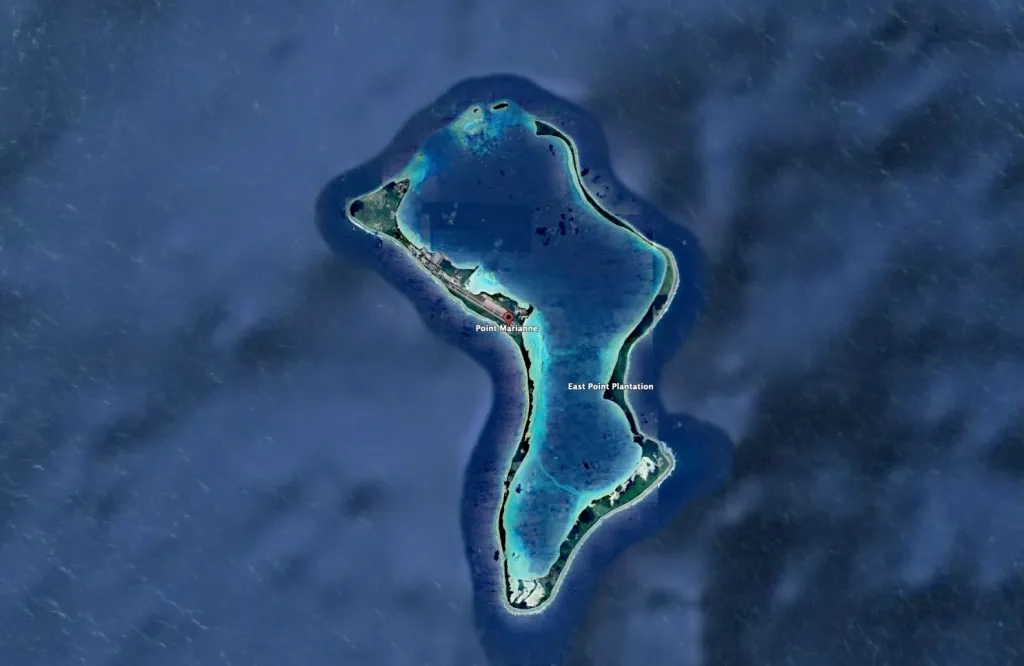
The Indian Ocean island of Diego Garcia hosts a U.S. military base that would be important for any sustained kinetic campaign against Iran. (Google Earth)
A B-52H Stratofortress assigned to the 20th Expeditionary Bomb Squadron taxis the runway at RAF Fairford, England, prior to taking off for Exercise APEX JET, Nov. 25, 2024. BTF operations are U.S. Strategic Command’s means of conducting Dynamic Force Employment in support of the Department of Defense’s National Defense Strategy at the direction of the President of the United States. (U.S. Air Force Photo by Airman 1st Class Laiken King)
A B-52H Stratofortress assigned to the 20th Expeditionary Bomb Squadron taxis the runway at RAF Fairford, England. (U.S. Air Force Photo by Airman 1st Class Laiken King) Airman 1st Class Laiken King

As we have frequently reported, Diego Garcia has long been a highly strategic operating location for the U.S. military. Beyond its large airfield that sits in the center of the Indian Ocean, it plays many roles for the Department of Defense, including hosting Space Force operations, serving as a key port for U.S. Navy vessels, including nuclear submarines, and its lagoon provides shelter for a Sealift Command Prepositioning Ship Squadron. 

The island outpost drew particular attention last year after an unusually large force of six B-2 Spirit stealth bombers began arriving in March in a clear show of force aimed primarily at Iran. This is precisely the type of deployment we would have expected to have occurred during the present crisis, but it has not. The B-2s subsequently conducted strikes on Iranian-backed Houthi militants in Yemen and were ultimately replaced by B-52 bombers.

B-2 Spirits in Diego garcia.
Six B-2 Spirit stealth bombers seen at Diego Garcia in 2025. PHOTO © 2025 PLANET LABS INC. ALL RIGHTS RESERVED. REPRINTED BY PERMISSION PHOTO © 2025 PLANET LABS INC. ALL RIGHTS RESERVED. REPRINTED BY PERMISSION

RAF Fairford is the home of the only U.S. bomber forward operating location in the U.K., where American strategic aircraft are frequently forward deployed for Bomber Task Force missions. Major bomber operations have been staged out of the base in the past, including major strikes against Iraq.

Last June, when the U.S. launched the Operation Midnight Hammer attack on Iranian nuclear facilities, the B-2 bombers flew roundtrip from Whiteman Air Force Base in Missouri. However, that was a one-night operation. Trump is now considering what is likely to be a week’s long campaign against Iranian leadership, nuclear infrastructure, missile launch sites and associated industry, and other military installations and command and control nodes. 

It would be extremely helpful for the U.S. to use Diego Garcia, and possibly RAF Fairford, to stage, rearm and maintain the B-1, B-2 and B-52 bombers that could be used to strike Iran.

The U.K is reportedly blocking U.S. access for an attack on Iran to Diego Garcia and RAF Fairford
A B-52 bomber at Diego Garcia. (USAF) (USAF)

It is about 2,300 miles from Diego Garcia to the eastern border of Iran and about 2,500 miles from RAF Fairford to the western border. By contrast, Whiteman AFB, one of many bases in the U.S. housing strategic aircraft, is located about 6,500 miles from Iran’s western border. Having access to the two U.K. bases would allow the U.S. Air Force to increase the generation of bomber sorties, especially important in the opening of a campaign. It would also help reduce wear and tear on the aircraft and crews.

One of the E-3 AWACS aircraft that recently passed through RAF Mildenhall in the United Kingdom. (Harry Moulton / @havoc_aviation on X)

Though the U.S. has not deployed any bombers to Diego Garcia, we have been reporting that America is transiting scores of fighters, electronic warfare jets, radar planes, aerial refueling tankers and other aviation assets from RAF Mildenhall and RAF Lakenheath to that region. It is unclear if that will change if the fighting starts. Traditionally, these types of limitations are focused on actual combat sorties, not aircraft transiting through in order to get to another destination.

That being said, the U.S. does have other basing options, even for its sensitive B-2 Spirit bomber force. The Air Force has put a high priority on training to operate even these notoriously finicky jets out of unfamiliar and somewhat austere locations. Deployments to the Azores, Iceland and Wake Island, among others, are evidence of this. The B-52s and B-1s are even more flexible and have operated out of multiple allies’ airfields in recent years. But operating from a forward locale in a limited fashion is different than flying from an installation that is pre-equipped with all the amenities needed to keep sortie rates up during a conflict. Regardless, any other country would have to approve the use of bombers based on its soil to attack Iran.

B-2s seen operating out of the Azores. (USAF)

A similar situation involving permission for the use of Diego Garcia took place shortly before Midnight Hammer. The U.K. government said it would have to sign off on the U.S. use of its Diego Garcia base in any bombing raid on Iran, The Guardian reported at the time. Britain was informed of the U.S. military strikes on Iran ahead of time, but did not receive any U.S. request for use of Diego Garcia for that mission, according to Reuters.

Friendly reminder the UK did the same exact thing June 18th 2025 4 days before the strikes on Iran and then said on June 22nd the day of the strikes they had not received any or request from the United States https://t.co/LmPrGARAGX

— Intelschizo (@Schizointel) February 19, 2026

The impetus behind this latest move, according to The Times, is a dispute over control of Diego Garcia, which is part of the Chagos Islands. British Prime Minister Keir Starmer is pushing for a deal to seek a 99-year lease of the island from Mauritius, which claims rights to this chain. Trump, who has previously backed the plan, on Wednesday blasted it, widening a growing rift between the two allies over the issue.

“I have been telling Prime Minister Keir Starmer, of the United Kingdom, that Leases are no good when it comes to Countries, and that he is making a big mistake by entering a 100 Year Lease with whoever it is that is ‘claiming’ Right, Title, and Interest to Diego Garcia, strategically located in the Indian Ocean,” Trump proclaimed Wednesday on his Truth Social site. “Our relationship with the United Kingdom is a strong and powerful one, and it has been for many years, but Prime Minister Starmer is losing control of this important Island by claims of entities never known of before. In our opinion, they are fictitious in nature.”

In his Truth Social post, Trump pointed to the strategic importance of both Diego Garcia and RAF Fairford in any campaign against Iran.

“Should Iran decide not to make a Deal, it may be necessary for the United States to use Diego Garcia, and the Airfield located in Fairford, in order to eradicate a potential attack by a highly unstable and dangerous Regime — An attack that would potentially be made on the United Kingdom, as well as other friendly Countries,” the U.S. president posited. “Prime Minister Starmer should not lose control, for any reason, of Diego Garcia, by entering a tenuous, at best, 100 Year Lease. This land should not be taken away from the U.K. and, if it is allowed to be, it will be a blight on our Great Ally. We will always be ready, willing, and able to fight for the U.K., but they have to remain strong in the face of Wokeism, and other problems put before them. DO NOT GIVE AWAY DIEGO GARCIA!”

The fate of Diego Garcia (with its UK/US air base) is a massive problem for @Keir_Starmer & wider UK-US ties as Donald Trump is v clearly against it being given to Mauritius despite the State Department saying it supports the move.

Trump: “DO NOT GIVE AWAY DIEGO GARCIA!” pic.twitter.com/hTcTXSyaV3

— Deborah Haynes (@haynesdeborah) February 18, 2026

In its story on Thursday, The Times claimed that Trump pulled his support for Starmer’s lease deal after the U.K. refused to allow its bases to be used to strike Iran.

“The White House is drawing up detailed military plans for a strike against Iran involving the use of both Diego Garcia and RAF Fairford in Gloucestershire, which is home to America’s fleet of heavy bombers in Europe,” The Times stated. “Under the terms of long-standing agreements with Washington, these bases can only be used for military operations that have been agreed in advance with the government.”

The Times “understands that the UK is yet to give permission for the US to use the bases in the event that Trump orders a strike on Iran, owing to concerns that it would be a breach of international law which makes no distinction between a state carrying out the attack and those in support if the latter have ‘knowledge of the circumstances of the internationally wrongful act,’” the publication proffered. “The president spoke to the prime minister on Tuesday night, and the two men discussed Trump’s ultimatum to Iran over its nuclear program. The following day, Trump made his statement attacking the Chagos deal.”

BREAKING: The UK is blocking Trump from using RAF bases for strikes on Iran, according to The Times.

This comes despite the White House drawing up military plans for a strike against Iran involving the use of both Diego Garcia and RAF Fairfordhttps://t.co/xH5tI6vEuu pic.twitter.com/w3xN5Aotss

— Faytuks News (@Faytuks) February 19, 2026

The U.K. MoD Defense Ministry (MoD) declined to talk about operational details, but did declare its support for Trump’s push to keep nuclear weapons out of the hands of Iran.

“There is a political process ongoing between the US and Iran, which the UK supports,” the U.K. MoD told us in a statement. “Iran must never be able to develop a nuclear weapon, and our priority is security in the region.”

A White House official told us that “President Trump’s first instinct is always diplomacy, and he has been clear that the Iranian regime should make a deal. Of course, the President ultimately has all options at his disposal, and he demonstrated with Operation Midnight Hammer and Operation Absolute Resolve that he means what he says.”

U.S. Air Force B-2 Spirit stealth bombers and KC-135 Stratotanker aircraft are maintained on the flightline during a combat deployment at Diego Garcia, British Indian Ocean Territory, April 16, 2025. Six B-2s and approximately 250 personnel deployed from Whiteman Air Force Base, Missouri as the 393d Expeditionary Bomb Squadron to conduct operations. The KC-135s assigned to the 92nd Air Refueling Wing from Fairchild AFB, Washington supported the B-2s.The deployment was the largest deployment of B-2s in its history demonstrating U.S. global strike capabilities anytime, anywhere. (U.S. Air Force photo by Tech. Sgt. Anthony Hetlage)
U.S. Air Force B-2 Spirit stealth bombers and KC-135 Stratotanker aircraft are maintained on the flightline during a combat deployment at Diego Garcia, British Indian Ocean Territory, April 16, 2025. (U.S. Air Force photo by Tech. Sgt. Anthony Hetlage) Tech. Sgt. Anthony Hetlage

We have reached out to the White House, the Pentagon, U.S. Central Command, U.S. IndoPacific Command and the U.K. Ministry of Defense for more details.

Despite the controversy over Diego Garcia, the U.S. buildup of forces continues unabated. For instance, just this morning, another flight of F-22 Raptor stealth fighters left Langley Air Force Base in Virginia, most likely bound for Mildenhall or Lakenheath. You can read more about the massive influx of forces to the Middle East in our story here.

Whether the U.K. will end up fully enforcing restrictions against the U.S. use of its bases in a kinetic operation against Iran, only time will tell. In the meantime, how this is impacting U.S. war planning isn’t clear, but if it sticks, it will certainly alter those plans and reduce the magnitude of U.S. bombers’ role in a conflict.

Contact the author: howard@thewarzone.com

Howard is a Senior Staff Writer for The War Zone, and a former Senior Managing Editor for Military Times. Prior to this, he covered military affairs for the Tampa Bay Times as a Senior Writer. Howard’s work has appeared in various publications including Yahoo News, RealClearDefense, and Air Force Times.


Source link

The affordable Spanish island hitting 29C next week and flights are £23

WITH the rain in the UK seeming relentless, why not head somewhere next week with sunny weather and cheap flights?

Across the first half of next week, Tenerife in Spain will be hitting temperatures of up to 29C.

Tenerife in Spain is set to reach 29C next weekCredit: Getty

And you could fly out from Manchester this Sunday at 2:35pm arriving in Tenerife at 7:20pm, for £24 one way.

Or you could head off from Bristol Airport at 8:05am and arrive in Tenerife at 12:15pm on Sunday, for £23 one way.

If you are based near Leeds Airport, there are flights this Saturday and Sunday for £32 one way.

There’s also a flight from Newcastle Airport at 8:40am arriving in Tenerife at 1:30pm on Sunday, for £24 one way.

Read more on travel inspo

TAKING OFF

I’ve visited 50 countries & this much-loathed budget airline is the world’s best


GO ON

All the little-known websites for cheap or FREE tickets to gigs, theatre & festivals

If you are London-based, you can travel from London Stansted Airport for £31 one way on Monday.

When it comes to enjoying the sun on the island, Tenerife isn’t short of beaches to soak up some rays.

Rick Cosgrove, a local and a professional compere at many of the island’s bars, told Sun Travel: “I love both Puerto Colon and Fanabe beaches.

“These two coves are next to each other in Costa Adeje in the south of the island, and are ideal for beach lovers.

“Puerto Colon has a lot more going on, as it’s next to the marina and all sea excursions in the south tend to depart from here, so there is a plethora of bars, cafes and restaurants to serve your needs.

“If you find Puerto Colon too busy, then neighbouring mile-long Fanabe beach is a little more relaxed with quieter beach clubs along the edge.”

One of the beach clubs on Fanabe beach is Le Club, which is known for having live DJs and hosting watersports activities.

Nearby is also Aqualand Costa Adeje – a waterpark with kamikazes and twister racer slides.

The waterpark has even recently opened a new kids’ pool, splash tower and Pelican Bay, which is an area with waterslides, water arches and waterfalls.

Aqualand Costa Adeje costs £27.93 per person to visit.

The island has a number of beaches to choose from to soak up the raysCredit: Getty

Alternatively, you could head to Playa de las Vistas in Los Cristianos.

It’s a popular Blue Flag beach that stretches 850 metres long and is known for having clear and calm waters.

Then along the promenade are a number of restaurants, bars and shops to explore.

If you do fancy a bite to eat, then Rick recommends Chicagos.

He said: “It’s an American style sports bar serving ribs and burgers. (Burgers from £7.86 and ribs from £10.48)

“In Los Cristianos, The Star of Bengal does fantastic curries (mains from £6.99 and £2.62 pints), and the Mongolian BBQ Restaurant has an all-you-can-eat buffet that’s cooked in front of you, for around £13.10 per person.”

If you fancy heading to a quieter beach, then opt for Playa san Juan or Las Galletas beach.

Both feature black sand and are great for escaping the crowds.

And if you want to experience some of the local culture, make sure to head to La Laguna, which is a UNESCO-listed city with colonial architecture.

And for those who like hiking, they can head to Teide National ParkCredit: Getty – Contributor

It’s located on the north side of the island and was created back in the 15th century.

Today, visitors can explore a number of churches and religious buildings in the Old Town.

If you’re more of an outdoorsy person, then head to Teide National Park, which is a UNESCO World Heritage Site with volcanic landscapes, lava fields and Mount Teide – the ideal spot for picturesque views of the island and stargazing.

There are many places you can stay on the island with availability for next week.

For example, you could stay at Hotel Regency Country Club for £136 a night for four people.

Or head to 4Dreams Hotel Chimisay for just £72 a night for four people.

For more inspiration on trips to the Canary Islands, Spain’s cheapest island has £169pp holidays – and it’s 23C.

Plus, there’s a tiny Spanish island yet to have mass tourism that is still hot in January with 20C highs and quiet beaches.

Flights next week cost as little as £23 per wayCredit: Getty

Source link

Daisy Lowe makes first public appearance since announcing second pregnancy as she shows off baby bump in sheer dress

DAISY Lowe looked stunning in a sheer lace dress, as she made her first public outing since announcing her second pregnancy.

The model, 37, showed off her growing baby bump, just a week after she announced her and husband Jordan Saul’s happy news.

Daisy Lowe looked every inch the yummy mummy in this sheer dressCredit: Getty
The pregnant star showed off her growing baby bump in the daring outfitCredit: Getty
Daisy is expecting her second child with her husband JordanCredit: Alamy
Daisy and Jordan share a daughter called IvyCredit: Instagram

The soon-to-be mum-of-two, who already shares daughter Ivy, two, with Jordan, 31, looked incredible as she stepped out for London’s Fashion Week.

The Strictly Come Dancing star looked every inch the yummy mummy as she showed off her growing baby bump.

Daisy pulled out all the stops in the daring sheer outfit which revealed her black lingerie.

The pregnant star looked happy and relaxed as she posed for the photos in her stunning outfit.

LOWE & BEHOLD

Daisy Lowe reveals she’s pregnant with second baby 7 months after wedding


SIMPLE LIFE

Model Daisy Lowe to move ‘off-grid’ and build her own home in UK countryside

She wore her long black hair loose and her make-up was glowing.

Daisy thrilled fans when she revealed her and husband Jordan were set to welcome their second child.

She wrote: “Heading home from our honeymoon with an extra stowaway.

“Little bump is growing FAST & Ivy is so excited to meet *her* baby.”

Daisy and property developer Jordan married just seven months ago.

The model, whose dad is Bush rocker Gavin Rossdale, wed her new husband Jordan exactly five years after they met in June 2020.

Daisy welcomed daughter Ivy in 2023Credit: Instagram

The happy couple had a chance encounter while out walking their dogs on London’s Hampstead Heath.

After a whirlwind romance, Daisy announced her first pregnancy in October 2022, a month after getting engaged.

Daisy said at the time: “I wanted to share some news with you. Jordan and I are having a baby.

“We are absolutely bursting at the seams with happiness. I’m oscillating wildly between excitement & nervousness with a dash of morning sickness thrown in for good measure! Big love to all of you.”

Daisy then gave birth to their daughter Ivy the following year.

But now she is expanding her brood by another bundle of joy.

Daisy revealed last week she was expecting her second babyCredit: Getty

Source link

High school soccer: Thursday’s boys’ and girls’ playoff scores, updated schedule

HIGH SCHOOL SOCCER PLAYOFFS
THURSDAY’S RESULTS

CITY SECTION
BOYS
SEMIFINALS

OPEN DIVISION
#1 El Camino Real 1, #4 Palisades 0 (OT)
#6 Marquez at #2 South East, Friday at 6 p.m.

Note: Finals Feb. 27 or 28 at TBA.

GIRLS
SEMIFINALS

OPEN DIVISION
#1 Cleveland 4, #5 Palisades 0
#7 Granada Hills 3, #6 New West Charter 0

Note: Finals Feb. 27 or 28 at TBA.

QUARTERFINALS

DIVISION I
#1 Birmingham 2, #8 Van Nuys 0
#5 Chatsworth 1, #4 Granada Hills Kennedy 0
#3 Wilmington Banning 2, #11 LA Hamilton 1
#7 Eagle Rock 3, #15 King/Drew 2

DIVISION II
#8 Mendez at #1 South East
#13 Lakeview Charter 1, #5 Animo Bunche 0
#19 Bravo at #6 LA Roosevelt
#7 Garfield 8, #2 Gardena 3

DIVISION III
#9 Maywood CES 0, #1 Fairfax 0 (MACES wins 4-2 in shootout)
#4 Marquez 1, #5 Reseda 0
#6 Verdugo Hills 1, #3 Huntington Park 1 (VH wins 3-0 in shootout)
#2 Angelou 4, #7 Santee 1

DIVISION IV
#9 Aspire Ollin 3, #16 Franklin 2
#12 Monroe 2, #13 Arleta 0
#6 Animo De La Hoya 1, #3 Camino Nuevo 1 (DLH wins in shootout)
#10 Sun Valley Poly 2, #2 Fremont 0

Note: Semifinals Tuesday; Finals Feb. 27 or 28 at TBA.

FRIDAY’S SCHEDULE
(Games at 3 p.m. unless noted)

CITY SECTION
BOYS

QUARTERFINALS
DIVISION I
#9 Angelou at #1 Chavez
#5 Chatsworth at #4 Granada Hills, 4 p.m.
#19 LA Marshall vs. #6 Cleveland, 6 p.m. at Taft
#15 Granada Hills Kennedy at #7 Legacy

DIVISION II
#17 Canoga Park at #9 Santee, 4 p.m.
#20 Neuwirth Leadership vs. #12 Arleta, 7 p.m. at Birmingham
#14 Taft at #6 Garfield
#23 Huntington Park at #15 RFK Community

DIVISION III
#9 Franklin at #1 LACES
#13 Foshay at #12 North Hollywood
#6 Animo Pat Brown at #3 Gardena
#23 Sun Valley Magnet at #2 LA Hamilton

DIVISION IV
#8 LA Roosevelt at #1 Mendez
#5 East Valley at #4 Maywood Academy
#19 Lakeview at #6 Panorama
#18 Port of Los Angeles at #7 Aspire Ollin

Note: Semifinals Wednesday; Finals Feb. 27 or 28 at TBA.

SATURDAY’S SCHEDULE
SOUTHERN SECTION
(Games at 5 p.m. unless noted)

BOYS
SEMIFINALS

OPEN DIVISION
#8 Orange Lutheran at #4 Placentia Valencia
#6 JSerra at #2 Mater Dei

Note: Finals Feb. 28.

DIVISION 1
Santa Monica vs. Anaheim Canyon, 5:45 p.m. at El Modena
Fontana at Sultana, 6 p.m.

DIVISION 2
Downey at Newport Harbor
Citrus Hill at Bishop Amat

DIVISION 3
Los Alamitos vs. Godinez at Santa Ana Valley Stadium
Calabasas at Channel Islands

DIVISION 4
Indian Springs at Granite Hills
Irvine University at Oxnard Pacifica

DIVISION 5
Santa Ana Valley at San Marcos
Camarillo at Esperanza, 3 p.m.

DIVISION 6
Bishop Montgomery vs. Animo Leadership, 2:45 p.m. at Edward Vincent
Ontario Christian at Vista del Lago

DIVISION 7
Cerritos at Pasadena Poly
Oakwood at Palmdale Academy Charter, 3 p.m.

DIVISION 8
Orange County Pacifica Christian at San Jacinto Leadership
Rio Hondo Prep at Thacher, 3 p.m.

Note: Finals Feb. 27 or 28.

GIRLS
SEMIFINALS

OPEN DIVISION
#4 Oaks Christian at #1 Santa Margarita, 4 p.m.
#3 Mater Dei at #2 Redondo Union

Note: Finals Feb. 28.

DIVISION 1
Westlake at Newport Harbor, 7 p.m.
Eastvale Roosevelt at Sherman Oaks Notre Dame

DIVISION 2
Ayala at San Marino
Millikan at Bonita

DIVISION 3
Paloma Valley at Crescenta Valley, 3 p.m.
Quartz Hill at Simi Valley

DIVISION 4
Arcadia at San Jacinto, 3 p.m.
Immaculate Heart at Chino

DIVISION 5
Coachella Valley at Artesia
Del Sol at Sultana, 3 p.m.

DIVISION 6
Ocean View at Palmdale Aerospace
Grace at Segerstrom

DIVISION 7
Santa Monica Pacifica Christian vs. Savanna at Anaheim
Cate at Azusa, 2 p.m.

DIVISION 8
Mountain View at Buckley, 1 p.m.
Webb at Big Bear

Note: Finals Feb. 27 or 28.

Source link

Tracking the rapid US military build-up near Iran | Military News

The United States administration is intensifying its build-up of a vast array of military assets in the Middle East, as President Donald Trump says Iran has “10 to 15 days at most” to agree a deal over its nuclear programme and stock of ballistic missiles.

As well as the world’s largest aircraft carrier, the USS Gerald R Ford, which is reportedly joining the Abraham Lincoln carrier strike group in the Arabian Sea, key force multipliers such as E-3 Sentry Airborne Warning and Control System (AWACS) aircraft have been deployed.

Recommended Stories

list of 1 itemend of list

In a letter to the United Nations Security Council, Iran said that while the country does not seek “tension or war and will not initiate a war”, any US aggression will be responded to “decisively and proportionately”.

“The United States would bear full and direct responsibility for any unpredictable and uncontrolled consequences,” it said.

Here is what we know about the recent US deployment of military assets in the Middle East – which has also led to a dispute with the United Kingdom over the use of its joint military base in Diego Garcia.

What air power assets has the US deployed to the Middle East?

According to open-source intelligence analysts and military flight-tracking data, the US appears to have deployed more than 120 aircraft to the region within the past few days – the largest surge in US airpower in the Middle East since the 2003 Iraq war.

The reported deployments include E-3 Sentry Airborne Warning and Control System (AWACS) aircraft, F-35 stealth strike fighters and F-22 air superiority jets, alongside F-15s and F-16s. Flight-tracking data shows many departing bases in the US and Europe, supported by cargo aircraft and aerial refuelling tankers, a sign of sustained operational planning rather than routine rotations.

F-22s and F-35s previously escorted B-2 stealth bombers during Operation Midnight Hammer, the US military strikes on Iranian nuclear sites Trump ordered in June 2025 during the 12-day conflict between Iran and Israel.

“Watch any movement by B-2s. That would indicate a possible replay of ‘Midnight Hammer’,” Mark Cancian, a retired Marine Corps colonel and senior adviser with the Washington-based Center for Strategic and International Studies think tank, told Al Jazeera.

This latest wave was preceded several weeks ago by the arrival of Air Force F-15E Strike Eagles. US Central Command said on social media at the time that the fighter jet “enhances combat readiness and promotes regional security and stability”.

What role could Diego Garcia and the UK play?

Attention has also focused on Diego Garcia, the joint UK-US military base in the Indian Ocean’s Chagos Islands, which is capable of hosting long-range US strategic bombers, including B-2 aircraft.

The remote base has historically served as a launch point for major US air campaigns in the region.

However, Diego Garcia is a British sovereign territory leased to Washington, meaning London must approve its use for offensive operations. According to reports in UK media, Prime Minister Keir Starmer has indicated to Trump that the US cannot use British airbases – including Diego Garcia and RAF Fairford in the UK, which is home to the US’s heavy bomber fleet in Europe – for strikes on Iran, as this would be in breach of international law.

Trump retaliated by withdrawing US support for the UK’s decision to transfer the Chagos Islands to Mauritius, announced last year.

On Wednesday, the US president said Starmer was “making a big mistake” in the agreement to transfer sovereignty of the archipelago.

“DO NOT GIVE AWAY DIEGO GARCIA!” Trump wrote in a post on Truth Social, saying the base could be called upon in any future military operation to counter a potential attack from Iran.

 This image realeased by the U.S. Navy shows an aerial view of Diego Garcia
This image released by the US Navy shows an aerial view of Diego Garcia [File: US Navy/AP]

What do we know about US warships in the Arabian Sea?

The USS Gerald R Ford, the world’s largest aircraft carrier, is currently being redeployed from the Caribbean to the Middle East.

The carrier and its accompanying strike group are expected to arrive in the region in the coming weeks.

On Wednesday, it briefly transmitted its location off the coast of Morocco, suggesting it is transiting the Atlantic towards the Strait of Gibraltar and will then go into the Mediterranean.

This is the same vessel that previously supported US military operations in Venezuela, including missions conducted under Operation Southern Spear.

INTERACTIVE - FORD (1)-1701179927

The USS Gerald R Ford will join the USS Abraham Lincoln carrier strike group, which recent satellite imagery shows is operating in the Arabian Sea off the coast of Oman, positioning US naval power within striking distance of Iran.

The US Navy also has multiple guided-missile destroyers in the region equipped with advanced air defence and ballistic missile interception systems. These multi-role vessels can carry and launch Tomahawk cruise missiles capable of striking land targets deep inside Iran, alongside their anti-submarine and fleet defence missions.

INTERACTIVE - USS Abraham Lincoln - JAN 26, 2025-1769422995
(Al Jazeera)

How is Iran responding?

Iran has publicly warned that it will view any military strike by the US as a serious provocation.

Tehran has also moved ahead with its own planned military activities. It announced and began joint naval exercises with Russia in the Sea of Oman and northern Indian Ocean on Thursday. These are intended to enhance maritime cooperation and signal deterrence amid rising US pressure.

As part of these manoeuvres, Iranian authorities issued a Notice to Airmen (NOTAM) for rocket launches over southern Iran on Thursday from 03:30 to 13:30 GMT and temporarily closed parts of the Strait of Hormuz, a strategically vital shipping route, during live-fire drills.

Meanwhile, Russian Foreign Minister Sergey Lavrov also warned that a US strike on Iran would have serious repercussions, underscoring the risk of escalation if hostilities spread.

Satellite images published by the Reuters news agency on Thursday showed that Iran has recently built a concrete shield over a new facility at a sensitive military site and covered it in soil, experts say, advancing work at a location reportedly bombed by Israel in 2024.

Images also show that Iran has buried tunnel entrances at a nuclear site bombed by the US during Israel’s 12-day war with Iran last year, fortified tunnel entrances near another, and has repaired missile bases struck in the conflict.

A combination picture of satellite images show the Parchin military complex before the Israeli strikes of October, 2024, in Parchin, Iran in this handout image dated October 20, 2024, (left), and concrete over the site at the Parchin military complex, in Parchin, Iran in this handout image dated January, 24, 2026,
A combination picture of satellite images show the Parchin military complex before the Israeli strikes of October, 2024, in Parchin, Iran, in this handout image dated October 20, 2024 (left), and concrete over the site at the Parchin military complex, in Parchin, Iran in this handout image dated January, 24, 2026 [Reuters]

Analytical reports also suggest that Iran has built a multilayered defence centred on mines, missiles, submarines and drones with the intent of slowing down the US forces.

Some analysts say Iran may seek to avoid an immediate full-scale confrontation, but this may be difficult.

“The Iranians have, over the past six months, quietly taken additional steps to move critical assets further underground,” Vali Nasr, a professor of international affairs and Middle East Studies at Johns Hopkins University, said during a roundtable discussion hosted by the CSIS Middle East Program this week

“They are going to be unpredictable,” he said. “But I think they could go big at the beginning, or they might want to drag the United States into a protracted situation.

“You hit a tanker, or you hit an oil facility, or you hit an American ship, and then it’s up to President Trump to decide whether to escalate further. And it can go beyond that.

“We are in a scenario where this might get out of control very quickly,” Nasr added.

Is the US likely to attack Iran?

According to experts, it is a very real possibility.

“The United States is doing all the things that it would do if it were going to conduct some sort of attack,” Cancian told Al Jazeera. “It has moved aircraft into the area, two aircraft carriers, plus enablers like AWACS.”

Barbara Slavi, distinguished fellow at Stimson Center, agreed with this assessment. “It seems that the Trump administration has decided that it is going to attack Iran again, and I presume in conjunction with the Israelis,” she said.

“What the objectives are, we have yet to see. Can it be contained? Will others be drawn in? These are all really important questions, and we don’t have answers.”

Is this a similar situation to what we saw earlier this year in Venezuela?

A build-up of US military assets in the Caribbean, close to Venezuela, which began in September 2025, led to multiple strikes on Venezuelan boats that the US claimed – without proof – were carrying drugs. It culminated in the dramatic January 3 raid on Caracas by US forces and the abduction of then-President Nicolas Maduro, who now faces trial on guns and drugs charges in New York.

“The build-up [in the Arabian Sea] has similarities, but one key difference is the strategic context,” Cancian said.

“Unlike the Venezuela raid, there hasn’t been a large deployment of Special Operations Forces, and Iran’s geography, far inland and heavily defended, makes a quick ground raid unlikely.

“If there are strikes, I would expect long-range missile attacks against security forces such as the Islamic Revolutionary Guard Corps. Strikes against nuclear facilities are also possible, but missiles like Tomahawk can only damage above-ground facilities,” he added.

Secretary of State Marco Rubio is reportedly planning to travel to Israel on February 28 to meet with Israeli Prime Minister Benjamin Netanyahu, a State Department official said.

Last summer, the US carried out air strikes on Iran’s nuclear facilities even as senior American diplomats were scheduled to meet with their Iranian counterparts in ongoing talks.

Source link

L.A. Times Book Prizes 2025: Amy Tan, Adam Ross among honorees

Finalists and honorees for the 46th Los Angeles Times Book Prizes were announced Wednesday.

Writer-curator Ekow Eshun is among the biography finalists for “The Strangers: Five Extraordinary Black Men and the Worlds That Made Them,” which parses Black masculinity as embodied by various civil rights activists, philosophers and other visionaries. Contenders in the fiction categories ranged from seasoned novelists like Michael Connelly to breakouts including Saou Ichikawa, whose debut novel, “Hunchback,” was longlisted for the 2025 International Booker Prize.

Many selected books evoke the greatest anxieties of our time, from government-sanctioned historical revisionism to the ongoing proliferation of AI.

“The Joy Luck Club” author Amy Tan will be honored with this year’s Robert Kirsch Award for lifetime achievement. Nonprofit We Need Diverse Books and novelist Adam Ross will receive the Innovator’s Award and Christopher Isherwood Prize for Autobiographical Prose, respectively.

Winners in the remaining categories will be revealed at the 46th L.A. Times Book Prizes on April 17 at USC’s Bovard Auditorium. The ceremony is a prelude to the annual L.A. Times Festival of Books, which this year runs April 18-19.

The Oakland-born Tan will be given the marquee Robert Kirsch Award, which celebrates literature with regional and thematic connections to the Western United States, for her highly awarded body of work exploring multicultural identity and its complex effects on familial bonds.

“Throughout her extraordinary career, Amy Tan has transformed American literature by shining a light on the emotional complexities of family, identity and cultural inheritance,” said Times senior editor for Books Sophia Kercher. “Her work confronts the social and cultural legacies of the American West with rich details of the immigrant experience.”

Tan’s 1989 debut novel, “The Joy Luck Club,” which interweaves the stories of four Chinese immigrant mothers and their American-born daughters in San Francisco, is a staple of the modern literary canon and was previously a finalist for the National Book Award and the National Book Critics Circle Award. “The Joy Luck Club,” along with the essays, memoirs and novels Tan has since penned — most recently 2024’s “The Backyard Bird Chronicles” — have also led her to be inducted into the American Academy of Arts and Letters and earned her a National Humanities Medal from President Biden.

We Need Diverse Books, a viral 2014 Twitter campaign turned nonprofit, is being honored with the Innovator’s Award for its efforts toward promoting diversity and inclusion in children’s and young adult publishing.

According to the WNDB website, upon the nonprofit’s launch more than a decade ago, only 8% of children’s books published in the U.S. were written by authors of color. In 2023, that figure rose to 47%, in no small part due to WNDB’s grants, library partnerships and other advocacy work, per the Cooperative Children’s Book Center at the University of Wisconsin-Madison.

“We Need Diverse Books has played an important role in publishing by championing stories that reflect our world, and opening doors for writers and readers,” said Times Executive Editor Terry Tang. “We are thrilled to recognize them with this year’s Innovator’s Award, honoring their unwavering commitment to access and representation in literature.”

Ross rounds out the L.A. Times Book Prize honorees as the winner of the Christopher Isherwood Prize for “Playworld,” a semi-autobiographical novel about a teen growing up in 1980s New York that is described as “less a bildungsroman than a story of miseducation.”

In addition to the achievement awards, the Book Prizes recognize titles in 13 categories: audiobooks, autobiographical prose (the Christopher Isherwood Prize), biography, current interest, fiction, first fiction (the Art Seidenbaum Award), graphic novel/comics, history, mystery/thriller, poetry, science fiction, science and technology and young adult literature. Each category’s finalists and winners are chosen by panels of writers specializing in that genre.

For more information about the Book Prizes, including the complete list of finalists, visit latimes.com/BookPrizes.

Robert Kirsch Award

Amy Tan

Innovator’s Award

We Need Diverse Books

The Christopher Isherwood Prize for Autobiographical Prose

Adam Ross, “Playworld: A Novel”

The Art Seidenbaum Award for First Fiction

Andy Anderegg, “Plum”

Krystelle Bamford, “Idle Grounds: A Novel”

Addie E. Citchens, “Dominion: A Novel”

Justin Haynes, “Ibis: A Novel”

Saou Ichikawa translated by Polly Barton, “Hunchback: A Novel”

Achievement in Audiobook Production, presented by Audible

Molly Jong-Fast (narrator), Matie Argiropoulos (producer); “How to Lose Your Mother”

Jason Mott, Ronald Peet, and JD Jackson (narrators), Diane McKiernan (producer); “People Like Us: A Novel”

James Aaron Oh (narrator), Linda Korn (producer); “The Emperor of Gladness: A Novel”

Imani Perry (narrator), Suzanne Mitchell (producer); “Black in Blues”

Maggi-Meg Reed, Jane Oppenheimer, Carly Robins, Jeff Ebner, David Pittu, Chris Andrew Ciulla, Mark Bramhall, Petrea Burchard, Robert Petkoff, Kimberly Farr, Cerris Morgan-Moyer, Peter Ganim, Jade Wheeler, Steve West, and Jim Seybert (narrators), Kelly Gildea (producer); “The Correspondent: A Novel”

Biography

Joe Dunthorne, “Children of Radium: A Buried Inheritance”

Ekow Eshun, “The Strangers: Five Extraordinary Black Men and the Worlds That Made Them”

Ruth Franklin, “The Many Lives of Anne Frank”

Beth Macy, “Paper Girl: A Memoir of Home and Family in a Fractured America”

Amanda Vaill, “Pride and Pleasure: The Schuyler Sisters in an Age of Revolution”

Current Interest

Jeanne Carstensen, “A Greek Tragedy: One Day, a Deadly Shipwreck, and the Human Cost of the Refugee Crisis”

Stefan Fatsis, “Unabridged: The Thrill of (and Threat to) the Modern Dictionary”

Brian Goldstone, “There Is No Place for Us: Working and Homeless in America”

Gardiner Harris, “No More Tears: The Dark Secrets of Johnson & Johnson”

Jordan Thomas, “When It All Burns: Fighting Fire in a Transformed World”

Fiction

Tod Goldberg, “Only Way Out: A Novel”

Stephen Graham Jones, “The Buffalo Hunter Hunter”

Mia McKenzie, “These Heathens: A Novel”

Andrés Felipe Solano translated by Will Vanderhyden, “Gloria: A Novel”

Bryan Washington, “Palaver: A Novel”

Graphic Novel/Comics

Eagle Valiant Brosi, “Black Cohosh”

Jaime Hernandez, “Life Drawing: A Love and Rockets Collection”

Michael D. Kennedy, “Milk White Steed”

Lee Lai, “Cannon”

Carol Tyler, “The Ephemerata: Shaping the Exquisite Nature of Grief”

History

Char Adams, “Black-Owned: The Revolutionary Life of the Black Bookstore”

Bench Ansfield, “Born in Flames: The Business of Arson and the Remaking of the American City”

Jennifer Clapp, “Titans of Industrial Agriculture: How a Few Giant Corporations Came to Dominate the Farm Sector and Why It Matters”

Eli Erlick, “Before Gender: Lost Stories from Trans History, 1850-1950”

Aaron G. Fountain Jr., “High School Students Unite!: Teen Activism, Education Reform, and FBI Surveillance in Postwar America”

Mystery/Thriller

Megan Abbott, “El Dorado Drive”

Ace Atkins, “Everybody Wants to Rule the World: A Novel”

Lou Berney, “Crooks: A Novel About Crime and Family”

Michael Connelly, “The Proving Ground: A Lincoln Lawyer Novel”

S.A. Cosby, “King of Ashes: A Novel”

Poetry

Gabrielle Calvocoressi, “The New Economy”

Chet’la Sebree, “Blue Opening: Poems”

Richard Siken, “I Do Know Some Things”

Devon Walker-Figueroa, “Lazarus Species: Poems”

Allison Benis White, “A Magnificent Loneliness”

Science Fiction, Fantasy & Speculative Fiction

Stephen Graham Jones, “The Buffalo Hunter Hunter”

Jordan Kurella, “The Death of Mountains”

Nnedi Okorafor, “Death of the Author: A Novel”

Adam Oyebanji, “Esperance”

Silvia Park, “Luminous: A Novel”

Science & Technology

Mariah Blake, “They Poisoned the World: Life and Death in the Age of Forever Chemicals”

Peter Brannen, “The Story of CO2 Is the Story of Everything: How Carbon Dioxide Made Our World”

Karen Hao, “Empire of AI: Dreams and Nightmares in Sam Altman’s OpenAI”

Laura Poppick, “Strata: Stories from Deep Time”

Jordan Thomas, “When It All Burns: Fighting Fire in a Transformed World”

Young Adult Literature

K. Ancrum, “The Corruption of Hollis Brown”

Idris Goodwin, “King of the Neuro Verse”

Jamie Jo Hoang, “My Mother, the Mermaid Chaser”

Trung Le Nguyen, “Angelica and the Bear Prince”

Hannah V. Sawyerr, “Truth Is: A Novel in Verse”

Source link

Family holiday park £28 a night during school holidays has heated pool and play area

A holiday park offers families affordable February half-term breaks with play area, spa and lake views

February half-term presents a challenge for many families, particularly those still recovering financially from Christmas, whilst eyeing the longer Easter break ahead. British weather during this period is notoriously unpredictable, but that needn’t prevent you from discovering an enjoyable getaway destination that won’t break the bank.

Woodland Lakes holiday park near Thirsk, Yorkshire, boasts numerous attractions for families during the school holidays.

The heated indoor swimming pool proves consistently popular with youngsters eager for a dip, whilst an indoor play area, Pamper Lounge Spa, restaurant and bar complement the tranquil lake vistas and fishing spots, offering ample chances to unwind, reports the Manchester Evening News.

Situated on the edge of the North Yorkshire Moors and a brief drive from both the vibrant market town of Thirsk and the historic city of York, it’s described as ‘the perfect retreat for those seeking a break away in a relaxed and picturesque environment’.

Various properties can be booked at the site this February half term, including Cedar lodge.

A four-night stay from February 16 to 20 is priced at £461 for four guests, equating to £28 per person per night through Sykes Holiday Cottages.

South Lakeland Village holds an overall Google rating of 4.3 out of five, with visitors commending the ‘excellent’ pool and ‘good pub food’.

James Shaw, chief commercial officer for Sykes Holiday Cottages, commented: “February half term is the perfect time for a family escape, and with 63% of Brits taking a UK break last year, staying closer to home is more popular than ever.

“Holiday resorts like Woodland Lakes Lodges offer shorter journey times, great value, and onsite activities that keep everyone entertained.”

He went on to say: “We’re also seeing families plan later to secure better deals and work around busy schedules, so there’s still plenty of time to book a last-minute getaway.

“Cedar offers the ideal mix with a heated pool and play area for the kids, spa facilities for parents, and the North Yorkshire Moors right on the doorstep for outdoor adventures.”

To explore further holiday options with Sykes Holiday Cottages, head over to their website. Woodland Lakes holiday park is a Landal site bookable through Sykes, alongside 22 other Landal destinations.

Ensure our latest lifestyle and travel stories always appear at the top of your Google Search by making us a Preferred Source. Click here to activate or add us as your Preferred Source in your Google search settings.

Source link

Women’s Champions League: Is new format easier for English teams?

Not exactly.

Reigning champions Arsenal had to kick off their campaign against record eight-time winners Lyon, who they beat in the semi-finals last season.

This time they lost and they were also beaten by Bayern Munich in the league phase, meaning they had work to do to qualify.

It was a nervy few months but victories against Real Madrid and FC Twente helped Arsenal finish fifth in the table. They were handed a favourable tie in their knockout play-offs, avoiding more established European teams like Wolfsburg and Juventus to take on competition debutants OH Leuven, who they had already beaten 3-0 in the league phase.

They bettered that scoreline in the first leg, winning 4-0, but Arsenal boss Renee Slegers insisted it was not straightforward, saying her side just found form when it mattered.

“Ahead of the first game, we were very aware that Leuven had made it difficult for teams in Europe,” said Slegers after their 3-1 victory in the second leg.

“We actually played really well in Leuven and were clinical. When we go into the second game, we know we’re already 4-0 up, so it becomes a different game.”

United had to face Atletico Madrid, who have reached the main draw six times in the past decade, having also played them in the league phase.

The Spanish side are sixth in Liga F and 25 points adrift of leaders Barcelona.

The competition has been far from easy for United though, having to play three qualifying rounds before the league phase – coming from behind to beat Brann – and then meeting two-time winners Wolfsburg, Italian giants Juventus and record-holders Lyon in their group.

“For sure, it hasn’t felt easy. I’ve really enjoyed the structure of the Champions League to get here,” said United boss Marc Skinner. “It’s exposed us to different styles of play. The experiences have helped us grow quickly.

“You look back to when we played Lyon, the close Valerenga game and Juventus in the last game of the league phase – the growth is incredible from our team.”

Even Chelsea, who were top seeds and qualified directly for the quarter-finals, had to play fellow last-eight qualifiers Barcelona and Wolfsburg in the league phase.

They have Arsenal next, and could still face Lyon and Barcelona on route to the final.

Source link

Is southern Yemen’s next phase being decided on the ground? | Politics

It is no longer possible to interpret the Yemeni landscape solely through the lens of politics. The developments witnessed in the southern Yemeni governorates under government control in recent months clearly indicate that security and military affairs have become the decisive factor in determining the course of power on the ground. Any governmental or political arrangements will be unsustainable unless the issue of security control and the unification of military command are resolved.

Nor can the escalating Saudi–Emirati rift between two allies who have militarily, politically and economically shaped southern Yemen in recent years be overlooked, given its direct impact on the balance of power and stability.

Over the past years, a complex security structure has taken shape across the southern governorates, comprising official units and others that emerged during the war. Some of these units are linked to state institutions, while others were established with Emirati support, such as the Southern Transitional Council’s forces, which number in the tens of thousands, or through local arrangements shaped by the circumstances of the conflict.

Although recent months have seen moves to restructure this landscape following the defeat of the Southern Transitional Council (STC), which declared its dissolution in Hadhramaut and al-Mahra on January 3, 2026, security control remains uneven from one governorate to another. Furthermore, the STC’s security and military formations have not disappeared entirely; some have been redeployed, while the fate of others remains unknown.

In Aden, the temporary capital, security agencies operate within a complex structure. Some units formerly affiliated with the STC have seen their personnel and weapons disappear, while others have been renamed or redeployed. However, longstanding networks of influence remain, and the transfer of leadership or redeployment of camps reflects attempts to rebalance power rather than a definitive resolution of the situation.

The same applies, to varying degrees, to Lahij, Abyan, Dhale, Shabwah and Hadhramaut, where the state’s ability to assert effective authority varies, as does the level of coordination between official security forces and the formations that emerged during the war.

The most sensitive issue at this stage is the integration of military and security formations into the Ministries of Defence and Interior. The state seeks to end parallel security authority, but the process faces complex challenges, including differing sources of funding for some units, varying political loyalties, fears among some commanders of losing local influence, and considerations related to the composition of these forces. As a result, integration appears gradual, relying more on redeployment and restructuring than on decisive measures that could risk triggering confrontation.

The government now based in Aden, southern Yemen, finds itself facing a delicate equation: it must impose its security authority without plunging the country into renewed internal conflict.

The transition from multiple armed groups to a state monopoly on the use of force requires political consensus, regional support and international backing. Any hasty move could reignite internal clashes, particularly given existing political and regional sensitivities, as well as fears that the Saudi–Emirati dispute could once again trigger confrontation on the ground.

For this reason, government efforts are focused first on establishing a stable security environment.

This trajectory cannot be understood without considering the regional dimension. Saudi Arabia views Yemen as a direct strategic depth for its national security and seeks the emergence of a stable state along its southern border.

The dispute between Riyadh and Abu Dhabi, particularly after Yemen requested the withdrawal of Emirati forces from its territory, has become a significant factor shaping the course of the crisis, especially amid Saudi accusations that Abu Dhabi continues to support the STC and consolidate its influence on the ground.

Yemen today is part of a broader regional landscape, intertwined with Red Sea dynamics and maritime routes, competition for influence in the Horn of Africa, and tensions stretching from Sudan to Somalia to the Gulf. For this reason, international actors — particularly the United States — are keen to keep the situation in Yemen under control, fearing that a security collapse could trigger intra-Gulf conflict, threaten international shipping, create space for a new wave of armed groups, or allow the Houthis to exploit the situation.

In the next phase, the government is likely to continue efforts to consolidate security control in Aden and other southern governorates, including Hadhramaut, which borders Saudi Arabia, while gradually integrating military units and maintaining political balances to prevent renewed conflict.

The success of these efforts will determine whether the country is moving towards gradual stability or another round of reshaping power centres. Given this reality, the central question remains: who truly possesses the ability to impose security on the ground, particularly as some actors continue to push the Southern Transitional Council towards escalation that could reignite the conflict?

The views expressed in this article are the author’s own and do not necessarily reflect Al Jazeera’s editorial stance.

Source link

Primark’s ‘stylish’ £25 cabin travel bag is ‘perfectly sized for essentials’

The fashion retailer is selling a ‘pull-along cabin bag’ that could be ideal for holidays

Holidaymakers don’t have to splash out on expensive cabin bags, as Primark is stocking a £25 option. The retailer is selling a ‘pull-along cabin bag’ in two colours, so everyone can ‘travel in style.’ The luggage could be ideal for anyone who is planning to fly this year.

Primark says the bag is ‘perfectly sized for the essentials,’ and it meets the cabin bag requirements of several airlines. Shoppers interested in the £25 Trolley Cabin Bag can purchase it online or in-store. Primark sells a black style and a white-and-black style. It measures 26cm x 40cm x 20cm.

According to easyJet’s website, passengers can carry one bag measuring 45 x 36 x 20 cm on board for free, or pay to bring one large cabin bag measuring 56 x 45 x 25 cm. Ryanair’s website says passengers can carry one bag measuring 40 x 30 x 20 cm on board for free, or pay to bring one cabin bag measuring 55 x 40 x 20 cm.

Primark says its bag helps passengers ‘make the most’ of their packing options. The full product description reads: “Travel in style with our pull-along cabin bag. There’s a lot to love about this trolley cabin bag.

“Whether you’re a carry-on only expert or are simply looking to make the most of your packing options, this cabin pack is perfectly sized for the essentials. It benefits from a large main compartment with a secure zip fastening as well as an external zipped pocket to the front for extra organisation.”

The description continues: “Carry the bag with the two top handle webbing straps or pull it along, thanks to the addition of two wheels at the base. For enhanced organisation, why not check out our other travel essentials?”

Alternatively, Primark sells a £12 Quilted Underseat Cabin Bag in black or white. The product description states: “Travel smart with this cream quilted cabin bag, designed to fit perfectly under your seat.

“The diagonal stitching adds a sophisticated touch while multiple compartments, including a handy back zip section, keep your essentials organised. Ideal for weekend getaways or business trips, this sleek carry-on helps you breeze through airports with effortless style. The sturdy handles and practical size make it the perfect companion for travellers who appreciate both form and function.”

For £20, there’s also a Handled Travel Bag in black or pink. The product description states: “Pack up and head out in style with this sleek black travel bag, perfect for weekend getaways. With a spacious zippered main compartment and a convenient front pocket for easy access to your essentials, it’s both functional and versatile.

“The bottom compartment offers extra space for shoes or wet items, while the sturdy webbing handles make it easy to carry. Add a detachable shoulder strap for comfort or use the handles to carry it by hand. Ideal for short trips and organised packing!”

Source link

Hunt For “AWACS Killer” Anti-Radiation Missile Kicked-Off By Navy

The U.S. Navy is exploring options for a new long-range anti-radiation missile designed to home in on radars to help neutralize enemy air defense networks. The capabilities the service wants for this Advanced Emission Suppression Missile (AESM) sound curiously similar to the ones it is already working to acquire through the AGM-88G Advanced Anti-Radiation Guided Missile-Extended Range (AARGM-ER). There is one crucial difference: the AESM needs to be able to engage targets in the air, as well as on the ground. This would give the Navy a single missile it could use to attack critical airborne early warning and control planes, as well as potentially other aerial targets, and air defenses down below.

Naval Air Systems Command’s (NAVAIR) Program Executive Office for Unmanned Aviation and Strike Weapons (PEO U&W) recently put out a contracting notice regarding the AESM.

A Super Hornet seen with an AGM-88G AARGM-ER under its left wing during a flight test. USN

NAVAIR is “conducting market research to identify potential sources capable of providing an advanced, anti-radiation guided missile weapon system, or key subsystems thereof, with a longer range than existing in the Navy’s current inventory, including associated engineering, manufacturing, testing, and logistics support,” the notice explains. “This All Up Round (AUR) must be compatible with existing launch platforms (e.g. F-18, F-35) and infrastructure currently supporting the Navy and Air Force’s existing inventory of anti-radiation guided missiles.”

The notice later elaborates that AESM needs to be compatible, at least, with the F/A-18E/F Super Hornet, EA-18G Growler, and F-35 Joint Strike Fighter. It is unclear whether “existing inventory of anti-radiation guided missiles” includes the AARGM-ER, which is a substantial new evolution of the AGM-88 design and is still under development. TWZ has reached out to NAVAIR for more information.

A NAVAIR graphic offering a very general comparison between the new AGM-88G AARGM-ER and the preceding AGM-88E AARGM. USN

“NAVAIR is seeking to enhance its capabilities to suppress and neutralize enemy air defenses in contested environments,” the AESM notice adds. “This effort aims to identify and potentially acquire a weapon system that provides similar or improved capabilities compared to its current weapons inventory, focusing on extended range, advanced targeting, counter-countermeasures, and integration with existing and future platforms.”

No specific range requirement is included in the notice beyond that AESM needs to be capable of “engaging targets at significant standoff distances.” The missile also needs to have an “advanced anti-radiation seeker with broad frequency coverage,” the “ability to target modern and advanced radar systems,” a “precision navigation and guidance system (e.g., GPS/INS with anti-jamming capabilities),” and the “potential for pre-emptive targeting capabilities.”

Much of this sounds, at least in broad strokes, like the requirements for the AGM-88G. “The AARGM-ER incorporates hardware and software modifications to improve AGM-88E AARGM capabilities to include extended range, survivability and effectiveness against future threats,” according to NAVAIR’s own website.

Another NAVAIR graphic with additional details about the AGM-88G AARGM-ER. USN

However, as noted, the requirements laid out in the AESM notice notably differ from those for AARGM-ER in one key respect: the explicit call for anti-air engagement capability. Prospective offers are required to “describe ability to engage air-to-air and air-to-ground targets.”

AESM also needs to have “robust ECCM [electronic counter-countermeasures] capabilities to defeat enemy countermeasures, including chaff, flares, jamming and anti-ARM [anti-radiation missile] techniques.” This might also point further to emphasis on the air-to-air role. Radar blinding chaff and infrared decoy flares are countermeasures typically associated with the air and naval domains.

U.S. military interest in very-long-range air-to-air capable anti-radiation missiles traces all the way back to the Cold War, primarily as a means for engaging enemy airborne early warning and control (AEW&C) planes. Anti-air weapons designed around this role are often colloquially referred to as ‘AWACS killers,’ a reference to the U.S. E-3 Sentry Airborne Warning and Control System (AWACS) aircraft. A very-long-range air-to-air missile could be used against other aerial targets, as well.

This is also not the first time the Navy, as well as the U.S. Air Force, has pursued an air-launched weapon that would blend together traditional anti-radiation and air-to-air capabilities. Starting in the mid-2000s, the two services worked together on a single missile to replace the AGM-88 and the AIM-120 Advanced Medium Range Air-to-Air Missile (AMRAAM) dubbed the Joint Dual-Role Air Dominance Missile (JDRADM), which then evolved into the Next Generation Missile (NGM). The NGM effort came to an end, at least publicly, in 2013, ostensibly over high costs. A more secretive parallel development effort, called the Triple Target Terminator (T-3), continued for at least some time afterward. A possible successor to T-3, called the Long Range Engagement Weapon (LREW), emerged in 2017. How far the LREW effort subsequently progressed, and what its current status might be, are unclear.

A rendering that has previously circulated in relation to the LREW program, showing an advanced air-to-air missile being launched from a US Air Force F-22 Raptor. Pentagon

All that being said, the value of an ‘AWACS killer’ missile is clear-cut. AEW&C are critical surveillance and battle management assets. Shooting them down deprives an opponent of those capabilities, inherently reducing their ability to effectively maneuver air assets and share important information, including with other nodes on the ground or at sea, as well as in the air. Knocking out these flying radar stations, which can be especially well-suited to spotting lower flying threats from their high perches, just hampers an enemy’s overall situational awareness.

The issue, of course, is that AEW&C planes typically orbit well behind the front edges of a conflict, creating additional challenges for targeting them. This is where something like AESM could come into play. A weapon of this type could engage other aerial targets by zeroing in on the radiofrequency emissions they pump out. This could include electronic warfare aircraft, and potentially other aerial targets. AESM might be able to take on a more general anti-air role with the addition of an active radar and/or imaging infrared seeker, as well as datalinks allowing for the use of networked targeting data. AARGM and AARGM-ER both feature an active millimeter-wave radar seeker to enable them to hit fleeing ground targets, but a similar concept could be adapted for air-to-air use.

AARGM F-18


For the Navy, as well as other branches of the U.S. military, this is all particularly relevant in the context of a potential future high-end fight with China, which has made major investments in its fleets of AEW&C and electronic warfare planes. The Chinese People’s Liberation Army (PLA) has also been pursuing ever-longer-ranged anti-air missiles, including types that could be used to target American AEW&C platforms, as well as other key support aircraft.

TWZ has previously highlighted much of this in a past feature discussing the use cases for the Navy’s new AIM-174B air-launched version of the Standard Missile 6 (SM-6), which was officially unveiled in 2024. Navy officials have previously hinted at further long-range air-to-air capabilities to come when talking about the AIM-174B.

How The Navy’s New Very Long-Range AIM-174 Will Pierce China’s Anti-Access Bubble


“Clearly we recognize that we’ve got to find opportunities to increase reach and range for our weapons,” Navy Rear Adm. Michael “Buzz” Donnelly, then director of the Air Warfare Division (N98) within the Office of the Chief of Naval Operations, said at the Navy League’s annual Sea Air Space symposium in April 2025. “We’re doing it in air-to-air. We just recently fielded the air-launched SM-6, or the AIM-174, that we’re capable of carrying off the F-18 Super Hornet. And we’ll look at increasing range and incrementing beyond that.”

“That’s [the AIM-174B] an operational capability. And, as you can see, that one being revealed and shown into the area, there are many more behind [it], things that we’re doing there, making sure that we are staying ahead of the conflict, making sure that we’re prepared for the fight that’s going on,” Navy Rear Adm. Keith Hash, head of NAVAIR’s Naval Air Warfare Center Weapons Division (NAWCWD), also said during a panel discussion at the WEST 2025 conference in January 2025. “And those activities and that development is active and strong.”

In addition, the Navy is now working together with the U.S. Air Force on the development of the AIM-260 Joint Advanced Tactical Missile. The AIM-260 is intended as a longer-range and otherwise more capable direct successor to the AIM-120 Advanced Medium Range Air-to-Air Missile (AMRAAM).

A 2025 briefing slide outlining the public portfolio of NAVAIR PEO U&W’s Air-to-Air Missile Office, or PMA-259, including the AIM-260 and AIM-174. USN

As described now, AESM would also offer air-to-surface capabilities in line with a traditional anti-radiation missile in the same package. Even in a future missile ecosystem that also includes the AGM-88G, AIM-174B, and AIM-260, having a single hybrid anti-air/anti-radiation missile would offer extremely useful additional flexibility, especially for addressing threats that might appear unexpectedly in the course of a mission.

One missile capable of being used in those disparate roles could also offer valuable magazine depth benefits, particularly if it has a form factor that allows it to be carried internally by various stealthy crewed aircraft, such as the F-35, and/or advanced combat drones. There had been some speculation that the aforementioned LREW effort, and possibly one or more of its predecessors, had been aiming for a missile that could serve in the anti-radiation and air-to-air roles, and fit inside F-22 and F-35 weapon bays. At the same time, a missile designed to be carried externally could help maximize range, which would be an important consideration for AESM. As an aside, scalable missile concepts have been raised in the past as a way to readily adapt a core design for internal or external carriage.

Altgoether, there is a possibility that AESM requirements could be met by a further variation on the AARGM-ER design. The U.S. Air Force is also already acquiring a more general high-speed strike derivative of that missile called the Stand-In Attack Weapon (SiAW). Prime contractor Northrop Grumman has also proposed a surface-to-surface version called the Advanced Reactive Strike Missile (AReS).

The first SiAW test missile delivered to the US Air Force. Northrop Grumman

The “market research” the Navy is doing now is intended to see what other options might be available. The AESM contracting also highlights the possibility of a weapon that could be further exported to allies and partners. Additional customers could help defray development and acquisition costs, and support production at scale.

Much is still to be learned about the Navy’s plans for AESM, but the Navy certainly seems to have kicked off a new hunt for an ‘AWACS killer’ type missile that could also be used against other targets in the air and on the surface.

Contact the author: joe@twz.com

Joseph has been a member of The War Zone team since early 2017. Prior to that, he was an Associate Editor at War Is Boring, and his byline has appeared in other publications, including Small Arms Review, Small Arms Defense Journal, Reuters, We Are the Mighty, and Task & Purpose.


Source link

‘Strip Law’ review: A crude courtroom comedy channeling Adult Swim

“Strip Law,” a new cartoon premiering Friday, finds Netflix in an Adult Swim state of mind, which is to say there was no thought of it being made for everybody. (Possibly including some of the people it was made for.) It’s rude, lewd, surreal in a banal sort of way, at times ridiculously violent — that is, the violence is ridiculous.

It was the cast that attracted me: Adam Scott, once more the schlemiel as leading man; Janelle James, sure of her own magnificence, not far from her character on “Abbott Elementary”; and Keith David, whose deep, sonorous voice is almost necessarily one of authority, turned to good or evil or in between as the script demands. James and David, especially, I could listen to for days.

Created by Cullen Crawford, (“The Late Show With Stephen Colbert,” “Star Trek: Lower Decks”), the series is centered on a failing Las Vegas law firm, headed by Scott’s Lincoln Gumb, with James as Sheila Flambé, “a magician and three-year all-county sex champion” he hires as his “co-counsel in charge of spectacle.” Niece Irene (Shannon Gisela), an iron-pumping 16-year-old, works as his investigator; she wears a blindfold labeled “Underage” whenever she’s required to be in a bar. Stephen Root plays his disbarred (later undisbarred — rebarred?) lawyer uncle, Glem Blorchman, the strangest of them all — “It’s 115 degrees out so I put marshmallows in gin,” is something he says as they gather to watch Christmas movies. And David plays Lincoln’s nemesis, Stevie Nichols, the very successful former partner of Lincoln’s late mother, upon whom the son remains perversely fixated.

Much of it is the sort of thing that will work or not work depending on your mood, but generally I prefer the small throwaway jokes to the big gross ones. There are self-reflexive meta gags about “hard-working cartoon writers” and “reappropriating out-of-date catchphrases.” There are many nods to “The Simpsons,” including “frosty chocolate milkshakes” and James L. Brooks’ Gracie Films logo. The final episode, of 10, takes place within the finale of a “Suits”-like legal dramedy. (“It’s against their nature to let something be sweet and fun and airy,” that firm’s bromantic lawyers say of Lincoln’s team. “They have to make it dark and strange and crass.”) And there are left-field references to Cocteau Twins and Bikini Kill, whose “original bass player” Glem claims to be. (“I don’t know what Bikini Kill is,” says Irene. “Neither did I, according to Kathleen Hanna,” says Glem.)

There are various oddball judges (nothing remotely legal happens in a courtroom); “local character” Lunch Meat, who turns up in many roles; a barman, Mr. O’Raviolo, who switches between exaggerated Irish and Italian accents in mid-sentence. Comedian George Wallace plays himself as the mayor of Las Vegas. A Halloween Christmas episode parodies “Miracle on 34th Street”; another takes off on Colton Burpo, the “boy who saw Heaven,” which includes a live-action trailer for a faith-based film featuring Tim Heidecker as a coke-snorting atheistic Lincoln. A virtual reality HR seminar is hosted by “a computerized amalgamation of all five personalities of the Rat Pack,” an immersive Autoverse, in which actors create situations that somehow amount to a driving test. There are the “Nevada-grown” Hot Dates, a sexualized version of the California Raisins; riots occur when the characters are redesigned to be more respectable (“They’re walking away from years of established canon,” laments Lincoln.)

The series felt a little off-putting at first, as if it were straining for effect, but gathered steam as it went on, either because the later episodes are weirder or better written, or because one just gets used to being in that world with those people. There is just enough character in the comedy to create stakes in the narrative; its misfit energy has fueled the screen’s bands of outsiders throughout the years. (“Even when you’re a disaster, you’re a disaster for the right people,” Irene tells Lincoln.) As to the famous fine line between stupid and clever, the stupidity and the cleverness are all but inextricable, and to the point.

The credits declare that the series is “proudly made by real, non-computer human beings,” which is pleasant to know, and in 100 years will still have been the best way to make cartoons, even if by then they are only made by and, for all we know, for machines. The thin-lined drawing style is standard for more or less realistic 21st-century adult TV animation, with perhaps a hint of comics artist Daniel Clowes laid on. But the characters are expressive, and the medium is used to unreal ends, which is, after all, what cartoons are good for.

Source link

England v Ireland: Lions tour ‘no excuse’ for loss of form for Ireland -Tadhg Furlong

Furlong and the Ireland squad have turned their attention to Saturday’s trip to face England in Twickenham (14:10 GMT) where he will likely come into direct contact with Lions team-mate Ellis Genge who he acknowledges is “not a fella with a Lions hangover”.

While England lost their Calcutta Cup match against Scotland, Furlong felt Steve Borthwick’s side were strong in the scrum and this is an area Ireland are seeking to improve after some struggles in their win over Italy.

“We were negative three in the penalty count so that was a disappointing result,” Furlong acknowledged.

“Italy do have a good scrum and we saw what they did to South Africa in November.

“The fixes are the simple stuff – height, entry and angles, but they did a good job of isolating the two on ones in the scrum.”

Furlong won his 83rd cap as a replacement against the Italians and is now firmly in the veteran category in the squad.

Ireland have suffered a number of injuries for this Six Nations, especially in the forwards, which has resulted in a number of new faces promoted into starting line-ups and match-day squads.

Despite a chastening defeat by France in their opener and struggles in victory against Italy, Furlong remains optimistic as to regards the trajectory of the team.

“There are players missing through injury or retirement and it changes the feel of the group,” he acknowledged.

“I remember travelling off to Portugal (pre-Six Nations training camp) and there were a load of new faces there and I was thinking ‘this feels a bit different, I feel a bit older’.

“As the weeks went on with the younger players and come of the others came back into camp, the younger players have come out of themselves a bit from a rugby point of view.

“Where that leaves us? The rest of the championship will tell that story but I like where the group is going, there’s a lot of promise.”

Source link

Venezuela grants amnesty that could release hundreds of political detainees | Human Rights News

More than 600 people may be in custody for political reasons, one Venezuelan rights group estimates.

Venezuela’s acting president has signed into law an amnesty bill that could see hundreds of politicians, activists and lawyers released soon, while tacitly acknowledging what the country has denied for years – that it has political detainees in jail.

The law, signed on Thursday, in effect reverses decades of denials in the government’s latest about-face since the United States military’s January 3 attack in the country’s capital, Caracas, and the abduction of President Nicolas Maduro.

Recommended Stories

list of 3 itemsend of list

Opposition members, activists, human rights defenders, journalists and others who were targeted by the governing party over the past 27 years could benefit from the new law.

But families hoping for the release of relatives say acting President Delcy Rodriguez has failed to deliver on earlier promises to release prisoners. Some of them have been gathered outside detention centres for weeks.

Venezuela-based prisoners’ rights group Foro Penal has tallied 448 releases since January 8 and estimates that more than 600 people are still in custody for political reasons.

The new law provides amnesty for involvement in political protests and “violent actions” which took place during a brief coup in 2002 and during demonstrations or elections in certain months going back to 2004.

It does not detail the exact crimes which would be eligible for amnesty, though a previous draft laid out several, including instigation of illegal activity, resistance to authorities, rebellion and treason.

People convicted of “military rebellion” for involvement in events in 2019 are excluded. The law also does not return assets of those detained, revoke public office bans given for political reasons or cancel sanctions against media outlets.

Opposition divided

“It’s not perfect, but it is undoubtedly a great step forward for the reconciliation of Venezuela,” opposition politician Nora Bracho said during a debate on the bill in the legislature on Thursday.

But the law was criticised by other members of the opposition, including Pedro Urruchurtu, international relations director for opposition leader and Nobel Peace Prize laureate Maria Corina Machado.

“A true amnesty doesn’t require laws, but rather will, something that is lacking in this discussion,” he said on X on Thursday. “It is not only an invalid and illegitimate law, but also a trap to buy time and revictimize those persecuted.”

Since Madura’s abduction, US President Donald Trump has praised Rodriguez, Maduro’s former deputy, while downplaying the prospect of supporting the opposition.

For her part, Rodriguez has overseen several concessions to the US, including freezing oil shipments to Cuba and supporting a law to open the state-controlled oil industry to foreign companies.

The US has said it will control the proceeds ⁠from Venezuela’s oil sales until a “representative government” is established.

Source link

Melissa Joan Hart divides fans after PUNTING Salem the Cat in new video 22 years after Sabrina the Teenage Witch ends

MELISSA Joan Hart has sparked an online debate after posting a video of herself punting her former co-star, Salem the Cat.

The actress’s talking black cat, Salem – voiced by Nick Bakay – was a staple character on the ABC sitcom Sabrina the Teenage Witch, on which she starred from 1996 to 2003.

Melissa Joan Hart sparked a debate online after filming herself punting Salem the Cat across the roomCredit: Instagram/melissajoanhart
The actress explained that she prefers dogs over cats, setting off a string of mixed reactions on InstagramCredit: Instagram/melissajoanhart

However, it turns out Melissa, 49, wasn’t a big fan of the cuddly creature and made it known in a shocking Instagram clip.

In the video shared on Thursday, the TV star filmed herself stroking a fake black cat perched on her lap.

She wore casual attire of blue jeans and a skintight red tank top, with her blonde hair flowing straight down.

The words, “When people ask me if I’m a cat person,” were written over the clip.

HART TO HEART

TV icon feels ‘guilty’ for taking Britney Spears to her first nightclub at 17

Things then took an unexpected turn when a white blast of glitter appeared, and Melissa suddenly threw the cat in the air and kicked it out of sight.

The scene then magically turned into Melissa, formally dressed in a white dress and her hair in a ponytail, while petting a large dog at her feet.

“No Salems were harmed in the filming of this silly video. PS I like cats, but I love dogs!” the TV star clarified in her caption.

Although Melissa made it clear that the cat in the video wasn’t real, nor did she have magical powers like her character, Sabrina, fans had mixed reactions to her stance on cats vs. dogs.

Most read in Entertainment

“Not going to lie this was a bit heartbreaking, poor Salem lol,” one person commented.

“Cats are the absolute best in this world, amazing creatures that should be treasured,” demanded another.

“Dyyying. Sorry cat people! Love kitties too. That was just the right kind of wrong Melissa,” said a third

“No! It’s okay to LOVE them both…” insisted a fourth.

“This just broke something in me,” reacted a fifth.

“I’m ok you not loving cats but saying it like that was just not funny for me,” added a sixth.

“This was unnecessary. People hurt black cats every day. This is not nice. Tasteless…” someone else wrote.

“That hurt. You can love both cats and dogs. No need to choose one,” chimed in another.

“Awwww but we all got black cats because of you!” one more pointed out.

Sabrina the Teenage Witch ran on ABC for seven seasons and was a part of the Friday night (TGIF) lineup.

Melissa’s co-stars on the show include Beth Broderick, Caroline Rhea, Nate Richert, Jenna Leigh Green, Lindsay Sloane, Elisa Donovan, and Martin Mull.

In June 2024, Melissa led the cast in paying tribute to Martin, who played Principal Willard Kraft, after his death.

Salem the Cat was a staple character on the ABC sitcom, Sabrina the Teenage WitchCredit: Alamy
Melissa starred on the series throughout its seven-year run from 1996 to 2003.Credit: Alamy
Her co-stars also included Beth Broderick and Caroline RheaCredit: Alamy


Source link

Pep Guardiola: Wayne Rooney wants Manchester City boss to stay at Etihad

Former Manchester United captain Wayne Rooney hopes Pep Guardiola will stay at Manchester City beyond this season because he has set “a benchmark” for all other managers.

The 55-year-old has been in charge of City since 2016 and led them to six Premier League titles, while they are in with a chance of a seventh this season.

However, there is uncertainty over whether Guardiola will still be manager next season, with the expectation that a decision on his future will be made towards – or after – the end of this campaign.

“Some players will want him to leave, some will want him to stay, it depends whether you are in the team or not and that is the same for any manager,” said Rooney on the latest episode of The Wayne Rooney Show.

“I hope he stays because he is brilliant for the Premier League and you want the best managers in the Premier League.

“He has set a benchmark over the past 10 years for everyone else.”

In December, former Chelsea boss Enzo Maresca was heavily linked with a return to City, where he previously worked as a coach under Guardiola.

Source link

‘Avignon warmed our bones and fed our souls’: readers’ favourite early spring trips to southern Europe | Europe holidays

Winning tip: cycle the greenways of Annecy

Saint-Jorioz in Haute-Savoie will provide a springtime lift for your spirits. On the shore of Lake Annecy, it’s a short bus ride from the city of Annecy, but less busy and with superior lake and mountain views. Hike to the surrounding peaks, towards the lesser-known Col de l’Arpettaz, or cycle on the excellent greenways. Relax by the cool blue alpine water. Behind you lies the underrated Les Bauges Unesco Geopark. The department only joined France in 1860, and has its own Italian-influenced regional cuisine.
Brian Lowry

Naples is best in early spring

A courtyard off Spaccanapoli. Photograph: Andrea Pucci/Getty Images

Although not the most traditionally beautiful city in Italy, Naples offers a glimpse of warmth in early spring. A world apart from Florence or Turin, Naples is a fascinating, lived-in city with a long history and a rich culinary tradition. The Spaccanapoli, which runs right through the core of the city, is a bustling place to walk along and experience Neapolitan life. The world-class sites of Pompeii and Herculaneum are nearby, as are Mount Vesuvius, Sorrento and the wonderful islands of Capri, Ischia and Procida. You can get to Naples by train from London via Paris and Turin or Milan in about 15 hours.
Michael Kuipers

Take the ferry to Corsica

Corsica in spring offers wildflower-covered hillsides and snowy mountain peaks. Photograph: Jon Ingall/Alamy

Eurostar from London via an easy connection at Lille or a change in Paris takes between six and eight hours to arrive in Marseille. After a shower at the station, refresh in Vieux Port before arriving for breakfast in Bastia, Corsica, via a comfortable night-ferry. From Bastia, catch the scenic mountain railway into this remarkably unspoiled island to explore its wild interior and coastal regions. Mid to late spring is best for southern Europe, when snow-melt replenishes streams and waterfalls that dry up in summer. The weather is sunny yet exceedingly pleasant, hillsides blanketed with wildflowers, wild animals nurturing their young and locals refreshed in mood.
Jake

Profile

Readers’ tips: send a tip for a chance to win a £200 voucher for a Coolstays break

Show

Guardian Travel readers’ tips

Every week we ask our readers for recommendations from their travels. A selection of tips will be featured online and may appear in print. To enter the latest competition visit the readers’ tips homepage

Thank you for your feedback.

Germany’s greenest, sunniest city

Photograph: Querbeet/Getty Images

Take the Eurostar to Paris and continue east via Strasbourg by high-speed train through the rolling hills and vineyards of Alsace to Freiburg – Germany’s warmest, sunniest and greenest city. (Some routes go via Brussels and Cologne.) Feast on Swabian classics such as käsespätzle (cheesy egg noodles with caramelised onion), enjoy tacos at YepaYepa or drop into Hausbrauerei Feierling’s lively beer garden for a drink. From Freiburg, explore the Black Forest’s highlights, from Triberg’s cuckoo clocks and waterfalls to the treetop walk in Bad Wildbad. Opt to stay at a participating town and you’ll receive a Konus guest card, giving you free transport around the region for your entire stay.
George

Tiny beaches near Nice

Villefranche-sur-Mer. Photograph: Hemis/Alamy

I’ve spent many happy spring breaks in Villefranche-sur-Mer, just a few miles east of Nice. The charm of its historic heart, the beauty of its deepwater bay, the proximity to spectacular coast and mountains, plus excellent cafes and restaurants make it hard to beat. Take the TGV to Nice, then it’s just a few minutes on the local train (easy for day trips to Cannes and Menton, too). It should be warm enough for a dip at the tiny, secluded Plage de la Darse, or Plage de la Fosse on swanky Cap Ferrat …
Gill R

Lemons and light on the Côte d’Azur

The calm blue bay of Menton. Photograph: Natalia Schuchardt/Getty Images

My sister and I spent a beautiful sunny few days in Menton on the Côte d’Azur in early April. We spent our time meandering the cobbled streets with their pastel-coloured buildings, eating a mix of French and Italian meals (it’s the last French town before the Italian border) and paddling in the calm blue bay. We trekked in the hills north of the town, past stunning houses, pine trees and spring flowers to explore Maison Gannac, a citrus farm that grows the Menton lemon, which is renowned for its flavour and aroma.
Katie

A boat trip along the Moselle in Germany

The view from Burg Landshut castle ruins. Photograph: Mauritius Images/Alamy

The Moselle valley in April was stunning. Starting in the old Roman city of Trier, with its amazing Porta Nigra gate, we followed the river 30 miles north-west to enjoy the panoramic views from Burg Landshut. We took boat trips, including to Cochem, to take the chairlift opposite the castle up to the Pinnerkreuz viewpoint. Early April means wildflower-strewn meadows and fewer visitors. Castles, boats and cable cars kept the children entertained; the fresh Moselle valley rieslings kept the adults happy. We finished our trip in Koblenz, with its selection of traditional breweries where späzle and schnitzel pair well with any beer.
Kirsten Lowery

Coastal paths near Perpignan

The harbour at Port-Vendres. Photograph: Mauritius Images/Alamy

Go south by train and resist the rush. Take the Eurostar to Paris, then a fast TGV to Perpignan in six hours, before a final 25-minute local train to Port-Vendres – about nine hours from London, end to end. Early spring suits this working harbour: many places are shut, the fish market is not. Lunch at its no-nonsense restaurant, then walk the coastal paths to Collioure, brighter and busier by comparison. The Pyréneés-Orientales coast is one of France’s sunniest areas, and even out of season the light does much of the work.
Becky

The hazily golden city of Avignon

The Rhône at Avignon. Photograph: Hilke Maunder/Alamy

En route to Sicily via ferry from Genoa, we stopped in Avignon. We got off the train in the early evening to find a hazily golden city with winding medieval streets full of small independent shops, the amazing Palais des Papes (Popes’ Palace), a beautiful shining Rhône river – and we explored the remaining four arches and gatehouse of the 12th-century Pont Saint-Bénézet. Everywhere was walkable, from the very comfortable and reasonably- priced Bristol Hotel. Warm in the evening, plenty of traditional restaurants, no crowds. In the off-season, Avignon relaxed us, warmed our bones and fed our souls.
Hilary

Source link

Trump orders Pentagon, federal agencies to release files on UFOs and aliens | Donald Trump News

US president’s announcement comes amid a surge of interest following comments on aliens by ex-President Barack Obama.

United States President Donald Trump said he is directing federal agencies, including the defence department, to begin “identifying and releasing” government records related to unidentified flying objects (UFOs) and alien life forms.

Trump did not specify whether classified documents would be released to the public, but added that the files should include “any and all other information connected to these highly complex, but extremely interesting and important, matters”.

Recommended Stories

list of 3 itemsend of list

“Based on the tremendous interest shown, I will be directing the Secretary of War, and other relevant Departments and Agencies, to begin the process of identifying and releasing Government files related to alien and extraterrestrial life, unidentified aerial phenomena (UAP), and unidentified flying objects (UFOs),” Trump said late on Thursday in a post on his Truth Social platform.

The move appears to stem from a surge in public attention following recent comments by former US President Barack Obama, who suggested in a podcast interview that aliens are “real”, but that he had not personally seen one, and none were being kept in secret government facilities.

On Sunday, Obama released a statement on Instagram, clarifying what he meant by his comments, which have since gone viral.


“Since it’s gotten attention let me clarify. Statistically, the universe is so vast that the odds are good there’s life out there,” he said.

“But the distances between solar systems are so great that the chances we’ve been visited by aliens is low, and I saw no evidence during my presidency that extraterrestrials have made contact with us. Really!”

Earlier on Thursday, Trump had criticised Obama for his remarks regarding aliens, telling reporters that Obama “was not supposed to be doing that” and implying that the former president’s comments bordered on classified information.

“He made a big mistake,” Trump said of Obama.

No evidence has yet been produced of intelligent life beyond Earth, and the Pentagon in 2024 released a report stating that it had no proof that UFOs were alien technology, most being spy planes, satellites and weather balloons.

Nevertheless, messages of support poured in swiftly on social media and from Capitol Hill following Trump’s announcement to release all documents.

“Thank you POTUS!” wrote Republican Congresswoman Anna Paulina Luna, who chairs a congressional task force on unidentified aerial phenomena.

“As the Chairwoman of the Task Force that investigates these subjects, we are incredibly grateful for you doing this! I look forward to going through all the footage, photos, and reports with the public!” she wrote.

Democratic Senator John Fetterman also voiced support during an appearance on Fox News, calling Trump’s decision “fantastic” and saying that “America and the world deserve this”.

Source link

Deadly tower collapse has locals in Lebanon’s Tripoli asking: Are we next? | Infrastructure

Tripoli, Lebanon – Hossam Hazrouni points underneath a concrete staircase to the exposed foundation of the building where he lives.

“Inside, there, look,” the 65-year-old says. “The interior pillars are all broken. It’s covered in water. Everything inside is wet.”

Recommended Stories

list of 3 itemsend of list

A few metres away lies a pile of smashed concrete blocks and twisted metal. It is the rubble of a building that collapsed on February 8, killing at least 15 people.

In Tripoli, collapsed buildings are fast becoming common. This is the fourth building to collapse this winter alone. Today, hundreds of buildings are at risk of collapse due to a lethal combination of ageing infrastructure, unregulated construction, Lebanon’s 2019 economic crisis, the 2023 earthquake that fractured much of the local infrastructure’s foundation, and a relatively heavy rain season.

Locals like Hazrouni are afraid their buildings will be next.

“They told us that you should evacuate and you shouldn’t stay, but how are we supposed to leave when we are in a bad situation?” he asked, raising his palms to the sky. “Where are we supposed to go?”

Collapsing structures

In the 1950s, Tripoli, Lebanon’s second-largest city and the largest in the country’s north, was a hub for trade and shipping in the region. But in the intervening years, its status has fallen to become one of the poorest cities on the Mediterranean Sea.

It is also a city of massive disparity. Multiple billionaires live in Tripoli, including the former Prime Minister Najib Mikati and former Minister of Finance Mohammad Safadi, while about 45 percent of the city’s population lives in poverty, according to a 2024 World Bank report.

Over the years, most of Tripoli’s middle- and upper-class residents have moved to the southern edge of the city, leaving behind its impoverished classes to inhabit the decaying old city. Many of the poor know their concrete buildings are ageing and in poor condition, but have little means to fix them.

“The first problem is that the structures are old,” Fayssal al-Baccar, an engineer, told Al Jazeera from a restaurant in southern Tripoli. Al-Baccar is also the founder of the Tripoli Emergency Fund, a private initiative started in response to the collapsing building issue that has been fundraising to help the city.

“The lifespan of concrete is between 50 to 80 years,” al-Baccar explained, and in many of the buildings in central Tripoli, that lifespan is coming to an end. On a sheet of white paper with a blue pen, he drew a model of a building’s foundation.

“Through time, the pH [level] of the concrete will become more and more acidic,” he said, sketching lines around the base of his drawn wall. “Then it will corrode the steel – the steel will self-destruct – and the building will collapse.”

The issue has been exacerbated by a few incidents in particular. When a 2023 earthquake devastated northern Syria and southern Turkiye, it was widely felt in Tripoli as well. Local officials say that it damaged much of the infrastructural foundations of older buildings, many of which have had irregular or unregulated floors added to them, making them weaker. The area has also suffered from neglect and a lack of infrastructure for years, even before the 2019 economic and banking crisis.

Lastly, there is the issue of water damage. This year, Lebanon has received more rainfall than in the last couple of years. And in the days leading up to the collapsed building on February 8, it rained multiple times. “Water is infiltrating into the concrete and is also making the steel worse,” al-Baccar said.

That is why al-Baccar has recruited whom he described as some of the city’s “best and most successful” to help fill governmental gaps.

One of those people is Sarah al-Charif, the Tripoli Emergency Fund’s spokesperson and fundraising committee member. She is also the Lebanon director for Ruwwad Al Tanmeya, a nonprofit focused on youth and disenfranchised communities, and was appointed vice president of Tripoli’s Port Authority last year.

“You’re talking about areas where most, if not all, of the buildings are old and dilapidated, some of which are actually on the verge of collapse,” al-Charif said from her office at Ruwwad Al Tanmeya’s office in Bab al-Tabbaneh, less than a kilometre (0.62 miles) away from where the building collapsed on February 8.

“The fact that the problem is so big reflects decades of accumulated neglect by a state that hasn’t fulfilled its obligations towards this city,” she said.

Al-Charif said she doesn’t hold the current government – which took office a year ago – responsible, but that historically, “people who were in positions of power didn’t do anything, they weren’t fulfilling their duties”.

“There’s also a part that falls on the landlord, a part that falls on the tenant, and a part that falls on the merchants who are the builders. Maybe they’re using substandard materials,” she said. “So everyone has to take their share of the responsibility.”

Historical neglect

Standing on the street, Wissam Kafrouni, 70, points to the top floor of a building just a few doors down from the structure that collapsed on February 8. A crack runs zig-zagging down the building’s side, in the pattern of descending stairs. His nephew rents the top-floor apartment, he says, but the landlord is claiming that repairs are the responsibility of the tenant.

Locals in this neighbourhood say that many officials have visited the site in recent days, including Prime Minister Nawaf Salam. They also say that they’ve been told for years that the local municipality has plans to fix the infrastructure, but that little has come about from it.

The local government has known about the issue for years, but until now, little has been done. Deputy Mayor Khaled Kabbara is part of a new municipal government elected in 2025.

“The issue of cracked buildings is a very old issue in the city of Tripoli, and unfortunately, it has not been dealt with in previous periods,” he told Al Jazeera from Tripoli’s municipality headquarters. But this new municipal government that was elected in 2025, he said, has “raised its voice”.

Kabbara also said that Tripoli has been historically ignored by Beirut “since independence” in the 1940s, but that the current government was working with the local government to find solutions.

“Honestly, this is the first time that we feel that someone is listening and there is someone who is working with us,” he said.

A group of engineers are currently inspecting buildings around the city to decide if damaged buildings can be repaired or must be evacuated and demolished. Evacuation warnings have been issued for 114 buildings, though that number is expected to rise substantially.

Families that evacuate should receive a one-year shelter allowance to secure alternative housing. Religious institutions have opened their doors to evacuees, while Turkiye has also promised to donate about 100 prefabricated houses.

A call centre has also been set up for residents to report suspected issues with their buildings. The hotline has so far received reports on approximately 650 different buildings, Kabbara said.

One of the buildings previously reported to the call centre was the building that collapsed on February 8. Locals had heard a creaking sound coming from the building.

Kabbara acknowledged that the report was received and that the residents were afraid. However, he said, the engineers had not inspected it before it collapsed because nothing in the report indicated it needed an urgent inspection.

What comes next?

Back in Bab al-Tabbaneh, numerous locals expressed frustration and fear. They said many officials and associations have visited the site, but few have delivered on promises to help them.

“We’ve been told there is a plan to fix the infrastructure since the Siniora government,” Samir Rajab, 56, said, referring to Fouad Siniora, the prime minister of Lebanon from 2005 to 2009. “But nothing happens.”

Next to the destroyed building site, Mustapha al-Abed, 54, repaired a broken washing machine out of a small workshop. He said his work was not very fruitful lately, as poverty forced many in this area with broken appliances to wash their laundry by hand.

He looked over at the site where the building had gone down just days earlier. “The problem is not here any more. These people are already dead,” he said. He then pointed across the street to a bustling neighbourhood, where people were doing their Ramadan shopping.

“The problem is all the other buildings.”


Source link

Brandi Glanville face disfigurement caused by ruptured breast implants

Brandi Glanville finally has some answers about what caused her mysterious facial issues — her breast implants.

The “Real Housewives of Beverly Hills” alum is “taking care of the face now that [she’s] figured out what was wrong,” Glanville told TMZ on Wednesday. The outlet caught up with her as she was leaving a doctor’s office where she had been treated with “lasers and different things.”

Last week, InTouch reported that Glanville had surgery to remove her breast implants earlier this month. According to the outlet, she got her implants in 2007 after the birth of her son Jake. Glanville was told her left implant had a “slow leak,” while her right implant was “completely ruptured.”

“I had silicone all over my lymph nodes,” the reality TV star told TMZ. “That’s what caused the infection in my face. … [I]t couldn’t get out because my lymph nodes were all clogged.”

Glanville had been struggling for the last few years with a mysterious ailment that caused recurring facial swelling, speech impairment and the loss of teeth, leaving her reluctant to go out in public. In 2024, she revealed that, after she’d spent more than $70,000 on treatments, doctors were still stumped by what could be causing her facial disfigurement, though some suggested it could be because of a parasite. Glanville even tried using Nair, the hair-removal product, to fight the parasite.

Glanville told TMZ that she had been shocked to learn that her breast implants had been the cause of her facial disfigurement. She said she had visited 21 doctors over the years trying to investigate her condition, to no avail. She only learned that her nearly 20-year-old breast implants were damaged after having them examined with a sonogram.

“I learned a really, really hard lesson,” said Glanville, advising people to make sure to get their implants checked after 10 years even if they feel fine.

“I’m not saying don’t [get implants],” she added. “Just do it and make sure you stay on top of it. [And] you really have to be vigilant about [getting] sonograms. Ask you doctor.”

Glanville appeared to be in good spirits now that she is on the road to recovery. She plans on getting her teeth fixed next.

Despite doctor’s orders, “I can’t rest,” she said. “I’ve been home for three years.”

Source link