Weekly insights and analysis on the latest developments in military technology, strategy, and foreign policy.
Welcome to Bunker Talk. This is a weekend open discussion post for the best commenting crew on the net, in which we can chat about all the stuff that went on this week that we didn’t cover. We can also talk about the stuff we did or whatever else grabs your interest. In other words, it’s an off-topic thread.
This week’s second caption reads:
WASSENAAR, NETHERLANDS – MAY 5: The remains of a communication room are visible as the Seyss-Inquart bunker opens its doors to the public on Liberation Day for a special “Freedom Meal” on May 5, 2025 in Wassenaar, Netherlands. The holiday marks the Netherlands’ liberation from Nazi occupation 80 years ago. The bunker is named after Arthur Seyss-Inquart, a prominent Nazi official who served as Reich Commissioner during the German occupation of the Netherlands.He was found guilty of war crimes and crimes against humanity at the Nuremberg Trials and subsequently executed. After the war, the bunker, concealed beneath a structure resembling a traditional Dutch farmhouse, was repurposed by the Dutch armed forces during the Cold War and served as a site for NATO military exercises. (Photo by Pierre Crom/Getty Images)
Also, a reminder:
Prime Directives!
If you want to talk politics, do so respectfully and know that there’s always somebody that isn’t going to agree with you.
If you have political differences, hash it out respectfully, stick to the facts, and no childish name-calling or personal attacks of any kind. If you can’t handle yourself in that manner, then please, discuss virtually anything else.
No drive-by garbage political memes. No conspiracy theory rants. Links to crackpot sites will be axed, too. Trolling and shitposting will not be tolerated. No obsessive behavior about other users. Just don’t interact with folks you don’t like.
Do not be a sucker and feed trolls! That’s as much on you as on them. Use the mute button if you don’t like what you see.
So unless you have something of quality to say, know how to treat people with respect, understand that everyone isn’t going to subscribe to your exact same worldview, and have come to terms with the reality that there is no perfect solution when it comes to moderation of a community like this, it’s probably best to just move on.
Finally, as always, report offenders, please. This doesn’t mean reporting people who don’t share your political views, but we really need your help in this regard.
Welcome to Screen Gab, the newsletter for everyone who is feeling mighty nostalgic about the ’90s and early aughts.
On Thursday night, we learned that Eric Dane died at 53 after a battle with ALS, also known as amyotrophic lateral sclerosis or Lou Gehrig’s disease. The actor was known for his mid-2000s role on ABC’s medical drama “Grey’s Anatomy,” where he earned the moniker “McSteamy” as Dr. Mark Sloan, a plastic surgeon. Coincidentally, yesterday marked the 20th anniversary of his first appearance on “Grey’s.” More recently, he appeared in HBO’s teen drama “Euphoria” as Cal Jacobs, a very complex father to Nate (Jacob Elordi), one of the central characters. The actor will appear posthumously in the show’s third season when it returns in April. Dane remained busy in the past couple of years, having also appeared in the one-season action series “Countdown” on Prime Video and in an episode of ABC’s “Brilliant Minds.” If you want to go further on Dane, Netflix announced this morning that an episode of the docuseries “Famous Last Words” featuring the actor was available. The show consists of an interview with a notable subject, and is only released posthumously.
If you want another trip down memory lane, last week saw the arrival of FX’s “Love Story: John F. Kennedy Jr. & Carolyn Bessette,” which takes a closer look at the famous couple who unexpectedly met a tragic end. The show fully immerses you in the culture of New York in the ’90s, complete with Calvin Klein ads, tabloid magazines with zany headlines and partying at the Roxy nightclub. Connor Hines, the creator of “Love Story,” spoke to us about the show, which you can read below.
Also in this week’s Screen Gab, we recommend an Irish series on Netflix from the creator of “Derry Girls” and another nostalgic docuseries about “America’s Next Top Model.”
ICYMI
Must-read stories you might have missed
Grace Van Patten and Jackson White of “Tell Me Lies” at American Quick Start & Gas Inc. in Brooklyn, N.Y.
Recommendations from the film and TV experts at The Times
Bronagh Gallagher, back left, as Booker, Shauna Bray as Midwife, Saoirse-Monica Jackson as Feeney in “How To Get To Heaven From Belfast.”
(Christopher Barr / Netflix)
“How to Get to Heaven From Belfast” (Netflix)
Lisa McGee, whose “Derry Girls” was the toast of 2018, returns with another comedy of Irish women in a mad place. Three friends since school travel to a one-taxi, one-hotel town for the wake of an estranged fourth: Saoirse (Roisin Gallagher), an award-winning television writer who can’t seem to keep her engagement ring on her finger; Robyn (Sinéad Keenan), a busy, bored rich wife and mother; and Dara (Caoilfhionn Dunne), who has been stuck, or has stuck herself, caring for her mother. All share a dark secret they hope to keep buried, but which has begun to poke its head above ground. What, and who, they find, and don’t find, kicks off a manic mystery, served with a side of car trouble, hangovers, a storm, a blackout, oddball supporting characters and a little romance, not necessarily in that order, with sharp, funny dialogue driving it along. And that’s just the beginning. — Robert Lloyd
A still of “America’s Next Top Model” contestants, clockwise from far left, Nicole Panattoni, Adrianne Curry, Elyse Sewell, Kesse Wallace, Robbyne Manning, Giselle Samson, Shannon Stewart and Ebony Haith as featured in “Reality Check: Inside America’s Next Top Model.”
(Courtesy of Netflix)
“Reality Check: America’s Next Top Model” (Netflix)
“We were all rooting for you!” was the cry heard ‘round the world from Tyra Banks, the host and creator of the reality TV series that aimed to find the next fresh face of magazine covers and fashion runways. But viewers learn in this docuseries that what we saw on screen didn’t tell the whole story. From allegations of sexual assault to discord among the judges, “America’s Next Top Model” had a lot of problems, many of them relating to the fact that a show like it hadn’t been done and producers were inexperienced in handling serious issues on set. “Reality Check” features candid interviews with former contestants including Shandi Sullivan, Keenyah Hill, Tiffany Richardson (recipient of that famous “rooting” speech) and Banks herself. — Maira Garcia
Guest spot
A weekly chat with actors, writers, directors and more about what they’re working on — and what they’re watching
Sarah Pidgeon as Carolyn Bessette Kennedy and Paul Kelly as John F. Kennedy Jr. in “Love Story: John F. Kennedy Jr. & Carolyn Bessette.”
(FX)
The latest anthology series produced by Ryan Murphy dramatizes the true-life romance between John F. Kennedy Jr. and Carolyn Bessette that gripped the culture in the ’90s. Nearly three decades after their tragic deaths, FX’s “Love Story” revisits the tumultuous seven-year relationship between the pair. JFK Jr. (Paul Anthony Kelly) spent his life navigating the public spotlight as the son and namesake of an assassinated (and beloved) president, and Bessette (Sarah Pidgeon) was a publicist working at Calvin Klein. Inspired by Elizabeth Beller’s book “One Upon a Time: The Captivating Life of Carolyn Bessette-Kennedy,” the nine-episode series chronicles the couple’s whirlwind romance and their struggle to maintain their relationship under intense media scrutiny before their deaths in a 1999 plane crash. The first four episodes are streaming now on Hulu and Disney+, with new episodes released weekly on Thursdays. Connor Hines, who created the series, stopped by Guest Spot to discuss what intrigued him about the couple’s plight and the early aughts rom-com that he admires. — Yvonne Villarreal
You were a child when the love story of John F. Kennedy Jr. and Carolyn Bessette — as well as that fateful flight — generated intense media attention. What do you remember about their story? What stood out then?
My father commuted into Manhattan every day for work and always brought home the New York Post. I have vivid memories of seeing photos of them splashed across the cover. I knew about the Kennedy family, of course, but I couldn’t fully grasp the choke hold John F. Kennedy Jr. had on the country at the time. The scale of the fascination was something I only truly understood later.
Why does this story feel worth revisiting now? And did any modern couples in the spotlight become reference points as you unpacked questions about public fascination while weaving together this story?
We’re living in an attention economy, so a couple beset by obsession and scrutiny feels especially resonant right now. There are, unfortunately, far too many examples of women who marry high-profile figures only to be harangued for expressing anything other than gratitude and graciousness. That dynamic hasn’t disappeared — it’s simply evolved.
The series grapples with the media invasion that swirled around them. Some critics contend that dramatizing their story for television reignites it. How do you see it? And how did that inform your approach to telling this story?
They’ve been memorialized as these beautiful, one-dimensional fashion figures whose marriage buckled under immense pressure. The series felt like an opportunity to course-correct a dated and misogynistic narrative, especially surrounding Carolyn — and to add dimension to two people who were far more complex than the images and tabloid stories written about them.
You seemingly had a lot of material to draw from and public moments in their relationship timeline to focus on. What was a moment that most fascinated you?
I was personally drawn to Carolyn’s rich life before she became a public figure. She was incredibly sharp, savvy and dynamic — she ascended from folding sweaters at a Calvin Klein store in the mall to becoming a muse and trusted advisor to Calvin Klein himself. I don’t think people fully appreciate how much she gave up to be with John.
What have you watched recently that you are recommending to everyone you know?
“Dying for Sex” [Hulu, Disney+]. “Adolescence” [Netflix].
What’s your go-to “comfort watch,” the movie or TV show you go back to again and again?
“Something’s Gotta Give” [Tubi], or anything by Nora Ephron. I’m also an unapologetic champion of the Bravo network.
With a lineup that goes nine deep, Sierra Canyon’s boys’ basketball team has won 25 of 26 games this season, and about the only way the Trailblazers are going to be a denied Southern Section Open Division and state championships is if a fellow Mission League team can beat them.
At least one thing is certain about the playoffs — the Mission League is tops. Three of the four teams that reached the Open Division semifinals are from the Mission League, setting up semifinals Tuesday that will feature Sherman Oaks Notre Dame at Sierra Canyon and surprising La Mirada at Harvard-Westlake.
“It continues to show that the Mission League is one of the toughest leagues in the country,” Harvard-Westlake coach David Rebibo said. “It pays to be in a quality league.”
First up for everyone is figuring out Sierra Canyon.
“I love the options,” Sierra Canyon coach Andre Chevalier said of his team’s depth after a 70-47 blowout of Santa Margarita on Friday night in a quarterfinal between the top-seeded Trailblazers and the No. 2-seeded Eagles (27-5), according to the Southern Section’s computer power rankings.
Santa Margarita never had a chance. The Eagles missed numerous three-point attempts, while Sierra Canyon was finding different players to contribute. Nine players scored for Sierra Canyon, with Brandon McCoy getting 17 points and nine rebounds, Brannon Martinsen scoring 13 points and Maxi Adams 11. McCoy and Adams are McDonald’s All-Americans, but it’s the Trailblazers’ depth that is coming through during a long season that still has three weeks left.
Sophomore guard JJ Sati-Grier, a transfer from North Carolina, suddenly has earned playing time and had four baskets. Sophomore guard Josh Lowery had seven points.
During the second half when a Sierra Canyon player took an ill-advised shot, Chevalier shouted out, “What are you doing?” The player found himself immediately on the bench. Another player came in to contribute. If the Trailblazers keep finding so many players to deliver baskets, that’s tough to overcome.
“Our depth is going to get us over the top,” Chevalier said.
Notre Dame and Sierra Canyon finally will get to play their Mission League title game that was supposed to tip off two weeks ago but canceled because of a student’s death.
The biggest upset was La Mirada taking down No. 3-seeded Redondo Union on the road, 73-70. Gene Roebuck fouled out early in the fourth quarter but still scored 19 points. Cisco Munoz had 17 points, Tristan Partida 15 and King-Riley Owens 10. The Matadores made the Open Division playoffs last season but didn’t qualify for the state playoffs. Now they are one win away from playing for a section title.
Harvard-Westlake built a 10-point halftime lead but had to hold on against Mission League rival Crespi at home, 49-46. Joe Sterling finished with 15 points and Pierce Thompson 13.
Sherman Oaks Notre Dame defeated Corona Centennial 59-56. NaVorro Bowman Jr. scored 23 points, and Zach White had 13 points and 10 rebounds.
“It’s testament to the quality of the coaching, the quality of the players,” Notre Dame coach Matt Sargeant said of the league’s success.
JSerra 105, Inglewood 91: The Lions made it to the Southern Section Division 1 final. Jaden Bailes scored 33 points, and Ryan Doane had 32 points and 18 rebounds. Jason Crowe Jr. finished with 37 points for Inglewood. JSerra will face top-seeded Crean Lutheran, a 67-55 winner over Rancho Christian.
Hesperia 54, Mater Dei 49: Hesperia moved on to the Division 2 final.
Sylmar 93, Marquez 75: Aiden Garcia scored 26 point as the Spartans advanced to the City Section Division II championship game, where they will play King/Drew, which defeated Bravo 72-44. Wayne Chamberlain had 20 points, 10 rebounds and five blocks.
Chatsworth 53, Venice 51 (OT): The Chancellors made it to the City Section Division I final with an overtime win in the semifinals. They will face top-seeded and fellow West Valley League rival Granada Hills, a 48-30 winner over L.A. Jordan.
The three-day trip, at Beijing’s invitation, comes more than eight years after Trump’s first visit to China during his first stint as president.
Published On 21 Feb 202621 Feb 2026
Share
Donald Trump will travel to China from March 31 to April 2, the White House has said, in what will be the first official visit to Beijing by a United States president since Trump’s last trip there in 2017.
The dates, confirmed by a White House official on Friday, come as Trump and Chinese President Xi Jinping have respectively described “excellent” and “good communication” between the two countries in recent months.
Recommended Stories
list of 4 itemsend of list
“That’s going to be a wild one,” Trump said on Thursday of the planned trip.
“We have to put on the biggest display you’ve ever had in the history of China,” Trump said.
The announcement of Trump’s China visit came shortly before the US Supreme Court on Friday struck down the tariffs that Trump had imposed on countries around the world, in a tactic the US president has openly used to influence other countries to support his policies.
Beijing has already hosted a number of other Western leaders in recent months, including Canadian Prime Minister Mark Carney, who touted new trade deals and a lifting of Canada’s ban on buying Chinese-made electric cars during his visit.
Washington also continues to provide weapons sales and other support to Taiwan, which Beijing has promised to unify with mainland China.
This will be Trump’s first trip to China since the COVID-19 pandemic, which the then-US president labelled as the “Chinese virus”. Trump then downplayed the virus’s potential consequences in the US, where more than one million people died during the pandemic.
Since reopening its borders in January 2023, following strict self-imposed isolation during the pandemic, China has seemingly increased its efforts to engage with the outside world in recent months.
In addition to hosting Western politicians, China has also opened its doors to popular US live streamers such as Hasan Piker and Darren Watkins Jr, also known as Speed, while also attracting US citizens to its social media apps.
Oil exports remain Venezuela’s most important source of foreign revenue. (New York Times)
Caracas, February 20, 2026 (venezuelanalysis.com) – The Trump administration is forcing all royalty, tax, and dividend payments from Venezuelan oil production be paid into accounts managed by Washington.
The mandate reinforces the White House’s control over Venezuelan crude export revenues in the wake of the January 3 military strikes and kidnapping of President Nicolás Maduro, as well as a naval blockade imposed in December.
The US Treasury Department updated its FAQ section on February 18 to clarify conditions on recently issued sanctions waivers allowing expanded participation in Venezuela’s oil sector to Western corporations.
Under the licenses, only “routine payments of local taxes, permits, and fees” to Venezuelan authorities are permitted.
“Other payments, including royalties, fixed per-barrel production levies, or federal taxes to blocked persons, such as the Venezuelan government or (state oil company) PDVSA, must be made into the Foreign Government Deposit Fund,” the text read.
The acting Rodríguez administration has yet to comment on the new restrictions.
Since January, Washington has imposed control over Venezuelan crude exports, with proceeds deposited in a US-administered account in Qatar. US Energy Secretary Chris Wright announced recently that funds will now be deposited directly in a US Treasury account. Senior administration officials have stated that the arrangement gives the White House “leverage” to condition Venezuelan government policies, while Secretary of State Marco Rubio stated that Caracas must submit a “budget request” to access its own oil revenues.
At least US $500 million, out of an initial deal estimated at $2 billion, have been returned to Venezuela and offered by banks in foreign exchange auctions. Venezuelan authorities have also reported the import of medicines and medical equipment from US manufacturers using “unblocked funds.”
On Thursday, the Treasury’s Office of Foreign Assets Control (OFAC) issued General License 50A allowing select firms to conduct transactions and operations related to hydrocarbon projects with PDVSA or any other Venezuelan public entity. The document mirrors General License 50 issued on February 13 but added French firm Maurel & Prom to a list including BP, Chevron, Eni, Repsol, and Shell.
Maurel & Prom’s main project in the Caribbean nation is a minority stake in the Petroregional del Lago joint venture, which currently produces 21,000 barrels per day (bpd). The company’s executives recently held a meeting with Acting President Delcy Rodríguez as part of Caracas’ efforts to secure foreign investment.
In recent weeks, the Trump administration has issued several licenses to boost US and European involvement in the Venezuelan energy sector, with imports of diluents, inputs and technology now allowed. General License 49, issued on February 13, demands that companies apply for a special license before striking production and investment deals with Venezuela.
The US Treasury issued sanctions waivers while maintaining existing coercive measures against the Venezuelan oil industry in place, including financial sanctions against PDVSA. The licenses likewise block any transactions with companies from Cuba, China, Iran, North Korea, and Russia.
The selective flexibilization of sanctions followed the Venezuelan National Assembly’s approval of a pro-business overhaul of the country’s Hydrocarbon Law. The reform grants private corporations expanded control over operations and sales, while opening the possibility for disputes to be taken to external arbitration.
The reformed law also allows the Venezuelan executive to arbitrarily reduce royalties and a new “integrated tax,” capped at 30 and 15 percent, respectively. The executive is likewise entitled to grant reductions to the 50 percent income tax set for the oil industry if deemed necessary for projects to be “internationally competitive.”
According to US-set conditions and the reformed law, minority partners such as Repsol are authorized to sell crude from Venezuelan joint ventures before depositing the owed royalty and tax amounts, as well as dividends belonging to PDVSA, to US Treasury-designated accounts.
The initial crude sales as part of the Trump-imposed arrangement were conducted via commodity traders Vitol and Trafigura, which lifted cargoes at Venezuelan ports before re-selling them to final customers. However, according to Reuters, US-based refiners including Phillips66 and CITGO are looking to secure crude directly from Venezuela to maximize profits.
CITGO, a subsidiary of PDVSA, is close to being taken over by vulture fund Elliott Management following a court-mandated auction to satisfy creditor claims against the South American country. The company has been managed by boards appointed by the US-backed Venezuelan opposition since 2019.
Eric Dane said he first shut down emotionally at just 7 years old, when navigating his father’s sudden death from a gunshot wound in a bathroom at his family’s home.
It wasn’t until his diagnosis with ALS decades later that the seasoned actor felt his own spirit return, Dane said in an interview released Friday on Netflix. The actor died Thursday at 53 following a public battle with the disease. The nearly hour-long interview, filmed in November, is part of the docuseries “Famous Last Words,” which features posthumous interviews with notable figures — the first centered on conservationist Jane Goodall and released two days after her death.
The actor spoke candidly about his debilitating disease, saying it “made me a little bit softer, a little bit more open.” The intimate conversation was conducted by television producer Brad Falchuk, who executive produces “Famous Last Words.”
“All I’m left with is me,” Dane said. “It’s kind of a f— up way of realizing that you were enough the whole time, when everything gets taken away and all you have left is this person.”
In the episode, Dane’s speech is noticeably slurred, and he sits in a motorized wheelchair while speaking to Falchuk. He’s thoughtful and responsive throughout as he reflects on his life and career, which spanned more than three decades.
“I didn’t think this was gonna be the end of the road for me. This was never part of the story I created for myself,” Dane said.
The actor described himself as a complainer during the interview, adding that he’s “always historically been the guy that would b— and moan on his way to doing anything, but my spirit has been surprisingly pretty buoyant throughout this journey.”
A final message to his daughters
Dane stared straight into the camera in the last few minutes of the Netflix special, his voice wavering when tears welled up in his eyes. He directed his parting words to his two daughters, Billie, 15, and Georgia, 14, sharing four lessons he’s learned from ALS.
“Billie and Georgia, you are my heart. You are my everything. Good night. I love you. Those are my last words,” Dane said.
Dane married Rebecca Gayheart, the mother of his children, in 2004 and the couple separated in 2017, though the divorce was never finalized. They maintained a friendship after their separation, though, and Dane said he had “never fallen in love with another woman as deeply as I fell in love with Rebecca.”
Dane said he spent most of his life “wallowing and worrying in self-pity, shame and doubt.” But with ALS, he was “forced to stay in the present,” he said, which he encouraged his daughters to do.
Eric Dane, left, in conversation with Brad Falchuk on “Famous Last Words.”
(Courtesy of Netflix)
“I don’t want to be anywhere else. The past contains regrets. The future remains unknown, so you have to live now,” Dane said. “The present is all you have. Treasure it. Cherish every moment.”
Dane also encouraged his daughters to fall in love, not just with people, but with something “that makes you want to get up in the morning,” he said. For Dane, that love was acting, which “eventually got me through my darkest hours, my darkest days, my darkest year,” he said.
The actor, who was open about his struggles with addiction, had been sober for nine years before slipping back into drug and alcohol use during a writer’s strike that halted “Grey’s Anatomy” production in 2007.
Dane told his daughters they inherited his resilience and urged them to “fight with every ounce of your being, and with dignity.”
Dane added: “This disease is slowly taking my body, but it will never take my spirit.”
ALS diagnosis brought peace
Aside from throwing a few punches to people who “deserved it,” Dane said he had no crazy confessions to make as the interview came to a close.
“I’ve never murdered anyone, Brad,” the actor joked to Falchuk.
The actor assured he lived a life full of fun, whether healthy or unhealthy. His fruitful career took off with his role as Dr. Mark “McSteamy” Sloan in “Grey’s Anatomy.” The gig started as a one-time guest role but “ignited a fan hysteria so intense,” Falchuk said, that the show was rewritten to make Dane a leading man.
Dane further cemented his legacy when he portrayed Cal Jacobs in “Euphoria,” a complicated character who leads a double life, which Dane said he related to. “I know what it’s like to not have my inside match my outside,” he said, referencing his long-standing battle with drugs and alcohol addiction.
His ALS diagnosis freed him from a constant state of self-judgment, Dane said, and helped him realize that he was always “absolutely more than enough.”
“I hope I’ve demonstrated that you can face anything. You can face the end of your days, you can face hell, with dignity,” he said.
Police confronted protesters in Albania’s capital Tirana after demonstrators shot fireworks and threw petrol bombs at Prime Minister Edi Rama’s office, during an opposition rally demanding his resignation. Political tensions have escalated since December, when the deputy prime minister was indicted over suspected corruption.
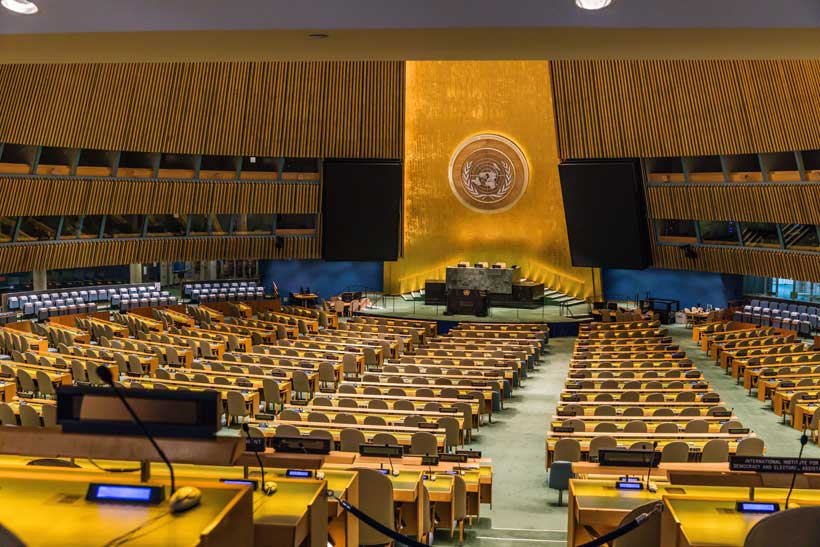
US President Trump’s announcement of the creation of the so-called “Peace Council,” involving several countries, including Morocco, sparks a deep debate that goes beyond the diplomatic event itself. It addresses the core of the international order established after World War II. The issue isn’t only about establishing a new international body but also raises an implicit question: Is the United Nations still capable of managing global peace and security, or are we entering a phase in which alternatives are being sought?
From this perspective, the Peace Council becomes a political project par excellence, reflecting shifts in the American vision of the role of international institutions and revealing a structural crisis within the United Nations system.
First: The Peace Council… Read for the idea, not the structure.
Internationally and institutionally, the Peace Council cannot be considered a direct alternative to the United Nations. The latter is grounded in an international charter, legal legitimacy, and semi-inclusive membership, whereas the Peace Council remains a selective framework, initially limited in membership, and its legitimacy is based, in particular, on the political will of the countries involved, foremost among them the United States. However, attention to this formal aspect may overlook the substance of the matter. The true value of the Peace Council lies not in its organizational and administrative structure, but in the political message it carries: explicitly questioning the United Nations’ ability to perform its historical function, offering an alternative grounded in effectiveness rather than consensus, and prioritizing alliance over inclusiveness. In other words, we are facing a shift in how international peace is managed, not just a new institutional addition.
Second: Why does the US administration believe that the United Nations has failed? Washington’s view is rooted in the strong belief that the United Nations has faced significant challenges: it has become hostage to the veto powers within the Security Council; it struggles to enforce its strategic decisions in major international conflicts; and it has shifted from being a mechanism for resolution to more of a platform for political battles. This perspective is not merely popular opinion; it is shared by many international relations scholars, who argue that the UN has not evolved sufficiently to address emerging global and regional issues, including unconventional conflicts, the rise of non-state actors, shifting global power dynamics, and a waning collective commitment to international law. In this context, the Peace Council is regarded by the United States as a tool to address what it perceives as a long-standing institutional paralysis.
Third: The Peace Council… Is it truly an alternative or just a parallel path?
When we look at international relations realistically, we usually consider three levels: 1. Legal level: The Peace Council can’t replace the United Nations when it comes to legitimacy grounded in international law. 2. Practical level: The Council aims to fill a real gap in conflict management, especially in cases where the United Nations has struggled to resolve or contain issues. 3. Symbolic and expressive level: This is where the concern grows, as the Council challenges the UN’s exclusive claim to legitimacy in the “peace industry.” In the end, it’s not just about being an alternative or a supporting body. It’s more like a parallel system that could, over time, become a real competitor if it gains more influence and members.
Fourth: The American Dimension… Redefining International Leadership.
The creation of the Peace Council aligns with Trump’s broader perspective on international relations, emphasizing three key points: reducing dependence on multilateral organizations, strengthening alliances, and shifting decision-making authority to major global powers. From this standpoint, the Council is less about promoting peace and more about reshaping America’s influence and alliances, especially in a world where Washington is reluctant to bear the costs of a global order it cannot fully control. This reflects a shift away from seeking international legitimacy toward a focus on “realistic legitimacy,” in which institutions are judged more by their results than by strict adherence to rules.
Fifth: Morocco and the Peace Council… a strategically chosen location
The Kingdom of Morocco’s decision to join the Peace Council should not be seen as a departure from the United Nations, but rather as a strategic move in its diplomatic efforts to diversify its international partnerships. Morocco maintains strong institutional ties with the UN, actively participates in peacekeeping missions, and is also eager to expand its presence in new global initiatives. By joining the Peace Council, Morocco positions itself favorably in discussions on security and stability, gaining an influential role in shaping international approaches to conflict management. This move also helps to reinforce Morocco’s image as a responsible actor that avoids relying solely on a single framework for its diplomatic and security strategies.
Sixth: Is the time of the United Nations over?
The prediction that the United Nations mission is coming to an end may be premature, but it still carries weight. The key point is that the UN is facing a crisis of legitimacy and effectiveness, not one of existence. It continues to exist, but it can no longer handle alone a world marked by multiple power centers, rising complex conflicts, and waning trust in collective action. So, the Peace Council isn’t signaling its demise but rather highlighting the deepening challenges facing the traditional international system.
In the end, the Peace Council put together by the Trump administration isn’t officially replacing the United Nations yet, but it definitely marks a shift—signaling that we’re moving from one phase to another. We’re entering a time when peace and security are handled through selective alliances and initiatives driven by major powers, rather than through large umbrella organizations. The big question is, will this new approach bring about more effective peace, or will it make the world less legitimate and more fragile? The answer won’t be found just in the data but in how this new model actually plays out on the ground.
Oasis and Blur released their new singles Roll With It and Country House on the same day in a race for the No1 spot — and the nation was absolutely mad for it.
It was an era-defining, pop culture moment, billed as North v South, working-class v posh boys and sing-along anthems v lyrical sophistication.
Yet even their most ardent fans would have struggled to imagine that 30 years down the line the rivalry in all its boozy, sweary glory would be transformed into a theatrical production.
The Battle — which opened at the Birmingham Rep theatre this week — is a comedic caper that tries to recreate the 90s vibe.
So Oasis frontman Liam Gallagher — played by George Usher — is seen snorting lines of coke, swigging champagne and threatening to knock Blur singer Damon Albarn’s block off.
And the production includes more uses of the C word than have been uttered in much of the rest of British stage history put together.
The play’s writer, best-selling novelist John Niven, tells me he had to explain the context of the expletive-laden script to the actors.
He said: “The young cast found some of the language challenging at first.
“I had to say that that was just the way people spoke back then. It was more full-on and a much more unfiltered time.
“There’s five or six c***s in it but I guess that’s a lot for the theatre.
“But there’s no way you could accurately reflect those musicians over a five-month period without a few C-bombs dropping. It wouldn’t be authentic.”
John, 60, said he took inspiration for the narrative from a comment by Oasis manager Alan McGee about the rise of his band from a tough Manchester suburb.
He recalled: “Alan said, ‘The thing is, Blur think this is all good media fun but you’ve got five lunatics off a council estate in Burnage who actually want to f*****g kill them’.
“Blur moved the release date of their record to coincide with the Oasis single, so Liam thought, ‘Right, they’ve offered us out’.”
With actor George, 21, successfully aping Liam’s loping gait, he also gets to deliver the most one-liners.
John, who spoke to Blur’s bassist Alex James while writing the play, added: “Someone like Liam is so seductive to write for.
“Noel and Liam are both very funny in completely different ways.
“Noel is really dry and has got great timing, like a stand-up comedian, while Liam is much more surreal, random and unfiltered. He’s a delight to write dialogue for.
“Sometimes you think, ‘F***, have I gone too far there?’
“And then you could go online and find an interview with Liam where he said something ten times crazier.”
John — who began writing the play in 2023, long before the triumphant Oasis reunion last year — also had to explain to the young cast how the Britpop battle came to dominate the national conversation.
He said: “It was such a big cultural phenomenon. The whole country, from six-year-olds to 60-year-olds, knew about it.
“It went from the music papers to the broadsheets to the tabloids to News At Ten. Back then, things spread via radio, TV and the Press, whereas now the culture is so atomised.
“I’ve got teenage kids and you can have acts with a billion TikTok followers who play Wembley Stadium and I’ve never heard of them.”
After a blast of Blur’s Girls & Boys, the play begins at the February 1995 Brits, where Blur won four awards to Oasis’s one.
Blur’s Graham Coxon, Damon Albarn, Alex James and Dave Rowntree at the 1995 MTV awardsCredit: GettyNoel and Liam Gallagher after dominating the Brit Awards in 1996Credit: News Group Newspapers LtdWriter John Niven said he had to reassure the young cast about the play’s expletive-heavy script, insisting the strong language was true to the unfiltered spirit of the Britpop eraCredit: Getty
Collecting the prize for best British group, Damon insisted: “I think this should have been shared with Oasis.”
Interviewed later, Noel Gallagher said: “As far I’m concerned, it’s us and Blur against the world now.”
But the love-in didn’t last. Later that year Noel said of Blur: “The bassist and the singer, I hope the pair of them catch Aids and die because I f***ing hate them two.”
(The guitarist would later appologise, insisting he was “f***ed” on drugs when he made the remark).
When John began writing the play, he recalled the resentment that had built up between the bands in a few short months.
The former music company executive who was at the Brits that year, added: “I thought. Now there’s a dramatic arc.
“Back in February they had all been mates with Noel giving an interview saying, ‘It’s us and Blur against the world now’.
“Now he was saying he hoped they died.”
Then, in August Oasis’s record company Creation announced their new single Roll With It would be released a week before Blur’s Country House.
John added: “Blur’s manager Andy Ross was worried that Oasis would have a massive No1.
“Back then a single could top the charts for a month so Andy was worried the Blur would be stuck at No2.”
Andy, played by Gavin and Stacey star Mathew Horne, decides to move Country House’s release date forward to coincide with Oasis and all hell was unleashed.
The then influential music magazine NME produced a front cover with the headline, British Heavyweight Championship, Blur v Oasis.
A then 29-year-old Clive Myrie reported breathlessly for the BBC News At Ten on the brewing rivalry.
Like the Beatles and the Rolling Stones in the 1960s, the two bands divided friends and families into rival camps.
An exclusive in the The Sun revealed that Oasis-mad Mandy Vivian-Thomas had kicked out her husband Richard for being a massive Blur fan.
Richard said: “Mandy’s been a nightmare. She’s spent a fortune on trash about Oasis and the last starw was using my card to buy their record.
“I’m out on my ear but I’m hoping things will calm down.”
Headlined, You Blurty Rat, the Sun article takes centre stage in The Battle.
It’s cited by Blur guitarist Graham Coxon as a symptom of how the chart battle has seen his band drift away from their indie ideals and into the mainstream.
John explained: “It became apparent how different the two bands were because I think Noel and Liam loved being in the tabloids and wanted to be that big.
“They had no problems with having loads of reporters outside their door. They thought, ‘We want to be the biggest band in the world and this is part of it’.
“But I reckon Blur found it all much more uncomfortable, especially Graham. That when you get that big you’ve got the tabloids banging on your door.
“I think he thought, ‘This is getting crazy now.’”
Liam and Noel onstage during the Oasis Live ’25 World Tour in 2025Credit: GettyDamon and Graham perform with Blur at Wembley Stadium on July 08, 2023Credit: Getty
In the end, it was Blur who would win the Battle of Britpop with Country House topping the charts but Oasis would go on to have a more stellar career.
John added: “Damon and Noel are pals now.
“When men are in their 20s and 30s and they’re really ambitious, they’re all claws and teeth, sharp edges and hustling.
“You hurt people trying to get where you want to be but I think as men get older in their 40s and 50s they get a lot nicer and they calm the f*** down a bit.”
John hopes the play will transfer to the West End after runs in Birmingham and Manchester.
“I don’t think we’ll see a time when two bands dominate the national consciousness in a way like that again,” he said.
“It’s almost impossible to imagine.”
TOUCH OF TARANTINO
The Battle — which opened at the Birmingham Rep theatre this week — is a comedic caper that tries to recreate the 90s Britpop vibe
EFFING and jeffing as he struts around the stage like a rampant chimp, George Usher has Liam Gallagher down to a tee.
I’m supping a lager in the stalls at the Birmingham Rep, where if you suck your gut in and comb your hair forwards, it could be 1995 all over again.
With blasts of their hits, and aided by newsreel and radio clips, the great Battle of Britpop is fought once again.
The dialogue is pacy, comedic and very sweary. Yet with two bands, assorted managers and girlfriends to cover, there is little time for character development.
However, just as the play seems to be running out of narrative, it plunges into a Quentin Tarantino-esque sequence.
It’s a fittingly surreal end to this parable of a drug-addled decade.
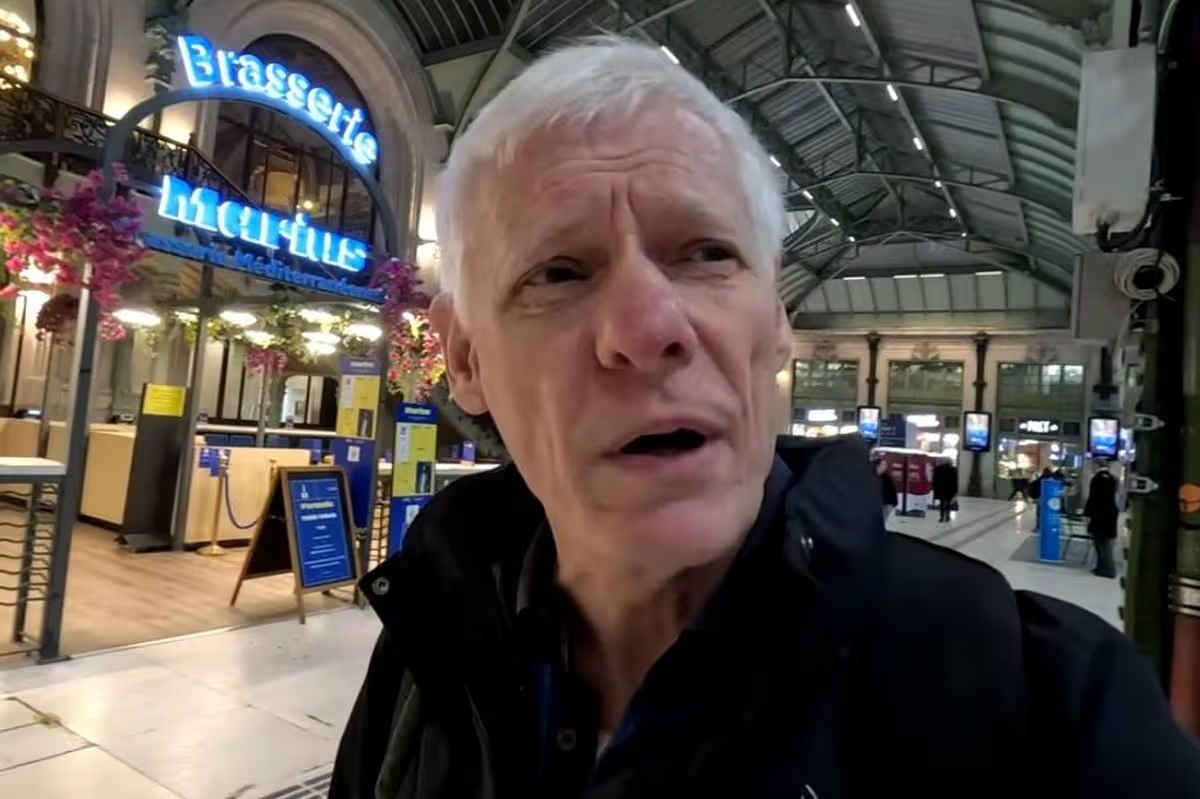
Scott Manson documented his epic six-leg journey from Glasgow to mainland Europe’s southernmost point for his YouTube channel Planes, Trains, Everything – but faced endless setbacks
Scott in Lyon(Image: Planes, Trains, Everything/YouTube)
A YouTuber who embarked on an epic three-night, four-day odyssey from Glasgow to mainland Europe’s southernmost point was left gobsmacked upon arrival – only to discover the gates were locked.
Scott Manson, who presents the travel channel Planes, Trains, Everything, chronicled the mammoth six-leg expedition for his audience, billing it from the start as an extraordinary undertaking.
“I’m traveling from Glasgow to the southern tip of mainland Europe. Now, this is going to be a long, long journey. It’s going to take three nights and four days. There are six transportation legs. The first leg is Avanti West Coast down to London.”
His itinerary saw him travel from Glasgow to London Euston, then traverse the capital to St Pancras International for the Eurostar to Paris. From the French capital he pressed southward to Lyon, onwards to Barcelona, and subsequently to Madrid before boarding a long-distance coach to Algeciras.
A concluding local bus journey and stroll delivered him to Tarifa, widely acknowledged as mainland Europe’s southernmost extremity, reports Glasgow Live.
However, the expedition was anything but smooth sailing.
Scott disclosed the trip “nearly went totally belly up” following a catastrophic high-speed rail collision in Spain earlier this year. Referencing the tragedy, he explained: “One high-speed train jumped the tracks, landed on the opposite side, and was hit by a train heading in the opposite direction. Forty-five people were killed. Absolutely horrendous.”
Worried his connection might be axed, he consulted the Renfe website.
While tickets remained available initially, the evening before departing the UK he received an email stating: “Unfortunately, your train’s canceled. We apologize for the inconvenience.”
This left him frantically seeking an alternative for the vital Madrid to Algeciras stretch. Flying via Gibraltar was contemplated but ruled out as impractical and potentially costly, necessitating multiple connections and a border crossing.
Instead, he managed to book a nine-hour daytime coach – twice the duration of the train journey.
“It’s going to be horrendous, but it needs to be done,” he remarked, noting the alteration also delayed his arrival until 8pm, compelling him to postpone filming at his final destination.
The complications continued mounting. The Avanti service from Glasgow ran late, necessitating what he characterised as a hurried sprint across London.
His Eurostar seat was relocated to a “windowless window seat.” The Barcelona to Madrid train ran behind schedule.
Madrid’s weather turned “atrocious.” And the replacement train southbound was cancelled entirely.
Following all that, the ultimate disappointment awaited at Tarifa. Upon reaching the Spanish municipality, Scott headed towards Isla de Las Palomas, an island at the southern tip of Punta de Tarifa – the southernmost point of the Iberian Peninsula.
However, to Scott’s dismay, the area was cordoned off and accessible solely through guided tours. “Well, you spend three nights and four days travelling to the southernmost tip of the European mainland, and it’s shut,” he said.
“At least I’m not the only one who arrived thinking the place would be open. There are two Chinese tourists there. I can’t complain—they’ve travelled further than I have to get here—but I think it caught quite a few people off guard.”
He suggested strong winds might have rendered the exposed headland too dangerous. “But yeah, that’s as far as we can get.”
Despite the setback, Scott stayed positive. “For as long as I can recall making these YouTube videos, I’ve always felt there was a force pushing back, trying to stop me from completing videos. This was a prime example.”
Nevertheless, he maintained the experience was worthwhile. “But I am so glad I did this journey. I’m so glad you guys came along with me as well. I’ll see you next time.”
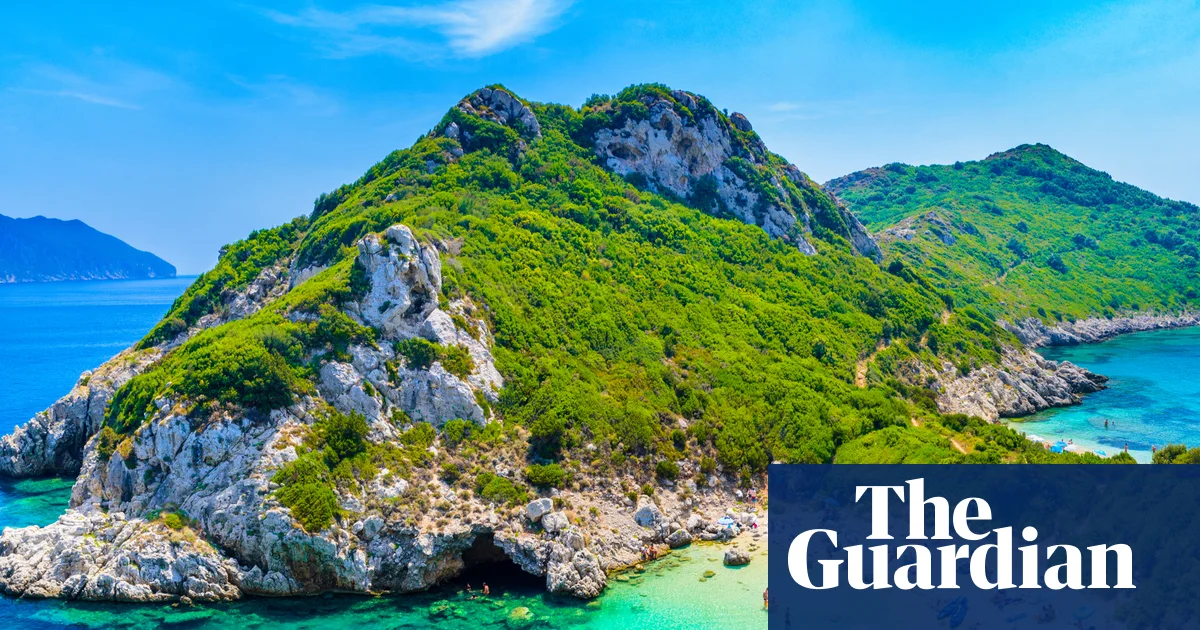
This is not where you would expect an article about one of the Mediterranean’s most beautiful islands to start. It’s the tail end of winter, 2021. Kensal Green Cemetery in west London: the imperial mausolea canted and crumbling, low clouds dissolving into rain. We are still in that strange phase of the pandemic when we are masked, newly aware of our bodies and the space around them. We are here to bury Nikos, a man who for me, for many, was the incarnation of Corfu.
I had spent my 20s trying to find the perfect Greek island, hopping from the well-trodden (Mykonos, Santorini, Cephalonia) to the more obscure (Kythira, Symi, Meganisi). None quite matched the vision I had dreamed into being as a child, when I segued from Robert Graves to Mary Renault, then to Lawrence Durrell and John Fowles. Greece was an idea before it was a place: freedom and deep thought, a constellation of sand, salt and thyme.
Then, on a whim, I accepted an invitation to play cricket in Corfu.
I knew little about the island at the time – not about its strategic history, nor how that position had shaped a culture that is at once Greek, Venetian and British. I hadn’t yet walked the Liston, the elegant colonnaded arcade that might be Venice or Trieste, Bologna or Perugia were it not for the cricket pitch laid out in front of it. The pitch is surrounded by a car park; its groundsmen battle heat, salt spray, digging children and fouling dogs. Yet it remains the only cricket pitch in the world I know that’s set within a Unesco world heritage site. Taking guard there, you look up to the Old Fortress for solidity, and to the Palace of St Michael and St George for elegance and flair.
The cricket pitch next to the elegant arcade in Corfu Town. Photograph: Ernestos Vitouladitis/Alamy
I went out with the Lord’s Taverners, a UK sports charity team. We were a motley bunch: a couple of former internationals – Andy Caddick and Chris Cowdrey – some actors, entertainers and a handful of writers, including me. The Corfiots, it turned out, were very good at cricket. The Greek national team is drawn almost entirely from the island. We were soundly beaten, then consoled by warmth, generosity and a run of excellent dinners in the Old Town.
It was over one of those dinners – at the Pergola – that I met Nikos Louvros and his wife, Annabelle, our hosts and the founders of Cricket Corfu. Nikos was rambunctiously Greek, full of wild energy; Annabelle was English in that particular way that falls deeply for Greece and builds a life around it. I recognised the impulse. By the end of the meal of lamb, ouzo and excellent local wine, we had planned our future together: we would launch a literary festival.
Festival co-founders Annabelle and Nikos Louvros
Over the subsequent years, that vision has taken glorious shape. Corfu literary festival began modestly: at our first, in 2017, there were as many speakers on stage as there were people in the audience. I remember Nikos’s hope, irritation and finally, characteristically, laughter as invited guests failed to show up. But there was never any sense it would stop. With Nikos beside you, everything seemed possible.
Slowly, buoyed by local support, the festival grew into something far larger than we had imagined. We’ve had Stephen Fry and Sebastian Faulks, Bettany Hughes and Natalie Haynes, Matt Haig and Tom Holland. They came and spoke, they stayed at the heavenly Kontokali Bay hotel, or in the villas and apartments of Ionian Estates, and they fell in love with Corfu as I had. Many have come back to speak several times.
Nikos lived for this – for showing others the beauty and drama of the island on which he was born, then left and returned to. He is gone now, but the festival endures. This September, it will return, larger and more magical than ever, with Homer’s Odyssey at its heart – a fitting subject for an island where the mythic and the everyday still fold into each other with ease.
This is what I learned from Nikos, and from Corfu, over the years: swim early, before the day warms and when the water still has a faint bite. Swim after lunch, when the sea feels silky. Swim at dusk, when the surface holds the day’s heat and the light becomes thick and slow. Corfu is large enough and varied enough that you can build an entire itinerary around water and never feel you are repeating yourself.
On the west coast, Myrtiotissa remains the beach that feels closest to a private miracle. Set in a steep green cradle, it is an initiation to reach it. Not unreasonably, Durrell called it “perhaps the most beautiful beach in the world”.
Paleokastritsa beach. Photograph: Carmen Gabriela Filip/Alamy
Paleokastritsa possesses a different kind of beauty. The monastery above the bay looks down over a scatter of coves where the water is so clear you can see the rocks far below, like a second landscape suspended in blue.
Then there is the north-east, which has calmer waters, protected coves, a more intimate coastline. Agni Bay is a gentle curve of shoreline made for long lunches. Agni Taverna sits close enough to the water that you can leave your table, swim and return still tasting salt. Eat fish, eat simply, let time loosen its grip. If you can, arrive by boat: the north-east coast has a tradition of taking water taxis between bays, and there is something unmistakably Corfiot about stepping straight from deck to lunch.
A surprise – especially if your image of Greek islands is Cycladic sparseness – is how green Corfu is. The interior rises and folds like a small country. Olive groves run for miles; cypresses spike the skyline. Drive up into the villages above Paleokastritsa and you reach Lakones, perched high enough to make the island feel suddenly vast. At Boulis, the food is good, but it’s the terrace view you come for, the sense of stepping straight into the blue horizon.
Corfu’s cuisine is not what you usually think of as Greek: shaped by Venetian influence, by centuries of contact with Italy and by produce from the island’s land and sea. Pastitsadais a beef stew with pasta; sofrito is beef or veal slices braised in a sauce of white wine, vinegar, garlic and parsley; bourdeto is fish stew.
In Corfu Town, make time for a night at Salto – contemporary but grounded, with excellent ingredients and a superb wine list. Then go for ice-cream at Papagiorgios. Walk the Old Town with a cone in hand, the stone still warm, and you feel part of a long tradition of summer nights.
In 2020, in a brief, improbable lull between Covid lockdowns, we held the festival as if it were an act of defiance against the gods. The world was half closed; plans changed by the hour. Yet, for a few days, the island opened its arms and let us in. Chairs were spaced out, masks slipped on and off, hand sanitisers were perched on every table – and still there was laughter, ideas, beauty. Things that made us feel human.
Myrtiotissa beach. Photograph: Hemis/Alamy
One morning, Nikos appeared with a boat. He had a gift for that – arriving as if from nowhere, already halfway into the next idea. “Come,” he said. A dozen of us climbed aboard and pulled away from the town, leaving behind the anxious news cycle and the low-level fear of that year. We ran along the north-east coast, cutting the engine in inlets you would never find from land: slivers of shingle, limestone shelves, beaches no bigger than sofas. Each time we stopped, we swam as if trying to slough the year off our skin. I felt like freedom, something snatched from darkness.
That was the last festival Nikos attended. He died of Covid the following January – on my birthday.
When I think of Nikos now, I think of that day on the water: of joy under pressure, of how precious it becomes. When he died, the island felt altered – not less beautiful, but more charged, as if the light carried grief in waves. Yet, Corfu also teaches something: that love for a place can outlive the person who brought you there, and become a way of honouring them.
I have tried to do that in my own way, too. My novel A Stranger in Corfu is dedicated to Nikos. It grew out of this island – its layered past, its atmosphere of secrecy and hospitality, the sense that stories cling to the land. The novel is, at heart, a love letter: an attempt to pay proper attention to a place that has given me more than I can easily name.
Go to Corfu and do not hurry. Swim often. Drive into the hills. Eat as if time were a gift. Let the island reveal itself at its own pace – slowly, then all at once.
And if, one day, someone appears with a boat and an idea, say yes.
A Stranger in Corfu by Alex Preston is published by Canongate (£18.99). To support the Guardian buy a copy at guardianbookshop.com. Delivery charges may apply.The 2026 Corfu literary festival runs from 21-27 September
They are the core of the Lakers, the engines that make this team go, but health issues have prevented them from playing together for far too much of the 2025-26 campaign.
During their first game since the NBA All-Star break, Doncic, Reaves and James carried the the Lakers to a 125-122 win over the Clippers Friday night at Crypto.com Arena.
Doncic had 38 points, 11 assists and six rebounds.
Lakers guard Austin Reaves celebrates after Clippers guard Bennedict Mathurin (9) was called for an offensive foul Friday at Crypto.com Arena.
(Gina Ferazzi/Los Angeles Times)
Reaves had 29 points, six assists and made a big defensive play late in the game.
And James had 13 points and 11 assists, his fifth straight game with 10 or more assists.
Up 118-115 with 1:49 left, Reaves took drew a charge on Bennedict Mathurin, the Clipper’s sixth foul that sent him to the bench with 26 points.
Still, the Lakers didn’t escape until Doncic made two free throws with 21.2 seconds left to give the Lakers a five-point lead that barely stood.
With a 125-122 lead and the ball, James threw a dangerous cross-court pass intended for Doncic that Nicolas Batum instead stole.
But Batum missed a potential game-tying three-pointer and James got the rebound to secure the win.
The Lakers put two defenders on Kawhi Leonard, double teaming the Clippers’ best offensive weapon, keeping a crowd of defenders around him, especially when they employed their zone defense.
Leonard was giving it to the Lakers, but he left late in the fourth quarter with left ankle soreness, departing with 31 points on 11-for-19 shooting.
Lakers coach JJ Redick said pre-game that Leonard is back to being a force on both sides of the basketball.
That’s why so much of the Lakers’ gameplan centered around trying to slow down Leonard, who is eighth in the NBA in scoring (27.8) and tied for first in steals (2.0).
“He’s more consistently taking the tougher assignments right now, and he’s back to being just an elite two-way player on both ends of the floor,” Redick said. “And you know, he’s playing as well as anybody in the NBA right now for the last two months, whatever the starting point would be, but it really is on both sides of the ball.”
Leonard is a primary reason why the Clippers are still rolling despite having traded away two key pieces in guard James Harden and center Ivicia Zubac.
The Clippers started the season 6-21, looking nothing like a playoff team.
But then they beat the Lakers on Dec. 20 and that got the Clippers rolling to a 21-7 stretch entering Friday night’s game, a two-month period that saw them get to one game under .500.
Clippers coach Tyronn Lue said none of the Clippers ever gave up on the season, adding they were always “playing to win” no matter whether they had “young, old, toddlers” on the court.
“I just feel confident,” Lue said. “I just feel confident in our players, confident in our coaching staff and I just feel confident in the environment and the culture that we’ve set. Why wouldn’t we want to play to win? That’s our mindset. That’s my mindset every single night. As tough as it may be or you start 6-21 whatever it may be, you’re playing to win. So, we make it to the playoffs and anything can happen. So our goal is to make it to the playoffs. I don’t know why somebody would scoff at that.”
Tropical weather, luxury accommodation and relaxing rituals make this island the perfect babymoon destination to visit when pregnant, says travel editor Laura Mulley
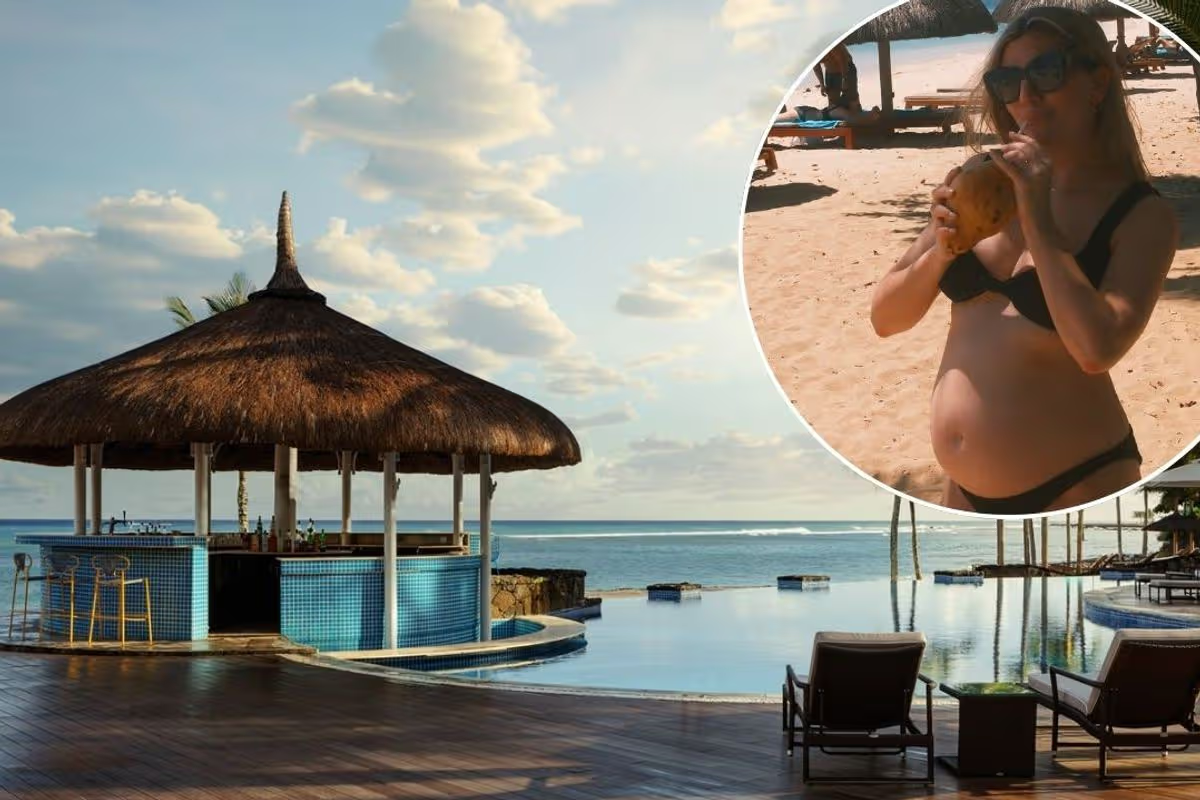
We think we’ve found the perfect babymoon destination(Image: Le Meridien Ile Maurice, Laura Mulley)
Looking for a holiday destination for one last trip as a two before our baby arrived, we found our options surprisingly limited. We didn’t want to chance potential bad weather in Europe off-season, and with the risk of mosquito-borne virus Zika – which is particularly dangerous to pregnant women – ruling out most of the Caribbean and Asia, there was a clear frontrunner that ticked all of our boxes: Mauritius.
Emirates proved to be the best airline to fly with from our nearest airport – Manchester – with the most flight options available – and the staff were exceptionally helpful at making a six-months-pregnant woman feel as comfortable as possible during the journey.
Once we landed, our aim was simple: to enjoy all the things we’d probably struggle to do once our baby arrived, on what would potentially be our last relaxing holiday for a while. And it certainly delivered.
Our first stop was the huge, open, colourful Le Méridien Ile Maurice on the island’s northwest coast. One of Mauritius’s leading family hotels (perfect for showing us what to expect from our future holidays), its hidden gem is its adults-only section, Nirvana, at the end of the kilometre-long beach, which has its own rooms, reception, restaurant, beach area and infinity pool scattered with squishy floating beanbags.
Our Hideaway Suite here was truly one of the biggest we’d ever seen, with a massive distance between the patio doors at the front to the heated plunge pool out the back. Guests get access to a ‘butler’ via WhatsApp, and lots of thoughtful touches from the friendly staff make staying here feel extra-special, from the complimentary cocktail (or mocktail) by the pool at sundown to the petal-strewn bath we found waiting for us after dinner. One night there was even a pregnancy pillow laid out on the bed, something we hadn’t requested but made our stay even more comfortable.
The food at Le Méridien
There are four restaurants at Le Méridien, and it’s worth making your way around them all: Nomad’s buffet is popular with families, Waves serves Mediterranean-style fish and grilled dishes, Kumin gives guests a taste of Mauritius’s strong Indian influence, and – our favourite – Nirvana’s Jade does excellent Asian cuisine, including sushi and teppanyaki (take breakfast here too if you want to savour the child-free moments for as long as possible). All are included in half-board and all-inclusive packages, although booking is recommended for the à la carte restaurants.
What to do at Le Méridien
Keen to enjoy as many grown-up activities as possible, we took part in sunset yoga on the beach, took kayaks and pedalos out into the lagoon’s clear waters, and enjoyed treatments in Le Méridien’s spa, including a heavenly head massage using warm coconut oil, and the perfect pre-natal full body massage. The therapists here are all incredibly skilled – you’ll really feel the benefits.
St Regis Le Morne
The second half of our trip was spent at sister hotel St. Regis Le Morne, formally the JW Marriott, and which joined the historic St. Regis hotel group – founded by American tycoon and Titanic victim John Jacob Astor IV – following a major renovation last year.
On the island’s southwest point, this is a quieter, more secluded part of the country, and St. Regis sits under the shadow of Mauritius’ iconic Le Morne mountain surrounded by miles of beautiful beaches and shallow waters.
Although we spotted plenty of multi-generational families here too, St. Regis definitely has a more elegant and luxurious air to it. With a colonial-style design and elegant rooms set amongst lush vegetation and trickling water features, it has a slight ‘White Lotus season three’ vibe.
There’s a huge pool here, but we found that most couples chose to spend their days on the loungers under palm leaf-umbrellas that line the beach, which are peaceful, always available, and serviced by bar staff at the touch of a button.
The food at St Regis Le Morne
Out of St. Regis’s five restaurants, our favourites were INDYA, serving a modern take on Indian cuisine with the friendliest service, and Japanese Atkuso, where the chef veered from the menu to whip up some of the best maki rolls we’d ever tried to cater to our vegetarian diets. Each restaurant also does its own signature cocktails and ‘mindful mocktails’ with certain health benefits.
What to do at St Regis Le Morne
St. Regis is proud of its history and heritage, and a key feature are its three ‘rituals’, found in all its properties around the world, and all – pleasingly for our purpose – highly unsuitable for children: Bloody Marys, sabrage and afternoon tea.
In homage to the first ever spicy tomato juice cocktail as we know it, reportedly invented at the St. Regis New York in the 1920s, our charismatic bartender Vymal demonstrated how to make this hotel’s own version, the L’Île Mary, using Mauritian rum infused with curry leaves and topped with turmeric foam. The self-appointed Bloody Mary connoisseur out of the two of us declared it to be one of the best he’d ever tasted.
Next up was learning sabrage – the art of opening a bottle of champagne with the swish of a sword, and supposedly how Napoleon liked to celebrate his victories. Although initially unconfident, following expert instruction we were thrilled to deftly remove the top of our bottle of fizz in one smooth swipe.
Afternoon tea was a more genteel affair, and is a reference to Lady Astor’s daily habit of gathering family and friends around in the afternoons to share wisdom. Here it involves Mauritian tea and viennoiserie from the hotel’s kitchen, taken under swaying palm trees on the beach – just heavenly, and the perfect last few moments of calm before we became a three.
How much does it cost?
Rooms at Le Méridien Ile Maurice start from £220 per night on a B&B basis based on double occupancy. Rooms at St. Regis Le Morne start from £585 per night based on double occupancy (two night minimum stay required). Returns flights from Manchester to Mauritius were with Emirates start from £775.
President Trump calls Supreme Court justices an ’embarrassment to their families’ in 45-minute address to the media.
Published On 21 Feb 202621 Feb 2026
Share
United States President Donald Trump and his vice president, JD Vance, have launched personal attacks on the justices of the US Supreme Court and their families, after the country’s top court struck down trade tariffs imposed by the White House.
In a 45-minute address to reporters at the White House, the US president heaped criticism on the six justices who ruled against his signature tariff policy in the 6-3 decision by the court on Friday, including Neil Gorsuch and Amy Coney Barrett, whom Trump appointed to the court during his first term.
Recommended Stories
list of 4 itemsend of list
“I think it’s an embarrassment to their families, you wanna know the truth, the two of them,” Trump said, referring to Justices Gorsuch and Barrett.
“I’m ashamed of certain members of the court – absolutely ashamed – for not having the courage to do what’s right for our country,” Trump added.
Shockingly, Trump also claimed that the Supreme Court “has been swayed by foreign interests”, without providing any evidence.
US President Donald Trump takes questions from reporters during a news conference at the White House in Washington, DC, on February 20, 2026 [Mandel Ngan/AFP]
Trump then warmly praised the three members of the court who dissented in the ruling.
“I’d like to thank and congratulate Justices [Clarence] Thomas, [Samuel] Alito, and [Brett] Kavanaugh for their strength and wisdom and love of our country, which is, right now, very proud of those justices,” Trump said.
“When you read the dissenting opinions, there’s no way that anyone can argue against them,” he said.
Vice President Vance also sharply criticised the justices for their ruling, accusing them of “lawlessness” in a post on X.
“Today, the Supreme Court decided that Congress, despite giving the president the ability to ‘regulate imports’, didn’t actually mean it,” Vance wrote in a post on X.
“This is lawlessness from the Court, plain and simple,” said Vance, whose political profile rose to prominence after writing a memoir about his time at Yale Law School.
Trump and Vance’s comments mark a rare rebuke of the nine-member Supreme Court, which currently has six members appointed by Trump’s Republican Party and has often ruled in favour of his administration’s policies.
Nigerian lawmaker reports ‘at least 50 people dead’ after attack as list of missing is still being compiled.
Published On 21 Feb 202621 Feb 2026
Share
Gunmen killed at least 50 people and abducted women and children in an overnight assault on a village in northwestern Nigeria’s Zamfara State, authorities and residents said.
The attack started late on Thursday night and continued into Friday morning in Tungan Dutse village in the Bukkuyum area of Zamfara when armed men arrived on motorcycles and began setting fire to buildings and abducting residents.
Recommended Stories
list of 4 itemsend of list
“They have been moving from one village to another … leaving at least 50 people dead,” said Hamisu A Faru, a lawmaker representing Bukkuyum South.
Faru, speaking to the Reuters news agency by phone on Friday, said the number of people abducted remained unclear as local officials were still compiling lists of the missing.
Residents say warning signs were visible before the attack.
Abdullahi Sani, 41, said villagers alerted security forces after spotting more than 150 motorcycles carrying armed men a day earlier, but no action was taken.
“No one slept yesterday; we are all in pain,” Sani said, adding that three members of his family were killed in the attack.
Residents carry their belongings as they flee after an attack in Woro, Kwara State, in western Nigeria on February 5, 2026 [Light Oriye Tamunotonye/AFP]
Areas of Nigeria’s north and west continue to grapple with overlapping security threats, including armed criminal gangs and rebel fighters.
Just last week, at least 46 people were killed in raids in the Borgu area of northwest Niger State. The deadliest assault occurred in the village of Konkoso, where at least 38 residents were shot or had their throats cut, according to reports.
The crisis has drawn increased international involvement.
Nigeria recently expanded security cooperation with the United States after President Donald Trump accused the country of failing to halt the killing of Christians and threatened military intervention.
On December 25, the US launched air strikes on the northern state of Sokoto, conducted in coordination with Nigerian authorities.
Earlier this week, Nigeria’s military confirmed the arrival of 100 US soldiers tasked with training local forces.
Samaila Uba, spokesperson for Nigeria’s Defence Headquarters, said the US troops would offer “technical support” and “intelligence sharing” to help combat “terrorist organisations”, along with “associated equipment”.
He stressed the US personnel would not engage directly in combat and would share technical expertise under Nigerian command.
The nominated Oscar shorts come in three categories — and a lot of subjects, styles and temperaments. It’s further proof that an award dictated by length needn’t be bound by anything else.
In the live-action category, a mixed bag of approaches — some inspired by classic literature — are burnished by inspired performances. Lee Knight’s “A Friend of Dorothy” may be a tad on the nose about the cultural and emotional impact of a lonely London widow on a closeted teenaged boy. But leads Miriam Margolyes and Alistair Nwachukwu practically shimmer with humor and warmth. “Jane Austen’s Period Drama,” a loving tweak of the writer’s oeuvre from Steve Pinder and Julia Aks (who also stars), is essentially a one-joke calling card to make feature comedies and it should do the job. Its cast is exactly the sprightly ensemble needed to land its what-if laughs.
Two others just miss the mark in terms of bringing their tensions to powerful resolutions yet benefit from who the camera adores. Meyer Levinson-Blount’s “Butcher’s Stain,” centered on a flimsy accusation against a friendly Palestinian butcher in an Israeli market, undercuts its gripping story with lackadaisical filmmaking and an unnecessary subplot, but lead Omar Sameer is commanding. The black-and-white future shock “Two People Exchanging Saliva,” directed by Natalie Musteata and Alexandre Singh, is an uneven Euro-art bath of unrealized intimacy and casual violence — kissing is punishable by death, slapping is currency — but is given exquisite tautness by the elegant, unrequited swooniness of stars Zar Amir and Luana Bajrami.
A scene from “Jane Austen’s Period Drama,” nominated in the live-action short category.
(Roadside Attractions)
Then there’s my favorite, Sam A. Davis’ likely winner “The Singers,” from Ivan Turgenev’s short story, which pays off handsomely in bites of soulful warbling that briefly turn a barroom’s den of anesthesia into a temple of feeling.
Most of this year’s documentary nominees deal with the grimmest of tragedies, as in “All the Empty Rooms” and “Children No More: Were and Are Gone,” which address the remembrance of children brutally killed. The former film, from Joshua Seftel, follows CBS correspondent Steve Hartman and photographer Lou Bopp on an essay project into the bedrooms of kids gunned down in school shootings, their private worlds heartbreakingly preserved by their families. The latter short, directed by Hilla Medalia, witnesses Tel Aviv’s silent vigils for Gaza’s children, protests marked by posters with beaming faces, and sometimes met with open scorn. These are dutiful, sobering acts of mourning — Seftel’s is the probable awardee. You may wish they were more than that, however, considering the issues (guns, war, political intransigence) that created the devastation.
Combat is what drove award-winning photojournalist Brent Renaud, killed in Ukraine in 2022. But his brother Craig’s memorializing of him, “Armed Only With a Camera,” is oddly uninvolving, more an excerpted flipbook of Brent’s far-flung assignments than a meaningful portrait of excelling at a dangerous job. A more affecting real-world dispatch (and my pick, if I could vote) is “The Devil Is Busy,” directed by Christalyn Hampton and dual nominee Geeta Gandbhir, also up for the feature “The Perfect Neighbor.” It observes a day in the operation of a carefully guarded, female-run Georgia abortion clinic as if it were a newly medieval world’s last chance healthcare outpost, getting by on grit, compassion and prayer. You certainly won’t forget security head Tracii, the clinic’s heavyhearted knight and guide.
A scene from “Perfectly a Strangeness,” nominated in the documentary short category.
(Roadside Attractions)
Your chaser is Alison McAlpine’s appealing, aptly titled “Perfectly a Strangeness,” sans humans, but starring three donkeys in an unnamed desert happening upon a cluster of hilltop observatories. The whir of science meets the wonder of nature and this charming, gorgeously shot ode to discovery (both on Earth and out there) makes one hope the motion picture academy sees fit to recognize more imaginative nonfiction works going forward.
Animation, of course, thrives on the thrill of conjured worlds, like the one in Konstantin Bronzit’s wordless (but not soundless) desert island farce “The Three Sisters.” It owes nothing to Chekhov — though there are seagulls — but much to a classically Russian sense of humor and a Chaplinesque ingenuity. Elsewhere, you can watch the overly cute Christian homily “Forevergreen,” from Nathan Engelhardt and Jeremy Spears, about a nurturing tree, a restless bear and the dangerous allure of potato chips. The message gets muddled but this eco-conscious journey is charming.
It’s tough to predict a winner when the entrants are this strong, but John Kelly’s “Retirement Plan” feasts on wry relatability, as Domhnall Gleeson narrates a paunchy middle-aged man’s ambitious post-career goals, while the cascade of deadpan funny, thickly-lined and mundanely hued images stress a more poignant, finite reality. In its all-too-human view of life, this is, entertainingly, whatever the opposite of a cloying graduation speech is.
A scene from “Retirement Plan,” nominated in the animated short category.
(Roadside Attractions)
The spindly aged-doll puppetry in the stop-motion gem “The Girl Who Cried Pearls” marks a sly fable of need, greed and destiny, centered on a wealthy grandfather’s Dickensian fashioning of his poverty-stricken childhood in early 19th century Montreal. Filmmakers Chris Lavis and Maciek Szczerbowski find an enchanting balance between storybook allure and adult trickery. Maybe this one steals it?
Whichever the case, the animation that moved me the most is “Butterfly,” from Florence Miailhe, imagining the last, memory-laden swim of Jewish French-Algerian athlete Alfred Nakache, who competed in the Olympics before and after the Holocaust. In the cocooning fluidity of an ocean-borne day, rendered with thick-brushed painterliness and splashes of sound, we travel across flashes of community, injustice, achievement, love and despair. The visual, thematic constant, though, is water as a haven and a poetic life force that feeds renewal.
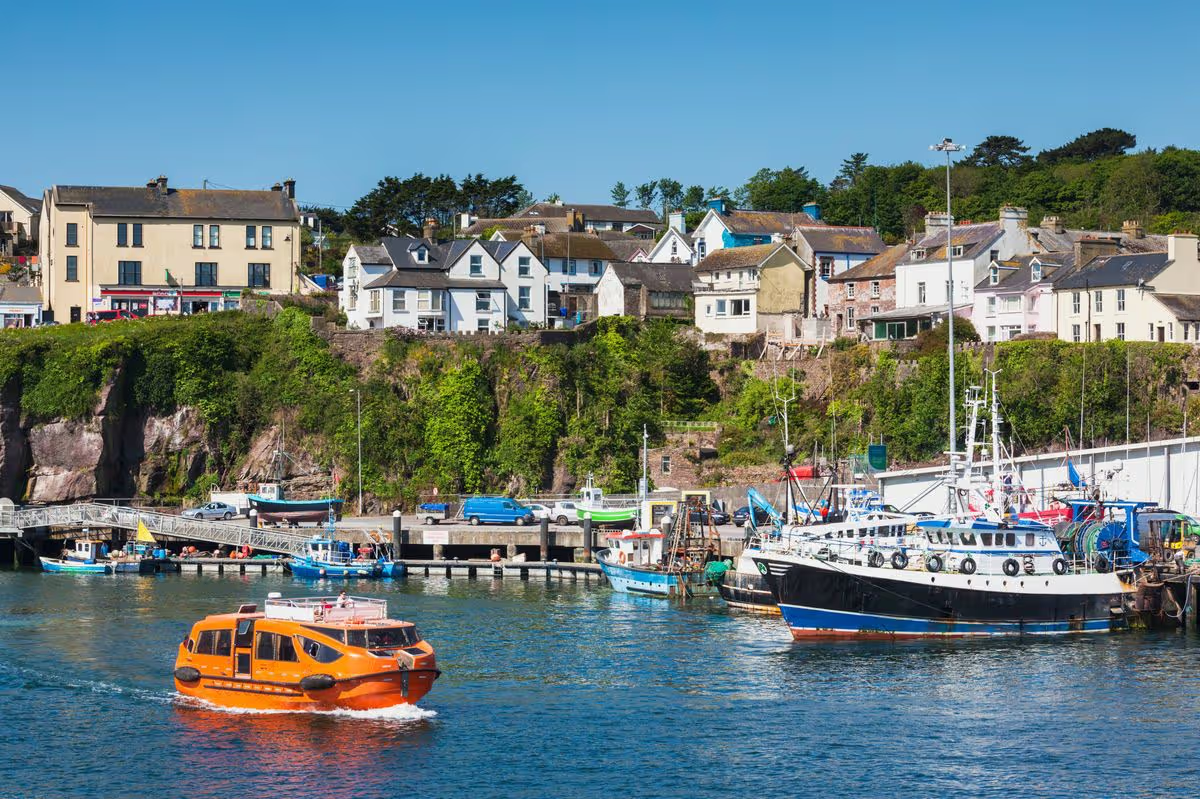
This picturesque fishing village in Waterford has everything needed for a tranquil getaway, yet it’s often overlooked by those visiting Ireland’s coast
It’s home to plenty of lively pubs and restaurants (Image: Walter Bibikow via Getty Images)
Compact and picturesque, this Waterford fishing village offers everything required for a peaceful retreat, yet it frequently goes unnoticed by visitors exploring Ireland‘s coastline.
Nestled discreetly on the western edge of Waterford Harbour lies the charming village of Dunmore East, where there’s far more to discover than initially apparent.
Boasting up to six hidden beach coves and numerous scenic walking routes, visitors can fully embrace the splendour of the Irish seaboard.
While it’s thought people have lived in the village since pre-Iron Age times, the area truly flourished during the 1800s when it evolved into a holiday destination.
Playing a significant role in the fishing trade, featuring a delightful beach, a working harbour and an extensive selection of restaurants, it remains an excellent escape from everyday life, even now.
Beaches
Waterford itself boasts up to 147 km of coastline, with Dunmore East comprising part of that stretch, hosting up to six coves throughout the village alone.
These provide ideal locations for snorkelling and swimming, with two principal beaches proving most favoured amongst visitors – Councillors Beach and Lawlors Beach.
Best UK holiday cottage deals
This article contains affiliate links, we will receive a commission on any sales we generate from it. Learn more
Sykes Cottages offers a wide range of handpicked holiday homes across the UK and Ireland, from cosy countryside retreats to stunning coastal escapes. Prices start from £27 per night
Lawlor’s is situated directly in the village centre, whilst Councillors is a south-facing shore overlooking dramatic cliffs. One recent visitor posted a Google review, describing it as a “beautiful beach with stunning cliff views”, while another remarked it was “popular for a reason”.
They added: “The most popular beach in Dunmore, which can lead to it becoming crowded at times; however, it is popular for a reason.
“It is the largest beach here, so there is adequate space for everyone. It is sandy rather than rocky, and it is located in an area with very safe water, and lifeguards are on duty often.”
Walks
The standout trail in the vicinity, and arguably throughout the whole of Waterford, is the Dunmore East Cliff Walk, spanning 5km along the shoreline. During the 1830s, the path served as a commuter route for labourers travelling between Portally and Ballymacaw.
It’s a route suitable for all fitness levels and ages, typically taking around two hours to complete, whilst showcasing breathtaking scenery and abundant wildlife throughout.
Particularly noteworthy are the sweeping coastal vistas, including views of Hook Head Lighthouse – one of the world’s oldest functioning lighthouses.
One walker described their experience on TripAdvisor, noting: “An absolutely gorgeous and easy walk along the cliffs above the sea. Stunning vistas, pretty flowers, pastures of sheep and cows. We took a lot of photos! The path is well marked and easy enough for a basic level of fitness.”
For something slightly different, there’s also the Dunmore East Woods walk, guiding you through an impressive 42-acre woodland expanse teeming with wildlife. Visitors can complete a circular route of the grounds or opt to discover one of the four distinct zones within it.
Restaurants
Dining in Dunmore East is an absolute must for genuine food enthusiasts, with numerous establishments offering locally caught seafood that diners consistently praise. A considerable number of these eateries also feature stunning coastal panoramas to complement your meal.
According to TripAdvisor ratings, the village’s top culinary destination is Azzurro, a family-operated restaurant and bar. They primarily offer Mediterranean fare, which patrons have labelled “top class”.
One delighted customer wrote: “This restaurant is top class. Pizzas to die for as well as heavenly desserts. Peroni on draught and fab coffee also. Pleasant and efficient staff. Can’t recommend highly enough.”
For highly-rated seafood in Dunmore East, The Strand Inn Seafood Restaurant sits directly on the waterfront, commanding views across the bay. A previous visitor shared: “Really exceptional service and a great energy in the restaurant and bar.
“Amazing views, sea air, great chowder. The front of house is very helpful, and I can’t recommend it more. It feels like a five-star hotel.”
Additional favourites amongst both locals and visitors include the Bay Café and Harper’s Point, perfect for a swift coffee or midday meal. A recent patron described the Bay café as “uniquely beautiful and quaint”, with many stumbling upon it during their seaside strolls.
The Hoffman Kiln near Settle in the Yorkshire Dales is a moss-covered derelict kiln hidden in woodlands, though the site is currently undergoing development with limited access
The site was left abandoned for years (Image: Alexander W Helin via Getty Images)
For those looking for an extraordinary walking adventure, this trail delivers something truly unique and proves ideal for youngsters who relish uncovering secret treasures along the way.
Nestled within the forests on the outskirts of Settle in Yorkshire lies Hoffman Kiln, an abandoned kiln that once served as an insulated furnace for burning raw materials.
Today, it resembles an subterranean grotto constructed from brickwork and blanketed in moss, lending the location an unsettling verdant atmosphere.
Its past remains somewhat enigmatic to locals, though additional points of interest dot the vicinity, designated as part of the ‘Craven Limeworks trail’.
The kiln formed part of what was previously an industrial complex, where Yorkshire workers toiled in appalling conditions before nature eventually reclaimed the site, leaving it abandoned.
Save on the best holiday cottages in Yorkshire
This article contains affiliate links, we will receive a commission on any sales we generate from it. Learn more
Famous for its dramatic landscapes, historic cities, hearty food, and rich cultural heritage Yorkshire is just waiting to be explored. Sykes Cottages has a large number of properties to choose from with prices from £31 per night.
Historical background
The nineteenth century witnessed the establishment of the railway route connecting Settle to Carlisle, which subsequently generated fresh industrial prospects for the region.
The railway regularly transported coal inbound to process the limestone extracted from the scar, then carried away the completed product.
Enormous quantities of stone were once processed here, yet now it lies concealed. The kiln was previously operated by labourers whose responsibility involved shovelling burnt lime onto wagons positioned mere feet away in the sidings.
Describing the harsh working conditions, Senior Historic Environment Officer Miles Johnson explained: “It’s quite pleasant space to be in now but whilst it was in use it was probably absolutely grim. Lime is really nasty, caustic stuff to work with.
“The lime burners who worked in here had to cover every inch of their body with rags and clothing to try to keep the lime dust out. When lime dust meets moisture or water it reacts and generates a lot of heat.
“So if you’ve got lime dust on your body, and you’re shovelling and starting to sweat, then you’d start to blister and burn quite quickly.”
Exploration today
Proposals to develop the land housing the kiln have been under consideration for some time. Back in 2021, it emerged that Craven District Council’s planning application had received approval, with the site now earmarked for commercial development.
Prior to construction commencing, one visitor wrote on TripAdvisor: “Really loved my visit. I was amazed by how big the site is, considering it isn’t promoted very well. There is lots to explore, and the information boards are very helpful.
“The car park for the site is also quite large, so there is plenty of room. It felt quite exciting to be exploring the vast Hoffmann kiln by torchlight, and I was very pleased to see that it hadn’t been littered or abused.”
Yet more recently, visitors have suggested that the feeling of discovering a secret, unspoilt location has vanished, with construction work now progressing at full pace. A later review states: “These unusual kilns are well worth a visit.
“However, as other reviewers have mentioned, at the moment the area is a building site. There is access to the Hoffman kiln, but you need to cross the building site and walk along beside the railway.”
To find the kiln, you can use the postcode BD24 9NU, where you’ll find it just off the main road between Langcliffe and Stainforth.
The popular beauty spot with Victorian-era bathing area was left damaged after huge waves battered the area.
It’s a beautiful spot, but the surrounding steps and sunbathing area have eroded away after relentless storms(Image: Katie Oborn )
Swimmers in Plymouth have been warned to stay out of the water at one of Britain’s most beloved beauty spots in the self-proclaimed Ocean City — a caution that follows the battering the south west endured from Storm Ingrid in January 2026. The Victorian-era steps at Plymouth Hoe’s Tinside Beach were left severely damaged by towering waves in January, though the outdoor Tinside Lido, which underwent renovation last year, has escaped unscathed.
Local year-round swimmers, however, are now speaking out, arguing that the destruction has laid bare “what an eyesore” the small beach and its surroundings have become — and they’re calling on authorities to invest in restoring Tinside Beach as a “fabulous asset” for Plymouth once more.
A visit to the much-loved spot on Saturday, February 14, uncovered “no swimming ” signs installed by Plymouth City Council, alerting visitors to “sharp spikes and debris” as well as “dangerous and uneven surfaces”.
The beach has long been a cherished gathering place for locals who brave the elements throughout the year, with many citing its significant contribution to their mental wellbeing alongside the wider benefits of wild swimming.
Yet in the wake of the storms that obliterated the concrete steps and several railings, swimmers have reported that getting into the water “safely” has become incredibly difficult. Numerous locals have also expressed worries that, even before the storm wreaked havoc, the vicinity had already become “rundown”, despite still attracting holidaymakers throughout the summer season, , reports the Express.
Melanie Green shared with me: “There’s a lot of all-year-round swimmers that know what should be used to do a ‘quality’ job with regards to repairs now needed.
“Plymouth City Council, please have a meeting with us all and make the Hoe steps and seafront look great again. This is where tourists come to visit. Invest in it.”
The dawn swimmers at Tinside Beach form a friendly community. Chuckles, cheerful banter and even homemade cakes are exchanged amongst the group whenever birthdays or milestone moments occur.
However, the Victorian-era steps at Tinside are in “desperate need of repair”, making it difficult to congregate – and one habitual swimmer observed that regular maintenance “would save money in the long run”.
The council has confirmed it “cares about the Hoe and foreshore” and is “sad to see the damage the recent storms have caused.”
A Plymouth City Council spokesperson further explained that “our surveyors and contractors are reviewing repair options for the Tinside steps and we will look to mobilise repairs as soon as practically possible”.
Last summer witnessed the reopening of the restored outdoor Tinside Lido beside Tinside Beach. The redevelopment was funded through the National Lottery Heritage Fund, Youth Investment Fund, Levelling Up Fund, and Plymouth City Council.
With this in mind, local swimmer Rena Truscott remarked: “I wish the council would have a complete rehaul and properly fix the waterfront, starting with Tinside (beach and steps).
“I feel investment is desperately needed now, not just to make the best of a fabulous asset for Plymouth but to ensure it remains safe and an ongoing legacy for the benefit of all.
“The Tinside Lido (renovation completed in 2025) now looks amazing and I’m sure it draws attention and hopefully tourists and revenue back to the Hoe. However, this now highlights what an eyesore the surrounding area is. Despite this, it remains popular all year round.”
Debra Romagnuolo voiced similar worries, stating: “Tinside steps are in desperate need of repair. Not just a quick fix. It needs good quality workmanship, not something that literally lasts a few weeks like the railings. It is in a sorry state.”
During my visit, chunks of concrete from the storm damage were visible strewn across the shoreline and seabed near the steps.
Warning notices have been put up advising people not to enter the water in this location, as large concrete blocks remain underwater and, depending on the tide, may not always be easily spotted.
A Plymouth City Council spokesperson commented: “We care about the Hoe and foreshore and are sad to see the damage the recent storms have caused, not just here in Plymouth but in so many other coastal villages, towns and cities.
“We are very much at the mercy of the elements but work hard to direct as much resource as possible towards protecting and reinforcing our historic waterfront so it can continue to be enjoyed for generations to come.
“Recent and ongoing works include repairs to West Hoe Pier and the Admirals Hard slipway, as well as the steps into the water at Commercial Wharf.”
Plymouth City Council added in their statement: “Our surveyors and contractors are reviewing repair options for the Tinside steps and we will look to mobilise repairs as soon as practically possible, once the weather is more in our favour.
“We are also working with marine and foreshore technical advisors and contractors on condition surveys of the wider foreshore. The findings from these surveys will be used to produce an action plan of monitoring, further investigations and prioritised repair works, for which we can then seek funding.
“Refurbishment works at Tinside Lido last year transformed underused areas of the Grade II-listed Art Deco building, safeguarding it for future generations whilst creating new opportunities for people to connect with Plymouth Sound.
“Its careful preservation and transformation will ensure Tinside continues to be a much-loved feature of Plymouth’s waterfront whilst supporting the health, wellbeing and aspirations of young people in Britain’s Ocean City.”
This charming village has been dubbed an ‘unspoilt gem’ by visitors and is home to an award-winning bakery that’s been serving up delicious baked goods for over 120 years
The village is celebrated as a traveller’s haven(Image: Getty)
Some corners of the world seem to have been shaped with exceptional care and affection – and this pristine Cornwall coastal village is undoubtedly among them.
Nestled along the North Cornwall coastline approximately 10 miles southwest of Newquay, this historically significant and remarkably unspoiled coastal settlement offers breathtaking vistas, vibrant community character, and prize-winning cuisine and beverages.
Concealed within an immaculate section of the Cornish shore, this tiny village represents a gem positioned within both a designated Area of Outstanding Natural Beauty and a World Heritage Site.
This waterside settlement thrives courtesy of its robust local community, which supports an array of independent retailers and enterprises, including one of Britain’s most ancient bakeries still trading from its founding location.
Save on the best holiday cottages in Cornwall
This article contains affiliate links, we will receive a commission on any sales we generate from it. Learn more
Famous for its rugged coastline, golden beaches, picture-perfect villages and rich maritime heritage, Cornwall is one of the most-visited corner of the UK. Sykes Cottages has a large number of holiday homes to choose from, with prices from £36 per night.
Boasting beautiful, canine-friendly shores, exceptional public houses and dining establishments, and access routes to some of Cornwall’s most dramatic coastal paths and walks, it’s little wonder this village is hailed as a traveller’s paradise, reports Cornwall Live.
Prize-winning bakery with unique pastries
The celebrated St Agnes Bakery has been trading from its original site in St Agnes for more than 120 years – having initially welcomed patrons back in 1905.
Famed for producing the most delectable traditional Cornish recipes daily, St Agnes Bakery stands as one of the village’s finest attractions.
Their renowned Cornish Pasty has secured Gold Standard status, whilst the distinctive ‘Giant Sausage Roll’ was created and gained popularity within the bakery’s modest premises.
Buttery flaky buns, delectable Cornish cakes, and freshly baked loaves also feature amongst St Agnes Bakery’s bestselling items.
St Agnes Bakery has collected numerous prestigious accolades – from World Pastry Awards to National Bakery Awards, each testament to the quality of its exceptional offerings.
The bakery’s owners said: “The joy of baking is deeply rooted in both our own childhood memories and experiences. Since taking over the bakery it has been our aim to bake all our breads, cakes, Cornish pasties and giant sausage rolls using time-honoured methods, tried and tested recipes and only the highest quality of ingredients, just like our own mothers showed us.”
St Agnes Bakery procures the majority of its ingredients locally from Cornwall, with most suppliers and producers based near St Agnes.
A fascinating heritage and plenty of attractions
The prize-winning bakery isn’t the only draw St Agnes has to offer. This charming seaside village, with its winding lanes and delightful independent shops, proves irresistible to holidaymakers.
Its narrow streets brim with Cornish character, establishing St Agnes as a treasured destination for visitors. St Agnes boasts several stunning beaches for visitors to discover, including Trevaunance Cove, Chapel Porth, and Porthtowan – all hugely popular spots for surfing enthusiasts, swimmers, and those simply wanting to soak up the sun.
The surrounding coastal area is steeped in captivating history, particularly its mining heritage, exemplified by sites such as the derelict 19th-century tin mine Wheal Coates.
The village possesses a fascinating past and industrial legacy rooted in tin and copper mining, which dominated Cornwall’s economy during the 18th and 19th centuries. Today, remnants of this mining history, including engine houses and mine shafts, still punctuate the landscape.
Despite ranking amongst Cornwall’s larger coastal villages, St Agnes maintains a charming and unspoilt character. One of its most celebrated landmarks is St Agnes Beacon – an elevated vantage point offering panoramic views of the spectacular countryside and historically serving as a watchtower.
The adjacent St Agnes Head is similarly cherished by both residents and tourists, providing magnificent views across the dramatic Cornish coastline.
This enchanting seaside village has frequently been hailed as an ‘underrated gem’ by those who visit, delivering spectacular coastal scenery featuring dramatic cliffs, sandy beaches, and picture-perfect rural countryside.
It’s also the home of The Peterville Inn, an award-winning establishment which previously claimed the coveted ‘Pub of the Year’ title at the VisitEngland Awards for Excellence in 2024. Chapel Porth Beach stands out as another essential spot in St Agnes, with the Chapel Porth to St Agnes Circular Walk coming highly recommended.
Visits to the St Agnes Museum and Perranporth Airfield are also strongly suggested for those seeking enjoyable pursuits, whilst the St Agnes to Trevellas Porth Circular Walk proves a treat for walking enthusiasts.
Admirers of Winston Graham’s bestselling Poldark novels (and its dashing hero Ross Poldark) will be thrilled to learn that the writer lived just moments from St Agnes and has famously revealed he found inspiration in this picturesque village, calling it ‘Poldark Country’.
Despite its modest proportions, St Agnes brims with delightful attractions, making it an essential destination if you’re after a brilliant experience amidst breathtaking scenery.
Sheffield United boss Chris Wilder has said the prospect of relegating their cross-city rivals is “not in his thought process at all”.
The Blades fan, who is unbeaten in his seven games against the Owls, said he disagreed with the notion that his side, who are 15th in the table, should cruise to a win.
“We’ll have done more preparation on this game than we have on any game this season and all the games other than the play-off final last season,” he told BBC Radio Sheffield.
“I’ve got complete respect for Henrik and a group of players… there’s talk of it being a mismatch or a gimme, whether it’s bookies’ odds or the narrative in the city… football just doesn’t work like that.
“The players have to play with a discipline and a control to win a game of football, to win a local derby.”
Wilder added: “We put a slide up about Macclesfield v Crystal Palace and Bodo/Glimt v Manchester City. There are all sorts of examples recently, let alone [in] the 100 years plus of football, the game isn’t decided on team sheets.
“We understand it’s basically their season on the line, we’re not daft. But we’ve got our fight, and ours has to be bigger than theirs.”