Month: January 2026

Ducks rally before falling to Tampa Bay Lightning in overtime

Darren Raddysh scored midway through overtime, and the Tampa Bay Lightning blew three one-goal leads before beating the Ducks 4-3 on Wednesday for their fifth consecutive victory.

Tampa Bay coach Jon Cooper celebrated his 1,000th regular-season game in charge with his 595th victory as the longest-tenured bench boss in the NHL. The Lightning’s coach since March 2013 has also led them in 155 playoff games, won two championships and reached four Stanley Cup Finals.

Nikita Kucherov had a goal and an assist as the Lightning skated off with a win in the opener of their three-game California trip when Raddysh converted a pass from Brandon Hagel, who had three assists.

J.J. Moser and Brayden Point also scored for Tampa Bay, and Andrei Vasilevskiy made 24 saves.

Mason McTavish tied it on a power play with 6:58 left in regulation for the Ducks, who have lost four straight and eight of 10. Jansen Harkins and Beckett Sennecke also scored, and Lukas Dostal stopped 24 shots as the Ducks earned a point for only the second time in six games.

Moser opened the scoring in the first period with his first goal since agreeing to an eight-year, $54-million contract extension last weekend.

The Ducks scored their first two goals off turnovers, with the 19-year-old Sennecke getting the 12th of his rookie season early in the third period.

Kucherov scored his 18th goal on a cross-ice pass from Hagel during a power play four minutes later, but the Ducks evened it again when Pavel Mintyukov made an exceptional play at the blue line to set up McTavish for his 10th goal.

The Ducks announced during the game that forward Frank Vatrano will be out for about six weeks with a broken shoulder incurred in a loss to the Kings last Saturday.

Up next for the Ducks: vs. Minnesota at Honda Center on Friday.

Source link

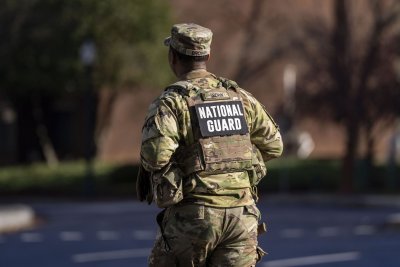
Trump announces National Guard withdrawals in Chicago, L.A., Portland

The National Guard will be withdrawn from Chicago, Los Angeles and Portland, Ore., amid legal challenges to their use and a Supreme Court ruling against the Chicago deployment, President Donald Trump said on Wednesday. Photo by Bonnie Cash/UPI | License Photo

Dec. 31 (UPI) — The National Guard will be leaving Chicago, Los Angeles and Portland, Ore., but they likely will return, President Donald Trump said on Wednesday.

Trump announced the withdrawals after the Supreme Court ruled against a National Guard deployment in Chicago and amid legal challenges in California and Oregon.

The Supreme Court last week ruled the federal government cannot take control of respective state National Guard units to protect federal agents as they enforce immigration law, CNN reported.

We are removing the National Guard from Chicago, Los Angeles and Portland, despite the fact that crime has been greatly reduced by having these great patriots in those cities, and only by that fact,” Trump said in a Truth Social post on Wednesday.

Portland, Los Angeles and Chicago were gone if it weren’t for the federal government stepping in,” the president said.

He predicted the National Guard will return to those cities, though.

“We will come back, perhaps in a much different and stronger form, when crime begins to soar again,” Trump said, adding: “Only a question of time!”

Similar National Guard deployments in New Orleans and Memphis would not be affected because the respective governors in those states have okayed the deployments.

The National Guard has been deployed in Memphis to help reduce violent crime there, and National Guard units began arriving in New Orleans ahead of New Year’s Eve, the annual Sugar Bowl and Mardi Gras.

Local, state and federal law enforcement and the Louisiana National Guard seek to prevent a repeat of last year’s lone-wolf attack by an ISIS supporter, WWLTV reported.

Shamsud-Din Jabbar, 42, was a U.S. citizen from Texas who drove to New Orleans and shot and killed 14 during the early morning hours on Jan. 1.

An ISIS flag was found in his truck, along with weapons and a potential improvised explosive device, but local police shot and killed him before he could cause more harm.

He had placed two IEDs on Bourbon Street, where he also opened fire with a rifle and killed 14 before being shot and killed to end the attack.

Federal investigators found bomb-making materials in a rental home that Jabbar briefly occupied and tried to set on fire to conceal his crimes.

Source link

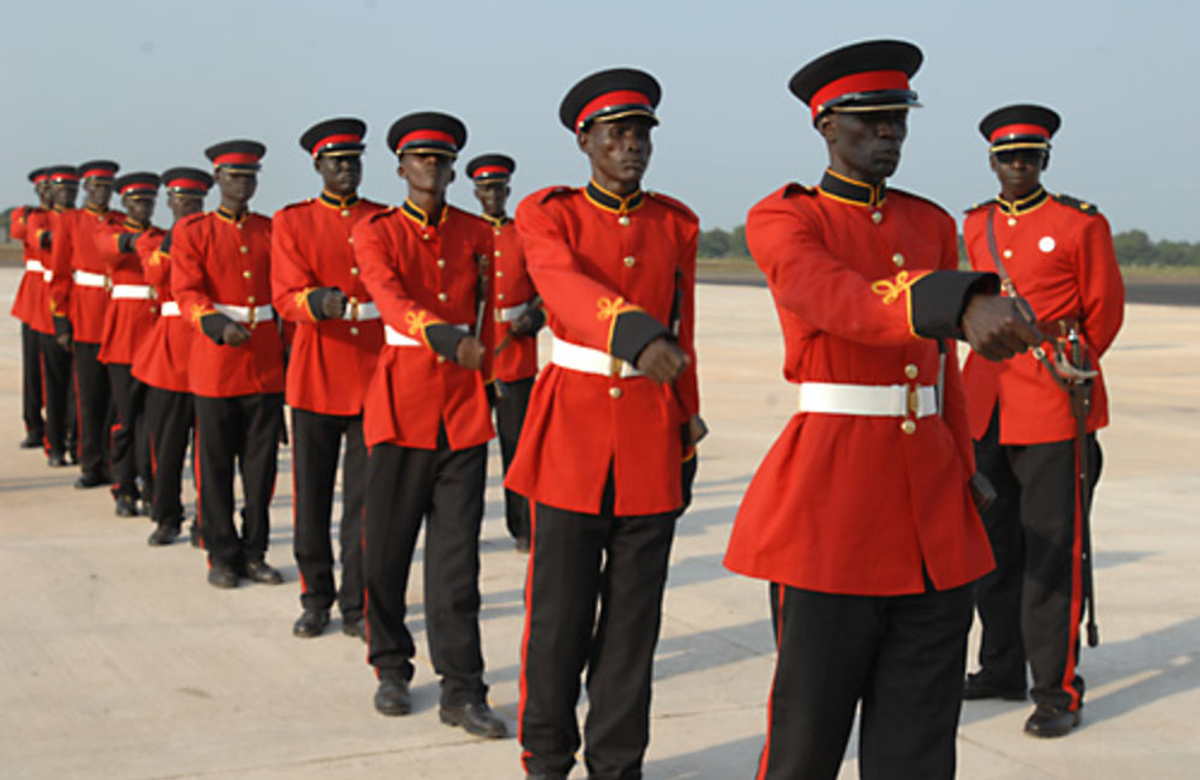
Thursday 1 January Independence Day in Sudan

Sudan, officially the Republic of the Sudan is a Northeastern Africa country and the third-largest country by area in Africa.

Once part of the ancient Egyptian Empire, the region was settled by Muslim Arabs from the 14th century. 

In 1820 Sudan was conquered by the Muhammad Ali, viceroy of Egypt under the Ottoman Empire.

In 1881 a revolt against the Ottoman-Egyptian administration was led by Mahdi Muhammad Ahmad. This resulted in the establishment of the Caliphate of Omdurman and the end of Ottoman rule following the defeat of General Gordon and the capture of Khartoum on January 26th 1885.

The Caliphate, ruled by the Khalīfah, was short-lived, ending when the British Army under the command of Lord Kitchener defeated the Khalīfah at the Battle of Omdurman on September 2nd 1898.

In 1899, Britain and Egypt reached an agreement under which Sudan was run by a governor-general appointed by Egypt with British consent. However, with Britain also controlling Egypt, this meant Sudan was effectively administered as a Crown colony.

The 20th century saw the growth of Sudanese nationalism and was emboldened by the Egyptian revolution of 1952 and support from Egypt’s new leaders. When the Egyptians abandoned their claims of sovereignty, the British knew this would bring instability to the region and agreed to a free vote in the Sudanese regions on whether they wanted independence or a British withdrawal.

The vote was for independence and resulted in the Sudanese parliament, unilaterally and unanimously, declaring Sudan’s independence on December 19th 1955. The British and Egyptian Governments recognised the independence of Sudan on January 1st 1956. 

Sudan was the largest country in Africa, occupying around 2% of the world’s land area, prior to the secession of South Sudan in 2011. It is now the third-largest, after Algeria and the Democratic Republic of the Congo.

What is behind the Saudi-UAE rupture in Yemen? | TV Shows

It all began more than a decade ago. Saudi Arabia and the United Arab Emirates were the pillars of a coalition created to fight the Houthis who had taken control in Yemen.

Over the years, that mission failed. Then the UAE set out to pursue its own long-term interests by supporting and arming a group called the Southern Transitional Council (STC) in the south of Yemen.

Recommended Stories

list of 3 itemsend of list

But Riyadh stepped in to disrupt what it saw as a national security threat after the STC seized control of areas close to its borders.

The UAE was given 24 hours’ notice to withdraw – an ultimatum it agreed to.

So what does all this mean for the future of Yemen?

Presenter: James Bays

Guests:

Abdul-aziz Al Ghashian – Senior non-resident fellow at Gulf International Forum

Alkharder Sulaiman – Southern Transitional Council spokesman

Andreas Krieg – Associate professor at the School of Security Studies, King’s College London

Source link

LAFD leaders tried to cover up Palisades fire mistakes. The truth still emerged

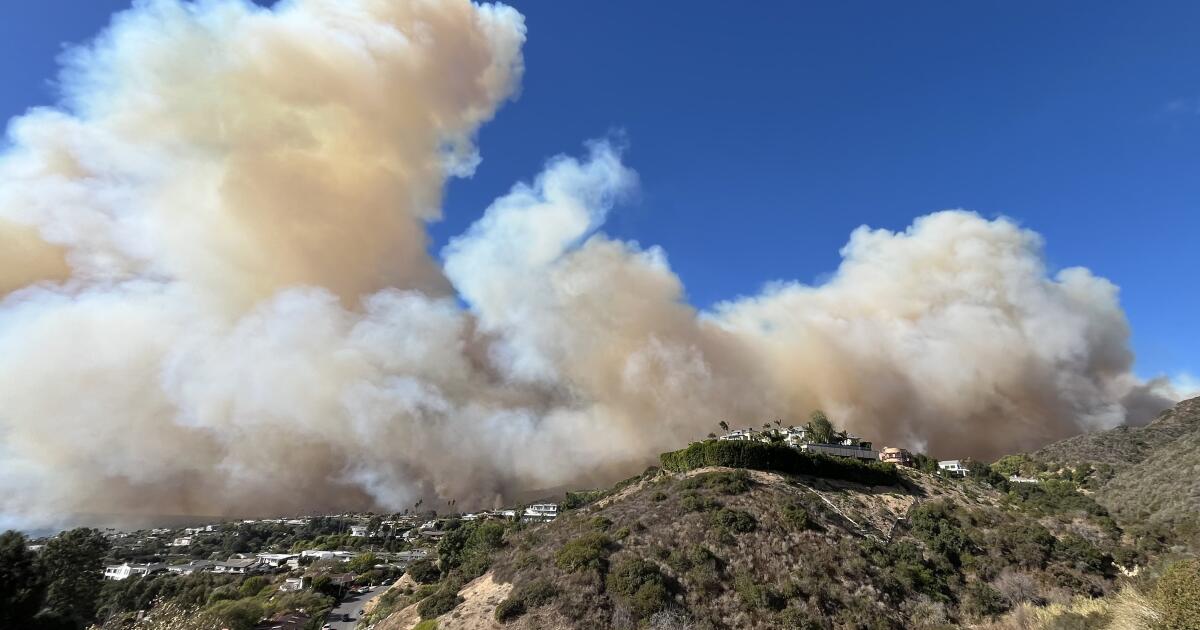
Pacific Palisades had been burning for less than two hours when word raced through the ranks of the Los Angeles Fire Department that the agency’s leaders had failed to pre-deploy any extra engines and crews to the area, despite warnings of life-threatening winds.

In the days after the fire broke out, and as thousands of homes and business continued to go up in flames, then-Fire Chief Kristin Crowley said little about the lack of pre-deployment, which was first disclosed by The Times, instead blaming those high winds, along with a shortage of working engines and money, for her agency’s failure to quickly knock down the blaze.

Crowley’s comments did not stand up to scrutiny. To several former LAFD chief officers as well as to people who lost everything in the disaster, her focus on equipment and City Hall finances marked the beginning of an ongoing campaign of secrecy and deflection by the department — all designed to avoid taking full responsibility for what went wrong in the preparations for and response to the Jan. 7 fire, which killed 12 people and leveled much of the Palisades and surrounding areas.

“I don’t think they’ve acknowledged that they’ve made mistakes yet, and that’s really a problem,” said Sue Pascoe, editor of the local publication Circling the News, who lost her home of 30 years. “They’re still trying to cover up … It’s not the regular firefighters. It’s coming from higher up.”

With the first anniversary of the fire a week away, questions about missteps in the firefight remained largely unanswered by the LAFD and Mayor Karen Bass. Among them: Why were crews ordered to leave the still-smoldering scar of an earlier blaze that would reignite into the Palisades inferno? Why did the LAFD alter its after-action report on the fire in a way that appeared intended to shield it from criticism?

The city also has yet to release the mayor’s communications about the after-action report. The Times requested the communications last month, and the report — which was meant to pinpoint failures and enumerate lessons learned, to avoid repeating mistakes — was issued in early October. Nor has the city fulfilled a records request from The Times about the whereabouts of fire engines in the Palisades when the first 911 call came in. It took the first crews about 20 minutes to reach the scene, by which time the fierce winds were driving the flames toward homes.

A Bass spokesperson has said that the mayor did not demand changes to the after-action report, noting that she pushed for its creation and that it was written and edited by the LAFD.

“This administration is only interested in the full truth about what happened before, during, and after the fire,” the spokesperson, Clara Karger, said earlier this month.

The LAFD has stopped granting interviews or answering questions from The Times about the matter, vaguely citing federal court proceedings. David Loy, legal director of the First Amendment Coalition, said that the federal prosecution of a man accused of starting the earlier blaze does not preclude the department from discussing its actions surrounding both fires.

In a December television interview, Fire Chief Jaime Moore acknowledged that some residents don’t trust his agency and said his mandate from Bass was to “help guide and rebuild the Los Angeles Fire Department to the credibility that we’ve always had.”

The Lachman fire

Shortly after midnight on New Year’s Day, a man watched flames spread in the distant hills and called 911.

“Very top of Lachman, is where we are,” he told the dispatcher. “It’s pretty small but it’s still at the very top and it’s growing.”

“Help is on the way,” the dispatcher said.

A few hours later, at 4:46 a.m., the LAFD announced that the blaze, which later became known as the Lachman fire, was fully contained at eight acres.

Top fire commanders soon made plans to finish mopping up the scene and to leave with their equipment, according to text messages obtained by The Times through a state Public Records Act request.

“I imagine it might take all day to get that hose off the hill,” LAFD Chief Deputy Phillip Fligiel said in a group chat. “Make sure that plan is coordinated.”

Firefighters who returned the next day complained to Battalion Chief Mario Garcia that the ground was still smoldering and rocks still felt hot to the touch, according to private text messages from three firefighters to a third party that were reviewed by The Times. But Garcia ordered them to roll up their hoses and leave.

At 1:35 p.m., Garcia texted Fligiel and Chief Deputy Joseph Everett: “All hose and equipment has been picked up.”

Five days after that, on the morning of Jan. 7, an LAFD captain called Fire Station 23 with an urgent message: The Lachman fire had started up again.

LAFD officials were emphatic early on that the Lachman fire was fully extinguished. But both inside and outside the department, many were certain it had rekindled.

“We won’t leave a fire that has any hot spots,” Crowley said at a community meeting in mid-January.

“That fire was dead out,” Everett said at the same meeting, adding that he was out of town but communicating with the incident commander. “If it is determined that was the cause, it would be a phenomenon.”

The department kept under wraps the complaints of the firefighters who were ordered to leave the burn site. The Times disclosed them in a story in late October. In June, LAFD Battalion Chief Nick Ferrari had told a high-ranking fire official who works for a different agency in the L.A. region that LAFD officials knew about the firefighters’ complaints, The Times also reported.

Bass has directed Moore, an LAFD veteran who took charge of the department in November, to commission an “independent” investigation of the Lachman fire mop-up. The after-action report contained only a brief mention of the earlier fire.

No pre-deployment

The afternoon before hazardous weather is expected, LAFD officials are typically briefed by the National Weather Service, using that information to decide where to position firefighters and engines the following morning.

The weather service had been sounding the alarm about critical fire weather for days. “HEADS UP!!!” NWS Los Angeles posted on X the morning of Jan. 6. “A LIFE-THREATENING, DESTRUCTIVE” windstorm was coming.

It hadn’t rained much in months, and wind gusts were expected to reach 80 mph. The so-called burning index — a measure of the wildfire threat — was off the charts. Anything beyond 162 is considered “extreme,” and the figure for that Tuesday was 268.

In the past, the LAFD readied for powerful windstorms by pre-deploying large numbers of engines and crews to the areas most at risk for wildfires and, in some cases, requiring a previous shift of hundreds of firefighters to stay for a second shift — incurring large overtime costs — to ensure there were enough personnel positioned to attack a major blaze.

None of that happened in the Palisades, with its hilly terrain covered in bone-dry brush, even though the weather service had flagged it as one of the regions at “extreme risk.”

Without pre-deployment, just 18 firefighters are typically on duty in the Palisades.

LAFD commanders decided to staff only five of the more than 40 engines available to supplement the regular firefighting force citywide. Because they didn’t hold over the outgoing shift, they staffed the extra engines with firefighters who volunteered for the job — only enough to operate three of the five engines.

On Jan. 6, officials decided to pre-deploy just nine engines to high-risk areas, adding eight more the following morning. None of them were sent to the Palisades.

The Times learned from sources of the decision to forgo a pre-deployment operation in the Palisades. LAFD officials were mum about the inadequate staffing until after The Times obtained internal records from a source in January that described the department’s pre-deployment roll-out.

The officials then defended their actions in interviews. Bass cited the LAFD’s failure to hold over the previous shift of firefighters as a reason she removed Crowley as chief less than two months after the fire.

The after-action report

In March, a working group was formed inside the LAFD to prepare the Palisades fire after-action report. A fire captain who was recommended for the group sought to make sure its members would have the freedom to follow the facts wherever they led, according to internal emails the city released in response to a records request by an unidentified party.

“I am concerned about interference from outside entities that may attempt to influence the direction our report takes,” Capt. Harold Kim wrote to Battalion Chief Kenneth Cook, who was leading the review. “I would like to ensure that the report that we painstakingly generate be published as is, to as reasonable an extent as possible.”

He worried about revisions, saying that once LAFD labor unions and others “are done with many publications, they become unrecognizable to the authors.”

Cook, who had been involved with review teams for more than a decade and written numerous reports, replied: “I can assure you that I have never allowed for any of our documents to be altered in any way by the organization.”

Other emails suggest that Kim ultimately remained in the group.

As the report got closer to completion, LAFD officials, worried about how it would be received, privately formed a second group for “crisis management” — a decision that surfaced through internal emails released through another records request by an unidentified party.

“The primary goal of this workgroup is to collaboratively manage communications for any critical public relations issue that may arise. The immediate and most pressing crisis is the Palisades After Action Report,” LAFD Asst. Chief Kairi Brown wrote in an email to eight others, including interim Fire Chief Ronnie Villanueva.

“With significant interest from media, politicians, and the community, it is crucial that we present a unified response to anticipated questions and concerns,” Brown wrote. “By doing so, we can ensure our messaging is clear and consistent, allowing us to create our own narrative rather than reactive responses.”

Cook emailed a PDF of his report to Villanueva in early August, asking the chief to select a couple of people to provide edits so he could make the changes in his Word document.

The following week, Cook emailed the chief his final draft.

“Thank you for all your hard work,” Villanueva responded. “I’ll let you know how we’re going to move forward.”

Over the next two months, the report went through a series of edits — behind closed doors and without Cook’s involvement. The revised report was released publicly on Oct. 8.

That same day, Cook emailed Villanueva, declining to endorse the public version because of changes that altered his findings and made the report “highly unprofessional and inconsistent with our established standards.”

“Having reviewed the revised version submitted by your office, I must respectfully decline to endorse it in its current form,” Cook wrote in the email obtained by The Times. “The document has undergone substantial modifications and contains significant deletions of information that, in some instances, alter the conclusions originally presented.”

Cook’s version highlighted the failure to recall the outgoing shift and fully pre-deploy as a major mistake, noting that it was an attempt to be “fiscally responsible” that went against the department’s policy and procedures.

The department’s final report stated that the pre-deployment measures for the Palisades and other fire-prone locations went “above and beyond” the LAFD’s standard practice. The Times analyzed seven drafts of the report obtained through a records request and disclosed the significant deletions and revisions.

Cook’s email withdrawing his endorsement of the report was not included in the city’s response to one of the records requests filed by an unknown party in October. Nearly 180 of Cook’s emails were posted on the city’s records portal on Dec. 9, but the one that expressed his concerns about the report was missing. That email was posted on the portal, which allows the public to view documents provided in response to records requests, after The Times asked about it.

The LAFD did not respond to a query about why the email was not released with Cook’s other emails. Karger, the Bass spokesperson, said the link to the document was broken and the city fixed it after learning the email wasn’t posted correctly. The Times has inquired about how and why the link didn’t work.

Former LAFD Asst. Chief Patrick Butler, who worked for the agency for 32 years and now heads the Redondo Beach Fire Department, said the city’s silence on such inquiries is tantamount to deceiving the public.

“When deception is normalized within a public agency,” he said, “it also normalizes operational failure and puts people at risk.”

Pringle is a former Times staff writer.

Source link

Ty Simpson driven to lead underdog Alabama to a Rose Bowl upset

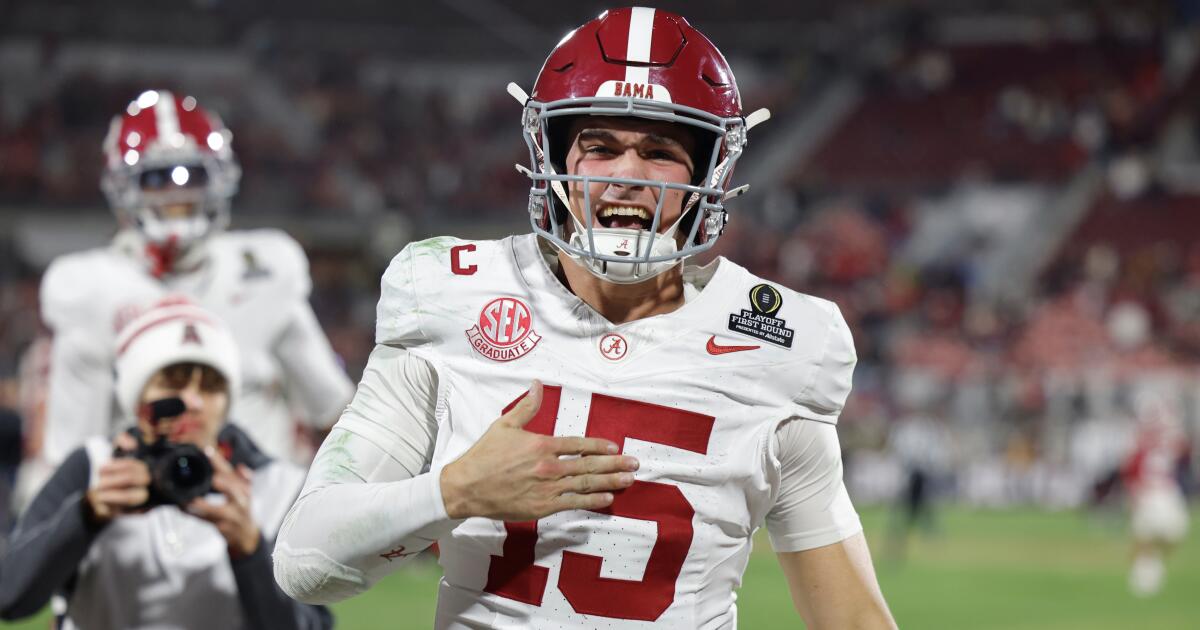
Scrutinized and criticized after a season-opening loss to Florida State, the Alabama Crimson Tide have spent the remainder of the season focused on growth, resilience and a shift in leadership mentality as they prepare for their College Football Playoff quarterfinal game against No. 1 Indiana on Thursday at the Rose Bowl.

Crimson Tide quarterback Ty Simpson said the early criticism served as motivation for the team.

“I think the first game everybody kind of wrote us off — especially me as being a problem — and that really made me feel some type of way,” Simpson said. “Adversity brings opportunity and this was an opportunity to make things right. I know that not only was I getting scrutinized, but our head coach was as well. As much respect as I have for him, I had to scratch and claw and find some way to get better. With more time, more reps, more games in general, I got better.”

Simpson’s leadership has evolved steadily over the course of the season, becoming a focal point of Alabama’s offensive identity.

Following the season-opening loss, Crimson Tide coach Kalen DeBoer emphasized areas of growth for his quarterback, particularly in decision-making and confidence.

“He’s gotta just trust his reads and just cut it loose sometimes and let it fly,” DeBoer said. “And then just some decision-making there in certain critical moments, that’s the things he’s going to learn from.”

DeBoer said Simpson’s ability to cope with adversity throughout the season helped Alabama as it prepares for for the Rose Bowl.

“There’s the ups and downs and every game is not going to be perfect, but his response and just what he’s played through, it can be the mental part the physical part,” DeBoer said. “Wins, losses he’s just continued to stay the course.”

Alabama turns its attention to Indiana and Heisman winning quarterback Fernando Mendoza, who presents a significant challenge heading into Thursday’s CFP quarterfinal matchup.

”Everybody sees him as the guy and of course he won the Heisman Trophy. That’s motivation for me, I know I am going head-to-head with him, but the opportunity to go against the No. 1 team in the nation, sign me up,” Simpson said. “I am a competitor and I am excited for it and being able to play in this game against a good team is what I want.”

As the Crimson Tide prepare for Indiana’s physical rushing attack, Simpson and the offense continue working to put all the pieces together under pressure.

Receiver Ryan Williams has emerged as a key offensive weapon, using his speed to make defenders miss and create opportunities.

“We’re going to make sure we have plays to give him the ball and I have to make sure I understand my read and give him the ball,” Simpson said of Williams.” It’s my job to make sure the offense reads the ball, whether Ryan is the first read or the last read. I’m going to throw it to the open guy and make sure we’re in a good position.”

While Alabama may be fueled by external criticism and its underdog role, the team is spending its last stretch before the Rose Bowl focused on blocking out outside noise and embracing its internal standard.

“We write it on our whiteboard every game, ‘All about Bama,’ That’s all it’s ever about — Bama,” Simpson said. “All about these guys in here and the coaches. Alabama against the world, that’s kind of been our mindset of just making sure its all for one and one for all.”

Source link

Ivory Coast fight back against Gabon to top AFCON group ahead of Cameroon | Football News

Ivorians to face Burkina Faso in last 16 while Cameroon meet South Africa and Mozambique play Nigeria.

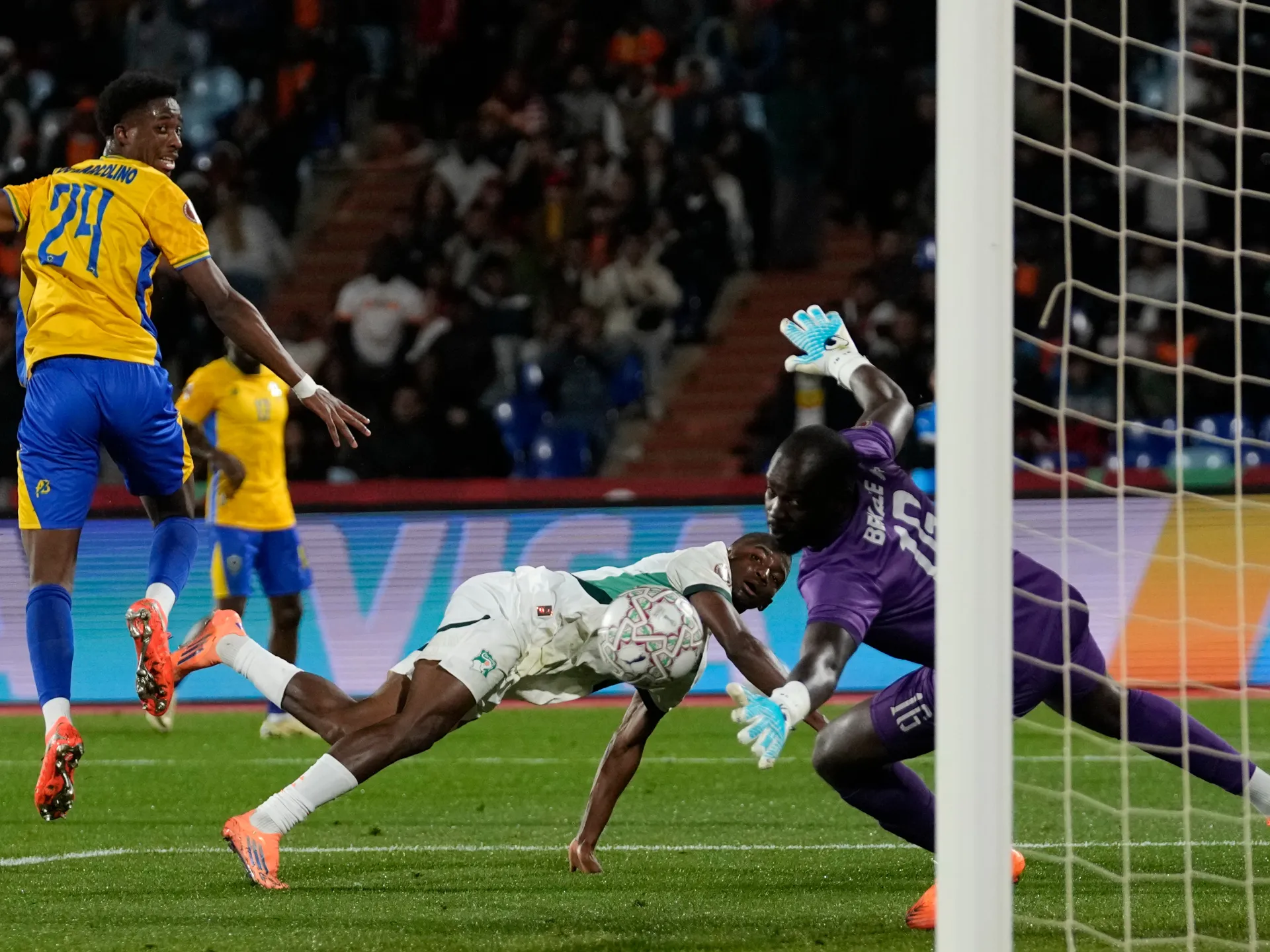
Substitute Bazoumana Toure scored in stoppage time for Ivory Coast, who came from two goals down to beat Gabon 3-2 in Marrakesh and top Group F at the Africa Cup of Nations.

Cameroon also fell behind on Wednesday, against Mozambique in Agadir, but a thunderbolt from Christian Kofane delivered a 2-1 victory.

Recommended Stories

list of 4 itemsend of list

Defending champions Ivory Coast and Cameroon finished level on seven points, and both had a plus-two goal difference. The Ivorians topped the table because they scored five goals and Cameroon four.

The results completed the last 16 lineup. Ivory Coast will face Burkina Faso, Cameroon meet South Africa and Mozambique face Nigeria.

In Marrakesh, Gabon rocked Ivory Coast by building a two-goal lead midway through the first half before the title-holders cut the deficit just before the break to trail 2-1 at half-time.

Guelor Kanga struck after 11 minutes for the Gabonese Panthers, whose best-known footballer, Pierre-Emerick Aubameyang, had returned to France for treatment of a thigh injury.

The 2015 African player of the year scored in a 3-2 loss to Mozambique three days ago that eliminated Gabon from the race to be among the 16 qualifiers for the knockout stage.

Ivory Coast fell further behind on 21 minutes when Los Angeles-based Denis Bouanga claimed his first goal of the tournament.

Ivorian Jean-Philippe Krasso netted on 44 minutes after being set up by Wilfried Zaha, the former Crystal Palace winger recalled for the AFCON after missing the triumphant 2024 campaign.

The defending champions took off captain Franck Kessie and Zaha halfway through the second half, but Amad Diallo, who scored in the first two group matches, remained on the bench.

Manchester United winger Diallo was finally introduced on 76 minutes, replacing Oumar Diakite, who was walking a disciplinary tightrope having been yellow-carded.

It was another substitute, Evann Guessand, who equalised with six minutes of regular time left. The Aston Villa striker was a late inclusion in the squad when injured Sebastien Haller withdrew.

In the southern coastal city of Agadir, Cameroon legends Roger Milla and Samuel Eto’o were among the crowd that saw Mozambique take a surprise lead on 23 minutes.

Geny Catamo from leading Portuguese club Sporting unleashed a low shot that bounced in front of goalkeeper Devis Epassy and flew just inside the left post.

The lead lasted five minutes before five-time champions Cameroon levelled when Feliciano ‘Nene’ Jone conceded an own goal.

Facing two unmarked Cameroonian attackers, goalkeeper Ivane Urrubal blocked the ball, which ran loose to Frank Magri.

Magri hit the post and Nene, attempting to clear, managed only to steer the ball into the Mozambican net.

Cameroon had the ball in the net again 10 minutes later, but the scorer, Germany-based 19-year-old Christian Kofane, was ruled offside.

The teen made up for his disappointment by putting the Indomitable Lions ahead on 55 minutes with a fierce shot from outside the box that flew into the net off the underside of the crossbar.

Source link