The Night Manager has returned to BBC One, with a tense clip from episode two showing villain Teddy Dos Santos complaining about someone making his life difficult
The Night Manager could be in for a shocking twist, with a teaser clip showing baddie Teddy Dos Santos hinting that he wants someone killed.
The BBC drama, which stars Tom Hiddleston as MI6 agent Jonathan Pine, has returned for its second series, a decade after the first series captivated audiences. The initial series followed Pine, a night manager at a Cairo hotel, who was enlisted by Angela Burr from the Foreign Office (Olivia Colman) to infiltrate the inner circle of arms dealer Richard Roper (Hugh Laurie).
The second series, which premiered on New Year’s Day, picks up several years later, and a gripping snippet from the second episode shows Pine coming face-to-face with his new adversary.
Pine is now a low-ranking MI6 officer overseeing a discreet surveillance unit in London. However, things take a turn when he identifies one of Roper’s former mercenaries, with a synopsis stating it “prompts a call to action and leads Pine to a violent encounter with a new player: Colombian businessman Teddy Dos Santos.”
An exclusive preview of the second episode reveals him covertly listening in as Teddy (Diego Calva) engages in a sinister conversation with a General, reports the Express.
Teddy informs the General that a man named Alejandro Gualteros is “making my life difficult”, claiming that he has frozen his bank accounts and is attempting to inspect one of his shipments.
“That cannot happen,” he cautions.
The General reassures Teddy that he’ll handle it, to which the arms dealer responds: “Make it quick. No money. No operation.”
In a conversation between Teddy and Pine, Pine masquerades as a businessman who has spent his career in a Hong Kong bank, aiming to gain the villain’s trust.
“You’re English?” Teddy asks during their encounter at a tennis club. “I’m from Hong Kong,” Pine responds. “Swiss Bank. I’ve been there for 10 years.”
When questioned about his presence in Colombia, he coolly answers: “Let’s just say it’s getting more complex to work with our Chinese friends. So I’m seeking new opportunities.”
“You are a risk taker,” Teddy observes. “In life as in on the court,” Pine retorts with a smile.
The latest series of the drama also stars actress and model Camila Morrone as Roxana Bolaños. She portrays a businesswoman who is close to Teddy and reluctantly assists Pine in penetrating his arms operation.
The plot summary concludes: “As allegiances splinter, Pine races to expose a conspiracy designed to destabilise a nation. And with betrayal lurking around every corner, he must decide whose trust he needs to earn and how far he’s willing to go before it’s too late.”
For the latest showbiz, TV, movie and streaming news, go to the new Everything Gossip website.
Some clubs eschew the host family approach in favour of a boarding system, in which players live together in dormitories on club property, the most famous being Barcelona’s La Masia.
“There are strengths and weaknesses to both models,” says Sam Bayford, Brentford‘s academy head of safeguarding.
“The reason we went with our model is that we want to give the players a real break, a geographical and psychological separation rather than living with and sleeping next to the lads they’ve been training with all day.”
Adolescence is a key time for personal, physical and technical development in young footballers – done right, the management of an academy player’s living situation can propel them forwards.
From age 15 Theo Walcott spent two years living at Darwin Lodge, a boarding house run by Southampton until 2010, which the former England international credits with underpinning his successful career.
Walcott lived at the Lodge alongside players like Adam Lallana, Nathan Dyer, and Leon Best, and shared a bedroom with five-time Champions League winner Gareth Bale.
“Being around the other players all the time I found really hard at the start,” the former Arsenal winger tells BBC Sport. “But the environment was built to be like you were in a proper home.
“When you have a lot of good players in the same age group around each other constantly every day, you can feed off each other, always willing to do well together.
“People would act silly sometimes. You would come home and the lights would all be off and you’d know you were in trouble because Gareth and a lot of the other players would be waiting with their underpants on their head and batter you with pillows! You’d have to dart to your room but luckily I was quick.
“Put us all together in a room even now, it’s like we saw each other yesterday.”
Exterior view of the Ministry of Health and Welfare building in Sejong, South Korea. Photo by Asia Today
Jan. 1 (Asia Today) — South Korea will raise its median income standard by 6.5% this year, the largest increase on record, expanding eligibility for basic livelihood benefits and related support programs, the government said Wednesday.
The Ministry of Health and Welfare said the median income for a four-person household in 2026 will be set at 6,494,738 won per month ($4,900), up 6.51% from a year earlier. The higher benchmark will be used to calculate eligibility for benefits under the National Basic Living Security System.
Under the revised criteria, the selection threshold for a four-person household will rise to 2,078,316 won per month ($1,570), from 1,951,287 won last year. For a one-person household, the threshold will increase to 820,556 won ($620), up from 765,444 won.
Actual benefit payments are determined by subtracting a household’s recognized income from the applicable selection threshold, the ministry said.
The government will also expand income deductions aimed at encouraging youth employment and self-reliance. Eligibility for additional deductions on earned and business income will be extended from those aged 29 and under to those aged 34 and under. The maximum additional deduction will increase to 600,000 won ($450) from 400,000 won.
New special provisions will address state compensation payments. Lump-sum compensation received by beneficiaries who are victims of unlawful state actions will be excluded from asset calculations for three years, a move intended to prevent beneficiaries from losing eligibility due to compensation payouts.
The ministry said it will also tighten oversight of fraudulent benefit claims. Mandatory prosecution will apply to cases where recovered fraudulent payments exceed 10 million won ($7,500), and authorities will be required to submit prosecution results every six months to strengthen supervision and transparency.
Health and Welfare Minister Chung Eun-kyung said the changes are expected to add about 40,000 new recipients in 2026.
“We will continue to closely review and improve the system so that low-income citizens can live stable and dignified lives,” Chung said.
This village in the Yorkshire Dales is a hidden gem with stunning waterfalls and green landscapes that inspired a famous artist hundreds of years ago
It provides a tranquil backdrop for relaxing in the countryside (Image: Michael Campbell Cole via Getty Images)
Nestled in the Yorkshire Dales, this quaint village provides the perfect getaway for those seeking to immerse themselves in nature’s splendour – and a renowned artist did just that.
West Burton, tucked away in a side valley of Lower Wensleydale, has a deep-rooted connection with the celebrated painter J. M.W. Turner, who is acclaimed for his evocative depictions of expansive landscapes. The village itself, particularly its breathtaking waterfall, served as inspiration for Turner. A sketch of the Cauldron Falls, drawn by the artist during his tour of Yorkshire in 1816, still exists. It’s thought that he spent a significant amount of time by the water, studying its flow and observing how it cascaded over the falls.
His plan was to create a larger, more detailed piece in his signature watercolour style; however, it famously remained unfinished. Despite this, the artwork can be viewed alongside his other masterpieces at the Tate in London. Remarkably, the falls remain unchanged even after 200 years, allowing visitors to appreciate their full colour and beauty firsthand. A brief stroll from the charming West Burton village will lead you there, where you can marvel at the stunning plunge pool, filled with naturally tumbling water.
A recent holidaymaker left their review on TripAdvisor, stating: “Wow, what a hidden gem this is, tucked away in the quaint village of West Burton. Really easy to access the falls, a very short walk from the village itself. Stunning waterfall and peaceful away from the crowds. Simply magical.”
Beyond this attraction, the village centre boasts a verdant green space, surrounded by numerous period buildings and charming cottages that perfectly capture authentic Yorkshire countryside living. The settlement serves as a favoured stopping point for those keen to discover the dales and surrounding regions.
Standing proudly on the green is the impressive West Burton Obelisk, a stone monument built in 1820. While such features are typical of many market settlements, this particular structure is thought to have originally been a preaching cross, now serving as a significant historical marker for the locality.
The village’s heritage stretches back much further, with connections to an Iron Age community, evidenced by the Burton Moor hut circles, which eventually evolved into a mediaeval estate. During the 18th century, it flourished as a bustling settlement centred on lead extraction, stone quarrying, traditional crafts, and naturally, farming.
Traditional crafts remain a local speciality, most notably the distinctive Cat Pottery. This charming establishment has been creating adorable Moorside cats since 1982, with every piece lovingly handmade within the village itself – preserving the region’s rich tradition of skilled craftsmanship.
One visitor hailed the spot as a “hidden gem”, adding: “Perfect for cat lovers. Bought two ceramic cats and had a lovely conversation with the gentleman who was working there at the time. It was hard to pick which we wanted because all of the pot cats are adorable. Will be ordering more online!”.
‘This toe-tapping film celebrates the transformative power of music and individuality’
Content cannot be displayed without consent
One of the most popular family films of the 21st Century, featuring a standout performance from Hollywood’s biggest comedy stars, is on ITV tonight (Saturday).
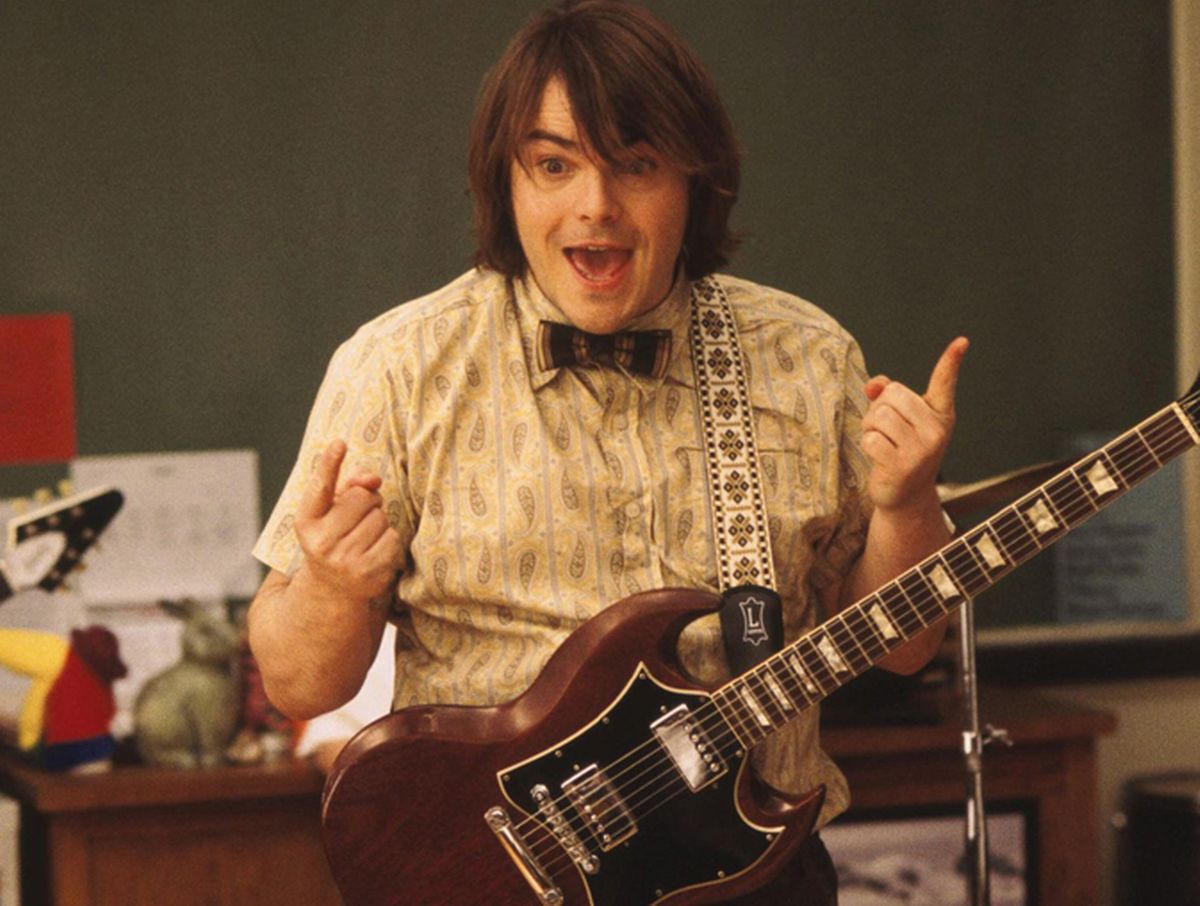
The electric Jack Black takes centre stage in Richard Linklater’s School of Rock, which was a huge surprise smash in 2003 and has gone on to become a stone-cold classic.
Black plays struggling rock guitarist Dewey Finn, who is fired from his band and ends up posing as a substitute teacher at a prestigious prep school. After witnessing the musical talent of the students, Dewey forms a band to compete in the upcoming Battle of the Bands, seeking revenge on his old band and the winnings to pay his rent.
However, Dewey’s unique teaching style begins to ignite a passion in his pupils, and they, in turn, start to inspire him. Featuring some amazing performances from the young cast (which includes iCarly’s Miranda Cosgrove), School of Rock also boasts a killer soundtrack and great supporting performances from the likes of Joan Cusack and Sarah Silverman.
School of Rock received a big thumbs-up from critics. It has a 92% rating on Rotten Tomatoes, which says: “Black’s exuberant, gleeful performance turns School of Rock into a hilarious, rocking good time.” Legendary critic Roger Ebert wrote that the film “proves you can make a family film that’s alive and well acted and smart and perceptive and funny – and that rocks.”
It has gone on to make many ‘best of’ lists since, with Looper ranking it number 41 on its 2024 run down of the ’50 Best PG-13 Movies of All Time’, writing “as a feel-good movie for the whole family, its powerful messaging of championing creativity, self-expression, and the pursuit of passion leaves viewers of all ages with a sense of joy and optimism after every viewing.”
It was also a huge smash at the box office, too, and earned almost four times its budget to become the highest-grossing music-themed comedy of all time, until it was overtaken in 2015 by Pitch Perfect 2.
Cinema fans have been enjoying School of Rock again and again ever since, with one writing: “School of Rock is about nothing but pure joy and constant smiling. I expected a goofy and funny movie, but this is so much more fun and amazing than I expected.”
Another enthused: “A classic movie that delivers everything it promises. A timeless quirky/funny movie with great lessons hidden in its development, suitable for all ages and young audiences. A beautiful way to spend your time.”
A third said: “School of Rock is an electrifying musical masterpiece that strikes a chord with its exceptional cast, infectious energy, and empowering message. This toe-tapping film celebrates the transformative power of music and individuality, leaving audiences inspired and wanting more. Rock on!”
Despite rumours of a sequel that never happened, the film did spawn a hit stage musical and a television series that ran for three seasons.
School of Rock airs on ITV2 tonight (Saturday, January 2) at 6.45pm.
Danila Yurov scored twice, Quinn Hughes had four assists and the Minnesota Wild beat the Ducks 5-2 on Friday night.
Kirill Kaprizov, Yakov Trenin and Nico Sturm also scored for the Wild, who earned a point for the fifth straight game (3-0-2). Filip Gustavsson stopped 26 shots.
Minnesota is 22-4-4 in its last 30 games, and 8-1-2 since acquiring Hughes, the 2024 Norris Trophy winner, in a blockbuster with Vancouver on Dec. 12.
Yurov put the game out of reach when he redirected Hughes’ shot past Dostal for a 4-1 lead 3:21 into the third. Sturm’s shot from the left circle made it 5-1 with 4:58 left.
Dostal made eight saves during a pair of penalty kills in the first seven minutes of the second, but he caught an unlucky break when the Wild scored on a double-deflection to take a 2-0 lead at the 8:10 mark.
Hughes, one of eight Minnesota players named to Winter Olympic teams Friday, sent a shot from the blue line that hit Trenin’s stick and Yurov’s right skate before trickling into the net.
The Ducks grabbed some momentum when Mason McTavish’s faceoff swipe from the left circle landed on the stick of Sennecke, whose snap shot beat Gustavsson stick-side to cut the lead to 2-1. Sennecke leads NHL rookies with 13 goals.
But Minnesota pushed it to 3-1 with 5:15 left in the second when Trenin took a pass from Hughes in the right circle and rifled a shot past Dostal.
Minnesota took advantage of Alex Killorn’s tripping penalty, needing only nine seconds to score on the power play for a 1-0 lead 5:39 into the first. Dostal blocked Hughes’ slap shot from the point, but Kaprizov banged a shot past Dostal after a scramble in front of the net for his 24th goal.
Up next for the Ducks: at Washington on Monday night.
Operating profits rise at Nexon, Krafton and Netmarble as expanded and new IPs drive performance, while Kakao Games swings to a loss amid a release gap. Source: FnGuide.
Based on disclosed information; compiled by Asia Today and translated by UPI
Jan. 1 (Asia Today) — Major South Korean game companies posted sharply different results in 2025, with performance largely tied to whether they shipped new titles built on established intellectual property or introduced new franchises, industry officials said.
Nexon is projected to report 2025 revenue of 4.5594 trillion won ($3.16 billion) and operating profit of 1.4112 trillion won ($979 million), up 13.7% and 26.4% from a year earlier, according to industry estimates.
The gains were attributed to the impact of recent releases including Mabinogi Mobile, Maple Raising and The First Berserker: Khazan. Mabinogi Mobile won the top prize at the 2025 Korea Game Awards held at BEXCO in Busan.
Krafton is also expected to top 1 trillion won ($693 million) in operating profit. The company’s 2025 revenue is estimated at 3.09 trillion won ($2.14 billion) with operating profit of 1.301 trillion won ($902 million), up about 14% and 10% on the year.
Krafton’s results were driven by its flagship PUBG: Battlegrounds franchise, with Battlegrounds Mobile India cited as a key growth engine in the Indian market.
Netmarble is projected to post 2025 revenue of 2.79 trillion won ($1.93 billion) and operating profit of 360 billion won ($250 million), up 4.7% and 68% from a year earlier. The company’s new titles based on in-house IP, including Vampyr and Seven Knights Re:Birth Global, were credited with supporting profitability, along with a higher share of self-developed games in its lineup.
NCSoft, which recorded its first loss since its initial public offering last year, is expected to return to profit. The company’s 2025 revenue is estimated at 1.45 trillion won ($1.01 billion) with operating profit of 15 billion won ($10.4 million), with strong early performance of the MMORPG Aion 2 cited as a key factor.
Kakao Games, however, is projected to swing to an operating loss amid delays in new releases. The company’s 2025 revenue is estimated at 470 billion won ($326 million) with an operating loss of 39 billion won ($27.0 million).
An industry official said game makers are leaning more heavily on proven franchises while trying to develop new IP, and that 2026 results will likely depend on whether companies can sustain release momentum.
The day starts with a gentle trek. We clamber up from Flodigarry to circle under the black cliffs of the Quiraing where clouds flood around the bizarre rock formations. At the pass, we meet a howling wind and force our way down with shrieks of laughter.
I’m walking on the Isle of Skye, specifically a section of the Trotternish Ridge for CoppaFeel!, the young people’s breast cancer awareness charity. There are 120 participants in total, split into four groups of 30. Over five days, we will trek about 100km on the island’s rugged trails, traversing sea cliffs, climbing mountains, passing ruined castles, crossing bogs and jumping over rivers to raise money for the charity.
I’ve never been out in the hills with so many other women before. Some 117 of the participants are female, with a further six female celebrities spurring us on. We’re a raucous bunch.
After a scenic lunch overlooking Raasay and the distant Scottish mainland, we tackle the second half of the day’s trek – then bad weather rolls in. As we climb, rain starts falling, thick as smoke. The ground is sodden. Cold water drips from my hood, running down my nose, cheeks and chin. It’s grim. My waterproofs need reproofing and I’m soon drenched right through, like everyone else.
Of the 30 women in my group, most are new to mountain walking. For some, it’s their first time in Scotland. But somehow in these difficult miles across the wind and rain-battered mountain, morale stays high. I don’t need to turn and check where everyone is. I can hear them singing. They’re belting out Bohemian Rhapsody. When we pause, they dance.
Singing helps to keep morale high while traversing a bog.
Back on the campsite in the village of Uig, our base for the week, we shower, change and eat hot lasagne from Really Delicious, the Glasgow caterer looking after us all week. The event is organised by CoppaFeel! in partnership with Charity Challenge, which specialises in adventure challenges, providing the transport, routes and accommodation, as well as the expert mountain leaders who guide the inexperienced walkers across the island.
Mass participation charity events such as this are growing, and since Covid, Charity Challenge reports a huge increase in demand. From national Three Peaks Challenges to Hadrian’s Wall and overnight ascents of Yr Wyddfa (Snowdon), group trekking in the UK has exploded. The events bring a range of benefits. Businesses find them a good way to bring teams together in person, boosting employee morale and mental health. In a tough funding climate, charities gain much-needed income and visibility. CoppaFeel!’s record is exemplary: in 2017, the charity raised £200,000 from trekking; in 2025, it was aiming to reach £2m.
After dinner, we gather in the marquee for the daily debrief – 150 people crowd in, taking shelter from the wind. The ground squelches beneath our feet. Today was tough, a baptism of fire for novice walkers. I expect sullen stares and low spirits, but when the celebrity leaders and CoppaFeel! staff walk in, the tent erupts.
The walkers and a guide cross a stream on the Quiraing with views to Trotternish Ridge.
“What a day!” says author and podcaster Giovanna Fletcher, one of CoppaFeel!’s celebrity patrons. The tent falls quiet, as everyone strains to catch her words. We’re two days in, and an intense cohesion is forming. It feels like family. Standing in front of the crowd wearing a giant boob costume, Giovanna reflects on the day.
Tonight, even after the brutal storm, most people are laughing and cheering. She reminds us all to dig deep and remember our personal motivations – our “why” – to get through the week. Giovanna’s is Kris Hallenga, the inspirational woman who founded CoppaFeel! in 2009 after she was diagnosed with stage four breast cancer when she was 23. “Kris is why I’m here,” she says. Kris died in 2024.
Over five days, we complete five different routes around Trotternish, the northernmost peninsula on Skye. It’s stunning. With each hike, we gain different views of the hills of Harris and North Uist, watching the light change on the sea between the mainland and the Outer Hebrides. The days are long and demanding but everyone shows good stamina and determination. By day three, a committed group have drunk the local bar dry.
On our fourth day, we hike from Sligachan to the Fairy Pools and back again. Circling underneath the Black Cuillin (Skye’s highest and rockiest range), the women are awestruck. “It feels like we’re on another planet!” one woman says.
For many, these treks provide a guided entry to adventure. The leaders support everyone on the mountain, covering route-finding and first aid, while CoppaFeel! helps with kit lists, a training plan, regular webinars and online meetups. I watch women who trained in London’s Richmond Park become adventurers, newly comfortable with trekking poles, gaiters and “nature pees”. They all say they will go out and do this again.
Stopping for lunch at the Fairy Pools, a series of natural pools and waterfalls not far from the Black Cuillin, the women pose for photos and make videos. They dip their faces in the clear water and share their experiences on social media to raise awareness and fundraise. Every participant has a target of £2,500.
Hikers on the way to the Fairy Pools from Sligachan under ominous skies.
By this point in the week, we’ve relaxed into each other’s company. Five days is a long time to spend with strangers, but as the week goes on, I come to see that the length of this challenge is part of its power.
“At the start,” Giovanna says, “a week will feel like for ever. But make the most of it. Trust me, by the end, you won’t want to finish.”
Strangers form close bonds and my team becomes deeply supportive. In this safe space, people open up.
Many of the participants have personal experience of breast cancer. For some, it was five, 10 or 20 years ago – while others are now in treatment. Many have also experienced grief. In this context, the challenge is not merely physical: deep, raw emotions are close to the surface.
Walking and talking beside the river underneath the Cuillin, one woman tells me about her life. From chronic illness to having children, her breast cancer diagnosis and treatment, everything flows out in an easy conversational way. Then she falls behind, starts chatting with someone else and that’s how it goes. An hour later, we catch up and she says she cried after sharing those things with me – she realised she had never said them aloud before.
Participants ford a river in tutus.
She’s not alone. People change over this week. There’s a mother in my group who has two young children. She has recently finished her breast cancer treatment and is emotionally wobbly. But by the end of the week she is beaming, looking stronger and happier, as if a weight has been lifted. The trek creates a profound space of mass empathy. Stigma is removed and the experience of breast cancer is normalised.
The final day dawns like a festival. Glitter goes on like war paint. There are flower garlands, frilly tutus and giant pink knickers. About 150 of us toil uphill through bog to reach the summit of Beinn Edra. The sun comes out and on the breast of this hill, those who choose to, bare it all.
Back at camp, we cross the finish line, singing, hugging and crying. Looking around, I see new friends for life have been made. Then the CoppaFeel! girls read out the fundraising total. The reach is astonishing. This week, 120 women walking the rough trails of Skye have raised over £500,000. They are a force to be reckoned with.
CoppaFeel! is running four treks in 2026, including two day-long treks in the UK; apply to do a trek or register interest at coppafeel.org/trek
Weekly insights and analysis on the latest developments in military technology, strategy, and foreign policy.
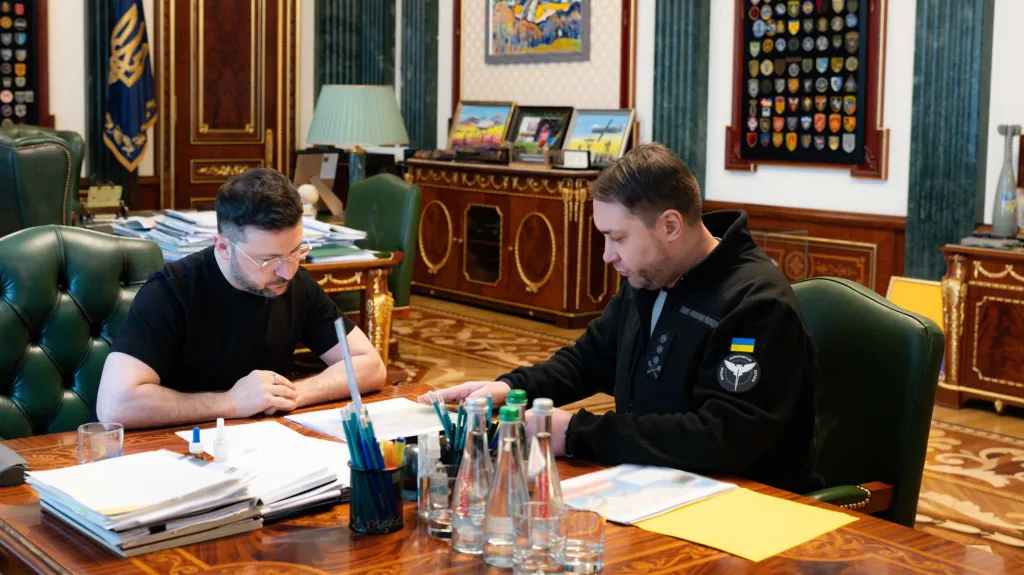
Lt. Gen. Kyrylo Budanov, who Ukrainian President Volodymyr Zelensky named as his new chief of staff on Friday, tells The War Zone that the job will center on figuring out a way to end the war and helping to calm his country’s political turmoil. Until today, Budanov served as the head of Ukraine’s Defense Intelligence Directorate (GUR). Budanov’s frequent high-profile attacks on Russia and cool demeanor have made him so famous that memes of him have gone viral. He takes over from Andrii Yermak, a controversial and polarizing figure recently fired for his role in a burgeoning corruption scandal.
In a brief but exclusive conversation, Budanov told us his main goals for his new position are “negotiations and stabilization of the internal situation and of course, coordination.” He added that he will no longer have a role with GUR’s operations.
“It’s absolutely a new page,” he told us, noting that he will still be in the military and retain his rank, but will “miss” direct involvement in GUR actions.
As for the internal issues he is most concerned about, Budanov said, “I’ll see.”
Ukrainian President Volodymyr Zelensky (left) named Lt. Gen. Kyrylo Budanov as his new chief of staff. (Zelensky photo)
Budanov’s appointment comes at a perilous moment. Ukraine is facing an intense fight in the east and south, under constant Russian missile and drone attacks and negotiations are ongoing to end the full-on war.
“I met with Kyrylo Budanov and offered him to head the Office of the President of Ukraine,” Zelensky explained. “Right now, Ukraine needs to focus more on security issues, the development of the Defense and Security Forces of Ukraine, as well as on the diplomatic track in negotiations, and the Office of the President will serve to fulfill primarily such tasks of our state.”
Budanov “has special experience in these areas and sufficient strength to achieve results,” Zelensky noted. “I also instructed the new head of the President’s Office to, in cooperation with the Secretary of the National Security and Defense Council of Ukraine and other necessary leaders and institutions, update and present for approval the strategic foundations of defense and development of our state and further steps.”
I had a meeting with Kyrylo Budanov and offered him the role of the Head of the Office of the President of Ukraine. At this time, Ukraine needs greater focus on security issues, the development of the Defense and Security Forces of Ukraine, as well as on the diplomatic track of… pic.twitter.com/SCs6Oj2Rb7
— Volodymyr Zelenskyy / Володимир Зеленський (@ZelenskyyUa) January 2, 2026
Naming Budanov gives Zelensky a degree of political and military cover at a precarious time. The former GUR commander is well-regarded both at home and abroad, and his presence at the top of the government gives Zelensky a key aide with gravitas. On the downside, Budanov comes to the job with little experience dealing with the political and bureaucratic minutiae that a chief of staff must master to keep the government running at a time of war.
For Budanov, the move is the latest step in a career that saw him become a national hero after being thrice wounded fighting against Russians since they first invaded in 2014. He was promoted to brigadier general and named head of GUR in 2020 and burst onto the international scene a year later when he laid out how and when Russia would launch its full-on invasion three months before it would happen.
The exploits of Budanov, who has frequently commented on the conflict for The War Zoneand other publications, has made him a top contender to succeed Zelensky in the next election despite making no public suggestions that he is interested in the position.
“Although Budanov has never announced plans to pursue a political career, he is regularly featured in opinion polls and ranks among the top presidential contenders, behind only Zelensky and Ukraine’s Ambassador to the U.K. Valerii Zaluzhny,” the Kyiv Independent noted on Friday. “According to a recent poll conducted by Socis, Budanov would secure 5.7% in the first round. In a hypothetical runoff between Zelensky and Budanov, the latter one would defeat Zelensky with 56% of the vote against 44%.”
There is another benefit to this move for Zelensky. Bringing Budanov into his administration adds layers of complication should the new chief of staff decide to challenge Ukraine’s president in a future election.
New GUR commander Lt. Gen. Oleg Ivashchenko (Ukrainian military photo)
The Latest
On the battlefield, Ukraine is continuing to hold onto parts of the embattled city of Pokrovsk despite Russian President Vladimir Putin’s proclamation last month of its capture. Though Russian troops broke into the city in late October after more than a year of bloody assaults.
Ukraine’s defense of portions of Pokrovsk has been aided by the recent delivery of the last 12 of 49 Abrams main battle tanks from Australia.
The Australian Abrams “entered the fight during a critical phase of the battle for Pokrovsk, where Ukrainian forces are conducting counterattacks to keep Russian troops south of the railway line and prevent them from breaking out, which would cut off withdrawal operations from Myrnohrad,” Euromaidan Press reported.
Australia recently completed delivery of the last 12 of its 49 Abrams tanks it donated to Ukraine. (Australian Defense Ministry)
The operation “was carefully structured, with Abrams tanks moving forward alongside infantry fighting vehicles, acting as both shield and hammer,” the publication added. “The primary task of the tanks was to suppress Russian firing points with their main cannons, draw enemy drone attention, and create corridors for the Ukrainian BMPs to advance.”
Under the Abrams’ cover, “the BMP’s pushed toward the outskirts of Pokrovsk, dismounted assault troops, and secured key positions that had previously been under heavy Russian pressure.”
The delivery of the last tranche of Australian Abrams came as Ukraine had already lost at least 23 of the 31 variants provided by the U.S., according to the Oryx open source tracking group. The losses are likely significantly higher because Oryx only provides information for which is has visual confirmation.
The arrival of Australian Abrams tanks at this critical moment carries significance beyond their sheer numbers. They entered combat as Ukraine launched counterattacks to prevent northern Pokrovsk from falling and to counter Russian narratives of inevitable victory.
“For 45 days in a row, the ground robotic complex of the Third Assault Brigade went on combat duty and suppressed all enemy attempts to break into our sector with machine gun fire,” the unit proclaimed on Telegram. “The operators of the NC13 NRC shock unit controlled the DevDroid TW 12.7 robot from a safe shelter. During the mission, the enemy failed to infiltrate or occupy our position. And the fighters held the lines with zero losses in manpower.“
For 1.5 months, a ground drone of the 3rd Assault Brigade held a position instead of soldiers. It suppressed all enemy attacks with machine-gun fire. Operators controlled the DevDroid TW 12.7 robot from a secure shelter. The troops held the line with zero personnel losses. pic.twitter.com/LlerjtbFrD
The War Zone cannot independently verify the Ukrainian claim, however, both ground drones are playing an increasing role for both sides because of the way aerial drones are attacking troops and vehicles. The UGVs are being used mainly for logisitcal support and casualty evacuation.
In contrast, Russia has been using soldiers on horseback to attack Ukrainian positions.
“Russian occupiers lose so much equipment during their ‘meat-grinder assaults’ that they’re forced to move on horseback,” the 5th Assault Battalion of the 92nd Motor Rifle Brigade stated on Telegram. “But even that doesn’t help them – the drone operators ‘take out’ the enemy as soon as they spot a target.”
The commander “stated that the idea of reviving the cavalry, which was disbanded in the Soviet army in 1955, is not a ‘return to the past’ and has a number of advantages,” the outlet noted. The horses, said the commander, “see well in the dark, do not need roads to accelerate at the final stage of the offensive, and thanks to instincts, they can allegedly bypass mines.”
While the fighting remains intense in and around Pokrovsk, the Russians are also advancing in the Zaporizhzhia region of the south.
At a meeting on Sunday attended by Russian President Vladimir Putin, the Russian commander in the region, Col. Gen. Andrei Ivanaev, claimed the town of Huliaipole has been captured.
“Ivanaev told Putin that his forces had taken over 210 square kilometers of territory in the Dnipropetrovsk and Zaporizhzhia regions since early December, feeding the Kremlin’s narrative that ultimately Russia will achieve its goal of occupying four regions of eastern and southern Ukraine,” CNN reported.
“The Ukrainian Defense Forces continue to hold positions in most of Hulyaypole, but further defense of the city is becoming extremely difficult due to the terrain,” the Ukrainian conflict tracking group DeepState posited. “The city is completely in a grey zone, because the enemy, like our forces, is present almost everywhere. In one basement there may be fighters of the Ukrainian Defense Forces, and in the neighboring one – the enemy. Only assault groups operate in the open, of which the enemy has significantly more, so he can afford to shoot a video in the center of Hulyaypole with a flag.”
The Russian MoD posted videos of soldiers showing the Russian flag in different parts of Myrnohrad and Huliaipole. In a meeting at the Joint Group of Forces headquarters, President Putin was told by Gerasimov, Valeriy Solodchuk, and Andrei Ivanayev that Myrnohrad and Huliaipole… pic.twitter.com/CvRyXAQqjz
Beyond the front lines, Ukraine is continuing its campaign of attacking Russian energy infrastructure.
“On the night of January 2, Ukrainian strike drones struck an oil refinery in Russia’s Samara Region,” according to Militarnyi. “Local residents reported hearing explosions, and the Supernova+ Telegram channel shared footage believed to show a fire at the site.
The target was the Novokuybyshevsk Oil Refinery, which is owned by the state-run company Rosneft, the outlet explained. Video shot from a distance shows flames erupting, though the extent of the damage is unclear.
Russian sources confirm a drone strike on the Novokuybyshevsk oil refinery in Samara Oblast overnight. At least ten explosions were heard, and large fires were seen at the Rosneft-owned site. Videos from the scene show flames lighting up the night sky, shortly after officials… pic.twitter.com/1K5pJkTqKd
The Russians have also continued their airstrikes on Ukrainian cities well beyond the front lines.
In the early morning hours of Jan. 2, “the enemy attacked with 116 strike drones of the Shahed, Gerbera and other types,” the Ukrainian Air Force stated. While the air defense “shot down/destroyed 86 enemy drones…27 strike drones were hit at 23 locations, and the wreckage of the downed drones fell at two locations.”
A heinous Russian strike on Kharkiv. Preliminary reports indicate two missiles struck an ordinary residential area. One of the buildings has been severely damaged. A rescue operation is currently underway, with all necessary services on site. The exact number of casualties is yet… pic.twitter.com/7MIVSlBvAM
— Volodymyr Zelenskyy / Володимир Зеленський (@ZelenskyyUa) January 2, 2026
Ukraine’s war efforts have been greatly assisted by supportive partisan groups inside Russia. GUR recently announced that it carried out a plot to fake the killing of the leader of one of those groups.
The murder of Denis Kapustin, the commander of the “Russian Volunteer Corps” unit, was ordered by Russian special services and a $500,000 bounty was placed on his head, GUR claimed. Kapustin, 41, was previously reported killed by a Russian drone while carrying out a combat mission in the southeastern Zaporizhzhia region overnight on Saturday, Dec. 27, according to the Kyiv Post.
However, Kapustin’s death was faked as a ruse to get him out of Russia and he is now safe in Ukraine, GUR noted. In addition to saving an asset, GUR claimed it also pocketed the reward money.
“The half a million dollars received for his elimination will strengthen the special units of the Main Intelligence Directorate,” GUR exclaimed.
GU R released video showing how its multi‑stage op saved Russian Volunteer Corps commander Denis Kapustin’s life. As part of the plan, they created a fake drone strike video on a van and staged the “aftermath” with a burning vehicle to fool Russian services who had put up a… https://t.co/7UbfehDvx2pic.twitter.com/r0W20uBHLy
Amid all the bloodshed and political machinations, negotiations to end the war drag on.
Zelensky, who just returned to Kyiv after a visit with U.S. President Donald Trump in Florida, said the agreement was largely in place.
“The peace agreement is 90% ready,” the Ukrainian leader said in his New Year’s Eve address. “Ten percent remains. And that is far more than just numbers. Those 10% contain, in fact, everything. Those are the 10% that will determine the fate of peace, the fate of Ukraine and Europe.”
For his part, Putin said little about the peace process in his New Year’s speech. He told Russia’s soldiers that they were shouldering the responsibility of fighting for their “native land, for truth and justice.” Russia’s people, he added, believe that victory will be achieved, according to The New York Times.
Earlier this week, Russia claimed that Ukraine tried to attack Putin’s residence to derail the peace process, a charge Ukraine denied. The CIA pushed back on that assertion, which sparked Trump’s ire.
Trump said that Putin’s claims about an “attack” show that it is Russia that is obstructing peace, and shared on Truth Social a link to a New York Post analysis alleging a drone strike on Putin’s residence. pic.twitter.com/sPv4YE9TZg
The biggest sticking point is the hardest one to overcome. Russia wants full control of the Donbas, including the territory Ukraine still holds. The cities still in Ukrainian hands provide an important bulwark against further Russian advances deeper into the country.
After meeting Zelensky at Mar-a-Lago on Sunday, the two leaders said they had advanced a 20-point peace proposal. Trump claimed they had covered “95 percent” of the issues needed to end the war.
Pressed on unresolved issues, Trump pointed to territory – land seized by Russia that Putin has shown no signs of agreeing to return.
“You’re better off making a deal now,” Trump told Zelensky, warning that time favors Moscow.
PARIS — Actor George Clooney and his wife Amal Clooney were granted French citizenship because “they contribute, through their distinguished actions, to France’s international influence and cultural outreach,” the French government said Wednesday, defending their naturalization that was questioned by a junior French minister.
The naturalizations of the Kentucky-born star of the “Ocean’s” series of heist movies, his wife and human rights lawyer Amal Clooney, and their twins Ella and Alexander were announced last weekend in the Journal Officiel, where French government decrees are published.
Marie-Pierre Vedrenne, a junior minister at the Interior Ministry, expressed misgivings Wednesday that some of the Clooneys’ new French compatriots may think that the star couple was granted special treatment. The actor speaks only what he himself says is “horrible, horrible” French.
“The message being sent is not good,” Vedrenne said in an interview with broadcaster France Info. “There is an issue of fairness that, in my eyes, is absolutely essential.”
The couple purchased an estate in France in 2021 and Clooney has said that it’s their primary residence. Non-French residents of France have multiple possible routes to becoming naturalized. It wasn’t clear whether the 64-year-old actor retained his American citizenship. His 47-year-old wife was born in Lebanon and raised in the U.K and naturalized by France under her maiden name, Amal Alamuddin. The 8-year-old twins were born in London.
The Foreign Ministry said the Clooneys were eligible for citizenship under a French law that allows for the naturalization of foreign nationals who contribute to France’s international influence and economic well-being.
It argued that France’s cinema industry will benefit from the actor’s clout as a global movie star and said that as a lawyer, Amal Clooney regularly works with academic institutions and international organizations in France.
“They maintain strong personal, professional and family ties with our country,” the ministry said.
“Like many French citizens, we are delighted to welcome Georges and Amal Clooney into the national community,” it concluded, giving the actor’s first name a French twist by adding the “s” at the end.
The decision was also defended by Vedrenne’s superior at the Interior Ministry, Interior Minister Laurent Nuñez, who said he signed the naturalization decree.
“It’s a big chance for our country,” he said.
In recent media interviews when he was promoting “Jay Kelly,” Clooney said that he is trying to teach himself French using a language-learning app. He said that his wife and children speak the language perfectly.
“They speak French in front of me so that they can say terrible things about me to my face and I don’t know,” he joked, speaking to French broadcaster Canal+.
French media have reported that the Clooneys live part-time in their luxury 18th-century villa outside the town of Brignoles in southern France, where they can keep a lower profile and their children are protected from unauthorized photographs by French privacy laws.
In an interview with Esquire in October, Clooney said: “I was worried about raising our kids in L.A., in the culture of Hollywood.”
“I don’t want them to be walking around worried about paparazzi. I don’t want them being compared to somebody else’s famous kids,” he said. Growing up away from the spotlight in France, “they have dinner with grown-ups and have to take their dishes in. They have a much better life.”
Moldova, one of Europe’s least visited countries, offers incredible value for British travellers with restaurant meals from £3.50, flights from London starting at £51, and stunning scenery including underground wineries and historic monasteries without the crowds
Moldova is considered one of the least visited countries in Europe(Image: Getty)
A stunning European destination that remains “unnoticed by tourists” serves up dining experiences for just £3.50. Fewer than 150,000 visitors annually are believed to venture to Moldova, tucked between Ukraine and Romania.
Yet this nation presents budget-friendly travel possibilities with flights from London starting at merely £51. Holiday-makers can also savour a restaurant meal for as little as £3.50 (€5) whilst a soft drink costs under £1.
The typical hotel in the capital Chisinau is reported to charge travellers approximately £26 per night, according to El Economista, reports the Express.
This landlocked country showcases breathtaking landscapes including the Nistru River and the ancient cave monasteries of Tipova. It’s also the location of enormous subterranean wineries like Cricova alongside the sprawling Codru National Reserve.
Moldova even houses the globe’s most extensive collection of wine bottles. The nation stores 1,500,000 valuable bottles of wine, including one that once belonged to Russian President Vladimir Putin.
This country, which proclaimed its independence in 1991, has remained torn between its connections to Russia and the European Union.
It submitted its EU membership application in March 2022, receiving candidate status in June that same year. The nation is targeting complete EU membership by 2030.
However, it’s believed the separatist region of Transnistria might prove problematic following Russia’s invasion of neighbouring Ukraine. The UK Government strongly advises against all travel to the Transnistria region.
The Foreign, Commonwealth & Development Office warns: “FCDO advises against all travel to Transnistria. There is widespread military activity in Ukraine, including close to some Moldovan borders. Transnistria is outside the control of the Moldovan government.”
YouTuber Steve Marsh ventured to the nation in 2023, confessing he felt “nervous” during his journey after his return flight was cancelled due to “security” concerns. However, he quickly found himself charmed by the country.
He shared: “As first impressions go, I really like this place, and even with this horrible weather. The fact that nobody comes here just adds to the allure for me.”
Travel blogger Drew Binksy also had words of praise for the small nation. He expressed: “I actually really like Moldova.
“Chisinau is the capital. It’s like the least visited city and country in Europe. No one really knows about it.
“[It is] Very similar to Russia. They speak Russian. They look Russian, they act Russian, but it’s this kind of mix of European, little bit of Ukrainian vibes because it’s kind of sandwiched there on the border.
“They have really good wine in Moldova. There’s a place called Orhei. I’m not pronouncing it right, but I went down there for the winery tour and it was fantastic.”
ANN ARBOR, Mich. — Morez Johnson Jr. scored a career-high 29 points, including 17 in the first half, and No. 2 Michigan beat No. 24 USC 96-66 on Friday night.
Roddy Gayle Jr. added 12 points for the Wolverines (13-0, 3-0 Big Ten), and Will Tschetter, Trey McKenney and L.J. Cason each scored 10.
Michigan is off to its best start since it won 17 straight games to start the 2018-19 season.
Jaden Brownell scored 16 points and Ezra Ausar added 15 for the Trojans (12-2, 1-2), whose only previous loss was by eight points against Washington on Dec. 6. Chad Baker-Mazara, who came into the game averaging 21 points, was hampered by early foul trouble and finished with 12 points on three-of-11 shooting.
Michigan starting guard Nimari Burnett was helped from the court with 16:25 left after falling during a battle under the basket. He went down to the floor and appeared to be bleeding above his eyebrow and holding his ankle. He sat on the bench the rest of the night.
The Wolverines bolted out to an 11-0 lead thanks to a defense that forced six early turnovers. USC got within five points twice in the first half and Michigan responded with a 32-19 run to build a 49-31 halftime advantage.
A photo released by the official North Korean Central News Agency (KCNA) shows North Korean leader Kim Jong-un (C-L) and Chinese President Xi Jinping (C-R) toasting during a state dinner at the Great Hall of the People in Beijing, China, 19 June 2018. Kim Jong Un, chairman of the Workers’ Party of Korea and chairman of the State Affairs Commission of the Democratic People’s Republic of Korea, is visiting the People’s Republic of China from 19 to 20 June. Photo by KCNA/EPA
Jan. 1 (Asia Today) — Chinese President Xi Jinping and his wife sent New Year’s greetings to North Korean leader Kim Jong Un but North Korean state media gave the exchange scant attention and did not publish Xi’s message, according to diplomatic sources in Beijing.
The Korean Central News Agency mentioned Xi’s greeting in a roundup of messages from multiple foreign leaders, including Vietnam’s president and Myanmar’s interim president, the sources said. Rodong Sinmun, the newspaper of the ruling Workers’ Party, also carried the item in a brief reference placed low in its coverage.
Neither outlet disclosed the contents of Xi’s greeting, the sources said, in contrast with extensive coverage of Kim’s exchange with Russian President Vladimir Putin.
North Korea reported that Kim sent Putin a New Year’s message Saturday and published it on Rodong Sinmun’s front page, the sources said. North Korea also said Putin sent Kim a New Year’s message Thursday.
The sources said North Korea published the full text of New Year’s letters exchanged by Kim and Putin a year ago, underscoring what it portrayed as close ties between Pyongyang and Moscow.
The muted handling of Xi’s greeting comes despite signs of a thaw in North Korea-China relations after a summit in Beijing on Sept. 3 during China’s Victory Day anniversary events, the sources said. Even so, they said this year’s coverage suggested lingering frictions have not been fully resolved.
The sources said Kim also exchanged New Year’s greetings with Hur Jong-man, chairman of the General Association of Korean Residents in Japan. They added that the General Association of Koreans in China sent Kim a lengthy congratulatory message.
Has the new series of BBC’s The Traitors got you yearning for a Scottish staycation? We took a history-filled trip to Edinburgh and found a surprisingly affordable hotel
06:00, 03 Jan 2026Updated 11:43, 04 Jan 2026
Where to stay, eat and visit in Edinburgh, says travel editor Laura Mulley(Image: Laura Mulley)
Looming over the city from up high and lit up in dramatic red lights at night, Edinburgh Castle looks like it could be straight out of a Traitors scene. Tickets (£21.50 for adults) get you access to all parts of the 900-year-old site, including the Scottish crown jewels, St Margaret’s Chapel (the oldest building in Edinburgh, dating back to 1130) and the Prisons of War exhibit.
It’s off The Royal Mile, however, that we found our favourite tourist attraction in Edinburgh: The Real Mary King’s Close. This guided tour takes you back in time through some of the city’s former residential streets, which were built over in 1753 to construct the Royal Exchange above them. Interesting for adults and older children alike, the guides are engaging and it’s fascinating to see how people lived here over 400 years ago, including through devastating plague years.
Where to eat in Edinburgh
When it was time to rest weary feet – and Edinburgh’s streets are notoriously steep – and fill up rumbling stomachs, we loved Ka Pao for its delicious Southeast Asian sharing dishes (don’t skip over the fried Brussels sprouts, which even had our party’s sprout-hater converted). Booking is essential, as there was a two-hour wait for walk-ins on the Friday night we visited.
For traditional pubs, head to the historic Grassmarket area and nearby Rose Street. For fancier cocktails served with flair, we loved Commons Club (part of the Virgin Hotel), Panda & Co, a cool, speakeasy-style establishment posing as a barber shop, and The Last Word, a romantic, candle-lit gem with an impressive whiskey list in Edinburgh’s upmarket Stockbridge area.
Where to stay in Edinburgh
We stayed at The Bruntsfield, about half an hour’s walk from the city centre, or a cheap taxi ride. Although the hotel could do with a bit of an update (we’re told there are plans for this), the rooms are very big for an affordable city hotel, and come with a complimentary dram of whiskey and square of crumbly Scottish fudge. There’s also a bar and kitchen downstairs serving casual pub-style dishes.
Perhaps the highlight of our stay, however, was the warm and friendly reception staff that welcomed us, pointing out a bowl of help-yourself Tunnock’s Teacakes, handing us a map of the city and, later, helping us successfully locate a bag we’d left in the back of a taxi.
The Bruntsfield Hotel
This article contains affiliate links, we will receive a commission on any sales we generate from it. Learn more
Has the new series of BBC’s The Traitors got you yearning for a Scottish staycation? We took a history-filled trip to Edinburgh and found a surprisingly affordable hotel
06:00, 03 Jan 2026Updated 11:57, 03 Jan 2026
Where to stay, eat and visit in Edinburgh, says travel editor Laura Mulley(Image: Laura Mulley)
Looming over the city from up high and lit up in dramatic red lights at night, Edinburgh Castle looks like it could be straight out of a Traitors scene. Tickets (£21.50 for adults) get you access to all parts of the 900-year-old site, including the Scottish crown jewels, St Margaret’s Chapel (the oldest building in Edinburgh, dating back to 1130) and the Prisons of War exhibit.
It’s off The Royal Mile, however, that we found our favourite tourist attraction in Edinburgh: The Real Mary King’s Close. This guided tour takes you back in time through some of the city’s former residential streets, which were built over in 1753 to construct the Royal Exchange above them. Interesting for adults and older children alike, the guides are engaging and it’s fascinating to see how people lived here over 400 years ago, including through devastating plague years.
Where to eat in Edinburgh
When it was time to rest weary feet – and Edinburgh’s streets are notoriously steep – and fill up rumbling stomachs, we loved Ka Pao for its delicious Southeast Asian sharing dishes (don’t skip over the fried Brussels sprouts, which even had our party’s sprout-hater converted). Booking is essential, as there was a two-hour wait for walk-ins on the Friday night we visited.
For traditional pubs, head to the historic Grassmarket area and nearby Rose Street. For fancier cocktails served with flair, we loved Commons Club (part of the Virgin Hotel), Panda & Co, a cool, speakeasy-style establishment posing as a barber shop, and The Last Word, a romantic, candle-lit gem with an impressive whiskey list in Edinburgh’s upmarket Stockbridge area.
Where to stay in Edinburgh
We stayed at The Bruntsfield, about half an hour’s walk from the city centre, or a cheap taxi ride. Although the hotel could do with a bit of an update (we’re told there are plans for this), the rooms are very big for an affordable city hotel, and come with a complimentary dram of whiskey and square of crumbly Scottish fudge. There’s also a bar and kitchen downstairs serving casual pub-style dishes.
Perhaps the highlight of our stay, however, was the warm and friendly reception staff that welcomed us, pointing out a bowl of help-yourself Tunnock’s Teacakes, handing us a map of the city and, later, helping us successfully locate a bag we’d left in the back of a taxi.
The Bruntsfield Hotel
This article contains affiliate links, we will receive a commission on any sales we generate from it. Learn more
Mainstream outlets work directly to spread official US narratives. (Image created with AI)
Washington’s unprovoked aggression against Venezuela, and the likely coming ground attack, are an attempt at reimposing “proud, stable democracy” in the country, in the words of the US front surrogate, Maria Corina Machado.
When you decode the meaning of those words and the pretexts put forth for US aggression, you will find a remarkable culture of terrorism and gangsterism on display. Let us take a look.
The initial pretext was that Venezuela was an exporting “narco-terrorist” state. The knowingly fraudulent story did not merit even laughter by US intelligence agencies and the DEA. In the DEA’s most recent report, Venezuela is mentioned in only a single paragraph. In fact, Venezuela did not merit even a single mention in the one-hundred pages long 2025 UN World Drug Report, just like the EU’s own annual drug assessment report.
Nevertheless, Western media still incessantly report the fabricated charges without comment, while omitting the conclusions from Western intelligence, since it reached the wrong conclusion. The servility could not be more startling.
US propaganda then had to shift its main focus back to its staple: Maduro the dictator must be removed. “Maduro ramps up repression in Venezuela,” noted CNN, which failed to mention that the country is, after all, under a multi-pronged attack by a superpower.
CNN did not mention, either, that no opposition funded and directed by a hostile superpower would ever be tolerated in the West’s best friends, like Egypt, Israel, the Philippines and so on. Countries that routinely murder – not just imprison – their opposition under far less onerous circumstances.
The thought that such “opposition” would parade the capital calling for the overthrow of the government in any of these states is plainly absurd. However, that is exactly what happened in Venezuela, with CIA-sponsored figurehead Juan Guaido in 2019. It is Venezuela alone that must live up to such standards.
The idea that democracy promotion could be the real motivation behind the hostility is too ridiculous to merit even a comment. After all, the West lends its full support and sends hundreds of billions in arms to ICJ- and ICC-indicted Israel, Saudi Arabia (which doesn’t even pretend to have elections), Egypt and so on.
Incidentally, for those interested in actual election fraud in Latin America, there is certainly no shortage of issues to be concerned about. Namely, the election manipulations that are run out of Washington, which is by far the league leader.
Just to pick some examples known to all media offices – though few, if any, care: Trump was effectively “bribing Honduran voters” to “restore [the] narcotrafficking government to power”. Trump demanded that they vote for Tito Asfura, the colleague of the indicted narco-trafficker he just pardoned, Juan Orlando Hernández. Or else the US would withhold aid to the country, effectively “threatening to destroy the Honduran economy unless the country elects the oligarch-run National Party”. “Trump deployed the same strategy in Argentina’s October 2025 midterm elections,” in which he threatened to withhold a $20 billion bailout, “successfully strong-arming voters there into backing the party of the country’s mentally unstable president, Javier Milei.”
With a naval armada outside their shores to display what will happen if countries disobey, Washington thus sends the appropriate message: “you are free to choose as long as it is the right guys; otherwise you will starve.”
Thus, no reason for going to war with Venezuela worthy even of consideration from anyone with two functioning brain cells has been put forth.
The actual reason is explained openly by the aggressors themselves. In Trump’s own words: “When I left, Venezuela was ready to collapse. We would have taken it over. We would have gotten all that oil. It would have been right next door.” More recently, perhaps tired of the “narco-terrorism” script, Trump conceded that he wants “the oil and land rights.”
Congresswoman Maria Elvira Salazar boasted that “Venezuela, for the American oil companies, will be a field day, because it will be more than a trillion dollars in economic activity.”
This pitch was further explained by Washington’s minion Machado in a speech to the America Business Forum. As soon as she leads a “proud, stable democracy” there will be a “massive privatization program,” offering “a $1.7 trillion opportunity.” “We will open markets … And American companies are in, you know, a super strategic position to invest. … This country, Venezuela, is going to be the brightest opportunity for investment of American companies,” which “are going to make a lot of money.”
The only criticism found in the political and media establishment against an attack, then, is tactical concerns. Will it work? Will Trump get away with aggression?
Thus, coup plotter Elliott Abrams explained that Venezuela “previously was” a democracy, and “has a long democratic history,” with which he must mean as a US-run junta and staged colony, if words have any meaning whatsoever. If aggression is successful, “oil production can start rising again … As it was before the Chávez-Maduro years, Venezuela can be a major supplier of oil to the United States and a partner in Latin America.” Hopefully “Cuba, and Nicaragua” will fall too, but aggression could hurt American “clout on the international stage.” Abrams concludes by complaining that the “economic and diplomatic pressure we put on Maduro in the first term was simply not enough.”
“For 26 years, the U.S. has tried to restore democracy in Venezuela through negotiations, concessions, sanctions and a combination of carrots and sticks. Nothing has worked,” noted former OAS ambassador and Harvard lecturer Arturo McGields.
An illegal economic siege, eradicating perhaps 75% of the country’s GDP, and which has killed tens or hundreds of thousands of civilians, a failed mercenary invasion, and numerous coup attempts are not wrong in principle, only tactically unfortunate, since none of it “has worked.”
The euphoria liberals display at this show of sadism is quite revealing. For example, Rebecca Heinrichs pointed out that Cuba could fall if Venezuela is sufficiently squeezed. ”If you pressure” Venezuela “so much” and eliminate “80 to 85% of the revenue” through the illegal naval blockade imposed on them, then ”you are immediately going to have further crises” for the civilian population, and ”they are going to feel that pressure even more, and they will blame Maduro” – Cuba-style, in other words.
James Story, one of the key architects of the illegal regime change operations against Venezuela in recent years, wrote an op-ed repeating all the standard propaganda charges. Story gloated that the recent oil blockade on Venezuelan exports “is a more effective and acceptable way” of overthrowing the government, since “squeezing this revenue stream would” starve the population sufficiently so as to “recognize that life without him [Maduro] in power is preferable to him remaining”.
You will notice the transparent hypocrisy, since the US a month prior to its “total and complete blockade” on Venezuela denounced “Iran’s use of military forces to conduct an armed boarding and seizure of a commercial vessel in international waters [which] constitutes a blatant violation of international law, undermining freedom of navigation and the free flow of commerce”.
It is not that Western journalists do not know about Washington’s propaganda plot when it condemned Iran only to then conduct global piracy itself, since it was publicly reported. Rather, connecting the dots would expose the media as totally servile to state propaganda, and give the game away.
To be sure, there is nothing that causes more outrage than Venezuela supposedly collaborating with the “enemy states.” Even if the charges are true, this illustrates the leading principle that must be accepted if you wish to be part of the debate: no country, however weak, has the right to defend itself against unprovoked Western aggression.
Thus, Elliot Abrams demanded the US attack Venezuela due to its supposed “cooperation with China, Cuba, Iran, and Russia, which gives countries hostile to U.S. interests a base of operations on the South American mainland,” with weapons that can “reach U.S. territory from Venezuela”. Abrams has no issues with the “legality” of such strikes, only “doubts about the chances of success.” “Merely starving” the country “will not be enough: it must be forced out of power with military strikes, which will throw the regime’s support structures, including in the military, into disarray and make them fear for their own futures.”
No doubt the Nazi press “criticized” Operation Barbarossa on the same grounds before invading the Soviet Union. Their ideological heirs have learned that “starving” the population is not enough to win; they must smash their opponents “and make them fear for their own futures.”
In fact, without a hint of irony, we read that it is Venezuela with “Castro’s Cuba” who are “attacking” the US “asymmetrically” in Machado’s words – not the other way around, of course. The goal of US aggression is to open “an extraordinary frontier for US investment in energy, infrastructure, technology and agriculture.”
In short, Washington and its allies cannot tolerate that Venezuela is “associated with” those that the Mafia Don has prohibited, as liberal media darling David Frum put it. So the “goal is to restore the Venezuelan democracy that existed before [Hugo] Chávez and Maduro” – which, again, must refer to the US-directed junta and staged oligarchy.
This is what is called “public debate,” in which the outermost “critics” warn that Western aggression simply may not succeed, while the hawks joyfully celebrate that “military strikes” can “make them fear for their own futures.”
The deep totalitarian streak in Western intellectual culture is beautifully illustrated by these statements, as well as the reactions to them: nil.
Loyal and brainwashed Westerners cannot notice that the same type of arguments could just as well be used by Putin if he wished to invade Sweden, Ayatollah Khamenei to invade Israel or Xi Jinping to invade Taiwan.
This shows that Western intellectuals reflexively view world order and violence the same way they claim Putin does: “we have our sphere of influence, and must boss it as we please.” Such simple observations cannot be uttered in cultivated circles, no matter how obvious they may be.
Through such means, the Western media have effectively become servants of one of the century’s textbook examples of an unprovoked campaign of aggression against a sovereign state.
Andi Olluri is a freelance writer on propaganda and foreign affairs, publishing mostly in European and occasionally in American leftist papers. In his professional life, he does research in epidemiology and evidence-based medicine, studying at Sahlgrenska Academy University Hospital (Gothenburg, Sweden).
The views expressed in this article are the author’s own and do not necessarily reflect those of the Venezuelanalysis editorial staff.
Coronation Street legend Beverley Callard, who starred as Rovers landlady Liz McDonald, has hit back at accusations she has taken weight loss medication to get into shape
Coronation Street legend Beverley Callard has shown off her weight loss (Image: ITV)
Beverley Callard has insisted she has not been using jabs to lose weight. The actress, 68, who is best known for her legendary portrayal of former Rovers Return landlady Liz McDonald on Coronation Street, is also a qualified fitness instructor alongside her television career and took to social media on Friday to show off her trim new figure.
But some followers did not believe that she had simply adopted a healthier diet and exercise regimen to drop the pounds and accused her of turning to “skinny jabs” as a quick fix.
In the video, Beverley said: “No girls, I am not on a skinny jab. I have worked out my whole life and I have been working my a** off, literally. Although I must say, I would not knock anybody who is on it. Just do what you’ve got to do.” The former I’m A Celebrity…Get Me Out Of Here! star, who was last seen in her signature soap role in 2020, also used the caption of her post to quash the accusations.
She wrote: “Just addressing some of the comments I’ve been getting recently about my weight… as there have been quite a few! I’ve spent my whole life doing fitness and working my arse off… literally! Each to their own when it comes to weight loss, but I’m not on any weight loss jabs. Just clearing that up!”
During the height of her television fame in the mid to late 1990s, Beverley released a series of workout videos and also wrote a fitness-themed column for the Mirror. Fans of the Two Pints of Lager and A Packet of Crisps actress rushed to the comments section to throw praise on the star.
One wrote: “You have always looked amazing @beverleycallard ignore all the comments those who love you and follow you know you’ve done this with healthy eating & good exercise happy new year to you & keep doing what your doing xx”
Another said: “I still use your exercise DVD, it’s still fab! You need to upload it or do a new one!” and a third wrote: “I’ve been working out to your DVDs for years. Along with Rosemary Conley, you are my favourite fitness instructor. I’d love to train with you for real if you ever decide to hold some local classes.”
Since quitting her role as Liz, Beverley moved from Manchester to Norfolk with her husband Jon McEwan and quickly started offering exercise classes in her local area. When she launched them in 2022, she said: “I can’t wait to meet you all. Thank you to all of you who have been in touch already! Those of you who have emailed but not filled in the questionnaire yet, please send me them!
“If you’re interested in being one of my 25 strong women and part of my new fitness classes.” Beverley was an aerobics teacher before she was cast as Angie Richards in Emmerdale in 1983, and when she left Coronation Street for the first time in 1998, she decided to focus on her fitness career once again.
She then appeared as Liz again from 2003 until 2011, and then again from 2013 until 20202. Once she left for the final time, Beveley admitted she had worked six days a week and filmed from 7am to 10pm in the evening.
Beverley also took a swipe at the writers of the long-running ITV soap as she spoke of why she doesn’t think the “scripts are as good now”, in comparison to when she first made her appearance as Liz in 1989.
In an interview with The Sun, Beverley said of her decision to leave: “As an actor, you’re scared to say no to a job, but the scripts came and I thought I’ve just got to trust my instincts really. It’s not nine to five, it’s like seven until ten at night and it’s six days a week, it’s really full on and you have no life, like it used to be a lot harder years ago when the cast was smaller. I personally don’t think the scripts are as good now, I think we’re overloaded with soap operas, which is a shame.”
The tiny Greek island is offering incentives to families and skilled workers to relocate there, including free food, accommodation, and a monthly stipend.
Sophie Law Deputy Editor Spare Time
05:05, 03 Jan 2026
Families could be paid 500 euros a month to live here(Image: Getty)
Ever fancied packing up and moving to a picturesque Greek island, complete with whitewashed buildings, a charming harbour, and shimmering turquoise waters?
It might seem like a pipe dream, but thanks to an initiative from the tiny island of Antikythera, it could become your reality.
Nestled in the Aegean Sea between Crete and the Peloponnese, this stunning island is rolling out the welcome mat for families and skilled workers, offering free grub, digs, and a monthly allowance.
In a bid to boost its dwindling population, Greece is dishing out €500 per month to newcomers on Antikythera for three years after they settle in.
That’s a tidy sum of €18,000 in total, or roughly £15,000. The island offers a tranquil, rural lifestyle, complete with breathtaking beaches and the balmy Greek climates.
“Antikythera has only 45 permanent residents as of now, so it’s a tranquil and close-knit community,” shares Wayne Mills, Head of Operations at Seven Seas Worldwide, an international shipping firm.
“They’re especially keen to attract young families to revitalize the island and bring back youthful energy, so you’ll no doubt be extremely popular as soon as you arrive!”
In response to falling populations and brain drains, numerous countries are laying out the welcome mat to lure new inhabitants to specific regions. Most of Antikythera’s residents are over 50, and children are few and far between.
According to Elxis, a Greek real estate and legal services provider, the scheme has been organised by the Greek Orthodox Church of Kythera, which also covers Antikythera, to attract bakers, fishermen, and families with children.
Aimed at a total of five families, applicants will be interviewed before receiving the financial incentive to relocate to Antikythera.
Andrea Harhalakis, the president of Antikythira, told Iefimerida.gr that “we need young families, large enough to make Antikythira alive and full of children’s voices.”
However, there is a catch. Whilst families wishing to relocate to the island will have their choice of a new house, the properties have not yet been constructed due to delays in paperwork.
As a result, Antikythira has not yet welcomed any families through this programme. For updates on construction progress, interested parties are advised to contact Kythira’s Tourism Department.
The island, covering a mere 7.89 square miles, can be reached by ferry from the nearby island of Kythira or from Kissamos port in Crete.
Antikythera, with its sparse population and secluded setting, offers an authentic taste of traditional Greek island life.
During the winter months, there’s only one small shop selling basic foodstuffs and vegetables. However, the island is equipped with electricity and internet access.
Antikythera is renowned for the Antikythera Mechanism, an ancient Greek analogue computer dating back to approximately 150-100 BCE.
This contraption was utilised to forecast astronomical positions, eclipses, and potentially other celestial events.
Unearthed in 1901 from a shipwreck off the island’s coast, it’s hailed as one of antiquity’s most significant technological relics.
The Antikythera shipwreck (around 70-60 BCE) ranks among the richest ancient wrecks ever discovered, brimming with artefacts such as statues, coins, and luxury items.
The island is also acclaimed for its raw beauty and wildlife. Antikythera serves as a crucial pit stop for migratory birds journeying between Europe and Africa, making it a birdwatcher’s paradise.
With a week to go before opening the Trinity League with a showdown against St. John Bosco at home, Santa Margarita continued its preparation Friday night, defeating defending state Open Division champion Eastvale Roosevelt 65-49 at JSerra.
The Eagles are 18-2 and have one final tuneup Saturday against Fairfax at St. Francis before facing the Braves on Jan. 9.
Santa Margarita almost lost a big lead in the second half before prevailing. The Eagles led 16-2 to start the game. Drew Anderson had 19 points and 10 rebounds. Kaiden Bailey added 14 points and Brayden Kyman 13.
St. Francis 58, Fairfax 41: The Golden Knights (15-2) received 18 points, 11 rebounds, 10 blocks and eight assists from center Cherif Millogo.
Seattle Rainier Beach 75, Mater Dei 67: Former Sherman Oaks Notre Dame senior Tyran Stokes had 26 points for Rainier Beach in Arizona. Zain Majeed led Mater Dei with 28 points.
Servite 76, Rolling Hills Prep 72: The Friars picked up a good nonleague victory before opening Trinity League play.
Campbell Hall 61, Arcadia 54: The Vikings picked up their biggest win of the season. Ean Britt finished with 21 points. Christian Rogers had 15 points.
Inglewood 112, St. Paul 57: Jason Crowe Jr., averaging 43.9 points, scored 50 points in the win at Morningside.
Redondo Union 89, Santa Barbara 54: Chace Holley scored 41 points for the Sea Hawks (15-3).
Calabasas 66, El Camino Real 49: Johnny Thyfault had 17 points for Calabasas.
La Mirada 68, Crespi 57: The Matadores (11-6) helped their Southern Section Open Division playoff hopes by knocking off the Celts. Jordyn Houston had 17 points.
Girls basketball
Ontario Christian 100, Carondelet 49: There’s no slowing down 16-0 Ontario Christian. Tatianna Griffin had 32 points and 11 rebounds. Kaleena Smith added 29 points.
Brentwood 73, Thousand Oaks 50: The Eagles handed Thousand Oaks its second loss of the season. Reena White scored 21 points.
Troy 59, Sonora 42: Lexi Joko scored a career-high 26 points for Troy in a league opener.
AeroMexico topped the world’s global airlines with an on-time rate of 90.02% in 2025, global airlines analyst Cirium announced on Friday, marking the second straight year the Mexican airline finished at the top. Photo by Jose Mendez/EPA
Jan. 2 (UPI) — Mexico-based AeroMexico won Cirium’s On-Time Performance Review for the second straight year with more than 90% of its flights being on time in 2025.
U.K.-based Cirium is a global aviation analytics firm and made AeroMexico the second global airline to win its On-Time Performance Review in consecutive years since it began the review in 2009, according to Business Wire.
AeroMexico maintained its industry-leading schedule across 188,859 flights in 23 countries with 90.02% completed on time.
Saudi Arabia’s Saudia Airlines finished second with an on-time rate of 86.52%, followed by Scandinavian Airlines’ SAS at 86.09%.
Several regional airlines exceeded AeroMexico’s on-time rating, while claiming regional crowns in Cirium’s annual airline ratings competition.
U.S.-based Delta Airlines won the regional crown in North America for a fifth-straight year with 80.9% of its flights being completed on time, while Copa Airlines secured a record 11th regional win with a 90.74% on-time rate.
International Airline Group’s Iberia Express topped the European market for a third-straight year with an on-time rate of 88.94%, and Philippine Airlines claimed the top spot in the Asia-Pacific region with 83.12% of its flights being completed on time.
In the Middle East and Africa, Safair Airline of South Africa topped the competition with an on-time rate of 91.06%.
Cirium’s platinum award for 2025 goes to Qatar Airways, which logged an on-time rate of 84.42% while completing 198,303 flights across six continents.
U.K.-based Virgin Atlantic secured the most-improved award with a 9.44% on-time rate improvement, from 74.01% in 2024 to 83.45% in 2025.
Among global airports, Santiago Arturo Merino Benitez International Airport in Chile won the large airport category with 87.04% of its flights departing on time.
Among medium-sized airports, Panama’s Tocumen International Airport took the top spot with 93.34% of its flights departing on time.
Turkey’s Istanbul Airport won Cirium’s Airport Platinum Award for its operational services, passenger care during flight disruptions and its general growth.
These are the key developments from day 1,409 of Russia’s war on Ukraine.
Published On 2 Jan 20262 Jan 2026
Share
Here is where things stand on Saturday, January 3:
Fighting
Two people were killed, including a three-year-old child, and at least 31 people were wounded in a Russian ballistic missile attack on a five-storey residential building in the centre of Ukraine’s Kharkiv, the region’s governor Oleh Syniehubov wrote on Telegram.
Russia’s Ministry of Defence denied responsibility for the attack, claiming it was caused by the detonation of Ukrainian ammunition and was meant as a distraction from a deadly attack the day before on the village of Khorly, in a Russian-occupied part of the Kherson region.
The death toll from the drone strike on a hotel and cafe in Khorly rose to 28 people, the region’s Russian-installed governor, Vladimir Saldo, told Russia’s state-run TASS news agency. Saldo also said that more than 60 people were injured in the attack. Ukraine has responded to the strike by saying it does not target civilians.
Ukraine’s Deputy Prime Minister Oleksii Kuleba said in a post on Facebook that Ukrainian authorities have decided to evacuate more than 3,000 children, along with their parents, from 44 front-line settlements in Ukraine’s Zaporizhia and Dnipropetrovsk regions due to Russian aggression.
A Ukrainian attack on the electricity grid in the Russian-occupied Zaporizhia region of Ukraine left 1,777 households without power, Russian-installed regional governor, Yevgeniy Balitsky, wrote on Telegram.
Russian forces shot down 64 Ukrainian drones overnight into Friday, Russia’s Defence Ministry said, according to TASS.
Ukrainian monitoring site DeepState reported Russian forces seized more land in the Myrnohrad and Pokrovsk areas of Ukraine’s Donetsk region, as well as in Svitle in the Ternopil region.
The Russian army captured more than 5,600 square kilometres (2,160 square miles), or nearly 1 percent, of Ukrainian territory in 2025, according to an analysis of data from the Institute for the Study of War (ISW), which works with the Critical Threats Project.
According to the AFP news agency, the land seized by Russian forces last year was more than in the previous two years combined, but less than the 60,000sq km (23,166sq miles) Russia took in 2022, the first year of its all-out invasion.
Politics and diplomacy
Ukrainian President Volodymyr Zelenskyy named Ukraine’s military intelligence chief Kyrylo Budanov as his presidential chief of staff on Friday, in the latest Ukrainian leadership shake-up.
Zelenskyy also nominated Mykhailo Fedorov, a drone and digitalisation specialist who has served as first deputy prime minister and minister of digital transformation, as defence minister. Fedorov, whose appointment must be approved by parliament, will replace Denys Shmyhal, a former prime minister who was being offered a new government post.
RecepTayyip Erdogan, the president of Turkiye, told reporters in Istanbul that he would hold a phone call with United States President Donald Trump on Monday to discuss peace efforts. Turkiye has been hosting intermittent peace talks during Russia’s war on Ukraine.
Erdogan also said Turkiye’s Foreign Minister Hakan Fidan will attend a meeting of the “coalition of the willing”, a group of nations backing Ukraine, in Paris, in the coming days.