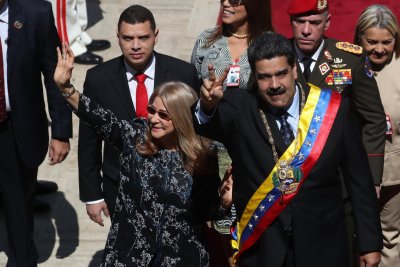
Venezuelan President Nicolas Maduro, right, and Venezuelan first lady Cilia Flores, left, are accused of narco-trafficking and related crimes in a federal indictment unsealed Saturday in the U.S. District Court for Southern New York. Photo by Miguel Gutierrez/EPA-EFE
Jan. 3 (UPI) — Venezuelan President Nicolas Maduro and his wife, Cilia Flores, are indicted on federal charges accusing them of narco-terrorism conspiracy and three related charges.
They also are accused of cocaine importation conspiracy, possession of machine guns and destructive devices, and conspiracy to possess machine guns and destructive devices in a federal grand jury indictment in the U.S. District Court for Southern New York.
“For over 25 years, leaders of Venezuela have abused their positions of public trust and corrupted once-legitimate institutions to import tons of cocaine into the United States,” said Jay Clayton, U.S. Attorney for Southern New York, in the federal indictment.
Maduro “is at the forefront of that corruption and has partnered with his co-conspirators to use his illegally obtained authority and the institutions he corroded to transport thousands of tons of cocaine into the United States,” Clayton said.
He said Maduro has “tarnished every public office he has held” by engaging in narco-trafficking while protected by Venezuelan law enforcement since at least 1999.
Clayton accuses Maduro of partnering with criminal organizations, including the Sinaloa and Zetas cartels in Mexico and Tren de Aragua in Venezuela, and Colombian Marxist rebel groups Fuerzas Armadas Revolucionarias de Colombia aka FARC and Ejercito de Liberacion Nacional aka ELN to engage in narco-trafficking.
He said Maduro provided drug traffickers with diplomatic passports and diplomatic cover for planes used by money launderers to retrieve drug proceeds from Mexico and fly them to Venezuela.
Maduro “now sits atop a corrupt, illegitimate government that for decades has leveraged government power to protect and promote illegal activity, including drug trafficking,” Clayton argued.
He said Maduro illegitimately claimed to have won the 2018 Venezuelan election for president after succeeding former President Hugo Chavez, who died in 2013, while Maduro was vice president.
Maduro also falsely claimed to have won Venezuela’s 2024 election and never has been a legitimately elected president, according to Clayton.
Maduro’s wife, Flores, also been a highly placed politician in Venezuela and was president of the National Assembly and attorney general before marrying Maduro in 2013.
Both are accused of participating in, perpetuating and protecting a “culture of corruption in which powerful Venezuelan elites enrich themselves through drug trafficking and the protection of their partner drug traffickers,” Clayton said.
Venezuela has been a safe haven for drug traffickers who paid for protection and support corrupt Venezuelan officials and military members, who enable them to operate outside the reach of Colombian law enforcement and armed forces that receive anti-narcotics help from the United States.
They ship processed cocaine from Venezuela to the United States “via transshipment points in the Caribbean and Central America, such as Honduras, Guatemala and Mexico,” Clayton said.
State Department officials estimate between 200 and 250 tons of cocaine are trafficked through Venezuela every year.
“The defendants, together and with others, engaged in a relentless campaign of cocaine trafficking” and distributed “thousands of tons of cocaine to the United States,” according to Clayton.
The Maduro’s son, Nicolas Ernesto Maduro Guerra aka Nicolasito aka The Prince also is among four other defendants named in a 25-page federal indictment that was unsealed on Saturday.
None of the other four indicted are in U.S. custody as of Saturday.
Also indicted is Hector Rusthenford Guerrero Flores aka Nino Guerrero who is the alleged leader of the Tren de Aragua gang that originated in Venezuela.
Diosdado Cabello Rondon, Venezuela’s minister of Interior, Justice and Peace of Venezuela, and Ramon Rodriguez Chacin, who formerly held the same position and is a former naval officer and government liaison with cocaine-producing Marxist FARC rebels in Colombia, also are named in the indictment.
Maduro and his wife likely will be arraigned in federal court next week.
It was around this time that Mysterious Girl was propelled to number 1 on the charts.
He released more successful albums off the back of the smash hit, including The Long Road Back with popular track Insania.
Though after the 2009 and 2010 album drops of Revelation and Accelerate, his career largely diversified into television.
Most notably, Peter starred in programmes alongside ex-wife Katie Price.
But he also worked on his own shows including Peter Andre: My Life.
Since his split from Katie, Peter’s been living a busy family life with wife Emily, who he married in 2015.
Together they share three children – Amelia (11), Theodore (8), and Arabella (1).
On his social media, Peter describes himself as many things including a “proud dad, award winning singer/songwriter, actor, producer and TV presenter.”
He also adds that he’s a “happy guy”, reflected by his beaming smile in many Insta snaps.
Back in the day, Peter made all the ladies swoonCredit: Getty
In 1886, Myanmar (then called Burma) came under British control, with Rangoon (the capital. now called Yangon) being an important port situated between India and Singapore.
From the earliest days of colonisation, there was a strong feeling of resentment against the rule of the British, with Buddhist monks playing a key role in the independence movement.
Just before the outbreak of World War II, there had been some moves towards autonomy in 1937, when Burma became a separately administered colony of Britain, with Ba Maw appointed as the first Prime Minister and Premier of Burma.
Some Burmese saw the rise of Japan as an opportunity to gain independence from Britain, and when the conflict started, Ba Maw formed the Burma Independence Army in Japan.
The Japanese took Burma by March 1942 and though many Burmese fought initially on the side of the Japanese in World War II, many others fought with the British. The Burmese army even switched allegiance from Japan to the allied forces in 1945.
Following the end of the war and the defeat of Japan, the Panglong Agreement was reached on February 12th 1947 which led to the unification of Burma as an independent state.
On January 4th 1948, the Union of Burma gained its independence from Britain. Notably, it declined to join the British Commonwealth. Shan National Sao Shwe Taik became the new country’s first President and U Nu its first Prime Minister.
Burma was renamed Myanmar in 1989 by its military government.
WASHINGTON — Maria Eugenia Torres Ramirez was having dinner with her family in Los Angeles on Friday night when the flood of messages began. Word had begun to circulate that the U.S. was invading Venezuela and would seize its president, Nicolás Maduro.
Torres Ramirez, 38, fled her native country in 2021, settled in L.A. and has a pending application for asylum. Her family is scattered throughout the world — Colombia, Chile and France. Since her parents died, none of her loved ones remain in Venezuela.
Still, news that the autocrat who separated them had been captured delivered a sense of long-awaited elation and united the siblings and cousins across continents for a rare four-hour phone call as the night unfolded.
“I waited for this moment for so long from within Venezuela, and now that I’m out, it’s like watching a movie,” said Torres Ramirez, a former political activist who opposed Maduro. “It’s like a jolt of relief.”
Many Venezuelans across the U.S. celebrated the military action that resulted in Maduro’s arrest. Economic collapse and political repression led roughly 8 million Venezuelans to emigrate since 2014, making it one of the world’s largest displacement crises.
About 770,000 live in the U.S. as of 2023, concentrated mainly in the regions of Miami, Orlando, Houston and New York. Just over 9,500 live in L.A., according to a 2024 U.S. Census estimate.
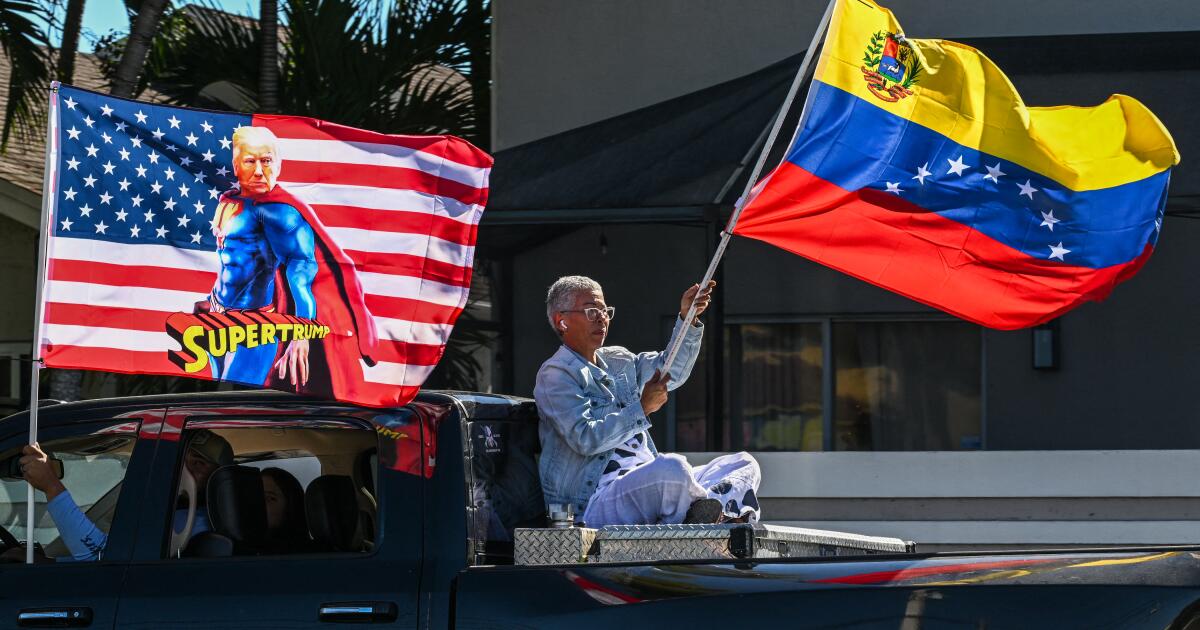
In the South Florida city of Doral, home to the largest Venezuelan American community, residents poured into the streets Saturday morning, carrying the Venezuelan flag, singing together and praising the military action as an act of freedom.
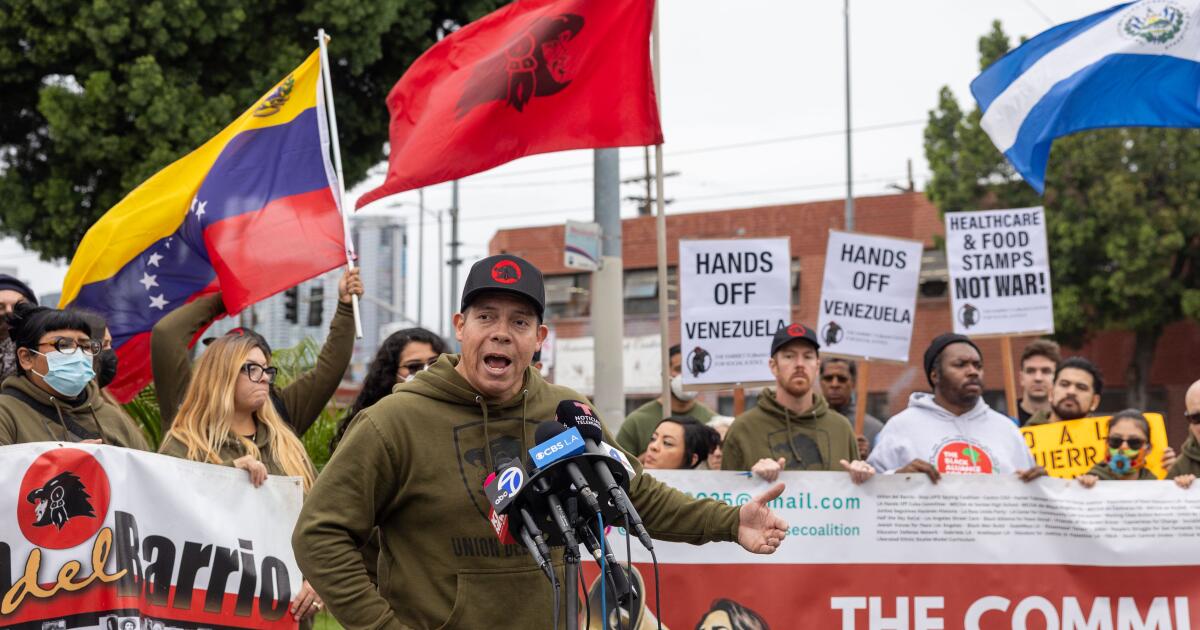
In Los Angeles, a different picture emerged as groups opposed to Maduro’s arrest took to the streets, though none identified themselves as being of Venezuelan descent. At a rally of about 40 people south of downtown Los Angeles, John Parker, a representative of the Harriet Tubman Center for Social Justice, called the raid a “brutal assault and kidnapping” that amounted to a war crime.
The United States’ intervention in Venezuela had nothing to do with stopping the flow of drugs, he said, and everything to do with undermining a legitimate socialist government. Parker called for Maduro to be set free as a few dozen protesters behind him chanted, “Hands off Venezuela.”
Parker said when he visited Venezuela a few weeks ago as part of a U.S. peacemaking delegation, he saw “the love people had for Maduro.”
A later demonstration in Pershing Square drew hundreds out in the rain to protest the U.S intervention. But when a speaker led chants of “No war in Venezuela,” a woman draped in a Venezuelan flag attempted to approach him and speak into the microphone. A phalanx of demonstrators circled her and shuttled her away.
At Mi Venezuela, a restaurant in Vernon, 16-year-old Paola Moleiro and her family ordered empanadas Saturday morning.
A portion of one of the restaurant’s walls was covered in Venezuelan bank notes scrawled with messages. One read: “3 de enero del 2026. Venezuela quedo libre.”
Venezuela is free.
Around midnight the night before, Paola started getting messages on WhatsApp from her relatives in Venezuela. The power was out, they said, and they forwarded videos of what sounded like bomb blasts.
Paola was terrified. She’d left Venezuela at age 7 with her parents and siblings, first for Panama and later the U.S., in 2023. But the rest of her family remained in Venezuela, and she had no idea what was going on.
Paola and her family stayed up scanning television channels for some idea of what was happening. Around 1:30 a.m., President Trump announced that U.S. forces had captured Maduro.
“The first thing I did, I called my aunt and said, ‘We are going to see each other again,’” she said.
Because of the Venezuelan state’s control over media, her relatives had no idea their leader had been seized by U.S. forces. “Are you telling me the truth?” Paola said her aunt asked.
Paola hasn’t been home in nine years. She misses her grandmother and her grandmother’s cooking, especially her caraotas negras, or black beans. As a child, she said, certain foods were so scarce that she had an apple for the first time only after moving to Panama.
Paola said she was grateful to Trump for ending decades of authoritarian rule that had reduced her home country to a shell of what it once was.
“Venezuela has always prayed for this,” she said. “It’s been 30 years. I feel it was in God’s hands last night.”
For Torres Ramirez, it was difficult to square her appreciation for Trump’s accomplishment in Venezuela with the fear she has felt as an immigrant under his presidency.
“It’s like a double-edged sword,” she said. “Throughout the course of this whole year, I have felt persecuted. I had to face ICE — I had to go to my appointment with the fear that I could lose it all because the immigration policies had changed and there was complete uncertainty. For a moment, I felt as if I was in Venezuela. I felt persecuted right here.”
During a news conference Saturday morning, Trump said Maduro was responsible for trafficking illicit drugs into the U.S. and the deaths of thousands of Americans. He repeated a baseless claim that the Maduro government had emptied Venezuela’s prisons and mental institutions and “sent their worst and most violent monsters into the United States to steal American lives.”
“They sent everybody bad into the United States, but no longer, and we have now a border where nobody gets through,” he said.
Trump also announced that the U.S. will “run” Venezuela and its vast oil reserves.
“We’ll run it professionally,” he said. “We’ll have the greatest oil companies in the world go in and invest billions and billions of dollars and take that money, use that money in Venezuela, and the biggest beneficiary are going to be the people of Venezuela.”
Torres Ramirez said that while she’s happy about Maduro’s ouster, she’s unsure how to feel about Trump’s announcement saying the U.S. will take over Venezuela’s oil industry. Perhaps it won’t be favorable in the long term for Venezuela’s economy, she said, but the U.S. intervention is a win for the country’s political future if it means people can return home.
Patricia Andrade, 63, who runs Raíces Venezolanas, a volunteer program in Miami that distributes donations to Venezuelan immigrants, said she believes the Trump administration is making the right move by remaining involved until there is a transition of power.
Andrade, a longtime U.S. citizen, said she hasn’t been to Venezuela in 25 years — even missing the deaths of both parents. She said she was accused of treason for denouncing the imprisonment of political opponents and the degradation of Venezuela’s democracy under Maduro’s predecessor Hugo Chavez. She said she worries that Venezuela’s remaining political prisoners could be killed as payback for Maduro’s arrest.
“We tried everything — elections, marches, more elections … and it couldn’t be done,” she said. “Maduro was getting worse and worse, there was more repression. If they hadn’t removed him, we were never going to recover Venezuela.”
While she doesn’t want the U.S. to fix the problems of other countries, she thanked Trump for U.S. involvement in Venezuela.
She said she can’t wait to visit her remaining family members there.
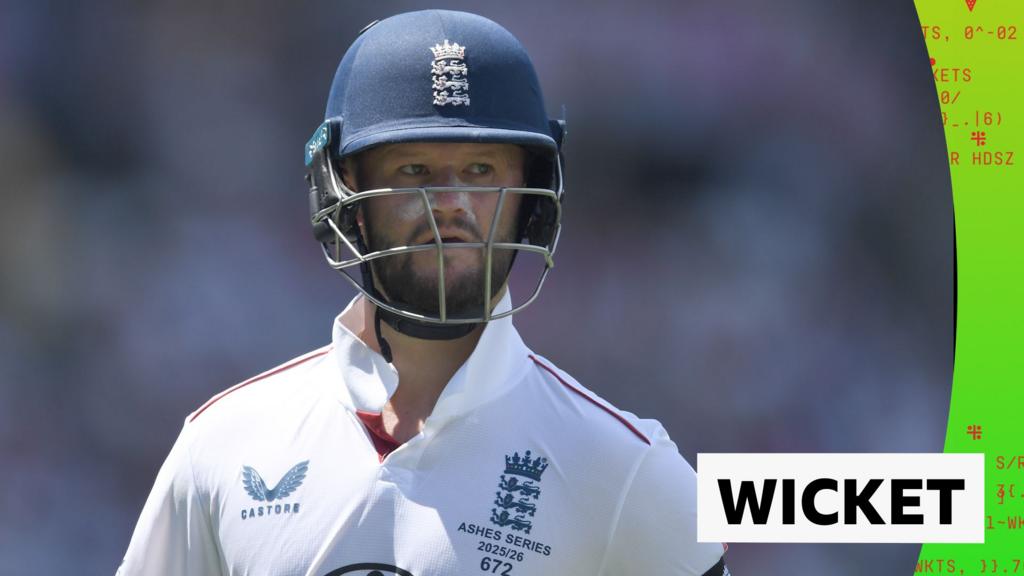
Mitchell Starc takes the wicket of Ben Duckett as the England batter is caught behind for 27 to leave the visitors on 35-1 on day one of the fifth Ashes Test in Sydney.
Jan. 3 (UPI) — Nine child care centers shown in a viral video alleging fraud were inspected and operating normally, Minnesota officials said on Friday.
Officials with Minnesota’s Department of Children, Youth and Families in a news release said state inspections of the daycare centers showed those that were open had children inside of them and were operating as expected.
“Children were present at all sites except for one — that site was not yet open for families for the day when inspectors arrived,” DCYF officials said.
They did not indicate if the inspections provided advanced notice to the respective daycares, and the news release referenced does not appear on the department’s webpage for news releases.
The most recent news release available is dated for Oct. 27, 2025, and department officials did not immediately respond to a UPI request for comment and access to the cited news release.
DCYF officials also provided information on the nine child care centers and the amounts they received through the state’s Child Care Assistance Program during the 2025 fiscal year that ended on Sept. 30.
The Future Leaders Early Learning Center received $3.68 million, followed by Minnesota Best Child Care Center, $3.4 million, and Minnesota Child Care Center, $2.67 million. All three are located in Minneapolis.
Quality Learning Center received $1.9 million, Mini Child Care Center $1.6 million, and Sweet Angel Child Care $1.54 million.
The Tayo Daycare received $1.09 million, ABC Learning Center $1.04 million and Super Kids Daycare Center $471,787.
The DCYF said the Mako Child Care Center closed in 2022.
The agency said investigators are taking a closer look at four of the nine daycare centers listed but did not identify which ones.
The DCYF released the information on the nine child care centers featured in the YouTube video posted by Nick Shirley that was titled: “I Investigated Minnesota’s Billion Dollar Fraud Scandal.”
The 42-minute video had more than 3.1 million views eight days after it was posted to the social media site.
The video spurred the Health and Human Services Department halt all funding to Minnesota child care centers pending a federal review.
The FBI and Department of Homeland Security investigate fraud claims.
“The onus is on the state to provide additional verification,” Andrew Nixon, HHS deputy assistant secretary for media relations, told CNN.
Minnesota officials have until Friday to provide the Trump administration with information verifying the names of children enrolled at the respective child care centers and their parents.
HHS officials also are requiring supporting evidence from day care centers that receive federal funding in all states to better ensure no fraud is occurring.
Waiting for the Out follows a man who teaches philosophy to prison inmates
BBC slapped with complaints as viewers fume over new prison drama(Image: BBC)
The BBC has been slapped with complaints as viewers fumed over a new prison drama on Saturday (January 3).
New six-part drama Waiting for the Out has been penned by award-winning screenwriter Dennis Kelly from Andy West’s memoir, The Life Inside.
It follows Dan Stewer (played by Josh Finan), who decides to teach a group of male inmates about dominance, freedom, luck and other topics that have troubled philosophers for thousands of years. These topics also gain a new meaning when seen through the prisoners’ eyes, both igniting passions and creating tension.
The official synopsis continues: “Through his work, Dan begins to dig deeper into his own past – growing up with a father (Gerard Kearns) who ended up in prison, as did his brother Lee (Stephen Wight) and uncle Frank (Phil Daniels). Dan took a different path, but this time working in a prison begins to make him worry, obsessively, that he belongs behind bars just like his father.
“As Dan’s personal crisis deepens, his actions begin to threaten both his own future, and his family’s.”
The show’s cast also includes Samantha Spiro, Phil Daniels, Ronkẹ Adékoluẹjo, Neal Barry, Alex Ferns, Francis Lovehall, Steven Meo, Ric Renton, Tom Moutchi, Nima Taleghani, Sule Rimi, Charlie Rix and Jude Mack.
The first episode saw Dan begin his first day teaching philosophy in a men’s prison. The lesson soon unravelled as he realised he’d underestimated his audience – and the weight of his own past.
Fixating on small details, Dan lost control of the class, risked his chance to become a father and broke an important promise to his new girlfriend. But when a familiar face resurfaced, Dan was soon forced to confront someone he thought he’d left behind.
BBC viewers were quick to share their complaints after watching the episode, with many sharing their frustration on X (formerly Twitter). “Well this is 45 mins of my life I won’t get back,” one person wrote.
Another added: “This is so weird,” while a third said: “God this is awful. Fella has no survival instinct. I’d be out of there. Don’t think they’d lock him in there alone with no way out.”
Meanwhile, other viewers were impressed with the contents of the episode, with one person writing: “Wow very interesting style! Quite different from anything else I’ve seen,” while another shared: “Just watched #WaitingForTheOut and I think it’s going to be brilliant.”
Andy West, executive producer and author of The Life Inside, previously said in a statement: “I’m so thankful to the writers, directors, producers and everyone involved in adapting The Life Inside. They have brought extraordinary creative and moral imagination to the stories in the book. We all hope to make a series that goes beyond the clichés about prisons and the families inside them and that touches people either side of the wall.”
Writer and executive producer Dennis Kelly added: “It’s not at all unusual for the men in Andy West’s family to end up in prison – but Andy is the only one that chose to be there. His book is funny, insightful, beautiful, genuinely heartbreaking and nothing like what you’d expect it to be – we’ve tried to take that into the series. God alone knows if we’ve succeeded, but we’ve tried…”
Waiting for the Out is available to stream on BBC iPlayer
For the latest showbiz, TV, movie and streaming news, go to the new Everything Gossip website
CARACAS, Venezuela — It was about 2 a.m. Saturday Caracas time when the detonations began, lighting up the sullen sky like a post-New Year’s fireworks display.
“¡Ya comenzó!” was the recurrent phrase in homes, telephone conversations and social media chats as the latest iteration of U.S. “shock and awe” rocked the Venezuelan capital. “It has begun!”
Then the question: “¿Maduro?”
The great uncertainty was the whereabouts of President Nicolás Maduro, who has been under Trump administration threat for months.
The scenes of revelry from a joyous Venezuelan diaspora celebrating from Miami to Madrid were not repeated here. Fear of the unknown kept most at home.
Hours would pass before news reports from outside Venezuela confirmed that U.S. forces had captured Maduro and placed him on a U.S. ship to face criminal charges in federal court in New York.
Venezuelans had watched the unfolding spectacle from their homes, using social media to exchange images of explosions and the sounds of bombardment. This moment, it was clear, was ushering in a new era of uncertainly for Venezuela, a nation reeling from a decade of economic, political and social unrest.
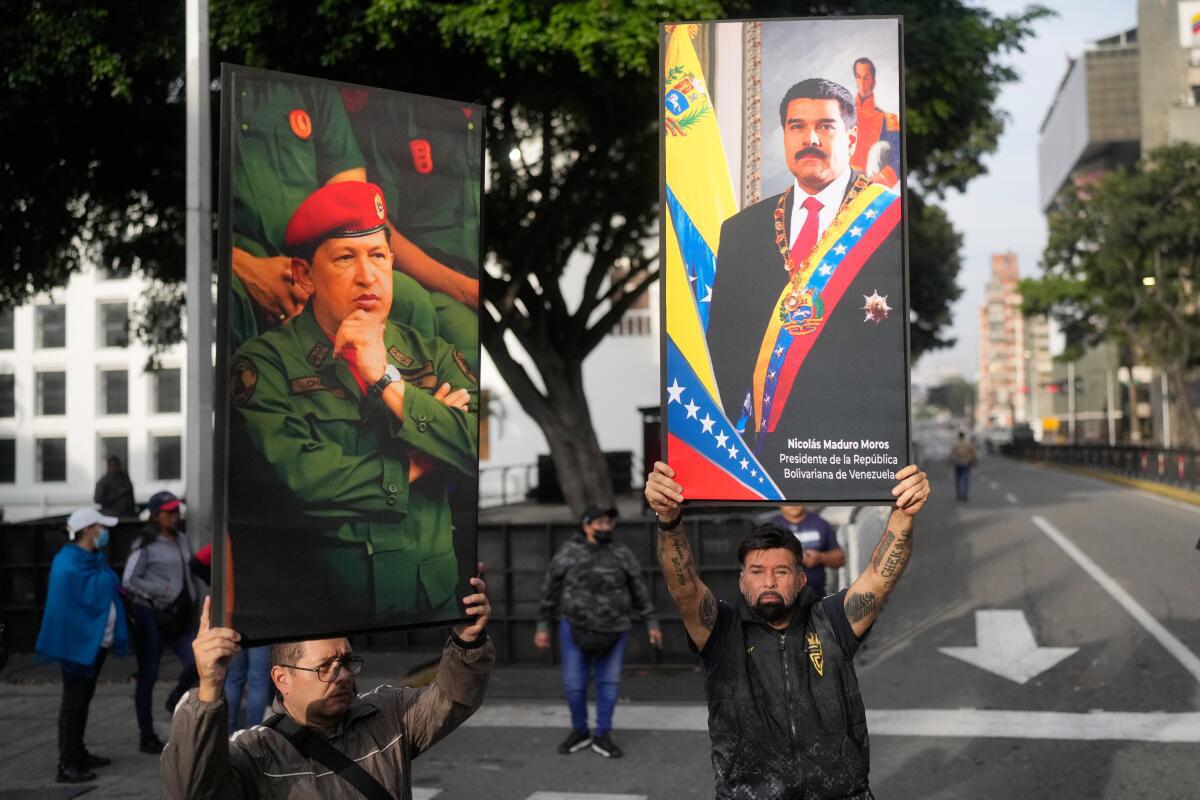
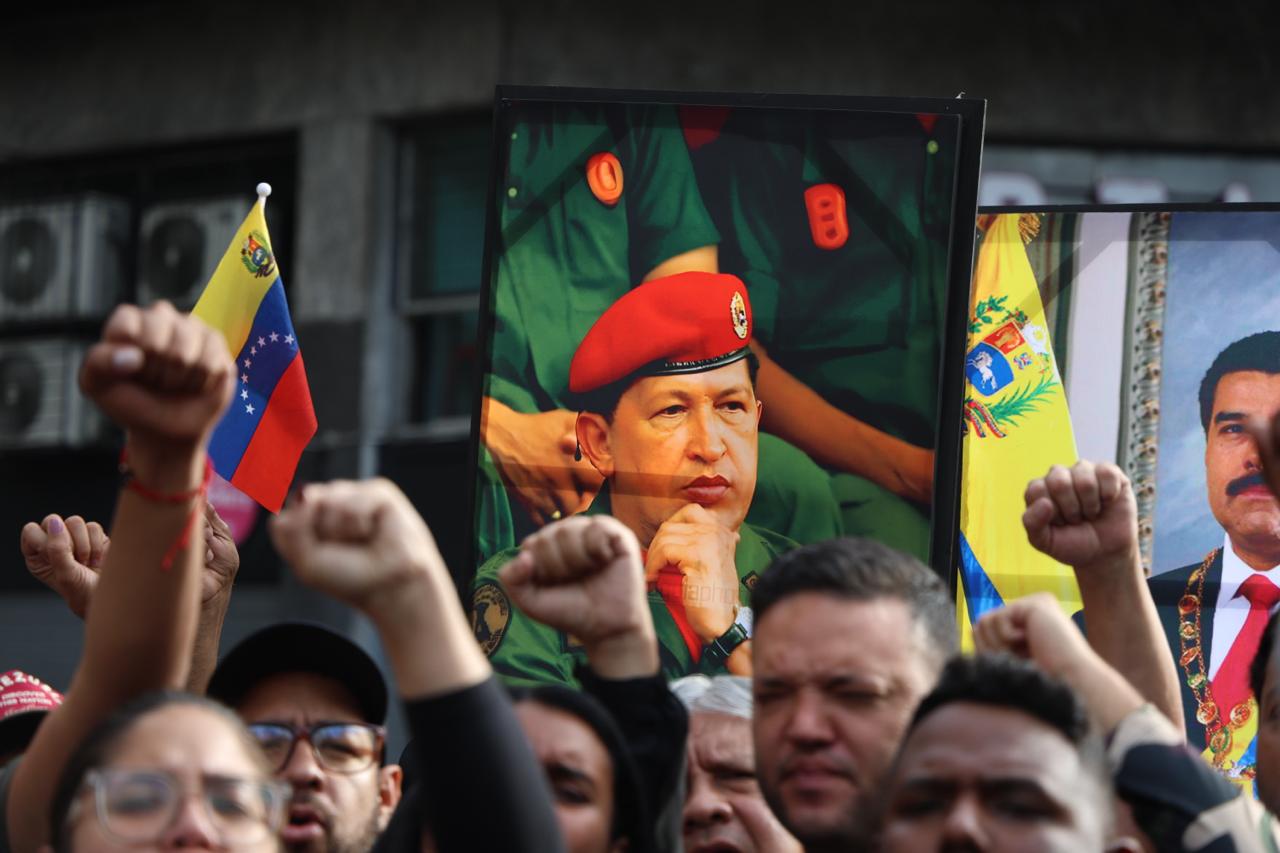
Government supporters display posters of Venezuelan President Nicolás Maduro, right, and former President Hugo Chávez in downtown Caracas on Saturday.
(Matias Delacroix / Associated Press)
The ultimate result was an imponderable. But that this was a transformative moment — for good or bad — seemed indisputable.
By daybreak, an uneasy calm overtook the city of more than 3 million. The explosions and the drone of U.S. aircraft ceased. Blackouts cut electricity to parts of the capital.
Pro-government youths wielding automatic rifles set up roadblocks or sped through the streets on motorcycles, a warning to those who might celebrate Maduro’s downfall.
Shops, gas stations and other businesses were mostly closed. There was little traffic.
“When I heard the explosions, I grabbed my rosary and began to pray,” said Carolina Méndez, 50, who was among the few who ventured out Saturday, seeking medicines at a pharmacy, though no personnel had arrived to attend to clients waiting on line. “I’m very scared now. That’s why I came to buy what I need.”
A sense of alarm was ubiquitous.
“People are buying bottled water, milk and eggs,” said Luz Pérez, a guard at one of the few open shops, not far from La Carlota airport, one of the sites targeted by U.S. strikes. “I heard the explosions. It was very scary. But the owner decided to open anyway to help people.”
Customers were being allowed to enter three at a time. Most didn’t want to speak. Their priority was to stock up on basics and get home safely.
Rumors circulated rapidly that U.S. forces had whisked away Maduro and his wife, Cilia Flores.
There was no immediate official confirmation here of the detention of Maduro and Flores, both wanted in the United States for drug-trafficking charges — allegations that Maduro has denounced as U.S. propaganda. But then images of an apparently captive Maduro, blindfolded, in a sweatsuit soon circulated on social media.
There was no official estimate of Venezuelan casualties in the U.S. raid.
Rumors circulated indicating that a number of top Maduro aides had been killed, among them Diosdado Cabello, the security minister who is a staunch Maduro ally. Cabello is often the face of the government.
But Cabello soon appeared on official TV denouncing “the terrorist attack against our people,” adding: “Let no one facilitate the moves of the enemy invader.”
Although Trump, in his Saturday news conference, confidently predicted that the United States would “run” Venezuela, apparently during some undefined transitional period, it’s not clear how that will be accomplished.
A key question is whether the military — long a Maduro ally — will remain loyal now that he is in U.S. custody. There was no public indication Saturday of mass defections from the Venezuelan armed forces. Nor was it clear that Maduro’s government infrastructure had lost control of the country. Official media reported declarations of loyalty from pro-government politicians and citizens from throughout Venezuela.
In his comments, Trump spoke of a limited U.S. troop presence in Venezuela, focused mostly on protecting the oil infrastructure that his administration says was stolen from the United States — a characterization widely rejected here, even among Maduro’s critics. But Trump offered few details on sending in U.S. personnel to facilitate what could be a tumultuous transition.
Meantime, Venezuelan Vice President Delcy Rodríguez surfaced on official television and demanded the immediate release of Maduro and his wife, according to the official Telesur broadcast outlet. Her comments seemed to be the first official acknowledgment that Maduro had been taken.
“There is one president of this country, and his name is Nicolás Maduro,” the vice president said in an address from Miraflores Palace, from where Maduro and his wife had been seized hours earlier.
During an emergency meeting of the National Defense Council, Telesur reported, Rodríguez labeled the couple’s detention an “illegal kidnapping.”
The Trump administration, the vice president charged, meant to “capture our energy, mineral and [other] natural resources.”
Her defiant words came after Trump, in his news conference, said that Rodríguez had been sworn in as the country’s interim president and had evinced a willingness to cooperate with Washington.
“She’s essentially willing to do what we think is necessary to make Venezuela great again,” Trump said.
Pro-government armed civilians patrol in La Guaira, Venezuela, on Saturday after President Trump announced that President Nicolás Maduro had been captured and flown out of the country.
(Matias Delacroix / Associated Press)
Somewhat surprisingly, Trump also seemed to rule out a role in an interim government for Marina Corina Machado, the Venezuelan Nobel Peace Prize laureate and longtime anti-Maduro activist.
“She’s a very nice woman, but doesn’t have respect within the country,” Trump said of Machado.
Machado is indeed a controversial figure within the fractured Venezuelan opposition. Some object to her open calls for U.S. intervention, preferring a democratic change in government.
Nonetheless, her stand-in candidate, Edmundo González, did win the presidency in national balloting last year, according to opposition activists and others, who say Maduro stole the election.
“Venezuelans, the moment of liberty has arrived!” Machado wrote in a letter released on X. “We have fought for years. … What was meant to happen is happening.”
Not everyone agreed.
“They want our oil and they say it’s theirs,” said Roberto, 65, a taxi driver who declined to give his last name for security reasons. “Venezuelans don’t agree. Yes, I think people will go out and defend their homeland.”
Special correspondent Mogollón reported from Caracas and staff writer McDonnell from Boston. Contributing was special correspondent Cecilia Sánchez Vidal in Mexico City.
The unanimous-decision win over Álvarez in September in Las Vegas marked the end of Crawford’s domination of the sport — he subsequently retired with a 42-0 record and 31 knockouts — and the Mexican star’s run as super-middleweight champion.
During the conversation, Crawford said he expected to be challenged and tested more by Álvarez. Crawford, who had won titles in four weight classes before moving up to face Álvarez, took all four 168-pound titles on the line in the bout, becoming the undisputed champion at a third level.
“I’m not going to lie, I thought it would be more difficult,” he said.
Crawford explained that as the early rounds progressed, he was able to clearly read his opponent’s approach and feel increasingly comfortable in the ring. Crawford said he didn’t notice any significant adjustments on Álvarez’s part, which allowed him to control the pace of the fight and choose his moments to attack more effectively.
“The first round went by, the second round went by … and then I thought, ‘I’ve got him,’” Crawford said.
Crawford also spoke about the prefight narrative and how, in his opinion, he was underestimated.
“A lot of people spent time talking about how big he is, his stamina, that he was going to knock me out or run all over me,” Crawford said. “There was no talk about whether or not I could hurt him.”
According to Crawford, that perception changed in the ring when his power forced Álvarez to be more cautious. Crawford said the Mexican ended up respecting his punching power and his ability to control the exchanges.
US President Donald Trump and his allies have defended the US attacks on Venezuela and the removal of President Nicolas Maduro from power amid widespread condemnation that the actions violate international law.
Trump told reporters on Saturday that Maduro was “captured” after US military strikes on the Venezuelan capital, Caracas, for carrying out a purported “campaign of deadly narco-terrorism against the United States”.
Recommended Stories
list of 3 itemsend of list
He said the US government would “run” the South American country during a political transition, promising the Venezuelan people that they would become “rich, independent and safe”.
But Claire Finkelstein, a professor of law at the University of Pennsylvania, has rejected the Trump administration’s arguments in defence of the attacks and removal of Maduro, as well as its plans to exert control over Venezuela.
“I don’t think there’s any basis under international law for the action that occurred overnight by the US government,” Finkelstein told Al Jazeera, describing the attacks as an “illegal use of force [and] a violation of Venezuelan sovereignty”.
“Maduro has personal jurisdiction rights, so not only is it a violation of Venezuelan sovereignty, but it’s a violation of his personal, international rights,” she said.
Numerous statutes of international law – including the UN Charter – prohibit states from attacking another country without provocation.
“All Members shall refrain in their international relations from the threat or use of force against the territorial integrity or political independence of any state, or in any other manner inconsistent with the Purposes of the United Nations,” the UN Charter says.
The US actions came amid a months-long pressure campaign against Maduro, whom the Trump administration accused, without evidence, of being linked to drug traffickers.
Washington had carried out deadly strikes on alleged drug-smuggling boats in the Caribbean, seized vessels carrying oil off the Venezuelan coast, sanctioned members of Maduro’s family, and threatened to launch attacks on the country’s soil.
“Nicolas Maduro wasn’t just an illegitimate dictator, he also ran a vast drug-trafficking operation,” US Congressman Tom Cotton, a top Trump ally, wrote on social media on Saturday, welcoming the moves against the Venezuelan leader.
Before he was seized, Maduro had said he was open to dialogue with the US on drug trafficking. He also had accused the Trump administration of seeking to depose him and seize control of Venezuela’s vast oil reserves.
‘No imminent threat’
Democratic Party lawmakers in the US had been demanding answers from the Trump administration about its aims in Venezuela, accusing the Republican president of seeking to unlawfully carry out acts of war without congressional oversight.
Under the US Constitution, only Congress has the power to declare war.
But that authority has been weakened over the last several decades, with the US carrying out military strikes around the world during its so-called “war on terror” based on loosely-interpreted congressional authorisations.
On Saturday, Gregory Meeks, the top Democrat on the House of Representatives Foreign Affairs Committee, said that, despite the Trump administration’s claims, “there was no imminent threat to the United States” from Venezuela, “certainly not one that justified military action without congressional authorization”.
“These actions violate both US and international law and, by Trump’s own admission, this is not a limited operation,” Meeks said in a statement shared on social media.
This was echoed by the University of Pennsylvania’s Finkelstein, who said there was no “immediate threat” to the US that would justify the executive branch carrying out attacks without notifying Congress.
“It was an act of war against Venezuela, and we did not have the kind of self-defence justification that would normally justify bypassing Congress,” she told Al Jazeera.
“Even if you believe the US is at grave danger because of drug trafficking, there isn’t the kind of imminence there that would justify the president moving unilaterally and not turning to Congress and trying to get them on board.”
Finkelstein also rejected Trump’s plans for the US to “run” Venezuela as “incredibly illegal”.
“States have sovereignty rights, and you cannot just invade them and take them over,” she said.
“Even if Maduro were to fall of his own accord and we had not brought that about, we don’t have the right to go in and start running their government,” Finkelstein said.
“Democracy is premised on the idea that the people are sovereign and the people choose their own leaders, and that’s something we should be promoting in Latin and South America, not trying to undermine.”
For months, US spies had been monitoring Venezuelan President’s Nicolas Maduro’s every move.
A small team, including one source within the Venezuelan government, had been observing where the 63-year-old slept, what he ate, what he wore and even, according to top military officials, “his pets”.
Then, in early December, a plan dubbed “Operation Absolute Resolve” was finalised. It was the result of months of meticulous planning and rehearsals, which even included elite US troops creating an exact full-size replica of Maduro’s Caracas safe house to practise their entry routes.
The planned mission – an extraordinary US military intervention in Latin America not seen since the Cold War – was closely guarded. Congress was not informed or consulted ahead of time. With the precise details set, top military officials simply had to wait for the optimal conditions to launch.
They wanted to maximise the element of surprise, officials said on Saturday. There was a false start four days earlier when President Trump gave approval but they opted to wait for better weather and less cloud cover.
“Over the weeks through Christmas and New Year, the men and women of the United States military sat ready, patiently waiting for the right triggers to be met and the president to order us into action,” General Dan Caine, the nation’s highest-ranking military officer, told a news conference on Saturday morning.
‘Good luck and Godspeed’
The order from the president to begin the mission finally came at 22:46 EDT on Friday. “We were going to do this four days ago, three days ago, two days ago, and then all of a sudden it opened up. And we said: Go,” Trump himself told Fox & Friends on Saturday in the hours after the overnight raid.
“He said to us, and we appreciate it… good luck and Godspeed,” Gen Caine said. Trump’s order came shortly before midnight in Caracas, giving the military most of the night to operate in darkness.
What followed was a two-hour and twenty-minute mission by air, land and sea that stunned many in Washington and around the world. In terms of scale and precision, it was virtually unprecedented. And it drew immediate condemnation from several regional powers, with Brazil’s President Lula da Silva saying the violent capture of Venezuela’s leader set “yet another extremely dangerous precedent for the entire international community”.
Trump did not follow the mission from the White House situation room. Instead, he was surrounded by his advisers at his Mar-a-Lago club in Palm Beach, Florida, where he watched a live stream of the operation flanked by CIA Director John Ratcliffe and Secretary of State Marco Rubio.
“It was an incredible thing to see,” Trump said on Saturday. “If you would have seen what happened, I mean, I watched it literally like I was watching a television show. And if you would’ve seen the speed, the violence… it’s just, it was an amazing thing, an amazing job that these people did.”
Donald Trump / TruthSocial
Trump watched a live stream of the operation from his Florida estate
In recent months, thousands of US troops have deployed to the region, joining an aircraft carrier and dozens of warships in the largest military build-up in decades as President Trump has accused Maduro of drug-trafficking and narco-terrorism, and blown up dozens of small boats accused of ferrying drugs through the region.
But the first signs of Operation Absolute Resolve were in the skies. More than 150 aircraft – including bombers, fighter jets and reconnaissance planes – were ultimately deployed through the course of the night, according to US officials.
“It was very complex, extremely complex, the whole manoeuvre, the landings, the number of aircraft,” Trump told Fox News. “We had a fighter jet for every possible situation.”
Loud explosions were heard in Caracas at about 02:00 local time, and plumes of smoke were seen rising over the city. “I heard a huge sound, a loud bang,” reporter Ana Vanessa Herrero told the BBC. “It moved all the windows. Immediately after I saw a huge cloud of smoke that almost blocked the entire view.”
“Planes and helicopters were flying all over the city,” she said.
Watch: Smoke, bangs and helicopters in Caracas
Soon videos showing numerous aircraft in the skies – and others showing the apparent aftermath of explosions – began to circulate widely on social media. One showed a convoy of helicopters flying at low altitude over Caracas as smoke rose from apparent detonations.
BBC Verify has examined a number of videos showing explosions, fire and smoke in locations around Caracas to identify exactly which sites were targeted.
So far, it has confirmed five locations including Generalissimo Francisco de Miranda Air Base, an airfield known as La Carlota and Port La Guaira, Caracas’ main conduit to the Caribbean Sea.
Some of the US strikes targeted air defence systems and other military targets, officials said. Trump also suggested the US cut the power in Caracas before the mission began, although he did not specify how.
“The lights of Caracas were largely turned off due to a certain expertise that we have,” he said. “It was dark and it was deadly.”
‘They knew we were coming’
As strikes rang out around Caracas, US forces made their way into the city. They included members of the elite Delta Force, the US military’s top special mission unit, sources told the BBC’s US partner CBS. They were heavily armed – and carried a blowtorch in case they had to cut through the metal doors of Maduro’s safe house.
The troops arrived at Maduro’s location shortly after the strikes began at 02:01 local time, according to Gen Caine. Trump described the safe house as a heavily fortified military “fortress” in the heart of Caracas. “They were in a ready position waiting for us. They knew we were coming,” he said.
The troops took fire when they arrived, and one of the American helicopters was hit but was still able to fly. “The apprehension force descended into Maduro’s compound and moved with speed, precision and discipline,” Gen Caine said.
“They just broke in, and they broke into places that were not really able to be broken into, you know, steel doors that were put there for just this reason,” Trump said.
It was only as the operation – which also saw Maduro’s wife, Cilia Flores, seized – was unfolding that Secretary of State Rubio began notifying lawmakers about the action, a decision which has since prompted anger from some in Congress.
“Let me be clear: Nicolas Maduro is an illegitimate dictator. But launching military action without congressional authorisation and without a credible plan for what comes next is reckless,” said top Democrat Chuck Schumer, the party’s leader in the Senate.
Briefing Congress ahead of time would have endangered the mission, Rubio told reporters during the news conference on Saturday. “Congress has a tendency to leak,” Trump added. “This would not be good.”
Getty Images
The US struck several locations around Caracas, including Fuerte Tiuna, Venezuela’s largest military complex
In Maduro’s compound, as elite US troops flooded in, Trump said the Venezuelan president – who has reportedly increased his reliance on Cuban bodyguards in recent months – attempted to flee to a safe room. “He was trying to get to a safe place, which wasn’t safe, because we would have had the door blown up in about 47 seconds,” he said.
“He made it to the door. He was unable to close it,” Trump said. “He got bum rushed so fast that he didn’t get into that [room].”
When asked if the US could have killed Maduro, an authoritarian leader who took over the presidency in 2013, if he had resisted arrest, Trump said: “It could have happened.” On the US side, “a couple of guys were hit”, he said, but no US service members were killed. The Venezuelan authorities have not confirmed any casualties.
The US had previously offered a $50m reward for information leading to Maduro’s arrest. But by 04:20 local time on Saturday, helicopters were leaving Venezuelan territory with Maduro and his wife on board, in custody of the Department of Justice and en route ultimately to New York, where they are expected to face criminal charges.
Almost exactly an hour later Trump announced the news of his capture to the world. “Maduro and his wife will soon face the full might of American justice,” he said.
SIR David Beckham’s Hollywood star ceremony could be overshadowed if son Brooklyn snubs it despite living nearby.
A date is being fixed over the next few months for the Walk of Fame unveiling, less than five miles from the house Brooklyn shares with wife Nicola Peltz.
Sign up for the Showbiz newsletter
Thank you!
Sir David Beckham fears his Hollywood star ceremony will be snubbed by his estranged sonCredit: GettyThe Walk of Fame unveiling will take place less than five miles from Brooklyn’s houseCredit: GettyFrom left to right: Cruz, Brooklyn, Romeo and dad David in happier timesCredit: German Larkin / Vogue
A source said: “Brooklyn snubbing David’s special day will be a very public humiliation as he lives in Hollywood.
“Of course, David is hopeful the family will have mended their relations by then, especially after he has offered an olive branch to Brooklyn. The rift has been a great cause of heartache.”
Nominees have two years to schedule their ceremony, and his is set to take place before the summer World Cup in the States.
Other honourees include rockers Green Day, actress Jessica Chastain and rapper Busta Rhymes.
On New Year’s Eve, Sir David posted a series of pictures on Instagram showing him with his four children. It included a shot of him and his eldest Brooklyn smiling cheek to cheek, with the caption: “I love you all so much.”
However, he got no response from Brooklyn, 26, who lives with actress Nicola, 30, in an £11.8million villa in Beverly Hills.
Last month, the wannabe chef skipped childhood pal Holly Ramsay’s wedding to swimmer Adam Peaty and spent Christmas with his billionaire in-laws in Miami.
President Trump’s decision to send U.S. forces into Venezuela to capture President Nicolás Maduro and his wife and return them to the U.S. to face drug charges elicited condemnation from legal experts and other critics who argued that the operation — conducted without congressional or United Nations approval — clearly violated U.S. and international law.
Such criticism came from Democratic leaders, international allies and adversaries including Mexico, France, China and Russia, United Nations Secretary-General Antonio Guterres and experts on international law and wartime powers.
“Nicolás Maduro was a thug and an illegitimate leader of Venezuela, terrorizing and oppressing its people for far too long and forcing many to leave the country. But starting a war to remove Maduro doesn’t just continue Donald Trump’s trampling of the Constitution, it further erodes America’s standing on the world stage and risks our adversaries mirroring this brazen illegal escalation,” Sen. Adam Schiff (D-Calif.) wrote on X.
A U.N. spokesman said Guterres was “deeply alarmed” by the U.S. operation and “deeply concerned that the rules of international law have not been respected.”
China’s foreign ministry said “such hegemonic acts of the U.S. seriously violate international law and Venezuela’s sovereignty,” while France’s foreign minister said the U.S. operation “contravenes the principle of the non-use of force that underpins international law.”
Republicans largely backed the president, with both House Speaker Mike Johnson (R-La.) and Senate Majority Leader John Thune (R-S.D.) defending the operation as “decisive” and legally justified. However, other Republicans questioned Trump’s authority to act unilaterally, and raised similar concerns as Schiff about other world leaders citing Trump’s actions to justify their own aggression into neighboring nations.
Rep. Don Bacon (R-Neb.) defended Trump’s actions as “great for the future of Venezuelans and the region,” but said he was concerned that “Russia will use this to justify their illegal and barbaric military actions against Ukraine, or China to justify an invasion of Taiwan.”
Trump defended the operation as a legitimate law enforcement action necessary to combat threats to the U.S. from Maduro, whom he accused of sending violent gang members and deadly drugs across the U.S. border on a regular basis.
“The illegitimate dictator Maduro was the kingpin of a vast criminal network responsible for trafficking colossal amounts of deadly and illicit drugs into the United States,” Trump said at a news conference. “As alleged in the indictment, he personally oversaw the vicious cartel known as Cartel de los Soles, which flooded our nation with lethal poison responsible for the deaths of countless Americans.”
However, Trump also made no secret of his interest in Venezuela’s oil. He said U.S. officials would be running Venezuela for the foreseeable future and ensuring that the nation’s oil infrastructure is rebuilt — to return wealth to the Venezuelan people, but also to repay U.S. businesses that lost money when Maduro took over the industry.
Atty. Gen. Pam Bondi announced that Maduro, who had previously been indicted in the U.S. in 2020, is now the subject of a superseding indictment charging him, his wife and several others with narco-terrorism conspiracy, cocaine importation conspiracy, possession of machine guns and destructive devices and conspiracy to possess such weapons and devices.
“They will soon face the full wrath of American justice on American soil in American courts,” Bondi wrote on X.
Secretary of State Marco Rubio also framed the operation as a law enforcement effort, and defended the lack of advance notice to Congress.
“At its core, this was an arrest of two indicted fugitives of American justice, and the Department of War supported the Department of Justice in that job,” Rubio said. “It’s just not the kind of mission that you can pre-notify, because it endangers the mission.”
Trump said Congress could not be notified in advance because “Congress will leak, and we don’t want leakers.”
Michael Schmitt, an international law professor at the University of Reading in the United Kingdom and a professor emeritus of international law at the U.S. Naval War College, said Trump’s actions were a “clear violation” of international law.
He said the U.S. had no authority from the U.N. Security Council to conduct military operations in Venezuela, nor any legitimate justification to act in self-defense against an armed attack — which drug trafficking does not amount to.
Schmitt said the operation in Venezuela went far beyond a normal law enforcement action. But even if it were just a law enforcement action, he said, the U.S. would still lack legal authority under international law to engage in such activity on Venezuelan soil without the express permission of Venezuelan authorities — which it did not have.
“International law is clear. Without consent, you cannot engage in investigations or arrest or seizure of criminal property on another state’s territory,” he said. “That’s a violation of that state’s sovereignty.”
Because the operation was illegitimate from the start, the resulting occupation and interference in Venezuela’s oil industry are also unlawful, Schmitt said — regardless of whether the country’s nationalizing of U.S.-tied oil infrastructure was also unlawful, as some experts believe it was.
“That unlawfulness — of seizing U.S. business interests, nationalizing them, in a way that was not in accordance with the required procedures — is not a basis for using force,” Schmitt said.
Matthew Waxman, chair of the National Security Law Program at Columbia Law School, said that in the days ahead, he expects the Trump administration to try to justify its actions not just as a law enforcement operation, but “as part of a larger campaign to defend the United States against what it has characterized as an attack or invasion by Maduro-linked drug cartels.”
“All modern presidents have claimed broad constitutional power to use military force without congressional authorization, but that is always hotly contested. We’ll see if there’s much pushback in Congress in this case, which will probably depend a lot on how things now play out in Venezuela,” Waxman said. “Look at what happened last year in Iran: The president claimed the power to bomb nuclear program infrastructure, and when the operation didn’t escalate, congressional opponents backed off.”
Already on Saturday, some members of Congress were softening their initial skepticism.
Within hours of posting on X that he was looking forward “to learning what, if anything, might constitutionally justify this action in the absence of a declaration of war or authorization for the use of military force,” Sen. Mike Lee (R-Utah) had posted again, saying Rubio told him that the military action was “to protect and defend those executing the arrest warrant” for Maduro.
Such action “likely falls within the president’s inherent authority under Article II of the Constitution to protect U.S. personnel from an actual or imminent attack,” Lee added.
Others remained more skeptical.
Rep. Thomas Massie (R-Ky.) said Trump’s remarks about taking over the country and controlling its oil reserves did not seem “the least bit consistent” with Bondi’s characterization of the operation as a law enforcement effort.
Rice has continued to flourish for Arsenal in a more attacking midfield role – having initially been a defensive midfielder for West Ham, and when first moving to the Emirates.
This season he has played more passes into the box than any other Premier League player – 146.
He ranks in the top 10 for touches, chances created and times he has won possession.
Rice has four Premier League goals this season – only Viktor Gyokeres and Leandro Trossard (both five) have more for the Gunners – while Belgian forward Trossard is his only team-mate to top his three assists.
Meanwhile, Rice is the top-ranking Arsenal player for line-breaking passes (142) and progressive carries (188).
Arteta said: “He is extremely consistent on everything that you ask him to do, and that is what makes the difference.
“Firstly, he has the abilities and the qualities to achieve that, but then you need the consistency to do it, and he is doing it every single day, and then you see that kind of performance.”
On being told it was the first time he has scored twice in a league game, Rice told Sky Sports: “That’s a crazy stat.
“I haven’t scored a lot this season, I’d only scored two, so to grab a brace today in an important victory was a really nice feeling. When you win and you’re able to help out the team like I did today always adds that extra bit of a special feeling.”
Rice has scored five goals in 12 Premier League games against Bournemouth, more than double the goals he has scored against any other team in the league.
Who: South Africa vs Cameroon What:CAF 2025 Africa Cup of Nations Where: Al Barid Stadium, Rabat, Morocco When:Sunday, January 4, 8pm (19:00 GMT) How to follow: We will have all the buildup on Al Jazeera Sport from 16:00 GMT in advance of our text commentary stream.
A crunch encounter awaits in arguably the tie of the round in the last 16 at the 2025 CAF Africa Cup of Nations (AFCON) between South Africa and Cameroon.
The showdown at the compact Al Medina Stadium in Rabat has the makings of a fascinating contest between a Bafana Bafana side building towards the World Cup and a Cameroon team that entered the AFCON in disarray.
Cameroonian football federation president and Indomitable Lions legend Samuel Eto’o sacked national team coach Marc Brys just weeks before the competition started, replacing him with David Pagou.
His opposite number on Sunday, Hugo Broos, led Cameroon to an unlikely 2017 AFCON title
Al Jazeera Sport takes a look at the mouth-watering match-up.
How did South Africa reach the 2025 AFCON last 16?
South Africa’s 2-1 victory against near neighbours Angola was the first time they opened an AFCON with a win in 21 years.
Oswin Appollis had given South Africa the lead, but Show had Angola level by the break, before Lyle Foster netted the winner from outside the box.
Mohamed Salah led 10-man Egypt to a 1-0 win against South Africa in the second group stage match, and in doing so, he secured the Pharaohs’ place in the next round.
The Liverpool player converted a penalty on 45 minutes, but South Africa were denied a spot kick late in the second half, when Yasser Ibrahim appeared to handle the ball inside the box.
The crunch game came against another neighbouring country for Bafana Bafana as Appollis scored a penalty in the final 10 minutes to hand South Africa a 3-2 victory over Zimbabwe.
South Africa finished with six points in the group, one behind winners Egypt.
How did Cameroon reach the 2025 AFCON last 16?
Cameroon opened with a 1-0 win against Gabon as Karl Etta Eyong, assisted by Bryan Mbeumo, settled the game with his sixth-minute strike.
A point was rescued against defending champions Ivory Coast in their second match after Amad Diallo gave the Ivorians the lead in the 51st minute, only for Ghislain Konan to put through his own net five minutes later – Konan had laid on the assist for Diallo only moments earlier.
Cameroon again had to come from behind in their final group stage match against Mozambique, with a thunderbolt from Christian Kofane delivering a 2-1 victory.
Ivory Coast and Cameroon finished level on seven points, and both had a plus-two goal difference. The Ivorians topped the table because they scored five goals to Cameroon’s four.
Who will South Africa or Sudan face in the AFCON 2025 quarterfinals?
The winner will face the victor of the match between the hosts, Morocco, and Tanzania in Rabat on January 9.
Who are South Africa’s key players?
Foster is the main man for Bafana Bafana, and has already netted one crucial goal with his late winner in his side’s opening match against Angola.
Sipho Mbule has been given a role of greater-than-expected responsibility at the tournament, starting high up the park, along with Foster, in an attack-minded setup.
At the other end of the pitch, Ronwen Williams remains a pillar of strength in South Africa’s goal.
Who are Cameroon’s key players?
With seven goals across all competitions, Bryan Mbeumo headed into the tournament as Manchester United’s standout performer in an otherwise mixed and chaotic season for the Red Devils.
An injury kept Mbeumo out of the previous AFCON, but this time, the 26-year-old has a golden opportunity to clinch his first trophy with Cameroon.
Carlos Baleba arrived at AFCON without any major-tournament experience, but the 21-year-old has already produced performances that belie his age.
Have South Africa ever won an AFCON?
South Africa have won the tournament only once, when they were the hosts in 1996. Bafana Bafana were also finalists in 1998, while they were the bronze medallists at the last AFCON.
Have Cameroon ever won an AFCON?
Cameroon lifted two out of three AFCONs between 1982-1986, beating Nigeria in both finals. The 1984 title went to Egypt, with the Indomitable Lions the defeated finalists.
Back-to-back titles were secured in 2000 and 2002, while a further defeat to Egypt came in the 2008 final, before Cameroon lifted their fifth and last title in 2017.
When did South Africa and Cameroon last meet?
The last encounter between the sides ended in a 0-0 draw in a qualifier for the 2016 ACFON.
The match was played in South Africa, while the reverse qualifier in Cameroon ended in a 2-2 draw.
The sides have drawn their last three encounters.
Have South Africa and Cameroon ever played at an AFCON finals before?
The only meeting between the teams at an AFCON event was in the 1996 edition, hosted and won by South Africa.
Bafana Bafana, making their debut at the tournament, were 3-0 winners in the group stage encounter, which was also the opening game of that edition.
When did South Africa first meet Cameroon?
The first match between the sides was of particular note, given it was South Africa’s first match after apartheid ended.
Bafana Bafana claimed a 1-0 win in the match on July 7, 1992, which was played in Durban.
It was the first of a three-game series between the sides, which saw South Africa claim two wins to Cameroon’s one.
Head-to-head
This is the 10th meeting with the draw being the overall winner in previous encounters, accounting for five of the results between the African giants.
Bafana Bafana have claimed victory on three occasions, however, leading Cameroon with just one win in matches between the sides.
South Africa team news
Broos confirmed that Sphephelo Sithole’s omission against Zimbabwe was a tactical decision and not injury-related.
Relebohile Mofokeng and Bathusi Aubaas are both battling for a place.
Captain Nouhou Tolo was forced off with a hamstring injury against Mozambique. He was replaced in defence by Christopher Wooh, who will be on standby once more, should Tolo fail to recover.
Mbeumo and Baleba were both removed at half-time in that game so as to avoid bookings that would have led to suspensions for this match.
Caracas, January 3, 2026 (venezuelanalysis.com) – Venezuelan popular movements and international solidarity organizations have taken to the streets to condemn a US military attack against the country and the kidnapping of President Nicolás Maduro.
Following the bombings and special operations raid in the early hours of January 3, pro-government collectives began to concentrate in Caracas near Miraflores Presidential Palace. Demonstrations were likewise registered in many other Venezuelan cities.
“Long live a free and revolutionary Venezuela,” grassroots leader Mariela Machado told press in the Caracas demonstration. “International institutions must stop being accomplices and take a stance because our people are being massacred.”
She went on to state that “the US government is not the world’s police” and demanded the safe return of the Venezuelan President.
Venezuelan Interior Minister Diosdado Cabello and Defense Minister Vladimir Padrino López published statements in the early morning hours, urging the international community to take a stance against the US actions and calling for popular mobilization.
International solidarity organizations also set up emergency rallies in dozens of cities, including London, New York and several Latin American capitals.
US forces began the attack at 2 am local time with missiles fired against a number of Venezuela military installations in the capital and surrounding areas. Social media users broadcast fires and large columns of smoke emerging from Fuerte Tiuna, the main military installation in Caracas.
The port in La Guaira, an airbase in Higuerote, Miranda State, and a radar facility in El Hatillo, Eastern Caracas, were among the targets reportedly struck. Venezuelan authorities have not disclosed information concerning damages and casualties.
A few hours after the first bombings, US President Donald Trump announced that a special operations raid had kidnapped Maduro and first lady Cilia Flores and that the two were “flown out of the country.” The pair was reportedly taken aboard the USS Iwo Jima warship.
US Attorney General Pam Bondi stated that Maduro and Flores were indicted in a New York District Court on charges including “narco-terrorism conspiracy.” In recent years, US officials have repeatedly accused Maduro and other Venezuelan high-ranking officials of “flooding” the US with drugs. However, they have not presented any court-tested evidence, while UN and DEA reports have shown Venezuela to be a marginal player in global drug trafficking.
In a Saturday press conference, Trump stated that the US will “run” Venezuela until there are conditions for a “safe, proper and judicious transition.” He added that Secretary of State Marco Rubio and other officials will be charged with “running the country.”
The US president reiterated claims to Venezuelan oil resources and threatened that Venezuela would have to “reimburse” the US for oil nationalizations and damages from alleged drug trafficking. Trump went on to say that Rubio had held talks with Venezuelan Vice President Delcy Rodríguez, alleging that she had been sworn in and had vowed to accept US dictates.
Trump dismissed the idea of María Corina Machado taking power in the South American nation, affirming that the far-right leader lacks on-the-ground support.
Washington’s military attack and special operations raid followed months of buildup and escalating regime-change threats against Caracas. US forces have amassed the largest military deployment in decades in the Caribbean Sea while also conducting dozens of bombings against small boats accused of narcotics trafficking.
The military operation drew widespread international condemnation from Latin America and elsewhere.
“The US bombings and Maduro’s capture are unacceptable,” Brazilian President Lula da Silva wrote on social media. “These actions are an affront to Venezuelan sovereignty and set an extremely dangerous precedent for the international community.”
Colombian, Mexican and Cuban leaders were among those to strongly reject US actions and demand respect for international law.
Russian Foreign Minister Sergei Lavrov reportedly held a phone conversation with Vice President Rodríguez, reiterating Moscow’s support for the Venezuelan government and a call for dialogue.
For its part, the Chinese foreign ministry issued a statement “fiercely condemning the use of force against a sovereign nation.” Beijing urged Washington to cease its violations of international law and respect other countries’ sovereignty.
Venezuelan Foreign Minister Yván Gil held multiple phone conversations with counterparts from different countries who expressed their condemnation of the US attacks as violations of international law.
Caracas has likewise requested an emergency meeting of the United Nations Security Council. Two prior meetings called by Venezuela saw China, Russia and other countries criticize the US’ military actions but ultimately no resolutions were put forward.
THEY have barely aged in 20 years and can still fit into the hotpants that turned them into overnight stars.
Now, Cheeky Girls Monica and Gabriela Irimia, who first wiggled their way into the public eye on 2002 TV show Popstars: The Rivals, have revealed their secret to defying time at 43.
Sign up for the Showbiz newsletter
Thank you!
Cheeky Girls Monica and Gabriela Irimia have revealed their secret to defying time at 43Credit: Paul TongeThe Cheeky Girls say their hotpants still fit 23 years since their breakthrough hitCredit: Mark Allan
Gabriela said with a laugh: “People always ask us our secret to looking good. We have a few strict rules — no eating after 7pm, exercise every day . . . and lots of sex.”
Gabriela was famously engaged to ex-Liberal Democrat MP Lembik Opik, prior to meeting partner Adam Zubek seven years ago.
She said: “I’m really happy in my life now. Lembik was a genuine guy, we had a great relationship. But there was a lot of pressure from all sides, including from his party.”
Monica married building contractor Shaun Taylor in 2016.
Their catchy Cheeky Song (Touch My Bum) co-written by their mum, Hungarian former midwife Margrit, was voted the “worst pop record of all time” in a 2004 Channel 4 poll.
Yet it sold 1.2million copies worldwide, reaching No2 in the UK charts.
And bookings are hotter than ever for the twins, who also work in the motoring trade, due to the famous track taking off on social media and TikTok.
Monica, who is younger by ten minutes, said: “People ask us if we’re now ‘cheeky women’ but no, we’re still cheeky girls.
We haven’t had any work done — except our boobs and our teeth, which were a 40th birthday present to ourselves.
“We’re proof that, at 43, you can still be sexy, have two successful careers and also have fun.
‘Best of both worlds’
“We’ve performed at some of the biggest festivals, tiny gigs and at old people’s homes and student unions, and we love every minute of it.
“Our smallest gig was for three people at a hunting lodge for a multi- millionaire on a shooting weekend. Our strangest was for a room of deaf people who danced to the vibrations.”
As for those shiny silver hotpants, two years after Kylie Minogue rocked hers in Spinning Around?
Monica said: “The hotpants still fit. I think the bums have got a tiny bit bigger. We’re a little bit curvier, but in a good way.”
The hotpants still fit. I think the bums have got a tiny bit bigger. We’re a little bit curvier, but in a good way
Part of the siblings’ appeal these days is they cock a light-hearted snook at woke cancel culture.
Gabriela said: “Society is now becoming so serious. You can’t say this, you can’t do that . . . Where’s the novelty? Where’s the fun?
“But you can’t cancel us for being cheeky or you’d have to cancel Kylie Minogue and her hotpants, too.”
At the height of their fame, the girls mingled with A-list celebs and Gabriela claimed Robbie Williams once tried to charm her when they were both single.
She said: “Robbie was my teenage crush and I was privileged to meet him at an after-party for the Ant And Dec TV show.
“He chatted me up and I chatted him up. He was single, I was single. He told me, ‘You’re beautiful’. I fancied him. But it stopped there, unfortunately. Nothing happened.”
And they revealed their biggest celebrity fan was none other than heavy-metal legend Alice Cooper.
Monica said: “When we met Alice Cooper, who is our idol and an iconic artist, he said ‘Oh my god, girls. I love you!’ We were like, ‘Alice Cooper, a fan?’ That made our year.”
We’ve still got it and we are loving every moment
Now, 23 years on from their breakthrough hit, the Romanian twins both work in Audi car showrooms by day — Gabriela in York and Monica in Boston, Lincs — and insist: “There’s always a cheeky deal to be had.”
But people still sing the lyric, “We are the Cheeky Girls” at them in the supermarket or shout, “Cheeky, cheeky!” on the street.
Senior car saleswoman Gabriela said: “By day, we are suited and booted working for Audi cars, but we perform as the Cheeky Girls in hotpants by night.
“So we have the best of both worlds. We’ve still got it and we are loving every moment.”
Gabriela says the pair had an invite to appear on Love Island, but they turned it downCredit: PA:Press AssociationTheir catchy Cheeky Song (Touch My Bum) co-written by their mum MargritCredit: Rex Features
Monica revealed that when customers come in, some do a double take, while others struggle to place how they know the pair.
She revealed: “All the time, customers say to us, ‘Do I know you from somewhere?’. We joke, ‘Do you want a cheeky deal?’.
“You see them frantically scrolling on their phones to check if it’s really us. Others say, ‘Oh, I don’t want to be cheeky, but can I have £1,000 off?’ — then you know they know!
“I’ll joke, ‘Maybe that’s a little too cheeky, but I can definitely offer you a great deal . . .’
“Both of us are petrolheads who love prestige cars, so we love our career as much as we love being pop stars.
“The only thing that could top it would be if we were invited to present Top Gear or appear on Strictly Come Dancing.”
To celebrate the release of their new song Drive, inspired by their day job, they have performed a tongue-in-cheek version of the Cheeky Song (Touch My Bum), instead singing “touch my bumper”, exclusively for Sun on Sunday readers to watch online.
The twins revealed that Love Island bosses had begged them to appear on the show — but they refused.
Gabriela said: “We did get an invitation to go to Love Island but it’s not our thing.
“We wouldn’t want to be seen having sex on camera or kissing boys. It’s tacky. If we were to go to Love Island, we’d be boring!”
We are available, 23 years on! We reckon we’d take Britain to glory again
Gabriela said: “Twenty years ago, we did magazine covers, including FHM. We’d still be up for that. But you’ll never find us on OnlyFans. If anyone claims to be a Cheeky Girl on there, it’s not us.”
One gig the girls would love to land is Eurovision.
Louis Walsh, who was a judge on the show that shot them to fame, wanted the duo to represent Britain in the contest with a version of Baccara’s 1977 hit, Yes Sir, I Can Boogie.
Gabriela revealed: “At the time, we had the dilemma: would we represent Romania or the UK? But we’d do it now for the UK.
“So Louis, call us. We are available, 23 years on! We reckon we’d take Britain to glory again.”
‘Loss of control’
As well as the highs that come with scoring hit singles, including Take Your Shoes Off and (Hooray Hooray) It’s A Cheeky Holiday, there have been crushing lows.
It all nearly came crashing down as their record label, Telstar, collapsed — reportedly owing them more than £1million. They were declared bankrupt in 2009.
Monica recalled: “We are talking huge bills. Where do you go? What do you do?”
The pressures led them to spiral into an eating disorder. At one point, they each weighed just 6.5st.
Monica added: “It started with loss of control over everything. You feel like you want to take control of something and the only thing you can control is what you put in your mouth and do with your body.”
While both have now recovered, they are open about their battle to let other sufferers know there is hope.
Monica said: “We recovered many years ago. But we speak openly about this to raise awareness because of the pressures young people feel, particularly with social media.
“It also taught us a really important lesson — to stay positive.”
Gabriela was famously engaged to former Liberal Democrat MP Lembit OpikCredit: PA:Press AssociationThe Cheeky Girls single was voted the ‘worst pop record of all time’ in a 2004 Channel 4 pollCredit: PA:Press Association
The twins both felt pressure to have boob jobs, after being sidelined for a bustier woman in their music video for Cheeky Holiday.
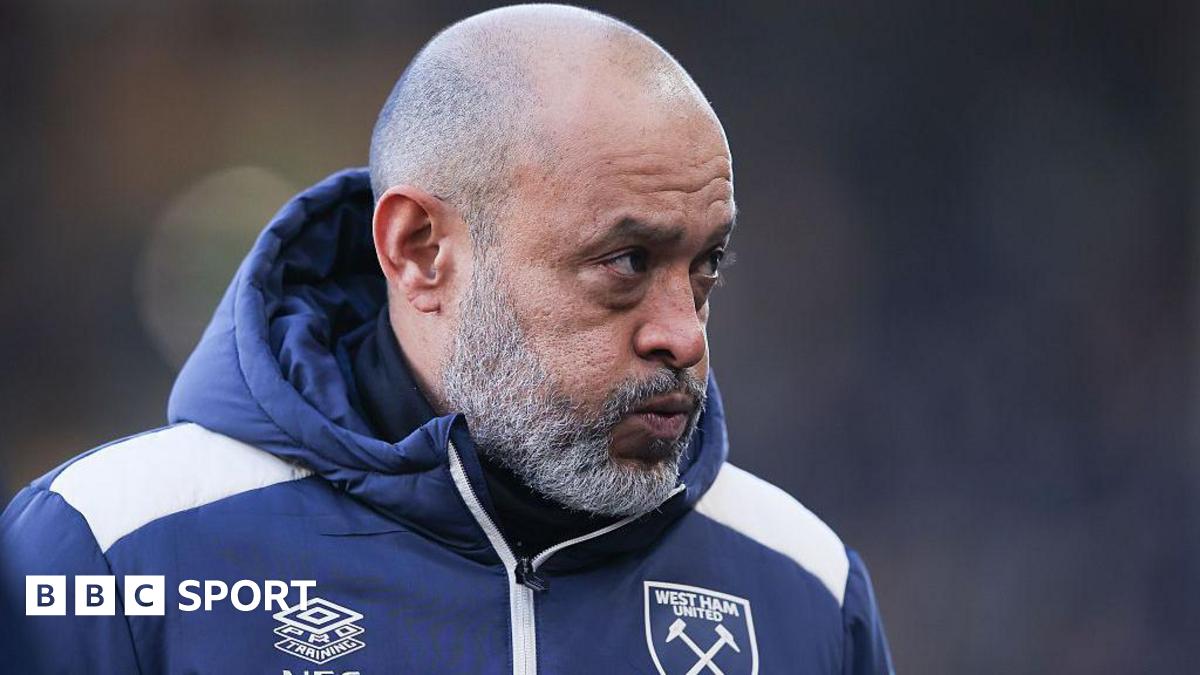
Next up for them is a relegation six-pointer at home to Sean Dyche’s Forest, who sit directly above them on the table in a fixture that could shape Nuno’s future.
A win against the club that sacked him in September after 21 months in charge might buy him some more time, but a defeat would deepen the crisis and amplify the questions over his position.
“Nobody expected us to play so bad,” Nuno added on BBC Match of the Day.
“Now is the moment for us to reflect and think are we doing everything we can? Do we realise the situation we are in? And how to get out of this situation and improve. There are things that need to be addressed.
“Forest will be a tough game, but now is about reacting and transforming and improving.”
The last side to avoid relegation after having less than West Ham‘s 14 points at this stage of the season were Eddie Howe’s Newcastle, who had just 12 after 20 games in 2021-22.
But they spent £85m in January to bolster their squad with Bruno Guimaraes, Chris Wood, Dan Burn, Kieran Trippier and Matt Targett and finished 11th with 49 points after winning 12 of their remaining 18 games.
They have already signed Brazilian striker Pablo Felipe from Portuguese club Gil Vicente for a reported fee of 25m euros (£21.8m), and he was an unused substitute at Molineux, but have sent German forward Niclas Fullkrug to AC Milan on loan.
“It is a complex situation,” added Nuno, when asked about the club’s prospects in the transfer market.
“The club is working on that situation [of transfers]. We have problems in terms of squad and options but that is not a justification for what we did in the first half – the mistakes we made, the lack of effort… it was very bad.
“It was about mistakes we made over and over again that was really poor.”
A magnitude 6.5 earthquake shook buildings in Acapulco, Mexico, on Friday morning but caused no reported casualties or damage. Image Courtesy of the U.S. Geological Survey
Jan. 3 (UPI) — A magnitude 6.5 earthquake was recorded at 7:58 a.m. local time near Rancho Viejo. Mexico on Friday morning and shook buildings in the resort city of Acapulco along the Pacific Coast.
The earthquake, which was linked to more than 500 aftershocks, occurred during Mexican President Claudia Sheinbaum’s first press briefing of 2026, has caused at least two deaths, The Washington Post reported.
The earthquake’s epicenter was 2.5 miles north-northwest of Rancho Viejo and 21.75 miles beneath the Earth’s surface, according to the U.S. Geological Survey.
The USGS reported little to no landsliding was expected and little to no population exposure to landsliding hazards from the event.
Some liquefaction is estimated with limited exposure to local populations, but some ground failure might still occur, according to the USGS.
Rancho Viejo is about 6 miles east of Acapulco in southern central Mexico, and strong shaking was reported in both locales, with some movement also felt 235 miles to the north in Mexico City.
No tsunami warnings were issued, and none occurred, although aftershocks are anticipated and could occur days or possibly weeks afterward and be of a similar magnitude, according to The New York Times.
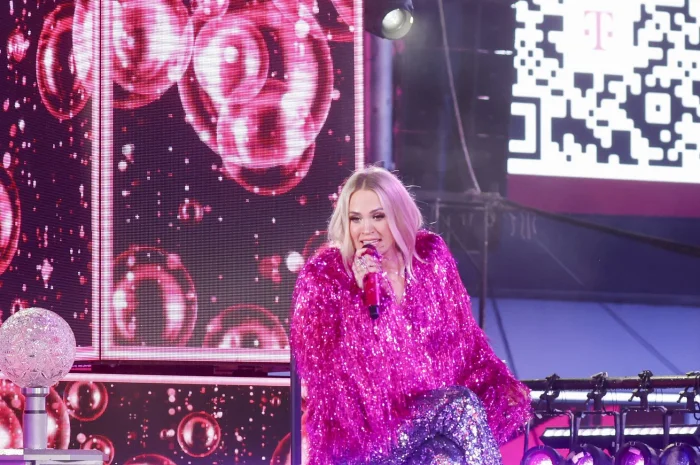
Carrie Underwood performs in Times Square on New Year’s Eve on December 31, 2024, in New York City. Photo by John Angelillo/UPI | License Photo
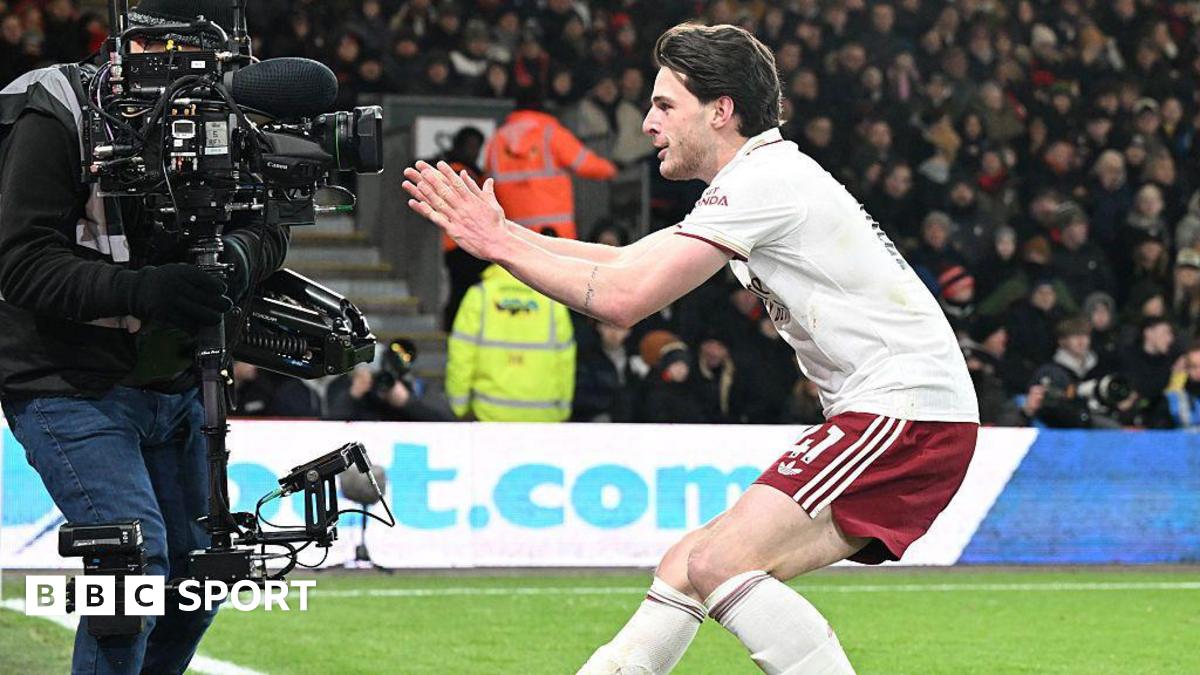
Declan Rice shrugged off a knee injury to extend Arsenal’s advantage at the top of the Premier League to six points with a come-from-behind 3-2 win at Bournemouth.
A rare Gabriel Magalhaes error gifted the Cherries an early opener through Evanilson on Saturday, but the Brazilian quickly redeemed himself to level.
Recommended Stories
list of 4 itemsend of list
Rice had been a doubt after missing Tuesday’s 4-1 demolition of Aston Villa due to knee swelling.
The England international returned to the starting lineup and doubled his tally for the season with two composed finishes either side of the hour mark.
Eli Kroupi’s fine strike gave Bournemouth hope, but Arsenal comfortably saw out the closing stage to move seven points clear of Manchester City, who host managerless Chelsea in their game in hand on Sunday.
There had been a glimmer of hope for Pep Guardiola’s men when Arsenal conceded after just 10 minutes.
Gabriel mishit his attempted cross-field pass towards Jurrien Timber and presented the ball to his compatriot Evanilson, who slotted past David Raya for his first home goal of the season.
Arsenal’s towering centre-back netted on his first start for nearly two months against Villa in midweek and showed his eye for goal once more to equalise within six minutes
Gabriel pounced to slam home Noni Madueke’s deflected cross for his 20th Premier League goal since he joined the Gunners in 2020 — seven more than any other defender.
Rice has also turned into a useful source of important goals since being pushed into a more advanced role this season.
He was perfectly picked out by Martin Odegaard to slot in from the edge of the box to put the visitors in front on 56 minutes.
Bukayo Saka came off the bench to create Arsenal’s third as Rice swept home his cut-back.
Bournemouth remain without a win, stretching back 11 games to October 26.
However, only five sides have scored more Premier League goals this season than Andoni Iraola’s men.
A stunning strike by Kropi from long range set up a nervy finale.
But Mikel Arteta’s men held firm to take another big step towards ending their 22-year wait to lift the Premier League title.
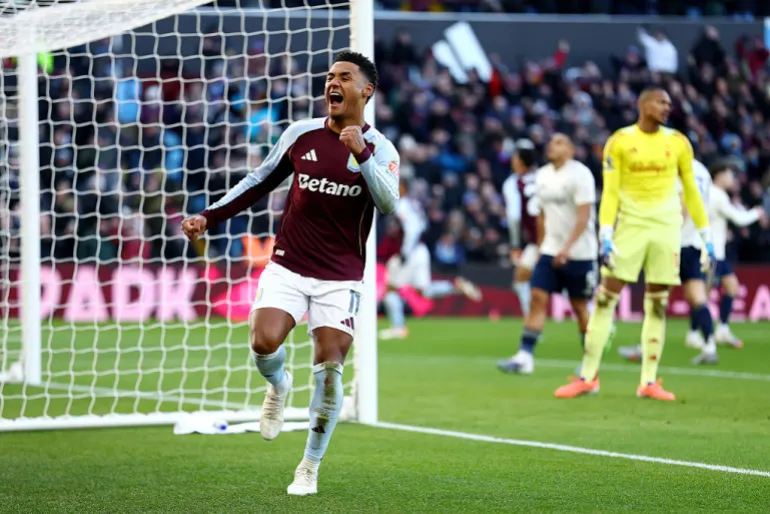
Ollie Watkins of Aston Villa scores his team’s second goal during the Premier League match against Nottingham Forest [Mark Thompson/Getty Images]
Villa beat Forest, while West Ham ’embarrassed’ at Wolves
Aston Villa beat struggling Nottingham Forest 3-1 at their home fortress to ease the pain of their midweek mauling by Arsenal, leapfrogging Manchester City into second place in the Premier League.
Ollie Watkins’s strike on the cusp of half-time gave Unai Emery’s side a deserved lead, and John McGinn scored twice in the second half, either side of a Morgan Gibbs-White goal for the visitors.
Villa’s 11-game winning streak in all competitions was brought to a shuddering halt with a 4-1 defeat at the Emirates Stadium on Tuesday, raising doubts about their ability to maintain a title charge.
But their impressive record at Villa Park remains intact – they have now won 11 straight matches there since a 3-0 defeat to Crystal Palace in August.
Villa boss Emery told Sky Sports that his players and coaching staff had held a meeting after their chastening loss to Arsenal.
“I am so happy,” he said. “We had to recover our energy and our confidence. Here, at Villa Park, the energy we create was really important.
“Forest are competitive. After the Arsenal match, we met the players and staff: how we are doing this season, how we are feeling, how we needed to keep the same consistency as before, how we needed to be together and strong.”
Villa started brightly on a bitingly cold day in Birmingham, but struggled to make their dominance count in a tepid first half.
But the in-form Watkins broke the deadlock in the closing moments of a half in which they enjoyed nearly 80 percent possession.
The England international received the ball outside the area from Morgan Rogers and slammed home for his fourth goal in three games.
McGinn doubled Villa’s lead in the 49th minute, side-footing home from a Matty Cash cross.
Villa appeared to be cruising, but Forest were back in the game in the 61st minute courtesy of a fine finish from Gibbs-White, who chipped past the diving Emi Martinez.
The home side were gifted a third goal in the 73rd minute when Forest goalkeeper John Victor inexplicably vacated his goalmouth to try to reach a long ball from Youri Tielemans, even though there were defenders nearby.
Scotland midfielder McGinn collected the ball and remained cool, sidestepping Victor and stroking the ball into the empty net with his left foot from well outside the area.
The win took Villa to 42 points, one ahead of Pep Guardiola’s Manchester City, who host managerless Chelsea on Sunday.
Forest, who have now suffered four straight league defeats, remain one place above the relegation zone, four points clear of West Ham, who were thumped 3-0 at bottom-of-the-table Wolves.
“The first half was embarrassing, and I have to apologise to the fans – this is not what we want to show,” beleaguered Hammers’ manager Nuno Espirito Santo said after.
Elsewhere, second-bottom Burnley lost 2-0 at Brighton and Hove Albion.