Christmas is behind us, and the New Year is bearing down on us with alarming speed. It’s hard to believe that it has been almost a full year since the devastating fires erupted in Altadena and the Pacific Palisades, sending many of us, our neighbors and friends fleeing to far corners of the state to escape the flames and smoke.
That tragic week marked the beginning of 2025 and the dawn of the second Trump term, ushering in a year that would challenge us in more ways than could have been imagined at the end of 2024.
As I look back on all the stories that The Times’ arts team covered over the last 12 months, it’s notable that the fires and Trump’s effect on the arts dominated the top of the most-read list. But there were also joyful stories about the people, shows and trends that shaped the cultural narrative of the endlessly surprising mid-2020s.
Without further ado, here are the top 10 most-read arts stories of 2025.
I’m arts and culture writer Jessica Gelt wishing you a happy, safe and healthy new year. Here’s your arts news for the week.
Our critics
Art critic Christopher Knight’s recent retirement reminded us how fortunate we are to have the finest critics covering the arts in Southern California. Here are a few of our most read pieces of criticism from 2025.
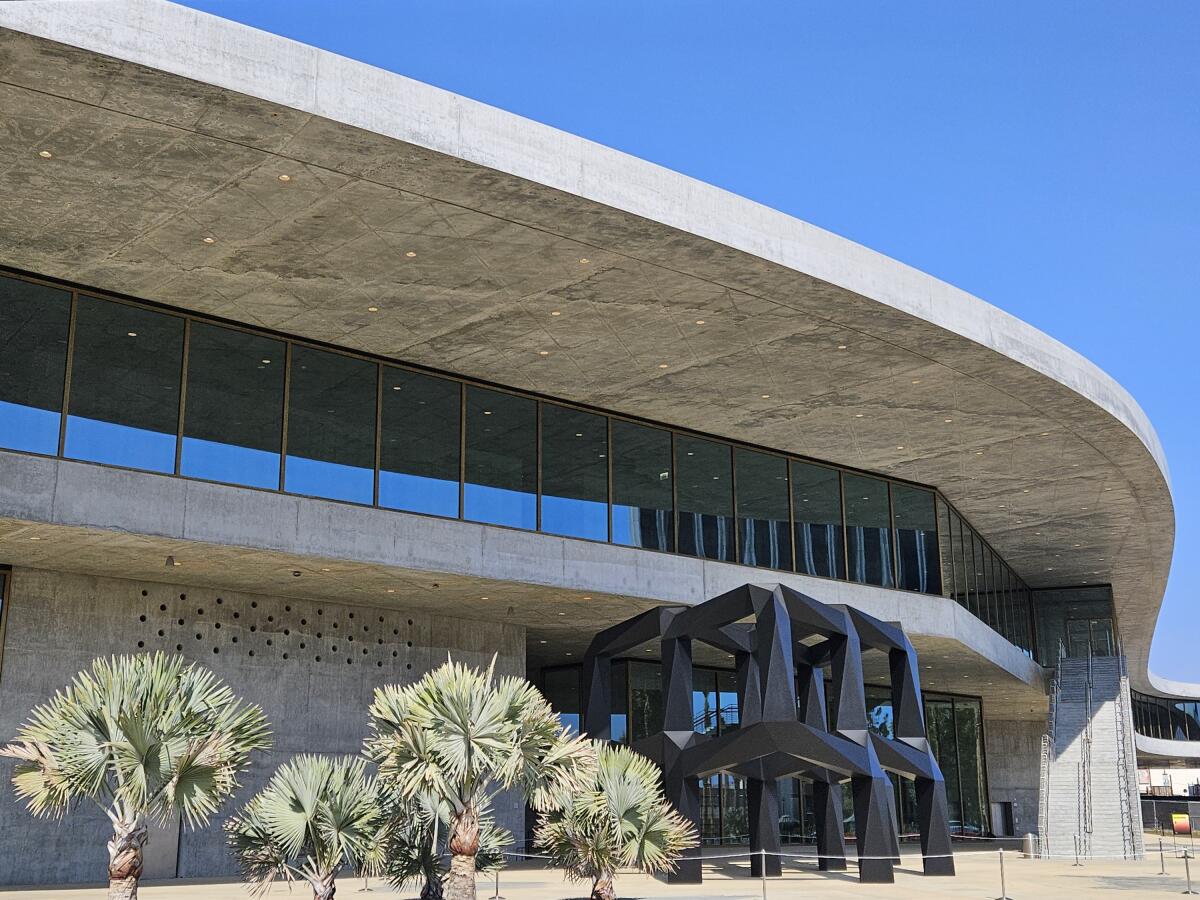
The new David Geffen Galleries, opening in 2026, are composed entirely of Brutalist concrete.
Countdown NYE The giant intergalactic rave, promising alien contact, four stages and all-night debauchery, moves to the L.A. Convention Center for its 11th edition with headliners including John Summit, Above & Beyond, Pryda, Madeon, Slander, Sub Focus, Crankdat and Wuki. 7 p.m.-5 a.m. Los Angeles Convention Center, 1201 S. Figueroa St., downtown L.A.. countdownnye.com
A preview of last year’s New Year’s Eve LA Midnight Countdown at Gloria Molina Grand Park.
(Jason Armond / Los Angeles Times)
Countdown to 2026 Gloria Molina Grand Park’s free, all-ages New Year’s Eve celebration, reportedly the largest on the West Coast, rings in the holiday with live music and performances on the Get Down Stage (hosted by Shaun Ross, featuring Ashley Younniä, Clax10 and DJ Wayne Williams) and the Countdown Stage, hosted by DJ Gingee featuring Ceci Bastida, Bardo and Ruby Ibarra. 8 a.m.-1 p.m. Wednesday. 200 N. Grand Ave., downtown L.A. grandparkla.org
New Year’s Eve with El DeBarge The R&B crooner of such hits “All This Love,” “I Like it,” “Stay With Me” and “Rhythm of the Night” helps the new live jazz venue inaugurate a new tradition. 8 and 11 p.m. Wednesday. Blue Note LA, 6372 W. Sunset Blvd. bluenotejazz.com
The Roots ring in the New Year at Walt Disney Concert Hall.
(Los Angeles Philharmonic Assn.)
New Year’s Eve with the Roots Philly’s finest take a break from “Tonight Show” duties to bring their eclectic blend of hip-hop to L.A. for two shows to close out the year. 7 and 10:30 p.m. Wednesday. Walt Disney Concert Hall, 111 S. Grand Ave., downtown L.A. laphil.com
Queen Mary New Year’s Eve Party in timeless elegance aboard the iconic ocean liner (safely moored in Long Beach to ensure there’s a morning after) with its Masquerade Soirée, live music, performances, casino games and fireworks. 8 p.m. Wednesday. 1126 Queens Highway, Long Beach. queenmary.com
Culture news and the SoCal scene
Eugène Grasset, “Vitrioleuse (The acid thrower)” (detail), 1894, from the periodical L’Estampe Originale, album 6, April–June 1894. Printed by Auguste Delâtre. Lithograph, hand stenciled in five colors. 22 7/8 x 18 in.
(UCLA Grunwald Center for the Graphic Arts, Hammer Museum. Bequest of Elisabeth Dean.)
A great gift The UCLA Grunwald Center for the Graphic Arts marks its 70th anniversary in 2026 and the Hammer Museum is presenting a two-part exhibition drawn from the center’s more than 45,000 prints, drawings, photographs, and artist’s books. Part one of “Five Centuries of Works on Paper: The Grunwald Center at 70” features nearly 100 works ranging from the Renaissance to contemporary art and includes pieces by Albrecht Dürer, Rembrandt van Rijn, Vassily Kandinsky, Käthe Kollwitz, Ansel Adams, Elizabeth Catlett, Corita Kent, Bridget Riley, Ed Ruscha and Vija Celmins. The exhibit opened Dec. 20 and runs through May 17. Part two is scheduled from June 7-Oct. 25.
Fred Grunwald, a shirt factory owner, began collecting art in Germany in the 1920s with a focus on German Expressionism. After the Nazis seized most of the original collection, he and his family immigrated to the U.S. in 1939. Grunwald started a new shirt factory and resumed his collecting in Los Angeles, expanding his interests to include prints from 19th and 20th century Europe, 19th century Japan and contemporary America. In 1956, Grunwald donated his extensive collection to UCLA so it would be accessible to students. His wife and children continued making gifts to the Grunwald Center after his death in 1964.
Enjoying this newsletter? Consider subscribing to the Los Angeles Times
“There is very strong evidence that all three pieces came out of Cambodia, out of a context of war and violence and the dissolution of order,” said Chase F. Robinson, the NMAA’s director. “All three can be connected with problematic dealers, and no evidence emerged that gave us any confidence that the pieces came out in anything other than those circumstances. So after a lot of internal research and several visits to Cambodia, we worked closely with both the Ministry of Culture and Fine Arts as well its legal representative Edenbridge, shared the information we had, and came to the conclusion that all three pieces should be returned.”
The three returned artifacts are a 10th century sandstone head whose ornate carved designs match others at the temple of Pre Rup; a four-foot-tall sandstone sculpture of the goddess Uma, also from the 10th century, whose detailing ties it to the temple of Phnom Bakheng; and a bronze statue of Prajnaparamita, the goddess of transcendental wisdom, from around 1200.
— Kevin Crust
And last but not least
Once you’ve slept off the New Year’s Eve festivities and had your fill of football, settle in Thursday at 8 p.m. for PBS SoCal’s broadcast of the Vienna Philharmonic’s annual concert from the city’s historic Musikverein. The ensemble will be conducted for the first time by Yannick Nézet-Séguin and feature performances by the Vienna State Ballet and location segments hosted by “Downton Abbey’s” Hugh Bonneville.
Ever wondered what happens if you forget to put your window up during take-off or landing? One flight attendant explained the purpose behind the important safety precaution
Christine Younan Deputy Editor Social Newsdesk
10:08, 27 Dec 2025
There’s a reason you should have blinds up(Image: Getty Images)
Travelling on a plane comes with plenty of safety precautions, like going through security and putting your phone on airplane mode. While it can be nerve-wracking for people to remember these steps, there is a cabin crew to remind you along the way.
Now when you’re about to take-off, flight attendants usually have a checklist to tick off before the plane enters the runway. You must have your seats in a upright position, as well as armrests down. But one crucial part of safety is making sure your blinds are up during take-off and landing, so have you ever wondered what happens if you forget?
In a Reddit post, one person asked: “Why do you have to have the windows up for landing sometimes? This is something I’ve always wondered and I had no clue who to ask!”
Well the reason for having your windows up is quite simple – it’s in case of an emergency.
That’s because if you need to evacuate, you won’t be able to see if the engine is on fire, or there’s any hazard which means you can’t evacuate out of that side.
A flight attendant said: “In case something goes wrong a passenger can see it and alert the flight crew. It also has to do with safety. If you crash upon take-off inside a dark plane, the light could be blinding upon evacuating.”
Putting your window shades up during take-off and landing is for critical safety reasons as it also allows crew and passengers to see external hazards.
It’s also done for quick assessments to help your eyes adjust to light for a faster emergency exit and allows emergency services to see inside the cabin if needed.
Often flight attendants require your blinds to be up during take-off and landing. At night, shades stay open (with cabin lights dimmed) so emergency services outside can see in, meanwhile in the day, it’s so your eyes adjust.
What other safety precautions are there during take-off and landing?
Seatbelt: Passengers must make sure their seatbelt is fastened and even when the sign is off, it’s best to keep it buckled.
Seat position: Make sure your seat is in a full upright position
Tray table: Put it away securely
Electronics: All devices must be switched off or on airplane mode
Attention: Watch the safety video and demo
Exits: Revise your nearest exits in the case of an emergency
Shoes: Keep footwear on to protect your feet from debris
Window shades: Keep them open for visibility
Baggage: Make sure carry-ons are stowed away properly
With 2026 marking the centenary of America’s Route 66 and the World Cup kicking off, there are return flights from £411 to Los Angeles, £427 to San Francisco and £439 to Miami.
BA are offering deals on some of the most-searched holiday destinations this year
Flights to Dubai start from £449 and Cancun from £482.
British Airways Holidays has seven-night packages to European destinations including Malaga, the Algarve, Malta and Majorca from £299pp.
And for a cheeky city break, there are deals in hot spots including Barcelona, Nice and Venice from £199pp.
There are also discounted holidays to the US, with Florida and Los Angeles from £599pp.
Deals include seven nights’ room-only at the 4H Pestana Alvor Beach Villas in Alvor, Portugal, from £299pp including Gatwick flights on dates in March and 23kg luggage.
Or seven nights’ room-only at 3.5H The STRAT Hotel, Casino and Tower in Las Vegas from £649pp including Heathrow flights on select dates in November.
THERE are savings of up to £120 per couple and £210 for a family of four on Virgin Holidays packages to the Caribbean, Orlando and Tampa with a low deposit of just £75pp.
Deals include 14 nights’ room-only at the Rosen Inn at Pointe Orlando from £908pp including Virgin Atlantic flights from Heathrow on March 4, 2026.
In Virgin Atlantic’s sale there are great offers on NYC trips
There are also holidays to new route Cancun in Mexico, with seven nights’ B&B at The Fives Downtown Hotel from £1,086pp including Virgin flights from Heathrow on September 19, 2026.
In Virgin Atlantic’s sale there are return flights to New York from £373 on select dates in February 2026, as well as return fares to Phuket in Thailand from £648pp on selected departure dates in October 2026.
You can also get return flights to Cape Town, South Africa, from £729pp on selected dates in January and February 2026.
TOUR giant TUI is touting its biggest sale ever with up to £500 off holidays, zero deposits with direct debits to spread the cost and thousands of free kids’ places in the school holidays.
There are flexible departures from more than 20 local airports and hundreds of free room upgrades.
Tui are offering flexible departures from more than 20 local airports
The sale offers savings of ten per cent with the code SALE up to a maximum saving of £500 as long as you download the TUI app and create an account.
As well as land-based holidays, there is up to £300 off TUI River Cruises when you spend over £3,500, or £200 off if you spend over £2,500 on sailings departing between March 2026 and the end of October 2027.
The deal is valid on sailings of five nights or longer on Europe’s River Rhine, Douro or Danube and River Nile in Egypt.
Or you can head long- haul to the Caribbean with seven nights’ all-inclusive at the 5H Riu Negril in Jamaica.
It costs from £1,420pp including flights from Gatwick on June 16, 20kg hold luggage and transfers.
THE UK’s largest tour operator is sharing the love with £100 off ALL holidays booked in its sale, with a low deposit of just £25 needed to lock in a great deal.
The sale, running until January 12, also includes 20 per cent off all flight-only bookings on jet2.com, including on one-way flights.
Jet2 is the UK’s largest tour operator
All package holiday deals include 22kg luggage, 10kg hand luggage, under-seat bag, return transfers, plus ABTA and ATOL protection.
There are millions of free child places, as well as pay monthly plans to spread the cost.
Deals are available on more than 75 destinations across Europe, the Med, North Africa and the Canary Islands.
Offers include seven nights’ all-inclusive at the 3H Club Mac Alcudia Resort and Waterpark in Majorca from £579pp with flights from Leeds Bradford on April 18.
And seven nights’ B&B at the 3H Hotel La Barracuda, Costa del Sol, from £389pp including flights from Stansted on February 27.
THE Big Orange Sale from easyJet holidays is promising up to £400 off city breaks and beach escapes.
Holidaymakers can get £50 off a minimum spend of £500, £100 off an £800 minimum, £150 off a minimum of £1,500, £300 off a £3,000 minimum spend and £400 off a £4,000 spend with the code BIGSALE.
The Big Orange Sale from easyJet holidays is promising up to £400 off city breaks and beach escapes
The deal is valid on 8,000 hand-picked hotels in more than 100 destinations in Europe and North Africa, from popular cities including Amsterdam and Prague, and beach spots from the Canaries to Cape Verde.
All holidays include flights and hotels, and beach packages also come with a 23kg luggage allowance and transfers.
Deals include four nights’ room-only at the 3H Espresso City Centre in Amsterdam from £227pp including flights from Southend on February 1.
And seven nights’ all-inclusive at the 4H Valeria Dar Atlas Resort in Marrakech from £435pp including flights from Liverpool on February 5, with 23kg luggage and transfers.
The day after Christmas is for more than seeking bargain Christmas sales or making returns on gifts. It’s also the first chance for high school basketball players who had to sit out the first half of the season after transferring to make their debuts.
At the Classic at Damien, Loyola got an immediate lift in a 67-51 win over Bakersfield Christian on Friday. Its two leading scorers were sit-out period players. Deuce Newt, a transfer from Campbell Hall, scored 24 points and Omari Cuffe, a transfer from St. Pius X-St. Matthias, had 17 points.
No team has waited more patiently than Corona Centennial’s girls’ basketball team. Knowing its top transfer students wouldn’t be eligible until Dec. 26, the Huskies didn’t play any games until Friday’s 90-31 win over Camarillo. Perhaps this is the trend of the future. Centennial is 1-0 and expected to be a Southern Section Open Division playoff team.
Can you say built for the playoffs?
Boys’ basketball
Crean Lutheran 62, Meridian (Id.) Owyhee 59: The Saints knocked off a team that beat Harvard-Westlake last week in Hawaii. Hunter Caplan scored 20 points.
Crespi 73, Layton (Utah) Christian 70 (OT): The Celts won in overtime. Isaiah Barnes had 28 points, nine rebounds and five assists.
Redondo Union 110, Fresno Clovis North 56: SJ Madison had 30 points for the Sea Hawks.
St. John Bosco 56, Utah American Fork 39: Christian Collins led the Braves with 27 points.
Arcadia 64, Mayfair 59: Owen Eteuati-Edwards had 22 points for Arcadia, setting up a Saturday showdown with San Gabriel Academy.
San Gabriel Academy 66, Palisades 57: Freshman Zach Arnold contributed 14 points for San Gabriel Academy.
Moorpark 57, Fairfax 47: Sophomore Logan Stotts had 16 points for Moorpark.
Bogart (Ga.) North Oconee 65, St. Pius X-St. Matthias 64: Freshman Darrellreon Morris had 21 points in a buzzer-beater loss.
Milken 65, Bishop Alemany 55: Grayson Coleman scored 24 points for 7-7 Milken. Sophomore Ethan Frank, a transfer from Crespi, made his season debut for Milken, scoring nine points and getting seven rounds.
Etiwanda 53, San Joaquin Memorial 50: Armaun Pollock’s 14 points helpd the Eagles (15-0) stay unbeaten.
Mira Costa 55, La Costa Canyon 44: The Mustangs improved to 14-1 with a win in Carlsbad. Jayden Kainsinger scored 20 points.
La Habra 63, Washington Prep 48: Acen Jimenez finished with 27 points for La Habra.
St. Francis 68, Burroughs 23: Luke Paulus had 23 points for St. Francis.
Bishop Montgomery 73, Sylmar 41: Twins Terron and Tarron Williams combined for 30 points and 18 rebounds.
Harvard-Westlake 70, Germany Urspring 44: Joe Sterling made seven threes and finished with 31 points.
Brentwood 62, Taft 52: Ethan Hill finished with 22 points and 11 rebounds.
Mater Dei 98, Otay Ranch 50: Zain Majeed, a transfer from IMG Academy, had 20 points in his debut for Mater Dei.
Sherman Oaks Notre Dame 55, Idaho Lake City 45: Josiah Nance, back from injury, had nine points for the Knights as they slowly get him back into shape. NaVorro Bowman led the way with 17 points.
Thousand Oaks 68, Davis Sr. 61: The Lancers stayed unbeaten behind Dylan McCord, who made seven threes and had 36 points.
Viewpoint 67, Washington Roosevelt 43: Solomon Clanton Jr. had 21 points.
Rolling Hills Prep 51, California 50: Carter Fulton had 27 points for 11-2 Rolling Hills Prep.
Calabasas 85, Eastside 58: Tristan Cordero had 28 points and Calvin Goetz 27 points for the Coyotes.
JSerra 68, Democracy Prep 64: Early Bryson scored 23 points and Jaden Bailes 22 points in San Diego.
St. Bernard 65, Washington Mount Si 64: Brandon Granger had 34 points for St. Bernard.
Girls’ basketball
Troy 57, King/Drew 46: Mei-Ling Perry led the way with 24 points for 10-3 Troy.
Sierra Canyon 82, Rancho Cucamonga 36: Sophomores Rosie Oladokum and Cherri Hatter each scored 18 points for the Trailblazers.
1 of 4 |
Jung Cheong-rae, leader of South Korea’s Democratic Party, speaks during his first news conference after taking office at the National Assembly in Seoul on Dec. 26. Photo by Asia Today
Dec. 26 (Asia Today) — A controversial revision to South Korea’s Information and Communications Network Act, driven through the National Assembly by the ruling Democratic Party, is facing a growing backlash not only from conservatives but also from within the broader progressive camp, with critics urging President Lee Jae-myung to exercise his veto.
The amendment, often dubbed the “anti-disinformation law,” passed the Assembly on Dec. 24 as the Democratic Party leveraged its 170-seat majority. However, smaller progressive allies – including the Progressive Party, the Basic Income Party and the Social Democratic Party – either opposed the bill or abstained, warning that it could violate constitutional protections on freedom of expression.
“The criteria for judging what constitutes harm to the public interest are unclear,” Sohn Sol, senior spokesperson for the Progressive Party, said in a statement on Wednesday. “There is a serious risk the law could be abused as a tool to arbitrarily suppress speech critical of those in power,” she said, calling on the president to return the bill to the Assembly.
During the plenary vote, Progressive Party lawmaker Jung Hye-kyung voted against the bill, while Sohn abstained. Lawmakers Yong Hye-in of the Basic Income Party and Han Chang-min of the Social Democratic Party also cast abstentions. Even Park Joo-min, a Democratic Party lawmaker, abstained, later saying that key provisions he had championed – including the complete repeal of criminal defamation for statements of fact and changes to complaint-based prosecution – were not included in the final version.
The revised law allows courts to award punitive damages of up to five times the assessed harm against media outlets or YouTubers found to have intentionally disseminated fabricated or manipulated information. It also empowers the Korea Communications Commission to impose fines of up to 10 billion won ($7.7 million) on those who repeatedly distribute content ruled to be false by the courts. Supporters argue the measures are necessary to dismantle profit-driven fake news operations.
Despite criticism from both opposition parties and parts of the progressive bloc, the Democratic Party has held firm. Party leader Jung Cheong-rae said “irresponsible freedoms that fuel chaos and profit from malicious agitation cannot be left unchecked,” while Supreme Council member Han Jun-ho dismissed warnings about chilled speech as “overblown.”
The main opposition People Power Party said it would seek legal remedies, including filing a jurisdictional dispute with the Constitutional Court, calling the law “an unconstitutional gag order that suffocates liberal democracy.” Floor leader Song Eon-seok urged President Lee to “immediately exercise his veto.”
Attention has also turned to the Justice Innovation Party, which played a swing role in the legislative process. While the party initially pushed alternative proposals – including limits on punitive damages claims by public officials and repeal of criminal defamation for factual statements – those demands were not fully reflected. The party ultimately backed the Democratic Party’s bill, citing future discussions on criminal law revisions, while securing amendments to strengthen defendants’ rights for journalists and other targets of lawsuits.
Ukrainian President Volodymyr Zelenskyy has accused Russia of using ordinary apartment blocks on the territory of its ally Belarus to attack Ukrainian targets and circumvent Kyiv’s defences.
Zelenskyy made the allegations on Friday amid revelations by intelligence experts that Moscow has likely stationed its new nuclear-capable hypersonic ballistic missiles at a former airbase in eastern Belarus – a move seen as bolstering Russia’s ability to strike targets in Europe.
Recommended Stories
list of 3 itemsend of list
“We note that the Russians are trying to bypass our defensive interceptor positions through the territory of neighbouring Belarus. This is risky for Belarus,” Zelenskyy wrote on the Telegram messaging app on Friday after a military staff meeting.
“It is unfortunate that Belarus is surrendering its sovereignty in favour of Russia’s aggressive ambitions,” the Ukrainian leader said.
Zelenskyy said Ukrainian intelligence had observed that Belarus was deploying equipment “in Belarusian settlements near the border, including on residential buildings” to assist Russian forces in carrying out their attacks.
“Antennae and other equipment are located on the roofs of ordinary five-storey apartment buildings, which help guide ‘Shaheds’ [Russian drones] to targets in our western regions,” he said.
“This is an absolute disregard for human lives, and it is important that Minsk stops playing with this,” he added.
The Russian and Belarusian defence ministries did not immediately respond to requests for comment.
Russia had previously used Belarusian territory to launch its February 2022 invasion of Ukraine, and Belarus remains a steadfast ally, though President Alexander Lukashenko has pledged to commit no troops to the conflict.
Russian President Vladimir Putin and Belarusian President Alexander Lukashenko attend a wreath-laying ceremony at the Eternal Flame in the Hall of Military Glory at the Mamayev Kurgan World War II memorial complex in Russia’s southern city of Volgograd in April 2025 [File: Alexander Nemenov/AFP]
Belarus defence minister: ‘Our response’ to the West’s ‘aggressive actions’
Amid reports of closer Russian and Belarusian coordination in the war on Ukraine, satellite imagery analysed by two US researchers appears to show that Moscow is stationing Oreshnik hypersonic ballistic missiles in eastern Belarus, according to an exclusive Reuters news agency report.
Oreshnik had been described by Russian President Vladimir Putin as impossible to intercept, and he previously made clear his intention to deploy the missiles – which have an estimated range of up to 5,500km (3,400 miles) – in Belarus.
Researchers Jeffrey Lewis of the Middlebury Institute of International Studies, in California, and Decker Eveleth of the CNA research and analysis organisation in Virginia, said they were 90 percent certain that mobile Oreshnik launchers would be stationed at the former Russian airbase near Krichev, some 307km (190 miles) east of the Belarus capital of Minsk.
The United States researchers said reviews of satellite imagery revealed a hurried construction project in Belarus that began between August 4 and 12, and contained features consistent with those of a Russian strategic missile base.
One “dead giveaway” in a November 19 satellite image was a “military-grade rail transfer point” enclosed by a security fence to which missiles, their mobile launchers and other components could be delivered by train to the site, Eveleth told Reuters.
Another feature, said Lewis, was the construction of a concrete pad that was then covered with earth, and which he called “consistent” with a camouflaged missile launch point.
The researchers’ assessment broadly aligns with US intelligence findings, according to the report.
Russia and Belarus have yet to comment on the Reuters report.
But, earlier this month, President Lukashenko acknowledged the deployment of such weapons in his country, although he did not say to which part of the country the Russian missiles have been deployed. He added that up to 10 Oreshniks would be deployed within the country.
State-run BelTA news agency quoted Belarusian Defence Minister Viktor Khrenin as saying this week that the Oreshnik’s deployment would not alter the balance of power in Europe and was “our response” to the West’s “aggressive actions”.
The White House did not immediately respond to a request for comment on the reported Russian missile deployment to Belarus.
Ukraine’s capital came under a new “massive” Russian attack early on Saturday, with explosions reported in the city, air defences in operation and the Ukrainian military saying cruise and ballistic missiles were being deployed.
On Sunday, President Zelenskyy is scheduled to meet with US President Donald Trump to finalise a possible ceasefire deal between Moscow and Kyiv.
In advance of the meeting, Zelenskyy told the Axios news site that he was open to putting the Washington-led “20-point” peace plan to a referendum – as long as Russia agreed to a 60-day ceasefire to allow Ukraine to prepare for and hold such a vote.
Coronation Street’s Debbie Webster actress Sue Devaney has teased all about the big soap wedding, Carl Webster’s comeuppance and the explosive Corriedale episode
Coronation Street’s Debbie Webster actress Sue Devaney has teased all about the big soap wedding(Image: ITV)
As Coronation Street‘s Debbie Webster continues to adapt to living with young onset vascular dementia, one thing she’s determined to see go ahead is her extravagant wedding to Ronnie Bailey.
But actress Sue Devaney, who has played the fan favourite since 1984, warns there’s plenty of tension as the big day arrives thanks to Debbie’s warring siblings Kevin [Michael Le Vell] and Carl [played by Jonathan Howard].
Sue, 58, says Debbie won’t let their feud spoil the wedding of her dreams though. The hotel owner hasn’t had much luck with men in Weatherfield, dumped by tearaway Dazz in the 80s, before her scheming ex Ray Crosby brought trouble to her door in 2020, a year on from her return to the Cobbles.
But Debbie has finally found the one in Ronnie amid the devastation of her diagnosis. “She’s never found true love until now,” admits Sue. “I think because Ronnie said to her, ‘I’m not going anywhere, you might be poorly, you might have dementia, but I’m sticking by your side,’ she just sees that as true love.”
Sue originally joined the soap as a teenager in 1984 and bowed out a year later, before becoming a key character after her return in 2019. She’s proven a hit with fans ever since, and so her character’s sad health news came as a blow. Sue and show bosses have promised there’s plenty more to see from Debbie before her eventual heartbreaking exit.
As the soap continues to highlight the condition and what it’s like to live with dementia, Debbie’s wedding sees a performance from the dementia choir in an emotional touch. “I was over the moon because it was so beautiful,” shares Sue. “When they started singing, I had a little tear. It was fabulous. They sounded amazing.”
Sue even got to have her say when it came to Debbie’s amazing wedding look, sharing her inspiration behind the dress. She admits: “I said I just want to look like a Joan Collins from Rochdale. They delivered brilliantly. I wanted that shape, you know, because I like the feathers and that kind of 50s shape with big shoes and a big feather headdress.”
The day is not without its drama, as attention falls on Carl who has been targeting Debbie, even using her diagnosis against her as he plots to flee with her money. With plenty of secrets set to come out, it’s on Kevin and his ex Abi [Sally Carman-Duttine] to expose the truth. “In Debbie’s eyes, Carl can’t do anything wrong, because she loves her brother,” Sue confesses. “I think there’s going to be a lot of tension around the wedding where Abi is watching out for Carl because she doesn’t trust him.
“I think Debbie is letting him get away with little bits. She’s not that far down the line that she doesn’t see things. Love is blind, isn’t it?” Sue reveals the events of the wedding will lead into dramatic scenes as Coronation Street collides with Emmerdale in a special crossover episode, dubbed Corriedale.
“She doesn’t want Carl to leave,” Sue explains. “She doesn’t want Carl to leave the wedding. Also he’s drunk, so she doesn’t want him to drive off. She jumps in the car thinking, ‘Well, you can’t go anywhere if I’m in the car.’ And he thinks, ‘Well, I’m going somewhere,’ and carries on driving far too fast.”
It seems Debbie and Carl could be caught up in the big crash stunt too in something unexpected, possibly, to fans. As Sue shares all about filming for the episode, she appears to confirm Debbie and Carl will be in Carl’s car, after fans had speculated it could be her wedding party bus caught up in the drama. She also addressed some stunt work.
She says: “There was one scene where Carl had to drive off really fast and they had a dummy for me, you know, with the hair and feathers in the hair and everything. And I said to our director, ‘Can I not speed off with the stunt guy?’ and he said, ‘Yeah, go on then.’ He let me do it! It felt like doing a little movie or something.”
It’s safe to say that there will be big consequences in the fallout to Christmas and the start of 2026 too. “It’s not going to be plain sailing,” warns Sue. “There’s going to be some massive reveals, things that we didn’t know about Debbie, and quite a bit of reflection.”
Sue’s also hoping for more scenes with Debbie’s female pals, including Christina Boyd and Glenda Suttleworth, expressing the importance of women supporting women. Sue says: “I think that those friendships and those bonds that you have with another woman is something that has to be highlighted, because you don’t see it that often in soap. I think they should do an episode just with women.”
While it’s been a busy time for the actress, she’s planned a relaxing time off over the Christmas period with her husband Jim O’Farrell, whom she married in a private ceremony last year. “I’m going to be away for three weeks,” Sue teases. “Me and my husband are going to relax in the sunshine. Stepping off that plane, hiring a car, going island hopping. And not a script in sight. I’ll tell you what else is not in sight: phone is off.”
Holidaymakers will be able to fly from Birmingham to Rome Fiumicino to explore one of the world’s most popular capital cities.
Flights start from March 5, 2026, and run four times a week.
The new route from Edinburgh to Ljubljana in Slovenia will be Scotland’s only direct connection to the country.
Ljubljana is a fairytale-like city with castle views and pretty cafe-lined riverbanks.
Flights will start on the Easter weekend of April 4 and operate twice a week.
Travellers from Bristol will be able to fly to Reus, Spain and Thessaloniki, Greece.
Reus is an overlooked Spanish city with modern buildings and golden sand beaches.
Ljubljana is a pretty city straight out of a storybookCredit: Alamy
Flights will operate twice a week, beginning June 25.
Thessaloniki is a port city packed with historical ruins, markets and a busy nightlife scene.
The airline has also introduced 11 new routes from Newcastle Airport.
easyJet will now fly to destinations such as Nice, Corfu and Rhodes from its Northern base.
Reus is an often overlooked seaside Spanish cityCredit: Alamy
Jet2 – La Palma, Samos and Sicily
The airline flies from 13 airports across the UK to over 75 destinations.
And Jet2 are adding three new destinations for 2026: La Palma, Samos and Sicily.
La Palma is one of Spain’s Canary Islands off the northwest coast of Africa, known for their luscious landscapes and year-round warmth.
It’s a lesser-known island which is visited less frequently than its neighbours Tenerife and Lanzarote.
The landscape of La Palma is stunning with its volcanoes and black rock sandsCredit: GettyLa Palma is full of hidden beaches and coves under the cliffsCredit: Getty
Passengers can fly to the island from London Stansted or Manchester airport from April 2026, with twice weekly flights taking off on Mondays and Fridays.
Samos on the other hand is a dreamy Greek island, with the new flights from May 2026.
It’s a laid-back spot with quiet villages and unspoilt beaches, and will be Jet2’s 15th new Greek destination airport.
Flights will run from Manchester and London Stansted twice weekly.
The airline will also be flying to Palermo, Sicily from May 2026.
Sicily’s capital is known for its glittering mosaics, street food culture and pretty Arab architecture.
Flights to Palermo will depart from Manchester and Newcastle, as well as Birmingham.
The Mediterranean waters in Sicily are warm and crystal clearCredit: AFP
Long-haul
British Airways – St Louis, US
In April 2026, British Airways will begin flying to St. Louis in Missouri.
The new route will become the only direct flight to the city from the UK.
St. Louis is known for its blues, jazz and baseball culture – providing a real slice of Americana for UK travellers visiting the states.
The launch of the route even coincides with the 100th anniversary of Route 66 – the legendary highway which St. Louis sits on.
The flight will run four times a week throughout the airline’s summer season.
St. Louis is a fantastic city for watching American sportsCredit: British AirwaysSt. Louis is on the map of Routich starts in Chicago and ends in CaliforniaCredit: British Airways
Virgin Atlantic – Phuket and Seoul
Virgin Atlantic is expanding their destinations with new routes to Phuket in Thailand and Seoul in South Korea.
Phuket is Thailand’s biggest island, known for its beautiful white sand beaches with turquoise waters.
It’s also popular with young travellers and backpackers, with plenty of beach parties, temples and jungles to explore.
Flights to Phuket will operate three times a week seasonally from London Heathrow – and will begin running from October 2026.
In contrast, Seoul is an ultra-modern city known for its neon nightlife and futuristic skyscrapers.
Seoul is paradise for fans of K-Pop and K-Dramas – home to megastar bands like BTS and Blackpink.
Daily direct flights will launch on March 29, 2026.
Phuket is full of Buddhist statues, symbols and templesCredit: Virgin AtlanticPhuket is one of Thailand’s most popular islands to visitCredit: Virgin AtlanticSeoul is an ultra-modern city with a mountain-framed backdropCredit: Alamy
England captain Ben Stokes says he is proud of the way his players “held firm” to win the fourth Ashes Test after a wave of criticism during the build-up to the match.
A failure to capitalise on good positions after they surrendered the Ashes inside only 11 days of cricket, questions over their preparation and attitude, plus off-the-field issues related to drinking are among the headlines to have blighted the tour.
But a pulsating four-wicket victory in the space of two days in Melbourne, in front of jubilant travelling supporters, meant England avoided the prospect of an Ashes clean sweep.
Stokes said he was “very proud” of the way his side reacted to secure victory at the Melbourne Cricket Ground, ending an 18-match winless streak in Australia.
“On the back of everything we had to deal with in this game, I couldn’t be prouder of the way we held firm as a group and as individuals as well,” Stokes told Test Match Special.
“You get tested as leaders within sporting teams and organisations in different ways.
“That was a test of character, a test of qualities of leadership. The way we went about it, not only in public, in terms of all the media and all that sort of stuff.”
He said: “Behind the scenes, it was important that everyone’s focus was on the cricket.
“It would have been so easy to put our focus and attention on all that stuff outside the dressing room. At the end of the day, the most important thing is what we need to do out there.
“I thought the way we bowled this week was exceptional, the way we went about that run-chase was exceptional.”
Stokes said his side are now determined to end the series with another victory in the fifth and final Test in Sydney, which starts on 3 January [23:30 GMT, 2 January].
“It is a very proud moment knowing how tough this tour has been and how everything has gone before this tour coming here,” Stokes added.
“So to get that win in over a long period of time we have been waiting for is pretty pleasing.
“We still have one more to go, and the focus has not moved away from that. We had two games, and we want to get two results go our way.”
UN Secretary-General Antonio Guterres appeals for immediate truce as fighting intensifies in Darfur and Kordofan regions.
United Nations Secretary-General Antonio Guterres has called for an immediate ceasefire in Sudan’s brutal civil war, which the UN says has created the world’s worst humanitarian crisis.
Guterres’s appeal, made late on Friday, follows a peace initiative presented by Sudan’s Prime Minister Kamil Idris to the UN Security Council on Monday, which called for the paramilitary Rapid Support Forces (RSF) to disarm.
Recommended Stories
list of 4 itemsend of list
The plan was rejected by the RSF as “wishful thinking”.
The war erupted in April 2023 when a power struggle broke out between the Sudanese army and the RSF paramilitary group. Since then, the conflict has displaced 9.6 million people internally and forced 4.3 million to flee to neighbouring countries, while 30.4 million Sudanese now need humanitarian assistance, according to UN figures.
UN Assistant Secretary-General Mohamed Khaled Khiari told the UNSC this week that fears of intensified fighting during the dry season had been confirmed.
“Each passing day brings staggering levels of violence and destruction,” he said. “Civilians are enduring immense, unimaginable suffering, with no end in sight.”
The conflict has shifted in recent weeks to Sudan’s central Kordofan region, where the RSF captured the strategic Heglig oilfield on December 8. The seizure prompted South Sudanese forces to cross into Sudan to protect the infrastructure, which Khiari warned reflects “the increasingly complex nature of the conflict and its expanding regional dimensions”.
The RSF has also launched a final push to consolidate full control over North Darfur state, attacking towns in the Dar Zaghawa region near the Chad border since December 24. The offensive threatens to close the last escape corridor for civilians fleeing the country to Chad.
The violence spilled across Sudan’s borders on Friday when a drone attack killed two Chadian soldiers at a military camp in the border town of Tine.
A Chadian military intelligence officer told Reuters news agency the drone came from Sudan, though it remained unclear whether it was launched by the army or the RSF. Chad has placed its air force on high alert and warned it would “exercise our right to retaliate” if the strike is confirmed as deliberate.
Despite the intensifying conflict, the UN achieved a rare breakthrough, saying on Friday that it conducted its first assessment mission to el-Fasher since the city fell to the RSF.
UN Humanitarian Coordinator Denise Brown said the mission followed “months of intense fighting, siege, and widespread violations against civilians and humanitarian workers,” adding that “hundreds of thousands of civilians have had to flee el-Fasher and surrounding areas”.
Earlier this month, Yale University released a report documenting systematic mass killings by the RSF in el-Fasher, with satellite imagery showing evidence of burning and the burial of human remains on a mass scale.
US Secretary of State Marco Rubio warned last week that the fighting was “horrifying” and “atrocious”, telling a news conference that “one day the story of what’s actually happened there is going to be known, and everyone involved is going to look bad”.
Rubio said he wanted the war to end before the New Year, but there is no strong indication that progress has been made.
Prime Minister Idris’s peace plan proposed an immediate UN-monitored ceasefire and complete RSF withdrawal from the roughly 40 percent of Sudan it controls. But an adviser to RSF leader Mohamed Hamdan “Hemedti” Dagalo dismissed the proposal as “closer to fantasy than to politics”.
Upon returning to Port Sudan on Friday, Idris laid down a red line, saying the government would reject international peacekeeping forces because Sudan had been “burned” by them in the past.
If you’re looking to book your summer getaway for next year then look no further, as the cheapest holiday destination has been revealed and it’s a stunning Spanish region
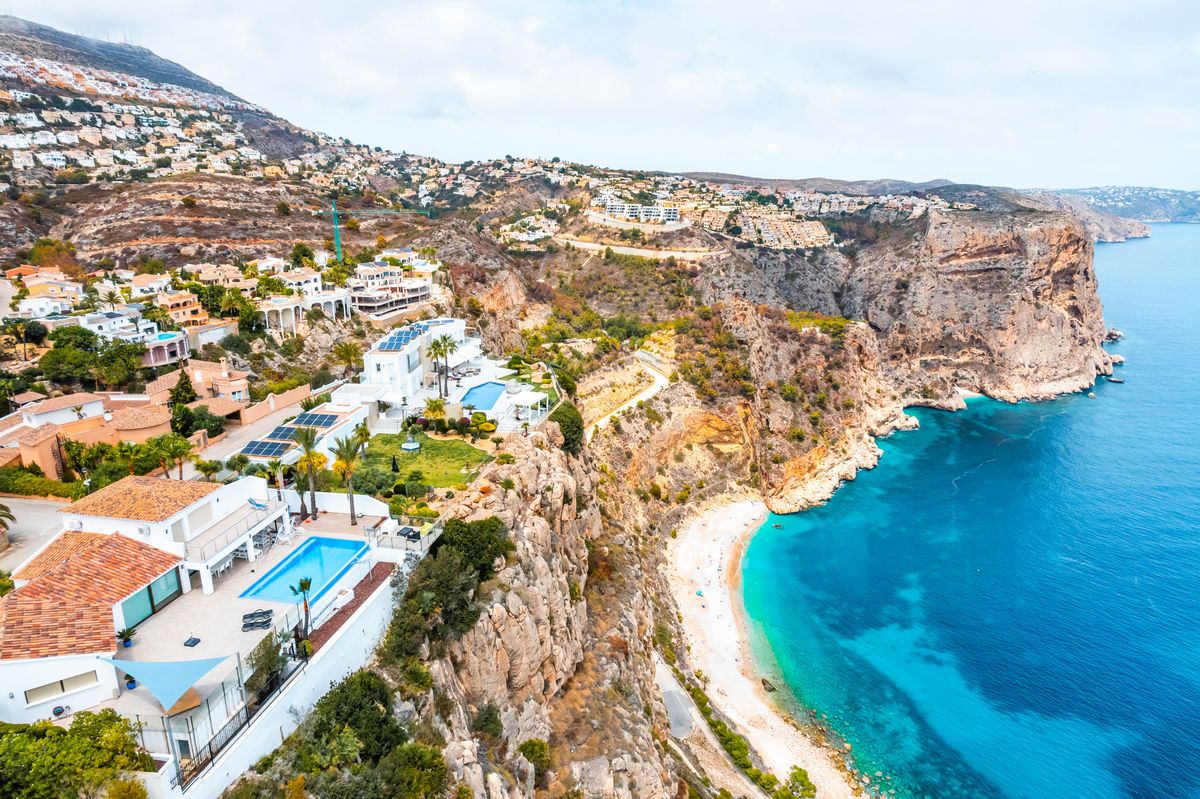
Costa Blanca is the cheapest summer holiday destination for 2026, it has been revealed (Image: Getty Images)
A popular Spanish region with white sand beaches and pristine blue water has been named as the cheapest summer holiday destination for 2026.
As we look to book our summer getaways for next year, Which? has compared the prices of 5,393 package holidays from Jet2holidays and easyJet Holidays to reveal the most affordable options. This was based on a seven-night stay, including flights, departing around August 2, with two people sharing a room with various board types.
Following their extensive research, the experts found that Costa Blanca, along Spain’s Mediterranean coastline, was the most budget-friendly option for a holiday deal next year. For a stay in Costa Blanca during the height of summer, Which? discovered that it would cost, on average, £864 per person for a seven-night package.
This is partly due to its popular and affordable seaside resort of Benidorm, which has often been dubbed the ‘New York of the Mediterranean’ or the ‘Spanish Las Vegas’. Benidorm is undeniably appealing with its sprawling golden sand beaches and turquoise waters, while its cheap drinks, lively nightlife, family entertainment and towering buildings only add to its unique allure.
In its research, Which? found that Benidorm offered some of the cheapest holidays from £535 per person for a week’s self-catering at the two-star Playamar apartments. Meanwhile, an all-inclusive option at the four-star Flamingo Beach Resort, featuring three outdoor pools, would cost £886pp with EasyJet Holidays.
But there’s much more to Costa Blanca than Benidorm, with quieter Spanish areas away from the tourist crowds. One option is the charming and picturesque hilltop town of Altea, offering sensational views over the Mediterranean, with room-only options available for £ 1,033 per person at the luxurious five-star SH Villa Gadea.
Costa Blanca was the only destination Which? found to be less than £900 for a week’s stay in August. Elsewhere in the research, the second most affordable package holiday was revealed as Tuscany, nestled in the heart of Italy.
Tuscany is renowned for its rolling hills, Renaissance masterpieces, and iconic cities such as Florence, Siena, and Pisa. A week-long stay in this captivating Italian region would set you back £929 per person, inclusive of flights and accommodation.
Coming in third on the list of budget-friendly summer escapes is the breathtaking Agadir coast in Morocco, famed for its expansive sandy beaches and status as a prime resort destination. With an abundance of accommodation choices along the coastline, centred around beach days, a stay here would amount to £946pp.
According to Which?, six of the top ten cheapest holiday destinations for 2026 are located in Spain, with Tenerife, Fuerteventura, and Gran Canaria among them. Additionally, Zante in Greece, celebrated for its crystal-clear waters, lush landscapes and vibrant nightlife, also secured a spot in the top 10.
Here are the cheapest package holiday destinations for 2026, as outlined by Which? The results show the average price, per person, for a seven-night package stay.
Costa Blanca, Spain – £864
Tuscany, Italy – £929
Agadir coast, Morocco – £946
Dalaman area, Turkey – £1,048
Tenerife, Canary Islands – £1,073
Fuerteventura, Canary Islands – £1,119
Gran Canaria, Canary Islands – £1,121
Costa Brava, Spain – £1,125
Costa Dorada, Spain – £1,133
Zante, Greece – £1,142
Do you have a travel story to share? Email webtravel@reachplc.com
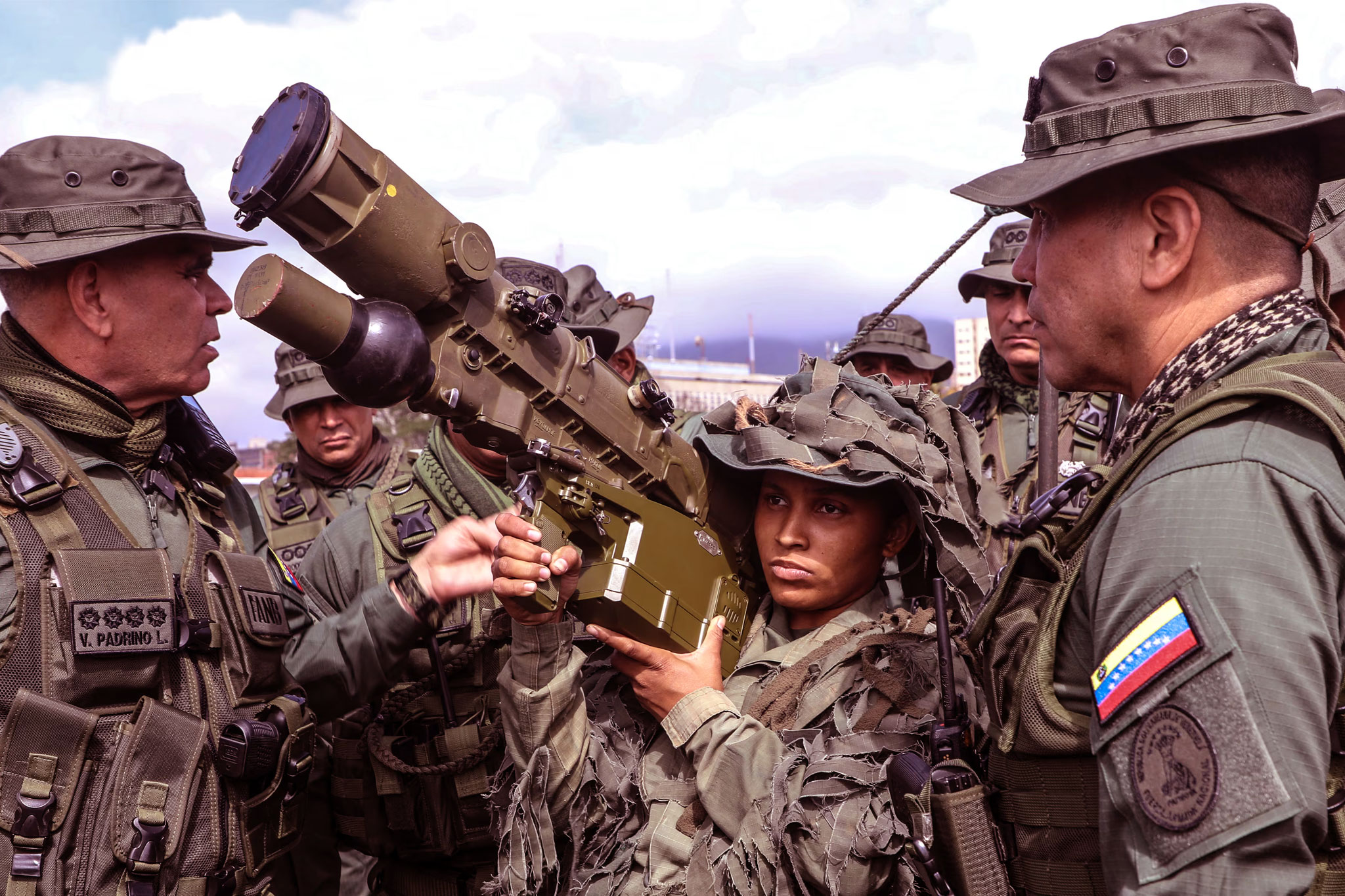
Venezuelan armed forces have held defense exercises in the face of US threats. (Archive)
Since 2002, the date of the 47-hour coup against Hugo Chávez, Washington has unsuccessfully sponsored and supported regime change in Venezuela time and again. In the name of human rights, freedom, and democracy, economic sanctions, color revolutions, oil strikes, recognition of illegitimate leaders, theft of foreign currency and infrastructure, assassination attempts, media offensives, military uprisings, and threats of ground invasion have been instigated or combined without interruption.
Many of these attacks, aimed at seizing the largest oil reserves on the planet, are acts of international piracy. They have caused immense damage to the country and enormous suffering to its people. They have resulted in billions of dollars in lost oil revenue. Countless Venezuelans have been forced to migrate to other nations to survive. Meanwhile, a segment of the old, corrupt oligarchy lives the high life in their mansions in Miami and Madrid.
But despite the lethality of the punishments and the harshness of the siege, the Bolivarian Revolution continues. Certainly, some Chavista political leaders have betrayed the cause. A few military and intelligence officers have gone over to the enemy ranks. Intellectuals have succumbed to the siren song of metropolitan power. But, against all odds, the majority of the population draws a line in the sand against gunboat democracy; they remain loyal to a project that allowed them to recover their dignity and advance in popular power.
For 27 years, Bolivarianism has won almost every election. Desperate in the face of this setback, the empire has tried other formulas for regime change. In December 2007, Enrique Krauze laid his cards on the table. “If Hugo Chávez has thought of turning Venezuela into a Cuba with oil, the Venezuelans who oppose him have discovered the antidote. It is the student movement,” he wrote. So the far right latched onto this movement and tested an insurrectionary scheme. However, the reactionary forces clashed with a reality that wasn’t in their playbooks. So they left to make their fortunes abroad.
All imperial attempts at regime change have run up against what, until now, seems insurmountable: the unity of the Bolivarian National Armed Forces (FANB). There is not a single indicator showing any internal divisions. Part of the key to this unity is the development of a new military doctrine known as the Comprehensive Defense of the Nation. This doctrine seeks to confront the US military threat based on a set of actions designed to deter a technologically and numerically superior enemy.
This strategy has three central elements: strengthening military power, deepening the civil-military union (between the people and the soldiers), and bolstering popular participation in national defense tasks. Previously, the armed forces were fragmented into divisions and brigades. Commander Chávez organized the country into regions, and each region has a military structure with all its components: Army, Navy, Air Force, National Guard, militias, and the people.
If someone attacks a region, that region has the capacity to defend itself. It doesn’t need to move units from elsewhere. On February 23, 2019, under the pretext of bringing in humanitarian aid from Colombia, the Contras and Washington attempted to establish a beachhead in Táchira that would give the illegitimate Juan Guaidó control of a strip of Venezuelan territory to establish a “seat of government.” For 17 hours, fierce clashes erupted between Chavistas and Venezuelan paramilitaries and guarimberos, who operated mostly from the Colombian side. The skirmish ended with the opposition’s defeat.
There, amidst the events, at the military installation beside the Simón Bolívar Bridge, I spoke with Diosdado Cabello, then president of the National Constituent Assembly. Most of the FANB (National Bolivarian Armed Forces) chiefs were also present, whom he introduced to me as his friends and as longtime collaborators of Hugo Chávez. I asked him about the resolve of his troops. In good spirits, he explained:
“President Maduro has visited every barracks. He shows up in the early morning. He arrives, runs with them, shares, does military exercises with them. We have total contact with them. We are like brothers. Many of us have been in this movement since we were children. We support each other and follow each other. We are a family. They will not break us…”
Caracas has modernized its weaponry by acquiring it from Russia, China, and Iran, with whom it also maintains an alliance. Furthermore, it covers an area of almost one million square kilometers. Its topography is highly diverse: the Andes mountain range, the Coastal Range, and the Guiana Shield, along with the extensive Orinoco River basin. It boasts 4,208 kilometers of coastline and dense rainforests. The poor neighborhoods of cities like Caracas are dangerous. It shares a 2,341-kilometer border with Colombia, a 2,199-kilometer border with Brazil, and a 789-kilometer border with Guyana.
No neighboring country desires armed conflict on its borders. Venezuela possesses the men, weapons, determination, and territory capable of sustaining a prolonged popular resistance, turning any attempt to occupy the country into a quagmire for whoever tries it. Regardless of what might happen on the day of the occupation, the true military challenge for an invading force lies in what to do in the days that follow. However, beyond what may happen in the future, in Venezuela, today is the time for peace.
The views expressed in this article are the author’s own and do not necessarily reflect those of the Venezuelanalysis editorial staff.
Luis Hernández Navarro is the Opinion editor of La Jornada, and the author of numerous books, including Chiapas: La nueva lucha india and Self-Defense in Mexico: Indigenous Community Policing and the New Dirty Wars.
DUNCAN James has revealed how Blue has managed to avoid the boyband curse and not hate each other’s guts ahead of their new album.
The four-piece formed in 2000 and have a wealth of hits to their name including All Rise, One Love and Sorry Seems to Be the Hardest Word.
Sign up for the Showbiz newsletter
Thank you!
Duncan James has revealed how Blue has managed to avoid the boyband curse and not hate each other’s guts ahead of their new albumCredit: GettyDuncan (second from left) with his Blue bandmates L-R: Simon Webbe, Lee Ryan and Anthony CostaCredit: GettyThe four piece had a hiatus from 2005-2011 but reformed and have never looked backCredit: Alamy
He’s right – it’s a rare feat in boyband terms to not only have all original members in the band, but for there to still be a lot of love and respect for one another.
Original British boyband Take That famously lost Robbie Williams to a solo career in the mid-90s, and currently perform as a trio after Jason Orange decided to hang up his mic in 2014.
One Direction lost Zayn Malik partway through their world-dominating success, while Westlife lost Brian McFadden after five years and Five fell apart in spectacular fashion at the peak of their fame, before all of them finally reunited for their successful 2025 arena tour.
Meanwhile Boyzone has grabbed headlines in recent years after documenting the tensions behind-the-scenes and announcing a surprise farewell gig with all four remaining members agreeing to take part.
Despite Blue going on hiatus from 2005 to 2011, they reformed as a four-piece to represent the UK at the Eurovision Song Contest, and have remained together ever since.
Revealing the key to their success in avoiding the boyband curse, Duncan said: “I’ve had these ups and downs and different things, we’ve all had a lot of ups and downs but we’re still together.
“For me, I think it’s because we have a lot of loyalty to one another. And I think boys as well, we never really argue.
“We don’t have these bitchy squabbles about clothing or who is going to have what.
“But I think honestly, it’s probably down to the fact that I’m an only child, so I never had any brothers and sisters.
“So when I got into Blue and at the height of it all it was just crazy, we were all over the place around the world, doing songs with Elton John and all that, and I think you just become really close like brothers.”
They’re brothers that I never thought I’d ever have, and we’re family. We always say that to each other, we’re family. And I think that’s the key.
Duncan James
Duncan, who came out as gay in 2014, continued: “They were there for me through everything that I’ve been through in my life, they are literally my brothers.
“They’re brothers that I never thought I’d ever have, and we’re family. We always say that to each other, we’re family. And I think that’s the key.
“There’s been a lot of stuff that’s gone on and we’ve always stood by each other and supported each other, and that’s what families do, don’t they?”
Because of this, the lads still all share a dressing room when they go on tour, but there is one thing they refuse to do.
Irish boyband Boyzone has been open about the tensions behind the scenes, but have come back together for a farewell gig in 2026Credit: InstagramOriginal British boyband Take That have gone from a five-piece to a trioCredit: PA
Duncan, who spoke to us while attending the Children with Cancer gala, said: “The only thing we don’t do is sit next to each other on an aeroplane.
“We all like a window seat and so we all want that seat, and if you don’t get a window, it’s like ‘Oh for God’s sake!’, that’s when you could have an argument!”
New album Reflections, released on January 9, and lead single One Last Time, shows a more grown-up side to the band, who are fans of bands including The Killers and Kings of Leon.
Duncan previously told The Sun: “I think all of us collectively have always loved that rock sound.
“But when you’re put into a boy band, you’re given a kind of direction to go down.”
Duncan said his band mates are like his brothersCredit: GettyBlue have a wealth of hits including All Rise and One LoveCredit: Getty – Contributor
As millions prepare to travel in and out of the UK this winter, a mattress expert has shared the luggage mistake that could bring bedbugs home from your holiday
08:00, 27 Dec 2025Updated 08:25, 27 Dec 2025
Souvenirs aren’t the only things travellers could be bringing back(Image: Matteo Lanciano via Getty Images)
As millions gear up for winter travel in and out of the UK, it’s not just souvenirs that could be making the journey back home.
Recent reports have highlighted a burgeoning bedbug epidemic, with infestations having surged by 62%. Google searches for ‘how to check for bedbugs’ have shot up, seeing a whopping increase of over 500% in the last 30 days, as infestations typically spike during the peak travel and festive season in winter.
Fortunately, a mattress expert has compiled a guide on how to spot early signs of a bedbug invasion and shared easy steps to help curb the spread of these blood-thirsty critters while globetrotting this winter. Mattress specialist Sharon Robson from Mattress Online is dishing out her expert advice on keeping bedbugs at bay this winter. Sharon explains: “Bedbugs thrive in areas where lots of people are coming and going, they also favour warm and humid conditions, which means there’s a higher chance of returning from warmer climates with bed bugs. From hotels, hostels, and holiday rentals to public transport, it’s crucial to know how to spot a potential infestation to prevent bringing any unwanted souvenirs back from your trip.”
Invest in hard-shell suitcases
Sharon’s top tip is a simple one: invest in hard-shell suitcases. She cautions that soft-sided luggage offers numerous hidden nesting spots for bedbugs, potentially heightening your risk of unknowingly carting them back from your travels, reports the Express. Bedbugs have a preference for rough or porous surfaces, making hard-shell luggage with its sleek, solid surfaces a challenging environment for them. This type of luggage is not only more difficult for bedbugs to latch onto, but it’s also simpler to inspect and disinfect, making it a worthwhile investment if you’re worried about these unwanted visitors.
Elevate your luggage (literally)
Upon reaching your accommodation, it’s recommended to raise your luggage above carpets and away from walls. Hold off on unpacking your suitcase on the bed until you’ve had the chance to check for signs of bedbugs. Make use of metal luggage racks or position your case on a solid surface such as a table or desk.
Early warning signs to look out for
There are several tell-tale warning signs that your hotel room might be infested with bedbugs, so before you settle in, give your room a quick inspection. Stay vigilant for sweet, musty smells, which could suggest a large infestation. Also keep an eye out for black or rust-coloured stains on bedding and mattresses. Finally, watch out for empty, brown shells or flat, oval brown shapes, which could be the bugs themselves.
Try the credit card trick
For a more comprehensive inspection, try the credit card trick. Bedbugs often hide in narrow spaces like mattress seams, labels, and tufts. A credit card can be a handy tool for inspecting tight spots like mattress piping, bedframe corners, and any crevices. Simply press the card gently and scrape along the seams to check for bugs and eggs.
Wash and dry clothes on high heat as soon as you come back
If you’re still concerned about potential exposure to bedbugs during your travels, the first thing to do when you get home is to wash all your clothes in hot water. Position your luggage on a hard surface such as a bathroom or laundry room floor and unpack directly into the washing machine. Wash your clothes on a hot cycle and dry them on high heat for 30-60 minutes to kill any live bugs or eggs.
England end an 18-match winless streak in Australia and avoid an Ashes clean sweep with a four wicket victory to wrap up a frenetic two-day Test in Melbourne.
Ex-Brazilian police chief caught using fake Paraguay passport in attempt to board flight to Panama, sent back to Brazil.
Published On 27 Dec 202527 Dec 2025
Share
A Brazilian former police chief, who fled the country after he was convicted as an accomplice in the attempted coup by Brazil’s far-right ex-President Jair Bolsonaro, has been arrested in Paraguay, according to the country’s immigration agency.
Silvinei Vasques was arrested on Friday at the Silvio Pettirossi International Airport in Paraguay’s capital Asuncion, the Paraguayan National Migration Directorate (DNM) said in a statement posted on its website.
Recommended Stories
list of 3 itemsend of list
The agency said Vasques was arrested for “identity theft” after “attempting to evade immigration controls by impersonating a Paraguayan citizen”.
Vasques was arrested while attempting to board a flight to Panama, declaring El Salvador as his final destination, the DNM statement said.
The wanted police chief had “clandestinely” entered Paraguay while “evading justice in his home country”, DNM added.
An image published on X by Paraguayan immigration authorities showed Vasques’s arrest and identification.
A separate video clip posted on the same account showed Vasques being turned over to Brazilian federal police at the Friendship Bridge border crossing that connects Paraguay’s Ciudad del Este and Brazil’s Foz do Iguacu.
Translation: The National Directorate of Migration (DNM) expelled Silvinei Vasques from the country. Moments ago, the DNM expelled Silvinei Vasques (50) from the country, subsequently handing him over to Brazilian Federal Police authorities at the Friendship Bridge border crossing.
Vasques, the former chief of Brazil’s highway police, was accused of deploying officers to prevent voters in left-leaning areas from casting their ballots in 2022 elections that Bolsonaro lost to left-wing candidate and current President Luiz Inacio Lula da Silva.
He was arrested in 2023 and placed under supervision with an electronic ankle monitor pending trial. Earlier this month, he was sentenced to more than 24 years in prison to be served under house arrest. He fled Brazil shortly after.
Brazilian media reported that Vasques broke his ankle monitor and drove across the border to Paraguay.
Brazil Supreme Court Justice Alexandre de Moraes ordered the fugitive’s preventive detention as a precautionary measure on Friday, Reuters news agency reported, citing a court document and information from two people familiar with the matter.
Reached by Reuters, Vasques’s lawyer did not comment on his client’s attempt to flee.
Vasques is not the first official convicted over the 2023 coup attempt who has tried to escape from Brazil. In November, the Supreme Court ordered the arrest of the former intelligence agency director Alexandre Ramagem, who left the country in September and has since been living in the United States.
That same month, Justice Moraes also ordered Bolsonaro be detained after the former president tried to remove his court-ordered ankle monitor using a soldering iron, in what the court saw as an attempt to escape justice.
Bolsonaro, 70, is now serving a 27-year sentence in jail after being found guilty in September of having led the plot to prevent Lula from taking office.
LITTLE MIX’s Perrie Edwards flashed her bare baby bump as she gave a peek into family Christmas with hubby Alex Oxlade-Chamberlain.
The singer, 32, shared sweet snaps from her Christmas with her footballer Alex, 32, and their son Axel, 4, as the couple prepare to welcome their second child together.
Sign up for the Showbiz newsletter
Thank you!
Pregnant Perrie Edwards cradled her baby bump as her young family posed for a sweet Christmas postCredit: InstagramPerrie showed off her pregnant silhouette in front of the Christmas tree, as they prepare to become a family of four next yearCredit: InstagramPerrie exposed part of her baby bump in one of the snaps, as she and Alex prepare to welcome their second child togetherCredit: Instagram/Perrieedwards
She posted a sprawling message on her Instagram to her 18.6million followers, exposing her huge baby bump as she spoke of feeling “content and blessed”.
Alongside a series of festive snaps and footage, she wrote: “Merry Christmas everyone!
“Excitement pumping through the family, amazing food, Christmas magic on repeat, house is now a pigsty, overstimulated, stayed in pj’s all day”.
Her caption continued: “Axels hair is a birds nest, I’m the size of a beach whale, can’t consume any more chocolate if I tried, need fork lifting off the sofa… but my goodness I feel content and blessed”.
Among the selection of snaps, Perrie included a sweet video of her son Axel singing to her festive track Christmas Magic, which she released last year.
The singer, who is currently heavily pregnant, received over 500,000 likes on her Instagram post, as friends and fans threw support towards the couple in the comments section.
One wrote: “Axel singing christmas magic no i’ll sob that’s your biggest fan fr he’s giving us all a run for our money“.
Another commented: “My goodness, Axel is the cutest kid ever he’s gonna be the best big brother ever”.
A third added: “Merry Christmas beautiful & to all your family”.
Alex also broke his silence on their devastating losses, and said: “When you start a family, that’s when you start to learn it’s not easy to have a child, that things can go wrong.
“It’s so difficult — especially for women when they are literally growing another human being inside them, the connection they feel to that, and then can things go wrong and they can lose the baby.
“And it’s so difficult, especially losing the baby so late into the pregnancy.”
Speaking on the We Need To Talk podcast with Paul C Brunson, she said: “It’s weird, because the first time it happened, I think because it was so early, I was like, ‘Oh, that’s hard’.
“But I think when you’re 24 weeks and you’ve planned out that room and all these things, it’s really hard. And nobody knows other than immediate friends and family.
The couple’s four-year-old son Axel was showered with praise over cute footage of him singing his mum Perrie’s festive track Christmas Magic, which she released last yearCredit: Instagram/Perrieedwards
“I remember shortly after, friends would message and be like, ‘How’s the bump?’ And I’d be like, ‘There is no bump’.”
Perrie was also full of praise for Alex during the interview, saying: “He’s very mature. He’s very laid back. He’s very level-headed.
“He’s not the type to get mad or get angry or get funny about things. It might sound boring to some, but it’s so unproblematic.”
Perrie and Alex’s upcoming arrival comes as the couple revealed devastating news of two miscarriages, which were kept privateCredit: Instagram/@perrieedwardsPerrie broke down as she revealed details of the miscarriage on Paul C Brunson’s We Need To Talk podcastCredit: Youtube/We Need To Talk
Distance 7 miles Duration 5 hours Start/finish Ditchling village car park
A pub walk is, as everyone knows, the best kind of ramble, and this tranquil circular walk up on to the South Downs boasts not one inn, but three. Ditchling – the start and end point of the walk – has two pubs, the White Horse and the Bull, alongside 36 buildings dating from the 1500s to 1800s. Most notable is Wings Place, gifted to Anne of Cleves in her divorce settlement from Henry VIII in 1540.
Within a couple of minutes’ walk from the heart of the village, you’re in open fields. Head right out of the car park and look for a right turn, signposted “to the Downs”. With the church spire behind you, the path leads diagonally into leafy woodland, before heading south towards Underhill Lane, and the steep climb up to Ditchling Beacon.
The Beacon is a pull (248 metres), but the view is spectacular: south to Brighton and the silvery wastes of the English Channel, north across the Sussex Weald to Ashdown Forest and the Surrey Hills. Walk east along the South Downs Way, before an unmade road takes you downhill, directly into the welcoming arms of the Half Moon at Plumpton.
Of all the pubs in the area, the Half Moon is my favourite: independent, ungentrified and supportive of local producers. Order a glass of Plumpton Estate wine and check out the pub’s famous painting of dozens of its regulars, including Raymond Briggs and Jimmy Page, done over a nine-month period in 1979. Sunday lunches are hearty roasts, with good vegan options (two/three courses, £24.95/£29.95), alongside a local catch of the day and homemade pies.
The good news is that the second half of the walk is flat. Well-signed paths skirt the grounds of Plumpton College, before heading back across fields and past My Little Farm, a new community smallholding. Once at the bridleway, turn back to see a forested “V” of beech, fir and lime trees on the side of the hill, planted in 1887 to mark Queen Victoria’s golden jubilee. I always sneak a peak through the gates at Streat Place, an elegant Elizabethan manor house, before the final, straight-line stretch across open fields to Ditchling – where a choice of pubs awaits. Annabelle Thorpe
Highgate to Little Venice, London
Narrowboats moored on the canal at Little Venice. Photograph: Barry Teutenberg/Alamy
Distance: 8 miles Duration: 3½ hours Start Highgate tube station Finish The Prince Alfred, Maida Vale
Starting at Highgate tube station, follow Southwood Lane into Highgate village, noting the former home of Mary Kingsley, a Victorian explorer who had the chutzpah to chat up cannibals in the Amazon. At Pond Square, admire the array of London plane trees (planted in bulk across the city because they could handle the pollution), before proceeding south down Swain’s Lane to Highgate Cemetery (adults £10) to pay your respects to Bob Hoskins (made films), George Michael (made music) and Karl Marx (made a terrible fuss about the exploitation of workers).
Cut through Oakeshott Avenue – a distinctive street of mock-Tudor mansions – to Hampstead Heath, where you should resist the temptation to have a dip in the men’s pond (Mum, I’m talking to you), and instead continue west until you hit upon East Heath Road. From here, wiggle north-west to Well Walk, where you’ll find the erstwhile abodes of JB Priestley and John Constable, as well as the Wells Tavern, a good spot to get some liquid on board. Follow Well Walk west until it splits, at which point err right on to Flask Walk, which you should follow to its terminus.
You’re in Hampstead village now, which is either good or bad depending on your disposition. Meander south-east to Belsize village, where it’s possible to rest your legs or get a bagel from Roni’s. Continue south on Belsize Park Gardens (the composer Frederick Delius lived at No 44) before doing a quick left-right on to Primrose Gardens, about as attractive an oval of terraced housing as you’re liable to find.
In Primrose Hill village itself, you’ll find the former homes of Sylvia Plath (opposite Chalcot Square) and Friedrich Engels (opposite Le Tea Cosy). Climb to the summit of the village’s eponymous mound, exit the park on its west side then proceed along St Edmund’s Terrace to St John’s Wood High Street, where even the charity shops are flogging designer gear for serious dough.
You’re now a stone’s throw from the zebra crossing on Abbey Road made famous by the Beatles, upon which you should absolutely take your time posing, because the motorists love it. Follow Hall Road to Hamilton Terrace, at the southern end of which you’ll find the former gaff of Joseph Bazalgette, who scored brownie points with Londoners by designing the city’s sewer system. Cross Maida Vale and enter Little Venice, a concentration of canals that probably doesn’t warrant its moniker. Follow the aromas of ale and roast beef to the Prince Alfred, where dinner awaits. The pub is an absolute beauty, worth a visit for its vintage interior alone. Bottoms up! (Or down, rather …) Ben Aitken
Bath, Somerset
Bath is an ‘an urban blip in a hug of hills’ … the Royal Crescent. Photograph: Adrian Sherratt/Alamy
Distance 10 miles Duration 5 hours Start/finish Bath Abbey
Bath is a city lost in the countryside, an urban blip in a hug of hills. Even standing in the heart of its Georgian gorgeousness, those green billows beckon you out. So I turn my back on the Abbey, step on the Cotswold Way marker stone by its hefty doors, and walk away.
This National Trail starts (or ends) in Bath, and provides the finest route out of town. It’s tricky, picking out the waymarks amid the Christmas market crowds, but eventually I duck down Quiet Street and then pass the city’s greatest hits: Queen Square, The Circus, the sweeping Royal Crescent, resplendent in low winter light.
As the trail winds westward and up – and there’s a lot of up to come – the tourists thin. I skirt Royal Victoria Park, nod to the golfers on High Common and drop into Weston village. Here, the Cotswolds proper start to rise.
I’ve walked and run this route a hundred times, but still … how is this sylvan promenade so close to a city? I feel my lungs expand; I want to sing to the sheep, to the rolling slopes, to the hump of Kelston Roundhill, with its wig of winter-naked trees. Best is Prospect Stile, from where you can see Bath, the Mendips, even Wales. And it’s never better than now: blush pink on a crisp winter afternoon, as if embarrassed by its own good looks.
The Cotswold Way heads left here. Instead, I veer right across the racecourse and around the cirque beneath Beckford’s Tower – a gilt-topped monument to Georgian eccentricity, open most winter weekends. Nearby, a footpath leads left to Lansdown Road, and to the hillside Hare & Hounds.
This 17th-century inn is a great summer pub: it has Bath’s best beer garden, looking across the winsome Charlcombe valley. With a thick coat, you could still nurse a pint of Proper Job outside. Fortunately, it also has a full wall of mullioned windows. I opt to enjoy the view from inside, where a real fire crackles and good roasts are served.
I’ve walked seven miles now, and could bus back to town. But instead I backtrack to the trail below Beckford’s, continuing to walk. The views remain superb. And this way I can wind through salubrious backstreets that deliver peak Bath-ness minus the crowds – not least Lansdown Crescent, a rival to the Royal. Eventually, I make it back to the abbey, this time walking towards its exquisite west front, but still with an eye to the hills beyond. Sarah Baxter
Broadway Tower, the Cotswolds
Broadway Tower in the Cotswolds. Photograph: James Osmond/Getty Images
Distance 4 miles Duration 2½ hours Start/finish War memorial, Broadway High Street
The dog’s tail is wagging hard. We’ve brought her to Broadway on a chilly Saturday afternoon – a time she usually saves for snoring belly up – and there are canines at every turn. Pugs leaving coffee shops, beagles eyeing up knitwear boutiques, terriers cooing over the 16th-century limestone architecture. The dog owners of south-east Worcestershire are out in force, although as visitors our goal lies elsewhere. We’re heading for the hills.
Broadway is well named. Some Cotswolds honeypots feel hemmed in, but the wide, handsome high street has a calming sense of space, especially in lesser-visited winter. A rich history too: the Beaker people, the Romans, medieval wool traders, TikTok influencers – all have passed through Broadway, pulled in different ways by the rolling countryside.
It’s what’s drawn us, too. We’re walking an official National Trails circular route, meaning decent signage, loads of puddly kissing gates and big, billowing views. We exit the high street on to a footpath. The escarpment to the south is topped by the turreted silhouette of Broadway Tower, our end goal. Green landscapes swell around us.
The first section is an easy ramble across grassy meadows, and ridge and furrow undulations, before the path leads upwards along a thigh-sapping avenue of sycamores. Higher now, we cross more tussocky fields as the panoramas open up. Visible far to the west is the spine of the Malvern Hills. The sky is blue. The wind is cold and mud scented. The dog is in heaven.
The complex around the tower arrives suddenly, complete with a cafe and playground. The tower itself – a hexagonal structure built as a folly in the 1790s – is the second highest point in the Cotswolds. Designer William Morris came here regularly to draw inspiration. A patchwork of towns and farmland spills out below us; Birmingham is a speck on the blustery horizon.
The Cotswold Way descends steeply back into Broadway and we make for the 17th-century Crown & Trumpet. A 35-year mainstay in the Good Beer Guide, it’s a short wander off the main drag and something of a rarity in these parts: in place of chichi decor it has an open fire, framed beer mats and a well-trodden carpet. Pints of Shagweaver and bowls of cheesy chips hit the spot. And the dog? Ready for that snooze. Ben Lerwill
In this corner of east Lancashire, Pendle Hill – an outlier of the Pennine spine – separates industrial and agricultural, built-up and empty, the urban working-class from the rural upper-middles. Burnley, the start point, is known for coal as well as cotton, football and cricket, not to mention gay rights and Benedictine liqueur.
Take the Burnley Way to the banks of the Calder, the river that powered and watered the early mills. From here, follow the Pendle Way to Higham, which gets you on to the southern slopes of Pendle Hill. Sheep, dry-stone walls and steep climbs take over. A zigzagging route takes you up to Newchurch in Pendle, a tiny hamlet perched on a tight bend in the road. St Mary’s church has an “eye of god” on its tower to deter evil spirits, and a tomb by the rear wall bears the name of one Ellin Nutter. The 1651 date could make her a relative of Alice Nutter, who was hanged after the Lancaster witch trials.
This area is marked as the Forest of Pendle on maps. A former royal chase, it was later used for vaccaries (pastures for cows). Note the recurrence of “booth” in local placenames, alluding to the huts used by herdsmen. Look south for views over the chain of towns that grew up around yarn and cloth. From left (east) to right (west), there’s Barrowford, Colne, Nelson, Brierfield, Burnley, Accrington, Oswaldtwistle and Blackburn – to name only the larger places. For residents of all, Pendle Hill and the nearby West Pennine Moors are the main recreational spaces, airy heights that in the smoky old days provided respite for lungs and legs.
The 557-metre climb to the trig point at the top of Pendle Hill goes via Fell Wood, between the two Ogden reservoirs and along Boar Clough – clough is another local word, used for a steep-sided ravine. Barley Moor opens out here, hopefully with a few peewits or even a hawk battling the westerlies. From the trig, it’s a breezy saunter across the mesa-like top of the hill, now with views north to the Yorkshire Three Peaks and Bowland Fells, to drop down to Worston from the Pile of Stones on Pendle Moor.
You’ve passed pub options already – at Higham and Barley – but the Calf’s Head is a well-liked, well-run village pub all on its own in Worston. There’s a single small snug with three tables and an open fire, and more tables – for food or drink – in the pub lounge and in an annexe. If the weather’s fine, the beer garden is a real beauty. Timothy Taylor’s and local Moorhouse’s ales are generally available. The menu is massive; I rate the seafood sharing board, hot pot and plate pie.
From Worston, it’s a short walk to Clitheroe for onward trains and buses. Take care crossing the A59. If you want a longer walk, you can avoid the busy carriageway altogether by taking a loop along West Lane and through the villages of Downham and Chatburn, which have three more pubs between them. Chris Moss
St Mawganand Mawgan Porth, Cornwall
Sea stacks at Bedruthan Steps. Photograph: Helen Hotson/Alamy
Distance 5.4 miles Duration 2 hours Start/finish The Falcon Inn, St Mawgan
I’m climbing up the coast path away from Mawgan Porth beach on the north Cornwall coast, the golden sands and swirling seas way below. Gulls wheel overhead and the wind whips my face, but I’m glad for the breeze after the exertion of the hill. Ahead, I make out the rocky outcrop of Griffin’s Point, an iron age cliff fort with views south to Watergate Bay and Newquay beyond. This is where I turn inland, leaving behind the dramatic sea stacks of Bedruthan Steps and heading east to return to the village of St Mawgan.
It’s around the halfway point of one of my favourite circular walks in Cornwall, a 5.4-mile loop that takes in a wide variety of terrain, from coastal sections and sheep-speckled fields to woodlands scattered with streams, pines and badger setts.
You could start and end at Mawgan Porth, but I like to begin in St Mawgan, parking on the road outside The Falcon Inn. From here, I follow the river north-west then cross a bridge, passing the acers and azaleas of the Japanese Garden (closed in winter) and a row of cottages with quaint names such as the Mouse House.
Forking left, I’m on to the public footpath signposted towards Mawgan Porth. After Windsor Mill, a settlement dating back to the middle ages, I cross a stile and follow the path through the trees, the River Menalhyl trickling to my left. The track quickly turns rugged underfoot, with exposed tree roots and leaves that make a satisfying crunch with each step.
Beneath the trees, some with orange lichen on their trunks, others with stubborn hawthorn berries still clinging to branches, there’s shelter from the elements; a blissful contrast to the bracing sea breeze I’m about to experience on that coast path.
After around half an hour on the coast, I turn inland for a final stretch through fields and across streams. I return to the Falcon via the St Mawgan churchyard, pausing at the memorial to 10 men who died from hypothermia on a boat that drifted ashore near Watergate Bay in December 1846.
I wonder if any of those men frequented this 16th-century inn, which is under new ownership this winter but has kept a traditional feel, with its original fireplace, exposed beams and dark wooden bar. I join the locals enjoying pints of ale from the pub’s own microbrewery in Penryn. It’s a warm, welcome respite after miles walking through the Cornish winter elements. Ellie Ross
Bakewell to Little Longstone, Peak District
‘Kids, dogs and muddy boots, welcome’ … the Packhorse Inn.
Distance 3 miles Duration 1½ hours Start Bath Gardens, Bakewell Square Finish The Packhorse Inn, Little Longstone
“Walk and pub?” Growing up in the Peak District, these two things were never mutually exclusive. You can keep your Gore-Tex-clad scrambles, your emergency crampons, your Wainwright “bagging” and Three Peaks conquering. I’m worn out just thinking about all that. Give me a route I can do in an hour and a half, that’s manageable with a hangover or an unruly toddler or, God forbid, both. Give me a route where the scenery is quietly breathtaking and ever-changing but I can do it in a pair of beaten-up trainers.
Give me a route that ends in a fantastic pub, where I can fill my belly with lovingly cooked local produce and slake my thirst on local ale. Earwig on a mix of day-trippers and local “characters” rubbing along just fine in front of one of three roaring fires. Give me the walk from Bakewell to the Packhorse in Little Longstone.
I’ve done this walk so many times I can practically hear the footsteps from different phases of my life ringing out from the pavement as we set off from Bath Gardens and leave the Rutland Arms Hotel (the “birthplace” of the original Bakewell pudding – the tart followed later, just so you know and don’t mortally embarrass yourself when you visit) and the bustling market town behind. Tracing the A6 road out past the Lambton Larder cafe and pretty Georgian houses, we cross the River Wye at the stone bridge on the right, just past the fire station. We head straight on past Lumford House, with its blue plaque for Richard Arkwright Jr, whose inventor and industrialist old man was kind of a big deal in these parts.
A brief incline brings us out above the town and the show-off panoramic views to the imposing woods above Chatsworth and the fields down towards Hassop and Ashford-in-the-Water, beautifully pockmarked with wild pink heather. A few years ago, I proposed in the field of canary yellow rapeseed blazing in the far distance. Today, my bovine-phobic wife pushes me forward as a human shield as we take the left fork of the footpath into a field of cows that stare at us like the locals from the pub scene in An American Werewolf in London.
We cross a stile into a wooded stretch and emerge at a field full of sheep (less foreboding, apparently) and the road heading into Great Longstone. Following the public footpath over a stone stile to the left brings us out into an almost laughably bucolic field of beech and sycamore trees. We skirt around the village of Great Longstone and into Little Longstone, with its red phone box and Bertie Bassett-inspired well dressing. The Packhorse Inn sits on the right, complete with a sign that says “Kids, dogs and muddy boots, welcome”. We don’t have any of those things today but we do, crucially, have a thirst on.
“Walk and pub?” An unbeatable combination. James Wallace
Newport to Fishguard, Pembrokeshire
Fishguard Harbour. Photograph: Shutterstock
Distance 11.3 miles Duration 6 hours Start Newport Finish The Ship Inn, Fishguard
The A487 is not one of Britain’s most celebrated highways. In one stretch, it’s reduced to a single-track squeeze that requires drivers to sneak around a blind corner and pray no one is coming the other way. And what is the source of this nasty constriction that cannot be removed? A wonderful little pub called the Ship Inn. Hemmed in by a wooded hill behind, the fishing boat-speckled sea in front and that crow-black trunk road, it is no wonder that the front door is of the sliding variety. If it opened outwards, the tailback would block Pembrokeshire.
Serving good beer surrounded by nautical memorabilia, polished wood and black-and-white photographs of drinkers down the ages, the Ship in Lower Town, Fishguard, has hosted some famous drinkers in its time. One face stands out from the fading photos: Richard Burton, at the peak of his thespian career, barrelling down that single-track snicket, his eye on the front door of the pub, no doubt thirsting for a pint of Double Dragon. Burton was in town for the 1971 filming of Dylan Thomas’s Under Milk Wood.
Our walk to reach this watering hole starts up the coast at the pretty village of Newport (the pub is cash-only so use the ATM here), then follows the Wales Coast Path. Almost immediately, the flavour of the route is apparent: a big, banging seascape filled with jagged rocks, epic cliffs and roaring seas. Even the signs seem to have an extra robustness about them: “Keep to the Path. Cliffs Kill” screams one and, more mysteriously, “Caution. Deep Animal Holes Ahead” reads another.
The route rolls along, passing several fine coves before tackling Dinas Mawr, a formidable headland. In 1954, this dramatic coastal feature was used in the filming of Moby Dick, starring Gregory Peck as Captain Ahab. Three-masted ships like Ahab’s Pequod were once a common sight along here, until the great storm of 1859 wrecked many of them. At the sea’s edge in Cwm-yr-Eglwys, I search the ruined churchyard of St Brynach’s and find tombstones for the mariner John Harries and Thomas Laugharne, master of the schooner Eliza. That may have been the Eliza that got smashed up on the Llŷn peninsula. One other casualty of the 1859 storm was the church itself, of which only one wall survives.
It was to New Quay, on this stretch of coast, that Dylan Thomas moved in 1944, finding inspiration for unforgettable characters such as the lascivious fisher Nogood Boyo and Mrs Ogmore-Pritchard, so house-proud that the sun must wipe its shoes before sneaking through her chintz curtains. Burton was a slam dunk to narrate both the 1954 BBC radio play and the 1971 film.
I pass the ruined Fishguard Fort and its cannon, last fired during the abortive French invasion of 1797, then reach the pub as it opens (4pm on Saturday and Sunday, 5pm Wednesday to Friday). There are only snacks, but the beer is good and the decor satisfyingly unchanged since Burton sat in here boozing with Peter O’Toole, their Daimlers parked down by the quayside. Elizabeth Taylor did not show her face, although local legend has Burton on the payphone, ordering Hollywood’s finest to “get her fat arse down to Pembrokeshire”. They were divorced three years later, remarried, then divorced again after two more. Kevin Rushby
Edinburgh to Leith via the Water of Leith
Snow covering Circus Lane, a narrow side street in Stockbridge, Edinburgh. Photograph: George Clerk/Getty Images
Distance 4.7 miles Duration 2 hours (with option to extend) Start National Galleries of Scotland, Edinburgh Finish Leith
The Water of Leith Walkway follows its namesake river from Balerno, near the Pentland Hills, through the heart of Edinburgh to Leith, the city’s historic port district, where it meets the sea. This walk follows the final stretch.
In the grounds of Modern One on Belford Road – one of Scotland’s national art galleries – visit the crescent lakes of Charles Jencks’sLandform, then head to the left corner of the car park, passing a Henry Moore sculpture. Double iron gates lead to steps descending to the Water of Leith. Cross the footbridge and turn left, look for a figure of a man in the river, the first of four of Antony Gormley’s 6 Times figures that are visible on this walk. The path is marked throughout by small brown signs. Some sections offer step-free alternatives: for the most interesting landscape, stick to the riverbanks.
The path winds through Dean Village, once an industrial slum, now one of Edinburgh’s most incongruous and enchanting neighbourhoods. The half-timbered cottages look more Bavarian than Scottish. Look out for Well Court, an imposing red-brick building, a rare example of Arts and Crafts style in Edinburgh, commissioned by the owner of the Scotsman newspaper in the 1880s to house local workers. Walk under the high arches of Thomas Telford’s 1832 Dean Bridge towards St Bernard’s Well, a pretty Roman-style folly with a statue of Hygeia, the ancient Greek goddess of health.
Arriving in Stockbridge, perhaps pause in one of its excellent cafes, before crossing Deanhaugh Road to steep steps where the route continues. This section curves around some of Edinburgh’s distinctive “colony houses”, built for artisans and skilled workers between 1850 and 1910. Ahead you’ll see the Royal Botanic Garden Edinburgh – add a loop if you have time (free entry, donations welcome).
Otherwise, the path forks right to follow the river. At a junction signed for Rocheid Path, keep right to steep steps to Brandon Terrace. Cross to Warriston Road, a high walkway built as part of flood defences. From here, the route skirts the wooded edges of St Mark’s Park to the wildlife-rich Coalie Park – keep an eye out for more Gormleys and, if you’re lucky, kingfishers.
Our walk ends in Leith, where the river widens and is dotted with restaurants, bars and delis. For a cosy pub lunch head to the Roseleaf, a welcoming family-run pub, with excellent home-cooked food. The cullen skink is legendary and the all-day big breakfast, served in a sizzling skillet, is hard to beat. Ailsa Sheldon
Whitley Bay, Tyne and Wear, to Seaton Sluice, Northumberland
The causeway at St Mary’s Lighthouse in Whitley Bay. Photograph: Roger Coulam/Alamy
Distance 3 miles Duration 2 hours Start Lido di Meo’s beach shack Finish The Delaval Arms
Two Octobers ago, a stormturned Whitley Bay seafront into a hazardous foam party, then dragged about a metre of sand out to sea. Whenever I return home, once or twice a year, I still do a double-take every time I see the sunken beach and marvel at the newly exposed sandstone, ripe sea glass and pebbles of coal. I’m always on the hunt for a few standout pieces to add to my shelf of beach finds back in my landlocked Madrid apartment.
On a still, sunny morning at low tide, the shoreline glitters with wildness. I spot a crab strutting along the water’s edge, then burying itself alongside looping sandworms. Crows survey the scene just as closely, before zigzagging between the rocks in search of their salty prey. I look out to sea and see a creche of gull chicks bobbing up and down on the gentle waves, flying off in fright when a seal pops up for air. I look inland and tune into an orchestra of speckled starlings chirrupping around the Lido di Meo beach shack and begin my walk north up the sand, the mild sun warming my back.
At low tide, a good stretch of this route can be done on the beach. When the sand runs out, simply head up to the promenade and let the footpath guide you onward to St Mary’s Lighthouse, on its own tiny island and accessible only at low tide. I’ve always wished there was a pub on this poetic rocky outcrop, but that would have brought this pub-bound winter story to an abrupt end, missing arguably the best bit.
Leave the island, climb up to the clifftops and catch your breath while enjoying a panoramic view of the lighthouse below, interrupted only by fluffy coastal grasses bowing in the North Sea gusts. Check the tide times and, if you get it right, you can watch the water engulf the path to St Mary’s Island, rendering it an offshore Northumbrian outpost until low tide returns.
From here, almost every northbound footpath leads you to the Delaval Arms, a Grade II-listed building dating back to 1748 and the first pub you’ll encounter as you cross into Northumberland. Over the years, the pub’s interior has been modernised yet has never lost its cosy charm. The brass‑railed bar, log fire and dark wood‑panelled walls and ceilings still anchor the snug rooms, while colourful soft furnishings and a lively menu have brought it gracefully up to date.
The old sandstone building sits a coal pebble’s throw from the border with North Tyneside, so I settle in beside the log fire, wine in hand, and reflect on how my ancestors once fought over the very land where I now sit in complete comfort. Leah Pattem
Llanthony Priory, Bannau Brycheiniog
Llanthony Priory. Photograph: Ed Moskalenko/Getty Images
Distance 6 miles Duration 3 hours Start/finish Llanthony Priory
Llanthony Priory, nestled in the Vale of Ewyas, makes for an enticing base to explore the Black Mountains, here in the easternmost part of Bannau Brycheiniog (Brecon Beacons).
The priory was founded in the early years of the 12th century by William de Lacy, a Norman knight who was said to have been so taken with this remote location that he immediately renounced the way of the sword for the life of a hermit. Some stories suggest he was inspired by Dewi Sant (Saint David), who sought tranquillity in this same place in the sixth century.
Today, the priory is just a ruined shell, but the allure of Llanthony, flanked by steep glacial ridges, endures. Particularly energetic walkers like to embrace the 16-mile loop out along Offa’s Dyke Path to Hay Bluff and Lord Hereford’s Knob, before tracking back along the Cambrian Way trail. I, however, have a more modest tramp in mind – a 6-mile circular walk that will get me back to the priory’s Cellar Bar just in time for lunch (served from 12.30pm to 2pm on weekends during the winter months). With its whitewashed vaulted stone ceilings and wooden benches, this snug will provide a cosy reward for whatever the Welsh weather may have in mind.
My route embraces the tough stuff first – a short but sharp ascent following the Beacons Way walking trail up Cwm Bwchel to Bâl Bach (a lower section of the 607-metre Bâl Mawr). Viewing the route from Llanthony, you may be tempted to head straight to the pub. Don’t be put off, though, because the views from the top of the ridgeway are a more than sufficient reward for the climb you’ve undertaken. It’s a clear day and the nearby peaks of Sugar Loaf and Skirrid Fawr stand out against the blue-and-white clouded sky. Above Llanthony Priory, on the other side of the valley, a long treeless ridgeway connects Hatterrall Hill with Hay Bluff. Further up the Vale of Ewyas lies Capel-y-Ffin, once the summer grange for the canons of the priory. It was here that beatnik poet Allen Ginsberg wrote his acid-enabled Wales Visitation– his neo-romantic riff on Wordsworth’s Tintern Abbey.
From Bâl Bach, I follow the Cambrian Way south until I reach a sharp left fork into Coed Tŷ Canol. Down in the western valley lies Saint Issui in Patricio, a medieval church named after another hermit holy man and renowned for its 10th-century font and intricately carved 15th-century wooden screen. A detour to Saint Issui is tempting, but will have to wait for another walk. This morning, it’s time to descend off the ridgeway following forestry tracks and woodland paths back to Llanthony. A little over three hours after I began, I emerge from Llanthony Wood into open fields and the stone facade of the priory comes into view. A pint of Felinfoel Double Dragon beckons. Surely Ginsberg, and maybe even William de Lacy, would approve. Matthew Yeomans
PORTLAND, Ore. — James Harden had 34 points, Brook Lopez scored 31 points, including a career-high nine three-pointers, and the Clippers beat the Portland Trail Blazers 119-103 on Friday night for their third straight win.
Kawhi Leonard pitched in 28 points, eight rebounds and six assists, including 18 points in the fourth quarter.
Deni Avdija led Portland with 27 points, eight rebounds and eight assists.
The Clippers outscored the Blazers 63-41 in the second half, including a 19-1 run in the third quarter to take control.
A free throw by Donovan Clingan made it 71-59 Blazers with 8:16 left in the third quarter, matching Portland’s biggest lead of the game. After a drought for both teams, the Clippers took over.
After Lopez’s seventh three-pointer made it 72-67, acting Blazers coach Tiago Splitter was called for a technical foul. Leonard made the free throw to make it 72-68.
Harden hit two free throws and then scored on a driving layup to tie the game at 72.
The Clippers took their first lead at 75-72 with 3:23 left in the third quarter on Lopez’s eighth three. Lopez connected on his ninth to make it 78-72.
Harden’s four-point play with 1:06 left in the third quarter pushed the lead to 85-77.
Leonard had a ferocious dunk on Clingan to make it 95-86.
After a basket by Avdija cut the L.A.’s lead to seven, the Clippers had a six-point possession to push their lead to 101-88 with 8:19 left.
After the Clippers cut Portland’s first-half lead to 52-50, the Blazers went on a 9-0 run, capped by a fast break dunk from Shaedon Sharpe to make it 61-50, forcing a Clippers timeout.
After the timeout, a three-point play from Harden and a three-pointer from Kobe Sanders helped cut the Portland lead to 62-56 at halftime.
Up next for the Clippers: vs. the Detroit Pistons at Intuit Dome on Sunday night.
UK plans to boost ranks of armed forces by offering young people paid military experience amid growing Russian threats.
Published On 27 Dec 202527 Dec 2025
Share
Teenagers in the United Kingdom will be offered paid “gap years” with the armed forces under a new “whole of society” approach to national defence that aims to increase recruitment among young people, according to reports.
The London-based i Paper reported on Friday that the UK’s Ministry of Defence hopes the scheme will broaden the appeal of military careers for British youth as tensions with Russia rise across Europe.
Recommended Stories
list of 4 itemsend of list
The scheme will initially be open to about 150 applicants aged 18 to 25 in early 2026, with ministers aiming to eventually expand the programme to more than 1,000 young people annually, depending on demand, according to British radio LBC.
With fears of threats from Russia growing amid Moscow’s war on Ukraine, European countries have looked to national service for young people as a means to boost their ranks, with France, Germany and Belgium announcing schemes this year.
Recruits to the UK scheme will not be deployed on active military operations and while pay has not been confirmed, the UK’s LBC news organisation reported that it is expected to match basic recruit salaries, typically about 26,000 pounds, or $35,000.
Under the programme, army recruits would complete 13 weeks of basic training as part of a two-year placement. The navy scheme would last one year while the Royal Air Force (RAF) is still considering options, according to reports.
UK Defence Secretary John Healey told the i Paper: “This is a new era for Defence, and that means opening up new opportunities for young people.”
News of the programme follows remarks earlier this month from the UK’s Chief of the Defence Staff, Air Chief Marshal Richard Knighton, who said Britain’s “sons and daughters” should be “ready to fight” and defend the country amid Russian aggression, the Press Association reports.
Knighton said that while a direct Russian attack on the UK is unlikely, hybrid threats are intensifying.
He referenced a recent incident involving a Russian spy ship suspected of mapping undersea cables near UK waters.
“Every day the UK is subject to an onslaught of cyber-attacks from Russia and we know that Russian agents are seeking to conduct sabotage and have killed on our shores”, Knighton said, warning that Russia’s military had become a “hard power [which] is growing quickly”.
The UK government announced earlier this year that defence and security spending will rise to 5 percent of gross domestic product (GDP) by 2035.
Citizens of the Central African Republic (CAR) will vote on Sunday in highly controversial presidential and legislative elections expected to extend President Faustin-Archange Touadera’s tenure beyond two terms for the first time in the country’s history.
Touadera, who helped put his country on the map when he adopted Bitcoin as one of its legal tenders in 2022, had earlier pushed through a referendum abolishing presidential term limits. That, as well as significant delays that almost upturned the confirmation of two major challengers, has led some opposition groups to boycott the vote, calling it a “sham”.
Recommended Stories
list of 4 itemsend of list
CAR will also hold local elections for the first time in 40 years, after a long period of destabilising political conflict, including an ongoing civil war between the predominantly Muslim Seleka rebel movement and the largely Christian Anti-balaka armed groups, which has led to the displacement of one million people. There are fears that the country’s electoral body is not equipped to handle an election on this scale.
The landlocked nation is sandwiched between several larger neighbours, including Chad to the north and the Democratic Republic of the Congo (DRC) to the south. It has an ethnically and religiously diverse population of about 5.5 million, with French and Sango being the national languages.
Although rich in resources like crude oil, gold and uranium, persistent political instability since independence from France in 1960, and the ongoing civil war (2013-present) have kept CAR one of Africa’s poorest nations. For security, CAR is increasingly reliant on Russian assistance to guard major cities against rebels.
Citizens of CAR are referred to as Central Africans. The country’s largest city and capital is Bangui, named after the Ubangi River, which forms a natural border between CAR and the DRC. The country exports mainly diamonds, timber and gold, but much of the population depends on subsistence agriculture, and economic activity is limited.
Supporters of presidential candidate Faustin-Archange Touadera react during a campaign before Sunday’s second round election against longtime opposition candidate Anicet-Georges Dologuele, in Bangui, Central African Republic, February 12, 2016 [File: Siegfried Modola/Reuters]
Here’s what we know about Sunday’s election:
Who can vote and how does it work?
About 2.3 million Central Africans over the age of 18 are registered to vote for the country’s next president. Of these, 749,000 registrations are new since the previous election in 2020.
They’ll also be voting for national lawmakers, regional and, for the first time in about 40 years, municipal administrators. Average turnout in past years has been about 62 percent, according to the International Foundation for Electoral Systems (IFES). There are about 6,700 polling units across the country.
The National Elections Authority initially planned to hold the municipal government elections at the end of August, but moved the polls to December at the last minute, blaming insufficient funds as well as technical and organisational challenges. The decision has added to concerns among election observers and opposition politicians about how prepared the electoral body is.
Campaigning began on December 13, but opposition groups claim that delays in including Touadera’s biggest challengers in the process have favoured the president’s rallies.
The presidential candidate with an absolute majority is declared the winner, but if there is no outright winner in the first round, a second run-off vote will determine the victor.
Although presidents were previously limited to two, five-year terms, a controversial 2023 referendum introduced a new constitution which removed term limits and increased each term to seven years.
Who is running for president?
The country’s constitutional court approved Touadera’s candidacy alongside prominent opposition leader Anicet-Georges Dologuele, ex-Prime Minister Henri-Marie Dondra, and five others.
However, delays in approving the two major opponents and concerns around the readiness of the electoral body have led an opposition coalition, the Republican Bloc for the Defence of the Constitution (BRDC), to boycott the election. The group has, therefore, not presented a candidate.
Here is what we know about the candidates who are standing:
Faustin-Archange Touadera
Touadera, 68, is a mathematician and former vice chancellor of the University of Bangui. He is running under the ruling United Hearts Movement (MCU).
He served as the country’s prime minister from 2013 to 2015 under President Francois Bozize. He was elected as president in 2016 and again in 2020, although opposition groups contested the vote.
Touadera, who is the favourite to win in these polls, has campaigned on promises of peace, security and new infrastructural development in the country.
After 10 years in office, the president’s legacy is mixed. His administration has been dogged by accusations of suppressing the opposition and rigging elections.
Indeed, Touadera would not be eligible to run had he not forced the 2023 referendum through. He sacked a chief judge of the constitutional court in October 2022, after she ruled that his referendum project was illegal.
Opposition members boycotted the referendum, but that only gave the Touadera camp more “yes” votes. Although a civil society group launched a legal challenge against his candidacy before the polls, the constitutional court threw out the suit.
Russian President Vladimir Putin and Central African Republic’s President Faustin-Archange Touadera shake hands as they meet in Moscow, Russia, January 16, 2025 [File: Evgenia Novozhenina/Reuters]
Touadera is credited with spearheading some economic development, compared with his predecessors. New roads and highways have been built where there were previously none, but the World Bank still ranks CAR’s economy as “stagnant”.
Touadera has also been praised for achieving relative stability in the conflict-affected country where armed groups hold swaths of territory, especially in the areas bordering Sudan.
Support from a United Nations peacekeeping force, Rwandan troops and Russian Wagner mercenaries has helped to reduce violence in recent years.
CAR was the first country to invite the Russian mercenary group to the continent in 2018 in a security-for-minerals deal, before other countries, including Mali, Burkina Faso, and Niger, also secured security contracts.
CAR was historically closer to former colonial power France, but Paris suspended its military alliances and reduced aid budgets to the country in 2021 following the Russia cooperation.
At a meeting with Russian President Vladimir Putin in 2023, Touadera praised Russia for saving CAR’s democracy. The two met again in January 2025.
In advance of the elections, Touadera has also signed a series of peace accords with some armed groups active in the country, although there are fears that the agreements will only hold until after the polls.
The president launched Bitcoin as a legal tender in 2022, making CAR the second country to do so after El Salvador. The idea drew scepticism, as less than 10 percent of Central Africans can access the internet, and was ultimately abandoned after a year.
In February 2025, CAR launched the $CAR meme coin, which the government said is an experiment.
This week, Touadera’s government signed a new contract with Elon Musk’s Starlink to expand internet services to rural and remote regions.
Henri-Marie Dondra
The 59-year-old is a career banker and former finance minister. He is running under his Republican Unity party (UNIR), which has positioned itself as a reformist party and is not part of the opposition coalition. He served as prime minister under Touadera between 2021 and 2022 but was fired, likely because of his strong pro-France tendencies at a time when the administration was turning towards Russia, according to reporting by French radio, RFI.
Dondra’s candidacy was not approved until November 14, after Touadera accused him of holding Congolese citizenship, which he denied. The accusations raised fears that he would be barred from the vote. Two of his brothers were reportedly arrested and detained without charge before the vote, Dondra told Human Rights Watch in late November.
A campaign billboard of presidential candidate Anicet-Georges Dologuele, of the Union for Central African Renewal (URCA), stands before the presidential election scheduled for December 28, in Bangui, Central African Republic, December 24, 2025 [Leger Serge Kokpakpa/Reuters]
Anicet-Georges Dologuele
The main opposition leader of the Union for Central African Renewal (URCA) party broke from the boycotting opposition coalition in order to run in these elections. Dologuele’s candidacy has prompted what some analysts say are xenophobic statements from Touadera’s supporters.
The 68-year-old dual citizen French-CAR politician first ran for the top job back in 2015 and was the runner-up in the 2020 presidential race. His third bid has faced challenges over his citizenship status. The 2023 referendum limited candidates to CAR citizenship only, and derisive comments from some in the governing camp have suggested some opposition candidates are not “real Central Africans”.
In September, Dologuele said he had given up his French citizenship; however, in October, a Central African court stripped him of his CAR citizenship, citing a clause in the old constitution disallowing dual citizenship. Dologuele reported the issue as a violation of his human rights to the UN human rights agency. It’s unclear what, if any, action the agency took, but Dologuele’s name on the final candidates list suggests his citizenship was reinstated.
Dologuele served as prime minister in the 1990s, under President Ange-Felix Patasse, before joining the Bank of Central African States and later heading the Development Bank of Central African States.
Although he is seen by some as an experienced hand, others associate him with past government failures. Dologuele is promising stronger democratic institutions and better international alliances.
Other notable candidates
Aristide Briand Reboas – leader of the Christian Democratic Party, the 46-year-old was a former intelligence official and the sports minister until 2024. He is running on promises of better amenities, including electricity and water. He previously ran in 2020.
Serge Djorie – a former government spokesperson until 2024, the 49-year-old is running under his Collective for Political Change for the new Central African Republic party. The medical doctor and published researcher has campaigned on public health reforms, poverty reduction and more pan-Africanism. Djorie ran in the 2020 elections.
Eddy Symphorien Kparekouti – The civil engineer helped draft the new constitution that was controversially adopted in 2023. In his campaigns, the independent candidate has emphasised poverty reduction in order to solve political insecurity and other developmental challenges.
What are the key issues for this election?
Armed groups
Protracted political conflict in CAR has continued for more than a decade, with many Central Africans saying they want a leadership that can bring peace.
Trouble began following a coup in March 2013 by the mainly Muslim Seleka rebel alliance that overthrew President Francois Bozize. In retaliation, Bozize assembled Christian and animist rebel armed groups, known as the Anti-balaka. Both sides attacked civilians and have been accused of war crimes by rights groups. Bozize, who continues to lead a rebel coalition, is now in exile in Guinea-Bissau. His attempted attacks in 2020 were fended off by Touadera’s Russian mercenaries.
However, killings, kidnappings and displacement continue in many rural communities in the country’s northwest, northeast and southeast regions, despite recent peace deals signed with some groups. Russian mercenaries have proven pivotal in securing major areas, but are also accused of human rights violations, such as mass killings, while opposition politicians have criticised the reliance on foreign fighters.
A 17,000-strong UN peacekeeping force, MINUSCA, has been extended until November 2026, although the move faced resistance from the US, which wants CAR to handle its own security going forward. The force has suffered at least three deaths in deadly attacks this year alone. There are also fears about the security of voters in rural areas; about 800 voting units were forced to close in the last elections due to rebel violence.
Poverty
CAR remains one of the poorest nations in the world, with more than 60 percent of the population living in poverty, according to the World Bank.
Most people live in rural areas and survive on subsistence farming in the absence of any state-propelled industry.
Economic growth rate is slow, averaging 1.5 percent yearly. Only 16 percent of citizens have access to electricity, and only 7.5 percent have access to the internet.
Persistent fuel shortages make economic activity more difficult.
The country ranked 191st of 193 countries in the 2022 Human Development Index.
Divisive politics
The country’s turbulent political history and the present landscape of deeply divided political groups have failed to deliver a unified opposition coalition that can challenge Touadera and enshrine a functioning democracy.
Fears around whether Touadera intends to run for life following the 2023 referendum are high, with opposition and rights groups already calling for reforms to the new constitution. There are also fears around vote rigging in the elections in favour of Touadera’s governing party.