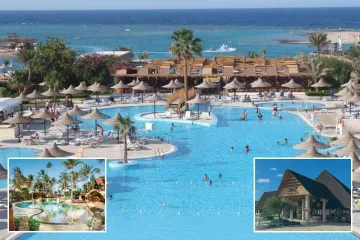
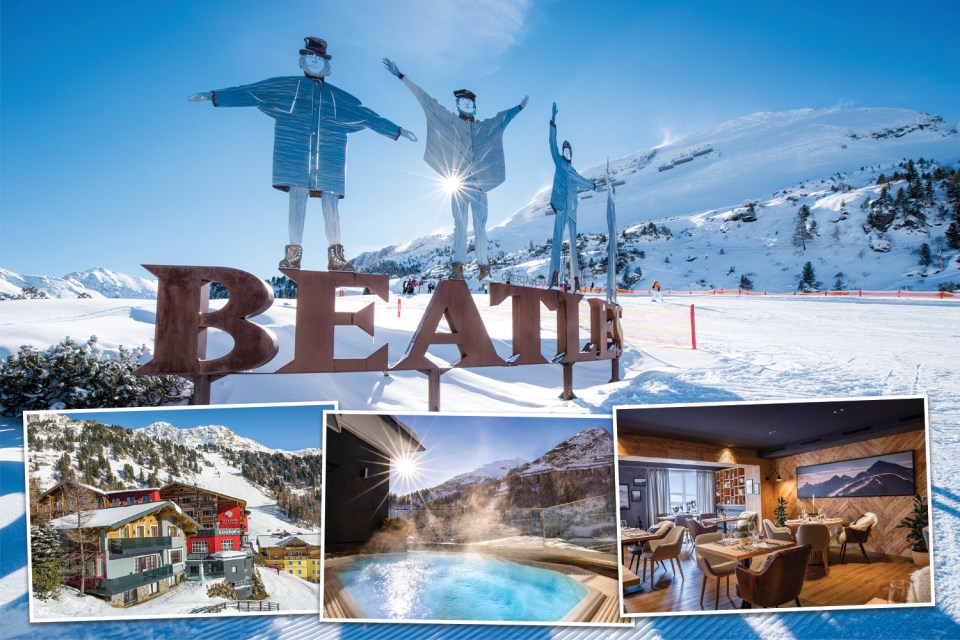
LYING by the pool, white wine in hand, I wonder if the Seaside Palm Beach hotel might be the most beautiful resort I’ve ever stayed in.
In front of me, hundreds of wild palm trees — the tallest I’ve ever seen — sway in the afternoon breeze as canaries sing in the shade below.
Sign up for the Travel newsletter
Thank you!
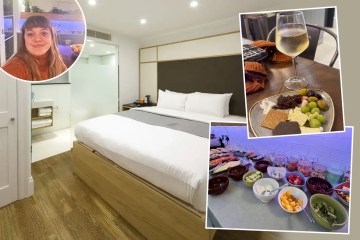
Relax by the pool at Seaside Palm Beach HotelCredit: SuppliedEnjoy breath-taking views on the desert-like sandsCredit: GettyWatch the stunning sunset as the day draws to an end over MaspalomasCredit: Getty
The scene marked the start of a calm and relaxed weekend on the tranquil Spanish island of Gran Canaria, where temperatures can easily reach the 20s in the winter months.
Just a four-hour flight from the UK (costing less than £30 each way with easyJet from Luton), this trip was the ultimate warm oasis retreat . . . without the jet lag.
The 5-star hotel, situated on the south east coast in Maspalomas, is a haven of luxury.
The serene spa is home to a new sauna, cold plunge and hydrotherapy suite, where guests have the option to strip off completely for an authentic wellness experience.
While my pal and I weren’t that brave, we did manage to plunge ourselves into the freezing ice bath (a welcome break from the October sunshine) before treating ourselves to a massage (99 euros for one dreamy hour) in the garden rooms, which have views of the botanical plants.
After a quick dip in the pool to wake ourselves up, we headed to the terrace for lunch of prawn caesar salad, calamari and homemade bread, with an ice-cold beer to wash it down.
Unlike most all-inclusive hotels I’ve stayed in, the Palm Beach offers guests the option to order lunch a la carte from the poolside restaurant as opposed to being stuck with just the buffet area, making it a much more intimate and luxurious experience.
Dinner was an equally impressive affair, with both a la carte and buffet options available on different nights.
Highlights included the Italian barbecue, with a homemade pasta station and a selection of fresh meat and fish grilled to order.
Outside of the hotel, local Italian restaurant il PosTo served us a delicious Neapolitan pizza for 18 euros, with a night cap of limoncello on the house.
The strip here is small but buzzing, with sunset beach bars lining the boardwalk, perfect for a pre-dinner cocktail with stunning views of the Atlantic ocean.
But the most impressive place we visited had to be the natural wonder of the Maspalomas sand dunes. This protected nature reserve is home to 400 hectares of desert-like dunes and lagoons.
A ten-minute walk from the hotel, it is the perfect place to explore in the early-evening golden hour when the heat of the day has died down.
For those wanting something a little more buzzy, the resort of Puerto Rico is a 20-minute drive south.
Here you’ll find shopping malls, discos and a wider selection of restaurants, as well as dozens of daily boat excursions to explore the local coastline.
The Sun’s Jess, left, and pal in MaspalomasCredit: SuppliedDine at the lively Maspalomas restaurantsCredit: Alamy
For 40 euros, we hopped aboard Spirit of the Seas’ whale and dolphin watching tour — a 2.5-hour excursion with local experts who have worked on the sea here for 25 years.
We weren’t fortunate enough to see any marine mammals, but the company offers visitors a free voucher to go out again if there are no sightings — so it’s worth doing this excursion at the start of your trip to allow time to try again.
The next town along, Mogan, is also well worth a visit.
We paid a visit to the Hotel Cordial Mogan Playa, one of the grandest in the town, which offers day passes for 55 euros per adult and 27.50 euros for kids, including lunch.
The terracotta hotel blocks surround a garden spa featuring luxurious day beds, an outdoor heated hydrotherapy pool, hot tub and hot and cold foot spas.
After enjoying a fresh juice here, we tried the volcanic lava exfoliation treatment inside.
The 40-minute session started with a full-body exfoliation using black sand from the island’s northern beaches, followed by a massage using locally-sourced aromatic oils.
It was the perfect end to a three-day retreat — a break I will definitely want to repeat in the cold, dark winter months.
GO: GRAN CANARIA
GETTING THERE: EasyJet flies from Luton, Manchester and Birmingham, among other airports, from £28.99 each way. See easyjet.com.
STAYING THERE: Rooms at the Seaside Palm Beach hotel cost from £192 per night including breakfast.
All-inclusive rates start from £350 per night. See hotel-palm-beach.com. For information on Hotel Cordial Mogan Playa, see hotelsone.com.
Distance 7 miles Duration 5 hours Start/finish Ditchling village car park
A pub walk is, as everyone knows, the best kind of ramble, and this tranquil circular walk up on to the South Downs boasts not one inn, but three. Ditchling – the start and end point of the walk – has two pubs, the White Horse and the Bull, alongside 36 buildings dating from the 1500s to 1800s. Most notable is Wings Place, gifted to Anne of Cleves in her divorce settlement from Henry VIII in 1540.
Within a couple of minutes’ walk from the heart of the village, you’re in open fields. Head right out of the car park and look for a right turn, signposted “to the Downs”. With the church spire behind you, the path leads diagonally into leafy woodland, before heading south towards Underhill Lane, and the steep climb up to Ditchling Beacon.
The Beacon is a pull (248 metres), but the view is spectacular: south to Brighton and the silvery wastes of the English Channel, north across the Sussex Weald to Ashdown Forest and the Surrey Hills. Walk east along the South Downs Way, before an unmade road takes you downhill, directly into the welcoming arms of the Half Moon at Plumpton.
Of all the pubs in the area, the Half Moon is my favourite: independent, ungentrified and supportive of local producers. Order a glass of Plumpton Estate wine and check out the pub’s famous painting of dozens of its regulars, including Raymond Briggs and Jimmy Page, done over a nine-month period in 1979. Sunday lunches are hearty roasts, with good vegan options (two/three courses, £24.95/£29.95), alongside a local catch of the day and homemade pies.
The good news is that the second half of the walk is flat. Well-signed paths skirt the grounds of Plumpton College, before heading back across fields and past My Little Farm, a new community smallholding. Once at the bridleway, turn back to see a forested “V” of beech, fir and lime trees on the side of the hill, planted in 1887 to mark Queen Victoria’s golden jubilee. I always sneak a peak through the gates at Streat Place, an elegant Elizabethan manor house, before the final, straight-line stretch across open fields to Ditchling – where a choice of pubs awaits. Annabelle Thorpe
Highgate to Little Venice, London
Narrowboats moored on the canal at Little Venice. Photograph: Barry Teutenberg/Alamy
Distance: 8 miles Duration: 3½ hours Start Highgate tube station Finish The Prince Alfred, Maida Vale
Starting at Highgate tube station, follow Southwood Lane into Highgate village, noting the former home of Mary Kingsley, a Victorian explorer who had the chutzpah to chat up cannibals in the Amazon. At Pond Square, admire the array of London plane trees (planted in bulk across the city because they could handle the pollution), before proceeding south down Swain’s Lane to Highgate Cemetery (adults £10) to pay your respects to Bob Hoskins (made films), George Michael (made music) and Karl Marx (made a terrible fuss about the exploitation of workers).
Cut through Oakeshott Avenue – a distinctive street of mock-Tudor mansions – to Hampstead Heath, where you should resist the temptation to have a dip in the men’s pond (Mum, I’m talking to you), and instead continue west until you hit upon East Heath Road. From here, wiggle north-west to Well Walk, where you’ll find the erstwhile abodes of JB Priestley and John Constable, as well as the Wells Tavern, a good spot to get some liquid on board. Follow Well Walk west until it splits, at which point err right on to Flask Walk, which you should follow to its terminus.
You’re in Hampstead village now, which is either good or bad depending on your disposition. Meander south-east to Belsize village, where it’s possible to rest your legs or get a bagel from Roni’s. Continue south on Belsize Park Gardens (the composer Frederick Delius lived at No 44) before doing a quick left-right on to Primrose Gardens, about as attractive an oval of terraced housing as you’re liable to find.
In Primrose Hill village itself, you’ll find the former homes of Sylvia Plath (opposite Chalcot Square) and Friedrich Engels (opposite Le Tea Cosy). Climb to the summit of the village’s eponymous mound, exit the park on its west side then proceed along St Edmund’s Terrace to St John’s Wood High Street, where even the charity shops are flogging designer gear for serious dough.
You’re now a stone’s throw from the zebra crossing on Abbey Road made famous by the Beatles, upon which you should absolutely take your time posing, because the motorists love it. Follow Hall Road to Hamilton Terrace, at the southern end of which you’ll find the former gaff of Joseph Bazalgette, who scored brownie points with Londoners by designing the city’s sewer system. Cross Maida Vale and enter Little Venice, a concentration of canals that probably doesn’t warrant its moniker. Follow the aromas of ale and roast beef to the Prince Alfred, where dinner awaits. The pub is an absolute beauty, worth a visit for its vintage interior alone. Bottoms up! (Or down, rather …) Ben Aitken
Bath, Somerset
Bath is an ‘an urban blip in a hug of hills’ … the Royal Crescent. Photograph: Adrian Sherratt/Alamy
Distance 10 miles Duration 5 hours Start/finish Bath Abbey
Bath is a city lost in the countryside, an urban blip in a hug of hills. Even standing in the heart of its Georgian gorgeousness, those green billows beckon you out. So I turn my back on the Abbey, step on the Cotswold Way marker stone by its hefty doors, and walk away.
This National Trail starts (or ends) in Bath, and provides the finest route out of town. It’s tricky, picking out the waymarks amid the Christmas market crowds, but eventually I duck down Quiet Street and then pass the city’s greatest hits: Queen Square, The Circus, the sweeping Royal Crescent, resplendent in low winter light.
As the trail winds westward and up – and there’s a lot of up to come – the tourists thin. I skirt Royal Victoria Park, nod to the golfers on High Common and drop into Weston village. Here, the Cotswolds proper start to rise.
I’ve walked and run this route a hundred times, but still … how is this sylvan promenade so close to a city? I feel my lungs expand; I want to sing to the sheep, to the rolling slopes, to the hump of Kelston Roundhill, with its wig of winter-naked trees. Best is Prospect Stile, from where you can see Bath, the Mendips, even Wales. And it’s never better than now: blush pink on a crisp winter afternoon, as if embarrassed by its own good looks.
The Cotswold Way heads left here. Instead, I veer right across the racecourse and around the cirque beneath Beckford’s Tower – a gilt-topped monument to Georgian eccentricity, open most winter weekends. Nearby, a footpath leads left to Lansdown Road, and to the hillside Hare & Hounds.
This 17th-century inn is a great summer pub: it has Bath’s best beer garden, looking across the winsome Charlcombe valley. With a thick coat, you could still nurse a pint of Proper Job outside. Fortunately, it also has a full wall of mullioned windows. I opt to enjoy the view from inside, where a real fire crackles and good roasts are served.
I’ve walked seven miles now, and could bus back to town. But instead I backtrack to the trail below Beckford’s, continuing to walk. The views remain superb. And this way I can wind through salubrious backstreets that deliver peak Bath-ness minus the crowds – not least Lansdown Crescent, a rival to the Royal. Eventually, I make it back to the abbey, this time walking towards its exquisite west front, but still with an eye to the hills beyond. Sarah Baxter
Broadway Tower, the Cotswolds
Broadway Tower in the Cotswolds. Photograph: James Osmond/Getty Images
Distance 4 miles Duration 2½ hours Start/finish War memorial, Broadway High Street
The dog’s tail is wagging hard. We’ve brought her to Broadway on a chilly Saturday afternoon – a time she usually saves for snoring belly up – and there are canines at every turn. Pugs leaving coffee shops, beagles eyeing up knitwear boutiques, terriers cooing over the 16th-century limestone architecture. The dog owners of south-east Worcestershire are out in force, although as visitors our goal lies elsewhere. We’re heading for the hills.
Broadway is well named. Some Cotswolds honeypots feel hemmed in, but the wide, handsome high street has a calming sense of space, especially in lesser-visited winter. A rich history too: the Beaker people, the Romans, medieval wool traders, TikTok influencers – all have passed through Broadway, pulled in different ways by the rolling countryside.
It’s what’s drawn us, too. We’re walking an official National Trails circular route, meaning decent signage, loads of puddly kissing gates and big, billowing views. We exit the high street on to a footpath. The escarpment to the south is topped by the turreted silhouette of Broadway Tower, our end goal. Green landscapes swell around us.
The first section is an easy ramble across grassy meadows, and ridge and furrow undulations, before the path leads upwards along a thigh-sapping avenue of sycamores. Higher now, we cross more tussocky fields as the panoramas open up. Visible far to the west is the spine of the Malvern Hills. The sky is blue. The wind is cold and mud scented. The dog is in heaven.
The complex around the tower arrives suddenly, complete with a cafe and playground. The tower itself – a hexagonal structure built as a folly in the 1790s – is the second highest point in the Cotswolds. Designer William Morris came here regularly to draw inspiration. A patchwork of towns and farmland spills out below us; Birmingham is a speck on the blustery horizon.
The Cotswold Way descends steeply back into Broadway and we make for the 17th-century Crown & Trumpet. A 35-year mainstay in the Good Beer Guide, it’s a short wander off the main drag and something of a rarity in these parts: in place of chichi decor it has an open fire, framed beer mats and a well-trodden carpet. Pints of Shagweaver and bowls of cheesy chips hit the spot. And the dog? Ready for that snooze. Ben Lerwill
In this corner of east Lancashire, Pendle Hill – an outlier of the Pennine spine – separates industrial and agricultural, built-up and empty, the urban working-class from the rural upper-middles. Burnley, the start point, is known for coal as well as cotton, football and cricket, not to mention gay rights and Benedictine liqueur.
Take the Burnley Way to the banks of the Calder, the river that powered and watered the early mills. From here, follow the Pendle Way to Higham, which gets you on to the southern slopes of Pendle Hill. Sheep, dry-stone walls and steep climbs take over. A zigzagging route takes you up to Newchurch in Pendle, a tiny hamlet perched on a tight bend in the road. St Mary’s church has an “eye of god” on its tower to deter evil spirits, and a tomb by the rear wall bears the name of one Ellin Nutter. The 1651 date could make her a relative of Alice Nutter, who was hanged after the Lancaster witch trials.
This area is marked as the Forest of Pendle on maps. A former royal chase, it was later used for vaccaries (pastures for cows). Note the recurrence of “booth” in local placenames, alluding to the huts used by herdsmen. Look south for views over the chain of towns that grew up around yarn and cloth. From left (east) to right (west), there’s Barrowford, Colne, Nelson, Brierfield, Burnley, Accrington, Oswaldtwistle and Blackburn – to name only the larger places. For residents of all, Pendle Hill and the nearby West Pennine Moors are the main recreational spaces, airy heights that in the smoky old days provided respite for lungs and legs.
The 557-metre climb to the trig point at the top of Pendle Hill goes via Fell Wood, between the two Ogden reservoirs and along Boar Clough – clough is another local word, used for a steep-sided ravine. Barley Moor opens out here, hopefully with a few peewits or even a hawk battling the westerlies. From the trig, it’s a breezy saunter across the mesa-like top of the hill, now with views north to the Yorkshire Three Peaks and Bowland Fells, to drop down to Worston from the Pile of Stones on Pendle Moor.
You’ve passed pub options already – at Higham and Barley – but the Calf’s Head is a well-liked, well-run village pub all on its own in Worston. There’s a single small snug with three tables and an open fire, and more tables – for food or drink – in the pub lounge and in an annexe. If the weather’s fine, the beer garden is a real beauty. Timothy Taylor’s and local Moorhouse’s ales are generally available. The menu is massive; I rate the seafood sharing board, hot pot and plate pie.
From Worston, it’s a short walk to Clitheroe for onward trains and buses. Take care crossing the A59. If you want a longer walk, you can avoid the busy carriageway altogether by taking a loop along West Lane and through the villages of Downham and Chatburn, which have three more pubs between them. Chris Moss
St Mawganand Mawgan Porth, Cornwall
Sea stacks at Bedruthan Steps. Photograph: Helen Hotson/Alamy
Distance 5.4 miles Duration 2 hours Start/finish The Falcon Inn, St Mawgan
I’m climbing up the coast path away from Mawgan Porth beach on the north Cornwall coast, the golden sands and swirling seas way below. Gulls wheel overhead and the wind whips my face, but I’m glad for the breeze after the exertion of the hill. Ahead, I make out the rocky outcrop of Griffin’s Point, an iron age cliff fort with views south to Watergate Bay and Newquay beyond. This is where I turn inland, leaving behind the dramatic sea stacks of Bedruthan Steps and heading east to return to the village of St Mawgan.
It’s around the halfway point of one of my favourite circular walks in Cornwall, a 5.4-mile loop that takes in a wide variety of terrain, from coastal sections and sheep-speckled fields to woodlands scattered with streams, pines and badger setts.
You could start and end at Mawgan Porth, but I like to begin in St Mawgan, parking on the road outside The Falcon Inn. From here, I follow the river north-west then cross a bridge, passing the acers and azaleas of the Japanese Garden (closed in winter) and a row of cottages with quaint names such as the Mouse House.
Forking left, I’m on to the public footpath signposted towards Mawgan Porth. After Windsor Mill, a settlement dating back to the middle ages, I cross a stile and follow the path through the trees, the River Menalhyl trickling to my left. The track quickly turns rugged underfoot, with exposed tree roots and leaves that make a satisfying crunch with each step.
Beneath the trees, some with orange lichen on their trunks, others with stubborn hawthorn berries still clinging to branches, there’s shelter from the elements; a blissful contrast to the bracing sea breeze I’m about to experience on that coast path.
After around half an hour on the coast, I turn inland for a final stretch through fields and across streams. I return to the Falcon via the St Mawgan churchyard, pausing at the memorial to 10 men who died from hypothermia on a boat that drifted ashore near Watergate Bay in December 1846.
I wonder if any of those men frequented this 16th-century inn, which is under new ownership this winter but has kept a traditional feel, with its original fireplace, exposed beams and dark wooden bar. I join the locals enjoying pints of ale from the pub’s own microbrewery in Penryn. It’s a warm, welcome respite after miles walking through the Cornish winter elements. Ellie Ross
Bakewell to Little Longstone, Peak District
‘Kids, dogs and muddy boots, welcome’ … the Packhorse Inn.
Distance 3 miles Duration 1½ hours Start Bath Gardens, Bakewell Square Finish The Packhorse Inn, Little Longstone
“Walk and pub?” Growing up in the Peak District, these two things were never mutually exclusive. You can keep your Gore-Tex-clad scrambles, your emergency crampons, your Wainwright “bagging” and Three Peaks conquering. I’m worn out just thinking about all that. Give me a route I can do in an hour and a half, that’s manageable with a hangover or an unruly toddler or, God forbid, both. Give me a route where the scenery is quietly breathtaking and ever-changing but I can do it in a pair of beaten-up trainers.
Give me a route that ends in a fantastic pub, where I can fill my belly with lovingly cooked local produce and slake my thirst on local ale. Earwig on a mix of day-trippers and local “characters” rubbing along just fine in front of one of three roaring fires. Give me the walk from Bakewell to the Packhorse in Little Longstone.
I’ve done this walk so many times I can practically hear the footsteps from different phases of my life ringing out from the pavement as we set off from Bath Gardens and leave the Rutland Arms Hotel (the “birthplace” of the original Bakewell pudding – the tart followed later, just so you know and don’t mortally embarrass yourself when you visit) and the bustling market town behind. Tracing the A6 road out past the Lambton Larder cafe and pretty Georgian houses, we cross the River Wye at the stone bridge on the right, just past the fire station. We head straight on past Lumford House, with its blue plaque for Richard Arkwright Jr, whose inventor and industrialist old man was kind of a big deal in these parts.
A brief incline brings us out above the town and the show-off panoramic views to the imposing woods above Chatsworth and the fields down towards Hassop and Ashford-in-the-Water, beautifully pockmarked with wild pink heather. A few years ago, I proposed in the field of canary yellow rapeseed blazing in the far distance. Today, my bovine-phobic wife pushes me forward as a human shield as we take the left fork of the footpath into a field of cows that stare at us like the locals from the pub scene in An American Werewolf in London.
We cross a stile into a wooded stretch and emerge at a field full of sheep (less foreboding, apparently) and the road heading into Great Longstone. Following the public footpath over a stone stile to the left brings us out into an almost laughably bucolic field of beech and sycamore trees. We skirt around the village of Great Longstone and into Little Longstone, with its red phone box and Bertie Bassett-inspired well dressing. The Packhorse Inn sits on the right, complete with a sign that says “Kids, dogs and muddy boots, welcome”. We don’t have any of those things today but we do, crucially, have a thirst on.
“Walk and pub?” An unbeatable combination. James Wallace
Newport to Fishguard, Pembrokeshire
Fishguard Harbour. Photograph: Shutterstock
Distance 11.3 miles Duration 6 hours Start Newport Finish The Ship Inn, Fishguard
The A487 is not one of Britain’s most celebrated highways. In one stretch, it’s reduced to a single-track squeeze that requires drivers to sneak around a blind corner and pray no one is coming the other way. And what is the source of this nasty constriction that cannot be removed? A wonderful little pub called the Ship Inn. Hemmed in by a wooded hill behind, the fishing boat-speckled sea in front and that crow-black trunk road, it is no wonder that the front door is of the sliding variety. If it opened outwards, the tailback would block Pembrokeshire.
Serving good beer surrounded by nautical memorabilia, polished wood and black-and-white photographs of drinkers down the ages, the Ship in Lower Town, Fishguard, has hosted some famous drinkers in its time. One face stands out from the fading photos: Richard Burton, at the peak of his thespian career, barrelling down that single-track snicket, his eye on the front door of the pub, no doubt thirsting for a pint of Double Dragon. Burton was in town for the 1971 filming of Dylan Thomas’s Under Milk Wood.
Our walk to reach this watering hole starts up the coast at the pretty village of Newport (the pub is cash-only so use the ATM here), then follows the Wales Coast Path. Almost immediately, the flavour of the route is apparent: a big, banging seascape filled with jagged rocks, epic cliffs and roaring seas. Even the signs seem to have an extra robustness about them: “Keep to the Path. Cliffs Kill” screams one and, more mysteriously, “Caution. Deep Animal Holes Ahead” reads another.
The route rolls along, passing several fine coves before tackling Dinas Mawr, a formidable headland. In 1954, this dramatic coastal feature was used in the filming of Moby Dick, starring Gregory Peck as Captain Ahab. Three-masted ships like Ahab’s Pequod were once a common sight along here, until the great storm of 1859 wrecked many of them. At the sea’s edge in Cwm-yr-Eglwys, I search the ruined churchyard of St Brynach’s and find tombstones for the mariner John Harries and Thomas Laugharne, master of the schooner Eliza. That may have been the Eliza that got smashed up on the Llŷn peninsula. One other casualty of the 1859 storm was the church itself, of which only one wall survives.
It was to New Quay, on this stretch of coast, that Dylan Thomas moved in 1944, finding inspiration for unforgettable characters such as the lascivious fisher Nogood Boyo and Mrs Ogmore-Pritchard, so house-proud that the sun must wipe its shoes before sneaking through her chintz curtains. Burton was a slam dunk to narrate both the 1954 BBC radio play and the 1971 film.
I pass the ruined Fishguard Fort and its cannon, last fired during the abortive French invasion of 1797, then reach the pub as it opens (4pm on Saturday and Sunday, 5pm Wednesday to Friday). There are only snacks, but the beer is good and the decor satisfyingly unchanged since Burton sat in here boozing with Peter O’Toole, their Daimlers parked down by the quayside. Elizabeth Taylor did not show her face, although local legend has Burton on the payphone, ordering Hollywood’s finest to “get her fat arse down to Pembrokeshire”. They were divorced three years later, remarried, then divorced again after two more. Kevin Rushby
Edinburgh to Leith via the Water of Leith
Snow covering Circus Lane, a narrow side street in Stockbridge, Edinburgh. Photograph: George Clerk/Getty Images
Distance 4.7 miles Duration 2 hours (with option to extend) Start National Galleries of Scotland, Edinburgh Finish Leith
The Water of Leith Walkway follows its namesake river from Balerno, near the Pentland Hills, through the heart of Edinburgh to Leith, the city’s historic port district, where it meets the sea. This walk follows the final stretch.
In the grounds of Modern One on Belford Road – one of Scotland’s national art galleries – visit the crescent lakes of Charles Jencks’sLandform, then head to the left corner of the car park, passing a Henry Moore sculpture. Double iron gates lead to steps descending to the Water of Leith. Cross the footbridge and turn left, look for a figure of a man in the river, the first of four of Antony Gormley’s 6 Times figures that are visible on this walk. The path is marked throughout by small brown signs. Some sections offer step-free alternatives: for the most interesting landscape, stick to the riverbanks.
The path winds through Dean Village, once an industrial slum, now one of Edinburgh’s most incongruous and enchanting neighbourhoods. The half-timbered cottages look more Bavarian than Scottish. Look out for Well Court, an imposing red-brick building, a rare example of Arts and Crafts style in Edinburgh, commissioned by the owner of the Scotsman newspaper in the 1880s to house local workers. Walk under the high arches of Thomas Telford’s 1832 Dean Bridge towards St Bernard’s Well, a pretty Roman-style folly with a statue of Hygeia, the ancient Greek goddess of health.
Arriving in Stockbridge, perhaps pause in one of its excellent cafes, before crossing Deanhaugh Road to steep steps where the route continues. This section curves around some of Edinburgh’s distinctive “colony houses”, built for artisans and skilled workers between 1850 and 1910. Ahead you’ll see the Royal Botanic Garden Edinburgh – add a loop if you have time (free entry, donations welcome).
Otherwise, the path forks right to follow the river. At a junction signed for Rocheid Path, keep right to steep steps to Brandon Terrace. Cross to Warriston Road, a high walkway built as part of flood defences. From here, the route skirts the wooded edges of St Mark’s Park to the wildlife-rich Coalie Park – keep an eye out for more Gormleys and, if you’re lucky, kingfishers.
Our walk ends in Leith, where the river widens and is dotted with restaurants, bars and delis. For a cosy pub lunch head to the Roseleaf, a welcoming family-run pub, with excellent home-cooked food. The cullen skink is legendary and the all-day big breakfast, served in a sizzling skillet, is hard to beat. Ailsa Sheldon
Whitley Bay, Tyne and Wear, to Seaton Sluice, Northumberland
The causeway at St Mary’s Lighthouse in Whitley Bay. Photograph: Roger Coulam/Alamy
Distance 3 miles Duration 2 hours Start Lido di Meo’s beach shack Finish The Delaval Arms
Two Octobers ago, a stormturned Whitley Bay seafront into a hazardous foam party, then dragged about a metre of sand out to sea. Whenever I return home, once or twice a year, I still do a double-take every time I see the sunken beach and marvel at the newly exposed sandstone, ripe sea glass and pebbles of coal. I’m always on the hunt for a few standout pieces to add to my shelf of beach finds back in my landlocked Madrid apartment.
On a still, sunny morning at low tide, the shoreline glitters with wildness. I spot a crab strutting along the water’s edge, then burying itself alongside looping sandworms. Crows survey the scene just as closely, before zigzagging between the rocks in search of their salty prey. I look out to sea and see a creche of gull chicks bobbing up and down on the gentle waves, flying off in fright when a seal pops up for air. I look inland and tune into an orchestra of speckled starlings chirrupping around the Lido di Meo beach shack and begin my walk north up the sand, the mild sun warming my back.
At low tide, a good stretch of this route can be done on the beach. When the sand runs out, simply head up to the promenade and let the footpath guide you onward to St Mary’s Lighthouse, on its own tiny island and accessible only at low tide. I’ve always wished there was a pub on this poetic rocky outcrop, but that would have brought this pub-bound winter story to an abrupt end, missing arguably the best bit.
Leave the island, climb up to the clifftops and catch your breath while enjoying a panoramic view of the lighthouse below, interrupted only by fluffy coastal grasses bowing in the North Sea gusts. Check the tide times and, if you get it right, you can watch the water engulf the path to St Mary’s Island, rendering it an offshore Northumbrian outpost until low tide returns.
From here, almost every northbound footpath leads you to the Delaval Arms, a Grade II-listed building dating back to 1748 and the first pub you’ll encounter as you cross into Northumberland. Over the years, the pub’s interior has been modernised yet has never lost its cosy charm. The brass‑railed bar, log fire and dark wood‑panelled walls and ceilings still anchor the snug rooms, while colourful soft furnishings and a lively menu have brought it gracefully up to date.
The old sandstone building sits a coal pebble’s throw from the border with North Tyneside, so I settle in beside the log fire, wine in hand, and reflect on how my ancestors once fought over the very land where I now sit in complete comfort. Leah Pattem
Llanthony Priory, Bannau Brycheiniog
Llanthony Priory. Photograph: Ed Moskalenko/Getty Images
Distance 6 miles Duration 3 hours Start/finish Llanthony Priory
Llanthony Priory, nestled in the Vale of Ewyas, makes for an enticing base to explore the Black Mountains, here in the easternmost part of Bannau Brycheiniog (Brecon Beacons).
The priory was founded in the early years of the 12th century by William de Lacy, a Norman knight who was said to have been so taken with this remote location that he immediately renounced the way of the sword for the life of a hermit. Some stories suggest he was inspired by Dewi Sant (Saint David), who sought tranquillity in this same place in the sixth century.
Today, the priory is just a ruined shell, but the allure of Llanthony, flanked by steep glacial ridges, endures. Particularly energetic walkers like to embrace the 16-mile loop out along Offa’s Dyke Path to Hay Bluff and Lord Hereford’s Knob, before tracking back along the Cambrian Way trail. I, however, have a more modest tramp in mind – a 6-mile circular walk that will get me back to the priory’s Cellar Bar just in time for lunch (served from 12.30pm to 2pm on weekends during the winter months). With its whitewashed vaulted stone ceilings and wooden benches, this snug will provide a cosy reward for whatever the Welsh weather may have in mind.
My route embraces the tough stuff first – a short but sharp ascent following the Beacons Way walking trail up Cwm Bwchel to Bâl Bach (a lower section of the 607-metre Bâl Mawr). Viewing the route from Llanthony, you may be tempted to head straight to the pub. Don’t be put off, though, because the views from the top of the ridgeway are a more than sufficient reward for the climb you’ve undertaken. It’s a clear day and the nearby peaks of Sugar Loaf and Skirrid Fawr stand out against the blue-and-white clouded sky. Above Llanthony Priory, on the other side of the valley, a long treeless ridgeway connects Hatterrall Hill with Hay Bluff. Further up the Vale of Ewyas lies Capel-y-Ffin, once the summer grange for the canons of the priory. It was here that beatnik poet Allen Ginsberg wrote his acid-enabled Wales Visitation– his neo-romantic riff on Wordsworth’s Tintern Abbey.
From Bâl Bach, I follow the Cambrian Way south until I reach a sharp left fork into Coed Tŷ Canol. Down in the western valley lies Saint Issui in Patricio, a medieval church named after another hermit holy man and renowned for its 10th-century font and intricately carved 15th-century wooden screen. A detour to Saint Issui is tempting, but will have to wait for another walk. This morning, it’s time to descend off the ridgeway following forestry tracks and woodland paths back to Llanthony. A little over three hours after I began, I emerge from Llanthony Wood into open fields and the stone facade of the priory comes into view. A pint of Felinfoel Double Dragon beckons. Surely Ginsberg, and maybe even William de Lacy, would approve. Matthew Yeomans
More than 40 million Americans under winter storm warnings or weather advisories as heavy snow expected.
Published On 27 Dec 202527 Dec 2025
Share
Thousands of flights have been cancelled and delayed in the United States due to winter storm Devin, airline monitoring website FlightAware reports, dealing a blow to air travel during peak holiday time.
A total of 1,581 flights “within, into or out of the” US were cancelled and 6,883 delayed as of 4pm US Eastern Time (21:00 GMT) on Friday, according to FlightAware, which describes itself as the world’s largest flight tracking data company.
Recommended Stories
list of 4 itemsend of list
The delays and cancellations came as the US National Weather Service warned of winter storm Devin causing “hazardous travel conditions” and heavy snow forecast across parts of the Midwest and northeast.
More than 40 million Americans were under winter storm warnings or weather advisories on Friday, plus another 30 million under flood or storm advisories in California, where a so-called atmospheric river has brought a deluge of rain.
New York City, the largest US city, was bracing for up to 250mm (10 inches) of snow overnight on Friday, the most expected in four years. Temperatures were forecast to drop into the weekend when an Arctic blast is expected to swoop down from Canada.
New York’s John F Kennedy airport, Newark Liberty international airport and LaGuardia airport warned travellers of potential delays or cancellations. More than half of the flight cancellations and delays took place at these three airports, according to FlightAware.
JetBlue Airways cancelled 225 flights on Friday, the most among the US carriers, closely followed by Delta Air Lines, which cancelled 212 flights. Republic Airways cancelled 157 flights, while 146 were cancelled by American Airlines and 97 by United Airlines.
“Due to winter storm Devin, JetBlue has cancelled approximately 350 flights today and tomorrow, primarily in the Northeast where JetBlue has a large operation,” a JetBlue spokesperson told the Reuters news agency.
On the US West Coast, powerful winter storms brought the wettest Christmas season to Southern California in 54 years.
There was still a risk of more flash flooding and mudslides on Friday despite slackening rain around Los Angeles, the National Weather Service warned.
Firefighters rescued more than 100 people on Thursday in Los Angeles County, with one helicopter pulling 21 people from stranded cars, officials said.
Post-holiday travelers on Frontier Airlines and virtually all others are experiencing flight delays and cancellations amid stormy weather from coast to coast. File Photo by CJ Gunther/EPA-EFE
Dec. 26 (UPI) — Winter Storm Devin is slowing road traffic and impacting flights amid post-holiday travel in the Great Lakes and Northeast, while torrential rain and localized flooding are affecting travel in California.
Airlines for America estimated a record 52.6 million airline passengers from Dec. 19 through Jan. 5, with Friday and Saturday seeing the most, CNBC reported.
The record number of flight passengers means a large number of passengers will be affected by flight cancellations and delays due to the stormy weather.
A total of 5,902 flights were delayed and 1,865 canceled so far at U.S. airports as of 5 p.m. EST on Friday, according to FlightAware.
The airport affected the most is John F. Kennedy International, with 153 outbound flights canceled and 143 delayed, and another 220 inbound flights canceled and 67 delayed and affecting about 45% of inbound and outbound flights.
Newark Liberty International in New Jersey has 104 outbound flights canceled and 163 delayed, and 140 inbound flights are canceled and 98 delayed.
New York City’s LaGuardia Airport also has a significant number of flights impacted, with 87 outbound flights canceled and 97 delayed, and 153 inbound flights canceled and 43 delayed.
The airlines most impacted are Delta Air Lines, JetBlue, Republic and Southwest, but virtually all airlines have scheduled flights affected, so travelers are advised to check well ahead and watch for updates before traveling to respective airports.
AAA earlier forecast 109.5 million people would travel more than 50 miles by car to reach their holiday destinations over Christmas, millions of whom could encounter very poor driving conditions while heading home.
Snow, sleet and freezing rain in the Northeast and Great Lakes have triggered an ice storm warning in central and western Pennsylvania, while southern New York and the Tri-State area are subject to a winter storm warning into Saturday.
Stormy weather also continues in Southern California and along the West Coast, with heavy rainfall causing flooding, mudslides and debris flows in low-lying areas and snowstorms at higher elevations.
Pope Leo XIV celebrates the Christmas vigil Mass on Christmas eve on Wednesday in St. Peter’s Basilica in Vatican City, Vatican. Photo by Stefano Spaziani/UPI | License Photo
The city has cosy cabins, scenic walks and the chance to explore connected islands.
This article contains affiliate links, we will receive a commission on any sales we generate from it. Learn more
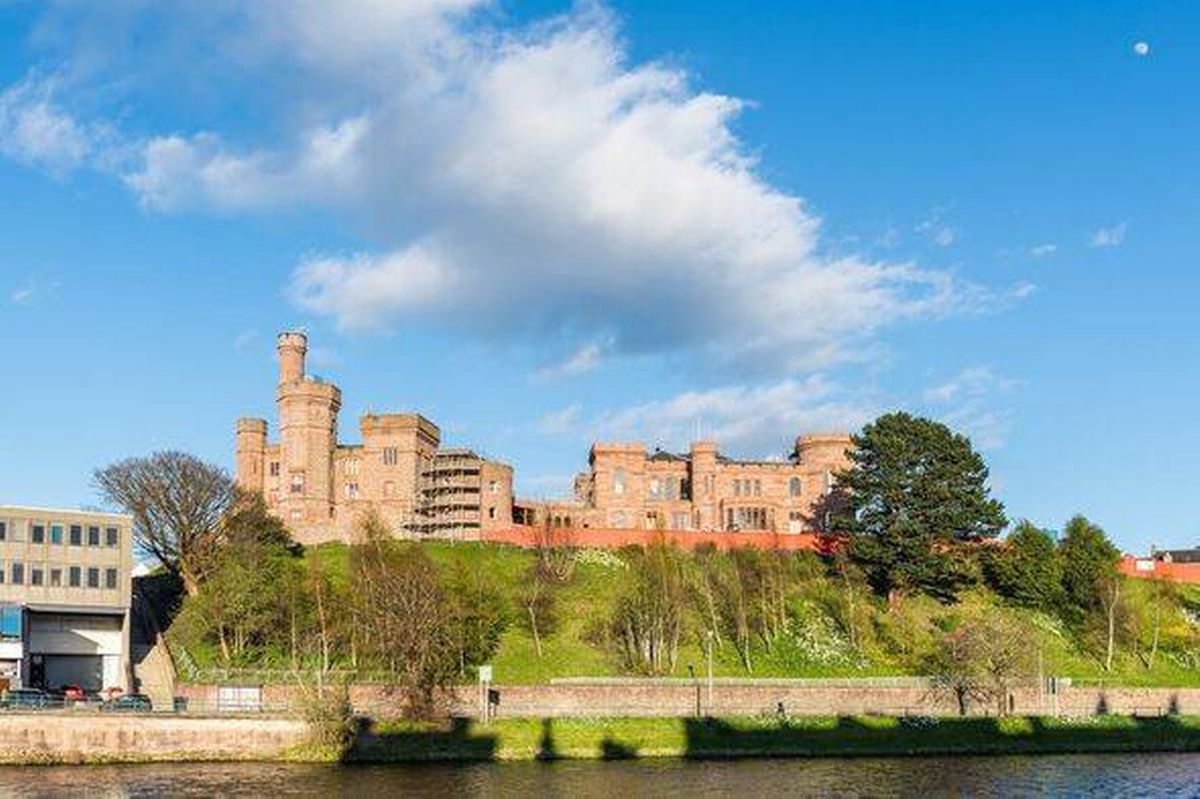
Inverness is a gorgeous city(Image: Getty)
If you’re on the hunt for a snug winter weekend escape, the UK offers an abundance of options. With so many stunning locations to choose from, it can be quite the task to decide.
From vibrant cities to ancient woodlands and charming villages, the UK is brimming with beautiful spots. However, one location has been singled out as the ideal winter retreat.
The team at Go Outdoors have recently unveiled their top choices for a winter escapade, and the favourite is a delightful blend of urban and rural attractions that cater to all tastes.
Using data on snowfall, woodland walks, cosy pubs with log fires, and cabins, they’ve ranked the top UK adventure destinations – and the Scottish city of Inverness has emerged as the champion.
Boasting over 200 winter cabins and a wealth of breathtaking walking trails, it’s not hard to see why Inverness clinched the top spot.
One of the most favoured walks is the Inverness Castle and River Circular, which guides you on a stunning 4.5km journey through some of Scotland’s most majestic landscapes, reports the Express.
During your hour-and-a-half stroll, you’ll also pass by the iconic Inverness Castle, nestled in the city centre.
Inverness even provides the opportunity for island hopping – without ever having to leave the city.
The Ness Islands are a chain of islands in the river, all interconnected by beautiful Victorian-era footbridges.
You can start on one side of the riverbank and end up on the other, meandering through the islands and spotting sculptures along the way. It’s the perfect way to spend a wintry day exploring.
Though Inverness is a small city that’s easy to navigate, it also serves as an excellent base for exploring the wider Highlands.
Just beyond the city limits, you’ll find the renowned Loch Ness, home to its elusive, legendary creature – perhaps you’ll be the lucky one to spot her.
BELIEVE it or not, some of Britain’s beaches are best enjoyed in the winter.
Beautiful coastal paths make for the best crisp winter walks – and the waters might not be as cold as you’d think.
Sign up for the Travel newsletter
Thank you!
Camber Sands beach is popular with locals, tourists and celebs alikeCredit: Getty
Plus, with less tourists at this time of year, you’ll often have these beaches to yourself!
Whether you’re the type to brave an ocean dip, or are looking for a new stretch of sand to walk the dogs – here’s our top 5 beaches to visit this winter.
Camber Sands, East Sussex
Best for: Wide golden sands, sea swims
This five-mile stretch of sand has continuously been named one of the best beaches to visit in winter.
The East Sussex beach is known for its hilly dunes which overlook miles of soft golden sands.
And with its mild temperatures, it makes for one of the best beaches to take a winter sea dip.
Camber Sands averages temperatures of 9.5°C in winter, and its waters can even reach highs of 11.5°C.
Beaches in the South East of England tend to have the highest amount of sunlight hours.
And Clacton is no exception – seeing two to three times the typical daily amount of winter sunshine hours in the UK.
Most read in Best of British
The iconic beach is even popular in films and amongst celebs.
Camber Sands famously stars in the 1958 film Dunkirk, and even featured as the Sahara Desert in 1967 in a Carry On film.
The iconic beach even featured in DunkirkCredit: AlamyCamber Sands is famous for its rolling sand dunesCredit: Alamy
Plus, celebs such as Lisa Faulkner, as well as Tom and Giovanna Fletcher have been spotted here.
Camber Sands is just two hours’ drive from London, making for a great day trip from the UK capital.
Brancaster, Norfolk
Best for: Wildlife, quiet coastal walks
Brancaster in Norfolk is a fantastic place to spend a winter’s day.
Brancaster Estate is a National Trust destination, home to a meadow come-Roman fort and a picturesque harbour.
Down the road in Brancaster Staithe you’ll find the Mussel Pod – a food truck serving up fresh local mussels.
Brancaster is one of Norfolk’s most breath-taking beachesCredit: GettyIt’s not unusual to come across a seal on a beach walk in NorfolkCredit: Alamy
And if you keep walking along the shore, you’ll make your way along the Norfolk Coast Path through towns and villages like Thornham, Holkham and Burnham-Overy-Staithe.
Plus, the North Norfolk coast is the excellent for wildlife spotting.
Nearby Titchwell Marsh is popular with twitchers, and spotting common seals is a regular occurrence.
Seal trips by boat can even be taken at nearby Hunstanton or Cley.
Brancaster beach is vast and open – perfect for letting the dog off the leadCredit: Getty Images – Getty
With Norfolk’s clear and starry skies, the Northern lights can even be seen over the beach.
And temperatures here aren’t too bad either – averaging about 9°C throughout the winter.
Kynance Cove, Cornwall
Best for: Dramatic scenery, warmest temperatures
Kynance Cove tops the list as the warmest beach in the UK in research undertaken by Parkdean Resorts – and it’s also one of the most beautiful.
Winter temperatures average at around 11°C, and water temperatures can even reach 13°C.
It even made last year’s list of the 50 Best Beaches in the world, chosen by 1,000+ travel influencers and experts.
It sits on Cornwall‘s Lizard Peninsula, one of the most rugged and dramatic-looking coastlines in the UK.
It’s hard to believe that Kynance Cove is a UK beachCredit: AlamyThere are plenty of spots to sit and take in the views at Kynance CoveCredit: �Chanel Irvine, All Rights Reserved
In the height of summer under the blazing sun, this beach looks almost tropical.
But in the winter, it transforms into a peaceful coastal escape – perfect for breezy clifftop walks, and soaking up sea views without the summer crowds.
When the tide is low, you can wander between sea caves and rocky islands.
And when the tide turns high, you can watch over the bay as it transforms into a swirl of wild foaming waves.
And after a windswept walk, nothing beats warming up with a hot drink at the Kynance Cove Cafe – perched above the bay with unbelievable views.
Clacton-on-Sea, Essex
Best for: Traditional seaside town, family days out
Essex‘s Clacton-on-Sea is a popular seaside resort that makes the perfect family trip this winter.
The Victorian pier, promenade and painted beach huts give this beach a traditionally British feel.
Clacton Pier has plenty to do for families with kidsCredit: AlamyClacton is one of Essex’s most popular seaside resorts – and it’s best in the quiet of winterCredit: AlamySummers are busy, but you’ll have stretches of sand to yourself in the winter monthsCredit: Alamy
Clacton-on-Sea has winter sunlight hours above the national annual average, so you can make the most of a long day at the beach.
Plus in December, the pier hosts seasonal events that are perfect for kids, such as a magical Santa’s Grotto experience.
You’ll also find bowling and a family-friendly restaurant inside the Pavilion.
Plus there’s no better feeling than heading for a winter walk along the shores, before popping into a cosy seafront cafe for a warming hot chocolate.
And it’s good news for swimmers – the sea here is often noted as the fastest to warm up in the Spring.
It’s even recorded the highest temperature waters of any beach in England and Wales, at a toasty 18.2°C.
Barafundle Bay, Pembrokeshire, Wales
Best for: Crystal waters and softest sands
Nestled in the Pembrokeshire coastline, Barafundle Bay is a Welsh jewel that is well worth the walk to get to.
Barafundle Bay is part of National Trust’s Stackpole EstateCredit: AlamyBeautiful castle ruins provide a dramatic entrance into Barafundle BayCredit: AlamyBarafundle Bay is shielded from cold winds by its rugged cliff coastlineCredit: Alamy
The isolated location has a rugged shoreline, soft, flat sands and some of the UK’s best sunsets.
With cliffs shielding the bay from cold winds, winter temperatures here can reach a comfortable 11°C.
It sits within the National Trust’s Stackpole Estate – an area rich in history with stone landmarks dating back to the Bronze Age.
Note that the nearest car park in Stackpole is half a mile’s walk away – but the views are absolutely worth it.
Dog walks in winter along the beach make for some of the best days outCredit: Alamy
Who needs the Swiss Alps when you have Macclesfield Forest on your doorstep? Walking from Trentabank car park, the 506-metre peak of Shutlingsloe is the gift that keeps on giving. The panoramic views from its summit, dubbed Cheshire’s mini Matterhorn, are breathtaking at any time of year. But it’s on the crispest of winter days you get the best views: the Staffordshire Roaches, Manchester’s skyline, the Cheshire Plain, the wonder that is Jodrell Bank, and even as far as the Great Orme in Llandudno. Head back to Trentabank where there is a food truck selling local specialities, including Staffordshire oatcakes. Jeremy Barnett
Trip the light fantastic on Norfolk’s coast
The vast expanse of Holkham beach. Photograph: Nature Picture Library/Alamy
No matter how many people you see on arrival at Holkham nature reserve, the vast beach, marshes and miles of pinewoods disperse them. Southerly winds here can bring balmy winter days but winds off the North Sea are quite brutal. The light is fantastic and the variety of walking routes huge, with a boardwalk and visitor centre enriching the experience. This north-facing coastline is a magnet for exhausted migrant birds making landfall, and the pinewoods offer welcome shelter in bitter conditions. Bird hides along the woods’ southern edge look over marshland – fantastic for winter wildfowl spectacles and birds of prey. Jo Sinclair
Profile
Readers’ tips: send a tip for a chance to win a £200 voucher for a Coolstays break
Show
Guardian Travel readers’ tips
Every week we ask our readers for recommendations from their travels. A selection of tips will be featured online and may appear in print. To enter the latest competition visit the readers’ tips homepage
–
Blow away the cobwebs on a Derry cliff walk
A Dominican college overlooks Portstewart Strand. Photograph: Travelib/Alamy
It’s officially called the Portstewart Cliff Walk but people call it the Nuns’ Walk because it snakes around the perimeter of the Dominican college. The walk starts overlooking Portstewart Strand and finishes in the town centre. It’s exposed to the Atlantic, so it’s always gusty and perfect for clearing the head after working too hard or overindulging. The sunsets here are to be savoured, so try to time it for dusk, and a post-walk pint by the fire in the Anchor Bar feels heavenly. Ciaran
A perfect hike for a frosty day in the Chilterns
Snowfall on the north-facing slopes of the Chilterns. Photograph: Phototropic/Getty Images
If it’s frosty, this is a cracker. From the Chilterns village of Ewelme (the famous watercress beds can wait) head east uphill through fields and beech woodland to Ewelme park, turn left and skirt Swyncombe House, which has excellent views of the Vale of Oxford, keeping north and right of the church as you go up. Cross the only main road, down and up into more classic Chilterns woodland complete with deer, pheasant and dappled sunlight before descending gently through ancient earthworks back to Ewelme as the sun sets. It’s 5 miles, 2.5 hours, and there’s no pub – but you won’t care because the countryside is perfect. Rik Hallewell
A North Yorkshire amble for a foggy morning
Skipton Moor. Photograph: Chris Dukes/Alamy
Skipton Moor is wonderfully quiet despite having spectacular views, perhaps because it’s just outside the Yorkshire Dales national park. Only a mile up the hill from the edge of town, its high points offers panoramic views of Airedale and Pendle, and it is home to hares and curlew. Sparkling frost outlines all the spider webs in the gorse bushes. Go on a cold, foggy morning after a clear, calm night and you may well find yourself emerging from the misty woods above a sea of clouds. Hannah Price
Follow the Skyline loop around Bath
A view of Bath during a cold snap. Photograph: Anthony Brown/Alamy
Just outside Bath is the Skyline walk, a continuous 6-mile loop of the rolling hills surrounding the city. Mists rising over sandstone rooftops is a spectacular sight on a frosty morning. En route are panoramic views, ancient woodland, a sham castle, a cemetery clinging to the hills and the National Trust’s Prior Park, a magical 18th-century landscape garden designed for Ralph Allen, a key moderniser of the nationwide postal service. At the end, descend the footpath into Bath where you can cosy up by a pub fire – I recommend the Pig and Fiddle or The Crystal Palace. Susanna
A short Lake District hike
Admiring the view of Bassenthwaite from Sale Fee. Photograph: Kay Roxby/Alamy
Sale Fell near Cockermouth is my favourite short winter walk. Its grassy hillside feels safe to walk even when frosty. Climbed easily from St Margaret’s church, it offers amazing views over Bassenthwaite Lake towards Skiddaw. I love the descent via the quiet path through the woods towards the Wythop valley, passing the ruins of an old church where deer can be spotted. Finish the walk with a pint in the lovely Pheasant Inn or coffee and cake in the award-winning Bassenthwaite Lake Station cafe, both at the bottom of the fell. Arthur
Black Mountains beauty
Llanthony Priory. Photograph: Martin Wilcox/Alamy
My favourite winter walk is in the Black Mountains of south-east Wales, in the Bannau Brycheiniog (formerly Brecon Beacons) national park. Park at Capel y ffin and follow the path along the valley of the Nant Bwch,with its waterfalls and steep-sided valley. Up to Rhiw y fan for spectacular views into Wales, returning along the Rhos Dirion ridge above the beautiful Vale of Eywas via a stone called the Blacksmith’s Anvil back to the start. Stop for an atmospheric pint in the cellar bar at Llanthony Priory. Martin
Beaches, castles and pubs in Northumberland
Dunstanburgh Castle seen from the beach near Embleton. Photograph: John Taylor/Alamy
A coastal stroll with a cosy pub that brews its own beer … Is there anything better? Starting at Embleton, head down the hill to the beach. Turn north, away from the cracking view of Dunstanburgh castle, and walk along the beach for about an hour to Low Newton, a National Trust-preserved square of fisher’s cottages and the Ship Inn, a dog-friendly, cosy pub with a strong food offering. Return either via the beach or head to the dunes and the coastal path. Recover from the walk up the hill into Embleton with a pint at the Greys Inn, a proper pub with decent real ale. Bliss. Hannah
Winning tip: a Cut above west of Glasgow
Walkers on the Greenock Cut. Photograph: Phil Seale/Alamy
Greenock Cut is near Glasgow yet transports you far away. It starts in mundane fashion, a walk through the edge of a town. But within a few minutes it opens out into majestic views across the River Clyde to the hills in Argyll and continues to wow for miles. The Cut’s visitor centre and cafe offer a warming break and good-quality paths keep it passable even on wet or icy days. Walkers can continue onwards along the hill to return via the spectacular Wemyss Bay railway station (11 miles), or loop back on a shorter route passing the calm Loch Thom (8 miles). Both are stunning. Nic
Growing up just outside Melbourne, Australia, Scotty James was more likely to spot the Loch Ness Monster or Big Foot as he was to spot snow. For him, the Winter Olympics seemed about as accessible as Mars.
“It is very unique, being an Australian in winter sports,” he said. “We’re very few and far between.”
Unique, but not impossible. Because if he qualifies for February’s Milano-Cortina Olympics, as expected, James will become the first Australian man to represent the country in five separate Winter Olympics. If he reaches the podium in the men’s halfpipe, his specialty, he will become the most decorated winter Olympian in Australian history with three medals.
Yet it almost didn’t happen. If his father Phil, a passionate snowboarder, hadn’t talked a Vancouver ski-shop worker into selling 3-year-old Scotty a miniature display board during a family vacation to Canada decades ago, James still might be watching the Winter Olympics on TV.
“My parents were always making sure that I realized how fortunate I was to be doing what I was doing,” said the 31-year-old James, a four-time world champion and the most successful halfpipe rider in history. “And incredibly supportive through all of it, through the challenges and through the most recent great moments.”
But James, whose fortunate if still unfolding life story is told in the film “Scotty James: Pipe Dream,” which will be available on Netflix beginning Friday, won’t be the only accidental Olympian in competing in Italy. The Summer Games feature running, jumping, swimming and throwing, activities that can be done mostly anywhere, but many of the disciplines in the Winter Games — skiing, figure skating, luge and snowboarding, for example — require ice and snow, which are unavailable to about two-thirds of the world’s population.
That’s why more than 10,000 athletes from more than 200 countries competed in the 2024 Summer Games in Paris and fewer than 3,000 representing about 90 nations will participate in Italy.
“Africa, big parts of southeast Asia, South America, many of those countries don’t have a heritage of winter sports,” said Gene Sykes, president and chair of the U.S. Olympic and Paralympic Committee. “Given that there’s a limitation that all the sports have to conducted on snow or ice, we have to be creative.”
Among the creative ideas that have been discussed is adding events such as cross-country running, cycling and indoor sports that could be practiced anywhere to the Winter Olympics calendar, which would make the Games more universal.
In the meantime, athletes such as alpine skier Richardson Viano of Haiti and figure skater Donovan Carrillo of Mexico will be curiosities in Milan, having followed paths that were arduous, complicated and completely out of the ordinary.
James fits that description as well, having lived much of his life abroad, traveling to the U.S., Canada and the Nordic countries in search of mountains, snow and competition. That’s a hardship unknown to Winter Olympic athletes from Europe and North American.
“You know, 80% of the time I wasn’t really in Australia,” said James, who started competing in snowboard at the age of 6 and began traveling to events at 10. “I was always overseas. My mom would organize some tutors in different countries and then I would do some online stuff with my school back in Australia.”
There is snow in parts of Australia, but since the country is in the southern hemisphere, the winters there are short and they come during what is summer in the northern climes. So to stay fit and to compete in major events, James had to live on a Northern Hemisphere calendar, meaning he was overseas from October to May almost every year.
“It was a real task,” he said, “to get it all done.”
It was expensive, too, though it proved a wise investment since he progressed quickly, turning pro at 14 and making the Australian Olympic team at 15, becoming the country’s youngest male Olympian in 50 years and the youngest male competitor in the Vancouver Games in 2010.
Yet on the eve of those Games, James was ready to pass all that up.
“I didn’t love it anymore,” he said. “I would go home and cry to my mom all the time. I wanted to quit. I ended up in this spiral that made me want to go home and just have a normal life and go to school and be with my friends.”
It didn’t help that James broke his right wrist in practice before the Olympics. But he recovered from the injury and the lack of confidence to place 21st; four years later, while still a teenager, he won the first of four World Cup titles in the halfpipe and ranked No. 1 in the world.
At 23 he was chosen to carry the Australian flag in the opening ceremony of the 2018 Winter Olympics in South Korea, where he won a bronze medal.
Scotty James carried the flag of Australia’s team during the opening ceremony of the 2018 Winter Olympics in Pyeongchang, South Korea.
(Julie Jacobson / Associated Press)
“It’s one of the biggest honors, being an Olympic athlete, to walk your team into the opening ceremony,” he said. “The first time I ever watched the Olympics, I remember watching the opening ceremony and I believe one of the basketballers walked the team in. And I just remember being like ‘wow, that must be just a special thing to do.’
“Little did I know it was potentially on the radar for me. That’s a moment that lives rent-free in my head, that’s for sure.”
But if James had to leave Australia to become an Olympian, back home his exploits have made enough of a celebrity that he’s often recognized on the streets of Melbourne or Sydney.
“They remember for sure, which is really cool,” said the still-boyish James. “I always am chuffed when people come up and recognize me or have followed my career. It never gets old.”
Neither, it seems, does James, who turns 32 in July but isn’t ready to call his fifth Olympics his final one just yet.
“I don’t have a timeline. I don’t give myself an end date,” he said. “Every day when I wake up I think about how I can be better at snowboarding and what I can do to make myself better. So I really haven’t thought about that at all.”
But James, who is raising 14-month-old son Leo with his wife, Chloe Stroll, a Canadian singer-songwriter and daughter of Aston Martin chairman Lawrence Stroll, has begun preparing for a life beyond the slopes. In the last two years he’s released two illustrated children’s books featuring MOOKi, James alter-ego who has adopted the snowboarder’s childhood nickname and his insistence on always dreaming big.
He’s also an investor and brand advisor for MSP Sports Capital, which purchased the X Games — James is a seven-time X Games gold medalist — in 2022, kicking off his move from snow moguls to business mogul. There’s also the Netflix film, directed by Emmy-winning filmmaker Patrick Dimon, which will spread his legend and legacy even further.
“Typically athletes kind of close the door on their athletic journey and then they start to invest in their sport. But I want to do it right now,” he said. “I can really add value to a business like X Games because I’m still competing. I can speak to the athletes and I can give really good feedback about where it can get better.”
However, the contribution he’d really like to leave involves creating an environment that would allow the next generation of Australian Winter Olympians to learn and grow in their sports without having to leave their homes. James did that by building Australia’s only 13-foot mini halfpipe for kids in the Snowy Mountains of New South Wales, where he trains when he’s in Australia. That’s a project he’d like to expand.
“I would love to leave a mark in some sense of hopefully opening up the door and creating some access [for] freestyle sport in Australia,” James said. “Specifically in the winter, to see if we can produce some really great talent in the future.”
Whitby was named the most in-demand UK destination over the summer holidays, but if you prefer to explore at a more relaxed pace then winter is a perfect time for a last-minute getaway
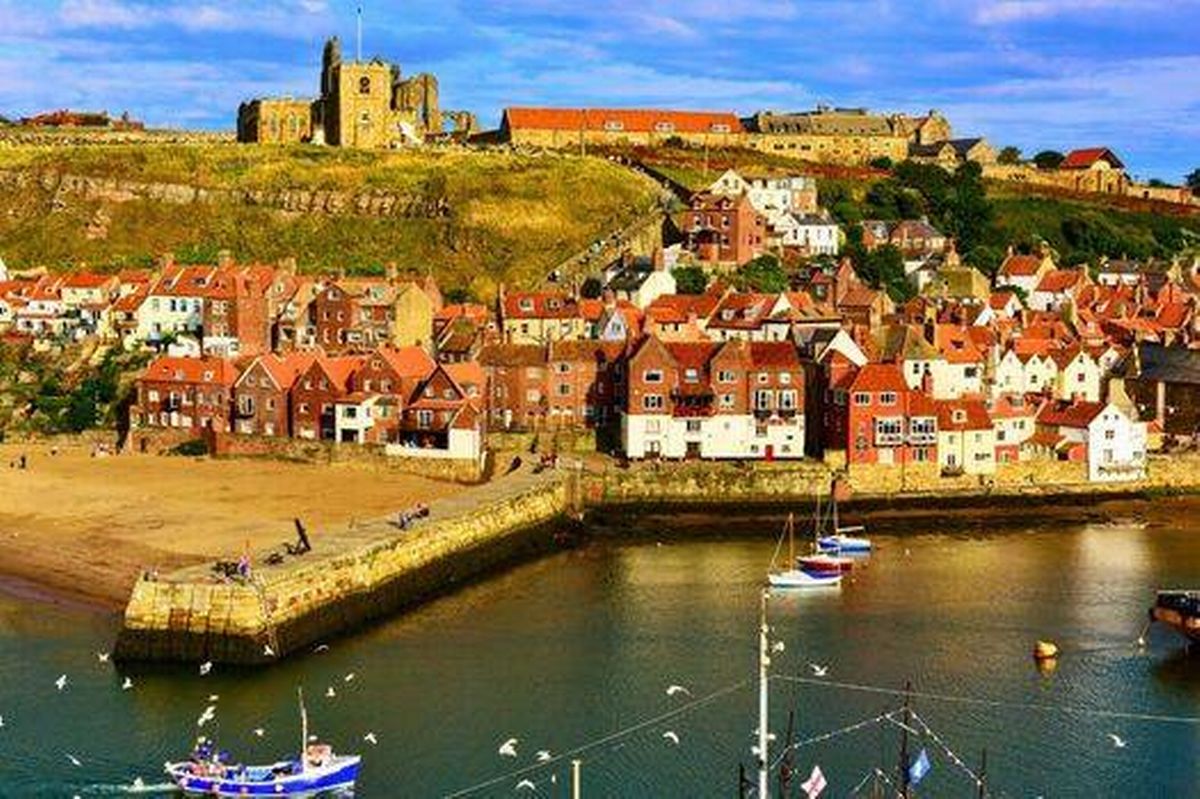
It is the perfect place for a winter break as it has lots of historic sites and breathtaking views (Image: Getty)
Winter often presents an opportunity to take things easy and relax, but if you’ve got some spare time on your hands, it could also be the ideal moment to fit in a spontaneous break before the new year arrives.
The UK boasts numerous stunning destinations, yet during the warmer months, these spots can become swamped with holidaymakers, frequently pushing up costs and making it more challenging to truly savour your travels.
If you’d rather explore without the hustle and bustle, then Emma, a travel specialist and founder of That Travel, has revealed that now is an excellent time to discover Whitby, which earned recognition as one of Britain’s most sought-after staycation destinations.
This past summer, Sykes Holiday Cottages crowned the Yorkshire coastal town as the nation’s top pick for the summer holidays. According to their findings, it emerged as the most coveted destination during the school break, with reservations climbing by 4% compared to the previous year.
She explained: “While Whitby gets masses of crowds in summer, winter remains a pretty peaceful time of year, and they don’t even experience the same Christmas chaos that many other towns and cities in the UK do. In other words? It’s a perfect little Christmas break – just be sure to wrap up warm to survive the crisp sea air.”
Whitby stands out as a distinctive town renowned for its spectacular coastline featuring breathtaking clifftop panoramas, while also carrying an eerie legacy due to its ancient Abbey and links to Dracula. Bram Stoker, the mastermind behind the iconic vampire novel, was so taken by Whitby during his visit in the late 19th century that he wove several of the town’s landmarks into his narrative.
This connection has given birth to the renowned Whitby Goth weekend, a biannual event where the town dons black attire to celebrate alternative cultures through music festivals and various activities.
While Whitby might not be your typical winter getaway, it’s known for its eccentric festivals and hosts an array of intriguing events around the Christmas period.
One such unique activity is the town’s Krampus Run, a parade where participants dress as the mythical creature from folklore.
The festival boasts fire breathers, drummers, and other eye-catching performances, culminating in an effigy burning on the cliffside to ward off the winter chill.
Additionally, the North Yorkshire Moors will be operating a Santa Express this year, offering a stylish way to appreciate the surrounding countryside and partake in a festive sing-along.
For those who relish Christmas tunes, Whitby Abbey will host numerous carol services and be adorned with stunning decorations, allowing visitors to marvel at the vibrant light display.
A winter visit to Whitby provides a stark contrast to the bustling summer season. For those seeking a more tranquil, cosy experience, securing last-minute accommodation during this time is often a breeze.
With its quaint cobbled streets, striking coastline, and delightful independent shops, Whitby is a picturesque destination and an ideal pick for a spontaneous winter getaway.
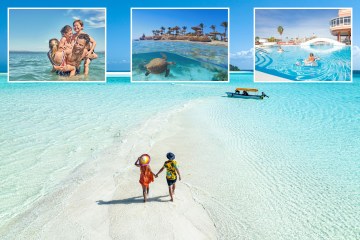
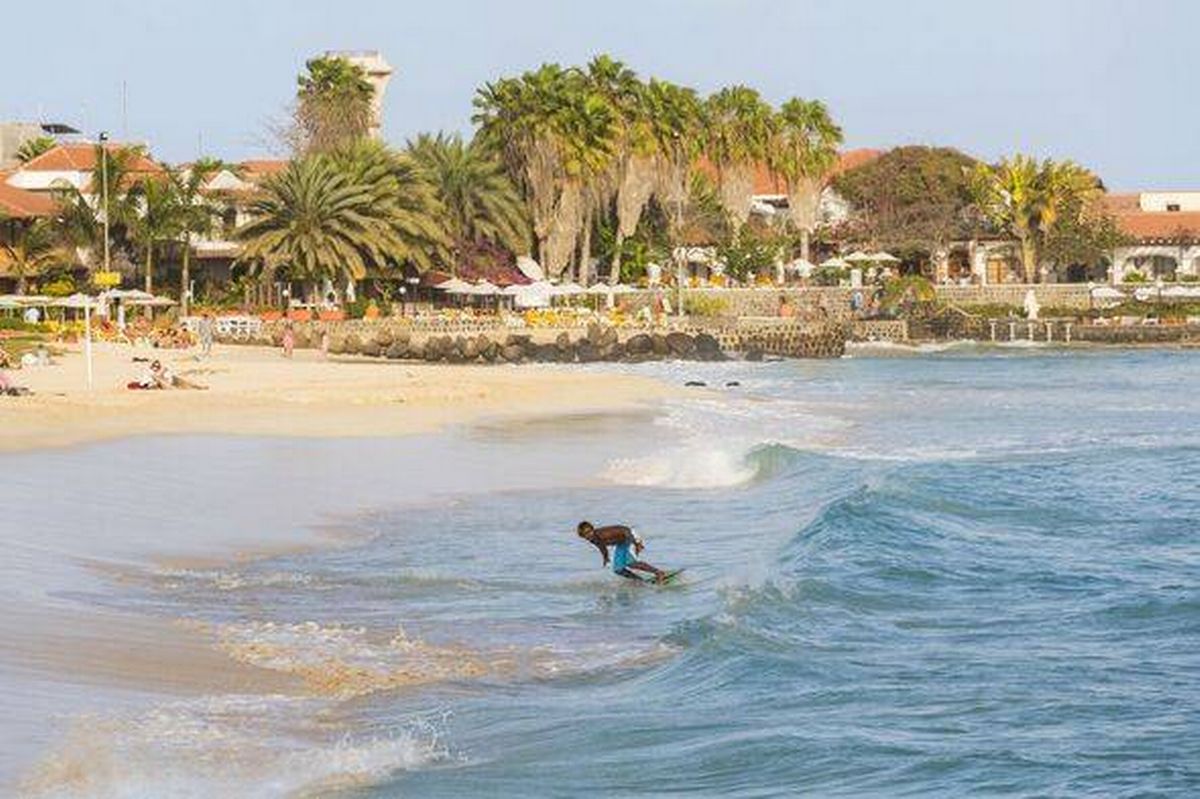
The ‘new Canaries’ has been named the best winter sun destination in the world, and it’s just six hours from the UK – with 25C weather and £2.25 pints
The islands are becoming a popular alternative to the Canaries(Image: Getty)
A location that’s part of a 10-island archipelago has outshone all the Canary Islands to clinch the top spot in easyJet’sWinter Sun Index, and it’s just a six-hour flight from the UK.
This destination has even earned the monikers ‘the new Canaries’ and ‘the Caribbean without the jet lag’, thanks to its stunning white sandy beaches and convenient accessibility from the UK. With temperatures hitting 25C in January, it’s fast becoming a favourite winter sun retreat. Plus, being only an hour behind the UK means you can forget about jet lag.
easyJet’s ranking system took into account factors such as ease of access from the UK, winter temperatures, hours of sunshine, rainfall, time difference, and on-arrival costs, including the average price of a pint and a meal for two.
Topping the chart is Sal, a member of the Cape Verde islands, which easyJet services from London Gatwick, Manchester, and Bristol. Nestled in the central Atlantic, west of Africa, Sal boasts January temperatures of around 24-25C, a stark contrast to the UK’s meagre 8C, reports the Express.
The sea temperature remains at a comfortable 22-24C, slightly cooler than summer peaks but still warm enough for swimming and water sports. The cherry on top?
About 10 hours of daily sunshine, compared to Tenerife’s six or seven, ensuring you get your fill of vitamin D. Cape Verde boasts a mere 1-3mm of rainfall during the winter months, making it one of the driest winter sun destinations. In contrast, Gran Canaria averages 15-20mm and Agadir 28-40mm, indicating a higher likelihood of encountering brief showers.
One-way flights to Sal are available from £91.99, with a variety of package deals offered by easyJet Holidays. For instance, a week-long getaway departing Manchester on January 13 and staying at the four-star Sol Dunas Family Fun is priced at £737 per person. This all-inclusive deal covers meals and drinks, includes 23kg of checked luggage and transfers, and currently offers a £100 discount with the code BIGSALE.
For those preferring self-catering, numerous options abound, particularly around Santa Maria in southern Sal. A mix of international and traditional island eateries are available, with easyJet estimating an average meal for two at £30-31.
If you fancy a refreshing pint to beat the heat, the average cost is a wallet-friendly £2.25, significantly cheaper than a round back in the UK.
Southern Sal is a tourist hotspot in Cape Verde, renowned for its pristine white sand beaches and home to many major hotels. However, if you’re keen on exploring less trodden paths, vast areas of the islands remain undeveloped.
Murdeira, located on the island’s west, is a lesser-known gem boasting tranquil beaches with soft sands.
You can even hop on a ferry to explore the neighbouring islands, with Boa Vista just a three-hour journey away. This stunning island boasts a quaint town, Sal Rei, and a few hotels.
It’s encircled by pristine white beaches and crystal-clear waters, and if you’re lucky, you might even stumble upon turtle nesting sites during your beach strolls.
Have you got a holiday story you want to share? Drop us an email at webtravel@reachplc.com
It’s been one surprise after another lately from Lindsey Vonn. And the announcement that the 41-year-old slopes queen has qualified for the Milano Cortina Olympics in February isn’t the last of it.
It might have been her post on Instagram that stated unequivocally that this will be the end.
“I am honored to be able to represent my country one more time, in my 5th and final Olympics!” Vonn said.
Vonn’s remarkable and inspiring comeback from injuries and a seven-year hiatus from top-level competitive skiing has injected the U.S. team narrative with an irresistible story line. That her quest will culminate in the mountains of northern Italy just two months from now will make it must-watch television and social media video.
The last two weeks have thrust Vonn back onto the international stage as well as the podium, which she climbed in four of her first five races this season. That includes a spectacular win in the downhill in St. Moritz, Switzerland, on Dec. 12.
That marked her first World Cup victory since 2018. And now it’s official that Vonn will compete in her fifth Olympics where she won gold in the downhill and bronze in the super-G at the 2010 Games in Vancouver and bronze in the downhill in the 2018 Games in PyeongChang.
Much of the astonishment circles back to her age. Vonn’s win in St. Moritz made her the oldest woman to win a World Cup race — by seven years. Federica Brignone of Italy set a record a year ago when she won 10 races at age 34.
She also is the first World Cup winner with titanium implants in her right knee. And she’ll become the first quadragenerian to lead the U.S. Alpine skiiing squad seven years after she had all but retired.
In a moving column on Feb. 10, 2019, at the World Championships, The Times’ Helene Elliott wrote what essentially was a sendoff for Vonn: “She went all out to the very end, because that’s the only way Lindsey Vonn knew how to ski. She was bruised and battered as she went to the start gate on Sunday for the final race of her career, sore all over and her right eye blackened by the impact of a crash she suffered during a super-giant slalom race earlier in the week at the World Championships. Her ligaments tore and her bones sometimes broke but her competitiveness was never dimmed, never dented, never compromised.”
Well, 2026 is around the bend and Vonn is back and intact, her competitiveness never compromised still. She has not officially qualified for the Olympics in the super-G, but she’s the fastest American and No. 3 in the world, so count on that as her next headline.
“Lindsey qualifying for the 2026 Olympic team is a testament to her resilience and dedication, and the remarkable results she’s delivered on the World Cup this season,” Sophie Goldschmidt, U.S. Ski & Snowboard’s president and CEO, said in a statement. “She’s proven once again that elite performance isn’t just about past success, it’s about rising to the moment, race after race.
WITH Christmas this week, you more than likely already have a few things in the diary – but for those odd days around the big day itself, here’s some inspiration for when you need to get the kids out the house.
Whilst a lot of places are closed on the big day itself and Boxing Day, many attractions, destinations and events are still open the rest of the week.
Sign up for the Travel newsletter
Thank you!
Despite it being Christmas this week, there are still a number of things you can do for free across the UKCredit: GettyIn Mayfair in London, you can see a sculpture of a Triceratops skullCredit: Unknown
And some even on Christmas Eve.
So here’s a round up of some of the best free things to do across the UK between December 22 and 28.
Britain’s Bayeux Tapestry, Reading Museum
Located at Reading Museum, just two minutes from Reading train station, visitors can see Britain’s Bayeux Tapestry – a full-size replica of Normandy’s Bayeux Tapestry.
This is ideal to see ahead of the Norman Bayeux Tapestry coming to the British Museum in autumnnext year – though, this will be a paid-for experience.
Britain’s Bayeux Tapestry is a full-size replica of the Norman one and is permanently located at Reading Museum, which is free to visit.
The tapestry measures 70 metres long and depicts the Norman conquest of England.
In the late 19th century, Britain decided it should have its own tapestry and so a group of Victorian embroiderers recreated the tapestry in full.
There are two main differences between the British tapestry and the Norman one – the Victorian embroidered underwear on the naked people in the British one and the ladies who embroidered the British one added their names to the end of the tapestry.
Head to the museum between December 22 and 24 to catch a glimpse of the tapestry before the museum closes for Christmas.
Paul Vanstone x David Aaron – Carrara Triceratops Skull
From now until December 31, you can see a marble life-sized skull of a Triceratops in Mayfair, London.
Created by British artist Paul Vanstone, the sculpture has been created in collaboration with the David Aaron gallery.
The sculpture can be found in Berkeley Square, Mayfair.
Wallace & Gromit in A Case at the Museum Exhibition, Preston
At The Harris in Preston, visitors can explore a hands-on exhibition of Aardman’s Wallace and Gromit.
Named A Case at the Museum, the exhibition marks the reopening of The Harris and showcases 35 years of Wallace and Gromit.
The exhibition explores the life of the creator of Wallace and Gromit – Nick Park – from growing up in Lancashire to the influence the region had on his characters and films.
Through the exhibition, visitors get to see original sets and models, storyboards, concept art, early sketches and even strike a pose in Wallace’s living room.
The museum and exhibition are both free to visit, with the museum only closed on Christmas Day, Boxing Day and New Year’s Day.
Though on Christmas Eve, The Harris is only open until midday.
There is a Wallace and Gromit exhibition at The Harris in Preston with original modelsCredit: Alamy
Christmas Bauble Trail, St Albans
Until December 28, families can venture on a Christmas bauble trail around St Albans.
There are 12 baubles in total to spot, and you could even win a prize.
Boxing Day Swims, Various
A number of locations across the country host a Boxing Day Swim each year, where brave souls run into the chilly water for a dip.
A lot you have to either pay for or pre-book, but there are still a number that are free to participate in.
Though, most swims are for charity so donations are encouraged.
For example, you could head to Ventnor Bay on the Isle of Wight, where swimmers often wear pyjamas before running into the water.
The swim takes place on Boxing Day at 12pm.
Or head to North Norfolk Beach for the Runners’ Boxing Day Dip, where there is both a run starting at 11:30am and a splash in the sea at 12:30pm.
To find out if there is a Boxing Day Swim near you, just search your location and ‘Boxing Day Swim’.
Many people head on a Boxing Day Swim, with many destinations offering the experience for freeCredit: Getty
Christmas Lights, Various
Before they disappear for another year, make sure to check out the Christmas lights near you.
Whether that be Regent Street‘s iconic angels or the houses decked out in your nearby village, spotting Christmas lights makes the ideal festive walk.
Snoopy in the City, London
Until January 16, if you live in London you can still explore the Snoopy in the City sculpture trail.
Dotted around London’s Fleet Street Quarter, there are 12 Snoopy sculptures, all decorated by different artists, to find.
The trail celebrates 75 years of the Peanuts comic strip, created by Charles M Schulz.
Those trying to follow the trail can download a map on Wild in Art’s website.
Snoopy in the City sculpture trail is stilling running in the capitalCredit: PA
Ikea events, various
In the lead up to Christmas, Ikea is still running its events including free ‘present hunts’ at IkeaCardiffuntil December 23.
Or at Ikea Lakeside, visitors can make Christmas cards with the last session taking place on December 23.
Also tomorrow, from 10am to 11am, head to Ikea Southampton to have breakfast with Santa.
Justin Carter’s Liquid Light at the BottleWorks, Newcastle
Artist Justin Carter, who has showcased his work in Europe, Japan, China, Australia and America, has an exhibition at the BottleWorks in Newcastle.
The exhibition ‘Liquid Light’ showcases how important location can be to Justin and features a number of watercolour artworks.
You can visit on December 23 from 10am.
Ice skating, Blackpool
Ice skating at Christmas usually costs you an arm and a leg for just one person.
And then by the time you calculate how much it will cost for a family of four, you are nearing the £100 mark.
Up until January 4, you can head to the outdoor skating rink inBlackpoolat the Christmas by the Sea village.
It sits below the iconic Blackpool Tower and is free to visit, with free skate hire as well.
The ice rink measures 20 metres in total and is open each day between 12pm and 9pm (apart from Christmas Day).
You don’t need to book, just turn up.
There is a free ice rink near Blackpool TowerCredit: Getty
Christmas Rave, London
On Christmas Eve in the capital you can head to a free rave.
Located at Club Makossa in East London, ravers can head underground for some techno before the big day.
Whilst entry is free, there is a £1 donation to New Horizons Youth Centre in King’s Cross.
You can also enter a raffle at the rave and could win numerous prices from a £30 bar tab to event tickets.
The rave starts at 5pm and ends at midnight.
For more inspiration on what to do during the Twixmas period, here are 50 things to do between Christmas and New Year across the UK – including free activities and immersive experiences.
WE all know that reindeer pull Santa’s sleigh – but did you realise his entire fleet of magical-hooved creatures is female?
“We know this because of their horns,” Diego Osorno tells me, pointing towards Vixen, one of Grouse Mountain’s resident herd.
Sign up for the Travel newsletter
Thank you!
Grouse Mountain, a 4,100ft tall peak that towers over the city of VancouverCredit: Destination VancouverThe Sun’s Sophie Swietochowski at Grouse MountainCredit: Supplied
At that moment, she decides to depart her hay-filled lodge and gently plod off through the snow, tilting her antlers towards the shimmering Christmas lights in a well-timed performance.
Males shed their antlers in the winter months, while females cast theirs in summer, the knowledgeable Diego shares. He is one of a few rangers here at Grouse Mountain, a 4,100ft tall peak that towers over the city of Vancouver, on Canada’s western coast in British Columbia.
This magnificent landmark will be celebrating its 100th birthday next year, and for those already planning their 2026 wintry getaway, few places offer more Christmas cheer, aside from Santa’s home in the North Pole.
A small “skating pond” sits just beyond the reindeer shelter, where kids can twirl on ice in front of snow-topped fir trees listening to festive music echo between the trunks.
Elsewhere on the peak, you can trudge through fresh white powder on a snowshoe experience, weaving through the frosty woodland which, at this time of year, is dripping in twinkling lights.
These lights are almost as magical as the ones glimmering up from the city of Vancouver at night.
Birds-eye views of the city are spectacular from the cliffside restaurant, The Observatory, and you can soak them up while you dive into fondue — a bubbling pot of rich, gooey cheese served alongside thick slices of charcuterie, pickles and hunks of bread for dipping.
Of course, there’s skiing and snowboarding, too. In fact, visitors will have their pick of three mountains for snowsports when staying in Vancouver, which is partly what makes this region one of the best in the world for night skiing.
You can hit the slopes in a mere 25 minutes from the city centre, including the cable car journey. And Vancouver’s breathtaking nature doesn’t end with its mountains. At the foot of the snow-capped cliffs lies a huge harbour, filled with ships, fishing boats and humming seaplanes — and plenty of wildlife, too.
Winter isn’t the season for spotting whales, but you’re still in with a chance of catching something emerging from the waters, especially if you decide to take a stroll around the seawall of Stanley Park.
This is Vancouver’s answer to Central Park in New York, except it’s roughly 20 per cent larger, boasting 1,000 acres of lush green space bang in the centre of a skyscraper city.
A pal had spotted seals here only a few days earlier, but during my morning run, I only spied black squirrels (cool, nonetheless) and a seagull cracking into a crab that it had plucked from the water for breakfast.
Messy but fun
That sight hammered home just how fresh the grub here really is.
With a huge body of water on its doorstep, wild salmon is, unsurprisingly, very popular in Vancouver. It’s also a staple in the diets of the indigenous communities around these parts. Sushi is big, too. In fact, it turns out Vancouver is where the California roll was invented, supposedly by Japanese-Canadian chef Hidekazu Tojo, although there is some debate over this.
One of the best places in the city to sample this is Miku Waterfront, near the cruise port. This restaurant has rightly earned a place in the Michelin guide for its extremely high-quality dishes at prices that won’t break the bank.
I polished off clean plates of oshizushi, a sushi block made from layered rice and slabs of fresh tuna or mackerel, dolloped with a smattering of saffron as well as perfectly-crafted nigiri, which I was instructed not to dip in soy sauce as the seasoning had already been meticulously balanced.
Right they were.
An extremely filling lunchtime Shokai consisting of ten pieces of traditional sushi, rolls and nigiri with appetisers and miso soup, will set you back just under £25, in a swish setting.
For more snacking with a festive twist, there are two Christmas markets in the cityCredit: Destination VancouverUndercover ice-skating in domeCredit: Ian Harland
Asian influences can be seen throughout a large number of restaurants in Vancouver due to a wave of Cantonese and South Asian communities immigrating to the city over recent years. Anh And Chi at the northern end of Main Street serves immaculately executed Vietnamese classics, including DIY rice paper rolls that you construct at the table. Messy but fun.
During the festive period, however, you can’t go wrong with a slap-up Christmassy meal within a sparkling globe-style dome at H Tasting Lounge.
Order the 24-hour braised beef shank, which is lit on fire tableside, the smoky smell of rosemary and meat engulfing the dome.
Cold plunge pools
If you simply can’t decide what tickles your fancy, book on to a food tour with foodietours.ca around the public markets of Granville Island.
This industrial area has become a hub for arts and food, and more than 50 independent vendors flog their homemade delights to not just tourists and locals, but A-list celebs, too.
Pop star Harry Styles once bought Hobbs Pickles’ entire stock of sweet pickles in one day. I had to resist doing the same after sampling their dill flavour.
Vancouver-born actor Seth Rogen, on the other hand, regularly makes a beeline for Lee’s Donuts, which sells the classic ring-shaped bake in all manner of flavours, from cinnamon to honey-dip.
For more snacking with a festive twist, there are two Christmas markets in the city. The main Vancouver Christmas Market (entry from £3.80), offers a more commercial atmosphere with wooden stalls selling all the classics.
Seafood restaurant Miku is in Michelin GuideCredit: Destination VancouverA snow-covered Cypress MountainCredit: Destination Vancouver
Meanwhile, the Shipyards markets on the North Shore are a little more crafty and free to visit, serving quirkier titbits like pickled spruce tree tips.
They taste like capers, if you’re wondering.
I was also grateful for the city’s emphasis on wellness after gorging one too many poffertjes (mini Dutch pancakes).
Spas have become a large part of the culture here and the two-hour thermal circuit at Circle Wellness will ensure every ounce of stress is extracted from your body through specially designed hot pebble floors, Himalayan salt chambers and cold plunge pools.
From my private shipping container, I watched the steam billow from my cedar tub, clashing with the air’s chill.
Some things are just made for winter. And Vancouver is one of them.
GO: VANCOUVER
GETTING THERE: Air Canada flies from Heathrow to Vancouver from £712 each way including one checked bag. See aircanada.com.
STAYING THERE: Rooms at The Westin Bayshore cost from £202 per night on a room-only basis. See marriott.com. For more information, see destinationvancouver.com.
Concerns over snow levels for the skiing events at the 2026 Winter Olympics in Italy have been raised by the president of the International Ski Federation (FIS).
Johan Eliasch highlighted issues with the production of artificial snow, which he said was down to delays with the Italian government releasing funds to organisers.
Livigno Snow Park and Aerials and Moguls Park will be key venues during February’s Winter Olympics.
Livigno mayor Remo Galli has responded to the concerns, stating that the delays were caused by a technical problem.
“We’ll have all the snow we need to have a great Olympics. In fact, we’ll have much more,” Galli told Italian news agency Ansa.
“It was necessary to replace a valve, but it was done within the timeframe, and all the snow guns have been operating for a few evenings.
“We’re doing well, for Livigno and for Italy. And in the next few days, temperatures will drop further, even to 20 below zero, so I’m not at all worried.”
WHEN there’s no snow anywhere else, there’s still a bit of powder in Obertauern.
This tiny Alpine town has more snow than anywhere else in Austria, and its season lasts from November until May.
Sign up for the Travel newsletter
Thank you!
The Beatles filmed their 1965 movie, Help! here and had hired body-doubles to perform the action shots on skisCredit: SuppliedThe 4H+ Kesselspitze Chalet & Hotel is one of three in the town owned by Dubrovnik-based ValamarCredit: Supplied
So it’s no wonder when The Beatles were looking for a snow-sure location to film scenes for their 1965 movie Help! they opted for the once-unknown village 56 miles from Salzburg.
Body doubles were hired to perform the band’s action shots on skis — and Paul McCartney’s stand-in still lives here today.
This year marks the 60th year since the filming took place — transforming a previously quiet mountain village into the centre of pop culture for a few unforgettable days.
The global attention sparked by the Fab Four’s visit marked a turning point for Obertauern.
Beatles fans still make pilgrimages to the village, and scattered throughout the village are three monuments to commemorate the band.
And if, like The Beatles, you aren’t much of a skier, you can still catch a gondola to the peaks to enjoy the restaurants, with deckchairs overlooking the mountains.
But, of course, Obertauern is all about the snow, which reaches a maximum depth of 8½ft.
In the evenings, I’d watch snowfall from the cosy window seat in my room at Kesselspitze Chalet & Hotel, on the edge of town.
It fell so heavily I couldn’t see beyond it — not lights in the windows of nearby buildings, nor the mountains behind. It was everything a winter wonderland should be.
I hadn’t skied for a while, so I booked beginners lessons, and it is true what they say about teachers — the good ones make a massive difference. Mine made it look a doddle.
I may have stuck to safety on the nursery slopes while I practised my turns, but my classmates got the hang of it in no time.
Leg massage
It meant they could graduate to tougher challenges on the blue, red and black routes, including the Gamsleiten 2 — a scary 45- degree ski-run.
Back in town, the Eurobeat was booming in the apres-ski bars.
Still in full gear with skis parked against railings, people downed beers, wine and cocktails while they stomped to the beat.
The incredible mountain view from the hot tubCredit: Supplied
A pint of beer costs an average of €6 while a glass of good Austrian wine is around €4.30.
If you’re not partying or skiing, there are shops to browse, plus restaurants and cafes to enjoy.
A highlight of the trip for me, however, was the hotel and its facilities.
The 4*+ Kesselspitze is one of three in the town owned by Croatia-based Valamar.
It is everything I expected from an Alpine hotel: Lots of wood, stone and rich colours, with a real fire in the bar, while the decor in my room was luxurious yet homely.
The food, a combination of help-yourself buffet and a la carte, was amazing, and there was so much of it that I always felt well-fuelled before and after hitting the slopes.
I loved the hotel’s Balance Spa. Tired and aching, I recuperated in the sauna, steam room and Finnish sauna (much hotter) and booked in for a leg massage to soothe my throbbing calves.
There’s something spectacular about relaxing in an outdoor Jacuzzi while it is snowing — the heat of the bubbles clashing with the cold, and the mountains right in front of you.
It is the perfect way to soak away any aches and pains, ready for another day on the slopes.
In the evenings, I’d watch the snow fall from the cosy window seat in my room at Kesselspitze hotel on the edge of townCredit: Supplied
GO: OBERTAUERN, AUSTRIA
GETTING THERE: British Airways flies from London Gatwick to Salzburg from £59 each way. See britishairways.com.
STAYING THERE: Double rooms at Kesselspitze Hotel & Chalet cost from £303 per night.
MORE INFO: Ski rental costs from €30 per day, and day ski passes cost from €65 per adult and €32.50 per child.
FANTASY lovers can take a step down the hobbit hole this winter, as a new location invites guests inside to escape the icy winter weather.
A Tolkien-inspired holiday spot has opened for business north-west of Cambridge, with pods and lodges available for keen glampers.
Sign up for the Travel newsletter
Thank you!
Live like a Hobbit in this cosy glamping lodge at West Stow PodsCredit: West Stow PodsPods and lodges have been fitted out to emulate the popular fantasy village of HobbitonCredit: West Stow PodsThe location is also pet friendly, so all family members can kick back and relaxCredit: West Stow Pods
The town sits betweenTenbyand Amroth in Pembrokeshire.
It’s home to around 3,000 residents and has a Blue Flag sandy beach, a picturesque harbour with cafes and shops, plenty of walking paths – but absolutely no rides.
And according to WalesOnline its “craggy coastline is amongst the most beautiful in the world and can be enjoyed year-round, especially in autumn”.
Someone on Tripadvisor described the village as a “winter wonderland” when the Christmas lights are up.
It’s a popular place for Atlantic grey seals and you can see them on boat trips – and you can see them all year round
Saundersfoot has previously been named one of the ‘best places to live by the sea in the UK 2024’ by The Sunday Times.
The Boat House at Saundersfoot is a 2025/26 Good Food Award winner – Gold Seal.
The family-run restaurant serves up meals from curries to pastas, surf and turf, steak, and burgers.
The lodge is a perfect place to escape the busy city lifeCredit: West Stow Pods
The city of Vilnius in Lithuania has been named this year’s Christmas Capital of EuropeCredit: GettyAlice Penwill visited Vilnius to celebrate the festive period in a city that embraces ChristmasCredit: Supplied
There’s festive fodder in every direction I turn and, unlike many European cities at Christmas, there are no obnoxiously loud rides or tacky grottos.
Instead, the capital of Lithuania celebrates the festive period with pure charm, transforming into a glittery wonderland as soon as it is acceptable to do so (generally in late-November).
Vilnius’s main attraction, an enormous decked-out Christmas tree, stands tall in Cathedral Square, accompanied by a traditional carousel and market stalls dishing out warm apple punch and pots of doughnuts drizzled in chocolate.
This tree has some competition, though. In early November each year, The Senator’s Passage, just up the road from Cathedral Square, receives its own grand tree.
The owner tells me with a grin that it usually takes around 15 workers to drag the tree through the narrow passageway and dress it for the season.
It seemed worth the hassle though, with seven metres of green branches dripping in twinkling lights.
If you plan your travel dates well, you can visit for “Christmas Before Christmas”, where seasonal events take place throughout the city prior to the main event.
This year, the festivities took place on December 13 with performances from carol singers, festive tours and even a holiday-themed train and bus.
Christmas Before Christmas relies on a special currency — a red pine cone which visitors can swap for a warming cherry tea or a sweet treat.
There’s so much to keep you entertained during the day, from ice skating to strolls through wintry gardens, but the magic of Vilnius doesn’t truly comes to life until the sun goes down.
This is especially true for Konstantinas Sirvydas Square, which this year has an impressive 144 Christmas trees.
Delicious grub
Or, for a truly epic festive display, a must-see is the Poniuų Laimė in the Old Town’s Jewish Quarter.
The cafe selling delicate cakes and cookies decorates its front for each season, and this December it became the Orient Express, embellished with huge red velvet bows and suitcases.
If you’re looking for something a little different, however, you may want to swing by the Lukiskiu Kalejimas Christmas market set up in a former prison.
Eagle-eyed Stranger Things fans will recognise this as the filming location of the Russian prison where Hopper was held in the fourth series.
There is a lot to keep you entertained across the Christmas events throughout the city, day and nightCredit: Supplied
It looks a little different at this time of year, though, with locally-made drinks, teas and gifts being flogged from a once gloomy building that housed prisoners until as recently as 2019.
Of course, a festive getaway isn’t complete with some delicious grub.
I had never considered Lithuania to be a place for foodies — but in fact, Vilnius has four Michelin-star restaurants.
It was one simple snack that took the biscuit for me — kepta duona, which is essentially fried bread in garlic.
The crunchy, delicious treat is a bit like a meat-free pork scratching, but much tastier.
The bagels at Baleboste are a must-try during your trip to LithuaniaCredit: Supplied
If you’re a fan of bagels, then stop by Baleboste, where I felt more like I was being welcomed into someone’s dining room than a Jewish cafe.
Here, the ring-shaped bread is served warm with just the right amount of sweetness and a sprinkling of poppy seeds.
I had mine with a pulled beef filling which comes with mustard and plenty of pickles.
This isn’t something locals will be enjoying at this time of year as traditionally in Lithuania, it’s common to fast in the run-up to December 24, and most families don’t eat meat in this period — even on Christmas Eve.
Instead, they get together for a 12-course evening dinner called Kucios where they feast on beetroot, dumplings, lots of fish, berries and nuts.
You can enjoy a taster of this feast at Ertlio Namas, a Michelin-Guide restaurant in the Old Town.
After that delicious spread, I practically rolled back to the Hotel Pacai which has spacious rooms with enormous bathtubs for when you need to warm up after wandering around the chilly city.
If you’re lucky, like I was, there might even be a sprinkling of snow outside the window come morning.
Vilnius has four Michelin-star restaurants for visitors to try outCredit: Supplied
GO: Lithuania
GETTING THERE: Ryanair flies from from London Luton to Vilnius from £34 return. See ryanair.com.
STAYING THERE: Rooms at the Hotel Pacai cost from £154.21 (€176) per night, including breakfast. See hotelpacai.com/en.
If you’re looking for some winter sun to soak up the rays on a golden sand beach engulfed with crystal-clear turquoise waters, there’s an idyllic destination just five hours from the UK
There’s a sun-soaked getaway just five hours from the UK with 25C during winter(Image: Getty Images)
Amid the chaos of Christmas and chilly weather conditions, many of us are dreaming of jetting off to a warmer climate for some winter sun. One destination that has long been praised for its luxurious resorts and blistering 25-degree winter heat is just five hours away from the UK.
To help travellers uncover some of the best holiday getaways during the colder UK months, easyJet has released its ‘Winter Sun Index’. The airline compared factors such as flight and package prices, temperature, hours of sunlight per day, monthly precipitation levels, time difference, and the average cost of a beer and a meal for two, to highlight their top holiday destinations for some winter sun.
One desirable holiday hotspot, within easy reach of the UK, was Hurghada on the east coast of Egypt. The sun-soaked beach town is brimming with luxury resorts scattered along the shoreline, providing direct access to the crystal-clear waters where marine life thrives.
The turquoise sea is one of Hurghada’s most appealing factors, with scuba diving and snorkelling being undoubtedly popular pastimes here. Most resorts offer private areas along the golden sands for ultimate relaxation and convenience, but for those seeking more adventure, stunning desert landscapes are nearby, offering activities such as quad biking or Jeep safaris.
Located along Egypt’s Red Sea coast, easyJet found that Hurghada typically offers temperatures between 21C and 25C during the winter months, a stark contrast to the brisk highs of 6C we experience in the UK. Another factor making this destination rather desirable is easyJet’s findings that, on average, a pint costs just £1.75, while two people can enjoy a meal out for an estimated £26 – bargain!
Elsewhere, Hurghada basks in around 9-10 hours of sunshine every day, and there’s just a two-hour time difference compared to the UK, pretty much avoiding any signs of jet lag. Direct flights from London airports to Hurghada are just over five hours, with return flights starting from £154 with easyJet.
There are plenty of package deals available, making a spontaneous getaway even more effortless if you’re seeking that vitamin D fix. The Red Sea is renowned for its winter sun destinations, with Sharm El-Sheikh in Egypt also remaining a popular choice for holidaymakers, thanks to its pristine sandy beaches and turquoise blue waters.
easyJet’s top 10 destinations for winter sun
Sal – Cape Verde
Hurghada – Egypt
Gran Canaria – Canary Islands, Spain
Lanzarote – Canary Islands, Spain
Agadir – Morocco
Fuerteventura – Canary Islands, Spain
Tenerife South – Canary Islands, Spain
Djerba – Tunisia
Seville – Spain
Paphos – Cyprus
Kevin Doyle, easyJet’s UK country manager, said: “As temperatures at home begin to drop and the days get darker, now is the perfect time to book an escape to warmer climes. easyJet’s unrivalled network and package holidays, offer a broad range of winter sun destinations across Europe and beyond, from Sub-Saharan islands to Spanish peninsula cities that are all easily accessible and affordable, for those looking to chase the sun on a budget this winter.”
Do you have a travel story to share? Email webtravel@reachplc.com
A UK city has been hailed as home to ‘one of the world’s most scenic winter train journeys’
The holiday season may be the best time to ride the rails
A city in the UK has been hailed as the backdrop for “one of the world’s most scenic winter train journeys“. National Geographic experts have lauded the route as “breathtaking,” promising travellers an eyeful of unforgettable vistas. In their roundup of Europe’s top 10, they said: “The holiday season may be the best time to ride the rails on these iconic routes through Germany’s enchanted Black Forest, and Norway’s frozen waterfalls.”
But it’s Scotland that truly steals the show with its mist-shrouded hills, serpentine lochs, and stark winter landscapes. For those hunting for a festive or winter escape, this rail journey delivers an unrivalled experience.
So, where in Scotland can you find this picturesque railway journey?
Stretching around 180 miles from Glasgow to Mallaig via Fort William, the West Highland Line is your ticket to awe-inspiring scenery.
As the National Geographic expert elaborated: “Route: Glasgow to Mallaig. Often cited as one of the world’s most scenic rail journeys, the West Highland Line serves up raw, haunting beauty.
“It slices through Rannoch Moor, a sprawling peat bog, skirts Loch Lomond, and soars over the Glenfinnan Viaduct, (a spectacle long before the Hogwarts Express catapulted it to Hollywood fame).”
They added: ” Edinburgh and Glasgow both boast unique Christmas festivities worth checking out. Edinburgh’s markets spill across Princes Street Gardens under the watchful eye of the castle, while Glasgow is set to light up with a Christmas lights trail this year.”
Glasgow’s Christmas market
The Winter Wonderland Christmas market at St Enoch Square is set to run from 6 November to 24 December, boasting family rides, an ice rink, local vendors, and live music. As reported by Secret Glasgow, the event will feature the world’s first solar-powered observation wheel and a fully licensed festive bar.
Glasgow is also set to host its largest beer hall yet, accommodating up to 700 guests with pub quizzes, live music, and festive beverages on offer. The venue will be adorned with fairy lights and fire pits, serving mulled wine and winter cocktails in both indoor and outdoor spaces.
In lieu of the traditional Christmas Lights Switch-On, which has been cancelled due to redevelopment works at George Square, the city will instead showcase a festive light trail.
Key attractions include dazzling art installations along Sauchiehall, Buchanan, and Argyle Streets, as well as a grand Christmas tree and crib at the Cathedral Precinct, providing a perfect backdrop for festive photos.
Top 10 scenic train routes in Europe, according to National Geographic
WHEN it comes to Christmas, you probably have a lot of family plans and then for the New Year, you might be seeing friends – but that time in between can be tricky to plan things to do.
Known as Twixmas, the period between Christmas and New Year – usually December 27, 28, 29 and 30 – always feels like you’re in a bit of a limbo.
Sign up for the Travel newsletter
Thank you!
There are a number of different events and activities to do during Twixmas, including The Traitors Live ExperienceCredit: The Traitors: Live Experience
You don’t know what day of the week it is, whether things are open or closed and you’re living off of leftovers from the big day.
So, instead of stressing about what you can and can’t do, here are 50 things across the UK that you can enjoy during Twixmas.
The Traitors Live Experience, London
Traitors fans can fully immerse themselves in the show at the live experience in Covent Garden, London.
You can opt to not be chosen as a traitor, but if you don’t mind then you might spend a couple of hours deceiving people…
There are a ton of ice skating rinks across the UK at the moment, most of which will be disappearing across January.
Ice skating is a fun winter activity and isn’t necessarily Christmassy so it is worth checking out the rink close to you and when it closes for the season.
One great site to visit is Somerset House in London, where you can go for a spin on the ice before grabbing a drink at The Chalet by Jimmy Garcia and looking out at the scenic setting.
It costs from £14 for adults and £12 for kids,
The Hitchhiker’s Guide To The Galaxy, London
The Hitchhiker’s Guide to The Galaxy experience is running in London until February 15.
During the experience, visitors can join characters including Arthur Dent, Zaphod Beeblebrox, and Fenchurch on a galactic adventure.
This is a new production and costs from £42.
The Legend of the Titanic, London
For those who want something immersive to do but are also interested in history, head to Dock X in Canada Water to The Legend of the Titanic.
The experience allows visitors to learn about the 1914 tragedy, as well as get a feel for what the ship would have looked like via AR.
It costs from £24 for adults and £16 for children.
The Titanic experience allows visitors to learn about the 1914 tragedy, as well as get a feel for what the ship would have looked like via ARCredit: The SUN – Cyann Fielding
Enchanted Tree Trail, Wentworth Castle Gardens, Barnsley, South Yorkshire
At Wentworth Castle Gardens in South Yorkshire, visitors can head on an enchanted tree trail.
Across the trail, visitors will see small creatures in their secret world.
It is running throughout the Twixmas period and costs from £6.50 per adult and £3.25 per child.
Cinema, various
What better time to head to a cosy film screening than when you have time off and are feeling lazy?
Between Christmas and New Year’s, a lot of cinemas are open and operating as normal.
It is the perfect time to feel like you’re getting out but also kicking up your feet at the same time.
And there are a number of great movies in the cinemas at the moment including the second part of Wicked, comedy Fackham Hall, and from December 19, the new Avatar: Fire and Ash.
Cinemas are a great place if you want to catch up on the latest films whilst staying indoorsCredit: Getty
Sunflowers Needle Felting Workshop, Lyveden near Oundle, Northamptonshire
Looking for something to do solo? Then why not head to Lyveden in Northamptonshire for a needle felting workshop.
Over two sessions, guests will learn how to transform wool into a small piece of art.
The workshop is designed for beginners, and by the end of the two sessions, guests will have created their own sunflower scene, inspired by Vincent van Gogh.
The workshops take place on Friday, January 30, from 10:30am to 3pm and cost £47.50 per person.
West End Shows, London
If you aren’t a fan of pantos, then why not opt for a London West End show instead?
Sites like TodayTix often offer deals and flash tickets at discounted prices for shows including Wicked and Moulin Rouge.
If you don’t like Pantos, London West End’s are a great option as wellCredit: Alamy
Twixmas swims, Ware Lido
Those who love a bit of an adrenaline rush can head to Ware Lido, which is open for festive swims.
Sessions for December 27 to 31 are still available… though they do advise wearing a wetsuit.
Adult swim sessions cost £6.75 and child sessions cost £3.75.
Fanhams Hall, Ware
The Jacobean mansion, Fanhams Hall, in Ware is hosting afternoon tea in the Drawing Room between Christmas and New Year.
The room overlooks the gardens at the house and visitors can enjoy a tiered offering of finger sandwiches, scones and sweet treats.
It costs from £40 per adult and there is a children’s tea available for £22.50 as well.
The afternoon tea is being hosted from December 27 to 30.
Fanhams Hall is hosting afternoon tea in the Drawing Room between Christmas and New YearCredit: Alamy
Afternoon tea, Petersham
Enjoy some classic British treats at Petersham, near Richmond from £54.00.
The menu includes roast turkey sandwiches and orange and cranberry scones.
You can even upgrade to have prosecco or champagne as well.
Eden Project, Cornwall
Eden Project is is opening to the public on Boxing Day for the first time since 2019, this year.
And over Twixmas there will be three, free running events on December 28, January 1 and January 4.
Eden Project also has an ice rink, which will be open until February.
Eden Project is is opening to the public on Boxing Day for the first time since 2019, this yearCredit: Alamy
And the Eden Project’s festive lights and soundscape experience will also take place each day between 5pm and 8pm, December 27 to 30.
Adult tickets cost £38 each and child tickets cost £12 each.
Helios, St Albans Museum + Gallery
If you love space or your kids do, then head to the solar show known as Helios at St Albans Museum + Gallery.
Here visitors can discover a six metre sculpture of the moon created by UK artist Luke Jerram.
The event runs from December 27 to January 25 and is free to visit.
At St Albans Museum + Gallery you can see a six metre sculptureCredit: Alamy
Jurassic World Experience, London
It is your last chance to see Jurassic World Experience in London before it ends on January 4.
The experience features 10 immersive zones which bring the film to life.
It costs from £35.95 per adult and £28.95 per child.
Drayton Manor, Tamworth
Drayton Manor is the only UK theme park that will have all its major rides open throughout the festive period.
These rides include Gold Rush, The Wave and Maelstrom.
If visiting, your ticket will also include access to a new end-of-day show called ‘Drayton Manor’s Christmas Miracle’.
Tickets to the theme park cost £25 per person.
Drayton Manor is the only UK theme park that will have all its major rides open throughout the festive periodCredit: Alamy
Edinburgh day trip
Head on a day trip to Edinburgh, which was recently named the most festive city in the UK by London Northwestern Railway (LNR).
It is either a short flight or a train journey, with both costing from around £34 per way.
Winchester Science Centre
Another one for aspiring astronauts is the Winchester Science Centre, which reopens on December 27 after being closed for Christmas.
Inside, visitors can explore many interactive exhibits as well as watch the live planetarium show – Solar System Adventure.
The Science Centre costs from £14 per person to visit.
Winchester Science Centre has many interactive exhibits as well as watch the live planetarium show – Solar System AdventureCredit: Alamy
Lights of Abraham, Peak District
Head to Lights of Abraham in the Peak District before they close for the year.
Visitors can go on a moon-lit cable car ride over a valley, which is full of lights.
Then, once they reach the summit, they can set off on a trail that has interactive stepping stones, a neon forest, and giant creatures.
The light trail is open from December 27 to 30 and costs from £22 per adult and £16 per child.
Stonehenge, Salisbury
For a refreshing walk with a bit of history, head to Stonehenge, in Wiltshire.
The world-famous prehistoric monument was built over 5,000 years ago, and visitors can walk around the stones as well as explore a museum about their history.
Stonehenge is only closed on Christmas Day, but has reduced hours on Christmas Eve and Boxing Day.
It costs from £25 per person to visit.
Stonehenge is great for history lovers, and you can explore a museum with information about the stones tooCredit: Getty
National Stone Centre, Matlock
Found just 30 minutes from Derby, on the edge of the Peak District, is the National Stone Centre.
Spread across 40 acres, it is free to visit all year round.
There are a number of activities for families, including geo-trails to find fossils.
There is also gem-panning which costs £3 per person.
There is also a playground as well.
Bounce Below, Llechwedd
Bounce Below features six netted areas with different chambers and bouncy nets for guests to play on.
And it is all set within caves under the ground, which is twice the size of St Paul’s Cathedral.
Tickets cost from £25 per person.
Sun Travel recently visited Bounce Below, finding it to be like a ‘theme park’ in caves.
Bounce Below features six netted areas with different chambers and bouncy nets for guests to play onCredit: Google maps
Silent Pool Gin Festive Distillery Tour, Guildford
Silent PoolGin Distillery in Guildford are running festive tours and tasting experience.
On each tour, a guide will explain how and why the distillery was created, and visitors will get to see the copper gin stills.
To make it a touch more festive, guests will also get to have a ‘Rare Citrus Hot Toddy’.
The tour will take place at various times across December 27 and 28 and it costs £30 per person.
Blenheim Palace, Oxfordshire
There’s nothing quite like visiting a palace and between Christmas and the New Year you could head to all three of the festive attractions at Blenheim Palace, as they remain open until January 3.
These include the Palace of Oz where the State Rooms have been transformed, The Great Skate ice rink and the Illuminated Light Trail.
Entry costs from £41 per adult and £24 per child.
Blenheim Palace has State Rooms themed as the ‘Palace of Oz’Credit: Alamy
Forest Bathing, Wrest Park
At Wrest Park, you could kick start 2026 with some pre-New Year wellbeing with forest bathing.
During the 90-minute experience, visitors will get to go on a slow walk through the woodland with a number of stops to explore nature.
The walk also includes a tea ceremony.
The event takes place on December 28 from 10:30am to 12pm and costs £22 per person.
Glow in the Dark, Mini Golf, Bath
Until January 4, you can head to a glow in the dark minigolf experience in Bath.
Found at Glow Golf, each player will have a glowing ball and the course is decked out with lights.
It costs £11.50 per adult and £9.75 per child.
Twilight Tobogganing, Mendip Activity Centre, Somerset
At Mendip Activity Centre in Somerset, families can explore a toboggan run until January 4.
Each session lasts 60 minutes, and visitors can discover an illuminated area where they can toast marshmallows and have a hot chocolate around a campfire.
It costs around £34 per person.
In Somerset you can go tobogganing at twilightCredit: Instagram
Beyond the Bonnets: Working Women in Jane Austen’s Novels, Willis Museum and Sainsbury Gallery
At the Willis Museum and Sainsbury Gallery visitors can explore the exhibition ‘Beyond the Bonnets: Working Women in Jane Austen’s Novels’.
The exhibition celebrates 250 years of the author and explores a number of true stories of working women from Hampshire, where Austen was from.
An adult ticket costs £5.45 and a child ticket costs £4.50.
Christmas break with Warner Hotels
Warner Hotels have a number of properties across the UK – and many of which have great deals on breaks during Twixmas.
Twixmas breaks start from £249 per person for a three-night stay (based on two people sharing), and include bed, breakfast and three-course dinners, entertainment, access to leisure facilities and activities.
There are also a number of day experiences available, starting from £25 per person.
Bongo’s Bingo: Bingo All The Way, Newcastle
Bongo’s Bingo is in Newcastle at the Boiler Shop over the festive period.
The event features a mix of traditional bingo, dance-offs, raves, and audience participation.
The bingo will be taking place on December 27, 28 and 31 and it costs from £23.
Bongo’s Bingo mixes traditional bingo, dance-offs, raves, and audience participationCredit: Instagram/@bongosbingo
Christmas Rocks, O2 City Hall, Newcastle
Over four days, a festival with rock tribute bands will be performing at O2 City Hall in Newcastle.
There will be AC/DC GB, Fleeting Rumours, Green Days and Paramore UK performing.
The event runs from December 27 to 30 and costs from £29.90 per person.
Twist Museum, London
Head to Twist Museum in London to explore a number of rooms with different illusions that are fun for both kids and adults.
There is also a new Lapland Infinity Forest at the museum, for a little bit of a festive twist.
Prices start from £20 per child and £24.50 per adult.
The Twist Museum currently has a Lapland themed roomCredit: Alamy
Exhibition on Screen: Caravaggio, Tyneside Cinema, Newcastle
A special screening at Tyneside Cinema will show the latest edition of Exhibition on Screen – a documentary series that explores the history behind different artworks.
This time, the event will focus on artist Caravaggio, and it is believed to be the most extensive film made about the artist.
It takes place on Monday, December 29 and costs around £10 for standard tickets.
Christmas Stick Man Trail, Haldon Forest near Exeter
Fans of Julia Donaldson should head to Haldon Forest near Exeter, in Devon for a day of exploring the Stick Man trail.
The trail follows Stick Man as he helps Santa deliver the final present.
The trail runs until January 4 and is free to visit.
In Haldon Forest, near Exeter, there is currently a Stick Man trailCredit: forestryengland
Bubblicious family raves with the Soapbox Theatre, Plymouth
The Soapbox Theatre in Plymouth is hosting a family-friendly dance party, to celebrate New Year’s Eve.
It will include sessions for families with babies and one for older kids as well.
A DJ will play dance music, with glow sticks, UV face painting, and performers present too.
There is also a bar for adults too.
It takes place on December 31 and costs from £10 per person.
Museums, various
Up and down the UK there are many museums that will be open over the period between Christmas and New Year, including the Natural History Museum.
Museums are great spots for a day out especially when it is raining and cold.
And to add to that, a lot are free to visit as well.
There are also tonnes of free museums up and down the UKCredit: Getty
Meet Paddington at Wookey Hole
At Wookey Hole Caves, visitors will be able to meet Paddington as well as explore ancient caves.
The caves are currently decked out with 100,000 lights and there is also an on-site circus show.
It costs from £19 per person.
Big Fat Quiz of the Year, Hampshire
The Wellington Arms in Hampshire is hosting a ‘Big Fat Quiz of the Year’.
Teams can be no bigger than six people, and it costs £2 per person to enter.
And of course there are prizes.
It takes place on December 29 at 6pm to 10pm.
Treasure hunt, Leeds
Treasure Hunt Leeds allows visitors to explore the city and solve clues in the process.
You can see the sights of the city, such as Victorian arcades and the Corn Exchange.
What’s best about this experience, is you can take it at your own pace.
It costs £15 per person.
Hawkchurch Resort and Spa, Axminster, South Devon
What about just having a mini-break?
For example, you could stay at Hawkchurch Resort and Spa for three nights from December 27 from £375.
Each lodge sleeps between two and eight people, and pets are also welcome.
The site itself has amazing views of the Axe Valley, and you can even opt for a lodge with a private hot tub.
You could always check in to a short break somewhere tooCredit: Google maps
Escape rooms, various
Escape rooms are a great family-friendly activity to do, and there are different venues across the UK.
For example, you could even go to Butlin’s Bognor Regis Playxperience where there are a few different options including Escape the Seven Seas Escape Room, which is suitable for children over the age of five.
The majority of escape rooms are more suitable for older kids though.
And prices tend to vary greatly, but you can expect to pay at least £30 per player.
Butlin’s break, across all three sites
Butlin’s is hosting festive breaks from £129 per person at Skegness, Bognor Regis, and Minehead.
These are great for small kids with lots of activities and shows to explore at each site.
Arrive at Fowlmere RSPB reserve, 10 miles south-west of Cambridge, an hour before nightfall to allow yourself time to find a good vantage point to enjoy the spectacle of the murmuration. Starlings gather and swirl in fluid Spirograph shapes, framed by shadowy trees against sunset reds until the sky darkens and the birds take their last dip into the reed beds. It really is a spectacular display, available most winter evenings here. Helena
Rowing the canals of Bristol in all weathers
Bristol harbour at sunrise. Photograph: NXiao/Getty Images/iStockphoto
Our Bristol Channel Social Rowers club goes out in all weather. Frosty and clear, intense blue skies add pleasure to our early morning session. We soon warm up, for as it says on the side of our gig, Rowing Keeps You Going. It’s quiet except for the rhythm of the long oars and the ripple of water under us. We skim past Isambard Kingdom Brunel’s SS Great Britain. Then round St Mary Redcliffe church with its 84-metre spire. Hearing the bells during a Sunday row is magical. David Innes-Wilkin
Profile
Readers’ tips: send a tip for a chance to win a £200 voucher for a Coolstays break
Show
Guardian Travel readers’ tips
Every week we ask our readers for recommendations from their travels. A selection of tips will be featured online and may appear in print. To enter the latest competition visit the readers’ tips homepage
–
Marvellous Malvern Hills, Worcestershire
Photograph: Jan Sedlacek/Digitlight Photography
You can’t beat a wintry walk on the Malvern Hills on a crisp, bright day. One of my favourite routes is up the Herefordshire Beacon, on top of which is British Camp, an iron age hill fort. I always pass the tiny Giant’s cave (also called Clutters cave) and loop back above the reservoir. My inner child recommends taking cardboard for dry-sledging down the ditches (or a normal sledge, if we’re lucky enough for snow), but a post-ramble hot chocolate from either the Sally’s Place cafe or Malvern Hills hotel, both across the road from the car park, is a must. Jemma Saunders
Untamed route in north Cornwall
Trebarwith Strand in winter. Photograph: Maggie Sully/Alamy
Few corners of the UK feel wilder than Cornwall’s north coast during low season. Here, the untamed Atlantic meets the spectacular sheer cliffs between Tintagel and Port Isaac, with the South West Coast Path snaking its way precariously along the top. After a walk with the elements, settle down for some wave-watching at the Port William inn perched above Trebarwith Strand. Spectacular sunsets and family-run surf clubs are on offer, all in the imposing shadow of legendary Gull Rock. The best part? There is no phone signal in this former smuggling inlet, affording undivided attention to this dramatic land/ocean double act. Adam McCormack
Rockpooling and dinosaurs in Somerset
The beach at Kilve is perfect for rockpooling, fossil-hunting and leaping around. Photograph: Carolyn Eaton/Alamy
Donning woolly hats, jumpers and waterproofs, I set off with my young children to the fossil-strewn beach at Kilve, Somerset. On the way we play Poohsticks, get stuck in mud and paddle in a stream. Once at the beach, every new trip brings fresh delights; devil’s toenails, ammonites, fossilised wood and crabs. We paint pebbles, fall on on our bums on wet rocks and play dinosaurs in rock pools. Chantelle
Cycling and dark skies in Northumberland
A visit to the Kielder Observatory is the perfect end to a day exploring the forest.
Kielder Water in Northumberland, one of the largest artificial lakes in Europe, offers walking, wildlife, cycling and water sports. We hired bikes and did the wonderful 26-mile route round the reservoir. There are also a multitude of routes available in the forest for mountain bikers. If clear skies are forecast book an evening at the Kielder Observatory where we were entranced by the dark skies and the amazing telescopes. Hot chocolate was also on offer to warm us up as we gazed into the depths of our universe. Matthew
Spot heroes of the underworld in UK woods
Bleeding fairy helmet (Mycena haematopus) fungi in the New Forest. Photograph: Rixipix/Getty Images
I love mushroom-spotting in the colder months. Apps such as Seek can help you identify the ones you find (but don’t rely on apps to establish whether a mushroom is edible or not). I also have my little pocket-size mushroom book. It keeps me on the lookout and interested in my surroundings, helping me stay mindful. I especially like the common name of the mushrooms. I am on the lookout for witch’s butter, wood ear and velvet shank. I am combining this with my love of photography and learning how to take pictures of mushrooms to highlight their beauty. They really are the unsung heroes of the underworld. Ese
Hiking has taught me to embrace the rain
I’m usually the hibernating type in winter, but since joining a local hiking group, I’ve changed my ways. There has been nothing more satisfying than feeling the crisp, fresh wind against my face and forcing myself to be present in the moment. It’s taken me 37 years to acknowledge the beautiful, natural landscapes right on my doorstep. Where once I was afraid of the cold and rain, I now wrap up warm, take it in my stride and beat those winter blues one step at a time. Not to mention the sense of achievement I feel afterwards. Shema
Boxing Day charity walk in Derry
The Peace Bridge in Derry. Photograph: Shawn Williams/Getty Images
The Goal Mile is a charity walk (and run) that takes place in many locations across the island of Ireland every Boxing Day to support the charity Goal’s work in the developing world. In Derry the walk follows the River Foyle and crosses the iconic Peace Bridge. It’s a much-needed release valve for those of us suffering cabin fever at this time of the year and a great way of raising money. Ciaran
Winning tip: a clear day on Cader Idris, Eryri national park
Cader Idris is one of Eryri’s most popular mountains. Photograph: Visit Wales
First, pick a dry, clear, cold day and ensure you wear good boots and warm clothes, have told people where you’ll be, and know what the weather forecast holds. Now you’re ready for a rewarding day: a circular, five-hour walk to the summit of Wales’s finest mountain, Cader Idris starting from the Eryri national park’s Dôl Idris car park. Up steep steps through woods to Llyn Cau, a wonderful corrie; next, a tough ascent of Craig Cau and Cader Idris’s summit Penygader (fall asleep there, and wake up mad or a poet, according to legend); then back along Mynydd Moel, where Richard Wilson made one of the first (18th century) and finest mountain portraits in British art. Unforgettable! Andrew Green
ONE small village around an hour from Nice transforms into an open-air Christmas scene in the wintertime.
It has the most amount of nativity scenes in France with a dedicated trail to see them all – and it draws in thousands of visitors from around the world.
Sign up for the Travel newsletter
Thank you!
The village of Lucéram is 40 minutes north of Nice and transforms into a Christmas sceneCredit: AFPYou can see the nativity scenes until the beginning of JanuaryCredit: YouTube/Travel Enjoy
The medieval village is called Lucéram which is just 15 miles from the coast, but sits up on a rocky hilltop in the Provence-Alpes-Côte d’Azur region – and it has a reputation for Christmas decorations.
Every year the locals set up around 500 nativity scenes, or as they’re known in French, crèches – this is the most of any place in the country.
Across the village are model replicas of the nativity set around the cobbled streets, at churches, schools, barns and even in the village bread oven.
They can range from miniature scenes on window ledges to life-size displays.
The traditional nativity trail is called Circuit des Crèches, it has been running for nearly two decades and is completely free.
The trail is open every day from 10am to 12.30pm and from 2pm to 5.30pm, with afternoon-only opening on Christmas Day and New Year’s Day.
This year Lucéram even has a nighttime candlelit trail on Friday 19 December.
And there are two Christmas markets on two Sundays – December 14 and 21.
If you want a glimpse of the decorations then you’ll want to head out soon as the trail concludes on January 4, 2026.
The village sits on a hilltop and isn’t just pretty thanks to its Christmas scenes.
This year there are special nighttime candlelit trails to see the decorationsCredit: AFPLocals decorate their window ledges with tiny crèchesCredit: AFP
Lucéram has retained it’s medieval charm with stone houses that have terracotta-tiled roofs and vaulted passageways.
Also in the village are two chapels with impressive wall murals and anold olive oil mill.
Another popular activity is hiking to the nearby Vallée des Merveilles.
Brits can get to Lucéram by flying to Nice, a route which is offered by airlines like British Airways and easyJet.
From there, Lucéram can be reached in under 40 minutes by car or just over an hour on public transport.
This tiny European town is what people describe as a real-life Disney village…
With brightly coloured timber houses and window boxes full of flowers, Riquewihr inFrancehas been compared to villages fromDisneyfilms.
Riquewihr is a village in the Alsace region known for having a blend of French and German culture resulting in picture perfect communes.
These have half-timbered houses, cobblestone streets, and vineyards.
Unlike surrounding towns like Colmar, Riquewihr is much quieter when it comes to high season.
While it doesn’t have the canals that Colmar does, the town of Riquewihr has been called just as beautiful by visitors.
One visitors wrote on Tripadvisor: “This town is so cute you’ll think it was made for a Disney movie. we were here at Christmas and it gets EVEN CUTER with the decorations. you won’t believe it. i think it’s the cutest of all the Alsatian towns.”
Another added: “Picturesque would be an understatement. It’s a fairy tale village that doesn’t seem real.”
You’ll find the town between the Vosges mountains and the Alsatian vineyards, which only adds to its beauty.