Families celebrate Christmas releases while calling for full freedom of detainees.
Published On 25 Dec 202525 Dec 2025
Share
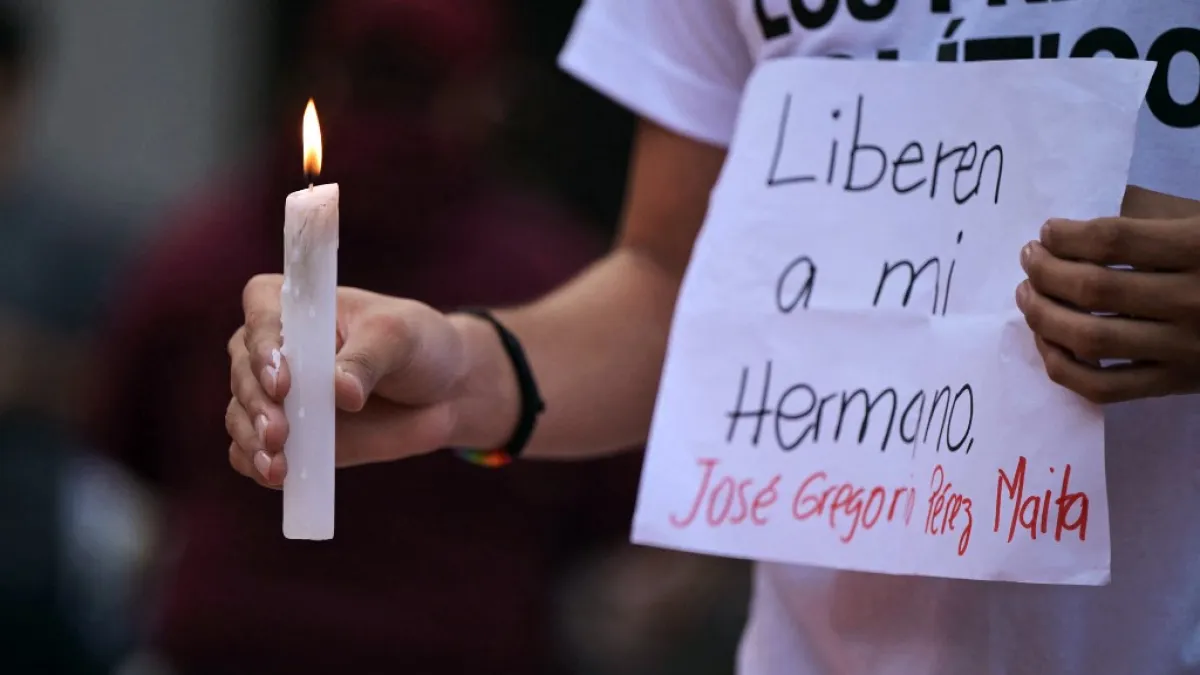
Authorities in Venezuela have released at least 60 people arrested during protests against President Nicolas Maduro’s re-election, according to a human rights advocacy group, though campaigners say hundreds remain behind bars.
The releases began early on Thursday, over Christmas, according to the Committee for the Freedom of Political Prisoners, a group of rights activists and relatives of detainees arrested during unrest that followed July’s presidential election.
Recommended Stories
list of 3 itemsend of list
“We celebrate the release of more than 60 Venezuelans, who should never have been arbitrarily detained,” committee head Andreina Baduel told the AFP news agency.
“Although they are not entirely free, we will continue working for their full freedom and that of all political prisoners.”
Maduro secured a third term in office in the July 2024 vote, a result rejected by parts of the opposition amid allegations of fraud. The disputed outcome triggered weeks of demonstrations, during which authorities arrested about 2,400 people. Nearly 2,000 have since been released, according to rights groups.
Despite the latest releases, Venezuela still holds at least 902 political prisoners, according to Foro Penal, an NGO that monitors detentions.
Relatives said many of those freed had been held at Tocoron prison, a maximum-security facility in Aragua state, roughly 134km (83 miles) from the capital Caracas. Officials have not publicly clarified the conditions under which detainees were released.
“We must remember that there are more than 1,000 families with political prisoners,” Baduel said. Her father, Raul Isaias Baduel, a former defence minister and once an ally of the late president, Hugo Chavez, died in custody in 2021.
An attempted ICE arrest outside Baltimore turned violent after a man allegedly drove into law enforcement vehicles.
Published On 25 Dec 202525 Dec 2025
Share
Two people were injured in a suburb of Baltimore after Immigration and Customs Enforcement (ICE) agents fired shots at a moving vehicle whose driver was allegedly evading arrest, according to US authorities.
The Department of Homeland Security (DHS) said ICE agents had attempted to arrest two men from Portugal and El Salvador – who were allegedly living in the US illegally – as they were driving through Glen Burnie, Maryland, on Wednesday.
Recommended Stories
list of 4 itemsend of list
DHS said in a post on X that officers approached the vehicle and told the driver to turn off his engine, but the driver did not cooperate and instead drove into several ICE vehicles.
“Fearing for their lives and public safety, the ICE officers defensively fired their service weapons, striking the driver,” DHS said in a statement on X. The driver “then wrecked his van between two buildings, injuring the passenger”.
The two men later received medical attention, and no ICE agents were hurt during the incident, DHS said.
“Our brave officers are risking their lives every day to keep American communities safe by arresting and removing illegal aliens from our streets,” the DHS post also said. “Continued efforts to encourage illegal aliens and violent agitators to actively resist ICE will only lead to more violent incidents, the extremist rhetoric must stop.”
Local police confirmed to ABC News that ICE agents had approached a “white van” during an arrest on Wednesday and reported that the driver “attempted to run the agents over”.
The ICE agents then fired at the vehicle, which accelerated before coming to a rest in a wooded area of residential Glen Burnie, Maryland, ABC said.
Maryland Governor Wes Moore wrote on X that he was “aware of the ICE-involved shooting”, and his office would continue to share more information as the investigation unfolded.
The shooting follows a similar incident in Minnesota on Sunday, when ICE agents fired shots at a Cuban man who also resisted arrest and attempted to ram ICE vehicles, according to ABC News.
The man, who had entered the US on a discontinued asylum programme, was approached by ICE agents in the city of St Paul while in an SUV.
The agents threatened to break his windows if he did not speak with them, prompting the man to drive away, ABC reported, citing Assistant Homeland Security Secretary Tricia McLaughlin. During the incident, the man hit an ICE agent with his vehicle.
The situation escalated when ICE agents pursued the man to his apartment building, where he later rammed an ICE vehicle with his SUV and hit a second agent, ABC said. ICE agents fired several shots before arresting the man, the report said.
US Justice Department says it requires weeks to process newly found Epstein-related files under transparency and court rules.
Published On 24 Dec 202524 Dec 2025
Share
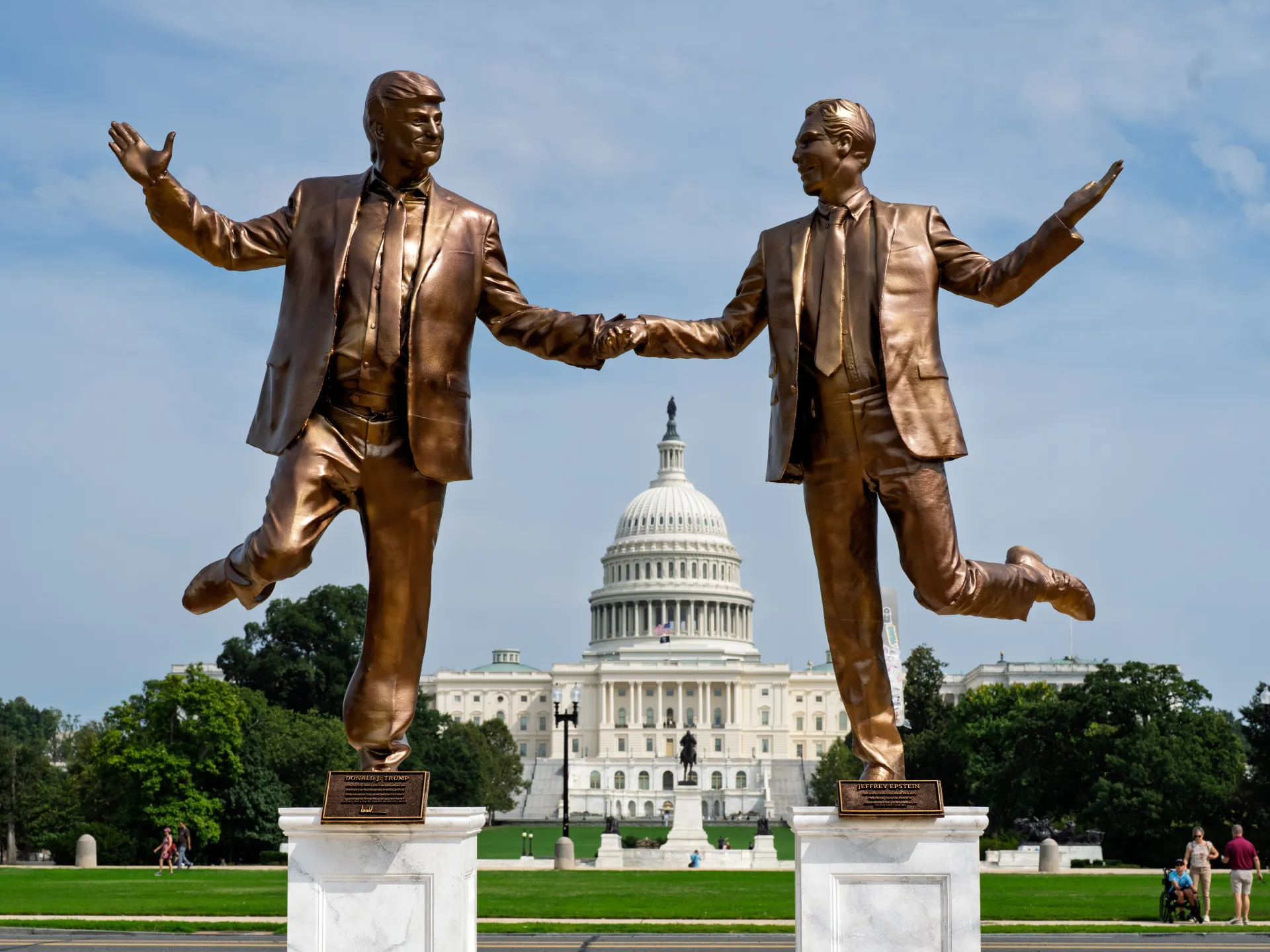
More than a million additional documents that are potentially related to late sex offender and financier Jeffrey Epstein have been uncovered, according to the United States Department of Justice (DOJ).
In a social media post on Wednesday, the DOJ said it is reviewing the documents and will need “a few more weeks” before proceeding with a congressionally mandated release of the information.
Recommended Stories
list of 3 itemsend of list
“The US Attorney for the Southern District of New York and the FBI have informed the Department of Justice that they have uncovered over a million more documents potentially related to the Jeffrey Epstein case,” the DOJ said in a statement, adding that more time is needed to comply with the Epstein Files Transparency Act, the law enacted last month that requires the government to open its files on Epstein and his longtime confidante Ghislaine Maxwell.
The DOJ insisted in its statement that its lawyers are “working around the clock” to review those documents and make the redactions required under the law, passed nearly unanimously by Congress.
“Due to the mass volume of material, this process may take a few more weeks. The Department will continue to fully comply with federal law and President [Donald] Trump’s direction to release the files,” the DOJ said.
Full disclosure
A dozen US senators are calling on the Justice Department’s watchdog to examine the department’s failure to release all records pertaining to Epstein by Friday’s congressionally mandated deadline, saying victims “deserve full disclosure” and the “peace of mind” of an independent audit.
Senator Lisa Murkowski, a member of Trump’s Republican Party, joined 11 Democrats in signing a letter on Wednesday urging Acting Inspector General Don Berthiaume to audit the Justice Department’s compliance with the Epstein Files Transparency Act.
“Given the [Trump] Administration’s historic hostility to releasing the files, politicisation of the Epstein case more broadly, and failure to comply with the Epstein Files Transparency Act, a neutral assessment of its compliance with the statutory disclosure requirements is essential,” the senators wrote.
Full transparency, they said, “is essential in identifying members of our society who enabled and participated in Epstein’s crimes”.
Republican Representative Thomas Massie, a co-sponsor of the transparency act, posted on Wednesday on X: “DOJ did break the law by making illegal redactions and by missing the deadline.”
Despite the deadline, the Justice Department has said it plans to release records on a rolling basis. It blamed the delay on the time-consuming process of obscuring survivors’ names and other identifying information.
More batches of records were released over the weekend and on Tuesday. The department has not given any notice when more records might arrive.
“The reason why we are still reviewing documents and still continuing our process is simply to protect victims,” Deputy Attorney General Todd Blanche told the NBC television network’s Meet the Press programme on Sunday.
“So the same individuals that are out there complaining about the lack of documents that were produced on Friday are the same individuals who apparently don’t want us to protect victims,” he argued.
UN experts criticise US blockade for endangering human rights and call for an investigation into alleged violations.
Published On 24 Dec 202524 Dec 2025
Share
Four United Nations human rights experts have condemned the partial naval blockade of Venezuela by the United States, finding it an illegal armed aggression and calling on the US Congress to intervene.
“There is no right to enforce unilateral sanctions through an armed blockade,” the UN experts said in a joint statement on Wednesday.
Recommended Stories
list of 3 itemsend of list
The US has deployed a major military force in the Caribbean and intercepted oil tankers as part of a naval blockade against Venezuelan vessels it considers to be under sanctions.
A blockade is a prohibited use of military force against another country under the UN Charter, they added.
“It is such a serious use of force that it is also expressly recognised as illegal armed aggression under the General Assembly’s 1974 Definition of Aggression,” the experts said. “The illegal use of force, and threats to use further force at sea and on land, gravely endanger the human right to life and other rights in Venezuela and the region.”
US President Donald Trump accuses Venezuela of using oil, the South American country’s main resource, to finance “narcoterrorism, human trafficking, murders and kidnappings”.
Caracas denies any involvement in drug trafficking. It says Washington is seeking to overthrow its president, Nicolas Maduro, to seize Venezuela’s oil reserves, the largest in the world.
Since September, US forces have launched dozens of air strikes on boats that Washington alleges were transporting drugs. It has yet to provide evidence for those accusations. More than 100 people have been killed.
‘US Congress should intervene’
“These killings amount to violations of the right to life. They must be investigated and those responsible held accountable,” the experts said.
“Meanwhile, the US Congress should intervene to prevent further attacks and lift the blockade,” they added.
They called on countries to take measures to stop the blockade and illegal killings and bring the perpetrators to justice.
The four who signed the joint statement are: Ben Saul, special rapporteur on protecting human rights while countering “terrorism”; George Katrougalos, an expert on promoting a democratic and equitable international order; development expert Surya Deva; and Gina Romero, special rapporteur on the right to freedom of peaceful assembly and association.
Venezuela’s UN ambassador denounces US military strikes and naval blockade at a meeting of the UN Security Council.
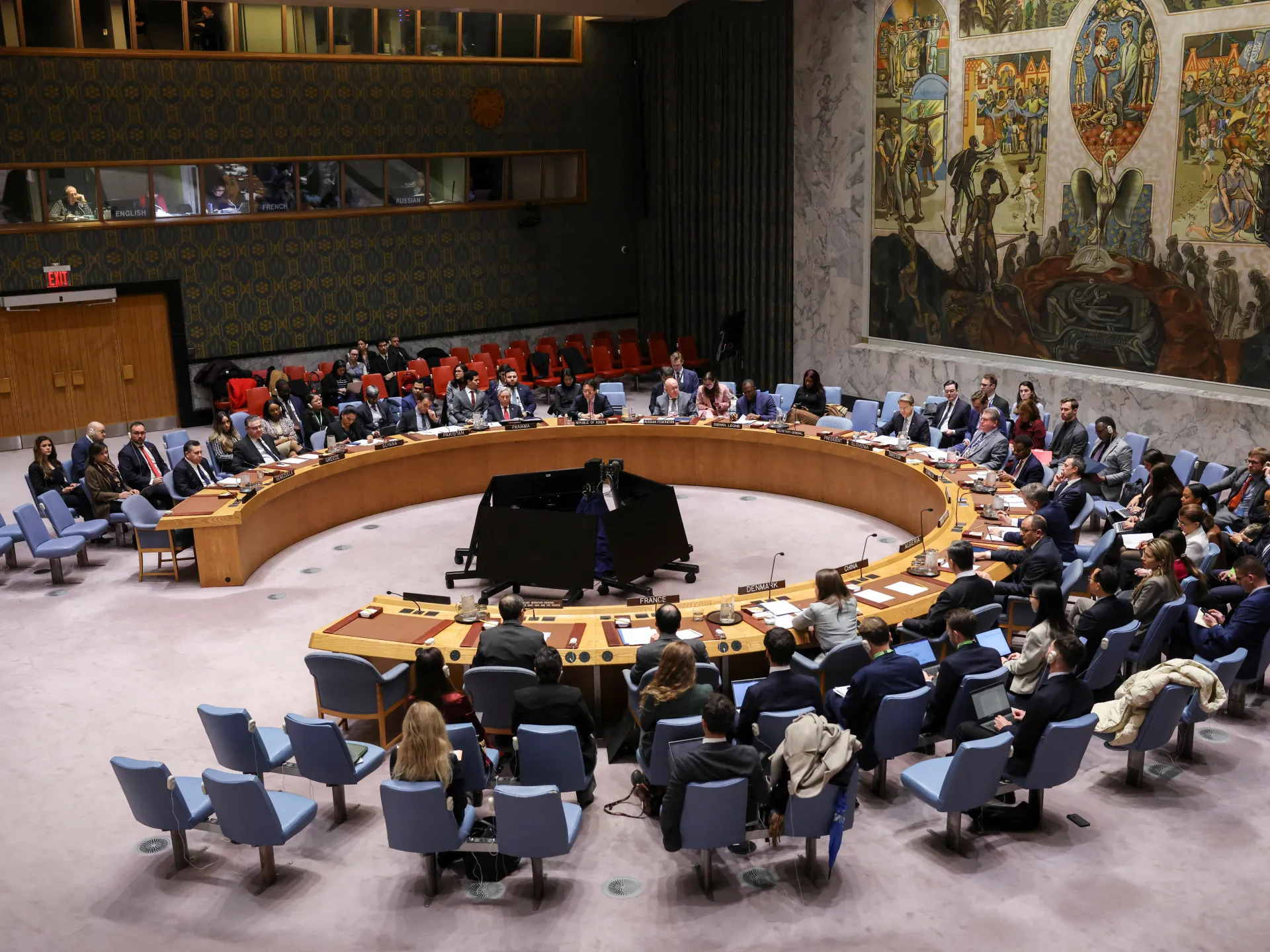
Venezuela has told the United Nations Security Council (UNSC) that the United States has “continental ambitions” over much of Latin America as it wages an unofficial war to remove the government of Venezuelan President Nicolas Maduro.
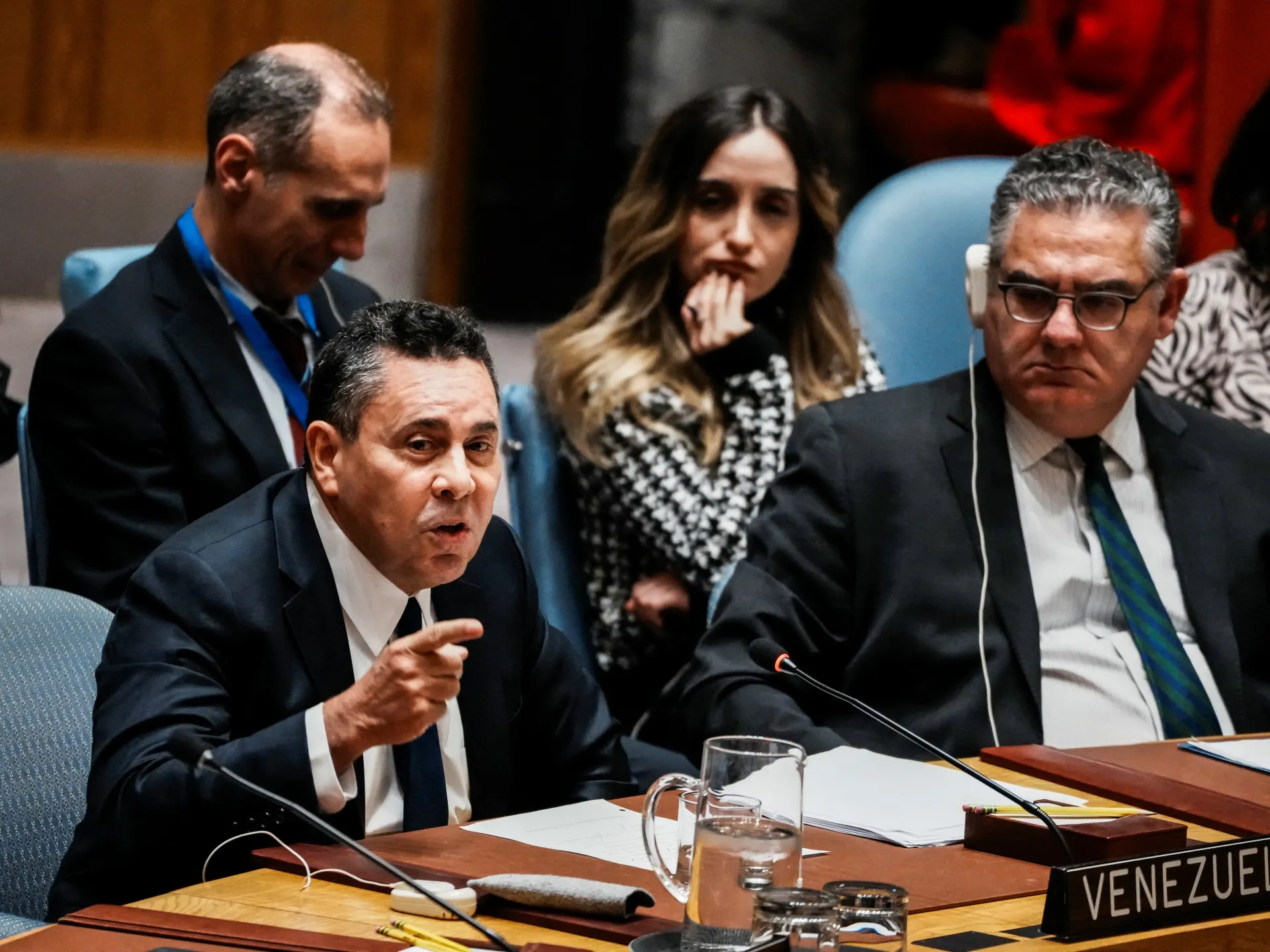
“It’s not just about Venezuela. The ambition is continental,” Venezuela’s UN ambassador, Samuel Moncada, told a meeting of the 15-member UNSC on Tuesday.
Recommended Stories
list of 4 itemsend of list
“The US government has expressed this in its National Security Strategy, which states that the future of the continent belongs to them,” Moncada said.
“We want to alert the world that Venezuela is only the first target of a larger plan. The US government wants us to be divided so it can conquer us piece by piece,” he said.
Venezuela, earlier this month, requested that the UNSC meet to address the “ongoing US aggression”, which began in September when the White House launched air strikes against vessels in the Caribbean Sea and eastern Pacific Ocean. The White House claimed, without providing any evidence, that the vessels were trafficking drugs to the US.
At least 105 people have been killed so far in the attacks by US forces, which legal experts and Latin American leaders have branded “extrajudicial killings”, but which Washington claims are necessary to stem the flow of drugs to US shores.
At the UNSC meeting, Moncada also accused the administration of US President Donald Trump of violating both international and US domestic law, since the White House has been acting without the approval of the US Congress, whose authority is required to formally declare war on another country.
Moncada said that Trump’s imposition last week of a naval blockade on all Venezuelan oil tankers sanctioned by the US was a “military act aimed at laying siege to the Venezuelan nation”.
“Today, the masks have come off,” Moncada said. “It is not drugs, it is not security, it is not freedom. It is oil, it is mines and it is land.”
US envoy denounces ‘Maduro and his illegitimate regime’
US forces have seized at least two Venezuelan oil tankers and confiscated at least 4 million barrels of Venezuelan oil, according to Moncada, in a move he described as “a robbery carried out by military force”.
The US has defended its naval blockade of Venezuela as a “law enforcement” action to be carried out by the US coastguard, which has the authority to board ships under US sanctions. A naval blockade, by contrast, would be considered an act of war under international law.
The US ambassador to the UN, Mike Waltz, told the UNSC that Latin American drug cartels remain the “single most serious threat” and that Trump would continue to use the full power of the US to eradicate them. Waltz also said that Venezuelan oil is a critical component in funding the cartels in Venezuela.
“The reality of the situation is that sanctioned oil tankers operate as the primary economic lifeline for Maduro and his illegitimate regime,” he said.
The White House earlier this year designated several international drug cartels, including Venezuela’s Tren de Aragua, as terrorist organisations. Washington also added the “Cartel de los Soles,” which it claims is headed by Maduro, to the list in November.
The Venezuelan leader has denied the US allegations and accused the Trump administration of using the drug trafficking claims as a cover to carry out “regime change” in his country.
Russia’s ambassador to the UN separately warned that US “intervention” in Venezuela could “become a template for future acts of force against Latin American states”.
China’s ambassador told the UNSC that the US actions “seriously infringe” on the “sovereignty, security and legitimate rights” of Venezuela.
The United States has imposed visa bans on five Europeans, including a former European Union commissioner, accusing them of pressuring tech firms to censor and suppress “American viewpoints they oppose”.
In a statement on Tuesday, US Secretary of State Marco Rubio characterised the individuals as “radical activists” who had “advanced censorship crackdowns” by foreign states against “American speakers and American companies”.
Recommended Stories
list of 4 itemsend of list
“For far too long, ideologues in Europe have led organized efforts to coerce American platforms to punish American viewpoints they oppose,” he said on X.
“The Trump Administration will no longer tolerate these egregious acts of extraterritorial censorship,” he added.
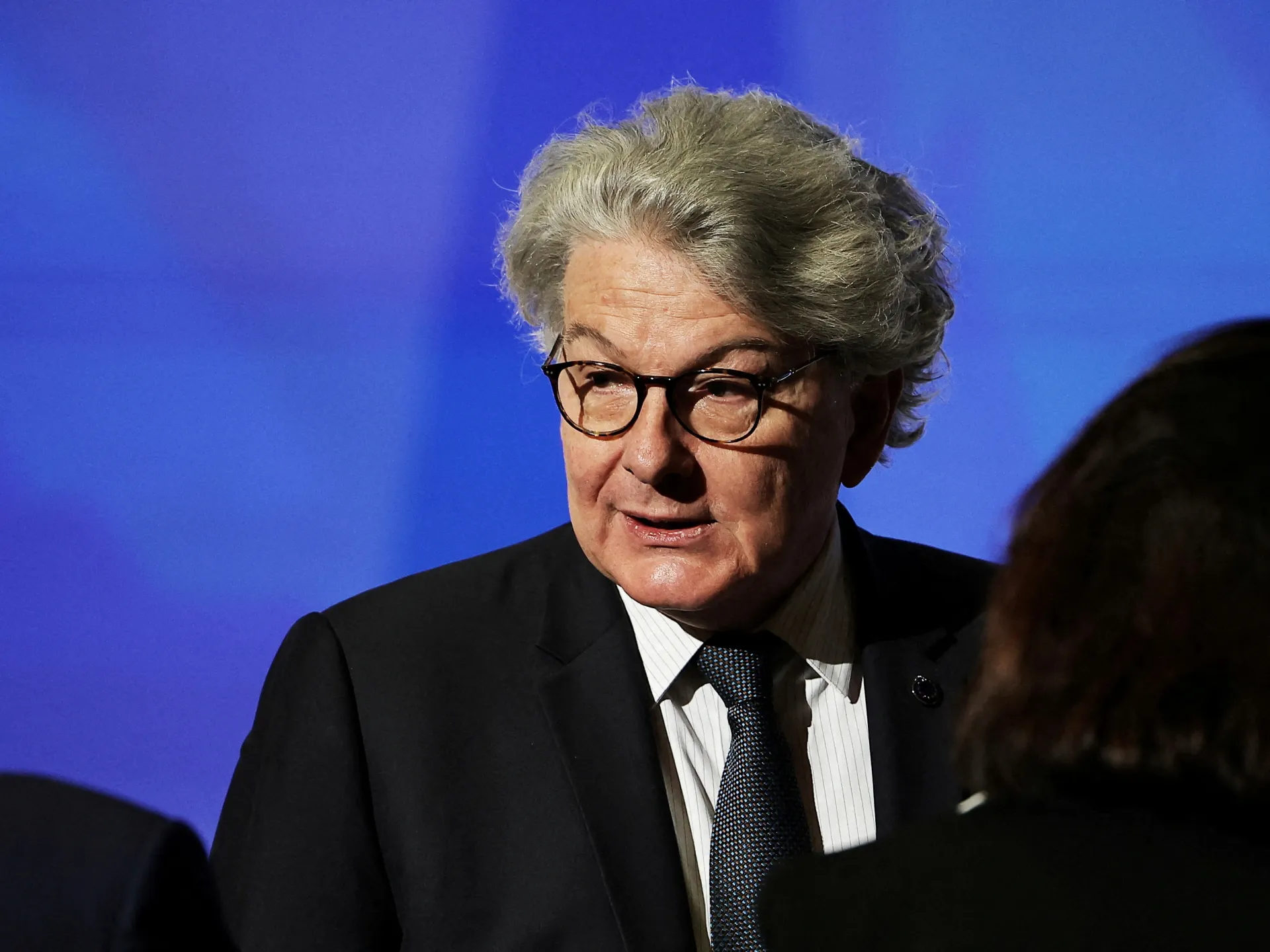
The most prominent target was Thierry Breton, who served as the European commissioner for the internal market from 2019-2024.
Sarah Rogers, the undersecretary for public diplomacy, described the French businessman as the “mastermind” of the EU’s Digital Services Act (DSA), a landmark law intended to combat hateful speech, misinformation and disinformation on online platforms.
Rogers also accused Breton of using the DSA to threaten Elon Musk, the owner of X and a close ally of US President Donald Trump, ahead of an interview Musk conducted with Trump during last year’s presidential campaign.
‘Witch hunt’
Breton responded to the visa ban in a post on X, slamming it as a “witch hunt” and comparing the situation with the US’s McCarthy era, when officials were chased out of government for alleged ties to communism.
“To our American friends: Censorship isn’t where you think it is,” he added.
The others named by Rogers are: Imran Ahmed, chief executive of the Centre for Countering Digital Hate; Josephine Ballon and Anna-Lena von Hodenberg, leaders of HateAid, a German organisation, and Clare Melford, who runs the Global Disinformation Index (GDI).
French Minister for Europe and Foreign Affairs Jean-Noel Barrot “strongly” condemned the visa restrictions, stating that the EU “cannot let the rules governing their digital space be imposed by others upon them”. He stressed that the DSA was “democratically adopted in Europe” and that “it has absolutely no extraterritorial reach and in no way affects the United States”.
Ballon and von Holdenberg of HateAid described the visa bans as an attempt to obstruct the enforcement of European law on US corporations operating in Europe.
“We will not be intimidated by a government that uses accusations of censorship to silence those who stand up for human rights and freedom of expression,” they said in a statement.
A spokesperson for the GDI also called the US action “immoral, unlawful, and un-American”, as well as “an authoritarian attack on free speech and an egregious act of government censorship”.
The punitive measures follow the Trump administration’s publishing of a National Security Strategy, which accused European leaders of censoring free speech and suppressing opposition to immigration policies that it said risk “civilisational erasure” for the continent.
The DSA in particular has emerged as a flashpoint in US-EU relations, with US conservatives decrying it as a weapon of censorship against right-wing thought in Europe and beyond, an accusation Brussels denies.
The legislation requires major platforms to explain content-moderation decisions, provide transparency for users and grant researchers access to study issues such as children’s exposure to dangerous content.
Tensions escalated further this month after the EU fined Musk’s X for violating DSA rules on transparency in advertising and its methods for ensuring users were verified and actual people.
Washington last week signalled that key European businesses – including Accenture, DHL, Mistral, Siemens and Spotify – could be targeted in response.
The US has also attacked the United Kingdom’s Online Safety Act, which imposes similar content moderation requirements on major social media platforms.
The White House last week suspended the implementation of a tech cooperation deal with the UK, saying it was in opposition to the UK’s tech rules.
Borrowers to receive wage garnishment notices starting January 7, Department of Education confirms.
Published On 23 Dec 202523 Dec 2025
Share
The administration of United States President Donald Trump says it will begin garnishing wages from some borrowers who have defaulted on their student loans, marking the first time the federal government has taken such action since the onset of the COVID-19 pandemic.
Affected borrowers will begin receiving notices on January 7, a Department of Education spokesperson told Al Jazeera on Tuesday.
Recommended Stories
list of 4 itemsend of list
The policy is expected to initially impact about 1,000 borrowers, and the number is to grow over time.
“The notices will increase in scale on a month-to-month basis,” the spokesperson said.
Al Jazeera asked the department for clarification on how borrowers were selected for the first round of garnishments, how many additional people may be affected and the rationale behind those decisions.
The agency did not clarify but said collections are “conducted only after student and parent borrowers have been provided sufficient notice and opportunity to repay their loans”.
Under federal law, the government may garnish up to 15 percent of a borrower’s take-home pay as long as the individual is left with at least 30 times the federal minimum wage per week. The federal minimum wage is currently $7.25 an hour, a rate that has remained unchanged since July 2009.
About one in six American adults holds student loan debt, which totals about $1.6 trillion. As of April, more than 5 million borrowers had not made a payment in at least a year, according to the Education Department.
The garnishments are planned as economic pressure mounts for many Americans amid rising prices and a cooling labour market. According to consulting firm Challenger, Gray & Christmas, more than 1.1 million people lost their jobs in 2025 as job growth slowed. Federal data also showed mixed employment trends in recent months with job losses reported in October followed by modest gains in November.
In the months of October and November, the unemployment rate increased to 4.6 percent, the highest since 2021, according to the US Department of Labor’s Bureau of Labor Statistics.
“Families are being forced to choose between paying their bills and putting food on the table. The Trump administration’s decision to begin garnishing wages takes even that meagre choice away from student loan borrowers who are living on the brink,” Julie Margetta Morgan, former deputy undersecretary at the Education Department under former President Joe Biden, told Al Jazeera.
“Instead of solving the affordability crisis that’s leaving Americans unable to pay their student loans, the president is further punishing families and forcing them to forgo the very basics.”
In addition to wages, the federal government has the authority to garnish income from tax refunds, Social Security benefits and certain disability payments.
Police say there is ‘insufficient evidence’ to bring charges after investigating comments made at Glastonbury festival.
Published On 23 Dec 202523 Dec 2025
Share
British police have said they will take no further action over comments made by punk-rap duo Bob Vylan about the Israeli military during a performance at the Glastonbury music festival in June.
Avon and Somerset Police said on Tuesday that the remarks did not meet the criminal threshold required for prosecution “for any person to be prosecuted”.
Recommended Stories
list of 4 itemsend of list
During the performance, the group’s lead singer – Pascal Robinson-Foster, known by his stage name Bobby Vylan – led chants of “death, death” directed at the Israeli military over its genocidal war in Gaza.
Police said there was “insufficient evidence to provide a realistic prospect of conviction”. The force added that it interviewed a man in his mid-30s and contacted about 200 members of the public as part of the investigation.
The chant, which was livestreamed by the BBC as part of its Glastonbury coverage on June 28, prompted a widespread backlash. The broadcaster later apologised for transmitting what it described as “such offensive and deplorable behaviour”, and its complaints unit found the BBC had breached editorial guidelines.
Avon and Somerset Police said it had considered the intent behind the words, the wider context, relevant case law and freedom of expression issues before concluding the investigation.
“We believe it is right this matter was comprehensively investigated, every potential criminal offence was thoroughly considered, and we sought all the advice we could to ensure we made an informed decision,” the statement said.
“The comments made on Saturday 28 June drew widespread anger, proving that words have real-world consequences.”
Following the performance, the United States revoked the visas of Bob Vylan, forcing the cancellation of a planned US tour scheduled to begin in October.
Bob Vylan have launched defamation proceedings against Irish broadcaster RTE, alleging it falsely claimed they led anti-Semitic chants during the Glastonbury performance.
In July, the British police also dropped an investigation into the Irish-language rap group Kneecap after chants of “Free Palestine” during a performance.
Detectives sought advice from the Crown Prosecution Service and decided to take no further action, citing “insufficient evidence to provide a realistic prospect of conviction for any offence”.
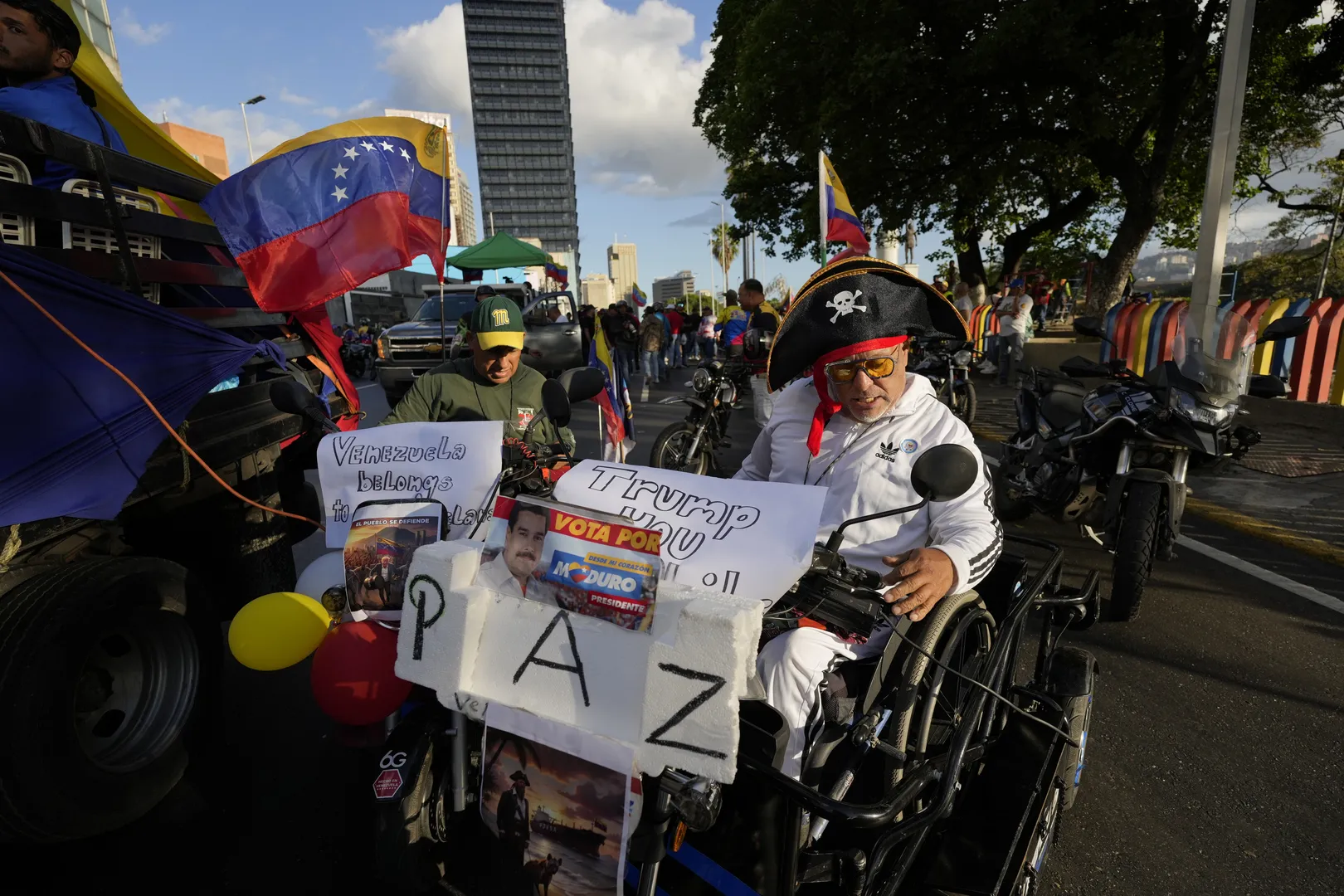
Motorcyclists wearing pirate costumes rode through Caracas in a protest against US President Donald Trump, after Washington ordered the seizure of Venezuelan oil tankers under a blockade targeting vessels linked to sanctions.
Israel Katz says military units will be established inside the Palestinian enclave, in contravention of the truce agreement.
Published On 23 Dec 202523 Dec 2025
Share
Israeli Defence Minister Israel Katz has said the Israeli military will never fully withdraw from the Gaza Strip and that an army unit will be established inside the Palestinian enclave.
Speaking on Tuesday, Katz said Israeli forces would remain deployed throughout Gaza, despite a United States-backed peace plan signed by Israel and Hamas in October that calls for a full Israeli military withdrawal and rules out the re-establishment of Israeli civilian settlements in the territory.
Recommended Stories
list of 4 itemsend of list
“We are located deep inside Gaza, and we will never leave all of Gaza,” Katz said. “We are there to protect.”
“In due course, we will establish Nahal [an Israeli infantry brigade] outposts in northern Gaza in place of the settlements that were uprooted,” Katz added, according to Israeli media.
Hours later, he issued a statement in English to the Reuters news agency, saying Nahal units would be stationed in Gaza “only for security reasons”. The Israeli media reported that US officials were displeased with Katz’s initial comments and demanded clarification.
Nahal units are military formations that combine civilian service with army enlistment and have historically played a role in the creation of Israeli communities.
Katz was speaking at a ceremony in the occupied West Bank marking the approval of 1,200 housing units in the illegal Israeli settlement of Beit El.
Addressing settlement expansion in the West Bank, Katz said: “Netanyahu’s government is a settlements government … it strives for action. If we can get sovereignty, we will bring about sovereignty. We are in the practical sovereignty era.”
“There are opportunities here that haven’t been here for a long time,” he added.
Israel is expected to head into an election year in 2026, with illegal settlement expansion a key political issue. Far-right and ultranationalist members of Prime Minister Benjamin Netanyahu’s coalition have repeatedly said they intend to reoccupy Gaza and expand illegal settlements in the West Bank.
Under international law, all Israeli settlements in the occupied West Bank are illegal. The transfer of an occupying power’s civilian population into occupied territory is considered a war crime under the Rome Statute of the International Criminal Court.
Meanwhile, violence by Israeli forces and settlers has continued across the West Bank, while killings continue in Gaza despite the ceasefire. Palestinian officials say more than 1,100 Palestinians have been killed, about 11,000 wounded and more than 21,000 arrested.
The Palestinian Ministry of Health said that since a ceasefire began on October 11, at least 406 Palestinians have been killed and 1,118 injured. Since the start of Israel’s war on October 7, 2023, the ministry said, 70,942 Palestinians have been killed and 171,195 wounded.
Russian forces have struck Ukraine’s southern Black Sea port of Odesa, damaging port facilities and a ship, the region’s governor says.
The attack late on Monday followed another at the weekend when Moscow carried out a sustained barrage of drones and missile attacks on the wider area around Odesa, which is home to ports crucial to Ukraine’s overseas trade and fuel imports. They followed Russian threats to cut “Ukraine off from the sea”.
Recommended Stories
list of 4 itemsend of list
The escalation in Russia’s assault on Odesa, Ukraine’s biggest port city, has unfolded as Washington steps up diplomatic efforts to bring an end to the war. Ukrainian officials met members of a US delegation on Friday in Florida while US envoys held talks with Russian representatives on Saturday.
“The situation in the Odesa region is harsh due to Russian strikes on port infrastructure and logistics,” Ukrainian President Volodymyr Zelenskyy told reporters in Kyiv on Monday. “Russia is once again trying to restrict Ukraine’s access to the sea and block our coastal regions.”
What happened in the latest Russian attack on Odesa?
On Tuesday, the head of the Odesa Regional Military Administration, Oleh Kiper, said Russian strikes overnight had damaged a civilian cargo vessel and a warehouse in a district of Odesa while the roof of a two-storey residential building had caught fire.
Meanwhile, strikes on Saturday on the port of Pivdennyi near Odesa damaged storage reservoirs, Ukrainian Deputy Prime Minister Oleksii Kuleba said. Those came just one day after a ballistic missile strike, also in Pivdennyi, had killed eight people and wounded at least 30.
These are just the latest strikes in an escalation of hostilities in the area over the past few weeks.
Last week, Russia launched one of its largest aerial assaults of the war on the Black Sea region, damaging energy infrastructure and causing a power outage in Odesa, leaving hundreds of thousands of residents without electricity for several days.
Russia’s Ministry of Defence did not immediately comment on the strikes, but the Kremlin has previously described Ukraine’s economic infrastructure as a “legitimate military objective” during the nearly four-year war.
On the Telegram messaging app, Kuleba said on Friday that Russian forces were targeting power infrastructure and a bridge over the Dniester River near the village of Mayaky, southwest of Pivdennyi, which was struck five times in 24 hours.
That bridge links parts of the region separated by waterways and serves as the primary westbound route to border crossings with Moldova. It is currently out of operation. Kuleba said the route normally carries about 40 percent of Ukraine’s fuel supplies.
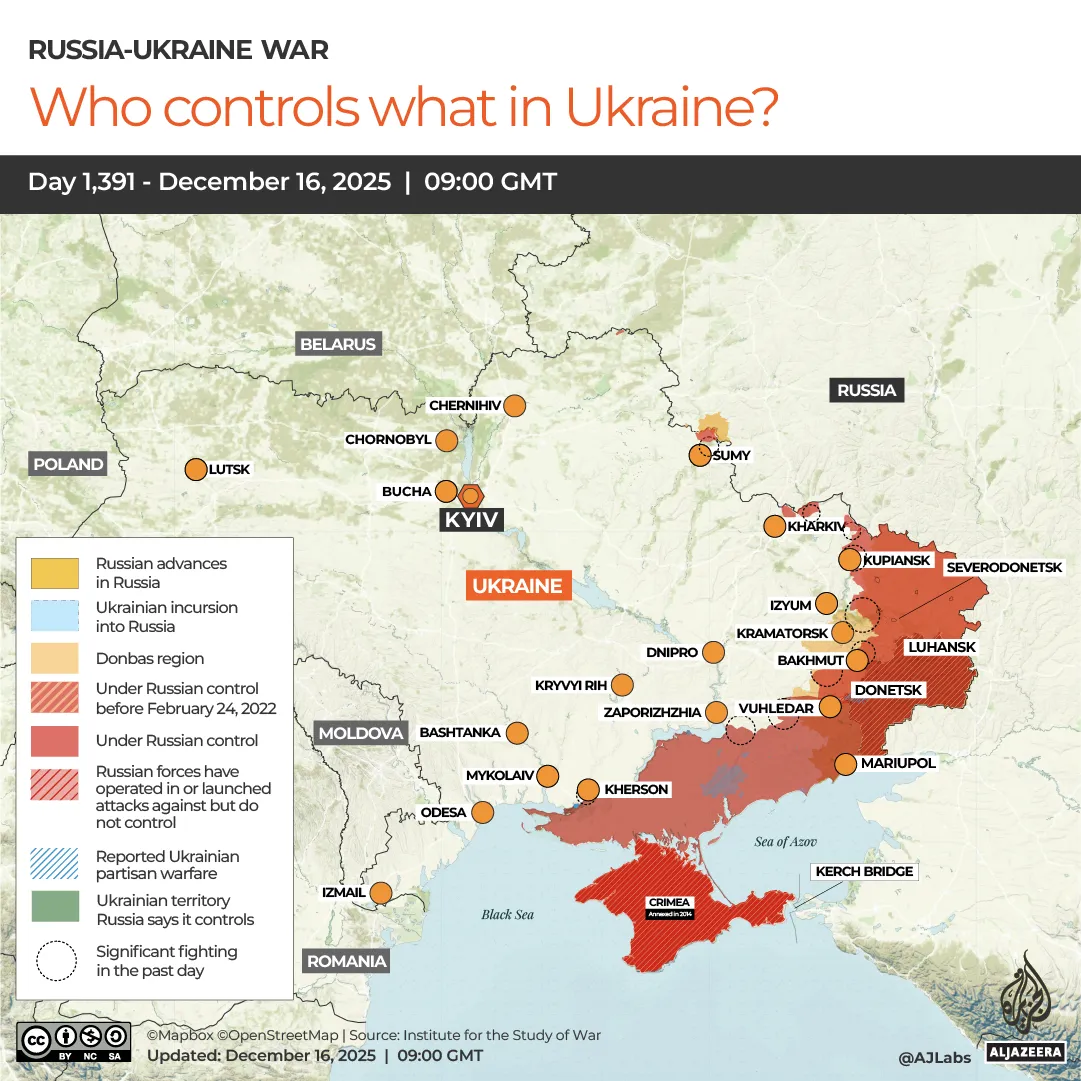
(Al Jazeera)
Why is Russia targeting Odesa?
“The focus of the war may have shifted towards Odesa,” Kuleba said, warning that the “crazy” attacks could intensify as Russia tries to weaken Ukraine’s economy.
Russian President Vladimir Putin has previously said Moscow wants to restrict Ukraine’s Black Sea access in retaliation for Kyiv’s recent drone attacks on Russia’s sanctions-evading “shadow fleet” of vessels, which carry a variety of commodities.
Ukraine said those vessels are used to illegally export sanctioned oil, which provides Russia with its main source of revenue for financing its full-scale invasion of its neighbour.
How important is the port of Odesa to Ukraine?
Odesa’s port has long been central to Ukraine’s economy. Called a “pearl by the sea”, Odesa is Ukraine’s third most populous city after Kyiv and Kharkiv.
Black Sea ports – including Odesa and two others close by, Pivdennyi and Chornomorsk – and Mykolaiv to the east handled more than 70 percent of Ukraine’s exports before the war.
But Odesa’s role as a trading hub has grown in recent years as ports in the Zaporizhia, Kherson and Mykolaiv regions have been occupied by Russia.
Since the war began in February 2022, Ukraine has continued to rank among the world’s top five exporters of wheat and corn – largely through Odesa.
By targeting Odesa’s shipping facilities with missiles and drones, Ukrainian officials said, Putin aims to destroy Ukrainian trade and business infrastructure.
Zelenskyy, who has previously accused Russia of “sowing chaos” on the people of Odesa, said: “Everyone must see that without pressure on Russia, they have no intention of genuinely ending their aggression.”
What would it mean for Ukraine if Odesa were destroyed?
If the port of Odesa were badly damaged, the economic impact for Ukraine would be severe. The city and its surrounding areas would suffer major job losses in the shipping and logistics industries, seriously squeezing local incomes. Meanwhile, port-dependent businesses would falter and investment would fall away.
Nationally, Ukraine’s export capacity would be hit hard. As a key gateway for grain and other commodities, disruptions there would raise transport costs, slow shipments and reduce export volumes, choking foreign currency earnings and piling pressure on the hryvnia, Ukraine’s currency.
Elsewhere, farmers would suffer from lower prices for their produce as well as storage bottlenecks with knock-on effects across rural economies. The government would also lose customs revenue just as reconstruction costs would rise, weakening the country’s overall economic resilience.
What other acts of maritime warfare have Ukraine and Russia engaged in during the war?
Over the past six months, maritime warfare between Ukraine and Russia has intensified. Both sides have targeted naval and commercial assets across the Black Sea and beyond.
Ukrainian forces have increasingly used underwater drones and unmanned surface vessels to strike ships tied to Russia’s shadow fleet.
Kyiv has expanded its reach elsewhere, claiming drone strikes in the Mediterranean on December 19 on the Qendil, a Russian-linked tanker, marking an expansion in Kyiv’s maritime operations.
At the same time, Russian forces have ramped up attacks on commercial targets, including a Turkish-flagged ship carrying trucks and other freight near Odesa with drone attacks on December 13.
These actions reflect a shift towards what is referred to as “asymmetric naval warfare”, in which drones and improvised systems play a growing role in disrupting each side’s economic and military support networks at sea, experts said.
When Qatar helped secure a peace deal to end ongoing conflict between the M23 rebel group and Democratic Republic of the Congo’s (DRC) government last month, there was hope among many Congolese that a permanent ceasefire would soon emerge to end the fighting that has uprooted close to a million people in the country’s troubled east, and give war-racked communities some respite as the new year rolls in.
Since late 2021, the group, which the United States and the United Nations say is backed by Rwanda, has clashed with the Congolese army in heavy offensives that have killed at least 7,000 people this year alone. Several regional attempts at resolution have failed. Still, when M23 representatives and Congolese government officials met for negotiations in Doha and proceeded to sign a peace deal in November, exhausted Congolese dared to hope. This deal, some reckoned, could be different.
Recommended Stories
list of 3 itemsend of list
So when the rebels launched yet another offensive and temporarily seized the strategic city Uvira this month, hopes for lasting peace were painfully crushed, as some concluded that those at the helm of the talks were playing politics.
“It’s clear that they don’t have any will to end this conflict,” Congolese lawyer and political analyst Hubert Masomera told Al Jazeera from the M23-held eastern city of Goma, blaming both sides. “Despite the number of deaths and the extent of the destruction, there is still procrastination over the implementation of the peace agreements and compliance with the ceasefire. People here feel abandoned to their sad fate.”
Fears that the conflict will not only continue, but that it could soon take on a regional dimension, are deepening, too – a sensitive prospect in a DRC where two civil wars in the past were prompted by its neighbours.
Uvira, the newly captured city the rebels then withdrew from as a “trust-building measure” following US pressure last week, is a major transport and economic hub in the huge South Kivu province. It’s strategically located on the border with Rwanda and is just 30 kilometres from the Burundian capital, Bujumbura. The city was the last eastern stronghold of the Congolese army and its allies – local “Wazalendo” militias and about 3,000 Burundian soldiers. Early this year, M23 also seized control of South Kivu’s capital city, Bukavu, as well as Goma, the capital of North Kivu province.
Experts say M23’s advance on Uvira widens the group’s area of control significantly, puts it at the mouth of the mineral-rich Katanga region, and positions Rwandan proxies right at Burundi’s doorstep at a time when both governments are ramping up a war of words and accusing each other of backing rebels.
Rwanda, for its part, continues to distance itself from accusations that it backs M23.
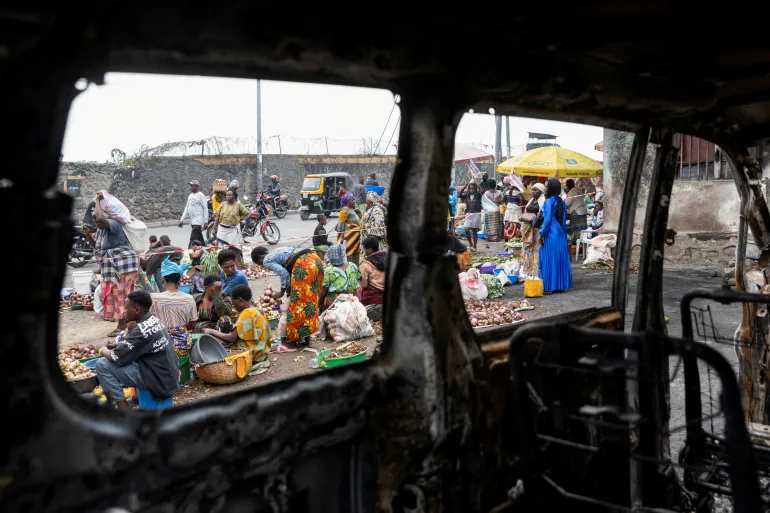
A view shows the remains of a vehicle hit by heavy and light weapons during the fighting in the town that led to the fall of Goma to M23 rebels, on February 5, 2025 [File: Arlette Bashizi/Reuters]
DRC conflict’s complex history
The recent scenes in eastern DRC appear like an eerie playback of a tragic tale, conflict monitors say.
Similar peace negotiations in late 2024, led by the African Union and Angola, seemed ready to deliver peace ahead of a new year. But they collapsed after a highly anticipated meeting between the presidents of Rwanda and DRC was called off. Both sides accused each other of foiling the talks.
“There’s a sense of deja vu,” Nicodemus Minde, East Africa analyst at the Institute for Security Studies (ISS), said. “It’s symbolic because we were exactly here last year … the prospects for peace are dire.”
Conflict in the DRC has long been mired in a complex mix of ethnic grievances, poor governance and interference from its much smaller neighbours. It goes back to the 1994 genocide of Tutsis and moderate Hutus in Rwanda, which displaced millions into neighbouring eastern DRC, making them a minority there. Rwanda has since viewed the DRC as a hiding place for Hutu genocidaires, however, and its hot pursuit of them toppled a government in Kinshasa and led to the first and second Congo wars (1996-2003). The UN also accused the Rwandan and allied Ugandan forces of looting the DRC’s vast mineral wealth, including gold, coltan and tin, during the conflict.
Scores of militias emerged as governments armed and counter-armed civilians in the wars, many of which are still active in the DRC. The M23 itself is only the latest iteration of a Tutsi militia that fought in the Congo wars, and whose fighters integrated into the DRC army. In 2012, these fighters revolted, complaining of poor treatment by the Congolese forces. Now, the M23 claims to be fighting the marginalisation of ethnic Tutsis, some of whom say they are systematically denied citizenship, among other complaints. The M23 and its allied Congo River Alliance (AFC) have not stated goals of taking Kinshasa, even though members of the group have at times threatened to advance on the capital. Officially, the rebels claim to be “liberating” eastern DRC communities.
In 2012, M23 initially emerged with enough force to take the strategic city of Goma, but was forced back within a year by Congolese forces and a special UN intervention force of troops from South Africa, Tanzania and Malawi. When the M23 resurfaced in late 2021, though, it was with much more ferocity, boosted by about 4,000 Rwandan troops in addition to its own 6,000 fighters, according to the UN. Lightning and intensely bloody offensives have since seen it control vast swaths of territory, including the major cities of Goma, Bukavu – and now, Uvira.
On the map, M23 appears to be eking out a slice of Congolese territory wedged between the DRC and neighbouring Rwanda, Uganda and Burundi. If it gains control of the two Kivus in their entirety, it would lord over a resource-rich area five times Rwanda’s size with easy access to Kigali and Kampala.
“They are trying to create some sort of buffer zone which the neighbouring countries, particularly Rwanda but also Uganda, have an interest in controlling,” analyst Paul-Simon Handy, also of the ISS, told Al Jazeera.
Kigali officially denies backing M23, but justifies its actions based on accusations that the DRC supports a Hutu rebel group, the Democratic Forces for the Liberation of Rwanda (FDLR). The FDLR did exist for many years in the DRC, but it simply no longer poses a significant threat to Kigali, analyst Minde said.
Rwanda’s tensions with Burundi have similar historic correlations, as Hutus who perpetrated the 1994 genocide similarly fled there, and Kigali alleges the government continues to back rebels. In 2015, Burundi accused Rwanda of sponsoring an abortive coup in Bujumbura. Kigali denies this.
US President Donald Trump hosts the signing ceremony of a peace deal with the president of Rwanda, Paul Kagame, left, and the president of the Democratic Republic of the Congo, Felix Tshisekedi, right, at the United States Institute of Peace in Washington, DC, on December 4, 2025 [Andrew Caballero-Reynolds/AFP]
Does the US deal have a chance?
Several African countries have attempted to help solve the crisis, militarily and diplomatically, but all have failed. The regional bloc, the East African Community, of which the DRC is a part, deployed about 6,500 Kenyan-led peacekeepers to stabilise eastern DRC, as Kenyan diplomats developed a Nairobi Peace Process in 2022 that was meant to see several rebel groups agree to a truce. The agreement collapsed only a year later, however, after Congolese President Felix Tshisekedi grew frustrated over the force’s refusal to launch offensives against M23.
Then, the Southern African Development Community (SADC), of which the massive DRC is also a part, deployed troops from South Africa, Tanzania and Malawi in May 2023. There was hope that the trio, which proved crucial in driving back the first M23 insurrection, would again record success. They appeared no match for the new M23, though, and withdrew this June.
Meanwhile, the Angola-led Luanda Peace Process collapsed after President Joao Lourenco stepped back in March, citing frustration with both sides amid constant finger-pointing.
Qatar and the US stepped in to broker peace in June this year, using a unique two-pronged approach. The Doha peace talks, on the one hand, have focused on negotiations between the DRC and M23, while the Washington talks focus on the DRC and the Rwanda governments. Some experts warned that Washington’s motivation – aside from President Donald Trump’s fixation on being a global peacemaker figure – was a clause in the deal that guarantees US extraction of rare earth minerals from both countries. The agreement was unlikely to hold on that basis, rights groups said.
After a few no-shows and wobbles, the M23 finally agreed to the Doha framework on November 15. The agreement includes eight implementation protocols, including one on ceasefire monitoring and another on prisoner exchange. On December 4, President Trump sat next to a smiling Paul Kagame and Tshisekedi as all three signed the US-peace deal in Washington, which mandated both Rwanda and DRC to stop supporting armed groups. There were pockets of fighting as the signatures were penned, but all was supposed to be largely peaceful from then on.
What happened in Uvira barely a week after was the opposite. The Congolese government said at least 400 people were killed and 200,000 others displaced as M23 fighters pressed on the city. Thousands more were displaced into Burundi, which already homes some 200,000 Congolese refugees. Fleeing Uvira residents shared accounts of bombed villages, summary killings and widespread sexual violence by both sides, according to medical group Doctors Without Borders (MSF).
Is there hope for peace?
Even though M23 began withdrawing from Uvira on Thursday, analysts are still scrambling to understand what the group was hoping to achieve by taking the city, shattering the peace agreements and angering Washington.
US Secretary of State Marco Rubio directly scolded Rwanda after Uvira’s capture, saying Kigali had violated the deal. Last week, Deputy Secretary of State Christopher Landau met with DRC Foreign Minister Therese Kayikwamba Wagner in Washington and promised that the US “is prepared to take action to enforce adherence” from Rwanda.
What that action looks like is unclear, but what’s certain, Minde said, was that the agreement seemed to favour Kigali more than Kinshasa.
“If you look at the agreement, the consequences [of either party breaching] were not forthright, and this points to the weakness of the deal,” he said, adding that there is much more at stake for DRC if there is a breach, including escalating conflict and mass displacement within the country. But that was not taken into account, the analyst explained.
Uvira’s fall, albeit on hold, is not only a blow to Trump’s peacemaker reputation but also sharpens tensions between Burundi and Rwanda, with analysts saying it could lead to direct clashes.
Bujumbura accuses Kigali of supporting the antigovernment Red Tabara rebels – a charge Rwanda and the rebels deny – and tensions between the two governments have led to border closures since last year. Last week, M23 announced that it captured hundreds of Burundian soldiers during the Uvira offensive.
Fears of a regional spillover also prompted the UN Security Council to extend the mandate of the MONUSCO peacekeeping mission for a year, ahead of its December 20 expiration. The 11,000 troop force has been in place since 1999, but has a complicated relationship with the DRC government, which says it has not done enough to protect civilians. MONUSCO forces initially began withdrawing in 2024, but then paused that move in July amid the escalating M23 offensive. Ituri, the force’s headquarters, is held by M23, meaning the troops are unable to do much.
Amid the chaos, the finger pointing, and the political games, it’s the Congolese people who are feeling the most despair at the turn of events so close to the new year, analysts say. After more than three decades of war that has turned the green, undulating hills of eastern DRC into a perpetual battlefield, Masameko in Goma said it’s locals, more than anyone else, with the most at stake.
“People have suffered enough and need to breathe, to sleep with the certainty that they will wake up tomorrow,” he said. “[They need] to live in their homes without fear of a bomb falling on them. That is all the people in this part of the republic need.”
US President Donald Trump warned Nicolas Maduro to ‘not play tough’ and to step down on Monday, while the Venezuelan leader said Trump should focus on the issues in his own country. Trump told reporters the US will keep 1.9 million barrels of oil that were seized near Venezuela in December.
United States President Donald Trump has issued a new warning to Nicolas Maduro, saying “it would be smart” for the Venezuelan leader to leave power, as Washington escalates a pressure campaign against Caracas.
The warning on Monday came as Russia pledged “full support” for Maduro’s government, and China condemned the US’s seizure of two oil tankers off the coast of Venezuela.
Recommended Stories
list of 4 itemsend of list
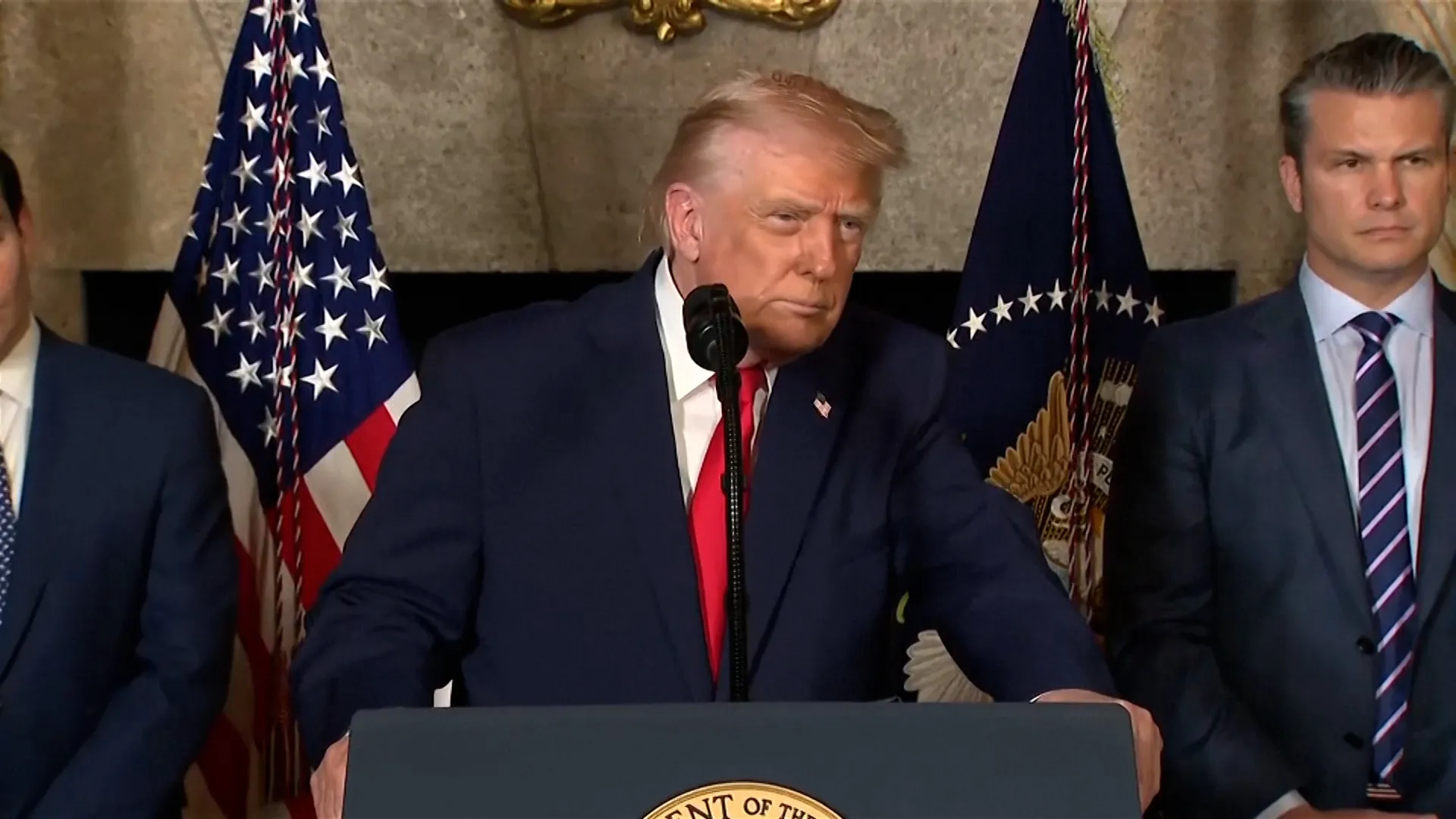
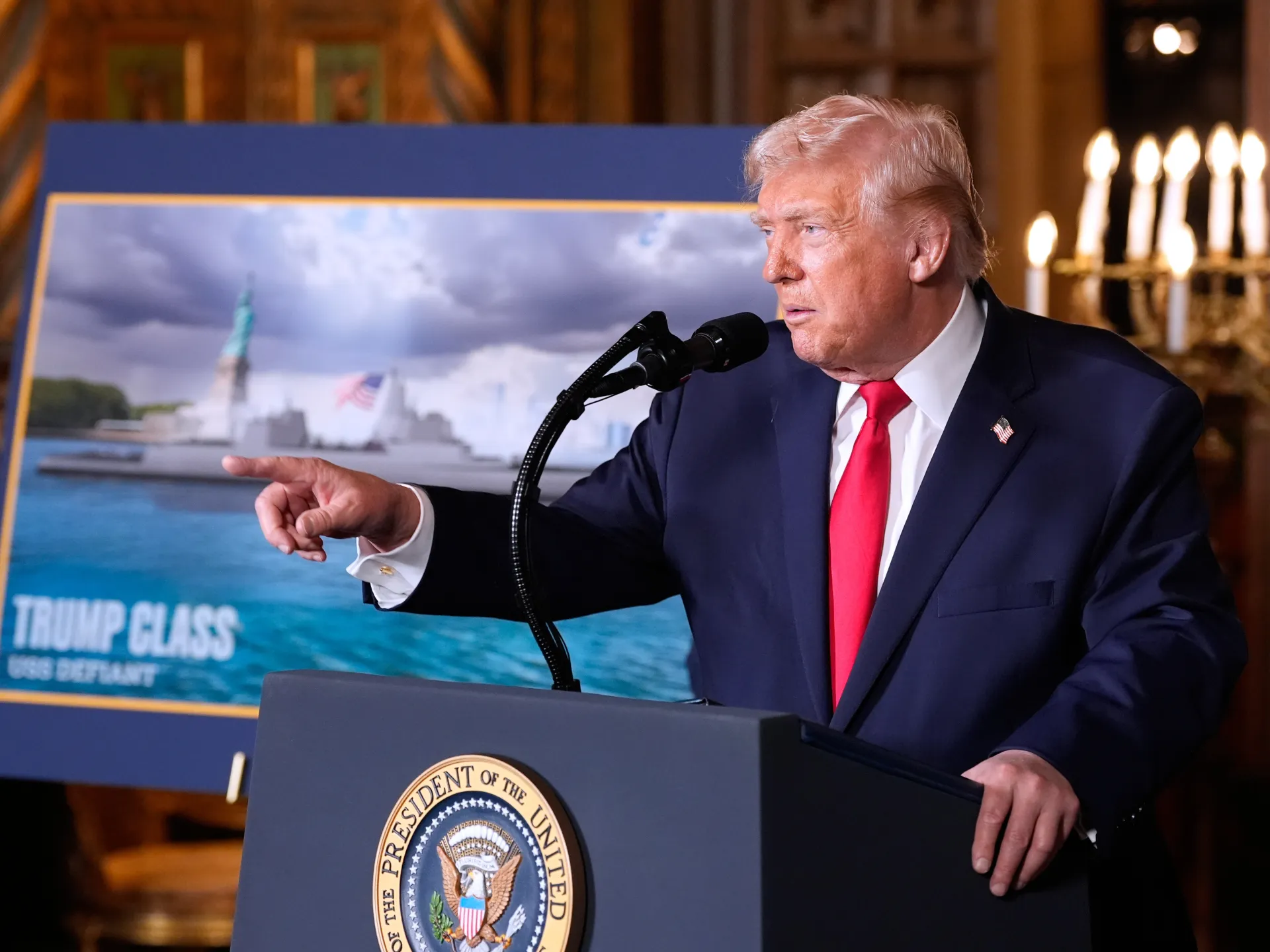
Trump, speaking at his Mar-a-Lago resort in Florida alongside his top national security aides, Secretary of State Marco Rubio and Secretary of Defense Pete Hegseth, suggested that he remains ready to further escalate his four-month pressure campaign.
When asked if the goal was to force Maduro from power, Trump told reporters: “Well, I think it probably would… That’s up to him what he wants to do. I think it’d be smart for him to do that. But again, we’re gonna find out.”
“If he wants to do something, if he plays tough, it’ll be the last time he’s ever able to play tough,” he added.
Trump levied his latest threat as the US coastguard continued for a second day to chase a third oil tanker that it described as part of a “dark fleet” that Venezuela uses to evade US sanctions.
“It’s moving along, and we’ll end up getting it,” Trump said.
The US president also promised to keep the ships and the nearly 4 million barrels of Venezuelan oil the coastguard has seized so far.
“Maybe we’ll sell it. Maybe we’ll keep it. Maybe we will use it in the strategic reserves,” he said. “We’re keeping it. We’re keeping the ships also.”
Maduro fires back
Trump’s campaign against Venezuela’s vital oil sector comes amid a large US military buildup in the region with a stated mission of combating drug trafficking, as well as more than two dozen strikes on alleged drug trafficking vessels in the Pacific Ocean and Caribbean Sea near the South American nation.
Critics have questioned the legality of the attacks, which have killed more than 100 people.
Venezuela denies any involvement in drug trafficking and insists that Washington is seeking to overthrow Maduro to seize the country’s oil reserves, which are the world’s largest.
It has condemned the US’s vessel seizures as acts of “international piracy”.
Maduro fired back at Trump hours after the latest warning, saying the US president would be “better off” if he focused on his own country’s problems rather than threatening Caracas.
“He would be better off in his own country on economic and social issues, and he would be better off in the world if he took care of his country’s affairs,” Maduro said in a speech broadcast on public television.
The exchange of words came on the eve of a United Nations Security Council meeting on Tuesday to discuss the growing crisis.
Russia’s Minister of Foreign Affairs Sergey Lavrov, in a phone call with his Venezuelan counterpart, Yvan Gil, slammed the US’s actions and expressed support for Caracas.
“The ministers expressed their deep concern over the escalation of Washington’s actions in the Caribbean Sea, which could have serious consequences for the region and threaten international shipping,” the Russian Ministry of Foreign Affairs said in a statement.
“The Russian side reaffirmed its full support for and solidarity with the Venezuelan leadership and people in the current context,” it added.
US blockade
China also condemned the US’s latest moves as a “serious violation of international law”.
“China opposes any actions that violate the purposes and principles of the United Nations Charter and infringe upon the sovereignty and security of other countries,” said Lin Jian, a spokesperson for the Chinese Foreign Ministry.
“Venezuela has the right to develop independently and engage in a mutually beneficial cooperation with other nations. China understands and supports Venezuela’s stance in safeguarding its legitimate rights and interests,” he added.
Last week, Rubio brushed aside Moscow’s stated support for Caracas.
Washington, he said, was “not concerned about an escalation with Russia with regards to Venezuela” as “they have their hands full in Ukraine”.
US-Russia relations have soured in recent weeks as Trump has voiced frustration with Moscow over the lack of a resolution on the war in Ukraine
Gil, on Monday, also read a letter on state television, signed by Maduro and addressed to UN member nations, warning that the US blockade “will affect the supply of oil and energy” globally.
“Venezuela reaffirms its vocation for peace, but also declares with absolute clarity that it is prepared to defend its sovereignty, its territorial integrity and its resources in accordance with international law,” he said.
“However, we responsibly warn that these aggressions will not only impact Venezuela. The blockade and piracy against Venezuelan energy trade will affect oil and energy supply, increase instability in international markets, and hit the economies of Latin America, the Caribbean, and the world, especially in the most vulnerable countries.”
New York City, United States – Since the recent termination of the nearly decade-old trade rule called “de minimis,” United States consumers and businesses have been exposed to slower shipping, destroyed packages and steep tariff fees on international goods – foreshadowing what could make for a chaotic holiday shopping season.
For major international carrier UPS, navigating the latest regulatory changes has proved more fraught than for its competitors FedEx and DHL.
Recommended Stories
list of 4 itemsend of list
Matthew Wasserbach, brokerage manager for Express Customs Clearance in New York, a firm that assists importers with documentation, tariff classifications, valuation, and other federal requirements, has witnessed the fallout as UPS customers seek his firm’s assistance to clear packages entering the US.
“Over the last few months, we’ve been seeing a lot of UPS shipments, in particular, becoming stuck and being lost or disposed of … This all stems from the ending of the de minimis,” said Wasserbach. “Their [UPS’s] whole business model changed once the de minimis was ended. And they just didn’t have the capacity to do the clearance … a lot of people are expecting to receive international packages, and they’re just never gonna get them.”
UPS did not respond to Al Jazeera’s request for comment.
Suspending tariff exemptions
Since 2016, the de minimis trade exemption determined that packages worth $800 or less were not subject to taxes and tariffs. According to US Customs and Border Protection (CBP), the number of shipments entering the US claiming the exemption increased by more than 600 percent from 139 million shipments in 2015 to more than one billion in 2023.
In August, this all changed. President Donald Trump signed an executive order suspending de minimis treatment for all countries, spiralling US imports into a new landscape of paperwork and processes, subject to duties and tariffs based on their place of origin.
Parcels slide down a ramp after being scanned at a US Customs and Border Protection overseas mail inspection facility [File: Charles Rex Arbogast/AP Photo]
Just a month after de minimis ended, while shipping products with UPS, Tezumi Tea, an online Japanese tea and teaware company that sells its products online and through meetups in New York City, fell victim to the tariff backlog at US customs. Tezumi lost roughly 150kg (330lbs) of matcha, totalling about $13,000.
“We responded by increasing buffers in our supply planning across the dozen farms that we partner with,” said Ryan Snowden, a cofounder of Tezumi. “Even with those adjustments, the loss had a severe effect on a number of our cafe customers who suddenly needed to switch to another matcha blend.”
Now, UPS is no longer accepting shipments from Japan, and Tezumi has switched to shipping supplies through alternate carriers such as DHL and FedEx.
Disposing shipments
Wasserbach has witnessed similar instances of UPS losing imports.
“When a UPS package goes uncleared, it’s just basically sitting in a UPS facility, uncleared for a certain period of time,” said Wasserbach. “Then UPS indicates in their tracking that they’re disposing of the shipments without making, really, any effort, from what I’ve seen, to contact either the sender or the receiver, to get information they need to do to get the clearance.”
Wasserbach shared email chains with Al Jazeera from UPS customers who looped in his firm to their customs clearance UPS debacles.
In one exchange, UPS customer Stephan Niznik responded to a notice from the UPS Alternate Broker Team that their packages had been “destroyed”.
“The tracking says on multiple instances that UPS attempted to contact the sender (me), but this is false; aside from a request for more information on September 5 (which I responded to immediately), UPS never attempted to contact me,” wrote Niznik. “It is absolutely disgraceful that my package was mishandled – clothes and children’s toys were destroyed at the hands of UPS.”
In another email chain, UPS told customer Chenying Li that their package was released following an email from Express Customs Clearance stating that the shipment was cleared.
A week later, Li’s package was still showing as “Pending Release”, and when they asked for an update on the shipment, UPS responded, “At this time we are unable to provide an ETA, as volume is currently backed up and awaiting delivery due to the De Minimis impact.”
‘Impose additional pressure’
In addition to the customs backlog, Virginia Tech associate professor David Bieri says cost prevention may provide one explanation for UPS choosing to dispose of packages rejected by US customs rather than return the shipments to senders.
“All these additional rules and regulations impose additional pressure on already relatively tight margins for these companies – UPS, FedEx, DHL and so forth,” said Bieri. “They need to make money, and sometimes it’s easier not to fulfil a service than to take on the additional cost of customs clearance and making sure that it gets to its final destination.”
Bieri added that UPS resorting to package disposal may indicate that they believe themselves to be in “a sufficiently strong monopolistic position that they can do such horrible practice – unilateral nonfulfillment of contract”.
Wasserbach told Al Jazeera that “with FedEx and DHL shipments, we aren’t seeing these problems”.
When asked whether FedEx has disposed of packages stuck in customs, a spokesperson wrote, “If paperwork is not complete and/or rejected by US Customs and Border Protection, FedEx actively works with senders to update paperwork to resubmit to CBP or return shipments to senders. In some cases, shippers can request that packages be disposed of if they would prefer not to pay to return to sender. In those rare cases, recipients are notified at the direction of the shipper. This is not a common practice. We remain business as usual.”
Final cost of delivery at your doorstep
But FedEx and DHL are encountering some of the same challenges as UPS. Since August, when de minimis ended and small packages were suddenly subject to taxes and tariffs, anyone who ordered from abroad was susceptible to unexpected fees on imported goods.
Import fees on items can be the same or more than the item ordered, boosting costs [File: Jeff Chiu/AP Photo]
Without de minimis protecting packages worth $800 and less from import fees, the consumer essentially becomes the importer.
“You might order something you find a bargain abroad, and you don’t pay attention to where things are shipped from … and it might be shipped from China, and you might be in for a rude awakening once that thing arrives at your door,” said Beiri. “You paid the price and thought that this was it. But your deliverer is saying, no, actually, we’re passing that cost on to you. Because you’re acting as the importer.”
These fees could cost equal to or more than the item you ordered itself. “You’ve got to pay extra attention to small prints,” said Beiri.
With looming costs and lost packages on the horizon, Beiri says shoppers will likely make “substitution questions” – are you renovating or are you going on vacation? Are you splashing on Christmas gifts, or are you treating yourself to dining out?
“I think these are interesting times of having to make choices and asking yourself what can we do given that we have an affordability crisis, rent, insurance, making ends meet,” said Beiri. “That’s what’s currently going on.”
In order to better handle evolving trade policy, Wasserbach says that UPS will likely aim to hire a massive number of entry writers to assist with necessary documentation for legal transportation of goods across international borders. However, now that it is the busiest time of year in terms of delivering people their Christmas shopping, Wasserbach doubts an influx of hiring could make much of a difference, given the amount of training required.
The company’s revenue has already taken a hit on account of Trump’s policies. Tariffs on China and the elimination of the de minimis rule saw imports from China, UPS’s most profitable route, drop reportedly 35 percent earlier this year.
“I would assume it’s gonna get better next year,” said Wasserbach. “But as for solving this problem before Christmas, I don’t think that that’s gonna happen.”
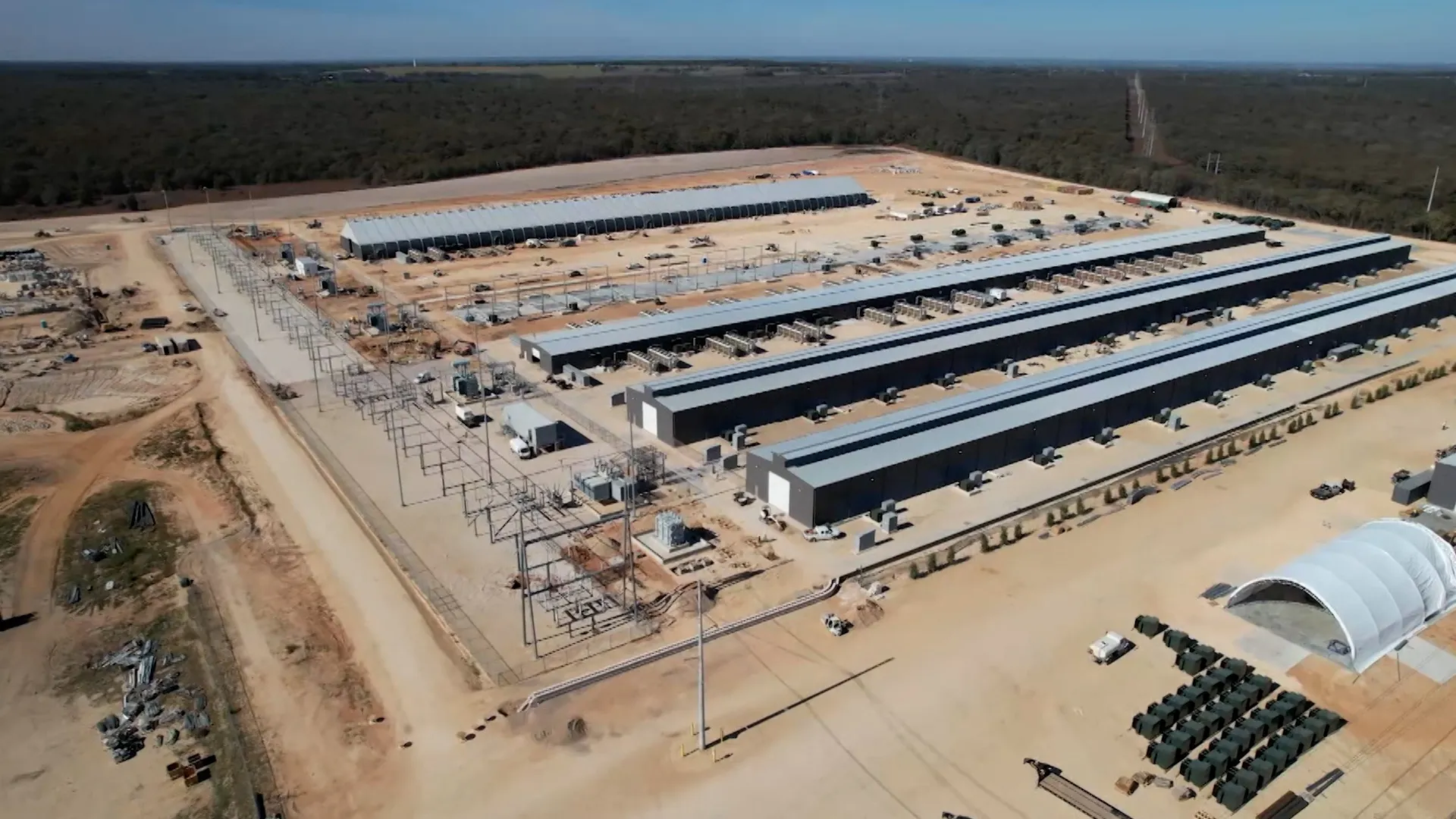
A rural Texas community says nonstop noise from a bitcoin mine is destroying their lives. Residents in Hood County describe the 24/7 hum of cooling fans as “torture,” while operators defend the project as a major jobs and tax boost. Al Jazeera’s Phil Lavelle says AI data centres may bring even bigger battles ahead.
United States President Donald Trump’s second administration has introduced a bold and unconventional strategy for the Middle East. The administration intends to recalibrate US influence in a region historically scarred by conflict, prioritising regional stability through economic strength and military consolidation by asserting a stronger, business-minded US presence.
At the centre of Trump’s ambitious goal is what the new US envoy to Iraq, Mark Savaya, described as his goal to “make Iraq great again”. This approach moves away from traditional endless war tactics towards a transactional, results-oriented diplomacy that aims to restore Iraqi sovereignty and economic vitality. It could be the “great gamble” for Trump, who seeks an Iraq that serves as a stable, sovereign regional hub rather than a battleground for foreign interests.
Trump’s primary plans and wishes for Iraq involve a twofold mission: consolidating all armed forces under the command of the legitimate state and drastically reducing the influence of malign foreign players, most notably Iran. The administration seeks to open Iraqi markets to international investment, upgrade the country’s infrastructure, and secure the independence of its energy sector. Hence, the plan is to ground a genuine partnership that respects Iraq’s unity while ensuring that it is no longer a central node for militia activity or external interference.
Militias and political gridlock
This assertive US strategy lands directly in a highly contested and fractured political environment in Iraq, which is less a single state than a patchwork of competing powers. The heart of the problem lies not just in parliament, but also in the persistent shadow influence of armed factions and militias that often operate outside the formal chain of state command. Those groups were among the biggest winners in the November 2025 elections.
Now the ongoing government negotiations have thrown a stark light on these non-state actors.
Their power raises crucial concerns for the future: How can Iraq enforce the law and, crucially, attract the foreign investment needed for revival if armed groups challenge state authority? The consolidation of the country’s armed forces under complete state control is an urgent necessity, underscored by rising regional tensions and security threats.
Moreover, the path to achieving genuine stability is severely obstructed by entrenched political interests.
For Iraq to achieve stability, it must urgently strengthen its institutional frameworks and clearly establish a separation of powers. Yet, many political parties seem more focused on maintaining control over lucrative state resources than on implementing the meaningful reforms the country desperately needs. The result is a governance model struggling to stand firm amid the crosscurrents of competing loyalties and power grabs.
Washington’s play
To achieve these high-stakes goals, Trump has bypassed traditional diplomatic channels by appointing Mark Savaya as the US special envoy to Iraq on October 19. Such an appointment signals a shift towards “deal-making” diplomacy. Savaya’s mission is to navigate the complex political turmoil following Iraq’s parliamentary elections to steer the country towards a stable transition. His job is to bridge the gap between institutional support and massive financial investment, acting as a direct representative of Trump’s business-centric foreign policy.
Savaya is an Iraqi-born, Detroit-based businessman lacking the traditional diplomatic background; his experience is rooted in the private sector in the cannabis industry, but he gained political prominence as an active supporter of Trump’s campaign in Michigan.
He played a key role in the delicate negotiations that secured the release of Elizabeth Tsurkov, the Israeli-Russian academic and Princeton University student who had been kidnapped by an Iraqi militia for more than two years.
Savaya’s communal and ethnic ties have given him significant access to Iraqi power centres that traditional diplomats often lack.
The Iran factor
Iraq’s position in a geopolitical tug-of-war is compounding the internal struggles, forced to balance its critical relationships with two giants: the US and Iran. On the one hand, Washington’s objective is clear: it wants to bolster Iraq’s sovereignty while simultaneously pushing back against the dominance of powerful, often Iran-backed, militias. The US believes that allowing these armed groups too much sway could leave the nation isolated and wreck its fragile economic stability.
But Iranian influence remains a formidable and enduring force. Tehran views Iraq not just as a neighbour but also as a crucial strategic ally for projecting its power across the entire region. The Islamic Revolutionary Guard Corps (IRGC) has been actively working to maintain unity among key Shia factions in Baghdad. This move clearly signals Iran’s deep and enduring interest in shaping Iraq’s political alignment and its future path. Iraq must therefore navigate this high-stakes balancing act to survive.
Savaya’s mission unfolds at a time when Iran’s regional “axis of resistance” is under unprecedented pressure. Having already lost their primary foothold in Syria after the fall of the Assad regime in late 2024, and seeing Hezbollah’s political and military standing in Lebanon severely decimated by the 2025 conflict with Israel, Iranian proxies now face the very real prospect of losing their grip on Iraq too.
In Lebanon, a new government is committed to regaining the state’s monopoly on the use of force, leaving Hezbollah increasingly isolated. This regional retreat means that for Tehran, maintaining influence in Baghdad is a final, desperate stand to remain a relevant regional power.
Other regional actors
The success of Trump’s gamble also depends on the roles of other regional players. Turkiye has recently recalibrated its strategy to integrate Iraq into ad hoc regional trade and security frameworks, effectively diluting Iran’s centrality. Simultaneously, Gulf monarchies such as Saudi Arabia and the United Arab Emirates are emerging as key economic and security partners for Baghdad, offering an alternative to reliance on Iran.
However, these regional actors also bring their own agendas — such as Turkiye’s focus on containing Kurdish movements — which may conflict with US objectives. If Savaya can successfully align these diverse regional interests with Trump’s plan, he may fundamentally rewrite Iraq’s turbulent future.
A realist pragmatism
The “Make Iraq Great Again” strategy reflects a pragmatic reassertion of US interests within the anarchic international system, prioritising Washington’s security and economic power over idealistic goals.
By appointing Savaya — an unconventional, business-oriented envoy — the Trump administration is employing “transactional realism”, utilising economic diplomacy and personal ties as strategic tools to pull Iraq away from Iran’s orbit. This approach views the US-Iran rivalry as a zero-sum game of power politics, where integrating Iraq’s armed forces under centralised state control is fundamental to restoring a state-centric order and sidelining non-state militias that currently feed Tehran’s regional influence.
The new US envoy to Iraq has made clear that “there is no place for armed groups in a fully sovereign Iraq”. His calls resonated with Iraqi officials and militia leaders alike – now at least three militias close to Iran have publicly agreed to disarm. However, other groups have yet to do the same, while rejecting the call from the outset.
However, this high-stakes attempt to shift the regional balance of power faces a significant “security dilemma”, as aggressive moves to diminish Iranian influence may trigger a violent defensive response from Tehran to protect its remaining strategic assets. While the strategy seeks to exploit a regional shift – leveraging the weakened state of Iranian proxies in Syria and Lebanon – it must contend with the “hybrid” power of Iraqi militias and the narrow self-interests of neighbouring players like Turkiye and the Gulf states.
The success of this gamble depends on whether the US can dismantle the shadow economies that facilitate foreign interference and establish a stable, autonomous Iraqi state capable of navigating the intense geopolitical tug-of-war between Washington and Tehran.
The stakes for Iraq’s future
Ultimately, the appointment of Savaya serves as the definitive stress test for Iraqi sovereignty, marking a high-stakes transition towards a transactional “America First” strategy aimed at “Making Iraq Great Again”. By attempting to consolidate military command under the state and dismantle the shadow economies fuelling Iranian influence, Savaya’s mission seeks to exploit the current regional weakening of Tehran’s proxies to transform Iraq into a stable, autonomous hub.
However, the success of this “Great Gamble” hinges on Savaya’s ability to overcome entrenched political opposition and reconcile the presence of US forces with the demand for national unity. If this unconventional diplomatic push can bridge internal divides — particularly between Baghdad and the semi-autonomous Kurdish region in the north — Iraq may finally secure a path towards economic independence; otherwise, the nation risks remaining a perpetual battleground caught in the geopolitical crossfire between Washington and Tehran.
The views expressed in this article are the author’s own and do not necessarily reflect Al Jazeera’s editorial stance.
The vessel was flying a false flag and under a judicial seizure order, according to US officials cited by US media.
Published On 21 Dec 202521 Dec 2025
Share
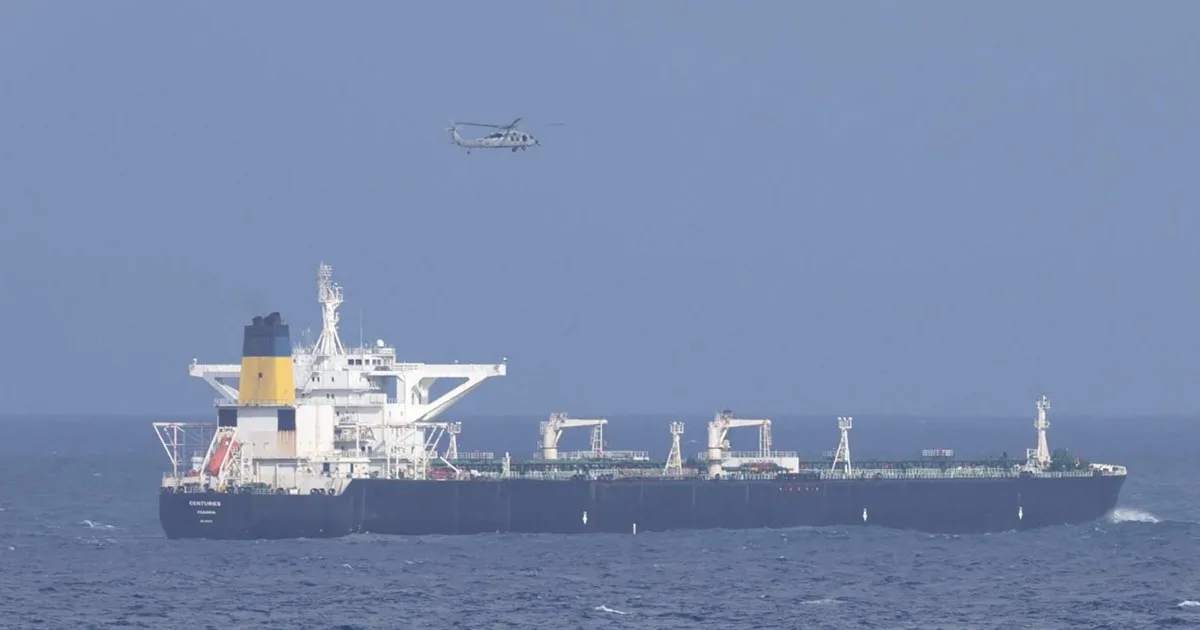
The United States is pursuing an oil tanker in international waters near Venezuela, US media reported, in what would be the second such operation in two days and the third in less than two weeks.
“The United States Guard is in active pursuit of a sanctioned dark fleet vessel that is part of Venezuela’s illegal sanctions evasion,” a US official told the Reuters news agency on Sunday.
Recommended Stories
list of 4 itemsend of list
“It is flying a false flag and under a judicial seizure order.”
Another official told the agency that the tanker was under sanctions, but added that it had not been boarded so far and that interceptions can take different forms – including sailing or flying close to vessels of concern.
The officials, who were speaking on condition of anonymity, did not give a specific location for the operation or name the vessel being pursued.
The pursuit of the tanker was also reported by The Associated Press news agency, which cited an official briefed on the operation separately.
The official, who also spoke on condition of anonymity, said Sunday’s pursuit involved “a sanctioned dark fleet vessel that is part of Venezuela’s illegal sanctions evasion.”
The official also said that the vessel was flying a false flag and under a judicial seizure order.
Two tankers seized
The pursuit comes after the US seized an oil tanker off Venezuela on Saturday as part of a “blockade” ordered by US President Donald Trump.
US Homeland Security Secretary Kristi Noem said on Saturday that the coastguard apprehended the vessel with support from the Pentagon.
“The United States will continue to pursue the illicit movement of sanctioned oil that is used to fund narco terrorism in the region,” she wrote.
“We will find you, and we will stop you,” she added.
The operation marked the second time in recent weeks that the US has seized a tanker near Venezuela, and it comes amid a large US military build-up in the region.
Trump, whose administration has continued to ramp up pressure on Venezuelan President Nicolas Maduro, ordered on Tuesday a “total and complete blockade” of all sanctioned oil tankers entering and leaving the South American country.
Trump’s pressure campaign on Maduro has also included a ramped-up military presence in the region and more than two dozen military strikes on alleged drug trafficking vessels in the Pacific Ocean and Caribbean Sea near the South American nation. At least 100 people have been killed in the attacks.
The two oil tankers that were seized were operating on the black market and providing oil to countries under sanctions, Kevin Hassett, director of the White House’s National Economic Council, said in a TV interview on Sunday.
Some European leaders feel sidelined as US mediation takes Russian priorities into consideration.
After years of support from the United States for the Ukraine war to continue “as long as it takes”, the Trump administration is now pushing to end Europe’s war – quickly and imperfectly.
While details are still under negotiation, they include issues such as ensuring Ukraine never joins NATO and Russia’s control over about 20 percent of Ukraine.
To understand the implications for Europe, the US and their relations, host Steve Clemons speaks with Kurt Volker, Trump’s former special representative for Ukraine negotiations, and retired Colonel Heino Klinck, former director of US Army international affairs.
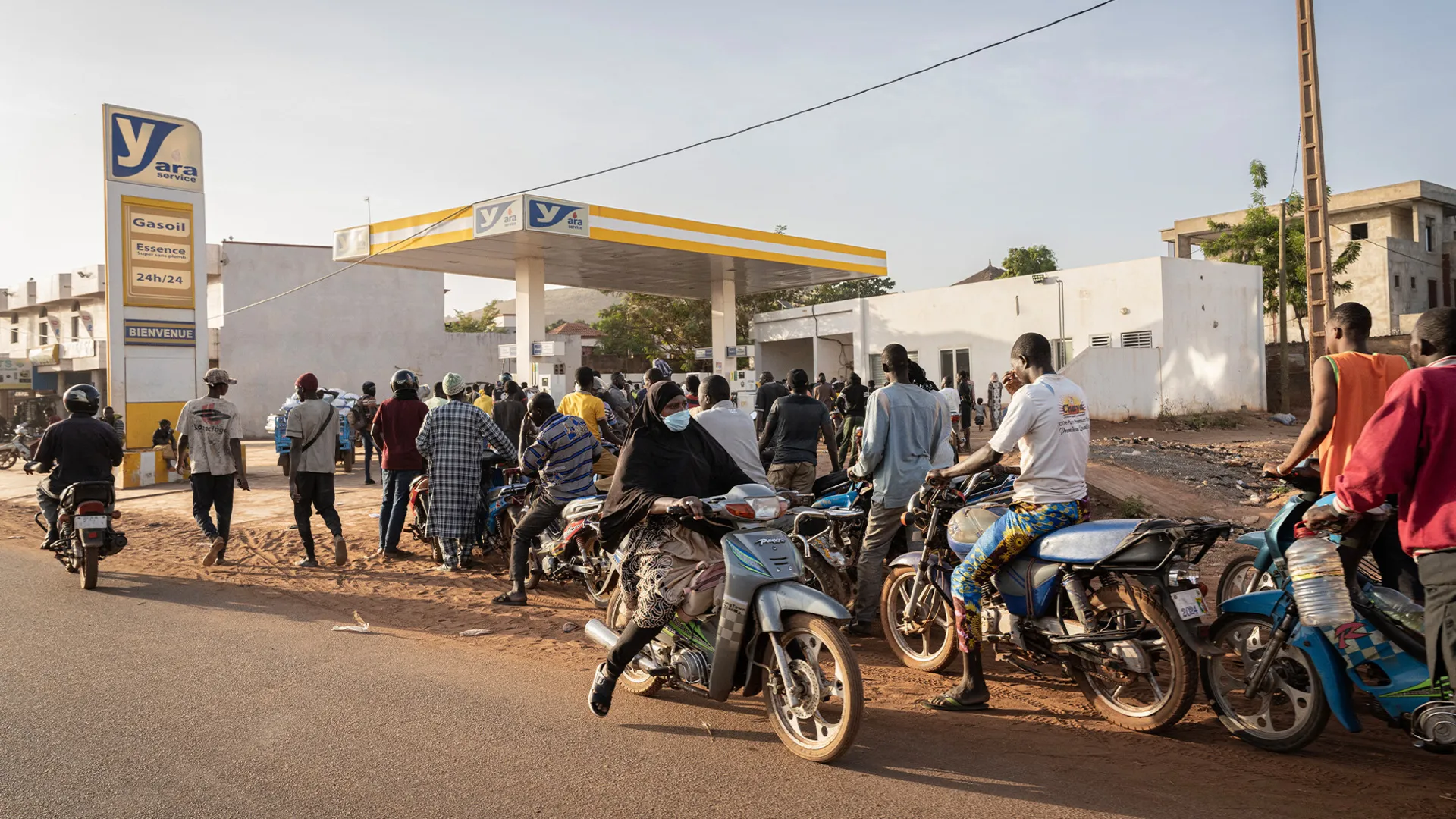
Leaders from Mali, Niger and Burkina Faso are hoping to find a way to repel advancing fighters linked to al-Qaeda. Al Jazeera’s Laura Khan explains what’s at stake at an Alliance of Sahel States summit in Bamako.
The United States Department of Justice (DOJ) has released thousands more documents relating to the prosecution of the late sex offender and financier Jeffrey Epstein, including photographs of prominent figures he spent time with. But campaigners behind the Epstein Files Transparency Act, which compelled the Justice Department on Friday to release all files still sealed, say far too much information in them has been redacted.
Furthermore, according to US media, at least 16 of the files – which they said were disclosed late – have since “disappeared” from the website where they were released. The deleted files included a photograph showing President Donald Trump.
The Epstein Files Transparency Act, which Trump signed into law after it passed through Congress in November, required the government to release all remaining unclassified material in its possession relating to Epstein’s and his girlfriend Ghislaine Maxwell’s sex trafficking cases. Maxwell is currently serving 20 years in prison for her part in the scandal.
Despite heavy redaction of many of the documents, which has angered Democrats and some Republicans alike, there is some new information about the powerful people who associated with the disgraced late financier.
The Justice Department said it will release more documents in the coming weeks.
Here’s what we know about what’s been released so far:
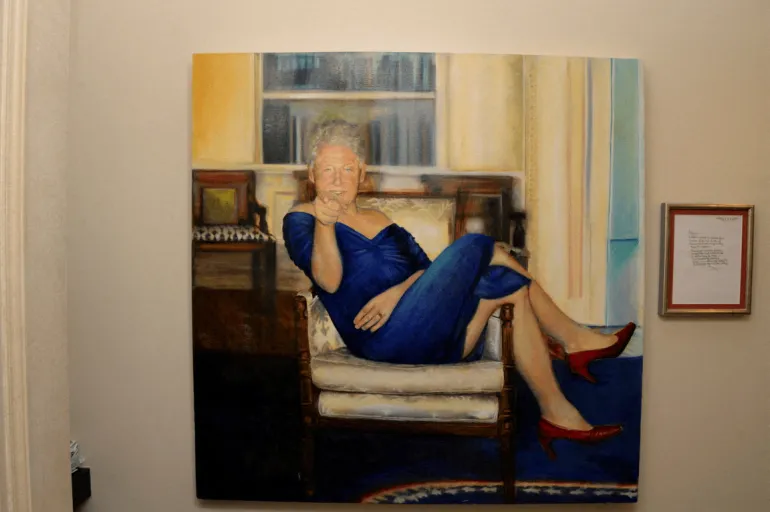
A painting of former US President Bill Clinton wearing a dress is displayed inside the Manhattan home of Jeffrey Epstein in this image from his estate released by the US Justice Department on December 19, 2025 [Handout/US Justice Department via Reuters]
What’s new in this tranche of Epstein files?
This is just the latest release of documents relating to the prosecution of Epstein, who died by suicide in a New York jail in 2019. The first tranche of about 950 pages of court documents was made public in early 2024.
One document released this time around confirms that the Federal Bureau of Investigation (FBI) was tipped off about the convicted sex offender’s crimes nearly a decade before he was first arrested.
In September 1996, Epstein survivor Maria Farmer complained to the FBI that the late financier was involved in child sex abuse. Farmer said officials failed to take steps to investigate.
While the name of the complainant is redacted in the document relating to this complaint to the FBI, Farmer has confirmed it was made by her.
Now in her 50s, Farmer said in a statement via her lawyers after the release on Friday that she feels “redeemed” and this was “one of the best days of my life”.
“I want everyone to know that I am shedding tears of joy for myself but also tears of sorrow for all the other victims that the FBI failed,” she said.
Newly released transcripts of grand jury proceedings also include testimony from FBI agents who described interviews that they conducted with girls and young women describing their experiences of being paid to perform sex acts for Epstein. The youngest interviewee was 14, according to local media.
One woman, then aged 21, told a grand jury that Epstein had hired her when she was 16 to perform a sexual massage and that she had gone on to recruit other girls to do the same.
“For every girl that I brought to the table, he would give me $200,” she said.
They were mostly people she knew from high school, she said, adding that she told them that if they were under age, “just lie about it and tell him that you are 18.”
Much of the material published had already been circulating in the public domain after years of court action and investigations.
However, many of the new photos – some of them heavily blacked out – feature well-known public figures.
From left from second from left, Ghislaine Maxwell, Rolling Stones frontman Mick Jagger and former US President Bill Clinton are seen in this image, part of the latest trove of documents from US government investigations into Epstein [Handout/US Justice Department via Reuters]
Who features in the newly released photos?
Among the documents released on Friday are photographs in a folder labelled “DOJ Disclosures”. Most of the photographs were seized by the FBI during various searches of Epstein’s homes in New York City and the US Virgin Islands.
New photos show the musicians Mick Jagger, Michael Jackson and Diana Ross in photographs with Epstein and at times with other people whose faces have been blacked out.
In one image, Jagger can be seen sitting between Epstein and former US President Bill Clinton. Popstar Jackson is also pictured standing next to Clinton and posing for a photo with Epstein in front of a painting in another.
From left, Michael Jackson, Bill Clinton and Diana Ross are seen in this image released by the Department of Justice [Handout/US Justice Department via Reuters]
Other famous men featured in the newly released photos include the actor Kevin Spacey, comedian Chris Tucker, billionaire Richard Branson, former UK ambassador to the US Peter Mandelson and Andrew Mountbatten-Windsor – formerly known as Britain’s Prince Andrew – and his former wife, Sarah Ferguson.
In one black and white image, Andrew can be seen lying across the laps of five people whose faces have all been blacked out while Maxwell stands behind them.
The Justice Department did not include any details about the contents or context of the photos.
Ghislaine Maxwell and Andrew Mountbatten-Windsor are seen in this image released by the Department of Justice [Handout/US Justice Department via Reuters]
Virginia Giuffre, who was one of Epstein’s most prominent accusers and who died by suicide in April aged 41, accused Mountbatten-Windsor of sexual abuse when she was 17. He settled a lawsuit with her in 2022 but continued to deny the allegation.
Another prominent figure among the photos is Clinton. One photo shows him in a swimming pool with Maxwell and another person whose face has been blacked out. Another photo shows the former US president in a hot tub with a woman whose face is also redacted.
Clinton swims in a pool with Maxwell in this image released by the Department of Justice [Handout/US Justice Department via Reuters]
While Clinton has never been accused of any wrongdoing in connection with Epstein’s crimes, his spokesperson said the White House was using him as a scapegoat.
“This is about shielding themselves from what comes next, or from what they’ll try and hide forever. So they can release as many grainy 20-plus-year-old photos as they want, but this isn’t about Bill Clinton. Never has, never will be,” the spokesperson said in a statement.
Clinton in the past has said he cut ties with Epstein before the late financier pleaded guilty to solicitation of a minor in Florida.
From right, Bill Clinton and Kevin Spacey can be seen in this image from Epstein’s estate released by the Department of Justice [Handout/US Justice Department via Reuters]
Does Trump appear in the Epstein files?
Trump hardly appears in the files at all. The few photos that do feature him are ones that have been circulating in the public domain for decades.
According to one court document released on Friday, Epstein was alleged to have taken a 14-year-old girl to Trump’s Mar-a-Lago resort in Florida and to have introduced her to the president.
While introducing her, Epstein elbowed Trump, asking him – referring to the teenager: “This is a good one, right?” Trump smiled and nodded in agreement, said the document from a case against Epstein’s estate and Maxwell in 2020.
In the court filing, the unnamed plaintiff herself makes no specific accusation against Trump.
In response to media requests for comment about this court document, White House spokeswoman Abigail Jackson said the Trump administration was “the most transparent in history” and by “recently calling for further investigations into Epstein’s Democrat friends, the Trump Administration has done more for the victims than Democrats ever have,” she added.
A photo originally labelled File 468, which includes a picture of Trump, has been removed from the Justice Department’s Epstein files website [Handout/Department of Justice]
Have some of the files disappeared since they were published on Friday?
Apparently, yes. One image, originally labelled File 468, which showed the inside of a desk drawer, included a photograph of Trump alongside Epstein, US first lady Melania Trump and Maxwell.
Other missing photos were images of paintings depicting nude women and one showing a series of photographs on a cupboard and in drawers.
On Saturday, The Associated Press news agency reported that at least 16 files published on Friday had disappeared from the Justice Department’s webpage.
The department has not provided any explanation or statement to the public about this but said in a post on X that “photos and other materials will continue being reviewed and redacted consistent with the law in an abundance of caution as we receive additional information.”
Democrats on the Oversight Committee in the US House of Representatives also released 68 photos, drawn from the 95,000 photos and files the Oversight Committee has so far received from the Epstein estate.
Democrats in the committee said the images, which they released on Thursday, “were selected to provide the public with transparency into a representative sample of the photos” and “to provide insights into Epstein’s network and his extremely disturbing activities”.
Following the Justice Department’s release on Friday, the committee’s Democratic members questioned in a post on X why the image featuring a photo of Trump, a Republican, was missing, stating: “What else is being covered up? We need transparency for the American public.”
Epstein appears with several women whose identities have been obscured in this image released by Democrats on the House Oversight Committee on December 18, 2025 [Handout/House Oversight Committee Democrats via Reuters]
Why has so much been redacted?
Among the thousands of documents published on Friday, at least 550 pages were reportedly fully redacted.
One 119-page document labelled “Grand Jury-NY” is completely redacted as is a set of three consecutive documents totalling 255 pages. Each page is fully blacked out.
Campaigners behind the Epstein Files Transparency Act said they had hoped to obtain more information about how the sex offender had been able to avoid serious federal charges for so many years.
However, many crucial FBI interviews with Epstein’s accusers and internal Justice Department memos on charging decisions are unreadable.
Todd Blanche, the deputy attorney general, sent a six-page letter to members of Congress laying out the redaction process, noting that the law mandates that the department omit or redact any references to victims and files that could jeopardise pending investigations or litigation.
Blanche explained that he had, therefore, instructed attorneys to redact or withhold material that contained personally identifiable information about victims; depicted or contained child sexual abuse materials; would jeopardise an active investigation or prosecution; or contained classified national defence or foreign policy information.
Without specifying which, Blanche added that in some instances, the department had withheld or redacted information covered by deliberative-process privilege, work-product privilege and attorney-client privilege.
Bill Clinton and a woman are seen in this image from the Epstein estate released by the Department of Justice [Handout/US Justice Department via Reuters]
When will the remaining files be released?
The Justice Department has said the publication of thousands more documents concerning investigations into Epstein will be released in the coming days as the year-end holidays approach.
The department missed its original Friday deadline to release all the information it had on Epstein in violation of the law signed by Trump in November ordering a complete release within 30 days.
After the drop on Friday, the department published two much smaller tranches on Saturday, which went beyond the initial redactions and featured identities of prosecutors, FBI case agents and other law enforcement personnel who appeared before two federal grand juries in New York state.
Several US lawmakers expressed anger about the White House’s failure to produce all the documents required under the law within the time limit.
Representatives Ro Khanna, a Democrat, and Thomas Massie, a Republican – the duo who introduced the petition that eventually led to the passing of the Epstein Files Transparency Act – strongly criticised the partial release on social media.
Massie wrote that it “grossly fails to comply with both the spirit and the letter of the law”.
Khanna called the release so far “disappointing” and added: “We’re going to push for the actual documents.”
Senate Democratic leader Chuck Schumer accused the Trump administration of being “hell-bent on hiding the truth” and reiterated that the failure to release all the Epstein documents by Friday’s deadline amounts to “breaking the law”.
Meanwhile, officials from the Trump administration have been publicising the photographs featuring former Democratic President Clinton and hailing the current government as “the most transparent in history”.
Can campaigners take further steps to obtain more of the documents?
In a statement, Schumer said Senate Democrats are working “closely with attorneys for the victims of Jeffrey Epstein and with outside legal experts to assess what documents are being withheld and what is being covered up by [US Attorney General] Pam Bondi”.
Representatives Robert Garcia and Jamie Raskin, the ranking Democrats on the House Oversight and Judiciary committees, said they are examining “all legal options” after “the Department of Justice is now making clear it intends to defy Congress itself.”
“Donald Trump and the Department of Justice are now violating federal law as they continue covering up the facts and the evidence about Jeffrey Epstein’s decades-long, billion-dollar, international sex trafficking ring,” Garcia and Raskin said in a statement.
Senator Ron Wyden, another top Democrat on the Senate Finance Committee who investigated Epstein’s financial ties, said on social media that the failure to release all the files was “a continuation of this administration’s coverup on behalf of a bunch of pedophiles and sex traffickers”.
The Associated Press reported that if Democratic lawmakers so choose, they could go to court to force the Justice Department to comply with the law. However, that would likely be a lengthy process.
Separately, the House Oversight Committee has issued a subpoena for the Epstein files, which could give Congress another avenue to force the release of more information to the committee. But that would require Republicans to join them in contempt-of-Congress proceedings against a Republican administration.
This undated photo released by the US House Oversight Committee from Epstein’s estate shows Trump surrounded by six women whose identities have been concealed [Handout/US House Oversight Committee]
The way the story is often told is that Western countries gifted human rights to the world and are the sole guardians of it. It may come as a surprise for some, then, that the international legal framework for prohibiting racial discrimination largely owes its existence to the efforts of states from the Global South.
In 1963, in the midst of the decolonisation wave, a group of nine newly independent African states presented a resolution to the United Nations General Assembly (UNGA) calling for the drafting of an international treaty on the elimination of racial discrimination. As the representative from Senegal observed: “Racial discrimination was still the rule in African colonial territories and in South Africa, and was not unknown in other parts of the world … The time had come to bring all States into that struggle.”
The groundbreaking International Convention on the Elimination of All Forms of Racial Discrimination (ICERD) was unanimously adopted by the UNGA two years later. The convention rejected any doctrine of superiority based on racial differentiation as “scientifically false, morally condemnable and socially unjust”.
Today, as we mark 60 years since its adoption, millions of people around the world continue to face racial discrimination – whether in policing, migration policies or exploitative labour conditions.
In Brazil, Amnesty International documented how a deadly police operation in Rio de Janeiro’s favelas this October resulted in the massacre by security forces of more than 100 people, most of them Afro-Brazilians and living in poverty.
In Tunisia, we have seen how authorities have for the past three years used migration policies to carry out racially targeted arrests and detentions and mass expulsions of Black refugees and asylum seekers.
Meanwhile, in Saudi Arabia, Kenyan female domestic workers face racism and exploitation from their employers, enduring gruelling and abusive working conditions.
In the United States, diversity, equity and inclusion (DEI) initiatives aimed at tackling systemic racism have been eliminated across federal agencies. Raids by Immigration and Customs Enforcement (ICE) targeting migrants and refugees are a horrifying feature of President Donald Trump’s mass deportation and detention agenda, rooted in white supremacist narratives.
Migrants held in detention centres have been subjected to torture and a pattern of deliberate neglect designed to dehumanise and punish.
Elsewhere, Amnesty International has documented how new digital technologies are automating and entrenching racism, while social media offers inadequately moderated forums for racist and xenophobic content. For example, our investigation into the United Kingdom’s Southport racist riots found that X’s design and policy choices created fertile ground for the inflammatory, racist narratives that resulted in the violent targeting of Muslims and migrants.
Even human rights defenders from the Global South face racial discrimination when they have to apply for visas to Global North countries in order to attend meetings where key decisions are made on human rights.
All these instances of systemic racism have their roots in the legacies of European colonial domination and the racist ideologies on which they were built. This era, which spanned nearly four centuries and extended across six continents, saw atrocities that had historical consequences – from the erasure of Indigenous populations to the transatlantic slave trade.
The revival of anti-right movements globally has led to a resurgence of racist and xenophobic rhetoric, a scapegoating of migrants and refugees, and a retrenchment in anti-discrimination measures and protections.
At the same time, Western states have been all too willing to dismantle international law and institutions to legitimise Israel’s genocide against Palestinians in Gaza and shield Israeli authorities from justice and accountability.
Just as the creation of the ICERD was driven by African states 60 years ago, Global South countries continue to be at the forefront of the fight against racial oppression, injustice and inequality. South Africa notably brought the case against Israel at the International Court of Justice and cofounded The Hague Group – a coalition of eight Global South states organising to hold Israel accountable for genocide.
On the reparations front, it is Caribbean and African states, alongside Indigenous peoples, Africans and people of African descent, that are leading the pursuit of justice. The Caribbean Community (CARICOM) has been intensifying pressure on European governments to reckon with their colonial past, including during a recent visit to the United Kingdom by the CARICOM Reparations Commission.
As the African Union announced 2026-36 the Decade of Reparations last month, African leaders gathered in Algiers for the International Conference on the Crimes of Colonialism, at which they consolidated demands for the codification of colonialism as a crime under international law.
But this is not enough. States still need to confront racism as a structural and systemic issue, and stop pretending slavery and colonialism are a thing of the past with no impact on our present.
Across the world, people are resisting. In Brazil, last month, hundreds of thousands of Afro-Brazilian women led the March of Black Women for Reparations and Wellbeing against racist and gendered historic violence. In the US, people fought back against the wave of federal immigration raids this year, with thousands taking to the streets in Los Angeles to protest and residents of Chicago mobilising to protect migrant communities and businesses against ICE raids.
Governments need to listen to their people and fulfil their obligations under ICERD and national law to protect the marginalised and oppressed against discrimination.
The views expressed in this article are the authors’ own and do not necessarily reflect Al Jazeera’s editorial stance.