United States

US issues Iran-Venezuela sanctions over alleged drone trade | US-Venezuela Tensions News

Washington accuses Tehran and Caracas of ‘reckless proliferation of deadly weapons’ amid spiraling tensions.

Washington, DC – The United States has issued sanctions against a Venezuelan company over accusations that it helped acquire Iranian-designed drones as Washington’s tensions with both Tehran and Caracas escalate.

The penalties on Tuesday targeted Empresa Aeronautica Nacional SA (EANSA), a Venezuelan firm that the US Department of the Treasury said “maintains and oversees the assembly of” drones from Iran’s Qods Aviation Industries, which is already under sanctions by Washington.

Recommended Stories

list of 3 itemsend of list

The department also sanctioned the company’s chairman, Jose Jesus Urdaneta Gonzalez, accusing him of coordinating “with members and representatives of the Venezuelan and Iranian armed forces on the production of UAVs [unmanned aerial vehicles] in Venezuela”.

“Treasury is holding Iran and Venezuela accountable for their aggressive and reckless proliferation of deadly weapons around the world,” Treasury official John Hurley said in a statement.

“We will continue to take swift action to deprive those who enable Iran’s military-industrial complex access to the US financial system,” he said. The sanctions freeze any assets of the targeted firms and individuals in the US and make it generally illegal for American citizens to engage in financial transactions with them.

In its statement, the US alleged Tehran and Caracas have coordinated the “provision” of drones to Venezuela since 2006.

Iran’s Ministry of Defence and Armed Forces Logistics (MODAFL) has been under US sanctions since 2020 for what Washington said is its role in both selling and procuring weapons. The US is by far the largest weapons exporter in the world.

On Tuesday, the US Treasury Department also imposed new sanctions against several Iranians it accused of links to Iran’s arms industry.

The actions came a day after President Donald Trump threatened more strikes against Iran if the country rebuilds its missile capabilities or nuclear programme.

The US had joined Israel in its attacks against Iran in June and bombed the country’s three main nuclear sites before a ceasefire ended a 12-day escalation.

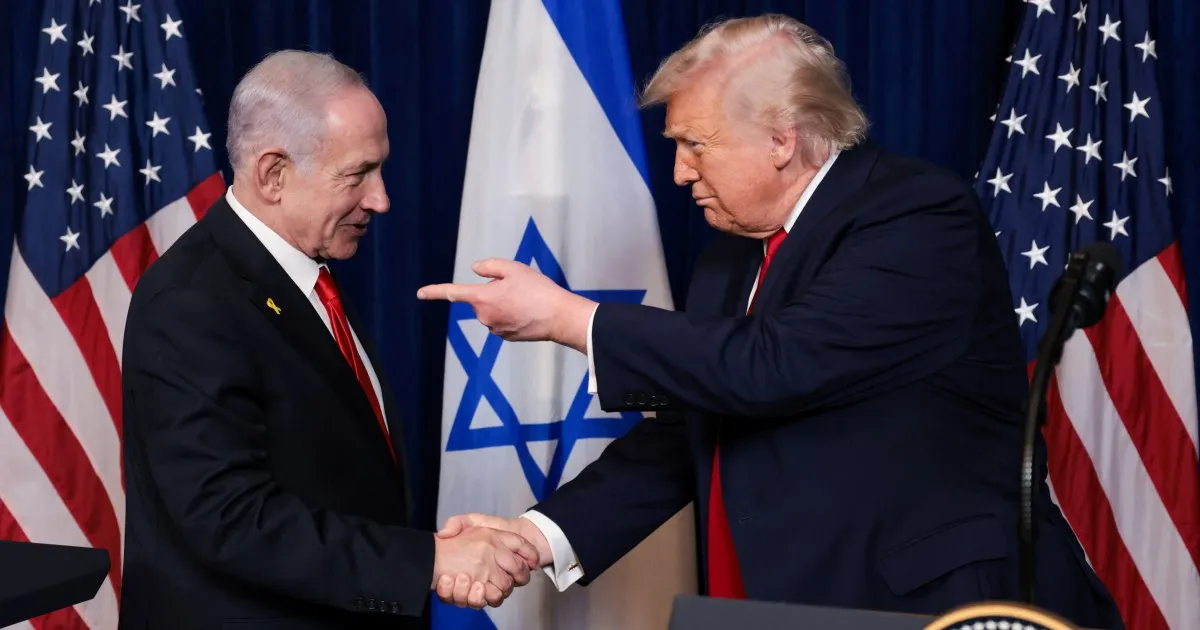
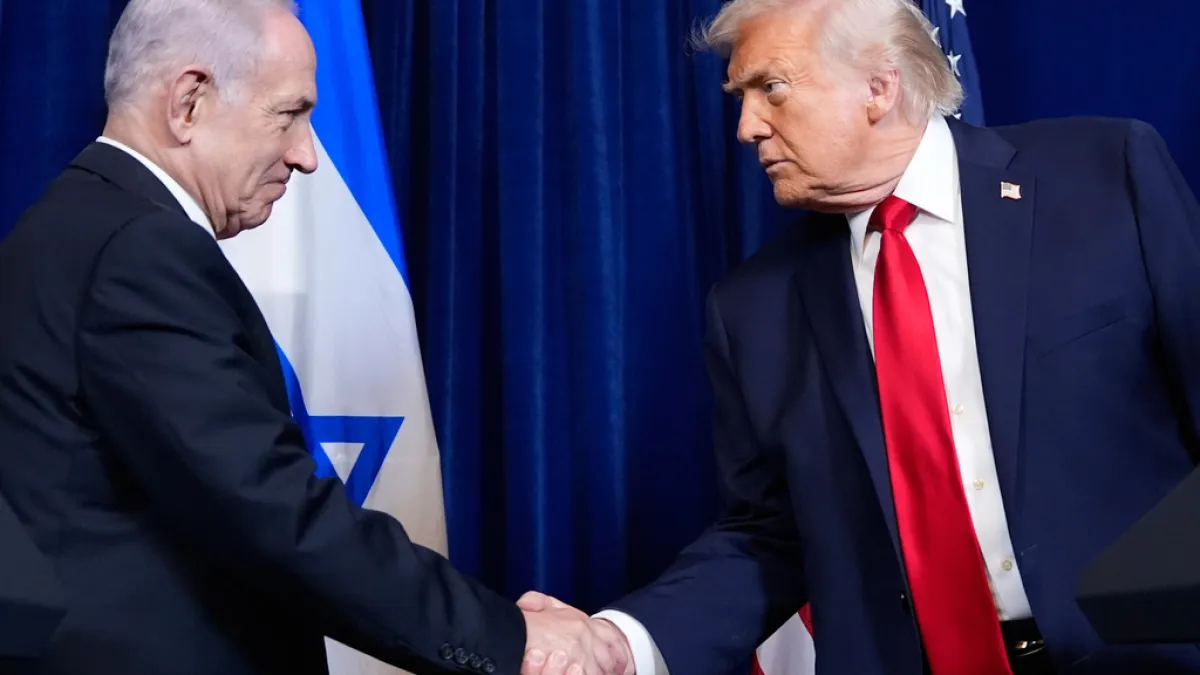
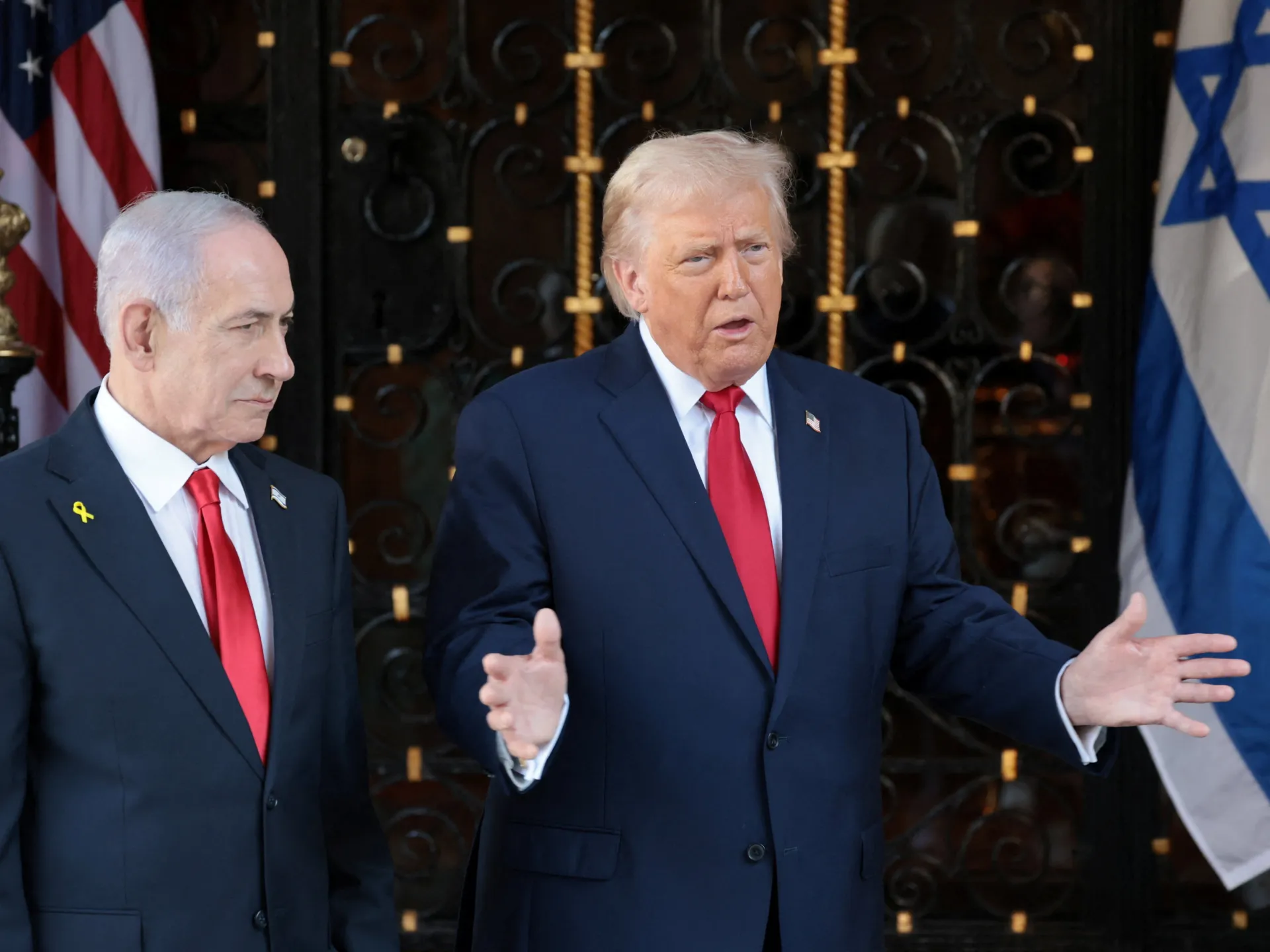
“Now I hear that Iran is trying to build up again, and if they are, we’re going to have to knock them down,” Trump said on Monday during a joint news conference with visiting Israeli Prime Minister Benjamin Netanyahu. “We’ll knock them down. We’ll knock the hell out of them. But hopefully, that’s not happening.”

Iran was quick to respond to Trump’s threats.

“The response of the Islamic Republic of Iran to any oppressive aggression will be harsh and regrettable,” President Masoud Pezeshkian wrote in a social media post.

The Trump administration has also taken a confrontational approach towards Venezuela.

The US president announced this week that the US “hit” a dock in the Latin American country that he said was used to load drug boats. Details of the nature of the strike remain unclear.

Trump and some of his top aides have falsely suggested that Venezuela’s oil belongs to the US. Washington has also accused Venezuelan President Nicolas Maduro, without evidence, of leading a drug trafficking organisation.

The Trump administration has simultaneously been carrying out strikes against what it says are drug-running vessels in the Caribbean Sea and eastern Pacific Ocean, a campaign that many legal experts said violates US and international law and is tantamount to extrajudicial killings.

Over the past month, the US also has seized at least two oil tankers off the coast of Venezuela after Trump announced a naval blockade against the country.

Venezuela has rejected the US moves as “piracy” and accused the Trump administration of seeking to topple Maduro’s government.

Source link

Netanyahu’s Mar-a-Lago win that wasn’t | Israel-Palestine conflict

Yesterday, Israeli Prime Minister Benjamin Netanyahu paid his fifth visit to the United States since President Donald Trump took office in January. Before the meeting between the two, the Israeli press described the prime minister as fully engaged in an attempt to placate his domestic political partners by achieving “concessions” from Trump. What were these concessions? They were predominantly related to denying Turkiye any presence in the Gaza stabilisation force and to US approval for an Israeli strike on Iran.

Netanyahu failed on both counts. Trump specifically referred to his good relationship with Turkish President Recep Tayyip Erdogan, and spoke of “Bibi’s” respect for him, too. With regard to Iran, Trump mentioned Iran’s willingness to “make a deal” and provided clear guidelines for American involvement while saying nothing about authorising a solo Israeli operation. Israeli media suggests that Trump provided Israel with a “green light” for a strike on Iran. That is not reflected in Trump’s official statement in any way.

Trump talked about the reconstruction of Gaza beginning “soon”. When he spoke of the disarmament of Hamas, he said that it must happen or nearly 60 states will make it happen. Hamas has already agreed to disarm if the process is carried out by a Palestinian-led force. Trump said nothing to suggest that he does not agree with Hamas’s logic, especially when one considers the refusal of most participating countries to carry out a violent disarmament of the group. Trump also made no mention of the last hostage body held in Gaza as a necessary condition for moving to “Stage II” of the deal.

Nothing is more significant in Trump’s world than the use of language and symbolic gestures. When Trump referred to Netanyahu as a “great wartime prime minister” as he was discussing his blueprint for “peace”, he made it clear that his guest was running out of time. This was also clearly apparent when Trump said he had spoken with Israel’s official head of state, President Isaac Herzog, about a pardon for Netanyahu and was assured such a pardon was imminent. President Herzog, by the way, categorically denied that such a conversation had taken place.

What may be the best reflection of the Trump-Netanyahu meeting at Mar-a-Lago has to do with a brief conversation over the phone between Trump and Israeli Minister of Education Yoav Kish. The purpose of the call was for Kish to inform Trump that he will be awarded the Israel Prize on Israel’s Independence Day in 2026.

The award is given out by the minister of education in a televised ceremony attended by Israel’s leaders. It marks the official end of Independence Day celebrations. Its recipients are most frequently career academics at a late stage of their careers. The prize reflects a lifetime’s devotion to the expansion of human knowledge. Sometimes, special prizes are awarded in civic categories, most often for what is called a “life’s work”, such as fostering coexistence between Jews and Palestinians, promoting social equality, etc.

The prize, as understood by its name, is nearly always awarded to Israeli citizens but can be awarded to Jews living abroad and even to non-Jews who have made a “special contribution to the Jewish people”.

In other words, the Trump-Netanyahu meeting involved Trump instructing Netanyahu with regard to upcoming measures and Netanyahu snapping to attention and signalling his acceptance by heaping yet another semi-fictitious honour on Trump’s already crowded head.

Yet, despite these clear displays of the unequal nature of their relationships, there have been persistent voices suggesting that Trump and Netanyahu are operating in cahoots. According to such analyses, the United States fully supports the Israeli attempt to “change the Middle East” – Netanyahu’s favourite phrase – as the Americans make a pivot to Asia and the global race for dominance with China.

Israel will “take care” of the “Iranian threat” as the Arabs languish in their own irresolvable internal tensions and competitions. The mobilisation of Arab states after the Israeli strike on Doha is all but ignored.

These voices also point to the fact that Israel continues to completely ignore the “ceasefire” enacted by “Stage I” of the Trump plan, and does so with the full support of the United States. In fact, Trump said that Israel has “lived up” to the ceasefire “100 percent”, and that he has no problems with Israel’s actions in Gaza. These include bombing, destruction of buildings and infrastructure, the blocking of life-saving aid amid harsh weather and many other steps that ensure and expand the ongoing Israeli genocide.

It is indeed extremely difficult to reconcile this with the notion that Israel has run out of options for delaying Stage II and an internationally-brokered solution to Palestinian statehood. After all, one hears repeatedly from Israeli media about initiatives to “settle Gaza”, “relocate” 1.5 million Palestinians to Somaliland and dismantle the Oslo Accords, one ethnically cleansed Palestinian community at a time.

The US and other countries, like Germany and the UK, continue to buy Israeli arms at a massive rate and to equip Israel with arms of their own. How is it possible to reach a conclusion that the Israeli genocide is reaching its endgame?

The short answer is that it is not. Israel continues to kill, destroy, subvert and expand its efforts to destabilise any semblance of regional order. For example, Israel recognised the statehood of Somaliland in order to have a “dumping ground” for ethnically cleansed Palestinians, but also to pit the United Arab Emirates against Saudi Arabia, as both have conflicting interests in Somalia, and, by doing so, ensure that the Palestinian question is not addressed and that everyone remains frozen by fear of Israeli weapons.

The longer answer recognises the effects of this genocide on Israel itself: Genocide consumes genocidaires.

That is not to suggest that justice is assured by cosmic forces; far from it. Justice should be pursued at the most grounded and realistic level, as should the dignity and preservation of Palestinian lives.

However, the genocide has shaped Israel in its image on a daily, immediate level. Violence is rising as quickly as the prices of the staples, democracy is backsliding, and there is no end in sight to the “forever war”. This is not an abstract, “strategic” matter.

While Israel has been actively seeking to delete Palestinian identity for nearly 80 years, it has not succeeded in doing so. Israel’s internal contradictions have surfaced with paralysing force over the past two years.

Israel will not “die” or “recede”, but the gap between Israeli perceptions of the world and global perceptions of Israel has never been wider.

Trump and his vision of America do not appreciate “losers”. Israel no longer has any “wins” in the offing. It can and does kill and burn, procrastinate and obfuscate.

Even Trump recognises that this power has no lasting effects following its own immediate application. Israel has no options. There is no greater loss.

The views expressed in this article are the author’s own and do not necessarily reflect Al Jazeera’s editorial stance.

Source link

Judge blocks Trump effort to strip South Sudan deportation protections | Donald Trump News

Trump is seeking to end protected status for South Sudan, claiming country no longer poses danger to those returning.

A federal judge has blocked the administration of President Donald Trump from stripping temporary protections from deportations for South Sudanese citizens living in the United States.

US District Judge Angel Kelley in Boston, Massachusetts, granted an emergency request on Tuesday in a lawsuit filed by several South Sudanese nationals and an immigrant rights group.

Recommended Stories

list of 3 itemsend of list

The order prevents the temporary protected status (TPS) for South Sudanese citizens from expiring on January 5 as the Trump administration has sought.

The lawsuit, led by the African ‍Communities Together, accuses the US Department of Homeland Security of acting unlawfully in its effort to strip South Sudanese citizens of TPS, a US immigration status granted to citizens of countries experiencing natural disasters, conflict or other extraordinary circumstances that could make return to their homelands dangerous.

The status was initially granted for South Sudan in 2011 when the country officially broke away from Sudan. It has been repeatedly renewed amid repeated bouts of fighting, widespread displacement and regional instability.

​The status allows eligible individuals to work and receive temporary protection from deportation.

The lawsuit further alleged that the Trump administration exposed South Sudan citizens to being deported to a country facing what is widely considered one of the world’s worst humanitarian crises.

Homeland Security Secretary Kristi Noem, in a notice published on November ‌5, had argued the country no longer met the conditions for TPS.

“With the renewed peace in South Sudan, their demonstrated commitment to ensuring the safe reintegration of returning nationals, and improved diplomatic relations, now is the right time to conclude what was always intended to ‌be a temporary designation,” she said, appearing to refer to a tenuous 2018 peace agreement.

The statement contradicted the findings of a panel of United Nations experts, who wrote in a report to the UN Security Council in November that “while the contours of the conflict may be altered, the resulting human suffering has remained unchanged.”

“Ongoing conflict and aerial bombardments, coupled with flooding and the influx of returnees and refugees from the Sudan, have led to near-record levels of food insecurity, with pockets of famine reported in some of the communities most affected by renewed fighting,” it added.

The Trump administration has increasingly targeted TPS as part of its crackdown on immigration and its mass deportation drive.

It has moved to similarly ‌end TPS for foreign nationals from countries including Syria, Venezuela, Haiti, ⁠Cuba and Nicaragua, prompting several court challenges.

It has also sought to deport individuals to countries in Africa, even if they have no ties there.

Source link

Iran warns of ‘severe’ response in wake of Trump’s new strikes threat | Israel-Iran conflict News

US president says he would back attacks if Tehran rebuilds nuclear or missile programmes.

Iran has promised to respond harshly to any aggression after United States President Donald Trump threatened further military action, should Tehran attempt to rebuild its nuclear programme or missile capabilities.

President Masoud Pezeshkian issued the warning on X on Tuesday, a day after Trump met Prime Minister Benjamin Netanyahu at his Florida estate, where he firmly leaned into the Israeli regional narrative yet again.

The US had not previously said it would target Iran’s missile capabilities, which has long been an Israeli aspiration, focusing instead on Tehran’s nuclear programme. Iran has repeatedly said its nuclear activities are for civilian purposes only, and neither US intelligence nor the UN’s nuclear watchdog found any evidence of atomic weapons production before the June attacks by the US and Israel.

Iran has ruled out negotiating over its missile programme.

The leaders’ comments raise the spectre of renewed conflict just months after a devastating 12-day war in June that killed more than 1,100 Iranians and left 28 in Israel dead.

Pezeshkian said the response of Iran to any aggression would be “severe and regret-inducing”. His defiant message came hours after Trump told reporters at his Mar-a-Lago resort that Washington could carry out another major assault on Iran.

“Now I hear that Iran is trying to build up again, and if they are, we’re going to have to knock them down,” Trump said, standing alongside Netanyahu. “We’ll knock the hell out of them.”

The US president said he would support strikes on Iran’s nuclear programme “immediately” and on its missile facilities if Tehran continues developing long-range weapons.

Israeli officials have expressed concern in recent weeks that Iran is quietly rebuilding its ballistic missile stockpile, which was significantly depleted during the June conflict.

“If the Americans do not reach an agreement with the Iranians that halts their ballistic missile program, it may be necessary to confront Tehran,” an Israeli official told Ynet this week.

Pezeshkian recently described the standoff as a “full-scale war” with the US, Israel and Europe that is “more complicated and more difficult” than Iran’s bloody conflict with Iraq in the 1980s, which left more than one million dead.

The June war saw Israel launch nearly 360 strikes across 27 Iranian provinces over 12 days, according to conflict monitoring group ACLED, targeting military installations, nuclear facilities and government buildings.

The assault destroyed an estimated 1,000 Iranian ballistic missiles and killed more than 30 senior military commanders and at least 11 nuclear scientists.

Iran fired more than 500 missiles at Israel during the conflict, with approximately 36 landing in populated areas. While Trump claimed Iranian nuclear capabilities were “completely obliterated” by the strikes, experts disputed that, saying Tehran may have hidden stockpiles of enriched uranium and could resume production within months.

Despite the losses, Iranian officials insist the country is now better prepared for confrontation. In a recent interview, Pezeshkian said Iran’s military forces are “stronger in terms of equipment and manpower” than before the ceasefire.

The war failed to trigger the internal unrest it is suspected that Netanyahu had hoped for. No significant protests materialised, and daily life in Tehran largely continued despite the bombardment.

Source link

How are China’s new war games around Taiwan different from earlier drills? | Military News

China has held two-day military drills – Justice Mission 2025 – around Taiwan, marking the sixth round of large-scale war games since 2022, when then-Speaker of the United States House of Representatives Nancy Pelosi visited the island.

The exercise included 10 hours of live fire drills on Tuesday as Chinese forces practised encircling Taiwan and blockading its major ports.

Recommended Stories

list of 4 itemsend of list

What happened during the Justice Mission 2025?

The war games began on Monday in the waters and airspace to the north, southwest, southeast and east of Taiwan’s main island, according to China’s Eastern Theatre Command spokesperson Shi Yi.

The exercises saw China deploy its naval destroyers, frigates, fighter planes, bombers, drones, and long-range missiles to simulate seizing control of Taiwan’s airspace, blockading its ports, and striking critical infrastructure, “mobile ground targets” and maritime targets, Shi said.

The exercises also simulated a blockade of Taiwan and its main ports, Keelung and Kaohsiung.

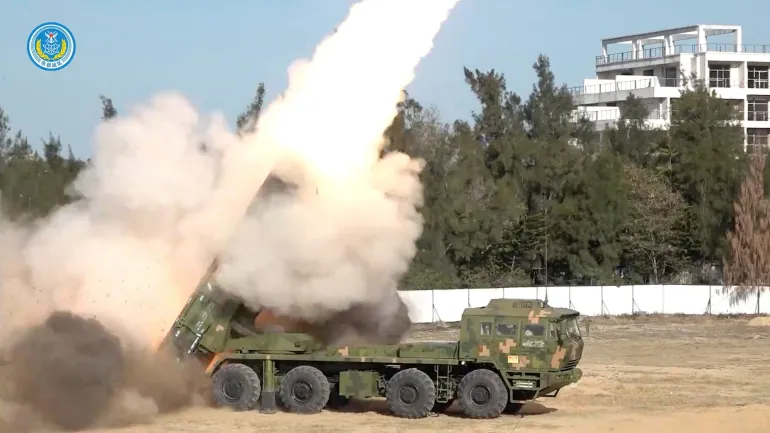
Tuesday’s live-fire drills were held in five zones around Taiwan between 8am and 6pm local time (00:00 GMT and 10:00 GMT), according to the Eastern Theatre Command. Chinese forces fired long-range rockets into the waters around the island, according to a video released by the military on social media.

Taiwan’s coastguard said seven rockets were fired into two drill zones around the main island.

A military equipment of the ground forces takes part in long-range live-fire drills targeting waters north of Taiwan, from an undisclosed location in this screenshot from a video released by the Eastern Theatre Command of China's People's Liberation Army (PLA) on December 30, 2025. Eastern Theatre Command/Handout via REUTERS ATTENTION EDITORS - THIS IMAGE WAS PROVIDED BY A THIRD PARTY. MANDATORY CREDIT. NO RESALES. NO ARCHIVES.
Ground forces take part in long-range live-fire drills targeting waters north of Taiwan, from an undisclosed location in this screenshot from a video released by the Eastern Theatre Command of China’s People’s Liberation Army on December 30, 2025 [Handout/Eastern Theatre Command via Reuters]

Taiwan’s Ministry of Defence said it had tracked 130 air sorties by Chinese aircraft, 14 naval ships and eight “official ships” between 6am on Monday and 6am on Tuesday.

Ninety of the air sorties crossed into Taiwan’s air defence identification zone (ADIZ), an area of land and sea monitored by Taipei, during the 24 hours, in the second-largest incursion of its kind since 2022.

How were the exercises different from last time?

Justice Mission 2025 was the largest war game since 2022 in terms of the area covered, according to Jaime Ocon, a research fellow at Taiwan Security Monitor.

“These zones are very, very big, especially the southern and southeast zones around Taiwan, which actually breached territorial waters,” he told Al Jazeera, referring to the region within 12 nautical miles (22km) of Taiwan’s coast. “That’s a big escalation from previous exercises.”

They also focused explicitly on blockading Taiwan, unlike past iterations, sending a strong message to Taipei and its unofficial allies, particularly the US and Japan.

“This is a clear demonstration of China’s capability to conduct A2/AD – anti-access aerial denial – making sure that Taiwan can be cut off from the world and that other actors like Japan, the Philippines, or the United States cannot directly intervene,” Ocon said.

A blockade would impact not only the delivery of weapons systems but also critical imports, such as natural gas and coal, that Taiwan relies on to meet nearly all its energy needs. It would also disrupt vital global shipping routes through the Taiwan Strait.

Alexander Huang, director-general of Taiwan’s Council on Strategic and Wargaming Studies, told Al Jazeera the drills were similar to those held after Pelosi’s visit in August 2022.

“For this drill, it actually interfered with international civil aviation routes and also maritime shipping routes. In previous drills, they tried to avoid that, but this time they actually disrupted the air and maritime traffic,” he said.

The drills also put pressure on Taiwan’s maritime and transport links to Kinmen and Matsu islands, which are closer to the Chinese mainland.

Why did China stage the exercises now?

China has a history of holding military exercises to express its anger with Taiwan and its allies, but large-scale exercises have become more frequent since Pelosi’s Taiwan visit.

Beijing claims Taiwan as a province and has accused the US of interfering in its internal affairs by continuing to sell weapons to Taipei and supporting its “separatist” government led by President William Lai Ching-te.

Washington does not officially recognise Taiwan, whose formal name is the Republic of China, but it has pledged to help Taipei defend itself under the 1979 Taiwan Relations Act and the 1982 Six Assurances.

The Justice Mission 2025 came just days after Washington approved a record-breaking $11.1bn arms sale to Taiwan.

China’s Ministry of Foreign Affairs said on Monday that the drills were a “punitive and deterrent action against separatist forces who seek ‘Taiwan independence’ through military build-up, and a necessary move to safeguard China’s national sovereignty and territorial integrity”. Beijing sanctioned 30 US firms and individuals over the arms sale.

Experts also say the exercises were linked to a separate but related diplomatic row between China and Japan.

Beijing was angered in November by remarks from Japanese Prime Minister Sanae Takaichi that an attack on Taiwan would be a “survival-threatening situation” for Japan. Such a scenario would legally permit Japan to exercise its “right of collective self-defence” and deploy its military, she said.

A display screen shows information on cancelled flights at Taipei Songshan Airport, as China conducts "Justice Mission 2025" military drills around Taiwan, in Taipei, Taiwan, December 30, 2025. REUTERS/Ann Wang
Several flights were cancelled at the Taipei airport during China’s latest military drills around Taiwan, December 30, 2025 [Ann Wang/Reuters]

How is Taiwan responding to the drills?

Taiwan cancelled more than 80 domestic flights on Tuesday and warned that more than 300 international flights could be delayed due to flight rerouting during the live-fire drills.

Taiwan’s Defence Ministry said the coastguard monitored the exercises near the outlying islands and that an undisclosed number of naval vessels had also been deployed nearby. Taipei also monitored all incursions into its ADIZ, including the Taiwan Strait, sections of coastal China, and waters around Taiwan.

In a statement on Tuesday, Defence Minister Wellington Koo said, “[Beijing’s] highly provocative actions severely undermine regional peace and stability [and] also pose a significant security risk and disruption to transport ships, trade activities, and flight routes.”

Koo described the exercises as a form of “cognitive warfare” that aimed to “deplete Taiwan’s combat capabilities through a combination of military and non-military means, and to create division and conflict within Taiwanese society through a strategy of sowing discord”.

How did the US respond to the drills?

US President Donald Trump has so far remained quiet about the military drills, telling reporters on Monday that he was “not worried”.

“I have a great relationship with President Xi, and he hasn’t told me anything about it,” Trump said when asked about the exercises during a news conference, according to Reuters. “I don’t believe he’s going to be doing it,” he added, seemingly referring to the prospect of actual military action targeting Taiwan.

William Yang, a senior analyst for Northeast Asia at the International Crisis Group, told Al Jazeera that Trump might avoid saying much about the Justice Mission 2025 exercises as he hopes to meet President Xi Jinping in April to discuss a US-China trade deal. “It’s a diplomatic strategy to make sure the US response is not going to immediately upset the temporary trade truce between the US and China,” Yang said.

“I think it’s quite consistent with how he personally and his administration have been handling the issue of Taiwan by trying to de-prioritise making public statements,” he said.

Source link

Five key takeaways from Trump-Netanyahu meeting in Florida | Israel-Palestine conflict News

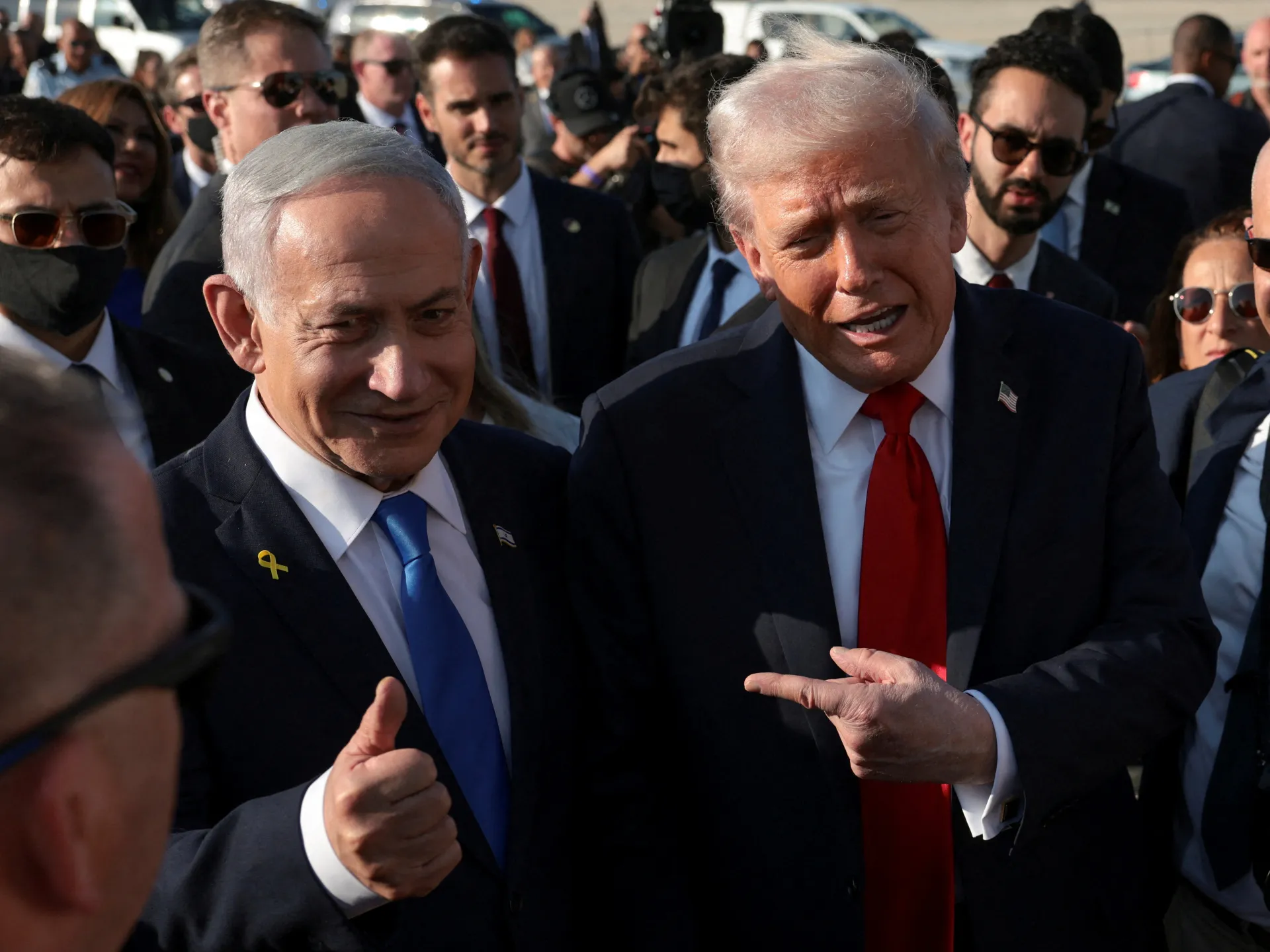
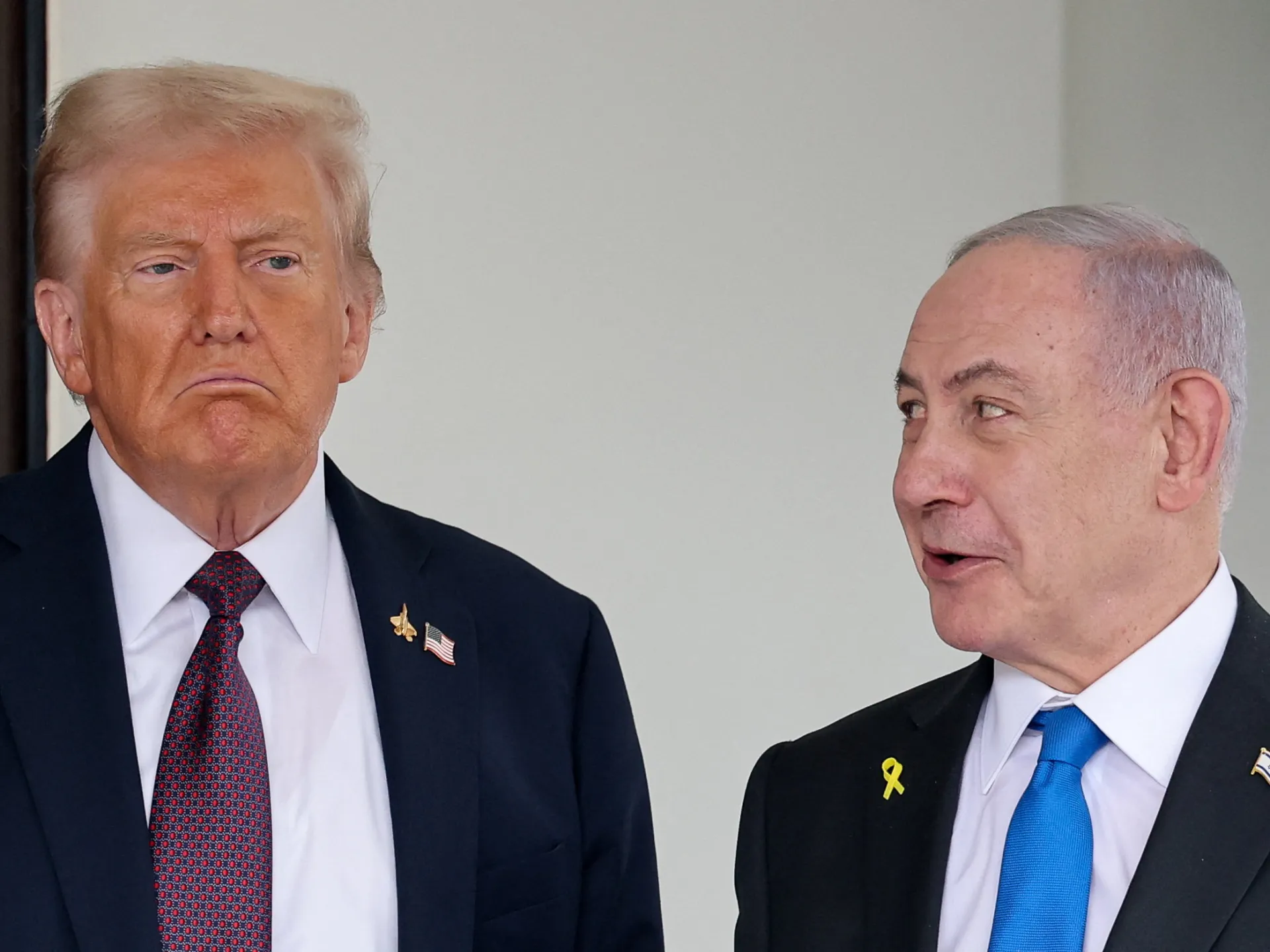
Israeli Prime Minister Benjamin Netanyahu and US President Donald Trump have presented a united front and heaped praise on each other as they held another meeting to discuss the tensions in the Middle East.

On Monday, Netanyahu paid his fifth visit to the United States since Trump’s inauguration in January, meeting the president at his Mar-a-Lago resort in Florida.

Recommended Stories

list of 3 itemsend of list

Their mutual flattery turned into geopolitical alignment as the two leaders addressed the most pressing issues in the Middle East: Gaza and Iran.

Trump claimed that Israel is helping the people of Gaza and dismissed the near-daily Israeli ceasefire violations.

Here are the key takeaways from Monday’s meeting.

Trump stresses Hamas must disarm

Before and after his meeting with Netanyahu, Trump stressed that Hamas must disarm, issuing a stern threat to the Palestinian group.

Asked what would happen if Hamas refused to give up its weapons, Trump said: “It would be horrible for them, horrible. It’s going to be really, really bad for them.”

Last week, US Secretary of State Marco Rubio said that Washington’s top priority was to move to the second phase of the ceasefire, which would see the establishment of a technocratic Palestinian administration and the deployment of an international police force.

But on Monday, Trump kept the focus on Hamas, reiterating the claim that other countries have offered to “wipe them out” if the group refuses to give up its weapons.

Israel has killed 414 Palestinians in Gaza since the start of the ceasefire in October, and it continues to restrict the flow of international aid into the territory, including temporary shelter provisions, despite people suffering deadly weather conditions in makeshift tents.

Trump, however, said that Israel is fully living up to its commitments under the deal – “100 percent”.

“I’m not concerned about anything that Israel is doing,” he told reporters.

US threatens Iran

Trump suggested that Washington would carry out further military action against Iran if Tehran rebuilds its nuclear programme or missile capacity.

The president kept returning to the oft-cited argument that the US air strikes against Iranian nuclear facilities in June are what paved the way for the ceasefire in Gaza.

“Now I hear that Iran is trying to build up again, and if they are, we’re going to have to knock them down,” Trump said.

“We’ll knock them down. We’ll knock the hell out of them. But, hopefully, that’s not happening.”

In recent weeks, Israeli officials and their US allies have shifted the focus to Iran’s missile programme, arguing it should be dealt with before it poses a threat to Israel.

When asked whether the US would back an Israeli attack targeting Iran’s missile programme, Trump said, “If they will continue with the missiles, yes. The nuclear? Fast. OK? One will be: Yes, absolutely. The other is: We’ll do it immediately.”

Iran has ruled out negotiating over its missile programme, and it has denied seeking to build a nuclear weapon.

Israel, meanwhile, is widely believed to have an undeclared nuclear arsenal.

Bromance festival

Since the early days of Israel’s genocidal war on Gaza, US media reports have suggested that the US president, first Joe Biden, then Trump, was angry or frustrated at Netanyahu.

But the US military and diplomatic support for Israel has never been interrupted.

Ahead of Netanyahu’s visit, similar reports emerged about a potential rift between him and Trump.

Nonetheless, the two leaders put on a show of brotherly romance on Monday.

Trump called Netanyahu a “hero”, stressing that Israel may not have existed without his wartime leadership.

“We’re with you, and we’ll continue to be with you, and a lot of good things are happening in the Middle East,” Trump told Netanyahu.

“We have peace in the Middle East, and we’re going to try and keep it that way. I think we will be very successful in keeping it that way. And you’ve been a great friend.”

The US president also highlighted his efforts to secure a presidential pardon for Netanyahu, who is facing corruption charges in Israel.

The Israeli prime minister announced that the US president will be awarded the Israel Prize, which is normally given to Israeli citizens.

“I have to say that this reflects the overwhelming sentiment of Israelis across the spectrum,” Netanyahu said.

“They appreciate what you’ve done to help Israel, and to help our common battle against the terrorists and those who would destroy our civilisation.”

Netanyahu has notably not been pardoned.

Trump calls for Israel-Syria rapprochement

One area where Trump appeared to press Netanyahu was Syria.

Trump said Netanyahu is “going to get along” with Syria, lauding Syrian President Ahmed al-Sharaa.

Since the fall of former President Bashar al-Assad last year, Israel has expanded its occupation of southern Syria beyond the Golan Heights, seizing large areas in Jabal al-Sheikh. The Israeli military has also been carrying out raids, reportedly abducting and disappearing people in the country.

The new Syrian authorities have stressed that they do not seek conflict with Israel, but talks to reach a security agreement between the two countries have stalled.

“We do have an understanding regarding Syria,” Trump said. “Now, with Syria, you have a new president. I respect him. He’s a very strong guy, and that’s what you need in Syria.”

Netanyahu was non-committal on Israel’s approach to Syria.

“Our interest is to have a peaceful border with Syria,” he said. “We want to make sure that the border area right next to our border is safe — we don’t have terrorists, we don’t have attacks.”

On renewed war in Lebanon: ‘We’ll see about it.’

Since the start of the truce in Gaza, Israel has intensified its attacks in Lebanon, leading to fears that it may re-launch its full-scale war against the country.

Earlier this year, the Lebanese government issued a decree to disarm Hezbollah, but the group pledged to hold onto its weapons to defend the country against Israel.

On Monday, Trump did not rule out renewing the conflict in Lebanon.

“We’ll see about it,” the president said when asked whether he would support more Israeli strikes in Lebanon.

“The Lebanese government is at a little bit of a disadvantage, if you think of it, with Hezbollah. But Hezbollah has been behaving badly, so we’ll see what happens.”

Source link

Trump says US would back strikes against Iran’s missile programme | Donald Trump News

Speaking alongside Benjamin Netanyahu, Trump threatens to ‘knock’ down Iran’s attempts to rebuild nuclear capabilities.

United States President Donald Trump suggested that Washington would consider further military action against Iran if Tehran rebuilds its nuclear programme or missile capacity.

Speaking in Florida on Monday, Trump did not rule out a follow-up attack after the June air strikes that damaged three Iranian nuclear facilities.

Recommended Stories

list of 3 itemsend of list

“Now I hear that Iran is trying to build up again, and if they are, we’re going to have to knock them down,” Trump told reporters. “We’ll knock them down. We’ll knock the hell out of them. But hopefully that’s not happening.”

Trump issued his threat as he welcomed Israeli Prime Minister Benjamin Netanyahu to his Mar-a-Lago estate in Palm Beach, Florida.

Trump said that the US and Israel have been “extremely victorious” against their enemies, referring to the wars in Gaza and Lebanon, and the strikes against Iran in June.

When asked whether the US would back an Israeli attack against Iran targeting Tehran’s missile programme, Trump said, “If they will continue with the missiles, yes; the nuclear, fast. Okay, one will be yes, absolutely. The other is: We’ll do it immediately.”

Another round of strikes against Iran would likely stir internal opposition in the US, including from segments of Trump’s own base of support.

Trump has repeatedly said that the June strikes “obliterated” Iran’s nuclear programme.

With the nuclear issue address, according to Trump, Israeli officials and their US allies have been drumming up concern about Iran’s missiles.

Tehran fired hundreds of missiles at Israel in June in response to the unprovoked Israeli attack that killed the country’s top generals, several nuclear scientists and hundreds of civilians.

Senator Lindsey Graham, an Iran hawk who is close to Trump, visited Israel this month and repeated the talking points about the dangers of Iran’s long-range missiles, warning that Iran is producing them “in very high numbers”.

“We cannot allow Iran to produce ballistic missiles because they could overwhelm the Iron Dome,” he told The Jerusalem Post, referring to Israel’s air defence system. “It’s a major threat.”

Iran has ruled out negotiating over its missile programme, which is at the core of its defence strategy.

On Monday, Trumps said Iran should “make a deal” with the US.

“If they want to make a deal, that’s much smarter,” Trump said. “You know, they could have made a deal the last time before we went through a big attack on them, and they decided not to make the deal. They wish they made that deal.”

The prospect of returning to war in the Middle East comes weeks after the Trump administration released a National Security Strategy calling for shifting foreign policy resources away from the region and focusing on the Western Hemisphere.

In June, Iran responded to the US strikes with a missile attack against a US base in Qatar, which did not result in American casualties. Trump announced a ceasefire to end the war shortly after the Iranian response.

But advocates warn that another episode of attacking Iran may escalate into a longer, broader war.

Trita Parsi, executive vice president at the Quincy Institute, a US think tank that promotes diplomacy, told Al Jazeera last week that the Iranian response would be “much harsher” if the country is attacked again.

“The Iranians understand that unless they strike back hard and dispel the view that Iran is a country that you can bomb every six months – unless they do that – Iran will become a country that Israel will bomb every six months,” Parsi said.

Source link

2025: Trump’s year of ’emergency’, ‘invasion’ and ‘narcoterrorism’ | Donald Trump News

Washington, DC – For United States President Donald Trump, 2025 was a year of crisis.

Roaring into office on January 20 on the heels of a raucous political comeback, the president’s own telling describes a series of actions that have been swift and stark.

Recommended Stories

list of 3 itemsend of list

To name a few, he has envisioned rooting out a migrant “invasion” that includes staunching legal immigrants, and, potentially, targeting US citizens; he has touted a hard reset of uneven trade deals that pose “an unusual and extraordinary threat to the national security”; and, in the final months of the year, he has gone on the military offensive against “narcoterrorists” that he claims seek to topple the US through illicit drugs, possibly used as “weapons of mass destruction”.

For legal observers, Trump’s approach has been a yet-undecided stress test on presidential power, cranked by the gears of broadly interpreted emergency statutes and untrammelled executive authority.

Decisions by the court, lawmakers and voters in the 2026 midterm elections could determine how that strategy resonates or is restrained.

“The use or abuse of emergency powers is only one corner of a larger picture,” Frank Bowman, professor emeritus of law at the University of Missouri, told Al Jazeera.

“In many cases, the administration is simply doing stuff that certainly any pre-existing understandings of executive authority would have said you cannot do,” he said.

Emergency powers and ‘national security’

The US Constitution, unlike many countries, has no catch-all emergency power authorisation for presidents.

In fact, the US Supreme Court ruled in 1952 that presidents have no such implied authorities, explained David Driesen, professor emeritus at Syracuse University College of Law. Still, Congress has passed “numerous statutes that grant the president limited emergency powers under limited circumstances to do specific things”.

Nearly every modern president has used emergency powers with varying degrees of gusto, with Congress and the Supreme Court historically wary of reining in those actions.

Like many US presidents, Trump has also used broad and ambiguous national security claims to justify expanding his reach.

But several factors have set Trump’s second term apart, most notably the lack of distinct inciting events for many of the powers claimed, Driesen said.

“I’ve never seen a president invoke emergency powers to justify practically all of this policy agenda,” he told Al Jazeera, “and I’ve also never seen a president use them to seize powers that really are not in the statutes at all.”

Put simply, he added, “to Trump, everything is an emergency”.

The tone was set on day one, with Trump’s broad executive order declaring that irregular crossings at the southern border meant nothing less than “America’s sovereignty is under attack”. The order has been used to indefinitely suspend US asylum obligations, surge forces to the border, and seize federal land.

The same day, Trump declared a national emergency under the International Emergency Economic Powers Act (IEEPA) to designate Tren de Aragua (TdA) and La Mara Salvatrucha (MS-13) as “foreign terrorist organizations”, posing a threat to the “national security, foreign policy, and economy” of the US.

The administration has, in part, relied on and expanded that order in efforts to circumvent due process in its mass deportation push and to rhetorically justify a militaristic approach to Latin America.

Simultaneously, Trump also declared a wide-ranging energy emergency on his first day in office, laying the groundwork to bypass environmental regulations.

To be sure, as Bowman explained, Trump’s use of official emergency statutes has been only a piece of the puzzle, combined with his broad interpretation of constitutionally mandated power to reshape the government in ways big and small.

That has included cleaving civil servants from congressionally created government departments via the Department of Government Efficiency (DOGE), trying to fire heads of independent agencies, renaming institutions – possibly illegally – in his likeness, and allegedly bypassing required approvals to physically transform the White House.

But the invocation of emergency statutes has remained a backbone of his second term. Trump invoked an emergency to justify sanctioning the International Criminal Court (ICC) for its investigations into Israeli war crimes in Gaza.

He used the “emergency” of fentanyl smuggling to justify tariffs on Canada, Mexico and China, later unilaterally labelling the drug “weapons of mass destruction”.

In April, in one of his most challenged uses of an emergency authority, Trump cited an emergency statute to impose sweeping reciprocal tariffs against nearly all US trading partners.

A ‘mixed picture’

In review, 2025 has shown virtually no willingness from Congress, where both chambers remain narrowly controlled by Trump’s Republican Party, to challenge the president.

Rulings from lower federal courts, meanwhile, have offered a “mixed picture”, according to the University of Missouri’s Bowman, while the country’s top court has left wider questions unanswered.

Bowman noted the six conservative members of the nine-judge panel ascribe to varying degrees to the “unitary executive theory”, which argues the drafters of the constitution envisioned a strong consolidation of presidential power.

“On the one hand, Trump is obviously willing to declare emergencies where no rational person would really believe they exist,” Bowman said.

“On the other hand, at least the lower courts have pushed back, but it remains to be seen whether the Supreme Court will back them up.”

For example, Trump has been temporarily allowed to continue the deployment of National Guard troops in Washington, DC, a federal district where he declared a “crime emergency” in August. City officials have said the characterisation defies facts on the ground.

Despite claiming similar overlapping crime and immigration crises in liberal-led cities in states across the country, Trump has had far less success. Lower courts have limited deployments of the National Guard in California, Illinois, and Oregon.

Trump has also floated, but not yet invoked, the Insurrection Act, another law in the crisis portfolio dating back to 1792 that allows the president to deploy the military for domestic law enforcement to “suppress insurrections and repel invasions”.

A judicial response to the tactics behind Trump’s deportation drive has also been mixed.

Trump’s use of the Alien Enemies Act – a 1798 law designed to quickly expel foreign nationals during times of war – to swiftly deport undocumented individuals without due process has been constrained, but allowed to proceed by the Supreme Court with limited due process protections.

In one of the most-watched cases on the docket, the Supreme Court is expected to make a ruling when it returns to session in January on the legal justification of Trump’s reciprocal tariffs.

A lower court has previously ruled that Trump deployed the emergency statute illegally. Some conservative justices on the top court have also expressed wariness over the president’s claim.

The panel has appeared more amenable in a landmark case determining whether Trump can fire heads of independent agencies, also set to be decided in the new year.

The spectre of war

When it comes to unilaterally making war, Trump has been bounding down a well-trodden path of misused presidential power, according to Matt Duss, the executive vice president of the Washington, DC-based Center for International Policy.

The end of the year has been marked by US military strikes on alleged drug smuggling boats from Venezuela, decried by rights groups as extrajudicial killings.

The administration has claimed, without evidence, that over 100 people killed had sought to destabilise the US by flooding it with drugs. Trump has made a similar claim about the Nicolas Maduro-led government in Venezuela, as he has continued to rattle the sabre of land strikes.

The actions have been accompanied by a pugilistic rebranding of the Department of Defense as the Department of War, a reframing of criminal Latin American cartels as so-called “narcoterrorists” and declaring a new drive to bring the Western Hemisphere firmly under the US sphere of influence.

“We have to understand this in the context of multiple administrations of both parties abusing executive authority to essentially go to war,” said Duss, who explained that the practice accelerated in the so-called “global war on terror” post-September 11, 2001 attacks.

Most recently, Republicans – and a handful of Democrats – in the House of Representatives voted down two separate war powers resolutions that would require congressional approval for future strikes on alleged drug boats or on Venezuelan territory.

The vote, Duss said, underscored “Trump’s near-total control of the Republican Party despite the fact that he is blatantly violating his own campaign promises to end wars, rather than to start them”.

Public opinion

Trump’s control over his party and his influence writ-large over the country will largely be tested in next year’s midterm elections. The vote will determine control of the House and the Senate.

A slate of polls has indicated at least some degree of wariness in Trump’s use of presidential power.

In particular, a Quinnipiac poll released in mid-December found 54 percent of voters think Trump is going too far in his authority claims, while 37 percent think he is handling the role correctly. Another 7 percent believe Trump should go further in using the power of the presidency.

Another Politico poll in November found that 53 percent of US residents think Trump has too much power, while the president has seen an overall slump in his approval ratings since taking office.

To be sure, a panoply of factors determine US elections, and it remains unclear if voters were more likely to respond to the results of Trump’s approach to the presidency, or to the approach itself.

“Does the average person really think much about any of the theoretical bases for the things Trump is doing? And frankly, would the average person care very much if the results were, in the short term, results of which they approved?” University of Missouri’s Bowman mused.

“I don’t know the answer … How all this is perceived across the country, and what’s going to happen next, is anybody’s guess.”

Source link

Video: Trump and Zelenskyy hail ‘progress’ on Russia-Ukraine peace plan | Russia-Ukraine war

NewsFeed

US President Donald Trump and Ukrainian leader Volodymyr Zelenskyy are talking up prospects of ending the war with Russia, after meeting in Florida. But they admitted there are ‘thorny issues’ to resolve about the status of the Donbas region which has been annexed by Russia.

Source link

US President Trump says Russia-Ukraine truce talks in ‘final stages’ | Russia-Ukraine war News

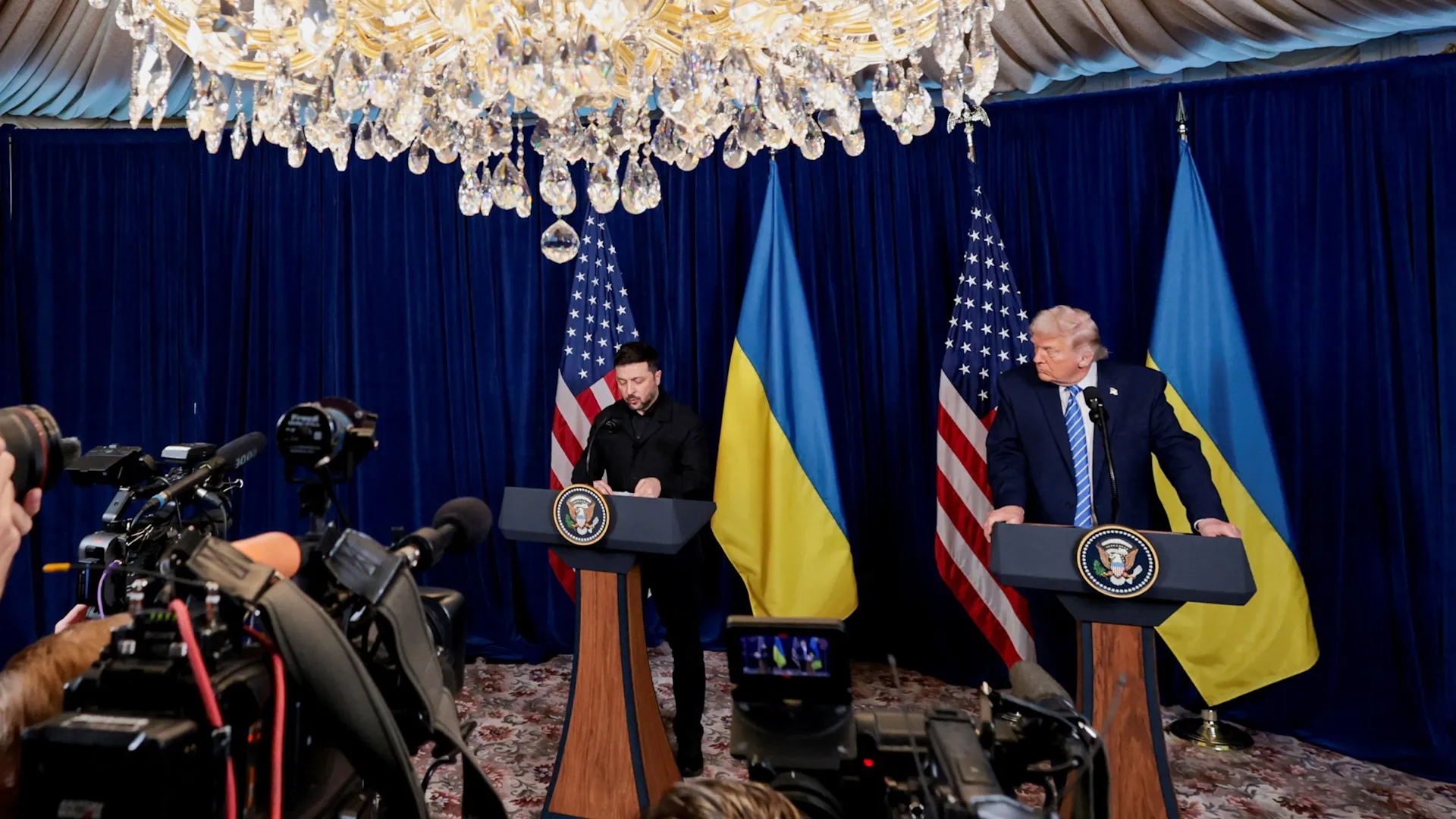
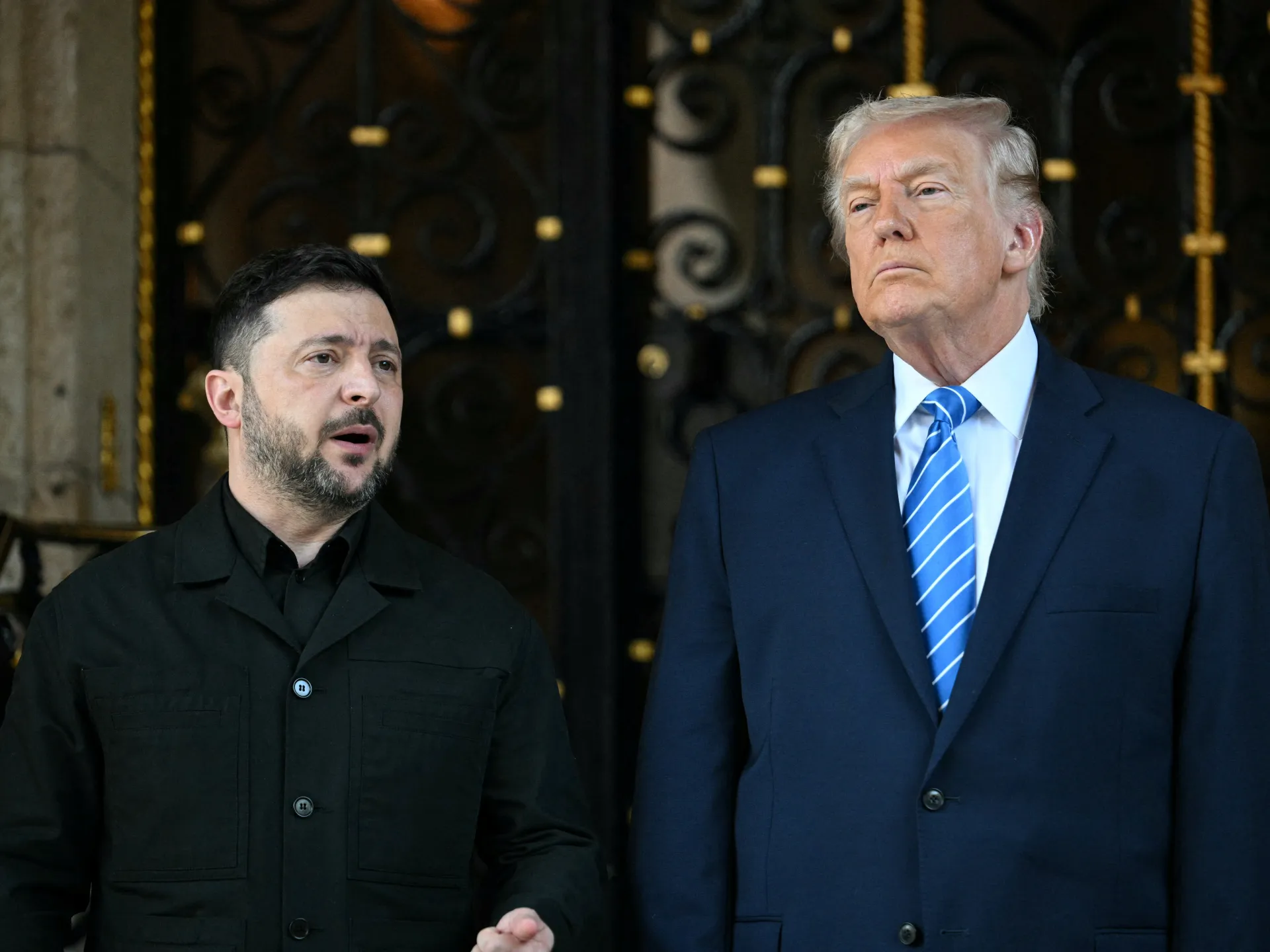
Diplomacy over the Russia-Ukraine war is in its “final stages”, said US President Donald Trump as he welcomed Ukraine’s leader Volodymyr Zelenskyy to his Florida estate.

The two leaders stood outside the Mar-a-Lago resort on Sunday and addressed reporters as they prepared to discuss a new proposal to end the bloody conflict.

Recommended Stories

list of 4 itemsend of list

The US president has been working hard to end the nearly four-year war in Ukraine for much of his first year back in office, showing irritation with both Zelenskyy and Russian President Vladimir Putin while publicly acknowledging the difficulty of ending the fighting.

“I think we’re … in final stages of talking and we’re going to see. Otherwise, it’s going to go on for a long time, and millions of additional people will be killed,” said Trump, adding he did not have a deadline for the process.

“I do believe that we have the makings of a deal that’s good for Ukraine, good for everybody.”

He added there would be “a strong agreement” to guarantee Ukraine’s security, one that would involve European countries.

“We have two willing parties. We have two willing countries … The people of Ukraine want [the war] to end, and the people of Russia want it to end, and the two leaders want it to end,” Trump said.

Russia intensified its attacks on Ukraine’s capital in the days before the Florida meeting.

Zelenskyy, by Trump’s side, said he and the US president would discuss issues of territorial concessions, which have so far been a red line for his country. He said his negotiators and Trump’s advisers “have discussed how to move step by step and bring peace closer” and would continue to do so in Sunday’s meeting.

During recent talks, the US agreed to offer certain security guarantees to Ukraine similar to those offered to other members of NATO.

The proposal came as Zelenskyy said he was prepared to drop his country’s bid to join the security alliance if Ukraine received NATO-like protection designed to safeguard it against future Russian attacks.

Oleksandr Kraiev, an analyst with the think-tank Ukrainian Prism, said the people of Ukraine are “quite cynical” about the talks brokered by the United States.

“We tried this in 2015, 2016, 2017, and unfortunately each time the Russians broke even the ceasefire regime, not even talking about the peace process,” he told Al Jazeera.

“So we have little faith that a proper peace process will take place. As of now we’re striving for a ceasefire as a precondition for any kind of talks… We cannot trust the Russians with a peace deal, but a ceasefire is something we’re working on.”

‘Blindsided yet again’

Trump’s upbeat tone comes despite widespread scepticism in Europe about Putin’s intentions after Russia carried out another massive bombardment of the Ukrainian capital just as Zelenskyy headed to Florida.

Before Zelenskyy arrived, Trump spoke with Putin by phone for more than an hour and said he planned to speak again after the Zelenskyy meeting – catching Ukrainian leaders off guard, reported Al Jazeera’s Shihab Rattansi.

“From what we’re hearing, the Zelenskyy delegation here have been blindsided yet again by Donald Trump. And according to the Russians, it was at the Americans’ insistence there should be a call with Vladimir Putin the hour before Zelenskyy arrived,” said Rattansi, speaking from Palm Beach, Florida.

Meanwhile, while there is talk about land concessions from Ukraine’s side, they are outside the framework Zelenskyy is hoping for.

The Kremlin gave a more pointed readout of Trump’s talks with Putin, saying the US leader agreed a mere ceasefire “would only prolong the conflict” as it demanded Ukraine compromise on territory.

Zelenskyy said last week that he would be willing to withdraw troops from Ukraine’s eastern industrial heartland as part of a plan to end the war, if Russia also pulls back and the area becomes a demilitarised zone monitored by international forces.

Putin has publicly said he wants all the areas in four key regions captured by his forces, as well as the Crimean Peninsula, illegally annexed in 2014, to be recognised as Russian territory. He also insisted that Ukraine withdraw from some areas in eastern Ukraine that Moscow’s forces have not captured.

Kyiv has publicly rejected all those demands.

Trump has been somewhat receptive to Putin’s conditions, making the case that the Russian president can be persuaded to end the war if Kyiv agrees to cede Ukrainian land in the Donbas region, and if Western powers offer economic incentives to bring Russia back into the global economy.

Source link

Javad Zarif: Main threat to the Middle East is Israel, not Iran | Israel-Iran conflict

Iran’s former foreign minister argues Israel, backed by the US, has killed every opportunity for peace.

Months after being attacked by the United States and Israel, Iran finds itself in the crosshairs again, with Israeli officials lobbying US President Donald Trump to address Tehran’s ballistic missiles.

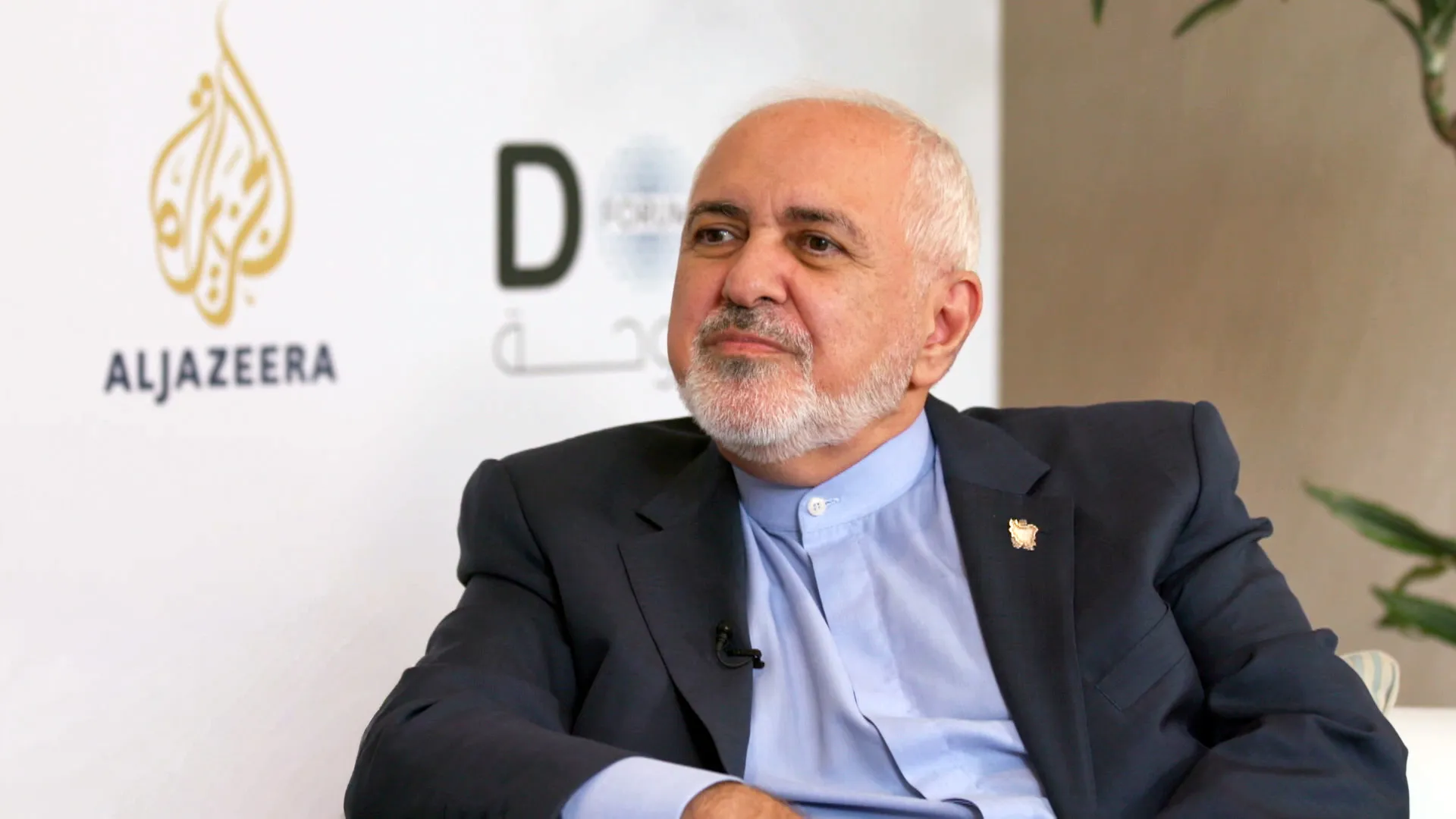
Veteran Iranian diplomat Javad Zarif tells host Steve Clemons that “everybody lost any faith in diplomacy” after Israel and the US attacked Iran following five rounds of reconciliation talks between Washington and Tehran.

Zarif added that Israel has historically thwarted every opportunity for reconciliation between Iran and the US, and that Trump’s style of diplomacy is disastrous, as it creates “negotiations that end up in war”.

Source link

US-Israel ties: What Netanyahu and Trump will discuss in Florida | Donald Trump News

Israeli Prime Minister Benjamin Netanyahu will visit the United States to meet with President Donald Trump as regional turmoil approaches a boiling point amid Israel’s attacks in Palestine, Lebanon and Syria and mounting tensions with Iran.

Netanyahu is to hold talks with Trump at the president’s Mar-a-Lago resort in Florida on Monday as Washington pushes to complete the first phase of the Gaza truce.

Recommended Stories

list of 3 itemsend of list

The visit comes as the US continues to pursue its 20-point “peace plan” in the Palestinian enclave despite near-daily Israeli violations of the truce.

Israel is also escalating attacks in the occupied West Bank, Lebanon and Syria as Israeli officials suggest that another war with Iran is possible.

What will Netanyahu discuss with Trump, and where do US-Israel ties stand?

Al Jazeera looks at the prime minister’s trip to the US and how it may play out.

When will Netanyahu arrive?

The Israeli prime minister will arrive in the US on Sunday. However, the talks will not take place at the White House. Instead, Netanyahu will meet Trump in Florida, where the US president is spending the holidays.

The meeting between the two leaders is expected to take place on Monday.

How many times has Netanyahu visited Trump?

This will be Netanyahu’s fifth visit to the US in 10 months. The Israeli prime minister has been hosted by Trump more than any other world leader.

In February, he became the first foreign leader to visit the White House after Trump returned to the presidency.

He visited again in April and July. In September, he also met with Trump in Washington, DC, after the United Nations General Assembly in New York.

What has the relationship between Trump and Netanyahu been like so far?

Netanyahu often says Trump is the best friend Israel has ever had in the White House.

During his first term, Trump pushed US policy further in favour of Israel’s right-wing government. He moved the US embassy to Jerusalem, recognised and claimed Israeli sovereignty over Syria’s occupied Golan Heights and cut off funding to the United Nations agency for Palestinian refugees (UNRWA).

Since returning to the White House this year, Trump has shown a greater willingness to publicly disagree with Netanyahu. Still, his administration has provided unflinching support for Israel, including the decision to renew the genocidal war on Gaza in March after a brief ceasefire.

Trump joined the Israeli attack on Iran in June to the dismay of some segments of his base. And he pushed to secure the current truce in Gaza.

The US president also opposed the Israeli attack on Doha in September. And he swiftly lifted sanctions against Syria despite some apparent Israeli reservations.

The ties between the two leaders have seen some peaks and valleys. In 2020, Trump was irked when Netanyahu rushed to congratulate Joe Biden on his election victory against Trump, who has falsely insisted the election was fraudulent.

“I haven’t spoken to him [Netanyahu] since,” Trump told the Axios news site in 2021. “F*** him.”

The strong ties between the two leaders were rekindled after Trump won the presidency again in 2024 and unleashed a crackdown on Palestinian rights activists in the US.

In November, Trump formally asked Israeli President Isaac Herzog to pardon Netanyahu, who is facing corruption charges at home.

The two leaders, however, are not in complete alignment, and cracks in their positions are showing up over issues that include Gaza, Syria and the US partnerships with Turkiye and the Gulf states.

During his US visit, Netanyahu may seek to flatter Trump and project a warm relationship with the US president to advance his agenda and signal to his political rivals in Israel that he still enjoys support from Washington.

How has Netanyahu dealt with the US since October 7, 2023?

Since the outbreak of the war in Gaza, Netanyahu has asked for unchecked US diplomatic and military support.

Then-President Biden travelled to Israel 11 days after Hamas’s October 7, 2023, attacks on southern Israel, and he declared that support for the US ally is “vital for America’s national security”.

His “bear hug” of Netanyahu on arrival at the airport in Tel Aviv would set the stage for the US backing of Israel as it unleashed horror and destruction on Gaza, which has translated into more than $21bn in military aid and multiple vetoes at the UN Security Council over the past two years.

Netanyahu has seized on the notion that Israel is an extension of US interests and security structure. In a speech to the US Congress last year, the prime minister argued that Israel is fighting Iran indirectly in Gaza and Lebanon.

“We’re not only protecting ourselves. We’re protecting you,” he told US lawmakers.

Throughout the war, there have been countless reports that Biden and Trump have been displeased or angry with Netanyahu. But US weapons and political backing for Israel have continued to flow uninterrupted. And Netanyahu makes a point of always expressing gratitude to US presidents, even when there may be apparent tensions.

Where does the US stand on the Gaza truce?

US Secretary of State Marco Rubio said last week that the top priority for the Trump administration is to complete the first stage of the Gaza ceasefire and move from mere cessation of hostilities to long-term governance, stabilisation and reconstruction of the Palestinian enclave.

Israel has been violating the ceasefire in Gaza regularly, recently killing at least six Palestinians in an attack that targeted a wedding.

But Trump, who claims to have brought peace to the Middle East for the first time in 3,000 years, has focused on broadly moving the truce forward rather than on Israel’s daily conduct.

“No one is arguing that the status quo is sustainable in the long term, nor desirable, and that’s why we have a sense of urgency about bringing phase one to its full completion,” Rubio said last week.

The top US diplomat has also suggested that there could be some flexibility when it comes to disarming Hamas under the agreement, saying the “baseline” should be ensuring that the group does not pose a threat to Israel rather than removing the guns of every fighter.

But Israel appears to be operating with a different set of priorities. Defence Minister Israel Katz said on Tuesday that the country is looking to re-establish settlements in Gaza, which are illegal under international law.

He later walked back those comments but stressed that Israel would maintain a permanent military presence in the territory, which would violate the Trump plan.

Expect Gaza to be a key topic of discussion between Netanyahu and Trump.

Can a Syria agreement be reached?

Trump has literally and figuratively embraced Syrian President Ahmed al-Sharaa over the past year, lifting sanctions against the country and beginning security cooperation with his government’s security forces.

But Israel is pursuing its own agenda in Syria. Hours after the collapse of the government of former President Bashar al-Assad a year ago, Israel began expanding its occupation of Syria beyond the Golan Heights.

Although the new Syrian authorities stressed early on that they did not seek confrontation with Israel, the Israeli military launched a bombardment campaign against Syria’s state and military institutions.

Israeli forces have also been conducting raids in southern Syria and abducting and disappearing residents.

After the Israeli military killed 13 Syrians in an air raid last month, Trump issued a veiled criticism of Israel.

“It is very important that Israel maintain a strong and true dialogue with Syria and that nothing takes place that will interfere with Syria’s evolution into a prosperous state,” he said.

Syria and Israel were in talks earlier this year to establish a security agreement short of full diplomatic normalisation. But the negotiations appeared to collapse after Israeli leaders insisted on holding onto the land captured after al-Assad’s fall.

With Netanyahu in town, Trump will likely renew the push for a Syria-Israel agreement.

Why is Iran back in the headlines?

Netanyahu’s visit comes amid louder alarm bells in Israel about Iran rebuilding its missile capacity after their 12-day war in June.

NBC News reported last week that the Israeli prime minister will brief the US president about more potential strikes against Iran.

The pro-Israel camp in Trump’s orbit seems to be already mobilising rhetorically against Iran’s missile programme.

US Senator Lindsey Graham visited Israel this month and called Iran’s missiles a “real threat” to Israel.

“This trip is about elevating the risk ballistic missiles pose to Israel,” Graham told The Jerusalem Post.

Trump authorised strikes against Iran’s nuclear sites during the June war, which he said “obliterated” the Iranian nuclear programme.

Although there is no evidence that Iran has been weaponising its nuclear programme, fears about a possible Iranian atomic bomb were the driving public justification for the US involvement in the conflict.

So it will be hard for Netanyahu to persuade Trump to back a war against Iran, said Sina Toossi, a senior fellow at the Center for International Policy.

The president is portraying himself as a peacemaker and prioritising a possible confrontation with Venezuela.

“It could just as well backfire on Netanyahu,” Toossi said of the push for more strikes against Iran. But he underscored that Trump is “unpredictable”, and he has surrounded himself with pro-Israel hawks, including Rubio.

What is the state of US-Israel relations?

Despite growing dissent on the left and right of the US political spectrum, Trump’s support for Israel remains unwavering.

This month, the US Congress passed a military spending bill that includes $600m in military aid to Israel.

The Trump administration has continued to avoid even verbal criticism of Israel’s aggressive behaviour in the region, including Gaza ceasefire violations and the expansion of illegal settlements in the West Bank.

At a White House Hanukkah celebration on December 16, Trump bemoaned the growing scepticism of unconditional support for Israel in Congress, falsely likening it to anti-Semitism.

“If you go back 10, 12, 15 years ago, at the most, the strongest lobby in Washington was the Jewish lobby. It was Israel. That’s no longer true,” Trump said.

“You have to be very careful. You have a Congress in particular which is becoming anti-Semitic.”

Despite Trump’s position, analysts said the gap between the strategic priorities of the US and Israel is growing.

While Washington is pushing for economic cooperation in the Middle East, Israel is seeking “total dominance” over the region, including US partners in the Gulf, Toossi said.

“Israel is pushing this uncompromising posture and strategic objective that I think is going to come to a head more with core US interests,” Toossi told Al Jazeera.

What’s next for the US-Israel alliance?

If you drive down Independence Avenue in Washington, DC, you will likely see more Israeli than American flags displayed on the windows of congressional offices.

Despite the shifting public opinion, Israel still has overwhelming support in Congress and the White House. And although criticism of Israel is growing within the Republican base, Israel’s detractors have been pushed to the margins of the movement.

Marjorie Taylor Greene is leaving Congress; commentator Tucker Carlson is facing constant attacks and accusations of anti-Semitism; and Congressman Tom Massie is facing a Trump-backed primary challenger.

Meanwhile, Trump’s inner circle is filled with staunch Israel supporters, including Rubio, megadonor Miriam Adelson and radio show host Mark Levin.

But amid the erosion of public support, especially among young people, Israel may face a reckoning in American politics in the long term.

On the Democratic side, some of Israel’s strongest supporters in Congress are facing primary challenges from progressive candidates who are centring Palestinian rights.

The most powerful pro-Israel lobbying group, the American Israel Public Affairs Committee (AIPAC), is increasingly becoming a toxic brand for Democrats.

On the right, the faultlines in the consensus in support of Israel are growing wider. That trend was put on display at the right-wing AmericaFest conference this month when debates raged around support for Israel, a topic that was a foregone conclusion for conservatives a few years ago.

Although the Trump administration has been pushing to codify opposition to Zionism as anti-Semitism to punish Palestinian rights supporters, Vice President JD Vance has presented a more nuanced view on the issue.

“What is actually happening is that there is a real backlash to a consensus view in American foreign policy,” Vance recently told the UnHerd website.

“I think we ought to have that conversation and not try to shut it down. Most Americans are not anti-Semitic – they’re never going to be anti-Semitic – and I think we should focus on the real debate.”

Bottom line, the currents are changing, but the US commitment to Israel remains solid – for now.

Source link

US air strikes won’t fix Nigeria’s security crisis but could make it worse | Opinions

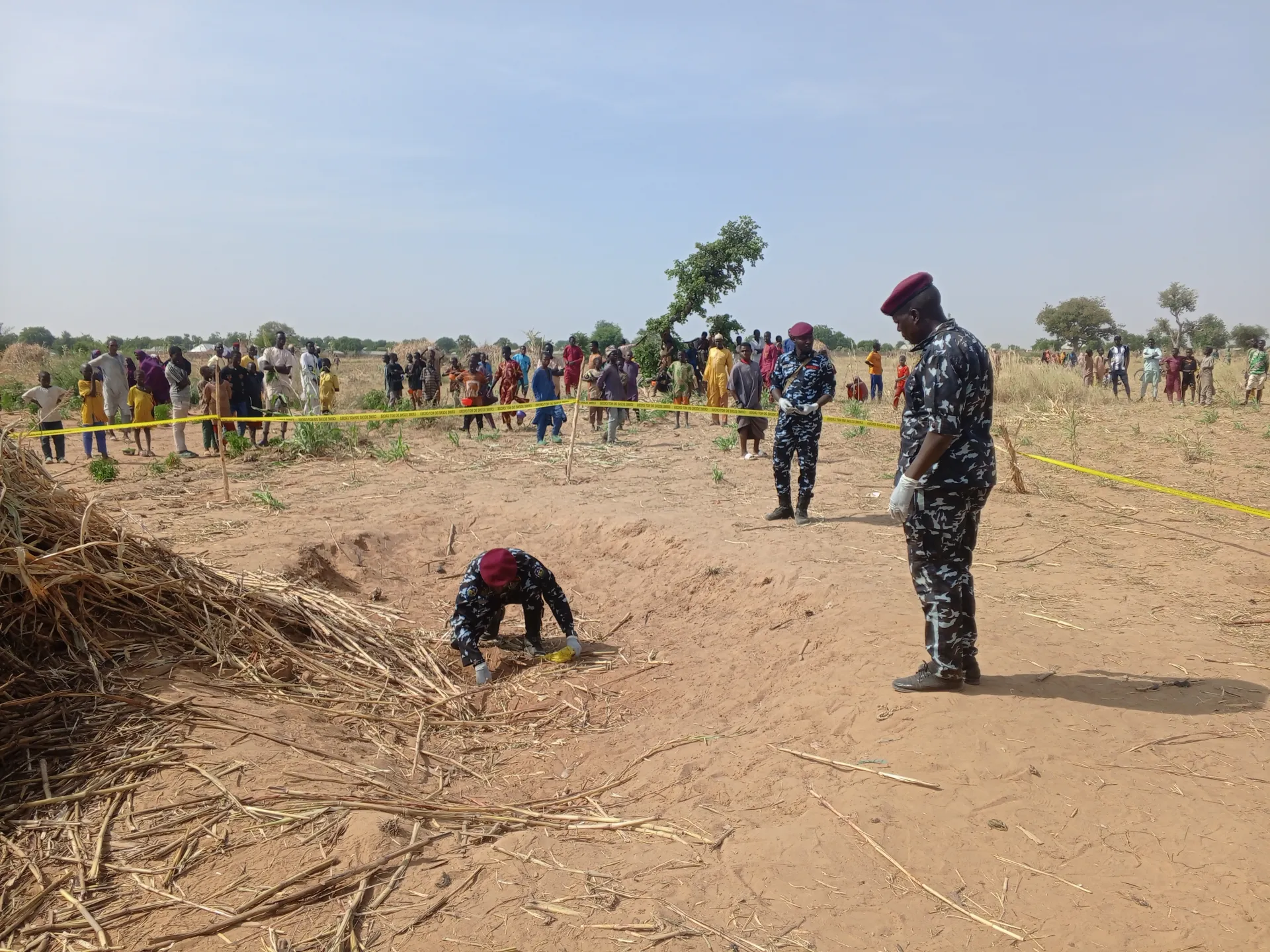
The recent strikes by the United States on alleged ISIL (ISIS) targets in northwest Nigeria have been presented in Washington as a decisive counter-terror response. For the supporters of the administration of US President Donald Trump, the unprecedented operation signalled his country’s renewed resolve in confronting terrorism. It is also making good on Trump’s pledge to take action on what he claims is a “Christian genocide” in Nigeria.

But beneath the spectacle of military action lies a sobering reality: Bombing campaigns of this nature are unlikely to improve Nigeria’s security or help stabilise the conflict-racked country. On the contrary, the strikes risk misrepresenting the conflict and distracting from the deeper structural crisis that is driving violence.

The first problem with the strikes is their lack of strategic logic. The initial strikes were launched in Sokoto in northwest Nigeria, a region that has experienced intense turmoil over the past decade. But this violence is not primarily driven by an ideological insurgency linked to ISIL, and no known ISIL-linked groups are operating in the region. Instead, security concerns in this region are rooted in banditry, the collapse of rural economies, and competition for land. Armed groups here are fragmented and motivated largely by profit.

The Christmas Day strikes appear to have focused on a relatively new ideological armed group called Lakurawa, though its profile and any connection to ISIL are yet to be fully established.

The ideological armed groups with the strongest presence in northern Nigeria are Boko Haram and the ISIL-affiliate in West Africa Province (ISWAP). The centre of these groups’ activity remains hundreds of kilometres from Sokoto, in the northeast of Nigeria – the states of Borno, Yobe and Adamawa – where insurgency has a long history. This begs the question: Why strike the northwest first? The logic is unclear.

Equally concerning is the uncertainty surrounding casualties. So far, we have no authoritative figures. Some social media accounts claim there were no human casualties, suggesting the bombs fell on empty targets. Security analyst Brant Philip posted on his social media platform X: “According to a private source familiar with the US operation against the Islamic State in Nigeria, several strikes were launched, but most of the individuals and groups targeted were missed, and the actual damage inflicted remains mostly unknown.”

Nigerian news platform Arise TV reported on X that locals confirmed the incident caused widespread panic; according to its correspondent, at least one of the attacks happened in a district that had not suffered from violence before. They also noted that the full impact of the attack, including whether there were civilian casualties, is yet to be determined.

Other social media accounts have circulated images alleging civilian casualties, though these claims remain unverified. In a context where information warfare operates alongside armed conflict, speculation often travels faster than facts. The lack of transparent data on casualties from the US government risks deepening mistrust among communities already wary of foreign military involvement.

Symbolism also matters. The attack took place on Christmas Day, a detail that carries emotive and political significance. For many Muslims in northern Nigeria, the timing risks being interpreted as an act of supporting a broader narrative of a Western “crusade” against the Muslim community.

Even more sensitive is the location of the strikes: Sokoto. Historically, it is the spiritual seat of the 19th-century Sokoto Caliphate, a centre of Islamic authority and expansion revered by Nigerian Muslims. Bombing such a symbolic centre risks inflaming anti-US sentiment, deepening religious suspicion, and giving hardline propagandists fertile ground to exploit. Rather than weakening alleged ISIL influence, the strikes could inadvertently energise recruitment and amplify grievance narratives.

If air strikes cannot solve Nigeria’s security crisis, what can?

The answer lies not in foreign military intervention. Nigeria’s conflicts are symptoms of deeper governance failures: Weakened security, corruption, and the absence of the state in rural communities. In the northwest, where banditry thrives, residents often negotiate with armed groups not because they sympathise with them, but because the state is largely absent to provide them with security and basic services. In the northeast, where Boko Haram emerged, years of government neglect, heavy-handed security tactics, and economic exclusion created fertile ground for insurgency.

The most sustainable security response must therefore be multi-layered. It requires investment in community-based policing, dialogue, and pathways for deradicalisation. It demands a state presence that protects rather than punishes. It means prioritising intelligence gathering, strengthening local authorities, and restoring trust between citizens and government institutions.

The US strikes may generate headlines and satisfy a domestic audience, but on the ground in Nigeria, they risk doing little more than empowering hardline messaging and deepening resentment.

Nigerians do not need the US to bomb their country into security and stability. They need autochthonous reform: Localised long-term support to rebuild trust, restore livelihoods, and strengthen state institutions. Anything less is a distraction.

The views expressed in this article are the author’s own and do not necessarily reflect Al Jazeera’s editorial stance.

Source link

Do Donald Trump’s strikes in Nigeria serve any purpose? | Armed Groups News

The US president says air strikes are against ISIL, claiming the group targets Christians.

“More to come”: Those are the words of United States Defense Secretary Pete Hegseth after his country carried out a wave of air strikes against ISIL (ISIS) in northwestern Nigeria.

Hegseth said the aim is to stop the group’s killing of what he called “innocent Christians”.

Recommended Stories

list of 4 itemsend of list

Back in November, President Donald Trump warned the US would take action against the group if the Nigerian government continued to allow what he claimed was the targeting of Christians.

Many say Trump was pressured by his right-wing Christian base in the US to carry out the recent attacks in Nigeria. But what could be the fallout on the African country with a highly complex religious makeup?

Presenter: Adrian Finighan

Guests:

Malik Samuel – Senior researcher at Good Governance Africa

Ebenezer Obadare – Senior fellow for Africa studies at the Council on Foreign Relations

David Otto – Deputy director of counterterrorism training at the International Academy for the Fight Against Terrorism

Source link

Over 1,500 flights cancelled as winter storm Devin hits US holiday travel | Travel News

More than 40 million Americans under winter storm warnings or weather advisories as heavy snow expected.

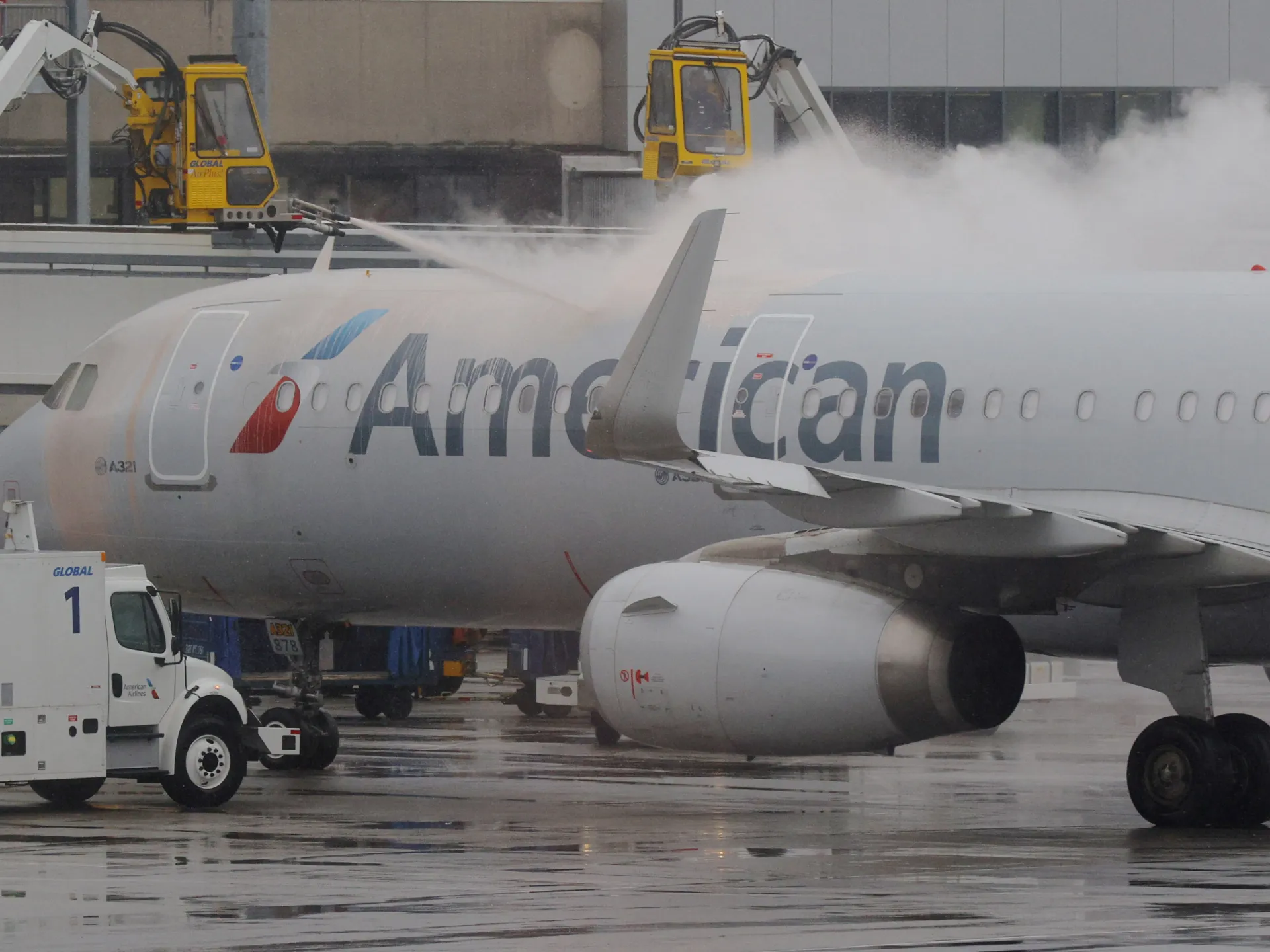
Thousands of flights have been cancelled and delayed in the United States due to winter storm Devin, airline monitoring website FlightAware reports, dealing a blow to air travel during peak holiday time.

A total of 1,581 flights “within, into or out of the” US were cancelled and 6,883 delayed as of 4pm US Eastern Time (21:00 GMT) on Friday, according to FlightAware, which describes itself as the world’s largest flight tracking data company.

Recommended Stories

list of 4 itemsend of list

The delays and cancellations came as the US National Weather ⁠Service warned of winter storm Devin causing “hazardous travel conditions” and heavy snow forecast across parts of the Midwest and northeast.

More than 40 million Americans were under winter storm warnings or weather advisories on Friday, plus another 30 million under flood or storm advisories in California, where a so-called atmospheric river has brought a deluge of rain.

New York City, the largest US city, was bracing for up to 250mm (10 inches) of snow overnight on Friday, the most expected in four years. Temperatures were forecast to drop into the weekend when an Arctic blast is expected to swoop down from Canada.

New York’s John F Kennedy airport, ⁠Newark Liberty international airport and LaGuardia airport warned travellers of potential delays or cancellations. More than half of the flight cancellations and delays took place at these three airports, according to FlightAware.

JetBlue Airways cancelled 225 flights on Friday, the most among the US carriers, closely followed by Delta Air Lines, which cancelled 212 flights. Republic Airways cancelled 157 flights, while 146 were cancelled by American Airlines and 97 by United Airlines.

“Due to winter storm Devin, JetBlue has cancelled approximately 350 flights today and tomorrow, primarily in the Northeast where JetBlue has a large operation,” a JetBlue spokesperson told the Reuters news agency.

On the US West Coast, powerful winter storms brought the wettest Christmas season to Southern California in 54 years.

There was still a risk of more flash flooding and mudslides on Friday despite slackening rain around Los Angeles, the National Weather Service warned.

Firefighters rescued more than 100 people on Thursday in Los Angeles County, with one helicopter pulling 21 people from stranded cars, officials said.

Source link

Zelenskyy to meet Trump in Florida amid diplomatic push to end war | Russia-Ukraine war News

Ukrainian president highlights ‘significant progress’ in talks, but Moscow says Kyiv is working to ‘torpedo’ deal.

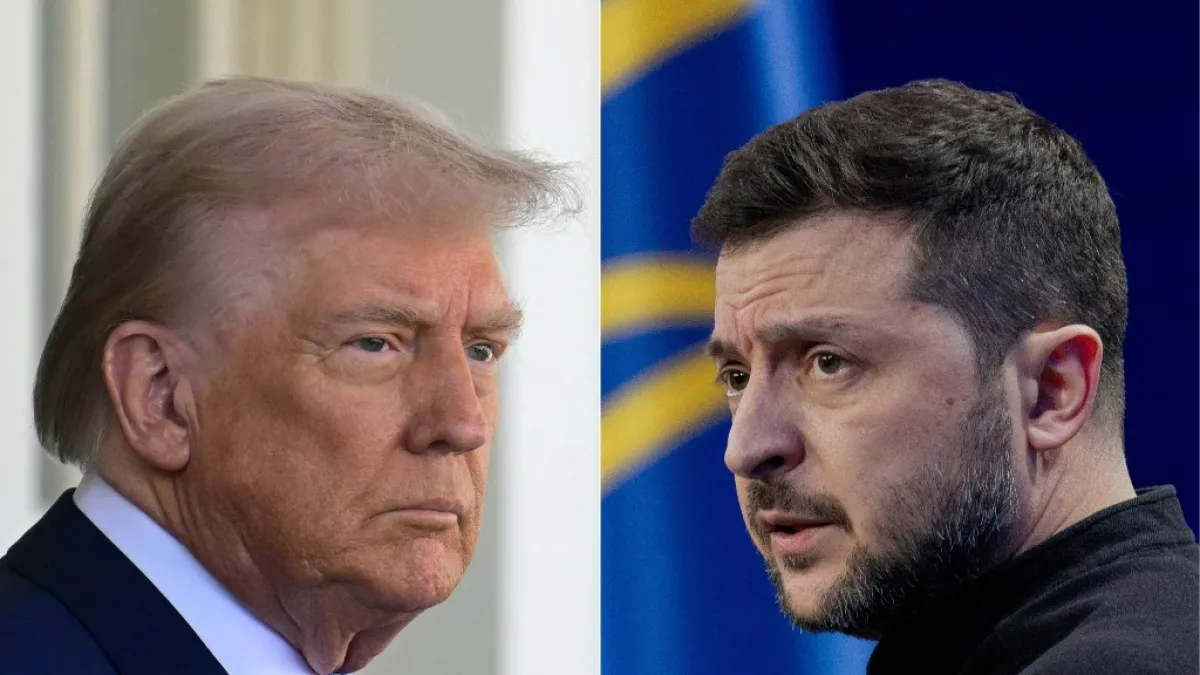
Ukrainian President Volodymyr Zelenskyy is to meet with his United States counterpart, Donald Trump, in Florida on Sunday to discuss territorial disputes that continue to block progress towards ending Russia’s war on Ukraine.

Announcing the meeting on Friday, Zelenskyy said the talks could be decisive as Washington intensifies its efforts to broker an end to Europe’s deadliest conflict since World War II. “A lot can be decided before the New Year,” Zelenskyy said.

Recommended Stories

list of 3 itemsend of list

Territory remains the most contentious issue in the negotiations. Zelenskyy confirmed he would raise the status of eastern Ukraine and the Zaporizhzhia Nuclear Power Plant, which has been under Russian control since the early months of Russia’s invasion.

“As for the sensitive issues, we will discuss both Donbas and the Zaporizhzhia Nuclear Power Plant. We will certainly discuss other issues as well,” he told reporters in a WhatsApp chat.

Moscow has demanded that Kyiv withdraw from parts of the Donetsk region still under Ukrainian control as it pushes for full authority over the wider Donbas area, which includes Donetsk and Luhansk. Ukraine has rejected that demand, instead calling for an immediate halt to hostilities along the existing front lines.

Territorial concessions

In an attempt to bridge the divide, the US has floated the idea of establishing a free economic zone should Ukraine relinquish control of the contested area although details of how such a plan would operate remain unclear.

Zelenskyy reiterated that any territorial concessions would require public approval. He said decisions on land must be made by Ukrainians themselves, potentially through a referendum.

Beyond territory, Zelenskyy said his meeting with Trump would focus on refining draft agreements, including economic arrangements and security guarantees. He said a security pact with Washington was nearly finalised while a 20-point peace framework was close to completion.

Ukraine has sought binding guarantees after previous international commitments failed to prevent Russia’s invasion, which began in February 2022.

Trump has previously voiced impatience with the pace of negotiations, but he has indicated he would engage directly if talks reached a meaningful stage.

Last week, US Secretary of State Marco Rubio said his country is the only mediator that can speak to both sides to secure a peace agreement. At the same time, he downplayed the importance of the conflict for Washington.

“It’s not our war. It’s a war on another continent,” he said.

Zelenskyy said European leaders could join Sunday’s discussions remotely and confirmed he had already briefed Finnish President Alexander Stubb on what he described as “significant progress”.

Despite Zelenskyy’s assertion, Russian Deputy Foreign Minister Sergey Ryabkov accused Ukraine of working to “torpedo” the peace talks, saying a revised version of the US peace plan promoted by Kyiv was “radically different” from an earlier version negotiated with Washington.

“Our ability to make the final push and reach an agreement will depend on our own work and the political will of the other party,” he said during a television interview on Friday.

Ryabkov said any agreement must remain within the parameters set out between Trump and Russian President Vladimir Putin during a summit in August, which Ukraine and European partners have criticised as overly conciliatory towards Russia’s war aims.

On the ground, Moscow has intensified strikes on Ukraine’s energy infrastructure and the southern port city of Odesa while an attack on Kharkiv on Friday killed two people.

Source link

Marco Rubio congratulates Honduran President-elect Nasry Asfura | Elections News

Washington’s top diplomat says he thanked Asfura, who was backed by Trump, for ‘advocacy of US strategic objectives’.

United States Secretary of State Marco Rubio has congratulated Honduran President-elect Nasry Asfura, whom President Donald Trump had endorsed, for his victory in the Central American country’s contentious election.

The Department of State said on Friday that Rubio and Asfura in a phone call discussed collaboration on issues such as trade and security.

Recommended Stories

list of 3 itemsend of list

“Secretary Rubio commended President-Elect Asfura for his advocacy of US strategic objectives, including advancing our bilateral and regional security cooperation, and strengthening economic ties between our two countries,” the State Department said in a statement.

Asfura claimed a narrow victory on Wednesday in the November 30 election marked by Trump’s intervention on his behalf. Election authorities declared Asfura the winner after weeks of counting amid high tensions and allegations of fraud and impropriety from other candidates.

The right-wing Asfura, representing the National Party, edged out Salvador Nasralla of the centre-right Liberal Party with 40.27 percent of the vote to Nasralla’s 39.53 percent.

“Today, with deep gratitude, I accept the honour of being able to work for you. I extend my hand so we can walk together with determination to work tirelessly for Honduras. I will not fail you,” Asfura said in a video statement released on Wednesday night.

Both Nasralla and Rixi Moncada, the candidate for current President Xiomara Castro’s left-leaning LIBRE Party, who came in a distant third, have disputed the results of the election.

Nasralla said on Wednesday that election authorities had “betrayed the Honduran people”. He also took aim at Trump, who said before the election that a victory for anyone but Asfura would put US economic ties with Honduras at risk.

“Mr President, your endorsed candidate in Honduras is complicit in silencing the votes of our citizens,” Nasralla said in a social media post. “If he is truly worthy of your backing, if his hands are clean, if he has nothing to fear, then why doesn’t he allow for every vote to be counted?”

Honduras has experienced several contested elections since a US-backed coup in 2009. Protests over the November election have thus far remained peaceful.

Before the election, Trump also issued a criticised pardon for right-wing former Honduran President Juan Orlando Hernandez, who was convicted of crimes linked to the trafficking of drugs to the US during his time in office.

The pardon came as the US says it is shifting its foreign policy focus to the Americas.

Asfura, the former mayor of Honduras’s capital, Tegucigalpa, is of Palestinian descent. But his National Party is staunchly pro-Israel.

Under Hernandez in 2021, Honduras became only the fourth country to move its embassy in Israel to Jerusalem in breach of international law.

Asfura has also aligned himself with Trump and other right-wing leaders in the Americas, including Argentina’s Javier Milei.

Source link

China sanctions 30 US firms, individuals over Taiwan weapons sales | Weapons News

Beijing urged the US to cease ‘dangerous’ efforts to arm the island, which it claims as its own.

China has sanctioned a group of United States defence companies and senior executives over weapons sales to Taiwan, the latest move against Washington’s support for the self-governed island that Beijing claims as its own.

China’s Ministry of Foreign Affairs announced the measures on Friday, targeting 20 US defence firms and 10 individuals. It said the sanctions are retaliation for the US’s newly announced $11.1bn weapons package for Taiwan, one of its largest ever for the territory.

Recommended Stories

list of 3 itemsend of list

“Any provocative actions that cross the line on the Taiwan issue ‌will be met with a strong ⁠response from China,” said a statement from the ministry, urging the US to cease “dangerous” efforts to arm the island.

The sanctioned companies include Boeing’s St Louis branch, Northrop Grumman Systems Corporation, L3Harris Maritime Services and Lazarus AI.

The measures freeze these companies’ assets in China and bar domestic organisations and individuals from working with them, according to the ministry. They also seize the China-held assets of sanctioned individuals and ban them from entering China.

Targeted individuals include the founder of defence firm Anduril Industries and nine senior executives from the sanctioned firms. The measures take effect on December 26.

The US is bound by law to provide Taiwan, which rejects Beijing’s claim to the territory, with the means to defend itself. But US arms sales to the island have deepened tensions with China.

The latest US weapons deal with Taiwan, announced by President Donald Trump on December 17, includes the proposed sale of 82 High Mobility Artillery Rocket Systems, or HIMARS, and 420 Army Tactical Missile Systems, or ATACMS – worth more than $4bn.

The defence systems are similar to what the US had been providing Ukraine to defend against Russian aerial attacks.

The deal also includes 60 self-propelled howitzer artillery systems and related equipment worth more than $4bn and drones valued at more than $1bn.

Taiwan’s Ministry of National Defence praised the US for assisting Taiwan “in maintaining sufficient self-defence capabilities and in rapidly building strong deterrent power”.

Source link