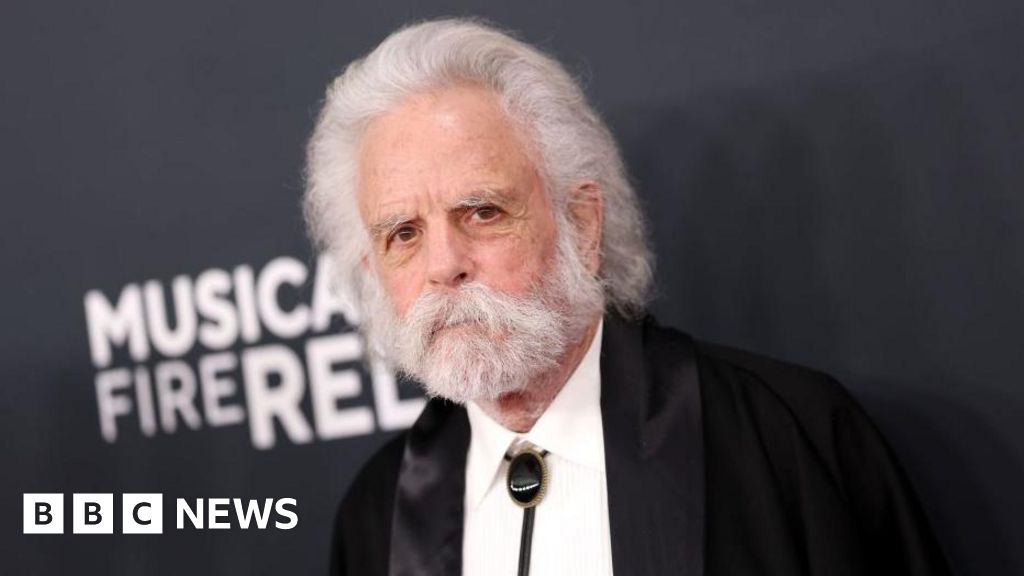
Bob Weir, the guitarist who co-founded the Grateful Dead, has died aged 78.
Weir, a cornerstone of the California psychedelic rock group and many of its offshoots, passed away after a battle with cancer and lung issues, according to a post on his Instagram.
“There is no final curtain here, not really. Only the sense of someone setting off again,” the post says, noting his hopes that his legacy and lengthy catalogue will live on.
The post says he “transitioned peacefully, surrounded by loved ones”.
“He often spoke of a three-hundred-year legacy, determined to ensure the songbook would endure long after him,” the post continues. “May that dream live on through future generations of Dead Heads.”
With a career spanning more than 60 years, Weir’s big break was in 1965 with the founding of the Grateful Dead. Within a few years, they became a force within San Francisco’s characteristic counterculture.
Quickly their style began shaping rock music – blending psychedelia and 1960s drug culture with musical tones that fused folk and Americana. They are considered one of the pioneers of jam bands.
The group was inducted in the Rock and Roll Hall of Fame in 1994 and received a Lifetime Achievement Award by the Grammy’s in 2007.
The group officially halted in 1995 with the death of fellow co-founder Jerry Garcia.
But Weir was involved in various spin-offs, including Dead & Company, which had a residency at the Las Vegas Sphere in 2024 and 2025.
Weir was diagnosed with cancer in July and even while being treated, he continued to perform, according to the post on his page.
“Those performances, emotional, soulful, and full of light, were not farewells, but gifts,” the post says. “Another act of resilience. An artist choosing, even then, to keep going by his own design.”
He beat cancer before his death, the posts adds. It’s unclear what type of cancer he had been diagnosed with.
His family, including wife Natascha and children Shala and Chloe, asked for privacy but said they appreciated the “outpouring of love, support, and remembrance”.
Tributes started to pour in late on Saturday from fellow musicians. Even the Empire State Building in New York City honoured the rock legend by shining with tie-dye colours to memorise him.
Slash, guitarist of Guns N’ Roses, posted a photo of Weir playing on stage. He wrote “RIP” with a broken-heart emoji.
Former Eagles guitarist Don Felder posted a lengthy tribute.
“I first saw Bob at Woodstock with the Grateful Dead and was blown away by that whole band, and the musicianship,” Felder posted on Instagram with a photo of himself with Weir.
“I feel so blessed to have been able to have him sing on ‘Rock You’ from American Rock and Roll. Until we meet again, amigo.”
His former publicist, Dennis McNally, spoke with BBC News about his music and the fun memories they shared.
“He had a very off-kilter, unusual sense of humour that was dry and funny,” he said. “The road was his life, and music was his life.”
He said playing and serving the music was what “he was put on Earth for and he did it to the end”.
These are the key developments from day 1,417 of Russia’s war on Ukraine.
Published On 11 Jan 202611 Jan 2026
Share
Here is where things stand on Sunday, January 11:
Fighting:
Russian forces launched artillery and drone attacks on Ukraine’s Dnipropetrovsk region on Saturday, killing a 68-year-old man, wounding three others and causing fires to break out in residential buildings, according to Ukraine’s emergency service.
Russian shelling also killed another person in the Kramatorsk district of Ukraine’s Donetsk region, the service said.
Three other Ukrainians were killed, and nine more were wounded, in Russian attacks on the areas of Yarova, Kostyanynivka and Sloviansk in Donetsk, according to Governor Vadym Filashkin.
Ukraine’s General Staff reported 139 combat clashes on Saturday and said that Russia launched 33 air strikes, deployed more than 4,430 drones and carried out 2,830 attacks on Ukrainian troops and settlements.
Russian forces advanced near the villages of Markove and Kleban-Byk in Ukraine’s Donetsk region, according to the Ukrainian battlefield monitoring site DeepState, but no other major changes were reported.
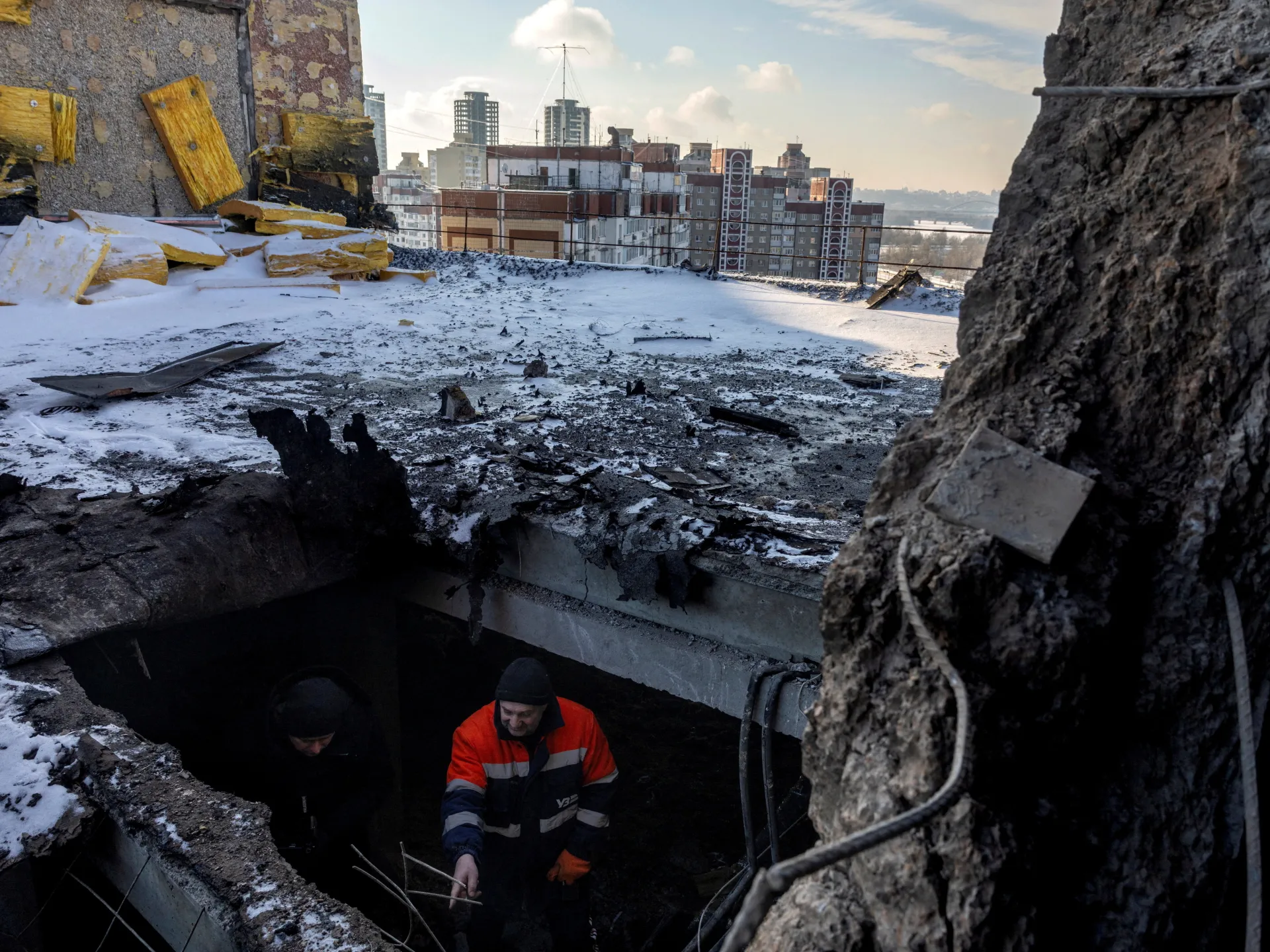
In the Ukrainian capital, Kyiv, engineers are working “around the clock” to restore electricity to residents after thousands of apartments lost power during Russia’s Thursday attacks, said Tymur Tkachenko, the head of the city’s military administration.
Heat supplies have been returned to roughly half the homes that lost power, Kyiv Mayor Vitali Klitschko added.
Russia’s TASS news agency reported that two people were wounded in a Ukrainian drone attack on the southwestern Russian city of Voronezh.
The governor of Russia’s Belgorod region, which borders Ukraine, said on Saturday that 600,000 people in the area were without electricity, heating and water after a Ukrainian missile strike.
Ukrainian forces also carried out a drone strike on Russia’s Volgograd region, sparking a fire at an oil depot in the Oktyabrsky district, regional authorities said.
The Ukrainian military said on Saturday it had struck the Zhutovskaya oil depot in Volgograd overnight.
Russian air defence systems, meanwhile, intercepted and destroyed 33 Ukrainian drones over Russian regions, the agency reported.
Politics and diplomacy
The United Nations Security Council will host an emergency meeting on January 12 to “address Russia’s flagrant breaches of the UN Charter”, after Russia fired an Oreshnik hypersonic missile near the Polish border, Ukrainian Minister of Foreign Affairs Andrii Sybiha wrote on X.
The foreign minister also spoke out about the antigovernment protests rocking Iran, saying that “Iran’s support for Russia’s war of aggression against Ukraine and its oppression of its own citizens are part of the same policy of violence and disrespect for human dignity”.
The deputy chairman of Russia’s Security Council, Dmitry Medvedev, insisted that Russia will not accept European or NATO troops in Ukraine and that “European dimwits want a war in Europe after all”.
“Well, come on then. This is what you’ll get”, the deputy chairman added, accompanied by a video of the Oreshnik strike.
The Institute for the Study of War wrote in its latest report that Russia’s Oreshnik strike was likely “aimed to scare Western countries from providing military support to Ukraine, particularly from deploying forces to Ukraine as part of a peace agreement”.
Ukraine’s lead negotiator, Rustem Umerov, “once again reached out to our American partners”, Ukrainian President Volodymyr Zelenskyy wrote on Telegram. “We continue communication with the American side practically every day,” he said.
South Africa kicked off a week of naval drills, also attended by Russia, Iran and China.
Captain Nndwakhulu Thomas Thamaha, South Africa’s joint task force commander, told the opening ceremony that the drills are “a demonstration of our collective resolve to work together”.
Sanctions
Zelenskyy pledged on X that “we will continue strengthening the sanctions toolkit” and that “all lines of pressure on Russia and individuals associated with it must be maintained”.
In reference to recent news that US President Donald Trump has greenlit a bill to sanction countries that buy Russian oil, Zelenskyy said: “What is important is that the US Congress is back in motion on tougher sanctions against Russia – targeting Russian oil. This can truly work.”
Energy
Russian presidential envoy Kirill Dmitriev said Russian oil products have “significantly increased” after Bloomberg reported that Russian refined fuel flows hit a four-month high in December, driven by stronger diesel shipments from ports in the Baltic Sea. Dmitriev added on X that “fake warmonger narratives are bad for decision-making”.
Separately, Bloomberg also reported that Russia’s crude oil production dropped to its lowest level in a year and a half in December, hitting 9.32 million barrels per day.
As the new year got into its stride, so did the UK’s index of leading shares.
The FTSE 100 climbed above 10,000 points for the first time since it was created in 1984, cheering investors – and the chancellor, who wants more of us to move money out of cash savings and into investments.
The index tracks the performance of the 100 largest companies listed on the London Stock Exchange and rose by more than a fifth in 2025.
But with many people still struggling with everyday costs, and with talk of some stocks being overvalued, does the FTSE’s success really make it a good time to encourage first-time investors?
Investing v saving
People can invest their money in many different ways and in different things. Various apps and platforms have made it easy to do.
Crucially, the value of investments can go up and down. Invest £100 and there is no guarantee that the investment is still worth £100 after a month, a year, or 10 years.
But, in general, long-term investments can be lucrative. The rise of the FTSE 100 is evidence of that. Shareholders may also receive dividends, which they could take as income or reinvest.
For years, the advice has been to treat investments as a long-term strategy. Give it time, and your pot of money will grow much bigger than if it was in a savings account.
In contrast, cash savings are much more steady and safe. The amount of interest varies between account providers, but savers know what returns will be. Savings rates have held up quite well over the last year, but interest rates are generally thought to be on the way down.
Savings accounts are popular when putting money aside for emergencies, or for holidays, a wedding or a car – for one predominant reason: you can usually withdraw the money quickly and easily.
“It is important that everyone has savings. It gives you access when you need it,” says Anna Bowes, savings expert at financial advisers The Private Office (TPO).
“It means you do not need to cash out your investments at the wrong time.”
Getty Images
Evangelists for investing agree that savings are an important part of the mix for everyone managing their money.
“People starting out should have a cash buffer in case of emergency before going into investing,” says Jema Arnold, a voluntary non-executive director at the UK Individual Shareholders Society (ShareSoc).
One in 10 people have no cash savings, and another 21% have less than £1,000 to draw on in an emergency, according to the regulator, the Financial Conduct Authority (FCA).
But Arnold and others point out that cash is not without risk either. As time goes on, the spending power of savings is eroded by the rising cost of living, unless the savings account interest rate beats inflation.
Risk and reward
Our brains make a judgement about risk and reward thousands of times every day. We consider the risk of crossing the road against the reward of getting to the other side and so on.
With money, those who are more risk-averse have tended to stick with savings, while others have moved into investments. It also helps if you have money you can afford to lose.
It is worth remembering that millions of people already have money for their pension invested, although it is often managed for them and they may not pay much attention to it.
The FCA says seven million adults in the UK with £10,000 or more in cash savings could receive better returns through investing.
Chancellor Rachel Reeves has advocated more risk-taking from consumers. For those with the money, she says the benefit of long-term investing for them, and the UK economy as a whole, is clear.
It is also why, in a couple of months’ time, we are all going to be blitzed with an advertising campaign (funded by the investment industry) telling us to give investing some thought.
It will be a modern version of the Tell Sid campaign of the 1980s, which encouraged people to invest in the newly privatised British Gas.
British Gas
The Tell Sid campaign was considered to be a success
But is this a good time for such a campaign? Back then, lots of people invested in British Gas for a relatively quick profit.
Invest now, and there is a chance the value of your investment could take a short-term hit.
A host of commentators have suggested an AI tech bubble is about to burst. In other words, they say there is a chance the value of companies heavily into AI has been over-inflated and will plunge – meaning anyone investing in those companies will see the value of those investments plunge too.
In truth, nobody really knows if and when this will happen.
New rules on getting investment help
All of this may leave people keen for some help, and the regulator has come up with plans to allow banks to offer some assistance.
Currently financial advice can be expensive, and regulated advisers may not bother with anyone who hasn’t got tens of thousands of pounds to invest.
Financial influencers have tried to fill the gap on social media. Some have been accused of promoting financial schemes and risky trading strategies with glitzy get-rich-quick promises in front of fancy cars – but without authorisation or any explanation of the risks involved.
Some first-time investors have turned to AI for tips. Some are vulnerable to fraudsters offering investment opportunities that are too good to be true.
Nearly one in five people turned to family, friends or social media for help making financial decisions, according to a survey by the FCA.
So, from April, registered banks and other financial firms will be allowed to offer targeted support, preferably for free. It will stop short of individually tailored advice, which can only be provided by an authorised financial adviser for a fee. But it will allow them to make investment and pensions recommendations to customers based on what similar groups of people could do with their money.
It is a big change in money guidance but, as with investments, no guarantees that it will be successful.
Victoria Woodall has taken Google to an employment tribunal
A senior Google employee has claimed she was made redundant after reporting a manager who told clients stories about his swinger lifestyle and showed a nude of his wife.
Victoria Woodall told an employment tribunal she was subjected to a campaign of retaliation by the company after whistleblowing on the man who was later sacked.
Google UK’s internal investigation found the manager had touched two female colleagues without their consent, and his behaviour amounted to sexual harassment, documents seen by the BBC in court show.
The tech giant denies retaliating against Woodall and argues she became “paranoid” after whistleblowing and began to view normal business activities as “sinister”.
In her claim, Woodall says her own boss subjected her to a “relentless campaign of retaliation” after her complaint also implicated his close friends who were later disciplined for witnessing the manager’s behaviour and failing to challenge it.
The claim also included Woodall’s allegations of a “boys’ club” culture, including that up until December 2022, Google had been funding a men’s only “chairman’s lunch”.
Google said an internal investigation found no such culture and the event was ended as it was no longer in line with its policies.
A judgement from London Central Employment Tribunal is expected in the coming weeks.
‘Swingers’
Woodall worked as a senior industry head in Google’s UK Sales and Agencies team.
In August 2022, according to her claim, she was contacted by a female client who said that, during a business lunch, a manager in the team had boasted about the number of black women he had had sex with.
He said “he and his wife were swingers” and also described how they had sex with two women they met on the beach on holiday, according to summary notes of Google’s investigation submitted to court.
The client said the conversation was unprompted and happened in front of his line manager who did nothing to stop him, describing their behaviour as “disgusting,” in court documents.
Woodall reported the client’s concerns to her boss Matt Bush, then managing director of the agency team, and Google opened an internal investigation into the manager’s conduct, it adds.
While this investigation was underway, Woodall raised a second complaint from another female client who alleged the same manager had shown her a “picture of his wife’s vagina” while scrolling through photos on his phone, according to her claim.
The report
Google interviewed 12 people as part of its investigation and uncovered further incidents which it found amounted to sexual harassment in breach of company policies, according to emails, notes and a copy of the report submitted to the tribunal.
The manager was found on the balance of probabilities to have sexually harassed two female employees during a work event, where he allegedly touched one colleague’s leg during a conversation and rubbed another colleague’s back and shoulders, both without their consent.
Google also found he had allegedly made inappropriate comments to staff, including telling a female colleague he had met for the first time that he was in an open marriage and that if she had “sex with him in the bathroom, his wife would enjoy hearing about it”.
The manager denied the allegations during Google’s investigation and said he did not think he had shared with his workmates that he has an open relationship with his wife, according to the report.
He was sacked for gross misconduct, court documents show, while his line manager and another senior colleague were recommended for “documented coaching” for failing to intervene. They were both later made redundant.
‘Boys’ club’
Woodall claims that shortly after reporting the sexual harassment in 2022, her boss, Matt Bush, gave her “little choice” but to swap her successful client account with a failing one – which up until that point had belonged to one of the two colleagues to later receive disciplinary action following her whistleblowing.
She described the move as a “poisoned chalice” that had left her vulnerable to redundancy, the court heard.
She says she was then demoted to a subordinate role on a big internal project supporting the other senior manager her report had implicated. Her boss later tried to downgrade her performance among other retaliatory actions, according to her claim.
In his witness statement, Bush says he always supported Woodall’s career and took fostering inclusivity and gender equality in hiring pipelines and promotions very seriously, adding that it was standard practice to regularly move accounts between the team.
‘Way to exit people’
In 2023, Google started a redundancy process that resulted in the departures of her boss and one of the senior managers who failed to report the sexual harassment, according to court documents.
In May that year, Woodall took her concerns about a boys’ club culture and the retaliation she was facing to the top of the organisation.
In her witness statement, she says she met with Debbie Weinstein, then vice president of Google UK and Ireland after hearing from a HR colleague that she was concerned about the team and the experiences of women.
Following their discussion, Weinstein, now president of Europe, Middle East and Africa, appeared shocked by Woodall’s claims. Court documents show she messaged a member of HR: “Just met Vicki [Woodall]. Holy moly. Want to get you for 10 mins today.”
Then in November 2023, as Google prepared for a broader reorganisation and redundancy process, Woodall claims there was a final push to remove her from the agency team.
That month, Weinstein messaged Dyana Najdi, Google’s managing director for UK and Ireland advertising, to say: “keep pushing…for solution on how you can run a process including agency [Woodall’s team]… gotta use this as a chance to exit people”, according to messages of their conversation submitted to court.
In March 2024, Woodall was made redundant alongside the second senior manager involved in the misconduct investigation, however she remains employed by the company receiving long-term sickness payments for work-related stress, according to her claim.
Google denies that Woodall was made redundant for whistleblowing, adding that her role was one of 26 across the team and wider department closed, according to its defence.
It disputes that Weinstein attempted to make Woodall redundant, saying she was very supportive towards her and instigated the investigation into the culture of the agency team.
The company accepts that Woodall’s report of the manager accused of misconduct was an act of whistleblowing, but denies any retaliation against her, saying the subsequent events were perfectly normal business decisions.
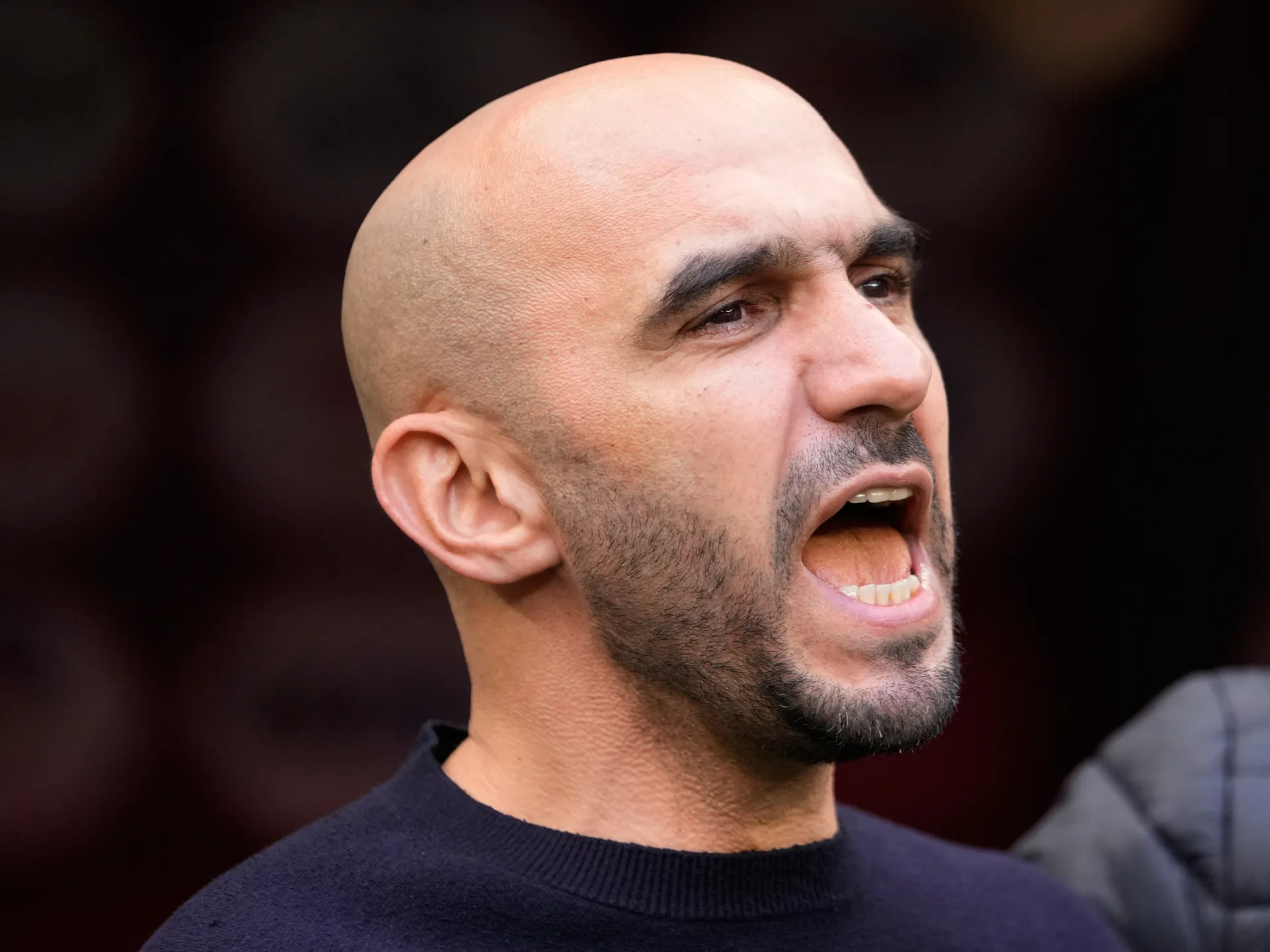
Morocco coach Walid Regragui has angrily rejected suggestions his team is benefitting from favourable refereeing decisions as the 2025 CAF Africa Cup of Nations (AFCON) host.
The Atlas Lions will face fellow favourites, Nigeria, in a titanic semifinal on Wednesday.
Recommended Stories
list of 4 itemsend of list
“We’re the team to beat. As the team to beat, people will try to find all sorts of reasons to say Morocco has an advantage,” Regragui said after his team’s 2-0 win over Cameroon in the quarterfinals.
“The only advantage that Morocco has at this Africa Cup is playing in front of 65,000 spectators. The rest is on the field, we speak on the field.”
On the field, however, Cameroon might have had two penalties if experienced referee Dahane Beida hadn’t decided in favour of the home team.
Morocco defender Adam Masina was involved in both, appearing to catch Bryan Mbuemo’s right boot after missing the ball when Cameroon was trying to level the match, then, in the final minutes, appearing to strike Etta Eyong’s head with his elbow in the penalty area.
Beida, who refereed the final at the last edition, also decided not to show Bilal El Khannouss a second yellow card for stopping Danny Namaso on a counterattack shortly before Ismael Saibari wrapped up the win.
“Many people want to believe or make others believe that we have advantages from the referees. Personally, I saw penalties that could have been awarded to us. As for the referees, I never talk about the referee,” Regragui said.
The Morocco coach then spoke about a penalty his team was not awarded against South Africa in the previous tournament in the Ivory Coast, and wrongly said he was “suspended for no reason” at that tournament.
Regragui was suspended for two games at the previous edition for his role in a dispute with Congo captain Chancel Mbemba at the end of their game that led to a melee between players and team officials.
“The statistics always show us as better than the others,” Regragui said, getting back to this edition. “We create far more opportunities than our opponents. Not a single goal was disallowed for Cameroon, or for any other team. When you want to get rid of something, you find a pretext.”
Mali and Tanzania also had penalty claims against Morocco rejected in previous games, while Morocco also had a penalty awarded after a VAR check in the draw against Mali.
Thousands of whistling Moroccan fans tried to help referee Abdou Abdel Mefire make up his mind while he consulted replays before he eventually decided to penalise Mali’s Nathan Gassama for handball. He initially ignored Jawad El Yamiq’s penalty-area foul on Mali’s Lassine Sinayoko before awarding it some minutes later after a VAR check.
There did not appear to be any VAR checks against Cameroon on Friday.
Morocco has played all its matches at the nearly 70,000-capacity Prince Moulay Abdellah Stadium in Rabat, where the vast majority of supporters are shouting for the home team, creating an intimidating atmosphere for opponents and referees.
“Today, Cameroon played the match they needed to play. I think they lost against a better team. I don’t think any player, coach, or anyone else is going to talk about the refereeing because there were a lot of physical battles today. This is Africa. But today, I think we deserved our victory,” said Regragui, who added his team also deserved to win all its previous games.
“That’s it. We’re trying to play on that field. I don’t think it’s fair play from those who want to see us fall. The best team will win this tournament, inshallah,” he said.
Morocco will play Nigeria at the Prince Moulay Abdellah Stadium, which is also the venue for the final on January 18.
The Atlas Lions are among the heavy favourites to win the tournament, having become the first African nation to reach the semifinals of a FIFA World Cup at the Qatar 2022 edition.
Egypt set up semifinal meeting with Senegal at 2025 Africa Cup of Nations by beating Ivory Coast 3-2 in thriller.
Published On 10 Jan 202610 Jan 2026
Share
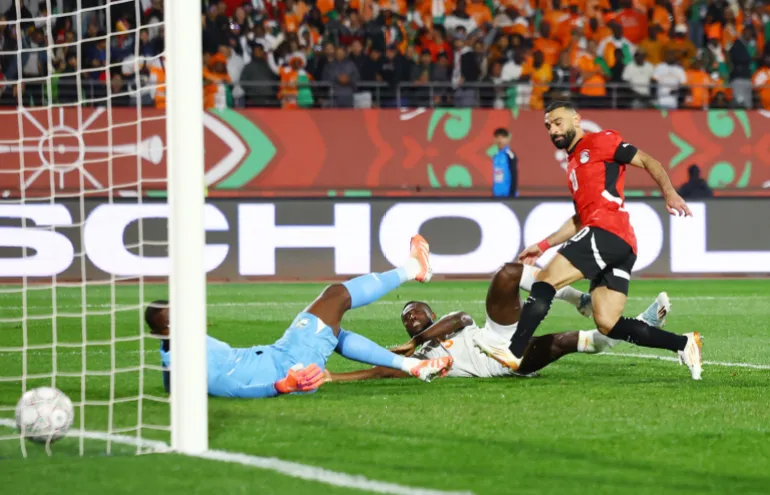
Mohamed Salah scored, and Egypt eliminated the defending champions, Ivory Coast, to move into the 2025 CAF Africa Cup of Nations (AFCON) semifinals with a 3-2 victory.
Liverpool forward Salah nabbed his fourth goal of the tournament – Egypt’s third of the game – in the 52nd minute of Saturday’s encounter, and the Pharaohs needed it, as Ivory Coast threatened to twice come back from two goals down.
Recommended Stories
list of 4 itemsend of list
Egypt, however, held on in Agadir despite relentless Ivorian pressure, and booked a semifinal date with 2021 champions Senegal in Tangier on Wednesday.
Ivory Coast had a woeful start, as Franck Kessie lost the ball in the midfield after a poor touch and Odilon Kossounou fell over instead of cutting out Emam Ashour’s ball for Omar Marmoush, who scored in the fourth minute.
Ramy Rabia produced a brilliant block to preserve the lead, and then scored himself with a header from a corner in the 32nd.
Ivory Coast finally pulled one back five minutes before the break, when Ahmed Abou El Fotouh bundled in a dangerous Yan Diomande free kick, which Kossounou headed on.
Egypt’s Mohamed Salah scores their third goal against Ivory Coast [Siphiwe Sibeko/Reuters]
Salah restored Egypt’s two-goal cushion early in the second half, when Rabia caught the Ivorian defence out with a long ball for Ashour, who set up Salah with the outside of his boot.
Guela Doue pulled another one back with his heel in a goalmouth scramble, after goalkeeper Mohamed El-Shenawy clawed the ball away in the 73rd, but the equaliser never came.
Egypt are bidding for a record-extending eighth AFCON title.
The Super Eagles are bidding to win the title for the first time since 2013.
It would help make up for the disappointment of failing to qualify for the World Cup, in contrast with the team they defeated in the quarterfinal, Algeria.
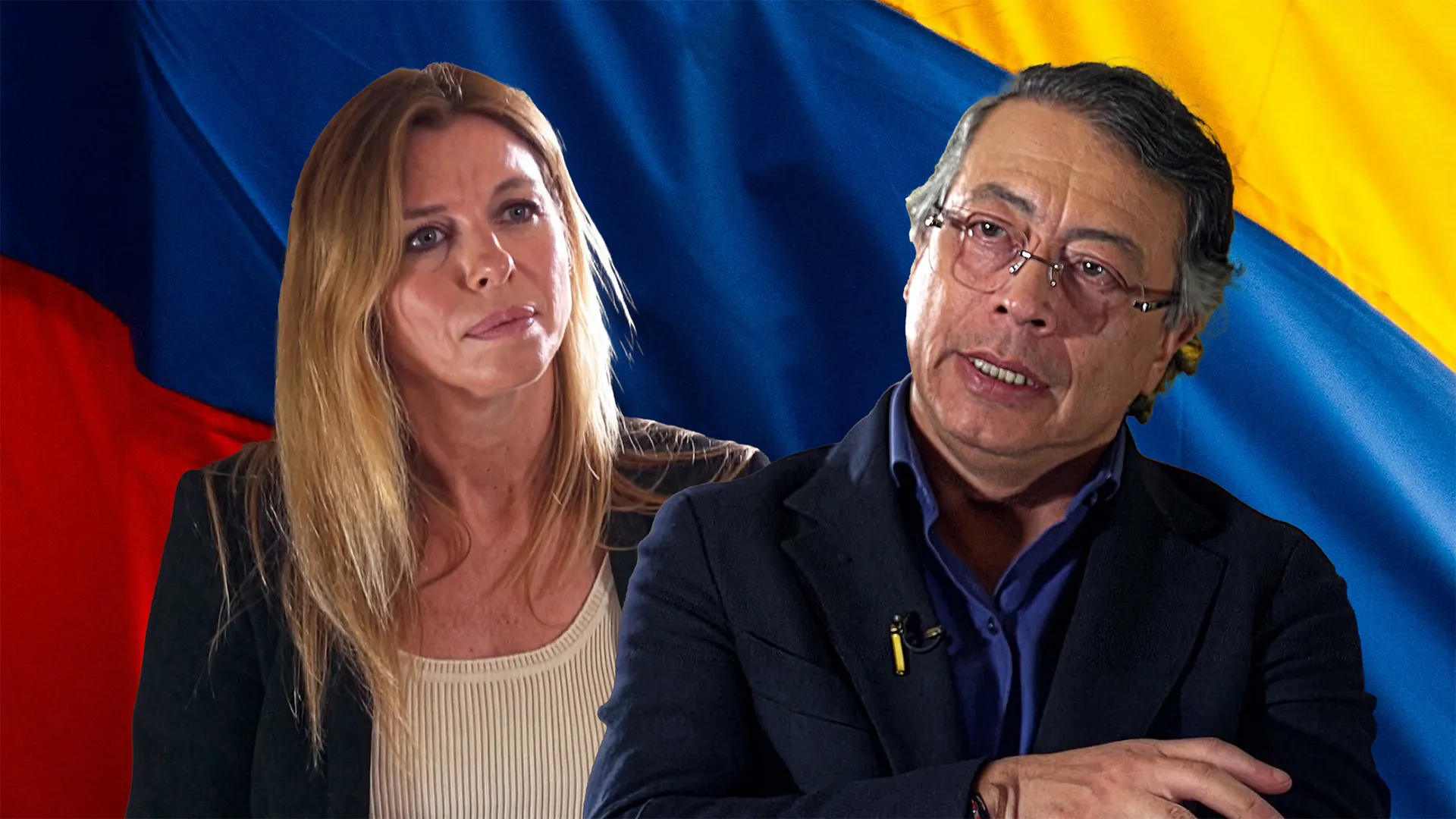
Colombia’s president responds to US pressure and what it means for sovereignty and stability in Latin America.
Since the United States abducted Venezuelan President Nicolas Maduro, accusing him of “narcoterrorism”, Colombia has found itself under growing pressure from Washington. President Gustavo Petro responds to President Donald Trump’s accusations. The Colombian leader also addresses diplomacy vs confrontation, regional sovereignty and whether Latin America is entering a dangerous new chapter.
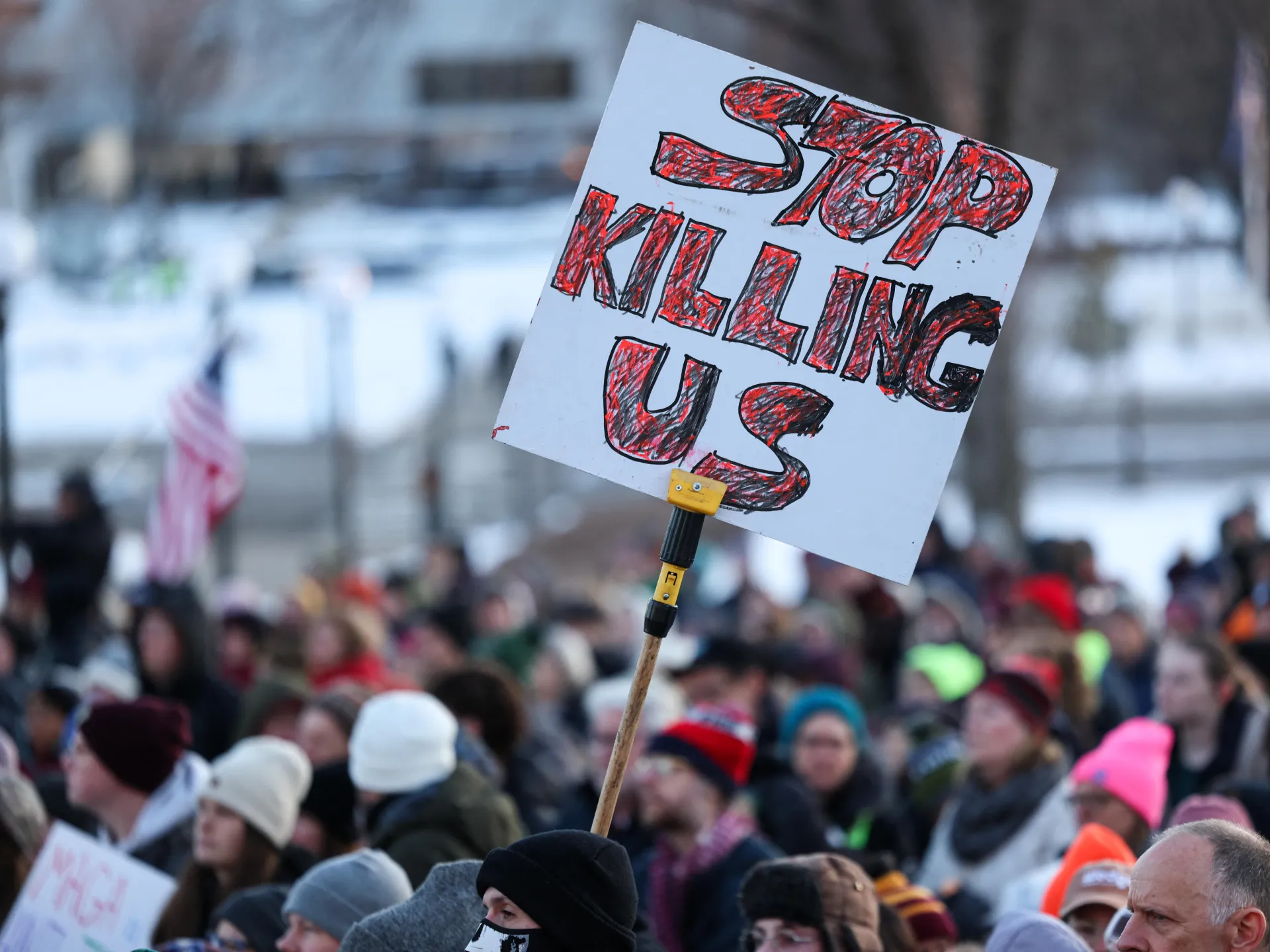
Protesters demand justice for Renee Nicole Good, a mother of three shot dead by an ICE agent in Minneapolis this week.
Protests against US President Donald Trump’s militarised anti-immigration push are sweeping the United States, after the killing of a Minneapolis woman by an Immigration and Customs Enforcement (ICE) agent sparked outrage this week.
Indivisible, a social movement group, said hundreds of demonstrations were scheduled in Texas, Kansas, New Mexico, Ohio, Florida and other US states on Saturday.
Recommended Stories
list of 4 itemsend of list
“ICE’s violence is not a statistic, it has names, families, and futures attached to it, and we refuse to look away or stay silent,” Leah Greenberg, Indivisible’s co-executive director, said in a statement.
Steven Eubanks, 51, said he felt compelled to attend a protest in Durham, North Carolina, because of what he called the “horrifying” killing of Renee Nicole Good by the ICE agent in Minneapolis on Wednesday.
“We can’t allow it,” Eubanks told The Associated Press news agency. “We have to stand up.”
Senior Trump administration officials have justified Good’s killing, saying she “weaponised” her vehicle and threatened the life of the ICE officer who shot and killed her.
But video footage from the scene showed Good attempting to drive away before being shot by ICE agent Jonathan Ross.
The incident has renewed scrutiny of Trump’s push to deploy heavily armed law enforcement officers to carry out an anti-immigrant crackdown across the US, with local authorities demanding that ICE agents leave their cities.
The killing of Good, a 37-year-old mother of three, came as the US Department of Homeland Security pushes ahead with what it has called its largest-ever immigration enforcement operation in the Twin Cities of Minneapolis and Saint Paul.
‘ICE Out For Good’
Many of Saturday’s protests were dubbed “ICE Out for Good”, with organiser Indivisible saying the rallies aimed to “mourn the lives taken and shattered by ICE and to demand justice and accountability”.
In Minneapolis, a coalition of migrant rights groups called for a demonstration at Powderhorn Park, a large green space near the residential neighbourhood where the deadly shooting occurred on Wednesday.
They said the rally would call for an “end to deadly terror on our streets”.
Reporting from a rally in Minneapolis on Saturday afternoon, Al Jazeera’s Manuel Rapalo said the protesters have been expressing outrage “but overwhelmingly, we hear people say they’re here to demonstrate peacefully.”
“We’re also hearing a lot of calls for justice. What I’m not hearing is too much optimism that there will be justice in this case,” Rapalo said, referring to Good’s killing.
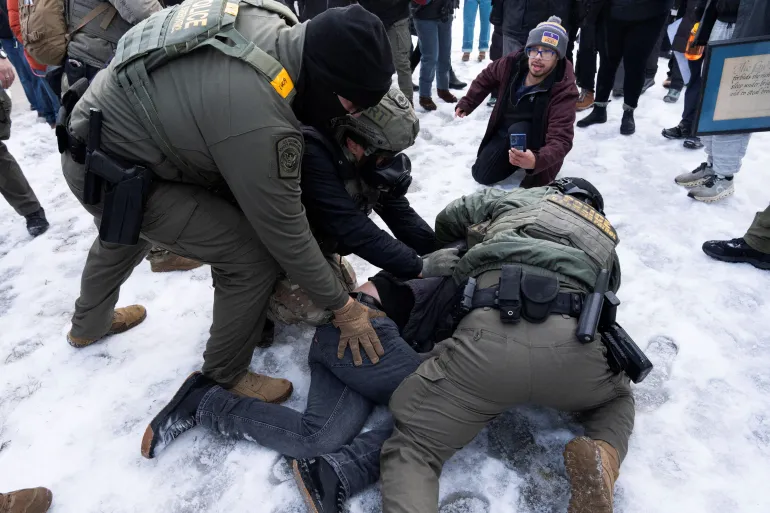
Federal agents tackle a protester to the ground before detaining him outside of the Whipple Federal Building in Minneapolis on January 8, 2026 [Tim Evans/Reuters]
Minneapolis Mayor Jacob Frey, who demanded that ICE leave the city after the deadly incident, said on Saturday that 29 people had been arrested overnight as police responded to continued protests.
Frey stressed that while most protests have been peaceful, those who damage property or endanger others will be arrested.
Minneapolis Police Chief Brian O’Hara said one police officer was injured during the protest response.
Meanwhile, three US lawmakers representing Minnesota attempted to tour an ICE facility in the Minneapolis federal building on Saturday morning but were told to leave after initially being allowed to enter.
US Congresswomen Ilhan Omar, Kelly Morrison and Angie Craig accused ICE agents of obstructing members of Congress from fulfilling their duty to oversee operations there.
“They do not care that they are violating federal law,” Craig said after being turned away.
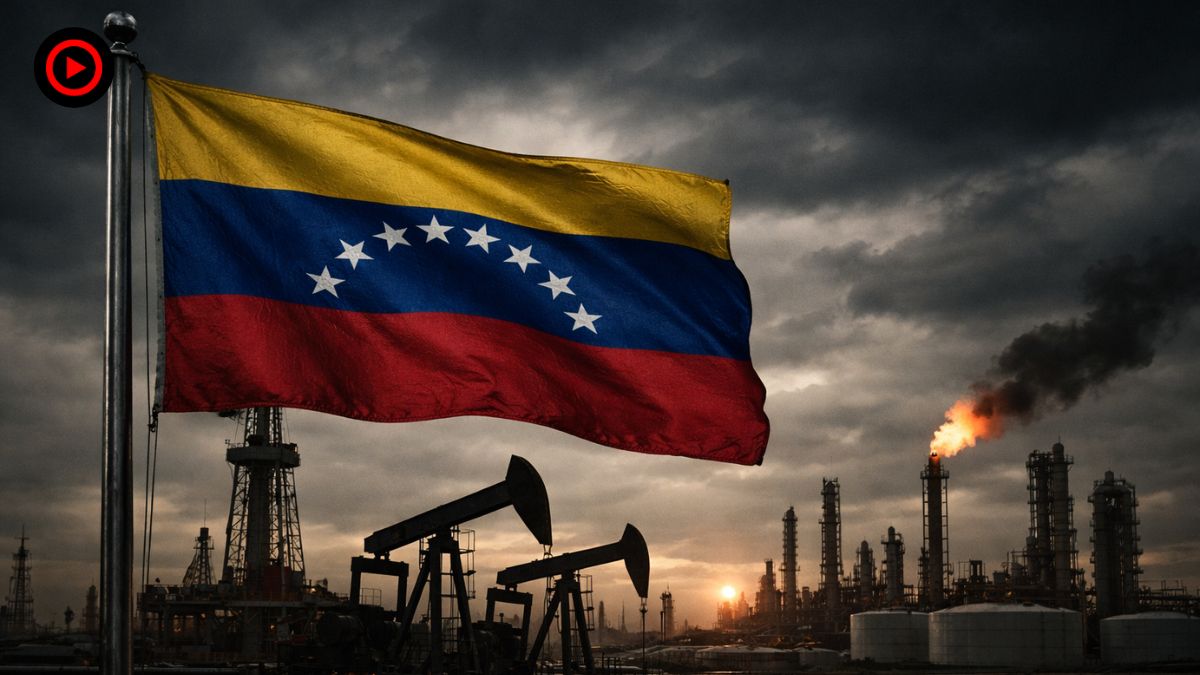
After launching a military attack against Caracas and kidnapping Venezuelan President Nicolás Maduro, US President Donald Trump made his goal clear: seize the oil.
Historian Steve Ellner and journalist Ricardo Vaz explained how this outcome is not an aberration, but rather the latest chapter in a long-standing struggle over PDVSA, oil sovereignty, and U.S. hemispheric dominance—where economic warfare supplants diplomacy and state power is deployed for private gain.
Victor Osimhen scores one and sets up another to send Nigeria into the last four of the Africa Cup of Nations.
Published On 10 Jan 202610 Jan 2026
Share
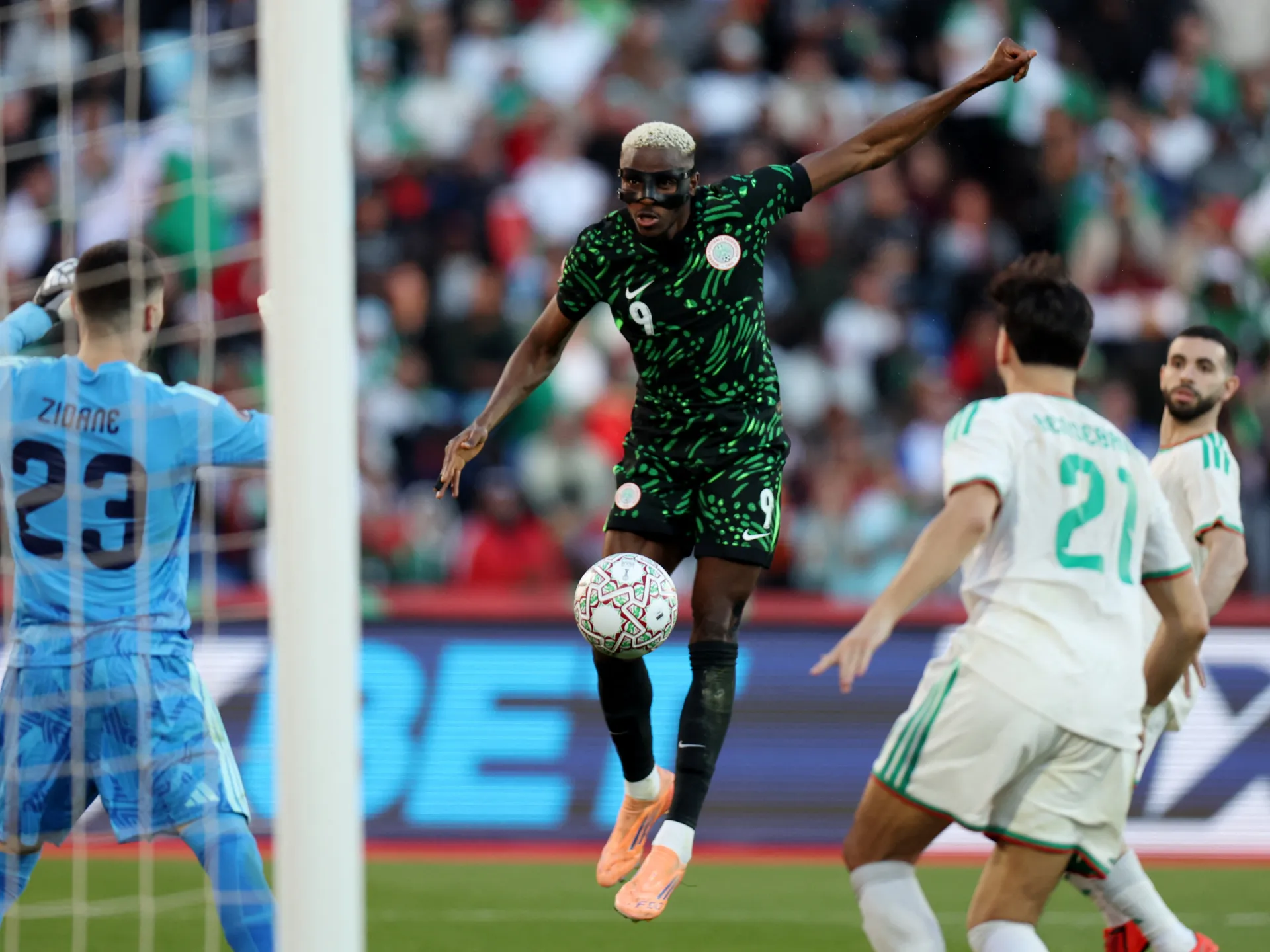
Nigeria powered to a deserved 2-0 victory over Algeria in their Africa Cup of Nations quarterfinal with second-half strikes from Victor Osimhen and Akor Adams to set up a semifinal with hosts Morocco.
Osimhen steered home a long cross from the left by Bruno Onyemaechi two minutes into the second half on Saturday as Algeria goalkeeper Luca Zidane made a bizarre jump to try and stop the effort, but ended up getting his angles wrong and conceding an easy goal.
Recommended Stories
list of 4 itemsend of list
Adams increased Nigeria’s lead 10 minutes later as Osimhen unselfishly fed him the ball, and he took it around Zidane before placing it into an empty net.
It was an impressive performance by Nigeria, who two months ago missed out on World Cup qualification, as they overwhelmed their opponents from the start at the Grand Stade de Marrakesh, looking more determined, quicker around the field and stronger in the challenges, and denying their opponents a single scoring chance.
Algeria were already hanging on grimly in the first half, with Nigeria having good chances to be ahead at the break.
Algeria centre back Ramy Bensebaini cleared off the line in the 29th minute from Calvin Bassey after the depth of Ademola Lookman’s free kick was misjudged by Zidane and the Nigeria fullback was able to steer an effort goalward from a tight angle.
Bensebaini hooked it clear, although television replays looked to show the whole circumference of the ball had crossed the line. A VAR check in the absence of goal line technology, however, did not award a goal.
In the 37th minute, a poor clearance from Zidane to full-back Aissa Mandi was intercepted by Alex Iwobi, who quickly fed the ball to Adams, but the Sevilla striker‘s left-footed effort missed the target with only the goalkeeper to beat.
Adams also headed against the upright in the 82nd minute as Osimhen’s enterprise and persistence again set him up with a clear chance.
Algeria had been forced to play extra-time before winning their last-16 clash against the Democratic Republic of the Congo on Tuesday and the exertion could have been the reason many of their key players turned in listless performances. In contrast, Nigeria had a comfortable 4-0 win over Mozambique on Monday.
Nigeria, who have reached the last four 17 times in the last 20 tournaments they have qualified for, will take on Morocco in Rabat in the semifinals on Wednesday.
The Super Eagles, who had a far from ideal preparation with reports of bonuses not being paid, will face host Morocco in the second semifinal in Rabat on Wednesday.
Defending champions Ivory Coast play seven-time champions Egypt in Agadir later on Saturday for a place against Senegal in the first semifinal.
Southern Transitional Council faces uncertain future amid internal divisions over plans to disband with its leader in exile.
Published On 10 Jan 202610 Jan 2026
Share
Thousands of Yemenis have taken to the streets in Aden to show support for the Southern Transitional Council (STC) amid conflicting reports about the separatist group’s purported plans to disband following deadly confrontations with Saudi Arabia-backed forces.
STC supporters chanted slogans against Saudi Arabia and Yemen’s internationally backed government in demonstrations on Saturday in Aden’s Khor Maksar district, one of the group’s strongholds.
Recommended Stories
list of 3 itemsend of list
The crowd waved the flag of the former South Yemen, which was an independent state between 1967 and 1990.
“Today, the people of the south gathered from all provinces in the capital, Aden, to reiterate what they have been saying consistently for years and throughout the last month: we want an independent state,” protester Yacoub al-Safyani told the AFP news agency.
The public show of solidarity came after a successful Saudi-backed offensive to drive the STC out of parts of southern and eastern Yemen that it had seized towards the end of last year.
The confrontations exposed heightened tensions between Saudi Arabia and the United Arab Emirates, a top ally that the Saudi authorities have accused of backing the STC.
The group had taken over the provinces of Hadramout, on the border with Saudi Arabia, and al-Mahra, a land mass representing about half the country.
After weeks of Saudi-led efforts to de-escalate, Yemeni government forces, backed by the Gulf country, launched an attack on the STC, forcing the separatists out of Hadramout, the presidential palace in Aden and military camps in al-Mahra.
On Friday, an STC delegation that travelled to Riyadh for talks had announced the dissolution of the group in an apparent admission of defeat.
Secretary-General Abdulrahman Jalal al-Sebaihi said the group would shut down all of its bodies and offices inside and outside of Yemen, citing internal disagreements and mounting regional pressure.
However, Anwar al-Tamimi, an STC spokesman, contested the decision, writing on X that only the full council could take such steps under its president – highlighting internal divisions within the separatist movement.
During Saturday’s protest in Aden, STC supporters held up posters of the group’s leader Aidarous al-Zubaidi, who was smuggled from Aden to the UAE this week after failing to turn up to the talks in the Saudi capital.
Saudi-backed forces have accused the UAE of helping him escape on a flight that was tracked to a military airport in Abu Dhabi.
Authorities in Aden that are aligned with Yemen’s Saudi-backed government on Friday had ordered a ban on demonstrations in the southern city, citing security concerns, according to an official directive seen by Reuters.
Cloudlflare CEO threatens withdrawal of Milano-Cortina Olympics funding following fine by Italian communications watchdog.
Published On 10 Jan 202610 Jan 2026
Share
United States internet company Cloudflare has threatened to pull its services in Italy, including for the Milano Cortina 2026 Winter Olympics, after being fined 14 million euros ($16m) for failing to tackle online piracy.
Italy’s independent communications watchdog, Agcom, announced the fine on Thursday for “ongoing violation of the anti-piracy law”, notably failing to disable content flagged under its “Piracy Shield” system.
Recommended Stories
list of 4 itemsend of list
The system allows rightsholders of livestreamed events to report pirated content through an automated platform, with providers required to block the content within 30 minutes.
In a lengthy post on X late Friday, Cloudflare chief executive Matthew Prince condemned what he said was a “scheme to censor the internet”.
He said the system had “no judicial oversight”, no appeal process and no transparency, and required services to block content not just in Italy, but globally.
Cloudflare had already launched legal challenges against the scheme and would now fight the fine, which he called “unjust”.
He also said his company was considering “discontinuing the millions of dollars in pro bono cyber-security services we are providing the upcoming Milano-Cortina Olympics”.
Prince said he would be discussing the issue with US officials in Washington, DC, next week and would then head to Lausanne for talks with the International Olympic Committee (IOC), which is organising the February 6-22 Winter Games in northern Italy.
He also warned his company could discontinue its free cybersecurity services for Italy-based users, remove all servers from Italian cities and scrap plans to invest in the country.
Cloudflare is a platform that provides services including security, traffic management and optimisation for websites and applications.
It claims to manage about 20 percent of global internet traffic.
Agcom says that since its adoption in February 2024, Piracy Shield has led to the disabling of at least 65,000 fully-qualified domain names (FQDN) and approximately 14,000 IP addresses.
The White House is pushing oil corporations to invest in Venezuelan oil operations under US control. (Reuters)
Caracas, January 9, 2026 (venezuelanalysis.com) – US President Donald Trump hosted executives from major Western energy corporations at the White House on Friday after touting a US $100 billion investment plan in Venezuela’s oil industry.
The Trump administration has moved to claim control over the Caribbean nation’s most important economic sector in the wake of the January 3 bombings and kidnapping of President Nicolás Maduro.
“We’re going to discuss how these great American companies can help rapidly rebuild Venezuela’s dilapidated oil industry and bring millions of barrels of oil production to benefit the United States, the people of Venezuela and the entire world,” the US president told reporters.
The meeting featured representatives from Chevron (USA), Shell (UK), Eni (Italy), Repsol (Spain) and 13 other energy and trading firms. Chevron has been the only major US company to maintain operations in Venezuela amidst US sanctions.
Trump added that the corporations would be “dealing” with the US directly and not with Venezuelan authorities. Multiple US officials in recent days have claimed that proceeds from crude sales will be deposited in accounts run by administration before being rerouted to Venezuela. Venezuelan state oil company PDVSA has confirmed “negotiations” to resume oil shipments to the US but has not commented on the rumored terms.
In his press conference, Trump said the White House would “devise a formula” to ensure that Caracas receives funds and corporations recover their investments while the US government would get any “leftover funds.” He added that Washington would offer the corporations “security guarantees” to operate in Venezuela.
Despite the Trump administration’s incentives, oil conglomerates have expressed reservations on committing to major investments in Venezuela.
Friday’s meeting at the White House also included executives from ExxonMobil and ConocoPhillips, two companies that refused to accept the new conditions from the former Chávez government’s oil reforms in the 2000s.
Both companies pursued international arbitration. ExxonMobil was compensated to the tune of $1.6 billion, significantly below its demands, while ConocoPhillips is looking to enforce awards totaling $12 billion. The Houston-headquartered enterprise will collect part of the debt via the forced auction of Venezuela’s US-based refiner CITGO.
ExxonMobil CEO Darren Woods stated that the company would need “significant changes” to Venezuela’s legal infrastructure before considering a return to the country.
In parallel to the White House gathering, India’s Reliance Industries, the country’s largest conglomerate, is reportedly seeking a US greenlight to resume purchases of Venezuelan crude. Reliance was a significant PDVSA customer before being driven away by US sanctions threats.
Venezuela’s oil sector, the country’s most important revenue source, remains heavily targeted by US unilateral coercive measures, including financial sanctions, an export embargo, and secondary sanctions.
Washington has maintained pressure on Caracas to impose oil conditions by enforcing a naval blockade and seizing tankers attempting to sail away with Venezuelan crude. On Friday, the US Navy seized the fifth tanker since early December, the Timor Leste-flagged Olina which had sailed from Venezuelan shores days ago as part of a flotilla attempting to break the US blockade.
Trump claimed that Venezuelan authorities assisted in the capture of the Olina tanker. According to the New York Times, US naval forces are chasing multiple tankers into the Atlantic, while others that left are reportedly heading back toward Venezuela.
Washington’s interest in controlling the Venezuelan oil industry has already seen the US Treasury Department issue sanctions waivers to global traders Vitol and Trafigura. The two companies were represented in the January 9 White House meeting.
Asked about Venezuelan Acting President Delcy Rodríguez, Trump said that the Venezuelan leader “seems to be an ally.” A US State Department delegation landed in Caracas on Friday to evaluate conditions for the reopening of the US embassy in the Venezuelan capital.
Amidst US official statements and diplomatic pressure, Venezuelan authorities have likewise sought meetings with some of its main allies, including Russia and China.
Rodríguez met with Chinese Ambassador Lan Hu Thursday, thanking Beijing for its condemnation of the US attacks and Maduro abduction. While US officials have pledged to reduce Chinese economic ties with Venezuela, Rodríguez stated in a recent broadcast that Caracas would maintain “diversity” in its economic and geopolitical relations.
Also on Thursday, Venezuelan Foreign Minister Yván Gil hosted Russian Ambassador Sergey Melik-Bagdasarov. Gil acknowledged Moscow’s support in the wake of the US January 3 attacks and expressed the two nations’ joint commitment to dialogue and sovereignty.
After months of Washington – with the help of much of the US mainstream media – manufacturing consent for a military intervention in Venezuela, last week American forces abducted the country’s president, Nicolas Maduro, and flew him to a prison in New York City. Now, the Trump administration is shifting the narrative away from the stated objective of striking a “narco-state” to the US taking control of Venezuela’s massive oil reserves.
Contributors: Alejandro Velasco – Associate Professor, NYU Alexander Main – Director of International Policy, CEPR JM MonteBlack – Venezuelan-American journalist Luis Valdez Jimenez – Lawyer and Venezuelan- American activist
On our radar
Once again, Iran is in the grip of nationwide protests, triggered in large part by the country’s struggling economy. What makes this moment volatile is the geopolitical context: both Israel and the US bombed Iran last year and now authorities in Tehran are accusing them of stoking the unrest. On the ground, the response from Iran’s security forces has turned violent but the details remain difficult to verify. Meenakshi Ravi reports.
An interview with Jose Luis Granados Ceja
A conversation with Jose Luis Granados Ceja, the Latin American contributor of Drop Site News on how to decipher the news coming out of Venezuela.
Featuring:
Jose Luis Granados Ceja – Latin America contributor, Drop Site News
“Keir can’t be the last gasp of the dying world order,” warns a minister.
The prime minister finds himself in charge when the globe is being bent into a new shape by his big pal in the White House.
While a lot has gone wrong at home, Downing Street’s handling of events abroad has broadly been considered a success. But as the pace of Donald Trump’s activity around the world picks up – particularly in Venezuela and Greenland – the prime minister’s increasingly assertive opponents at home are set on turning one of his few sweet spots sour.
It is true there has been some squeamishness, particularly on the left of the Labour Party, over Starmer’s closeness to Trump. It is a symptom of a traditional distaste for the schmaltz of the “special relationship”, that did not start and will not end with Starmer and Trump. Think Blair being accused of being Bush’s poodle over Iraq, or parodies of Margaret Thatcher and Ronald Reagan taking a spin on the White House dance floor.
Whatever the personal vibes, it is always a transaction: “The unavoidable cost of doing business,” one Labour MP says. This time, if you show loyalty and friendship to a controversial leader, it will be easier to agree a better trade deal than most of the rest of the world. Dangle royal invites to the US president, or be understanding of big US tech firms’ desires, and there is a friendlier reception to requests for support for Ukraine.
So far, so successful, with senior figures in government believing their foreign policy guru, Blair-era adviser Jonathan Powell, is “playing a blinder”. But according to one senior Labour MP, there is a growing risk of “being linked to the madness”. The prime minister could find himself squeezed by accusations of weakness from both sides of the aisle and with one big policy problem rising up the rails: how much money to spend on defence.
Traditionally, the official opposition in the UK tends to stick with the government on foreign policy – I wonder if that feels rather quaint in the turmoil of 2026. An increasingly confident Kemi Badenoch, who will join us on the programme on Sunday, is paying scant attention to that now.
She chose, unusually, to try and blast the prime minister on foreign policy in the Commons this week – claiming Starmer was irrelevant because he had spoken only to Trump’s senior advisers five days after the strike on Venezuela, not to the president himself. She also lambasted him for not giving MPs and the public the full details of the deal agreed with France and Ukraine to put UK troops on the ground in the event of a peace agreement.
Her team reckons she managed to puncture his authority on foreign policy this week. And you can expect the Conservatives to keep building an argument that the UK is not showing enough strength abroad. That begs the obvious question: what exactly would Badenoch do differently?
PA
It is far from inevitable she would somehow be involved in the inner Trump decision-making team in a way that Starmer is not. Would she have been able to broker a deal that could help guarantee potential peace in Ukraine, or would she mount more operations against Russia’s shadow fleet, like the UK-supported seizure of the Marinera tanker in the North Atlantic this week? In truth, the job of the opposition is to make arguments, not take action.
Those arguments are coming thick and fast on foreign policy from the left too, both outside and inside Labour itself. The Lib Dems, who are within a whisker of Labour in some polls, also took the unusual step of using both their questions at PMQs this week to ask about foreign affairs. Lib Dem leader Ed Davey’s team noted his comments about Venezuela were watched on Instagram more than anything else he had ever posted, with nearly 10 million views – not the be all and end all, but it is interesting that it cut through in this noisy world.
With the frenzied pace of Trump’s foreign activity picking up, a senior Lib Dem source says: “We see the opportunity – Starmer is so closely hitched to Trump there’s a growing risk it’s damaging – and it works on the doors: lots of Labour voters are anti-Trump but pro-Nato.”
Sources point to the party’s significant breakthrough when they opposed Tony Blair over Iraq. The parallel is not pure, but Labour’s discomfort is plain, and their rivals are keen to pounce.
The surging Green Party are all too happy to scoop up unhappiness about Trump to Starmer’s detriment, too. A senior party source says: “It’s hugely problematic for the prime minister. He’s put so many of our eggs in the Donald Trump basket. Lavishing him with a second state visit – to stroke his ego – was always going to end in tears.”
Inside Labour, there are pockets of unhappiness on the party’s traditional left, with some MPs openly questioning the government’s lack of condemnation of Trump’s action against Venezuela, and there is unease for some after the UK backed the seizure of the Marinera, too.
Even some supportive colleagues who praise the prime minister’s actions on the world stage worry about how he handles the perceptions now at home. “The responses have been the response of a diplomat’s brain, not a political one,” says one, “and if you don’t take a strong political position too, you’ll be attacked by both sides.”
That said, such visible international turmoil may make the prospect of a challenge to Starmer less likely. Any leadership contender flirting with the idea of a challenge could look self-indulgent when the international situation is in such flux.
Shutterstock
While Trump’s international rollercoaster gives new opportunities to Starmer’s opponents, grave international moments make stability in his own party a greater prize. And foreign policy is not generally considered the strong suit of Labour’s main current foe, Reform UK. It is easier for Labour to beat off their criticisms on foreign policy than attacks on immigration.
Forget party political attacks for a second, the dramatic start to the year around the world has put a fresh focus on a conversation we have had regularly in recent months: how much more taxpayers’ cash is going to have to go to defence as the world is less stable, and has the government really made the decisions to make it happen? One insider told me: “Defence spending is a proper wound now – it’s not just the chiefs grumbling.”
How much of your cash to spend on protecting the country and by when was already a tricky issue. The prime minister is fond of saying we are in turbulent times – as he argued in our long interview last week. He believes the UK and the rest of Europe must put much more money aside to protect itself.
On Friday, the defence secretary, John Healey, in response to reports of chunky shortfalls in the money available, reiterated that what is happening around the world demands a new era for defence. Ministers have already promised to increase defence spending at a rate faster than since the end of the Cold War – though it comes with a big “but”.
Reuters
Before the turn of 2026, the former chief of the defence staff, Sir Tony Radakin, argued publicly that there may not be enough money to protect budgets from cuts. The defence secretary told us that was wrong. But the following week, the new chief of the defence staff told us yes, there had already been some cuts to some capabilities. Awkward!
And that spat, and the government’s big defence review, was before the United States’ new security strategy, which, in dramatic language, laid bare the approach of the Trump White House. It was before the American strikes on Venezuela, which showed he would act, not just threaten. And it preceded the White House’s re-stated ambition this week to possess Greenland, even using military force – yes, it may go after a member of the defence alliance the US itself is signed up to defend.
After Trump’s recent actions, the question of how much the UK is really willing to pay for its own protection, and what politicians are willing to sacrifice to make that happen, becomes more urgent by the day.
Many argue, including some opposition parties, that ministers have already vowed to spend more on defence. But have ministers really accepted how big that shift needs to be, or levelled with the public about it? That’s a different question.
A rule of British politics has long been that voters do not switch on foreign policy: what happens at home is more important. As one government source said: “People want to see us handle the foreign stuff competently but it’s not really what people care about – they only vote on foreign affairs grounds in genuinely exceptional circumstances.”
But the opposition parties are eager to open up a new front to attack the prime minister. There is a genuine and profound question over the government’s priorities in a dangerous world.
All politics is local, so the saying goes. But after the last seven days, could 2026 be the exception that proves the rule?
Top image credit: Getty Images
BBC InDepth is the home on the website and app for the best analysis, with fresh perspectives that challenge assumptions and deep reporting on the biggest issues of the day. You can now sign up for notifications that will alert you whenever an InDepth story is published – click here to find out how.
Since taking the White House in January last year, President Donald Trump has repeatedly said that he wants to annex Greenland “very badly,” with a range of options on the table, including a military attack.
Amid opposition from Greenlandic lawmakers, Trump doubled down on Friday, threatening that the United States is “going to do something [there] whether they like it or not”.
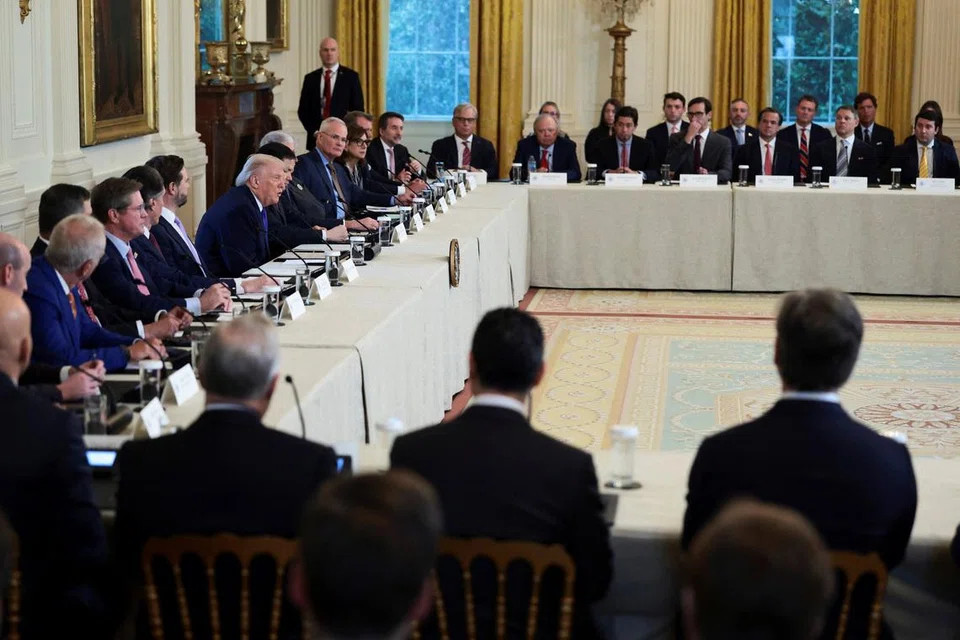
“If we don’t do it, Russia or China will take over Greenland. And we’re not going to have Russia or China as a neighbour,” Trump said at a meeting with oil and gas executives at the White House.
“I would like to make a deal, you know, the easy way. But if we don’t do it the easy way, we’re going to do it the hard way,” he added.
Since the abduction of Venezuelan President Nicolas Maduro last week from Caracas in a military operation, Trump and his officials have upped the ante against the Greenlandic capital, Nuuk.
So, what are the ways that US President Trump could take control of Greenland, a territory of Denmark?
Is Trump considering paying out Greenlanders?
Paying out to Greenland’s nearly 56,000-strong population is an option that White House officials have been reportedly discussing.
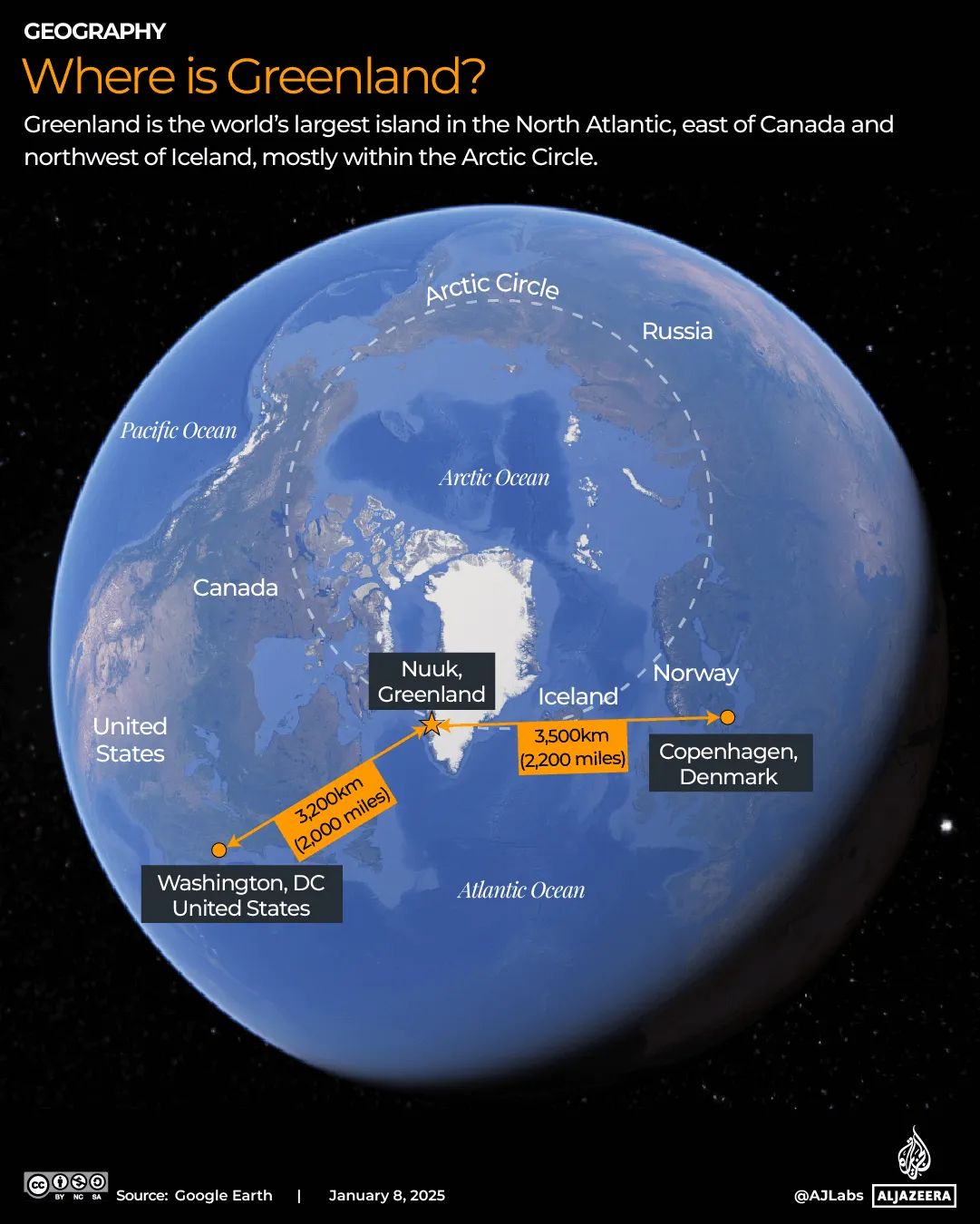
Located mostly within the Arctic Circle, Greenland is the world’s largest island, with 80 percent of its land covered by glaciers. Nuuk, the capital, is the most populated area, home to about one-third of the population.
Trump’s officials have discussed sending payments to Greenlanders – ranging from $10,000 to $100,000 per person – according to a Reuters report, in a bid to convince them to secede from Denmark and potentially join Washington.
Greenland is formally a part of Denmark, with its own elected government and rules over most of its internal affairs, including control over natural resources and governance. Copenhagen still handles foreign policy, defence and Greenland’s finances.
But since 2009, Greenland has the right to secede if its population votes for independence in a referendum. In theory, payouts to Greenland residents could be an attempt to influence their vote.
Trump shared his ambitions of annexing Greenland during his first term as well, terming it “essentially a large real estate deal.”
If the US government were to pay $100,000 to each Greenland resident, the total bill for this effort would amount to about $5.6bn.
A boy throws ice into the sea in Nuuk, Greenland, on March 11, 2025 [Evgeniy Maloletka/AP Photo]
Can the US ‘buy’ Greenland?
Earlier this week, White House spokesperson Karoline Leavitt confirmed to reporters on Wednesday that Trump’s officials are “actively” discussing a potential offer to buy the Danish territory.
During a briefing on Monday with lawmakers from both chambers of Congress, US Secretary of State Marco Rubio told them that Trump would prefer to buy Greenland rather than invade it. Rubio is scheduled to hold talks with Danish leaders next week.
Both Nuuk and Copenhagen have repeatedly insisted that the island “is not for sale”.
There are few modern historical precedents to compare Trump’s threats with Greenland, much like the abduction of Maduro on his orders.
The US purchased Louisiana from France in 1803 for $15m and Alaska from Russia in 1867 for $7.2m. However, both France and Russia were willing sellers — unlike Denmark and Greenland today.
Washington has also purchased territory from Denmark in the past. In 1917, the US, under President Woodrow Wilson, bought the Danish West Indies for $25m during World War I, later renaming them the United States Virgin Islands.
General view of the Nuuk Cathedral, or the Church of Our Saviour, in Nuuk, Greenland, on March 30, 2021 [Ritzau Scanpix/Emil Helms via Reuters]
Can Trump really just pay off his way?
While Greenlanders have been open to departing from Denmark, the population has repeatedly refused to be a part of the US. Nearly 85 percent of the population rejects the idea, according to a 2025 poll commissioned by the Danish paper Berlingske.
Meanwhile, another poll, by YouGov, shows that only 7 percent of Americans support the idea of a US military invasion of the territory.
Jeffrey Sachs, an American economist and a professor at Columbia University, told Al Jazeera, “The White House wants to buy out Greenlanders, not to pay for what Greenland is worth, which is way beyond what the US would ever pay.”
“Trump thinks he can buy Greenland on the cheap, not for what it’s worth to Denmark or Europe,” he said. “This attempt to negotiate directly with the Greenlanders is an affront and threat to Danish and European sovereignty.”
Denmark and the European Union “should make clear that Trump should stop this abuse of European sovereignty,” said Sachs. “Greenland should not be for sale or capture by the US.”
Sachs added that the EU needs to assess “[Greenland’s] enormous value as a geostrategic region in the Arctic, filled with resources, vital for Europe’s military security.” And, he added, “certainly not a plaything of the United States and its new emperor”.
Denmark and the US were among the 12 founding members of the North Atlantic Treaty Organization (NATO) in 1949 to provide collective security against Soviet expansion.
“Europe should tell the US imperialists to go away,” Sachs said. “[Today] Europe is far more likely to be invaded from the West (US) than from the East,” the economist told Al Jazeera.
President Donald Trump observes military demonstrations at Fort Bragg, on Tuesday, June 10, 2025, in Fort Bragg, North Carolina [Alex Brandon/AP Photo]
Has the US tried to buy Greenland earlier?
Yes, on more than one occasion.
The first such proposal surfaced in 1867 under Secretary of State William Seward, during discussions to successfully purchase Alaska. By 1868, he was reportedly prepared to offer $5.5m in gold to acquire both Greenland and Iceland.
In 1910, a three-way land swap was discussed that would involve the US acquiring Greenland in exchange for giving Denmark parts of the US-held Philippines, and the return of Northern Schleswig from Germany back to Denmark was proposed.
A more formal attempt was made in 1946, immediately following World War II. Recognising Greenland’s critical role in monitoring Soviet movements, President Harry Truman’s administration offered Denmark $100m in gold for the island.
But Denmark flatly rejected the idea.
Denmark’s Prime Minister Mette Frederiksen talks with the head of the Arctic Command, Soeren Andersen, on board the defence inspection vessel Vaedderen in the waters around Nuuk, Greenland, on April 3, 2025 [Tom Little/Reuters]
Can the US attack Greenland?
While political analysts say that a US attack to annex Greenland would be a direct violation of the NATO treaty, the White House has said that using military force to acquire Greenland is among the options.
Denmark, a NATO ally, has also said that any such attack would end the military alliance.
“We need Greenland from the standpoint of national security, and Denmark isn’t going to be able to do it,” Trump told reporters on Air Force One on Sunday. “It’s so strategic.”
Greenland is one of the world’s most sparsely populated, geographically vast regions.
But through a 1951 agreement with Denmark, the US military already has a significant presence on the island.
The US military is stationed at the Pituffik Space Base, formerly known as Thule Air Base, in the northwestern corner of Greenland, and the 1951 pact allows Washington to set up additional “defence areas” on the island.
The Thule base supports missile warning, missile defence, space surveillance missions, and satellite command and control.
Nearly 650 personnel are stationed at the base, including US Air Force and Space Force members, with Canadian, Danish and Greenlandic civilian contractors. Under the 1951 deal, Danish laws and taxation don’t apply to American personnel on the base.
Denmark also has a military presence in Greenland, headquartered in Nuuk, where its main tasks are surveillance and search and rescue operations, and the “assertion of sovereignty and military defense of Greenland and the Faroe Islands”, according to Danish Defence.
But the US forces at Thule are comfortably stronger than the Danish military presence on the island. Many analysts believe that if the US were to use these troops to try to occupy Greenland, they could do so without much military resistance or bloodshed.
Trump told reporters on Sunday that “Greenland is covered with Russian and Chinese ships all over the place”. Both global powers have a presence in the Arctic Circle; however, there is no evidence of their ships anywhere near Greenland.
A protester holds a banner outside Katuaq Cultural Center in Nuuk, Greenland, on March 28, 2025 [Leonhard Foeger/Reuters]
Is there another option for the US?
As Trump’s officials mull plans to annex Greenland, there have reportedly been discussions in the White House on entering into a type of agreement that defines a unique structure of sovereignty-sharing.
Reuters reported that officials have discussed putting together a Compact of Free Association, an international agreement between the US and three independent, sovereign Pacific island nations: the Federated States of Micronesia, the Republic of the Marshall Islands and the Republic of Palau.
The political arrangement grants the US responsibility for defence and security in exchange for economic assistance. The precise details of COFA agreements vary depending on the signatory.
For a COFA agreement, in theory, Greenland would need to separate from Denmark.
Asked why the Trump administration had previously said it was not ruling out using military force to acquire Greenland, Leavitt replied that all options were always on the table, but Trump’s “first option always has been diplomacy”.
Why does Trump want Greenland badly?
Trump has cited national security as his motivation for wanting to take Greenland.
For the US, Greenland offers the shortest route from North America to Europe. The US has expressed interest in expanding its military presence in Greenland by placing radars in the waters connecting Greenland, Iceland and the United Kingdom. These waters are a gateway for Russian and Chinese vessels, which Washington aims to track.
But Greenland is also home to mineral riches, including rare earths. According to a 2023 survey, 25 of 34 minerals deemed “critical raw materials” by the European Commission were found in Greenland. Scientists believe the island could also have significant oil and gas reserves.
However, Greenland does not carry out the extraction of oil and gas, and its mining sector is opposed by its Indigenous population. The island’s economy is largely reliant on its fishing industry at the moment.
After years of public criticism directed at Europe, US President Donald Trump put together a National Security Strategy (NSS) that reflected his twisted perceptions. Still, it is one thing to hear his stage rhetoric and another to see his worldview codified in official doctrine. Its core claim: Europe will be “unrecognisable in 20 years” due to “civilisational erasure” unless the United States, “sentimentally attached” to the continent, steps in to restore its “former greatness”.
Trump is right, Europe has problems. But they are not what he claims.
Decades of underinvestment in people, persistent political incentives to ignore excluded communities and a reluctance to confront how demographic and economic decline interact, go unaddressed. Political leaders largely avoid this conversation. Some deny these problems, others concede them privately while publicly debating symptoms but not addressing the root causes.
A clearer perspective can be found among those who live with these failures. Across Europe, millions in the working class struggle to survive amid shuttered factories, underfunded schools, unaffordable housing and broken public services. Among them, the Roma sharpen the picture. As Europe’s largest and most dispossessed minority, their experience exposes the continent’s choice to treat entire populations as collateral damage. When Trump presses on Europe’s wounds, these communities confirm where it hurts.
What Trump gets right about Europe
The NSS argues that Europe’s “lack of self-confidence” is most visible in its relationship with Russia. Yes, Europe’s paralysis towards Moscow contrasts with its aggression towards weaker groups at home. This reflects the lack of confidence in European values.
Trump is right. We’re weak. If we were strong, we would stand up for European values of democracy and pluralism. We would not demonise our minorities.
But we do. Across the continent, Roma communities face racist policies. In Slovenia, following a bar fight that spiralled into public hysteria, the national legislature passed a law in November to securitise Roma neighbourhoods.
In Portugal, Andre Ventura of the far-right Chega party put up posters saying “G****es have to obey the law” as part of his presidential campaign. In Italy, far-right politician Matteo Salvini built an entire political brand on anti-Roma paranoia. In Greece, the police shoot at Roma youth for minor crimes.
Leaders over-securitise the Roma while overcompensating for their caution towards Russia.
The NSS also highlights Europe’s declining share of global gross domestic product, from 25 percent in 1990 to 14 percent today. Regulations play a part, so does demographic decline, but the deeper problem is Europe’s failure to invest in all its people.
Twelve million Roma, the youngest population in Europe, remain locked out of education, employment and entrepreneurship through structural barriers and discrimination, even though surveys show their overwhelming willingness to contribute to the societies they live in and their high success rates when they run businesses that receive support.
If Roma employment in Romania, Slovakia and Bulgaria – where their unemployment rates are currently 25 percentage points above those of the majority population – matched national averages, the combined GDP gain could be as much as 10 billion euros ($11.6bn). In a continent losing two million workers a year, letting this labour potential go unused is self-sabotage.
Trump is right about Europe’s declining share of GDP. If Europe were serious, it would not believe it can leave Roma people on the scrap heap.
The NSS further warns of “subversion of democratic processes”, and while he is not talking about minorities, it is true that Europe does fall short. Proportionally, according to our estimates at the Roma Foundation, they should hold over 400 seats.
The European Parliament includes seats for Malta and Luxembourg, states with populations of 570,000 and 680,000, respectively; yet, it does not include any seats for the Roma community.
Trump is right that we have a democratic deficit. But it’s not because of laws against hate speech and constitutional barriers to the far right. The most pressing deficit is that 12 million Roma are not represented.
A continent that wastes its population cannot be competitive, and one that suppresses parts of its electorate cannot claim to be representative. Political exclusion reduces voter turnout and registration rates, leading to systematically underrepresentative institutions, while economic exclusion makes communities easier targets for vote-buying, coercion and political capture.
What Europe really needs
Trump’s proposed solution for Europe’s crisis would not resolve anything. He seems to assume that far-right pseudo-sovereigntists, opposed to immigration and minorities alike, can reverse Europe’s decline.
The evidence suggests otherwise. Countries where xenophobia influences policy have not performed well. In the United Kingdom, where the far right drove a campaign to leave the European Union over fears of migration, experts have calculated that GDP is 6-8 percent lower than it would have been without Brexit. In Hungary, where the government of Viktor Orban has enacted various anti-migrant and discriminatory policies, there is stagnant economic growth, a high budget deficit and frozen EU funds. Exclusion weakens economies and makes democracies vulnerable.
Empowering the ideological heirs of forces that the United States once helped Europe defeat would not aid the continent’s recovery. In fact, this “restoration” to power of extremist right-wing ideology would deepen Europe’s dependence on Washington, then Moscow.
It is also true that Europe cannot survive global realpolitik, leaning on liberal nostalgia, multilateral summits or rhetorical commitments, either.
What Europe needs is inclusive realism: the recognition that investing in all people is not charity but a strategic necessity. China’s rise illustrates this. Decades of investment in health, education and employment have expanded human capital, increased productivity and reshaped global power balances.
Europe cannot afford to waste its own population potential while expecting to remain a relevant player. The real choice is not between liberals and the far right, but between deepening its wounds by sidelining millions or beginning to heal by investing in the people it has long treated as expendable.
The views expressed in this article are the author’s own and do not necessarily reflect Al Jazeera’s editorial stance.
The Iranian army says it would safeguard strategic infrastructure and public property as it urged the Iranians to thwart “the enemy’s plots”, after United States President Donald Trump issued a new warning to Iran’s leaders over the escalating antigovernment protests.
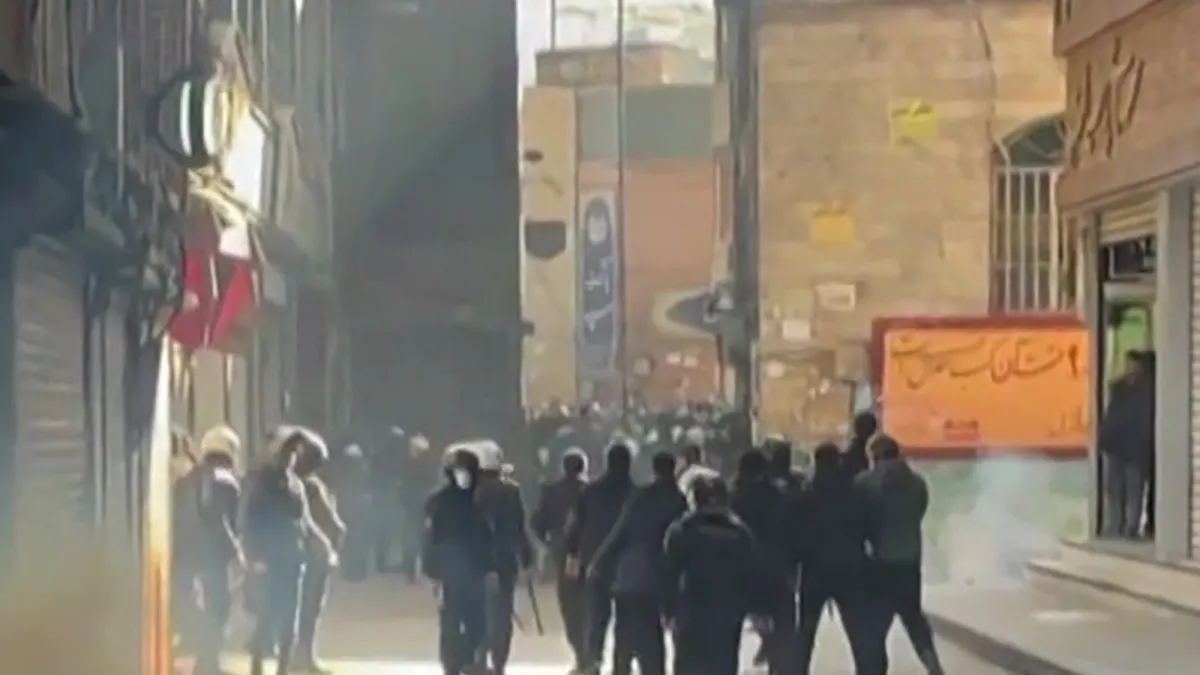
In a statement published by semi-official news sites, the military on Saturday accused Israel and “hostile terrorist groups” of seeking to “undermine the country’s public security”, as Tehran stepped up efforts to quell the country’s biggest protests in years over the cost of living, which have left dozens dead.
Recommended Stories
list of 4 itemsend of list
“The Army, under the command of the Supreme Commander-in-Chief, together with other armed forces, in addition to monitoring enemy movements in the region, will resolutely protect and safeguard national interests, the country’s strategic infrastructure, and public property,” the military said.
Iran’s elite Islamic Revolutionary Guard Corps (IRGC) – which operates separately from the army – also warned on Saturday that safeguarding the 1979 revolution’s achievements and the country’s security was a “red line”, state TV reported.
Earlier on Saturday, US Secretary of State Marco Rubio once again expressed Washington’s support for the people of Iran after Iranian authorities blacked out the internet, as they sought to curb deadly protests.
“The United States supports the brave people of Iran,” Rubio posted on X.
The post came hours after Trump issued a new warning to Iran’s leaders, saying, “You better not start shooting because we’ll start shooting too.”
Trump said it looked like Iran’s leaders were “in big trouble” and repeated an earlier threat of military attacks if peaceful protesters were killed. “It looks to me that the people are taking over certain cities that nobody thought were really possible just a few weeks ago,” he said.
Protests have taken place across Iran since January 3, in a movement prompted by anger over the rising cost of living, with growing calls for the end of the clerical system that has ruled Iran since the 1979 Islamic revolution, which removed the pro-Western shah ruler.
The unrest continued overnight on Saturday, with state media blaming “rioters” for setting a municipal building on fire in Karaj, west of Tehran, the Reuters news agency reported.
Press TV broadcast footage of funerals of members of the security forces it said were killed in protests in the cities of Shiraz, Qom and Hamedan, Reuters said. Videos published by Persian-language television channels based outside Iran showed large numbers of people taking part in new protests in the eastern city of Mashhad and Tabriz in the north.
In his first comments on the escalating protests, Iran’s Supreme Leader Ayatollah Ali Khamenei on Friday called the demonstrators “vandals” and “saboteurs”.
In a speech broadcast on Press TV, Khamenei said Trump’s hands “are stained with the blood of more than a thousand Iranians”, in apparent reference to Israel’s attacks on Iran in June, which the US supported and joined with strikes of its own.
Khamenei predicted the “arrogant” US leader would be “overthrown” like the imperial dynasty that ruled Iran up to the 1979 revolution.
“Everyone knows the Islamic republic came to power with the blood of hundreds of thousands of honourable people; it will not back down in the face of saboteurs,” he said.
Iranian Foreign Minister Abbas Araghchi, on a visit to Lebanon on Friday, accused the US and Israel of “directly intervening” to try to “transform the peaceful protests into divisive and violent ones”, which a US State Department spokesperson called “delusional”.
‘Different approaches’
Al Jazeera’s Tohid Asadi, reporting from Tehran, said the protests have been growing in the capital, Tehran, and other cities.
“[The protests] started sporadically, but over the past two-three days, we have been witnessing more and more protests, specifically in the capital,” he said, adding that the demonstrations “flared up into violence in many streets” in Tehran on Thursday.
He said the state is trying to control the situation “with different approaches” such as tightening security measures and introducing a new subsidy scheme for citizens.
The protests are the biggest in Iran since the 2022-2023 protest movement prompted by the death in custody of Mahsa Amini, who had been arrested for allegedly violating the dress rules for women.
A “nationwide internet blackout” implemented by the Iranian authorities as protesters took to the streets has now been in place for 36 hours, monitor NetBlocks said on Saturday.
“After another night of protests met with repression, metrics show the nationwide internet blackout remains in place at 36 hours,” it said in a post on X.
Rights group Amnesty International said the “blanket internet shutdown” aims to “hide the true extent of the grave human rights violations and crimes under international law they are carrying out to crush” the protests.
Also on Saturday, the US-based son of Iran’s ousted shah urged Iranians to stage more targeted protests, with the aim of taking and then holding city centres.
“Our goal is no longer just to take to the streets. The goal is to prepare to seize and hold city centres,” Reza Pahlavi said in a video message on social media, urging more protests on Saturday and Sunday and adding he was also “preparing to return to my homeland” in a day he believed was “very near”.
Norway-based NGO Iran Human Rights, raising a previous toll of 45 issued the day before, said at least 51 protesters, including nine children, have been killed by security forces, and hundreds more injured.
In a joint statement on Friday, the foreign ministers of Australia, Canada and the European Union issued a strong condemnation and called on Iran to “immediately end the use of excessive and lethal force by its security forces”.
“Too many lives – over 40 to date – have already been lost,” it said.
A new video has emerged showing the final moments of a Minnesota woman’s encounter with an immigration officer before she was killed, as public uproar grows in the United States over the shooting and exclusion of local agencies from the investigation.
A Minnesota prosecutor on Friday called on the public to share with investigators any recordings and evidence connected to the fatal shooting of Renee Nicole Good, 37, who was fatally shot by an Immigration and Customs Enforcement (ICE) agent.
Recommended Stories
list of 4 itemsend of list
A new, 47-second video published online by a Minnesota-based conservative news site, Alpha News, on Friday, and later reposted on social media by the Department of Homeland Security, shows the shooting from the perspective of ICE officer Jonathan Ross, who fired the shots on Wednesday.
With sirens blaring in the background, Ross, 43, approaches and circles Good’s vehicle in the middle of the road while apparently filming on his cellphone. At the same time, Good’s wife was also recording the encounter and can be seen walking around the vehicle and approaching the officer.
A series of exchanges occurred.
“That’s fine, I’m not mad at you,” Good says as the officer passes by her door. She has one hand on the steering wheel and the other outside the open driver’s side window.
“US citizen, former f—ing veteran,” says her wife, standing outside the passenger side of the SUV holding up her phone. “You wanna come at us, you wanna come at us, I say go get yourself some lunch, big boy.”
Other officers approach the driver’s side of the car at about the same time, and one says, “Get out of the car, get out of the f—ing car.”
Ross is now at the front driver’s side of the vehicle. Good reverses briefly, then turns the steering wheel towards the passenger side as she drives ahead, and Ross opens fire. The camera becomes unsteady and points towards the sky, then returns to the street view showing Good’s SUV careening away.
“F—ing b—-,” someone at the scene says.
A crashing sound is heard as Good’s vehicle smashes into others parked on the street.
Minnesota officials slam federal agencies
President Donald Trump’s administration has defended the ICE agent who shot Good in her car, painting her as a “domestic terrorist” and claiming Ross – an Iraq War veteran – was protecting himself and the fellow agents. The White House insisted the video gave weight to the officer’s claim of self-defence – even though the clip does not show the moment the car moved away, or him opening fire.
Local officials in Minnesota have condemned federal agencies for excluding them from the probe, and a local prosecutor said on Friday that federal investigators had taken Good’s car and shell casings from the scene.
“This is not the time to bend the rules. This is a time to follow the law… The fact that Pam Bondi’s Department of Justice and this presidential administration has already come to a conclusion about those facts is deeply concerning,” Minneapolis Mayor Jacob Frey, a Democrat, told a news briefing on Friday.
“We know that they’ve already determined much of the investigation,” he said, adding that the state’s Bureau of Criminal Apprehension, within its department of public safety, has consistently run such investigations.
“Why not include them in the process?” Frey said.
Good was the fourth person to be killed by ICE agencts since Trump launched his immigration crackdown last year.
Good’s wife, Becca Good, told local media that they had gone to the scene of immigration enforcement activity to “support our neighbours”. “We had whistles. They had guns,” she said.
The Minneapolis killing and a separate shooting in Portland, Oregon, on Thursday by the Border Patrol have set off protests in multiple US cities and denunciations of immigration enforcement tactics by the US government.
Protests in Minneapolis continued on Friday, with hundreds gathered at a federal facility that has become a focal point of anti-ICE demonstrations. Hundreds of weekend protests have been planned across the US over the killing, according to organisers.
In the evening, moments before the United States’ aerial operation in northwestern Nigeria, a helicopter hovered above the perimeters of Gwangwano District, in Sokoto’s Tangaza Local Government Area (LGA). It was Dec. 25, 2025. Residents said helicopters had hovered around in the past, but this one stayed far too long, unsettling the civilians and alerting the terrorists.
For at least two years, communities in Tangaza have cohabited with foreign-linked Lakurawa terrorists, who first appeared like their saviours. Villagers agreed to a peace deal with the group in exchange for protection from homegrown terrorists who were ravaging their homes and taxing them to death. Initially, Lakurawa seemed more persuasive, residents said, but they eventually introduced their own radical ideologies—far worse than the criminal enterprise they had condemned.
A few hours after the helicopter was sighted, Ardo Kyaure, a terrorist leader in Tangaza, was seen moving house to house near Bauni forests, urging residents to flee. He warned them of an impending attack. Villagers who saw Ardo said he was also making phone calls to accomplices, panting as he ran through the communities.
Ardo was once a local terrorist leader before defecting to join Lakurawa. He became a middleman between the foreign terrorists and the villagers after he was subdued, losing so many of his fighters to the new sect.
News quickly reached the communities that the Lakurawa terrorists were evacuating their camps. Residents said the terrorists fled the area on over a dozen motorcycles. The villagers within the Bauni Mountains and the Kandam community also ran for their lives.
“We sighted 15 motorcycles carrying luggage and the Lakurawa terrorists with their women and children,” Alhaji Rabiu, a resident of Zurmuku, a village neighbouring the Bauni forest, told HumAngle. “Ten additional motorcycles were moving to Muntsaika, a community in the nearby Niger Republic, in the evening before the strikes happened.”
A neighbourhood in Sokoto’s Tangaza LGA. Photo: Abdullahi Abubakar/HumAngle.
HumAngle spoke to scores of locals who witnessed the air raid, especially villagers living near the Bauni Mountains. We also interviewed village chiefs and a local monarch in Tangaza, who corroborated Rabiu’s account, stating that the strike failed to reach its target, despite public claims by US and Nigerian officials.
“No terrorist was found dead throughout our communities,” said Alhaji Bunu, the traditional ruler of the Gwangwano District in Tangaza LGA. “We saw nothing like dead bodies, even at the Bauni Mountains where the bomb fell. The same Lakurawas we knew are still here, loitering around our communities. We are still mingling with them.”
Fireballs, flaming narratives
A few days after the strike, the Nigerian government claimed “a total of 16 GPS-guided precision munitions were deployed using MQ-9 Reaper unmanned aerial platforms, successfully neutralising the targeted ISIS elements attempting to penetrate Nigeria from the Sahel corridor”. Donald Trump, the US President, had said that the strike eliminated Islamic State terrorists who had been “viciously killing, primarily, innocent Christians at levels not seen for many years, and even centuries”.
That narrative had lingered for years and intensified in the final months of 2025, when the US designated Nigeria a country of particular concern and also threatened military action against terrorists operating within the country. Nigerian officials and security experts, however, dispelled the narrative, saying that Muslims, Christians, and other adherents of other faiths are victims of violent attacks and terrorism in the country. The rhetoric was inflamed again when the US announced that its Christmas Day airstrikes targeted elements of the Islamic State of Iraq and Syria (ISIS) in Nigeria.
US forces have occasionally targeted ISIS terrorists in parts of Africa, especially in Somalia, often working with local intelligence to combat the violent groups. In Nigeria, however, the strike has sparked fierce debate over whether ISIS terrorists were present at the location hit.
Most security experts agree that Boko Haram and the Islamic State of West African Provinces (ISWAP), which are primarily based in northeastern Nigeria, have established links to ISIS. However, the targeted Tangaza forest, which officials described as the transit hub for ISIS-affiliated terrorists, is known to be dominated by the Lakurawa group, which infiltrated Sokoto through porous borders with the Niger Republic.
Nigerian government officials have publicly claimed that the strike was conducted jointly with US forces, based on intelligence shared to fight terrorism. The country’s Minister of Information, Muhammad Idris, described it as “successful precision strikes on two major ISIS terrorist enclaves located within the Bauni forest axis of Tangaza Local Government Area, Sokoto State”.
“Intelligence confirmed that these locations were being used as assembly and staging grounds by foreign ISIS elements infiltrating Nigeria from the Sahel region, in collaboration with local affiliates, to plan and execute large-scale terrorist attacks within Nigerian territory,” he said.
Yet the circumstances surrounding the strike have raised concerns amongst villagers in Sokoto State and conflict researchers in the northern region.
A screenshot from footage published by the US Department of War of a missile being fired from a military vessel on Dec. 25, 2025.
Was the precision strike successful?
HumAngle began gathering witness accounts moments after the air raid, tracing events before, during, and after the missiles were launched. Residents of Bauni village, where the strike happened, said they have seen no sign that any terrorist was hit.
We interviewed a number of Bauni locals, who had travelled from the village to a safer place in Tangaza to share their accounts. In separate interviews, they all echoed one thing: the terrorists had long left the site of the attack before the missile was launched.
The strike raised curiosity in the communities, as villagers insisted they would know if any terrorist was killed or if any of them were injured.
Kasimu Hassan, a Bauni villager, told HumAngle that the Lakurawa terrorists had absolute control over them, and the airstrike hadn’t ended their reign. In Bauni, he said, no villager was allowed to welcome visitors or accept strangers without notifying the Lakurawa terrorists. He stated that anyone caught doing that could be traced, tried, and executed.
“This has been the situation we are in. Not even a single Lakurawa was killed or injured by the US explosion in Tangaza LGA. Some of them come to our mosques to pray, visit our markets to buy commodities, and stop over at our houses to exchange pleasantries in forceful smiles,” Kasimu said, adding that “the Lakurawa terrorists are still in our villages hanging around the bush even after the explosion.”
At least four other Bauni villagers confirmed Hassan’s claims. One said fires burned in the surrounding bush for days after the strike. Despite official claims that a Battle Damage Assessment (BDA) was underway, locals said they had not seen security operatives surveilling the area for such an assessment.
During our on-the-ground reporting, HumAngle spotted a police anti-bomb squad along the road to Tangaza, but locals insisted that officers have refused to come near the site for any post-strike surveillance. Sanusi Abubakar, the spokesperson for Sokoto State Police Command, has not responded to HumAngle’s inquiry into why the anti-bomb squad has refused to visit the communities for the assessment.
“It was Ardo Kyaure, a terrorist leader, who came to tell us that there is a lot of debris on the Bauni Mountains and another undetonated bomb deposited there,” Kasimu added.
Terrorists taking cover in civilian villages
After the strikes, villagers said the Lakurawa terrorists increasingly sought refuge inside civilian settlements, avoiding the Bauni Mountains, where they usually live. Magaji Abdullahi, the village head of Bauni, confirmed this to HumAngle, noting that the airstrike only resulted in moving terrorists into civilian settlements.
“The mountains used to be our hunting point in the last 15 to 20 years,” said Magaji. “It is not accessible even to our local hunters anymore, except recently, when the Lakurawa terrorists mixed up with us. The Nigerian government abandoned us for years; the only military base available to us was in the far-off town of Gwangwano. They tried a lot in securing only the centre of Gwangwano effectively, but there is no peace in other areas.”
He also stressed that villagers are left with no choice but to cohabit with the terrorists due to the absence of government in the area. The Lakurawa terror group now controls much of Gwangwano District, which encompasses villages such as Bauni, Garin Mano, Mugunho, Kaidaji, and Kandam.
The palace of the Gwangwano District monarch in Tangaza LGA. Photo: Abdullahi Abubakar/HumAngle.
Muazu Magaji, another witness of the strike, had left the Kaidaji village to settle down in the Tangaza town, waiting for the coast to clear. He was there when the missile lightning illuminated the community. Despite the reverberating sounds that came with the airstrike, Magaji said, terrorists were watching from afar, with Ardo Kyaure calling others who might still be around the Bauni forest “to leave”.
“I was walking from Kaidaji to Bauni when the bomb exploded that night,” he recalled. “We already figured out something was about to happen because of the way we saw how the Lawkurawas were moving out of the forest zone to our settlements on the day of the attack.”
After the airstrike, on Saturday, Dec. 26, witness accounts revealed that terrorists came to sniff around to know what might come next. Sanusi Dubudari, one of the fleeing residents from Kaidaji, said: “We saw 11 Lakurawa terrorists in Kaidaji village asking residents whether they found their ₦7 million cash while they were running on Friday.”
A school in the Tangaza town. Photo: Abdullahi Abubakar/HumAngle.
Based on several local accounts, the Lakurawa terrorists have blended in really well with the villagers in Tangaza, making it difficult for security to hunt them down over fear of collateral damage. Although the terrorists moved into Sokoto from countries like Mali, the Niger Republic, and Burkina Faso, they have formed a strong alliance with locally-rooted terrorists, who made it easy for them to navigate the terrain seamlessly, sometimes hiding under the shield of locals during military raids. They used the same tactics during the US airstrike targeting ISIS elements in the state.
Apart from Ardo Kyaure, Charambe Damba is another indigenous terrorist working in cahoots with the Lakurawa group. He resided in Illela, a town bordering the Niger Republic, but recently relocated to Bauni to set up a terrorist camp on the mountain and in the forest of the locality. One of the known foreign-linked Lakurawa terrorists is called Asasanta, who is from the Republic of Mali. Other local accomplices were identified as Jammare from the Alela village and Buba Holo from the Gwangwano community in the Tangaza LGA.
Near-surface aerial bombing
HumAngle matched witness accounts with satellite intelligence and geospatial analysis to assess the effectiveness of the so-called precision airstrike. For weeks, we reconstructed the events leading up to the airstrike and what happened later, merging open-source intelligence with on-the-ground reporting. At the time of this investigation, no government or military official (including bomb disposal units) and no journalists had accessed the actual blast site. There were also no photos or after-action reports, which are typically shared on the Nigerian military’s social media channels after air raids.
We first used Google Earth imagery as a base map to scan for fire activity that matched the date and timeframe of the strike. With no confirmed coordinates from official or ground sources, we overlaid NASA FIRMS (VIIRS), a US National Aeronautics and Space Administration-run detection tool providing real-time satellite data on active fire hotspots globally. Multiple fire detections appeared about three kilometres south of Nukuru, in the rocky mountainous terrain of the Bauni area. These terrain features matched the location described by our sources and are more than 11 km west of the Bauni Forest Reserve. There were no fire detections deep inside the forest during the relevant period.
The probable strike area in the Bauni Mountains. Map illustration: Mansir Muhammed/HumAngleKamdan-Bauni Mountains and Gwangwano environment: We marked the area where the NASA satellite recorded fire activities succeeding the December 25 strike. Multiple heat signatures were measured across the mountain vegetation. Map: Mansir Muhammed/HumAngle
From satellite images, the Gwangwano district, including the Bauni village, looks empty. Here, villages don’t spread out; they sit in small clusters, and there’s a lot of space before the next one. Farmland, open savannah, hills, and stretches of land also seem unused. But once you zoom in and start following the details, it becomes clear that the place is just not organised the way a typical rural town would be.
Through extensive geospatial analyses, HumAngle identified recent motorcycle tracks within the Bauni locality – thin lines, sometimes barely visible, cutting through farmland, climbing hills, disappearing into forested areas, and reappearing elsewhere. The tracks were nearly everywhere at the time of this satellite intelligence analysis. One route splits into three, then those split again. Some lead straight into villages, others run around the edges, into the hills, or toward areas where there are no visible settlements at all. This matches what witnesses told us about the Lakurawa terrorists moving on motorcycles in large numbers, and leaving the hill.
Up in the hills and mountain areas, especially around the forest reserve and the expanse of land next to it, there are no villages — just small clearings and faint shapes that don’t look like farmland or houses, with tracks leading in and out. People familiar with this area say these are temporary shelters, where terrorists survive seamlessly, hunting small animals, foraging, and riding into town to buy supplies, and then returning. Here, locals said, terrorists don’t need to live deep inside the forest reserve; the hills and forest-adjacent land outside it are enough. They’re close to communities but not inside them – close enough to reach markets or villages, far enough to stay out of sight.
When we overlaid the NASA fire data from the days after Dec. 25, 2025, the locations lined up with this pattern. The fires were not inside a village, nor deep in the forest reserve. They appeared in terrain that fits how people actually use this landscape — hilly, open, connected by tracks, and close enough to settlements to be seen and felt, but not inside them. However, we found a dense network of informal routes that makes movement easy and law enforcement’s control almost impossible.
Using Google Earth Pro, we reviewed 2023 imagery of the hills and mountain range south of Nukuru village and the Bauni Mountain and marked points of interest (POIs) across the landscape. The only visible human features in this sparse environment are isolated huts, farmhouses, small clearings under trees, and faint impressions that could be temporary living units. We presented the satellite review to some of the enlightened locals; they believe that if a munition struck a fixed structure there, even a light one, there would be some visible trace.
When we obtained the latest 2025 Planet imagery, we overlaid the same POIs onto the new images and checked them individually. Most structures were still present; some appeared less distinct, likely due to resolution, seasonal change, or abandonment, but none showed clear signs of blast damage, scorched ground, or collapsed structures. In a few cases, huts visible in 2023 were no longer visible in 2025, yet the sandy compound remained intact, without burn marks or disturbed vegetation. This clearly shows that no permanent or semi-permanent structure in the area was directly hit – at least within the limits of our assessments.
Satellite imagery showing POIs in Nukuru village and the Bauni Mountain. Analysis: Mansir Muhammed/HumAngle
The satellite imagery analyses and eyewitness accounts point away from a classic ground-impact strike. There is no visible crater, no destroyed structure, or abrupt disruption of living units. The evidence fits more closely with a high-energy detonation that occurred at or above ground level, producing intense light, a strong pressure wave felt several kilometres away, and secondary fires in surrounding vegetation.
Our findings corroborate locals’ accounts of sighting the flash and feeling the vibration despite being several kilometres from the fire detections. A near-surface detonation transfers more energy into the air, creating light and shock without leaving deep or lasting ground damage.
HumAngle’s satellite investigation shows no clear impact point. The cumulative evidence from witness statements, NASA fire detection, and high-resolution satellite imagery indicates that the US missile strike may not have hit the prime targets.
A recent New York Times story on the incident quoted two anonymous US government officials, who said the strike was “a one-time event” intended to scare terrorists while appeasing the Nigerian Christians that the US has their back, and that the warship responsible for launching the strike has since been withdrawn from the Gulf of Guinea.
Some local conflict and terrorism experts said the US airstrike largely failed to achieve its publicly stated mission. James Barnett, a research fellow at the Hudson Institute, who has researched African conflicts for years, believes that the strike “was performative”. “It was not a success,” he noted. “It may not have even killed any militants. And it certainly did not make Christians there safer (possibly the opposite).”
Seeds of doubt and misinformation
Meanwhile, in Jabo, a civilian community in Sokoto’s Tambuwal LGA, kilometres away from Tangaza, where the airstrike also landed, seeds of doubt and misinformation are growing among residents, who believe that the US is targeting Muslim settlements.
The locals gave accounts of rays of light from flying fireballs and vibrations similar to those of the Tangaza villagers, except that they insisted that the Jabo area does not host terror groups and has not witnessed any terrorist attacks in the past decade. They wondered why such a tactical bombing would be aimed at their peaceful community.
After HumAngle’s report of the residents’ accounts, the Nigerian government provided a counternarrative, saying what locals saw was debris from the air assaults on terrorists in faraway Tangaza. Residents of Offa, Kwara State, also experienced what the Nigerian Information Minister described as “debris from expended munitions”.
Military authorities have urged civilian residents in Sokoto and Kwara to stop keeping the unexploded ordnance found at the sites of the raid. This came after videos appeared online showing locals scavenging exploded and unexploded debris at strike sites in Sokoto, raising concerns about potential deadly blasts.
“We do not expect civilians to pick up or keep such materials,” Major General Michael Onoja, Director of Defence Media Operations, said. “We can only appeal to them to return all materials that may prove harmful to them.”
Media misreporting
Isa Salihu, the chairperson of the Tangaza local council, confirmed that the US-led aerial assault actually hit a known terrorist hub in the area, but stressed that details of the operation were still sketchy. “We cannot yet confirm if targets were killed,” he said. “We are awaiting detailed security reports to determine the impact and to verify if there were any civilian casualties.”
However, some local media organisations in Nigeria erroneously reported the local leader affirming that the “precision strike” hit the targeted terrorists.
A day after the strike, the Sokoto State government, through Abubakar Bawa, the state’s spokesperson, had issued a statement titled: “Nigeria-US Aistrike Hits Terrorist Targets in Tangaza”. But the content of the statement betrayed its title, as it merely reiterated what the local council chairperson said. “The impact could not be immediately determined, as they await assessment of the Joint Operations,” the statement read.
Bawa and the local chairman did not respond to HumAngle’s calls and messages for further clarification on their statements.
In the wake of the devastating fire at a bar in Crans-Montana, many Swiss citizens are asking themselves if their political system is fit for purpose.
Switzerland, often praised for its efficiency, has a very devolved system of government, in which villages and towns are run by local officials elected from and by the community.
It is a system the Swiss cherish, because they believe it ensures accountability.
But there are inherent weaknesses: hypothetically, the official approving a bar license or passing a fire-safety check is the friend, neighbour, or maybe even cousin of the bar owner.
When the news of the fire emerged on New Year’s Eve, first there was shock. Such devastating fires are not, people thought, supposed to happen in Switzerland.
Then there was grief – 40 young people lost their lives, 116 were injured, many of them very seriously. Questions followed – what caused such a catastrophe?
And finally, this week – fury when Crans-Montana’s Mayor, Nicolas Feraud, revealed that Le Constellation bar had not been inspected since 2019.
Crans-Montana is in the Swiss canton of Valais, where fire-safety inspections are the responsibility of Mayor Feraud and his colleagues, and they are supposed to happen every 12 months.
Not only had the checks not taken place, the mayor said, he had only become aware of this after the fire. And, he revealed, of 128 bars and restaurants in Crans-Montana, only 40 had been inspected in 2025.
Asked why, Feraud had no answer, though he did suggest Crans-Montana had too few inspectors for the number of properties that needed checking.
This was echoed by Romy Biner, the mayor of neighbouring upmarket resort Zermatt, who told local media that many communities in the canton of Valais did not have the required resources to inspect so many premises. This is not a line that plays well with many Swiss, who know that Crans-Montana and Zermatt are two of the richest winter resorts in the country.
So when Feraud faced the press, there were pointed questions from Swiss journalists: How well did the mayor know the bar’s owners? Had he ever been to the bar? And, was there any possibility of corruption?
“Absolutely not,” was his indignant answer to the last question.
The mother of two brothers who survived the fire also had questions. “We urgently need complete, transparent answers,” she wrote on social media.
When they escaped the burning bar, each of her sons had thought at first that the other was dead.
“They escaped, but they are deeply traumatised. They will carry the emotional scars forever.”
Those questions, from journalists and families, reveal the problems of Switzerland’s devolved political system.
Elected officials in towns like Crans-Montana have many responsibilities as well as fire safety – running schools and social services, even collecting taxes.
Most of these officials work part-time and, once elected, continue with their day jobs.
Nowadays some communes may be over-challenged trying to supply and oversee all the services a 21st-Century population expects, but Swiss voters expect better than what they heard from Mayor Feraud.
The headlines after his press conference were savage. Many demanded Mayor Feraud and his colleagues resign. Feraud ruled this out, saying, “we were elected by the people. You don’t abandon ship in the middle of a storm”.
“A failure right across the board”, wrote the broadsheet Tagesanzeiger. “Now Switzerland’s reputation is on the line.”
“An utter disaster”, wrote the tabloid Blick, “a total failure of fire safety checks.”
Reputational damage is something the Swiss both hate and fear. Switzerland is a rich country, in part because of its reputation for safety, stability, reliability, and, among its own citizens, accountability.
If those in charge damage that reputation, and put the country’s success at risk, the Swiss are unforgiving.
Heads rolled two decades ago when Swissair, the much-loved national airline, went bankrupt.
Once nicknamed affectionately “the flying bank”, Swissair’s management had made a series of risky financial investments that left the airline dangerously over-extended.
In 2008, banking giant UBS, in which many Swiss, especially pensioners, had shares, had to be bailed out by Swiss taxpayers to prevent not just its own downfall, but disastrous consequences for the global economy.
When the bank’s reckless over-exposure to subprime mortgages was revealed, there was outrage. At the bank’s annual general meeting that year, normally sedate elderly shareholders hissed and booed.
One even jumped on to the stage, demanding the management give up their generous bonuses, ironically waving a string of Swiss bratwursts under their noses “in case you go hungry”.
Crans-Montana, too, has aroused that same angry feeling of trust betrayed. But this is much worse than Swissair or UBS. Forty people, many of them teenagers, are dead. Dozens more have suffered life-changing injuries.
The Swiss authorities know there must be answers, quickly.
At Friday’s memorial service, the president of Valais, Matthias Reynard, was close to tears as he promised a “strict and independent” investigation, warning that “relevant political authorities” would be held accountable.
Switzerland’s president Guy Parmelin said he expected justice “without delay and without leniency”.
The owner of the bar is now in custody, subject to a criminal investigation, but the role of the local government is sure to be examined, too. There are already calls for fire-safety inspection in Valais canton to be taken away from local town councils and given to the cantonal authorities.
Romain Jourdan, a lawyer acting for some of the families, has announced plans to file a case against Crans-Montana’s town council. The families, he said, “are demanding that all local officials be questioned, so that such a tragedy never happens again”.
There is a deeper, nationwide soul-searching going on as well. The Swiss want to know why their beloved devolved system, which many, perhaps complacently, believed to be near perfect, went so catastrophically wrong.
In the first hours after the fire, many people, along with their shock and grief, felt a certain quiet pride that their emergency services had responded so quickly.
Firefighters, ambulances crews, and even helicopters were at the scene within minutes. The emergency services were present at the memorial service. Many openly wept.
The shock and grief still sits deep, but the pride has evaporated.
What good are top-of-the-range, highly professional emergency services, the Swiss are asking themselves, if basic fire safety checks are neglected?
Switzerland’s government says finding answers is a moral responsibility – to the families above all, but also to its own voters.
New Delhi, India – On January 3, 2026, a single directive from the Board of Control for Cricket in India (BCCI) quietly ended the Indian Premier League (IPL) season of Bangladesh’s only cricketer in the tournament, Mustafizur Rahman, before it could even begin.
The Kolkata Knight Riders (KKR), a professional Twenty20 franchise based in Kolkata that competes in the IPL and is owned by Red Chillies Entertainment, associated with Bollywood actor Shah Rukh Khan, were instructed by India’s cricket board to release the Bangladesh fast bowler.
Not because of injury, form, or contract disputes, but due to “developments all around” – an apparent reference to soaring tensions between India and Bangladesh that have been high since ousted former Bangladesh Prime Minister Sheikh Hasina received exile in New Delhi in August 2024.
Within days, Mustafizur signed up for the Pakistan Super League (PSL), the Bangladesh Cricket Board (BCB) protested sharply, the IPL broadcast was banned in Bangladesh, and the International Cricket Council (ICC) – the body that governs the sport globally – was pulled into a diplomatic standoff.
What should have been a routine player transaction instead became a symbol of how cricket in South Asia has shifted from a tool of diplomacy to an instrument of political pressure.
Cricket has long been the subcontinent’s soft-power language, a shared obsession that survived wars, border closures, and diplomatic freezes. Today, that language is being rewritten, say observers and analysts.
India, the financial and political centre of world cricket, is increasingly using its dominance of the sport to signal, punish, and coerce its neighbours, particularly Pakistan and Bangladesh, they say.
The Mustafizur affair: When politics entered the dressing room
Rahman was signed by KKR for 9.2 million Indian rupees ($1m) before the IPL 2026 season.
Yet the BCCI instructed the franchise to release him, citing vague external developments widely understood to be linked to political tensions between India and Bangladesh.
The consequences were immediate.
Mustafizur, unlikely to receive compensation because the termination was not injury-related, accepted an offer from the PSL – picking the Pakistani league after an Indian snub – returning to the tournament after eight years.
The PSL confirmed his participation before its January 21 draft. The BCB, meanwhile, called the BCCI’s intervention “discriminatory and insulting”.
Dhaka escalated the matter beyond cricket, asking the ICC to move Bangladesh’s matches from the upcoming T20 World Cup, which India is primarily hosting, to Sri Lanka over security concerns.
The Bangladeshi government went further, banning the broadcast of the IPL nationwide, a rare step that underlined how deeply cricket intersects with politics and public sentiment in South Asia.
The BCB on January 7 said the International Cricket Council (ICC) has assured it of Bangladesh’s full and uninterrupted participation in the ICC Men’s T20 World Cup 2026, dismissing media reports of any ultimatum.
The BCB said the ICC responded to its concerns over the safety and security of the national team in India, including a request to relocate matches, and reaffirmed its commitment to safeguarding Bangladesh’s participation while expressing willingness to work closely with the Board during detailed security planning.
Yet for now, Bangladesh’s matches remain scheduled for the Indian megacities of Kolkata and Mumbai from February 7, 2026, even as tensions simmer.
Navneet Rana, a BJP leader said that no Bangladeshi cricketer or celebrity should be “entertained in India” while Hindus and minorities are being targeted in Bangladesh.
Meanwhile, Indian Congress leader Shashi Tharoor questioned the decision to release Mustafizur Rahman, warning against politicising sport and punishing individual players for developments in another country.
A pattern, not an exception
The Mustafizur controversy fits into a broader trajectory.
While all cricket boards operate within political realities, the BCCI’s unique financial power gives it leverage unmatched by any other body in the sport, say analysts.
The ICC, the sport’s global body, is headed by Jay Shah, the son of India’s powerful home minister Amit Shah – widely seen as the second-most influential man in India after Prime Minister Narendra Modi. The IPL, meanwhile, is by far the richest franchise league in the world.
India, with 1.5 billion people, is cricket’s biggest market and generates an estimated 80 percent of the sport’s revenue.
All of that, say analysts, gives India the ability to shape scheduling of events and matches, venues, and revenue-sharing arrangements. This, in turn, has made cricket a strategic asset for the Indian government.
When political relations sour, cricket is no longer insulated.
Nowhere is this clearer than in India’s relationship with Bangladesh at the moment. India has historically been viewed as close to Hasina, whose ouster in 2024 followed weeks of popular protests that her security forces attempted to crush using brutal force. An estimated 1,400 people were killed in that crackdown, according to the United Nations.
India has so far refused to send Hasina back to Bangladesh from exile, even though a tribunal in Dhaka sentenced her to death in late 2025 over the killings of protesters during the uprising that led to her removal. That has spurred sentiments against India on the streets of Bangladesh, which escalated after the assassination of an anti-India protest leader in December.
Meanwhile, attacks on Hindus and other religious minorities in Bangladesh since August 2024 – a Hindu Bangladeshi man was lynched last month – have caused anger in India.
Against that backdrop, the BCCI’s move to kick Rahman out of the IPL has drawn criticism from Indian commentators. Senior journalist Vir Sanghvi wrote in a column that the cricket board “panicked” and surrendered to communal pressure instead of standing by its own player-selection process, turning a sporting issue into a diplomatic embarrassment.
He argued Bangladesh did not warrant a sport boycott and warned that mixing communal politics with cricket risks damaging India’s credibility and regional ties.
Echoing the concern, Suhasini Haidar, diplomatic editor of The Hindu, one of India’s largest dailies, said on X that the government was allowing social media campaigns to overpower diplomacy. She referred to how Indian Foreign Minister S Jaishankar had travelled recently to Dhaka to attend the funeral of former Bangladesh PM Khaleda Zia, and wondered why Bangladeshi cricketers couldn’t then play in India.
Cricket analyst Darminder Joshi said the episode reflected how cricket, once a bridge between India and its neighbours, was increasingly widening divisions.
That was particularly visible late last year, when India and Pakistan faced off in cricket matches months after an intense four-day aerial war.
The Asia Cup standoff
The 2025 Asia Cup, hosted by Pakistan in September, was meant to be a celebration of regional cricket.
But citing government advice, the BCCI informed the ICC and the Asian Cricket Council (ACC) – the sport’s continental governing body – that India would not travel to Pakistan.
After months of wrangling, the tournament was held under a hybrid model, with India playing its matches in the United Arab Emirates while the rest were hosted in Pakistan.
But in three matches that the South Asian rivals played against each other during the competition – India won all three – the Indian team refused to publicly shake hands with their Pakistani counterparts.
“There is no rule in cricket that mandates a handshake. Yet players often tie each other’s shoelaces or help opponents on the field, that is the spirit of the game,” Joshi, the cricket analyst, told Al Jazeera. “If countries are in conflict, will players now refuse even these gestures? Such incidents only spread hate and strip the game of what makes it special.
“Sporting exchanges once softened bilateral tensions; this decision does exactly the opposite, making the game more hostile instead of more interesting.”
The controversy did not end with the final. India won the tournament, defeating Pakistan, but refused to accept the trophy from ACC President Mohsin Naqvi, who is also the Pakistan Cricket Board chairman and Pakistan’s interior minister.
The trophy remains at the ACC headquarters in Dubai, creating an unprecedented limbo that has defied resolution despite multiple ICC and ACC meetings. The BCCI requested that the trophy be sent to India. Naqvi has refused.
From bridge to divider
Unlike Pakistan, Bangladesh has historically enjoyed smoother cricketing ties with India. Bilateral series continued even during political disagreements, and Bangladeshi players became familiar faces in the IPL.
The Mustafizur episode marks a turning point. The current moment stands in stark contrast to earlier eras when cricket was deliberately used to soften political hostilities.
The most celebrated example remains India’s 2004 tour of Pakistan, the so-called “Friendship Series”.
That tour took place after years of frozen ties following the Kargil War, an armed conflict between India and Pakistan that took place from May to July 1999.
The then-Prime Minister Atal Bihari Vajpayee personally met the Indian team before departure, handing captain Sourav Ganguly a bat inscribed with the Hindi words: “Khel hi nahi, dil bhi jeetiye” which translates to “don’t just win matches, win hearts too”.
Special cricket visas allowed thousands of Indian fans to travel across the border. Pakistani then-President Pervez Musharraf followed the games and publicly lauded Indian cricketers who developed followings of their own in Pakistan.
The 2008 Mumbai attacks, carried out by fighters that Pakistan acknowledged had come from its territory, froze cricketing ties.
But in 2011, when India and Pakistan faced off in the World Cup semifinal in Mohali, Indian then-Prime Minister Manmohan Singh invited his Pakistani counterpart, Yousuf Raza Gilani, over – the two premiers watched the match together in what was widely seen as an act of “cricket diplomacy”.
By intervening in a franchise-level contract and linking it, however obliquely, to geopolitical tensions as has happened with the Mustafizur case, the BCCI sent a clear message, say analysts: Access to Indian cricket is conditional.
Sport journalist Nishant Kapoor told Al Jazeera that releasing a contracted player purely on political grounds was “absolutely wrong” and warned it would widen mistrust in the cricketing ecosystem.
“He is a cricketer. What wrong has he done?” Kapoor said.