Today

Celebrities arrive for Hollywood ceremony

Ian Youngsand

Steven McIntosh,Culture reporters

Getty Images Thai singer and actress Lalisa Manobal, known as Lisa, attends the 83rd annual Golden Globe Awards at the Beverly Hilton hotel in Beverly Hills, California, on January 11, 2026Getty Images

Blackpink singer Lisa, who made her acting debut in The White Lotus, is among the celebrities at the event

Big names from the worlds of film and TV are arriving on the red carpet for this year’s Golden Globes, one of Hollywood’s leading awards ceremonies, which is taking place in Los Angeles.

Getty Images US musician Benny Blanco and US actress Selena Gomez attend the 83rd annual Golden Globe Awards at the Beverly Hilton hotel in Beverly Hills, California, on January 11, 2026Getty Images

Only Murders in the Building star Selena Gomez walked the red carpet with music producer Benny Blanco, whom she married in September.

Getty Images Ariana GrandeGetty Images

Ariana Grande has been nominated for the past two years – for Wicked and now its sequel Wicked: For Good.

Getty Images US actor Glen Powell attends the 83rd annual Golden Globe Awards at the Beverly Hilton hotel in Beverly Hills, California, on January 11, 2026. Getty Images

A previous nominee in the film categories, Glen Powell is recognised this year for his role in TV comedy series Chad Powers.

Getty Images Jenna Ortega attends the 83rd annual Golden Globe Awards at The Beverly Hilton on January 11, 2026 in Beverly Hills, California. Getty Images

Jenna Ortega is recognised for her role in Addams Family spin-off Wednesday.

Getty Images Ayo EdebiriGetty Images

The Bear’s Ayo Edebiri has her third nomination in four years for best actress in a TV comedy.

Getty Images Julia RobertsGetty Images

Julia Roberts has the 11th Golden Globe nomination of her career for After the Hunt.

Getty Images Jennifer Lawrence attends the 83rd annual Golden Globe Awards at The Beverly Hilton on January 11, 2026 in Beverly Hills, California.Getty Images

Jennifer Lawrence is nominated for her role in Die My Love, in which she stars opposite Robert Pattinson.

Getty Images Lauren Hashian and Dwayne Johnson attend the 83rd annual Golden Globe Awards at The Beverly Hilton on January 11, 2026 in Beverly Hills, California.Getty Images

The Smashing Machine star Dwayne Johnson walked the red carpet with his wife Lauren Hashian.

Getty Images Elle FanningGetty Images

Elle Fanning is nominated for best supporting actress in a film for her role in Sentimental Value.

Getty Images Colman DomingoGetty Images

Colman Domingo’s tuxedo was scattered with silver jewelled leaves.

Getty Images Minnie DriverGetty Images

Minnie Driver can currently seen in TV hits Emily In Paris and Run Away.

Getty Images Tessa Thompson attends the 83rd annual Golden Globe Awards at The Beverly Hilton on January 11, 2026 in Beverly Hills, California. Getty Images

Tessa Thompson is nominated for best actress in a drama film for her performance in Hedda, a new take on Henrik Ibsen’s play Hedda Gabler.

Getty Images Aimee Lou Wood attends the 83rd annual Golden Globe Awards at The Beverly Hilton on January 11, 2026 in Beverly Hills, California. Getty Images

British actress Aimee Lou Wood is nominated for her role in wealth satire The White Lotus.

Getty Images Teyana Taylor attends the 83rd annual Golden Globe Awards at The Beverly Hilton on January 11, 2026 in Beverly Hills, California. Getty Images

Five actors from One Battle After Another are nominated at the Globes, including Teyana Taylor for best supporting actress.

Getty Images Adam Scott attends the 83rd annual Golden Globe Awards at The Beverly Hilton on January 11, 2026 in Beverly Hills, California. Getty Images

Adam Scott is nominated for his role in Apple TV drama Severance.

Getty Images Rose Byrne attends the 83rd annual Golden Globe Awards at The Beverly Hilton on January 11, 2026 in Beverly Hills, California.Getty Images

Rose Byrne is nominated for her role in If I Had Legs I’d Kick You.

Getty Images Zoey Deutch attends the 83rd annual Golden Globe Awards at The Beverly Hilton on January 11, 2026 in Beverly Hills, California. Getty Images

Zoey Deutch stars in Nouvelle Vague, which is nominated for best musical or comedy film.

Getty Images Nadia Conners and Walton GogginsGetty Images

The White Lotus and Fallout actor Walton Goggins sported a gold shirt, alongside wife Nadia Conners.

Getty Images Amanda Seyfried attends the 83rd annual Golden Globe Awards at The Beverly Hilton on January 11, 2026 in Beverly Hills, California. Getty Images

Amanda Seyfried is nominated for her role in Shakers musical The Testament of Ann Lee.

Getty Images Owen CooperGetty Images

Owen Cooper has been sweeping the board at a range of award ceremonies for his role in Netflix’s hard-hitting drama Adolescence.

Getty Images Erin DohertyGetty Images

He was joined at Sunday’s event by co-stars including Erin Doherty, who is up for best TV supporting actress.

Getty Images Kate Hudson attends the 83rd annual Golden Globe Awards at The Beverly Hilton on January 11, 2026 in Beverly Hills, California. Getty Images

Song Sung Blue Kate Hudson is nominated for best musical or comedy actress – 25 years after she won a Golden Globe for Almost Famous.

Getty Images Paul MescalGetty Images

Paul Mescal is nominated for playing William Shakespeare in Hamnet, which is one of the frontrunners in the film categories.

Getty Images Chase Infiniti attends the 83rd annual Golden Globe Awards at The Beverly Hilton on January 11, 2026 in Beverly Hills, California.Getty Images

Chase Infiniti is nominated for best actress in a musical or comedy for One Battle After Another.

Getty Images Joe AlwynGetty Images

British actor Joe Alwyn also appears in Hamnet.

Getty Images Emily Blunt and John KrasinskiGetty Images

Emily Blunt and husband John Krasinski posed for photographers.

Getty Images Damson IdrisGetty Images

Fellow Brit Damson Idris starred in F1 The Movie opposite Brad Pitt.

Getty Images Robin WrightGetty Images

Robin Wright is nominated for best actress in a limited series for The Girlfriend.

Getty Images Nick Jonas and Priyanka ChopraGetty Images

Husband and wife Nick Jonas and Priyanka Chopra were among the stars on the red carpet.

Getty Images Wunmi MosakuGetty Images

British actress Wunmi Mosaku, who starred in Sinners, also showed off her baby bump.

Getty Images Hailee Steinfeld attends the 83rd annual Golden Globe Awards at The Beverly Hilton on January 11, 2026 in Beverly Hills, California.Getty Images

Mosaku’s Sinners co-star Hailee Steinfeld also brought a plus one as she walked the red carpet.

EPA Miles Caton EPA

Miles Caton also starred in Sinners, playing young singer Sammie.

Reuters Hudson WilliamsReuters

Hudson Williams, one of the stars of recent TV hit Heated Rivalry, will be presenting an award during the ceremony.

Getty Images Duke McCloudGetty Images

Duke McCloud plays the young son of Sarah Snook’s character Marissa in hit TV thriller All Her Fault.

Getty Images Mark Ruffalo and Sunrise CoigneyGetty Images

Mark Ruffalo, who is nominated for best actor in a TV drama for Task, with his wife Sunrise Coigney.

Getty Images Alicia Silverstone on the red carpet at the 2026 Golden Globes (83rd Annual Ceremony) held at the Beverly Hilton in Beverly Hills, CA on Sunday, January 11, 2026. Getty Images

Actress Alicia Silverstone appeared in Bugonia, which has three nominations.

Getty Images Snoop Dogg on the red carpet at the 2026 Golden Globes (83rd Annual Ceremony) held at the Beverly Hilton in Beverly Hills, CA on Sunday, January 11, 2026. Getty Images

Rapper Snoop Dogg matched the red carpet by adding a streak of colour to his tuxedo.

Getty Images Sheryl Lee Ralph attends the 83rd annual Golden Globe Awards at The Beverly Hilton on January 11, 2026 in Beverly Hills, CaliforniaGetty Images

Sheryl Lee Ralph stars in best comedy series nominee Abbott Elementary.

Source link

Sudan announces government’s return to Khartoum from wartime capital | Sudan war News

Army-aligned government returns to the capital, which was quickly overrun by the RSF in the early days of war in 2023.

Sudan’s Prime Minister Kamil Idris has announced the government’s return to Khartoum, after nearly three years of operating from its wartime capital of Port Sudan.

In the early days of the civil war between the Sudanese Armed Forces (SAF) and the paramilitary Rapid Support Forces (RSF) in April 2023, the army-aligned government fled the capital, which was quickly overrun by rival troops.

Recommended Stories

list of 4 itemsend of list

The government has pursued a gradual return to Khartoum since the army recaptured the city last March.

“Today, we return, and the Government of Hope returns to the national capital,” Idris told reporters on Sunday in Khartoum, which has been ravaged by the war between SAF and RSF.

“We promise you better services, better healthcare and the reconstruction of hospitals, the development of educational services … and to improve electricity, water and sanitation services,” he said.

For close to two years, the Sudanese capital – comprised of the three cities of Khartoum, Omdurman and Khartoum North (Bahri) – was an active battlefield.

Entire neighbourhoods were besieged, rival fighters shot artillery across the Nile River, and millions of people were displaced from the city.

Between March and October, 1.2 million people returned to Khartoum, according to the United Nations.

Many found a city with barely functioning services, their homes destroyed and neighbourhoods pockmarked by makeshift cemeteries authorities are now exhuming.

The war is estimated to have killed tens of thousands of people in the capital alone, but the complete toll is unknown, as many families have been forced to bury their dead in makeshift graves.

According to the UN, the rehabilitation of the capital’s essential infrastructure would cost some $350m.

In recent months, the government has held some cabinet meetings in Khartoum and launched reconstruction efforts.

The city has witnessed relative calm, though the RSF has carried out drone strikes, particularly on infrastructure.

Army strikes RSF targets

Battles rage elsewhere across the vast country.

South of Khartoum, the RSF has pushed through the Kordofan region, after dislodging the army from its last stronghold in Darfur last year.

Sudan’s army on Friday said that it inflicted heavy losses on the RSF during a series of air and ground operations carried out over the past week in the Darfur and Kordofan regions.

In a statement, the military said its forces conducted strikes against RSF positions, destroying about 240 combat vehicles and killing hundreds of fighters.

It added that ground forces had succeeded in pushing RSF fighters out of wide areas in both Darfur and Kordofan, and that operations were ongoing to pursue remaining elements.

The RSF did not immediately comment on the army’s statement, and the information shared by the army could not be independently verified.

The conflict has left 11 million people displaced internally and across borders, and created the world’s largest displacement and hunger crises.

Recently, the UN described el-Fasher in North Darfur as a “crime scene” after gaining access to the largely deserted city for the first time since its takeover, marked by mass atrocities by the RSF in October.

International aid staff visited el-Fasher following weeks of negotiations, finding few people remaining in what was once a densely populated city with a large displaced population.

More than 100,000 residents fled el-Fasher for their lives after the RSF seized control on October 26 following an 18-month siege, with survivors reporting ethnically motivated mass killings and widespread detentions.

SAF soldiers have also been accused of committing atrocities during the brutal war.

Source link

Barcelona beat Real Madrid in El Clasico to retain Spanish Super Cup | Football News

Raphinha scores twice as Barcelona beat Real Madrid for a second year running in the Spanish Super Cup with a 3-2 win.

Barcelona have retained the Spanish Super Cup with a thrilling 3-2 El Clasico win over Real Madrid in Saudi Arabia.

Raphinha struck twice for the Catalans on Sunday, with Robert Lewandowski also on target as they beat Xabi Alonso’s team for a record-extending 16th triumph, despite Frenkie de Jong’s late red card.

Recommended Stories

list of 4 itemsend of list

After Raphinha sent Barcelona ahead, Vinicius Junior pulled Madrid level with a fine individual goal to kick-start a frenetic end to the first half in Jeddah.

Lewandowski chipped Barca back in front, but Gonzalo Garcia struck deep in stoppage time to send the teams level at the break.

The battle was decided by a deflected Raphinha effort after 73 minutes, as Barca claimed the fourth trophy of coach Hansi Flick’s reign.

His Madrid counterpart, Xabi Alonso, began with French superstar Kylian Mbappe on the bench after he missed the semifinal win over Atletico with a knee sprain.

Hansi Flick, who led Barca to four Clasico wins over Madrid last season in four clashes, opted for Lewandowski up front over Ferran Torres and brought teenage star Lamine Yamal back in on the right wing.

It was a scrappy start in the Saudi Arabian evening heat, with Barcelona keeping the ball and Madrid sitting deep to resist them while looking to find Vinicius Junior on the counter.

The Brazilian had not scored in his previous 16 matches, but offered a potent threat, flying down the left and forcing Joan Garcia into the first save.

Raphinha also sprinted back to slide in on his compatriot as Vinicius tried to break through.

Barca began to turn up the heat on Madrid, and Raphinha found a breakthrough after 36 minutes.

Moments after the winger fired a fine chance badly wide, he made up for it with a low, early strike from just inside the area, across Thibaut Courtois and into the bottom corner.

Madrid pulled level with a superb Vinicius strike, floating in from the left, nutmegging Jules Kounde and tucking past Garcia.

Barcelona went back ahead four minutes into first-half stoppage time, with Lewandowski dinking home after being played in by Pedri.

However, Madrid rapidly hit back just before the interval through Gonzalo Garcia, who finished well while falling after Dean Huijsen’s header bounced back to him off the crossbar.

Slowing down

The second half was a calmer affair, with fewer chances as the teams slowed down.

Garcia saved from Rodrygo Goes’s low effort, while Courtois beat away a Yamal strike.

Mbappe was warming up on the sideline when Barcelona nosed ahead, with Raphinha’s shot from outside the box deflecting in off Raul Asencio to leave Courtois with no chance.

The Brazilian is in superb form, and it was his seventh goal in his last five matches across all competitions.

Alonso sent on Mbappe for the last 15 minutes, trying to find a third goal and force a penalty shootout.

The French forward could not get sight of the goal, but Barca midfielder De Jong was sent off for a high lunge on him.

Despite Madrid’s numerical advantage, Barca had the best chance in stoppage time, with Marcus Rashford firing wide when through on goal.

Asencio might have grabbed an equaliser at the death, but headed straight at Garcia.

The last four winners of the Spanish Super Cup have gone on to claim La Liga, and Barcelona will be hoping it proves a platform for success once again.

Source link

How volatile is the situation in Iran? | Israel-Iran conflict

The country has been rocked by two weeks of widespread protests since the currency collapsed.

Widespread unrest, killings and arrests have taken place during protests in Iran sparked by a collapse in the local currency.

The leadership says that it will listen to demonstrators, but that rioters face the death penalty.

As the United States warns against a crackdown, how volatile is the situation?

Presenter: James Bays

Guests:

Mehran Kamrava – Head of Iranian studies at the Arab Center for Research and Policy Studies

Roxane Farmanfarmaian – Professor of modern Middle East politics at the University of Cambridge

Trita Parsi – Executive vice president of the Quincy Institute for Responsible Statecraft

Source link

Trump’s Maduro abduction signals a new era of lawless power – Middle East Monitor

The abduction of Nicolás Maduro is part of a larger pattern. It belongs to the same doctrine that flattened Gaza under the language of “self-defence” and threatened Iran with “locked and loaded” retaliation while bypassing diplomacy and international law. In each case, Washington has used force not as a last resort but as a sharp instrument of statecraft, corroding the norms it once claimed to uphold. From Gaza’s ruins to Tehran’s anxieties and now Caracas’s violation, the message is unmistakable: sovereignty is conditional, law is optional, and power is the ultimate decider, echoing the famous phrase of the Florentine Niccolo Machiavelli: “A prince never lacks legitimate reasons to break his promise.” This is not containment. It is a contagion designed to restructure the Middle East and the Global South in ways the United States can no longer control.

The world recoiled in horror not because Donald Trump seized Nicolás Maduro, but because the United States kidnapped a sitting head of state. This was not law enforcement. It was a flagrant display of imperial power that shreds the last remaining threads of an international order based on sovereignty and the rule of law. The avalanche of global condemnation gathering force across Latin America, Africa, and much of the Global South reflects a more profound truth. This act cannot be justified under any moral, legal, or strategic framework.

To dress the operation up as a “war on drugs” is a grotesque lie. Washington knows Venezuela is not the primary source of the narcotics devastating American communities. Mexico holds that distinction. Venezuela may be a transit point, but it is not the engine of the crisis. The drug narrative functions as a fig leaf, a familiar pretext used whenever the United States decides to impose its will by force. It is the same feeble justification that accompanied interventions from Panama to Honduras, from Iraq to Afghanistan.

This was not about narcotics. It was about power.

The capture of Maduro marks a dangerous escalation: the extraction of a foreign leader under the banner of domestic prosecution. Even Washington’s refusal to recognize Maduro as Venezuela’s legitimate president does not grant it the right to violate another country’s territorial integrity. The UN Charter is unambiguous. The use of force against a sovereign state is illegal except in self-defence or with Security Council authorization. Neither condition exists here.

Legal scholars have been blunt. The operation violates Article 2(4) of the UN Charter and risks constituting a crime of aggression. By normalizing regime change through force, the United States invites other powers to follow suit. Washington can abduct leaders it dislikes; why should Beijing, Moscow, or Ankara restrain themselves? The erosion of norms does not stop at one border.

In the US, the constitutional damage is equally severe. Congress alone has the authority to declare war, yet Trump launched what is effectively a regime-change operation without congressional authorization. This is executive overreach of the most dangerous kind, hollowing out the separation of powers and turning military force into a presidential tool of convenience. It is not a strength. It is recklessness.

Trump styles himself as the “President of Peace,” boasting that he ended eight wars. Yet his actions tell a different story. Venezuela is now destabilized, its region inflamed, its sovereignty trampled. The Southern Hemisphere has taken note. For countries long scarred by American interventions, this episode confirms their worst suspicions: that US rhetoric about democracy masks a hunger for control.

The economic implications are impossible to ignore. Venezuela holds the world’s largest proven oil reserves. Within days of Maduro’s capture, US officials were already discussing Venezuela’s oil future on global markets. This is the Monroe Doctrine reborn in its crudest form: this hemisphere is ours, and we will take what we want.

History offers no comfort here. Vietnam consumed fifteen years and millions of lives. Iraq shattered an entire region and birthed endless war. Panama and Honduras left scars that never healed. Each intervention was justified as necessary, temporary, and righteous. Each ended in strategic failure and moral disgrace.

The ghosts of the Bay of Pigs in Cuba linger. That humiliating fiasco taught the world that American power, when untethered from reality, defeats itself. Today, as Trump eyes Greenland and toys with fantasies that would fracture NATO, the same hubris is on display. The difference is that now the damage spreads faster and wider.

International reaction has been swift. Emergency sessions at the United Nations exposed Washington’s isolation. Allies wavered. Adversaries smiled. As Napoleon once advised, “When your enemy is making mistakes, let him continue”. In Beijing, Moscow, and beyond, leaders are laughing as the United States dismantles its own credibility.

The legal process ahead only deepens the peril. Maduro’s trial, if it proceeds, will inevitably raise questions of head-of-state immunity and jurisdiction. A ruling ordering his release would not merely embarrass Trump; it would detonate his presidency. Trump himself seems to sense this fragility, publicly warning that failure in the upcoming elections could lead to his impeachment. The strongman façade cracks easily when power depends on impunity.

What remains is the damage to America’s standing. This operation tells the world that US law is selective, its principles negotiable, its commitments disposable. It confirms that might has replaced right, and that international law applies only to the weak. Trump, obviously, has not read Dwight D. Eisenhower’s prophetic warning: “A people that values its privileges above its principles soon loses both.”

Trump’s kidnapping of Maduro will not be remembered as a victory against crime. It will be remembered as a sad chapter when the United States abandoned even the pretence of moral leadership and dismissed the warning of the first American president, George Washington, against “foreign entanglement.” It accelerated the decline of an empire already drowning in debt, addicted to foreign adventures, and blind to the cost of its own arrogance.

The tragedy is not only Venezuela’s. It is America’s. An empire that kidnaps leaders in the name of justice has already lost the very thing it claims to defend.

The views expressed in this article belong to the author and do not necessarily reflect the editorial policy of Middle East Monitor.

Source link

Hunger strike for 70 days: How the body breaks down without food | Interactive News

Medical estimates put survival without food at 45 to 61 days. Three Palestine Action activists in the UK are now pushing beyond that boundary.

Three British activists from the proscribed Palestine Action group are on hunger strike seeking bail and a fair trial, with friends and relatives warning they are close to death but determined to continue until their demands are met.

Heba Muraisi and Kamran Ahmed have refused food for 70 and 63 days respectively as part of a rolling hunger strike that began in November. A third prisoner, Lewie Chiaramello, is also refusing food on alternating days due to type 1 diabetes.

Five of the eight people who took part in the protest have ended their hunger strikes due to health concerns.

They are held in different jails over their alleged involvement in break-ins at the United Kingdom subsidiary of Israeli defence firm Elbit Systems in Bristol, where equipment was damaged, and at a Royal Air Force base in Oxfordshire, where two military aircraft were sprayed with red paint.

They deny all charges.

The group is demanding:

  • Bail and the right to a fair trial, and the reversal of the UK government’s July designation of Palestine Action as a “terrorist organisation”, placing it alongside ISIL (ISIS) and al-Qaeda.
  • Closure in the UK of all Elbit sites, which are facilities operated by Israel’s largest defence company, manufacturing military technology used by the Israeli armed forces and other governments.
  • An end to what they describe as censorship inside prison, including the withholding of mail, phone calls and books.

All eight will have spent more than a year in custody without trials, exceeding the UK’s usual six-month pre-trial detention limit.

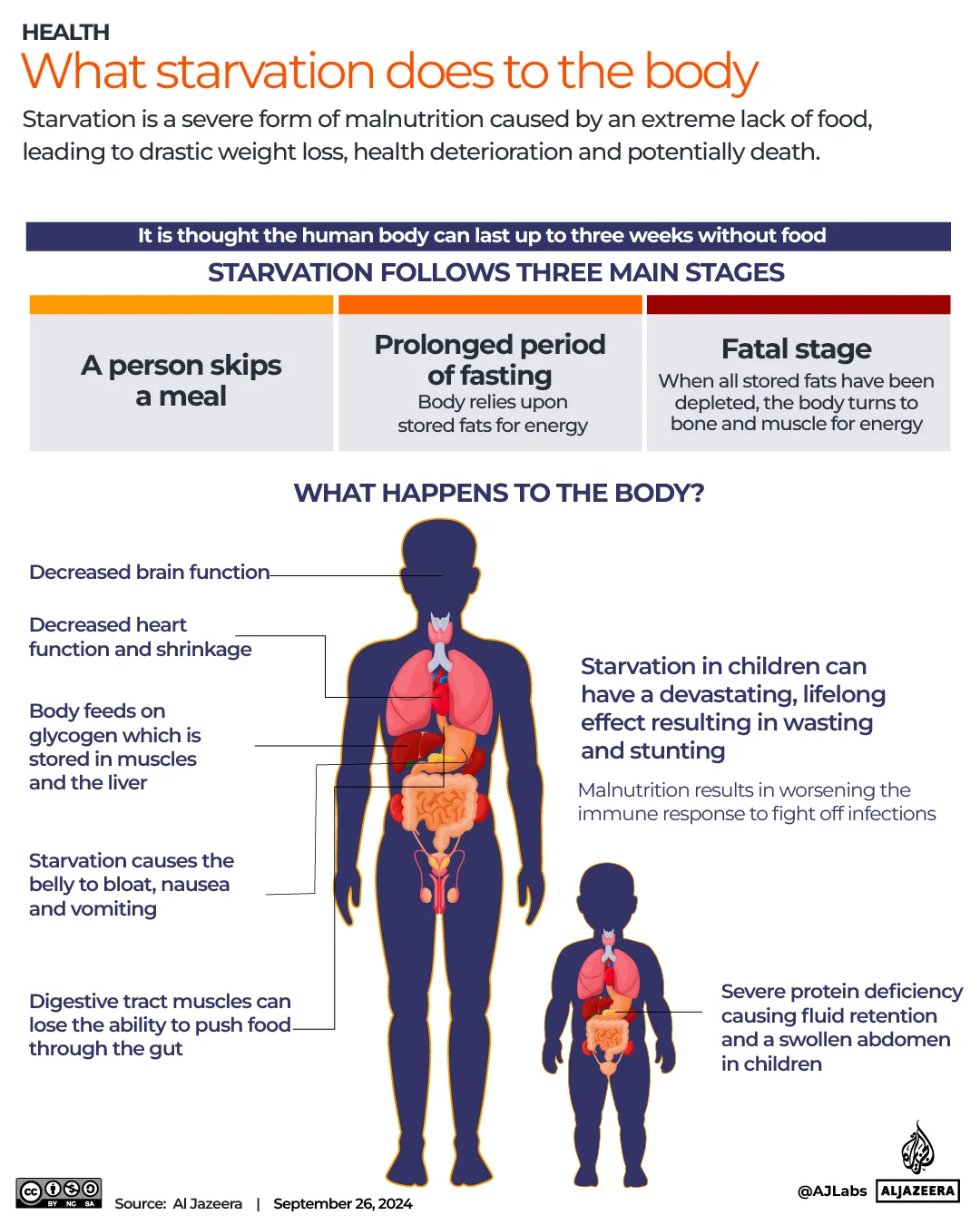
What does prolonged hunger do to the body?

In the early stages of starvation, after several days without food, the body begins breaking down muscle to produce energy.

As the fast continues, metabolism slows down. The body loses its ability to regulate temperature, kidney function deteriorates, and the immune system weakens, reducing the body’s ability to heal from injury.

Once the body’s reserves are depleted, it can no longer prioritise nutrients for vital organs. The heart and lungs become less efficient, muscles shrink and profound weakness sets in.

Eventually, as protein stores are depleted, and the body begins to break down its own tissues. At this stage, death may be imminent.

Scientific research on prolonged starvation is limited due to ethical reasons; however, estimates suggest that a healthy, well-nourished adult could survive without food for between 45 and 61 days, which means the three activists have now reached, or exceeded, that threshold, placing them in extreme, life-threatening danger.

Interactive_Gaza_What starvation does to the body

International concern

Hunger strikes have long been used as an extreme, non-violent form of protest, relying on moral pressure to compel those in power to act. Historical records trace the practice to ancient India and Ireland, where people would fast at the doorstep of someone who had wronged them as a form of public shaming.

In modern times, hunger strikes remain powerful political statements, often drawing international attention to cases of imprisonment, injustice or repression, even at the cost of the striker’s life. Hundreds of Palestinian prisoners incarcerated without any charges by Israel have resorted to hunger strikes to bring attention to their cases.

United Nations experts said hunger strikes are “often a measure of last resort by people who believe their rights to protest and effective remedy have been exhausted”. They added that the state’s duty of care towards hunger strikers is heightened, not diminished, and that authorities must ensure timely access to emergency and hospital care, refrain from pressure or retaliation, and respect medical ethics.

Kerry Moscogiuri, director of campaigns and communications at Amnesty International UK, called the situation alarming. She said it was “shocking that these activists have been forced to resort to such desperate measures to bring attention to their plight”, adding that the crisis reflects a “gross misuse of counterterrorism powers”.

Source link

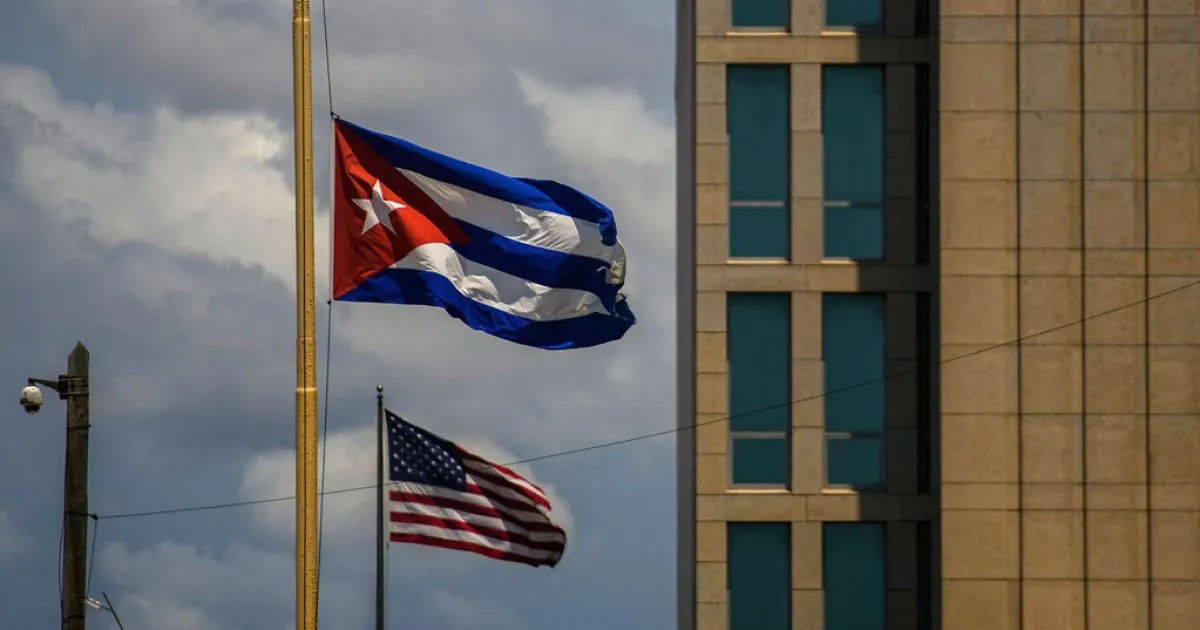
Trump says no more Venezuelan oil or money to go to Cuba, demands ‘deal’ | Donald Trump News

United States President Donald Trump says no more Venezuelan oil or money will go to Cuba, and he has suggested the communist-run island should strike a deal with Washington, ramping up pressure on the longtime US nemesis.

Venezuela is Cuba’s biggest oil supplier, but no cargo has departed from Venezuelan ports to the Caribbean country since the abduction of Venezuelan President Nicolas Maduro by US forces on January 3 amid a strict US oil blockade on the OPEC country, according to the latest shipping data.

Recommended Stories

list of 3 itemsend of list

“THERE WILL BE NO MORE OIL OR MONEY GOING TO CUBA – ZERO! I strongly suggest they make a deal, BEFORE IT IS TOO LATE,” Trump wrote on his Truth Social platform on Sunday.

“Cuba lived, for many years, on large amounts of OIL and MONEY from Venezuela,” Trump added.

Trump did not elaborate on his suggested deal, but US officials have hardened their rhetoric against Cuba in recent weeks.

Earlier on Sunday, Trump also reposted a message on Truth Social suggesting US Secretary of State Marco Rubio could become the president of communist-ruled Cuba.

Trump shared that post with the comment: “Sounds good to me!”


Cuban President Miguel Diaz-Canel rejected Trump’s threats in a post on X.

“Cuba is a free, independent, and sovereign nation. Nobody dictates what we do,” Diaz-Canel said.

“Cuba does not attack; it has been attacked by the US for 66 years, and it does not threaten; it prepares, ready to defend the homeland to the last drop of blood.”

Earlier, Cuban Foreign Minister Bruno Rodriguez insisted “right and justice are on Cuba’s side”.

The US “behaves like an out-of-control criminal hegemon that threatens peace and security, not only in Cuba and this hemisphere, but throughout the entire world”, Rodriguez posted on X.

Rodriguez also said in a separate post on X that Cuba had the right to import fuel from any suppliers willing to export it. He also denied that Cuba had received financial or other “material” compensation in return for security services provided to any country.

Reporting from Cucuta, Colombia, Al Jazeera’s Alessandro Rampietti said that, despite its defiant rhetoric, Cuba may struggle to find alternative sources of fuel.

“Cuba is going through a very, very difficult situation with rolling blackouts, fuel shortages on a daily basis,” he said.

He added that an oil embargo from the US could worsen and could pressurise Havana to reach a deal with Washington.

Under a US trade embargo, Havana since 2000 has increasingly relied on Venezuelan oil provided as part of a deal struck with Maduro’s predecessor Hugo Chavez.

As its operational refining capacity dwindled in recent years, Venezuela’s supply of crude and fuel to Cuba has fallen. But the South American country is still the largest provider with about 26,500 barrels per day exported last year, according to ship-tracking data and internal documents of Venezuela’s state-run oil company, PDVSA. Venezuela’s shipments covered roughly 50 percent of Cuba’s oil deficit.

Cuba also relies on imported crude and fuel provided by Mexico in smaller volumes.

Mexican President Claudia Sheinbaum last week said her country had not increased supply volumes but, given recent political events in Venezuela, Mexico had turned into an “important supplier” of crude to Cuba.

Meanwhile, amid Trump’s threats to Cuba, Al Jazeera’s Patty Culhane said Americans generally want Trump to focus on the domestic economy.

“There is an affordability crisis in this country, groceries are expensive, housing is expensive, health insurance has gone up,” she said, reporting from Washington, DC.

“This is a president who has said he will focus on America First. We have now seen him bomb seven countries, … so within [Trump’s] base, they are starting to see cracks because this is not what he promised on his campaign trail,” she added.

Source link

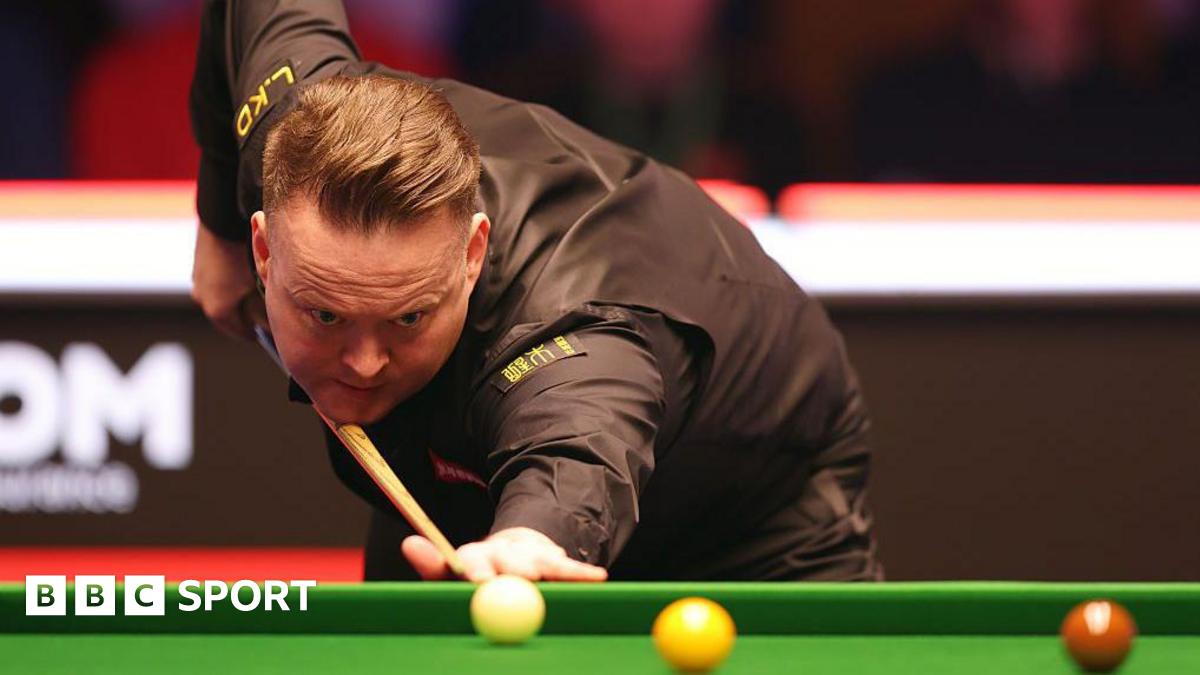
Masters 2026: Reigning champion Shaun Murphy loses to Wu Yize in first round

Reigning Masters champion Shaun Murphy was eliminated on day one of the 2026 event, losing 6-2 to China’s Wu Yize in the first round.

Murphy, who beat Kyren Wilson to win the Triple Crown event for a second time a year ago, lost the opening three frames and, despite taking frame four, then lost the fifth on a black-ball finish.

Wu, 22, is ranked 13th in the world and picked up his first ranking title in November when he won the International Championship in Yanjing in his home country, beating world champions Judd Trump, Zhao Xintong and John Higgins along the way.

On his Alexandra Palace debut, Wu made a superb clearance of 137 in frame two and a break of 56 in frame seven.

He will play either current UK champion Mark Selby or China’s Xiao Guodong in the quarter-finals on Thursday.

“I felt a bit of pressure when I entered the stadium because it was the first time I’ve played in such a big stadium and the fans were so enthusiastic,” said Wu.

“After the first frame, I felt a bit more relaxed and I totally enjoyed the atmosphere. It’s definitely a great achievement for myself – my first time playing at the Masters and the first time beating Shaun Murphy.”

For 43-year-old Murphy, who reached the semi-final of the UK Championship last month, it was a disappointing afternoon with him failing to register a single break of 50.

“I’ve been looking forward to today for a year, walking out as champion, but I enjoyed the first 10 minutes,” said Murphy. “I didn’t play well, certainly the worst performance of my season, maybe the worst in the Masters.

“I’m very disappointed. None of it was there. I felt everything I touched was not there. I’ve been working very hard, practising hard, playing a lot of snooker, so I didn’t expect to play like that and I’m as shocked as anyone.

“Wu looked calm, looked at ease and fully deserved his win. He will be a handful for anyone he plays.”

Source link

Donald Trump won’t take Greenland by force, Lord Mandelson says

Getty Images US president Donald Trump stares glumly off-camera. He's wearing a typical blue business suit, white shirt and deep blue tie with small navy blue polka dots. There is a US flag pin badge on his lapel.Getty Images

US President Donald Trump would not “land on Greenland and take it by force”, Lord Mandelson has said.

The former UK ambassador to the US told the BBC he admired Trump’s “directness” in political talks but said he was not a “fool”, and advisers would remind him taking Greenland would “spell real danger” for the US national interest.

There has been growing focus during Trump’s term on how the semi-autonomous Danish territory is run, with Trump on Saturday saying the US needed to “own” Greenland to stop Russia and China from doing so, and would achieve it “the easy way” or “the hard way”.

Denmark and Greenland say the territory is not for sale, with Denmark warning military action would spell the end of the Nato military alliance.

US Secretary of State Marco Rubio will hold talks with Denmark about Greenland next week. The AFP news agency reports that a Danish poll suggests that 38% of Danes think the US will launch an invasion of Greenland under the Trump administration.

Speaking on BBC’s Sunday with Laura Kuenssberg programme, Lord Mandelson said: “He’s not going to do that [use military action to take Greenland]. I don’t know, but I’m offering my best judgement as somebody who’s observed him at fairly close quarters.”

Sparsely populated, Greenland’s location between North America and the Arctic makes it ideally placed for missile early warning systems and for monitoring vessels in the region.

Trump has repeatedly maintained that Greenland is vital to US national security, claiming without evidence that it was “covered with Russian and Chinese ships all over the place”. His focus on the territory returned after a commando raid on the Venezuelan capital Caracas last week seized president Nicolas Maduro and his wife and killed dozens of people.

Lord Mandelson, who only lasted a few months as ambassador, also said: “We are all going to have to wake up to the reality that the Arctic needs securing against China and Russia. And if you ask me who is going to lead in that effort to secure, we all know, don’t we, that it’s going to be the United States.”

Meanwhile, the UK is working with Nato allies to bolster security in the Arctic, a senior minister told BBC One’s Sunday with Laura Kuenssberg programme.

Transport Secretary Heidi Alexander said discussions about securing the region against Russia and China were part of Nato’s usual business rather than a response to the US military threat, and then said the UK agreed with Trump that the Arctic Circle is an increasingly contested part of the world.

“It is really important that we do everything that we can with all of our Nato allies to ensure that we have an effective deterrent in that part of the globe against Putin”, she said.

But Conservative leader Kemi Badenoch said the situation in Greenland was a “second order” issue in comparison to what is currently happening in Iran, as protesters there defy a government crackdown.

Questions around sending troops to Greenland were “hypothetical” because “the US has not invaded Greenland,” she said.

The US already has significant influence over Greenland. Under existing agreements with Denmark, the US has the power to bring as many troops as it wants to the territory.

But on Saturday, Trump told reporters in Washington that existing agreements were not good enough.

“I love the people of China. I love the people of Russia,” Trump said. “But I don’t want them as a neighbour in Greenland, not going to happen.

“And by the way, Nato’s got to understand that.”

Earlier this week Denmark’s Nato allies – major European countries as well as Canada – have rallied to its support with statements reaffirming that “only Denmark and Greenland can decide on matters concerning their relations”.

A key architect of New Labour, Lord Mandelson has been in and out of British politics for four decades.

He held a number of ministerial roles from the election of Tony Blair – and had to resign from post twice – until Labour lost power in 2010.

Source link

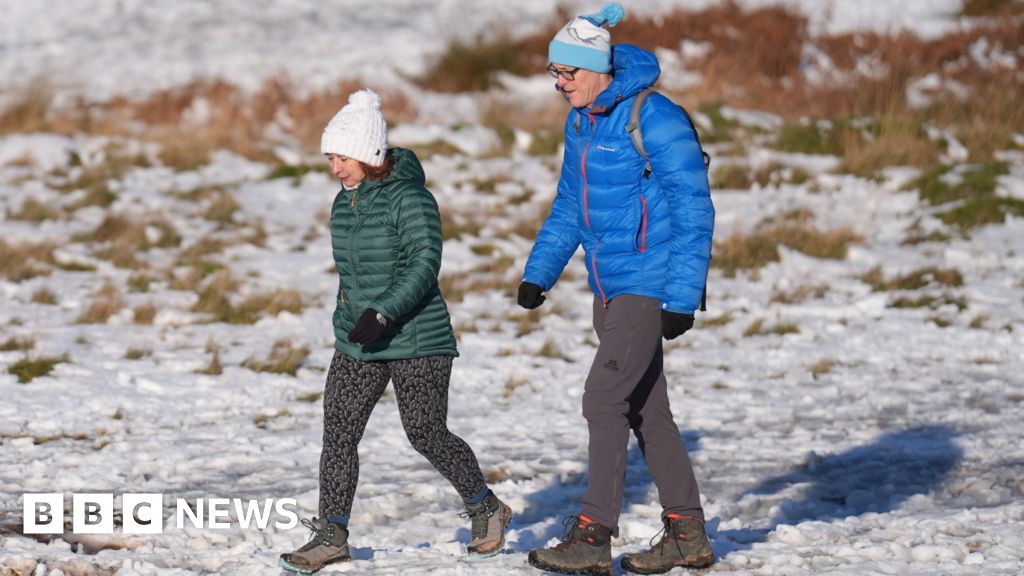
UK cold snap to ease ahead of wet and windy week

Wet and windy weather has begun to replace the wintry conditions which hit most of the UK this week, spelling an end to early January’s cold snap.

An amber warning for snow and ice in north-western Scotland has been downgraded, joining a series of yellow warnings for rain and wind across much of the country – all of which are due to expire by Monday morning.

Sunday is forecast to bring rain and blustery conditions to most of the UK as mild air moves in from the west after a cold week.

Meanwhile, the National Grid said it was continuing work to resolve power outages affecting thousands of properties still without power in parts of England and Wales.

National Rail has warned that disruption to travel is possible until Monday, while the Met Office advised those covered by yellow warnings to prepare for delays and possibly dangerous road conditions.

Forecaster Craig Snell said next week would still see wind, rain and “unsettled” conditions, but the UK would be “saying goodbye to the really cold weather”.

Temperatures between 9-11C are expected in the south and about 6-8C elsewhere.

Milder temperatures could spell a risk of flooding in places as snow from Storm Goretti melts, with the public urged to check local flood warnings.

The storm brought days of heavy snow, ice and strong winds to most parts of the UK.

When it arrived on Thursday, the Met Office issued a rare red warning for wind in Cornwall and the Isles of Scilly.

Wind speeds of up to 99mph (159km/h) were later recorded in the region.

Police have since said a man was killed in the Mawgan area of Helston after a tree fell onto his caravan.

Cornwall Council said the storm had been “one of the most severe” the county had experienced “in living memory”, with crews working around the clock to clear fallen trees and carry out emergency repairs.

Meanwhile, areas across the country have struggled with power outages.

On Saturday, the National Grid said more than 20,000 properties remained without electricity – with the south-west of England continuing to face the most outages.

The National Grid said it was working “tirelessly” and had restored power to almost 170,000 properties.

Hundreds of schools across the UK were also forced to close ahead of the weekend as heavy snow caused travel disruption.

Source link

Medvedev defeats Nakashima to win Brisbane trophy before Australian Open | Tennis News

Former world number one overcomes Brandon Nakashima in straight sets to stake his claim as an Australian Open contender.

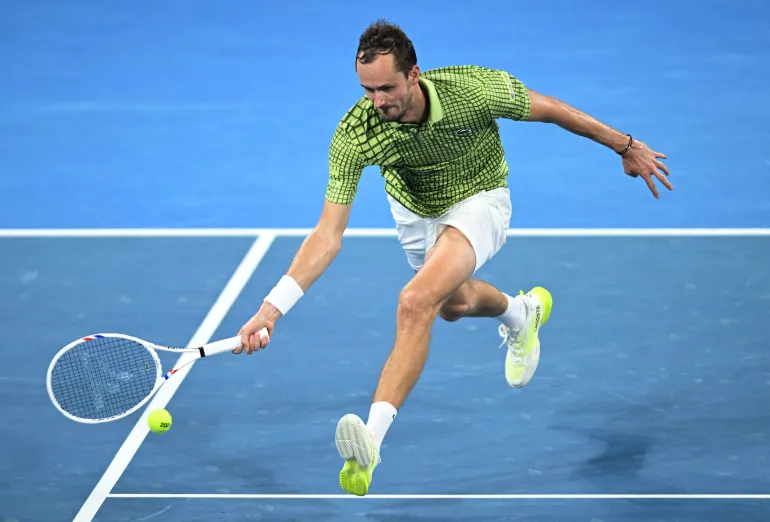
Three-time Australian Open runner-up Daniil Medvedev has warmed up for an assault on this year’s opening Grand Slam in perfect fashion by winning the Brisbane International final.

The Russian world number 13 was too strong for American Brandon Nakashima on Sunday and ran out a 6-2, 7-6 (7/1) winner in 96 minutes at Pat Rafter Arena for his 22nd ATP Tour title.

Recommended Stories

list of 4 itemsend of list

Medvedev broke a shell-shocked Nakashima twice in the first set and looked on course for a quick victory.

Nakashima rallied in the second to force a tiebreak, but the towering Russian raced to a 5-0 lead in the breaker, and the match was as good as over.

“I started pretty strong, but then Brandon found his way back, saved some match points, then almost got it to a third set,” Medvedev said.

The Australian Open begins in Melbourne on January 18.

“It’s been a great start to the year,” said Medvedev, who made the final in Brisbane in 2019.

“I said then that I would try and come back and win it. I came back seven or eight years later, and I’m happy to hold the trophy.”

Daniil Medvedev in action.
Medvedev was the Australian Open runner-up in 2021, 2022 and 2024 [Dan Peled/Reuters]

Source link

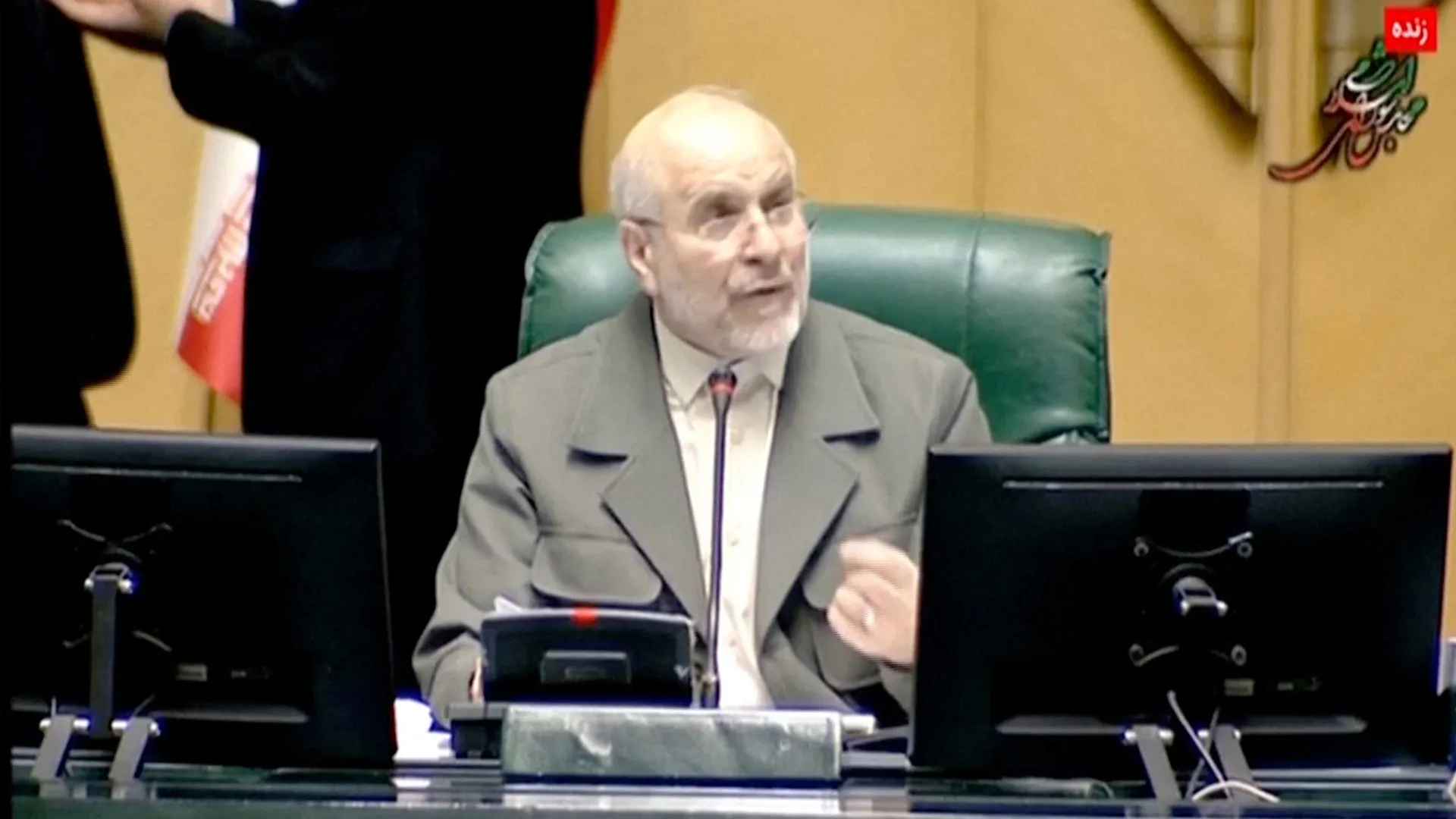
Iran protesters defy crackdown as videos show violent clashes

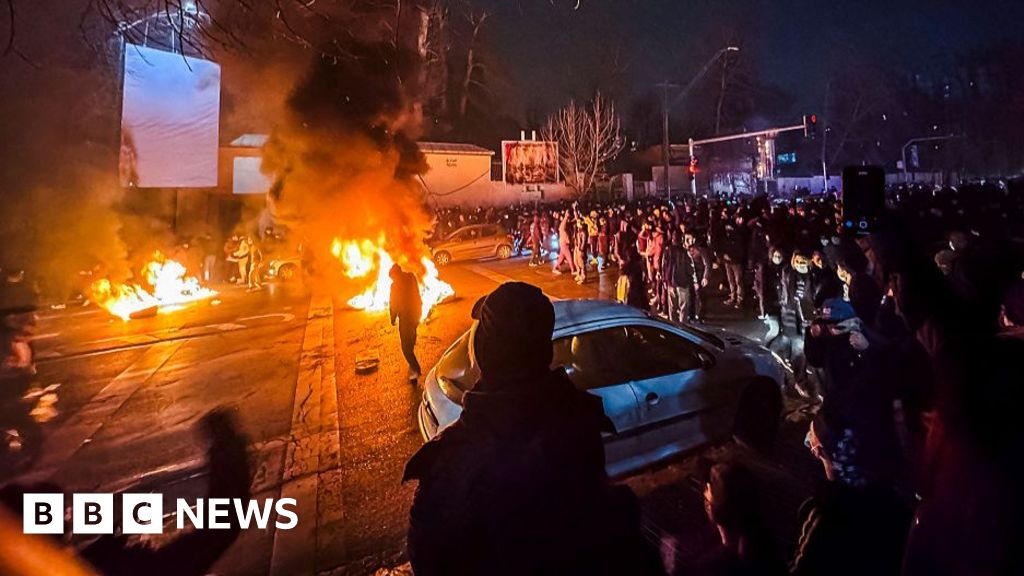
Protesters in Iran defied a government crackdown on Saturday night, taking to the streets despite reports suggesting hundreds of people have been killed or wounded by security forces in the past three days.

Videos verified by the BBC and eyewitness accounts appeared to show the government was ramping up its response.

Iran’s attorney general said anyone protesting would be considered an “enemy of God” – an offence that carries the death penalty.

US President Donald Trump has threatened to hit Iran “very hard” if they “start killing people”. Iran’s parliament speaker warned that if the US attacks Iran, Israel and all US military and shipping bases in the region would be legitimate targets.

The protests were sparked by soaring inflation, and have spread to more than 100 cities and towns across every province in Iran. Now protesters are calling for an end to the clerical rule of Iran’s Supreme Leader Ayatollah Ali Khamenei.

Khamenei has dismissed demonstrators as a “bunch of vandals” seeking to “please” Trump.

Trump on Saturday said the US “stands ready to help” as Iran “is looking at FREEDOM”.

As protests intensify, the number of deaths and injuries continues to rise. BBC sources and US-based Human Rights Activists in Iran (HRANA) have reported more than 100 people, including security personnel, killed.

Staff at several hospitals told the BBC they have been overwhelmed with the injured and dead, with BBC Persian verifying 70 bodies brought to one hospital in Rasht city on Friday night and a health worker reporting around 38 people dying at a Tehran hospital.

Iran’s police chief said on state TV that the level of confrontation with protesters had been stepped up, with arrests on Saturday night of what he called “key figures”. He blamed a “significant proportion of fatalities” on “trained and directed individuals”, not security forces, but did not give specific details.

More than 2,500 people have been arrested since protests began on 28 December, according to a human rights group.

The BBC and most other international news organisations are unable to report from inside Iran, and the Iranian government has imposed an internet shutdown since Thursday, making obtaining and verifying information difficult.

Nonetheless, some video footage has emerged, and the BBC has spoken to people on the ground.

Several videos, confirmed as recent by BBC Verify, show clashes between protesters and security forces in Mashhad, Iran’s second largest city.

Masked protesters are seen taking cover behind bins and bonfires, while a row of security forces is seen in the distance. A vehicle that appears to be a bus is engulfed in flames.

Multiple gunshots and what sounds like banging on pots and pans can be heard.

A figure standing on a nearby footbridge appears to fire multiple gunshots in several directions as a couple of people take cover behind a fence on the side of the boulevard.

In Tehran, a verified video from Saturday night shows protesters also taking over the streets in the Gisha district.

Other verified videos from the capital show a large group of protesters and the sound of banging on pots in Punak Square, and a crowd of protesters marching on a road and calling for the end of the clerical establishment in the Heravi district.

Internet access in Iran is largely limited to a domestic intranet, with restricted links to the outside world. But during the current round of protests, authorities have, for the first time, not only shut down access to the worldwide internet but also severely restricted the domestic intranet.

An expert told BBC Persian the shutdown is more severe than during the “Women, Life, Freedom” uprising in 2022.

Alireza Manafi, an internet researcher, said the only likely way to connect to the outside world was via Starlink satellite internet, but warned users to exercise caution, as such connections could potentially be traced by the government.

On Saturday, Trump wrote on social media: “Iran is looking at FREEDOM, perhaps like never before. The USA stands ready to help!!!”

He did not elaborate, but US media reported that Trump had been briefed on options for military strikes in the country. The New York Times and Wall Street Journal (WSJ) reported the briefings had taken place, with WSJ describing them as “preliminary discussions”. An unnamed official told the WSJ there was no “imminent threat” to Iran.

Last year, the US conducted airstrikes on Iranian nuclear facilities.

As dawn broke on Sunday in Iran, Reza Pahlavi, the exiled son of Iran’s last shah (king), who lives in the US and whose return protesters have been calling for, posted a video to X.

Its caption said: “Your compatriots around the world are proudly shouting your voice… In particular, President Trump, as the leader of the free world, has carefully observed your indescribable bravery and has announced that he is ready to help you.”

He added: “I know that I will soon be by your side.”

He claimed the Islamic Republic was facing a “severe shortage of mercenaries” and that “many armed and security forces have left their workplaces or disobeyed orders to suppress the people”. The BBC could not verify these claims.

Pahlavi encouraged people to continue protesting on Sunday evening, but to stay in groups or with crowds and not “endanger your lives”.

Amnesty International said it was analysing “distressing reports that security forces had intensified their unlawful use of lethal force against protesters” since Thursday.

UK Foreign Secretary Yvette Cooper said those speaking out against Khamenei’s government should not face “the threat of violence or reprisals”.

At least 78 protesters and 38 security personnel have been killed in the past two weeks, HRANA reported.

BBC Persian has confirmed the identities of 26 people killed, including six children.

A hospital worker in Tehran described “very horrible scenes”, saying there were so many wounded that staff did not have time to perform CPR, and that morgues did not have enough room to store the bodies.

They said many people died “as soon as they reached the emergency beds… direct shots to the heads of the young people, to their hearts as well. Many of them didn’t even make it to the hospital.”

The protests have been the most widespread since an uprising in 2022 sparked by the death in custody of Mahsa Amini, a young Kurdish woman who was detained by morality police for allegedly not wearing her hijab properly.

More than 550 people were killed and 20,000 detained by security forces over several months, according to human rights groups.

Additional reporting by Soroush Pakzad and Roja Assadi

Source link

Lord Peter Mandelson says he never saw any girls when visiting sex offender Jeffrey Epstein’s properties

BBC Lord Peter MandelsonBBC

Lord Mandelson was sacked as the UK’s ambassador to the US in September over his ties to Jeffery Epstein

Lord Mandelson has said he never saw girls at Jeffrey Epstein’s properties, and declined to apologise to the late paedophile’s victims for maintaining his friendship with the American because he was not “knowledgeable of what he was doing”.

In his first interview since being sacked as the UK’s ambassador to the US over his links to Epstein, he told the BBC he thought he had been “kept separate” from the sexual side of the late financier’s life because he was gay.

He was fired after emails emerged showing supportive messages he had sent to Epstein after the American was convicted for soliciting prostitution from a minor.

The former ambassador said the only people he had seen at Epstein’s properties were “middle-aged housekeepers”.

He said he would have apologised were he “in any way complicit or culpable” but stressed that was never the case.

Epstein, a well-connected financier, died in a New York prison cell in 2019 awaiting trial on sex trafficking charges. He had previously been convicted in 2008 of soliciting prostitution from a minor, for which he was registered as a sex offender.

Asked on BBC’s One’s Sunday with Laura Kuenssberg whether he would like to apologise to Epstein’s victims for continuing the friendship after that first conviction, he said:

“I want to apologise to those women for a system that refused to hear their voices and did not give them the protection they were entitled to expect”.

“That system gave him protection and not them.

“If I had known, if I was in any way complicit or culpable, of course I would apologise for it. But I was not culpable, I was not knowledgeable of what he was doing.”

He continued: “I regret and will regret to my dying day the fact that powerless women, women who were denied a voice, were not given the protection they were entitled to expect.”

Lord Mandelson, whose tenure as ambassador lasted just a few months, was also asked in the interview about his views on US President Donald Trump’s ongoing comments about his country needing to “own” Greenland.

While saying that he admired Trump’s “directness” in his political dealings, he said he did not believe the US president would “land on Greenland and take it by force”.

He added: “He’s not going to do that. I don’t know, but I’m offering my best judgement as somebody who’s observed him at fairly close quarters. He’s not a fool.”

He said the president had a close circle of advisers around him “reminding him that if he were to intervene, take Greenland, that would be completely counterproductive – and would spell real danger for America’s national interest”.

Asked about his long friendship with Epstein over the decades, Lord Mandelson said he believed he was “kept separate” from Epstein’s sex life because of his own sexuality.

“Possibly some people will think because I am a gay man… I wasn’t attuned to what was going on. I don’t really accept that.

“I think the issue is that because I was a gay man in his circle I was kept separate from what he was doing in the sexual side of his life.”

He referred to one occasion he had spent one or two nights on Epstein’s infamous private island, as well as visits to Epstein’s New York and New Mexico properties.

“The only people that were there were the housekeepers, never were there any young women or girls, or people that he was preying on or engaging with in that sort of ghastly predatory way that we subsequently found out he was doing.”

“Epstein was never there,” he noted of his visits to the island.

The government sacked Lord Mandelson as its ambassador to the US after emails showed he had been in contact with Epstein after his first conviction, offering him support.

Number 10 sources said at the time that he had been “economical with the truth” before he was appointed and they were not aware of the “depth” of their relationship.

On Sunday, Lord Mandelson said the government “knew everything” when giving him the job, “but not the emails because they came as a surprise to me”.

He said he understood why he had been sacked.

“The prime minister found himself in the middle of what must’ve seemed to him to been some kind of thermonuclear explosion – I’ve been there, I know what goes on.

“I wish I’d had the opportunity to remind him of the circumstances of my relationship, my friendship with Jeffrey Epstein and how I came to write the emails in the first place.

“I didn’t, so I understand why he took the decision he did, but one thing I’m very clear about is that I’m not going to seek to reopen or relitigate this issue. I’m moving on.”

In response, Downing Street said the emails showed the “depth and extent” of the relationship was “materially different” to what they had known when appointing Lord Mandelson, particularly his “suggestion that Jeffrey Epstein’s first conviction was wrongful and should be challenged was new information”.

“In light of that, and mindful of the victims of Epstein’s crimes, he was withdrawn as ambassador with immediate effect.”

Source link

Myanmar’s military holds second phase of elections amid civil war | Elections News

Polls have opened in 100 townships across the country, with the military claiming 52 percent turnout in the first round.

Myanmar has resumed voting in the second phase of the three-part general elections amid a raging civil war and allegations the polls are designed to legitimise military rule.

Polling stations opened at 6am local time on Sunday (23:30 GMT on Saturday) across 100 townships in parts of Sagaing, Magway, Mandalay, Bago and Tanintharyi regions, as well as Mon, Shan, Kachin, Kayah and Kayin states.

Recommended Stories

list of 4 itemsend of list

Many of those areas have seen clashes in recent months or remain under heightened security.

Myanmar has been ravaged by conflict since the military ousted ⁠a civilian government in a 2021 coup and arrested its leader, Nobel Peace Prize winner Aung San Suu Kyi, leading to ​a civil war that has engulfed large parts of the impoverished nation of 51 million people.

Aung San Suu Kyi’s ‍National League for Democracy party, which swept the last election in 2020, has been dissolved along with dozens of other antimilitary parties for failing to register for the latest polls.

The election is taking place in three phases because of the ongoing conflict. The first phase unfolded on December 28 in 102 of the country’s 330 townships, while a third round is scheduled for January 25.

Some 65 townships will not participate due to ongoing clashes.

The military claimed a 52 percent voter turnout after the December 28 vote, while the pro-military Union Solidarity and Development Party (USDP), which analysts say is a civilian proxy for the military, said it won more than 80 percent of seats contested in the lower house of the legislature.

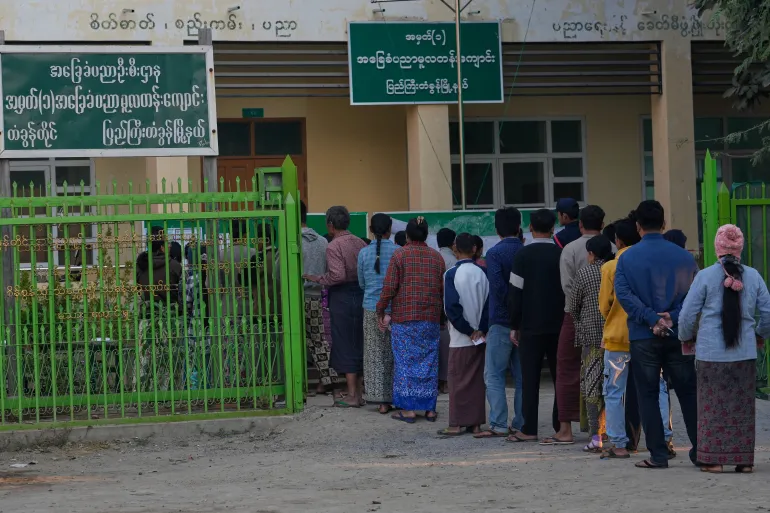
Voters line up to cast their ballots at a polling station during the second phase of general election in Mandalay, central Myanmar, Sunday, Jan. 11, 2026. (AP Photo/Aung Shine Oo)
Voters line up to cast their ballots at a polling station during the second phase of the general elections in Mandalay, central Myanmar, January 11, 2026 [Aung Shine Oo/AP Photo]

“The USDP is on track for a landslide victory, which is hardly a surprise given the extent to which the playing field was tilted in ​its favour. This included the removal of any serious rivals and a set of ‌laws designed to stifle opposition to the polls,” said Richard Horsey, senior Myanmar adviser for Crisis Group.

Myanmar has a two-house national legislature, totalling 664 seats. The party with a combined parliamentary majority can select the new president, who can pick a cabinet and form a new government. The military automatically receives 25 percent of seats in each house under the constitution.

On Sunday morning, people in Yangon, the country’s largest city, cast their ballots at schools, government offices and religious buildings, including in Aung San Suu Kyi’s former constituency of Kawhmu, located roughly 25km (16 miles) south of the city.

As she exited her polling station, 54-year-old farmer Than Than Sint told the AFP news agency she voted because she wants peace in Myanmar, even though she knows it will come slowly given the fractured country’s “problems”.

Still, “I think things will be better after the election”, she said.

Others were less enthusiastic. A 50-year-old resident of Yangon, who asked to remain anonymous for safety reasons, said, “The results lie only in the mouth of the military.”

“People have very little interest in this election,” the person added. “This election has absolutely nothing to do with escaping this suffering.”

The United Nations and human rights groups have called the elections a “sham” that attempt to sanitise the military’s image.

Tom Andrews, the UN special rapporteur on the situation of human rights in Myanmar, said earlier this week that the election was “not a free, fair, nor legitimate election” by “all measures”.

“It is a theatrical performance that has exerted enormous pressure on the people of Myanmar to participate in what has been designed to dupe the international community,” Andrews said.

Laws enacted by the military ahead of the vote have made protest or criticism of the elections punishable by up to 10 years in prison. More than 200 people currently face charges under the measure, the UN said, citing state media.

Separately, at least 22,000 people are currently being detained in Myanmar for political offences, according to the Assistance Association for Political Prisoners.

Source link

Who Is Really Running Venezuela?

Acting President Delcy Rodríguez paid tribute to soldiers killed in the US attack. (Prensa Presidencial)

As the Senate voted to advance a War Powers Resolution on Venezuela on January 8th, Republican Senator Susan Collins declared that she did not agree with “a sustained engagement “running” Venezuela.” 

The world was mystified when President Trump first said that the United States would “run” Venezuela. He then made it clear that he wants to control Venezuela by imposing a U.S. monopoly on foreign oil operations in Venezuela and marketing its oil to the rest of the world, to trap the Venezuelan government in a subservient relationship with the United States.

The U.S. Energy Department published a plan to sell Venezuelan oil already seized by the United States and then to use the same system for future Venezuelan oil exports. The U.S. would dictate how the revenues are divided between the U.S. and Venezuela, and continue this form of control indefinitely. Trump is meeting with U.S. oil company executives on Friday, January 9th, to discuss his plans.

Trump’s original plan would have cut off Venezuela’s trade with China, Russia, Iran and Cuba, and forced it to spend its oil revenues on goods and services from the United States. This new form of economic colonialism would also prevent Venezuela from continuing to spend the bulk of its oil revenues on its generous system of social spending, which has lifted millions of Venezuelans out of poverty.

However, on January 7th, the New York Times reported that Venezuela has other plans. “Venezuela’s state-run oil company, Petróleos de Venezuela, confirmed for the first time that it was negotiating the “sale” of crude oil to the United States,” the Times reported. “This process is being developed under frameworks similar to those currently in effect with international companies, such as Chevron, and is based on a strictly commercial transaction,” the oil company’s statement said.

By January 8th, the U.S. had already backed down on some of its more extreme demands. Energy Secretary Chris Wright told Fox Business Network, “I think you will probably see some long-term involvement of China in Venezuela. As long as …America is the dominant force there, the rule of law (sic), the United States controls oil flow. That will be fine…In that framework, where Venezuela’s main partner … is the United States, can there be commerce with China? Sure.”  

Trump has threatened further military action to remove acting president Delcy Rodriguez from office if she does not comply with U.S. plans for Venezuela. But Trump has already bowed to reality in his decision to cooperate with Rodriguez, recognizing that Maria Corina Machado, the previous U.S. favorite, does not have popular support. The very presence of Delcy Rodriguez as acting president exposes the failure of Trump’s regime change operation and his well-grounded reluctance to unleash yet another catastrophic and unwinnable war.

After the U.S. invasion and abduction of President Maduro on January 3rd, Delcy Rodriguez was sworn in as Acting President, reaffirming her loyalty to President Maduro and taking charge of running the country in his absence. But who is Delcy Rodriguez, and how is she likely to govern Venezuela? As a compliant and coerced U.S. puppet, or as the leader of an undefeated and independent Venezuela?          

Delcy Rodriguez was seven years old in 1976, when her father was tortured and beaten to death as a political prisoner in Venezuela. Jorge Antonio Rodriguez was the 34-year-old co-founder of the Socialist League, a leftist political party, whom the government accused of a leading role in the kidnapping of William Niehous, a suspected CIA officer working under cover as an Owens Corning executive.

Jorge Rodríguez was arrested and died in state custody after interrogation by Venezuelan intelligence agents. While the official cause of death was listed as a heart attack, his autopsy found that he had suffered severe injuries consistent with torture, including seven broken ribs, a collapsed chest, and a detached liver.

Delcy studied law in Caracas and Paris and became a labor lawyer, while her older brother Jorge became a psychiatrist. Delcy and her mother, Delcy Gomez, were in London during the failed U.S.-backed coup in Venezuela in 2003, and they denounced the coup from the Venezuelan embassy in interviews with the BBC and CNN. 

Delcy and her older brother Jorge soon joined Hugo Chavez’s Bolivarian government, and rose to a series of senior positions under Chavez and then Maduro: Delcy served as Foreign Minister from 2014 to 2017, and Economy and Finance Minister from 2020 to 2024, as well as Oil Minister and Vice President; Jorge was Vice President for a year under Chavez and then Mayor of Caracas for 8 years.

On January 5th 2026, it fell to Jorge, now the president of the National Assembly, to swear in his sister as acting president, after the illegal U.S. invasion and abduction of President Maduro. Delcy Rodriguez told her people and the world,

“I come as the executive vice president of the constitutional president of the Bolivarian Republic of Venezuela, Nicolas Maduro Moros, to take the oath of office. I come with pain for the suffering that has been caused to the Venezuelan people after an illegitimate military aggression against our homeland. I come with pain for the kidnapping of two heroes who are being held hostage in the United States of America, President Nicolas Maduro and the first combatant, first lady of our country, Cilia Flores. I come with pain, but I must say that I also come with honor to swear in the name of all Venezuelans. I come to swear by our father, liberator Simon Bolivar.”

In other public statements, acting president Rodriguez has struck a fine balance between fierce assertions of Venezuela’s independence and a pragmatic readiness to cooperate peacefully with the United States. 

On January 3rd, Delcy Rodriguez declared that Venezuela would “never again be anyone’s colony.” However, after chairing her first cabinet meeting the next day, she said that Venezuela was looking for a “balanced and respectful” relationship with the United States. She went on to say, “We extend an invitation to the government of the U.S. to work jointly on an agenda of cooperation, aimed at shared development, within the framework of international law, and that strengthens lasting peaceful coexistence,”

In a direct message to Trump, Rodriguez wrote, “President Donald Trump: our peoples and our region deserve peace and dialogue, not war. That has always been President Nicolás Maduro’s conviction and it is that of all Venezuela at this moment. This is the Venezuela I believe in and to which I have dedicated my life. My dream is for Venezuela to become a great power where all decent Venezuelans can come together. Venezuela has the right to peace, development, sovereignty and a future.”

Alan McPherson, who chairs the Center for the Study of Force and Diplomacy at Temple University in the U.S., calls Delcy Rodriguez “a pragmatist who helped stabilize the Venezuelan economy in recent times.” However, speaking to Al Jazeera, he cautioned that any perceived humiliation by the Trump administration or demands seen as excessive could “backfire and end the cooperation,” making the relationship a “difficult balance to achieve.”

After the U.S.invasion on January 3rd, at least a dozen oil tankers set sail from Venezuela with their location transponders turned off, carrying 12 million barrels of oil, mostly to China, effectively breaking the U.S. blockade. But then, on January 7th, U.S. forces boarded and seized two more oil tankers with links to Venezuela, one in the Caribbean and a Russian one in the north Atlantic that they had been tracking for some time, making it clear that Trump is still intent on selectively enforcing the U.S. blockade.   

Chevron has recalled American employees to work in Venezuela and resumed normal shipments to U.S. refineries after a four-day pause. But other U.S. oil companies are not eager to charge into Venezuela, where Trump’s actions have so far only increased the political risks for any new U.S. investments, amid a global surplus of oil supplies, low prices, and a world transitioning to cleaner, renewable energy. 

Meanwhile, the U.S. Department of Justice is scrambling to make a case against President Maduro, after Trump’s lawless war plan led to Maduro’s illegal arrest as the leader of a non-existent drug cartel in a foreign country where U.S. domestic law does not apply. In his first court appearance in New York, Maduro identified himself as the president of Venezuela and a prisoner of war.

Continuing to seize ships at sea and trying to shake down Venezuela for control of its oil revenues are not the “balanced and respectful” relationship that Delcy Rodriguez and the government of Venezuela are looking for, and the U.S. position is not as strong as Trump and Rubio’s threats suggest. Under the influence of neocons like Marco Rubio and Lindsey Graham, Trump has marched the U.S. to the brink of a war in Latin America that very few Americans support and that most of the world is united against. 

Mutual respect and cooperation with Rodriguez and other progressive Latin American leaders, like Lula in Brazil, Gustavo Petro in Colombia and Mexico’s Claudia Scheinbaum, offer Trump face-saving ways out of the ever-escalating crisis that he and his clueless advisers have blundered into. 

Trump has an eminently viable alternative to being manipulated into war by Marco Rubio: what the Chinese like to call “win-win cooperation.” Most Americans would favor that over the zero-sum game of hegemonic imperialism into which Rubio and Trump are draining our hard-earned tax dollars.

The main obstacle to the peaceful cooperation that Trump says he wants is his own blind belief in U.S. militarism and military supremacy. He wants to redirect U.S. imperialism away from Europe, Asia and Africa toward Latin America, but this is no more winnable or any more legitimate under international law, and it’s just as unpopular with the American people. 

If anything, there is greater public opposition to U.S aggression “in our backyard” than to U.S. wars 10,000 miles away. Cuba, Venezuela and Colombia are our close neighbors, and the consequences of plunging them into violence and chaos are more obvious to most Americans than the equally appalling human costs of more distant U.S. wars.   

Trump understands that endless war is unpopular, but he still seems to believe that he can get away with “one and done” operations like bombing Iran and kidnapping President Maduro and his first lady. These attacks, however, have only solved imaginary problems – Iran’s non-existent nuclear weapons and Maduro’s non-existent drug cartel – while exacerbating long-standing regional crises that U.S policy is largely responsible for, and which have no military solutions. 

Dealing with Trump is a difficult challenge for Delcy Rodriguez and other Latin American leaders, but they should all understand by now that caving to Trump or letting him pick them off one by one is a path to ruin. The world must stand together to deter aggression and defend the basic principles and rules of the UN Charter, under which all countries agree to settle disputes peacefully and not to threaten or use military force against each other. Any chance for a more peaceful world depends on finally starting to take those commitments seriously, as Trump’s predecessors also failed to do.   

There is a growing movement organizing nationwide protests to tell Trump that the American people reject his wars and threats of war against our neighbors in Latin America and around the world. This is a critical moment to raise your voice and help to turn the tide against endless war.

Medea Benjamin and Nicolas J. S. Davies are the authors of War In Ukraine: Making Sense of a Senseless Conflict, now in a revised, updated 2nd edition. Medea Benjamin is the cofounder of CODEPINK for Peace, and the author of several books, including Inside Iran: The Real History and Politics of the Islamic Republic of Iran. Nicolas J. S. Davies is an independent journalist, a researcher for CODEPINK and the author of Blood on Our Hands: The American Invasion and Destruction of Iraq.

Source: Code Pink

Source link

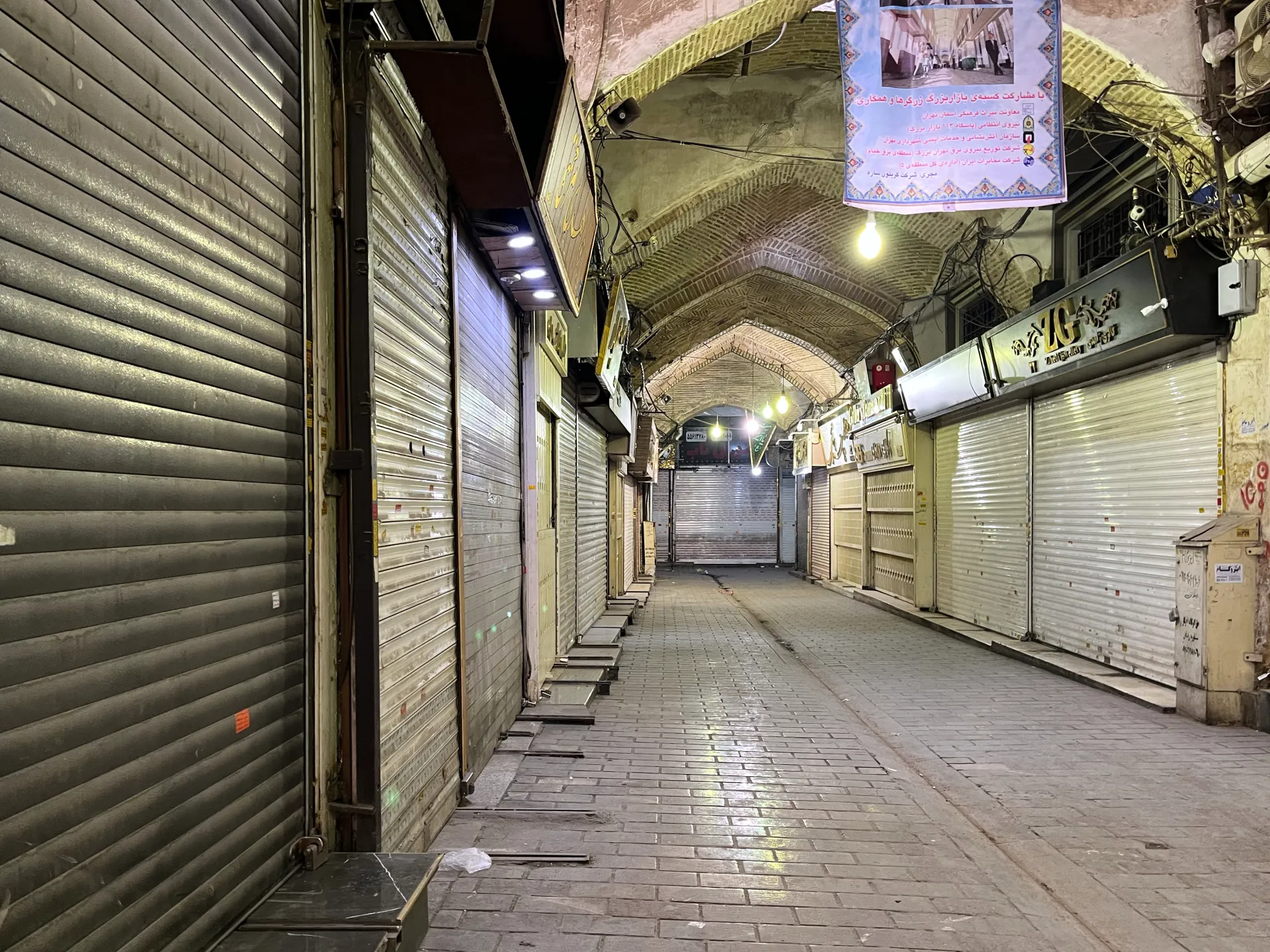
Why the once loyal bazaar merchants are now protesting in Iran | Protests

In his first public remarks since mass protests broke out in Iran, Supreme Leader Ali Khamenei sought to draw a sharp line between what he deemed the “legitimate” grievances of the bazaar and outright rebellion across the country. “We talk to protesters; the officials must talk to them, but there is no benefit to talking to rioters. Rioters must be put in their place,” he said.

The distinction was deliberate. Khamenei went on to praise the bazaar and its merchants as “among the most loyal sectors” of the Islamic Republic, insisting that the enemies of the state could not exploit the bazaar as a vehicle to confront the system itself.

Yet his words failed to mask the reality on the ground. Protests continue in the Tehran Bazaar, prompting authorities to deploy tear gas against demonstrators chanting antistate slogans, including ones targeting the supreme leader. The state’s attempt to symbolically separate the bazaar from the broader unrest failed in practice, exposing the limits of its narrative control.

Khamenei’s invocation of the revolutionary legacy of the bazaar is rooted in historical facts. The bazaar played a decisive role in the 1979 revolution that overthrew Mohammad Reza Shah Pahlavi and remained aligned with conservative political networks in the following decades. But this historical loyalty no longer guarantees political quiescence.

Over the past 20 years, the economic standing of the bazaar has been steadily eroded by state favouritism towards the economic machinery of the Islamic Revolutionary Guard Corps (IRGC) and large religious-revolutionary foundations (bonyads), sanctions management, and chronic inflation. As a result, what was once a staunch base of the regime has become another casualty of systemic dysfunction.

From power to marginalisation

In the aftermath of the 1979 revolution, powerful bazaar merchants, often operating through the bazaar-affiliated Islamic Coalition Party, were folded directly into the architecture of the new state. They gained influence over key institutions and ministries, including the Ministry of Trade and Commerce, the Ministry of Labour, and the Guardian Council.

This political access translated into material advantage. Despite the enthusiasm of powerful figures in the new revolutionary state for total nationalisation, including control over foreign trade, the bazaar maintained a dominant role in Iran’s commercial trade throughout the 1980s. Bazaar merchants secured import licences, ran the largest trading firms under the supervision of the Ministry of Commerce, and benefitted from preferential access to the official exchange rate, which was far below market value. These imported goods were sold to Iranians at market prices, generating substantial profits.

When the Islamic Republic turned towards economic liberalisation in the 1990s, political forces tied to the bazaar, often described as the “traditional right”, backed President Akbar Hashemi Rafsanjani in sidelining Islamist leftists from both the cabinet and the Majles. Although some of Rafsanjani’s market reforms later collided with bazaar interests and gave rise to the so-called “new right”, most notably the Servants of Reconstruction Party, the bazaar and its allies retained substantial influence within the state.

The reformist agenda of Rafsanjani’s successor, President Mohammad Khatami, also did not fundamentally threaten the economic position or political clout of the bazaar. Key institutions—the Guardian Council, the Assembly of Experts, and the judiciary—remained firmly under the control of the “traditional right”, insulating the bazaar from meaningful challenge.

Although the bazaar overwhelmingly supported the presidential bid of Mahmoud Ahmadinejad in 2005, the economic and foreign policies of his administration ultimately accelerated the erosion of its economic power.

During Ahmadinejad’s presidency, “privatisation” became a vehicle for the transfer of major state assets to firms affiliated with the IRGC and bonyads. Reclassified as “public, nongovernmental entities” under a new interpretation of Article 44 of the Constitution, these bodies absorbed vast swaths of the economy. Backed by the supreme leader and a cabinet dominated by military and security figures, many of them former IRGC officers, this redistribution of wealth encountered little institutional resistance.

The result was a profound shift in Iran’s political economy. The IRGC emerged as a dominant economic actor, expanding its reach across infrastructure, petrochemicals, banking, and beyond. Major bonyads, including the Mostazafan Foundation, the Imam Reza Shrine Foundation, and Setad, similarly consolidated their power by acquiring state firms and building sprawling corporate empires. Together, these entities formed an extensive web of interlocking conglomerates that fused revolutionary foundations with military institutions, giving rise to a powerful new political bloc within the state: the Principlists.

The bazaar’s discontent

This consolidation came directly at the expense of the bazaar and the political forces historically aligned with it. Disillusioned by the economic policies of the Ahmadinejad government, bazaar merchants coordinated their first open act of defiance since the revolution, staging strikes in several cities in 2008.

Their position deteriorated further as international sanctions escalated in response to the hardline nuclear policies of Ahmadinejad’s government. By 2012, US and EU restrictions on Iran’s oil and banking sectors and its exclusion from the SWIFT system placed the country under severe economic constraints.

The state responded by developing sanction-evasion mechanisms, including smuggling routes through neighbouring countries. The IRGC played a central role, exploiting ports and airports under its control to import goods. Over time, this sanctions economy entrenched the dominance of the IRGC and bonyads while further marginalising the bazaar.

Politically, the consequences were equally stark: the Principlists consolidated control over the state, sidelining the “traditional right” and dismantling the longstanding arrangement that had traded the bazaar’s loyalty for access and influence within the Islamic Republic.

A challenge to the regime

The ongoing bazaar protests are not an anomaly but a warning. They reveal a political-economic transformation years in the making—one that is hollowing out even the traditional backbone of the state.

For decades, the regime relied on the bazaar as a stabilising force: a guarantor of economic compliance in times of crisis and a bedrock of political loyalty. Yet the unrest originated in the bazaar and continues there, even as Khamenei insists on their loyalty. His remarks signal not confidence, but anxiety, and the bazaar’s open defiance demonstrates that the challenge confronting the Islamic Republic is far harder to contain.

In theory, the Islamic Republic could still seek to win back the bazaar by easing sanctions and curbing the dominance of IRGC-linked conglomerates. In practice, this is increasingly difficult to do. Sanctions relief remains remote amid deepening tensions with the United States and Europe over Iran’s nuclear programme, while rolling back the economic and political power of the IRGC and the bonyads offers the regime little incentive and even less strategic logic. Confronted with these constraints, the state’s room for manoeuvre is narrow, leaving repression as its most readily available option, even at the cost of further alienating a traditional constituency it once relied on for stability and loyalty

The views expressed in this article are the author’s own and do not necessarily reflect Al Jazeera’s editorial stance.

Source link

Relative calm in Syria’s Aleppo as Kurdish fighters disarm | Syria’s War News

The Syrian government says its forces have reasserted control over violence-hit neighbourhoods in Aleppo after dozens of fighters with the Kurdish-led Syrian Democratic Forces (SDF) laid down their arms after days of intense fighting.

Syria’s Ministry of Interior spokesman, Nour al-Din al-Baba, said on Saturday that government forces had taken near-complete control of Aleppo’s Sheikh Maqsoud and Ashrafieh areas, adding that operations were nearing their “final moments”.

Recommended Stories

list of 4 itemsend of list

“The Sheikh Maqsoud neighbourhood has almost been completely captured,” al-Baba told the Syrian News Channel.

Fighting flared up on Tuesday in the predominantly Kurdish neighbourhoods of Sheikh Maqsoud, Ashrafieh and Bani Zaid after Syrian forces and the SDF failed to implement a March 2025 agreement to reintegrate the Kurdish forces into state institutions.

Tensions spiked after the deadline for the deal passed at the end of last year, with the Kurdish fighters refusing to leave areas of Aleppo that have been under SDF control since the early days of the Syrian war, which erupted in 2011.

On Saturday, dozens of fighters surrendered and were taken on buses to SDF-controlled areas in the country’s northeast, Al Jazeera’s Resul Serdar Atas reported from Aleppo.

“Compared with what we have seen over the last three days, it is quiet in Aleppo,” he said.

Calm was restored after a brief escalation earlier in the day, which saw a drone attack believed to have been launched by the SDF hit a governorate building during a news conference attended by several high-ranking Syrian officials.

Serdar Atas said Governor Azzam al-Gharib had been delivering a news briefing on the latest developments when the blast took place, blackening the upper floors of the building.

The SDF denied the reports, saying its fighters did not attack a civilian target.

In a statement carried by the SANA state news agency, Syria’s army said the Kurdish-led force fired more than 10 drones in Aleppo, causing numerous injuries and extensive property damage. It accused the group of using Iranian-made drones.

Serdar Atas said that Syrian forces were sweeping the city’s neighbourhoods for explosives and mines.

“However, the government says there are still some SDF factions that are fighting back and refusing to lay down their arms and surrender,” he said.

Reintegration stalled

The clashes in Aleppo – which the city’s Health Directorate said have killed 23 people, including civilians, and wounded 104 others – have marked the fiercest fighting since longtime Syrian leader Bashar al-Assad’s fall in December 2024.

They have also underscored the major challenges facing Syria’s new president, Ahmed al-Sharaa, who has pledged to unite the country following al-Assad’s removal.

Steven Heydemann, a professor of Middle East studies at Smith College in the United States, told Al Jazeera that the presence of SDF forces in Aleppo neighbourhoods had been a “source of friction” with the central government in Damascus.

Since the March 2025 integration deal was signed, Kurdish leaders have expressed concerns over security guarantees and political representation, while Damascus has pushed to reassert control over all remaining autonomous areas.

“Aleppo is Syria’s largest city, the linchpin of northwestern Syria’s commercial, political and industrial life,” Heydemann told Al Jazeera.

“So to have enclaves in Aleppo outside the control of the central government was always going to be very difficult for the government to swallow.”

On Friday, the Syrian Ministry of Defence gave Kurdish fighters a six-hour window to withdraw from Aleppo to their semi-autonomous region in the northeast of the country as part of a ceasefire.

But Kurdish councils that run the city’s Sheikh Maqsoud and Ashrafieh districts rejected any “surrender”.

Government forces then entered Sheikh Maqsoud on Saturday and carried out sweeps of the neighbourhood, confiscating weapons and detaining or disarming SDF fighters, according to Syrian officials.

Thousands displaced

Nearly 180,000 people have been displaced from the Sheikh Maqsoud and Ashrafieh areas due to this week’s fighting, with authorities warning them not to return due to ongoing operations and the risk posed by unexploded ordnance.

Meanwhile, both sides have continued to trade accusations of attacks on civilians and civilian infrastructure.

Tom Barrack, the US special envoy for Syria, on Saturday urged “all parties to exercise maximum restraint, immediately cease hostilities, and return to dialogue” after a meeting with al-Sharaa and Minister of Foreign Affairs Asaad al-Shaibani.

Barrack added that US Secretary of State Marco Rubio’s team was ready to facilitate engagement between the two sides to advance the integration process.

Reporting from Damascus, Al Jazeera’s Ayman Oghanna said that Washington can “do the most” to boost talks between the Syrian government and the SDF.

“The US has enjoyed a strong relationship with the SDF for over a decade. The US helped build up and train the SDF, it fought alongside the SDF, and 1,000 US troops remain in SDF territory, where they work closely together in the effort to eradicate ISIL (ISIS) from Syria,” Oghanna said.

“But the US has also recently strengthened its ties with Damascus,” he added.

The United Nations also voiced alarm over the fighting, warning of the humanitarian consequences and calling on all sides to respect international law and ensure civilian protection.

Source link

Bob Weir, Grateful Dead co-founder, dies aged 78

Bob Weir, the guitarist who co-founded the Grateful Dead, has died aged 78.

Weir, a cornerstone of the California psychedelic rock group and many of its offshoots, passed away after a battle with cancer and lung issues, according to a post on his Instagram.

“There is no final curtain here, not really. Only the sense of someone setting off again,” the post says, noting his hopes that his legacy and lengthy catalogue will live on.

The post says he “transitioned peacefully, surrounded by loved ones”.

“He often spoke of a three-hundred-year legacy, determined to ensure the songbook would endure long after him,” the post continues. “May that dream live on through future generations of Dead Heads.”

With a career spanning more than 60 years, Weir’s big break was in 1965 with the founding of the Grateful Dead. Within a few years, they became a force within San Francisco’s characteristic counterculture.

Quickly their style began shaping rock music – blending psychedelia and 1960s drug culture with musical tones that fused folk and Americana. They are considered one of the pioneers of jam bands.

The group was inducted in the Rock and Roll Hall of Fame in 1994 and received a Lifetime Achievement Award by the Grammy’s in 2007.

The group officially halted in 1995 with the death of fellow co-founder Jerry Garcia.

But Weir was involved in various spin-offs, including Dead & Company, which had a residency at the Las Vegas Sphere in 2024 and 2025.

Weir was diagnosed with cancer in July and even while being treated, he continued to perform, according to the post on his page.

“Those performances, emotional, soulful, and full of light, were not farewells, but gifts,” the post says. “Another act of resilience. An artist choosing, even then, to keep going by his own design.”

He beat cancer before his death, the posts adds. It’s unclear what type of cancer he had been diagnosed with.

His family, including wife Natascha and children Shala and Chloe, asked for privacy but said they appreciated the “outpouring of love, support, and remembrance”.

Tributes started to pour in late on Saturday from fellow musicians. Even the Empire State Building in New York City honoured the rock legend by shining with tie-dye colours to memorise him.

Slash, guitarist of Guns N’ Roses, posted a photo of Weir playing on stage. He wrote “RIP” with a broken-heart emoji.

Former Eagles guitarist Don Felder posted a lengthy tribute.

“I first saw Bob at Woodstock with the Grateful Dead and was blown away by that whole band, and the musicianship,” Felder posted on Instagram with a photo of himself with Weir.

“I feel so blessed to have been able to have him sing on ‘Rock You’ from American Rock and Roll. Until we meet again, amigo.”

His former publicist, Dennis McNally, spoke with BBC News about his music and the fun memories they shared.

“He had a very off-kilter, unusual sense of humour that was dry and funny,” he said. “The road was his life, and music was his life.”

He said playing and serving the music was what “he was put on Earth for and he did it to the end”.

Source link

Russia-Ukraine war: List of key events, day 1,417 | Russia-Ukraine war News

These are the key developments from day 1,417 of Russia’s war on Ukraine.

Here is where things stand on Sunday, January 11:

Fighting:

  • Russian forces launched artillery and drone attacks on Ukraine’s Dnipropetrovsk region on Saturday, killing a 68-year-old man, wounding three others and causing fires to break out in residential buildings, according to Ukraine’s emergency service.
  • Russian shelling also killed another person in the Kramatorsk district of Ukraine’s Donetsk region, the service said.
  • Three other Ukrainians were killed, and nine more were wounded, in Russian attacks on the areas of Yarova, Kostyanynivka and Sloviansk in Donetsk, according to Governor Vadym Filashkin.
  • Ukraine’s General Staff reported 139 combat clashes on Saturday and said that Russia launched 33 air strikes, deployed more than 4,430 drones and carried out 2,830 attacks on Ukrainian troops and settlements.
  • Russian forces advanced near the villages of Markove and Kleban-Byk in Ukraine’s Donetsk region, according to the Ukrainian battlefield monitoring site DeepState, but no other major changes were reported.
  • In the Ukrainian capital, Kyiv, engineers are working “around the clock” to restore electricity to residents after thousands of apartments lost power during Russia’s Thursday attacks, said Tymur Tkachenko, the head of the city’s military administration.
  • Heat supplies have been returned to roughly half the homes that lost power, Kyiv Mayor Vitali Klitschko added.
  • Russia’s TASS news agency reported that two people were wounded in a Ukrainian drone attack on the southwestern Russian city of Voronezh.
  • The governor of Russia’s Belgorod ‍region, which ‍borders Ukraine, said on Saturday that 600,000 people in the area were without electricity, heating and water after a Ukrainian ⁠missile strike.
  • Ukrainian forces also carried out a drone strike on Russia’s Volgograd region, sparking a fire at an oil depot in the Oktyabrsky district, regional authorities said.
  • The Ukrainian military said ‌on Saturday it had struck the Zhutovskaya oil depot in Volgograd overnight.
  • Russian air defence systems, meanwhile, intercepted and destroyed 33 Ukrainian drones over Russian regions, the agency reported.

Politics and diplomacy

  • The United Nations Security Council will host an emergency meeting on January 12 to “address Russia’s flagrant breaches of the UN Charter”, after Russia fired an Oreshnik hypersonic missile near the Polish border, Ukrainian ‍Minister of Foreign Affairs Andrii Sybiha wrote on X.
  • The foreign minister also spoke out about the antigovernment protests rocking Iran, saying that “Iran’s support for Russia’s war of aggression against Ukraine and its oppression of its own citizens are part of the same policy of violence and disrespect for human dignity”.
  • The deputy chairman of Russia’s Security Council, Dmitry Medvedev, insisted that Russia will not accept European or NATO troops in Ukraine and that “European dimwits want a war in Europe after all”.
  • “Well, come on then. This is what you’ll get”, the deputy chairman added, accompanied by a video of the Oreshnik strike.
  • The Institute for the Study of War wrote in its latest report that Russia’s Oreshnik strike was likely “aimed to scare Western countries from providing military support to Ukraine, particularly from deploying forces to Ukraine as part of a peace agreement”.
  • Ukraine’s lead negotiator, ⁠Rustem Umerov, “once again reached out to our American partners”, Ukrainian President Volodymyr Zelenskyy wrote on Telegram. “We continue communication with the American side practically every day,” he said.
  • South Africa kicked off a week of naval drills, also attended by Russia, Iran and China.
  • Captain Nndwakhulu Thomas Thamaha, South Africa’s joint task force commander, told the opening ceremony that the drills are “a demonstration of our collective resolve to work together”.

Sanctions

  • Zelenskyy pledged on X that “we will continue strengthening the sanctions toolkit” and that “all lines of pressure on Russia and individuals associated with it must be maintained”.
  • In reference to recent news that US President Donald Trump has greenlit a bill to sanction countries that buy Russian oil, Zelenskyy said: “What is important is that the US Congress is back in motion on tougher sanctions against Russia – targeting Russian oil. This can truly work.”

Energy

  • Russian presidential envoy Kirill Dmitriev said Russian oil products have “significantly increased” after Bloomberg reported that Russian refined fuel flows hit a four-month high in December, driven by stronger diesel shipments from ports in the Baltic Sea. Dmitriev added on X that “fake warmonger narratives are bad for decision-making”.
  • Separately, Bloomberg also reported that Russia’s crude oil production dropped to its lowest level in a year and a half in December, hitting 9.32 million barrels per day.

Source link