Today

The Terms of Struggle in Venezuela: Imperialism vs Sovereignty

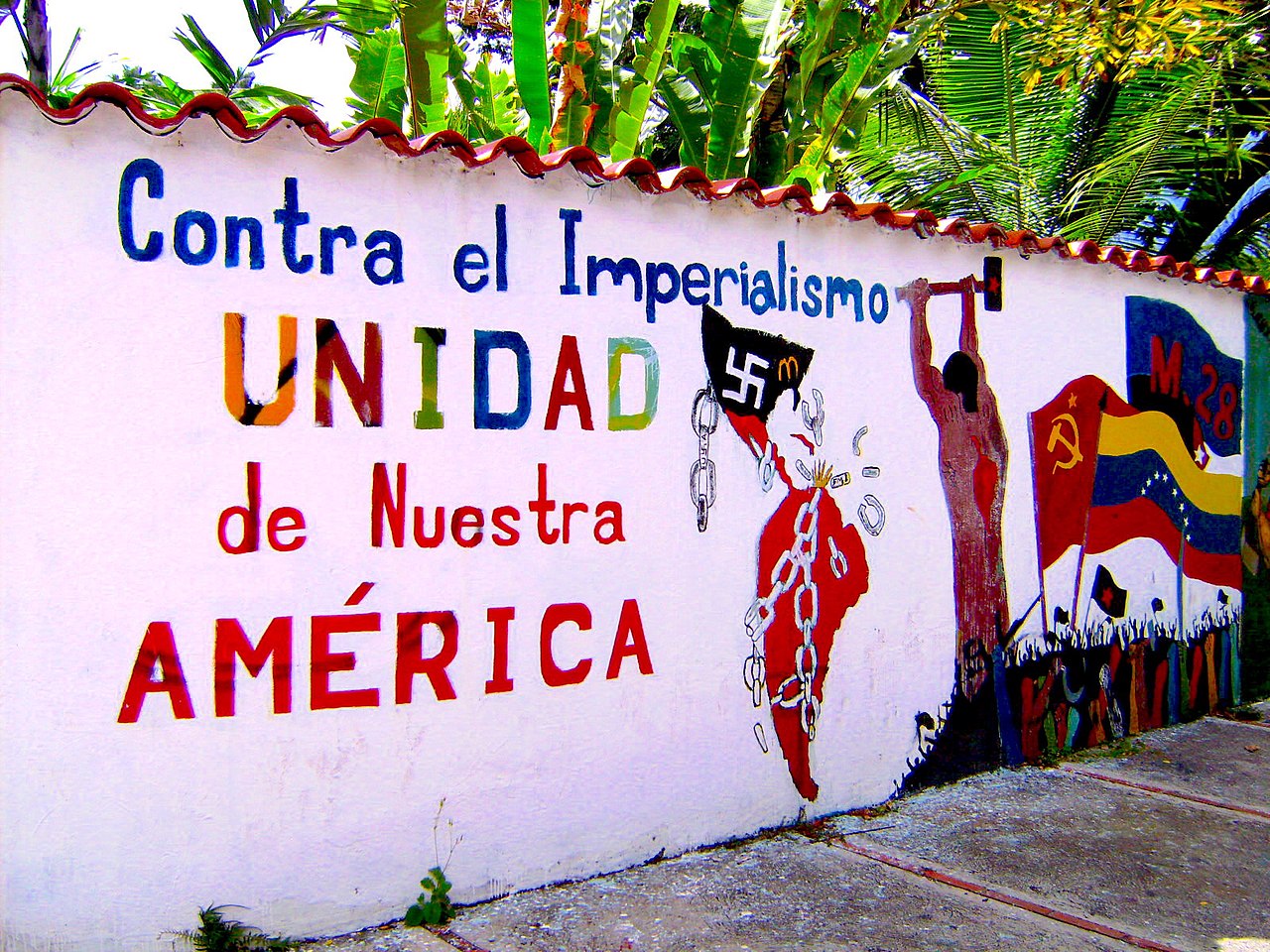
Anti-imperialist mural in Venezuela. (Wikimedia Commons)

The Anti-Imperialist Scholars Collective’s Red Paper series takes on the pressing issues of our time with urgency and principled clarity. We are at the frontlines of the Battle of Ideas and we use anti-imperialist methodology to clarify the stakes, intensify the contradictions, challenge the propaganda, and defend the Resistance.

We, the Anti-Imperialist Scholars Collective (AISC), condemn in the strongest terms possible the US imperialist attack against the Bolivarian Republic of Venezuela. The US kidnapped President Nicolás Maduro and First Combatant Cilia Flores in a blatantly criminal breach of international law on January 3, 2026, while violently assaulting the sovereignty of Nuestra América. We stand firmly with the Venezuelan people and their revolutionary Bolivarian State as they defend their sovereign right to self-determination. We unequivocally recognize Nicolás Maduro as the legitimate president of Venezuela and demand the United States government immediately release him and First Combatant Flores. As an organization committed to challenging US-led imperialism and supporting the sovereignty and national liberation of the Global Majority, AISC calls on anti-imperialist forces in the US and across the world to unite in defense of President Maduro and the Bolivarian Republic of Venezuela.

In Red Paper #1, AISC provides a critical analysis of the current US attack on Venezuela, demonstrating that it must be understood as an existential conflict between US imperialism and the sovereignty of the peoples of the Americas.

Introduction: The Two Fronts of Imperialist War

The US is waging war against Venezuela on two inter-related levels. First, this war constitutes a renewed escalation of a decades-long “counter-revolutionary” attack on revolutionary forces and states in the region that have overturned imperialist property structures.[1] Second, this war represents an escalation of US imperialism’s attempt to weaken and subjugate the architects and backers of an emergent polycentric world order in which the US will no longer be the sole, hegemonic superpower.[2] The two “fronts” of the US imperialist war are inter-related. The fracturing of the alliances driving forward the polycentric world order provides a necessary condition for isolating, and destroying, the sovereign development projects of the revolutionary states of the Americas. These projects are marked for destruction as they pose an existential challenge to US imperialism. They disrupt the ability of capital in the imperialist core to superexploit labor and dominate resources while also contesting the definitive basis of imperialist power: the control over the flow of resources and capital between territories.

The attack against Venezuela and the Trump regime’s escalated war footing have generated a broad spectrum of criticism and opposition. However, the terms of the opposition have often risked delegitimizing the Venezuelan state—and thus supporting the objectives of US imperialism. In particular, there is a return to a register of anti-war opposition that posits a fundamental distinction between the Bolivarian Republic of Venezuela and a generic category of the Venezuelan “people.” This is a self-defeating move at best, a complicit one at worst. It is not possible to defend the “Venezuelan people” while aligning with the imperialists in delegitimizing the Bolivarian Republic of Venezuela as a “dictatorship.” It is not a generic category of the “Venezuelan people” that is under attack, but a specific state formation structured upon reorienting the nation’s resources in the service of national development rather than imperialist wealth appropriation. To delegitimize this state structure is to lay the groundwork for legitimizing US imperialist interventions. The questioning of an anti-imperialist state’s legitimacy, particularly by imperialist forces, should never serve as a basis for violating its state sovereignty.

As imperialist forces sow confusion, it is thus imperative that we respond with clarity as to why Venezuela has been attacked and move with a principled commitment to the defence of its sovereignty. This is a war on a revolutionary state that has challenged imperialism by reclaiming both its “internal” and “external” bases of sovereign power: it has constructed a sovereign national development project and forged sovereign international relations with other anti-imperialist states.

Socialism with Bolivarian Characteristics: Resource Sovereignty, Communal Power and Popular Defense

In the late twentieth century, the Bolivarian Republic of Venezuela emerged as a revolutionary challenge to the foundational bases of US imperialism. The Bolivarian Republic has deepened and sustained Venezuelan sovereign-popular ownership over its own resources, reclaiming control over its oil wealth from US corporations such as ExxonMobil and ConocoPhillips.[3] It subsequently directed its oil wealth into sovereign national development projects[4] as well as into regional and international “South-South” frameworks[5] that fundamentally challenge the dependent relations that have kept Global South states at the mercy of the US-led imperialist order.

The formation of communes has been at the heart of the sovereign national development projects advanced by the Bolivarian Republic. Emerging out of the historic social missions launched by President Hugo Chávez in 2004—which virtually eliminated illiteracy via Misión Robinson and built a nationwide, free community healthcare system via Misión Barrio Adentro and significantly reduced poverty—the commune project advanced the revolutionary process towards what Chávez termed “communal socialism.”[6] In these grassroots structures, communities legislate, administer resources, and manage their own means of production. Forged under the pressure of the US economic blockade and imperialist hybrid warfare, the communes now collectively control productive resources in close coordination with the state. They have played a central role in mitigating the deleterious impact of sanctions by meeting urgent community needs and advancing food sovereignty.[7] Even under escalating US attack, President Nicolás Maduro’s government deepened the state’s commitment to the communes by launching a new strategic plan in November 2025 based on over 36,000 proposals from a national popular consultation intended to fortify national unity and resilience.[8]

This same communal infrastructure that sustains daily life under siege also forms the material and organizational basis for Venezuela’s national defense. In December, building on the grassroots power of the communes, the Bolivarian National Militia activated Nicolás Maduro’s doctrine of “Guerra de Todo el Pueblo,” distributing rifles and other weapons to millions of civilians.[9] The intent of the militia is to involve the whole of the Venezuelan people in the national defense against imperialist aggression. Maduro warned that any large-scale US invasion will face a “new Viet Nam,” a prolonged campaign of guerrilla war characterized by cascading hit-and-run attacks springing from compact urban areas, foreboding mountains, and immense jungles. While the US military retains immensely destructive technological capacities, it is increasingly evident that it is not capable of engaging in such a land war. By its own admission, it has not trained in tropical environments in decades, having just revived its “jungle warfare” training program in Panama for the first time in over 20 years.

It is the popular basis of the Bolivarian Revolution, renewed and reforged through the communes and the National Militia, that grounds the legitimacy of the Bolivarian Republic of Venezuela. The “qualitative basis” of the sovereignty of the Bolivarian Republic is to be found in the empowerment of Indigenous, Afro-Venezuelan, and working class peoples, and the reorientation of the nation’s land and resources in service of a popular form of national development that meets the needs of all its peoples. This qualitative force provides the Bolivarian Republic with its greatest source of legitimacy and deepest power in resisting US imperialism.

Venezuela v. US Imperialism

It is precisely this combination of sovereign development, popular power, and territorial defense that the US led capitalist imperialist world order could never accept. Capitalist imperialism requires a consistent drain of cheap resources and goods from the periphery into the imperialist core as a means of both stabilizing class relations in the core and appropriating surplus value from the periphery.[10] Imperialism has historically established the conditions for such appropriation through military force and imposing economic dependency on the peripheries. Time and again, when the peoples of the imperially subjugated Global Majority have sought to reclaim their sovereign right over both their territories and the flow of economic capital into and out of their territories, they have been subjected to imperialist war and economic sanctions.[11] This is the fundamental rule of the capitalist imperialist system, as seen in the economic warfare and blockades imposed on Haiti in the 19th century, Cuba in the 20th century, and now Venezuela in the 21st century.

The emergence of the Bolivarian Republic of Venezuela has been all the more threatening to the US imperialist order because it is a key insurgent challenge to the “end of history” Washington consensus that the US sought to impose on the entire planet at the close of the twentieth century. The structural adjustment programs that the United States enforced across the Global South destroyed national economies, undermined social reproduction capacities, and in so doing produced massive pools of cheap labor and resources for exploitation and appropriation by the imperialist core.[12] But what US imperialism did not foresee at the time was the strength of the anti-imperialist challenge that would be launched against the IMF-World Bank neocolonial program. Key among these challenges included the anti-IMF Caracazo movement in Venezuela that led to the Bolivarian socialist revolution and the rise of the communes;[13] Venezuela’s PetroCaribe Energy Agreement program that leveraged the country’s oil wealth for the socio-economic development and the integration of Caribbean countries;[14] the resilience of the Cuban socialist revolution in the face of the collapse of the Soviet Union;[15] the Lavalas program in Haiti demanding reparations and higher wages;[16] the struggle in Zimbabwe that led to the reclamation of stolen land by dispossessed Zimbabweans;[17] the anti-privatization water wars in Bolivia that led to the rise of MAS;[18] and the Palestinian second intifada that brought the Washington consensus Oslo framework to crisis.[19] The US has systematically sought to destroy each and every one of these challenges to the foundations of imperialist-core accumulation.

US imperialism has, over the past twenty five years, attempted coups d’etats and imposed punitive economic sanctions as a means to try to overthrow the Bolivarian Republic of Venezuela. Among the longstanding aims of the US are to deny Venezuela sovereign control over its oil wealth and to hand it over instead to US oil majors, including through persistent demands that Venezuela pay “compensation” for the nationalization of its oil industry. Rather than cooperate with an increasingly sovereign Venezuelan oil sector, US oil majors escalated legal warfare, aggressively suing Venezuela for so-called “lost assets” and demanding compensation payments for the 2007 oil nationalization.[20] This demand for compensation to the expropriator—to the colonizer, to the imperialist—coupled with sanctions against national liberation projects, is a structural feature of imperialism. The roots of colonial-imperialist “compensation” lie in the blockades imposed against Haiti and Cuba, which demanded that colonial property owners be compensated for the “losses” incurred when the Haitian and Cuban peoples reclaimed sovereign power over their territories and lives.[21] Similar demands were imposed against Zimbabwe earlier this decade.[22] What is at stake today, however, is not only resource domination and colonial-imperialist compensation, but also control over the country’s financial flows as finance capital aims to dominate future revenues, debt, and collateral streams.

However, the US has failed time and again in its attempts to destroy the sovereignty of the Bolivarian Republic of Venezuela. The first Trump administration rolled out a “maximum pressure” sanctions campaign, which led to a severe economic crisis in Venezuela.[23] Its GDP contracted by close to 90 percent between 2013 to 2020, resulting in 40,000 deaths due to the devastating impact of the sanctions regime on Venezuela’s public health system.[24] The economic crisis also triggered massive economically motivated emigration from the country. The Venezuelan state not only withstood the sanctions campaign, but has achieved a small degree of economic recovery in recent years. In fact, Venezuela is forecasted to lead GDP growth in Latin America for both 2024 and 2025.[25] It is in light of the failure of the US economic sanctions regime to achieve its objectives of regime change and complete subordination that we must view the turn to military force against Venezuela. This latest wave of US imperialist intervention seeks to extract concessions from the Venezuelan state—particularly access to its oil and mineral wealth—and to curtail its independent, South-South solidaristic international relations. The attack on Venezuela is informed by the same strategic objectives that drove the US attack on the Islamic Republic of Iran this past summer. In both cases, the US has sought to destroy a sovereign state that has provisioned regional economic or military strategic depth to anti-imperialist forces.

The Revival of the Monroe Doctrine and the Recolonization of Nuestra América

The US imperialist attack on Venezuela has been identified as an enactment of the “Trump corollary to the Monroe doctrine” that animates the 2025 US National Security Strategy.[26] At its core, the revival of the Monroe doctrine is centered upon expelling what it identifies as “non-hemispheric rivals”—China, Russia, and Iran—from the Americas and re-consolidating the region under full spectrum US domination.[27] The Trump corollary is premised upon a claim that the “non-hemispheric rivals” threaten both regional prosperity and US power, and their removal and replacement with full spectrum US “leadership” will benefit the region’s economic development and security. What the attack on Venezuela reveals, however, is that the Trump corollary is primarily concerned with these “non-hemispheric rivals” for the role they have played affording Venezuela and other states in the region greater space for constructing and sustaining projects of sovereign development. Sovereign development advances the utilization of national resources for national development, and thus threatens the reproduction of cheap labor and resource pools for appropriation by capitalist imperialist modes of accumulation.

A clearer understanding of the relationship between sovereign development and the region’s engagement with an emergent polycentric world order can be grasped if we recall the key role played by these so-called “non-hemispheric rivals” in the consolidation of the gains of the Bolivarian Revolution. After the Bolivarian Revolution, the Venezuelan state identified deepening relations with non-Western powers as central to reducing dependency on US investment and export markets.[28] This strategy became particularly urgent and pronounced after Venezuela deepened the nationalization of its oil sector in 2007. Western capital, as mentioned above, refused to accept nationalization and instead sought to contest it by suing for “compensation” and effectively conducting a “capital strike” by withdrawing investments from the country.[29] While such measures have historically been used by imperialist powers to force concessions from peripheral states after they achieve independence – i.e. the capital strike will only be ended after the targeted state relents on its nationalization program – Venezuela was able to withstand this financial imperialism by drawing on support from China, Russia, and Iran. China and Venezuela created the “China-Venezuela Joint Fund” in 2007 that received significant injections of capital from Chinese state development banks that proved essential for maintaining state oil revenues in the service of infrastructure development and social spending.[30] Russia’s state-owned oil company, Rosneft, similarly injected significant levels of investment that sustained the Venezuelan state oil sector and provisioned funds for social spending.[31] Iran and Venezuela have deepened relations across multiple sectors such as healthcare and food production, and have forged cooperative economic relations through which they support each other in withstanding US sanctions. Iran, in particular, has transferred vital technical expertise, refinery parts, and catalysts to help sustain Venezuela’s blockaded oil industry.[32]

We see here the outlines of a world premised upon sovereign cooperation and solidarity. Venezuela’s ability to sustain its nationalization program provisioned the means for strengthening the cooperative relations with regional anti-imperialist states, most notably Cuba. Venezuela’s provisioning of discounted oil flows to Cuba has been essential to the latter’s own ability to withstand the nearly 70 year US blockade.[33] Venezuela has further taken leadership in regional integration efforts such as the Bolivaria Alliance for the Peoples of Our America (ALBA) and the Community of Latin American and Caribbean States (CELAC). Venezuela and Cuban solidarity would, in turn, serve as an anchor for a growing Latin American anti-zionist bloc which raised its voice loudly, and took concrete material action, in opposition to the escalating US-zionist genocidal war against Palestinians. Both states have severed ties with the zionist entity. The US-zionist imperialist alliance has, in turn, made the defeat of the anti-zionist bloc in the Americas a key component of its larger strategy to overcome the zionist entity’s increasing international isolation.[34] We note here the commitment of the US backed Venezuelan regime change leader, Maria Corina Machado, to restore full Venezuelan diplomatic support for the zionist entity.[35] In addition, US secretary of state Marco Rubio has demanded that Venezuela sever its relations with anti-zionist forces in West Asia, namely the Islamic Republic of Iran and Hezbollah, as a condition for the ending of the US blockade on Venezuelan oil exports.[36]

These two inter-related levels of anti-imperialist sovereign expression—“internal” sovereign national development and “external” cooperation and solidarity with other anti-imperialist states—pose existential challenges to the US led imperialist world order. Sovereign national development reduces the capitalist core’s access to cheap labor and resources in the Global South, while deepening anti-imperialist inter-state cooperation counteracts the threat of “isolation” that imperialism seeks to impose on anti-imperialist states.

It is for this reason, above all, that the “Trump corollary to the Monroe doctrine” seeks to remove “non-hemispheric rivals” and why it has targeted Venezuela as its first act. It seeks to remove from Venezuela the strategic economic depth through which it has been able to withstand decades of hybrid warfare—capital strikes, international lawfare, sanctions, attempted coups—and sustain its sovereign development project. The attack on Venezuela explicitly takes as its aim the re-routing of oil flows away from China and Russia and towards the US.[37] This will open the door to windfall profits for Western finance and mining capital, severely curtail the sovereign development capacity of the Venezuelan state, and provision the US with a stronger control over international oil and capital flows. Controlling Venezuelan oil would, in turn, provide US imperialism with a powerful instrument with which to intensify its squeeze on the Cuban economy and advance its longstanding aim of rolling back the Cuban revolution. It could further be deployed to exercise leverage against China, the major source of strategic economic depth for anti-imperialist forces in the world today.

US imperialism’s strategic renewal of the Monroe doctrine is thus propelled, in significant part, by an awareness that the US has rapidly lost economic leadership in the world economy. China has demonstrated it is pulling away from the US in economic and technological sectors shaping the future of the world economy.[38] The superior efficiency and performance of its Artificial Intelligence (AI) sector has threatened the valuation of US AI sectors and firms that have received hundreds of billions of dollars in capital investment.[39] In contrast to the US doubling down on oil and gas as a means to power its AI sectors,[40] China is demonstrating a future that ties AI to the accelerated development of its renewable energy sector.[41] This represents a decisive shifting of the world away from dependence on oil and gas, which will not only challenge the basis of US imperialist power—resource dominance and dollar hegemony—but open greater space for more sustainable futures. China has further consolidated its command over the global supply chain for the transition to AI and renewable energy, securing control of both the access to, and the advanced technology required to process, the essential rare earth minerals renewable energy economies demand.[42] It bears emphasizing that China’s strategic control over energy and rare earth supply chains has been anchored primarily in long-term domestic industrial and processing capacity, while its access to upstream resources in the Global South has been sustained through negotiated South–South cooperation frameworks, as seen above in its relations with Venezuela.[43] This contrasts with the coercive sanctions, regime-change operations, and expropriatory demands characteristic of Western imperialism. Recognizing it is incapable of competing with China on economic terms, the US is increasingly using lawfare and military power to seize access to rare earth minerals, deepen control over energy flows, reshape global supply chains and shift capital investment towards US controlled global production lines.

While China has helped sustain Venezuela’s oil nationalization program, US oil majors have for decades sought to undermine and reverse it. In the fall of 2025, when U.S. courts ruled in favor of domestic energy and mining capital by ordering the Venezuelan state to sell its U.S. assets to satisfy colonial-imperialist “compensation” claims from Exxon and ConocoPhillips, the zionist-led “vulture capitalist” firm Elliot Management—owned by the notorious Paul Singer – stepped in and acquired Venezuela’s US assets—largely consisting of CITGO refineries.[44] The rush by the Trump regime to re-route Venezuelan oil to the US will then provision windfall profits to Elliot Management and other US firms involved in refining Venezuelan crude oil in the CITGO refineries.

A similar dynamic exists if the US is able to gain access to Venezuela’s substantial rare earth mineral supply. This will strengthen the “Pax Silica” alliance recently forged by the US. The “Pax Silica” is an explicit framework in which the US has brought together eleven allied states in an attempt to build a supply chain for semiconductor chips and AI technology independent of China.[45] Venezuela’s critical minerals (including coltan) would constitute an important foundation to counter China’s Belt and Road Initiative.[46]

We can thus see how the US imperialist state’s “strategic” move to re-consolidate control over global energy and mineral flows has implications for the profitability and valuation of US capital and firms. It is necessary to be attentive to the motives of US imperialism at both the firm level and the structural level of the world economy in order to grasp the dynamics of the “Trump corollary to the Monroe Doctrine.”

The Contradictions of the Trump Corollary: Tactical Gains versus Strategic Losses

In light of the US attack on Venezuela, it may appear that US imperialism has re-established its primacy in the world-system. However, it remains the case that its crises not only persist, but deepen. Absent a fundamental re-organization of its economic structure, the US will continue to prove incapable of keeping up with China’s productive leaps across a range of sectors, including renewable energy and AI. As the US doubles down on wars for oil, China has decisively opened a post-fossil fuel trajectory wherein its own dependency on oil will enter into secular decline.

The ongoing US-led wars in Ukraine and Palestine have become a resource drain for NATO.[47] Its member nations are suffering cash flow problems and declining economies compounded by exhausted weapons and defense systems that are expensive and slow-to-manufacture.[48] Social unrest across the US and Europe is high and political fragmentation threatens the stability of both.[49] In this context, the desperation of US imperialism betrays itself, manifesting in racist, colonial language, fascist repression, savage violence and abductions of both migrants and heads of state, as well as the accelerating use of concentration camps like the Terrorism Confinement Center (CECOT) in El Salvador. Having lost the ability to conduct long wars as those waged against Viet Nam and Iraq, the US turns to short, sequential wars sprinkled with discrete and barbaric acts of aggression, like the abduction of President Maduro and First Combatant Flores.

The underlying contradiction persists for US imperialism: its immediate tactical victories undermine its longer term strategic objectives. It is notable that the US prepared for six months, then deployed 150 aircraft and dozens of military personnel to capture two people.[50] In the aftermath of this spectacular display of force, however, the Bolivarian Republic remains intact. Interim President Delcy Rodriguez has been sworn in, the Venezuelan armed forces, together with the mass-based Bolivarian militia, have ensured national security and stability, opposition parties have united with President Maduro’s party—Partido Socialista Unido de Venezuela (PSUV)—in defense of the nation; and each day has brought growing global and national outcry against the US as a “rogue superpower.”

US-led Western imperialism has once again reaffirmed its refusal to make any space for the sovereign development of the peoples of the Global South. The defeat of US imperialism therefore remains the fundamental task confronting all those who are fighting for a world founded on sovereignty, justice, and peace. In the face of the criminal terrorist attack conducted by US imperialism, the Bolivarian Republic of Venezuela remains standing and its popular forces remain prepared to defend it. It is imperative that anti-imperialist forces across the world unite in demanding the release of President Maduro and First Combatant Flores, the unconditional lifting of U.S. sanctions and the blockade against Venezuela and Cuba, the full defense of the sovereignty of the Bolivarian Republic of Venezuela, and the recognition of the Venezuelan people’s right to resist imperialist aggression.

Notes

[1] Our use of the concepts of “revolutionary” and “counter-revolutionary” is precise. Our understanding of revolution begins with Malcolm X’s definition that “revolutions overturn systems”, which we then combine with Karl Marx’s insight that the overturning of a system (or mode of production) occurs when its organizing property relations are “burst asunder” by class struggle. The system of capitalist imperialism has historically organized itself in its colonies and imperially subjugated peripheries through property regimes—plantations, haciendas, zamindari, etc.—that are structured by a “denial of sovereignty” and which function to transfer cheap labor, resources, and surplus value to the imperialist core. Revolution from the periphery is thus premised upon an overturning of the plantation, its underlying power relations being burst asunder by the violent class struggle of peasants and workers. In the Latin American region, the revolutionary struggle has been waged on a continental scale and has secured important victories in overturning imperialist property structures in Cuba, Venezuela, Nicaragua, and Bolivia. The “counter-revolutionary” war seeks to return to the past, to undo the revolution and restore imperialist property. We can grasp here the convergence of US oil majors and Venezuelan class collaborators eager to re-enter Venezuela through the renewed militarized Monroe doctrine.

[2] In this case, the target is the “framework” being constructed by relations between Venezuela, Cuba, Iran, China, and Russia.

[3] James Petras, “Venezuela: Democracy, Socialism, and Imperialism” in The Marxist (24,2), 2008.

[4] George Ciccariello-Maher, We Created Chavez: A People’s History of the Venezuelan Revolution (Duke University Press, 2013).

[5] Cira Pascual Marquina and Chris Gilbert, Venezuela, the Present as Struggle: Voices from the Bolivarian Revolution (New York: Monthly Review Press, October 29, 2020).

[6] Chris Gilbert, Commune or Nothing! Venezuela’s Communal Movement and its Socialist Project (New York: Monthly Review Press, October 1, 2023); ​​Rebecca Trotzky Sirr, “Misión Barrio Adentro: Experiencing Health Care as a Human Right in Venezuela,” Venezuelanalysis, May 27, 2007, https://venezuelanalysis.com/analysis/2406/.

[7] “Preliminary Statement and Findings of the Venezuela Fact-Finding Mission of the International People’s Tribunal on U.S. Imperialism,” National Lawyers Guild International Committee, August 3, 2023, https://nlginternational.org/2023/08/preliminary-statement-and-findings-of-the-venezuela-fact-finding-mission-of-the-international-peoples-tribunal-on-u-s-imperialism/.

[8] President Maduro Celebrates Success of 4th Nationwide Popular Consultation,” Orinoco Tribune, November 25, 2025, https://orinocotribune.com/president-maduro-celebrates-success-of-4th-nationwide-popular-consultation/.

[9] Instituto Tricontinental de Investigación Social, Venezuela y las guerras híbridas en Nuestra América, Dossier no. 17, June 2019, https://thetricontinental.org/wp-content/uploads/2019/06/190604_Dossier-17_ES-Web-Final-2.pdf.

[10] Samir Amin, The Law of Worldwide Value (Monthly Review Press, 2009); Utsa Patnaik and Prabhat Patnaik, Capital and Imperialism: Theory, History, and Present (Monthly Review Press, 2021); Walter Rodney, How Europe Underdeveloped Africa (London: Bogle-L’Ouverture Publications, 1972).

[11] Antony Anghie, Imperialism, Sovereignty, and the Making of International Law (Columbia, 2004).

[12] Farshad Araghi, “The Invisible Hand and the Visible Foot: Peasants, Dispossession, and Globalization” in Peasants and Globalization: Political economy, rural transformation, and the agrarian question (Routledge, 2009).

[13] Ciccariello-Maher, Op Cit.

[14] Pierre, Jean Jores, “PetroCaribe is at the Heart of a Geopolitical Battle in the Caribbean,” https://peoplesdispatch.org/2020/07/15/petrocaribe-is-at-the-heart-of-a-regional-geopolitical-battle/ (July 15, 2020).

[15] Helen Yaffe, “We are Cuba! How a Revolutionary People Survived in a Post-Soviet World (Yale Press, 2020).

[16] Peter Hallward, Damning the Flood: Haiti and the Politics of Containment (Verso, 2007).

[17] Sam Moyo and Paris Yeros, “Land Occupations and Land Reform in Zimbabwe: Towards the National Democratic Revolution in Zimbabwe” in Reclaiming the Land: The Resurgence of Rural Movements in Africa, Asia, and Latin America (Zed Books, 2005).

[18] Oscar Olivera and Tom Lewis, ¡Cochabamba! Water War in Bolivia (South End Press, 2004).

[19] Rashid Khalidi, The Hundred Years War on Palestine (Columbia, 2018).

[20] Juan Carlos Boue, “Conoco-Philliips and Exxon-Mobil v. Venezuela: Using Investment Arbitration to Rewrite a Contract” Investment Treaty News, September 20, 2013 https://www.iisd.org/itn/2013/09/20/conoco-phillips-and-exxon-mobil-v-venezuela-using-investment-arbitration-to-rewrite-a-contract/.

[21] Steve Cushion, “Neocolonialism through Debt: How French and US Banks Underdeveloped Haiti” Monthly Review (77,4) 2025; On Cuba, see Harry Magdoff, Imperialism without Colonies (Monthly Review, 1961).

[22] Reuters, “Zimbabwe agrees to pay $3.5 billion dollars in compensation to white farmers,” July 30, 2020, https://www.reuters.com/article/world/zimbabwe-agrees-to-pay-35-billion-compensation-to-white-farmers-idUSKCN24U2SD/.

[23] Mark Weisbrot & Jeffrey Sachs, Economic Sanctions as Collective Punishment: The Case of Venezuela (Center for Economic and Policy Research, April 2019).

[24] Weisbrot and Sachs, Op Cit.

[25] CEPAL/ECLAC, Balance Preliminar de las Economías de América Latina y el Caribe 2025, noting 8.5 % growth in 2024 and projected 6.5 % in 2025 for Venezuela, above regional trends.

[26] White House, National Security Strategy of the United States, 2025.

[27] Ibid.

[28] Stephen Kaplan and Michael Penfold, China-Venezuela Economic Relations: Hedging Venezuelan Bets with Chinese CharacteristicsWilson Center, February 2019.

[29] Kenneth Stein, “Exxon-Venezuela arbitration dispute: next steps and impact on future investor-state disputes under ICSID” The Journal of World Energy Law & Business (4, 4, 2011).

[30] Kaplan and Penfold, Op Cit.

[31] Reuters, “How Russia sank billions of dollars into Venezuelan quicksand” March 14, 2019, https://www.reuters.com/investigates/special-report/venezuela-russia-rosneft/.

[32] Ghazal Golshiri and Madjid Zerrouky, “Venezuela: Iran risks losing a key economic and military ally” Le Monde Diplomatique, January 7, 2026, https://www.lemonde.fr/en/international/article/2026/01/07/venezuela-iran-risks-losing-a-key-economic-and-military-ally_6749155_4.html.

[33] Politico, “Trump’s attack on Venezuela could change the world. Here’s how.” January 4, 2026, https://www.politico.com/news/magazine/2026/01/04/us-venezuela-maduro-predictions-analysis-00710030.

[34] Liza Rozovsky, “Netanyahu wants to Tango with Latin America after the Venezuela Take Over. But the Music May Change” Haaretz, January, 5, 2026, https://www.haaretz.com/israel-news/2026-01-05/ty-article-magazine/.premium/netanyahu-wants-to-tango-with-latin-america-after-venezuela-takeover-the-music-may-change/0000019b-8d25-de2a-a7db-cd3f3e450000.

[35] Al-Akhbar, “Who is Maria Corina Machado, the US backed face of Venezuela?” January 3, 2026, https://en.al-akhbar.com/news/who-is-maria-corina-machado–the-us-backed-face-of-venezuela.

[36] The National, “Venezuela must cut ties with Iran and Hezbollah, Rubio Demands,” January 4, 2026, https://www.thenationalnews.com/news/us/2026/01/04/maduro-capture-rubio-middle-east/.

[37] Ron Bousso, “Trumps ‘Donroe’ Doctrine Targets China, US oil firms could pay the price” Reuters, January 8, 2026, https://www.reuters.com/markets/commodities/trumps-donroe-doctrine-targets-china-us-oil-firms-could-pay-price-2026-01-08/.

[38] Tim Wu, “Could America win the AI race but lose the war?” Financial Times, December 13, 2025, https://www.ft.com/content/12581344-6e37-45a0-a9d5-e3d6a9f8d9ba.

[39] John Thornhill and Cawei Chen, “The State of AI: is China about to win the race?” Financial Times, November 3, 2025, https://www.ft.com/content/794caa5d-1039-4c21-9883-9374912fe1a9.

[40] Ian Harnett, “America’s risky bet on hydrocarbons might hurt it in the AI race” Financial Times, December 23, 2025, https://www.ft.com/content/73e02356-adbd-4054-bd6e-bd6c8489f094.

[41] Jianyin Roachell, “Environmental AI Governance: US and China have Different Roads to Developing Green AI Systems” China-US Focus, January 9, 2026, https://www.chinausfocus.com/energy-environment/environmental-ai-governance-us-and-china-have-different-roads-to-developing-green-ai-systems.

[42] Oxford Institute for Energy Studies, “China’s rare earth dominance and policy responses”, June 2023.

[43] See Oxford Institute for Energy Studies, China’s Rare Earths Dominance and Policy Responses (2023), on China’s consolidation of rare-earth processing through domestic industrial policy; and Deborah Bräutigam, China, Africa and the International Aid Architecture (AfDB Working Paper 107, 2010), on China’s use of negotiated infrastructure-for-resources financing as a form of South–South “win-win” cooperation distinct from Western conditionality. On the critical minerals supply chains in particular see Weihan Zhou, Victor Crochet, and Haoxue Wang, “Demystifying China’s Critical Mineral Strategies: Rethinking ‘De-Risking’ Supply Chains” World Trade Review (24, 2, 2025).

[44] Ibid.; Stephen Prager, “Meet Paul Singer, the Billionaire Trump Megadonor Set to Make a Killing on Venezuela Oil,” Common Dreams, January 5, 2026, https://www.commondreams.org/news/paul-singer-venezuela.

[45] US Department of State, Pax Silica Declaration https://www.state.gov/pax-silica.

[46] Marc Caputo and Madison Mills, “The War for Minerals, Oil, and AI” Axios, January 6, 2026, https://www.axios.com/2026/01/06/donroe-doctrine-the-war-for-minerals-oil-and-ai.

[47] “The hard facts of three years of war—considering both economic costs and political consequences—present a stark reality. Ukraine is a fragile nation, its economy and war effort sustained only by Western support. The asymmetry with Russia has deepened; Moscow has demonstrated economic resilience, repositioned itself internationally, and solidified a nationalist political and economic elite loyal to Vladimir Putin’s authoritarian rule. The cost of the war has fallen disproportionately on Europe, which has found itself politically marginalised by the United States under both Biden and Trump. Europe has been unable to propose a negotiated resolution to the conflict. It has severed cooperation with Russia while facing unexpected strains in its alliance with the United States, particularly under Trump. The continent has suffered from inflation, economic downturns, and growing impoverishment, with profound consequences for its social and political landscape. Under the pretext of supporting Ukraine, Europe is transforming itself into a military power—abandoning the very principles of European integration, fueling further arms races, and constructing a military-industrial complex that remains subordinate to the technological supremacy of American weaponry.” Pianta, Mario. “What Has Been the Cost of Ukraine’s War–And Who Pays?”, 10 March 2025, https://www.socialeurope.eu/what-has-been-the-cost-of-ukraines-war-and-who-pays.

[48]“Fact Sheet: President Donald J. Trump Prioritizes the War Fighter in Defense Contracting,” 6 January 2026, https://www.whitehouse.gov/fact-sheets/2026/01/fact-sheet-president-donald-j-trump-prioritizes-the-warfighter-in-defense-contracting/.

[49] Id.

[50] Gordon, Chris. “US Airpower Paved the Way for Delta Force to Capture Venezuela’s Maduro,” Air & Space Forces Magazine. January 3, 2026, https://www.airandspaceforces.com/us-airpower-paved-the-way-for-delta-force-to-capture-venezuelas-maduro/.

The views expressed in this article are the authors’ own and do not necessarily reflect those of the Venezuelanalysis editorial staff.
Source: Anti-Imperialist Scholars Collective

Source link

‘We choose Denmark’ over joining US, says Greenland PM Nielsen | Donald Trump News

“If we have to choose between the United States and Denmark here and now, we choose Denmark,” said Greenland’s PM.

Greenland Prime Minister Jens-Frederik Nielsen has said the self-governed Danish territory wants to remain part of Denmark rather than join the United States, amid US President Donald Trump’s ongoing push to take over the island.

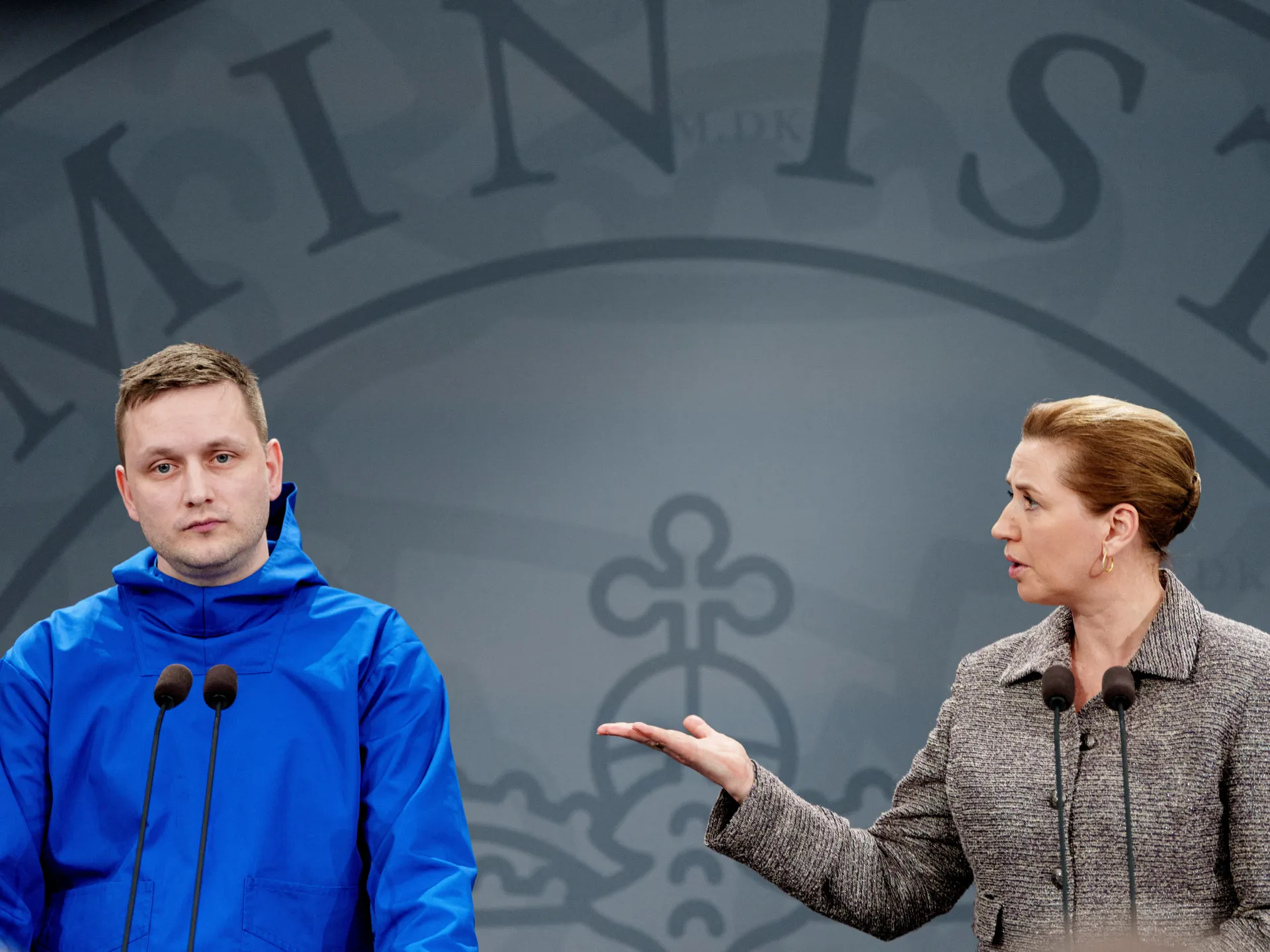
Speaking at a news conference in Copenhagen alongside Denmark’s Prime Minister Mette Frederiksen, Nielsen said the autonomous Arctic territory would prefer to remain Danish.

Recommended Stories

list of 4 itemsend of list

“We are now facing a geopolitical crisis, and if we have to choose between the United States and Denmark here and now, we choose Denmark,” he said.

Frederiksen said it had not been easy to stand up to what she slammed as “completely unacceptable pressure from our closest ally”.

Nielsen’s comments came a day after the government of Greenland rejected Trump’s threats of a takeover.

“The United States has once again reiterated its desire to take over Greenland. This is something that the governing coalition in Greenland cannot accept under any circumstance,” said the island’s coalition government.

“As part of the Danish commonwealth, Greenland is a member of NATO, and the defence of Greenland must therefore be through NATO,” it added.

Trump has insisted that he will seize Greenland, threatening that the territory will be brought under US control “one way or another”.

Those threats have created a crisis for NATO, sparking outrage from European allies who have warned that any takeover of Greenland would have serious repercussions for ties between the US and Europe.

On Wednesday, US Vice President JD Vance and Secretary of State Marco Rubio will host a meeting with the foreign ministers of Denmark and Greenland at the White House.

Danish Foreign Minister Lars Lokke Rasmussen and his Greenlandic counterpart, Vivian Motzfeldt, told reporters in Copenhagen on Tuesday that they had requested the meeting with Rubio after Trump’s threats.

“Our reason for seeking the meeting we have now been given was to move this whole discussion … into a meeting room where we can look each other in the eye and talk about these things,” Rasmussen said.

Aaja Chemnitz, a Greenlandic politician in the Danish parliament, told Al Jazeera that a majority of Greenland’s 56,000 people did not want to become US citizens.

“Greenland is not for sale, and Greenland will never be for sale,” Chemnitz, from the Inuit Ataqatigiit party, said.

“People seem to think they can buy the Greenlandic soul. It is our identity, our language, our culture – and it would look completely different if you became an American citizen, and that is not something a majority in Greenland want.”

Source link

UAE deployed radar to Somalia’s Puntland to defend from Houthi attacks, supply Sudan’s RSF – Middle East Monitor

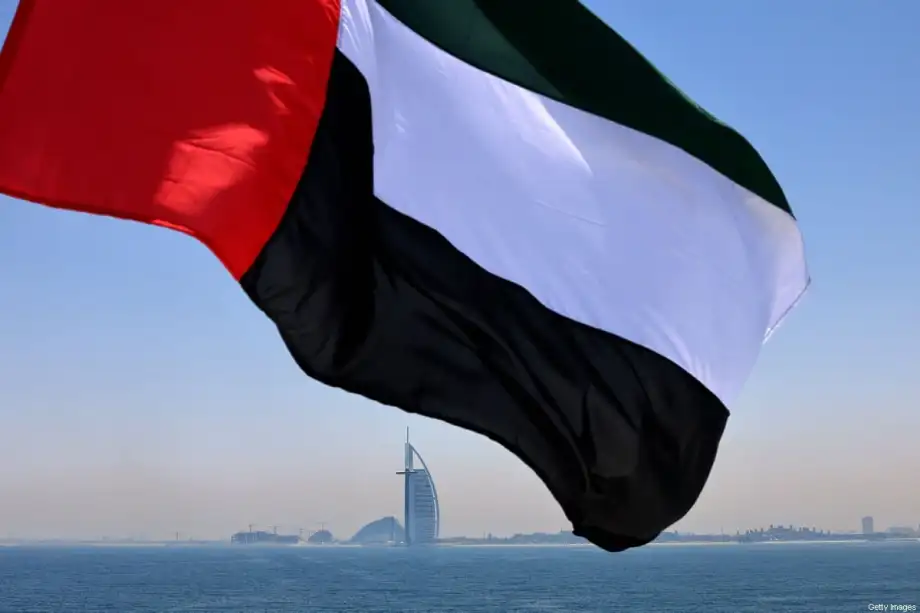
The United Arab Emirates (UAE) has deployed a military radar in the Somali region of Puntland as part of a secret deal, amid Abu Dhabi’s ongoing entrenchment of its influence over the region’s security affairs.

According to the London-based news outlet Middle East Eye, sources familiar with the matter told it that the UAE had installed a military radar near Bosaso airport in Somalia’s semi-autonomous Puntland region earlier this year, with one unnamed source saying that the “radar’s purpose is to detect and provide early warning against drone or missile threats, particularly those potentially launched by the Houthis, targeting Bosaso from outside”.

The radar’s presence was reportedly confirmed by satellite imagery from early March, which found that an Israeli-made ELM-2084 3D Active Electronically Scanned Array Multi-Mission Radar had indeed been installed near Bosaso airport.

READ: UAE: The scramble for the Horn of Africa

Not only does the radar have the purpose of defending Puntland and its airport from attacks by Yemen’s Houthi rebels, but air traffic data reportedly indicates it also serves to facilitate the transport of weapons, ammunition, and supplies to Sudan’s paramilitary Rapid Support Forces (RSF), further fuelling the ongoing civil war in Sudan.

“The UAE installed the radar shortly after the RSF lost control of most of Khartoum in early March”, one source said. Another source was cited as claiming that the radar was deployed at the airport late last year and that Abu Dhabi has used it on a daily basis to supply the RSF, particularly through large cargo planes that frequently carry weapons and ammunition, and which sometimes amount to up to five major shipments at a time.

According to two other Somali sources cited by the report, Puntland’s president Said Abdullahi Deni did not seek approval from Somalia’s federal government nor even the Puntland parliament for the installation of the radar, with one of those sources stressing that it was “a secret deal, and even the highest levels of Puntland’s government, including the cabinet, are unaware of it”.

READ: UAE under scrutiny over alleged arms shipments to Sudan

Source link

US labels Muslim Brotherhood orgs in Egypt, Lebanon, Jordan as ‘terrorists’ | News

The United States has designated Muslim Brotherhood organisations in Egypt, Lebanon and Jordan as “terrorist” groups, the Associated Press news agency reports, as Washington intensifies its crackdown on Israel’s rivals across the world.

The decision on Tuesday came weeks after President Donald Trump issued an executive order directing his administration to start the process of blacklisting the groups.

“These designations reflect the opening actions of an ongoing, sustained effort to thwart Muslim Brotherhood chapters’ violence and destabilisation wherever it occurs,” Secretary of State Marco Rubio said in a statement, according to AP.

“The United States will use all available tools to deprive these Muslim Brotherhood chapters of the resources to engage in or support terrorism.”

The designations make it illegal to provide material support to the groups. They also largely ban their current and former members from entering the US and impose economic sanctions to choke their revenue streams.

Established in 1928 by Egyptian Muslim scholar Hassan al-Banna, the Muslim Brotherhood has offshoots and branches across the Middle East, including political parties and social organisations.

More to come…

Source link

UK hunger striker Heba Muraisi: ‘I think about how or when I could die’ | Israel-Palestine conflict News

London, United Kingdom – Heba Muraisi, a Palestine Action-affiliated activist who has refused food for 72 days in prison, has told Al Jazeera that she “no longer feels hunger”, is suffering with pain and knows that her death may be imminent.

The 31-year-old responded to questions via a friend who regularly visits her in New Hall prison in northern England.

Recommended Stories

list of 4 itemsend of list

“Physically, I am deteriorating as the days go by. I no longer feel hunger, I feel pain,” Muraisi said. “I don’t think about my life, I think about how or when I could die, but despite this, mentally I’ve never been stronger, more determined and sure, and most importantly, I feel calm and a great sense of ease.”

Muraisi was arrested on November 19, 2024, over her alleged involvement in a break-in months earlier at the UK subsidiary of the Israeli defence firm Elbit Systems in Bristol.

If she survives, she will have spent at least a year and a half in prison before her trial date, which is reportedly due no earlier than June this year – well beyond the UK’s usual six-month pre-trial detention limit.

She is the longest-fasting hunger striker of a group of eight activists who have joined the rolling protest since early November. Four are currently refusing food, including Muraisi and Kamran Ahmed, a 28-year-old who has not eaten for more than two months.

“Even though the risks may be lifelong consequences or a devastating end, I think it’s important to fight for justice and for freedom,” she told Al Jazeera.

‘I can no longer read like how I used to’

In recent weeks, the British media has intensified its coverage of the prison protest, said to be the largest coordinated hunger strike in British history since 1981, when Irish Republican inmates were led by Bobby Sands. Sands died on the 66th day of his protest, becoming a symbol of the Irish Republican cause. Nine others also died of starvation.

“I’m choosing to continue this because for the first time in 15 months, I’m finally being heard,” said Muraisi.

A Londoner of Yemeni origin who had worked as a florist and lifeguard, Muraisi is reportedly suffering from muscle spasms, breathlessness, severe pain and a low white blood cell count. She has been admitted to hospital three times over the past nine weeks.

At times, she has lost the ability to speak, and her memory is declining, friends who have recently visited her have said.

“Since concentrating has become gradually more difficult, I can no longer read like how I used to, so now I listen to the radio a lot,” she told Al Jazeera via the intermediary. “I love music, and it’s a shame I can’t get the CDs I want, but nonetheless I’m grateful to have songs playing.”

Last week, an emergency physician who is advising the hunger strikers told Al Jazeera that he believes Muraisi and Ahmed have reached a critical phase in which death and irreversible health damage are increasingly likely.

Ahmed’s weight has dropped to 56kg from the healthy 74kg he entered jail at; he is suffering from cardiac atrophy, or heart shrinkage, chest pain and twitching, according to his sister, Shahmina Alam. His speech is slurred, he is now partially deaf in his left ear, and his heart rate has intermittently fallen below 40bpm in recent days, she said.

The group of hunger striking activists are among 29 remand prisoners being held in various jails over their alleged involvement in the Bristol incident and a break-in at the Royal Air Force (RAF) base in Oxfordshire. They deny the charges against them.

Their protest demands include bail, the right to a fair trial and the de-proscription of Palestine Action, which the UK in July designated a “terrorist organisation”, putting it on par with ISIL (ISIS) and al-Qaeda. They are calling for all Elbit sites to be closed in the UK and seek an end to what they call censorship in prison, accusing authorities of withholding mail, calls and books.

Muraisi has also asked to be returned to HMP Bronzefield in Surrey as HMP New Hall, where she was moved in October, is about 200 miles away – much further from home.

Palestine Action, which says it supports direct action without violence and accuses the UK government of complicity in Israel’s atrocities, is fighting against the proscription in courts as six of those charged in the Bristol case are currently on trial.

Asked if she can access news about Palestine from jail, Muraisi, who has family members in Gaza, accused prison officials of “systematically” blocking articles and newspapers “sent in for me”.

“Anything Palestine-related, including the book We Are Not Numbers [an anthology of emerging writers from Gaza], has been deemed inappropriate. I rely on those I call for news,” she said.

At the time of publishing, neither the UK Ministry of Justice nor New Hall prison had responded to Al Jazeera’s request for comment.

Source link

Eight die in Gaza as storm brings extreme cold, collapses buildings | Israel-Palestine conflict News

Civil Defence warns of catastrophic repercussions from the storm for Palestinians, who lack adequate shelter, as Israel continues to block aid, critical supplies in violation of truce.

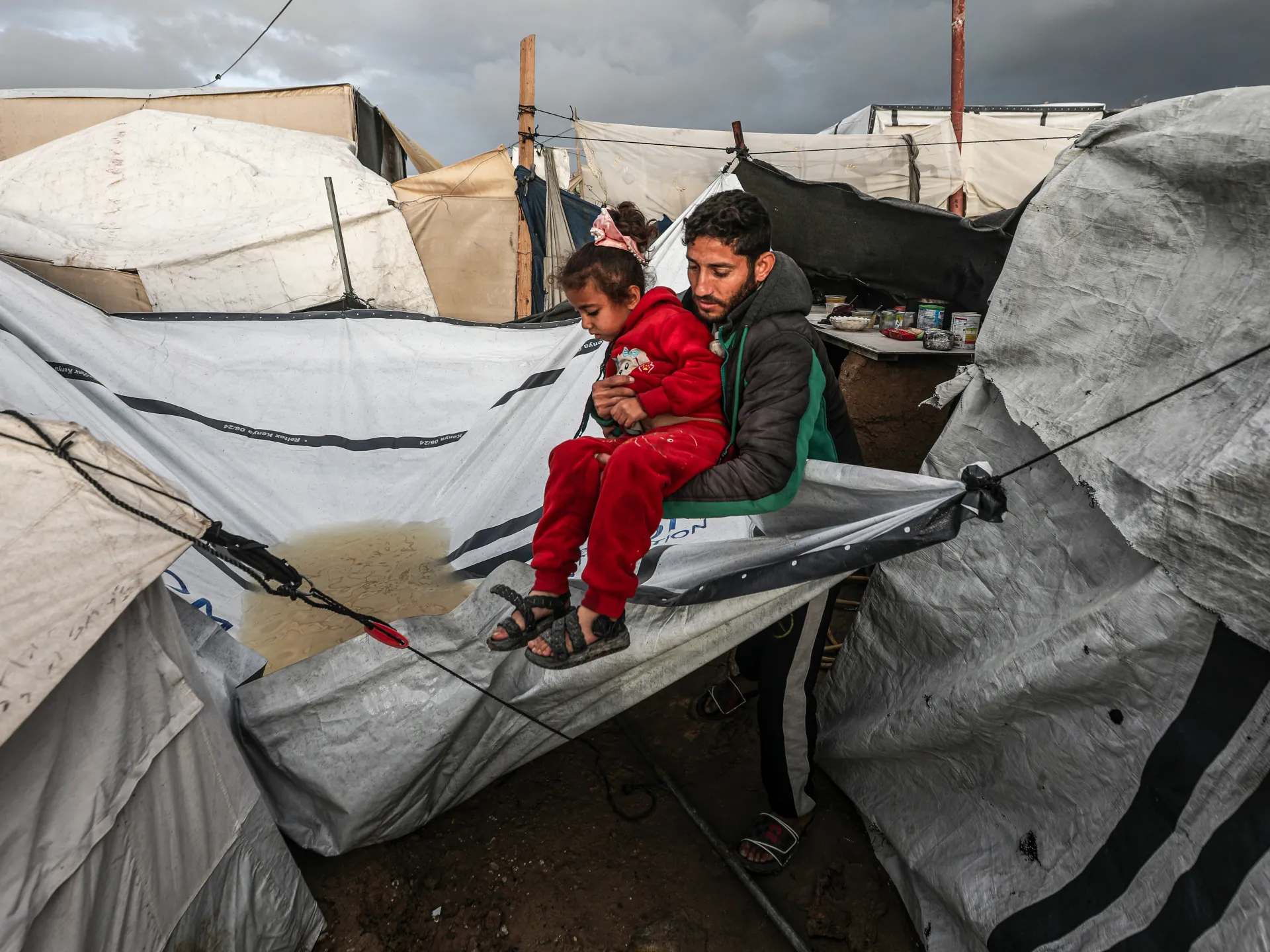
Eight Palestinians have died in war-ravaged Gaza as a new storm has brought cold temperatures, piled on further misery to tens of thousands of displaced people surviving in flimsy shelters and caused strong winds that have toppled buildings damaged by Israeli attacks in its genocidal war on the enclave.

Israel continues to block desperately needed humanitarian aid and critical supplies for shelters from entering the besieged Gaza Strip in violation of a ceasefire that began on October 10.

Recommended Stories

list of 4 itemsend of list

A spokesperson for Gaza’s Civil Defence told Al Jazeera on Tuesday that four deaths have been recorded due to cold temperatures caused by a severe weather depression that has brought torrential rain and freezing winds to the coastal enclave.

A source at Al-Aqsa Martyrs Hospital in central Gaza’s Deir el-Balah said one of the victims was a one-year-old who died in a tent before being brought to the facility.

Four other Palestinians were killed when war-damaged buildings toppled during the storm, the Civil Defence and officials at al-Shifa Hospital in Gaza City’s Remal neighbourhood said.

Three people, including a 15-year-old girl, were killed when one building collapsed in Gaza City while a fourth was killed in a separate building collapse in the city.

Civil Defence spokesperson Mahmoud Basal warned of catastrophic repercussions from the storm for Gaza’s population, the majority of whom have been left without adequate shelter as a result of Israel’s war and its ongoing restrictions on goods entering the territory.

In a statement, Hamas said it was regrettable that the international community was failing to provide relief to Gaza, saying the rising death toll and spread of illness showed the territory was “experiencing the most horrific form of genocide”.

Surge of hospital patients

A Civil Defence spokesperson said hospitals across the territory were observing an influx of patients, particularly children, with cold-related illnesses and the organisation had received hundreds of calls for support due to extreme cold.

He said shelters had been damaged by the storm and were no longer fit for use while other tents were being blown away completely by strong winds in western Gaza City.

Amjad Shawa, director of the Palestinian NGO Network in Gaza, told Al Jazeera that the situation was the worst it had been since the winter storms began.

He said about 10,000 families on Gaza’s coast were exposed to danger and further displacement as a result of the storm.

Shawa said Israel’s restrictions on goods entering the Strip were preventing access to much-needed shelter and medical supplies and hampering the work of aid organisations, endangering Gaza’s hard-hit population.

Gaza City Mayor Yahya al-Sarraj told Al Jazeera that Palestinians in the Strip were trapped in “tragic” circumstances, sheltering in inadequate tents and shelters, many of which were at risk of collapse, with insufficient supplies of medicine to treat those who are ill or wounded.

He called on the international community to pressure Israel to allow aid into the territory so Palestinians would be able to rebuild their homes.

The low-pressure system is expected to bring cold temperatures to Gaza until at least Tuesday evening, forecasters said.

‘Man-made humanitarian catastrophe’

At a briefing on Tuesday, a spokesperson for the Qatari Ministry of Foreign Affairs condemned the “man-made humanitarian catastrophe” in Gaza and said Israel should allow aid into the enclave.

The spokesperson said Qatar was working with mediators to advance to the second phase of the Gaza ceasefire.

As the death toll from the storm rose in Gaza, UNICEF said dozens of children have been killed since the start of the ceasefire three months ago.

“More than 100 children have been killed in Gaza since the ceasefire of early October. That’s roughly a girl or a boy killed here every day during a ceasefire,” James Elder, spokesman for the UN children’s agency, told reporters.

He said the children had been killed in air strikes, drone strikes, tank shelling and by live ammunition.

Source link

Crackdown on illegal working in UK leads to surge in arrests

Becky MortonPolitical reporter

Home Office Two immigration enforcement officers escort a man through a market at Kempton Park racecourse in Surrey on 11 December.Home Office

A raid on a market at Kempton Park racecourse in Surrey in December led to 11 arrests, the Home Office said

A crackdown on migrants working in the UK illegally has led to a surge in arrests, the government has said.

The Home Office said the number of immigration raids on businesses such as nail bars, car washes, barbers and takeaways had increased by 77% since Labour came to power, with an 83% rise in arrests.

Opposition parties have warned that opportunities to work illegally in the UK act as a pull factor for migrants, encouraging people to cross the Channel in small boats.

More than 41,000 people made the dangerous journey in 2025, the highest number since 2022 and almost 5,000 more than the previous year.

Conservative shadow home secretary Chris Philp said “illegal working is booming because Labour have turned Britain into a soft touch”.

He added: “As long as people who arrive illegally can work, earn, and stay, smugglers have a sales pitch, a reward they dangle in front of those crossing the Channel.”

The number of people arrested during immigration raids on businesses has been rising steadily for some time and was increasing before Labour took office.

Between July 2024 and the end of December 2025, more than 17,400 businesses were raided by immigration enforcement teams, a 77% increase on the previous 18 months, according to the Home Office.

It said these raids had led to more than 12,300 arrests, which equates to an 83% rise, and more than 1,700 of those people have been deported.

The government said arrests by immigration enforcement teams had risen in every region of the UK, with the largest number of arrests in London, the West Midlands and south-west England.

In London, more than 2,100 arrests were made last year, a 47% rise compared to 2024.

Meanwhile, more than 1,100 arrests were made in both the West Midlands and south-west England, a rise of 76% and 91% respectively.

In Wales, 1,320 raids were carried out last year, resulting in 649 arrests – a rise of 103% and 85% respectively.

In Northern Ireland, 187 raids led to 234 arrests – a rise of 76% and 169% respectively.

Among the businesses raided were a warehouse in Shoreham-by-Sea, West Sussex, on 25 November, where 13 people were arrested, with 11 Brazilian and Romanian nationals detained for removal from the UK.

Other examples included a raid on a construction site in Swindon on 16 December, which led to 30 arrests of Indian and Albanian men, who were nearly all detained for removal.

Meanwhile, a raid on a market at Kempton Park racecourse in Surrey on 11 December resulted in 11 arrests.

Home Secretary Shabana Mahmood said: “There is no place for illegal working in our communities.

“That is why we have surged enforcement activity to the highest level in British history so illegal migrants in the black economy have nowhere to hide.

“I will stop at nothing to restore order and control to our borders.”

The surge in raids followed an extra £5m of funding for Immigration Enforcement last year.

The government is also planning to introduce digital ID, which will be mandatory to prove someone’s right to work by 2029, to make it harder for migrants to work illegally.

Thin, red banner promoting the Politics Essential newsletter with text saying, “Top political analysis in your inbox every day”. There is also an image of the Houses of Parliament.

Source link

Landmines destroy limbs and lives on Bangladesh-Myanmar border | In Pictures News

In the dense hill forests along Bangladesh’s border with war-torn Myanmar, villagers are losing limbs to landmines, casualties of a conflict not of their making.

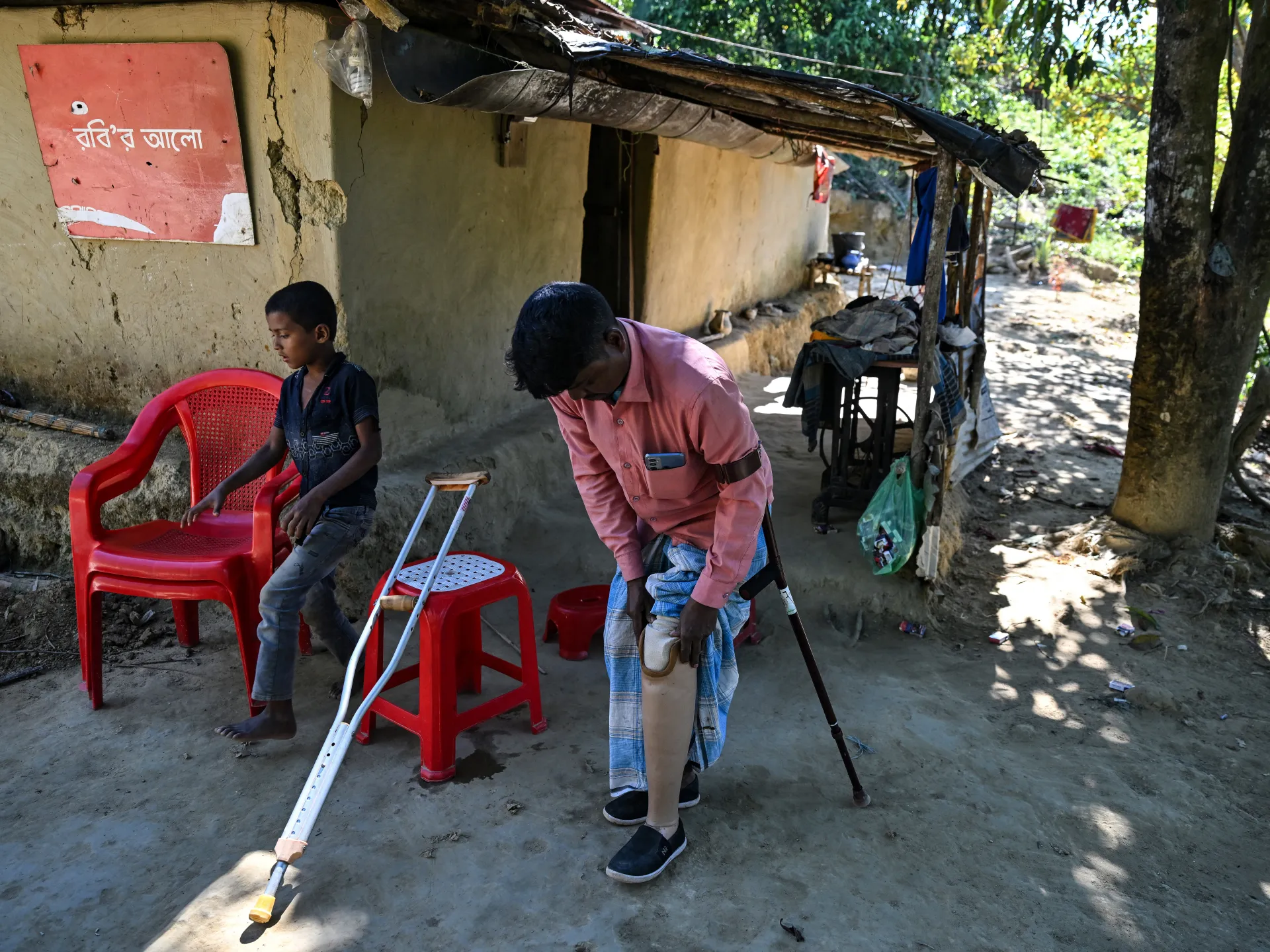
Ali Hossain, 40, was collecting firewood in early 2025 when a blast shattered his life.

“I went into the jungle with fellow villagers. Suddenly, there was an explosion and my leg was blown off,” he said. “I screamed at the top of my voice.”

Neighbours rushed to stem the blood.

“They picked me up, gathered my severed leg and took me to hospital.”

In Ashartoli, a small settlement in Bandarban district, the weapons of a foreign war have turned forests, farms and footpaths into killing grounds.

Bangladesh’s 271km (168-mile) eastern border with Myanmar cuts through forests and rivers, much of it unmarked.

It is crossed daily by villagers, as their families have done for generations, to collect firewood or carry out small-time trading.

Myanmar is the world’s most dangerous country for landmine casualties, according to the International Campaign to Ban Landmines, which has documented the “massive” and growing use of the weapons, banned by many states.

The group recorded more than 2,000 casualties in Myanmar in 2024, the latest full year for which statistics are available, double the total reported the year before.

“The use of mines appeared to significantly increase in 2024-2025,” it said in its Landmine Monitor report, highlighting “an increase in the number of mine victims, particularly near the border” with Bangladesh.

Bangladesh accuses Myanmar’s military and its rival armed groups of planting the mines.

Arakan Army fighters, one of the many factions challenging the junta’s rule, control swaths of jungle across the border.

More than a million Rohingya refugees who fled Myanmar also live in Bangladesh’s border regions, caught between the warring military and separatist forces.

Bangladesh police say at least 28 people were injured by landmines in 2025.

In November that year, a Bangladesh border guard was killed when a landmine tore off both his legs.

Bangladesh’s border force has put up warning signs and red flags, and carries out regular mine-clearing operations.

But villagers say warnings offer little protection when survival depends on entering forests seeded with explosives, leaving communities in Bangladesh to pay the price of war.

Source link

Hellfire-Armed Drone-Killing Buggy Appears In Ukrainian Service

The Ukrainian Armed Forces are using the U.S.-made V2X Tempest, a high-mobility vehicle with a launcher for AGM-114 Hellfire missiles that is optimized for the counter-uncrewed aerial systems (C-UAS) role. Mounting Hellfires on a high-mobility vehicle provides a new means of employing these weapons unpredictably, not only against drone threats, but potentially also other aerial targets, too.

The Tempest was showcased in a video put out recently by Ukraine’s Air Force Command Center, suggesting that the flying branch is the likely operator. However, the new weapon was neither announced nor identified. The footage shows a pair of Hellfire missiles being launched, purportedly against Russian drones, with tracer rounds also seen climbing into the night sky.

The related video is posted below, but if it does not appear for you, here is the link to the Facebook reel.

Interestingly, a blurred version of the same video had been published last October, but it wasn’t possible to identify the system involved.

In the last few days, more still imagery has appeared, providing a much better look at the Ukrainian-operated Tempest. These photos reportedly show the combat vehicle while undergoing crew training.

Ukraine’s Armed Forces have reportedly received prototypes of the new U.S.-made Tempest air defense system for testing, per Defense Express. Developed by V2X and unveiled in 2025, Tempest includes mobile and trailer-mounted variants tailored to counter drone threats. pic.twitter.com/nReBbm7ANh

— NOELREPORTS 🇪🇺 🇺🇦 (@NOELreports) January 11, 2026

This confirms the identity of the system, which the Virginia-based V2X debuted at the Association of the United States Army (AUSA) exhibition last October. The transfer of the Tempest to Ukraine had not been publicly announced.

The Tempest combines a twin Longbow launcher with a radar placed on a highly mobile, modular, lightweight 4×4 chassis — apparently a Can-Am Maverick X3 side-by-side vehicle (SSV). According to V2X, the system is suitable for targeting short- and medium-range drones, in all weather conditions. The radar appears to be an existing counter-drone type that operates in the millimeter wave for active detection and to initially cue the missile. This radar would be ideal for picking up relatively small and relatively slow-moving targets, but it only has a very limited range — similar to that of the Hellfire.

A commercial-standard Can-Am Maverick X3 side-by-side vehicle (SSV). Can-Am

There is no evidence of electro-optical and infrared cameras to supplement the radar, but there are aerials visible on the left rear side of the vehicle. These are almost certainly a passive radio frequency (RF) detection system. This is an independent way to locate some drones that are giving off their own radio emissions. The buggy can do this without emitting its own radio frequency energy, that helps it from being targeted, as well. Passive detection would help mitigate the single radar array, which means the vehicle needs to be pointed in the direction of the target in order to acquire it and fire its missiles. Usually, such radars are arrayed in a group of four, pointing in each direction for 360-degree coverage. Instead, the passive detection system can be used to initially pick up the threat, before the vehicle (and its radar) is oriented toward it for acquisition and firing. Many drones do not give off RF emissions, especially those that run on autopilot or use fiber optic wire control links. In those cases, they would have to pass through the radar’s field of view.

A promotional shot of the Hellfire-armed V2X Tempest. V2X

Fundamental to the design is its ability to employ ‘shoot and scoot’ tactics, rapidly moving to a new position after firing, making it less vulnerable to detection and to enemy counterfire.

Since it makes extensive use of commercially available off-the-shelf components, the Tempest is also said to be cheaper and faster to produce than more traditional vehicles of this type.

As well as its primary C-UAS role, the Tempest can also engage helicopters, some cruise missile types, and fixed-wing aircraft, although against the latter target set, in particular, it is limited by the relatively short range of its Hellfire missiles.

V2X also offers a stationary, trailer-mounted variant of the Tempest for the static defense of high-value objectives, such as storage facilities and airfields. It’s unknown if any of these have been delivered to Ukraine.

As for the missile armament, this is understood to comprise the AGM-114L Hellfire Longbow version. Hellfire missiles, the majority of which are laser-guided munitions, are best known as air-to-ground weapons, but the millimeter wave radar-guided AGM-114L variant has emerged as a useful tool for tackling drones in recent years. The AGM-114L has a range of around five miles and carries a roughly 20-pound warhead. This is enough destructive power to deal with many kinds of drones, while also reducing the risk of collateral damage on the ground. While these missiles are now out of production, they were likely substantially more expensive than the laser-guided versions. As of 2020, Hellfire had an average cost, across all variants, of more than $200,000.

An official U.S. Army infographic that provides details on various Hellfire variants, including their weights. U.S. Army

The AGM-114L is the same missile that U.S. Army AH-64 Apache attack helicopters are using for C-UAS, with specific modifications made to them for this role. In this application, the missile is initially cued by the Apache’s AN/APG-78 Longbow mast-mounted radar system. AGM-114Ls are also primary weapons for other land-based counter-drone systems, including the Army’s M-SHORAD.

It’s worth noting that a very different version of the Hellfire has already been fielded by Ukraine.

This is the Swedish RBS 17 coastal defense missile system, which uses a derivative of the semi-active laser-guided AGM-114C Hellfire anti-tank missile and was sent to Ukraine by Sweden in an aid package announced in the summer of 2022. Subsequently, further examples were provided to Ukraine from Norwegian stocks.

While mainly designed for the close-in shore defense role — defending against amphibious landings and shallow water threats — Ukrainian forces instead seem to have employed the RBS 17 primarily against land targets. The missiles used in the RBS 17 system would not be suitable for use from the Tempest, however, whether for C-UAS use or against other targets, due to their guidance mode and the apparent lack of additional targeting systems on the vehicle.

Overall, Ukraine’s new C-UAS system may well still be in the evaluation phase, or at least only fielded in small quantities, but the video evidence suggests that it might already be enjoying some success. At the very least, this is probably the most highly mobile ground C-UAS kinetic shooter we have seen.

Whatever its status and the number of systems that are being delivered, the Tempest is clearly of interest to Ukraine, especially as the winter months mean that Russia is upping the tempo of its regular drone barrages against cities and infrastructure.

Contact the author: thomas@thewarzone.com

Thomas is a defense writer and editor with over 20 years of experience covering military aerospace topics and conflicts. He’s written a number of books, edited many more, and has contributed to many of the world’s leading aviation publications. Before joining The War Zone in 2020, he was the editor of AirForces Monthly.


Tyler’s passion is the study of military technology, strategy, and foreign policy and he has fostered a dominant voice on those topics in the defense media space. He was the creator of the hugely popular defense site Foxtrot Alpha before developing The War Zone.


Source link

Iran since 1979: A timeline of crises | Conflict News

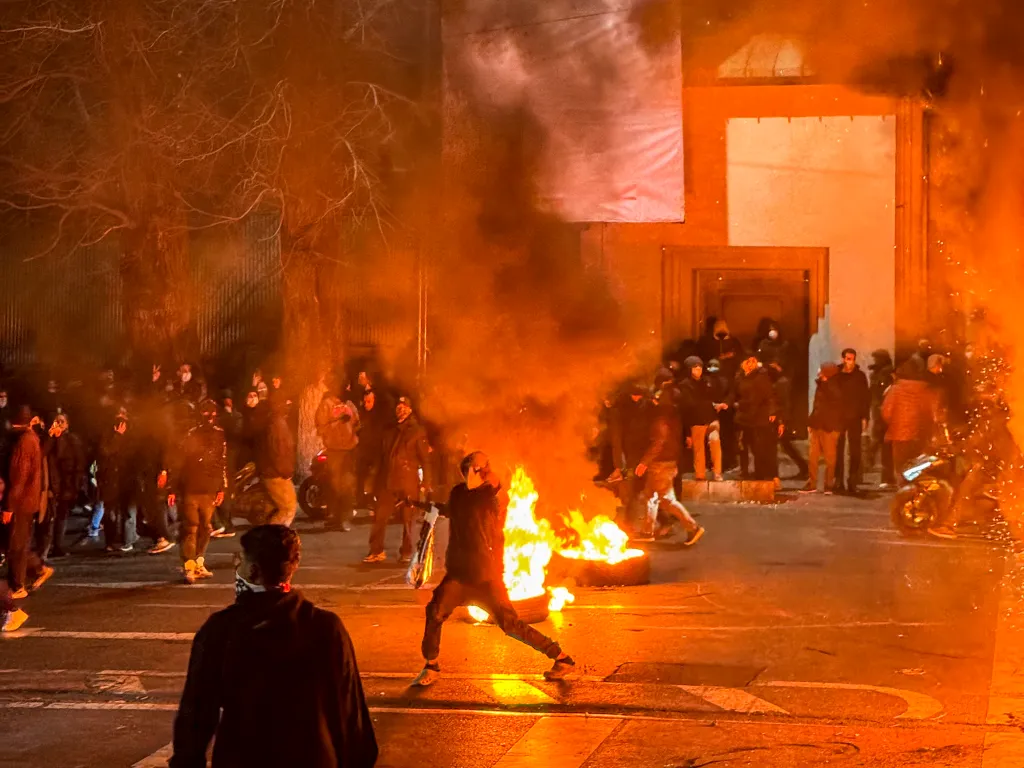
The protests in Iran are grabbing headlines, with the government and the opposition accusing each other of escalating violence. The government also says that foreign interference is behind the protests.

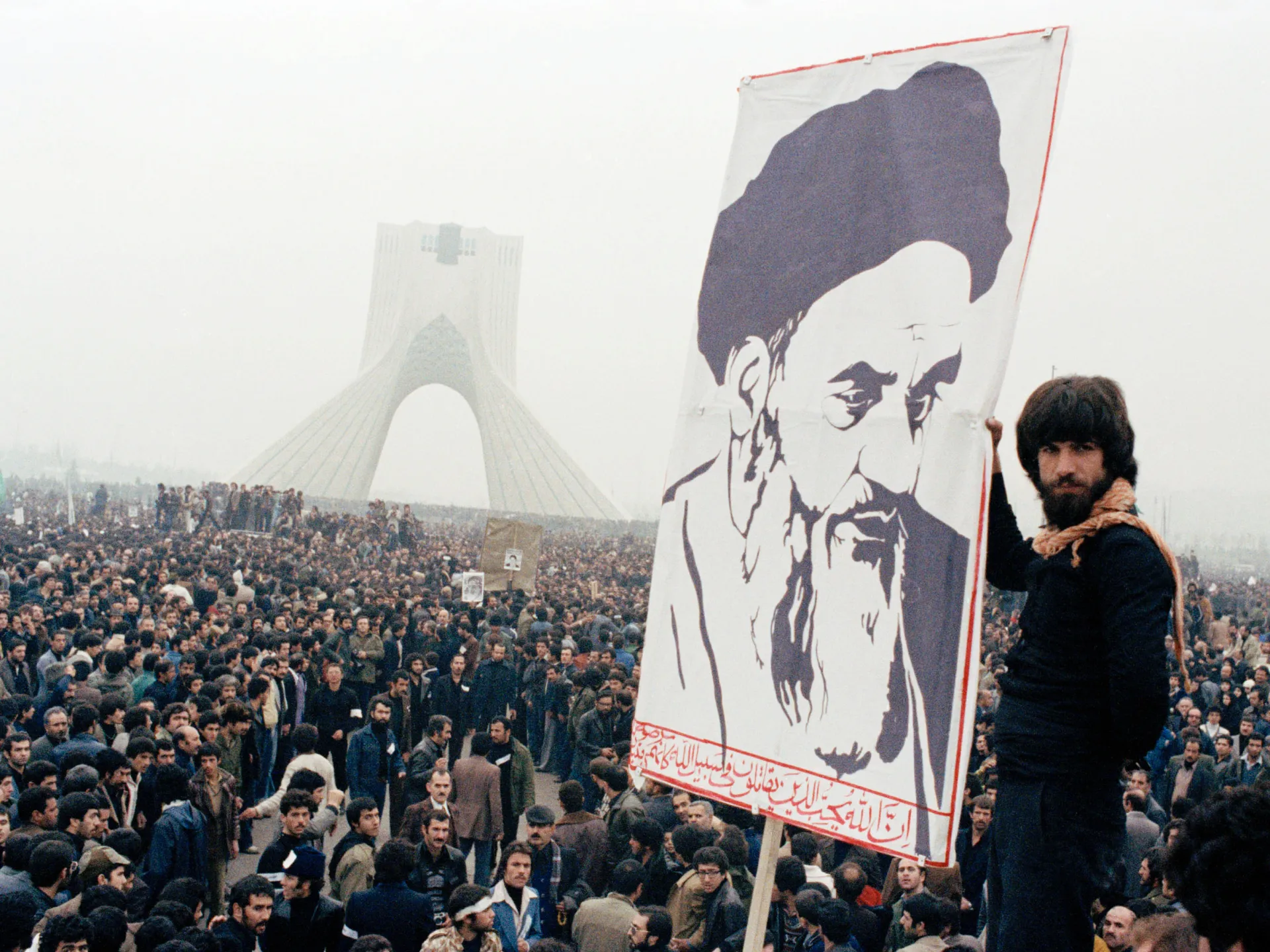
It is the latest round of demonstrations against Iran’s governing system since the 1979 revolution that toppled the shah and ushered in an Islamic republic.

Recommended Stories

list of 3 itemsend of list

But the country has also faced other crises, including earthquakes, war, sanctions, nuclear tensions, regional interventions and political drama.

Here is a timeline of some of the major events from the last five decades.

1979

February: Ayatollah Ruhollah Khomeini returns after 14 years of exile in Iraq and France.

April: After a referendum, Iran is declared an Islamic republic

November: The United States imposes its first sanctions on Iran, justified by the seizure of American hostages held at the US Embassy in Tehran. The US had supported the the overthrown shah, or monarch, Mohammad Reza Pahlavi, and, earlier, helped depose the democratically elected prime minister, Mohammad Mosaddegh, in a 1953 coup, also supported by US and UK intelligence agencies.

1980

September: Iraq invades Iran. Estimates put the war’s death toll at approximately 500,000, with Iran suffering the heavier losses. The war was defined by large-scale trenches, machineguns and bayonet uses, similar to World War I. However, Iraq also used chemical weapons against Iranians and Iraqi Kurds.

1981

January: All remaining US hostages are released, ending the Iranian hostage crisis.

June: A bombing at the Islamic Republican Party headquarters in Tehran kills dozens of senior officials, including the head of the judiciary, Mohammad Beheshti, regarded as the second-most important person in Iran after Khomeini.

August: President Mohammad-Ali Rajai and Prime Minister Mohammad Javad Bahonar are assassinated in a bombing attack on a meeting in Tehran. Authorities blame the leftist revolutionary-minded opposition Mojahedin-e Khalq (MEK) group, which had faced a crackdown the previous year.

1982

June: Israel invades Lebanon. Iran starts funding what will become the Lebanese resistance movement, Hezbollah.

1988

July: The USS Vincennes, a US Navy guided missile cruiser, shoots down a civilian Iran Air Airbus plane over the Gulf, killing all 290 people on board.

August: A ceasefire begins between Iran and Iraq after United Nations-brokered negotiations.

1989

June: Supreme Leader Ayatollah Ruhollah Khomeini dies on June 3.

His successor, Ayatollah Ali Khamenei, is chosen by the Assembly of Experts the next day.

1990

June: Iran is hit by a major earthquake. About 40,000 people are killed.

1995

March and May: The US imposes oil and trade sanctions on Iran. It accuses Iran of sponsoring “terrorism” and seeking nuclear arms.

1998

September: The Taliban admits that eight Iranian diplomats and a journalist had been killed in Afghanistan the previous month, during the group’s takeover of the northern city of Mazar-i-Sharif. Iran deploys thousands of troops to its shared border with Afghanistan in response.

2002

January: US President George W Bush names Iran part of the “axis of evil”, alongside North Korea and Iraq, saying the countries are supporters of “terrorism”.

2003

March: The US invades Iraq. Iran begins financing and supporting Shia militias and political groups on the ground. Its influence over such groups is still prevalent today.

November: Iran announces it will suspend its uranium enrichment programme and allow more thorough UN inspections of its nuclear sites. The International Atomic Energy Agency (IAEA) says there is no evidence of a nuclear weapons programme. This openness is a change after Iranian officials had blocked or impeded past inspections.

December: The Bam earthquake in southern Iran kills up to 40,000 people

2006

December: the UN Security Council (UNSC) imposes sanctions on Iran’s trade in sensitive nuclear materials and technology, after Iran failed to suspend its nuclear programme in exchange for diplomatic and economic incentives from Germany and the five permanent UNSC members – France, China, Russia, the UK, and the US.

2007

October: The US adds additional, increasingly tough sanctions on Iran

2010

June: The UNSC imposes a fourth round of sanctions on Iran over its nuclear programme. The sanctions include an expanded arms embargo and stricter financial regulations.

September: Iran accuses Israel and the US of infecting its nuclear power plant systems after discovering malware on systems used by staff in the nuclear sector.

2011

March: The regime of President Bashar al-Assad in Syria, an Iranian ally, brutally represses a popular uprising that started in March on the back of the Arab Spring protests. Later in the year, the Iranian Revolutionary Guard Corps (IRGC) sends Iranian and foreign militias to support al-Assad.

2012

January: The European Union begins boycotting Iranian oil exports.

September: The IAEA claims it is obstructed from inspecting Iran’s Parchin military site and that Iran has increased the amount of nuclear centrifuges enriching uranium, raising fears that the country is getting closer to obtaining a nuclear weapon.

October: The Iranian rial falls to a record low against the US dollar, losing 80 percent of its value since 2011, largely due to international sanctions.

2015

July: Iran comes to an agreement with the administration of US President Barack Obama, as well as the UK, France, Russia, China and the EU, to limit its nuclear programme in return for sanctions relief. The Joint Comprehensive Plan of Action (JCPOA) is widely referred to as the nuclear deal, and the agreement leads to celebrations from Iranians, hoping for an end to the country’s isolation.

2018

May: Obama’s successor, President Donald Trump, withdraws the US from the nuclear deal, arguing that the JCPOA is too lenient on Iran and should be replaced by a “better deal”.

2020

January: Qassem Soleimani, the leader of the IRGC’s Quds Force, is assassinated by a US drone strike in Baghdad.

2024

April: Israel bombs Iran’s embassy in Damascus, killing seven people, including two IRGC generals.

May: Iranian President Ebrahim Raisi dies in a helicopter crash in the country’s East Azerbaijan province.

July: Hamas chief Ismael Haniyeh is assassinated in Tehran, with Israel widely regarded as being behind the attack.

2025

June: Israel attacks Iran, starting a 12-day war between the two sides that kills at least 610 Iranians and 28 Israelis.

Source link

World Waits For Trump’s Next Move On Iran As Protests Grow Deadlier

U.S. President Donald Trump is “unafraid to use the lethal force and might of the United States military, if and when he deems that necessary” in response to Tehran’s brutal crackdown on Iranian anti-government protestors, White House Press Secretary Karoline Leavitt said Monday afternoon. Her comments came as Trump is favoring an attack, according to media reports, which we cannot confirm at this time. Regardless, Trump did lay down a firm warning to the government in Tehran last week that if they started killing protestors, he would act.

You can catch up with our previous coverage of the unfolding events here.

“The greatest leverage the regime had just several months ago was their nuclear program, which President Trump and the United States military totally obliterated through Operation Midnight Hammer,” stated Leavitt, noting that the president would prefer a diplomatic solution to the crisis. “And so what President Trump will do next only he knows. So the world will have to keep waiting and guessing, and we will let him decide. I’m certainly not going to broadcast any future options or decision from the President on national television.”

Press Sec Leavitt on Iran: “The greatest leverage the regime had just several months ago was their nuclear program, which President Trump and the United States military totally obliterated… What President Trump will do next only he knows.” pic.twitter.com/SaqGhnQFyL

— Open Source Intel (@Osint613) January 12, 2026

Leavitt added that airstrikes are among “many, many options.”

“The options could include ordering military strikes on regime sites or launching cyberattacks, approving new sanctions and boosting anti-regime accounts online,” The Wall Street Journal suggested.

White House Press Secretary Karoline Leavitt states that airstrikes are “one of the many, many option that are on the table” for President Trump to use against Iran, but adds that diplomacy is always the first option for the President. pic.twitter.com/rKPV9YEr73

— OSINTdefender (@sentdefender) January 12, 2026

Trump announced one of those options on Monday afternoon, declaring on his Truth Social platform an immediate 25% tariff on any nation doing business with Iran.

“Effective immediately, any Country doing business with the Islamic Republic of Iran will pay a Tariff of 25% on any and all business being done with the United States of America. This Order is final and conclusive….” – PRESIDENT DONALD J. TRUMP pic.twitter.com/UQ1ylPezs9

— The White House (@WhiteHouse) January 12, 2026

A major curve ball that has come into play has been the sudden ask by the Iranian regime to restart nuclear negotiations, according to Trump.

Speaking to reporters Sunday aboard Air Force One, Trump acknowledged that the U.S. will meet with Iranian officials after they called seeking negotiations over their nuclear ambitions.

“A meeting is being set up, but we may have to act because of what’s happening before the meeting,” Trump warned.

The tactic could be a ploy by the Iranians to keep the U.S. military at bay during a very vulnerable period. At the same time, the U.S. could end up striking Iran for reasons totally outside of the nuclear issue.

Trump said Iranian authorities have reached out to the White House, expressed a desire to begin negotiations, and that a meeting has already been set up. pic.twitter.com/VwKu2fVQdc

— Visegrád 24 (@visegrad24) January 12, 2026

Trump also warned that the government of Ayatollah Ali Khamenei is approaching red lines in its harsh response to the uprising and brushed off threats of Iranian attacks on U.S. interests.

“People were killed that aren’t supposed to be killed,” Trump said aboard Air Force One. “These are violent, if you call them leaders. I don’t know if their leaders are just they rule through violence, but we’re looking at it very seriously. The military is looking at it, and we’re looking at some very strong options. We’ll make a determination.”

Trump added that he is getting “hourly reports” about the situation.

Asked about threats that Iran would attack U.S. assets in the region in retaliation for any American military actions on behalf of the anti-government forces, Trump seemed incredulous.

“They wouldn’t,” he proclaimed. “If they do that, we will hit them at levels that they’ve never been hit before. They won’t even believe it. I have options that are so strong. So I mean, if they did that, it’ll be met with a very, very powerful force.”

‼️🇺🇸Trump says, regarding potential attacks on US bases by Iran:

“I will hit them at levels they’ve never been hit before, they won’t even believe it.”

He adds,
“I have options that are so strong.” pic.twitter.com/3rUlr5on3t

— Defense Intelligence (@DI313_) January 12, 2026

Trump’s comments aboard Air Force One came in the wake of reports that U.S. military planners will present him with several options for responding to Iran. He will reportedly meet with senior administration officials on Tuesday to discuss the matter. As we pointed out earlier in this story, the U.S. struck Iranian nuclear facilities six months ago in what was dubbed Operation Midnight Hammer.

While Trump may be considering attacking Iran, there have been no publicly visible signs of a major U.S. military buildup in the region, either in the air or on the sea. There have been no large movements of cargo aircraft, tankers, or tactical aircraft. There are also no aircraft carriers in the region or plans at this point to move any. Even if the decision is made to redeploy a strike group, it would take weeks at the earliest before one could arrive from the U.S. The Lincoln carrier strike group is currently deployed to the South China Sea, and the USS Gerald R. Ford remains on station in the U.S. Southern Command (SOUTHCOM) region. If a carrier is called to the region, it will likely be the Lincoln.

The world’s largest aircraft carrier, USS Gerald R. Ford, and the amphibious warships USS Iwo Jima, USS Fort Lauderdale and USS San Antonio remain deployed in the Western Hemisphere. The Marines and Sailors on these lethal platforms stand ready to support @dhs_gov, @statedept and… pic.twitter.com/NnjHzzPA5n

— U.S. Southern Command (@Southcom) January 12, 2026

Though carrier strike groups bring a lot of firepower in the form of embarked aircraft and guided missile destroyers, they are not a requirement to strike Iran or defend against a counterattack it could launch, as we noted over the weekend.

The US military can still operate and have plenty of impact without a carrier in the region folks.

— Tyler Rogoway (@Aviation_Intel) January 11, 2026

Meanwhile, the U.S. still has airpower located on land bases throughout the region, including in Qatar, Saudi Arabia, the United Arab Emirates and Jordan. In addition, it should be noted that the B-2s that struck Iran flew from Whiteman Air Force Base in Missouri. B-52 and B-1B bombers can make similar flights from the U.S. or forward deploy.

However, given the threats made by Iran, we would likely see cargo flights containing air defense systems and personnel, as well as flights of additional fighters. Tehran still has a large supply of short-range ballistic and cruise missiles that it did not use during the 12-Day War with Israel. As a result, an Iranian response to a new attack could be far worse than the retaliation strike Tehran carried out on a largely empty Al Udeid Air Base in Qatar after Midnight Hammer. The Iranian revenge strike resulted in the largest single-event launch of Patriot interceptors in U.S. military history. At the same time, Iran is not in a particularly good position to fight a huge uprising internally and the U.S. externally at this time.

Meanwhile, despite ample evidence that makes such a claim seem very premature, the Iranian government maintains that it retains “full control” of the country despite the widespread protests. Iranian officials also claim that a million people came out on Monday to rallies in support of Ayatollah Ali Khamenei. As we previously noted, the protests represent perhaps the greatest internal threat to the regime since it took power following the Islamic Revolution in 1979. The current uprisings began Dec. 28. 2025, sparked by anger over rising prices, devalued currency, a devastating drought, and brutal government crackdowns.

Iranians gather while blocking a street during a protest in Tehran, Iran on January 9, 2026. The nationwide protests started in Tehran's Grand Bazaar against the failing economic policies in late December, which spread to universities and other cities, and included economic slogans, to political and anti-government ones. (Photo by MAHSA / Middle East Images / AFP via Getty Images)
Iranians gather while blocking a street during a protest in Tehran, Iran on January 9, 2026. The nationwide protests started in Tehran’s Grand Bazaar against the failing economic policies in late December, which spread to universities and other cities, and included economic slogans, to political and anti-government ones. (Photo by MAHSA / Middle East Images via AFP) MAHSA

In a social media posting on Monday, the Ayatollah declared victory.

“Great and Dignified Nation of Iran! Today, you have accomplished a great deed and created a #HistoricalDay,” Khamenei extolled on X. “These massive gatherings, brimming with steadfast resolve, nullified the plans of external enemies that were meant to be implemented by internal mercenaries.”

بسم الله الرّحمن الرّحیم

ملّت عظیم‌الشأن ایران!
امروز کار بزرگی انجام دادید و #روزی_تاریخی آفریدید.

این اجتماعات عظیم و سرشار از عزم راسخ، نقشه‌ی دشمنان خارجی را که قرار بود به دست مزدوران داخلی پیاده شود، باطل کرد./۱ pic.twitter.com/Sy6MZxuc2Q

— KHAMENEI.IR | فارسی (@Khamenei_fa) January 12, 2026

Iran’s top diplomat also said the regime had weathered the uprising.

“Security forces have full control over the situation,” Iranian Foreign Minister Abbas Araghchi said. “Evidence shows attacks on security forces were staged to inflate casualties, a demand from Trump, and most fatalities, including security personnel, were shot from behind. Armed attackers also killed the injured in ambulances, burned 53 mosques, and sabotaged public infrastructure.”

Araghchi also claimed U.S. and Israeli involvement, “with Mossad and its affiliates linked to killings and riots.”

Still, while saying his nation was prepared for war, Araghchi added Iran was also open to negotiations with Trump “that are fair, with equal rights and mutual respect.”

Amid the turmoil, the communication channel between Araghachi and Trump Middle East envoy Steve Witkoff has remained open, Iranian media reported.

Iran Successful in Stopping this Wave of U.S.-Israeli Attempts to Destabilize the Country

Foreign Minister Araghchi stated that peaceful protests lasted three days, during which the government held direct talks with economic activists.
However, armed terrorist groups soon… pic.twitter.com/iWs6IAXDzU

— Ibrahim Majed (@ibrahimtmajed) January 12, 2026

🇮🇷 BREAKING

Massive nationwide rallies are taking place across Iran in support of the Islamic Republic and against rioters. Crowds are filling the streets showing strong backing for the state.

The footage shared is from the Azerbaijan province in Iran. pic.twitter.com/g4snTzTjpx

— WAR (@warsurveillance) January 12, 2026

On Sunday, the Speaker of the Iranian Parliament, Mohammad Bagher Qalibaf took a much more defiant stance, leveling a direct threat against the U.S. and Israel.

“I have a message for the delusional American President,” said Qalibaf. “Be careful that the advice being given to you about attacking Iran is not of the same kind as the ‘consultations’ through which you claimed that Mashhad had fallen.”

“Therefore,” he added, “in order to avoid miscalculations, be aware that if you take action to attack Iran, both the occupied territories [Israel] and all U.S. military centers, bases, and ships in the region will be considered legitimate targets by us.”

The Speaker of the Iranian Parliament, Mohammad Bagher Qalibaf, issues a harsh and direct threat against @realDonaldTrump, calling him delusional and a gambler:

“We have heard that you have threatened Iran.
Know that the defenders of Iran will teach you a lesson that will never… pic.twitter.com/4cdwe4fHWF

— The Middle Eastern (@TMiddleEastern) January 12, 2026

On Monday, Crown Prince Reza Pahlavi, whose calls for increased action have sparked larger demonstrations, claimed the regime is “on its back legs” and that the “people are ready to topple it.”

Pahlavi, whose fatally ill father, Mohammad Reza Pahlavi, fled Iran ahead of the 1979 Islamic Revolution, is now living in exile in the U.S.

As the unrest continues, it remains to be seen how much the uprising has really been quelled. The ferocity of the demonstrations had reportedly compelled the U.S. intelligence community last week to rethink its initial assessment of the situation, recognizing that it is more serious than initially thought. However, it is unknown if that analysis has changed over the weekend.

Given that Iran has largely shut down internet and telephone communications, including jamming signals to and from Starlink dishes, it is impossible to know exactly what is going on in the country at the moment. However, intermittent reports, videos, and images continue to flow from inside Iran.

⚠️ Update: #Iran has now been offline for 96 hours, limiting reporting and accountability over civilian deaths as Iranians protest and demand change; fixed-line internet, mobile data and calls are disabled, while other communication means are also increasingly being targeted ⌛️ pic.twitter.com/Dxe5OlUWqN

— NetBlocks (@netblocks) January 12, 2026

So far, at least 544 people have been killed during the protests, according to the latest data from the Human Rights Activist News Agency (HRANA). The U.S.-based non-governmental organization claims that dozens of additional cases are under review, while more than 10,000 people have been arrested and transferred to prisons. The number of deaths is likely significantly higher because HRANA claims it only tabulates those that can be visually confirmed.

“Protests have taken place at 585 locations across the country, in 186 cities, spanning all 31 provinces,” HRANA stated. The War Zone cannot independently verify these claims.

For the past two weeks, social media feeds about Iran have been dominated by videos and images of huge throngs of people on the streets across the country. Some showed buildings burning, others depicting the mounting death toll as hospitals and morgues became inundated with bodies of those killed during the demonstrations after regime forces opened fire.

Connected with a source tonight in Isfahan, Iran. He described the demonstrations as a ‘battle,’ with security forces using live ammunition. pic.twitter.com/fqRYjgiSKC

— Trey Yingst (@TreyYingst) January 12, 2026

Iranian protesters have taken the control of a police station in Tehran, Hafte Tir district, and have set fire to it.

They are chanting “#Javidshah‌” “ Long Live the Shah” pic.twitter.com/gkvlhp0h4S

— Marziyeh Amirizadeh مرضیه امیری زاده (@MAmirizadeh) January 12, 2026

⚠️ 𝐁𝐫𝐞𝐚𝐤𝐢𝐧𝐠 𝐍𝐞𝐰𝐬 ⚠️

🇮🇷 | MASSACRE FOOTAGE HAS BEEN LEAKED FROM IRAN!

We can see armed forces gunning down unarmed civilians in the streets.

REPOST, RETWEET, RETWEET! pic.twitter.com/NHGWTDuGDL

— Iran Spectator (@IranSpec) January 10, 2026

Footage dated Friday, January 9, shows dozens, if not hundreds, of bodies at the Kahrizak Forensic Medical Center to the south of the Iranian capital of Tehran, as families search for loved ones who have been killed during the ongoing anti-government protests in Iran. pic.twitter.com/PIk9rLsXnF

— OSINTdefender (@sentdefender) January 11, 2026

Amid the chaos, non-essential staff have reportedly departed the French embassy in Iran.

BREAKING: Non-essential staff have departed France’s embassy in Iran, according to AFP report.

— The Spectator Index (@spectatorindex) January 12, 2026

As the protests continue and rhetoric flows between Washington and Tehran, Israeli Prime Minister Benjamin Netanyahu expressed his support for the Iranian people while planning a potential attack, dubbed Operation Iron Strike.

“We are sending strength to the heroic and courageous citizens of Iran — and once the regime falls, we will do good things together for the benefit of both peoples,” he said on Sunday. “We all hope that the Persian nation will soon be freed from the yoke of tyranny. And when that day arrives, Israel and Iran will once again become faithful partners in building a future of prosperity and peace.”

As we have previously noted, an Israeli strike could play into the regime’s claim about foreign interference and galvanize the population behind it; however, that seems less likely with every passing day of violence.

Israel is closely monitoring the events unfolding in Iran. The protests for freedom have spread throughout the country.

The people of Israel, and the entire world, stand in awe of the immense bravery of Iran’s citizens.

Israel supports their struggle for freedom and strongly… pic.twitter.com/ya68R9Q1ds

— Benjamin Netanyahu – בנימין נתניהו (@netanyahu) January 11, 2026

Regardless of Netanyahu’s intentions, all eyes are on Trump, a senior IDF official told us.

“My assessment is that much ultimately hinges on one individual: President Trump,” he said, offering an unclassified view of the situation. “He has positioned himself as a global decision-maker, and it is likely that he alone will determine whether, when, and how the United States chooses to intervene in Iran, if at all.”

However, Israel could act if it perceives a threat from its arch-enemy.

“From Israel’s perspective, should there be credible early warning of escalation or intervention, I would expect Israel to act swiftly,” said the official, speaking on condition of anonymity to discuss operational details. “At present, Israel is maintaining a high level of readiness and immediate operational preparedness. That said, much more remains classified than publicly visible. In many respects, the situation appears to be concentrated in the decision-making of a single individual.”

“It is possible that patience may run thin in the coming 48 hours, but as always, predictions in this environment are inherently uncertain, and I prefer not to speculate beyond that,” the official added.

Contact the author: howard@thewarzone.com

Howard is a Senior Staff Writer for The War Zone, and a former Senior Managing Editor for Military Times. Prior to this, he covered military affairs for the Tampa Bay Times as a Senior Writer. Howard’s work has appeared in various publications including Yahoo News, RealClearDefense, and Air Force Times.


Source link

Court says Trump illegally blocked clean energy grants to Democratic states | Donald Trump News

A US district judge ruled that Trump’s decision singled out states that voted for Democrats in the 2024 elections.

A United States judge has ruled that the administration of President Donald Trump acted illegally when it cancelled the payment of $7.6bn in clean energy grants to states that voted for Democrat Kamala Harris in the 2024 presidential election.

In a decision on Monday, US District Judge Amit Mehta said the administration’s actions violated the Constitution’s equal protection requirements.

Recommended Stories

list of 3 itemsend of list

“Defendants freely admit that they made grant-termination decisions primarily – if not exclusively – based on whether the awardee resided in a state whose citizens voted for President Trump in 2024,” Mehta wrote in a summary of the case.

The grants were intended to support hundreds of clean energy projects across 16 states, including California, Colorado, New Jersey and Washington state. The projects included initiatives to create battery plants and hydrogen technology.

But projects in those states were cancelled in October, as the Trump administration sought to ratchet up pressure on Democratic-led states during a heated government shutdown.

At the time, Trump told the network One America News (OAN) that he would take aim at projects closely associated with the Democratic Party.

“We could cut projects that they wanted, favourite projects, and they’d be permanently cut,” he told the network.

Russell Vought, the Trump-appointed director for the Office of Management and Budget, posted on social media that month that “funding to fuel the Left’s climate agenda” had been “cancelled”.

The cuts included up to $1.2bn for a hub in California aimed at accelerating hydrogen technology, and up to $1bn for a hydrogen project in the Pacific Northwest.

St Paul, Minnesota, was among the jurisdictions affected by the grant cuts. The city and a coalition of environmental groups filed a lawsuit to contest the Trump administration’s decision.

A spokesperson for the US Department of Energy, however, said the Trump administration disagrees with the judge’s ruling.

Officials “stand by our review process, which evaluated these awards individually and determined they did not meet the standards necessary to justify the continued spending of taxpayer dollars”, spokesman Ben Dietderich said.

The Trump administration has repeatedly pledged to cut back on what it considers wasteful government spending.

Monday’s ruling was the second legal setback in just a matter of hours for Trump’s efforts to roll back the clean energy programmes in the US.

A separate federal judge ruled on Monday that work on a major offshore wind farm for Rhode Island and Connecticut can resume, handing the industry at least a temporary victory as Trump seeks to shut it down.

The US president campaigned for the White House on a promise to end the offshore wind industry, saying electric wind turbines – sometimes called windmills – are too expensive and hurt whales and birds.

Instead, Trump has pushed for the US to ramp up fossil fuel production, considered the primary contributor to climate change. The US president has repeatedly defied scientific consensus on climate change and referred to it as a “hoax”.

Source link

Australian writers’ festival boss resigns after Palestinian author axed | Arts and Culture News

Director of Adelaide Writers’ Week steps down amid wave of speaker withdrawals and board resignations.

The director of a top writers’ festival in Australia has stepped down amid controversy over the cancellation of a scheduled appearance by a prominent Australian Palestinian activist and author.

Louise Adler, the director of Adelaide Writers’ Week, said in an op-ed published on Tuesday that Randa Abdel-Fattah had been disinvited by the festival’s board despite her “strongest opposition”.

Recommended Stories

list of 4 itemsend of list

Writing in The Guardian, Adler called Abdel-Fattah’s removal from the festival lineup a blow to free expression and a “harbinger of a less free nation”.

“Now religious leaders are to be policed, universities monitored, the public broadcaster scrutinised and the arts starved,” Adler wrote.

“Are you or have you ever been a critic of Israel? Joe McCarthy would be cheering on the inheritors of his tactics,” she added, citing a figure in Cold War history commonly associated with censorship.

Adler’s resignation is the latest blow to the beleaguered event, which has experienced a wave of speaker withdrawals and board resignations in protest of Abdel-Fattah’s cancellation.

The festival’s board announced last week that it had decided to disinvite Abdel-Fattah, a well-known Palestinian advocate and vocal critic of Israel, after determining that her appearance would not be “culturally sensitive” in the wake of a mass shooting at Sydney’s iconic Bondi Beach.

Fifteen people were killed in the December 14 attack, which targeted a beachside Hanukkah celebration. Authorities have said the two gunmen were inspired by ISIL (ISIS).

Abdel-Fattah has called her removal “a blatant and shameless act of anti-Palestinian racism” and a “despicable attempt to associate me with the Bondi massacre”.

On Monday, New Zealand’s former prime minister, Jacinda Ardern, announced that she would not go ahead with her scheduled appearance at the festival, adding her name to a boycott that has swelled to some 180 writers, including former Greek Finance Minister Yanis Varoufakis and award-winning novelist Zadie Smith.

But Peter Malinauskas, the premier of the state of South Australia, as well as several federal politicians and a number of Jewish groups have backed the revocation of Abdel-Fattah’s invitation.

Abdel-Fattah’s critics have pointed to statements critical of Israel to argue that her views are beyond the pale.

She has, for instance, said that her “goal is decolonisation and the end of this murderous Zionist colony”, and that Zionists “have no claim or right to cultural safety”.

In her op-ed on Tuesday, Adler said pro-Israel lobbyists are using “increasingly extreme and repressive” tactics, resulting in a chilling effect on speech in Australia.

“The new mantra ‘Bondi changed everything’ has offered this lobby, its stenographers in the media and a spineless political class yet another coercive weapon,” she wrote.

“Hence, in 2026, the board, in an atmosphere of intense political pressure, has issued an edict that an author is to be cancelled.”

Separately on Tuesday, Australian Prime Minister Anthony Albanese said the country would hold a national day of mourning on January 22 to honour the victims of the Bondi Beach attack.

Albanese said the day would be a “gathering of unity and remembrance”, with flags to be flown at half-mast on all Commonwealth buildings.

Source link

Record exec L.A. Reid settles sexual assault lawsuit

Record executive Antonio “L.A.” Reid has settled a sexual assault lawsuit from former employee Drew Dixon, avoiding a jury trial that was set to begin Monday.

In 2023, Dixon filed a lawsuit under the New York Adult Survivors Act, alleging abuse from Reid including sexual harassment, assault and retaliation while she worked under him as an A&R representative at Arista Records.

Dixon alleged in her suit that Reid “digitally penetrated her vulva without her consent” on a private plane in 2001, and groped and kissed her against her will in another incident months later. She claims in her suit that Reid retaliated against her after she spurned his advances, berating her in front of staff after she brought in a young Kanye West for a label audition.

Reid said in court filings that he “adamantly denies the allegations,” but they contributed to the former mogul’s declining reputation within the music industry, after Reid left Epic Records in 2017 following separate claims of harassment.

Reid’s attorney Imran H. Ansari said in a statement to The Times that “Mr. Reid has amicably resolved this matter with Ms. Dixon without any admission of liability.” Terms of the settlement were not disclosed.

In a statement to The Times, Dixon said that “I hope my work as an advocate for the Adult Survivors Act helps to bring us closer to a safer music business for everyone. In a world where good news is often hard to find, I hope for survivors that today is a ray of light peeking through the clouds. Music has always been my greatest source of comfort and joy. Even as a kid, I had an uncanny knack for predicting the next cool artist or album, the more eclectic the better. While I have focused on sexual assault advocacy in recent years, I have never stopped fighting for my place in this industry.”

The jury trial was slated to have testimony from some high-profile figures including John Legend, whom Dixon had tried to sign to the label. Dixon also accused the Def Jam mogul Russell Simmons of sexual assault in a 2017 New York Times article and in the 2020 documentary “On The Record.”

Source link

Senator Mark Kelly sues US Defense Department for ‘punitive retribution’ | Donald Trump News

United States Senator Mark Kelly has sued the Department of Defense and its secretary, Pete Hegseth, over allegations they trampled his rights to free speech by embarking on a campaign of “punitive retribution”.

The complaint was filed on Monday in the US district court in Washington, DC. It also names the Department of the Navy and its secretary, John Phelan, as defendants.

Recommended Stories

list of 3 itemsend of list

“I filed a lawsuit against the Secretary of Defense because there are few things as important as standing up for the rights of the very Americans who fought to defend our freedoms,” Kelly, a veteran, wrote in a statement on social media.

Kelly’s lawsuit is the latest escalation in a feud that first erupted in November, when a group of six Democratic lawmakers – all veterans of the US armed services or its intelligence community – published a video online reminding military members of their responsibility to “refuse illegal orders”.

Democrats framed the video as a simple reiteration of government policy: Courts have repeatedly ruled that service members do indeed have a duty to reject orders they know to violate US law or the Constitution.

But Republican President Donald Trump and his allies have denounced the video as “seditious behaviour” and called for the lawmakers to face punishment.

A focus on Kelly

Kelly, in particular, has faced a series of actions that critics describe as an unconstitutional attack on his First Amendment right to free speech.

A senator from the pivotal swing state of Arizona, Kelly is one of the highest-profile lawmakers featured in November’s video.

He is also considered a rising star in the Democratic Party and is widely speculated to be a candidate for president or vice president in the 2028 elections.

But before his career in politics, Kelly was a pilot in the US Navy who flew missions during the Gulf War. He retired at the rank of captain. Kelly was also selected to be an astronaut, along with his twin Scott Kelly, and they served as part of the US National Aeronautics and Space Administration (NASA).

His entry into politics came after his wife, former Representative Gabby Giffords, was shot in the head during a 2011 assassination attempt. On Monday, Kelly described the Senate as “a place I never expected to find myself in”.

“My wife Gabby was always the elected official in our family,” he told his Senate colleagues. “If she had never been shot in the head, she would be here in this chamber and not me. But I love this country, and I felt that I had an obligation to continue my public service in a way that I never expected.”

Kelly’s participation in the November video has placed him prominently within the Trump administration’s crosshairs, and officials close to the president have taken actions to condemn his statements.

Shortly after the video came out, for instance, the Defense Department announced it had opened an investigation into Kelly. It warned that the senator could face a court-martial depending on the results of the probe.

The pressure on Kelly continued this month, when Hegseth revealed on social media that he had submitted a formal letter of censure against the senator.

That letter accused Kelly of “conduct unbecoming of an office” and alleged he had “undermined the chain of command” through his video.

Hegseth explained that the letter sought to demote Kelly from the rank he reached at his retirement, as well as reduce his retirement pay.

“Senator Mark Kelly — and five other members of Congress — released a reckless and seditious video that was clearly intended to undermine good order and military discipline,” Hegseth wrote on the platform X.

“As a retired Navy Captain who is still receiving a military pension, Captain Kelly knows he is still accountable to military justice. And the Department of War — and the American people — expect justice.”

Attacking political speech

Kelly responded to that claim by alleging that Hegseth had embarked on a campaign of politically motivated retribution, designed to silence any future criticism from US military veterans.

“Pete Hegseth is coming after what I earned through my twenty-five years of military service, in violation of my rights as an American, as a retired veteran, and as a United States Senator,” Kelly wrote on social media on Monday.

“His unconstitutional crusade against me sends a chilling message to every retired member of the military: if you speak out and say something that the President or Secretary of Defense doesn’t like, you will be censured, threatened with demotion, or even prosecuted.”

Kelly also took to the floor of the Senate on Monday to defend his decision to sue officials from the Trump administration.

Every service member knows that military rank is earned. It’s not given. It’s earned through the risks you take,” Kelly told his fellow senators.

“After my 25 years of service, I earned my rank as a captain in the United States Navy. Now, Pete Hegseth wants even our longest-serving military veterans to live with the constant threat that they could be deprived of their rank and retirement pay years or even decades after they leave the military, just because he or another secretary of defence or a president doesn’t like what they’ve said.”

His lawsuit calls for the federal court system to halt the proceedings against him and declare Hegseth’s letter of censure unlawful.

The court filing makes a twofold argument: that the efforts to discipline Kelly not only violate his free speech rights but also constitute an attack on legislative independence, since they allegedly seek to intimidate a member of Congress.

“It appears that never in our nation’s history has the Executive Branch imposed military sanctions on a Member of Congress for engaging in disfavored political speech,” the lawsuit asserts.

The complaint also accuses the Trump administration of violating Kelly’s right to due process, given the high-profile calls from within the government to punish the senator.

It pointed to social media posts Trump made, including one that signalled he felt Kelly’s behaviour amounted to “SEDITIOUS BEHAVIOUR, punishable by DEATH”.

The lawsuit also argues that Hegseth’s letter of censure appeared to draw conclusions about Kelly’s alleged wrongdoing, only to then request that the Navy review his military rank and retirement benefits.

Such a review, the lawsuit contends, can therefore not be considered a fair assessment of the facts.

“The Constitution does not permit the government to announce the verdict in advance and then subject Senator Kelly or anyone else to a nominal process designed only to fulfill it,” the lawsuit said.

Source link

Mandelson apologises for continuing Epstein friendship

Nicholas Watt,Newsnight political editorand

Harry Sekulich

BBC Close-up of Peter Mandelson, wearing a black jacket and white button-up shirt and black spectacles, speaking at a BBC studio.BBC

Lord Mandelson has offered a personal apology to the victims of Jeffrey Epstein over his friendship with the convicted paedophile.

The intervention by the former cabinet minister came after he faced criticism for limiting his apology over the weekend to an apology for system failures that let down the women.

In a statement to BBC Newsnight on Monday evening, Lord Mandelson went further. He said: “Yesterday, I did not want to be held responsible for his [Jeffrey Epstein’s] crimes of which I was ignorant, not indifferent, because of the lies he told me and so many others.

“I was wrong to believe him following his conviction and to continue my association with him afterwards. I apologise unequivocally for doing so to the women and girls who suffered.”

The UK government dismissed Lord Mandelson as its ambassador to the US last September. Downing Street said “new information” had emerged relating to the former ambassador’s friendship with Epstein.

Emails revealed Lord Mandelson had been in contact with Epstein after the American financier’s first conviction in 2008, where he advised Epstein to clear his name in a string of supportive messages.

Epstein’s first conviction was part of a plea bargain Epstein reached in Florida. He was sentenced to 18 months in prison after pleading guilty to two charges, including soliciting girls as young as 14 for prostitution.

In 2019, Epstein died in a New York prison cell while awaiting trial on sex trafficking charges.

In his first interview since his dismissal as ambassador on BBC One’s Sunday with Laura Kuenssberg, Lord Mandelson did not apologise for maintaining his friendship with Epstein, insisting that he would have done so if he were “in any way complicit or culpable”.

During the interview, Mandelson also said he believed he was “kept separate” from Epstein’s sex life because he is gay and denied seeing young girls at Epstein’s properties.

Watch: Mandelson initially declined on Sunday to apologise for Epstein emails

One cabinet minister told BBC Newsnight that Mandelson was now “persona non grata”. Another minister described his interview as “horrendous and toe curling”.

Lord Mandelson has now offered a personal apology after a backlash against his interview with Laura Kuenssberg on Sunday.

In his statement to BBC Newsnight, Lord Mandelson said: “I was never culpable or complicit in his crimes. Like everyone else I learned the actual truth about him after his death.

“But his victims did know what he was doing, their voices were not heard and I am sorry I was amongst those who believed him over them.”

Labour peer Baroness Kennedy told Newsnight on Monday it was “shocking” Lord Mandelson had not initially apologised.

She said: “I think it was shocking to many people that he didn’t.

“I’m glad he’s come out tonight and at least now is saying that his preoccupation was that people should understand that he did not himself know and had been persuaded.”

She added: “Somebody like Peter Mandelson should have known better than to go on television and not to be apologising to those women who have suffered so terribly.”

Source link

If Einstein spoke out today, he would be accused of anti-Semitism – Middle East Monitor

In 1948, as the foundations of the Israeli state were being laid upon the ruins of hundreds of Palestinian villages, Albert Einstein wrote a letter to the American Friends of the Fighters for the Freedom of Israel (AFFFI), condemning the growing Zionist militancy within the settler Jewish community. “When a real and final catastrophe should befall us in Palestine the first responsible for it would be the British and the second responsible for it the terrorist organisations built up from our own ranks. I am not willing to see anybody associated with those misled and criminal people.”

Einstein — perhaps the most celebrated Jewish intellectual of the 20th century — refused to conflate his Jewish identity with the violence of Zionism. He turned down the offer to become Israel’s president, rejecting the notion that Jewish survival and self-determination should come at the cost of another people’s displacement and suffering. And yet, if Einstein were alive today, his words would likely be condemned under the current definitions of anti-Semitism adopted by many Western governments and institutions, including the controversial International Holocaust Remembrance Alliance (IHRA) definition, now endorsed by most Australian universities.

Under the IHRA definition, Einstein’s outspoken criticism of Israel — he called its founding actors “terrorists” and denounced their betrayal of Jewish ethics — would render him suspect. He would be accused not only of delegitimising Israel, but also of anti-Semitism. His moral clarity, once visionary, would today be vilified.

That is why we must untangle the threads of Zionism, colonialism and human rights.

Einstein’s resistance to Zionism was not about denying Jewish belonging or rights; it was about refusing to build those rights on ethno-nationalist violence. He understood what too many people fail to grasp today: that Zionism and Judaism are not synonymous.

Zionism is a political ideology rooted in European colonial logics, one that enforces Jewish supremacy in a land shared historically by Palestinian and other Levantine peoples. To criticise this ideology is not anti-Semitic; it is, rather, a necessary act of justice and a moral act of bearing witness. The religious symbolism that Israel uses is irrelevant in this respect. And yet, in today’s political climate, any critique of Israel — no matter how grounded it might be in international law, historical fact or humanitarian concern — is increasingly branded as anti-Semitism. This conflation shields from accountability a settler-colonial state, and it silences Palestinians and their allies from speaking out on the reality of their oppression. Billions in arms sales, stolen resources and apartheid infrastructure don’t just happen; they’re the reason that legitimate “criticism” gets rebranded as “hate”.

READ: Ex-Israel PM accuses Netanyahu of waging war on Israel

To understand Einstein’s critique, we must confront the truth about Zionism itself. While often framed as a movement for Jewish liberation, Zionism in practice has operated as a colonial project of erasure and domination. The Nakba was not a tragic consequence of war, it was a deliberate blueprint for dispossession and disappearance. Israeli historian Ilan Pappé has detailed how David Ben-Gurion, Israel’s first Prime Minister, approved “Plan Dalet” on 10 March, 1948. This included the mass expulsion and execution of Palestinians to create a Jewish-majority state. As Ben-Gurion himself declared chillingly: “Every attack has to end with occupation, destruction and expulsion.

This is the basis of the Zionist state that we are told not to critique.

Einstein saw this unfolding and recoiled. In another 1948 open letter to the New York Times, he and other Jewish intellectuals described Israel’s newly formed political parties — like Herut (the precursor to Likud) — as “closely akin in… organisation, methods, political philosophy and social appeal to the Nazi and Fascist parties.”

Einstein’s words were not hyperbole, they were a warning. Having fled Nazi Germany, he had direct experience with the defining traits of Nazi fascism. “From Israel’s past actions,” he wrote, “we can judge what it may be expected to do in the future.”

Today, we are living in the very future that Einstein feared, a reality marked by massacres in Gaza, the destruction of civilian infrastructure, and the denial of basic essentials such as water, electricity and medical aid. This is not about “self-defence”; it is the logic of colonial domination whereby the land theft continues and the violence escalates.

Einstein warned about what many still refuse to see: a state established on principles of ethnic supremacy and expulsion could never transcend its foundation ethos. Israel’s creation in occupied Palestine is Zionism in practice; it cannot endure without employing repression until resistance is erased entirely. Hence, the Nakba wasn’t a one-off event in 1948; it evolved, funded by Washington, armed by Berlin and enabled by every government that trades Palestinian blood for political favours.

Zionism cannot be separated from the broader history of European settler-colonialism. As Patrick Wolfe explains, the ideology hijacked the rhetoric of Jewish liberation to mask its colonial reality of re-nativism, with the settlers recasting themselves as “indigenous” while painting resistance as terrorism.

READ: Illegal Israeli settlers attack Palestinian school in occupied West Bank

The father of political Zionism, Theodor Herzl, stated in his manifesto-novel Altneuland, “To build anew, I must demolish before I construct.” To him, Palestine was not seen as a shared homeland, but as a house to be razed to the ground and rebuilt by and for Jews alone. His ideology was made possible by British imperial interests to divide and dominate post-Ottoman territories. Through ethnic partition and military alliances embellished under the 1917 Balfour Declaration to the ironic Zionist-Nazi 1933 Haavara Agreement, the Zionist project aligned perfectly with the West’s goal, as per the 1916 Sykes-Picot Agreement.

Israel is thus criticised because of its political ideology rooted in ethnonationalism and settler colonialism. Equating anti-Zionism to anti-Semitism is a disservice not only to Palestinians, but also to Jews, especially those who, like Einstein, refuse to have their identity weaponised in the service of war crimes. Zionism today includes Christian Zionists, military allies and Western politicians who benefit from Israel’s imperial reach through arms deals, surveillance technology and geostrategic partnerships.

Zionism is a global power structure, not a monolithic ethnic identity.

Many Jews around the world — rabbis, scholars, students and Holocaust survivors and their descendants — continue Einstein’s legacy by saying “Not in our name”. They reject the co-option of Holocaust memory to justify genocide in Gaza. They refuse to be complicit in what the Torah forbids: the theft of land and the murder of innocents. They are not “self-hating Jews”. They are the inheritors of a prophetic tradition of justice. And they are being silenced.

Perhaps the most dangerous development today is, therefore, Israel’s insistence on linking its crimes to Jewish identity. It frames civilian massacres, apartheid policies and violations of international law as acts done in the name of all Jews and Judaism. By tying the Jewish people to the crimes of a state, Israel risks exposing Jews around the world to collective blame and retaliation.

Einstein warned against this. And if Einstein’s vision teaches us anything, it is this: Justice cannot be compromised for comfort and profit. Truth must outlast repression. And freedom must belong to all. In the end, no amount of Israel’s militarisation of terminology, propaganda or geopolitical alliances can suppress a people’s resistance forever or outlast global condemnation. The only question left is: how much more blood will be spilled before justice prevails?

The struggle for clarity today is not just academic, it is existential. Without the ability to distinguish anti-Semitism from anti-Zionism, we cannot build a future where Jews and Palestinians all live in dignity, safety and peace. Reclaiming the term “Semite” in its full meaning, encompassing both Jews and Arabs, is critical. Further isolation of Arabs from their Semitic identity has enabled the dehumanisation of Palestinians and the erasure of shared Jewish-Arab histories, especially the centuries of coexistence, the Jewish-Muslim golden ages in places like Baghdad, Granada/Andalusia, Istanbul, Damascus and Cairo.

Einstein stood up for the future for us to reclaim it.

The way forward must be rooted in truth, justice and accountability. That means unequivocally opposing anti-Semitism in all its forms, but refusing to allow the term to be manipulated as a shield for apartheid, ethnic cleansing and colonial domination. It means affirming that Jewish safety must never come at the price of Palestinian freedom, and that Palestinian resistance is not hatred; it is survival.

And if Einstein would be silenced today, who will speak tomorrow?

OPINION: Palestinian voices are throttled by the promotion of foreign agendas

The views expressed in this article belong to the author and do not necessarily reflect the editorial policy of Middle East Monitor.

Source link

Thousands of nurses go on strike in New York City | Health News

Almost 15,000 nurses walked off the job in New York City, demanding better working conditions, marking the largest nurses’ strike in the city’s history as contract negotiations failed to gain traction.

Workers walked off the job early on Monday morning across three private hospital systems in the largest city in the US, Mount Sinai, Montefiore and NewYork-Presbyterian.

Recommended Stories

list of 4 itemsend of list

“After months of bargaining, management refused to make meaningful progress on core issues that nurses have been fighting for: safe staffing for patients, healthcare benefits for nurses, and workplace violence protections,” the New York State Nursing Association said in a statement on Monday.

“Management at the richest hospitals in New York City are threatening to discontinue or radically cut nurses’ health benefits,” the nursing group added.

NewYork-Presbyterian reported a net income of $547m in 2024. Mount Sinai reported $114m, while Montefiore reported $288.62m, according to ProPublica’s nonprofit tracker, which monitors the finances of nonprofit organisations, which these three hospitals are.

Striking nurses claim hospital management has threatened to cut healthcare benefits. The union alleges that hospitals are attempting to roll back safe staffing standards. Al Jazeera was unable to independently verify the validity of these claims.

In 2021, New York state signed into law a requirement that hospitals establish committees at every facility to outline staffing plans by division, including a minimum one-to-two nurse-to-patient ratio in critical care units, as strains on the healthcare system became amplified during the early months of the COVID-19 pandemic.

“You can’t divorce this from the experience of COVID in New York. COVID tested our healthcare system and tested nurses in particular. They last went on strike in 2023 and continue to face chronic understaffing, leaving them feeling overextended,” Lindsey Boylan, a community activist at the picket line on Monday morning, told Al Jazeera.

In 2023, after a three-day strike, nurses successfully pushed hospital systems, through arbitration, to enforce those standards across all hospital units.

The union alleges that hospitals are walking back the standards and that hospital management has failed to agree to requests to strengthen protections for workers amid a rise in workplace violence. Union representatives told Al Jazeera that the requests include installing metal detectors at hospital entrances.

The strike comes amid heightened concerns about hospital safety following an active shooter incident at a Mount Sinai hospital in November and a fatal shooting at a NewYork-Presbyterian Hospital in Brooklyn last week.

Mount Sinai has also allegedly disciplined nurses who raised concerns about alleged union-busting, resulting in a complaint filed with the National Labor Relations Board in October.

Al Jazeera reached out to NewYork-Presbyterian, Montefiore and Mount Sinai hospitals for comment.

“We’re ready to keep negotiating a fair and reasonable contract that reflects our respect for our nurses and the critical role they play, and also recognises the challenging realities of today’s healthcare environment. We have proposed significant wage increases that keep our nurses among the highest paid in the city,” a spokesperson for NewYork-Presbyterian Hospital told Al Jazeera in a statement.

When pressed for specifics, the hospital did not respond. The union told Al Jazeera the hospital offered nurses $4,500 in single lump-sum payments that could be used towards healthcare benefits, staffing, or wages.

Representatives for Mount Sinai Hospital and Montefiore did not reply to requests for comment.

Unified nurses

“The fact that the people who provide healthcare need to be asking for healthcare is ironic and infuriating,” Alex Bores, a state assembly member and congressional candidate in New York’s 12th district, told Al Jazeera. Bores was at the picket line in the early hours of Monday.

“The energy was incredible. It was 6am and still dark, but people were marching and chanting. Everyone was energised and ready for the fight. There was no hesitation and no fear. It was clear the nurses were unified and prepared to go the distance,” Bores added.

The strike comes at the height of a severe flu season in New York, with hospitalisations reaching record highs. During the week of December 20, nearly 9 percent of emergency room visits were for the flu. Rates have since begun to decline, according to city health data.

“This [the severe flu season] leads to an increase in the number of people who need to be seen in emergency rooms and hospitals. As a result, staffing needs are actually higher, making this a particularly difficult time to not have all healthcare professionals available,” said Bruce Y Lee, a professor of health policy and management at the CUNY Graduate School of Public Health & Health Policy.

For the week of January 3, the most recent data available, flu cases fell to 5 percent of emergency department diagnoses.

Healthcare demands may give nurses added leverage in negotiations.

“I think there’s a lot of leverage at this time. New Yorkers understand the role nurses played during COVID and beyond, and with a very difficult flu season now under way, we are all aware of how important nurses are, and how overextended they are,” Boylan added.

The political test

The strike poses a major political test at both the city and state levels. Governor Kathy Hochul is up for re-election, and pro-labour Zohran Mamdani’s recent mayoral win in New York City has increased pressure on the governor to side with progressives across the state.

“My top priority is protecting patients and ensuring they can access the care they need. At the same time, we must reach an agreement that recognises the essential work nurses do every day on the front lines of our healthcare system,” Hochul said in a statement on Sunday night.

Representatives for the governor did not respond to requests for additional comment after nurses officially began striking.

The strike comes early in Mamdani’s administration and marks a significant political test for the city’s new mayor, who has historically been pro-labour.

“There were so many people, it was flooding both sides of the street,” Boylan added.

In response to a request to the mayor’s office for comment, senior spokesperson Dora Pekec referred Al Jazeera to a post that Mamdani published on X on Sunday evening, ahead of the strike.

“No New Yorker should have to fear losing access to health care — and no nurse should be asked to accept less pay, fewer benefits or less dignity for doing lifesaving work. Our nurses kept this city alive through its hardest moments. Their value is not negotiable,” Mamdani wrote.

On Monday, the mayor joined picketers outside a hospital in Manhattan.

“This strike is not just a question of how much nurses earn per hour or what health benefits they receive, although both of those issues matter deeply. It is also a question of who deserves to benefit from this system,” Mamdani said at a news conference.

The spokesperson did not respond to our request for further comment.

Source link

Conor Gallagher: Tottenham expect to complete £35m move for Atletico Madrid midfielder

Tottenham expect to complete a 40m euros (£35m) deal for Atletico Madrid midfielder Conor Gallagher after moving ahead of Aston Villa in the race for the England international’s signature.

Villa appeared to be in pole position to land Gallagher but the north London club are now closing in on the 25-year-old after expressing a willingness to meet Atletico’s 40m euros valuation.

Villa preferred to sign the former Chelsea man on an initial loan deal with an option to make the deal permanent.

Gallagher is still to formally agree personal terms with Spurs, but that is understood to be a formality.

The midfielder is keen to finalise the transfer before Atletico’s game against Deportivo in the Copa del Rey on Tuesday night.

A move back to the Premier League is likely to suit Gallagher as he tries to break back into Thomas Tuchel’s England squad before this summer’s World Cup.

He has only played once under the German so far, featuring for 59 minutes in the 3-1 friendly defeat against Senegal.

Spurs are looking to add to their midfield options after Rodrigo Bentancur was ruled out for at least three months.

The Uruguay international suffered the injury in the Premier League defeat at Bournemouth last week and requires hamstring surgery.

Source link

2026 Masters: Mark Allen too good for Mark Williams in last-16 tie

Zhao, who battled through four qualifying matches and then five more at the Crucible to become the first Asian player to win the world title in May, became the third Chinese player to make it into this year’s Masters quarter-finals.

A break of 76 gave Wilson the opening frame as the Englishman looked to win a Masters match for the first time after losing in the opening round in 2021 and 2024 against Kyren Wilson and Shaun Murphy respectively.

But Zhao ruthlessly punished loose safety shots from Wilson to win four frames in a row, thanks to breaks of 50, 51, 54 and 72, while Wilson only collected 10 points in that time.

However, Wilson battled to win the sixth frame to reduce the deficit to 2-4, only to then let a 51-0 advantage slip in frame seven.

Zhao made his fifth half-century break of the match, a 67 in frame eight, to seal a 6-2 victory – bizarrely the same score that has now been seen in all four completed matches.

Zhao, who had lost to John Higgins in round one in 2022 in his only other Masters appearance, said: “I enjoyed the night. This is my second time at Alexandra Palace so I really enjoyed it.

“I know he [Wilson] is a very good player so I just wanted to have big breaks and didn’t want him to come back so I just try to get better.

“Hopefully in the final we have two Chinese players. Tonight I could see a lot of fans supporting me so I feel very confident and I didn’t want to lose. This is my first win at Alexandra Palace.”

Zhao will now play either four-time world champion Higgins or two-time world runner-up Barry Hawkins in the next round.

Source link

Trump to meet Venezuela’s María Corina Machado on Thursday

Venezuelan opposition leader and Nobel Peace Prize winner María Corina Machado will meet President Donald Trump on Thursday, the White House has confirmed.

The visit comes just weeks after Venezuelan President Nicolás Maduro was seized in Caracas by US forces. But Trump declined to endorse Machado, whose movement claimed victory in 2024’s widely contested elections, as its new leader.

The US instead backed Delcy Rodríguez, Maduro’s former vice-president.

Machado said last week she hoped to thank Trump personally for the action against Maduro and would like to give the Nobel Prize to him. Trump called it “a great honour”, but the Nobel Committee later clarified that it was not transferable.

Earlier, Trump had expressed displeasure over Machado’s decision to accept the Nobel Peace Prize, an honour the president has long coveted.

Asked on Friday whether receiving Machado’s prize might change his view of her role in Venezuela, the president said: “She might be involved in some aspect of it.”

“I will have to speak to her. I think it’s very nice that she wants to come in. And that’s what I understand the reason is,” he said.

Earlier this month, after Maduro’s ouster, Trump had said Machado “doesn’t have the support within, or the respect within, the country”. “She’s a very nice woman, but she doesn’t have the respect,” he said.

The US has so far backed Delcy Rodríguez as Venezuela’s interim president.

Trump describes Rodríguez as an “ally”, and she has not been charged by US officials with any crimes.

“Delcy Rodríguez and her team have been very cooperative with the United States,” White House Press Secretary Karoline Leavitt said on Monday.

But Machado has maintained that her coalition should “absolutely” be in charge of the country.

Machado has said nobody trusted Rodríguez, telling CBS that the interim leader was “one of the main architects… of repression for innocent people” in the South American country.

“Everybody in Venezuela and abroad knows perfectly who she is and the role she has played,” Machado said.

The former legislator, who was awarded the Nobel Peace Prize last year, described US military action in Venezuela as “a major step towards restoring prosperity and rule of law and democracy in Venezuela”.

Rodríguez has rebuffed claims by Trump that the US was in charge of Venezuela.

“The Venezuelan government rules our country, and no-one else does,” she said in a televised speech. “There is no external agent governing Venezuela.”

Source link