The number of patients in hospital in England with influenza has risen by more than 50% in the past week, with NHS bosses warning there is no sign of “super flu” peaking yet.
In the week up to Sunday there were 2,660 flu cases a day on average in hospital – and NHS England said the numbers had continued rising this week.
NHS England said it was the equivalent of having three hospitals full of flu patients, with some reporting nearly one in 10 beds occupied by patients with the virus.
Officials said the numbers had continued rising this week with fears it may top 5,000 by the weekend.
Children and young people aged five to 14 also had the highest positivity rates for flu in England.
But in terms of who is most affected or sickest, hospital admission rates for flu in England are highest among people over 75 and children under five.
Writing in the Times, Health Secretary Wes Streeting said: “This winter, our NHS faces a challenge unlike any it has seen since the pandemic.”
He said the number of people admitted to hospital with flu “could triple by the peak of the pressures – and the NHS doesn’t know when the peak will hit”.
NHS England medical director Prof Meghana Pandit said: “This unprecedented wave of super flu is leaving the NHS facing a worst-case scenario for this time of year – with staff being pushed to the limit to keep providing the best possible care for patients.”
The numbers in hospital with flu is at its highest level at this time of year since records began – although they only date back to 2021 and so do not capture the two worst flu seasons of the past 15 years which were seen in 2014-15 and 2017-18.
Flu rates began rising a month earlier than normal this year driven by a mutated strain of the virus. The dominant strain is H3N2, but it has some genetic changes this year.
It means the general public has not encountered this exact version of flu before, which means there is maybe less immunity.
NHS England said the number of patients in hospital with the vomiting bug norovirus was also on the rise, with more than 350 beds occupied by people with that virus.
It comes ahead of a strike by resident doctors, the new name for junior doctors, which is due to start next week.
There are hopes it may be called off after a fresh offer from Health Secretary Wes Streeting prompted the British Medical Association to agree to poll their members to see if they were willing to call off the five-day walkout that is due to begin on Wednesday. The results of that poll will be be announced on Monday.
Prime Minister Sir Keir Starmer accused the BMA of being “irresponsible” and said it should accept the offer on the table, adding the offer can only go forward if they stop strike action “particularly in the run-up to Christmas, particularly when we’ve got a problem with flu.”
Daniel Elkeles, of NHS Providers, which represents hospitals, said: “The NHS is in the thick of a storm come early. Flu is hitting hard and other winter bugs are surging.
“Now more than ever, the NHS needs all hands on deck.
“We have to hope that BMA resident doctors will step back from next week’s strike, take up the government’s sensible offer and end their damaging dispute.”
Data from the UK Health Security Agency (UKHSA), which takes into account levels of infection in the community as well as hospitals, shows infection rates are continuing to rise, but not as sharply as they were in the previous week.
But officials stressed it was too early to take that as a sign that flu could be peaking.
They said the virus was unpredictable and a lull could be followed by another surge.
Dr Conall Watson, an infectious diseases expert at the UKHSA, urged people who are eligible for a free flu vaccine on the NHS, which includes the over 65s, those with certain health conditions and pregnant women, to still come forward if they had not yet got one.
“There is still plenty of flu vaccine available to protect those who need it – what’s running out is time to be protected ahead of Christmas.
“If you are eligible this is the last chance to get protected as we head into Christmas – so make an appointment with the NHS today.”
It can take up to two weeks following vaccination to develop the fullest protection from the jab, Dr Watson added.
Dr Vicky Price, president of the Society for Acute Medicine, said winter viruses were placing further strain on an “already buckling system”.
She said patients were facing long waits in A&E as hospital staff were being overloaded with patients.
But she accused NHS England and the government of using it as a “convenient scapegoat” for the “predictable breakdown” in NHS capacity caused by workforce shortages.
“The situation in emergency departments has become so dire that what was once considered a critical incident is now seen as normal and routine. What is happening is not an isolated emergency, but the culmination of systemic failure.”
Weekly insights and analysis on the latest developments in military technology, strategy, and foreign policy.
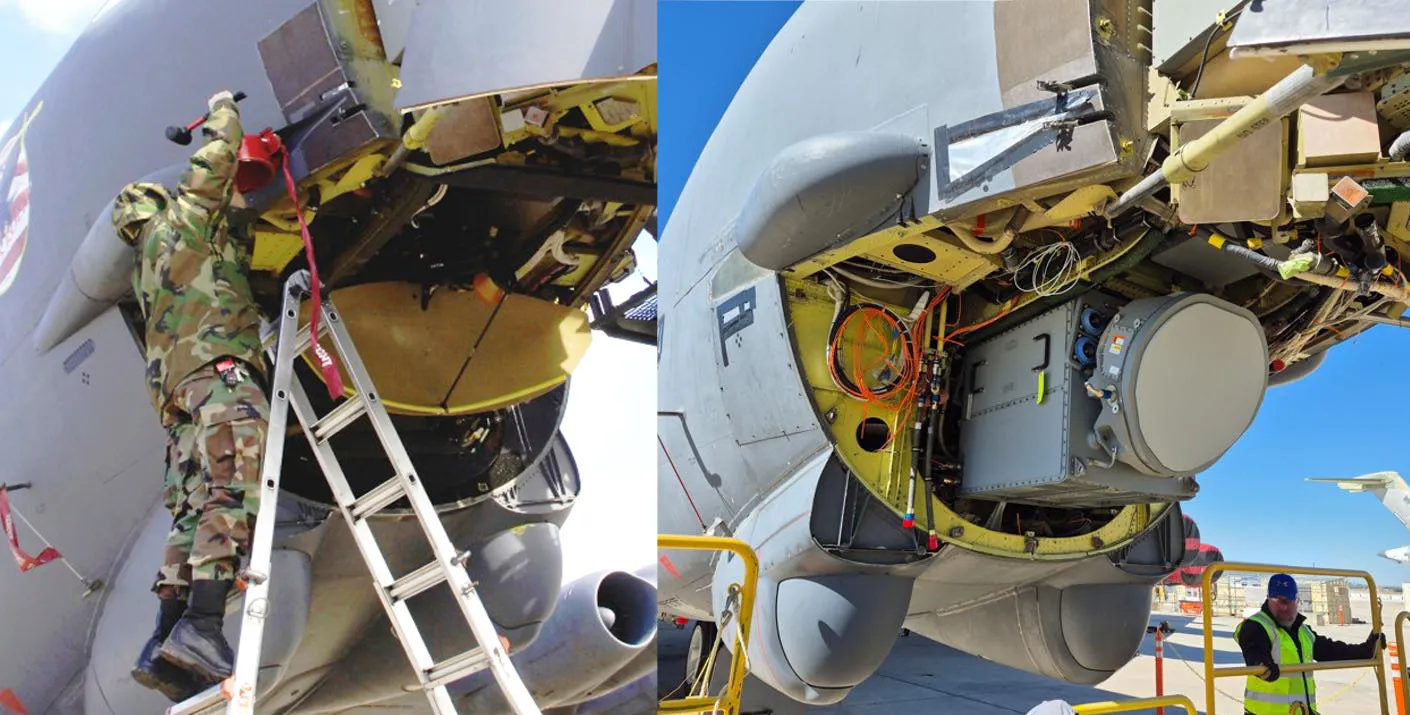
The first B-52 ever equipped with an active electronically scanned array (AESA) radar has arrived at Edwards Air Force Base for testing. This is a major and much-delayed milestone, one of many that will occur as the B-52H morphs into the significantly modernized B-52J. With the news of the ferry flight, which originated in San Antonia, where the installation of Raytheon’s AN/APQ-188 Bomber Modernized Radar System took place, we are also getting a good look at what the fighter-derived radar looks like installed in the B-52’s unique nose profile. To say it is a more modern-looking arrangement than the mechanically scanned AN/APQ-166 that came before it is an understatement.
The AN/APQ-166 legacy radar and the new AN/APG-79 mounted under the BUFF’s cavernous nose cone. (USAF/composite)
“The ferry flight of this upgraded B-52 marks an important moment in our efforts to modernize the bomber force,” Secretary of the Air Force Troy Meink said in a statement in an Air Force press release. “This radar modernization ensures that the B-52 will continue to serve as a cornerstone of American airpower well into the future. We are committed to extending the life of this vital platform, allowing it to operate alongside next-generation fighter and bomber aircraft.”
Edwards AFB gets its upgraded B-52, arriving from at the end of its ferry flight from Texas. (Edwards AFB PAO) James West
The BUFF’s new radar is based directly on the AN/APG-79 that has equipped most F/A-18E/F Super Hornets and all F/A-18G Growlers, as well as nearly 100 F/A-18A-D Hornets still serving with the USMC. The F-15E Strike Eagle and F-15EX Eagle II’s AN/APG-82 also builds upon AN/APG-79 technology. At this point, it’s one of the Pentagon’s most proven fighter AESA just based on time served and production numbers.
Just getting the new radar to fit physically in the B-52’s nose is known to be one of the challenges the program has had to overcome.
“The Air Force continues to refine the system radome design to, address aircraft integration issues. Depending on final radome design, radar performance may be impacted,” the Pentagon’s Office of the Director of Test of Evaluation noted in its most recent annual report, which was released earlier this year. “The program office should fully characterize performance with the final radome design to inform operational employment tactics.”
From the pictures that have been released now, the external shaping of the B-52’s nose looks to be largely unchanged following the installation of the AN/APQ-188. There is a relatively narrow off-color seam visible between the nose and the cockpit.
Close-up looks at the nose of the first B-52 to receive the new AN/APQ-188 radar. The off-color seam is visible between the nose and the cockpit. USAF
It’s worth noting that the AN/APG-79 variant installed in the BUFF is angled downward. This would reflect its unique placement in the B-52, basically in the lower deck of a massive radome enclosure. Its ability to look up is hampered by the bulkhead above it, something we will come back to later on.
The new radar installation on the B-52 also comes along with “two Display and System Sensor Processors as its mission computers to integrate the radar with B-52 systems, along with two large 8×20-inch high-definition touchscreens at the Nav and Radar Nav stations for radar imagery, control and legacy displays, and two fighter-like hand controllers for radar operation,” according to a press release from Boeing. “The system features upgraded cooling, providing liquid cooling for the radar and engine bleed-air heating for very cold conditions.”
Another view of the first B-52 fitted with the new AN/APQ-188 radar arriving at Edwards. USAF
Regardless of the issues the radar upgrade program has faced, the USAF appears to be sticking with the AN/APG-79-derived AN/APQ-188. A new AESA radar is really a must-have in order to keep the B-52 relevant for decades to come.
Simply put, giving the B-52 a modern multimode AESA provides a massive capability boost. As we have discussed in the past:
“In general, AESA radars offer greater range, fidelity, and resistance to countermeasures, as well as the ability to provide better overall general situational awareness, compared to mechanically scanned types. Increasingly advanced AESAs bring additional capabilities, including electronic warfare and communications support.
For the B-52, any new multi-mode AESA will improve the bomber’s target acquisition and identification capabilities, including when used together with targeting pods available for the bombers now. New radars for the bombers will also be helpful when it comes to guiding networked weapons over long distances to their targets and could provide a secondary ground moving target indicator (GMTI) and synthetic aperture radar surveillance capabilities. The radar upgrade could help defend B-52s from air-to-air threats, including through improved detection of incoming hostile aircraft.“
Beyond their tactical advantages, AESAs are generally more reliable, particularly due to their lack of moving parts. Without the need to move a radar dish rapidly in multiple directions, while the jet is under various g-loads and is rocked by turbulence and hard landings, the actual time the radar is available for use goes up. The aforementioned secondary electronic warfare capability also can’t be understated. The new radar will surely become a key and very powerful component of the B-52’s upgraded electronic warfare suite, which will be critical to its ability to survive in future fights.
As mentioned, the positioning of the AN/APQ-188 in the BUFF’s nose impacts its ability to look up. At the same time, this is also aligned more with air-to-surface tasks considering the B-52’s mission set. As a point of comparison, the AN/APG-79 as installed in the Super Hornet is angled upward. This is due, at least in part, to match the reduced observability (stealthy) features of the Super Hornet. In the Legacy Hornet, the array is nearly vertical, as there are no low-observable demands for that platform. In that case, space concerns may also be an issue. The B-52 is about as unstealthy as an aircraft can get, so the downward angle is clearly not dictated by observability design drivers.
AN/APG-79(V)4, a special configuration for the Legacy Hornet that can slot into the AN/APG-65/73 space is seen in this image. (RTX) The AN/APG-79 installed on a Super Hornet. US Navy via Researchgate.net
The new radar is just one facet of the comprehensive upgrade program now in development for the B-52 that will end in the jet receiving the B-52J designation. Even more important than the new radar is replacing the BUFF’s antique TF-33 low-bypass turbofan engines with Rolls-Royce F-130 turbofans. That program is now well underway but is also behind schedule and over budget, with full operational capability not slated till 2033. So the fully featured ‘super BUFF’ won’t be plowing the skies anytime soon, but the hope is that once complete, the fleet of 76 jets can remain reliable and relevant through 2050, at least, serving alongside the drastically more modern B-21 Raider.
You can learn all about what makes up the B-52J and how it will be used in our video below.
B-52 Future Stratofortress: The Upgrades That Will Transform The B-52H Into The B-52J
As it stands now, the Air Force plans to put the B-52 with the new AN/APQ-188 through a series of ground and flight tests in the next year. An initial round of system functional checks was conducted before the plane was flown to Edwards, according to Boeing’s release.
Following the successful completion of the testing at Edwards, the Air Force will make a formal decision regarding the start of series production of the radars for integration on the rest of the B-52 fleet. The service has said most recently that it expects to reach initial operational capability with the AN/APQ-188 on the B-52 sometime in the 2028 to 2030 timeframe.
“This phase of the program is dedicated to getting it right at the start so that we can execute the full radar modernization program,” Troy Dawson, Vice President of the Boeing Bombers division, said in a statement.
A major step in that direction has now been achieved with the arrival of the first B-52 to feature the AN/APQ-188 at Edwards.
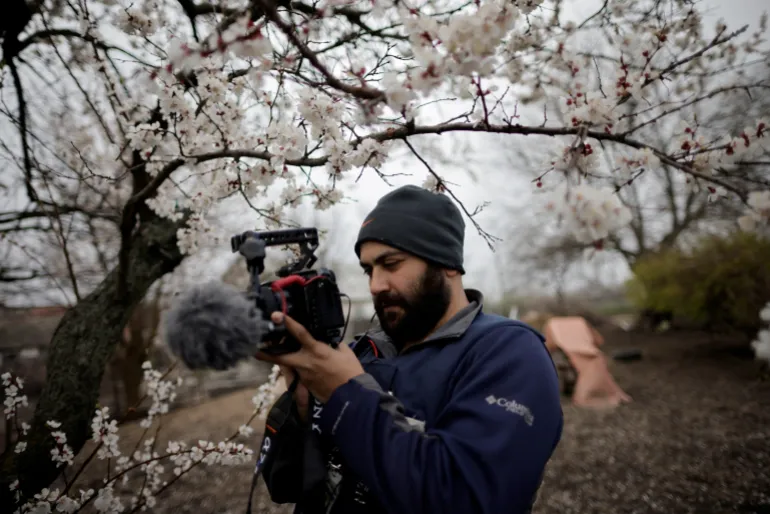
Washington, DC – American journalist Dylan Collins wants to know “who pulled the trigger” in the 2023 Israeli double-tap strike in south Lebanon that injured him and killed Reuters video reporter Issam Abdallah.
Collins and his supporters are also seeking information about the military orders that led to the deadly attack. But more than two years later, Israel has not provided adequate answers on why it targeted the clearly identifiable reporters.
Recommended Stories
list of 3 itemsend of list
Press freedom advocates and three United States legislators joined Collins, an AFP and former Al Jazeera journalist, outside the US Capitol on Thursday to renew calls for accountability in this case and for the more than 250 other killings of journalists by Israel.
“I want to know who pulled the trigger; I want to know what command structure approved it, and I want to know why it’s gone unaddressed until today – on our strike and all the others targeted,” Collins said.
Senator Peter Welch and Congresswoman Becca Balint, who represent Collins’s home state of Vermont, and Senator Chris Van Hollen stressed on Thursday that they will continue to push for accountability in the strike, which wounded six journalists.
“We’re not letting it go. It doesn’t matter how long they stonewall us. We’re not letting it go,” Balint told reporters.
The attack
Welch said he was sending his seventh letter to the US Department of State demanding answers, accusing Israel of obfuscation.
Israeli authorities, he said, claim they investigated the attack and ruled the shooting unintentional, but they provided no evidence that they questioned soldiers. Israel also never contacted the key witnesses – namely, Colins and other survivors of the strike.
Slain Reuters journalist Issam Abdallah on assignment in Zaporizhia, Ukraine, April 17, 2022 [File: Ueslei Marcelino/Reuters]
In October, the Israeli army told the AFP news agency that the attack was still “under review” in an apparent contradiction of what Welch had been told.
“The investigation, non-investigation – there’s nothing there,” Welch said. “You’re basically getting the run-around, and you’re getting stonewalled. That’s the bottom line.”
Israel received more than $21bn in US military aid during the two years of its genocidal war on Gaza.
Throughout the war, Israel has stepped up its attacks on the press. But the country has a long history of killing journalists without accountability.
The October 13, 2023, strike, which wounded Al Jazeera’s Carmen Joukhadar and Elie Brakhia and left AFP’s Christina Assi with life-altering injuries, was well-documented in part because the journalists were livestreaming their reporting.
The correspondents, who had set up their equipment on a hilltop near the Lebanese-Israeli border to cover the escalation on the front, were in clearly marked press gear and vehicles.
Israeli drones had also circled above the journalists before the attack.
“We thought the fact that we could be seen was a good thing, that it would protect us. But after a little less than an hour at the site, we were hit twice by tank fire, two shells on the same target, 37 seconds apart,” Collins said at a news conference on Thursday.
“The first strike killed Issam instantly and nearly blew Christina’s legs off her body. As I rushed to put a tourniquet on her, we were hit the second time, and I sustained multiple shrapnel wounds.”
The AFP journalist added that the attack seemed “unfathomable in its brutality” at that time, but “we have since seen the same type of attack repeated dozens of times.”
Israel has been regularly employing such double-tap attacks, including in other strikes on journalists in Gaza.
“This is not an incident in the fog of war. It was a war crime carried out in broad daylight and broadcast on live television,” Collins said.
Earlier this year, UN rapporteur Morris Tidball-Binz called the 2023 strike “a premeditated, targeted and double-tapped attack from the Israeli forces, a clear violation, in my opinion, of IHL (international humanitarian law), a war crime”.
US response
Despite the wounding of a US citizen in the strike, the administration of then-President Joe Biden – which claimed to champion freedom of the press and the “rules-based order” – did next to nothing to hold Israel to account.
Biden’s successor, Donald Trump, also pushed on with unconditional US support for Israel.
On Thursday, Collins decried the lack of action from the US government, saying that he reached out to officials in Washington, DC, and showed them footage of the strike.
“I thought that when an American citizen is wounded in an attack carried out by the US’s greatest ally in the Middle East that we would be able to get some answers. But for two years, I’ve been met by deafening silence,” he told reporters.
“In fact, neither the Biden nor the Trump administrations have ever publicly acknowledged that a US citizen was wounded in this attack.”
Israeli soldiers and settlers have killed at least 10 US citizens, including Al Jazeera correspondent Shireen Abu Akleh, over the past decade.
Senator Van Hollen said accountability in the October 13, 2023, attack is important for journalists and US citizens across the world.
“We have not seen accountability or justice in this case, and the State Department – our own government – has not done much of anything really to pursue justice in this case,” Van Hollen told reporters.
“It is part of a broader pattern of impunity for attacks on Americans and on journalists by the government of Israel.”
He called the US approach a “dereliction of duty” by the Trump and Biden administrations.
Israeli ‘investigation’
Amelia Evans, advocacy director at the Committee to Protect Journalists (CPJ), said Senator Welch’s description of the Israeli probe shows that the country’s “purported investigative bodies are not functioning to deliver justice but to shield Israeli forces from accountability”.
Evans urged the Trump administration to “take action” and demand the completion of probes into the killing of Abu Akleh in 2022 and the 2023 attack on journalists in Lebanon.
“It must demand Israel name all the military officials throughout the command chain who were involved in both cases,” she said.
“But as Israel’s key strategic ally, the United States must do much more than that. It must publicly recognise Israel’s failure to properly investigate the war crimes committed by its military.”
Israel often uses claims of investigation in response to abuses.
Former State Department spokesperson Matthew Miller, who spent almost two years defending Israeli war crimes and justifying Washington’s unflinching support for its Middle East ally, acknowledged that tactic recently.
“We do know that Israel has opened investigations,” Miller, who incessantly invoked alleged Israeli probes from the State Department podium, said in June.
“But, look, we are many months into those investigations. And we’re not seeing Israeli soldiers held accountable.”
‘Chilling effect’
Amid the push for justice, Collins paid tribute to his colleague Abdallah, who was killed in the 2023 Israeli attack.
“Losing Issam was tough on everyone,” he told Al Jazeera. “He was like the dynamo of the press scene in Lebanon. He knew everyone. He was always the first person to help you out if you’re in a jam. He had a larger-than-life personality.”
The killing of Abdullah, Collins added, had a “chilling effect” on the coverage of that conflict, which escalated into a full-blown war between Israel and Hezbollah in September 2024.
The violence saw Israel all but wipe out nearly all the border towns in Lebanon.
Even after a ceasefire was reached in November of last year, the Israeli military continues to prevent reconstruction in the devastated villages as it carries out near-daily attacks across the country.
“If the intention was to stop people from covering the war, then it has worked to some degree,” said Collins.
The Danish government has announced a new plan to restrict the use of social media for anyone under the age of 15, though in some cases parents will be able to let their children use social platforms from age 13. The reforms come amid concerns that kids are getting too swept up in a digital world with harmful content.
This is another big game at the bottom of the table.
I am so pleased for Leeds boss Daniel Farke because I was fed up with the rubbish being talked about how he cannot manage in the Premier League.
Leeds have had a tough run of games against Manchester City, Chelsea and Liverpool and it felt like there were people out there who were waiting and even wishing for Farke to fail, so he would be sacked.
I am delighted that it has turned out very differently. The performances, the guts, and the quality that Leeds have shown has been brilliant, even in defeat at City, and against Chelsea and Liverpool they have picked up points too.
Dominic Calvert-Lewin’s goals have made the difference, and they will go into this game full of belief, and thinking they have got a real chance.
Brentford are still favourites, though, because their home form is so good – with five wins, a draw and just one defeat under Keith Andrews so far.
The Bees were pretty limp when they went to Spurs last week but on their own patch it is a different story. They have won their past three games there, against Liverpool, Newcastle and Burnley so, like Leeds, they will be full of confidence.
I remember Farke’s last game as Norwich manager in November 2021, when his team beat Brentford but he was sacked a few hours later. This time, I am backing Brentford to win, but Farke’s future should not be in doubt.
Sutton’s prediction: 2-0
Stingray’s prediction: Both teams score quite a lot of goals.2-2
To provide the best experiences, we use technologies like cookies to store and/or access device information. Consenting to these technologies will allow us to process data such as browsing behavior or unique IDs on this site. Not consenting or withdrawing consent, may adversely affect certain features and functions.
The technical storage or access is strictly necessary for the legitimate purpose of enabling the use of a specific service explicitly requested by the subscriber or user, or for the sole purpose of carrying out the transmission of a communication over an electronic communications network.
The technical storage or access is necessary for the legitimate purpose of storing preferences that are not requested by the subscriber or user.
The technical storage or access that is used exclusively for statistical purposes. The technical storage or access that is used exclusively for anonymous statistical purposes. Without a subpoena, voluntary compliance on the part of your Internet Service Provider, or additional records from a third party, information stored or retrieved for this purpose alone cannot usually be used to identify you.
The technical storage or access is required to create user profiles to send advertising, or to track the user on a website or across several websites for similar marketing purposes.
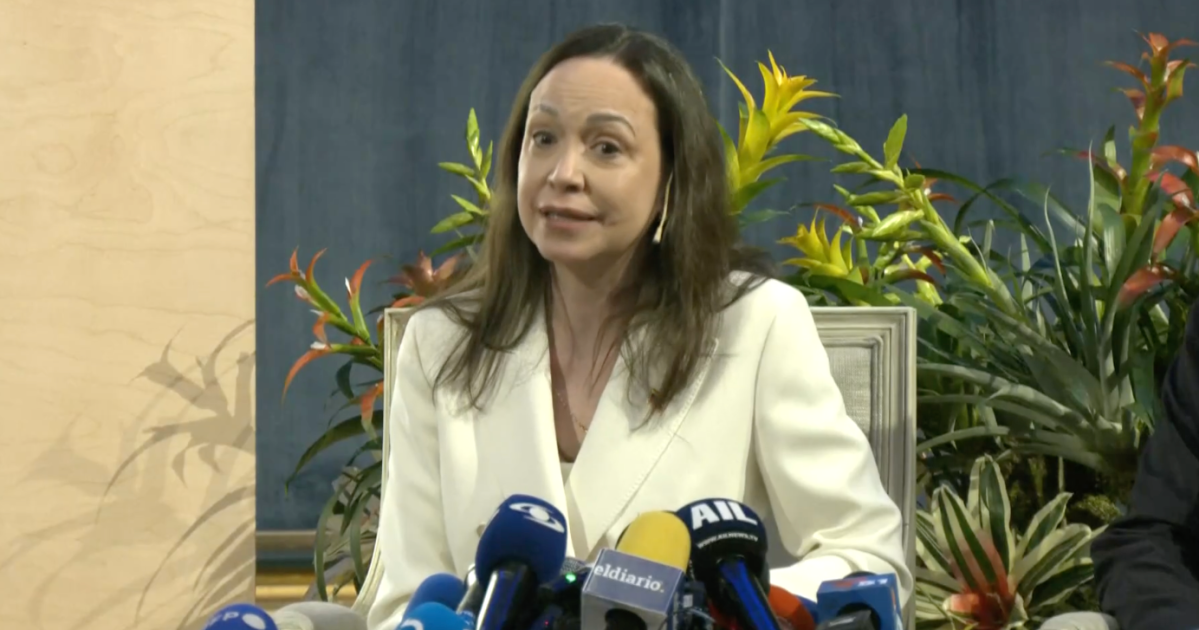
Venezuelan opposition leader and Nobel Peace laureate Maria Corina Machado has declared that authorities in her home country would have attempted everything possible to prevent her journey to Norway, after she emerged publicly for the first time in nearly a year.
Machado greeted supporters from an Oslo hotel balcony in the early hours of Thursday following a high-risk exit from Venezuela, where she had been in hiding since January.
Recommended Stories
list of 2 itemsend of list
The journey, which purportedly included navigating 10 military checkpoints and crossing the Caribbean by fishing vessel, brought her to the Norwegian capital to collect her Nobel Peace Prize.
During a news conference at Norway’s parliament, the 58-year-old right-wing opposition figure delivered sharp criticism of President Nicolas Maduro’s administration, asserting that the government deploys national resources to suppress its population.
When questioned about an oil tanker seized by Washington on Wednesday, she argued this demonstrated how the regime operates. Asked whether she would support a United States invasion, Machado claimed Venezuela had already been invaded by Russian and Iranian agents alongside drug cartels.
“This has turned Venezuela into the criminal hub of the Americas,” she said, standing alongside Norwegian Prime Minister Jonas Gahr Stoere.
“What sustains the regime is a very powerful and strongly funded repression system. Where do those funds come from? Well, from drug trafficking, from the black market of oil, from arms trafficking and from human trafficking. We need to cut those flows.”
The trip reunited her with family members she had not seen in almost two years, including her daughter, who accepted the Nobel Peace Prize on her behalf at Wednesday’s ceremony.
Aligned with Trump
The political leader has welcomed international sanctions and US military intervention in Venezuela, a move her critics say harkens back to a dark past.
The US has a long history of interference in the region, particularly in the 1980s, when it propped up repressive right-wing governments through coups, and funded paramilitary groups across Latin America that were responsible for mass killings, forced disappearances and other grave human rights abuses.
Venezuelan authorities cited Machado’s support for sanctions and US intervention when they barred her from running for office in last year’s presidential election, where she had intended to challenge Maduro. Machado has accused Venezuela’s president of stealing the July 2024 election, which was criticised by international observers.
Praising the Trump administration’s approach, Machado said the president’s actions had been “decisive to reach the point where we are right now, in which the regime is weaker than ever.”
She insisted she would return home but did not say when. “I’m going back to Venezuela regardless of when Maduro goes out. He’s going out, but the moment will be determined by when I’m finished doing the things that I came out to do,” she told reporters.
Her escape comes as tensions between Washington and Caracas have intensified sharply. The Trump administration has positioned major naval forces in the Caribbean and conducted strikes against alleged drug vessels since September. The US seized what Trump called a “very large” oil tanker off the coast of Venezuela, on Wednesday.
Machado has aligned herself with right-wing hawks close to Trump who argue that Maduro has links to criminal gangs that pose a direct threat to US national security, despite doubts raised by the US intelligence community.
The Trump administration has ordered more than 20 military strikes in recent months against alleged drug-trafficking vessels in the Caribbean and off Latin America’s Pacific coast, killing more than 80 people.
Human rights groups, some US Democrats, and several Latin American countries have condemned the attacks as unlawful extrajudicial killings of civilians.
The Wall Street Journal (WSJ) reported that Machado’s two-month escape operation involved wearing a disguise and departing from a coastal fishing village on a wooden boat bound for Curacao before boarding a private aircraft to Norway.
US forces were alerted to avoid striking the vessel, the WSJ reported, as they had one with similar boats in recent months. Machado confirmed receiving assistance from Washington during her escape.
Maduro, in power since 2013 following the death of Hugo Chavez, says Trump is pushing for regime change in the country to access Venezuela’s vast oil reserves. He has pledged to resist such attempts.
A United Nations report released on Thursday accused Venezuela’s security forces of crimes against humanity over more than a decade.
Venezuelan Minister of the Interior Diosdado Cabello said Machado left the country “without drama” but provided no details.
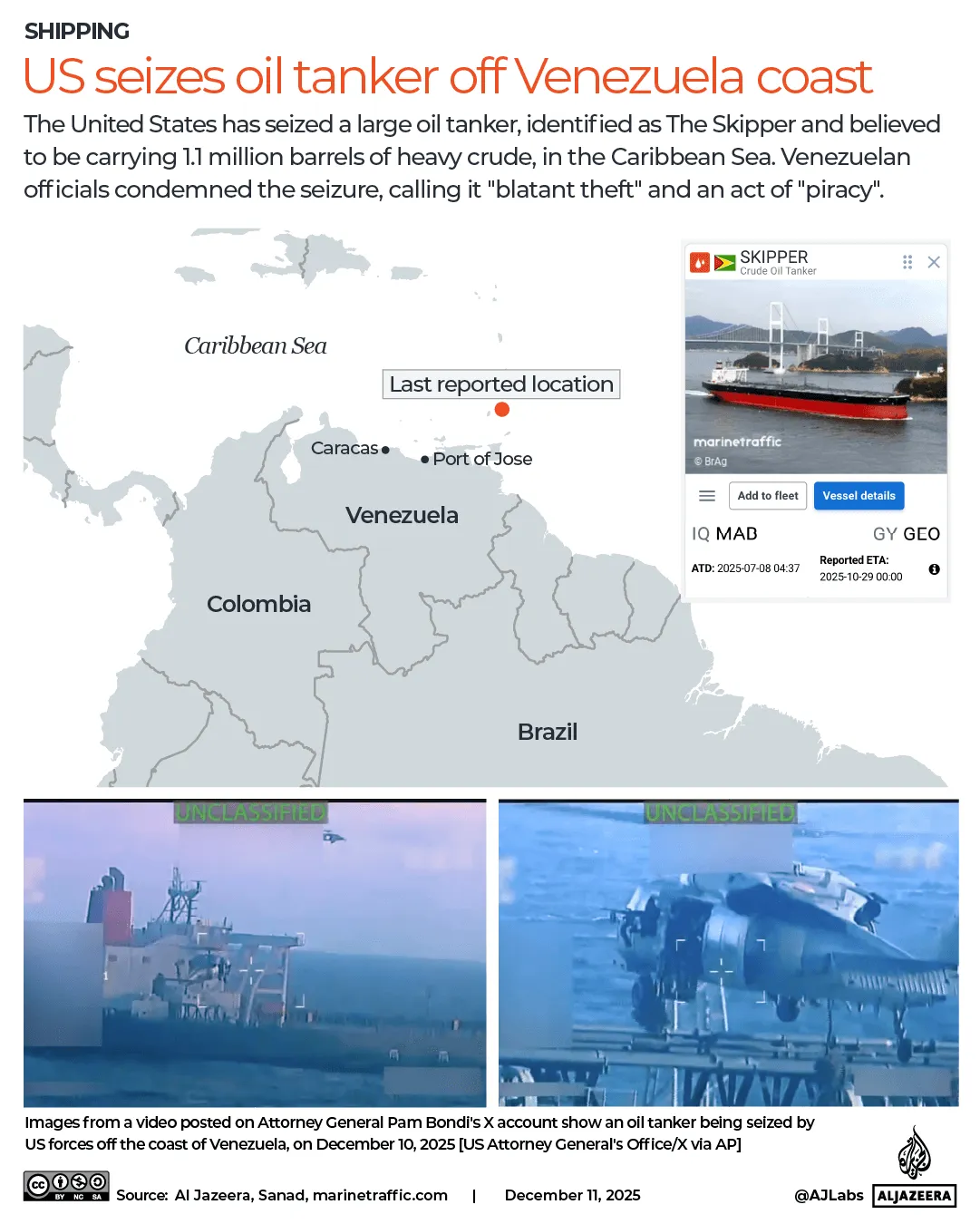
United States President Donald Trump has said that the US has seized a sanctioned oil tanker close to the coast of Venezuela, in a move that has caused oil prices to spike and further escalates tensions with Caracas.
“We’ve just seized a tanker on the coast of Venezuela, large tanker, very large, largest one ever, actually, and other things are happening,” Trump said on Wednesday.
Recommended Stories
list of 1 itemend of list
The Venezuelan government called the move an act of “international piracy”, and “blatant theft”.
This comes as the US expands its military operations in the region, where it has been carrying out air strikes on at least 21 suspected drug-trafficking vessels since September. The Trump administration has provided no evidence that these boats were carrying drugs, however.
Here is what we know about the seizure of the Venezuelan tanker:
What happened?
The US said it intercepted and seized a large oil tanker off the coast of Venezuela, marking the first operation of its kind in years.
The last comparable US military seizure of a foreign tanker occurred in 2014, when US Navy SEALs boarded the Morning Glory off Cyprus as Libyan rebels attempted to sell stolen crude oil.
The Trump administration did not identify the vessel or disclose the precise location of the operation.
However, Bloomberg reported that officials had described the ship as a “stateless vessel” and said it had been docked in Venezuela.
Soon after announcing the latest operation on Wednesday, US Attorney General Pam Bondi released a video showing two helicopters approaching a vessel and armed personnel in camouflage rappelling onto its deck.
“Today, the Federal Bureau of Investigation, Homeland Security Investigations and the United States Coast Guard, with support from the Department of War, executed a seizure warrant for a crude oil tanker used to transport sanctioned oil from Venezuela and Iran,” Bondi said.
She added that “for multiple years, the oil tanker has been sanctioned by the United States due to its involvement in an illicit oil-shipping network supporting foreign terrorist organisations”.
Today, the Federal Bureau of Investigation, Homeland Security Investigations, and the United States Coast Guard, with support from the Department of War, executed a seizure warrant for a crude oil tanker used to transport sanctioned oil from Venezuela and Iran. For multiple… pic.twitter.com/dNr0oAGl5x
Experts said the method of boarding demonstrated in the video is standard practice for US forces.
“The Navy, Coast Guard and special forces all have special training for this kind of mission, called visit, board, search, and seizure – or VBSS,” Mark Cancian, a retired Marine Corps colonel and senior adviser at the Center for Strategic and International Studies, told Al Jazeera.
“It is routine, especially for the Coast Guard. The government said it was a Coast Guard force doing the seizure, though the helicopter looks like a Navy SH-60S.”
Which vessel was seized?
According to a Reuters report, British maritime risk firm Vanguard identified the crude carrier Skipper as the vessel seized early Wednesday off Venezuela’s coast.
MarineTraffic lists the Skipper as a very large crude carrier measuring 333m (1,093 feet) in length and 60m (197 feet) in width.
The tanker was sanctioned in 2022 for allegedly helping to transport oil for the Lebanese armed group, Hezbollah, which is backed by Iran, and Iran’s Quds Force.
The Skipper departed Venezuela’s main oil terminal at Jose between December 4 and 5 after loading about 1.8 million barrels of Merey crude, a heavy, high-sulphur blend produced in Venezuela.
“I assume we’re going to keep the oil,” President Trump said on Wednesday.
Before the seizure, the tanker had transferred roughly 200,000 barrels near Curacao to the Panama-flagged Neptune 6, which was headed for Cuba, according to satellite data analysed by TankerTrackers.com.
According to shipping data from Venezuela’s state-owned oil and gas company Petroleos de Venezuela (PDVSA), the vessel also transported Venezuelan crude to Asia in 2021 and 2022.
Where did the seizure take place?
The US said it seized the oil tanker in the Caribbean Sea.
US officials have said the action occurred near Venezuelan territorial waters, though they have not provided precise coordinates.
MarineTraffic data shows the vessel’s tracker still located in the Caribbean.
Is the US action legal?
Cancian noted that “seizing sanctioned items is common inside a country’s own territory. It is unusual in international waters”.
He added: “Russia has hundreds of sanctioned tankers sailing today, but they have not been boarded.”
Experts say it is unclear whether the seizure was legal, partly because many details about it have not been made public.
Still, the US could make use of various arguments to justify the seizure if needs be.
One is that the boat is regarded as stateless. Under the UN Convention on the Law of the Sea (UNCLOS), ships need “a nationality”.
The government of Guyana, Venezuela’s neighbour, said the Skipper was “falsely flying the Guyana flag”, adding that it is not registered in the country.
If a vessel flies a flag it is not registered under, or refuses to show any flag at all, states have the “right of visit”, allowing their officials to stop and inspect the ship on the high seas – essentially meaning international waters.
If doubts about a ship’s nationality remain after checking its documents, a more extensive search can follow.
In previous enforcement actions against sanctioned ships, the US has seized not the ship itself but the oil on board. In 2020, it confiscated fuel from four tankers allegedly carrying Iranian oil to Venezuela.
US law also allows the Coast Guard, which carried out this operation, to conduct searches and seizures on the high seas in order to enforce US laws, stating that it “may make inquiries, examinations, inspections, searches, seizures, and arrests upon the high seas” to prevent and suppress violations.
But some legal experts argue that the US has overstepped, as it “has no jurisdiction to enforce unilateral sanctions on non-US persons outside its territory”, according to Francisco Rodriguez, a senior research fellow at the Center for Economic and Policy Research (CEPR).
Rodriguez said the US is relying on maritime rules for stateless vessels “as an entryway to justify enforcing US sanctions outside of US territory”.
“To the extent that the US is able to continue to do so, it could significantly increase the cost of doing business with Venezuela and precipitate a deepening of the country’s economic recession,” he warned in a CEPR article.
The US has no jurisdiction to enforce unilateral sanctions on non-US persons outside its territory. The seizure of ships in international waters to extraterritorially enforce US sanctions is a dangerous precedent and a violation of international law.
Venezuela’s Foreign Ministry stated that “the true reasons for the prolonged aggression against Venezuela have finally been exposed”.
“It is not migration, it is not drug trafficking, it is not democracy, it is not human rights – it was always about our natural resources, our oil, our energy, the resources that belong exclusively to the Venezuelan people,” the statement said.
The ministry described the incident as an “act of piracy.”
The government added that it will appeal to “all” international bodies to denounce the incident and vowed to defend its sovereignty, natural resources, and national dignity with “absolute determination”.
“Venezuela will not allow any foreign power to attempt to take from the Venezuelan people what belongs to them by historical and constitutional right,” it said.
Venezuela’s President Nicolas Maduro gestures towards supporters, during a march to commemorate the 1859 Battle of Santa Ines in Caracas, Venezuela, on December 10, 2025 [Gaby Oraa/ Reuters]
What are the potential consequences for Venezuela’s oil exports?
Experts say the seizure could produce short-term uncertainty for Venezuelan oil exports, largely because “this has been the first time [the United States has]… seized a shipment of Venezuelan oil”, Carlos Eduardo Pina, a Venezuelan political scientist, told Al Jazeera.
That may make shippers hesitate, though the broader impact is limited, Pina said, since “the US allows the Chevron company to continue extracting Venezuelan oil”, and US group Chevron holds a special waiver permitting it to produce and export crude despite wider sanctions.
Chevron, which operates joint ventures with PDVSA, said its operations in Venezuela remain normal and continue without disruption.
The US oil major, which is currently responsible for all Venezuelan crude exports to the US, increased shipments last month to 150,000 barrels per day (bopd), up from 128,000 bpd in October.
Inside Venezuela, Pina warned the move could spark financial panic, however: “It could instil fear, trigger a currency run… and worsen the humanitarian crisis.”
How will this affect US-Venezuela relations?
Diplomatically, Pina said he views the action as a political message to Venezuelan President Nicolas Maduro, noting its timing – “the same day that [opposition leader] Maria Corina Machado was awarded the Nobel Prize” – and calling it “a gesture of strength… to remind that [the US is present in the Latin American region].”
Maduro has long argued that the Trump administration’s strikes on boats in the Caribbean and eastern Pacific are not, in fact, aimed at preventing drug running, but are part of a plan to effect regime change in Venezuela. Trump has authorised CIA operations in Venezuela and has given conflicting messages about whether he would consider a land invasion.
Analysts see this latest action as part of a broader strategy to pressure the Maduro government.
“This is certainly an escalation designed to put additional pressure on the Maduro regime, causing it to fracture internally or convincing Maduro to leave,” said Cancian.
“It is part of a series of US actions such as sending the Ford to the Caribbean, authorising the CIA to move against the Maduro regime, and conducting flybys with bombers and, recently, F-18s.”
Cancian added that the broader meaning of the operation depends on what comes next.
“The purpose also depends on whether the US seizes additional tankers,” he said. “In that case, this looks like a blockade of Venezuela. Because Venezuela depends so heavily on oil revenue, it could not withstand such a blockade for long.”
Swiss suffer third crash in a month by an Olympic champion in training ahead of World Cup and 2026 Milan Cortina Games.
Published On 11 Dec 202511 Dec 2025
Share
Two-time Olympic champion Michelle Gisin has been airlifted from the course after crashing hard in a practice run for a World Cup downhill.
The 32-year-old Swiss skier hit the safety fences racing at more than 110km/h (69mph) on a cloudy morning on Thursday at St Moritz in practice for the downhills scheduled for Friday and Saturday, followed by a super-G on Sunday.
Recommended Stories
list of 4 itemsend of list
One of Gisin’s skis seemed to catch an edge approaching a fast left-hand turn, and she lost control, going straight on and hitting through the first layer of safety nets until being stopped by the second.
There was no immediate report of any injury. Television pictures showed Gisin conscious, lying by the course with scratches and cuts on her face as medics assessed her.
Gisin is the third current Olympic champion in the Swiss women’s Alpine ski team to crash in training in the past month, after Lara Gut-Behrami and Corinne Suter.
Gisin, who won gold in Alpine combined at the past two Winter Games, is currently the veteran leader of the Swiss women’s speed team because of injuries to her fellow 2022 Beijing Olympic champions.
Michelle Gisin celebrates after winning the gold medal in the women’s Alpine skiing combined event during the Beijing 2022 Olympic Winter Games [File: Harrison Hill/Reuters]
Gut-Behrami’s Olympic season was ended after she tore the anterior cruciate ligament (ACL) in her left knee while crashing in practice last month at Copper Mountain, Colorado, in the United States.
Suter is off skis for about a month with calf, knee and foot injuries from a crash while training at St Moritz last month.
At the last Winter Games in China, Suter won the downhill, Gut-Behrami won the super-G — where Gisin took bronze — and Gisin took the final title in individual combined. The Swiss skiers have seven career Olympic medals.
Gisin crashed on Thursday when American star Lindsey Vonn was already on the course, having started her practice run. Vonn was stopped while Gisin received medical help and resumed her run later.
Vonn was fastest in the opening practice on Wednesday.
The Milan Cortina Olympics open on February 6 with a women’s Alpine skiing race at the storied Cortina d’Ampezzo hill.
Concerns had been raised in advance of the World Cup in September, primarily about how to limit risks in the high-speed sport, following the death of Italian skier Matteo Franzoso in a training accident in Chile.
The debate continued into the start of the Olympic ski season a month later, with prominent American skier Mikaela Shiffrin stating: “We are often training in conditions where the variables are just too many to control, and you have to decide sometimes: is this unreasonably dangerous?”
Police want to speak to these four men after more than 600 artefacts were stolen
More than 600 artefacts “of significant cultural value” have been stolen from Bristol Museum’s archive in a “high-value” raid, police say.
Four men gained entry to a building in the Cumberland Basin area of the city in the early hours of 25 September, Avon and Somerset Police said.
Items from the museum’s British Empire and Commonwealth collection were stolen and detectives are now trying to trace four males captured in the area on CCTV.
“The theft of many items which carry a significant cultural value is a significant loss for the city,” Det Con Dan Burgan said.
Avon and Somerset Police
The men are described as being white and were all wearing jackets and baseball caps
“These items, many of which were donations, form part of a collection that provides insight into a multi-layered part of British history, and we are hoping that members of the public can help us to bring those responsible to justice,” he added.
“So far, our enquiries have included significant CCTV enquiries as well as forensic investigations and speaking liaising with the victims.”
Police are keen to speak to anyone who recognises the men captured on CCTV, or who may have seen possible stolen items being sold online.
All of the men are thought to be white. The first was described as of medium to stocky build and was wearing a white cap, black jacket, light-coloured trousers and black trainers.
The second was described as being of slim build and was wearing a grey, hooded jacket, black trousers and black trainers.
The third was wearing a green cap, black jacket, light-coloured shorts and white trainers. Police said he appeared to walk with a slight limp in his right leg.
The fourth was described as being of large build and was wearing a two-toned orange and navy or black puffy jacket, black trousers and black and white trainers.
Bilkisu Haruna’s* voice carried over 25 years of frustration, rising through the phone. Her life, which she expected to change when she got a job at Ahmadu Bello University (ABU), Zaria, Kaduna State, in northwestern Nigeria, in the early 2000s, after years of menial labour, was swallowed into an endless pit of suffering and bitterness.
Being a casual worker in Nigeria is to drown in a cycle of hopelessness, a feeling she knows too well.
“When I got hired, I was paid ₦3000, which was ₦100 per day. It was a fair offer because that money did more for me than what I earn now,” Bilkisu told HumAngle.
At that time, a 50kg bag of rice cost about ₦2500, but the cost-of-living crisis has increased it to an amount that she and many other Nigerians can no longer afford. Her current salary of ₦11,000 can buy only an estimated three bowls of rice, without enough condiments or other necessities to feed her family.
Design: Akila Jibrin/HumAngle.
However, most of her salary goes towards paying transport fares to work. She pays an average of ₦500 for a tricycle ride or ₦300 for a motorcycle ride to get to work daily.
“I usually take a bike to go to work, then I walk back home, despite how far it is,” Bilkisu explained, adding that the journey takes her around 50 minutes. “And if you go late, they sometimes send you back without payment. I rarely miss work for any reason, but I am still in the same place after almost 25 years.”
Workforce casualisation in Nigeria
A study by the International Journal of Business and Social Science describes casualisation as a form of temporary employment that has become a permanent job, yet lacks statutory benefits, such as adequate pay, medical insurance, and a pension. The system also prevents casual workers from the right to unionise. According to a 2018 Nigerian Labour Congress report, an estimated 45 per cent of Nigerians are casual workers, with a high prevalence at both the federal and state levels across all sectors.
Recently, the Minister of Labour and Employment, Muhammad Dingyadi, warned against the growing normalisation of casual and precarious work arrangements in Nigeria’s labour market, describing the trend as a threat to workers’ welfare and national productivity. Dingyadi noted that many organisations now rely on casual and contract staffing to cut costs, often at the expense of workers’ security and rights.
Bilkisu is a mother of nine; she lost her husband not long ago. Before his passing, he worked as a security guard and often catered for the family, but that entire responsibility now lies on her shoulders. It is even difficult now, as she is observing ‘iddah’, an Islamic practice that mandates widows to mourn their spouses for four months and ten days, and that restricts their movement and activities.
“Some of my coworkers helped me work for free when I was taking care of my husband while he was sick, but the work is tiring, so I just made an arrangement with someone I could pay for the duration of my mourning period,” she said.
There is no provision for casual workers, such as Bilkisu, to receive paid leave during such situations. The few instances she has received grace were when she was very sick. Sometimes, they would ask her to get checked in the hospital, but they don’t give her drugs. Health insurance is not something she can afford on her own.
“Sometime back, they used to let us see a doctor for free, including admissions. But, I think for the past 10 years, we have to pay ₦1,000 to see a doctor, and no drugs are given; they will only write you the prescription,” she recalled.
For Bilkisu, she harbours no big dreams; she just wants a better salary so that she can take care of her children and grandchildren. The university has no provision for casual workers to enrol their children in the staff school, leaving them without benefits for all the years they have worked there.
Illustration: Akila Jibrin/HumAngle.
Over the years, the cost of hostel accommodation has changed, but the salaries of casual workers have remained the same. A former student, who asked not to be named, told HumAngle that she paid around ₦7,000 when she first got into the university in 2018. However, she paid ₦14,000 before graduating, which is still the current price for a hostel bed space at the university.
Bilkisu supplements her income by fetching water, washing dishes, doing the laundry, and running errands for students. However, the pay is low. Sometimes students can pay ₦50 or ₦100 to wash plates, unless it is a monthly arrangement, in which case it can be up to ₦1500. The side jobs are also highly competitive, as everyone is scrambling to get what they can.
“Sometimes, you also have to find something to buy and eat at school to get through the day. If not for that extra work, I would not even go to work because I am constantly in debt,” she complained.
These menial jobs have sustained Bilya Nafiu* for over 30 years. At over 50, Bilya finds himself running errands for students young enough to be his children. He shares Bilkisu’s experience, living from hand to mouth as a casual worker.
“When I started, I was being paid ₦1500. I currently earn ₦13,500. Even when other job opportunities come up in the university, such as security jobs, they hardly give them to us, even if we are qualified, ” he lamented. This makes it impossible to become a permanent worker. Sometimes, they make it to the interview stage, but nothing comes of it.
What does the law say?
Hikmat’llah Oni, a Nigerian lawyer, noted that there is no explicit definition of “casual worker” in the Nigerian Labour Act. She, however, cited Section 73 of the Employees’ Compensation Act 2010. The Act defines what it means to be an employee: a person employed by an employer under an oral or written contract of employment whether on a continuous, part-time, temporary, apprenticeship, or casual basis and includes a domestic servant who is not a member of the family of the employer including any person employed in the Federal, State and Local Governments, and any of the government agencies and in the formal and informal sectors of the economy.
The legal practitioner stressed that under the Minimum Wage Act, three categories of people are exempted: part-time workers, seasonal workers, and piece-rate workers.
“What most establishments do is lump casual workers with these three categories of workers in an attempt not to pay the minimum wage, which is unfair because they sometimes do the hardest work; their bargaining power is also not the same as that of one in full-time employment,” she explained.
The casual workers in the university said they’ve spent decades in the job, but they struggle to pay their bills.
“We have tried to seek help; some of the previous students we know have become professors, but they don’t listen to us. We also tried to seek help from the Student Representative Council (SRC), especially regarding the late payment of salaries, but they don’t even listen to us anymore,” Bilya said.
In the past, the university provided loans to casual workers, but it eventually stopped. They fear the workers may refuse to repay the loan, leaving them without an outlet for other financial assistance in emergencies. The repayment system was also a problem they encountered, as almost half their salaries were taken off every month to pay back the debt. Another issue was the lack of privacy, where news would spread around the school about who was benefiting from that system, making them feel exposed.
With a daily transport fee of ₦300 to ₦500, it is almost impossible for Bilya to even handle his family affairs. When he is sick, he has to find an outsider to do his task, as all his older children are women, and he doesn’t feel safe enough to send them to do his work at the male hostels.
The horrible hostel conditions make it harder for them to do their jobs. Immediately after they clean, toilets can get dirty again, and that can get them in trouble with their supervisors. Even when they manage to save water for the next day, students can sometimes sneak in and use it all up before the next morning, Bilya explained.
Washing the bathrooms also requires them to carry buckets of water up the stairs, and sometimes they have to buy brooms to clean them, because the school rarely provides them with the right tools anymore, taking much more from the little they earn.
“With all I have poured into the school over the years, even the role of a director is not adequate to compensate me,” he claimed.
He works part-time as an electrician because the school has its own official workers. He gets side gigs from students to handle minor tasks, such as fixing faulty sockets and light bulbs, which can pay ₦100 or ₦200 per task. Despite these obstacles, he has managed to educate his children.
As coworkers save from the little they earn for rainy days by contributing ₦1,000 monthly, he sometimes benefits from the kindness of friends and family.
“When we started working, people kept telling us to be patient, that it would pass, and one day we would be leaders of tomorrow. But many years have passed, and nothing has changed. I can go three years without buying a simple shirt for myself because of outstanding debts. We are suffering, but we are also trying to practice contentment,” he explained.
Sometimes, the management deducts from their salaries without explanation, even if they didn’t turn up late or miss work, and almost nothing is done when they complain.
In one particular month, Bilya received only ₦8,000 without an explanation. He tried to follow up, explaining that he had not failed to do his duty that month, but he still didn’t receive the outstanding payment. These days, he doesn’t bother to complain even when his salary falls short of the expected amount. He understands that life as a casual worker also means he can be fired if he steps outside the lines.
This exploitation is common across different sectors in the country. In 2011, for instance, the Nigerian Labour Congress shut down 15 Airtel Communication showrooms across the country to protest the alleged casualisation and dismissal of 3,000 workers. In 2024, HumAngle published an investigation into the maltreatment and exploitation of some casual workers at the Dangote Refinery in Lagos.
“Casual workers, in most cases, do not have a formal contract, which is the prerequisite for becoming an employee under Labour Law. So, in reality, they don’t get the full ‘package’ of employment benefits, leaving room for cutting their salaries without explanation, because they don’t have a work contract protecting them. Keeping casual workers for years without a contract is exploitative,” the legal practitioner explained.
Different strokes
The cleaners at ABU are categorised into student affairs and health services, with those in health receiving higher pay due to hazardous conditions. The casual workers earning ₦13,500 are those who wash bathrooms and clean gutters, but people who just sweep the compound earn ₦11,500. HumAngle’s findings show that the casual workers are not given any payslip or physical evidence of their salaries. Every month, they queue up at the school bank to collect their cash payments.
Hikmat’llah explained that the labour law does not require the provision of payslips. However, it requires employers to maintain records of wages and conditions of employment, which can lead to further exploitation of casual workers.
As a casual worker under health in ABU, Nabila Bello* earns ₦22,000 or ₦22,500, depending on the number of days in a month. Before she got her job 10 years ago, she dabbled in business in her home, which still helps supplement her income. Even with a degree, there is no pension, gratuity, or hope of promotion. Her transport to and from work costs ₦700, which is almost what she earns per day.
Further research shows that casual workers are more likely to experience more disadvantages compared to permanent employees, such as inadequate statutory protection, social security, and union membership, and are least likely to receive compensation for injuries.
“Sometimes, I can spend ₦500 if I leave home early and trek to reduce transport fare,” she recounted. Being in a supervisory role means she doesn’t do the cleaning herself, but missing a day’s work also means losing her pay for that day. Unlike the cleaners, she cannot delegate her task. Nabila hopes to get a bigger opportunity with her degree someday.
This experience is common for other casual workers around the country. In a Federal College of Education in Adamawa, northeastern Nigeria, Maimunah Ado* pays ₦400 daily to get to work from her ₦18,000 monthly salary. Her most significant challenges are the workload, especially on Mondays, which requires extra work, such as cleaning offices. But she has no choice but to keep showing up to work every day.
It is almost impossible to survive without side jobs.
After a long day at work, 45-year-old Ilya Adamu* sets his sewing machine to work to supplement the ₦13,500 he earns as a casual cleaner at ABU. Every day, he spends about ₦1,000 on transport to and from work. With four small children still in school, he is barely scraping by to make things work.
“There are no promotions, and the pay is very little. It makes us feel very stuck and hopeless. Even though payment comes in every month without fail despite the delay,” he said.
HumAngle learnt that the school had months of unpaid wages owed to the cleaners for work completed in 2020. However, the school only paid part of the money after the workers went on a five-day strike in 2024. Some have given up on getting the rest of their money back. Some workers in the ABU Kongo campus claimed that they still have a month’s salary pending from that time, but the sources from the Samaru campus said they have been paid in full.
Bilya, one of the few who ensured the strike’s success, explained that during the strike, they ensured no cleaner violated it and went to work. Some were delegated to go through the school and stop any staff from working. This strike worsened the already horrible living conditions of the students in the school, making the environment unlivable.
Despite multiple attempts to reach out to Ahmadu Bello University for a response to these allegations, all emails, including follow-ups, have remained unanswered.
A health challenge
As an asthmatic patient, 50-year-old Halimah Ashiru’s* work as a nanny in Kaduna State poses a lot of risk and triggers for her condition.
“Even when you say you are sick, you are expected to show up at work, unless the sickness is so severe that you can’t get up. There was a time I had a terrible attack in school, and they had to return me home. After that time, my work got reduced, but I had to go back to work the next day, even though I had a smaller attack that day too,” she told HumAngle.
This is the reason why she doesn’t sweep anymore, unless it is a less dusty place. The Islamic school she works at has two segments: it runs the Western education segment on weekdays and the Islamic school segment on weekends. When she began her job ten years ago, earning ₦3,000, the Islamic segment was from Saturdays to Wednesdays.
“I can’t afford an inhaler, they said I have to keep using it, and I know it’s not sustainable for me. I just asked them to write me other drugs that can help manage my symptoms, and it helps a bit. I also ensure they are always available. Sometimes, I can go months without an attack,” she explained.
Her condition usually worsens during harmattan, and sometimes even during the rainy season. Still, she tries to avoid her triggers as much as she can, while working overtime to sustain her family.
Hikmat’llah explained that the Employee Compensation Act provides for claims for health or work-related injuries, entitling casual workers to compensation and similar benefits. According to the Labour Act, employees are expected to be formally hired after three months. Some organisations exploit this loophole to fire and rehire casual workers every three months, or hire new people, to avoid violating the law. This further contributes to the lack of job security for casual workers. But many workers like Halimah are not aware of these provisions.
Apart from Halimah’s salary, the school sometimes provides food items, especially during Ramadan, and free sacks of rice can arrive at random times. However, her salary has not changed much, even amid the cost-of-living crisis. She currently earns ₦8,000 monthly.
Her main task is cleaning, but she also serves as a nanny for the children of teachers and other older students at the school during classes.
“My workload has reduced. I used to sweep the classes and environment, clean toilets, and take care of the younger students, especially when they needed to use the toilet. I used to be the only nanny, but they hired another one recently.” Before then, she had worked in residential houses as a cleaner.
Once, a massive fight with the proprietress led her to quit for a while, but the woman reached out, apologised, and asked her to resume. “If I go late, she removes a small part of my salary, usually ₦500 or ₦700, so I try to make it on time.”
The cost-of-living crisis has changed so much for her. The good thing is she lives close to the school and doesn’t need to pay for transport.
“My salary can only buy things like soap, detergents, and similar items. I keep working because I can’t afford not working,” she said. Halimah takes on part-time cleaning work in residential homes, and she also holds another side job that brings in an extra ₦10,000 per month. On days she has work in the morning, she shows up at the other job in the evening.
This combined salary is really not enough to take care of her family, but immediately the salary comes in, she tries to stock up on some food items- sometimes the food can last for 10 to 12 days and on other days, she looks for other part-time jobs.
“My family members also try to help in their own ways,” she added.
A positive experience?
Grace Amos* started working as a cleaner at a private hostel at Kaduna State University in 2023. Before then, she ran a small business at home, selling pap and firewood. Her salary is currently ₦40,000, which is still below the current minimum wage of ₦70,000.
“I am satisfied with my job. The biggest challenge for me is dealing with students. We work hard to keep the environment clean, and they will make it untidy by the next morning, which makes our work harder,” she said.
Grace sweeps the hostels, washes the toilets, and cleans the hostel’s surrounding area. Her work starts by 7 a.m. and ends by 2 p.m.
Illustration: Akila Jibrin/HumAngle.
“I also supplement my income by taking small jobs from the students, such as laundry,” she said, noting that this makes it easier for her to help herself and her family.
This experience is shared by thirty-five-year-old Margaret Joseph*, who started working in the same hostel in 2021.
With a secondary school certificate, she doesn’t see much hope for a bigger opportunity. “There is no chance for career growth when you work as casual staff, but we can only hope for more salary increases. I never expected that I could be paid this much as a cleaner,” she said.
Even without other work benefits such as pensions, insurance, or promotion, they feel content because their working conditions are much better than those of many others.
However, investigations show that the working conditions differ from hostel to hostel. The university has regular and private hostels, run by different companies, which vary in cost. Maimunah*, a student at the university, said she paid ₦207,000 for accommodation at a private hostel on campus this year, up from ₦140,000 in 2024.
Inadequate working tools
Zaliha Ahmad* started working at Kaduna Polytechnic in northwestern Nigeria in 2020. Her biggest challenge is the inadequate provision of cleaning supplies, which makes them dig into their pockets to cover the gap.
“Students are always complaining about the conditions of the bathrooms, but we usually have to use our own money to buy detergents and bleach. We can go three months without receiving cleaning supplies,” she explained. She is ideally supposed to clean twenty toilets from her assigned two floors daily, but due to inadequate cleaning supplies, she sometimes cleans an average of three to four a day.
There is also a limited number of cleaners, putting the burden of washing the bathrooms, halls, and even clearing overgrown weeds around the hostel on the casual staff. Sometimes the work gets too overwhelming, and they have to outsource the task to someone else and pay them for their services.
“We don’t complain because that’s how it has always been; we just find our way around it. But it’s better than staying at home without a job. I try to run small businesses on the side to supplement my income,” she told HumAngle.
With a monthly salary of ₦20,000, Zaliha spends an average of ₦600 to get to work every day. Sometimes she walks back home, which takes her almost an hour.
The only other benefit she receives is during Ramadan, when the school provides a form with basic items such as spaghetti, sugar, and other items they may need, and, based on the choices they make, a particular amount is deducted from their salaries every month until they finish paying back. This helps them immensely.
In 2020, the Nigerian Senate considered passing the ‘Prohibition of Casualisation Bill 2020,’ which aims to criminalise casualisation. The bill also recommended a bail of ₦2 million or two years’ imprisonment for violators. Although it has passed the second reading, it has yet to be signed into law, leaving Nigerian casual workers at the mercy of their employers.
*Pseudonyms were used to protect the identities of the sources.
Weekly insights and analysis on the latest developments in military technology, strategy, and foreign policy.
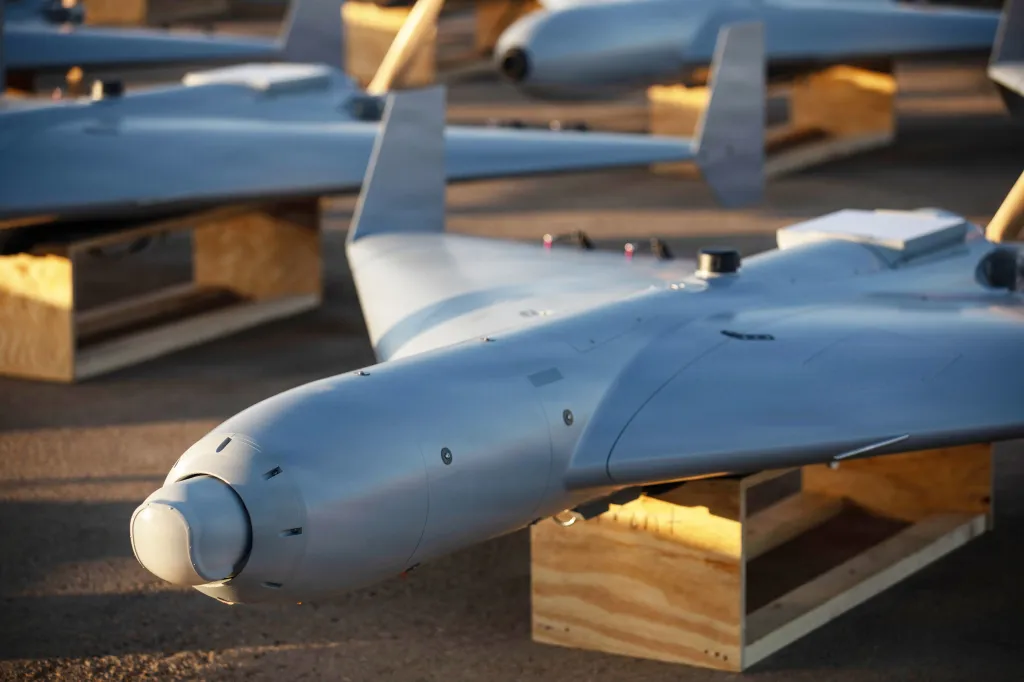
The U.S. Marine Corps is testing the Low-Cost Uncrewed Combat Attack System (LUCAS) as a long-range one-way strike drone. Based on a design reverse-engineered from the Iranian-designed Shahed-136, these drones have already been deployed by U.S. Central Command (CENTCOM) to the Middle East, which you can read more about in our deep dive here.
“Harkening back to the Liberty Ship production model that rapidly produced thousands of cargo ships during World War II, testers hope that the LUCAS will eventually serve a similar function in the new era of warfare,” Col. Nicholas Law, Director of Experimentation in the Office of the Under Secretary of War for Research & Engineering, said in a release. “It’s not a single manufacturer: it’s designed to go to multiple manufacturers to be built in mass quantities.”
We laid out this exact concept months ago, along with our in-depth case for rushing mass production of American Shahed-136 copies, that you can read in full here.
Law envisions these drones as ultimately able to be used on dynamic targets, such as vehicles on the move or targets of interest that the drones find themselves with a degree of autonomy.
Some LUCAS drone deployed in the Middle East have gimballed cameras and satellite communications. (Courtesy Photo)
“Once we start weaponization and automated target recognition, we can have a target that is a representation of a real target,” he explained. Law didn’t provide any specifics, and we have reached out to the Army and Marines for more information.
You can read our deep dive on how artificial intelligence will revolutionize lower-end drones like LUCAS in exactly this way in our special feature linked here. But the fact that LUCAS can be equipped with a satellite datalink means that it could hunt for and find targets of interest over great distances all on its own, while still allowing a human operator to approve a strike.
In addition to strikes, LUCAS drones equipped with nose-mounted gimbal cameras can also be deployed to provide intelligence, surveillance and reconnaissance (ISR). With an estimated price tag for the platform itself of about $35,000, these LUCAS variants could provide an affordable, attritable platform for ISR. The LUCAS drones we have seen also have swarming capabilities — the ability to work cooperatively as a team — which can make them especially effective at attack operations and acting as decoys to confuse enemy air defenses.
The one detail Law provided about the drones being tested at YPG is that they are not yet equipped with warheads.
“The warhead that will eventually be integrated into LUCAS isn’t constructed yet, but it will also be low-cost and mass produced by multiple manufacturers,” Law posited. “Evaluators are currently testing LUCAS with inert payloads.”
CENTCOM declined comment on whether its LUCAS drones currently deployed have kinetic payloads and referred us to statements previously made that they have been deployed as one-way attack drones. It’s possible that they feature more improvised, less powerful warheads at this time. They can also just fly into their targets to damage them — especially fragile ones like radar arrays.
As we noted in our original piece on the topic, CENTCOM stood up Task Force Scorpion Strike (TFSS), the military’s first one-way attack drone squadron, to operate the LUCAS drones. Roughly 10 feet long with a wingspan of eight feet, was developed by Arizona-based SpektreWorks in cooperation with the U.S. military primarily as a target drone to emulate a Shahed-136-like threat, but also as a weapon in its own right.
Low-cost Unmanned Combat Attack System (LUCAS) drones are positioned on the tarmac at a base in the U.S. Central Command (CENTCOM) operating area, Nov. 23. (Courtesy Photo) U.S. Central Command Public Affa
There are, however, other companies involved in providing LUCAS variants. For instance, Griffon Aerospace has been pitching a Shahed-like drone called the MQM-172 Arrowhead to America’s armed forces.
The company, which is building the air frames, has already provided them to the Pentagon for use as both strike weapons and targets, Griffon spokesman Dan Beck told us Wednesday. However, it is unclear whether they have been fitted with kinetic payloads or how widespread their testing and use is across the military. We have reached out to the Pentagon to learn more.
Beck said Kraken Kinetics is providing the payload for these LUCAS variants. We’ve reached out to them as well.
While Beck declined to provide many details of his company’s work with the Pentagon, he did offer us some insights about the Arrowhead’s specifications.
Considered a long-range LUCAS version, the Arrowhead can carry a payload of up to 100 pounds as far as 1,500 nautical miles, Beck told us. That’s akin to the Shahed-136 drones produced by Iran and modified by Russia for its use against Ukraine. The current LUCAS models deployed to the Middle East are smaller and have significantly less endurance and about half the payload capacity.
American Shahed 2? You bet! Meet the MQM-172 “Arrowhead”, an enhanced US copy of the Iranian Shahed-136 kamikaze drone. This is apparently the second Shahed clone; the first, called LUCAS (Low-Cost Uncrewed Combat Attack System), was developed by Arizona-based SpektreWorks and… pic.twitter.com/ptI5iq9vk9
Beck also told us that Griffon has been “flying these airplanes very frequently” and have been launched pneumatically and from trucks. There are plans to use rocket-assisted takeoff (RATO), but that hasn’t been tested yet, he added. Asked about whether these have been tested with kinetic payloads, Beck declined comment.
Though these types of weapons have a long development history, Iranian officials mocked the U.S. for copying their design.
“There is no greater source of pride and honor than seeing the self-proclaimed technological superpowers kneel before the Iranian drone and clone it,” Brig. Gen. Abolfazl Shekarchi boasted to reporters on Tuesday.
An Iranian-made Shahed-136 ‘Kamikaze’ drone flies over the sky of Kermanshah, Iran on March 7, 2024. (Photo by Anonymous / Middle East Images via AFP) ANONYMOUS
The reality is that Iran didn’t really come up with this configuration, it dates back decades to a western design and Israel largely pioneered the operational use of the long-range one-way attack munition.
IAI’s MBT HARPY System
With LUCAS’s sudden deployment to the Middle East as a kinetic weapon and now the Marines testing the concept to see if it fits their needs, the future of America’s Shahed-136 knock-off looks remarkably bright. And we could be seeing just the budding of what will become a mass produced staple weapon that will be deployed en-masse across Europe and the Pacific.
Russia has reportedly captured parts of Pokrovsk in Donetsk, though Ukraine still holds positions in the northern sections. The city, largely in ruins, was a critical logistical hub and home to 60,000 people before the war. Its capture comes at a sensitive time, coinciding with U.S. envoy discussions, including those involving former President Trump, on a possible plan to end the war.
WHY IT MATTERS
The fall of Pokrovsk does not signal a collapse of Ukraine’s eastern front, but it affects Kyiv’s leverage in negotiations. Russian control of high ground provides tactical advantages, including drone launch capabilities. Meanwhile, U.S. support and military aid remain pivotal for Ukraine’s defense. The city’s loss could influence American perceptions of Ukraine’s strength, particularly in political circles advocating a quick resolution.
CURRENT MILITARY SITUATION
Russian troops have advanced in small assault groups, showing the slow, attritional nature of their operations. Ukraine has reinforced key positions with elite units, including special forces, but is mindful of troop shortages. Frontline fortifications, drones, and piecemeal Russian advances suggest Ukraine’s defenses remain resilient despite localized losses. Russia has also made limited gains in Zaporizhzhia and Dnipropetrovsk regions, though rapid territorial expansion is unlikely.
GEOPOLITICAL DIMENSIONS
Control over Pokrovsk is central to broader negotiations involving the U.S., where Trump has advocated a tougher line on Ukraine. Russia likely intends to use Pokrovsk as a platform to target nearby “fortress cities” such as Sloviansk and Kramatorsk. European allies’ financial and military support remains crucial, especially given Ukraine’s ongoing attacks on Russian energy infrastructure to weaken Moscow’s revenue streams.
CHALLENGES FOR UKRAINE
Maintaining troop strength amid attritional warfare and draft limitations.
Avoiding pressure to cede territory while securing ongoing U.S. and European support.
Managing long-term resilience against persistent Russian missile and drone attacks, which damage civilian infrastructure.
Balancing strategic defense with political messaging to allies, particularly the U.S.
ANALYSIS
The fall of Pokrovsk illustrates the psychological and strategic impact of attritional warfare. While Ukraine’s frontline holds, the loss of a city at a negotiation-sensitive moment could weaken Kyiv’s perceived bargaining power, especially in U.S. circles influenced by former President Trump’s assessment of the conflict. Militarily, the slow pace of Russian operations suggests that while gains like Pokrovsk are symbolic and tactical, they do not threaten an immediate collapse of Ukraine’s defenses.
Looking forward, Ukraine must focus on consolidating defenses, leveraging drone technology, and securing more support from European allies. Politically, the timing underscores the importance of maintaining strong ties with Washington, balancing pressure from U.S. actors advocating a settlement with the need to protect sovereignty over the Donbas region. The war remains likely to continue in a stalemated, attritional pattern, with momentum shifts driven as much by geopolitical influence as by battlefield developments.
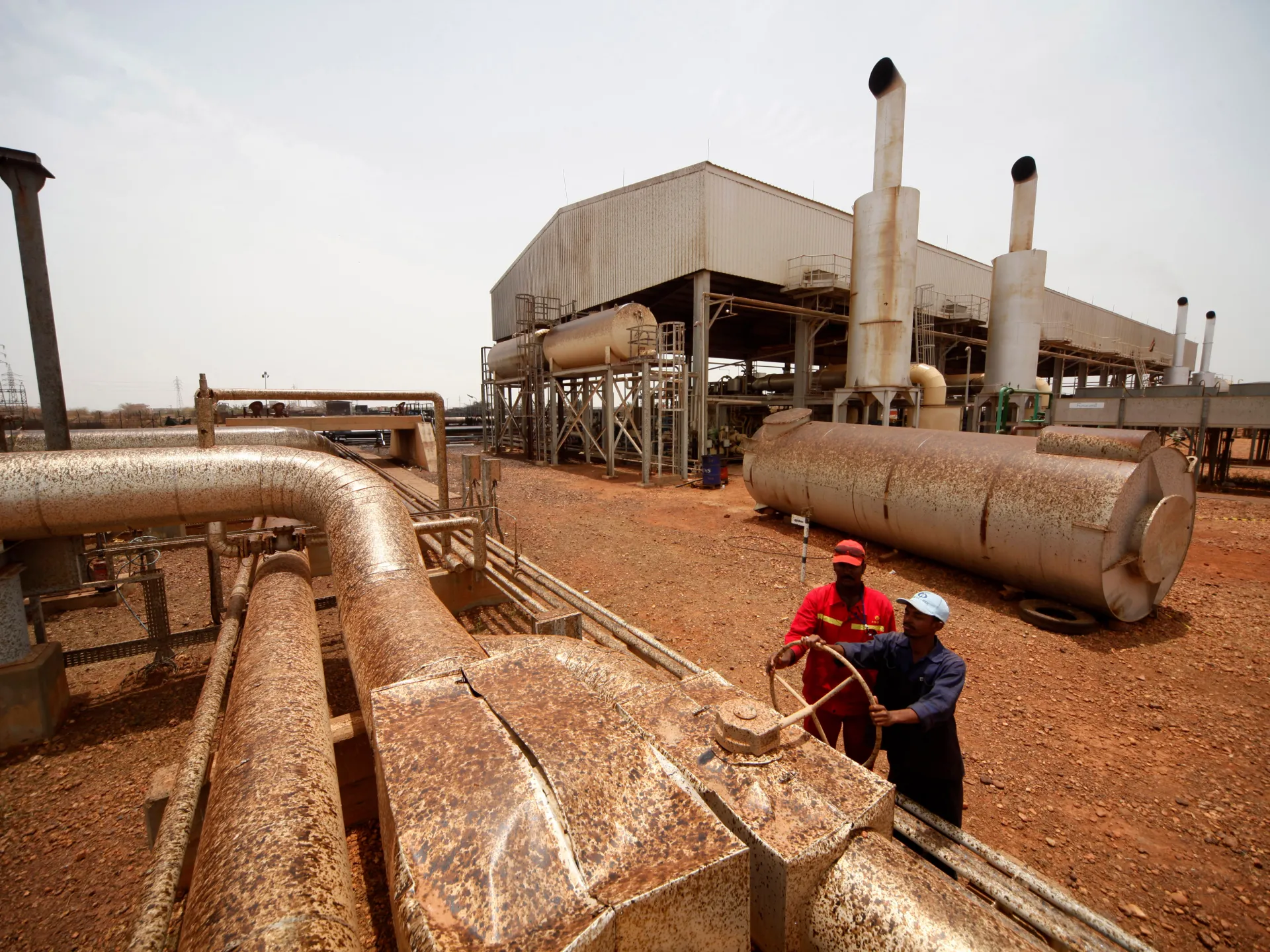
South Sudan’s military has moved into the Heglig oilfield under an unprecedented agreement between the country and neighbouring Sudan’s warring parties to safeguard critical energy infrastructure from the country’s civil war.
The deployment on Wednesday came after the paramilitary Rapid Support Forces (RSF) captured the strategic site on December 8, compelling the government-aligned Sudanese Armed Forces (SAF) units to retreat across the border into South Sudan, where they reportedly surrendered their weapons.
Recommended Stories
list of 3 itemsend of list
The agreement aims to neutralise the facility from combat operations as fighting intensifies across Sudan’s Kordofan region, threatening both countries’ primary revenue source.
Official Sudanese government sources revealed to Al Jazeera that high-level contacts have taken place between the Sudanese and South Sudanese leaderships since the beginning of this week, after the RSF mobilized to attack the “Heglig” area. Understandings were reached to secure the evacuation of workers in the field and avoid military confrontations to ensure that the oil field and its facilities are not subjected to sabotage and destruction, and tribal leaders also played a role in that.
The deployment of South Sudan forces was based on a previous oil and security cooperation agreement signed between Khartoum and Juba, which stipulates the protection of oil fields, pipelines and central pumping stations for South Sudan’s oil, in addition to the electricity interconnection project and strengthening cooperation in the energy sector.
The new factor is the involvement of the RSF.
South Sudan People’s Defence Forces Chief of Staff Paul Nang said at Heglig that troops entered under a “tripartite agreement” involving President Salva Kiir, SAF chief Abdel Fattah al-Burhan, and RSF leader Mohamed Hamdan Dagalo, widely known as Hemedti, according to state broadcaster SSBC News.
The pact requires both Sudanese forces to withdraw from the area.
Nang stressed that South Sudanese forces would maintain strict neutrality.
“The primary goal is to completely neutralise the Heglig field from any combat operations”, he said, because it “represents an economic lifeline not only for South Sudan but for Sudan as well”.
The deployment followed a deadly drone attack on Tuesday evening that killed dozens, including three South Sudanese soldiers.
SAF confirmed using a drone to target RSF fighters at the facility, though the exact death toll remains unclear. Local media reported that seven tribal leaders and numerous RSF personnel died in the attack.
Approximately 3,900 Sudanese soldiers crossed into South Sudan’s Rubkona County after evacuating Heglig, handing over tanks, armoured vehicles and artillery to South Sudanese authorities, according to Unity State officials in South Sudan.
Thousands of civilians have also fled across the border since Sunday.
Heglig houses a central processing facility able to handle up to 130,000 barrels per day of South Sudanese crude destined for export through Sudanese pipelines. The site also includes Block 6, Sudan’s largest producing field.
Jan Pospisil, a South Sudan expert at Coventry University, explained the strategic calculus behind the unusual arrangement.
“From the SAF’s perspective, they don’t want the RSF to find another possible revenue stream, and it is better from their perspective for South Sudan to take control of the area,” he told Al Jazeera.
He added that the RSF “can’t really defend against air attacks by the SAF, as we saw with this drone strike, and they don’t need money right now”.
The seizure of Heglig marks the latest RSF advance as the conflict’s centre of gravity shifts from Darfur to the vast Kordofan region. The paramilitary force secured complete control of Darfur in October with the fall of el-Fasher, prompting international alarm over mass atrocities.
Activists at the Tawila camp told Al Jazeera that refugees continue arriving, with some forced to sleep outdoors due to insufficient resources.
UN human rights chief Volker Turk repeated a warning he issued last week that he was “extremely worried that we might see in Kordofan a repeat of the atrocities that have been committed in el-Fasher”, amid RSF advances in the region.
The Global Centre for the Responsibility to Protect echoed his warning, with Executive Director Savita Pawnday stressing that Sudan faces “one of the world’s gravest atrocity crises”, where civilians are enduring “unimaginable harm while the international community fails to respond”.
The fighting has triggered displacement, with the International Organization for Migration reporting more than 1,000 people fled South Kordofan province in just two days this week as combat intensified around the state capital, Kadugli.
In el-Fasher, the Sudan Doctors Network reported this week that the RSF is holding more than 19,000 detainees across Darfur prisons, including 73 medical personnel.
The medical advocacy group said cholera outbreaks are killing people due to overcrowding and the absence of adequate healthcare, with more than four deaths recorded weekly from medical neglect.
A UNESCO panel backed Italy’s bid, recognising Italian cuisine as a social ritual that binds families, communities.
Italian cuisine, long cherished for its deep regional traditions, has been officially recognised by UNESCO as an “intangible cultural heritage” – a designation the country hopes will elevate its global prestige and draw more visitors.
“We are the first in the world to receive this recognition, which honours who we are and our identity,” Italy’s Prime Minister Giorgia Meloni said in a statement on Instagram on Wednesday.
Recommended Stories
list of 4 itemsend of list
“For us Italians, cuisine is not just food, not just a collection of recipes. It is much more, it is culture, tradition, work, and wealth,” Meloni said.
The vote by a cultural panel of UNESCO – the United Nations Educational, Scientific and Cultural Organization – meeting in New Delhi capped a process Italy launched in 2023, with the government portraying the country’s culinary tradition as a social ritual that binds families and communities.
🔴 BREAKING
New inscription on the #IntangibleHeritage List: Italian cooking, between sustainability and biocultural diversity, #Italy🇮🇹.
— UNESCO 🏛️ #Education #Sciences #Culture 🇺🇳 (@UNESCO) December 10, 2025
‘Cooking is a gesture of love’
UNESCO did not single out any famous dishes or regional specialities. Instead, the citation focused on how much Italians value the everyday rituals around food: the big Sunday lunch, the tradition of nonnas teaching kids how to fold tortellini just right, and simply sitting down together to enjoy a meal.
“Cooking is a gesture of love; it’s how we share who we are and how we look after each other,” said Pier Luigi Petrillo, part of Italy’s UNESCO campaign and a professor at Rome’s La Sapienza University.
In its announcement, UNESCO described Italian cuisine as a “cultural and social blend of culinary traditions”.
“Beyond cooking, practitioners view the element as a way of caring for oneself and others, expressing love and rediscovering one’s cultural roots. It gives communities an outlet to share their history and describe the world around them,” it added.
The UNESCO listing could deliver further economic benefits to a country already renowned for its cooking and where the agri-food supply chain accounts for about 15 percent of the national gross domestic product (GDP).
It could also bring some relief to traditional family-run restaurants, long the backbone of Italian dining, which are facing a harsh economic climate in a market increasingly polarised between premium and budget options.
The Colosseum is illuminated during a special light installation, after Italy won a place on UNESCO’s cultural heritage list [Remo Casilli/Reuters]
Honouring cultural expressions
Italy is not the first country to see its cuisine honoured as a cultural expression.
In 2010, UNESCO inscribed the “gastronomic meal of the French” on its intangible heritage list, calling out France’s tradition of marking life’s important moments around the table.
Other food traditions have been added in recent years, too, including the cider culture of Spain’s Asturian region, Senegal’s Ceebu Jen dish, and the traditional cheese-making of Minas Gerais in Brazil.
UNESCO reviews new candidates for its intangible-heritage lists every year under three categories: a representative list; a list for practices considered in “urgent” need of safeguarding; and a register of effective safeguarding practices.
At this year’s meeting in New Delhi, the committee evaluated 53 proposals for the representative list, which already includes 788 entries. Other nominees included Swiss yodelling, the handloom weaving technique used to make Bangladesh’s Tangail sarees, and Chile’s family circuses.
A woman spoons ‘spaghetti alla Carbonara’ during a cooking competition [Andrew Medichini/AP Photo]
Both sides have accused each other of violating international law as they await a promised phone call from Donald Trump.
Renewed fighting between Thailand and Cambodia has entered its fourth day, with both sides accusing one another of violating international law, as they await a promised phone call from United States President Donald Trump.
Cambodia’s Ministry of Defence accused Thailand’s military of carrying out numerous attacks within the country in the early hours of Thursday morning, including deploying tanks and artillery to strike targets in the country’s Pursat, Banteay Meanchey, and Oddar Meanchey provinces.
Recommended Stories
list of 3 itemsend of list
In one such attack, Cambodia accused Thai soldiers of violating international humanitarian law by firing on civilians in Prey Chan village in Banteay Meanchey province.
In another, it accused Thai forces of shelling “into Khnar Temple area”, and said Thai forces had also “fired artillery and support fire into the O’Smach area”.
“Cambodia urges that Thailand immediately stop all hostile activities and withdraw its forces from Cambodia’s territorial integrity, and avoid acts of aggression that threaten peace and stability in the region,” the Defence Ministry said.
Clashes took place on Wednesday at more than a dozen locations along the contested colonial-era demarcated 817-kilometre (508-mile) Thai-Cambodian border, with some of the most intense fighting being reported since a five-day battle in July, which saw dozens killed on both sides.
Cambodia’s Ministry of the Interior said homes, schools, roads, Buddhist pagodas and ancient temples had been damaged by “Thailand’s intensified shelling and F-16 air strikes targeting villages and civilian population centres up to 30km [18.6 miles] inside Cambodian territory”.
“It should be noted that … these brutal acts of aggression of the Thai military indiscriminately opened fire targeting civilian areas, especially schools, and further destroyed Ta Krabey and Preah Vihear temples, the highly sacred cultural sites of Cambodia and the world cultural heritage,” it said.
The ministry added that, as of Wednesday, the death toll on the Cambodian side of the border stands at 10 civilians, including one infant, while 60 people have been injured.
Responding to the accusations, the Thai army said Cambodia had “intentionally” used a historical site as a “military base of operations” and therefore was guilty of violating international law.
“Cambodia intentionally used the ancient site for military operations, as a base to attack Thailand, and deliberately undermined the protection of the ancient site. Thailand retaliated as necessary,” the Thai army said.
Eight Thai soldiers have also been killed in the fighting so far this week, with 80 more wounded, it said.
Both sides have blamed one another for reigniting the conflict, which began on Monday and has expanded to five provinces across Thailand and Cambodia, according to a tally by the AFP news agency.
More than 500,000 Thai and Cambodian civilians have been forced to flee border areas due to fighting.
It was only on October 26 that Trump presided over the signing of a ceasefire between the Southeast Asian neighbours in Kuala Lumpur, Malaysia. Hailing the deal, which was also brokered by Malaysian Prime Minister Anwar Ibrahim, Trump said mediators had done “something that a lot of people said couldn’t be done”.
Optimistic of securing another peace deal, Trump told reporters on Wednesday that “I think I can get them to stop fighting”.
“I think I’m scheduled to speak to them tomorrow,” he added.
To tell stories of conflict, and show what becomes of people and communities when their lives are upended, is to witness both the depth of human suffering and the remarkable ways people adapt and survive. Through Vestiges of Violence, HumAngle has continued to shine a light on the human faces behind Nigeria’s conflicts. This year, we shared eleven stories of abduction, displacement, loss, and the daily struggle for survival that thousands endure.
This is our 2025 wrapped.
Reported and scripted by Sabiqah Bello
Multimedia editor is Anthony Asemota
Executive producer is Ahmad Salkida
HumAngle’s “Vestiges of Violence” podcast focuses on telling stories of conflict in Nigeria, highlighting human suffering and resilience. In 2025, it shared eleven narratives of abduction, displacement, loss, and survival, revealing the personal impacts of ongoing conflicts. Sabiqah Bello reported and scripted the episodes, with Anthony Asemota serving as multimedia editor and Ahmad Salkida as executive producer. Through these stories, the podcast aims to put a human face on the devastation and adversity experienced by affected communities.
Weekly insights and analysis on the latest developments in military technology, strategy, and foreign policy.
The U.S. Navy may soon be required by law to only consider designs built from the keel up to sail without a crew ever being on board for at least its first batch of Modular Surface Attack Craft (MASC). The service wants to acquire a new family of larger uncrewed surface vessels readily configurable for surveillance and reconnaissance, strike, and other missions using modular payloads through the MASC program. Being able to dispense with features necessary for even optional human operation does offer potential benefits, especially when it comes to cost and production at scale.
A provision explicitly about the MASC program is contained in the most recent draft of the annual defense policy bill, or National Defense Authorization Act, which the House Armed Services Committee released this past weekend. The legislation, which is a compromise between previous House and Senate versions of the NDAA for Fiscal Year 2026, could now be put to a vote as early as this week.
The Ranger seen here is one of several optionally crewed vessels the US Navy has been using to support USV test and evaluation activities for years now. USN
The MASC provision contained in the current version of the bill is brief but to the point. It stipulates that “the Secretary of the Navy may not enter into a contract or other agreement that includes a scope of work, including priced or unpriced options, for the construction, advance procurement, or long-lead material for Modular Attack Surface Craft Block 0 until the Secretary certifies to the congressional defense committees that such vessels will be purpose-built unmanned vessels engineered to operate without human support systems or operational requirements intended for crewed vessels.”
The Navy laid out a host of details regarding its plans for MASC this past summer, including initial requirements for a baseline design, as well as high-capacity and single-payload types, all of which you can read more about here. As mentioned, the Navy is primarily looking to configure MASC drone ships to conduct surveillance and reconnaissance and strike missions. The service has also expressed an interest in unspecified capabilities to counter adversary intelligence, surveillance, reconnaissance, and targeting activities. As TWZ has previously noted, stated power generation requirements could also be particularly relevant for any plans to integrate laser or high-power microwave directed energy weapons, as well as electronic warfare suites, onto future members of the MASC family.
See the game-changing, cross-domain, cross-service concepts the Strategic Capabilities Office and @USNavy are rapidly developing: an SM-6 launched from a modular launcher off of USV Ranger. Such innovation drives the future of joint capabilities. #DoDInnovatespic.twitter.com/yCG57lFcNW
The MASC program reflects a larger shift in focus away from those previous efforts, which were defined primarily by very rigid length and displacement requirements. Modular, containerized payloads, rather than specific hull designs, are central to the new MASC concept.
The two Global Autonomous Reconnaissance Craft (GARC) assigned to Unmanned Surface Vessel Squadron 3 (USVRON 3) seen here are indicative of the US Navy’s separate ongoing work on smaller USVs. USN
As mentioned, USVs that are designed from the outset to only sail in an uncrewed mode offer benefits when it comes to development, production, and operational employment. They do not need berthing space, galleys, toilets, or any other features needed to support human personnel on board. All of this, in turn, can allow for more radical design decisions optimized for the performance of the missions, as well as help reduce overall complexity and cost. This can further translate into USVs that are faster and easier to produce in larger quantities.
With all this in mind, the Navy has already been openly talking about moving away from optionally-crewed designs for MASC.
“When you introduce that capability to operate with people on board, it creates a lot of other requirements and cost and complications,” Navy Capt. Matt Lewis, program manager of the Unmanned Maritime Systems program office within Naval Sea Systems Command (NAVSEA), told USNI News on the sidelines of an event back in August. “The [MASC] solicitation that went out for industry… it was open, and we are eager to get proposals as we review them, to look at the proposals that don’t have people on board.”
“We definitely want unmanned. Period. I mean, it’s that simple,” Navy Capt. Garrett Miller, commander of Surface Development Group One (SURFDEVGRU), also said at that time.
SURFDEVGRU is currently a focal point within the Navy for work on operationalizing USV capabilities and has two unmanned surface vessel squadrons assigned to it. The Group also oversees the two Zumwalt class stealth destroyers that the Navy has in service now. The third ship in that class, the future USS Lyndon B. Johnson, is also set to be assigned to the unit.
The US Navy’s optionally crewed vessels Ranger and Mariner, both assigned to SURFDEVGRU, sail together with a Japanese Mogami class frigate. USN
Larger USVs intended to sail for protracted periods without even a skeleton crew on board to provide immediate maintenance and other support do also present certain challenges. These vessels have to be highly reliable and be capable of at least a certain degree of safe autonomous operation in areas that could be full of other ships. How force protection might be ensured, especially during more independent operations, is an open question, too.
Underscoring all of this, the recently release draft NDAA for Fiscal Year 2026 includes a separate provision that would prevent the Secretary of the Navy from awarding “a detail design or construction contract or other agreement, or obligate funds from a procurement account, for a covered [medium and large USV] program unless such contract or other agreement includes a requirement for an operational demonstration of not less than 720 continuous hours without preventative maintenance, corrective maintenance, emergent repair, or any other form of repair or maintenance,” for a variety of key systems. It would also block the Navy from accepting delivery of any “articles” produced under any such contract or agreement before the successful conclusion of that operational demonstration.
The Navy has already been cooperating with the U.S. Defense Advanced Research Projects Agency (DARPA) on a program specifically intended to prove new USV capabilities with a demonstrator designed from the start to operate without humans ever being on board. The Defiant drone ship that was developed for DARPA’s Manning Required Ship (NOMARS) effort, also known as the USX-1, kicked off an extended at-sea trial in September that has included a demonstration of its ability to be refueled at sea using a system that does not require personnel to be present on the receiving side. You can read more about the Defiant, which prime contractor Serco also developed to be a lower-cost and readily producible design, here.
USX-1 Defiant fueling at sea demonstration
USX-1 Defiant begins at-sea demonstration
The stated plan is for Defiant to be transferred to SURFDEVGRU after DARPA’s testing with the ship wraps up. The Navy has said that it sees the vessel, which is also designed around carrying containerized mission payloads, as a key technology ‘feeder’ into the MASC effort. Prime contractor Serco has already been developing an enlarged derivative, currently called the Dauntless, as well.
A model of the enlarged Dauntless design. Howard Altman
Other companies are already lining up to compete for future MASC contracts, including Eureka Naval Craft with its Bengal-Module Carrier, or Bengal-MC.
U.S. shipbuilder Huntington Ingalls Industries (HII) unveiled its own plans for a new line of USVs, called ROMULUS, in September. HII says ROMULUS designs will be highly modular and capable of carrying containerized payloads, which is all in line with the Navy’s current vision for MASC.
In November, Anduril announced a partnership with HD Hyundai Heavy Industries in South Korea to develop a new family of what the company is calling Autonomous Surface Vessels (ASV), including a version explicitly intended to meet the Navy’s MASC requirements. An initial ASV prototype is set to be built in Korea, but Anduril has plans to establish its own production capacity within the United States at a revamped shipyard in Seattle, Washington.
A widening and ever more worrisome gap in U.S. shipbuilding capacity versus China has been a key driver behind the surge in the Navy’s interest in USVs in recent years, to begin with. Distributed fleets of USVs configured for a variety of missions, including strike and ISR missions, could be critical to bolstering existing fleets of traditional crewed warships, especially in a future large-scale conflict across the broad expanses of the Pacific. With a high degree of autonomy, those uncrewed vessels could operate more independently of their crewed companions, creating new operational possibilities, but also introducing new risks.
The Navy has also highlighted how MASC USVs being readily reconfigurable could create targeting challenges and other dilemmas for opponents who would not know what payloads they might be carrying at any one time. MASC drone ships could also be sent first into higher-risk areas or otherwise help reduce risks to crewed assets.
The plans for MASC are still very much evolving. However, the Navy’s vision looks increasingly set to eschew optionally-crewed designs, something Congress now looks intent on further compelling the service to do by law.
When French President Emmanuel Macron inaugurated France’s Space Command in Toulouse on 12 November 2025 and declared that “space is no longer a sanctuary; it has become a battlefield,” few expected such swift validation. Two weeks later, at the ESA Ministerial Council in Bremen on 26–27 November, member states delivered the largest budget in the agency’s history—€22.1 billion for 2026–2028, a 30% increase over the previous cycle—with an unprecedented focus on security, defense, and strategic autonomy. The Bremen decision has transformed Macron’s stark warning from rhetoric into funded reality and confirmed that Europe is finally awakening to the fact that the next decisive domain of great-power competition lies far above the Earth’s atmosphere.
Paris is preparing to invest about €4.2 billion in military space activities from 2026 to 2030 and around €16 billion in civilian and dual-use programs by the end of the decade. The ambition is to strengthen Europe’s resilience in orbit, reduce dependence on non-European systems, and create an industrial base capable of supporting long-term security objectives.
French planners are betting on a new generation of proximity‑inspection satellites to anchor this strategy, with demonstration flights envisaged in the second half of the decade and operational testing to follow. These satellites can approach, observe, and, if required, interdict suspicious objects in orbit. France is also exploring non‑kinetic tools—lasers and electromagnetic systems among them—designed to disrupt hostile platforms without creating debris. Paris has rejected destructive anti-satellite testing and argues that Europe must enhance space security without undermining international norms.
The European Union is entering this field late. Russia and China have already developed advanced inspection and interference capabilities. In September 2025, German Defence Minister Boris Pistorius revealed that two Russian Luch or Olymp satellites were shadowing Intelsat platforms used by the Bundeswehr. The episode underscored Europe’s lack of awareness and defensive capacity in orbit.
In Brussels, officials are floating the idea of a “European Space Shield”—a more integrated architecture to protect satellites and align EU and NATO postures. Success will depend on the willingness of member states to coordinate procurement, share data, and harmonize strategic objectives. Europe’s current system remains fragmented and is often slowed by national industrial preferences.
Macron has also called for reform of the European Space Agency’s geographic return rule, which distributes contracts according to member-state contributions rather than technical merit. The French position is that this rule limits innovation and prevents Europe from responding quickly to fast-moving threats in orbit.
There are challenges. Even non-kinetic defenses can be misinterpreted as escalatory. The orbital environment is crowded, vulnerable to miscalculation, and poorly regulated. France has therefore paired its military investments with calls for new rules of behavior and a European proposal for an orbital code of conduct. Such a framework would help prevent misunderstandings and promote transparency.
The ESA Ministerial Council that concluded in Bremen on 27 November delivered what many had doubted was possible: a €22.1 billion envelope for 2026–2028 that explicitly prioritizes space security, resilient navigation (FutureNAV), Earth-observation continuity, and dual-use technologies. Germany increased its contribution by nearly a third despite domestic fiscal constraints, while the package includes more than €1 billion for programs directly supporting defense and sovereignty. Crucially, ministers opened the door to greater flexibility on the controversial “geographic return” rule for critical security projects—a French demand that had been resisted for years. Bremen did not create a fully unified European space-defense policy overnight, but it transformed Macron’s Toulouse rhetoric into funded reality and gave the proposed European Space Shield its first serious financial and political tailwind.
Satellites underpin critical EU functions, including climate monitoring, secure communications, trade logistics, and border management. Rivals are developing tools that can dazzle, jam, or disable them. Europe cannot assume that these systems will remain safe without deliberate action.
Macron’s announcement in Toulouse should be seen as a strategic warning. Europe has the capacity to protect its interests in orbit, but only if it acts with coherence and political determination. The challenge for the European Union is not technological. It is the ability to work collectively and with a sense of urgency. In an era in which conflict begins long before military forces deploy, the EU’s strategic autonomy may depend on decisions made far above the atmosphere.
Tourists from 42 countries may soon need to also disclose email accounts, extensive family history and biometrics to enter US.
Visitors who are eligible to enter the United States without a visa may soon be required to provide the Department of Homeland Security with significantly more personal information, including details about their social media activity, email accounts and family background.
According to a notice published on Wednesday in the Federal Register, US Customs and Border Protection (CBP) is proposing to collect up to five years of social media data from travellers from certain visa-waiver countries.
Recommended Stories
list of 4 itemsend of list
The proposed requirement would apply to travellers using the Electronic System for Travel Authorization (ESTA) under the Visa Waiver Program, which allows citizens of 42 countries – including the United Kingdom, Germany, Qatar, Greece, Malta, New Zealand, Australia, Japan, Israel and South Korea – to travel to the US for tourism or business for up to 90 days.
Currently, the ESTA automatically screens applicants and grants travel approval without requiring an in-person interview at a US embassy or consulate, unlike standard visa applications.
At present, ESTA applicants are required to provide a more limited set of information, such as their parents’ names, current email address, and details of any past criminal record.
A question asking travellers to disclose their social media information was first added to the ESTA application in 2016, though it has remained optional.
New rules also target metadata, email history
The new notice also states that the CBP plans to request additional personal information from visitors, including telephone numbers used over the past five years and email addresses used over the last 10 years.
Authorities also said they plan to add what they describe as “high-value data fields” to the ESTA application “when feasible”. These would include metadata from electronically submitted photographs, extensive personal details about applicants’ family members, such as their places of birth and telephone numbers used over the past five years, as well as biometric information, including fingerprints, DNA and iris data.
The announcement did not say what the administration was looking for in the social media accounts of visitors or why it was asking for more information.
But the CBP said it was complying with an executive order that US President Donald Trump signed in January that called for more screening of people coming to the US to prevent the entry of possible national security threats.
Travellers from countries that are not part of the Visa Waiver Program system are already required to submit their social media information, a policy that dates back to the first Trump administration. The policy remained during US President Joe Biden’s administration.
The public has 60 days to submit comments on the proposed changes before they are finalised, the notice in the Federal Register states.