At around 18:47 local time (07:47 GMT) on Sunday, New South Wales Police received reports that shots had been fired at a park in Bondi Beach, Sydney.
In the minutes that followed, footage filmed by bystanders shows two gunman appearing to fire a volley of shots towards a park from a bridge.
Police say 15 people, including 10-year-old girl, were killed in the shooting. One of the gunman is also dead.
World news correspondent Joe Inwood pieces together verified footage of the incident to show how Australia’s worst mass shooting in nearly three decades unfolded.
Weekly insights and analysis on the latest developments in military technology, strategy, and foreign policy.
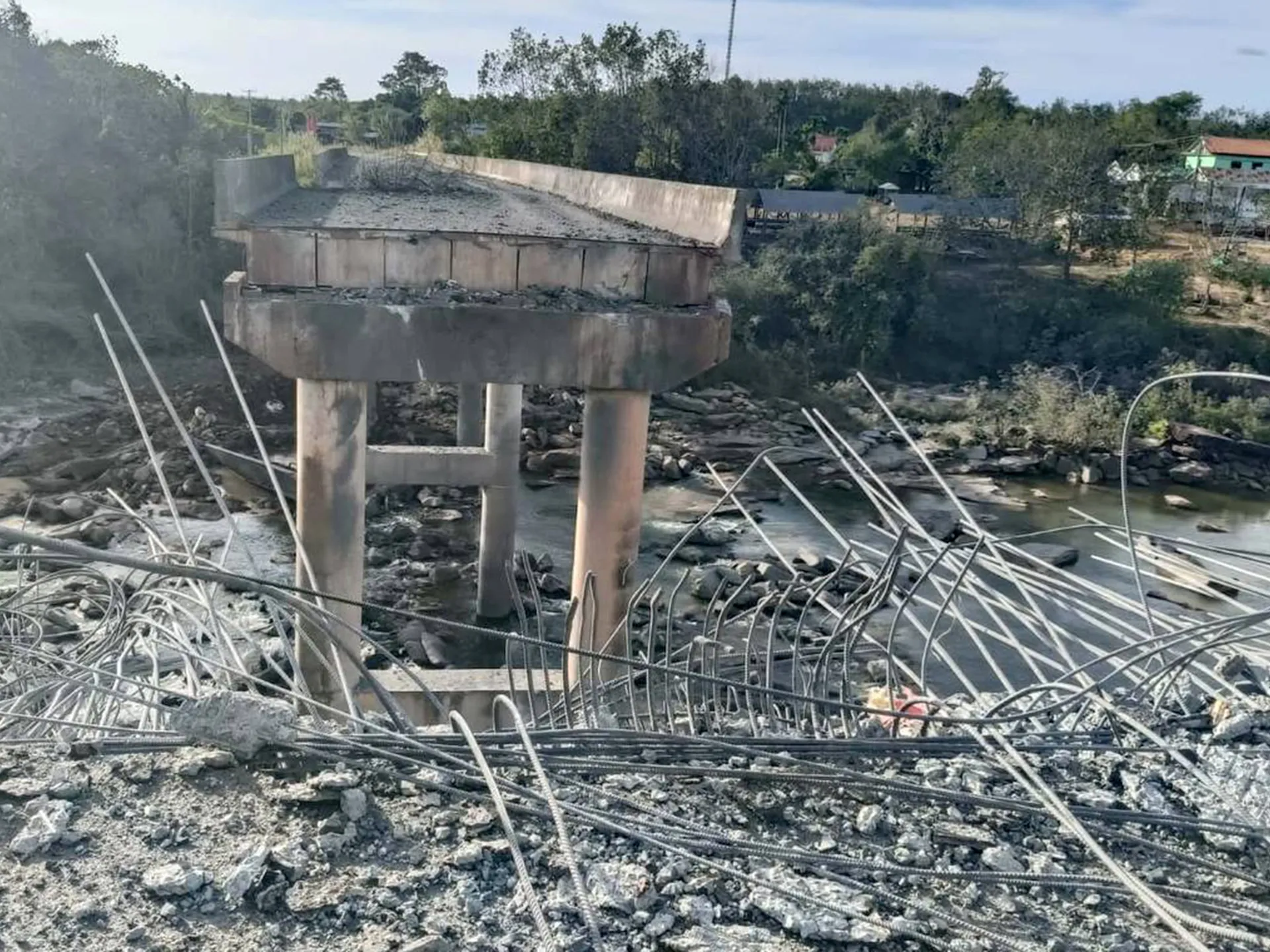
A new escalation in the clashes between Thailand and Cambodia has seen Royal Thai Air Force (RTAF) F-16 fighters deliver airstrikes along the disputed border between the two countries. The nations are now blaming each other for breaching a ceasefire deal that was brokered by U.S. President Donald Trump.
In a statement, the RTAF said it had struck Cambodian “military targets” in several areas along the roughly 500-mile border. At the same time, it accused Cambodia of mobilizing heavy weaponry and repositioning combat units. A Thai military official told Reuters that the targets included long-range artillery positions. The Thai military also released imagery that it said showed airstrikes against a Cambodian military position, as seen below.
#Thailand / #Cambodia 🇹🇭🇰🇭: “Thai Air Forces” reportedly bombed a casino building which was being used by the “Cambodian Army” on the border.
Thai Army possibly used F-16(A/B) fighter aircraft with Mark 82 (MK-82) aerial bomb with Precision-Guided Glide Bomb system. pic.twitter.com/8uYfWaC5Yw
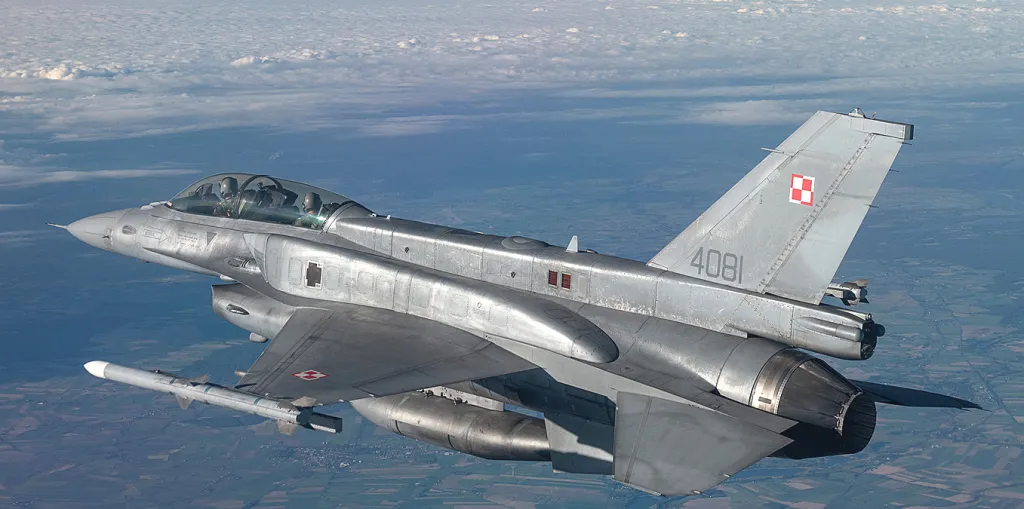
The RTAF has a relevant fleet of F-16s, comprising 36 single-seat F-16As and 14 two-seat F-16Bs. These are the survivors from a total of 52 F-16A/Bs that were delivered by the United States under four separate orders plus seven more F-16A/Bs that were donated by Singapore.
Massive explosion on the Cambodian side of the Cambodia Thailand border from an F-16 airstrike from Thailand
Local reporters say Thai forces have struck again around Ta Krabei temple, sending Cambodian families fleeing into air raid shelters in the O’Smach area of Oddar Meanchey. This comes on top of this morning’s shelling and air strikes along the border, including reported F-16… pic.twitter.com/qNXgrjfhQj
TWZ has approached the U.S. government for clarity on whether Washington approved the use of the F-16s against Cambodia. Thailand is a major U.S. ally in the region.
In terms of Cambodian heavy weaponry, Thailand has highlighted the presence of what it says are Chinese-made PHL-03 multiple rocket launchers, only six of which are understood to be in use. These systems are within range of a provincial airport and a state-run district hospital, according to Thai Ministry of Defense spokesman Rear Admiral Surasant Kongsiri. He added that Cambodia had also deployed Soviet-era BM-21 multiple rocket launchers.
“Based on our intelligence as well, there have been attempts … to lock on the coordinates of these facilities,” the spokesman added, without providing evidence of how this was determined.
Thailand’s military said the latest airstrikes were launched after one of its soldiers was killed and another four were wounded in fighting along the tense border this morning.
Earlier today, there were unconfirmed reports that a Thai Army unit had taken control of the village of Pairachan/Prey Chan in the disputed zone. Security-camera imagery purportedly from the area showed the Royal Thai Army moving in M113 series armored personnel carriers.
BREAKING: Thailand Army soldiers crossed into Cambodia and seized the disputed Pairachan (Prey Chan) village in Banteay Meanchey after two days of border clashes.
Thailand says it acted in self-defense after Cambodian attacks.
Other footage showed a Royal Thai Army Scorpion light tank opening fire on Cambodian positions.
For its part, the Cambodian Ministry of Defense blames Thailand for the escalation, accusing Thai forces of launching attacks on its troops on Monday. The ministry said that Cambodia had not retaliated, despite “provocative actions for many days.”
Infographic map showing the area on the Thailand-Cambodia border where fresh violence flared on December 8, 2025. Graphic by John SAEKI and Nicholas SHEARMAN/AFP JOHN SAEKI; NICHOLAS SHEARMAN
The latest clashes have also seen the deaths of four Cambodian civilians. They were killed in Oddar Meanchey and Preah Vihear provinces, according to Cambodia’s information minister, Neth Pheaktra.
Meanwhile, tens of thousands of people have been forced to flee their homes in the border region.
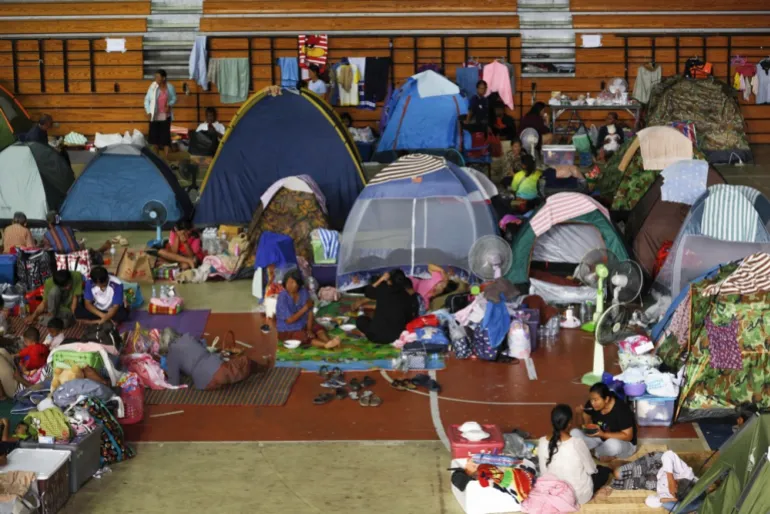
Based on statements from Thai authorities, more than 385,000 civilians have been ordered to evacuate from border areas across four provinces. Of those, around 35,000 people were registered at shelters as of Monday morning, they added.
Cambodian soldiers ride their motorbike as local residents evacuate following clashes along the Cambodia-Thailand border in Preah Vihear province on December 8, 2025. Photo by AFP STR
People have also fled villages on the Cambodian side of the border. The Cambodian Ministry of Information says that 1,157 families have been evacuated to safe areas.
There is now an escalating war of words on the political side.
In a statement, Thai Prime Minister Anutin Charnvirakul said the country did not want violence and refuted claims that his country had initiated the conflict. “However, Thailand will not tolerate violations of its sovereignty and will proceed rationally and with due regard for the principles of peace, security, and humanity,” he said.
The former prime minister of Cambodia, Hun Sen, who remains a very influential figure, called upon his country’s forces to exercise restraint, but blamed Thailand for trying to “pull us into retaliation.”
“The red line for responding has already been set. I urge commanders at all levels to educate all officers and soldiers accordingly,” Hun Sen said in a Facebook post.
A Thai soldier wounded by gunfire from Cambodian soldiers is taken to a hospital by helicopter for medical treatment in Thailand on December 8, 2025. Photo by Royal Thai Army / Handout/Anadolu via Getty Images Anadolu
The fighting between Thailand and Cambodia was one of the “eight raging conflicts” that were “settled” by the Trump administration, according to the newly released National Security Strategy.
Theceasefire came after a previous spike in tensions in May, including an exchange of fire between troops in a contested area, which left one Cambodian soldier dead. Then came a series of tit-for-tat actions by both governments, including airstrikes, leading to a full-blown conflict over five days in July. This killed at least 48 people and forced another 300,000 to flee their homes.
Tensions have remained high despite the ceasefire agreement, with both sides accusing each other of violations, and Thailand announcing in November that it was suspending the deal.
Trump then intervened, and a ceasefire was agreed around six weeks ago. Washington applied pressure by threatening to suspend trade talks unless a peace deal was brokered. Malaysia and China also both pushed for a settlement.
The U.S. president said he’d “stopped a war” through the use of tariffs and said, “I think they’re gonna be fine.”
However, the ceasefire never looked particularly strong, and last month Thailand said it was suspending the deal. In stepping away from the settlement, Thailand accused Cambodia of laying more landmines along the border. One of these wounded a Thai soldier, Bangkok said.
The border dispute has a long history, dating back to the period of French colonial rule, at the beginning of the 20th century, when a boundary was drawn up to separate Cambodia, which it ruled until 1953, from Thailand. Since then, there have been periodic tensions between the two countries, resulting from disagreements over where the border should lie.
A pair of F-16s from the Royal Thai Air Force fly in formation during Exercise Thai Boomerang 2019. Australian Department of Defense Unknown
Anwar Ibrahim, the prime minister of Malaysia, who helped broker the original ceasefire, called upon Thailand and Cambodia to avoid further escalation. He said the latest violence risked “unravelling the careful work that has gone into stabilizing relations between the two neighbors.”
“We urge both sides to exercise maximum restraint, maintain open channels of communication, and make full use of the mechanisms in place,” Anwar said.
So far, Trump has not responded to the renewed fighting.
For now, however, both sides show little interest in appeasement.
The United States has fully commited to its enforcement of sanctions on Venezuela by seizing a large oil tanker off its coast. President Donald Trump publicly announced the operation on December 10th and authorities said a joint FBI/Homeland Security/Coast Guard team executed a court-ordered seizure of the vessel, which was transporting Iranian and Venezuelan crude in violation of U.S imposed sanctions.
This is reportedly the first U.S. seizure of a Venezuelan oil shipment since sanctions began way back in 2019. “We’ve just seized a tanker on the coast of Venezuela, a large tanker, very large, largest one ever seized, actually,” says Donald Trump.
Trying to maintain the credibility of U.S. sanctions at a time when their enforcement have increasingly been challenged by other international actors such as Russia or Iran. Now, The U.S. is willing to take direct action beyond economic wars, even at the risk of diplomatic and military escalation.
Reactions from Caracas
Venezuela publicly denounced the action and accused Washington of blatant theft describing the seizure as “an act of international piracy”. Venezuelan President Nicolás Maduro has long cast himself as the victim of a U.S. led campaign to oust him from the country in order to seize the vast oil wealth on the country’s shores. He reiterated that the U.S. military buildup, which started this summer, including carrier strike groups and bases is directly aimed at overthrowing him.
Maduro’s supporters rallied in the streets against foreign aggression even as officials prepared diplomatic protests to international bodies. For the time being, he faces limited other practical options for retaliation as Venezuela’s navy is in no position to challenge U.S. maritime dominance, and legal recourse through international courts would likely take years.
Russia’s Offers Full Support
Moscow reaffirmed its backing for Maduro, emphasising the legitimacy of Venezuela’s government and condemning what it described as unilateral U.S. actions. An ally in South America provides Russia opportunities for energy investment, and a way to challenge U.S. influence.
The tanker seizure allows Moscow to frame Washington as overreaching and destabilising, a narrative it also applies to recent U.S. actions in Eastern Europe and the Middle East. While Russia is unlikely to escalate militarily, its political backing is significant.
China’s Strategic Role, A Potential Mediator?
Avoiding direct confrontation with Washington over the seizure, Beijing has reiterated its general opposition to unilateral sanctions and calling for international dialogue. However, China remains Venezuela’s most important economic partner and oil consumer, giving it substantial influence over any talks in the region.
Chinese companies have adapted to sanctions by purchasing Venezuelan crude oil at discounted prices, often through intermediaries. For Beijing, Venezuela is also part of a broader strategy to diversify energy supplies and expand its economic reach to the Americas.
Impact on Oil Markets
The announcement caused a modest spike in oil prices around the globe; for example: Brent crude briefly rose about 0.4% to around $62 a barrel, before returning to normal levels in the following few days.
The incident also highlighted Venezuela’s export challenges: under sanctions, its oil trades at a deep discount for its main trade partners, China and Russia. American oil companies with Venezuelan ties reported no immediate trouble. Chevron the U.S. firm that co-owns Venezuela’s largest oil project said its operations there continue normally, and U.S. imports of Venezuelan crude have even ticked up slightly in recent months.
Broader Consequences
Neighbouring countries such as Cuba and other Caribbean states depend on Venezuelan oil and could feel its effects. Sanctioning Venezuela was intended to pressure the regime into political concessions, yet Maduro remains firmly in power.
Enforcement actions like this tanker seizure may increase short-term pressure, but they also come with great risk for the stability of the Caribbean. Venezuela’s experience mirrors that of Iran and Russia, suggesting that sanctions alone may be insufficient to produce regime change, particularly when the targeted government is provided external backing.
Possible Future Scenarios and Implications
One scenario is a continuation of this low-level rise in tensions, with the U.S. stepping up enforcement and Venezuela responding through diplomatic protests while relying on Russian support.
Another is a negotiated de-escalation, potentially linked to limited sanctions relief in exchange for political concessions, though past efforts suggest this would be difficult to achieve with the current White House administration.
A more destabilising scenario would involve a potential confrontation at sea and broader disruption to energy markets. However, this scenario remains unlikely for the time being.
Officials, social media users hail bystander, identified by Australian media as Ahmed al Ahmed, who disarmed gunman.
Published On 14 Dec 202514 Dec 2025
Share
A bystander who has been filmed tackling and disarming an assailant during a shooting in which at least 15 people were killed at a Jewish holiday event in Sydney, Australia, has been praised as a hero whose actions may have saved lives.
Footage uploaded to social media on Sunday shows a man in a car park running up to a man holding a rifle. He then tackles the armed man, wrestles the rifle away from him and points the weapon back at him.
Recommended Stories
list of 3 itemsend of list
The video then shows the disarmed man losing his footing and backing away towards a bridge where another shooter was located while the bystander places the gun down on the ground.
One suspected attacker was killed and another was in a critical condition after Sunday’s shooting while police said they were investigating whether a third gunman was involved.
The footage of the bystander’s intervention was shared widely on social media, and many users praised the man for his bravery, saying his actions may have saved lives.
According to Australian media reports, the bystander was identified as Ahmed al Ahmed, a 43-year-old Sydney man.
Al Jazeera was unable to immediately confirm his identity.
A cousin of al Ahmed was quoted as telling the Australian television news service 7News that he was shot twice during the incident.
“He’s in hospital, and we don’t know exactly what’s going on inside,” the man named Mustafa told the outlet.
“We do hope he will be fine. He’s a hero 100 per cent.”
Al Ahmed was due to undergo surgery on Sunday night, he said.
“Australian hero (random civilian) wrestles gun off attacker and disarms him. Some people are brave and then some people are … whatever this is,” one person said in a post on the X platform that shared the video.
“This Australian man saved countless lives by stripping the gun off one of the terrorists at Bondi beach. HERO,” another said.
Chris Minns, the premier of New South Wales state, where Sydney is located, said it was the “most unbelievable scene I’ve ever seen”.
“That man is a genuine hero, and I’ve got no doubt that there are many, many people alive tonight as a result of his bravery.”
Prime Minister Anthony Albanese praised the actions of Australians who had “run towards danger in order to help others”.
“These Australians are heroes and their bravery has saved lives,” he said at a news conference.
A mass shooting at a Jewish festival at Bondi Beach in the Australian city of Sydney has killed at least 11 people and wounded 29 in what was a grisly, rare occurrence for the country.
Authorities said the “terrorist” incident on Sunday was “designed to target Sydney’s Jewish community on the first day of Hanukkah” as hundreds of people gathered for an event called Chanukah by the Sea.
The Australian leader condemned the “targeted” attack, saying: “What was unleashed today is beyond comprehension.”
Albanese also addressed the Jewish community directly.
“As prime minister, on behalf of all Australians, to the Jewish community: We stand with you, we embrace you and we reaffirm tonight that you have every right to be proud of who you are and what you believe,” Albanese said. “You have the right to worship and study and work and live in peace and safety.
“You should never have to endure the loss that you have suffered today. We will dedicate every resource required to make sure you are safe and protected.”
Australian Prime Minister Anthony Albanese attends a press conference following a shooting at Bondi Beach, at Parliament House in Canberra, Australia, December 14, 2025 [Lukas Coch/AAP via Reuters]
New Zealand
In neighbouring New Zealand, Chris Luxon, its prime minister, reiterated the two countries’ close bond.
“Australia and New Zealand are closer than friends. We’re family. I am shocked by the distressing scenes at Bondi, a place that Kiwis visit every day. My thoughts and the thoughts of all New Zealanders are with those affected,” Luxon said.
United States
The US “strongly condemns” the attack, Secretary of State Marco Rubio said.
“Antisemitism has no place in this world. Our prayers are with the victims of this horrific attack, the Jewish community, and the people of Australia,” he wrote in a post on X.
United Nations
UN Secretary-General Antonio Guterres said he was “horrified” by the “heinous” shooting.
“I am horrified and condemn today’s heinous deadly attack on Jewish families gathered in Sydney to celebrate Hanukkah,” he posted on X.
“My heart is with the Jewish community worldwide on this first day of Hanukkah.”
Israel
Israeli President Isaac Herzog described the attack as “cruel”.
“Our brothers and sisters in Sydney have been attacked by vile terrorists in a very cruel attack on Jews who went to light the first candle of Hanukkah on Bondi Beach,” Herzog said in a statement.
“Time and again we called on the Australian government to take action and fight against the enormous wave of antisemitism that is plaguing Australian society,” he also said in a post on X.
At least one Israeli national is among those who have been killed in the shooting, according to a statement by Israel’s Foreign Ministry.
It also said that an Israeli national was wounded.
Palestine
The Palestinian Foreign Ministry condemned the shooting and said it “reiterates its firm rejection of all forms of violence, terrorism and extremism, which contradict humanitarian values”.
It expressed its “full solidarity” with “friendly Australia”.
United Kingdom
Keir Starmer, the UK’s prime minister, stated: “Deeply distressing news from Australia. The United Kingdom sends our thoughts and condolences to everyone affected by the appalling attack in Bondi Beach.”
Britain’s King Charles
Charles, the ceremonial head of state for Australia, reacted to the deadly shooting in Bondi Beach.
“My wife and I are appalled and saddened by the most dreadful antisemitic terrorist attack on Jewish people attending Chanukah celebration at Bondi Beach,” the king said in a statement posted on X.
Germany
Friedrich Merz, Germany’s chancellor, said he was shocked by the incident.
“The anti-Semitic attack at Bondi Beach during Hanukkah leaves me utterly shocked. My thoughts are with the victims and their families. This is an attack on our shared values. We must fight anti-Semitism – here in Germany and around the world,” Merz said.
France
Emmanuel Macron, France’s president, said his country would continue to fight against anti-Semitism.
“France extends its thoughts to the victims, the injured and their loved ones. We share the pain of the Australian people and will continue to fight relentlessly against anti-Semitic hatred, which hurts us all wherever it strikes,” Macron said.
The Netherlands
Dick Schoof, the Dutch prime minister, stated: “Shocking and alarming reports from Australia of a horrific attack in Sydney that has left many people dead or injured. I have conveyed my sympathy and support to Prime Minister Albanese on this dark day for Australia.”
Finland
Alexander Stubb, Finland’s president, extended his condolences to Australia’s Jewish population.
“Tonight’s terrorist attack on the Hanukkah celebration at Bondi Beach was shocking and devastating. Our thoughts are with the families and loved ones of the victims as well as the whole Jewish community in Australia,” Stubb said.
Police work on a street after a shooting incident at Bondi Beach in Sydney on December 14, 2025 [David Gray/AFP]
Iran
Tehran denounced the “terror” incident, Ministry of Foreign Affairs spokesman Esmaeil Baghaei said.
“We condemn the violent attack in Sydney, Australia. Terror and killing of human beings, wherever committed, is rejected and condemned,” Baghaei said on X.
European Union
European Commission President Ursula von der Leyen said she was “shocked” by the shooting.
“I send my heartfelt condolences to the families and loved ones of the victims.”
Kaja Kallas, the EU’s foreign policy chief, said the “appalling act of violence against the Jewish community must be unequivocally condemned”.
Norway
Jonas Gahr Store, Norway’s prime minister, said he was “shocked by the horrific attack at Bondi Beach, Australia, during a Jewish Hanukkah event”.
Italy
Giorgia Meloni, Italy’s prime minister, said she “firmly” condemns “any form of violence and anti-Semitism”.
“Italy expresses its sorrow for the victims, stands in solidarity with their relatives, the injured and the Jewish communities, and renews its friendship towards the Australian people,” Meloni said.
Spain
Jose Manuel Albares, Spain’s foreign minister, said he was “horrified” by the attack.
“My solidarity with the victims and their loved ones, with the people and government of Australia. Hate, anti-Semitism and violence have no place in our societies.”
Republic of Ireland
Helen McEntee, Ireland’s foreign minister, said: “I want to express my shock and horror at the anti-Semitic attack on a Jewish community celebrating first day of Hanukkah. … All my thoughts are with the victims and their loved ones and the people of Australia.”
Qatar
Qatar’s Ministry of Foreign Affairs denounced the attack and extended its condolences to the families affected.
“Qatar renews its position condemning violence, terrorism and criminality whatever the motives,” the ministry said.
Turkiye
The Turkish Foreign Ministry “strongly condemned” the attack.
It offered condolences to the families of those who lost their lives and to the Australian people, and wished a speedy recovery to the injured.
“As Turkiye, we reiterate our principled stance against all forms and manifestations of terrorism and our commitment to cooperation in combating this global threat,” the ministry said in a statement.
Lebanon
Lebanese President Joseph Aoun said: “Just as we condemn and reject attacks on any innocent civilian in Gaza, southern Lebanon, or any region of the world, we condemn, by the same principle and duty, what happened in Sydney.
“The responsibility for these tragedies lies with the systems that spread ideas of hatred, extremism, rejection of the other, and the violent pursuit of religious, ethnic, or political monopoly systems … Just as it falls on what fuels those contexts of injustice, oppression, and absence of justice in our current world.”
UK’s chief rabbi
The UK’s chief rabbi has called the shooting an “unspeakable tragedy”.
In a social media post, Ephraim Mirvis, who serves as the head rabbi for the United Hebrew Congregations of the Commonwealth, said: “Absolutely heartbreaking news is emerging of an unspeakable atrocity.”
The rabbi called for people to “join me in praying for everyone affected by this heinous act.”
Australian National Imams Council
A major Australian Muslim organisation condemned the Bondi Beach shooting as a “horrific” act of violence.
“Our hearts, thoughts and prayers are with the victims, their families, and all those who witnessed or were affected by this deeply traumatic attack,” the Australian National Imams Council said in a statement.
“This is a moment for all Australians, including the Australian Muslim community, to stand together in unity, compassion, and solidarity,” it added.
Muslim World League
The Muslim World League said it “strongly condemns the terrorist attack targeting a gathering of Australian citizens in Sydney”.
In a statement, the international non-governmental Islamic organisation quoted its Secretary General Mohammad bin Abdulkarim Al-Issa as saying that Muslim people “reject terrorism and violence in all their forms”.
Saudi Arabia
The Saudi Foreign Ministry said the kingdom condemns the “terrorist attack” in Sydney and reaffirmed its stance against all “forms of violence, terrorism and extremism”.
The kingdom said it wished a speedy recovery to those injured.
United Arab Emirates
The UAE’s Foreign Ministry said the country “strongly condemns such criminal acts” and maintains its consistent rejection of “all forms of violence and terrorism” aimed at undermining security and stability.
“The Ministry also expressed its sincere condolences and sympathy to the families of the victims, and to the government and people of Australia, as well as its wishes for a speedy recovery for the injured,” it said in a statement.
Jordan
Jordan’s Foreign Ministry condemned the attack, with ministry spokesperson Fouad al-Majali affirming the country’s full solidarity with “friendly Australia” and its rejection of “all acts of violence and terrorism” that seek to destabilise security.
New York City Mayor-elect Zohran Mamdani
Mamdani called the attack a “vile act of anti-Semitic terror”.
“Another Jewish community plunged into mourning and loss, a holiday of light so painfully reduced to a day of darkness,” he said. “This attack is merely the latest, most horrifying iteration in a growing pattern of violence targeted at Jewish people across the world.”
US President Donald Trump is promoting his nation’s economic record, insisting prices are falling and investment is surging – but the data, and rising cost-of-living pressures, tell a different story. Jillian Wolf checks the facts.
Subscribe to our channel: http://bit.ly/AJSubscribe Follow us on X : https://twitter.com/AJEnglish Find us on Facebook: https://www.facebook.com/aljazeera Check our website: http://www.aljazeera.com/ Check out our Instagram page: https://www.instagram.com/aljazeeraenglish/ Download AJE Mobile App: https://aje.io/AJEMobile
Watch: Police release CCTV of Brown University shooting suspect
A person of interest has been detained in connection with a shooting at Brown University in the US which left two people dead, police said.
Nine others were injured after a gunman opened fire at the university in Providence, Rhode Island, on Saturday.
Police said the detained suspect was in his 20s, but have not named him.
Providence Mayor Brett Smiley said seven people who were injured in the incident remained in a stable condition, one of them was in critical but stable condition, and another was discharged.
The gunman opened fire in a classroom at around 16:00 local time (21:00 GMT) on Saturday at the Holley engineering building at the eastern end of Brown’s campus, according to officials.
The identities of those killed or injured have not yet been released, but Brown University President Christina Paxson told reporters on Saturday that all the victims, including those killed and wounded, were students.
In a statement released by the university on Sunday, Paxson said some areas of campus were still restricted as police continued their investigations.
Around 2,000 students were relocated to safe locations overnight, she said, adding that she was “deeply moved” by students and locals who opened up their homes.
Paxson said the families of the two students killed were being supported.
“There are not enough words of comfort for families who lose a child, but we will do all we can,” she added.
In a news conference on Sunday, Smiley said an earlier order for residents to shelter had now been lifted.
The mayor said he had met with victims and their families in the hospital and was “overwhelmed” by their “courage, hope, and gratitude”.
A vigil will be held on Sunday evening for the community.
Getty Images
Police had earlier released CCTV footage of a male suspect walking away from the scene wearing all black clothing. Officers said a firearm was not found in a sweep of the building.
In a post on X, FBI director Kash Patel said the suspect was detained at a hotel in Coventry, Kent County, in the early hours of Sunday morning based on a lead from Providence Police.
Providence Police Chief Oscar Perez confirmed on Sunday that officers were not looking for anyone else and were working with prosecutors to collect evidence.
Hundreds of police officers and federal agents were sent to Providence on Saturday to find the suspect.
Speaking to reporters at the White House on Saturday, President Donald Trump said the shooting was a “terrible thing”.
The attack on the Ivy League university brings the number of mass shootings to 389 in the US for this year, according to the Gun Violence Archive.
It defines mass shootings as having four or more victims killed or injured, not including the attacker.
“Both aircraft were recovered intact,” a Navy official told TWZ on Tuesday morning.
“All recovered aircraft components are being transported to a designated U.S. military installation in the Indo-Pacific region for detailed analysis,” the Navy’s 7th Fleet also said in a press release. Officials have not released details about exactly where in the South China Sea the aircraft went down and were subsequently retrieved.
A U.S. Navy F/A-18F Super Hornet deployed aboard the aircraft carrier USS Nimitz in 2020. (U.S. Air Force photo by Staff Sgt. James Merriman) An MH-60R Seahawk helicopter. (USN)
The retrieval effort was conducted by Commander, Task Force 73 (CTF 73); Task Force 75; the Naval Sea Systems Command’s Supervisor of Salvage and Diving (SUPSALV); and CTG 73.6’s Mobile Diving and Salvage Unit, according to the Navy’s release. Task Force 73 is responsible for logistics activities within the 7th Fleet’s area of responsibility, while Task Force 75 oversees diving and salvage units and other expeditionary capabilities.
In addition, the Navy says it employed a “contracted Vessel of Opportunity, equipped with a government-owned, contractor-operated unmanned system, to lift and recover the aircraft.” The 7th Fleet release did not name that ship, and we have reached out for additional details. Contracted vessels have assisted in the recovery of U.S. military aircraft in the past, including in the South China Sea.
On Nov. 20, the Navy had told TWZ that the USNS Salvor (T-ARS 52), a Safeguard class salvage ship operated by Military Sealift Command, was “on-scene conducting operations in support of the recovery efforts.” It is unclear at the moment what role that ship might ultimately have played in retrieving the lost aircraft. It was seen docked in Singapore on Dec. 7, according to the MarineTraffic ship tracking website.
(U.S. Coast Guard photo by Air Station Barbers Point Public Affairs/Released)
“This recovery was a true Navy team effort across CTF 73, SUPSALV, Task Force 75, HSM 73 [Helicopter Maritime Strike Squadron 73], VFA 22 [Strike Fighter Squadron 22], and our Mobile Diving and Salvage Unit,” Navy Lt. Cmdr. Christopher Andersen, the CTF 73 officer who led the salvage mission, said in a statement. “Everyone involved brought critical expertise ensuring we could safely and successfully bring these aircraft back under U.S. custody. This operation highlights the importance of naval integration, readiness, and the unmatched capability of our salvage and diving teams.”
As we have previously noted, the tense and contested nature of the South China Sea and its proximity to China would have put additional emphasis on ensuring the aircraft, or components from them, were not recovered by the Chinese. Like the United States, China has foreign materiel exploitation, or FME, programs aimed at recovering weaponry for intelligence analysis and developmental purposes. Both crashed Navy aircraft have a number of sensitive components that would be of particular interest to a major global competitor like China. You can read more about that here.
The aircraft from Nimitz that went down in the South China Sea were recovered a day after the Navy released results of investigations into the separate losses of three F/A-18s from the aircraft carrier USS Truman. Those incidents included one in which a Super Hornet was shot down by the Ticonderoga class guided missile cruiser USS Gettysburg. Unlike the case of the Nimitz aircraft, those jets were never recovered, a Navy official previously confirmed to us.
The cause of the crashes of the Nimitz aircraft in October remains unknown. President Donald Trump previously suggested that the mishaps could have been caused by “bad fuel,” and you can read more about potential fuel issues in our initial coverage here. Navy officials have also previously confirmed to us that they believe there are no “nefarious” circumstances behind the crashes.
With the F/A-18F and MH-60R now recovered, the investigations into their crashes are continuing, the Navy said on Tuesday.
The seventh Moscow Interior and Design Week has emerged as a major draw for entrepreneurs from the Middle East, underscoring shifting international interest in Russia’s design and creative industries.
Organizers and exhibitors said that while previous editions of the event were dominated by visitors from China and European countries, this year saw a notable increase in business delegations from the United Arab Emirates and Saudi Arabia. Attendees from the region praised the exhibition’s organization and the creative approach to showcasing design concepts.
“We had long heard that Moscow is becoming a global center for interior design, but the fact that this event is now in its seventh year convinced us to come as part of a large business mission,” said Mona Negm, chief executive officer of Masahat Interior & Architectural Design. Demand from clients for distinctive, one-of-a-kind interiors is growing, she said, adding that Moscow-based manufacturers demonstrated an ability to compete with leading international studios. Negm described the exhibition as “the most beautiful in the world.”
In addition to business visitors, the event also attracted a growing number of tourists from the Middle East, according to participants. Visitors frequently noted the distinctive aesthetic approach of Moscow designers, particularly in decorative elements.
Exhibitors said guests from the UAE showed strong interest in living room furniture, ceramics and floor lamps—items they view as versatile for both residential and office interiors. As a result, unique design pieces are finding buyers not only among professional procurement specialists but also individual tourists.
“In previous years, foreign visitors to our stand were mostly tourists from China and Western Europe,” said Semen Ivanov, founder of Burg&Glass. “This time, we were surprised by the strong interest from visitors from the Middle East. Many said they came to see Moscow ahead of the New Year holidays and decided to visit the city’s main furniture and décor exhibition as a priority.” Several visitors, he added, described the event as the most beautiful design week they had attended.
The seventh Moscow Interior and Design Week is being held from Dec. 11 to Dec. 14 in the Russian capital. Alongside the main exhibition, the event features an extensive business program with expert-led sessions. Speakers include Reem Bin Karam, chief executive officer of the UAE’s Irthi Contemporary Crafts Council, who is scheduled to speak on Dec. 13 about how professional designers combine styles, forms, textures and patterns to create cohesive interiors.
Winter came to Gaza last month with a violent storm. I woke up at night to a disaster. Our tent was flooded with water which had transformed our “floor” into a shallow pool. The mattresses and pillows were completely soaked, cooking pots were submerged, the clothes were drenched, and even our bags— which function as our “closets”—were filled with water. Nothing inside remained dry.
As I tried to understand what was happening, I suddenly heard children crying at the entrance of our tent. I opened it quickly and found three children from the neighbouring tents, their lips blue from the cold, with their mother trembling behind them saying, “We are completely soaked… the rain leaked inside and the water reached everywhere.”
The same tragic scene was repeated all around us: women, children, and elderly people sitting in the street under the rain, their bedding drenched and their belongings scattered, while confusion and cries filled the air.
All 1.4 million displaced Palestinians who lack proper shelter suffered that day—people with no protection against the weather or its sudden storms.
For us, it took two full days for our belongings to dry because the sun barely appeared; everything stayed cold and damp. We didn’t move to another place—we stayed where we were, trying to salvage whatever we could, because there was simply nowhere else to go.
Only a week later, an even stronger winter storm arrived with severe rainfall. Tents were flooded again; little children froze in the rain again.
This week, when Storm Byron hit, we were flooded once again. Despite all our efforts to reinforce the tents, secure them tightly, and bring in stronger tarps, nothing worked. The winds were fiercer, the rain heavier, and the water pushed its way inside from every direction. The ground no longer absorbed anything. The water began rising rapidly beneath our feet, turning the entire area into a swamp.
According to the authorities, the strong winds destroyed at least 27,000 tents. These are 27,000 families who already struggled and now have nothing, no shelter, nowhere to hide from the rain and cold.
The rain also brought down damaged homes where people had been sheltering. Every time there is a storm or strong wind, we hear the sound of falling debris and concrete pillars from badly damaged buildings near us. This time, the situation was so bad that 11 people were killed by collapsed buildings.
It is clear that after everything we have endured, we – like other displaced Palestinians – cannot survive a third winter in these harsh conditions. We survived two winters in displacement, living in tents that protected neither from cold nor rain, waiting with exhausted patience for a ceasefire that would end our suffering. The ceasefire finally came, but relief did not. We remain in the same place, with bodies drained by malnutrition and illness, under tents worn out by the sun and wind.
We are a family of seven living in a tent that is four by four metres (13 feet by 13 feet). Among us are two children aged five and 10 and our grandmother, aged 80. We, the adults, can push through the cold and hardship. But how can the elderly and children bear what we live every day?
We sleep on mattresses pressed directly against the ground, with cold seeping in from below and above, with only two blankets that can’t shield us from the freezing nights. Everyone in the tent has two blankets each, barely enough to offer temporary warmth. There is no source of heating—no electricity, no heater—just tired bodies trying to share whatever warmth remains.
My grandmother cannot tolerate the cold at all. I watch her shiver through the night, her hand on her chest as if trying to hold herself together. All we can do is pile every blanket we have on top of her and watch anxiously until she is able to fall asleep.
Many people in Gaza live in conditions far worse than ours.
Most families who just want a modest tent over their heads cannot afford one. The price of tents can go as high as $1,000; the rent one has to pay to pitch a tent on a piece of land can be as much as $500. Those who cannot pay live in the street in makeshift shelters.
Salah al-Din Street, for example, is crowded with them. Most are simply blankets hung and wrapped around small spaces for minimal privacy, offering no protection from rain or cold. With any strong gust of wind, they burst open.
There are also children living directly in the streets, sleeping on the cold ground. Many have lost their mothers or fathers during the war. When you pass by, you see them—sometimes silent, sometimes crying, sometimes searching for something to eat.
Despite repeated promises of aid and reconstruction, the trickle of supplies that entered Gaza has made almost no difference on the ground. Earlier this month, the United Nations announced it had managed to distribute only 300 tents during November; 230,000 families received a single food parcel each.
We did not receive any food parcel—there are simply too many people in need, and the quantities are far too small for everyone to access. Even if we had received one, its contents wouldn’t have lasted us longer than a week or two.
Food prices continue to be high. Nutritious items like meat and eggs are either unavailable or cost too much. Most families have not eaten a proper protein meal in months.
There is no mass campaign to remove rubble or level the ground so people can pitch their tents due to an equipment shortage. No steps have been taken to provide permanent housing for families.
All of this means we now face a terrifying possibility: that life in a tent—one that can be flooded or ripped apart by the wind at any moment—may become our long-term reality. This is an unbearable thought.
During the bombardment, we lived with the constant fear of death, and perhaps the intensity of the war overshadowed everything else—the cold, the rain, the tents shaking above our heads. But now, after the mass bombing has stopped, we are facing the full ugliness of Gaza’s “new normal”.
I fear this winter will be much worse for Gaza. With no heating, no real shelter, and the weather getting worse each day, we are likely to see many deaths among the children, the elderly and the chronically ill. Already, the first deaths from hypothermia were reported – babies Rahaf Abu Jazar and Taim al-Khawaja and nine-year-old Hadeel al-Masri. If the world is really committed to ending the genocide in Gaza, it needs to take real, urgent action and ensure that we have at least the basic conditions for survival: food, housing and medical care.
The views expressed in this article are the author’s own and do not necessarily reflect Al Jazeera’s editorial stance.
US President Donald Trump has vowed retaliation against ISIL after an ambush near Palmyra in central Syria killed three US citizens. Trump blamed ISIL for the attack, though investigators are assessing the possibility it may have been an insider attack by a member of an allied force.
At least 11 people have been killed and more than two dozen wounded in a mass shooting at Sydney’s Bondi Beach, Australian officials said, adding that one of the suspected attackers was killed while another one was in critical condition.
New South Wales Police Commissioner Mal Lanyon said on Sunday, 29 people were injured, including two police officers, in what he declared a “terrorist incident”.
The shooting occurred at about 6:47pm (07:47 GMT) near the Bondi Pavilion during a Hanukkah celebration attended by more than 1,000 people, Lanyon said.
“I’ve also authorised special powers under Section 5 and Section 6 to ensure that if there is a third offender – and we are currently investigating that at the moment – we will make sure that we prevent any further activity. Section 6 allows us to investigate today’s incident,” he said.
In a televised news conference, Prime Minister Anthony Albanese called the deadly shooting a “targeted attack on Jewish Australians on the first day of Hanukkah”.
Albanese said the “evil” that was unleashed at Bondi Beach is “beyond comprehension”.
“An attack on Jewish Australians is an attack on every Australian, and every Australian tonight will be – like me – devastated by this attack on our way of life.”
One of the world’s most famous beaches, Bondi is typically crowded with locals and tourists, especially on warm weekend evenings.
Morning light glints off the water as children in crisp uniforms, polished sandals, and neatly packed schoolbags paddle across the same waters where fights once broke out among young boys. They are heading to Part of Solution Nursery and Primary School, Makoko, in South West Nigeria, a free, floating school that is turning the tide against crime and violence in one of Lagos’s most marginalised communities.
For five years, Segun Opeyemi made this journey every morning.
But before school days and uniforms, mornings like this did not exist for him. Segun spent his days roaming the streets of Makoko, and he slept wherever night met him—beneath market stalls, beside rickety shacks, or along the water’s edge. Hunger dictated his choices, and survival came at a cost.
“When I was on the street, I indulged in all kinds of bad activities just to put food on my table and survive,” he recalled.
By 2018, when Taiwo Shemede, the school’s headteacher, first met him, Segun was about ten years old and already hardened by life on the streets. Taiwo took him and enrolled him at the school. “Thank God for education,” Segun said.
‘Part of the Solution’
The story of the school that changed Segun’s life began eight years earlier.
In 2010, members of the Yacht Club of Nigeria, who often visited Makoko, asked the community’s chief, Emmanuel Shemede, what the area needed most. He told them it was “a school building”. The club raised funds and built Whanyinna Nursery and Primary School, the community’s first floating school, which was handed over to the community and run by the Shemede family.
Soon, Whanyinna became overcrowded. The school’s success drew hundreds of children, and before long, there was no space to accommodate them. Determined not to turn any child away, Sunday Shemede, son of the community chief, and his siblings, including Taiwo, decided to act.
In 2015, they started another school.
“My brothers and I began with just 50 children in our father’s house,” Sunday recalled. “We went to 50 parents and asked each to give us one child we would teach for free.”
That humble beginning marked the birth of Part of Solution Nursery and Primary School, the second free school on the Makoko waterfront, according to Sunday.
Children drift to school in crisp uniforms, polished sandals, and neatly packed schoolbags. Photo: Ogechukwu Victoria Ujam/HumAngle
As more parents saw how their children were learning to read and write, enrolment grew beyond 400 within months, outgrowing the small family space once again.
A few years later, the Shemedes met Cameron Mofid, an American tourist, who, moved by the lack of uniforms he saw during his visit, started a GoFundMe campaign through his non-profit, Humanity Effect, to raise $5000 for the school. Within a week, over 200 people had donated, contributing more than $100,000.
The funds built an additional wooden school on stilts and provided uniforms, school boats, and other essentials. Another soon followed. Today, the Shemede family runs three free schools across Makoko’s waterside — Whanyinna, Part of Solution 1, and Part of Solution 2 — the only completely free schools in the entire community. Together, they educate more than 750 pupils and operate an orphanage that shelters 31 children, all registered with the Lagos State Ministry of Education.
Segun has lived at the orphanage since he enrolled in the school.
“It was free education with the provision of books and uniforms,” he added. He graduated from the school in 2022 and is now enrolled at nearby Ade Comprehensive Government Junior Secondary School. “The homeless 10-year-old boy of yesterday is now in JSS2 with a dream to become a lawyer,” he told HumAngle.
Welcome to Makoko
Makoko sits on the Lagos Lagoon, just beside the Third Mainland Bridge. The fishing settlement was founded more than a century ago by migrants from the Egun ethnic group of neighbouring West African countries, including the Benin Republic and Togo. It is home to an estimated 100,000 to 200,000 people, though exact figures remain uncertain because the community is considered informal and largely absent from government records.
For generations, life revolved around the waters, with men casting nets, women smoking fish, and children learning the trade as soon as they could paddle a canoe.
Before the rise of community schools, Makoko’s youth often grew up without structure, falling into cycles of crime, violence, and hopelessness. But the efforts of the Shemede family and other humanitarian organisations are changing that through community schools where children can learn, dream, and stay safe.
Building peace through education
Each morning, they paddle to class in small canoes, keeping their books dry in their bags. The atmosphere at the school is lively and disciplined. Pupils recite the alphabet in unison, clap to the rhythm, and eagerly raise their hands to answer questions.
For the founders, literacy was only part of the goal. Education, they believed, was a tool that could prevent the community’s younger generation from drifting into violence.
Before the schools were built, many children like Segun wandered the narrow alleys in canoes or idled at the waterfront. Petty thefts, street quarrels, and fights were part of daily life. Parents expected their children to fish or trade, but without guidance, many drifted into mischief. Teachers say this pattern is shifting.
“For me, keeping them in school keeps them off the streets and away from trouble,” said Juliet Okundere, who has taught at the school for four years. “When we started, most pupils couldn’t read, speak, or write English. Gradually, they began to read and write. That gives them confidence and purpose.”
Twelve-year-old Abutu Lazarus said the school has helped him dream bigger. “Now I can read and write well,” he said with a smile. “I want to be a pilot.”
Across Makoko, others are noticing it too.
“Until recently, young boys fought over little things, and it created bitterness,” recalled Segun Adekunle, a 50-year-old youth leader. “But the coming of education has reduced all that. Even the old ones now go to evening school. So, there’s no time to fight like before. At my age, I am learning how to read, and it gives me joy.”
Jacob Ikeki, an older resident who never had the chance to attend school, has witnessed a transformation in his own family. “When children are not going to school, they just play around and cause trouble,” he said, recalling how he once joined street fights as a child after long fishing trips. “I’m proud to see my son reading and writing perfectly. I know he will not repeat my mistakes.”
Another parent, Mary Rofik, whose son attends the school, said education has brought discipline to her home. “Since he started schooling, he has communicated well in English. When I call him, he responds with ‘Ma’ and calls his father ‘Sir.’ Before, you would see children as young as two or three stealing from their mothers’ pots and talking back to elders. Now, my son has respect, and I know education is shaping him.”
Teachers say fewer children skip class for mischief, traders no longer have to chase them from stalls, and elders notice that quarrels have given way to learning.
Inside the classrooms
On low benches, children lean over their books as volunteer teachers guide them through lessons in English, maths, and basic science. The space hums with energy — the scrape of chalk, the shuffle of feet, the soft rise and fall of young voices eager to learn.
Among the teachers is Samuel Shemede, who grew up fishing but decided to go to school after seeing how education transformed his siblings. He has completed his secondary school education and is now a teacher at the Part of Solution School.
The wooden classrooms, though small, are alive with energy. Chalkboards bear neat writing, walls adorned with colourful charts and drawings. Photo: Ogechukwu Victoria Ujam/HumAngle
Samuel teaches a kindergarten class. “I make learning fun,” Samuel said. “We sing, we play, and through that, they learn. Class time is not just lessons; it is a moment of joy. I want them to love school as much as I’ve learned to love it.”
Keeping the vision afloat
Part of Solution School and its sister schools remain free, ensuring even the poorest families can send their children. Sunday says this has been key to maintaining high attendance and low street crime in the area.
Still, the school is not without challenges. Classrooms are overcrowded, stipends for the ten volunteer teachers, including Juliet and Samuel, are inconsistent, and learning materials are limited. There are only a few canoes to transport pupils, leaving some to paddle long distances themselves.
Yet the resilience of the community keeps the project afloat. “What we need the most is increased support for our teachers, technological equipment and facilities, and enough canoes for the children,” said Sunday, who still fishes part-time to sustain the project.
Like other buildings in the community, Part of Solution School is a wooden shack standing on stilts. Photo: Ogechukwu Victoria Ujam/HumAngle
But beyond these daily struggles lies a deeper worry — what happens after?
After primary school, many pupils face another barrier: there are no secondary schools within Makoko. Graduates must cross to Lagos Mainland to continue their studies, where most schools charge at least ₦42,000 per term, far beyond what many families can afford.
To prevent them from dropping out, the Shemede family has created a follow-up system.
“We register our graduating pupils at schools in Sabo, on the Mainland, and pay for their textbooks and supplies,” Sunday explained. “We also check on them every three weeks and stay in touch with their teachers.”
So far, more than 200 pupils have graduated from Part of Solution School.
Still, he fears that without broader government support, their efforts may not be enough. “If our children can’t continue beyond primary school, we risk returning to the days of idleness and violence. Everything we’ve built could be undone,” he said.
Despite being Nigeria’s economic hub, Lagos State has a rising number of out-of-school children. While the government has invested in the establishment of schools and the enrolment of students, gaps remain, especially in underserved communities like Makoko.
Grassroots efforts like Part of Solution School have shown how education can calm unrest and open new paths for children. But to secure that progress, they need systemic support — better funding, accessible secondary schools, and consistent policy attention.
Until then, the sight of children paddling to class each morning will remain both a symbol of Makoko’s hope and a reminder of how fragile that hope still is.
This story was produced under the HumAngle Foundation’s Advancing Peace and Security through Journalism project, supported by the National Endowment for Democracy (NED).
Weekly insights and analysis on the latest developments in military technology, strategy, and foreign policy.
Boeing has made good on its promise of completing a first live-fire weapons shot from its MQ-28A Ghost Bat drone, with an AIM-120 Advanced Medium-Range Air-to-Air Missile (AMRAAM) launched over the sprawling Woomera Range Complex (WRC) in southern Australia. The milestone event comes as the Australian government commits further to the Ghost Bat program, with an investment of around $930 million in collaborative air capabilities.
An AIM-120 seen under an MQ-28A Ghost Bat as it takes off during Trial Kareela at RAAF Base Woomera, South Australia. Australian Department of DefenseAn AIM-120 is launched from an MQ-28A Ghost Bat during Trial Kareela at RAAF Base Woomera, South Australia. Australian Department of Defense
The AIM-120 shot, part of the ongoing Trial Kareela 25-4, took place on December 8, and the engagement saw the MQ-28 teamed as a loyal wingman with a Royal Australian Air Force (RAAF) E-7A Wedgetail airborne early warning and control (AEW&C), with “support” provided by an F/A-18F Super Hornet. A live AMRAAM was used to “successfully engage and destroy” an Australian-made Phoenix jet-powered target drone.
The MQ-28 was fitted with a single AMRAAM carried on a prominent external pylon mounted on the left-hand underside of the drone, directly below the engine air intake. In its current configuration, Ghost Bat lacks an internal weapons bay, something that may well be addressed in the future.
An MQ-28A Ghost Bat loaded with a NAIM-120 inert air-to-air missile variant during Trial Kareela at RAAF Base Woomera, South Australia. Australian Department of Defense AC Ivan SmotrovAn MQ-28A Ghost Bat loaded with a NAIM-120 inert air-to-air missile variant during Trial Kareela at RAAF Base Woomera, South Australia. Australian Department of Defense AC Ivan Smotrov
According to a media release from the Australian Defense Force, “This landmark demonstration proves that the MQ-28A is a world-leading Collaborative Combat Aircraft (CCA) capability and underlines the MQ-28A’s growing potential to deliver an operational capability for the Royal Australian Air Force.”
Few other details of the engagement have so far been made available, but Boeing had previously said it would reflect “a tactically relevant scenario.”
At this stage, we don’t know how the drone found and tracked the target, i.e., whether it did this using its own sensors, or via datalink from another platform.
An MQ-28A Ghost Bat taxis to the ordnance loading area during Trial Kareela at RAAF Base Woomera, South Australia. Australian Department of Defense AC Ivan SmotrovAn MQ-28A Ghost Bat at the ordnance loading area during Trial Kareela at RAAF Base Woomera, South Australia. Australian Department of Defense AC Ivan Smotrov
As we observed before, one option would have been to use the infrared search and track (IRST) sensor seen fitted in the nose of at least two MQ-28s. However, photos from Trial Kareela 25-4 don’t show the IRST — which is understood to be a Selex system — fitted. The MQ-28 is a highly modular design, meaning various munitions, sensors, and other payloads can be integrated; the entire nose can be swapped out to accommodate different payloads.
It is also worth noting that the MQ-28 used in the live-fire trial has a prominent radome with a serrated edge, something that we have seen on at least one of the drones in the past. The Ghost Bat is designed to be capable of housing an onboard radar, at least in future variations.
Using the MQ-28 as a loyal wingman to an E-7 in Trial Kareela 25-4 suggests that target telemetry may have been provided by the radar plane.
An MQ-28A Ghost Bat is loaded with an AIM-120 by (left) Weapons Test and Trials specialist Mr. Greg Brooks, (middle) Armament Technician Sergeant Mark Donald, and Woomera Base Armament Manager Flight Lieutenant Dan McCoy during Trial Kareela at RAAF Base Woomera, South Australia. Australian Department of Defense AC Ivan SmotrovAn MQ-28A Ghost Bat is loaded with an AIM-120 missile by (left) Weapons Test and Trials specialist Mr. Greg Brooks and (right) Armament Technician Sergeant Mark Donald during Trial Kareela at RAAF Base Woomera, South Australia. Australian Department of Defense AC Ivan Smotrov
“We’ve been sort of testing out some of these capability demonstrations,” Parker said last month. “[The] Wedgetail has already controlled two live MQ-28s with a digital, virtual MQ-28 in the pattern, as well, [and] with a target. We’ve already been doing this. So, we’ve already been doing a bunch of multi-ship activities.”
MQ-28A Ghost Bat Milestone
Potentially, the target may have been handed over to the MQ-28 by the F/A-18F, with the drone very much seen as an adjunct to crewed fighters. In a statement after the live-fire test, Australian Minister for Defense Industry Pat Conroy said: “The Ghost Bat transforms a single fighter jet into a formidable team — capable not only of surveillance but also of engaging adversaries. This delivers a vital layer of protection for our aviators, who remain our most valuable asset.”
The plan to conduct the AMRAAM shot sometime in December was announced by Steve Parker, president and CEO of Boeing Defense, Space, and Security, at a media roundtable ahead of the 2025 Dubai Airshow last month, at which TWZ was in attendance. Boeing officials had said on various occasions earlier this year that the live-fire test could come in late 2025 or early 2026.
An MQ-28A Ghost Bat at the ordnance loading area during Trial Kareela at RAAF Base Woomera, South Australia. Australian Department of Defense AC Ivan SmotrovAn MQ-28A Ghost Bat is loaded with a NAIM-120 inert air-to-air missile variant at the ordnance loading area during Trial Kareela at RAAF Base Woomera, South Australia. Australian Department of Defense AC Ivan Smotrov
We had anticipated that the AMRAAM shot would be not only a first for the MQ-28, but also the first for any CCA-type drone, at least that we know about.
In any event, the Turkish Kizilelma uncrewed combat air vehicle (UCAV) reached this milestone first, using a Turkish-made radar-guided Gökdoğan air-to-air missile to destroy a target drone, as you can read about here.
The Australian government today also announced its latest tranche of funding for collaborative air capabilities, the centerpiece of which involves “transitioning the MQ-28A Ghost Bat into a fully operational war-fighting asset for the Australian Defense Force.”
The latest investment includes new contracts with Boeing Defense Australia (BDA) for six operational Block 2 MQ-28A aircraft and the development of an enhanced Block 3 prototype. In the past, there have been hints that the Block 3 version might include internal weapons carriage, which would ensure the drone retains its low-observable characteristics.
An MQ-28A Ghost Bat loaded with an AIM-120 during Trial Kareela at RAAF Base Woomera, South Australia. Australian Department of Defense AC Ivan SmotrovA Phoenix uncrewed aerial target drone is readied for a launch by QinetiQ personnel during Trial Kareela in South Australia. Australian Department of Defense
Australia has already acquired eight MQ-28s, all pre-production prototypes, also referred to as Block 1 aircraft. The service previously awarded Boeing a contract to deliver at least three more examples in the improved Block 2 configuration.
Nevertheless, in its announcement today, the Australian government said that the new orders, once fulfilled, “will lay the foundation for an operational Air Combat Platform capability within the Royal Australian Air Force.”
An AIM-120 is carried by an MQ-28A Ghost Bat during Trial Kareela at RAAF Base Woomera, South Australia. Australian Department of DefenseAn MQ-28A Ghost Bat loaded with an AIM-120 missile takes off from RAAF Base Woomera in South Australia during Trial Kareela. Australian Department of Defense AC Ivan Smotrov
The latest funds, roughly $930 million, constitute just a part of the Australian government’s investment in various different drones over the next decade, under the 2024 National Defense Strategy. This should amount to more than $6.6 billion in all, which will include at least $2.8 billion for uncrewed aerial systems.
Meanwhile, outside of the Australian Defense Force plans, Boeing has recently talked up the possibility of new customers for Ghost Bat, including the U.S. Navy and Poland. Overall, the MQ-28 would appear uniquely well placed for potential export, since it is not only the most mature (known) CCA of Western design, but it is also relatively independent of U.S. export restrictions.
An MQ-28A Ghost Bat returns to RAAF Base Woomera after successfully firing an AIM-120 against an aerial target during Trial Kareela in South Australia. Australian Department of Defense AC Ivan Smotrov
In terms of U.S. Air Force involvement, Boeing was cut from its Collaborative Combat Aircraft (CCA) drone program last year in a down-select. The company did take part in the initial stages of the first phase of that program, or Increment 1, and the Air Force has utilized at least one Ghost Bat in the past to support test work related to the CCA program. Since this is structured around multiple iterative development cycles, Boeing could return to compete in the next cycle, or Increment 2, perhaps with a version of the MQ-28 design.
For the time being, the MQ-28 is very much flying the flag for Australia, with that country now being one of the global leaders when it comes to the development of collaborative combat aircraft.
The global green transition has long been seen as a critical path to addressing climate change and reshaping economies. Yet, since 2020, this vision has faced a growing backlash. Rising energy prices, inflation, and the mounting financial strain on the middle class have made green policies increasingly unpopular in many developed nations. In the U.S., for instance, under the Trump administration, the green transition has been delayed under the pretext of inflation and job security. In Europe, despite some countries’ continued commitment to green initiatives, conservative political forces have begun to push back, casting doubt on the future of the green agenda. Even frameworks like Environmental, Social, and Governance (ESG) policies, once seen as a driving force for the green transition, are now under attack for “greenwashing”, further undermining their credibility.
What was once an ambitious, unified global vision for a greener future is now splintering into a series of competing political agendas. Against this backdrop of uncertainty, China’s green transition has shown a distinctive sense of continuity.
Unlike many Western nations, China’s green transition is not just about international agreements or ideological alignment. It is driven by deep, internal imperatives to address chronic pollution, improve public health, and upgrade its industrial base. The need for cleaner air and a more sustainable economy is not just a policy choice for China but an urgent requirement for the country’s reality.
This internal drive gives China a unique position to lead the charge in creating a “non-politicized global green coalition”, focused not on ideological divides, but on pragmatic, shared solutions.
With the U.S. scaling back its green subsidies and Europe facing political fragmentation, a leadership vacuum is emerging in global climate governance. In countries like France, Italy, and the Netherlands, right-wing forces are calling for delays to energy taxes and carbon-reduction targets, seeing the green agenda as an economic burden. Meanwhile, in the Nordic countries, while policies remain green, their influence is limited by their small size and capacity to drive global change.
This creates an opportunity for China to step in.
If China can embrace a pragmatic and non-politicized approach, it can work to rebuild cross-regional cooperation on green policies and lay the foundation for a new global green alliance. Such a coalition, focusing on technology, green finance, and shared standards, could bring together countries from East Asia, the Middle East, and emerging economies in Africa and Southeast Asia.
China’s green transition is driven by urgent domestic needs. In 2024, official statistics indicate that the proportion of days with good air quality in China reached 87.2 percent last year, up 1.7 percentage points from the previous year, though pollution remains a problem to be tackled. As China strives to reduce healthcare burdens and improve the quality of life for its citizens, its green transition becomes a necessity, not just a global strategy.
Unlike countries that frame their green policies in ideological terms, China’s approach is rooted in a concrete need for environmental and public health improvement. This focus on sustainabilitypositions China as a potential leader in advocating for non-ideological global cooperation on climate issues.
Indeed, China has already made significant strides in “green diplomacy”. Its Belt and Road Initiative (BRI) has increasingly focused on green development, with projects in clean energy, sustainable transportation, and ecological conservation now spread across over 100 countries. China’s leadership in renewable energy production, from photovoltaic modules to electric vehicles, gives it a competitive advantage in driving the green agenda forward. China is already the world’s largest producer of clean energy technology, with production capacities for solar panels, wind turbines, and batteries outpacing any other country.
But China’s green transition is not just about technology. The country is also emerging as a leader in green finance. China accounts for 60% of Asia’s green finance, which is roughly $200 billion. Its ability to offer affordable, high-quality green technologies to developing nations, combined with its leadership in green finance, makes it well-positioned to spearhead a new global green coalition.
While China has significant advantages, there are still challenges ahead. Some countries may perceive China-led green initiatives as another form of geopolitical influence. Western nations still control many critical certification systems and intellectual property related to green technologies, which could limit its ability to fully shape the global green agenda. Additionally, the long investment cycles and uncertain returns of green projects could stretch China’s financial resources.
To mitigate these risks, China could focus on building trust through joint projects with other nations and involving Western capital as investors or observers. Focusing on less politically sensitive areas, such as energy storage, carbon trading, and climate education, would also help to avoid ideological conflicts and build a more inclusive global green network.
The global green transition is not just an economic challenge. It is an opportunity to redefine international governance based on shared survival pressures. If China can lead the way with a focus on non-ideological cooperation and pragmatic action, it can help the world move beyond the current political fragmentation and build a greener, more sustainable future for all.
Dublin, Ireland – When I was accepted to Trinity College Dublin, I imagined a fresh start, new lectures, late-night study sessions and a campus alive with possibility.
The plan was clear: begin my studies in September 2024 and finally step into the future I had worked so hard for.
Recommended Stories
list of 3 itemsend of list
But when September came, the borders of Gaza were shut tight, my neighbourhood was being bombed almost every day, and the dream of university collapsed with the buildings around me. Trinity sent me a deferral letter, and I remember holding it in my hands and feeling torn in two.
I didn’t know whether to feel relieved or heartbroken. That letter became a strange symbol of hope, a reminder that maybe, someday, my life could continue. But everything else was falling apart so quickly that it was hard to believe in anything.
My family and I were displaced five times as the war intensified. Each time, we left something behind: books, clothes, memories, safety.
After the first temporary truce, we went home for a short time. But it no longer felt like the place we had built our lives. The walls were cracked, windows shattered, and floors coated in dust and debris.
It felt haunted by what had happened.
I knew I had to go
I’m the middle child among three siblings. My older sister, Razan, is 25, and my younger brother, Fadel, is 23.
You might think being a middle child spares you, but during the war, I felt responsible for them. On nights when bombings shook the building and fear crept into every corner, I tried to be the steady one. I tried to comfort them as I trembled inside.
Then, in April 2025, my name appeared on a small, restricted list of people allowed to leave Gaza. About 130 people could cross at that time, dual-nationality holders, family reunification cases and a handful of others. My name on that list felt unreal.
The morning I approached the crossing, I remember the long, tense line of people waiting, gripping documents, holding bags, clutching their children’s hands. No one talked.
When two IDF officers questioned me, I answered as steadily as I could, afraid that something, anything, might go wrong and they’d send me back.
When they finally waved me through, I felt relief and guilt at the same time.
I didn’t call home until I got to Jordan. When my mother heard my voice, she cried. I did, too. I told her I was safe, but it felt like I had left a part of my heart behind with them.
Alagha had to leave her mobile phone behind in Gaza; this is one of the few photos she still has, of her mother embracing her on her graduation day in Gaza [Courtesy of Rawand Alagha]
My family is now in Khan Younis, still living through the chaos.
I arrived in Amman on April 18, my heart heavy with the weight of what I had escaped. The next morning, I boarded a flight to Istanbul, with nothing around me feeling real.
The sounds of normalcy, laughter, announcements, and the rustle of bags were jarring after the constant bombardment. I had been living in a world where every sound could signal danger, where the air was thick with fear and uncertainty.
I felt like a ghost, wandering through a world that no longer belonged to me.
Finally, after hours of flying, waiting, being screened and watching departure boards, I landed in Dublin. The Irish air felt clean, the sky impossibly open. I should’ve been happy, but I was engulfed by crushing guilt, the joy overshadowed by the pain of separation.
I wasn’t completely alone. A Palestinian colleague from Gaza had arrived in April 2024, and two friends were also in Ireland. There was an unspoken understanding between us.
“You recognise the trauma in each other without saying a word,” I often tell people now. “It’s in the way we listen, the way we sit, the way we carry ourselves.”
Back in Gaza, my daily life had shrunk to pure survival: running, hiding, rationing water, checking who was alive. Bombings hit every day, and nighttime was the worst. Darkness makes every sound feel closer, sharper.
You don’t sleep during war. You wait.
Those nights, the silence was deafening, punctuated by the distant echoes of explosions. I would lie awake, straining to hear danger.
The darkness wrapped me like a suffocating blanket, amplifying every creak of the building, every whisper of the wind.
During the day, people on the street moved quickly, eyes darting, alert.
Water was a precious commodity; we would line up for hours at distribution points, often only to receive a fraction of what we needed. It was never enough.
No human should live like that
Five times, we fled in search of safety, packed in minutes, hearts racing with fear.
In one building where dozens of displaced families stayed, people slept on thin mattresses, shoulder to shoulder. Children cried quietly, adults whispered, trying to comfort one another, but every explosion outside sent ripples of panic through the rooms.
No human being should have to live like that, but millions of us did.
As I sit in Dublin, I carry the weight of my family’s struggles with me, a constant reminder of the life I left behind.
The guilt of survival is a heavy burden, but I hold onto hope that one day, I can return and help rebuild what has been lost.
Even now, far from Gaza, I feel it. You don’t leave war behind; you carry it with you like a second heartbeat.
A workshop at the University of Dublin welcoming the Palestinian students [Courtesy of Rawand Alagha]
Watching a world I’m not part of yet
I often stop in the campus courtyards. Not just because they’re beautiful, though they are, but because I need those moments to remind myself that I survived.
The laughter of children here feels foreign, a reminder of joy that has been stolen from so many.
Walking through Trinity College today feels surreal. Students laugh over coffee, rush to lectures and complain about assignments. Life moves so seamlessly here.
I message my family every day. Some days, they reply quickly. Other days, hours pass with no response. Those silent days feel like torture.
But I’m determined. Being here is about rebuilding a life, about honouring the people I left behind.
Survival comes with weight.
I carry the dreams of those who couldn’t leave. That responsibility shapes the way I move through the world; quieter, more grateful, more aware.
I hope someday I can bring my family to safety. I hope to finish my studies, rebuild my life and use my voice for people still trapped in war.
I want people to know what it takes to stand in that line at the border, to leave everything behind, to walk into a future alone.
Renewed border clashes between Cambodia and Thailand entered a second week after Bangkok denied US President Donald Trump’s claim that a truce had been agreed to halt the deadly fighting.
A Royal Thai Navy spokesman says its military launched an operation to reclaim border ‘territories’ in Trat province.
Thailand’s military has launched a new offensive against Cambodia to “reclaim sovereign territory”, spurning mediation efforts including that of United States President Donald Trump.
Violence between the two Southeast Asian nations continued on Sunday, a day after Phnom Penh announced that it was shutting all of its crossings with Thailand, its northern neighbour.
Recommended Stories
list of 3 itemsend of list
The conflict stems from a long-running dispute over the colonial-era demarcation of their 800km (500-mile) shared border. Fighting has left at least 25 soldiers and civilians dead, and displaced over half a million people on both sides.
The newspaper Matichon Online quoted a Royal Thai Navy spokesman, Rear Admiral Parach Rattanachaiyapan, as saying that its forces “launched a military operation to reclaim Thai sovereign territory” in an area of the coastal province of Trat.
“The operation began in the early morning hours with heavy clashes, conducted under the principles of self-defence according to international law and the preservation of national sovereignty,” Rattanachaiyapan told the Thai newspaper.
The Thai military said it has “successfully controlled and reclaimed the area, expelling all opposing forces”.
The public television channel Thai PBS also reported that the country’s military “planted the Thai national flag” after “driving out all opposing forces” in the area.
Thailand’s TV 3 Morning News quoted the military as saying that, as of early Sunday, the country’s “army, Navy and Air Force are continuing with [their] operations” along the border.
It also reported “sporadic clashes” in several other areas, including in Surin’s Ta Khwai area where “direct fire and indirect” and drone attacks took place.
There were no immediate reports on casualties from the latest incidents. The Cambodian military has yet to issue a statement regarding the latest fighting on Sunday.
But the Cambodian news website Cambodianess reported attacks in at least seven areas including in Pursat province, where the Thai military reportedly used F-16 fighter jet to drop bombs in the Thma Da commune.
Thai military also allegedly fired artillery shells southward into Boeung Trakoun village in the Banteay Meanchey province.
Al Jazeera could not independently confirmed the reports as of publication time.
Displaced Thai villagers who fled their homes following clashes between Thai and Cambodian troops rest at an evacuation centre in Si Sa Ket province in Thailand [Rungroj Yongrit/EPA]
Border shutdown
Late on Saturday, Cambodia announced that it was shutting all border crossings with Thailand due to the fighting.
“The Royal Government of Cambodia has decided to fully suspend all entry and exit movements at all Cambodia-Thailand border crossings, effective immediately and until further notice,” Cambodia’s Ministry of Interior said in a statement late on Saturday.
The border shutdown was yet another symptom of the frayed relations between the neighbouring countries, despite international pressure to secure peace.
Earlier on Saturday, Trump had declared that he had won agreement from both countries for a new ceasefire.
But Thai officials said they had not agreed to pause the conflict. Rather, Thai Prime Minister Anutin Charnvirakul pledged that his country’s military would continue fighting on the disputed border.
Thai Minister of Foreign Affairs Sihasak Phuangketkeow also said on Saturday that some of Trump’s remarks did not “reflect an accurate understanding of the situation” on the ground.
Cambodia has not commented directly on Trump’s claim of a new ceasefire, but its Ministry of National Defence said earlier that Thai jets carried out air strikes on Saturday morning.
The latest large-scale fighting was set off by a skirmish on December 7, which wounded two Thai soldiers, derailing a ceasefire promoted by Trump that ended five days of combat in July.
The July ceasefire was brokered by Malaysia and pushed through by pressure from Trump, who threatened to withhold trade privileges unless Thailand and Cambodia agreed. It was formalised in more detail in October at a regional meeting in Malaysia that Trump attended.
Trump has cited his work on the Southeast Asian conflict as he lobbies for a Nobel Peace Prize.
Late on Saturday, a spokesman for Trump said in a statement: “The President expects all parties to fully honor the commitments they have made in signing these agreements, and he will hold anyone accountable as necessary to stop the killing and ensure durable peace.”
Displaced people gather at a temporary camp in the Banteay Meanchey province of Cambodia on Saturday amid clashes along the country’s border with Thailand [Tang Chhin Sothy/AFP]
Host Stassi Schroeder reunites the cast to explore scandals in the Season 3 Reunion
Infidelity, divorce, even “soft-swinging” – not words traditionally associated with Christianity, but just some of the themes in the hit US reality show, The Secret Lives of Mormon Wives.
The TV series follows a group of female influencers in Utah – the home of the Church of Jesus Christ of Latter-day Saints (LDS) – as they deal with friendship fall-outs, romantic problems, and their relationship with their faith.
“These Latter-day Saints are no angels,” last month’s trailer for season three declared, setting the tone for what was to come. The show became the most-watched unscripted season premiere of 2024 on Hulu and continues to attract millions of global viewers there and on Disney+.
And the cast of women, who previously gained notoriety on TikTok under their “MomTok” banner, have gained scores of social media followers.
But do Mormons living in the UK think the show gives a fair portrayal of their religion? BBC News has spoken to some, many of whom prefer to be referred to as members of the Latter-day Saints rather than Mormons.
“We’re normal people,” Ben, a podcast producer who lives near Burnley, says.
“So there is still infidelity, there are still extramarital affairs, probably at a significantly lower percentage because we are intentionally trying not to do that. But those things still happen.”
The show is appointment viewing for Ben’s wife Olivia, who he says “loves it” – having put the new season in their calendar so she didn’t miss it.
Olivia and Ben say Mormons’ lives are not as dramatic as the show suggests
When the first series aired last year, Ben, 27, feels there was “hesitancy” in the LDS community about it. Now, he says people are mostly supportive of the women on the programme and wouldn’t say they are “embarrassed” by them – “because we’re not”.
“In the UK, if you spend a week with a Latter-day Saint family, it will probably be generally quite boring and average,” he says.
Ben and Olivia are among the approximately 185,000 LDS members in the UK. The church was founded by Joseph Smith in the US in 1830, who said he received a revelation from God, which he translated to become the Book of Mormon.
Members of the LDS believe the Book is the word of God, like the Bible. Unlike other branches of Christianity, members do not believe Jesus is himself God, rather that they are separate beings.
They are perhaps best known for their missionary tradition, where every year thousands of young Mormons are sent by the LDS to different locations around the world to recruit others to the religion.
Traci says she sometimes worries about how Mormons are being represented
In Buckinghamshire, Traci, 57, tells BBC News after growing up in the LDS, she moved away from the faith aged 17 when her mother died. About a decade later, pregnant with twins, she says she prayed every night, scared and asking for help. When her sons were born, and missionaries knocked on the door, she says she “felt the Holy Ghost’s presence”.
Since then, she’s been a practising member of the LDS – which, among other things, means abiding by a health code that prohibits drinking tea, coffee and alcohol, and eating meat sparingly.
Traci, a psychotherapist based in Olney, decided not to watch the Secret Lives of Mormon Wives, but from what she’s been told about it, says “it’s not representative of the women” she knows in the LDS. “It’s not the way that they live their life.”
She says she understands “sometimes people do have a curiosity about members of our church, they do want to know what makes us tick”, but adds: “Sometimes I worry, how are we being represented? How do you see us?”
Disney/Natalie Cass
Influencer Taylor Frankie Paul features heavily in a storyline about ‘soft-swinging’ in the show
One of the major themes of the TV show is the pressure the women feel in their family lives. Jessi, a woman in the show whose storyline revolves around an emotional affair she had, says avoiding to deal with issues in her marriage contributed to infidelity – and blamed Utah’s Mormonism for creating “a lot of pressure to have the perfect relationship, the perfect family and everything’s great”.
Back in the UK, we also spoke to Ben and Olivia’s friend Ashlyn who went to university in Utah and now lives in Burnley with her husband Joe, and their nine-month-old son.
She says the show is “a really accurate representation of the church in Utah, and culturally what Utah looks like, where belief meets cultural practices”.
The sheer number of Mormons there means that pressure to have a family comes not just from the Church, but from “everybody that you interact with”, Ashlyn, 25, adds.
“That pressure is very real. A lot of us call it the Utah bubble.”
Becy/Bell Art Photography
Ashlyn and Joe say there are some differences between the LDS in Utah and the UK
But she says it’s not the same in the UK. She describes the show’s US cast as “probably more culturally members” of the LDS, rather than devout believers.
Ashlyn describes her experiences of the LDS as encouraging, rather than pressuring. “Some people view a lot of the commandments, and what people might label ‘rules’, as very confining and almost like there’s all these gates holding me in,” Ashlyn says, “whereas for us, it’s viewed a little bit more as safety. It helps direct us in the right way.”
‘Soft-swinging’ and race issues in the show
And so-called “soft swinging”, one of the show’s scandals, would “definitely” be “discouraged” by the Church, she says.
Influencer Taylor Frankie Paul was at the centre of the story in series one of the show, when she described her and her then-husband as being sexually intimate – but stopping short of “going all the way” – with two other couples at various parties.
Ashlyn explains how in the LDS, “we have something called the law of chastity that says we should really save sexual relations within our marriages”.
She says her lifestyle in Burnley is “very family-centered, very healthy, trying to focus on going to church on Sunday, serving others, being a really good example to others, and helping in the community”.
Ashlyn adds: “I don’t think it would be as entertaining if The Secret Lives of Mormon Wives was actually just them bringing cookies to their neighbours and just living very wholesome family lives.”
Another theme in the show centres on Layla, a black member of the LDS, who stops attending because she says the Church didn’t “resonate” with her any more as a person of colour, having converted to LDS and moved to Utah when she was 16.
“There is an old scripture in the Book of Mormon that states that black skin is a curse. It’s something that I am aware of now that I wasn’t aware of when I first converted,” she says in the latest series.
In 2013 the LDS “disavowed” those teachings, and now believes “everyone is an equal child of God regardless of race”.
BBC News spoke to Naomi, a ‘Young Women’s President’ in her local congregation in London, meaning she looks after girls between the ages of 12 and 18 in her area. She told us how as “a black female”, she hopes the children “can see me and my example and know what’s possible”.
Naomi says she hasn’t “had any negative experiences” in the Church based on her race, and says the teachings “have been denounced”.
Naomi feels accepted by the LDS despite its old teachings on race
The members of the LDS in Britain we spoke to had mixed opinions on whether The Secret Lives of Mormon Wives represents their way of life, with most agreeing that parts of it were exaggerated depictions.
Ahead of the first series of the show last year, the Church of Jesus Christ of Latter-day Saints in the UK released a statement titled, “When entertainment media distorts faith”.
While it didn’t name the show, it said: “A number of recent productions depict lifestyles and practices blatantly inconsistent with the teachings of the Church.
“We understand the fascination some in the media have with the Church, but regret that portrayals often rely on sensationalism and inaccuracies that do not fairly and fully reflect the lives of our Church members or the sacred beliefs that they hold dear.”
Naomi, who is a TV producer working on reality shows, knows all too well that it’s a classic of the genre that “things are going to be heightened, things are going to be produced to get the desired effect”.
Weekly insights and analysis on the latest developments in military technology, strategy, and foreign policy.
Additional much-needed MiG-29 Fulcrum fighters are likely headed to Ukraine, with Poland in talks to provide the country with its last remaining examples. Poland already donated 14 of its MiG-29s to Ukraine, after becoming the first country to commit to supplying combat jets to Kyiv. The new package should also involve the transfer of drone and missile technology from Ukraine to Poland.
In a statement on X, the General Staff of the Polish Armed Forces confirmed that talks regarding the exchange of MiG-29s are underway.
Informujemy, że trwają rozmowy ze stroną ukraińską na temat przekazania samolotów MIG-29. Przekazywanie samolotów związane jest z osiąganiem przez nie docelowych resursów eksploatacyjnych oraz brakiem perspektywy ich dalszej modernizacji w Siłach Zbrojnych RP. Informujemy… pic.twitter.com/35obeH37rP
“The transfer of these aircraft is related to the fact that they have reached their target service life and there are no prospects for their further modernization in the Polish Armed Forces,” the statement says.
The General Staff states that no final decision has been made, but notes that the donation of the fighters is in line with NATO policy of supporting Ukraine and maintaining security on NATO’s eastern flank.
The statement adds that tasks of the MiG-29 aircraft being withdrawn from service will be carried out by Polish Air Force F-16 fighters and FA-50 light combat aircraft.
One of Poland’s F-16Ds with its conformal fuel tanks and enlarged spine prominently visible. Polish Ministry of Defense
Interestingly, the talks also involve the transfer of “selected drone and missile technologies” to Poland.
“The aim is not only to compensate for the equipment, but above all to acquire and jointly develop new defense and industrial capabilities,” the General Staff emphasizes.
Discussions around the possible transfer of Poland’s last MiG-29 jets to Ukraine began back in July 2024.
As of now, the Polish Air Force has 14 Fulcrums, comprising 11 single-seat MiG-29 fighters and three two-seat MiG-29UB combat trainers.
Polish Fulcrums came from a variety of sources, as you can read about here. As well as original deliveries from the Soviet Union, Poland acquired former Czechoslovakian MiG-29s inherited by the Czech Republic, as well as upgraded examples that had previously been flown by the German Luftwaffe (and, before that, by East Germany).
The remaining Polish aircraft are very much still active on the front line and in support of NATO.
On two occasions in late October of this year, for example, Polish MiG-29s intercepted a Russian Il-20 Coot intelligence-gathering aircraft over the Baltic Sea.
For the second time this week, a pair of MiG-29As with the Polish Air Force were scrambled earlier this morning from the 22nd Tactical Air Base in Malbork, in order to intercept and track a Russian Il-20M “Coot-A” Electronic Surveillance Aircraft operating over the Baltic Sea.… pic.twitter.com/ZQdlYN9RKV
In March 2023, Warsaw announced it would transfer the first batch of 14 MiG-29s to Ukraine. The first four of these MiG-29s are reported to have arrived in Ukraine the following month.
They were preceded by MiG-29s provided by Slovakia, which confirmed its donation soon after Poland. The Slovakian government approved the transfer of 13 MiG-29s to Ukraine, and the first arrived there in March 2023 — the first tactical jets to be officially supplied to Kyiv since Russia launched its full-scale invasion. Ukraine has apparently also received MiG-29 spare parts from other sources, too, with speculation that former Moldovan Fulcrums acquired by the United States might have been involved.
As far as Ukraine is concerned, additional fighters are in great demand, with steady attrition since the conflict began.
Ukraine started the war with around 50 MiG-29s in operational service, assigned to two regiments. According to the Oryx open-source tracking group, since the start of the current conflict, 33 Ukrainian MiG-29s have been confirmed destroyed, and more damaged. The actual figure is almost certainly higher, as Oryx only tallies losses that are confirmed with visual evidence.
A fully armed Ukrainian MiG-29 performs a combat mission in eastern Ukraine on August 1, 2023. Photo by Libkos/Getty Images LIBKOS
The situation as regards the Su-27 Flanker is even more serious, with the Ukrainian Air Force having begun the war with around 32 operational examples, at least 19 of which have been confirmed as destroyed — the most recent one earlier this week. Unlike the MiG-29, there is no potential source to help replace Flanker losses.
Russia shot down another Su-27 over eastern Ukraine on Sunday. Lt. Col. Yevhenii Ivanov, the pilot, was killed. It’s the 19th Su-27 loss since February 2022.
Ukraine may have only 12-23 left. And unlike MiGs or F-16s, no ally operates Su-27s—so there’s no donor pipeline.
It’s worth noting that additional examples of both these types have also been brought back to airworthiness after local overhauls. At least some of these were returned to action after long periods standing dormant or in storage.
Meanwhile, Ukraine has introduced more modern and capable F-16s and Mirage 2000s, but it’s significant that the MiG-29, in particular, remains a highly prized asset. This is a fact reflected in its continued adaptation to carry new weaponry, both Western-supplied and locally developed. With significant stocks of spares, weapons, and well-trained maintenance crews, the MiG-29 is regarded as easy to maintain and adapt. It is also well-suited to more austere operations, with the Ukrainian Air Force regularly moving the jets around between different operating locations, making it harder for the Russians to target them.
A Ukrainian F-16AM takes off with a full load of six AIM-9M Sidewinder air-to-air missiles. Ukrainian Air Force
Kyiv’s need for more MiG-29s, from whatever source, was underscored by the appearance of at least one former Azerbaijani example earlier this year. As you can read about here, this was likely one of three Azerbaijani MiG-29s that were undergoing repair in Ukraine and were left stranded there after the full-scale invasion began.
Should the final 14 Polish MiG-29s be supplied to Ukraine, which would appear to be a formality, the last source of NATO-owned Fulcrums is Bulgaria, which operates around a dozen examples.
A Bulgarian MiG-29 at Graf Ignatievo, Bulgaria, on February 17, 2022. Photo by Hristo Rusev/Getty Images Hristo Rusev
In the past, the Bulgarian Ministry of Defense ruled out a transfer of the jets to Ukraine, stating that such a move “would lead to a deficit of capabilities.”
Now that the Bulgarian Air Force has started to receive the 16 F-16C/D Block 70 fighters that it has ordered, that situation could change.
.@LockheedMartin’s first F-16 Block 70 jet for Bulgaria has arrived. With upgraded radar, avionics and weapon systems, the Fighting Falcon will deliver upgraded airpower to the Bulgarian Air Force and strengthen global security for decades to come. https://t.co/MYP08pQvUd
Returning to the Polish Air Force, once the last MiG-29s have gone, it will be left with a combat fleet spearheaded by 47 F-16C/D Block 52+ fighters, which will be upgraded to the F-16V configuration, as you can read about here.
A Polish Air Force MiG-29, in the foreground, and one of its Block 52+ F-16Cs, in the background. Polish Armed Forces
These are bolstered by 12 South Korean-made FA-50GFs that were delivered to Poland between July and December 2023. Another 36 of the more advanced FA-50PL aircraft are also on order.
The Polish Air Force presents MiG-29 and FA-50 aircraft during a military parade to celebrate Polish Army Day in Warsaw, on August 15, 2023. Photo by Dominika Zarzycka/NurPhoto Dominika Zarzycka
Starting next year, the first operational Polish fifth-generation fighter squadron is due to be established, with 32 F-35As on order and training already underway in the United States.
There is also the possibility that Poland might further increase its fighter inventory, adding another new type in the shape of the F-15EX, the latest version of the Eagle.
Exactly what kinds of drone and missile technologies might find their way from Ukraine to Poland is unclear.
However, the Polish Air Force is currently on something of a drone push, introducing the Turkish-made Bayraktar TB2 uncrewed aerial system, as also used by Ukraine, and these will ultimately be joined by three MQ-9B SkyGuardian drones, providing much expanded capabilities.
Whatever the case, the military relationship between Warsaw and Kyiv looks set to deepen further, both on a strategic level and, more immediately, with the likely transfer of badly needed MiG-29s for the Ukrainian Air Force.
The first National Security Strategy of the United States of America was released in 1950 under President Truman. It set firm strategic goals based on the containment doctrine to limit the influence of communist ideology in the global order. This first national security strategy marked the beginning of limited global policing in US geopolitics, but it was less pragmatic and more principled realism. American interests became specific to liberal internationalism and focused only on areas facing the spread of the communist threat.
The Core Security Thinking of the US
The core security thinking of Americans was to preserve their sphere of influence from any adversarial influence or intervention, echoing the Monroe Doctrine. The initial period had this core, and the first national security strategy laid the groundwork for this security thinking. In 1988, the scope of core security thinking expanded, and elements of realism advanced further, with the US beginning to engage in deterrence calculations and global outreach to build collective military alliances against the Soviets. Most importantly, the strategy also focused on strengthening the economy. The core security thinking in the US’s national security strategy by the late 1980s began to realize that, while the Monroe Doctrine is important, US strategic interests must also require adopting flexibility in its confrontational approach, guided by liberal internationalism and the containment of communism.
Pragmatism and Realism
After the Soviet disintegration, US National Security Strategy focused on navigating a multipolar world by reinforcing the idea of collective security under the H.W. Bush Administration. The 1991 and 1993 US National Security strategies expanded on the concepts that started to emerge in the late 1980s—deterrence and engagement. In the 1990s, this strategy was continued through Powell’s four pillars: strong defense, forward presence, alliances, and coalition-building. The national security strategy designs suggest that elements of pragmatism and distinctions of pure realism gradually began to take center stage in the US national security approach.
Strategy in Crises
The National Security Strategy changed after 9/11, possibly in response to shifted security priorities. The previous approach of principled realism, which involved pragmatic and defensive tactics, now showed a slight shift, with the US’s national security strategy emphasizing more openly offensive realism and dogmatism. By the mid-2000s, the US had reactionary national security strategies, moving away from the approach that began to develop in the late 1980s. Key shifts in security strategies after 2001 included the doctrine of preemption and unilateral actions, but another significant change was a major shift in the collective engagement perspective, differing from earlier ideas of shared strategic responsibilities among allies.
After 9/11, the US called on allies, particularly in NATO, to bear a greater share of the burden for collective defense efforts, shifting away from reliance solely on the US. The core security thinking, rooted in peace through engagement, shifted during the 1990s toward peace through strength. Another aspect, after the Monroe Doctrine, peace through strength, gained a label of permanence in the US National Security Strategy, though its effectiveness and emphasis varied over time.
Trump’s National Security Strategy: Rebooting and Readjustments
Trump’s 2025 national security strategy resembles his 2017 National Security Strategy. The nationalist ideals of America First and the focus on economic engagement—which is the main security approach this time—are a mix of realizations and reactions. The first reaction to the current global situation is reasserting the Monroe Doctrine, dubbed “Trump Corollary,” and the second is showing the will for peace through strength by deterrence. Even if conflicts occur, the strategy emphasizes engaging in conflict with strategic skill to quickly win wars with little to no casualties. The realization part of the strategy is the US increasing its understanding of collective efforts and economic strength. The strategy highlights stronger partnerships with countries like India for the Indo-Pacific.
Reaction and Challenge
The realistic approach in this strategy is flexible realism, aiming not at domination but at maintaining a balance of power, while not fully adopting defensive realism. The United States has embraced both offensive and defensive realism. Over the past ten years, the US National Security Strategy under Obama, Trump 1.0, and Biden has incorporated elements of defensive realism along with principled realism, with the US gradually increasing its efforts to balance power through the promotion of liberal and pro-democratic values—examples include its Middle East policy and the revival of QUAD in 2017. However, a notable development in the 2025 strategy is the US’s willingness to undertake offensive actions to maximize security, such as Operation Midnight Hammer against Iran and expanding operations in Latin America against Venezuela. Another prominent aspect of this strategy is the US’s focus on Europe’s burden-sharing, attempting to lighten its responsibilities and emphasizing that Europe should stand on its own, while the US remains a facilitator in Europe’s development. However, it is no longer willing to assume a broader role—similar to sentiments after 9/11. This strategy likely reflects the challenges posed by a rising China, Russia’s multipolar approach, and increasing strategic competition in multilateral arenas. The Trump approach—as mentioned in the strategy—is not just a reboot of the US National Security strategy after the 2000s but with some realizations.
Realization
There is a growing realization, as highlighted earlier, that the US can no longer sustain a confrontational approach and aggressive, offensive realism. The Trump strategy for 2025 recognizes the need to incorporate elements from both the late Cold War and post-Cold War periods. The latter was characterized by defensive realism and principal realism features—approaches that the US emphasized during the Clinton years, when embracing multilateralism, economic diplomacy, and regional collective engagements became central to US national security strategy, paving the way for more pragmatic interventions. A similar recognition of Clinton’s policy of enlargement through engagement is reflected in Trump 2.0 National Security Strategy—Shifting from Aid to Trade with Africa, which exemplifies this focus on promoting economic diplomacy and broadening engagement.
The US National Security Strategy 2025 reflects the nation’s understanding of how to adapt its engagement with the global order while maintaining realism. This time, US security thinking appears to find a balance between engagement and deterrence, which in previous years often seemed to conflict.
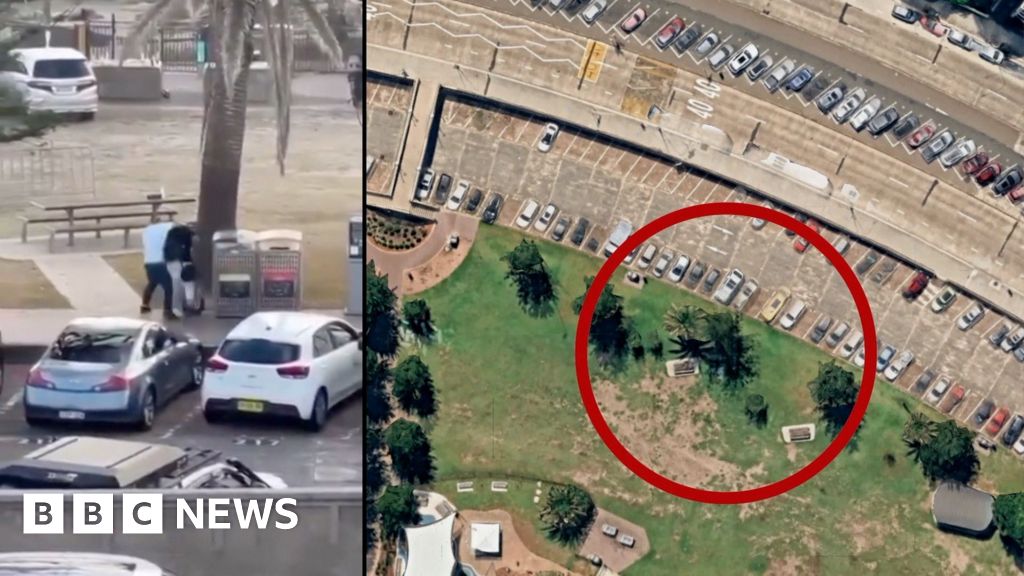
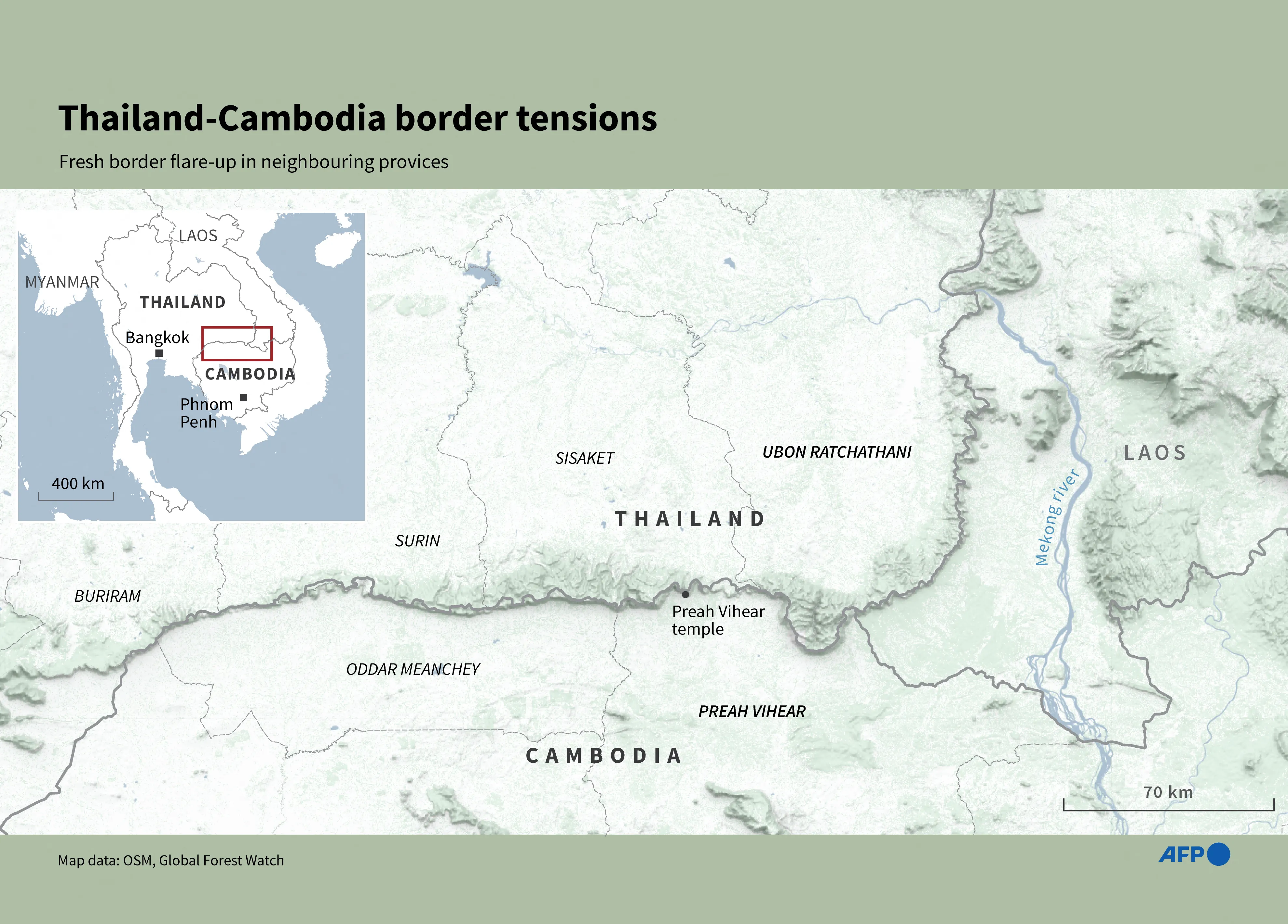


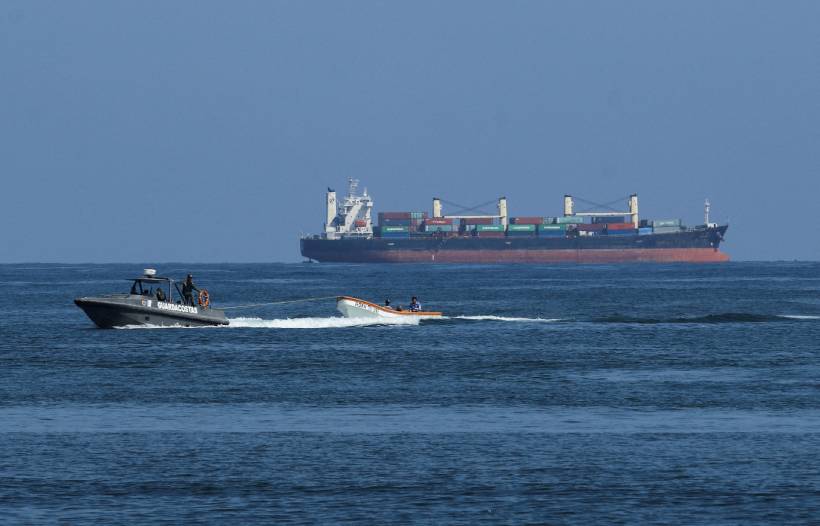
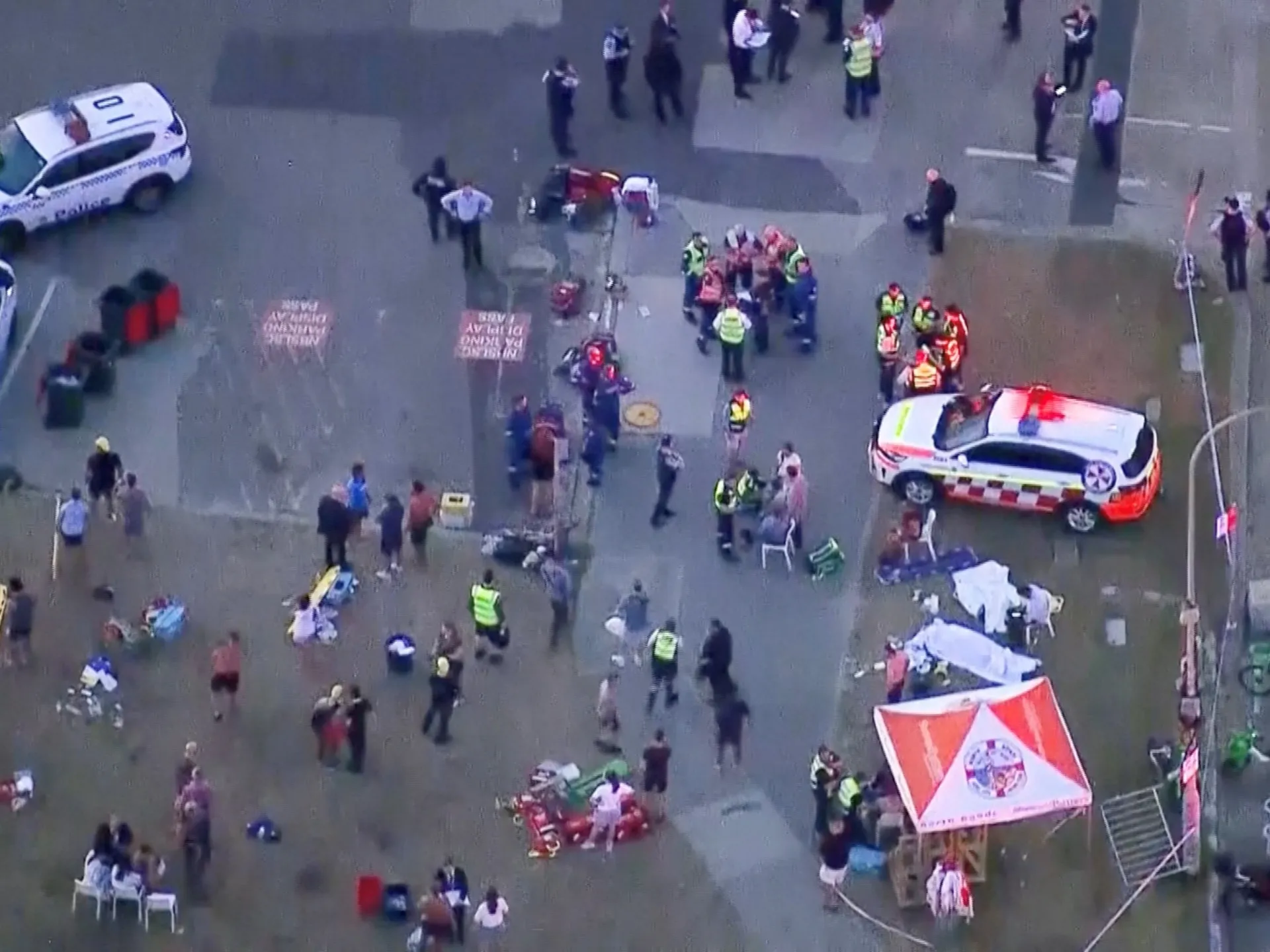
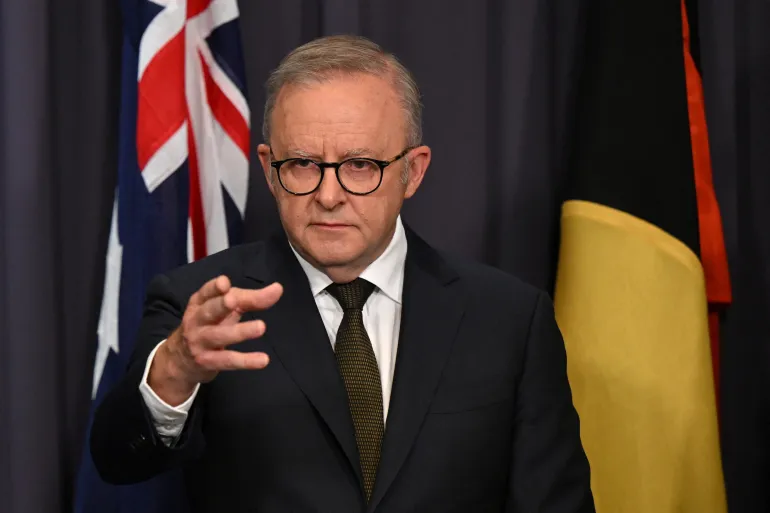





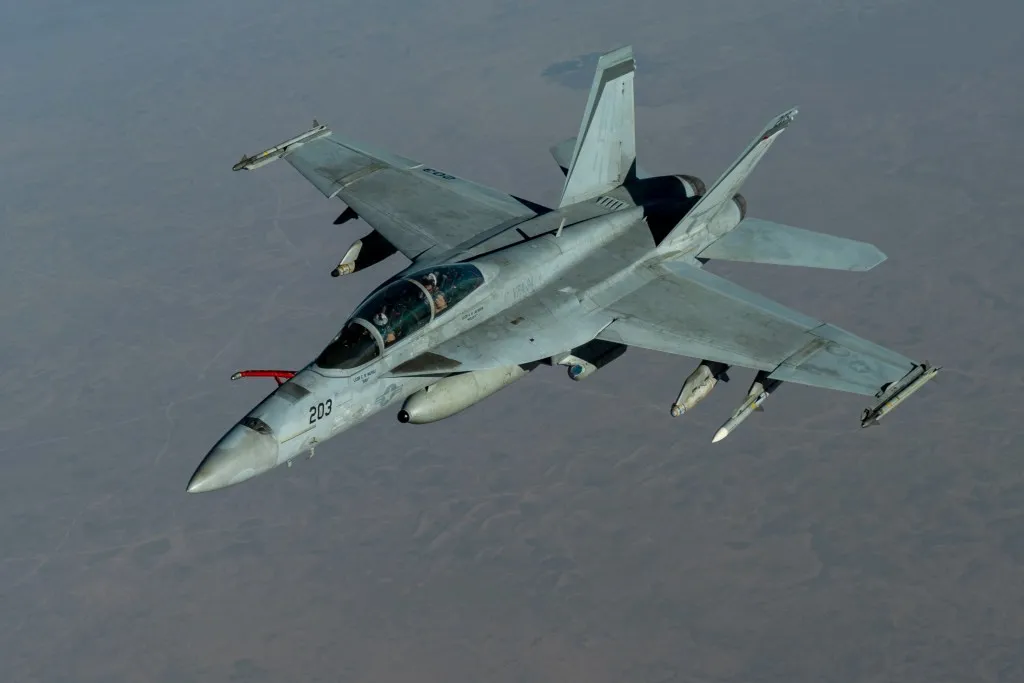



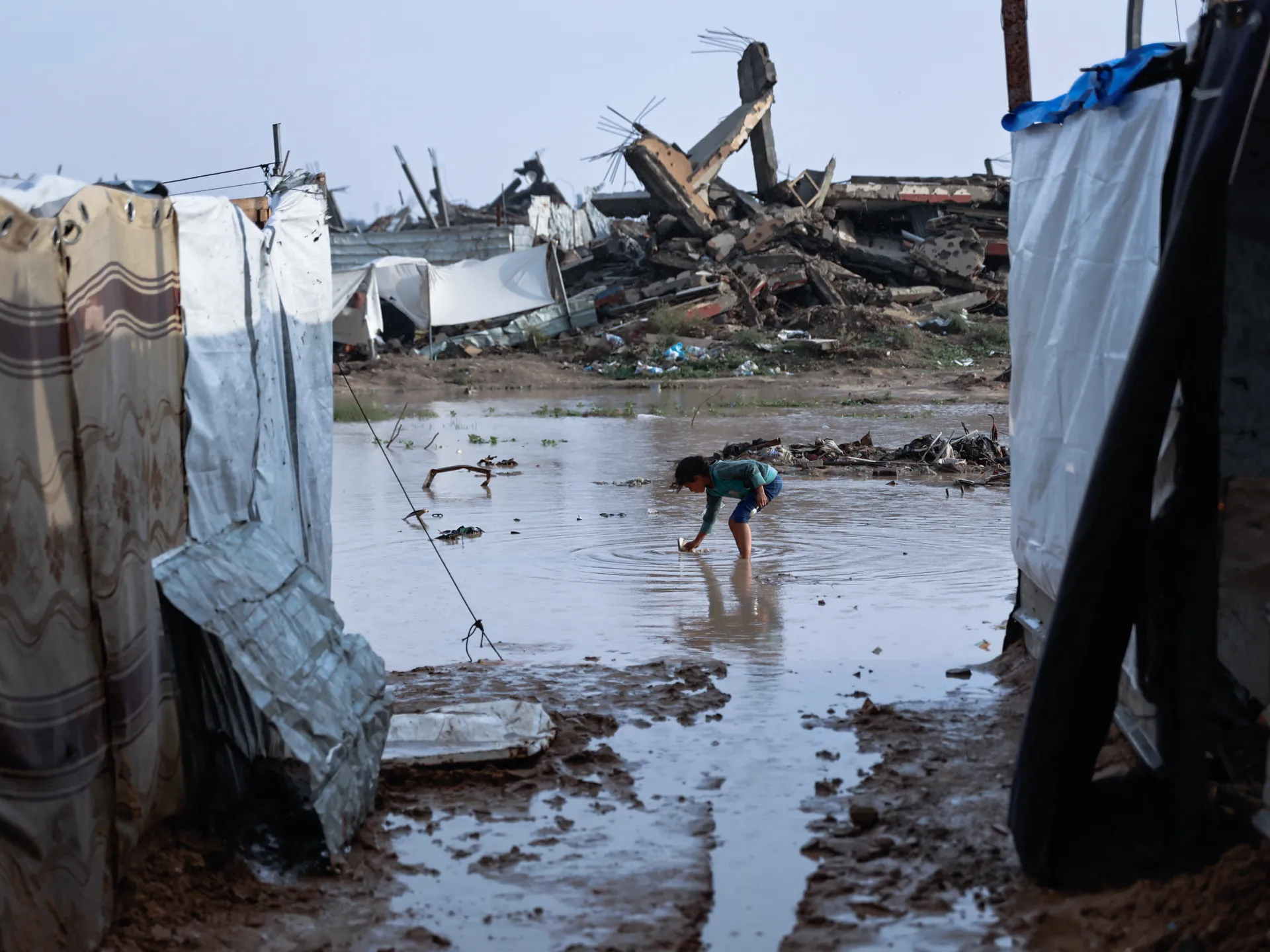
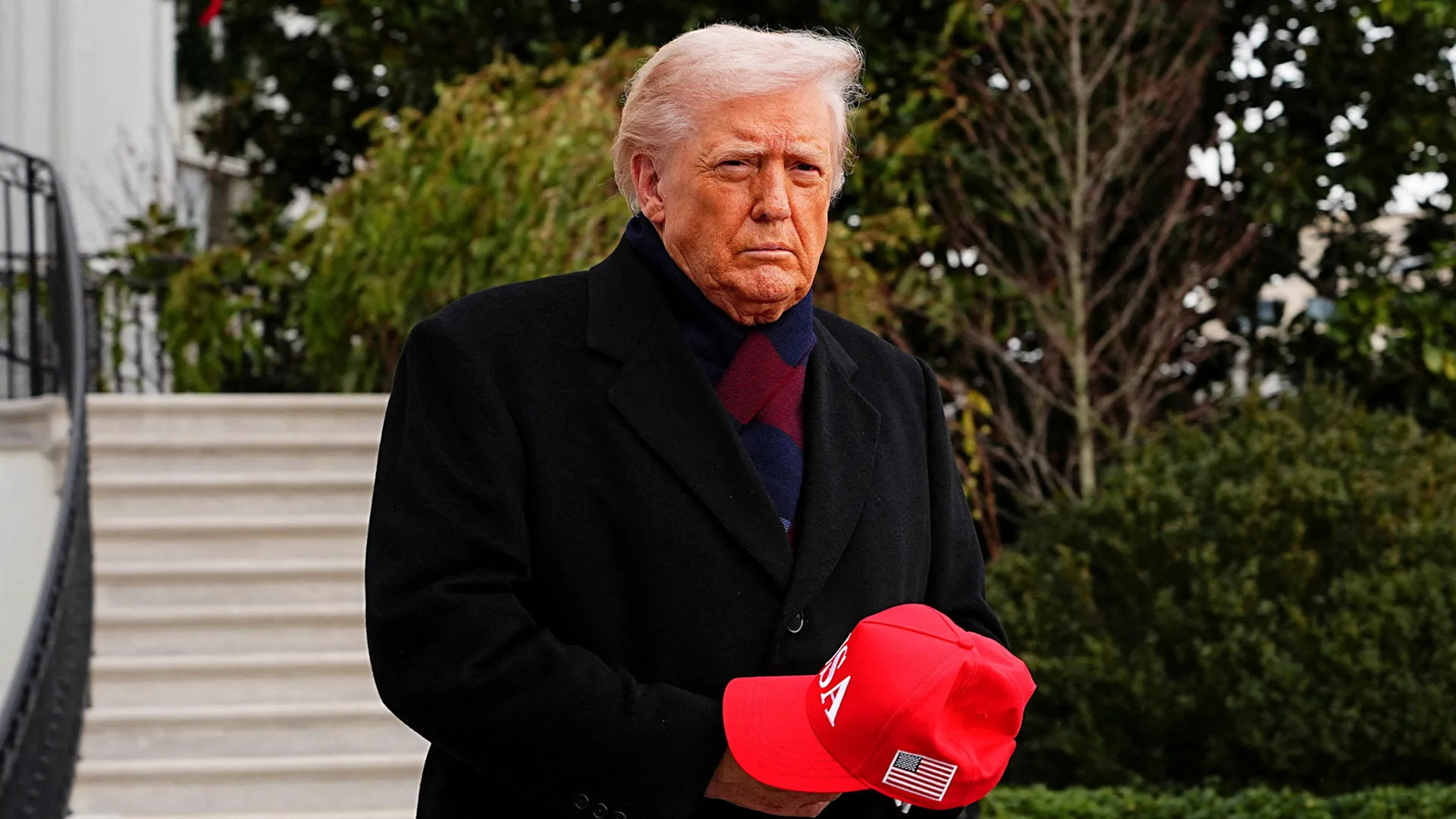
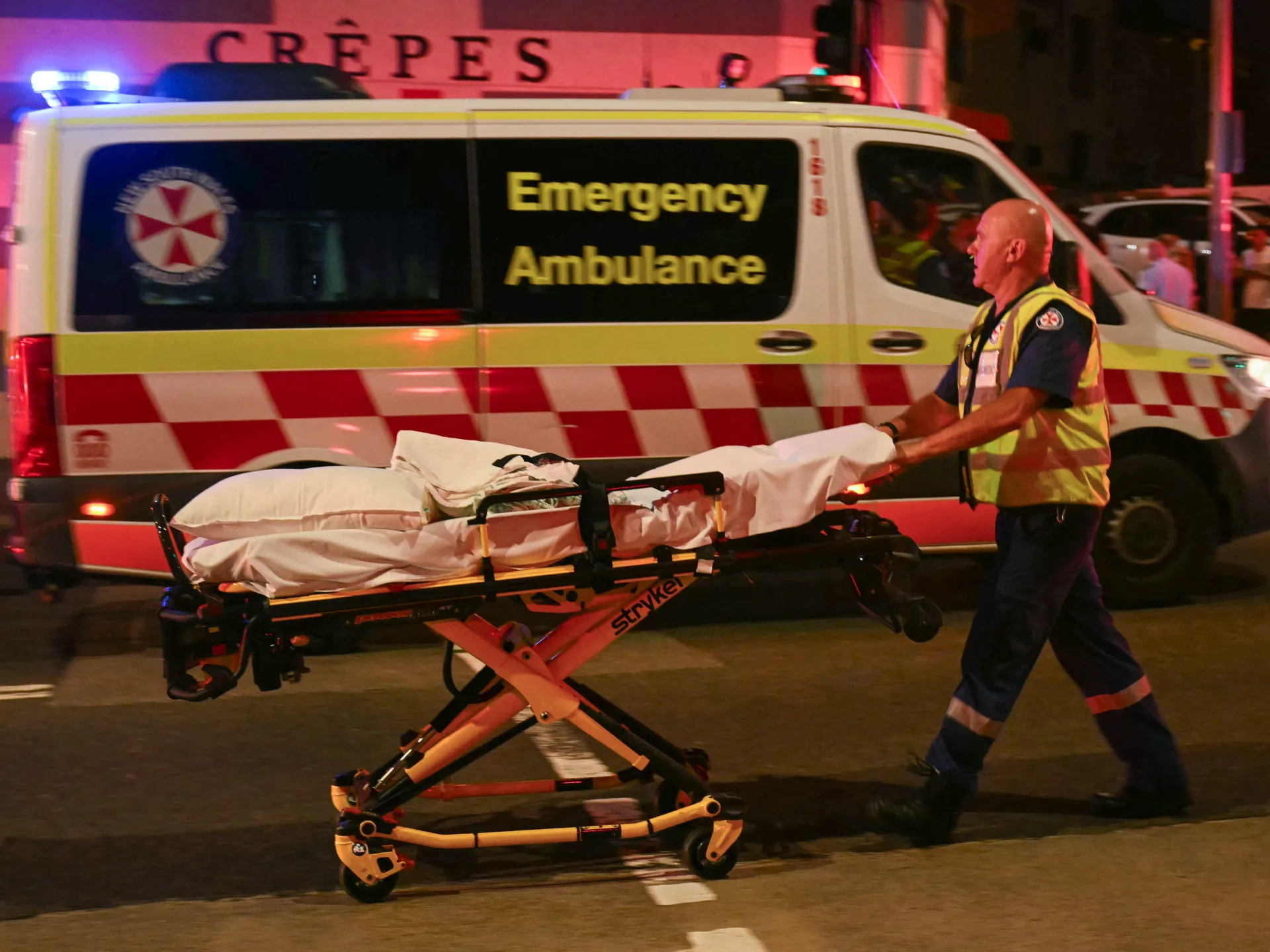
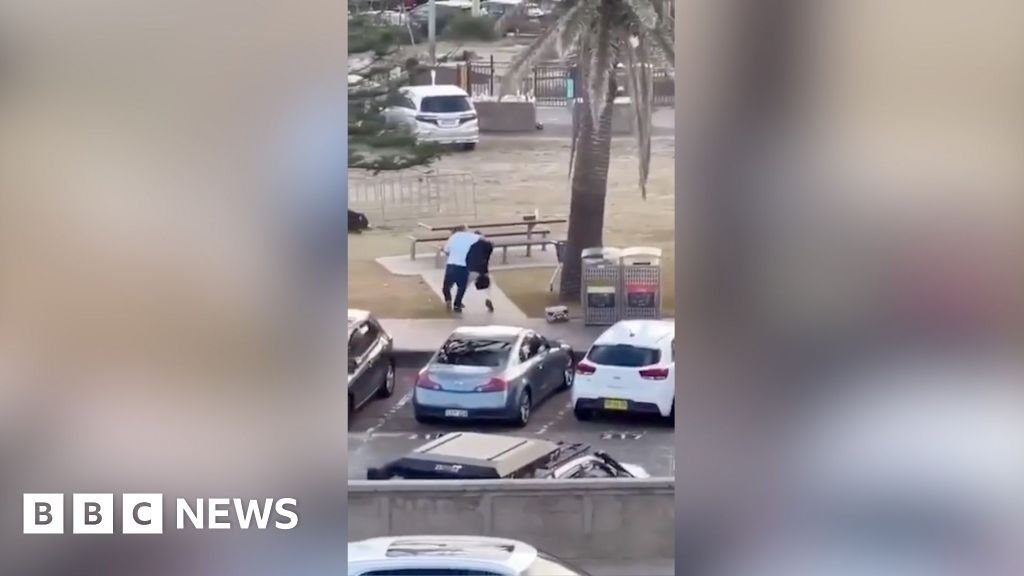



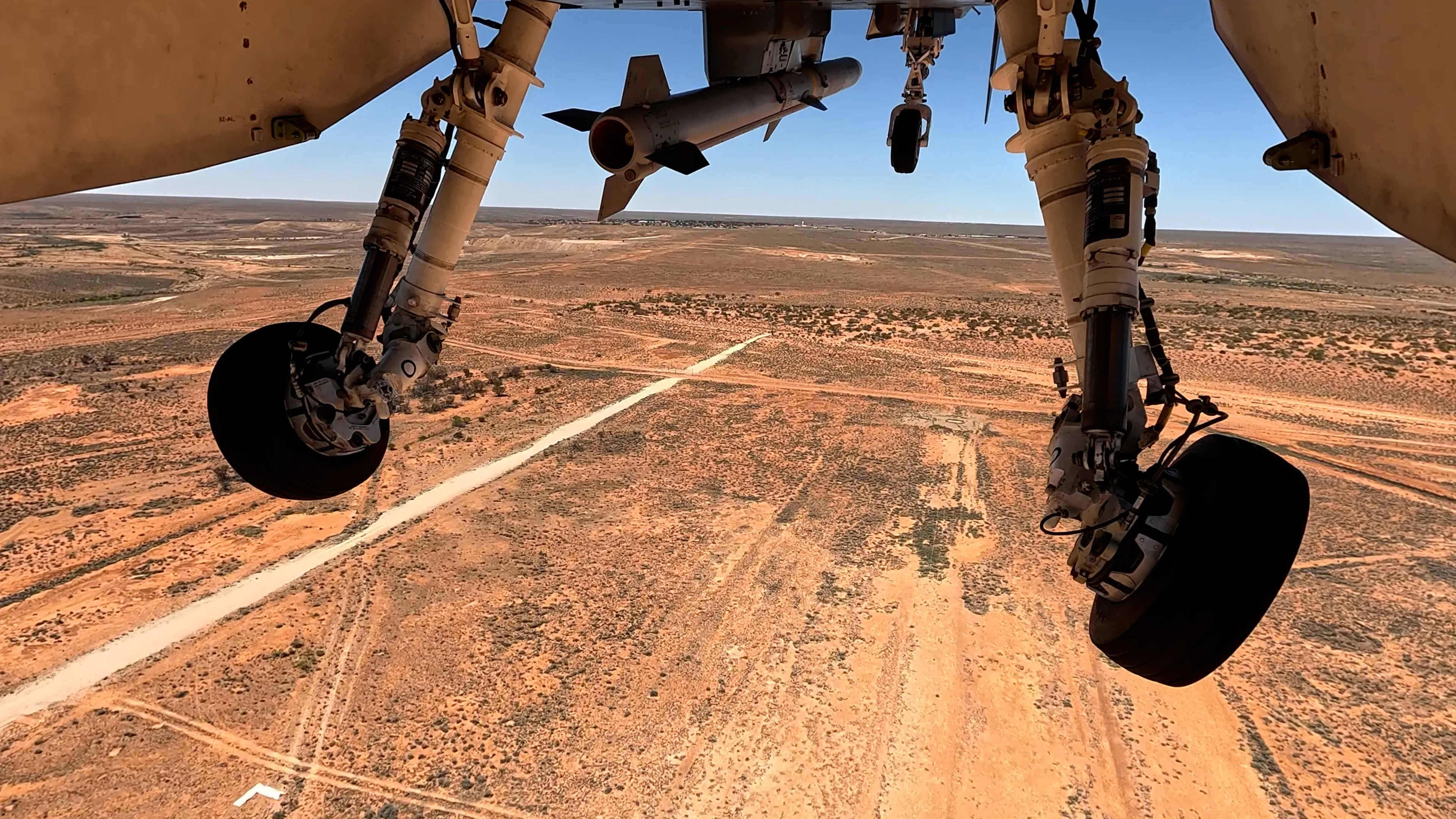



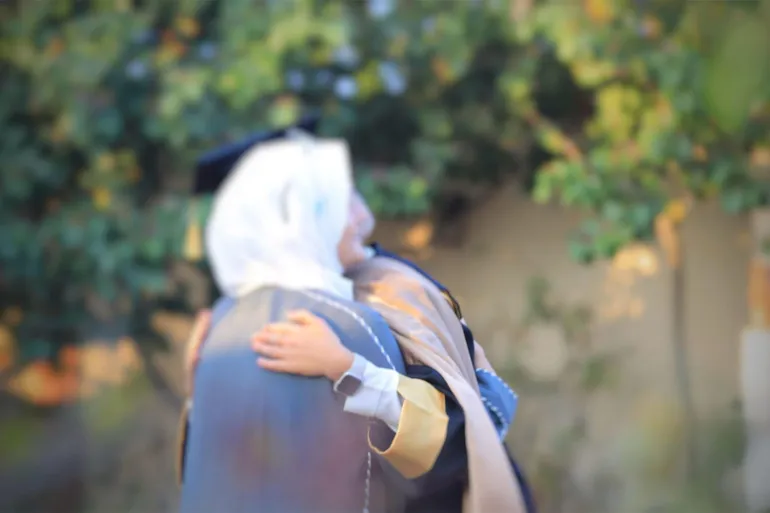

![A workshop at the University of Dublin welcoming the Palestinian students [Courtesy of Rawand Alagha]](https://i0.wp.com/www.aljazeera.com/wp-content/uploads/2025/12/rawand-photo-workshop-in-Dublin-1-1765692719.jpg?w=640&ssl=1)