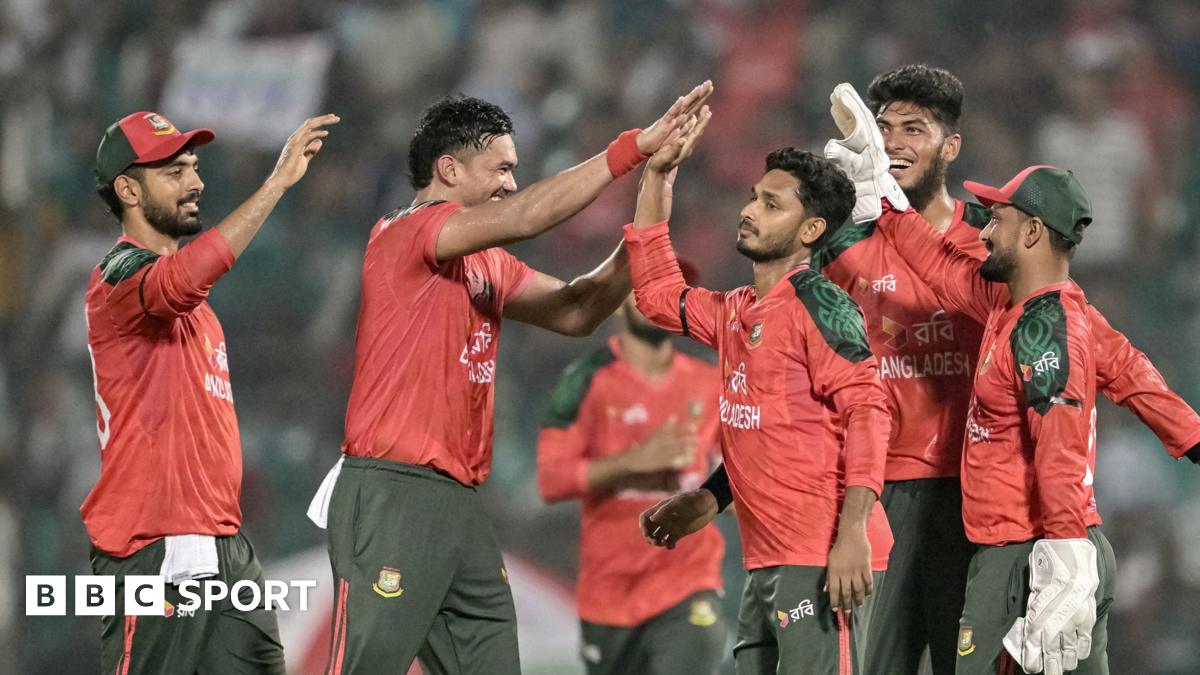
Bangladesh will not travel to India for the T20 World Cup next month “under current conditions” and have requested their matches be moved elsewhere, the country’s cricket board has said.
That led to an emergency meeting at the Bangladesh Cricket Board (BCB), who now say they have “formally requested” the International Cricket Council (ICC) moves all Bangladesh’s matches.
“The board believes that such a step is necessary to safeguard the safety and well-being of Bangladeshi players, team officials, board members and other stakeholders and to ensure that the team can participate in the tournament in a secure and appropriate environment,” a statement said.
The move threatens to bring chaos to a competition which begins on 7 February and has already been affected by the political tensions between India and Pakistan.
Bangladesh are due to play all four of their group-stage matches in India, including on the opening day against West Indies and against England in Kolkata on 14 February.
The tournament is being co-hosted by Sri Lanka, where all Pakistan’s matches will be played because of the tensions with India.
The killing of a Hindu man during violent protests in Bangladesh pushed strained ties between Bangladesh and India into a deeper crisis.
The man was accused of blasphemy and beaten to death by a mob in Muslim-majority Bangladesh in an episode that resulted in protests by Hindu nationalist groups in India.
Anti-India sentiment in Bangladesh has grown since former prime minister Sheikh Hasina fled to the country in 2024.
India has not agreed to send her back despite several requests, while violent protests broke out over the murder of Sharif Osman Hadi, a prominent student leader, in Bangladesh.
Mustafizur was withdrawn from an IPL contract with Kolkata Knight Riders on Saturday.
No reason for the decision was given by the Board of Control for Cricket in India (BCCI) but secretary Devajit Saikia referenced “recent developments”.
“The board reviewed the situation in detail, taking into account developments over the last 24 hours and expressed deep concern over the overall circumstances surrounding the participation of the Bangladesh in matches scheduled to be played in India,” said the BCB, who also announced their 15-strong squad on Sunday.
“Following a thorough assessment of the prevailing situation and the growing concerns regarding the safety and security of the Bangladesh contingent in India… the board of directors resolved that the national team will not travel to India for the tournament under the current conditions.”
The ICC has not responded to the BBC’s request for comment.
Bangladesh squad for T20 World Cup: Litton Das (capt), Saif Hassan, Tanzid Hasan, Parvez Hossain Emon, Towhid Hridoy, Shamim Hossain, Nurul Hasan (wk), Mahedi Hasan, Rishad Hossain, Nasum Ahmed, Mustafizur Rahman, Tanzim Hasan Sakib, Taskin Ahmed, Mohammad Saifuddin, Shoriful Islam.
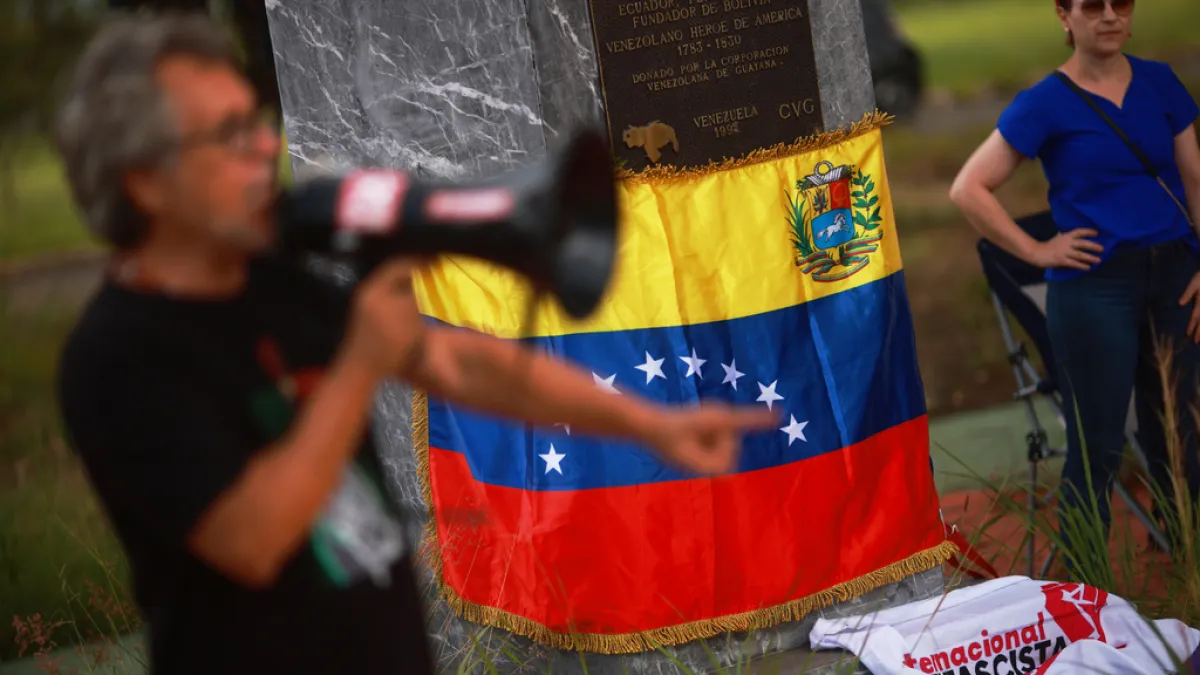
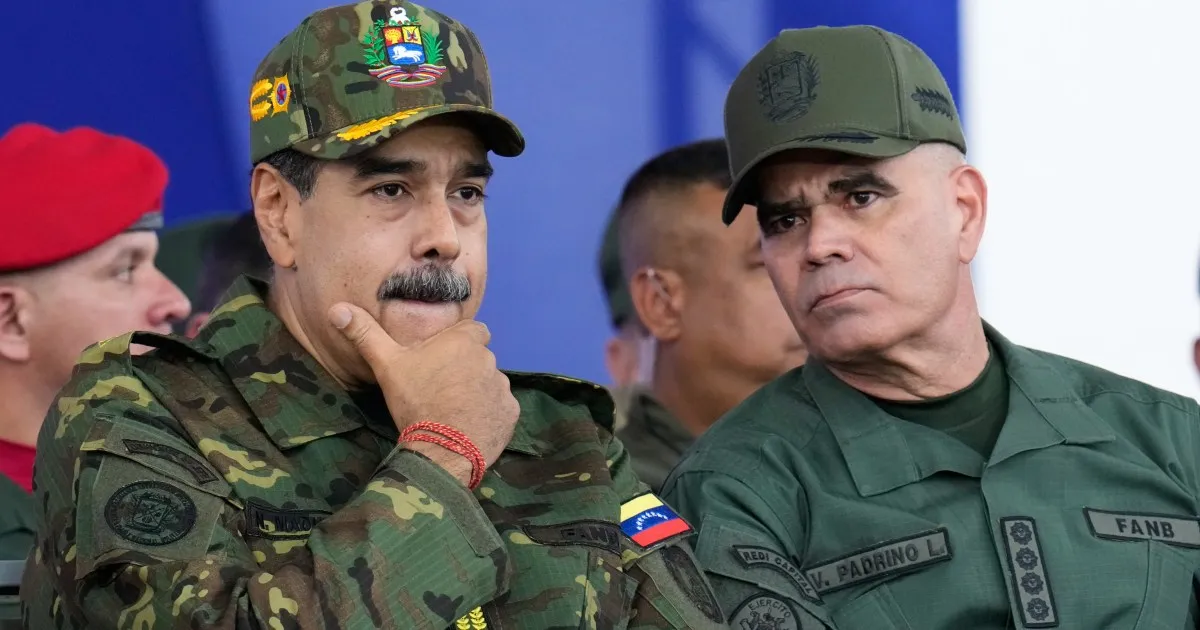
In a move that stunned the world, the United States bombed Venezuela and toppled President Nicolas Maduro amid condemnation and plaudits.
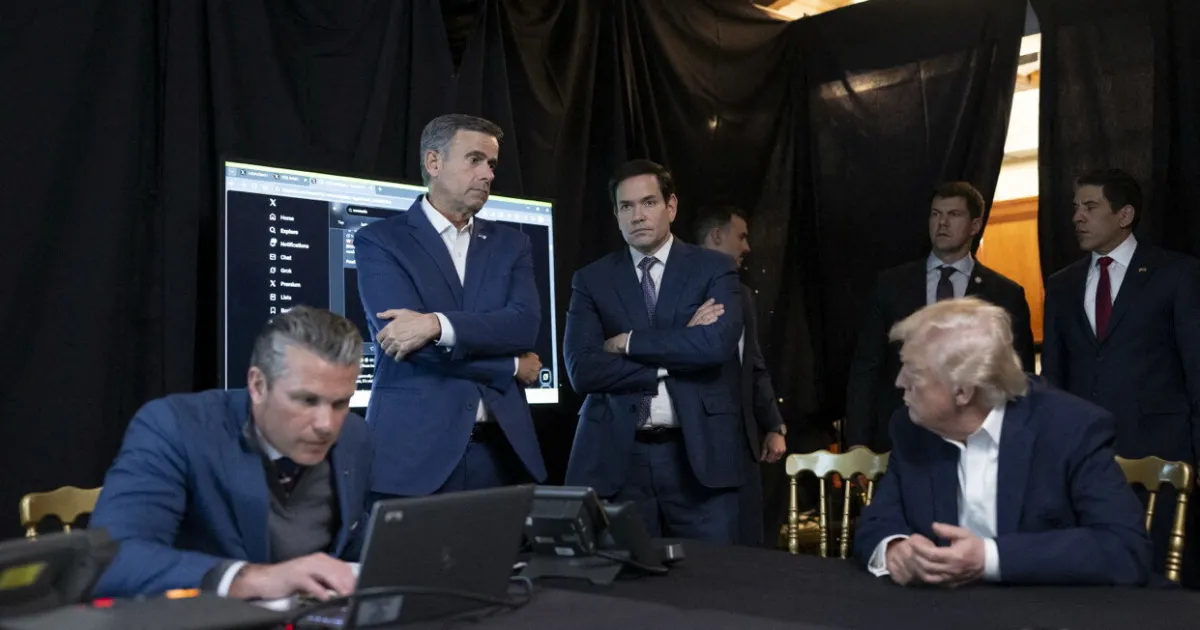
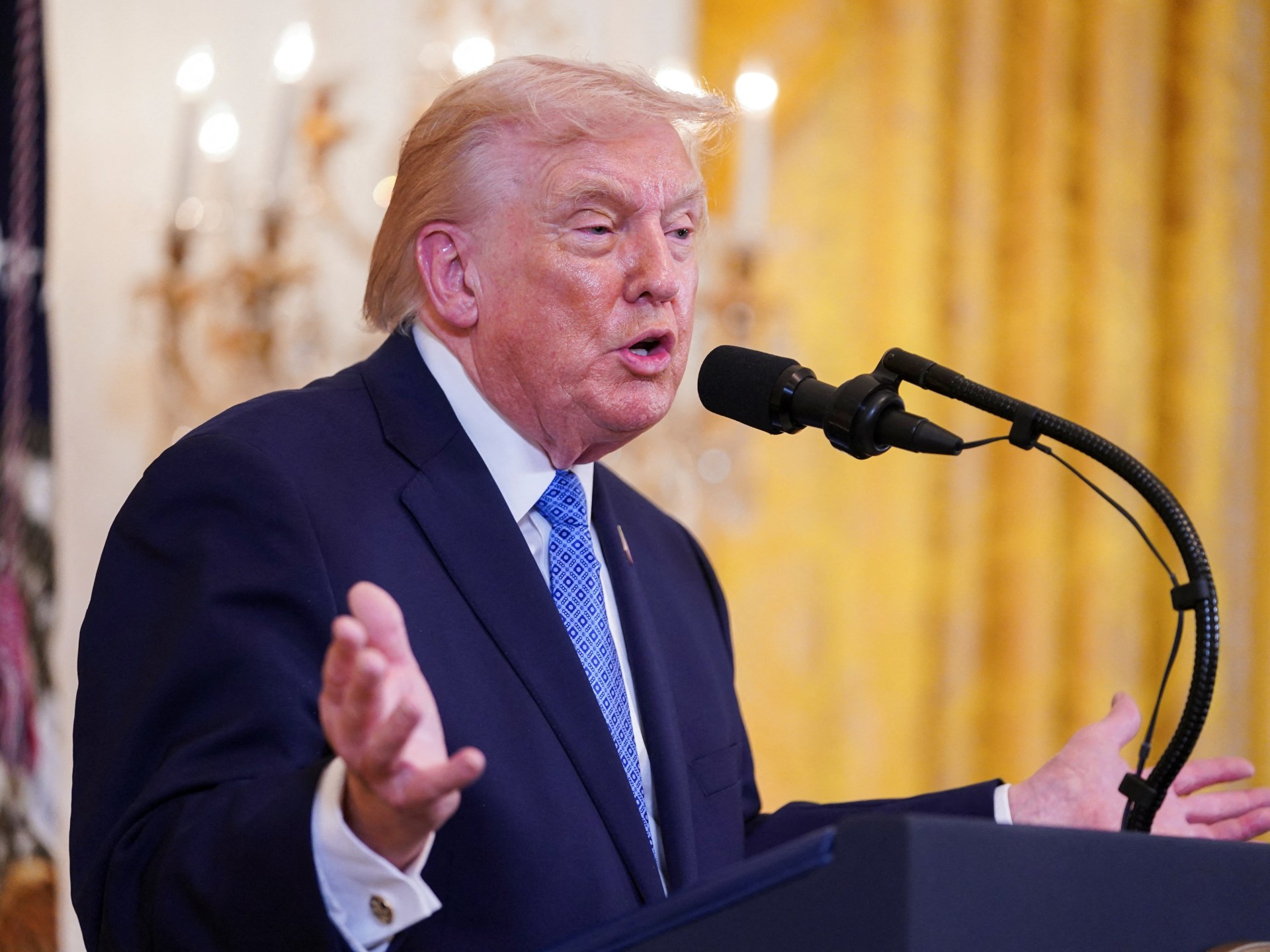
In a news conference on Saturday at his Mar-a-Lago resort in Florida, President Donald Trump praised the operation to seize Maduro as one of the “most stunning, effective and powerful displays of American military might and competence in American history”.
Recommended Stories
list of 4 itemsend of list
It was the riskiest and most high-profile military operation sanctioned by Washington since the US Navy’s SEAL team killed al-Qaeda leader Osama bin Laden in a safe house in Pakistan’s Abbottabad in 2011.
News of the 63-year-old Maduro being abducted took over the global news cycle.
After months of escalation and threats over Maduro’s alleged involvement in shipping drugs to the US, the Trump administration had increased pressure on Caracas with a military build-up in the Caribbean and a series of deadly missile attacks on alleged drug-running boats that had killed more than 100 people and whose legality has been heavily questioned by the United Nations and legal experts.
The US had also previously offered a $50m reward for information leading to Maduro’s arrest.
But while the military was conducting operations in the Caribbean, US intelligence had been gathering information about Maduro, his eating habits, and special forces covertly rehearsed a plan to remove him from power forcibly.
Here’s everything we know about how Maduro and his wife, Cilia Flores, were “captured”.
How was Maduro abducted?
The operation, named “Absolute Resolve”, was carefully rehearsed for months, according to General Dan Caine, chairman of the Joint Chiefs of Staff, who spoke at Trump’s news conference.
Trump also told Fox News that US forces had practised their extraction of Maduro on a replica building.
“They actually built a house which was identical to the one they went into with all the same, all that steel all over the place,” Trump said.
At 11:46pm local time on Friday (03:46 GMT on Saturday), Trump gave the green light.
On Friday night, Caine said, “the weather broke just enough, clearing a path that only the most skilled aviators in the world could move through”, with about 150 aircraft involved in the operation, taking off from 20 different airbases across the Western Hemisphere.
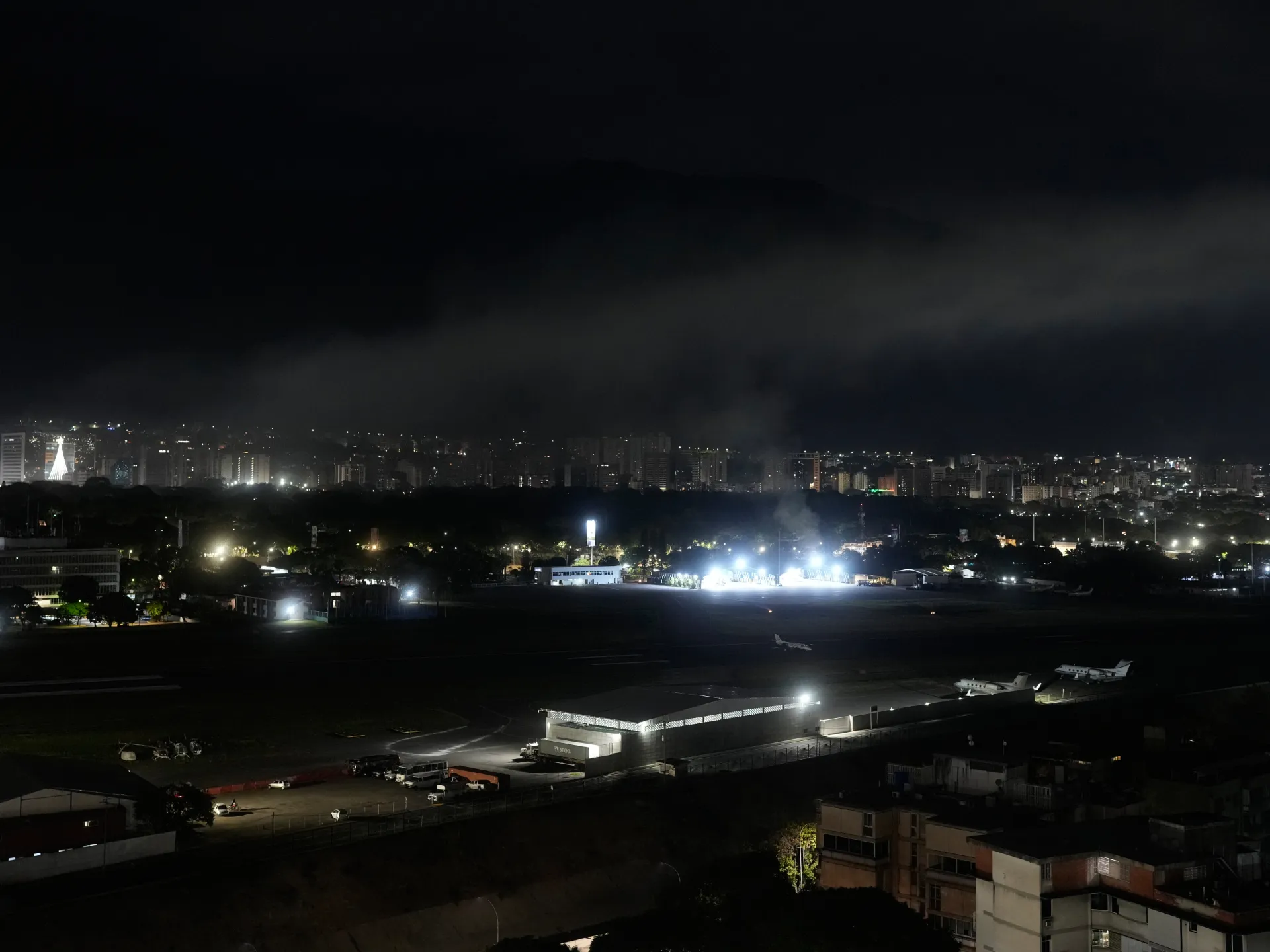
As part of the operation, US forces disabled Venezuela’s air defence systems, with Trump saying the “lights of Caracas were largely turned off due to a certain expertise that we have”, without elaborating.
Several deafening explosions rang out across the capital, with Pete Hegseth, the defence secretary, describing it as part of a “massive joint military and law enforcement raid” that lasted less than 30 minutes.
US helicopters then touched down at Maduro’s compound in the capital at 2:01am (06:01 GMT) on Saturday, with the president and his wife then taken into custody.
There has been no readout on whether there was an exchange of fire, in a chaotic scramble, or if they were taken without a struggle.
At 4:29am (08:29 GMT), just two and a half hours later, Maduro was put on board a US aircraft carrier, en route to New York. Trump later posted a photograph of the Venezuelan leader on his Truth Social social media platform, blindfolded, wearing a grey tracksuit.
After departing the USS Iwo Jima, US forces escorted Maduro on a flight, touching down in New York’s Stewart Air National Guard Base at about 4:30pm (21:30 GMT).
How many people were killed in the US strikes on Venezuela?
The US strikes hit Caracas as well as the states of Miranda, Aragua and La Guaira, according to the Venezuelan government.
To Linda Unamumo, a public worker, the US attacks caused an explosion that was so strong it destroyed the roof of her house.
“Even up until a little while ago, I was still crying … I was crying because I was so scared … I had to leave my house with my daughter, with my family, and go to another house, a neighbour’s house. It was really traumatic. I wouldn’t wish it on anyone, really,” she told the AFP news agency.
While official casualty counts have yet to be released, an official told The New York Times newspaper on condition of anonymity that at least 40 people had been killed in the attacks.
According to Trump, a few US members were injured in the operation, but he believed no one was killed.
What’s next for Venezuela?
During his news conference on Saturday, Trump announced that the US would “run” the country until a new leader was chosen.
“We’re going to make sure that country is run properly. We’re not doing this in vain,” he said. “This is a very dangerous attack. This is an attack that could have gone very, very badly.”
The president did not rule out deploying US troops in the country and said he was “not afraid of boots on the ground if we have to”.
Trump also, somewhat surprisingly, ruled out working with opposition figure and Nobel Peace Prize winner Maria Corina Machado, who had dedicated her prize, which he so wanted to win himself, to the US president.
“She doesn’t have the support within or the respect within the country,” he said.
The Constitutional Chamber of Venezuela’s Supreme Court ordered Vice President Delcy Rodriguez to serve as acting president following the US’s abduction of Maduro.
The court ruled that Rodriguez will assume “the office of President of the Bolivarian Republic of Venezuela, in order to guarantee administrative continuity and the comprehensive defence of the Nation”.
The court also said it would work to “determine the applicable legal framework to guarantee the continuity of the State, the administration of government, and the defense of sovereignty in the face of the forced absence of the President of the Republic”.
Trump had said earlier on Saturday that the US would not occupy Venezuela, provided Rodriguez “does what we want”.
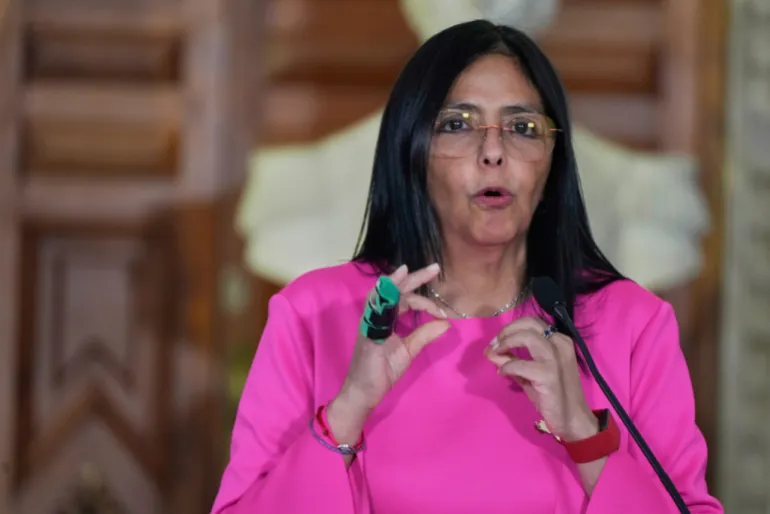
Venezuelan Vice President Delcy Rodriguez speaks to the press at the Foreign Office in Caracas, Venezuela, on August 11, 2025 [Ariana Cubillos/AP Photo]
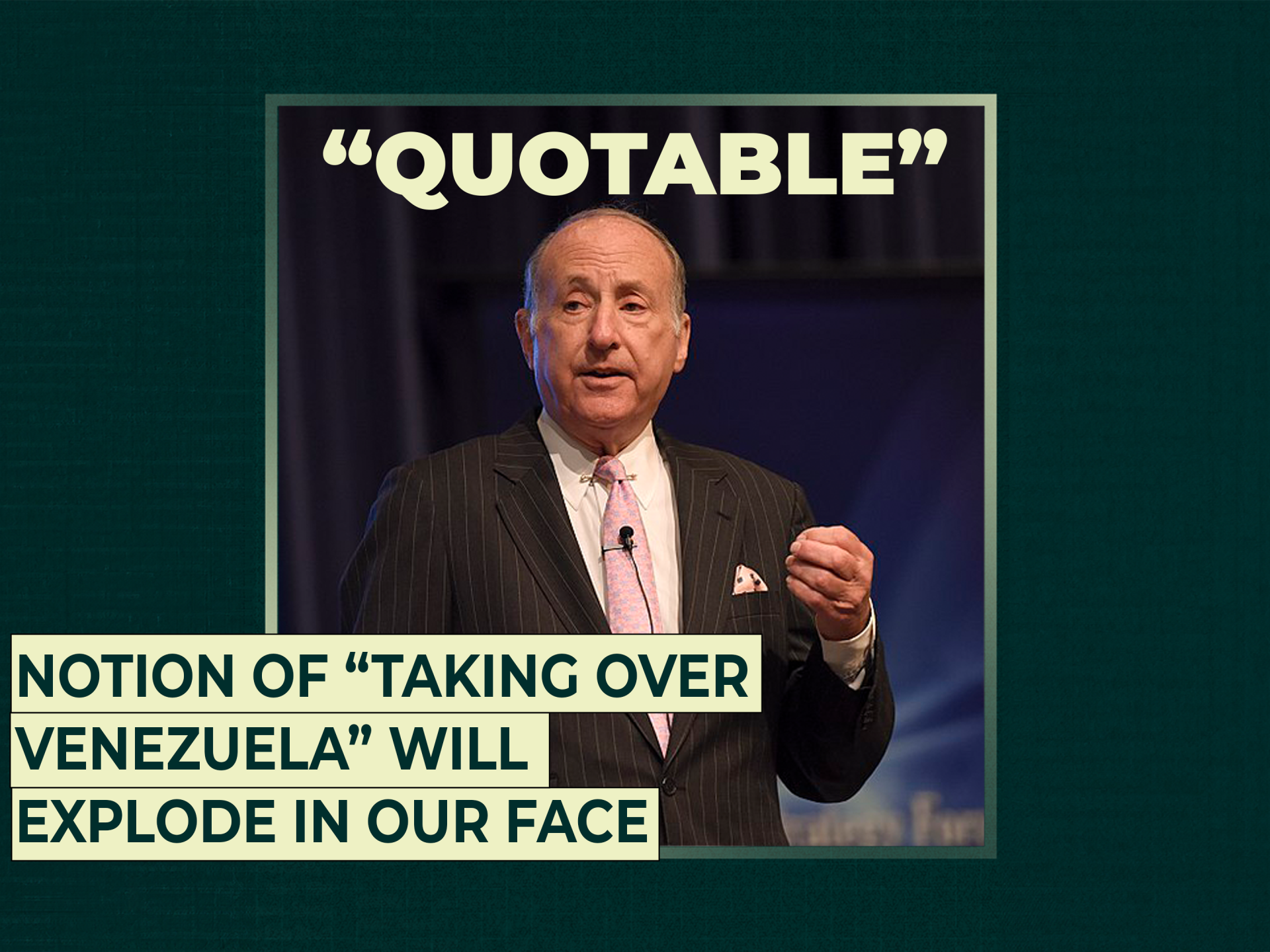
Harlan Ullman, a senior advisor at Atlantic Council talks about Donald Trump’s plan to take over Venezuela and the significant issues that need to be considered.
Since coming down the escalator in 2015 to announce his first presidential run, Donald Trump has presented himself as a break from the traditional hawkish foreign policy in the United States.
The US president has even criticised some of his political rivals as “warmongers” and “war hawks”.
Recommended Stories
list of 3 itemsend of list
But Trump’s move to abduct Venezuelan President Nicolas Maduro and announce that the US will “run” the Latin American country has drawn comparisons with the regime change wars that he built a political career rejecting.
Some critics from Trump’s Make America Great Again (MAGA) movement, who backed his message of focusing on the country’s own issues instead of conflicts abroad, are criticising Washington’s march to war with Venezuela.
Still, Trump’s grip on Republican politics appears to remain firm, with most legislators from the party praising Trump’s actions.
“To President Trump and his team, you should take great pride in setting in motion the liberation of Venezuela,” Senator Lindsey Graham wrote in a social media post.
“As I have often said, it is in America’s national security interest to deal with the drug caliphate in our backyard, the centrepiece of which is Venezuela.”
Graham’s reference to a “drug caliphate” seems to play on Islamophobic tropes and promote the push to liken the US attacks on alleged drug traffickers in Latin America to the so-called “war on terror”.
The US senator heaped praise on the winner of the FIFA Peace Prize – handed to Trump by the association’s chief, Gianni Infantino, in December – and called him “the GOAT of the American presidency”, which stands for “the greatest of all time”.
Muted criticism
While it was expected that Graham and other foreign policy hawks in Trump’s orbit would back the moves against Venezuela, even some of the Republican sceptics of foreign interventions cheered the abduction of Maduro.
Former Congressman Matt Gaetz, one of the most vocal critics of hawkish foreign policy on the right, poked fun at the “capture” of the Venezuelan president.
“Maduro is gonna hate CECOT,” he wrote on X, referring to the notorious prison in El Salvador where the Trump administration sent hundreds of suspected gang members without due process.
Libertarian Senator Rand Paul, who has been a leading voice in decrying Congress’s war-making power, only expressed muted disapproval of Trump’s failure to seek lawmakers’ authorisation for military action in Venezuela.
“Time will tell if regime change in Venezuela is successful without significant monetary or human cost,” he wrote in a lengthy statement that mostly argued against bringing “socialism” to the US.
“Best though, not to forget, that our founders limited the executive’s power to go to war without Congressional authorisation for a reason – to limit the horror of war and limit war to acts of defence. Let’s hope those precepts of peace are not forgotten in our justified relief that Maduro is gone and the Venezuelan people will have a second chance.”
Early on Saturday morning, Republican Senator Mike Lee questioned the legality of the attack. “I look forward to learning what, if anything, might constitutionally justify this action in the absence of a declaration of war or authorisation for the use of military force,” he wrote on X.
Lee later said that Secretary of State Marco Rubio told him that US troops were executing a legal arrest warrant against Maduro.
“This action likely falls within the president’s inherent authority under Article II of the Constitution to protect US personnel from an actual or imminent attack,” the senator said.
“Americans’ disgust with our own government’s never-ending military aggression and support of foreign wars is justified because we are forced to pay for it and both parties, Republicans and Democrats, always keep the Washington military machine funded and going,” Greene wrote on X.
Greene, a former Trump ally who fell out with the US president and is leaving Congress next week, rejected the argument that Trump ordered Maduro’s “capture” because of the Venezuelan president’s alleged involvement in the drug trade.
She noted that Venezuela is not a major exporter of fentanyl, the leading cause of overdose deaths in the US.
She also underscored that, last month, Trump pardoned former Honduran President Juan Orlando Hernandez, a convicted drug trafficker who was serving a 45-year sentence in a US jail.
“Regime change, funding foreign wars, and American’s [sic] tax dollars being consistently funneled to foreign causes, foreigners both home and abroad, and foreign governments while Americans are consistently facing increasing cost of living, housing, healthcare, and learn about scams and fraud of their tax dollars is what has most Americans enraged,” Greene said.
Congressman Tomas Massie, another Republican, shared a speech he delivered in the House of Representatives earlier this month, warning that attacking Venezuela is about “oil and regime change”.
“Are we prepared to receive swarms of the 25 million Venezuelans, who will likely become refugees, and billions in American treasure that will be used to destroy and inevitably rebuild that nation? Do we want a miniature Afghanistan in the Western Hemisphere?” Massie said in the remarks.
“If that cost is acceptable to this Congress, then we should vote on it as a voice of the people and in accordance with our Constitution.”
While Massie and Greene are outliers in their party, Trump’s risky moves in Venezuela were a success in the short term: Maduro is in US custody at a minimal cost to Washington.
Similarly, few Republicans opposed the US war in Iraq when then-President George W Bush stood under the “mission accomplished” sign on the aircraft carrier USS Abraham Lincoln after toppling Iraq’s leader, Saddam Hussein, in 2003.
But there is now a near consensus across the political spectrum that the Iraq invasion was a geopolitical disaster.
The fog of war continues to hang over Venezuela, and it is unclear who is in charge of the country, or how Trump will “run” it.
The US president has not ruled out deploying “boots on the ground” to Venezuela, raising the prospect of a US occupation and the possibility of another Vietnam, Iraq or Afghanistan.
“Do we truly believe that Nicolas Maduro will be replaced by a modern-day George Washington? How did that work out in… Libya, Iraq or Syria?” Massie warned in his Congress speech.
“Previous presidents told us to go to war over WMDs, weapons of mass destruction, that did not exist. Now, it’s the same playbook, except we’re told that drugs are the WMDs.”
Sao Paulo, Brazil – Venezuela has temporarily closed its border with Brazil following the United States’s early morning attack on Caracas, in which US forces also “captured” President Nicolas Maduro and his wife, Cilia Flores.
The border crossing between the Brazilian city of Pacaraima and Santa Elena de Uairen in Venezuela had been closed on the Venezuelan side for about five hours, blocking citizens from entering Brazil, a Brazilian military official told Al Jazeera.
Recommended Stories
list of 3 itemsend of list
“There was no formal protocol from Venezuela regarding entry and exit criteria. The fact is that Brazilians are allowed to leave, while Venezuelans face restrictions. But this could change at any time,” said the official, who spoke on condition of anonymity because he is not authorised to speak on the matter.
The head of Brazil’s Federal Police also announced the temporary closure, and the governor of the state of Roraima told Reuters that the border had been reopened after the brief closure.
Brazil’s government said it is monitoring the border and has sent military personnel to the region to bolster security.
“The Minister of Defense indicated that there is no abnormal activity on the border between Brazil and Venezuela, which will continue to be monitored, and that he is in contact with the Governor of Roraima,” read a statement from Brazil’s Ministry of Foreign Affairs.
Venezuelans make up Brazil’s largest foreign population, according to the Brazilian Institute of Geography and Statistics. The state of Roraima alone is home to 77,563 immigrants from the country. In all, some 8 million Venezuelans have fled their homes in the past decade, with more than 6 million resettling in other Latin American countries.
“I think it’s very possible that there will be an exodus of Venezuelans to Brazil, and, in fact, we are already seeing concrete signs of it,” Jessica Leon Cedeno, a Venezuelan journalist who lives in Sao Paulo, told Al Jazeera.
“Millions of people have left the country in search of better living conditions and opportunities.”
Lula says US attacks could ‘destabilise’ the region
Brazilian President Luiz Inacio Lula da Silva said on Saturday that US President Donald Trump’s actions inside Venezuela were “unacceptable”.
“The bombings on Venezuelan territory and the capture of its president cross an unacceptable line,” wrote Lula on X. “These acts represent a grave affront to Venezuela’s sovereignty and yet another extremely dangerous precedent for the entire international community.”
Brazil’s leader has urged restraint for months amid an increased US military buildup off Venezuela’s coast.
Analysts worry that Maduro’s removal could plunge Venezuela into chaos, potentially resulting in another wave of mass migration, as it witnessed in 2019 after a failed attempt to remove Maduro.
Joao Carlos Jarochinski Silva, a professor of international relations at the Federal University of Roraima, said that a potential wave of migration would depend on multiple factors, including whether Washington continues its military campaign inside the country and whether what remains of Maduro’s regime will put up a fight.
“What is the resilience capacity of Chavismo within Venezuela?” Jarochinski Silva said, referring to the political movement named after former President Hugo Chavez. “This could have consequences that are truly worrying, but given the current scenario, there is no context of fear.”
He added that Trump has so far focused on applauding his military’s action inside Venezuela and has not addressed key humanitarian concerns. Earlier this year, the Trump administration cut funding to the US government’s main agency for foreign aid, USAID, which heavily affected Venezuela’s neighbours, Brazil and Colombia.
“The United States has been cutting humanitarian resources lately,” he said, adding that there will be consequences to the US military actions inside the country. “For example, refugees, other people who may be affected by this. He doesn’t commit to this agenda at any point.”
STC separatists accuse Saudi Arabia of requiring flights to UAE to land in Jeddah; Saudi source rejects claim.
Published On 2 Jan 20262 Jan 2026
Share
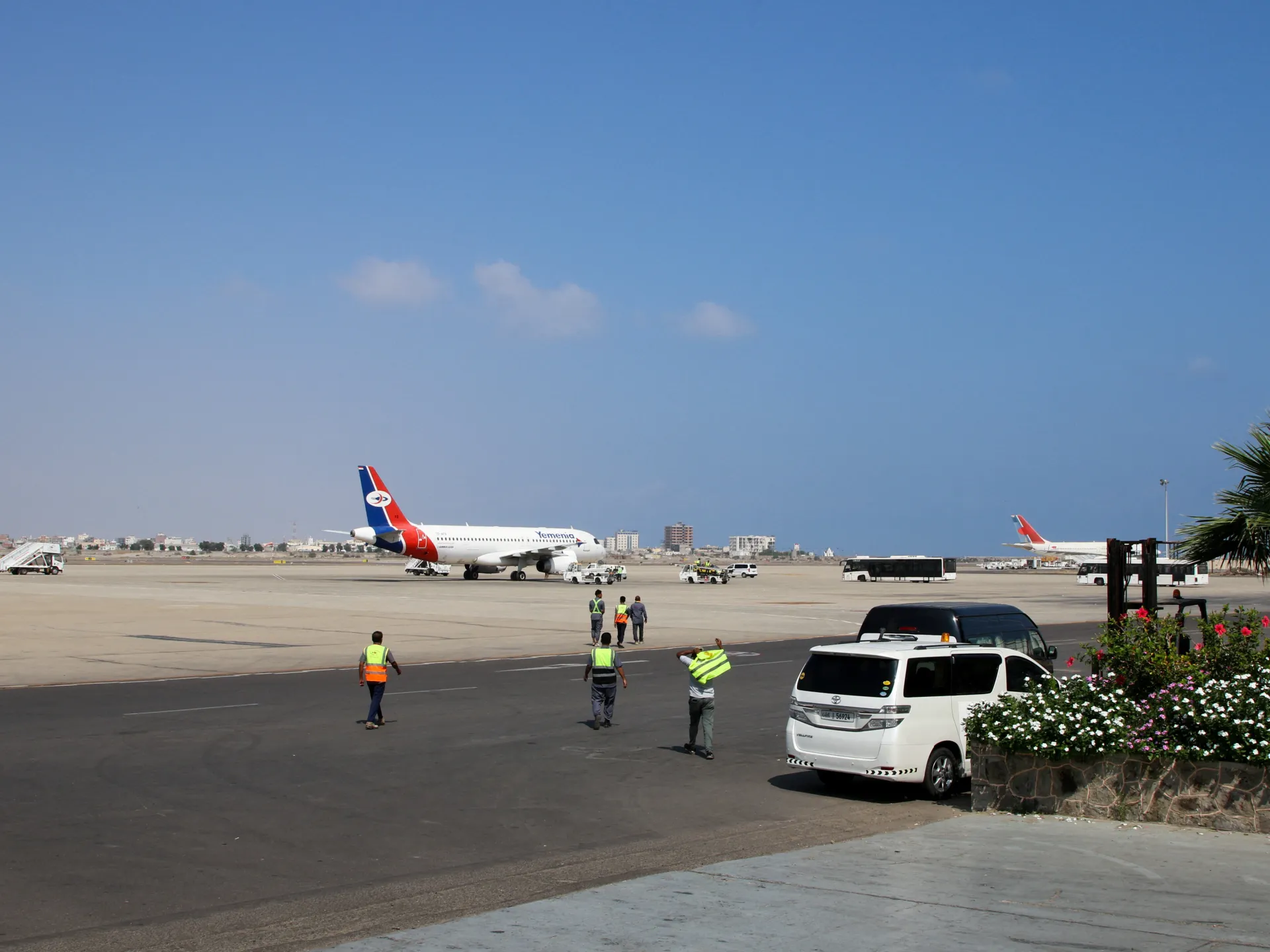
Flights from Aden international airport in Yemen were halted on Thursday amid continuing tensions between the Southern Transitional Council (STC) separatist group and the Saudi Arabia-backed internationally recognised government in Yemen.
Reuters news agency reported that all flights were suspended at the airport on Thursday, although further details of flight operations and possible resumptions remained unclear.
Recommended Stories
list of 3 itemsend of list
The STC has formally been a part of the Saudi-led coalition that, since 2015, has been fighting the Houthi takeover of large parts of Yemen. But the STC also seeks to carve out a separate nation in southern Yemen, and in December, expanded its military operations in Hadramout and al-Mahra provinces that border Saudi Arabia, setting off a rapid escalation in tensions.
Saudi Arabia has accused the United Arab Emirates – also a part of the anti-Houthi coalition – of arming the STC and of encouraging the separatist group to expand into Hadramout and al-Mahra, which Riyadh has said threatens its national security. The UAE has denied those allegations, insisting that it supports Saudi Arabia’s security.
However, while the UAE has since agreed to demands from Yemen’s Riyadh-backed Presidential Leadership Council and Saudi Arabia to withdraw its troops from Yemen, the STC has refused to pull back from Hadramout and al-Mahra.
On Thursday, the STC-aligned Transport Ministry within the internationally recognised government claimed that the stoppage at the airport was a result of Saudi Arabia imposing new requirements mandating that flights to and from Aden airport undergo inspection in Jeddah.
The ministry said it was “shocked” by the move, adding that Saudi authorities later clarified the restriction only applied to flights operating between Aden and the United Arab Emirates.
A Saudi source denied to the Reuters news agency that it was involved in restricting flights, saying Yemen’s internationally recognised government, led by the Presidential Leadership Council, was behind the requirement for UAE-bound flights.
Yemeni presidential adviser, Thabet al-Ahmadi, confirmed to Al Jazeera that it had imposed a requirement that applied to one flight route departing from Aden airport. He said the move was meant to prevent STC money smuggling.
Al-Ahmadi said the government did not support a complete halt to flights, adding it wanted to ensure air traffic continued unimpeded.
Earlier this week, the UAE announced it was voluntarily withdrawing its remaining “counterterrorism” forces from Yemen. That came after Riyadh struck what it claimed to be a UAE-linked weapons shipment in the southern port city of Mukalla.
On Wednesday, Rashad al-Alimi, the head of the internationally recognised government in Yemen, warned that any moves by the STC to further entrench their position in the provinces would have severe consequences.
The STC has, however, remained defiant, saying it would remain in the provinces.
However, STC spokesperson Mohammed al-Naqeeb said the group was coordinating its movements with the Homeland Shield forces, which had been the main security force in the provinces prior to the STC offensive. The Homeland Shield is affiliated with the Yemeni government and the Saudi-led coalition.
Yemen has been embroiled in a civil war since Houthi forces took control of the capital Sanaa in 2014. The group continues to control large swaths of the country’s northwest, with the STC and government contesting the southern and eastern flanks.
US recently approved $11bn arms package for Taiwan, which condemned ‘provocative’ Chinese military drills.
Published On 1 Jan 20261 Jan 2026
Share
The United States has called on China to exercise “restraint” and avoid actions that raise tensions following a series of war games around Taiwan simulating a blockade of the island.
The US Department of State said in a statement on Thursday that China’s bellicose language and military drills, which prompted sharp condemnation from Taipei, were a source of unnecessary strain.
Recommended Stories
list of 3 itemsend of list
“China’s military activities and rhetoric toward Taiwan and others in the region increase tensions unnecessarily. We urge Beijing to exercise restraint, cease its military pressure against Taiwan, and instead engage in meaningful dialogue,” said State Department spokesman Tommy Pigott.
“The United States supports peace and stability across the Taiwan Strait and opposes unilateral changes to the status quo, including by force or coercion,” he added.
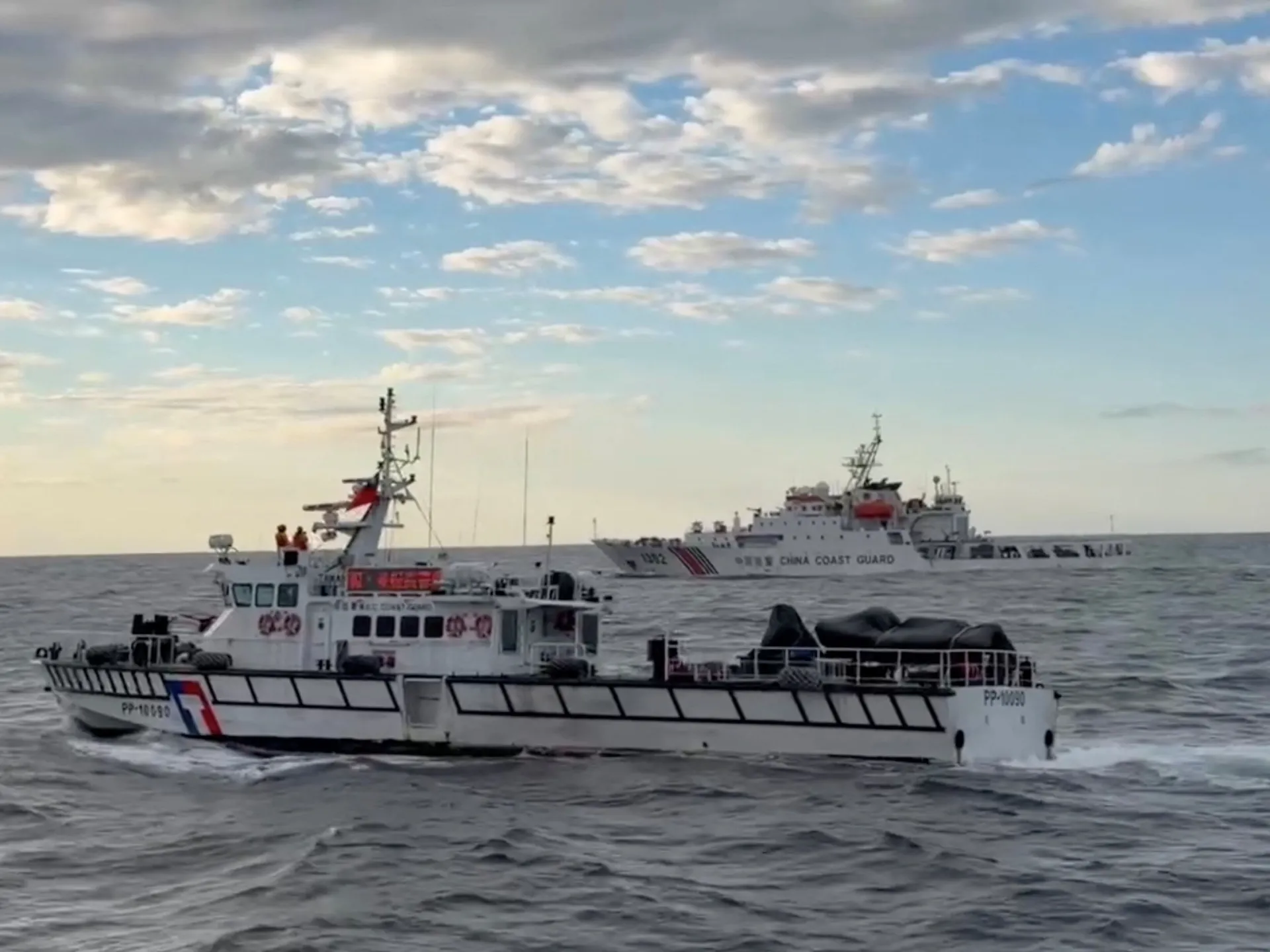
China fired missiles and deployed jets and naval vessels earlier this week in a simulation of military actions to encircle Taiwan, which Beijing claims as an integral part of its territory and has vowed to bring under its control.
Chinese military drills have become a frequent occurrence, causing few disruptions to life on the self-governed island, whose status the US has not officially weighed in on.
But Beijing’s assertive stance has prompted angry condemnations from Taiwanese officials, and crackdowns on formerly autonomous areas such as Hong Kong following integration with China have bolstered scepticism about the prospects of possible reunification with Beijing.
“As president, my stance has always been clear: to resolutely defend national sovereignty and strengthen national defence,” Taiwanese President William Lai Ching-te said on Thursday.
Lai has called for a $40bn increase in Taiwan’s military spending, but the proposal is stalled in the country’s legislature, where the opposition party currently holds a majority.
“The coming year, 2026, will be a crucial one for Taiwan,” the president said, adding that Taiwan must “make plans for the worst, but hope for the best”.
While US lawmakers often make strong statements of support for Taiwan, US policy towards the island has been marked by ambiguity for decades and does not include an assurance of military support in the event of an invasion by China.
The US recently approved an $11bn arms package for Taiwan, but President Donald Trump said earlier this week that he did not believe China had plans to launch an invasion of Taiwan in the near future.
“I have a great relationship with [Chinese] President Xi [Jinping]. And he hasn’t told me anything about it. I certainly have seen it,” Trump told reporters on Monday.
“They’ve been doing naval exercises for 20 years in that area. Now people take it a little bit differently,” he added.
The United States Department of the Treasury has issued a new round of sanctions aimed at isolating Venezuela’s oil industry, as part of President Donald Trump’s pressure campaign against the South American country.
The sanctions announced on Wednesday target four companies and their associated oil tankers, which are allegedly involved in transporting Venezuelan oil.
Recommended Stories
list of 3 itemsend of list
Trump has claimed that Venezuelan leader Nicolas Maduro leads a so-called “narco-terrorist” government that seeks to destabilise the US, a charge repeated in the latest sanctions announcements.
“Maduro’s regime increasingly depends on a shadow fleet of worldwide vessels to facilitate sanctionable activity, including sanctions evasion, and to generate revenue for its destabilizing operations,” the Treasury said on Wednesday.
Petroleum is Venezuela’s primary export, but the Trump administration has sought to cut the country off from its international markets.
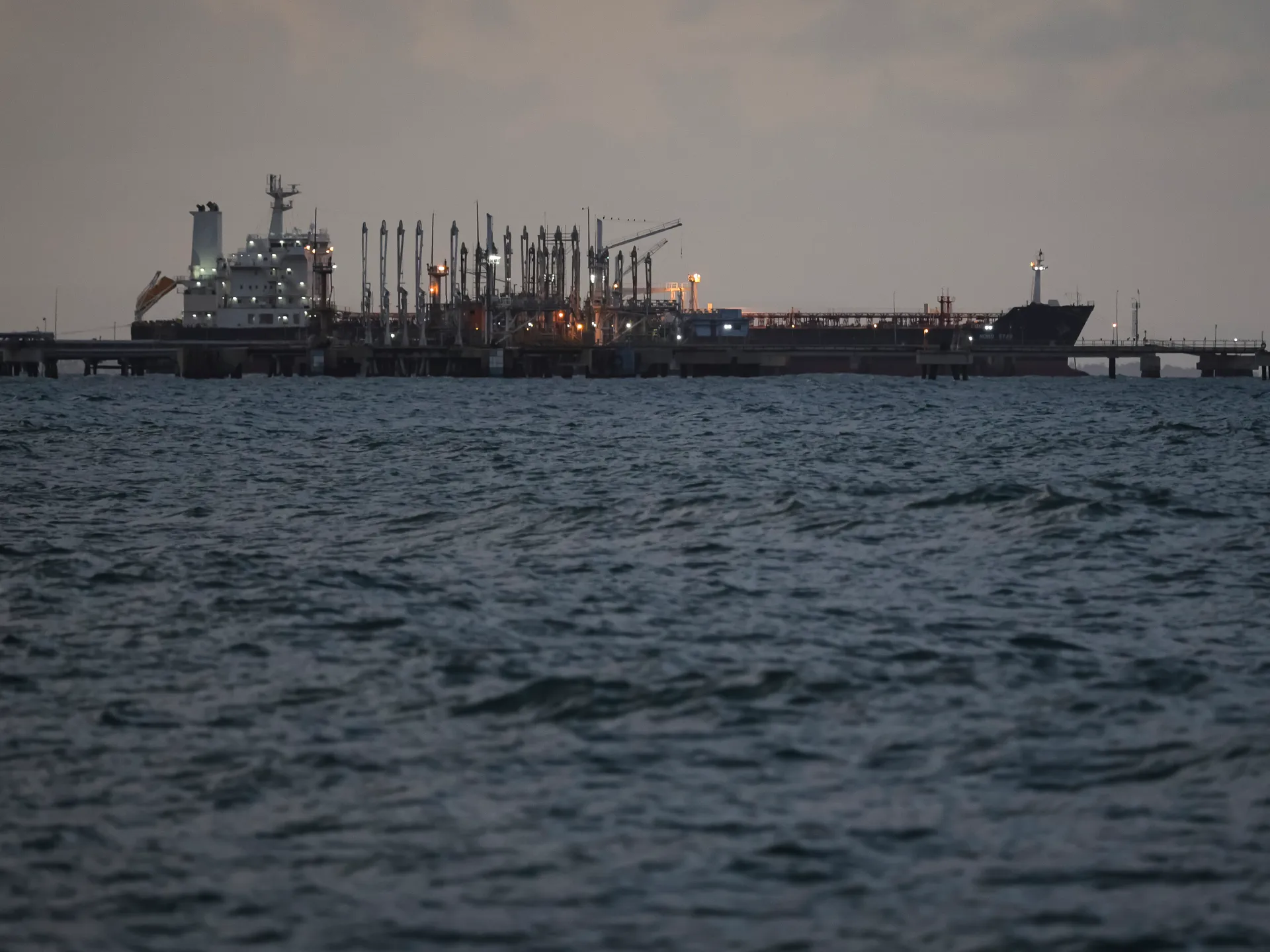
Wednesday’s notice accuses four tankers – the Nord Star, the Rosalind, the Valiant and the Della – of helping Venezuela’s oil sector to circumvent existing sanctions, thereby providing the “financial resources that fuel Maduro’s illegitimate narco-terrorist regime”.
“President Trump has been clear: We will not allow the illegitimate Maduro regime to profit from exporting oil while it floods the United States with deadly drugs,” said Treasury Secretary Scott Bessent.
“The Treasury Department will continue to implement President Trump’s campaign of pressure on Maduro’s regime.”
Claims on Venezuelan oil
The sanctions come a day after Washington imposed sanctions on a separate Venezuelan company it says assembled drones designed by Iran.
In recent months, the Trump administration has cited several motives for ratcheting up pressure against Venezuela, ranging from immigration to Maduro’s contested election in 2024.
Trump, for instance, has framed the pressure campaign as a means of stemming the trade of illegal drugs, despite Venezuela exporting virtually none of the administration’s main target, fentanyl.
Critics have also accused Washington of seeking to topple Maduro’s government to take control of the country’s vast oil reserves.
Trump officials have fuelled those suspicions with remarks seeming to assert ownership over Venezuela’s oil.
On December 17, a day after Trump announced a “total and complete blockade” of sanctioned oil tankers entering and leaving Venezuela, his top adviser, Stephen Miller, claimed that the US “created the oil industry in Venezuela”.
He suggested that the oil was stolen from the US when Venezuela nationalised its petroleum industry, starting in 1976.
That process accelerated after the 1998 election of socialist President Hugo Chavez, who reasserted state control over Venezuela’s oil sector, ultimately leading to the seizure of foreign assets in 2007.
That “tyrannical expropriation” scheme, Miller alleged, “was the largest recorded theft of American wealth and property”.
Still, one major US oil company, Chevron, continues to operate in the country.
Trump has echoed Miller’s claims, writing online that the US “will not allow a Hostile Regime to take our Oil, Land, or any other Assets”.
He added that all of those assets “must be returned to the United States, IMMEDIATELY”.
Military build-up in the Caribbean
In recent months, the Trump administration has tightened its focus on Venezuela’s oil industry, taking a series of military actions against tankers.
On December 10, the administration seized its first tanker, the Skipper, followed by a second seizure 10 days later.
The US military has reportedly been pursuing a third tanker as it crosses the Atlantic Ocean.
The attacks on the oil tankers come several months after the US began surging aircraft, warships and other military assets to the Caribbean region along Venezuela’s coast.
Since September 2, the US military has conducted dozens of bombing campaigns against alleged drug-smuggling boats in international waters in the Caribbean Sea and eastern Pacific, in what rights groups call extrajudicial killings.
More than 100 people have been killed, and the administration has offered scant legal justification for the attacks.
On Monday, Trump told reporters that the US had struck a “dock area” in Venezuela he claimed was used to load the alleged drug boats.
The dock bombing is believed to be the first of its kind on Venezuelan soil, though Trump has long threatened to begin attacking land-based targets.
While the administration has not officially revealed which agency was behind the dock strike, US media has widely reported it was conducted by the Central Intelligence Agency (CIA).
Washington accuses Tehran and Caracas of ‘reckless proliferation of deadly weapons’ amid spiraling tensions.
Published On 30 Dec 202530 Dec 2025
Share
Washington, DC – The United States has issued sanctions against a Venezuelan company over accusations that it helped acquire Iranian-designed drones as Washington’s tensions with both Tehran and Caracas escalate.
The penalties on Tuesday targeted Empresa Aeronautica Nacional SA (EANSA), a Venezuelan firm that the US Department of the Treasury said “maintains and oversees the assembly of” drones from Iran’s Qods Aviation Industries, which is already under sanctions by Washington.
Recommended Stories
list of 3 itemsend of list
The department also sanctioned the company’s chairman, Jose Jesus Urdaneta Gonzalez, accusing him of coordinating “with members and representatives of the Venezuelan and Iranian armed forces on the production of UAVs [unmanned aerial vehicles] in Venezuela”.
“Treasury is holding Iran and Venezuela accountable for their aggressive and reckless proliferation of deadly weapons around the world,” Treasury official John Hurley said in a statement.
“We will continue to take swift action to deprive those who enable Iran’s military-industrial complex access to the US financial system,” he said. The sanctions freeze any assets of the targeted firms and individuals in the US and make it generally illegal for American citizens to engage in financial transactions with them.
In its statement, the US alleged Tehran and Caracas have coordinated the “provision” of drones to Venezuela since 2006.
Iran’s Ministry of Defence and Armed Forces Logistics (MODAFL) has been under US sanctions since 2020 for what Washington said is its role in both selling and procuring weapons. The US is by far the largest weapons exporter in the world.
On Tuesday, the US Treasury Department also imposed new sanctions against several Iranians it accused of links to Iran’s arms industry.
The actions came a day after President Donald Trump threatened more strikes against Iran if the country rebuilds its missile capabilities or nuclear programme.
The US had joined Israel in its attacks against Iran in June and bombed the country’s three main nuclear sites before a ceasefire ended a 12-day escalation.
“Now I hear that Iran is trying to build up again, and if they are, we’re going to have to knock them down,” Trump said on Monday during a joint news conference with visiting Israeli Prime Minister Benjamin Netanyahu. “We’ll knock them down. We’ll knock the hell out of them. But hopefully, that’s not happening.”
“The response of the Islamic Republic of Iran to any oppressive aggression will be harsh and regrettable,” President Masoud Pezeshkian wrote in a social media post.
The Trump administration has also taken a confrontational approach towards Venezuela.
The US president announced this week that the US “hit” a dock in the Latin American country that he said was used to load drug boats. Details of the nature of the strike remain unclear.
Trump and some of his top aides have falsely suggested that Venezuela’s oil belongs to the US. Washington has also accused Venezuelan President Nicolas Maduro, without evidence, of leading a drug trafficking organisation.
The Trump administration has simultaneously been carrying out strikes against what it says are drug-running vessels in the Caribbean Sea and eastern Pacific Ocean, a campaign that many legal experts said violates US and international law and is tantamount to extrajudicial killings.
Over the past month, the US also has seized at least two oil tankers off the coast of Venezuela after Trump announced a naval blockade against the country.
Venezuela has rejected the US moves as “piracy” and accused the Trump administration of seeking to topple Maduro’s government.
Alawite protesters confront government supporters in coastal cities.
Syria’s new leader has been trying to stabilise his country and reintegrate it globally since he took office in January.
But outbreaks of sectarian violence are threatening President Ahmed al-Sharaa’s efforts to rebuild the country after 14 years of civil war.
Recommended Stories
list of 4 itemsend of list
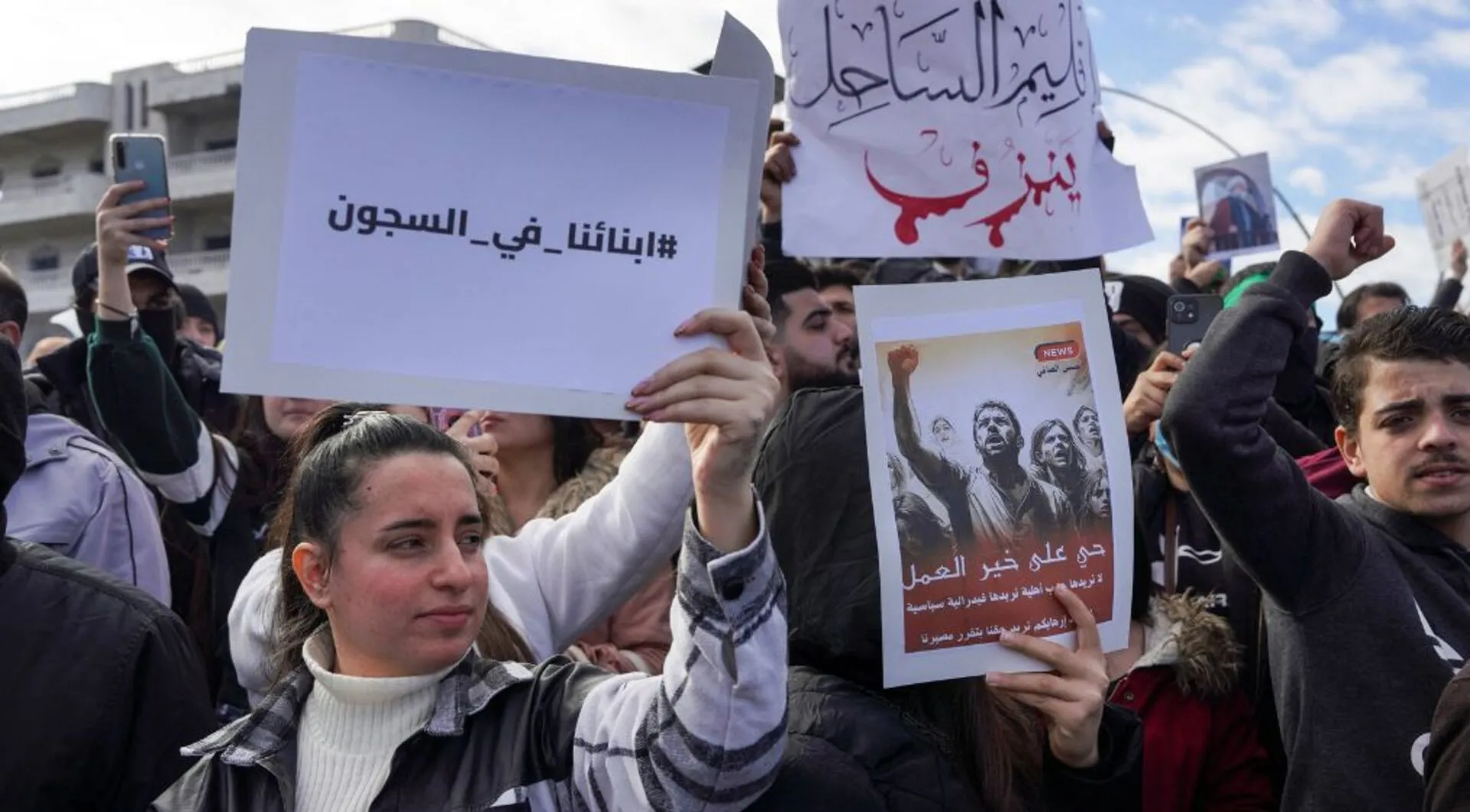
The latest flare-up on Sunday saw protesters from the Alawite minority group come face to face with supporters of the government in the coastal cities of Latakia and Tartous. Government troops sent to stop the violence were attacked. The once-powerful community says it is being marginalised.
How big a security threat are the protests and violence?
How can President al-Sharaa calm tensions?
Presenter: Adrian Finighan
Guests:
Fadel Abdulghany – Founder and executive director of the Syrian Network for Human Rights.
Gamal Mansour – Specialist in comparative politics and international relations
Labib Nahhas – Director of the Syrian Association for Citizens’ Dignity
Dec. 26 (UPI) — The Japanese government on Friday approved a record $58 billion defense budget for the 2026 fiscal year amid worsening diplomatic tensions with China.
The allocation is 9.4% more than budgeted for defense in 2025 and is a new record for defense spending when the new fiscal year starts in April.
The funds will help pay for cruise missiles and unmanned defense systems as Japan enters the fourth year of its five-year plan to bolster its military, Newsweek reported.
During that time span, Japan is investing about 2% of its annual gross domestic product to modernize its military with state-of-the-art equipment, including drones.
It also demonstrates a significant shift in Japan’s defensive priorities after spending relatively little on national defense for several decades.
The new spending will bolster Japan’s land, sea and air coastal defenses with unmanned assets and a greater ability to attack enemies from beyond their respective ranges, according to The Japan Times.
Japan is building up its Synchronized, Hybrid, Integrated and Enhanced Littoral Defense drone system that commonly is referred to as SHIELD.
“This system will enable Japan to adopt new warfare methods, firmly protect the lives of personnel and halt enemy invasions of islands at the coastline,” Japanese Defense Minister Shinjiro Koizumi told media.
The system is slated to go into service in 2027 and will provide Japan with an ample supply of “inexpensive unmanned aerial, surface and underwater vehicles” that can be used to attack enemy targets and conduct reconnaissance.
A large quantity of relatively affordable drones is available from the United States, Australia, Turkey and other nations.
Japan also is improving its counterstrike capabilities with better anti-ship missiles and intends to acquire hypersonic missiles that can fly five or more times faster than the speed of sound.
Such improvements would improve Japan’s ability to strike enemy targets from a long distance and more effectively deter potential aggression against the island nation.
The holidays bring good cheer — an opportunity to reflect but also, most likely, the anxiety of family. Jim Jarmusch’s latest film isn’t set during the season, although the faint flickers of awkwardness, resentment and guilt that pass across its characters’ faces may be painfully familiar to audiences who have an uneasy relationship with their parents. “Father Mother Sister Brother” is here to commiserate, but because the veteran indie auteur remains a sharp chronicler of the quotidian, he has no patience for sentimentality or pat resolutions. The movie glides by so unassumingly, you may be stunned how moved you are by the end.
“Father Mother Sister Brother” is divided into three chapters, each examining a separate family. In the first segment, set somewhere in the Northeast, siblings Jeff (Adam Driver) and Emily (Mayim Bialik) visit their unnamed father (Tom Waits). The second tale shifts to Dublin, where sisters Timothea (Cate Blanchett) and Lilith (Vicky Krieps) arrive at the home of their mother (Charlotte Rampling) for their annual tea party. And in the final chapter, twins Skye (Indya Moore) and Billy (Luka Sabbat) reunite in Paris to close up the apartment owned by their parents, who recently died in a small-plane crash.
Jarmusch has occasionally sliced his narratives into pieces: His films “Night on Earth” and “Coffee and Cigarettes” were anthologies tied together conceptually. Initially, “Father Mother Sister Brother” appears to be similar, but there’s a cumulative power to the movie, which won the Golden Lion at the Venice Film Festival, that reveals a subtle but profound thematic undercurrent.
The first clue comes in the “Father” chapter, which begins with Jeff and Emily in the car. There’s a stilted quality to the conversation as they discuss their eccentric, inscrutable dad. The visit has the heavy air of obligation — they don’t see Dad very often — and when he clumsily welcomes them into his ramshackle house, pregnant pauses and pursed lips ensue. Nothing much happens, until the segment’s finale introduces a twist that suggests the yawning chasm between what we think we know about our parents and what the truth of their lives is.
Once we move to the “Mother” sequence, we’ve started to acclimate to the movie’s discomfiting rhythms — which is good considering that, if anything, Timothea and Lilith’s relationship with their mom is even frostier. Their mother’s polite, excessively formal demeanor cannot mask her befuddlement regarding how to relate to her children. Decked out in an unflattering haircut and eyeglasses, Blanchett plays Timothea as terminally mousy, still craving her aloof mom’s approval. By comparison, Krieps’ Lilith is more assertive, proudly showing off her pink-dyed hair and bragging about a Lexus she doesn’t actually have. Rampling crackles as a matriarch who can sniff out her kids’ lies and insecurities but has the good manners not to say anything. Or maybe it’s not kindness at all but, rather, a way to reassure herself that she will always have the upper hand.
The film’s persistent brittleness may make some viewers antsy. That’s partly the point, but hopefully, they’ll soon be swept away by the movie’s melancholy undertow. Working with a minimalist keyboard score he co-wrote, Jarmusch fills the silences with an ineffable despair. You can feel it in the way Emily looks out her father’s window to the lake beyond, the wintery tableau both tranquil and poignant. You sense it when Timothea quietly inspects herself in a bathroom mirror, wishing her life was more than it is.
Such moments could make you cry. But Jarmusch’s deadpan approach often chases that sadness with a wry chuckle during instances of unfiltered honesty. Krieps relishes portraying her character, a big-talking phony hoping to wow her mother and sister. (At one point, Lilith announces, “I almost hate to say it, but my life’s been like a dream.” Blanchett’s reaction is delicious.) Eventually, we learn to look past Jarmusch’s deceptively mundane surfaces to see the fraught, unresolved issues within these guarded families. The characters occasionally expose their true selves, then just as quickly retreat, fearful of touching on real conflict.
Which brings “Father Mother Sister Brother” to its most affecting sequence. It would be a spoiler to disclose anything about Skye and Billy’s intimate saga, but what becomes clear is that Jarmusch has fashioned the “Father” and “Mother” installments in such a way that the final “Sister Brother” segment hits differently. Just as importantly, Moore and Sabbat’s lovely performances slyly alter our impressions of those previous chapters, building to some of the tenderest moments of Jarmusch’s career.
Turning 73 in January, Jarmusch has lost none of his edge or preternatural cool, but the depth of feeling in recent works like 2016’s “Paterson” becomes, here, a bittersweet meditation on the anguish of trying to unlock the mystery of our aging parents. In “Father Mother Sister Brother,” family can be hell, but the only thing worse is when they’re no longer with us.
Venezuela’s UN ambassador denounces US military strikes and naval blockade at a meeting of the UN Security Council.
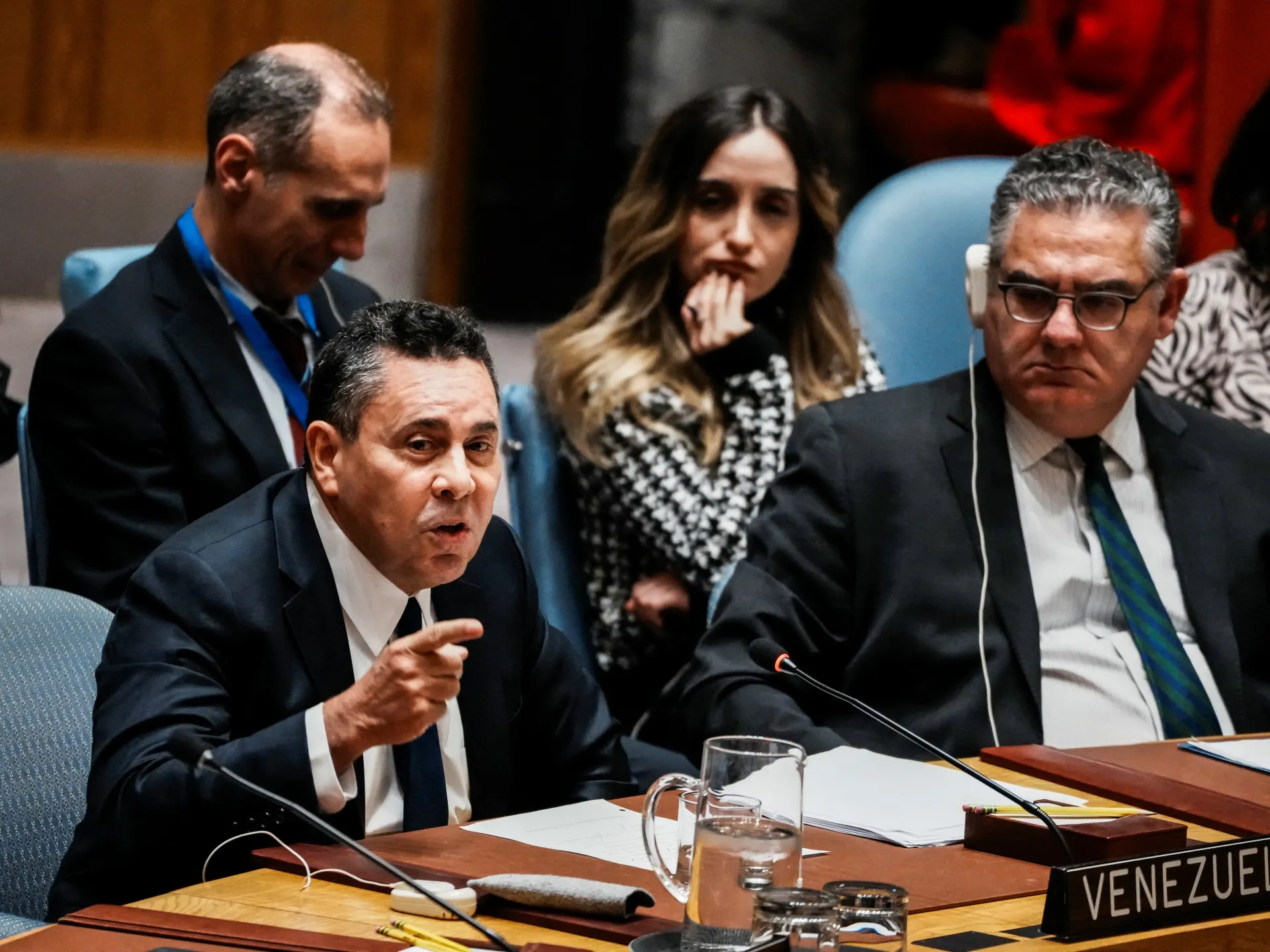
Venezuela has told the United Nations Security Council (UNSC) that the United States has “continental ambitions” over much of Latin America as it wages an unofficial war to remove the government of Venezuelan President Nicolas Maduro.
“It’s not just about Venezuela. The ambition is continental,” Venezuela’s UN ambassador, Samuel Moncada, told a meeting of the 15-member UNSC on Tuesday.
Recommended Stories
list of 4 itemsend of list
“The US government has expressed this in its National Security Strategy, which states that the future of the continent belongs to them,” Moncada said.
“We want to alert the world that Venezuela is only the first target of a larger plan. The US government wants us to be divided so it can conquer us piece by piece,” he said.
Venezuela, earlier this month, requested that the UNSC meet to address the “ongoing US aggression”, which began in September when the White House launched air strikes against vessels in the Caribbean Sea and eastern Pacific Ocean. The White House claimed, without providing any evidence, that the vessels were trafficking drugs to the US.
At least 105 people have been killed so far in the attacks by US forces, which legal experts and Latin American leaders have branded “extrajudicial killings”, but which Washington claims are necessary to stem the flow of drugs to US shores.
At the UNSC meeting, Moncada also accused the administration of US President Donald Trump of violating both international and US domestic law, since the White House has been acting without the approval of the US Congress, whose authority is required to formally declare war on another country.
Moncada said that Trump’s imposition last week of a naval blockade on all Venezuelan oil tankers sanctioned by the US was a “military act aimed at laying siege to the Venezuelan nation”.
“Today, the masks have come off,” Moncada said. “It is not drugs, it is not security, it is not freedom. It is oil, it is mines and it is land.”
US envoy denounces ‘Maduro and his illegitimate regime’
US forces have seized at least two Venezuelan oil tankers and confiscated at least 4 million barrels of Venezuelan oil, according to Moncada, in a move he described as “a robbery carried out by military force”.
The US has defended its naval blockade of Venezuela as a “law enforcement” action to be carried out by the US coastguard, which has the authority to board ships under US sanctions. A naval blockade, by contrast, would be considered an act of war under international law.
The US ambassador to the UN, Mike Waltz, told the UNSC that Latin American drug cartels remain the “single most serious threat” and that Trump would continue to use the full power of the US to eradicate them. Waltz also said that Venezuelan oil is a critical component in funding the cartels in Venezuela.
“The reality of the situation is that sanctioned oil tankers operate as the primary economic lifeline for Maduro and his illegitimate regime,” he said.
The White House earlier this year designated several international drug cartels, including Venezuela’s Tren de Aragua, as terrorist organisations. Washington also added the “Cartel de los Soles,” which it claims is headed by Maduro, to the list in November.
The Venezuelan leader has denied the US allegations and accused the Trump administration of using the drug trafficking claims as a cover to carry out “regime change” in his country.
Russia’s ambassador to the UN separately warned that US “intervention” in Venezuela could “become a template for future acts of force against Latin American states”.
China’s ambassador told the UNSC that the US actions “seriously infringe” on the “sovereignty, security and legitimate rights” of Venezuela.
Venezuela’s National Assembly has passed a law enacting harsh penalties for those who support or help finance blockades and acts of piracy, including up to 20 years in prison.
The legislation was passed on Tuesday after the United States seized oil tankers linked to Venezuela, acts that the government of President Nicolas Maduro has denounced as lawless acts of piracy.
Recommended Stories
list of 3 itemsend of list
“This law seeks to protect the national economy and avoid the erosion of living standards for the population,” lawmaker Giuseppe Alessandrello said, while presenting the law before the National Assembly, controlled by Maduro’s governing party.
The US has carried out a series of increasingly aggressive measures over the past several months, deploying sizeable military forces to Latin America, seizing oil tankers, killing dozens of people in military strikes on what it says are drug-trafficking boats, and threatening land strikes on Venezuela itself.
The legality of some of those acts, such as the seizure of oil tankers in international waters, is contested. Others, such as the strikes against alleged drug traffickers, are widely considered illegal.
“We are in the presence of a power that acts outside of international law, demanding that Venezuelans vacate our country and hand it over,” Samuel Moncada, Venezuela’s representative at the United Nations, told the Security Council (UNSC) during a meeting on Tuesday.
“The threat is not Venezuela,” he added. “The threat is the US government.”
China and Russia also criticised US actions. Russia’s ambassador, Vassily Nebenzia, said that the Trump administration was creating a “template” for the use of force that could be used against other Latin American countries in the future.
“We saw clear support for Venezuela from Russia and China, but also from Colombia, and even from some other member states, talking about how the US needs to abide by international law and calling for de-escalation,” Al Jazeera correspondent Gabriel Elizondo said from the UN.
He added that several Latin American countries with right-wing governments, such as Argentina, Panama and Chile, appeared to side with the US.
“The bottom line here is that we have not gotten any better sense from the United States on what their endgame is here, where they plan to take this,” he added.
The Wall Street Journal reported on Tuesday that the US military had moved special operations aircraft and cargo planes with troops into the Caribbean this week.
“We have a massive armada formed, the biggest we’ve ever had, and by far the biggest we’ve ever had in South America,” Trump told reporters on Monday.
Maduro has said the US is seeking to topple his government and seize control of Venezuela’s large oil reserves, which members of the Trump administration have falsely claimed rightfully belong to the US. Trump said on Monday that the US would retain the oil seized from the tankers as well as the tankers themselves.
Addressing the UNSC, the US ambassador, Mike Waltz, said that oil sales were a “primary economic lifeline for Maduro and his illegitimate regime”, repeating an unsubstantiated claim that Maduro oversees a vast criminal enterprise that traffics drugs to the US.
“The single most serious threat to this hemisphere, our very own neighbourhood and the United States, is from transnational terrorist and criminal groups,” Waltz said.
The US pressure campaign has become a useful pretext for the Venezuelan government’s efforts to crack down on internal dissent.
Rights groups have said that Maduro’s government has become more repressive since the presidential election in July 2024, in which Maduro claimed victory despite the widespread doubts about the credibility of the results. The opposition has maintained it was the true winner, and few countries have recognised Maduro’s victory.
When Qatar helped secure a peace deal to end ongoing conflict between the M23 rebel group and Democratic Republic of the Congo’s (DRC) government last month, there was hope among many Congolese that a permanent ceasefire would soon emerge to end the fighting that has uprooted close to a million people in the country’s troubled east, and give war-racked communities some respite as the new year rolls in.
Since late 2021, the group, which the United States and the United Nations say is backed by Rwanda, has clashed with the Congolese army in heavy offensives that have killed at least 7,000 people this year alone. Several regional attempts at resolution have failed. Still, when M23 representatives and Congolese government officials met for negotiations in Doha and proceeded to sign a peace deal in November, exhausted Congolese dared to hope. This deal, some reckoned, could be different.
Recommended Stories
list of 3 itemsend of list
So when the rebels launched yet another offensive and temporarily seized the strategic city Uvira this month, hopes for lasting peace were painfully crushed, as some concluded that those at the helm of the talks were playing politics.
“It’s clear that they don’t have any will to end this conflict,” Congolese lawyer and political analyst Hubert Masomera told Al Jazeera from the M23-held eastern city of Goma, blaming both sides. “Despite the number of deaths and the extent of the destruction, there is still procrastination over the implementation of the peace agreements and compliance with the ceasefire. People here feel abandoned to their sad fate.”
Fears that the conflict will not only continue, but that it could soon take on a regional dimension, are deepening, too – a sensitive prospect in a DRC where two civil wars in the past were prompted by its neighbours.
Uvira, the newly captured city the rebels then withdrew from as a “trust-building measure” following US pressure last week, is a major transport and economic hub in the huge South Kivu province. It’s strategically located on the border with Rwanda and is just 30 kilometres from the Burundian capital, Bujumbura. The city was the last eastern stronghold of the Congolese army and its allies – local “Wazalendo” militias and about 3,000 Burundian soldiers. Early this year, M23 also seized control of South Kivu’s capital city, Bukavu, as well as Goma, the capital of North Kivu province.
Experts say M23’s advance on Uvira widens the group’s area of control significantly, puts it at the mouth of the mineral-rich Katanga region, and positions Rwandan proxies right at Burundi’s doorstep at a time when both governments are ramping up a war of words and accusing each other of backing rebels.
Rwanda, for its part, continues to distance itself from accusations that it backs M23.
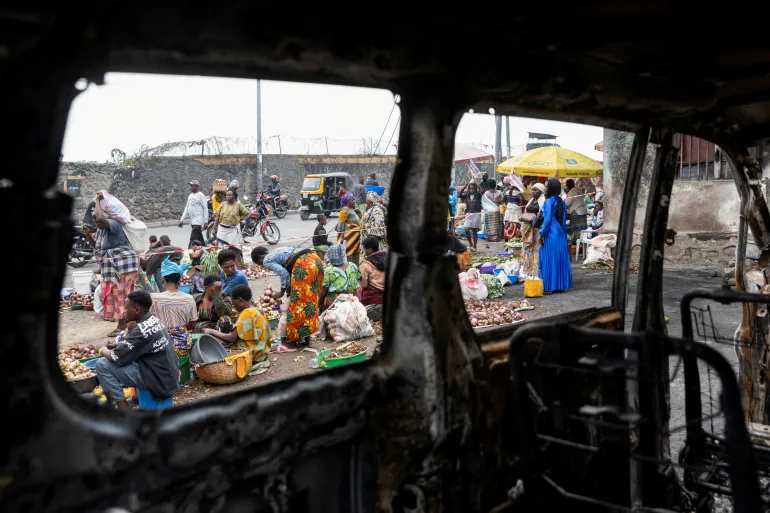
A view shows the remains of a vehicle hit by heavy and light weapons during the fighting in the town that led to the fall of Goma to M23 rebels, on February 5, 2025 [File: Arlette Bashizi/Reuters]
DRC conflict’s complex history
The recent scenes in eastern DRC appear like an eerie playback of a tragic tale, conflict monitors say.
Similar peace negotiations in late 2024, led by the African Union and Angola, seemed ready to deliver peace ahead of a new year. But they collapsed after a highly anticipated meeting between the presidents of Rwanda and DRC was called off. Both sides accused each other of foiling the talks.
“There’s a sense of deja vu,” Nicodemus Minde, East Africa analyst at the Institute for Security Studies (ISS), said. “It’s symbolic because we were exactly here last year … the prospects for peace are dire.”
Conflict in the DRC has long been mired in a complex mix of ethnic grievances, poor governance and interference from its much smaller neighbours. It goes back to the 1994 genocide of Tutsis and moderate Hutus in Rwanda, which displaced millions into neighbouring eastern DRC, making them a minority there. Rwanda has since viewed the DRC as a hiding place for Hutu genocidaires, however, and its hot pursuit of them toppled a government in Kinshasa and led to the first and second Congo wars (1996-2003). The UN also accused the Rwandan and allied Ugandan forces of looting the DRC’s vast mineral wealth, including gold, coltan and tin, during the conflict.
Scores of militias emerged as governments armed and counter-armed civilians in the wars, many of which are still active in the DRC. The M23 itself is only the latest iteration of a Tutsi militia that fought in the Congo wars, and whose fighters integrated into the DRC army. In 2012, these fighters revolted, complaining of poor treatment by the Congolese forces. Now, the M23 claims to be fighting the marginalisation of ethnic Tutsis, some of whom say they are systematically denied citizenship, among other complaints. The M23 and its allied Congo River Alliance (AFC) have not stated goals of taking Kinshasa, even though members of the group have at times threatened to advance on the capital. Officially, the rebels claim to be “liberating” eastern DRC communities.
In 2012, M23 initially emerged with enough force to take the strategic city of Goma, but was forced back within a year by Congolese forces and a special UN intervention force of troops from South Africa, Tanzania and Malawi. When the M23 resurfaced in late 2021, though, it was with much more ferocity, boosted by about 4,000 Rwandan troops in addition to its own 6,000 fighters, according to the UN. Lightning and intensely bloody offensives have since seen it control vast swaths of territory, including the major cities of Goma, Bukavu – and now, Uvira.
On the map, M23 appears to be eking out a slice of Congolese territory wedged between the DRC and neighbouring Rwanda, Uganda and Burundi. If it gains control of the two Kivus in their entirety, it would lord over a resource-rich area five times Rwanda’s size with easy access to Kigali and Kampala.
“They are trying to create some sort of buffer zone which the neighbouring countries, particularly Rwanda but also Uganda, have an interest in controlling,” analyst Paul-Simon Handy, also of the ISS, told Al Jazeera.
Kigali officially denies backing M23, but justifies its actions based on accusations that the DRC supports a Hutu rebel group, the Democratic Forces for the Liberation of Rwanda (FDLR). The FDLR did exist for many years in the DRC, but it simply no longer poses a significant threat to Kigali, analyst Minde said.
Rwanda’s tensions with Burundi have similar historic correlations, as Hutus who perpetrated the 1994 genocide similarly fled there, and Kigali alleges the government continues to back rebels. In 2015, Burundi accused Rwanda of sponsoring an abortive coup in Bujumbura. Kigali denies this.
US President Donald Trump hosts the signing ceremony of a peace deal with the president of Rwanda, Paul Kagame, left, and the president of the Democratic Republic of the Congo, Felix Tshisekedi, right, at the United States Institute of Peace in Washington, DC, on December 4, 2025 [Andrew Caballero-Reynolds/AFP]
Does the US deal have a chance?
Several African countries have attempted to help solve the crisis, militarily and diplomatically, but all have failed. The regional bloc, the East African Community, of which the DRC is a part, deployed about 6,500 Kenyan-led peacekeepers to stabilise eastern DRC, as Kenyan diplomats developed a Nairobi Peace Process in 2022 that was meant to see several rebel groups agree to a truce. The agreement collapsed only a year later, however, after Congolese President Felix Tshisekedi grew frustrated over the force’s refusal to launch offensives against M23.
Then, the Southern African Development Community (SADC), of which the massive DRC is also a part, deployed troops from South Africa, Tanzania and Malawi in May 2023. There was hope that the trio, which proved crucial in driving back the first M23 insurrection, would again record success. They appeared no match for the new M23, though, and withdrew this June.
Meanwhile, the Angola-led Luanda Peace Process collapsed after President Joao Lourenco stepped back in March, citing frustration with both sides amid constant finger-pointing.
Qatar and the US stepped in to broker peace in June this year, using a unique two-pronged approach. The Doha peace talks, on the one hand, have focused on negotiations between the DRC and M23, while the Washington talks focus on the DRC and the Rwanda governments. Some experts warned that Washington’s motivation – aside from President Donald Trump’s fixation on being a global peacemaker figure – was a clause in the deal that guarantees US extraction of rare earth minerals from both countries. The agreement was unlikely to hold on that basis, rights groups said.
After a few no-shows and wobbles, the M23 finally agreed to the Doha framework on November 15. The agreement includes eight implementation protocols, including one on ceasefire monitoring and another on prisoner exchange. On December 4, President Trump sat next to a smiling Paul Kagame and Tshisekedi as all three signed the US-peace deal in Washington, which mandated both Rwanda and DRC to stop supporting armed groups. There were pockets of fighting as the signatures were penned, but all was supposed to be largely peaceful from then on.
What happened in Uvira barely a week after was the opposite. The Congolese government said at least 400 people were killed and 200,000 others displaced as M23 fighters pressed on the city. Thousands more were displaced into Burundi, which already homes some 200,000 Congolese refugees. Fleeing Uvira residents shared accounts of bombed villages, summary killings and widespread sexual violence by both sides, according to medical group Doctors Without Borders (MSF).
Is there hope for peace?
Even though M23 began withdrawing from Uvira on Thursday, analysts are still scrambling to understand what the group was hoping to achieve by taking the city, shattering the peace agreements and angering Washington.
US Secretary of State Marco Rubio directly scolded Rwanda after Uvira’s capture, saying Kigali had violated the deal. Last week, Deputy Secretary of State Christopher Landau met with DRC Foreign Minister Therese Kayikwamba Wagner in Washington and promised that the US “is prepared to take action to enforce adherence” from Rwanda.
What that action looks like is unclear, but what’s certain, Minde said, was that the agreement seemed to favour Kigali more than Kinshasa.
“If you look at the agreement, the consequences [of either party breaching] were not forthright, and this points to the weakness of the deal,” he said, adding that there is much more at stake for DRC if there is a breach, including escalating conflict and mass displacement within the country. But that was not taken into account, the analyst explained.
Uvira’s fall, albeit on hold, is not only a blow to Trump’s peacemaker reputation but also sharpens tensions between Burundi and Rwanda, with analysts saying it could lead to direct clashes.
Bujumbura accuses Kigali of supporting the antigovernment Red Tabara rebels – a charge Rwanda and the rebels deny – and tensions between the two governments have led to border closures since last year. Last week, M23 announced that it captured hundreds of Burundian soldiers during the Uvira offensive.
Fears of a regional spillover also prompted the UN Security Council to extend the mandate of the MONUSCO peacekeeping mission for a year, ahead of its December 20 expiration. The 11,000 troop force has been in place since 1999, but has a complicated relationship with the DRC government, which says it has not done enough to protect civilians. MONUSCO forces initially began withdrawing in 2024, but then paused that move in July amid the escalating M23 offensive. Ituri, the force’s headquarters, is held by M23, meaning the troops are unable to do much.
Amid the chaos, the finger pointing, and the political games, it’s the Congolese people who are feeling the most despair at the turn of events so close to the new year, analysts say. After more than three decades of war that has turned the green, undulating hills of eastern DRC into a perpetual battlefield, Masameko in Goma said it’s locals, more than anyone else, with the most at stake.
“People have suffered enough and need to breathe, to sleep with the certainty that they will wake up tomorrow,” he said. “[They need] to live in their homes without fear of a bomb falling on them. That is all the people in this part of the republic need.”
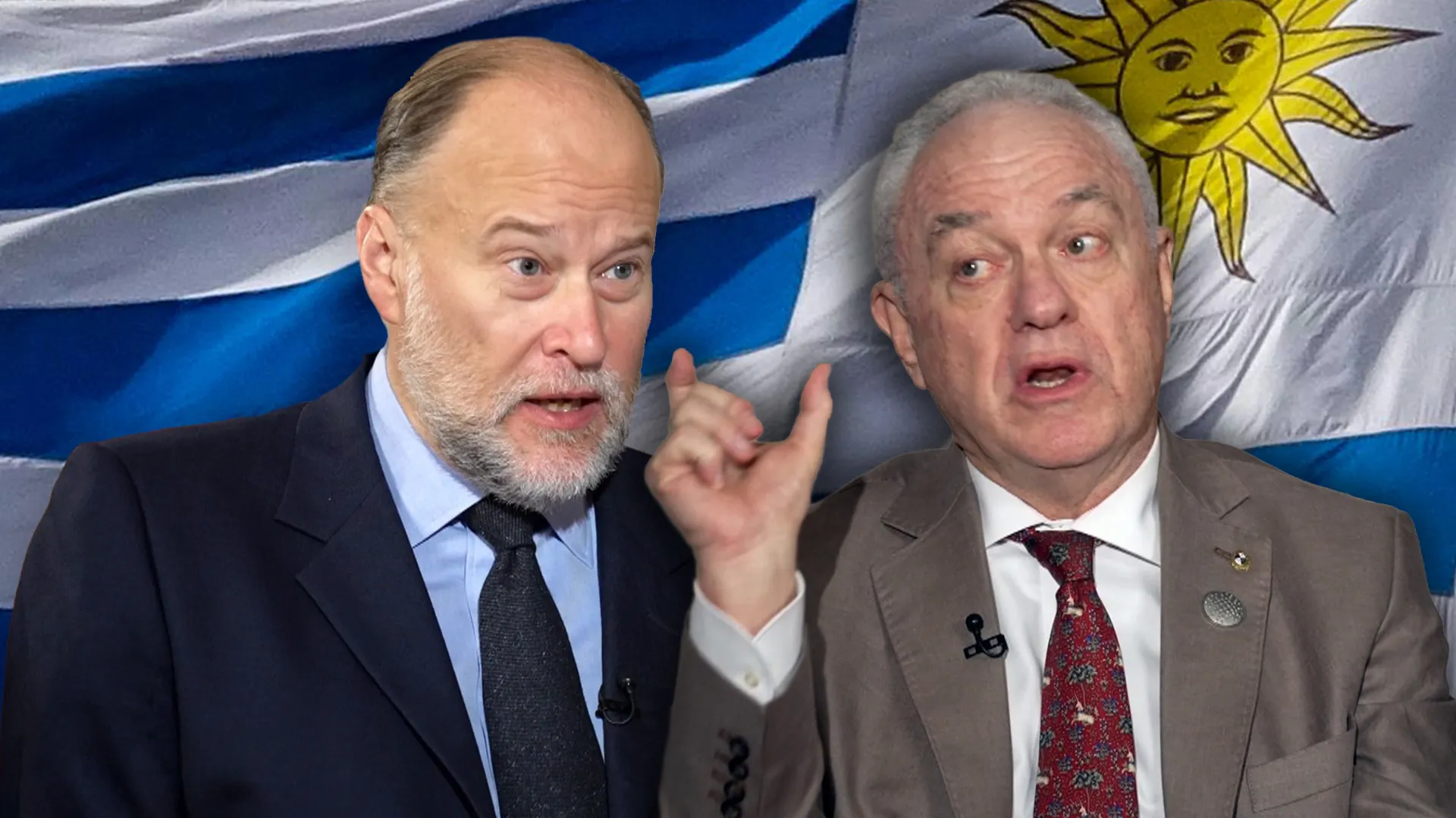
Mario Lubetkin on Washington’s revived sphere-of-influence doctrine, Venezuela, and China’s growing footprint.
The United States is reviving a policy first set out in the 1800s that treats Latin America as its strategic sphere of influence. As Washington expands maritime operations in the Caribbean and eastern Pacific, critics warn of legal violations and rising regional instability.
Uruguay’s Foreign Minister Mario Lubetkin joins Talk to Al Jazeera to discuss US strikes, Venezuela, migration pressures, and China’s growing role in the region — and whether diplomacy can still prevent escalation in a hemisphere shaped once again by power politics.