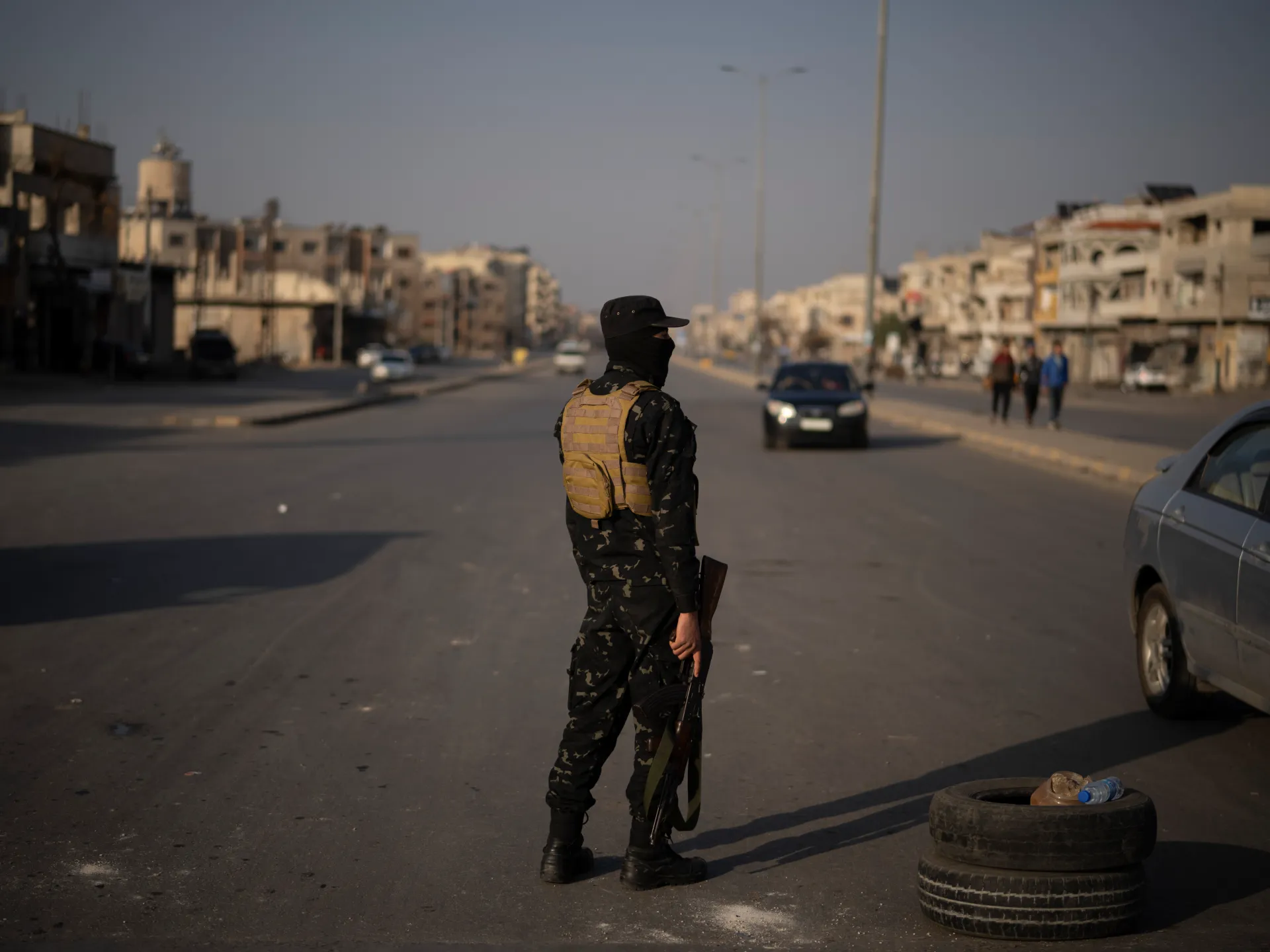
Syrian state media says security forces have imposed a cordon around the area and are investigating.
Published On 26 Dec 202526 Dec 2025
Share
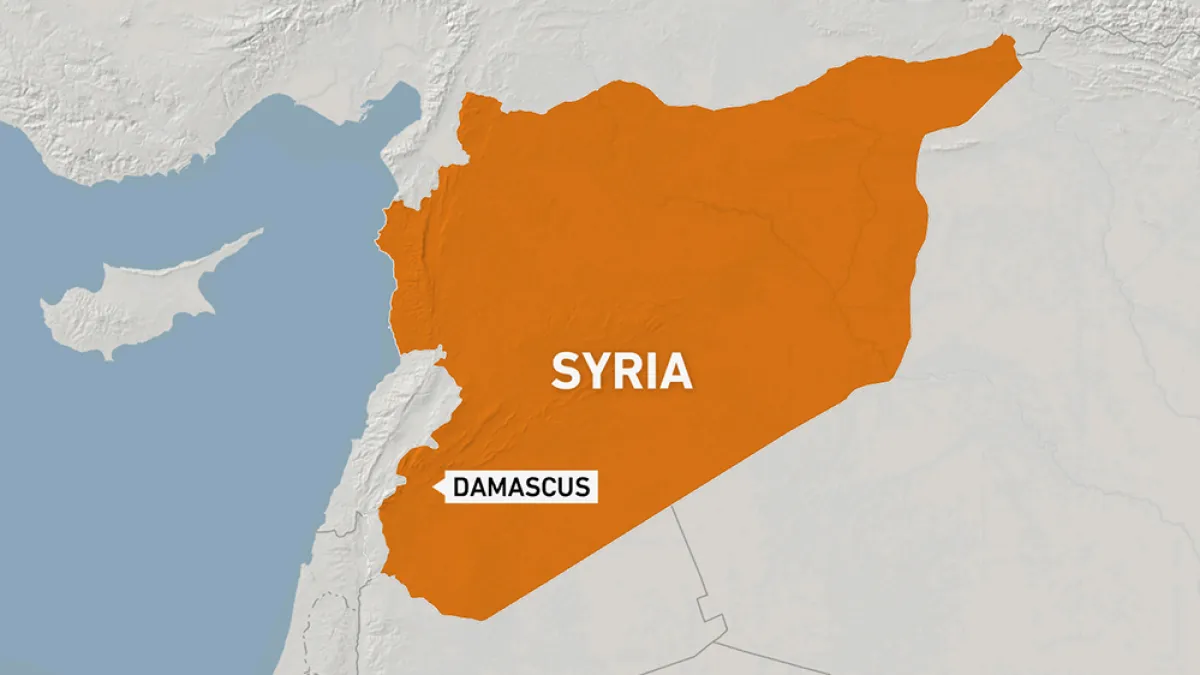
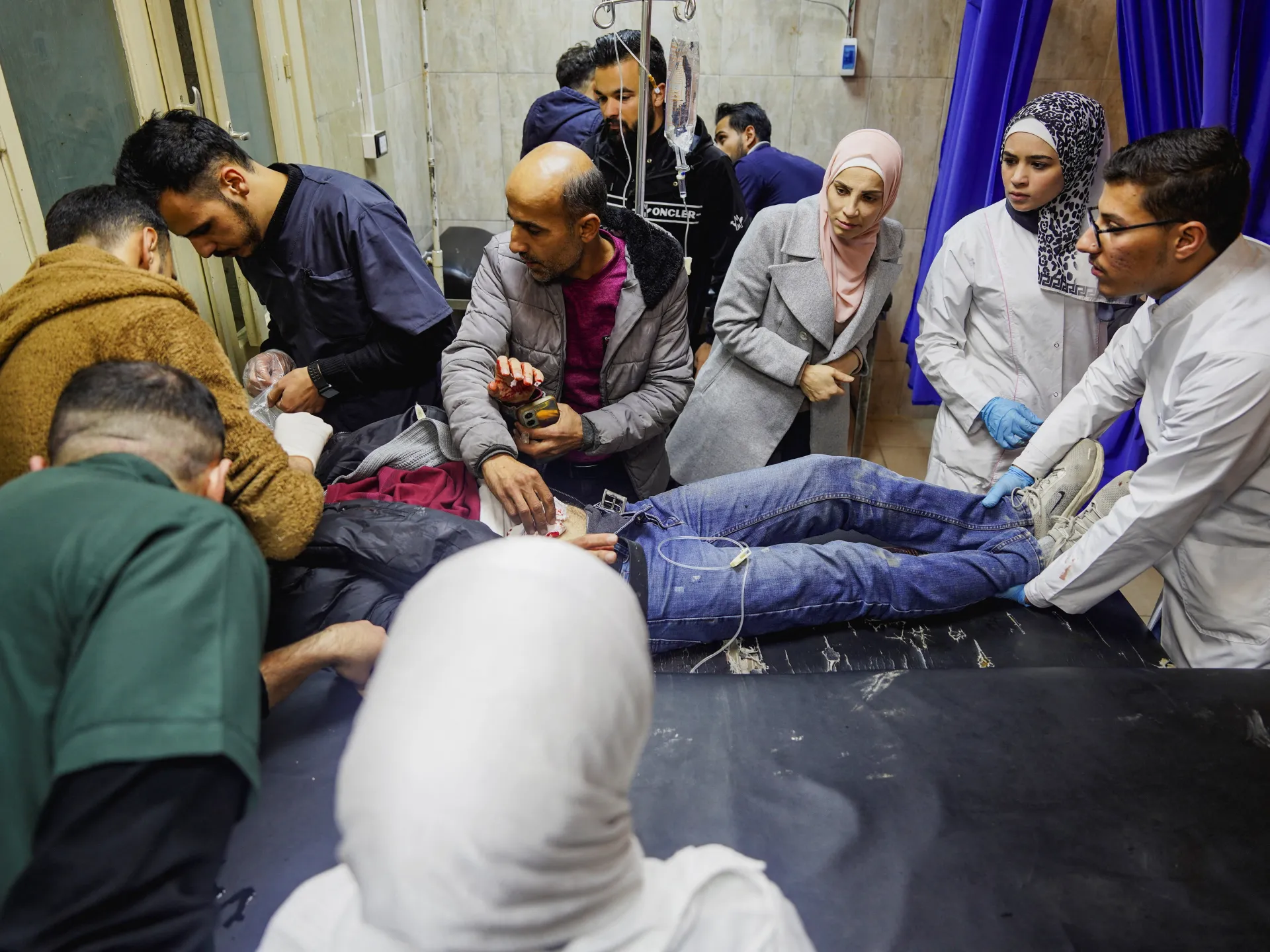
At least six people have been killed and more than 20 were injured when an explosion struck a mosque in Syria’s Homs province.
The attack targeted the Imam Ali bin Abi Talib Mosque in the Wadi al-Dahab neighbourhood of Homs shortly after Friday prayers, the Syrian Arab News Agency (SANA) reported.
Recommended Stories
list of 3 itemsend of list
Footage verified by Al Jazeera showed people fleeing the mosque in panic, placing some victims on stretchers and carrying others, wrapped in cloaks, to ambulances.
The blast appeared to have taken place in the corner of the mosque’s main prayer hall, leaving a small crater in the wall and scorching the surrounding area, with prayer carpets ripped and strewn with debris, and books and fragments scattered across the floor.
Local officials told the Reuters news agency the blast may have been caused by a suicide bomber or explosives placed there.
State media said security forces had imposed a cordon around the area and were investigating.
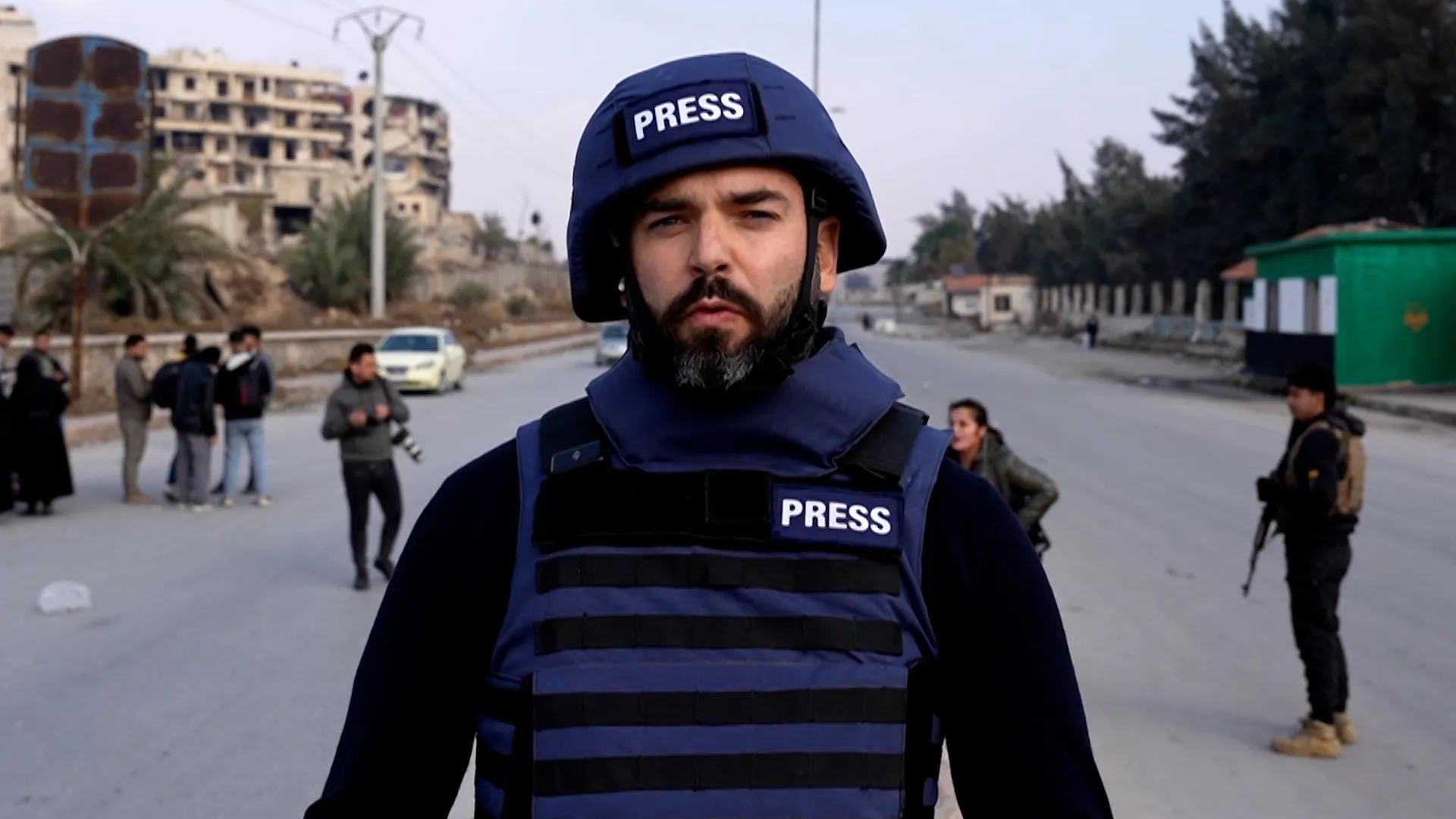
Ayman Oghanna, Al Jazeera’s correspondent in Aleppo, noted that Homs is home to a diverse population of Alawites, Christians and Sunni Muslims. He said the attack targeted an Alawite mosque, warning it could “inflame sectarian tensions” across the country.
He said no group had claimed responsibility for the strike, but noted a recent surge in ISIL (ISIS) activity in Syria. He added that government forces had carried out an operation near Aleppo, arresting three alleged ISIL members.
Last week, the United States bombed ISIL positions in Syria in retaliation for the killings of two US soldiers and a civilian interpreter. Damascus also joined a global anti-ISIL alliance in November, pledging to crush the remaining elements of the group.
Friday’s attack underscores the country’s fragile security situation, as the new authorities in Damascus struggle to assert control.
Interior Ministry says the raid killed Mohammed Shahadeh, describing him as one of ISIL’s senior commanders in Syria.
Published On 25 Dec 202525 Dec 2025
Share
Syrian authorities say security forces have carried out a second operation against ISIL (ISIS) fighters near Damascus, killing a senior figure described as the group’s governor of Hauran.
In a statement on Thursday, the Ministry of Interior said the raid killed Mohammed Shahadeh, also known as Abu Omar Shaddad, calling him one of ISIL’s senior commanders in Syria and a direct threat to local security.
Recommended Stories
list of 3 itemsend of list
Officials said the operation followed verified intelligence and extensive surveillance and was carried out by specialised units, operating in the Damascus countryside, that conducted a targeted raid in the town of al-Buweida, near Qatana, southwest of the capital.
The operation also involved the General Intelligence Directorate and took place in coordination with international coalition forces, the ministry said.
‘Crippling blow’
The announcement came a day after Syrian internal security forces arrested another senior ISIL figure in a separate operation near Damascus, according to the state-run SANA news agency.
SANA reported that forces arrested Taha al-Zoubi during what it described as a “tightly executed security operation” in the Damascus countryside. The agency said officers seized “a suicide belt and a military weapon” during the arrest.
Brigadier General Ahmad al-Dalati, head of internal security in the Damascus countryside, told SANA that the raid targeted an ISIL hideout in Maadamiya, southwest of the capital.
ISIL, which considers the current authorities in Damascus illegitimate, has largely focused its remaining operations on Kurdish-led forces in northern Syria.
At the height of its power, the armed group controlled vast areas of Iraq and Syria, declaring Raqqa its capital.
Although ISIL suffered military defeat in Iraq in 2017 and in Syria two years later, its cells continue to carry out attacks in the region and beyond, including in parts of Africa and Afghanistan.
Dec. 25 (UPI) — The remains of two Iowa National Guard soldiers killed in an ambush in Syria arrived at the Iowa National Guard base in Des Moines, with funeral services for both scheduled for this weekend.
The bodies of Staff Sgt. William Nathaniel Howard and Staff Sgt. Edgar Brian Torres-Tovar were carried off a KC-135 on Wednesday afternoon at the base as Gov. Kim Reynolds, Sen. Joni Ernst, U.S. Rep. Zach Nunn, leaders from the Guard and their families looked on, Iowa Public Radio and KCCI Des Moines reported.
“Today’s honorable transfer of Sgt. Howard and Sgt. Torres-Tovar marks their return to Iowa,” Reynolds said in a post on X. “They can now be laid to rest after making the ultimate sacrifice in defense of our nation.”
Today’s honorable transfer of Sgt. Howard and Sgt. Torres-Tovar marks their return to Iowa. They can now be laid to rest after making the ultimate sacrifice in defense of our nation. Please join me in continuing to pray for their families and honor the service and legacy of these… pic.twitter.com/zlXpziDdYI— Gov. Kim Reynolds (@IAGovernor) December 24, 2025
Howard and Torres-Tovar, who were promoted to the rank of staff sergeant posthumously, and a civilian U.S. interpreter were killed in an attack in Palmyra, Syria, on Dec. 13, in a lone gunman attack.
Their flag-draped caskets were saluted by Ernst, Nunn and Guard leaders before their families had a moment alone with them.
Iowa state and Des Moines police officers then escorted processions to Marshalltown, where Howard’s visitation and funeral will be held on Saturday, and south Des Moines, where Torres-Tovar’s visitation will be held Sunday, ahead of his funeral and burial on Monday.
Three other Guard members were also injured in the attack, two of whom are receiving treatment in the United States, while the other was treated in Syria.
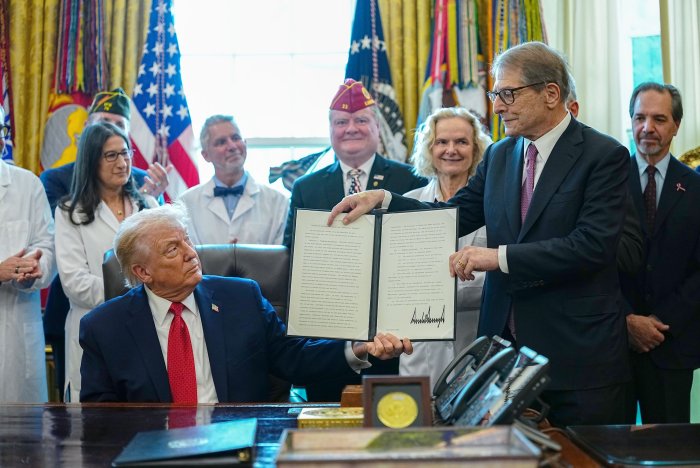
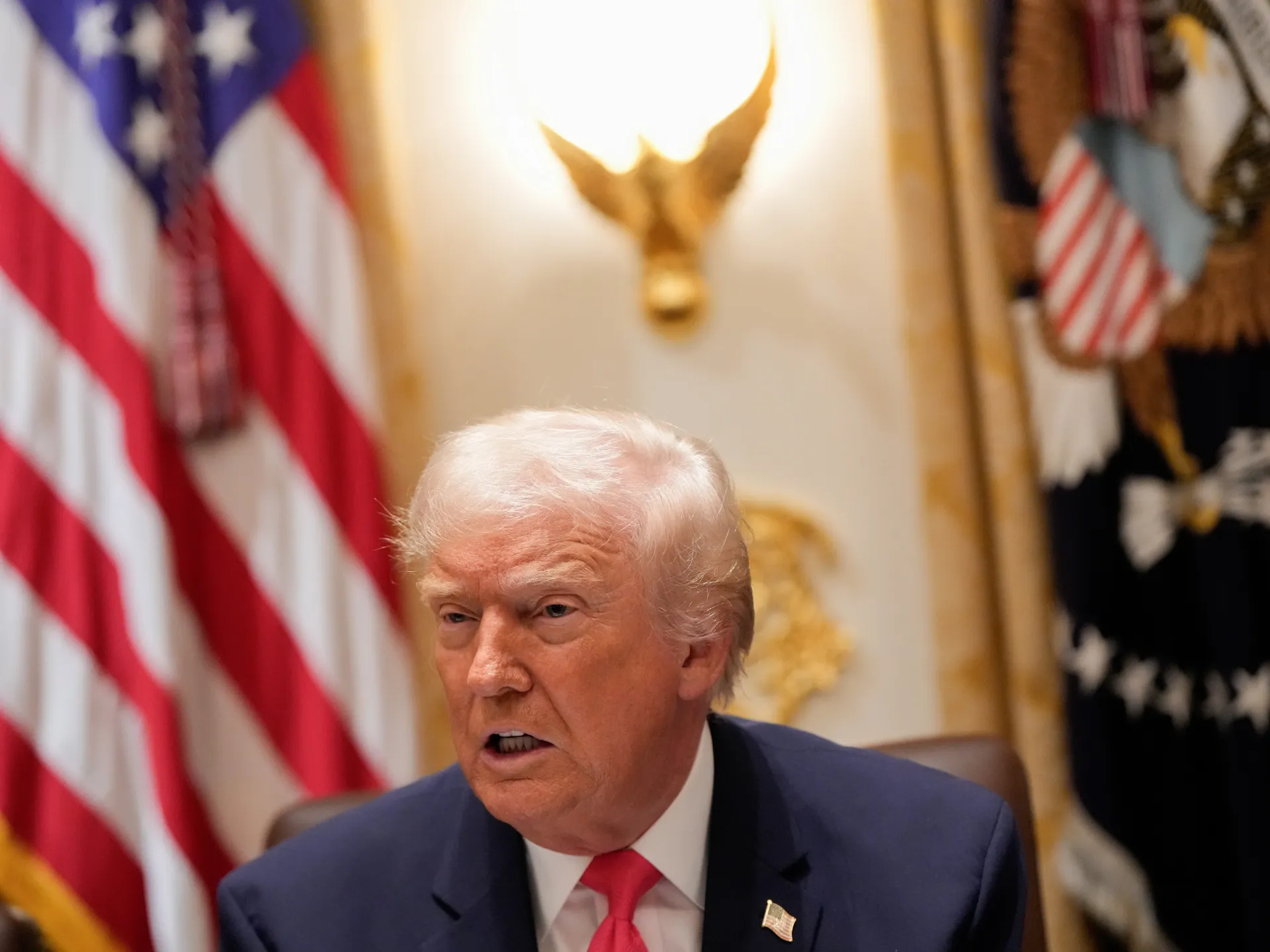
President Donald Trump holds a signed executive order reclassifying marijuana from a schedule I to a schedule III controlled substance in the Oval Office of the White House on Thursday. Photo by Aaron Schwartz/UPI | License Photo
Jordan’s military said the attacks ‘neutralised arms and drug traffickers’ and destroyed their laboratories and factories.
Published On 25 Dec 202525 Dec 2025
Share
Jordan’s military has launched strikes on drug and weapons smugglers in the country’s northern border regions with Syria, targeting sites used as “launch points” by trafficking groups into Jordanian territory, according to reports.
The Jordan News Agency, Petra, said the strikes on Wednesday “neutralised a number of arms and drug traffickers who organise weapons and narcotics smuggling operations along the northern border of the Kingdom”.
Recommended Stories
list of 4 itemsend of list
Jordan’s armed forces destroyed “factories and workshops” used by the trafficking groups, Petra reports, adding that the attacks were carried out based on “precise intelligence” and in coordination with regional partners.
The Jordanian military did not name the partner countries involved in the strikes but warned that it would “continue to counter any threats with force at the appropriate time and place”, Petra said.
Syrian state broadcaster Al-Ikhbariah TV reported on its Telegram channel that the Jordanian army had carried out air strikes on locations in the southern and eastern countryside of Syria’s Suwayda governorate.
A resident of Syria’s Suwayda border region told the AFP news agency that the bombardment “was extremely intense and targeted farms and smuggling routes”, while the UK-based Syrian Observatory for Human Rights said jets and helicopters had reportedly taken part in the raid.
The observatory said photos taken at the scene of the attacks showed destruction at an abandoned military barracks of the former al-Assad regime in Suwayda.
There were no initial reports of casualties from the Jordanian attacks and no official comment from authorities in Damascus.
A farm believed to have been used for storing drugs was among the targets, according to the Zaman Al Wasl online news site, which also reported that similar Jordanian attacks had been carried out previously in a bid to stem the flow of captagon – an addictive, amphetamine-type stimulant.
Before the removal of Syria’s President Bashar al-Assad in December 2024, captagon had become the regime’s largest export and key source of funding amid the country’s years of grinding civil war.
Produced in vast quantities in Syria, the synthetic drug flooded the region, particularly the Gulf states, prompting neighbouring countries to announce seizures and call on both Lebanon and Damascus to ramp up efforts to combat the trade.
Although Damascus denied any involvement in the drug trade, analysts estimated that production and smuggling of captagon brought in billions of dollars for al-Assad, his associates and allies as they looked for an economic lifeline amid the civil war, which was fought between 2011 and the regime’s toppling last year.
Syrian officials confirm the arrest of ISIL leader Taha al-Zoubi in a security operation near Damascus.
Published On 24 Dec 202524 Dec 2025
Share
Syria’s Ministry of Interior has announced the arrest of Taha al-Zoubi, a leading figure in the ISIL (ISIS) group, in the Damascus countryside, the country’s SANA news agency reported.
The report said a “tightly executed security operation” was carried out that led to the arrest of al-Zoubi, adding that “a suicide belt and a military weapon were seized in his possession”.
SANA quoted Brigadier General Ahmad al-Dalati, head of internal security in the Damascus countryside, as saying the raid targeted an ISIL hideout in Maadamiya, southwest of Damascus, and was carried out “in cooperation” with an anti-ISIL alliance that includes the United States-led coalition fighting the group.
The US Central Command (CENTCOM) has not publicly confirmed the operation.
Al-Dalati said al-Zoubi, also known as Abu Omar Tibiya, served as the group’s “wali”,or governor, of Damascus and that several alleged aides were also detained.
The official added that the arrest dealt a “crippling blow” to ISIL networks in the capital region and showed the “readiness of the security apparatus”.
“We send a clear message to anyone who dares to engage in the project of terrorism or lend support to ISIS: The hand of justice will reach them wherever they are,” al-Dalati said.
ISIL, which views the new government in Damascus as illegitimate, has mainly concentrated its activities against Kurdish forces in the north.
At its peak, ISIL ruled an area half the size of the United Kingdom, spanning across Iraq and Syria, with Raqqa in the latter being the capital of the armed group’s self-declared “caliphate”.
The group was notorious for its brutality, carrying out massacres of Syrians and Iraqis and beheadings of foreign captives.
ISIL was defeated in Iraq in 2017 and in Syria two years later, but its fighters and cadres of armed group members still carry out deadly attacks in both countries and elsewhere, including in Africa and Afghanistan.
Talks held between Foreign Minister Asaad Hassan Al-Shaibani, Defence Minister Murhaf Abu Qasra and the Russian president.
Syria’s foreign and defence ministers met Russian President Vladimir Putin in Moscow and held discussions on expanding “strategic cooperation in the military industries sector”, Syrian state media has reported.
The Syrian Arab News Agency (SANA) said that Putin’s meeting on Tuesday with Syrian Minister of Foreign Affairs Asaad Hassan Al-Shaibani and Minister of Defence Murhaf Abu Qasra focused on political, economic and military issues of “mutual interest”, but that “particular emphasis” was on defence.
Recommended Stories
list of 4 itemsend of list
According to SANA, Putin and the Syrian ministers discussed a range of defence-related matters, including developing military cooperation to strengthen the Syrian army’s capabilities and modernising its equipment, transferring expertise and cooperation in research and development.
“During the meeting, both sides reviewed ways to advance military and technical partnership in a manner that strengthens the defensive capabilities of the Syrian Arab Army and keeps pace with modern developments in military industries,” SANA reported.
The two sides also discussed political and economic issues, including the “importance of continued political and diplomatic coordination between Damascus and Moscow in international forums”, according to the news agency.
On the economic front, the talks addressed expanding Syrian-Russian cooperation, including in reconstruction projects, infrastructure development and investment in Syria.
Putin also reaffirmed Russian “steadfast support” for Syria and its territorial integrity, while renewing “Moscow’s condemnation of repeated Israeli violations of Syrian territory, describing them as a direct threat to regional security and stability”.
The ministers’ visit to Moscow is the latest by Syria’s new authorities since the removal from power last December of the country’s longtime ruler and Moscow’s former ally in Damascus, Bashar al-Assad.
Russia was a key supporter of al-Assad during Syria’s nearly 14-year civil war, providing vital military aid that kept the Assad regime in power, including Russian air support that rained air strikes on rebel-held areas.
Despite al-Assad and his family fleeing to Russia after the toppling of his regime, Moscow is eager to build good relations with the new government in Damascus.
Moscow, in particular, is hoping to secure agreements to continue operating the Khmeimim airbase and the Tartous naval base on Syria’s Mediterranean coast, where Russian forces continue to be present.
In October, Syria’s new president, Ahmed al-Sharaa, visited Russia, where he said his government would honour all the past deals struck between Damascus and Moscow, a pledge that suggested that the two Russian military bases were secure in the post-Assad period.
Putin said at the time of al-Sharaa’s visit that Moscow was ready to do all it could to act on what he called the “many interesting and useful beginnings” discussed by the two sides on renewing relations.
Russian state media on Tuesday quoted the country’s Ministry of Foreign Affairs spokeswoman, Maria Zakharova, as saying that Russian Foreign Minister Sergey Lavrov would also hold talks with his Syrian counterpart, Al-Shaibani, during the Syrian delegation’s visit.
During a visit to Moscow in July, Al-Shaibani said his country wanted Russia “by our side”.
“The current period is full of various challenges and threats, but it is also an opportunity to build a united and strong Syria. And, of course, we are interested in having Russia by our side on this path,” Al-Shaibani told Lavrov at the time.
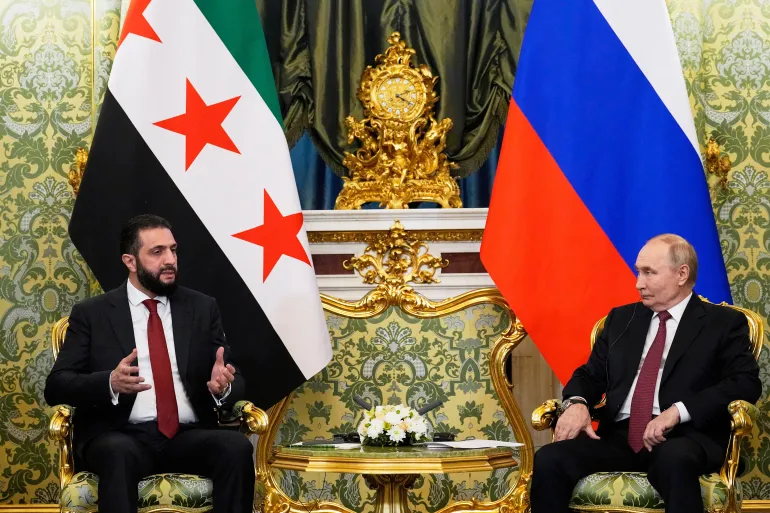
Syrian President Ahmed al-Sharaa speaks during a meeting with Russian President Vladimir Putin at the Kremlin in Moscow, Russia, on October 15, 2025 [Pool: Alexander Zemlianichenko via Reuters]
Renewed fighting between army and SDF highlights volatility.
As the year comes to an end, a deal between the Syrian government and the Kurdish-led Syrian Democratic Forces was expected to come into force.
Instead, fighting has erupted between the two sides in the northern city of Aleppo.
They later agreed to stop the fighting, while blaming each other for the violence.
That deal was supposed to lead to the SDF integrating with the army, but it is stalling on how that should be implemented.
This renewed tension comes as Damascus faces other threats, ranging from ISIL (ISIS) to recurrent conflicts with the Druze community and continuing attacks by Israel.
So what does this complex security situation mean for Syria, a year after the fall of Bashar al-Assad?
Presenter: Dareen Abughaida
Guests
Haid Haid – Researcher at Chatham House
Steven Heydemann – Professor and Middle East Studies programme director at Smith College
Omer Ozkizilcik – Nonresident fellow for the Syria project in the Atlantic Council’s Middle East programme
A mother and her teenage son died in fighting between the Syrian military and Kurdish-led SDF forces in Aleppo. The violence began shortly after talks in Damascus on integrating SDF forces into the army. Al Jazeera’s Ayman Oghanna is in Aleppo, where a truce has been called.
At least two people killed in clashes in northern city of Aleppo during Turkish FM Fidan’s visit to Syria.
By News Agencies and Reuters
Published On 23 Dec 202523 Dec 2025
Share
Syrian government forces and the Kurdish-led Syrian Democratic Forces agreed to stop fighting in the northern city of Aleppo, after a wave of attacks left at least two civilians dead.
Syria’s state news agency SANA cited the defence ministry as saying that the army’s general command issued an order to stop targeting the SDF’s fighters after the deadly clashes erupted during a visit by Turkish Foreign Minister Hakan Fidan.
Recommended Stories
list of 3 itemsend of list
Fidan, whose country views the SDF, which controls swathes of northeastern Syria, as a ‘terrorist’ organisation, said on Monday that the SDF appeared to have no intention of honouring its pledge to integrate into the state’s armed forces by an agreed year-end deadline.
Following the SANA report on Monday evening, the SDF said in a later statement that it had issued instructions to stop responding to attacks by Syrian government forces following de-escalation contacts.
At least two people have been killed in clashes in Aleppo between Syrian government forces and the Kurdish-led Syrian Democratic Forces (SDF) that control the country’s northeast. Syrian President Ahmed al-Sharaa signed a deal in March with the SDF to integrate the group into the country’s state institutions by the end of this year.
Prosecutors accuse the official, named as Fahad A, of torturing dozens of prisoners in jail run by Syrian intelligence.
Published On 22 Dec 202522 Dec 2025
Share
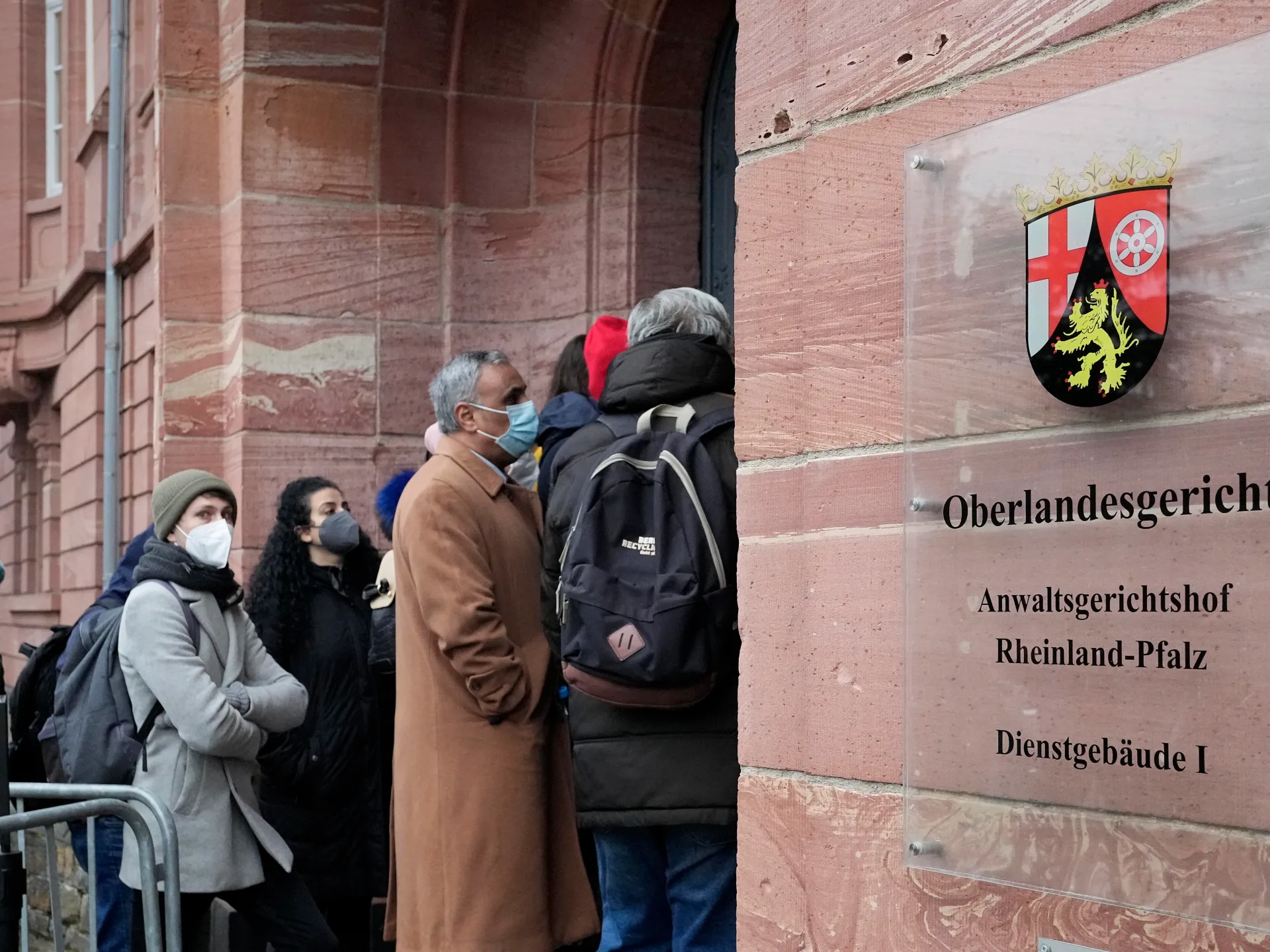
German prosecutors have charged a former Syrian security official with crimes against humanity, accusing him of torturing dozens of prisoners at a Damascus jail while ex-President Bashar al-Assad was in power.
Germany’s Federal Public Prosecutor General’s office announced the indictment on Monday, alleging the ex-prison guard, named only as Fahad A, took part in more than 100 interrogations between 2011 and 2012 in which prisoners were “subjected to severe physical abuse”.
Recommended Stories
list of 3 itemsend of list
The abuse included electric shocks, cable beatings, forced stress positions and suspensions from the ceiling, according to a statement by the prosecutor’s office.
“As a result of such mistreatment and the catastrophic prison conditions, at least 70 prisoners died,” said the statement, noting the former guard is also charged with murder.
The official was arrested on May 27 and formally indicted on December 10.
He is being held in pre-trial detention, the German prosecutor’s office added.
Syrians have demanded justice for crimes committed under the decades-long rule of al-Assad, who was removed from power in December 2024 after a rapid rebel offensive.
The Assad regime, which was accused of mass human rights abuses, including the torture of detainees and enforced disappearances, fell after nearly 14 years of civil war.
Universal jurisdiction
In Germany, prosecutors have used universal jurisdiction laws to seek trials for suspects in crimes against humanity committed anywhere in the world.
Based on these laws, several people suspected of war crimes during the Syrian conflict have been arrested in the last few years in Germany, which is home to about one million Syrians.
In June, a court in Frankfurt handed a life sentence to a Syrian doctor convicted of carrying out acts of torture as part of al-Assad’s crackdown on dissent.
The doctor, Alaa Mousa, was accused of torturing patients at military hospitals in Damascus and Homs, where political prisoners were regularly brought for supposed treatment.
Witnesses described Mousa pouring flammable liquid on a prisoner’s wounds before setting them alight and kicking the man in the face, shattering his teeth. In another incident, the doctor was accused of injecting a detainee with a fatal substance for refusing to be beaten.
One former prisoner described the Damascus hospital where he was held as a “slaughterhouse”.
Presiding judge, Christoph Koller, said the verdict underscored the “brutality of Assad’s dictatorial, unjust regime”.
Authorities have shuttered drug factories that were cash pipeline for former ruler Bashar al-Assad, UN report.
Published On 22 Dec 202522 Dec 2025
Share
Syria’s government has cracked down on the Captagon industry, which boomed under former longtime leader Bashar al-Assad, according to a United Nations report.
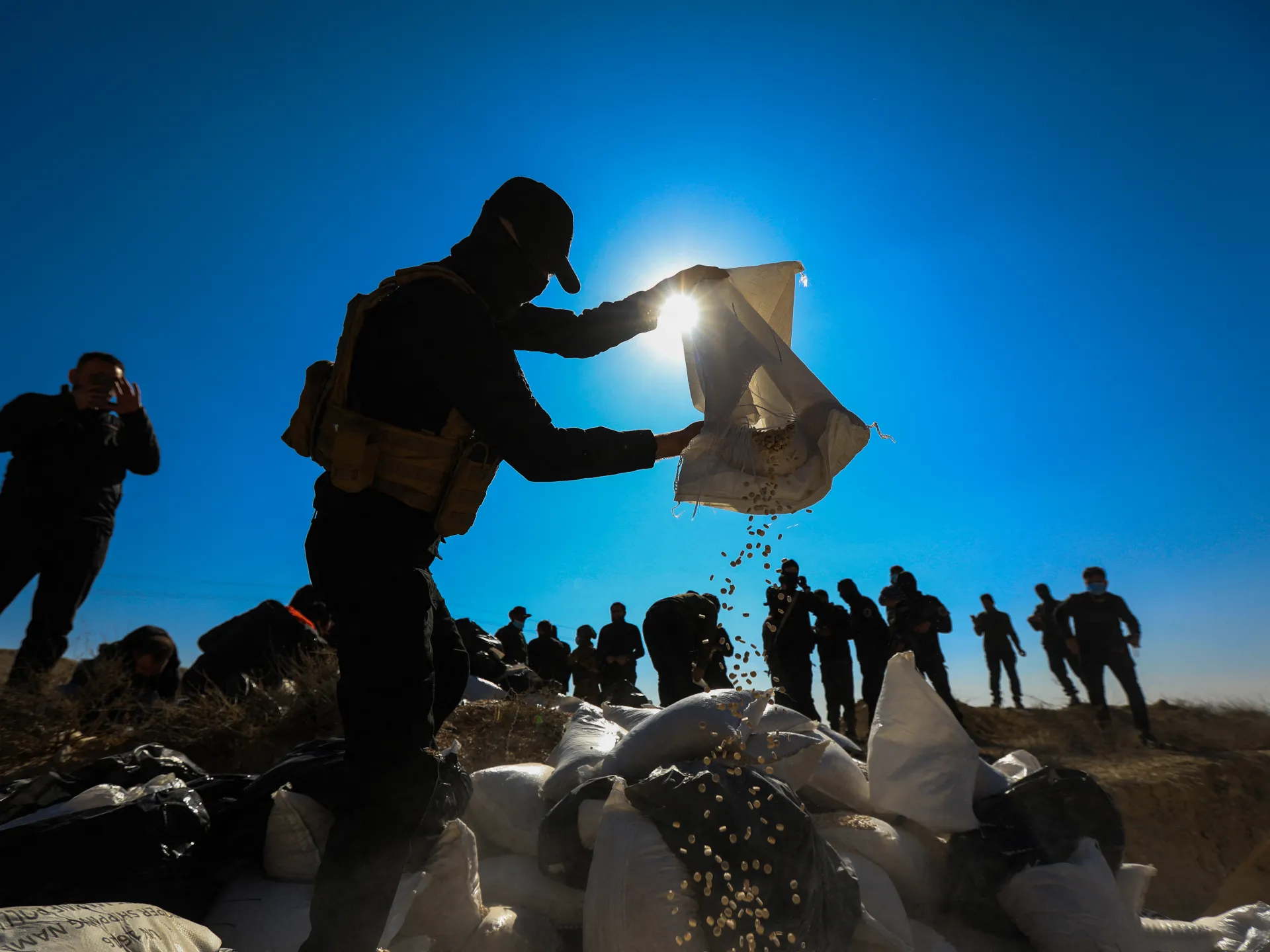
Since al-Assad’s ouster a year ago, Syria’s new authorities have dismantled a network of factories and storage sites, a research brief published on Monday by the UN Office on Drugs and Crime (UNODC) said.
Overall, 15 industrial-level laboratories and 13 storage sites have been shuttered, according to the UNODC report. The agency said the action has “drastically changed” the Captagon market across the region.
Syria’s role in the drug trade had previously drawn scrutiny from numerous Gulf states, where the pill is popular, including Saudi Arabia. It also helped to prompt Western sanctions.
‘Political will and international cooperation’
For years, the Captagon trade provided billions of dollars in profit for networks and individuals aligned with the former government “either within the leadership of the regime’s security apparatus, Syria’s commercial sector and business elite, and/or family members of Bashar al-Assad”, according to Caroline Rose, an expert on Syrian drug trafficking at the New Lines Institute think tank.
Maher al-Assad, Bashar’s brother and former commander of the army’s elite Fourth Division, was identified as a key player, profiting from protecting shipments through Latakia, a former al-Assad stronghold.
Despite the current Syrian government’s targeting of the industry, large seizures of the drug across the region suggest that significant stockpiles of the pills originating from Syria remain in circulation, the report noted.
Smaller-scale production is also likely continuing inside Syria and in neighbouring countries, the UNODC added, with Gulf countries still the top buyers of the drug.
The UN agency said the disruption of the Middle East’s Captagon industry shows that with “political will and international cooperation … even highly complex drug markets can be destabilised within a relatively short period of time”.
However, it warned that the shift risks pushing regional consumers towards new synthetic substances, like methamphetamine, which has recently grown in popularity.
“Without addressing the underlying demand for ‘Captagon,’ trafficking and use are likely to shift toward other substances, such as methamphetamine, with new routes and actors emerging to fill the gap,” it said.
In a ‘declaration of vengeance’ for a deadly attack on US soldiers last week, the US military launched more than 70 strikes on alleged ISIL targets in Syria.
Syrian state television denounces the Israeli incursion as another violation of the nation’s sovereignty.
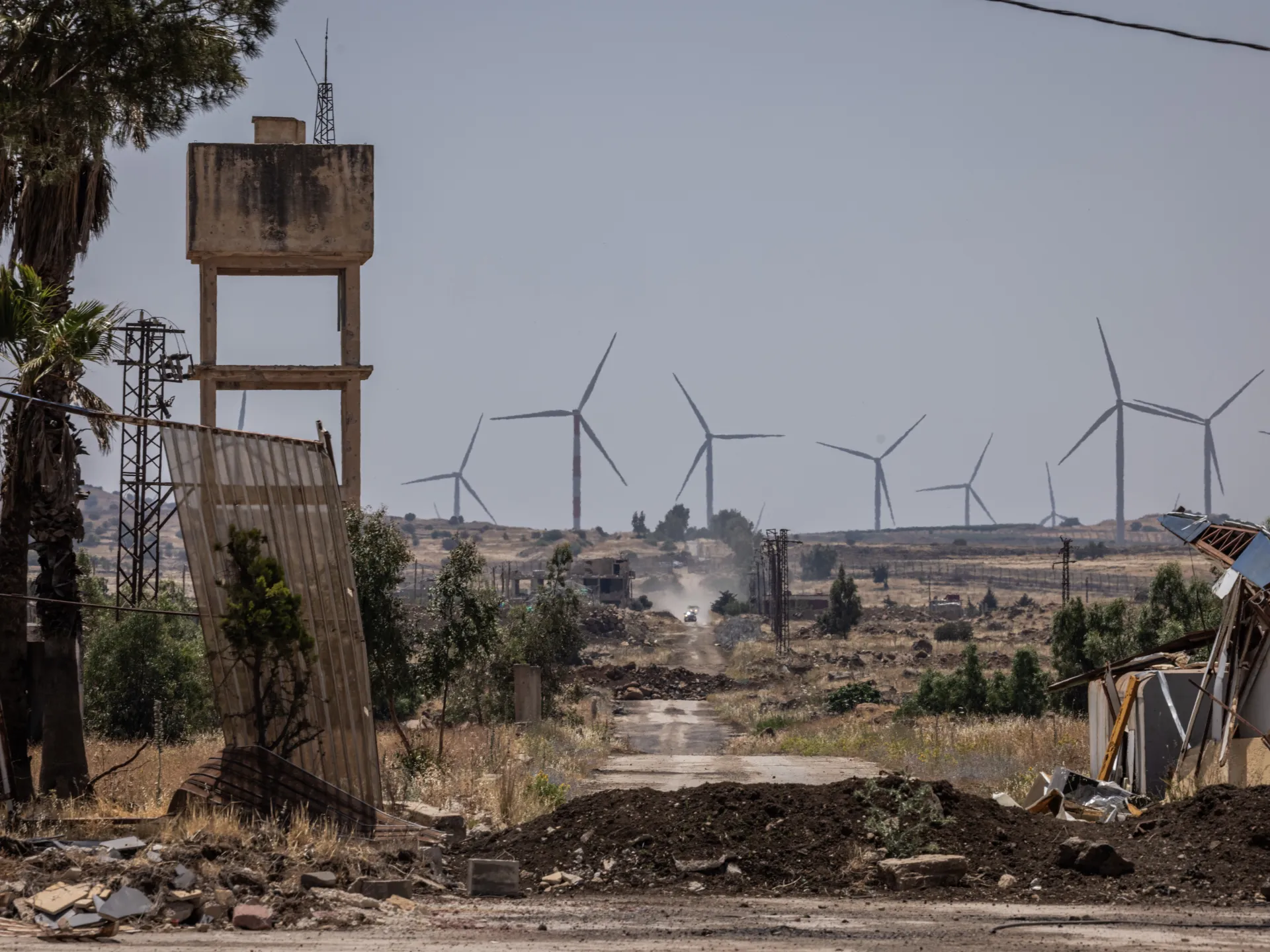
Israeli forces have advanced into the Quneitra area of Syria’s occupied Golan Heights and set up two military checkpoints, an Al Jazeera correspondent on the ground reports.
The Israeli military operation on Saturday took place in the villages of Ain Ziwan and al-Ajraf in the southern part of the country.
Recommended Stories
list of 4 itemsend of list
For months, Israeli forces have conducted near-daily incursions into southern Syria, particularly in the Quneitra governorate, carrying out arrests, erecting checkpoints, and bulldozing land, all of which have prompted growing public anger and unrest.
Syrian state television said the Israeli incursion was a violation of Syrian sovereignty, noting that the army used five military vehicles to set up the checkpoint in Ain Ziwan.
The latest raid comes one day after Israeli forces advanced towards the towns of al-Asha, Bir Ajam, Bariqa, Umm al-Azam and Ruwayhina in the southern Quneitra countryside, according to the Syrian News Agency (SANA).
Dozens of Syrians on Friday protested the Israeli incursion in the city of al-Salam in the Quneitra Governorate, condemning the ongoing Israeli attacks against citizens and their properties.
The demonstrators, part of a group called “Syrians with Palestine”, held banners denouncing what they stated were repeated Israeli violations of Syrian lands.
Despite a reduction in direct military threats, the Israeli army continues to carry out air raids that have caused civilian casualties and destroyed Syrian army sites and facilities.
Over the past year, Israel has launched more than 600 air, drone or artillery attacks across Syria, averaging nearly two attacks a day, according to a tally by the Armed Conflict Location and Event Data (ACLED).
Israeli military incursions have become more brazen, more frequent and more violent since Israel expanded its occupation of southern Syria following the ousting of President Bashar al-Assad in December 2024.
Disengagement accord
After al-Assad’s fall, Israel declared the 1974 Disengagement Agreement – brokered after the 1973 war, in which Syria failed to regain the occupied Golan Heights – void.
The agreement had established a UN-patrolled buffer zone, which Israel has since violated, advancing deeper into Syrian territory.
Citing al-Assad’s flight, Israel says the accord no longer applies, while carrying out air raids, ground incursions, reconnaissance flights; setting up checkpoints; and arresting or disappearing Syrians. Syria has not responded with attacks.
In September, Syrian President Ahmed al-Sharaa stated that Israel had conducted more than 1,000 air attacks and more than 400 ground incursions in Syria since al-Assad was overthrown, describing the actions as “very dangerous”.
Syrians believe that the continuation of these violations hinders efforts to restore stability in the region and undermines attempts to improve the economic situation in southern Syria.
Al Jazeera visited Quneitra in recent weeks and spoke to Syrians about Israeli incursions and abductions there, which have stoked fears.
Syria and Israel are currently in talks to reach an agreement that Damascus hopes will secure a halt to Israel’s air raids on its territory and the withdrawal of Israeli troops who have pushed into southern Syria.
In the background, the United States has been pushing diplomatic efforts to restore the 1974 deal.
Dec. 19 (UPI) — The U.S. military struck several ISIS-connected targets in Syria on Friday in retaliation for the shooting deaths of two U.S. soldiers and their interpreter last week.
The military used artillery, attack helicopters and fighter jets to hit targets in central Syria during Operation Hawkeye, which is named after the two slain soldiers’ home state of Iowa.
The strikes were expected to take place into early Saturday morning as part of a retaliation campaign against ISIS in Syria, The Times reported.
A lone ISIS sniper killed Iowa National Guardsmen Sgt. William Howard, 29, and Sgt. Edgar Torres Tovar, 25, and civilian interpreter Ayad Mansoor Sakat, 54. Three other Iowa National Guardsmen also were wounded.
The ISIS sniper ambushed the soldiers while they were “supporting a key leader” in Palmyra, Syria, CBS News reported.
The sniper had been a member of the Syrian security forces, but he was scheduled to be dismissed from his duties due to extremist views, U.S. and Syrian officials said.
ISIS remains a factor in Syria, where it has lost much of its prior territorial control after the ouster of former Syrian President Bashar al-Assad on Dec. 8, 2024, by opposition forces led by Hay’at Tahrir al-Sham.
The collapse of the Assad regime largely ended a 14-year civil war in Syria, and he has been replaced by current Syrian President Ahmed al-Sharaa.
Sharaa met with Trump at the White House last month and on Friday welcomed the lifting of U.S. sanctions against the Syrian government that were placed during the Assad regime.
Lifting the sanctions makes it possible for investments to be made in Syria, which has struggled to recover from its civil war.
Former President Joe Biden presents the Presidential Citizens Medal to Liz Cheney during a ceremony in the East Room of the White House in Washington, on January 2, 2025. The Presidential Citizens Medal is bestowed to individuals who have performed exemplary deeds or services. Photo by Will Oliver/UPI | License Photo
DOVER AIR FORCE BASE, Del. — President Trump on Wednesday paid his respects to two Iowa National Guard members and a U.S. civilian interpreter who were killed in an attack in the Syrian desert, joining their grieving families as their remains were brought back to the country they served.
Trump met privately with the families at Dover Air Force Base in Delaware before the dignified transfer, a solemn ritual conducted in honor of U.S. service members killed in action. The civilian was also included in the transfer.
Trump, who traveled to Dover several times in his first term, once described it as “the toughest thing I have to do” as president.
The two Iowa troops killed in Syria on Saturday were Sgt. Edgar Brian Torres-Tovar, 25, of Des Moines, and Sgt. William Nathaniel Howard, 29, of Marshalltown, according to the U.S. Army. Both were members of the 1st Squadron, 113th Cavalry Regiment, and have been hailed as heroes by the Iowa National Guard.
Torres-Tovar’s and Howard’s families were at Dover for the return of their remains, alongside Iowa Gov. Kim Reynolds, members of Iowa’s congressional delegation and leaders of the Iowa National Guard. Their remains will be taken to Iowa after the transfer.
A U.S. civilian working as an interpreter, identified Tuesday as Ayad Mansoor Sakat, of Macomb, Mich., was also killed. Three other members of the Iowa National Guard were injured in the attack. The Pentagon has not identified them.
They were among hundreds of U.S. troops deployed in eastern Syria as part of a coalition fighting the Islamic State group.
The process of returning service member remains
There is no formal role for a president at a dignified transfer other than to watch in silence, with all thoughts about what happened in the past and what is happening at Dover kept to himself for the moment. There is no speaking by any of the dignitaries who attend, with the only words coming from the military officials who direct the highly choreographed transfers.
Trump arrived without First Lady Melania Trump, who had been scheduled to accompany him, according to the president’s public schedule. Her office declined to elaborate, with spokesperson Nick Clemens saying the first lady “was not able to attend today.”
During the process at Dover, transfer cases draped with the American flag that hold the soldiers’ remains are carried from the belly of a hulking C-17 military aircraft to a waiting vehicle under the watchful eyes of grieving family members. The vehicle then transports the remains to the mortuary facility at the base, where the fallen are prepared for burial.
Iowa National Guard members hailed as heroes
Howard’s stepfather, Jeffrey Bunn, has said Howard “loved what he was doing and would be the first in and last out.” He said Howard had wanted to be a soldier since he was a boy.
In a social media post, Bunn, who is chief of the Tama, Iowa, police department, said Howard was a loving husband and an “amazing man of faith.” He said Howard’s brother, a staff sergeant in the Iowa National Guard, would escort “Nate” back to Iowa.
Torres-Tovar was remembered as a “very positive” family-oriented person who always put others first, according to fellow Guard members who were deployed with him and issued a statement to the local TV broadcast station WOI.
Dina Qiryaqoz, the daughter of the civilian interpreter who was killed, said Wednesday in a statement that her father worked for the U.S. Army during the invasion of Iraq from 2003 to 2007. Sakat is survived by his wife and four adult children.
The interpreter was from Bakhdida, Iraq, a small Catholic village southeast of Mosul, and the family immigrated to the U.S. in 2007 on a special visa, Qiryaqoz said. At the time of his death, Sakat was employed as an independent contractor for Virginia-based Valiant Integrated Services.
Sakat’s family was still struggling to believe that he is gone. “He was a devoted father and husband, a courageous interpreter and a man who believed deeply in the mission he served,” Qiryaqoz said.
Trump’s reaction to the attack in Syria
Trump told reporters over the weekend that he was mourning the deaths. He vowed retaliation. The most recent instance of U.S. service members killed in action was in January 2024, when three American troops died in a drone attack in Jordan.
Saturday’s deadly attack followed a rapprochement between the U.S. and Syria, bringing the former pariah state into a U.S.-led coalition fighting the Islamic State group.
Trump, who met with al-Sharaa last month at the White House, said Monday that the attack had nothing to do with the Syrian leader, who Trump said was “devastated by what happened.”
Price writes for the Associated Press. AP writers Konstantin Toropin and Darlene Superville in Washington, Isabella Volmert in Lansing, Mich., and Hannah Fingerhut in Des Moines, Iowa, contributed to this report.
Legislation reflects Democrats’ efforts to seek tighter oversight of Trump administration’s military action.
The United States Senate has passed a $901bn bill setting defence policy and spending for the 2026 fiscal year, combining priorities backed by President Donald Trump’s administration with provisions designed to preserve congressional oversight of US military power.
The National Defense Authorisation Act (NDAA) was approved in a 77-20 vote on Wednesday with senators adopting legislation passed by the House of Representatives last month. It now goes to Trump for his signature.
Recommended Stories
list of 4 itemsend of list
Several provisions in the bill reflect efforts by Democratic lawmakers, supported by some Republicans, to constrain how quickly the Trump administration may scale back US military commitments in Europe.
The bill requires the Pentagon to maintain at least 76,000 US soldiers in Europe unless NATO allies are consulted and the administration determines that a reduction would be in the US national interest. The US typically stations 80,000 to 100,000 soldiers across the continent. A similar measure prevents reductions in US troop levels in South Korea below 28,500 soldiers.
Congress also reinforced its backing for Ukraine, authorising $800m under the Ukraine Security Assistance Initiative with $400m allocated for each of the next two years. A further $400m per year was approved to manufacture weapons for Ukraine, signalling continued congressional support for Kyiv and cementing Washington’s commitment to Europe’s defence.
Asia Pacific focus, congressional oversight
The bill also reflects priorities aligned with the Trump administration’s national security strategy, which places the Asia Pacific at the centre of US foreign policy and describes the region as a key economic and geopolitical battleground.
In line with that approach, the NDAA provides $1bn for the Taiwan Security Cooperation Initiative, aimed at strengthening defence cooperation as the US seeks to counter China’s growing military influence.
The legislation authorises $600m in security assistance for Israel, including funding for joint missile defence programmes, such as the Iron Dome, a measure that has long drawn broad bipartisan support in Congress.
The NDAA increases reporting requirements on US military activity, an area in which Democrats in particular have sought greater oversight.
It directs the Department of Defense to provide Congress with additional information on strikes targeting suspected smuggling and trafficking operations in the Caribbean and the eastern Pacific, adding pressure on Defense Secretary Pete Hegseth to provide lawmakers with video footage of US strikes on alleged drug-smuggling boats operating in international waters near Venezuela.
Lawmakers moved to strengthen oversight after a September strike killed two people who had survived an earlier attack on their boat.
Some Democratic lawmakers said they were not briefed in advance on elements of the campaign, prompting calls for clearer reporting requirements.
Sanctions and America First
The legislation repeals the 2003 authorisation for the US invasion of Iraq and the 1991 authorisation for the Gulf War. Supporters from both parties said the repeals reduce the risk of future military action being undertaken without explicit congressional approval.
The bill also permanently lifts US sanctions on Syria imposed during the regime of President Bashar al-Assad after the Trump administration’s earlier decision to temporarily ease restrictions. Supporters argue the move will support Syria’s reconstruction after al-Assad’s removal from power a year ago.
Other provisions align more closely with priorities advanced by Trump and Republican lawmakers under the administration’s America First agenda.
The NDAA eliminates diversity, equity and inclusion offices and training programmes within the Department of Defense, including the role of chief diversity officer. The House Armed Services Committee claims the changes would save about $40m.
The bill also cuts $1.6bn from Pentagon programmes related to climate change. While the US military has previously identified climate-related risks as a factor affecting bases and operations, the Trump administration and Republican leaders have said defence spending should prioritise immediate military capabilities.
Fifteen years ago, a Tunisian fruit seller, Mohamed Bouazizi, despairing at official corruption and police violence, walked to the centre of his hometown of Sidi Bouzid, set himself on fire, and changed the region forever.
Much of the hope triggered by that act lies in ruins. The revolutions that followed in Tunisia, Libya, Egypt and Syria have cost the lives of tens and thousands before, in some cases, giving way to chaos or the return of authoritarianism.
Recommended Stories
list of 4 itemsend of list
Only Tunisia appeared to fulfil the promise of the “Arab Spring”, with voices from around the world championing its democratic success, ignoring economic and political failings through much of its post-revolutionary history that stirred discontent.
Today, many of Tunisia’s post-revolutionary gains have been cast aside in the wake of President Kais Saied’s dramatic power grab in July 2021. Labelled a coup by his opponents, it ushered in a new hardline rule in Tunisia.
Burying the hopes of the revolution
Over the following years, as well as temporarily shuttering parliament – only reopening it in March 2023 – Saied has rewritten the constitution and overseen a relentless crackdown on critics and opponents.
“They essentially came for everyone; judges, civil society members, people from all political backgrounds, especially the ones that were talking about unifying an opposition against the coup regime,” Kaouther Ferjani, whose father, 71-year-old Ennahdha leader Said Ferjani, was arrested in February 2023.
In September, Saied said his measures were a continuation of the revolution triggered by Bouzazzi’s self-immolation. Painting himself a man of the people, he railed against nameless “lobbyists and their supporters” who thwart the people’s ambitions.
However, while many Tunisians have been cowed into silence by Saied’s crackdown, they have also refused to take part in elections, now little more than a procession for the president.
In 2014, during the country’s first post-revolution presidential election, about 61 percent of the country’s voters turned out to vote.
By last year’s election, turnout had halved.
“Kais Saied’s authoritarian rule has definitively buried the hopes and aspirations of the 2011 revolution by systematically crushing fundamental rights and freedoms and putting democratic institutions under his thumb,” Bassam Khawaja, deputy director at Human Rights Watch, told Al Jazeera English.
In the wake of the revolution, many across Tunisia became activists, seeking to involve themselves in forging what felt like a new national identity.
The number of civil society organisations exploded, with thousands forming to lobby against corruption or promote human rights, transitional justice, press freedom and women’s rights.
At the same time, political shows competed for space, debating the direction the country’s new identity would take.
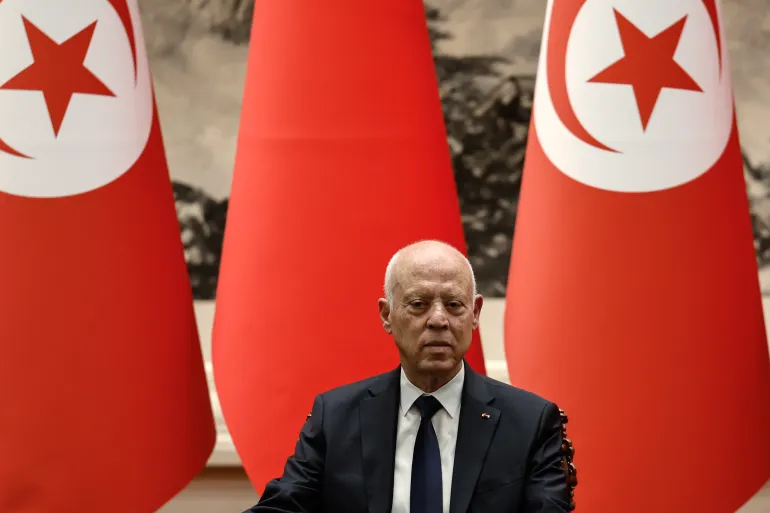
Tunisian President Saied attends a ceremony with President Xi Jinping in China [ingshu Wang/Getty Images]
“It was an amazing time,” a political analyst who witnessed the revolution and remains in Tunisia said, asking to remain anonymous. “Anybody with anything to say was saying it.
“Almost overnight, we had hundreds of political parties and thousands of civil society organisations. Many of the political parties shifted or merged… but Tunisia retained an active civil society, as well as retaining freedom of speech all the way up to 2022.”
Threatened by Saied’s Decree 54 of 2022, which criminalised any electronic communication deemed by the government as false, criticism of the ruling elite within the media and even on social networks has largely been muzzled.
“Freedom of speech was one of the few lasting benefits of the revolution,” the analyst continued.
“The economy failed to pick up, services didn’t really improve, but we had debate and freedom of speech. Now, with Decree 54, as well as commentators just being arrested for whatever reason, it’s gone.”
In 2025, both Amnesty International and Human Rights Watch slammed Tunisia’s crackdown on activists and nongovernmental organisations (NGOs).
In a statement before the prosecution of six NGO workers and human rights defenders working for the Tunisian Council for Refugees in late November, Amnesty pointed to the 14 Tunisian and international NGOs that had their activities suspended by court order over the previous four months.
Included were the Tunisian Association of Democratic Women, the Tunisian Forum for Social and Economic Rights, the media platform Nawaat and the Tunis branch of the World Organisation against Torture.
‘Plotting against state security’
Dozens of political figures from post-revolution governments have also been arrested, with little concern for party affiliation or ideology.
In April 2023, 84-year-old Rached Ghannouchi, leader of what had been Tunisia’s main political bloc, the Ennahdha Party, was arrested on charges of “plotting against state security”.
According to his daughter, Yusra, after a series of subsequent convictions, Ghannouchi currently faces a further 42 years in jail.
Later the same year, Ghannouchi’s principal critic, Abir Moussi, the leader of the Free Destourian Party, was jailed on a variety of charges.
Critics dismiss the charges, saying the criteria for arrest have been the person’s potential to rally opinion against Saied.
“This is not just the case for my father,” Yusra continued, referring to others, such as the leading post-coup opposition figure Jawhar Ben Mubarak.
“Other politicians, judges, journalists, and ordinary citizens … have been sentenced to very heavy sentences, without any evidence, without any respect for legal procedures, simply because Tunisia has now sadly been taken back to the very same dictatorship against which Tunisians had risen in 2010.”
The head of Tunisia’s Ennahdha, Rached Ghannouchi, greets supporters upon arrival at a police station in Tunis on February 21, 2023, in compliance with the summons of an investigating judge [Fethi Belaid/AFP]
Ghannouchi and Moussi, along with dozens of former elected lawmakers, remain in jail. The political parties that once vied for power in the country’s parliament are largely absent.
“The old parliament was incredibly fractious, and did itself few favours,” said Hatem Nafti, essayist and author of Our Friend Kais Saied, a book criticising Tunisia’s new regime. He was referring to the ammunition provided to its detractors by a chaotic and occasionally violent parliament.
“However, it was democratically elected and blocked legislation that its members felt would harm Tunisia.
“In the new parliament, members feel the need to talk tough and even be rude to ministers,” Nafti continued. “But it’s really just a performance… Nearly all the members are there because they agree with Kais Saied.”
Hopes that the justice system might act as a check on Saied have faltered. The president has continued to remodel the judiciary to a design of his own making, including by sacking 57 judges for not delivering verdicts he wanted in 2022.
By the 2024 elections, that effort appeared complete, with the judicial opposition to his rule that remained, in the shape of the administrative court, rendered subservient to his personally appointed electoral authority, and the most serious rivals for the presidency jailed.
“The judiciary is now almost entirely under the government’s control,“ Nafti continued. “Even under [deposed President Zine El Abidine] Ben Ali you had the CSM [Supreme Judicial Council], which oversaw judges’ appointments, promotions, and disciplinary matters.
“Now that only exists on paper, with the minister of justice able to determine precisely what judges go where and what judgements they’ll deliver.”
Citing what he said is the “shameful silence of the international community that once supported the country’s democratic transition”, Khawaja said: ”Saied has returned Tunisia to authoritarian rule.”
A protest against Saied on fourth years after his power grab. Tunis, July 25, 2025 [Jihed Abidellaoui/Reuters]
US adds five Arab and African countries to travel ban list as right-wing politicians intensify Islamophobic rhetoric.
United States President Donald Trump has added five countries to the list of nations whose citizens are banned from entering the US, including Palestine and Syria.
The White House announced the expansion of the ban on Tuesday, as it intensifies its crackdown on immigration.
Recommended Stories
list of 3 itemsend of list
Tuesday’s order imposed a travel ban on six new countries – Palestine, Burkina Faso, Mali, Niger, South Sudan and Syria – in addition to the 12 initially made public in June.
The decree did not refer to Palestine, which Washington does not recognise as a state, by name or even as the occupied Palestinian territory.
Instead, it describes the Palestine category as “Palestinian Authority Documents” and refers to Palestinians as “individuals attempting to travel on PA-issued or endorsed travel documents”.
The decision comes weeks after Trump declared a “permanent pause” on migration from what he called “all Third World Countries” in response to the shooting of two National Guard troops in Washington, DC.
“Several US-designated terrorist groups operate actively in the West Bank or Gaza Strip and have murdered American citizens. Also, the recent war in these areas likely resulted in compromised vetting and screening abilities,” the White House said.
“In light of these factors, and considering the weak or nonexistent control exercised over these areas by the PA, individuals attempting to travel on PA-issued or endorsed travel documents cannot currently be properly vetted and approved for entry into the United States.”
Democratic Congresswoman Rashida Tlaib, who is of Palestinian descent, slammed the ban, accusing Trump and his top aide Stephen Miller of pushing to alter the demographics of the country.
“This administration’s racist cruelty knows no limits, expanding their travel ban to include even more African and Muslim-majority countries, even Palestinians fleeing a genocide,” she said in a social media post.
The move to ban Palestinians from entering the US comes as Israel continues its daily deadly attacks in Gaza and the occupied West Bank, where Israeli settlers have killed at least two US citizens this year.
Meanwhile, the ban on Syrians coincides with rapprochement between Washington and Damascus after Syrian President Ahmed al-Sharaa visited the White House in November.
“While the country is working to address its security challenges in close coordination with the United States, Syria still lacks an adequate central authority for issuing passports or civil documents and does not have appropriate screening and vetting measures,” the White House said.
On Thursday, US Director of National Intelligence Tulsi Gabbard cited the mass shooting that killed 15 people at a Jewish festival in Australia to laud Trump’s immigration restrictions.
“Islamists and Islamism is the greatest threat to the freedom, security, and prosperity of the United States and the entire world. It is probably too late for Europe – and maybe Australia,” she wrote on X.
“It is not too late for the United States of America. But it soon will be. Thankfully, President Trump has prioritized securing our borders and deporting known and suspected terrorists, and stopping mass, unvetted migration that puts Americans at risk.”
Trump’s Republican allies have been increasingly using Islamophobic rhetoric, and calling for Muslims to be blocked from entering the country.
On Sunday, Senator Tommy Tuberville called Islam a “cult”, baselessly accusing Muslims of aiming to “conquer” the West.
“Stop worrying about offending the pearl clutchers,” he wrote in a social media post. “We’ve got to SEND THEM HOME NOW or we’ll become the United Caliphate of America.”
When Trump first ran for president in 2015, he called for a complete ban on Muslims entering the US, and when he started his first term, he imposed a travel ban on several Muslim-majority countries.
Washington has blamed ISIL (ISIS) for the attack and promised retaliation.
Three US soldiers have been killed in an attack in Syria’s central city of Palmyra.
It is the first known deadly attack on US forces since former Syrian President Bashar al-Assad was deposed last year. Washington has accused the ISIL (ISIS) group of carrying out the assault.
The government in Damascus has expanded its ties with Washington and joined a coalition to fight the ISIL group.
But how much of a security challenge is ISIL in Syria?
Will the US now reinforce its military presence? What risks could that pose?
Presenter: Dareen Abughaida
Guests:
Colin Clarke – executive director of The Soufan Center
Dareen Khalifa – senior adviser at the International Crisis Group
Orwa Ajjoub – PhD candidate in global politics, focusing on armed groups in Syria