strike

Senate passes $901-billion defense bill that pushes Hegseth for boat strike video

The Senate gave final passage Wednesday to an annual military policy bill that will authorize $901 billion in defense programs while pressuring Defense Secretary Pete Hegseth to provide lawmakers with video of strikes on alleged drug boats in international waters near Venezuela.

The annual National Defense Authorization Act, which raises troop pay by 3.8%, gained bipartisan backing as it moved through Congress. It passed the Senate on a 77-20 vote before lawmakers planned to leave Washington for a holiday break. Two Republicans — Sens. Rand Paul and Mike Lee — and 18 Democrats voted against the bill.

The White House has indicated that it is in line with President Trump’s national security priorities. However, the legislation, which ran more than 3,000 pages, revealed some points of friction between Congress and the Pentagon as the Trump administration reorients its focus away from security in Europe and toward Central and South America.

The bill pushes back on recent moves by the Pentagon. It demands more information on boat strikes in the Caribbean, requires that the U.S. maintain its troop levels in Europe and sends some military aid to Ukraine.

But overall, the bill represents a compromise between the parties. It implements many of Trump’s executive orders and proposals on eliminating diversity and inclusion efforts in the military and grants emergency military powers at the U.S. border with Mexico. It also enhances congressional oversight of the Department of Defense, repeals several years-old war authorizations and seeks to overhaul how the Pentagon purchases weapons as the U.S. tries to outpace China in developing the next generation of military technology.

“We’re about to pass, and the president will enthusiastically sign, the most sweeping upgrades to DOD’s business practices in 60 years,” said Sen. Roger Wicker (R-Miss.), the chair of the Senate Armed Services Committee.

Still, the sprawling bill faced objections from both Democratic and Republican leadership on the Senate Commerce Committee. That’s because the legislation allows military aircraft to obtain a waiver to operate without broadcasting their precise location, as an Army helicopter had done before a midair collision with an airliner in Washington, D.C., in January that killed 67 people.

“The special carve-out was exactly what caused the January 29 crash that claimed 67 lives,” Sen. Ted Cruz (R-Texas), the chair of the Senate Commerce Committee, said at a news conference this week.

Cruz said he was seeking a vote on bipartisan legislation in the next month that would require military aircraft to use a precise location sharing tool and improve coordination between commercial and military aircraft in busy areas.

Boat strike videos

Republicans and Democrats agreed to language in the defense bill that threatened to withhold a quarter of Hegseth’s travel budget until he provided unedited video of the strikes, as well as the orders authorizing them, to the House and Senate Committees on Armed Services.

Hegseth was on Capitol Hill on Tuesday ahead of the bill’s passage to brief lawmakers on the U.S. military campaign in international waters near Venezuela. The briefing elicited contrasting responses from many lawmakers, with Republicans largely backing the campaign and Democrats expressing concern about it and saying they had not received enough information.

The committees are investigating a Sept. 2 strike — the first of the campaign — that killed two people who had survived an initial attack on their boat. The Navy admiral who ordered the “double-tap” strike, Adm. Frank “Mitch” Bradley, also appeared before the committees shortly before the vote Wednesday in a classified briefing that also included video of the strike in question.

Several Republican senators emerged from the meeting backing Hegseth and his decision not to release the video publicly, but other GOP lawmakers stayed silent on their opinion of the strike.

Democrats are calling for part of the video to be released publicly and for every member of Congress to have access to the full footage.

“The American people absolutely need to see this video,” said Sen. Richard Blumenthal (D-Conn.). “I think they would be shocked.”

Congressional oversight

Lawmakers have been caught by surprise by the Trump administration several times in the last year, including by a move to pause intelligence sharing with Ukraine and a decision to reduce U.S. troop presence in NATO countries in eastern Europe. The defense legislation requires that Congress be kept in the loop on decisions like those going forward, as well as when top military brass are removed.

The Pentagon is also required, under the legislation, to keep at least 76,000 troops and major equipment stationed in Europe unless NATO allies are consulted and there is a determination that such a withdrawal is in U.S. interests. Roughly 80,000 to 100,000 U.S. troops are usually present on European soil. A similar requirement keeps the number of U.S. troops stationed in South Korea at 28,500.

Lawmakers are also pushing back on some Pentagon decisions by authorizing $400 million for each of the next two years to manufacture weapons to be sent to Ukraine.

Cuts to diversity and climate initiatives

Trump and Hegseth have made it a priority to purge the military of material and programs that address diversity, anti-racism or gender issues, and the defense bill codifies many of those changes. It would repeal diversity, equity and inclusion offices and trainings, including the position of chief diversity officer. Those cuts would save the Pentagon about $40 million, according to the Republican-controlled House Armed Services Committee.

The U.S. military has long found that climate change is a threat to how it provides national security because weather-related disasters can destroy military bases and equipment. But the bill makes $1.6 billion in cuts by eliminating climate change-related programs at the Pentagon.

Repeal of war authorizations and Syria sanctions

Congress is writing a closing chapter to the war in Iraq by repealing the authorization for the 2003 invasion. Now that Iraq is a strategic partner of the U.S., lawmakers in support of the provision say the repeal is crucial to prevent future abuses. The bill also repeals the 1991 authorization that sanctioned the U.S.-led Gulf War.

The rare, bipartisan moves to repeal the legal justifications for the conflicts signal a potential appetite among lawmakers to reclaim some of Congress’ war powers.

Groves writes for the Associated Press.

Source link

England’s resident doctors begin five-day strike | Health News

The British Medical Association is calling for improved pay and an increase in available jobs for qualified doctors.

Resident doctors in England have begun a five-day strike in a long-running dispute over pay and working conditions.

Prime Minister Keir Starmer addressed the strike during Prime Minister’s Questions in parliament on Wednesday, describing the walkout as “dangerous and utterly irresponsible”.

Recommended Stories

list of 4 itemsend of list

“My message to resident doctors is: don’t abandon patients,” Starmer said. He urged them to “work with us to improve conditions and rebuild the NHS”.

The prime minister also blamed the previous Conservative government for leaving the National Health Service “absolutely on its knees”.

The doctors, formerly known as junior doctors and accounting for nearly half of England’s medical workforce, walked out at 07:00 GMT on Wednesday. The strike is due to continue until 07:00 GMT on Monday.

The strike follows an online ballot organised by the British Medical Association (BMA), the union representing resident doctors. About 30,000 members voted to reject the government’s proposal, triggering the industrial action.

Jack Fletcher, a BMA representative, said the dispute centred on two main issues: pay and a lack of jobs for qualified doctors.

“There is a jobs crisis, where doctors are trained but unable to secure roles, and there is a pay crisis,” Fletcher said while standing on a picket line outside St Thomas’ Hospital in London.

“We must value our doctors in this country,” he added. “Last year, more doctors left the profession than at any point in the past decade.”

The strike comes as the NHS faces increased pressure, with flu-related hospitalisations in England rising by more than 50 percent in early December. Health authorities across Europe have also warned of an unusually early and severe flu season.

NHS England said fewer doctors than usual would be on duty during the strike period, with staff required to prioritise life-saving care.

The BMA is calling for what it describes as a “genuinely long-term plan” to address pay, after years of below-inflation rises. It is also demanding the creation of new training posts, rather than what it says are recycled positions, to allow doctors to specialise and progress.

The government’s most recent offer, made last week, did not include new pay terms. Shortly after taking office, Health Secretary Wes Streeting agreed to a deal offering a 22 percent pay rise, below the 29 percent sought by the union.

Doctors are seeking “full pay restoration”, calling for salaries to return to their 2008 and 2009 levels in real terms after years of erosion by inflation.

Source link

India Can’t Give Up Its Jaguar Strike Aircraft

India, now the sole operator of the Anglo-French SEPECAT Jaguar strike aircraft, is to acquire surplus examples of the Cold War-era jets from Oman, which retired the type in 2014. The decision reflects the continued value of the Jaguar to the Indian Air Force (IAF) but also points to the service’s shrinking fighter force and delays in acquiring new equipment.

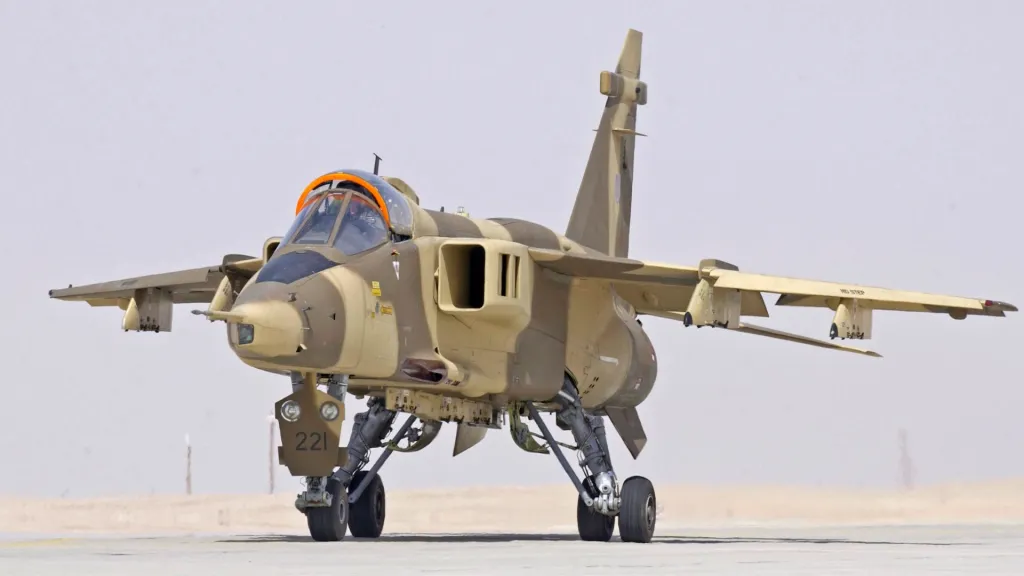
A Royal Air Force of Oman Jaguar, taxies towards the runway at Thumrait, Oman. The aircraft was taking part in Exercise Magic Carpet 2005. The exercise was an opportunity for RN, RAF, Omani, French Air Force, USAF and USN squadrons to deploy and practice heavy-weapon bomb drops, utilising the extensive ranges and relatively clear airspace available over Oman. There were a variety of aircraft which took part, including our own Sea Harriers, GR7s and SKASaC, USN F18 and S3 Viking, USAF F16, French Mirage 2000 and RAF Tornado F3, Jaguar, VC10 air to air refuelling and E3D AWACS. In total around 60 aircraft were in theatre, allowing for realistic exercising of coalition forces. The participation of HMS Invincible with her Tailored Air Group (TAG) gave an excellent opportunity to prove the Strike Carrier concept within a controlled exercise environment and gain some useful general warfare training. It was a good opportunity for the ship's company to progress training in an exercise environment.
Now retired, a Royal Air Force of Oman Jaguar taxies toward the runway at Thumrait, Oman, during Exercise Magic Carpet 2005. Crown Copyright

Multiple reports indicate that India and Oman have come to a deal that will put an undisclosed number of former Omani Jaguars into Indian hands. Starting in 1977, the Royal Air Force of Oman (RAFO) received a total of 27 British-made Jaguars, comprising 20 single-seaters, five two-seaters, and two ex-U.K. Royal Air Force aircraft used as attrition replacements. At least 13 of these were involved in various accidents, which would leave a maximum of ‘intact’ airframes 14 for India. Potentially, some further components could also be harvested from Omani aircraft that were written off while in service.

An air-to-air right side view of a Sepecat Jaguar aircraft approaching a Soviet I1-38 May maritime patrol aircraft.
A Royal Air Force of Oman Jaguar intercepts a Soviet Navy Il-38 May maritime patrol aircraft in 1987. Public Domain

As for the IAF, the service selected the Jaguar for its Deep Penetration Strike Aircraft (DPSA) in 1978 and received 18 aircraft from U.K. Royal Air Force stocks as ‘interim’ equipment, 40 ‘flyaway’ aircraft direct from British Aerospace (BAe), plus around 128 more that were license-built in India under a transfer-of-technology agreement with Hindustan Aeronautics Limited (HAL).

The ex-Omani jets won’t be inducted into IAF service but will be broken down into spare parts to support the aging but still in-demand Indian Jaguar inventory. TWZ contributor and IAF historian Angad Singh told us that the jets will be dismantled in Oman and then shipped to India for ease of transport.

The IAF’s demand for increasingly hard-to-find Jaguar spares saw India turn to France in 2018–19. France, which retired its last Jaguars in 2005, shipped 31 complete airframes plus various spare parts to India, with New Delhi paying only for the cost of transport.

A Tennessee Air National Guard KC-135 Stratotanker refuels a French SEPECAT Jaguar. Both aircraft were operating out of Aviano Air Base, Italy, supporting NATO missions in the Balkans during the 1990s. U.S. Air Force

These airframes and spares are being used to support the IAF’s current six Jaguar squadrons, each of which has between 18 and 20 aircraft on strength. However, the fleet is being slowly eroded by attrition, with three Jaguar losses this year alone.

The last new Jaguar to be built in India came off the HAL production line in 2008; British and French production had long since ceased by this date. Since then, obtaining spare parts and components, including new or refurbished engines, has become much more complex. Already, India is reportedly having to cannibalize some aircraft to keep the others in the air.

Further evidence of the importance of the Jaguar to the IAF’s plans comes from the continued efforts to upgrade the jets, the oldest of which are now around 45 years old.

INDIAN OCEAN (March 28, 2021) – An F/A-18E Super Hornet, assigned to the “Blue Diamonds” of Strike Fighter Squadron (VFA) 146, top, flies in formation with an Indian Air Force Su-30MKI, middle, and Jaguar over the aircraft carrier USS Theodore Roosevelt (CVN 71) March 28, 2021. The Theodore Roosevelt Carrier Strike Group is on a scheduled deployment to the U.S. 7th Fleet area of operations. As the U.S. Navy’s largest forward-deployed fleet, 7th Fleet routinely operates and interacts with 35 maritime nations while conducting missions to preserve and protect a free and open Indo-Pacific Region. (U.S. Navy photo by Mass Communication Specialist 3rd Class Carlos W. Hopper)
A U.S. Navy F/A-18E, top, flies in formation with an Indian Air Force Su-30MKI Flanker, middle, and Jaguar over the aircraft carrier USS Theodore Roosevelt (CVN 71) in the Indian Ocean in March 2021. U.S. Navy photo by Mass Communication Specialist 3rd Class Carlos W. Hopper

At the center of this effort is the Display Attack Ranging and Inertial Navigation (DARIN) modernization program for the Indian Jaguars, which first began in the 1980s and which has since progressed through three rounds of upgrades.

The first of these, DARIN I, kept the Jaguar’s original ‘chisel’ nose profile but added a new Sagem navigation/attack system, a combined map and electronic display, and a head-up display and weapon-aiming computer. A new Mil Std 1553B databus was added, making it easier to integrate new weapons and sensors. This would pay dividends during the 1999 Kargil War with Pakistan, during which Jaguars employed laser-guided bombs.

Full Dress Rehearsal of IAF Fire Power demonstration Exercise 'Iron Fist 2013' at Pokharan, Jaisalmer, Rajasthan on February 19, 2013.
Indian Air Force Jaguars prepare for the Iron Fist firepower demonstration at Pokharan, Jaisalmer, Rajasthan, in February 2013. The two-seater leads four single-seaters with the original ‘chisel’ nose configuration. Indian Ministry of Defense

Starting in the early 2000s, DARIN II changed the nose profile, with a new Thales laser targeting and designation system fitted. Other new additions included an Israeli-made Elbit head-up display, an inertial navigation/GPS system, and a multifunction display in the cockpit. Self-protection was enhanced with an Israeli-made Elta EL/L-8222 jammer, locally made Tarang radar warning receivers, and new countermeasures dispensers. New weapons included the ASRAAM air-to-air missile and the Textron CBU-105 Sensor Fuzed Weapon.

In a category of their own are India’s Jaguars tasked with maritime strike. These were originally fitted with a radar nose accommodating an Agave radar, used in conjunction with Sea Eagle anti-ship missiles. Under DARIN II, these items were replaced with the Elta EL/M-2032 and the AGM-84 Harpoon Block II, respectively.

An Indian Air Force Jaguar IM tasked with maritime strike. This upgraded aircraft is armed with an AGM-84 Harpoon Block II anti-ship missile. IAF

The most significant of the upgrades is DARIN III, begun in 2008, which includes a new active electronically scanned array (AESA) radar, the Israeli-made Elta EL/M-2052. The Jaguar became the first Indian combat jet to feature an AESA, and you can read more about the upgrade here.

The DARIN III program, led by HAL and informed by the Tejas Light Combat Aircraft program, saw the first flight of an upgraded Jaguar in 2012, but thereafter it suffered significant delays. Issues included integration of the locally developed open-system-architecture mission computer as well as a re-engining effort, which planned to replace the original Rolls-Royce Turbomeca Adour afterburning turbofans with Honeywell F125-INs. Replacement engines were finally canceled in 2019, after they were judged to be too expensive.

Other advanced DARIN III features include a fully ‘glass’ cockpit with three multifunction displays, an engine and flight instrument system (EFIS) digital display, and a digital head-up display. Also new is the Elbit Display and Sight Helmet (DASH), which is used to cue the ASRAAM missile. The ASRAAM, like the Magic 2 before it, is carried on the Jaguar’s unique overwing missile pylons.

Maintenance airmen from the Indian Air Force, 14 Fighter Squadron (FS) from Ambala Air Base, India, work to change a shock absorber on their Jaguar attack jet aircraft April 29, 2016, at Eielson Air Force Base, Alaska. The 14 FS is one of 23 units from around the world who participated in RED FLAG-Alaska 16-1, a Pacific Air Forces command directed field training exercise for U.S. and allied forces, to provide joint offensive counter-air, interdiction, close air support and large force employment training in a simulated combat environment. (U.S. Air Force photo by Staff Sgt. Shawn Nickel/Released
Maintainers from the Indian Air Force work to change a shock absorber on their Jaguar at Eielson Air Force Base, Alaska, during a Red Flag-Alaska exercise in April 2016. U.S. Air Force photo by Staff Sgt. Shawn Nickel/Released

The DARIN III program is planned to extend the life of at least some of the Indian Jaguars until 2050. However, the initial phase-out of the aircraft will begin before then. As Singh explained, the oldest (British-made) jets will not undergo the full upgrade, meaning that at least two of the IAF’s six Jaguar squadrons are due to disband in the near future.

Fabulous photos shared by Sanjay Simha, taken by his father, Mr TL Ramaswamy, in June 1982 — the maiden flight of the first Indian assembled Jaguar. Still in primer, piloted by HAL Chief Test Pilot Wg Cdr MW Tilak. Ferried out to Ambala on 21 Sep 1982, and still in service! pic.twitter.com/UcRxbapkPN

— Angad Singh (@zone5aviation) November 28, 2020

Even the India-made HAL jets are now getting long in the tooth, but with examples still going through the DARIN III upgrade, at least some of them will be able to see out another 10 years or more of service.

“The Jaguar is still useful as a strike aircraft, and has been kept relevant with upgrades to electronic warfare, nav-attack systems, standoff weapons, and so on,” Singh told TWZ.

The fact that New Delhi has pressed on with upgrades to the Jaguar is a testament to the rugged reliability and precision-attack capabilities of the jet, despite its age, but it also points to underlying problems in the IAF, especially in terms of the size of its combat jet fleet.

A DARIN III Jaguar recovers from a night-bombing mission during training. Angad Singh

Faced with the dual threats of Pakistan and China, the Indian government has said that the IAF needs at least 42 squadrons of combat aircraft. Currently, it has just 29, meaning the service is operating its smallest combat force since it went to war with China in 1962. The retirement of the veteran MiG-21 Fishbed has not helped matters in this regard.

Meanwhile, India’s plans to buy new off-the-shelf fighters are going nowhere fast.

After buying 36 Dassault Rafales, India announced a requirement for 114 fighters, initially specifying single-engine types. Subsequently, the competition appeared to be wide open, with the F-15EX, for example, now also being offered to India, and with the Rafale and the F/A-18E/F Super Hornet also in the running. If India decides to procure another single-engine fighter, after all, the Indian-specific F-21 configuration of the F-16 is also a viable candidate. But with no decision made, and with homegrown combat aircraft programs also proceeding slowly, the ‘squadron gap’ is only set to grow.

A DARIN II Jaguar launching with a pair of slick 1,000-pound free-fall bombs. Angad Singh

“The Indian Air Force is at 70 percent of its planned 42-squadron fighter strength — a number that was arrived at in the 1960s and will only be revised upward on any fresh assessment. Given this dire situation, the brass simply has no choice but to keep aircraft around, no matter how old,” Singh concluded.

Faced with this stark reality, it is less surprising that India is now searching far and wide for spare parts that will ensure its prozed Jaguars can see out their service life as maintaining them becomes ever more of a challenge.

Contact the author: thomas@thewarzone.com

Thomas is a defense writer and editor with over 20 years of experience covering military aerospace topics and conflicts. He’s written a number of books, edited many more, and has contributed to many of the world’s leading aviation publications. Before joining The War Zone in 2020, he was the editor of AirForces Monthly.


Source link

England’s resident doctors to strike for five days | Health News

Physicians are seeking a return of salaries to their 2008-2009 levels before they were eroded by inflation.

Resident doctors in England will go ahead with a five-day strike this week after rejecting the government’s latest offer aimed at ending a long-running dispute over pay and working conditions.

Formerly known as junior doctors, the physicians, who make up nearly half of England’s medical workforce, will walk out from 07:00 GMT on Wednesday until 07:00 GMT next Monday.

Recommended Stories

list of 4 itemsend of list

The action follows an online survey by the British Medical Association (BMA) in which members voted to reject the proposal.

“Tens of thousands of frontline doctors have come together to say ‘no’ to what is clearly too little, too late,” BMA resident doctors committee chairman Jack Fletcher said in a statement, adding that members had rejected the government’s latest offer on working conditions.

Fletcher said the union remained willing to work towards a resolution.

Health Secretary Wes Streeting appealed to doctors to call off the strike.

“There is no need for these strikes to go ahead this week, and it reveals the BMA’s shocking disregard for patient safety,” he said, describing the action as “self-indulgent, irresponsible and dangerous”.

Speaking to Sky News, Streeting said the government was open to the BMA rescheduling the strike to reduce risks to patients during a surge in flu cases.

Flu-related hospitalisations in England rose by more than 50 percent in early December, reaching an average of 2,660 patients a day, the highest level for this time of year. Health leaders have warned there is still no clear peak in sight.

Across Europe, health authorities are grappling with an unusually early and severe flu season, warning of rising cases across the continent.

The BMA said 83 percent of resident doctors voted to reject the government’s offer with a turnout of 65 percent among its more than 50,000 members.

The offer, made on Wednesday, did not include new pay terms. The BMA has been campaigning for improved pay even before the Labour Party won last year’s general election.

Shortly after taking office, Streeting agreed a deal offering doctors a 22 percent pay rise, short of the 29 percent sought by the union.

The BMA has also called for improvements beyond the 5.4 percent pay increase announced earlier this year, arguing resident doctors continue to suffer from years of pay erosion.

Doctors are seeking “full pay restoration”, meaning a return of salaries to their 2008-2009 levels in real terms before they were eroded by inflation.

Source link