Strictly Come Dancing fans have been left livid as a spoiler revealed that a huge fan-favourite has been sent home, narrowly missing out on a spot in the grand final next weekend
WILLY Wonka star Timothée Chalamet showed his real-life love of chocolates — by buying £3,500 worth in a spree.
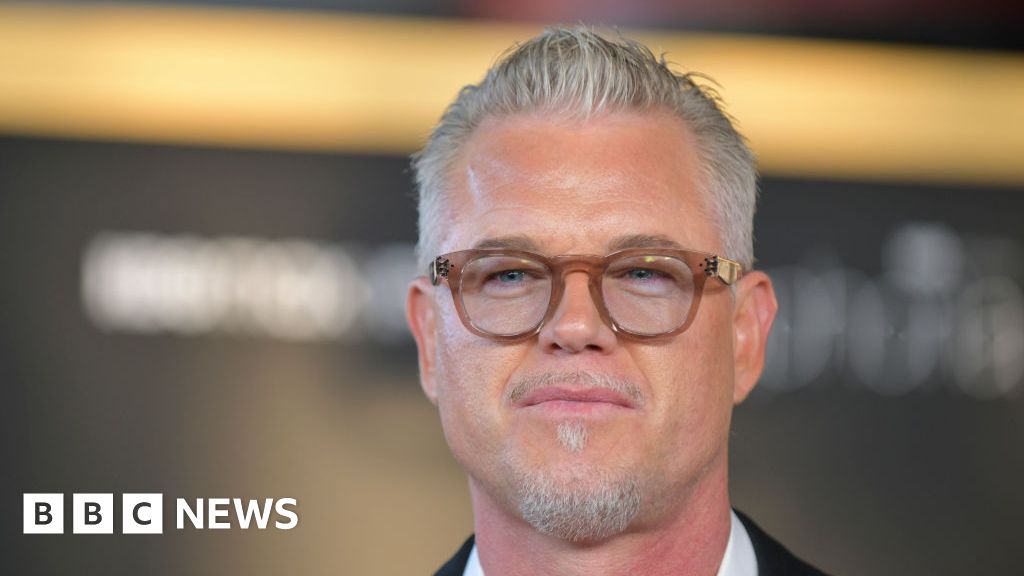
The star, 29, called at posh Harrods department store to snap up lots of boxes of the goodies made by top Italian maker Venchi.
Sign up for the Showbiz newsletter
Thank you!
Willy Wonka star Timothée Chalamet spent a whopping £3,500 on chocolateCredit: AlamyThe star spent the huge sum at posh department store HarrodsCredit: Alamy
He whisked the lot back to his five-star hotel, The Emory London, where four staff unloaded the haul onto a baggage trolley.
Timothée rented out the penthouse suite, which costs £11,000 a night, for his British jaunt.
“He was so happy, content and excited about the future. The sweetest, kindest soul. He just went to sleep and didn’t wake up.
“.I can’t imagine how the next days and weeks will unfold but I know we are able to cope – love always helps. I am him and he is me.
“Sleep tight Barney. Dad x… Appreciate your kindness and sensitivity towards the family at this time.”
Tributes have flooded in for the comedian’s son, including from fellow comedy star John Bishop.
He said: “Justin this is so heartbreaking. I remember the kind fun little boy who grew to be a man to be proud of.
“There are no words. All of our love goes out to all of you at this time.”
Actor Steve Evets, who starred alongside Justin in Looking for Eric, wrote: “Justin, my heart goes out to you and all your family and friends of Barney.
“I can never imagine the grief you all must be in right now…
“I know my words are meaningless to you all but please take my best wishes to you all at this terrible loss.”
Comedy legend Justin played Young Kenny in Peter Kay‘s sitcom Phoenix Nights.
The Channel 4 show first aired in 2001 and lasted for two series, with Justin cast as the role of idiotic handyman Kenny.
In one iconic episode, he walks around with his face painted like a tiger for days because of a dodgy face painting job at a family fun day.
The stand-up comedian went on to star in the blockbuster film Looking For Eric alongside football legend Eric Cantona.
From 2010 to 2011 he starred in Harold Brighouse’s play Zack at the Royal Exchange in Manchester.
He also spent a year playing Dean Upton on Coronation Street between 2014 and 2015.
Justin has starred on Michael McIntyre‘s Comedy Roadshow, Celebrity Mastermind and Still Open All Hours.
He wrote and appeared in his own BBC Radio 4 show Everyone Quite Likes Justin.
The comedy legend played Young Kenny in Peter Kay‘s sitcom Phoenix NightsCredit: Getty
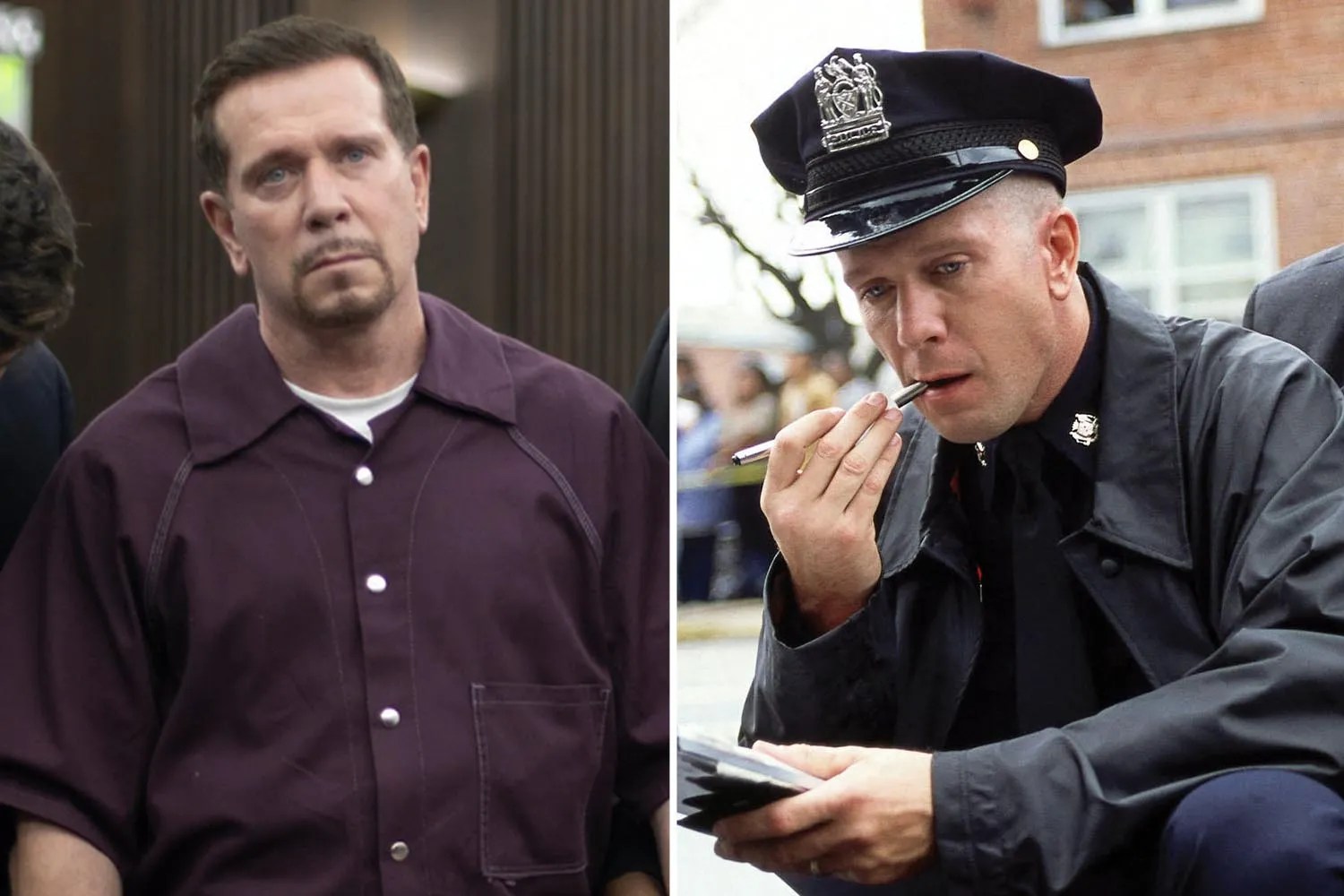
Greene built a reputation in the 1990s as one of Hollywood’s most memorable screen villains.
He played Zed, the sadistic security guard in Quentin Tarantino’s 1994 hit Pulp Fiction, and ruthless mobster Dorian Tyrell opposite Jim Carrey and Cameron Diaz in The Mask the same year.
Edwards said: “Nobody played a bad guy better than Peter.
“But he also had, you know, a gentle side that most people never saw, and a heart as big as gold.”
With nearly 95 screen credits, Greene appeared in The Usual Suspects, Training Day, Blue Streak, and Laws of Gravity.
He also starred in Clean, Shaven – a 1993 indie film that earned critical acclaim for his portrayal of a man with schizophrenia.
A New York Times review said his performance turned the role “into a compellingly anguished, volatile character.”
Edwards revealed Greene was preparing to begin production in January on an independent thriller titled Mascots alongside Mickey Rourke.
After notifying the film’s writer-director Kerry Mondragón of the death, Edwards said “they were very upset.”
While Greene had a reputation for being difficult on set, his manager said it stemmed from high standards.
The actor was known for his role in The Mask, 1994Credit: AlamyGreene also starred in Clean, Shaven – a 1993 indie film where he portrays a man with schizophreniaCredit: Alamy
He was “a perfectionist who gave every job his all and wanted his performance to be just ‘right’,” according to Edwards.
“He worked with so many amazing actors and directors,” the manager said, adding that his role in The Mask was “arguably his best role.”
Peter Greene was born on October 8, 1965, in Montclair, New Jersey.
At 15, Greene ran away from home and lived on the streets of New York City, where he struggled with drug addiction.
Greene is survived by a sister and a brother.
This is breaking news. More to follow…please refresh for more updates and followthe-sun.comfor the biggest stories of the day…
Greene pictured in The Rich Man’s Wife, with Halle BerryCredit: Alamy
Sex Pistols frontman John Lydon has slammed singer Chrissy Hynde in a furious rantCredit: GettyThe former I’m A Celeb star had a lot to say about Chrissie even alleging that she was jealous of his late wife Nora ForesterCredit: Getty
John, who’s stage name is Johnny Rotten, first crossed paths with music star Chrissie in the 1970’s becoming close friends, amidst London’s punk scene.
But years later, Lydon has revealed he has a very different view of his longtime pal, launching into a furious rant about the singer.
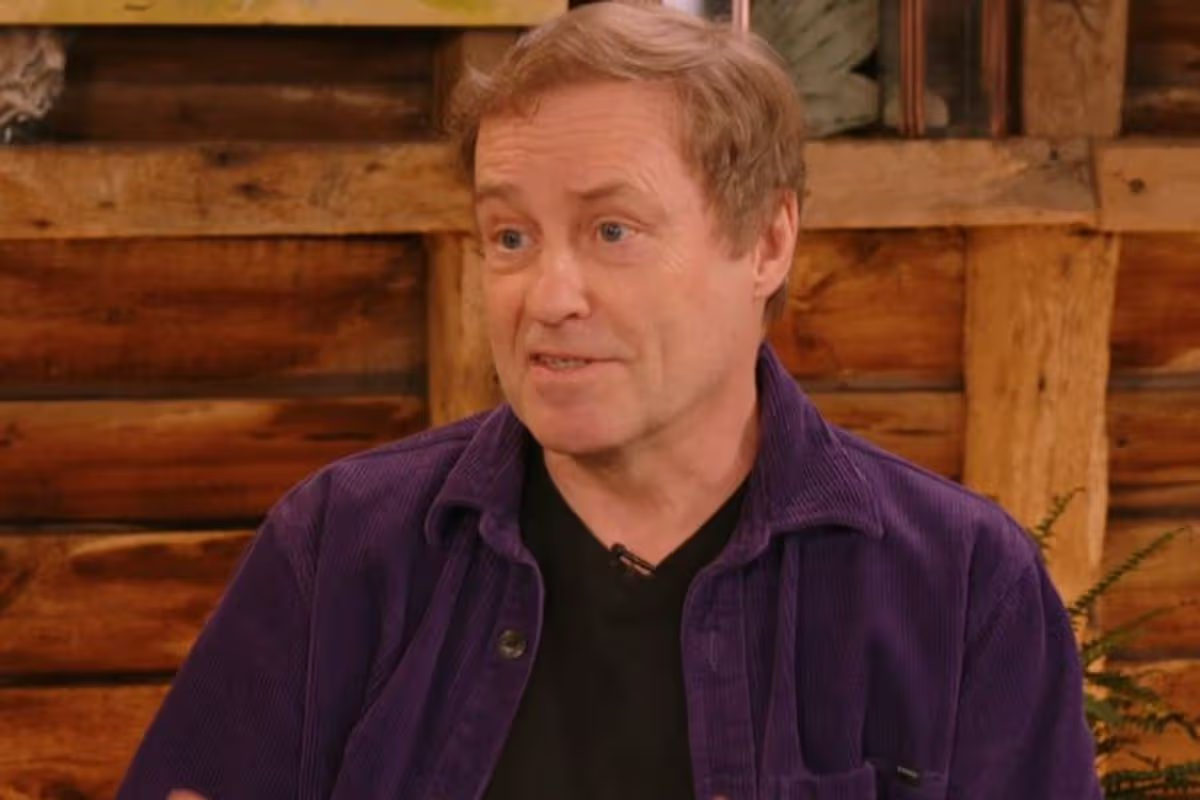
Speaking to comedian Paul Whitehouse and his wife Dr Mine Conkbayir, on the latest episode of their podcast I’m ADHD! No You’re Not, John unveiled the shocking revelation.
Paul opened up the line of fire, saying: “Anyone would think you were in the Sex Pistols?
“Talking of which, by the way, Chrissie Hynde sends her love,” he chimed.
John replied: “F*** her. No, no. She did a very, very nasty thing. I met her before Nora died and on all of that. And she never told me what they were doing behind my back.
“Oh, sorry,” Paul quipped.
John continued: “And she knew, and she was involved with all that, that film and like and these are my friends. Yeah. And you’re not telling me, you know.”
“It was hurtful,” he added.
Mine went on to further question the music star: “And you never had it out for her?”
To which he replied: “She was always jealous of Nora as you know. Right. I don’t date horse hair blankets. Hello, Chrissie. How you doing?”
The punk icon became the primary carer of his beloved wife Nora following her battle with Alzheimer’s – she sadly passed in 2023.
Chrissie herself opened up about her own experiences with Lydon this week.
Speaking to The Guardian about a wild night with the star, she said: “The one thing I remember about that Nashville Rooms show was that I had drunk a lot of tequila beforehand and I never drank before a show again because it impaired my abilities.”
“That night, I pierced Johnny Rotten’s ear in the toilet, by pushing an earring through it into a bar of soap.”
The American born singer had even proposed to Johnny Rotten and his Sex Pistols bandmate Sid Vicious in 1976, but not for romantic reasons.
Chrissie proposed the idea of marriage after needing a visa so she could stay in the UK.
When asked what she thought her life would be like if she had married either star, she said: “That was just so I could stay in the country, but life with either of them would have been chaos.”
‘I’m ADHD! No You’re Not’ is available every Thursday on all podcast platforms.
John Lydon became the primary carer of his beloved wife Nora following her battle with Alzheimer’s – she sadly passed in 2023Credit: GettyChrissie Hynde proposed to Johnny Rotten in 1976 in order to get a UK visaCredit: GettyChrissie herself opened up about her own experiences with Lydon this weekCredit: Getty
The star died in hospital at the age of 77, his colleagues confirmed on TV.
Bethany Whittingham and Helen Kelly Head of Screen Time
15:28, 12 Dec 2025
The broadcaster has been a part of the show for several years(Image: Seven)
Sunrise star Dr Keith Suter has died in hospital at the age of 77 this year, it has been confirmed.
The broadcaster’s death was announced by hosts Samantha Armytage, Natalie Barr, and Matt ‘Shirvo’ Shirvington as they delivered an emotional tribute to him live on air.
They revealed that the former Foreign Affairs Editor, who held three doctorates and chaired numerous international bodies, “passed away peacefully in hospital”.
The sad news was delivered by Nat, 57, and Shirvo, 47, on Sunrise early Friday morning (December 12). They opened the programme saying: “Before we heard the news, we just wanted to pay a quick tribute to a close friend and member of this Sunrise, Dr Keith Suter, who passed away peacefully in hospital this week.
“Keith has been part of the Sunrise and Seven family for so many years, the most brilliant mind, a calm and trusted voice on some of the most complex stories, and a joy to work with behind the scenes as well.
“He helped explain wars, elections, and global crisis upon crisis, but he always did it with measure so people felt safe, and this morning our thoughts are with his beautiful family.”
Samantha, 49, who previously co-hosted Sunrise from 2013 to 2021 with fellow presenter David ‘Kochie’ Koch, also posted a moving tribute to the late broadcaster on Instagram, reports the Express.
Posting a picture of the Australian expert in his element whilst presenting on the breakfast programme, she wrote: “Very sad to hear of the passing of Dr Keith Suter overnight. He was a wonderful man.
“He guided us through many of the biggest world issues of our time – with grace and humour. You could talk to him all day, and often during breaking news, we did. RIP Dr Keith.”
Meanwhile, Nat and Shirvo shared on air that viewers had already begun sending their condolences to Suter’s family, with one observer noting that the presenter “made complicated world politics comprehensible and will be sorely missed.”
Nat reflected: “World affairs is complicated, and I think a lot of people, you kind of almost feel like you pretend you know what it is about, but we got to ask him really basic questions and boy, did he explain it all to us.”
Shirvo added: “He spoke to the people, didn’t he? And he was a beautiful man with such a lovely manner. And I tell you what, he always dressed so, so well as well.”
Nat responded with a chuckle: “I know. We are really going to miss him… Our sincere condolences to his family, he will be sorely missed.”
Suter was renowned for his extensive career with Seven, where he educated Australian audiences about international affairs and simplified intricate geopolitical matters. He also served as a futurist and strategic planning adviser, boasting three doctorates from Sydney.
The broadcaster specialised in international law of guerrilla warfare, the social and economic impacts of the arms race, and strategic planning scenarios. His groundbreaking work in this arena caught significant attention.
The Australian Government presented him with its Peace Medal in 1986, and he later received recognition as Rostrum’s Communicator of the Year in 1995.
During the 2019 Queen’s Birthday Honours, he was appointed a Member of the Order of Australia for “significant service to international relations, and to the Uniting Church of Australia.”
He chaired multiple organisations, including the International Humanitarian Law Committee of the Australian Red Cross and the International Commission of Jurists (NSW). Additionally, he held positions as director of studies at the International Law Association (Australia Branch) and managing director of the Global Directions think tank.
The telly veteran featured across numerous programmes on both wireless and television discussing politics and international matters, holding the position of Foreign Affairs Editor for Channel Seven for an extended period.
Kelvin Washington: Hello, everyone, welcome to another episode of The Envelope. Kelvin Washington here. You know who I’m with: Yvonne Villarreal, Mark Olsen, glad to be here with you. Thanks for watching and listening.
All right, let’s get it started. Mark, you had a chance to talk to Tonatiuh. And of course, this is a big moment for him. This is something he worked hard for and now getting a lot of recognition for — “Kiss of the Spider Woman.” Tell me a little bit more about your chat.
Mark Olsen: That’s right. So earlier this year at the Sundance Film Festival, there just was this great moment at the premiere of Bill Condon’s adaptation of the musical version of “Kiss of the Spider Woman,” where just to see a showcase like this for someone is so exciting. Tonatiuh, he’s acting, he’s singing, he’s dancing. There’s like so much in this performance. It’s wonderful to to see. He has a lot of poise and charisma just simply in conversation. So it made for a really exciting talk.
Washington: And also the difficulty playing multiple roles, right? I mean, I would imagine that would have been challenging.
Olsen: That’s right, in the structure of the film, he plays a political prisoner in a South American jail and he’s explaining a favorite movie of his to his cellmate, played by Diego Luna, and then he also becomes the dashing leading man of that movie [within] the movie.
Washington: Right. Diego, also Jennifer Lopez, so obviously around some big stars. I swing over to you — speaking of big stars, Kate Hudson has been one for for a long time.
Villarreal: I thought you were talking about me!
Washington: You thought I was talking about Kate? You and then Kate, of course.
Villarreal: Obviously.
Washington: Kate Hudson, a big star for for some years now, half of a tribute band for Neil Diamond, “Song Sung Blue.” Tell me a little bit about this.
Villarreal: I feel like it’s the perfect pairing to have both these guests in this episode. This one also showcases, you know, her singing abilities and her performing abilities as an actor — two of her passions. She recently released an album, and with this movie, we really get to see Kate onstage and embodying what that’s like. We see this couple who find success as this Neil Diamond tribute band, but in the middle of the height of that, her character Claire suffers a big tragedy and it really derails everything, and she has to find her way back to that. And it was a really touching conversation to hear Kate sort of embody that and her own thoughts on, you know, when you come from a world like this, it’s not a guarantee, and you have to really have passion for that. Hearing her talking about spending time with Neil Diamond at his cabin. And she sang for us a little bit. When you leave that film, I feel like there’s an instinct to go home and just listen to Neil Diamond. I know I did. Hopefully we can go karaoke at some point.
Washington: “Sweet Caroline…”
Villarreal: Do you have a Neil Diamond go-to, Mark?
Olsen: Well, I love the “Hot August Night” album recorded live at the Greek Theatre here in Los Angeles, so I’ll go with any of the tunes from that one.
Washington: I’m still upset with the both of you that I there was no “Bah, bah bah…” [to continue his “Sweet Caroline”].
Villarreal: Hugh Jackman’s character would not go for that. I’m just saying.
Washington: Would have joined me? Or not going for it, like you two leaving me hanging?
Villareal: He doesn’t want us to start with “Sweet Caroline.” You gotta go further than that. But I’ll allow it now.
Washington: Deep cuts?
Villarreal: Deep cuts.
Washington: All right, we’ll talk some more about it while you enjoy Mark and Tonatiuh.
Tonatiuh in “Kiss of the Spider Woman.”
(Roadside Attractions)
Mark Olsen: It seems like you’ve been approaching your career with such a sense of intentionality and purpose. And I would imagine, especially as a young actor starting out, you’re not necessarily in control of the roles that you get, what you could do. What have you done or how do you feel like you are trying to take that control and have that sort of intentionality in the roles that you take and what you’re doing with your career in this industry?
Tonatiuh: Well, I think I’ll pivot a little bit and say I’ve been working for 12 years as a working-class actor. I’ve been on an ABC show [“Promised Land”] as a series regular. I was in “Carry-On,” which at the time it was the No. 2 most-watched movie on Netflix, but I think we’re now at No. 5. “KPop Demon Hunters” slayed. But the only control that I really have is saying yes or no to auditions. I’m not necessarily getting offered roles. I’ve had an entire career where if I sit around and wait for someone to come knocking on my door, I will starve. And I didn’t get into this for the celebrity. I got into this because of the social impact that it had on my own life. Art to me is a mirror as to who we are as a country and who we are as people. And so it gives us an opportunity to really reflect on that, but it also gives us a destination to where we want to be. A lot of my sense of humor came from the TV shows and films that I watched growing up. And I was introduced to cultures that were different than mine. …
I think with this specific project, with “Kiss of the Spider Woman,” it was a role of a lifetime. Bill Condon wrote a fantastic script where we not only got to tell one movie but we get to tell two. We time travel and go back into a 1950s-style musical, and I get to live my Gene Kelly, Errol Flynn, Montgomery Clift fantasy with the character of Kendall Nesbitt. But then with the character of Molina, I get to be this almost genderless expression. In the totality of the film I get to play the gender spectrum. Hypermasculinity, classic masculinity, very Hollywood masculinity with Kendall, a genderless expression with Molina. And then at the very end you get a little surprise of a full female fantasy.
Olsen: Whether intended or not, this film is being released to a specific cultural and political moment. In particular, as someone who identifies as nonbinary and is the American-born child of an immigrant family, how are you processing the moment the movie is coming out to?
Tonatiuh: It comes in waves. It’s different waves. At first it was “Wow, how crazy relevant our film is,” and that’s powerful. And when I accepted the role, we’re giving the Hollywood treatment to a bunch of marginalized communities and we’re telling truly with our film, “Latinos are Hollywood.” In that era, in the 1950s, there weren’t very many, if at all, Latin stars, especially those who were allowed to be the leads in those films. And so with this we’re almost kind of rewriting history and subversively saying, “No, no, we’ve always been here” and reminding people of the dignity and the beauty of that. But, comma, we also are doing that for the queer experience. So Molina, in my view, is what we would consider in 2025 genderqueer. And we’re putting Molina right at the center, at the heart of the film. And my mission statement, and the whole reason I lost 45 pounds in 50 days, was to ensure that we can focus on their heart and their eyes and not even consider thinking about what their gender possibly could be. You’re just falling in love with a form, a person.
Olsen: This role, of course, in the original film was played by William Hurt. Do you feel it was important to have a queer performer in the part of Molina? What does that do for the story?
Tonatiuh: There’s a lot of lived experience that can go into the DNA of a character, right? But there’s also a sense of responsibility. I have met so many incredible, beautiful, gender-diverse individuals in my life. And so being able to center someone like that and to tell it with as much love, it’s just a little bit more icing on the cake. And there’s creative conversations as things are being built where you have to add and pitch perspectives that maybe someone missed because they don’t necessarily have that exact experience. I don’t necessarily subscribe to, “You always have to cast the person for the thing.” Although I relate and understand Molina, I’m an artist and my job is to bring that humanity to them. I don’t have to be identical to that person. That’s where my artistry comes from. But I think that the reverence and the respect and that sense of responsibility is what makes this unique.
Olsen: Your final number in the movie you begin in a tuxedo and you end in a dress.
Tonatiuh: With a 26-inch waist, mind you. Clock the waist.
Olsen: And there’s just something extremely powerful about that.
Tonatiuh: I mean, there’s something really cool about it. People weren’t expecting the flip with Kendall. So all of a sudden it’s like, “Wait, that’s the same guy. Now he’s looking dapper with a mid-Atlantic accent.” And then at the very end it’s a quite shocking revelation when we look down the barrel of the camera and she’s gorgeous. But that was the beauty of it. Molina dreams of being a Hollywood starlet. And I think, for me as an artist, this will probably be the only time in my life where I get to play a leading lady and a leading man at the same time. It was really special.
Olsen: Molina doesn’t really see themselves as a political person in the beginning of the film —
Tonatiuh: No, not at all.
Olsen: And part of the the journey of the film is Molina coming to realize that they are part of this fight whether they want to be or not.
Tonatiuh: Well, I think Molina falls in love. I think Molina felt like a loser in their own life who wasn’t capable of even defending themselves, right? They were just trying to survive. And there’s this twisted internalized messaging that children of marginalized groups or people who have been bullied, they start doing it to themselves as a way of protecting themselves from the world. Like, “I’ll punch myself first before you can, and I’ll make it funnier. Actually, it’ll be my whole personality.” And I think that there’s something healing in that. Valentin’s character says, “I’m disgusted when you’d make fun of yourself like that. Where’s your self-respect?” And I don’t think that they understood self-respect because I don’t think they experienced it before. And so it took living in a prison cell to find dignity again. And these two men who are diametrically opposed were able to drop all facades. They were stripped of their comforts, they were stripped of the very masks that they used to protect themselves and were forced to see each other in order to connect. And I think that’s a larger theme that’s happening in the world. I think we’re constantly being told that we’re divided and we’re not similar. But I think at the end of the day, we all want similar things. We want to feed our children. If something, God forbid, happens to us, we don’t want to go into medical debt over it. We want joy, we want community, we want connection, and I think that vulnerability is the price we pay for that connection.
Olsen: I was at the premiere of the movie at the Sundance Film Festival —
Tonatiuh: Were you really? Oh man, I wasn’t. I was fully disassociated that day.
Olsen: And something happened in that room. I think the entire audience felt they had seen someone arrive. What have the past few months been like since then?
Tonatiuh: I don’t know if I’ve arrived with this role. I’ve been preparing for this moment my entire life. I am an artist and I love what I do. And one of the biggest gifts that I got was I got to meet people, yes, at the top of their game like Jennifer Lopez and Diego Luna. But every dancer in our film was a person of color, a Latin dancer, people from the Black community, and they are also at the top of their game on Broadway. And that’s the beautiful part. I’ve met so many artists who were just dying for the opportunity. I feel like all of us are in waiting. And so it’s not for lack of talent, it’s for lack of opportunity. And with this, I am very proud of the work that I’ve done. I don’t know if I’ve arrived. People still have to see the movie, you know? And I have to get the next job. So we’ll see when that comes. But as an artist, I am feeling more emboldened to continue telling the stories that I want to tell and to continue sharing this 15 seconds of limelight with the things that I value. I think that’s what my mission statement is as an artist.
Olsen: What was it about this role that made you realize from the start that you were going to really grab it with both hands?
Tonatiuh: Well, I have no choice. No, no, no. After the strikes, after COVID. And I don’t wanna make this sound like a pity party, but the roles tend to go to the same 15 people. And I don’t come from nepotism. My mom was an immigrant in this country. She worked at a Jack in the Box drive-thru when she first got here. But I had a dream, and she and I and a bunch of my friends and community along the way just kept pushing and trying to make it happen. And so when you get three-dimensional characters, two, when you get three-dimensional characters and a really dynamic script. You gotta take it and fight. And I wanted to give it all. And it also was so important. We’re centering people who are currently being called terrorists for simply existing in this world. How can I not give them honor? This is our love letter to them. This is our way of saying we love you, we see you, and you’re not alone.
Olsen: Tell me about some of the outreach you’ve been doing to get the film in front of people and communities Hollywood may not always reach.
Tonatiuh: So I partnered with a couple of great individuals. It started off with my friend Ruben Garcia, who owns this incredible company called Mosaico. And we wanted to activate the Latin community and get people excited to come and see it. But then I kept thinking, “Man, our community has been going through a lot recently. And the country as a whole is experiencing some financial difficulties.” So I kept asking myself, “How do we give a little love and entertainment to folks?” So I reached out. I started calling friends. I started calling nonprofits. I started calling corporations and just saying, “Here’s what the mission is. We’d love to just gift things to people.” And so we created a small impact fund where we received some donations and we handed out QR codes. We just wanted to treat people for opening weekend, and we gifted tickets to the L.A. LGBT center because they have a youth services program. Los Angeles [has] one of the country’s biggest populations of unhoused queer youth. And it was important for me that they see themselves onscreen, that this is possible for them, that they get the Hollywood treatment. We gifted it to organizations that are helping with immigrant defense funds. We gifted it to their staff because they also need a little joy in their life.
And then another personal favorite was the very high school where I started acting, West Covina High School, is a public school. Their Teacher, Kim Battersby, was always going above and beyond, spending countless hours after school, over the weekend, and then she even had kids along the process. It is the performing arts programs that helped me see more of who I was. I felt like a weird little queer kid, I call it queer-do, in high school. And it was the on the stage where I felt I could practice being other people and seeing what worked and what didn’t and to learn more of who I was. I brought them out to the Grove and we filled it up with them and they dressed to the nines. They all got dressed up as if they were going to a premiere of their own. It was so sweet. And after the film, I thanked them and we took pictures and they were crying. Because they saw themselves. I taught some of them. And it was so sweet. And some of them shared their hearts with me and said that they’ve been scared of leaving the house because of what’s happening. That they’re walking around with their passports. That some of them feel like they’re invisible and that with this movie they felt seen. It was really touching.
Olsen: What does that mean to you? What do you hope those audiences receive from the film?
Tonatiuh: I mean, I think watch it. And be pleasantly surprised as to what the movie’s about. I don’t want to give too much away, naturally, because of course it’s fun to be surprised at a film. But I think our film does two wonderful things. It does hold up a mirror and it also reminds us of what we’re really about. And it creates so much joy. I mean, Jennifer, Diego, Bill, Colleen [Atwood], the incredible costumes; you get to see something that feels out of this time. And I think we could use a little Hollywood glamour right now.
Olsen: Can you talk about the challenge of this being essentially two performances — Molina in prison and then Kendall in the fantasy sequences?
Tonatiuh: Completely different performances. There are two different films with two different acting styles. And two different worlds to build. So let’s look at the movie. The first one, we were transported back into the 1950s, classic Hollywood. And so the first thing that I did as soon as I got the script is I called Bill and I said, “All right, give me every movie you want to reference, and I’ll watch as many of them as I could while preparing for it.” And I thought to myself, “Who is a wonderful tortured soul” — because Kendall’s really tortured — “that I could emulate?” And I instantly thought of Montgomery Clift, in “The Heiress” specifically. And I was just like, “Man, I want his energy, but I want to dance like Fred Astaire and Gene Kelly. And so preparing before set, I would just watch as many of these films as I was getting ready in the hair and makeup trailer. But there, you know, it’s down to the mannerisms, the small microexpressions, really trying to nail that acting style because it’s proscenium. But the crazy part is we’re a shoestring budget movie. I mean, it’s a musical, so it’s a little bit bigger than other independent films, but we only had about 20 days to shoot 12 musical numbers. And Bill wanted to shoot it in that style, which means if he could get away with a single take, he was gonna try to get away with a single take. And it took a powerhouse like Jennifer Lopez, but also Diego and myself, to really focus and nail those moments. And there’s one moment in particular, “Give Me Love,” [with] Jennifer in the Cyd Charisse green dress, making a nod to “Les Girls” and also “Singin’ in the Rain,” where I wasn’t even called to set and I was just there watching nonstop because I was like, “My God, this feels like I’m watching Marilyn or Rita or Cyd herself doing it.”
But then the second part was a naturalistic drama — well, a little bit of a fantasy, but inside of an Argentinian prison. And like I said, my mission statement was to make Molina as genderless as possible. I had just come off of “Carry-On,” so I had to lose 45 pounds in about 50 days. And this is not a commercial for Ozempic. I wish GLP-1 was sponsoring this because that would have been helpful. But no, I did it the old-fashioned way. I starved. But it was worth it. I really wanted to get that look and find his voice and the accent and transport us back into Argentina in the 1980s.
Olsen: But at the same time, is there some point of connection? Are the things that you’re doing in the two halves of the movie meant to bring them together?
Tonatiuh: Well, the two films are intrinsically connected. It’s Molina’s favorite film, but it’s also their diary. It’s their confession. Oftentimes it’s easier for us to say I love you through someone else’s song, or to say I’m scared. We look to films and music to transport us, to heal us. And so it starts off with Molina just sharing a little bit about who they are through their favorite film, but then it ends up becoming their confessions and their soul.
Olsen: Can you talk about the audition process and what it took to get this role?
Tonatiuh: I never feel really qualified to talk about the audition process because for me, this is how it went. They had been looking for months. I didn’t know about the project. I didn’t hear about it until Dec. 18 or 19, something like that. At that point, Hollywood’s completely shut down. I’m confident I was like the last person to hear about this audition. And then I locked myself up in a room after reading the material and just working it over and over and over again, until I found that throughline. ‘Cause there’s so many ways of telling a musical. Dec. 22, literally days before Christmas, I got a call saying, “You’re gonna come to New York. Jan. 2nd, 9 a.m.” Next thing you know, I’m doing a tango and a Bob Fosse number and singing in front of Bill Condon and [producer] Bernie Telsey. And then a little table read with Diego Luna and I get a text message from Bill saying, “Call me.” And I was like, “Oh man, it’s either ‘Call me, I’m sorry’ or ‘Call me, you got it’ and it was ‘You got it.’
Olsen: And then what was your audition number? What song did you do?
Tonatiuh: “She’s a Woman.” And with that number, it was so interesting because there were so many ways of telling that as well. My audition actually was from more so the point of view of Molina singing it, but within the context of the film, Kendall sings it. And so there becomes this almost “Victor/Victoria” moment where it’s Molina’s “I Want” song through Kendall Nesbitt. but played by Molina because he hated the original actor who was Kendall Nesbitt. And so it was really a thought process to think, “OK, well, how would the original Kendall do it and pay nods to him? But if Molina was able to take over his body and tell it, how would then he say it?”
Olsen: Jennifer Lopez’s performances in the musical numbers is a great reminder of why she is who she is. What was it like to see that up close?
Tonatiuh: What’s the quote? I feel it was like watching lightning strike. It was powerful and awe-inspiring. I mean, it was just incredible. But it was one of those moments, as soon as they say, “You’re gonna be singing and dancing with Jennifer Lopez,” it was like, “Oh, OK. Time to level up.” It felt like I was getting an invitation to the Olympics. I mean, these are some of the greats. Jennifer’s fantastic. Diego Luna is a phenomenal actor. Bill Condon is a master at this craft, specifically with musicals. And then even Colleen Atwood, who did all of our costumes, and Christine Cantella. They transported us with those fabrics, you know. And so it was really one of those moments like, “Oh wow, I’m I’m finally getting the invitation to go into the ring,” and it was either level up or die.
Olsen: And I know that in some ways they were almost two production units.
Tonatiuh: There were completely two different different productions.
Olsen: What was it like having to shift gears between the musical fantasia of the story within the story and the prison scenes that are, as you said, these very naturalistic, very dramatic scenes with Diego. How did you manage that?
Tonatiuh: I always joke around because people are like, “How did you start acting?” And I’m usually like, “My acting was a trauma response,” you know, just to survive and code-switch in the world. But jokes aside, I think that being able to shift quickly allows me to go from culture to culture, set to set, and just adapt quickly to that. We had a wonderful crew in Uruguay, which was amazing. But Bill Condon is an actor’s director. Once we went to Uruguay, he sat us down and we did traditional theater table reads. We sat at the table for a week and a half and we just talked about the script, beat by beat, moment by moment, really carving out what our thoughts were and his thoughts were. Sometimes we disagreed. Things in the script changed. He was so open to our perspectives — like we [were] the heads of the department for our individualized perspective, essentially. And the beauty of what we did was we shot this in order. It’s a two-man play. And so the first time that you see Molina entering the cell, meeting Valentin, was the first time that Diego and I ever saw each other in full character. These two people are discovering who they are with every passing scene and dropping the facades. But we as actors were learning to depend on one another. I always joke around that this is like the Stanford prison experiment, because we were in the cell before the sun went up, and we were out of the cell after the sun went down, straight to the hotel and back. And we were shooting in the dead of winter in Uruguay, so there was very little sunlight to begin with. So it was one of those moments where it was like we needed each other, and we created amongst ourselves a deep and and very personal bond.
Olsen: And tell me more about working with Bill, especially on the musical numbers. There are some extremely long and extended pieces of onscreen dancing.
Tonatiuh: He’s incredibly meticulous. In a good way. He has already thought about exactly what vision he wants. Down to the very film that plays in the theater at the end was a deliberate choice. And so it was really exciting because he invites you to his world and because he prioritizes the table reads, we’re able to fully understand what he’s trying to sell. So then we already know, we’re finely tuned to it. But everybody on the set, and those sets alone were just glorious. I felt like I was walking into the Titanic. It was incredible. And our choreographers, Chris Scott, Sergio Trujillo, Brandon Bieber, they also worked with Bill to basically do a dance between the camera and the dancers themselves. Because if you look back at old movies with Fred Astaire or with Gene Kelly, specifically Fred Astaire, they would zoom out just to show you from head to toe, we are dancing. This isn’t edited. It’s not done in the cut. Which was really, really cool.
Olsen: With everything that you’ve put into this project, how do you move forward from here? What is it that you see for yourself moving forward?
Tonatiuh: Well, with this project specifically, I think what I want is to get it into the hands of the people who I know will absolutely love it because I think that there’s a healing process in watching this, especially watching it in cinemas. It’s communal. The energy shifts and the technicolor washes over you in a way that a cellphone could never. But moving after that, I’m excited. My favorite thing is to transform. I’ve literally sat in theaters this weekend where people had no idea I was sitting next to them and that was me onscreen, and then I wait in the lobby to take pictures. Some people come up and they’re shocked that I’m there, A, but B that I look so different. And I didn’t get fat. I’m back to my normal weight, OK? I lost weight for Molina. But I love to transform. And up until this point in my career, I’ve only I’ve had a limited amount of ability to transform. I hope to be completely unrecognizable in my next role. And I don’t know what that’s gonna be. If I want to be a hero, if I want to play a villain, do something in the sci-fi world, an action world. I don’t know exactly what that is. And of course, I’d love to also go to Broadway. There’s one play in particular that I’ve been circling now for the last eight months, and I’m inches from putting it up. I’m inches from getting the rights. But I’m saying it on here because I am going to do that one way or another.
Hugh Jackman and Kate Hudson in “Song Sung Blue.”
(Focus Features)
Villarreal: Do you like doing podcasts as a fellow podcast host?
Hudson: I like talking to people. I like connecting, so I’m always down for for this. [With] podcasts you get to have more time to really unpack.
Villarreal: Has it made you appreciate the art of the interview?
Hudson: I’ve learned a lot. I was so used to being on the other side, being the person that’s being asked all the questions and having to navigate the right way to answer something and not get yourself into trouble. So when it flipped and we [she co-hosts “Sibling Reverie” with her brother, actor Oliver Hudson] started to interview, when I would listen to our podcast, I’d cut everything out. I’d be like, “Jesus, shut up, Kate.” I’d cut out so much. I’ve also learned that sometimes, you gotta get to the point. You gotta keep everybody on track. Oliver, my brother, is a great podcast host. He’s so funny. I feel so lucky to have him to be my partner.
Villarreal: Well, we’re very glad to have you here to talk about “Song Sung Blue.” This is a film that’s about love of self, love of others, love of music and finding your way back to all that after tragedy. Tell me about why this was the right movie for you at this point in your life and career.
Hudson: It’s a great question. These things aren’t calculated. You have these opportunities, you read something, you hope you get to play the part because you believe in the story and you believe in the filmmaker and you believe in your co-star. And then you just hope that it comes together. And with this, the story was there. [Writer-director] Craig [Brewer] wrote a great script. For me, as an actor, it gave me all the colors, all of the things that I love and have been doing for so long [and allowed me] to be able to do in one movie. And the thing that was weighing on me was that if the love story doesn’t work, if we don’t believe these two people are madly in love with each other and needing each other — they’re quite codependent — the movie’s not going to work. It didn’t matter how great the script was. And I said [to co-star Hugh Jackman], “Look, how comfortable are you with getting to know me? Because I really feel like this movie’s not gonna work if we don’t work. And we kind of have to, like, be really intimate with each other and get to know each other really well … and let me know if I ever make you uncomfortable.” I’m incredibly tactile. He felt the same way. And that actually became the easiest part, was our connection and how much we trusted each other and how connected we felt. Something happened on the set. We kind of knew that it was a special, what was starting to unfold was something really special. Then you just cross your fingers and hope that the movie, that it became what we felt like we were making. I remember seeing the movie and just going, “Oh, my God, this movie makes me miss movies.” I just feel so happy and humbled to be a part of it because you never know.
Villarreal: Tell me more about building that foundation with Hugh, because the film is based on a true story of these two Milwaukeeans who fall in love, start this tribute band of Neil Diamond music. How did the bond with Hugh take form? Were you sharing playlists?
Hudson: We do share a love of of music. The first thing we did was record music. In the last two years, I’ve been very immersed in music and writing and just saying, “I have to make music” because if I don’t, I’m not fulfilling my creative output, input — all of it. I have to be making music. So I’ve been spending a lot of time in the recording studio. So I was very excited that that was where we were starting. Hugh has a different side of the story, which is it appears to him [that] it came much easier to me than it did to him. I disagree with that, but I’m sure that’s what he would say. But it was great because we got to sing together. When you can sing with someone and you sound good together and you start to connect through music, it’s a very different kind of language. And that was the beginning of us being like, “Oh, this is gonna feel really good.” Energetically, we’re both very spirited people and we had a blast in the studio. It was a great initial connection. But the movie itself is about people who love music, and who don’t necessarily get the opportunities to make that this huge success that maybe once when they were younger they dreamed of. One of the things I love about Craig and what he understands, and what I understand about music as someone who’s lived it my whole life, whether it be through partnership or myself, is that you along the way meet all these incredible, incredible musicians — way more talented than you are or I am — that don’t have the opportunities that maybe have been put in front of others or myself. And when you see that and you live it and you know it and you love it — I have a profound respect for that musician, the one that is the session player or the one that is the tip-drawer musician, the one who ends up being an interpreter because they didn’t make it as their own artist. And I think that’s what Claire and Mike Sardina really are in their hearts. They’re musicians. And Hugh has that in him. He loves being onstage. He loves performing. He loves giving his art out. And I think musicians, some musicians, love that. So we connected there and we connected to the characters very much so, with that essence of believing and loving something so much that you just have to do it, no matter what.
Villarreal: Do you remember the first song you guys did together in those recording sessions?
Hudson: I think it might have been “Forever in Blue Jeans” or maybe it was “Cherry Cherry.” We did so many songs, but I think it was one of those.
Villarreal: Are you ready to ask him to be on your next album?
Hudson: We’re already like, “We’re taking this on the road. We’re going to go sing all kinds of songs.” You don’t have to twist our arms to get in front of a mic and start singing. And a good music movie is really hard to do.
Villarreal: Why?
Hudson: You have to understand the language. Craig is, in his heart, a musician, even though he’s not a musician. He lives and breathes music. He’s a Memphis, Tenn., boy. Most of his world is around music. That’s how I fell in love and met Craig. I was young when I met him. We’ve been trying to work together for 20 years. I was married to Chris [Robinson, of the Black Crowes] at the time. We’re music people in our blood. Some people don’t have any real connection to music. Music isn’t something that they can relate to. But there’s two types of music lovers: There’s the fan, you feel music in your bones that you can’t explain and it moves you to places that you couldn’t live without it; then there’s people who have music in them and it has to come out of them. That is another language that you can’t explain to someone unless they were born with that or have that in them. Craig has it in him. And so it translates onto the screen. It’s like Cameron Crowe. It’s like PTA [Paul Thomas Anderson]. He has music in him. You can tell by the way he directs and his use of music. There’s certain directors that really understand musicality. Craig has that, so he was able to access that for this movie.
Villarreal: What was that like connecting on that front with Claire when you met with her? At what point in the process did that come?
Hudson: I really did not want to get too close with Claire because I don’t want things to feel like [I’m] mimicking. It’s not a Bruce Springsteen or Bob Dylan or that kind of biopic. And it was important to Craig too, to make Mike and Claire their own characters. I got to know her while we were shooting, and then she’d come to set, and I’ve got this footage of us sitting and laughing with each other. And it’s so funny because there’s an energy there where you’re like, “Oh, my God, I am playing her.” You can see it sitting in the director’s chairs. It was good to get her essence, but then to create another version of Claire, the movie version.
Villarreal: Did you ever get to sing with her?
Hudson: No. I had to miss the wrap party, which really was upsetting. And apparently there was a lot of karaoke singing at the wrap party. We’ll do a redo. But Claire’s had a really interesting life. Her life has been hard. Their life is and was hard. And they somehow found a way to believe in each other and have this beautiful love and life together. Claire, when she comes and she talks about Mike, he still really lives in her every day. It’s like he’s almost still here. It’s an amazing thing to see.
Villarreal: What was your relationship to Neil Diamond‘s music coming into this?
Hudson: Like most people that aren’t hardcore Neil Diamond fans, I obviously knew his biggest songs. When I read the script, I did like a big deep dive into [him] and I was like, “Whoa, what a catalog.” So many great songs and what a great songwriter. And when you hear some of — like the last song of the movie [“I’ve Been This Way Before”], I’d never heard that song before. Neil loves that we use that song because it’s very rare. People don’t usually talk about that song. And even “Forever in Blue Jeans,” I forgot about that song. I forgot about, “Girl, You’ll Be a Woman Soon.” There’s so many songs.
Villarreal: I wanted to ask if “Soolaimon” is still playing in your head? Because it’s like an earworm for me now.
Hudson: Oh, my God. [Singing] Soooooo. Soolaimon. Oh, yeah. That song is fantastic. It’s such a great live song. And I didn’t know that song until we started the movie. Getting to know Neil’s catalog was really honestly an honor. And for him to give us the opportunity to sing all of it and to use it, so wonderful.
Villarreal: You also spent time with him … on your porch? His porch? I saw the Instagram post.
Hudson: I grew up in Colorado and he is my neighbor. But I’ve never met him. My whole life. And then I was talking with his son the other day who was at the premiere, and I was like, “It’s so weird we’ve never met.” He lives like 15 minutes from where I grew up. So we just sat on his porch and had lemonade, and we held hands and talked for hours.
Villarreal: What do you talk about with Neil Diamond?
Hudson: He was very open, and he’s in a place in his life where he did a lot of listening, and then he told me great stories about his childhood that I feel very honored that he shared with me, about where he grew up and how he grew up. And the one thing he did say, which I love — I asked him what his favorite song was to perform, then I asked if he missed performing. He said that he’s done so much and he feels good about what he’s done, but the song that he loves is “I Am … I Said.” He said that it’s like God wrote that song. It just came through him, and he was having a very hard time when he wrote that song and he was conflicted, he was having a hard time writing it, then all of a sudden it just poured through him. I loved the privilege of hearing that story from him. He said that his life has gifted him with these different eras where his music got new life. And he was just incredibly grateful to us, say[ing], like, “I know that this is gonna give my music another chapter.” Then Hugh went. I said to Hugh, “You have to go see Neil.” And so he went and flew to Colorado and sat with him. I feel so happy that he got to see the movie and he loves it and that we did good by him.
Villarreal: You asked him what his favorite song was to perform. What was yours? There’s the moment where Mike and Claire are playing alongside Eddie Vedder that really stands out in the film. And what do you feel when you perform?
Hudson: It’s been really great to exercise a new muscle, performing muscle. For the last two years, from the first time I had my first show to now, it feels very different. I get really excited. When something goes horribly wrong is actually kind of fun because that’s what live shows are, you get to not be perfect even though you’re striving for something great and to give something out that’s great. It’s not always going to be what you hope it’s going to be. Something’s gonna go wrong, it’s gonna sound weird, you’re not gonna hear this, the guitar’s not gonna [do that], and there’s something about that live experience when you’re performing that just feels so alive. One of the greatest feelings for me is when you see people singing your words back to you. I couldn’t believe the first time I saw people that I’d never seen know my music. I don’t care how many people that is. Even one person that you can see that actually is feeling something that you put out into the world is such a wonderful feeling. Performing is a blast. Singing with Hugh at Radio City, and you get to play all these cool venues and places that, as a music lover, you look around and what a bucket-list moment to sing in this historic venue. I’m so happy that I, like, had the courage to do it because I wouldn’t have had all of these experiences that I’ve had. I don’t think I would have been cast in this movie if I didn’t make music, if I didn’t go out on a limb and make an album.
Villarreal: We see in the film that, at the height of their stardom, Claire suffers a tragic accident and it upends their world. She’s in a state of depression and she’s being confronted with, “Who am I? And does this change everything about who I am because I’m not up there? And how do I get back there?” What was that like for you to delve into that headspace as a performer? For you, either as an actor or a singer, can you relate to that feeling of it being intrinsically a part of who you are and the fear of never doing it again?
Hudson: Like any role, there’s a lot of things that you can relate to or substitute. I sometimes substitute, you know, something that I can’t relate to with other things, as my own process. Meryl Streep always says you have to honor the character as much as you would honor your own life. That’s how you create a character. But then when you’re telling someone else’s life story, it’s almost like a double whammy because of the pressure that you’re sort of holding someone’s life. They’re giving you an opportunity to portray something that you don’t want to know let them down, especially with something as intimate and as vulnerable as what Claire went through.
I felt a responsibility to her struggles and how we looked at them — to have a family, to constantly be struggling to keep food on the table, to have the ups and downs of mental health. What I love about this movie is Craig doesn’t really hit you crazy over the head with Claire’s mental health struggles, but it is implied that she is up and down and is on medication and has been, and so when Claire’s up, she’s up; and when she falls it’s pretty dark. Everybody experiences trauma differently. Some people are better at pushing through or being optimistic in the face of tragedy. Claire is faced with that [idea that] nothing will ever be the same … Claire always said — we don’t say this in the movie — “Mike was a leg guy.” He would talk about them. And when that accident happened, she felt so unattractive to him. It’s like something was lost that she knew that he loved of her. Then it just hit everything from her inability to move, to be the partner she wanted to be for him, to the kids, to the drugs, to the the pain. It just was an awful spiral. I just wanted to do that as much justice [while] holding on to Claire’s inevitable optimism. She’s a very optimistic person.
Villarreal: Have you ever felt that fear of it being taken away from you? It’s one thing to decide to leave something that you love.
Hudson: I’m very stoic. I have a amazing family. I have a big support system and entered this industry knowing that if I don’t really love what I’m doing, if I’m not happy singing in that Thai restaurant, then this is not the right industry for me. If I’m not happy doing community theater or doing sketches with my friends at the local theater, I’m not in the right business. If you love it like that, then you are in the right business, because you know that it’s always gonna let you down. There’s the other side, the spiritual side, which is that I really live my life like we are all gonna die. It is inevitable. If there’s anything that’s inevitable, it is tragedy. We will meet it at some point, whether it be parents dying, whatever that is, we all will experience it at some point. So the harder thing is where the joy sits. How do we live now with joy and happiness and intention and positive intention? It’s something that I really live, authentically. So no, I don’t think about it because the reality is, if I did, then I’d be living in fear and anxiety and I choose to not do that.
Villarreal: Give me tips, Kate. I’m a worrywart.
Hudson: I worry about my kids. But life is too short. Time is so short. Lightning can strike twice. It’s the Claire line. You can’t live in that.
Villarreal: It really does feel like you are living in that sort of joy. Between this film, the album, you recently recorded a Christmas song, you’ve got the new season of “Running Point,” the podcast with your brother. I’m still waiting for “Something Blue” [the follow-up to “Something Borrowed.”]
Hudson: Oh, my God, me too. You know what? Ginny [Goodwin, her co-star in the film] and I — she was just on the podcast and we were talking about it and we were like, “We need Emily to write us in our 40s now.”
Villarreal: Who’s the villain? In “Something Borrowed.”
Hudson: Great question. Aren’t we all the hero and villain of our own story? Isn’t that how this works?
Villarreal: But you seem really happy.
Hudson: I am very happy. Age does that. You start to grow up and you realize you can go one of two ways: You can enjoy your life and your life experience. I’m on the back half — almost the back half. But you get to a certain point in your life where you have choices to make of either, you lean into enjoying everything, every blessing, or you’re miserable and you get more miserable. I want to enjoy my life and my kids. I love watching my kids grow up. And honestly, I love the decision that I made for me to make art differently than I was in my early 20s and 30s. Life presents itself the way it’s supposed to present itself. Opportunities as an actor come as they do. It’s a hard thing as an actor to wait for things to come to you because, as any actor knows, you’re at the mercy.
Villarreal: You could be waiting forever.
Hudson: Creatively, you have to, at some point, make the moves and take the risks to do things your way. Whether they’re liked or not liked, you have to do it. I think something happened in my 40s where I’m like, “I’m just gonna take the risks and make art and do things the way, tell stories the way, I’d like to do them.” And really enjoy what it is. It’s magic. Making movies is magic. And you can tell when people love doing them. You can tell when someone’s in it for something other than the art form of it. And sometimes we get them really right, sometimes we get them horribly wrong. But we gotta keep telling stories.
Real Housewives of Cheshire star Debbie Davies has urged people to get checked out after discovering she has tonsil cancer caused by the HPV virus
22:38, 11 Dec 2025Updated 22:38, 11 Dec 2025
Real Housewives of Cheshire star Debbie Davies shared she has cancer(Image: Instagram)
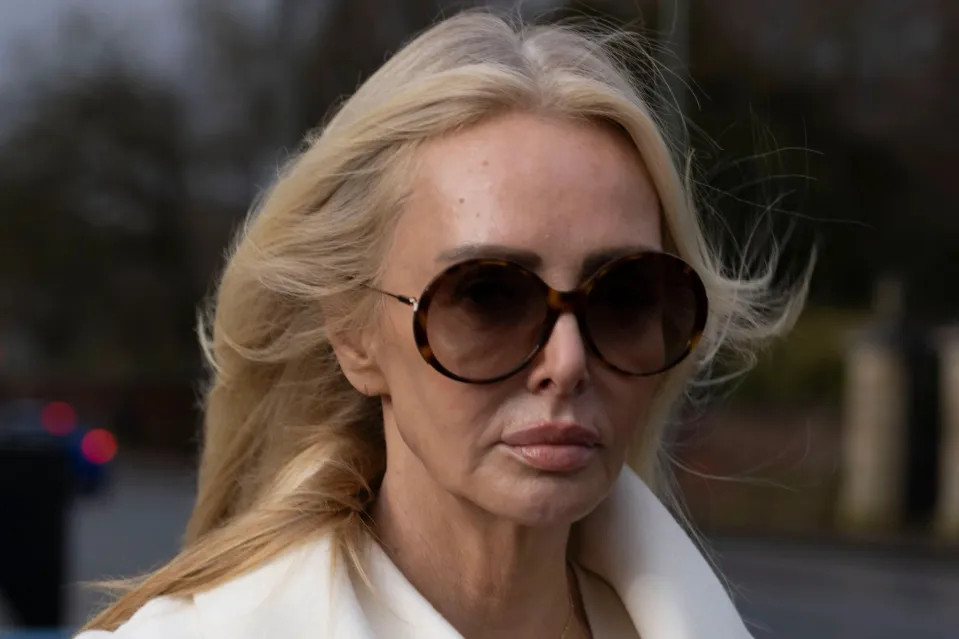
Real Housewives of Cheshire star Debbie Davies has shared the sad news she has cancer. The 58-year-old reality star, who is also a psychic, ghost hunter and medium, took to Instagram to reveal she had been diagnosed with tonsil cancer at the end of November.
Posting a video, she told her followers how she had been experiencing a constantly sore mouth for a while and had “so many sore throats over the years”. But she said that “never for a moment” did she think it could be something so serious.
Doctors only discovered it was cancer after she had three teeth out and a nurse advised Debbie to get checked out. She said: “Thank God a nurse at Wythenshawe Hospital mentioned the possibility of it being cancer to me! Thanks to her I got checked out and now I’m getting treatment.”
Since her initial diagnosis, Debbie has been giving fans regular updates – and warning people what to look out for so it doesn’t happen to them, or they at least have the best chance of catching it early.
Sharing a photo of herself wearing a special mask covering her whole head apart from her nose that’s meant for radiotherapy treatment, Debbie said: “Constant sore throat? Get checked. Tonsil cancer caused by the HPV virus is no joke.”
In the caption she wrote: “The advice is simple, get checked. The mask looks grim but it’s doable and if you want to survive you’ve got no choice.
“Today someone messaged to say they’ve got diagnosed because they got seen after my first post, to me that makes baring my soul worth it, no woman wants to be seen at her worst, but if it saves lives I’ll do it.
“So apologies for banging on about this, it is what it is, please share and get this out there. Cancer – you are the devil’s work and I’m one of God’s women, so heaven help you picking a war with me.”
In her latest post, Debbie shared that she is having a mix of chemotherapy and radiotherapy over the next few weeks to hopefully be rid of the cancer for good.
She told fans: “I’m OK, and hopefully I’m going to be OK.
“So, finally, after a ton of appointments, I don’t go back until Monday and that’s for radiation and chemotherapy for six weeks.
“Although that’s not going to be easy and simple because the cancer is in my mouth, it’s on my tonsils and in my glands. So, I’m going to be very burnt from the radiotherapy. I’ve got that ordeal to get through.
“But six weeks of treatment and then, please God, I’ll be cancer free. So, keeping everything crossed. Six weeks, I’ll have to recover, but please God, I’ll go back to normal and be cancer free.”
Debbie first appeared on The Real Housewives of Cheshire in 2021, taking over from Dawn Ward, and quit after just one series. But she returned to the ITV2 show earlier this year for the 10th anniversary series.
HOLLYWOOD actress Sydney Sweeney unmasks herself as a secret tourist during a whirlwind trip to the UK.
The Euphoria star enjoyed a sightseeing tour around London before heading to Soho Farmhouse in Oxfordshire for some relaxation.
Sign up for the Showbiz newsletter
Thank you!
Sydney Sweeney posed in a facemask with a pal while on a trip to the UKCredit: InstagramSydney was taken to London by designer brand Miu MiuCredit: InstagramSydney also visited the Soho Farmhouse in OxfordshireCredit: Instagram
Sydney, 28, shared pictures from her whistle-stop visit — including putting on a facemask with a pal in a hot tub and horse riding.
The trip was organised by designer brand Miu Miu, which recruited Sydney as an ambassador in 2022.
Sharing the snaps online, Sydney, whose psychological thriller The Housemaid is released later this month, told her fans: “Little London getaway.”
This is another big game at the bottom of the table.
I am so pleased for Leeds boss Daniel Farke because I was fed up with the rubbish being talked about how he cannot manage in the Premier League.
Leeds have had a tough run of games against Manchester City, Chelsea and Liverpool and it felt like there were people out there who were waiting and even wishing for Farke to fail, so he would be sacked.
I am delighted that it has turned out very differently. The performances, the guts, and the quality that Leeds have shown has been brilliant, even in defeat at City, and against Chelsea and Liverpool they have picked up points too.
Dominic Calvert-Lewin’s goals have made the difference, and they will go into this game full of belief, and thinking they have got a real chance.
Brentford are still favourites, though, because their home form is so good – with five wins, a draw and just one defeat under Keith Andrews so far.
The Bees were pretty limp when they went to Spurs last week but on their own patch it is a different story. They have won their past three games there, against Liverpool, Newcastle and Burnley so, like Leeds, they will be full of confidence.
I remember Farke’s last game as Norwich manager in November 2021, when his team beat Brentford but he was sacked a few hours later. This time, I am backing Brentford to win, but Farke’s future should not be in doubt.
Sutton’s prediction: 2-0
Stingray’s prediction: Both teams score quite a lot of goals.2-2
Jimmy McKenna who has played Jack Osborne in Hollyoaks since 1996, admitted his co-stars have stepped up to ensure he is not spending the festive season alone this year
03:48, 11 Dec 2025Updated 03:49, 11 Dec 2025
A soap legend has revealed his wife has died as he opens up about his secret grief for the first time.
Jimmy McKenna who has played Jack Osborne in Hollyoaks since 1996, admitted his co-stars have stepped up to ensure he is not alone during the festive season following his tragic loss. While he did not divulge details of her cause of death but admitted the festive season “has been a wee bit melancholy”.
While speaking to Inside Soap Magazine about his plans for Christmas, the 72-year-old revealed his wife Bev, who he shares four children with, had passed away.
His revealed co-star Nick Pickard, who plays Tony Hutchinson, has stepped up to ensure he won’t be alone at Christmas inviting Jimmy into his home along with members of Bev’s family. “I’ll be with Nick and his partner Sarah for Christmas Day. Nick’s mum, my mum-in-law and sister-in-law are coming. Nick’s daughter Ellie and her boyfriend will be there too, there’s nine of us in total,” he said.
He continued: “Since my wife Bev passed, Christmas has been a wee bit melancholy for me. So it’s good to just be surrounded by friends, having a laugh and a wee drink!”
Jimmy has been a familiar face on screens since the 1980s when he landed a small part in Coronation Street playing Jim Lomax in 1985. He returned to the cobbles just over a decade later in 1994 playing an Immigration Officer in two episodes.
For 14 years from 1996 he juggled his soap role with a role in the David Jason police procedurial A Touch Of Frost in which he played Sgt. Don Brady. He has also had roles in Taggart, Rumpole of the Bailey, Soldier Soldier and Heartbeat.
Hollyoaks airs on Mondays through to Wednesdays at 7am on Channel 4 before airing on E4 at 7pm.
The newest chapter of the Disney Plus series has arrived on the streaming service, with the opening two episodes now available. Viewers will need to tune in weekly as Percy and his companions embark on a fresh quest into unexplored territory.
The streaming giant reveals: “After Camp Half-Blood’s protective border is breached, Percy Jackson embarks on an epic odyssey into the Sea of Monsters in search of his best friend Grover and the one thing that may save the camp – the legendary Golden Fleece.
“With help from Annabeth, Clarisse and his newfound cyclops half-brother Tyson, Percy’s survival becomes essential to stopping Luke, the Titan Kronos, and their impending plan to bring down Camp Half-Blood – and ultimately, Olympus.”, reports the Express.
Despite only two episodes being released, there’s already been plenty of thrilling moments for audiences – with one sequence leaving the cast particularly impressed.
Viewers will remember scenes featuring chariot racing, an ancient mode of transportation and competitive sport that involves controlling a two-wheeled vehicle drawn by horses.
Leading star Walker Scobell, portraying Percy Jackson, has spoken candidly about the chariot sequences and the “crazy” and perilous nature of filming them.
Walker revealed: “So on the first day of filming I didn’t know I was going to do any chariot riding, right? Because it’s so dangerous: I got to watch some test footage of them going out and messing around out there before we were filming and it looked terrifying.
“I was like, ‘Okay, I’m not doing that.’ But I get there on the day and they’re like, ‘Hop in! Just kind of drive the chariot around the second part of this oval stadium and then park right in between these two horses…’ So, I had to learn right there. It was crazy.”
For Leah Jeffries, who portrays Annabeth Chase, the chariot sequences proved equally memorable, describing it as “one of my most fun days.”
Executive producer Jonathan Steinberg acknowledged the ambitious nature of the scene, explaining it was among the elements he was most eager for audiences to witness: “Our goal was to push this thing as far as it would go and then push it a little further. The chariot race was scary.
“I mean at the end of the day, we want the show to be great and we take that really seriously, but we also want everybody to be safe and okay. And strapping kids to horses at full speed… it just doesn’t seem like a good idea when you start planning it.
“So, the fact that we were able to do that and have it turn out great and also have everybody walk away from it smiling was a big deal.”
Percy Jackson and the Olympians season 2 is available to stream on Disney Plus.
Salah, the ‘Egyptian King’, scored 29 Premier League goals and broke a host of records as he helped Liverpool to a record-equalling 20th top-flight title in the 2024-25 season.
He became the first player to win the Golden Boot, the Playmaker award for most assists and the Premier League player of the season award in the same campaign. He was also named as the PFA men’s player of the year for a record third time and collected a third Football Writers’ footballer of the year award.
The 33-year-old became the highest-scoring overseas player in Premier League history, overtaking Sergio Aguero’s mark of 184.
Salah has scored five goals in 18 appearances for Liverpool so far this season, and on Saturday said he felt like he had been “thrown under the bus” by the club and that his relationship with head coach Arne Slot had broken down.
Jewish mothers are proud when their son or daughter become successful in sports, but then there’s the greatest honor of all: their child appearing on a matzah box.
Former Rolling Hills Prep guard Benny Gealer, a senior at Stanford averaging 10.6 points this season, is a candidate for the L’Cheisman trophy, sponsored by Manischewitz looking to honor the top Jewish college sports athletes.
Forget the $10,000 prize money. The most important reward in the mind of his mother is that the winner gets to appear on a limited-edition cover of its matzah box.
So the Gealer family is all in.
Gealer was an All-CIF guard at Rolling Hills Prep who went to Stanford as a walk-on and is now starting.