south

South Korea broadcasting revenue falls for second straight year

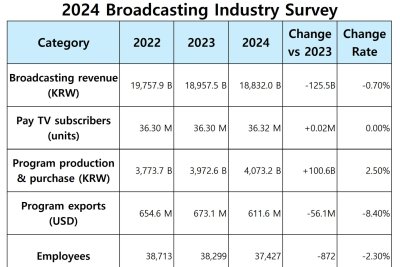
1 of 2 | Key findings from South Korea’s 2024 broadcasting industry survey. Graphic by Asia Today and translated by UPI

Dec. 31 (Asia Today) — South Korea’s broadcasting industry remained in a slump last year, with total revenue declining for a second consecutive year as terrestrial broadcasters posted steep drops in advertising income, regulators said Wednesday.

The Korea Communications Commission said total broadcasting industry revenue in 2024 fell 0.7% from 2023 to 18.832 trillion won (about $14.5 billion) in its “2024 Survey on the Status of the Domestic Broadcasting Industry.” The market first turned negative in 2023 after expanding every year since 2003, the commission said.

Terrestrial broadcasters, including digital multimedia broadcasting, recorded the largest decline by category, with revenue falling 5.4% to 3.5337 trillion won (about $2.7 billion), the commission said. The drop was driven by weaker advertising, historically the biggest income source for terrestrial channels.

Terrestrial advertising revenue declined 9.9% to 835.7 billion won (about $640 million) in 2024 after plunging 23.3% in 2023, according to the survey. Advertising accounted for 23.7% of terrestrial broadcast revenue in 2024, down from 47.4% in 2014, it said.

Cable television operators and satellite broadcasters also posted declines, with revenue down 2.9% and 3.6%, respectively, as subscription fees and home shopping carriage fees weakened, the commission said.

Total revenue for pay-TV operators, including cable and internet protocol television, edged up to 7.2361 trillion won (about $5.6 billion), but growth remained near flat, the survey said. IPTV was the main driver, with revenue rising 1.4% to 5.0783 trillion won (about $3.9 billion), the commission said, citing steady increases in subscription fees and home shopping transmission fees.

Home shopping program providers posted revenue of 3.4168 trillion won (about $2.6 billion), down 2.1% from the previous year, the commission said. TV home shopping sales continued to slide, while data-based home shopping sales rose 1.6% to 774.3 billion won (about $595 million), reversing a decline the year before.

Employment in the broadcasting industry also fell, the survey said, with the number of workers declining to 37,427 in 2024 from 38,299 in 2023. Terrestrial broadcasters recorded the sharpest employment drop, down 4.5%.

— Reported by Asia Today; translated by UPI

© Asia Today. Unauthorized reproduction or redistribution prohibited.

Source link

South Korea ends two-year U.N. Security Council term, cites peace role

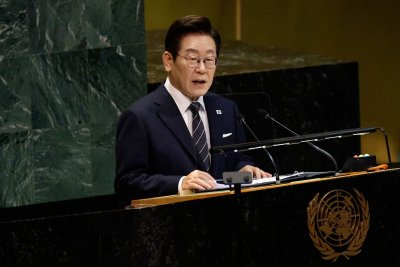
President of the Republic of Korea Jae Myung Lee speaks on the first day of the 80th session of the General Debate in UN General Assembly Hall at the United Nations Headquarters on Tuesday, September 23, 2025 in New York City. Photo by Peter Foley/UPI. | License Photo

Dec. 31 (Asia Today) — South Korea’s two-year term as a non-permanent member of the U.N. Security Council ended Wednesday, with the Foreign Ministry saying Seoul led discussions on international peace and security and raised its profile as a responsible global power.

The ministry said South Korea served as Security Council president in September and used the role to steer talks during the high-level segment of the 80th U.N. General Assembly.

It was South Korea’s third stint as an elected Security Council member after terms in 1996-1997 and 2013-2014, the ministry said.

During the 2024-2025 term, South Korea pushed Council discussions on security threats linked to emerging technologies, including artificial intelligence and cybersecurity, the ministry said. It said President Lee Jae-myung became the first South Korean president to preside over a Security Council meeting, leading a session on AI and international peace and security.

The ministry said South Korea also contributed to talks on peacekeeping and peacebuilding, taking part in decisions related to U.N. peacekeeping operations and serving as a coordinator between the Security Council and the Peacebuilding Commission.

It said Seoul urged greater Council attention to nontraditional security issues including women, peace and security and climate change.

The ministry said the period of South Korea’s membership coincided with conflicts in multiple regions, including the war in Ukraine and tensions in the Middle East, underscoring the Council’s role. It said geopolitical rivalry and eroding trust in multilateralism limited Council action, but Seoul consistently emphasized respect for international law, including the U.N. Charter, and protection of civilians.

The ministry said South Korea worked to strengthen solidarity among elected members and promote dialogue between permanent and nonpermanent members.

It said the government plans to expand contributions to international peace and security based on the experience gained during the term, including efforts tied to what it described as a national policy task of building a “G7+ diplomatic powerhouse” through participation in the international community.

— Reported by Asia Today; translated by UPI

© Asia Today. Unauthorized reproduction or redistribution prohibited.

Source link

U.S., South Korean officials seek to modernize aging alliance

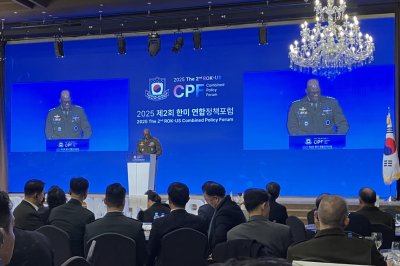
Gen. Xavier T. Brunson, commander of the ROK-U.S. Combined Forces Command, delivers a
keynote address at the 2025 second ROK-U.S. Combined Policy Forum at Royal Park Convention in Seoul on Monday. Photo by Hyojoon Jeon/UPI

SEOUL Dec. 31 (UPI) — Against a backdrop of North Korea’s accelerating nuclear program and a fracturing geopolitical landscape, senior military officials and lawmakers from the United States and South Korea gathered in Seoul earlier this week to seek a fundamental redesign of their decades-old military partnership.

The second annual ROK-U.S. Combined Policy Forum, held at the Royal Park Convention, arrived at what participants described as a historical inflection point. As the security environment shifts from traditional border defense to a complex web of regional threats, the discussion centered on transitioning the alliance into a modern, multi-domain force.

“Korea is not simply responding to threats on the peninsula,” Gen. Xavier T. Brunson, commander of the ROK-U.S. Combined Forces Command, said in a keynote address.

He characterized the current era as a “pivotal moment” and stressed that alliance modernization “should be more than a slogan.”

Brunson noted that South Korea now sits at the crossroads of regional dynamics that shape the balance of power across Northeast Asia.

The forum, attended by influential figures including Rep. Yoo Yong-won of the National Assembly’s Defense Committee, reflected a growing urgency to adapt. While the alliance remains anchored by 28,500 U.S. troops, the conversation shifted toward two pressing themes: the expansion of South Korea’s operational role and the credibility of integrated deterrence.

A primary focus was the modernization of the command framework. Experts proposed integrating South Korean forces more deeply into the combined defense system, reflecting Seoul’s desire for a role that matches its military sophistication. This shift is seen as a response to demands for more visible burden-sharing and strategic autonomy.

The afternoon sessions turned to the reality of North Korea’s nuclear advancements. With Pyongyang officially designating the South as its “primary foe,” speakers underscored the need for closer integration of nuclear consultation mechanisms. The goal is to move beyond abstract promises toward a structural reform that addresses “multi-theater” challenges.

As the forum concluded, the underlying message was clear: While the alliance remains the bedrock of security, the status quo is no longer sufficient. Under the administration of Lee Jae Myung, the partnership is attempting to bridge the gap between a 70-year-old treaty and the high-tech, nuclear-charged reality of the 21st century.

Source link

South Korea firms cut hiring plans by 64,000 for early 2026

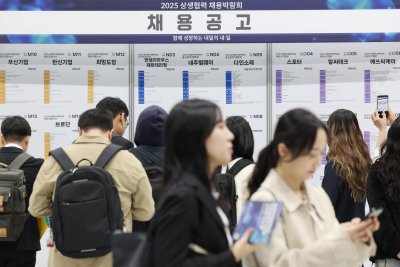
Job seekers look at job postings during a job fair at the COEX Magok Convention Center in western Seoul, South Korea, on 21 October 2025. File Photo by YONHAP /EPA

Dec. 30 (Asia Today) — South Korean companies plan to hire fewer workers through early next year, extending a cooling trend in the job market, the Labor Ministry said Tuesday.

The Ministry of Employment and Labor said in its 2025 second-half labor force survey that businesses with at least one employee planned total hiring of 467,000 for the fourth quarter of 2025 through the first quarter of 2026. That was down 64,000, or 12.1%, from the same period a year earlier.

The ministry also reported slower labor demand. As of Oct. 1, the number of workers businesses said they needed for normal operations stood at 449,000, down 78,000, or 14.8%, year-on-year. The labor shortage rate fell 0.4 percentage points to 2.4%.

Hiring plans diverged by company size. Firms with fewer than 300 employees planned to hire 410,000, down 69,000, or 14.4%, from a year earlier. Firms with 300 or more employees planned to hire 57,000, up 5,000, or 9.2%.

By industry, planned hiring fell in manufacturing, transportation and warehousing, construction and wholesale and retail trade. Manufacturing alone was down 15,000, the ministry said. Hiring plans rose in business facility management, business support and leasing services, as well as finance and insurance.

Other indicators also pointed to weakening momentum. In the third quarter, the number of job openings stood at 1.206 million, down 90,000 from a year earlier, while hires fell 68,000 to 1.105 million, the ministry said. Both measures increased among firms with 300 or more employees, widening the gap between large companies and small and medium-sized businesses.

A ministry official said overall hiring conditions have contracted as labor shortages eased, with the downturn most pronounced among smaller firms.

— Reported by Asia Today; translated by UPI

© Asia Today. Unauthorized reproduction or redistribution prohibited.

Source link

Rodong Sinmun access expands to 181 sites in South Korea

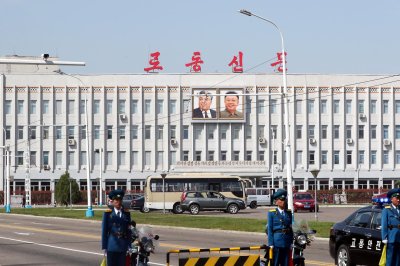
epa07029212 North Korean traffic policemen keep watch at a street in front of the building of the Rodong Sinmun newspaper (back), the official newspaper of the Central Committee of the Workers’ Party of Korea, in Pyongyang, North Korea, 18 September 2018. File Photo by PYONGYANG PRESS CORPS / EPA

Dec. 30 (Asia Today) — South Korea’s Unification Ministry said Tuesday that the public can now read North Korea’s state newspaper Rodong Sinmun at 181 designated outlets without special procedures such as separate identity checks or prior applications.

Vice Unification Minister Kim Nam-joong said at a briefing that visitors to institutions authorized to handle North Korean materials may view Rodong Sinmun “like any other general publication.” He said the ministry plans to broaden access to North Korea-related information so the public can independently compare and assess it.

The ministry said 181 institutions hold copies of Rodong Sinmun, with about 20 purchasing it regularly. It said anyone visiting those outlets may view the copies held there and that some procedures, including requirements tied to copying materials, have been simplified.

Rules governing the import of Rodong Sinmun into South Korea remain unchanged under customs regulations, the ministry said. Institutions not authorized to handle special materials still cannot import the paper, it said, adding it plans to discuss easing related restrictions with other agencies.

The ministry said it also plans to seek legal changes aimed at opening access to Rodong Sinmun and other North Korea-related sites online. About 60 North Korea-linked websites are currently blocked in South Korea, including Rodong Sinmun and the Korean Central News Agency, it said.

Unification Minister Chung Dong-young previously said the government would pursue a legal framework to expand access to North Korean materials, including broadcasts and publications. The ministry said an interagency consultative body met Dec. 26 and notified relevant agencies that Rodong Sinmun had been reclassified as general material, allowing broader public access.

— Reported by Asia Today; translated by UPI

© Asia Today. Unauthorized reproduction or redistribution prohibited.

Source link

Federal judge temporarily halts South Sudanese deportations

Dec. 30 (UPI) — A federal judge on Tuesday ordered the Trump administration to reinstate temporary protected status against deportation for citizens of South Sudan.

U.S. District Court of Massachusetts Judge Angel Kelley, in a four-page ruling, ordered an administrative stay of the Trump administration’s decision to end TPS for those from South Sudan as of Jan. 6.

“Because of the serious consequences at stake, both for the plaintiffs and the defendants, the court finds an administrative stay appropriate as it would ‘minimize harm’ while allowing the assigned district court judge the time this case deserves,” Kelley said.

The stay does not represent the merits of the case and instead gives the court time to weigh arguments and evidence before rendering a decision.

Kelley, who was appointed by former President Joe Biden in 2021, gave plaintiffs through Jan. 9 to file their arguments and the Trump administration through Jan. 13.

She will rule on the matter after reviewing the respective arguments.

The federal lawsuit was filed on Dec. 22 by African Communities Together on behalf of four unnamed plaintiffs and all others similarly situated, which makes it a class action.

The defendants are the Department of Homeland Security, Secretary of Homeland Security Kristi Noem, U.S. Citizenship and Immigration Services and the federal government.

African Communities Together says 232 South Sudanese nationals benefit from TPS, plus another 73 who have applied for TPS protection.

The Obama administration first provided TPS protection for those from South Sudan in 2011, and the status repeatedly was extended over the past 14 years.

South Sudan became an independent nation in 2011 in East Africa, but it has been subject to war and conflict since then.

Noem in November announced conditions in South Sudan have changed and no longer merit TPS status for its citizens in the United States.

TPS status enables recipients to stay in the United States and obtain work authorizations when their home countries are subject to armed conflict, environmental disasters and other “extraordinary conditions.”

While the plaintiffs oppose deportations of South Sudanese to their nation of citizenship, the Supreme Court recently approved the Trump administration’s deportation of eight others — seven of whom are citizens of other countries — to South Sudan.

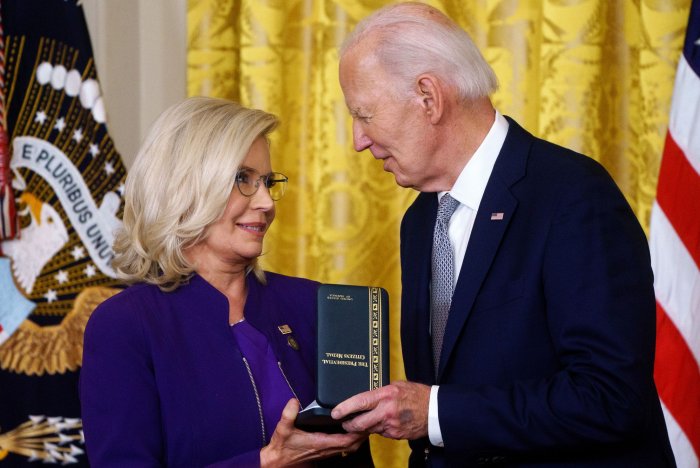
Former President Joe Biden presents the Presidential Citizens Medal to Liz Cheney during a ceremony in the East Room of the White House in Washington, on January 2, 2025. The Presidential Citizens Medal is bestowed to individuals who have performed exemplary deeds or services. Photo by Will Oliver/UPI | License Photo

Source link

Judge blocks Trump effort to strip South Sudan deportation protections | Donald Trump News

Trump is seeking to end protected status for South Sudan, claiming country no longer poses danger to those returning.

A federal judge has blocked the administration of President Donald Trump from stripping temporary protections from deportations for South Sudanese citizens living in the United States.

US District Judge Angel Kelley in Boston, Massachusetts, granted an emergency request on Tuesday in a lawsuit filed by several South Sudanese nationals and an immigrant rights group.

Recommended Stories

list of 3 itemsend of list

The order prevents the temporary protected status (TPS) for South Sudanese citizens from expiring on January 5 as the Trump administration has sought.

The lawsuit, led by the African ‍Communities Together, accuses the US Department of Homeland Security of acting unlawfully in its effort to strip South Sudanese citizens of TPS, a US immigration status granted to citizens of countries experiencing natural disasters, conflict or other extraordinary circumstances that could make return to their homelands dangerous.

The status was initially granted for South Sudan in 2011 when the country officially broke away from Sudan. It has been repeatedly renewed amid repeated bouts of fighting, widespread displacement and regional instability.

​The status allows eligible individuals to work and receive temporary protection from deportation.

The lawsuit further alleged that the Trump administration exposed South Sudan citizens to being deported to a country facing what is widely considered one of the world’s worst humanitarian crises.

Homeland Security Secretary Kristi Noem, in a notice published on November ‌5, had argued the country no longer met the conditions for TPS.

“With the renewed peace in South Sudan, their demonstrated commitment to ensuring the safe reintegration of returning nationals, and improved diplomatic relations, now is the right time to conclude what was always intended to ‌be a temporary designation,” she said, appearing to refer to a tenuous 2018 peace agreement.

The statement contradicted the findings of a panel of United Nations experts, who wrote in a report to the UN Security Council in November that “while the contours of the conflict may be altered, the resulting human suffering has remained unchanged.”

“Ongoing conflict and aerial bombardments, coupled with flooding and the influx of returnees and refugees from the Sudan, have led to near-record levels of food insecurity, with pockets of famine reported in some of the communities most affected by renewed fighting,” it added.

The Trump administration has increasingly targeted TPS as part of its crackdown on immigration and its mass deportation drive.

It has moved to similarly ‌end TPS for foreign nationals from countries including Syria, Venezuela, Haiti, ⁠Cuba and Nicaragua, prompting several court challenges.

It has also sought to deport individuals to countries in Africa, even if they have no ties there.

Source link

Defectors protest proposed new label for North Koreans in South

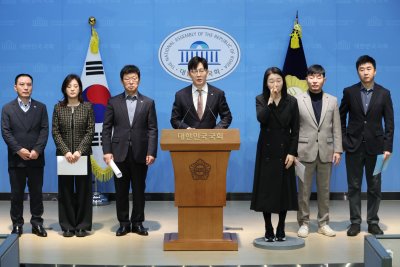
Rep. Park Chung-kwon of the People Power Party and leaders of North Korean defector groups hold a news conference at the National Assembly Communication Center in Seoul on Dec. 29 to oppose changing the official term “North Korean defectors” to “Bukhyangmin.” Photo by Yonhap News Agency

Dec. 29 (Asia Today) — North Korean defector groups on Monday urged South Korea’s Unification Ministry to halt its push to replace the official term for defectors, warning that one leading alternative could be misunderstood as meaning people who “look toward” North Korea.

Five defector organizations, including the Committee for North Korean Democracy and the North Korea Strategy Center, held a news conference at the National Assembly and issued a joint statement calling for the government to stop reviewing the term change and to release the results of a public opinion survey conducted from late September to early October, organizers said.

The groups objected in particular to “Bukhyangmin,” a term the ministry has weighed as a possible replacement for “North Korean defectors.” They said the word could be confused with similar-sounding phrases that imply sympathy for North Korea, framing it as an attack on defector identity.

The dispute also intensified after Unification Minister Chung Dong-young said during a Dec. 19 work report that “all” defectors strongly reject the current term, a claim critics said overgeneralized defector views. The ministry has said Chung asked roughly 60 residents at Hanawon, a government resettlement and education center in Anseong, Gyeonggi Province, during a private visit on Dec. 5 and that all those present supported a change.

At the news conference, Kang Cheol-hwan, head of the North Korea Strategy Center, questioned whether the new term would make defectors appear to be people who admire North Korean leader Kim Jong Un. Other speakers argued the current term reflects “escape” from the North Korean system and symbolizes resistance to repression.

A broader umbrella group, the National Association of North Korean Defectors, also issued a separate statement demanding a public apology for what it called distorted remarks and urging the government to guarantee public deliberation if it changes terminology tied to defectors, organizers said.

The ministry has said it is reviewing whether to adjust legal terminology and social usage to reduce negative connotations and support settlement and social integration.

Previous surveys have shown mixed views among defectors. A Korea Institute for National Unification survey found about 59% of defector respondents said a change was needed, but preferences among alternatives were split, with “Hanamin,” “Tongilmin” and “Bukhyangmin” drawing similar levels of support, news reports said.

The Unification Ministry has not announced a final decision and has said it is internally reviewing whether to disclose results from its latest survey, according to local reports.

— Reported by Asia Today; translated by UPI

© Asia Today. Unauthorized reproduction or redistribution prohibited.

Source link

Thae Yong-ho says North may build nuclear submarine before South

Former People Power Party lawmaker Thae Yong-ho speaks during an appearance on Asia Today TV’s “Shin Yul’s Political Check” on Dec. 29. Photo by Asia Today

Dec. 29 (Asia Today) — Former People Power Party lawmaker Thae Yong-ho said Monday that North Korea is likely to build a nuclear-powered submarine before South Korea, citing Pyongyang’s ability to bypass lengthy legislative and administrative processes.

Thae made the remarks during an appearance on Asia Today TV’s political talk show Shin Yul’s Political Check. He was commenting on North Korea’s stated goal of developing a nuclear-powered strategic submarine as part of its five major defense modernization tasks.

“North Korea’s objective is to create a nuclear threat that the United States would perceive as credible,” Thae said. He added, however, that Washington still does not view Pyongyang’s nuclear capabilities as an immediate existential threat.

He said a land-based nuclear missile launched from North Korea would take about an hour to reach the United States and could be intercepted or neutralized through a preemptive strike. “That’s why North Korea is trying to develop a method to hide in the depths of the ocean and launch closer to U.S. shores,” he said, adding that Pyongyang ultimately seeks recognition as a nuclear-armed state.

“North Korea lies a lot and engages in bluster,” Thae said. “But when you look back, they usually end up building what they say they will. The quality may not be sophisticated, but they get it done. A nuclear submarine is just a matter of time.”

Asked whether South Korea or North Korea would succeed first, Thae said he believed the North would do so earlier. He noted that while South Korea has much of the necessary technology, building a nuclear-powered submarine would require years of preparation, legislative approval and negotiations, particularly with the United States.

“Even if it were built at a U.S. shipyard, the infrastructure alone could take five years to prepare,” he said. He added that fuel transfer issues and U.S. legislative approval would also pose major hurdles. “We are a democracy, so procedures take time. North Korea can simply cobble something together with Russia, but we cannot.”

Thae also said North Korea has not yet completed its submarine-launched ballistic missile technology. He noted that while the North has displayed launches from barges, it has not conducted a confirmed underwater launch since unveiling a nuclear attack submarine in September 2023.

“If they had mastered the technology, they would have demonstrated it by now,” he said, adding that firing missiles underwater while maintaining submarine stability is highly complex.

Thae also predicted that North Korea’s internal power structure could move into what he described as an “era of Ri Sol-ju,” referring to Kim Jong-un’s wife. He said Kim’s daughter, Kim Ju-ae’s public appearances appear symbolic rather than indicative of an imminent female successor.

Turning to South Korea’s decision to allow limited public access to Rodong Sinmun, Thae downplayed concerns about social impact. He said the newspaper is only available in restricted settings such as libraries and is not widely read even inside North Korea.

“In North Korea, officials are forced to read it during designated morning sessions,” he said. “Who would read it here, and how many people would bother? There won’t be major social repercussions.”

— Reported by Asia Today; translated by UPI

© Asia Today. Unauthorized reproduction or redistribution prohibited.

Source link

Brazil leads international tourism in South America in 2025

Tourists visit the Iguazu Falls in Iguazu National Park in Foz do Iguazu, Brazil, last week. Photo by Juan Pablo Pino/EPA

Dec. 29 (UPI) — International tourism across South America rebounded strongly in 2025, led by Brazil, which received nearly 9 million foreign visitors and consolidated its position as the region’s top destination.

Brazil welcomed 8.97 million international tourists between January and November 2025, a 40% increase compared with the same period last year, according to data from Brazil’s Ministry of Tourism.

Argentines were the largest group of visitors, totaling 3.1 million tourists, followed by travelers from Chile, the United States, Uruguay and Paraguay.

Brazilian authorities said visitor numbers are expected to rise further in December with the year-end holidays and the peak of the Southern Hemisphere vacation season.

Tourism revenue generated more than $7.1 billion in foreign income through November, reflecting higher volumes and longer average stays, according to the Central Bank of Brazil and tourism officials.

Elsewhere in South America, tourism recovered at different speeds. Most countries reported clear gains compared with previous years, driven mainly by regional travel and improved air connectivity.

Argentina recorded 795,300 international visitors in November alone, according to national statistics, including 491,400 tourists who stayed at least one night and 303,900 same-day visitors.

Brazil was the main country of origin, followed by the European Union and Uruguay. Despite solid inbound figures, Argentina posted a negative tourism balance, as outbound travel by residents continued to exceed arrivals of foreign visitors.

Chile reported more than 5 million international tourist arrivals during the year, according to data from the National Tourism Service, marking one of the strongest recoveries in South America.

Authorities said the growth was driven mainly by visitors from Argentina and Brazil, along with a gradual return of long-haul travelers from North America and Europe as air connectivity improved.

Uruguay received 3,207,536 international visitors between January and November, with estimated tourism spending of $1.784 billion.

Argentina and Brazil remained the country’s main source markets. Argentine tourists totaled more than 2 million arrivals, generating $1.034 billion in spending, while nearly 450,000 Brazilian visitors produced approximately $296 million during their stays.

Paraguay posted one of the region’s strongest rebounds early in 2025, with international arrivals up more than 50% year over year in the first quarter, according to Unite Nations tourism data.

The growth was driven mainly by cross-border travel and short stays linked to commerce and regional mobility.

South American travelers took advantage of exchange rate differences and expanded land and air connections. The return of travelers from the United States and Europe added further momentum, particularly in Brazil and Chile, reinforcing South America’s post-pandemic tourism recovery.

Source link

Trump indicates the U.S. ‘hit’ a facility in South America that he tied to alleged drug boats

President Trump has indicated that the U.S. has “hit” a facility in South America as he wages a pressure campaign on Venezuela, but the U.S. offered no other details.

Trump made the comments in what seemed to be an impromptu radio interview Friday.

The president, who called radio host John Catsimatidis during a program on WABC radio, was discussing U.S. strikes on alleged drug-carrying boats in the Caribbean Sea and eastern Pacific Ocean, which have killed at least 105 people in 29 known strikes since early September.

“I don’t know if you read or saw, they have a big plant or a big facility where they send the, you know, where the ships come from,” Trump said. “Two nights ago, we knocked that out. So, we hit them very hard.”

Trump did not offer any additional details in the interview, including what kind of attack may have occurred. The Pentagon on Monday referred questions to the White House, which did not immediately respond to a message seeking comment.

Defense Secretary Pete Hegseth or one of the U.S. military’s social media accounts has in the past typically announced every boat strike in a post on X, but they have not posted any notice of any strike on a facility.

The press office of Venezuela’s government did not immediately respond Monday to a request for comment on Trump’s statement.

Trump for months has suggested he may conduct land strikes in South America, in Venezuela or possibly another country, and in recent weeks has been saying the U.S. would move beyond striking boats and would strike on land “soon.”

In October, Trump confirmed he had authorized the CIA to conduct covert operations in Venezuela. The agency did not immediately respond to a message seeking comment Monday.

Along with the strikes, the U.S. has sent warships, built up military forces in the region, seized two oil tankers and pursued a third.

The Trump administration has said it is in “armed conflict” with drug cartels and seeking to stop the flow of narcotics into the United States.

Venezuelan President Nicolás Maduro has insisted the real purpose of the U.S. military operations is to force him from power.

White House chief of staff Susie Wiles said in an interview with Vanity Fair published this month that Trump “wants to keep on blowing boats up until Maduro ‘cries uncle.’”

Price writes for the Associated Press. AP writers Konstantin Toropin in Washington and Regina Garcia Cano in Caracas, Venezuela, contributed to this report.

Source link

South Korea to open North Korea’s Rodong Sinmun to public access

1 of 2 | A foreign journalist who covered North Korea’s Punggye-ri nuclear test site demolition reads the Rodong Sinmun, the official newspaper of the country’s Workers’ Party, on a North Korean chartered flight heading to Beijing, China, 26 May 2018. Reporters from South Korea, China, Russia, the United States and Britain were invited to watch the dismantlement of the site, which was carried out on 24 May through a series of explosions over several hours. Photo by YONHAP/EPA

Dec. 26 (Asia Today) — South Korea’s Unification Ministry said Friday it will move ahead next week with administrative steps to make North Korea’s state newspaper, Rodong Sinmun, publicly accessible.

The ministry said a consultative meeting of supervisory agencies held Friday confirmed a consensus to reclassify Rodong Sinmun from “special materials” to “general materials,” clearing the way for broader public access.

Participants in the meeting included the Ministry of Unification, the National Intelligence Service, the Ministry of Culture, Sports and Tourism, the Ministry of Education, the Ministry of Science and ICT and the Korea Communications Commission.

Following completion of required administrative procedures, including the issuance of official notices to supervisory and handling agencies, the ministry said the reclassification will take effect next week.

Deputy Unification Ministry spokesperson Jang Yun-jeong said earlier Friday that the government has been reviewing ways to expand public access to North Korean materials. She noted that many such materials, including Rodong Sinmun, are currently designated as special materials and can be handled only by authorized agencies.

In a written response submitted Thursday to the office of Yoon Gun-young, the intelligence service said it plans to decide on reclassification through interagency consultations, citing the public’s right to know and the promotion of inter-Korean exchanges.

The Unification Ministry also said it is pushing to amend the Information and Communications Network Act and enact a separate law on the management and use of North Korean materials, a move that would allow access to North Korean websites and publications such as Rodong Sinmun.

President Lee Jae-myung has said the public should not be treated as inherently vulnerable to propaganda or agitation.

The plan has drawn mixed reactions. Some experts have urged a cautious, phased opening of North Korean media, while others have called for countermeasures against Pyongyang’s sophisticated propaganda efforts and warned of potential cybersecurity risks from North Korean websites.

— Reported by Asia Today; translated by UPI

© Asia Today. Unauthorized reproduction or redistribution prohibited.

Source link

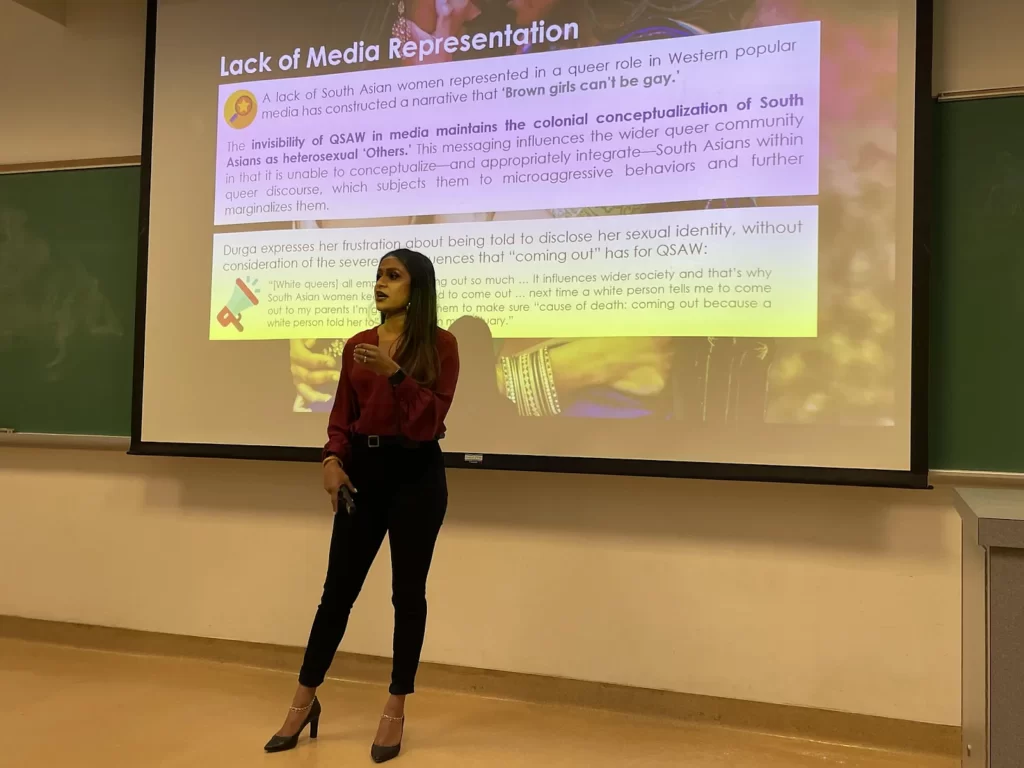
Why Queer Spaces Often Fail South Asian Women

Internalized Shame

This community rejection can be painful. “It wasn’t strangers attacking me. It was my own people, speaking the same language I grew up with, who decided I didn’t deserve respect anymore. And that hurts in a way racism from outsiders never could, because it feels like rejection from your own bloodline,” says Vairavanathan.

Mental health professionals who work with South Asian clients say that collectivist traditions, where family reputation is often prioritized over individual expression, can lead to the stigmatization of LGBTQ identities.

On the AAHNA South Asian therapy website, they write that understanding taboos associated with sexual orientation “is crucial for effective therapeutic practice, as they can significantly influence mental health and well-being.”

Balancing Dual Identities

Jiya Rajput, a British Indian content creator and founder of the QPOC Project, says the balancing act of her sexual and racial identity can be tough: “Being both South Asian and queer sometimes feels like having two vastly different identities,” Rajput told Uncloseted Media. “I have tried my best to blend my queerness with my desi identity. However, it is not often easy, with stereotypes and prejudice sometimes making me feel out of place.”

This balancing act may involve navigating stereotypes and racism inside queer spaces, which can have negative mental health outcomes. A 2022 survey of LGBTQ Asian Americans found that discomfort with one’s race or ethnicity within queer communities was associated with lower psychological well-being for those who consider their racial identity important.

Dating as a Queer South Asian Woman

Balancing this dynamic can make dating challenging. A 2023 study revealed that queer Asian American women are frequently subject to rigid racial dating preferences, with most preferring to date within their own racial group, often as a reaction to feeling fetishized or rejected from white queer spaces.

And even dating within communities of color presents its own set of challenges. “Racism is not exclusively a white people’s issue,” Patel says, noting that she experienced subtle discrimination with another girlfriend who was neither white nor South Asian.

Photo courtesy of Patel

“[She] was genuinely trying to relate with me, she just couldn’t,” she says.

Patel remembers her girlfriend holding many assumptions, such as the belief that all South Asians share the same cultural traditions, such as Bhangra, a lively Punjabi dance, or Garba, a traditional Gujarati folk dance performed during festivals.

“It comes from a place of just wanting to be seen for their own culture,” Patel says, noting that many people of color aren’t accustomed to being truly heard or understood. “There’s so much excitement in dating someone from a different background that sometimes you forget to actually listen and receive the culture through their lens.”

When South Asian women do decide to date white women, Patel says it can feel like one “should just assimilate … and try to keep the pressures of being brown [and] growing up in a stricter, possibly patriarchal, culture at bay.”

These pressures in queer spaces caused Lavina Sabnani to leave her culture behind in an effort to feel accepted.

“It felt wrong to push away everything my ancestors carried with them for so long,” Sabnani told Uncloseted Media. “There’s a standard of whiteness at Pride, at lesbian parties, at cultural and social clubs. … Me and the other brown girls never get noticed. It was like you’re invisible within a community where you’re supposed to be counted in.”
“Being a lesbian South Asian means breaking the mold in every possible way,” says Hubiba Ali, a first-generation Pakistani American, self-described “butch lesbian” and food scientist from Chicago. “Pakistani women I was raised around don’t wear boyish clothes, have short, cropped hair, thick muscles, and hairy legs. They do not eat with gusto, laugh and joke boisterously, or take up space. I gave up a lot of my birthright participation in my culture in order to live free.”

Underrepresented and Under Researched

To make change, Sabnani says South Asian representation in queer spaces is essential. But it’s not happening yet. According to GLAAD’s “Where We Are on TV” 2024-2025 study, Asian Pacific Islanders represented only 11% of LGBTQ characters on broadcast, 2% on cable and 14% on streaming.

Even shows that strive for diversity, like “The L Word: Generation Q,” fail to include South Asian characters. “They had everyone—Black, Latinx, East Asian—but not a single South Asian woman,” says Patel.

She recalls a dating app called Her that featured an image of two white women kissing—one of whom had a tattoo of a Hindu deity.

“They’ll use our gods, but not our faces,” she says.
Outside of Patel’s research, little information exists about racism and homophobia toward queer South Asian women.

Photo courtesy of Patel

And even in queer nightlife, Ali describes feeling sidelined. She says that while there are a few South Asian LGBTQ organizations in Chicago, finding meaningful representation is hard even in those scenes.

“They tend to be hosted in a part of town colloquially known as ‘Boystown,’ which semantically already does not center women or lesbians,” she says. “The events are usually held at gay bars for gay men.”

Finding Acceptance

Patel says that to make spaces truly inclusive, folks need to “start by listening to queer brown women, understanding our unique challenges, and amplifying our voices.”

And despite all of these challenges, many queer South Asian women are still surviving and building a more inclusive future.

Artists like MANI JNX, a British Punjabi indie musician, are using music to explore queer South Asian love, trauma and joy. And visual creators like Mina Manzar are building online communities through art. “Funnily enough, here in NYC, so far from Pakistan, is where I’ve found the most vibrant and beautiful South Asian queer community,” Manzar told Uncloseted Media.

As for Patel, she has found a relationship with a Tamil woman that is grounded in mutual respect and cultural exchange. “I’ve learned how to make Tamil food, I’m learning the language, and she comes to Garba with me and dances every year,” she says. Their shared commitment to honoring each other’s traditions illustrates the importance of genuine cultural understanding in queer relationships that goes beyond surface-level acceptance or stereotypes.

Her hope is that the commitment to understanding that she has developed with her partner can become more reflective of how society tries to understand the experiences of queer South Asian women.

“Let’s just address each racialized group as a different racialized group and give them some damn visibility,” Patel says. “It’s not that hard.”

If objective, nonpartisan, rigorous, LGBTQIA+ focused journalism is important to you, please consider making a tax-deductible donation through our fiscal sponsor, Resource Impact, by clicking this button:

Donate to Uncloseted Media
Source link

Salah seals Egypt qualification with win against South Africa at AFCON 2025 | Africa Cup of Nations News

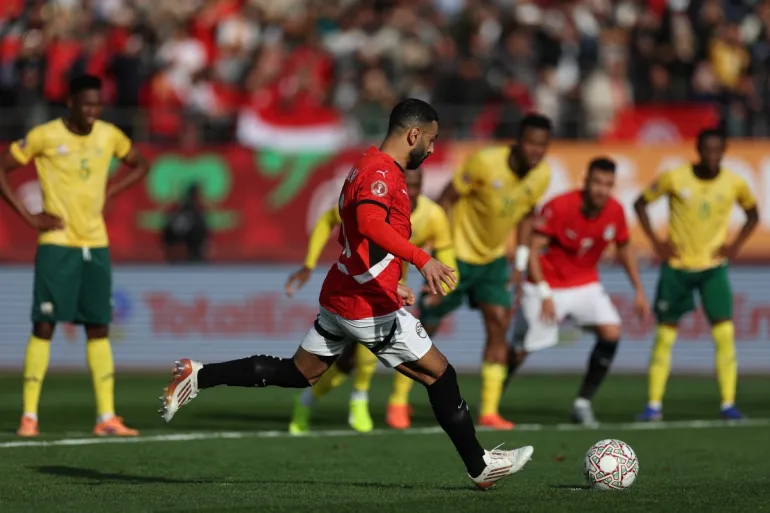
Mohamed Salah has scored as 10-man Egypt have beaten South Africa 1-0 in Agadir to become the first qualifiers for the knockout stage of the 2025 Africa Cup of Nations.

The Liverpool star converted a penalty on 45 minutes on Friday, and South Africa were denied a spot kick late in the second half when Yasser Ibrahim appeared to handle the ball inside the box.

Recommended Stories

list of 4 itemsend of list

Salah came to Morocco after not starting in five Liverpool matches and his omission leading to an outburst against manager Arne Slot.

Egypt were reduced to 10 men in first-half added time when right back Mohamed Hany was shown a second yellow card for a stamp, followed by a red.

After two rounds in Group B, record seven-time champions Egypt have six points and are guaranteed a top-two finish in the group stage and a place in the round of 16.

South Africa have three points and Angola and Zimbabwe one each after they drew 1-1 in Marrakesh earlier on Friday.

The first chance fell to Salah after 11 minutes, but he could not move forward quickly enough to connect with a low cross from Hany.

That the majority of the crowd were supporting the Pharaohs became obvious soon after when the Burundi referee ignored Zizo’s appeals for a free kick and loud whistling enveloped the stadium.

When Salah delivered a free kick into the heart of the South African area, three Egyptians darted forward, but none could connect with the ball.

Midway through the opening half, a pattern had developed. Egypt were pushing forward regularly while South Africa defended with calmness and solid tackling.

Egypt's forward #10 Mohamed Salah shoots from the penalty spot to score the team's first goal during the Africa Cup of Nations (CAN) Group B football match
Salah shoots from the penalty spot to score the team’s winner during the Africa Cup of Nations Group B match against South Africa [Franck Fife/AFP]

When South Africa’s Teboho Mokoena fouled Omar Marmoush just outside the D, he was yellow-carded. However, the Manchester City striker fired the resultant free kick wide.

As the first half progressed, the sun broke out in the southern coastal city – a welcome sight for players and spectators with many earlier group matches staged in torrential rain.

A rare South Africa attack ended disappointingly as Lyle Foster struck a weak shot that was comfortably saved by 37-year-old Mohamed El Shenawy.

Awarded a free kick close to the touchline, South Africa performed an intricate, multipass move that ended tamely as El Shenawy clutched a cross.

Salah was being closely policed by Aubrey Modiba, and as half-time drew near, the Liverpool star retreated into the Egyptian half to retain possession.

Then, as the Egypt captain chased a loose ball with Khuliso Mudau, the South African right back raised his left arm, striking Salah’s left eye.

Amid Egyptian protests, the Burundian referee viewed the incident on a VAR monitor and pointed to the penalty spot.

A lengthy delay before the kick was taken could not have eased the nerves of Salah, but he comfortably converted the penalty as Ronwen Williams dived in the wrong direction.

More drama erupted in added time when Hany stamped on Mokoena, leading to a second yellow card for the defender.

South Africa, with a numerical advantage, attacked more as the second half progressed, but Egypt came close to a second goal with Williams foiling substitute Emam Ashour after a quick free kick.

El Shenawy displayed his agility with 15 minutes remaining, using his right hand to tip to safety a low shot from Foster. It was one of several saves that kept Egypt ahead.

Angola and Zimbabwe keep alive AFCON hopes

Veteran Knowledge Musona scored as Zimbabwe came from behind to draw 1-1 with Angola in Marrakesh to kick off the second round of AFCON matches earlier in the day.

Gelson Dala put Angola ahead midway through the first half, and recalled Musona levelled deep in first-half added time.

A draw in Group B suited neither team, leaving both two points adrift of joint leaders Egypt and South Africa after having played one match more.

Only the top two finishers in each group automatically qualify for the knockout phase. The best four third-placed teams from the six mini-leagues also will advance.

Bill Antonio wasted a good chance to give Zimbabwe an early lead when he blazed wide from close range before a small crowd.

Angola recovered quickly to establish control and took the lead after 24 minutes through Qatar-based striker Dala.

A superb lobbed pass from To Carneiro dropped in front of Dala inside the box, and he squeezed the ball between the near post and 40-year-old goalkeeper Washington Arubi.

Musona, one of four changes to the Zimbabwe lineup after a 2-1 loss to Egypt in Agadir four days earlier, became increasingly involved as the Warriors sought an equaliser.

Musona wasted a free kick opportunity by hitting the ball into the defensive wall, then shot wide, much to the frustration of Romanian coach Marian Marinica, who repeatedly shook his head.

Hugo Marques, the 39-year-old Angola goalkeeper, had his head heavily bandaged before continuing after a collision with an opponent.

The perseverance of Musona finally paid off six minutes into added time at the end of the opening half when he equalised.

After Angola were dispossessed in midfield, Zimbabwe counterattacked swiftly, and a superb pass found Musona inside the box.

He struck a slow shot between the legs of Carneiro and just wide of the outstretched right leg of Marques into the net.

As both sides sought a second goal and the lead, Marques rescued Angola 12 minutes from the end of regular time with an acrobatic one-hand save of an attempt by substitute Tawanda Chirewa.

Source link

South pushes defense semiconductors to cut reliance on foreign supply

A composite image shows defense semiconductor chips with silhouettes of military platforms such as radars, satellites and drones. Dec 25, 2025. Photo by Asia Today

Dec. 25 (Asia Today) — South Korea’s defense procurement agency is accelerating efforts to develop and certify defense-grade semiconductors, warning that reliance on foreign supply chains for critical chips could delay weapons deployment and weaken long-term competitiveness in arms exports.

Modern weapon systems increasingly depend on semiconductors for core functions including missile guidance and navigation, radar detection and tracking, encrypted military communications and autonomous operation in drones and unmanned platforms, defense officials and industry experts say.

Analysts say dependence on overseas sources for such components creates vulnerabilities that go beyond cost. If access is disrupted by export controls, manufacturing changes or supply discontinuation, military programs can face delays because defense-grade parts often require retesting and recertification even after minor design or packaging changes.

The Defense Acquisition Program Administration said it launched a task force in January 2024 to prepare for a Defense Semiconductor Center and has been building a roadmap for project planning and management along with a dedicated reliability evaluation and certification function, according to a notice posted on the government innovation portal.

In a December policy briefing, the agency said it began research and development projects tied to defense semiconductors, including high-power radio-frequency components for radars and semiconductors for space communications.

Defense semiconductor applications span a growing set of systems, including transmit-receive modules for active electronically scanned array radars, processing chips for synthetic aperture radar on unmanned aerial vehicles, satellite communications components for small satellites and tactical-grade inertial sensors, analysts said.

DAPA has pursued center establishment in parallel with research programs aimed at building a domestic ecosystem. The agency said it selected five core technology projects in May, with four expected to begin within the year. In December, it announced the start of projects including space semiconductors for small satellite communications, tactical-grade gyro sensors, chips for unmanned aerial vehicle synthetic aperture radar and chips for active electronically scanned array radars, emphasizing a goal of reducing reliance on foreign technology.

The agency also held a defense semiconductor development forum in November that brought together government officials, industry and researchers, according to the report.

Experts said the next hurdles are less about initial research and more about building an ecosystem that can certify reliability and support sustained production.

Defense-grade semiconductors must perform under extreme conditions including temperature swings, vibration, shock, electromagnetic exposure and long storage periods, requiring testing infrastructure and standards that differ from civilian certification methods.

Analysts also said South Korea will need an end-to-end supply chain covering design, manufacturing, packaging and verification. Because defense chips are often produced in small volumes across multiple specialized variants, they can be deprioritized on commercial foundry and packaging lines unless trusted production capacity is secured.

Specialized investment will also be needed in areas such as compound semiconductors and radiation-hardened components used in radars, electronic warfare systems and satellites, the report said.

To ensure research translates into deployment, experts said development should be structured around early joint design involving military users, system integrators and component makers.

Analysts said defense semiconductors should be treated as national security infrastructure that affects the speed of force deployment, operational sustainability and export reliability, rather than as an optional industrial policy goal.

– Reported by Asia Today; translated by UPI

© Asia Today. Unauthorized reproduction or redistribution prohibited.

Source link

‘South Park’ creators clash with performers at their Casa Bonita restaurant

“South Park” creators Matt Stone and Trey Parker, who this summer landed one of the richest TV deals ever, are being called Scrooges by performers at their Casa Bonita restaurant near Denver.

In late October, the performers, including the famed cliff divers, went on a three-day strike, citing unsafe working conditions and stalled negotiations over their first contract. The performers voted unanimously to unionize with Actors’ Equity Assn. a year ago.

The strike ended when the restaurant’s management agreed to bring in a mediator to assist in the negotiations.

But the standoff has continued, prompting Actors’ Equity to take out an ad in the Denver Post this week that depicts a “South Park” cartoon-like Parker and Stone awash in hundred-dollar bills while their staff, including a gorilla and a person clad in a swimsuit, shivers outside in the Colorado cold.

The union said its goal is to prod the star producers to resolve the labor tensions by giving about 60 Casa Bonita performers, including magicians and puppeteers, a pay increase and other benefits along with their first contract.

an ad with a South Park cartoon on one side and a message on the other side

A full page ad is running in the Denver Post on Dec 24.

(Actors’ Equity Association)

Other Casa Bonita workers voted earlier this month to join the International Alliance of Theatrical Stage Employees Local 7.

“At Casa Bonita, we value all of our team members and their well being,” the restaurant management said in a statement. “We are negotiating in good faith with our unionized team members in the hopes of concluding fair collective bargaining agreements.”

Parker and Stone declined to comment through a spokesperson.

The pair, who also created the hit Broadway play “The Book of Mormon,” rescued the kitschy, bright-pink Mexican-themed eatery in Lakewood, Colo., from bankruptcy in 2021 and have since plowed more than $40 million into the restaurant to upgrade and correct unsafe electrical, plumbing and structural issues after the facility had fallen into disrepair.

For “South Park” super-fans, the venue has become something of a mecca since first being featured in the seventh season of the long-running Comedy Central cartoon.

In that episode, Cartman flips out when Kyle invites Stan, Kenny and Butters Stotch to his birthday party at Casa Bonita (not Cartman), where they are serenaded by the restaurant’s ubiquitous mariachi bands.

Along with legions of other kids who grew up in Colorado, Parker and Stone fondly remember making the trek to the Casa Bonita of their 1980s youth. Restoring the restaurant has become a passion project for the writers, a journey that became grist for a documentary, “¡Casa Bonita Mi Amor!,” which streams on Paramount+.

In July, Paramount managers were eager to tie up loose ends to facilitate the company’s sale to David Ellison’s Skydance Media and RedBird Capital Partners. The incoming management team also became involved in the protracted negotiations to strike a new deal with Parker and Stone’s production company, Park County, to avoid having the situation unravel, possibly tripping up their corporate takeover.

Paramount ultimately agreed to extend the overall deal for Park County as well as lock up the show’s exclusive global streaming rights for $300 million a year over five years. Until this year, the show streamed exclusively on HBO Max.

The overall deal is slated to bring Parker and Stone’s firm $1.25 billion through 2030.

As part of the pact, the team agreed to create 50 new “South Park” episodes for Paramount. The series has enjoyed a ratings bounce and increased cultural resonance this year as it routinely roasts President Trump.

Actors’ Equity, which also represents Broadway performers, is seeking pay raises for its members at Casa Bonita. Union representatives said performers’ wages there average $21 to $26 an hour.

“Matt and Trey have become fabulously wealthy by pointing out the hypocrisy of rich and powerful people,” said David Levy, communications director for Actors’ Equity. “And now they are behaving exactly like the people they like to take down.”

Source link

Belgium joins South Africa’s genocide case against Israel at ICJ | Israel-Palestine conflict News

Other countries, including Brazil, Colombia, Ireland, Mexico, Spain and Turkiye, have already joined the case in The Hague.

Belgium has formally joined the case launched by South Africa at the International Court of Justice (ICJ) alleging Israel is committing genocide in the Gaza Strip.

In a statement on Tuesday, the ICJ – The Hague-based highest court of the United Nations – said Belgium had filed a declaration of intervention in the case.

Recommended Stories

list of 4 itemsend of list

Other countries, including Brazil, Colombia, Ireland, Mexico, Spain and Turkiye, have already joined the proceedings.

South Africa brought the case in December 2023, arguing that Israel’s war in Gaza violates the 1948 UN Convention on the Prevention and Punishment of the Crime of Genocide.

Israel has rejected the allegations and criticised the case.

While a final ruling could take years, the ICJ issued provisional measures in January 2024 ordering Israel to take steps to prevent acts of genocide in Gaza and to allow unimpeded access for humanitarian aid.

The court’s orders are legally binding although it has no direct mechanism to enforce them.

The ICJ also said Israel’s presence in occupied Palestinian territory is unlawful and its policies amount to annexation.

Israel has continued its assaults in Gaza and the occupied West Bank despite the rulings and growing international criticism while advancing plans to seize large parts of Palestinian territory.

Meanwhile, the United States and several of its European allies continue to provide military and financial support to Israel.

Washington has rejected the merits of South Africa’s case, and US lawmakers have criticised the country and issued threats against it.

The US has also imposed sanctions on members of the International Criminal Court (ICC), which has issued arrest warrants against Israeli Prime Minister Benjamin Netanyahu and former Defence Minister Yoav Gallant.

Belgium was also among a group of countries that recognised the State of Palestine in September. Nearly 80 percent of UN member states now recognise Palestine.

Since a ceasefire began on October 10, the Palestinian Ministry of Health in Gaza said, Israel has killed at least 406 Palestinians and injured 1,118 in the enclave. Since the start of the war on October 7, 2023, the ministry said, at least 70,942 Palestinians have been killed and 171,195 wounded.

Source link

South Korea names top 100 R&D achievements, highlights K9 engine

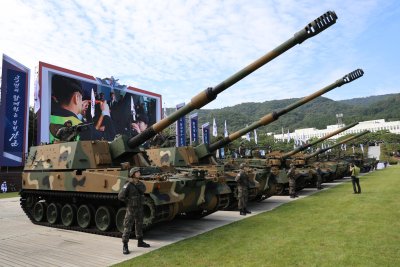
A K9 self-propelled howitzer is displayed during an Armed Forces Day media event in Gyeryong, South Korea, Sept. 29. File Photo by Yonhap News Agency

Dec. 22 (Asia Today) — South Korea’s science ministry said Monday it has selected its 2025 “Top 100 National R&D Achievements,” highlighting projects including a domestically produced 1,000-horsepower engine for the K9 self-propelled howitzer and a high-performance vanadium flow battery stack.

The Ministry of Science and ICT said the program marks its 20th year. Launched in 2006, the cross-government selection aims to raise public awareness of national research and development and recognize scientists and engineers.

The ministry said 970 candidate projects recommended by government bodies were reviewed by a selection committee of 105 experts from industry, academia and research institutes, followed by public verification. The final 100 were chosen across six categories: machinery and materials, life and marine, energy and environment, information and electronics, basic science and infrastructure and convergence.

Among the selections, STX Engine was cited for developing and commercializing a 1,000-horsepower engine for the K9, localizing a system and core components previously dependent on overseas imports. The ministry said the achievement helped address export approval hurdles and supported market expansion, including K9 exports to Egypt equipped with domestically produced engines.

In life sciences, IM Biologics was selected for work on treatments for autoimmune diseases including rheumatoid arthritis. The ministry said the company transferred related technology to U.S.-based Navigator Medicine and China’s Huadong Pharmaceutical in deals totaling 1.7 trillion won ($1.3 billion).

In energy and environment, H2 was cited for developing low-cost, high-power-density stack technology for vanadium flow batteries, a key component used in energy storage tied to solar and wind generation. The ministry said the technology contributed to South Korea’s first export of the stack technology to Germany.

Other selections included the Electronics and Telecommunications Research Institute’s demonstration of 6G wireless transmission technology and the Institute for Basic Science research group’s real-time observation of molecular ion formation and structural transitions, the ministry said.

The ministry said selected projects will receive certificates and plaques in the name of Deputy Prime Minister and Science and ICT Minister Bae Kyung-hoon. The ministry said projects and institutions may receive evaluation advantages under relevant rules and researchers may be recommended for national R&D awards.

Starting next year, the ministry said it will launch follow-up support aimed at boosting technology maturity and commercialization. Each selected project will be eligible for about 1.3 billion won (about $1.0 million) in support over three years, the ministry said.

Park In-gyu, head of the Science and Technology Innovation Headquarters, said the projects reflect sustained challenges and innovation by universities, research institutes and companies and pledged expanded support in coordination with other ministries.

– Reported by Asia Today; translated by UPI

© Asia Today. Unauthorized reproduction or redistribution prohibited.

Source link

China warns South Korea-U.S. nuclear sub talks risk nonproliferation

The guided-missile submarine USS Florida transits the Suez Canal en route to the Red Sea on Friday amid heightened tensions between the United States and Iran. File U.S. Navy photo by Mass Communication Specialist 2nd Class Elliot Schaudt

Dec. 22 (Asia Today) — China has voiced strong opposition to potential cooperation between South Korea and the United States on nuclear-powered submarines, warning it could undermine the global nuclear nonproliferation regime, Chinese state media reported.
Song Zhongping, a Chinese military analyst, said in an interview published Monday by the Global Times that consultations between Seoul and Washington on nuclear submarine-related cooperation could pose a “serious threat” to nuclear nonproliferation.

The Global Times cited South Korean media reports saying the two countries plan to begin sector-by-sector consultations next year related to leader-level understandings that include nuclear submarine construction, uranium enrichment and spent nuclear fuel reprocessing.

Song said the AUKUS nuclear submarine effort with Australia set a negative precedent and suggested a similar case could emerge with South Korea. He argued that U.S. support for allies’ access to nuclear technology and nuclear fuel would weaken the Nuclear Non-Proliferation Treaty.

Song also said Japan has raised the idea of acquiring nuclear-powered submarines and warned the trend could fuel an arms race. He said more countries operating nuclear-powered submarines would increase the risk of technology leakage and accidents.

He further argued South Korea has limited practical need for nuclear-powered submarines because of its restricted coastline, the report said.

In October, Chinese Foreign Ministry spokesperson Guo Jiakun said at a regular briefing that Beijing hopes South Korea and the United States will fulfill nonproliferation obligations and avoid actions that run counter to regional peace and stability, according to the report.

– Reported by Asia Today; translated by UPI

© Asia Today. Unauthorized reproduction or redistribution prohibited.

Source link

Foster scores late goal as South Africa defeat Angola in their AFCON opener | Africa Cup of Nations News

Lyle Foster’s match-winning 79th-minute strike allowed South Africa to win first opening match at AFCON since 2004.

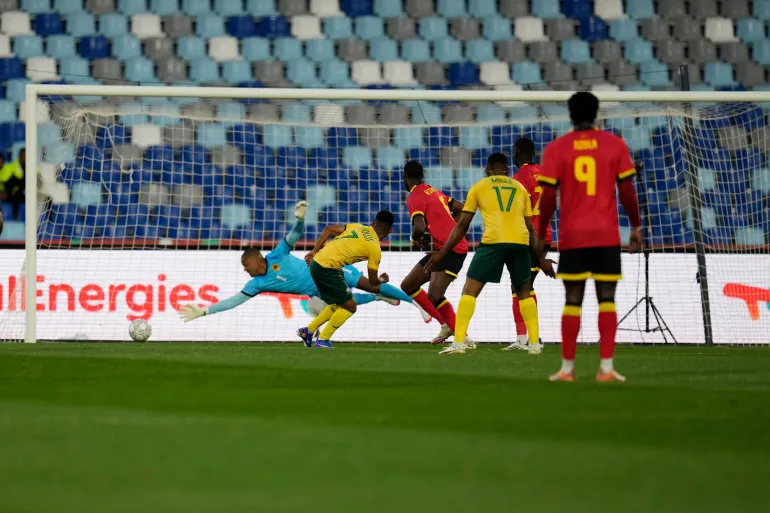
Lyle Foster scored a superb winner from outside the box as South Africa defeated Angola 2-1 in Africa Cup of Nations Group B in Marrakesh on Monday, the first time they have won their opening match ⁠at the continental finals in 21 years.

South Africa also had a goal disallowed and struck the crossbar, ​just about deserving the nervy victory. Angola also had chances and will ‍be disappointed not to have gotten something from the game.

Recommended Stories

list of 2 itemsend of list

South Africa took the lead on 21 minutes when Oswin Appollis showed neat footwork in the box to work a shooting chance and put the ball in the bottom ‍corner. But Angola ⁠equalised before the break as Show got a touch to Fredy’s free kick to steer the ball into the net.

The winning moment came after 79 minutes, when Foster was teed up 20 yards out and curled his shot into the top corner to give the bronze medallists from two years ago a positive start to their campaign.

It was a workmanlike performance from South Africa, who do not have the plethora of players in top ​European leagues that their tournament rivals enjoy, with Foster their only one ‌at Premier League Burnley.

But they are a well-oiled machine under Belgian coach Hugo Broos and did enough for a victory that set them well on course for the knockout rounds. Egypt and Zimbabwe will meet later on Monday in ‌the same pool.

Oswin Appollis in action.
South Africa’s Oswin Appollis, centre, scores the opening goal of the match in the 21st minute [Themba Hadebe/AP]

Even first half

South Africa took the lead after a period of sustained possession that led to Khuliso Mudau’s cross, which was ‌touched by both Sipho Mbule and Foster before Appollis beat two ⁠defenders and side-footed into the bottom corner of the net.

Angola equalised on 35 minutes when Fredy’s low free kick was touched into the bottom corner by Show, his second goal in his 50th cap for his country, to make it ‌1-1 at the break.

South Africa thought they had retaken the lead when halftime substitute Tshepang Moremi turned his defender and fired low into the bottom corner of the net, but a VAR review showed ‍that Foster was offside in the buildup.

South Africa’s Mbekezeli Mbokazi crashed the ball against the crossbar with a rasping shot from 35 yards, before Foster’s clinical strike secured all three points.

Zambia rally to draw with Mali

In an earlier Group A match on Monday, Zambia’s Patson Daka scored with a spectacular diving header in stoppage time to see his ‍side come from behind ‍and force a 1-1 draw with Mali in Casablanca.

Mali looked in control for most of the encounter, but paid the price for sitting back in the closing stages as Zambia staged a ⁠late recovery, with Daka leaping through the air to force home Mathews Banda’s curling cross two minutes into ​stoppage time at the end of the game.

Lassine Sinayoko had ‌taken advantage of sloppy defending to give ‌Mali a 62nd-minute lead ⁠after his strike partner, El Bilal Toure, had a first-half penalty saved.

Patson Daka reacts.
Zambia’s forward Patson Daka celebrates scoring his team’s equalising goal in the 90th minute against Mali at Mohammed V Stadium in Casablanca, Morocco on December 22, 2025 [Abdel Majid Bziouat/AFP]

Source link

South Korea seeks exemption as Canada tightens steel tariff-rate quotas

Dec. 21 (Asia Today) — South Korea’s industry ministry said Sunday it has raised concerns with Canada over strengthened tariff-rate quota measures on steel set to take effect Dec. 26 and asked Ottawa to consider steps including an exemption or expanded quota for South Korea.

A tariff-rate quota (TRQ) is a trade system under which a limited volume of steel imports can enter Canada at a lower or zero tariff, while shipments exceeding that quota face much higher duties. Under Canada’s revised measures, the amount of South Korean steel that can enter Canada at the lower tariff rate will be reduced, and shipments above that limit would face much higher tariffs.

The Ministry of Trade, Industry and Energy said Trade Negotiations Director General Yeo Han-gu met Canadian Minister of International Trade Maninder Sidhu and Canadian Deputy Minister of Foreign Affairs Ali Essassi in Toronto on Dec. 18 local time and conveyed the position of South Korean industry on the measures.

Canada plans to lower the TRQ utilization rate for free trade agreement partners including South Korea from 100% to 75% and for non-FTA countries from 50% to 20%, the ministry said. Imports exceeding the quota would face a 50% tariff and a new 25% tariff would be applied to certain steel derivative products, according to the ministry.

The ministry said Yeo traveled to Canada one week after a phone call with Sidhu on Dec. 11 to hold detailed discussions. It said he asked Canada to take favorable measures for South Korea, citing large-scale investments by South Korean companies in Canada including battery makers and cooperation potential in sectors such as steel, electric vehicles, batteries, energy and critical minerals.

Yeo also said some steel items, including pipelines used in Canada’s oilsands crude production, are difficult to produce domestically and are largely supplied through imports, including from South Korea. Tightening TRQ measures on South Korean steel could affect both South Korean exporters and Canadian industry, he said, according to the ministry.

The ministry said Yeo and Sidhu agreed to establish a new strategic sector dialogue channel between trade ministers under the Korea-Canada free trade agreement, which marks its 10th anniversary this year. They also agreed to set up a hotline for discussions on issues including steel, electric vehicles, batteries, energy and critical minerals, the ministry said.

Sidhu proposed using Canada’s duty drawback system, which the ministry said remains in operation through the end of January 2026 for certain steel items not produced domestically. The ministry said South Korea plans to continue consultations on steel TRQs through high-level and working-level channels.

The ministry said Yeo also met South Korean companies operating in the Toronto area in sectors including steel, autos, home appliances and minerals to hear concerns about trade uncertainty. It said he visited a battery plant backed by LG Energy Solution in Windsor on Dec. 19 and toured the facilities.

The ministry said Yeo later held a meeting in Detroit with South Korean auto parts companies and reviewed issues including Section 232 tariffs on automobiles, Mexico’s announced tariff increases on non-FTA countries and trends related to USMCA revisions. It said he also met potential foreign investors in the auto parts sector to discuss investment opportunities tied to South Korea’s smart factory and manufacturing AI capabilities.

Yeo said shifting trade conditions across the United States, Canada and Mexico pose challenges for South Korean firms operating locally, but also create opportunities tied to changes in North American supply chains, the ministry said.

– Reported by Asia Today; translated by UPI

© Asia Today. Unauthorized reproduction or redistribution prohibited.

Source link