
review

The Ashes 2025 third Test – day three: England’s Brydon Carse dismisses Jake Weatherald lbw as Australia opt not to use review

England’s Brydon Carse dismisses Jake Weatherald lbw for one, but replays show the decision should have been overturned as Australia are made to regret their decision not to review, leaving the home side on 8-1, with a lead of 93, on day three of the third Ashes Test in Adelaide.

FOLLOW LIVE: The Ashes third Test – day three

Available to UK users only.

Source link

‘Is This Thing On?’ review: Arnett, Dern in a dramedy about self-reinvention

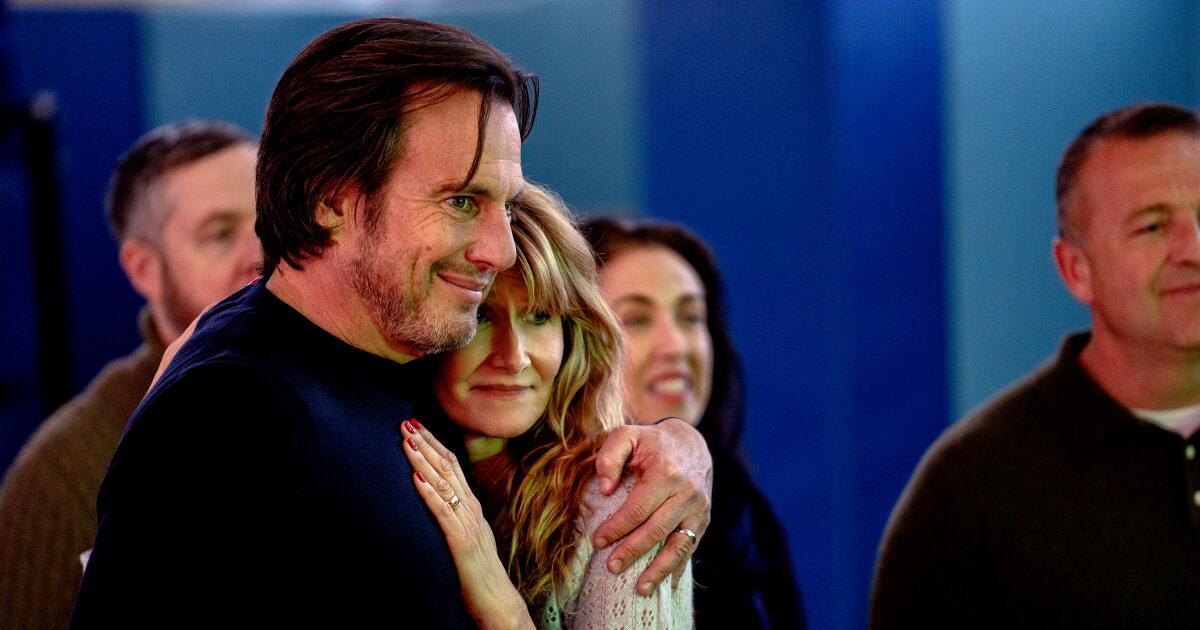
Therapy often gets mined for comedy but we don’t often see comedy treated as sincere therapy. “Is This Thing On?” from director and co-writer Bradley Cooper, makes the case that glum dad Alex (Will Arnett), new to Splitsville after he and his wife of 20 years, Tess (Laura Dern), mutually agree to separate, may have figured out an ideal coping mechanism by signing up for open mic night.

Not that we see this by-day finance guy reject professional help in favor of some untapped passion. (Vamping for five minutes in front of strangers negates the cover charge.) But in bringing his marital woes to the stage and getting some chuckles, Alex believes he’s hit upon something: a talking cure that comes with a fresh identity, new friends, an acceptable level of risk and a way out of unhappiness.

It’s such a frisky, alluring idea for a character study — meeting failure with the potential for more failure (and night after night to boot) — that when the movie proves to actually be about whether the marriage can be saved, instead of the granular, temperamental world of stand-up newbies, it almost feels like a bait and switch. Fortunately, the divorce saga is interesting too, featuring Dern at her best, and is plenty intelligent about the nuances of couples who have built something solid (stable lives, nice 10-year-old twin boys, etc.) at the same time they’ve grown apart. “Is This Thing On?” is that rarity: a perfectly worthy dramedy that sometimes feels off because it’s trying to cram two good movies into one.

The confidence comes from Cooper, who, after only two films in the director’s chair (“A Star Is Born,” “Maestro”), has shown himself to be not only a powerful chronicler of artistic lives but especially couples in the showbiz sphere. This time, he tantalizes us with the milieu of nightclub self-expression and a group of regular amateurs Alex gets comfortable hanging with. But over two hours Cooper makes it clear he’s simply followed his protagonist into a safe space of encouragement (featuring Amy Sedaris as a helpful veteran comic), not necessarily a complex world of personality types to be navigated. It’s codified by Cooper’s visual approach, a handheld intimacy reminiscent of European movies, in which Matthew Libatique’s camera rarely strays from tight shots of Arnett’s face, looking for change — circling it, centering it, trailing it when Alex is on the move.

Though Alex is earnest if a tad hacky with his relationship jokes, Arnett (credited as a co-screenwriter with Mark Chappell, from a story they created with John Bishop) captures a fizzy, awkward energy of midlife discovery. Invariably, the movie is unconcerned with whether Alex might be any good as a stand-up because soon it’s about how this new pep in his step registers with Tess, who’s struggling with her own sense of personal fulfillment as a former volleyball legend turned mom and how it affects their on-the-brink married friends, Christine (Andra Day) and Balls (Cooper, hilarious as a spacy actor). Christine Ebersole and Ciarán Hinds, as Alex’s parents, humorously weigh in too on what long-term togetherness entails.

After a narrative coincidence that’s entertainingly handled, “Is This Thing On?” aims to be a more serious-minded, less rom-com-ish “It’s Complicated,” with Tess and Alex seeing if there’s a new way for them to acknowledge where they went astray. The actors sell it, especially when Dern is unafraid to mix revitalized pleasure with pushing for answers. But the stand-up storyline, so promising, is dropped and it feels like a missed opportunity. Still, the highs and lows of marriage aren’t merely a punch line in “Is This Thing On?” — and that’s good.

‘Is This Thing On?’

Rated: R, for language throughout, sexual references and some drug use

Running time: 2 hours, 4 minutes

Playing: In limited release Friday, Dec. 19

Source link

Democrats keep 2024 election review under wraps, saying a public rehash won’t help them win in 2026

Democrats will not issue a postelection report on their 2024 shellacking after all.

The Democratic National Committee head has decided not to publish a formal assessment of the party’s defeat that returned Donald Trump to power and gave Republicans complete control in Washington.

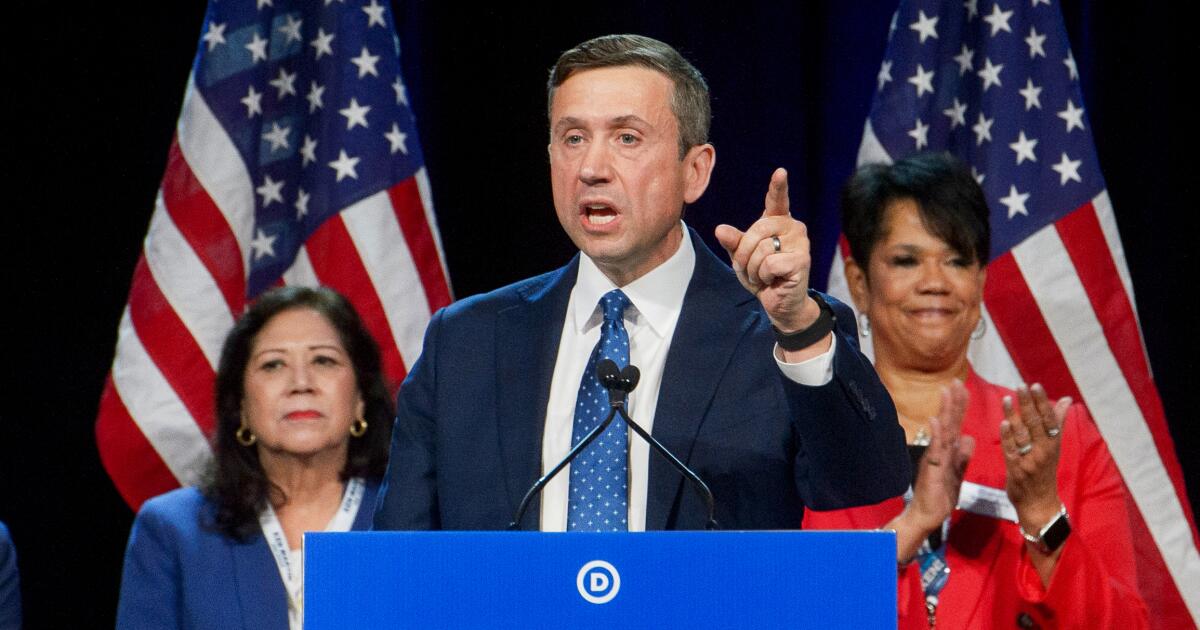
Ken Martin, a Minnesota party leader who was elected national chair after Trump’s election, ordered a thorough review of what went wrong and what could be done differently, with the intent they would circulate a report as Republicans did after their 2012 election performance. Martin now says the inquiry, which included hundreds of interviews, was complete but that there is no value in a public release of findings that he believes could lead to continued infighting and recriminations before the 2026 midterms when control of Congress will be at stake.

“Does this help us win?” Martin said in a statement Thursday. “If the answer is no, it’s a distraction from the core mission.”

Martin’s decision, first reported by the New York Times, spares top Democrats from more scrutiny about their campaigns, including former President Biden, who withdrew from the race after announcing his second-term run, and his vice president, Kamala Harris, who became the nominee and lost to Trump.

Keeping the report under wraps also means Martin does not have to take sides in the tug-of-war between moderates and progressives or make assessments about how candidates should handle issues that Trump capitalized on, such as transgender rights.

“We are winning again,” Martin said.

Martin’s announcement follows a successful string of 2025 races, both in special elections and off-year statewide votes, that suggest strong enthusiasm for Democratic candidates.

In November, Abigail Spanberger and Mikie Sherrill won races for governor in Virginia and New Jersey, respectively. In New York’s mayoral election, Zohran Mamdani, a democratic socialist, defeated establishment Democrat-turned-independent Andrew Cuomo.

In U.S. House special elections throughout 2025, Democratic nominees have consistently outperformed the party’s 2024 showing, often by double-digit percentages. Democrats have flipped state legislative districts and some statewide seats around the country, even in Republican-leaning places.

Although the DNC’s report will not be made public, a committee aide said some conclusions will be integrated into the party’s 2026 plans.

For example, the findings reflect a consensus that Democratic candidates did not adequately address voter concerns on public safety and immigration, two topics that Trump hammered in his comeback campaign. They also found that Democrats must overhaul their digital outreach, especially to younger voters, a group where Trump saw key gains over Harris compared with previous elections.

Barrow writes for the Associated Press.

Source link

‘The Housemaid’ review: Sweeney and Seyfried understand the assignment

Director Paul Feig has proved himself to be the preeminent purveyor of the finest high-camp trash one can find at the movie theater these days — and that’s a compliment. If he’s serving up the trash, then call me a raccoon, because I’m ready to dive in.

Feig’s special sauce when it comes to these soapy, female-driven thrillers like “A Simple Favor” and now “The Housemaid,” adapted by Rebecca Sonnenshine from a “BookTok” sensation by Freida McFadden, is clearly his comedy background. The filmmaker understands exactly the tone to deploy here; you can feel his knowing winks and nudges to the audience with every loaded glance, stray graze or wandering camera movement. It’s as if he’s saying to us and all the tipsy ladies in the audience: Check this out — LOL, right? LOL indeed, Mr. Feig.

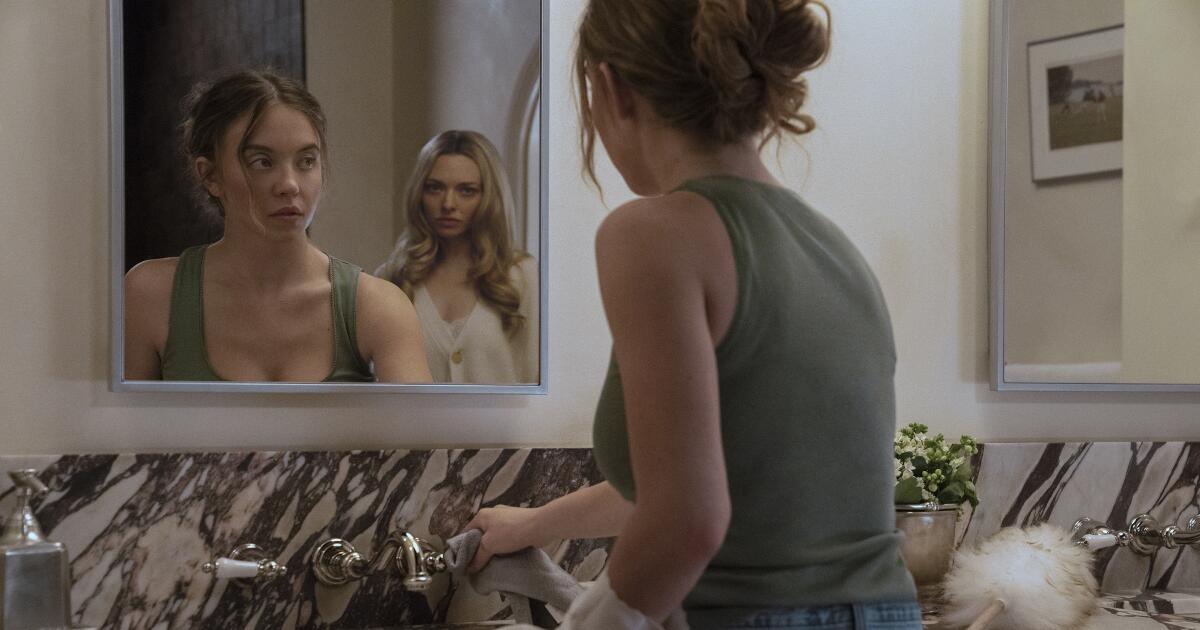
“The Housemaid” is an erotic crime thriller that deploys silly sexual stereotypes and fantasies like the naughty maid and then flips them on their head. In the opening scene, the drably dressed, bespectacled Millie (Sydney Sweeney) interviews for a live-in maid position with the warm and friendly wife and mother Nina Winchester (Amanda Seyfried) in her gorgeously appointed Long Island mansion designed by her wealthy husband, Andrew (Brandon Sklenar of “Drop”).

But all is not what it seems, for applicant and employer. Both are hiding dark secrets but Nina hires Millie nevertheless. Millie, without any other options, gratefully accepts.

When Millie moves into the maid’s quarters in the attic, she discovers that the Winchester home isn’t as picture-perfect as it seemed. Little things are off: She can’t open her window, the groundskeeper, Enzo (Michele Morrone), glowers at her constantly, items go missing and CeCe (Indiana Elle), Nina’s daughter, is exceedingly cold.

Then there are the big things that are off, like Nina’s wild mood swings and the vicious gossip about her mental health among the other Stepford wives of the area. Millie realizes she’s in over her head with Mrs. Winchester, but her saving grace is the warm and handsome Mr. Winchester. Is that where this is going? Of course it is, we all groan together, happily.

“The Housemaid” is like “Gaslight” meets “Jane Eyre,” with a dash of “Rebecca,” and all the various roles are lightly scrambled, infused with a much sexier, nastier streak than any of those mannered mindbenders. Feig stylishly waltzes us through this steamy, twisty mystery with ease, but not necessarily sophistication — this is the kind of frothy entertainment that you can still enjoyably comprehend after a glass or two (which in fact might enhance the experience).

But it doesn’t fly without an actor of Seyfried’s caliber, who can summon unpredictable mayhem from her fingertips. Nor would it function without Sweeney, who works best in a register somewhere between ditzy blond and tough little scrapper. Both actors exude an element of the unhinged that simmers right below the doe-eyed blond surface and we know we should be a little (or a lot) afraid of these women. The film also doesn’t make sense without a heartthrob like Sklenar, since we need to fall in lust with his gorgeous exterior and intoxicatingly cuddly aura for this all to eventually make sense.

There’s not much more to say without giving it all away, so prepare to titter, gasp, scream and cheer for this juicy slice of indulgent women’s entertainment. Go on, you deserve a little treat this holiday season.

Katie Walsh is a Tribune News Service film critic.

‘The Housemaid’

Rated: R, for strong/bloody violent content, sexual assault, sexual content, nudity and language

Running time: 2 hours, 11 minutes

Playing: In wide release Friday, Dec. 19

Source link

BBC TV licence fee could be replaced by ‘sliding scale’ under Government review

Here’s what you need to know about potential changes to the BBC TV Licence

An annual fee in the UK could be replaced by “sliding scale” payment rates going forward. The BBC TV Licence could be due for some major changes.

The UK Government will examine reforms to the TV licence fee and explore additional commercial revenue streams for the BBC as part of proposals set out in its Royal charter review. The BBC’s existing charter, which spans a decade, concludes in December 2027.

The yearly licence fee has endured extensive examination under the previous Conservative administration, remaining static at £159 for two years before rising in April 2024 and again in April 2025 to £174.50, aligned with inflation rates.

As reported by the Daily Record, Culture Secretary Lisa Nandy has previously indicated she might be receptive to substituting the fixed licence fee with a graduated payment system. A fresh public consultation regarding these reforms has been initiated alongside the Green Paper and remains accessible until March 10, 2026.

The charter establishes the BBC’s public mission and serves as the constitutional foundation for the corporation, which is primarily financed through the licence fee, collected from UK households that watch television.

The Green Paper, outlining prospective BBC reforms was released on Tuesday and “consults on a wide range of options being considered for the future of the BBC”.

The Department for Culture, Media and Sport (DCMS) stated the UK Government will examine whether licence-fee reductions require updating, possibilities for the BBC to create additional commercial income, and funding alternatives for the World Service to ensure sustainable financing for minority-language broadcasting. Lisa Nandy expressed: “We want the BBC to continue to enrich people’s lives, tell Britain’s story and showcase our values and culture at home and overseas, long into the future.

“My aims for the charter review are clear. The BBC must remain fiercely independent, accountable and be able to command public trust. It must reflect the whole of the UK, remain an engine for economic growth and be funded in a way that is sustainable and fair for audiences.

“As a Government, we will ensure that this charter review is the catalyst that helps the BBC adapt to a rapidly changing media landscape and secures its role at the heart of national life.”

Options in the Green Paper the government is considering and seeking views on in this area include:

  • Strengthening the BBC’s independence so the public continues to have trust in the organisation and its programmes and content, including considering the government’s role in board appointments
  • Updating the BBC’s Mission and Public Purposes to give accuracy equal importance alongside impartiality and improving transparency of editorial decision-making to ensure the BBC explains journalistic processes and how its coverage evolves, especially during high profile events
  • Giving the BBC new responsibilities to counter mis/disinformation, potentially alongside additional requirements on media literacy to help the public navigate technological change and develop digital skills, including around AI
  • Introducing specific duties around workplace conduct to ensure BBC staff are protected and the organisation sets the standard for the rest of the sector to follow – including new responsibilities for the BBC Board to ensure action is taken against workplace misconduct

The DCMS said: “A BBC that is sustainably funded for decades to come to support its vital public service role.”

Options the UK Government is considering and seeking views on in this area include:

  • Reform of the licence fee, whether licence fee concessions should be updated, and options for the BBC to generate more commercial revenue
  • Options for funding the World Service and supporting sustainable funding for minority language broadcasting, including S4C
  • Options the government is considering and seeking views on in this area include:
  • Placing a new obligation on the BBC to drive economic growth, build skills and support the creative economy across the UK
  • Ways in which the BBC can further support the production sector across the nations and regions, including by ensuring budgets and decision-making power for commissioners are spread across the UK, and by supporting minority language broadcasting
  • Empowering the BBC to be an ethical and economic leader in adapting to new digital technologies, and enabling it to invest in Research and Development to support growth and drive public service benefits
  • Encouraging the BBC to deliver more through collaborations and partnerships for growth and public value outcomes, including with organisations across the creative economy, and with local news outlets

Public consultation

People across the UK are being encouraged to give their views on the UK Government’s Green Paper public consultation and answer a set of questions.

Responses will be used to help inform policy changes which will be set out in a White Paper expected to be published in 2026.

You can view the consultation on GOV.UK.

Source link

National Guard troops under Trump’s command leave Los Angeles

Dozens of California National Guard troops under President Trump’s command apparently slipped out of Los Angeles under cover of darkness early Sunday morning, ahead of an appellate court’s order to be gone by noon Monday.

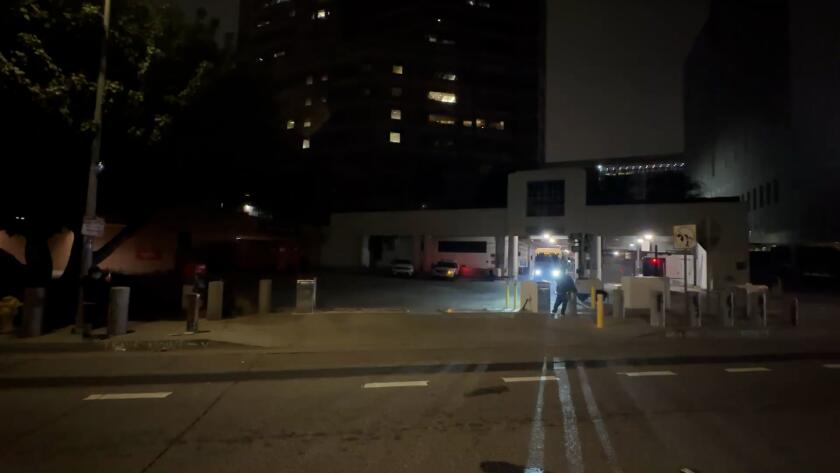
Administration officials would not immediately confirm whether the troops had decamped. But video taken outside the Roybal Federal Building downtown just after midnight on Sunday and reviewed by The Times shows a large tactical truck and four white passenger vans leaving the facility, which has been patrolled by armed soldiers since June.

About 300 California troops remain under federal control, some 100 of whom were still active in Los Angeles as of last week, court records show.

“There were more than usual, and all of them left — there was not a single one that stayed,” said protester Rosa Martinez, who has demonstrated outside the federal building for months and was there Sunday.

Troops were spotted briefly later that day, but had not been seen again as of Monday afternoon, Martinez said.

The development that forced the troops to leave was part of a sprawling legal fight for control of federalized soldiers nationwide that remains ongoing.

The U.S. 9th Circuit Court of Appeals issued the order late Friday but softened an even more stringent edict from a lower court judge last week that would have forced the president to relinquish command of the state’s forces. Trump federalized thousands of California National Guard troops in June troops to quell unrest over immigration enforcement in Los Angeles.

“For the first time in six months, there will be no military deployed on the streets of Los Angeles,” California Atty. Gen. Rob Bonta said in a statement. “While this decision is not final, it is a gratifying and hard-fought step in the right direction.”

The ruling Friday came from the same three-judge panel that handed the president one of his most sweeping second-term victories this summer, after it found that the California deployment could go forward under an obscure and virtually untested subsection of the law.

That precedent set a “great level of deference” as the standard of review for deployments that have since mushroomed across the country, circumscribing debate even in courts where it is not legally binding.

But the so-called Newsom standard — California Gov. Gavin Newsom was the lead plaintiff on the lawsuit — has drawn intense scrutiny and increasingly public rebuke in recent weeks, even as the Trump administration argues it affords the administration new and greater powers.

In October, the 7th Circuit — the appellate court that covers Illinois — found the president’s claims had “insufficient evidence,” upholding a block on a troop deployment in and around Chicago.

“Even applying great deference to the administration’s view of the facts … there is insufficient evidence that protest activity in Illinois has significantly impeded the ability of federal officers to execute federal immigration laws,” the panel wrote.

That ruling is now under review at the Supreme Court.

In November, the 9th Circuit vacated its earlier decision allowing Trump’s Oregon federalization to go forward amid claims the Justice Department misrepresented important facts in its filings. That case is under review by a larger panel of the appellate division, with a decision expected early next year.

Despite mounting pressure, Justice Department lawyers have doubled down on their claims of near-total power, arguing that federalized troops remain under the president’s command in perpetuity, and that courts have no role in reviewing their deployment.

When Judge Mark J. Bennett asked the Department of Justice whether federalized troops could “stay called up forever” under the government’s reading of the statute at a hearing in October, the answer was an unequivocal yes.

“There’s not a word in the statute that talks about how long they can remain in federal service,” Deputy Assistant Atty. Gen. Eric McArthur said.

For now, the fate of 300 federalized California soldiers remains in limbo, though troops are currently barred by court orders from deployment in California and Oregon.

Times staff writers David Zahniser and Kevin Rector contributed to this report.

Source link

‘Stereophonic’ at the Pantages falls flat: Review

“Stereophonic,” David Adjmi’s heralded drama that won five Tony Awards including best play, is ready for its Los Angeles close-up.

The first national tour production, which opened Wednesday at the Hollywood Pantages Theatre, seems right at home in the music capital of the world. The play about a 1970s rock band on the brink of superstardom takes place in recording studios in Sausalito and L.A., where the Laurel Canyon vibe is never out of sight.

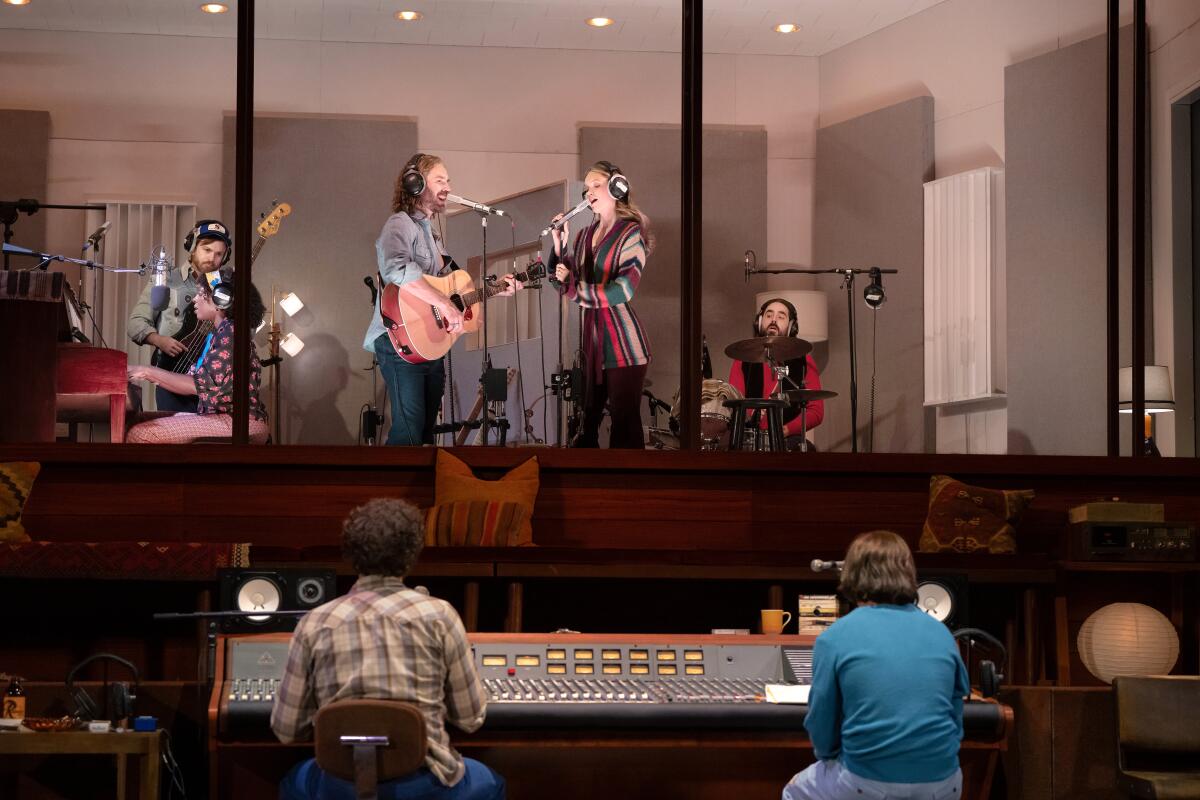
The visual crispness of this L.A. premiere goes a long way toward dispelling doubts that the Pantages is the wrong venue for this ensemble drama. If there’s a problem, it isn’t the cavernousness of the theater. The production, gleaming with period details on a set by David Zinn that gives us clear views into both the sound and control rooms, comfortably inhabits the performance space, at least from the perspective of a decent orchestra seat.

The play, which includes original music from Will Butler, the Grammy-winning artist formerly of Arcade Fire, has a sound every bit as robust as one of the blockbuster musicals that regularly passes through the Pantages. The songs, crushed by the actors at top volume, are Butler’s indie rock re-creation of cuts for a part-British, part-American band that bears such a striking resemblance to Fleetwood Mac that a lawsuit brought by a former sound engineer and producer of the group was eventually settled.

Adjmi, like Shakespeare, takes his inspiration where he finds it. And like the Bard, he makes his sources his own, alchemizing the material for novel ends.

Musicians record music in a sound room as engineers watch outside in "Stereophonic."

The touring production of “Stereophonic” makes clear just how integral the original cast was to the success of the play.

(Julieta Cervantes)

Unfolding in 1976 and 1977, “Stereophonic” offers a fly-on-the-wall perspective of a band at a crossroads. While recording a new album top-heavy with expectations, the group falls prey to romantic conflicts and self-destructive spirals, to toxic jealousies and seething insecurities. The prospect of fame magnifies pathologies that have been intensifying over time.

Diana (Claire DeJean) is the Stevie Nicks of the band. Beautiful, achingly vulnerable and awash in lyrical talent, she is entangled in a relationship with Peter (Denver Milord), the Lindsey Buckingham of the group, who strives for musical perfection no matter the cost.

Their connection is as professionally enriching as it is personally destructive. Diana’s ambition is matched by her self-doubt. She’s susceptible to a Svengali yet doesn’t want anyone to tell her how to write her songs.

Peter, angrily competitive, can’t help resenting the natural ease of Diana’s talent, even as it’s her song from their first album that has put the band back in the spotlight. His genius is ferociously exacting while hers seems to spring naturally from her soul.

Artistically they depend on each other, but the tension between them is unsustainable. And as the play makes clear, there’s no way to keep their personal lives out of the studio.

DeJean and Milord are the most captivating performers in the ensemble. The other actors are solid but this touring production makes clear just how integral the original cast was to the success of the play.

Daniel Aukin’s production, which had its New York premiere at Playwrights Horizons in 2023 before moving to Broadway the following year, hasn’t lost its confident flow. The storytelling is lucidly laid out. But the tantalizing peculiarities of the characters have been whittled down.

The British band members suffer the worst of it. Emilie Kouatchou’s Holly moves the character away from the obvious Christine McVie reference, but her role has become vaguer and less central. Cornelius McMoyler’s Simon, the drummer and weary manager, fills the bill in every respect but gravitas, which must be in place if the character’s ultimate confrontation with Peter is to have the necessary payoff.

No one could compete with Will Brill, who won a Tony for his strung-out portrayal of Reg, a deranged innocent whose addictions and dysfunctions create farcical havoc for the band. Christopher Mowod can’t quite endow this “sad man in a blanket,” as Simon dubs his bundled-up bandmate, with the same level of fey madness that Brill was able to entertainingly supply.

These casting differences wouldn’t be worth noting if it weren’t for their impact on a play that distinguishes itself by its observational detail. Everything is just a little more obvious, including the two American sound guys bearing the brunt of the artistic temperaments running riot in the studio.

Jack Barrett’s Grover, the sound engineer who lied about his background to get the job, sands off some of the character’s rough edges in a more straightforwardly appealing version of the character than Eli Gelb’s bracing portrayal in New York. Steven Lee Johnson’s Charlie, the dorky assistant sound engineer, is an amiable weirdo, though I missed the way Andrew R. Butler played him almost like a space alien in New York.

The play has been edited, but it’s still a bit of an endurance test. Art isn’t easy for the characters or for us. But the effort isn’t in vain.

Adjmi’s overlapping dialogue and gaping silences, orchestrated in a neo-Chekhovian style, renders the invisible artistic process visible. By the end of the play, the tumultuous human drama behind creative brilliance emerges in poignant, transcendent glory.

‘Stereophonic’

Where: Hollywood Pantages Theatre, 6233 Hollywood Blvd., L.A.

When: 7:30 p.m. Tuesdays-Thursdays; 8 p.m. Fridays; 2 and 8 p.m. Saturdays; 1 and 6:30 p.m. Sundays. (Check schedule for exceptions.) Ends Jan. 2.

Tickets: Start at $57 (subject to change)

Contact: BroadwayInHollywood.com or Ticketmaster.com

Running time: 2 hours, 55 minutes (including one intermission)

Source link