Party

Rep. Elise Stefanik ends her campaign for N.Y. governor and won’t seek reelection to House

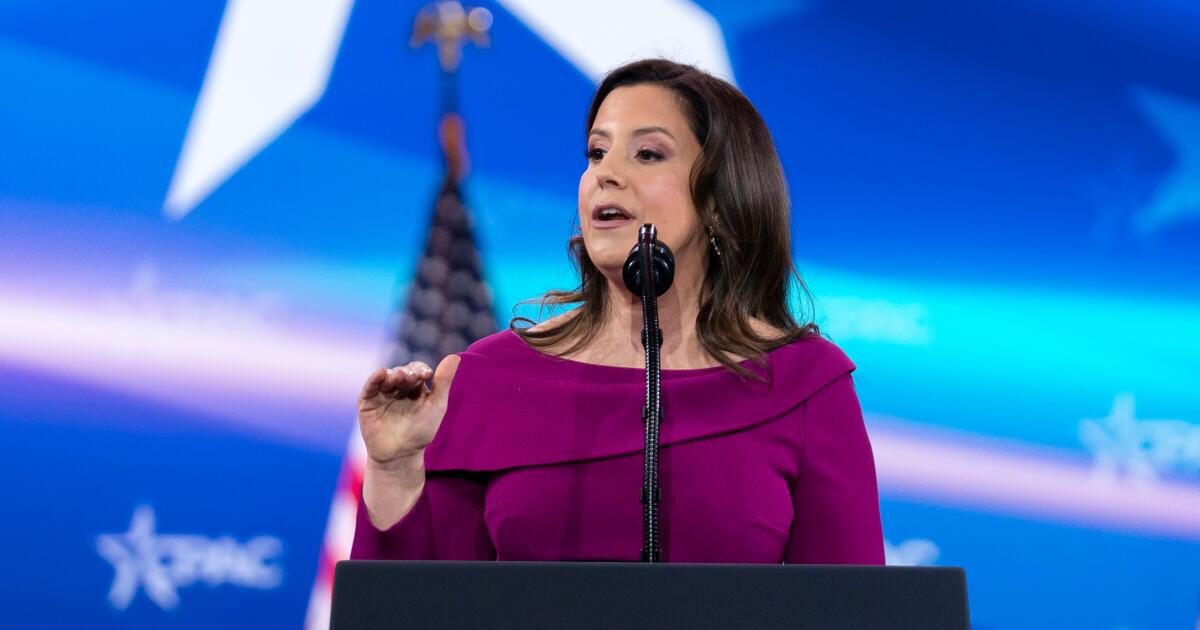
Rep. Elise Stefanik announced Friday that she is suspending her campaign for New York governor and will not seek reelection to Congress, bowing out of the race in a surprise statement that said “it is not an effective use of our time” to stay in what was expected to be a bruising Republican primary.

Stefanik, a Republican ally of President Trump, said in a post on X that she was confident of her chances in the primary against Bruce Blakeman, a Republican county official in New York City’s suburbs. But she said she wanted to spend more time with her young son and family.

“I have thought deeply about this and I know that as a mother, I will feel profound regret if I don’t further focus on my young son’s safety, growth, and happiness — particularly at his tender age,” she said.

Stefanik has been an intense critic of incumbent Democratic Gov. Kathy Hochul, who is also seeking reelection but faces a primary challenge from her own lieutenant governor, Antonio Delgado.

The announcement marks an abrupt end, at least for now, for a once-promising career for Stefanik. She was the youngest woman ever elected to Congress when she won her first campaign in 2014 at just 30 years old, representing a new generation of Republicans making inroads in Washington. She ultimately rose to her party’s leadership in the House when she became the chair of the House Republican Conference in 2021.

First viewed as a moderate when she came to Washington, Stefanik became far more conservative as Trump began to dominate the party. Once someone who refused to say Trump’s name, she became one of his top defenders during his first impeachment inquiry. She would go on to vote against certifying the 2020 election results, even after a violent mob stormed the Capitol on Jan. 6.

Stefanik was expected to have a bitter Republican primary against Blakeman, who also counts himself as an ally of Trump. The president had so far seemed keen on avoiding picking a side in the race, telling reporters recently: “He’s great, and she’s great. They’re both great people.”

Stefanik’s decision follows a clash with Speaker Mike Johnson, whom she accused of lying before embarking on a series of media interviews criticizing him. In one with the Wall Street Journal, she called Johnson a “political novice” and said he wouldn’t be reelected speaker if the vote were held today.

The tumultuous early December episode appeared to cool when Johnson said he and Stefanik had a “great talk.”

“I called her and I said, ‘Why wouldn’t you just come to me, you know?’” Johnson said. “So we had some intense fellowship about that.”

Still, Stefanik, the chairwoman of the House Republican leadership, has not fully walked back her criticisms. A Dec. 2 social media post remains online in which, after a provision she championed was omitted from a defense authorization bill, Stefanik accused Johnson of falsely claiming he was unaware of it, calling it “more lies from the Speaker.”

State Republican Chairman Ed Cox said the party respected Stefanik’s decision and thanked her for her efforts.

“Bruce Blakeman has my endorsement and I urge our State Committee and party leaders to join me,” Cox said in a prepared statement. “Bruce is a fighter who has proven he knows how to win in difficult political terrain.”

Izaguirre writes for the Associated Press. AP writers Steven Sloan and Joey Cappelletti contributed from Washington.
Source link

North Korea increasingly uses Kim’s Workers’ Party title, report says

Russia’s President Vladimir Putin (center R) and North Korea’s leader Kim Jong Un (center L) leave after their meeting in Beijing, China, on Wednesday, September 3, 2025. File Photo by Kremlin Press Office/UPI | License Photo

Dec. 18 (Asia Today) — North Korean media increasingly refer to Kim Jong Un as general secretary of the ruling Workers’ Party rather than chairman of the State Affairs Commission, a shift a South Korean government-affiliated research report said reflects a further consolidation of party-centered rule.

The National Institute for Strategic Studies said in a report released Thursday that the 8th Central Committee, which has functioned as North Korea’s main decision-making body over the past five years, has reinforced a governance model centered on the Workers’ Party as the country prepares for its 9th Party Congress, expected in early 2026.

Senior research fellow Kim In-tae wrote that the committee’s efforts to regularize and institutionalize party leadership organs resemble Kim Il Sung-era governance from the 1960s through the 1980s. He said the policy decision-making structure shows a more pronounced concentration of the “single-leader system,” according to the report.

Kim said the increased use of the Workers’ Party title suggests the regime has further strengthened party-centered state management.

The report said the 8th Central Committee, launched in 2021, held 13 plenary meetings at an average interval of about 4.6 months, more than double the number held under the 7th Central Committee, which convened six plenary meetings.

It also said the volume of agenda items submitted for discussion rose sharply, from 14 items during the 7th term to 68 items during the 8th term.

The report contrasted Kim Jong Il’s “military-first” approach under the National Defense Commission during the economic crisis known as the “Arduous March” in the 1990s and 2000s with Kim Jong Un’s return to a Workers’ Party-centered governance structure, which it said has been further refined.

On the second five-year plan for national economic development expected to be presented at the next party congress, the report projected it would be framed as a stage of “qualitative development” aimed at advancing what it called “comprehensive socialist development” across the economy.

The report said the period leading up to a party congress, typically held every five years, is a crucial political season in North Korea’s system. It said Kim is likely to use the congress to reinforce his leadership structure while pursuing economic development goals, nuclear-centered military capabilities and international standing.

– Reported by Asia Today; translated by UPI

© Asia Today. Unauthorized reproduction or redistribution prohibited.

Source link

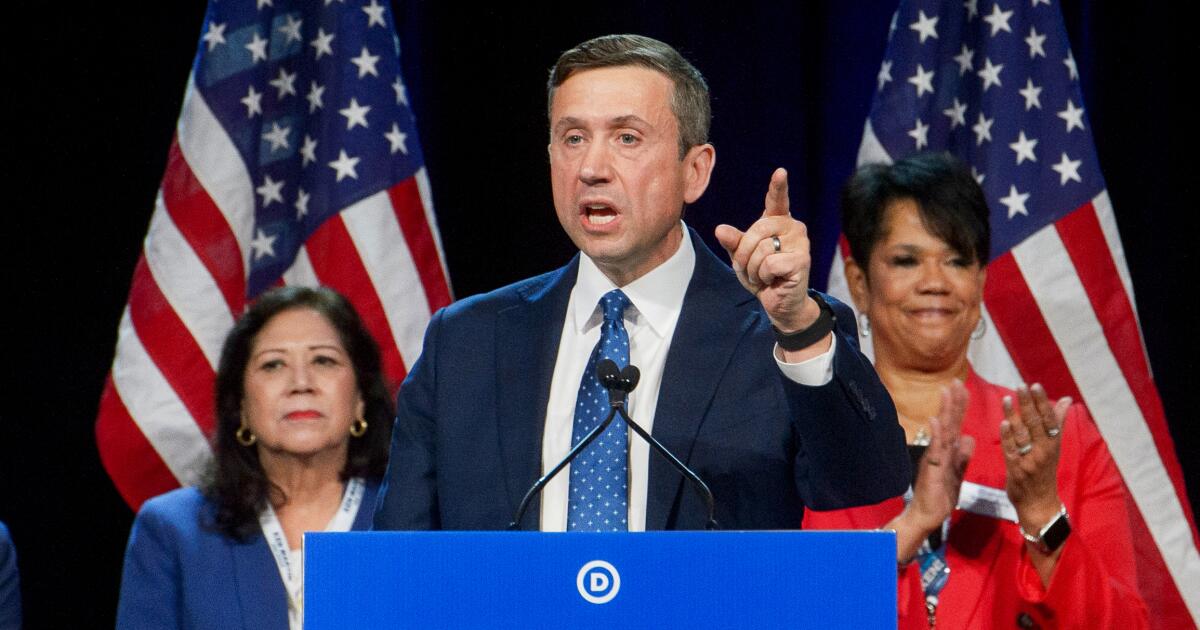
Democrats keep 2024 election review under wraps, saying a public rehash won’t help them win in 2026

Democrats will not issue a postelection report on their 2024 shellacking after all.

The Democratic National Committee head has decided not to publish a formal assessment of the party’s defeat that returned Donald Trump to power and gave Republicans complete control in Washington.

Ken Martin, a Minnesota party leader who was elected national chair after Trump’s election, ordered a thorough review of what went wrong and what could be done differently, with the intent they would circulate a report as Republicans did after their 2012 election performance. Martin now says the inquiry, which included hundreds of interviews, was complete but that there is no value in a public release of findings that he believes could lead to continued infighting and recriminations before the 2026 midterms when control of Congress will be at stake.

“Does this help us win?” Martin said in a statement Thursday. “If the answer is no, it’s a distraction from the core mission.”

Martin’s decision, first reported by the New York Times, spares top Democrats from more scrutiny about their campaigns, including former President Biden, who withdrew from the race after announcing his second-term run, and his vice president, Kamala Harris, who became the nominee and lost to Trump.

Keeping the report under wraps also means Martin does not have to take sides in the tug-of-war between moderates and progressives or make assessments about how candidates should handle issues that Trump capitalized on, such as transgender rights.

“We are winning again,” Martin said.

Martin’s announcement follows a successful string of 2025 races, both in special elections and off-year statewide votes, that suggest strong enthusiasm for Democratic candidates.

In November, Abigail Spanberger and Mikie Sherrill won races for governor in Virginia and New Jersey, respectively. In New York’s mayoral election, Zohran Mamdani, a democratic socialist, defeated establishment Democrat-turned-independent Andrew Cuomo.

In U.S. House special elections throughout 2025, Democratic nominees have consistently outperformed the party’s 2024 showing, often by double-digit percentages. Democrats have flipped state legislative districts and some statewide seats around the country, even in Republican-leaning places.

Although the DNC’s report will not be made public, a committee aide said some conclusions will be integrated into the party’s 2026 plans.

For example, the findings reflect a consensus that Democratic candidates did not adequately address voter concerns on public safety and immigration, two topics that Trump hammered in his comeback campaign. They also found that Democrats must overhaul their digital outreach, especially to younger voters, a group where Trump saw key gains over Harris compared with previous elections.

Barrow writes for the Associated Press.

Source link

South Korea ruling party leader calls for second special probe

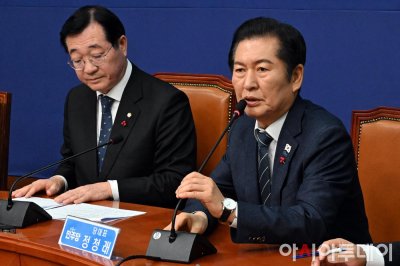
Jeong Cheong-rae, leader of the Democratic Party, speaks during the party’s fourth Central Committee meeting at the National Assembly in Seoul on Dec. 15. Photo by Asia Today

Dec. 15 (Asia Today) — Democratic Party leader Jeong Cheong-rae, whose party holds the presidency, on Monday called for a second, wide-ranging special investigation into an alleged insurrection case, raising questions about Supreme Court Chief Justice Cho Hee-dae after courts rejected arrest warrants for several figures tied to the probe.

Jeong made the remarks at a party Supreme Council meeting at the National Assembly in Seoul, as the mandate of a special prosecutor was set to end. He said the special prosecutor made progress byre-arresting former President Yoon Suk-yeol and referring 24 people to trial, but argued the investigation was constrained by court decisions, including warrant denials.

Jeong said the rejection of warrants for figures such as Choo Kyung-ho was “difficult to accept,” and claimed it fueled suspicions that the judiciary was blocking steps that could lead to broader legal consequences for the People Power Party. He also said the circumstances raised questions about whether Chief Justice Cho may have been involved, citing a meeting on Dec. 3, the day martial law was declared.

Jeong said the Democratic Party would work with the government and presidential office to push for what he called a “second comprehensive special investigation,” and urged a tougher approach without leniency. He said a follow-up probe should also examine allegations involving first lady Kim Keon-hee and issues the current special prosecutor did not fully resolve.

He additionally questioned court case assignment procedures, citing media reports that the treason-related trial was assigned through unusual in-person discussions rather than random distribution. He said the party would pursue legislation to create a specialized court for sedition-related cases.

Jeong also criticized the People Power Party’s use of filibusters, including on bills he said were bipartisan or originally proposed by the party, and said the Democratic Party would seek revisions to parliamentary rules governing the tactic. He offered condolences to victims of a collapse at a construction site at the Gwangju Central Library and called fora thorough investigation.

– Reported by Asia Today; translated by UPI

© Asia Today. Unauthorized reproduction or redistribution prohibited.

Source link