A lone goal by the Manchester United forward is enough for Ivory Coast to successfully begin their AFCON title defence.
Published On 24 Dec 202524 Dec 2025
Share
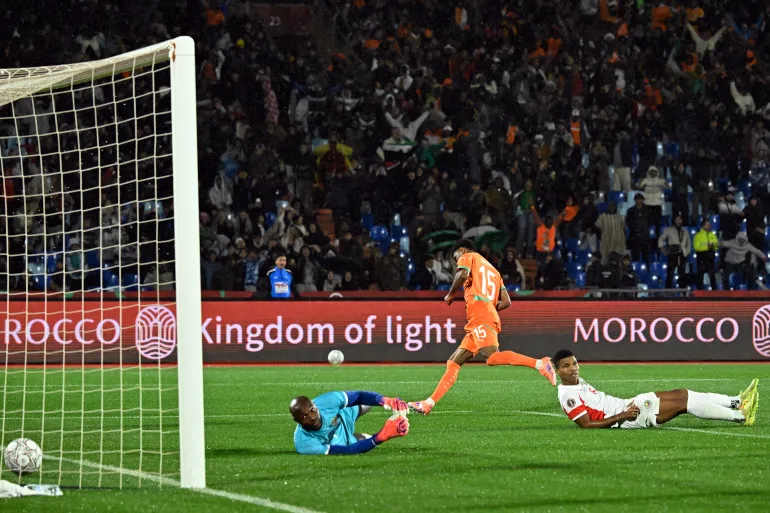
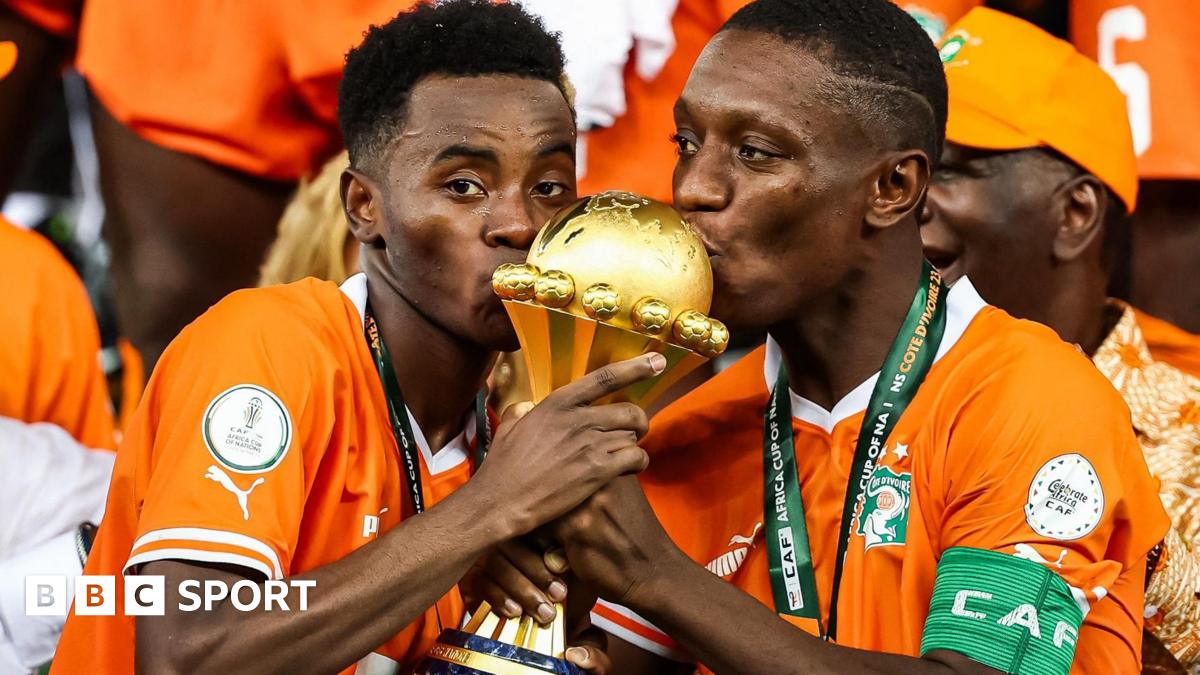
Holders Ivory Coast squandered a number of chances, but Amad Diallo’s goal early in the second half was enough to beat Mozambique 1-0 and give them a winning start to their Africa Cup of Nations (AFCON) title defence.
In the opening Group F game on Wednesday in Morocco, the Ivorians battled to break down their opponents in a competitive first half but took firm control after the break without converting the many chances they created.
Recommended Stories
list of 4 itemsend of list
Diallo side-footed the ball into the net in the 49th minute to ensure the three-point haul in rainy conditions, but the scoreline would have been a lot more emphatic had the Ivorians been sharper in front of goal.
Wilfried Zaha, playing his first international in more than two years after his surprise recall for the Cup of Nations finals, wasted several chances, and Franck Kessie had two point-blank efforts saved by Mozambique goalkeeper Ernan.
Ivorian substitute Vakoun Bayo also had an opportunity with an easy header in front of goal but somehow put it wide, and in the 89th minute, Bayo had an effort cleared off the line with Ernan caught well out of his goal.
Mozambique brought on winger Dominguez as a second-half substitute at the age of 42 years, one month and six days, making him the oldest outfield player in tournament history behind only former Egypt goalkeeper Essam El Hadary, who was 44 when he played in the 2017 final.
Mozambique are still to win a match at the finals, stretching back to their tournament debut in 1986. This is their sixth appearance with a record of four draws and 12 losses.
Diallo, centre, scores the only goal of the contest in the 49th minute [Khaled Desouki/AFP]
Two goals in 18 minutes from forward Nicolas Jackson set the tone for Senegal’s Group D win over Botswana at AFCON 2025.
Published On 23 Dec 202523 Dec 2025
Share
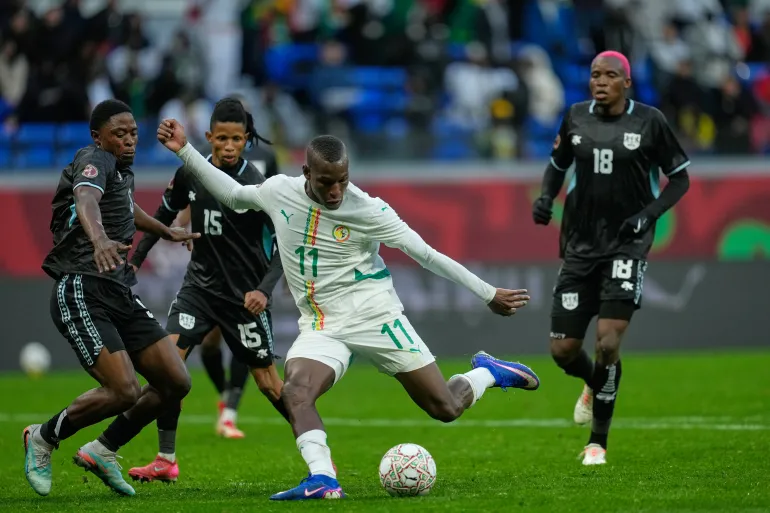
Bayern Munich striker Nicolas Jackson grabbed a brace as Senegal eased to a 3-0 victory over Botswana in the Africa Cup of Nations (AFCON) on Tuesday.
Jackson, on loan at the Bundesliga giants from Chelsea, struck either side of half-time in Tangier, with Cherif Ndiaye completing the scoring late on.
Recommended Stories
list of 4 itemsend of list
The victory took Senegal to the top of the table in Group D on goal difference, ahead of the Democratic Republic of the Congo (DRC), who beat Benin 1-0 in Rabat earlier.
It was a predictable outcome to the first match of the tournament for both teams as Senegal are 119 places above Botswana in the world rankings.
Senegal and DRC, both former champions, are expected to fill the top two places and qualify for the round of 16.
Benin and Botswana will view their clash on Saturday as a must-win affair, giving potential victors a chance to fill one of four places in the knockout stage reserved for third-placed teams.
Torrential rain greeted the teams as they walked onto the pitch at the 75,000-seat stadium, the biggest by capacity of the nine being used in Morocco for the tournament.
Senegal had a great chance to take the lead within three minutes in a one-on-one situation, but goalkeeper Goitseone Phoko blocked a shot by Jackson.
Two-time African Player of the Year Sadio Mane, Iliman Ndiaye and Jackson all came close to breaking the deadlock as the Teranga Lions dominated possession, while the Zebras defended in depth.
Jackson scores during the match against Botswana [Mosa’ab Elshamy/AP Photo]
Botswana waste chance
While Senegal and former Chelsea goalkeeper Edouard Mendy was a mere spectator, Phoko was constantly in action, using his hands, feet and legs to keep the West Africans at bay.
But endless Senegalese pressure finally reaped a reward in 40 minutes when Germany-born Ismail Jakobs and Germany-based Jackson combined to put one of the title favourites ahead.
Jakobs cut in from the left and pulled the ball back to Jackson, who reacted instantly, using his left foot to steer the ball wide of Phoko and into the net.
Botswana, who qualified at the expense of the 2026 World Cup qualifiers Cape Verde, finally threatened to score in added time at the end of the opening half.
But they failed to take advantage of a free kick just outside the area. A weak shot was deflected for a corner that was overhit and went out of play beyond the far post without being touched.
A flowing move from midfield with quick, crisp passing set up Jackson to double the lead after 58 minutes.
When the ball was worked to him in the box, the 24-year-old rounded Mosha Gaolaolwe and tapped home.
Cherif Ndiaye put the cherry on the cake for Senegal as he finished smartly at the end of another fine team move in the 90th minute.
Confident his team were cruising to victory, Senegal coach Pape Thiaw introduced 17-year-old Ibrahim Mbaye from European champions Paris Saint-Germain midway through the second half.
The teenage striker last month became the youngest Senegalese scorer in an international when he netted in an 8-0 rout of Kenya in an AFCON warm-up match.
The Africa Cup of Nations is more than a football tournament.
Hosted this year in Morocco, it brings together a global African audience. AFCON offers a rare glimpse of how nations connect with each other and the diaspora through football.
Lyle Foster’s match-winning 79th-minute strike allowed South Africa to win first opening match at AFCON since 2004.
Published On 22 Dec 202522 Dec 2025
Share
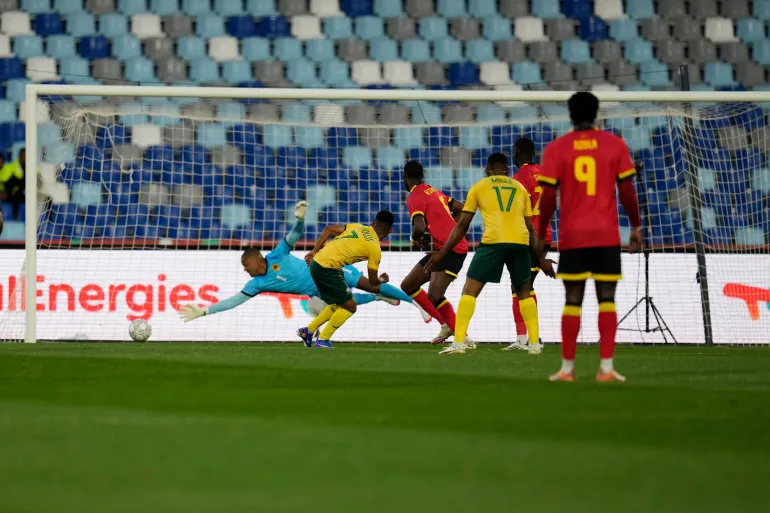
Lyle Foster scored a superb winner from outside the box as South Africa defeated Angola 2-1 in Africa Cup of Nations Group B in Marrakesh on Monday, the first time they have won their opening match at the continental finals in 21 years.
South Africa also had a goal disallowed and struck the crossbar, just about deserving the nervy victory. Angola also had chances and will be disappointed not to have gotten something from the game.
Recommended Stories
list of 2 itemsend of list
South Africa took the lead on 21 minutes when Oswin Appollis showed neat footwork in the box to work a shooting chance and put the ball in the bottom corner. But Angola equalised before the break as Show got a touch to Fredy’s free kick to steer the ball into the net.
The winning moment came after 79 minutes, when Foster was teed up 20 yards out and curled his shot into the top corner to give the bronze medallists from two years ago a positive start to their campaign.
It was a workmanlike performance from South Africa, who do not have the plethora of players in top European leagues that their tournament rivals enjoy, with Foster their only one at Premier League Burnley.
But they are a well-oiled machine under Belgian coach Hugo Broos and did enough for a victory that set them well on course for the knockout rounds. Egypt and Zimbabwe will meet later on Monday in the same pool.
South Africa’s Oswin Appollis, centre, scores the opening goal of the match in the 21st minute [Themba Hadebe/AP]
Even first half
South Africa took the lead after a period of sustained possession that led to Khuliso Mudau’s cross, which was touched by both Sipho Mbule and Foster before Appollis beat two defenders and side-footed into the bottom corner of the net.
Angola equalised on 35 minutes when Fredy’s low free kick was touched into the bottom corner by Show, his second goal in his 50th cap for his country, to make it 1-1 at the break.
South Africa thought they had retaken the lead when halftime substitute Tshepang Moremi turned his defender and fired low into the bottom corner of the net, but a VAR review showed that Foster was offside in the buildup.
South Africa’s Mbekezeli Mbokazi crashed the ball against the crossbar with a rasping shot from 35 yards, before Foster’s clinical strike secured all three points.
Zambia rally to draw with Mali
In an earlier Group A match on Monday, Zambia’s Patson Daka scored with a spectacular diving header in stoppage time to see his side come from behind and force a 1-1 draw with Mali in Casablanca.
Mali looked in control for most of the encounter, but paid the price for sitting back in the closing stages as Zambia staged a late recovery, with Daka leaping through the air to force home Mathews Banda’s curling cross two minutes into stoppage time at the end of the game.
Lassine Sinayoko had taken advantage of sloppy defending to give Mali a 62nd-minute lead after his strike partner, El Bilal Toure, had a first-half penalty saved.
Zambia’s forward Patson Daka celebrates scoring his team’s equalising goal in the 90th minute against Mali at Mohammed V Stadium in Casablanca, Morocco on December 22, 2025 [Abdel Majid Bziouat/AFP]
Who: Nigeria vs Tanzania What: CAF Africa Cup of Nations Where: Fez Stadium in Fez, Morocco When: Tuesday, December 23, at 6:30pm (17:30 GMT) How to follow: We’ll have all the build-up on Al Jazeera Sport from 14:30 GMT in advance of our text commentary stream.
Nigeria’s much-celebrated golden generation was expected to propel the nation to new heights, but another World Cup qualification disappointment has left the Super Eagles searching for answers.
Recommended Stories
list of 4 itemsend of list
After the heartbreak of missing out on a trip to North America in 2026, Nigeria arrive in Morocco in search of redemption and continental glory. The three-time champions open their AFCON 2025 campaign against Group C opponents Tanzania, who have appeared at the tournament just three times.
Boasting world-class talent in Victor Osimhen and Ademola Lookman, Nigeria are among the favourites to top the group that also features Tunisia and Uganda.
Tuesday’s face-off in Fez pits together Nigeria and Tanzania for only the second time at the continental championships, 45 years after their first meeting at the competition.
Here’s all you need to know about the match:
Why did Nigeria fail to qualify for the 2026 World Cup?
Nigeria were among the best runners-up across the nine African qualifying groups who advanced to the playoffs, but lost 4-3 on penalties to the Democratic Republic of the Congo (DRC), failing to reach the inter-confederation playoffs.
The Super Eagles, who have made six World Cup appearances, have now failed to qualify for the global showpiece event for the second time in a row.
A poor start to their qualifying campaign, managerial changes and a pay dispute were among the factors that led to their World Cup disappointment.
What happened after the loss to DCR?
Last week, Nigeria submitted a petition to FIFA alleging DRC fielded ineligible players in that decisive playoff match.
The Nigerian football federation said several dual-nationality players had been cleared to play for DRC without meeting the required criteria, but DRC’s federation rejected the allegations.
Coaching turnover for Tanzania
There is no dearth of controversy in Tanzania, too.
Tanzania’s football federation fired its coach, Hemed Suleiman, just a month before AFCON 2025, replacing him with Miguel Gamondi, who will take interim charge of the Taifa Stars for the competition.
Former coach Suleiman led Tanzania to their fourth Cup of Nations appearance and reached the quarterfinals of the African Nations Championships this year. But they failed to secure a spot in the 2026 FIFA World Cup.
Former Young Africans coach Miguel Gamondi is now in charge of Tanzania’s AFCON 2025 campaign [File: Siphiwe Sibeko/Reuters]
Who are Nigeria’s key players to watch?
Nigeria’s squad is packed with talent in all departments, with forwards and former CAF Player of the Year award winners Osimhen and Lookman headlining the group.
Defender Calvin Bassey, midfielders Alex Iwobi and Wilfred Ndidi, along with striker Samuel Chukwueze, are the other high-profile players.
Who are Tanzania’s key players?
Mbwana Samatta, who plays for Ligue 1 club Le Havre, and fellow experienced forward Simon Msuva headline Tanzania’s squad.
Msuva returns after missing the October and November windows and remains the most capped member of the squad. An appearance on Tuesday will mark his 100th international cap.
Defender Mohamed Hussein is a formidable presence in Tanzania’s backline, while youngster Haji Mnoga, who plays for Salford City in the English fourth tier, is also part of the squad.
Form guide
All matches, most recent result last:
Nigeria: L-L-W-W-W
Tanzania: L-L-L-L-D
Head-to-head
Nigeria and Tanzania have met seven times across all competitions, including at the FIFA World Cup.
Nigeria have won four of those matches, while three ended in a draw.
Their last meeting was in 2016 at AFCON, where Nigeria won 1-0.
AFCON records
Nigeria have played at AFCON 20 times, finishing winners on three occasions – most recently lifting the trophy in 2013 – and runners-up five times. Remarkably, they have finished in the top three in 13 of their last 15 AFCON appearances.
Tanzania have never made it past the group stage in their three AFCON appearances. They are also one of only four teams at this year’s edition that have never won an AFCON match, with six defeats and three draws in their nine AFCON matches overall.
The AFCON 2025 is a landmark tournament for Tanzania, as they have qualified for successive finals for the first time.
Nigeria team news
Nigeria will be without centre-back Benjamin Fredrick and full-back Ola Aina, who are both injured.
William Troost-Ekong, the regular captain, is unavailable after recently announcing his retirement from international football, with Ndidi now taking over the captaincy.
Strikers Victor Boniface and Tolu Arokodare were the surprise omissions from the squad.
Dynamic goal-scoring forward Ademola Lookman, left, will be a key player to watch for Nigeria during AFCON 2025 [File: Luc Gnago/Reuters]
On the eve of the 2025 AFCON, football’s governing body in Africa create new four-year cycle and form a Nations League.
Published On 20 Dec 202520 Dec 2025
Share
African football is getting a major shake-up with the creation of the African Nations League and conversion of the biennial Africa Cup of Nations to a four-year cycle.
Patrice Motsepe, the president of the Confederation of African Football, announced the changes Saturday during his news conference before the 2025 Africa Cup hosted by Morocco.
Recommended Stories
list of 4 itemsend of list
Motsepe said that the 2027 Africa Cup, to be hosted by Uganda, Kenya and Tanzania, will go ahead as planned and that the following edition – originally scheduled for 2029 – will be moved forward to take place in 2028. The next Africa Cup after that will be in 2032.
This would allow the first African Nations League to take place in 2029. Motsepe said it would involve each of the continent’s 54 members, divided into four geographical zones, with games in September and October before the finals are held in November.
“What is new is that … in Africa there’s going to be a competition every year where the best African players who play in Europe and worldwide will be with us on the continent,” Motsepe said.
CAF officials did not immediately specify if the African Nations League will be held on a biennial or annual basis.
Meanwhile, Caf has increased the prize money for the winners of Afcon from $7m (£5.2m) to $10m (£7.5m).
The surprise announcement about the future of Afcon was made by Motsepe after a meeting of Caf’s executive committee in Morocco before the start of the 2025 finals in Rabat on Sunday.
The biennial hosting of Afcon has long caused issues with the football calendar, with the vast majority of recent tournaments held midway through the European club season.
However, Caf remained committed to scheduling the tournament every two years – not least as it needs the revenue raised from the finals to reinvest in the game on the continent.
But the Covid-19 pandemic and weather conditions in host nations in Central and West Africa meant the 2021 and 2023 editions in Cameroon and Ivory Coast respectively were staged in January and February instead.
Fifa’s expanded 32-team Club World Cup was held in June and July this year, forcing Caf to opt for mid-season dates once again.
The dates for the finals in Kenya, Tanzania and Uganda in 2027 are yet to be announced, and that will be swiftly followed by another Afcon in 2028 – with the hosts of that edition yet to be decided.
After that, the continent’s biggest tournament will become a quadrennial tournament taking place in the same year as the European Championships.
Motsepe said the decision had been made in conjunction with Fifa president Gianni Infantino and the world governing body’s general secretary Mattias Grafstrom – and that Caf “have to compromise”.
Weekly insights and analysis on the latest developments in military technology, strategy, and foreign policy.
The first full deployment of the U.S. Army’s new Sentinel A4 air defense radar will be in the area around Washington, D.C., also known as the National Capital Region (NCR). The A4 variant offers a significant boost in capability over preceding versions, especially for spotting and tracking lower and/or slower flying targets like cruise missiles and drones.
An Army officer discussed the capabilities of and plans for the road-mobile Sentinel A4, the formal designation of which is AN/MPQ-64A4, with Secretary Pete Hegseth during a show-and-tell at Redstone Arsenal in Huntsville, Alabama, this past weekend. Members of the media were also present. Hegseth conducted several engagements in the Huntsville area during his trip, which was primarily centered on a ceremony marking the designation of the arsenal as the new headquarters for U.S. Space Command (SPACECOM).
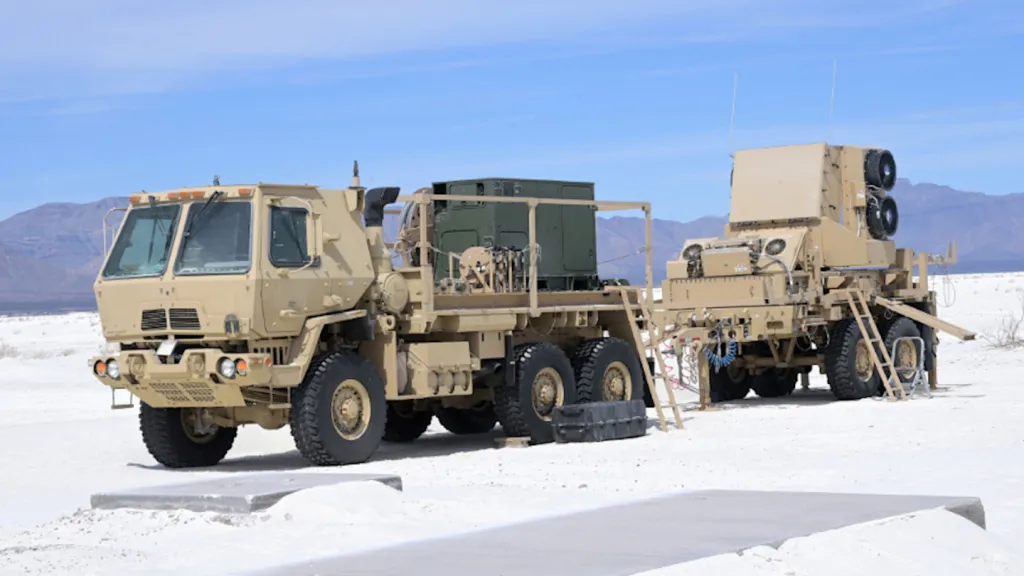
A trailer-mounted Sentinel A4 radar, at left, seen behind a 6×6 Family of Medium Tactical Vehicles (FMTV) truck with a generator serving as its prime mover. US Army
“The plan is to be in full-rate production [of the Sentinel A4] at the end of FY 26 [Fiscal Year 2026], sir, and our first fielding will be actually in the National Capital Region,” the Army officer told Hegseth, as can be heard in the video below. “In January, we’re sending a Sentinel A4 to the National Capital Region to start that immigration process earlier, so that when it is fielded late next year, we’re ready to go.”
War Sec. Pete Hegseth Visits The New Site For U.S. Space Command Headquarters In Huntsville, Alabama
The officer noted that the Army already has a Sentinel A4 radar in South Korea, representing an early operational capability. The deployment to the Korean Peninsula has already been providing valuable feedback for the planned full fielding of the sensor in the NCR next year. You can read more about what is known about the air defense network already in place in the NCR, which includes National Advanced Surface-to-Air Missile Systems (NASAMS) and Avenger air defense systems, as well as a wide array of sensors, in previousTWZreporting. Existing variants of Sentinel are already regularly used in combination with NASAMS and Avenger.
In terms of the Sentinel A4’s capabilities, “what this radar does is provide 360-degree air surveillance, day or night, [in] adverse weather conditions and the most harsh environments, … [to] identify, track and classify cruise missiles, rotary-wing [aircraft], fixed-wing [aircraft], [and] UAS [uncrewed aerial systems],” the officer explained to Hegseth. It also has the ability to spot and track incoming artillery rockets, shells, and mortar rounds.
Sentinel A4: Bringing Next-Gen Radar Capability to the U.S. Army and Allies
The officer said that many of its more specific capabilities are classified. They did say that it offers a 75 percent increase in detection range over the previous AN/MPQ-64A3, and the ability to track many more targets simultaneously. Much of this is a product of the new active electronically scanned array (AESA) found on the Sentinel A4. As a general rule, AESA radars offer improvements in terms of range, fidelity of tracks, resistance to countermeasures, and overall situational awareness compared to mechanically-scanned types. Depending on how the array itself is configured, AESAs can also perform a much wider array of functions at once.
Army personnel seen working on an older version of the MPQ-64 Sentinel radar. US Army
The Sentinel A4 “does have growth potential,” the Army officer highlighted to Secretary Hegseth during the event. “The current array that you see here is 60 percent populated, but we do have the ability to increase how much is in the array, which allows us to meet future threats.”
That the Sentinel A4’s true operational debut is set to be in the NCR is unsurprising, given the extreme importance of defending the skies over and around Washington, D.C. This is already by far the most heavily monitored and densely defended airspace in the United States.
At the same time, the U.S. military, as a whole, has made no secret of its growing concerns about drone and cruise missile threats, which are very much reflected in the new capabilities found on the new A4 variant of Sentinel.
It’s also worth noting that the NCR has seen a number of false alarm air defense scares over the years. Increased detection capability and general improved situational awareness could help with preventing, though not eliminating, such incidents in the future.
All this being said, the aerial threat ecosystem extends beyond the NCR, and the new capabilities offered by the Sentinel A4 radar will be relevant to Army operations globally. The service has plans to significantly expand its overall air defense force structure in the coming years.
It is possible that plans to send the Sentinel A4s to the NCR, specifically, also presage the deployment of other new air defense capabilities to the area. Sentinel radars are a primary sensor for the Army’s new middle-tier Enduring Shield air defense system, which currently uses the AIM-9X Sidewinder as its interceptor. The service is pushing to acquire a second interceptor option for Enduring Shield, primarily to offer increased capability against faster-flying cruise missiles. Overall, the system is analogous to NASAMS in many ways and would be well-suited to the NCR air defense mission.
One of the palletized launchers at the core of the Enduring Shield system. Leidos
The Army currently has two Enduring Shield platoons, one in South Korea and one at Joint Base Lewis-McChord in Washington State. The service is hoping to have a battalion’s worth of the systems by Fiscal Year 2027.
In general, the Army sees Enduring Shield as particularly important to reducing the immense strain on its highly in-demand Patriot surface-to-air missile systems. The service has said that Enduring Shield and Patriot could even be fielded together in composite units in the future. TWZ has been calling attention to the worrisome inadequacy of the Army’s Patriot force to meet current operational needs, let alone the requirements of any future high-end figure, for years now.
If nothing else, Army air defenders protecting the skies over and around Washington, D.C., are set to get an important boost in their ability to spot and track threats, especially cruise missiles and drones, in the coming year.
The Africa Cup of Nations, commonly known as AFCON, will be held in Morocco this year and kicks off in the capital, Rabat, on Sunday.
Host nation Morocco take on Comoros in the opening match of the four week tournament.
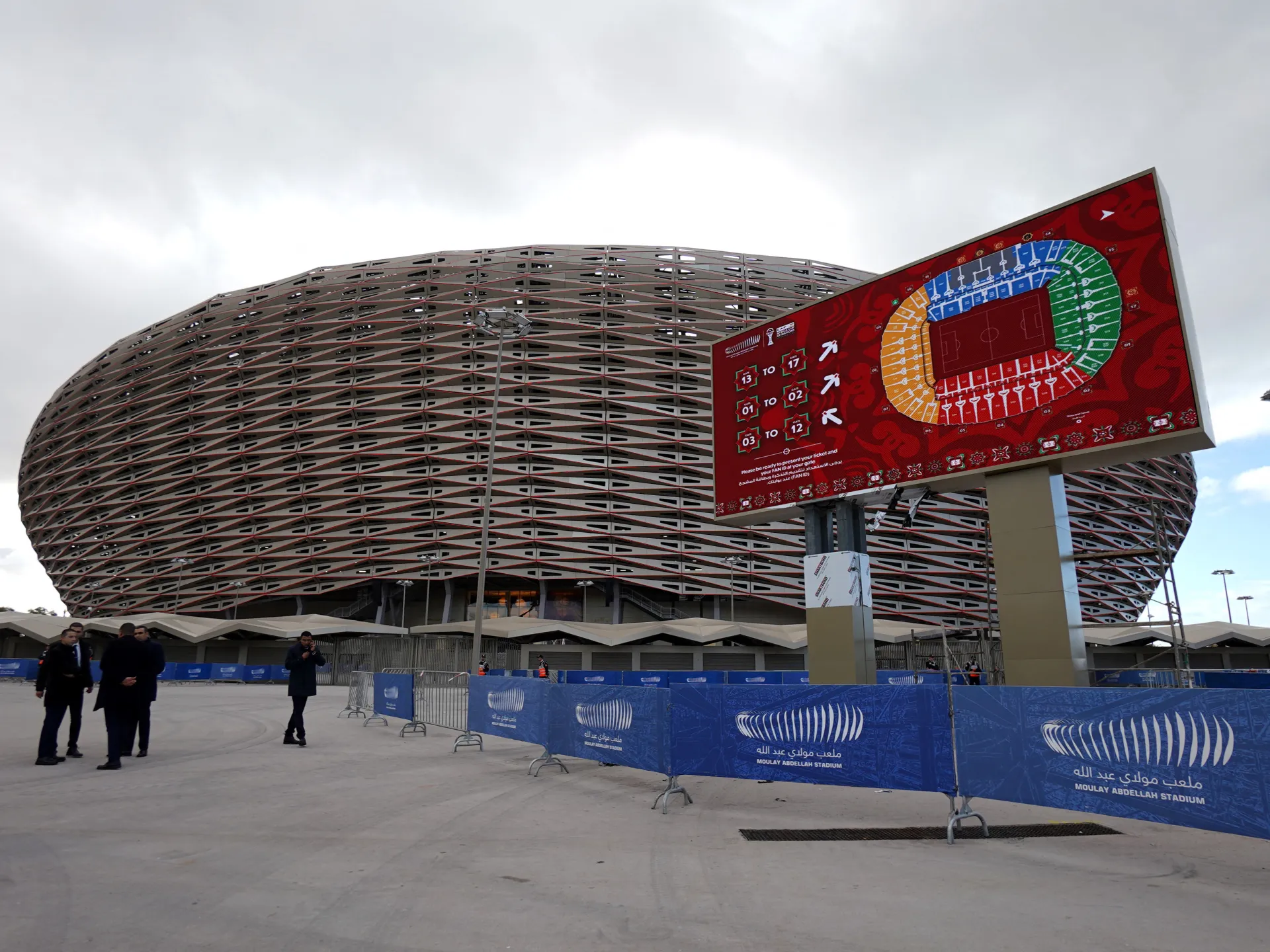
The final will be held on January 18 at the 69,500-capacity Prince Moulay Abdellah Stadium in Rabat.
Nine venues across six cities have been selected for the continental showpiece event.
The 24 participating teams have been drawn into six groups, with 68 matches in total.
The group stage will run until December 31, with the knockout stage starting on January 3.
Here are the details on the teams, groups, format, match fixtures, kickoff times and venues for AFCON 2025:
Teams and groups
⚽ Group A: Morocco, Mali, Zambia, Comoros ⚽ Group B: Egypt, South Africa, Angola, Zimbabwe ⚽ Group C: Nigeria, Tunisia, Uganda, Tanzania ⚽ Group D: Senegal, DR Congo, Benin, Botswana ⚽ Group E: Algeria, Burkina Faso, Equatorial Guinea, Sudan ⚽ Group F: Ivory Coast, Cameroon, Gabon, Mozambique
Recommended Stories
list of 4 itemsend of list
Format
The top two teams of each group, along with the best four third-placed teams, will advance to the knockout stage, beginning with the round of 16. That is followed by the quarterfinals, semifinals and the final. There is also a third-place playoff between the two losing semifinalists.
In the knockout stages, if a match is level at the end of normal playing time, teams will play 30 minutes of extra time and, if required, a penalty shootout.
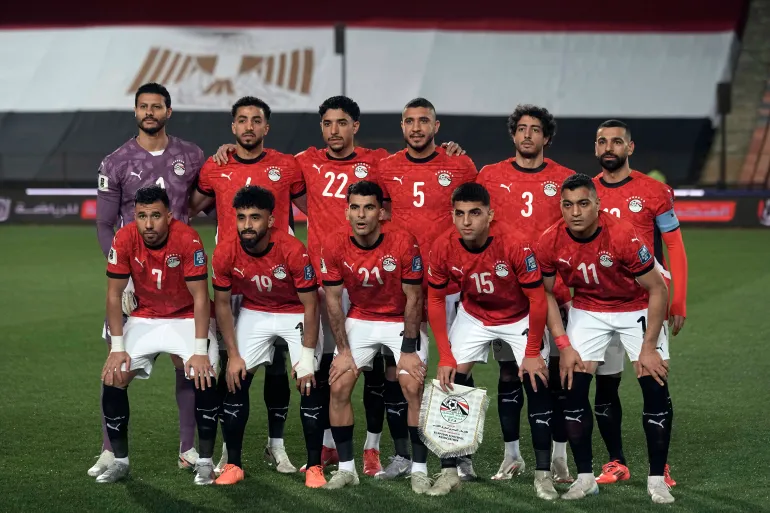
Egypt are the most successful team in Africa with a record seven AFCON titles, though they last won the trophy in 2010 [File: Amr Nabil/AP]
Match schedule
⚽ Group Stage
December 21
Group A: Morocco vs Comoros (Prince Moulay Abdellah Stadium, 8pm/19:00 GMT)
December 22
Group A: Mali vs Zambia (Stade Mohammed V, 3:30pm/14:30 GMT)
Group B: Egypt vs Zimbabwe (Adrar Stadium, 6pm/17:00 GMT)
Group B: South Africa vs Angola (Marrakesh Stadium, 8:30pm/19:30 GMT)
December 23
Group C: Nigeria vs Tanzania (Fez Stadium, 1pm/12:00 GMT)
Group C: Tunisia vs Uganda (Prince Moulay Abdellah Stadium, 3:30pm/14:30 GMT)
Group D: Senegal vs Botswana (Ibn Batouta Stadium, 6pm/17:00 GMT)
Group D: DR Congo vs Benin (Al Barid Stadium, 8:30pm/19:30 GMT)
December 24
Group E: Algeria vs Sudan (Moulay Hassan Stadium, 1pm/12:00 GMT)
Group E: Burkina Faso vs Equatorial Guinea (Stade Mohammed V, 3:30pm/14:30 GMT)
Group F: Ivory Coast vs Mozambique (Marrakesh Stadium, 6pm/17:00 GMT)
Group F: Cameroon vs Gabon(Adrar Stadium, 8:30pm/19:30 GMT)
Rest day on Christmas
December 26
Group A: Morocco vs Mali (Prince Moulay Abdellah Stadium, 1pm/12:00 GMT)
Group A: Zambia vs Comoros (Stade Mohammed V, 3:30pm/14:30 GMT)
Group B: Egypt vs South Africa (Adrar Stadium, 6pm/17:00 GMT)
Group B: Angola vs Zimbabwe (Marrakesh Stadium, 8:30pm/19:30 GMT)
December 27
Group C: Nigeria vs Tunisia (Fez Stadium, 1pm/12:00 GMT)
Group C: Uganda vs Tanzania (Al Barid Stadium, 3:30pm/14:30 GMT)
Group D: Senegal vs DR Congo (Ibn Batouta Stadium, 6pm/17:00 GMT)
Group D: Benin vs Botswana (Prince Moulay Abdellah Stadium, 8:30pm/19:30 GMT)
December 28
Group E: Algeria vs Burkina Faso (Moulay Hassan Stadium, 1pm/12:00 GMT)
Group E: Equatorial Guinea vs Sudan (Stade Mohammed V, 3:30pm/14:30 GMT)
Group F: Ivory Coast vs Cameroon (Marrakesh Stadium, 6pm/17:00 GMT)
Group F: Gabon vs Mozambique (Adrar Stadium, 8:30pm/19:30 GMT)
December 29
Group A: Comoros vs Mali (Stade Mohammed V, 6:30pm/17:30 GMT)
Group A: Zambia vs Morocco (Prince Moulay Abdellah Stadium, 6:30pm/17:30 GMT)
Group B: Angola vs Egypt (Adrar Stadium, 8:30pm/19:30 GMT)
Group B: Zimbabwe vs South Africa (Marrakesh Stadium, 8:30pm/19:30 GMT)
December 30
Group C: Tanzania vs Tunisia (Prince Moulay Abdellah Stadium, 6pm/17:00 GMT)
Group C: Uganda vs Nigeria (Fez Stadium, 6pm/17:00 GMT)
Group D: Benin vs Senegal (Ibn Batouta Stadium, 8:30pm/19:30 GMT)
Group D: Botswana vs DR Congo (Al Barid Stadium, 8:30pm/19:30 GMT)
December 31
Group E: Equatorial Guinea vs Algeria (Moulay Hassan Stadium, 6pm/17:00 GMT)
Group E: Sudan vs Burkina Faso (Stade Mohammed V, 6pm/17:00 GMT)
Group F: Gabon vs Ivory Coast (Marrakesh Stadium, 8:30pm/19:30 GMT)
Group F: Mozambique vs Cameroon (Adrar Stadium, 8:30pm/19:30 GMT)
Rest days on January 1 and 2
External view of the 69,500-capacity Prince Moulay Abdellah Stadium in Rabat, which will be used for the AFCON final on January 18 [Emre Asikci/Anadolu via Getty Images]
⚽ Round of 16
January 3
Winner Group D vs 3rd Group B/E/F (Ibn Batouta Stadium, 6pm/17:00 GMT)
Runner-up Group A vs Runner-up Group C (Stade Mohammed V, 8:30pm local/19:30 GMT)
January 4
Winner Group A vs 3rd Group C/D/E (Prince Moulay Abdellah Stadium, 6pm/17:00 GMT)
Runner-up Group B vs Runner-up Group F (Al Barid Stadium, 8:30pm local/19:30 GMT)
January 5
Winner Group B vs 3rd Group A/C/D (Adrar Stadium, 6pm/17:00 GMT)
Winner Group C vs 3rd Group A/B/F (Fez Stadium, 8:30pm local/19:30 GMT)
January 6
Winner Group E vs Runner-up Group D (Moulay Hassan Stadium, 6pm/17:00 GMT)
Winner Group F vs Runner-up Group E (Marrakesh Stadium, 8:30pm local/19:30 GMT)