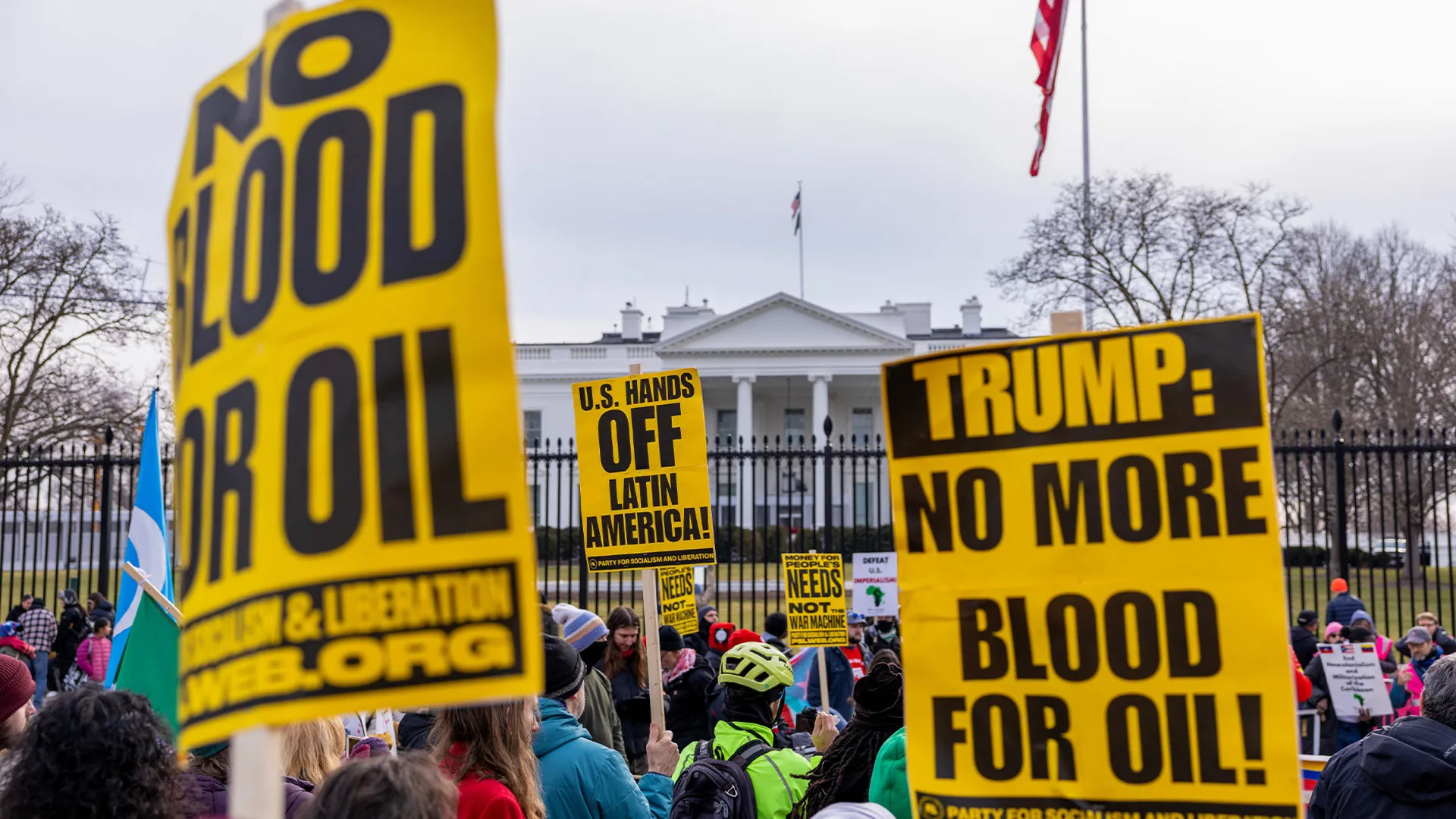
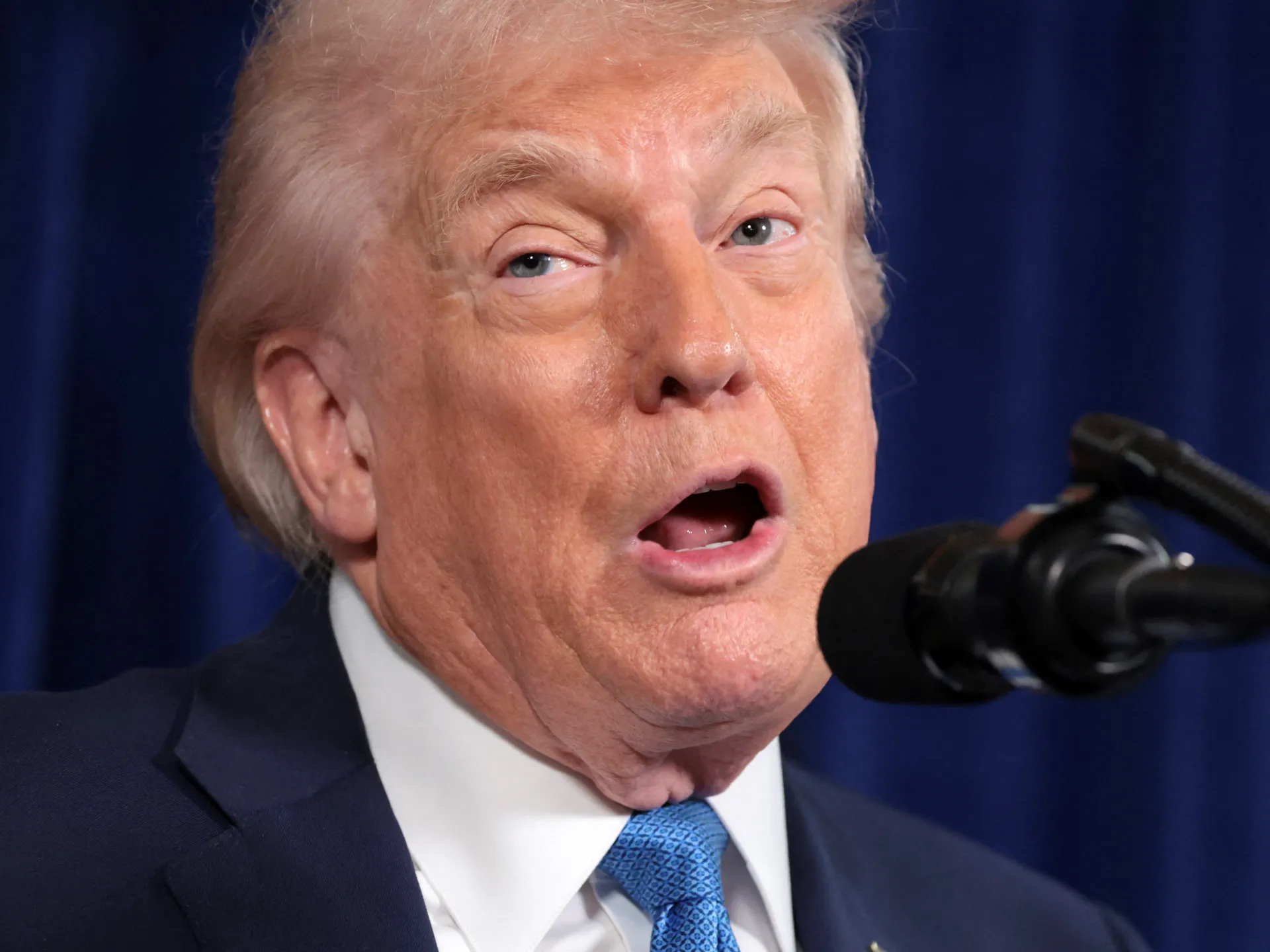
The UN human rights office says the US military intervention that ousted Venezuela’s leader violates international law and the UN Charter, warning it undermines global security and risks worsening human rights. It says Venezuela’s future must be decided by its people.
Washington, DC – It has become a familiar pattern. United States presidents conduct unilateral military actions abroad. Congress shrugs.
On Saturday, in the hours after the US military abducted Venezuelan leader Nicolas Maduro, Democrats in the Senate pledged to raise yet another resolution to rein in US President Donald Trump’s military actions.
Recommended Stories
list of 4 itemsend of list
Chuck Schumer, the top Democrat in the chamber, has said the party will push for a vote within the week. By all accounts, the odds of its success remain long.
Since Trump took office for a second term in 2025, Congress has weighed multiple bills that would force him to seek legislative approval before initiating a military strike.
But the latest attack on Venezuela offers a stark instance of presidential overreach, one that is “crying out for congressional action”, according to David Janovsky, the acting director of the Constitution Project at the Project on Government Oversight.
Experts say it is also one of the clearest tests in recent history of whether Congress will continue to cede its authority to check US military engagement abroad.
“There are a lot of angles where you can come at this to say why it’s a clear-cut case,” Janovsky told Al Jazeera.
He pointed out that, under the US Constitution, Congress alone wields the authority to allow military action. He also noted that the Venezuela attack “is in direct contravention of the UN Charter, which is, as a treaty, law in the United States”.
“Any of the fig leaves that presidents have used in the past to justify unilateral military action just don’t apply here,” Janovsky added. “This is particularly brazen.”
An uphill battle
Since August, the Trump administration has signalled plans to crank up its “maximum pressure” campaign against Venezuela.
That month, Trump reportedly signed a secret memo calling on the US military to prepare for action against criminal networks abroad. Then, on September 2, the Trump administration began conducting dozens of strikes on alleged drug-smuggling boats off the Venezuelan and Colombian coasts.
That deadly bombing campaign was itself condemned as a violation of international law and an affront to Congress’s constitutional powers. It coincided with a build-up of US military assets near Venezuela.
Trump also dropped hints that the US military campaign could quickly expand to alleged drug-trafficking targets on Venezuelan soil. “When they come by land, we’re going to be stopping them the same way we stopped the boats,” Trump said on September 16.
The strikes prompted two recent votes in the House of Representatives in December: one that would require congressional approval for any land strikes on the South American country, and one that would force Trump to seek approval for strikes on alleged drug-smuggling boats.
Both resolutions, however, failed roughly along party lines. A similar resolution in the Senate, which would have required congressional approval before any more attacks, also fell short in November.
But speaking to reporters in a phone call just hours after the US operation on Saturday, Senator Tim Kaine said he hoped the brashness of Trump’s latest actions in Venezuela would shock lawmakers into action.
Republicans, he said, can no longer tell themselves that Trump’s months-long military build-up in the Caribbean and his repeated threats are a “bluff” or a “negotiating tactic”.
“It’s time for Congress to get its a** off the couch and do what it’s supposed to do,” Kaine said.
In an interview with CNN’s Dana Bash, US Senator Chris Murphy also agreed that it was “true” that Congress had become impotent on matters of war, a phenomenon that has spanned both Democratic and Republican administrations.
Bash pointed to former President Barack Obama’s 2011 military deployment to Libya, which went unchecked by Congress.
“Congress needs to own its own role in allowing a presidency to become this lawless,” Murphy responded.
Republicans ho-hum about resolutions
Under the US Constitution, only Congress can declare war, something it has not done since World War II.
Instead, lawmakers have historically passed Authorizations for Use of Military Force (AUMFs) to approve committing troops to recent wars, including the US invasions of Iraq and Afghanistan and the strikes on alleged al-Qaeda affiliates across the Middle East, Africa and Asia.
No AUMFs have been passed that would relate to military action in Venezuela.
When lawmakers believe a president is acting beyond his constitutional power, they can pass a war powers resolution requiring Congressional approval for further actions.
Beyond their symbolism, such resolutions create a legal basis to challenge further presidential actions in the judiciary.
However, they carry a high bar for success, with a two-thirds majority in both chambers of Congress needed to override a presidential veto.
Given the current makeup of Congress, passage of a war powers resolution would likely require bipartisan support.
Republicans maintain narrow majorities in both the House and Senate, so it would be necessary for members of Trump’s own party to back a war powers resolution for it to be successful.
In November’s Senate vote, only two Republicans — co-sponsor Rand Paul of Kentucky, and Lisa Murkowski, of Alaska — split from their party to support the resolution. It failed by a margin of 51 to 49.
December’s vote on a parallel resolution in the House only earned 211 votes in favour, as opposed to 213 against. In that case, three Republicans broke from their party to support the resolution, and one Democrat opposed it.
But Trump’s abduction of Maduro has so far only received condemnation from a tiny fragment of his party.
Overall, the response from elected Republicans has been muted. Even regular critics of presidential adventurism have instead focused on praising the ouster of the longtime Venezuelan leader, who has been accused of numerous human rights abuses.
Senator Todd Young, a Republican considered on the fence ahead of November’s war powers vote, has praised Maduro’s arrest, even as he contended the Trump administration owed Congress more details.
“We still need more answers, especially to questions regarding the next steps in Venezuela’s transition,” Young said.
Some Democrats have also offered careful messaging in the wake of the operation.
That included Debbie Wasserman Schultz, a Democrat who represents a large Venezuelan diaspora community in Florida.
In a statement on Saturday, Wasserman Schultz focused on the implications of Maduro’s removal, while avoiding any mention of the military operation that enabled it. Instead, she asserted that Trump owed Congress an explanation about next steps.
“He has failed to explain to Congress or the American people how he plans to prevent the regime from reconstituting itself under Maduro’s cronies or stop Venezuela from falling into chaos,” she wrote.
In December, however, Wasserman Schultz did join a group of Florida Democrats in calling for Congress to exercise its oversight authority as Trump built up military pressure on Venezuela.
What comes next?
For its part, the Trump administration has not eased up on its military threats against Venezuela, even as it has sought to send the message that Maduro’s abduction was a matter of law enforcement, not the start of a war.
Trump has also denied, once again, that he needed congressional approval for any further military action. Still, in a Monday interview with NBC News, he expressed optimism about having Congress’s backing.
“We have good support congressionally,” he told NBC. “Congress knew what we were doing all along, but we have good support congressionally. Why wouldn’t they support us?”
Since Saturday’s attack and abduction, Trump has warned that a “second wave” of military action could be on the horizon for Venezuela.
That threat has extended to the potential for the forced removal of Maduro’s deputy, Delcy Rodriguez, who was formally sworn in as the country’s interim president on Monday.
“If she doesn’t do what’s right, she is going to pay a very big price, probably bigger than Maduro,” Trump told The Atlantic magazine.
The administration has also said that strikes on alleged drug-smuggling boats near Venezuela will continue and that US military assets will remain deployed in the region.
Constitutional expert Janovsky, however, believes that this is a critical moment for Congress to act.
Failure to rein in Trump would only further reinforce a decades-long trend of lawmakers relinquishing their oversight authorities, he explained. That, in turn, offers tacit support for the presidency’s growing power over the military.
“To say this was a targeted law enforcement operation — and ignore the ongoing situation — would be a dangerous abdication of Congress as a central check on how the United States military is used,” Janovsky said.
“Continued congressional inaction does nothing but empower presidents to act however they want,” he added.
“To see Congress continue to step back ultimately just removes the American people even farther from where these decisions are actually being made.”
Delcy Rodriguez, formerly Venezuela’s vice president, has been formally sworn in to lead the South American country following the abduction of Nicolas Maduro in a United States military operation.
On Monday, Rodriguez appeared before Venezuela’s National Assembly to take her oath of office.
Recommended Stories
list of 3 itemsend of list
Speaking before the legislative body, composed largely of government loyalists, Rodriguez reaffirmed her opposition to the military attack that led to the capture and removal of Maduro and his wife, Cilia Flores.
“I come with pain over the kidnapping of two heroes who are being held hostage: President Nicolás Maduro and First Lady Cilia Flores,” Rodriguez, 56, told the assembly.
“I swear to work tirelessly to guarantee the peace, spiritual, economic and social tranquillity of our people.”
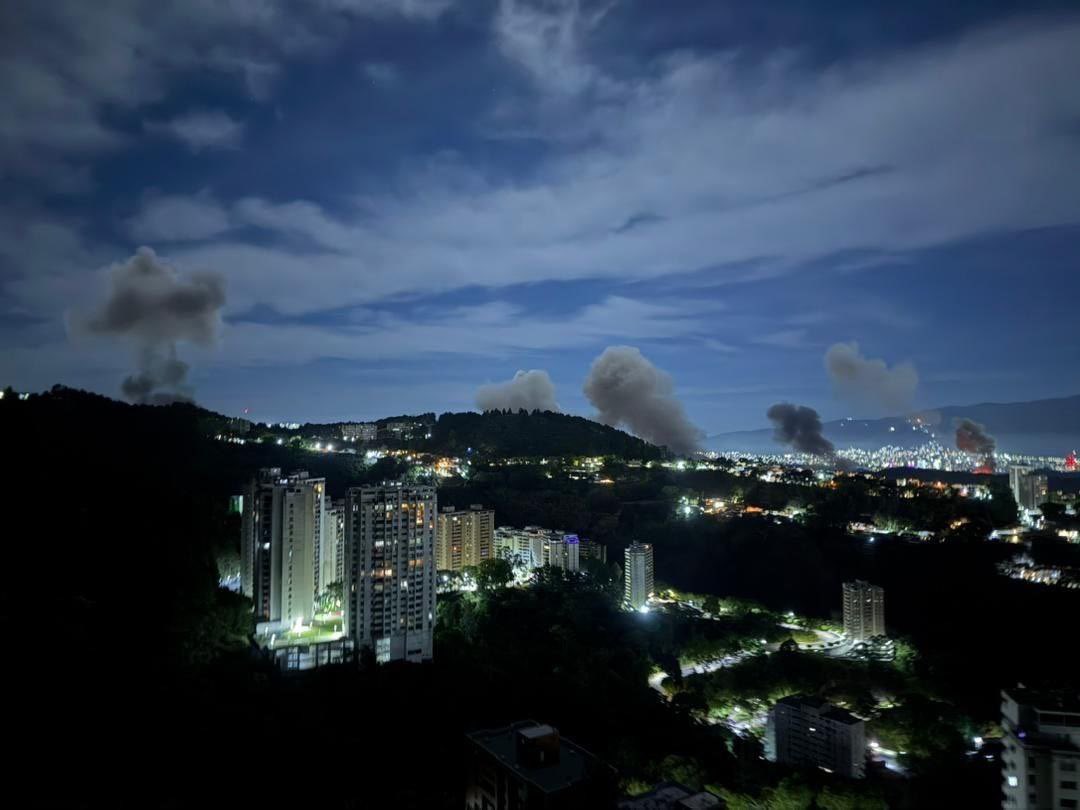
A former labour lawyer, Rodriguez has been serving as acting president since the early-morning attack that resulted in the abduction. Explosions were reported before dawn on Saturday in the capital, Caracas, as well as at nearby Venezuelan military bases and some civilian areas.
Monday’s swearing-in ceremony was overseen by Rodriguez’s brother – the president of the National Assembly, Jorge Rodriguez – and Maduro’s son, Nicolás Maduro Guerra, who held a copy of the Venezuelan Constitution.
Other members of Maduro’s inner circle, including Interior Minister Diosdado Cabello and Defence Minister Vladimir Padrino, were also in attendance.
The ceremony took place as Maduro, her predecessor and former boss, faced an arraignment proceeding in a New York City courthouse.
Federal prosecutors in the US have charged Maduro with four counts related to allegations he leveraged government powers to export thousands of tonnes of cocaine to North America.
The charges include narco-terrorism conspiracy, cocaine importation conspiracy, the illegal possession of machine guns and other destructive devices, and conspiracy to possess such guns and devices.
Maduro and his wife have pleaded not guilty to the charges, and their allies, including Rodriguez, have denounced the pair’s abduction as a violation of international law, as well as Venezuelan sovereignty.
In court on Monday, Maduro maintained he remained the rightful leader of Venezuela, saying, “I am still president.”
The administration of US President Donald Trump, however, has signalled that it plans to work with Rodriguez for the time being, though Trump himself warned that her tenure as president could be cut short, should she fail to abide by US demands.
“If she doesn’t do what’s right, she is going to pay a very big price, probably bigger than Maduro,” Trump told The Atlantic magazine in a Sunday morning interview.
A day earlier, in a televised address announcing the attack, Trump had said his administration plans “to run the country until such time as we can do a safe, proper, and judicious transition”.
On Air Force One on Sunday, as he flew back to Washington, DC, Trump doubled down on that statement.
“Don’t ask me who’s in charge, because I’ll give you an answer that will be very controversial. We’re in charge,” he told reporters.
He added that Rodriguez is “cooperating” and that, while he personally has not spoken to her, “we’re dealing with the people who just got sworn in”.
The Trump administration’s seeming willingness to allow Rodriguez, a former labour lawyer, to remain in charge has raised eyebrows.
Rodriguez, who served as vice president since 2018, is known to be a stalwart “chavista”: an adherent of the left-wing political movement founded by Maduro’s mentor, the late Hugo Chavez. She has held various ministerial roles under Maduro, including leading the Ministry of Foreign Affairs.
But Trump’s allies in the Republican Party have argued that keeping Rodriguez in place is simply a practical reality.
“We don’t recognise Delcy Rodriguez as the legitimate ruler of Venezuela. We didn’t recognise Nicolas Maduro as a legitimate ruler,” Republican Senator Tom Cotton told CNN on Sunday.
“It is a fact that she and other indicted and sanctioned officials are in Venezuela. They have control over the military and security services. We have to deal with that fact. That does not make them a legitimate leader.”
While on Air Force One, Trump largely avoided committing to new elections in Venezuela, indicating he would instead focus on “fixing” the country and allowing US oil companies access to its vast petroleum reserves.
One reporter on the aeroplane asked, “How soon can an election take place?”
“Well, I think we’re looking more at getting it fixed, getting it ready first, because it’s a mess. The country is a mess,” Trump replied. “It’s been horribly run. The oil is just flowing at a very low level.”
He later added, “We’re going to run everything. We’re going to run it, fix it. We’ll have elections at the right time. But the main thing you have to fix: It’s a broken country. There’s no money.”
Recent presidential elections in Venezuela have been widely denounced as fraudulent, with Maduro claiming victory in each one.
The contested 2018 election, for example, led to the US briefly recognising opposition leader Juan Guaido as president, instead of Maduro.
Later, Maduro also claimed victory for a third term in office during the 2024 presidential race, despite election regularities.
The official vote tally was not released, and the opposition published documents that appeared to show that Maduro’s rival, Edmundo Gonzalez, had won. Protests erupted on Venezuela’s streets, and the nonprofit Human Rights Watch reported that more than 2,000 protesters were unlawfully detained, with at least 25 dead in apparent extrajudicial killings.
The opposition has largely boycotted legislative elections in Venezuela, denouncing them as rigged in favour of “chavistas”.
Monday’s swearing-in ceremony included the 283 members of the National Assembly elected last May. Few opposition candidates were among them.
Venezuelan state TV footage shows Vice President Delcy Rodriguez being formally sworn in as interim president in Caracas days after President Nicolas Maduro was abducted to face narco-terrorism charges in New York.
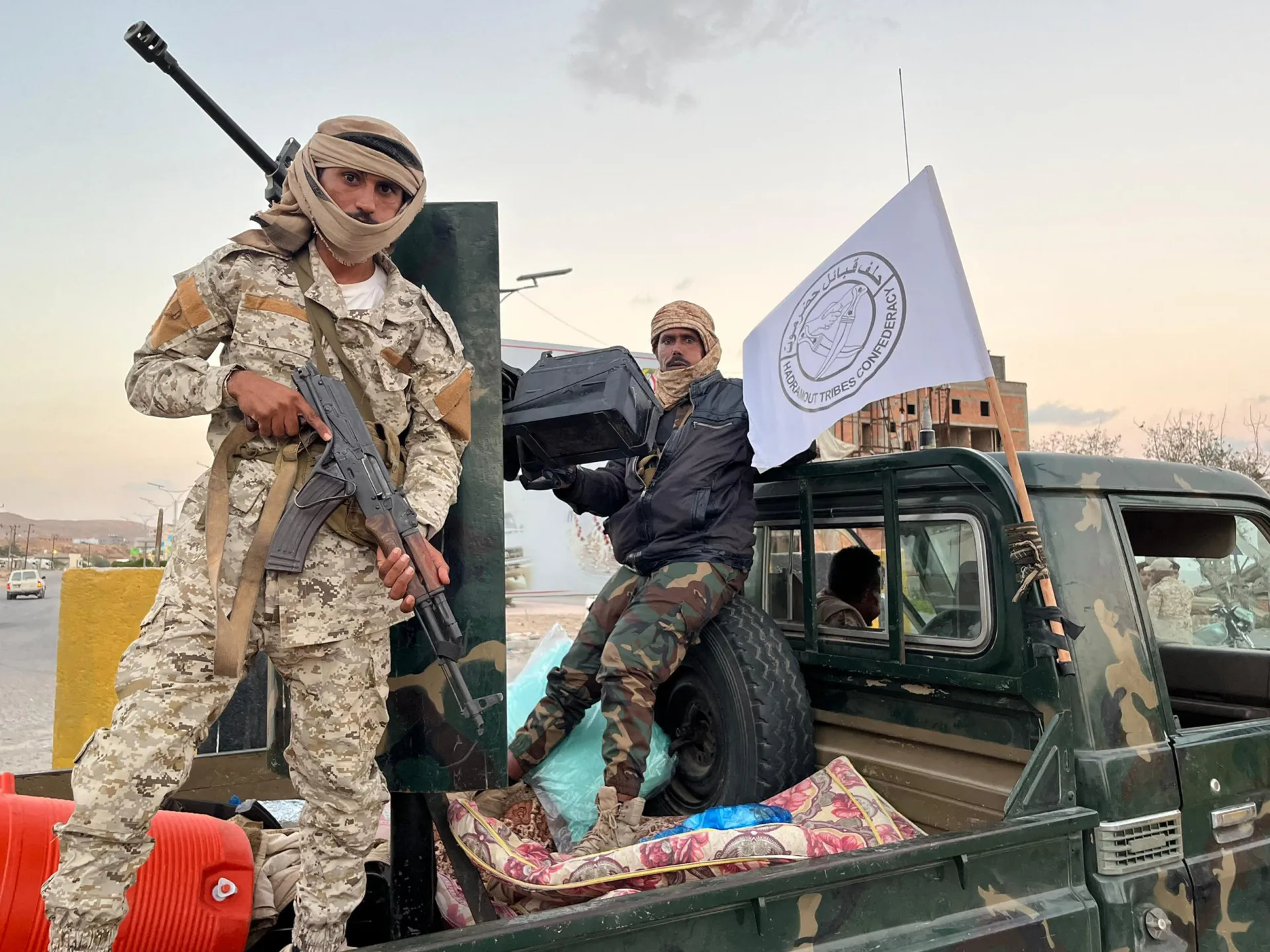
Events in Yemen are escalating quickly and dramatically, reaching the point of armed clashes erupting between the Arab coalition supporting the internationally recognised government in Yemen, led by Saudi Arabia, and the so‑called “Southern Transitional Council” (STC), backed by the United Arab Emirates.
Many view these developments as a natural outcome of a long, cumulative trajectory of complexities the country has experienced since the civil war erupted in late 2014, and the humanitarian and economic repercussions that followed.
External interventions had a profound impact in creating political and administrative chaos that intensified internal divisions and exposed what remained of the legitimate state to further weakness, culminating in the loss of its most important sovereign tools: unity of territory and decision-making. These developments and events add further complexity to an already complex picture, and Yemen will not be safe from their future repercussions.
On the other hand, others view the situation from another, less bleak angle. The strong reaction to the STC’s moves — on the part of the Yemeni president (chairman of the Presidential Leadership Council, or PLC) and, behind him, the Saudi‑led Arab coalition — is a new and important variable, completely different from the usual approach to many similar events. So, there is hope that these events and changes will mark a new phase that works to correct the imbalances and deviations that accompanied the Arab coalition’s intervention over more than a decade.
Watching carefully are the Houthi rebels in northern Yemen, who have remained silent, apparently waiting to see what these events will produce as they continue to strike at the unity of the components of the Arab coalition’s leadership and undermine the legitimate government. In any case, they realise that the eventual outcome will ultimately be in their favour. Therefore, the Houthis, according to multiple reports, are currently intensifying their military preparations, redeploying and dispersing their forces along the theatre of operations adjacent to contact points on the fronts: the northeast (Marib), and the southwest in Taiz and Bab al-Mandeb, preparing for zero hour.
So, what is the nature and background of this bilateral conflict between allies? Where have these events and developments led Yemen, and where will they lead it? And what are their implications for the future of the country and the region?
There is broad agreement that what is happening today is merely an initial result of a deep internal conflict of interests between the two main coalition states — Saudi Arabia and the UAE. Although most of this conflict remained hidden, its accumulations continued to roll and grow like a snowball.
To understand how matters reached this point of an explosion of conflict between allies, we must first understand the background of this rivalry and conflict.
In late March 2015, Saudi Arabia led a coalition of 10 Arab and Muslim countries to intervene militarily in Yemen — later it was called the Coalition to Support Legitimacy in Yemen, with the aim of restoring the authority of Yemen’s former legitimate president, Abd-Rabbu Mansour Hadi, from the grip of the Houthi coup forces.
At the outset, the coalition achieved major, tangible successes on the ground before differences began to emerge between the two main allies, Saudi Arabia and the UAE.
There is a widespread and well‑grounded belief that the UAE entered this war with a plan to achieve purely geopolitical and strategic interests. Some argue, however, that this was not necessarily the case at the beginning, but that it may later have turned to exploiting weakness, vacuum, and internal divisions in order to redraw its strategy anew in light of that.
On the ground, the UAE formed, trained, and financed local forces loyal to it, using them to achieve its own objectives, away from the coalition and the legitimate government. Within just two years of its intervention, it managed — through its own local forces — to impose control over all strategic maritime outlets along southern and eastern Yemen, reaching the western coast of Taiz governorate in the country’s southwest, where the strategic Bab al-Mandeb Strait lies.
Over 10 years of the coalition’s intervention, the UAE established and built a hard-hitting army of its own militias, becoming the strongest force on the ground and the greatest threat to the interests of its ally (Saudi Arabia) in Yemen, including the system and the legitimate government that it had supported and sponsored from the outset. It can be affirmed that Riyadh committed fatal strategic mistakes in dealing with these deviations, remaining silent and failing to take decisive action on the ground to curb its ally’s overreach — perhaps settling for minor protective measures, and often acting merely as a “mediator” to resolve disputes that flared up from time to time — until the axe finally struck the head.
Military escalation
In early December, the STC, which was founded and backed by the UAE, triggered a military escalation by seizing control of the governorates of Hadramout and al-Mahra in eastern Yemen. This angered Saudi Arabia and pushed it out of its usual diplomacy and calm. Many may interpret this major shift in its policy as stemming from the fact that it views these two eastern governorates bordering it as a geographic extension of its national security, and that any compromise to their security constitutes a direct threat to its national security, something Riyadh stated explicitly in its recent statements issued in the wake of the crisis.
Accordingly, the head of the PLC dealt with these developments with great seriousness, describing them as unacceptable “unilateral measures”. Under the authority granted by the Power Transfer Declaration (April 2022), he called on the Saudi-led Arab coalition to intervene militarily.
The next day, coalition aircraft struck military equipment that had arrived on two ships from the UAE’s Fujairah port to the port of Mukalla in Hadramout. In response, Yemeni President Rashad al-Alimi declared a state of emergency and called on the UAE to end its presence in Yemen. Later that day, the UAE Ministry of Defence announced the withdrawal of what remained of its forces in Yemen (the UAE had previously announced in October 2019 that it was withdrawing its forces from Yemen).
The military escalation led to major, rapidly unfolding military and political repercussions, particularly after the STC continued to refuse to heed calls and threats by the coalition leadership and the Yemeni president to withdraw its forces from the two governorates.
Someone could ask: Why does the STC refuse to withdraw its forces despite the threats and successive strikes? The answer is that doing so would deal a powerful blow to its secessionist project. Clearly, the council’s takeover of these two governorates — both of which reject its project — raised broad hopes among southern separatists of declaring their state, but Saudi Arabia’s decisive intervention (in the name of the Arab coalition) dealt a crushing blow to that project.
Escalation and repercussions
With the start of the new year, government ground forces — formed by the Yemeni president through a presidential decision on January 27, 2023 under the name Homeland Shield, with Saudi support — began moving towards Hadramout and al-Mahra (east) to liberate them from STC forces, under air cover and support from coalition aircraft, and liberation and control operations began. In response, forces from the UAE-backed Giants Brigades, coming from Taiz’s western coast, moved towards Hadramout governorate to reinforce and support STC forces.
Amid the accelerating escalation and its repercussions, the head of the STC, Aidarous al-Zubaidi — also a member of the PLC — moved quickly to issue what he called a “constitutional declaration” (January 2, 2026), in which he announced what he termed the independent “State of the Arab South”, during a two-year transitional period.
While the country’s official institutions at the national, regional, and global levels have so far ignored this declaration, many Yemenis dealt with it ambivalently, each according to their affiliations and loyalties.
For the Southern separatists, they expressed overwhelming joy at the announcement of their state, while their opponents mocked the move as a leap over reality, an attempt to escape forward over facts and local and international laws and regulations. Some considered it merely a desperate attempt to rid the council of the pressure of promises it had made to those dreaming of secession, at a time when it became evident that secession was no longer easy after the recent events and developments.
Regardless of interpretations, even if this declaration has no legal effect, its political, economic, and administrative impacts will not be easy, whether in terms of deepening divisions among Yemen’s elite and the public (North-South), preserving the legal standing of the Yemeni state, or even the continuity of managing the fragile state.
Finally, and perhaps most importantly, its dangerous repercussions for the main battle to restore the state and relieve Yemenis from the consequences of a decade of war and state collapse.
Clearly, the Yemeni scene is becoming more complex, with events accelerating, positions erupting, and reactions escalating. No one knows precisely where developments in Yemen are headed.
The views expressed in this article are the author’s own and do not necessarily reflect Al Jazeera’s editorial stance.
In less than 24 hours, the US bombed Venezuela, brazenly abducted President Nicolas Maduro and his wife from their compound in Caracas and whisked them to a detention centre in New York. Here’s how regime change unfolded overnight.
A deal penned in March stipulated that the Syrian Democratic Forces (SDF) would integrate with state institutions by the end of the year, but its implementation has since stalled.
Published On 4 Jan 20264 Jan 2026
Share
Syrian government officials have held talks with the commander of the main Kurdish-led force in the country over plans to merge it with the national army, state media reported, adding that no “tangible results” had been achieved.
The Kurdish-led and US-backed Syrian Democratic Forces (SDF) said in a statement on Sunday that a delegation led by top commander Mazloum Abdi (also known as Mazloum Kobani) held talks with government officials in Damascus related to the military integration process.
Recommended Stories
list of 3 itemsend of list
A major sticking point has been whether the SDF would remain a cohesive unit in the new army or whether it would be dissolved and its members individually absorbed. The group has tens of thousands of fighters and is the main force yet to be absorbed into Syria’s military.
State TV said the meeting did not produce “tangible results” and that the sides agreed to hold further meetings at a later date.
The leadership in Damascus under President Ahmed al-Sharaa inked a deal in March with the SDF, which controls large swathes of Syria’s oil-rich north and northeast. The Kurdish-led force was to merge with the Syrian army by the end of 2025, but there have been disagreements on how it would happen.
The deal also would bring all border crossings with Iraq and Turkiye, as well as airports and oil fields in the northeast, under the central government’s control. Prisons holding about 9,000 suspected members of the ISIL (ISIS) group are also expected to come under government control.
Turkiye considers the SDF a “terrorist” organisation because of its association with the Kurdistan Workers’ Party, or PKK, which has waged a decades-long armed conflict on its soil, although a peace process is now under way.
Ankara sees the presence of Kurdish forces on its border as a security threat and has publicly called for them to be integrated into the state, but not as a single unit.
The SDF insists on a decentralised system of governance that would allow it to maintain its influence in the areas it controls. Tensions between the SDF and the government – which opposes calls for decentralisation – have occasionally led to violence.
In late December, clashes broke out between security forces and SDF fighters in the northern city of Aleppo during a visit to Syria by Turkiye’s Foreign Minister Hakan Fidan.
Last month, Fidan urged the SDF to not be an obstacle to Syria’s stability and warned that patience with the group was running out.
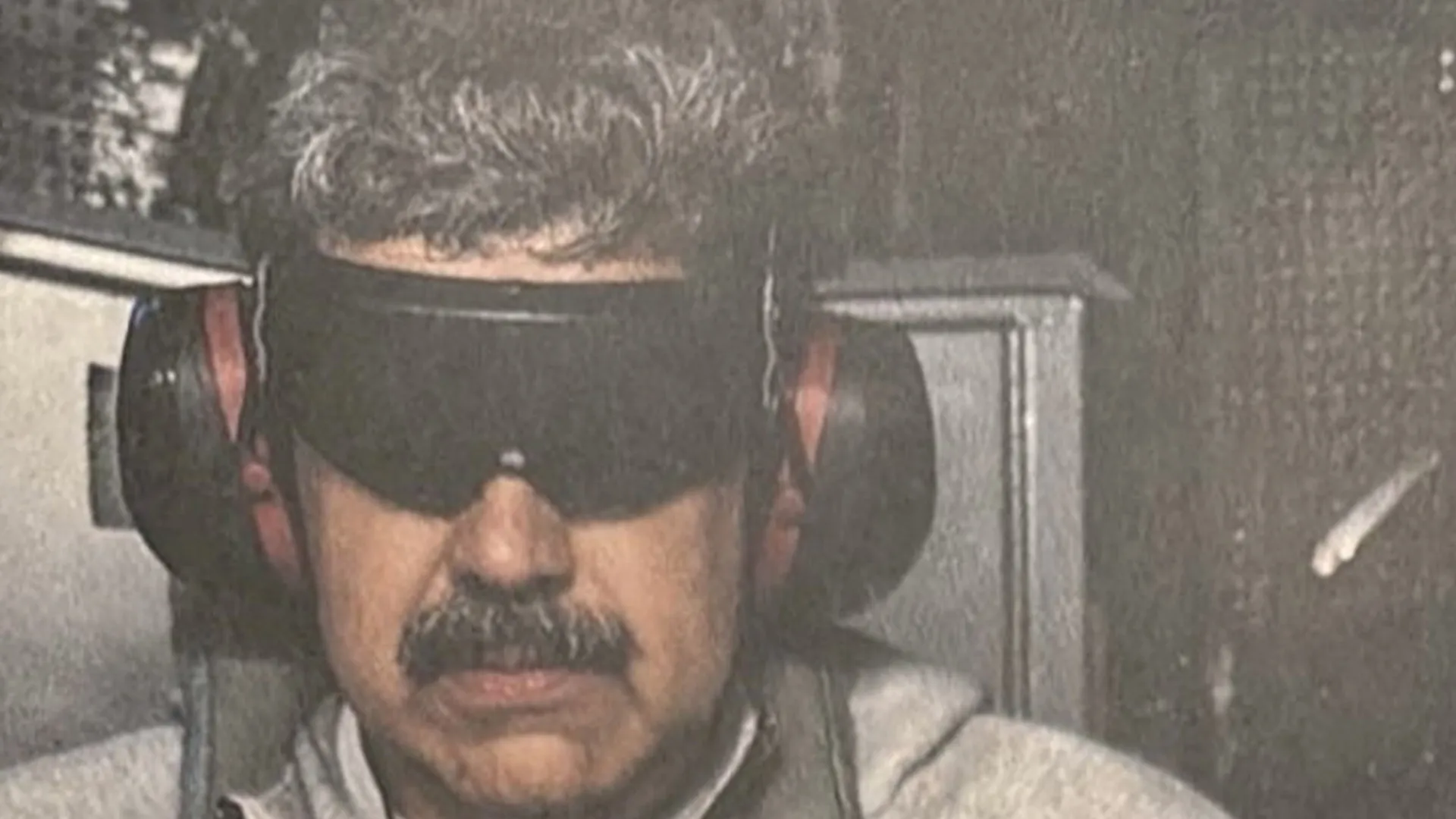
The image of abducted Venezuelan President Nicolas Maduro bound and blindfolded aboard the USS Iwo Jima posted by Donald Trump prompted shock and condemnation.
Protesters have rallied worldwide after Donald Trump announced the US would ‘run’ Venezuela following the abduction of President Nicolas Maduro and his wife. Demonstrators from Paris to Sao Paulo are denouncing what they call US aggression and imperialism.
United States President Donald Trump has said that Washington will “run” Venezuela until a political transition can take place, hours after US forces bombed the South American country and “captured” its president, Nicolas Maduro.
Speaking during a news conference on Saturday, Trump said the US would “run the country until such time as we can do a safe, proper and judicious transition”.
Recommended Stories
list of 3 itemsend of list
“We don’t want to be involved with having somebody else get in, and we have the same situation that we had for the last long period of years,” he said.
The Trump administration launched attacks on Venezuela’s capital, Caracas, and seized Maduro and his wife in the early hours of Saturday.
A plane carrying the Venezuelan leader landed in New York state on Saturday evening, according to US media.
Footage broadcast by CNN, Fox News and MS Now showed US officials escorting a person they identified as Maduro off a plane at the Stewart international airport, about 97 kilometres (60 miles) northwest of New York City.
Maduro’s capture took place after a months-long US pressure campaign against his government, which included US seizures of oil tankers off the Venezuelan coast, as well as deadly attacks on alleged drug-smuggling boats in the Caribbean. The attacks were widely denounced as extrajudicial killings.
Washington had accused the Venezuelan leader, who has been in power since 2013, of having ties to drug cartels. Maduro had rejected the claim, saying the US was working to depose him and take control of Venezuela’s vast oil reserves.
During Saturday’s news conference, Trump said that “very large United States oil companies” would move into Venezuela to “fix the badly broken… oil infrastructure and start making money for the country”.
He added that his administration’s actions “will make the people of Venezuela rich, independent and safe”.
The Trump administration has defended Maduro’s “capture, saying the left-wing leader faced drug-related charges in the US.
These charges include “narco-terrorism conspiracy, cocaine importation conspiracy, possession of machine guns and destructive devices, and conspiracy to possess machine guns and destructive devices against the United States”, US Attorney General Pam Bondi said.
“They will soon face the full wrath of American justice on American soil in American courts,” she added in a post on X.
A Justice Department official told the Reuters news agency that Maduro is expected to make an initial appearance in Manhattan federal court on Monday.
‘Illegal abduction’
But legal experts, world leaders and Democratic Party lawmakers in the US have condemned the administration’s actions as a violation of international law.
“Attacking countries, in flagrant violation of international law, is the first step towards a world of violence, chaos, and instability, where the law of the strongest prevails over multilateralism,” Brazilian President Luiz Inacio Lula da Silva wrote on X.
Ben Saul, the United Nations special rapporteur on human rights and counterterrorism, slammed what he called Washington’s “illegal abduction” of Maduro. “I condemn the US’ illegal aggression against Venezuela,” Saul wrote on social media.
A spokesperson for UN chief Antonio Guterres said he was “deeply alarmed” by the situation, describing the US’s actions as setting “a dangerous precedent”.
“The Secretary-General continues to emphasize the importance of full respect – by all – of international law, including the UN Charter. He’s deeply concerned that the rules of international law have not been respected,” Guterres’s office said in a statement.
Earlier on Saturday, Venezuela’s defence minister released a defiant statement in response to the US attacks, urging people to remain united.
“We will not negotiate; we will not give up,” Vladimir Padrino Lopez said, stressing that Venezuela’s independence is not up for negotiation. “We must maintain calm and [be] united in order to prevail in these dire moments.”
Uncertainty prevails
It remains unclear how exactly the US plans to “run” Venezuela, and how long the purported transitional period will last.
During Saturday’s news conference, Trump said that US Secretary of State Marco Rubio had spoken with Venezuelan Vice President Delcy Rodriguez.
“She was sworn in as president just a little while ago,” Trump told reporters. “She had a long conversation with [Rubio], and she said, ‘We’ll do whatever you need’. I think she was quite gracious, but she really doesn’t have a choice.”
Rodriguez appeared to contradict that in a news conference in Caracas later in the day.
“We demand the immediate release of President Nicolas Maduro and his wife. The only president of Venezuela is President Nicolas Maduro,” she said.
“We are ready to defend Venezuela. We are ready to defend our natural resources, which should be for national development,” she added.
Al Jazeera’s Latin America editor Lucia Newman, reporting from Chile, said that, if Rodriguez is “on board” with the US plan for Venezuela, as Trump and Rubio have suggested, “she certainly didn’t sound like it” during her address.
“She sounded like her typical, fiery self, very much on the side of… Maduro, demanding that he be released and saying that Venezuela would not be a colony of the United States,” Newman said.
The events of the day have brought “a rollercoaster of emotions” to “Venezuelans both inside and outside of the country”, said Caracas-based journalist Sissi de Flaviis.
“When we first heard that Maduro was taken out of the country, there was a mix of reactions,” she said. “A lot of people couldn’t believe it. Other people were pretty much celebrating. Other people were kind of on standby, waiting.”
After Trump’s news conference announcing US plans to run Venezuela, “there’s been a shock”, de Flaviis added.
“People are a bit concerned about what this will actually mean for us, what this will mean for the government and who is going to lead us in the next few days, months and years.”
Meanwhile, Harlan Ullman, a former US naval officer, told Al Jazeera that “the notion of America taking over Venezuela is going to explode in our faces”.
“When Trump says, ‘We’re going to run the country’: We’re not capable of running America, how are we going to be able to run Venezuela?” Ullman said.
“I do not believe that we have a plan for dealing with Venezuela,” he added. “A country is extraordinarily complex. We lack the knowledge, understanding and all the logistics to do this.”
Weekly insights and analysis on the latest developments in military technology, strategy, and foreign policy.
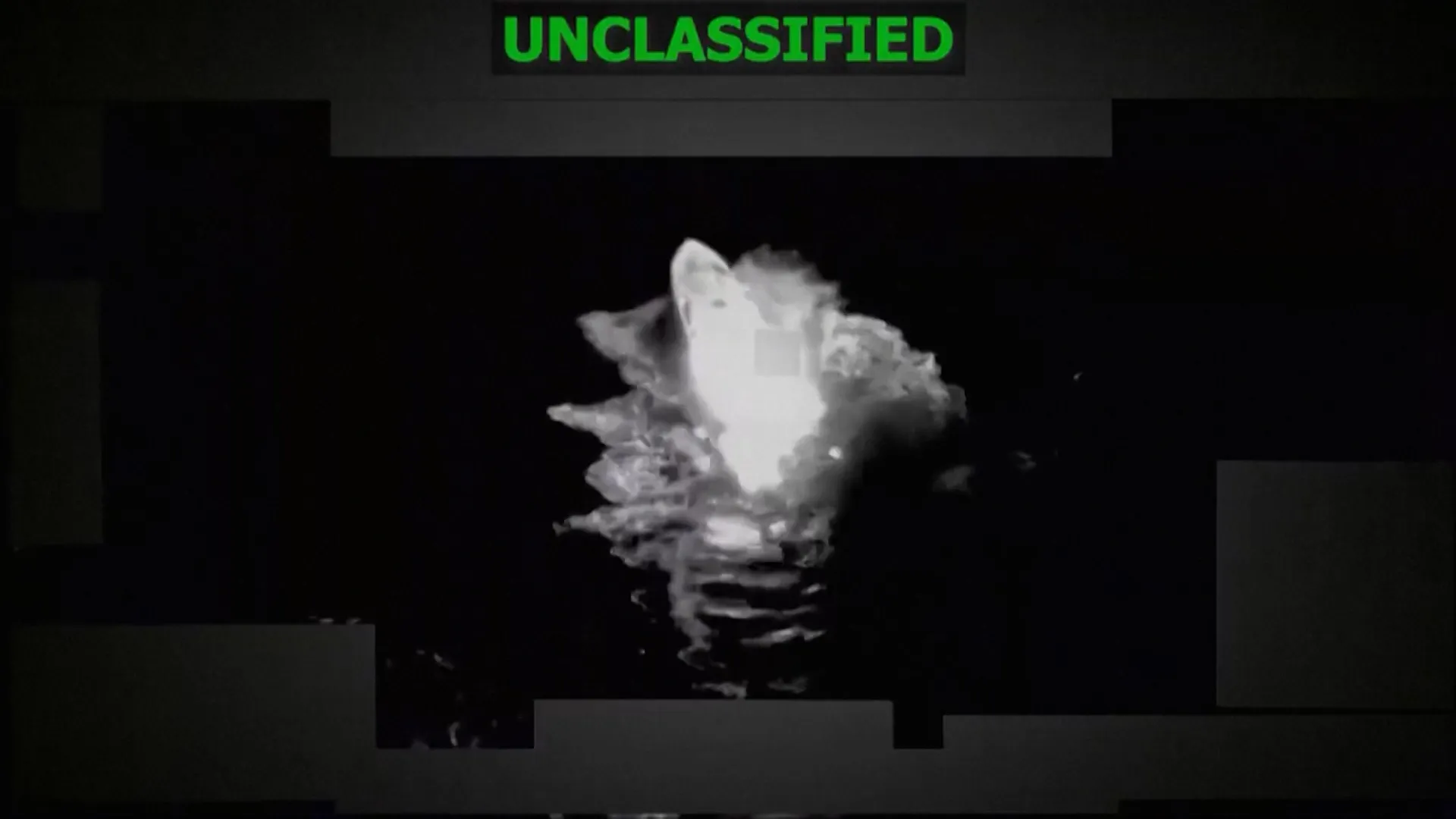
Details are still emerging about the U.S. operation to capture Venezuelan dictator Nicolas Maduro, an effort known as Absolute Resolve. We now have access to satellite imagery that provides an intriguing look at some of the key targets that were struck by the U.S. military during the operation, which are also indicative of the precision of the weapons employed.
You can catch up with our previous rolling coverage of the operation here.
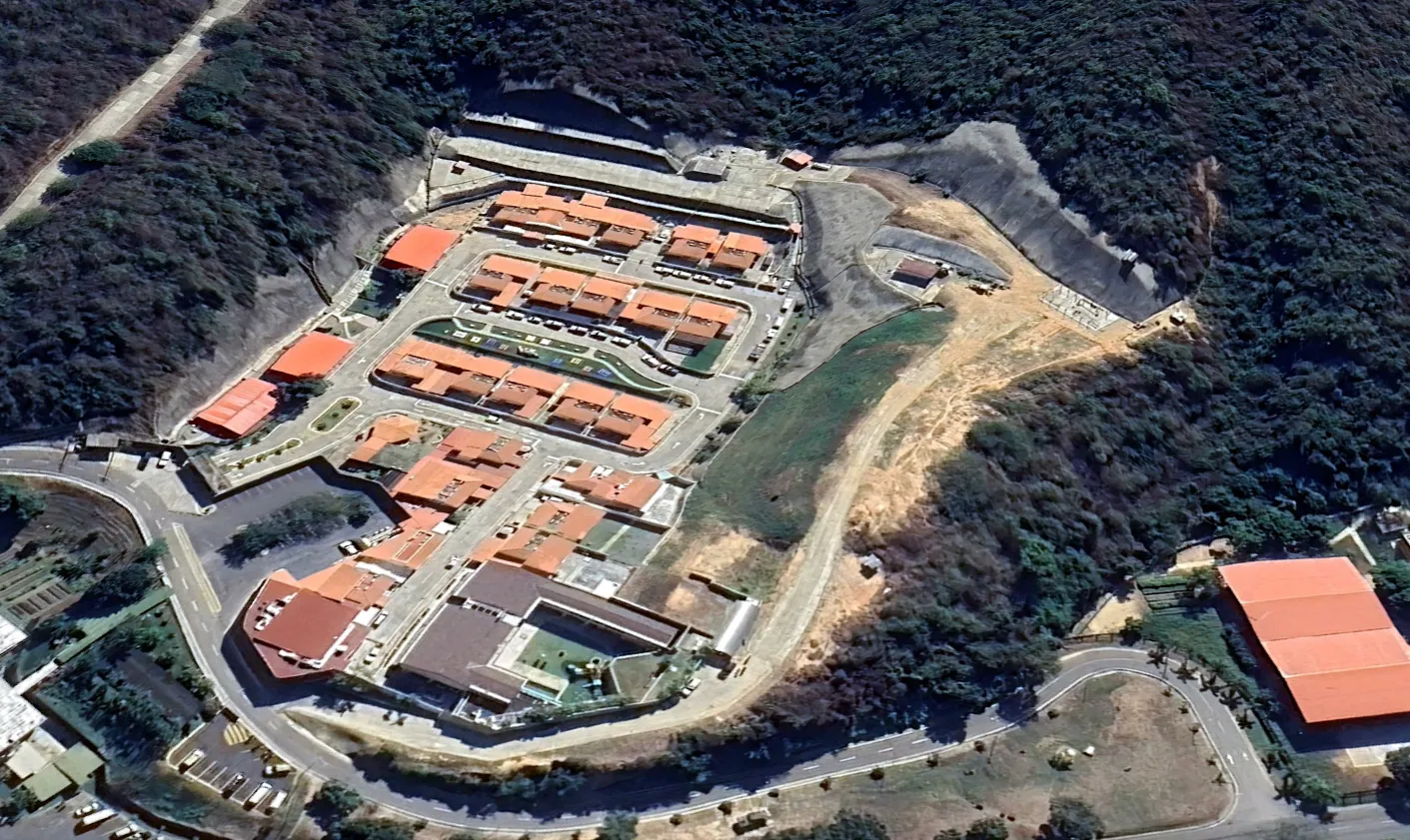
At this point, we do not know for sure where Maduro and his wife were taken from. One very strong possibility is the major military complex at Fuerte Tiuna, in the Venezuelan capital, Caracas. This is widely reported to accommodate a Maduro compound, and Venezuelan ruling party leader Nahum Fernández toldThe Associated Press that Maduro and his wife were there when they were captured. U.S. President Trump said the couple was in “a house that was more like a fortress,” which would also fit the description. Certainly, there were U.S. airstrikes concentrated at Fuerte Tiuna, as seen in the satellite imagery that follows in this article.
In terms of the platforms that carried out airstrikes, the Pentagon has confirmed that assets involved included F-22s, F-35s, F/A-18s, EA-18s, and B-1 bombers, as well as numerous drones, any of which could have been delivering munitions. Meanwhile, helicopters of the U.S. Army’s 160th Special Operations Aviation Regiment spearheaded the operation to capture Maduro. It appears that a Night Stalker MH-60 and possibly more rotorcraft may have touched down at or near Fuerte Tiuna.
In our early reporting, we looked at just some of the peculiar fortified locations on the base grounds at Fuerte Tiuna.
Man… there is some very ‘interesting’ features at this base pertaining to what is built into the hillside.
This military installation is a known center of gravity for the Venezuelan military, and it has some unique features, including bunkers/tunnels built into the side of the mountain it butts up against. Three examples of the unusual constructions at Fuerte Tiuna are seen in the images immediately below that were taken over the years, long before the operation:
Google EarthGoogle EarthGoogle Earth
The view of Fuerte Tiuna dated December 22, seen below, shows the site as it looked before the raid:
In the satellite image below, dated January 3, we see the aftermath of the U.S. operation at Fuerte Tiuna, in particular, toward the top of the picture, where U.S. strikes clearly destroyed three long buildings that were part of an original group of six. We can also see significant destruction at an adjacent site, to the left, which is partially surrounded by forest, and is claimed by some unverified sources to have been close to the partly concealed entrance to the Maduro compound.
Reportedly, these U.S.-made Dragoon 300 armored fighting vehicles (essentially a scaled-up version of the V-150 Commando) were among those damaged at Fuerte Tiuna.
Damaged Venezuelan Dragoon 300 APC at Fort Tiuna following US airstrikes, January 3, 2026.
Note that the vehicle has been modified into similar configuration to Cadillac Gage V-100 Commandos.
The 312th “Ayala” Armored Cavalry Battalion of the Venezuelan Army appears to have had all of its equipment and most of its armored vehicles entirely destroyed in last night’s strike operation by the United States, which heavily targeting the Fuerte Tiuna Military Complex in the… pic.twitter.com/VXmVHRK4ha
Next, we can see another close-up view, this time from after the raid, with the three long buildings clearly knocked out. The scale of the damage means that we cannot immediately identify what kind of equipment the buildings contained, although at least some military vehicles can be seen destroyed.
The same area is seen below in even greater detail, in an image dated December 22. At least six green-painted military trucks can be made out, as well as a handful of apparently civilian-looking semi-trailers, and around a dozen apparent cargo containers.
The next image provides a post-strike view of the same area, providing a better idea of the scale of destruction, consistent with an airstrike, presumably involving some kind of submunitions, since no obvious large craters are visible.
Now we move to another part of Fuerte Tiuna, namely the area that is partly surrounded by forest. The area is seen here as it appeared on December 22. The primary targets in this particular location are revealed as the two red-roofed storage buildings, one somewhat longer than the other. The shortened building reveals the presence of what look like relatively long trucks or possibly semi-trailers. These may well be associated with air defense systems, which we know were among the main targets of the U.S. airstrikes.
For comparison, this is the same partly wooded area as it appeared today, with extensive destruction evident. The two red buildings and their contents are entirely destroyed.
U.S. forces also targeted what are understood to be gate security buildings at the complex, which can be seen below in another image dated December 22. These buildings were located on a bend in the road, in a wooded area. They may also be another entrance into an underground area.
The final image we have received shows Palacio Miraflores, also in Caracas, as it appeared on January 1. This is the head office of the President of Venezuela. It is located on Urdaneta Avenue, in the Libertador Bolivarian Municipality, and is another, less likely option as to where the Venezuelan leader was seized.
The building was among the targets struck by U.S. forces, in line with early reporting of the operation. Soon after it had begun, videos emerged showing armored vehicles in position, protecting nearby roads. In the event, Maduro may well not have been home, but instead located in the presumed safer location at Fuerte Tiuna.
A V-150 “Commando” Armored Wheeled-Gun with the Venezuelan Army spotted near Miraflores Presidential Palace in the capital of Caracas. pic.twitter.com/ToYWjTRlMn
For now, we still await much more information to provide a better understanding of how Maduro was captured, and from where, exactly.
What is already clear is that this was a meticulously planned and extremely complicated operation involving multiple assets and agencies, fought across various domains, with many more facets of it still to be revealed.
United States President Donald Trump announced on Saturday morning that his country’s forces had bombed Venezuela and captured the South American nation’s president, Nicolas Maduro, and First Lady Cilia Flores in a dramatic overnight military attack that followed months of rising tensions.
Venezuela’s government said that the US had struck three states apart from the capital, Caracas, while neighbouring Colombia’s President Gustavo Petro released a longer list of places that he said had been hit.
The operation has few, if any, parallels in modern history. The US has previously captured foreign leaders, including Iraq’s Saddam Hussein and Panama’s Manuel Noriega, but after invading those countries in declared wars.
Here is what we know about the US attacks and the lead-up to this escalation:
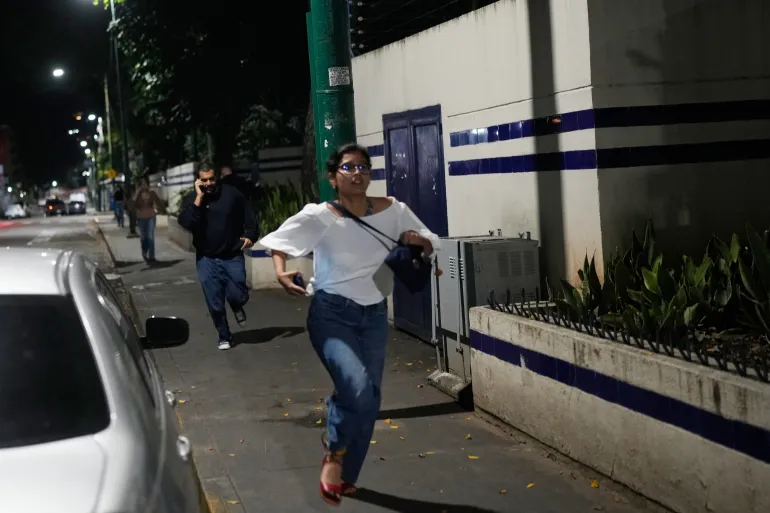
Pedestrians run after explosions and low-flying aircraft were heard in Caracas, Venezuela, on Saturday, January 3, 2026 [Matias Delacroix/ AP Photo]
How did the attack unfold?
At least seven explosions were reported from Caracas, a city of more than three million people, at about 2am local time (06:00 GMT), as residents said they heard low-flying aircraft. Lucia Newman, Al Jazeera’s Latin America editor, reported that at least one of the explosions appeared to come from near Fort Tiuna, the main military base in the Venezuelan capital.
Earlier, the US Federal Aviation Administration had issued instructions to American commercial airlines to stay clear of Venezuelan airspace.
Within minutes of the explosions, Maduro declared a state of emergency, as his government named the US as responsible for the attacks, saying that it had struck Caracas as well as the neighbouring states of Miranda, Aragua and La Guaira.
The US embassy in Bogota, Colombia, referred to the reports of the explosions and asked American citizens to stay out of Venezuela, in a statement. But the diplomatic mission did not confirm US involvement in the attacks. That came more than three hours after the bombings, from Trump.
Supporters of Venezuelan President Nicolas Maduro embrace in downtown Caracas, Venezuela, on Saturday, January 3, 2026, after US President Donald Trump announced that Maduro had been captured and flown out of the country [Cristian Hernandez/ AP Photo]
What did Trump say?
In a post on his Truth Social platform, Trump said, a little after 09:00 GMT that the US had “successfully carried out a large scale strike against Venezuela and its leader, President Nicolas Maduro, who has been, along with his wife, captured and flown out of the Country”.
Venezuela has not yet confirmed that Maduro was taken by US troops — but it also has not denied the claim.
Trump said that the attack had been carried out in conjunction with US law enforcement, but did not specify who led the operation.
Trump announced that there would be a news conference at his Mar-a-Lago resort in Florida at 11am local time (16:00 GMT) on Friday, where more details would be revealed.
Where did the US attack in Venezuela?
While neither the US nor Venezuelan authorities have pinpointed locations that were struck, Colombia’s Petro, in a social media post, listed a series of places in Venezuela that he said had been hit.
They include:
La Carlota airbase was disabled and bombed.
Cuartel de la Montana in Catia was disabled and bombed.
The Federal Legislative Palace in Caracas was bombed.
Fuerte Tiuna, Venezuela’s main military complex, was bombed.
An airport in El Hatillo was attacked.
F-16 Base No 3 in Barquisimeto was bombed.
A private airport in Charallave, near Caracas, was bombed and disabled.
Miraflores, the presidential palace in Caracas, was attacked.
Large parts of Caracas, including Santa Monica, Fuerte Tiuna, Los Teques, 23 de Enero and the southern areas of the capital, were left without electricity.
Attacks were reported in central Caracas.
A military helicopter base in Higuerote was disabled and bombed.
The US Navy’s Gerald R Ford Carrier Strike Group, including the flagship USS Gerald R Ford, USS Winston S Churchill, USS Mahan and USS Bainbridge, sail towards the Caribbean Sea, in the Atlantic Ocean, on November 13, 2025 [US Navy/Petty Officer 3rd Class Tajh Payne/Handout via Reuters]
What led to these US attacks on Venezuela?
Trump has, in recent months, accused Maduro of driving narcotics smuggling into the US, and has claimed that the Venezuelan president is behind the Tren de Aragua gang that Washington has proscribed as a foreign terrorist organisation.
But his own intelligence agencies have said that there is no evidence that Maduro is linked to Tren de Aragua, and US data shows that Venezuela is not a major source of contraband narcotics entering the country.
Starting in September, the US military launched a series of strikes on boats in the Caribbean Sea that it claimed were carrying narcotics. More than 100 people have been killed in at least 30 such boat bombings, but the Trump administration is yet to present any public evidence that there were drugs on board, that the vessels were travelling to the US, or that the people on the boats belonged to banned organisations, as the US has claimed.
Meanwhile, the US began its largest military deployment in the Caribbean Sea in at least several decades, spearheaded by the USS Gerald Ford, the world’s largest aircraft carrier.
In December, the US hijacked two ships carrying Venezuelan oil, and has since imposed sanctions on multiple companies and their tankers, accusing them of trying to circumvent already stringent American sanctions against Venezuela’s oil industry.
Then, last week, the US struck what Trump described as a “dock” in Venezuela where he claimed drugs were loaded onto boats.
Could all this be about oil?
Trump has so far framed his pressure and military action against Venezuela and in the Caribbean Sea as driven by a desire to stop the flow of dangerous drugs into the US.
But he has increasingly also sought Maduro’s departure from power, despite a phone call in early December that the Venezuelan president described as “cordial”.
And in recent weeks, some senior aides of the US president have been more open about Venezuela’s oil: the country’s vast reserves of crude, unmatched in the world, amounted to an estimated 303 billion barrels (Bbbl) as of 2023.
On December 17, Trump’s top adviser Stephen Miller claimed that the US had “created the oil industry in Venezuela” and that the South American country’s oil should therefore belong to the US.
But though US companies were the earliest to drill for oil in Venezuela in the early 1900s, international law is clear: sovereign states — in this case Venezuela — own the natural resources within their territories under the principle of Permanent Sovereignty over Natural Resources (PSNR).
Venezuela nationalised its oil industry in 1976. Since 1999, when socialist President Hugo Chavez, Maduro’s mentor and predecessor, came to power, Venezuela has been locked in a tense relationship with the US.
Still, one major US oil company, Chevron, continues to operate in the country.
The Venezuelan opposition, led by Nobel Peace Prize laureate Maria Corina Machado, has publicly called for the US to intervene against Maduro, and has pointed to the oil reserves that American firms could tap more easily with a new dispensation in power in Caracas.
Oil has long been Venezuela’s biggest export, but US sanctions since 2008 have crippled formal sales and the country today earns only a fraction of what it once did.
Venezuelan Vice President Delcy Rodriguez speaks to the media at the Foreign Office in Caracas, Venezuela, on August 11, 2025 [Ariana Cubillos/AP Photo]
How has Venezuela’s government reacted?
While Venezuela has not confirmed Maduro’s capture, Vice President Delcy Rodrigues told state-owned VTV that the government had lost contact with Maduro and First Lady Flores and did not have clarity on their whereabouts.
She demanded that the US provide “proof of life” of Maduro and Flores, and added that Venezuela’s defences were activated.
Earlier, in a statement, the Venezuelan government said that it “rejects, repudiates and denounces” the attacks.
It said that the aggression threatens the stability of Latin America and the Caribbean, and places the lives of millions of people at risk. It accused the US of trying to impose a colonial war, and force a regime change — and said that these attempts would fail.
This combination of pictures created on August 7, 2025 shows US President Donald Trump in Washington, DC, on July 9, 2025, and Venezuelan President Nicolas Maduro, right, in Caracas on July 31, 2024 [Jim Watson and Federico Parra/AFP]
What happens to Maduro next?
In a statement posted on X, Trump’s Attorney General Pam Bondi announced that Maduro and his wife have been indicted in the Southern District of New York.
Maduro has been charged with “Narco-Terrorism Conspiracy, Cocaine Importation Conspiracy” among other charges, Bondi said. It was unclear if his wife is facing the same charges, but she referred to the Maduro couple as “alleged international narco traffickers.”
“They will soon face the full wrath of American justice on American soil in American courts,” she added.
Mike Lee, a Republican senator from Utah, earlier posted on X that he had spoken to US Secretary of State Marco Rubio, who had told him that Maduro had been “arrested by US personnel to stand trial on criminal charges in the United States, and that the kinetic action we saw tonight was deployed to protect and defend those executing the arrest warrant.”
In 2020, US prosecutors had charged Maduro with running a cocaine-trafficking network.
But US officials remain silent on the illegality of Maduro’s capture and the attacks on Venezuela, which violate UN charter principles of sovereignty and territorial integrity of nations.
Russia and Cuba, close Maduro allies, condemned the attack. Colombia, which neighbours Venezuela and has itself been in Trump’s crosshairs, said that it “rejects the aggression against the sovereignty of Venezuela and of Latin America” – even though Bogota itself does not recognise Maduro’s government.
Most other nations have been relatively muted in their response to the US aggression so far.
Venezuela’s Interior Minister Diosdado Cabello, left, Defence Minister Vladimir Padrino Lopez, second from left, and Vice President Delcy Rodriguez, centre, seen here at a ceremony commemorating the 80th anniversary of the Soviet Union’s victory over Nazi Germany in World War II in Caracas, Venezuela, on Tuesday, May 13, 2025. Rodriguez, Cabello and Lopez are among the leaders widely seen as Maduro’s closest aides [Cristian Hernandez/AP Photo]
What’s next for Venezuela?
Constitutionally, Rodriguez, the vice president, is next in line to take charge if Maduro indeed has been plucked out of Venezuela by the US.
Other senior leaders seen as close to Maduro and influential within the Venezuelan hierarchy include Interior Minister Diosdado Cabello, National Assembly President — and Delcy’s brother — Jorge Rodriguez, and military chief General Vladimir Padrino López.
But it is unclear whether the state apparatus that Chavez and Maduro carefully built over a quarter century will last without them.
“Maduro’s capture is a devastating moral blow for the political movement started by Hugo Chavez in 1999, which has devolved into a dictatorship since Nicolas Maduro took power,” Carlos Pina, a Venezuelan analyst based in Mexico, told Al Jazeera.
If the US does engineer — or has already engineered — a regime change, the opposition’s Machado could be a front-line candidate to take Venezuela’s top job, though it is unclear how popular that might be. In a November poll in Venezuela, 55 percent of participants were opposed to military intervention in their country, and an equal number were opposed to economic sanctions against Venezuela.
Trump might be mistaken if he thinks the US can stay out of the chaos that’s likely to follow in a post-Maduro Venezuela, suggests Christopher Sabatini, a senior research fellow for Latin America, the US and North America programme at Chatham House.
“Assuming even if there is regime change – of some sort, and it’s by no means clear even if it does happen that it will be democratic – the US’s military action will likely require sustained US engagement of some sort,” he said.
“Will the Trump White House have the stomach for that?”
Caracas, January 3, 2026 (venezuelanalysis.com) – US President Donald Trump has claimed that US Special Forces have captured Venezuelan President Nicolás Maduro during a miltary operation against Venezuela in the early hours of Saturday.
In a social media message, Trump stated that the US had “successfully carried out a large scale strike against Venezuela” and that Maduro and first lady Cilia Flores had been “captured and flown out of the country.”
Venezuelan Vice President Delcy Rodríguez confirmed that Maduro and Flores’ whereabouts are unknown and demanded that the Trump administration provide proof of life.
US attacks began around 2 am local time, with loud explosions felt in the capital and nearby states.
Multiple military sites, including Fuerte Tiuna in Caracas, were reportedly bombed. Social media users reported low flying aircraft and active air defenses. The port in La Guaira was likewise among infrastructures hit.
Videos on social media also showed helicopters flying over the Venezuelan capital, with military analysts claiming that US Special Forces were deployed.
In a statement published on state outlets, the Venezuelan government accused the United States of carrying out a military attack against Venezuelan territory, describing it as a violation of the UN Charter and a threat to regional peace.
Authorities announced the activation of national defense plans, the deployment of the armed forces, and the declaration of a state of “External Commotion” nationwide. The Maduro government also called for popular mobilization and said it would raise formal complaints before international bodies, including the United Nations.
Venezuelan Defense Minister Vladimir Padrino Lopez issued a statement confirming US bombings in Caracas and surrounding areas.
Padrino reported that Venezuelan authorities are assessing damages and casualties from the attacks, claiming that US helicopters fired missiles on residential areas. The armed forces chief urged the international community to condemn Washington’s “criminal aggression.”
The Trump administration has escalated regime-change threats against Caracas im recent months and vowed to strike land targets.
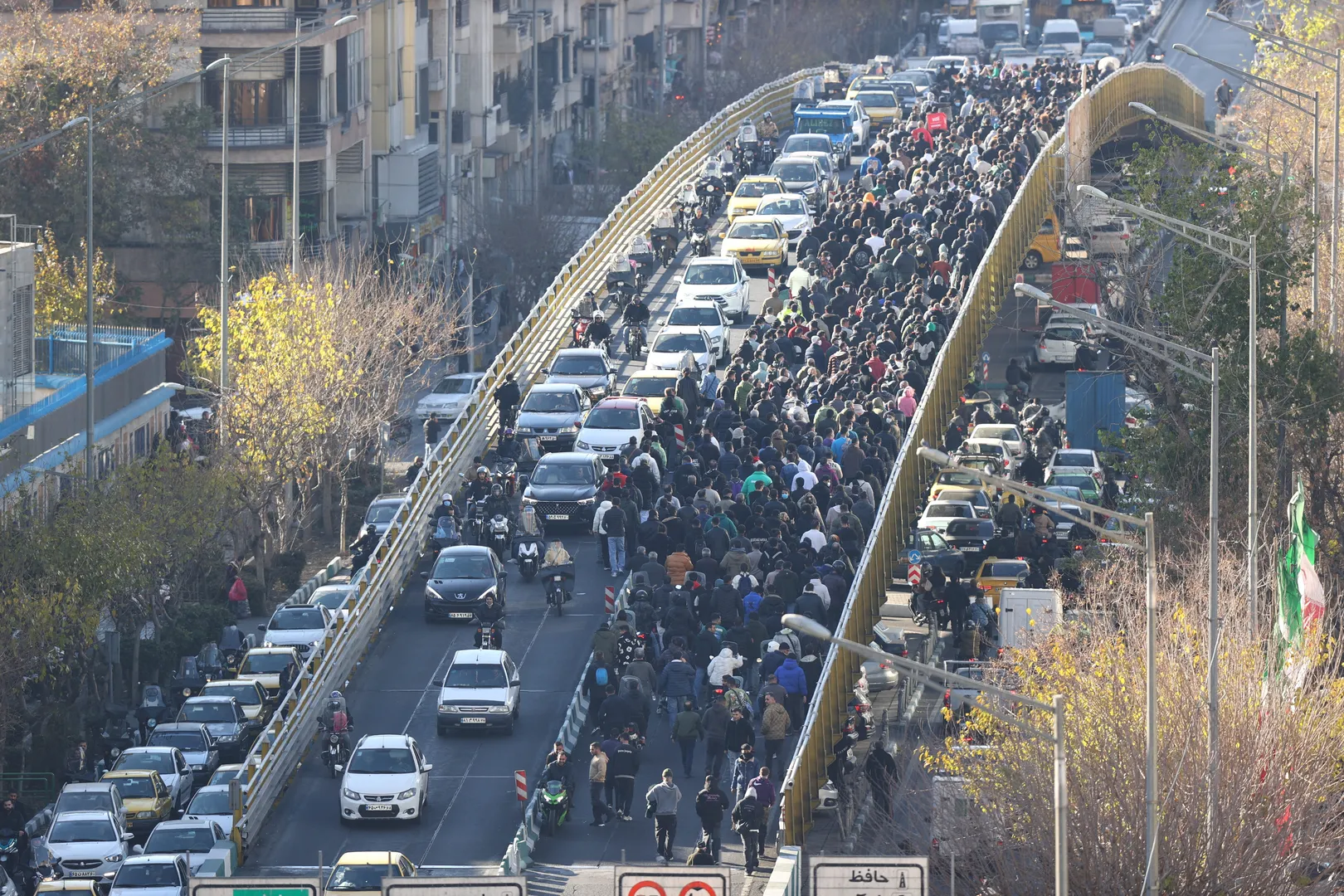
Protests are intensifying in Iran as a deepening economic crisis fuels public anger over soaring prices and falling living standards. Here’s a breakdown of what’s driving the unrest and how authorities are responding.
Chinese President Xi Jinping has invited South Korean President Lee Jae Myung to a state visit in Beijing, signalling China’s desire to reinforce relations with South Korea amid regional turbulence.
South Korea’s national security adviser, Wi Sung-lac, told reporters on Friday that Lee will meet Xi in Beijing on Monday before travelling to Shanghai to visit the historic site of South Korea’s provisional government during Japan’s 35-year colonial rule.
Recommended Stories
list of 4 itemsend of list
Wi said the leaders are expected to discuss “practical cooperation” in areas including supply-chain investment, tourism, and responses to transnational crime, according to Yonhap News Agency.
Lee is also expected to persuade China to take a “constructive” role in achieving “a breakthrough in resolving issues on the Korean Peninsula”, Wi added.
It will be the second meeting between Xi and Lee in just two months, in what analysts have described as an unusually short interval, reflecting Beijing’s interest in bolstering ties before the next meeting between the leaders of South Korea and Japan takes place.
Relations between China and Japan remain at a low point after Japanese Prime Minister Sanae Takaichi suggested in November that a hypothetical Chinese attack on Taiwan could provoke a military response from Tokyo.
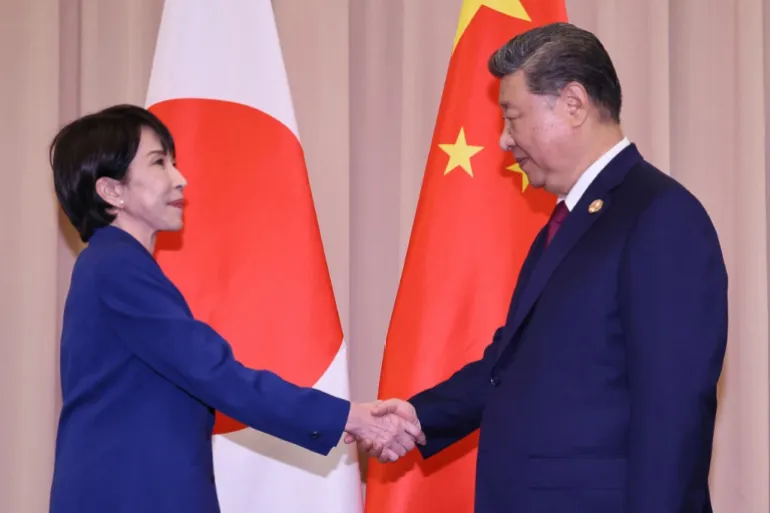
Japan’s Prime Minister Sanae Takaichi (L) shakes hands with Chinese President Xi Jinping before the Japan-China summit on the sidelines of the Asia-Pacific Economic Cooperation (APEC) Summit in Gyeongju [File: Jiji Press/AFP]
On Friday, Wi reaffirmed South Korea’s position on Taiwan, saying the country does “respect the one China policy and act in accordance with that position”. The position acknowledges Beijing’s view that Taiwan remains part of its sovereign territory, while allowing for separate ties with the self-governing island.
Kang Jun-young, a professor of political economics at Hankuk University of Foreign Studies, said “China wants to emphasise South Korea’s importance slightly more than before.
“China appears to have strategically decided that it would be better to have [Lee] visit China before South Korea holds a summit with Japan again,” Kang told the Reuters news agency.
For its part, the Lee administration has stressed its goal of “restoring” ties with China, which remains South Korea’s largest trading partner. At the same time, it has said Lee’s approach of “practical diplomacy” aims to maintain strong ties with Japan and the United States, South Korea’s most important ally.
Under Lee’s predecessor, Yoon Suk Yeol, Seoul leaned closer to Washington and Tokyo and increased criticism of China’s stance on Taiwan.
Lee, in contrast, has said he will not take sides in the dispute between China and Japan, a position he maintains as tensions around the Taiwan Strait rise following Beijing’s recent large-scale military drills near Taiwan.
Security alliances, regional strategy
The two leaders may also address contentious issues such as efforts to modernise the South Korea-US alliance, which some see as a counterbalance to China’s dominance in the Asia Pacific region, according to Shin Beom-chul, a former South Korean vice defence minister and senior research fellow at the Sejong Institute.
Currently, roughly 28,500 US troops are stationed in South Korea to deter threats from North Korea. US officials have signalled plans to make those forces more flexible in responding to other regional challenges, including Taiwan and China’s growing military reach.
“Korea is not simply responding to threats on the peninsula,” General Xavier Brunson, commander of US Forces Korea, said at a forum on December 29. “Korea sits at the crossroads of broader regional dynamics that shape the balance of power across Northeast Asia.”
As China remains North Korea’s principal ally and economic lifeline, experts expect Lee to seek Beijing’s assistance in encouraging dialogue with Pyongyang.
North Korea dismissed Lee’s outreach last year, calling him a “hypocrite” and “confrontational maniac”.
China and North Korea have, in turn, continued closer coordination, with North Korean leader Kim Jong Un appearing alongside Xi at a major military parade in September.
Trade and culture
Lee’s visit is also expected to focus on cooperation in critical minerals, supply chains, and green industries, his office said.
Nearly half of South Korea’s rare earth minerals, which are essential for semiconductor production, come from China. The trading partner accounts for a third of Seoul’s annual chip exports, its largest market.
Last month, officials from both countries agreed to work towards stable rare earth supplies. The visit may also explore partnerships in AI and advanced technologies.
Huawei Technologies plans to launch its Ascend 950 AI chips in South Korea next year, providing an alternative to US-based Nvidia for Korean firms, Huawei’s South Korea CEO, Balian Wang, said at a news conference last month.
Another potential topic is Beijing’s effective ban on K-pop content, which stretches back to 2017 following the deployment of the US’s THAAD missile defence system in South Korea.
SM Entertainment’s chief executive, who heads one of the country’s leading K-pop agencies, will join Lee’s business delegation, according to local media.
Kim Ju Ae’s first public visit to the Kumsusan Mausoleum added to speculation she may become the next in line.
Published On 2 Jan 20262 Jan 2026
Share
North Korean leader Kim Jong Un’s daughter, Ju Ae, who is widely speculated to be his potential successor, made her first public visit to the Kumsusan Mausoleum in Pyongyang alongside her parents, state media images show.
Photographs released by the Korean Central News Agency (KCNA) on Friday captured the family paying respects to Ju Ae’s grandfather and great-grandfather, Kim Jong Il and Kim Il Sung, the founder of the North Korean state. Analysts say that propaganda surrounding the Kim family’s “Paektu bloodline” has allowed its members to dominate daily life in the isolated country and maintain power for decades.
Recommended Stories
list of 4 itemsend of list
Over the past three years, Ju Ae has appeared more frequently in state media, prompting speculation from analysts and South Korea’s intelligence services that she may be positioned as the country’s fourth-generation leader.
North Korean leader Kim Jong Un and his daughter Ju Ae inspect a training of the Korean People’s Army at an undisclosed location in North Korea [File: KCNA via KNS/AFP]
Photographs show Ju Ae accompanying her father, mother Ri Sol Ju, and senior officials on the visit on January 1, standing between her parents in the main hall of the Kumsusan Palace of the Sun.
Ju Ae was first publicly introduced in 2022 when she accompanied her father to the launch of an intercontinental ballistic missile. Believed to have been born in the early 2010s, she also took part in this year’s New Year celebrations, and in September made her first public overseas visit, travelling to Beijing with her father.
The visit to the mausoleum coincided with key dates and anniversaries, reinforcing the dynastic narrative of the nuclear-armed state. North Korean media have referred to her as “the beloved child” and a “great person of guidance” – or “hyangdo” in Korean – a term traditionally reserved for top leaders and their designated successors.
Prior to 2022, Ju Ae’s existence had only been indirectly confirmed by former NBA player Dennis Rodman, who visited the North in 2013.
North Korea’s leaders have never formally announced their successors, instead signalling transitions gradually through public appearances and expanding official responsibilities.
Meanwhile, Kim Jong Un has pledged to further increase production of missiles and artillery shells, describing them as a “war deterrent” amid heightened military readiness from the United States and South Korea.
US recently approved $11bn arms package for Taiwan, which condemned ‘provocative’ Chinese military drills.
Published On 1 Jan 20261 Jan 2026
Share
The United States has called on China to exercise “restraint” and avoid actions that raise tensions following a series of war games around Taiwan simulating a blockade of the island.
The US Department of State said in a statement on Thursday that China’s bellicose language and military drills, which prompted sharp condemnation from Taipei, were a source of unnecessary strain.
Recommended Stories
list of 3 itemsend of list
“China’s military activities and rhetoric toward Taiwan and others in the region increase tensions unnecessarily. We urge Beijing to exercise restraint, cease its military pressure against Taiwan, and instead engage in meaningful dialogue,” said State Department spokesman Tommy Pigott.
“The United States supports peace and stability across the Taiwan Strait and opposes unilateral changes to the status quo, including by force or coercion,” he added.
China fired missiles and deployed jets and naval vessels earlier this week in a simulation of military actions to encircle Taiwan, which Beijing claims as an integral part of its territory and has vowed to bring under its control.
Chinese military drills have become a frequent occurrence, causing few disruptions to life on the self-governed island, whose status the US has not officially weighed in on.
But Beijing’s assertive stance has prompted angry condemnations from Taiwanese officials, and crackdowns on formerly autonomous areas such as Hong Kong following integration with China have bolstered scepticism about the prospects of possible reunification with Beijing.
“As president, my stance has always been clear: to resolutely defend national sovereignty and strengthen national defence,” Taiwanese President William Lai Ching-te said on Thursday.
Lai has called for a $40bn increase in Taiwan’s military spending, but the proposal is stalled in the country’s legislature, where the opposition party currently holds a majority.
“The coming year, 2026, will be a crucial one for Taiwan,” the president said, adding that Taiwan must “make plans for the worst, but hope for the best”.
While US lawmakers often make strong statements of support for Taiwan, US policy towards the island has been marked by ambiguity for decades and does not include an assurance of military support in the event of an invasion by China.
The US recently approved an $11bn arms package for Taiwan, but President Donald Trump said earlier this week that he did not believe China had plans to launch an invasion of Taiwan in the near future.
“I have a great relationship with [Chinese] President Xi [Jinping]. And he hasn’t told me anything about it. I certainly have seen it,” Trump told reporters on Monday.
“They’ve been doing naval exercises for 20 years in that area. Now people take it a little bit differently,” he added.
The US says a search is underway for survivors after it bombed what it said was a suspected drug trafficking convoy. The attack is believed to have taken place off the coast of Venezuela.
Taiwan’s Lai pledges to defend national sovereignty after Beijing holds live-fire drills around island.
Chinese President Xi Jinping has pledged to achieve the “reunification” of China and Taiwan, calling Beijing’s long-held goal “unstoppable.”
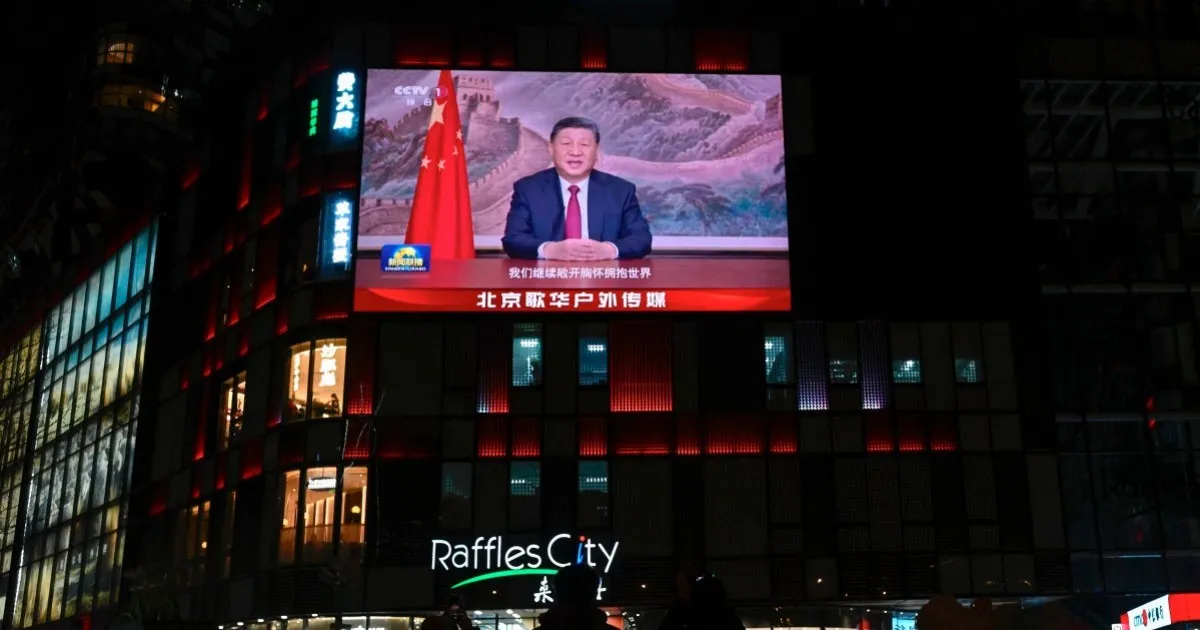
In a New Year’s address delivered a day after China’s military wrapped up war games around Taiwan, Xi on Wednesday invoked the “bond of blood and kinship” between Chinese people on each side of the Taiwan Strait.
Recommended Stories
list of 4 itemsend of list
“The reunification of our motherland, a trend of the times, is unstoppable,” Xi said.
Xi also hailed the institution in 2025 of an annual “Taiwan Recovery Day”, marking the end of imperial Japan’s rule of the island at the end of World War II.
Xi’s speech came on the heels of two days of live-fire drills simulating a blockade of the island, in what officials called a “stern warning” against “separatist” and “external interference” forces.
The drills were the largest ever held around Taiwan in terms of geographical area.
The war games, codenamed “Justice Mission 2025”, came just days after the United States approved its largest-ever arms package to Taiwan, valued at $11.1bn.
China views self-governing Taiwan as part of its territory and has long pledged to bring the island under its control, using force if necessary.
Taiwan’s ruling Democratic Progressive Party maintains that the island is a de facto independent country, though it has not formally declared independence.
In his New Year’s Day address on Thursday, Taiwanese President William Lai Ching-te pledged to “firmly” uphold national sovereignty and boost the island’s defences.
“In the face of China’s escalating expansionist ambitions, the international community is closely watching whether the people of Taiwan have the determination to defend themselves,” Lai said.
While Taiwan elects its leaders and has its own military, passport and currency, the island is officially recognised by just 11 countries and Vatican City.
China insists that countries do not officially recognise Taipei in order to maintain diplomatic ties with Beijing.
Although the US does not officially recognise Taiwan, Washington is committed to helping the island to defend itself under the Taiwan Relations Act of 1979.
While Washington is Taipei’s principal supplier of arms, the law does not stipulate any obligation to directly intervene militarily in the event of a Chinese blockade or invasion.
Opinion polls suggest a large majority of Taiwanese favour the status quo, with much smaller proportions supporting imminent moves towards formal independence or unification.
In his speech on Wednesday, Xi also hailed China’s innovation in industries including artificial intelligence and space.
“We sought to energise high-quality development through innovation. We integrated science and technology deeply with industries, and made a stream of new innovations,” he said.
“Many large AI models have been competing in a race to the top, and breakthroughs have been achieved in the research and development of our own chips. All this has turned China into one of the economies with the fastest-growing innovation capabilities.”
Antiques Road Trip star Angus Ashworth has shared the items he would most like to find in his work, including rare Victoria Cross and Napoleonic War medals
The star is a fan of military history(Image: Really screengrab)
Antiques Road Trip’s Angus Ashworth has disclosed his ultimate discovery – and it could command a staggering price. The seasoned antiques specialist and auctioneer, a familiar face on BBC’s Antiques Road Trip and his own programme, The Yorkshire Auction House, has encountered countless valuable treasures throughout his career.
However, he’s opened up about specific pieces he’s particularly keen to stumble upon. “I love military history, so my dream find would be a Victoria Cross or an Army Gold Medal from the Napoleonic Wars,” he revealed. “That’s the holy grail for me.”
When discussing potential values, the expert estimated between £60,000 and £80,000 for an Army Gold Cross medal. Angus also presents Yorkshire Heritage Hero, which follows him exploring Yorkshire’s magnificent country estates, assisting families in discovering valuable pieces from their properties.
He pinpoints critical repair needs and generates funding for restoration projects by unearthing and auctioning concealed treasures found within these historic residences.
The presenter observed: “No one has an ‘antiques sale’ anymore – these days it’s always a ‘country house sale’. People have really bought into the idea of this quintessentially British interior look. The public fascination provides potential to keep things above water.
“There’s a huge second-hand market for items such as dark furniture, lighting and table lamps, and soft furnishings – so curtains, cushions and rugs,” he added. “And there’s one place in particular worth checking: the garden shed.
“There can be real value in the garden and what’s in the shed – my day job is as an auctioneer, and I can see a huge interest and value in decorative pieces for the garden, from plant pots to benches.”
He also highlighted that 90s nostalgia items like games consoles and Harry Potter first editions are hot commodities among buyers looking to recapture their youth.
“You can even see it in the classic car world,” he added. “The market for people who dreamed of owning an MG has shrunk, while Ford Escorts are now far more desirable because that’s what people remember wanting.”
Last month, viewers of Antiques Roadshow watched in amazement as a man was adamant he wouldn’t sell his family heirloom, despite learning its eye-watering value.
As experts looked at a timepiece, horological expert Alastair Chandler hailed it “a real classic”. The Speedmaster watch belonged to the guest’s father, who only wore it on special occasions throughout his son’s childhood.