judge

Judge allows Kilmar Abrego Garcia to remain free through Christmas

Kilmar Abrego Garcia delivers remarks during a rally before his check in at the ICE Baltimore Field Office in Baltimore Maryland, on August 25. On Monday, a federal judge allowed the Salvadoran native to remain free through Christmas, after he was released earlier this month, as he awaits trial on human smuggling charges in Tennessee. File Photo by Shawn Thew/EPA

Dec. 22 (UPI) — A federal judge on Monday allowed Kilmar Abrego Garcia to remain free through Christmas as she barred Immigration and Customs Enforcement from re-detaining the Salvadoran native.

U.S. District Judge Paula Xinis in Maryland extended a temporary restraining order to keep federal officials from deporting Abrego Garcia, after the U.S. Supreme Court ruled he was deported and imprisoned in March without legal authority to El Salvador.

“This is an extremely irregular and extraordinary situation,” Xinnis told attorneys Monday, as she pressed the government on whether it would detain Abrego Garcia if there were no restraining order.

“Show your work, that’s all,” Xinis said. “Give it to me and we don’t have to speculate.”

Abrego Garcia was released from ICE detention on Dec. 11, following efforts to deport him to an African nation where he has no connection.

“Because Abrego Garcia has been held in ICE detention to effectuate third-country removal absent a lawful removal order, his requested relief is proper,” according to Xinis.

The U.S. Department of Homeland Security called Xinis’ rulings “naked judicial activism by an Obama-appointed judge.”

Abrego Garcia, who illegally entered the United States nearly 15 years ago, has accused the White House of vindictive prosecution. The administration has called him an MS-13 gang member, which he denies.

Abrego Garcia had been living in Maryland with his wife and children before being deported to El Salvador’s CECOT mega-prison in March. He was returned to the United States in June and is awaiting trial on human smuggling charges in Tennessee. He has pleaded not guilty.

On Monday, Abrego Garcia’s attorneys said he is prepared to go to Costa Rica, which the judge said the government refuses to consider.

The “persistent refusal to acknowledge Costa Rica as a viable removal option, their threats to send Abrego to African countries that never agreed to take him and their misrepresentation to the court that Liberia is now the only country available to Abrego, all reflect that whatever purpose was behind his detention, it was not for the ‘basic purpose’ of timely third-country removal,” Xinis wrote.

Source link

Ex-CIA Director John Brennan wants ‘favored’ Trump judge kept away from Justice Department inquiry

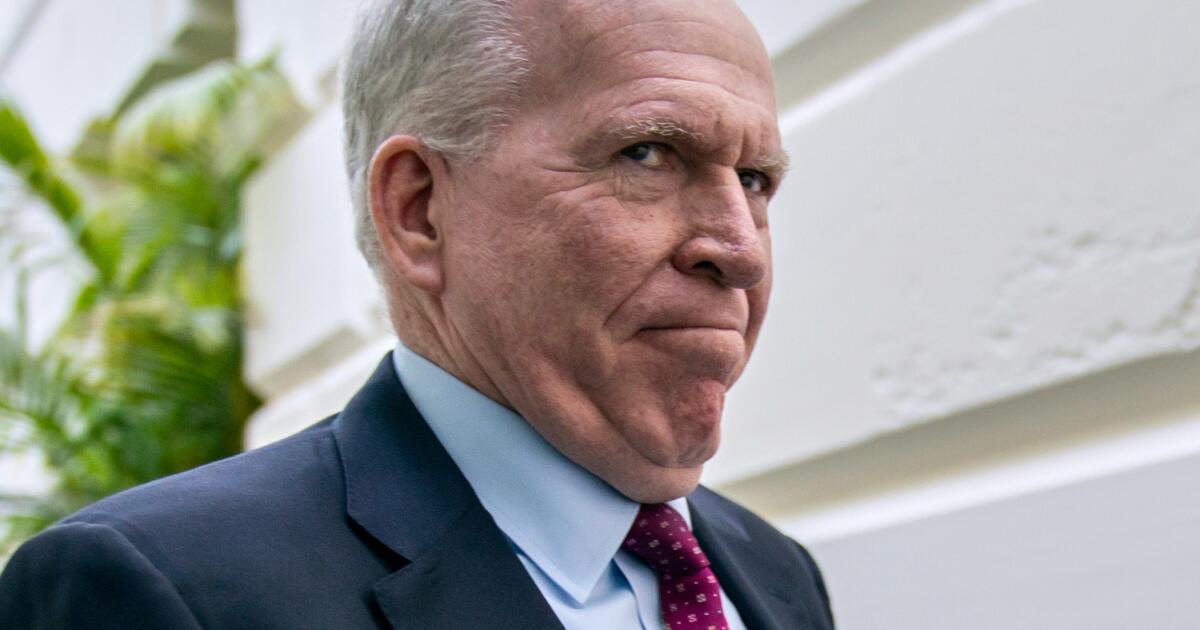
Lawyers for former CIA Director John Brennan want the Justice Department to be prevented from steering an investigation of him and other former government officials to a “favored” judge in Florida who dismissed the classified documents case against President Trump.

The request Monday is addressed to U.S. District Judge Cecilia Altonaga, the chief judge in the Southern District of Florida, where federal prosecutors have launched a criminal investigation related to the U.S. government assessment of Russian interference in the 2016 presidential election. Brennan and other officials have received subpoenas, and his lawyers say Brennan has been advised by prosecutors that he’s a target of the investigation.

Brennan’s lawyers say the Justice Department is engaged in “judge shopping” and trying to arrange for the case to be handled by U.S. District Judge Aileen Cannon, who issued favorable rulings to Trump during the classified documents case and dismissed it last year. The letter asks Altonaga to exercise her “supervisory authority” as chief judge to ensure that the Justice Department is unable to steer the current election interference investigation into her courtroom.

“In short, we are seeking assurance that any litigation arising out of this grand jury proceeding will be heard by a judge who is selected by the court’s neutral and impartial processes, not by the prosecution’s self-interested maneuvering contrary to the interests of justice,” wrote Brennan’s attorneys, Kenneth Wainstein and Natasha Harnwell-Davis. The New York Times earlier reported on the letter.

It remains unclear what crime prosecutors in Florida believe was committed, but the subpoenas issued last month to Brennan and other former law enforcement and intelligence officials sought documents related to the preparation of the Obama administration’s intelligence community assessment, made public in January 2017, that detailed how Russia waged a covert influence campaign to help Trump defeat Democratic nominee Hillary Clinton.

Trump was investigated but not charged during his first term over whether his campaign conspired with Russia to tip the outcome of the election. He has long sought retribution over the Russia investigation and the officials who played a key part in it.

His Justice Department in September secured a false-statement and obstruction indictment against James Comey, the FBI director at the time the Russia investigation was launched, though the case was dismissed and its future is in doubt because of a judge’s ruling that blocked prosecutors from accessing materials they considered to be key evidence.

Brennan’s lawyers say the Trump administration’s Justice Department tried to “forum-shop” the investigation into Brennan to multiple jurisdictions, including Pennsylvania, before settling in Florida. But they say prosecutors have been unable to answer basic questions about why Florida is a proper venue for the investigation given that the intelligence community assessment at issue was produced by officials in the Washington, D.C., area.

The grand jury investigation is based in the Miami division of the Southern District of Florida, but Brennan’s lawyers say they’re concerned that the Trump administration may be poised to transfer the case to the smaller Fort Pierce division, where Cannon is the only judge. They cited as a basis for that alarm a Justice Department decision to seek an additional grand jury in Fort Pierce even though there’s no apparent caseload need.

“The United States Attorney’s efforts to funnel this investigation to the judge who issued this string of rulings that consistently favored President Trump’s positions in previous litigations should be seen for what it is,” Brennan’s lawyers wrote.

Tucker writes for the Associated Press.

Source link

Federal judge weighs Trump’s claim he is immune from civil litigation over Capitol attack

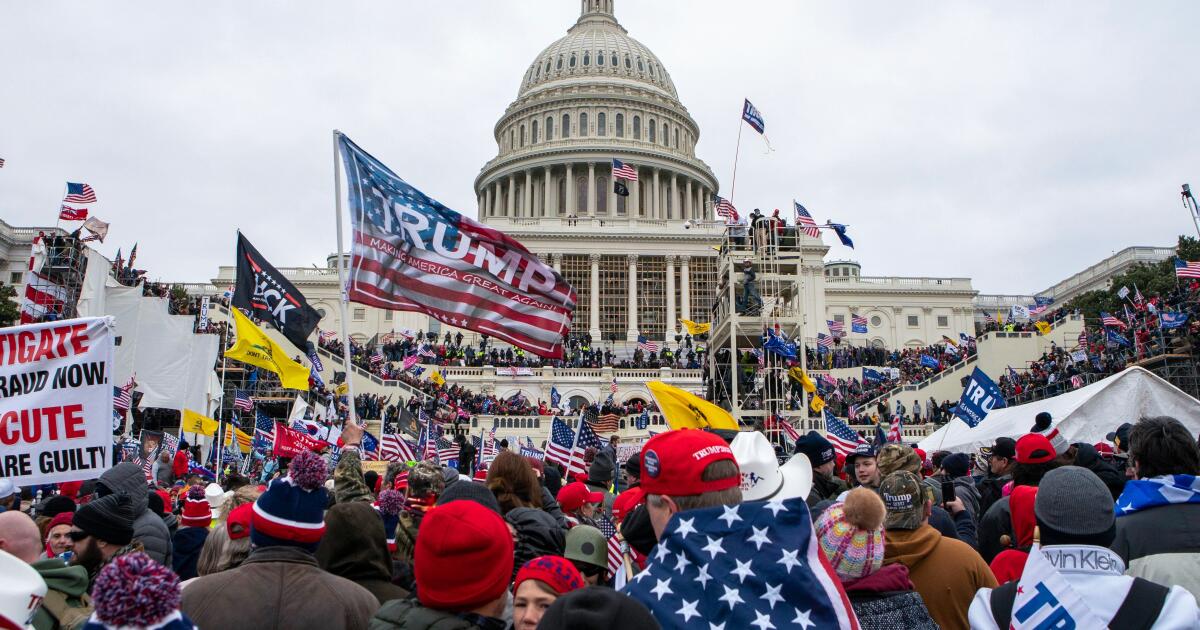
Attorneys for President Trump urged a federal judge on Friday to rule that Trump is entitled to presidential immunity from civil claims that he instigated a mob’s attack on the U.S. Capitol to stop Congress from certifying the results of the 2020 election.

U.S. District Judge Amit Mehta didn’t rule from the bench after hearing arguments from Trump attorneys and lawyers for Democratic members of Congress who sued the Republican president and allies over the Jan. 6. 2021, attack.

Trump spoke to a crowd of his supporters at the “Stop the Steal” rally near the White House before the mob’s attack disrupted the joint session of Congress for certifying Democratic President Joe Biden’s electoral victory.

Trump’s attorneys argue that his conduct leading up to Jan. 6 and on the day of the riot is protected by presidential immunity because he was acting in his official capacity.

“The entire point of immunity is to give the president clarity to speak in the moment as the commander-in-chief,” Trump attorney Joshua Halpern told the judge.

The lawmakers’ lawyers argue Trump can’t prove he was acting entirely in his official capacity rather than as an office-seeking private individual. And the U.S. Supreme Court has held that office-seeking conduct falls outside the scope of presidential immunity, they contend.

“President Trump has the burden of proof here,” said plaintiffs’ attorney Joseph Sellers. “We submit that he hasn’t come anywhere close to satisfying that burden.”

At the end of Friday’s hearing, Mehta said the arguments gave him “a lot to think about” and he would rule “as soon as we can.”

Rep. Bennie Thompson, a Mississippi Democrat who chaired the House Homeland Security Committee, sued Trump, his personal attorney Rudolph Giuliani and members of the Proud Boys and Oath Keepers extremist groups over the Jan. 6 riot. Other Democratic members of Congress later joined the litigation.

The civil claims survived Trump’s sweeping act of clemency on the first day of his second term, when he pardoned, commuted prison sentences and ordered the dismissal of all 1,500-plus criminal cases stemming from the Capitol siege. Over 100 police officers were injured while defending the Capitol from rioters.

Halpern said immunity enables the president to act “boldly and fearlessly.”

“Immunity exists to protect the president’s prerogatives,” he said.

Plaintiffs’ lawyers argue that the context and circumstances of the president’s remarks on Jan. 6 — not just the content of his words — are key to establishing whether he is immune from liability.

“You have to look at what happened leading up to January 6th,” Sellers said.

Kunzelman writes for the Associated Press.

Source link

Jury finds Judge Hannah Dugan guilty of obstruction for helping an immigrant evade federal agents

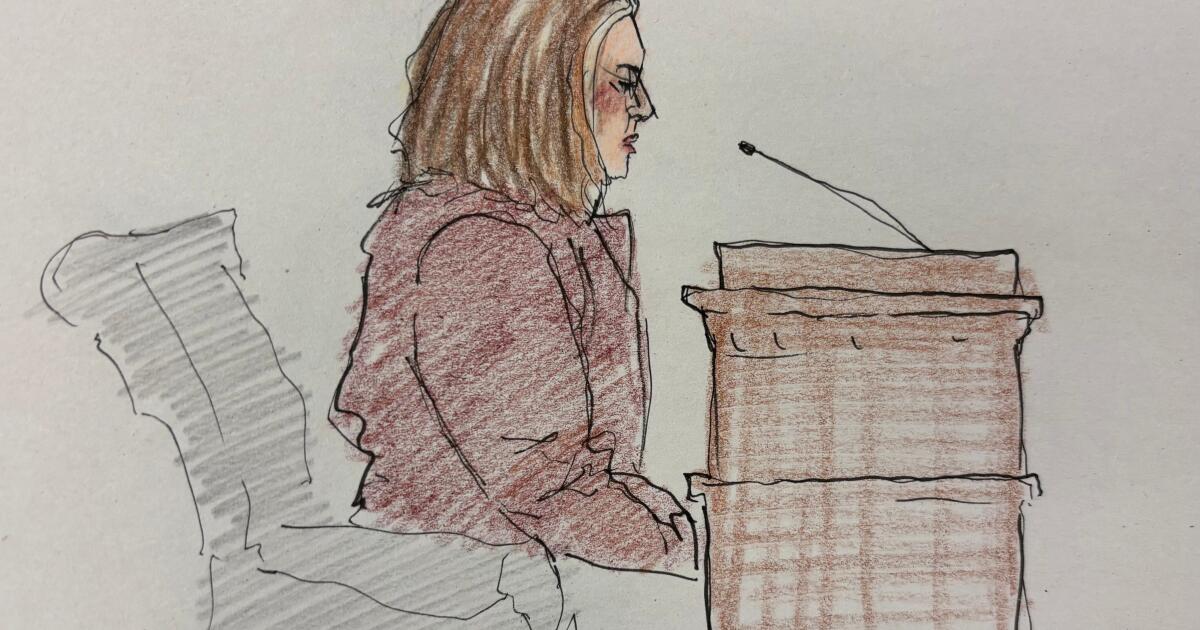
A jury found a Wisconsin judge accused of helping a Mexican immigrant dodge federal authorities guilty of obstruction Thursday, marking a victory for President Trump as he continues his sweeping immigration crackdown across the country.

Federal prosecutors charged Milwaukee County Circuit Judge Hannah Dugan with obstruction, a felony, and concealing an individual to prevent arrest, a misdemeanor, in April. The jury acquitted her on the concealment count, but she still faces up to five years in prison on the obstruction count.

The jury returned the verdicts after deliberating for six hours. Dugan faces up to five years in prison when she’s sentenced, but no date had been set as of late Thursday evening.

The case inflamed tensions over Trump’s immigration crackdown, with his administration branding Dugan an activist judge and Democrats countering that the administration was trying to make an example of Dugan to blunt judicial opposition to the operation.

Dugan and her attorneys left the courtroom, ducked into a side conference room and closed the door without speaking to reporters. Steve Biskupic, her lead attorney, later told reporters that he was disappointed with the ruling and didn’t understand how the jury could have reached a split verdict since the elements of both charges were virtually the same.

U.S. Atty. Brad Schimel denied the case was political and urged people to accept the verdict peacefully. He said courthouse arrests are safer because people are screened for weapons and it isn’t unfair for law enforcement to arrest wanted people in courthouses.

“Some have sought to make this about a larger political battle,” Schimel said. “While this case is serious for all involved, it is ultimately about a single day, a single bad day, in a public courthouse. The defendant is certainly not evil. Nor is she a martyr for some greater cause.”

U.S. Deputy Atty. Gen. Todd Blanche praised the verdict on X, saying nobody is above the law, even judges.

According to court filings that include an FBI affidavit and a federal grand jury indictment, immigration authorities traveled to the Milwaukee County courthouse on April 18 after learning 31-year-old Eduardo Flores-Ruiz had reentered the country illegally and was scheduled to appear before Dugan for a hearing in a state battery case.

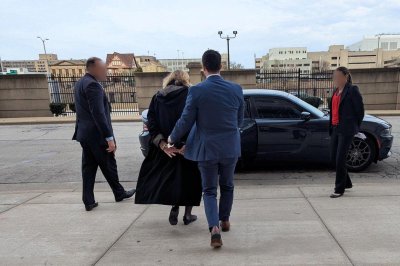
Dugan learned that agents were in the corridor outside her courtroom waiting for Flores-Ruiz. She left the courtroom to confront them, falsely telling them their administrative warrant for Flores-Ruiz wasn’t sufficient grounds to arrest him and directing them to go to the chief judge’s office.

While the agents were gone, she addressed Flores-Ruiz’s case off the record, told his attorney that he could attend his next hearing via Zoom and led Flores-Ruiz and the attorney out a private jury door. Agents spotted Flores-Ruiz in the corridor, followed him outside and arrested him after a foot chase. The U.S. Department of Homeland Security announced in November he had been deported.

Prosecutors worked during Dugan’s trial to show that she directed agents to the chief judge’s office to create an opening for Flores-Ruiz to escape.

An FBI agent who led the investigation testified that after agents left the corridor, she immediately moved Flores-Ruiz’s case to the top of her docket, told him that he could appear for his next hearing via Zoom and led him out the private door.

Prosecutors also played audio recordings from her courtroom in which she can be heard telling her court reporter that she’d take “the heat” for leading Flores-Ruiz out the back.

Her attorneys countered that she was trying to follow courthouse protocols that called for court employees to report any immigration agents to their supervisors and she didn’t intentionally try to obstruct the arrest team.

Richmond writes for the Associated Press.

Source link

Wisconsin GOP tells Judge Hannah Dugan: Resign or be impeached

Dec. 19 (UPI) — Wisconsin’s Republican leaders will begin impeachment proceedings against Milwaukee County Circuit Judge Hannah Dugan if she does not resign after her felony obstruction conviction.

State Assembly Speaker Robin Vos and Assembly Majority Leader Tyler August, both of whom are Republicans, issued the ultimatum in a joint statement, the Milwaukee Journal Sentinel reported on Friday.

“Judge Hannah Dugan, while wearing judicial robes of the state of Wisconsin, attempted to impede the lawful work of federal Immigration and Customs Enforcement (ICE) agents,” Vos and August said.

“The last time a Wisconsin judge was impeached was in 1853,” they said. “If Judge Dugan does not resign from her office immediately, the Assembly will begin impeachment proceedings.”

A jury of 12 on Thursday found Dugan guilty of obstructing federal agents as they attempted to arrest a man who was scheduled to appear on an unrelated matter in her courtroom in April.

The jury found her guilty of one count of obstruction, which is a felony punishable by up to five years in prison and a $250,000 fine. The jury acquitted her on one count of concealment.

Dugan’s legal team said they will appeal her felony conviction.

Vos cited the Wisconsin Constitution’s Article XII, Section 3(2), which says no individual who has been convicted of a felony is eligible to serve in “any office of trust” in the state, unless that person is pardoned according to WISN.

Federal prosecutors tried Dugan in the U.S. District Court for Eastern Wisconsin in Milwaukee after she interfered with ICE agents’ efforts to arrest Eduardo Flores-Ruiz for illegally being in the United States on April 18.

Court records show Dugan engaged the ICE agents in the court’s hallway after she helped Flores-Ruiz and his attorney use an entrance for jurors to exit the courthouse.

ICE agents arrested Flores-Ruiz after chasing him on foot.

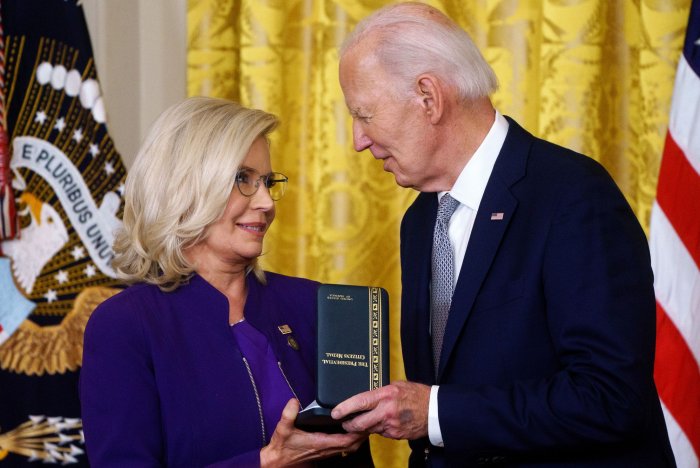
Former President Joe Biden presents the Presidential Citizens Medal to Liz Cheney during a ceremony in the East Room of the White House in Washington, on January 2, 2025. The Presidential Citizens Medal is bestowed to individuals who have performed exemplary deeds or services. Photo by Will Oliver/UPI | License Photo

Source link

Jury convicts Milwaukee County Judge Hannah Dugan with mixed verdict

Dec. 19 (UPI) — A 12-person jury has found Milwaukee County Judge Hannah Dugan guilty of obstructing federal agents attempting an immigration arrest near her courtroom in April.

The jury deliberated for more than six hours before delivering its guilty verdict on one count of obstruction, but acquitted her on a second count of concealment.

She could face up to five years’ imprisonment and a $250,000 fine when sentenced. A sentencing date has not been set.

The ruling is a victory for President Donald Trump and his administration, who have portrayed Dugan as an example of judges interfering with their immigration enforcement policies.

Dugan was arrested by FBI agents in late April and charged with knowingly concealing a person whose arrest warrant had been issued in order to prevent their apprehension, and corruptly endeavoring to influence, obstruct and impede the administration of law enforcement.

Federal prosecutors said she misdirected federal agents on April 18 to allow undocumented migrant Eduardo Flores-Ruiz to evade arrest.

Court documents state that she confronted federal agents in the court’s hallway after escorting Flores-Ruiz and his counsel out of her courtroom.

Flores-Ruiz was arrested by immigration enforcement agents following a foot chase.

The arrest came amid the early stages of Trump’s immigration crackdown, part of which was the rescinding of a Biden administration policy prohibiting immigration enforcement action in or near courthouses.

Critics and justice advocates — including nearly 150 former state and federal judges — rebuked the arrest as an effort to intimidate the judiciary, warning it threatened judicial independence and the Constitution.

Interim U.S. Attorney Brad Schimel for the Eastern District of Wisconsin told reporters following the jury verdict that while some have sought to make the case about a larger political battle, “it’s ultimately about a single day — a single bad day in a public courthouse.”

“The defendant is certainly not evil, nor is she a martyr for some great cause. It was a criminal case, like many that make their way through this courthouse every day,” he said.

“And we all must accept the verdict.”

Steven Biskupic, Dugan’s lead attorney, told reporters the defense was “obviously disappointed” with the verdict and that it does not make sense for his client to be found guilty on one count and acquitted on the other since they are based on the same elements.

“I would just say the case is a long way from over,” he said.

Norm Eisen, executive chair of the nonpartisan Democracy Defenders Fund, issued the same sentiment in a statement emailed to UPI.

“This case is far from over. Substantial legal and constitutional issues remain unresolved, and they are exactly the kinds of questions appellate courts are meant to address,” Eisen said.

“Higher courts will have the opportunity to determine whether this prosecution crossed the lines that protect the judiciary from executive overreach.”

Republicans and members of Trump’s administraiton swiftly celebrated the ruling, with Deputy Attorney General Todd Blanche remarking that “nobody is above the law” and Rep. Tom Tiffany of Wisconsin stating, “Now, lock her up.”

Source link

Judges quiz California and GOP attorneys in Prop. 50 redistricting case

A trio of federal judges questioned attorneys for Gov. Gavin Newsom and the California Republican Party on Wednesday in a legal case that will decide the fate of California’s new voter-approved congressional districts for the 2026 midterm elections.

Attorneys for the California Republican Party and the Trump administration’s Department of Justice during the hearing recapped the argument they made in their legal complaint, accusing Democratic legislators and redistricting experts of racial gerrymandering that illegally favored Latinos.

The state’s legal representatives, meanwhile, argued their primary goal was not racial but political — they worked to weaken Republicans’ voting power in California to offset similar gerrymandering in Texas and other GOP-led states.

But Wednesday was the first time the public got to hear the three federal judges of the Central District of California challenge those narratives as they weigh whether to grant the GOP’s request for a temporary injunction blocking the reconfigured congressional districts approved by voters in November under Proposition 50.

The GOP has repeatedly seized on public comments from Paul Mitchell, a redistricting expert for California’s Democratic-led Legislature who designed the Proposition 50 congressional districts, that “the No. 1 thing” he started thinking about was “drawing a replacement Latino majority/minority district in the middle of Los Angeles.”

On Wednesday, District Court Judge Josephine Staton suggested that GOP attorneys focused too much on the intent of Mitchell and Democratic legislators and not enough on the voters who ultimately approved Proposition 50.

“Why would we not be looking at their intent?” Staton asked Michael Columbo, an attorney for California Republicans. “If the relative intent is the voters, you have nothing.”

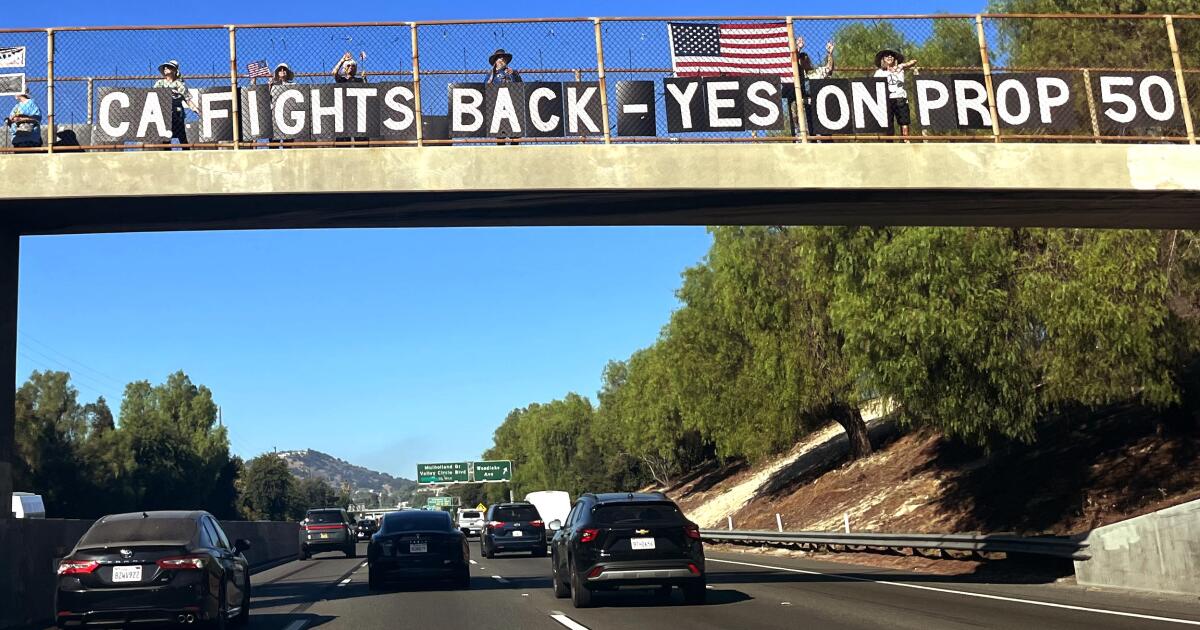
Nearly two-thirds of California voters approved the new Proposition 50 congressional district map in a Nov. 4 special election after Newsom pitched the idea as a way to counter partisan gerrymandering after President Trump pressed Texas to redraw maps to shore up the GOP’s narrow House majority.

The stakes for California and the nation are high.

If the new map is used for the 2026 midterms, it could give California Democrats up to five additional U.S. House seats. That could allow them to push back against the gains Republicans make due to redistricting in staunchly GOP states and increase Democrats’ chance of seizing the House and shifting the balance of power in Congress.

A win for Democrats could also boost Newsom’s national clout and help him pitch himself as the nation’s strongest and most effective Trump critic as he enters his final year as California governor and weighs a White House bid.

During closing arguments Wednesday, an attorney for the U.S. Department of Justice argued that the race-based aspect of the redrawn districts started with the drafting of the Assembly bill that led to Proposition 50 being placed on the ballot.

Staton, however, seemed unconvinced.

“These maps have no effect,” she said, “until the voters give them effect.”

The GOP cannot challenge the map on grounds of political gerrymandering: The Supreme Court decided in 2019 that such complaints have no path in federal court. That leaves them focusing on race.

But proving that race predominated over partisanship is a challenge, legal scholars say, and paying attention to race is not, in itself, prohibited under current law. To prove that race was the key motivation, plaintiffs have to show there is another way for map makers to achieve their desired political result without a racial impact.

During the hearing, Staton stressed that the burden was on the challengers of Proposition 50 to prove racial intent.

To that end, the GOP brought to the stand RealClearPolitics elections analyst Sean Trende, who said the new 13th Congressional District in the San Joaquin Valley had an “appendage” that snaked northward into Stockton. Such contorted offshoots, he said, are “usually indicative of racial gerrymandering.” Trende produced an alternative map of the district that he said retained Democratic representation without being driven by race.

But Staton questioned whether Trende’s map was substantially different from Mitchell’s, noting they both seemed to fall within a similar range of Latino representation.

U.S. District Judge Wesley Hsu lambasted Columbo over what he called the “strawman” attempt to pick out one district, the 13th Congressional District, to make the case that there was a race-conscious effort in the attempt to flip five seats in the Democrats’ favor.

Jennifer Rosenberg, an attorney for the state, also argued that Trende’s analysis was too narrow.

“Dr. Trende failed to conduct a district by district analysis,” Rosenberg said. “And as we can see, he only addressed two tiny portions of District 13 and really only focused on one of the subparts.”

U.S. District Judge Kenneth Lee questioned Rosenberg on how much she believed Mitchell’s public statements about wanting to create a Latino district in Los Angeles influenced his redrawing.

“He was talking to interested groups,” Rosenberg said. “He did not communicate that intent to legislators.”

However, Lee said that Mitchell’s closeness to Democratic interest groups was an important factor. Mitchell “delivered on” the “wants” of the Latino interest groups he interacted with, Lee said, based on his public statements and lack of testimony.

Lee also took issue with Mitchell not testifying at the hearing and the dozens of times he invoked legislative privilege during a deposition ahead of the hearing.

Abha Khanna, who represented the Democratic Congressional Campaign Committee, argued there was no racial predominance in Mitchell’s statements.

She showed judges the text of Proposition 50, an official voter guide and statements from Newsom, arguing they were overt declarations of partisan intent. She also pointed out instances in which Republican plaintiffs discussed Proposition 50 in exclusively partisan terms.

If the federal judges grant a preliminary injunction, California would be temporarily blocked from using the newly drawn map in the 2026 election. Attorneys for the state would probably appeal to the U.S. Supreme Court.

Just two weeks ago, the nation’s highest court allowed Texas to temporarily keep its newly drawn congressional districts — which also faced complaints of racial gerrymandering — after a federal court blocked the Texas map, finding racial considerations probably made it unconstitutional.

The U.S. Supreme Court indicated it viewed the Texas redistricting as motivated primarily by partisan politics. In its ruling, it explicitly drew a connection between Texas and California, noting that several states, including California, have redrawn their congressional map “in ways that are predicted to favor the State’s dominant political party.”
Source link

Trial begins for Milwaukee judge accused of obstructing ICE agents

Dec. 15 (UPI) — The trial for Milwaukee County Circuit Court Judge Hannah Dugan began Monday, with prosecutors playing audio of the judge saying she’ll “get the heat” by showing an undocumented defendant how to leave her courtroom to avoid immigration officials.

Dugan pleaded not guilty earlier this year to federal charges including one count of obstructing and official proceeding and concealing a person from arrest and another of concealing an individual to prevent his discovery and arrest.

The case stems from an incident on April 18, when Immigration and Customs Enforcement officials came to her courtroom and notified her they planned to arrest undocumented immigrant Eduardo Flores-Ruiz. They said she sent the agents to the chief judge’s office before going back to her courtroom, pushing Flores-Ruiz’s case to the front of her docket, then helped him and his lawyer leave from a private jury door.

The ICE agents ultimately found and arrested Flores-Ruiz.

During Monday’s trial, Assistant U.S. Attorney Keith Alexander played audio from the day appearing to depict Dugan speaking with the court reporter, Joan Butz, who offers to show Flores-Ruiz the private door. Dugan says, “I’ll do it. I’ll get the heat.”

Alexander said Dugan’s actions were tantamount to formulating an escape plan for Flores-Ruiz, according to the Milwaukee Journal Sentinel.

“The judicial robe the defendant wore that morning did not put her above the law,” Alexander said in his opening statements.

Dugan’s lawyer, former U.S. Attorney Steven Biskupic, said the private jury door Dugan showed Flores-Ruiz wasn’t hidden and was less than 12 feet away from the public doors of the courtroom. He said she didn’t seek to thwart ICE agents.

“Not even as far as your jury box,” he said. “There was a federal agent to the left and to the right.”

Biskupic said that instead of arresting Flores-Ruiz, the federal agents chose to follow him outside and arrest him after a foot chase, NBC News reported.

“Now, after the fact, everyone wants to blame Judge Dugan,” he said.

Source link