The United States Middle East envoy, Steve Witkoff, will hold talks in Miami, Florida, with senior officials from Qatar, Egypt and Turkiye as efforts continue to advance the next phase of the Gaza ceasefire, even as Israel repeatedly violates the truce on the ground.
A White House official told Al Jazeera Arabic on Friday that Witkoff is set to meet representatives from the three countries to discuss the future of the agreement aimed at halting Israel’s genocidal war on Gaza.
Recommended Stories
list of 3 itemsend of list
Axios separately reported that the meeting, scheduled for later on Friday, will include Qatari Prime Minister and Foreign Minister Sheikh Mohammed bin Abdulrahman bin Jassim Al Thani, Turkish Foreign Minister Hakan Fidan and Egyptian Foreign Minister Badr Abdelatty.
At the same time, Israel’s public broadcaster, quoting an Israeli official, said Prime Minister Benjamin Netanyahu is holding a restricted security consultation to examine the second phase of the ceasefire and potential scenarios.
That official warned that Israel could launch a new military campaign to disarm Hamas if US President Donald Trump were to disengage from the Gaza process, while acknowledging that such a move was unlikely because Trump wants to preserve calm in the enclave.
Despite Washington’s insistence that the ceasefire remains intact, Israeli attacks have continued almost uninterrupted, as it continues to renege on the terms of the first phase, as it blocks the free flow of desperately needed humanitarian aid into the besieged Palestinian territory.
According to an Al Jazeera analysis, Israeli forces carried out attacks on Gaza on 58 of the past 69 days of the truce, leaving only 11 days without reported deaths, injuries or violence.
In Washington, Trump said on Thursday that Netanyahu is likely to visit him in Florida during the Christmas holidays, as the US president presses for the launch of the agreement’s second phase.
“Yes, he will probably visit me in Florida. He wants to meet me. We haven’t formally arranged it yet, but he wants to meet me,” Trump told reporters.
Qatar and Egypt, who are mediating and guaranteeing the truce after a devastating two-year genocide in Gaza, have urged a transition to the second phase of the agreement. The plan includes a full Israeli military withdrawal and the deployment of an international stabilisation force (ISF).
Fragile truce, entrenched occupation
Qatar’s prime minister warned on Wednesday that daily Israeli breaches of the Gaza ceasefire are threatening the entire agreement, as he called for urgent progress towards the next phase of the deal to end Israel’s genocidal war on the besieged Palestinian enclave.
Sheikh Mohammed made the appeal following talks with United States Secretary of State Marco Rubio in Washington, where he stressed that “delays and ceasefire violations endanger the entire process and place mediators in a difficult position”.
The ceasefire remains deeply unstable, and Palestinians and rights groups say it is a ceasefire only in name, amid Israeli violations and a rapidly deteriorating humanitarian situation in Gaza.
Since the truce took effect on October 10, 2025, Israel has repeatedly breached the agreement, killing hundreds of Palestinians.
Gaza’s Government Media Office says Israel committed at least 738 violations between October 10 and December 12, including air strikes, artillery fire and direct shootings.
Israeli forces shot at civilians 205 times, carried out 37 incursions beyond the so-called “yellow line”, bombed or shelled Gaza 358 times, demolished property on 138 occasions and detained 43 Palestinians, the office said.
Israel has also continued to block critical humanitarian aid while systematically destroying homes and infrastructure.
Against this backdrop, Israel Hayom quoted an Israeli security official as saying the so-called “yellow line” now marks Israel’s new border inside Gaza, adding that Israeli forces will not withdraw unless Hamas is disarmed. The official said the army is preparing to remain there indefinitely.
The newspaper also reported that Israeli military leaders are proposing continued control over half of Gaza, underscoring Israel’s apparent intent to entrench its occupation rather than implement a genuine ceasefire.
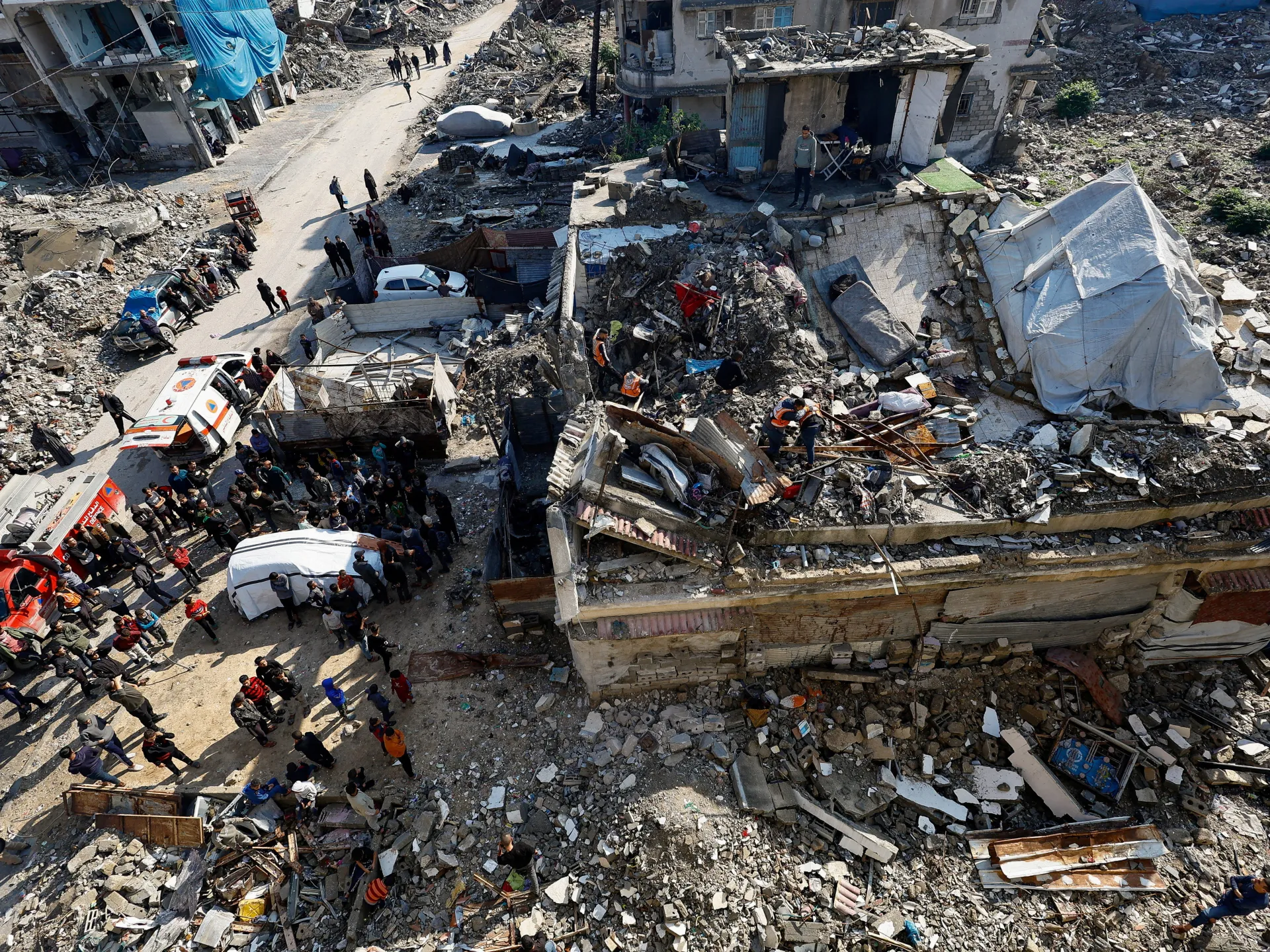
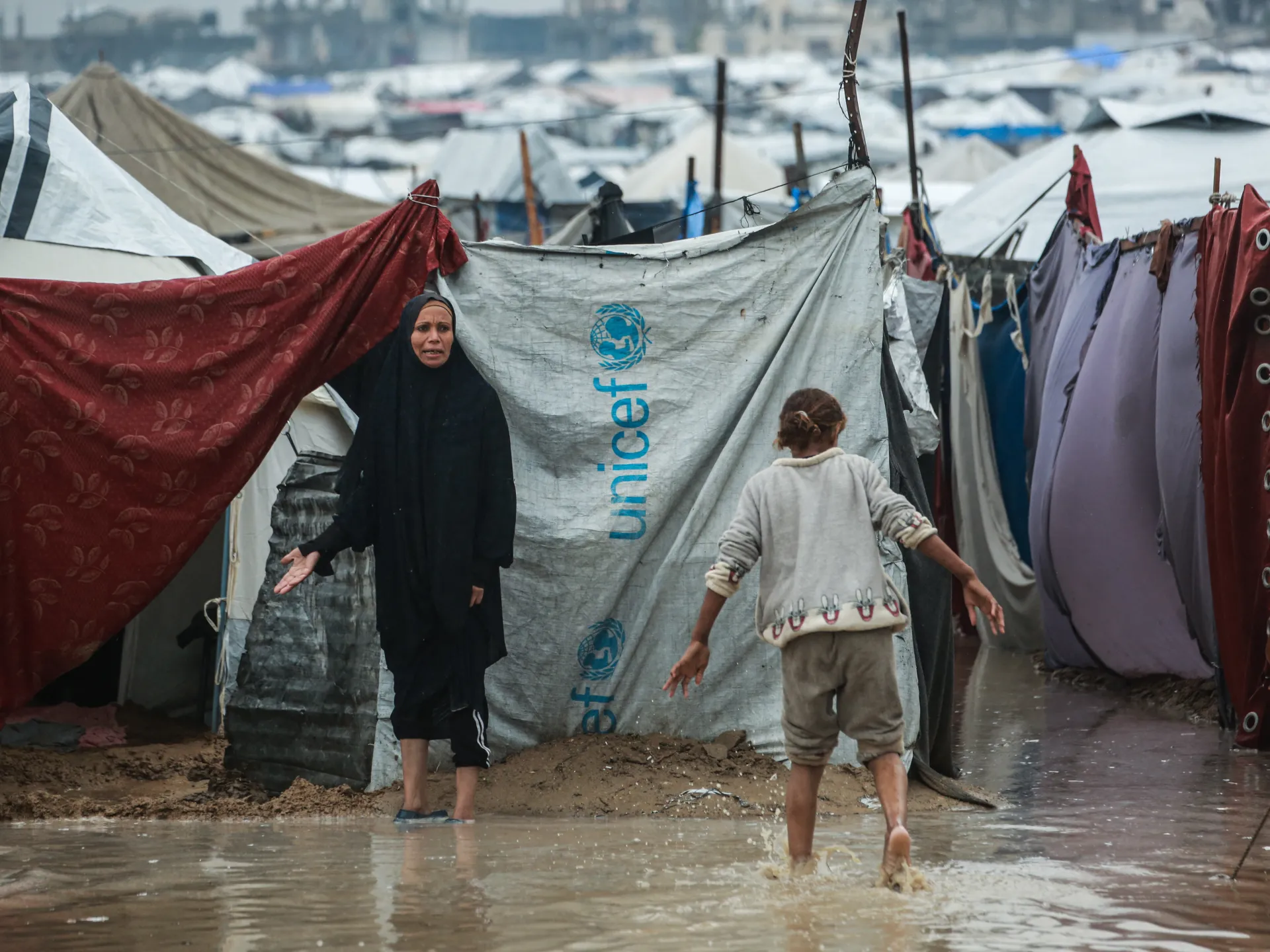
Compounding the misery in Gaza, a huge storm that recently hit the Strip has killed at least 13 people as torrential rains and fierce winds flooded tents and caused damaged buildings to collapse.
Israel’s two-year war has decimated more than 80 percent of the structures across Gaza, forcing hundreds of thousands of families to take refuge in flimsy tents or overcrowded makeshift shelters.
Winter storms are worsening conditions for hundreds of thousands of displaced Palestinians in Gaza, as aid agencies warn that Israeli restrictions are preventing lifesaving shelter assistance from reaching people across the besieged enclave.
The United Nations has said it has tents, blankets and other essential supplies ready to enter Gaza, but that Israeli authorities continue to block or restrict access through border crossings.
Recommended Stories
list of 4 itemsend of list
In Gaza City’s Shati refugee camp, the roof of a war-damaged family home collapsed during the storm, rescue workers said on Wednesday. Six Palestinians, including two children, were pulled alive from the rubble.
It comes after Gaza’s Ministry of Health said a two-week-old Palestinian infant froze to death, highlighting the risks faced by young and elderly people living in inadequate shelters.
A spokesperson for UN Secretary-General Antonio Guterres said the storms had damaged or destroyed shelters and personal belongings across the territory.
“The disruption has affected approximately 30,000 children across Gaza. Urgent repairs are needed to ensure these activities can resume without delay,” Farhan Haq said.
The Palestinian Civil Defence in Gaza added in a statement that “what we are experiencing now in the Gaza Strip is a true humanitarian catastrophe”.
Ceasefire talks and aid access
The worsening humanitarian situation comes as Qatar’s Prime Minister Sheikh Mohammed bin Abdulrahman bin Jassim Al Thani held talks in Washington, DC, with United States Secretary of State Marco Rubio on efforts to stabilise the tenuous ceasefire in Gaza.
According to Qatari officials, the talks focused on Qatar’s role as a mediator, the urgent need for aid to enter Gaza, and moving negotiations towards the second stage of a US-backed plan to end Israel’s genocidal war against the Palestinian people in Gaza.
Al Jazeera’s Alan Fisher, reporting from Washington, said Sheikh Mohammed stressed that humanitarian assistance must be allowed into Gaza “unconditionally”.
“He said aid has to be taken into Gaza unconditionally, clearly making reference to the fact that a number of aid agencies have said that Israel is blocking the access to aid for millions of people in Gaza,” Fisher said.
The Qatari prime minister also discussed the possibility of an international stabilisation force to be deployed in Gaza after the war, saying such a force should act impartially.
“There has been a lot of talk in the US over the past couple of weeks about how this force would work towards the disarmament of Hamas,” Fisher said.
Sheikh Mohammed also called for swift progress towards the second phase of the ceasefire agreement.
“He said that stage two of the ceasefire deal has to be moved to pretty quickly,” Fisher said, adding that US officials were hoping to announce early in the new year which countries would contribute troops to a stabilisation force.
Israeli attacks continue
Meanwhile, violence continued in Gaza despite the ceasefire, with at least 11 Palestinians wounded in Israeli attacks in central Gaza City, according to medical sources.
The Israeli army said it is investigating after a mortar shell fired near Gaza’s so-called yellow line “missed its target”.
Al Jazeera journalists in Gaza reported Israeli artillery shelling east of the southern city of Khan Younis. Medical sources said Israeli gunfire also wounded two people in the Tuffah neighbourhood of eastern Gaza City.
In the occupied West Bank, where Israeli military and settler attacks have escalated in recent days, Palestinian news agency Wafa reported that Israeli troops shot and wounded a man in his 20s in the foot in Qalqilya. He was taken to hospital and is reported to be in stable condition.
Since October 2023, at least 70,668 Palestinians have been killed and 171,152 wounded in Israeli attacks on Gaza, according to Palestinian health authorities. In Israel, 1,139 people were killed during the Hamas-led October 7 attack, and more than 200 others were taken captive.
Fifteen years ago, a Tunisian fruit seller, Mohamed Bouazizi, despairing at official corruption and police violence, walked to the centre of his hometown of Sidi Bouzid, set himself on fire, and changed the region forever.
Much of the hope triggered by that act lies in ruins. The revolutions that followed in Tunisia, Libya, Egypt and Syria have cost the lives of tens and thousands before, in some cases, giving way to chaos or the return of authoritarianism.
Recommended Stories
list of 4 itemsend of list
Only Tunisia appeared to fulfil the promise of the “Arab Spring”, with voices from around the world championing its democratic success, ignoring economic and political failings through much of its post-revolutionary history that stirred discontent.
Today, many of Tunisia’s post-revolutionary gains have been cast aside in the wake of President Kais Saied’s dramatic power grab in July 2021. Labelled a coup by his opponents, it ushered in a new hardline rule in Tunisia.
Burying the hopes of the revolution
Over the following years, as well as temporarily shuttering parliament – only reopening it in March 2023 – Saied has rewritten the constitution and overseen a relentless crackdown on critics and opponents.
“They essentially came for everyone; judges, civil society members, people from all political backgrounds, especially the ones that were talking about unifying an opposition against the coup regime,” Kaouther Ferjani, whose father, 71-year-old Ennahdha leader Said Ferjani, was arrested in February 2023.
In September, Saied said his measures were a continuation of the revolution triggered by Bouzazzi’s self-immolation. Painting himself a man of the people, he railed against nameless “lobbyists and their supporters” who thwart the people’s ambitions.
However, while many Tunisians have been cowed into silence by Saied’s crackdown, they have also refused to take part in elections, now little more than a procession for the president.
In 2014, during the country’s first post-revolution presidential election, about 61 percent of the country’s voters turned out to vote.
By last year’s election, turnout had halved.
“Kais Saied’s authoritarian rule has definitively buried the hopes and aspirations of the 2011 revolution by systematically crushing fundamental rights and freedoms and putting democratic institutions under his thumb,” Bassam Khawaja, deputy director at Human Rights Watch, told Al Jazeera English.
In the wake of the revolution, many across Tunisia became activists, seeking to involve themselves in forging what felt like a new national identity.
The number of civil society organisations exploded, with thousands forming to lobby against corruption or promote human rights, transitional justice, press freedom and women’s rights.
At the same time, political shows competed for space, debating the direction the country’s new identity would take.
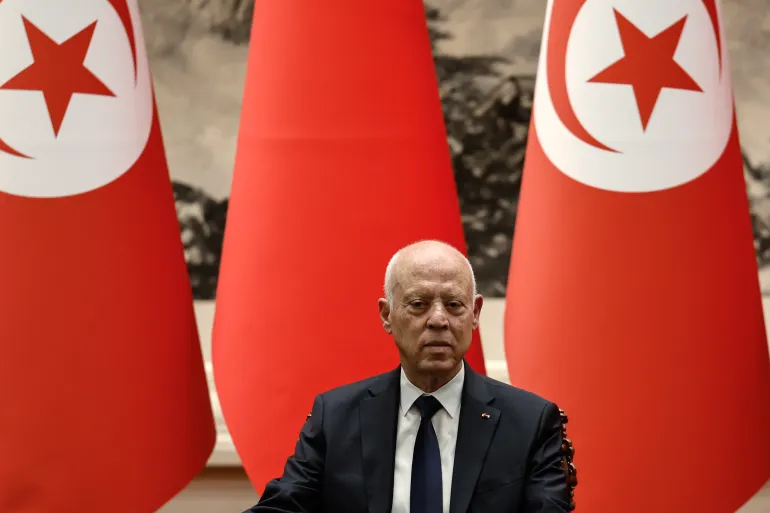
Tunisian President Saied attends a ceremony with President Xi Jinping in China [ingshu Wang/Getty Images]
“It was an amazing time,” a political analyst who witnessed the revolution and remains in Tunisia said, asking to remain anonymous. “Anybody with anything to say was saying it.
“Almost overnight, we had hundreds of political parties and thousands of civil society organisations. Many of the political parties shifted or merged… but Tunisia retained an active civil society, as well as retaining freedom of speech all the way up to 2022.”
Threatened by Saied’s Decree 54 of 2022, which criminalised any electronic communication deemed by the government as false, criticism of the ruling elite within the media and even on social networks has largely been muzzled.
“Freedom of speech was one of the few lasting benefits of the revolution,” the analyst continued.
“The economy failed to pick up, services didn’t really improve, but we had debate and freedom of speech. Now, with Decree 54, as well as commentators just being arrested for whatever reason, it’s gone.”
In 2025, both Amnesty International and Human Rights Watch slammed Tunisia’s crackdown on activists and nongovernmental organisations (NGOs).
In a statement before the prosecution of six NGO workers and human rights defenders working for the Tunisian Council for Refugees in late November, Amnesty pointed to the 14 Tunisian and international NGOs that had their activities suspended by court order over the previous four months.
Included were the Tunisian Association of Democratic Women, the Tunisian Forum for Social and Economic Rights, the media platform Nawaat and the Tunis branch of the World Organisation against Torture.
‘Plotting against state security’
Dozens of political figures from post-revolution governments have also been arrested, with little concern for party affiliation or ideology.
In April 2023, 84-year-old Rached Ghannouchi, leader of what had been Tunisia’s main political bloc, the Ennahdha Party, was arrested on charges of “plotting against state security”.
According to his daughter, Yusra, after a series of subsequent convictions, Ghannouchi currently faces a further 42 years in jail.
Later the same year, Ghannouchi’s principal critic, Abir Moussi, the leader of the Free Destourian Party, was jailed on a variety of charges.
Critics dismiss the charges, saying the criteria for arrest have been the person’s potential to rally opinion against Saied.
“This is not just the case for my father,” Yusra continued, referring to others, such as the leading post-coup opposition figure Jawhar Ben Mubarak.
“Other politicians, judges, journalists, and ordinary citizens … have been sentenced to very heavy sentences, without any evidence, without any respect for legal procedures, simply because Tunisia has now sadly been taken back to the very same dictatorship against which Tunisians had risen in 2010.”
The head of Tunisia’s Ennahdha, Rached Ghannouchi, greets supporters upon arrival at a police station in Tunis on February 21, 2023, in compliance with the summons of an investigating judge [Fethi Belaid/AFP]
Ghannouchi and Moussi, along with dozens of former elected lawmakers, remain in jail. The political parties that once vied for power in the country’s parliament are largely absent.
“The old parliament was incredibly fractious, and did itself few favours,” said Hatem Nafti, essayist and author of Our Friend Kais Saied, a book criticising Tunisia’s new regime. He was referring to the ammunition provided to its detractors by a chaotic and occasionally violent parliament.
“However, it was democratically elected and blocked legislation that its members felt would harm Tunisia.
“In the new parliament, members feel the need to talk tough and even be rude to ministers,” Nafti continued. “But it’s really just a performance… Nearly all the members are there because they agree with Kais Saied.”
Hopes that the justice system might act as a check on Saied have faltered. The president has continued to remodel the judiciary to a design of his own making, including by sacking 57 judges for not delivering verdicts he wanted in 2022.
By the 2024 elections, that effort appeared complete, with the judicial opposition to his rule that remained, in the shape of the administrative court, rendered subservient to his personally appointed electoral authority, and the most serious rivals for the presidency jailed.
“The judiciary is now almost entirely under the government’s control,“ Nafti continued. “Even under [deposed President Zine El Abidine] Ben Ali you had the CSM [Supreme Judicial Council], which oversaw judges’ appointments, promotions, and disciplinary matters.
“Now that only exists on paper, with the minister of justice able to determine precisely what judges go where and what judgements they’ll deliver.”
Citing what he said is the “shameful silence of the international community that once supported the country’s democratic transition”, Khawaja said: ”Saied has returned Tunisia to authoritarian rule.”
A protest against Saied on fourth years after his power grab. Tunis, July 25, 2025 [Jihed Abidellaoui/Reuters]
Winter cold ‘becomes lethal’ as Israel restricts entry of tents, blankets and other shelter supplies to ravaged enclave.
A Palestinian infant has frozen to death in the Gaza Strip, local authorities say, as Israel continues to restrict the entry of shelter supplies and other humanitarian aid to the enclave despite the harsh winter conditions there.
The Palestinian Ministry of Health in Gaza said on Tuesday that the two-week-old baby, Mohammed Khalil Abu al-Khair, died a day earlier after seeking treatment for severe hypothermia, brought on by the extreme cold gripping Gaza.
Recommended Stories
list of 3 itemsend of list
Reporting from Gaza City, Al Jazeera’s Tareq Abu Azzoum noted that the child’s death comes as basic protections in Gaza have been “systematically dismantled” due to Israel’s genocidal war against Palestinians in the territory.
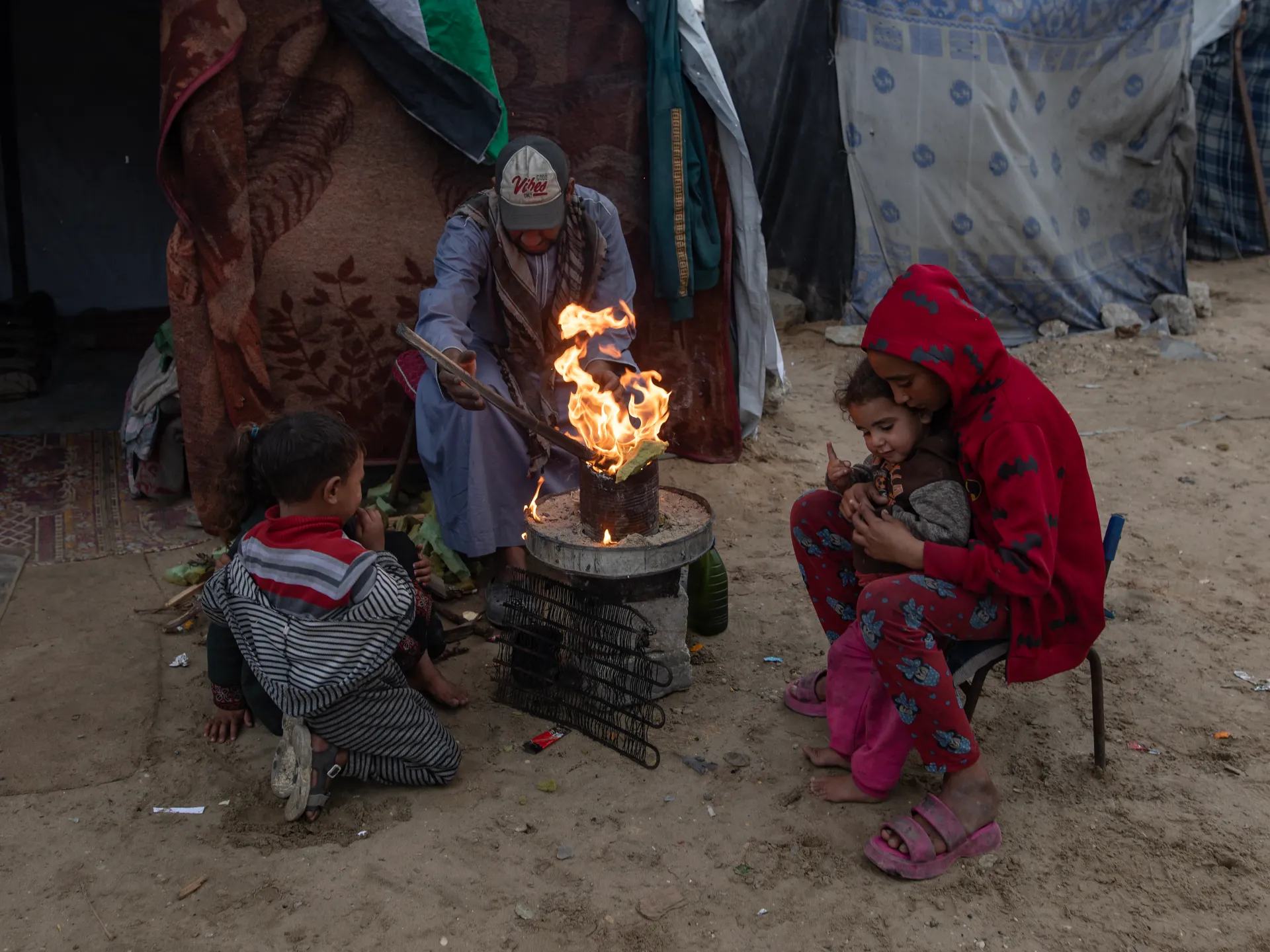
“Families are living in tents on wet ground without heating, electricity or sufficient clothing,” Abu Azzoum said. “When food, fuel, shelter and aid are banned, cold absolutely becomes lethal.”
Israel’s two-year war has decimated more than 80 percent of the structures across Gaza, forcing hundreds of thousands of families to take refuge in flimsy tents or overcrowded makeshift shelters.
A huge storm that recently hit the Strip killed at least 11 people as torrential rains and fierce winds flooded tents and caused damaged buildings to collapse.
“We try to dry the children’s clothes over the fire,” Umm Mohammed Assaliya, a displaced Palestinian mother, told Al Jazeera from Gaza City.
“There are no spare clothes for them. I am exhausted. The tent we were given cannot withstand winter conditions. We need blankets,” she said.
Humanitarian groups have urged Israel to allow unimpeded deliveries of aid to Gaza.
But the United Nations agency for Palestinian refugees, UNRWA, which the UN says is best suited to distribute supplies in the territory, says the Israeli government has blocked it from bringing aid directly into Gaza.
“People have reportedly died due to the collapse of damaged buildings where families were sheltering. Children have reportedly died from exposure to the cold,” UNRWA said in a social media post on Tuesday.
“This must stop. Aid must be allowed in at scale, now.”
Hamas slams Israeli ceasefire violations
Meanwhile, Hamas has condemned Israel for its repeated violations of a ceasefire deal that came into effect in October.
At least 393 Palestinians have been killed and 1,074 others wounded in Israeli attacks on Gaza since the first full day of the ceasefire on October 11, according to the latest figures from the enclave’s Health Ministry.
The Israeli military also killed a senior Hamas leader, Raed Saad, in a targeted attack on a vehicle in western Gaza City on Saturday, further straining the tenuous truce.
On Tuesday, Hamas leader Ghazi Hamad accused Israel of “manipulating” the text of the US-brokered agreement.
“We want to make it absolutely clear: the ceasefire agreement is straightforward, detailed, and unambiguous. However, it’s evident that the Israeli occupation has distorted the text, manipulating and violating every single article,” Hamad said.
“Since day one, Hamas has fully abided by the agreement and honoured its commitments. In contrast, Israel has deliberately committed several systematic and preplanned breaches.”
A new wave of Israeli policies is changing the reality and boundaries on the ground in the occupied West Bank.
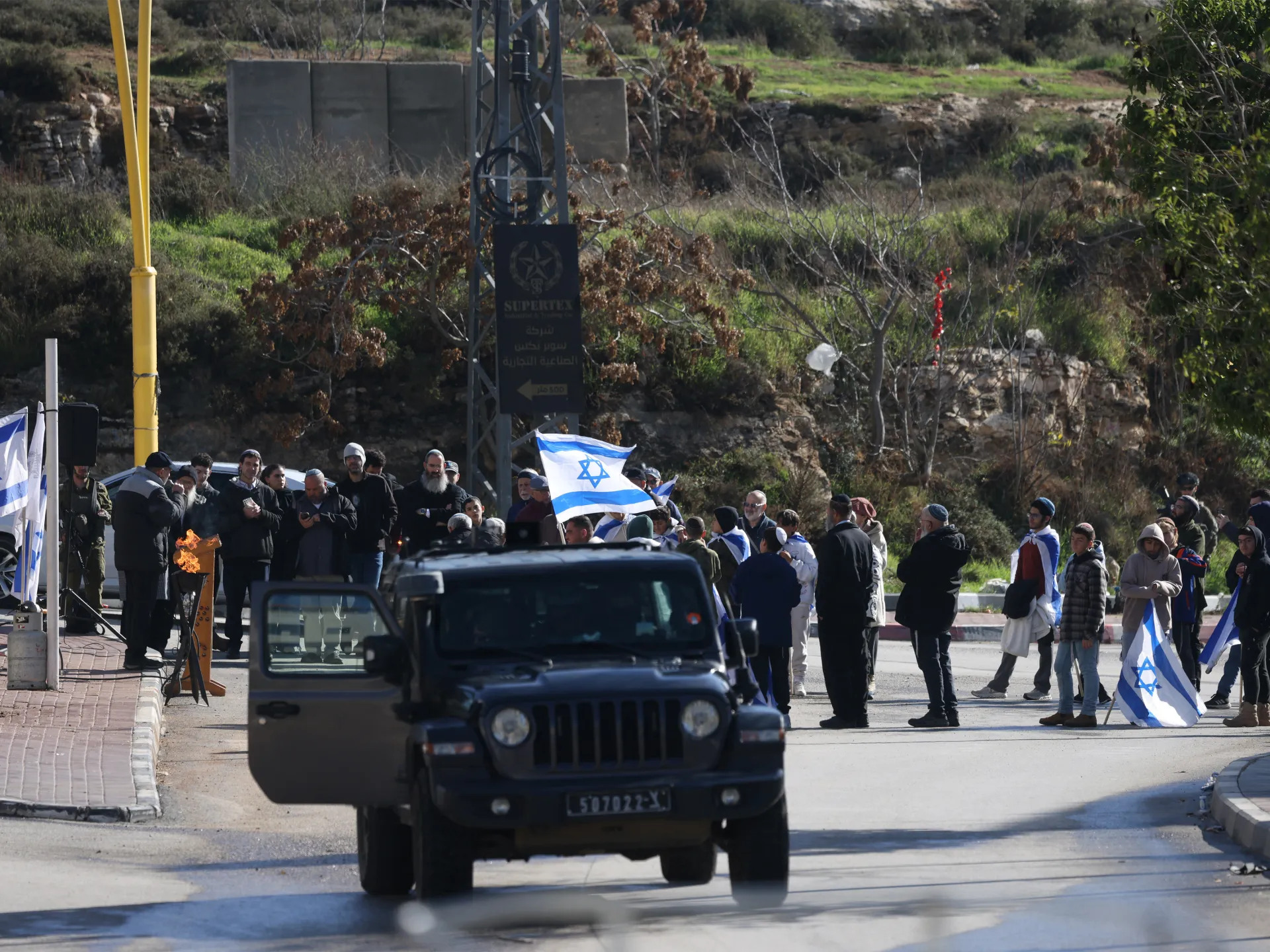
The Israeli government has approved the formalisation of 19 so-called settlement outposts as independent settlements in the occupied West Bank. This is the third wave of such formalisations this year by the government, which considers settlement expansion and annexation a top priority. During an earlier ceremony of formalisation, Finance Minister Bezalel Smotrich said, “We are advancing de facto sovereignty on the ground to prevent any possibility of establishing an Arab state in [the West Bank].”
Settlement outposts, which are illegal under international law, are set up by a small group of settlers without prior government authorisation. This does not mean that the settlers, who are often more ideological and violent, do not enjoy government protection. Israeli human rights organisations say that settlers in these so-called outposts enjoy protection, electricity and other services from the Israeli army. The formalisation opens the door to additional government funds, infrastructure and expansion.
Many of the settlement outposts formalised in this latest decision are concentrated in the northeastern part of the West Bank, an area that traditionally has had very little settlement activity. They also include the formalisation of two outposts evacuated in 2005 by the government of Israeli then-Prime Minister Ariel Sharon.
While these government decisions may seem bureaucratic, they are in fact strategic in nature. They support the more ideological and often more violent settlers entrenching their presence and taking over yet more Palestinian land, and becoming more brazen in their attacks against Palestinians, which are unprecedented in scope and effect.
The Israeli human rights organisation B’Tselem estimates that settler attacks against Palestinians have forcibly displaced 44 communities across the West Bank in the past two years. These arson attacks, vandalism, physical assault and deadly shootings are done under the protection of Israeli soldiers. During these settler attacks, 34 Palestinians were killed, including three children. None of the perpetrators has been brought to justice. In fact, policing of these groups has dropped under the direction of Israel’s national security minister, Itamar Ben-Gvir, who is a settler himself.
United Nations Secretary-General Antonio Guterres recently sounded the alarm about Israel’s record-breaking expansion of illegal settlements in the West Bank and the unprecedented levels of state-backed settler violence. In a briefing to the UN Security Council, Guterres reminded states that all settlements are illegal under international law. He also warned that they erode Palestinian rights recognised under this law, including to a state of their own.
In September, United States President Donald Trump said he “will not allow” Israel to annex the West Bank, without offering details of what actions he would take to prevent such a move.
But Israel is undeterred. The government continues to pursue its agenda of land grab, territorial expansion and annexation by a myriad of measures that fragment, dispossess and isolate Palestinians in the West Bank, including East Jerusalem, and continues its genocidal violence in Gaza.
More than 32,000 Palestinians have been forcibly displaced from their homes in three refugee camps in the occupied West Bank for nearly a year. The Israeli army continues to occupy Nur Shams, Tulkarem and Jenin refugee camps and ban residents from returning. Meanwhile, Israeli forces have demolished and damaged 1,460 buildings in those camps, according to a preliminary UN estimate. This huge, destructive campaign has changed the geography of the camps and plunged more families into economic and social despair.
This is the state hundreds of thousands of Palestinians across the West Bank find themselves in because of Israeli restrictions, home demolitions and land grabs. The Israeli army has set up close to 1,000 gates across the West Bank, turning communities into open-air prisons. This has a direct and devastating effect on the social fabric, economy and vitality of these communities, which live on land that is grabbed from under them to execute the expansion of illegal settlements, roads and so-called buffer zones around them.
According to the UN Conference on Trade and Development, Israeli practices and policies over the past two years have cost the Palestinian people 69 years of development. The organisation recently reported that the Palestinian gross domestic product (GDP) has shrunk to 2010 levels. This is visible most starkly in Gaza, but it is palpable in the West Bank as well.
The results of these policies and this reality are Palestinians leaving their homes and Israel expanding. During the summer, Israeli Prime Minister Benjamin Netanyahu told a local news station he was on a “historic and spiritual mission”, in reference to the vision of the Greater Israel that he said he was “very” attached to.
When armed soldiers in the small West African nation of Benin appeared on national television on December 7 to announce they had seized power in a coup, it felt to many across the region like another episode of the ongoing coup crisis that has seen several governments toppled since 2020.
But the scenes played out differently this time.
Recommended Stories
list of 4 itemsend of list
Amid reports of gunfire and civilians scampering to safety in the economic capital, Cotonou, Beninese and others across the region waited with bated breath as conflicting intelligence emerged. The small group of putschists, on the one hand, declared victory, but Benin’s forces and government officials said the plot had failed.
By evening, the situation was clear – Benin’s government was still standing. President Patrice Talon and loyalist forces in the army had managed to hold control, thanks to help from the country’s bigger neighbours, particularly its eastern ally and regional power, Nigeria.
While Talon now enjoys victory as the president who could not be unseated, the spotlight is also on the Economic Community of West African States (ECOWAS). The regional bloc rallied to save the day in Benin after their seeming resignation in the face of the crises rocking the region, including just last month, when the military took power in Guinea-Bissau.
This time, though, after much criticism and embarrassment, ECOWAS was ready to push back against the narrative of it being an ineffective bloc by baring its teeth and biting, political analyst Ryan Cummings told Al Jazeera.
“It wanted to remind the region that it does have the power to intervene when the context allows,” Cummings said. “At some point, there needed to be a line drawn in the sand [and] what was at stake was West Africa’s most stable sovereign country falling.”
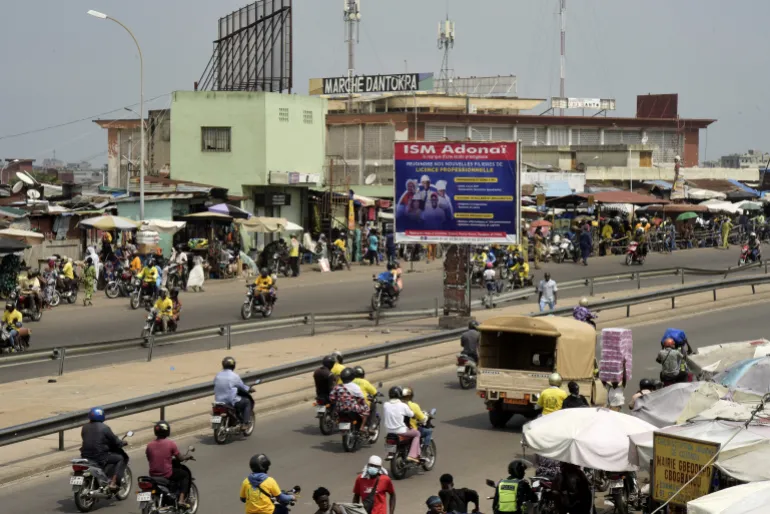
People gather at the market of Dantokpa, two days after Benin’s forces thwarted the attempted coup against the government, in Cotonou, December 9, 2025 [Charles Placide Tossou/Reuters]
Is a new ECOWAS on the horizon?
Benin’s military victory was an astonishing turnaround for an ECOWAS that has been cast as a dead weight in the region since 2020, when a coup in Mali spurred an astonishing series of military takeovers across the region in quick succession.
Between 2020 and 2025, nine coup attempts toppled five democratic governments and two military ones. The latest successful coup, in Guinea-Bissau, happened on November 28. Bissau-Guineans had voted in the presidential election some days before and were waiting for the results to be announced when the military seized the national television station, detained incumbent President Umaro Sissoco Embalo, and announced a new military leader.
ECOWAS, whose high-level delegation was in Bissau to monitor the electoral process when the coup happened, appeared on the back foot, unable to do much more than issue condemnatory statements. Those statements sounded similar to those it issued after the coups in Mali, Burkina Faso, Niger, and Guinea. The bloc appeared a far cry from the institution that, between 1990 and 2003, successfully intervened to stop the civil wars in Liberia and Sierra Leone, and later in the Ivory Coast. The last ECOWAS military intervention, in 2017, halted Gambian dictator Yahya Jammeh’s attempt to overturn the election results.
Indeed, ECOWAS’s success in its heyday hinged on the health of its members. Nigeria, arguably ECOWAS’s backbone, whose troops led the interventions in Liberia and Sierra Leone, has been mired in insecurity and economic crises of its own lately. In July 2023, when Nigeria’s President Bola Ahmed Tinubu was the ECOWAS chair, he threatened to invade Niger after the coup there.
It was disastrous timing. Faced with livelihood-eroding inflation and incessant attacks by armed groups at home, Nigerians were some of the loudest voices resisting an invasion. Many believed Tinubu, sworn in just months earlier, had misplaced his priorities. By the time ECOWAS had finished debating what to do weeks later, the military government in Niger had consolidated support throughout the armed forces and Nigeriens themselves had decided they wanted to back the military. ECOWAS and Tinubu backed off, defeated.
Niger left the alliance altogether in January this year, forming the Alliance of Sahel States (AES) with fellow military governments in Mali and Burkina Faso. All three share cultural and geographic affinities, but are also linked by their collective dislike for France, the former colonial power, which they blame for interfering in their countries. Even as they battle rampaging armed groups like Jama’at Nusrat al-Islam wal-Muslimin (JNIM), the three governments have cut ties with French forces formerly stationed there and welcomed Russian fighters whose effectiveness, security experts say, fluctuates.
Sierra Leone’s President Julius Maada Bio, who chairs ECOWAS, walks with Guinea-Bissau’s transitional president, Major-General Horta Inta-A, during a meeting in Bissau, Guinea-Bissau, on December 1, 2025 [Delcyo Sanca/Reuters]
But Benin was different, and ECOWAS appeared wide awake. Aside from the fact that it was one coup too far, Cummings said, the country’s proximity to Nigeria, and two grave mistakes the putschists made, gave ECOWAS a fighting chance.
The first mistake was that the rebels had failed to take Talon hostage, as is the modus operandi with putschists in the region. That allowed the president to directly send an SOS to his counterparts following the first failed attacks on the presidential palace at dawn.
The second mistake was perhaps even graver.
“Not all the armed forces were on board,” Cummings said, noting that the small group of about 100 rebel soldiers had likely assumed other units would fall in line but had underestimated how loyal other factions were to the president. That was a miscalculation in a country where military rule ended in 1990 and where 73 percent of Beninese believe that democracy is better than any other form of government, according to poll site Afrobarometer. Many take particular pride in their country being hailed as the region’s most stable democracy.
“There was division within the army, and that was the window of opportunity that allowed ECOWAS to deploy because there wasn’t going to be a case of ‘If we deploy, we will be targeted by the army’. I dare say that if there were no countercoup, there was no way ECOWAS would have gotten involved because it would have been a conventional war,” Cummings added.
Quickly reading the room, Benin’s neighbours reacted swiftly. For the first time in nearly a decade, the bloc deployed its standby ground forces from Nigeria, Ghana, the Ivory Coast, and Sierra Leone. Abuja authorised air attacks on rebel soldiers who were effectively cornered in a military base in Cotonou and at the national TV building, but who were putting up a last-ditch attempt at resistance. France also supported the mission by providing intelligence. By nightfall, the rebels had been completely dislodged by Nigerian jets. The battle for Cotonou was over.
At least 14 people have since been arrested. Several casualties were reported on both sides, with one civilian, the wife of a high-ranking officer marked for assassination, among the dead. On Wednesday, Beninese authorities revealed that the coup leader, Colonel Pascal Tigri, was hiding in neighbouring Togo.
At stake for ECOWAS was the risk of losing yet another member, possibly to the landlocked AES, said Kabiru Adamu, founder of Abuja-based Beacon Security intelligence firm. “I am 90 percent sure Benin would have joined the AES because they desperately need a littoral state,” he said, referring to Benin’s Cotonou port, which would have expanded AES export capabilities.
Nigeria could also not afford a military government mismanaging the deteriorating security situation in northern Benin, as has been witnessed in the AES countries, Cummings said. Armed group JNIM launched its first attack on Nigerian soil in October, adding to Abuja’s pressures as it continues to face Boko Haram in the northeast and armed bandit groups in the northwest. Abuja has also come under diplomatic fire from the US, which falsely alleges a “Christian genocide” in the country.
“We know that this insecurity is the stick with which Tinubu is being beaten, and we already know his nose is bloodied,” Cummings said.
Revelling in the glory of the Benin mission last Sunday, Tinubu praised Nigeria’s forces in a statement, saying the “Nigerian armed forces stood gallantly as a defender and protector of constitutional order”. A group of Nigerian governors also hailed the president’s action, and said it reinforced Nigeria’s regional power status and would deter further coup plotters.
Nigerian ECOWAS Ceasefire Monitoring Group (ECOMOG) soldiers guard a corner in downtown Monrovia during fighting between militias loyal to Charles Taylor and Roosevelt Johnson in Liberia in 1996. Between 1990-2003, ECOWAS successfully intervened to help stop the Liberian civil war [File: Reuters]
Not yet out of the woods
If there is a perception that ECOWAS has reawakened and future putschists will be discouraged, the reality may not be so positive, analysts say. The bloc still has much to do before it can be taken seriously again, particularly in upholding democracy and calling out sham elections before governments become vulnerable to mass uprisings or coups, Beacon Security’s Adamu said.
In Benin, for example, ECOWAS did not react as President Talon, in power since 2016, grew increasingly autocratic, barring opposition groups in two previous presidential elections. His government has again barred the main opposition challenger, Renaud Agbodjo, from elections scheduled for next April, while Talon’s pick, former finance minister Romuald Wadagni, is the obvious favourite.
“It’s clear that the elections have been engineered already,” Adamu said. “In the entire subregion, it’s difficult to point to any single country where the rule of law has not been jettisoned and where the voice of the people is heard without fear.”
ECOWAS, Adamu added, needs to proactively re-educate member states on democratic principles, hold them accountable when there are lapses, as in the Benin case, and then intervene when threats emerge.
The bloc appears to be taking heed. On December 9, two days after the failed Benin coup, ECOWAS declared a state of emergency.
“Events of the last few weeks have shown the imperative of serious introspection on the future of our democracy and the urgent need to invest in the security of our community,” Omar Touray, ECOWAS Commission president, said at a meeting in the Abuja headquarters. Touray cited situations that constitute coup risks, such as the erosion of electoral integrity and mounting geopolitical tensions, as the bloc splits along foreign influences. Currently, ECOWAS member states have stayed close to Western allies like France, while the AES is firmly pro-Russia.
Another challenge the bloc faces is managing potential fallout with the AES states amid France’s increasing closeness with Abuja. As Paris faces hostility in Francophone West Africa, it has drawn closer to Nigeria, where it does not have the same negative colonial reputation, and which it perceives as useful for protecting French business interests in the region, Cummings said. At the same time, ECOWAS is still hoping to woo the three rogue ex-members back into its fold, and countries like Ghana have already established bilateral ties with the military governments.
“The challenge with that is that the AES would see the intervention [in Benin] as an act not from ECOWAS itself but something engineered by France,” Adamu said. Seeing France instigating an intervention which could have benefitted AES reinforces their earlier complaints that Paris pokes its nose into the region’s affairs, and could push them further away, he said.
“So now we have a situation where they feel like France did it, and the sad thing is that we haven’t seen ECOWAS dispel that notion, so the ECOWAS standby force has [re]started on a contentious step,” Adamu added.
Exiled punk band says its members are proud to be branded ‘extremists’ and hits back at Putin as an ‘aging sociopath’.
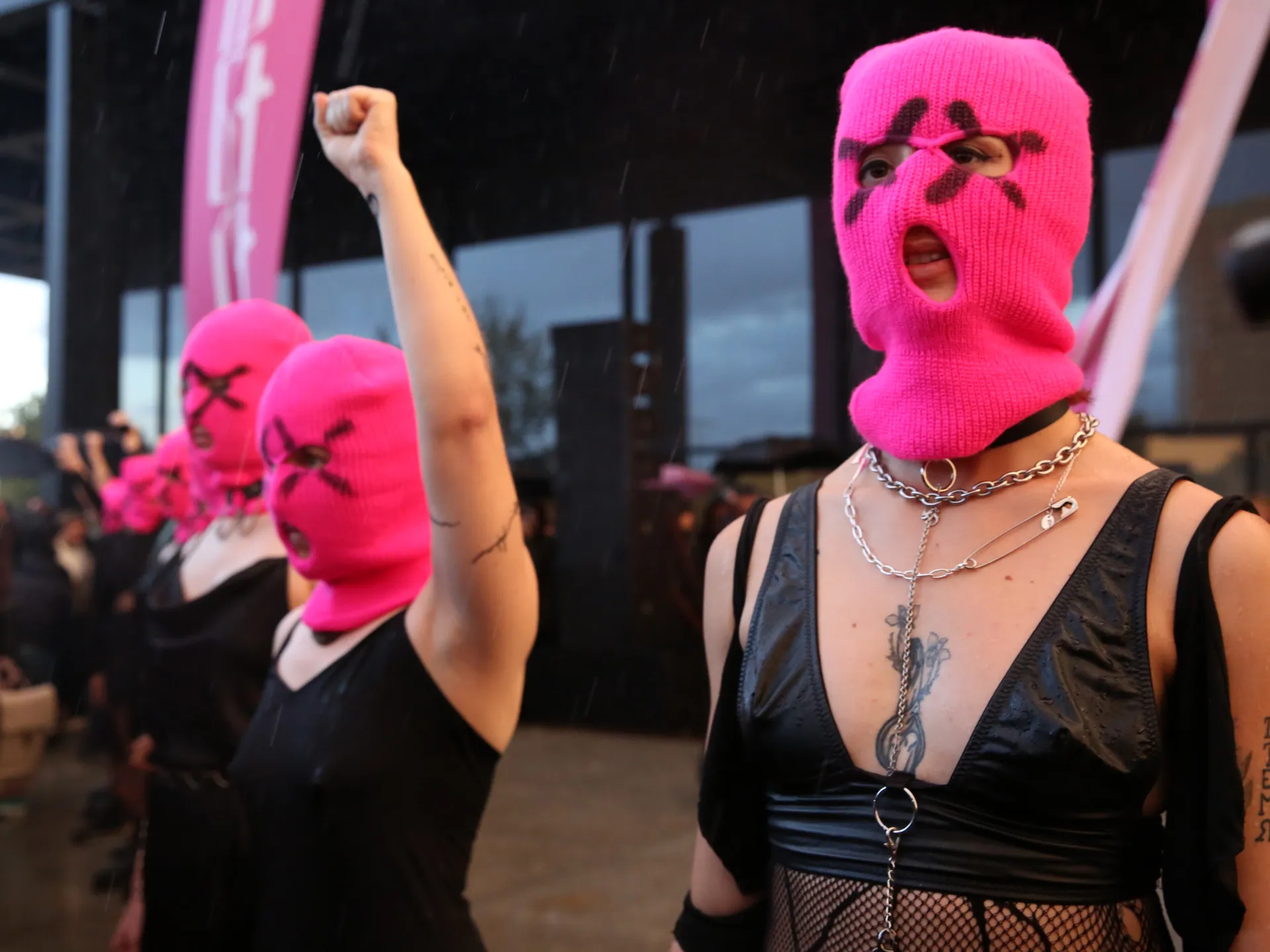
A Moscow district court has designated Russian punk protest band Pussy Riot as an extremist organisation, according to the state TASS news agency.
The exiled group’s lawyer, Leonid Solovyov, told TASS that Monday’s court ruling was made in response to claims brought by the Russian Prosecutor General’s Office and that the band plans to appeal. According to TASS, the case was heard in a closed session at the request of the Prosecutor General’s Office.
Recommended Stories
list of 4 itemsend of list
The court said that it had upheld prosecution submissions “to recognise the punk band Pussy Riot as an extremist organisation and ban its activities on the territory of the Russian Federation”, the AFP news agency reports.
An official Pussy Riot social media account shared a statement, responding defiantly to the ruling, saying the band’s members, who have lived in exile for years, were “freer than those who try to silence us”.
“We can say what I think about putin — that he is an aging sociopath spreading his venom around the world like cancer,” the statement said.
“In today’s Russia, telling the truth is extremism. So be it – we’re proud extremists, then.”
The group’s designation will make it easier for the authorities to go after the band’s supporters in Russia or people who have worked with them in the past.
“This court order is designed to erase the very existence of Pussy Riot from the minds of Russians,” the band said. “Owning a balaclava, having our song on your computer, or liking one of our posts could lead to prison time.”
According to TASS, earlier reports said that the Prosecutor General’s Office had brought the case over Pussy Riot’s previous actions, including at Christ the Saviour Cathedral in February 2012, and the World Cup Final in Moscow in 2018.
Today Russian court designated Pussy Riot as an extremist organization.
And yet, we’re freer than those who try to silence us. We can say what I think about putin — that he is an aging sociopath spreading his venom around the world like cancer. In today’s Russia, telling the… pic.twitter.com/ymz3BbApTo
The band’s members have already served sentences for the 2012 protest at the cathedral in Moscow, where they played what they called a punk prayer, “Mother of God, Cast Putin Out!”
Nadezhda Tolokonnikova and Maria Alyokhina, who were jailed for two years on hooliganism charges over the cathedral protest, were released as part of a 2013 amnesty, which extended to some 26,000 people facing prosecution from Russian authorities, including 30 Greenpeace crew members.
In September, a Russian court handed jail terms to five people linked with Pussy Riot – Maria Alyokhina, Taso Pletner, Olga Borisova, Diana Burkot and Alina Petrova – after finding them guilty of spreading “false information” about the Russian military, news outlet Mediazona reported. All have said the charges against them are politically motivated.
Mediazona was founded by Alyokhina alongside fellow band member Tolokonnikova.
The news outlet says that it is continuing to maintain a verified list of Russian military deaths in Moscow’s war on Ukraine.
“We have confirmed 153,000 names, each supported by evidence, context, and documentation,” Mediazona said on Monday.
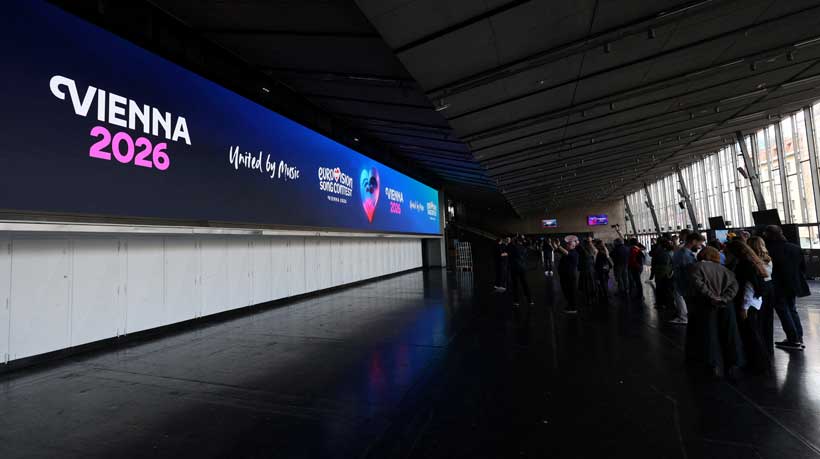
The Eurovision likes to sell itself as a glittering exercise in European unity, colorful, loud, proudly diverse, and (officially) above politics. Yet anyone who has watched the contest with both eyes open knows that “apolitical” has always been more of a brand promise than a lived reality. In late 2025, that gap widened into a full-blown crisis, as a number of broadcasters reported across outlets that Spain, Ireland, Slovenia, the Netherlands, and Iceland signaled they would not take part in Eurovision 2026 after the European Broadcasting Union (EBU) decided not to exclude Israel amid the ongoing war in Gaza, Palestine.
This episode is not simply “politics invading culture.” It reflects a shift in how legitimacy is demanded and contested in Europe’s cultural diplomacy, particularly when public broadcasters operate under constant online scrutiny. A constructivist lens helps explain why withdrawal can become socially “appropriate” not only because of interests, but because identities, norms, and public expectations set the boundaries of acceptable action.
Eurovision’s political DNA
Eurovision was launched in 1956 as a post-war cultural bridge. Its origin story is important: a shared stage was meant to build familiarity, and familiarity was meant to soften rivalry. That heritage still shapes the contest’s self-image. But Eurovision has long functioned as a stage where politics appears in coded ways through voting patterns, representation debates, and symbolic messaging.
In 2026, the argument is no longer coded. The EBU’s insistence that Eurovision must remain apolitical is being tested by publics who increasingly expect cultural institutions to reflect basic humanitarian values. This tension has been building for years, but the Palestine crisis and the EBU’s decisions have turned it into a legitimacy problem, not merely a public relations headache.
Why withdrawal became “appropriate”
Constructivism in international relations focuses on how identities and norms shape behavior. States and national institutions do not act only from material interests; they also act from what is socially acceptable, what fits their self-image, and the expectations of their audiences.
Three dynamics stand out.
Identity signalling, domestically and externally
For several withdrawing countries, participation carried an identity cost. Public broadcasters—especially those that see themselves as guardians of civic values—operate within national narratives about solidarity, rights, and moral responsibility. Remaining in the contest while public debate framed Israel’s participation as incompatible with humanitarian concerns risked looking like complicity or indifference. Withdrawal, by contrast, functioned as a signal: this is who we are, and this is the line we will not cross.
Importantly, this signalling was not addressed only to external audiences. It was also addressed inward towards domestic publics, artists, and civil society networks. In many European societies, those constituencies are no longer passive consumers of cultural events; they are active participants in the reputational economy surrounding public institutions.
Norm cascades and moral momentum
Once a few broadcasters moved towards withdrawal, the decision quickly gained social momentum. This is what Finnemore and Sikkink described as a “norm cascade”: when a norm shifts from being optional to being expected, and the reputational cost of non-compliance rises. In practical terms, it can start to feel safer to leave than to stay—because staying invites condemnation, while leaving can be framed as moral coherence.
This is also why the dispute escalated so quickly. A single broadcaster withdrawing is a story. Multiple broadcasters withdrawing is a pattern, and patterns trigger moral comparisons. The question changes from “Why did they leave?” to “Why are you still staying?”
The ‘apolitical’ norm is under strain because it looks selective.
The apolitical claim does not collapse simply because people become more emotional. It collapses when it appears inconsistent. Critics repeatedly pointed to Russia’s exclusion in 2022 after the invasion of Ukraine and asked why a different standard was being applied now. The EBU, for its part, has emphasized the contest’s non-political ethos and introduced new rules aimed at insulating Eurovision from government influence.
But in the public sphere, the argument is not purely procedural. It is moral and comparative: if Eurovision can act decisively in one case, why not in another?
Constructivism predicts that institutions struggle when the norms they rely on no longer align with the moral intuitions of their audiences. That is exactly what this crisis reveals.
Digital activism as a legitimacy engine
If this controversy had happened twenty years ago, it would likely have moved more slowly, mediated by newspapers and official statements. Today it unfolds in a real-time digital public sphere where narratives travel quickly across borders and reputational costs escalate fast. Online mobilization—through petitions, artist statements, and hashtag campaigns—helped turn Eurovision into a symbolic battleground, pressuring broadcasters to respond to highly visible moral claims.
Two effects matter most. First, digital dynamics accelerate moral consolidation, which means once “selective neutrality” becomes a dominant frame, hesitation itself is read as a political stance. Second, institutions face continuous visibility. Decisions are no longer a single event but an ongoing justification process, renewed by viral moments and high-profile protest actions linked to Israel’s inclusion.
For cultural diplomacy, this shifts the logic of soft power from image-making towards moral credibility under public scrutiny.
Withdrawal as cultural diplomacy
Withdrawal from Eurovision is, in a strict sense, symbolic. But symbolism is precisely what cultural diplomacy trades in. The act of leaving, particularly when done by public broadcasters, served three strategic functions.
First, moral signalling, which meansbroadcasters and states communicated alignment with humanitarian values and a refusal to normalize perceived injustice.
The second one is reputation management. In a digital environment, silence can be more costly than action. Withdrawal can reduce domestic backlash and preserve trust in public institutions.
Last, this is ethical positioning as soft power. The logic of soft power is shifting from colorful branding to ethical coherence. A state may gain credibility not by appearing “fun,” but by appearing consistent with its professed values.
These functions help explain why the controversy is bigger than Eurovision. What is being tested is the idea that cultural platforms can remain insulated from global crises. Many audiences no longer accept that separation.
The EBU’s dilemma: rules, legitimacy, and consistency
The EBU now sits at the center of competing demands. On one side is the institutional need for predictability: rules that keep Eurovision from becoming an arena for state-to-state confrontation. On the other side is the public demand for moral consistency: rules that do not appear selective or politically convenient.
The EBU’s recent approach of avoiding an immediate exclusion decision while adjusting rules—may be defensible from a governance perspective.
Yet governance solutions do not automatically restore legitimacy, because legitimacy is also emotional and relational. It depends on whether audiences believe the institution is acting in good faith and applying standards fairly.
This is where cultural diplomacy meets a hard truth: neutrality is not simply declared; it is earned. And in the digital age, it is re-earned continuously.
What this means for Europe’s cultural diplomacy
Three implications stand out.
First, moral expectation is becoming structural. European publics increasingly demand moral coherence not only from governments but from cultural institutions as well. Cultural diplomacy is being asked to carry ethical weight.
Second, “European values” are being operationalized. They are no longer abstract slogans. They are used as benchmarks to judge institutions and to accuse them of hypocrisy when they fall short.
Third, public opinion has become a strategic force, not background noise. Digital mobilization can shape state behavior indirectly by pressuring broadcasters, artists, and institutions that sit at the heart of national identity.
Policy takeaways
If the EBU seeks to protect Eurovision’s legitimacy without turning it into a geopolitical tribunal, three steps would help. First, it should clarify participation principles by defining what “neutrality” means operationally and what thresholds trigger institutional action. Second, it should build a credible consistency mechanism, as audiences will continue comparing cases and demanding transparent reasoning. Third, the EBU should treat the digital sphere as part of governance: proactive engagement and rapid clarification now shape institutional survival as much as formal rule-making.
Conclusion
Eurovision 2026 is not simply a cultural controversy with political noise attached. It is a case study in how identity, norms, and digital activism are reshaping Europe’s cultural diplomacy. Constructivism helps explain why withdrawal became not only possible but, for some, necessary: it aligned state-linked institutions with the moral expectations of their publics.
Eurovision was built to bridge Europe after war. Ironically, its newest crisis shows that unity today is conditional: audiences increasingly expect cultural institutions to be transparent, consistent, and ethically credible, especially when global suffering is impossible to ignore.
Australian Prime Minister Anthony Albanese has pledged a review of his country’s gun laws and added support for Jewish Australians, as his government faces scrutiny following a deadly shooting at Sydney’s Bondi Beach.
On Monday afternoon, Albanese faced reporters to answer questions about the shooting, which took place a day earlier, during a local Hanukkah celebration. At least 15 people have died, including a 10-year-old girl, and dozens are reported injured.
Recommended Stories
list of 4 itemsend of list
“What we saw yesterday was an act of pure evil, an act of terror, an act of anti-Semitism: an attack on the first day of Hanukkah, targeted at the Jewish community,” Albanese said in prepared remarks, after visiting the crime scene.
“A dark day in Australia’s history, on what should have been a day of light.”
The Australian government has yet to name the suspected attackers, identifying them only as a 50-year-old man and his 24-year-old son. The father died in a shootout with police, while the son is currently being treated at a local hospital.
Hanukkah is sometimes called the Festival of Lights, and in Monday’s news conference, Albanese encouraged Australians to participate in a show of solidarity with the country’s Jewish community.
“I would urge and join with others who have urged Australians across the country to light a candle, put it in their front window tonight at 6:47pm [19:47 GMT] to show that light will indeed defeat darkness – part of what Hanukkah celebrates, of course,” he said. “We are stronger than the cowards who did this.”
But while Albanese and other officials urged calm, critics questioned whether the government had done enough to curtail both anti-Semitism and gun violence.
Netanyahu spurs scrutiny
One of Albanese’s highest-profile critics in the wake of the attack was Israeli Prime Minister Benjamin Netanyahu.
The right-wing Israeli leader blamed Albanese’s centre-left government for failing to protect Australia’s Jewish community. He also linked the shooting to Australia’s recent decision to recognise Palestinian statehood.
“Your call for a Palestinian state pours fuel on the anti-Semitic fire,” Netanyahu said in remarks directed at Albanese, voicing sentiments he later repeated in a social media post.
“It emboldens those who menace Australian Jews and encourages the Jew hatred now stalking your streets.”
Those remarks fuelled outrage and accusations that Netanyahu was leveraging the tragedy for political aims.
In a post on social media, UN special rapporteur Ben Saul also criticised Netanyahu for linking Australia’s recognition of Palestinian statehood to Sunday’s shootings.
“I am disgusted that the Israeli PM links Australia’s principled support for a Palestinian State with yesterday’s terrorist attack in Bondi,” said Saul, who also serves as an international law chair at the University of Sydney.
“Australia has taken extensive measures to prevent anti-semitism,” Saul added.
When asked on Monday morning about Netanyahu’s remarks, Albanese said his focus was on bringing people together.
“This is a moment for national unity,” the Australian prime minister told reporters in Sydney. “This is a moment for Australians to come together. That’s precisely what we’ll be doing.”
He also said his government would beef up funding and support to protect Jewish community members, including covering the costs of guard services.
“We’re extending the funding for the National Council for Jewish Community Security and its state-based community security groups, to provide overall security cover to the Jewish community,” Albanese said.
“We’re also working with Jewish community organisations to see how we can best support charity efforts, including through tax-deductible status for donations.”
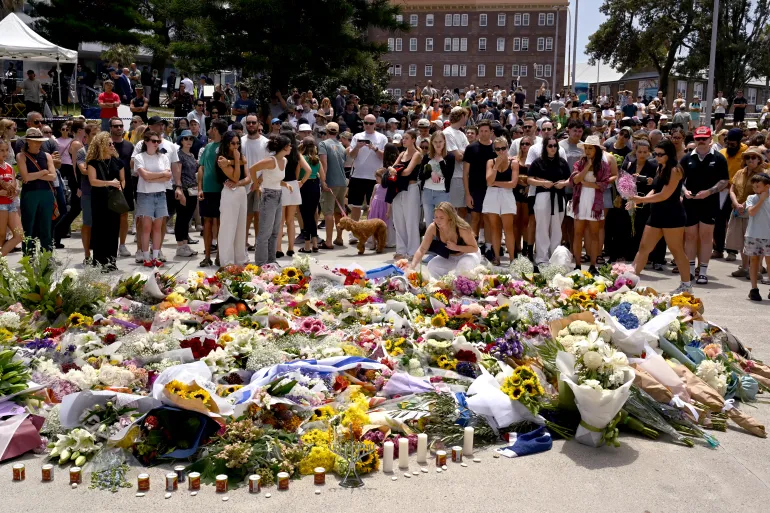
Mourners gather by floral tributes at the Bondi Pavilion in Sydney on December 15, 2025 [Saeed Khan/AFP]
Australia’s gun reforms under scrutiny
Albanese also told reporters on Monday afternoon that he would be convening a meeting of state premiers to discuss “tougher gun laws, including limits on the number of guns that can be used or licensed by individuals”.
“People’s circumstances change. People can be radicalised over a period of time. Licences should not be in perpetuity,” said Albanese.
His remarks follow questions about the six guns recovered from the scene of the shooting and the revelation that the 24-year-old suspect had previously come under police scrutiny.
Officials have repeatedly said the 50-year-old suspect had “met the eligibility criteria for a firearms licence”, and that the 24-year-old was previously not deemed to be a threat.
Australia introduced some of the world’s strictest gun laws, including bans on automatic and semiautomatic rifles and shotguns, after a shooter killed 35 people in the Tasmanian town of Port Arthur in 1996.
The 1996 reforms, introduced under former Prime Minister John Howard, were hailed as a success after Australia saw no mass shootings occur for close to two decades.
However, according to a recent report from the Australia Institute, the implementation of the laws has lapsed in recent years, with more guns now in the country than before 1996.
On Monday, Albanese said the reforms had “made an enormous difference” and were a “proud moment” of bipartisan action, but that reviews were now needed to ensure better coordination between states.
Chris Minns, the premier of New South Wales, where the shooting took place, also told reporters on Monday he would be reviewing gun laws.
“We want to make sure that prospective reform and change in New South Wales has a lasting impact,” Minns said. “It’s not the last time I’ll be mentioning it, and you can expect action soon.”
Sunday’s shooting at Bondi Beach follows several other mass shootings in recent years, including a 2022 attack in Wieambilla, Queensland, linked to Christian fundamentalist ideology that left six people dead.
An Australian man was also responsible for the attack in 2019 that killed 51 people at a mosque in Christchurch, New Zealand, where semiautomatic weapons are still sold.