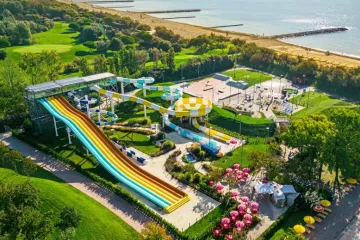
KEEPING the kids occupied over weekends and half term holidays can be difficult in the colder months.
So we’ve rounded up the best indoor waterparks across the UK.
Sign up for the Travel newsletter
Thank you!
Indoor waterparks make for a great family day out, no matter the weather – like Sandcastle Waterpark in BlackpoolCredit: Sandcastle
With a mix of high-thrill slides and rides, relaxing spa treatments and adults-only zones, these waterparks are the perfect place to spend a day indoors.
The famous Thunderbolt ride is known for being the UK’s first trap door drop waterslide – a water flume which shoots you down at 25mph.
Meanwhile one of the newest rides, Hurricane, descends at 17mph with spooky lightning effects.
The popular Python ride has also been recently refurbished, with slithery twists and turns gentle enough for toddlers.
Most read in Best of British
There’s also calming bubble pools, relaxation areas, and a restaurant serving up pizza, bubble waffles and milkshakes.
And if you visit in the warmer months, there’s an outdoor pool and loungers to soak in the rays.
The waterpark is within Waterworld Leisure Resort, which is also home to the tiki-themed Adventure Mini Golf and the new M Club Spa and Fitness facility.
General entry starts at £24.00.
The Wave is a UK award-winning indoor waterparkCredit: The WaveThe lazy river is a more chilled option at this indoor waterparkCredit: The Wave
The Wave, Coventry
This indoor waterpark in Coventry holds the record for the largest wave pool in the UK.
The famous wave pool churns a whopping 20 million litres of water per day, with waves that deepen gradually as you wade in.
The indoor waterpark also has six slides, ranging from The Rapids water coaster to The Riptide – a rubber ring ride set at an exhilarating 90° angle.
The Cyclone is one of the waterpark’s fastest rides, swirling riders around in an open bowl before falling into the pool.
The Wave is also home to a lazy river which whisks swimmers around a winding path, as well as a splash zone for younger children named The Reef.
Adults visiting can enjoy a dedicated pool for lane swimming, fitness centre or a trip to the dedicated spa.
The Mana Spa has a steam room, sauna and offers a variety of massages and facials.
Tickets for ages 12+ start at £14.50 (off peak). Junior tickets start at £12.50, and infants aged 1 and under go free.
Sandcastle Waterpark is one of the UK’s top indoor waterparksCredit: Sandcastle Waterpark
Sandcastle Waterpark, Blackpool
This indoor waterpark is the UK’s largest, with your pick of waterslides and flumes for the kids, as well as a spa for the adults to unwind.
Here you can treat yourself to a tropical holiday in Blackpool, as this waterpark is set in a tropical 84° climate.
The park boasts 18 waterslides, including the UK’s longest indoor rollercoaster.
Family friendly slides range from the Treetops Water Chutes, multi-lane slides perfect for little ones, to the pirate-themed HMS Thunder Splash.
The waterpark is also home to 5 record-breaking “white-knuckle rides” – exciting options for the thrill-seekers in the family.
The Sidewinder is the world’s first Indoor half-pipe waterslide, whilst the Masterblaster has been named the UK’s longest indoor rollercoaster waterslide.
The Caribbean Storm Treehouse, on the other hand, is an interactive water climbing frame – complete with a giant coconut that pours 600 gallons of water onto unsuspecting swimmers every few minutes!
And if you want a break from all the screaming and laughter, the Sea Breeze Spa has a sauna, steam room, foot spas and even an aromatherapy room.
The spa costs £7 per person and must be booked alongside an admission ticket.
There’s also a “Tiki Cabana” experience for ultimate relaxation.
For £60 per person adults can unwind in a private area with a flatscreen TV, fridge stocked with cold drinks, and a private hot tub.
The price also included full-day admission, lunch and access to the spa.
General entry starts from £24.95 for ages 12+, £15.95 for kids aged 3 – 7, and under 3s go free.
You can see the winding slides from outside of the attractionCredit: Sandcastle
Clockwise from top middle: Tacos from Marvito, beef tartare from Monsieur Dior by Dominique Crenn, smoked bologna sandwich and fries from Mario’s Butcher Shop, spicy albacore with onigiri and seared scallops from OyBar, and a fish sandwich from Bopomofo cafe.
(Stephanie Breijo / Los Angeles Times, Ron de Angelis / For The Times, Philip Wang)
Strategic planning could help UK workers ‘stack’ their annual leave days around bank holidays to stretch standard holiday entitlement into significantly longer blocks of time, subject to employer approval
10:00, 01 Jan 2026Updated 10:15, 01 Jan 2026
You could ease into the new year with a holiday (stock)(Image: Getty)
As the festive cheer begins to fade and the dreary ordeal of January looms, we’re all on the hunt for a silver lining to brighten up the year ahead.
This glimmer of hope might just be found in recent research that reveals how many of us could potentially maximise our holiday allowance next year – bagging up to 63 days off by using only 28 days of annual leave.
Most UK employees, who work a standard five-day week, are typically entitled to about 28 days of annual leave. However, with some clever planning, astute workers can ‘stack’ their annual leave days to extend their standard holiday entitlement into considerably longer periods of time.
The experts at TargetJobs have detailed how you can effectively double your annual holiday entitlement with a bit of careful manoeuvring.
Do keep in mind though, that your colleagues might also be privy to similar advice, so you’ll need to act swiftly to secure those prime holiday dates before someone else beats you to the punch!
The first holiday you should aim to book is tomorrow (Friday, January 2) – although this might be a tad last-minute for some. Taking into account weekends and bank holidays, this could see you enjoying a four-day break for the price of just one day’s leave.
Next on the agenda is your Easter break. This year, Good Friday falls on April 3, followed by Easter Monday on April 6.
By booking from Monday, 30 March to Thursday, 2 April and then from Tuesday, 7 April to Friday, 10 April, you’ll only use eight days of leave but score a whopping 16 days off work.
You could use this time to soak up some spring sunshine as resorts in southern Europe begin to heat up. Alternatively, if lounging on the beach isn’t your cup of tea, you might still be able to fit in a late-season ski trip at high-altitude resorts like Val Thorens in France’s Tarentaise Valley.
The following month, there will be two official bank holidays. If you book four days off over each, you’ll bag a nine-day break.
That’s plenty of time to jet off to the Mediterranean, or even further afield. If your budget allows, you could squeeze in a week in the Caribbean.
The final bank holiday of 2026 falls on Monday, 31 August, which can give you an additional nine-day break, if you take four days of leave immediately afterwards.
Finally, fast-forwarding to next Christmas, the big day lands on a Friday. As Boxing Day falls on a Saturday, that day off is moved to Monday, 28 December. This means you could use just seven days worth of leave to secure yourself 16 consecutive days off.
You could embrace the festive spirit with a snowy getaway in Lapland, or dodge the season entirely and opt for some winter sun.
Bear in mind, though, popular dates like Christmas and Easter tend to fill up quickly, so it’s best to put in your leave request as early as possible.
Additionally, some employers may block out busy periods, prohibiting you from booking individual days off or even outright refusing to permit staff absence during certain times.
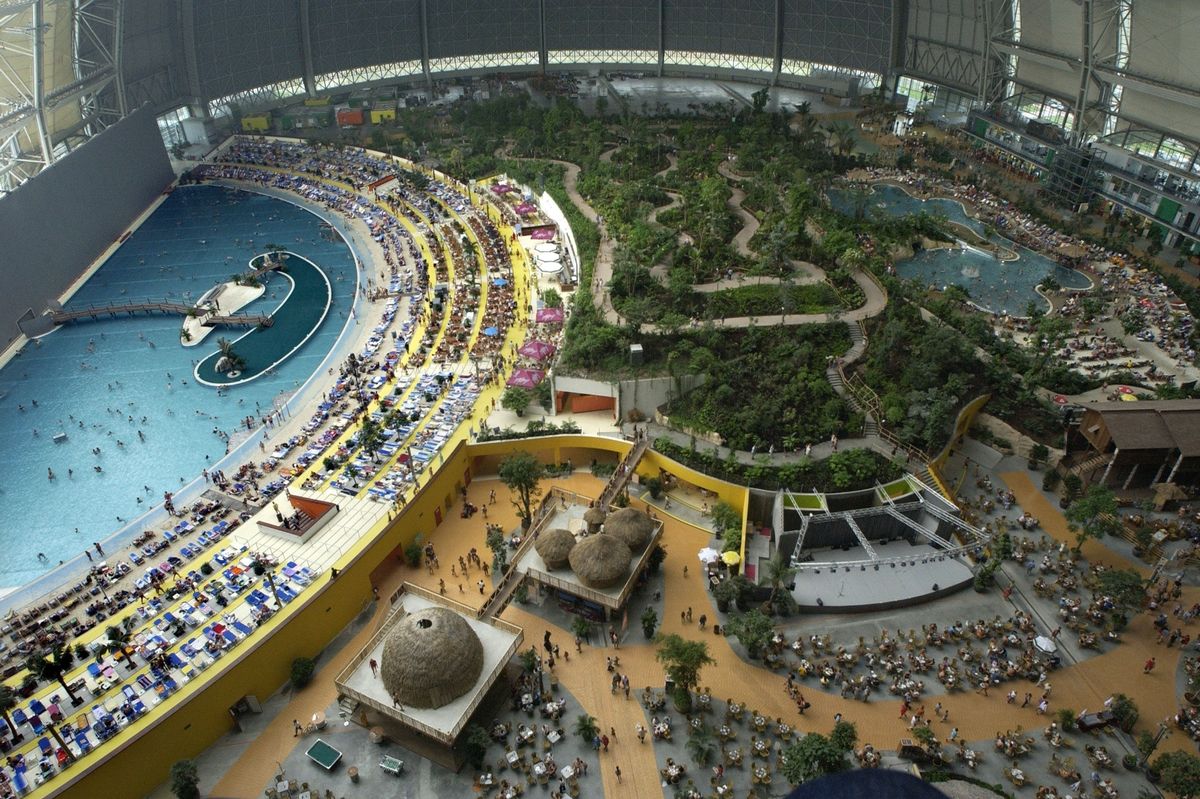
The world’s largest indoor beach can be found inside the Tropical Island Resort in Krausnick, Germany, which is an hour drive from Berlin where Brits can fly to in under two hours
Liam McInerney Content Editor
09:41, 01 Jan 2026Updated 10:19, 01 Jan 2026
The Tropical Island Resort in Krausnick in Germany (Image: ullstein bild via Getty Images)
The world’s largest indoor beach is double the length of a Premier League football pitch – and it is 26C all-year-round.
The man-made sandy beach stretches 200 metres and is dotted with palm trees and sunloungers. It is nestled inside the Tropical Island Resort in Krausnick, Germany, which is also home to the largest indoor swimming pool and one of the biggest indoor rainforests.
Brits can book return flights to its nearest airport – Berlin Brandenburg Airport – for as little as £47 from London Stansted Airport.
The mammoth indoor waterpark, once the biggest in Europe, is an hour drive from Berlin, and it was built in 2004.
The 10,000sqm space includes four attractions which are Water Worlds, Tropical Rainforest, the outdoor Amazonia area and the Tropical Village where visitors can buy food, drinks and gifts.
The complex is so large that it can accommodate 6,000 visitors at a time who can even take air balloon rides inside the unique resort that is inside a gigantic dome hangar.
Being a balmy 26C no matter the season, there are 900 sunbeds available, and the giant swimming pool in the Water Worlds section is the size of three Olympic sized ones. There is also Bali-style huts that surround a water lagoon while kids can play in a Jungle Splash water playground.
The resort is also home to a sizable slide tower that stands at 27 metres (equivalent to a four-storey building) and a power turbo slide reaches speeds of 43mph. And if that wasn’t enough excitement, there is a huge twisty water slide that is 149 metres long.
Some 50,000 plants can be found inside the Tropical Rainforest also boasting butterflies, flamingos and turtles. There are also mini golf games and a Balinese-inspired village.
Adults can also take advantage of the spa and sauna complex where there are seven spa areas in total while there are also caves inspired by Cambodia, Australia and Malaysia.
Visitors can choose to stay in rooms inside the resort or there are tents available to hire for overnight stays too.
Last year, the Hawaiian themed Ohana Town was constructed, where visitors can stay overnight in lodges, play bowling, eat in a restaurant and sing their hearts out in karaoke.
Day tickets for adults start from around £30, children between four and 12 from £26 while kids three and younger are free.
In a recent review on TripAdvisor, one person wrote: “Prices rise annually. It’s starting to be quite expensive fun. In winter still good, because you feel like on holiday.”
Another called it “beach paradise for families with children” before adding: “Large, warm pools and several waterslides for those who like it.
“Lots of sunbeds but they get busy very quickly so if you want these you need to come early in the morning, then they dibs all day.”
Package holidays have become the go-to option for many Brits, but the first package holiday in 1841 was worlds away from a sizzling trip to Spain – and passengers only travelled 11 miles from home
While package holidays really took off in the 1960s they had a long history before then(Image: Getty)
As the festive decorations are packed away and Brits brace themselves for a dreary, rain-soaked January, many will be planning their summer getaways. When it comes to chasing the sun, Brits have long loved the ease of a package holiday.
ABTA data reveals that 62% of people who ventured abroad last year opted for a package holiday, bundling together flights and accommodation with extras from coach travel to car hire and dining packages.
The surge in package holidays has gone hand in hand with the rising popularity of overseas destinations. So, you might assume that first package breaks involved jetting off to sunny Costa Blanca or the chic south of France.
However, the origins of the package holiday are far more modest, and there’s one man to thank next time you’re basking in an all-inclusive in Alicante or lounging in Lanzarote, reports the Express.
Thomas Cook and the birth of the package holiday
The first package holiday in 1841 was a rather tame event. A Baptist preacher named Thomas Cook chartered a train and organised a trip for his fellow temperance movement members, advocates of abstaining from alcohol.
For a mere shilling, passengers could journey the 11-miles from Leicester to a temperance rally in Loughborough, complete with a cup of tea and a ham sandwich to enjoy on the train.
It may have been a modest start, but spurred on by the sale of 485 tickets, Thomas established Thomas Cook & Son, which became a household name in package holidays for many years. The entrepreneur recognised that railway companies offered discounts for bulk bookings or charters, and the public appreciated the ease of booking a package with everything organised for them.
Following his whirlwind journey to Leicester, Thomas Cook expanded his offerings with further trips across the Midlands, before branching out to London for the Great Exhibition. In 1855, he ventured overseas, leading tour groups to Belgium, Germany, and France, and in 1863, he introduced the first tour of Switzerland.
Opening up the world
Given the popularity of his European excursions, Thomas Cook presented his most ambitious itinerary yet in 1872. For 200 guineas, roughly equivalent to £25,000 today, travellers could embark on a 222-day tour encompassing the USA, Japan, China, India, and Egypt.
Around this time, Thomas also pioneered the use of circular notes, later known as traveller’s cheques, making it easier for holidaymakers to spend money abroad.
By 1888, Thomas Cook & Sons had established a global presence with offices worldwide, including three in Australia and one in New Zealand. By 1890, they were selling tickets to over three million travellers annually.
Previously, travel was a luxury only the wealthy could afford, but many of Cook’s new clientele were from the burgeoning middle classes. France, Germany, and Switzerland were popular destinations, and packages often included cultural excursions to museums, theatre and opera visits, in addition to outdoor pursuits like mountain climbing.
Fast forward to 1949, when the first modern package holiday, as we know it today, was introduced. Vladimir Raitz, a Moscow-born businessman who had relocated to London, was holidaying in Corsica when a business associate challenged him to attract more Brits to the island.
Vladimir calculated that for £35 per person (equivalent to around £1,100 in today’s money), he could charter a plane and offer British holidaymakers two weeks of sun-soaked bliss on the French island.
Despite facing some hurdles, Vladimir’s offer of a flight, tent accommodation, and twice-daily meals with meat proved irresistible to those still grappling with post-war austerity. The first charter flights took off in May 1949.
Vladimir went on to found Horizon Holidays, the first in a long line of package holiday companies promising sun-drenched getaways.
By 1950, the post-war holiday surge saw a million Brits venturing abroad, and in 1957, the now-obsolete British European Airways capitalised on this trend by offering flights to Valencia, situated approximately two hours north of Alicante. To market this fresh destination, the nickname Costa Blanca was created, encompassing the towns and cities along the 120-mile coastline.
During this period, a quaint fishing village named Benidorm was witnessing a decline in its fishing industry and needed a new income source. The local council, seizing an opportunity, began approving new developments.
In 1956, the General Plan was initiated, which moulded the destination that Brits adore today. While the area had been a tourist hotspot for some time, this plan incorporated more high-rise buildings and large public spaces, completely changing the skyline of the Spanish city.
1950 also marked the debut of the first resort to offer a version of the modern all-inclusive. Club Med launched a resort in Alcúdia, Majorca, where holidaymakers could have all their meals included in the price.
Tourists, primarily from Belgium and France, stayed in tents or beach huts and meals were a communal event, yet it laid the groundwork for a popular style of holiday that persists to this day.
Golden age
In the 1960s, a mix of factors like improved flight accessibility, increased wages and more paid holidays led to Brits swapping their local getaways for foreign adventures. Many embarked on their first overseas journeys, basking in the sun-soaked climes of Spain, Greece, and Italy, immersing themselves in diverse cultures and sampling exotic cuisines.
Fast forward to today, and not much has changed with package holidays. A week or two under the sun remains the summer highlight for many Brits.
While new destinations have emerged, early favourites like Costa Blanca and Majorca continue to draw crowds. And even though the internet has opened up a world of travel opportunities, the continuing popularity of package holidays shows that sometimes all you need for a great holiday is a bit of sunshine and a comfy sunlounger.
Have a story you want to share? Email us at webtravel@reachplc.com
LOOKING for somewhere cheap to visit in 2026, that won’t have you stuck on a plane for hours?
We’ve put together a list of some of the most affordable short-haul destinations to visit, with insider tips on where to eat and stay for cheap.
Sign up for the Travel newsletter
Thank you!
Dublin’s Temple Bar area is extremely popular with tourists and a great photo opportunityCredit: unknownDublin’s cobbled streets are full of charmCredit: Getty
Whether it’s a weekend city break, a romantic getaway or a quick foodie trip – here’s our top picks for the best in short-haul holidays.
Dublin, Ireland
Dublin is one of Europe’s most exciting and lively capital cities, with loads to see and do, and plenty of good craic to be had.
There are plenty of fun experiences like the Guinness Storehouse (from €22 (£19) or Jameson’s Distillery tour (from €26 (£22.80)), both of which are worth every penny.
But there’s also no need to spend on days out when there is so much to see just by strolling through the city.
Wander down Grafton Street to listen to some of the most talented buskers you’ve ever heard.
Or take a picnic to Stephen’s Green to feed the resident swans, relax and watch the world go by.
And if you’re looking for the best pint, we have some insider tips.
Whilst it’s worth visiting the famous Temple Bar for a photo op, there are some much more authentic (and cheaper) places to get a drink.
Grab your pint of Guinness from bars loved by locals such as Gravediggers or Mulligan’s for a more authentic experience.
Flights from multiple UK airports to Dublin are often only £14.99 each way with Ryanair.
Plus the flight over is so fast, cabin crew barely have the time to get the trolley down the aisle before you’ve landed!
Stay at a hostel like Generator Dublin for an urban, industrial vibe right in the heart of the city, whilst paying as little as £14 to stay the night.
The flight from London to Milan is only 2 hoursCredit: GettyPiazza del Duomo square is one of the most photographed spots in MilanCredit: Getty
Milan, Italy
Milan might be known as one of Europe‘s top fashion capitals, but this sleek Italian city is a surprisingly cheap stay.
Skip the pricey guided tours – Milan is best explored on foot.
Stroll through the Galleria Vittorio Emanuele II, admire the Duomo (or climb the rooftop for €15 (£13)), and unwind in Parco Sempione behind Sforza Castle.
There are loads of architectural masterpieces which are free to enter, such as the grand Basilica di Sant’Ambrogio and the stunning San Maurizio – often dubbed the Sistine Chapel of Milan.
There are also some great museums with free entry, such as the Palazzo Morando art museum and the Mudec – Museum of Cultures.
Another major perk of Milan is that you can feast on authentic Italian food to your heart’s content – without breaking the bank.
Head to the Navigli district, famous for its canals and buzzing nightlife, where you can order an aperitivo for around €10 (£8.80) and you’ll get a cocktail plus a plate of free snacks, or even a mini buffet to go with it.
Or for some traditional pasta, visit restaurants such as Il Brutto Anatroccolo for mains from €8 (£7).
The flight from London to Milan is only 2 hours long, and costs as little as £14.20 each way with easyJet.
There are plenty of cheap hotels to choose from, including the 4-star Cosmo Hotel Palace for £54 per night.
The Hungarian Parliament Building stands majestically on the Danube RiverCredit: GettyThe Szechenyi Baths in Budapest get their water from two thermal springsCredit: AlamyThe Szimpla is a trendy ruin bar and a great spot for a drinkCredit: GettyMany street vendors in Budapest offer Hungarian chimney cakeCredit: Getty
Budapest, Hungary
Budapest might look like a luxury city break at first glance, with its grand architecture, thermal spas and classy rooftop bars.
But the Hungarian capital actually one of the most affordable capitals to visit in Europe.
Start your trip in the city’s famous ruin bars – once crumbling buildings turned into quirky bohemian pubs.
Here you can grab a pint for 1000 HUF (£2.25) and dance the night away without burning a hole in your pocket.
Szimpla Kert is the most iconic ruin bar, packed with vintage furniture, fairy lights, and live music most nights.
To relax, skip the expensive spas and head to the picture-perfect SzéchenyiThermal Bath.
It’s the largest medicinal bath in Europe, and costs 12,500 HUF (around £28) to visit.
Soak in your choice of 15 steamy outdoor pools surrounded by Budapest’s signature neo-baroque architecture.
The city is also dotted with street vendors selling delicious chimney cake, or ‘Kürtőskalács’ – a delicious sweet pastry that is a must-try when in Budapest.
It’s made by wrapping dough around a spit before rolling it in cinnamon sugar or chocolate, and you can grab them for as little as 445 HUF (or £1).
Return flights to Budapest cost as little as £42 with Ryanair, and city centre hotels such as the Benczúr offer rooms for as little as £30 a night.
Walk the walls of Girona for great views over the cityCredit: GettyGirona in Spain has a beautiful canal and colourful historic buildingsCredit: GettyXuixos are tasty Spanish pastries – a popular snack in GironaCredit: Alamy
Girona, Spain
Girona might not be the first place that comes to mind for a Spanish break, but it should be.
This colourful Catalan city has all the charm of Barcelona – without the chaos or the price tag.
Wander through the Old Town”s medieval streets to see sights like the impressive Gothic Cathedral and the famous colourful houses that line the Onyar River.
There are plenty of fascinating historic sites to visit, like the arching Arab Baths and the Força Vella, the Roman fortress remains.
You can even walk along the city walls for some unbeatable views.
There’s also some quirky places to visit such as the Cinema Museum, Game of Thrones filming sites and the Pont de las Peixateries Velles – the city’s iconic red bridge.
AS the Sun’s Deputy Travel Editor, I have racked up the air miles – hopping on a plane at least once a month.
And I know the best times to visit cheap destinations all over the world, as well as how to find those £15 flights and the best free attractions to visit.
The Sun’s Kara Godfrey travels to over 10 countries a year
Choosing the best month to visit a place can be tricky when it comes to balancing the best weather and affordable flights.
So I’ve broken it down month by month, explaining which destination to visit and when – ranging from short haul city breaks to longer haul winter sun.
I’ve even thrown in some of the best free things to do there if you’d like to keep to a budget.
And with some flights from as little as £15 each way – it’s hard to say no, isn’t it?
January – Senegal
Let’s face it, January is a hard month for us all. We’re tired, we’ve overeaten and we are counting down the days until our next paycheck.
But one of the best places to escape the misery in is beautiful Senegal.
Not only is there no risk of jet lag due to us being in the same time zone, but you can guarantee 30C weather when the rest of the UK is freezing.
It is one of the more affordable mid-haul destinations with good weather, where you can nab an all-inclusive package with TUI for £690 each – and that’s with your flights, hotels and drinks.
TUI also have some £0 deposit schemes if you needed time pre-Christmas to save.
One of the best day trips is from Dakar to Goree Island, a former slave trading post now home to a museum and street markets.
Otherwise see it as fly and flop destination, and make the most of that heat from your hotel sunlounger.
TUI has seven-night all-inclusive packages with flights from £689pp.
Free things to do:
African Renaissance Monument
The Mosque Of The Divinity
Dakar Railway Station
Senegal is a great ‘fly and flop’ destinationCredit: AlamyGoree Island is a must visit when in Senegal with boats from DakarCredit: AlamyTUI has some super cheap package dealsCredit: COLLECT
February – Marrakech
The Moroccan city of Marrakech starts to hit highs of 20C from February onwards.
The main draw is the iconic souks, where you can pick up homeware and clothing bargains.
Be prepared to haggle – locals say you should get items for 30 per cent of the starting price. But if that feels a bit mean, try and knock off at least 20 per cent.
If you need a break from the chaos, head to Le Jardin Secret for some peaceful respite.
Or take to the roof for some amazing views of the plaza, a popular one being on top of the El Fenn hotel.
EasyJet has flights from London Stansted, LondonLuton and Liverpool to Marrakech from £14.99.
Free things to do
Walking tour
Dar Si Said, Museum of Moroccan Arts (free tickets on fridays for students and teachers)
Moroccan Culinary Art Museum (MCAM)
Jemma el Fna Square
Koutoubia Mosque
Marrakech is already hitting 20C in FebruaryCredit: AlamyJust walking through the souks and to the mosques is a wonderful day outCredit: AlamyMarrakech is busy but worth exploring
March – Seville
As one of Spain‘s hottest cities, you can expect some warm weather in Seville, even in March.
Squeeze into Bar Alfafa with the locals for a cheap breakfast of coffee and pan con tomate for a few euros, before heading over to El Rinconcillo, Seville’s oldest bar, for a cheap glass of wine.
Time your visit to catch the Sunday art market outside the gallery too, where you can pick up some beautiful paintings.
Otherwise, if you want to find the best local food spots, book the Secret Food Tour which takes you to some of the city’s finest restaurants and cafes.
Ryanair has flights to Seville from both LondonLuton and London Stansted from £16.99.
Free things to do
Royal Alcazar Palace (free tickets for last hour)
Seville Cathedral (free tickets for the last hour)
Salsa shows at Jardines de Murill
The beautiful Plaza de Espana in SevilleCredit: Alamy
April – Tokyo
One of the most popular times to visit Tokyo is during cherry blossom season.
But if you head there just after, so late April, you can see much cheaper hotels and flights while still enjoying some of the world famous Sakura trees in some of the parks.
Face the hustle and bustle of the iconic Shibuya Crossing, before a some peace and quiet at the Meiji Shrine.
Try your luck at Akihabara Street which is lined with games and arcades, although one of the most fun things to do is the go karts through the city.
My favourite spot? Harajuku Gyoza-Ro for the crispiest dumplings, followed by Aoyama Flower Market, a tea shop-come-garden-centre.
British Airways has four-night holidays with return flights from £1,066pp.
Free things to do:
Ueno Park
Sensoji Temple
Tokyo Metropolitan Government Building Observation Room
Toyosu Fish Market
Sumo Museum
The Ad Museum
Tokyo has lots of free things to do – to justify the priceCredit: GettyVisit in April to catch some cherry blossoms before the busy season
May – Singapore
The month of May is just after the popular February-April season, so you can still expect good weather but cheaper flights for Singapore.
The city is the perfect stopover destination, but there is more than enough to do here to make a full trip out of it.
One of the best ways to get around the city is a side car tour, with stops along the way at some of the top attractions.
Visit speakeasy-like Jigger + Pony, named one of the world’s best bars, or Long Bar for the famous Singapore Sling.
For a breakfast with the locals, stop at Joo Chiat, for a ‘prata’ (crispy pancake) with fish curry for about £1, or get chilli crab-cracking at Keng Eng Kee (free bibs are necessary).
British Airways has four-night holidays with return flights from £791pp.
Free things to do:
Henderson Wave Bridge
The Merlion
Garden by the Bay
Singapore in May is a perfect combination of good weather and more affordable flightsCredit: AlamyA side car tour is the best way to travel around
June – Puerto Rico
A destination that unexpectedly blew me away was Puerto Rico.
One of the most fun times to visit is on June 23, to celebrate La Noche de San Juan.
Expect big street parties, fireworks and people running into the sea at midnight for ‘good luck’.
Outside of this, the food scene is a must, with a mix of Caribbean and American influences (try the Mallorca, a sweet bread with ham and cheese, followed by a ‘beermosa’).
And of course, being the home of Bacardi, a trip to the museum is a must for your fix of pina coladas.
Or head over to Flamenco Beach, often named one of the best beaches in the world.
JetBlue has flights to Puerto Rico via New York from £486pp.
Free things to do:
Flamenco Beach
El Yunque National Forest
Puerto Rico Museum (free from 5pm to 8pm on Thursdays)
Herminio Torres Grillo Tobacco Museum
Museo de Arte de Puerto Rico
A food tour of San Juan is a must in Puerto RicoCredit: AlamyOld San Juan is one of the most colourful areas
July – El Gouna
Families visiting Egypt will be heading straight to Hurghada in the summer months if they want good weather and affordable resorts.
But travel in the first few weeks and head to El Gouna and you can skip the prices and the crowds.
Just 30 minutes from Hurghada, the man-made, gated lagoon island is extremely safe.
It’s also where you can find some very affordable five star resorts, spa treatments and some laidback luxury on a budget.
Loveholidays has seven nights all inclusive with return flights from £399pp.
Free things to do:
Abu Tig Marina
Zeytuna Beach
Fanadir Marina
El Gouna is a safer option for visiting Egypt, being a gated communityCredit: AlamyThe lagoon island is a great spot if you want to explore other day trips around Egypt
August – Gothenburg
One of the best alternative city breaks to visit in the height of summer, in my opinion, is Gothenburg.
In August, it hosts the Way Out West music festival, and is a great alternative to some of the busier European alternatives.
It’s also not a camping festival so you can head straight to your hotel after.
One of the quaintest places to explore outside of the festival is Haga district, lined with cosy cafes and pretty shops.
Ryanair has return flights from London Stansted to Gothenburg from £15.
Free things to do:
Museum of World Culture (free tickets for under 19)
Natural History Museum (free tickets for under 19)
Museum of Art (free tickets for under 25)
Slottsskogen city park
Frihamnen Public Sauna
Gothenburg Opera (free concerns in foyer on some Saturdays)
Music fans will visit Gothenburg in August but it is still a quieter festival town than others in EuropeCredit: Alamy
September – Milan
Milan gears up for its Fashion Week in September, but if you can avoid the expensive week (normally the last of the month) then it makes for a great post-summer city break.
Head straight out of town to Navigli, the trendy canal lined with bars and restaurants.
Ignore the tourist crowd and head down one of the side streets to Iter, a cosy bar where you can sample local wines alongside a big bowl of olives.
They also own Bar43, named one of the world’s best and more an immersive experience than a bar (although you’ll need to book a few weeks in advance).
Visit on the last Sunday of the month, for the huge flea market Mercatone dell’Antiquariato.
EasyJet has flights from Birmingham to Milan Linate from £16.99 while Wizz Air has flights from LondonLuton to Milan Malpensa from £18.
Free things to do:
Galleria Vittorio Emanuele II
Parco Sempione
Brera Botanical Garden
Hangar Bicocca
Galleria d’Arte Moderna (free first Sunday of the month)
Museum of Natural History (free first Sunday of the month)
The fashion capital of Milan is a great post-summer city destinationCredit: Alamy
October – Madrid
Madrid is great any time of year but you can also expect good weather in October without the summer crowds.
Visit on a Sunday to shop for hours at El Rastro, one of Europe‘s biggest street markets.
It’s bustling and busy but a great place for some bargain clothes and jewellery.
One of my favourite ways to spend a few hours is to relax at Sala Equis, a former adult cinema now home to a bar and live music.
Don’t forget to grab some Spanish omelette at Pez Tortilla with a glass of vino tinto (red wine) too – you’ll be dining with the locals so make sure to brush up on your Spanish.
Ryanair has flights from Bristol to Madrid from £14.99 while easyJet has flight from London Gatwick from £18.99.
Free things to do:
Atocha Train Station’s Tropical Garden
Museo de Prado (Free tickets from 6pm to 8pm all week or 5pm to 7pm on Sundays)
Changing of the Guard at the Royal Palace (free to watch on Wednesday and Saturday at 11am)
Río Park
Museo Reina Sofía (free tickets for under 18, over 65 or students)
Madrid has some amazing cheap eats if you want to dine on a budgetCredit: AlamyBar hop in Madrid for some fantastic wine and cocktails
November – Lille
Lille is the perfect autumn/winter escape without much effort needed, being the first stop in Europe on the Eurostar.
The manageable city has it all – from pretty Sunday markets to delicious waffles (try the famous chestnut filled ones at Meert).
Hop in a Citroën 2CV for a very fun vintage car tour of the city, before ending at NU rooftop for views over the train station.
Eurostar has tickets from London St Pancras to Lille from £39.
Free thing to do:
Palais des Beaux-Art (free on the first Sunday of the month)
Grand Place
Lille-Saint-Sauveur Station
Porte de Paris
Lille is the first stop in Europe on the EurostarCredit: Alamy
December – Copenhagen
Copenhagen is one of the best places to get in the festive mood.
Wrap up warm and get ready to cafe hop, from the porridge specialists Grod to the Scandi brunch Atelier September.
Tivoli Garden is great for fairytale fans who want to feel the Disney magic without the price, with twinkly lights, rides and stalls.
Make sure to stay at Hotel SP34, which has a free wine and cheese hour every evening.
Ryanair has flights from Bristol to Copenhagen from £14.99 while easyJet has London Gatwick flights from £18.99.
Free things to do:
Bakke theme park
Explore the district of Christiania
Frederiksberg park
The National Museum of Denmark
The Marble Church
Tivoli Chrstmas market is a must in Copenhagen in DecemberCredit: Alamy
Nestled in the heart of a green valley, surrounded by lush rolling hills, this small Yorkshire village has been dubbed the perfect place to escape to – and it even has a river flowing through it
The quaint village is a traveller’s paradise(Image: Getty Images/iStockphoto)
A charming village in North Yorkshire, home to a mere 400 residents, is rapidly becoming a ‘must-see’ destination for travellers.
Nestled at the base of a steep ravine known as Crunkly Ghyll, this idyllic village is celebrated for its quintessential English allure, stunning landscapes, and a gently flowing river adorned with quaint stepping stones for visitors to traverse. Situated within the civil parish of Glaisdale, this picture-perfect hamlet in the North York Moors is characterised by its enchanting stone cottages, lush green surroundings, and the tranquil River Esk meandering through it. Renowned for its natural splendour and timeless charm, the village perfectly embodies the spirit of rural England. Visitors can indulge in leisurely riverside walks, exhilarating cycling paths, challenging hikes across the moors, and unwind in highly recommended pubs and local shops.
The village’s name, Lealholm, translates to ‘the settlement by the willow trees’, a fitting moniker given its scenic beauty. It’s a visual treat and an outdoor enthusiast’s dream, serving as the perfect crossing point for the River Esk, reports Yorkshire Live. Over the years, Lealholm has become a magnet for tourists, particularly during the summer months. Thanks to the Lealholm railway station on the Esk Valley railway line, it’s an easily accessible getaway.
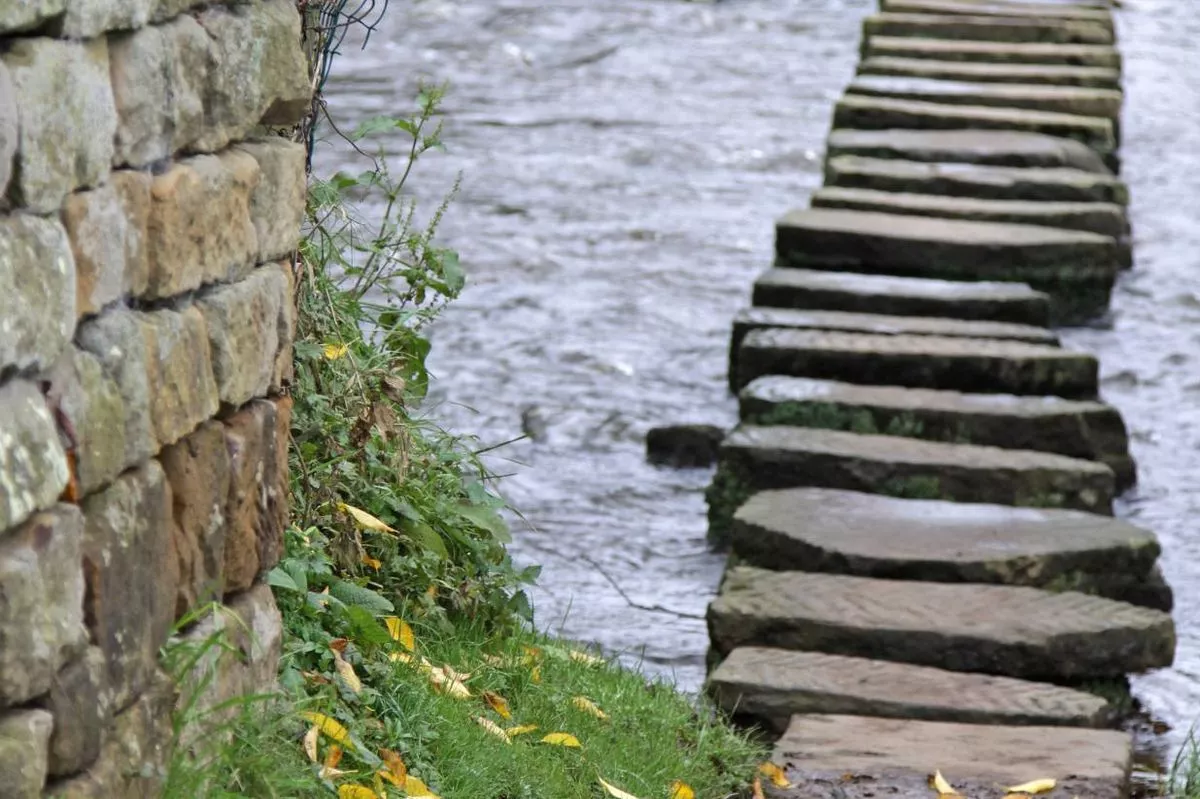
The Lealholm Stepping Stones are a renowned feature of the village, providing both locals and tourists with an enjoyable way to explore the surrounding areas and have a bit of fun in the river. A significant portion of the local community is engaged in farming, thanks to the fertile Eskdale slopes.
Adding to the allure of the village is a popular tea-room and bakery, a traditional 16th-century pub known as The Board Inn, and charming cottage stays, making it a top choice for those wanting to discover the UK’s natural beauty. Its location within the North York Moors National Park only enhances its stunning appeal. Lealholm also boasts the 17th-century Lealholm Bridge that stretches over the River Esk, making it a favourite spot for fishing – with salmon and sea trout aplenty – and picnicking.
Other historical attractions include the 12th-century St James’ Church and the medieval stone cross standing tall in the village square, known as the Lealholm Cross. The vibrant local community of Lealholm hosts various events throughout the year, such as the Lealholm Village Show and a Sports Day.
Getting there
Situated roughly 10 miles from the famous coastal town of Whitby – made famous by Bram Stoker’s Dracula – visitors can reach Lealholm by car or public transport, with regular bus and train services operating to and from the village. Holidaymakers also have the option to continue on to Whitby or venture into the nearby North York Moors National Park.
Now Christmas is over for another year, many people are making plans for the new year – including travel plans to destinations with great weather and activities to do
Jess Flaherty Senior News Reporter
07:04, 01 Jan 2026Updated 07:16, 01 Jan 2026
The best budget-friendly destinations for 2026 have been revealed (stock image)(Image: Getty Images)
After the expense of Christmas, and the ongoing cost of living crisis, finding reasonably priced options for holidays or a spot of travelling can be quite tricky. Social media is rife with ideas, recommendations and tips from experienced and novice jet-setters alike.
One person turned to Reddit looking for a viable option for a trip with their girlfriend this month. The couple want to spend 30-35 days abroad, with a budget of around £2,600 to £3,000, excluding the cost of their flights.
That sum would purely be their spending money for “accommodation, food, transport, activities, etc”. They live in the Baltics, so would be flying out from either Lithuania, Latvia or Estonia and were “open to any destination – Asia, South America, Africa, Europe, islands, you name it”.
Their main requests were for “good weather (ideally warm/sunny in Jan); a mix of nature, culture, and relaxation; a destination that’s good value for money over a full month of travel;” as well as the option for “adventure”, including “hiking, wildlife, or just exploring new places”.
They asked guidance from people who’d done a similar trip or had “any suggestions on where to go”. And fellow Reddit users were keen to share their thoughts and recommendations.
One person said: “Two weeks in Northern Thailand (Chiang Mai and Chiang Rai). Five days in Bangkok. Two weeks on Islands in Southern Thailand (Koh Lipe, Koh Phanang)”.
Another agreed: “Can 100% recommend Koh Lipe. It is a small island so you’ll probably max out of things to do after about four days unless you’re happy just lazing by the beach all day.”
A third said: “It’ll be summer in the southern hemisphere if you’re looking for warm weather. New Zealand comes to mind as it sounds like you’re looking for nature – haven’t been there myself but the pics look incredible”.
But someone else replied: “That budget won’t get you far in NZ for that long sadly”.
Another suggested: “Tanzania and Zanzibar might suit you”.
To which, someone else shared: “I am leaving Zanzibar tomorrow after a week here. It has been great. The people are friendly and the beaches are great.
“Even the vendors on the beach are easygoing and fun to chat with. There is a good range of accommodation options too, and the food has been awesome. Asante sana.”
Another recommendation came for south east Asia: “Malaysia would be an excellent option. Accommodation, transport and food is very cheap and there’s lots to see.
“I’d visit Penang, Langkawi, Perhentian islands, Borneo, KL and Cameron Highlands. You’ll get to see lots of wildlife, hikes, history, beaches etc.”
And another said: “El Nido, in the Philippines would work, as would Da Nang in Vietnam or one of the kohs in Thailand. If you haven’t ever ‘done’ the ‘Banana Pancake Trail’, that’s really the first place that I would start. Start watching flights to BKK [Bangkok].”
Offering a different perspective, one person said: “Northern Turkey is fabulous with all its ancient sites from Roman and Greek eras especially on western side.
“The lodging and food is very inexpensive. The wine is excellent. Istanbul area is also great. Also greatly enjoyed Athens Greece with all its history. Food and drink was fabulous. Ate at one restaurant which gave us unlimited after dinner wine.”
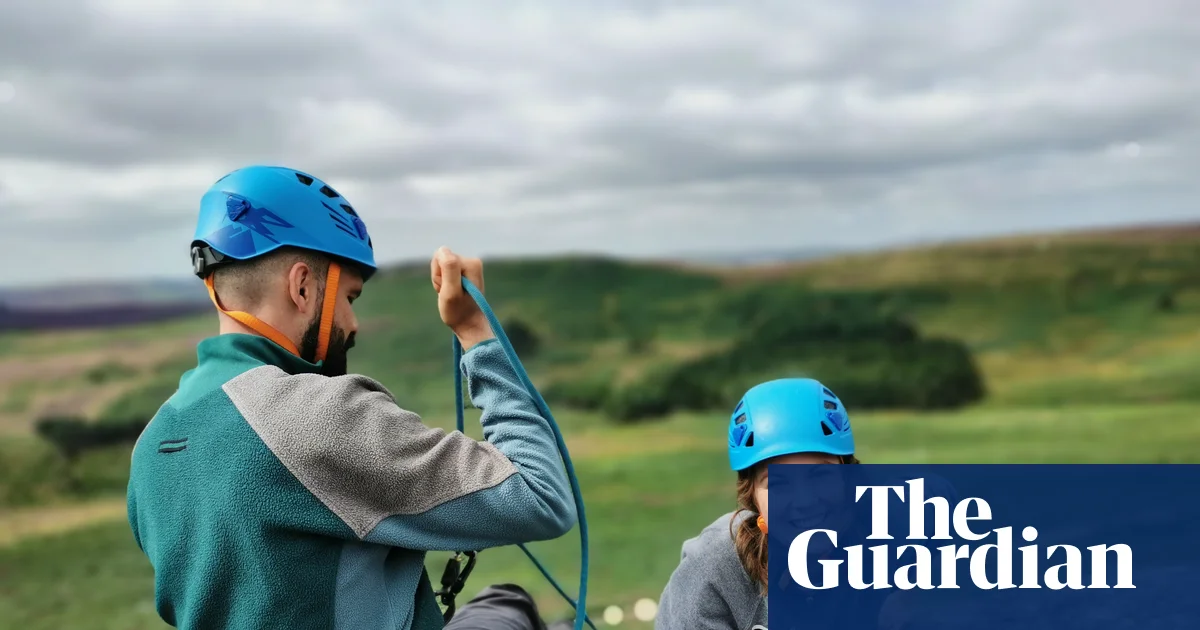
Even complete beginners will soon be scaling sheltered Peak District crags on this two-day course with Pure Outdoor. Participants will master tying in, belaying and several climbing techniques, as well as abseiling down. With a maximum of six learners to one instructor, there is a lot individual attention and personalised targets. The course is suitable for anyone aged 13 and over, from first-time climbers to those with some indoor experience. It is non-residential, but Pure Outdoor has a list of recommended, affordable accommodation nearby, including campsites, hostels, B&Bs and pubs with rooms. The training centre is 10 minutes’ walk from Bamford railway station, which is on the Hope Valley line from Manchester to Sheffield. £199 for two days, weekends from 7 March-8 November, plus weekday courses most months, pureoutdoor.co.uk
Abstract painting in Spain
In the heights … turn sketches into abstracts in Andalucía Photograph: Andrew Watson
Moclín, a historic hillside village in Andalucía, about 45 minutes’ drive from Granada, is the inspiring setting for this painting holiday. Painters of all abilities – including beginners – will learn how to plan and create abstract artworks. Some time will be spent outside, working on guided exercises en plein air. These charcoal drawings and watercolour studies will then be developed in the studio, with participants producing several abstract landscapes in acrylics to be exhibited in the village. The group has sole use of the hotel, which is set around an open courtyard and has a roof terrace with views over the hills. The price includes five days’ painting tuition; all meals, including a tapas dinner in Granada; and an excursion to the castle and other local sights. From €1,950 for seven nights, 19-26 May, granadaculturalholidays.com
Ottolenghi-inspired vegetarian cooking in Portugal
Veg out … Ottolenghi-style meals in Portugal. Photograph: Figs on the Funcho
This Mediterranean cooking retreat, set on a riverside villa in the inland Algarve, is inspired by the vegetarian dishes of Yotam Ottolenghi and Ixta Belfrage. Guests will learn to produce meze spreads, attend a falafel-making workshop, perfect brunch dishes such as shakshuka, and make hearty mains including spicy mushroom ragu and moussaka. There are visits to the village market and a local vineyard to taste Portuguese wines, plus free time for walks by the Funcho River, to relax on the deck or swim in the infinity pool. The villa, a former farmhouse, has five bedrooms, plus safari tents in the grounds. From €900 for five days from 20 March, 8 May, 11 September and 13 November, responsibletravel.com
Street dance in Buckinghamshire
Keep it locked … street dance classes in High Wycombe. Photograph: Gradyreese/Getty Images/iStockphoto
Hip Hop Don’t Stop is an uplifting, inclusive three-day adults’ street dance camp in High Wycombe, Buckinghamshire. The format each day is a party-style group warmup, followed by three 90-minute workshops covering different street dance styles, then an hour-long jam to show off those solos. Dancers are divided into groups according to ability and experience, so it is suitable for those who are brand new to popping and locking, right up to advanced dancers or teachers. The camp doesn’t include accommodation but there are several hostels and hotels within walking distance, and it is 23-35 minutes by train into central London. £245 for three days; next course 7-9 April, urbanstrides.com
Sea shanty weekend in Cornwall
On the fiddle … learn to write sea shanties in St Ives. Photograph: Desha Cam/Stock Adobe
St Ives is the perfect setting for a sea shanty weekend. Guests will learn traditional shanties from a folk singer and vocal coach, and have a go at writing their own. There will be vocal warmups, breathing exercises, performance tips and a final evening concert. The holiday is held in a country house overlooking St Ives Bay. All meals are provided, including a Cornish cream tea on arrival, cooked or continental breakfasts, packed lunches and three-course dinners. Grog, alas, is not included. All together now: “What will we do with the drunken sailor …?” From £429, 31 January-3 February and 31 October-3 November, hfholidays.co.uk
Creative writing in Crete
Write on … village-style hotel in the White mountains, Crete.
Author, playwright and lecturer Greg Mosse leads the daily workshops on this writing retreat. He covers everything from plot, characters, locations and suspense, to submitting work to publishers. Greg’s wife, the bestselling author Kate Mosse, will co-host events at the beginning and end of the week. The holiday is based at a village-style hotel in Vamos at the foot of the White mountains – 10 one- and two-bedroom cottages surround a garden and pool (non-writing partners or friends are welcome to share a cottage). On the last night, budding authors celebrate with a concert in the garden and a farewell dinner. From £893pp for seven nights (based on two sharing), 11-18 August, simpsontravel.com
Introduction to beekeeping in Mid Wales
Hive mind … be shown beekeeping skills in mid Wales. Photograph: Gary Yeowell/Getty Images
The Centre for Alternative Technology near Machynlleths runs a host of courses covering sustainability: from wildlife gardening to making pallet furniture. This two-day course will help participants get to grips with the basics of beekeeping, explore the biology of honeybees and learn about their environmental benefits. It is designed to produce “bee-friendly beekeepers”. The weekend is also a chance to de-stress in CAT’s sustainably managed woodlands, which are home to polecats, otters, dormice, lesser horseshoe bats and rare birds. Bed and breakfast the night before the course is £80, and full-board accommodation during the course is £97. £248, 30-31 May, 5-6 September;cat.org.uk
Sailing for beginners in Essex
Essex appeal … learn sailing on the Blackwater estuary. Photograph: Brit Pics/Alamy
These new summer sailing weekends are spent on Wayfarers (dinghies) and Dufours (keelboats) on the Blackwater estuary in Essex. They are aimed at adult beginners learning the ropes or more experienced mariners who want a refresher. Sailors can hone their helming, strengthen their seamanship and work towards the Royal Yachting Association’s levels one to three in a fun, welcoming environment. There are day-only and residential options, staying in simple dorms in the waterside Bradwell training centre. The day option includes packed lunches, while the residential package includes two nights’ accommodation and all meals, from full English breakfasts to evening barbecues. From £299,18-20 July and 4-6 September, essexoutdoors.com
Introduction to open-water swimming in Cyprus
Top dips … open-water swimming in Cyprus. Photograph: Andy Tester
The setting for this swim camp is a beach resort in Peyia, just north of Paphos, on the white sand of the Coral Bay. It is aimed at those who can comfortably swim 500 metres in a pool, and want to make the transition to open water. All swims start from the shallow waters of the bay, rather than a boat, and the average distance covered is up to 2km a day). There are also daily technical coaching sessions with video analysis in an Olympic-sized swimming pool, two minutes’ walk from the hotel. The price includes coaching, accommodation, breakfast and dinner. From £1,350 for five nights from 5, 11 and 17 June, swimtrek.com
Mosaic-making in Turkey
Pieces of you … a mosaic break in Turkey. Photograph: Mosaic and You
Ingi, a mosaicist who learned the art in Turkey nearly 20 years ago, now runs artistic retreats at her villa in Fethiye on the Turquoise Coast. Guests – a maximum of three people – spend the week making a mosaic to take home, in a studio on the terrace. But the holiday is about more than mosaics: Ingi introduces guests to the local culture, taking them to the market, into Fethiye for lunch, and on optional visits to the Blue Lagoon and a hammam. There is also time to relax by the pool, in the landscaped gardens or on uncrowded Calis beach. All meals are included. From £1,099 for six nights, up to three courses a month from 18 April-17 October, responsibletravel.com
Full list of new tourist taxes for 2026 including huge £23 charge – The Mirror
Need to know
Tourist taxes can be a way for governments to raise funds to pay for infrastructure and mitigate the impact of tourism. However, they’re often a controversial measure, with some claiming they deter tourists from visiting. Here are some destinations introducing or increasing their tourist taxes in 2026.
Tourist taxes can be tied to accommodation costs or be a flat nightly fee(Image: Getty Images)
Bucharest, often nicknamed ‘Little Paris’ due to the Romanian capital’s striking resemblance to the French city, will be bringing in a new tourist tax of 10 Romanian Leu a night, around £1.70, for stays in 2026 and beyond. Funds raised will be used to further promote this increasingly popular city as a tourist destination.
England will gain the same powers as the rest of the UK, with mayors allowed to decide whether to implement tourist taxes in their region. The North East is already considering a tourist tax of £2 a night, which could give the region a boost of £20m a year. London continues to debate the introduction of a tourist tax, which could be in the form of a flat fee or percentage of accommodation cost.
Edinburgh is rolling out its tourist tax on bookings in the city from July 24. This visitors’ levy will be a total of 5% added to your bill, either at check-in or check-out, and is based on the cost of accommodation alone and not any extras. The cost is only applied to the first five nights of your stay.
Thailand has been planning a tourist tax for several years now, and it’s rumoured it’ll begin from mid-2026. The fee will be 300 Baht, just over £7 for passengers arriving by air, and for those that arrive by sea it’ll be 150 Baht.
Los Angeles has recently hiked its tourist tax to 15.5% of visitors’ accommodation cost, making it the most expensive in the world. Visit from 2026 and stay in a hotel room for $280 a night (around £208), and you’d be charged an extra $32, or $225 extra for the week, which works out at approximately £167. This is quite a large extra cost for visitors to the city.
Norway will be giving the power to local municipalities to decide whether they want to implement a 3% tourist tax in their region. So far, Lofoten and Tromsø, both popular destinations for Northern Light watching, have said they’ll be introducing the tax, and it’s likely more will follow.
Kyoto already has a tourist tax, which will increase in 2026, which the local authorities claim will help this pretty Japanese city balance visitor numbers and preserve its heritage. The tax is paid in tiers, depending on accommodation cost, so those spending under 6,000 yen a night (about £28) will pay just 200 yen in taxes (about £0.95). However, the biggest hike is for luxury accommodation costing over 100,000 yen (£about £474) a night as, the tax will be increasing tenfold to a hefty 10,000 yen per night (approximately £48).
If the new season of The Traitors has got you planning a Scotland escape, this stunning hotel in Glasgow city centre is a real treat, says Laura Mulley
06:00, 01 Jan 2026Updated 15:57, 01 Jan 2026
A stylish stay in the centre of Glasgow(Image: Damian Russell)
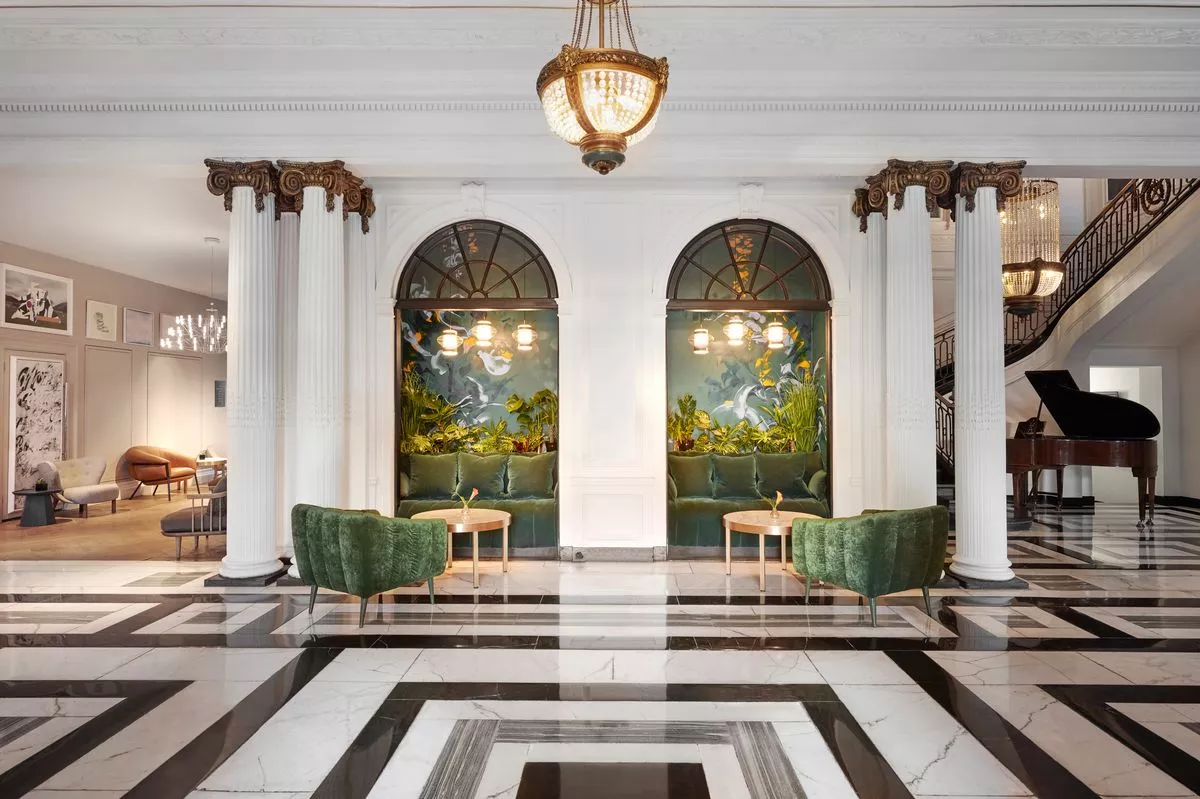
A 10-minute walk from Glasgow’s Central Station in quiet, townhouse-lined Blythswood Square, you’ll find the Kimpton hotel. Here a cheery doorman welcomes you into a grand foyer complete with ornate pillars, plush seating and a glittering chandelier stretching up several floors, giving glam but elegant first impressions.
Our spacious Premier King room featured an original fireplace and bath that could be opened to look out into the bedroom, should you so wish. Complimentary soft drinks in the minibar were a nice touch, as were the little bottles of Glaswegian gin and tonic waiting on ice.
A few other unique services make the Kimpton Blythswood Square feel more like a home away from home: they’ll provide essentials such as toothbrushes and phone chargers if you’ve forgotten yours, and you can rent a handbag from Scottish luxury leather brand Strathberry for free. One new feature is the hotel’s Stay Well offering, allowing guests to borrow state-of-the-art wellness tools such as LED masks and Therabody muscle pummellers.
Where to eat in Glasgow
Kimpton Blythswood Square’s restaurant is called iasg (from the Gaelic word for ‘fish’), and as its name suggests, the fish and seafood on the menu is a real highlight. The BBQ monkfish came highly recommended and did not disappoint, while the fish and chips were the chunkiest we’d ever seen, and cooked to perfection.
Breakfast is served here too and offers an excellent continental buffet plus hearty hot dishes, including full Scottish breakfast favourites.
Outside of the hotel, we received a few recommendations from locals that are well worth checking out: Ardnamurchan for elevated Scottish classics (we loved the veggie haggis, neeps and tatties), popular pasta joint Sugo (worth the queue), and little authentic Italian cafe Sarti for delicious coffee and friendly service.
Kimpton Blythswood Square
This article contains affiliate links, we will receive a commission on any sales we generate from it. Learn more
A stylish five-star hotel in Glasgow’s city centre with an impressive spa, top restaurant and luxury items fashion and wellness items available to borrow.
What to do in Glasgow
If you’re new to Glasgow it’s worth just spending some time wandering around its streets, admiring the striking architecture and colourful mural trail before heading up the hill to the imposing Gothic-style Necropolis. It’s no surprise that Glasgow is regularly used as a Hollywood filming location; apparently we’d just missed Tom Holland here filming scenes for the new Spider-Man movie.
Back at the hotel, Kimpton’s spa features various different hot rooms and pools, including a few even us seasoned spa-goers had never seen before: a snow room (Scotland’s first), and a cave-like dark pool, lit only by tiny LED lights in the ceiling.
Five months pregnant at the time, my therapist expertly worked into my tight muscles using oil from Scottish spa brand Ishga while still keeping me comfortable – even my bump got a gentle massage.
How much does it cost to stay at Kimpton Blythswood Square?
Wizz Air’s new flight opens up a whole new city break destination for Brits, and not only is it less expensive than spots such as Poland, it’s full of history, walkable, and has plenty to do
The city has a blend of the historic and modern(Image: Getty Images/iStockphoto)
Budget airline Wizz Air recently announced six new routes from its London Luton Airport base, and one city in particular is an up-and-coming destination for Brits in 2026 thanks to its rich history and inexpensive pints.
From June 12, 2026, Brits will be able to fly from Luton to Yerevan, the capital of Armenia. In addition to connecting the two cities, the new route represents the first direct flights from the UK to Armenia, adding a potential new city break to many people’s lists. Flights on Wizz Air will take just over five hours, and start at just £51.99 one way.
While technically Armenia is in West Asia, it’s often considered to be part of Eastern Europe due to its culture and history. Yerevan is already a popular city break destination among Europeans, but it is rarely visited by Brits, with only 11,000 people from the UK visiting in 2025. However, the new route may see the numbers rise in 2026.
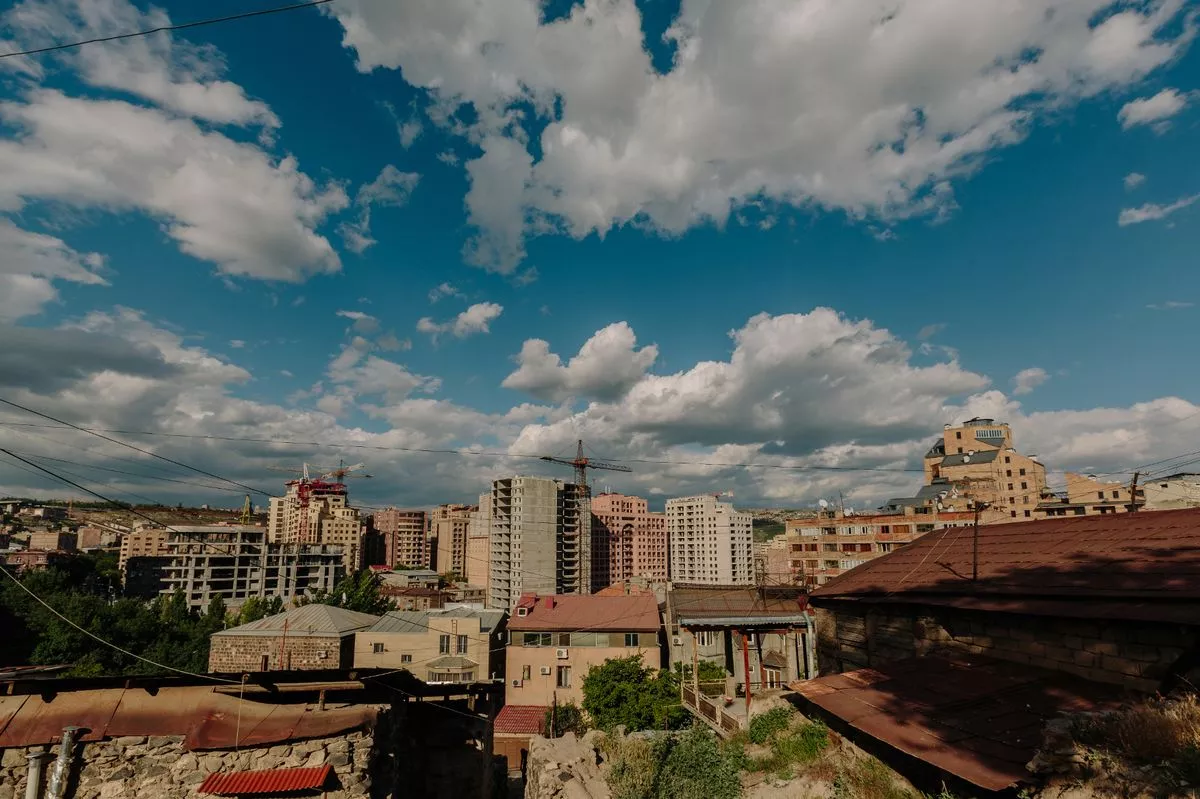
For history fans, Yerevan is a must-visit, as it’s one of the world’s oldest continuously inhabited cities. Its rich history is encapsulated in the many different types of architecture from across the eras, including a mix of newer Soviet and contemporary designs.
Etchmiadzin Cathedral is considered the oldest cathedral in the world, with the original church dating back to the early fourth century. It was built over a Pagan temple, as the country adopted Christianity as the state religion. Over the years has been rebuilt and reconstructed, with a range of different art and architecture styles.
The Kond District is the city’s oldest quarter, with narrow streets, stone houses, and even areas with unpaved roads. Large areas were destroyed during the Soviet era, with residents moved into modern apartment blocks, although there are attempts to reconstruct this historic area.
Yerevan is often called the Pink City, as many of the buildings have a light pink hue, which you’ll notice more in certain lights. This is because many of its older buildings were built in a local volcanic stone that has a pink tint to it. To really appreciate these buildings, head to Republic Square. It’s also home to the popular dancing fountains, which light up and play music in the evenings.
With prices going up in many European cities, Yerevan remains an inexpensive city break. According to Numbeo, which compares costs between cities, Yerevan is about 20% cheaper than Warsaw, with meals out and alcohol tending to be much cheaper than Poland. Pints in local pubs cost between £1.50 and £2, especially for Armenian beers, while a mid-range bottle of wine is about £7.
There are some great hotel deals to be found. The five-star Grand Hotel Yerevan, which has a central location near to tourist spots and a seasonal outdoor pool, has rooms from just £101 per night. Or if you’re looking for somewhere more budget-friendly, try the centrally located Erebuni Hotel Yerevan. Clean and modern, it has basic rooms for £47 a night including breakfast, and it’s set on a side street just off Republic Square.
The city has lots of traditional Armenian restaurants serving hearty local cuisine. Try flatbreads like lavash, or dolma, which are stuffed vine leaves. If you like barbecue, look out for restaurants offering khorovats, which is meat grilled on a skewer, usually pork, beef, or lamb.
Have a story you want to share? Email us at webtravel@reachplc.com
This island offers the perfect winter escape with average temperatures of 20C in January – and it’s just a four-hour flight from London
This article contains affiliate links, we will receive a commission on any sales we generate from it. Learn more
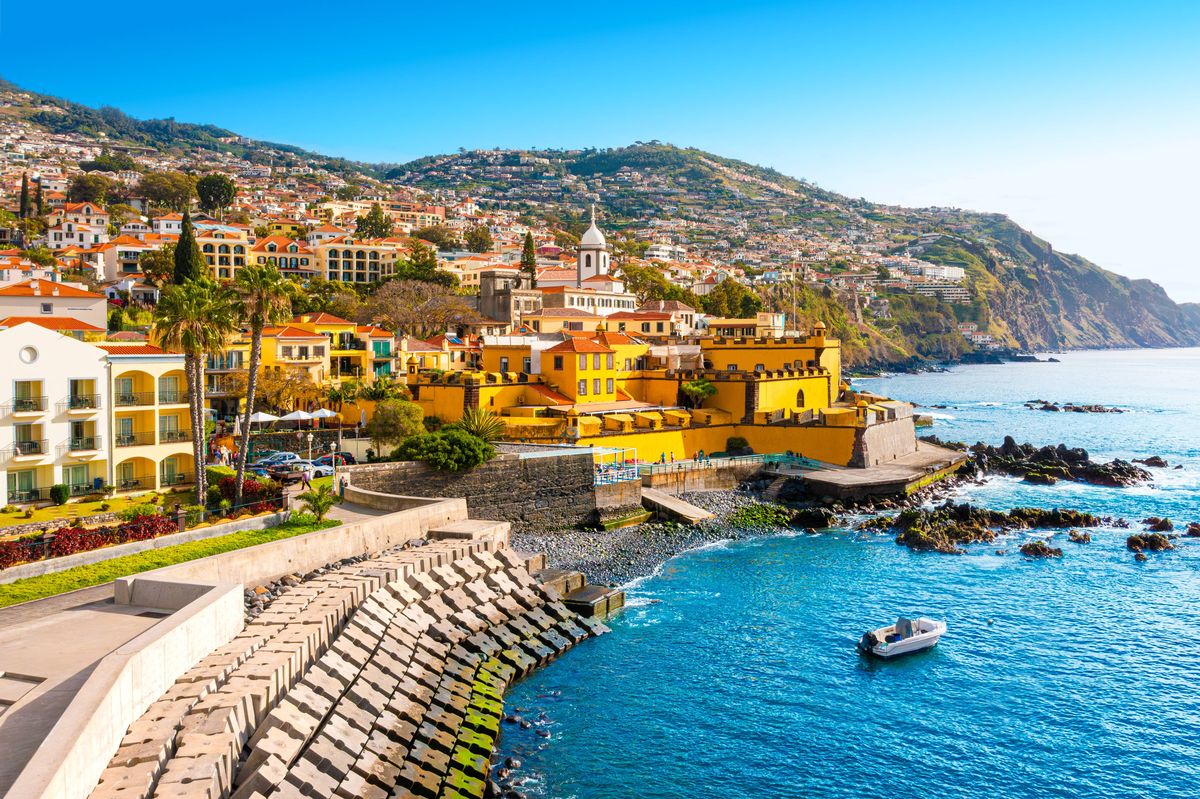
Madeira hits 23C in January(Image: Aleh Varanishcha via Getty Images)
As murmurs of snow and icy conditions intensify, and the January weather settles in, it’s hardly surprising that many are dreaming of escaping to warmer climes – minus the peak-season throngs.
Those blessed with sufficient funds and holiday allowance might contemplate Cancun, but there’s a secret paradise much nearer that can be reached for a fraction of the price: an island hailed as the “Hawaii of Europe”, merely a four-hour journey from London (which is due to crash down to -3C this week).
Positioned 500km from Africa’s shores and 450km north of the Canary Islands, Madeira is renowned as Cristiano Ronaldo’s homeland – not, bewilderingly, the English sponge cake bearing the same moniker. The Portuguese island chain comprises four territories: Madeira, Porto Santo, the Desertas, and the Selvagens.
It serves as a perfect winter retreat, offering average temperatures as high as 23C on the warmest January days. The Met Office reports that the archipelago typically basks in six hours of daily sunshine throughout winter. Nevertheless, weather patterns differ considerably across mountainous areas, influenced by elevation. Even during quieter months, the heavily populated isle can still appear bustling, particularly following its social media fame as a breathtaking oceanic sanctuary competing with tropical paradises.
“If you’re looking for winter sun, you won’t have much trouble finding it in Madeira in January. Daytime temperatures can be 20°C in the south below what’s called the ‘banana line’, the best place for cultivating the fruit. Yet look at the mountaintops from Funchal, and you may well see snow glittering in the sunlight. Madeirans take their first sea swims of the year, but you might want to wait a few months,” explains Responsible Travel.
Even during the quieter months, the heavily populated island can still seem busy, particularly following its social media fame as a breathtaking oceanic retreat competing with tropical hotspots, according to the Express.
As a delightful perk, Madeira operates on the UK’s timezone, meaning you won’t squander valuable time off wrestling with jet lag.
Madeira, the main island, is bursting with attractions and adventures crammed into its compact area, ideal for those seeking more than simply lounging in the sun and making their friends back home envious. Must-see experiences include trekking up Pico Ruivo, wandering through the lush gardens at Monte Palace, and visiting local wineries to discover the area’s fascinating wine-making heritage.
The island’s famous Madeira wine found its way to England during the 1800s and was traditionally served alongside lemon and almond-flavoured madeira cake – remarkably giving the dessert its name despite having no other link.
According to Visit Madeira, Ponta do Sol boasts the island’s highest annual sunshine hours. It’s described as a “place much appreciated by those seeking to enjoy sunny days on the beach or in contact with some idyllic spots in nature”.
For culture enthusiasts, Ponta do Sol Beach is unbeatable during their visit. Boasting excellent water quality and a charming setting, this compact 160-metre stretch is ideal for tranquillity seekers. Meanwhile, Madalena do Mar Beach sits nestled near dramatic rocky cliffs and is adored by swimmers. Visit Madeira explains: “This bathing resort is a combination of pebbles and black sand. It is bathed by crystal-clear waters with mild temperatures all year round, and low swell.”
In terms of how long to stay, Lonely Planet’s Austin Bush suggests: “Because Madeira’s highlights are found at all over the island, you shouldn’t plan a stay of under four days. Consider a night in Funchal to get oriented, then supplement this with stops in one or two more destinations elsewhere on the island. Dedicate a day to active pursuits, followed ideally by a day to recover on the beach. Tack on at least another two nights if you plan to hit Porto Santo, the other inhabited island that forms part of the Madeiran archipelago.”
Direct flights to Madeira operate from numerous major UK airports, including Manchester, Liverpool, Leeds, Bristol and Gatwick. From northern England, the journey to Madeira takes roughly four hours, compared to approximately 19 hours to reach Hawaii – which has no direct connections from the UK. Right now, there are flights from Bristol for £17, Manchester for £24 and Birmingham for £32 this January.
AN Emirates flight attendant has revealed some of her top tips for people planning a trip to Dubai – as well as little-known perks to the job.
Alessandra Piper initially worked in a corporate job in London, before being tempted to become flight crew by a friend already working for the airline.
Sign up for the Travel newsletter
Thank you!
Alessandra has worked for Emirates for 11 years
She told Sun Travel: “The opportunity to explore different cultures while building a career in aviation was incredibly appealing, so I applied, and it’s been the best decision I’ve ever made.”
She has since worked for Emirates for 11 years, where she currently serves the First Class cabin – her role for the past two and a half years.
When it comes to training, it is certainly intense.
She explained: “Emirates places strong emphasis on professional development, with a seven-and-a-half-week world-class training program at the dedicated Cabin Crew Training Academy covering safety, medical, security and hospitality skills.
“Working in First Class allows me to provide a highly personalized experience, dedicating more time to each passenger.
“We also undergo specialized courses such as L’art du vin, Emirates’ expert wine program designed to deepen our understanding of the airline’s extensive collection, including tasting profiles, pairing principles and service techniques.”
She has since been to 87 countries and hundreds of cities – although with 140 places the airlines connects to, she has a long way to go.
Not only that, but flight crew can request specific destination to go to, and head to events sponsored by Emirates which include tennis, football and cricket.
Of course, most of the long-haul routes go via Dubai – where crew are also given fully furnished accommodation, free uniform cleaning and free transport to work.
Here are some of Alessandra’s top tips if heading to Dubai – for first timers and those on a budget.
What top tips would you give to Dubai first timers?
Dubai genuinely has something for everyone, whether you’re looking for beautiful beaches, an incredible dining scene, family-friendly attractions or world-class shopping.
I always suggest booking tickets for popular experiences in advance, as it makes the day much smoother and helps avoid queues.
With malls and attractions open late into the evening, the city offers plenty to enjoy after daylight hours, from waterfront dining to desert experiences, so you can make the most of every day you’re here.
Taxis in Dubai are abundant and affordable, so it’s easy to explore the city.
You can download the Careem or Uber app for even quicker access to taxis.
One practical tip: always carry a light jacket, even during the hotter months, as indoor spaces can be very air-conditioned.
The city can easily be done on a budgetCredit: AlamyPanoramic view of Hatta, a town in the Emirate of Dubai, in the border with OmanCredit: Getty – Contributor
Are there any hidden spots that tourists don’t know about but should?
Dubai’s dining scene is extraordinary.
The city is home to more than 13,000 restaurants and cafés, making it one of the most diverse culinary destinations in the world.
With so much choice, it’s worth exploring beyond the most talked-about spots.
Most high-end restaurants offer business lunch packages – a smaller menu for a very affordable price.
Sushi Samba’s business lunch is my favourite, the restaurant has a 360-degree view of The Palm.
I also love introducing visitors to Jumeirah Al Qasr.
A traditional abra ride through the hotel’s waterways offers beautiful views of the Burj Al Arab, and I usually end the visit with a meal at one of the resort’s restaurants.
Dubai Opera is also a must. Beyond opera, the venue hosts musicals, ballet, theatre and more.
And for those seeking nature, Dubai has much to offer.
You can see flamingos at Ras Al Khor Wildlife Sanctuary or take a day trip to Hatta for kayaking, hiking and mountain scenery, showing an entirely different side of the UAE.
Emirates have flights to Dubai from £519 returnCredit: Alamy
NEW UK passports are being introduced in the UK – with a very different front cover and inside look.
From this month, all new passports issued will have King Charles‘ coat of arms.
Sign up for the Travel newsletter
Thank you!
New passport designs are being rolled out and 300 have already been issuedCredit: PAThe first batch of new British passports will feature the King’s coat of arms and natural landscapesCredit: PA
This replaces the Queen Elizabeth II coat of arms, which has been on the front for decades.
It is thought as many as 300 have already been issued in the country already.
The pages inside the passport are also getting a new look.
Four of the UK’s most famous landscapes will feature on the pages, from each of the four UK nations.
Ben Nevis, the Lake District, Three Cliffs Bay and the Giant’s Causeway are all illustrated in watercolour across the inside pages.
But inside the passport will also be a range of new features which will make it the ‘most secure passport in history’.
Each page has a unique passport number using laser marking, while new translucent designs and holographs have also been added.
Migration and citizenship minister Mike Tapp said the redesign is “a new era in the history of the British passport”.
Most read in Best of British
He added: “It also demonstrates our commitment to outstanding public service – celebrating British heritage while ensuring our passports remain among the most secure and trusted in the world for years to come.”
The biggest change to the UK passport came back in 2020 when it reverted back to navy, from burgundy.
The Lake District also features on themCredit: PA
This was due to the UK leaving the EU, with the European Union wording also removed from the front.
Burgundy passports are still able to be used until they expire, although there are some rules still catching people out.
WITH its vast skies, golden sand and rippling dunes, the Lincolnshire coastline is brimming with brilliant beaches.
Of course, you’ve got traditional seaside towns with piers, promenades and bucket-and-spade fun, such as Skegness, Mablethorpe and Cleethorpes.
With its vast skies, golden sand and rippling dunes, the Lincolnshire coastline is brimming with brilliant beachesCredit: GettyAnderby Creek Cloud Bar, Britain’s first official cloud-spotting station, complete with parabolic mirrors, roof-top loungers and a “cloud bar” menuCredit: Alamy
These are also often the best-rated options thanks to their family-friendly touches and scenic beauty – but there’s plenty more to explore.
If you’re looking to escape the crowds, do some birdwatching or walk your dog, there’s a beach with your name on it.
You’ll also find beachside pubs, nature reserves and quirky art installations along Lincolnshire’s more than 50-mile stretch of coast.
So the hardest question on your next £9.50 Holiday will be: which beach should you visit first?
We’ve spoken to local experts and Sun readers who have already enjoyed a £9.50 Holiday near the Lincolnshire coastline to get their recommendations for the best beaches to visit.
We’ve also selected some of the county’s top-rated options and suggested our own pick of where not to miss.
So grab your buckets and spades, binoculars or swimsuit and head to one of these…
Best for families
With its traditional English seaside feel, Mablethorpe Beach is a beautiful, Blue Flag award-winning beach.
Its soft golden sand stretches as far as the eye can see, offering endless sandcastle-building potential.
You’ve also got donkey rides on the sand, plus a fairground nearby and beachfront cafes like the highly-rated Snack Shack selling everything from fish and chips to ice cream.
There’s even a little land train that takes you up and down the coast for £2.
Sun reader Linda McDonnell, 71, from Lincoln, says Mablethorpe is an “unbelievable” beach, especially on a sunny day, adding that it is “nice and safe” for families.
She also says not to miss the Time and Tide Bell – a sculpture on the sand with bells that are rung by the waves at high tide. “It’s great if you’re into quirky things,” she added.
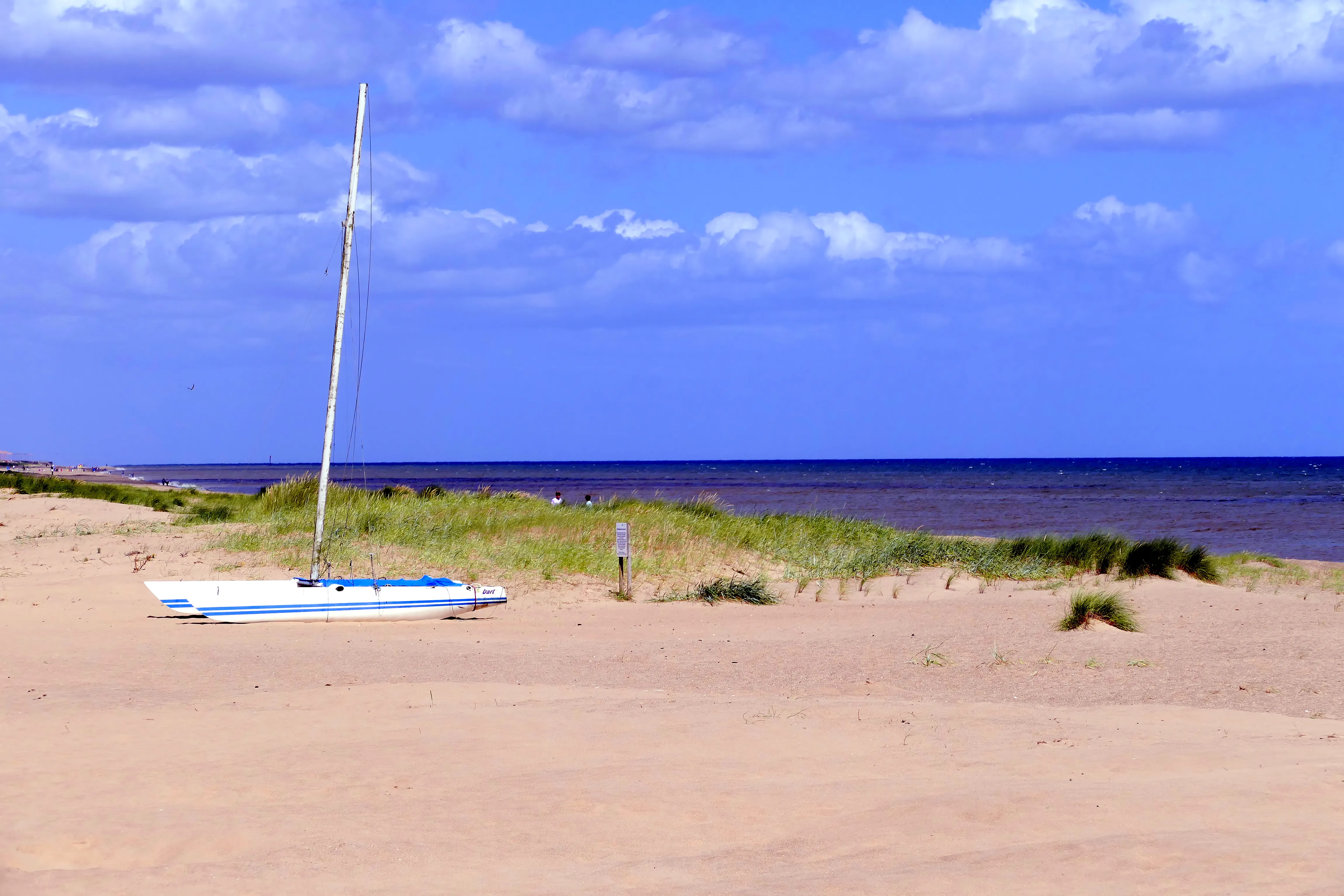
A lone catamaran sailing yacht on the beach and sand dunes at SandilandsCredit: Getty
Best for wave watching – or wave riding
Alex Trembath, creator of the Lincoln and Beyond blog, says: “The Lincolnshire coastline is one of the UK’s most underrated beach destinations.
“Skegness used to have a reputation for being a tacky resort town, but these days it has clean, Blue Flag beaches and you can always find a quieter spot if you want.
“My personal favourite beach is Huttoft (south of Mablethorpe). It’s quieter than Skegness and Mablethorpe and is great for surfing and swimming.
“It also has a large car terrace for wave watching whatever the weather.”
There have been an increasing number of wave riders in Lincolnshire since the seventies, with Sutton on Sea, Sandilands and Huttoft, being popular surf spots, especially in winter.
Best hidden beaches
Daniel Start is the author of Hidden Beaches Britain by Wild Things Publishing (£16.99), which features over 500 hidden coastal locations.
He recommends Anderby Creek, around ten miles north of Skegness, describing it as “a perfect hidden beach with endless golden sands backed with dunes and with very few people.”
While there, you can even check out Britain’s first official cloud-spotting station, complete with parabolic mirrors, roof-top loungers and a “cloud bar” menu.
Best for nature lovers
Nature lovers can take their pick of beaches packed with wildlife and natural attractions in Lincolnshire.
A few miles south of Skegness, Gibraltar Point is a nature reserve right on the seafront – with more wildlife than human visitors.
Daniel Start says: “There are dunes and wildflower meadows galore at the exotically-named Gibraltar Point.
“Flocks of migrating birds also gather here – up to 10,000 dunlins at a time may break from their migration, descending from the clouds.
“The sea here is shallow but when you run out through the breakers – the huge expanse of the Wash to the south, dunes and meadows behind – you’re reminded of the immensity of nature and the vast tracts of open space still left in Britain.”
Travel north for around 40 minutes up the coast, and you’ll enter the Lincolnshire Coastal Country Park, a five-mile stretch of coastline from Sandilands to Chapel St Leonards.
Sandilands is a good place to start, with coastal birds to spot, weekly walks to join and a National Trust cafe to refuel in.
Best beach with a pub
You can’t get much closer to the beach than the Admiral Benbow, which is a quirky pub right on the sand at Chapel St Leonards.
Named after the inn in the book Treasure Island, it has a fun, nautical pirate theme that extends to the outdoor seating area – located inside a wooden boat on the beach.
Sun reader John Ellis, 72, from Sheffield, has visited, and said: “It has a fun atmosphere”.
Meanwhile, head north up the coast to Sutton on Sea, where the highly-rated Beach Bar has great sea views and serves good value food, like seafood and beef wellington.
Lincolnshire has stacks of traditional seaside towns with piers, promenades, beach huts and bucket-and-spade fun, such as Skegness, Mablethorpe and CleethorpesCredit: Getty
Best for dogs
Sarah Al-Aidi, General Manager at Southview Holiday Park, said: “There’s a dog-friendly stretch of beach with free council parking that not many people know about.
“It’s at the end of Skegness – about a good five-mile stretch all the way past Ingoldmells and up to Chapel St Leonards, which is all dog-friendly all year long.
“The rest of the beaches are all restricted for dogs in the summer.”
Joanne Green, General Manager at Sunnydale Holiday Park also has a lesser-known dog-walking route to suggest.
She said: “As you come out of our park, turn left and you’re on the salt marshes, which are brilliant for walking dogs.
“People don’t tend to go there because they get to the top of the ramp and they see just salt marshes.
“But if they walk for ten minutes towards the water, there’s a stunning beach with white sand called Saltfleet.
“There are usually not many people there and you can walk all the way to Mablethorpe along the beach from here if you want.”
Huttoft beach also known as Moggs Eye is a quiet rural beach backed by sand dunesCredit: Alamy
NEW Year’s Eve just isn’t right without fireworks, whether it’s a low-key Catherine wheel in your garden or a powerful professional pyrotechnic production.
So here’s the lowdown on the best of this year’s dazzling displays, ranging from riverside revelries in London to castle rock rockets in Edinburgh.
Sign up for the Travel newsletter
Thank you!
Revellers ringing in the New Year in our nation’s capital are treated to a sensational displayCredit: Getty Images – Getty
Where is best to watch New Year’s Eve fireworks in the UK?
The Hogmanay fireworks over Edinburgh Castle are another must-see, with rockets fired from the castle rock ringing in the New Year.
The sensational spectacle is visible across much of the city, while a pulsing street party unfolds below on Princes Street.
The combination of live music, traditional Hogmanay rituals and the dramatic castle backdrop makes this one of the most atmospheric midnight moments in the whole of Europe.
Newcastle
Newcastle’s Quayside puts on a striking New Year display over the River Tyne.
It utilises the Tyne Bridge and Glasshouse (formerly the Sage) as a spectacular stage for beautiful bursts in the sky.
There are family-friendly fireworks at 6pm, followed by the midnight main event.
Manchester
Manchester is hosting a fantastic fireworks display on Victoria Street from 10pm.
It’s worth noting that the event is alcohol-free.
But fear not – there’s lots of live entertainment leading up to the New Year countdown.
Cardiff
Cardiff’s New Year 2025/26 celebrations centre around the City Hall.
Edinburgh Castle is the backdrop to an amazing fireworks display
Live music will be performed on a stage in front of the City Hall, so you can have a dance before the fireworks start.
There’s also the Winter Wonderland, with a big wheel, festive drinks and traditional Welsh food.
Other great fireworks displays can be found in Belfast’s Titanic Quarter, Brighton Beach, York’s Castle Howard, Northern Meeting Park in Inverness, and Birmingham’s Centenary Square.
Can I watch New Year’s Eve fireworks on TV?
As Big Ben strikes midnight, live coverage of London’s spectacular fireworks display on the River Thames will be broadcast live on TV.
AN expert has revealed how you can plan a Cotswolds staycation without breaking the bank.
More than 23million tourists visit the Cotswolds every year, so its no surprise that includes a few celebrities along the way.
Sign up for the Travel newsletter
Thank you!
Arlington Row is popular in BiburyCredit: AlamySezincote House is a grand country house in the CotswoldsCredit: Alamy
Beyonce, Kourtney Kardashian and even Kamala Harris have all been spotted in recent months, while the Beckhams are known for having a house there.
But despite this, there is still a way to do it on a budget as well as away from the crowds.
Local Amanda Stecker, who founded Unique Cotswold Cottages, explained: “There’s a perception that the Cotswolds is reserved for the wealthy.
“But you can stay in charming self-catering cottages or friendly B&Bs for a fraction of the cost of high-end hotels, and still enjoy the villages, countryside, and experiences that make the area so special.
“Even smaller towns and lesser-known attractions have a charm all of their own, and often a story you’ll remember far longer than the postcard-perfect spots.”
Here are some of her top tips.
Stay in less well-known villages
She explained that while Bibury and Bourton-on-the-Water are the popular spots, there are nearby villages that are just as beautiful but far more affordable.
Amanda said: “Look at towns such as Moreton-in-Marsh, Stow-on-the-Wold, or Chipping Campden.
Most read in Best of British
“These locations still offer charm and convenience but at much lower rates.”
Not only did she say this could save as much as £300 for a three-night stay, but cottages mean you can head to the nearby deli for some groceries and cook yourself, saving you even more.
Visit during shoulder season
If you try and visit the Cotswolds during the summer holidays, expect huge crowds.
The same is during school half terms as well, especially in the spring and autumn.
But the villages are just as beautiful off season, usually November, January and February.
Not only is accommodation cheaper but you won’t be stuck in queues at the car park or the cafe.
Make the most of the free attractions
Just walking through many of the villages and towns feel like they are from a postcard, which is a great free activity.
Not only that, but heritage trails and even attractions like Broadway Tower are free to visit.
The Oxford Museum, Witney Museum and Swinford Museum are just some that are free too.
Amanda advises checking some of the local stately homes which can be affordable especially with a National Trust or English Heritage membership.
Otherwise there are often farmers markets or fairs which you can explore without spending a penny.
According to Amanda, this could save as much as £50 per person during a long weekend.
Check the local transport
Many of the small villages have train stations so you can hop between many of them.
For example, try the Cotswolds Line, which runs from Oxford to Kingham, with stops in Hanborough, Finstock, Charlbury and Shipton along the way.
Otherwise bus routes connect many of them as well, saving you on expensive car parking.
Amanda suggests this could save as much a £30 a day.
EasyJet has launched a major sale that could see you save up to £400 off a package holiday, while some getaways start from as little as £187 per person with everything included
EasyJet has launched a major sale for 2026 getaways(Image: Getty Images)
As the festivities wind down, many of us are looking ahead to the new year with plans to book our 2026 getaway.
Now could be the best time to secure your next trip, as easyJet has launched a major sale, offering up to £400 off a lengthy list of holidays. EasyJet has launched its Big Orange Sale to help travellers book those desirable destinations at a discounted rate.
Holidaymakers can save up to £400 by using a simple code on a catalogue of EasyJet holidays, from city breaks to beach escapes. The low-cost flights and package holiday group offers more than 8,000 hotels in over 100 destinations across Europe and North Africa, from Amsterdam and Prague to Gran Canaria and Marmaris.
Additionally, all of its package holidays include flights, a hotel, 23kg luggage, some transfers, and the option to secure the trip for a deposit of just £60 per person.
Those looking to take advantage of the Big Orange Sale will need to use the code BIGSALE on the easyJet website when booking a package holiday.
This could see you save £50 on a minimum spend of £500, £100 on a minimum spend of £800, £150 on a minimum spend of £1,500, £300 on a minimum spend of £3,000 and £400 on a minimum spend of £4,000.
EasyJet has outlined some of the best holiday packages available for 2026, with some starting from as little as £184 per person. These include:
Four nights at the 3-star Espresso City Centre in Amsterdam on a Room Only basis for £227 per person, including flights from London Southend on 1 February 2026
Four nights at the 4-star Mamaison Residence Downtown in Prague on a Room Only basis for £231 per person, including flights from Glasgow on 8 February 2026
Three nights at the 4-star Dream Castle Paris in Paris on a Bed and Breakfast basis for £184 per person, including flights from Liverpool on 1 March 2026
Seven nights at the 5-star Melia Dunas Beach Resort & Spa in Cape Verde on an All Inclusive basis for £832 per person, including 23kg luggage, transfers and flights from Manchester on 29 January 2026
Seven nights at the 4-star Valeria Dar Atlas Resort in Marrakech on an All Inclusive basis for £435 per person, including 23kg luggage, transfers and flights from Liverpool on 5 February 2026
Seven nights at the 5-star Grand Ideal Premium Hotel in Marmaris on an All Inclusive basis for £490 per person, including 23kg luggage, transfers and flights from Edinburgh on 16 April 2026
Seven nights at the 4-star Golden Costa Salou in Salou on a Half Board basis for £415 per person, including 23kg luggage, transfers and flights from Manchester on 18 April 2026
Seven nights at the 4-star Abora Buenaventura by Lopesan Hotels in Gran Canaria on a Half Board basis for £460 per person, including 23kg luggage, transfers and flights from London Gatwick on 20 April 2026
Seven nights at the 4-star Sol Lanzarote in Lanzarote on an All Inclusive basis for £637 per person, including 23kg luggage, transfers, a free child’s place and flights from Birmingham on 5 May 2026
For more information or to book your easyJet package holiday, you can visit their website.
Do you have a travel story to share? Email webtravel@reachplc.com
Here are some other top tips of what to do in Palermo.
MUST SEE/DO
Palermo is often said to be one of the most conquered places in the world, with stints under the Romans and Normans as well as the Spanish and French.
One of the most interesting places that shows this is the cathedral. Built in 1184, it has both Arab and Norman influences, and stands on the site of a Muslim mosque.
Make sure to also head over to Quattro Canti, a beautiful octagonal plaza with fountains and live music surrounded by restored historic buildings.
HIDDEN GEM
If you want to grab a bargain, then Palermo has some of the best markets where you are more likely to spot a local than a tourist.
One of the biggest is Mercato Antico, which takes place every Sunday. You can find everything from jewellery and artwork to books and rugs, and most of it is fairly affordable.
Or for real secret finds, tucked down Piazza Domenico Peranni are hidden antique stalls selling handcrafted homeware.
BEST VIEW
For 360-degree views of the city you will want to head up the Torre di San Nicolo.
Costing just a few euros, you can enjoy the scene of the winding streets being overlooked by Mount Pellegrino.
RATED RESTAURANT
If you want a slice of Sicilian island life on a budget then brave the chaotic street stalls.
Trattoria del Carmine has loads of atmosphere and buzz, from pumping music to the smoky grills barbecuing meat.
San Domenico Square is a great free attractionCredit: Alamy
Make sure to try one of their huge arancini balls of risotto rice, as well as local classic stigghiola – a skewer of lamb intestines.
Vegetarians are well catered for too, with snacks including parmigiana di melanzane – a roll filled with tomato and aubergine.
BEST BAR
Bar Timi is said to have the island’s best negroni, serving it to tiny tables on the street.
It was the drink of choice, with every table opting for the classic cocktail that is the perfect mix of sweet and bitter.
Don’t worry if you aren’t a negroni fan, their Aperol spritz is just as good.
Want to drink on a budget? Head to any pop-up stall in the city and you’ll find a pomegranate spritz for just €3 (£2.62).
HOTEL PICK
One of Palermo’s newest hotels is NH Collection Palermo Palazzo Sitano, which opened during the summer.
The brand’s second offering on the island, the 86-room hotel is in a converted 18th century residence.
Many of the Baroque features remain, especially in the stunning hotel bar and restaurant.
Rooms start from around £110 per night.
The city is often overlooked as a destination for a quick tripCredit: Alamy