









Government

Milei’s government bill cuts state role in Argentina public education

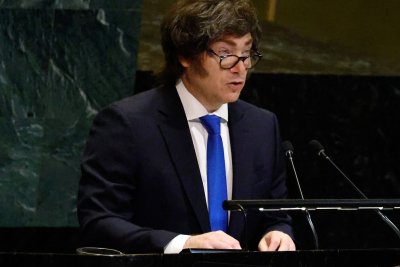
BUENOS AIRES, Dec. 26 (UPI) — Argentine President Javier Milei’s government is promoting a reform that seeks to redefine the role of the state in public education, curb direct government intervention and give families greater control over their children’s schooling.

A proposed law would legalize homeschooling, expand school choice and grant parents a more active role in school governance, including mechanisms to influence the appointment or removal of principals.

The stated goal is to introduce greater competition among educational institutions to attract students. The initiative has been submitted to Congress, and debate could begin in March.

The reform focuses primarily on basic education, which includes preschool, primary and secondary levels, while also introducing changes to the university financing system.

If approved, it would fully replace the current National Education Law in force since 2006.

“Argentina faces a deep educational crisis, as shown by our students’ results in national and international assessments,” a report by the Ministry of Deregulation and the Secretariat of Education said.

Internationally, PISA tests, which measure skills in math, reading and science, show stagnation or a sustained decline in the performance of Argentine students.

“Compared with other countries in the region, Argentina consistently ranks among the worst performers,” the report said.

Domestically, national assessments show that more than 80% of students in their final year of secondary school fail to reach satisfactory levels in math, while more than 40% have difficulties with reading comprehension.

The official diagnosis also describes the system as overly centralized and bureaucratic, with little room for pedagogical innovation and oversight mechanisms considered weak and lacking transparency.

“The family is the natural and primary agent of education; civil society is the space where it develops through various institutions and projects; and the state has the obligation to guarantee access, continuity and completion of studies at all levels,” the draft law says.

At the secondary level, reform would promote agreements between schools, companies and the productive sector to improve general education and vocational guidance.

Basic education also would be declared an essential service, requiring a minimum level of classes.

The bill recognizes multiple teaching modalities, including in-person, hybrid, community-based, home-based and distance learning, all subject to supervision and evaluation under national and local standards.

Julio Alonso, an academic at the University of Buenos Aires, told UPI the education reform is part of a broader package of changes pushed by the government.

“It is not an isolated measure. It is linked to labor and tax reforms,” he said.

According to Alonso, the central change lies in redefining the role of the state relative to that of families.

“The state takes on a subsidiary role. It guarantees access, but the main decisions fall to parents. The family is formally established as the central actor in the education system,” he said.

Another key point, he said, is the abandonment of a unified national curriculum. Provinces and the country’s capital would assume full responsibility for education, while the federal government would be limited to setting common minimum content.

“The idea of a national education project is left behind. In practice, responsibilities are further delegated to provincial governments,” Alonso said.

He added that the initiative also decentralizes education financing by eliminating the legal spending floor equivalent to 6% of gross domestic product.

“Under this reform, provinces would cover costs with their own resources, while the national government would concentrate spending on direct transfers to families,” he said.

A third pillar of the proposal concerns teachers, with greater family participation in evaluation processes, though not in hiring decisions.

Alonso warned, however, that the reform faces political and social obstacles. The ruling coalition lacks a majority in Congress and depends on support from provincial lawmakers — a weakness recently seen during the budget debate.

On the social front, Alonso anticipates strong resistance, particularly over cuts to the university system, with possible strikes and protests.

Source link

Iran’s government budget reveals tough road ahead as currency hits new low | Business and Economy News

Tehran, Iran – Iran’s currency has been registering new lows amid ongoing economic turmoil that is also reflected in a planned budget for next year that effectively shrinks public spending.

Each United States dollar was priced at about 1.36 million rials in the open market on Wednesday in Tehran, its highest rate ever, before the Iranian currency slightly regained ground on Thursday.

Recommended Stories

list of 3 itemsend of list

The embattled national currency has been rapidly declining over recent weeks as the US and its Western allies pile on their sanctions and diplomatic pressure, and the threat of another war with Israel lingers.

President Masoud Pezeshkian this week sent his administration’s finalised proposed budget to the hardline-dominated parliament for the upcoming Iranian calendar year, which starts in late March. The budget will then have to be greenlit by the 12-member Guardian Council before being ratified into law in the coming weeks.

The presented budget nominally grew by just over 5 percent compared with last year, but inflation currently stands at about 50 percent – indicating that the government envisions lower spending while managing a so-called “resistance economy” as it faces a massive budget crunch yet again.

But minimum wages are to be raised far below the inflation rate, too, at only 20 percent, meaning that Iranians are once more guaranteed to have far less spending power next year as the embattled national currency sinks.

epa12605803 Iranians view Yalda decorations as they prepare to celebrate the Yalda feast in Tehran, Iran, 20 December 2025. Yalda is an ancient tradition marking the onset of winter and the longest night of the year. The celebration goes back thousands of years to the time when Zoroastrianism was the predominant religion of ancient Persia. Watermelons and pomegranates, along with dried fruit, are the main specialties of the Yalda feast. EPA/ABEDIN TAHERKENAREH
Iranians view decorations as they prepare to celebrate the Yalda feast, an ancient tradition marking the onset of winter and the longest night of the year, in Tehran, Iran, on December 20, 2025 [Abedin Taherkenareh/EPA]

At the same time, the budget says the government sees taxes rising by a massive 62 percent next year, as authorities try to gradually decrease dependence on oil revenues amid US efforts to drive down Iranian exports, which are carried by a shadow fleet of ships mostly to China.

At the current exchange rate, the whole budget is worth about $106bn, several times lower than the projected 2026 budgets of regional players like Turkiye, Saudi Arabia and Israel.

Iran’s rent-distributing multi-tier exchange rate system is still at play, with the government proposing allocating a rate for customs duties, import valuation and budget accounting tables, and another closer to the open market rate used for oil revenue realisation.

An earlier subsidised exchange rate, which was far lower than the open market rate, has now been abandoned. Any excess cash resulting from this is expected to be doled out to low-income Iranians in the form of electronic coupons that can be used to buy essential items like food.

For the first time, the budget is drafted in new rials as four zeros are expected to be removed from the ailing national currency by the time the budget is operational for next year.

After years of back and forth, the parliament in October approved the government plan to lop off four zeros. The move is only cosmetic and will not help with the runaway inflation, but proponents argued it was necessary after years of currency devaluation.

Budget spells grim outlook

Several major factors have already been raising alarm over how bad the economic situation could become next year.

Iranians online reacted poorly to the fact that the government predicts wages will be far outpaced by inflation and tax collection. Others were concerned that eliminating the subsidised rate for essential goods could cause another price shock in the short term.

Many shared a video of Pezeshkian from last year running for president, when he said during a televised interview that the stark disparity between wage increases and inflation is a “grave injustice” being done to the Iranian people.

“Unfortunately, so long as we do not resolve the structural issues, we are making labourers and government workers poorer by the day while those with money get bigger and bigger,” Pezeshkian said at the time.

“This inflation is an additional tax on the poor and the disenfranchised.”

Iranian women shop in a local market as the value of the Iranian rial drops, in Tehran, Iran, December 20, 2025. Majid Asgaripour/WANA (West Asia News Agency) via REUTERS ATTENTION EDITORS - THIS PICTURE WAS PROVIDED BY A THIRD PARTY
Iranian women shop in a local market as the value of the Iranian rial drops, in Tehran, Iran, on December 20, 2025 [Majid Asgaripour/WANA (West Asia News Agency) via Reuters]

But successive governments have failed to eliminate budget deficits or rein in banks teetering on the brink of insolvency, therefore relying on the central bank to print more money to run the country and, in turn, exacerbate inflation.

Earlier in December, the government proceeded with increasing the price cap of petroleum despite repeated assurances it had no plans to that effect this year. The move has already led to increased transport costs, which will end up taking inflation higher.

There are now four price tiers for petroleum, with the cheapest and lowest quality that is available to most Iranians costing up to 50,000 rials per litre (about $1.19) and higher quality imported fuel delivered this week at 800,000 rials per litre ($19).

Hamid Pourmohammadi, who heads the Plan and Budget Organization of Iran, insisted that the government has devised a 20-point plan to be unveiled soon that will reduce pressure on the livelihoods of Iran’s 90 million population.

“The government is trying to adopt an active approach to address the economic challenges of the people, businesses and economists, so there is no perception of complacency in these economic conditions,” he said.

Source link

More than a million Epstein-related documents discovered; release delayed | Donald Trump News

US Justice Department says it requires weeks to process newly found Epstein-related files under transparency and court rules.

More than a million additional documents that are potentially related to late sex offender and financier Jeffrey Epstein have been uncovered, according to the United States Department of Justice (DOJ).

In a social media post on Wednesday, the DOJ said it is reviewing the documents and will need “a few more weeks” before proceeding with a congressionally mandated release of the information.

Recommended Stories

list of 3 itemsend of list

“The US Attorney for the Southern District of New York and the FBI have informed the Department of Justice that they have uncovered over a million more documents potentially related to the Jeffrey Epstein case,” the DOJ said in a statement, adding that more time is needed to comply with the Epstein Files Transparency Act, the law enacted last month that requires the government to open its files on Epstein and his longtime confidante Ghislaine Maxwell.

The DOJ insisted in its statement that its lawyers are “working around the clock” to review those documents and make the redactions required under the law, passed nearly unanimously by Congress.

“Due to the mass volume of material, this process may take a few more weeks. The Department will continue to fully comply with federal law and President [Donald] Trump’s direction to release the files,” the DOJ said.

Full disclosure

A dozen US senators are calling on the Justice Department’s watchdog to examine the department’s failure to release all records pertaining to Epstein by Friday’s congressionally mandated deadline, saying victims “deserve full disclosure” and the “peace of mind” of an independent audit.

Senator Lisa Murkowski, a member of Trump’s Republican Party, joined 11 Democrats in signing a letter on Wednesday urging Acting Inspector General Don Berthiaume to audit the Justice Department’s compliance with the Epstein Files Transparency Act.

“Given the [Trump] Administration’s historic hostility to releasing the files, politicisation of the Epstein case more broadly, and failure to comply with the Epstein Files Transparency Act, a neutral assessment of its compliance with the statutory disclosure requirements is essential,” the senators wrote.

Full transparency, they said, “is essential in identifying members of our society who enabled and participated in Epstein’s crimes”.

Republican Representative Thomas Massie, a co-sponsor of the transparency act, posted on Wednesday on X: “DOJ did break the law by making illegal redactions and by missing the deadline.”

Despite the deadline, the Justice Department has said it plans to release records on a rolling basis. It blamed the delay on the time-consuming process of obscuring survivors’ names and other identifying information.

More batches of records were released over the weekend and on Tuesday. The department has not given any notice when more records might arrive.

“The reason why we are still reviewing documents and still continuing our process is simply to protect victims,” Deputy Attorney General Todd Blanche told the NBC television network’s Meet the Press programme on Sunday.

“So the same individuals that are out there complaining about the lack of documents that were produced on Friday are the same individuals who apparently don’t want us to protect victims,” he argued.

Source link

Bangladesh opposition leader Tarique Rahman set for historic homecoming | Elections News

BNP plans historic rally as Rahman, seen as a key leader, marks his highly anticipated homecoming.

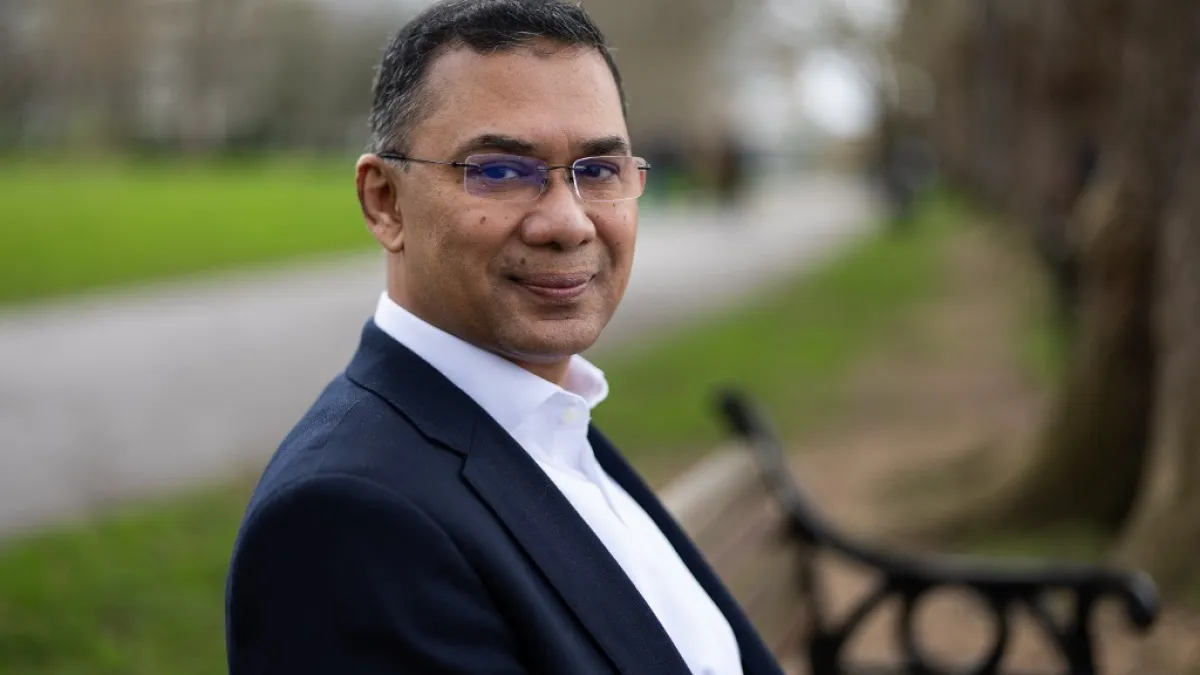
Bangladesh’s main opposition party says it is preparing a vast show of support as its leader, Tarique Rahman, prepares to return home after nearly 17 years in exile.

The Bangladesh Nationalist Party (BNP) aims to mobilise up to five million supporters in the capital to welcome Rahman, who is widely viewed as the party’s prime ministerial frontrunner for the country’s parliamentary elections scheduled for February.

Recommended Stories

list of 3 itemsend of list

His expected arrival from London on Thursday comes as the BNP regains momentum after the removal of longtime leader Sheikh Hasina in a student-led uprising last year.

Rahman, 60, is the son of former Prime Minister Khaleda Zia and currently serves as the BNP’s acting chairman.

Since 1991, power in Bangladesh has largely alternated between Zia and Hasina, apart from brief caretaker administrations. With Hasina’s Awami League barred from contesting the February 12 vote, the BNP now appears positioned to dominate the race.

‘A defining political moment’

BNP leaders say they are coordinating security arrangements with authorities for what they call an “unprecedented” mobilisation, with supporters expected to line the route from the airport to the reception venue.

“This will be a defining political moment,” senior BNP leader Ruhul Kabir Rizvi said.

Rahman has lived in London since 2008 after facing multiple criminal convictions in Bangladesh, including money laundering and charges linked to an alleged plot to assassinate Hasina. Courts acquitted him following Hasina’s removal from office, removing the legal obstacles that had delayed his return.

BNP officials said Rahman will proceed directly from the airport to the rally venue before visiting his mother, who has been seriously ill for months.

The homecoming unfolds during a fragile transition overseen by an interim government led by Nobel laureate Muhammad Yunus. The election is seen as a critical test of Bangladesh’s ability to restore democratic legitimacy after years of political turmoil.

Concerns persist over sporadic violence and recent attacks on media outlets, raising questions about the state’s capacity to ensure a credible vote.

The National Citizen Party (NCP), which emerged from the youth protest movement that toppled Hasina, welcomed Rahman’s return.

“Rahman was forced into exile under severe pressure and threats, so his homecoming carries symbolic weight,” said NCP spokesperson Khan Muhammad Mursalin. “His arrival will undoubtedly energise party leaders and supporters … On the path to democracy, we will stand with him.”

Source link

Is Israel’s government waging war on Al Jazeera and the media? | Israel-Palestine conflict News

The Israeli government is cracking down on critical media outlets, giving it unprecedented control over how its actions are presented to its citizens.

Among the moves is the so-called Al Jazeera Law, which allows the government to shut down foreign media outlets on national security grounds. On Tuesday, the Israeli parliament approved the extension of the law for two years after it was introduced during Israel’s genocidal war on Gaza to essentially stop Al Jazeera’s operations in Israel.

Recommended Stories

list of 4 itemsend of list

Separately, the government is also moving to shut down the popular Army Radio network, one of two publicly funded Israeli news outlets. The radio station is often criticised by the Israeli right wing, which views Army Radio as being biased against it.

Israelis are still reliant on receiving their news from traditional outlets with about half relying on broadcast news for information on current affairs and about a third similarly relying upon radio stations.

The tone of the media that is allowed to publish and broadcast is important. According to analysts inside Israel, the selective broadcasting of Palestinian suffering during Israel’s war on Gaza has helped sustain the carnage and reinforced a sense of grievance that allows for Israel’s continued assaults on Gaza as well as regional countries, such as Syria, Yemen and Lebanon.

Despite what observers characterise as a media environment firmly rigged in its favour, the far-right government of Prime Minister Benjamin Netanyahu, which contains ministers convicted of “terrorism” offences and others who have repeatedly called for the illegal annexation of the occupied West Bank, is looking nevertheless to bypass legal checks on its control of the media and bring more of Israel’s information feed under its control.

Let’s take a closer look.

Because the government believes it is too critical.

Israeli politicians have long complained about how the war in Gaza has been covered in both the international and domestic media.

But the government added a new accusation in November, partly blaming the media for the Hamas-led attacks on southern Israel on October 7, 2023.

“If there hadn’t been a media entirely mobilised to encourage refusal [to volunteer to reserve duty] and reckless opposition to the judicial reform, there wouldn’t have been such a rift in the nation that led the enemy to seize the opportunity,” Communications Minister Shlomo Karhi said as he introduced a bill to increase government control of the news environment, referring to attempts by the Israeli government to reduce the independence of the judiciary.

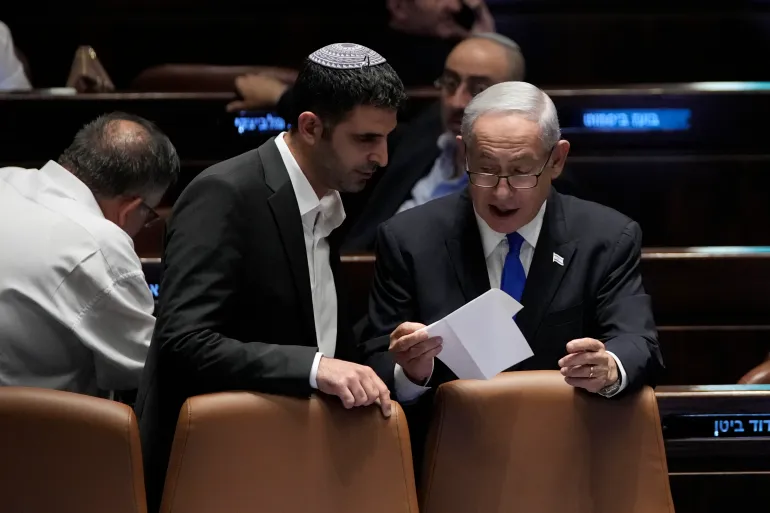
Israel's Prime Minister Benjamin Netanyahu, right, speaks to Minister of Communications Shlomo Karhi at the Knesset, Israel's parliament
Israeli Prime Minister Benjamin Netanyahu, right, speaks to Minister of Communications Shlomo Karhi in the Knesset in West Jerusalem [File: Maya Alleruzzo/AP Photo]

In addition to the ‘Al Jazeera Law’, there are three items of legislation under way: a plan to privatise Israel’s public broadcaster, Kan, the move to abolish Army Radio, and an initiative to bring the media regulator under government control.

Both Army Radio and Kan, the other state-funded outlet with editorial independence, have carried numerous reports critical of the government.

This week, Kan aired an interview with Netanyahu’s former spokesperson Eli Feldstein, who told the broadcaster that the prime minister had instructed him to develop a strategy to help evade responsibility for the October 7 attacks.

Meanwhile, Israeli Defence Minister Israel Katz, justifying the move to shut down Army Radio, said on Monday that the outlet had become a platform to attack the Israeli military and its soldiers.

Israel is also potentially changing the way it regulates its media. In November, the Israeli parliament pressed ahead with a bill that would abolish existing media regulators and replace them with a new authority appointed by the government, potentially allowing for even greater state interference.

Israel's Attorney General Gali Baharav-Miara listens on as she attends a cabinet meeting at the Bible Lands Museum in Jerusalem on June 5, 2024. GIL COHEN-MAGEN/Pool via REUTERS
Israeli Attorney General Gali Baharav-Miara attends a cabinet meeting at the Bible Lands Museum in Jerusalem [Gil Cohen-Magen/Pool via Reuters]

Lastly, Israel has also codified into law the emergency legislation banning foreign media outlets whose output it disagrees with. It was first enacted as emergency legislation in May 2024 when Israel used it to ban Al Jazeera from its territory, and it was then used in the same month to halt the activity of The Associated Press after the government accused the United States-based news agency of sharing footage with Al Jazeera.

Under the new law, the communications minister – with the prime minister’s sign-off and the backing of a ministerial committee – may halt a foreign broadcaster’s transmissions if the prime minister accepts a professional assessment that the outlet poses a security threat. The minister can also shut the broadcaster’s offices, confiscate equipment used to produce its content and block access to its website.

Have the moves been criticised?

The International Federation of Journalists (IFJ) and the United Kingdom’s National Union of Journalists have criticised Israel’s decision to legislate against foreign media platforms it deems a security threat.

In a statement, IFJ General Secretary Anthony Bellanger said: “Israel is openly waging a battle against media outlets, both local and foreign, that criticise the government’s narrative: that is typical behavior of authoritarian regimes. We are deeply concerned about the Israeli parliament passing this controversial bill, as it would be a serious blow to free speech and media freedom, and a direct attack on the public’s right to know.”

The attempt to shutter Army Radio has also been heavily criticised with Israeli Attorney General Gali Baharav-Miara declaring the move unlawful and accusing Netanyahu’s coalition of making public broadcasting “weakened, threatened and institutionally silenced and its future shrouded in mist”.

Baharav-Miara has also criticised the move to place media regulation under government control, saying the bill “endangers the very principle of press freedom”.

Not very.

The Israeli media have overwhelmingly been a consistent cheerleader of the Israeli government’s actions in Gaza, where more than 70,000 Palestinians have been killed by Israel, and in the occupied West Bank.

The suffering of Palestinians is rarely shown, and when it is, it is often justified.

Even as Israel has killed more than 270 journalists and media workers in Gaza, the Israeli media have provided cover for the actions of its government and military.

That means Israelis often don’t recogise the hypocrisy of their government’s statements.

An example came in June after Iran struck an evacuated hospital during the 12-day war between Israel and Iran. The Israeli government called the incident a war crime, and the Israeli media reflected that outrage.

But the attack came after Israel had been accused by a variety of organisations, including the United Nations, of systematically destroying Gaza’s healthcare system with medical workers targeted for arrest and frequently tortured despite their protection under international law.

“The Israeli media … sees its job as not to educate – it’s to shape and mould a public that is ready to support war and aggression,” journalist Orly Noy told Al Jazeera from West Jerusalem in the wake of the strike on the Israeli medical centre. “It genuinely sees itself as having a special role in this.”

Source link

Palestine Action hunger strikers launch legal action against UK government | Israel-Palestine conflict News

London, United Kingdom – Lawyers of imprisoned hunger-striking activists linked to the protest group Palestine Action have put the British government on notice as the justice secretary refuses to meet them.

Imran Khan & Partners, which represents the collective, wrote a pre-claim letter to the government on Monday, warning that they would seek a High Court case should officials fail to respond by Tuesday afternoon.

Recommended Stories

list of 4 itemsend of list

Eight activists, aged between 20 and 31, have participated in a rolling strike that began on November 2. There are rising fears that one or more of them could soon die in jail.

In recent days, their relatives and loved ones have told Al Jazeera of their deteriorating health and repeated hospital admissions.

Their lawyers have long called for a meeting with Justice Secretary David Lammy to discuss welfare and prison conditions, believing such an intervention could be life-saving.

But the government has so far refused, saying hunger strikes are not an unusual phenomenon in prisons and that policies to provide adequate medical care to anyone refusing food are being followed.

“Our clients’ food refusal constitutes the largest co-ordinated hunger strike in British history since 1981,” the lawyers wrote, referring to the Irish Republican inmates led by Bobby Sands. Sands and nine others died of starvation, one on day 46 of the protest.

“As of today’s date, [the current] strike has lasted up to 51 days, nearly two months, and poses a significant risk to their life with each passing day,” the lawyers wrote.

The detainees are being held in five prisons over their alleged involvement in break-ins at the United Kingdom’s subsidiary of the Israeli defence firm Elbit Systems in Bristol and a Royal Air Force base in Oxfordshire. They deny the charges against them, such as burglary and violent disorder.

Amu Gib, Heba Muraisi, Teuta Hoxha and Kamran Ahmed are on day 52, 51, 45 and 44 of their protests, respectively. Lewie Chiaramello, who is diabetic and refuses food every other day, began his protest 30 days ago.

Qesser Zuhrah, Jon Cink and Umer Khalid have ended their strike.

All eight will have spent more than a year in prison before their trials take place, well beyond the UK’s usual six-month pre-trial detention limit.

The hunger strikers’ five demands include immediate bail, the right to a fair trial and the de-proscription of Palestine Action, which accuses the UK government of complicity in Israel’s war crimes in Gaza. The UK government banned Palestine Action in July, branding it a “terror” group, a label that applies to groups such as ISIL (ISIS). The protesters have called for an end to alleged censorship in prison, accusing authorities of withholding mail, calls and books. They are also urging that all Elbit sites be closed.

‘Engage with each one’

Leading human rights barrister Michael Mansfield has backed calls for the government to intervene.

“It’s a simple proposition, engage with each one,” he told Al Jazeera. “That’s your job [as government], that’s what you’re there for. You are safeguarding people’s health, welfare and life.”

In a letter addressed to Lammy, he wrote, “Fundamental human rights in the United Kingdom are being destroyed in this quagmire of disinterest and populist politics, the most important being the presumption of innocence and the right to a fair trial by means of preparation and due process.

“There has to be an equality of arms which can hardly be achieved when a defendant is held in oppressive and lengthy periods of remand.”

Families of the prisoners have alleged mistreatment in prison, saying some detainees have been verbally abused and left without care in dangerous health conditions. The Ministry of Justice has denied these accusations and says it cannot comment on individual cases.

“Government takes action when it chooses to,” Mansfield wrote. “There could be no more appropriate time than now with the life-endangering protest by the hunger strikers. The delay is grotesque in some cases, up to two years with trial dates being set in 2027.”

Nida Jafri, a friend of hunger striker Amu Gib, plans to deliver Mansfield’s letter – and one of her own – in hand to the Ministry of Justice on Tuesday.

“These people are on remand – not convicted, still awaiting full legal process,” reads Jafri’s letter. “They are weak, in pain, and visibly wasting away. The absence of adequate medical observation or humane treatment under prison or hospital care is not only unacceptable; it breaches fundamental rights to health, dignity, and life.”

Source link

Video: Maduro rejects Trump’s warning against ‘acting tough’ | Nicolas Maduro

NewsFeed

US President Donald Trump warned Nicolas Maduro to ‘not play tough’ and to step down on Monday, while the Venezuelan leader said Trump should focus on the issues in his own country. Trump told reporters the US will keep 1.9 million barrels of oil that were seized near Venezuela in December.

Source link

Ugandan police tear gas crowd at Bobi Wine campaign event | Government

NewsFeed

Footage shows security forces dispersing crowds with tear gas at rallies for Ugandan presidential candidate Robert Kyagulanyi, also known as Bobi Wine, in Kampala. The pop star-turned-politician is campaigning ahead of Uganda’s January 2026 elections, as officials warn against interference.

Source link

New Yorkers Line Up to Advise Dinkins : Government: Hundreds respond to the mayor’s invitation and show up at City Hall with complaints and suggestions.

Mayor David N. Dinkins, battered by the budget crisis and seeking to project a message of personal accountability, invited ordinary citizens to his office Monday with suggestions on how to better life in the city.

Hundreds of people started lining up before dawn with complaints and ideas–including sending a squad of cowboys and cowgirls through poverty-stricken areas to preach AIDS-awareness and anti-drug messages, offering centralized computer access to municipal information, encouraging volunteerism and sacrificing a day’s pay a year to help the city.

After being pre-screened in front of City Hall, people in line were funneled through a metal detector to chat with the heads of appropriate agencies. A far smaller group met the mayor himself.

Was it a sincere search for innovation or a folksy public relations exercise? “I’d say it was 50-50,” said Michael Attisano, who emerged from the mayor’s office after suggesting a consolidation of the city’s separate housing and transit police forces. “I think he is going to get a lot of good ideas today.”

“Even now, there are those who see this as some sort of a gimmick,” Dinkins said. “It really is a desire to convey to the people of our city that this government really cares about them.”

The mayor’s invitation for ordinary citizens to meet with him came during a major televised address on July 30 that was designed to reassure both the city and the New York State Emergency Financial Control Board, created during the great fiscal crisis of the 1970s. The review board has the power under certain circumstances to seize financial control of the city.

In his speech, the mayor laid out a mixture of money-saving ideas, including ordering the heads of all city agencies, except for the police and fire departments, to give up their chauffeurs.

The mayor announced that he would not accept a pay raise for at least a year and set aside Monday as the day when New Yorkers with concerns and innovative ideas could come to see him.

And come they did. Coreen Brown of Brooklyn, arrived before dawn with a complaint about a sewer problem. When she emerged from the mayor’s office after waiting in line for hours, she admitted that she had broken into tears and Dinkins had given her a tissue.

“I forgot everything I wanted to say. I was going to invite him to my house,” Brown said.

Others remembered to deliver their messages.

Irving Scharf, a store owner from Brooklyn, suggested among other things that the mayor set up a lending-library system of math videotapes so children who miss classes because of illness or those who need extra credit can increase their learning skills.

“I am not here to berate the mayor. I am here to encourage him,” said Thelma Williams of the Bronx, who pushed for increased volunteerism and the sacrifice of a day’s pay by New Yorkers to help the city.

Carlos Foster, a rodeo producer who also lives in the Bronx, arrived wearing cowboy garb and proposed riding into poorer areas of the city with 10 cowboys and four cowgirls to preach against substance abuse and for safe sex.

Hulan Jack Jr., the son of a former Manhattan borough president in the 1960s, suggested putting all city data in central computer depositories for quick access.

Jack said that Dinkins listened and then had a municipal computer expert deliver a 30-second capsule of what already was being done. “Then we talked another minute and a half, and that was it,” he explained after leaving the mayor’s inner office.

The Dinkins invitation to New Yorkers brought out a summer Santa Claus, complete with red suit, and a woman dressed as the Easter Bunny. Police looked on bemusedly, except when Tasia Figueroa arrived with her 11-foot python, Shorty, draped around her neck.

The mayor’s staff, after quick consultation with police, asked that the snake be parked with Figueroa’s fiance while she went into City Hall to voice her municipal license complaint.

Source link

Syria’s government curbing once-booming Captagon industry: UN report | Drugs News

Authorities have shuttered drug factories that were cash pipeline for former ruler Bashar al-Assad, UN report.

Syria’s government has cracked down on the Captagon industry, which boomed under former longtime leader Bashar al-Assad, according to a United Nations report.

Since al-Assad’s ouster a year ago, Syria’s new authorities have dismantled a network of factories and storage sites, a research brief published on Monday by the UN Office on Drugs and Crime (UNODC) said.

Recommended Stories

list of 3 itemsend of list

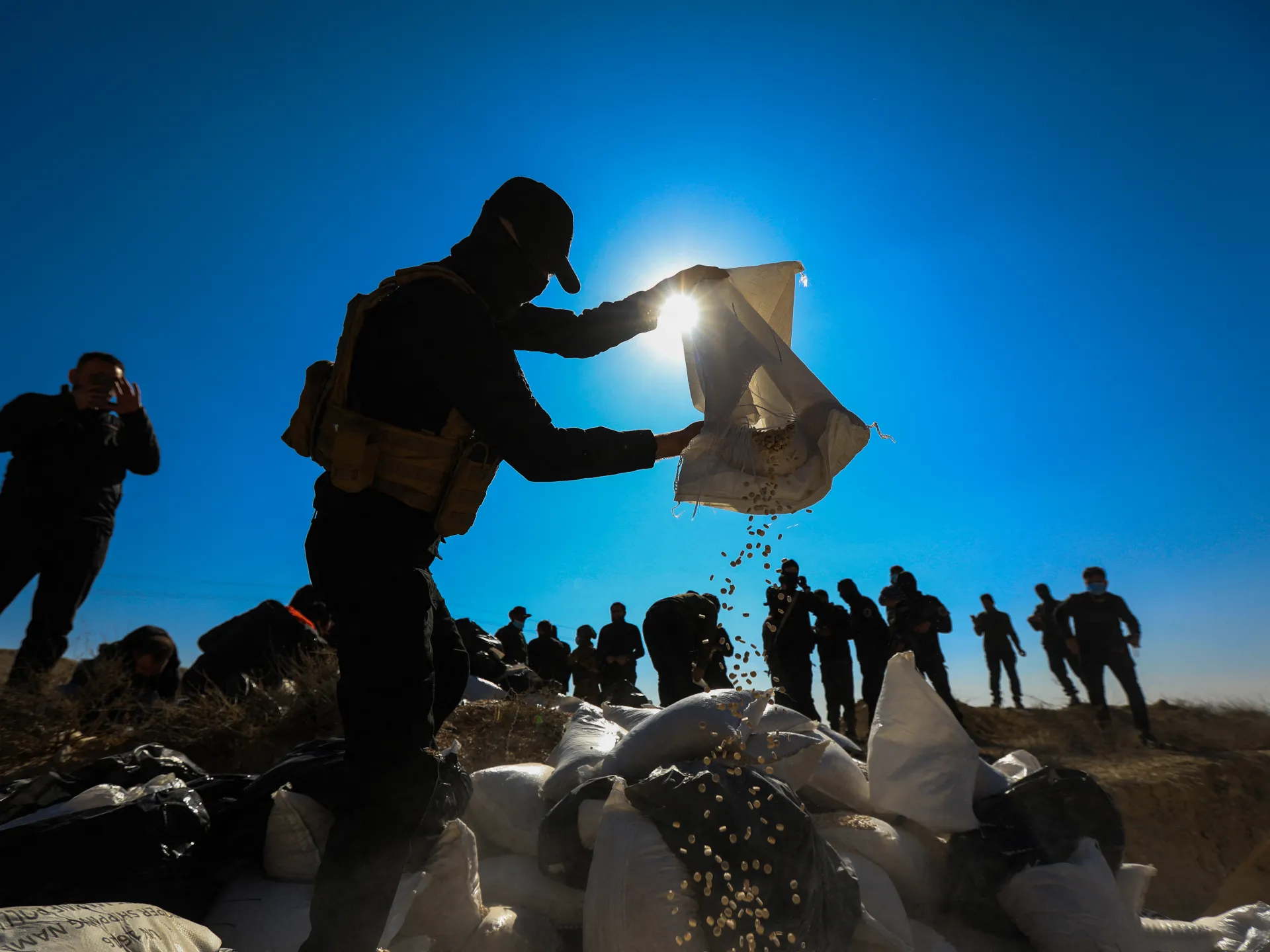
For more than a decade, Syria produced most of the world’s Captagon, a highly addictive, amphetamine-like pill, bringing in billions of dollars for al-Assad’s government.

However, interim President Ahmed al-Sharaa has carried out a clampdown as he tries to legitimise his government and strengthen diplomatic ties globally.

Overall, 15 industrial-level laboratories and 13 storage sites have been shuttered, according to the UNODC report. The agency said the action has “drastically changed” the Captagon market across the region.

Syria’s role in the drug trade had previously drawn scrutiny from numerous Gulf states, where the pill is popular, including Saudi Arabia. It also helped to prompt Western sanctions.

‘Political will and international cooperation’

For years, the Captagon trade provided billions of dollars in profit for networks and individuals aligned with the former government “either within the leadership of the regime’s security apparatus, Syria’s commercial sector and business elite, and/or family members of Bashar al-Assad”, according to Caroline Rose, an expert on Syrian drug trafficking at the New Lines Institute think tank.

Maher al-Assad, Bashar’s brother and former commander of the army’s elite Fourth Division, was identified as a key player, profiting from protecting shipments through Latakia, a former al-Assad stronghold.

Despite the current Syrian government’s targeting of the industry, large seizures of the drug across the region suggest that significant stockpiles of the pills originating from Syria remain in circulation, the report noted.

Smaller-scale production is also likely continuing inside Syria and in neighbouring countries, the UNODC added, with Gulf countries still the top buyers of the drug.

The UN agency said the disruption of the Middle East’s Captagon industry shows that with “political will and international cooperation … even highly complex drug markets can be destabilised within a relatively short period of time”.

However, it warned that the shift risks pushing regional consumers towards new synthetic substances, like methamphetamine, which has recently grown in popularity.

“Without addressing the underlying demand for ‘Captagon,’ trafficking and use are likely to shift toward other substances, such as methamphetamine, with new routes and actors emerging to fill the gap,” it said.

Source link

Tens of thousands flood streets for Bangladeshi activist’s funeral | Protests

NewsFeed

Footage shows a massive crowd filling streets to honour Sharif Osman Hadi, a leader of the 2024 student-led uprising, who was shot dead by a masked gunman while leaving a Dhaka mosque. Bangladesh’s interim leader Mohammad Yunus joined mourners days after Hadi died in a Singapore hospital.

Source link

Trump government suspends visa lottery linked to Brown University suspect | Donald Trump News

The administration of President Donald Trump has announced it will halt the visa lottery programme that allowed the suspect in the Brown University shooting to enter the United States.

The lottery awards approximately 50,000 immigrant visas each year, according to the US government.

Recommended Stories

list of 3 itemsend of list

But Trump has long opposed the Diversity Immigrant Visa Programme, sometimes known as the DV Programme. On Friday, his Secretary of Homeland Security Kristi Noem revealed that he had directed her to end the lottery immediately.

She also identified the suspect as Portuguese national Claudio Manuel Neves Valente, who received his green card — a certificate for permanent residency — through the lottery in 2017.

“This heinous individual should never have been allowed in our country,” Noem wrote in her social media statement.

“At President Trump’s direction, I am immediately directing USCIS [US Citizenship and Immigration Services] to pause the DV1 program to ensure no more Americans are harmed by this disastrous program.”

Campaign to end visa lottery

Friday’s announcement is not the first time Trump has sought to wind down the diversity visa lottery.

Trump has long sought to narrow the country’s pathways to legal immigration, and he has used crime as a pretext for doing so.

Noem herself pointed out that, in 2017, Trump “fought” to shut down the diversity visa lottery in the wake of an attack in New York City that saw a truck ram into a crowd of people, killing eight.

Speaking at a graduation ceremony for the Federal Bureau of Investigation (FBI) in December 2017, Trump — then in his first term as president — called on Congress to “end the visa lottery system”.

“They have a lottery. You pick people. Do you think the country is giving us their best people? No,” Trump said.

“What kind of a system is that? They come in by lottery. They give us their worst people.”

The Diversity Immigrant Visa Programme was established in 1990 to ensure applicants from underrepresented countries had access to the US immigration system.

Immigration rights advocates have long argued that pathways to permanent residency are narrow for those who do not already have a spouse, relatives or some other kind of sponsor in the country.

The visa lottery helps to answer that need, by creating an alternative route to residency.

The lottery system selects visa recipients randomly, but critics argue it remains a long-shot avenue to gain US residency, and even successful applicants must still pass a rigorous screening process after the lottery.

While the Diversity Immigrant Visa Programme used to accept 55,000 applicants each year, in 2000 that number was lowered to its current level, according to the American Immigration Council.

Surveillance footage of the Brown University suspect, with a suitcase
Surveillance images released by police show Claudio Neves Valente, the suspect in the mass shooting at Brown University [Providence Police Dept via AP Photo]

A suspect identified

Friday’s decision to immediately suspend the lottery comes as new details emerge about Neves Valente, a physics scholar found dead in a storage unit in New Hampshire after a nationwide manhunt.

The search began on December 13, when gunfire erupted on the campus of Brown University, a prestigious Ivy League school in Providence, Rhode Island.

The school’s fall semester was at its conclusion, and the exam period had begun. Students in the Barus and Holley physics laboratory were taking their end-of-course exams when a suspect, clad in black, entered the building and opened fire, killing two students and injuring nine others.

The physics lab was close to the edge of campus, and the suspect was able to escape on foot undetected.

The manhunt included several false starts, as authorities said they quickly detained a person of interest, only to release the individual without charges.

Then, on November 15, law enforcement officials announced that a plasma physics scholar named Nuno Loureiro had been found dead at his home, after suffering multiple gunshot wounds.

Loureiro was also a Portuguese immigrant, and he served as a professor at the Massachusetts Institute of Technology (MIT), a highly regarded science institution.

It was not immediately clear that the two shooting incidents were related, and authorities faced pressure to bring the Brown University shooter to justice, as the manhunt dragged on.

But on Thursday night, officials announced they had discovered Neves Valente dead from a self-inflicted gunshot wound, and that they believed him to be responsible for both attacks.

Neves Valente had previously studied in a PhD programme at Brown, though he did not complete his degree, and he had been Loureiro’s classmate in Portugal.

Visa revocations

The administration of President Trump has a track record of revoking visas and terminating immigration programmes after high-profile attacks.

On November 26, for example, two National Guard members from West Virginia were shot while on patrol in Washington, DC, as part of Trump’s crime crackdown in the capital.

The suspect in that case was identified as Rahmanullah Lakanwal, an Afghan national who had previously worked with allied forces during the US-led war in Afghanistan.

One of the National Guard soldiers, 20-year-old Sarah Beckstrom, ultimately died from her wounds.

Trump responded to the incident by announcing he was halting all visa applications and asylum requests from Afghan nationals, despite outcry from human rights and veterans groups.

The Republican leader also said he would pursue a “permanent pause” on entry for immigrants from “all third-world countries”.

In the aftermath of the shooting, the Trump White House tightened entry for 19 countries it had identified in June as “high risk” and expanded the list of restrictions to include 20 more countries.

Trump has also taken targeted actions to strip individuals of their immigration status following shootings.

After the assassination of conservative commentator Charlie Kirk in September, the Trump administration announced it was yanking visas from six foreign nationals who posted disrespectful comments or memes online about the attack. They hailed from countries ranging from Argentina to Brazil, Germany to Paraguay.

Free-speech advocates said the decision was a clear violation of the First Amendment of the US Constitution, which protects the freedom of expression.

But the Trump administration has repeatedly threatened to boot foreign nationals that do not align with its policy priorities.

“Aliens who take advantage of America’s hospitality while celebrating the assassination of our citizens will be removed,” the US State Department wrote in response.

The suspect in the Kirk shooting is a 22-year-old US citizen named Tyler James Robinson from Utah.

Studies have repeatedly shown that US-born citizens are more likely to commit violent crimes than immigrants.

Source link

Instacart settles Federal Trade Commission’s claim it deceived US shoppers | Business and Economy News

The FTC had accused the grocery delivery giant of charging fees to consumers after promising ‘free delivery’.

Instacart has agreed to pay $60m in refunds to settle allegations brought by the United States Federal Trade Commission (FTC) that the online grocery delivery platform deceived consumers about its membership programme and free delivery offers.

According to court documents filed in San Francisco on Thursday, Instacart’s offer of “free delivery” for first orders was illusory because shoppers were charged other fees, the FTC alleged.

Recommended Stories

list of 4 itemsend of list

The agency also accused Instacart of failing to adequately notify shoppers that their free trials of its Instacart+ subscription service would convert to paid memberships and of misleading consumers about its refund policy.

“The FTC is focused on monitoring online delivery services to ensure that competitors are transparently competing on price and delivery terms,” said Christopher Mufarrige, who leads the FTC’s consumer protection work.

An Instacart spokesperson said the company flatly denies any allegations of wrongdoing, but that the settlement allows the company to focus on shoppers and retailers.

“We provide straightforward marketing, transparent pricing and fees, clear terms, easy cancellation, and generous refund policies — all in full compliance with the law and exceeding industry norms,” the spokesperson said.

The shopping platform is currently under scrutiny after a recent study by nonprofit groups found that individual shoppers simultaneously received different prices for the same items at the same stores.

The FTC is investigating the company and has demanded information about Instacart’s Eversight pricing tool, the news agency Reuters reported on Wednesday.

Instacart has said that retailers are responsible for setting prices, and that pricing tests run through Eversight are random and not based on user data.

Lindsay Owens, the executive director of the Groundwork Collaborative, an economic think tank, criticised the grocery platform for using artificial intelligence (AI) to tweak its prices.

“At a time when families are being squeezed by the highest grocery costs in a generation, Instacart chose to run AI experiments that are quietly driving prices higher,” Owens said in written remarks provided to Al Jazeera.

She also called on the administration of US President Donald Trump to take action to prevent such price manipulation from continuing into the future.

“While the FTC’s investigation is welcome news, it must be followed with meaningful action that ends these exploitative pricing schemes and protects consumers,” Owens said. “Instacart must face consequences for their algorithmic price gouging, not just a slap on the wrist.”

On Wall Street, Instacart’s stock is taking a hit on the heels of the settlement, finishing out the day down 1.5 percent.

Source link

Trump signs order to reclassify marijuana, ease research restrictions | Donald Trump News

The executive order calls on the US attorney general to expedite federal reclassification, creating fewer barriers for studies.

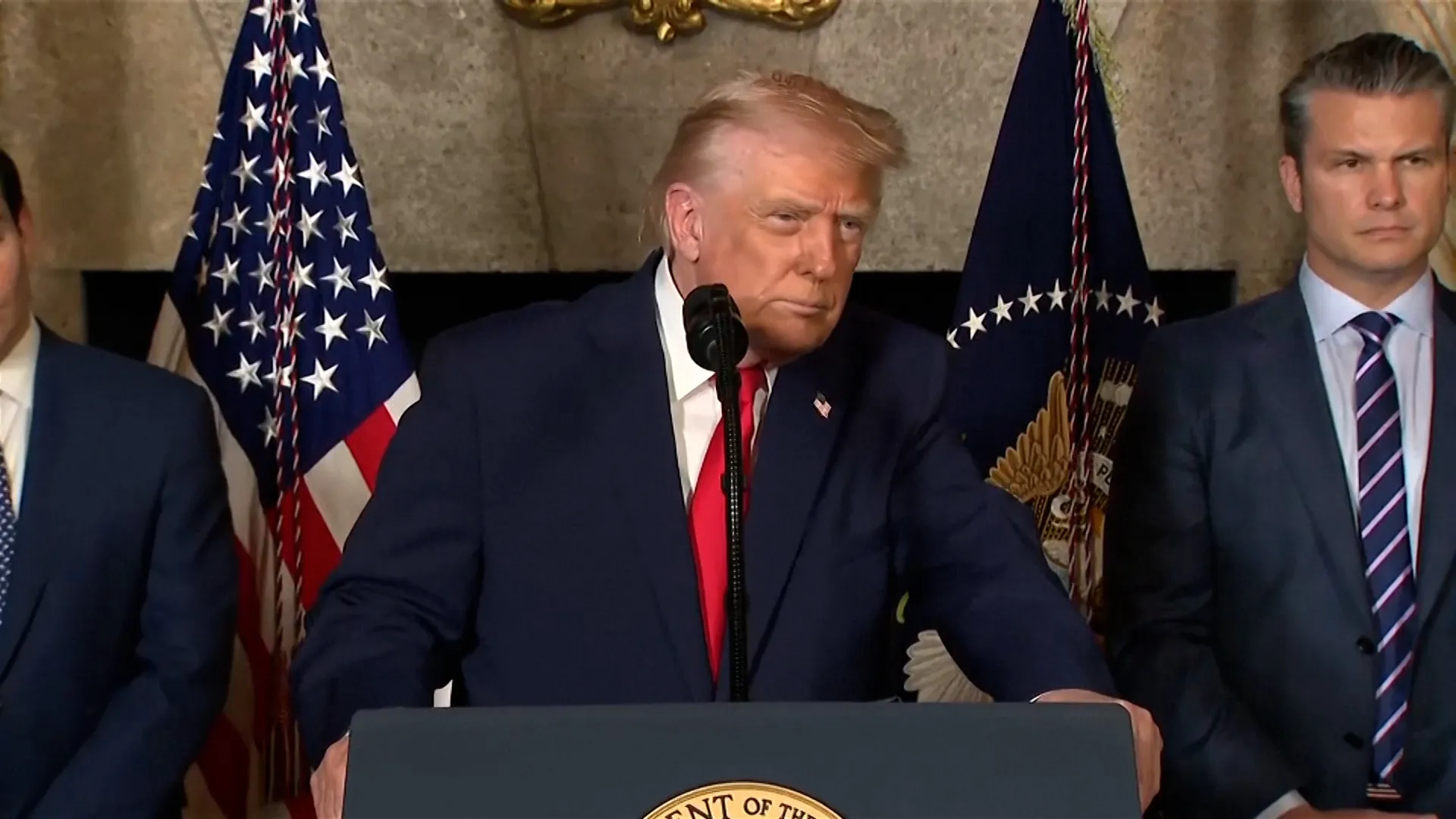
United States President Donald Trump has signed an executive order to federally reclassify marijuana as less dangerous.

The move on Thursday requires Attorney General Pam Bondi to expedite the process under the Drug Enforcement Administration for reclassifying marijuana.

Recommended Stories

list of 3 itemsend of list

In the US, drugs and other chemical substances are divided into a five-tier classification system, with Schedule I representing the most restricted tier and Schedule V the least.

Marijuana was previously in the Schedule I category, where it was classed alongside potent narcotics like heroin and LSD. With Thursday’s order, it would be fast-tracked down to Schedule III, in a class with ketamine and anabolic steroids.

Trump said the change “is not the legalisation” of marijuana, and he added that it “in no way sanctions its use as a recreational drug”.

The change, however, will make it easier to conduct research on marijuana, as studies on Schedule III drugs require far less approval than for Schedule I substances.

Speaking earlier in the week, Trump told reporters the change was popular “because it leads to tremendous amounts of research that can’t be done unless you reclassify, so we are looking at that very strongly”.

The change is in line with several states that have moved to legalise marijuana for both medical and recreational use. That has created a patchwork of state-level regulations at odds with federal law, wherein marijuana remains illegal.

Former US President Joe Biden had taken several steps to lessen federal penalties related to marijuana, including a mass pardon for those handed harsh sentences for simple possession.

Such convictions had disproportionately affected minority communities and fuelled mass incarceration in the US.

The Biden administration had also begun the process of reclassifying marijuana to Schedule III, but the effort was not completed before the Democratic president left office in January.

Trump has faced some pushback from within his party about the classification shift. Earlier this year, 20 Republican senators signed a letter urging the president to keep the more severe restrictions.

The group argued that marijuana continues to be dangerous and that a shift would “undermine your strong efforts to Make America Great Again”, a reference to Trump’s campaign slogan.

Meanwhile, public support for legalising marijuana for recreational use has nearly doubled in recent years, increasing from 36 percent support in 2005 to 68 percent in 2024, according to Gallup polls.

Source link

BBC TV licence fee could be replaced by ‘sliding scale’ under Government review

Here’s what you need to know about potential changes to the BBC TV Licence

An annual fee in the UK could be replaced by “sliding scale” payment rates going forward. The BBC TV Licence could be due for some major changes.

The UK Government will examine reforms to the TV licence fee and explore additional commercial revenue streams for the BBC as part of proposals set out in its Royal charter review. The BBC’s existing charter, which spans a decade, concludes in December 2027.

The yearly licence fee has endured extensive examination under the previous Conservative administration, remaining static at £159 for two years before rising in April 2024 and again in April 2025 to £174.50, aligned with inflation rates.

As reported by the Daily Record, Culture Secretary Lisa Nandy has previously indicated she might be receptive to substituting the fixed licence fee with a graduated payment system. A fresh public consultation regarding these reforms has been initiated alongside the Green Paper and remains accessible until March 10, 2026.

The charter establishes the BBC’s public mission and serves as the constitutional foundation for the corporation, which is primarily financed through the licence fee, collected from UK households that watch television.

The Green Paper, outlining prospective BBC reforms was released on Tuesday and “consults on a wide range of options being considered for the future of the BBC”.

The Department for Culture, Media and Sport (DCMS) stated the UK Government will examine whether licence-fee reductions require updating, possibilities for the BBC to create additional commercial income, and funding alternatives for the World Service to ensure sustainable financing for minority-language broadcasting. Lisa Nandy expressed: “We want the BBC to continue to enrich people’s lives, tell Britain’s story and showcase our values and culture at home and overseas, long into the future.

“My aims for the charter review are clear. The BBC must remain fiercely independent, accountable and be able to command public trust. It must reflect the whole of the UK, remain an engine for economic growth and be funded in a way that is sustainable and fair for audiences.

“As a Government, we will ensure that this charter review is the catalyst that helps the BBC adapt to a rapidly changing media landscape and secures its role at the heart of national life.”

Options in the Green Paper the government is considering and seeking views on in this area include:

  • Strengthening the BBC’s independence so the public continues to have trust in the organisation and its programmes and content, including considering the government’s role in board appointments
  • Updating the BBC’s Mission and Public Purposes to give accuracy equal importance alongside impartiality and improving transparency of editorial decision-making to ensure the BBC explains journalistic processes and how its coverage evolves, especially during high profile events
  • Giving the BBC new responsibilities to counter mis/disinformation, potentially alongside additional requirements on media literacy to help the public navigate technological change and develop digital skills, including around AI
  • Introducing specific duties around workplace conduct to ensure BBC staff are protected and the organisation sets the standard for the rest of the sector to follow – including new responsibilities for the BBC Board to ensure action is taken against workplace misconduct

The DCMS said: “A BBC that is sustainably funded for decades to come to support its vital public service role.”

Options the UK Government is considering and seeking views on in this area include:

  • Reform of the licence fee, whether licence fee concessions should be updated, and options for the BBC to generate more commercial revenue
  • Options for funding the World Service and supporting sustainable funding for minority language broadcasting, including S4C
  • Options the government is considering and seeking views on in this area include:
  • Placing a new obligation on the BBC to drive economic growth, build skills and support the creative economy across the UK
  • Ways in which the BBC can further support the production sector across the nations and regions, including by ensuring budgets and decision-making power for commissioners are spread across the UK, and by supporting minority language broadcasting
  • Empowering the BBC to be an ethical and economic leader in adapting to new digital technologies, and enabling it to invest in Research and Development to support growth and drive public service benefits
  • Encouraging the BBC to deliver more through collaborations and partnerships for growth and public value outcomes, including with organisations across the creative economy, and with local news outlets

Public consultation

People across the UK are being encouraged to give their views on the UK Government’s Green Paper public consultation and answer a set of questions.

Responses will be used to help inform policy changes which will be set out in a White Paper expected to be published in 2026.

You can view the consultation on GOV.UK.
Source link

Republicans defy House leadership to force vote on healthcare subsidies | Politics News

An expanded federal healthcare subsidy that grew out of the pandemic looks all but certain to expire on December 31, as Republican leaders in the United States faced a rebellion from within their own ranks.

On Wednesday, four centrist Republicans in the House of Representatives broke with their party’s leadership to support a Democratic-backed extension for the healthcare subsidies under the Affordable Care Act (ACA), sometimes called “Obamacare”.

Recommended Stories

list of 3 itemsend of list

By a vote of 204 to 203, the House voted to stop the last-minute move by Democrats, aided by four Republicans, to force quick votes on a three-year extension of the Affordable Care Act subsidy.

Democrats loudly protested, accusing Republican leadership of gavelling an end to the vote prematurely while some members were still trying to vote.

“That’s outrageous,” Democratic Representative Jim McGovern of Massachusetts yelled at Republican leadership.

Some of the 24 million Americans who buy their health insurance through the ACA programme could face sharply higher costs beginning on January 1 without action by Congress.

Twenty-six House members had not yet voted – and some were actively trying to do so – when the House Republican leadership gavelled the vote closed on Wednesday. It is rare but not unprecedented for House leadership to cut a contested vote short.

Democratic Representative Rosa DeLauro of Connecticut said the decision prevented some Democrats from voting.

“Listen, it’s playing games when people’s lives are at stake,” DeLauro said. “They jettisoned it.”

It was the latest episode of congressional discord over the subsidies, which are slated to expire at the end of the year.

The vote also offered another key test to the Republican leadership of House Speaker Mike Johnson. Normally, Johnson determines which bills to bring to a House vote, but recently, his power has been circumvented by a series of “discharge petitions”, wherein a majority of representatives sign a petition to force a vote.

In a series of quickfire manoeuvres on Wednesday, Democrats resorted to one such discharge petition to force a vote on the healthcare subsidies in the new year.

They were joined by the four centrist Republicans: Mike Lawler of New York and Brian Fitzpatrick, Robert Bresnahan and Ryan MacKenzie of Pennsylvania.

The Democratic proposal would see the subsidies extended for three years.

But Republicans have largely rallied around their own proposal, a bill called the Lower Health Care Premiums for All Americans Act. It would reduce some insurance premiums, though critics argue it would raise others, and it would also reduce healthcare subsidies overall.

The nonpartisan Congressional Budget Office (CBO) on Tuesday said the legislation would decrease the number of people with health insurance by an average of 100,000 per year through 2035.

Its money-saving provisions would reduce federal deficits by $35.6bn, the CBO said.

Republicans have a narrow 220-seat majority in the 435-seat House of Representatives, and Democrats are hoping to flip the chamber to their control in the 2026 midterm elections.

Three of the four Republicans who sided with the Democrats over the discharge petition are from the swing state of Pennsylvania, where voters could lean right or left.

Affordability has emerged as a central question ahead of the 2026 midterms.

Even if the Republican-controlled House manages to pass a healthcare bill this week, it is unlikely to be taken up by the Senate before Congress begins a looming end-of-year recess that would stop legislative action until January 5.

By then, millions of Americans will be looking at significantly more expensive health insurance premiums that could prompt some to go without coverage.

Wednesday’s House floor battle could embolden Democrats and some Republicans to revisit the issue in January, even though higher premiums will already be in the pipeline.

Referring to the House debate, moderate Republican Senator Lisa Murkowski told reporters: “I think that that will help prompt a response here in the Senate after the first of the new year, and I’m looking forward to that.”

The ACA subsidies were a major point of friction earlier this year as well, during the historic 43-day government shutdown.

Democrats had hoped to extend the subsidies during the debate over government spending, but Republican leaders refused to take up the issue until a continuing budget resolution was passed first.

Source link