Donald

Iran urges UN to respond to Trump’s ‘reckless’ threats over protests | Donald Trump News

Letter to UN chief, UNSC comes after Trump says US will intervene if Tehran violently suppresses protests.

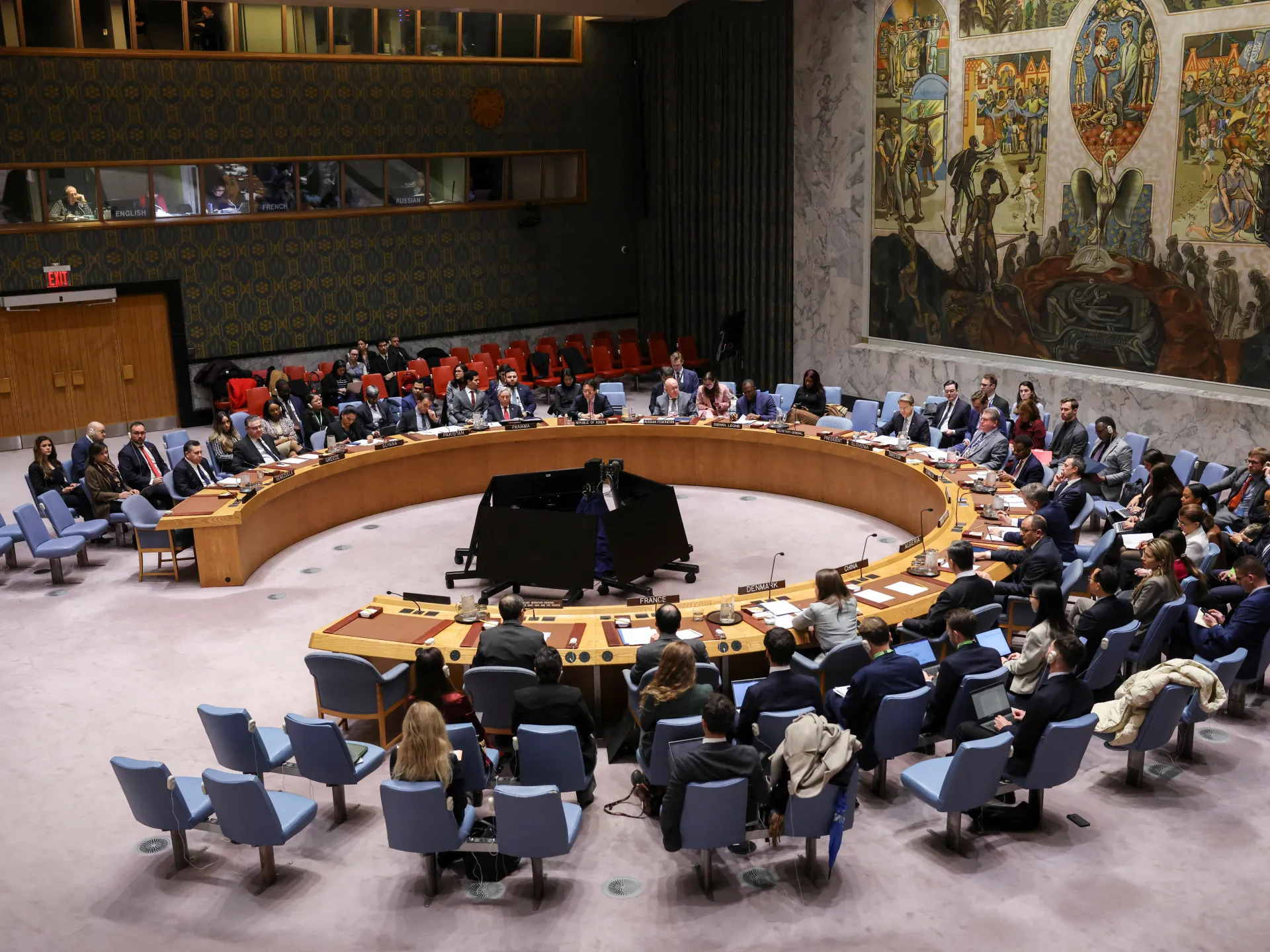
Iran’s United Nations ambassador Amir Saeed Iravani has written to the UN secretary-general and the president of the UN Security Council (UNSC), urging them to condemn “unlawful threats” towards Tehran from United States President Donald Trump amid ongoing protests in the country.

The letter sent on Friday came hours after Trump said the US was “locked and loaded and ready to go” if any more protesters were killed in the ongoing demonstrations in Iran over the cost of living.

Recommended Stories

list of 4 itemsend of list

Iravani called on UN chief Antonio Guterres and members of the UNSC to “unequivocally and firmly condemn” Trump’s “reckless and provocative statements”, describing them as a “serious violation” of the UN Charter and international law.

“Any attempt to incite, encourage or legitimise internal unrest as a pretext for external pressure or military intervention is a gross violation of the sovereignty, political independence and territorial integrity of the Islamic Republic of Iran,” Iravani said in the letter, which was published in full by the IRNA state news agency.

The letter added that Iran’s government “reiterates its inherent right to defend its sovereignty” and that it will “exercise its rights in a decisive and proportionate manner”.

“The United States of America bears full responsibility for any consequences arising from these illegal threats and any subsequent escalation of tensions,” Iravani added.

IRNA reported earlier that protests continued across Iran on Friday, with people gathering in Qom, Marvdasht, Yasuj, Mashhad, and Hamedan as well as in the Tehran neighbourhoods of Tehranpars and Khak Sefid.

The protests have swept across the country after shopkeepers in Iran’s capital Tehran went on strike on Sunday over high prices and economic stagnation.

At least nine people had been killed and 44 arrested in the unrest. The deputy governor of Qom province on Friday said that another person had died after a grenade exploded in his hand, in what the governor said was an attempt to incite unrest.

In his post on Truth Social, Trump said that if Iran “violently kills peaceful protesters, which is their custom, the United States of America will come to their rescue”.

Ali Larijani, secretary of the Supreme National Security Council, shot back that US interference “is equivalent to chaos across the entire region and the destruction of American interests”.

Iran’s economic woes, including a collapsing currency and high inflation rates, follow years of severe drought in Tehran, a city with a population of some 10 million people, compounding multiple ongoing crises.

Iranian leaders have struck a surprisingly conciliatory tone in response, with President Masoud Pezeshkian saying the government is at “fault” for the situation and promising to find solutions. Observers have noted the response is markedly different from the harsh reaction to past protests in the country.

The United States bombed three Iranian nuclear sites in June this year during a 12-day escalation between Israel and Iran. Trump described the operation as a “very successful attack”.

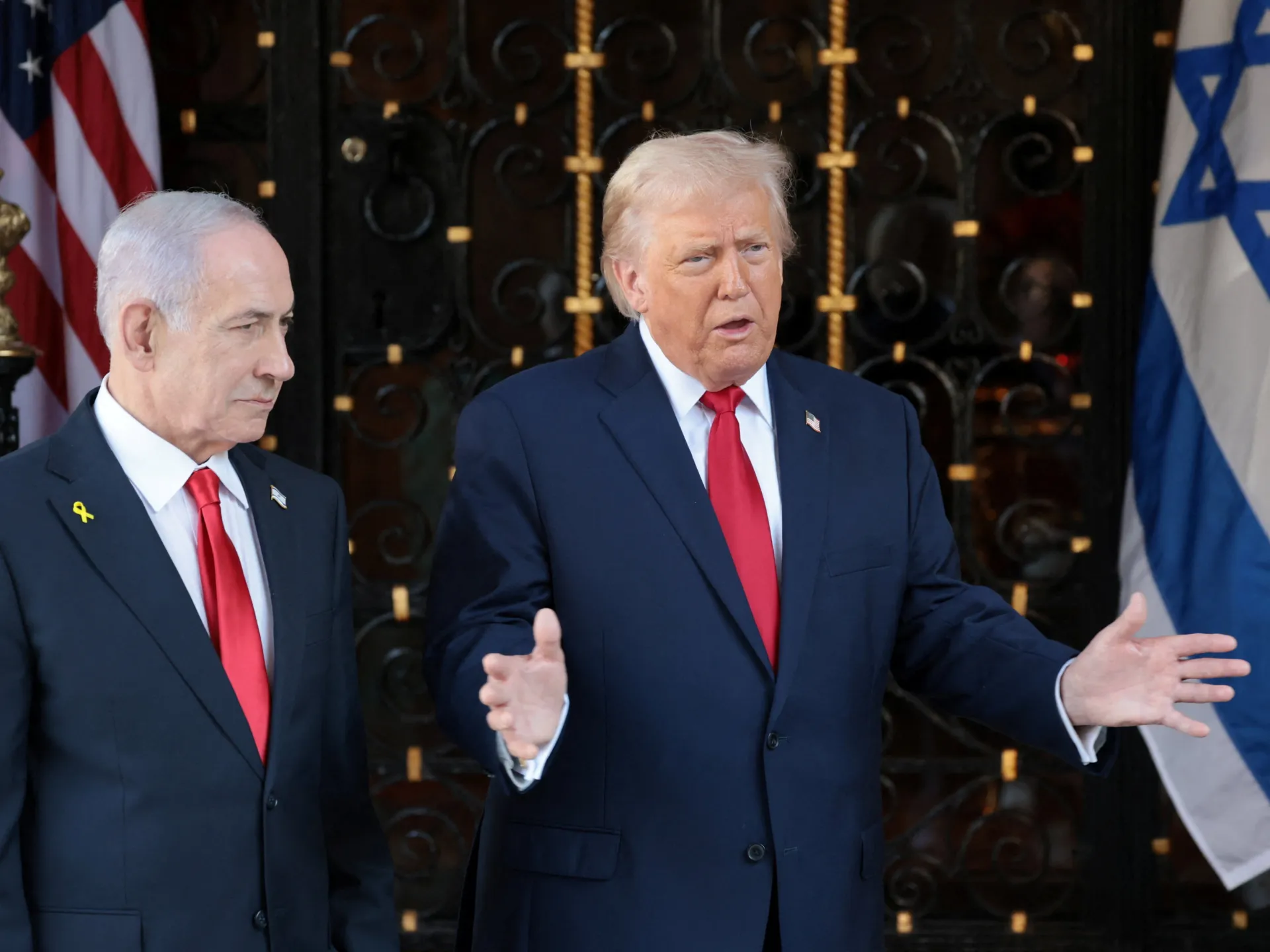
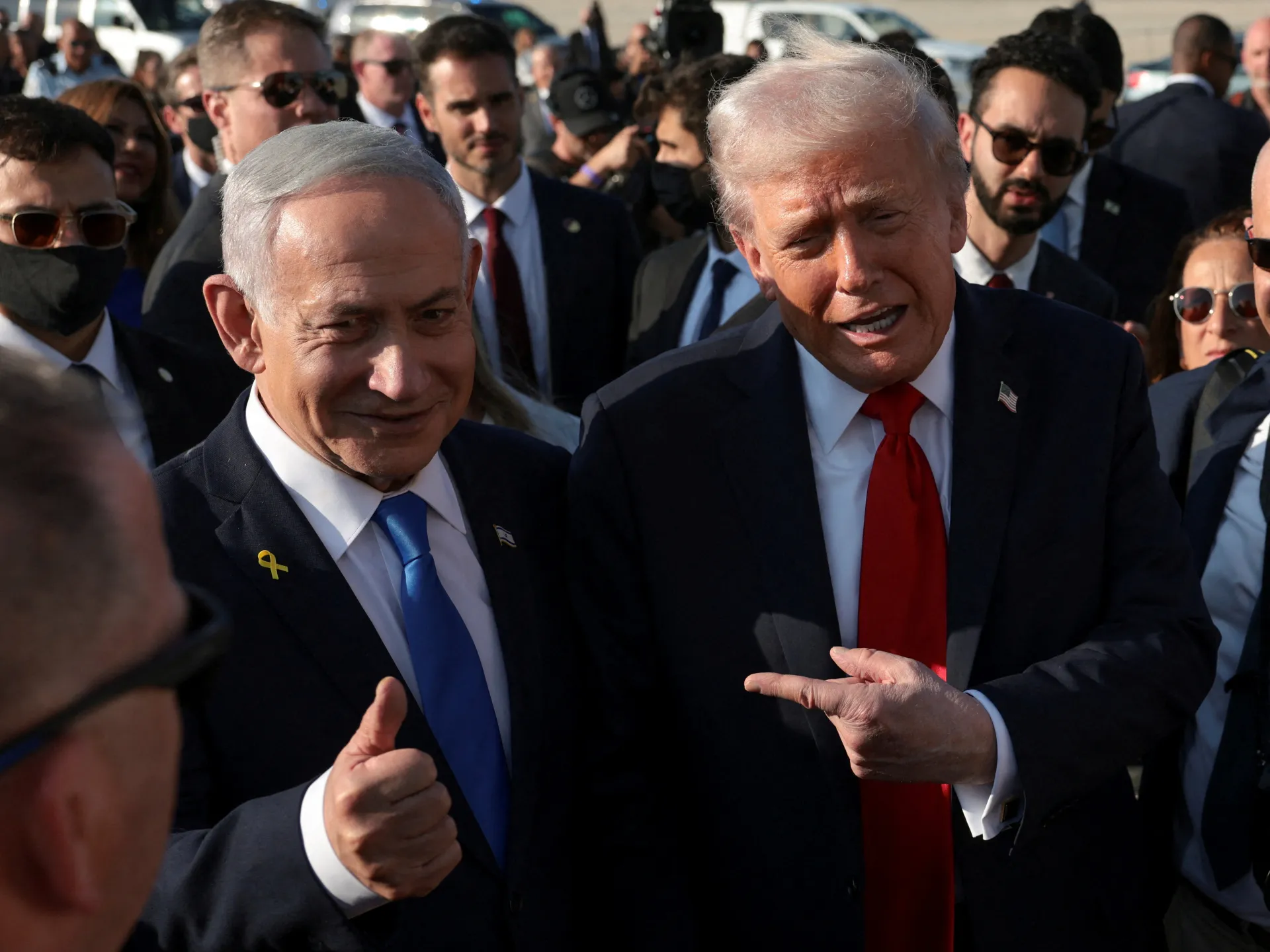
Last week, during a news conference with Israeli Prime Minister Benjamin Netanyahu, Trump said the US will “knock the hell out” of Iran if it advances its nuclear programme or ballistic weapons programme.

The statement came amid an Israeli push to resume attacks on Iran.

Pezeshkian has pledged a “severe” response to any aggression.

Source link

US federal employees file complaint against Trump’s anti-transgender policy | Donald Trump News

The complaint targets a policy that would nix coverage under federal health insurance for gender-affirming healthcare.

A group of federal government employees in the United States has filed a class action complaint against President Donald Trump’s administration over a new policy that will eliminate coverage for gender-affirming care in federal health insurance programmes.

The policy took effect with the start of the new year, and on Thursday, the Human Rights Campaign Foundation issued the complaint, acting on behalf of the federal employees.

Recommended Stories

list of 3 itemsend of list

The US Office of Personnel Management (OPM) was named as a defendant.

In an August letter, the OPM stated that, as of 2026, “chemical and surgical modification of an individual’s sex traits through medical interventions” would no longer be covered under health insurance programmes for federal employees and US postal workers.

OPM officials could not be reached for immediate comment.

The complaint argues that the policy is discriminatory on the basis of sex. It asks that the policy be rescinded and seeks payment for economic damages and other relief.

If the issue is not resolved with the OPM, the foundation said that plaintiffs will pursue class claims before the Equal Employment Opportunity Commission and potentially continue with a class action lawsuit in federal court.

Separately, a group of Democratic state attorneys general last month sued the Trump administration to block proposed rules that would cut children’s access to gender-affirming care, the latest court battle over Trump’s efforts to eliminate legal protections for transgender people.

US Secretary of Health and Human Services Robert F Kennedy Jr has proposed rules that would bar hospitals that provide gender-affirming care to children from Medicaid and Medicare and prohibit the Children’s Health Insurance Program from paying for it.

Source link

Why are some African countries banning US citizens from entry? | Donald Trump News

Mali and Burkina Faso have announced they are imposing full visa bans on United States citizens in retaliation for US President Donald Trump’s ban on US visas for their citizens this month.

The two West African countries, which are both governed by the military, on Tuesday became the latest African nations to issue “tit-for-tat” visa bans on the US. These follow Trump’s new visa restrictions, which now apply to 39 countries in Africa, Asia, the Middle East and Latin America. The White House said they were imposed on “national security” grounds.

Recommended Stories

list of 4 itemsend of list

“In accordance with the principle of reciprocity, the Ministry of Foreign Affairs and International Cooperation informs the national and international community that, with immediate effect, the Government of the Republic of Mali will apply the same conditions and requirements to US nationals as those imposed on Malian citizens,” the Malian ministry said in a statement.

Burkina Faso’s foreign minister, Karamoko Jean-Marie Traore, in a separate statement similarly cited a reciprocity rule for his country’s visa ban.

Which countries have issued bans on visas for US citizens?

The US directive issued on December 16 expanded full US visa bans to citizens of five nations other than Mali and Burkina Faso: Laos, Niger, Sierra Leone, South Sudan and Syria.

Travellers holding travel documents issued by the Palestinian Authority were also banned from entering the US under the order.

The US cited the countries’ poor screening and vetting capabilities, information-sharing policies, visa overstay rates and refusal to take back their deported nationals for the ban.

Trump’s order also noted countries were additionally assessed based on whether they had a “significant terrorist presence”.

The US ban takes effect on Thursday.

Mali, Burkina Faso and neighbouring Niger have been plagued by violence from armed groups linked to al-Qaeda and ISIL (ISIS) for years. The violence in those countries has displaced millions of civilians.

On Friday, Niger banned entry for US citizens, also citing the US ban on its citizens. The country is also military-led like its neighbours Mali and Burkina Faso. All three formed the Alliance of Sahel States in July 2024 to tackle security problems and improve trade relations.

In its own reciprocal move, Chad stopped issuing visas to US citizens on June 6 with an exception for US officials. Only US citizens who were issued visas before June 9 are now allowed entry into Chad.

The country was on an initial list of 12 nations whose citizens the Trump administration issued a full visa ban on from June 9.

Traore
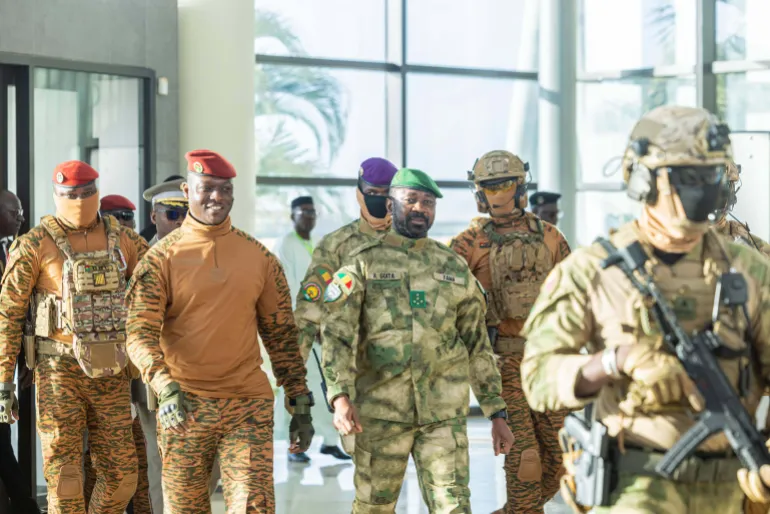
Burkina Faso President Ibrahim Traoré, second from left, walks alongside Malian President Assimi Goïta during an Alliance of Sahel States summit on security and development in Bamako, Mali, on December 23, 2025 [Handout/Mali government information centre via AP]

Which countries are affected by the US visa bans?

Citizens of 39 countries are now under full or partial entry restrictions to the US, according to the US-based Council on Foreign Relations think tank.

Those fully banned are:

  • Afghanistan
  • Burkina Faso
  • Chad
  • Equatorial Guinea
  • Eritrea
  • Haiti
  • Iran
  • Laos
  • Libya
  • Mali
  • Myanmar
  • Niger
  • Republic of Congo
  • Sierra Leone
  • Somalia
  • South Sudan
  • Sudan
  • Syria
  • Yemen
  • Holders of travel documents issued by the Palestinian Authority are also fully banned.

Those partially restricted are:

  • Angola
  • Antigua and Barbuda
  • Benin
  • Burundi
  • Cuba
  • Dominica
  • Gabon
  • The Gambia
  • Ivory Coast
  • Malawi
  • Mauritania
  • Nigeria
  • Senegal
  • Tanzania
  • Togo
  • Tonga
  • Turkmenistan
  • Venezuela
  • Zambia
  • Zimbabwe

Is Trump specifically targeting African countries with visa bans?

Trump’s approach to Africa regarding visa entries in his second term as US president is similar to that of his first administration when he issued a “Muslim ban”, which included citizens of three African nations – Somalia, Sudan and Libya – as well as Yemen, Syria, Iraq and Iran.

In later updates to the ban, Sudan was removed while Chad was added.

Most countries under US entry restrictions since Trump took office on January 20 are in Africa. Of the 39 affected countries, 26 are African nations.

How have US-Africa trade relations fared under Trump?

Tradewise, the US has shifted away from its preferential African Growth and Opportunity Act (AGOA) trade programme to a tariff-based regime that has also been applied to most other countries around the world under Trump’s tariffs policy.

From 2000, AGOA provided African nations with duty-free access to US markets, bolstering African exports to the US of a wide range of goods, from wine to cars.

AGOA created an estimated 300,000 jobs in African countries and indirectly sustained another 1.2 million jobs, according to the US-based Center for Strategic International Studies.

However, AGOA expired in September after the US Congress failed to renew it. Although the Trump administration said it supported a one-year extension, no steps have been announced to revive the programme.

Instead, African countries now face often steep tariffs as the US sometimes justifies them on political grounds.

South Africa, Africa’s richest country, for example, was slapped with a 30 percent tariff after Trump made debunked allegations of a “genocide” on the country’s white Afrikaner minority. The US government has since prioritised resettling Afrikaners as refugees in the US.

South African President Cyril Ramaphosa met with Trump at the White House in May and explained that crime in the country targets the population at large – not just its white citizens – but was unable to persuade Trump.

Trump’s administration is also prioritising its access to critical rare earth minerals, used to develop high-tech devices, in a bid to remain competitive with China, which mines about 60 percent of the world’s rare earth metals and processes 90 percent of them.

Trump took up a mediator role in the conflict between the Democratic Republic of the Congo (DRC) and neighbouring Rwanda this year after the DRC government proposed a minerals deal with the US. The US and United Nations accuse Rwanda of backing a rebellion by the M23 armed group in the eastern DRC.

Trump did not commit to US military intervention in the DRC but successfully secured a peace pact between the two countries on December 4 after applying diplomatic pressure on Rwanda.

Attacks on civilians by M23 have nonetheless continued despite the peace deal.

A clause in the pact granted US firms priority access to both the DRC’s and Rwanda’s mineral reserves, which include cobalt, copper, lithium and gold.

US-South Africa leaders
US President Donald Trump, right, meets South African President Cyril Ramaphosa in the Oval Office of the White House on May 21, 2025 [Evan Vucci/AP]

How about aid and security cooperation?

In early 2025, the Trump administration shut down the US Agency for International Development and cut billions of dollars of US foreign aid, affecting many African countries that greatly depended on the world’s largest funder of health and humanitarian aid.

Aid groups have since reported rising hunger in northern Nigeria, Somalia and northeastern Kenya.

Health observers and analysts have also raised the alarm about the risk of undoing work to prevent and contain the spread of HIV in Lesotho and South Africa.

In northern Cameroon, officials have reported a spike in malaria deaths as drug supplies fall. This month, the US unilaterally pledged $400m in health funding to the country over the next five years on the condition that Cameroon raises its own annual health spending from $22m to $450m.

African nations were also most affected when Trump recalled 30 career diplomats appointed by former President Joe Biden from 29 countries last week.

Fifteen of them had been stationed in African nations: Algeria, Burundi, Cameroon, Cape Verde, Gabon, Ivory Coast, Egypt, Madagascar, Mauritius, Niger, Nigeria, Rwanda, Senegal, Somalia and Uganda.

Meanwhile, the US has continued to intensify strikes against armed groups linked to ISIL and al-Qaeda, similar to those during Trump’s first term as president from 2017 to 2021.

In Somalia, the US launched strikes in September targeting al-Shabab and the ISIL affiliate in Somalia Province, according to the US-based New America Foundation think tank.

The US also targeted ISIL- and al-Qaeda-linked groups in northwestern Nigeria for the first time on Thursday.

While those strikes were carried out in collaboration with the Nigerian government, a war of narratives prevailed between the two countries.

The US claims to be “saving” Nigerian Christians, who it alleges are experiencing a genocide.

Nigerian authorities, on the other hand, deny claims of genocide and say people of all religions have been badly affected by armed groups operating in the country.

Source link

Graham Norton skewers Donald Trump in brutal swipe minutes into New Year’s Eve show

The Graham Norton New Year’s Eve Show on BBC One, which featured actors Will Arnett and Owen Cooper as guests, looked back at the highlights – and low points – of 2025

TV host Graham Norton took aim at Donald Trump minutes into his New Year’s Eve special last night.

During his review of 2025, the veteran broadcaster was quick to turn his attention to the US President’s visit to the UK to meet the Royal Family. Graham, 62, flashed up a photo of Melania Trump wearing a wide-brimmed purple hat and joked she looked like “a lamp”.

He then quipped that the statement headwear may have been worn to stop her husband from leaning in for a kiss — setting the tone for a night of trademark digs just minutes into The Graham Norton New Year’s Eve Show on BBC One.

The Irish comedian kept the jokes rolling, leaning into the moment as he told viewers: “He was welcomed by the King and Queen, who were clearly happy to be photographed with him — Melania, not so much.” When the camera cut back to Melania’s oversized purple hat, Graham quipped: “I’m just a lamp. Please ignore me, I’m just a lamp,” before repeating, “Just ignore me,” while playfully mimicking her accent.

READ MORE: Claudia Winkleman secures huge BBC show after The Traitors successREAD MORE: Alan Carr admits ‘addiction’ meant he missed once-in-a-lifetime experience

Yet, Graham took the gag further, Express.co.uk reports. He added: “Actually there is a security reason why Melania always wears a hat.. A nice wide brim can literally save her from a fate worse than death”” before footage showed Mr Trump attempting to kiss her on the cheek — only to be blocked by the hat.

Graham looked back at the highlights — and low points — of 2025 on the festive edition of his programme. His savage swipes came minutes into the episode of the BAFTA-winning chat show, pre-recorded ahead of its BBC One and iPlayer broadcast.

Tom Hiddleston, Laura Dern and Will Arnett, alongside Owen Cooper, Carey Mulligan and Tim Key joined Graham on the red sofa to ring in the new year. Alison Limerick provided the night’s music by performing her dance classic Where Love Lives.

The BBC recommissioned the programme for three more series earlier this year. Speaking at the time, the broadcaster said the programme remains one of its biggest entertainment successes, averaging 2.9 million viewers per episode across its most recent run and continuing to pull in huge numbers across social platforms including YouTube, TikTok and Instagram.

Graham, born in Dublin, Ireland, said hosting the programme remained both “a pleasure” and a “privilege”, teasing that the team were already looking ahead to welcoming more global stars onto the sofa.

This year’s New Year’s Eve line-up reflected that star power, with Hollywood names, British comedy favourites and breakout TV stars all joining Graham to look back on 2025.

Source link

Trump says ‘removing’ National Guard from Chicago, Los Angeles and Portland | Donald Trump News

US president backs away from troop deployment to US cities amid legal setbacks, vows return when crime ‘begins to soar’.

United States President Donald Trump announced he is ceasing his efforts to deploy federal troops to several Democratic-led cities in a major policy pivot.

The announcement on Wednesday comes amid a series of legal setbacks to Trump’s efforts to deploy National Guard members to Chicago, Illinois; Los Angeles, California; and Portland, Oregon.

Recommended Stories

list of 3 itemsend of list

In a post on Truth Social, Trump said he’s “removing” the National Guard from those cities, although their deployment was already mostly limited by lower courts.

“We are removing the National Guard from Chicago, Los Angeles and Portland, despite the fact that CRIME has been greatly reduced by having these great Patriots in those cities, and ONLY by that fact,” he said.

Despite the claim, the National Guard has been barred from taking direct part in law enforcement, which remains illegal under US law. Trump had not invoked the Insurrection Act of 1807, which allows presidents to deploy troops domestically when “unlawful obstructions, combinations, or assemblages, or rebellion” against the federal government make it “impracticable to enforce” US law “by the ordinary course of judicial proceedings”.

Because of that, troops deployed in or around Los Angeles, Portland and Chicago had been largely tasked with guarding federal buildings and offering support services to immigration enforcement.

About 300 National Guard members remained under federal control in both Los Angeles and Chicago at the time of Trump’s announcement, with 200 more in Portland.

Since first deploying the National Guard in Los Angeles to respond to protests against mass immigration enforcement sweeps, Trump has repeatedly claimed major cities across the US have been plagued by overlapping crime and immigration crises.

Critics have accused Trump of taking part in dangerous political theatre to target opponents.

Trump’s announcement did not reference the ongoing National Guard deployment in Washington, DC, a federal territory, or in New Orleans, Louisiana, which had been specifically requested by the state’s Republican governor.

The president’s move comes amid a series of legal setbacks, topped last week by a Supreme Court order keeping in place a lower court’s ruling barring the president from deploying the National Guard to Chicago.

While members of the federal military, National Guard troops are typically deployed at the request of state governors. Presidents can unilaterally deploy the National Guard, but only in instances when other federal agents can no longer execute the law.

The majority of Supreme Court justices ruled Trump has not yet met that threshold, dealing a major blow to the administration’s justification for similar deployments across the country.

Earlier on Wednesday, Department of Justice lawyers in California withdrew a request to keep troops in the state under federal control as they appealed a lower court’s ruling. That ruling by US District Judge Charles Breyer said the troops must be returned to state control.

In a post on X, the office of California Governor Gavin Newsom, a Democrat and top Trump critic, said the “admission by Trump and his occult cabinet members means this illegal intimidation tactic will finally come to an end”.

Newsom and his staff “look forward” to a more lasting court ruling on the issue.

For his part, Trump, in his Truth Social post, said he would not hesitate to redeploy troops.

“We will come back, perhaps in a much different and stronger form, when crime begins to soar again – Only a question of time!” he said.

Source link

How Donald Trump launched a new push to amass US government data in 2025 | Donald Trump News

A ‘great leap forward’

But Schwartz told Al Jazeera that the trend towards government data consolidation has continued in the decades since, under both Democratic leaders and Republicans.

“Surveillance is bipartisan, unfortunately,” he said.

With Trump’s second term, however, the process hit warp speed. Schwartz argues that the Trump administration’s actions violate laws like the Privacy Act, marking a “dangerous” shift away from Nixon-era protections.

“The number-one problem with the federal government in the last year when it comes to surveillance is the demolition of the Watergate-era safeguards that were intended to keep databases separated,” he said.

Schwartz noted that Trump’s consolidation efforts have been coupled with a lack of transparency about how the new, integrated data systems are being used.

“Just as the current administration has done a great leap forward on surveillance and invading privacy, so it also has been a less transparent government in terms of the public understanding what it is doing,” Schwartz said.

Already, on March 20, Trump signed an executive order that called on government agencies to take “all necessary steps” for the dissolution of what he called “data silos”.

Shortly afterwards, in April, US Immigration and Customs Enforcement (ICE) inked a deal with the IRS to exchange personal information, including the names and addresses of taxpayers.

The memo was seen as an effort to turn private taxpayer data into a tool to carry out Trump’s goal of deporting immigrants.

A federal court in November paused the agencies’ data-sharing agreement. But other efforts continue.

In June, the Supreme Court ruled in favour of giving DOGE access to sensitive Social Security data. And just this month, the Trump administration pressured states to share information about the recipients of food assistance, or else face a loss of funding.

While immigrants appear to be one of the main targets of the data consolidation project, Venzke said that Americans of all stripes should not be surprised if their personal information is weaponised down the line.

“There is no reason that it will be limited to undocumented people. They are taking a system that’s traditionally limited to non-citizens and vastly expanding it to include all sorts of information on US citizens,” Venzke said.

“That was unthinkable just five years ago, but we’re seeing it happen now, and consequently, its potential abuses are widespread.”

Source link

How has Trump’s second term transformed the US Justice Department in 2025? | Donald Trump News

A newfound ‘openness’

The trouble with prosecutorial independence, however, is that it has not been codified in US law.

Instead, it is a norm that has developed over more than a century, stretching back to the earliest days of the Justice Department.

While the role of the attorney general dates back to 1789, the Justice Department itself is a more recent creation. It was established in 1870, during the Reconstruction period following the US Civil War.

That period was marked by an increasing rejection of political patronage: the system of rewarding political allies with favours and jobs.

Reformers argued that, rather than having law enforcement officers scattered across various government agencies, consolidating them in one department would make them less susceptible to political influence.

That premise, however, has been tested over the subsequent decades, most notably in the early 1970s under then-President Richard Nixon.

Nixon courted scandal by appearing to wield the threat of prosecutions against his political rivals — while dropping cases that harmed his allies.

In one instance, he allegedly ordered the Justice Department to drop its antitrust case against the company International Telephone and Telegraph (ITT) in exchange for financial backing at the Republican National Convention.

Key Justice Department officials were also implicated in the Watergate scandal, which involved an attempted break-in at Democratic Party headquarters.

But Sklansky, the Stanford Law professor, noted that Nixon tended to operate through back channels. He avoided any public calls to prosecute his rivals.

“He believed that, if he called for that openly, he would’ve been pilloried not just by Democrats but by Republicans,” Sklansky said. “And that was undoubtedly true at the time.”

But Sklansky believes the second Trump administration has abandoned such discretion in favour of a public display of power over the Justice Department.

“Trump’s openness about the use of the Justice Department to go after his enemies is really something that is quite new,” he said.

Source link

Judge blocks Trump effort to strip South Sudan deportation protections | Donald Trump News

Trump is seeking to end protected status for South Sudan, claiming country no longer poses danger to those returning.

A federal judge has blocked the administration of President Donald Trump from stripping temporary protections from deportations for South Sudanese citizens living in the United States.

US District Judge Angel Kelley in Boston, Massachusetts, granted an emergency request on Tuesday in a lawsuit filed by several South Sudanese nationals and an immigrant rights group.

Recommended Stories

list of 3 itemsend of list

The order prevents the temporary protected status (TPS) for South Sudanese citizens from expiring on January 5 as the Trump administration has sought.

The lawsuit, led by the African ‍Communities Together, accuses the US Department of Homeland Security of acting unlawfully in its effort to strip South Sudanese citizens of TPS, a US immigration status granted to citizens of countries experiencing natural disasters, conflict or other extraordinary circumstances that could make return to their homelands dangerous.

The status was initially granted for South Sudan in 2011 when the country officially broke away from Sudan. It has been repeatedly renewed amid repeated bouts of fighting, widespread displacement and regional instability.

​The status allows eligible individuals to work and receive temporary protection from deportation.

The lawsuit further alleged that the Trump administration exposed South Sudan citizens to being deported to a country facing what is widely considered one of the world’s worst humanitarian crises.

Homeland Security Secretary Kristi Noem, in a notice published on November ‌5, had argued the country no longer met the conditions for TPS.

“With the renewed peace in South Sudan, their demonstrated commitment to ensuring the safe reintegration of returning nationals, and improved diplomatic relations, now is the right time to conclude what was always intended to ‌be a temporary designation,” she said, appearing to refer to a tenuous 2018 peace agreement.

The statement contradicted the findings of a panel of United Nations experts, who wrote in a report to the UN Security Council in November that “while the contours of the conflict may be altered, the resulting human suffering has remained unchanged.”

“Ongoing conflict and aerial bombardments, coupled with flooding and the influx of returnees and refugees from the Sudan, have led to near-record levels of food insecurity, with pockets of famine reported in some of the communities most affected by renewed fighting,” it added.

The Trump administration has increasingly targeted TPS as part of its crackdown on immigration and its mass deportation drive.

It has moved to similarly ‌end TPS for foreign nationals from countries including Syria, Venezuela, Haiti, ⁠Cuba and Nicaragua, prompting several court challenges.

It has also sought to deport individuals to countries in Africa, even if they have no ties there.

Source link

Trump says US would back strikes against Iran’s missile programme | Donald Trump News

Speaking alongside Benjamin Netanyahu, Trump threatens to ‘knock’ down Iran’s attempts to rebuild nuclear capabilities.

United States President Donald Trump suggested that Washington would consider further military action against Iran if Tehran rebuilds its nuclear programme or missile capacity.

Speaking in Florida on Monday, Trump did not rule out a follow-up attack after the June air strikes that damaged three Iranian nuclear facilities.

Recommended Stories

list of 3 itemsend of list

“Now I hear that Iran is trying to build up again, and if they are, we’re going to have to knock them down,” Trump told reporters. “We’ll knock them down. We’ll knock the hell out of them. But hopefully that’s not happening.”

Trump issued his threat as he welcomed Israeli Prime Minister Benjamin Netanyahu to his Mar-a-Lago estate in Palm Beach, Florida.

Trump said that the US and Israel have been “extremely victorious” against their enemies, referring to the wars in Gaza and Lebanon, and the strikes against Iran in June.

When asked whether the US would back an Israeli attack against Iran targeting Tehran’s missile programme, Trump said, “If they will continue with the missiles, yes; the nuclear, fast. Okay, one will be yes, absolutely. The other is: We’ll do it immediately.”

Another round of strikes against Iran would likely stir internal opposition in the US, including from segments of Trump’s own base of support.

Trump has repeatedly said that the June strikes “obliterated” Iran’s nuclear programme.

With the nuclear issue address, according to Trump, Israeli officials and their US allies have been drumming up concern about Iran’s missiles.

Tehran fired hundreds of missiles at Israel in June in response to the unprovoked Israeli attack that killed the country’s top generals, several nuclear scientists and hundreds of civilians.

Senator Lindsey Graham, an Iran hawk who is close to Trump, visited Israel this month and repeated the talking points about the dangers of Iran’s long-range missiles, warning that Iran is producing them “in very high numbers”.

“We cannot allow Iran to produce ballistic missiles because they could overwhelm the Iron Dome,” he told The Jerusalem Post, referring to Israel’s air defence system. “It’s a major threat.”

Iran has ruled out negotiating over its missile programme, which is at the core of its defence strategy.

On Monday, Trumps said Iran should “make a deal” with the US.

“If they want to make a deal, that’s much smarter,” Trump said. “You know, they could have made a deal the last time before we went through a big attack on them, and they decided not to make the deal. They wish they made that deal.”

The prospect of returning to war in the Middle East comes weeks after the Trump administration released a National Security Strategy calling for shifting foreign policy resources away from the region and focusing on the Western Hemisphere.

In June, Iran responded to the US strikes with a missile attack against a US base in Qatar, which did not result in American casualties. Trump announced a ceasefire to end the war shortly after the Iranian response.

But advocates warn that another episode of attacking Iran may escalate into a longer, broader war.

Trita Parsi, executive vice president at the Quincy Institute, a US think tank that promotes diplomacy, told Al Jazeera last week that the Iranian response would be “much harsher” if the country is attacked again.

“The Iranians understand that unless they strike back hard and dispel the view that Iran is a country that you can bomb every six months – unless they do that – Iran will become a country that Israel will bomb every six months,” Parsi said.

Source link

2025: Trump’s year of ’emergency’, ‘invasion’ and ‘narcoterrorism’ | Donald Trump News

Washington, DC – For United States President Donald Trump, 2025 was a year of crisis.

Roaring into office on January 20 on the heels of a raucous political comeback, the president’s own telling describes a series of actions that have been swift and stark.

Recommended Stories

list of 3 itemsend of list

To name a few, he has envisioned rooting out a migrant “invasion” that includes staunching legal immigrants, and, potentially, targeting US citizens; he has touted a hard reset of uneven trade deals that pose “an unusual and extraordinary threat to the national security”; and, in the final months of the year, he has gone on the military offensive against “narcoterrorists” that he claims seek to topple the US through illicit drugs, possibly used as “weapons of mass destruction”.

For legal observers, Trump’s approach has been a yet-undecided stress test on presidential power, cranked by the gears of broadly interpreted emergency statutes and untrammelled executive authority.

Decisions by the court, lawmakers and voters in the 2026 midterm elections could determine how that strategy resonates or is restrained.

“The use or abuse of emergency powers is only one corner of a larger picture,” Frank Bowman, professor emeritus of law at the University of Missouri, told Al Jazeera.

“In many cases, the administration is simply doing stuff that certainly any pre-existing understandings of executive authority would have said you cannot do,” he said.

Emergency powers and ‘national security’

The US Constitution, unlike many countries, has no catch-all emergency power authorisation for presidents.

In fact, the US Supreme Court ruled in 1952 that presidents have no such implied authorities, explained David Driesen, professor emeritus at Syracuse University College of Law. Still, Congress has passed “numerous statutes that grant the president limited emergency powers under limited circumstances to do specific things”.

Nearly every modern president has used emergency powers with varying degrees of gusto, with Congress and the Supreme Court historically wary of reining in those actions.

Like many US presidents, Trump has also used broad and ambiguous national security claims to justify expanding his reach.

But several factors have set Trump’s second term apart, most notably the lack of distinct inciting events for many of the powers claimed, Driesen said.

“I’ve never seen a president invoke emergency powers to justify practically all of this policy agenda,” he told Al Jazeera, “and I’ve also never seen a president use them to seize powers that really are not in the statutes at all.”

Put simply, he added, “to Trump, everything is an emergency”.

The tone was set on day one, with Trump’s broad executive order declaring that irregular crossings at the southern border meant nothing less than “America’s sovereignty is under attack”. The order has been used to indefinitely suspend US asylum obligations, surge forces to the border, and seize federal land.

The same day, Trump declared a national emergency under the International Emergency Economic Powers Act (IEEPA) to designate Tren de Aragua (TdA) and La Mara Salvatrucha (MS-13) as “foreign terrorist organizations”, posing a threat to the “national security, foreign policy, and economy” of the US.

The administration has, in part, relied on and expanded that order in efforts to circumvent due process in its mass deportation push and to rhetorically justify a militaristic approach to Latin America.

Simultaneously, Trump also declared a wide-ranging energy emergency on his first day in office, laying the groundwork to bypass environmental regulations.

To be sure, as Bowman explained, Trump’s use of official emergency statutes has been only a piece of the puzzle, combined with his broad interpretation of constitutionally mandated power to reshape the government in ways big and small.

That has included cleaving civil servants from congressionally created government departments via the Department of Government Efficiency (DOGE), trying to fire heads of independent agencies, renaming institutions – possibly illegally – in his likeness, and allegedly bypassing required approvals to physically transform the White House.

But the invocation of emergency statutes has remained a backbone of his second term. Trump invoked an emergency to justify sanctioning the International Criminal Court (ICC) for its investigations into Israeli war crimes in Gaza.

He used the “emergency” of fentanyl smuggling to justify tariffs on Canada, Mexico and China, later unilaterally labelling the drug “weapons of mass destruction”.

In April, in one of his most challenged uses of an emergency authority, Trump cited an emergency statute to impose sweeping reciprocal tariffs against nearly all US trading partners.

A ‘mixed picture’

In review, 2025 has shown virtually no willingness from Congress, where both chambers remain narrowly controlled by Trump’s Republican Party, to challenge the president.

Rulings from lower federal courts, meanwhile, have offered a “mixed picture”, according to the University of Missouri’s Bowman, while the country’s top court has left wider questions unanswered.

Bowman noted the six conservative members of the nine-judge panel ascribe to varying degrees to the “unitary executive theory”, which argues the drafters of the constitution envisioned a strong consolidation of presidential power.

“On the one hand, Trump is obviously willing to declare emergencies where no rational person would really believe they exist,” Bowman said.

“On the other hand, at least the lower courts have pushed back, but it remains to be seen whether the Supreme Court will back them up.”

For example, Trump has been temporarily allowed to continue the deployment of National Guard troops in Washington, DC, a federal district where he declared a “crime emergency” in August. City officials have said the characterisation defies facts on the ground.

Despite claiming similar overlapping crime and immigration crises in liberal-led cities in states across the country, Trump has had far less success. Lower courts have limited deployments of the National Guard in California, Illinois, and Oregon.

Trump has also floated, but not yet invoked, the Insurrection Act, another law in the crisis portfolio dating back to 1792 that allows the president to deploy the military for domestic law enforcement to “suppress insurrections and repel invasions”.

A judicial response to the tactics behind Trump’s deportation drive has also been mixed.

Trump’s use of the Alien Enemies Act – a 1798 law designed to quickly expel foreign nationals during times of war – to swiftly deport undocumented individuals without due process has been constrained, but allowed to proceed by the Supreme Court with limited due process protections.

In one of the most-watched cases on the docket, the Supreme Court is expected to make a ruling when it returns to session in January on the legal justification of Trump’s reciprocal tariffs.

A lower court has previously ruled that Trump deployed the emergency statute illegally. Some conservative justices on the top court have also expressed wariness over the president’s claim.

The panel has appeared more amenable in a landmark case determining whether Trump can fire heads of independent agencies, also set to be decided in the new year.

The spectre of war

When it comes to unilaterally making war, Trump has been bounding down a well-trodden path of misused presidential power, according to Matt Duss, the executive vice president of the Washington, DC-based Center for International Policy.

The end of the year has been marked by US military strikes on alleged drug smuggling boats from Venezuela, decried by rights groups as extrajudicial killings.

The administration has claimed, without evidence, that over 100 people killed had sought to destabilise the US by flooding it with drugs. Trump has made a similar claim about the Nicolas Maduro-led government in Venezuela, as he has continued to rattle the sabre of land strikes.

The actions have been accompanied by a pugilistic rebranding of the Department of Defense as the Department of War, a reframing of criminal Latin American cartels as so-called “narcoterrorists” and declaring a new drive to bring the Western Hemisphere firmly under the US sphere of influence.

“We have to understand this in the context of multiple administrations of both parties abusing executive authority to essentially go to war,” said Duss, who explained that the practice accelerated in the so-called “global war on terror” post-September 11, 2001 attacks.

Most recently, Republicans – and a handful of Democrats – in the House of Representatives voted down two separate war powers resolutions that would require congressional approval for future strikes on alleged drug boats or on Venezuelan territory.

The vote, Duss said, underscored “Trump’s near-total control of the Republican Party despite the fact that he is blatantly violating his own campaign promises to end wars, rather than to start them”.

Public opinion

Trump’s control over his party and his influence writ-large over the country will largely be tested in next year’s midterm elections. The vote will determine control of the House and the Senate.

A slate of polls has indicated at least some degree of wariness in Trump’s use of presidential power.

In particular, a Quinnipiac poll released in mid-December found 54 percent of voters think Trump is going too far in his authority claims, while 37 percent think he is handling the role correctly. Another 7 percent believe Trump should go further in using the power of the presidency.

Another Politico poll in November found that 53 percent of US residents think Trump has too much power, while the president has seen an overall slump in his approval ratings since taking office.

To be sure, a panoply of factors determine US elections, and it remains unclear if voters were more likely to respond to the results of Trump’s approach to the presidency, or to the approach itself.

“Does the average person really think much about any of the theoretical bases for the things Trump is doing? And frankly, would the average person care very much if the results were, in the short term, results of which they approved?” University of Missouri’s Bowman mused.

“I don’t know the answer … How all this is perceived across the country, and what’s going to happen next, is anybody’s guess.”

Source link

US-Israel ties: What Netanyahu and Trump will discuss in Florida | Donald Trump News

Israeli Prime Minister Benjamin Netanyahu will visit the United States to meet with President Donald Trump as regional turmoil approaches a boiling point amid Israel’s attacks in Palestine, Lebanon and Syria and mounting tensions with Iran.

Netanyahu is to hold talks with Trump at the president’s Mar-a-Lago resort in Florida on Monday as Washington pushes to complete the first phase of the Gaza truce.

Recommended Stories

list of 3 itemsend of list

The visit comes as the US continues to pursue its 20-point “peace plan” in the Palestinian enclave despite near-daily Israeli violations of the truce.

Israel is also escalating attacks in the occupied West Bank, Lebanon and Syria as Israeli officials suggest that another war with Iran is possible.

What will Netanyahu discuss with Trump, and where do US-Israel ties stand?

Al Jazeera looks at the prime minister’s trip to the US and how it may play out.

When will Netanyahu arrive?

The Israeli prime minister will arrive in the US on Sunday. However, the talks will not take place at the White House. Instead, Netanyahu will meet Trump in Florida, where the US president is spending the holidays.

The meeting between the two leaders is expected to take place on Monday.

How many times has Netanyahu visited Trump?

This will be Netanyahu’s fifth visit to the US in 10 months. The Israeli prime minister has been hosted by Trump more than any other world leader.

In February, he became the first foreign leader to visit the White House after Trump returned to the presidency.

He visited again in April and July. In September, he also met with Trump in Washington, DC, after the United Nations General Assembly in New York.

What has the relationship between Trump and Netanyahu been like so far?

Netanyahu often says Trump is the best friend Israel has ever had in the White House.

During his first term, Trump pushed US policy further in favour of Israel’s right-wing government. He moved the US embassy to Jerusalem, recognised and claimed Israeli sovereignty over Syria’s occupied Golan Heights and cut off funding to the United Nations agency for Palestinian refugees (UNRWA).

Since returning to the White House this year, Trump has shown a greater willingness to publicly disagree with Netanyahu. Still, his administration has provided unflinching support for Israel, including the decision to renew the genocidal war on Gaza in March after a brief ceasefire.

Trump joined the Israeli attack on Iran in June to the dismay of some segments of his base. And he pushed to secure the current truce in Gaza.

The US president also opposed the Israeli attack on Doha in September. And he swiftly lifted sanctions against Syria despite some apparent Israeli reservations.

The ties between the two leaders have seen some peaks and valleys. In 2020, Trump was irked when Netanyahu rushed to congratulate Joe Biden on his election victory against Trump, who has falsely insisted the election was fraudulent.

“I haven’t spoken to him [Netanyahu] since,” Trump told the Axios news site in 2021. “F*** him.”

The strong ties between the two leaders were rekindled after Trump won the presidency again in 2024 and unleashed a crackdown on Palestinian rights activists in the US.

In November, Trump formally asked Israeli President Isaac Herzog to pardon Netanyahu, who is facing corruption charges at home.

The two leaders, however, are not in complete alignment, and cracks in their positions are showing up over issues that include Gaza, Syria and the US partnerships with Turkiye and the Gulf states.

During his US visit, Netanyahu may seek to flatter Trump and project a warm relationship with the US president to advance his agenda and signal to his political rivals in Israel that he still enjoys support from Washington.

How has Netanyahu dealt with the US since October 7, 2023?

Since the outbreak of the war in Gaza, Netanyahu has asked for unchecked US diplomatic and military support.

Then-President Biden travelled to Israel 11 days after Hamas’s October 7, 2023, attacks on southern Israel, and he declared that support for the US ally is “vital for America’s national security”.

His “bear hug” of Netanyahu on arrival at the airport in Tel Aviv would set the stage for the US backing of Israel as it unleashed horror and destruction on Gaza, which has translated into more than $21bn in military aid and multiple vetoes at the UN Security Council over the past two years.

Netanyahu has seized on the notion that Israel is an extension of US interests and security structure. In a speech to the US Congress last year, the prime minister argued that Israel is fighting Iran indirectly in Gaza and Lebanon.

“We’re not only protecting ourselves. We’re protecting you,” he told US lawmakers.

Throughout the war, there have been countless reports that Biden and Trump have been displeased or angry with Netanyahu. But US weapons and political backing for Israel have continued to flow uninterrupted. And Netanyahu makes a point of always expressing gratitude to US presidents, even when there may be apparent tensions.

Where does the US stand on the Gaza truce?

US Secretary of State Marco Rubio said last week that the top priority for the Trump administration is to complete the first stage of the Gaza ceasefire and move from mere cessation of hostilities to long-term governance, stabilisation and reconstruction of the Palestinian enclave.

Israel has been violating the ceasefire in Gaza regularly, recently killing at least six Palestinians in an attack that targeted a wedding.

But Trump, who claims to have brought peace to the Middle East for the first time in 3,000 years, has focused on broadly moving the truce forward rather than on Israel’s daily conduct.

“No one is arguing that the status quo is sustainable in the long term, nor desirable, and that’s why we have a sense of urgency about bringing phase one to its full completion,” Rubio said last week.

The top US diplomat has also suggested that there could be some flexibility when it comes to disarming Hamas under the agreement, saying the “baseline” should be ensuring that the group does not pose a threat to Israel rather than removing the guns of every fighter.

But Israel appears to be operating with a different set of priorities. Defence Minister Israel Katz said on Tuesday that the country is looking to re-establish settlements in Gaza, which are illegal under international law.

He later walked back those comments but stressed that Israel would maintain a permanent military presence in the territory, which would violate the Trump plan.

Expect Gaza to be a key topic of discussion between Netanyahu and Trump.

Can a Syria agreement be reached?

Trump has literally and figuratively embraced Syrian President Ahmed al-Sharaa over the past year, lifting sanctions against the country and beginning security cooperation with his government’s security forces.

But Israel is pursuing its own agenda in Syria. Hours after the collapse of the government of former President Bashar al-Assad a year ago, Israel began expanding its occupation of Syria beyond the Golan Heights.

Although the new Syrian authorities stressed early on that they did not seek confrontation with Israel, the Israeli military launched a bombardment campaign against Syria’s state and military institutions.

Israeli forces have also been conducting raids in southern Syria and abducting and disappearing residents.

After the Israeli military killed 13 Syrians in an air raid last month, Trump issued a veiled criticism of Israel.

“It is very important that Israel maintain a strong and true dialogue with Syria and that nothing takes place that will interfere with Syria’s evolution into a prosperous state,” he said.

Syria and Israel were in talks earlier this year to establish a security agreement short of full diplomatic normalisation. But the negotiations appeared to collapse after Israeli leaders insisted on holding onto the land captured after al-Assad’s fall.

With Netanyahu in town, Trump will likely renew the push for a Syria-Israel agreement.

Why is Iran back in the headlines?

Netanyahu’s visit comes amid louder alarm bells in Israel about Iran rebuilding its missile capacity after their 12-day war in June.

NBC News reported last week that the Israeli prime minister will brief the US president about more potential strikes against Iran.

The pro-Israel camp in Trump’s orbit seems to be already mobilising rhetorically against Iran’s missile programme.

US Senator Lindsey Graham visited Israel this month and called Iran’s missiles a “real threat” to Israel.

“This trip is about elevating the risk ballistic missiles pose to Israel,” Graham told The Jerusalem Post.

Trump authorised strikes against Iran’s nuclear sites during the June war, which he said “obliterated” the Iranian nuclear programme.

Although there is no evidence that Iran has been weaponising its nuclear programme, fears about a possible Iranian atomic bomb were the driving public justification for the US involvement in the conflict.

So it will be hard for Netanyahu to persuade Trump to back a war against Iran, said Sina Toossi, a senior fellow at the Center for International Policy.

The president is portraying himself as a peacemaker and prioritising a possible confrontation with Venezuela.

“It could just as well backfire on Netanyahu,” Toossi said of the push for more strikes against Iran. But he underscored that Trump is “unpredictable”, and he has surrounded himself with pro-Israel hawks, including Rubio.

What is the state of US-Israel relations?

Despite growing dissent on the left and right of the US political spectrum, Trump’s support for Israel remains unwavering.

This month, the US Congress passed a military spending bill that includes $600m in military aid to Israel.

The Trump administration has continued to avoid even verbal criticism of Israel’s aggressive behaviour in the region, including Gaza ceasefire violations and the expansion of illegal settlements in the West Bank.

At a White House Hanukkah celebration on December 16, Trump bemoaned the growing scepticism of unconditional support for Israel in Congress, falsely likening it to anti-Semitism.

“If you go back 10, 12, 15 years ago, at the most, the strongest lobby in Washington was the Jewish lobby. It was Israel. That’s no longer true,” Trump said.

“You have to be very careful. You have a Congress in particular which is becoming anti-Semitic.”

Despite Trump’s position, analysts said the gap between the strategic priorities of the US and Israel is growing.

While Washington is pushing for economic cooperation in the Middle East, Israel is seeking “total dominance” over the region, including US partners in the Gulf, Toossi said.

“Israel is pushing this uncompromising posture and strategic objective that I think is going to come to a head more with core US interests,” Toossi told Al Jazeera.

What’s next for the US-Israel alliance?

If you drive down Independence Avenue in Washington, DC, you will likely see more Israeli than American flags displayed on the windows of congressional offices.

Despite the shifting public opinion, Israel still has overwhelming support in Congress and the White House. And although criticism of Israel is growing within the Republican base, Israel’s detractors have been pushed to the margins of the movement.

Marjorie Taylor Greene is leaving Congress; commentator Tucker Carlson is facing constant attacks and accusations of anti-Semitism; and Congressman Tom Massie is facing a Trump-backed primary challenger.

Meanwhile, Trump’s inner circle is filled with staunch Israel supporters, including Rubio, megadonor Miriam Adelson and radio show host Mark Levin.

But amid the erosion of public support, especially among young people, Israel may face a reckoning in American politics in the long term.

On the Democratic side, some of Israel’s strongest supporters in Congress are facing primary challenges from progressive candidates who are centring Palestinian rights.

The most powerful pro-Israel lobbying group, the American Israel Public Affairs Committee (AIPAC), is increasingly becoming a toxic brand for Democrats.

On the right, the faultlines in the consensus in support of Israel are growing wider. That trend was put on display at the right-wing AmericaFest conference this month when debates raged around support for Israel, a topic that was a foregone conclusion for conservatives a few years ago.

Although the Trump administration has been pushing to codify opposition to Zionism as anti-Semitism to punish Palestinian rights supporters, Vice President JD Vance has presented a more nuanced view on the issue.

“What is actually happening is that there is a real backlash to a consensus view in American foreign policy,” Vance recently told the UnHerd website.

“I think we ought to have that conversation and not try to shut it down. Most Americans are not anti-Semitic – they’re never going to be anti-Semitic – and I think we should focus on the real debate.”

Bottom line, the currents are changing, but the US commitment to Israel remains solid – for now.

Source link

Do Donald Trump’s strikes in Nigeria serve any purpose? | Armed Groups News

The US president says air strikes are against ISIL, claiming the group targets Christians.

“More to come”: Those are the words of United States Defense Secretary Pete Hegseth after his country carried out a wave of air strikes against ISIL (ISIS) in northwestern Nigeria.

Hegseth said the aim is to stop the group’s killing of what he called “innocent Christians”.

Recommended Stories

list of 4 itemsend of list

Back in November, President Donald Trump warned the US would take action against the group if the Nigerian government continued to allow what he claimed was the targeting of Christians.

Many say Trump was pressured by his right-wing Christian base in the US to carry out the recent attacks in Nigeria. But what could be the fallout on the African country with a highly complex religious makeup?

Presenter: Adrian Finighan

Guests:

Malik Samuel – Senior researcher at Good Governance Africa

Ebenezer Obadare – Senior fellow for Africa studies at the Council on Foreign Relations

David Otto – Deputy director of counterterrorism training at the International Academy for the Fight Against Terrorism

Source link

Photos: A Venezuelan family Christmas – from the US dream to poverty | Donald Trump News

This was not the Christmas that Mariela Gomez would have imagined a year ago.

Or the one that thousands of other Venezuelan immigrants in the United States would have thought. But Donald Trump returned to the White House in January and quickly ended their US dream.

Gomez found herself spending the holiday in northern Venezuela for the first time in eight years. She dressed up, cooked, got her son a scooter and smiled for her in-laws. Hard as she tried, though, she could not ignore the main challenges facing returning migrants: unemployment and poverty.

“We had a modest dinner, not quite what we’d hoped for, but at least we had food on the table,” Gomez said of the lasagne-like dish she shared with her partner and in-laws instead of the traditional Christmas dish of stuffed corn dough hallacas. “Making hallacas here is a bit expensive, and since we’re unemployed, we couldn’t afford to make them.”

Gomez, her two sons and her partner returned to the city of Maracay on October 27 after crossing the US-Mexico border to Texas, where they were quickly swept up by US Border Patrol amid the Trump administration’s crackdown on immigration. They were deported to Mexico, from where they began the dangerous journey back to Venezuela.

They crossed Central America by bus, but once in Panama, the family could not afford to continue to Colombia via boat in the Caribbean. Instead, they took the cheaper route along the Pacific’s choppy waters, sitting on top of sloshing petrol tanks in a cargo boat for several hours and then transferring to a fast boat until reaching a jungled area of Colombia. They spent about two weeks there until they were wired money to make it to the border with Venezuela.

Gomez was among the more than 7.7 million Venezuelans who left their home country in the last decade, when its economy came undone as a result of a drop in oil prices, corruption and mismanagement. She lived in Colombia and Peru for years before setting her sights on the US with hopes of building a new life.

Steady deportations

Trump’s second term has dashed the hopes of many like Gomez.

As of September, more than 14,000 migrants, mostly from Venezuela, had returned to South America since Trump moved to limit migration to the US, according to figures from Colombia, Panama and Costa Rica. In addition, Venezuelans were steadily deported to their home country this year after President Nicolas Maduro, under pressure from the White House, did away with his longstanding policy of not accepting deportees from the US.

Immigrants arrived regularly at the airport outside the capital, Caracas, on flights operated by a US government contractor or Venezuela’s state-owned airline. More than 13,000 migrants returned this year on the chartered flights.

Gomez’s return to Venezuela also allowed her to see the now 20-year-old daughter she left behind when she fled the country’s complex crisis. They talked and drank beer during the holiday, knowing it might be the last time they shared a drink for a while – Gomez’s daughter will migrate to Brazil next month.

Gomez is hoping to make hallacas for New Year’s Eve and is also hoping for a job. But her prayers for next year are mostly for good health.

“I ask God for many things, first and foremost life and health, so we can continue enjoying our family,” she said.

Source link

Trump says US launched strike against ISIL in northwest Nigeria | Donald Trump News

DEVELOPING STORY,

US president says ‘deadly strike’ in Nigeria targeted ISIL fighters who had killed ‘primarily, innocent Christians’.

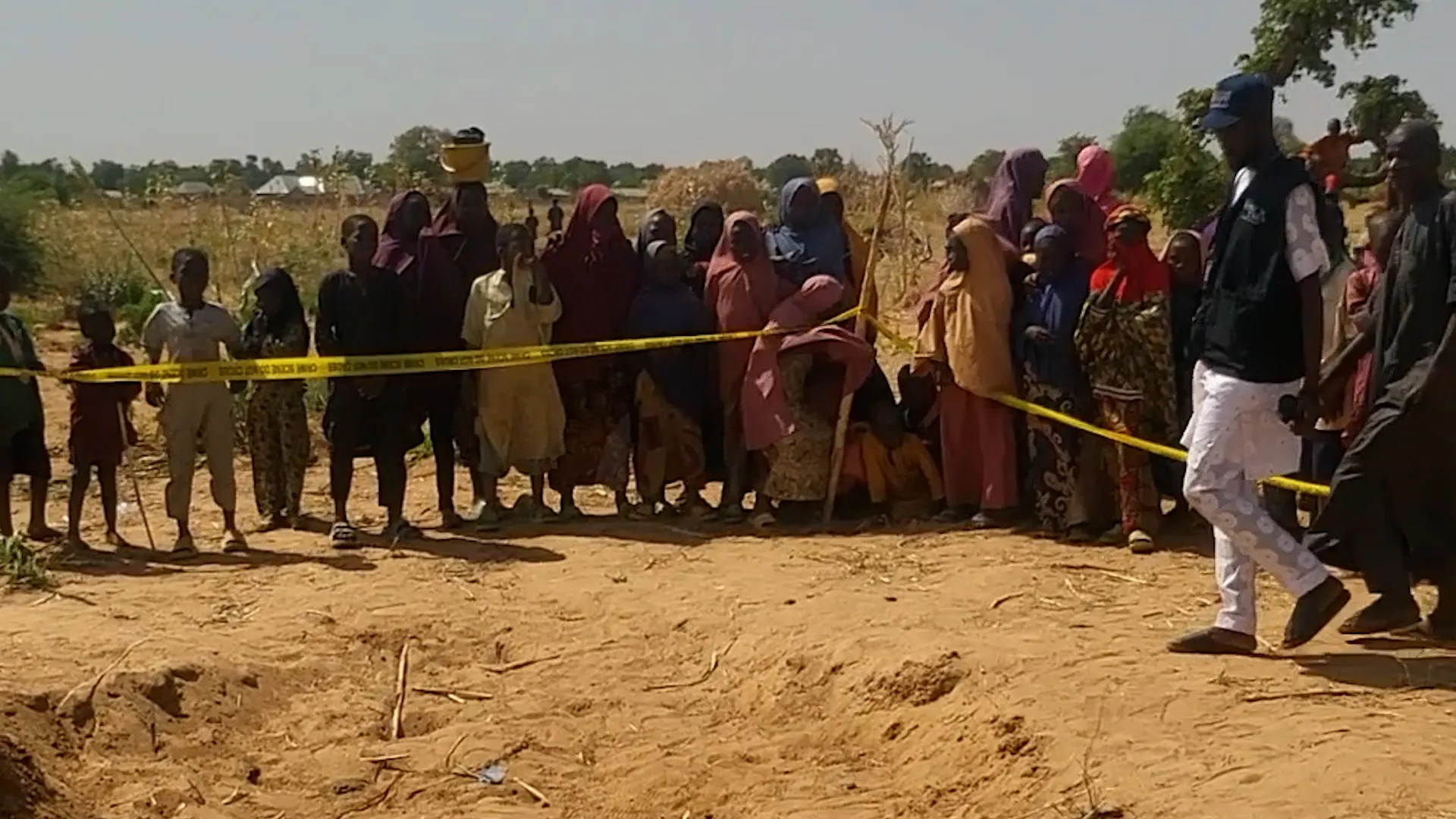
The United ‍States ‍has carried out an air strike against ISIL (ISIS) fighters in northwest Nigeria, US ⁠President Donald Trump ​said.

“Tonight, ⁠at my direction as Commander in Chief, the United States launched a powerful and ​deadly strike ‌against ISIS Terrorist Scum in Northwest Nigeria,” ‌Trump said in a post on his Truth Social platform on Thursday evening.

Recommended Stories

list of 4 itemsend of list

Trump said ISIL fighters had “‌targeted and viciously” killed “primarily, innocent Christians, at ⁠levels not seen for many years, and even Centuries!”

“I have previously warned these Terrorists that if they did not stop the slaughtering of Christians, there would be hell to pay, and tonight, there was,” Trump said.

The US military’s Africa Command (AFRICOM), which is responsible for operations in Africa, said in a post on X that the air strike was carried out “at the request of Nigerian authorities” and had killed “multiple ISIS terrorists”.

“Grateful for Nigerian government support & cooperation,” US Secretary of Defense Pete Hegseth wrote on social media, warning also of “more to come”, without providing details.

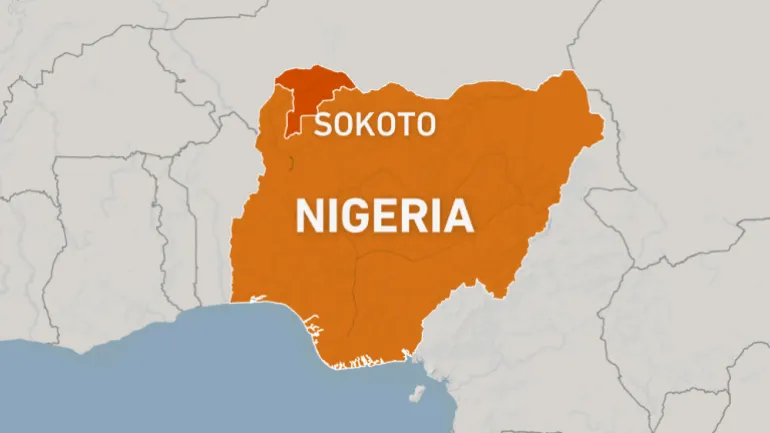
In a statement, AFRICOM said the strike occurred in “Soboto state,” an apparent reference to Nigeria’s Sokoto state.

[Al Jazeera]
[Al Jazeera]

The US military action comes weeks after Trump said he had ordered the Pentagon to begin planning for potential military action in Nigeria following claims of Christian persecution in the country.

Nigeria’s government has said armed groups target both Muslim and Christian communities in the country, and US claims that Christians face persecution ‌do not represent a complex security situation and ignore efforts by Nigerian authorities to safeguard religious freedom.

Al Jazeera’s Shihab Rattansi, reporting from Washington DC, said the threat of US military action in Nigeria had been “percolating for some time” and Donald Trump had accused Nigeria of not doing enough to protect its Christian community in his first term as president.

“But in the last two months or so, with congressional pressure and the State Department, they declared Nigeria a particular country of concern when it came to the rights of Christians and we had heard that the US had begun overflight surveillance of Nigeria from an airbase in Accra, in Ghana, over the last several weeks. And now we have this,” Rattansi said.

“On Christmas day, the Trump administration acts. This will go down very well with Trump’s Christian evangelical base, I am sure,” he said.

Trump issued his attack statement on Christmas Day while he was at ‌his Palm Beach, Florida, Mar-a-Lago Club, where he has been spending the holiday.

Source link

More than a million Epstein-related documents discovered; release delayed | Donald Trump News

US Justice Department says it requires weeks to process newly found Epstein-related files under transparency and court rules.

More than a million additional documents that are potentially related to late sex offender and financier Jeffrey Epstein have been uncovered, according to the United States Department of Justice (DOJ).

In a social media post on Wednesday, the DOJ said it is reviewing the documents and will need “a few more weeks” before proceeding with a congressionally mandated release of the information.

Recommended Stories

list of 3 itemsend of list

“The US Attorney for the Southern District of New York and the FBI have informed the Department of Justice that they have uncovered over a million more documents potentially related to the Jeffrey Epstein case,” the DOJ said in a statement, adding that more time is needed to comply with the Epstein Files Transparency Act, the law enacted last month that requires the government to open its files on Epstein and his longtime confidante Ghislaine Maxwell.

The DOJ insisted in its statement that its lawyers are “working around the clock” to review those documents and make the redactions required under the law, passed nearly unanimously by Congress.

“Due to the mass volume of material, this process may take a few more weeks. The Department will continue to fully comply with federal law and President [Donald] Trump’s direction to release the files,” the DOJ said.

Full disclosure

A dozen US senators are calling on the Justice Department’s watchdog to examine the department’s failure to release all records pertaining to Epstein by Friday’s congressionally mandated deadline, saying victims “deserve full disclosure” and the “peace of mind” of an independent audit.

Senator Lisa Murkowski, a member of Trump’s Republican Party, joined 11 Democrats in signing a letter on Wednesday urging Acting Inspector General Don Berthiaume to audit the Justice Department’s compliance with the Epstein Files Transparency Act.

“Given the [Trump] Administration’s historic hostility to releasing the files, politicisation of the Epstein case more broadly, and failure to comply with the Epstein Files Transparency Act, a neutral assessment of its compliance with the statutory disclosure requirements is essential,” the senators wrote.

Full transparency, they said, “is essential in identifying members of our society who enabled and participated in Epstein’s crimes”.

Republican Representative Thomas Massie, a co-sponsor of the transparency act, posted on Wednesday on X: “DOJ did break the law by making illegal redactions and by missing the deadline.”

Despite the deadline, the Justice Department has said it plans to release records on a rolling basis. It blamed the delay on the time-consuming process of obscuring survivors’ names and other identifying information.

More batches of records were released over the weekend and on Tuesday. The department has not given any notice when more records might arrive.

“The reason why we are still reviewing documents and still continuing our process is simply to protect victims,” Deputy Attorney General Todd Blanche told the NBC television network’s Meet the Press programme on Sunday.

“So the same individuals that are out there complaining about the lack of documents that were produced on Friday are the same individuals who apparently don’t want us to protect victims,” he argued.

Source link

UN experts condemn US naval blockade of Venezuela as illegal aggression | Donald Trump News

UN experts criticise US blockade for endangering human rights and call for an investigation into alleged violations.

Four United Nations human rights experts have condemned the partial naval blockade of Venezuela by the United States, finding it an illegal armed aggression and calling on the US Congress to intervene.

“There is no right to enforce unilateral sanctions through an armed blockade,” the UN experts said in a joint statement on Wednesday.

Recommended Stories

list of 3 itemsend of list

The US has deployed a major military force in the Caribbean and intercepted oil tankers as part of a naval blockade against Venezuelan vessels it considers to be under sanctions.

A blockade is a prohibited use of military force against another country under the UN Charter, they added.

“It is such a serious use of force that it is also expressly recognised as illegal armed aggression under the General Assembly’s 1974 Definition of Aggression,” the experts said. “The illegal use of force, and threats to use further force at sea and on land, gravely endanger the human right to life and other rights in Venezuela and the region.”

US President Donald Trump accuses Venezuela of using oil, the South American country’s main resource, to finance “narcoterrorism, human trafficking, murders and kidnappings”.

Caracas denies any involvement in drug trafficking. It says Washington is seeking to overthrow its president, Nicolas Maduro, to seize Venezuela’s oil reserves, the largest in the world.

Since September, US forces have launched dozens of air strikes on boats that Washington alleges were transporting drugs. It has yet to provide evidence for those accusations. More than 100 people have been killed.

‘US Congress should intervene’

“These killings amount to violations of the right to life. They must be investigated and those responsible held accountable,” the experts said.

“Meanwhile, the US Congress should intervene to prevent further attacks and lift the blockade,” they added.

They called on countries to take measures to stop the blockade and illegal killings and bring the perpetrators to justice.

The four who signed the joint statement are: Ben Saul, special rapporteur on protecting human rights while countering “terrorism”; George Katrougalos, an expert on promoting a democratic and equitable international order; development expert Surya Deva; and Gina Romero, special rapporteur on the right to freedom of peaceful assembly and association.

Source link

Trump warns Maduro not to ‘play tough’ as China, Russia back Venezuela | Donald Trump News

United States President Donald Trump has issued a new warning to Nicolas Maduro, saying “it would be smart” for the Venezuelan leader to leave power, as Washington escalates a pressure campaign against Caracas.

The warning on Monday came as Russia pledged “full support” for Maduro’s government, and China condemned the US’s seizure of two oil tankers off the coast of Venezuela.

Recommended Stories

list of 4 itemsend of list

Trump, speaking at his Mar-a-Lago resort in Florida alongside his top national security aides, Secretary of State Marco Rubio and Secretary of Defense Pete Hegseth, suggested that he remains ready to further escalate his four-month pressure campaign.

When asked if the ⁠goal was to force Maduro from power, Trump told reporters: “Well, I think it probably would… That’s up to him what he wants to do. I think it’d be smart for him to do that. But again, we’re gonna find out.”

“If he wants to do something, if he plays tough, it’ll be the ​last time he’s ever able to play ‌tough,” he added.

Trump levied his latest threat as the US coastguard continued for a second day to chase a third oil tanker that it described as part of a “dark fleet” that Venezuela uses to evade US sanctions.

“It’s moving along, and we’ll end up getting it,” Trump said.

The US president also promised to keep the ships and the nearly 4 million barrels of Venezuelan oil the coastguard has seized so far.

“Maybe we’ll sell it. Maybe we’ll keep it. Maybe we will use it in the strategic reserves,” he said. “We’re keeping it. We’re keeping the ships also.”

Maduro fires back

Trump’s campaign against Venezuela’s vital oil sector comes amid a large US military buildup in the region with a stated mission of combating drug trafficking, as well as more than two dozen strikes on alleged drug trafficking vessels in the Pacific Ocean and Caribbean Sea near the South American nation.

Critics have questioned the legality of the attacks, which have killed more than 100 people.

Venezuela denies any involvement in drug trafficking and insists that Washington is seeking to overthrow Maduro to seize the country’s oil reserves, which are the world’s largest.

It has condemned the US’s vessel seizures as acts of “international piracy”.

Maduro fired back at Trump hours after the latest warning, saying the US president would be “better off” if he focused on his own country’s problems rather than threatening Caracas.

“He would be better off in his own country on economic and social issues, and he would be better off in the world if he took care of his country’s affairs,” Maduro said in a speech broadcast on public television.

The exchange of words came on the eve of a United Nations Security Council meeting on Tuesday to discuss the growing crisis.

Russia’s Minister of Foreign Affairs Sergey Lavrov, in a phone call with his Venezuelan counterpart, Yvan Gil, slammed the US’s actions and expressed support for Caracas.

“The ministers expressed their deep concern over the escalation of Washington’s actions in the Caribbean Sea, which could have serious consequences for the region and threaten international shipping,” the Russian Ministry of Foreign Affairs said in a statement.

“The Russian side reaffirmed its full support for and solidarity with the Venezuelan leadership and people in the current context,” it added.

US blockade

China also condemned the US’s latest moves as a “serious violation of international law”.

“China opposes any actions that violate the purposes and principles of the United Nations Charter and infringe upon the sovereignty and security of other countries,” said Lin Jian, a spokesperson for the Chinese Foreign Ministry.

“Venezuela has the right to develop independently and engage in a mutually beneficial cooperation with other nations. China understands and supports Venezuela’s stance in safeguarding its legitimate rights and interests,” he added.

Last week, Rubio brushed aside Moscow’s stated support for Caracas.

Washington, he said, was “not concerned about an escalation with Russia with regards to Venezuela” as “they have their hands full in Ukraine”.

US-Russia relations have soured in recent weeks as Trump has voiced frustration with Moscow over the lack of a resolution on the war in Ukraine

Gil, on Monday, also read a letter on state television, signed by Maduro and addressed to UN member nations, warning that the US blockade “will affect the supply of oil and energy” globally.

“Venezuela reaffirms its vocation for peace, but also declares with absolute clarity that it is prepared to defend its sovereignty, its territorial integrity and its resources in accordance with international law,” he said.

“However, we responsibly warn that these aggressions will not only impact Venezuela. The blockade and piracy against Venezuelan energy trade will affect oil and energy supply, increase instability in international markets, and hit the economies of Latin America, the Caribbean, and the world, especially in the most vulnerable countries.”

Source link

Is the US making a great gamble to reshape Iraq? | Donald Trump

United States President Donald Trump’s second administration has introduced a bold and unconventional strategy for the Middle East. The administration intends to recalibrate US influence in a region historically scarred by conflict, prioritising regional stability through economic strength and military consolidation by asserting a stronger, business-minded US presence.

At the centre of Trump’s ambitious goal is what the new US envoy to Iraq, Mark Savaya, described as his goal to “make Iraq great again”. This approach moves away from traditional endless war tactics towards a transactional, results-oriented diplomacy that aims to restore Iraqi sovereignty and economic vitality. It could be the “great gamble” for Trump, who seeks an Iraq that serves as a stable, sovereign regional hub rather than a battleground for foreign interests.

Trump’s primary plans and wishes for Iraq involve a twofold mission: consolidating all armed forces under the command of the legitimate state and drastically reducing the influence of malign foreign players, most notably Iran. The administration seeks to open Iraqi markets to international investment, upgrade the country’s infrastructure, and secure the independence of its energy sector. Hence, the plan is to ground a genuine partnership that respects Iraq’s unity while ensuring that it is no longer a central node for militia activity or external interference.

Militias and political gridlock

This assertive US strategy lands directly in a highly contested and fractured political environment in Iraq, which is less a single state than a patchwork of competing powers. The heart of the problem lies not just in parliament, but also in the persistent shadow influence of armed factions and militias that often operate outside the formal chain of state command. Those groups were among the biggest winners in the November 2025 elections.

Now the ongoing government negotiations have thrown a stark light on these non-state actors.

Their power raises crucial concerns for the future: How can Iraq enforce the law and, crucially, attract the foreign investment needed for revival if armed groups challenge state authority? The consolidation of the country’s armed forces under complete state control is an urgent necessity, underscored by rising regional tensions and security threats.

Moreover, the path to achieving genuine stability is severely obstructed by entrenched political interests.

For Iraq to achieve stability, it must urgently strengthen its institutional frameworks and clearly establish a separation of powers. Yet, many political parties seem more focused on maintaining control over lucrative state resources than on implementing the meaningful reforms the country desperately needs. The result is a governance model struggling to stand firm amid the crosscurrents of competing loyalties and power grabs.

Washington’s play

To achieve these high-stakes goals, Trump has bypassed traditional diplomatic channels by appointing Mark Savaya as the US special envoy to Iraq on October 19. Such an appointment signals a shift towards “deal-making” diplomacy. Savaya’s mission is to navigate the complex political turmoil following Iraq’s parliamentary elections to steer the country towards a stable transition. His job is to bridge the gap between institutional support and massive financial investment, acting as a direct representative of Trump’s business-centric foreign policy.

Savaya is an Iraqi-born, Detroit-based businessman lacking the traditional diplomatic background; his experience is rooted in the private sector in the cannabis industry, but he gained political prominence as an active supporter of Trump’s campaign in Michigan.

He played a key role in the delicate negotiations that secured the release of Elizabeth Tsurkov, the Israeli-Russian academic and Princeton University student who had been kidnapped by an Iraqi militia for more than two years.

Savaya’s communal and ethnic ties have given him significant access to Iraqi power centres that traditional diplomats often lack.

The Iran factor

Iraq’s position in a geopolitical tug-of-war is compounding the internal struggles, forced to balance its critical relationships with two giants: the US and Iran. On the one hand, Washington’s objective is clear: it wants to bolster Iraq’s sovereignty while simultaneously pushing back against the dominance of powerful, often Iran-backed, militias. The US believes that allowing these armed groups too much sway could leave the nation isolated and wreck its fragile economic stability.

But Iranian influence remains a formidable and enduring force. Tehran views Iraq not just as a neighbour but also as a crucial strategic ally for projecting its power across the entire region. The Islamic Revolutionary Guard Corps (IRGC) has been actively working to maintain unity among key Shia factions in Baghdad. This move clearly signals Iran’s deep and enduring interest in shaping Iraq’s political alignment and its future path. Iraq must therefore navigate this high-stakes balancing act to survive.

Savaya’s mission unfolds at a time when Iran’s regional “axis of resistance” is under unprecedented pressure. Having already lost their primary foothold in Syria after the fall of the Assad regime in late 2024, and seeing Hezbollah’s political and military standing in Lebanon severely decimated by the 2025 conflict with Israel, Iranian proxies now face the very real prospect of losing their grip on Iraq too.

In Lebanon, a new government is committed to regaining the state’s monopoly on the use of force, leaving Hezbollah increasingly isolated. This regional retreat means that for Tehran, maintaining influence in Baghdad is a final, desperate stand to remain a relevant regional power.

Other regional actors

The success of Trump’s gamble also depends on the roles of other regional players. Turkiye has recently recalibrated its strategy to integrate Iraq into ad hoc regional trade and security frameworks, effectively diluting Iran’s centrality. Simultaneously, Gulf monarchies such as Saudi Arabia and the United Arab Emirates are emerging as key economic and security partners for Baghdad, offering an alternative to reliance on Iran.

However, these regional actors also bring their own agendas — such as Turkiye’s focus on containing Kurdish movements — which may conflict with US objectives. If Savaya can successfully align these diverse regional interests with Trump’s plan, he may fundamentally rewrite Iraq’s turbulent future.

A realist pragmatism

The “Make Iraq Great Again” strategy reflects a pragmatic reassertion of US interests within the anarchic international system, prioritising Washington’s security and economic power over idealistic goals.

By appointing Savaya — an unconventional, business-oriented envoy — the Trump administration is employing “transactional realism”, utilising economic diplomacy and personal ties as strategic tools to pull Iraq away from Iran’s orbit. This approach views the US-Iran rivalry as a zero-sum game of power politics, where integrating Iraq’s armed forces under centralised state control is fundamental to restoring a state-centric order and sidelining non-state militias that currently feed Tehran’s regional influence.

The new US envoy to Iraq has made clear that “there is no place for armed groups in a fully sovereign Iraq”. His calls resonated with Iraqi officials and militia leaders alike – now at least three militias close to Iran have publicly agreed to disarm. However, other groups have yet to do the same, while rejecting the call from the outset.

However, this high-stakes attempt to shift the regional balance of power faces a significant “security dilemma”, as aggressive moves to diminish Iranian influence may trigger a violent defensive response from Tehran to protect its remaining strategic assets. While the strategy seeks to exploit a regional shift – leveraging the weakened state of Iranian proxies in Syria and Lebanon – it must contend with the “hybrid” power of Iraqi militias and the narrow self-interests of neighbouring players like Turkiye and the Gulf states.

The success of this gamble depends on whether the US can dismantle the shadow economies that facilitate foreign interference and establish a stable, autonomous Iraqi state capable of navigating the intense geopolitical tug-of-war between Washington and Tehran.

The stakes for Iraq’s future

Ultimately, the appointment of Savaya serves as the definitive stress test for Iraqi sovereignty, marking a high-stakes transition towards a transactional “America First” strategy aimed at “Making Iraq Great Again”. By attempting to consolidate military command under the state and dismantle the shadow economies fuelling Iranian influence, Savaya’s mission seeks to exploit the current regional weakening of Tehran’s proxies to transform Iraq into a stable, autonomous hub.

However, the success of this “Great Gamble” hinges on Savaya’s ability to overcome entrenched political opposition and reconcile the presence of US forces with the demand for national unity. If this unconventional diplomatic push can bridge internal divides — particularly between Baghdad and the semi-autonomous Kurdish region in the north — Iraq may finally secure a path towards economic independence; otherwise, the nation risks remaining a perpetual battleground caught in the geopolitical crossfire between Washington and Tehran.

The views expressed in this article are the author’s own and do not necessarily reflect Al Jazeera’s editorial stance.

Source link