Business and Economy

Palestinian economy faces critical downturn amid escalating fiscal crisis | Israel-Palestine conflict News

Ramallah, occupied West Bank – The Palestinian economy is undergoing a severe downturn, driven by Israel’s continued assault on Gaza, intensified restrictions on movement and trade in the occupied West Bank, and a sharp decline in both domestic and external financial resources.

As the Palestinian government struggles to manage an escalating fiscal crisis, official data and expert assessments warn that the economy is approaching a critical threshold – one that threatens the continuity of state institutions and their ability to meet even basic obligations.

Recommended Stories

list of 3 itemsend of list

A joint report by the Palestinian Central Bureau of Statistics (PCBS) and the Palestine Monetary Authority (PMA), published in the Palestinian Economic Monitor for 2025, found that the economy remained mired in deep recession throughout the year.

According to the report, gross domestic product (GDP) in Gaza contracted by 84 percent in 2025 compared with 2023, while GDP in the occupied West Bank declined by 13 percent over the period. Overall GDP levels remain far below their pre-war baseline, underscoring the fragility of any potential recovery and the economy’s inability to regain productive capacity under current conditions.

The report documented a near-total collapse of economic activity in Gaza, alongside sharp contractions across most sectors in the West Bank, despite a modest improvement compared with 2024. It also recorded a decline in trade volumes to and from Palestine compared with 2023, while unemployment in Gaza exceeded 77 percent during 2025.

The Palestinian Minister of National Economy visits the Bethlehem Industrial Zone to assess the state of Palestinian industries, 10 December 2025. Photo: Palestinian Ministry of National Economy
Palestinian Economy Minister Mohammed al-Amour visits the Bethlehem Industrial Zone to assess the state of Palestinian industries, December 10, 2025 [Handout/Palestinian Ministry of National Economy]

Withheld revenues and mounting debt

Palestinian Economy Minister Mohammed al-Amour said Israeli authorities are withholding approximately $4.5bn in Palestinian clearance revenues, describing the move as a form of “collective punishment” that has severely undermined the Palestinian Authority’s (PA’s) ability to function.

“The total accumulated public debt reached $14.6bn by the end of November 2025, representing 106 percent of the 2024 gross domestic product,” al-Amour told Al Jazeera.

The minister said the debt includes $4.5bn owed to the International Monetary Fund, $3.4bn to the Palestinian banking sector, $2.5bn in salary arrears to public employees, $1.6bn owed to the private sector, $1.4bn in external debt, and $1.2bn in other financial obligations.

“These pressures have had a direct impact on the overall performance of the public budget,” al-Amour said, contributing to a widening deficit and sharply reduced capacity to cover operational spending and essential commitments.

All of that has led al-Amour to conclude that the Palestinian economy is undergoing “its most difficult period” since the establishment of the PA in 1994.

Official estimates show GDP contracted by 29 percent in the second quarter of 2025, compared with 2023, while GDP per capita fell by 32 percent over the period. These figures align with a recent report by the United Nations Conference on Trade and Development (UNCTAD), which concluded that the Palestinian economy has regressed to levels last seen 22 years ago.

In response, al-Amour said the government was implementing an “urgent package of measures”.

“The government is rolling out a series of actions that include strengthening the social protection system, supporting citizens’ resilience in Area C [of the West Bank], and backing small and medium-sized enterprises and productive sectors, particularly industry and agriculture,” al-Amour said.

Official data show a sharp drop across nearly all economic activities. Construction contracted by 41 percent, while both industry and agriculture declined by 29 percent each. Wholesale and retail trade fell by 24 percent.

The tourism sector has been among the hardest hit. Following the start of Israel’s genocidal war on Gaza in October 2023, the Ministry of Tourism reported daily losses exceeding $2m, as inbound tourism nearly collapsed. By the end of 2024, cumulative losses were estimated at approximately $1bn.

The Palestinian Economic Policy Research Institute (MAS), citing PCBS data, reported an 84.2 percent drop in hotel occupancy in the West Bank during the first half of 2024 compared with the same period a year earlier. Losses in accommodation and food services alone amounted to roughly $326m.

Despite the downturn, al-Amour said the Ministry of Economy is focusing on sustaining the private sector, substituting Israeli imports across seven key sectors, developing the digital and green economies, and improving the business environment. He noted that about 2,500 new companies continue to be registered each year.

Tourism collapsing

Samir Hazbun, a lecturer at al-Quds University and board member of the Palestinian Federation of Chambers of Commerce and Industry, said repeated crises have hollowed out the economy.

“Over the past five years, all economic sectors have entered successive crises, starting with the COVID-19 pandemic and followed by the war on Gaza,” Hazbun said. “Tourism, one of the most important sectors, has been especially affected, exhausting the local economy and weakening its ability to recover.”

Hazbun said preliminary estimates indicate tourism has suffered direct losses exceeding $1bn, alongside extensive indirect losses resulting from the paralysis of hotels, souvenir shops, travel agencies, tour guides and street vendors.

He added that hotel investments alone are estimated at $550m, with no financial returns for owners, forcing many workers out of the sector due to the absence of job security and safety nets.

Economic expert Haitham Daraghmeh described Palestinian debt as “accumulated debt that increases monthly”, owed to banks, suppliers, contractors, and the telecommunications and health sectors.

“The withholding of clearance revenues is no longer a temporary financial crisis; it has become a factor of complete economic paralysis,” he said.

With external aid frozen and domestic revenues at historic lows, Daraghmeh warned that the government was “no longer able to cover salaries or operational costs”.

“The government is operating like an ATM, with no real capacity for investment or economic stimulus,” Daraghmeh added.

Economic warnings

Daraghmeh said World Bank reports warn that continued failure to pay salaries and meet obligations could trigger comprehensive economic collapse. While some countries, including France and Saudi Arabia, have pledged support, he said none of that assistance has materialised.

He outlined three possible scenarios; the most likely is a continued gradual decline, driven by ongoing revenue withholding and shrinking resources. The second involves international intervention to prevent total collapse, particularly at a decisive political moment. The third scenario could see a conditional breakthrough, tied to European demands for financial reform, anticorruption measures, curriculum changes and elections.

Taken together, the data and expert assessments suggest the Palestinian economy is approaching a dangerous tipping point. Analysts warn that without an end to revenue withholding, renewed international financial support, and a shift in the political context, the economy risks sliding from prolonged crisis into outright collapse.

The question facing Palestinian officials and economists alike is how long the system can endure under siege-like conditions – and whether political and economic shifts will arrive in time to halt what many now describe as a slow and deliberate economic unravelling.


Source link

French Empire: Civilising Mission | History

How the French Empire built power through language, schooling and cultural assimilation and what it means today.

Beyond armies and violence, France built its empire through language, schooling and cultural influence. This film explores how assimilation became a method of rule and a source of resistance.

At the heart of French colonial rule was the mission “civilisatrice”, a doctrine that claimed to lift up colonised societies through education, administration and the French language. In practice, this system sought to reshape colonised people’s identities, loyalties and cultures, replacing local traditions with French norms while maintaining strict political and economic control. Schools, legal systems and bureaucracies became tools of empire as powerful as armies.

Through case studies in Algeria, Indochina and West Africa, the documentary shows how colonial administrations operated on the ground. In Algeria, settler colonialism and mass repression led to war. In Indochina, education and bureaucracy coexisted with exploitation and nationalist resistance. In West Africa, language policy and indirect rule reshaped social hierarchies and governance.

This episode examines how resistance movements challenged the promise of civilisation, forcing France to confront the contradictions at the heart of its empire. Anticolonial struggles, intellectual movements and armed uprisings not only weakened imperial rule but reshaped French politics, culture and identity itself.

The documentary also places French colonial strategies in a broader modern context. In the contemporary world, the United States projects influence less through formal empire and more through soft power. Hollywood cinema, television and digital platforms circulate American values, lifestyles and narratives globally, shaping cultural imagination in ways that echo earlier imperial projects. At the same time, US dominance in higher education, academic publishing and institutional standards helps define what knowledge is valued, taught and legitimised worldwide.

It also draws direct connections between French colonialism and the modern world. Contemporary debates over language, immigration, secularism and inequality are deeply rooted in colonial systems designed to classify, discipline and extract. Many modern state institutions, education models and economic relationships reflect structures first imposed under empire.

By tracing how cultural control, education and administration functioned as instruments of power, the documentary reveals how the legacy of French colonialism continues to shape modern capitalism, global inequality and postcolonial relations today.


Source link

Syria ministers discuss military cooperation with Putin in Russia: Report | Vladimir Putin News

Talks held between Foreign Minister Asaad Hassan Al-Shaibani, Defence Minister Murhaf Abu Qasra and the Russian president.

Syria’s foreign and defence ministers met Russian President Vladimir Putin in Moscow and held discussions on expanding “strategic cooperation in the military industries sector”, Syrian state media has reported.

The Syrian Arab News Agency (SANA) ⁠said that Putin’s meeting on Tuesday with Syrian Minister of Foreign Affairs Asaad Hassan Al-Shaibani and Minister of Defence Murhaf Abu Qasra ‌focused on political, economic and military issues of “mutual interest”, but that “particular emphasis” was on defence.

Recommended Stories

list of 4 itemsend of list

According to SANA, Putin and the Syrian ministers discussed a range of defence-related matters, including developing military cooperation to strengthen the Syrian army’s capabilities and ‌modernising its equipment, transferring expertise and cooperation in research and development.

“During the meeting, both sides reviewed ways to advance military and technical partnership in a manner that strengthens the defensive capabilities of the Syrian Arab Army and keeps pace with modern developments in military industries,” SANA reported.

The two sides also discussed political and economic issues, including the “importance of continued political and diplomatic coordination between Damascus and Moscow in international forums”, according to the news agency.

On the economic front, the talks addressed expanding Syrian-Russian cooperation, including in reconstruction projects, infrastructure development and investment in Syria.

Putin also reaffirmed Russian “steadfast support” for Syria and its territorial integrity, while renewing “Moscow’s condemnation of repeated Israeli violations of Syrian territory, describing them as a direct threat to regional security and stability”.

The ministers’ visit to Moscow is the latest by Syria’s new authorities since the removal from power last December of the country’s longtime ruler and Moscow’s former ally in Damascus, Bashar al-Assad.

Russia was a key supporter of al-Assad during Syria’s nearly 14-year civil war, providing vital military aid that kept the Assad regime in power, including Russian air support that rained air strikes on rebel-held areas.

Despite al-Assad and his family fleeing to Russia after the toppling of his regime, Moscow is eager to build good relations with the new government in Damascus.

Moscow, in particular, is hoping to secure agreements to continue operating the Khmeimim airbase and the Tartous naval base on Syria’s Mediterranean coast, where Russian forces continue to be present.

In October, Syria’s new president, Ahmed al-Sharaa, visited Russia, where he said his government ‍would honour all the past deals struck between Damascus and Moscow, a pledge that suggested that the two Russian military bases were secure in the post-Assad period.

Putin said ‍at the time of al-Sharaa’s visit ⁠that Moscow was ready to do all it could to act on what he called the “many interesting and useful beginnings” discussed by the two sides on renewing relations.

Russian ‌state media on Tuesday quoted the country’s Ministry of Foreign Affairs spokeswoman, Maria Zakharova, as saying that Russian Foreign Minister Sergey Lavrov would also hold talks with ‍his Syrian counterpart, Al-Shaibani, during the Syrian delegation’s visit.

During a visit to Moscow in July, Al-Shaibani said his country wanted Russia “by our side”.

“The current period is full of various challenges and threats, but it is also an opportunity to build a united and strong Syria. And, of course, we are interested in having Russia by our side on this path,” Al-Shaibani told Lavrov at the time.

Russia's President Vladimir Putin and Syria's President Ahmed al-Sharaa speak during a meeting at the Kremlin in Moscow, Russia, October 15, 2025. Alexander Zemlianichenko/Pool via REUTERS
Syrian President Ahmed al-Sharaa speaks during a meeting with Russian President Vladimir Putin at the Kremlin in Moscow, Russia, on October 15, 2025 [Pool: Alexander Zemlianichenko via Reuters]

Source link

Trump administration to resume wage garnishment for student loan defaulters | Education News

Borrowers to receive wage garnishment notices starting January 7, Department of Education confirms.

The administration of United States President Donald Trump says it will begin garnishing wages from some borrowers who have defaulted on their student loans, marking the first time the federal government has taken such action since the onset of the COVID-19 pandemic.

Affected borrowers will begin receiving notices on January 7, a Department of Education spokesperson told Al Jazeera on Tuesday.

Recommended Stories

list of 4 itemsend of list

The policy is expected to initially impact about 1,000 borrowers, and the number is to grow over time.

“The notices will increase in scale on a month-to-month basis,” the spokesperson said.

Al Jazeera asked the department for clarification on how borrowers were selected for the first round of garnishments, how many additional people may be affected and the rationale behind those decisions.

The agency did not clarify but said collections are “conducted only after student and parent borrowers have been provided sufficient notice and opportunity to repay their loans”.

Under federal law, the government may garnish up to 15 percent of a borrower’s take-home pay as long as the individual is left with at least 30 times the federal minimum wage per week. The federal minimum wage is currently $7.25 an hour, a rate that has remained unchanged since July 2009.

About one in six American adults holds student loan debt, which totals about $1.6 trillion. As of April, more than 5 million borrowers had not made a payment in at least a year, according to the Education Department.

The garnishments are planned as economic pressure mounts for many Americans amid rising prices and a cooling labour market. According to consulting firm Challenger, Gray & Christmas, more than 1.1 million people lost their jobs in 2025 as job growth slowed. Federal data also showed mixed employment trends in recent months with job losses reported in October followed by modest gains in November.

In the months of October and November, the unemployment rate increased to 4.6 percent, the highest since 2021, according to the US Department of Labor’s Bureau of Labor Statistics.

“Families are being forced to choose between paying their bills and putting food on the table. The Trump administration’s decision to begin garnishing wages takes even that meagre choice away from student loan borrowers who are living on the brink,” Julie Margetta Morgan, former deputy undersecretary at the Education Department under former President Joe Biden, told Al Jazeera.

“Instead of solving the affordability crisis that’s leaving Americans unable to pay their student loans, the president is further punishing families and forcing them to forgo the very basics.”

In addition to wages, the federal government has the authority to garnish income from tax refunds, Social Security benefits and certain disability payments.

Source link

UPS stumbles into holiday season amid shifting trade rules | Trade War

New York City, United States – Since the recent termination of the nearly decade-old trade rule called “de minimis,” United States consumers and businesses have been exposed to slower shipping, destroyed packages and steep tariff fees on international goods – foreshadowing what could make for a chaotic holiday shopping season.

For major international carrier UPS, navigating the latest regulatory changes has proved more fraught than for its competitors FedEx and DHL.

Recommended Stories

list of 4 itemsend of list

Matthew Wasserbach, brokerage manager for Express Customs Clearance in New York, a firm that assists importers with documentation, tariff classifications, valuation, and other federal requirements, has witnessed the fallout as UPS customers seek his firm’s assistance to clear packages entering the US.

“Over the last few months, we’ve been seeing a lot of UPS shipments, in particular, becoming stuck and being lost or disposed of … This all stems from the ending of the de minimis,” said Wasserbach. “Their [UPS’s] whole business model changed once the de minimis was ended. And they just didn’t have the capacity to do the clearance … a lot of people are expecting to receive international packages, and they’re just never gonna get them.”

UPS did not respond to Al Jazeera’s request for comment.

Suspending tariff exemptions

Since 2016, the de minimis trade exemption determined that packages worth $800 or less were not subject to taxes and tariffs. According to US Customs and Border Protection (CBP), the number of shipments entering the US claiming the exemption increased by more than 600 percent from 139 million shipments in 2015 to more than one billion in 2023.

In August, this all changed. President Donald Trump signed an executive order suspending de minimis treatment for all countries, spiralling US imports into a new landscape of paperwork and processes, subject to duties and tariffs based on their place of origin.

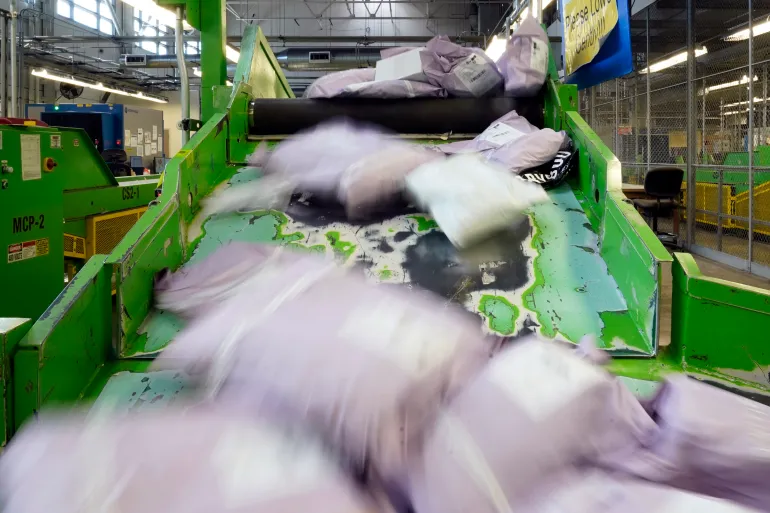
Parcels slide down a ramp after being scanned at the U.S. Customs and Border Protection overseas mail inspection facility at Chicago's O'Hare International Airport in USA
Parcels slide down a ramp after being scanned at a US Customs and Border Protection overseas mail inspection facility [File: Charles Rex Arbogast/AP Photo]

Just a month after de minimis ended, while shipping products with UPS, Tezumi Tea, an online Japanese tea and teaware company that sells its products online and through meetups in New York City, fell victim to the tariff backlog at US customs. Tezumi lost roughly 150kg (330lbs) of matcha, totalling about $13,000.

“We responded by increasing buffers in our supply planning across the dozen farms that we partner with,” said Ryan Snowden, a cofounder of Tezumi. “Even with those adjustments, the loss had a severe effect on a number of our cafe customers who suddenly needed to switch to another matcha blend.”

Now, UPS is no longer accepting shipments from Japan, and Tezumi has switched to shipping supplies through alternate carriers such as DHL and FedEx.

Disposing shipments

Wasserbach has witnessed similar instances of UPS losing imports.

“When a UPS package goes uncleared, it’s just basically sitting in a UPS facility, uncleared for a certain period of time,” said Wasserbach. “Then UPS indicates in their tracking that they’re disposing of the shipments without making, really, any effort, from what I’ve seen, to contact either the sender or the receiver, to get information they need to do to get the clearance.”

Wasserbach shared email chains with Al Jazeera from UPS customers who looped in his firm to their customs clearance UPS debacles.

In one exchange, UPS customer Stephan Niznik responded to a notice from the UPS Alternate Broker Team that their packages had been “destroyed”.

“The tracking says on multiple instances that UPS attempted to contact the sender (me), but this is false; aside from a request for more information on September 5 (which I responded to immediately), UPS never attempted to contact me,” wrote Niznik. “It is absolutely disgraceful that my package was mishandled – clothes and children’s toys were destroyed at the hands of UPS.”

In another email chain, UPS told customer Chenying Li that their package was released following an email from Express Customs Clearance stating that the shipment was cleared.

A week later, Li’s package was still showing as “Pending Release”, and when they asked for an update on the shipment, UPS responded, “At this time we are unable to provide an ETA,  as volume is currently backed up and awaiting delivery due to the De Minimis impact.”

‘Impose additional pressure’

In addition to the customs backlog, Virginia Tech associate professor David Bieri says cost prevention may provide one explanation for UPS choosing to dispose of packages rejected by US customs rather than return the shipments to senders.

“All these additional rules and regulations impose additional pressure on already relatively tight margins for these companies – UPS, FedEx, DHL and so forth,” said Bieri. “They need to make money, and sometimes it’s easier not to fulfil a service than to take on the additional cost of customs clearance and making sure that it gets to its final destination.”

Bieri added that UPS resorting to package disposal may indicate that they believe themselves to be in “a sufficiently strong monopolistic position that they can do such horrible practice – unilateral nonfulfillment of contract”.

Wasserbach told Al Jazeera that “with FedEx and DHL shipments, we aren’t seeing these problems”.

When asked whether FedEx has disposed of packages stuck in customs, a spokesperson wrote, “If paperwork is not complete and/or rejected by US Customs and Border Protection, FedEx actively works with senders to update paperwork to resubmit to CBP or return shipments to senders. In some cases, shippers can request that packages be disposed of if they would prefer not to pay to return to sender. In those rare cases, recipients are notified at the direction of the shipper. This is not a common practice. We remain business as usual.”

Final cost of delivery at your doorstep

But FedEx and DHL are encountering some of the same challenges as UPS. Since August, when de minimis ended and small packages were suddenly subject to taxes and tariffs, anyone who ordered from abroad was susceptible to unexpected fees on imported goods.

A made in China sticker is displayed on a hat at a store in Chinatown in San Francisco, USA
Import fees on items can be the same or more than the item ordered, boosting costs [File: Jeff Chiu/AP Photo]

Without de minimis protecting packages worth $800 and less from import fees, the consumer essentially becomes the importer.

“You might order something you find a bargain abroad, and you don’t pay attention to where things are shipped from … and it might be shipped from China, and you might be in for a rude awakening once that thing arrives at your door,” said Beiri. “You paid the price and thought that this was it. But your deliverer is saying, no, actually, we’re passing that cost on to you. Because you’re acting as the importer.”

These fees could cost equal to or more than the item you ordered itself. “You’ve got to pay extra attention to small prints,” said Beiri.

With looming costs and lost packages on the horizon, Beiri says shoppers will likely make “substitution questions” – are you renovating or are you going on vacation? Are you splashing on Christmas gifts, or are you treating yourself to dining out?

“I think these are interesting times of having to make choices and asking yourself what can we do given that we have an affordability crisis, rent, insurance, making ends meet,” said Beiri. “That’s what’s currently going on.”

In order to better handle evolving trade policy, Wasserbach says that UPS will likely aim to hire a massive number of entry writers to assist with necessary documentation for legal transportation of goods across international borders. However, now that it is the busiest time of year in terms of delivering people their Christmas shopping, Wasserbach doubts an influx of hiring could make much of a difference, given the amount of training required.

The company’s revenue has already taken a hit on account of Trump’s policies. Tariffs on China and the elimination of the de minimis rule saw imports from China, UPS’s most profitable route, drop reportedly 35 percent earlier this year.

“I would assume it’s gonna get better next year,” said Wasserbach. “But as for solving this problem before Christmas, I don’t think that that’s gonna happen.”

Source link

Swiss court to hear Indonesian islanders’ climate case against cement giant | Climate Crisis News

Four residents of Pari, a low-lying Indonesian island, filed the complaint in January 2023.

A Swiss court has agreed to hear a legal complaint against cement giant Holcim, accusing the company of failing to do enough to cut carbon emissions.

NGO Swiss Church Aid (HEKS/EPER), which is supporting the complainants, said on Monday that the court had decided to admit the legal complaint. Holcim confirmed the decision and said it plans to appeal.

Recommended Stories

list of 4 itemsend of list

The complaint was filed in January 2023 by four residents of Pari, a low-lying Indonesian island that has suffered repeated flooding as rising global temperatures drive up sea levels. The case was submitted to a court in Zug, Switzerland, where Holcim has its headquarters.

According to HEKS, this is the first time a Swiss court has admitted climate litigation brought against a big corporation.

If successful, it would also be the first case seeking to hold a Swiss company legally responsible for its contribution to global warming, the group has previously said.

The lawsuit is also among the first climate cases brought by people in the Global South directly affected by climate change and forms part of a growing push for compensation for “loss and damage”, campaigners backing the case said.

The nongovernmental organisation supporting the plaintiffs said Holcim was selected because it is one of the world’s largest carbon dioxide emitters and the biggest so-called “carbon major” based in Switzerland.

A study commissioned by HEKS and conducted by the United States-based Climate Accountability Institute found that Holcim emitted more than 7 billion tonnes of carbon dioxide between 1950 and 2021 – about 0.42 percent of total global industrial emissions over the period.

Holcim has said it is committed to reaching net-zero emissions by 2050 and is following a science-based pathway to meet that goal. The company says it has cut direct CO2 emissions from its operations by more than 50 percent since 2015.

The plaintiffs are seeking compensation for climate-related damage, financial contributions to flood protection measures on Pari Island, and a rapid reduction in Holcim’s carbon emissions.

Cement production accounts for about 7 percent of global carbon dioxide emissions, according to the Global Cement and Concrete Association.

Source link

US seizes second oil vessel off Venezuela coast, officials say | Business and Economy News

BREAKING,

The incident marks the second time in recent weeks that the US has seized an oil tanker near Venezuela.

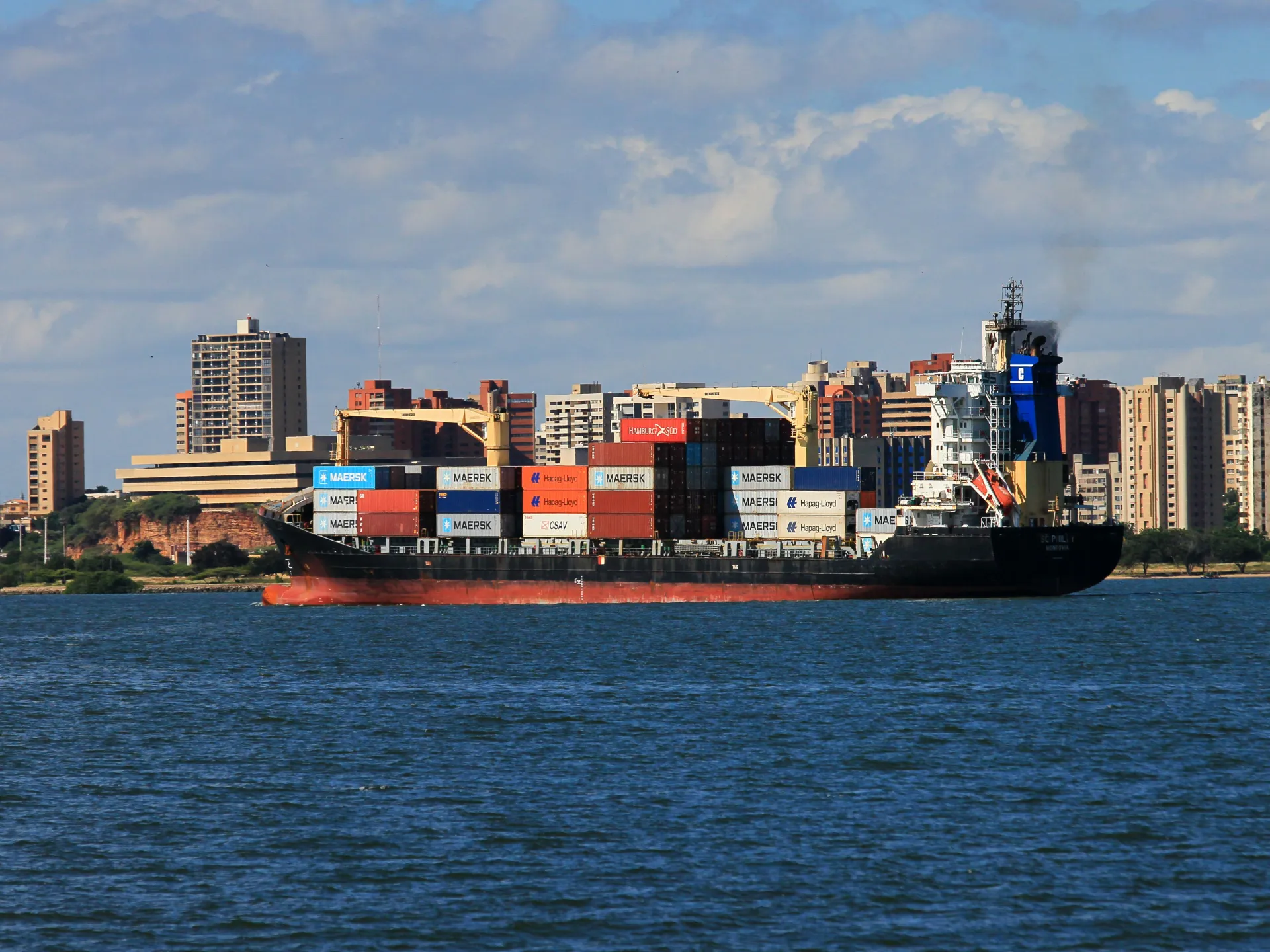
The United States has seized an oil tanker off the coast of Venezuela in international waters, according to officials quoted by international news agencies.

The incident comes just days after US President Donald Trump announced a “blockade” of all sanctioned oil tankers entering and leaving Venezuela.

Recommended Stories

list of 3 itemsend of list

This also marks the second time in recent weeks that the US has seized a tanker near Venezuela and comes amid a large US military build-up in the region as President Donald Trump continues to ramp up pressure on Venezuelan President Nicolas Maduro.

Three officials, who were speaking to the Reuters news agency on the condition of anonymity, did not say where the operation was taking place but added the Coast Guard was in the lead.

Two officials, speaking to The Associated Press news agency, also confirmed the operations. The action was described as a “consented boarding”, with the tanker stopping voluntarily and allowing US forces to board it, one official said.

Al Jazeera’s Heide Zhou-Castro said that there was no official confirmation from the US authorities on the operation.

“We are still waiting for confirmation from the White House and Pentagon on the details, including which ship, where it was located, and whether or not this ship was beneath the US sanctions,” she said.

More soon…

Source link

Why has signing the EU-Mercosur deal been delayed? | International Trade

Sealing of deal postponed despite decades of preparation.

European farmers are protesting against the EU-Mercosur deal.

That is as signing has been postponed until January, due to disagreements in Europe.

The European-South American deal, planned for more than 25 years, would create the world’s largest free-trade zone.

So, why is there division?

Presenter: Folly Bah Thibault

Guests:

Pieter Cleppe – Editor-in-chief at BrusselsReport.eu
Ciaran Mullooly – Member of the European Parliament for the Independent Ireland group
Gustavo Ribeiro – Founder and editor-in-chief of the Brazilian Report online newspaper

Source link

Musk wins US appeal to restore 2018 Tesla pay package | Elon Musk News

The Delaware Supreme Court rules in favour of Musk and his $56bn compensation package.

Elon Musk’s 2018 pay package from Tesla, once worth $56bn, has been restored by the Delaware Supreme Court, in the United States, two years after a lower court struck down the compensation deal as “unfathomable”.

Friday’s ruling overturns a decision that had prompted a furious backlash from Musk and damaged Delaware’s business-friendly reputation.

Recommended Stories

list of 4 itemsend of list

The pay package was by far the largest ever, until Tesla shareholders approved a new, even larger pay plan of nearly $1 trillion in November.

The ruling means that Musk can finally get paid for his work since 2018, when he transformed Tesla from a struggling startup to one of the world’s most valuable companies.

The 2018 pay deal provided Musk options to acquire about 304 million Tesla shares at a deeply discounted price if the company hit various milestones, which it did.

Tesla estimated in 2018 that the plan was potentially worth $56bn, although given the rise in the stock price, the value ballooned to about $120bn by early November. The options represent approximately 9 percent of Tesla’s outstanding stock.

Musk never collected his stock options because, soon after shareholders approved the 2018 compensation, the board was sued by Richard Tornetta, an investor with just nine Tesla shares.

In 2024, after a five-day trial, Delaware Judge Kathaleen McCormick concluded that Tesla’s directors were conflicted and key facts were hidden from shareholders when they voted to approve the plan. She ordered that the 2018 plan be rescinded.

Musk accused Delaware judges of being activists, hostile to tech founders, and he urged businesses to follow Tesla and reincorporate elsewhere.

Dropbox, Roblox, The Trade Desk and Coinbase were among the handful of large companies that moved their legal homes to Nevada or Texas. However, Delaware remains by far the most popular legal home for US public companies.

Tesla’s board has warned that Musk, the world’s richest person who also leads the SpaceX rocket venture and the artificial intelligence startup xAI, could leave the electric car company if he does not get the pay he wants and an increase in his voting power.

In November, shareholders approved a new pay package that could be worth $878bn if Tesla meets targets for self-driving vehicles, a robotaxi network and sales of humanoid robots.

Tesla has taken steps to reduce the risk that a shareholder could tie up the 2025 package in the courts.

The Austin-based company is now incorporated in Texas, which allows Tesla to require that any investor or group of investors must own 3 percent of the company stock before suing for an alleged corporate law violation. A stake of that size would be worth about $30bn, and Musk is the only individual with that much stock.

Source link

Trump announces new deal with pharma companies to cut drug prices | Health News

United States President Donald Trump announced new agreements aimed at lowering prescription drug prices.

On Friday, alongside leaders from Bristol Myers Squibb, Gilead Sciences, and Merck, among other leading pharma giants, the president announced deals that would cut prices on their medications to match that of the developed nation with the lowest price.

Recommended Stories

list of 4 itemsend of list

“Starting next year, American drug prices will come down fast and furious and will soon be some of the lowest in the developed world,” Trump said.

“This is the biggest thing having to do with drugs in the history of the purchase of drugs.”

Under the deals, each drugmaker will cut prices on some of the drugs sold to the Medicaid programme for low-income people, senior administration officials said, promising “massive savings” on widely used medicines without giving specific figures.

“We were subsidising the entire world. We’re not doing it anymore,” Trump said at a White House news conference, flanked by nine pharma executives.

Mehmet Oz, the director of the Centres for Medicare and Medicaid Service, said Regeneron, Johnson & Johnson, and AbbVie would visit the White House after the holidays for the launch of the government’s TrumpRx website.

US patients currently pay by far the most for prescription medicines, often nearly three times more than in other developed nations, and Trump has been pressuring drugmakers to lower their prices to what patients pay elsewhere.

The details of each deal were not immediately available, but officials said they included agreements to cut cash-pay direct-to-consumer prices of select drugs sold potentially through the TrumpRx.gov website, to launch drugs in the US at prices equal to – not lower than – those in other wealthy nations and to increase manufacturing. In return, companies can receive a three-year exemption from any tariffs.

Drug prices fall

Merck said it will sell its diabetes drugs Januvia, Janumet and Janumet XR – set to face generic competition next year – directly to US consumers at about 70 percent off list prices. If approved, its experimental cholesterol drug enlicitide will also be offered through direct-to-consumer channels.

Enlicitide is one of two Merck drugs expected to receive a speedy review under the FDA’s new, fast-track pathway, the Reuters news agency has previously reported.

Amgen said it will expand its direct-to-patient programme to include migraine drug Aimovig and rheumatoid arthritis medicine Amjevita, offering both at $299 a month – nearly 60 percent and 80 percent below current US list prices.

In July, Trump sent letters to leaders of 17 major pharmaceutical companies, outlining how they should provide so-called most-favoured -nation prices to the US government’s Medicaid health programme for low-income people, and guarantee that new drugs will not be launched at prices above those in other high-income countries.

So far, five companies have struck deals with the administration to rein in prices. They are Pfizer, Eli Lilly, AstraZeneca, Novo Nordisk and EMD Serono, the US division of Germany’s Merck.

A portion of revenues from each company’s foreign sales will also be remitted to the US to offset costs, officials said.

The companies pledged together to invest more than $150bn in the US for R&D and manufacturing, according to officials, although it was unclear whether that included earlier commitments. Several also agreed to donate drug ingredients to the US strategic reserve.

Trump has long focused on the disparity between drug prices in the US and other wealthy countries, which have government-run health systems that negotiate price discounts.

The spectre of tighter price controls by the US government initially spooked investors, but the terms of the deals announced so far have calmed many of those fears.

Analysts have noted that Medicaid, which accounts for only approximately 10 percent of US drug spending, already benefits from substantial price discounts, exceeding 80 percent in some cases.

Source link

Instacart settles Federal Trade Commission’s claim it deceived US shoppers | Business and Economy News

The FTC had accused the grocery delivery giant of charging fees to consumers after promising ‘free delivery’.

Instacart has agreed to pay $60m in refunds to settle allegations brought by the United States Federal Trade Commission (FTC) that the online grocery delivery platform deceived consumers about its membership programme and free delivery offers.

According to court documents filed in San Francisco on Thursday, Instacart’s offer of “free delivery” for first orders was illusory because shoppers were charged other fees, the FTC alleged.

Recommended Stories

list of 4 itemsend of list

The agency also accused Instacart of failing to adequately notify shoppers that their free trials of its Instacart+ subscription service would convert to paid memberships and of misleading consumers about its refund policy.

“The FTC is focused on monitoring online delivery services to ensure that competitors are transparently competing on price and delivery terms,” said Christopher Mufarrige, who leads the FTC’s consumer protection work.

An Instacart spokesperson said the company flatly denies any allegations of wrongdoing, but that the settlement allows the company to focus on shoppers and retailers.

“We provide straightforward marketing, transparent pricing and fees, clear terms, easy cancellation, and generous refund policies — all in full compliance with the law and exceeding industry norms,” the spokesperson said.

The shopping platform is currently under scrutiny after a recent study by nonprofit groups found that individual shoppers simultaneously received different prices for the same items at the same stores.

The FTC is investigating the company and has demanded information about Instacart’s Eversight pricing tool, the news agency Reuters reported on Wednesday.

Instacart has said that retailers are responsible for setting prices, and that pricing tests run through Eversight are random and not based on user data.

Lindsay Owens, the executive director of the Groundwork Collaborative, an economic think tank, criticised the grocery platform for using artificial intelligence (AI) to tweak its prices.

“At a time when families are being squeezed by the highest grocery costs in a generation, Instacart chose to run AI experiments that are quietly driving prices higher,” Owens said in written remarks provided to Al Jazeera.

She also called on the administration of US President Donald Trump to take action to prevent such price manipulation from continuing into the future.

“While the FTC’s investigation is welcome news, it must be followed with meaningful action that ends these exploitative pricing schemes and protects consumers,” Owens said. “Instacart must face consequences for their algorithmic price gouging, not just a slap on the wrist.”

On Wall Street, Instacart’s stock is taking a hit on the heels of the settlement, finishing out the day down 1.5 percent.

Source link

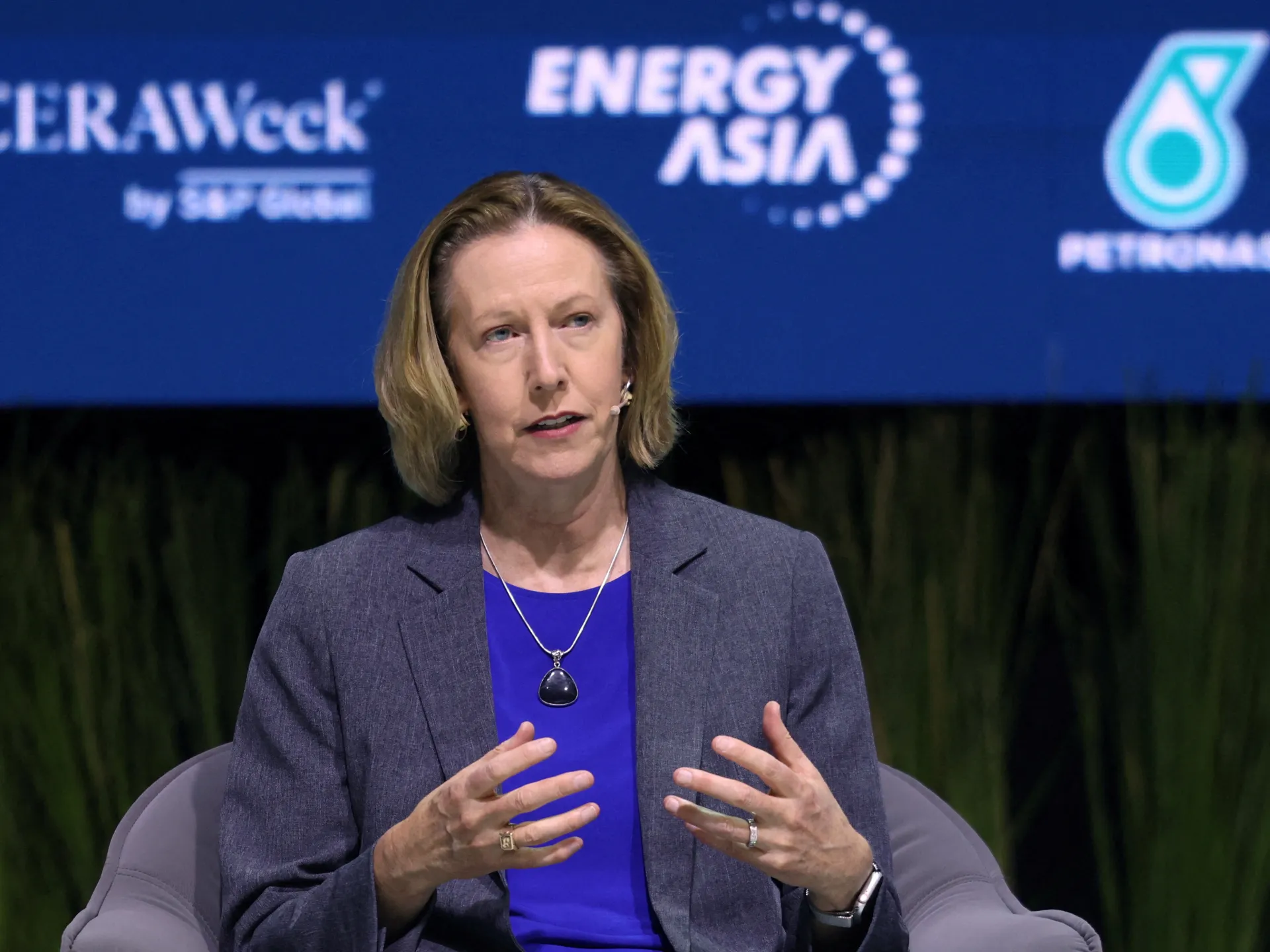
BP taps Woodside’s Meg O’Neill as CEO as it pivots back to fossil fuels | Oil and Gas News

BP has tapped Woodside Energy’s Meg O’Neill as its next CEO, its first external hire for the post in more than a century and the first woman to lead a top-five oil major as the firm pivots back to fossil fuels.

O’Neill, an Exxon veteran, will take over in April following the abrupt departure of Murray Auchincloss, the second CEO change in just over two years as the British oil major strives to improve its profitability and share performance, which for years has lagged competitors like Exxon.

Recommended Stories

list of 4 itemsend of list

The company embarked on a major strategy shift earlier this year, slashing billions in planned renewable energy initiatives and shifting its focus back to traditional oil and gas. BP has pledged to divest $20bn in assets by 2027, including its Castrol lubricants unit, and reduce debt and costs.

“Progress has been made in recent years, but increased rigour and diligence are required to make the necessary transformative changes to maximise value for our shareholders,” new BP Chair Albert Manifold said in a statement.

When Manifold took up his post in October, he emphasised the need for a deeper reshaping of BP’s portfolio to increase profitability and faced pressure from activist investor Elliott Investment Management, one of BP’s largest shareholders, which called for him to urgently address the company’s shortcomings.

Elliott saw the change of CEO as a sign of BP’s willingness to act swiftly to deliver cost cuts and divestments, a person familiar with the situation said.

An external change

O’Neill, a 55-year-old American from Boulder, Colorado, and the first openly gay woman to helm a FTSE 100 company, headed Woodside since 2021, having previously spent 23 years at Exxon.

Under O’Neill’s leadership, Woodside merged with BHP Group’s petroleum arm to create a top 10 global independent oil and gas producer valued at $40bn and doubled Woodside’s oil and gas production.

The acquisition took the company to the US, where it embarked on a major Louisiana liquefied natural gas project, which it is progressing in an LNG market braced for oversupply.

BP spent more than 40 percent of its $16.2bn investment budget in the United States last year and plans to boost its US output to 1 million barrels of oil equivalent per day by the end of the decade.

Markets react

Woodside shares fell as much as 2.9 percent after news of O’Neill’s departure. At BP, shares were up 0.3 percent, compared with a broader index of European energy companies.

Like BP, Woodside shares have underperformed rivals. In absolute terms, though, the stock has risen about 10 percent during O’Neill’s tenure.

BP’s executive vice president, Carol Howle, will serve as interim CEO. Auchincloss, 55, will step down on Thursday and serve in an advisory role until December 2026.

BP said O’Neill’s appointment was part of its long-term succession planning, though it had not publicly announced a search process.

Auchincloss became CEO in 2024, taking over from Bernard Looney, who was fired after lying to the board about personal relationships with colleagues.

After an ill-fated foray into renewables under Looney, BP has promised to increase profitability and cut costs while re-routing spending to focus on oil and gas, launching a review in August of how best to develop and monetise oil and gas production assets.

During BP’s third-quarter earnings call last month, the company did not give an update on the closely watched sale process for its Castrol lubricants unit, the centrepiece of its $20bn asset-sale drive to slash its debt pile.

“We question whether this is set to change BP’s thinking once again on key strategic initiatives – should they defer the sale of Castrol? We think yes. Should they cut the buyback to zero and repair the balance sheet further? We think yes,” said RBC analyst Biraj Borkhataria.

Woodside said in a separate statement that O’Neill was leaving immediately, and it had appointed executive Liz Westcott as acting CEO, while intending to announce a permanent appointment in the first quarter of 2026.

Source link

What’s next for the global economy in 2026? | Business and Economy

2025 was the year of tariffs and a global shift in economic power.

Two words that largely define the economy right now: Global reordering.

President Donald Trump’s Tariffs have landed as a shock to global trade. This is 2025.

Major economies are rewriting their playbooks, and alliances are being redrawn.

From Africa’s minerals boom to the global AI race, countries are scrambling for influence – even as debt piles up.

They are spending more, borrowing more and making tough choices from defence to climate policy and labour shortages.

And through it all, people are bearing high costs.

Source link

Can India catch up with the US, Taiwan and China in the global chip race? | Technology News

In October, a small electronics manufacturer in the western Indian state of Gujarat shipped its first batch of chip modules to a client in California.

Kaynes Semicon, together with Japanese and Malaysian technology partners, assembled the chips in a new factory funded with incentives under Indian Prime Minister Narendra Modi’s $10bn semiconductor push announced in 2021.

Modi has been trying to position India as an additional manufacturing hub for global companies that may be looking to expand their production beyond China, with limited success.

One sign of that is India’s first commercial foundry for mature chips that is currently under construction, also in Gujarat. The $11bn project is supported by technology transfer from a Taiwanese chipmaker and has onboarded the United States chip giant Intel as a potential customer.

With companies the world over hungering for chips, India’s entry into that business could boost its role in global supply chains. But experts caution that India still has a long way to go in attracting more foreign investment and catching up in cutting-edge technology.

Unprecedented momentum

Semiconductor chips are designed, fabricated in foundries, and then assembled and packaged for commercial use. The US leads in chip design, Taiwan in fabrication, and China, increasingly, in packaging.

The upcoming foundry in Gujarat is a collaboration between India’s Tata Group, one of the largest conglomerates in the country, and Taiwan’s Powerchip Semiconductor Manufacturing Corporation (PSMC), which is assisting with the plant’s construction and technology transfer.

On December 8, Tata Electronics also signed an agreement with Intel to explore the manufacturing and packaging of its products in Tata’s upcoming facilities, including the foundry. The partnership will address the growing domestic demand.

Last year, Tata was approved for a 50 percent subsidy from the Modi government for the foundry, along with additional state-level incentives, and could come online as early as December 2026.

Even if delayed, the project marks a pivotal moment for India, which has seen multiple attempts to build a commercial fab stall in the past.

The foundry will focus on fabricating chips ranging from 28 nanometres (nm) to 110nm, typically referred to as mature chips because they are comparatively easier to produce than smaller 7nm or 3nm chips.

Mature chips are used in most consumer and power electronics, while the smaller chips are in high demand for AI data centres and high-performance computing. Globally, the technology for mature chips is more widely available and distributed. Taiwan leads production of these chips, with China fast catching up, though Taiwan’s TSMC dominates production for cutting-edge nodes below 7nm.

“India has long been strong in chip design, but the challenge has been converting that strength into semiconductor manufacturing,” said Stephen Ezell, vice president for global innovation policy at the Washington, DC-based Information Technology and Innovation Foundation (ITIF).

“In the past two to three years, there’s been more progress on that front than in the previous decade – driven by stronger political will at both the central and state levels, and a more coordinated push from the private sector to commit to these investments,” Ezell told Al Jazeera.

Easy entry point

More than half of the Modi government’s $10bn in semiconductor incentives is earmarked for the Tata-PSMC venture, with the remainder supporting nine other projects focused mainly on the assembly, testing and packaging (ATP) stage of the supply chain.

These are India’s first such projects – one by Idaho-based Micron Technology, also in Gujarat, and another by the Tata Group in the northeastern Assam state. Both will use in-house technologies and have drawn investments of $2.7bn and $3.3bn, respectively.

The remaining projects are smaller, with cumulative investments of about $2bn, and are backed by technology partners such as Taiwan’s Foxconn, Japan’s Renesas Electronics, and Thailand’s Stars Microelectronics.

“ATP units offer a lower path of resistance compared to a large foundry, requiring smaller investments – typically between $50m and $1bn. They also carry less risk, and the necessary technology know-how is widely available globally,” Ashok Chandak, president of the India Electronics and Semiconductor Association (IESA), told Al Jazeera.

Still, most of the projects are behind schedule.

Micron’s facility, approved for incentives in June 2023, was initially expected to begin production by late 2024. However, the company noted in its fiscal 2025 report that the Gujarat facility will “address demand in the latter half of this decade”.

Approved in February 2024, the Tata facility was initially slated to be operational by mid-2025, but the timeline has now been pushed to April 2026.

When asked for reasons behind the delays, both Micron and Tata declined to comment.

One exception is a smaller ATP unit by Kaynes Semicon, which in October exported a consignment of sample chip modules to an anchor client in California – a first for India.

Another project by CG Semi, part of India’s Murugappa Group, is in trial runs, with commercial production expected in the coming months.

The semiconductor projects under the Tata Group and the Murugappa Group have drawn public scrutiny after Indian online news outlet Scroll.in reported that both companies made massive political donations after they were picked for the projects.

As per Scroll.in, the Tata Group donated 7.5 billion rupees ($91m) and 1.25 billion rupees ($15m), respectively, to Modi’s Bharatiya Janata Party (BJP) just weeks after securing government subsidies in February 2024 and ahead of national elections. Neither group had made such large donations to the party before. Such donations are not prohibited by law. Both the Tata Group and the Murugappa Group declined to comment to Al Jazeera regarding the reports.

Meeting domestic demand a key priority

The upcoming projects in India – both the foundry and the ATP units – will primarily focus on legacy, or mature, chips sized between 28nm and 110nm. While these chips are not at the cutting-edge of semiconductor technology, they account for the bulk of global demand, with applications across cars, industrial equipment and consumer electronics.

China dominates the ATP segment globally with a 30 percent share and accounted for 42 percent of semiconductor equipment spending in 2024, according to DBS Group Research.

India has long positioned itself as a “China Plus One” destination amid global supply chain diversification, with some progress evident in Apple’s expansion of its manufacturing base in the country. The company assembles all its latest iPhone models in India, in partnership with Foxconn and Tata Electronics, and has emerged as a key supplier to the US market this year following tariff-related uncertainties over Chinese shipments.

Its push in the ATP segment, however, is driven largely by the need to meet the growing domestic demand for chips, anticipated to surge from $50bn today to $100bn by 2030.

“Globally, too, the market will expand from around $650bn to $1 trillion. So, we’re not looking at shifting manufacturing from China to elsewhere. We’re looking at capturing the incremental demand emerging both in India and abroad,” Chandak said.

India’s import of chips – both integrated circuits and microassemblies – has jumped in recent years, rising 36 percent in 2024 to nearly $24bn from the previous year. An integrated circuit (IC) is a chip serving logic, memory or processing functions, whereas a microassembly is a broader package of multiple chips performing combined functions.

The momentum has continued this year, with imports up 20 percent year-on-year, accounting for about 3 percent of India’s total import bill, according to official trade data. China remains the leading supplier with a 30 percent share, followed by Hong Kong (19 percent), South Korea (11 percent), Taiwan (10 percent), and Singapore (10 percent).

“Even if it’s a 28 nm chip, from a trade balance perspective, India would rather produce and package it domestically than import it,” Ezell of ITIF said, adding that domestic capability would enhance the competitiveness of chip-dependent industries.

Better incentives needed

The Modi government’s support for the chip sector, while unprecedented for India, is still dwarfed by the $48bn committed by China and the $53bn provisioned under the US’s CHIPS Act.

To achieve scale in the ATP segment for meaningful import substitution – and to advance towards producing chips smaller than 28nm – India will need continued government support, and there is a second round of incentives already in the works.

“The reality is, if India wants to compete at the leading edge of semiconductors, it will need to attract a foreign partner – American or Asian – since only a handful of companies globally operate at that level. It’s highly unlikely that a domestic firm will be competitive at 7nm or 3nm anytime soon,” Ezell said.

According to him, India needs to continue focusing on improving its overall business environment – from ensuring reliable power and infrastructure to streamlining regulations, customs and tariff policies.

India’s engineers make up about a fifth of the global chip design workforce, but rising competition from China and Malaysia to attract multinational design firms could erode that edge.

In its latest incentive round, the Indian government limited benefits to domestic firms to promote local intellectual property – a move that, according to Alpa Sood, legal director at the India operations of California-based Marvell Technology, risks driving multinational design work elsewhere.

“India already has a thriving chip design ecosystem strengthened by early-stage incentives from the government. What we need, to further accelerate and build stronger R&D muscle – is incentives that mirror competing countries like China [220 percent tax incentives] and Malaysia [200 percent tax incentives]. This will ensure we don’t lose the advantage we’ve built over the years,” Sood told Al Jazeera.

Marvell’s India operations are its largest outside the US.

The Trump effect

India’s upcoming chip facilities, while aimed at meeting domestic demand, will also export to clients in the US, Japan, and Taiwan. Though US President Donald Trump has threatened 100 percent tariffs on semiconductors made outside the US, none have yet been imposed.

A bigger concern for India-US engagement – so far limited to education and training – is Washington’s 50 percent tariff on India over its Russian crude imports. Semiconductors remain exempt, but the broader trade climate has turned uncertain.

“Over half the global semiconductor market is controlled by US-headquartered firms, making engagement with them crucial,” Chandak said. “Any alignment with these firms, either through joint ventures or technology partnerships – is a preferred option.”

The global chip race is accelerating, and India’s policies will need to keep pace to become a serious player amid growing geo-economic fragmentation.

“These new 1.7nm fabs are so advanced they even factor in the moon’s gravitational pull – it’s literally a moonshot,” Ezell said. “Semiconductor manufacturing is the most complex engineering task humanity undertakes – and the policymaking behind it must be just as precise.”

Source link

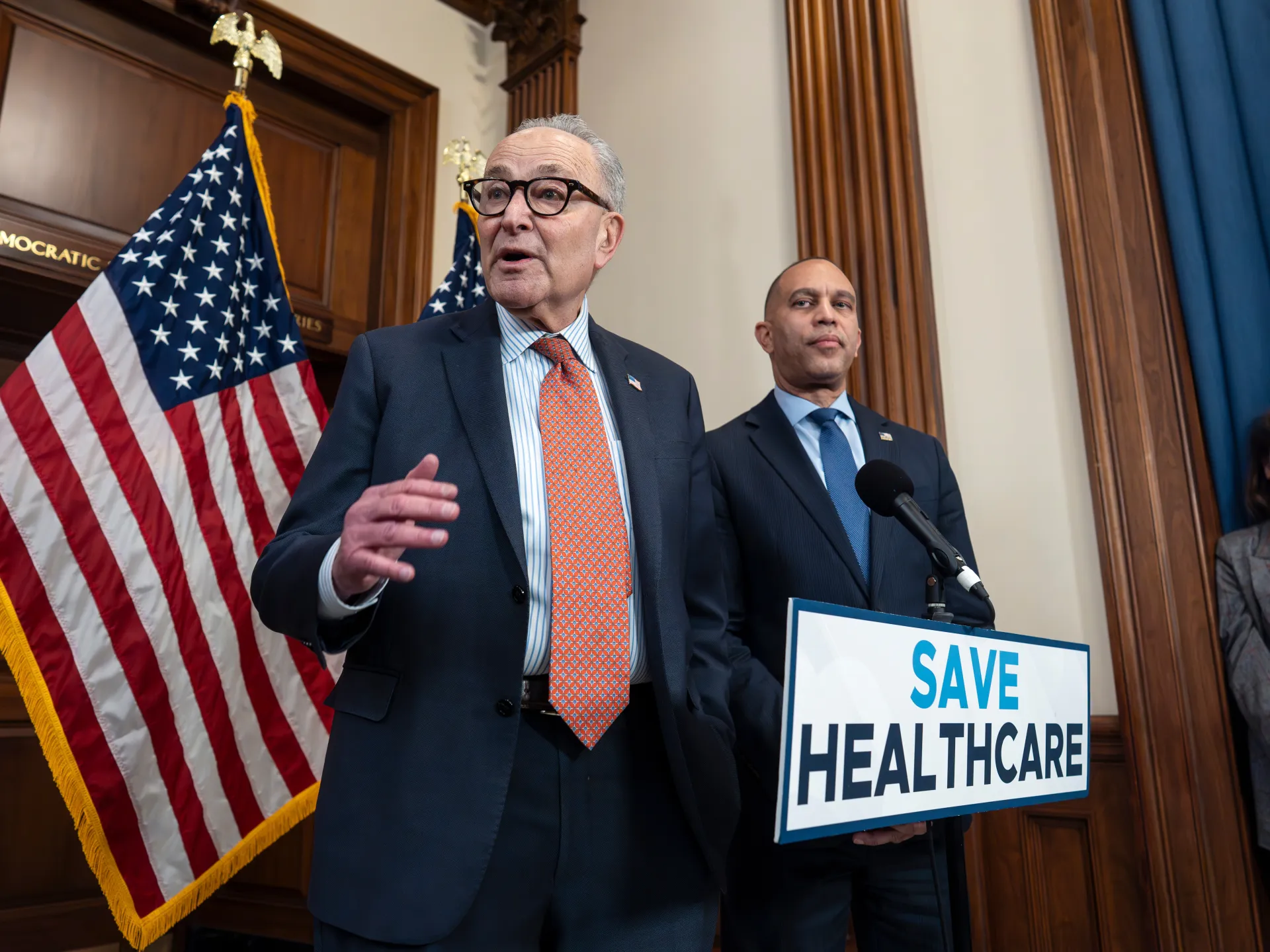
Republicans defy House leadership to force vote on healthcare subsidies | Politics News

An expanded federal healthcare subsidy that grew out of the pandemic looks all but certain to expire on December 31, as Republican leaders in the United States faced a rebellion from within their own ranks.

On Wednesday, four centrist Republicans in the House of Representatives broke with their party’s leadership to support a Democratic-backed extension for the healthcare subsidies under the Affordable Care Act (ACA), sometimes called “Obamacare”.

Recommended Stories

list of 3 itemsend of list

By a vote of 204 to 203, the House voted to stop the last-minute move by Democrats, aided by four Republicans, to force quick votes on a three-year extension of the Affordable Care Act subsidy.

Democrats loudly protested, accusing Republican leadership of gavelling an end to the vote prematurely while some members were still trying to vote.

“That’s outrageous,” Democratic Representative Jim McGovern of Massachusetts yelled at Republican leadership.

Some of the 24 million Americans who buy their health insurance through the ACA programme could face sharply higher costs beginning on January 1 without action by Congress.

Twenty-six House members had not yet voted – and some were actively trying to do so – when the House Republican leadership gavelled the vote closed on Wednesday. It is rare but not unprecedented for House leadership to cut a contested vote short.

Democratic Representative Rosa DeLauro of Connecticut said the decision prevented some Democrats from voting.

“Listen, it’s playing games when people’s lives are at stake,” DeLauro said. “They jettisoned it.”

It was the latest episode of congressional discord over the subsidies, which are slated to expire at the end of the year.

The vote also offered another key test to the Republican leadership of House Speaker Mike Johnson. Normally, Johnson determines which bills to bring to a House vote, but recently, his power has been circumvented by a series of “discharge petitions”, wherein a majority of representatives sign a petition to force a vote.

In a series of quickfire manoeuvres on Wednesday, Democrats resorted to one such discharge petition to force a vote on the healthcare subsidies in the new year.

They were joined by the four centrist Republicans: Mike Lawler of New York and Brian Fitzpatrick, Robert Bresnahan and Ryan MacKenzie of Pennsylvania.

The Democratic proposal would see the subsidies extended for three years.

But Republicans have largely rallied around their own proposal, a bill called the Lower Health Care Premiums for All Americans Act. It would reduce some insurance premiums, though critics argue it would raise others, and it would also reduce healthcare subsidies overall.

The nonpartisan Congressional Budget Office (CBO) on Tuesday said the legislation would decrease the number of people with health insurance by an average of 100,000 per year through 2035.

Its money-saving provisions would reduce federal deficits by $35.6bn, the CBO said.

Republicans have a narrow 220-seat majority in the 435-seat House of Representatives, and Democrats are hoping to flip the chamber to their control in the 2026 midterm elections.

Three of the four Republicans who sided with the Democrats over the discharge petition are from the swing state of Pennsylvania, where voters could lean right or left.

Affordability has emerged as a central question ahead of the 2026 midterms.

Even if the Republican-controlled House manages to pass a healthcare bill this week, it is unlikely to be taken up by the Senate before Congress begins a looming end-of-year recess that would stop legislative action until January 5.

By then, millions of Americans will be looking at significantly more expensive health insurance premiums that could prompt some to go without coverage.

Wednesday’s House floor battle could embolden Democrats and some Republicans to revisit the issue in January, even though higher premiums will already be in the pipeline.

Referring to the House debate, moderate Republican Senator Lisa Murkowski told reporters: “I think that that will help prompt a response here in the Senate after the first of the new year, and I’m looking forward to that.”

The ACA subsidies were a major point of friction earlier this year as well, during the historic 43-day government shutdown.

Democrats had hoped to extend the subsidies during the debate over government spending, but Republican leaders refused to take up the issue until a continuing budget resolution was passed first.

Source link

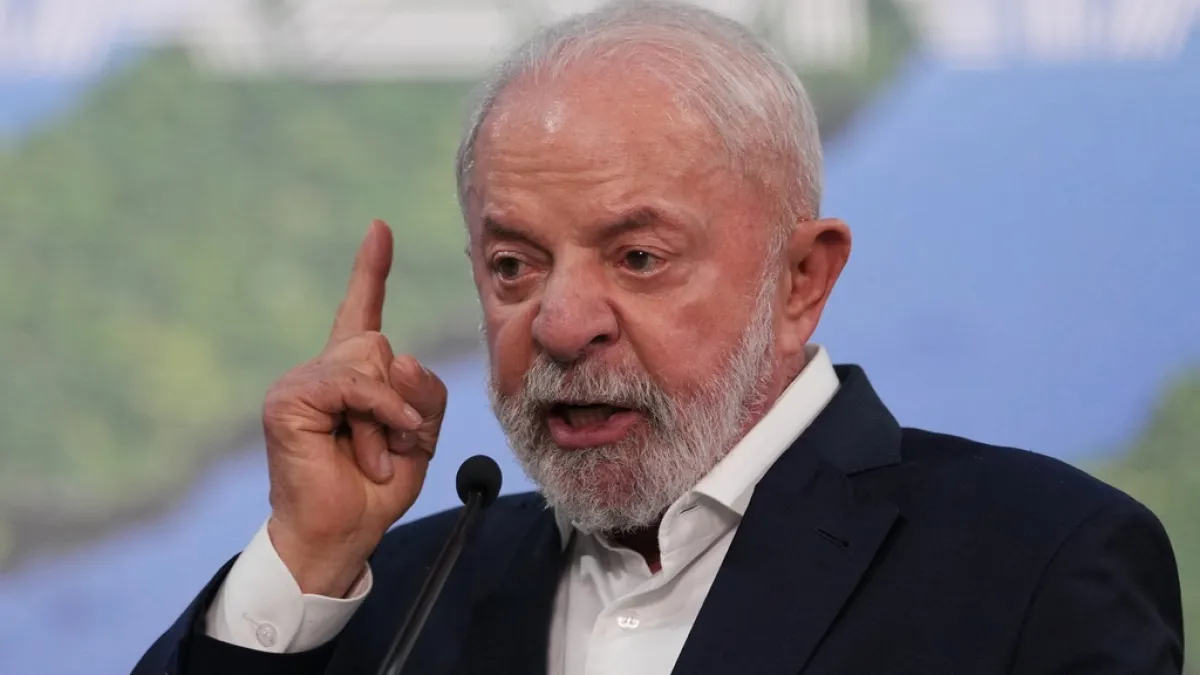
Lula threatens to walk away if further delays to EU-Mercosur trade deal | International Trade News

Brazilian president says it is now or never after Italy joins France in saying it is not ready to sign trade deal.

Brazilian President Luiz Inacio Lula da Silva has warned he may abandon a long-awaited trade deal between members of the South American bloc Mercosur and the European Union after key countries sought a delay.

The Brazilian leader issued the threat on Wednesday after Italy joined fellow heavyweight France in saying it was not ready to commit to the pact to create the world’s biggest free-trade area.

Recommended Stories

list of 4 itemsend of list

The EU had expected its 27 member states to approve the deal in time for European Commission President Ursula von der Leyen to fly to Brazil to sign an agreement with the host, along with Mercosur partners Argentina, Paraguay and Uruguay, on Saturday.

“I’ve already warned them: If we don’t do it now, Brazil won’t make any more agreements while I’m president,” Lula told a cabinet meeting.

“We have given in on everything that diplomacy could reasonably concede.”

‘Premature’ to sign: Meloni

The deal, more than two decades in the making, has been keenly backed by economic powerhouse Germany, along with Spain and the Nordic countries, amid rising Chinese competition and recent United States tariffs, which have increased the incentive to diversify trade.

It would allow the EU to export more vehicles, machinery, spirits and wine to Latin America, and more beef, sugar, rice, honey and soya beans to flow in the opposite direction.

France, eager to protect its agriculture industry, had already called for a delay on a vote to approve the deal, and gained the support necessary to potentially block the agreement when Italian Prime Minister Giorgia Meloni said on Wednesday that Rome was also not ready.

“It would be premature to sign the deal in the coming days,” she told parliament, saying that some of the safeguards Italy is seeking on behalf of farmers were yet to be finalised.

She said Italy did not seek to block the deal altogether, and was “very confident” that her government’s concerns would have been addressed to allow it to be signed early next year,

French President Emmanuel Macron told a cabinet meeting on Wednesday that his government would “firmly oppose” any attempts to force through the deal.

Hungary and Poland are also lukewarm on the agreement.

By contrast, German Chancellor Friedrich Merz said Wednesday he would push “intensively” for the bloc to approve the deal by the year’s end, in what he described as a test of the EU’s “ability to act”.

EU reaches agreement on agricultural safeguards

In an effort to allay some of the concerns, the EU struck a provisional deal on Wednesday to set tighter controls on imports of farm products, amid a background of farmer protests against the deal.

It determined the trigger for launching an investigation into such imports if import volumes rose by more than 8 percent per year or prices fell by that amount in one or more EU members.

EU leaders will discuss the matter at a Brussels summit on Thursday, a commission spokesman said.

Source link

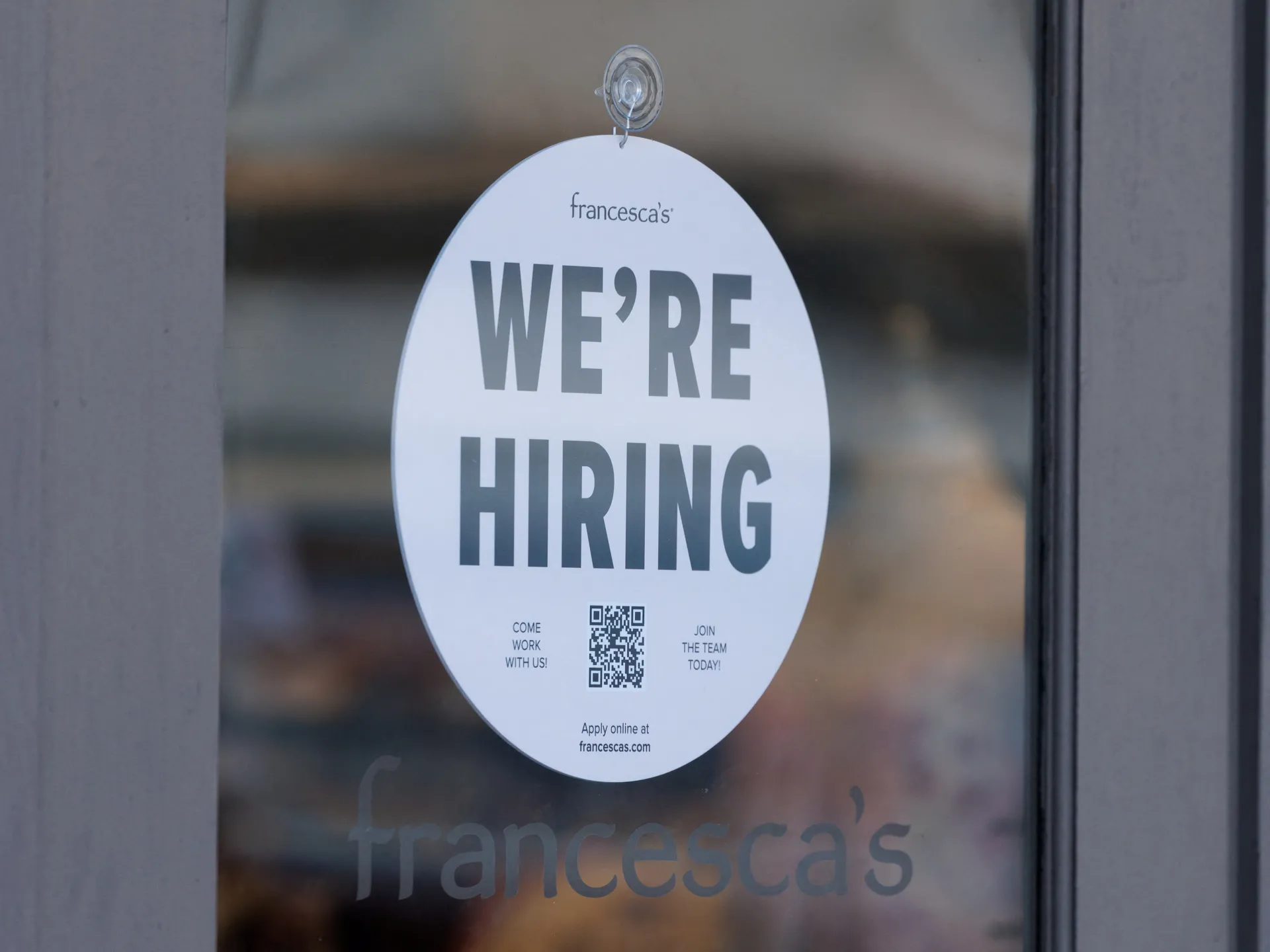
US unemployment hits highest level since 2021 as labour market cools | Business and Economy News

The US economy gains jobs in healthcare and construction as other sectors stagnate, shrink.

The United States economy lost 41,000 jobs in October and November, and the unemployment rate has ticked up to its highest level since 2021 as the labour market cools amid ongoing economic uncertainty driven by tariffs and immigration policies.

In November, the US economy added 64,000 jobs after shedding 105,000 in October, according to a report released on Tuesday by the Department of Labor’s Bureau of Labor Statistics.

Recommended Stories

list of 4 itemsend of list

The unemployment rate rose to 4.6 percent, up from 4.4 percent in September. Because of the government shutdown in October and November, the US government was unable to gather key data used to gauge the state of the economy, including the unemployment rate for October.

October’s job losses reflected the 162,000 federal workers who lost their posts, a result of deferred buyouts of their contracts,  which expired at the end of September.

In November, there was a loss of another 6,000 government jobs. Gains were seen in the healthcare, social assistance and construction sectors. Healthcare added 46,000 jobs – higher than the 39,000 jobs gained in the sector on average each month over the past 12 months.

Construction added 28,000, consistent with average gains over the past year. The social assistance sector added 18,000 jobs.

Transportation and warehousing lost 18,000. Manufacturing jobs are also on the decline. The sector shed 5,000 jobs in November after cutting 9,000 jobs in October following a 5,000-job loss in September.

White House economic adviser Kevin Hassett told reporters on Tuesday to expect to see more manufacturing jobs in the next six months.

His assessment was driven by growth in construction jobs and manufacturing investments, which signal job growth is on the way.

People working part time for economic reasons also rose to 5.5 million, which is up 909,000 from September.

“Today’s long-awaited jobs report confirms what we already suspected: [President Donald] Trump’s economy is stalling out and American workers are paying the price,” Alex Jacquez, chief of policy and advocacy at the economic think tank Groundwork Collaborative, said in a statement.

“Far from sparking a manufacturing renaissance, Trump’s reckless trade agenda is bleeding working-class jobs, forcing layoffs, and raising prices for businesses and consumers alike.”

The data was released after the Federal Reserve cut its benchmark interest rate by 25 basis points to 3.5-3.75 percent as labour conditions cool.

“The labour market has continued to cool gradually, … a touch more gradually than we thought,” Fed Chairman Jerome Powell said after the rate cut decision last week.

On Wall Street, markets fell slightly after the jobs report. In midday trading, the Nasdaq was down 0.4 percent, the S&P 500 was down 0.5 percent and the Dow Jones Industrial Average was 0.4 percent below its market open.

Source link