administration

Trump administration retreats in Newsom lawsuit over National Guard deployment

The Trump administration backed off its effort to block a court order returning control of National Guard troops in Los Angeles to California Gov. Gavin Newsom.

In a brief filing with the U.S. Court of Appeals for the 9th Circuit on Tuesday, Justice Department lawyers said they no longer oppose lifting a partial administrative stay and formally withdrew their request to keep the troops under federal control while the appeal proceeds.

The move follows the U.S. Supreme Court’s decision last week in Trump v. Illinois, which cast new doubt on the administration’s legal theory for using the National Guard in domestic law enforcement operations. Tuesday’s filing with the appeals court does not concede the merits of California’s case brought by Newsom, but it removes a major procedural obstacle to enforcing the lower court’s ruling.

In the filing, federal lawyers said they “do not oppose lifting of the partial administrative stay and hereby respectfully withdraw their motion for a stay pending appeal.”

“This admission by Trump and his occult cabinet members means this illegal intimidation tactic will finally come to an end,” Newsom wrote on X, adding that he is looking forward to the 9th Circuit making an official ruling that would return the California National Guard to state service.

The decision could mark a turning point in a contentious legal fight over Trump’s use of state National Guard troops, which the president said was necessary to quell unrest over immigration enforcement. Justice Department lawyers had argued in court that once federalized, Guard troops could remain under the president’s command indefinitely and that courts had no authority to review their deployment.

Court records show roughly 300 California troops remain under federal control, including 100 of whom were still active in Los Angeles as of earlier this month. In mid-December, video reviewed by The Times showed dozens of troops under Trump’s command quietly leaving the Roybal Federal Building downtown in the middle of the night following an appellate court’s order to decamp. That facility had been patrolled by armed soldiers since June.

Earlier this month, U.S. District Judge Charles R. Breyer ruled that the president had illegally seized control of California’s National Guard during protests over immigration enforcement. Breyer ordered that command of the remaining federalized troops be returned to Newsom, rejecting the administration’s argument that once federalized, Guard units could remain under presidential control indefinitely. He warned that such a theory would upend the constitutional balance between state and federal power.

The Los Angeles case is part of a broader, high-stakes legal battle over the president’s authority to deploy armed forces inside U.S. cities. Similar disputes involving Guard deployments in Oregon and Illinois are moving through the courts, with several judges, including conservative appointees, expressing skepticism about claims that such decisions are beyond judicial review.

Members of Congress have also begun scrutinizing the deployments, raising concerns about civil liberties and the growing use of military forces in civilian settings.

Source link

Trump administration says it’s freezing child care funds to Minnesota after series of fraud schemes

President Trump’s administration announced late Tuesday that it’s freezing child care funds to Minnesota and demanding an audit of some day care centers after a series of fraud schemes involving government programs in recent years.

Deputy Secretary of Health and Human Services Jim O’Neill said on the social platform X that the move is in response to “blatant fraud that appears to be rampant in Minnesota and across the country.”

Minnesota Gov. Tim Walz pushed back on X, saying fraudsters are a serious issue that the state has spent years cracking down on but that this move is part of “Trump’s long game.”

“He’s politicizing the issue to defund programs that help Minnesotans,” Walz said.

O’Neill referenced a right-wing influencer who posted a video Friday claiming he found that day care centers operated by Somali residents in Minneapolis had committed up to $100 million in fraud. O’Neill said he has demanded Walz submit an audit of these centers that includes attendance records, licenses, complaints, investigations and inspections.

“We have turned off the money spigot and we are finding the fraud,” O’Neill said.

The announcement comes one day after U.S. Homeland Security officials were in Minneapolis conducting a fraud investigation by going to unidentified businesses and questioning workers.

There have been years of investigations that included a $300 million pandemic food fraud scheme revolving around the nonprofit Feeding Our Future, for which 57 defendants in Minnesota have been convicted. Prosecutors said the organization was at the center of the country’s largest COVID-19-related fraud scam, when defendants exploited a state-run, federally funded program meant to provide food for children.

A federal prosecutor alleged earlier this month that half or more of the roughly $18 billion in federal funds that supported 14 programs in Minnesota since 2018 may have been stolen. Most of the defendants in the child nutrition, housing services and autism program schemes are Somali Americans, according to the U.S. Attorney’s Office for Minnesota.

O’Neill, who is serving as acting director of the Centers for Disease Control and Prevention, also said in the social media post Tuesday that payments across the U.S. through the Administration for Children and Families, an agency within the U.S. Health and Human Services Department, will now require “justification and a receipt or photo evidence” before money is sent. They have also launched a fraud-reporting hotline and email address.

The Administration for Children and Families provides $185 million in child care funds annually to Minnesota, according to Assistant Secretary Alex Adams.

“That money should be helping 19,000 American children, including toddlers and infants,” he said in a video posted on X. “Any dollar stolen by fraudsters is stolen from those children.”

Adams said he spoke Monday with the director of Minnesota’s child care services office and she wasn’t able to say “with confidence whether those allegations of fraud are isolated or whether there’s fraud stretching statewide.”

Trump has criticized Walz’s administration over the fraud cases, capitalizing on them to target the Somalia diaspora in the state, which has the largest Somali population in the U.S.

Walz, the 2024 Democratic vice presidential nominee, has said an audit due by late January should give a better picture of the extent of the fraud. He said his administration is taking aggressive action to prevent additional fraud. He has long defended how his administration responded.

Minnesota’s most prominent Somali American, Democratic U.S. Rep. Ilhan Omar, has urged people not to blame an entire community for the actions of a relative few.

Golden writes for the Associated Press.

Source link

Surge in federal officers in Minnesota focuses on alleged fraud at day care centers

A surge of federal officers in Minnesota follows new allegations of fraud by day care centers run by Somali residents.

President Trump has previously linked his administration’s immigration crackdown against Minnesota’s large Somali community to a series of fraud cases involving government programs in which most of the defendants have roots in the east African country.

Surge in federal officers

Department of Homeland Security Secretary Kristi Noem and FBI Director Kash Patel both announced an increase in operations in Minnesota this week. The move comes after a right-wing influencer posted a video Friday claiming he had found that day care centers operated by Somali residents in Minneapolis had committed up to $100 million in fraud.

Tikki Brown, commissioner of the Minnesota Department of Children, Youth, and Families, said at a Monday news conference that state regulators took the influencer’s allegations seriously.

Noem posted on social media that officers were “conducting a massive investigation on childcare and other rampant fraud.” Patel said the intent was to “dismantle large-scale fraud schemes exploiting federal programs.”

Past fraud in Minnesota

Minnesota has been under the spotlight for years for Medicaid fraud, including a massive $300-million pandemic fraud case involving the nonprofit Feeding Our Future. Prosecutors said it was the country’s largest COVID-19-related fraud scam and that defendants exploited a state-run, federally funded program intended to provide food for children.
In 2022, during President Biden’s administration, 47 people were charged. The number of defendants has grown to 78 throughout the ongoing investigation.

So far, 57 people have been convicted, either because they pleaded guilty or lost at trial.

Most of the defendants are of Somali descent.

Numerous other fraud cases are being investigated, including new allegations focused on child care centers.

In news interviews and releases over the summer, prosecutor Joe Thompson estimated the loss from all fraud cases could exceed $1 billion. Earlier this month, a federal prosecutor alleged that half or more of the roughly $18 billion in federal funds that supported 14 programs in Minnesota since 2018 may have been stolen.

Crackdown targeting Somalis

Trump’s immigration enforcement in Minnesota has focused on the Somali community in the Minneapolis-St. Paul area, which is the largest in the country.

Trump labeled Minnesota Somalis as “garbage” and said he didn’t want them in the United States.

About 84,000 of the 260,000 Somalis in the U.S. live in the Minneapolis-St. Paul area. The overwhelming majority are U.S. citizens. Almost 58% were born in the U.S and 87% of the foreign-born are naturalized citizens.

Among those running schemes to get funds for child nutrition, housing services and autism programs, 82 of the 92 defendants are Somali Americans, according to the U.S. attorney’s office for Minnesota.

Republicans have tried to blame Walz

Minnesota Gov. Tim Walz, the 2024 Democratic vice presidential nominee, has said fraud will not be tolerated and his administration “will continue to work with federal partners to ensure fraud is stopped and fraudsters are caught.”

The fraud could be a major issue in the 2026 gubernatorial race as Walz seeks a third term.

Walz has said an audit due by late January should give a better picture of the extent of the fraud but allowed that the $1-billion estimate could be accurate. He said his administration is taking aggressive action to prevent additional fraud. He has long defended how his administration responded.

Minnesota’s most prominent Somali American, Democratic U.S. Rep. Ilhan Omar, has urged people not to blame an entire community for the actions of a relative few.

Source link

After quiet off-year elections, Democrats renew worries about Trump interfering in the midterms

If history is a guide, Republicans stand a good chance of losing control of the House of Representatives in 2026. They have just a slim majority in the chamber, and the incumbent party usually gives up seats in midterm elections.

President Trump, whose loss of the House halfway through his first term led to two impeachments, is trying to keep history from repeating — and doing so in ways his opponents say are intended to manipulate next year’s election landscape.

He has rallied his party to remake congressional maps across the country to create more conservative-leaning House seats, an effort that could end up backfiring on him. He’s directed his administration to target Democratic politicians, activists and donors. And, Democrats worry, he’s flexing his muscles to intervene in the midterms like no administration ever has.

Democrats and other critics point to how Trump has sent the military into Democratic cities over the objections of Democratic mayors and governors. They note that he’s pushed the Department of Homeland Security to be so aggressive that at one point its agents handcuffed a Democratic U.S. senator. And some warn that a Republican-controlled Congress could fail to seat winning candidates if Democrats reclaim the House majority, recalling Trump’s efforts to stay in power even after voters rejected him in 2020, leading to the violent attack by his supporters on the U.S. Capitol.

Regarding potential military deployments, Ken Martin, chairman of the Democratic National Committee, told The Associated Press: “What he is going to do is send those troops there, and keep them there all the way through the next election, because guess what? If people are afraid of leaving their house, they’re probably not going to leave their house to go vote on Election Day. That’s how he stays in power.”

Military to the polls, or fearmongering?

Democrats sounded similar alarms just before November’s elections, and yet there were no significant incidents. California Gov. Gavin Newsom, a frequent Trump antagonist who also warns about a federal crackdown on voting in 2026, predicted that masked immigration agents would show up at the polls in his state, where voters were considering a ballot measure to counter Trump’s redistricting push.

There were no such incidents in November, and the measure to redraw California’s congressional lines in response to Trump’s efforts elsewhere won in a landslide.

White House spokeswoman Abigail Jackson said the concerns about the midterms come from Democratic politicians who are “fearmongering to score political points with the radical left flank of the Democrat party that they are courting ahead of their doomed-to-fail presidential campaigns.”

She described their concerns as “baseless conspiracy theories.”

Susie Wiles, Trump’s chief of staff, denied that Trump was planning to use the military to try to suppress votes.

“I say it is categorically false, will not happen. It’s just wrongheaded,” she told Vanity Fair for an interview that was published earlier in December.

DNC litigation director Dan Freeman said he hasn’t seen an indication that Trump will send immigration enforcement agents to polling places during the midterms, but is wary.

He said the DNC filed public records requests in an attempt to learn more about any such plans and is drafting legal pleadings it could file if Trump sends armed federal agents to the polls or otherwise intervenes in the elections.

“We’re not taking their word for it,” Freeman said in an interview.

States, not presidents, run elections

November’s off-year elections may not be the best indicator of what could lie ahead. They were scattered in a handful of states, and Trump showed only modest interest until late in the fall when his Department of Justice announced it was sending federal monitors to California and New Jersey to observe voting in a handful of counties. It was a bureaucratic step that had no impact on voting, even as it triggered alarm from Democrats.

Alexandra Chandler, the legal director of Defend Democracy, a group that has clashed with Trump over his role in elections, said she was heartened by the lack of drama during the 2025 voting.

“We have so many positive signs we can look to,” Chandler said, citing not only a quiet election but GOP senators’ resistance to Trump’s demands to eliminate the filibuster and the widespread resistance to Trump’s demand that television host Jimmy Kimmel lose his job because of his criticism of the president. “There are limits” on Trump’s power, she noted.

“We will have elections in 2026,” Chandler said. “People don’t have to worry about that.”

Under the Constitution, a president has limited tools to intervene in elections, which are run by the states. Congress can help set rules for federal elections, but states administer their own election operations and oversee the counting of ballots.

When Trump tried to singlehandedly revise election rules with a sweeping executive order shortly after returning to office, the courts stepped in and stopped him, citing the lack of a constitutional role for the president. Trump later promised another order, possibly targeting mail ballots and voting machines, but it has yet to materialize.

DOJ voter data request ‘should frighten everybody’

Still, there’s plenty of ways a president can cause problems, said Rick Hasen, a UCLA law professor.

Trump unsuccessfully pushed Georgia’s top election official to “find” him enough votes to be declared the winner there in 2020 and could try similar tactics in Republican-dominated states in November. Likewise, Hasen said, Trump could spread misinformation to undermine confidence in vote tallies, as he has done routinely ahead of elections.

It’s harder to do that in more lopsided contests, as many in 2025 turned into, Hasen noted.

“Concerns about Trump interfering in 2026 are real; they’re not frivolous,” Hasen said. “They’re also not likely, but these are things people need to be on guard for.”

One administration move that has alarmed election officials is a federal demand from his Department of Justice for detailed voter data from the states. The administration has sued the District of Columbia and at least 21 states, most of them controlled by Democrats, after they refused to turn over all the information the DOJ sought.

“What the DOJ is trying to do is something that should frighten everybody across the political spectrum,” said David Becker, a former Justice Department voting rights attorney and executive director of the Center for Election Innovation & Research. “They’re trying to use the power of the executive to bully states into turning over highly sensitive data — date of birth, Social Security numbers, driver’s license, the Holy Trinity of identity theft — hand it over to the DOJ for who knows what use.”

‘Voter protection’ vs ‘election integrity’

Voting rights lawyers and election officials have been preparing for months for the midterms, trying to ensure there are ways to counter misinformation and ensure state election systems are easy to explain. Both major parties are expected to stand up significant campaigns around the mechanics of voting: Democrats mounting what they call a “voter protection” effort to monitor for problems while Republicans focus on what they call “election integrity.”

Freeman, the DNC litigation director who previously worked in the DOJ’s voting section, said his hiring this year was part of a larger effort by the DNC to beef up its in-house legal efforts ahead of the midterms. He said the committee has been filling gaps in voting rights law enforcement that the DOJ has typically covered, including informing states that they can’t illegally purge citizens from their voter rolls.

Tina Barton, co-chair of the Committee on Safe and Secure Elections, a coalition of law enforcement and election officials who advise jurisdictions on de-escalation and how to respond to emergencies at polling places, says interest in the group’s trainings has “exploded” in recent weeks.

“There’s a lot at stake, and that’s going to cause a lot of emotions,” Barton said.

Riccardi writes for the Associated Press. AP writers Marc Levy in Harrisburg, Penn., Julie Carr Smyth in Columbus, Ohio, and Ali Swenson in New York contributed to this report.

Source link

Trump regime’s lies against immigrants in 2025 even did Frank Sinatra dirty

This is a column about lies. Big lies. Presidential lies. Dumb lies. The type of lies that have made life in the United States a daily dumpster fire of bad news. The kind of lies that would’ve made Frank Sinatra want to knock out a palooka.

More on Ol’ Blue Eyes in a bit.

For now let me tell you about one victim of President Trump’s mountain of lies whose brush with the administration defined our 2025.

On June 7, Brayan Ramos-Brito drove east on Alondra Boulevard from Compton toward a Chevron in Paramount to buy some snacks. It was his day off. It also was the weekend when Trump unleashed his deportation Leviathan on Southern California in a campaign that hasn’t stopped.

Ramos-Brito, a cook, had no idea that was going on as traffic froze on Alondra in front of a Home Depot. A “stay-at-home type of guy,” he didn’t even vote in the 2024 election because “politics isn’t my thing.”

But as the slender 30-year-old sat in his car, he saw federal immigration agents who had gathered across the street from the Home Depot fire flash-bang grenades at protesters who were screaming at them to leave. That’s when the moment “got to me.”

Ramos-Britos, a U.S citizen, got out of his car to yell at la migra, accusing those who looked Latino of being a “disgrace.” He said one of them shoved him into a scrum of protesters. After that, “all I remember were knees and kicks” by agents before they dragged him on the pavement and into the back of a van.

For hours Ramos-Brito and others stayed zip-tied inside as “craziness” erupted outside. Hundreds more residents arrived, as did L.A. County sheriff’s deputies. Smoke from blazes set by the former and tear gas canisters tossed by the latter seeped inside the van — “we kept telling agents we couldn’t breath, but they just ignored us.”

Photos and footage from the Paramount protest went viral and sparked an even bigger rally the following day near downtown L.A. that devolved into torched Waymo cars and concrete blocks hurled at California Highway Patrol vehicles. Soon, Trump called up the National Guard and Marines to occupy the City of Angels under the pretense that anarchy now ruled here — even though protests were confined to pockets of the metropolis. Siccing the National Guard on cities is something Trump has since tried to replicate across the country in any place that has dared to push back against immigration sweeps.

Ramos-Brito spent two weeks in a detention facility in Santa Ana stuffed in a cell with undocumented immigrants facing deportation. He faced federal felony charges of assaulting a federal agent and was accused of being one of the Paramount protest’s ringleaders as well.

Prosecutors tried to scare him into pleading guilty with threats of years in prison. Despite having no money to hire a lawyer, he refused: “I wasn’t going to take the blame for something I didn’t do.”

Federal public defender Cuauhtémoc Ortega represented Ramos-Brito during a two-day September trial. Ortega screened video footage to the jury that proved his client’s version of what happened and easily caught federal agents contradicting each other and their own field reports.

The jury took about an hour to acquit Ramos-Brito on misdemeanor assault charges. He wants to move on — but the mendacity of the administration won’t let him.

The lies it used to try to railroad an innocent man turned out not to be an aberration but a playbook for Trump’s 2025.

A stretch of Alondra Boulevard in Paramount

The stretch of Alondra Boulevard in Paramount where a June 7 protest against immigration agents resulted in the arrest of 30-year-old Compton resident Brayan Ramos-Brito on allegations he assaulted one of them. A jury found him not guilty.

(Gary Coronado/For The Times)

Lies, of course, have fueled the president’s career from the days he was was a smarmy New York developer riding the coattails of his daddy. This year he and his apologists employed them like never before to try to consolidate their grip on all aspects of American life. They lied about the economy, about the contents of the Epstein files, about the efficacy of vaccines, the worth of diversity, equity and inclusion initiatives, our supposed noninterventionist foreign policy and so much more.

Above all, or at least most malignantly, Trump and his crew lied about immigrants. The big lie. The lie they thought everyone would believe and thus would excuse all the other lies. They have lied about and maligned just about anyone they don’t see worthy of being a so-called “heritage American,” aka white.

Trump ran for reelection on a promise to focus on targeting “the worst of the worst” but has shrugged his shoulders as most of the people swept up in raids have no criminal record and are sometimes even citizens and permanent residents. He vowed that deporting people would improve the economy despite decades of studies showing the opposite. Trumpworld insists immigrants are destroying the United States — never mind that the commander in chief is the son of a Scotswoman and is married to a Slovenian while vice president JD Vance’s in-laws are from India.

The administration maintains unchecked migration is cultural suicide even as cabinet members sport last names — Kennedy, Rubio, Bondi, Loeffler — once seen by Americans of past generations as synonymous with invading hordes.

This is where Frank Sinatra comes in.

Over the Christmas weekend, White House deputy chief of staff Stephen Miller posted on social media that his family watched a Christmas special starring the Chairman of the Board and his fellow paisan, Dean Martin.

“Imagine watching that and thinking America needed infinity migrants from the third world,” Miller sneered. It didn’t matter that the crooners were proud children of Italian immigrants who arrived during a time where they were as demonized as Venezuelans and Somalis are now.

Take it from Sinatra himself.

In 1945 he released “The House I Live In,” a short film in which he tells a group of boys chasing one of their Jewish peers to embrace a diverse America. In 1991 as his Republican Party was launching an era of laws in California targeting illegal immigrants, Sinatra penned a Fourth of July essay for The Times opposing such hate.

“Who in the name of God are these people anyway, the ones who elevate themselves above others?” Sinatra wrote. “America is an immigrant country. Maybe not you and me, but those whose love made our lives possible, or their parents or grandparents.”

As 2025 went from one hell month to another, it really felt like Trumpworld’s lies would loom over the land for good. But as the year ends, it seems truth finally is peeking through the storm clouds, like the blue skies Sinatra sang about so beautifully.

Trump’s approval ratings have dropped greatly since his inauguration even among those who voted for him, with his deportation disaster playing a role. Judges and juries are beginning to swat away charges filed against people like Ramos-Brito like they were flies swarming around a dung pile. Under especial scrutiny is Border Patrol commander Gregory Bovino, the public face of Trump’s deportation ground game.

In November, U.S. District Judge Sara L. Ellis ruled the federal government had to stop using excessive force in Chicago after months of agents firing pepper balls and tear gas at the slightest perceived insult. Her decision reasoned that Bovino’s sworn testimony about a Chicago under siege by pro-immigrant activists was “not credible” because he provided “cute” answers when he wasn’t “outright lying.”

Among the victims of those lies: Scott Blackburn, who was arrested for allegedly assaulting Bovino during an immigration raid even though videos showed the migra man tackle Blackburn like they were playing sandlot football, and Cole Sheridan, whom Bovino claimed injured his groin while arresting him during a protest; federal prosecutors quickly dropped all charges against Sheridan when they realized there was a lack of evidence to back up Bovino’s story.

And then there is Ramos-Brito, who had to endure a federal trial that hinged on Bovino insisting he was guilty of assaulting a federal agent in Paramount. He shook his head in disgust when I told him about Bovino’s continued tall tales.

“Justice was served for me,” Ramos-Brito said, “but not for others. I got lucky.”

Brayan Ramos-Brito, 30, of Compton

Brayan Ramos-Brito, 30, of Compton, was found not guilty of assaulting a federal agent during June’s immigration enforcement protests in Los Angeles County.

(Gary Coronado/For The Times)

We spoke in front of the Home Depot where the June 7 protest happened, where Trump’s year of immigration lies went into overdrive. The day laborers who used to gather there for years weren’t around. The gate where la migra and protesters faced off was closed.

Ramos-Brito still drives down that stretch of Alondra Boulevard for his snacks from the Chevron station that stands a block away from where his life forever was changed. It took him months to go public with his story. Scars remain on his ribs, back and shoulders.

“There’s times when little moments come through my head,” he acknowledged.

What finally convinced him to speak up was think about others out there like him. He now realizes speaking out against Trump’s lies is the only way to stop him for good.

“Whoever is going through the same that I did, keep fighting,” Ramos-Brito said softly. “They should look at my experience to give them hope.”

Source link

Trump administration awards $50B for rural healthcare

Dec. 29 (UPI) — The Trump administration on Monday announced it will distribute $50 billion dollars to expand access to rural healthcare across all 50 states with investments in growing the workforce, modernizing facilities and introducing new models of care delivery.

States are set to receive first-year awards next year of roughly $200 million under the Rural Health Transformation Program, which Congress authorized earlier this year as part of the Working Families Tax Cuts bill, the Centers for Medicare and Medicaid Services said in a press release.

“More than 60 million Americans living in rural areas have the right to equal access to quality care,” said Robert F. Kennedy, Jr., secretary of the Department of Health and Human Services.

“This historic investment puts local hospitals, clinics and health workers in control of their communities’ health care,” Kennedy said.

The CMS is set to distribute the $50 billion dollars over the next five years, from 2026 through 2030, as part of the program established by the bill, which is more commonly known as the One Big Beautiful Bill Act.

Each year, $5 billion will be distributed equally to each of the 50 states, while another $5 billion will be allocated based on the proportion of rural health facilities, situations at specific facilities in the state and other factors, the agency said on the program website.

The CMS announced each state’s 2026 allocation — Washington, D.C., and U.S. territories are not eligible for the funds — in the release, with the awards ranging from New Jersey’s $147 million to Texas’ $281 million.

The funds are meant to accomplish a range of goals to “make rural America healthy again,” including:

  • expanding access to preventive, primary, maternal and behavioral health services;
  • strengthening, growing and sustaining the clinical work force in rural areas;
  • modernizing health infrastructure and technology;
  • driving structural efficiency through streamlining operations and working to make more services available locally;
  • and testing new primary care and value-based care models of delivery and payment.

The announcement comes after the American Hospital Association estimated earlier this year that rural hospitals could lose $50.4 billion in revenue from federal Medicaid funds over the next 10 years.

The reason is based on a Congressional Budget Office estimate earlier this year that the $1 trillion that was cut from Medicaid in the One Big Beautiful Bill Act could result in more than 7.8 million more people across the country becoming uninsured.

This loss of Medicaid coverage for patients affects revenue for healthcare providers, and the effects will be felt most acutely in rural areas.

These areas of the country currently include an estimated 16.1 million people with Medicaid coverage. Sparsely populated states such as Montana, Wyoming and Alaska have more than 50% of Medicaid recipients living in rural areas, the American Hospital Association says.

For many rural health facilities, a mixture of Medicare and Medicaid patients help them stay open, Sarah Hohman, director of government affairs for the National Association of Rural Health Clinics, told UPI in July.

“If the coverage losses pan out as they are estimated, that would mean that they are treating fewer patients that are covered by insurance,” Hohman said. “The more you have uncompensated care and individuals not able to pay, your balance gets concerning pretty quickly. That really threatens the financial viability in these areas.”

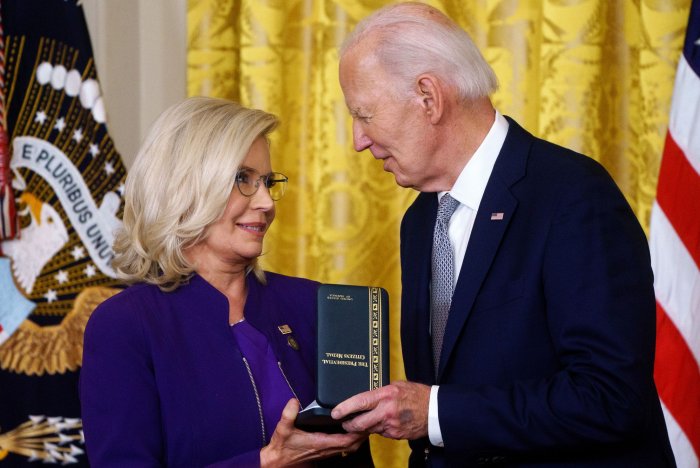
Former President Joe Biden presents the Presidential Citizens Medal to Liz Cheney during a ceremony in the East Room of the White House in Washington, on January 2, 2025. The Presidential Citizens Medal is bestowed to individuals who have performed exemplary deeds or services. Photo by Will Oliver/UPI | License Photo


Source link

Lincoln Riley calls out Notre Dame for refusing to play USC

The century-old rivalry series between USC and Notre Dame is taking a few years off, and as far as Lincoln Riley is concerned, that’s the fault of the Irish.

In his first public comments since the series was officially put on hiatus, the USC coach put the blame squarely on Notre Dame for not accepting USC’s most recent offer to continue the rivalry, which would have moved the 2026 game, usually scheduled in November, to the very beginning of the season.

“It’s pretty simple,” Riley said Monday, ahead of USC’s bowl matchup with Texas Christian. “We both worked for months to try to find a solution. Notre Dame was very vocal about the fact that they would play us anytime, anywhere.

“Jen Cohen, our AD, went back to Notre Dame roughly a couple of weeks ago with a scenario and a proposal that would extend the series for the next two years. We took Notre Dame at their word that they would play us anytime, anywhere. That proposal was rejected.

“Not only was it rejected, but five minutes after we got the call, it was announced they scheduled another opponent, which I’ll give them credit, that might be the fastest scheduling act in college football history.”

The Times reported last week that the Playoff selection earlier this month proved to be a turning point for USC’s administration in talks with Notre Dame. The realization that the Irish — by virtue of a side agreement with the College Football Playoff committee that hands them a bid if ranked in the top 12 — would have gotten into the field over Miami especially gave USC pause.

That’s when Cohen returned to Notre Dame athletic director Pete Bevacqua with an offer for the rivals to face off in the season opener. Notre Dame instead scheduled Brigham Young to fill that vacancy over the next two seasons.

Riley has been roundly criticized for his part in the rivalry’s potential demise after he suggested in August 2024 that the annual series could be in danger, if USC proved too much of a hurdle in the Trojans’ path to the College Football Playoff.

In the spring, as negotiations between the two schools stalled and the public pointed fingers at Riley and USC, Notre Dame coach Marcus Freeman said that continuing the rivalry was “pretty black and white for me.”

“I want to play them every single year,” Freeman said. “You want my opinion? I want to play them every single year. When? I don’t care. I don’t care when we play them: Start of the season, middle of the season, end of the season. I don’t care. I want to play USC every year because I think it’s great for college football.”

After initially holding firm on its intent to renegotiate terms of the rivalry year-to-year, so as to wait on changes to the College Football Playoff format, USC sent an amended offer to Notre Dame before the season that would have extended the series for two seasons. But Notre Dame wanted a longer deal.

The two schools nearly came to an agreement in October, around their final meeting in South Bend. USC had made clear that it wanted to play the game earlier in the season, but was warming up to the idea of continuing the series as is through 2027.

USC decided to dig its heels in after Selection Sunday, returning to USC with a final offer to play early in the 2026 season. Notre Dame declined.

“The fact is very, very clear, this can all be settled very quickly,” Riley said. “Had Notre Dame lived up to their word and played us anytime, anywhere, we would be playing in the next two years, and looking ahead after that, hopefully continuing the series.

“They did not follow through on it, thus we are not playing them the next couple years. We’re hopeful something can be worked out in the future. That would be fantastic. We at SC would love for the game to continue. We have no problem following through on our promises in the future.”

It’ll be a while before those negotiations start up again. The next window in which USC could play Notre Dame is during the 2030 season.

Source link

California has lost more than a quarter of its immigration judges this year

More than a quarter of federal immigration judges in California have been fired, retired or quit since the start of the Trump administration.

The reduction follows a trend in immigration courts nationwide and constitutes, critics say, an attack on the rule of law that will lead to yet more delays in an overburdened court system.

The reduction in immigration judges has come as the administration scaled up efforts to deport immigrants living in the U.S. illegally. Trump administration officials have described the immigration court process, in which proceedings can take years amid a backlog of millions of cases, as an impediment to their goals.

Nationwide, there were 735 immigration judges last fiscal year, according to the Executive Office for Immigration Review, the arm of the Justice Department that houses immigration courts. At least 97 have been fired since President Trump took office and about the same number have resigned or retired, according to the union representing immigration judges.

California has lost at least 35 immigration judges since January, according to Mobile Pathways, a Berkeley-based organization that analyzes immigration court data. That’s down from 132. The steepest drop occurred at the San Francisco Immigration Court, which has lost more than half its bench.

“A noncitizen might win their case, might lose their case, but the key question is, did they receive a hearing?” said Emmett Soper, who worked at the Justice Department before becoming an immigration judge in Virginia in 2017. “Up until this administration, I had always been confident that I was working in a system that, despite its flaws, was fundamentally fair.”

Our government institutions are losing their legitimacy

— Amber George, former San Francisco Immigration Court judge

The administration intends to fill some judge positions, and in new immigration judge job listings in Los Angeles, San Francisco and elsewhere seeks candidates who want to be a “deportation judge” and “restore integrity and honor to our Nation’s Immigration Court system.”

The immigration judges union called the job listings “insulting.”

Trump wrote on Truth Social in April that he was elected to “remove criminals from our Country, but the Courts don’t seem to want me to do that.”

“We cannot give everyone a trial, because to do so would take, without exaggeration, 200 years,” he added.

The National Assn. of Immigration Judges said it expects a wave of additional retirements at the end of this month.

“My biggest concern is for the people whose lives are left in limbo. What can they count on when the ground is literally shifting every moment that they’re here?” said Amber George, who was fired last month from the San Francisco Immigration Court. “Our government institutions are losing their legitimacy.”

Because immigration courts operate under the Justice Department, their priorities typically shift from one presidential administration to the next, but the extreme changes taking place have renewed longtime calls for immigration courts to become independent of the executive branch.

The Trump administration recently added 36 judges; 25 of them are military lawyers serving in temporary positions.

This summer, the Pentagon authorized up to 600 military lawyers to work for the Department of Justice. That took place after the department changed the requirements for temporary immigration judges, removing the need for immigration law experience.

The Department of Justice did not respond to specific questions, but said judges must be impartial and that the agency is obligated to take action against those who demonstrate systemic bias.

Former judges say that, because terminations have happened with no advance notice, remaining court staff have often scrambled to get up to speed on reassigned cases.

Ousted judges described a pattern: In the afternoon, sometimes while presiding over a hearing, they receive a short email stating that they are being terminated pursuant to Article II of the Constitution. Their names are swiftly removed from the Justice Department website.

Jeremiah Johnson is one of five judges terminated recently from the San Francisco Immigration Court.

Johnson said he worries the Trump administration is circumventing immigration courts by making conditions so unbearable that immigrants decide to drop their cases.

The number of detained immigrants has climbed to record levels since January, with more than 65,000 in custody. Immigrants and lawyers say the conditions are inhumane, alleging medical neglect, punitive solitary confinement and obstructed access to legal counsel. Requests by immigrants for voluntary departure, which avoids formal deportation, have surged in recent months.

Many of those arrests have happened at courthouses, causing immigrants to avoid their legal claims out of fear of being detained and forcing judges to order them removed in absentia.

“Those are ways to get people to leave the United States without seeing a judge, without due process that Congress has provided,” Johnson said. “It’s a dismantling of the court system.”

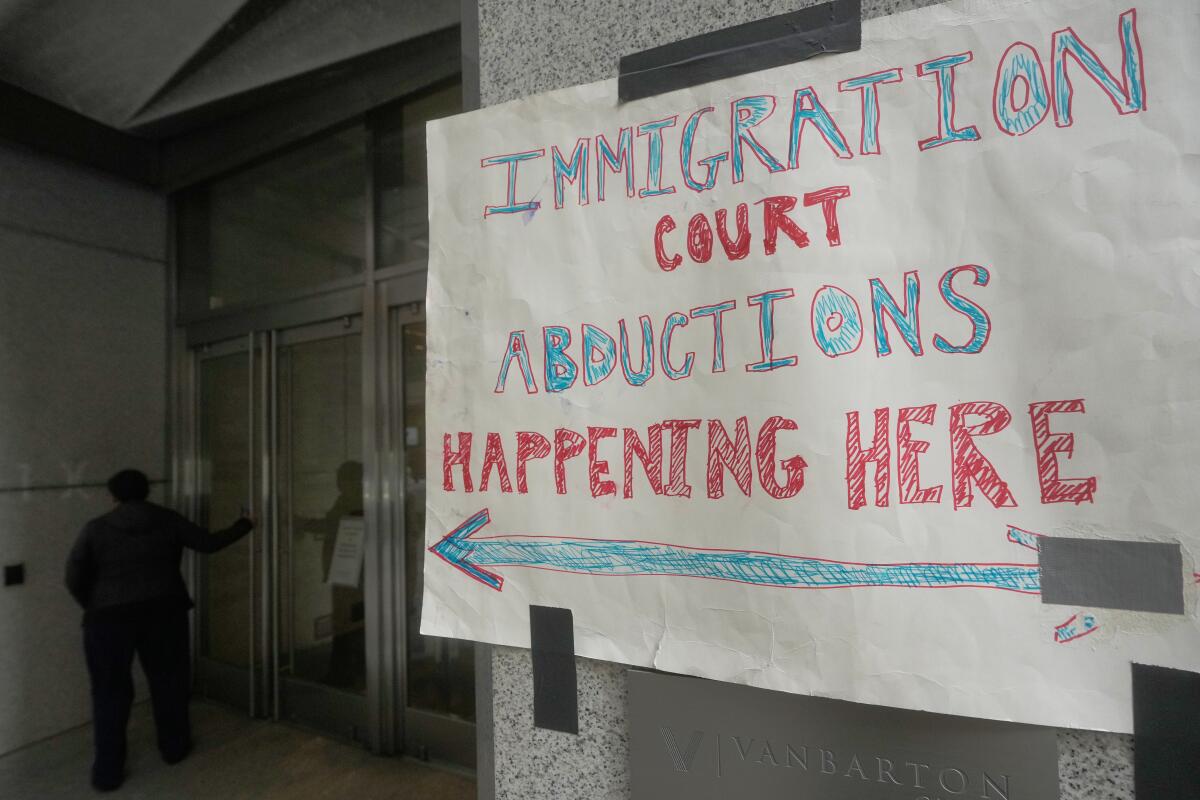
A sign posted outside the San Francisco Immigration Court in October protests enforcement actions by immigration agents.

A sign posted outside the San Francisco Immigration Court in October protests enforcement actions by immigration agents. The court has lost more than half of its immigration judges.

(Jeff Chiu / Associated Press)

The judges in San Francisco’s Immigration Court have historically had higher asylum approval rates than the national average. Johnson said grant rates depend on a variety of circumstances, including whether a person is detained or has legal representation, their country of origin and whether they are adults or children.

In November, the military judges serving in immigration courts heard 286 cases and issued rulings in 110, according to Mobile Pathways. The military judges issued deportation orders in 78% of the cases — more often than other immigration judges that month, who ordered deportations in 63% of cases.

“They’re probably following directions — and the military is very good at following directions — and it’s clear what their directions are that are given by this administration,” said Mobile Pathways co-founder Bartlomiej Skorupa. He cautioned that 110 cases are a small sample size and that trends will become clearer in the coming months.

Former immigration judges and their advocates say that appointing people with no immigration experience and little training makes for a steep learning curve and the possibility of due process violations.

There are multiple concerns here: that they’re temporary, which could expose them to greater pressure to decide cases in a certain way; and also they lack experience in immigration law, which is an extremely complex area of practice,” said Ingrid Eagly, an immigration law professor at UCLA.

Immigration courts have a backlog of more than 3 million cases. Anam Petit, who served as an immigration judge in Virginia until September, said the administration’s emphasis on speedy case completions has to be balanced against the constitutional right to a fair hearing.

“There are not enough judges to hear those cases, and this administration [is] taking it upon themselves to fire a lot of experienced and trained judges who can hear those cases and can mitigate that backlog,” she said.

Complementary bills introduced in the U.S. Senate and House this month by Sen. Adam Schiff (D-Calif.) and Rep. Juan Vargas (D-San Diego) would prevent the appointment of military lawyers as temporary immigration judges and impose a two-year limit of service.

“The Trump administration’s willingness to fire experienced immigration judges and hire inexperienced or temporary ‘deportation judges,’ especially in places like California, has fundamentally impacted the landscape of our justice system,” Schiff said in a statement announcing the bill.

The bills have little chance in the Republican-controlled Congress but illustrate how significantly Democrats — especially in California — oppose the administration’s changes to immigration courts.

Former Immigration Judge Tania Nemer, a dual citizen of Lebanon and the U.S., sued the Justice Department and Atty. Gen. Pam Bondi this month, alleging that she was illegally terminated in February because of her gender, ethnic background and political affiliation. In 2023, Nemer ran for judicial office in Ohio as a Democrat.

Atty. Gen. Pam Bondi speaks at the White House in October.

Atty. Gen. Pam Bondi, seen here at the White House in October, has dismissed complaints by a former immigration judge who alleged she was fired without cause.

(Evan Vucci / Associated Press)

Bondi addressed the lawsuit in a Cabinet meeting.

“Most recently, yesterday, I was sued by an immigration judge who we fired,” she said Dec. 2. “One of the reasons she said she was a woman. Last I checked, I was a woman as well.”

Other former judges have challenged their terminations through the federal Merit Systems Protection Board.

Johnson, of San Francisco, is one of those. He filed his appeal this month, claiming that he was not given cause for termination.

“My goal is to be reinstated,” he said. “My colleagues on the bench, our court was vibrant. It was a good place to work, despite all the pressures.”

Source link

Venezuela: Trump Administration Ramps Up Oil Sanctions, Targets Tankers

The Trump administration is escalating its “maximum pressure” sanctions campaign by targeting shipping companies. (Reuters)

Caracas, December 12, 2025 (venezuelanalysis.com) – The US Treasury Department levied new sanctions against the Venezuelan oil industry as the Trump White House looks to strangle the Caribbean nation’s most important revenue source.

On Thursday, the Treasury’s Office of Foreign Assets Control (OFAC) blacklisted six shipping companies for allegedly transporting Venezuelan crude. OFAC likewise identified six tankers, one from each sanctioned firm, as blocked property.

“Today’s action also targets Venezuela’s oil sector, which continues to fund Maduro’s illegitimate regime,” the US Treasury stated in a press release.

The Trump administration’s latest coercive measures mark an escalation in its efforts to target Venezuela’s oil industry. During his first term, Trump introduced a “maximum pressure” campaign that included financial sanctions, an export embargo and secondary sanctions against Venezuela’s oil sector.

In his second term, the White House withdrew Chevron’s license to extract and export crude from its ventures in Venezuela before issuing a new, limited waiver in May.

The latest sanctions come amid a large-scale US military buildup and deadly operations in the Caribbean under a self-declared anti-narcotics mission. However, reports from specialized agencies have contradicted the White House’s “narcoterrorism” accusations against Caracas.

Trump has issued repeated threats to attack purported drug targets inside Venezuelan territory. Analysts and political figures have argued that Washington’s true goal is regime change in order to take control of Venezuelan natural resources.

On Wednesday, the US Coast Guard led the seizure of an oil tanker carrying Venezuelan crude. The Skipper, which had been blacklisted by the US Treasury in 2021 for allegedly transporting Iranian crude, was commandeered in international waters while carrying an estimated 1.6 million barrels of crude bound for Asian markets. 

Caracas condemned the move as “international piracy” and vowed to denounce it before international bodies. US officials told Reuters that more seizures are expected in the near future, while former Biden administration advisor Juan González raised the prospect of a naval blockade against the South American country.

Washington’s tanker drew widespread rejection, with US anti-war collective Code Pink calling it “21st century piracy.” The American Association of Jurists likewise issued a statement condemning US actions as illegal and a violation of international law.

US authorities had previously seized Venezuela-bound Iranian fuel in 2020. In November, a US warship blocked the path of a Russian tanker, forcing it to make a U-turn before eventually reaching its destination in eastern Venezuela.

Thursday’s coercive measures likewise included individual sanctions against Ramón Carretero, Carlos Malpica, Efrain Campo and Franqui Flores. Carretero, a Panamanian national, was targeted for alleged involvement in Venezuelan oil sales.

Malpica, Campo and Flores are nephews of Venezuelan First Lady and National Assembly Deputy Cilia Flores. Malpica had been previously designated in 2017 before being withdrawn from OFAC’s List of Specially Designated Nationals and Blocked Persons (SDN List) in 2022. Campo and Flores were serving 18-year sentences on drug trafficking charges when they were released by the Biden administration in a prisoner exchange in 2022.

The sanctioned companies and individuals will see any US-based assets frozen, while US persons and firms are barred from conducting any business with them.

Oil production remains stable

Amidst recent US threats and escalatory actions, Venezuela’s oil sector has maintained a steady output level.

According to OPEC, production stood at 934,000 barrels per day (bpd) in November, slightly below 961,000 bpd in October, as measured by secondary sources. Venezuela’s oil industry recovered from decades-low output levels in 2020 but has not managed to surpass the 1 million bpd threshold.

In contrast, state oil company PDVSA reported a higher output of 1.14 million bpd in November. The direct and secondary measurements have differed over time due to disagreements on the inclusion of natural gas liquids and condensates.

The recent tanker seizure is expected to hit Venezuelan oil revenues through higher shipping and insurance costs. PDVSA is forced to rely on intermediaries and levy significant discounts in order to place crude cargoes in international markets.

An oversupply of sanctioned crude from Iran and Russia has likewise cut into PDVSA’s profit margins in recent weeks.

Edited by Cira Pascual Marquina in Caracas.

Source link

How the Trump administration sold out public lands in 2025

Last February, I climbed into a Jeep and rumbled up a rocky shelf road that took me high above a breathtaking corner of the Mojave National Preserve. At the top was an old gold mine where an Australian company had recently restarted activities, looking for rare earth minerals.

The National Park Service had been embroiled in a years-long dispute with the company, Dateline Resources Ltd., alleging that it was operating the Colosseum Mine without authorization and had damaged the surrounding landscape with heavy equipment. Dateline said it had the right to work the mine under a plan its prior operators had submitted to the Bureau of Land Management decades before.

President Trump had taken office just weeks before my visit. Environmentalists told me the conflict posed an early test of how his administration would handle the corporate exploitation of public lands.

You’re reading Boiling Point

The L.A. Times climate team gets you up to speed on climate change, energy and the environment. Sign up to get it in your inbox every week.

By continuing, you agree to our Terms of Service and our Privacy Policy.

At the time, observers weren’t sure how things would shake out. Conserving public lands is one of the rare issues that’s popular on both sides of the political aisle, they pointed out.

Almost a year later, it’s clear that the Trump administration has sided with the corporations.

Trump directed the Department of Interior to inventory mineral deposits on federal lands and prioritize mining as the primary use of those lands. He instructed officials to dramatically fast-track permitting and environmental reviews for certain types of energy and critical minerals projects — and designated metallurgical coal a critical mineral, enabling companies that mine it to qualify for a lucrative tax credit.

His budget bill lowered the royalty rates companies must pay the government to extract coal, oil or gas from public lands and provided other financial incentives for such projects while reducing the authority of federal land managers to deny them.

Under the president’s direction, the DOI has opened up millions of acres of federal land to new coal leasing and moved to rescind both the 2021 Roadless Rule, which protects swaths of national forest lands from extractive activities by barring most new road construction, and the 2024 Public Lands Rule, which puts conservation and restoration on par with other uses of BLM land like mining, drilling and grazing.

The administration is seeking to roll back limitations on mining and drilling for specific pieces of public land, including portions of the National Petroleum Reserve in Alaska, the watershed feeding the Boundary Waters in Minnesota and a buffer surrounding Chaco Culture National Historical Park in New Mexico. Meanwhile, conservative lawmakers overturned management plans limiting energy development on certain BLM lands in Alaska, Montana, North Dakota and Wyoming.

Altogether, the Trump administration and its legislative allies have taken steps to reduce or eliminate protections for nearly 90 million acres of public land, according to the Center for American Progress, a progressive think tank. That figure rises to more than 175 million acres if you include the habitat protections diminished by the administration’s moves to weaken the Endangered Species Act, the organization notes.

“All of these things represent in some ways the largest attack on our public lands and giveaway to large multinational mining corporations that we’ve seen probably since the 19th century,” said U.S. Rep. Melanie Stansbury of New Mexico, who likened the level of resource exploitation to “something like what happened during the robber baron era when there was no regulation or protection for our communities or the environment.”

Stansbury has introduced legislation that would increase the fees mining companies must pay to sit on speculative claims on federal lands and require those funds be used for conservation. She told me it’s just a tiny contribution to a larger effort to push back against the administration’s approach to initiate extraction on public lands, which she described as so frequent and pervasive that “it’s a bit like whack-a-mole.”

“So much damage has been done, both administratively and legislatively, over the last 11 months since Trump took office,” she said.

As for the Colosseum Mine, the DOI sided with its operators back in the spring, saying Dateline Resources did not have to seek authorization from the Park Service to keep mining. The announcement was followed by public endorsements from Trump and Interior Secretary Doug Burgum. The company’s stock value soared, and by September, it had kicked off a major drilling blitz.

The company has already uncovered high-grade gold deposits. It’s taking a break for Christmas, but is expected to resume drilling in the new year.

More recent land news

The Pacific Forest Trust returned nearly 900 acres of land near Yosemite National Park to the Southern Sierra Miwuk Nation in a transfer partially financed by the state, reports Kurtis Alexander of the San Francisco Chronicle. Members of the Indigenous group were forced off their ancestral lands during the California Gold Rush, when state-sponsored militias undertook efforts to exterminate them. Some now hope the new property will bolster their decades-long push for federal recognition.

California State Parks is violating the Endangered Species Act by allowing offroaders to drive over dunes that are home to western snowy plovers, a judge recently ruled in a long-running legal case over the use of Oceano Dunes State Recreation Area along the Central Coast. Edvard Pettersson of the Courthouse News Service reports that State Parks will need a federal “take” permit to continue to allow offroading at the popular beachside spot.

California lawmakers introduced legislation to conserve more than 1.7 million acres of public lands across the state, in part by expanding the Los Padres National Forest and the Carrizo Plain National Monument, according to Stephanie Zappelli of the San Luis Obispo Tribune.

The federal public lands grazing program was created as a bulwark against environmental damage but has been transformed into a massive subsidy program benefiting a select few, including billionaire hobby ranchers and large corporations, according to an investigation by ProPublica and High Country News. The three-part series also found a loophole allowing for the automatic renewal of grazing permits has led to less oversight over the health of these lands.

A few last things in climate news

President Trump’s media company is merging with a nuclear fusion energy firm in a $6-billion deal that some analysts have described as a major conflict of interest, my colleague Caroline Petrow-Cohen reports.

House Republicans pushed through a bill that would overhaul the federal environmental review process in a way that critics say could speed up the approval process for oil and gas projects while stymieing clean energy, report Aidan Hughes and Carl David Goette-Luciak of Inside Climate News.

The iconic chasing-arrows recycling symbol is likely to be removed from California milk cartons, my colleague Susanne Rust reports. The decision exposes how used beverage packaging has been illegally exported to East Asia as “recycled” mixed paper, violating international environmental law.

Wind energy is again under attack from the Trump administration, which this week ordered all major wind construction projects to halt. As The Times’ Hayley Smith notes, the White House has been consistent in slowing down clean energy development in 2025, but offshore wind has been a particular bête noire for the President.

We’ve published a comprehensive collection of stories looking back on the wildfires that burned though Altadena and Pacific Palisades last January and all that’s happened since, which columnist Steve Lopez calls “one of the most apocalyptic years in Southern California history.” Check out After the Fires here.

This is the latest edition of Boiling Point, a newsletter about climate change and the environment in the American West. Sign up here to get it in your inbox. And listen to our Boiling Point podcast here.

For more land news, follow @phila_lex on X and alex-wigglesworth.bsky.social on Bluesky.

Source link

Trump administration to resume wage garnishment for student loan defaulters | Education News

Borrowers to receive wage garnishment notices starting January 7, Department of Education confirms.

The administration of United States President Donald Trump says it will begin garnishing wages from some borrowers who have defaulted on their student loans, marking the first time the federal government has taken such action since the onset of the COVID-19 pandemic.

Affected borrowers will begin receiving notices on January 7, a Department of Education spokesperson told Al Jazeera on Tuesday.

Recommended Stories

list of 4 itemsend of list

The policy is expected to initially impact about 1,000 borrowers, and the number is to grow over time.

“The notices will increase in scale on a month-to-month basis,” the spokesperson said.

Al Jazeera asked the department for clarification on how borrowers were selected for the first round of garnishments, how many additional people may be affected and the rationale behind those decisions.

The agency did not clarify but said collections are “conducted only after student and parent borrowers have been provided sufficient notice and opportunity to repay their loans”.

Under federal law, the government may garnish up to 15 percent of a borrower’s take-home pay as long as the individual is left with at least 30 times the federal minimum wage per week. The federal minimum wage is currently $7.25 an hour, a rate that has remained unchanged since July 2009.

About one in six American adults holds student loan debt, which totals about $1.6 trillion. As of April, more than 5 million borrowers had not made a payment in at least a year, according to the Education Department.

The garnishments are planned as economic pressure mounts for many Americans amid rising prices and a cooling labour market. According to consulting firm Challenger, Gray & Christmas, more than 1.1 million people lost their jobs in 2025 as job growth slowed. Federal data also showed mixed employment trends in recent months with job losses reported in October followed by modest gains in November.

In the months of October and November, the unemployment rate increased to 4.6 percent, the highest since 2021, according to the US Department of Labor’s Bureau of Labor Statistics.

“Families are being forced to choose between paying their bills and putting food on the table. The Trump administration’s decision to begin garnishing wages takes even that meagre choice away from student loan borrowers who are living on the brink,” Julie Margetta Morgan, former deputy undersecretary at the Education Department under former President Joe Biden, told Al Jazeera.

“Instead of solving the affordability crisis that’s leaving Americans unable to pay their student loans, the president is further punishing families and forcing them to forgo the very basics.”

In addition to wages, the federal government has the authority to garnish income from tax refunds, Social Security benefits and certain disability payments.

Source link

NSA employee sues Trump administration over order on transgender rights and two ‘immutable’ genders

A transgender employee of the National Security Agency is suing the Trump administration and seeking to block enforcement of a presidential executive order and other policies the employee says violate federal civil rights law.

Sarah O’Neill, an NSA data scientist who is transgender, is challenging President Trump’s Inauguration Day executive order that required the federal government, in all operations and printed materials, to recognize only two “immutable” sexes: male and female.

According to the lawsuit filed Monday in a U.S. District Court in Maryland, Trump’s order “declares that it is the policy of the United States government to deny Ms. O’Neill’s very existence.”

The White House did not immediately respond to a request for comment.

The order, which reflected Trump’s 2024 campaign rhetoric, spurred policies that O’Neill is challenging, as well.

Since Trump’s initial executive action, O’Neill asserts the NSA has canceled its policy recognizing her transgender identity and “right to a workplace free of unlawful harassment,” while “prohibiting her from identifying her pronouns as female in written communications” and “barring her from using the women’s restroom at work.”

O’Neill contends those policies and the orders behind them create a hostile work environment and violate Section VII of the Civil Rights Act. The U.S. Supreme Court ruled in 2020 that Section VII’s prohibition on discrimination based on sex applied to gender identity.

“We agree that homosexuality and transgender status are distinct concepts from sex,” the court’s majority opinion stated. “But, as we’ve seen, discrimination based on homosexuality or transgender status necessarily entails discrimination based on sex; the first cannot happen without the second.”

O’Neill’s lawsuit argued, “The Executive Order rejects the existence of gender identity altogether, let alone the possibility that someone’s gender identity can differ from their sex, which it characterizes as ‘gender ideology.’ ”

In addition to restoring her workplace rights and protections, O’Neill is seeking financial damages.

Trump’s order was among a flurry of executive actions he took hours after taking office. He has continued using executive action aggressively in his second presidency, prompting many legal challenges that are still working their way through the federal judiciary.

Barrow writes for the Associated Press.

Source link

Rubio fields questions on Russia-Ukraine, Gaza and Venezuela

Secretary of State Marco Rubio weighed in on Russia-Ukraine and Israel-Hamas peace efforts and defended the Trump administration’s increasing military pressure on Venezuela during a rare, end-of-year news conference Friday.

In a freewheeling meeting with reporters running more than two hours, Rubio also defended President Trump’s radical overhaul in foreign assistance and detailed the administration’s work to reach a humanitarian ceasefire in Sudan in time for the new year.

Rubio’s appearance in the State Department briefing room comes as key meetings on Gaza and Russia-Ukraine are set to be held in Miami on Friday and Saturday after a tumultuous year in U.S. foreign policy. Rubio has assumed the additional role of national security advisor and emerged as a staunch defender of Trump’s “America First” priorities on issues ranging from visa restrictions to a shakeup of the State Department bureaucracy.

The news conference is taking place just hours before Trump’s special envoy Steve Witkoff meets with senior officials from Egypt, Turkey and Qatar to discuss the next phase of the Republican president’s Gaza ceasefire plan, progress on which has moved slowly since it was announced in October.

Witkoff and other U.S. officials, including Trump son-in-law and informal advisor Jared Kushner, have been pushing to get the Gaza plan implemented by setting up a “Board of Peace” that will oversee the territory after two years of war and create an international stabilization force that would police the area.

On Saturday, Witkoff, Kushner and Rubio, who will be at his home in Florida for the holidays, are to meet with Russian President Vladimir Putin’s adviser Kirill Dmitriev in Miami to go over the latest iteration of a U.S.-proposed plan to end the Russia-Ukraine war.

Rubio said there would be no peace deal unless both Ukraine and Russia can agree to the terms, making it impossible for the U.S. to force a deal on anyone. Instead, the U.S. is trying to “figure out if we can nudge both sides to a common place.”

“We understand that you’re not going to have a deal unless both sides have to give, and both sides have to get,” Rubio said. “Both sides will have to make concessions if you’re going to have a deal. You may not have a deal. We may not have a deal. It’s unfortunate.”

The U.S. proposal has been through numerous versions with Trump seesawing back and forth between offering support and encouragement for Ukraine and then seemingly sympathizing with Putin’s hard-line stances by pushing Ukrainian President Volodymyr Zelensky to agree to territorial concessions. Kyiv has rejected that concession in return for security guarantees intended to protect Ukraine from future Russian incursions.

On Venezuela, Rubio has been a leading proponent of military operations against suspected drug-running vessels that have been targeted by the Pentagon in the Caribbean Sea and the eastern Pacific Ocean since early September. The Trump administration’s actions have ramped up pressure on leftist Venezuelan President Nicolás Maduro, who has been charged with narco-terrorism in the U.S.

In an interview with NBC News on Friday, Trump would not rule out a war with Venezuela. But Rubio and Defense Secretary Pete Hegseth have publicly maintained that the current operations are directed at “narco-terrorists” trying to smuggle deadly drugs into the United States. Maduro has insisted the real purpose of the U.S. military operations is to force him from office.

Rubio sidestepped a direct question about whether the U.S. wants “regime change in 2026” in the South American country.

“We have a regime that’s illegitimate, that cooperates with Iran, that cooperates with Hezbollah, that cooperates with narco-trafficking and narco-terrorist organizations,” Rubio said, “including not just protecting their shipments and allowing them to operate with impunity, but also allows some of them to control territory.”

Rubio defended Trump’s prerogatives on Venezuela and said the administration believes “nothing has happened that requires us to notify Congress or get congressional approval or cross the threshold into war.” He added, “We have very strong legal opinions.”

Trump has spoken of wanting to be remembered as a “peacemaker,” but ceasefires his administration helped craft are already in trouble due to renewed military action between Cambodia and Thailand in Asia and Rwanda and the Democratic Republic of the Congo in Africa. Rubio, however, said those deals helped create a list of commitments that can now be used to bring both sides back to peace.

“Those commitments today are not being kept,” Rubio said of the Thailand-Cambodia conflict, which now threatens to reignite following Thai airstrikes. ”The work now is to bring them back to the table.”

Rubio’s news conference comes just two days after the Trump administration announced a massive $11-billion package of arms sales to Taiwan, a move that infuriated Beijing, which has vowed to retake the island by force if necessary.

Trump has veered between conciliatory and aggressive messages to China since returning to the Oval Office in January, hitting Chinese imports with major tariffs but at the same time offering to ease commercial pressure on Beijing in conversations with China’s President Xi Jinping. The Trump administration, though, has consistently decried China’s increasingly aggressive posture toward Taiwan and its smaller neighbors in disputes over the South China Sea.

Since taking over the State Department, Rubio has moved swiftly to implement Trump’s “America First” agenda, helping dismantle the U.S. Agency for International Development and reducing the size of the diplomatic corps through a significant reorganization. Previous administrations have distributed billions of dollars in foreign assistance over the last five decades through USAID.

Critics have said the decision to eliminate USAID and slash foreign aid spending has cost lives overseas, although Rubio and others have denied this, pointing to ongoing disaster relief operations in the Philippines, the Caribbean and elsewhere, along with new global health compacts being signed with countries that previously had programs run by USAID.

“We have a limited amount of money that can be dedicated to foreign aid and humanitarian assistance,” Rubio said. “And that has to be applied in a way that furthers our national interest.”

Lee and Klepper write for the Associated Press. AP writer Bill Barrow contributed to this report.

Source link

Trump administration moves to cut off transgender care for children

The U.S. Department of Health and Human Services on Thursday unveiled a series of regulatory actions designed to effectively ban gender-affirming care for minors, building on broader Trump administration restrictions on transgender Americans.

The sweeping proposals — the most significant moves this administration has taken so far to restrict the use of puberty blockers, hormone therapy and surgical interventions for transgender children — include cutting off federal Medicaid and Medicare funding from hospitals that provide gender-affirming care to children and prohibiting federal Medicaid dollars from being used to fund such procedures.

“This is not medicine, it is malpractice,” Health Secretary Robert F. Kennedy Jr. said of gender-affirming procedures on children in a news conference on Thursday. “Sex-rejecting procedures rob children of their futures.”

Kennedy also announced Thursday that the HHS Office of Civil Rights will propose a rule excluding gender dysphoria from the definition of a disability.

In a related move, the Food and Drug Administration issued warning letters to a dozen companies that market chest-binding vests and other equipment used by people with gender dysphoria. Manufacturers include GenderBender LLC of Carson, California and TomboyX of Seattle. The FDA letters state that chest binders can only be legally marketed for FDA-approved medical uses, such as recovery after mastectomy surgery.

Medicaid programs in slightly less than half of states currently cover gender-affirming care. At least 27 states have adopted laws restricting or banning the care. The Supreme Court’s recent decision upholding Tennessee’s ban means most other state laws are likely to remain in place.

Thursday’s announcements would imperil access in nearly two dozen states where drug treatments and surgical procedures remain legal and funded by Medicaid, which includes federal and state dollars.

The proposals announced by Kennedy and his deputies are not final or legally binding. The federal government must go through a lengthy rulemaking process, including periods of public comment and document rewrites, before the restrictions becoming permanent. They are also likely to face legal challenges.

But the proposed rules will likely further intimidate health care providers from offering gender-affirming care to children and many hospitals have already ceased such care in anticipation of federal action.

Nearly all U.S. hospitals participate in the Medicare and Medicaid programs, the federal government’s largest health plans that cover seniors, the disabled and low-income Americans. Losing access to those payments would imperil most U.S. hospitals and medical providers.

The same funding restrictions would apply to a smaller health program when it comes to care for people under the age of 19, the State Children’s Health Insurance Program, according to a federal notice posted Thursday morning.

Moves contradict advice from medical organizations and transgender advocates

Dr. Mehmet Oz, the administrator of the Centers for Medicare and Medicaid Services, on Thursday called transgender treatments “a Band-Aid on a much deeper pathology,” and suggested children with gender dysphoria are “confused, lost and need help.”

Polling shows many Americans agree with the administration’s view of the issue. An Associated Press-NORC Center for Public Affairs Research survey conducted earlier this year found that about half of U.S. adults approved of how Trump was handling transgender issues.

Chloe Cole, a conservative activist known for speaking about her gender-transition reversal, spoke at the news conference to express appreciation. She said cries for help from her and others in her situation, “have finally been heard.”

But the approach contradicts the recommendations of most major U.S. medical organizations, including the American Medical Association, which has urged states not to restrict care for gender dysphoria.

Advocates for transgender children strongly refuted the administration’s claims about gender-affirming care and said Thursday’s moves would put lives at risk.

“In an effort to strongarm hospitals into participating in the administration’s anti-LGBTQ agenda, the Trump Administration is forcing health care systems to choose between providing lifesaving care for LGBTQ+ young people and accepting crucial federal funding,” Dr. Jamila Perritt, a Washington-based OB/GYN and president and CEO of Physicians for Reproductive Health, said in a statement. “This is a lose-lose situation where lives are inevitably on the line. “

Rodrigo Heng-Lehtinen, senior vice president at The Trevor Project, a nonprofit suicide prevention organization for LBGTQ+ youth, called the changes a “one-size-fits-all mandate from the federal government” on a decision that should be between a doctor and patient.

“The multitude of efforts we are seeing from federal legislators to strip transgender and nonbinary youth of the health care they need is deeply troubling,” he said.

Actions build on a larger effort to restrict transgender rights

The announcements build on a wave of actions President Trump, his administration and Republicans in Congress have taken to target the rights of transgender people nationwide.

On his first day in office, Trump signed an executive order that declared the federal government would recognize only two immutable sexes: male and female. He also has signed orders aimed at cutting off federal support for gender transitions for people under age 19 and barring transgender athletes from participating in girls’ and women’s sports.

On Wednesday, a bill that would open transgender health care providers to prison time if they treat people under the age of 18 passed the U.S. House and heads to the Senate. Another bill under consideration in the House on Thursday aims to ban Medicaid coverage for gender-affirming care for children.

Young people who persistently identify as a gender that differs from their sex assigned at birth are first evaluated by a team of professionals. Some may try a social transition, involving changing a hairstyle or pronouns. Some may later also receive hormone-blocking drugs that delay puberty, followed by testosterone or estrogen to bring about the desired physical changes in patients. Surgery is rare for minors.

Swenson, Perrone and Shastri write for the Associated Press. Shastri reported from Milwaukee. AP writer Geoff Mulvihill contributed to this report.

Source link

Mick Foley parts ways with WWE because of its ties with Trump

Professional wrestling legend Mick Foley announced Tuesday that he is “parting ways with WWE” because of the organization’s ties with fellow WWE Hall of Fame inductee President Trump.

“While I have been concerned about WWE‘s close relationship with Donald Trump for several months — especially in light of his administration’s ongoing cruel and inhumane treatment of immigrants (and pretty much anyone who “looks like an immigrant”) — reading the President’s incredibly cruel comments in the wake of Rob Reiner’s death is the final straw for me,” Foley, 60, wrote Tuesday on Instagram.

“I no longer wish to represent a company that coddles a man so seemingly void of compassion as he marches our country towards autocracy. Last night, I informed @WWE talent relations that I would not be making any appearances for the company as long as this man remains in office.

“Additionally, I will not be signing a new Legends deal when my current one expires in June.”

WWE did not immediately respond to a request for comment from The Times.

Following the killings of Hollywood icon Reiner and wife Michele Singer Reiner, Trump wrote on social media that the couple died “reportedly due to the anger he caused others through his massive, unyielding, and incurable affliction with a mind crippling disease known as TRUMP DERANGEMENT SYNDROME.”

Trump added of Reiner, who had campaigned for liberal causes: “He was known to have driven people CRAZY by his raging obsession of President Donald J. Trump, with his obvious paranoia reaching new heights as the Trump Administration surpassed all goals and expectations of greatness, and with the Golden Age of America upon us, perhaps like never before. May Rob and Michele rest in peace!”

Nick Reiner, 32, has been arrested on suspicion of murdering his parents. Trump’s comments have drawn bipartisan backlash.

Foley won the WWF (as the company was then known) championship three times in the late 1990s in his Mankind persona. He has also won eight WWF tag team titles and also has wrestled as Cactus Jack, Dude Love and under his own name. He retired from the ring in 2012 but has appeared in various roles for the league since then.

Foley was inducted into the WWE Hall of Fame in 2013. So was Trump, as a celebrity inductee.

A longtime pro wrestling fan, Trump has hosted WWE events and has been an active participant, both in and out of the ring, in a number of storylines. Late last year, Trump named Linda McMahon — the former longtime WWE chief executive and president whose husband, Vince McMahon, is the company’s founder — as secretary of Education for his second term.

Source link

Kenneth Guenther : A Voice for Independent Banks Stands Up to the Administration

James Bates covers banking for The Times. He interviewed Kenneth A. Guenther during a recent meeting of California independent bankers

At a time of huge bank mergers and cries to overhaul the nation’s banking system, Kenneth A. Guenther makes sure the smallest banks in America have one of the loudest voices.

The outspoken chief executive and executive vice president of the Independent Bankers Assn. of America more often than not finds himself at odds with powerful forces pushing for sweeping changes in the rules banks operate under as well as those promoting huge mergers as a way to improve the health of the nation’s banks.

The future of the Bush Administration’s bank reforms–allowing banks to open branches across state lines, allowing banks into Wall Street and insurance activities and permitting industrial and service companies to buy banks–is growing more uncertain. Two weeks ago, the House voted down a Democrat-altered version of the bank-reform plan. A much narrower bill, largely to bolster the nation’s dwindling bank deposit insurance fund, could be approved soon, but any major reforms are unlikely right now.

In fighting the Administration, Guenther has irked some powerful people. Treasury Secretary Nicholas F. Brady has said that Guenther “demeans his members, carrying on the way he does” in his opposition to the bank-overhaul plans.

A native of Rochester, N.Y., Guenther, 55, completed graduate studies at Johns Hopkins, the University of Rangoon and Yale University. A former Treasury and State Department official, Guenther served as a special assistant to three former heads of the Federal Reserve Board. He joined the 6,100-member banking trade group roughly 10 years ago.

Guenther’s basic point is that the deck is increasingly stacked against the small community banks. Although he has the image of a maverick, Guenther is very much a Washington insider, maintaining cordial relationships with many people he disagrees with publicly. He plays tennis with the likes of Federal Reserve Chairman Alan Greenspan and various bank regulators–though he often finds himself at odds with them on policy.

Guenther uses blunt words to make his case. But the Washington influence shows in his dress–a formal business suit for morning meetings even at a resort hotel where everyone is dressed for golf. His populist style has made him a hero among independent bankers, while attracting criticism from those who accuse him of grandstanding.

Part of Guenther’s clout comes with his skill with the media. He is a prolific writer of letters to the editor, is quoted frequently and has strong friendships with reporters–in fact, he and his wife, Lilly, are godparents of a New York Times reporter’s twins.

Question: What future does the independent bank have in this age of banking consolidation?

Answer: There are going to be fewer big banks and medium-sized banks than smaller banks. As banks get larger, this opens up more niches for your smaller banks. Larger banks generally mean poorer services for your small business and small-time customers.

Q: Large banks would argue the opposite. They would say it will be good for customers, providing things they can’t get now.

A: With size comes regimentation. You are going to have to do things their way. There is going to be far less “high touch.” Those small banks providing high-touch services are going to have increased opportunities.

Q: What about public policy concerning mergers? You said Treasury is committed to seeing a lot of mergers. Why so?

A: Secretary (Nicholas F.) Brady wants to get the banks in this country into the No. 1 rank. But people aren’t looking at the cost of building banks to the size of the Japanese banks. Size alone does not mean a healthy, good, diversified financial system or political system. The Japanese have the largest banks in the world, but who wants their political system? Our diversified financial and economic system underlies our diversified political system.

Q: What about the argument that the big banks use , that there’s too much overcapacity? That there are too many banks?

A: There’s a very interesting study out from the Federal Reserve Bank of Minneapolis that says public policy promoting consolidation is not in the interests of the banking system or the economy. This study indicates that we should not be moving in that direction.

Q: What about the argument that says the banking system is inefficient?

A: I think our banking system is remarkably efficient. I think we have still the strongest entrepreneurial system in the world. It needs some fine tuning. But we don’t have to throw it out lock, stock and barrel and adopt a Japanese model.

Q: Does it need consolidation?

A: The industry is consolidating. The question is: Is it productive public policy to force more rapid consolidation?

Q: The House for now has rejected legislation to overhaul the banking system. What does this mean for the independent banks?

A: This legislation has nine lives–it’s on its fourth now. The Administration and their big-bank allies killed a version of the bill they didn’t like and moved immediately to resuscitate another version of Secretary Brady’s big-bank reform bill.

Q: Why should people care about these proposals?

A: Everybody in the United States should breathe a big sigh of relief because the House has turned back a proposal from the Administration which would have allowed the largest commercial firms–domestic and foreign–to buy the largest banks in this country. This would have totally restructured the economic and financial system of the United States and led to an enormous concentration of economic power. That’s always bad news for John Q. Public.

Q: Why shouldn’t a bank be allowed to open a branch across a state line?

A: Our problem with that is that the Treasury Department proposed to keep “too big to fail”–meaning the Treasury Department proposed that the bigger banks continue to have a 100% deposit insurance product. At the same time, they were proposing that our deposit insurance product be reduced. That means the big banks could go across state lines, offering a superior deposit insurance product. This would have driven money out of the smaller banks of this country.

Q: Do you fear that there will eventually be some cuts in deposit insurance?

A: Everybody knows that the FDIC (Federal Deposit Insurance Corp.) fund is hurting. Why not expand the assessment base? The foreign deposits in American banks that enjoy deposit insurance coverage do not pay deposit insurance premiums. Make everybody who has the insurance pay for the insurance. That could bring in literally billions and billions of dollars a year.

Q: Does it matter whether we declare a policy saying banks are not too big to fail? In a crunch, won’t we step in?

A: (Federal Reserve Board Chairman) Alan Greenspan is about as free market as you can get. But Greenspan has testified repeatedly before the Congress that the large uninsured depositor cannot be put at risk, because if he’s put at risk in this country we will have runs (on the banks). He will take his money and put it into the Japanese banks, or German banks. What Alan Greenspan is saying is, in the moment of truth, we are going to intervene to make sure the depositors in your big banks do not get hurt, because this is essential for the stability of the system. How can you make a policy prescription to cut back deposit insurance for John Q. Public, who banks with a smaller institution?

Q: What about proposals such as $100,000 protection per Social Security number?

A: In this day and age, $100,000 is not that much money. It’s a four-year college course for a student who doesn’t go to an Eastern school. Again, you are penalizing your smaller institutions. People will put their money in your “too-big-to-fail” banks.

Q: What about allowing banks into other lines of business?

A: You are opening the door into riskier areas. If you are moving into a business you don’t know well, you are not inclined to do it well in the beginning. And the doors that they are trying to open are really quite risky. Underwriting corporate debt, or underwriting stocks is a risky business. Will the banks do it well? Will it turn out to be profitable? I think these are question marks.

Q: What are the primary problems of independent banks these days?

A. We are in a recession that is deeper than anticipated. The Fed has just cut key interest rates. . . . The other problem is that the industry went too far overboard in terms of commercial real-estate development.

Q: How healthy are independent banks?

A: The independent banks are healthier than your larger banks.

Q: Can the voice of an independent bank be heard these days?

A: It’s enormously frustrating that this Administration is listening to a very select number of voices. The Treasury Department is promoting a legislative product that benefits a relatively few number of large financial institutions. This is why we have sort of adopted the theme that the Treasury is promoting Wall Street and we are here trying to protect Main Street. There are far more Main Street institutions than Wall Street institutions.

Q: Do you think that the deck is stacked against the independent bank?

A. The deck in this Administration is stacked against the independent banks. And therefore we have put together this wide-ranging Main Street coalition: small business, retired people, home builders and farm groups working against key elements in the Administration proposal.

Q: Both you and your association have taken a lot of criticism from people like Brady and also other trade groups.

A: No one likes to be criticized by the secretary of Treasury, who is a nice man. But I’m sorry, Mr. Secretary, your policy objectives are very different than ours. Your policy objectives will make life much tougher for millions of banks and small businesses.

Q: If they gave you the banking reform bill and said write it any way you want, what would you do?

A: The problem is that this bill focused on the weakness of the deposit insurance fund. Something has to be done to strengthen the deposit insurance fund, and thus strengthen depositor confidence. Then you move from that central issue that has to be addressed and ask yourself the next question: What can you do to definitely strengthen banking and the profitability of banking? There are some things that can be done in this area. Give banks some more retail products, and again this will increase what is available to the American consumer.

Q: Do you think taxpayers are going to have to pick up any of the tab for the banking problems as they have for the savings and loans?

A: It depends on what happens to the real-estate market in California. Just like with costs of the S&L; crisis, things are escalated by what happens in California. California is such a key state.

Q: And depending on what happens here is what is going to make the difference?

A. What happens in California will make the difference. The banking industry, to remain healthy, cannot pick up the full tab if things go very bad in California. At that time, the American taxpayer would have to decide: Do we want a healthy and growing banking industry or do we force the full tab on the banking industry?

Q: In this era of megamergers, with huge institutions being created, can the independent bank compete?

A: The independent bank will compete, the independent bank will survive and prosper. We run a high-touch operation: high-tech plus high-touch. There is going to be plenty of business around for those who don’t want to deal with the impersonal, insensitive elephants.

Q: What about the argument that we don’t need all of these little banks?

A: We don’t need all these big banks running around. There are definitely too many big banks in New York City–in a declining economy and declining city. The American market is really not over-banked. It’s one of the illusions that is out there. American small business wants to deal with your smaller bank, where you get better, personalized service.

Q: What about the argument that we need bigger banks to compete with foreign banks?

A: Perhaps in some areas, that’s the case. But what the big banks have lost in this country is the large commercial lending business. They’ve lost your commercial and industry loans. Big firms earlier went to banks to get this money, now they issue their own commercial paper. So the big banks are looking for a new role, and maybe they can’t find it.
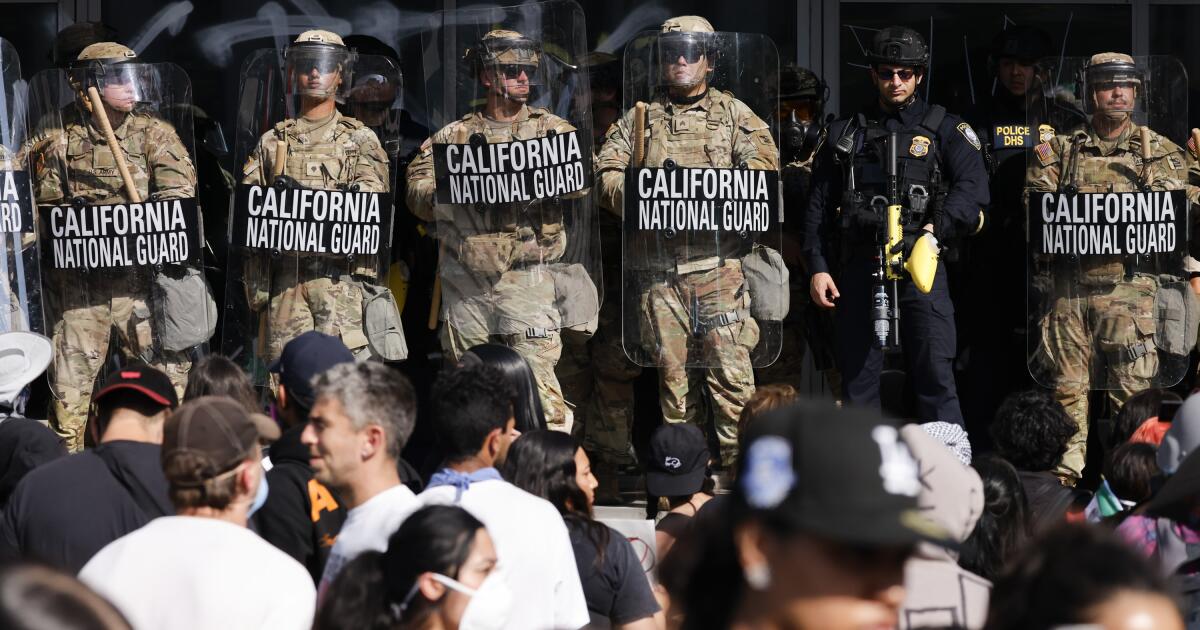
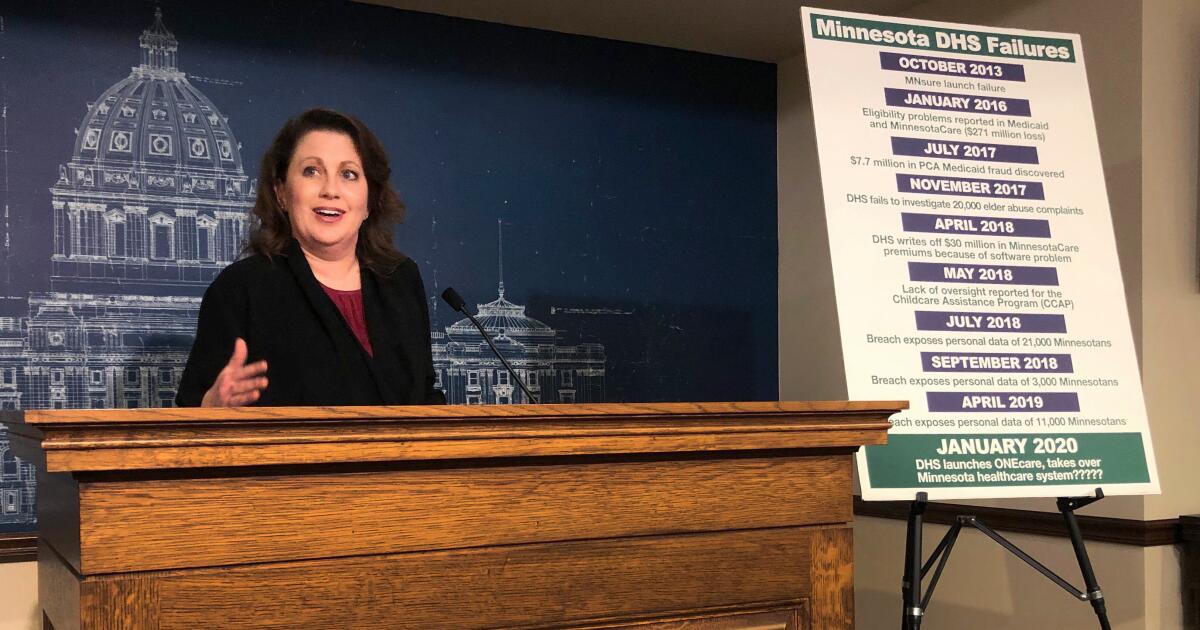
Source link