NEWS

Stay informed and up-to-date with the latest news from around the world. Our comprehensive news coverage brings you the most relevant and impactful stories in politics, business, technology, entertainment, and more.

US to host Qatari, Turkish and Egyptian officials for Gaza ceasefire talks | Israel-Palestine conflict News

The United States Middle East envoy, Steve Witkoff, will hold talks in Miami, Florida, with senior officials from Qatar, Egypt and Turkiye as efforts continue to advance the next phase of the Gaza ceasefire, even as Israel repeatedly violates the truce on the ground.

A White House official told Al Jazeera Arabic on Friday that Witkoff is set to meet representatives from the three countries to discuss the future of the agreement aimed at halting Israel’s genocidal war on Gaza.

Recommended Stories

list of 3 itemsend of list

Axios separately reported that the meeting, scheduled for later on Friday, will include Qatari Prime Minister and Foreign Minister Sheikh Mohammed bin Abdulrahman bin Jassim Al Thani, Turkish Foreign Minister Hakan Fidan and Egyptian Foreign Minister Badr Abdelatty.

At the same time, Israel’s public broadcaster, quoting an Israeli official, said Prime Minister Benjamin Netanyahu is holding a restricted security consultation to examine the second phase of the ceasefire and potential scenarios.

That official warned that Israel could launch a new military campaign to disarm Hamas if US President Donald Trump were to disengage from the Gaza process, while acknowledging that such a move was unlikely because Trump wants to preserve calm in the enclave.

Despite Washington’s insistence that the ceasefire remains intact, Israeli attacks have continued almost uninterrupted, as it continues to renege on the terms of the first phase, as it blocks the free flow of desperately needed humanitarian aid into the besieged Palestinian territory.

According to an Al Jazeera analysis, Israeli forces carried out attacks on Gaza on 58 of the past 69 days of the truce, leaving only 11 days without reported deaths, injuries or violence.

In Washington, Trump said on Thursday that Netanyahu is likely to visit him in Florida during the Christmas holidays, as the US president presses for the launch of the agreement’s second phase.

“Yes, he will probably visit me in Florida. He wants to meet me. We haven’t formally arranged it yet, but he wants to meet me,” Trump told reporters.

Qatar and Egypt, who are mediating and guaranteeing the truce after a devastating two-year genocide in Gaza, have urged a transition to the second phase of the agreement. The plan includes a full Israeli military withdrawal and the deployment of an international stabilisation force (ISF).

Fragile truce, entrenched occupation

Qatar’s prime minister warned on Wednesday that daily Israeli breaches of the Gaza ceasefire are threatening the entire agreement, as he called for urgent progress towards the next phase of the deal to end Israel’s genocidal war on the besieged Palestinian enclave.

Sheikh Mohammed made the appeal following talks with United States Secretary of State Marco Rubio in Washington, where he stressed that “delays and ceasefire violations endanger the entire process and place mediators in a difficult position”.

The ceasefire remains deeply unstable, and Palestinians and rights groups say it is a ceasefire only in name, amid Israeli violations and a rapidly deteriorating humanitarian situation in Gaza.

Since the truce took effect on October 10, 2025, Israel has repeatedly breached the agreement, killing hundreds of Palestinians.

Gaza’s Government Media Office says Israel committed at least 738 violations between October 10 and December 12, including air strikes, artillery fire and direct shootings.

Israeli forces shot at civilians 205 times, carried out 37 incursions beyond the so-called “yellow line”, bombed or shelled Gaza 358 times, demolished property on 138 occasions and detained 43 Palestinians, the office said.

Israel has also continued to block critical humanitarian aid while systematically destroying homes and infrastructure.

Against this backdrop, Israel Hayom quoted an Israeli security official as saying the so-called “yellow line” now marks Israel’s new border inside Gaza, adding that Israeli forces will not withdraw unless Hamas is disarmed. The official said the army is preparing to remain there indefinitely.

The newspaper also reported that Israeli military leaders are proposing continued control over half of Gaza, underscoring Israel’s apparent intent to entrench its occupation rather than implement a genuine ceasefire.

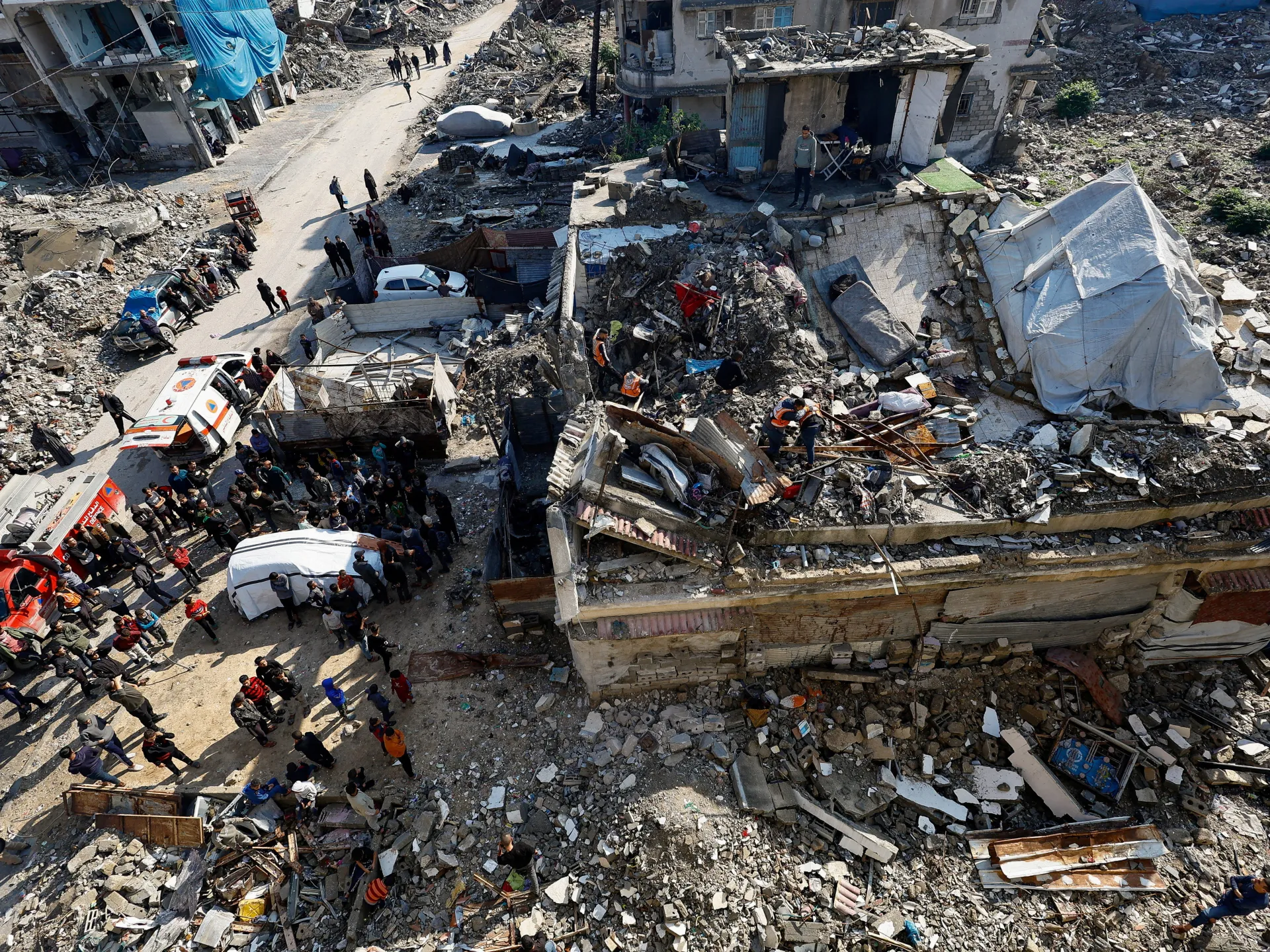
Compounding the misery in Gaza, a huge storm that recently hit the Strip has killed at least 13 people as torrential rains and fierce winds flooded tents and caused damaged buildings to collapse.

Israel’s two-year war has decimated more than 80 percent of the structures across Gaza, forcing hundreds of thousands of families to take refuge in flimsy tents or overcrowded makeshift shelters.

Source link

Jake Paul, Anthony Joshua weigh in ahead of blockbuster boxing bout | Boxing News

Favourite Anthony Joshua tips the scales more than 12 kilos heavier than YouTuber-turned-boxer Jake Paul at weigh-in.

Former heavyweight world champion Anthony Joshua easily made weight ahead of his fight against social media boxing disruptor Jake Paul at Thursday’s official weigh-in in Miami.

Joshua, who under the rules of the fight, couldn’t weigh more than 245 pounds (111kg), tipped the scales at 243.4 pounds (110kg).

Recommended Stories

list of 4 itemsend of list

Joshua (28-4, 25 KOs), who usually fights in the heavyweight classification at about 250 pounds (11kg), was the lightest he has been since he dropped to 240 pounds (109kg) for his first heavyweight title fight against Oleksandr Usyk on September 25, 2021.

Paul (12-1, 7 KOs) weighed in at a bulky 216 pounds (98kg) – but still more than two stones, or 12.7 kilogrammes, less than the Briton, who is 13 centimetres taller at 1.98m (Six feet, six inches).

It was just the second time in his professional career that the American weighed in above his usual cruiserweight limit of 91kg, or 200 pounds.

Jake Paul reacts.
Paul riles up the crowd at the weigh-in [Marco Bello/Reuters]

After the weigh-in, Paul, who excitedly took to the stage first and jeered up the crowd, claimed Joshua was nervous heading into the fight and said he would “shock the world” on Friday.

“I smell fear. I see something in his eyes, I truly do,” Paul said.

“The pressure is on him. I’m fighting free. I’ve already won. This is a lose-lose situation for him. I’ve got him right where I want him.”

Joshua, who remained composed throughout the weigh-in, other than when he pushed Paul’s fist away from his face and exclaimed “don’t touch me” during the promotional stare off, said his talent would prevail against the smaller, less experienced boxer.

“I’ll just outclass this kid. I’m a serious fighter. That’s the difference. I’m a serious, serious fighter,” the 2012 Olympic champion said.

The fight will take place at Miami’s Kaseya Center at 10:30pm on Friday (03:30 GMT Saturday).

The contest is an eight-round sanctioned bout with 10-ounce gloves to be used.

Joshua is returning to the ring for the first time since his knockout defeat to fellow Briton Daniel Dubois in September 2024.

In the weigh-in for the co-main event, holder Alycia Baumgardner came in at 129.2 pounds (58.6kg) while challenger Leila Beaudoin came in at 130 pounds (58.9kg) ahead of their unified junior lightweight title bout.

Baumgardner hasn’t been beaten since 2018 and is the strong favourite to retain her titles.

Alycia Baumgardner and Leila Beaudoin react.
Alycia Baumgardner, left, and Leila Beaudoin face off during their ceremonial weigh-in ahead of their co-main event fight [Leonardo Fernandez/Getty Images via AFP]

Source link

The Ashes: Travis Head century pushes England closer to defeat

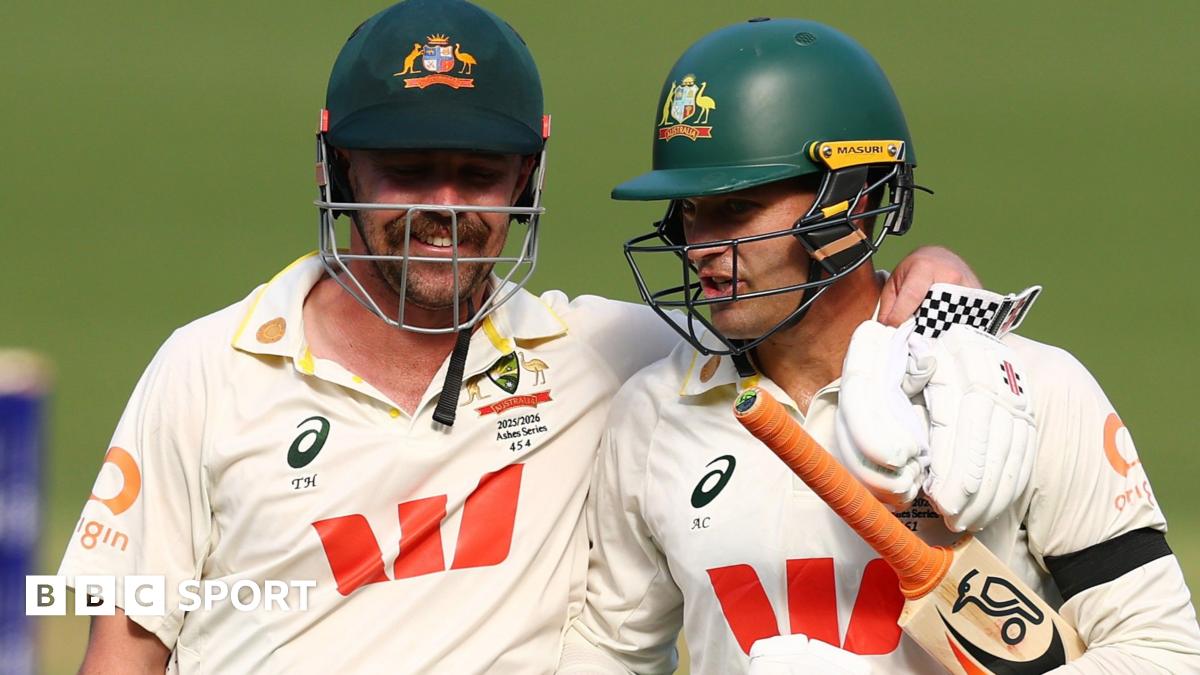
England were pushed towards the precipice of the fastest Ashes series defeat in more than 100 years as a Travis Head century maintained Australia’s grip on the third Test in Adelaide.

Head was dropped on 99 by Harry Brook and spent eight balls one run short of a hundred before belting Joe Root down the ground for four to draw a deafening roar from his home-town crowd at the Adelaide Oval.

The left-hander moved Australia’s second innings to 271-4 and their overall lead to 356 at the end of the third day.

If England’s third loss in as many Tests is completed on Saturday, it would mean the Ashes have been decided in 10 days of cricket.

Not since 1921, when Australia needed only eight days of play to win in England, has the destination of the urn been settled so swiftly.

Head’s inevitable ton snuffed out brief England hope that was raised when captain Ben Stokes and Jofra Archer added 73 runs in the morning session.

Stokes made 83 and Archer 51 in a stand of 106, the highest by an England ninth-wicket pair in Australia since 1924.

By creeping to 286 all out, 85 behind on first innings, England could have left themselves an outside chance by dismissing Australia for a total below 240 in their second innings.

At 53-2 and 149-4, England clung on before being cut adrift by Head. At some point, England will be tasked with pulling off the highest successful chase on this ground in order to keep the Ashes alive.

Of further concern to the visitors is the fitness of all-rounder Stokes, who is yet to bowl in the 66 overs of Australia’s second innings.

Source link

E-3 Sentry Joins U.S. Combat Aircraft Tracked Off Venezuelan Coast

As military and economic pressure builds on Venezuelan dictator Nicholas Maduro, an E-3 Sentry Airborne Warning and Control System (AWACS) aircraft was tracked on FlightRadar24 flying close to the Venezuelan coast. To our knowledge, at least in recent days, these aircraft have not been present on flight tracking software in this increasingly high-activity area. And if they have popped-up, their presence has been impersistent at best. At the same time, E-3s are no stranger to this region though and have played a role in drug interdiction operations for years in this exact area.

🇺🇸🇻🇪⚡️- A U.S. Air force E-3C Sentry, airborne early warning and control aircraft, is currently loitering off the coast of Venezuela. pic.twitter.com/oujrc0CpxA

— Monitor𝕏 (@MonitorX99800) December 19, 2025

While E-3s may have been present but not trackable over the Caribbean in recent days, this one being trackable is not a mistake. U.S. military aircraft executing easily trackable sorties very near Venezuelan airspace has been a key component of the pressure campaign placed on Maduro.

The reappearance of the E-3s is a relatively important development, as they would be key to any major kinetic operation against Venezuela. While the carrier-based E-2D Hawkeye, which have been a staple of operations in the area for weeks, is extremely capable, and in some ways more so than the E-3, they are not as well suited for providing airborne early warning, data-sharing and command and control functions for a large and diverse force beyond the carrier air wing. The E-3 also has a higher perch for its radar and passive sensors to take advantage of. It can also better integrate with USAF forces.

Now that one has reappeared publicly in the region, we will likely be seeing much more of them, especially once the contingent of F-35As from the Vermont Air National Guard arrives.

Meanwhile, other U.S. combat aircraft made their closest and most sustained publicly-known presence near the northern Venezuelan coast on Thursday. It’s worth mentioning that we do not know how close aircraft with transponders turned off have been getting, as we can only see the flights that are publicly trackable. These missions are part of Operation Southern Spear, a counter-narcotics mission that morphed into one aimed at Maduro and Venezuelan oil, the country’s main source of income.

The FlightRadar24 open source flight-tracking site showed a U.S. Navy F/A18E Super Hornet making repeated loops reportedly right on the outer edge of Venezuela’s northern airspace. In addition, two U.S. Navy E/A-18G Growler electronic warfare jets, two more Super Hornets, and an E-2D Advanced Hawkeye airborne early warning plane were tracked on FlightRadar24 flying close to the Venezuelan coast. There has been a notable uptick in such trackable flights recently.

Amid all this aerial activity, President Donald Trump today said he was open to notifying Congress before a direct attack on Venezuela. His comments to reporters at the White House today came a day after the House of Representatives shot down measures requiring the president to obtain prior permission for such an action.

“I wouldn’t mind telling them,” Trump said when asked if he would seek permission from lawmakers for land and boat attacks against Venezuela. He added that prior notification is not required. 

“I don’t have to tell them,” he posited. “It’s been proven, but I wouldn’t mind at all. I just hope they wouldn’t leak it. You know, people leak it. They are politicians, and they leak like a sieve, but I have no problem.”

BREAKING: Reporter: Will you be seeking any authorization from Congress for any land attacks on cartels in Venezuela?

Trump: I don’t have to tell them, but I would not mind it at all. I just hope they would not leak it. They are politicians, and they leak like a sieve. pic.twitter.com/UpFHPtt2vX

— World Source News (@Worldsource24) December 18, 2025

Trump’s views on Congressional authority have generated debate on Capitol Hill that broke down almost completely along party lines, with nearly all Republicans in agreement and Democrats opposed.

Under the 1973 War Powers Resolution, the Commander-In-Chief must notify Congress within 48 hours after “introducing United States Armed Forces into hostilities or into situations where imminent involvement is clearly indicated by the circumstances.” The Resolution also says any such actions are limited to 60 days without subsequent Congressional authorization, though the President can extend that timeline by 30 days with a written certification of the need for the continued use of force.

Donald Trump does NOT have the authority to carry out his current plans to use military force in the Caribbean without authorization from Congress.

If he acts without congressional authorization, the Senate will move a bipartisan resolution to prevent the unauthorized use of…

— Chuck Schumer (@SenSchumer) December 17, 2025

Trump, who ordered a blockade against sanctioned ships carrying oil to and from Venezuela, continues to assert that the U.S. has a right to that oil. On, Wednesday, Trump doubled down on his blockade warning, telling reporters that the U.S. is “not gonna let anybody go through that shouldn’t go through.”

Trump on Venezuela:

It’s a blockade, not gonna let anybody going through that shouldn’t be going through…

They took all of our oil… They illegally took it… We want it back.pic.twitter.com/viHn5G9us7

— Clash Report (@clashreport) December 17, 2025

The blockade announcement sparked a separate debate in Congress and elsewhere about its legality.

“American presidents have broad discretion to deploy U.S. forces abroad, but Trump’s asserted blockade marks a new test of presidential authority,” international law scholar Elena Chachko of U.C. Berkeley Law School told Reuters.

Meanwhile, Venezuela condemned the blockade and said it would take its case to the United Nations.

Venezuela has released a statement. Here is the English translation of both pages:

On the night of today, December 16, 2025, the President of the United States, Donald Trump, violating International Law, free trade, and freedom of navigation, has issued a reckless and serious… https://t.co/dS3e4Yib1X pic.twitter.com/Irf9ECnaux

— AZ Intel (@AZ_Intel_) December 17, 2025

Despite Trump’s pronouncement, several ships carrying oil byproducts from the South American country sailed from Venezuela’s east coast under escort from that country’s Navy “between Tuesday evening and Wednesday morning,” The New York Times reported.

“The ships transporting urea, petroleum coke and other oil-based products from the Port of José were bound for Asian markets,” per that story, citing anonymous sources. “The Venezuelan government imposed the military escort in response to Mr. Trump’s threats.”

🇻🇪🇺🇸 Venezuela’s government has ordered its Navy to escort ships carrying petroleum products from port following Trump’s blockade announcement.

Several ships sailed from the country’s east coast with a naval escort between Tuesday evening and Wednesday morning, according to… pic.twitter.com/xY9huYtMqa

— Status-6 (Military & Conflict News) (@Archer83Able) December 17, 2025

The blockade announcement came after the U.S. government had already seized one sanctioned oil tanker, the M/T Skipper. That mission, which occurred on December 10, was led by the U.S. Coast Guard with elements of the U.S. military providing support.

Today, the Federal Bureau of Investigation, Homeland Security Investigations, and the United States Coast Guard, with support from the Department of War, executed a seizure warrant for a crude oil tanker used to transport sanctioned oil from Venezuela and Iran. For multiple… pic.twitter.com/dNr0oAGl5x

— Attorney General Pamela Bondi (@AGPamBondi) December 10, 2025

In a social media post on Tuesday, Trump designated the Maduro regime as a foreign terror organization. That announcement and the blockade declaration were the latest moves in the Trump administration’s efforts to increase the range of actions it can take. The cartel Maduro allegedly leads was officially designated as a foreign terrorist organization (FTO) last month, a move Defense Secretary Pete Hegseth said increases U.S. military options in the region.

To that end, the U.S. military, as we have frequently noted, has been building up a large military presence in the region.

At present, the Navy has at least 11 surface warships in the region, including the USS Gerald R. Ford, the world’s largest aircraft carrier. It has four squadrons of F/A-18 Super Hornets, a squadron of E/A-18 Growler electronic warfare jets, a squadron of E-2D Advanced Hawkeye airborne command and control aircraft, MH-60S and MH-60R Seahawk helicopters and a detachment of C-2A Greyhound carrier onboard delivery planes.

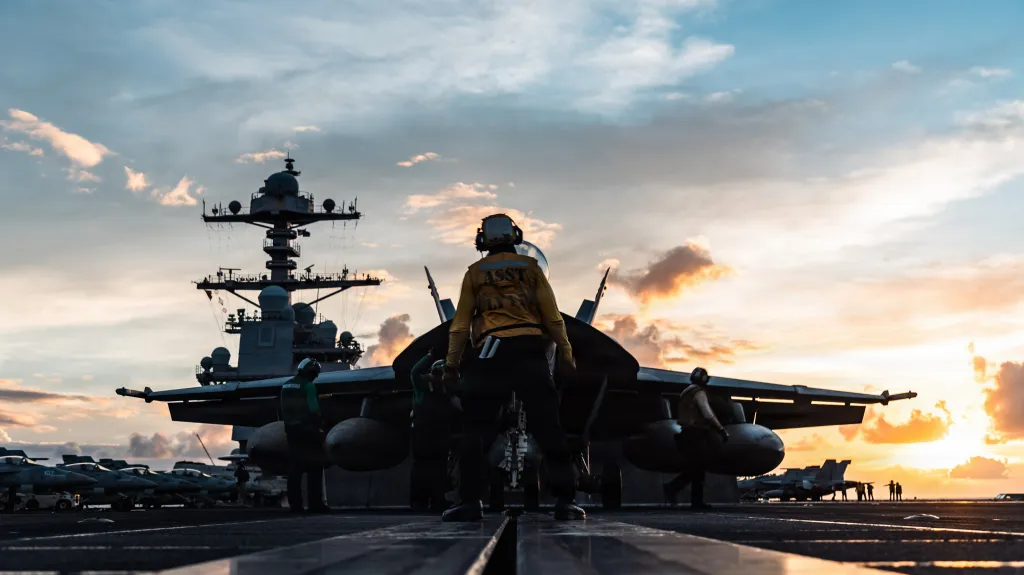
A U.S. Sailor directs an F/A-18F Super Hornet onto a catapult during flight operations aboard the world's largest aircraft carrier, Ford-class aircraft carrier USS Gerald R. Ford (CVN 78), while underway in the Caribbean Sea, Nov. 25, 2025. U.S. military forces are deployed to the Caribbean in support of Operation Southern Spear, the U.S. Southern Command mission, Department of War-directed operations, and the president’s priorities to disrupt illicit drug trafficking and protect the homeland. (U.S. Navy photo)
A U.S. Sailor directs an F/A-18F Super Hornet onto a catapult during flight operations aboard the world’s largest aircraft carrier, USS Gerald R. Ford (CVN 78), while underway in the Caribbean Sea in support of Operation Southern Spear (U.S. Navy photo) Petty Officer 3rd Class Gladjimi Balisage

There are also a number of other aircraft, including combat search and rescue (CSAR) aircraft, E/A-18G electronic warfare aircraft, Marine Corps F-35B and AV-8B Harrier II combat jets, and MV-22 Osprey tilt-rotors, MQ-9 Reaper drones, AC-130 Ghostrider gunships, and various helicopters already in the region. In addition, there is a looming deployment of an unspecified number of F-35A stealth fighters, which we were the first to report

The presence of aerial refueling tankers is also growing. KC-46 Pegasus tankers have been flying sorties out of the U.S. Virgin Islands for months, with a ramp-up in activity in recent weeks. There are now at least 10 KC-135 Stratotanker refuelers deployed to the Dominican Republic.

While these assets, along with about 15,000 deployed U.S. troops, are capable of limited sustained operations, it is far from the force that would be required for a land invasion or any large ground operation in Venezuela.

US Air Force KC-135 tankers forward deployed in the US Southern Command area of responsibility. USAF

Since September, U.S. military operations in the Caribbean Sea, as well as the Eastern Pacific, have already included nearly two dozen strikes on boats allegedly involved in drug smuggling. The first of these strikes, which came on September 2, has become the focus of particular controversy, including allegations that it may have constituted a war crime.

The Sept. 2 incident has spurred numerous Congressional briefings, but on Wednesday, the Chairman of the House Armed Services Committee, Mike Rogers, an Alabama Republican, said he was satisfied by testimony about that strike and that no further hearings would be held. It is unclear if there will be other Congressional action, though, since the Senate Armed Services Committee has also been investigating the matter.

The boat attacks continued on Wednesday, with another four suspected traffickers killed, bringing the total number of fatalities to about 100.

On Dec. 17, at the direction of @SecWar Pete Hegseth, Joint Task Force Southern Spear conducted a lethal kinetic strike on a vessel operated by a Designated Terrorist Organizations in international waters. Intelligence confirmed that the vessel was transiting along a known… pic.twitter.com/Yhu3LSOyea

— U.S. Southern Command (@Southcom) December 18, 2025

Amid all this tension, Brazilian President Luiz Inacio Lula da Silva offered to serve as an intermediary between Trump and Maduro to “avoid armed conflict.”

Lula told reporters on Thursday that Brazil was “very worried” about the mounting crisis between Venezuela and the United States. He added that he told Trump that “things wouldn’t be resolved by shooting, that it was better to sit down around a table to find a solution.”

The Brazilian leader suggested that he may speak to Trump again before Christmas to reinforce this offer “so that we can have a diplomatic agreement and not a fratricidal war.”

“I am at the disposal of both Venezuela and the US to contribute to a peaceful solution on our continent.”

🇧🇷🇺🇸🇻🇪 | Lula da Silva: “Estoy pensando que, antes de Navidad, posiblemente tenga que conversar con el presidente Trump otra vez, para saber en que puede contribuir Brasil para que tengamos un acuerdo diplomático y no una guerra fraticida”

Lula se ofrece como mediador entre… pic.twitter.com/0k7gPEtbO5

— Alerta Mundial (@AlertaMundoNews) December 18, 2025

We’ve reached out to the White House to see if Trump might be amenable to having Lula, an influential leftest leader, as a go-between.

In the interim, the world continues to wait to see what the U.S. president will do with the forces he has amassed in the Caribbean.

Contact the author: howard@thewarzone.com

Howard is a Senior Staff Writer for The War Zone, and a former Senior Managing Editor for Military Times. Prior to this, he covered military affairs for the Tampa Bay Times as a Senior Writer. Howard’s work has appeared in various publications including Yahoo News, RealClearDefense, and Air Force Times.


Tyler’s passion is the study of military technology, strategy, and foreign policy and he has fostered a dominant voice on those topics in the defense media space. He was the creator of the hugely popular defense site Foxtrot Alpha before developing The War Zone.


Source link

Why the Thai–Cambodian Dispute is a Strategic Problem

The Thai-Cambodian tension is almost uniformly treated as a manageable bilateral issue, serious but contained, sensitive but familiar. This is a mistake. The real implication of the dispute is not the danger it poses of immediate escalation but rather what it indicates of the future security order of Southeast Asia and of ASEAN’s decreasing strategic relevance in the formation of that order. The problem is not that ASEAN lacks goodwill or experience, but that it is increasingly misaligned with the type of conflicts now emerging within its own region. At the heart of the dilemma is a category mistake: ASEAN was never constituted to arbitrate or adjudicate, only to regulate. Its diplomatic culture emphasizes confidence-building practices and the maintenance of open, institutionalized avenues for dialogue. Those are things necessary and reasonable. Territory sovereignty is different; it is zero-sum and domestically chiseled. As such, solving such disputes with ASEAN’s traditional toolkit is to operate outside one’s skill set, not unlike an artist trying to bake a cake.

Border tensions play a role in domestic politics on both sides. They play into narratives of sovereignty, justify military readiness, and distract from internal pressures. Crucially, escalation is not an end in itself. Escalation has its risks; resolution has its concessions. Protracted ambiguity, on the other hand, can be handled politically. ASEAN’s preference for dialogue without deadlines, restraint without enforcement, and consensual rather than arbitrated decision-making seems to reproduce this state of equilibrium. This dynamic is often misinterpreted as diplomatic paralysis. It is instead the reflection of a stable, albeit fragile, strategic equilibrium. ASEAN offers a forum for de-escalation. From the standpoint of member states, this is not an institutional malfunction but a rational outcome. The costs of change exceed the benefits, especially when national leaders must answer to domestic audiences that reward toughness over compromise. Where this method turns strategically perilous is in the aggregate. Managed conflicts are not frozen conflicts; they harden over the years. Military interventions are normalized, crisis rhetoric becomes established, and trust dribbles away. What begins as stability based on restraint gradually transforms into militarized coexistence. This process is not the escalation of the crisis but its solidification. As strife becomes routine, the region becomes accustomed to permanent insecurity, and politicians come to treat it as usual, not abnormal.

The regional context renders this trend more significant. Southeast Asia is not functioning in a permissive strategic environment today. Competition among the great powers is increasingly shaping the calculations of states in the region. Thailand’s security ties and Cambodia’s external alignments are not marginal to the conflict; they are part of its strategic backdrop. With external alignments solidifying, tensions within the region are becoming less easy to isolate. Even when they are not directly involved, the great powers’ presence changes bargaining behavior, threat perceptions, and strategic confidence. ASEAN can least afford to see its centrality challenged now. Centrality is strategically and politically meaningful when regional institutions make rather than take outcomes. When disagreements are settled outside the ASEAN framework through bilateral interests, external balancing, or strategic ambiguity, the organization’s role is so minimal as to be symbolic at worst. The consultations and statements continue, but the real influence is shifting elsewhere. ASEAN, over time, also runs the risk of becoming a platform on which it simply reacts rather than organizes and shapes regional strains.

The economic aspect makes the matter even more complex. ASEAN’s integration project presupposes a degree of predictability and strategic restraint. However, it is not entirely effective while security tensions between the two remain unresolved. Border disputes impede cross-border trade and infrastructure planning and introduce risk into investment calculations. They seldom produce immediate or dramatic changes, but they do build up. For a while, economic integration can coexist with political tensions, but not forever. Often, uncertainty begins to erode confidence, particularly in mainland Southeast Asia, where connectivity is most vulnerable to instability. The fundamental problem, then, is not whether ASEAN can stop war. It pretty much can, and it often does. The more profound question, then, is whether war prevention is sufficient in a region under such long-term strategic duress. A security order based solely on restraint, without avenues for resolution, will erode its ability to adapt. It treats the symptoms and not the causes of these problems. This does not necessitate that ASEAN turn away from its founding principles, but rather that it apply them in new and innovative ways. Consensus and respect for non-interference continue to be the pillars of regional cohesion. However, they no longer suffice. Without additional tools in the toolbox, such as informal arbitration, issue-specific mediation regimes, or more explicit regional norms on appropriate dispute behavior, ASEAN will remain trapped in a stance of containment, with no progress.

Overall, the Thai–Cambodian tension is no mere side issue. It shows how latent tensions, domestic politics, and external competition converge in ways that ASEAN cannot fully control. The risk is not a sudden breakdown but strategic stagnation: a region at peace but progressively divided, stable but strategically tenuous, and whose members continue to hesitate over which direction they want to take. If ASEAN is ever to have a fundamental, not just a token, role, it has to face up to this fact, not just in rhetoric but in its structures. This decision will determine whether the future security structure in Southeast Asia is built on deterrence of conflict or on the tolerance of latent tensions as the price of regional cohesion.

Source link

Australia PM Albanese launches gun ‘buyback’ plan after Bondi Beach attack | Gun Violence News

Albanese said Australia has more guns now than 30 years ago, when the country’s deadliest-ever mass shooting took place.

Australia will launch a national gun buyback scheme, Prime Minister Anthony Albanese has announced, as the country continues to come to terms with the deadly attack on a Jewish holiday event at Sydney’s Bondi Beach that left 15 people dead.

Albanese called the plan the country’s biggest gun buyback since 1996 – the year of Australia’s deadliest mass shooting in modern history, the Port Arthur massacre in the island state of Tasmania – and said authorities will purchase surplus, newly-banned and illegal firearms.

Recommended Stories

list of 3 itemsend of list

“Right now, there are more guns in Australia than there were during Port Arthur. We can’t allow that to continue,” Albanese told a news conference on Friday, adding that there are currently more than four million firearms in the country.

“Non-citizens have no need to own a gun. And someone in suburban Sydney has no need to own six … The terrible events of Bondi show we need to get more guns off our streets,” he said.

Albanese added that authorities in Australia’s states and territories will be tasked with collecting the weapons and processing payments for surrendered firearms under the scheme. Federal police will then be responsible for destroying them.

“We expect hundreds of thousands of firearms will be collected and destroyed through this scheme,” Albanese added.

Aided by some of the toughest gun restrictions globally, Australia has one of the lowest gun homicide rates in the world.

Restrictions were tightened after a lone gunman, armed with semiautomatic weapons, killed 35 people at the Port Arthur tourist site almost 30 years ago.

The massacre shocked the country, with authorities soon after launching a major gun amnesty and buyback scheme that removed more than 650,000 newly-prohibited firearms from circulation.

‘We need to do more to combat this evil scourge’

Sunday’s shooting in Sydney’s Bondi Beach area – in which two attackers, named as father and son Sajid Akram and Naveed Akram, went on a shooting spree and killed 15 people – has had a similarly jolting impact on Australian society as the Port Arthur massacre and prompted self-reflection.

Albanese said 50-year-old Sajid – who was shot dead at the scene – and 24-year-old Naveed – who was charged with “terrorism” and murder offences after he awoke from a coma on Tuesday – were inspired by “Islamic State ideology”.

On Thursday, Albanese announced tougher hate speech laws as he acknowledged the country had experienced a rising tide of anti-Jewish hate since the Hamas-led October 7, 2023, attacks on Israel, and Israel’s genocidal war on Gaza.

Albanese said rising anti-Semitism in Australia “culminated on Sunday in one of the worst acts of mass murder that this country has ever seen”.

“It was an attack on our Jewish community – but it was also an attack on the Australian way of life,” he said.

“Australians are shocked and angry. I am angry. It is clear we need to do more to combat this evil scourge, much more,” he added.

The prime minister also announced on Friday that Australia will hold a national day of reflection this Sunday – one week after the mass shooting.

Albanese urged Australians to light candles at 6:47pm (07:47 GMT) on Sunday, December 21 – “exactly one week since the attack unfolded”.

“It is a moment to pause, reflect, and affirm that hatred and violence will never define who we are as Australians,” he told reporters.

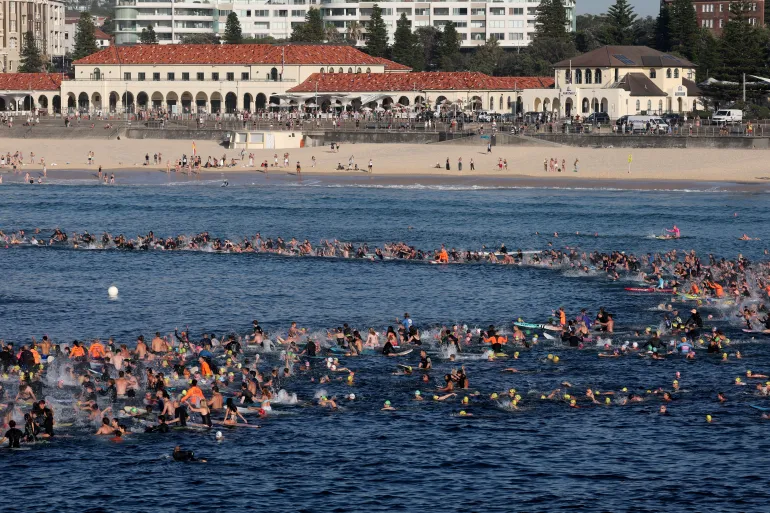
Earlier on Friday, hundreds of people plunged into the ocean off Bondi Beach in another gesture to honour the dead.

Swimmers and surfers paddled into a circle as they bobbed in the gentle morning swell, splashing water and roaring with emotion.

“They slaughtered innocent victims, and today I’m swimming out there and being part of my community again to bring back the light,” security consultant Jason Carr told the AFP news agency.

“We’re still burying bodies. But I just felt it was important,” the 53-year-old said.

“I’m not going to let someone so evil, someone so dark, stop me from doing what I do and what I enjoy doing,” he said.

Surfers and swimmers congregate in the surf at Bondi Beach as they participate in a tribute for the victims of Sunday’s Bondi Beach attack, in Sydney on December 19, 2025. Australia's leaders have agreed to toughen gun laws after attackers killed 15 people at a Jewish festival on Bondi Beach, the worst mass shooting in decades decried as antisemitic "terrorism" by authorities. (Photo by DAVID GRAY / AFP)
Surfers and swimmers congregate in the surf at Bondi Beach as they participate in a tribute for the victims of Sunday’s Bondi Beach attack, in Sydney, on December 19, 2025 [David Gray/AFP]

Source link

Retired NASCAR driver among seven killed in North Carolina plane crash | Motorsports News

Greg Biffle’s plane caught fire after crash-landing at a regional airport, state authorities said. Other victims have not yet been identified.

A former NASCAR driver has been identified as one of seven people who died in a plane crash in the southern United States.

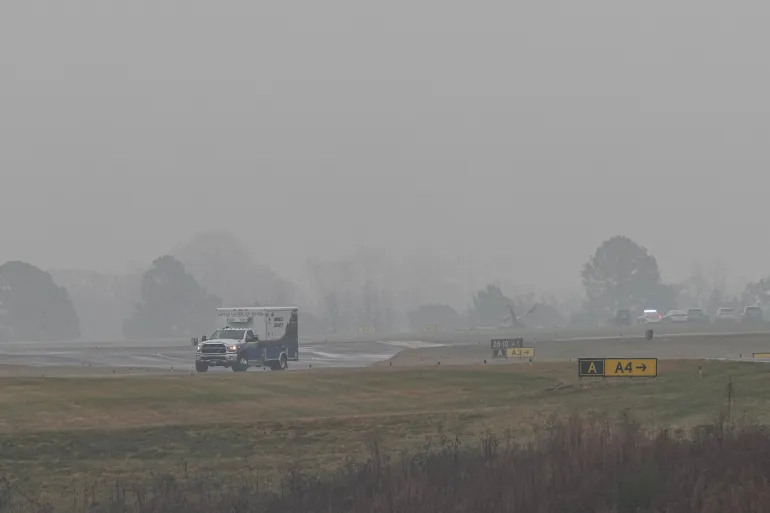
Authorities said Greg Biffle and members of his family died when a private jet crashed on Thursday while trying to land at Statesville Regional Airport, north of Charlotte, North Carolina.

Recommended Stories

list of 3 itemsend of list

Flight records showed the plane was registered to a company run by Biffle.

“Although the post-crash fire prevents us from releasing a definitive list of the occupants at this time, it is believed that Mr Gregory Biffle and members of his immediate family were occupants of the airplane,” state police said.

Further details about the victims were not immediately available.

north carolina
First responders tend to the scene of a reported plane crash at a regional airport in Statesville, North Carolina [Matt Kelley/The Associated Press]

Throughout his 16-year career, Biffle won more than 50 races across the three racing-circuit types offered by NASCAR, a US-based association for car races.

He placed first in 19 races at the Cup Series, considered NASCAR’s top level. He also won the Craftsman Truck Series championship in 2000 and the Xfinity Series title in 2002.

Biffle’s plane had taken off from the airport shortly after 10am local time on Thursday (15:00 GMT), but it then returned to North Carolina and was attempting to land there, according to tracking data posted by FlightAware.com.

Video from WSOC-TV showed first responders rushing onto the runway as flames burned near scattered wreckage from the plane.

The National Transportation Safety Board (NTSB) and the Federal Aviation Administration (FAA) were investigating the crash.

All told, the NTSB has investigated 1,331 crashes in the US in 2025.

Source link

EU delays trade deal with South America’s Mercosur bloc as farmers protest | International Trade News

EU delays Mercosur trade deal until January amid farmer protests and opposition from France and Italy.

The European Union has delayed a massive free-trade deal with South American countries amid protests by EU farmers and as last-minute opposition by France and Italy threatened to derail the agreement.

European Commission chief spokesperson Paula Pinho confirmed on Thursday that the signing of the trade pact between the EU and South American bloc Mercosur will be postponed until January, further delaying a deal that had taken some 25 years to negotiate.

Recommended Stories

list of 4 itemsend of list

Commission President Ursula von der Leyen was expected to travel to Brazil on Saturday to sign the deal, but needed the backing of a broad majority of EU members to do so.

The Associated Press news agency reported that an agreement to delay was reached between von der Leyen, European Council President Antonio Costa and Italian Prime Minister Giorgia Meloni – who spoke at an EU summit on Thursday – on the condition that Italy would vote in favour of the agreement in January.

French President Emmanuel Macron had also pushed back against the deal as he arrived for Thursday’s summit in Brussels, calling for further concessions and more discussions in January.

Macron said he has been in discussions with Italian, Polish, Belgian, Austrian and Irish colleagues, among others, about delaying the signing.

“Farmers already face an enormous amount of challenges,″ the French leader said.

The trade pact with Argentina, Brazil, Bolivia, Paraguay and Uruguay would be the EU’s largest in terms of tariff cuts.

But critics of the deal, notably France and Italy, fear an influx of cheap commodities that could hurt European farmers, while Germany, Spain and Nordic countries say it will boost exports hit by United States tariffs and reduce reliance on China by securing access to key minerals.

Brazil’s President Lula says Italy’s PM Meloni asked for ‘patience’

The EU-Mercosur agreement would create the world’s biggest free-trade area and help the 27-nation European bloc to export more vehicles, machinery, wines and spirits to Latin America at a time of global trade tensions.

Al Jazeera’s Dominic Kane, reporting from Berlin, said Germany, Spain and the Nordic countries were “all lobbying hard in favour of this deal”. But ranged against them were the French and Italian governments because of concerns in their powerful farming sectors.

“Their worry being that their products, such as poultry and beef, could be undercut by far cheaper imports from the Mercosur countries,” Kane said.

“So no signing in December. The suggestion being maybe there will be a signing in mid-January,” he added.

“But there must now be a question about what might happen between now and mid-January, given the powerful forces ranged against each other in this debate,” he added.

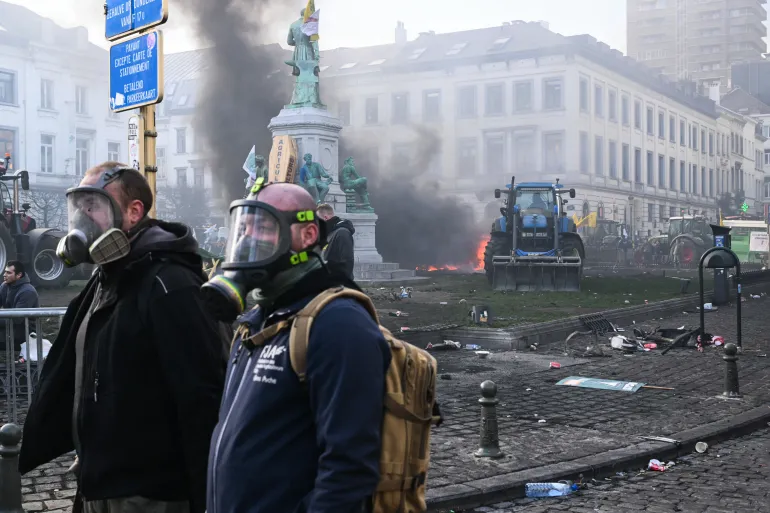
Farmers wear gas masks at the Place du Luxembourg near the European Parliament, during a farmers' protest to denounce the reforms of the Common Agricultural Policy (CAP) and trade agreements such as the Mercosur, in Brussels, on December 18, 2025, organised by Copa-Cogeca, the main association representing farmers and agricultural cooperatives in the EU. EU Farmers, particularly in France, worry the Mercosur deal -- which will be discussed at the EU leaders meeting -- will see them undercut by a flow of cheaper goods from agricultural giant Brazil and its neighbours. They also oppose plans put forward by the European Commission to overhaul the 27-nation bloc's huge farming subsidies, fearing less money will flow their way. (Photo by NICOLAS TUCAT / AFP)
Farmers wear gas masks at the Place du Luxembourg near the European Parliament, during a farmers’ protest on December 18, 2025 [Nicolas Tucat/AFP]

Mercosur nations were notified of the move, a European Commission spokeswoman said, and while initially reacting with a now-or-never ultimatum to its EU partners, Brazil opened the door on Thursday to delaying the deal’s signature to allow time to win over the holdouts.

Brazil’s President Luiz Inacio Lula da Silva said Italy’s Meloni had asked him for “patience” and had indicated that Italy would eventually be ready for the agreement.

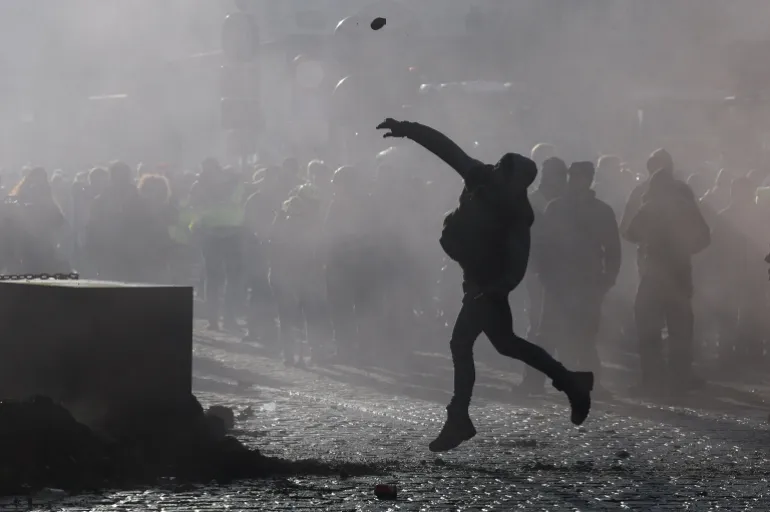
The decision to delay also came hours after farmers in tractors blocked roads and set off fireworks in Brussels to protest the deal, prompting police to respond with tear gas and water cannon.

Protesting farmers – some travelling to the Belgian capital from as far away as Spain and Poland – brought potatoes and eggs to throw and waged a furious back-and-forth with police while demonstrators burned tyres and a faux wooden coffin bearing the word “agriculture”.

The European Parliament evacuated some staff due to damage caused by protesters.

Source link

Australia announced gun buyback scheme in wake of Bondi attack

The Australian government has announced a gun buyback scheme in the wake of the Bondi Beach attack – its deadliest mass shooting in decades.

The scheme is the largest since the Port Arthur massacre in 1996, which left 35 people dead and prompted Australia to introduce world-leading gun control measures.

Fifteen people were killed and dozens injured on Sunday when two gunmen, believed to have been motivated by “Islamic State ideology”, opened fire on a Jewish festival at the country’s most iconic beach.

On Friday police said a group of men who were arrested in Sydney after travelling from the state of Victoria had “extremist Islamic ideology”.

Police allege Sunday’s attack, which they have declared a terrorist incident, was committed by a father-son duo. Naveed Akram, 24, has been charged with 59 offences, including 15 counts of murder and one of committing a terrorist act. His father Sajid was killed during the attack.

The day after the shooting, national cabinet – which includes representatives from the federal government and leaders from all states and territories – agreed to tighten gun controls.

Speaking to media on Friday, Prime Minister Anthony Albanese said there are now more than 4 million firearms in Australia – more than at the time of the Port Arthur massacre.

“We know that one of these terrorists held a firearm licence and had six guns, in spite of living in the middle of Sydney’s suburbs… There’s no reason why someone in that situation needed that many guns.

“We need to get more guns off our streets.”

Earlier on Friday, a senior New South Wales police officer told national broadcaster ABC seven men arrested by counter terrorism police in Sydney on Thursday evening may have been on their way to Bondi.

Tactical officers swarmed on the group, who had travelled from Victoria and were known to police there, in dramatic scenes in the suburb of Liverpool.

NSW Police Deputy Commissioner David Hudson said “some indication” that Bondi was one of the locations they were considering visiting, but “with no specific intent in mind or proven at this stage”.

Rarely used national security powers were relied upon to swoop before their plans developed.

“We made the decision that we weren’t going to … take any chances in relation to what they might be doing,” he said.

Officers found a knife, but no guns or other weapons, Mr Hudson added.

Source link

Littoral Combat Ship Launches Shahed-136 Kamikaze Drone Clone

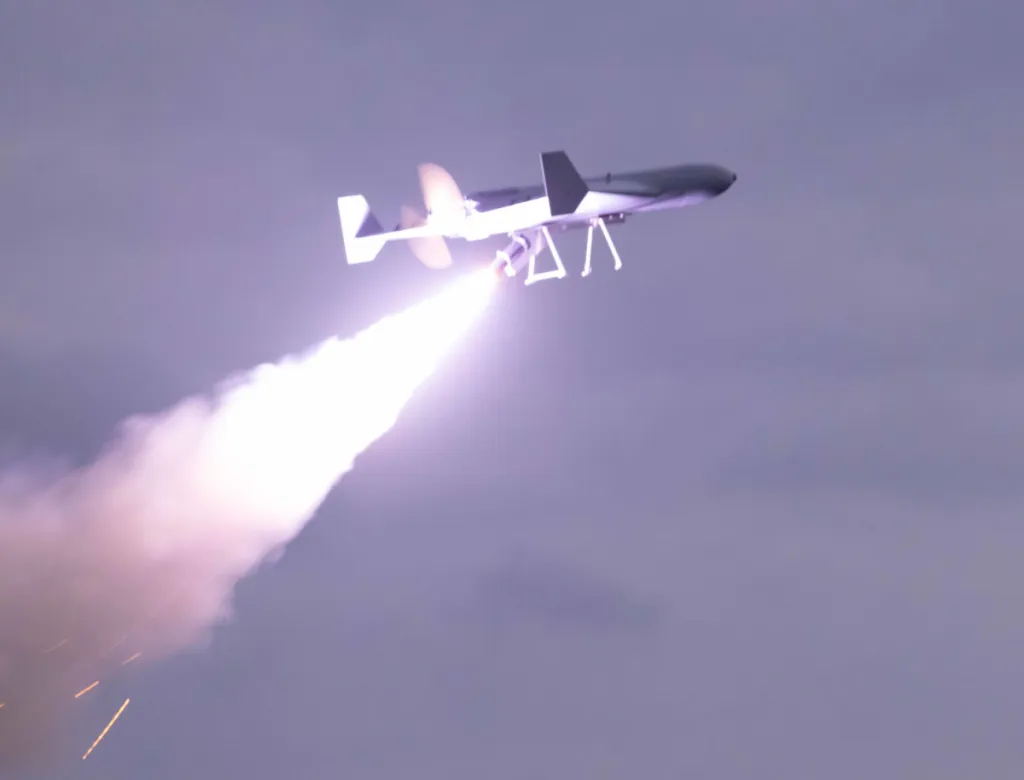
The U.S. Navy personnel in the Middle East have test-launched a Low-Cost Uncrewed Combat Attack System (LUCAS) long-range kamikaze drone from the Independence class Littoral Combat Ship (LCS) USS Santa Barbara. Described as a first-of-its-kind achievement, this comes two weeks after the U.S. military announced it had established Task Force Scorpion Strike (TFSS) in the region, armed with the LUCAS drones from SpektreWorks. Being able to employ the one-way attack drones from the sea, as well as from sites on land, opens the door to new operational possibilities on top of what was already a major new addition to the U.S. military’s long-range strike arsenal.

TWZ has previously explored in great depth the arguments for arming Navy ships with various types of uncrewed aerial systems to provide additional layers of defense, as well as enhanced strike, electronic warfare, intelligence-gathering, and networking capabilities, which you can find here. Just earlier this year, we also laid out a detailed case for why America’s armed forces should be heavily investing in rapidly-producible long-range kamikaze drones — Shahed-136 clones primarily — just like LUCAS, as you can read here.

Personnel from U.S. Naval Forces Central Command’s (NAVCENT) Task Force 59 conducted the rocket-assisted launch of the LUCAS drone from the stern flight deck of the USS Santa Barbara on December 16, according to an official release. The ship was operating in the Arabian Gulf, more commonly known as the Persian Gulf, at the time. Established in 2021, Task Force 59 has been leading efforts to expand the Navy’s operational use of uncrewed platforms, as well as new artificial intelligence (AI) capabilities, in the Middle East. The LUCAS drone itself had been provided by TFSS, which falls under the auspices of U.S. Special Operations Command Central (SOCCENT), the regional headquarters for special operations activities under U.S. Central Command (CENTCOM).

“Bravo Zulu. U.S. Navy forces in the Middle East are advancing warfighting capability in new ways, bringing more striking power from the sea and setting conditions for using innovation as a deterrent.” – Adm. Brad Cooper, CENTCOM Commander https://t.co/TgQ4WLbph3 pic.twitter.com/WUiAVojTht

— U.S. Central Command (@CENTCOM) December 18, 2025

The official release from NAVCENT does not provide specific details about capabilities demonstrated during the test, such as how far the LUCAS drone flew, how it was controlled or directed, and whether it hit a mock target of some kind at sea or on land at the end of its flight.

TWZ reached out to CENTCOM, which declined to provide more granular information. We have also reached out to NAVCENT and SpektreWorks.

The LUCAS drone seen right after launch from the stern flight deck of the USS Santa Barbara. NAVCENT/C5F/U.S. Army Spc. Kayla Mc Guire

General details about the LUCAS drones the U.S. military now has deployed in the Middle East remain limited. It is known that SpektreWorks directly reverse-engineered the design from Iran’s Shahed-136, and initially with an eye toward its use as a threat-representative target for training and test purposes. At some 10 feet long and with a wingspan of around eight feet, LUCAS is slightly smaller than the Iranian drone. SpektreWorks has also publicly provided specifications for the related target drone, called the FLM 136, which has roughly half the range and payload capacity as the Shahed-136. However, it is unclear whether this reflects the capabilities found on operationalized configurations. LUCAS is also said to have a unit cost of around $35,000.

Iran and its regional proxies have employed a growing number of variants and derivatives of the Shahed-136 design in recent years, including in attacks on targets in Israel and on ships sailing in and around the Red Sea. Russia also now produces its own still-expanding array of Shahed-136-based drones domestically, which it regularly employs in attacks on Ukrainian cities, as well as forces around the front lines.

The video below includes a montage of clips from Iranian state media showing Shahed-136s being employed during an exercise.

Баражуючий іранський боєприпас «Shahed 136»


Pictures of the LUCAS drones the U.S. military has released so far show a modular, reconnaissance design that could also be used for surveillance and reconnaissance missions, as well as in the decoy role. As TWZ has previously written:

“We see two variants of LUCAS. One is not of particular note, it seems geared to strike the static targets we have become accustomed to for this type of weapon. The other features two very interesting details. It has what appears to be a gimbaled camera system mounted on its nose and, most importantly, a miniature beyond-line-of-sight satellite datalink mounted on its spine. This is a major development that would allow these weapons to not only be controlled dynamically after launch at great distances, but also to hit moving targets and targets of opportunity.”

A previously released picture showing LUCAS drones at a base within the CENTCOM area of operations. Both of the known configurations of the LUCAS drone deployed in the Middle East are visible here. Courtesy Photo

“In addition, this capability would help enable swarm tactics, where the drones work to attack targets cooperatively with their progress monitored and altered in real-time by human operators, regardless of whether they have the satellite terminal or not. This is made possible by providing simpler, lighter line-of-sight datalinks on the drones equipped with warheads only, which then connect line-of-sight to the drone carrying the satellite communications terminal, acting as a force-multiplying networking hub. This also means you can have many simple drones paired with a much smaller number of more costly ones equipped with cameras and networking equipment, but achieve the same overall effect as if they all had the more advanced capabilities. This modularity which is ‘greater than the sum of its parts’ is a central tenet of emerging drone warfare TWZ highlighted a decade ago.

A closer look at the more advanced camera and networking-equipped variant of LUCAS. Courtesy Photo

“Seeing as swarms can be tailored to various objectives, with mixing and matching BLOS networking enabled units with strikers, and placing them in real time to minimize risk and maximize effect, America’s Shaheds should be significantly more survivable and effective. The ability to work together, reacting to their environment, and leverage real-time intelligence gathered by the full gamut of U.S. and allied assets, are even larger advantages. This is in addition to pairing them with combined arms tactics, from electronic warfare to kinetic strikes, to ensure they get to their target areas. Even if some die to air defenses, that can be viewed as a win, depending on what engages them. Consuming costly and finite effectors is a feature, not a bug, for these relatively cheap weapons, as you can read all about in our larger feature.

All of this is further magnified by the ability to employ LUCAS drones from any ship with sufficient deck space, as well as launchers on land, which could be semi-fixed or mobile. This is something TWZ highlighted explicitly in our past feature on the prospect of integrating drone swarms onto Navy ships.

Observations for years now of how Iran and its proxies, as well as Russia, have been employing variants and derivatives of the Shahed-136 have underscored their ability to be sent along often circuitous routes to attack targets from unexpected vectors. Even without the addition of more dynamic targeting and fully networked swarming capabilities, this creates immense challenges for defenders. This is only further compounded by the breadth of areas targeted simultaneously and the sheer volume of drones that can be launched in mass barrages, owing in large part to their relatively low cost.

Iran has also notably fielded a number of one-off sea base-like ships with aviation and other capabilities, including the ability to launch long-range kamikaze drones, as well as cruise and ballistic missiles. Iranian forces have also made use of commercial vessels modified as covert motherships to coordinate attacks, including by regional proxies, and to gather intelligence.

U.S. officials have themselves been quick to highlight the new operational capabilities LUCAS offers, especially in light of the newly announced test launch from the USS Santa Barbara.

Another picture of the LUCAS drone being test-launched from the USS Santa Barbara. NAVCENT/C5F/U.S. Army Spc. Kayla Mc Guire

“A cutting-edge, low-cost attack drone asset, launched from a naval vessel that can sail and operate wherever international law allows, is a tremendous new capability to employ in the region,” Navy Capt. Timothy Hawkins, CENTCOM’s top spokesperson, told TWZ.

“U.S. Navy forces in the Middle East are advancing warfighting capability in new ways, bringing more striking power from the sea and setting conditions for using innovation as a deterrent,” Navy Adm. Brad Cooper, commander of CENTCOM, also said in a statement.

“This first successful launch of LUCAS from a naval vessel marks a significant milestone in rapidly delivering affordable and effective unmanned capabilities to the warfighter,” Vice Adm. Curt Renshaw, commander of NAVCENT and U.S. Fifth Fleet, added in his own statement accompanying the official release. “This achievement demonstrates the power of innovation and joint collaboration in this critical region.”

“This platform will undoubtedly enhance regional maritime security and deterrence,” Renshaw added.

Conducting the test in the Arabian Gulf also underscores previous statements from CENTCOM about how the deployment of LUCAS in the Middle East specifically offers a new way to challenge Iran.

USS Santa Barbara seen sailing in the Arabian Gulf (Persian Gulf) around the time of the LUCAS test. NAVCENT/C5F

“We are now at a point where not only are we building them in mass, but we have already based them in [the] Middle East for the first time,” a U.S. official told TWZ earlier this month when the establishment of TFSS was announced. “In essence, we are able to flip the script on Iran.”

As we mentioned at the time, the benefits that kamikaze drones like LUCAS offer to U.S. forces also extend well beyond the Middle East. Separate U.S. Marine Corps testing of LUCAS drones at the U.S. Army’s Yuma Proving Ground (YPG) in Arizona points to plans to field long-range kamikaze drones more broadly across America’s armed forces.

A LUCAS drone seen being tested at Yuma Proving Ground. US Army/Mark Schauer

As an aside, using an Independence class LCS for the recent maritime LUCAS test launch highlights another potential mission for these ships, as well as the Navy’s Freedom class LCSs. Both types of LCS have chronically underdelivered for the Navy, and the service has spent considerable energy searching for ways to get more operational utility out of the vessels. Last year, then-Navy Secretary Carlos Del Toro announced plans to arm “many” Independence and Freedom class LCSs with new containerized missile launchers as a new way to boost their firepower, as you can read more about here. Giving these ships the ability to launch waves of low-cost, long-range kamikaze drones would be another way to approach this goal.

In general, the market space for Shahed-136-like long-range one-way attack drones is already growing in the United States, with Griffon Aerospace having also been pitching its own design called the MQM-172 Arrowhead to America’s armed forces. This is a trend that has also been emerging elsewhere globally, especially in China, where multiple Shahed-esque designs have appeared in recent years. Russia is also said to be helping North Korea set up its own domestic capacity to produce Shahed-136s, or derivatives thereof, in exchange for Pyongyang’s help in fighting Ukraine.

American Shahed 2? You bet! Meet the MQM-172 “Arrowhead”, an enhanced US copy of the Iranian Shahed-136 kamikaze drone. This is apparently the second Shahed clone; the first, called LUCAS (Low-Cost Uncrewed Combat Attack System), was developed by Arizona-based SpektreWorks and… pic.twitter.com/ptI5iq9vk9

— Air Power (@RealAirPower1) August 8, 2025

This is 🇨🇳China’s version of the Geran-2 Drone, The Feilong-300D Suicide Drone, a low cost-High performance drone, and the future of combat.

It carries a High-explosive warhead, and has a range of over 1000km in just a cost of $10,000 USD. pic.twitter.com/XZBEGW1AoK

— PLA Military Updates (@PLA_MilitaryUpd) November 2, 2025

China is testing the LOONG M9, a new loitering munition from LOONG UAV that closely resembles the Iranian Shahed-136.

The drone reportedly carries a 50 kg payload, has a 200 kg takeoff weight, and reaches speeds up to 223 km/h with a range of 1,620 km and 8–9 hours of endurance.… pic.twitter.com/cFBe1ElJRS

— OSINTWarfare (@OSINTWarfare) December 2, 2025

Whatever plans the rest of the U.S. military may have now for drones like LUCAS, the recent at-sea test launch from the USS Santa Barbara shows that American forces in the Middle East are already working to expand their ability to employ this already important new capability at least in that region.

Contact the author: joe@twz.com

Joseph has been a member of The War Zone team since early 2017. Prior to that, he was an Associate Editor at War Is Boring, and his byline has appeared in other publications, including Small Arms Review, Small Arms Defense Journal, Reuters, We Are the Mighty, and Task & Purpose.


Source link

Stabilizing Foreign Investment: China’s Dual Strategy Featuring the CIIE and Hainan FTP

The Central Economic Conference meeting in Beijing in December 2025 proposed that “adhering to opening up to the outside world and promoting win-win cooperation in various fields” should be one of the main tasks of China’s economic work in the coming year. In 2025, China issued the “Action Plan for Stabilizing Foreign Investment in 2025,” and simultaneously, the 8th China International Import Expo 2025 was held in Shanghai. It was also agreed that the Hainan Free Trade Port would officially launch island-wide independent customs operations on December 18, 2025. This would bring numerous opportunities and momentum to support China’s continued opening up for global economic development.

 The year 2026 marks the launch of China’s 15th Five-Year Plan. The Central Economic Conference was held in Beijing in December 2025, a significant historical juncture as the 14th Five-Year Plan drew to a close and the 15th began. This held particular significance, as the world looked to China’s economic planning for the coming year for inspiration and opportunities. China’s continued opening up in 2025 represents a vital engine for the global economy, contributing approximately 30% to global growth.

–            The opportunities and momentum generated by these policies are evident in the following areas:

1)       Deepening Institutional Opening through the Hainan Free Trade Port

  The launch of independent customs operations at Hainan Port on December 18, 2025, marked a milestone, transforming the port into a special customs zone governed by high-level international trade regulations.  With China’s ambitious trade facilitation plan, the percentage of duty-free goods in Hainan has risen from 21% to 74%, attracting significant investment. The island has already attracted more than 1.2 million enterprises.

2)       Stabilizing Foreign Investment (2025 Action Plan)

The “2025 Foreign Investment Stabilization Action Plan” aims to boost international investor confidence through practical measures, including opening new sectors by expanding pilot programs in telecommunications, healthcare, and education and supporting manufacturing and services by lifting restrictions on foreign investment across the entire manufacturing sector and encouraging investment in high-tech industries and green development. This has yielded numerous positive results for the Chinese economy, with China registering more than 49,000 new foreign-funded companies in the first half of 2025, representing a year-on-year increase of over 16%.

3)       China International Import Expo (CIIE 2025)

  The eighth edition of the expo in Shanghai solidified China’s position as a global launchpad for new products, achieving record-breaking figures. The expo saw record initial deals worth US$83 billion, a 4.5% increase over the previous year. With broad international participation, more than 4,500 companies from 138 countries participated, showcasing 461 new products and technologies.

4)       The Strategic Direction of the Chinese Economy for 2026 and Beyond

  The Central Economic Work Conference, held in Beijing in December 2025, affirmed that the main task for the coming year, 2026, is to ensure a strong start to the 15th Five-Year Plan (2026-2030) while achieving mutually beneficial cooperation. This will be accomplished by China focusing on aligning its domestic regulations with high-level international economic and trade standards in areas such as government procurement, e-commerce, and finance.  This should coincide with achieving sustainable growth in the Chinese economy, especially given the International Monetary Fund’s upward revision of its growth forecast for China to 5% for 2025, which underscores the resilience of the Chinese economy in the face of global shocks.

  Accordingly, we understand the extent of China’s aspirations to achieve new developmental and economic leaps during 2026, with numerous promising future opportunities available to China. It possesses the capacity to simultaneously improve the quality and scale of development, achieve a strong launch for its 15-year plan, and offer more ambitious investment and development opportunities to the world. 

Source link

Trump signs order to reclassify marijuana, ease research restrictions | Donald Trump News

The executive order calls on the US attorney general to expedite federal reclassification, creating fewer barriers for studies.

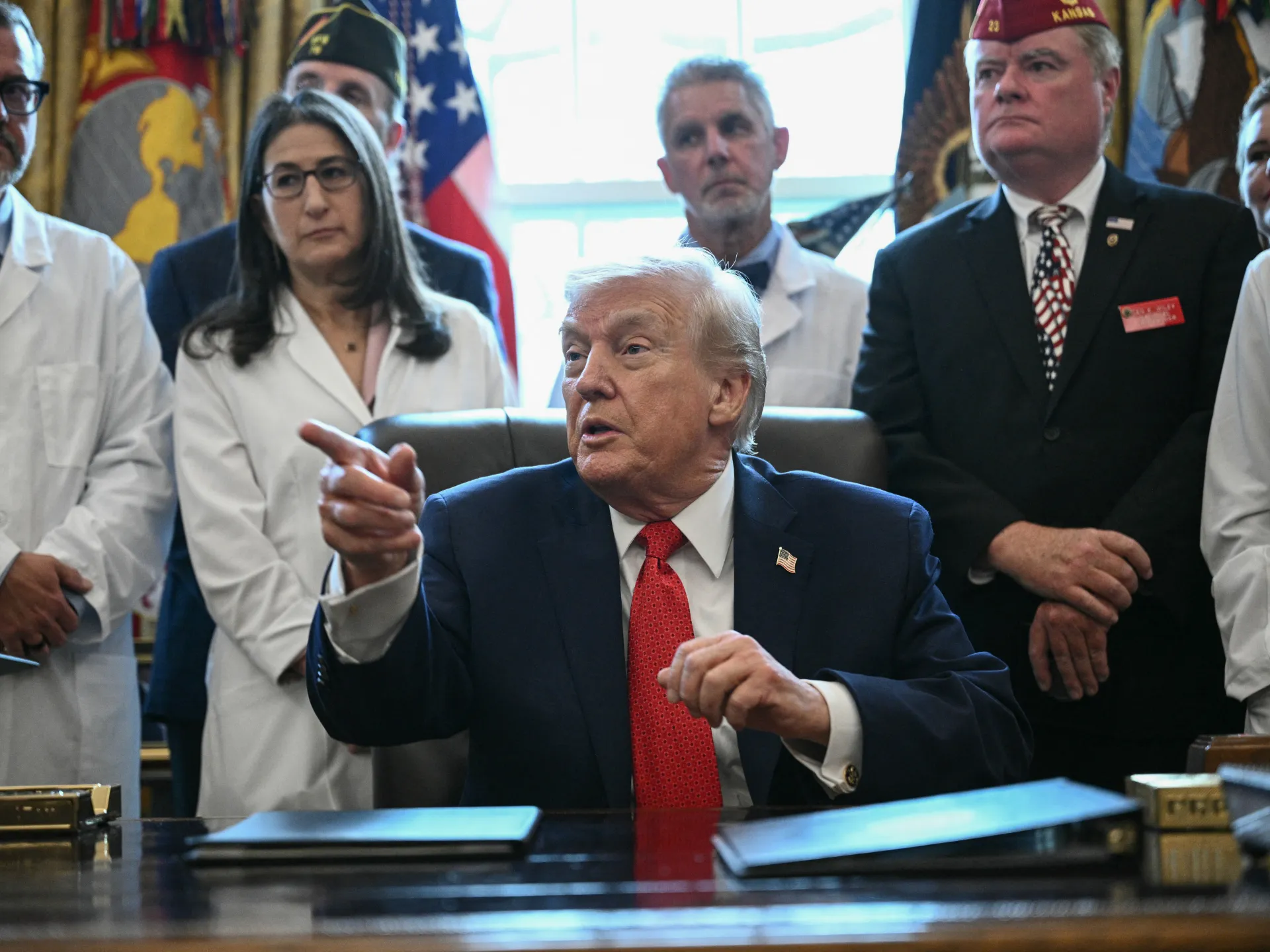
United States President Donald Trump has signed an executive order to federally reclassify marijuana as less dangerous.

The move on Thursday requires Attorney General Pam Bondi to expedite the process under the Drug Enforcement Administration for reclassifying marijuana.

Recommended Stories

list of 3 itemsend of list

In the US, drugs and other chemical substances are divided into a five-tier classification system, with Schedule I representing the most restricted tier and Schedule V the least.

Marijuana was previously in the Schedule I category, where it was classed alongside potent narcotics like heroin and LSD. With Thursday’s order, it would be fast-tracked down to Schedule III, in a class with ketamine and anabolic steroids.

Trump said the change “is not the legalisation” of marijuana, and he added that it “in no way sanctions its use as a recreational drug”.

The change, however, will make it easier to conduct research on marijuana, as studies on Schedule III drugs require far less approval than for Schedule I substances.

Speaking earlier in the week, Trump told reporters the change was popular “because it leads to tremendous amounts of research that can’t be done unless you reclassify, so we are looking at that very strongly”.

The change is in line with several states that have moved to legalise marijuana for both medical and recreational use. That has created a patchwork of state-level regulations at odds with federal law, wherein marijuana remains illegal.

Former US President Joe Biden had taken several steps to lessen federal penalties related to marijuana, including a mass pardon for those handed harsh sentences for simple possession.

Such convictions had disproportionately affected minority communities and fuelled mass incarceration in the US.

The Biden administration had also begun the process of reclassifying marijuana to Schedule III, but the effort was not completed before the Democratic president left office in January.

Trump has faced some pushback from within his party about the classification shift. Earlier this year, 20 Republican senators signed a letter urging the president to keep the more severe restrictions.

The group argued that marijuana continues to be dangerous and that a shift would “undermine your strong efforts to Make America Great Again”, a reference to Trump’s campaign slogan.

Meanwhile, public support for legalising marijuana for recreational use has nearly doubled in recent years, increasing from 36 percent support in 2005 to 68 percent in 2024, according to Gallup polls.

Source link

House Democrats release latest Epstein images as DOJ deadline looms | Donald Trump News

Legislators have been publishing photos related to convicted sex offender as Justice Department faces Friday deadline to release more.

Democrats in the United States House of Representatives have released dozens more photos from the estate of financier and convicted sex offender Jeffrey Epstein.

The release on Thursday comes a day before the Department of Justice faces a deadline to release a more comprehensive set of files related to Epstein, who died in a New York jail in 2019 while awaiting sex-trafficking charges.

Recommended Stories

list of 3 itemsend of list

In a statement, Democrats on the House Oversight Committee said they would “continue releasing photographs and documents to provide transparency for the American people”.

“It’s time for the Department of Justice to release the files,” they said.

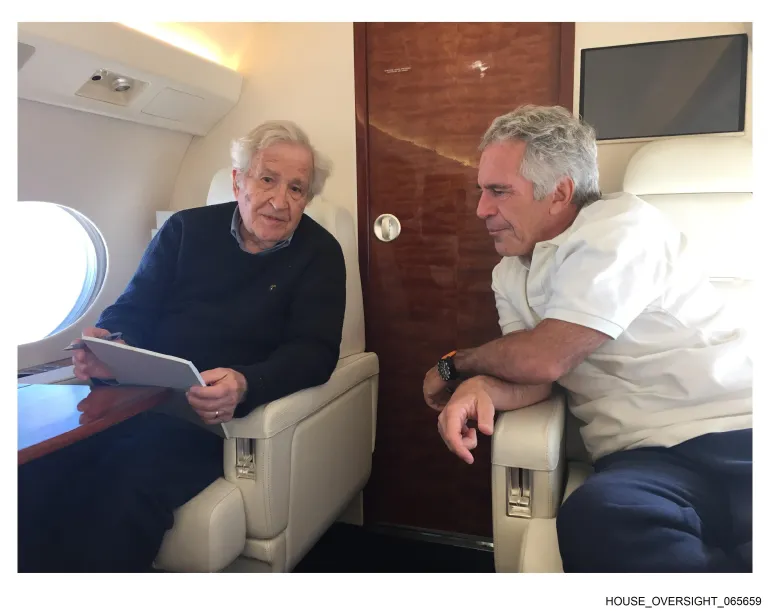
The latest trove includes photos of Epstein with public intellectual Noam Chomsky, as well as images of billionaire Bill Gates, filmmaker Woody Allen and former Donald Trump strategist Steve Bannon at Epstein’s compound.

One release shows a screenshot of a text exchange in which an unknown sender appears to discuss recruiting young women.

“I have a friend scout she sent me some girls today. But she asks 1000$ per girl. I will send u girls now. Maybe someone will be good for J?” the post says.

An undated photo released by Democrats on the House Oversight Committee on Thursday, December 18, 2025 shows professor and political activist Noam Chomsky with Jeffrey Epstein.
An undated photo released by Democrats on the House Oversight Committee on Thursday, December 18, 2025, shows professor and political activist Noam Chomsky with Jeffrey Epstein.

Other images show women’s passports and the body of an unidentified woman with messages written on her skin, next to Vladimir Nabokov’s Lolita, a novel about a man’s sexual obsession with a child.

Like a trove of images released last week, the materials released on Thursday were not accompanied by any further context or details. Last week’s images also showed Bannon, Allen, and Gates, as well as former US President Bill Clinton and former Israeli Prime Minister Ehud Barak.

Another image showed US President Trump surrounded by three young women, his hand clutching the waist of the woman to his right.

Trump has acknowledged a prior relationship with Epstein, but has denied taking part in the sex abuse ring that Epstein ran. He said the two men had a falling out years before Epstein’s arrest.

In emails previously released by House Democrats, Epstein said that Trump “knew about the girls”. In another, Epstein described Trump as “the dog that hasn’t barked”.

The president had initially opposed a more complete release of files related to Epstein, but faced mounting pressure, including from within his own Make America Great Again (MAGA) base.

Speculation has focused on the influential figures in Epstein’s orbit, and any involvement they made have had in his crime. The intrigue has been fueled by the murky circumstances surrounding Epstein’s death in a New York jail cell, which was ruled a suicide.

Last month, Trump pivoted on the issue, signing into law a bill requiring the Justice Department to publish materials connected to the Epstein investigation.

However, the Justice Department has remained silent on whether it will meet Friday’s deadline outlined in the law, dubbed the Epstein Files Transparency Act.

Source link

UK names Christian Turner as US ambassador, replacing Peter Mandelson

The UK has named career diplomat Christian Turner as its new ambassador to the US, Downing Street has confirmed.

Turner has spent nearly 30 years working across Whitehall and the Foreign Office.

He will now become the man tasked by Prime Minister Sir Keir Starmer with building links to the Trump administration.

The previous ambassador Peter Mandelson was sacked by Starmer after evidence, including emails and photos emerged, showing his continued association with the paedophile Jeffery Epstein.

Lord Mandelson has repeatedly said he regrets his relationship with Epstein, who died in jail in 2019 while awaiting trial on sex trafficking offences.

The Foreign Office said in a statement that King Charles had formally appointed Turner, and the UK would now seek official approval for his appointment from the US.

Turner said he was “honoured” to be nominated for the role.

“At a pivotal time for the transatlantic relationship, I look forward to working with President Trump’s administration, and leaders in Congress, business and society to strengthen that bond in the years ahead,” he added.

In a statement released by the Foreign Office, Starmer said: “The United Kingdom and United States have a very special relationship, and Christian’s extensive experience as an outstanding diplomat will support this uniquely close bond and ensure it continues to flourish.”

Turner’s previous roles include political director at the Foreign Office, British High Commissioner to Pakistan, and Foreign Office Director for the Middle East and North Africa. He also previously worked in 10 Downing Street as Private Secretary to the Prime Minister.

Before entering government, he worked in television documentaries.

Foreign Secretary Yvette Cooper said Turner would bring “exceptional diplomatic experience and deep understanding” to the role.

Source link

MiG-31 Foxhound Among Russian Air Defense Assets Targeted In Crimean Drone Strike

A key Russian airbase in occupied Crimea has been targeted by a Ukrainian drone strike, according to Ukraine. Authorities in Kyiv claim that drones hit a MiG-31BM Foxhound interceptor, as well as elements of an S-400 air defense system, at Belbek Air Base, near Sevastopol.

The Security Service of Ukraine (SBU), the government’s main internal security agency, reported that a successful drone strike operation was carried out overnight by forces from its Special Group “Alpha.” Russian officials, including the governor of Sevastopol, claim that the attack was repelled with 11 drones downed and resulted in no damage.

Minus russian MiG-31 jet 🔥
Last night, the warriors from the @ServiceSsu Alpha Special Operations Center struck a russian MiG-31 fighter jet with a full combat load at the Belbek military airfield in temporarily occupied Crimea.
An S-2 Pantsir air defense system, an S-400 air… pic.twitter.com/qEsjJwrd0o

— Defense of Ukraine (@DefenceU) December 18, 2025

The SBU has published a series of video stills showing the attack, with footage taken from the perspective of the long-range one-way attack drones heading toward their targets. Based on the imagery, the drones could well be the same fiber-optic types that have been launched from Ukrainian drone boats.

Further videos were posted to social media by residents of Crimea, showing explosions and attempts by Russian troops to shoot down the drones. At this point, it should be noted that, without the full videos of the strikes, we cannot be sure whether the drones detonated or the degree of damage they might have caused.

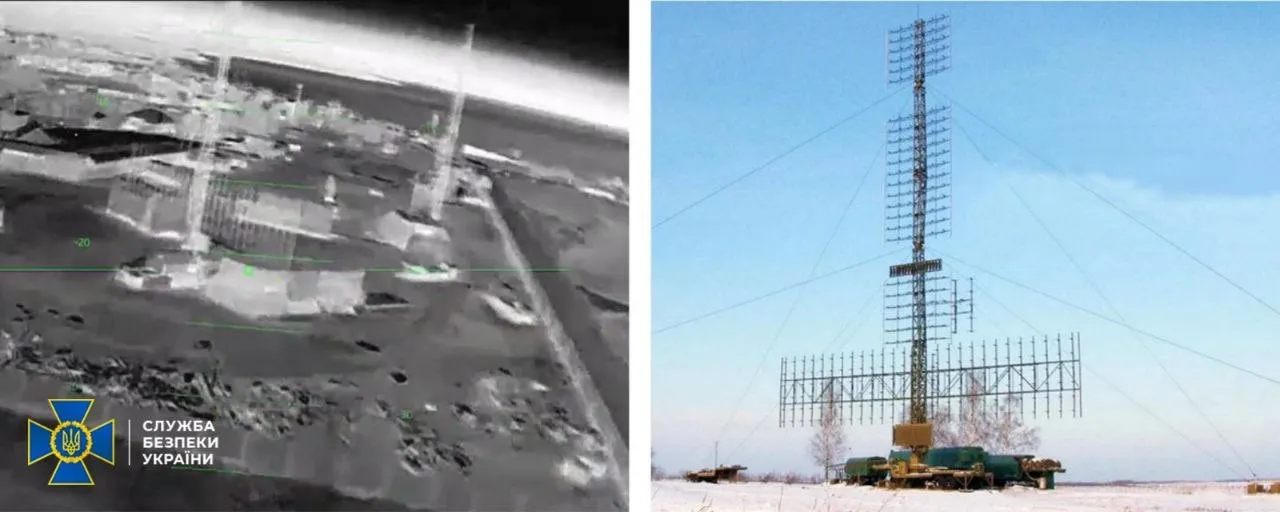
According to the SBU, damage was recorded to a MiG-31, a 92N6 (NATO reporting name Grave Stone) long-range multifunction radar that is part of the S-400 system, two Nebo-SVU long-range surveillance radars, and a Pantsir-S2 surface-to-air missile system.

Nebo-SVU long-range surveillance radar. SBU
Pantsir-S2. SBU

Ukraine claims that the targeted MiG-31 was carrying a full combat load, although the available video reveals that it carries no armament under its wings. Potentially, it carries air-to-air missiles below the fuselage, but the forward-mounted examples are also not visible. While it looks like a real aircraft rather than a decoy, it remains possible that it may have been a non-operational example. However, recent satellite imagery assessed by TWZ shows a MiG-31 sporadically at the base in recent weeks, sometimes sitting out in the open.

MiG-31. SBU

It’s worth noting, too, that the reported 92N6 system (seen below) was covered with camouflage and/or anti-drone netting, making its positive identification harder. It could also have been a 96L6 (Cheese Board) all-altitude detection radar, also associated with the S-400 air defense system.

SBU

It’s a cheeseboard, its been axtive at Belbek for a long time, you made a good id, you can recognise it because the radar array has a round base and on the gravestone its rectangular pic.twitter.com/f4RDqfaoYY

— NLwartracker (@NLwartracker) December 18, 2025

As to the estimated value of these items of equipment, the SBU put a figure of $30-50 million on the MiG-31, depending on configuration and armament, $30 million on the 92N6, $60-100 million for each of the Nebo-SVUs, and $12 million for the Pantsir-S2.

“The SBU continues its effective work to destroy air defense systems in Crimea that cover important military and logistical facilities of the occupiers,” the agency said in a statement on its Telegram channel. “The elimination of components of this echeloned system significantly weakens the enemy’s defense and military capabilities in the Crimean direction.”

Belbek plays a key role in Russia’s war in Ukraine and, as such, has been targeted by Ukraine in the past.

The significance of the airbase, in particular, lies in the fact that its aircraft and air defenses help extend coverage deeper into Ukraine, as well as providing critical screening for the nearby Russian naval base at Sevastopol, and also extend this coverage far out into the Black Sea.

Several photos recently posted on the “warhistoryalconafter” TG channel showing a VKS Su-27P/S. Visible AAMs include an R-73, R-27ET & R-27ER. Photos appear to be from Belbek (thanks to @StefanB2023 for IDing the base) – the jet is presumably assigned to the 38th IAP based there. pic.twitter.com/e6Dm4fGjfX

— Guy Plopsky (@GuyPlopsky) July 28, 2024

Belbek Air Base was used by Ukraine before Russia annexed Crimea in 2014. Today, it is home to the 38th Fighter Aviation Regiment (38 IAP, in Russian nomenclature), a unit that you can read more about here. When Moscow launched its full-scale invasion of Ukraine, Belbek received an influx of additional combat aircraft deployed from units in Russia. These have included examples of the Su-30SM and Su-35S, as well as Su-34 Fullback strike fighters, and MiG-31s.

MiG-31s, together with the very long-range air-to-air missiles they carry, have been a particular threat to the Ukrainian Air Force.

In October 2022, during take-off from Belbek, a MiG-31BM departed the runway, crashed, and was completely burned out. The navigator/weapons system officer ejected successfully from the rear cockpit, while the pilot was killed.

The airbase’s value means that it has received new hardened aircraft shelters and additional construction to help shield aircraft from drone attacks and other indirect fire. This is part of a broader push by the Russian military to improve physical defenses at multiple airfields following the launch of the full-scale invasion of Ukraine.

A view of the central section of Belbek, showing hardened aircraft shelters. Google Earth

Notably, the MiG-31 was targeted while standing in the open, unprotected. Its twin cockpit canopies were open, suggesting it was being prepared for a sortie or had recently returned from one.

As well as previous drone attacks, Ukrainian forces have employed U.S.-supplied Army Tactical Missile System (ATACMS) short-range ballistic missiles with cluster munition warheads against the base, with a notably destructive ATACMS barrage in May of last year. That attack resulted in two MiG-31s being burnt out, confirmed in post-strike satellite imagery. Since then, however, the use of hardened aircraft shelters at Belbek will have made the resident aircraft less vulnerable to the effects of ATACMS armed with cluster munitions, in particular.

Clearly visible damage to a portion of Belbek’s flightline and adjacent areas can be seen in this satellite image taken on May 16, 2024. PHOTO © 2024 PLANET LABS INC. ALL RIGHTS RESERVED. REPRINTED BY PERMISSION

The Russian Aerospace Forces began the current conflict with around 130 MiG-31s in active service, a small number of them adapted to carry Kinzhal aero-ballistic missiles. The two aircraft destroyed previously at Belbek are the only confirmed combat losses, though thast ight change when more details of the latest drone strike become available.

Russian MiG-31 Downs Ukrainian Su-25 from high altitude


The same attack on Belbek in May 2024 saw the Russians lose elements of an S-300 or S-400 air defense system, including what looked to be another 92N6 radar.

And here are the first photos from the ground showing the aftermath of Ukrainian strikes with ATACMS missiles on Russia’s Belbek Air Base in the Crimea last night.

That appears to be a destroyed 92N6E Grave Stone multi-function engagement radar from the S-400 surface-to-air… https://t.co/anrjNVYdfm pic.twitter.com/fclOaYBnVQ

— Status-6 (Military & Conflict News) (@Archer83Able) May 15, 2024

The targeting of Belbek again overnight, which Ukraine claims caused significant damage to prized air defense assets, shows that Ukraine is continuing to apply pressure on Russian forces in Crimea and is using a variety of weapons to achieve this.

Contact the author: thomas@thewarzone.com

Thomas is a defense writer and editor with over 20 years of experience covering military aerospace topics and conflicts. He’s written a number of books, edited many more, and has contributed to many of the world’s leading aviation publications. Before joining The War Zone in 2020, he was the editor of AirForces Monthly.


Source link

Kyiv Escalates Drone War with Fatal Strikes on Russian Territory

NEWS BRIEF Ukrainian drone strikes killed three people, including two crew members of a Russian-flagged oil tanker, in overnight attacks on the port of Rostov-on-Don and the town of Bataysk in southern Russia. The strikes mark a continued escalation in Kyiv’s campaign targeting Russian energy infrastructure and maritime assets, as both sides trade accusations of […]

The post Kyiv Escalates Drone War with Fatal Strikes on Russian Territory appeared first on Modern Diplomacy.

Source link

Angry farmers block Brussels roads with tractors over Mercosur trade deal | European Union News

Thousands protest as EU leaders clash over trade pact farmers fear will flood Europe with cheaper South American goods.

Hundreds of tractors have clogged the streets of Brussels as farmers converged on the Belgian capital to protest against the contentious trade agreement between the European Union and South American nations they say will destroy their livelihoods.

The demonstrations erupted on Thursday as EU leaders gathered for a summit where the fate of the Mercosur deal hung in the balance. More than 150 tractors blocked central Brussels, with an estimated 10,000 protesters expected in the European quarter, according to farm lobby Copa-Cogeca.

Recommended Stories

list of 2 itemsend of list

It made for a twin-tracked day of febrile tension outside and inside at the EU summit as leaders were perhaps more focused on a vote to determine whether they are able to use nearly $200bn in frozen Russian assets to support Ukraine over the next two years.

Outside the gilded halls on the streets, farmers hurled potatoes and eggs at police, set off fireworks and firecrackers, and brought traffic to a standstill.

Authorities responded with tear gas and water cannon, setting up roadblocks and closing tunnels around the city. One tractor displayed a sign reading: “Why import sugar from the other side of the world when we produce the best right here?”

“We’re here to say no to Mercosur,” Belgian dairy farmer Maxime Mabille said, accusing European Commission chief Ursula von der Leyen of trying to “force the deal through” like “Europe has become a dictatorship”.

A protester throws an object, as farmers protest against the EU-Mercosur free-trade deal between the European Union and the South American countries of Mercosur, on the day of a European Union leaders' summit, in Brussels, Belgium, December 18, 2025. REUTERS/Yves Herman
A protester throws an object, as farmers protest against the EU-Mercosur free-trade deal in Brussels, Belgium [Yves Herman/Reuters]

Protesters fear an influx of cheaper agricultural products from Brazil and neighbouring countries would undercut European producers. Their concerns centre on beef, sugar, rice, honey and soya beans from South American competitors facing less stringent regulations, particularly on pesticides banned in the EU.

“We’ve been protesting since 2024 in France, in Belgium and elsewhere,” said Florian Poncelet of Belgian farm union FJA. “We’d like to be finally listened to.”

France and Italy now lead opposition to the deal, with President Emmanuel Macron declaring that “we are not ready” and the agreement “cannot be signed” in its current form.

France has coordinated with Poland, Belgium, Austria and Ireland to force a postponement, giving critics sufficient votes within the European Council to potentially block the pact.

However, Germany and Spain are pushing hard for approval. German Chancellor Friedrich Merz warned that decisions “must be made now” if the EU wants to “remain credible in global trade policy”, while Spanish Prime Minister Pedro Sanchez argued the deal would give Europe “geo-economic and geopolitical weight” against adversaries.

The agreement, 25 years in the making, would create the world’s largest free-trade area covering 780 million people and a quarter of global gross domestic product (GDP).

Supporters say it offers a counterweight to China and would boost European exports of vehicles, machinery and wines amid rising US tariffs.

Despite provisional safeguards negotiated on Wednesday to cap sensitive imports, opposition has intensified. Von der Leyen remains determined to travel to Brazil this weekend to sign the deal, but needs backing from at least two-thirds of EU nations.

Brazil’s President Luiz Inacio Lula da Silva issued an ultimatum on Wednesday, warning that Saturday represents a “now or never” moment, adding that “Brazil won’t make any more agreements while I’m president” if the deal fails.

Source link

Briton who fought in Ukraine jailed for 13 years by Russia

A Briton who fought in Ukraine has been sentenced to 13 years in a maximum-security prison, the Russian Prosecutor-General’s office has said.

Hayden Davies, a former British soldier who Russia has called a mercenary, was reportedly captured in Ukraine’s Donbas region in late 2024 or early 2025 while serving with the country’s foreign legion.

He was tried in a Russian-controlled court in the city of Donetsk, which is currently occupied by Moscow.

The UK Foreign, Commonwealth & Development Office (FCDO) said it strongly condemned the sentencing of Mr Davies “on false charges”, adding he was a prisoner of war.

It said: “We remain in close contact with Mr Davies’ family and are providing consular support.”

The FCDO said that under international law, prisoners of war cannot be prosecuted for participating in hostilities.

It added: “We demand that Russia respect these obligations, including those under the Geneva Conventions, and stop using prisoners of war for political and propaganda purposes.”

In a statement, Russian prosecutors said Mr Davies joined the Ukrainian army in August 2024 and “took part in military operations against the Russian armed forces on the territory of [Donetsk Region]”.

In court footage released by prosecutors, a man with a British accent speaks via a translator from inside a barred cage, which is standard practice for many Russian hearings.

The man said he was a member of the Ukrainian Army’s foreign legion and travelled to Ukraine by bus via Poland.

He said he was paid $400 (£300) or $500 a month as a salary. When asked if he pleaded guilty to the charge, the man said “yeah” and nodded his head.

It is not clear whether he was speaking under duress.

Earlier this year, the FCDO also criticised the case brought against James Anderson, another Briton captured fighting with Ukraine forces, after he was jailed for 19 years for terrorism and mercenary activity.

The 22-year-old was the first British national to be convicted by Russia during the war.

Source link

Borno’s Local Elections Marred by Apathy and Open Malpractice 

Saturday, Dec. 13, 2025, was meant to be a pivotal civic exercise across Borno State, northeastern Nigeria, as residents were expected to elect chairpersons and councillors responsible for local development, basic services, and community representation. Instead, what unfolded across parts of the state bore little resemblance to a functioning democratic process.

Umar Ali, a resident of Gamboru in Maiduguri, stepped out that morning expecting to vote, but could not locate any polling unit nearby. “We thought it was just a delay, but there was no election activity at all,” he said. 

His experience was replicated across the city and other neighbouring council wards. HumAngle observed that many polling units listed by the Borno State Independent Electoral Commission (BOSIEC) were deserted, with neither officials nor voters in sight. In locations where officials were present, there was only a handful of voters, often confined to near-empty compounds.

An exception was Ajari II polling unit in Mafa Ward, where Borno State Governor Babagana Zulum cast his vote, which recorded a higher turnout than most other locations observed.

In several neighbourhoods, residents watched the day pass from outside their homes or went about their chores. Conversations revealed frustration, distrust, and a widespread perception that the outcome had already been predetermined.

“This is not an election. It is a selection,” said Musa Ali, who declined to approach the polling unit closest to his house. He accused the government of determining the results in advance. “They already know what they are doing,” he argued. 

For many residents, the only indication that an election was taking place was the restriction of movement imposed across the state. “If not for the ban, you would not even know voting is going on,” said 22-year-old Fatima Alai. 

On some of the empty streets, children and even young adults turned it into football fields. 

Borno State has over 2.5 million registered voters, with about 2.4 million Permanent Voter Cards collected, as of February 2023. Yet participation in local government elections remains low. It is unclear how many people voted in the Dec. 13 elections. However, this trend is not unique to Borno or even to the current election cycle.

Across Nigeria, turnout in local government elections is consistently lower than in national polls. Analysts and residents alike attribute this to weak service delivery at the council level, the routine imposition of candidates by political parties, and the limited credibility of state-run electoral commissions. For many citizens, local elections appear disconnected from accountability or tangible improvements in daily life.

Malpractice in plain sight

Beyond voter apathy, HumAngle observed troubling procedural violations at multiple polling units. At a polling unit in Bulama Kachallah II, in Maiduguri, HumAngle observed electoral officials stamping ballot papers and depositing them into the ballot box in the absence of voters. This continued between 9:00 a.m. and 1:00 p.m., when we left the unit. 

A similar scene played out at another polling unit in nearby Bulama Kachallah I. BOSIEC officials wearing identification tags, alongside unidentified individuals, openly filled out ballot papers and inserted them into the boxes. 
When approached, a party agent who was present at the scene told HumAngle, “Ba ruwan ka,” meaning, “It is none of your business.”

People gather around a table outdoors, near a wall with writing. Trees provide shade in the background.

A group of young men were seen stamping on ballot papers at a polling unit in Maiduguri. Photo: Abubakar Muktar Abba/HumAngle. 

Despite these irregularities, BOSIEC Chairperson Tahiru Shettima maintained that the process met democratic standards. “I think the commission has done its best and the election was free, fair, inclusive, and transparent,” he said. 

Two days after the exercise, BOSIEC announced that the ruling APC won all 27 chairpersonship seats in the state. The election was contested by six political parties, including the New Nigeria People’s Party, Social Democratic Party, Labour Party, and People’s Redemption Party.

Notably absent was the Peoples’ Democratic Party (PDP), the state’s leading opposition force. In the days leading up to the election, the PDP formally boycotted the process, citing concerns about the legitimacy and fairness of the electoral process, the high costs associated with the expression-of-interest and nomination forms, and a lack of trust in BOSIEC’s capacity to conduct credible elections.

The African Democratic Congress (ADC), a national opposition coalition, was also missing from the ballot. A member of the party, who asked not to be named, claimed that “the state government had been a big challenge”. He said that when the party attempted to launch its Borno State chapter in November, security operatives disrupted the event, alleging that the government had not been notified. According to him, this interference contributed to the ADC’s absence from the December local council election.

The electoral commission rejected these criticisms. Shettima said BOSIEC had consulted with stakeholders, including political parties, on logistics and nomination fees, and insisted that participation was voluntary. “We cannot force any political party to take part in the election,” he told journalists.

Public reactions on social media, meanwhile, suggested a contrasting reality to official claims. Tanko Wabba, a Facebook user, wrote: “We didn’t see the election [ballot] box in our street,” reflecting frustration over missing polling units and highlighting a gap between official claims and citizens’ experiences.

Weakened local governance 

For more than a decade, local council elections were not held in Borno State due to the Boko Haram insurgency. During that period, councils were administered by caretaker committees appointed by the state government. Elections resumed in 2020, with another round held in January 2024. 

While those elections were described by the media as largely peaceful, turnout was characterised as average at best. Analysts cited voter fatigue, lingering security concerns, and persistent doubts about the relevance and autonomy of local councils.

Under Nigeria’s Constitution, local governments constitute the third tier of government, operating under the state’s supervision. Democratically elected councils are mandated to manage basic services such as roads, markets, sanitation, health clinics, business and vehicle licensing, local fees, education, and support for agriculture and health in coordination with the state.

Executive authority at the local level rests with the chairperson and vice chairperson, who implement council policies through supervisory councillors and the civil service. In practice, however, councils often have limited autonomy. State governments frequently override their authority by appointing caretaker committees—often ruling party loyalists—and retaining control of local government finances through joint state–local government accounts.

Autonomy debates and unresolved tensions

In July 2024, Nigeria’s Supreme Court ordered that allocations from the federation account meant for lo­cal governments must be disbursed to them directly, rather than the joint account created by the state government. The court restrained governors from collecting, withholding, or tampering with these funds, declaring such actions unconstitutional, null, and void.

The Minister of State for Defence, Bello Mohammed Matawalle, welcomed the ruling, saying it would allow local governments to manage their own finances, strengthen accountability to voters, and improve service delivery and development.

However, the Nigerian Governors’ Forum opposed the decision. The governors argued that full local government autonomy does not align with Nigeria’s federal structure and said the ruling failed to address longstanding issues of weak administration and executive excesses at the council level.

“The desire for decentralisation must be backed by a commitment to delegate resources, power, and tasks to local-level governance structures that are democratic and largely independent of central government,” said Victor Adetula, a Professor of Political Science at the University of Jos.

Against this backdrop of contested authority and fragile credibility, the conduct of Borno’s local government elections raises deeper questions—not just about electoral integrity, but about whether local democracy in the state can meaningfully deliver the governance and development it promises.

Source link