MONEY

Get the latest updates on stock markets, economic trends, business insights, personal finance tips, and more

EU tightens foreign investment screening to counter rising geopolitical threats

Published on
Updated

The European Union’s member states and the European Parliament have struck an agreement to strengthen the screening of foreign investments in the bloc as tensions rise over investments from countries such as China.

The Parliament had been pushing for broad screening of foreign direct investments, but it is EU member states who hold the ultimate authority over investment reviews. The two have now agreed on a common text that strengthens the existing rules.

Under the deal, mandatory screenings will now cover military equipment, artificial intelligence, quantum technologies, semiconductors, raw materials, transport and digital infrastructure, and even election systems.

“By requiring all member states to implement a screening mechanism and by strengthening cooperation among them, the regulation closes potential loopholes for high-risk investments in the internal market,” said MEP Bernd Lange, chair of Parliament’s trade committee.

He added that Parliament’s negotiators “successfully advocated for a broader minimum scope of the national screening mechanisms, ensuring that investments in particularly critical sectors must be screened by all member states”.

Shielding Europe’s economic security

The revamped framework stems from a European Commission initiative to harden the EU’s economic defences.

“In recent months, it has become clear that the geopolitical context has changed significantly,” an EU diplomat said on Thursday. “Trade can no longer always be seen as a neutral transaction between independent economic operators.”

He noted that several recent cases “demonstrated that economic instruments have been weaponized against Europe for geopolitical purposes.”

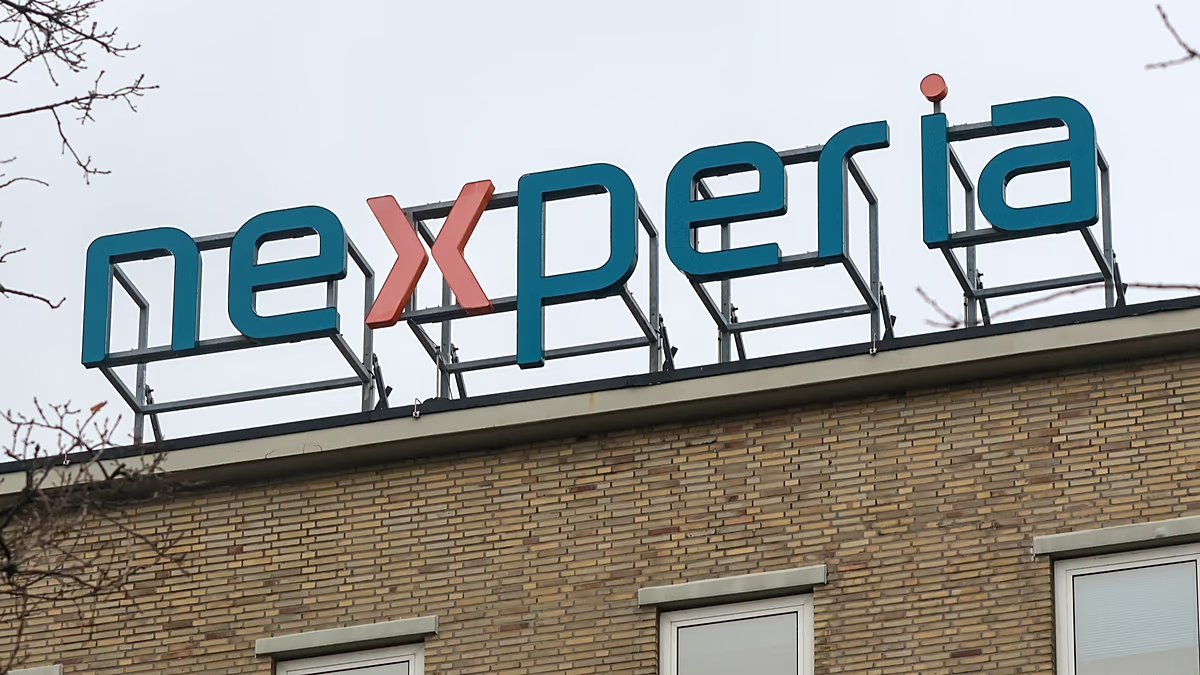
In September, the Netherlands placed the Dutch-based, Chinese-owned chipmaker Nexperia under state supervision out of concern that critical know-how from its European facilities could be siphoned back to China.

Beijing responded by restricting chip exports to Europe, thus threatening the EU’s automotive industry, which relies heavily on those components. Although a US-China deal eventually restored exports, tensions between Beijing and The Hague remain high.

The EU has had a cooperation mechanism on foreign direct investment screening in place since October 2020, but initial resistance was strong.

“At the beginning, some economic actors across Europe were reluctant to (implement) such a screening,” a parliamentary source told Euronews. “Investment issues are essential to them and they sometimes don’t see the risks.”

Under the EU’s rules, the Commission can request information and issue opinions, but it cannot force a member state to screen and block an investment.

On top of that, a 2023 regulation introduced a new screening regime for non-EU subsidies granted to companies operating in the bloc – another move that places China firmly in the spotlight.

Source link

Leading Innovation and Digital Transformation in Serbia

Global Finance (GF): What are the bank’s signature digital products and services, and what differentiates them?

Zoran Petrovic (ZP): As part of our five-year transformation journey, we’ve launched or improved several digital products and services. We have two “signature” offerings:

  • iKeš (iCash) – a fully online personal loan, available for both existing and new clients. Minimal additional documentation is required, making the approval process 10-times faster.
  • iRačun (iAccount) – a fully online digital current account, available in 15 minutes. It comes with a digital debit card plus immediate access to the MB app and digital wallets.

These products are available for retail and SME clients, enabling us to meet the needs of more customer segments.

GF: How have you made complex banking and payments processes more simple, while also enhancing the user experience?

ZP: We are increasingly providing customers with simplicity and speed. For example, at the end of 2024, we introduced a one-click payment feature for investment funds. In its first six months, it accounted for a 70% share of customers’ total investments, helping Raiffeisen Invest surpass EUR 1bn in AUM.

More recently, we became the first bank in our market to introduce deep link technology for peer-to-peer payments. This allows clients to send and request money without inputting recipients’ information. Our SME customers can now see and approve invoices via one simple and convenient customer interface: our mobile banking app. Over 25% of these clients are already using it and 98% of all outgoing payments use digital channels.

Further, in addition to providing real-time information on SME accounts and transactions, our AI tools analyse past behaviour of SME clients, enabling better cash flow predictions to help plan their finances.

GF: How effective has your strategy been in attracting digital customers?

ZP: Since launching iRačun (iAccount), more than 250,000 customers – mostly individuals – have opened fully digital accounts with us. Last year, we achieved 50% market share in the total number of customers opening online accounts across Serbia. We also became the biggest SME bank with over 100,000 active clients, nearly doubling our client base in only two and a half years.

In addition, our mobile app is the most widely used in Serbia, with over 500,000 users, and has the highest ranking on app stores. Finally, we’ve seen double-digit growth in the total number of active retail customers year-on-year, driven by digital customer engagement efforts.

GF: Given innovation is core to a successful digital offering, what’s your approach?

ZP: Everything we do starts with the customer. We understand who they are and what they need, and then innovate in the design of our products and services to suit them. We can quickly identify and seize emerging opportunities by applying the “permanent agile innovation organisation at scale” approach used by the best tech companies globally. That includes hiring and developing the best talent. To make all that possible, there is close collaboration between the business, our IT function and external resources. They work as one team with common goals.

GF: What’s next on your digital agenda?

ZP: We will continue to digitally empower our clients and employees, fulfilling our vision of being Serbia’s digital bank with a human touch. To do this, we created specialist teams and programmes to ensure the adoption of AI. With mobile expected to become the primary touchpoint with our clients, we will ensure we have the necessary tools and capabilities.

Making SME lending faster and more efficient is one of our key areas under development. We also see strong potential in further scaling our investment business by allowing clients to open investment accounts fully online or purchase international stocks directly from the mobile app.

We will also continue to make daily banking tasks even easier and more enjoyable by implementing world class UX standards and extending mobile self-service capabilities for customers’ accounts, cards, and profiles.

Through these initiatives, we plan to celebrate our 25th anniversary in 2026 by reaching the milestone of one million active clients.

Source link

Oracle shares fall as bubble fears return, hitting wider tech stocks

Published on

Global markets failed to retain the momentum sparked by an interest rate cut from the Federal Reserve on Wednesday after fears of an AI bubble resurfaced.

Disappointing results from cloud computing giant Oracle weighed on wider tech stocks, with Nasdaq 100 futures down around 1% just after 3am in New York. S&P 500 futures slipped 0.79%, while Dow Jones futures dropped 0.44%. Asian markets were broadly in the red, while Europe opened lower.

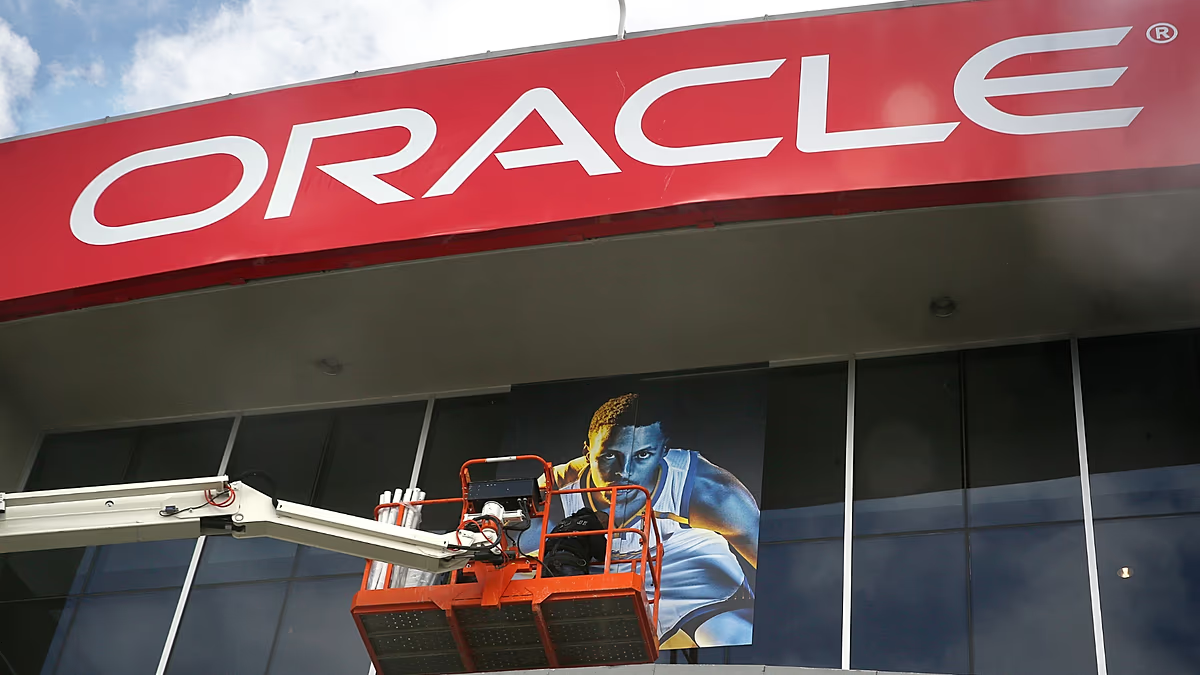
Around the same time, Oracle shares were down 11.83% in pre-market trading as investors grew increasingly sceptical about the company’s business outlook.

Oracle on Wednesday announced heavy capital expenditures while missing profit and revenue expectations, reigniting fears around an imminent AI bubble burst. As excitement around the technology has driven firms to sky-high valuations, analysts are concerned that a correction is due as business fundamentals fail to keep up.

Oracle brought in revenue of $16.06bn (€13.74bn) for the quarter to November, marking a 14% year-on-year increase but still coming in below the $16.21bn (€13.86bn) projected by analysts.

Net income came to $6.14bn (€5.25bn), a dramatic 95% increase, boosted by a $2.7bn (€2.3bn) pre-tax gain in the sale of Oracle’s Ampere chip company to SoftBank.

The company also said it expected full-year revenues to remain unchanged from its previous forecast of $67bn (€57.29bn).

Investors nonetheless kept their focus on the company’s debt, ramped up via high bond sales in recent months, and spending on long-term assets.

Capital expenditure for the 2026 financial year is now expected to be 40% higher than previously forecasted, totalling around $50bn (€42.75bn).

Another metric causing concern is revenue from Oracle’s cloud infrastructure business, which came in below expectations at $4.1bn (€3.5bn).

A large share of the firm’s capital expenditure is earmarked for the construction of data centres to power AI for clients like OpenAI, although investors fear that the firm might be placing too much money on a narrow, high-stakes bet. That’s particularly relevant as OpenAI sees more competition from companies like Google.

Compared to rivals like Amazon and Microsoft, Oracle was late to shift its focus from business software to cloud computing, and analysts now warn the firm could lose out if it fails to diversify revenue streams.

The souring narrative around Oracle is reflective of the broader change in market sentiment around AI. In September, the firm’s shares soared after OpenAI said it had agreed to purchase $300bn (€256.53bn) in computing power from Oracle over five years. That briefly made Oracle chairman Larry Ellison the world’s richest man.

Since that high, the firm’s shares have lost 40% of their value as investors wake up to the risks of a market correction. Analysts have notably sounded the warning bell over circular financing, where money is invested in a loop between related parties.

Elsewhere in the tech world, Nvidia stocks were down 1.58% in pre-market trading, while CoreWeave saw a 3.27% drop.

Source link

Qatar: A New World Capital For Wealth?

Qatar’s LNG-driven prosperity is reshaping both its domestic eco-nomy and its international footprint.

In late October, Sheikh Bandar Al-Thani, governor of the Central Bank of Qatar and Chairman of the Qatar Investment Authority (QIA), the nation’s sovereign wealth fund, met in New York with Larry Fink, chairman and CEO of asset management giant BlackRock.

Their second meeting within a year underscored a deepening partnership through which Qatar gains access to world-class wealth advisory while BlackRock taps into new and expanding pools of capital. This year, both institutions have jointly participated in multiple major US technology funding rounds, including AI firm Anthropic’s $13 billion Series F offering and smart vehicle company Applied Intuition’s $600 million round.

Private Banking And Wealth Management

A small desert country with an economy of commensurate size only a few decades ago, Qatar is now one of the world’s richest nations, with GDP per capita exceeding $80,000 for barely 350,000 nationals. Thanks to its expanding gas production, the emirate’s growth is expected to jump from 2.5% this year to over 6.5% in 2026, making it the best-performing economy in the Gulf Cooperation Council (GCC) and one of the strongest globally.

In a region that is already a magnet for global wealth, with transforming economies and accommodative fiscal regimes, Qatar’s rapid acceleration is drawing increased attention from investment banks, private banks, and wealth managers. Big names such as J.P. Morgan, HSBC, UBS, and Barclays are already present in Doha and expanding their teams.

Yet local institutions retain a strong advantage. Their bankers have cultivated relationships with Qatari families for generations, offering the kind of cultural understanding and trust that foreign competitors struggle to match.

“There is a noticeable increase in interest from international private banks and wealth managers targeting the GCC market, drawn by the growing affluence and capital inflows,” observes Chaouki Daher, general manager and head of Private Banking & Wealth Management at Dukhan Bank. “However, local and regional players retain a competitive advantage through cultural affinity, deep client relationships, and a better understanding of Islamic finance principles. That said, the competition is pushing all of us to elevate our offerings: especially in areas like digital experience, discretionary portfolio management, and tailored investment advisory.”

Dukhan Bank is Qatar’s third largest lender; its clients are mainly local high and ultra-high net worth individuals and family offices.

Some global firms are attempting to enter the market by leveraging local know-how. American asset manager Blackstone, for instance, is exploring a partnership with Doha Bank to provide Qatari clients with access to private-market investment solutions traditionally reserved for institutional investors.

Next-Gen Investors

Local banks, meanwhile, understand that their clients are evolving and looking for more sophisticated investment solutions beyond traditional equities and real estate. At investment bank Lesha, CEO Mohammed Ismail Al Emadi witnesses this every day.

“We are seeing increasing sophistication amongst institutions and individual investors in Qatar and the broader GCC,” he says, “and this includes a growing allocation to alternative—typically private market—investments. We see strong demand from our investors in asset classes such as real estate, real assets—including aviation—and private equity. We also see strong interest in actively managed public equities in the region, where significant opportunities for alpha generation exist.”

This new strategic direction, especially among younger investors, is indeed one to watch as the GCC region stands on the brink of the largest intergenerational wealth transfer in history. By 2030, an estimated $1 trillion is expected to pass hands, opening huge opportunities for private banks to support succession planning.

“Increasingly, we are seeing interest from second-generation clients who are more global in outlook and seek access to sophisticated investment opportunities that align with both performance and values: particularly Shariah compliance and ESG integration,” says Daher. He also sees potential in “cross-border investment opportunities, particularly in technology, healthcare, and sustainable infrastructure, which appeal to the younger generation of investors.”

While personalized service and direct human interaction remain essential for top-tier clients, lenders say that younger customers won’t even consider banking with a partner that doesn’t offer full-fledged digital services.

“A younger, digitally native customer base is redefining product design,” notes Dimitrios Kokosioulis, deputy CEO of Doha Bank: “lifestyle-driven product propositions including payments, micro savings, subscriptions, travel/loyalty, and gamified financial wellness. That shift is visible in the product launches, where user experience, personalization, and instant fulfillment have become standard expectations.”

Looking ahead, Qatari banks are also investing heavily in AI to enhance their product offerings and boost operational efficiency.

“The rapid adoption of digital channels is driving innovation in mobile banking, digital payments, and personalized financial ecosystems supported by AI algorithms,” notes Omran Sherawi, senior associate general manager and head of Asset Liability Management at Commercial Bank of Qatar (CBQ). “These technologies enable hyper-personalized offers, real-time advisory services, and intelligent portfolio management.”

Going Global

While banks cater to individual wealth, Qatari institutions are also deploying energy revenues on a global scale, extending the nation’s influence far beyond its borders.

Qatar’s ambitious LNG expansion is set to add more than $30 billion annually to the country’s energy revenues. This increase is expected to grow the Qatar Investment Authority (QIA) from an estimated $524 billion in assets to over $800 billion by 2030.

Celebrating its 20th anniversary this year, the QIA is already the world’s eighth-largest sovereign wealth fund, with assets distributed globally and a workforce spread across Doha, New York, and Singapore. How will it deploy that much additional capital?

“In anything beyond LNG, for diversification purposes,” argues Diego Lopez, founder and managing director of Global SWF, a consultancy and data provider focused on sovereign wealth funds and public pension funds.

At home, the QIA is doubling down on strategic investments, backing giga infrastructure projects and its $1 billion Fund of Funds venture capital program, launched in 2024 to attract venture capital and businesses to Doha. The initiative aims to position Qatar as an alternative to the United Arab Emirates and Saudi Arabia and has already received over 100 applications, just six of which have been selected so far.

The QIA is projecting Qatar’s wealth and power abroad. For the past two decades, it focused mainly on purchasing prime real estate, luxury brands, and high-profile companies in the UK and Europe. While it is far from turning its back on the Old Continent, Qataris now seem to have two new areas of focus: the Americas and Asia.

In May, the fund announced $500 billion in investments in the US over the next decade, doubling its current exposure and taking in bigger tickets, with a strong focus on the race for AI data centers and healthcare.

In September, it invested $3 billion with New York-based Blue Owl Capital to seed a digital infrastructure platform. The QIA is looking to back “leading global firms that are addressing the world’s growing demand for data centers,” CEO Mohammed Saif Al-Sowaidi said then. A few weeks earlier, the QIA took part in a $1 billion funding round for PsiQuantum, a US-based quantum computing company.

Doha is also looking to deploy surplus capital eastward.

Asia, Qatar’s largest LNG export market, offers fast-growing economies, a key role in global supply chains, a large young population, and abundant tech talent. The QIA opened an office in Singapore in 2021 to facilitate investments across the region. Earlier this year, Qatar bought a 10% stake in China’s second largest mutual fund and pledged $10 billion in investments in India.

What’s Next

In the coming years, the QIA expects to boost its investments in Japan, Southeast Asia, Korea, and Australia as a means diversifying its portfolio while deepening ties with rising economies. Qataris are also active in Central Asia, in countries such as Azerbaijan, Kazakhstan, and Uzbekistan, where the QIA supports sectors including agriculture, energy, infrastructure, and transport.

That said, Qatar remains a tiny state with a growing need for resources needed to build a more diverse economy. With that in mind, the QIA has begun investing to secure resources, including rare earth elements, that are critical for digital infrastructure as well as to address climate change and energy transition. In September, the fund invested $500 million to acquire a 4% stake in Canada’s Ivanhoe Mines, which produces metals including zinc, copper, germanium, silver, platinum, palladium, nickel, rhodium and gold in South Africa and the Democratic Republic of Congo, and is looking to explore new sites in Angola, Kazakhstan, and Zambia.

Source link

Qatar: Evolving Dynamics | Global Finance Magazine

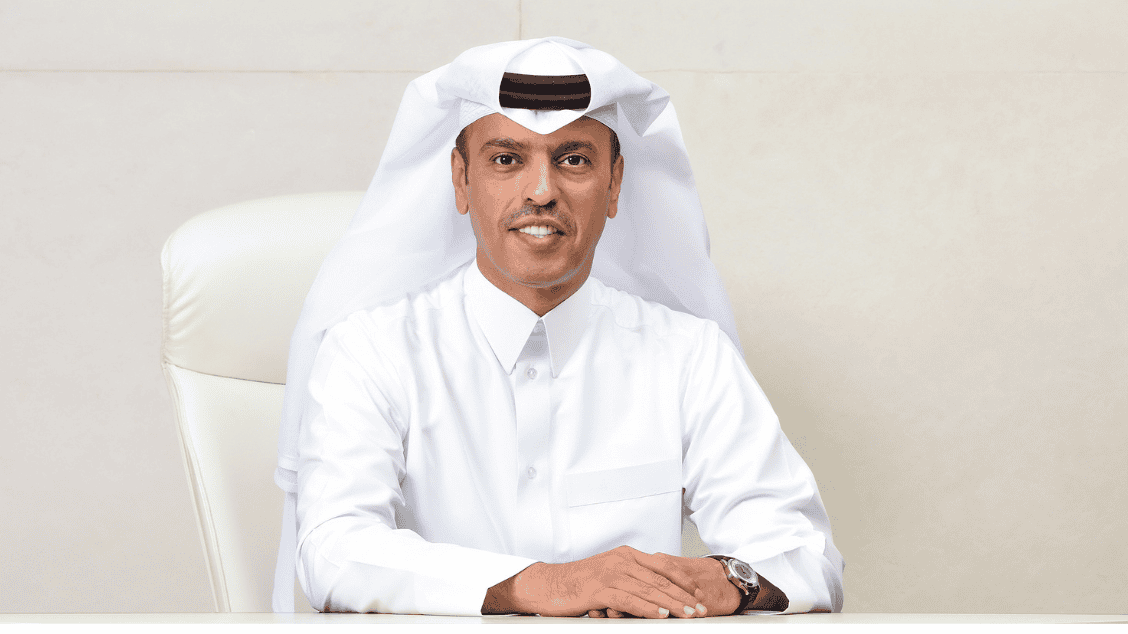
Abdulla Mubarak Al Khalifa, Group CEO of Qatar National Bank, speaks with Global Finance about the bank’s international strategy and the opportunities shaping QNB’s next phase of growth.

Global Finance: QNB is the largest bank in the Middle East and North Africa (MENA) by assets and a global player. Tell us about your international strategy

Abdulla Mubarak Al Khalifa: Our strategy beyond the Qatari market involves leveraging our strong brand reputation and extensive experience in emerging markets. We aim to expand our footprint in the MENA region and beyond by establishing strategic partnerships and exploring opportunities in countries with high growth potential. By focusing on markets that complement our expertise in corporate banking, retail banking, and wealth management, we aim to enhance our international presence and diversify our revenue streams.

GF: At home in Qatar, big economic changes are underway, how does it affect the banking and financial sector? How do you see the future?

Al Khalifa: The banking sector in Qatar is undergoing significant transformation, driven by technological advancements, regulatory reforms, and a focus on digital banking. We’re witnessing an increase in customer expectations for seamless digital experiences, prompting us to invest heavily in innovative financial technologies. Additionally, the sector is becoming more competitive, with both local and international players enhancing their presence in the market. This evolution is setting the stage for a more robust and diversified banking environment that can better serve the needs of individuals and businesses alike.

GF: What product offerings show the most promising outlook? 

Al Khalifa: In the coming years, we believe that digital banking services, green finance products, and wealth management solutions will hold the strongest growth potential. As consumer behavior shifts towards digital transactions, we are enhancing our online banking platforms and mobile applications to meet these demands. Additionally, with the global emphasis on sustainability, we are committed to developing green financing products that support environmentally friendly projects, aligning with Qatar’s vision for sustainable development.

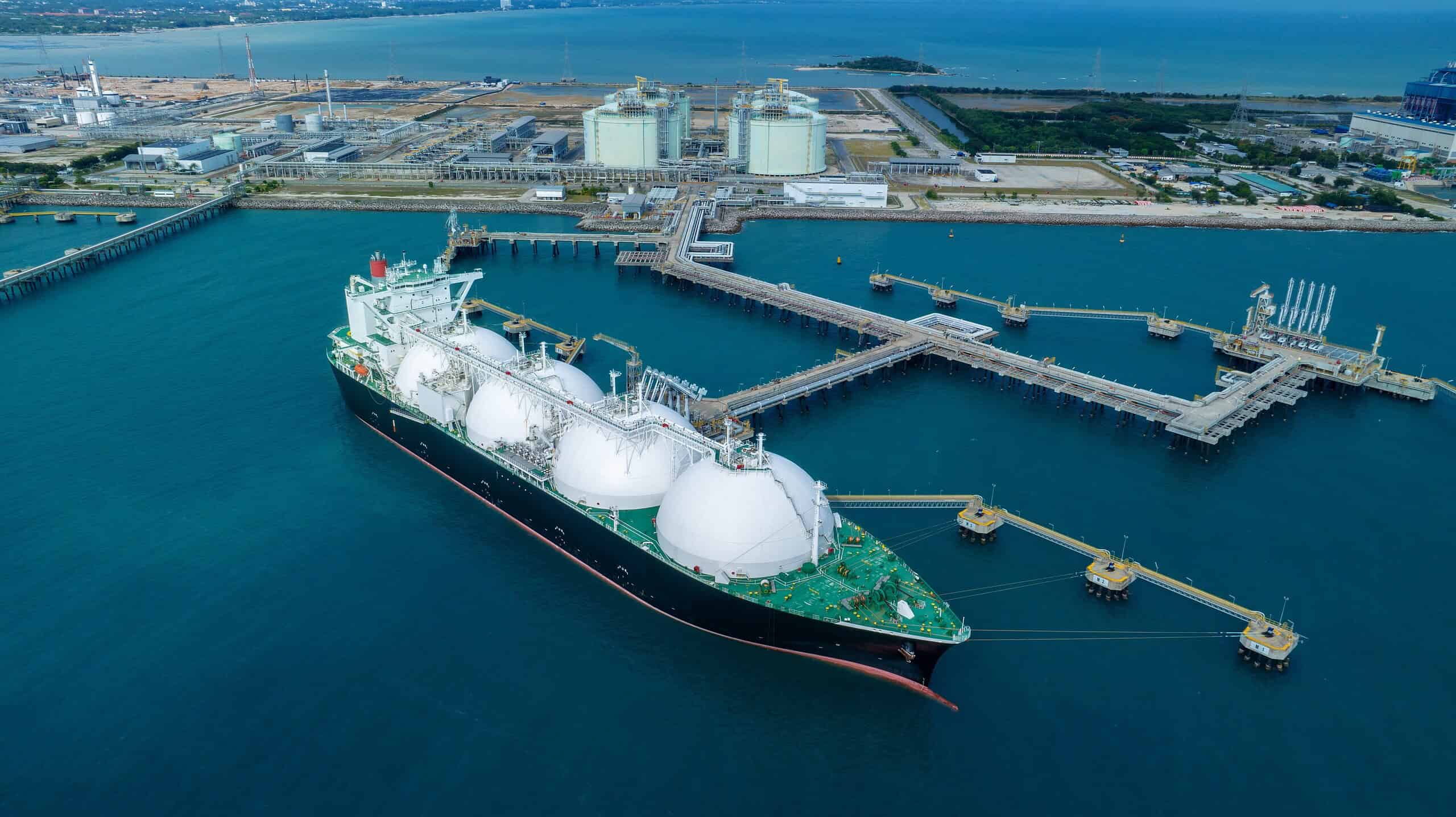
GF: With major developments ahead, particularly the expansion of Liquefied Natural Gas (LNG) production capacity from 77 million to 142 million tons per year by 2030, how are you adapting and preparing to support this next phase of growth?

Al Khalifa: QNB is strategically positioned to support this growth by providing tailored financing solutions for energy projects, including infrastructure development and sustainability initiatives. We are also focusing on fostering partnerships with companies in the energy sector to ensure that we are aligned with their financial needs, thus playing a pivotal role in facilitating this next phase of economic growth.

GF: What major risks does the banking industry currently encounter, and what measures are QNB taking to mitigate them?

Al Khalifa: The banking sector faces several challenges, including regulatory compliance, cybersecurity threats, and economic fluctuations. At QNB, we are proactively addressing these risks through robust risk management frameworks and investments in technology to enhance our cybersecurity measures. We also maintain a strong focus on compliance with international regulations to ensure that we navigate the evolving regulatory landscape effectively. By adopting a forward-thinking approach, we are committed to safeguarding our assets and ensuring the long-term stability of our operations.  In summary, QNB is well-prepared to navigate the evolving landscape of the banking sector in Qatar and beyond, focusing on innovation, sustainability, and strategic growth to support our clients and the economy as a whole.

Source link

How ASEAN companies are optimising cash management strategies

Gilly Wright, Global Finance’s Transaction Banking Editor, talks to Melvyn Low, Group Chief Strategy and Transformation Officer & Head of Global Transaction Banking at OCBC, about how ASEAN region businesses are optimizing cash management strategies to stay competitive.

Solutions that are convenient and quick to implement are essential for businesses that need to collect payments more easily and receive real-time notifications. Further, the ever-faster application of QR codes requires merchants to keep up with expectations among customers that use payments through this channel.

Addressing these demands, OCBC OneCollect is a digital solution for merchants that enables them to accept QR-code payments via mobile, rather than requiring a physical point-of-sale terminal. Real-time notifications are then sent when payments are successful.

“We are helping our clients navigate that landscape to collect and pay better,” explained Low.

Bridging the cross-border gap

OCBC OneCollect has expanded across Southeast Asia, with unique features and capabilities available in Singapore, Malaysia and Indonesia in line with the needs and preferences of the local markets. This makes the solution suited to cross-border payments, too. For example, the PayNow QR in Malaysia can be used by Singaporeans, and vice versa.

“The regional objectives of cash management haven’t changed,” explained Low. “It’s all about visibility, mobility and optimisation of payments and cash balances.”

Notably, OCBC’s approach has been to help clients expand regionally by enabling them to see their account balances everywhere they operate. “Our e-banking platform offers a consistent view of account balances, regardless of the market,” he added.

Counting on greater connectivity

The adoption of digital tools more generally is becoming commonplace for businesses in Asia.

In turn, as they put their products and services online and make them accessible via apps, they need application programming interface (API) connectivity.

“We see three times more requests for APIs than host-to-host with the Asian clients we deal with. One of the things we’ve done to help regionalisation is create regional connectivity through a single node in Singapore, to collect the APIs and then distribute to the countries for payments for our customers. We’ve also developed a similar node in China because clients would prefer to connect onshore and then have the payment instructions distributed across Southeast Asia.”

An innovative approach

Other areas undergoing modernisation in Southeast Asia are liquidity management and account rationalisation. Given the importance of liquidity management for corporates across the region, OCBC is offering bespoke sweeping solutions in Southeast Asia and Greater China – in the form of both domestic and cross-border sweeps.


“Customers are no longer keen to open multiple bank accounts,”

Melvyn Low, Group Chief Strategy and Transformation Officer & Head of Global Transaction Banking, OCBC


OCBC, therefore, has rolled out a virtual account solution to offer ‘receive on behalf’ and ‘pay on behalf’ services to support some businesses, especially those wanting to split their funds. This also has benefits for liquidity: by only using one main account, a company can optimise its funds.

Another step forward for OCBC in Asia is its innovative approach to helping clients address anti-money laundering and sanction-screening hurdles when accessing real-time payment rails in domestic markets where they do business. “We’ve built a new way of making payments, with API in and instant payment out, so we can meet the various regulatory requirements for regional corporates,” explained Low.

More recently, OCBC also made its foray into commercialising blockchain technology in payments. The bank is working with a government entity that has many infrastructure projects to manage these through conditional payments.

“We made a tokenised deposit and wrapped it with the smart contracts they need for conditions to be met,” said Low, pointing to this first-in-market solution. “They can issue these tokens to their main contractors and subcontractors for ongoing payments in the project, which will be transformational for the way the construction industry manages payments.”

Keeping up with digital demand

The proliferation of digital solutions will likely continue to have a profound effect on cash management throughout Southeast Asia.

Low points to passage of the GENIUS Act in the U.S. as a clear regulatory framework for U.S. dollar-backed payment stablecoin issuers that can help stablecoin payment companies, traditional financial institutions and consumers navigate stablecoins with more clarity. “We anticipate stablecoins and tokenised deposits in U.S. dollars will start to come to the market.”

Two main impacts are foreseen by Low: Firstly, in supply chains as large western multinationals work with suppliers in Southeast Asia. And secondly, via the potential use of retail tokens in the region.

The key is to create a standardised way to manage regulated stablecoins and tokenised deposits within the Southeast Asian banking framework so that businesses and retail investors alike can accept and receive these tokens.

Low also expects the use of alternate currencies beyond U.S. dollars for trade transactions, such as the international processing centre for e-CNY in Shanghai, will be transformational for Asia.

Source link

Silver’s record run fuelled by possible Fed shake-up and tariff fears

Published on
Updated

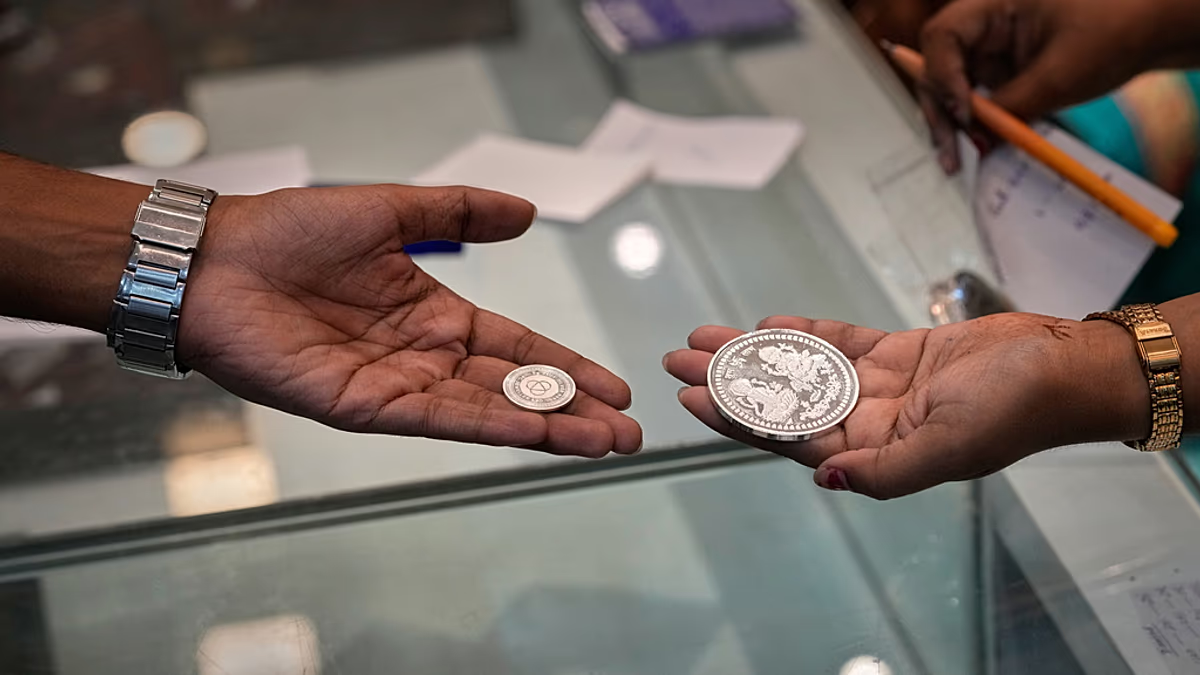
Silver prices continued to rise on Wednesday, hovering at around $62 per ounce after trading at roughly $50 in late November. That represents a significant jump from the metal’s average price of around $30 at the beginning of the year.

The price jump follows news that the US administration is interviewing final candidates to replace current Federal Reserve chair Jerome Powell. Investors are also expecting the Fed to cut its benchmark rate after its meeting later on Wednesday.

The top three candidates for the chair job, and in particular the reported frontrunner Kevin Hassett, the director of Donald Trump’s National Economic Council, are expected to implement more aggressive rate cuts — while Powell has overseen a slower pace of easing.

Since January, the Fed under Powell has cut rates in two quarter-point increments, once in September and once in October.

This steady easing has pushed down returns on interest-bearing assets, increasing the attractiveness of silver as an investor alternative.

Silver, like gold, pays no interest or dividends, so it tends to fall out of favour when US interest rates are high and investors can earn more attractive returns on cash and bonds.

The metal’s value has roughly doubled this year, even surpassing gold’s 60% increase — which brought bullion to record highs.

At the same time, traders are also seeking clarity on whether the US will impose tariffs on silver.

In early November, the US government added the metal to its 2025 Critical Minerals List, a designation normally reserved for materials seen as strategically important to the economy and national security.

That new status also puts silver within the scope of possible Section 232 investigations, the same legal tool previously used to justify tariffs on steel and aluminium.

Section 232 investigations allow the US government to apply tariffs, import quotas, or other limits on products believed to create an overreliance on sources outside the country, harming national security interests.

For now, no such probe has been launched and no tariffs have been announced. Even so, the prospect alone is enough to make traders nervous, since any future duties on imported silver could disrupt trade flows and push up costs for manufacturers. Such expectations have prompted an increase in silver stockpiling.

Increased demand from certain manufacturers is pushing prices up further. Silver is a key material in the production of electric vehicles and solar panels, and industrial demand accounts for more than half of total silver consumption.

Source link