Zia

Bangladesh’s first female prime minister Khaleda Zia dies aged 80

Bangladesh’s first female prime minister Khaleda Zia has died at the age of 80 after suffering from prolonged illness.

Zia became Bangladesh’s first female head of government in 1991 after leading her party to victory in the country’s first democratic election in 20 years.

Physicians had said on Monday said her condition was “extremely critical”. She was put on life support, but it was not possible to provide multiple treatments at the same time given her age and overall poor health, they said.

Despite her poor health, her party had earlier said that Zia would contest general elections expected in February, the first since a revolution which led to the ousting of Zia’s rival, Sheikh Hasina.

Bangladeshi politics had for decades been defined by the bitter feud between the two women, who alternated between government and opposition.

“Our favourite leader is no longer with us. She left us at 6am this morning,” Zia’s Bangladesh Nationalist Party (BNP) announced on Facebook on Monday.

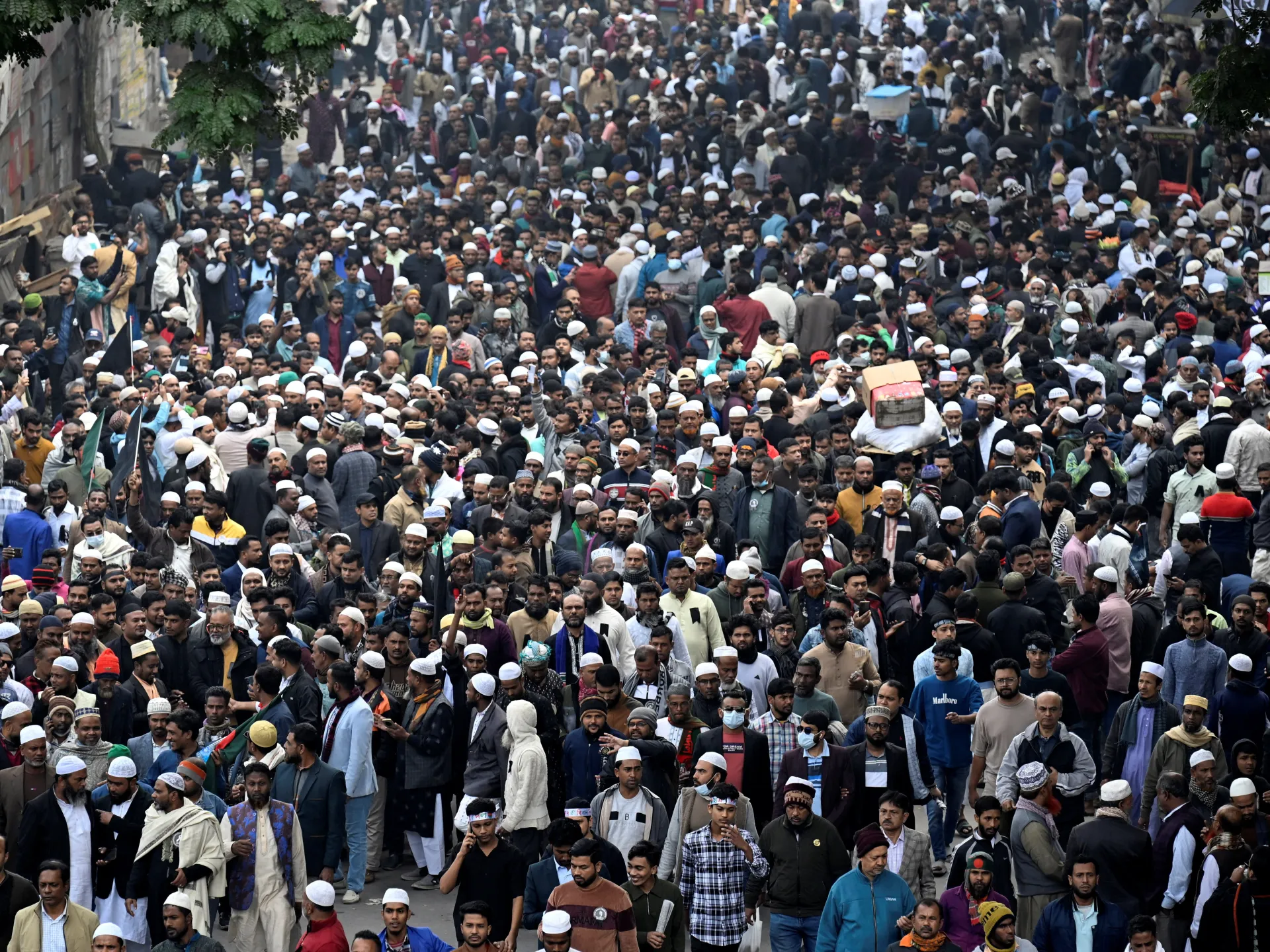
Crowds gathered outside Evercare Hospital in Dhaka where Zia was warded after news of her death broke. Photographs show police officers trying to stop them from entering the hospital premises.

Zia first came into public attention as the wife of Bangladesh’s former president Ziaur Rahman. Following his assassination in a 1981 military coup, Zia entered politics and later rose to lead the BNP.

After a second term in 1996 that lasted just a few weeks, Zia returned to the post of prime minister in 2001, stepping down in October 2006 ahead of a general election.

Her political career had been marred by corruption allegations and a long-standing political rivalry with Awami League leader Hasina.

Zia was jailed for corruption in 2018, under Hasina’s administration. Zia denied wrongdoing and said the charges were politically motivated.

She was released from last year, shortly after mass anti-government protests in Bangladesh toppled Hasina, forcing her into exile. The BNP had said in November that Zia would campaign in the upcoming general elections.

The BNP is eyeing a return to power, and if that happens, Zia’s son Tarique Rahman is expected to become the country’s new leader.

Rahman, 60, had only returned to Bangladesh last week after 17 years in self-imposed exile in London.

Zia had been in hospital for the past month, receiving treatment for kidney damage, heart disease and pneumonia, among other conditions.

During her final days, interim leader Muhammad Yunus had called for the country to pray for Zia, calling her a “source of utmost inspiration for the nation”.

Her family members, including Rahman, his wife and his daughter, were by her side in her last moments, BNP said.

“We pray for the forgiveness of her soul and request everyone to offer prayers for her departed soul,” the party said in its statement on Tuesday.

Local newspapers paid tribute to the former leader, with Prothom Alo saying she had “earned the epithet of the ‘uncompromising leader'”

English-language paper The Daily Star called her a “defining figure of Bangladesh’s democratic struggle” and a leader who was “tenacious in political survival and grit”.

Source link

Bangladesh’s former Prime Minister Khaleda Zia dies | News

BREAKING,

Bangladesh’s first female prime minister dies after a prolonged illness in Dhaka, her party says.

Bangladesh’s first female prime minister, Khaleda ⁠Zia, has died at a hospital in the country’s capital, Dhaka, ​after a ‍prolonged illness, according to her party and local media.

In a statement on Tuesday, the Bangladesh National Party said Khaleda died at 6am local time.

She was 80 years old.

“Our beloved national leader is no longer with us. She left us at 6am today” the BNP said in the statement posted on Facebook.

Khaleda had advanced ​cirrhosis ‌of the liver, arthritis, diabetes, chest ‌and heart ‌problems, her doctors said.

She died at the Evercare Hospital in Dhaka, where she was admitted to on November 23 with symptoms of a lung infection, according to local media.

More soon…

Source link