Yorkshire

Abandoned medieval village lay forgotten for centuries now loved by walkers

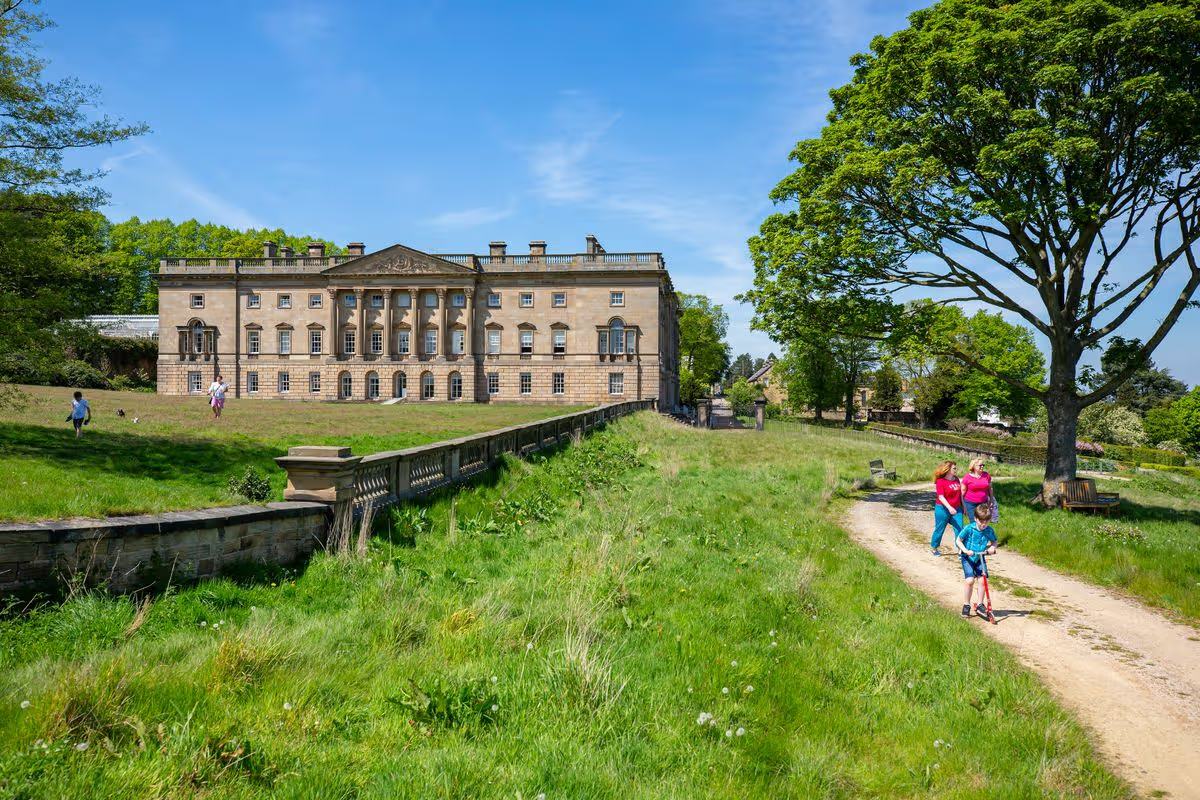
One of Britain’s biggest and most famous deserted medieval villages, Wharram Percy in North Yorkshire has remnants of century-old houses, a church and ancient ruins for visitors to explore

Travellers journey from all corners to glimpse the UK’s ‘best preserved’ medieval village, Wharram Percy in North Yorkshire, which lay deserted for centuries and now serves as a fascinating site for walkers and history enthusiasts.

Nestled in North Yorkshire, Wharram Percy is one of the largest abandoned medieval villages in Britain and undoubtedly the most renowned. Visitors are invited to stroll through the historic grounds, taking in the remnants of age-old houses, a church, and manorial ruins.

Ideally located halfway between popular attractions Scarborough Castle and Clifford’s Tower in York, it makes for an excellent stopover on your trip between these two sites. While entry to the village is free, there is a nominal £2 charge for parking.

Over an impressive 60-year period, archaeologists have gradually unearthed more details about Wharram Percy’s history. Their findings have shed light on why the area was initially abandoned and what life was like here in bygone times.

Perched on the edge of a Yorkshire valley, this unique village once housed inhabitants for up to six centuries but was deserted after the 1500s. It’s believed that even today, outlines of old houses can be discerned in the ground, alongside the more substantial remains that attract curious visitors.

The history takes some understanding, but experts believe the earliest settlement dates back to approximately 50 BC. This land was subsequently transformed into farmland but lay deserted during the 5th century, before eventually becoming a Middle Saxon settlement.

It’s important to note that reaching the village requires roughly a 3/4 mile walk from the car park to the main site, which is frequently both steep and muddy. The site features rough terrain throughout, which can be challenging for some visitors and is generally unsuitable for wheelchairs or buggies.

A TripAdvisor reviewer highlighted this, writing: “Parking on the Heritage car park off the B1248 prepare for a trek to the village.” They went on to describe it as a “sharp gravelled decline” and a “daunting” journey unsuitable for those with limited mobility, as the route passes through fields.

Following their visit, one enthusiast praised their experience, saying: “Lovely walk from the car park to the site, but people with mobility issues may struggle. It’s a fascinating historical site that has been really well managed. Only a few visitors when we visited, which added to the peace and tranquillity of the place. Loved it!”.

Another guest added: “This lovely deserted mediaeval village is truly fascinating! The history is incredible, and it was wonderful to wander around and explore. We really lucked out and had beautiful weather, so we got to sit on the grass by the pond and soak it all in.”

Source link

Stunning UK village ‘perfect for recharging’ has ‘hidden gem’ attraction

The picturesque medieval village in North Yorkshire has stunning historic landmarks and beautiful vistas – perfect for a peaceful weekend escape.

A charming village in Yorkshire is home to a hidden treasure that visitors simply can’t resist – it could be the ideal location for a quick escape. This tranquil village, tucked away in North Yorkshire’s stunning countryside, is being praised as the perfect place for a recharge, and it’s easy to see why.

The medieval village provides a unique window into England’s rich history, all while offering gorgeous attractions and breathtaking views. Appleton-le-Moors, a village and civil parish in the North York Moors National Park, is situated roughly two and a half miles north east of Kirkbymoorside. It’s also conveniently close to Pickering and seamlessly extends into the villages of Spaunton and Lastingham, located on the edge of the open moorland.

With a modest population of just 161 according to the 2021 census, Appleton-le-Moors’ name originates from an Old English term meaning ‘apple orchard’. It’s often cited as a near-perfect example of a planned village in the UK, boasting a lively community spirit. Perched on a hillside above a bend in the River Seven, Appleton-le-Moors is surrounded by fertile farmland crisscrossed by footpaths – making it the dream destination for walkers seeking picturesque landscapes.

Mentioned in the renowned Domesday Book, this ancient village has preserved its traditional medieval layout and remains a point of archaeological interest to this day. Appleton-le-Moors is a treasure trove of historical finds, with discoveries including a medieval oven, flint tools and Roman coins, reports Yorkshire Live.

Hidden gem church

The village is renowned for its historic building, Christ Church, often dubbed ‘the little gem of moorland churches’. This Grade I listed 19th-century church showcases exquisite craftsmanship and was designed by architect JL Pearson, the mastermind behind Britain’s famed Truro Cathedral. Christ Church exhibits Pearson’s signature French Gothic style, adorned with intricate decoration. Perhaps the church’s most celebrated feature is its Rose Window, echoing the design of the White Rose of York. The Rose Window’s stained-glass panels portray Christian virtues such as Hope, Faith, and Charity, and the church also boasts a tower crowned with a spire.

The Village Hall

Another notable landmark in Appleton-le-Moors is the Village Hall, also a creation of Pearson. The Victorian Gothic architect designed the Grade II listed building – formerly a school – and it was constructed in 1867 according to records. Major refurbishment works were carried out in the hall in 1999 and today, it stands as a focal point of the village, truly embodying rural life and serving as the heartbeat of the community. Visitors should not miss the village’s most famous spot, The Moors Inn, which has been operating as an inn since the 17th century.

The Reading Room

Another key structure in the historically rich village of Appleton-le-Moors is the Reading Room, erected in 1911 at the handsome cost of £75. The creation of the Reading Room is attributed to Joseph Page, a local butler living at Appleton Hall, who financed the construction. Its aim was to offer a place for villagers to mingle without succumbing to inebriation.

Source link

Stunning village with famous circular walk is a serene escape from crowds

This idyllic village offers a peaceful escape from bustling crowds while still being conveniently accessible for travellers.

A stunning village tucked away in East Yorkshire is the hidden treasure you need to discover for the ultimate weekend retreat.

Often overlooked in favour of the more renowned Yorkshire regions like North York Moors and the Dales, this peaceful village brims with charm within its modest confines – making it a prime choice for your next UK staycation.

Nestled between Pocklington and Driffield, this idyllic village offers a serene escape from bustling crowds while still being conveniently accessible for travellers.

Huggate village in East Yorkshire is often touted as the highest village on the Yorkshire Wolds, sitting approximately 558 feet above sea level. However, the nearby village of Fridaythorpe also frequently stakes this claim.

Situated 13 miles north-west of Beverley and nine miles west of Driffield, this petite village boasts another unique distinction: it’s home to one of England’s deepest wells, plunging 116 yards deep. It was reportedly the primary water source for the village’s inhabitants before modern systems were introduced, reports Yorkshire Live.

Another must-see attraction in this captivating village is St Mary’s Church. This 12th-century church, a Grade I Listed building – a rarity for a High Wold church – features a towering, commanding spire that can be seen from miles around.

The graveyard offers breathtaking panoramas across the Wolds, whilst the heritage-listed village War Memorial stands proudly on the southern flank at the church entrance. This memorial serves as a tribute to Huggate’s thriving community and their spirited nature, having been built following a fundraising drive by local villagers.

Both Huggate and St Mary’s Church have featured as subjects in two artworks by celebrated painter David Hockney.

Yet arguably the most celebrated aspect of Huggate village is its circular route, which draws walkers and ramblers from throughout the nation annually. In fact, this East Yorkshire walking path previously secured a spot in The Times’ top 20 “best walks” nationwide.

Whilst the Huggate Circular might not claim the title of the Yorkshire Wolds’ most frequented trail, it has cultivated a devoted following through the years, thanks largely to its tranquil appeal and spectacular vistas. This uncomplicated four-mile loop proves ideal for novices and seasoned walkers alike who relish magnificent scenery in peaceful surroundings.

During this tranquil ramble, visitors can also savour the striking panoramas of Holme Dale and Horse Dale, whilst marvelling at the splendour of the Yorkshire Wolds’ limestone peaks. These picture-perfect undulating hills and valleys maintain their verdant appearance year-round, even during winter months, making this an excellent walking route for every season.

Those embarking on The Huggate circular hike will undoubtedly encounter several of the renowned poetry benches that embellish the Wolds Way. However, be mindful of the mud and rain during winter, and dress appropriately before setting out.

Just 3.7 miles from Huggate lies another hidden treasure: Waves and Time. This understated earthwork by artist Chris Drury takes the form of a colossal spiral, located at the intersection of three popular Wolds dry valleys – Bradeham Dale, Thixendale, and Worm Dale.

Enhanced by the stunning backdrop of panoramic blue skies, Waves and Time was crafted by digging a curving trough to a depth of roughly 400mm, followed by the formation of a curving mound approximately 500mm high using the soil excavated from the troughs.

Source link

‘Scenic’ North Yorkshire village with three pubs and historic priory

Ccharming village has a rich history dating back to 1397 and is a popular spot for walkers to rest their feet

This idyllic hamlet in North Yorkshire has been flying under the radar for far too long, and it’s high time that travellers discovered its quintessential English charm.

Nestled on the western fringes of the North York Moors, you’ll find Osmotherley, a delightful village brimming with natural splendour. It’s often the perfect pit stop for ramblers exploring the surrounding trails – a tradition that spans centuries.

With roots stretching back to the 1800s, this village was once a favoured overnight halt for Scottish cattle drovers guiding their herds southwards along the Hambleton Drove Road. Today, keen hikers tread the same path as they embark on long-distance treks through the serpentine countryside.

The three most frequented routes threading through the village are the Cleveland Way, Coast to Coast and the Lyke Wake Walk, the latter being particularly gruelling. This trail stretches a whopping 40 miles across the North York Moors National Park, commencing right in the heart of the village and culminating at the seaside town of Ravenscar.

Adding to Osmotherley’s allure as a restful haven for travellers is the fact that despite its modest population of around 650, it boasts three traditional pubs all within a stone’s throw of each other. The Golden Lion, The Three Tuns, and The Queen Catherine all provide a warm, cosy setting complete with food and drink, offering weary walkers a chance to kick back and soak up the relaxed ambience.

A recent guest at the Golden Lion gushed about being “very impressed” with their visit. Writing on TripAdvisor, they said: “The GL is a delightful pub in the centre of Osmotherley. It offers an excellent selection of beers and lagers, along with a varied menu of dishes. It’s very much a community pub with a great atmosphere. DO pop in – you won’t be disappointed!”.

Meanwhile, The Three Tuns has also won over punters with its charm. One satisfied customer raved: “The food was good, the service was great, and the pub itself is lovely!”.

A regular to the area expressed their affection for all the local watering holes, explaining: “Me and my hubby try to stay in Osmotherley once a year to get away from busy work lives, as there’s so much to see and do around North Yorkshire. We always try and visit all three pubs in this lovely village and have never had a bad experience.”

History enthusiasts will be drawn to the Shrine of Our Lady of Mount Grace, which has stood since 1397. The site attracts pilgrims from far and wide and offers stunning panoramic vistas across the region, taking in everything from the village itself to Teesside, Bilsdale, and even the distant Pennine hills, perched as it is on the fringes of the national park.

The structure is thought to have been constructed by Carthusian monks from the nearby historic Mount Grace Priory. Many have described the chapel as “peaceful”, with one individual sharing: “Lovely peaceful setting above Osmotherley with a view across as far as the Pennines on a clear day.

“A chapel that is open and has a mass on Saturday afternoons. Historically linked to the solitary monks at Mount Grace.”

Source link

UK’s oldest fish and chip shop has been in Yorkshire for over 130 years

Historic chippy on Sharrow Vale Road gained its distinctive name from locals during World War One and continues to gather large queues all these years later

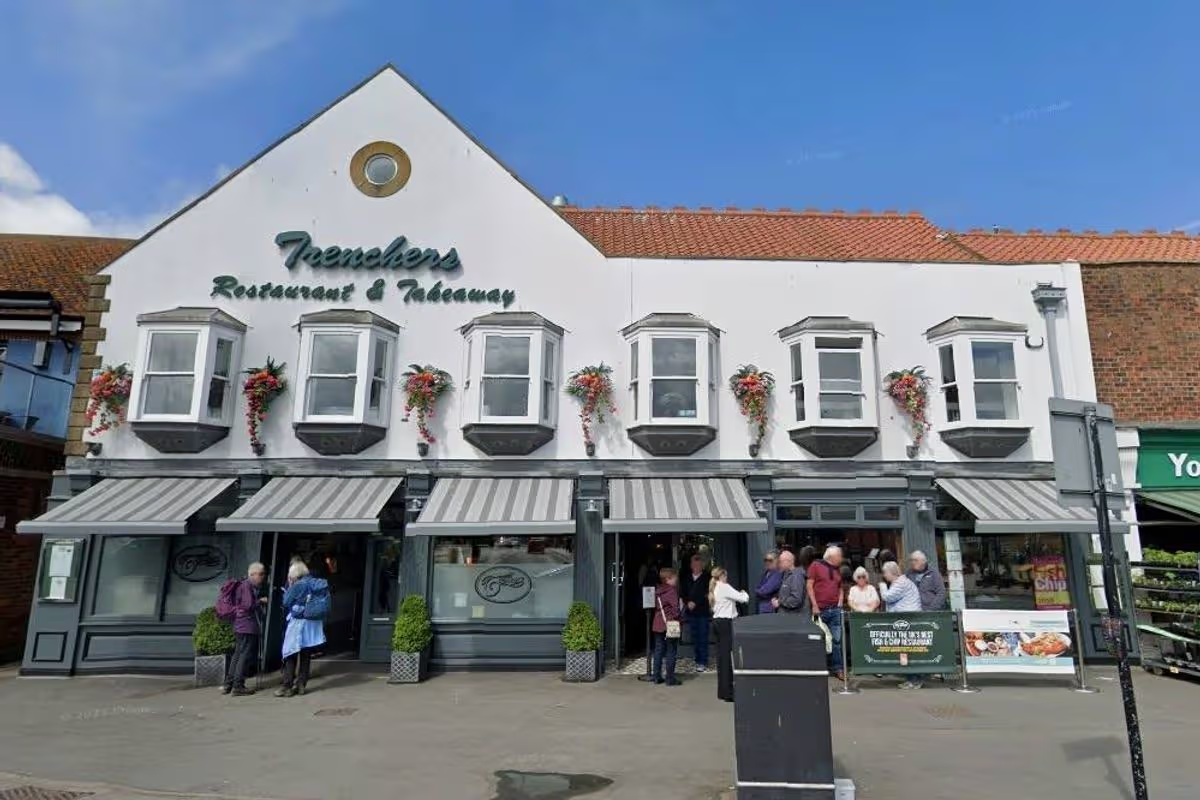
Sheffield boasts one of Britain’s oldest fish and chip shops, and potentially one of the world’s, with punters regularly forming queues stretching beyond its entrance.

Established in at least 1895, the chippy on Sharrow Vale Road remains amongst the original fish and chip establishments still operating today. Two Steps amusingly earned its moniker from locals during the First World War when, as multiple fish and chip outlets appeared in the vicinity, it stood out as the one requiring ‘two steps to get in’.

The informal name swiftly became its official title, distinguishing it from rival establishments. Historical records suggest it was initially opened by a gentleman called James Boulton, appearing in the 1895 trades directory as a ‘fried fish dealer’, according to The Star.

Throughout its history, the cherished establishment has passed through various owners, with Laggy currently at the helm, having served patrons for the past two decades. Before him, the longest-serving proprietors were Nan and Graham, who dedicated 34 years working behind the historic counter.

Upon assuming control of the chippy, he sought to implement several crucial modifications, prioritising the sourcing of premium ingredients. Despite evolving fashions in the fish and chip industry, he revealed to The Star that he categorically refuses to offer the notorious battered Mars Bar.

The owner explained: “It ruins the oil, and I don’t agree with it anyway. It’s a heart attack on a plate.”

One recent visitor described their visit as nothing short of “fabulous”. The satisfied customer wrote on TripAdvisor: “I travel a few miles to get to this chip shop. It has amazing staff, and the owner is fab. Will not swap this chip shop for any other.”

Another loyal customer shared: “Have to say this place is by far the best chippy in town! I’ve been a regular visitor on Fridays for almost 20 years, and this place is often busy, with the queue stretching out the door, even in the rain. Well priced, and they don’t skimp on portions. I can rarely actually finish my tea. Good mix of all your chippy favourites.”

Following their experience at the legendary establishment, one reviewer declared it “the best fish and chips by far”. They elaborated: “Very good quality, perfectly cooked and incredibly generous portion size. All items are competitively priced, and the staff service and management attitude in resolving any issues are impeccable.”

Pinpointing Britain’s definitively oldest fish and chip shop proves tricky, with several contenders competing for the accolade. Rock and Sole Plaice in Covent Garden, London, stakes its claim as opening in 1971, making it the capital’s most venerable chippie still dishing up its time-honoured recipes.

Meanwhile, another establishment literally rebranded itself as ‘The Oldest Fish and Chip Shop in the World’ on Sandy Way in Yeadon, West Yorkshire. Yet it shuttered permanently in 2016, potentially elevating this Sheffield favourite to the position of Britain’s longest-surviving fish and chip shop still trading today.

Source link

‘Enchanted’ village with hidden historic garden and beautiful waterfalls

Discover Aysgarth in Yorkshire Dales, home to stunning Aysgarth Falls and a hidden Edwardian rock garden perfect for nature lovers and history enthusiasts

Nestled in the Yorkshire Dales lies a charming village, renowned for its natural wonders such as cascading waterfalls and a historical secret garden.

While Aysgarth is a popular destination for those seeking to marvel at the pristine Aysgarth Falls, many are unaware of another equally stunning ‘hidden gem’. This secret spot can be easily overlooked, located just off the A684 between Swinithwaite and Hawes, a short distance past the turn-off for the waterfall entrance.

Upon arrival, you’ll encounter a metal railing and small gate. Don’t let this deter you; it’s essential to continue on to discover the secret gardens. Once inside, you’ll be greeted by an assortment of limestone rocks, adorned with alpine plants, inviting you to navigate through archways and mazes, reports Yorkshire Live.

The rock garden, now a listed building protected since 1988, offers a hidden world, preserving this piece of history from potential demolition. The garden was commissioned before the First World War by Frank Sayer-Graham, who resided in the cottage opposite. It’s believed that the land directly in front of the cottage served as a vegetable patch, given Sayer-Graham’s passion for horticulture, providing him with a unique gardening space. The Edwardian rock garden continues to impress those lucky enough to find it, with one recent visitor dubbing it a “must-visit” for gardening enthusiasts.

They went on to share on TripAdvisor: “The gardens’ proportions are modest, and 30-45 mins is all the time you’ll need. Everything about it is classy and understated, e.g., the signage outside the garden is small by today’s ‘in your face’ culture, and the old-fashioned donations box is tucked away close to the ground just as you enter. The garden is beautifully looked after, and we didn’t hesitate to make a generous donation towards its upkeep.”

The village is also home to the enchanting Aysgarth Falls, a peaceful series of waterfalls guaranteed to captivate adventurous visitors. The location is part of the Yorkshire Dales National Park and features a visitor centre, café and car park. The three-tiered cascades tumble down into the serene waters of the River Ure, which meanders through the centre of Wensleydale.

For more than two centuries, they’ve drawn visitors and became even more renowned after featuring as the setting for a scene in the Hollywood blockbuster Robin Hood: Prince of Thieves. One guest described the spot as a “water wonderland”. They commented: “What ever time of year you go, Aysgarth falls does not disappoint. Whatever the rainfall has been, the falls are beautiful, and the autumn colours added a little something special.”

Next to the falls lies the local nature reserve, providing numerous meandering trails for passionate ramblers exploring the woodland. There are frequently even glimpses of deer darting through the trees, so make sure you watch carefully. Another satisfied visitor shared: “Lovely hour-long visit to see the lower, middle and upper falls. Each walk was well laid out and simple to do. Didn’t take as long as the recommended times, but we weren’t far off. The falls were beautiful.”

Source link

Yorkshire village with Guinness World Record Sweet Shop and Traditional Cafés

The picturesque Yorkshire village is home to a Guinness World Record-holding sweet shop and traditional cafés serving up delicious treats in the stunning Nidderdale countryside

A stunning Yorkshire village is home to the world’s oldest sweet shop – nestled right in the heart of an Area of Outstanding Natural Beauty.

Hidden away in Nidderdale lies the delightful village of Pateley Bridge, providing a slice of rural Yorkshire life and serving as an ideal starting point for discovering the surrounding area. At its heart, you’ll find the treasure that is The Oldest Sweet Shop, a preserved snapshot of traditional village existence.

Officially recognised by Guinness World Records as the oldest of its kind on the planet, this historic building has been spreading joy through confectionery across multiple generations. Guests can savour the delight of classic and time-honoured sweets in a charming, cottage-style establishment that has devoted its entire existence to sugary delights.

Within, the displays are stocked with nostalgic treats, crafted using recipes dating back to the 19th Century, maintaining their authentic character. Additionally, they stock baked products, whose tastes evoke cherished childhood recollections for numerous patrons.

One recent customer at the establishment wrote on TripAdvisor: “A lovely old shop with ‘old-fashioned’ sweets that children born in the 1960s and onwards will fondly remember, probably even earlier! There are a couple of sweet machines and an old cash till used for pre-decimal coins, including old pounds, shillings, and pence.”.

“We bought some sweets, including a quarter of coconut mushrooms, which I’d not eaten in many years. Thank goodness there are still shops selling sweets from yesteryear!” Another thrilled customer shared: “Upon walking into this delightful little sweet shop, the smell and shelves full of old fashioned sweets brought back lovely childhood memories, it took me some time to make up my mind as to which sweets I should pick. It certainly deserves a visit; you will not be disappointed.”

Beyond this enchanting shop, the village also boasts a charming High Street filled with other shops, galleries and eateries for you to explore. Among these treasures is the quintessentially British café, The Old Granary Tea Shop, offering comforting home-cooked fare.

A pleased visitor shared: “A lovely, friendly, welcoming café with proper homemade chips, delicious local pies, ham, etc., generous portions and reasonable prices. Also dog friendly!” Another customer praised it as being “perfect in all regards”.

For those interested in delving deeper into the village and its surroundings, Nidderdale Museum serves as an ideal stopover for a dose of historical Yorkshire. Spread across 11 rooms, it showcases a wide array of artefacts from bygone eras, including items related to agriculture, religion, transport, education, and more.

The museum continues to operate largely due to the generosity of local volunteers who are passionate about preserving the area’s heritage and fostering community spirit. As such, it charges a £5 entry fee per adult, while children can visit at no cost.

Source link

‘Tranquil’ village with magical waterfall and famous admirer

This village in the Yorkshire Dales is a hidden gem with stunning waterfalls and green landscapes that inspired a famous artist hundreds of years ago

Nestled in the Yorkshire Dales, this quaint village provides the perfect getaway for those seeking to immerse themselves in nature’s splendour – and a renowned artist did just that.

West Burton, tucked away in a side valley of Lower Wensleydale, has a deep-rooted connection with the celebrated painter J. M.W. Turner, who is acclaimed for his evocative depictions of expansive landscapes. The village itself, particularly its breathtaking waterfall, served as inspiration for Turner. A sketch of the Cauldron Falls, drawn by the artist during his tour of Yorkshire in 1816, still exists. It’s thought that he spent a significant amount of time by the water, studying its flow and observing how it cascaded over the falls.

His plan was to create a larger, more detailed piece in his signature watercolour style; however, it famously remained unfinished. Despite this, the artwork can be viewed alongside his other masterpieces at the Tate in London. Remarkably, the falls remain unchanged even after 200 years, allowing visitors to appreciate their full colour and beauty firsthand. A brief stroll from the charming West Burton village will lead you there, where you can marvel at the stunning plunge pool, filled with naturally tumbling water.

A recent holidaymaker left their review on TripAdvisor, stating: “Wow, what a hidden gem this is, tucked away in the quaint village of West Burton. Really easy to access the falls, a very short walk from the village itself. Stunning waterfall and peaceful away from the crowds. Simply magical.”

Beyond this attraction, the village centre boasts a verdant green space, surrounded by numerous period buildings and charming cottages that perfectly capture authentic Yorkshire countryside living. The settlement serves as a favoured stopping point for those keen to discover the dales and surrounding regions.

Standing proudly on the green is the impressive West Burton Obelisk, a stone monument built in 1820. While such features are typical of many market settlements, this particular structure is thought to have originally been a preaching cross, now serving as a significant historical marker for the locality.

The village’s heritage stretches back much further, with connections to an Iron Age community, evidenced by the Burton Moor hut circles, which eventually evolved into a mediaeval estate. During the 18th century, it flourished as a bustling settlement centred on lead extraction, stone quarrying, traditional crafts, and naturally, farming.

Traditional crafts remain a local speciality, most notably the distinctive Cat Pottery. This charming establishment has been creating adorable Moorside cats since 1982, with every piece lovingly handmade within the village itself – preserving the region’s rich tradition of skilled craftsmanship.

One visitor hailed the spot as a “hidden gem”, adding: “Perfect for cat lovers. Bought two ceramic cats and had a lovely conversation with the gentleman who was working there at the time. It was hard to pick which we wanted because all of the pot cats are adorable. Will be ordering more online!”.

Source link

Gorgeous UK village with stepping stones across babbling river and scenic views

Nestled in the heart of a green valley, surrounded by lush rolling hills, this small Yorkshire village has been dubbed the perfect place to escape to – and it even has a river flowing through it

A charming village in North Yorkshire, home to a mere 400 residents, is rapidly becoming a ‘must-see’ destination for travellers.

Nestled at the base of a steep ravine known as Crunkly Ghyll, this idyllic village is celebrated for its quintessential English allure, stunning landscapes, and a gently flowing river adorned with quaint stepping stones for visitors to traverse. Situated within the civil parish of Glaisdale, this picture-perfect hamlet in the North York Moors is characterised by its enchanting stone cottages, lush green surroundings, and the tranquil River Esk meandering through it. Renowned for its natural splendour and timeless charm, the village perfectly embodies the spirit of rural England. Visitors can indulge in leisurely riverside walks, exhilarating cycling paths, challenging hikes across the moors, and unwind in highly recommended pubs and local shops.

The village’s name, Lealholm, translates to ‘the settlement by the willow trees’, a fitting moniker given its scenic beauty. It’s a visual treat and an outdoor enthusiast’s dream, serving as the perfect crossing point for the River Esk, reports Yorkshire Live. Over the years, Lealholm has become a magnet for tourists, particularly during the summer months. Thanks to the Lealholm railway station on the Esk Valley railway line, it’s an easily accessible getaway.

The Lealholm Stepping Stones are a renowned feature of the village, providing both locals and tourists with an enjoyable way to explore the surrounding areas and have a bit of fun in the river. A significant portion of the local community is engaged in farming, thanks to the fertile Eskdale slopes.

Adding to the allure of the village is a popular tea-room and bakery, a traditional 16th-century pub known as The Board Inn, and charming cottage stays, making it a top choice for those wanting to discover the UK’s natural beauty. Its location within the North York Moors National Park only enhances its stunning appeal. Lealholm also boasts the 17th-century Lealholm Bridge that stretches over the River Esk, making it a favourite spot for fishing – with salmon and sea trout aplenty – and picnicking.

Other historical attractions include the 12th-century St James’ Church and the medieval stone cross standing tall in the village square, known as the Lealholm Cross. The vibrant local community of Lealholm hosts various events throughout the year, such as the Lealholm Village Show and a Sports Day.

Getting there

Situated roughly 10 miles from the famous coastal town of Whitby – made famous by Bram Stoker’s Dracula – visitors can reach Lealholm by car or public transport, with regular bus and train services operating to and from the village. Holidaymakers also have the option to continue on to Whitby or venture into the nearby North York Moors National Park.

Source link

UK’s ‘chip shop capital’ named with 93 chippies and stunning views

This seaside town has been crowned the UK’s chip shop capital after research found the seaside town has 93 fish and chip shops – the highest concentration per capita in Britain

Locals in this coastal resort understand perfectly what it’s like having an excellent chippy right on their doorstep – because they’re literally scattered everywhere.

Following thorough analysis by Suomikasinot, researchers identified Britain’s chip shop capital by calculating the number of outlets per 10,000 inhabitants. The findings revealed that Scarborough topped the list, boasting the nation’s highest density of fish and chip shops, cementing its reputation as a must-visit location for true food enthusiasts, according to reports.

It comes as little shock that a seaside destination claimed pole position, but during the study period, Scarborough boasted a remarkable 93 fish and chip establishments. Residents enjoy an embarrassment of riches, with a fish shop on practically every street corner, and this particular feature attracts countless tourists to the region.

Taking the crown as TripAdvisor’s top-rated destination for delicious seafood is the Lifeboat Fish Bar. Frequently seen with customers queuing outside, the eatery is a traditional family-owned establishment positioned along the seafront, near the lifeboat station. One delighted diner said: “Looked on TripAdvisor for the best-rated fish and chips shop in Scarborough, and this was the one. We arrived just after it opened at 12pm and were so glad we did, as we were lucky to get a table. (People started queuing outside.)”. “The food was delicious; the light bite of fish and chips was the perfect size, and the kids’ portions weren’t far off. Great price, service and food. Will definitely go again.”

Another highly regarded spot is Catch 55, which operates as both a restaurant and takeaway, featuring prominently among the town’s top fish and chip establishments. A recent diner commented: “Friendly welcome to the restaurant; immensely enjoyed our fish and chips and local beers. The homemade tartare sauce was delicious, accompanied by haddock cooked to perfection. The restaurant being clean and tidy made this a pleasurable experience – thank you we will be back!”.

Beyond its excellent selection of chip shops, Scarborough boasts plenty of attractions for those seeking a coastal getaway. The beach alone is a major draw for UK holidaymakers wanting to enjoy some sunshine, and rightly so – its vast sandy shoreline provides stunning vistas.

These impressive views can also be appreciated from the Observation Ferris wheel. The 105ft tall attraction is complemented by an 18-hole mini golf course, ideal for families seeking entertainment before tucking into fish and chips. One visitor described their beach experience, stating: “Lovely beach in a traditional old English seaside town. Clean sand and all facilities close by – bars, chip shops, amusements, toilets, seaside stuff, etc. Very picturesque and photogenic place.”

Coming in second as the most densely populated fish and chip hotspot was East Lindsay, home to beloved seaside resorts like Skegness and Mablethorpe. This district boasts 89 chippies in total, roughly translating to one for every two miles of its coastline. Following closely behind is another coastal gem, the ever-popular Blackpool, securing a spot in the top three with a total of 84 chip shops. The research revealed that the majority of these prime locations are coastal towns, offering fresh fish to numerous establishments.

However, inland areas such as Rossendale and Burnley also made the list.

Source link

Village with Britain’s ‘prettiest cottage’ is ‘magical’ place to visit

North Yorkshire village is known as the ‘jewel of the moors’ and features the iconic Beck Isle Cottage – one of the most pictured buildings in Yorkshire

Nestled in a tranquil corner of Yorkshire, this village has earned quite the name for its famously charming cottages, lush greenery and unique food and shopping outlets.

Perched on the brink of the North York Moors lies Thornton-le-Dale, a picturesque spot often hailed as the ‘jewel of the moors’. Its historical allure continues to enchant visitors, making it a must-visit destination for those eager to discover North Yorkshire.

The village attracts many with its stunning thatched cottages, contributing to the quintessential English countryside ambiance, but one cottage stands out from the rest. Renowned for its charming thatched roof and storybook appeal, the iconic Beck Isle Cottage is a sight you won’t want to miss in the area.

As a grade II listed building, the cottage is not only a visual delight but also serves as a tangible piece of history, reflecting a bygone lifestyle in the moors. It remains one of the most photographed buildings in all of Yorkshire, as visitors fantasise about the twirling florals climbing up the brickwork and its impeccably manicured hedges.

Encircling the village is a wide variety of shops, cafes and pubs, making it the perfect place to wander around on a peaceful weekend. From quintessentially British pubs serving hearty meals and pints to cosy cafes offering baked treats, there’s something to suit every mood.

According to TripAdvisor reviews, the top-rated dining destination is the acclaimed Brandysnap Bistro in Thornton-le-Dale. A recent review described the restaurant as an “absolute gem” in the village.

They wrote: “Ate here last night… I can’t believe this absolute gem is only 2 miles from my house. Full house staff needs an award. Adam is a pure gentleman; his assistant Emma is of the highest praise. Claire, who does the cooking, is up there with the best. An absolute ‘Yorkshire feast’ of a mind-blowing establishment, recommended to everybody.”

Meanwhile, the beloved Cafe Bouchere keeps delighting guests, with one visitor commenting: “What a lovely place to eat. The owners were very welcoming and friendly. The food was delicious. The cafe was spotless, as were the toilets. I’d be more than happy to return on our next visit.”

Flowing through the village is the Thornton Beck, a winding waterway that brings serenity to those enjoying a peaceful walk along the curving lanes. For visitors seeking more challenging terrain, Thornton-le-Dale serves as an excellent gateway to the nearby North York Moors National Park.

The Thornton le Dale and Ellerburn Walk proves particularly popular, offering a two-mile circular journey that follows riverside field paths. The route leads to Ellerburn, where walkers can admire its historic church, before heading back via the road to this charming village.

The whole walk can take roughly an hour, but there are numerous opportunities to delve deeper into the countryside after a leisurely stroll around the village. Alternatively, some might opt for the Dalby Beck Yellow Trail or even embark on the Dalby Forest and Bridestones loop for a solid four-hour hike through the North York Moors National Park.

Source link

Stunning valley with limestone villages, England’s highest pub and walking trails

This valley in the Yorkshire Dales is home to charming villages, historic mining sites, scenic trails and England’s highest pub at 1,732 feet

Nestled at the northernmost point of the Yorkshire Dales, this dale is steeped in history from its mining past, with countless tales etched into its landscape.

Swaledale, a delightful Dale, is home to the River Swale, England’s fastest river, which gracefully meanders through its verdant fields. Tucked away amidst this natural beauty is the Tan Hill Inn, England’s loftiest pub, inviting guests to drop by as they traverse the undulating hills of Yorkshire.

Perched at an impressive 1,732 feet above sea level, this historic pub dates back to the 17th century and exudes a cosy charm. Adorned with exposed beams, a stone-flagged entrance and a crackling fire, it provides the perfect tranquil spot for a pint and a bite while exploring the region.

At the heart of the Dale lies Reeth, a central village boasting three popular pubs, charming arts and crafts shops, and a delightful bakery offering local pies and breads. Fridays are a highlight in the area, as the village transforms into a bustling market, with stalls lining the streets selling a variety of eclectic goods.

In Reeth, you’ll discover a museum that illuminates the fascinating rural life of the Yorkshire Dales and its rich local heritage. Here visitors can explore decades of the area’s heritage, with exhibits spanning geological specimens to prehistoric discoveries and, naturally, equipment linked to its rich lead mining past.

Following their trip, one delighted guest said on TripAdvisor that the museum was a “wonderful surprise”. They said: “I love a museum, and I have visited my fair share, but this was a truly surprising little gem.

“I have never seen quite so much variety crammed into such a small space, and the range of information covering the local community in its history was wonderful. A great amount of detail is provided in a clear and understandable manner, combined with humorous and heartwarming local stories.”

For those eager to experience the lush landscapes of the valley, the Swale Trail is an absolute must. Whether tackled on foot or by bicycle, according to enthusiastic explorers, it’s a destination that justifies the effort.

Following their adventure, one visitor said: “Amazing views. We did this by ebike, but imagine you’d need quite a high fitness level for the Gunnerside to Keld route on pedal power alone. Gunnerside to Keld, however, has the best views. This route overall is actually one of the best trails around but seems relatively undiscovered.”

The area’s traditional allure is evident throughout the year, but it’s particularly enchanting during spring and summer when the hardy Swaledale sheep graze and beautiful wildflowers bloom amidst the stunning hay meadows. Even on the chilliest days, the valley continues to reveal a wealth of trails and hidden treasures.

Source link

Village dubbed ‘food lover’s dream’ and home to ‘strangest place’ in world

Picturesque Yorkshire Dales village is famous for its award-winning cheese from Wensleydale Creamery and unique attractions including The Forbidden Corner

Nestled peacefully along the upper reaches of the River Ure, this idyllic village represents a haven for food enthusiasts.

Whilst Wensleydale is widely recognised for its delicious cheese, there’s far more to explore and experience in this delightful Yorkshire village. Interestingly, Wensleydale stands as one of the few dales not named after its river, deriving its name instead from the historic market town of Wensley. Located within the stunning Yorkshire Dales National Park, it’s home to the renowned Wensleydale Creamery, situated in the Hawes area. Guests can immerse themselves in the award-winning Flagship Cheese Experience and Visitor Centre, which honours a legacy spanning up to 1,000 years of regional artisan cheesemaking.

Employing recipes refined across generations using fresh locally-sourced milk, according to the company’s time-honoured tradition, the practice traces back to when Cistercian monks originally introduced cheesemaking to the locale. The region happens to be an ideally open, expansive valley, carved by glaciers, and its wide river provided the perfect environment for dairy cattle.

A recent visitor to the factory described their visit as a “cheese lover’s dream”. They said: “The cheese is delicious, and you can taste a huge variety both in the tasting room and in the cafe!. Especially enjoyed the traditional Wensleydale cheeses with added dried fruits, including apricots, blueberries and cranberries.

“Next time we’d definitely do the cheese experience and eat in the restaurant too!” The unique terrain of Wensleydale has shaped its most famous export – the cheese beloved by Britons nationwide – whilst its stunning scenery continues to benefit the area every single day.

Among its most breathtaking sights is Aysgarth Falls, a natural wonder that captivates numerous walkers who explore the region. A recent visitor to the location described it as “Beautiful. Unspoiled. Not commercialised.” They shared on TripAdvisor: “It had rained heavily overnight, and the falls were spectacular. Ignore what AI says about the distance from the visitor centre car park – it’s a gentle stroll through woodland to the middle falls.”

During your journey to Wensleydale, you’re also likely to discover “the strangest place” on Earth, better recognised as The Forbidden Corner. This attraction presents an extraordinary maze of tunnels, concealed pathways, sculptures, water installations and various curiosities nestled within its mysterious gardens.

The Yorkshire Dales location boasts peculiar features including a temple of the underworld, a glass pyramid, and sculptures depicting various historical periods. It’s an excellent family outing that keeps you connected with nature whilst offering a far more engaging experience.

With its fascinating heritage, exceptional culinary options and vast countryside, it provides an ideal combination of tradition and charm in the Yorkshire Dales. Who would have thought that so much could be tucked away in the valleys just a stone’s throw from your home, whether it’s for a day trip to one of its numerous attractions or a staycation to discover everything?

Source link

Award-winning UK glamping site where you can sleep in a yurt and cuddle a cow

Feeling in need of a cuddle? A Yorkshire farm offers an award-winning experience where you can cosy up to a Highland cow, as well as offering a unique glamping experience for an unforgettable weekend away

If you’ve got a loved one who adores Highland cows, then an award winning experience in Yorkshire may just be the perfect last-minute Christmas gift for them.

Dumble Farm, a working farm in Beverley, Yorkshire, offers a number of unique cow-themed experiences with their adorable heifers, and you can even stay overnight in a field right next to their cattle.

The farm recently took the gold award for Experience of the Year at the VisitEngland Awards for Excellence for their Cow Cuddling experience, of which VisitEngland wrote: “This therapeutic countryside escape in East Yorkshire let’s you find your calm by getting close to the farm’s gentle Highland cows. This one-of-a-kind experience encourages mindful interaction as you enjoy the calming effects of stroking, brushing and cuddling these affectionate animals.”

Due to the nature of the site, camping and the cow experiences are for adults only, and no dogs are allowed. Guests can bring their own tent, caravan, or motorhome, or book one of the farm’s luxury yurts. This unique accommodation carries on the cow theme, with Highland cow print bedding and artwork, and guests can enjoy a cosy fireplace, running water, and access to a shared bathroom with a shower.

In the field next to the campsite, you’ll sometimes see some of the younger Highland cows grazing and wandering around, and according to the farm, they’re often “waiting for a welcome scratch on the chin”. Visitors can also access the cows’ shed, when experiences aren’t taking place, to meet the cows, and there’s also an area of woodland where you can meet the farm’s goats.

Cow Cuddling is no doubt the farm’s most adorable experience. Who could resist an afternoon of cosying up to these affectionate creatures? During the autumn months, it also offers Calf Handling, where you can get up close to young Highland cows, giving them a brush, leading them for a short walk, and of course, getting in cuddles.

There’s also a Cow Safari and Wildlife Tour, where you’ll be taken around the site on a colourful bus, with the opportunity to feed the herd from the safety of a trailer. Visitors can also book Herd it on the Grapevine, which includes a tour of nearby Laurel Vines Vineyard, a Cow Safari, and a picnic with a bottle of wine.

The farm is about a 15-minute drive from Beverly, a historic market town just north of Hull. One of its most recognisable buildings is the gothic Beverley Minster, which is one of the largest parish churches in the UK and larger than many cathedrals. Its origins are thought to date back as far as the year 700, although much the church that’s now standing was built in the 13th century in an ornate gothic style.

Beverley Bar, once the gate to the town, is still standing. It was built in the 15th century, and can be a tight squeeze for vehicles, with traffic lights keeping the road underneath single-file. On Saturdays, Beverly Market, which has run for centuries, still takes over the main square. Here, you’ll find local traders selling artisanal food, fruit and veg, arts and crafts, and many other items.

READ MORE: Charming UK market town with gorgeous streets that feels like stepping back in timeREAD MORE: Four most affordable resorts for a last-minute all-inclusive ski holiday from £320

To find out more about the farm – including camping and experience booking details – visit the Dumble Farm website.

Have a story you want to share? Email us at webtravel@reachplc.com

Source link

Pristine UK village with tranquil moors and scenic train rides features in major film and TV show

This little village sits within the stunning North York Moors National Park and is the real-life set for a number of popular TV and film productions – but there’s more than meets the eye

Nestled within the stunning landscape of the North York Moors National Park, this charming village brims with character and boasts surprising connections to the entertainment world.

Goathland sits amid the Yorkshire Moors, crafted as a perfectly English settlement with abundant discoveries awaiting visitors. Most will instantly recognise it from its starring role in the beloved television series Heartbeat, where it’s known as Aidensfield. Debuting in 1992, Heartbeat was a British police drama set in this Yorkshire village during the 1960s. The show proved enormously popular with audiences and enjoyed an impressive television run until its concluding episode in 2010. Yet Heartbeat’s finale wasn’t Goathland’s last moment in the spotlight, as it became a key filming location for the Harry Potter movie series.

Indeed, the picturesque railway station served as Hogsmeade Station throughout the films and boasts a fascinating heritage of its own. It stands as a treasured piece of history along the North Yorkshire Moors Railway (NYMR) heritage route, celebrated for its authentic Victorian architecture from the 1800s, drawing countless visitors eager to witness these features.

The location serves as a paradise for train enthusiasts, with the railway operator providing various steam journeys featuring breathtaking trips across the moorland. A recent visitor to the station shared on TripAdvisor: “We enjoyed travelling on the steam trains and made some very special memories. We found all the staff (many of which are volunteers) to be very friendly and more than willing to chat and share stories of the railway. We thoroughly enjoyed our time visiting and would recommend.”

Beyond the station, this charming village boasts an enviable location, nestled near Whitby whilst bordering tranquil countryside. This makes it the perfect retreat for those eager to discover the great outdoors, particularly within Dalby Forest. The park encompasses a staggering 8,500 acres of terrain that provides breathtaking vistas, countless hiking paths and cycling routes for those wanting to explore the region. Part of this includes the Dalby Activity Centre, which boasts an array of adrenaline-fuelled pursuits and several Go Ape courses to challenge your adventurous spirit.

Other delightful features of this concealed village treasure include its nearness to Thomason Foss, a charming small waterfall providing a peaceful stroll and spot for a wild dip during summer.Afterwards, when keen ramblers seek somewhere to pause for a swift drink, they’ll frequently end up at The Goathland Hotel Bar.

Alternatively, guests can unwind with a brew at the traditional village tea rooms, which one recent guest described as a “great find”. They commented: “Excellent food and service, Would thoroughly recommend to anyone visiting Goathland. Plenty of tables to accommodate all sized parties and allowing well behaved dogs is a bonus.”

Source link

All Creatures Great and Small village is just as quaint in real life

This lesser-known village features in All Creatures Great and Small, which is set in the 1930s Yorkshire Dales, and offers a ‘true taste of rural England’ with cobbled market squares and beautiful walks

All Creatures Great and Small captivated viewers when it debuted on our screens in 2020, with its delightful period Northern England backdrop – and it transpires the historic town is nearer than you might imagine.

Envision cobblestone market squares, quaint cottage-style shops, and panoramic vistas of the Yorkshire Dales. This perfectly describes Grassington, both in reality and on television. The village provides a charming shopping experience featuring handicrafts, art exhibitions and regional products all curated by independent artisans, plus welcoming establishments for refreshments. Among these establishments is The Hutch Handmade Gift Shop, adored by residents and highly rated amongst Grassington’s attractions.

A visitor described the shop as a “gorgeous spot”, noting on TripAdvisor: “A treasure trove of handmade gifts. Lots of colourful, unique, one-off gifts made by small independent artists, designers and crafters…mostly from Yorkshire.” Another popular attraction that attracts numerous visitors is Grassington Folk Museum. It showcases a fascinating collection of historical artefacts unearthed locally, transporting visitors through time via medical equipment, vintage garments, household objects, geological samples and agricultural keepsakes.

Many regard it as a “lovely museum”, with one recent visitor saying: “We stopped by on a whim and were so glad we did! Lovely collection of items, and the delightful volunteer in the museum was so friendly and knowledgeable! I wish I had gotten her name. Well worth a visit.”

The settlement provides a “true taste of rural England”, which is precisely why it served as the perfect backdrop for a popular television programme. The plot centres around three veterinarians operating in the Yorkshire Dales during the 1930s and draws inspiration from novels penned by writer Alf Wight.

The village serves as an excellent base for outdoor enthusiasts eager to discover the surrounding countryside. Numerous walking and cycling trails await exploration, including a brief circular route connecting Grassington with neighbouring Dales settlement Hebden. Another pathway offers a seven-mile return journey from Kettewell to Grassington.

Home to approximately 1,000 residents, this peaceful location provides genuine serenity. Nowhere captures this tranquil atmosphere better than the town’s Linton Falls, where the River Wharfe tumbles dramatically over spectacular limestone formations. The area’s natural splendour attracts countless visitors. One recent reviewer said: “This place is magnificent! Standing on the bridge as the water thunders beneath is breathtaking. We were even able to have a little paddle upstream.” For those yearning for more natural beauty, Widdop Reservoir is equally stunning and provides a tranquil atmosphere throughout the year. The secluded moorland presents a delightful walk that spans approximately three miles around the reservoir.

Source link