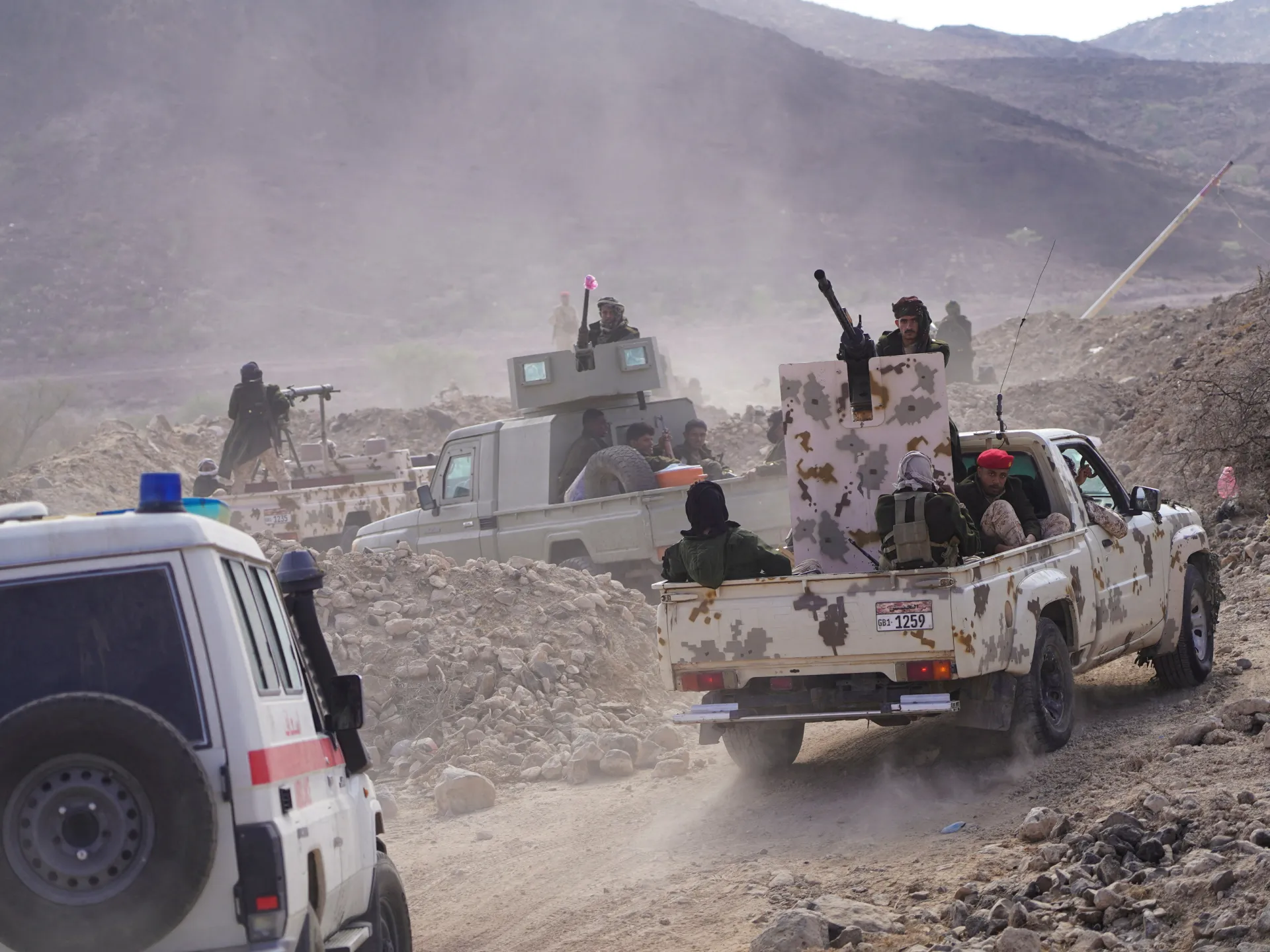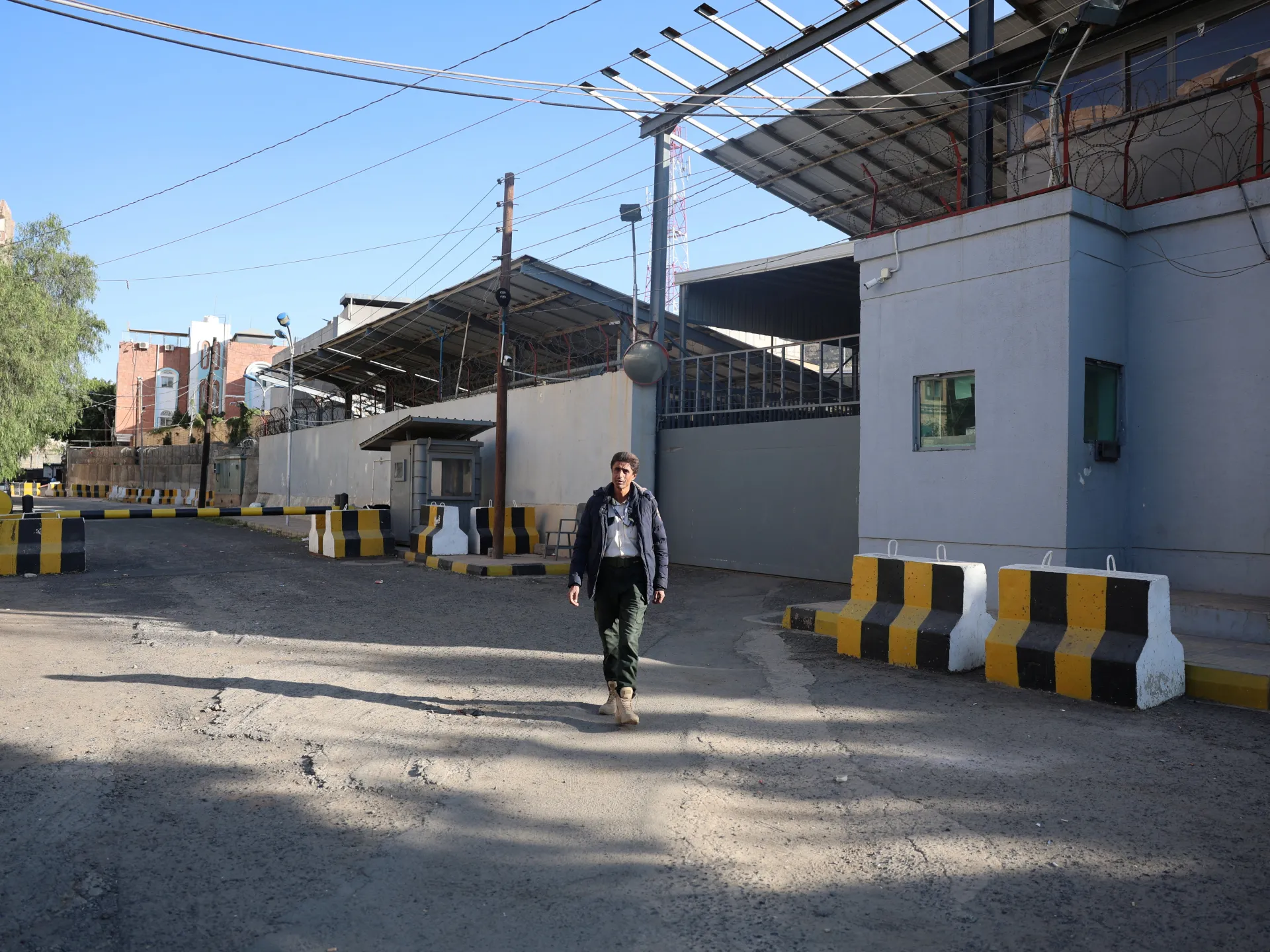
Yemen

Yemen’s Houthis fire at Israel airport amid search for Red Sea ship crew | Houthis News

Four sailors from Eternity C dead, 10 found alive, 11 still missing – six believed to be in Houthi hands.

Houthi rebels in Yemen attempted to strike Israel’s Ben Gurion airport after sinking two vessels in the Red Sea this week, as the group ramps up its military pressure in support of Palestinians under Israeli fire in its bid to bring the war in Gaza to an end.

Houthi military spokesman Yahya Saree said on Thursday that the group had carried out a “qualitative military operation” with a ballistic missile after the Israeli military reported the strike had been intercepted.

Meanwhile, maritime security sources told the Reuters news agency that the Houthis were holding six crew members from the Greek-operated, Liberia-flagged Eternity C vessel, which the rebel group attacked on Monday, killing at least four sailors.

A total of 25 people were on board the Eternity C, according to Aspides, the European Union’s naval task force patrolling the Red Sea. Ten crew members were reportedly pulled out of the sea alive after the vessel sank on Tuesday, while 11 are still missing – with six believed to be in Houthi hands.

Saree said on Wednesday that the Houthis had “moved to rescue a number of the ship’s crew, provide them with medical care and transport them to a safe location”.

The United States embassy in Yemen countered that on X, accusing the rebels of kidnapping the crew members after “killing their shipmates, sinking their ship and hampering rescue efforts”.

The attack on the Eternity C came one day after the Houthis struck and sunk the Magic Seas, reviving a campaign launched in November 2023 that has seen more than 100 ships attacked. All the crew from the Magic Seas were rescued.

After Sunday’s attack, the Houthis declared that ships owned by companies with ties to Israel were a “legitimate target” and pledged to “prevent Israeli navigation in the Red and Arabian Seas … until the aggression against Gaza stops and the blockade is lifted”.

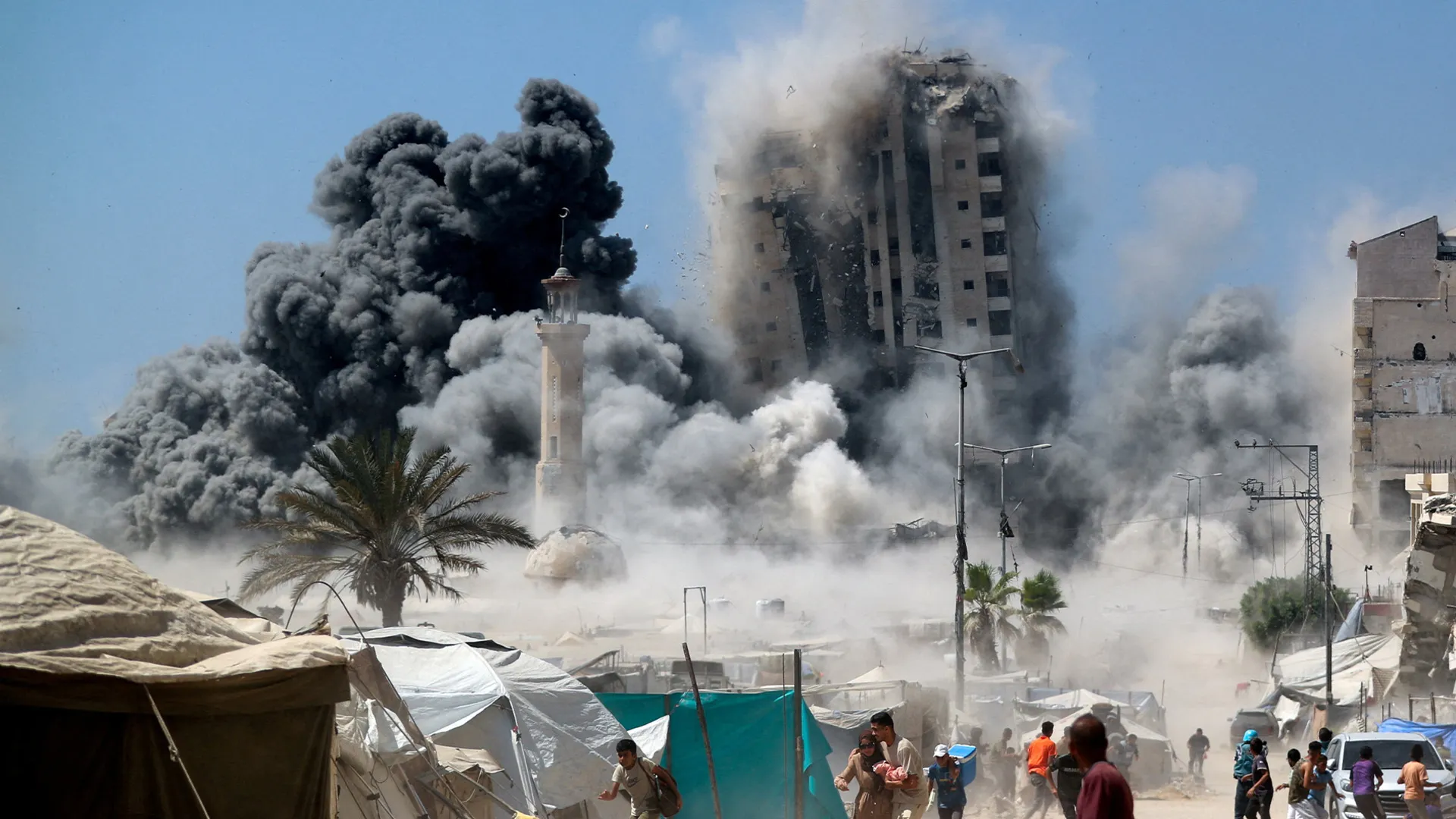
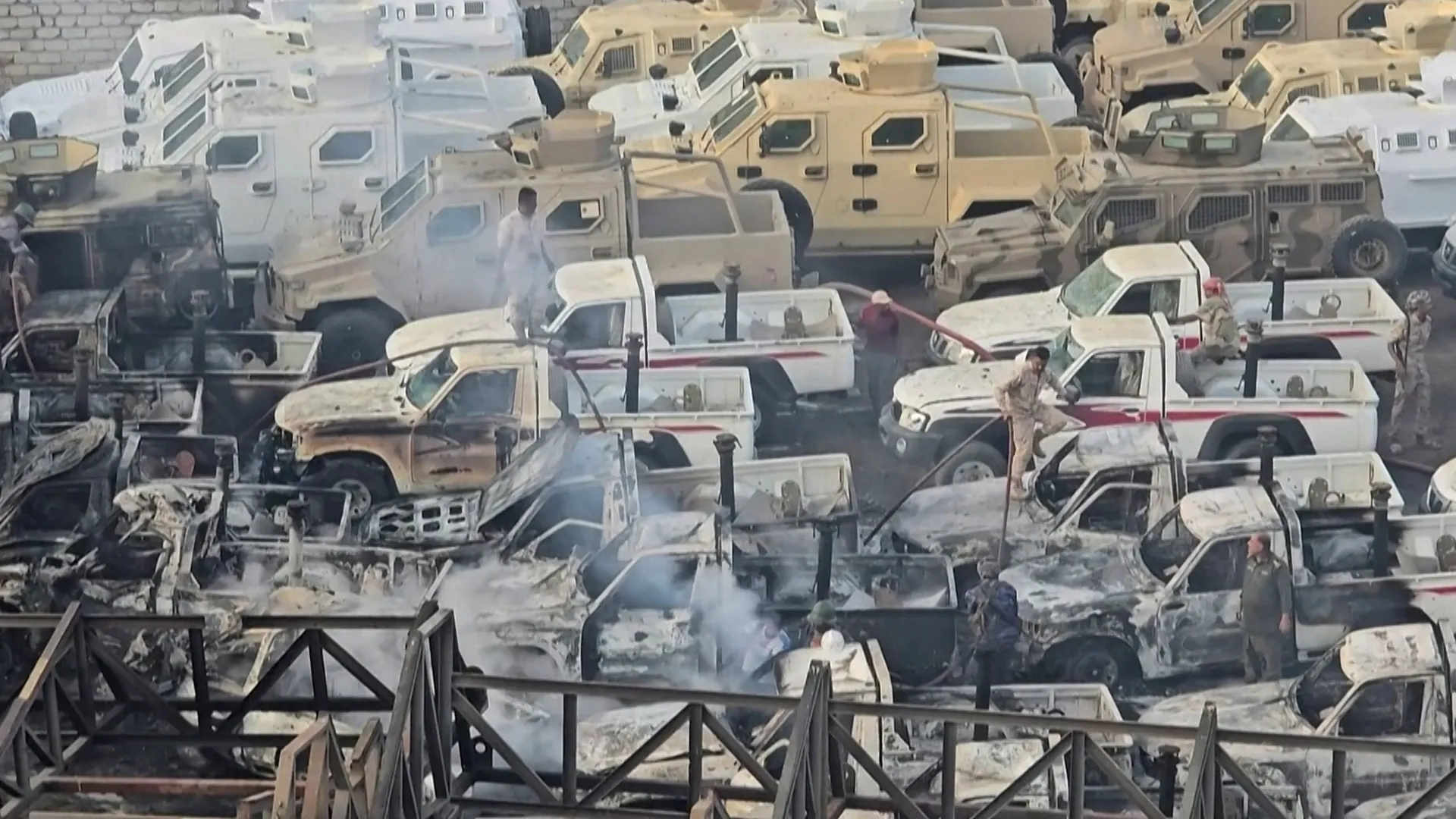
Late on Sunday, Israel’s military attacked Yemen, bombing the ports of Hodeidah, Ras Isa and as-Salif, as well as the Ras Qantib power plant on the coast. The Houthis had fired missiles towards Israeli territory in retaliation.

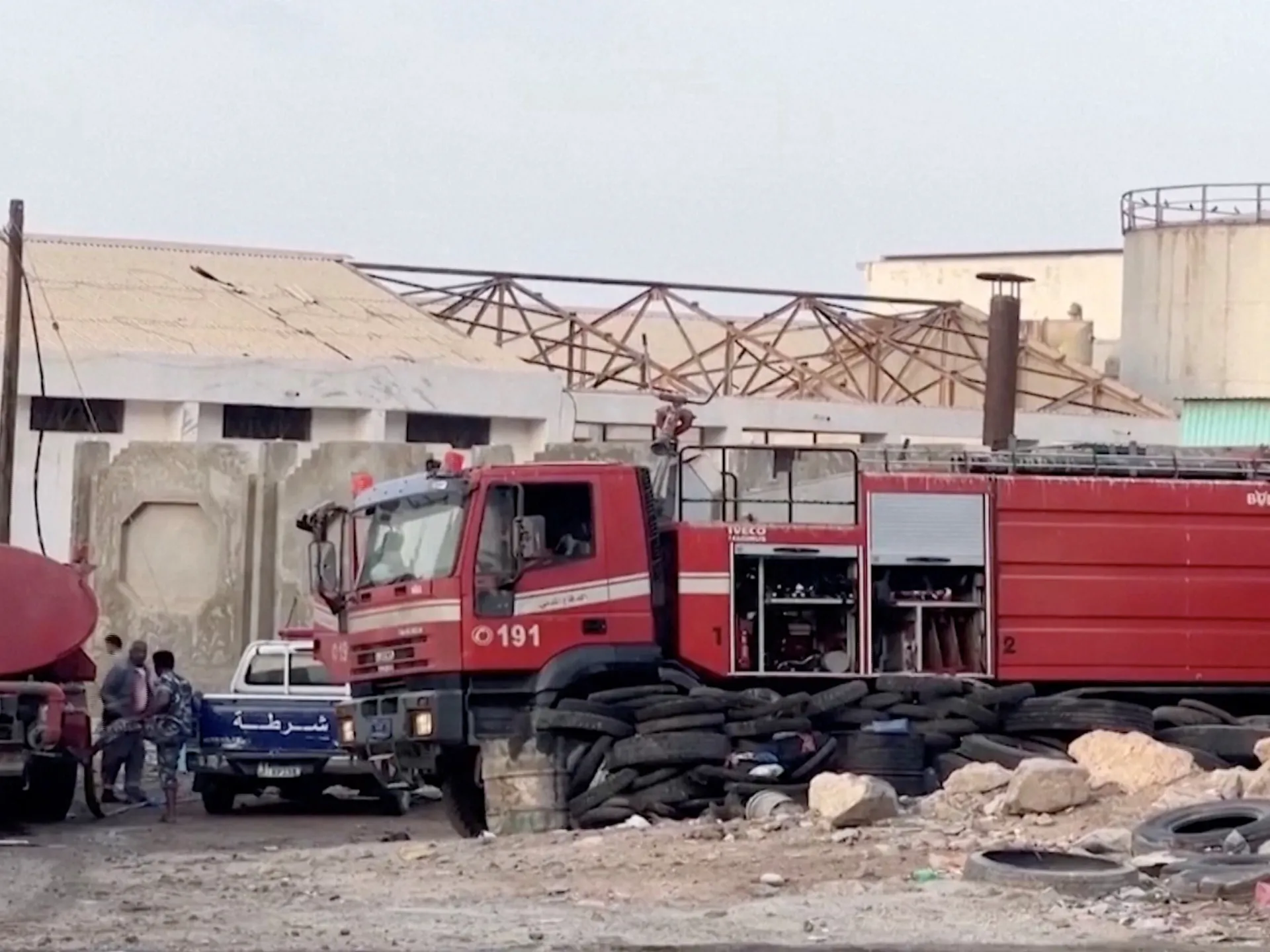
Israel said its attacks also hit a ship, the Galaxy Leader, which was seized by the Houthis in late 2023 and held in Ras Isa port.

The Houthis held 25 crew members from the Galaxy for 430 days before releasing them in January this year.

Source link

Five rescued after suspected attack by Yemen’s Houthis on Red Sea vessel | Houthis News

Surge in Red Sea attacks after months of calm potentially signals revival of Houthis’ campaign over Gaza war.

Five crew members have been rescued from a Liberian-flagged cargo ship in the Red Sea after a suspected attack from Yemen’s Houthi group, according to a maritime monitor. The attack is so far known to have killed at least three sailors out of the 22-member crew and wounded two.

The United Kingdom Maritime Trade Operations centre (UKMTO), run by the British military, said on Wednesday that “search and rescue operations commenced overnight” after Monday’s attack on the Greek-owned Eternity C.

UKMTO had said on Tuesday that the ship sustained “significant damage” and “lost all propulsion”. UK-based security firm Ambrey told the AFP news agency that the badly damaged vessel had sunk off Yemen’s port city of Hodeidah, which is under the control of the Houthis.

The Houthis, who say they are targeting Israel-linked ships as part of a campaign of solidarity with Palestinians under relentless Israeli fire, to pressure the Israeli military to end its assault on Gaza, have not claimed responsibility for the attack.

However, it came one day after they claimed responsibility for attacking another cargo ship – the Magic Seas – in the Red Sea, causing it to sink. All the crew were rescued.

The assaults mark the first attacks on shipping in the Red Sea since late 2024, potentially signalling the start of a new armed campaign threatening the waterway, which had begun to see more traffic in recent weeks.

After Sunday’s attack on the Magic Seas, the Houthis declared that ships owned by companies with ties to Israel were a “legitimate target”, pledging to “prevent Israeli navigation in the Red and Arabian Seas … until the aggression against Gaza stops and the blockade is lifted”.

Yemen’s exiled government, the European Union’s Operation Aspides military force and the US State Department blamed the rebels for the attack on Eternity C.

“These attacks demonstrate the ongoing threat that Iran-backed Houthi rebels pose to freedom of navigation and to regional economic and maritime security,” State Department spokesperson Tammy Bruce said.

“The United States has been clear: We will continue to take necessary action to protect freedom of navigation and commercial shipping from Houthi terrorist attacks,” she added.

The bulk carrier had been heading north towards the Suez Canal when it came under fire by men in small boats and by bomb-carrying drones on Monday night, with security guards on board firing their weapons, according to Operation Aspides and Ambrey, cited by The Associated Press news agency.

Operation Aspides told AFP on Tuesday that three people had been killed, with at least two injured, including “a Russian electrician who lost a leg”.

Authorities in the Philippines told AFP that there were 22 crew on the Eternity C, all but one of them Filipinos.

The Eternity C’s operator, Cosmoship Management, has not commented on casualties or injuries.

In separate incidents, Israel’s military and the Houthis exchanged strikes on Sunday, with Israel saying it had bombed three ports and a power plant in Houthi-controlled areas of Yemen, prompting the Iran-allied group to fire more missiles towards Israeli territory.

Israel said it struck the ports of Hodeidah, Ras Isa and as-Salif on the Red Sea coast as well as the Ras Kathib power plant.

It said it also struck a radar system on the Galaxy Leader, which was seized by the Houthis and remains docked in the port of Hodeidah.


Source link

World’s ‘most dangerous’ country in the world in 2025 – and it’s not one you’d expect

The Foreign Office advises against all travel to war-torn Yemen – and it’s not hard to see why. It is a no-go zone for Brits with no embassy services and no evacuation procedures in place.

Yemen
The country has been deemed more dangerous than Iraq, Afghanistan, Ukraine and Libya(Image: Getty)

Yemen has earned the ominous title of the world’s most treacherous country in 2025, outstripping even war-ravaged Ukraine, Iraq, Afghanistan, and Libya in terms of danger.

The UK Foreign Office issues a stark warning for those considering a trip to the country: “Support for British people is severely limited in Yemen. British Embassy services in Sana’a are suspended, and all diplomatic and consular staff have been withdrawn. The UK government cannot help British nationals leaving Yemen. There are no evacuation procedures in place.”

According to the World Population Review’s analysis, Yemen – which shares borders with Saudi Arabia and Oman – has surpassed Sudan, Ukraine, Afghanistan, and Syria to claim the top spot.

Owen Williams, a Middle East, North Africa, and Turkey Analyst at Sibylline Strategic Risk Group, offers insight into the country’s precarious situation: “Yemen is often considered one of the most hazardous countries in the world due to the protracted civil war, widespread food shortages, military interventions, and a collapse of public infrastructure.”

READ MORE: Ryanair passengers in tears over man’s random act of kindness on flight

Yemen
The Foreign Office advises against all travel to Yemen(Image: Getty)

Mr Williams explains that the instability is in part due to the Houthi rebels’ insurgency against the internationally recognised government. The group’s slogan, the sarkha, is a chilling call to arms: “God is great, death to America, death to Israel, curse on the Jews, victory to Islam.”

Since ousting the previous government in 2014, the group, which remains unlisted as a terrorist organisation in the UK, has taken control of much of northwest Yemen, including the capital Sana’a. The ongoing clash between the government and insurgents has plunged the nation into a severe humanitarian crisis.

Mr Williams pointed out that “Yemen was already in a difficult position before the onset of the Israel-Hamas war in October 2023”, but the regional tensions have since intensified. He explained: “Following the October 7 attacks, as a member of Iran’s Axis of Resistance, the Houthis began to target shipping in the Red Sea with drones and missiles, as well as launching attacks against Israel.

“This resulted in a US-Coalition intervention in Yemen, with many airstrikes targeting Houthi facilities and key infrastructure. These reached a peak in May 2025, when the US attacked a migrant detention facility. While the US has agreed a ceasefire with the Houthis, the risk of Israeli airstrikes persists.”

The group’s maritime assaults, often from small vessels, have caused global shipping firms to divert their routes, leading ships to navigate around South Africa instead.

Mr Williams has issued a stark warning to Brits against travelling to Yemen, highlighting that despite “there has likely been reduced media coverage of the situation in Yemen in recent years”, Westerners remain highly susceptible to danger and abduction.

One of the very few remaining tourist destinations in Yemen is Socotra, an archipelago that is unlike anywhere else. Sat 200 miles off the coast of mainland Yemen, close to the Horn of Africa, it is home to a unique array of plants and wildlife.

A tree
Socotra is full of beautiful and unique nature
Janet in her tent
Janet visited the paradise island

UNESCO recognises Socotra Island as a site of universal importance due to its biodiversity, with nearly 40 percent of its plant species being exclusive to the island. The surrounding islands, including Socotra, are also notable for their land and sea bird breeding spots and unique coral reefs, which are home to over 700 species of coastal fish.

While Socotora is covered by the Foreign Office’s advice—meaning visitors travelling there do so at their own peril and risk having their insurance invalidated—the archipelago has a very low crime rate and has been little impacted by the 11-year war that continues to rage on the mainland.

The main difficulty for those dreaming of visiting is how to get there.

Janet Newenham is a professional traveller who has spent years visiting some of the world’s most inaccessible places. Since visiting Iraq several years ago, Janet has organised small group trips for women to some of these places. Including, in February, to Socotora.

“It’s a paradise island off the coast of Yemen. People in the extreme travel community know about it, but a lot of people don’t,” Janet told the Mirror.

READ MORE: Spain travel rules for UK passport holdersREAD MORE: List of airlines that have banned popular item from overhead lockers amid safety fears

“It’s hard to get to. There are two flights a week from Abu Dhabi, but you can’t book them in a normal way. You have to book them through WhatsApp. It’s through Emirates Aviation, and it’s a humanitarian charter flight. You have to WhatsApp them and then send a bank transfer.

“It was absolutely incredible. I never knew there were places like that in Yemen. It has bright blue water, white sand beaches, and dragon’s blood trees. You won’t find them anywhere else in the world.”

Source link

Israel bombs ports, power plant in Yemen as Houthis fire more missiles | Houthis News

Israeli military attacks ports of Hodeidah, Ras-Isa and as-Salif as Houthis continue to launch missiles towards Israel.

Israel’s military has bombed three ports and a power plant in Houthi-controlled areas of Yemen, prompting the rebel group to fire more missiles towards Israeli territory.

The Israeli military said on Sunday that it struck the ports of Hodeidah, Ras-Isa and as-Salif on the Red Sea coast as well as the Ras Kathib power plant.

It said it also struck a radar system on the Galaxy Leader ship, which was seized by the Houthis and remains docked in the port of Hodeidah.

There were no immediate reports of casualties.

The Israeli attacks late on Sunday were the first on Yemen in almost a month and came after the military claimed that it intercepted a missile fired by the Houthis in the early hours of the day.

The rebel group, which controls Yemen’s most populous areas, responded to the latest Israeli attacks by launching more missiles at Israel in the early hours of Monday.

The Israeli military said two missiles were fired from Yemen, and that it attempted to intercept the projectiles. The attack set off sirens in the cities of Jerusalem, Hebron and near the Dead Sea.

Israel’s emergency service said there have been no reports of injuries or impact from the projectiles.

The Houthis say their attacks on Israel are in solidarity with Palestinians in Gaza who are under Israeli attack. The group has fired hundreds of missiles at Israel and launched more than 100 attacks on commercial vessels in the vital Red Sea corridor, since Israel’s war on Gaza began in 2023.

The Houthis paused their attacks after a ceasefire between Hamas and Israel in January, but resumed them after the United States launched attacks on Yemen on March 15, killing nearly 300 people in the weeks that followed.

Houthis downplay attacks

The latest escalation comes at a sensitive moment in the Middle East as a possible ceasefire in Israel’s war on Gaza hangs in the balance, and as Tehran weighs whether to restart negotiations over its nuclear programme following United States air strikes that damaged Iran’s most sensitive atomic sites.

In Yemen on Sunday night, the Houthi-affiliated news outlet Al Masirah TV reported that strikes hit the port city of Hodeidah, while the Saba news agency confirmed the attacks on the three ports as well as the power station.

A spokesman for the Houthis, Ameen Hayyan Yemeni, meanwhile, said the group’s air defences forced “a large portion” of Israel’s warplanes to retreat.

Locally-manufactured surface-to-air missiles were used to respond, “causing great confusion among enemy pilots and operations rooms”, he wrote in a statement on X.

Al Jazeera’s Nabil Alyousefi, reporting from the Yemeni capital, Sanaa, said the Houthis were downplaying the impact of the strikes on Hodeidah.

“The Houthis say their air defences – using locally made surface-to-air missiles – were effective in responding to the Israeli assault, with sources indicating roughly 30 minutes of clashes between Houthi air defenses and Israeli forces,” Alyousefi said.

“The Houthis have not reported any material or human losses so far, reassuring that their armed forces repelled all Israeli aggression. They emphasized their readiness to confront any future Israeli attacks and stated they are prepared to target Israeli territory in response,” he added.

The hostilities also took place after a grenade and drone attack on a Red Sea cargo ship set the vessel on fire and forced its crew to abandon it.

No group has claimed the attack, but the United Kingdom maritime agency said it matched the “established Houthi target profile“.

Separately, Israeli forces also bombed Lebanon, claiming attacks on several Hezbollah targets in the country’s south as well as the eastern Bekaa region.

In a statement, the military said the strikes were directed at infrastructure used for “storing and producing strategic weapons” and a “rocket launch site”.

Since a November 27 ceasefire formally ended more than a year of hostilities with Hezbollah, Israel has continued sporadic strikes on Lebanon. It says the group’s activities run counter to the agreement, but does not provide evidence to back its claims.

In addition to its ongoing war on the Gaza Strip, Israeli forces have launched attacks on the occupied West Bank, Syria and Iran over the past year.

Source link

Israel launches strikes on Houthi targets in Yemen

Israel says it has launched strikes on Houthi targets in three Yemeni ports, including the western port of Hodeidah, Ras Isa and Saif.

The attacks come shortly after the Israeli military issued evacuation orders for civilians in the areas, warning of imminent air strikes.

Israeli defence minister Israel Katz confirmed on social media the strikes on the Houthi-controlled sites including a power station and a ship that was hijacked by the group two years ago.

Houthi-run media in Yemen said the strikes hit the port of Hodeidah, but no further details were provided on damage or casualties.

Katz said the strikes were part of “Operation Black Flag” and warned that the Houthis “will continue to pay a heavy price for their actions”.

“The fate of Yemen is the same as the fate of Tehran. Anyone who tries to harm Israel will be harmed, and anyone who raises a hand against Israel will have their hand cut off,” he said in a post on X.

Since the start of the Israel-Hamas war, the Iran-backed Houthi rebels have regularly launched missiles at Israel in solidarity with Palestinians in Gaza and attacked commercial ships in the Red Sea.

The Israeli Air Force said the latest strikes on Yemen’s ports were in response to “repeated attacks” by the Houthis on Israel and its citizens.

It added that the targeted ports were being used to “transfer weapons from the Iranian regime to carry out terror plans” against Israel and its allies.

Shortly after the attack, Houthis confirmed its air defences had confronted Israel’s strikes with missiles, according to Reuters news agency.

Among the targets was a commercial ship the Galaxy Leader seized by the group in November 2023, which Israel said was being used to monitor maritime vessels in international waters.

The Ras Kanatib power station which supplies electricity to the nearby cities of Ibb and Taizz, was also hit, Israel said.

This latest attack on Hodeidah comes after Israeli navy ships struck targets in the port city last month.

Hodeidah port, which is the main entry point for food and other humanitarian aid for millions of Yemenis, has been the target of several Israeli strikes in the past year.

Source link

Gunboats target cargo vessel in Red Sea; crew abandons ship | Shipping News

United Kingdom Maritime Trade Operations (UKMTO) reports the vessel is taking on water after being targeted with gunfire and rocket-propelled grenades.

A commercial vessel in the Red Sea has come under attack after small boats fired rocket-propelled grenades and automatic weapons towards the ship.

According to the organisation United Kingdom Maritime Trade Operations (UKMTO), the incident took place 94km (51 nautical miles) southwest of the Yemeni port of Hodeidah.

“The vessel has been engaged by multiple small vessels who have opened fire with small arms and self-propelled grenades. [The] armed security team have returned fire and situation is ongoing,” said UKMTO, which is run by Britain’s Royal Navy.

The UKMTO said the attack resulted in a fire onboard and the vessel began taking on water Sunday night as its crew prepared to abandon ship.

“Authorities are investigating,” it said, adding later the ship was ablaze after being “struck by unknown projectiles”.

“UKMTO has had confirmation from the Company Security Officer that the vessel is taking on water and crew are preparing to abandon ship,” a statement said.

Maritime security sources added that the vessel was identified as the Liberian-flagged, Greek-owned bulk carrier Magic Seas.

British maritime security firm Ambrey said in an advisory that the ship was attacked by four unmanned surface vehicles [USVs].

“Two of the USVs impacted the port side of the vessel, damaging the vessel’s cargo,” Ambrey added.

While no one has claimed responsibility, Ambrey said the attack matched the “established Houthi target profile”.

The Yemen-based armed group the Houthis began targeting vessels in the Red Sea shortly after Israel’s war on Gaza began in October 2023, which the Houthis say is in defence of the Palestinians living in the besieged enclave.

Since November 2023, the Houthis have launched more than 100 attacks targeting commercial vessels, disrupting global shipping and forcing firms to reroute.

Their campaign has expanded to include vessels linked to the United States and the United Kingdom since the two countries initiated military strikes in January 2024.

In May, the Houthis and the US agreed on a ceasefire that would see the end of attacks on US ships. But the Houthis vowed to continue to target Israeli-linked vessels.

A renewed Houthi campaign against shipping could again draw in US and Western forces to the area.

This comes at a sensitive moment in the Middle East as a possible ceasefire in the war on Gaza hangs in the balance, and as Iran weighs whether to restart negotiations over its nuclear programme following US air strikes targeting its most sensitive atomic sites.

INTERACTIVE-RED-SEA-TRUE-CONF-ATTACK-1709800191

Source link

Yemen’s Houthis mull how they can help ally Iran against Israel | Israel-Iran conflict News

As the war between Israel and Iran continues, Yemen’s Houthi rebels say they are coordinating with Tehran.

The Houthis, also known as Ansar Allah, have since 2023 launched attacks on Israel and shipping in the Red Sea in what they say is support for Palestinians in Gaza.

The Houthis are also a close ally of Iran, and now they say that their latest attacks are on behalf of the “Palestinian and Iranian peoples”, according to the Telegram account of Houthi spokesperson Yahya Saree, who added that the Yemeni group were coordinating with “the operations carried out by the Iranian army against the criminal Israeli enemy”.

On Sunday, two days after Israel first attacked Iran in the early hours of June 13, the Houthis announced that they had targeted Israel.

In a televised address, Saree said the group fired several ballistic missiles at Jaffa.

The Houthis are timing their attacks with the Iranians, according to Hussain Albukhaiti, a pro-Houthi political commentator.

The Houthis are launching missiles “after Iran launched its missiles”, Albukhaiti told Al Jazeera. “This way the Zionist settlers [Israelis] keep going back and forth to their shelters so they can live a small fraction of the fear they caused the Palestinian people in Gaza.”

The Houthi attacks are essentially a continuation of their previous periodic missile and drone attacks on Israel. The Israelis have mostly been able to intercept the attacks but some have gotten through, most notably an attack in early May on Ben Gurion airport that injured six people and led to a suspension of flights.

But the Houthi attacks have also had another consequence for Israeli defences, according to Yemen expert Nicholas Brumfield.

“The constant threat of Houthi attacks coming from the south requires Israel to spread out its air defences rather than positioning them all to more effectively [defend] counterattacks coming from Iran,” he told Al Jazeera.

Shipping routes

In November 2023, the Houthis began attacking ships they say were linked to Israel in the Red Sea. International ships that travel to the Red Sea are forced to pass Houthi-controlled areas of Yemen.

The attacks have ceased in recent months, particularly after the Houthis and the United States came to an agreement to stop attacking each other in early May, following a US bombing campaign that is reported to have killed more than 200 people in Yemen.

But the attacks could still resume, and the Houthis never agreed to stop targeting Israel, which itself has also continued to bomb Yemen.

“We had an agreement with the US to stop attacking each other, but Yemen will not obey this agreement if the US joins the Zionists in their attacks against Iran,” Albukhaiti said.

“We remember that Trump cancelled the nuclear deal between Iran and the US,” he said, referring to the US president’s unilateral withdrawal from the nuclear deal between Iran and several Western countries in 2018. Albukhaiti accused Trump of cancelling the deal because it was not in Israel’s interest.

“Yemen will do the same, and will cancel the agreement with the US, because it’s not in the interest of Iran, which is an important ally of Yemen,” he said, referring to the Houthi rebel group as “Yemen”, although the group’s government is not recognised internationally.

Iran has also threatened to close the Strait of Hormuz, which lies between it and Oman. About 20 million barrels per day (BPD), or the equivalent of about 20 percent of global petroleum liquids consumed, pass through the Strait of Hormuz, according to the US Energy Information Administration (EIA).

Analysts said the Houthis could potentially do the same in the Red Sea.

Sea mines are “very low-tech, easy-to-make mines that would nevertheless introduce considerable uncertainty for global shippers,” Brumfield said.

“I don’t think that Iran or Yemen will hesitate to use sea mines if necessary to block the entire shipping lines in our region,” Albukhaiti added.

Risks to Gulf states

There are also fears that the conflict could drag in other countries in the region. The US has bases in a number of countries in the Middle East, and the Houthis have previously been involved in fighting with many of them, including Saudi Arabia and the United Arab Emirates.

If the current conflict spirals, Gulf countries may find themselves threatened by Houthi attacks.

“The Houthis are trying to recover from the US strikes we saw between mid-March and May, and probably aren’t begging to restart those more intensive strikes if they don’t have to,” Brumfield said. “But I also think they’d be amenable to restarting them if they saw themselves as participating in a grand regional war between the US-Israel and the Axis of Resistance, especially if a lot of US military resources are diverted to Iran.”

Albukhaiti said Houthi forces “could also target US bases in the region”, specifically those involved in the coalition against Yemen, such as Saudi Arabia and the UAE, because “we are still at war with these countries”, he said.

The Saudi-led coalition intervened militarily in the war in Yemen between the Houthis and the country’s internationally recognised government in 2015, unleashing a years-long campaign of air strikes. Saudi Arabia ceased hostilities in Yemen in 2022, but has yet to officially reach a deal with the Houthis.

And before that, it had come under Houthi attack. In 2019, Saudi oil production was cut by around 50 percent after Houthi drone strikes on oil plants. Since then, analysts say the Saudis have worked hard to keep more stable relations with the Houthis in order to avoid further attacks.

But despite these efforts, the detente could be forgotten if the Houthis see fit to resume hitting their northern neighbour.

“I don’t think [attacks on Saudi Arabia are] off the table,” Brumfield said. “If elements in Houthi leadership in favour of a military-first approach win out, it’s plausible they would attack the Kingdom [of Saudi Arabia] as part of a general escalation in both the regional and Yemen conflict.”

Brumfield added that the Houthis would, however, have to also keep in mind that Saudi Arabia has provided “diplomatic cover” for the Houthis in the past few years, as it seeks to find a final deal to end the conflict in Yemen. Any attacks from the Houthis would likely make Saudi Arabia abandon that strategy.

Internal strife

Anti-Houthi groups in Yemen have been watching events carefully over the past few months, as they sense an opportunity with the initial US campaign against the Houthis, and now the weakening of the Houthis’ principal ally, Iran.

“The most [the Houthis are] capable of doing is continuing symbolic attacks on Israel or potentially restarting activity in the Red Sea,” Raiman Al-Hamdani, an independent Yemen analyst, told Al Jazeera. “But doing so could provoke a renewed military response from the US, Israel, and the UK, which might weaken their position domestically and open space for anti-Houthi groups to exploit any resulting instability.”

However, analysts say that few of the groups that oppose the Houthis, including the Yemeni government, are in a position to take and effectively govern territory from the Houthis.

And, should those groups mobilise, the Houthis would likely respond, Albukhaiti said.

Houthi forces could target any domestic opponents through “oil and gas fields and platforms” as well as the “airports and water distillation plants” of the countries he said backed the groups, Saudi Arabia and the United Arab Emirates.

Source link

Can Iran confront Israel on its own? | Armed Groups News

Tehran attacked Israel in retaliatory strikes without the support of regional allies.

Israel pounds Iran – and Iran strikes back, hitting Tel Aviv.

Since Israel’s war on Gaza began in October 2023, Israel has damaged Iran, not just at home, but also outside its territory – by striking its allies.

Hezbollah‘s leader Hassan Nasrallah was assassinated in Beirut, the Houthis in Yemen have taken hits, as well as militias in Iraq.

Israel struck Iranian interests in Syria and Tehran’s ally, former Syrian leader Bashar al-Assad, was deposed.

Hamas’ leadership has also been decimated, including in assassinations carried out in Tehran.

So is Iran now fighting from a weakened position?

Presenter: Cyril Vanier

Guests:

Ronnie Chatah, Political commentator, writer and host of The Beirut Banyan podcast.

Setareh Sadeqi – Professor at the University of Tehran’s Faculty of World Studies.

David DesRoches, Professor of National Defense University and former Pentagon director of Arabian Peninsula Affairs.

Source link

Yemen’s al-Qaeda leader threatens Trump, Musk over Israel’s war on Gaza | Al-Qaeda News

Saad bin Atef al-Awlaki, who is wanted by the US, challenges Houthi dominance of Arab and Muslim world’s resistance movement.

The leader of al-Qaeda’s Yemen branch has targeted US President Donald Trump and tech billionaire Elon Musk over United States backing for Israel’s ongoing war on the Gaza Strip and its besieged Palestinian population.

“There are no red lines after what happened and is happening to our people in Gaza,” said Saad bin Atef al-Awlaki in a half-hour video message that was spread online Saturday by supporters of al-Qaeda in the Arabian Peninsula (AQAP), the Yemeni branch of the armed group.

“Reciprocity is legitimate,” he said.

Al-Awlaki’s video message also included calls for so-called lone wolves to assassinate leaders in Egypt, Jordan and the Gulf Arab states over the war, which has decimated Gaza, killing at least 54,772 Palestinians over the past 20 months.

The message featured images of Trump and Musk, US Vice President JD Vance, Secretary of State Marco Rubio and Secretary of Defence Pete Hegseth, as well as logos of Musk’s businesses – including electric carmaker Tesla.

Born in 2009 from the merger of al-Qaeda’s Yemeni and Saudi factions, AQAP is completely distinct from Yemen’s Houthi rebel group, which controls most of the country and agreed to a ceasefire with the US earlier this month.

AQAP grew and developed amid the chaos of Yemen’s war, which has pitted the Houthis against a Saudi-led coalition backing the government since 2015.

Al-Awlaki became the group’s leader in 2024, replacing predecessor Khalid Batarfi, who died that year.

He already has a $6m US bounty on his head, having, as Washington puts it, “publicly called for attacks against the United States and its allies”.

Though believed to be weakened in recent years due to infighting and suspected US drone strikes killing its leaders, the group had been considered the most dangerous branch of al-Qaeda still operating since the US killing of founder Osama bin Laden in 2011.

United Nations experts estimate AQAP has between 3,000 and 4,000 active fighters and passive members, claiming that it raises money by robbing banks and money exchange shops, as well as by smuggling weapons, counterfeiting currencies and conducting ransom operations.

The Houthis have previously denied working with AQAP, though the latter’s targeting of the Houthis has dropped in recent years, while its fighters keep attacking the Saudi-led coalition forces.

Now, with its focus on Israel’s war on Gaza, AQAP appears to be following the lead of the Houthi group, which has launched missile attacks on Israel and targeted commercial vessels moving through the Red Sea in solidarity with Palestinians under Israeli fire.

“As the Houthis gain popularity as leaders of the ‘Arab and Muslim world’s resistance’ against Israel, al-Awlaki seeks to challenge their dominance by presenting himself as equally concerned about the situation in Gaza,” said Mohammed al-Basha, a Yemen expert with the Basha Report risk advisory firm.

“For a national security and foreign policy community increasingly disengaged from Yemen, this video is a clear reminder: Yemen still matters,” he said.

Source link

Trump announces travel ban affecting a dozen countries set to go into effect Monday

President Trump is resurrecting the travel ban policy from his first term, signing a proclamation Wednesday night preventing people from a dozen countries from entering the United States.

The countries include Afghanistan, Burma, Chad, Republic of the Congo, Equatorial Guinea, Eritrea, Haiti, Iran, Libya, Somalia, Sudan and Yemen.

In addition to the ban, which takes effect at 12:01 a.m. Monday Eastern time, there will be heightened restrictions on visitors from Burundi, Cuba, Laos, Sierra Leone, Togo, Turkmenistan and Venezuela.

“I must act to protect the national security and national interest of the United States and its people,” Trump said in his proclamation.

The list results from a Jan. 20 executive order Trump issued requiring the departments of State and Homeland Security and the Director of National Intelligence to compile a report on “hostile attitudes” toward the U.S. and whether entry from certain countries represented a national security risk.

During his first term, Trump issued an executive order in January 2017 banning travel to the U.S. by citizens of seven predominantly Muslim countries — Iraq, Syria, Iran, Sudan, Libya, Somalia and Yemen.

It was one of the most chaotic and confusing moments of his young presidency. Travelers from those nations were either barred from getting on their flights to the U.S. or detained at U.S. airports after they landed. They included students and faculty as well as businesspeople, tourists and people visiting friends and family.

The order, often referred to as the “Muslim ban” or the “travel ban,” was retooled amid legal challenges, until a version was upheld by the Supreme Court in 2018.

The ban affected various categories of travelers and immigrants from Iran, Somalia, Yemen, Syria and Libya, plus North Koreans and some Venezuelan government officials and their families.

Trump and others have defended the initial ban on national security grounds, arguing it was aimed at protecting the country and not founded on anti-Muslim bias. However, the president had called for an explicit ban on Muslims during his first campaign for the White House.

Megerian and Amiri write for the Associated Press.

Source link

Israel launches attack on Yemen’s Sanaa airport | Houthis News

DEVELOPING STORY,

Four strikes hit the runway and a Yemenia Airways plane, according to Houthi-affiliated media report.

Israel says it has launched air strikes on Yemen’s main airport in the capital, Sanaa, a day after Yemen’s Houthi rebels fired two projectiles towards Israel.

The Houthi-affiliated news outlet Al Masirah TV reported on Wednesday that four strikes hit the runway and a Yemenia Airways plane.

Israeli Defence Minister Israel Katz said on Wednesday that the Israeli air force struck Houthi “terror targets” at the airport and “destroyed the last aircraft remaining”.

“This is a clear message and a continuation of our policy: whoever fires at the State of Israel will pay a heavy price,” Katz said.

The latest Israeli attack on Yemen comes a day after the Houthi armed group fired two projectiles towards Israel that were shot down by Tel Aviv’s air defences. The Houthis later confirmed that they had launched two “ballistic missiles”.

Sanaa airport, the largest in Yemen, came back into service last week after temporary repairs and runway restoration following previous Israeli strikes.

It was mainly used by United Nations aircraft and the only remaining civilian aircraft of Yemenia Airways, after three others were destroyed in the last attack.

Since Israel began its war on Gaza in October 2023, the Houthis have repeatedly targeted Israel in what they say is solidarity with the Palestinians in the enclave.

This is a developing story.

Source link

US policy shifts on Syria, Yemen, Iran – but not Israel | Donald Trump

US President Donald Trump talks about starvation in Gaza, but is the US willing to impose consequences on Israel?

The US-Israeli plan to get humanitarian aid into Gaza, amid the use of starvation as a weapon of war, enables Israel to “force the ethnic cleansing of a huge part of Gaza’s population”, argues Matt Duss, the executive vice president of the Center for International Policy.

United States President Donald Trump visited the Middle East, which saw a shift in US policy on Yemen, Iran, and Syria.

Duss tells host Steve Clemons that the Democratic Party would be wise to learn from Trump’s foreign policy. “The Democrats have completely left the antiwar, pro-diplomacy, pro-peace lane open for Donald Trump to fill,” he says.

Source link

Israel launches strikes on two Yemen ports | Houthis News

Prime Minister Benjamin Netanyahu promises more strikes if the group continues to launch attacks on Israel.

Israel says it has launched strikes on the Yemeni ports of Hodeidah and as-Salif in response to the Houthi rebels firing missiles towards Israel, days after the Yemeni group agreed a truce with the United States.

The Israeli military said it carried out strikes on “terrorist infrastructure” on Friday, saying on X that the two ports had been used by the Houthi rebel group to “transfer weapons”.

Al Masirah TV, a Houthi-affiliated outlet, also reported Israeli strikes on the two ports. The extent of any damage was not clear, and there no immediate reports of casualties.

The Houthis have carried out a campaign of attacks against Israel in self-proclaimed solidarity with Palestinians after Israel launched its assault on Gaza in October 2023.

Israel has carried out strikes in response, including one on May 6 that damaged Yemen’s main airport in Sanaa and killed several people.

Friday’s attacks were the first since US President Donald Trump agreed to a ceasefire deal with the Houthis earlier this month, with the US halting its attacks on Yemen and the group agreeing to end its attacks on shipping lanes in the Red Sea.

Israel was not included in that agreement, and its military said it intercepted several missiles fired from Yemen towards Israeli airspace this week.

Israeli Prime Minister Benjamin Netanyahu said on Friday that the attacks are “just the beginning”, describing the Houthis as “just a tool”, alleging that Iran was “behind them”.

“We will not stand idly by and allow the Houthis to harm us. We will strike them with greater force, including at their leadership and all the infrastructure that enables them to attack us,” he said in a statement posted on the government’s social media account.

Israeli Defence Minister Israel Katz pledged to “hunt down and eliminate” Houthi leader Abdel-Malik al-Houthi if the rebel group continued “to fire missiles at the State of Israel”.

Alluding to recent Houthi attacks on Israel, Katz indicated leader al-Houthi would meet the same fate as Hamas commanders Mohammed Deif and Yahya Sinwar in Gaza, Hamas political chief Ismail Haniyeh in Iran, and Hezbollah leader Hassan Nasrallah in Lebanon – all killed in Israeli attacks over the last year.

Al Jazeera’s Hamdah Salhut, reporting from Jordan’s capital Amman, said that since Israel broke a ceasefire agreement with Hamas back in March – killing almost 3,000 since then, according to Gaza’s Health Ministry – the Houthis had launched “at least 34 different projectiles” towards Israel.

She said that Israel’s policy “moving forward” would be to strike back. “For every missile that’s fired, they’re going to be conducting these types of air strikes,” she said.

Source link