Sanaa, Yemen – A missile fired by Yemen’s Houthi group, also known as Ansar Allah, streaks across the sky over Sanaa at midday, leaving a trail of smoke behind it.
Its intended target is unclear. It could have been a site in Saudi Arabia or territory to the south and east held by Yemen’s internationally recognised government. For people in northern Yemen, missile launches have become a familiar sight.
Recommended Stories
list of 3 itemsend of list
On Thursday, at least five people were killed near the al-Maashiq presidential palace in Aden after Houthi missile strikes. Yemeni Prime Minister Shaya al-Zindani was present at the palace at the time of the attack, but was unharmed.
Houthi military spokesman Yahya Saree said the attack targeted an operational headquarters, part of its campaign against Saudi-backed fighters and equipment supporting the internationally recognised government in Aden.
Frequent Houthi missile attacks – combined with the Iranian-backed group’s territorial gains around the city of Taiz in southwestern Yemen – have severed key supply routes and threatened other roads, ports, and airports that government forces rely on for supplies.
The disruptions could undermine the government’s Dawn of Yemen operation, which aims to recapture territory held by the Houthi group. This includes the capital, Sanaa, which the Houthis seized at the start of the war in 2014.
Government officials, however, say supply issues will not halt the offensive, emphasising that their forces can overcome logistical challenges.
“The Houthi group consistently attempts to sever supply lines to government forces, but they have been unable to halt these supplies. So, military operations against the Houthis will continue,” Colonel Wadah al-Dubaish, spokesperson for the government-aligned Joint Forces on Yemen’s West Coast, told Al Jazeera.
But losses to the Houthis over the past few months have been damaging to the government.
A rapid Houthi advance south along the Red Sea coast in early September captured Mocha, a port on the Red Sea coast and a key supply hub for pro-government forces in western Taiz governorate.
A government counter-offensive reclaimed some of the territory lost in the southern Red Sea coast region, but not Mocha itself, which continues to be in Houthi hands.
Houthi attacks and ground advances, al-Dubaish said, may delay the delivery of supplies to government military forces or increase the cost of delivering supplies to certain fronts.
“However, they cannot stop the flow of supplies because the air, land and sea routes are still available, allowing supplies to continue reaching the front lines,” he said.
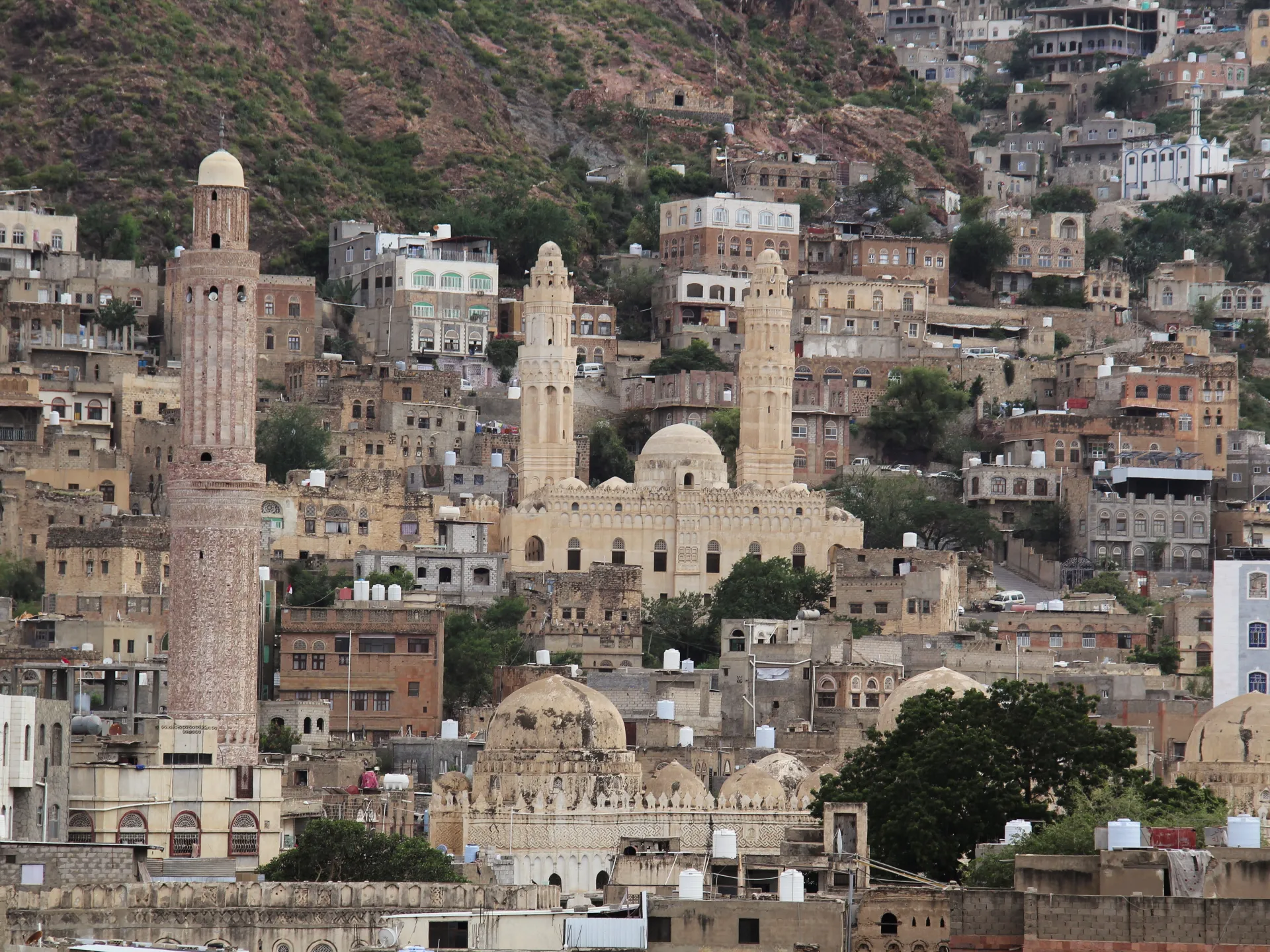
But the situation in the city of Taiz illustrates the limits of that logistical flexibility. Houthi forces have cut the main road connecting the city to Aden, the seat of the internationally recognised government. Alternative routes through the surrounding mountains have also been disrupted, leaving Taiz effectively besieged.
The consequences are already being felt. Fuel shortages and soaring prices have affected Taiz since the latest Houthi advances, with the cost of petrol tripling last week.
The loss of vital supply routes also threatens the government’s ability to deliver ammunition, reinforcements and other essential supplies to its troops, even as they face heavy and sustained Houthi attacks.
Al-Dubaish argued, however, that there are always advances and retreats in war, and that losing one battle does not mean losing the conflict as a whole.
“The war is still ongoing and will not cease until the Houthis are defeated,” he said.
‘Logistical flexibility’
Yemeni government forces are currently fighting the Houthis on several fronts in Yemen, including the southern Red Sea coast, around Taiz city, and in Marib and al-Jawf east of Sanaa.
Faisal al-Majidi, Yemen’s deputy minister of justice, told Al Jazeera that government forces rely on “logistical flexibility and decentralisation” to secure supply lines across the country.
“This approach involves dividing supply routes into semi-autonomous sectors, supported by nearby access points and key supply hubs – such as Shabwa, Marib, Houthi-free areas in Taiz, the Red Sea coast, and the southern governorates,” al-Majidi said.
Such an approach, he noted, mitigates the difficulties of moving between widely separated front lines.
“Furthermore, government forces have been fighting for the control of high points overlooking major roads to help protect vital supply arteries from bombardment,” al-Majidi added.
Among the areas pro-government forces have focused on is the strategic mountainous district of al-Waziiya in Taiz governorate, which overlooks the Red Sea coast and could also be a launching pad to relieve the siege on Taiz city from its western approaches. Fighting with the Houthis in al-Waziiya continues.
The Saudi role
Saudi Arabia has stepped up its support for the Yemeni government and allied forces since the launch of Dawn of Yemen, acknowledging airstrikes against Houthi forces in the country for the first time since a 2022 truce. Riyadh first intervened in the conflict in Yemen in 2015 in an effort to restore the Yemeni government to Sanaa.
Al-Dubaish said the Saudi military role is a pivotal and indispensable source of support for Yemeni government forces.
“Saudi support is a decisive factor in the conflict. Without Saudi Arabia, it would be a huge challenge for the Yemeni government to confront the Houthis, who possess advanced military capabilities – such as ballistic and cruise missiles supplied by Iran – along with a large pool of fighters,” said al-Dubaish.
The Saudi-led coalition has said airstrikes have destroyed hundreds of high-value targets since early October.
Al-Majidi described the Saudi air support as a “strategic balancer” and a vital pillar of the Dawn of Yemen operation.
“The Saudi role centres on providing direct cover for ground forces and, more importantly, neutralising the reinforcements of the [Houthis], as well as targeting missile and drone launch platforms – thereby mitigating their destructive impact,” he said.
The Saudi-led coalition has previously airdropped weapons and ammunition to pro-government fighters in Taiz when it was besieged in the early years of the war, but there have been no reports of similar operations since the latest siege began this month.
Coordination: The litmus test
Saudi Arabia is also vital for what may be an even more important task: uniting an anti-Houthi side that remains divided with disjointed command structures.
Al-Dubaish said that poor coordination among military units remains a significant challenge.
“The coordination problem stems from the presence of multiple military units operating under different command structures,” he added. “This fragmentation is not in the best interest of the forces fighting the Houthis.”
The government’s loss of the Red Sea coast in September was partly the result of faulty coordination among anti-Houthi forces, who appeared unable to respond quickly to the Houthi advance.
That was despite messaging from the Yemeni government since the start of the year that anti-Houthi forces were operating under a unified command structure, after the defeat of separatist Southern Transitional Council forces – who had been backed by the United Arab Emirates – at the start of the year.
“The coordination among various field forces … remains the true litmus test for the success of the Dawn of Yemen operation,” said al-Majidi.
Adnan al-Jabarni, a Yemeni researcher specialising in military affairs, told Al Jazeera that the level of coordination among government forces is improving.
“These forces are currently testing their coordination, given that they only began to operate under a unified structure – following the withdrawal of the UAE from Yemen and the formation of the Supreme Military Committee (SMC), which incorporated all the various branches and units,” al-Jabarni said.
In January, the Presidential Leadership Council, Yemen’s United Nations-recognised authority led by President Rashad al-Alimi, established the SMC, with the goal of overseeing all anti-Houthi military units and integrating them into the official Yemeni military under one command.
However, establishing the committee has not eliminated longstanding divisions between the different forces. Their command structures and sources of funding have historically differed, and the losses on the Red Sea coast have highlighted the continuing difficulties of coordinating their battlefield operations.
That coordination is vital for Taiz, where holding off the Houthis will depend on recapturing roads for use as supply routes.
Al-Jabarni argued that friction among pro-government forces is diminishing and the supply lines for government forces remain intact despite the Houthi attacks.
“The Houthis are attempting to exert pressure on Saudi Arabia and the Yemeni government by targeting civilian facilities and supply lines – specifically focusing on vital infrastructure – but I believe this is likely to intensify the pace of anti-Houthi operations rather than slowing them down,” al-Jabarni said.

![Khadija al-Majidi, a local activist, has begun gathering donations for weapons as well as food for government forces in Taiz [Courtesy of Khadiji al-Majidi]](https://i0.wp.com/occasionaldigest.com/wp-content/uploads/2026/10/%D8%A7%D9%84%D9%86%D8%A7%D8%B4%D8%B7%D8%A9-%D8%AE%D8%AF%D9%8A%D8%AC%D8%A9-%D8%A7%D9%84%D9%85%D8%AC%D9%8A%D8%AF%D9%8A-%D8%A5%D9%84%D9%89-%D8%AC%D8%A7%D9%86%D8%A8-%D8%B3%D9%8A%D8%A7%D8%B1%D8%A9-%D9%85%D9%84%D9%8A%D8%A6%D8%A9-%D8%A8%D8%A7%D9%84%D8%BA%D8%B0%D8%A7%D8%A1-%D8%AF%D8%B9%D9%85%D8%A7-%D9%84%D9%84%D8%AC%D8%A8%D9%87%D8%A7%D8%AA-%D8%B5%D9%88%D8%B1%D8%A9-%D8%AE%D8%A7%D8%B5%D8%A9-%D9%85%D8%B1%D8%B3%D9%84%D8%A9-%D9%84%D9%84%D8%AC%D8%B2%D9%8A%D8%B1%D8%A9-%D9%85%D9%86-%D8%A7%D9%84%D9%86%D8%A7%D8%B4%D8%B7%D8%A9-%D8%A7.webp?w=640&ssl=1)
![Supplies are regularly delivered to government forces on Taiz’s frontlines [Courtesy of Khadiji al-Majidi]](https://i0.wp.com/occasionaldigest.com/wp-content/uploads/2026/10/%D9%85%D9%88%D8%A7%D8%AF-%D8%BA%D8%B0%D8%A7%D8%A6%D9%8A%D8%A9-%D8%A7%D9%84%D9%85%D8%AC%D9%8A%D8%AF%D9%8A-1792596341.jpg?w=640&ssl=1)



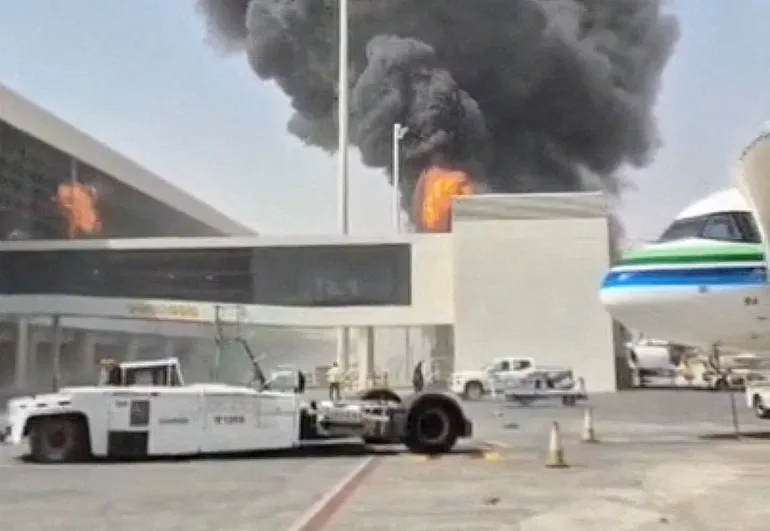
![Smoke and flames rise from King Khalid Airport, after Yemen's Iran-backed Houthis said they attacked the airport, in Riyadh, Saudi Arabia, October 8, 2026, in this screengrab obtained from a social media video [Reuters]](https://i0.wp.com/www.aljazeera.com/wp-content/uploads/2026/10/2026-10-12T233040Z_1811944814_RC231OANP5EH_RTRMADP_3_IRAN-CRISIS-SAUDI-YEMEN-WARNINGS-1792451959.jpg?w=640&ssl=1)