‘Father Mother Sister Brother’ review: Family tensions, subtly wrought
The holidays bring good cheer — an opportunity to reflect but also, most likely, the anxiety of family. Jim Jarmusch’s latest film isn’t set during the season, although the faint flickers of awkwardness, resentment and guilt that pass across its characters’ faces may be painfully familiar to audiences who have an uneasy relationship with their parents. “Father Mother Sister Brother” is here to commiserate, but because the veteran indie auteur remains a sharp chronicler of the quotidian, he has no patience for sentimentality or pat resolutions. The movie glides by so unassumingly, you may be stunned how moved you are by the end.
“Father Mother Sister Brother” is divided into three chapters, each examining a separate family. In the first segment, set somewhere in the Northeast, siblings Jeff (Adam Driver) and Emily (Mayim Bialik) visit their unnamed father (Tom Waits). The second tale shifts to Dublin, where sisters Timothea (Cate Blanchett) and Lilith (Vicky Krieps) arrive at the home of their mother (Charlotte Rampling) for their annual tea party. And in the final chapter, twins Skye (Indya Moore) and Billy (Luka Sabbat) reunite in Paris to close up the apartment owned by their parents, who recently died in a small-plane crash.
Jarmusch has occasionally sliced his narratives into pieces: His films “Night on Earth” and “Coffee and Cigarettes” were anthologies tied together conceptually. Initially, “Father Mother Sister Brother” appears to be similar, but there’s a cumulative power to the movie, which won the Golden Lion at the Venice Film Festival, that reveals a subtle but profound thematic undercurrent.
The first clue comes in the “Father” chapter, which begins with Jeff and Emily in the car. There’s a stilted quality to the conversation as they discuss their eccentric, inscrutable dad. The visit has the heavy air of obligation — they don’t see Dad very often — and when he clumsily welcomes them into his ramshackle house, pregnant pauses and pursed lips ensue. Nothing much happens, until the segment’s finale introduces a twist that suggests the yawning chasm between what we think we know about our parents and what the truth of their lives is.
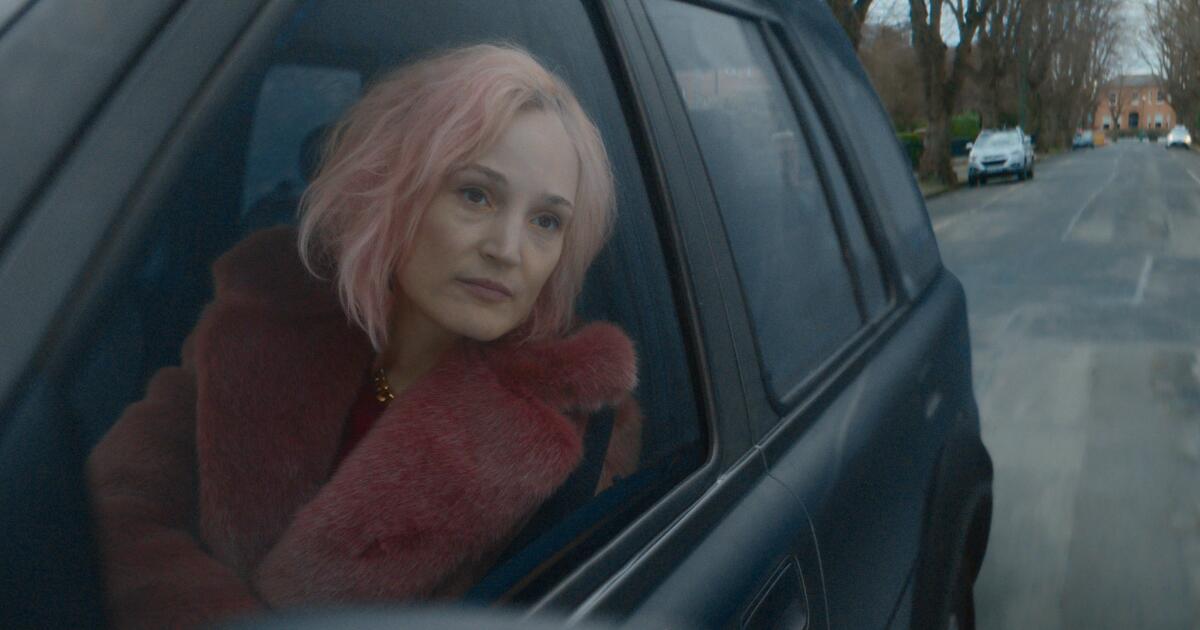
Once we move to the “Mother” sequence, we’ve started to acclimate to the movie’s discomfiting rhythms — which is good considering that, if anything, Timothea and Lilith’s relationship with their mom is even frostier. Their mother’s polite, excessively formal demeanor cannot mask her befuddlement regarding how to relate to her children. Decked out in an unflattering haircut and eyeglasses, Blanchett plays Timothea as terminally mousy, still craving her aloof mom’s approval. By comparison, Krieps’ Lilith is more assertive, proudly showing off her pink-dyed hair and bragging about a Lexus she doesn’t actually have. Rampling crackles as a matriarch who can sniff out her kids’ lies and insecurities but has the good manners not to say anything. Or maybe it’s not kindness at all but, rather, a way to reassure herself that she will always have the upper hand.
The film’s persistent brittleness may make some viewers antsy. That’s partly the point, but hopefully, they’ll soon be swept away by the movie’s melancholy undertow. Working with a minimalist keyboard score he co-wrote, Jarmusch fills the silences with an ineffable despair. You can feel it in the way Emily looks out her father’s window to the lake beyond, the wintery tableau both tranquil and poignant. You sense it when Timothea quietly inspects herself in a bathroom mirror, wishing her life was more than it is.
Such moments could make you cry. But Jarmusch’s deadpan approach often chases that sadness with a wry chuckle during instances of unfiltered honesty. Krieps relishes portraying her character, a big-talking phony hoping to wow her mother and sister. (At one point, Lilith announces, “I almost hate to say it, but my life’s been like a dream.” Blanchett’s reaction is delicious.) Eventually, we learn to look past Jarmusch’s deceptively mundane surfaces to see the fraught, unresolved issues within these guarded families. The characters occasionally expose their true selves, then just as quickly retreat, fearful of touching on real conflict.
Which brings “Father Mother Sister Brother” to its most affecting sequence. It would be a spoiler to disclose anything about Skye and Billy’s intimate saga, but what becomes clear is that Jarmusch has fashioned the “Father” and “Mother” installments in such a way that the final “Sister Brother” segment hits differently. Just as importantly, Moore and Sabbat’s lovely performances slyly alter our impressions of those previous chapters, building to some of the tenderest moments of Jarmusch’s career.
Turning 73 in January, Jarmusch has lost none of his edge or preternatural cool, but the depth of feeling in recent works like 2016’s “Paterson” becomes, here, a bittersweet meditation on the anguish of trying to unlock the mystery of our aging parents. In “Father Mother Sister Brother,” family can be hell, but the only thing worse is when they’re no longer with us.
‘Father Mother Sister Brother’
Rated: R, for language
Running time: 1 hour, 50 minutes
Playing: In limited release Wednesday, Dec. 24