workers

Christmas chaos as train workers announce wave of strikes on four key dates

TRAIN passengers hoping to travel across Britain as Christmas closes in are facing uncertainty after a trade union announced strike action on four consecutive Saturdays.

Workers at rail operator CrossCountry will stage a slew of strikes in December in a dispute over pay.

Rail stock
Workers for rail operator CrossCountry will walk out on four consecutive Saturdays in DecemberCredit: PA:Press Association

Rail, Maritime and Transport union [RMT] members will walk out on December 6, 13, 20 and 27 – sparking chaos for Brits.

The move is likely affect thousands of Brits who are heading home to family and relatives for Christmas and New Year.

Engineering works on the West Coast Main Line on December 27 mean some passengers would have been hoping to use CrossCountry trains as an alternative.

CrossCountry operates a nationwide network centred on Birmingham New Street, running long-distance services that link Scotland, the North East and North West, Yorkshire and the Midlands, Wales, the South West, the South Coast and the East of England – including through-services such as the Cardiff–Edinburgh “Three Nations” route.

STEAMING AHEAD

World-famous English city getting a new train station in £6.7billion plans


SLEEP IT OFF

The three-day sleep rule that stops you getting jet lag but it isn’t easy

“We are disappointed for our customers that the RMT has announced further industrial action,” Shiona Rolfe, Managing Director at CrossCountry told The Sun.

“We’ve worked hard to make a fair and reasonable offer that addresses the key points raised in this dispute, and we’ve made meaningful progress in negotiations.

“Our priority remains reaching an agreement that avoids disruption for passengers in the busy Christmas period, and we are ready to continue talks at any time.”

CrossCountry has not yet confirmed how the strike will impact services, but it is likely that most will be cancelled and they will only operate a  limited timetable at best.  

Eddie Dempsey, general secretary of the RMT – Britain’s biggest rail workers’ union – said today: “CrossCountry has not dealt with the core issues in this dispute and has come back with a proposal that is worse than what was already on the table.

“Our members are still facing unresolved staffing shortages, unfair pay outcomes and broken commitments. RMT members have been left with no choice but to take strike action.

“The company must return with a serious offer that meets the commitments it has already made and treats our members with the fairness and respect they deserve.”

The Sun Online has reached out to CrossCountry for comment.

It comes as Network Rail warned passengers to expect delays around Christmas and the New Year ahead of major £130 million works.

The disruption is set to last for a total of a month over Christmas, while crucial work is carried out.

Announcing a raft of festive network upgrades, Network Rail boss Helen Hamlin said: “The period between Christmas and New Year is the quietest on the railway and it’s the best time for us to do the major projects that will take longer than a night or a weekend to complete.

“That’s especially the case this year as we have some very big plans for improving the railway that will mean people may have to travel home on different routes after Christmas than the way they travelled out. 

“Thank you to everyone for your patience and understanding and for planning ahead.”

Source link

The End of the Kurdistan Workers’ Party’s Struggle: A Victory for Erdoğan’s Neo-Ottomanism?

This article will discuss the political context and strategic implications of the dissolution of the Partiya Karkerên Kurdistanê (PKK) as a development that reconstructs the domestic political dynamics of Turkey and the Middle East region. For more than four decades, the Kurdish insurgency in Turkey initiated by the Partiya Karkerên Kurdistanê (PKK) has represented the rise of non-state actors as a new force in the international system while challenging the dominance of the state as the sole actor in the modern political configuration. The struggle for recognition of identity and official governmental autonomy ended with an official statement from its main pillar, Abdullah Öcalan, who was still in prison in February 2025. This call was then conveyed by a member of parliament from the pro-Kurdish party, containing orders to lay down arms, disband and end the armed conflict with Turkey. The dissolution of the PKK reinforced Ankara’s consolidation of power and strengthened the legitimacy of Turkey’s foreign policy under the Neo-Ottoman ideology. At the same time, the decision to dissolve the PKK reduced the space for Kurdish political articulation, which had opposed the government’s nationalist-Islamist and centralised narrative within the framework of the state.

PKK: Evolution of the Struggle, Regional Factors and Influences

The Kurdistan Workers’ Party (PKK), also known as the Kurdistan Workers’ Party, is a militant organisation with Kurdish nationalist leanings, founded by Abdullah Öcalan in the late 1970s. The PKK rebellion was motivated by the Turkish government’s lack of sympathy towards Kurdish culture and its human rights violations against the population. This then encouraged the PKK group’s aspirations to gain political autonomy and territory through an independent Kurdish state. From the outset, this group has placed armed action as the main pillar of its struggle and has not hesitated to use violence against Kurds who are considered pro-Turkish government. Since 1984, this group has waged an armed rebellion against Turkey, which by 2024 had claimed the lives of more than 40,000 people, with thousands of other Kurds forced to flee the violence in southeastern Turkey to cities in the north.

As the decades of rebellion progressed, various internal and external factors began to shape new boundaries for the sustainability of the PKK’s armed movement. This was then supported by the involvement of several cross-border actors, including the PKK’s internal structure and militant wing, which included pro-Kurdish political parties and regional Kurdish networks, particularly the Yekîneyên Parastina Gel (YPG) or Syrian Democratic Forces (SDF) in Syria and the KDP (Kurdistan Democratic Party) in Iraq. At the regional level, the dynamics of the PKK rebellion are influenced by the role of three major countries, namely Iran, Iraq and Syria, each of which has strategic and political interests in domestic Kurdish affairs that indirectly shape the PKK’s room for manoeuvre. Although it temporarily ceased its activities in the 2000s, the group is indicated to have resumed guerrilla attacks in south-eastern Turkey, resulting in a domino effect of various violent incidents.

Military Pressure, Regional Dynamics and the End of the PKK Rebellion

In the 1990s, Turkey targeted PKK bases operating in the Kurdish safe zone in northern Iraq through air strikes, which were then followed by ground operations. Ultimately, 2007 marked the peak of the Turkish government’s response to this conflict with the passing of a mandate for cross-border military operations against the PKK in Iraq, followed by a series of air strikes and ground operations in February 2008. Although attempts were made to pursue a peace process, this did not prove to be a solution due to the presence of the Democratic Union Party (PYD), which played a significant role in the Syrian Civil War and ultimately triggered the peak of the fighting in 2015 and 2016. Since 2015, the insurgency has resulted in nearly 6,000 casualties, including 600 civilians, 1,300 soldiers, and 4,000 PKK and TAK members (CSIS, 2023).

Subsequently, these developments ultimately crystallised in a political decision in 2025, when the PKK declared an official end to its armed struggle. The author argues that this was influenced by several key factors, including a lack of significant political achievements coupled with a continuing weakening of military capacity, a narrowing operational area, and instability in external support, meaning that the costs of armed struggle were not commensurate with the results obtained. In addition, the PKK has been under constant military pressure from Turkey since Erdoğan came to power, resulting in the loss of safe havens for the PKK to train, hide and mobilise its forces. Öcalan’s ideological shift, which began to question the effectiveness of armed action, also led to the end of the rebellion, as he stated last February that the democratic path was the only way to realise a political system. Based on this statement, Öcalan has emphasised that armed struggle is no longer relevant and that the PKK must abandon its military strategy and choose the political path.

The PKK and the Consolidation of Neo-Ottomanism in Turkey

Neo-Ottomanism is a political and cultural orientation that developed in Turkey after the reform from a secular government to an approach more based on Islamic values, which grew stronger under the leadership of Recep Tayyip Erdoğan. This doctrine is manifested in Turkey’s expansive foreign policy, which encompasses geopolitical strategies, overt military intervention, strategic alliances and cultural expansion, with the aim of restoring Turkey’s role as a major regional power and repeating the glory days of the Ottoman EmpireOne of the main ideas of this doctrine emphasises the importance of uniting all ethnic groups, regardless of ethnic background or religious affiliation, with the aim of maintaining the sustainability of the Ottoman Empire and ensuring the welfare of its people (Ivaylo, 2019). Based on this framework, the existence of Kurdish groups such as the PKK, whose main ambition is to gain autonomy and political identity, is considered a serious challenge to the narrative of statehood and Turkey’s dominant role in the region. Therefore, this shows intense tension between local identity aspirations and Turkey’s vision to assert its influence both domestically and regionally.

The Neo-Ottomanism doctrine aims to emphasise Turkey’s image as a strong, stable and leading country in the region. Meanwhile, the PKK rebellion has hindered the positive narrative that the government, particularly the Justice and Development Party (AKP), wants to build. The Erdoğan administration combines Ottoman rhetoric with modern nationalism and the narrative of national security, so that military operations against the PKK become part of Turkey’s duty to maintain unity and buffer zones in areas that were historically under Ottoman rule. In this case, consistent military pressure through Euphrates Shield (2016), Olive Branch (2018) and Claw Operations (2019-2013), accompanied by regional diplomacy and gradual political-economic integration efforts, has reduced the operational capacity and limited the movement of rebel groups such as the PKK. Ultimately, these factors, which were also supported by internal strategic transformations, including Öcalan’s ideological influence leading to the decision to “surrender”, reflect the implementation of the Neo-Ottomanism doctrine strategy and mark a new phase in both the Turkish government’s relationship with Kurdish groups and the opportunity to reshape the domestic and regional security landscape.

A New Phase and Paradigm Shift

Overall, the end of the PKK rebellion in 2025 not only marks the end of an armed conflict that has lasted more than four decades, but also manifests Turkey’s success in enforcing its Neo-Ottoman ideology at the domestic and regional levels to maintain its sovereignty and territory. The dissolution of the PKK was the result of consistent military pressure, structured diplomatic strategies and political-economic integration to limit the movement of non-state actors, in this case the rebels, while strengthening Ankara’s dominance. However, the author argues that it is not impossible that the rebellion will return with new patterns and strategies, although this will take a long time. Thus, this phenomenon is a tangible manifestation of the implementation of Neo-Ottomanism principles, which emphasise strengthening Turkey’s security, political legitimacy and regional influence, supported by a combination of military instruments, diplomacy and ideological pressure on local identities.

Source link

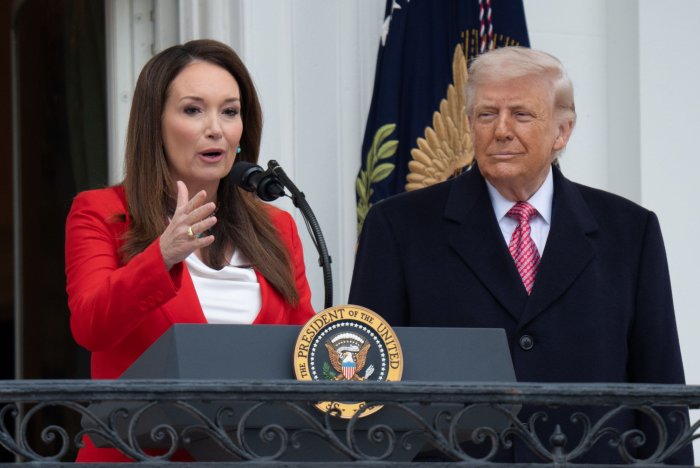
Noem: Some TSA workers to receive $10,000 bonus for working through shutdown

Nov. 14 (UPI) — Homeland Security Secretary Kristi Noem said the Trump administration is giving certain Transportation Security Agency workers a $10,000 bonus for going “above and beyond” during the 43-day government shutdown.

She made the announcement Thursday during a news conference in Houston.

“I’m pleased to announce that under President [Donald] Trump, we are giving a $10,000 bonus to TSA officers across our nation who went above and beyond during the Democrats’ shutdown,” Noem said. “They guaranteed that America wouldn’t shut down — no matter how badly the Democrats wanted average Americans to feel the pain.

“Their unsung patriotism deserves recognition. President Trump and I are so grateful for these patriots.”

Noem praised TSA workers who showed up to work throughout the shutdown despite not receiving pay. A news release from the department highlighted two TSA agents who had perfect attendance during the shutdown — Reiko Walker and Ashley Richardson, who both worked at George Bush Intercontinental Airport.

News outlet Semafor reported that back pay for Department of Homeland Security employees was expected to begin processing Wednesday.

Noem didn’t specify what metrics the Department of Homeland Security was using to determine who gets the bonus.

“We’re going to look at every individual that did exceptional service during this period of time when there were so many hardships,” she said during the news conference.

The Department of Homeland Security said it’s paying for the bonuses from leftover funds from fiscal year 2025.

Johnny J. Jones, secretary-treasurer of the American Federation of Government Employees’ TSA Council 100, described the bonuses as “great for some.”

“It’s better to give everybody a little something, because they all suffered and they all endured hard times during the last 43 days,” he said, according to The Hill.

The government shutdown caused thousands of flight cancellations and delays at U.S. airports amid a shortage in air traffic controllers. This shortage prompted the Federal Aviation Administration to cut flights by up to 6% at 40 major airports.

On Monday, Trump showed frustration with air traffic controllers who declined to show up to work without pay. He threatened to dock the pay of those who called out during the shutdown.

“For those Air Traffic Controllers who were GREAT PATRIOTS, and didn’t take ANY TIME OFF for the ‘Democrat Shutdown Hoax,’ I will be recommending a BONUS of $10,000 per person for distinguished service to our Country,” he wrote in a post on Truth Social.

President Donald Trump signs the funding package to reopen the federal government in the Oval Office of the White House on Wednesday. Photo by Bonnie Cash/UPI | License Photo


Source link

Unionised Starbucks workers begin ‘open-ended’ US strike | Labour Rights News

More than a thousand unionised Starbucks baristas have walked off the job in more than 40 cities across the United States as negotiations have stalled between the company and the union, Starbucks Workers United.

Workers at 65 stores began an open-ended strike on Thursday, coinciding with the Seattle, Washington-based coffee shop chain’s Red Cup Day sales event, when customers who order a holiday-themed beverage can receive a free reusable cup with their purchase.

Recommended Stories

list of 4 itemsend of list

The event typically drives higher traffic to Starbucks stores.

The coffeeshop chain, which has more than 18,000 stores across the US and Canada, says that the walkouts have caused limited impact.

More stores could soon join the strike. Starbucks Workers United represents roughly 550 stores around the US. Combined, this strike could be the largest in the history of the coffeeshop chain.

Stores in cities including Seattle, New York, Philadelphia, Dallas, Austin and Portland will join the work stoppage, it said. Some locations had already shut down for the day, a union spokesperson told journalists on a media call.

In an Instagram post on Thursday, the union called on consumers not to shop at any Starbucks location “today and beyond” ahead of a nationwide rally slated to begin at 4pm local time for each location.

The union has filed more than 1,000 charges to the National Labor Relations Board for alleged unfair labour practices such as firing unionising baristas, and last week, it voted to authorise a strike if a contract was not finalised by November 13.

Starbucks has said it pays an average wage of $19 an hour and offers employees who work at least 20 hours a week benefits including healthcare, parental leave and tuition for online classes at Arizona State University.

The union said starting wages are $15.25 per hour in about 33 states and the average barista gets less than 20 hours per week.

Talks between the union and the company stretched for about eight months in 2024, but broke down in December, after which workers went on strike during the key holiday period.

“Unfortunately, it’s not unusual to see stall tactics used in collective bargaining, as we’re seeing with Starbucks. But the situation and the strike vote also demonstrate that long-term grassroots organising empowers workers. There’s strength in numbers,” Jennifer Abruzzo, former General Counsel at the National Labor Relations Board under former US President Joe Biden, said in remarks shared with Al Jazeera.

History of strikes

Starbucks workers have gone on strike several times over the last few years, starting in 2021. Workers at a location in Buffalo, New York became the first unionised store and subsequently launched a nationwide movement, which now represents four percent of the Starbucks cafe workforce, or about 9,500 people.

In 2022, workers at roughly 100 stores went on strike, and in December 2024, workers walked off the job amid stalled negotiations at 300 stores. Negotiations began again earlier this year, but the two parties have yet to come to an agreement.

In April this year, the union voted to reject a Starbucks proposal that guaranteed annual raises of at least two percent, saying it did not offer changes to economic benefits such as healthcare, or an immediate pay hike.

Protesters picket outside a Starbucks in Philadelphia, US
Protesters picket outside a Starbucks in Philadelphia, Pennsylvania, the US [Matt Slocum/AP Photo]

“Despite the fact that thousands of Starbucks baristas voted to engage in collective bargaining some years ago, the company has manipulated the situation to avoid having a contract,” Sharon Block, executive director of the Center for Labor and a Just Economy at Harvard Law School, said in remarks provided to Al Jazeera.

“Baristas are staying strong. The strength of the strike vote shows that baristas aren’t giving up. They continue to demand fair treatment by the company.”

Executive pressures

The strike comes as Starbucks under CEO Brian Niccol shuts hundreds of underperforming stores this year, including the unionised flagship Seattle location, while trimming corporate roles to control costs.

Niccol, who previously spent six years leading Chipotle, has stressed improving service times and in-store experience in the US to revive demand for beverages as sales have remained flat or negative for the past seven quarters.

Niccol had said in September last year when he took over as CEO that he was committed to dialogue.

However, Lynne Fox, the union’s international president, said on a call with journalists that things changed once Niccol took the helm.

“A year into Niccol’s tenure, negotiations have gone backwards after months of steady progress and good faith negotiations last year,” Fox said.

In 2024, Niccol’s compensation package totaled more than $95m, which is 6,666 times the median employee salary, according to the AFL-CIO’s Executive Paywatch tracker. That represents the largest CEO-to-worker pay gap among the S&P 500, according to the Institute for Policy Studies’ Executive Excess report.

Niccol’s pay, however, is largely driven by the performance of Starbucks’ stock, with $90m coming from the value of stock awards. Since Niccol took over the company in September 2024, the stock price of Starbucks has fallen by about 6 percent.

On Wall Street, Starbucks’ stock in midday trading is down by 0.9 percent.

Source link

China rolls out its version of the H-1B visa to attract foreign tech workers

Vaishnavi Srinivasagopalan, a skilled Indian IT professional who has worked in both India and the U.S., has been looking for work in China. Beijing’s new K-visa program targeting science and technology workers could turn that dream into a reality.

The K-visa rolled out by Beijing last month is part of China’s widening effort to catch up with the U.S. in the race for global talent and cutting edge technology. It coincides with uncertainties over the U.S.’s H-1B program under tightened immigrations policies implemented by President Trump.

“(The) K-visa for China (is) an equivalent to the H-1B for the U.S.,” said Srinivasagopalan, who is intrigued by China’s working environment and culture after her father worked at a Chinese university a few years back. “It is a good option for people like me to work abroad.”

The K-visa supplements China’s existing visa schemes including the R-visa for foreign professionals, but with loosened requirements, such as not requiring an applicant to have a job offer before applying.

Stricter U.S. policies toward foreign students and scholars under Trump, including the raising of fees for the H-1B visa for foreign skilled workers to $100,000 for new applicants, are leading some non-American professionals and students to consider going elsewhere.

“Students studying in the U.S. hoped for an (H-1B) visa, but currently this is an issue,” said Bikash Kali Das, an Indian masters student of international relations at Sichuan University in China.

China wants more foreign tech professionals

China is striking while the iron is hot.

The ruling Communist Party has made global leadership in advanced technologies a top priority, paying massive government subsidies to support research and development of areas such as artificial intelligence, semiconductors and robotics.

“Beijing perceives the tightening of immigration policies in the U.S. as an opportunity to position itself globally as welcoming foreign talent and investment more broadly,” said Barbara Kelemen, associate director and head of Asia at security intelligence firm Dragonfly.

Unemployment among Chinese graduates remains high, and competition is intense for jobs in scientific and technical fields. But there is a skills gap China’s leadership is eager to fill. For decades, China has been losing top talent to developed countries as many stayed and worked in the U.S. and Europe after they finished studies there.

The brain drain has not fully reversed.

Many Chinese parents still see Western education as advanced and are eager to send their children abroad, said Alfred Wu, an associate professor at the National University of Singapore.

Still, in recent years, a growing number of professionals including AI experts, scientists and engineers have moved to China from the U.S., including Chinese-Americans. Fei Su, a chip architect at Intel, and Ming Zhou, a leading engineer at U.S.-based software firm Altair, were among those who have taken teaching jobs in China this year.

Many skilled workers in India and Southeast Asia have already expressed interest about the K-visa, said Edward Hu, a Shanghai-based immigration director at the consultancy Newland Chase.

With the jobless rate for Chinese aged 16-24 excluding students at nearly 18%, the campaign to attract more foreign professionals is raising questions.

“The current job market is already under fierce competition,” said Zhou Xinying, a 24-year-old postgraduate student in behavioral science at eastern China’s Zhejiang University.

While foreign professionals could help “bring about new technologies” and different international perspectives, Zhou said, “some Chinese young job seekers may feel pressure due to the introduction of the K-visa policy.”

Kyle Huang, a 26-year-old software engineer based in the southern city of Guangzhou, said his peers in the science and technology fields fear the new visa scheme “might threaten local job opportunities”.

A recent commentary published by a state-backed news outlet, the Shanghai Observer, downplayed such concerns, saying that bringing in such foreign professionals will benefit the economy. As China advances in areas such as AI and cutting-edge semiconductors, there is a “gap and mismatch” between qualified jobseekers and the demand for skilled workers, it said.

“The more complex the global environment, the more China will open its arms,” it said.

“Beijing will need to emphasize how select foreign talent can create, not take, local jobs,” said Michael Feller, chief strategist at consultancy Geopolitical Strategy. “But even Washington has shown that this is politically a hard argument to make, despite decades of evidence.”

China’s disadvantages even with the new visas

Recruitment and immigration specialists say foreign workers face various hurdles in China. One is the language barrier. The ruling Communist Party’s internet censorship, known as the “Great Firewall,” is another drawback.

A country of about 1.4 billion, China had only an estimated 711,000 foreign workers residing in the country as of 2023.

The U.S. still leads in research and has the advantage of using English widely. There’s also still a relatively clearer pathway to residency for many, said David Stepat, country director for Singapore at the consultancy Dezan Shira & Associates.

Nikhil Swaminathan, an Indian H1-B visa holder working for a U.S. non-profit organization after finishing graduate school there, is interested in China’s K-visa but skeptical. “I would’ve considered it. China’s a great place to work in tech, if not for the difficult relationship between India and China,” he said.

Given a choice, many jobseekers still are likely to aim for jobs in leading global companies outside China.

“The U.S. is probably more at risk of losing would-be H-1B applicants to other Western economies, including the UK and European Union, than to China,” said Feller at Geopolitical Strategy.

“The U.S. may be sabotaging itself, but it’s doing so from a far more competitive position in terms of its attractiveness to talent,” Feller said. “China will need to do far more than offer convenient visa pathways to attract the best.”

Ho-Him writes for the Associated Press. AP writer Fu Ting in Washington and researchers Yu Bing and Shihuan Chen in Beijing contributed to this report.

Source link

Paramount sheds another 1,600 workers as David Ellison team digs in

Tech scion David Ellison marked his 96th day running Paramount by disclosing an upbeat financial outlook for next year and a plan to reduce an additional 1,600 workers.

Monday’s conference call with analysts was the first time Ellison, Paramount’s chairman and chief executive, directly addressed Wall Street after merging his production company, Skydance Media, with Paramount in August — an $8-billion deal that ushered the Redstone family from the entertainment stage.

One of Ellison’s top priorities will be to reverse decades of under-investment in programming. Paramount plans to increase content spending by $1.5 billion next year, including nearly doubling the number of movies that it releases. The Melrose Avenue studio intends to boost output from eight releases to 15 that are planned for next year.

Investing in technology is another priority, which Ellison referred to as one of its “north stars.” Executives want to build streaming service Paramount+ as the economics crumble for Paramount’s once profitable cable television division, which includes Nickelodeon, MTV and Comedy Central. Paramount also owns CBS stations and the CBS broadcast network.

Paramount announced it will be hiking streaming subscription fees — Paramount+ plans now are offered at $7.99 a month and $12.99 a month — although executives declined to say how much. The goal is to turn its streaming operations profitable this year.

Paramount said the workforce reduction of 1,600 people stemmed from the company’s divestiture late last month of television stations in Chile and Argentina. This comes on top of 1,000 job cuts last month, primarily in the U.S. The company said one of its goals was to operate more efficiently.

More than 800 people — or about 3.5% of the company’s workforce — were laid off in June, prior to the Ellison family takeover.

Ellison and his team have been looking to reduce the company’s workforce by 15%.

On Monday, Paramount executives said they should be able to realize about $3 billion in cost cuts — $1 billion more than initially advertised. The company’s goal is to complete its cost reductions within two years.

The earnings report comes as Paramount has been pursuing Warner Bros. Discovery, a proposed merger that would unite two of Hollywood’s original film studios and bulk up Paramount by adding the HBO Max streaming service, a larger portfolio of cable channels, pioneering cable news service CNN and the historic Warner Bros. studio lot in Burbank.

Paramount executives declined to discuss its dealings for Warner Bros. Discovery, which has rejected three offers, including a $58-billion bid for the entire company. Ellison’s father, billionaire Larry Ellison, has agreed to back Paramount’s bid.

However, his son spoke broadly about its motivations for any acquisition during the conference call.

“First and foremost, we’re focused on what we’re building at Paramount and transforming the company,” David Ellison said. “There’s no must-haves for us. …. It’s always going to be, how do we accelerate and improve our north-star principles?”

Total revenue for Paramount’s third quarter was $6.7 billion, flat compared with the year-earlier period. Paramount reported a net loss of $257 million for the quarter.

Paramount+ and other streaming services grew by 1.4 million subscribers to 79 million, although 1.2 million of those consumers benefit from free trials. Quarterly Revenue for the streaming operations, including Pluto TV, was up 17%.

The cost-cutting comes as Ellison, 42, has accelerated spending in other areas, including agreeing to pay $7.7 billion for the rights to UFC fights and $1.25 billion over five years to Matt Stone and Trey Parker to continue creating their “South Park” cartoon.

His team, including former Netflix programming chief Cindy Holland, also lured Matt and Ross Duffer, the duo behind “Stranger Things,” away from Netflix. Paramount also paid $150 million to buy the Free Press and bring its co-founder, Bari Weiss, to the company as CBS News editor in chief.

The company also signed a 10-year lease on a film and television production facility under construction in New Jersey, a move that will give the entertainment company access to that state’s tax incentive program.

In a blow, however, Taylor Sheridan, the prolific creator behind the “Yellowstone” franchise, will be packing his bags. Sheridan, who is under contract with Paramount through 2028, made a deal to develop movies and future shows for NBCUniversal after executives he worked with at Paramount departed the company when Ellison took over.

For 2026, the company expects to generate total revenue of $30 billion and adjusted operating income before depreciation and amortization of $3.5 billion.

Shares closed at $15.25, up 1%, before the earnings were announced.

Source link

LACMA won’t voluntarily recognize union as workers claim burnout

Los Angeles County Museum of Art management on Wednesday declined to voluntarily recognize the union its employees announced they were forming last week. This means LACMA United cannot move forward with collective bargaining efforts until it is formalized by a National Labor Relations Board election. Complicating matters further, NLRB activities — including elections — are on hold amid the federal government shutdown.

The disconnect between staff — a clear majority of whom signed union authorization cards — and management comes at a significant moment in the museum’s history as LACMA works tirelessly to open its $720-million David Geffen Galleries. The new home for its encyclopedic permanent collection, designed by Pritzker Prize-winning architect Peter Zumthor, contains 110,000 square feet of gallery space and is scheduled to open to the public in April after more than a decade of planning, fundraising and building.

In a news release, the union noted that organizing efforts — in the works for more than two years — have taken on added urgency as workloads have increased in the face of opening the new building.

“Staff across departments — many performing demanding physical labor — are stretched thin as deadlines accelerate,” LACMA United wrote. “Without adequate protections, this pace is unsustainable and has already contributed to burnout and turnover among dedicated employees who deserve better from an institution they’ve helped build.”

The union’s organizing committee added in a statement, “We are disappointed that LACMA leadership has chosen to delay rather than embrace the democratic will of its workers. While the museum reimagines itself as a more collaborative, less hierarchical institution in its new David Geffen Galleries, it has declined to extend that same vision to its relationship with the very people who bring LACMA’s mission to life every day.”

“LACMA’s leadership has great respect for our team and for everyone’s right to make their own choice on this important issue,” Michael Govan, the museum’s director and chief executive, said in an email. “No matter the outcome, my commitment to our employees — to listen, to support them, and to continue building a strong and respectful workplace — remains unchanged.”

Management’s decision stands counter to those made by other cultural institutions across the city, including the Museum of Contemporary Art, the Academy Museum and the Natural History Museum, all of which voluntarily recognized their unions over the last six years.

LACMA United represents more than 300 workers from across all departments, including curators, educators, art installers, conservators, registrars, visitor services staff, facilities workers, researchers and designers. The union is asking for improved wages, benefits and working conditions in what has proved to be a challenging climate for museum workers across the county.

The union did not demonstrate at last week’s celebrity-packed LACMA Art + Film Gala, which was co-hosted by Leonardo DiCaprio and fashion designer Eva Chow, and raised more than $6.5 million in support of the museum and its programs.

Source link

Seven workers trapped after tower collapse at South Korean power plant

Rescuers are working to save at least seven workers trapped after a boiler tower collapsed at a thermal power plant operated by Korea East-West Power Co. in the southeastern city of Ulsan on Thursday. Photo by Yonhap News

SEOUL, Nov. 6 (UPI) — South Korean rescue crews are searching for workers believed to be trapped after a large structure collapsed at a power plant in the southeastern city of Ulsan on Thursday, according to reports from authorities and local media.

At least seven people were trapped when a 200-foot-tall boiler tower gave way at the Ulsan branch of the state-run utility Korea East-West Power, news agency Yonhap reported, citing the National Fire Agency. The collapse occurred shortly after 2 p.m. local time.

Two people were pulled from the debris earlier, while emergency responders continue to search for others feared buried beneath twisted metal and concrete.

Prime Minister Kim Min-seok ordered the Ministry of the Interior and Safety, National Fire Agency, Korean National Police Agency and local authorities to “mobilize all available equipment and personnel to prioritize saving lives.”

“In particular, we will make every effort to ensure the safety of firefighters working on-site and thoroughly implement safety measures such as on-site control and evacuation guidance for residents,” Kim said in a statement.

Interior Minister Yun Ho-jung also issued an emergency directive calling for mass mobilization of personnel and equipment to the accident site, adding that a situation-management officer had been dispatched to coordinate on-site operations.

Photos shared by local media showed a massive steel structure toppled on its side with a heap of crumpled beams and scaffolding at its base.

The disaster has renewed scrutiny of South Korea’s industrial safety regime, which has faced criticism following a series of fatal workplace accidents.

President Lee Jae Myung has repeatedly called for tougher safety enforcement to curb such tragedies.

“When fatal accidents occur in the same way, it ultimately amounts to condoning these deaths,” Lee said at a July cabinet meeting.

In August, he ordered that every workplace fatality be reported directly to his office and proposed sanctions such as revoking business licenses and restricting bids from companies with repeated deaths.

Lee, who suffered a factory accident as a teenager, has pledged to reduce South Korea’s industrial accident mortality rate — the highest among the 38 Organization for Economic Co-operation and Development member countries — to the OECD average within five years.

Source link

What the steady drumbeat of layoffs means for Hollywood workers

The cuts in Hollywood just keep coming, following a sadly familiar script.

Last week it was Paramount, which laid off about 1,000 workers in the first wave of a deep staff reduction planned since tech scion David Ellison’s Skydance Media took over the storied media and entertainment company.

The cuts affected a wide swath of the company, from CBS and CBS News to Comedy Central, MTV and the historic Melrose Avenue film studio, my colleague Meg James and I reported. Another 1,000 layoffs are expected in the coming weeks.

You’re reading the Wide Shot

Samantha Masunaga delivers the latest news, analysis and insights on everything from streaming wars to production — and what it all means for the future.

By continuing, you agree to our Terms of Service and our Privacy Policy.

But Paramount isn’t the only one in the media business that’s shedding jobs and payrolls.

Earlier, cable giant Charter Communications said it would lay off 1,200 people nationwide, as the company faces increased competition for its broadband internet packages. NBC News, too, laid off 150 employees last month amid declining TV ratings and lessening ad revenue.

Other recent media-adjacent layoffs included 100 cuts to Disneyland Resort’s Anaheim-based workforce and the massive 14,000 worker reduction at Amazon, including at the company’s gaming and film and TV studios.

And that doesn’t even include widespread job losses that happened earlier this year at companies such as Walt Disney Co., Warner Bros. Discovery, NBCUniversal and Six Flags Entertainment Corp.

It all adds up to a grim picture for Hollywood’s workers, who have faced a near endless marathon of economic hurdles for the last five years.

First it was the pandemic, followed by the dual writers’ and actors’ strikes in 2023, cutbacks in spending after studios splurged on streaming productions, and the outflow of production to the U.K. and other countries with lower costs than California.

Then, in January, nature struck a blow, with the fires in Altadena and the Pacific Palisades destroying many industry workers’ homes.

Topping it off, Saturday marked the first day that millions of low-income Americans lost federal food assistance due to the government shutdown that began Oct. 1. That has affected some 5.5 million Californians and probably some who work in the entertainment industry.

“It’s been one crisis after another, without enough time in between,” said Keith McNutt, western regional executive director of the Entertainment Community Fund, which provides social services for arts and entertainment professionals. “People are concerned and very worried and really trying very hard to figure out where they go from here.”

McNutt reports that the nonprofit group has already heard from some people who were recently laid off, and has experienced a sharp increase in demand for its services, particularly from those in the film and TV industry. The fund offers healthcare and financial counseling and operates a career center. It also provides emergency grants for those who qualify.

Clients include not only low-income people who are always hit hardest in downturns, but also veteran entertainment industry professionals who’ve worked in the business for 20 to 30 years.

Those who were lucky enough to have savings saw those wiped out by the pandemic, and then were unable to replenish their rainy-day funds after the strikes and industry contraction, said David Rambo, chair of the fund’s western council.

“It has been snowballing very slowly for about five years,” Rambo said.

Many in the industry are hopeful that California’s newly expanded film and television tax credit program will bring some production — and jobs — back to the Golden State. That’s what backers campaigned on when they lobbied Sacramento legislators to bolster the program. Dozens of TV shows and films have received credits so far under the revamped program, but it’ll take some time to see the results in filming data and employment numbers.

And that doesn’t help the workers who were just laid off last month. For those folks, McNutt suggests calling the fund’s health insurance team to make sure they understand their options and also to spend some time with career counselors to understand how Hollywood skills can be transferable to other employers, whether that’s on a short- or long-term basis. Most importantly, don’t isolate yourself.

“You’re not alone,” he said. “Nobody’s alone in this situation that the industry is finding itself in right now, and so reach out to your friends, reach out to your colleagues. If you’re not comfortable with that, reach out to the Entertainment Community Fund.”

Stuff We Wrote

Film shoots

Stacked bar chart shows the number of weekly permitted shoot days in the Los Angeles area. The number of weekly permitted shoot days in the area was down 23% compared to the same week last year. This year, there were a total of 197 permitted shoot days during the week of October 27 - November 02. During the same week last year (October 28 - November 03, 2024), there were 256.

Number of the week

twenty-six million

The Los Angeles Dodgers’ wild 11-inning win on Saturday over the Toronto Blue Jays notched nearly 26 million viewers, making it the most-watched World Series game since 2017, according to Nielsen data.

The 2017 Game 7 win by the Houston Astros over the Dodgers had an audience of 28.3 million.

The Dodgers are now the first Major League Baseball team to win back-to-back championships in 25 years. On Monday, thousands of Dodgers faithful turned out for the team’s victory parade through downtown L.A.

Finally …

You’ve no doubt heard of L.A.’s famous star tours. But what about a tour of a historic cemetery?

My colleague, Cerys Davies, wrote about local historian and guide Shmuel Gonzales — or as he calls himself, “Barrio Boychik” — and his walking tour of Boyle Heights’ Evergreen Cemetery.

The cemetery is the final resting place for many of L.A.’s early movers and shakers, including the Lankershims and the Hollenbecks, and it’s also a prime example of L.A.’s multicultural history.

Source link