wins

PDC World Darts Championship: Gerwyn Price knocked out while Luke Littler wins

Joe Cullen says opponent Mensur Suljovic’s slow style of play is akin to cheating after the 32nd seed was knocked out.

Austrian Suljovic denied using any specific tactics in his second-round success.

“I never ever do this as a provocation,” said the 53-year-old. “I do it only for my game. Sorry Joe, I never do this – love you man.”

England’s Cullen won the first set, but became the 11th seed to crash out as he lost the following three, including throwing away a 2-1 lead in the fourth set.

Referring to the way that Suljovic slowed down play, Cullen said in a post on X: “If that’s darts, I don’t want no part of it.

“Always liked Mensur away from the board but that was plain for all to see! I don’t think I’m alone in feeling this way. The old guard will say it’s part of the game but word it how you will – it’s cheating. That’s not darts.”

After the match, the 36-year-old shook his head as he picked up his darts case and turned to glare at the Austrian, who celebrated his win in front of the crowd.

The PDC does not have a specific, timed rule for pace of play, but deliberate slow play intended to disrupt an opponent is considered unsportsmanlike conduct and a potential rules breach.

Suljovic is next in line to take on defending champion Luke Littler, who faces David Davies on Sunday evening.

Meanwhile, 2018 champion and 17th seed Rob Cross managed to avoid a deciding set against Ian White as he won a nervy encounter 3-1.

Krzysztof Ratajski beat Ryan Joyce 3-1 to reach the third round, while Luke Woodhouse cruised past Max Hopp with a victory in straight sets.

Source link

Paul vs Joshua: Briton wins in sixth round of heavyweight mismatch

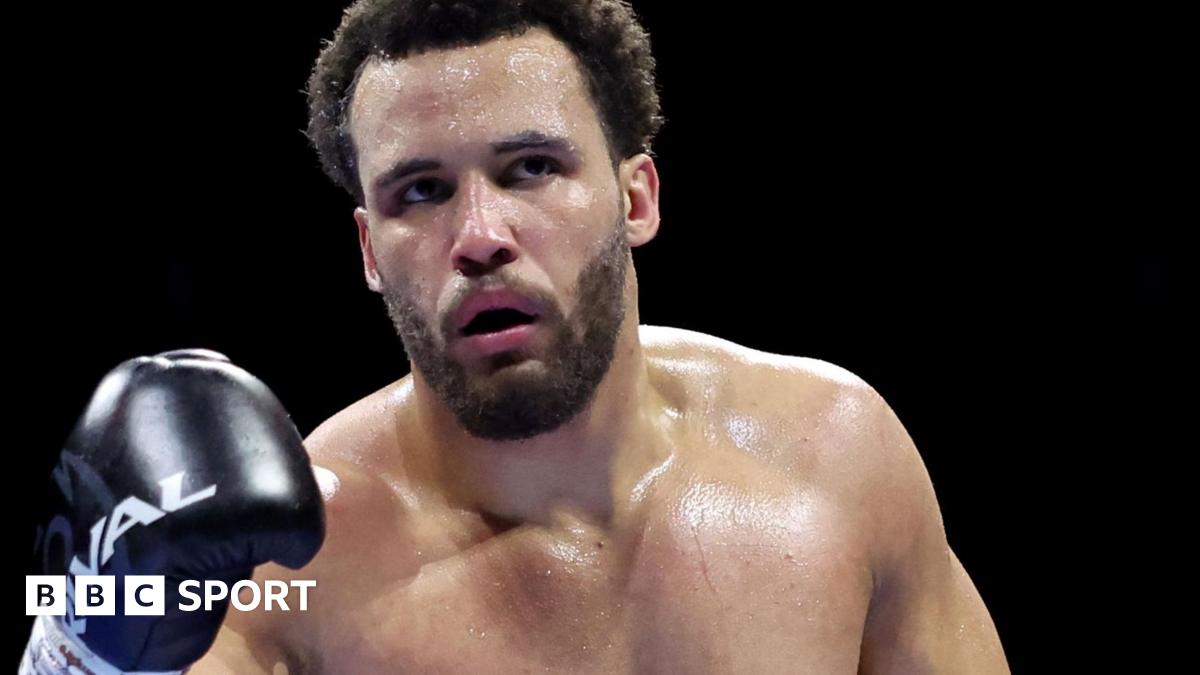
British heavyweight Anthony Joshua needed six rounds to stop boxing novice Jake Paul, who spent much of the contest in survival mode in one of the most striking mismatches in the sport’s history.

Joshua, a two-time world champion, cut an increasingly frustrated figure as Paul danced around the ring for long spells, refusing to engage, before Joshua finally imposed himself by knocking down the YouTuber-turned-boxer twice in the fifth round.

Paul was down again in the sixth, before Joshua landed a powerful and clean right hand that brought a surreal night to an abrupt conclusion at Miami’s Kaseya Center.

The American did not beat the count, although there was palpable relief inside the arena when he was able to rise to his feet and leave the ring without assistance.

Source link

Musk wins US appeal to restore 2018 Tesla pay package | Elon Musk News

The Delaware Supreme Court rules in favour of Musk and his $56bn compensation package.

Elon Musk’s 2018 pay package from Tesla, once worth $56bn, has been restored by the Delaware Supreme Court, in the United States, two years after a lower court struck down the compensation deal as “unfathomable”.

Friday’s ruling overturns a decision that had prompted a furious backlash from Musk and damaged Delaware’s business-friendly reputation.

Recommended Stories

list of 4 itemsend of list

The pay package was by far the largest ever, until Tesla shareholders approved a new, even larger pay plan of nearly $1 trillion in November.

The ruling means that Musk can finally get paid for his work since 2018, when he transformed Tesla from a struggling startup to one of the world’s most valuable companies.

The 2018 pay deal provided Musk options to acquire about 304 million Tesla shares at a deeply discounted price if the company hit various milestones, which it did.

Tesla estimated in 2018 that the plan was potentially worth $56bn, although given the rise in the stock price, the value ballooned to about $120bn by early November. The options represent approximately 9 percent of Tesla’s outstanding stock.

Musk never collected his stock options because, soon after shareholders approved the 2018 compensation, the board was sued by Richard Tornetta, an investor with just nine Tesla shares.

In 2024, after a five-day trial, Delaware Judge Kathaleen McCormick concluded that Tesla’s directors were conflicted and key facts were hidden from shareholders when they voted to approve the plan. She ordered that the 2018 plan be rescinded.

Musk accused Delaware judges of being activists, hostile to tech founders, and he urged businesses to follow Tesla and reincorporate elsewhere.

Dropbox, Roblox, The Trade Desk and Coinbase were among the handful of large companies that moved their legal homes to Nevada or Texas. However, Delaware remains by far the most popular legal home for US public companies.

Tesla’s board has warned that Musk, the world’s richest person who also leads the SpaceX rocket venture and the artificial intelligence startup xAI, could leave the electric car company if he does not get the pay he wants and an increase in his voting power.

In November, shareholders approved a new pay package that could be worth $878bn if Tesla meets targets for self-driving vehicles, a robotaxi network and sales of humanoid robots.

Tesla has taken steps to reduce the risk that a shareholder could tie up the 2025 package in the courts.

The Austin-based company is now incorporated in Texas, which allows Tesla to require that any investor or group of investors must own 3 percent of the company stock before suing for an alleged corporate law violation. A stake of that size would be worth about $30bn, and Musk is the only individual with that much stock.

Source link

PDC World Darts Championship 2026: James Wade wins but Raymond van Barneveld knocked out

Englishman James Wade began his PDC World Darts Championship campaign with a 3-0 triumph over Ryusei Azemoto, while Raymond van Barneveld suffered a shock first-round exit.

Five-time world champion Van Barneveld looked out of sorts as he went down in straight sets to Stefan Bellmont, the first Swiss winner at Alexandra Palace.

Seventh seed Wade only let one leg slip in a dominant victory against Japan’s Azemoto.

“Tonight showed the practice I’ve been doing. It wasn’t spectacular but when I really needed to hit something, it happened,” said four-time semi-finalist Wade.

He finished with an average of 94.75, compared to Azemoto’s 84.42, and the 42-year-old will take on Ricky Evans in the second round on Monday.

Van Barneveld looked a shadow of the player who won four BDO world titles before lifting the PDC crown in 2007.

The 58-year-old Dutchman took the opening leg but then lost eight in succession.

Despite a higher average than his opponent, he checked out just 25% of his doubles while Bellmont hit 39%.

American debutant Adam Sevada came out on top in the the first game on Wednesday, seeing off Canadian Matt Campbell 3-1.

It was tight for much of their encounter but Sevada’s marginally better performance on doubles made the difference as he won 11 legs to Campbell’s six.

Source link

Santa Margarita wins state football title for coach Carson Palmer

In a high school football season full of surprises, the biggest was a Heisman Trophy winner guiding his alma mater to a state championship in California’s toughest division in his rookie season of coaching.

Who had Carson Palmer and Santa Margarita on their bingo card toppling Sierra Canyon, Orange Lutheran, Corona Centennial and Corcord De La Salle in a four-game postseason stretch that left the Eagles as Southern Section Division 1 and CIF Open Division state champions?

The final piece of the puzzle was solved with Santa Margarita’s 47-13 win over De La Salle on Saturday night at Saddleback College, the ninth consecutive season a Southern California team won California’s highest bowl game.

It’s been fruitless to think anyone was beating Santa Margarita (11-3) over the last month with a healthy Trent Mosley. Two weeks ago he dazzled Corona Centennial in the Division 1 final with 10 catches for 292 yards. On Saturday, even though De La Salle knew what he could do, Mosley still was unstoppable. In the first half, when Santa Margarita opened a 35-7 halftime lead, Mosley had eight catches for 134 yards and touchdowns from 34 and six yards and also ran seven yards for another touchdown. He finished with 11 receptions for 183 yards.

With his underrated speed, upper-body strength and skills to play multiple positions, Mosley has been the best player in California for weeks. Santa Margarita has been getting him the ball much more in the postseason, and opponents have had no answers for defending him.

“Mosley is incredible,” De La Salle coach Justin Alumbaugh said of the USC commit. “He does some special things on the football field.”

Said Mosley: “It feels great. We’ve worked hard. I wanted to come out and do my best. It’s sad to go but a what a great way to end it.”

Leki Holani of Santa Margarita was throwing down De La Salle running backs all night.

Leki Holani of Santa Margarita was throwing down De La Salle running backs all night in the CIF state final.

(Craig Weston)

How Santa Margarita rose to the top with Palmer at the helm is an equally compelling tale. Palmer was hired with little coaching experience but his decision-making, judgment and connections from the NFL world became clear with the all-star coaching staff he put together, none more important than retaining defensive coordinator Steve Fifita, last season’s interim coach. With nine returning defensive starters and three defensive line transfers, the Eagles had no weaknesses on a defense that repeatedly neutralized the best offensive players game after game.

“It’s been an unreal year from start to finish,” Palmer said. “I could not be more proud of these guys, could not be more proud of our coaching staff and support system.”

Quarterbacks were pressured by a line that had Isaia Vandermade recording nine sacks in the postseason. The linebackers, led by Dash Fifita and Leki Holani, were able to move freely and make tackles with blockers preoccupied by the line. The secondary, led by sophomore star Ca’ron Williams, had the freedom to be aggressive knowing quarterbacks wouldn’t have much time to release the ball. Siua Holani closed the scoring with an interception return with 1:36 left in the fourth quarter.

De La Salle (12-1) thought it would have a chance to end Northern California’s losing streak. Santa Margarita had not seen the Spartans’ veer-option attack. Steve Fifita even had dreams about the veer watching so much film to prepare his players. But the Eagles were ready for quarterback option plays and power runs up the middle. And De La Salle didn’t help matters by committing four personal fouls in the first four minutes. The only touchdowns for De La Salle came on short runs by Jaden Jefferson after recovering Santa Margarita fumbles.

The reason Santa Margarita became so dominant over the last month was the improvement in the offense. Quarterback Trace Johnson became comfortable and injured players came back, including tight end Luke Gazzaniga, who had touchdown receptions from 20 and two yards Saturday. Johnson ended his brief stay at Santa Margarita after transferring from Florida by completing 17 of 20 passes for 247 yards and four touchdowns.

Source link

Far-right candidate Jose Antonio Kast wins Chile’s presidential election | Elections News

Far-right candidate Jose Antonio Kast has won a run-off election to become Chile’s 38th president, ousting the centre-left government currently in power.

On Sunday, with nearly all the ballots counted, Kast prevailed with nearly 58 percent of the vote, defeating former Labour Minister Jeannette Jara, a Communist Party politician who represented the governing centre-left coalition.

Recommended Stories

list of 3 itemsend of list

Jara and her coalition, Unity for Chile, conceded defeat shortly after the polls closed in the South American country.

“Democracy has spoken loud and clear. I have just spoken with President-elect [Kast] to wish him success for the good of Chile,” Jara wrote on social media.

“To those who supported us and were inspired by our candidacy, rest assured that we will continue working to build a better life in our country. Together and standing strong, as we always have.”

The result marks the latest victory for the far right in Latin America, which has seen a streak of right-wing leaders once considered political outsiders rise to power in countries like Argentina and Ecuador.

The tally also marks a significant comeback for Kast himself, the 59-year-old leader of the Republican Party. The 2025 election marks his third attempt to win the presidency — and his first successful bid.

During the last election, in 2021, he was trounced by outgoing President Gabriel Boric, who won by nearly a 10-point margin.

But Boric, a former student leader who became Chile’s youngest president, had seen his popularity slump to about 30 percent by the end of his four-year term. He was also ineligible to run for a second term under Chilean law.

In public opinion polls, voters also expressed frustration with recent spikes in crime and immigration, as well as a softening of Chile’s economy.

Kast, meanwhile, campaigned on the promise of change. He said he would address voter concerns by carrying out crackdowns on crime and immigration, including through a campaign of mass deportation, similar to what United States President Donald Trump has done in North America.

His security platform — dubbed the “Implacable Plan” — also proposes stiffer mandatory minimum sentencing, incarcerating more criminals in maximum security facilities, and putting cartel leaders in “total isolation” to cut them off from any communication with the outside world.

“Today, while criminals and drug traffickers walk freely through the streets, committing crimes and intimidating people, honest Chileans are locked in their homes, paralyzed by fear,” Kast writes in his security plan.

Kast has also taken a hard right stance towards social and health issues, including abortion, which he opposes even in cases of rape.

But those hardline policies earned Kast criticism on the campaign trail. Critics have also seized upon his own sympathetic comments about Chile’s former dictator, military leader Augusto Pinochet.

In 1973, Pinochet oversaw a right-wing military coup that ousted the democratically elected leader, Salvador Allende. He proceeded to rule the country until 1990. His government became known for its widespread human rights abuses and brutal oppression of political dissent, with thousands executed and tens of thousands tortured.

While Kast has rejected the label “far right”, he has repeatedly defended Pinochet’s government. Of Pinochet, Kast famously quipped, “If he were alive, he would vote for me.”

Opponents also sought to draw attention to Kast’s family ties: His father, Michael Martin Kast, was born in Germany and had been a member of the Nazi Party. The elder Kast immigrated to Chile in 1950.

Reporting from a polling site in the capital of Santiago, Al Jazeera correspondent Lucia Newman noted that Sunday’s victory was a historic one for Chile’s far right. But, she noted, Kast has sought to moderate his platform to better appeal to voters in the current election cycle.

“This is the first time since 1990 — since the military dictatorship before 1990, when Chile returned to democracy — that such a conservative government will be in power,” Newman explained.

“It’s really not certain just how conservative it will be. Jose Antonio Kast was a supporter of former dictator General Augusto Pinochet. He has shirked away from that in recent years, and certainly in this campaign.”

In the wake of Kast’s election victory, right-wing leaders from across the Americas offered their congratulations in statements on social media.

“Congratulations to Chilean President-Elect [Jose Antonio Kast] on his victory,” Trump’s Secretary of State Marco Rubio wrote. “The United States looks forward to partnering with his administration to strengthen regional security and revitalize our trade relationship.”

Argentina’s libertarian leader Javier Milei likewise chimed in, hailing it as a major win for his conservative political movement.

“FREEDOM IS ADVANCING,” Milei wrote, echoing his own campaign rallying cry.

“Enormous joy at the overwhelming victory of my friend [Jose Antonio Kast] in the Chilean presidential elections! One more step for our region in defense of life, liberty, and private property. I am sure that we will work together so that America embraces the ideas of freedom and we can free ourselves from the oppressive yoke of 21st-century socialism…!!!”

Ecuador’s right-wing President Daniel Noboa, meanwhile, said that “a new era is beginning for Chile and for the region”.

This year’s presidential race was the first time since 2012 that voting had been compulsory in the country. There are approximately 15.7 million eligible voters in the South American country.

Kast originally came in second place during the first round of voting on November 16. He scored about 23.9 percent of the vote, compared with Jara’s 26.8 percent.

But polls had widely favoured him to win in the run-off. While Chile’s left wing held a primary in June and coalesced around its victor, Jara, right-wing parties did not hold a primary to choose a coalition nominee.

The result was a fractured right in the first round of voting. But in the final contest, Kast was able to sweep up votes that had previously gone to his right-leaning adversaries, earning him a comfortable win.

Still, Kast faces a divided National Congress, which is expected to blunt some of his more hardline proposals. Kast will be sworn in on March 11.

Source link

Bush Wins, Vows to Seek Unity : Democrats Keep Grip on Congress; Wilson Reelected : Republican Has at Least 37 States to Dukakis’ 10

Republican nominee George Bush won an overwhelming victory over Democrat Michael S. Dukakis in Tuesday’s presidential election despite a late surge of support for the Massachusetts governor among previously undecided voters and wayward Democrats.

Late returns showed Bush winning a solid majority of the popular vote nationwide and chalking up substantially more than the 270 electoral votes needed for victory. The Vice President swept the South, won all the Border states but West Virginia, took the Rocky Mountain West and gathered in the lion’s share of the electoral votes in the Midwest and Mid-Atlantic states.

“The people have spoken,” Bush told a cheering victory celebration in Houston, then immediately sounded a chord of unity. “A campaign is a disagreement and disagreements divide. But an election is a decision and decisions clear the way for harmony and peace,” Bush said, “and I mean to be the President of all the people.”

For his part, Dukakis–in a concession statement delivered earlier to loyal supporters in Boston’s World Trade Center–set the generous-spirited post-election tone, saying of Bush: “He will be our President and we will work with him.”

All told, according to late returns reported by the Associated Press, Bush had won 37 states to 10 for Dukakis, including the District of Columbia. Among the four undecided states late Tuesday night, Bush maintained narrow leads in California, Alaska and Illinois while Dukakis remained ahead in Washington state.

Thanks Reagan

Bush, recognizing the enormous political advantages of campaigning as the designated heir of one of the most popular chief executives of modern times, thanked President Reagan “for going the extra mile on the hustings” for the GOP ticket.

Bush also made a point of praising his controversial running mate, Sen. Dan Quayle of Indiana, for showing what Bush called “great strength under fire” during the campaign.

Despite the divisiveness of the bitter campaign, Bush said he was sure the country would unite in the aftermath of the election. “I know that we’ll come together as we always have, 200 years of harmony in the oldest, greatest democracy in man’s time on earth,” Bush said.

Will Do ‘Level Best’

In particular, the President-elect pledged to “do my level best to reach out and work constructively with the United States Congress.”

That may well be among the most serious challenges facing the President-elect. Despite Bush’s sweeping victory, Democrats apparently added to their already substantial domination of both the Senate and the House–assuring continuation of a pattern of divided government that has generally paralleled the GOP domination of the White House during the last 30 years.

In the Senate, where Democrats already outnumbered Republicans by 54 to 46, they gained seats in Connecticut, Virginia and Nebraska while losing seats in Mississippi and Montana, according to actual votes and television network projections. They seemed likely to increase their number in the Senate to 55.

Democrats ousted Republican Sens. Lowell P. Weicker Jr. in Connecticut and David K. Karnes in Nebraska, and former Gov. Charles S. Robb of Virginia took the seat being vacated by retiring Republican Paul S. Trible Jr.

Republicans defeated Democratic Sen. John Melcher of Montana, and in Mississippi, Rep. Trent Lott

won the seat now occupied by retiring Democratic Sen. John C. Stennis.

Sen. Lloyd Bentsen of Texas, the Democratic vice presidential nominee, retained his Senate seat thanks to a Texas law that allowed him to seek reelection there even as he ran on the national ticket.

With all but a few incumbents in both parties coasting to easy victories, the Democrats appeared certain to retain their comfortable majority in the House. NBC News projected that the Democrats will outnumber Republicans by 259 to 176 in the House next year, compared to the present lineup of 255 to 177 with three vacancies.

The most stunning congressional upset was the defeat of Rep. Fernand J. St Germain (D-R.I.), chairman of the House Banking Committee, at the hands of a Republican political novice, Ronald K. Machtley.

If the presidential balloting produced an overwhelming electoral victory for Bush, Dukakis nonetheless ran stronger than any Democratic presidential candidate in this decade. He appeared to have carried New York, Rhode Island, Minnesota, Wisconsin, Iowa, Oregon and Washington, as well as the District of Columbia and his native Massachusetts.

He also mounted powerful challenges in such heavily populated states as Pennsylvania, Illinois and California.

Concession Statement

Still, with both CBS and ABC projecting Bush as the winner as early as 6:17 p.m. PST, Dukakis made his concession statement in Boston at 8:20 p.m. PST–just 20 minutes after the California polls closed.

About 30 minutes later Bush, who had run a slashingly negative campaign against the man he labeled “a liberal out of the mainstream,” told a cheering crowd in Houston that in defeat Dukakis had been “most gracious . . . and genuinely friendly in the great tradition of American politics.”

Bush, 64, is the first sitting vice president to win the Oval Office since Martin Van Buren in 1836. And his election to succeed President Reagan means that, for the first time since the Democratic era of Franklin D. Roosevelt and Harry S. Truman 40 years ago, the same party will control the White House for more than two consecutive terms.

Overall, the presidential balloting appeared to reflect the fact that voters feel fairly satisfied with the way things are going in the country–as confirmed by Los Angeles Times/ Cable News Network exit polls. Most voters interviewed in that survey said they wanted to stay the course charted by the Reagan Administration in domestic and foreign policy.

Reaganesque Note

The vice president, who had patiently plotted his run for the presidency ever since losing the GOP presidential nomination to Reagan in 1980, repeatedly promised voters he would continue those policies and sounded a Reaganesque note in victory Tuesday night, saying: “Now we will move again, for an America that is strong, and resolute in the world, strong and big-hearted at home.”

Reagan himself, who retained an extraordinary approval rating in the 55%-60% range as his second term drew to a close, pulled out all stops in campaigning for the election of his vice president.

Exit polls indicated that even though Quayle continued to have unusually high unfavorable ratings among voters, he was not a significant factor in Tuesday’s vote. The selection of Quayle, which had stunned and even dismayed some of Bush’s aides, was criticized repeatedly by Dukakis in speeches and in television commercials during the campaign. And Bush strategists were so concerned that Quayle would be a drag on the ticket that they limited his campaign schedule to smaller cities and towns outside the national limelight.

Late Dukakis Surge

Exit polls indicated a surge of Dukakis support over the weekend, especially among Democrats who had voted for Reagan in 1980 and 1984 and among voters who made up their minds only in the last few days. Dukakis, attempting to squeeze the last drop of help from that trend, used satellite links to beam last-minute television appeals into states where the polls were still open Tuesday night.

But in the end the shift fell considerably short for Dukakis as Bush drew heavy support among men, non-union voters and white voters–especially Southern whites and “born-again” Christian whites, according to the surveys of voters as they left polling places. Early poll figures even showed Bush winning about one-eighth of the black vote, which is more support than Reagan won among blacks.

The Times survey of voters indicated that Dukakis–for all his problems during the campaign–did as well or better than Walter F. Mondale did four years ago when it came to holding the core of the nation’s Democrats, but in today’s political arithmetic that alone is not enough to carry the White House. Among the independents who hold the balance of power, Bush outscored his Democratic rival.

Aggressive Campaign

Bush surged into the lead in his heated campaign with Dukakis by bouncing back from a 17-point deficit in the polls in mid-July with an aggressive, hard-hitting campaign in which he portrayed himself as the new leader of the Reagan revolution and Dukakis as a free-spending liberal who opposed such traditional values as the Pledge of Allegiance and favored such soft-on-crime measures as prison furloughs for convicted murderers.

The effectiveness of the Republican tactics was enhanced by the fact that Dukakis let valuable time slip away after his own nomination in July, was slow to meet the Bush attacks and failed until the final weeks of the campaign to develop a compelling message of his own.

It was apparently too late by the time Dukakis began to respond aggressively to Bush’s attacks and to drive home a populist message that the governor was “on your side.” The vice president, Dukakis declared in the closing days of the campaign, was partial to upper-income voters and his support for a reduction in the capital gains tax from 20% to 15% showed concern not for the average citizen but for the wealthy.

Negative Perceptions

Bush strategists, by contrast, began at the Republican convention last August to press a well-coordinated effort to drive up voters’ negative perceptions of Dukakis, who polls showed was fairly well liked but not very well known by the voters. That the Bush strategy succeeded to an extraordinary degree is indicated by exit polls Tuesday that showed Dukakis with an extraordinarily high unfavorable rating of 46% compared to 47% favorable.

The same polls showed Bush with a relatively high unfavorable rating of 39% himself, compared to a favorable rating of 55%.

Voting experts indicated that fewer than 100 million voters, or a little more than half the voting-age public, were turning out to vote Tuesday. They blamed the low turnout on the negative nature of the campaign, which included harsh attacks by Bush and counterattacks by Dukakis, as well as on a lack of enthusiasm for either candidate.

Moreover, the country is enjoying peace and relative prosperity and there were no overriding issues of the kind that can stimulate a high voter turnout.

Both Exhausted

Both candidates were exhausted as they campaigned right up to the end. Bush, returning to his official residence at a Houston hotel, said he was nervous but felt good about the election and Dukakis declared he felt “terrific” but was glad to be back in Boston.

ABC exit polls showed Bush scored heavily among the following groups: Veterans, people with children, people earning more than $40,000 a year, those with college degrees or some college education, Protestants, residents of farm areas and small towns, and voters who were self-employed or earned salaries instead of working for hourly wages.

Among Dukakis voters, almost 60% said they were voting against Bush rather than for the Democratic nominee. Although the vice president highlighted environmental issues and repeatedly accused Dukakis of failing to clean up the pollution of Boston Harbor, voters who gave high priority to environmental issues apparently favored the governor.

Strong GOP Support

While Bush was falling short of Reagan’s 1980 and 1984 landslides, polls indicated he was drawing about 92% of the vote among those who consider themselves Republicans. He was carrying independents by a margin of 54% to 44% for Dukakis, whereas Reagan won 61% of the independent vote in 1984.

Bush, like Reagan, cut into the Democratic ranks, but the vice president was getting only 17% of that vote, compared to the 24% Reagan got in 1984.

Bush voters said they were looking for strong leadership, experience, a strong national defense and a strong economy. They also favored Bush’s stance opposing legalized abortions and his stand on curbing illegal drugs.

The vice president was relaxed and in good spirits as he and his wife, Barbara, along with 22 members of their family and dozens of friends and advisers, awaited the election’s final outcome at the Houstonian Hotel.

At Bush’s side was former Treasury Secretary James A. Baker III, his longtime confidant and director of his almost flawlessly managed election campaign. Baker is widely expected to be named secretary of state in the Bush Administration, although Bush repeatedly refused to discuss potential Cabinet appointments during the campaign.

Quayle Decision

Baker has made it clear he had no part in the selection of Quayle as Bush’s running mate, the one major decision that Republican strategists considered a negative for the Bush campaign. Baker has said Bush informed him of the selection after he had already told others.

The 41-year-old, boyish-looking Quayle went home to Huntington, Ind., to vote and shake hands with supporters along the town’s main street before settling down to wait for the final outcome in Washington.

“I’m looking forward to being the next vice president of the United States,” he told reporters.

Looks Exhausted

Dukakis, accompanied by his wife, Kitty, and three children, cast his ballot at a housing project in his hometown of Brookline, Mass. He look exhausted and made no statement to about 200 shouting supporters before returning home.

For 50 hours without a break, he had sped by plane across the country, stumping in 11 cities in nine key battleground states in his last-ditch effort to turn things around.

Bentsen, who polls showed was the most popular figure on either ticket, spent Election Day in Austin. Although he was unable to help carry his state for Dukakis, Bentsen is expected to remain a powerful voice in Washington, however. He will retain his chairmanship of the Senate Finance Committee and Democratic sources say his performance on the campaign trail is likely to enhance his influence in party affairs.

Rallied Faithful

Dukakis’ finest hour in the campaign came at the Democratic convention in July, when he rallied the party faithful with a stirring speech that promised a more honest and caring government and attacked Bush for his role in the Iran-Contra affair and other scandals and tied him to Reagan Administration slashes in social programs.

But the Massachusetts governor never came close to stirring such excitement again, even though in the closing days of his campaign he drew large, enthusiastic crowds as he crisscrossed the country in a desperate final effort.

Shortly after the Democratic convention, polls showed Dukakis briefly with a 17-point lead over Bush. But that lead quickly disappeared as the governor appeared to coast in the opening weeks of his campaign, spending at least two days a week at the Statehouse in Boston while Bush was campaigning vigorously and painting his opponent as a liberal far removed from the American mainstream.

Democratic strategists criticized Dukakis for failing to respond early to Bush’s attacks and for assembling a campaign team that included relatively few people experienced in running a presidential campaign.

Source link

Rose Bowl-bound Fernando Mendoza wins the Heisman Trophy

Fernando Mendoza, the enthusiastic quarterback of No. 1 Indiana, won the Heisman Trophy on Saturday night, becoming the first Hoosier to win college football’s most prestigious award since its inception in 1935.

Mendoza claimed 2,362 points, including 643 first-place votes. He beat Vanderbilt quarterback Diego Pavia (1,435 points), Notre Dame running back Jeremiyah Love (719 points) and Ohio State quarterback Julian Sayin (432 points).

Mendoza’s Heisman win was emphatic. He finished first in all six Heisman regions, the first to do so since Caleb Williams in 2022. He was named on 95.16% of all ballots, tying him with Marcus Mariota in 2014 for the second highest in the award’s history and he received 84.6% of total possible points, which is the seventh highest in Heisman history.

“I haven’t seen the numbers yet,” said Mendoza, “but it’s such an honor to be mentioned with these guys [Pavia, Love and Sayin]. It’s really a credit to our team. It’s a team award.”

Mendoza guided the Hoosiers to their first No. 1 ranking and the top seed in the 12-team College Football bracket, throwing for 2,980 yards and a national-best 33 touchdown passes while also running for six scores. Indiana, the last unbeaten team in major college football, will play a College Football Playoff quarterfinal game in the Rose Bowl on Jan. 1.

Mendoza, the Hoosiers’ first-year starter after transferring from California, is the triggerman for an offense that surpassed program records for touchdowns and points set during last season’s surprise run to the CFP.

A redshirt junior, the once lightly recruited Miami native is the second Heisman finalist in school history, joining 1989 runner-up Anthony Thompson. Mendoza is the seventh Indiana player to earn a top-10 finish in Heisman balloting and it marks another first in program history — having back-to-back players in the top 10. Hoosiers quarterback Kurtis Rourke was ninth last year.

With his teammates chanting “HeismanDoza” as he addressed the media, he said he felt he had a realistic chance of winning the Heisman after the Hoosiers routed then-No. 19 Illinois 63-10 on Sept. 20.

“At that point my boys [teammates] said we might make it to New York [for the award ceremony],” he said. “It was lighthearted at the time, but that’s when it started. “

Quarterbacks have won the Heisman four of the last five years, with two-way player Travis Hunter of Colorado ending the run last season.

Mendoza is the 43rd quarterback to win the Heisman and the second winner of Latin American descent to claim the trophy. Stanford’s Jim Plunkett was the first in 1970.

“Although I grew up in America, my four grandparents are all from Cuba,” he said. “I had the opportunity to go there and that was important to me. I credit the love to my grandparents and the Hispanic community.”

The Heisman Trophy presentation came after a number of accolades were already awarded. Mendoza was named the Associated Press player of the year earlier this week and picked up the Maxwell and Davey O’Brien awards Friday night, while Love won the Doak Walker Award.

Mendoza and Pavia clearly exemplify the changing landscape of using the transfer portal in college football. Mendoza is the seventh transfer to win the award in the last nine years. Vanderbilt is Pavia’s third school.

Confident Commodore

Pavia finished second with 189 first-place votes. He threw for a school-record 3,192 yards and 27 touchdowns for the Commodores, who were pushing for a CFP berth all the way to the bracket announcement. He is the first Heisman finalist in Vanderbilt history.

Generously listed as 6 feet tall, Pavia led Vanderbilt to its first 10-win season along with six wins against Southeastern Conference foes. That includes four wins over ranked programs as Vandy reached No. 9, its highest ranking in the Associated Press Top 25 since 1937.

Pavia went from being unrecruited out of high school to junior college, New Mexico State and finally Vanderbilt in 2024 through the transfer portal.

Vandy will play in the ReliaQuest Bowl against Iowa on Dec. 31.

Irish Love

The last running back to win the Heisman was Alabama’s Derrick Henry in 2015. Love put himself in the mix with an outstanding season for Notre Dame. He finished with 46 first-place votes.

The junior from St. Louis was fourth in the Bowl Subdivision in yards rushing (1,372), fifth in per-game average (114.3) and third with 18 rushing touchdowns for the Fighting Irish, who missed out on a CFP bid and opted not to play in a bowl game.

He was the first player in Notre Dame’s storied history to produce multiple touchdown runs of 90 or more yards, a 98-yarder against Indiana in the first round of last year’s playoffs and a 94-yarder against Boston College earlier this season.

Buckeyes’ leader

Sayin led the Buckeyes to a No. 1 ranking for most of the season, throwing for 3,329 yards while tying for second in the country with 31 touchdown passes ahead of their CFP quarterfinal at the Cotton Bowl on Dec. 31.

The sophomore from Carlsbad, Calif., arrived at Ohio State after initially committing to Alabama and entering the transfer portal following a coaching change. He played four games last season before winning the starting job. He led the Buckeyes to a 14-7 win in the opener against preseason No. 1 Texas and kept the team atop the AP Top 25 for 13 straight weeks, tying its second-longest run.

Sayin follows a strong lineage of Ohio State quarterbacks since coach Ryan Day arrived in 2017. Dwayne Haskins (2018), Justin Fields (2019), C.J. Stroud (2021), and Kyle McCord (2023) averaged 3,927 passing yards, 40 touchdowns and six interceptions, along with a 68.9% completion rate, during their first seasons.

Merrill writes for the Associated Press.

Source link

John Hunt: Glengouly wins Cheltenham race in support of family fund

Glengouly won Saturday’s big race at Cheltenham, which was run in support of a charitable initiative created by BBC commentator John Hunt and his daughter Amy.

The Hunt Family Fund was set up after John’s wife, Carol, and their daughters Hannah and Louise were murdered at their home in Bushey, Hertfordshire in July 2024.

Saturday’s December Gold Cup carried the name of the fund, which will support causes that help and inspire young women.

The 33-1 outsider Glengouly gave trainer Faye Bramley the biggest victory of her career.

John Hunt commentated on the race for BBC Radio 5 Live, before presenting the prizes in the winners’ enclosure with Amy.

“We share many phrases together, and one of them is that in our situation you have to go through the uncomfortable to become more comfortable,” he said.

Glengouly was ridden to victory by champion jockey Sean Bowen for Bramley, who is based at a yard owned by former champion AP McCoy.

Bramley took over training of the winner, who finished down the field in this year’s Grand National, from champion Irish trainer Willie Mullins in May, and this was the horse’s first win in three years

Vincenzo (7-2) was one and a half lengths back in second, with 11-4 favourite Jagwar third.

“It’s brilliant to win a race named after John’s family,” said Bowen as the winning horse returned to the strains of It’s All About You by McFly – Amy Hunt’s favourite band.

Source link

Ryanair wins major court row over how passengers get compensation over flight delays

A court in Germany has ruled in favour of Ryanair and issued a series of rulings against claims company Flightright, prohibiting the firm from claiming customers encounter “hurdles” when contacting the airline’s customer service

Ryanair has won a won a key court battle against a claims company that passengers turn to get compensation for delayed and cancelled flights.

The firm called Flightright encouraged flyers to use their services when taking any sort of action against the low cost airline. But now a court in Germany has ruled in favour of Ryanair and issued a series of rulings against Flightright. The court has legally prohibited Flightright from claiming that customers encounter “hurdles” when contacting the airline’s customer service.

Experts said this ruling marks a significant point in the dispute between the Irish low-cost carrier and companies specialising in enforcing compensation claims under EU Regulation 261.

READ MORE: Ryanair plane smashes into Stansted Airport fence with 181 passengers onboardREAD MORE: ‘Best’ EasyJet and Ryanair rows of seats to book if you want extra free legroom

Earlier this week the Hanseatic Higher Regional Court in the German city if Hamburg banned Flightright from telling passengers to ignore Ryanair entirely. Judges also ordered the company to admit it always puts a 14 percent “lawyer surcharge” on top of its advertised fee.

A huge £210,000 fine will hit every future breach of the ruling. Ryanair accused Flightright of misleading advertising and profiting from the misery of delayed travellers.

The airline says platforms like Flightright routinely take up to a whopping 40 percent of a €250 EU compensation payout meant for passengers. Ryanair’s marketing chief Dara Brady welcomed the verdict and told passengers to cut out greedy middlemen.

He said customers who go direct will receive 100 percent of their payout under EU Regulation 261.

He claimed Ryanair offered “a simple, transparent system that avoids rip-off fees”. EU rules promise €250 for delays on flights up to 1,500 kilometres and a tasty €600 for longer flights delayed more than three hours.

The verdict piled onto a list of previous legal defeats suffered by Flightright. Claims companies are controversial because they cherry-pick “easy wins” they can cash in on. They collect hefty commissions for filing paperwork while posing as consumer champions.

Industry insiders say Ryanair is less complicated than many rivals when it comes to issuing refunds. Ryanair is using this to humiliate companies that portray it as hostile to customers.

Travellers who refuse to deal with airlines directly can use Germany’s free arbitration service, which claims 80 to 90 percent success without fees. The ruling exposes the claims-industry model as a profit hunt fuelled by delay payouts, not public service.

On Flightright’s website, it claimed: “No one enjoys flight delays, but it’s important to know that you have rights! If your flight began in the EU, or landed in the EU with a European airline, you could be eligible to claim up to £520, depending on flight distance and delay length, no matter the ticket cost.

“The only conditions are that the airline must be responsible for the cause of the delay, and you must have reached the final airport in your trip with a delay of at least three hours.

Source link

Democrat wins Miami mayor’s race for the first time in nearly 30 years

Democrat Eileen Higgins won the Miami mayor’s race on Tuesday, defeating a Republican endorsed by President Trump to end her party’s nearly three-decade losing streak and give Democrats a boost in one of the last electoral battles ahead of the 2026 midterms.

Higgins, 61, will be the first woman to lead the city of Miami. She spoke frequently in the Hispanic-majority city about Trump’s immigration crackdown, saying she has heard of many people in Miami who were worried about family members being detained. She campaigned as a proud Democrat despite the race being officially nonpartisan and beat Trump-backed candidate Emilio Gonzalez, a former city manager, who said he called Higgins to congratulate her.

“We are facing rhetoric from elected officials that is so dehumanizing and cruel, especially against immigrant populations,” Higgins told The Associated Press after her victory speech. “The residents of Miami were ready to be done with that.”

With nearly all votes counted Tuesday, Higgins led the Republican by about 19 percentage points.

The local race is not predictive of what may happen at the polls next year. But it drew attention from the two major national political parties and their leaders. The victory provides Democrats with some momentum heading into a high-stakes midterm election when the GOP is looking to keep its grip in Florida, including in a Hispanic-majority district in Miami-Dade County. The area has shifted increasingly rightward politically in recent years, and the city may become the home of Trump’s presidential library.

“Tonight’s result is yet another warning sign to Republicans that voters are fed up with their out-of-touch agenda that is raising costs,” said Ken Martin, the chair of the Democratic National Committee, in a statement.

Some nationally recognized Democrats supported Higgins, including former Transportation Secretary Pete Buttigieg. U.S. Sen. Ruben Gallego and former Chicago Mayor Rahm Emanuel traveled to Miami on Sunday and Monday to rally voters for the Democrat who served as a Miami-Dade county commissioner for seven years.

Higgins, who speaks Spanish, represented a district that leans conservative and includes the Cuban neighborhood of Little Havana. When she first entered politics in 2018, she chose to present herself to voters as “La Gringa,” a term Spanish speakers use for white Americans, because many people did not known how to pronounce her name.

“It just helps people understand who I am, and you know what? I am a ‘gringa,’ so, what am I going to do, deny it?” she told the AP.

Republicans’ anxiety grows

Republicans in Florida have found strong support from voters with heritage from Cuba, Venezuela and Nicaragua, because they likened some members of the Democratic party’s progressive wing with politicians from the governments they fled. Trump and other GOP members have tapped into those sentiments over the past eight years.

However, some local Republicans are growing increasingly frustrated since November’s elections when Democrats scored wins in New Jersey and Virginia, where both winning gubernatorial candidates performed strongly with nonwhite voters.

The results from those races were perceived as a reflection of concerns over rising prices and the Trump administration’s aggressive immigration policies.

U.S. Rep. Maria Elvira Salazar, a Republican whose district is being targeted by Democrats and includes the city of Miami, called the elections elsewhere a “wake-up call.” She said Hispanics also want a secure border and a healthy economy but some relief for “those who have been here for years and do not have a criminal record.”

“The Hispanic vote is not guaranteed,” Salazar said in a video posted on X last month. “Hispanics married President Trump, but they are only dating the GOP.”

David Jolly, who is running to represent Democrats in the Florida governor’s race next year, said the mayoral election was good news for Democrats in what used to be a battleground state.

“Change is here. It’s sweeping the nation, and it’s sweeping Florida,” Jolly said.

Miami mayor-elect gains national platform

The mayoral position in Miami is more ceremonial, but Higgins promised to execute it like a full-time job.

The city is part of Miami-Dade County, which Trump flipped last year, a dramatic improvement from his 30 percentage point loss to Democrat Hillary Clinton in 2016.

As Florida’s second-largest city, Miami is considered the gateway to Latin America and attracts millions of tourists. Its global prominence gives Higgins a significant stage as mayor.

Her pitch to voters included finding city-owned land that could be turned into affordable housing and cutting unnecessary spending.

Licon writes for the Associated Press.

Source link