williamson

Leah Williamson ‘wouldn’t rule out’ strike action over scheduling

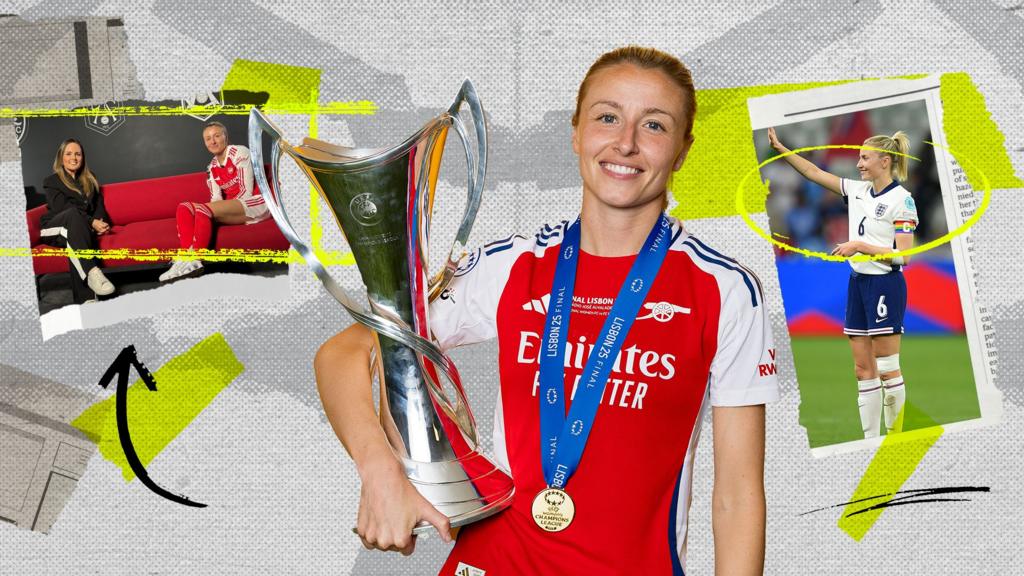
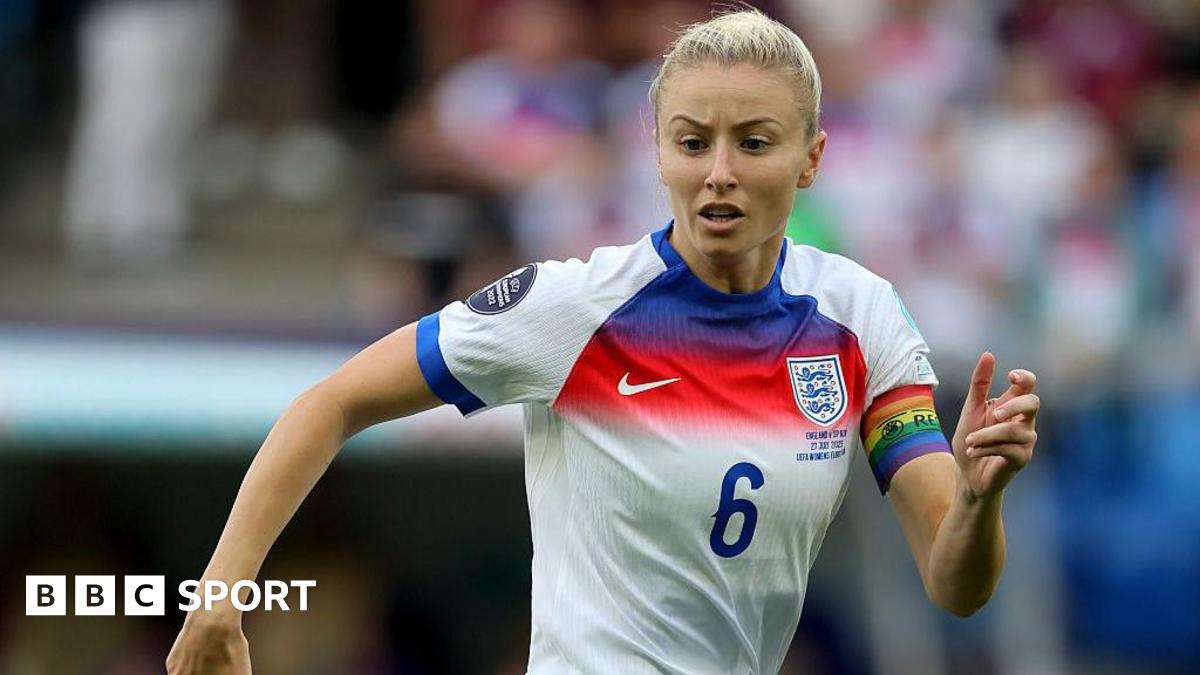
England captain Leah Williamson says she would “never rule out” strike action to get players’ messaging across to governing bodies about schedule concerns.

Williamson, 28, missed five months with injury following England’s victory at Euro 2025 as she recovered from knee surgery.

She returned to action at the start of December, helping Arsenal win the Women’s Champions Cup in February, and was selected for this month’s World Cup qualifiers.

Williamson is one of several big-name players who are still returning to full fitness following England’s success in Switzerland, alongside Chelsea’s Lucy Bronze.

Speaking before England’s game against Ukraine on Tuesday, 3 March (17:00 GMT kick-off), Williamson was asked about the potential causes of injury.

“We’ll never know for sure but I don’t think people argue against the scheduling for fun. There’s reasons behind it,” said Williamson.

“If you listen to the players’ group, of course we want to play all the time, but the more successful you are – and this team has been very successful – then the less rest you have and the higher risk of injury there is. It’s an accumulation.

“The players, I’m sure, would love to just turn up and play football, but we use our voice and we try to get involved in conversations with the hierarchy so that they at least have our perspective. Whether they listen to it or not, is out of our control.”

Players’ union FifPro released a report, external in November saying that last year was the first time since it started collecting data in 2020 that the top 15 players in the world had all played 50 games or more in a season.

England midfielder Keira Walsh previously urged governing bodies to “listen to the players” about the congested fixture schedule.

Asked whether Williamson would consider more drastic action, such as players striking, she said: “I’ve not had any conversations about this right now, but if a group of people don’t feel like they’re getting listened to, then history suggests that’s the only way they can be heard.

“I would never take it off the table. I don’t think that’s where we are now. I think we’re still in a place where we can collaborate, listen and educate.”

Williamson also revealed players have been “forthcoming” with providing stakeholders with training load and female health data.

“It’s mainly around the rest periods and trying to get all governing bodies to align. It always sounds like we’re asking for a holiday, but that’s not the case,” she added.

“I’m a professional footballer and part of my job is also to rest, which I’m encouraged to do so by my managers and the environments we play in.

“So why is that not prioritised when we’re left to our own devices?”

Source link

On ‘Dawson’s Creek,’ James Van Der Beek taught millennials how to cry

When “Dawson’s Creek” premiered on Jan. 20, 1998, I was 11 years old. I had never been in a love triangle or gotten drunk at a house party. Yet, like so many other millennials, I religiously set the VHS player to record “Dawson’s Creek” every week on the WB.

My parents didn’t approve of their impressionable child devouring the semi-debaucherous teen melodrama, so I labeled the VHS tapes “The Brady Bunch,” then routinely snuck out of bed late at night to quietly watch Dawson, Joey, Pacey and Jen navigate their hormonal angst via unbelievably erudite dialogue.

On Wednesday, “Dawson’s Creek” star James Van Der Beek died at 48 after being diagnosed with colorectal cancer. He left behind six kids, a wife and decades of work across film and television.

But for many millennials, he will always be Dawson Leery.

Van Der Beek’s health was already in decline when I profiled “Dawson’s Creek” creator Kevin Williamson for The Times last year. Still, the actor kindly agreed to answer questions for the piece via email. His commentary went beyond what was expected, graciously detailing his time on the show and praising his co-stars and collaborators.

In the “Dawson’s” audition room, for example, Van Der Beek said his soon-to-be co-star Joshua Jackson “stood out because while other actors nervously went over their sides (myself included), he had the energy of a guy who was ready for a prize fight. I remember thinking, ‘THAT GUY is really interesting. If they cast him as Pacey, this is going to be really good.’”

Two teenage boys stand face to face on a deck overlooking a waterfront.

James Van Der Beek, left, and Joshua Jackson in “Dawson’s Creek,” which would launch them to stardom.

(Fred Norris/The WB)

Van Der Beek likewise effused that, as a showrunner, Williamson “felt like a friend who was excited to go make a movie in his backyard. Even the way he ‘pitched’ storylines — it was never a pitch. It was a campfire story about people he cared about that he’d unfold in such a simple, compelling way that you couldn’t help but care about them too.”

Millennial viewers did care. A lot.

“Dawson’s Creek,” a simple drama about four friends growing up in a small, coastal town, quickly became a defining touchstone of Y2K culture, a major hit for the WB network — the series finale drew more than 7 million viewers — and a star-making machine for its four leads: Van Der Beek, Jackson, Katie Holmes and Michelle Williams.

The floppy-haired, often flannel-clad Van Der Beek wasn’t the show’s breakout heartthrob. (That honorific belonged to Jackson, who played Pacey, Dawson’s charming best friend and Joey’s end-game paramour.)

But as the title character and a partial avatar for Williamson — who had similarly spent his own teen years dreamily pining and aspiring to be a filmmaker — Dawson was the boy-next-door pillar around which the show orbited.

Yes, Dawson was whiny and moody and extremely self-centered, but so are a lot of teenagers. Through Van Der Beek’s wistful performance, viewers were given a window through which to grapple with betrayal, death, heartbreak and a litany of bad decisions.

For better or worse, Dawson served as an emotional, often cautionary, proxy for millennials’ own coming-of-age messiness.

In the years since the series ended in 2003, Dawson has largely been reduced to the “Dawson crying” meme: a Season 3 screenshot of Van Der Beek, face contorted in pain and on the verge of crying messy, heaving tears as Dawson tells Joey she should choose Pacey over him.

A teenage girl and boy lay on a bed covered with a plaid blanket.

The emotional relationship between Joey and Dawson was core to the series.

(Fred Norris/The WB)

Van Der Beek later revealed that the tears weren’t scripted. So attuned had he become to his character’s sensitivity by that point that the emotions flowed naturally.

“I think at the heart of [Williamson’s] projects are characters that he himself cares about deeply — flaws and all,” Van Der Beek said in his email last year. “They’re authentic to their background, sincere according to their world view… and vulnerable.”

Van Der Beek was vulnerable, too. As his cancer progressed, he was open with fans about his health struggles and the early warning signs. He appeared via video at a “Dawson’s Creek” reunion event in New York City last September, the proceeds of which raised money for cancer awareness.

In Van Der Beek’s death, there is no real-world instrumental score or innate montage of his best moments to soften the blow, as would have happened with a character on “Dawson’s Creek” (though the internet will surely be awash in such fan-made edits).

But through his work on “Dawson’s,” a generation can take comfort in a starry-eyed boy on a dock in Capeside who once invited us into his messy, emotional world.

Source link