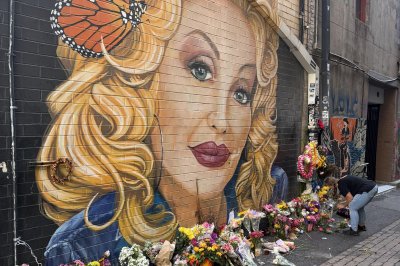
whitney houston

Clive Davis helped build the Grammy Museum in downtown Los Angeles

Walk into the Grammy Museum in downtown L.A., and you’ll see Clive Davis’ legacy everywhere.

The museum’s intimate performance space is named for the late record executive, and his visage greets guests at the front door. (Davis was the first million-dollar donor to the nascent Recording Academy archive and exhibition space.) His sprawling roster of acts — Bruce Springsteen, Miles Davis, Whitney Houston, Alicia Keys, Earth, Wind & Fire — defined an entire art form and business model as preserved in the Grammy Museum. Davis’ pre-Grammy gala was the most coveted invitation in music every awards season.

Davis’ death at 94 is “devastating,” said Michael Sticka, chief executive and president of the Grammy Museum. “Clive was always a north star of music and talent and artistry. We’re all lucky to have his legacy to look up to.”

Davis’ death marks the end of perhaps the most important and enduring career in the record industry. Sticka spoke to The Times about Davis’ remarkable longevity, creative vision and how a career like his will likely never be possible again.

Clive was a giant of the record business. How did his career shape the modern record industry?

His career was iconic. He really had a unique ability to not just bring an artist to their fullest potential artistically, but commercially. From attending Monterey Pop and first seeing Janis Joplin to Whitney Houston and Alicia Keys, I don’t think anybody had that ear in them the way that he did.

With Clive, what you got was not just hearing commercial viability, but an understanding of what was going on in the zeitgeist. That’s what propelled his career and legacy beyond most record executives.

His name’s on the building at Grammy Museum’s theater. What did he mean to the institution — not just for fundraising but as a living connection to music history?

He didn’t just donate to the museum. He donated his time, his historical knowledge of music, his firsthand perspective. He always kept tabs on what was happening in music. I always say the Clive Davis Theater is the toughest ticket in town for its intimacy and the level of programming we do. But he did an annual program at the museum where people could come hear stories directly from him. Once he decided he was in, he was all in.

His gala was the place to be every Grammy season too.

I don’t think anybody could gather a roomful of luminaries like that from entertainment, tech and politics in the way that Clive did. We were lucky to be a part of that. Even with the stature he had, he was still a physical presence there, he was approachable. He was always looked at as this living legend, but his legacy was continuously being built.

That’s true over the arc of his career, which saw him lead Columbia, Arista, J Records and more. He had a lot of resurrections as well as successes.

He had this ability to resurrect. Look at Santana and “Supernatural,” he was a producer on that album that was inducted into the Grammy Hall of Fame just last year. So many of us would just give up, but he just had this resolve to continue, and thank God he did.

The record industry is so different now than when he began his career. Artists find audiences on social media rather than being discovered by label executives. Is a career like his — a famous executive driven by their own taste and individual savvy — even possible today?

That’s true, artists break on social media before they’re even on record executives’ radars now. I don’t know if we’ll see that kind of career arc again. Clive had a rare combination of gravitas and being recognized so publicly. The man and his legacy are not going to be replicated.

Beyond the name on the theater, how do you hope the Grammy Museum will honor him with its programming in time to come?

I don’t know yet. We weren’t really prepared for this. We’re gonna have to sit down and think how to pay tribute to such a legacy. I think that the impact the Clive Davis Theater has, bringing in 120 artists a year — I couldn’t think of a more apropos name on the door.

Source link

Clive Davis elevated hitmaking to an art form

Barry Manilow has told the story behind his first big hit so many times that I had no intention of bringing up the half-century-old “Mandy” when I sat down with the singer on a recent afternoon at his home in Palm Springs. Among the questions I did ask was how he ended up recording the song that opens his new album, and the answer — as it’s so often been throughout Manilow’s career, beginning with that 1975 chart-topper — was Clive Davis.

“It was all Clive,” Manilow said of “Once Before I Go,” the Peter Allen/Dean Pitchford number that leads off his just-released “What a Time” LP. Davis, the star-making record executive with the so-called golden ears, had been urging him to record the song for years, Manilow told me, which inevitably brought him back to the well-rehearsed tale of “Mandy” — to Davis’ decision that Manilow’s debut for his Arista label lacked a breakout smash and to his suggestion that the singer cut a version of a modest hit called “Brandy” by Scott English.

“So I went in the studio and did it trying to sound like that guy,” Manilow recalled, stomping his foot to approximate a lumbering rock beat. “Clive came in and said, ‘That’s terrible.’ I said, ‘I know it’s terrible.’ But in order to learn the song, I’d slowed it down and changed the key — I found the love song hiding in ‘Brandy,’” Manilow continued. (He also changed the title to avoid any confusion with Looking Glass’ “Brandy,” which had recently reached No. 1.) Manilow played the tune in his more romantic style for the exec. “I’ll never forget it — Clive said, ‘Just do that.’ And that was the record.” He laughed.

“He’s a kind of a genius.”

Davis, who died Monday at age 94, didn’t sing or play an instrument. “I knew nothing about music,” he once said, looking back at his entry into the record business. Yet his instincts made him one of the surest spotters and nurturers of talent in pop history, with a long — and varied — line of success stories that included Manilow, Janis Joplin, Neil Diamond, Lou Reed, Patti Smith, Whitney Houston, Aretha Franklin, Dionne Warwick, Alicia Keys, Jennifer Hudson and Maroon 5, among many others. He even helped the Grateful Dead score a Top 10 single with “Touch of Grey” in 1987.

Davis, who got his start in Columbia Records’ legal department, could identify original voices and seemed to intuit which songs were likely to become hits. Sometimes the hits came from the voices themselves, as in the case of Bruce Springsteen, whom Davis cajoled into writing “Blinded by the Light” for his Columbia debut; sometimes the exec match-made performers and composers, as in the case of “Mandy” or “Freeway of Love,” a zippy Narada Michael Walden jam that launched Franklin’s comeback in the mid-1980s.

A natty dresser with a cosmopolitan air, Davis founded Arista in 1974 after he was fired from Columbia (where he’d ascended to the presidency) amid an embezzlement scandal of which he was later cleared. In 2000, he was ousted from Arista in a corporate shakeup — just months after the label won eight Grammy Awards with Carlos Santana’s 15-times-platinum “Supernatural” LP — then launched a new label, J Records, which scored an immediate blockbuster with Keys’ “Songs in A Minor.”

Clive Davis at the Beverly Hills Hotel in 2020.

Clive Davis at the Beverly Hills Hotel in 2020.

(Christina House / Los Angeles Times)

Wherever he worked, Davis’ goal was shepherding hits that spanned formats and generations; he delighted in projects like “Smooth,” the inescapable Santana single pairing the rock guitarist and Rob Thomas of Matchbox Twenty, and a series of Great American Songbook albums by the once-scruffy Rod Stewart. He might also have been the music industry’s biggest believer in ballads, at least among suits: Between 1985 and 1992, Houston alone released almost a dozen of music’s all-timers, including “Saving All My Love for You,” “Didn’t We Almost Have It All” and — perhaps the greatest pop ballad ever recorded — her take on Dolly Parton’s “I Will Always Love You.” (It wasn’t a huge hit, but listen to Houston and Jermaine Jackson’s pedal-steel-drenched “Nobody Loves Me Like You Do,” from Houston’s debut, for an early instance of that crossover ambition.)

One of relatively few nonperformers inducted into the Rock & Roll Hall of Fame, Davis brought his flair for variety to the party he threw at the Beverly Hilton every year on the night before the Grammys — a famously hot ticket that drew A-list celebs from the worlds of music and Hollywood as well as business and politics. You could always count on the exec to have persuaded some number of the year’s splashiest new acts to perform; this year’s bash, in January, had Sombr, Olivia Dean and the women of “KPop Demon Hunters.” But my favorite part of the show was always seeing which veteran Davis had tapped to mix it up with the youngsters — Diamond or Manilow, for instance, or Johnny Mathis, who absolutely killed in 2015.

Davis horrified many in 2012 when he opted to proceed with his party just hours after Houston was found dead in a hotel room at the Beverly Hilton. In the years after the singer’s death, Davis drew criticism for taking too much credit for Houston’s artistic achievements; to some, he became a symbol of the music industry’s efforts to tone down Houston’s Blackness in order to reach white audiences. Five years ago, I asked Warwick, who was Houston’s cousin, whether she’d taken on any kind of consulting role on “I Wanna Dance With Somebody,” the 2022 Whitney biopic that Davis produced.

Bobby Brown, from left, Whitney Houston and Clive Davis in New York in 1998.

Bobby Brown, from left, Whitney Houston and Clive Davis in New York in 1998.

(Stuart Ramson / AP)

“Not one thing,” she told me. “I want them to let Whitney rest in peace. Leave her alone. Ten years [since she died] — it’s time to let her sleep.” (In a statement Monday, Warwick called Davis her “dear friend” and said she “can think of no other record man that seemed to have that magical ability to know a hit when he heard a song.”)

I spoke with Davis many times over the years and was always struck by his enthusiasm about music and about his recall of events from decades ago. In 2017, I interviewed the exec alongside Mathis and Kenneth “Babyface” Edmonds about a record the three made together that had Mathis singing newish pop songs like Adele’s “Hello” and Pharrell Williams’ “Happy” — a concept Manilow told me in March he and Davis had been talking about replicating. After my story ran, Davis emailed me and said he’d enjoyed the piece, which had a couple of lines about Davis’ tendency to go overboard hyping his projects.

“Yes, a few of your bites required a personal Band-Aid,” he wrote, “but I did appreciate your perspective of the Mathis album’s quality.”

He knew the music was good; Clive Davis always knew when the music was good.

Source link